All Activity
- Today
-
Vice-president Luis de Guindos says Washington’s volatile trade policies and reduced co-operation also threaten stabilityView the full article
-
Curiosity is one of the most consequential forces in human history. Every scientific breakthrough, technological leap, and cultural advance begins not with knowledge, but the desire to know. At its core, curiosity drives us to close the gap between what we know and what we want to know, a cognitive itch triggered by uncertainty and resolved through learning and the pursuit of meaning. Curiosity as an evolutionary advantage Early humans who explored their environments, experimented with tools, and learned from novel stimuli were more likely to secure resources, avoid threats, and pass on their genes. As a result, curiosity became embedded in our biology, reinforced by neural reward systems that make learning intrinsically pleasurable. In line, neuroscientific research shows that curiosity activates the brain’s dopaminergic pathways, the same circuits involved in motivation and reward, which explains the positive correlation between curiosity and impulsivity. When we encounter a gap in our knowledge, we experience a mild form of cognitive discomfort. Resolving that gap produces satisfaction, reinforcing future exploration. In that sense, curiosity is a built-in, biologically coded feedback loop for learning. But evolution also imposed constraints. Curiosity, like any adaptive trait, is beneficial only within limits. For example, there are many scenarios in which too much exploration could prove fatal. A hunter-gatherer wandering too far from their tribe risked encountering predators or hostile groups. In such contexts, restraint was adaptive. Curiosity had to be expressed with caution. This tension between exploration and exploitation remains with us today. We are wired both to seek novelty and to prefer predictability. The familiar is efficient but boring; the unknown is exciting but costly. History offers similar patterns. During periods of intellectual repression, such as the Inquisition, curiosity was actively punished, making individual inquiry dangerous. By contrast, the Enlightenment celebrated curiosity as a virtue, unleashing scientific and philosophical progress. The same underlying human drive manifested differently depending on cultural conditions. Curiosity, then, is universal, but its expression is highly variable. The paradox of AI: A triumph that threatens its own foundation Fast forward to the present, and we are witnessing one of humanity’s greatest achievements: artificial intelligence. The convergence of mathematics, computer science, and data has enabled machines to simulate aspects of human cognition. We have, in effect, built systems that can approximate, emulate, and even surpass our thinking. Even if AI stopped evolving tomorrow (which seems unlikely), its implications are already profound. AI can augment human capability, accelerate problem-solving, and democratize access to knowledge. It functions as a cognitive copilot, allowing individuals to perform tasks that once required entire teams. But every technological advance also carries unintended consequences. And in the case of AI, the risks are not just economic and ethical, but psychological, too. Specifically, AI threatens to erode curiosity. The erosion of curiosity in the age of artificial certainty Curiosity depends on uncertainty. It requires a gap between what we know and what we want to know. AI, by design, collapses that gap. When answers are instantly available, prepackaged, and delivered with confidence, the motivation to explore diminishes. Why struggle with a problem when a machine can solve it in seconds? Why engage in deep learning when surface-level understanding is sufficient to get by? This is what I have described elsewhere as “artificial certainty.” AI does not just provide answers; it creates the illusion that we understand them. The output is coherent, fluent, and persuasive. But coherence is not comprehension. The result is a shift from active to passive cognition. We consume knowledge rather than generate it. We outsource thinking rather than exercise it. A useful analogy is physical fitness. Imagine a world where machines do all the lifting for you. Your muscles would atrophy. The same applies to the mind. Curiosity is a mental muscle, and like any muscle, it weakens with disuse. In this sense, AI is the equivalent of a microwave for ideas. It delivers fast, convenient results, but often at the expense of depth and craftsmanship. We move from “slow thinking,” which is effortful and reflective, to “fast consumption,” which is effortless but shallow. There is also a linguistic irony worth noting. “Deep learning,” once a human aspiration, is now primarily associated with machines. Meanwhile, human learning risks becoming increasingly superficial, if not dormant. To be sure, such concerns may ultimately prove overstated, as they often have in the past. Socrates, after all, warned that writing would erode memory, fearing that reliance on external tools would weaken internal capacities. Yet history also suggests that overcorrection is safer than complacency. There are, in fact, good reasons to be vigilant: When effort is removed from the learning process, engagement tends to decline; when answers are readily available, the incentive to question diminishes; and when cognition is outsourced too readily, the underlying skills can atrophy. The point is not to resist technological progress, but to ensure that convenience does not quietly displace the very mental habits that made such progress possible in the first place. What the science says about cultivating curiosity If curiosity is both essential and at risk, the obvious question is: Can it be developed? The answer is yes, but not in the simplistic way often suggested. Curiosity is influenced by both stable traits and situational factors. While some individuals are naturally more curious than others, environments and habits play a critical role. Before diving into what to do, it is worth pausing on a more basic question: How curious are you, really? The first step is a proper self-assessment. Not the flattering version you might hold of yourself, but a more objective view grounded in data and external feedback. Curiosity is closely linked to well-established personality traits, particularly openness to experience, one of the Big Five, which captures intellectual curiosity, imagination, and a preference for novelty. Science-based assessments can provide a reliable baseline here. So can 360-degree feedback, which often reveals a gap between how curious we think we are and how we are experienced by others. Even informal input from colleagues, friends, or mentors can be illuminating, especially when it highlights whether you ask thoughtful questions, challenge assumptions, or genuinely engage with new ideas. Equally important is specificity. Curiosity is not a uniform trait. People are rarely equally curious about everything. Reflect on where your curiosity naturally shows up and where it does not. You may be deeply inquisitive about ideas but indifferent to people, or fascinated by technology but incurious about history, culture, or opposing viewpoints. Mapping these patterns matters, because developing curiosity is not about becoming universally interested in everything. It is about understanding your blind spots and deliberately expanding into areas where your instinct is to disengage. First, intrinsic motivation matters. Studies grounded in self-determination theory show that curiosity flourishes when individuals feel autonomous, competent, and connected to others. In practical terms, this means people are more curious when they pursue topics that genuinely interest them, rather than those imposed externally. The implication for organizations is clear: forced learning rarely produces genuine curiosity. Second, exposure to novelty is key. Curiosity thrives on diversity of input. Interacting with people from different backgrounds, disciplines, and perspectives increases the likelihood of encountering information gaps. This is why interdisciplinary environments are often more innovative. They create friction between ideas. Third, habits of reflection enhance curiosity. Research on learning and memory suggests that active engagement, such as writing, teaching, or debating, deepens understanding and sustains curiosity. Passive consumption, by contrast, leads to the illusion of knowledge without real insight. Fourth, time allocation matters. Curiosity requires cognitive space. In environments dominated by urgency and efficiency, there is little room for exploration. Scheduling time for reading, thinking, and unstructured inquiry is not a luxury; it is a necessity. Fifth, tolerance for uncertainty is crucial. Individuals with a high need for cognitive closure prefer quick answers and are less likely to engage in open-ended exploration. Developing comfort with ambiguity, through practices such as Socratic questioning or deliberate exposure to complex problems, can enhance curiosity. Finally, there is evidence that curiosity can be trained through small behavioral interventions. For example, prompting individuals to generate questions before receiving answers increases engagement and retention. Similarly, framing tasks as puzzles or challenges can activate curiosity-driven motivation. These findings align with the broader argument that curiosity is not a fixed trait but a dynamic capability shaped by both internal and external factors. The role of leaders in modeling curiosity While individual strategies matter, curiosity is ultimately a social phenomenon. It is shaped, amplified, or suppressed by cultural norms. From early childhood, curiosity is not simply an individual trait but a product of developmental context. Parents, teachers, and early environmental experiences play a decisive role in shaping how, and whether, curiosity endures into adulthood. Research in developmental psychology shows that children whose caregivers respond contingently to their questions, encourage exploration, and tolerate uncertainty tend to develop higher levels of intrinsic curiosity. Conversely, environments that emphasize compliance, correct answers, and performance over inquiry can suppress exploratory behavior over time. Educational studies also find that classroom climates prioritizing rote learning and standardized outcomes often erode students’ natural inquisitiveness, even when baseline curiosity is high. Longitudinal evidence suggests that these early patterns persist, shaping adult tendencies toward intellectual risk-taking, openness, and lifelong learning. In short, curiosity is cultivated or constrained early, but its trajectory can be reinforced or reversed later, especially through social and organizational contexts. This is where leadership becomes critical. Leaders set the tone for what is valued. If they prioritize certainty, speed, and efficiency above all else, curiosity will decline. Employees will learn to avoid questions, minimize exploration, and focus on immediate outputs. Conversely, leaders who model curiosity create environments where inquiry is rewarded. This does not mean celebrating randomness or distraction. It means demonstrating intellectual humility, asking better questions, and showing a willingness to challenge assumptions. One of the most powerful signals a leader can send is admitting what they do not know. This reduces the perceived cost of ignorance and encourages others to engage in learning. It also counteracts overconfidence, which is one of the main barriers to curiosity. Leaders can also design systems that embed curiosity into workflows. This includes allocating time for experimentation, encouraging cross-functional collaboration, and measuring not just outcomes but learning processes. Importantly, curiosity must be linked to performance. It is not about asking more questions for their own sake, but about asking better questions that lead to better decisions. In the age of AI, this becomes even more important. As machines take over routine cognitive tasks, the human advantage shifts to areas that require judgment, interpretation, and creativity. These are all downstream of curiosity. But judgment without experience is meaningless. AI can simulate answers, but it cannot substitute for the depth that comes from actually engaging with the world. There is a difference between consuming a microwaved meal and cooking one from scratch, sourcing ingredients, understanding how they interact, and adjusting along the way. The former is efficient and convenient; the latter builds intuition, tacit knowledge, and real expertise. In the same way, relying on AI-generated outputs without cultivating firsthand learning experiences produces a thin version of competence, what might be called artificial understanding. Curiosity, when acted upon, pushes us into those richer experiences that give judgment its substance and make our thinking genuinely our own. Curiosity as a strategic imperative The rise of AI has not just expanded access to information; it has quietly eroded the premium once attached to possessing it. When virtually all answers are instant, abundant, and convincingly packaged, the differentiator is no longer what you know, but how you engage with what can be known. In that sense, the economics of expertise are shifting. Knowledge, at least in its most accessible forms, is becoming commoditized, while the capacity to interrogate, refine, and build on that knowledge is becoming scarcer and more valuable. This is where curiosity earns its value, not as a soft or “nice to have” trait, but as the underlying mechanism that sustains learning over time. Without curiosity, the risk is not ignorance, but something more insidious: the illusion of understanding. AI can generate coherent explanations, summarize complexity, and produce plausible insights at scale. But unless these outputs are met with questioning, skepticism, and a desire to go beyond what is given, they are unlikely to translate into genuine insight or better decisions. The danger, then, is not that machines will think for us, but that we will gradually outsource the very effort required to think well, confusing fluency with depth and access with mastery. This places a different kind of demand on individuals and organizations. The task is no longer simply to adopt AI tools or increase their usage, but to integrate them in ways that augment rather than atrophy human judgment. At the individual level, this implies a degree of intentionality that is often underestimated: cultivating habits that prioritize inquiry over convenience, depth over speed, and exploration over closure. At the organizational level, it requires more than rhetoric about innovation. It calls for environments where questioning is not penalized by the pressures of efficiency, and where time spent exploring is not automatically seen as time wasted. And at the leadership level, it demands a visible commitment to curiosity as a norm, expressed less through slogans and more through behavior: the questions senior exeuctives ask, the uncertainty they tolerate, and the assumptions they are willing to revisit, will all shape the organization’s level of curiosity and appetite for learning. There is an obvious irony here. The more capable our machines become at producing answers, the more valuable it becomes to remain interested in the questions. This is not a nostalgic defense of human uniqueness, but a pragmatic recognition of where advantage now lies. In a world where everyone has access to the same tools, and AI becomes as ubiquitous as smartphones, Wi-Fi, or electricity, the differentiating factor shifts to how those tools are used, and that, in turn, depends on the quality of human curiosity brought to bear on them. Seen in this light, curiosity becomes a strategic necessity, one that shapes not only how individuals learn, but how organizations adapt and compete in an environment where knowing is easy, but understanding remains hard, and is quietly becoming a niche pursuit. View the full article

-
As 7.4 million Americans sit unemployed, the path to employment has completely changed. Amid fake listings, AI filtering of candidates and widening talent pools, job seekers believe that they’re competing against a hiring ecosystem that penalizes honesty and rewards perception. The result? A hiring environment where the signals employers have traditionally relied on to evaluate candidates have become deeply unreliable. Now, both sides are operating with diminishing trust in each other. What’s Driving the Deception? Hiring today is not facing a character problem, but a structural one. When candidates believe that presenting themselves accurately will cost them a job offer, the rational response is to become the person they think the employer is looking for. But when this approach becomes standard, those who still choose to tell the truth take on an “honesty tax,” the systemic disadvantage honest candidates face when exaggeration becomes the market norm. GCheck’s Trust in Hiring Report revealed that 93% of job seekers have lied or embellished their experience during the hiring process, while 60% do not believe they would have been hired had they presented their qualifications more accurately. This is beyond a confession—it’s a market signal. Part of what drives this dynamic is opacity on the employer side. When candidates do not know what will be verified, they assume the answer is minimal, and they calibrate their self-presentation accordingly. In fact, GCheck found that although 88% of job seekers believe misrepresentation puts businesses at risk, 53% assumed employers wouldn’t verify their claims and only about a quarter (26%) report ever being caught lying or exaggerating. Verification that is invisible to candidates is not a deterrent. It is permission. And thanks to artificial intelligence, candidates can disguise their true skills and identity almost instantaneously. AI Accelerates Dishonesty in Hiring LinkedIn’s 2025 Work Change Report estimates that 70% of the skills used in most jobs will change by 2030, driven largely by AI. When job seekers navigate a market where the definition of “qualified” is constantly shifting, the pressure to appear more capable than they are significantly intensifies. AI has not created that pressure, but it has handed candidates sophisticated tools to act on it at every stage of the hiring process. Employer concerns have moved beyond job seekers’ using AI to compile resumes or assist with writing. Now, the degree to which AI has migrated into live interviews and assessments is worrisome. GCheck found that 61% of candidates have used AI to rehearse interview answers until they sounded more impressive than authentic, and 25% reported deploying an AI avatar in place of their own face during a virtual interview. The result is a hiring process where trust is eroding on both sides. On one hand, candidates feel pressure to optimize and automate their performance in a highly mediated, virtual environment; on the other, employers struggle to assess who is genuinely behind the screen. When interviews are increasingly remote, scripted and technology driven, the lines between preparation and performance become blurred. This highlights how broken and transactional the modern hiring process has become. There’s also an emerging phenomenon of systematic embellishment, distortion or fabrication of professional qualifications across resumes, interviews, and references as a deliberate competitive strategy driven by market pressure and weak verification expectations. It’s been dubbed “careerfishing,” and it’s no longer the behavior of a fringe group. What Employers Must Do to Rebuild Trust Rebuilding trust in hiring is not only a technology problem, but also a standards and transparency issue. Employers who treat verification as a confidential back-end process get exactly what opacity produces: candidates who assume they can game the system, largely because they can. Three leadership-level shifts matter most here: Make verification standards visible. Communicate what will be checked before a candidate applies. Transparency disrupts embellishment at its source, not after the offer. The FTC’s guidance on employment background checks under the FCRA already mandates disclosure at specific stages. Moving that clarity upstream changes candidate behavior earlier in the process in measurable ways. For example, candidates who know credentials or work samples will be actually verified are less likely to exaggerate or rely on AI-generated materials they cannot defend later. Make screening decisions reviewable by a person. Candidates who know a human will review findings, not only an algorithm, engage with the process more honestly. Make verification proportionate to actual risk. Applying the same screening depth to every role signals to candidates that the process is performative. Calibrating scope to genuine role risk makes verification more credible, more defensible, and more likely to deter the embellishment it is meant to catch. In recent years, hiring integrity has evolved from a checkbox exercise into a strategic priority. When AI-driven careerfishing corrupts the foundational data a company uses to build its workforce, the damage surfaces in performance gaps. The goal is not to catch more people lying. The goal is to build a hiring environment where honesty carries a genuine advantage rather than a competitive penalty. When employers operate transparently and verify consistently, they stop performing diligence and start practicing it. That distinction is what separates organizations that attract trustworthy people from those that inadvertently select for the most convincing ones. View the full article

-
The outgoing chair has made some mistakes, but his decision to stand up to The President was heroicView the full article
-
Chinese territory enjoys surge of investment from mainland as wealthy spread assets across different jurisdictionsView the full article
-
Andrius Kubilius pushes for governments to open weapons stockpiles to Ukraine View the full article
-
Despite $17bn in pledges, organisation is stuck in limbo with no money flowing to projects in GazaView the full article
-
Sovereign borrowers look to issuance in US dollars, Swiss francs and other currenciesView the full article
-
The technology opens the door for smaller, well-funded challengers to take market share from the Big Four and others View the full article
-
Agreement with unions ends wrangling over how to share spoils of boom at memory-chip makerView the full article
- Yesterday
-
Albert Manifold’s behaviour and use of personal devices cited as factors in his removal over conduct and governance concernsView the full article
-
Hands-on approach was viewed as aggressive by several colleagues at UK oil majorView the full article
-
Foreign Office announces measures against Huobi among several entities it says helped Russia evade economic pressureView the full article
-
Last weekend, when Puck announced that the sustainable fashion startup Everlane had been acquired by the Chinese ultra fast fashion retailer Shein, it sent shockwaves throughout the fashion world. Michael Preysman, who founded Everlane in 2011, was just as shocked. “I found out the same time as everyone else,” he said in a LinkedIn post a week ago. “I’m not involved with the company anymore, and like many, am still digesting the news.” Well, Preysman is done digesting. And it seems that he’s ready to do something about it. Preysman just announced stillradical.com, a new venture that we know little about other than the bare bones website it launched with. The website lays out the new vision with brevity: “I started Everlane in 2011. Last week, the current management team sold it to Shein. So we’re starting over. Same principles, but a new take. And this time: no venture capital, no private equity.” The site says you can learn more by signing up for a waitlist. (Preysman did not respond to a request for comment.) Preysman launched Everlane when he was in his mid-20s, after starting his career in finance. His vision was to sell high quality products directly to customers online, without the markup of middlemen like department stores. This helped kickstart the direct-to-consumer movement that dominated the 2010s, producing brands like Away, Warby Parker, Allbirds, and Glossier. To fuel its growth, Everlane took an undisclosed amount of venture capital. A few years in, Preysman turned his attention to the human and environmental impact of the fashion industry. Everlane promised to eradicate virgin plastic from its supply chain, and showed customers inside the factories they used, to highlight how it was paying attention to the working conditions of laborers. All of this was good for business. By 2016, Everlane was valued at $250 million, although it was unclear whether it had ever become profitable. In recent years, its growth slowed. It went through two rounds of layoffs, once during the pandemic and then again in 2023. L. Catterton—the venture capital wing of the luxury conglomerate LVMH—bought a majority stake in Everlane in 2020. Shortly after, Preysman left the company to launch a new supplements brand called Magna in 2024. For many, Everlane’s acquisition by Shein was a disappointing final chapter for a company that stood for optimism and ethics. Clearly, Preysman felt the same way about it. This new business suggests that he hasn’t given up on the idea of sustainable fashion. However, he’s realized that venture capital is not the right tool for launching an apparel business. It will be fascinating to see what lessons Preysman has taken from the rise and fall of Everlane, and how we plans to build his new company differently. View the full article

-
Victory of flawed Senate candidate Ken Paxton could cement the president’s hold on the party View the full article
-
Current CEO Rick Thornberry is retiring as Radian shifts to a multi-line business, with former Mr. Cooper President Mike Weinbach taking over on Aug. 13. View the full article
-
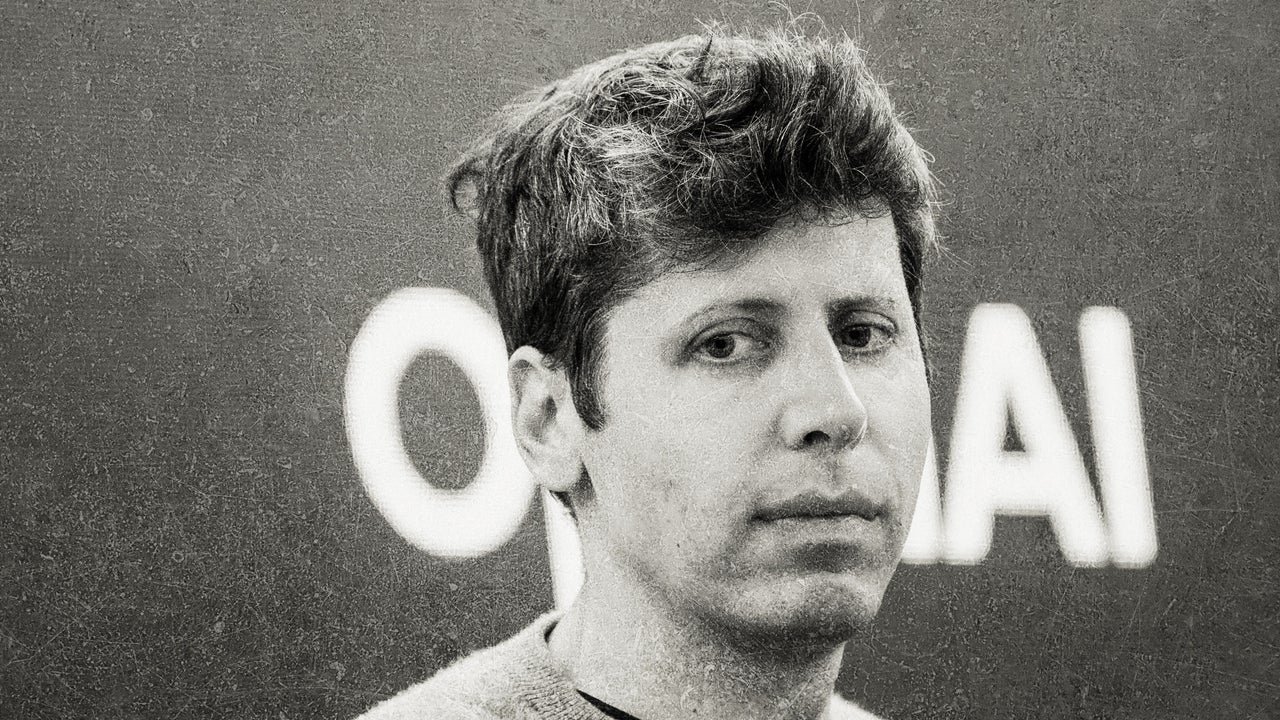
Unlike some of his industry peers, OpenAI CEO Sam Altman has been surprisingly skeptical of the notion that AI is displacing workers. In an interview a few months ago, he argued that AI was a convenient scapegoat for some companies, echoing what some economists and experts have expressed about the narrative that AI is driving layoffs across corporate America. “I don’t know what the exact percentage is, but there’s some AI washing where people are blaming AI for layoffs that they would otherwise do. And then there’s some real displacement by AI of different kinds of jobs,” Altman said at the time. In an interview this week, however, Altman made a bolder statement, suggesting there was little evidence AI would do extensive damage to white-collar jobs, despite predictions to the contrary. “I’m delighted to be wrong about this,” he said on Tuesday during a virtual appearance at the Commonwealth Bank of Australia conference, according to a Reuters report. “I thought there would have been more impact on entry-level white-collar jobs being eliminated by now than has actually happened.” “My intuitions were just off,” he added. “People are like, ‘oh, you could have saved the world a lot of fear mongering and a lot of doom and gloom.’ But at the time I was like, ‘I see this is a real risk. We should probably talk about it.’” Part of the reason for this realization, Altman claims, is that he underestimated the human element that so many jobs require. He had tried using AI to field emails and Slack chats, but increasingly found himself responding to those messages himself—which apparently led him to believe the impact on jobs will be different than he had originally anticipated. “I don’t think we’re going to have the kind of jobs apocalypse that some of the companies in our space advocate or talk about,” he said. While companies have repeatedly cited AI and automation when conducting layoffs, the labor market does not yet reflect a mass reduction in jobs across the workforce. On top of that, even as tech leaders remain bullish about the promise of AI, there are signs that all their spending may not yield the results they are expecting. In another recent interview, an Uber executive cast doubt on the idea that the company’s AI investments had meaningfully boosted productivity, despite blowing through its 2026 AI budget in just a few months. On the Rapid Response podcast, Uber president Andrew Macdonald claimed the growing use of Claude Code tokens had not necessarily resulted in better features for consumers. “That link is not there yet, right? I think maybe implicitly there is more that is getting shipped, but it’s very hard to draw a line between one of those stats and, ‘Okay, now we’re actually producing 25% more useful consumer features,’” he said. Still, that awareness may not help preserve jobs, especially as companies demand greater productivity from their workforce. Whether or not AI can replace workers, tech employers continue making cuts to headcount to offset their sweeping AI investments. Some workers are already feeling the effects of widespread AI adoption, from Amazon warehouse workers to people who hold administrative jobs—and despite the concerns about white-collar employees, researchers have found there could be significant downstream effects for workers without college degrees. For all his talk, even Altman has noted that there’s a chance the fallout from AI could be worse than it seems right now—and that it could eventually come for his job, too. View the full article
-
Tehran vows to ‘not leave any mischief unanswered’ after the attacks View the full article
-
Most enterprise generative AI investments have yet to deliver the value companies envisioned, and every day, more leaders are recognizing that people lie at the heart of the struggle. In this year’s AI & Data Leadership Executive Benchmark Survey, 93% of executives leading AI and data efforts identified human issues around culture and change management as the primary obstacle to adoption. McKinsey Global Managing Partner Bob Sternfels put it plainly on HBR’s IdeaCast: “Half if not more of the secret sauce” in getting value from AI, he said, “is organizational change, as opposed to technology implementation.” As such, many leading companies have launched initiatives over the past several months to drive AI adoption across their workforces. These efforts run the gamut from carrot-to-stick approaches, with some rolling out hackathon programs and prizes for innovative uses. Others use weekly logins and token consumption as proxies for performance. A PERFORMATIVE APPROACH Leaders are right to focus on the people side of adoption. They need to be deliberate, however, about what they’re encouraging. I’ve learned something in my three decades helping some of the world’s largest companies through culture transformation. Employees prioritize what leaders model, incentivize, and reward. And initiatives built around shallow metrics can do more harm than good. It’s understandable why many leaders today celebrate deliverables simply because they were made with AI, or reward employees for integrating it into workflows. Facing underwhelming internal adoption metrics, many have come to see any increase in AI usage as a win. At my firm, however, we call this “trophy-style” AI adoption—which is to say, a performative approach focused more on usage than results. It’s focused on participation trophies over proof of impact. Leaders need to be wary of this trap. Because as anyone following the “workslop” problem or the emerging research on cognitive atrophy will know, not all AI use cases are created equal. Trophy-style adoption creates a dangerous illusion of progress, where activity masquerades as impact. In other words, we’re rewarding output over outcomes. A culture built around shallow adoption risks more than struggling to achieve ROI; in some cases, it might leave employees less equipped to meet business needs than prior to AI. IMPACTFUL ADOPTION Impactful AI adoption will look different based on the company, a person’s role, and many other factors. For some, it means deepening the quality of the same work product. For others, it means increasing output without sacrificing quality. And for still others, it means getting the same work done in less time, repurposing time and energy toward new questions and tasks. All the best adoption initiatives, however, will be reverse-engineered from the larger business strategy. They will be built around metrics that connect to it. The process of designing an adoption initiative should start with clarity and specificity around big-picture questions. What does value look like for our organization? How can different roles change to better deliver it? Leaders cannot lose sight of these framing questions as they determine what gets modeled and encouraged. Wise ones will drive for real business impacts that come from the usage. And when they showcase strong use cases, they will not just reward speed or deep integration. Instead, they will keep the focus on the larger picture, taking great care to explain the meaningful organizational outcomes driven by the use case. In Gagen MacDonald’s latest white paper, we dive into what it takes to do this well, and what organizations can do to bridge the separate realities that exist between leaders and employees around AI. Because while the employees who create the most impact with AI will certainly use it frequently, it’s a mistake to think of usage as synonymous with impact. And given how much companies have spent and plan to keep spending on this technology, it’s not a mistake many leaders can afford to make. Maril MacDonald is founder and CEO of Gagen MacDonald. View the full article

-
A day after Pope Leo XIV released his much anticipated encyclical on AI, the response from the AI community has been mainly positive, with some quibbling over the nature and potential of the technology. The Vatican released the encyclical, titled Magnifica Humanitas: On Safeguarding the Human Person in the Time of Artificial Intelligence, in Vatican City on Monday. (An encyclical is a high-importance teaching document issued by the Pope.) Broadly, the document aims to demarcate the fundamental differences between humans and machines and warn about the dangers of allowing AI to be controlled and distributed by a small group of people. The Pope denounced the “culture of power” driving the AI race, referencing the small set of wealthy investors and tech companies currently controlling the development and distribution of the technology. Pope Leo’s concerns also reflect a much broader religious debate around AI that has emerged across faith traditions in recent years. Religious leaders and scholars from Christianity, Judaism, Islam, and Buddhism have wrestled with everything from AI-written sermons and chatbot theologians to the technology’s impact on labor, misinformation, warfare, and the environment. While some communities have embraced AI tools for research, translation, and religious education, many leaders have emphasized that machines cannot replace divine inspiration, moral judgment, or the human relationship to faith. Pope Leo himself recently warned priests against using AI to prepare homilies, arguing that artificial intelligence “will never be able to share faith.” Within the AI research community, the response to Magnifica Humanitas has been mainly positive. One researcher, Chris Olah, participated in the Vatican’s process of shaping the ideas behind the encyclical. “This clearly raises questions beyond computer science,” Olah said in a companion statement to Magnifica Humanitas. “The machinery that makes this possible is the work of math and programming and science. But what character we choose, how it interacts with the world, how it ought to interact with the world—these are more clearly questions for the humanities, for religion, for philosophy, for society at large.” The encyclical, which is 85 pages long, was informed by extensive conversations with scientists, engineers, educators, political leaders, and families, the Vatican said. ‘The Pope is right’ Author and systems architect Daniel Jefferies broadly agreed on X with the Pope’s warning that AI will reflect the values of the people and institutions controlling it. “The Pope is right: AI takes on the characteristics of those who build it, finance it, and regulate it,” Jefferies wrote, before arguing that concentrated corporate control over AI could create “digital oligarchies” resembling modern-day East India Companies. AI pioneer and Turing Award winner Yann LeCun retweeted Jefferies’ post. Another Turing Award winner, Yoshua Bengio, echoed the Pope’s concern over AI’s potentially destructive power. “Like nuclear energy, AI must be at the service of all and of the common good. Decisions about technology must never be separated from conscience and responsibility.” ‘Relatively mundane AI dangers and changes’ Not everyone in the AI community agrees with the Vatican’s view of what AI is, or what it could eventually become. The encyclical draws a firm distinction between AI systems and human beings, arguing that machines cannot possess consciousness, morality, or lived experience. “So-called artificial intelligences do not undergo experiences, do not possess a body, do not feel joy or pain, do not mature through relationships and do not know from within what love, work, friendship or responsibility mean,” the document states. AI commentator Zvi Mowshowitz took issue with that premise.“ The central claim, wherein Pope Leo denies that AIs can think or importantly be minds, is wrong, as Olah points out in his statements,” he wrote on Substack. “Without the understanding of what AI is capable of becoming, the document effectively only deals with relatively mundane AI dangers and changes, although that on its own is still rather quite a lot to deal with and discuss.” AI policy analyst and writer Dean Ball says the church should focus on helping humans flourish as AI evolves further. “Some think I want the Pope to ‘ensoul’ AI or acknowledge AI feelings. I don’t,” Ball posted on X. “What I want is for the Church to contemplate what *humans* should do as we are eclipsed as the smartest entities on the planet, at least for many reasonable people’s definitions of the word ‘smart.’” President Donald The President has yet to post about the encyclical on Truth Social, but his former AI “czar,” David Sacks, weighed in. Sacks isn’t worried about letting a small set of AI companies effectively regulate themselves; he’s worried about giving the government the power to do it. (And who can pass up a couple of literary and historical knowledge flexes when the opportunity presents? Not Sacks.) Writing on X, David Sacks argued that giving governments broad authority over AI in the name of safety could ultimately enable censorship, surveillance, and social control. Invoking both George Orwell and the Latin phrase “Quis custodiet ipsos custodes” (translation: “Who will guard the guardians?”), Sacks wrote that “The oldest questions of human nature and authority don’t disappear in the AI age. They become newly relevant.” (In response to Sacks’ X post, a number of prominent voices in the AI world have since weighed in. Among them was Hugging Face CEO Clem Delangue, who argued that “the most important AI risk is concentration,” and cognitive scientist Gary Marcus, who warned against “leaving unelected private companies the ability to censor, surveil and control citizens.”) The The President administration, influenced by tech nouveau right figures like Sacks and Marc Andreessen, has gone to great lengths to keep the AI industry free of government oversight and regulation. Notably, most of the tech nouveau right crowd has remained silent on the Pope’s treatise. There have been no public comments yet from Elon Musk, Andreessen, Palmer Luckey, Balaji Srinivasan, Keith Rabois, Joe Lonsdale, or Jason Calacanis. View the full article

-
LastPass has come under fire in recent years following a 2022 data breach that compromised user vaults. Despite the controversy, it remains a popular and user-friendly option for saving credentials. But you don't have to stick to LastPass' default setup: If LastPass is your password manager of choice, these are the best hacks to optimize your experience. Use vault identities to keep work and personal credentials separate If you have one LastPass account for both work and personal use, you can separate relevant items into sub-vaults. When you toggle between them, you'll see only the credentials relevant to that identity, and LastPass will suggest only those items for autofill. This reduces confusion and clutter, especially if you have both personal and professional accounts for the same services. You can also create mini-vaults based on category themes (such as travel or shopping) to organize your data. Go to Advanced options > Add identities on the left-hand navigation and click the Add icon. Name the new identity and drag and drop items into it. Then click Save. You can switch identities from the drop-down under your user account. Set up custom fields to save PINs and security questionsIn addition to your username and password, LastPass has custom fields you can use if a website or app requires other inputs—such as a PIN or security question—for logging in. Instead of saving these as text in a notes box, you can specify the name and value in a custom field. Open your password, tap the Edit icon, and select Custom fields > Add custom field. Add the name in the Field label column, then enter the value in the Field content column and tap Save. Use "Favorites" to quickly launch frequently visited sites If you open the same sites over and over—such as your work email, calendar, or project management platform—you can add these to your LastPass favorites and launch them all with one click. This streamlines your morning workflow, so you no longer need to type URLs or open separate bookmarks. Find the item you want to favorite in your vault, hover and tap the Edit icon, and select Star > Save. When you're ready to launch, go to Advanced Options in the sidebar of your web vault and hit Open your favorite sites. Each will open in a new tab, and LastPass can autofill credentials if needed. Use item history to restore old passwords or reverse a lockout If you update credentials on a website or app, password managers will prompt you to automatically save the new version to your vault. Sometimes, though, the site itself glitches or fails to update the password, locking you out of your account. Instead of going through a tedious reset process, you can view the version history in LastPass to grab the most recent password. Open the item and select Edit, tap the History icon, and select View to see the last five changes. Add important documents to Notes for easy access when you travelIf you need access to important documents like your passport, birth certificate, or medical records when you're away from home, but don't want to store them in the cloud unsecured, you can add them to LastPass. The app encrypts each document, so they're accessible only when your vault is unlocked on your device. Attachments can be up to 10 MB each. (Free users have a total storage limit of 50 MB, while LastPass Premium subscribers get 1 GB.) Select Notes in the navigation bar and tap the Add Item icon. Select Attachments and follow the prompts. LastPass supports a variety of file types, including .pdf, .docx, .jpeg, and .txt. Whitelist other countries so you can access your vault abroad (or when using a VPN) By default, LastPass limits logins to your vault to the country where your account was created—a security feature that protects your account from unauthorized access attempts. However, there may be times when you need to access from a different country, such as when you're traveling or using a VPN connection elsewhere in the world. You can whitelist additional countries under Account settings > General > Show Advanced Settings. Under Security > Country Restriction, check Only allow login from selected countries and select the countries you want to add. Then hit Update, enter your master password, and select Continue. Restrict views on shared logins to keep passwords hiddenCredential sharing is a useful feature in most password managers, as it allows you to securely send logins for shared accounts. However, there may be times when you want to grant someone access to an account to complete a task but not allow them to view the password itself—for example, if you have an assistant who uses your social media or billing platforms, or a family member who wants temporary access to a streaming service. When you hide passwords, those you share with can use autofill but not view or copy the plain-text credential. When you share individual items, you can leave Allow Recipient to View Password unchecked; in Shared Folders, you can check Hide Passwords next to the recipient's name. Set up emergency access to pass down your digital estateUnlike some password managers, LastPass has an explicit legacy access feature that allows you to will your vault to a trusted contact if you are incapacitated. Once invited, a trusted contact can request access to your vault. If you don't decline the request within a specified wait time, they will receive an Emergency Access folder in their vault containing all of the items in yours. Vault owners can revoke access later, but this is useful if your trusted contact needs to manage financial accounts or have access to other data, even temporarily. In your vault, go to Emergency access in the left navigation menu and open the People I Trust tab. Tap the plus sign and enter your trusted contact's email. (Note that they must also have a LastPass account or create one.) Specify the wait time, then hit Send Invite. Set up equivalent domains to merge multiple items into one entry If you have a single account you use to log in across multiple domains or subdomains from a single provider, you can merge these items in your LastPass vault instead of maintaining separate entries. For example, you might have a single account used across Apple domains that you'd prefer not to store as individual items. This reduces clutter in your vault and streamlines your autofill options down to one. Go to Advanced options in your vault and select Autofill settings > Equivalent Domains > Add new. In the domain field, enter the domain you want to merge, then tap Add. Add 'Never URLs' to prevent LastPass from autofilling credentials or forms on specific websitesAnother useful advanced setting is "Never URLs," which allows you to disable some (or all) LastPass interaction with certain sites. You can opt to prevent pop-ups prompting you to generate or save a password—which can happen if you're simply entering a two-factor authentication code—or disable autofill if multiple people are using the same device. Go to Advanced options > Autofill settings > Never URLs and select Add new. Enter the URL and select the desired action, then hit Save. View the full article
-
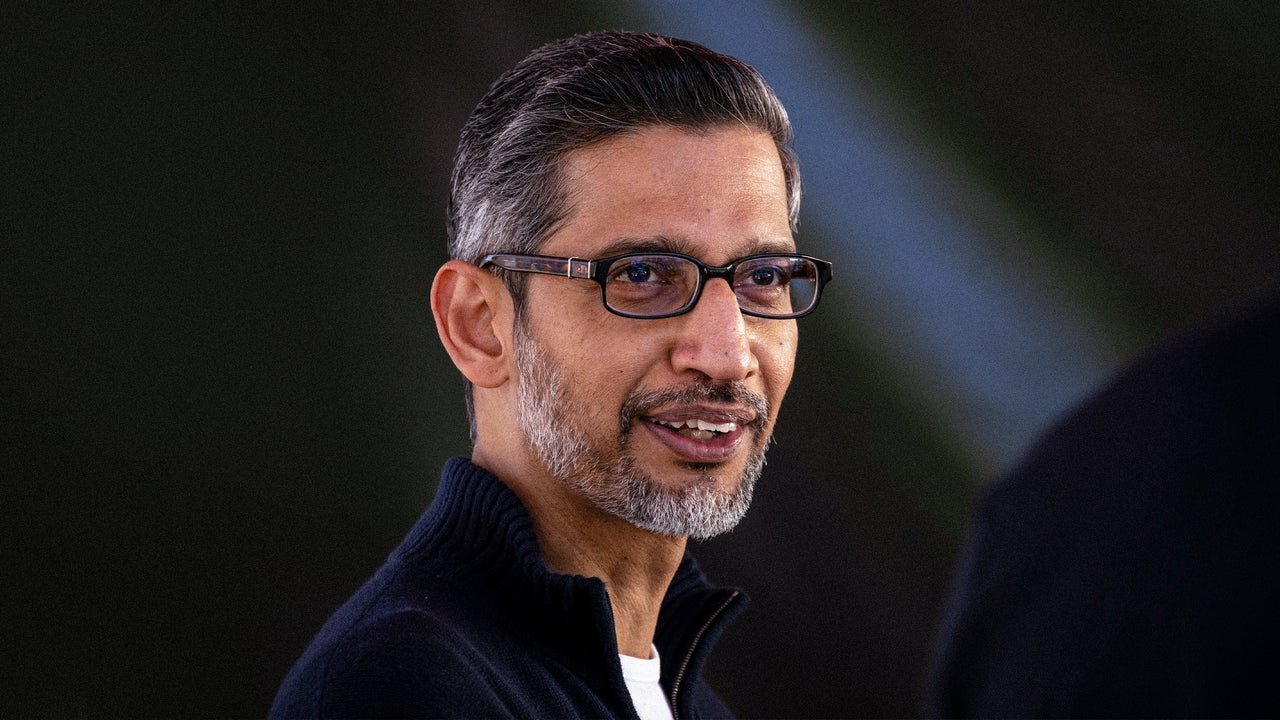
At Google, AI is reshaping employees’ titles and how they work. Last month, Google Cloud’s senior director and chief evangelist Richard Seroter told Fast Company that software engineers have turned into product engineers, or architects, as they move away from manual coding to directing teams of AI agents. It seems that AI also changed how Google’s CEO, Sundar Pichai, works, too. “I just think the CEO job is not that complicated,” Pichai said when asked how close AI is to replacing him as a CEO during a recent interview with The Verge. “There are aspects of it where I think [AI] is going to be very, very helpful in terms of decision-making.” The CEO added that AI can “make more rational choices over time.” He also said that “there are very, very few decisions which are really consequential, and most decisions aren’t.” Instead, Pichai said, making the decision and keeping the company moving forward is most important. “Done correctly, these tools are going to allow us to operate at the next level in everything we are doing,” Pichai added. “It’s not like you won’t do what you were doing before. You will start from a higher foundation.” Pichai likened AI agents to the advent of other innovations in the workplace, like spreadsheets. “I have to think back to, ‘how did people do all this financial analysis before’?” he asked. “I’m sure it changed over a period of three to four years fundamentally, and we got used to it.” With AI, some companies are restructuring their organizations completely. Block CEO Jack Dorsey said he wants 6,000 direct reports, effectively eliminating middle managers. Meta announced plans to create an AI engineering team with 50 engineers that reported to a single manager. Pichai didn’t confirm or deny that similar extreme restructuring would take place at Google. “Leaders and people are incredibly important,” Pichai said. “And it depends. Some companies have a much narrower suite of products, and so different structures may work. When you’re running something at the scale of Google Cloud, it’s important that there is a CEO in charge.” Still, as Google uses AI “more effectively,” roles at the company have changed. Pichai said that developers at Google went from merely using AI tools to assisting AI agents with coding, while some engineers direct teams of AI agents. Last month, the CEO announced that 75% of the company’s code was AI-generated. During the interview, Pichai also chimed in on the current trend of commencement speakers being booed for drumming up AI. Eric Schmidt, the former CEO of Google, was booed at the University of Arizona during his commencement address when he spoke about the rise of AI. “AI is the most profound technology humanity’s going to deal with,” Pichai said in the interview. “It’s happening at a very fast pace. I don’t think humans have evolved to process this much change, and the rate of change particularly over the last few years is incredibly high.” While Pichai acknowledged people’s concerns about how AI is changing the job market and the economy, he added that AGI—or artificial general intelligence, a hypothetical AI that matches or exceeds human cognitive capabilities—is on the horizon, “coming sooner rather than later,” and that it is “important that we as a society understand it and are preparing as much as possible.” If that’s any indication of how Pichai will talk about AI during his commencement address at Stanford University in June, we’ll have to wait and see how his words go over with those grads. View the full article
-
The current AI boom reminds me of the dot-com era, which I watched unfold from venture capital in the late 1990s and early 2000s. Lots of hype. Eye-watering investments. Genuine transformative potential. Most conversations about AI today focus on the obvious value, productivity, and efficiency gains. That’s real, but it’s the shallow end. The deeper potential is something else entirely: ending the linear take-make-waste economy and with it, our reliance on fossil fuels. For half a century, the global economy has run on a simple, destructive model. Extract finite resources from the Earth. Manufacture mostly disposable products. Throw away. Repeat. Petroleum into packaging and apparel. Oil in cars. Critical minerals in the backbone of nearly every modern technology. The list is long, but the pattern is the same. We treat finite resources as if they were infinite, when we all know they are not. COVID and the recent conflict around the Strait of Hormuz have made clear how fragile these supply chains really are, and why our dependence on finite resources concentrated in a handful of geographies is no longer a defensible strategy. The linear model strands value and creates strategic dependence. THE ALTERNATIVE Circularity is not a new concept. It refers to an economic model where materials already in circulation are infinitely regenerated, reducing the need for extraction and putting to work what’s already above ground, much of it currently bound for landfill. Circularity creates resource efficiency, strengthens supply chains and opens up new material sources. Instead of depending on a small number of extraction hubs, reserves diversify dramatically. Countries and industries gain genuine control over the materials they need. And the economics of reusing what’s already in circulation, rather than sending it to landfill, are increasingly hard to argue against. According to a new report from Circle Economy and Deloitte, our lack of circularity is costing the world €25.4 trillion a year, equivalent to nearly 31% of global GDP. Circularity is far more than a sustainability measure. It’s an economic imperative, and right now the cost of ignoring it shows up in resource inefficiency, premature product disposal, underutilized assets, and mounting sovereign and supply chain risk. AI is what gets us closer to making circularity the default economic model of the future, not the exception. Biotechnology, the practice of engineering biology to design new industrial processes, has long been used to solve global challenges. Insulin. Vaccines. Biofuels. Biomaterials. But its potential for circularity has been constrained by the sheer complexity of biological systems and the time it takes to discover and validate new solutions. AI’s strength is finding patterns in vast, complex biological datasets that sit beyond human cognitive capacity. It dramatically narrows the search space and shortens the time to discovery and validation. For circularity, that opens the door to rapidly advancing fields like protein design and the discovery of new enzymes capable of regenerating end-of-life materials (plastic packaging, apparel, and critical minerals in e-waste) into virgin-identical inputs. AI applied to biotechnology is the mechanism that can make circularity viable at global scale, and in doing so, end modern society’s reliance on fossil fuels and the linear economy. THE NEXT 50 YEARS The world order of the last 50 years will not apply to the next 50. The raw materials that power everyday life will become more valuable, not less, and the economies that control them will hold enormous strategic power. Circularity breaks that dependency. And AI, the same technology being hyped today for productivity gains, is what makes it possible at the speed and scale the world actually needs. AI is not without risk. It has to be designed responsibly, built ethically, and powered by clean energy. Otherwise, it simply adds to the problem it could solve. But if we get that right, the dot-com era will look modest by comparison. This is the technology that could finally close the loop, and with it, end our reliance on fossil fuels. Paul Riley is founder and CEO at Samsara Eco. View the full article

-
Given its profound implications for the workforce, the environment, and humankind as a whole, it’s no surprise that almost everyone has an opinion on artificial intelligence these days, including the pope. Less than a year after his election, Pope Leo XIV just released his first encyclical, a pastoral letter aimed to offer guidance. Titled Magnifica Humanitas: On Safeguarding the Human Person in the Time of Artificial Intelligence, the 42,300-word letter offers a glimpse into the pope’s stance on AI, highlighting various concerns over the dangers of technology as well as a need for safeguards to be put in place. “Calling for prudence, rigorous evaluation and even, at times, a slower pace in adopting AI does not mean opposing progress,” Pope Leo wrote. “Instead, it is an exercise of responsible care for the human family.” How have people reacted to the letter? While the letter aims to bring attention to AI and its dangers, it is also having an additional, unexpected response—bringing a fresh cultural relevance to an otherwise antiquated institution: the Catholic Church. “Pope Leo really makes me empathize with my grandma hanging a framed photo of John Paul II in her kitchen,” a user said on X in a post with over 7,000 likes. Another responded: “I’ve been Catholic grandma-maxxing ever since the guy was elected. I put one up too. lmao.” Others are taking the chance to inject humor into the conversation. A user said on X: “Now I’ll have to baptize myself Catholic so that every time they tell me to use Chat GPT, I can say that ‘my religion forbids it.’” “[Pope Leo XIV] released a statement that says it’s absolutely critical for the survival of mankind that I have a summer situationship,” another added. Still, some users did not agree with the pope’s stance, including Blake Scholl, founder and CEO of Boom Supersonic. “Bad take from the Pope,” he said in an X post. “Tech revolutions tend to eliminate some jobs while creating others. If we cling onto jobs, we’d still be plowing fields by hand out of fear of disruption.” Reactions to the encyclical highlight not just a conversation around technology, but also a quiet shift toward embracing the Catholic Church. After suffering declines in attendance in the wake of the institution’s abuse scandals, local archdioceses are once again welcoming record-high numbers of new converts. The Holy See has also had other notable internet moments of late, like a recent video of the pope doing the 6-7 hand gesture while chatting with a group of young kids. Users are, in fact, noticing the slow shift. “Me when young: The Catholic Church is an archaic and out-of-touch relic that will fade away in the modern world,” a user said on X. That same user added: “Me now: The Catholic Church may be our last salvation, pun intended. Welcome to the resistance.” The widely circulated encyclical is not Leo’s first time bridging a discussion between the Vatican and emerging technologies. In the past, he has expressed concern over the effects of AI on human development and offered personal advice on using it. “Use it in such a way that if it disappeared tomorrow, you would still know how to think,” he told a high school student in Honolulu. View the full article

-
Being critical of AI is far from a fringe position in the United States. Recent polling shows that half of U.S. adults feel more concerned than excited about the increased use of AI in daily life. And among Gen Z specifically, excitement and hope around artificial intelligence are falling while anger over the tech increases, with 42% of Gen Zers saying AI makes them anxious. But those increasingly common AI-critical sentiments are reportedly raising flags with the federal government. More than a thousand pages of unpublished reports acquired by Wired show a worrying trend across America: Federal intelligence agencies and domestic law enforcement are targeting “anti-technology extremists.” Counterterrorism under The President Earlier this month, President Donald The President and counterterrorism czar Sebastian Gorka shared the federal government’s current counterterrorism strategy. In it, Gorka laid out what he claims are the biggest terrorist threats to the U.S., naming “violent left-wing extremists, including anarchists and anti-fascists” as one of the “three major types of terror groups” facing America. The President’s foreword to the strategy concluded with his message to domestic terrorists: “We will find you and we will kill you.” According to the unpublished reports detailed by Wired, anti-tech extremism is subject to the same surveillance and potential criminalization laid out in that strategy. One such report, sourced from the New York Intelligence and Counterterrorism Bureau, introduces the term “anti-tech violent extremist” in the context of widespread AI adoption. “The chaotic atmosphere that may result from emergent AI technology in the next five years may fuel large-scale protests that devolve into civil unrest and anti-tech violent extremist activity, especially in large urban areas such as New York City,” the report reads. Some of the acquired documents come from fusion centers, which serve as links between federal intelligence agencies and state and local law enforcement departments. These fusion centers are reportedly on the lookout for threats to data centers, an especially controversial aspect of the AI boom. Though 7 in 10 Americans oppose the local construction of data centers, The President has gone so far as issuing an executive order to fast-track their development. A report from one western Pennsylvania fusion center claimed that “adversarial actors, including state-sponsored entities, criminal groups, and extremists, such as homegrown violent extremists or environmental extremists, may target U.S. data centers.” It continued: “These actors could also exploit the strategic importance of data centers to the U.S. economy, using them for activities like cryptocurrency mining or leveraging third-party entities, such as front companies, to gain access to U.S. data and infrastructure.” A dangerously broad category Though the documents purport to be targeting anti-tech “extremism,” there’s a fine line between extremism and peaceful protest—and some reports suggest that intelligence agencies could conflate the two. For example, a report from the Northern Virginia Regional Intelligence Center claimed that extremists are engaging in preoperational planning to target data centers based on observed behaviors. But in its breakdown of suspicious activity reporting (SAR) indicators, the flagged behaviors could just as easily be carried out by peaceful protestors, including “expressed/implied threat,” “observation/surveillance,” “photography,” “testing/probing of security,” and “attempted intrusion.” Additionally, fusion centers are reportedly keeping tabs on tech-critical protests and civic activities. That includes reporting on local budget meetings and school board meetings, along with protests like the “Tesla Takedown” movement, which critiques Elon Musk’s outsize influence on the U.S. government. View the full article