Newsletter
Want to keep up to date with all our latest news and information?


ResidentialBusiness
Administrators
-
Joined
-
Last visited
Everything posted by ResidentialBusiness
-
Lyft has recently announced a strategic collaboration with NVIDIA, set to enhance its operational capabilities through cutting-edge artificial intelligence (AI) technology. This partnership, unveiled during the NVIDIA GTC AI Conference, aims to optimize Lyft’s rideshare platform and lay the groundwork for future autonomous vehicle deployments. For small business owners, particularly those engaged in service-oriented sectors, this development presents both promising opportunities and potential challenges that deserve attention. The core of this initiative is the integration of NVIDIA’s AI technologies to bolster Lyft’s predictive modeling systems and mapping infrastructure. By enhancing these critical functionalities, Lyft intends to improve how it connects riders with drivers, ultimately streamlining service delivery and operational efficiency. As Siddharth Patil, EVP of Rideshare Experience & Marketplace at Lyft, stated, “This collaboration represents how AI infrastructure will be the backbone of modern mobility.” Small businesses operating within the mobility or logistics sectors can draw several key benefits from Lyft’s AI upgrades. Primarily, the enhanced predictive modeling capabilities will likely result in improved rider-driver matching, significantly impacting service quality. For small businesses that utilize rideshare services for logistics or as part of their customer experience, this means potential reductions in wait times and increased reliability in transportation options. Moreover, the introduction of a next-generation mapping platform aims to enhance safety and accuracy in navigation. Improved guidance systems can help businesses avoid traffic bottlenecks and other issues that delay deliveries. The integration of advanced mapping functionalities may also provide richer data insights, leading to more informed decision-making in route planning. Lyft’s commitment to advancing autonomous vehicle technology through this collaboration can also influence small businesses interested in integrating similar tech-driven solutions. The interaction between fleet management systems and AI can pave the way for creating more efficient delivery models. For instance, businesses that rely on logistics might consider partnerships with companies like Lyft to harness AI-powered fleets for their transportation needs. Yet, this initiative brings with it certain challenges small business owners must consider. The integration of such high-level AI technologies can lead to a transformative shift in operational norms. Smaller enterprises may find it daunting to compete with larger companies that can invest significantly in similar technologies, potentially widening the gap between enterprises with advanced capabilities and those with limited technological resources. Additionally, as Lyft moves toward a fleet of autonomous vehicles, there may arise regulatory challenges that could affect how small businesses can integrate these technologies into their operations. With evolving regulations surrounding autonomous vehicles, staying informed and compliant will be essential for businesses looking to leverage such innovations in their service offerings. The collaboration with NVIDIA is not limited to rideshare improvements. Lyft’s recent acquisition of Freenow expands its operations and regulatory relationships in Europe, elevating its capacity for growth on a global scale. This move signifies that the implications of this partnership extend beyond immediate rideshare enhancements and into broader mobility solutions that small businesses can leverage. Rishi Dhall, VP of NVIDIA Automotive Business, emphasized the significance of this partnership, stating, “From optimizing millions of daily rides to mapping complex road environments, this collaboration demonstrates AI’s power to solve real-world challenges at massive scale.” This collaborative effort not only reinforces the importance of AI in addressing current logistical needs but also signals a shift toward a hybrid ecosystem of fleets, combining fleet-owned, partner-deployed, and consumer-owned vehicles. Ultimately, as Lyft surges ahead with AI technologies, small business owners need not only to adapt to new operational landscapes but also to recognize emerging opportunities that can enhance their sustainability and growth. Investors in technology should consider aligning with AI platforms, as these integrations can yield transformative changes in productivity and service delivery. With the right strategies, small businesses can harness these advancements to remain competitive in an increasingly tech-driven world. For further details on Lyft’s integration with NVIDIA and its implications, you can explore the original post here. Image via Google Gemini This article, "Lyft Partners with NVIDIA to Boost AI and Autonomous Vehicle Technology" was first published on Small Business Trends View the full article
-
The debate over North Sea oil and gas resembles a bar brawl between opponents who can’t see straightView the full article
-
‘Omnibus’ claim comes days before regulator unveils details of mis-selling redress scheme View the full article
-
Kathy Hochul, the governor of New York, has proposed a delay to the state’s landmark 2019 climate law, saying its goals would be too costly and could worsen already-expensive utility bills. But a coalition of climate, labor, and community groups counters that there are serious costs to not meeting the law’s climate goals—like more expensive energy bills, lost jobs, and health impacts caused by pollution. Delaying the law would cost New Yorkers nearly $9,000 on their energy bills per household over five years, due to the loss of billions of dollars in energy credits or rebates, according to an analysis from NY Renews. The proposed rollbacks would mean roughly 150,000 jobs lost statewide, as well as 5,000 premature deaths and 4,000 asthma hospitalizations over the next five years. Hochul’s proposed Climate Law changes In 2019, New York state passed the Climate Leadership and Community Protection Act, known colloquially as the Climate Law. It was signed into law by Hochul’s predecessor Andrew Cuomo. It was a landmark policy, making New York “one of the first states to put in law enforceable mandates that the state decarbonize and take steps to meet its climate goals,” says Stephan Edel, executive director of NY Renews. The law requires cutting greenhouse gas emissions 40% by 2030 (as compared to 1990 levels) and 85% by 2050. In a recent op-ed, Hochul proposed pushing that 2030 goal to 2040, and also changing the way the state measures methane emissions, which experts say means much of this pollution could go undetected. While the Climate Law sets emissions reduction targets, it doesn’t specify how the state should meet those goals. Hochul was supposed to release the regulations for mandating these reductions by January 2024; she did not, and is now being sued by environmental groups for missing that deadline. In her op-ed, Hochul proposed issuing those regulations for how the state reduces emissions by the end of 2030, pushing back the entire enforcement of the Climate Law. The law will save households money In making her proposals, Hochul has said the effort to meet the Climate Law’s 2030 targets would actually make utility bills spike, and even cause gas prices at the pump to surge more than $2 a gallon. Those figures reportedly come from a memo from the New York State Energy Research and Development Authority (which the governor controls). But multiple environmental groups dispute those estimates. The high costs represent a “worst-case scenario” calculation, Edel says, that doesn’t reflect the actual policy that would take place. NY Renews’s own research says these programs help save money for households, particularly for low-income and disadvantaged communities. Another group, Earthjustice, also disputed the costs, telling The New York Times that the figures should include rebates and subsidies for energy customers, and that the state used an “exaggerated figure for penalizing polluters.” Edel adds that the governor’s office hasn’t been “transparent” in how it put that memo about costs together. (Fast Company has not viewed the NYSERD memo, and has reached out to Hochul’s office for comment.) Climate crisis is too urgent to kick down the road Concerns about rising utility costs and gas prices are valid. But those concerns are being driven by fossil fuels. That’s been clear with the conflict in Iran; New York gas prices have spiked 21% since the unrest began. “What we could do best to sustainably stabilize and lower bills is actually get people off fossil fuels, make their homes more energy efficient, and in doing that [make their homes] healthier and safer,” Edel says. The NY Renews analysis looks at the state’s own research on the impact of climate programs to quantify what New Yorkers would lose out on if the law is delayed and altered. Along with causing New Yorkers to miss out on $9,000 in household energy bill savings over five years, and 150,000 jobs statewide, the analysis finds that the state will lose between $15 and $60 billion in local revenue. That’s money that would have been invested in communities for things like rooftop and community solar, electric buses, weatherization for affordable housing, and infrastructure and resiliency projects. Hochul has framed the Climate Law as something at odds with affordability efforts—claiming that its delay would protect residents from future costs. NY Renews says that’s not supported by the research. Delaying the law also conflicts with the urgency climate experts say is needed to address these issues. “If we give the governor the power to kick the can down the road,” Edel says, “it fundamentally undermines the rationale of having . . . legally mandated climate goals, [and] the idea that this is an urgent problem that needs to be addressed.” “The governor should not have the discretion to just be like, ‘Yeah, I don’t feel like dealing with climate change,’” he adds, “because it’s really here.” View the full article

-
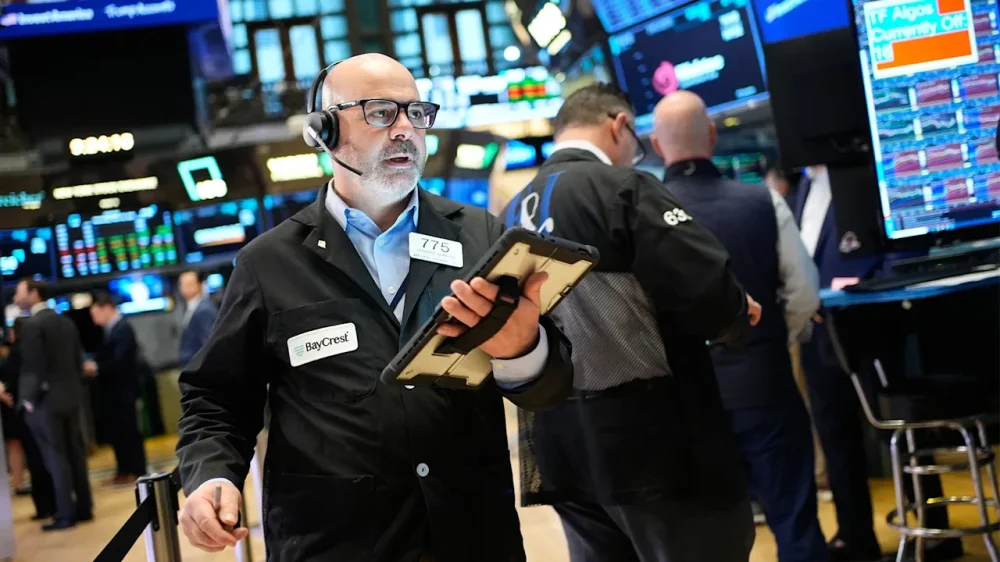
U.S. stocks are falling Friday as Wall Street stumbles toward the finish of a fifth straight losing week, which would be its longest such streak in nearly four years. The S&P 500 sank 0.8% in early trading, deepening its losses after falling the day before to its worst drop since the war with Iran began. The Dow Jones Industrial Average was down 402 points, or 0.9%, as of 9:35 a.m. Eastern time, and the Nasdaq composite was 1% lower. The losses are a break from Wall Street’s pattern this week, where the U.S. stock market flip-flopped from gains to losses each day as hopes rose and fell about a possible end to the war. Moments after the U.S. stock market finished its dismal Thursday of trading, President Donald The President offered another potential signal for hope. He extended a self-imposed deadline to “obliterate” Iran’s power plants to April 6 if it doesn’t allow oil tankers to resume their exits from the Persian Gulf to the open ocean through the Strait of Hormuz. Oil prices pulled back briefly after The President’s announcement in a sign of hope in financial markets that some normalcy may return to the Strait of Hormuz. But oil prices resumed their climb as the sun moved westward from Asia to Europe and back to Wall Street. Despite The President’s second announcement of delay this week, fighting continued in the Middle East. Iran gave no signs of backing down, while Israel threatened to “escalate and expand” its attacks on Iran. “The diplomatic dissonance this week between the U.S. and Iran dismayed investors,” said Doug Beath, global equity strategist at Wells Fargo Investment Institute. “By the end of the week, risk appetite could not withstand the fog of war.” “Any further statements by The President about a deal are white noise to the markets,” Jim Bianco, president and macro strategist at Bianco Research, wrote in a social media post. “Only if the IRANIANS say the talks are going well will it impact markets.” The price for a barrel of Brent crude rose 2.2% to $104.15 and is up from roughly $70 before the war began. Benchmark U.S. crude rose 3% to $97.28 per barrel. The fear in financial markets is that the war will disrupt the production and transport of oil and natural gas in the Persian Gulf for a long time. It could keep so much oil and gas out of the world’s markets that it sends a punishing wave of inflation through the global economy. Not only would it raise prices for drivers buying gasoline, it could push businesses that use any trucks, ships or planes to move their products to raise their own prices. If the war continues until the end of June, strategists at Macquarie say the price of oil could reach $200 per barrel, which would be a record. Such worries have virtually eliminated hopes among traders that the Federal Reserve could cut interest rates this year to boost the economy. While lower rates would help give the job market and prices for investments an upward jolt, they would also risk making inflation worse. Long-term Treasury yields rose even further in the bond market following Friday’s rise for oil prices. The yield for the 10-year Treasury climbed to 4.46% from 4.42% late Thursday and from just 3.97% before the war began. That rise has already sent rates jumping for mortgages and for other loans taken by U.S. households and businesses, slowing the economy. On Wall Street, most stocks fell, including four out of every five in the S&P 500. One of the few stocks to rise was Netflix, which added 0.8% a day after announcing price hikes for its services. In stock markets abroad, indexes fell in Europe following a mixed finish in Asia. AP Business Writers Chan Ho-him and Matt Ott contributed. —Stan Choe, AP Business Writer View the full article
-
If you only skim the headlines lately, you’d believe “conscious consumerism” is in full retreat, backpedaling to obscurity. ESG has become a political flashpoint. Corporate purpose feels diluted. DEI has been rebranded, softened, or even shelved altogether. Brands, wary of backlash, are pulling back from impact language. And yet, consumers didn’t get the memo. According to our own 2026 Conscious Consumer Report, conducted with our partners Ipsos and Engage for Good, 40% of North American purchases are now influenced by social and environmental considerations, which is up from 38% in last year’s report. That growth struck even during inflation, heightened price sensitivity, and what we’re continuing to see as peak “anti-woke business” rhetoric. So we like to flip this concept on its head. Conscious consumerism isn’t collapsing. It’s normalizing, and it includes Republicans, too. THE MYTH OF THE AFFLUENT LIBERAL SHOPPER Two long-standing assumptions no longer hold. First, higher income no longer predicts ethical purchasing. Sustainable shopping or values-driven purchasing doesn’t map neatly to affluence. In fact, our most engaged segment, Sustainability Stewards, are nearly twice as likely as disengaged shoppers to say price had “much more influence” on their purchasing decisions over the past year. In other words, the most values-driven consumers are also highly price sensitive. Second, this behavior transcends party lines. In the U.S., conscious purchasing is only marginally (2%) more associated with Democrats than Republicans. Values-driven behavior spans the political spectrum. So ultimately, the conscious consumer is not ideological, but rather mainstream. And for brand leaders navigating a polarized market, that should be helpful and clarifying. The claims that resonate most aren’t partisan, they’re actually practical. THE REAL BARRIER: CONFUSION Last year, we identified the biggest obstacle to conscious consumerism: claims confusion. Brands were simply missing the mark. Nearly half of consumers walked away from products with unclear sustainability claims. Among the most conscious shoppers, that number surged to 87%—so much lost opportunity. So this year, we decided to pressure test the claims, by using the drivers and motivations for what actually drives purchase, and a very clear pattern emerged. Consumers favor claims that deliver immediate, personal benefit, or “me now, not we later.” Claims like durability, safety, and ingredient transparency outperformed future-focused or science-heavy sustainability language by 3-4x. When we reframed more abstract claims to make the human benefit explicit (e.g. “Simple, non-toxic ingredients that are better for your health” or “Every purchase feeds your family and a family in need”), purchase motivation increased in 71% of consumables claims and 67% of wearables claims. That’s significant. The largest gains came from claims that previously felt indirect or ideological. Adding clear, everyday language made them tangible. “Fair working conditions” performed better when rewritten as “made by people receiving living wages in safe working conditions,” for example. Ultimately, this approach isn’t about diluting impact. It’s about translating it, and some brands already understand this intuitively. Patagonia leads with durability, i.e. “Built to last, making sustainability synonymous with quality.” Seventh Generation emphasizes products made without harmful chemicals, translating environmental care into family health. Allbirds showcases comfort first, and communicates materials used second. Oatly has a refreshing point-of-view around innovation and trial and error, and is humorous and self-deprecating. These brand examples don’t abandon impact; instead they anchor it in everyday value and humanity. THE CONFIDENCE GAP Interest in corporate impact remains strong. Sixty-two percent of Americans and Canadians say they’re somewhat or very interested in learning about a company’s social and environmental actions, but nearly three in four report low or no trust in business impact communications—that’s a trust gap. When asked which sector has the greatest ability to improve the health of people and the planet, business ranks second behind the government. But when asked which sector they’re most confident will take action, confidence drops significantly. In the U.S., confidence in government falls 24 points between perceived ability and expected action, placing it last among surveyed sectors. Silence from organizations doesn’t ultimately reduce that risk, but rather it amplifies suspicion. Greenhushing reinforces the narrative that responsible business is fading, even when purchasing data says otherwise. This indicates that consumers see potential, but they doubt follow-through. As sustainability and social impact professionals, we know trust isn’t built on promises, but on capability and character: products that deliver what they claim, and companies whose actions align with their words. When that foundation is in place, communication becomes a growth lever versus a liability or weakness. A STRATEGIC IMPERATIVE: FIND YOUR AUDIENCES The findings challenge two dominant narratives we’ve seen: that sustainability is fading as a purchasing driver, and that it only matters to affluent liberals. Conscious consumerism is growing and evolving, having found among audiences long assumed to be disengaged or harder to reach. And the path forward isn’t louder ideology but clear, more cogent strategy. Who should brands target? Everyone. What should they say? Lead with immediate human benefit. Where should they say it? In decision-making moments, where clarity drives conversion and credibility builds trust. The backlash narrative may be loud, but the actions and behavior couldn’t be clearer. Brands that are able to translate impact into everyday value, and prove it, won’t just weather this moment, they’ll grow and ultimately thrive because of it. Phil Haid is founder and CEO, Public Inc. View the full article

-
We may earn a commission from links on this page. Deal pricing and availability subject to change after time of publication. If you have some spring chores to tackle in your yard, a good set of cordless outdoor tools can save you time—but cordless outdoor tools can also be expensive. Cordless lawn and gardening tools use high-capacity batteries, which can cause a steep increase in price. Amazon has some Big Spring Deals on landscaping tools that can save you up to 62% off on the equipment you need to tackle your spring to-do list. This 24-volt chainsaw is 35% offIf you need to trim a tree or clean up fallen branches, a chainsaw can speed up the process. Although most battery-operated chainsaws aren’t quite as powerful as traditional gas-powered ones, a good quality battery can give you enough power for most things you would use a chainsaw for in your yard. The Greenworks 24-volt, 10-inch chainsaw is on sale for $97.99, down from 149.99. The saw comes with a 24-volt, two-amp-hour battery and a charger as well. Greenworks 24V 10" Cordless Compact Chainsaw (Great For Storm Clean-Up, Pruning, and Firewood), 2.0Ah Battery and Charger Included $97.99 at Amazon $149.99 Save $52.00 Get Deal Get Deal $97.99 at Amazon $149.99 Save $52.00 These 40-volt tool deals are perfect for most yards Whacking weeds is a big part of keeping your yard look manicured, especially in springtime. Getting a trimmer that lasts long enough to get some work done can be expensive, so a 40-volt, two-amp-hour battery is a good investment to avoid running back to the charger every few minutes. The Greenworks 40-volt, 12-inch string trimmer and 390 CFM leaf blower combo is on sale for $124.99, down from 189.99. This combo comes with a 40-volt, two-amp-hour battery and a charger. It’s rated to work at maximum capacity for at least an hour and can be used on about a third of an acre per charge. Greenworks 40-volt, 12-inch string trimmer and leaf blower combo $124.99 at Amazon $189.99 Save $65.00 Get Deal Get Deal $124.99 at Amazon $189.99 Save $65.00 The Greenworks 40-volt, eight-inch cordless edger is on sale for $190.95, 36% off its regular price. The edger tool comes with a 40-volt, four-amp-hour battery that you’ll be able to use right out of the box. The edger is rated to tackle about one mile of edging and can run for at least an hour before needing a charge. A spare Greenworks 40-volt, two-amp-hour battery is on sale for $49, 62% off its regular price. If you already have a Greenworks set of 40-volt tools, this battery is compatible with those sets. Having at least two batteries allows you to charge one battery while you’re using the other so you don’t need to wait for a fresh battery. This is a battery-only deal, so you’ll need a Greenworks 40-volt charger to use it. If you have a larger yard, check out this 60-volt tool setIf you have a larger yard, it might take more than an hour to trim. A 60-volt battery will give you a little more power and run-time so you can get more done between battery swaps. The Greenworks 60-volt yard tool combo set is on sale for $209, 34% off its regular price. It comes with a 13-inch string trimmer, a 540 CFM leaf blower, a 60-volt, four-amp-hour battery, and a charger. The set can run for 90 minutes and the string trimmer can trim about two miles worth of weeds on a single charge. Our Best Editor-Vetted Amazon Big Spring Sale Deals Right Now Apple AirPods Pro 3 Noise Cancelling Heart Rate Wireless Earbuds — $199.00 (List Price $249.00) Apple iPad 11" 128GB A16 WiFi Tablet (Blue, 2025) — $299.00 (List Price $349.00) Samsung Galaxy Tab A11+ 128GB Wi-Fi 11" Tablet (Gray) — $209.99 (List Price $249.99) Sony WH1000XM6- Best Wireless Noise Canceling Headphones — $398.00 (List Price $459.99) Apple Watch Series 11 (GPS, 42mm, S/M Black Sport Band) — $299.00 (List Price $399.00) Blink Video Doorbell Wireless (Newest Model) + Sync Module Core — $35.99 (List Price $69.99) Fire TV Stick 4K Max Streaming Player With Remote — $34.99 (List Price $59.99) Amazon Kindle Colorsoft 16GB 7" eReader (Black) — $169.99 (List Price $249.99) Deals are selected by our commerce team View the full article
-
Allan Leighton rejects chancellor’s assertion that petrol retailers are price gouging as store chain’s profits sinkView the full article
-
We may earn a commission from links on this page. Deal pricing and availability subject to change after time of publication. If you want a high-quality OLED TV for gaming and movies but the options you’ve been seeing online are out of your price range (they often easily surpass the $1,000 mark), the 55-inch Samsung S85F OLED TV checks most of the necessary boxes and is currently down to $897.99 (originally $1,397.99) thanks to a 36% discount during the Amazon Big Spring Sale. Samsung S85F OLED TV $897.99 at Amazon $1,397.99 Save $500.00 Get Deal Get Deal $897.99 at Amazon $1,397.99 Save $500.00 Despite being labeled an entry-level OLED TV, the picture quality is still impressive, with not just strong HDR performance, color accuracy, and near-infinite contrast, but also perfect blacks and refined shadow detail. That means you’ll get better bang for your buck during dark scenes than you will with LED/QLED displays. The S85F has a very wide viewing angle, allowing for a consistent image from all sides. It uses an AI Gen2 processor and has AI-based enhancements, including 4K AI Upscaling and Real Depth Enhancer, and runs on the Tizen 9.0 smart TV platform. It’s also an underrated choice for gamers that rivals the best gaming TVs, with a highly responsive 9.4ms input lag. It has four HDMI 2.1 ports that support 4K 120Hz, AMD FreeSync Premium, Nvidia G-Sync, ALLM, and HDR10+ gaming, as well as Motion Xcelerator tech to reduce blur in fast scenes and an AI Auto Game Mode to optimize settings. Plus, the Samsung Gaming Hub offers extra perks, including access to a wide range of cloud gaming apps. The two 2-channel, 20W speakers give users decent bass and clear dialogue, but they're not home theater-level. While it may not be the absolute brightest OLED on the market or have top-of-the-line built-in audio, the 55-inch Samsung S85F OLED TV still offers great value and makes a strong choice for gaming and movies, especially at a sub-$900 price point, which is more than fair for an OLED from a top brand. If you want the best of the best, you can upgrade to a model like the S95, but it’ll come with a hefty price bump. For most people, a middle-ground OLED like the S85F is a solid choice. Our Best Editor-Vetted Amazon Big Spring Sale Deals Right Now Apple AirPods Pro 3 Noise Cancelling Heart Rate Wireless Earbuds — $199.00 (List Price $249.00) Apple iPad 11" 128GB A16 WiFi Tablet (Blue, 2025) — $299.00 (List Price $349.00) Samsung Galaxy Tab A11+ 128GB Wi-Fi 11" Tablet (Gray) — $209.99 (List Price $249.99) Sony WH1000XM6- Best Wireless Noise Canceling Headphones — $398.00 (List Price $459.99) Apple Watch Series 11 (GPS, 42mm, S/M Black Sport Band) — $299.00 (List Price $399.00) Blink Video Doorbell Wireless (Newest Model) + Sync Module Core — $35.99 (List Price $69.99) Fire TV Stick 4K Max Streaming Player With Remote — $34.99 (List Price $59.99) Amazon Kindle Colorsoft 16GB 7" eReader (Black) — $169.99 (List Price $249.99) Deals are selected by our commerce team View the full article
-
Move marks escalation in tensions in run-up to much-anticipated May summit in Beijing View the full article
-
Managing customer service operations effectively requires a strategic approach that prioritizes several key elements. Personalization of the customer experience is vital, as it builds loyalty and satisfaction. Moreover, providing multichannel support improves accessibility. Empowering your team with ongoing training and knowledge management tools is fundamental for effective service delivery. By continuously evaluating performance metrics, you can identify areas for improvement. Comprehending these strategies can greatly influence your customer service success. What are the specific tactics you could implement? Key Takeaways Personalize customer interactions using data analytics to enhance satisfaction and loyalty. Implement multichannel support to allow customers to engage through their preferred platforms. Empower your customer service team with knowledge management tools for quicker issue resolution. Actively gather and analyze customer feedback to identify improvement areas and build loyalty. Continuously evaluate performance metrics and invest in training to enhance service quality. Personalize the Customer Experience To improve customer service, personalizing the customer experience is essential, as it directly addresses individual needs and preferences. With 81% of customers preferring personalized experiences, comprehending their unique requirements is fundamental for effective customer service operations. By utilizing data analytics and CRM systems, you can track and analyze customer behavior, leading to a 47% increase in customer satisfaction and loyalty. Access to customer history during interactions allows you to customize your support, enhancing the overall experience. Implementing AI and machine learning technologies can further deepen your insights into customer preferences, enabling more effective personalized recommendations. These customized interactions not just boost satisfaction but additionally encourage repeat business and positive referrals. In your customer ops, focusing on personalization guarantees that every interaction feels relevant and valuable, greatly improving customer relationships and driving long-term success. Provide Multichannel Support Offering multichannel support is crucial for modern customer service, as it enables customers to interact through their preferred platforms, whether that’s phone, email, live chat, or social media. By implementing strong omnichannel strategies, you can retain up to 89% of customers, compared to only 33% with less effective methods. This highlights the importance of accessible communication channels in managing customer service operations effectively. Integrating CRM systems like Zendesk or HubSpot helps synchronize customer information across all channels, ensuring consistency and efficiency in communication. Effective multichannel support also improves customer satisfaction by allowing seamless shifts between interactions, reducing frustration. In addition, utilizing customer analytics across various channels enables you to understand customer behavior and preferences better, leading to more personalized interactions and increased loyalty. Empower Your Customer Service Team Providing multichannel support lays the groundwork for an effective customer service experience, but empowering your customer service team is equally important. To achieve this, make certain your agents have access to thorough knowledge management systems. This access lets them swiftly find the necessary information to resolve customer queries effectively. Information sharing and establishing best practices within your team promote consistent responses, which can boost customer satisfaction levels markedly. Utilizing enterprise search tools can streamline information retrieval, reducing resolution times and enhancing the overall efficiency of customer interactions. When your team feels empowered, they’re more equipped to address issues without delay, leading to higher customer satisfaction. Furthermore, offering regular training and upskilling opportunities increases your representatives’ confidence and competence. This not just improves service delivery but also raises team morale. Act on Customer Feedback Acting on customer feedback is vital for any business aiming to improve its customer service experience. Actively seeking and addressing feedback not just boosts your brand loyalty, but statistics show that 83% of customers feel more loyal to brands that effectively respond to complaints. Utilizing tools like SurveyMonkey or Google Forms allows you to gather actionable insights, which can inform necessary service improvements. Regularly analyzing this feedback helps you identify patterns, leading to targeted upgrades in your customer service strategies and operations. Engaging customers in the feedback process cultivates a sense of value and partnership, enabling you to better understand their needs and expectations. Implementing structured approaches for collecting and reviewing feedback guarantees that these valuable insights are consistently integrated into your service improvement plans. Develop Effective Communication Skills Customer feedback is an invaluable resource for refining service strategies, but it’s only part of the equation. Developing effective communication skills is crucial for outstanding customer service. Here are three key strategies to improve your communication: Practice Active Listening: Focus on truly grasping customer needs and concerns. This skill helps you respond appropriately, improving satisfaction rates. Engage in Training Programs: Regular training can greatly boost your communication abilities. These programs equip you with techniques to deliver better service and elevate customer experiences. Encourage Consistent Feedback: Regularly seek feedback on your communication style. This will help you adapt to changing customer expectations, ensuring you remain relevant and effective. Set Realistic Customer Expectations Setting realistic customer expectations starts with clear communication channels that keep your customers informed. Consistent messaging across all platforms helps reinforce your commitments, ensuring that customers understand what they can expect from your service. Clear Communication Channels When businesses prioritize clear communication channels, they not just improve customer satisfaction but also set realistic expectations for service delivery. By establishing these channels, you guarantee customers receive timely updates and accurate information. Here are three key strategies: Openly communicate potential delays or limitations to manage expectations effectively and reduce frustration. Regularly update customers on inquiries or service requests through their preferred channels, cultivating transparency and trust. Implement a feedback loop that encourages customers to voice their expectations and concerns, allowing you to adjust your communication strategies. Consistent Messaging Across Platforms Effective communication isn’t just about having clear channels; it’s also about ensuring that the messages delivered through these channels are consistent across all platforms. When customers receive uniform information, regardless of how they engage with your brand, it builds trust and reduces confusion. Companies with strong omnichannel strategies retain 89% of their customers, emphasizing the need for consistency. By setting realistic expectations through clear communication, you improve customer satisfaction, as 80% of customers value their experience as much as the product. Utilizing CRM systems can synchronize your messaging, aligning all representatives with your strategy. This clarity minimizes misunderstandings and service issues, leading to a 10-15% decrease in customer inquiries and complaints, ultimately enhancing your overall service operations. Transparency in Service Limitations Transparency in service limitations is crucial for managing customer expectations effectively. By being upfront about what you can and can’t provide, you can greatly improve customer satisfaction. Here are three key benefits of this approach: Reduces Frustration: Customers appreciate honesty, which can lower dissatisfaction and negative feedback. Builds Trust: Acknowledging limitations cultivates loyalty, as 83% of customers feel more connected to brands that do so. Improves Efficiency: Clear guidelines allow your team to manage workloads better while maintaining quality interactions. Regularly updating customers about service limitations and potential solutions creates a sense of reliability, encouraging their continued engagement. Continuously Evaluate and Improve To improve customer service effectiveness, it’s essential to continuously evaluate and refine your strategies based on real-time data. Regularly collecting and analyzing customer satisfaction scores and feedback helps you pinpoint areas needing improvement. Implement structured feedback systems, like surveys and performance metrics, to guarantee insights are systematically reviewed for ongoing advancements. Tracking key performance indicators (KPIs), such as average handle time and ticket resolution rates, gives you measurable benchmarks to assess your service effectiveness. Engaging in ongoing data analysis allows you to identify trends and patterns, enabling proactive adjustments in your operations. Furthermore, continuous training and development initiatives based on evaluated feedback cultivate a culture of improvement and adaptability within your service teams. By committing to this cycle of evaluation and improvement, you can create a more responsive and effective customer service environment, ultimately leading to increased satisfaction and loyalty. Frequently Asked Questions What Are the 7 Essentials to Excellent Customer Service? To achieve excellent customer service, focus on seven fundamentals: provide multichannel support, prioritize personalization, empower your team with knowledge tools, actively seek customer feedback, develop effective communication skills, guarantee timely responses, and cultivate a positive service culture. By integrating these elements, you can improve customer satisfaction, build loyalty, and create a seamless experience. What Are the 4 P’s of Service Strategy? The 4 P’s of service strategy are Product, Price, Place, and Promotion. Product defines the service’s quality and features, ensuring it meets customer expectations. Price involves setting a competitive pricing strategy that reflects the service’s perceived value. Place focuses on how the service is delivered, making it accessible through various channels. Finally, Promotion includes marketing tactics that effectively communicate the service’s benefits, helping attract and retain customers in a competitive market. What Are the 5 R’s of Customer Service? The 5 R’s of customer service are vital for enhancing customer experiences. First, respect your customers by valuing their time and opinions. Next, be responsive; quick replies can increase the likelihood of repeat business. Reliability is fundamental—consistently meet your promises to build trust. Resourcefulness involves offering creative solutions to problems, ensuring efficiency. Finally, focus on resolution, addressing customer issues effectively to nurture loyalty and satisfaction in your service interactions. What Strategies Have You Used to Ensure Exceptional Customer Service While Managing Day-To-Day Operations? To guarantee exceptional customer service during managing day-to-day operations, you can implement omnichannel support to improve customer retention. Regularly train your team on communication skills to boost performance and satisfaction. Utilize customer feedback systems to adapt strategies, as this cultivates loyalty. Automating routine inquiries can streamline operations, allowing staff to focus on complex issues. Finally, continuously evaluate customer service metrics to refine your approach and drive ongoing improvements in service delivery. Conclusion In summary, managing customer service operations effectively requires a strategic approach that prioritizes personalization, multichannel support, and team empowerment. By actively seeking and acting on customer feedback, developing communication skills, and setting realistic expectations, you can improve customer satisfaction. Regular evaluation and improvement of performance metrics guarantee ongoing success. Implementing these strategies cultivates a responsive environment, ultimately leading to long-term customer loyalty and a more efficient service operation. Stay committed to these principles for best results. Image via Google Gemini This article, "7 Essential Strategies to Manage Customer Service Operations Effectively" was first published on Small Business Trends View the full article
-
Traditional 60-40 portfolio of global equities and fixed income on course for worst month since 2022View the full article
-
We may earn a commission from links on this page. Deal pricing and availability subject to change after time of publication. Amazon’s Big Spring Sale is underway, and one of the more practical big-ticket deals right now is on the Anker Solix F2000 Portable Power Station. It’s down to $799.99 (from $1,999), which is about 60% off and the lowest price tracked so far, according to price tracking tools like Keepa. That kind of drop makes this a very different conversation. At full price, it’s a niche buy. At this price, it starts to feel like a realistic backup option for homes, road trips, or anyone who deals with frequent power cuts and wants something more reliable than a basic inverter setup. Anker Solix F2000 Portable Power Station Backup power for home use, outdoor camping or RVs $799.99 at Amazon $1,999.00 Save $1,199.01 Get Deal Get Deal $799.99 at Amazon $1,999.00 Save $1,199.01 The F2000 is built around a 2,048Wh battery and a 2,300W AC output. In real terms, that’s enough to run a dishwasher through a full cycle or keep essentials like a fridge, lights, and a few devices going during a blackout. It can also handle heavier appliances like a washing machine or oven, just not all at once, since that 2,300W is shared across its three AC outlets. You also get a mix of ports that cover most setups: three AC sockets, three USB-C ports with up to 100W output for laptops, two USB-A ports, and car-style outlets. Plus, there’s a screen that gives you a clear read on battery levels, power usage, and time estimates, and the companion app adds extra control like switching ports on or off and monitoring battery temperature. Charging is flexible, too. You can plug it into a wall for a full recharge in a little over an hour, use a car adapter, or connect up to 1,000W of solar panels (sold separately) for off-grid use. If you want more runtime, there’s also an optional expansion battery that doubles the capacity to 4,048Wh, though the output stays the same at 2,300W. It’s currently bundled with the F2000 for $1,498.99, down from $2999. The main downside here is size and weight. Even with wheels and a telescopic handle, this is not something you casually move around. Our Best Editor-Vetted Amazon Big Spring Sale Deals Right Now Apple AirPods Pro 3 Noise Cancelling Heart Rate Wireless Earbuds — $199.00 (List Price $249.00) Apple iPad 11" 128GB A16 WiFi Tablet (Blue, 2025) — $299.00 (List Price $349.00) Samsung Galaxy Tab A11+ 128GB Wi-Fi 11" Tablet (Gray) — $209.99 (List Price $249.99) Sony WH1000XM6- Best Wireless Noise Canceling Headphones — $398.00 (List Price $459.99) Apple Watch Series 11 (GPS, 42mm, S/M Black Sport Band) — $299.00 (List Price $399.00) Blink Video Doorbell Wireless (Newest Model) + Sync Module Core — $35.99 (List Price $69.99) Fire TV Stick 4K Max Streaming Player With Remote — $34.99 (List Price $59.99) Amazon Kindle Colorsoft 16GB 7" eReader (Black) — $169.99 (List Price $249.99) Deals are selected by our commerce team View the full article
-
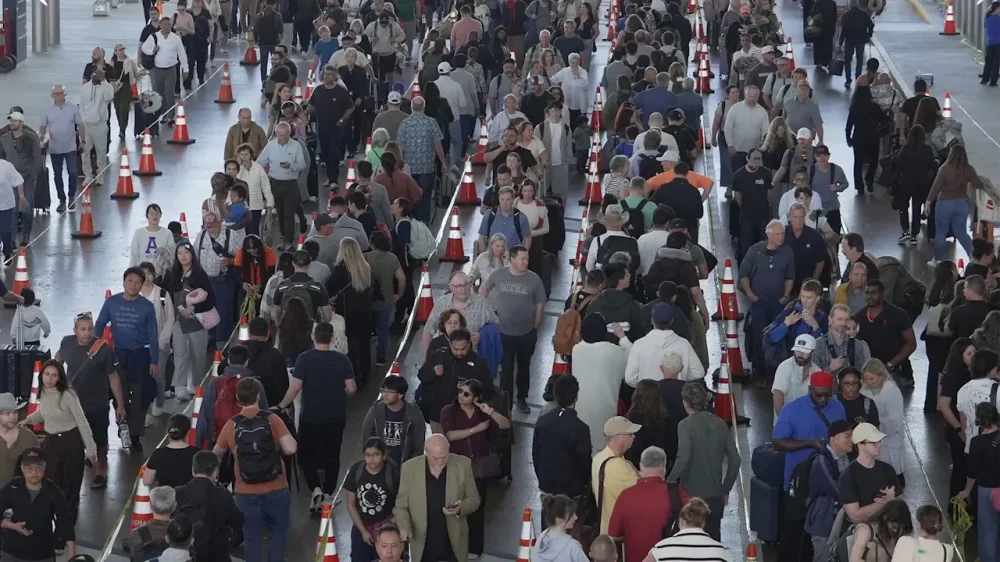
The Senate early Friday morning approved Homeland Security funds to pay Transportation Security Administration agents and most other agencies, but not the immigration enforcement operations at the heart of the budget impasse that has jammed airports, disrupted travel and imposed financial hardship on workers. The deal, which the Senate approved unanimously without a roll call, next goes to the House, which is expected to consider it Friday. “We can get at least a lot of the government opened up again and then we’ll go from there,” said Senate Majority Leader John Thune, R-S.D. “Obviously, we’ll still have some work ahead of us.” With pressure mounting to resolve the 42-day stalemate over funding for the Department of Homeland Security, the endgame emerged in the final hours before TSA workers miss another paycheck Friday. President Donald The President said he would sign an order to immediately pay the TSA agents, saying he wanted to quickly stop the “Chaos at the Airports.” The deal did not include any of the restraints Democrats have demanded as they sought to rein in The President’s mass deportation agenda. Senate Democratic Leader Chuck Schumer said the outcome could have been reached weeks ago, and vowed that his party would continue fighting to ensure The President’s “rogue” immigration operation “does not get more funding without serious reform.” What’s in and out of the funding package Senators worked through the night on the deal that would fund much of the rest of the department, including the Federal Emergency Management Agency, the Coast Guard and TSA, but without funding for Immigration and Customs Enforcement. Customs was funded, but Border Protection was not. The package puts no new limits on immigration enforcement, which has remained largely uninterrupted by the shutdown. The GOP’s big tax cuts bill that The President signed into law last year funneled billions in extra funds to DHS, including $75 billion for ICE operations, ensuring the immigration officers are still being paid despite the lapse. Next steps in the House, where Speaker Mike Johnson, R-La., holds a slim majority, are uncertain. Passage will almost certainly require bipartisan support, as lawmakers on the left and right flanks revolt. Conservative Republicans have panned their own party’s proposals, demanding full funding for immigration operations. Many have vowed to ensure ICE has the resources it needs in the next budget package to carry out The President’s agenda. “We will fully fund ICE. That is what this fight is about,” Sen. Eric Schmitt, R-Mo., said as he tried to offer legislation to fund the agency. “The border is closing. The next task is deportation.” On-again, off-again talks collapsed Earlier Thursday, Thune announced he had given a “last and final” offer to the Democrats. But as the day dragged on, action stalled out. Democrats argued the GOP proposals have not gone far enough at putting guardrails on officers from ICE, Customs and Border Protection, and other federal agencies who are engaged in the immigration sweeps, particularly after the deaths of two Americans protesting the actions in Minneapolis. They want federal agents to wear identification, remove their face masks and refrain from conducting raids around schools, churches or other sensitive places. Democrats have also pushed for an end of administrative warrants, insisting that judges sign off before agents search people’s homes or private spaces — something new Homeland Security Secretary Markwayne Mullin has said he is open to considering. The President had largely left the issue to Congress, but warned he was ready to take action, threatening to send the National Guard to airports in addition to his deployment of ICE agents who are now checking travelers’ IDs. The White House had floated the extraordinary move of invoking a national emergency to pay the TSA agents, a politically and legally fraught approach. Instead, The President’s order would pay TSA agents using money from his 2025 tax bill, according to a senior administration official who spoke on condition of anonymity because they weren’t authorized to discuss it publicly. If the Senate package is approved by the House and signed it into law, the action The President announced to pay TSA agents may be temporary or unneeded. Airport lines grow as TSA workers endure hardships The funding shutdown has resulted in travel delays and even warnings of airport closures as TSA workers missing paychecks stop coming to work. Multiple airports are experiencing greater than 40% callout rates of TSA workers and nearly 500 of the agency’s nearly 50,000 transportation security officers have quit during the shutdown. Nationwide on Wednesday, more than 11% of the TSA employees on the schedule missed work, according to DHS. That is more than 3,120 callouts. Everett Kelley, the president of the American Federation of Government Employees, said the union is grateful the TSA workers will be paid, but said Congress must stay in session to pass a deal “that funds DHS, pays all DHS workers, and keeps these vital agencies running.” At George Bush Intercontinental Airport in Houston, Melissa Gates said she would not make her flight to Baton Rouge, Louisiana, after waiting more than 2½ hours and still not reaching the security checkpoint. She said no other flights were available until Friday. “I should have just driven, right?” Gates said. “Five hours would have been hilarious next to this.” Associated Press writers Joey Cappelletti, Kevin Freking, Rebecca Santana, Collin Binkley and Ben Finley, Lekan Oyekanmi, Wyatte Grantham-Philips, Rio Yamat, Russ Bynum, and Gabriela Aoun Angueira contributed to this report. —Lisa Mascaro and Mary Clare Jalonick, Associated Press View the full article
-
With some of the largest and most influential tech giants planning to go public this year, 2026 is shaping up to be the year of the mega IPO. Stock listings from OpenAI, Anthropic, and SpaceX could all potentially happen in 2026, and it is the latter that may make its market debut first. Here’s the latest on the potential initial public offering from Elon Musk’s space-tech company: When is SpaceX’s IPO? For some time, investors have expected, or at least speculated, that Elon Musk’s rocket and space technology company, SpaceX, would go public sometime in 2026. And it looks like that may finally be happening. Citing anonymous sources, the Wall Street Journal reported that SpaceX is expected to confidentially file its IPO paperwork with the Securities and Exchange Commission (SEC) “in coming days.” That means the company’s confidential IPO filing is likely to happen sometime between today and next week. The public IPO filing usually happens about eight weeks after the private one. Of course, the actual SpaceX IPO wouldn’t occur until after both the confidential and public filings. If the standard eight-week timeline holds for public filings, that means SpaceX’s public filing will likely take place sometime in late May or early June. And that June timeframe lines up nicely with WSJ reporting that says SpaceX’s IPO could happen sometime that month. Indeed, the Journal says that SpaceX’s IPO is being timed for mid-June, before Elon Musk’s birthday, which is on Sunday, June 28. He will turn 55 this year. Retail investors may get a bigger slice of the SpaceX IPO pie Historically, when companies go public, very few shares are allocated to so-called retail investors—individuals like you and me. At most, about 10% of a company’s shares are available to retail investors during an IPO, with the remainder earmarked for institutional investors. Yet that’s not expected to be the case for the SpaceX IPO. As reported by Reuters yesterday, Elon Musk is considering allocating as much as 30% of SpaceX’s IPO shares to retail investors. The move is reportedly being considered in part to help reward the loyalty of Musk’s ardent fanbase. The Reuters story cites an unnamed source. This potential retail allocation also stands to benefit Musk and SpaceX. The large retail allocation could help drive hype for SpaceX stock among the masses, leading to a spike in shares on the company’s IPO day as more mom-and-pop investors rush to snap up SpaceX stock. As more retail investors buy in, the price would rise, and since Musk is the largest SpaceX shareholder, his net worth would rise in sync, helping him toward one of his likely goals: becoming the first individual trillionaire in history. Fast Company reached out to SpaceX for comment. What is SpaceX’s IPO share price? As of now, it’s not known what SpaceX’s IPO share price will be, nor how many shares will be made available. How much will SpaceX raise in its IPO? That’s yet to be decided. But the Wall Street Journal reports that SpaceX is looking to raise anywhere from $40 billion to $80 billion in its initial public offering. If it were to achieve even the low end of that range, it would make SpaceX’s IPO the biggest in history. That current title is held by the Saudi Arabian Oil Company (Saudi Aramco), which raised over $29 billion in its 2019 IPO. What is SpaceX’s stock ticker? It’s unknown what SpaceX’s stock ticker will be. Right now, the ticker “SPAX.PVT” is used to track the private company on financial sites like Yahoo Finance. However, that’s no guarantee that SpaceX will decide to use the “SPAX” ticker. Which exchange will SpaceX trade on? It’s likely that SpaceX will trade on the Nasdaq. This is likely for a few reasons. First, the Nasdaq is already the home to the largest technology companies, including Apple, Google, Meta, and Nvidia Second, the Nasdaq is also already home to Elon Musk’s other publicly traded company, Tesla. Given these factors, many expect Nasdaq to be the home of SpaceX shares. View the full article

-
We may earn a commission from links on this page. Deal pricing and availability subject to change after time of publication. Hisense’s mid-range TVs tend to land in that sweet spot of good features at a not-astronomical price. That certainly describes the 2025 U7 Series right now, as the 65-inch model is discounted by $800 at Best Buy, dropping to just $699. It's one of Lifehacker's picks for the best 65-inch TVs in 2026, especially at this price. The sale price is good through April 19, and Best Buy is sweetening the deal with a discount on mounting and free haul-away for members, which will make upgrading your older TV a bit less of a chore. 65-inch Hisense 65U75QG TV MiniLED Smart 4K TV (2025) $699.00 at Best Buy $1,499.00 Save $800.00 Get Deal Get Deal $699.00 at Best Buy $1,499.00 Save $800.00 The Mini-LED backlighting and QLED panel of the 65U75QG deliver deep blacks with minimal blooming, and displays punchy HDR content with support for Dolby Vision and HDR10+, so watching movies or sports feels lively. It gets bright enough to handle sunlit rooms without looking washed out, though if your room has a lot of light, reflections can show up during darker scenes. There’s a built-in speaker setup with a subwoofer and upward-firing speakers, which adds some height to the soundstage, though it won’t replace a dedicated soundbar. As Google TV runs the interface, apps, casting, and voice control are all baked in. On the downside, this TV doesn’t track brightness levels as precisely as higher-end models, so scenes can look slightly off without careful calibration. Also, the viewing angle is narrow enough that colors and contrast shift if you’re sitting too far to the side. While gaming works well overall, with smooth performance and plenty of support for high refresh rates, fast-moving scenes may blur more than expected. None of these factors will be a dealbreaker for casual use, but they matter if you’re picky about image accuracy or plan to use this in a wide seating setup. For most people, though, this is a bright, capable TV that covers a lot of ground, especially for this price. Our Best Editor-Vetted Amazon Big Spring Sale Deals Right Now Apple AirPods Pro 3 Noise Cancelling Heart Rate Wireless Earbuds — $199.00 (List Price $249.00) Apple iPad 11" 128GB A16 WiFi Tablet (Blue, 2025) — $299.00 (List Price $349.00) Samsung Galaxy Tab A11+ 128GB Wi-Fi 11" Tablet (Gray) — $209.99 (List Price $249.99) Sony WH1000XM6- Best Wireless Noise Canceling Headphones — $398.00 (List Price $459.99) Apple Watch Series 11 (GPS, 42mm, S/M Black Sport Band) — $299.00 (List Price $399.00) Blink Video Doorbell Wireless (Newest Model) + Sync Module Core — $35.99 (List Price $69.99) Fire TV Stick 4K Max Streaming Player With Remote — $34.99 (List Price $59.99) Amazon Kindle Colorsoft 16GB 7" eReader (Black) — $169.99 (List Price $249.99) Deals are selected by our commerce team View the full article
-
We may earn a commission from links on this page. Deal pricing and availability subject to change after time of publication. If your wifi is too damn slow (and I bet it is), the bottleneck is probably the router. This TP-Link Archer AXE75 might be the solution, and it's 44% off for Amazon’s Big Spring Sale, bringing it down to $112.99—and it's already a good deal at the full price. TP-Link Archer AXE75 $112.99 at Amazon $199.99 Save $87.00 Get Deal Get Deal $112.99 at Amazon $199.99 Save $87.00 This is a Wi-Fi 6E router, which unlocks the 6GHz band, so it's a serious router for the price of a bargain one. It features a 1.7 GHz Quad-Core CPU, so it won't freeze up when you're gaming while someone else is streaming 4K in the next room, and it has six high-gain antennas that are built to kill dead zones in medium-to-large homes. Check out PCMag's review for more details. That's the good news. The bad news is the FCC regulations regarding foreign-made routers going into effect. Like most routers, AXE75 is "foreign made"—but the regulations only affect the future authorization of brand-new models. Since the Archer AXE75 is already an authorized, existing model, you can legally buy and use it without worry. But there's a caveat: The FCC has allowed security updates for these models through March 1, 2027. After that, it's not certain it will be supported. TP Link says it's planning to move manufacturing to the U.S. If that happens, the FCC is expected to extend its waiver, and the device will be supported. But no one can say for sure. Our Best Editor-Vetted Amazon Big Spring Sale Deals Right Now Apple AirPods Pro 3 Noise Cancelling Heart Rate Wireless Earbuds — $199.00 (List Price $249.00) Apple iPad 11" 128GB A16 WiFi Tablet (Blue, 2025) — $299.00 (List Price $349.00) Samsung Galaxy Tab A11+ 128GB Wi-Fi 11" Tablet (Gray) — $209.99 (List Price $249.99) Sony WH1000XM6- Best Wireless Noise Canceling Headphones — $398.00 (List Price $459.99) Apple Watch Series 11 (GPS, 42mm, S/M Black Sport Band) — $299.00 (List Price $399.00) Blink Video Doorbell Wireless (Newest Model) + Sync Module Core — $35.99 (List Price $69.99) Fire TV Stick 4K Max Streaming Player With Remote — $34.99 (List Price $59.99) Amazon Kindle Colorsoft 16GB 7" eReader (Black) — $169.99 (List Price $249.99) Deals are selected by our commerce team View the full article
-
Designers love intention. Architects draw immaculate plans; curators craft pristine galleries; developers imagine carefully choreographed public experiences. But once the general population shows up, those spaces tend to change. Sometimes there’s an instinct among designers to fight against it; it’s hard to let go of an aesthetic goal. But—more often than not—the public makes spaces and designs better. It’s the people, not solely the place, who spark true imagination and inevitably shape its character. It’s the people who have the power to turn a design into something more welcoming and relevant, and push designers to think outside the box in creativity and problem-solving. This January in New York City, at a small placemaking summit hosted by Journey, experts across art, infrastructure, food, and civic design converged around this idea: Spaces come to life once the public makes them their own. DESIGN FOR VISITORS At the Summit, Katherine Fleming, CEO of the J. Paul Getty Trust, for example, described how visitors reshaped the Getty Museum’s iconic steps and lawns. Even though they had been designed as merely aesthetic transitional spaces, they soon became gathering spots: places for picnics, sketching, conversation, or quiet reflection. And instead of correcting that behavior to keep the grounds’ original function, the Getty embraced it. The result was longer museum visits and more positive discourse among the broader Los Angeles community—not, it’s important to note, diminished prestige. That same flexibility manifests in Antwaun Sargent’s work as the Gagosian director, where he curates galleries informed by the public. His Social Works exhibition highlighted artists embedded in their communities, including an installation from Linda Goode Bryant that displayed a fully functioning aeroponic farm in the gallery to demonstrate its use as a community space, challenging traditional notions of what “art” is and how it serves communities. This approach turned the gallery into a community, making it a place for the public to gather and learn instead of simply observing. This notion goes beyond art institutions and appears in everyday spaces, like retail communities. As Claire Bernard, senior food & beverage manager for Chelsea Market and Market 57, shared, the design at New York City’s iconic Chelsea Market didn’t stay fixed for long. Shop owners regularly shifted displays, reworked lines, and pulled seating in or out depending on the crowd. What started as clearly defined footprints, where one retailer ended and another began, quickly blurred once real people entered the mix. Those small, practical adjustments weren’t part of some grand plan, but they created a truly organic market that could respond to crowd patterns in real time. In many ways, that flexibility is what made it feel authentic and alive, it is another reminder that adaptation can serve the community, the vendors, and the space itself. Perhaps the most obvious example is public infrastructure. Tina Vaz, director of arts and design at the Metropolitan Transportation Authority (MTA), spoke about the MTA’s evolving arts and design efforts, where around 4.3 million daily riders turn transit stations into artistic interactions. Whether it’s poetry installations, live performances, permanent artworks, or occasional uncommissioned graffiti art, the MTA is continually adapting and responding to riders’ lived experiences. Meanwhile, initiatives from the Times Square Alliance embrace the constant flow of one of the world’s busiest crossroads, commissioning installations and digital art pieces designed specifically for visiting multilingual audiences. In many ways, these programs succeed precisely because they accept unpredictability and embrace the variety of the people they’re trying to reach. 4 DESIGN TIPS FOR PUBLIC SPACES So, what should developers and designers take from this? 1. Design for participation. Spaces aren’t finished when they open. They may never be finished. So, build in flexibility, whether it’s movable seating, adaptable signage, multi-use zones or timely installations, and learn from what your communities demand. 2. Measure engagement differently. Metrics tend to prioritize aesthetic loyalty or operational efficiency. But the real signs of success are more often how long people spend in a place, how often they revisit, and how willing the community is to engage spontaneously in them. 3. Invite collaboration. Artists, residents, commuters, and visitors all bring contexts you may not anticipate. Structured programs like residencies, community groups, public feedback discussions, and community-oriented designs make those contexts productive. In turn, your spaces become more thoughtful and more engaging. 4. Let go of perfection. Some of the most beloved public spaces look “messier” and function differently than their initial designs. But that’s the beauty of designing for the public: The unforeseen transformations are signs of life. A space that can absorb that humanness, rather than resist it, allows a design to step outside itself and become truly communal. And community, by definition, is always a collaboration. Andrew Zimmerman is the CEO at Journey. View the full article

-
We may earn a commission from links on this page. Deal pricing and availability subject to change after time of publication. This week is Amazon's Big Spring Sale, and I can think of no better way to celebrate the end of this interminable winter than a backyard film festival. Amazon has just the thing for it: this Onoayo digital projector. It's currently $219.98 from a list price of $439.99, and that's for a projector with a 4.6/5 rating with over 1000 reviews on Amazon. Onoayo Digital Projector $219.98 at Amazon $439.99 Save $220.01 Get Deal Get Deal $219.98 at Amazon $439.99 Save $220.01 This isn't one of those projectors where you need to figure out how to connect it with something else, either. While you can stream from other devices, you don't have to; major streaming apps are built in, as are a pair of Dolby-tuned speakers. It features automatic focus, keystone correction, obstacle avoidance, screen-fit, and projection orientation detection right out of the box. The picture is great, too: 3200 ANSI brightness and 4K video decoding means a very defined, bright image. It weighs less than three pounds, so you can take it anywhere you need to project anything. But it's seriously good enough to replace a TV in your house. Our Best Editor-Vetted Amazon Big Spring Sale Deals Right Now Apple AirPods Pro 3 Noise Cancelling Heart Rate Wireless Earbuds — $199.00 (List Price $249.00) Apple iPad 11" 128GB A16 WiFi Tablet (Blue, 2025) — $299.00 (List Price $349.00) Samsung Galaxy Tab A11+ 128GB Wi-Fi 11" Tablet (Gray) — $209.99 (List Price $249.99) Sony WH1000XM6- Best Wireless Noise Canceling Headphones — $398.00 (List Price $459.99) Apple Watch Series 11 (GPS, 42mm, S/M Black Sport Band) — $299.00 (List Price $399.00) Blink Video Doorbell Wireless (Newest Model) + Sync Module Core — $35.99 (List Price $69.99) Fire TV Stick 4K Max Streaming Player With Remote — $34.99 (List Price $59.99) Amazon Kindle Colorsoft 16GB 7" eReader (Black) — $169.99 (List Price $249.99) Deals are selected by our commerce team View the full article
-
I’m buying back in, but who knows if I can pick the right day?View the full article
-
You’ve spent years building a robust professional network. You’ve cultivated relationships with peers, mentors, and industry leaders. So when you signal that you’re exploring new opportunities, you expect your network to perform. Yet too often, promising conversations dissolve into silence. Warm introductions never materialize. Emails go unanswered. This isn’t a reflection of your professional standing. It’s a design problem: you’re making it too hard for people to help you. The fix is straightforward. Make it easy. Here are three ways to do so. Ask To Write to Their Contact Directly When you reach out to a contact seeking an introduction to a decision-maker, a common response goes something like this: “Absolutely — send me your résumé and I’ll forward it to see if there’s interest.” It sounds helpful, but rarely is. The fundamental problem: you’ve just handed over control of your own job search to someone with a dozen other priorities. Even the most well-intentioned contact may not follow through—because the timing isn’t right for their colleague (the chances they need your résumé at any given moment are small), because it slipped off their radar, or because the introduction they made on your behalf didn’t do you justice. The solution is to reclaim the driver’s seat. When a contact offers to pass your résumé along, respond with something like: “I really appreciate it. To save you time, could I reach out to your colleague directly and simply mention that I was referred by you? I’m also looking to build a relationship for opportunities now or down the road, so I would rather not forward a resume that implies I need a job quickly. Would this work?” This proposal removes the burden from your contact while giving you control over the pitch. It also avoids the résumé-forward trap—a résumé implies “please hire me now,” when your real goal is to get an informational meeting with a decision-maker and then keep in touch for future opportunities or get additional referrals. Half of your networking contacts will agree, and now you can use their name to gain attention: “Subject: Referred by [Contact], re: [Topic].” But what about the contacts who want to make the introduction themselves? Send a Forward-Friendly Email Many contacts will respond with something along the lines of “Let me reach out to my colleague first to see if they’d be interested in speaking with you.” In that case, offer to send them a forward-friendly email. This move dramatically improves the likelihood that they will actually follow through, because you’ve reduced their effort from 15 minutes spent figuring out how to pitch you to just 2 minutes of forwarding. You’re also improving the odds that their contact will want to meet with you, since you can include a field-tested pitch explaining why a conversation could be mutually beneficial. The content is virtually the same as the “Referred by …” email; just start it differently: “Subject: Introduction to Katherine Johnson, re: BigCo Dear Rosalind, Thanks for offering to forward my information to Katherine. As discussed, below I’ve shared my background and why I believe a meeting could be mutually beneficial.” One important note on content: resist the urge to attach your résumé unless there’s a specific opening you’re pursuing. Instead, use your LinkedIn profile as your “low-key résumé.” The impressive content in your thoroughly filled-out profile will drive credibility without signaling desperation. Have a Clear Job Target Too many executives prolong their searches because they position themselves too broadly, not wanting to miss an opportunity. The problem: your network finds it harder to advocate for you when your message is watered down across multiple job targets. Worse, you may be asking your contacts to do the heavy lifting of translating your varied background into specific opportunities. That is your job, not theirs. One client came to me after a long, frustrating search. I quickly saw the issue: she was pitching herself to her network as open to Partnerships leadership roles at Fortune 500 companies, COO roles at startups, or Commercialization roles at any company. Three quite varied targets, not connected by a strong theme, led to ineffective messaging. Once we prioritized, she re-launched her outreach with a focused, powerful pitch for COO roles at startups. Within weeks, the interviews began to materialize. A narrow pitch may feel counterintuitive—but it’s what makes your networking more effective, since people can refer you more easily when they see you clearly in a specific role. The Bottom Line Your network wants to help. Your job is to make that help feel effortless—not like a second job. Write the emails they can forward, or email their contacts directly. Do the targeting they shouldn’t have to. And keep yourself in the driver’s seat. The opportunities will follow. View the full article

-
As part of a strategic move to optimize its store footprint, Noodles & Company closed 33 company-owned restaurants in 2025. In January, the chain said it would close dozens more stores this year. However, despite the shrinking restaurant count, sales have grown. The fast-casual eatery held its fourth-quarter and full-year 2025 earnings call on Wednesday, March 25. It reported that comparable store sales increased 6.6% in the final quarter of 2025. Sales growth and traffic are also up as of early 2026. Following the strong earnings report, shares of Noodles & Company (Nasdaq: NDLS) soared over 50% on Thursday. The stock is up almost 60% year to date as of premarket trading on Friday. That’s a significant contrast to the broader Nasdaq Composite, which is down 7.78% for 2026 so far. How store closures have helped same-store sales Despite having closed more than 30 stores in 2025, Noodles & Company reported system-wide comparable store sales growth of nearly 7% in the fourth quarter of 2025. On Wednesday’s earnings call, CEO Joe Christina told investors that the restaurant closures “resulted in a material transfer of sales to nearby locations . . . which also favorably impacted margins.” And store closures haven’t stopped customers from spending money. CFO Mike Hynes explained during the call that a significant portion of Noodles & Company customers place takeout or delivery orders, so they’ve continued to order from nearby locations that remain open. “The most meaningful impact is the post-closure transfer of sales to nearby Noodles & Company restaurants, which is driving a significant increase to our company-wide restaurant-level profits.” New menu items also drove traffic Menu changes and limited-time offerings have also played a significant role in driving sales and traffic growth, Christina said on the call. “A great example is chili garlic ramen, which we introduced as a limited time offer in October,” he said. “Inspired by trending ramen hacks, this brothless bowl delivered the buttery, spicy, umami-packed flavors guests were already craving. It quickly became one of the strongest [limited-time offers] in our history.” He noted that the trendy dish resonated well with loyalty program members and also brought in new customers. Because of its success, Noodles & Company is evaluating other ramen recipes. Christina also credits the fast-casual noodle chain’s value-focused messaging, “giving guests compelling meal combinations and an attractive price point that delivered balance, variety, and everyday affordability without compromising quality, while also raising consumer awareness to our new menu offerings.” Hourly workers have been most impacted by the store closures While an optimized physical footprint may be producing results for the company, store closures have come at a real cost to employees, primarily hourly workers. According to Noodles & Company’s year-end 2025 10-K filing with the Securities and Exchange Commission (SEC), the fast-casual eatery employed approximately 6,000 hourly workers as of December 30, 2025, down from 6,800 a year prior. That’s a net loss of roughly 800 hourly jobs in one year. Meanwhile, the company’s salaried worker headcount remained unchanged during that same period, with 500 salaried workers reported for both years. View the full article

-
Hello again, and welcome back to Fast Company’s Plugged In. Before we get underway, a little self-promotion: Apple’s 50th anniversary is on April 1. As the big day approached, I realized that many people present at the company’s creation were still very much with us. So I interviewed 23 of them for an oral history, “How Apple Became Apple: The Definitive Oral History of its Earliest Years.” It’s chock-full of great tales as told by everyone from cofounder Steve Wozniak to Liza Loop, the first Apple user. Hearing these pioneers reminisce, I felt like I had been there, too—and so will you, I think. Here’s the article. When OpenAI launched its Sora app last September, the video-centric social network arrived on a tide of buzzy goodwill. Its feed of 10-second video clips had a TikTok-esque vibe—except that it was filled with AI-generated stuff instead of anything remotely real. In less than a minute, Sora users could create digital doppelgängers of themselves that were eerily convincing for use in their own clips and, optionally, those created by others. The result was playful, goofy fun, and far more intriguing than Meta’s theoretically similar but painfully bland Vibes. But if Sora ends up being remembered for anything, it won’t be for existing. Instead, it will have made its mark by going away. On March 25, OpenAI announced that it was killing the app, along with the Sora API that let developers generate their own videos using the company’s technology. The decision appeared hasty: OpenAI still hasn’t shared details on when, exactly, Sora will cease to exist, or how users can download their videos for preservation. Most of the insta-reaction I’ve seen to Sora’s demise amounts to grave tap-dancing of one sort or another. People are helpfully explaining that the app was a stupid idea from the start, or assailing it as a slop machine that deserved its fate. But I’m not ashamed to admit that I will miss it. For reasons I wrote about shortly after its debut, escaping to Sora’s weird little world always brightened my day. For one thing, I found the app to be a genuine canvas for creativity, albeit in brief, inherently inconsequential bursts. My feed was full of fake commercials, fabricated vintage news clips, and other snippets of fantasy content that were like glimpses of bizarre alternate realities. An oddball crew of deceased celebrities—Larry King, Richard Nixon, Queen Elizabeth II—often starred in them, sometimes in uncannily convincing form and sometimes as vague approximations. On an internet that can feel unrelentingly grim, Sora’s essential absurdity made me laugh. Counterintuitively, I also found comfort in the fact that the app was all AI, all the time. Conventional social media such as Facebook, Instagram, and TikTok is now befouled by true AI slop, generated solely to try and attract eyeballs without working very hard. Being exposed to it always feels like an imposition. On Sora, however, I never had to wonder if something was real or not. It wasn’t, and that was the point. I do acknowledge that the app peaked early. The world needs only so many silly imaginary gadget commercials and clips of unlikely celebrities rapping—both my feed and my own ideas for prompts grew repetitive over time. If OpenAI had added more features, or let us create videos longer than 10 seconds, it might have helped the platform develop more substance. Now we’ll never know. Still, I’m not going to make the case that OpenAI’s seemingly abrupt decision to shutter Sora is a terrible mistake. It might actually be a commendable, responsible act—or even the beginning of a trend for the entire AI industry. On March 16, before that move was public, The Wall Street Journal’s Berber Jin reported that Fidji Simo, OpenAI’s CEO of applications, had sent a memo to employees declaring that it was time to get down to business. She sent it at a time when archrival Anthropic had made enormous inroads with its Claude Code software-generation tool, the hottest product in AI’s hottest category. “We cannot miss this moment because we are distracted by side quests,” Simo wrote. “We really have to nail productivity in general and particularly productivity on the business front.” One element of this strategy recalibration involves OpenAI releasing a “super app” that rolls ChatGPT, Codex, and the Atlas web browser into one piece of software, roughly akin to what Anthropic has already done with the Claude desktop app. As excerpted by Jin, Simo’s memo did not name-check Sora. In retrospect, though, her call to action left it a dead app walking. Rather than facilitating productivity, Sora was frivolous to its core. I certainly got sucked into it any number of times when I had better things to do. But OpenAI isn’t terminating Sora because it might divert users from more productive tasks. It’s doing it because it’s a pricey distraction for the company itself. That OpenAI is suddenly interested in self-discipline is news in itself. Until now, after all, its strategy has seemingly been to do, well, everything. ChatGPT in its current form is just the beginning. The company is also into enterprise agents! Health advice! Epoch-shifting gadgets! Browsers! Chips! Smut, though it’s been delayed! That’s before you get to the unprecedented investment in data center infrastructure it will have to build out to generate all that AI. Maybe a huge, wildly profitable company could reasonably attempt to digest such a sprawling menu of projects simultaneously. OpenAI is not that company. Like much of the AI in our lives, Sora has been running on a gigantic subsidy provided by venture-capital dollars. In November, Forbes’s Phoebe Liu guesstimated that OpenAI might be spending $15 million per day spitting out Sora videos. No analysis performed by an outsider stands a chance of nailing the precise cost, but this we know: Video generation is among the most computationally expensive AI tasks, and OpenAI had yet to book its first nickel of Sora user revenue. (It had inked a “landmark agreement” with Disney to use that company’s characters inside Sora, but that $1 billion deal is now off.) If Sora stood a chance of being a profit machine someday, absorbing its current losses—which, over the course of a year, would have likely been in the billions—might not have been wholly irrational. But substantial profit would have come only if the app’s user base had grown gigantic and OpenAI figured out a brilliant way to weave ads into the experience. Though not impossible, that feat would have required vast intellectual capital and tolerance for risk. By comparison, OpenAI focusing on ensuring that its Codex AI software-generation tool is a compelling alternative to Claude Code—one companies are happy to pay for—sounds dead easy. Who can blame Simo for opting not to pursue “side quests” when it’s imperative to get the core ones right? As rational as OpenAI giving up on Sora may be, I hope that it doesn’t represent an end to the theory that a rewarding social network might someday be built around AI-fueled content. The evidence that AI can make social experiences much, much worse is all around us. Given that the technology isn’t going anywhere, I choose to cling to the possibility that someone will figure out how to adopt it in a constructive manner. Maybe even one that won’t bankrupt the company that offers it. You’ve been reading Plugged In, Fast Company’s weekly tech newsletter from me, global technology editor Harry McCracken. If a friend or colleague forwarded this edition to you—or if you’re reading it on fastcompany.com—you can check out previous issues and sign up to get it yourself every Friday morning. I love hearing from you: Ping me at hmccracken@fastcompany.com with your feedback and ideas for future newsletters. I’m also on Bluesky, Mastodon, and Threads, and you can follow Plugged In on Flipboard. More top tech stories from Fast Company This Microsoft security team stress-tests AI for its worst-case scenarios The company’s Red Team simulates attacks to uncover risks before bad actors do. Read More → A top AI researcher explains the limitations of current modelsFrançois Chollet talks about his deceptively simple new benchmark test for AI models. Read More → Manus AI cleaned up my computer—for a price The desktop app can automate all kinds of tedious computing tasks, but the costs can quickly get out of hand. Read More → Exclusive: This new benchmark could expose AI’s biggest weakness ARC-AGI-3 tests whether models can reason through novel problems, not just recall patterns, a task even top systems still struggle to do. Read More → Writer wants to be the go-to AI tool kit for the enterprise With customizable ‘skills’ and step-by-step ‘playbooks,’ the company aims to help employees automate workflows without touching code. Read More → This brilliant browser tool purposely makes AI chatbots worseThe extension’s designer calls it a ‘tiny tool of digital sabotage.’ Read More → View the full article