Newsletter
Want to keep up to date with all our latest news and information?


ResidentialBusiness
Administrators
-
Joined
-
Last visited
Everything posted by ResidentialBusiness
-
If you’re looking to start your business, securing the right personal loan can make a significant difference. Various lenders like Prosper, Upstart, Rocket Loans, and LendingClub offer flexible options customized to different credit profiles. With loan amounts ranging from $1,000 to $75,000, these choices can meet your urgent financial needs effectively. Comprehending how each option works will help you make informed decisions, especially when considering the best fit for your venture’s requirements. Key Takeaways Personal loans offer amounts from $1,000 to $75,000, ideal for starting small businesses with flexible funding needs. Prosper and Upstart provide options for borrowers with varying credit scores, ensuring accessibility for new entrepreneurs. Rocket Loans and LendingClub offer quick funding, often within one business day, to meet urgent startup expenses. Pre-qualification allows comparison of rates without impacting credit scores, helping borrowers find the best loan options. Evaluate total borrowing costs and repayment terms to align with your business cash flow for sustainable growth. Prosper Personal Loans: Flexibility for All Credit Types In relation to securing financing for your business, Prosper Personal Loans stand out for their flexibility, catering to borrowers across the entire credit spectrum. Whether you have good credit or are looking for bad credit financing for a personal loan to start a business, Prosper makes it accessible. Their pre-qualification process won’t impact your credit score, allowing you to explore various loan options without risk. You can borrow between $2,000 and $40,000 with terms of 36 to 60 months, which suits different financial needs. Moreover, Prosper offers joint loan options, enabling multiple borrowers to apply together, which can improve your chances of approval and potentially better terms. If you need funding quickly, Prosper can provide it as soon as the next day, making it a strong choice among good loan companies for immediate financial support. Upstart Personal Loans: Quick Funding for Low Credit Scores Upstart Personal Loans provide a viable option for individuals seeking quick funding, especially those with low credit scores who might struggle to secure traditional financing. With loan amounts ranging from $1,000 to $75,000, these loans can cater to various business financing needs, making them particularly beneficial for startups. Upstart offers same- or next-day disbursement, so you can access the capital you need almost immediately. Importantly, Upstart accepts borrowers with low credit scores, which opens doors for those who mightn’t qualify elsewhere. Nevertheless, keep in mind that an origination fee, ranging from 0.00% to 12.00%, can affect the overall cost of the loan. Loan terms typically last from 36 to 60 months, allowing for manageable repayment. If you’re considering a mortgage in business, these loans could be a practical choice to help kickstart your entrepreneurial expedition. Rocket Loans: Fast Options for Good Credit Borrowers If you’re looking for a personal loan and have good to excellent credit, Rocket Loans might be a suitable option. They provide personal loans with APRs ranging from 8.01% to 29.99%. You can borrow anywhere from $2,000 to $45,000, making it flexible for various business needs. The repayment terms are typically between 36 to 60 months, which allows for manageable monthly payments. One of the advantages of Rocket Loans is their quick online application process, with funding often available as soon as the next business day. Nevertheless, keep in mind that an origination fee of up to 9.99% may apply, so factor that into your total loan cost. Loan Amount APR Range $2,000 – $10,000 8.01% – 29.99% $10,001 – $45,000 8.01% – 29.99% LendingClub Personal Loans: Tailored Solutions for Debt Consolidation If you’re looking to consolidate debt, LendingClub Personal Loans offer flexible payment options that can ease your financial burden. You can request direct payments to your creditors, simplifying the process of managing existing debts. With loan amounts ranging from $1,000 to $40,000, you can find a solution that fits your business needs. Flexible Payment Options When considering personal loans for business needs, flexible payment options can make a significant difference in managing your finances effectively. LendingClub Personal Loans provide you with the ability to choose payment dates that suit your schedule, which can ease cash flow pressures. You can borrow amounts ranging from $1,000 to $40,000, addressing diverse business needs. Quick access to funds is another advantage, with same- or next-day funding available after approval. Furthermore, if you have a business partner, you can opt for joint loans to improve your creditworthiness for better terms. Loan Feature Description Benefit Payment Flexibility Choose your payment dates Aligns with your financial needs Loan Amounts $1,000 to $40,000 Suitable for various business needs Quick Funding Same- or next-day funding Rapid access to capital Direct Creditor Payments LendingClub Personal Loans offer a practical solution for borrowers looking to consolidate their debts through direct creditor payments. This approach simplifies the process, allowing you to pay off multiple creditors at once, which can reduce stress and streamline your financial obligations. With same- or next-day funding, you can access funds quickly, providing immediate relief for your financial needs. Furthermore, LendingClub offers joint loan options, increasing your chances of approval and possibly leading to better terms. Nevertheless, keep in mind that an origination fee applies, which should be factored into the overall cost of the loan. The platform’s flexibility in payment dates likewise helps you manage your repayment schedule according to your financial situation, making it a customized solution for your needs. Comparing Personal Loan Rates: Finding the Best Fit Finding the best personal loan rates for your business requires careful comparison and contemplation of several key factors. Personal loans typically range from $1,000 to $75,000, depending on the lender and your creditworthiness. Interest rates can vary widely, with APRs from 5.99% to 35.99%. This variance emphasizes the importance of comprehending your credit profile. Many lenders offer pre-qualification, allowing you to compare rates and terms without impacting your credit score. Loan terms usually span 2 to 7 years, affecting your monthly payments and overall interest costs. It’s likewise crucial to take into account origination fees, which can range from 1% to 15%, as they greatly impact the total cost of borrowing. When to Consider a Personal Loan for Your Business If you’re starting a business and lack sufficient history to secure traditional loans, a personal loan might be your best option. These loans can quickly provide the cash you need, often within a week, for crucial expenses like equipment or marketing. Furthermore, personal loans are available in smaller amounts, making them a practical choice for immediate financial needs as you get your business off the ground. Limited Business History When starting a business with limited history, personal loans can be a practical financing solution to contemplate. These loans often have easier qualification criteria, primarily based on your personal credit score and income. Typically, you can borrow between $1,000 and $75,000, which is sufficient for covering startup costs or small expenses. The repayment terms usually range from 2 to 7 years, allowing for manageable payments as your business grows. Unlike traditional business loans, personal loans don’t require a detailed business plan or extensive operational history, making them accessible for new entrepreneurs like you. This means you can secure funding quickly, often within a week or even the next day, to help you launch your venture without delay. Quick Funding Needs Starting a business often comes with unexpected expenses, and having access to quick funding can make all the difference in your ability to seize opportunities. Personal loans are ideal for startups needing immediate financial support, often providing funds within a week or even the next day. You can borrow between $1,000 and $75,000, which is perfect for urgent needs like equipment purchases or marketing campaigns. The pre-qualification process allows you to compare options without affecting your credit score, helping you make informed decisions. With repayment terms ranging from 2 to 7 years, personal loans offer flexibility that aligns with your cash flow. Although they may lack tax-deductible interest benefits, their lower rates compared to credit cards make them a cost-effective choice for urgent financing. Small Loan Amounts Many entrepreneurs find that personal loans are a practical solution when they need small loan amounts for their business. These loans typically range from $1,000 to $50,000, making them accessible for those who mightn’t qualify for traditional business loans. If you face urgent operational needs or startup expenses, personal loans can provide fast funding, often within a week or even the next day. They’re also beneficial for borrowers with limited business history since approvals hinge on personal credit scores and income. Furthermore, these loans offer flexibility in fund usage, covering expenses like equipment, inventory, and marketing. Just remember to reflect on repayment terms, which usually span two to seven years, to guarantee they fit your financial strategy. Alternatives to Personal Loans for Startup Financing Exploring alternatives to personal loans for startup financing can greatly improve your chances of securing the necessary funds for your business. Small-business loans are ideal for established companies, offering larger amounts and better interest rates. If you need flexibility, consider business credit cards, which provide a revolving line of credit for short-term expenses, though they may require a personal guarantee. Equipment financing is another option, particularly for purchasing necessary equipment, often with less documentation and reduced lender risk because of collateral. Grants from government or private organizations can likewise be beneficial; these funds don’t require repayment but come with competition and strict requirements. Finally, a business line of credit allows you to access funds like a credit card, letting you draw on available credit as needed and only pay interest on the amount you utilize. Each alternative has unique benefits, so evaluate which suits your needs best. Frequently Asked Questions Can I Get a Personal Loan to Start My Business? Yes, you can get a personal loan to start your business. These loans typically range from $1,000 to $75,000, offering flexibility for initial expenses like inventory and marketing. The qualification often depends on your credit score and income, which may make it easier to obtain than a business loan. Nevertheless, be aware that missed repayments can impact your credit score and assets, so consider the risks before proceeding. Can I Borrow Money to Start a New Business? Yes, you can borrow money to start a new business through personal loans. These loans typically range from $1,000 to $75,000, depending on your creditworthiness and the lender’s criteria. The terms usually span 2 to 7 years, with fixed interest rates for predictable payments. Although personal loans offer quick funding, keep in mind that interest may not be tax-deductible like traditional business loans, so it’s essential to evaluate your options thoroughly before proceeding. https://www.youtube.com/watch?v=eGq_krxCTfE What Credit Score Does an LLC Start Out With? An LLC doesn’t start with a credit score; it must build one over time through financial activities. Initially, your personal credit score may impact the LLC’s financing options. To establish a business credit profile, you’ll need an Employer Identification Number (EIN) and a business bank account, separating personal from business finances. Focus on timely payments, keep credit utilization low, and manage obligations wisely to build a strong credit score for your LLC. Can an LLC Get a Loan With No Credit? Yes, an LLC can get a loan with no credit, but it’s often challenging. Lenders typically require personal guarantees from owners, which means your personal credit could still affect the loan. Some lenders offer loans customized for microloans. You might likewise explore secured loans that use collateral to reduce risk. Conclusion In summary, personal loans can be a valuable resource for starting your business, offering flexible options to suit various credit profiles. By exploring lenders like Prosper, Upstart, Rocket Loans, and LendingClub, you can find a loan that aligns with your financial needs. Remember to compare rates through pre-qualification, ensuring you make an informed choice. Moreover, consider alternatives if personal loans don’t meet your requirements. Evaluating all your options is vital for achieving financial success in your new venture. Image via Google Gemini and ArtSmart This article, "7 Best Personal Loans to Start Your Business Today" was first published on Small Business Trends View the full article
-
In the fast-paced world of content creation, speed and efficiency are paramount for small business owners and independent creators. Adobe has stepped up to the plate with its newly enhanced AI video editing tool, Firefly, which promises to transform how creators bring their ideas to life. Brandon Baum, a popular YouTuber, shared his enthusiasm for Firefly, stating, “I use Adobe Firefly as a thought starter. I like to generate a few things, iterate on my ideas quickly, try, try, try, fail fast, and hopefully find the gold.” This sentiment resonates with many creators who often struggle with the daunting task of starting from scratch. Firefly serves as an all-in-one creative AI studio, integrating advanced AI models from leading tech companies like Adobe, Google, OpenAI, and Runway. This integration allows users to seamlessly transition from conception to final product without switching between different applications. The intuitive, multi-track video editor enables users to create a timeline swiftly, ensuring they can begin crafting their narratives without delay. For small business owners, the implications of Firefly are significant. The tool is designed for rapid iteration, allowing creators to fill their timelines quickly, refine their ideas, and produce high-quality content that resonates with their target audience. Sophia Kianni, a podcaster and entrepreneur, emphasized the tool’s versatility: “My podcast doesn’t just need audio; it needs thumbnails and b-roll. My nonprofit needs tons of images. My startup needs marketing assets. Firefly helps with all of it and more, supercharging my team to work faster and get even more creative.” A standout feature of the latest update is Quick Cut, which enables creators to upload their own footage or generate new content and instantly transform it into a structured first cut. This eliminates the frustration of staring at an empty timeline and instead promotes productivity. Quick Cut allows users to focus on storytelling and strategy, significantly reducing the time spent on the editing process. Small business owners can leverage Quick Cut in various ways: Product reviewers can streamline the editing of long unboxing videos. Reporters can quickly identify key moments within their interviews. Podcasters can efficiently sift through lengthy discussions to extract highlights. Marketers can organize event recaps into coherent narratives. This tool is particularly beneficial for those looking to enhance their content without a steep learning curve. Users simply upload their footage and describe the desired video type—be it an interview, product demo, or travel vlog—and Firefly assembles a narrative-first draft based on that input. Additional customization options, such as aspect ratio selection and pacing preferences, further enhance the user experience. While the advantages of Firefly are clear, small business owners should also consider potential challenges. The reliance on AI for content creation may raise concerns about maintaining authenticity and originality in their work. Additionally, creators must ensure that the AI-generated content aligns with their brand voice and message. As with any tool, there is a learning curve, and users will need to invest some time in mastering Firefly’s features to fully harness its potential. The current offer from Adobe includes unlimited image and video generations up to 2K resolution for users who sign up before March 16. This promotion applies to various subscription plans, making it an opportune time for small business owners to explore the benefits of Firefly without a hefty upfront investment. With tools like Firefly, small business owners can not only keep pace with the demands of content creation but also elevate their storytelling and marketing efforts. The freedom to experiment with infinite ideas and styles, combined with the practicality of Quick Cut, positions Firefly as a valuable asset in the toolkit of any modern creator. As the landscape of digital content continues to evolve, embracing such innovative solutions could be key to standing out in a crowded marketplace. This article, "Adobe Firefly Launches Quick Cut to Transform Video Editing Workflow" was first published on Small Business Trends View the full article
-
The crypto market got some good news on Wednesday morning, as Circle reported better-than-expected earnings numbers, sending its stock soaring. Circle, a fintech company that issues and regulates stablecoins among other things, reported fourth-quarter and full fiscal year 2025 earnings early Wednesday, which showed that total revenue grew 77% to $770 million during the fourth quarter, and net income for the quarter increased by $129 million. Adjusted EBITDA also grew 412% during the quarter. For the full year, total revenue grew 64% to $2.7 billion. In response, Circle shares took off, skyrocketing more than 15% during pre-trading. By midday Wednesday, the stock was up over 25%. Notably, the stock is down roughly 14% over the past month, and down 51% over the past six months. So, the positive earnings news offered investors some relief. “The fourth quarter marked another step forward in Circle’s mission to build the infrastructure for an open, programmable internet financial system,” said Jeremy Allaire, Co-Founder, CEO and Chairman at Circle, in a statement included with the earnings release. “USDC adoption continued to expand globally as more enterprises, developers, and public institutions integrated digital dollars into real-world payments, treasury, and onchain financial workflows. We saw strong engagement across our platform, meaningful progress toward launching Arc mainnet, continued growth in CPN TPV, and growing momentum for EURC and USYC. With increasing collaboration across traditional finance, fintech, and the public sector, Circle is helping build the infrastructure for a more open and resilient global financial system.” The earnings report is also a good signal for the crypto market, which has taken a beating this year. The Nasdaq CME Crypto Index was up nearly 7% midday Wednesday, but remains down almost 30% since the beginning of the year. Another crypto index, the CoinDesk 20, was likewise up over 8%, but down 32% year-to-date. Overall, the crypto market has taken its licks in recent months for several reasons, including de-risking activity by investors, geopolitical concerns, and even changes in the SaaS market, all of which have crypto holders rethinking their positions. However, Circle’s numbers do indicate that the stablecoin business—which differs a bit from other crypto businesses in that stablecoins are backed by fiat—can be profitable. View the full article

-
The bank announced Tuesday its Blueprint for Housing Opportunity plan, a five-year commitment dedicated to increasing the supply of housing. View the full article

-
Officials indicate they are reconsidering doctrine of seeking to contain confrontations with WashingtonView the full article
-
Retail group pulls plug on venture due to changes in UK economic conditions and property market slowdownView the full article
-
Franchising can be a smart choice for those looking to start a business. It offers significant advantages, such as a lower risk of failure compared to independent startups. With ongoing support from franchisors, you benefit from operational guidance and effective marketing strategies. Furthermore, established brand recognition can improve customer loyalty and drive sales. Curious about how these factors can impact your potential success? Let’s explore the seven key advantages you should know. Key Takeaways Franchises have a significantly lower failure rate (10-20%) compared to independent startups (50%) within five years. Ongoing support from franchisors includes training, marketing guidance, and operational assistance to boost franchisee success. Established brand recognition provides built-in customer loyalty, resulting in faster profitability for new franchisees. Franchisees benefit from collective buying power, leading to better pricing and cost efficiencies on supplies. Higher profit potential and easier access to financing make franchising a more attractive business model compared to independent ventures. Reduced Risk of Failure Franchising offers a significant advantage regarding reducing the risk of failure for new business owners. One of the main advantages of franchising is the benefit of an established brand name, which lowers the risk associated with starting a business. With a proven business model, franchisees often experience lower failure rates compared to independent startups. Research shows that franchises typically have a failure rate of about 10-20%, whereas independent businesses face a staggering 50% failure rate within the first five years. Furthermore, franchisees can see profits more quickly because of existing customer loyalty and brand recognition. In the end, comprehending what’re three advantages of franchising can empower you to make informed decisions in your entrepreneurial expedition. Ongoing Business Support When you become a franchisee, one of the key benefits you’ll experience is ongoing business support from your franchisor. This support includes extensive initial assistance, such as help in securing premises and designing store layouts for a successful launch. Franchisors provide long-term operational support through ongoing training for you and your staff, ensuring high standards are maintained. They additionally guide you in marketing strategies, allowing you to leverage brand recognition effectively. Customized support is customized to your specific needs, addressing challenges unique to your location. Here’s a quick overview of the support you can expect: Type of Support Description Benefit Initial Assistance Securing premises and layouts Successful launch Ongoing Training Staff training Maintain high standards Marketing Guidance Strategy development Attract and retain customers Customized Support Customized assistance Relevant help for challenges Franchise Network Knowledge sharing Improved operational efficiency Market Expertise When you choose to franchise, you gain access to invaluable industry insights that can shape your business decisions. Franchisors provide operational best practices and informed decision-making support, drawing from years of market experience. This guidance helps you navigate complex market dynamics and positions your franchise for success in a competitive environment. Industry Insights Provided Access to market expertise is one of the key advantages franchisees enjoy, as franchisors provide valuable insights into current trends and consumer behavior. This support enables you to make informed decisions in a competitive environment. Franchisors often conduct extensive market research before entering new territories, allowing you to benefit from data-driven strategies customized to local demands. Furthermore, through established networks, you gain access to best practices and industry benchmarks that can improve your operational efficiency and profitability. Franchisors typically share successful marketing strategies and promotional tactics proven to drive sales and customer engagement across various markets. By leveraging the franchisor’s experience and expertise, you can navigate industry-specific challenges more effectively, reducing the learning curve associated with starting from scratch. Operational Best Practices Franchisors equip you with operational best practices that streamline your business processes and improve efficiency. By leveraging valuable market expertise, they provide insights into industry trends and consumer behavior, helping you make informed decisions. Established best practices minimize operational challenges, allowing you to focus on growth. With the franchisor’s reputation and brand recognition, you can access existing customer loyalty, facilitating quicker market penetration. Regular training and updates guarantee you stay competitive and informed about market conditions. Moreover, collaboration with other franchisees cultivates innovation, enabling the entire network to adapt swiftly to market demands. Informed Decision-Making Support Informed decision-making is crucial for your success as a franchisee, especially when you leverage the extensive market expertise offered by your franchisor. Franchisors provide thorough market analysis and insights, allowing you to make decisions based on current industry trends and consumer behavior. This access to established market expertise helps you quickly adopt best practices, saving you time and effort that might otherwise be spent on trial and error. You can benefit from their experience in maneuvering competitive environments, leading to more effective marketing strategies. Furthermore, the knowledge shared by your franchisor enables you to improve product offerings and service enhancements. Brand Recognition & Loyalty When you join a franchise, you tap into an established brand that already has a loyal customer base, making it easier for you to attract customers right from the start. This built-in recognition often leads to increased traffic upon opening, as consumers are more likely to visit a familiar name. As a franchisee, you benefit from this brand loyalty, which can markedly boost your sales and reduce your marketing efforts. Built-in Customer Base A built-in customer base is one of the key advantages of franchising, allowing new business owners to tap into the loyalty and recognition that established brands offer. By leveraging a brand’s existing customer relationships, you can reduce your marketing costs and enjoy quicker profitability. Research shows that customers prefer recognizable names, which boosts foot traffic and increases sales. The established credibility of a franchise can greatly shorten the time needed for customer acquisition. Here’s a summary of some benefits: Benefit Description Immediate Sales Access to a loyal customer base leads to quicker revenue generation. Reduced Marketing Costs Established brands often require less promotional spending. Increased Trust Familiarity nurtures trust, making customers more likely to buy. Repeat Customers Many franchisees report high revenue from returning patrons. Improved Brand Loyalty Strong brand identity encourages customer retention and loyalty. Increased Traffic Upon Opening Opening a franchise often leads to increased customer traffic right from day one, primarily due to the strong brand recognition associated with well-known franchises. Studies show that franchises benefit from a built-in customer base, which can result in up to 20% higher initial sales compared to independent startups. This brand loyalty encourages customers to choose familiar names, leading to increased foot traffic. In fact, about 70% of consumers are more likely to visit a known brand’s location upon opening. Moreover, as a franchisee, you can leverage the franchisor’s marketing strategies and promotional campaigns particularly designed to attract customers. This combination of brand recognition and strategic marketing greatly boosts your initial traffic and customer engagement. Increased Buying Power Franchisees gain considerable advantages in purchasing influence, as they can tap into the collective buying strength of the entire franchise network. By leveraging this collective volume, you can secure better pricing and terms from suppliers, which isn’t typically available to independent businesses. Participating in bulk purchasing agreements often leads to discounts, improving your overall cost structure. The economies of scale achieved through franchising can greatly reduce operational costs, allowing you to pass savings onto your customers. Additionally, franchise systems usually negotiate favorable contracts with suppliers, giving you access to higher-quality products at lower prices than non-franchised competitors. As part of a larger organization, you likewise enjoy improved negotiation leverage, leading to better supplier relationships and advantageous contract terms. Higher Profits One of the most notable advantages of owning a franchise is the potential for higher profits compared to independent businesses. Franchised businesses often achieve profitability within their first year, thanks to established customer bases and brand recognition. Recognizable franchises typically generate profits that exceed those of independent startups, benefiting from proven business models and operational efficiencies. Research shows that franchise systems can experience average annual sales per unit considerably higher than independent businesses, creating greater revenue opportunities. Moreover, franchisees usually face lower marketing costs because of their franchisor’s established brand presence, attracting customers more effectively. The economies of scale in purchasing and operations further improve profit margins for franchisees, reinforcing the financial stability of franchised locations. Better Chance of Finance Achieving higher profits isn’t the only advantage of owning a franchise; securing financing is another significant benefit. Lenders often view franchise businesses as lower risk due to their established brand recognition and proven business models. This perspective leads to a higher likelihood of you securing financing. You may find it easier to access loans since financial institutions are usually more confident in franchises with documented success rates. Moreover, the structured support from franchisors can help you present a solid business plan to potential lenders, increasing your chances of obtaining financing. Many franchisors likewise offer financing assistance or partnerships with lenders, simplifying the funding process. Overall, franchise businesses typically enjoy quicker access to capital, allowing you to focus on growth and operational needs. Frequently Asked Questions What Are Some of the Major Advantages of Franchising? Franchising offers several major advantages. You gain access to an established brand, which can considerably reduce the time needed to build customer loyalty. With a proven business model, your chances of success increase, as around 90% of franchises succeed. You’ll receive ongoing support and training, helping you navigate operational challenges. Furthermore, collective purchasing agreements can lower your costs for supplies, and securing financing is often easier owing to perceived lower risks associated with franchises. What Are the 4 P’s of Franchising? The 4 P’s of franchising are crucial for your business strategy. First, focus on Product, ensuring it meets brand standards and customer expectations. Next, set your Price competitively as you adhere to franchisor guidelines. Then, choose the right Place for your franchise to maximize customer access and sales. Finally, implement effective Promotion strategies to communicate your brand message and offers, often utilizing resources provided by the franchisor for greater impact. What Is Franchising and Why Is It Important? Franchising is a business model where you operate under a franchisor’s established brand and system. This setup’s important as it gives you access to a proven business framework, ongoing support, and a customer base, which can lead to faster profitability. Furthermore, franchisors can expand their brand without considerable debt, as you invest your own capital. Overall, franchising contributes markedly to economic growth and job creation in the U.S. economy. What Are the Key Advantages and Disadvantages of Owning a Franchise Compared to Starting an Independent Business? When you consider owning a franchise versus starting an independent business, you’ll find clear advantages and disadvantages. Franchises typically offer established brand recognition and support, reducing your risk of failure. Nevertheless, they come with fees and less operational control, limiting your ability to innovate. Conversely, independent businesses provide greater autonomy but often face higher risks and challenges in securing funding and achieving profitability. Balancing these factors is essential in your decision-making process. Conclusion In conclusion, franchising presents numerous advantages that can greatly improve your entrepreneurial expedition. By reducing the risk of failure, providing ongoing support, and leveraging established brand recognition, you position yourself for success. The increased purchasing strength and potential for higher profits further contribute to a favorable business environment. With proven business models and easier access to financing, franchising offers a solid pathway for aspiring entrepreneurs looking to build a stable and profitable venture. Image via Google Gemini and ArtSmart This article, "7 Key Advantages of Franchising You Should Know" was first published on Small Business Trends View the full article
-
We may earn a commission from links on this page. So successful was the first season of Shōgun, based on the 1975 James Clavell novel, that two further seasons have been commissioned to continue the story, even though the adaptation has run out of material. Set at the tail-end of Japan's Warring States period, the series sees ambitious English maritime pilot John Blackthorne (Cosmo Jarvis) shipwrecked in Japan and in the power of powerful warlord Lord Yoshii Toranaga (Hiroyuki Sanada). Each of these two men has something to offer the other, and reluctantly serving as the translator between them is Toda Mariko (Anna Sawai), who is loyal to Toranaga but has a complicated past. With analogues from real history, there's a verisimilitude to everything in this (mostly) Japanese-language drama, alongside the Game of Thrones-esque intrigue and drama. Finding a good streamalike is a little tough: There are plenty of films set during the same rough timeframe, and as many jidaigeki period dramas that are a little harder to stream for audiences outside of Japan. Instead, here are suggestions for other dramas that explore the complicated histories of cultures in transition. Stream Shōgun on Hulu. Pachinko (2022 – ) Starting in 1915, this multigenerational saga follows one woman (Youn Yuh-jung and Kim Min-ha) and her family from the Japanese occupation of Korea through the decades of the Korean diaspora. With opportunities limited, Sunja leaves her home and family in Busan to pursue a life in Japan, even as racism and anti-immigrant sentiment are rampant through the war years. In a parallel narrative that begins in 1989, we see what has and hasn't changed for Sunja and her family. It’s as personal as it is epic, with better location cinematography than most movies—and it’s got an opening credits sequence that puts a smile on my face every single time. Stream Pachinko on Apple TV+. Pachinko (2022 – ) at Apple TV+ Learn More Learn More at Apple TV+ Into the Badlands (2015 – 2019) A rollicking martial arts drama set in a dystopian future. So, definitely not a historical drama. About 500 years from now, war has eradicated anything resembling civilization and left the planet ravaged, even as some vestiges of technology remain. Still, firearms are largely taboo given the devastation they've caused—allowing for an action apocalypse dominated by kick-ass martial arts combat. The Badlands, Rocky Mountains and Mississippi River are transformed into competing feudal-esque kingdoms, dominated by Marton Csokas's creepy, over-the-top Baron Quinn and, at least initially, his chief lieutenant Sunny (Daniel Wu). Despite the sci-fi trappings, the inspirations here blend wuxia and pre-modern Chinese history, giving the show the feel of history without any strict adherence whatsoever. Stream Into the Badlands on Prime Video. Into the Badlands at Prime Video Learn More Learn More at Prime Video Deadwood (2004 – 2006, 2019) There are no major setpiece battles here, and the setting is centuries ahead of, and half a world away from, that of Shōgun. Still, the stakes here are similar, even if the scale is a bit smaller—both shows deal in the bloody, messy, complicated process of building a community and how, at any scale, outside pressures are inescapable. Deadwood drops us into the thick of what we'd eventually call the Wild West, where many an American fortune would be made. One-time sheriff Seth Bullock (Timothy Olyphant) comes into the tiny but fast-growing Black Hills town in hope of a new life, but finds himself quickly dealing with the growing pains (to put it mildly) of a nascent American community and the machinations of its real leader, local saloon owner Al Swearengen (Ian McShane). Grimy gambling parlors are where the power moves in Deadwood happen, and creator David Chase is interested in the small triumphs and huge compromises that gave birth to modern America. Stream Deadwood on HBO Max. Deadwood (2004 – 2006, 2019) at HBO Max Learn More Learn More at HBO Max Samurai Champloo (2004 – 2005) Set in early Edo Japan (the era birthed by the real-life events that inspired Shōgun), Samurai Champloo references real events, though it’s not a history lesson by any means, and is filled with wildly anachronistic elements (including a hip-hop score). It opens with the execution ceremony for two samurai, Mugen and Jin, then quickly flashes back to the events of the day previous: a waitress named Fuu is being harassed by the son of the village prefect. Mugen, the more irreverent and mercenary of the two, helps her for the promise of free dumplings. The more stoic and honor-obsessed Jin helps because he can’t abide the injustice. The two samurai wind up traveling the country with Fuu in search of the mysterious Sunflower Samurai, kept together by fate and circumstance.This was director Shinichirō Watanabe’s follow-up to Cowboy Bebop, and it carries on its predecessor’s style of standalone stories shot through with subtle overarching plot threads. Stream Samurai Champloo on Crunchyroll or buy it from Prime Video. Samurai Champloo at Prime Video Learn More Learn More at Prime Video Age of Samurai: Battle for Japan (2021) Despite its composite characters and tweaking of events, Shōgun does a better job at capturing the feel of its era than many a less-fictionalized narrative. Still, it may well leave you with a hunger for more of the real history of late Sengoku period Japan, which is where this documentary series comes in. Age of Samurai uses dramatized recreations (rather than talking heads) to bring the bloody events to life, covering unification of Japan and the decades leading up to the rise of Tokugawa Ieyasu (Shōgun's Yoshii Toranaga), and the climactic battle that cemented his dynasty's power for centuries after. Stream Age of Samurai: Battle for Japan on Netflix. Age of Samurai: Battle for Japan at Netflix Learn More Learn More at Netflix Chief of War (2025 – ) Jason Momoa co-created and stars in this historical drama set in the late 18th century, when Hawaiʻi, Maui, Oʻahu, and Kauaʻi were locked in their own warring states period while navigating relationships with colonial powers. Mamoa plays real-life Kauaʻi Chief Kaʻiana, who joins in the battle for unification under the future Kamehameha the Great before rebelling. It's a deeply complicated bit of history, and the show doesn't shy away from that, but it's all punctuated by bloody battles and impressively mounted action sequences. Benjamin Hoetjes plays John Young, the British subject who becomes a military advisor to Kamehameha, while Luciane Buchanan plays Kaʻahumanu, princess and power broker. Stream Chief of War on Apple TV+. Chief of War (2025 – ) at Apple TV+ Learn More Learn More at Apple TV+ Wolf Hall (2015, 2024) Adapting the Hilary Mantel trilogy across two miniseries, Wolf Hall stars here (rather brilliantly) as Thomas Cromwell, who rose from nothing to become the second most powerful person in Henry VIII's England—no small thing under the best of circumstances, but very nearly impossible under the rigid class structure of the time and place. On the surface, it's a quieter drama than many of the others here, but the political machinations are no less intense, and the stakes no less dramatic. It's Cromwell's show, but not far in the background is Claire Foy’s Anne Boleyn, first an ally and then a bitter enemy; it’s one of the finest portrayals of the much-maligned queen in TV or cinema. Each character quickly comes to realize that they're walking tightropes, with power deriving from a deeply fickle king whose enormous hubris would come to shape centuries of history. Stream Wolf Hall on PBS or buy it from Prime Video. Wolf Hall at Prime Video Learn More Learn More at Prime Video Kingdom (2019 – 2021) It’s not exactly a history lesson, but Kingdom does open a window into the middle of Korea’s Joseon Dynasty, an era that ran for over 500 years, to nearly the 20th century—overlapping, for much of that time with Japan's Edo period, the origins of which are fictionalized in Shōgun. History doesn't record an actual zombie plague during the early years of the 17th century, though, so a few extra liberties have been taken. As the series opens, rumors are swirling that the king has died, and his son, Crown Prince Lee Chang, is trying to find out the truth. Turns out that the king did, in fact, die—of smallpox—but the Queen Consort and her father, a powerful courtier, have a plan: they’ve given the king a little-known plant that revives him (you can see where this is headed) in the hope of keeping him alive long enough for the queen to bear a son. Since Lee Chang is merely the son of a concubine, he’d lose his claim to the throne in such an event. The show deftly combines horror and medieval-esque political intrigue, making it rather more than the sum of its parts. The show runs for two seasons with a spin-off movie, Ashin of the North. Stream Kingdom on Netflix. Kingdom (2019 – 2021) at Netflix Learn More Learn More at Netflix The Last Kingdom (2018 – 2022) Warring kingdoms. Clashing cultures. Internal and external pressures. These themes echo through history, and we see much of it in The Last Kingdom as in Shōgun. Starting in 866, the show follows Uhtred (Alexander Dreymon), a Saxon taken by Vikings as a child and subsequently raised by a Danish warlord. When his adoptive father is killed by another Dane, he enters the service of Saxon King Alfred, hoping that the alliance will allow him to avenge his loss—instead, he's forced to choose between the Saxons of his birth and the Danes he came to identify with. This is all against the backdrop of an England of warring kingdoms while facing conquest by outsiders. Stream The Last Kingdom on Netflix. The Last Kingdom at Netflix Learn More Learn More at Netflix Jin (2009 – 2011) Just a time-traveling romance about a modern-day brain surgeon trapped in late Edo-period Japan. Not as weird as it sounds—Japanese pop culture is full of stories of modern people visiting the pre-war Japan, perhaps with a view toward a seemingly simpler time. Takao Osawa stars as the title's Jin Minakata, who's spent two years grieving the fiancee who's been in a vegetative state. A head injury sends him back in time, where he uses his medical knowledge to help people on the sly, even as history unfolds around him. Think Outlander East. Stream Jin on Netflix. Jin (2009 – 2011) at Netflix Learn More Learn More at Netflix View the full article
-
In an era where customer engagement is crucial, small businesses often seek innovative ways to capture their audience’s attention. Threads, a platform designed for real-time engagement, has introduced a powerful new feature called “Dear Algo.” This AI-driven tool aims to refine social media feeds based on users’ immediate preferences—an opportunity small business owners should be quick to explore. Dear Algo allows users to customize their content experience directly. By simply typing “Dear Algo” followed by their content preferences in a public post, users can tailor their Threads feeds to stay aligned with their current interests. For instance, a café owner might request, “Dear Algo, show me more posts about local food trends,” encouraging greater visibility of relevant content within their community. This new feature is not only about personalizing experiences for consumers; it holds actionable potential for small business owners. By leveraging Dear Algo, businesses can better connect with their target audience. If an owner runs a bookstore, engaging with posts that reflect literary challenges, author interviews, or genre trends can drive discussions that enhance foot traffic and online sales. The benefits extend beyond direct engagement. With Dear Algo, businesses can observe which topics resonate most during key moments—such as local events or holidays. They could create content that aligns with these real-time interests, refining their marketing strategies to optimize customer engagement. Availability for Dear Algo has been confirmed in the US, New Zealand, Australia, and the UK, with plans for broader distribution in the future. This means small businesses in these regions can act now to tap into an evolving market. However, while the advantages of Dear Algo are clear, small business owners should also be aware of potential challenges. The algorithmic nature of the feature may create an overwhelming influx of new content that could detract from established communication strategies. This aspect requires careful monitoring to align both social media presence and business messaging without overwhelming audiences. “Dear Algo aims to make Threads feel more personal—whether you’re following trending topics or exploring niche interests,” provided a company spokesperson. “It’s another way we’re helping you find the latest conversations that are relevant to you.” This personalization aspect can enhance customer loyalty, yet businesses need to maintain a careful balance between light-hearted engagement and informative content. Moreover, the three-day timeframe for feed adjustments could be a double-edged sword; while it enhances relevance for current trends, it may also create pressure to produce timely updates. For small businesses, maintaining a steady stream of content aligned with shifting preferences can be resource-intensive, especially for teams operating with limited staff. In addition, there could be implications regarding audience analytics. As preferences change rapidly, businesses may find it more challenging to gather consistent data on audience trends. This necessitates the implementation of strategies to gather audience feedback or insights continually, ensuring that efforts remain aligned with customer interests. Small businesses willing to adopt Dear Algo can enhance their online presence, offering tailored experiences that resonate with their clientele. As they explore this dynamic feature, collaboration with audience preferences may lead to more meaningful interactions, setting these businesses apart in a crowded digital landscape. As small business owners adapt to the evolving landscape of social media, it is essential to stay ahead of such developments. Leveraging features like Dear Algo from Threads can be a valuable part of a broader strategy aimed at increasing customer engagement and staying relevant in a fast-paced marketplace. For detailed information about this feature, visit the original press release here. Image via Google Gemini This article, "Threads Introduces AI Tool “Dear Algo” for Personalized Feeds" was first published on Small Business Trends View the full article
-
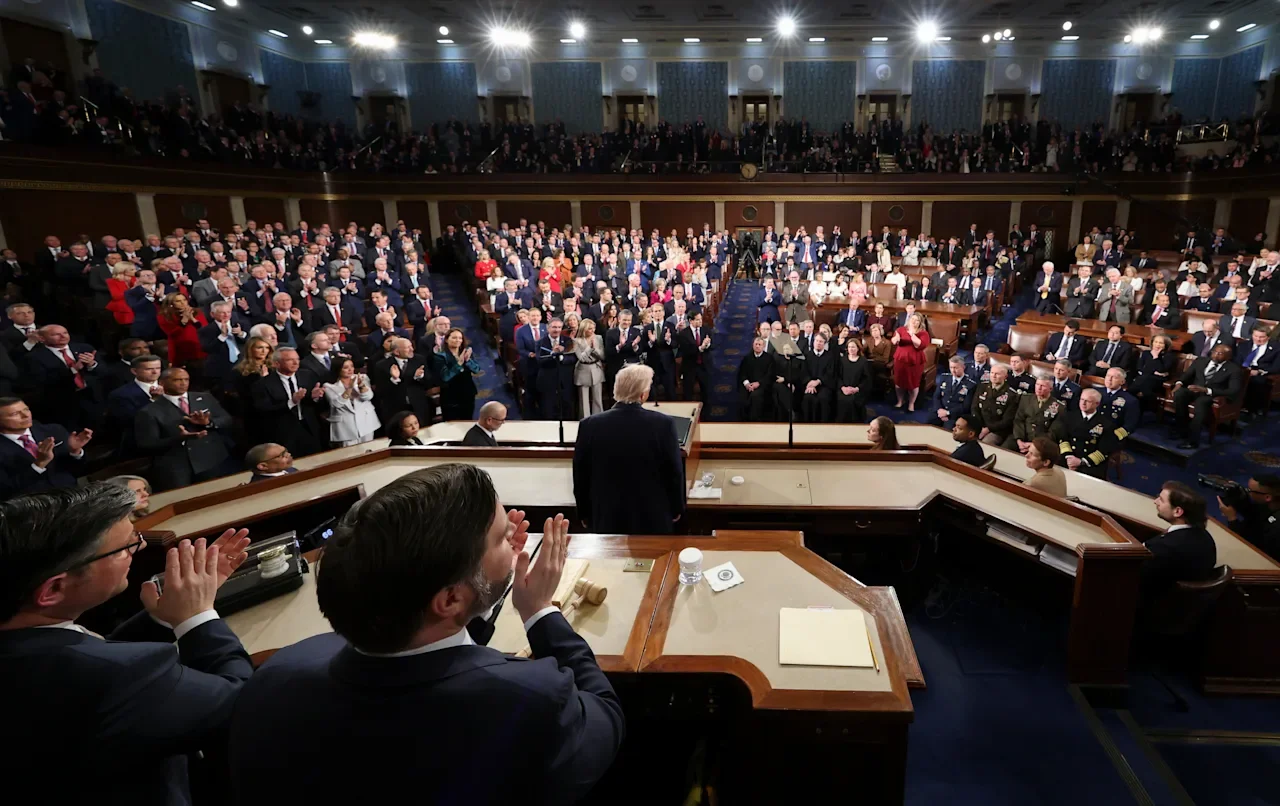
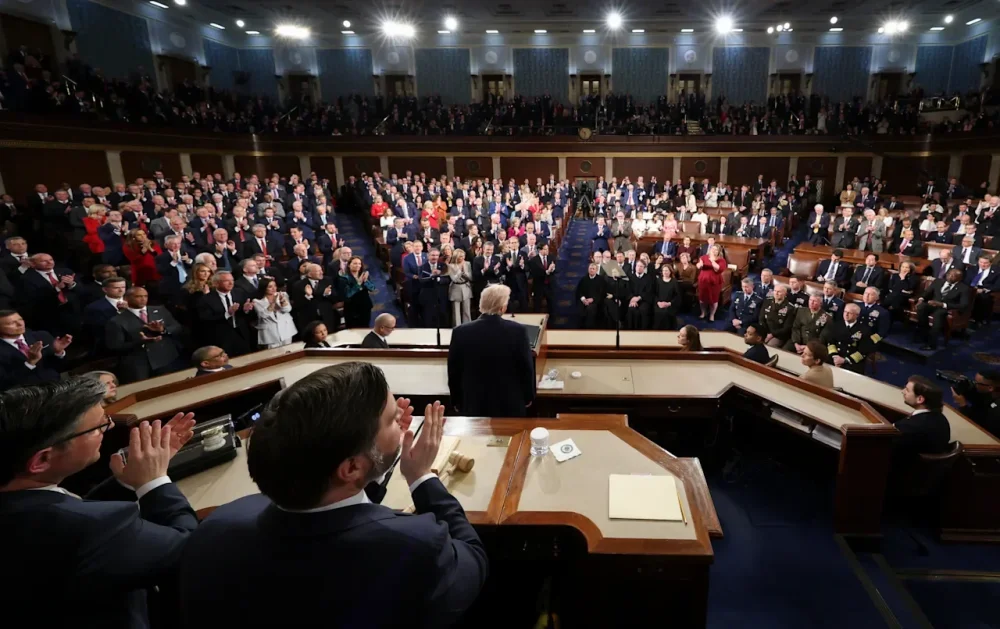
President Donald The President started in sales mode, using his State of the Union address to deliver an upbeat vision of the U.S. economy. But that portrayal collides with the sentiment of Americans who remain anxious about their finances and feel they haven’t benefited from The President’s policies. He took the high road to honor the gold medal-winning U.S. men’s Olympic hockey team and a war hero before pivoting abruptly to a darker tone as he ridiculed Democrats. Here are takeaways from the speech. The President’s ‘roaring’ economy is at odds with sour public sentiment Much of the nation is worried about the direction of the economy, but The President says the good times are here, insisting repeatedly that rising costs are no longer a problem. “The roaring economy is roaring like never before,” he said. He cheered the lower cost of gasoline, mortgage rates, prescription drug prices and the rising stock market: “Millions and millions of Americans are all gaining.” Such optimism, as so many Americans are feeling economic strains, risks painting The President as out of touch. Just 39% of U.S. adults approved of The President’s handling of the economy in February, according to AP-NORC polling. Still, the president focused much of the first hour of his speech on the economy, something Republicans had urged him to do as they head into the midterm elections. The President wraps himself in the flag For a president who always seems to be spoiling for a fight, The President also tried to summon Americans’ innate patriotic impulses. In addition to the hockey team, he singled out war heroes and those who had taken brave stands in other countries, using the moment to bestow numerous presidential medals in an effort to give the address a more positive gloss. It underscored the president’s media savvy and understanding that even if a moment isn’t appreciated completely in real time, it can have an afterlife in the days following speech, especially on social media. Yet in one revealing moment, The President lamented why he couldn’t give a congressional medal to himself. Taking aim at Democrats Tributes to the Olympic hockey team and a World War II veteran didn’t unify the room for long. The Republican president soon took aim at Democrats and blamed them for many of the nation’s ills. The President said rising health care premiums are “caused by you,” suggested Democrats “are not protecting” Social Security and blamed them for the nation’s affordability crunch. “You caused that problem. You caused that problem,” The President said as he glared at the Democratic side of the room. He seemed to get angrier as the speech progressed. “These people are crazy, I’m telling you, they’re crazy,” he said. “Democrats are destroying this country.” The President’s MAGA base loves such aggression. It’s unclear, however, if the rest of the country feels the same. The Supreme Court’s ‘unfortunate’ decision By The President’s standards, he held his tongue when it came to the Supreme Court. After the court struck down his tariff policy last week, The President said the justices who voted against one of his signature issues were an “embarrassment to their families.” By Tuesday, he simply called the ruling “unfortunate.” The President sought to treat the ruling with indifference, insisting that tariff revenues were “saving” the U.S., ignoring the fact that the levies haven’t made a significant dent in government debt. He said the tariffs were paid by foreign countries even as virtually every study concludes that costs have been paid by U.S. firms and consumers. At one point, he seemed to take the long view that history would ultimately vindicate him even if the Supreme Court would not. “As time goes by, I believe the tariffs paid by foreign countries will, like in the past, substantially replace the modern day system of income tax, taking a great burden off the people that I love,” he said. That is unlikely. The federal income tax is authorized by the 16th Amendment to the Constitution and the power to collect revenue is ultimately defined by Congress, not the president. The President vows action on election ‘cheating’ The president also used the speech to reprise his attack on the integrity of U.S. elections. “Cheating is rampant in our elections,” The President said. The President has made such claims for years, focused on his 2020 election loss, claims rejected by dozens of courts and his own attorney general at the time. But the timing of Tuesday’s prime-time claims, less than nine months before voters across America are scheduled to decide control of Congress, was noteworthy. So, too, was The President’s suggestion that he would take action to address a problem that doesn’t appear to exist. “They want to cheat. They have cheated, and their policy is so bad that the only way they can get elected is to cheat,” The President said of Democrats. “And we’re going to stop it. We have to stop it.” The President is calling on Congress to pass a bill requiring voters to show a photo ID before casting ballots. But he also recently vowed to enact an executive order to address the issue, although the White House has not clarified what it might entail. No mention of Minneapolis Sometimes what’s not said is as notable as what is. The President has highlighted immigration since the very first speech in which he announced his 2016 presidential campaign. And on Tuesday night, he revived much of the same language he’s used throughout the past decade, blasting “criminal aliens” and warning of “drug lords, murderers all over our country.” What he didn’t mention: the most aggressive immigration enforcement tactics that threatened to bring the U.S. to the brink earlier this year. He didn’t mention the deaths of two U.S. citizens in Minneapolis last month at the hands of federal agents. Indeed, it was Rep. Rashida Tlaib, D-Mich., who shouted that “Alex wasn’t a criminal,” referring to Alex Pretti, one of the U.S. citizens killed in Minneapolis. During her Democratic rebuttal, Virginia Gov. Abigail Spanberger said law enforcement must work to build trust in communities and said The President “every minute spent sowing fear is a minute not investigating murders.” The President said nothing of his administration’s shift in tactics, including a drawdown of agents in the Twin Cities. And he made no acknowledgment of the broad concerns in the U.S. about The President’s approach on immigration, as demonstrated by the 60% of U.S. adults who disapproved of his handling of the issue in February, according to AP-NORC polling. Drumbeat for war gets louder The President has already built up the largest U.S. military presence in the Middle East in decades. And in his speech, he outlined a rationale for using those forces to launch a major military strike against Iran. The president said that Iran and its proxies have “spread nothing but terrorism, death and hate,” adding that its leaders killed at least 32,000 protesters in recent weeks, which is at the further end of estimates over the death toll. The U.S.-based Human Rights Activist News Agency has so far counted more than 7,000 dead and believes the death toll is far higher. Iran’s government offered its only death toll on Jan. 21, saying 3,117 people were killed. The President also warned that the nation has developed missiles that can threaten Europe and is working on missiles “that will soon reach” the U.S. “My preference is to solve this problem through diplomacy. But one thing is certain, I will never allow the world’s number one sponsor of terror, which they are, by far to have a nuclear weapon. Can’t let that happen.” On brand, the speech was the longest SOTU ever The president, ever mindful of records that allow him to say he was the first, the best or had done the most, succeeded clearly on one thing: he beat his own record for the longest, clocking in at just under 1 hour, 48 minutes. By STEVEN SLOAN and STEVE PEOPLES Associated Press View the full article
-
It’s no secret that fast casual restaurants have struggled in recent years, with some companies turning to cheaper options as a way to lure customers back. The latest chain to do so is Panera Bread, which just announced its first-ever value menu. It includes 10 items that are each $4.99. Customers must pick at least two items to use the menu and will get the typical free side of an apple, chips or bread. Anyone who has been to Panera will recognize it as a scaled-down version of the long-standing You Pick Two deal. There are four half sandwiches, three half salads, and three cups of soup. There will be a rotating seasonal item, but to start Panera’s value menu will include: Sandwiches Toasted Italiano Toasted Caprese Focaccia Bacon Turkey Bravo Cranberry Walnut Chicken Salad Salads Fuji Apple Chicken Ranch Parm BLT Caesar Soups Creamy Tomato Homestyle Chicken Noodle Bistro French Onion Panera’s value menu follows similar offerings that have popped up from restaurant chains like Taco Bell, McDonalds, and more. They’ve come as high inflation caused fast food menu prices to shoot up and customers to revolt. In 2024, McDonalds released its $5 value meal, a move that has proved successful in increasing sales, The New York Times reported earlier this month. Panera has also faced controversies and layoffs of late Alongside changing spending trends, Panera has also been rocked by controversies. In 2023, the company faced multiple lawsuits over deaths allegedly related to its high-caffeine Charged Lemonade drinks. Two deaths were due to cardiac arrest. Panera has since settled the lawsuits and removed the Charged Lemonade drink from its menu, NBC reported. Panera also laid off 72 employees last year after shutting down a production facility in Missouri, USA Today reported. It follows the shutdown of four other facilities in the United States. View the full article

-
If you order a new smartphone to be delivered to your home, you may be a target for scammers. Fraudsters are impersonating representatives from mobile carriers, calling customers and claiming that they've been sent the wrong device and need to return it. Obviously, if you follow through, scammers get to keep your phone—they may either to sell it or activate it using your information to perpetrate identity fraud. Scams centered on stealing high-value tech aren't anything new. In addition to regular porch pirating, thieves have been known to knock on doors, posing as couriers or company representatives attempting to recover a "wrongly delivered" item. Fraudsters have also used fake Find My alerts to gain access to lost or stolen iPhones. How the phone return scam worksAs an editor at ZDNET experienced, the scam begins shortly after your new phone is delivered. You may receive a call from a spoofed number, and someone claiming to represent your carrier will have specific information like your name, address, and device model. They'll tell you that there's been a mix-up and you need to send your phone back so you can receive a replacement. They may give you instructions to scan a QR code, print a label, and take the package to a shipping drop-off point. In some cases, targets have been promised gift cards for the inconvenience. If you hesitate, scammers may employ a number of pressure tactics to get you to act. They'll tell you that delaying the return could cause issues with your device activation, billing, or warranty. They may continue to call with threats. Like many scams, this one relies on social engineering: it manipulates emotions and instincts to get you to act against your best interest. Fraudsters impersonate a trusted brand and use detailed information about you to make their story more believable. They use timing to their advantage and promote a sense of urgency. The phone return scam also has similarities to the brushing scam, in which victims receive a package containing merchandise they didn't order so that scammers can write a verified review or boost sales numbers or collect personally identifiable information once you scan a QR code (an added component known as quishing) to learn more about the item. What to do if you get a call about your new phoneThe solution here is to simply hang up. If you are concerned about your account or device, call your carrier directly (use the customer service number from a previous bill or go through the official app) and confirm the mix-up. Don't engage with QR codes or any instructions provided on unsolicited calls. It may be alarming that a scammer has specific details about your order and calls right after your new phone is delivered. Unfortunately, a lot of your personal information is out in the open and available to bad actors, whether as the result of a data breach or some other form of compromise (such as malware that can read notifications). This is a good reason to keep an eye out for other indicators of identity theft and act quickly if you find anything suspicious. View the full article
-
We may earn a commission from links on this page. Deal pricing and availability subject to change after time of publication. Getting started with outdoor security cameras can get expensive fast. The refurbished Blink Outdoor 4 (two-pack) with Sync Module 2 keeps things simple and affordable. Right now, this “like-new” bundle is $62.99 on Amazon, down from $164.99, and price trackers show this is its lowest price yet. For context, buying new costs $179.99 for just the cameras without the Sync Module. These units are part of Amazon’s certified refurbishment program, so they’ve been tested and inspected before resale. PCMag gave the Blink Outdoor 4 an “excellent” rating, and our own writer called it a worthwhile entry-level wireless camera. Like-New Blink Outdoor 4 (2-pack) with Sync Module 2 $62.99 at Amazon $164.99 Save $102.00 Get Deal Get Deal $62.99 at Amazon $164.99 Save $102.00 Installation is simple and fully wire-free. Each camera runs on two AA lithium batteries that Blink says can last up to two years, depending on usage. You mount it on a porch, fence, or even indoors, connect it to wifi in the app, and you're set. The cameras record in 1080p, with daytime footage clear enough to recognize faces. Plus, it has a 143-degree field of view, so it captures a wide area of your yard or entryway without needing multiple units for basic coverage. Infrared night vision handles low light, and two-way audio lets you speak to a visitor or delivery driver through the app. Motion alerts are sent straight to your phone, and you can access live view for up to five minutes at a time without a subscription. Storage options are flexible. The included Sync Module 2 supports local video storage through a USB drive (sold separately) and can manage up to 10 Blink cameras at once. Cloud storage is available if you prefer remote backups. Person detection and extended video history require a Blink subscription, with the Basic plan priced at $40 per year for one device and the Plus plan at $120 per year for unlimited cameras. The system integrates well with Amazon Alexa and IFTTT, so you can pull up live feeds on an Echo Show or Fire TV easily. It does not support Google Assistant or Apple HomeKit. Still, for someone building a basic, outdoor security camera setup on a budget, this refurbished two-pack offers long battery life, local storage, and easy installation at a low upfront cost. Our Best Editor-Vetted Tech Deals Right Now Apple AirPods 4 Active Noise Cancelling Wireless Earbuds — $157.90 (List Price $179.00) Apple iPad 11" 128GB A16 WiFi Tablet (Blue, 2025) — $329.00 (List Price $349.00) Google Pixel 10a 128GB 6.3" Unlocked Smartphone + $100 Gift Card — $499.00 (List Price $599.00) Apple Watch Series 11 [GPS 46mm] Smartwatch with Jet Black Aluminum Case with Black Sport Band - M/L. Sleep Score, Fitness Tracker, Health Monitoring, Always-On Display, Water Resistant — $329.00 (List Price $429.00) Shark AI Ultra Matrix Clean Mapping Voice Control Robot Vacuum with XL Self-Empty Base — $299.99 (List Price $599.00) Samsung Galaxy Tab S10 FE 128GB Wi-Fi Tablet (Gray) — $379.99 (List Price $499.99) Amazon Fire TV Soundbar — $99.99 (List Price $119.99) Deals are selected by our commerce team View the full article
-
When creating a return policy template, it’s important to include several key components to guarantee clarity. Start with eligibility criteria, outlining acceptable item conditions and specific time frames for returns. You’ll additionally need to detail required documentation, the return process, and refund options. Don’t forget to address shipping fees and any exchange policies for defective items. Comprehending these elements is essential, as they can greatly impact customer satisfaction and retention. What else should you consider? Key Takeaways Clearly outline the time frame for returns, typically within 30 days from purchase or delivery. Specify eligibility criteria, including conditions for acceptable items and any exclusions. Detail the refund process, including types of refunds and time frames for processing. Include instructions for initiating returns and exchanges, including required documentation and customer communication channels. Communicate any applicable shipping fees, restocking fees, and conditions surrounding these charges. Overview of the Return Policy When you purchase an item, comprehending the return policy is vital, as it outlines the specific conditions under which you can return items. Your return policy overview should clearly specify the time frames for returns, eligibility criteria, and the condition of acceptable items. For instance, you might include whether customers can expect full refunds, partial refunds, or store credit as options, helping to manage expectations effectively. It’s important to indicate if proof of purchase, such as a receipt, is required and clarify any documentation needed for processing returns. Providing a clear timeline for how long customers have to initiate returns and how quickly refunds will be processed improves transparency. Furthermore, mentioning any exclusions, such as non-returnable items, can prevent misunderstandings. Using a refund policy template can guide you in creating a thorough return and refund policy example that meets customer needs and protects your business interests. Eligibility Criteria for Returns When considering a return, it’s vital to understand the eligibility criteria that apply. You’ll need to make certain that items are unused, in their original condition, and include all packaging for a successful return. Furthermore, be aware of any time frame limitations and specific exclusions, such as sale items or certain categories that aren’t eligible for return at all. Condition of Items To be eligible for a return, items must be unused and in their original condition, ensuring they can be resold or reused. This is essential for any return policy on clothes, as it maintains product integrity. Original packaging is typically required, as it protects the item during transit and preserves its resale value. Certain products, like opened personal care items or custom-made goods, may not qualify for returns because of hygiene regulations or specific safety concerns. Furthermore, you’ll need proof of purchase, such as a receipt or order confirmation, to process returns effectively. When drafting your product return policy template, be clear about these conditions to avoid confusion and improve customer satisfaction, referencing a return and refund policy sample for guidance. Time Frame Limitations Establishing a clear return window is vital for your return policy, as it sets expectations for customers regarding when they can initiate a return. A standard practice is to implement a 30-day return policy, starting from the date of purchase or delivery. During this period, customers can return eligible items, provided they’re unused and in original condition with all packaging intact. It’s important to specify that certain items, like sale or clearance products, may not be eligible for returns, ensuring transparency. Moreover, customers must present a receipt or proof of purchase within this timeframe to facilitate the return process. Communicating any limitations, such as issues with damaged or missing parts, further clarifies your return policy for online purchases. Exclusions and Exceptions Even though many items are eligible for return, certain exclusions and exceptions apply that you should be aware of. Under most return policies, items must be unused and in their original condition, including packaging. Personal care products, undergarments, and custom-made goods typically fall under no refund policy because of hygiene and safety regulations. Furthermore, sale items often aren’t eligible for refunds or exchanges, so it’s vital to clarify this in your return policy. You’ll likewise need to provide a receipt or proof of purchase to initiate any return. If items are damaged or missing parts upon return, they may be deemed ineligible for refunds, highlighting the significance of maintaining product integrity throughout the return process. Time Frame for Returns When considering a return, it is crucial to be aware of the specific time frame allowed for initiating the process. A well-defined return policy can greatly impact customer satisfaction. Typically, you’ll find that most online return policies permit returns within 30 days of delivery, even though some businesses extend this to 60 or even 90 days. Here’s a quick reference table for typical return time frames: Time Frame Common Practices 14 Days Standard for many retailers 30 Days Commonly used by most businesses 60 Days Customer-friendly extension 90 Days Rare, but improves satisfaction Clearly communicating the time frame in your return refund policy template helps set expectations and minimizes confusion. It is advisable to display this information prominently on your website and in purchase confirmations to make sure your customers are informed before completing their transactions. Required Documentation Returning items typically requires specific documentation to guarantee the process goes smoothly. A well-structured return policy template should clearly state that customers need to provide a receipt or proof of purchase to initiate a return or refund. This validates claims are legitimate and traceable. Although some businesses may allow exchanges without a receipt, having clear documentation is essential to streamline the return exchange policy and maintain inventory accuracy. In your product return policy sample, specify acceptable formats for documentation, such as email confirmations or order numbers. This clarity helps prevent fraudulent claims and facilitates faster processing of returns and refunds. Return Process Steps To start the return process, you’ll first need to submit a return request, usually by contacting customer support for authorization. After your return is approved, the item will undergo an inspection to verify it meets the eligibility criteria. Once everything checks out, you can expect your refund to be processed within a week after the returned item arrives back at our facility. Return Request Submission How can you guarantee a smooth return process? Start by following your online store return policy. First, contact customer service via email or phone to initiate your return request. They’ll guide you through the necessary steps and may provide a return authorization number, which is crucial for processing. Confirm the product is in original condition, securely packaged, and includes all original documentation. Depending on your product refund policy, you might receive a return shipping label, or you may need to cover the shipping costs yourself. After sending the item, you’ll receive an email notification regarding the approval or rejection of your return, outlining the next steps in the refund process. Item Inspection Procedure Once you’ve notified the business of your intent to return an item, the next step involves an inspection process to verify if the returned product meets the eligibility criteria outlined in the return policy. This item inspection procedure is essential in ensuring that returns are handled effectively. Here’s what you can expect: Condition Check: The item must be unused and in its original packaging. Documentation Review: Proof of purchase should accompany the return. Acknowledgment: You’ll receive a confirmation email upon receipt of the item. Decision Notification: If approved, expect your refund within 7-14 business days; if not, you’ll be informed of the rejection and options available under the ecommerce return policy. Refund Processing Timeline The refund processing timeline begins after the seller receives and inspects the returned item, which typically takes up to 7 business days. Once the inspection is complete, you’ll receive an email notifying you of your refund approval or rejection within a few days. If approved, the refund will be processed back to your original payment method within 3 to 5 business days, depending on your Bank of America or credit card company. If there are delays, you should follow up with customer service to track your refund status. It’s important to note that some policies may include a refund policy no refunds clause, so always consult the refund or exchange policy in your ecommerce return policy template to understand your rights clearly. Refund Information When considering a refund, it’s important to understand the specific criteria and processes involved. Clear refund information is essential for your store return policy and can improve customer satisfaction. Here are key points to remember: Processing Time: Refunds are typically processed within 7 to 14 business days after receipt and inspection of the returned item. Eligibility Criteria: Items must be unused, in original condition, and accompanied by a receipt or proof of purchase for a refund. Types of Refunds: You may offer full refunds, partial refunds for opened items, or store credit for returns outside the standard policy. Deductions: Be transparent about any deductions, such as shipping costs or restocking fees, to set clear expectations. Exchange Policy Details Comprehending the exchange policy is important for ensuring a smooth process if you receive a defective or damaged item. Your exchange policy details need to be precise, stating that only defective or damaged items qualify for an exchange. To initiate the process, customers must email your designated contact, which helps keep communication organized. Specify the address where items should be sent for exchanges to prevent any confusion. It’s essential to clarify that exchanges will only be for the same item, ensuring customers know they can’t swap for different products. Furthermore, emphasize that items not meeting these criteria—such as those that are used or lack original packaging—will not be eligible for an exchange. This clarity helps maintain a consistent retail return policy and can be effectively included in your store policy template, ensuring customers understand the rules and procedures for exchanges. Shipping and Handling Fees Grasping shipping and handling fees is crucial for maneuvering the return process effectively. Your shipping and return policy should be transparent about these costs to avoid confusion. Here are four key points to include: Return Shipping Costs: Clearly state whether customers are responsible for paying return shipping fees. This impacts their decision to return an item. Non-refundable Shipping Fees: Indicate if shipping fees are non-refundable, meaning they’ll be deducted from any approved refund amount. Restocking Fees: Mention any applicable restocking fees, detailing the conditions under which these charges will apply. Exchange Shipping Costs: Clarify if customers will need to pay for shipping on replacement items during exchanges. Frequently Asked Questions What to Include in a Return Policy? To create an effective return policy, start by specifying the eligibility criteria for returns, like requiring items to be unused and in original packaging. Clearly define the return window, typically around 30 days. Outline the refund process, including how customers will be notified and the expected timeline for refunds. Don’t forget to mention any non-returnable items and provide detailed instructions on how customers can initiate a return. What’s the Big 5 Return Policy? The Big 5 Return Policy includes crucial components that guarantee a smooth return experience for customers. It typically outlines eligibility criteria, stating items must be unused and in original condition within a specified timeframe, often 30 days. It details the return process, including required documentation like receipts, and clarifies refund timelines. Furthermore, it specifies non-returnable items and who covers return shipping costs, which improves transparency and builds customer trust. How Do You Write a Simple Return Policy? To write a simple return policy, start by stating the timeframe for returns, typically 30 days from purchase. Specify eligibility criteria, such as items needing to be unused and in original packaging. Provide clear instructions on how customers can initiate returns, like contacting support or filling out a form. Mention any exclusions, like sale items or personal care products, and outline the refund process, including who covers return shipping costs. What Is an Example of a Return Policy? A return policy example might allow returns within 30 days of purchase, requiring items to be unused and in original condition. You’ll need to provide the receipt for processing returns. The policy should specify that refunds are issued to the original payment method, with notifications sent upon approval or rejection. Furthermore, clarify which items are non-returnable, such as personal care products or sale items, to set proper expectations for customers. Conclusion In conclusion, a well-crafted return policy template is vital for any business. It should clearly outline eligibility criteria, time frames, and required documentation to streamline the return process. Furthermore, detailing refund options, exchange policies, and shipping fees guarantees transparency for customers. By incorporating these elements, you create a clear framework that not just protects your business but also improves customer trust and satisfaction. An all-encompassing return policy eventually promotes a positive shopping experience for everyone involved. Image via Google Gemini This article, "What to Include in a Return Policy Template?" was first published on Small Business Trends View the full article
-
We may earn a commission from links on this page. Deal pricing and availability subject to change after time of publication. Apple users tend to collect chargers: one for the iPhone, one for the Apple Watch, maybe another for AirPods. The Anker MagSafe MagGo UFO 3-in-1 15W Qi2 Wireless Charging Pad is built to replace that pile with a single foldable stand. It’s currently $39.99 on Woot, down from $89.99, with three days left on the deal or until it sells out. The same charger is selling for $76.99 on Amazon, and price trackers show it has dipped to $55.99 in the past, but not this low. Prime members get free standard shipping, while others pay $6. The box includes the charging pad, a 40W wall adapter, and a 5-foot USB-C to USB-C cable, and this wireless charger comes with a two-year Anker limited warranty. Anker MagSafe MagGo UFO 3-in-1 15W Qi2 Wireless Compact Foldable Travel Charging Pad $39.99 at Woot $89.99 Save $50.00 Get Deal Get Deal $39.99 at Woot $89.99 Save $50.00 This is a Qi2-certified three-in-one wireless charger, designed mainly for Apple gear. It can charge an iPhone, an Apple Watch, and a pair of AirPods at the same time. The main magnetic pad delivers up to 15W to compatible iPhones, including the iPhone 15 lineup, which is double the speed of older 7.5W MagSafe chargers. Anker says it can bring an iPhone 15 Pro to 20% in about 15 minutes. The Apple Watch charger also supports fast charging, getting a Series 9 to around 30% in 22 minutes. In everyday use, that means you can top off your phone and watch while you shower or get ready for work and leave with a noticeable boost. Part of the appeal is the design: It folds down to roughly the size of a baseball, making it easy to toss in a bag for travel. Open it up, and it works as a small stand that supports Apple’s StandBy mode in landscape, so your iPhone can double as a bedside clock or widget display. This is not a universal solution for Android users—it's best suited to someone already invested in the Apple ecosystem. At $39.99 with the power adapter included, it is a practical upgrade for an Apple-heavy setup at home or on the road. Our Best Editor-Vetted Tech Deals Right Now Apple AirPods 4 Active Noise Cancelling Wireless Earbuds — $157.90 (List Price $179.00) Apple iPad 11" 128GB A16 WiFi Tablet (Blue, 2025) — $329.00 (List Price $349.00) Google Pixel 10a 128GB 6.3" Unlocked Smartphone + $100 Gift Card — $499.00 (List Price $599.00) Apple Watch Series 11 [GPS 46mm] Smartwatch with Jet Black Aluminum Case with Black Sport Band - M/L. Sleep Score, Fitness Tracker, Health Monitoring, Always-On Display, Water Resistant — $329.00 (List Price $429.00) Shark AI Ultra Matrix Clean Mapping Voice Control Robot Vacuum with XL Self-Empty Base — $299.99 (List Price $599.00) Samsung Galaxy Tab S10 FE 128GB Wi-Fi Tablet (Gray) — $379.99 (List Price $499.99) Amazon Fire TV Soundbar — $99.99 (List Price $119.99) Deals are selected by our commerce team View the full article
-
Competitive credit could offer nine-figure cost benefits, according to a study VantageScore cited. Meanwhile, FICO added a tool to help borrowers qualify. View the full article
-
A social media content calendar template is a structured framework that helps you plan and manage your online content effectively. It includes crucial details like publication dates, content types, and post titles, ensuring that your messaging aligns with marketing objectives. By organizing your content in this way, you can improve team collaboration and maintain a consistent brand voice. Comprehending how to create and utilize this tool can greatly impact your social media strategy moving forward. Key Takeaways A social media content calendar template organizes and strategizes your online presence for upcoming posts across various platforms. It specifies essential details like publication dates, content types, links, and media to streamline posting. The template helps maintain consistent posting aligned with your marketing goals and brand voice. It enhances collaboration among team members and ensures quality control, avoiding last-minute rushes. By using a content calendar, you can make data-driven decisions for future content strategies and engagement tracking. Definition and Purpose of a Social Media Content Calendar Template A social media content calendar template serves as a vital tool for organizing and strategizing your online presence. This template helps you outline upcoming posts across various platforms, specifying publish dates, content types, and important details like links and media. By utilizing a social media content calendar template, you can plan and schedule content effectively, ensuring consistent posting that aligns with your marketing goals. This consistency improves your brand’s visibility. In addition, these templates save time and boost collaboration among team members, providing a clear overview of content across multiple channels. Many templates likewise include features for tracking performance and managing approval workflows, allowing you to optimize your social media campaigns based on audience engagement and performance metrics. Key Components of an Effective Content Calendar Creating a well-structured content calendar involves several key components that contribute to its effectiveness. A solid calendar template should include: Content Types: Specify the formats, like images or videos, to diversify your posts. Post Titles and Links: Clearly define what you’re sharing and where to find it for easy reference. Publication Dates: Schedule when each piece will go live to maintain consistency. Target Audience: Identify demographics to tailor your content for better engagement. Additionally, include sections for content approvals, notes for team collaboration, and metrics for tracking performance. These elements guarantee a cohesive strategy, streamline communication, and allow for data-driven adjustments, optimizing your overall effectiveness. Benefits of Using a Social Media Content Calendar Using a social media content calendar brings numerous benefits that can greatly improve your marketing efforts. It streamlines the planning process, allowing you to organize posts by publish date, platform, and content type, enhancing overall efficiency. By maintaining a consistent posting schedule, your content aligns with your brand voice and marketing goals, leading to improved audience engagement. A customizable calendar app for personal use facilitates better cross-functional collaboration, providing visibility into upcoming posts and responsibilities. Proactive scheduling guarantees quality control, protecting your brand reputation by avoiding last-minute rushes. Furthermore, a well-structured content calendar supports data-driven decision-making, enabling you to analyze past performance and optimize future content strategies based on audience engagement metrics. How to Create Your Own Content Calendar To effectively manage your social media presence, begin by downloading a customizable content calendar template that suits your business needs. A calendar program free can be a great starting point. Follow these steps to create your own content calendar: Enter crucial details like post titles, content types, links, images, and intended publish dates. Adjust the template’s columns to align with your marketing goals and planning across multiple platforms. Utilize the content repository feature to track previously created content for easy reuse. Schedule posts in advance to maintain a consistent posting cadence, ensuring timely delivery and alignment with your overall marketing objectives. Popular Social Media Calendar Templates to Consider When managing your social media strategy, selecting the right content calendar template can make a significant difference in your planning and execution. Some popular options include HubSpot’s Social Media Content Calendar, which allows for extensive posting strategies across various platforms and can be customized to fit your needs. HootSuite offers a Google Sheet format with an evergreen content library, helping you avoid last-minute scrambles. CoSchedule provides a centralized view of marketing activities, enhancing collaboration. Smartsheet‘s template supports detailed daily breakdowns for six posts, including engagement tracking. Finally, Buffer‘s user-friendly calendar integrates with multiple platforms, offering visual planning and performance analytics. These templates can inspire your social media content calendar ideas and streamline your workflow. Frequently Asked Questions What Is a Social Media Content Calendar? A social media content calendar is a strategic tool that helps you plan and organize upcoming posts across various platforms. It details publish dates, content types, and media assets, allowing for a consistent posting schedule. By using a calendar, you can guarantee your content aligns with marketing objectives and brand voice, whilst additionally improving team collaboration. This approach saves time, reduces last-minute scrambles, and helps you track performance metrics for better engagement analysis. How Do You Create a Social Media Content Calendar? To create a social media content calendar, start by selecting a template that fits your needs. Customize it by adding columns for content types, post titles, links, and publish dates. Schedule your posts in advance, aligning them with your marketing goals. Track performance using engagement metrics to refine your strategy. Finally, share the calendar with your team to guarantee everyone stays informed and aligned, enhancing collaboration and efficiency in your content planning. What Is a Content Calendar Template? A content calendar template is a structured tool that helps you plan and manage your content across different platforms. It outlines when and what to post, including fields for titles, links, and images. By using this template, you can maintain a consistent posting schedule and prioritize quality content. You can customize it to fit your specific needs, ensuring that your content strategy aligns with your overall business goals as you improve audience engagement. What Is Social Media Content Scheduling? Social media content scheduling involves planning and organizing your posts ahead of time across different platforms. By scheduling, you can identify the best times to post based on when your audience engages most. This practice improves visibility and interaction rates as well as streamlining your workflow, reducing last-minute content creation. It furthermore helps maintain brand consistency and allows for content review, leading to better overall management of your social media presence. Conclusion In conclusion, a social media content calendar template is a crucial tool for organizing and scheduling your online presence. By incorporating key components like publication dates and content types, you can improve collaboration and maintain brand consistency. Utilizing this tool not merely streamlines your content strategy but likewise enables data-driven decision-making for future posts. Whether you create your own or choose from popular templates, implementing a content calendar can greatly enhance your social media effectiveness. Image via Google Gemini This article, "What Is a Social Media Content Calendar Template?" was first published on Small Business Trends View the full article
-
AMC, the world’s largest movie theater chain and a one-time darling of meme stock traders, said this week that it expects to continue closing more movie theaters than it opens going forward. While the move is sure to disappoint cinephiles, AMC believes that shuttering certain cinemas will ultimately be better for the company’s bottom line. Here’s what you need to know about the upcoming AMC theater closings. What’s happened? On Monday, AMC Entertainment Holdings reported its fourth-quarter 2025 financial results as well as its full-year 2025 results. It’s fair to say the company did not have a blockbuster quarter or year. For the company’s Q4 2025, which ended on December 31, AMC reported total revenue of $1.28 billion. That’s a drop of 1.4% from the $1.3 billion the company reported for the same quarter a year earlier. Fewer people are attending movies AMC said that both its global and international attendance figures were down. For Q4 2025, AMC’s total attendance equalled 56.3 million. That’s a drop of nearly 10% from the 62 million during the same period a year earlier. U.S. attendance was down less (about 7.5%) for the quarter than international attendance (down about 15%). However, for its full fiscal 2025, AMC did slightly better. Total full-year revenue was actually up about 4.6% to $4.84 billion. And its attendance figures, while still down across the board, didn’t fall as much as it did in the forth quarter. Still, the downward trend in attendance was obviously a blow to AMC, which relies on attracting foot traffic to its theaters so it can sell tickets and high-margin concessions. Attendance problems are not unique to the company. In recent years, movie theaters worldwide have struggled with declining foot traffic. The reasons most often cited for those declines include higher ticket prices, fewer films with mass-market appeal, and increasing competition from streaming services like Netflix, which stream original feature film content right into viewers’ homes. Declining foot traffic can turn some theater locations into a financial burden instead of a guranteed positive revenue source, so it was little surprise when, in addition to annoucning its financials, AMC revealed that in the years ahead it is planning to close more theaters than it opens. AMC reveals it will close more theaters than it opens AMC currently has about 860 theaters across the globe, making it the largest theater chain in the world. Yet on the company’s financial earnings call earlier this week, CFO Sean Goodman revealed that AMC will be closing “underperforming locations” in the future—something the chain has already been doing for some time. The CFO further revealed that since 2020, AMC had already closed 213 locations, while opening just 65 new ones during the same timeframe. Which AMC movie theaters are closing? The company did not provide a list of theaters that it plans to close, but local media outlets have reported numerous closures in their respective communities over the last year. AMC location closures in 2025 have included: An Alabama location in March A Kansas location in April A Georgia location in August Three Illinois locations in August A Colorado location in September A Buffalo, New York, location in December “The ongoing reshaping of our footprint reflects our commitment to improve asset productivity, expand margins, and position AMC for sustainable long-term growth,” Goodman said on the company’s financial call, according to a PitchBook transcript. When asked about the company’s portfolio footprint by an analyst, Goodman said that about 10% of the chain’s theaters come up for lease renewal each year, and those renewals give AMC the opportunity to renegotiate leases or shutter the locations. “Like most organizations or companies with a retail footprint, our theaters are a kind of normal distribution and there is a tale of underperforming or loss-making theaters,” he said. “And we see an opportunity to close those theaters or renegotiate leases and then take on new theaters that are significantly, very significantly, more profitable.” He added that investors can expect a similar pace going forward and that the company will be “closing more theaters than we open, but the new ones that we open are generating significantly more profit than the ones that we close.” AMC stock price has been getting hammered Since announcing its latest quarterly results on Monday, shares of AMC Entertainment (NYSE: AMC) have been relatively flat. The stock price currently sits at around $1.16 a share in premarket trading as of the time of this writing. That’s only a fraction of what the company’s shares were once worth during its heyday as a meme-stock darling in the early pandemic years. During that time, meme stock traders on Reddit poured money into buying AMC shares, driving the price to almost $650 per share in June of 2021. Today’s share price of around $1.16 represents a more than 99% decline from AMC’s nearly $650 high. View the full article

-
The contract rate on a 30-year mortgage dropped 8 basis points to 6.09% in the week ended Feb. 20, according to Mortgage Bankers Association data released Wednesday. View the full article