Newsletter
Want to keep up to date with all our latest news and information?


ResidentialBusiness
Administrators
-
Joined
-
Last visited
Everything posted by ResidentialBusiness
-
Massive shake-up is a show of force after corruption scandal last year weakened Ukraine’s governmentView the full article
-
The island is geologically analogous to Canada and countries in northern EuropeView the full article
-
Want more housing market stories from Lance Lambert’s ResiClub in your inbox? Subscribe to the ResiClub newsletter. In today’s article, we’re sharing the full results from the Q4 2025 Zoodealio-ResiClub Real Estate Agent Survey. To conduct our real estate agent survey, ResiClub partnered with Zoodealio, a cash-offer platform, and iBuyer-management software designed for real estate agents. Among the 204 agents who took the survey, half (51%) have been real estate agents for 15 years or longer. The survey was fielded from November 17 to December 29, 2025. Respondents included real estate agents spanning all regions of the U.S., giving us a ground-level view of buyer urgency, seller motivation, leverage shifts, commission structures, and expectations for the next 12 months. Here’s what the results revealed. Buyer urgency cools and leverage continues to shift away from sellers Nationally, a majority (55%) of agents say buyer urgency is lower than it was 12 months ago. The pullback is most pronounced in the Southwest, where no agents reported seeing buyer urgency pick up, and 65% reported seeing lower urgency. This slowdown is underlined by a continued downturn of buyer demand, with 52% of U.S. agents reporting lower homebuyer demand relative to 12 months ago. As buyer demand softens and inventory continues to build, 54% of U.S. agents now say sellers outnumber buyers, with 64% of agents in the Southeast noting the trend, reinforcing that buyers are gaining negotiating power as they move less urgently. Moreover, the overwhelming majority of agents across all regions (82%) agree that the leverage continues to shift toward homebuyers in their local housing markets. As buyer urgency fades, seller urgency is rising. Nationally, 45% of agents say seller urgency is higher than it was 12 months ago, led by the West (51%), Southwest (48%), and Southeast (46%). In these regions, fewer sellers appear willing to wait for conditions to improve. By contrast, the Northeast looks more stable: 55% of agents there say seller urgency is about the same as a year ago. Agents’ expectations for 2026 In Q4 2025, 39% of agents surveyed expected home prices in their local market to increase over the next 12 months, up from 28% in Q3. The shift is driven by a rise in expectations for prices to stay flat or see slight appreciation, with only 2% of agents anticipating price increases of 5% or more. Mortgage-rate expectations have dipped lower over the past quarter. Earlier in 2025, many agents were still bracing for a higher-rate outcome by the end of the year. As the year progressed, that view softened: Throughout Q4, most agents reported their expectations shifted toward a mid-6% end point, with far fewer expecting rates to remain in the 7% range. Overall confidence is weak, but agents see growth coming from existing homeowners Some 60% of real estate agents surveyed describe their business outlook for the next 12 months as optimistic, led by those in the Southeast (67%). Where do agents think the pie can grow the most in 2026? They say more homeowners are looking to downsize. Roughly 43% say downsizers will be the fastest-growing client segment, followed by move-up buyers (20%). First-time buyers trail well behind (15%), reflecting ongoing affordability constraints. Agent commissions are holding up—but they’re still mad at NAR Sentiment toward the National Association of Realtors remains weak: 57% of agents describe their view as “somewhat unfavorable” (26%) or “very unfavorable” (31%), while only 13% express a “somewhat favorable” (10%) or “very favorable” opinion (3%) of the organization. Agent compensation structures remain largely similar to the way they were prior to the March 2024 NAR settlement: 88% of sell-side deals and 82% of buy-side deals still use fixed-percentage commissions, mostly in the 2% to 3% range. Alternative structures are more common on the buy side but remain a minority. Meanwhile, about 10% of U.S. agents say they have discussed iBuyer cash-offer options with clients “very often” in the past year. These conversations are most common between agents and clients in the Southwest and the Southeast. Big picture The Zoodealio-ResiClub Real Estate Agent Survey results from Q4 2025 show a market moving in the same direction, but with more clarity than in Q3. Buyer urgency has cooled further, seller urgency has picked up, and the majority of agents say sellers outnumber buyers, reinforcing the ongoing shift in negotiating power toward buyers. At the same time, expectations around home prices have firmed modestly, with fewer agents anticipating declines and more expecting flat to slight growth in the next 12 months. As in Q3, agents expect activity to be driven primarily by existing homeowners—particularly downsizers and move-up buyers. Meanwhile, post-settlement agent sentiment toward NAR remains poor, and commission structures remain largely unchanged. View the full article

-
Fast Company is now accepting applications for our annual Best Workplaces for Innovators awards. This marks the eighth year we will be recognizing companies and organizations around the world that most effectively empower employees at all levels to improve processes, create new products, or invent whole new ways of doing business. In addition to honoring the world’s overall Best Workplaces for Innovators, we will recognize companies in 19 categories, including a brand-new category, Skilled Labor, singling out companies that depend heavily on talented employees with the kinds of increasingly coveted technical expertise acquired through votech training and trade schools. New Best Workplaces for Innovators categories In addition to Skilled Labor, other new categories this year include: Cybersecurity and Enterprise Software Industrial and Manufacturing Technology and Science Advertising, Marketing, and PR Biotech, Healthcare, and Life Sciences Financial Services and Fintech To select winners, the editors of Fast Company carefully review and score every application. An outside panel of industry experts then assesses the finalists to help determine the top 10, while the editors compile category winners based on application scores. “At a time of intense competition for talent, when elite prospects are receiving unprecedented compensation packages, companies with robust innovation cultures have a real edge,” says Brendan Vaughan, editor-in-chief of Fast Company. “Best Workplaces for Innovators allows our editors to identify organizations that most successfully encourage all their employees to be creative, to experiment, to invent.” Recognition in the fall issue Companies selected as Best Workplaces for Innovators will appear in the fall 2026 issue of Fast Company magazine and on fastcompany.com in September. For more information and details, see the FAQs. Last year’s Best Workplaces for Innovators issue honored nearly 200 diverse organizations from around the world, including Motorola Solutions (No. 1), Mattel (No. 7), Genentech (No. 25), and the only two companies that have made the cut every single year—Siemens (No. 10) and Johns Hopkins Applied Physics Laboratory (No. 50). What differentiates Fast Company’s Best Workplaces for Innovators awards from other best places to work lists is that it’s the only major business magazine recognition program that emphasizes innovation as the primary workplace perk. Any organization that can demonstrate a serious and sustained commitment to building a culture of innovation that yields tangible results is eligible to apply—public, private, or nonprofit. For more information or to apply, visit fastcompany.com/apply/bwi. For more than a decade, Fast Company has been recognizing outstanding achievement with its awards programs. Our Most Innovative Companies list celebrates organizations that are transforming industries and shaping society through paradigm-shifting products, insights, or services. Innovation by Design focuses on individuals and firms that are addressing some of the world’s most intractable challenges through design solutions. World Changing Ideas highlights emerging initiatives that aim to enhance life for all of us. Brands That Matter and Next Big Thing in Tech shine a light on the world’s most relevant brands and highlight the most potent emerging developments in technology. View the full article

-
At a time when it seems like everything’s getting more expensive, Ikea keeps making cheaper and cheaper USB-C chargers. Its newest—the 20-watt, single-port Sjöss—sells for $3.99. You’d pay more than four times that for Apple’s 20-watt, single-port USB-C charger, priced at $19. Charging cables for both are sold separately. Ikea has moved more aggressively into home electronics since last year. The company released a revamped range of smart home products in fall 2025 and opened pilot in-store pop-up shops in select U.S. Best Buy locations, meaning the brand now shares kiosk space with tech giants like Apple, Microsoft, and Meta. Its strategy: selling products that are designed to be simple, stylish, and, above all, affordable. Ikea already sells a 65-watt charger for $25 and a 30-watt charger for $8; its newest and smallest model is also its cheapest. Priced not to break the bank if you leave one behind in the hotel room and need a replacement, Ikea’s charger comes in just one colorway: white and light mint green, but each includes colored stickers to personalize. Not content to sell us only Billy bookcases, Ikea’s push into home tech ranges from smart lights and wireless speakers to kitchen appliances and now ultra-cheap chargers. Everyone’s favorite Swedish furniture company has quietly become something of a tech company on the side. View the full article

-
On the edge of Boulder, Colorado, a remarkable convergence of mutually beneficial collaboration is underway, and it could reshape how housing gets built, who builds it, and who is able to afford it. This is all happening inside BoulderMOD, a new modular housing factory built by the city of Boulder for use by the local Habitat for Humanity affiliate and powered by the labor of apprentice modular home builders from area public high schools. The students come to the factory several hours a day for hands-on education in advanced home building, working on actual modular homes that are now being installed in a section of Boulder devastated by flooding. At full capacity, the factory could produce up to 50 homes per year. BoulderMOD is a joint venture between the Boulder Valley School District, Flatirons Habitat for Humanity, and the city of Boulder, and each of the three partners is tallying very tangible returns. The school district gets to offer an advanced trade-based curriculum that prepares its students for careers they can start immediately. Flatirons Habitat for Humanity gets to streamline and multiply its housing production capabilities, and the city gets to chip away at a deeply ingrained housing affordability crisis. “It’s game-changing,” says Dan McColley, executive director of Flatirons Habitat for Humanity. “It is a complete reinvention of the way we are serving families and meeting the needs of our community.” This innovative partnership has its roots in tragedy. In 2013, devastating floods washed through the Boulder valley. One of the hardest-hit areas was the Ponderosa Mobile Home Park, a 68-unit community of permanently placed mobile homes, and though no lives were lost, many of the homes were heavily damaged. In a city where the median home price currently hovers around $1 million, Ponderosa was a rare place of affordability, and seemed on the verge of being lost completely. The city stepped in and, working with the community, annexed the mobile home park in 2017 and upgraded its infrastructure to prevent future flooding. It partnered with Habitat for Humanity to help rebuild housing for any resident who wanted to stay, and committed to preserving the community’s affordability in perpetuity. Getting that done was going to require an unconventional approach. “At the time, the Flatirons Habitat affiliate was building maybe three or four homes a year and looking at replacing 70-ish mobile homes,” says McColley. “It was going to take us a long time if we used our traditional model.” New skills, new homes In 2019, the city approached the school district about following through on those commitments. Factory-built modular housing was identified as the most efficient way of rebuilding damaged homes. The city had funding for the rebuilding effort in its affordable housing fund, and a willing builder in the Habitat for Humanity. But it didn’t have the factory. So city officials reached out to representatives at the Boulder Valley School District, which had recently opened a trade-focused campus called Apex that offers career pathways to high school students. One of its programs was centered on construction. The city asked the district if that program could expand in a new direction. “[The city] had this aspirational vision of what would happen if they were able to partner with the school district, build a facility, and then in a meaningful way take moves to help with the affordable housing issues in our community,” says Rob Anderson, superintendent of the Boulder Valley School District. After five years of planning, that facility came online. The city built the $13 million BoulderMOD facility using funds from its affordable housing program, with some state and federal grants and private foundation money. Construction of the facility was finished in late 2024, and the space was then outfitted with about $1 million worth of construction tools and equipment. Flatirons Habitat for Humanity staffed the facility, and the school district created a curriculum to support the production process. Production started in February 2025, with around 30 high school juniors and seniors in the factory every week, working on every stage of construction, from framing, electrical, and plumbing to drywall and roofing. The first two duplexes were placed on the Ponderosa site in November and December. “It felt like the right thing to do for our community, for our kids. But man, it’s exceeded expectations,” Anderson says. The Habitat projects are also helping support the community in other ways, including tapping into local suppliers for energy-efficient building materials. For example, Alpen, a high-performance window manufacturer located near Boulder, is providing all the windows for the Ponderosa homes. McColley says the pace of construction will increase as the teams refine their processes and as the students gain more hands-on experience. The duplexes being built for the Ponderosa project are particularly conducive, as they use a single and relatively simple design for each three-bedroom, one-and-a-half-bathroom unit. “At full production, the house will take about eight weeks to move from one end of the factory to the other, and then we’ll have about four, maybe five weeks of site work to do before the family can move in,” says McColley. “We’ll be cutting our construction timeframe from 9 to 12 months to about 12 weeks.” It’s so fast that it’s tweaking one of the standard elements of the Habitat for Humanity building process, which requires homebuyers to contribute to the cost of their home via 200 hours of sweat equity during construction. Homes built at BoulderMOD will progress so quickly that a homebuyer’s sweat equity will likely extend into someone else’s home. McColley says building the 70 or so homes for the Ponderosa project will occupy BoulderMOD for the next few years, but his organization is already looking at using it for other Habitat for Humanity housing projects across the Boulder region. Every home built there will be sold as an affordable housing unit, and McColley expects about 90% of its production to be modular from this point on. “Everything about what we do is different because we’re doing it this way. We’re building houses faster and we’re giving them out to families much more quickly in a much higher volume than we’ve done before,” McColley says. “So we’re tackling the affordable housing crisis in the near term through a different production process, but we’re also tackling it in the long term by training a new generation of construction professionals.” The school district is already planning to expand the size of BoulderMOD to accommodate more students, even those not explicitly using it as a career path. “I see kids who plan on attending competitive four-year colleges and universities not even interested in construction signing up for this,” Anderson says. Whether or not it turns into a job, the students at BoulderMOD are doing more than just learning construction skills. “They are learning how to build. They’re not working on bird houses or dog houses to learn their construction techniques. They’re working on people’s houses, and that’s something that is not lost on them,” McColley says. “They understand at a level that I frankly did not expect the community impact that they are having by building these homes.” View the full article

-
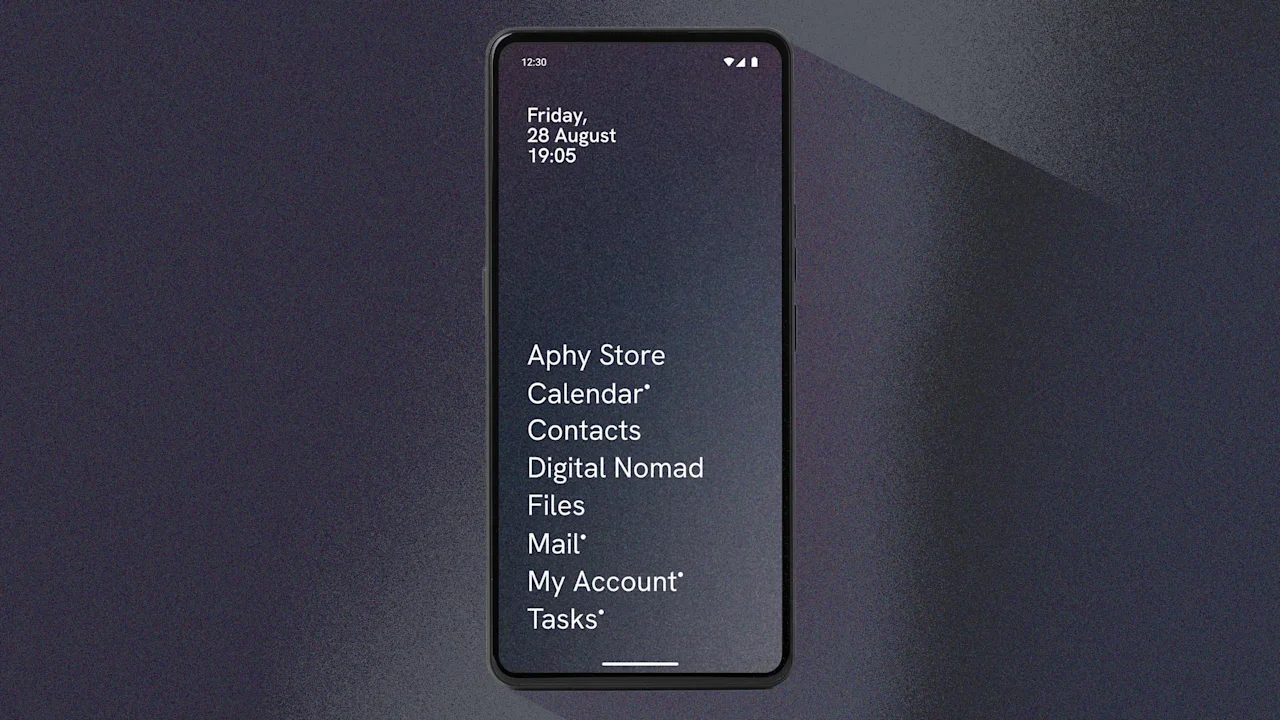
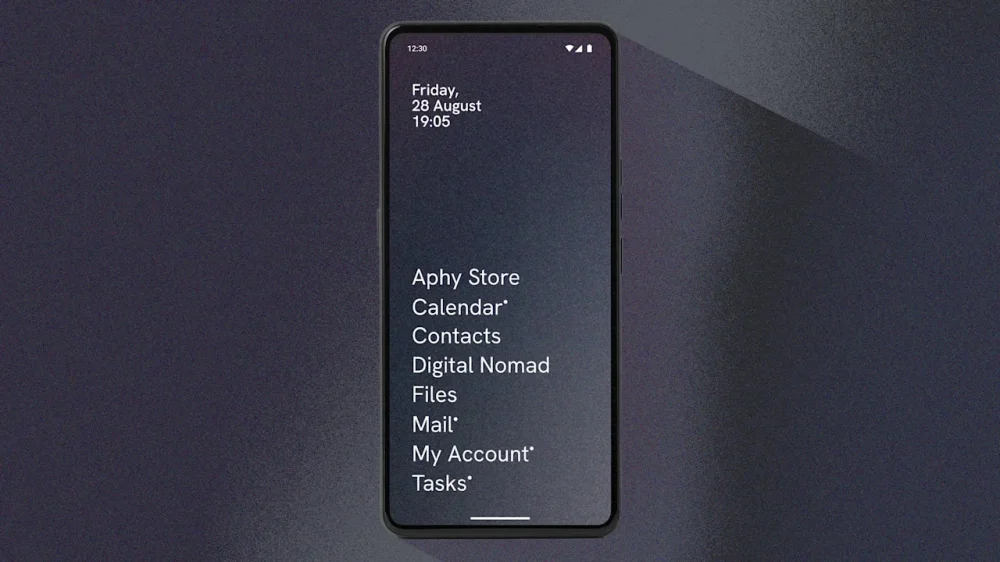
The Swiss company Punkt has released its latest handset, the MC03, a cellphone that merges minimalist hardware design with a matching UX experience that promises total privacy protection against greedy corporations who want to track you and own your data for their own benefit. This thing got me at “DeGoogled From the Core,” which is one of the phone’s declared core selling points. According to founder Petter Neby, “Punkt is about using technology to help us adopt intelligent habits for less distracted lives.” In 2015, Punkt launched its first phone, the MP01, as a secure device that supported only text and calls. No apps. No tracking. Punkt later released the MP02—an even simpler phone that had a small screen and physical buttons—and the MC02, a secure phone with basic encrypted apps like email and calendar. The new MC03 acknowledges that while people might appreciate this obsession with monastic simplicity, security, and privacy, there is clearly a need for some extra features from time to time, like ordering food, getting a cab ride, or wasting time on Instagram. Dr. Jekyll and Mr. Hyde The Punkt MC03 UX design divides your phone experience into two environments: One is a distraction-free, fully protected private environment called the Vault; the other is called the Wild Web, and it’s where all the Android apps you want to install live. The Vault is the phone’s main screen. Here you’ll find the core built-in apps and services, all designed with safety and privacy from the ground up, with encryption, no third-party tracking, no data profiling whatsoever. Stuff like mail, messaging, calendar, contacts, or your file cloud live here. They’re featured on a white-on-black home screen in Helvetica type that’s meant to recall the iconic design aesthetic of Dieter Rams for Braun (an influence that permeates all of Punkt’s products). The Wild Web features a fully customizable “external” screen, where you’ll find your standard rows of icons (white over black square buttons) over a white background. It’s clearly distinct from the Vault so it changes your mindset: Security is not guaranteed here, although each app lives in a privacy bubble. According to the company, the phone runs each app in its own walled playground, with no access to other data or hardware on the device. Punkt says this ensures your data privacy and limits third-party tracking from app to app (although if you use the same Gmail credentials to log into each app, Google will be able to track you on the server side). Ending “you are the product” The secret sauce behind this phone is AphyOS, a custom operating system that severs the umbilical cord that typically tethers Android phones to Mountain View’s data-harvesting servers. While a standard Android device “calls home” to Google every 4.5 minutes to report your location and habits, AphyOS uses “hardened code.” This OS core has been reinforced to block attacks and close security loopholes—assisted by what the company calls a “bank-grade ‘Secure Element’ chip” that keeps your data on the device. It cuts out the bloatware and hidden background services that drain your phone’s battery and your privacy, giving you what Neby calls “a modern, premium device without the need to compromise.” All of this digital sovereignty comes with a price tag, but that’s exactly the point that Punkt is trying to make: Do you want to pay with your private life or do you want to pay to keep your life private? The MC03 includes a 12-month subscription to AphyOS, after which you will have to pay roughly $10 per month to maintain it. By paying for the operating system, you become the customer rather than the merchandise sold to advertisers. As Andy Yen, founder of partner company Proton, puts it: “People deserve choice. Choice over the phone they use, the software they rely on, and who they share their data with.” The monthly subscription price is not to use the phone but to pay for the services. The subscription bundles 5 GB of cloud storage, email, messaging, and calendar into a single secure package. But the real power comes from its integration with Proton. The phone comes with Proton Mail, Drive, Calendar, VPN, Wallet, and Pass, effectively replacing the entire Google Workspace with an encrypted alternative. For messaging, Punkt has preinstalled the cross-platform encrypted client Threema directly into the MC03’s Vault, ensuring your chats have “rigorous data protection and rock-solid security” right out of the box, the company claims. It also includes a VPN called Digital Nomad, which protects your connection on sketchy public Wi-Fi networks. Unlike standard VPN apps, this one is integrated directly into the operating system for better performance and requires no extra setup or third-party subscription. Finally, the phone forces you to confront the cost of your digital life with the Data and Carbon Ledger. Punkt says this dashboard doesn’t just let you manage app privacy permissions in real time; it actually tracks the energy consumption and carbon footprint of every app you use, pushing you to make smarter, more sustainable choices about how you use your device. The ledger also gives you “full transparent control over app data flow,” allowing you to see and restrict app-specific privacy permissions. Nice hardware too The object itself is a solid piece of industrial art designed in Switzerland and manufactured in Germany. Solid, matte gunmetal finish. Simple. Nothing added for effect. Just a metal-and-glass slab with a 6.67-inch OLED screen with the usual high-end 120Hz refresh rate standard. One of the best features, however, is its removable 5,200mAh battery, which, oh boy—in an era where phones are sealed shut like tombs, allowing users to swap their own power source is a radical act of repairability that extends the device’s life indefinitely. I missed this from the old ’90s candy phones, and now I want it. The MC03 doesn’t skimp on the modern specs required for the Wild Web. It sports a 64-megapixel main camera that the company claims can capture sharp images in low light, backed by an ultrawide lens for landscapes and a macro lens for close-ups. Like most phones, it’s water and dust resistant, and supports wireless charging. Priced at $699, it’s shipping in Europe later this month and hitting North America in the spring. View the full article
-
The federal government signaled a new direction in federal funding this week when it announced plans to put as much as $150 million into a private semiconductor startup. Instead of a grant or a loan, the government would take an equity stake. It’s a meaningful departure from how federal funding has traditionally operated. For years, federal R&D support came structured as non-dilutive grants and Small Business Innovation Research (SBIR) and Small Business Technology Transfer (STTR) awards that didn’t require equity concessions. An early-stage company proves its idea with federal support, investors wait for validation, and the company grows. If the government begins converting grants into equity stakes, that calculus changes fundamentally. A quiet shift The semiconductor deal is the latest in what has otherwise been a relatively quiet shift taking place inside the federal funding system as the The President administration considers treating some grants like venture investments. For founders, this creates genuine uncertainty. The government has not yet defined the rules of engagement for what ownership in a startup means. There are no clear answers about how much equity might be taken, how dilution would work over time, when the government expects a return, or who would manage these positions. Startups already struggle to keep their capitalization tables clean enough for private investment. Adding a federal agency to the picture introduces new friction. While experienced investors routinely ask about investor composition before committing capital, even seasoned ones may hesitate if the answer includes “the United States government.” History lessons There is instructive history here. Twenty years ago, the state of Texas launched the Emerging Technology Fund with the goal of supporting high-growth technology companies through a venture model. The fund encountered structural problems—including non-dilution clauses that prevented it from being fairly diluted alongside other investors—that ultimately undermined its portfolio companies’ growth. New investors wouldn’t fund them because the risk was not shared fairly. The lesson is clear: Public capital can be valuable, but if it ignores downstream market dynamics and investor expectations, it can choke off the very growth it intends to catalyze. The timing of this equity push is particularly concerning given that SBIR and STTR programs—historically the backbone of non-dilutive federal support for early-stage companies—expired on September 30, 2025, and remain unauthorized. With traditional grant pathways frozen and equity stakes emerging as the new model, founders face unprecedented uncertainty about federal funding structures. The scale of this disruption is significant: These programs typically distributed approximately $4.73 billion annually to support scientific progress and early company formation. That scale alone makes it essential to understand how any replacement federal support structure would function. Program officers are experts in research evaluation and scientific merit. They are not trained to make venture-style assessments about valuation, equity terms, or long-horizon return timing. Asking them to perform both roles simultaneously creates tension. Conversely, finance-oriented staff who understand investment models are not necessarily equipped to evaluate frontier science. These programs do not operate like traditional venture funds. Ripple effects If the federal government proceeds with equity investments, it must understand the implications for early-stage companies and the ripple effects that follow. If federal agencies become equity holders, they will need to establish clear standards: How are positions structured? Who holds them? When is liquidity expected? How does the relationship evolve as companies raise capital? How are equity percentages, dilution rights, and board representation determined? These decisions cannot be improvised. They determine whether private investors engage or walk away. Startups also need to reconsider their assumptions about federal programs. If equity or royalty components begin appearing, founders must decide what they are prepared to trade for early capital. They’ll need to understand how those terms affect later fundraising rounds and how private investors react to a federal stakeholder at the ownership table. Digital health and medtech founders already have to navigate a complex landscape of regulatory pathways and clinical validation procedures. Having to decipher unclear investment rules from an early funder is more likely to stymie growth than accelerate it. Eyes wide open That’s not to say startups should avoid federal funding if equity is introduced. They may simply need to approach it with clear-eyed expectations about the long-term implications. There is opportunity here if the federal government establishes clear rules. Beyond Texas, other states have experimented with public venture approaches—some that helped companies grow, others that created lasting complications. If policymakers systematically study both categories, they can avoid repeatable mistakes. The worst outcome would be moving forward without a framework and discovering too late that the system discourages private capital, slows company formation, or generates new burdens on innovators, investors, and taxpayers. Policymakers have a responsibility to design federal equity participation that is predictable enough that companies aren’t blindsided by unclear terms, and transparent enough that private investors understand the government’s expectations and governance role. Otherwise, having Uncle Sam on your capitalization table may come with complications no one is prepared to manage. View the full article

-
Since exercise can make you smarter, less stressed, and happier, Google decided to find ways to help employees exercise more often. The research team assigned employees to one of three groups: People in one group were asked to pick a convenient two-hour window, and to follow a strict routine: something along the lines of “work out at 6 p.m. every day.” They then received a financial reward every time they worked out. People in a second group followed a flexible plan, working out whenever they wished. They also received a financial reward every time they worked out. People in the third group (the control group) were simply “encouraged” to work out more: no routine, no plan, no financial reward pay. Unsurprisingly, getting paid to exercise worked a treat: People in the “routine” and the “flexible” groups worked out more often than those in the control group. More surprisingly, after four weeks—when the exercise habit was theoretically established, and the researchers stopped paying participants—the flexible group (the people who followed a plan) were more than twice as likely to keep working out than the strict group (the people who had established a rigid routine). Sound odd? Possibly, since high achievers love to talk about consistently following their rigid (especially morning) routines. Problem is, routines are great until something disrupts that routine. In fact, the more rigid your routine, the more likely your routine will occasionally get disrupted. Something comes up, and you have to miss today’s 6 p.m. workout? There goes your routine for the day—and since habits are a lot easier to break than form, tomorrow’s workout is also in peril. (Decades into exercising regularly, if I miss two workouts in a row, it’s still really hard to make myself work out on the third day.) The flexible group? Their exercise wasn’t tied to a specific routine or time. They often worked out when they planned, but sometimes they worked out when they could. Or they squeezed in a shorter workout. They wanted to work out, and taking a flexible approach gave them the latitude to figure out how to make it happen. The difference? A somewhat flexible approach isn’t a routine; it’s a practice. Here are a few examples of the difference: Making cold calls every day between 4 p.m. and 6 p.m. is a routine. Making 10 cold calls by the end of every day is a practice. Holding an all-hands Zoom call every day at 10 a.m. is a routine. Checking in with one or two employees by the end of every day to see if they need help is a practice. Eating broccoli and a sweet potato for lunch every day is a routine. Getting four or five servings of vegetables every day is a practice. Routines are what you do. Practices are also what you do, but more important, they shape who you are. Can’t make cold calls at 4 p.m.? If you truly believe sales cures all and you make selling a practice, you’ll catch up later. Or make a few calls earlier in the day. Can’t hold an all-hands Zoom call at 10 a.m.? If you truly believe your job is to motivate and develop employees, you’ll make checking in with employees a practice. You’ll stop by and chat with someone on your way to your office. Or you’ll spend a few minutes pitching in on the shop floor. If what you want to do is important, you’ll find a way. As Ryan Holiday writes about routines and practices: The difference is in the flexibility. One is about daily rhythm. The other is a lifelong pursuit. One can be ruined by something as simple as hitting the snooze button one too many times or getting called into work unexpectedly. The other can adapt accordingly. One (a routine) is something you made up. The other (a practice) is something you do. Routines are fine, but if something happens to disrupt your routine, take a step back and focus on the goal your routine is designed to help you achieve, and then just achieve that goal in a different way. Never lose sight of the fact that every element in a routine is goal-driven, and there are a variety of ways to achieve a goal. To grow sales. To check in with employees. To monitor performance. To get customer feedback. To do almost anything. If you can follow a certain routine, great. I eat the same thing for breakfast every day. That’s easy. The only way it’s hard is if I let myself run out of protein bars. In most cases, though, routines are tough to consistently follow. That’s where practices come in. I want to live a longer, healthier life, so I try to work out every day. Most days, that’s around 4 p.m. But sometimes it’s as late as 7 p.m., and other times earlier in the day. Most of the time that involves an hour or so of lifting, but if I can’t get in a full hour, I’ll modify what I do. If I can’t use weights, I’ll do bodyweight exercises. If lifting was a rigid routine, having to adapt would be irritating, and maybe even feel defeating. Since lifting is a practice, having to adapt is actually fun. (The other day I only had 30 minutes or so to work out, so I did 400 pushups and 400 vertical leg lifts.) As Holiday would say, working out isn’t something I made up. It’s what I do. Exercise is a lifelong pursuit. And I can keep doing it because, instead of a rigid routine, it’s a flexible practice that allows me to adapt to whatever the day might bring. —Jeff Haden This article originally appeared on Fast Company’s sister publication, Inc. Inc. is the voice of the American entrepreneur. We inspire, inform, and document the most fascinating people in business: the risk-takers, the innovators, and the ultra-driven go-getters that represent the most dynamic force in the American economy. View the full article

-
Decades after selling Americans on the idea of jumping through transactions with online strangers, Craig Newmark is trying to get them to hold off on clicking through. Last September, the Craiglist founder-turned-philanthropist and tech-policy activist launched Take9, a program pushing a nontechnical response to the complex problems of online scams and frauds. Traditionally, security advice has focused on tools: Install security updates promptly, use a password manager, enable multifactor authentication, and upgrade to passkey logins if you can. But phishing scams, misinformation campaigns, and other digital attempts to part people from their money, or their account credentials, evolve constantly. They usually retain one common element, though: They aim to provoke a response rooted in fear or anger, not thought. In fewer words, they’re targeting your lizard brain. Take9’s advice doesn’t involve any software or settings: Simply take a nine-second pause and think before you click, download, or share. Newmark has been working on the problems of digital security for a long time. But his previous efforts were aimed more at professionals. Take9 is aimed at individuals with fingers poised over a touchscreen, a mouse, or a keyboard, uncertain of what to do next. “No one is looking out for regular people—and that’s how I identify, if nothing else because I’ve been a customer-service rep for the great majority of my work life,” Newmark says on a video call. “We all need a hand in terms of protecting ourselves, our families, our homes.” The federal government seems less likely to lend that hand after the The President administration’s deep cutbacks of federal cybersecurity staffing and programs. With Take9, Newmark is trying to help people help themselves in a low-tech way. Please hold up Waiting can give your noggin a chance to downshift. That’s the core advice of Take9. “There’s some behavioral research which suggests you wait a little while, and they typically cite 9 or 10 seconds before you actually go in and click things,” Newmark says. He cites his own past misadventure rushing to buy some knockoff Ray-Ban sunglasses: “I only realized after that I gave bad people my credit card number.” Compromised credit cards are relatively easy to fix. A hacked email account or social media presence can, by contrast, leave a much wider blast radius. And the messages trying to spoof or scare us into giving up critical credentials keep coming, because the attackers know that few of us can resist the urge to click. “It’s an ongoing problem with certain members of the family, but I will not disclose specifics, because Mrs. Newmark would yell at me,” Newmark says. As secondary steps to learning to take a beat before a click, the Take9 site offers pointers on the usual technological countermeasures, such as using a password manager and upgrading to passkey logins. (We would take exception with the site’s recommendation to avoid public Wi-Fi; the advent of nearly universal encryption between sites and browsers should relegate that outdated advice to tech-myth status.) It also invites visitors to sign up for a mailing list for updates on its campaign, partners, and “useful resources.” Incremental improvements Newmark isn’t counting only on more self-aware behavior to slow the flood of attacks. “I think progress is being made,” he says, pointing first to the rise of more secure domain-name-service systems that encrypt lookups of site names to prevent an attacker from shunting a visitor to a hostile look-alike. He’s also optimistic about threat-sharing partnerships such as Global Signal Exchange, launched in October by Google and the industry groups DNS Research Federation and Global Anti-Scam Alliance. GSE, which Newmark supported with a $1 million contribution in December, lets member firms share data about attackers and attacks confidentially to coordinate responses and research into future threats. Newmark says he’s already benefited from Google’s addition of on-device AI to screen calls and messages from noncontacts for likely scam patterns, demoed at Google I/O two years ago and initially shipped in March. Of course, AI is a weapon that can point either way: AI-generated people can now convincingly imitate real ones. And this attack isn’t just a problem for IT hiring. Businesses have been scammed out of millions of dollars by AI deepfakes. Newmark suggests that families agree on “a code word that only they would know” but allows that “there might be something better.” Many security experts think there is. They recommend that if you’re in doubt about a call from somebody who sounds like a friend or family member, hang up and call them back directly. Or ask the caller about something that only the real person would be in a position to know. What does success look like? Can a project with a goal as subjective as making people a little more street-smart online have a definable finish line? Real success would look like ransomware scammers simply giving up “because protections were that good,” Newmark says. “Scammers would find other crime to exploit.” But he also allows that those are impossible metrics. “Those are examples of the perfect, and we’re not going to get there,” he says, noting that he’s in it for the long haul. Newmark says he still gets angry about the idea of somebody trying to rip off his customers. “I take it personally, and I think everyone involved in any kind of platform should feel the same way,” he says. “It should piss them off.” View the full article

-
Ellie Ghassali was on a plane back to the U.S. from Sydney when he spilled red sauce on his new phone. The phone still had its screen protector on, so he just peeled it off, and the red sauce was gone. At this very moment, an idea popped into his head: What if you could “peel off” your dinner plate in a similar way? Ghassali, who lives in New Jersey, is now the founder and CEO of Peelware, a company that makes disposable, “peelable” dinnerware that is biodegradable and compostable. Plates come in stacks of 15, meaning that you eat on the top layer, peel it off and compost it when you’re done, then eat anew on the next layer (the 14th). And then the next layer (the 13th), and so on. This reduces the need for single-use plastic plates, which are wasteful and often end up in a landfill. The concept is also more sustainable than the typical plant-based disposable plate, because it uses even less material per plate (considering one “plate” is basically as thin as parchment paper). The leakproof material, which took three years to develop and is now FDA-approved, feels a bit like parchment paper, but it’s more pliable. And each layer is made of plant-based wood pulp and sugarcane, with a sand-based coating. There is no wax, plastic coating, or PFAS (forever chemicals), which some parchment paper is treated with. And plates are just the beginning. Convenience has long fueled the American market. By some estimates, the U.S disposable tableware industry was worth $10 billion in 2025, and is showing no signs of slowing in the near future. While plastic ruled the industry for years, many brands are now rushing to make more sustainable alternatives, like World Centric or Repurpose, which make plant-based compostable plates and cutlery from annually renewable plants like sugarcane or bamboo. Peelware is part of that ecosystem, though it also comes with a reinvented UX. A paper plate made with 12 tons of pressureShortly after Ghassali got off the plane, he rushed home to make a prototype in his garage. The first prototype consisted of two regular plates that he ran over with his car in order to test how they would bond when compressed under immense pressure. Three years and 12 different models later, Peelware plates are now made by compressing layers with a hydraulic press. Ghassali explains that there are no additive layers or glues between each layer. What holds them together is simply 12 tons of pressure, as well as a cleverly designed edge that folds down to prevent layers from coming apart. “There’s nothing like this paper,” he says. “You can’t get it anywhere else.” Since Peelware launched in July, the company has sold 6,000 units. Earlier last year, the company had launched with a white version that Ghassali ended up retracting, as it was bleached with chlorine. His team couldn’t fulfill the first batch of orders, which left many customers angry enough to vent on Reddit. But Ghassali says the company has now reverted to a natural, unbleached material, and is back in business and fulfilling orders. They can ship internationally, thanks to collaborations with paper mills around the world. At-home testing has mixed (but mostly good) resultsWhen I tried the plates at home, I was a little skeptical. The layers were so thin I couldn’t believe my knife wouldn’t slash through the paper. I also worried that saucier foods would leak through to the bottom layer. So I decided to stress-test them with two of the oiliest foods I had in my fridge: first, leftover noodles with chili crisp; then, gnocchi with pesto. I also poured a spoonful of olive oil and left it sitting on the plate for two hours. The result took me by surprise. No amount of scratching cutlery against the plate did any damage. None of the olive oil seeped through. The pesto dish left the underneath layer slightly more wrinkled than it was, but none of the oil had actually leaked through. The only meal that appeared to pose a slight challenge was the noodle dish, which showed a couple of oily patches on the layer below. That night, the underneath layer smelled like chili crisp, but the smell was gone by the following morning. (Ghassali says the company will soon be releasing a new version in which each layer is 25% thicker, which may remedy the problem.) For now, Peelware sells peelable plates, which it calls Peelplates. In spring 2026, the company will also launch Peelbowls with the same folded edge, and later on, Peelcups and Peeltrays. Peelable cutting boards are also in the pipeline, which Ghassali sees as a safer alternative to the countless plastic boards out there that release microplastics when you run a knife through them. To be sure, wooden cutting boards remain your best bet, and ceramic dinnerware isn’t going anywhere. But next time you’re throwing a casual party with 20 people busying around in your kitchen, peelable plates just might be your new best friend. View the full article

-
Remember that scene in The Devil Wears Prada when Miranda Priestly silences Andy Sachs with a perfectly delivered monologue about a cerulean blue sweater? Andy had dismissed it as trivial—just another fashion detail. But Miranda’s lesson wasn’t about the sweater. It was about power: When you think you’re outside the system, you’re actually reinforcing it. You can’t opt out of the fashion system. You can only choose whether you’re aware of it. In an era obsessed with authenticity, what we wear is the first language we speak. Yet most leaders remain unconscious of this language’s strategic power. They treat their closets like personal decisions rather than professional assets. They should reconsider. The Hidden Cost of Misalignment Leaders are increasingly discovering what fashion psychologists have long known: Appearance isn’t superficial. It’s foundational. What you choose to wear tells people—in milliseconds—about your authority, perspective, and influence. It encodes identity, status, belonging, and intent. For leaders managing organizational stress, navigating role transitions, or recovering from burnout, this matters far more than aesthetics. Jennifer Heinen, a fashion psychologist who works with organizational leaders, puts it plainly: Clothing functions as a semiotic system. Your wardrobe sends signals whether you intend to or not. As Heinen likes to remind us, “Clothing is not the solution to everything—but it is the first layer of contact.” The question isn’t whether you’re communicating through fashion. It’s whether you’re doing it consciously or by default. The problem emerges when there’s friction between your internal reality and external presentation. When someone emerges from burnout but is still wearing the costume of their old role, for instance, they create internal discord. The nervous system feels the mismatch. They perform coherence while experiencing fragmentation. This triggers constant self-monitoring—the exact nervous system stress that deepens burnout. The 3 R’s: A Framework for Intentional Alignment Heinen has developed a recognition-regulation-repair framework that gives leaders a practical road map. It’s designed not as a makeover strategy, but as a nervous system intervention. Recognition addresses identity. It’s about feeling seen and contextually understood rather than misread or self-edited. When a leader transitions into a new role, the first step is recognizing what’s no longer accurate about how they’re being perceived. Often, they’re still dressed for the identity that once kept them safe. Regulation focuses on the nervous system itself. This is where fashion psychology becomes a strategic tool. By intentionally shifting clothing choices—removing restrictive or sensory-overloading pieces, choosing fabrics and fits that support rather than stress the body—leaders can influence their own emotional stability and cognitive clarity. When a leader feels supported by what they’re wearing, decision-making under pressure improves. Fatigue decreases. Emotional resilience strengthens. Repair addresses transition. It involves intentionally marking the end of one phase and the beginning of another—not just cognitively, but physically and emotionally. This prevents the kind of liminal anxiety in which people aren’t quite ready to let go of old identities. By curating a new look that reflects who they’re becoming, leaders give their nervous system permission to integrate change rather than resist it. Moving From Performance to Presence Here’s the tension most leaders live in: They invest heavily in mental health and physical fitness, yet they largely ignore emotional recovery. During times of economic uncertainty—when leaders manage layoffs, absorb team stress, and navigate complex organizational change—the emotional toll is significant. Yet corporate wellness conversations rarely address it. Fashion psychology fills that gap. Clothing choices become a strategic intervention for emotional resilience—one of the most accessible tools available. When appearance and identity align, you eliminate the energy drain of code-switching. You move from constant self-monitoring to coherent presence. You show up as yourself rather than performing a version of yourself. This is what I call “inside-out leadership.” It’s an authentic way of guiding teams in which leaders tap into personal experience and intuition, and encourage their teams to do the same. It requires vulnerability—a willingness to signal, through how you show up, that you’re genuinely aligned with what you’re doing. Your wardrobe either supports this or undermines it. The Real Power: Magnetism Over Beauty Tina Turner distinguished between beauty and magnetism in a way that reframes this entire conversation. In the mid-1980s, she spoke openly about self-confidence—owning her attractiveness and presence—as her source of power in an industry shaped by sexism and racism. Attractiveness, she understood, isn’t about conventional beauty standards. It’s about magnetism: the pull that comes from excellence and authentic confidence in your craft. Fashion psychology operates the same way. It doesn’t create something false. It amplifies what’s already true about a leader’s capability. The real power isn’t in looking good. It’s in looking aligned with what you actually do well. Your wardrobe strategy becomes a competitive advantage rooted in authentic capability, not superficial polish. 3 Actionable Steps for Leaders If you’re ready to treat your closet like a strategic asset rather than a personal preference, start here. 1. Audit for alignment. Spend a week noticing which pieces make you feel most capable, clear-headed, and present. Which ones trigger self-monitoring or discomfort? Which ones feel congruent with who you’re becoming (not who you were)? Document patterns. Your nervous system already knows what’s working. 2. Identify your identity markers. Work with a stylist or simply journal through three words that represent the essence of how you want to show up as a leader—confident, accessible, bold, precise, or whatever resonates. Then test every wardrobe decision against these markers. If a piece doesn’t align with all three, it doesn’t belong. 3. Mark your transitions intentionally. If you’re moving into a new role or emerging from a difficult period, resist the urge to stay in old uniforms. Curate one or two anchor pieces that signal the new phase. Make it physical. Make it visible. Let your nervous system know you’re really moving forward. The wardrobe you choose is a form of leadership communication. Make sure you’re saying what you mean. View the full article

-
Americans are likely to have spent a record $1 trillion-plus this holiday shopping season alone, and about $5.5 trillion in retail sales in all of 2025, according to estimates by the National Retail Federation. That includes many unhappy returns for retailers: And when it comes back to them, a lot of the $850 billion in returned merchandise is often cheaper to discard than to inspect, sort, and resell—adding millions of tons to landfills every year. “This is a massive ecological problem, as well as a financial problem for these companies,” says Ryan Ryker, CEO of rScan. Based in South Bend, Indiana, the startup has developed software and logistics services to help transfer these products from the beleaguered original sellers to resellers more eager to do the work of making money on a returned product. “There’s a lot of people who are looking to make side cash,” says cofounder and chief logistics officer Julian Marquez about their small-business clients. But it’s not easy. Instead of getting, say, a shipping pallet of all the same product, such as a power tool, resellers have to sort through a mishmash that can contain dozens of different items—including many one-offs. rScan’s offering for them sounds simple: a barcode-scanning app. But behind that is an entire data infrastructure to help resellers understand what they’ve got and how to sell it. Scanning the UPC barcode on a box pulls up the item’s product name and brand, images, detailed descriptions, and manuals. Resellers can first ascertain the product’s condition and whether everything that should be in the box is. If they decide it’s worth selling, rScan can pull from its database the dozens of product attributes required by online marketplaces and format complete product listings tailored to venues such as Amazon, eBay, or Shopify. The company regularly scrapes these sites to survey what products are selling for and estimate a price for the reseller’s listing. rScan charges 30 cents per month per unique item that is scanned and in their catalogue for as long as it’s listed for sale online. (So selling 10 of the same product would cost 30 cents per month, total.) The company also takes a percentage of monthly sales, from 1% to 3.9% on a sliding scale that ramps up as vendors sell more. Clients range from newbies working out of a garage to what Ryker calls, “sellers that are doing multiple hundreds of thousands of dollars per year.” Retailers from High School For Ryker, rScan was tailored to the challenges he’d personally encountered. “Resale is something I previously dabbled in prior to the pandemic. From there, there was a lot of returns going on with COVID, the rise in e-commerce sales, things of that nature,” he says. But his retail experience goes back to high school in the 2010s when he and Marquez established their own apparel brand, called Culture Clothing, which ran for a couple years and grossed about $45,000 in its best year. They mostly sold at concerts and show venues, but also called on another classmate, Rod Baradaran, to set up an ecommerce site. In 2021, the three reunited to cofound rScan. Baradaran reprised his tech role, coding the app and the online services, developing the price-setting algorithm, and serving as COO. (A fourth cofounder, Michael Altenburger, joined a few months later.) The company—which was bootstrapped by the founders—now has 36 employees. Taking on a Clunky System It’s not that returned goods would all go into the trash without rScan. “The real advantage of being able to get this online faster and on ecommerce [platforms] is that you have a much wider market where these products can be distributed and actually used,” says Baradaran. The three seem especially proud of helping side-hustlers make ends meet. Marquez also works in the RV manufacturing industry around South Bend—which has taken a hit in recent years, with hundreds of layoffs in 2025 alone. He helped one of his coworkers get into online resale as a safety net when his earnings dropped. “If he didn’t have rScan at the time, he would have had to either sell something or lose a part of the lifestyle that he was already used to living with,” says Marquez. He was able to take advantage of rScan’s physical as well as virtual services. The company runs a warehouse to receive returned goods from retailers, hold them for small clients who don’t have their own storage space, and help arrange shipping to buyers. It was also a chance to test and refine the software by running their own resale business. “We kind of dogfooded our own product when we first started,” says Baradaran. In May 2025, rScan upgraded to a 53,000-square-foot warehouse in South Bend. Living Up to Values While they have eschewed outside investors so far, rScan recognizes it may need to go that route to scale up. “We want to make sure that they share the same vision as us, and as long as that’s aligned—absolutely,” says Baradaran. Helping not just sellers but the planet is a key part of that vision. By its own accounting, rScan says it has saved over 840,000 pounds of products from going into the trash. After rScan scales more, the founders plan to seek independent verification of their ecological impact in the process of becoming a Benefit Corporation. To be certified as a B Corp, a company has to pass an initial and ongoing evaluation by the nonprofit B Lab of its environmental impact, social responsibility, transparency, and accountability to all stakeholders—not just investors. “Ultimately, our goal is to democratize entrepreneurship,” Baradaran says in an email. “In doing so, we drive sustainability by extending the lifecycle of consumer goods that would otherwise end up in landfills.” View the full article

-
The UK tax system is an irrational mess, but that suits the politiciansView the full article
-
Josh Simons will look at expanding contentious scheme to be a catalyst for reforming public servicesView the full article
-
The President administration signals support for proposal to divvy up sanctioned Russian company’s international businessesView the full article
-
Washington hopes Nicolás Maduro’s capture will hasten the downfall of the ossified communist regime in HavanaView the full article
-
US capture of strongman Nicolás Maduro lifts hopes that country will make good on some debtView the full article
-
New charges to fund the building of electricity pylons and Sizewell C nuclear power station will be added to bills from AprilView the full article
-
Top state lawyers are joining together to challenge The President and rein in big businessView the full article
-
Damage caused by US tariffs has so far been muted but that won’t lastView the full article
-
‘Deposit tokenisation’ could overhaul how customers use their accounts, says chief Charlie NunnView the full article
-
Unless you run an AI data center, Nvidia's announcements this CES have been more on the quiet end. There were updates to GeForce Now cloud streaming and its DLSS upscaling tech, but no new graphic cards. That's fine—it's normal for Nvidia to have a quiet year on consumer tech every now and then, and the RTX 50-series GPUs just came out last year. Unfortunately, it turns out those DLSS updates are actually making games run worse on older GPUs. The new version of DLSS, called DLSS 4.5, is pretty great when it works. It already makes lighting appear far more realistic even when ray tracing or HDR isn't being used, and in the spring, it will introduce dynamic frame generation, which can adjust how many AI frames are inserted into your game on the fly, so that it doesn't waste compute producing more frames than necessary, or than your monitor can produce. I saw examples of both of these use cases in person at CES, and as someone who mostly plays without upscaling when I can, I was impressed enough that I might want to get a new GPU and make the swap. And I stress that "new GPU" part. Unfortunately, DLSS 4.5 only seems to work best on Nvidia's newest cards. It released in beta for all Nvidia GeForce RTX cards yesterday, but gamers on older RTX 3000-series cards are already reporting issues. According to a report from X user Mostly Positive Reviews (via Tom's Hardware), users on the Nvidia GeForce RTX 3080 Ti GPU could see up to a 24% dip in performance in Cyberpunk 2077, and a 14% drop in The Last of Us Part 2. Those are just a few examples, but others in the comments posted their own headaches, as did users on Reddit. That's not a small issue. The RTX 3080 Ti might be a few generations behind, but it was near the top of the line when it was current. More importantly, according to Steam's own data, the RTX 3060 is currently the most common graphics card on Steam, and it's weaker than the RTX 3080 Ti. And technically, DLSS 4.5 is available for the even weaker RTX 2000-series, which are bound to run into even more severe problems. So where's this massive performance loss coming from, and what can you do about it? Likely, it has to do with the new AI transformer model powering DLSS, which Nvidia said was built with RTX 40-series and RTX 50-series cards in mind. While you can use DLSS 4.5 with an older GPU, it doesn't seem like it's intended. Thankfully, if you decided to try out DLSS 4.5 on an older card and you don't like what you're seeing, you're not stuck with it. Currently, public DLSS 4.5 implementation is in beta, and needs to be applied to games by choosing either the "Model M" or "Model L" preset in the Nvidia app (under "Latest" and "Custom," respectively). Choosing another model, like Model K, should get you back to normal. When DLSS 4.5 gets a full release on January 13, I assume this will get even simpler. Still, it's not a great look that most Nvidia gamers can't use its exciting new feature. Because it can be reversed, it doesn't break anything, but it also shows that Nvidia is starting to leave all but its most loyal GPU customers behind. And as someone who mostly only uses upscaling while on weaker hardware like the Steam Deck, what I find especially weird is that upscaling is already all about using software to improve performance when you're lacking raw power. That should theoretically make gamers with weaker cards the target audience. Credit: Michelle Ehrhardt But it's not all doom-and-gloom for my fellow cheap gamers. Alongside DLSS 4.5, Nvidia also announced a native Linux client for Nvidia GeForce Now, alongside a native Amazon Fire TV app. That extends the cloud gaming platform to even more users, and because GeForce Now has a free tier, it's a pretty sweet deal. Play it right, say by getting a Fire TV on sale and loading up a free game, and you could game using Nvidia's latest GPUs on the big screen while spending less than $20. Sure, you might have to deal with some latency and video compression while doing it—as is the tradeoff with cloud gaming—but as DLSS 4.5 shows, even using local hardware comes with its own problems. View the full article
-
We may earn a commission from links on this page. Radar-based sensors seem to be having a moment at CES, especially in tech meant for people to keep tabs on their aging family members. One product in particular caught my eye because it’s focused on a single important function—preventing kitchen fires caused by a person wandering away from the stove. iGuardStove is essentially a smart shutoff for a stove or cooktop. Its new, radar-equipped version costs $399 and can work on gas or electric stoves. (For gas, you’ll need to have a plumber install a shutoff valve.) If you leave the kitchen while cooking, a five-minute timer starts. If you don’t return by the time it goes off, the device either cuts the power to your electric stove, or shuts off the supply line to your gas stove. It can also notify a caregiver that a shutoff event occurred. Why this is aging-in-place techA big theme in smart tech this year is aging-in-place. Most older adults would prefer to live at home as long as they can, but health challenges can make that difficult. When it comes to cooking or other activities that require a sharp mind, mental health issues like dementia come into play, as do medications that can have cognitive side effects. With all that in mind, caregivers often worry about a parent leaving the kitchen while cooking, forgetting that the stove is on. The National Fire Protection Association reports that cooking fires are the top cause of home fires, the top cause of fire-related injuries, and the number three cause of fire-related deaths. Unattended cooking equipment causes half of those deaths. Older adults are overrepresented as fire casualties compared to younger and middle-aged people. The device has a five-minute timer, specifically, because that was a safety margin the company developed with safety organization UL, chief marketing officer Jon Landers told me. You can also override the five-minute timer if you’re roasting a turkey or preparing a slow-simmered sauce. In this case you tell the device how long the food is expected to cook, and it lets this cook time complete before resetting to the usual five-minute timer behavior. Why radar is involvedA previous version of the iGuardStove used motion detectors, but if you’ve ever worked in an office that had lights on motion sensors, you know why that wasn’t a great solution: sit still at a table for too long, and the lights go off. The older version of the device could potentially shut off while you're just waiting for your dinner to cook, and could be triggered by motion from pets. Radar solves those problems, since it can more accurately identify when a person is in the room. I’ve been seeing radar in a number of aging-in-place products at CES this year. The Silver Shield from PontoSense uses radar to monitor a person’s presence and movement in a room, reporting movement and potential falls to a caregiver’s app. Luna, a conversation and reminder device from Cairns Health, includes radar that can monitor heart rate and breathing (even through blankets!) when positioned near a person’s bed. The iGuardStove has some monitoring features in common with those devices, but it stays focused on its main task of ensuring stoves aren’t left running unattended. Radar can “see” a lot, but it doesn’t feel quite as privacy-invading as a camera. Having a device in the kitchen is also a bit less intrusive than in a bedroom, for those who would feel creeped out knowing that a tech device is watching them sleep. Besides shutting off the stove, the iGuardStove can report to a caregiver (via an app, of course) things like what time each day a person first enters the kitchen. It can catch nighttime wandering if the person visits the kitchen at night; it can also send an alert if the person doesn’t seem to be up and active at their usual time. For example, if your mom usually makes coffee around 9:00 every morning, you can ask the app to notify you if the kitchen is still empty at 10:00. Other monitoring and safety featuresBesides shutting off the stove and reporting on the presence of a person in the kitchen, the iGuardStove has a few other clever features. The version of the device made for gas stoves can detect unburned gas, in case somebody left it on without a burner running. The device can also be configured to keep the stove from being turned on by pets or children, or it can be locked to not allow cooking during certain hours or days (say, at night). The app can also alert a caregiver if temperatures get too hot or cold, prompting them to check in if a heat wave or a cold snap is bad enough to affect indoor temperatures. While a lot of products I’ve seen at CES are speculative or hopeful in their use cases—I often find myself asking “who would actually use this?”—the iGuardStove seems thoughtfully designed and has a concrete use case and benefit. I was impressed! The new device is expected to ship later this year. View the full article
-
We may earn a commission from links on this page. Choosing a gaming monitor is a tough choice. Do you want a standard, 16:9 monitor that takes up a small amount of desk space, or a larger 21:9 or even 32:9 ultrawide monitor that takes up more space, but will also show you more of your game? This goes double for laptops, where ultrawide models are few-and-far between, and are absolutely gigantic. Lenovo's new concept for CES, the Lenovo Legion Pro Rollable, aims to give you the best of both worlds. When the laptop is closed, or when you first open it up, the Legion Pro Rollable looks like any other gaming laptop. It's a little thick, with RGB keys and a full numpad, but otherwise isn't notable. It's also got a bog standard, 16:9 aspect ratio. But with the press of a button, it can extend to a 21:9 ultrawide screen. And while it's not quite as fancy as the 32:9 screens the most spoiled gamers use, you can actually extend it further to a 24:9 screen if you want. That trick is possible thanks to a rollable OLED panel, something Lenovo's shown off and even released before, but for laptops that extend vertically, and aren't meant for gamers. The transformation is quick and quiet, and Windows doesn't even need time to adjust to match your new aspect ratio. It kind of feels like you're unfurling a scroll. In total, the screen space can extend from 16-inches in 16:9 (or "Focus") mode to 21-inches in 21:9 (or "Tactical") mode to 24-inches in 24:9 (or "Arena" mode). Aspect ratio numbers don't always match screen space measurements that neatly, but hey, they're easy to keep track of here. Having up to 24 inches of screen space on-the-go could be a life changer, and not just for gamers. Currently, I'm writing this article while traveling, which means I'm stuck with just my laptop screen. I'm sorely missing the second monitor I have at home, and being able to swap my screen into an ultrawide mode could easily fix that issue. Plus, I could just shrink it back down to a more standard form factor when it comes time to pack it away. The only real catches would be weight and price. I don't have specific numbers for how heavy this is, but it didn't feel too different from any other gaming laptop in my hands. Beefy, but not back-breaking. As for price, here's the kicker. Because this is just a concept, there's no pricing or availability info, since it's not guaranteed to come out. Lenovo does say the unit I saw is based on a top-specced Lenovo Legion Pro 7i, though, which currently goes for around $3,000. That would be a lot to pay, especially because the extending screen would probably add a couple hundred dollars to the price tag. I wouldn't put too much stock into the demo unit right now, though—if this does make it to market, you'll probably be able to configure it to better match your needs. Personally, though, I might be willing to pay that $3,000. Not only is this truly unique in the space, but it also conveniently solves one of my biggest pain points when I have to use my laptop, which is the lack of a two-screen setup. It could even be useful for desktop gamers looking to make the transition to portable gaming—no more having to choose which type of monitor you want. View the full article