Newsletter
Want to keep up to date with all our latest news and information?


ResidentialBusiness
Administrators
-
Joined
-
Last visited
Everything posted by ResidentialBusiness
-
Data will fuel boost calls for Fed to keep cutting ratesView the full article
-
Starting a certificate company can seem intimidating, but it doesn’t have to be. By following five straightforward steps, you can simplify the process and set yourself up for success. First, you’ll need to choose a unique business name that appeals to your audience. Next, appoint a registered agent based in Texas, then decide on your business structure. After that, drafting an operating agreement is crucial before you file the Articles of Organization. Comprehending each step is key to your success. Key Takeaways Choose a unique business name that reflects your brand and check its availability through the Texas business entity website and Google. Appoint a registered agent with a physical Texas address to handle legal documents and ensure compliance. Decide on a business structure, such as an LLC or corporation, considering legal and tax implications for your company. Draft an operating agreement detailing ownership, profit distribution, and management responsibilities to enhance credibility and clarify roles. File the Articles of Organization by submitting the Certificate of Formation to the Texas Secretary of State, ensuring compliance with naming requirements. Choose Your Unique Business Name Choosing a unique business name is essential for establishing your brand identity and avoiding potential legal complications. To begin, check the Texas business entity website and Google to confirm your chosen name isn’t already in use. This step is important, as it prevents trademark infringement issues that could affect your certificate of incorporation. Consider using descriptive words that relate to your products or services, enhancing your market presence. Furthermore, conduct a name search with the USPTO to identify any existing trademarks that may pose conflicts. Gathering feedback from friends and family can likewise help confirm your name resonates well with potential customers and stakeholders. A thoughtful name choice can greatly impact your business’s success and recognition in the market. Appoint a Registered Agent Appointing a registered agent is a critical step in the process of establishing your business, as this individual or entity will act as your official point of contact for legal documents. In Texas, your registered agent must have a physical address in the state and be available during regular business hours. You can choose to act as your own registered agent, appoint an employee, or hire a registered agent service for added privacy and professionalism. Keeping your registered agent information current with the Texas Secretary of State is fundamental to avoid legal complications. Option Pros Cons Self-Appointment Control over documents Limited privacy Employee Familiarity with business Possible time constraints Registered Agent Service Professional handling Additional cost Decide on Your Business Structure Deciding on your business structure is a crucial step that greatly impacts your operations, liability, and taxes. In Texas, you have several options: Sole Proprietorship, Limited Liability Company (LLC), Corporation, General Partnership, and Limited Partnership. Each comes with unique legal and tax implications. LLCs are often favored for startups because of their simplicity and personal liability protection, allowing profits to pass through to your personal tax returns. Corporations, whether C or S-Corps, have different structures and shareholder limitations. A Sole Proprietorship is the easiest to set up, but it lacks liability protection. Before making your choice, consult a legal advisor or accountant to understand the implications, including the need for a letter of incorporation for certain structures. Draft Your Operating Agreement After establishing your business structure, the next step involves drafting your operating agreement, particularly if you’ve chosen to form an LLC. This document outlines your ownership structure, management responsibilities, and operational procedures, ensuring everyone is on the same page. Although Texas doesn’t legally require it, having one increases your business’s credibility and aids in resolving conflicts. Key Elements Importance Notes Ownership Structure Clarifies member roles Vital for multi-member LLCs Profit Distribution Prevents disputes Details how profits are shared Decision-Making Process Improves collaboration Defines how decisions are made Member Changes Maintains clarity Covers adding or removing members LLC Dissolution Provides a clear exit Outlines the dissolution process Keeping this agreement updated is significant for compliance and can be particularly useful during disputes or audits, especially regarding your limited liability company annual report. File the Articles of Organization Filing the Articles of Organization is a crucial step in officially establishing your LLC in Texas. You’ll need to submit the Certificate of Formation for a For-Profit Limited Liability Company to the Texas Secretary of State, which you can do online or by mail. The filing fee is currently $300. Typically, online submissions take about 2-3 business days for processing, whereas mailed applications may take up to 5 days. Be sure to include your LLC’s name, registered agent’s name and address, and the business purpose in your application. Check that your chosen LLC name complies with Texas naming requirements to avoid delays. Once approved, your Articles of Organization will establish your LLC as a legal entity under Texas law. Frequently Asked Questions What Are 5 Steps to Starting a Business? To start a business, first, choose a unique name and check its availability. Next, decide on the business structure, like an LLC or Corporation, which affects taxes and liability. Then, hire a registered agent to handle legal documents. After that, file your Certificate of Formation with the Secretary of State, usually online. Finally, obtain an Employer Identification Number (EIN) from the IRS for tax purposes and employee hiring. What Are the Steps to Register a Business? To register a business, start by choosing a unique name and checking its availability. Next, decide on a business structure like an LLC or Corporation, which impacts your liability and taxes. File the Certificate of Formation with the Texas Secretary of State online, and obtain an Employer Identification Number (EIN) from the IRS. Finally, make certain you apply for any required licenses or permits based on your business type and location to stay compliant. What Is the 7 Step Process for Starting a Business? To start a business, you’ll want to follow these seven steps: First, choose a unique business name. Second, select a suitable business structure, like an LLC or Corporation. Third, appoint a registered agent. Fourth, file the necessary formation documents with your state. Fifth, obtain an Employer Identification Number (EIN) from the IRS. Sixth, set up a business bank account. Finally, make certain you comply with all local and state regulations to operate legally. What Is the Best Way to Register a Company? To register a company, start by choosing the right business structure, like an LLC or Corporation, for liability and tax benefits. Next, file your Certificate of Formation online through the Texas Secretary of State’s website, which can take 2-3 days. Appoint a registered agent in Texas to handle legal documents. Don’t forget to get your Employer Identification Number (EIN) from the IRS for tax purposes and consider consulting a tax advisor for structure implications. Conclusion By following these five straightforward steps, you can successfully register your certificate company in Texas. Selecting a unique business name, appointing a registered agent, deciding on a business structure, drafting an operating agreement, and filing the Articles of Organization are crucial actions that will set your business on the right path. Once completed, you’ll be well-prepared to operate legally and efficiently in the state, allowing you to focus on growing your certificate business. Image via Google Gemini This article, "Successful Certificate Company Registration in 5 Easy Steps" was first published on Small Business Trends View the full article
-
We may earn a commission from links on this page. Efficient time management takes, well, time to perfect. There are a variety of hacks out there to help you schedule, focus, and complete your work, but it’s still hard to actually do all of that without the right guidance and mindset. If you’re struggling with time management, it might be worth spending some time digging deep on the topic and reading what experts have to say. Here are some of the best books I recommend to help you improve your time management skills. The 5AM Club: Own Your Morning. Elevate Your Life. $10.00 at Amazon $17.99 Save $7.99 Learn More Learn More $10.00 at Amazon $17.99 Save $7.99 The 80/20 Principle: The Secret to Achieving More with Less $11.19 at Amazon $20.00 Save $8.81 Learn More Learn More $11.19 at Amazon $20.00 Save $8.81 Deep Work: Rules for Focused Success in a Distracted World $15.99 at Amazon Learn More Learn More $15.99 at Amazon Eat That Frog $15.99 at Amazon Learn More Learn More $15.99 at Amazon The 7 Habits of Highly Effective People $9.99 at Amazon Learn More Learn More $9.99 at Amazon 168 Hours: You Have More Time Than You Think $9.00 at Amazon $19.00 Save $10.00 Learn More Learn More $9.00 at Amazon $19.00 Save $10.00 Four Thousand Weeks: Time Management for Mortals $11.99 at Amazon Learn More Learn More $11.99 at Amazon SEE 4 MORE For a whole-day overhaulThe 5AM Club: Own Your Morning. Elevate Your Life by Robin Sharma If your goal is to wake up every day and kick things off with maximum productivity and overall put-together-ness, try Robin Sharma’s best-selling manifesto on embracing mornings (something I've been endeavoring to do myself for a few months). Sharma believes success starts early in the morning, so if you can harness the power of your morning routine and get up early to greet the day, you can be more focused, productive, and happy—and I've certainly found that to be true for myself, though it absolutely is rough to get used to waking up earlier. It doesn’t take much, either: You just need one hour every morning for this, meaning this goes hand-in-hand with the concept of a "Power Hour," which also comes from a book you should read. Reviewers call it a “game changer” and “extremely important.” To maximize the least amount of time The 80/20 Principle: The Secret to Achieving More With Less by Richard Koch You may have heard the old adage that 80% of our success comes from 20% of our work—or the Pareto Principle, which I've written about if you need a reminder—but what do you do with that information and how do you apply it to your life? Koch’s book is all about how you can identify the 20% of your effort that truly counts for productivity, then focus in on it. This is great for people who have way too much going on. Reviewers say it can “add hours to your days” and increase your happiness. To lean in on focusingDeep Work: Rules for Focused Success in a Distracted World by Cal Newport I recommend Newport’s deep work practice pretty often around here, and for good reason: Learning the skill of focusing hard on your important tasks is key to handling your responsibilities well and getting everything done. Deep work is all about getting more efficient by eliminating distractions, so you’ll end up doing more in less time. It's integral to getting into a flow state, and you need to master it if you want to succeed with other productivity approaches, like the Pomodoro technique. Newport is all about leaning in on the truly demanding tasks, not taking shortcuts to avoid them, so this is perfect for anyone who truly cares about the quality, not just the quantity, of their output. If you don’t know where to startEat That Frog!: 21 Great Ways to Stop Procrastinating and Get More Done in Less Time by Brian Tracy If you want to get a sense of the sheer amount of productivity hacks out there—and which one is best for your specific needs—try this book of 21 tips, which is in its third edition. It’s part of a series by Tracy, so you could pick up a version for students or supplemental cards to keep on hand as reminders, but the original book is a hit for a reason. Its most famous tip is, of course, that you should "eat the frog," or tackle your biggest, most demanding task right away every day, but there are a handful of other solid ideas in there that can suit anyone's needs if that doesn't work for you. (Eating the frog isn't my preferred time management method, but that's why it's great there are so many options.) Reviewers call the steps “practical” and praise Tracy for being a consistently helpful read for years. To embrace an old classiThe 7 Habits of Highly Effective People by Stephen R. Covey You’ve heard of this book before. Maybe you heard of the version geared toward teens or saw someone else using the supplemental workbook. It’s been around more than 30 years, and it’s a classic in the productivity world. Covey recommends being proactive, beginning tasks with the end in mind, prioritizing, thinking “win/win,” seeking to understand before being understood, synergizing, and taking time to recharge—and if that sounds vague, it’s only because he then goes into much greater detail in the book itself, which reviewers say should be part of your permanent library. To gain perspective168 Hours: You Have More Time Than You Think by Laura Vanderkam If it feels like you just don’t have enough time in a day to get everything done, you could just be dealing with an issue of perspective. Instead of thinking about the 24 hours in your day, try thinking about the 168 in a week—and then figuring out where the important stuff fits in there, so you’re sure to get it done. Vanderkam advocates for identifying what genuinely matters—and what doesn’t—then scheduling around it in a way that recognizes you really do have time for it. The only issue? You won’t be able to use being “too busy” as an excuse not to do the things you want to do anymore. I like this technique a lot and have used it to reframe my thinking around my busy weeks to great effect. For goal-settingFour Thousand Weeks: Time Management for Mortals by Oliver Burkeman I've recommended one of Burkeman’s principles—the 3-3-3 method—before, but his full book, a New York Times bestseller, goes into much more detail on what he believes are the secrets to maximizing the productivity of your life. Hint: You’re going to think long-term—even longer-term than Vanderkam suggests—as the first thing you have to do is realize that not only is your life finite, but on average, you only have 4,000 weeks in it. That doesn’t seem like a lot when you think about it, right? The goal is to figure out how to use them to the best of your ability, which reviewers say the book helps with by reconciling readers with the fact that you won’t get everything done, so you have to decide what is most important to get done. View the full article
-
Decision follows signs of Eurozone resilience to The President’s tariffs View the full article
-
We may earn a commission from links on this page. Call me immature, but I’m about a thousand times more likely to participate in activities that are good for me when they can be gamified. Even the simple pleasures of watching a number go up or earning a digital milestone badge can motivate me to get to the gym, track my meals, or form a new habit. Gamification can be used for focusing and studying, too, and a wide variety of apps exist to serve this purpose. Here are some of the best. Gamification apps for focusingFocusing is notoriously difficult, especially in this hyper-connected era in which many of us can’t go five minutes without getting a text or eat a meal without watching TikTok videos. Use your device to your advantage instead with these apps that turn focusing into a game. Finch Credit: Finch Finch is my favorite habit tracking app and I use it every day (streak as of today: 311!). You are responsible for the well-being of a happy little bird character and you take care of them by marking off your to-dos. I will be upfront and say it's a little infantilizing and mushy; it comes pre-loaded with to-dos like "get out of bed" and "take a stretch break." I left those in alongside the actual daily activities I programmed in myself for some easy wins, but the app is clearly designed for people struggling a little with executive function. To me, though, Finch is great because it's so positive. Other apps might penalize you for missing a day, but this one is encouraging. It's useful to have a little positive reinforcement every day, even if it's a little cloying. By completing your tasks, you send your bird on "adventures," earn in-game currency to dress them up in outfits, and level up your friendship score with them. Interestingly, you are also periodically prompted to enter in how you're feeling and what's making you feel that way, which the app tracks. Over time, you can see a data breakdown of your moods and the things that affect them, which is useful if you're trying to maximize your productivity and make a few lifestyle changes to enhance it. Read my full review of the Finch app here. Habitica Credit: Habitica One of the gold-standard apps in gamification and productivity is Habitica, which is almost like a roleplaying game. You designate the goal you want to achieve, track when you do it, and watch as your in-game avatar gains (or loses) health. Your avatar can even link up with other players for games and challenges, so you all level up together. You earn gold coins that can be spent in-game or “redeemed” when you do something you want to do in real life, like watch a movie. It’s free, but you can make in-app purchases or subscribe to group plans that help coordinate team goals for $9 per month, plus $3 per person. Read my full review of the app here. Toggl Credit: Toggl Another app that’s great for teams but also works well for personal productivity, Toggl is a time-tracker that gives you leaderboards in addition to achievements when you stay focused and get things done. If digital badges don’t get you going, imagine the rush of seeing your name at the top of a leaderboard. If you’re using it on your own, it’s free, but after a 14-day trial, teams will pay $9 per user per month. It looks like any digital calendar tool (and you can import calendars, like Google Calendar, right into it so you can see all your daily commitments), but there's a Play button in the top right corner that you tap when you're ready to track time. You can label the time blocks (and should get familiar with the concepts of time blocking and time boxing to make this most effective) so you can see precisely how many minutes you're devoting to a given task every day. Beeminder Credit: Beeminder Beeminder is a great app because it links up to a variety of other apps—Habitca, Toggl, Duolingo, Gmail, Fitbit, Strava, and more—pulling in your data to make sure you’re staying on track with your goals. If you have a goal to stay focused on Slack or emails, Beeminder can actually make sure you’re doing it instead of relying on you to be honest in self-reporting. Continue to do what you’re trying to do and a red line will appear, inching toward your goal. The catch? If you don’t stick to what you’re trying to focus on, it charges $5 to the card you have on file. Otherwise, it’s free for up to three goals, but you can unlock unlimited goals (and the ability to put off payments and set charge caps) with premium plans that move from $8 per month, $16 per month, or even $50 per month, depending on how many features you want. If you're worried about the money-losing aspect, don't be: This isn't a tyrannical, scammy app. The developers are clear that if something comes up and prevents you from completing a goal on time, you can respond to the email you received about that goal's timeline starting, ask for a refund, and they'll "always believe you" and reverse the charge. Gamification apps for studyingIf you need to gamify your studies, there are special apps that work well for that, too. The software above also works for studying, so if you’re more of a Habitica person, feel free to stick with those. The ones below have unique features that might be helpful for students. FocusPomo Credit: FocusPomo This is my favorite Pomodoro technique app. FocusPomo is simple to use and allows you to quickly access "focus sessions," which are periods of time that are blocked out for studying or working. The app blocks your other, more distracting apps and rewards you with a little tomato graphic whenever you finish a session. It might not seem like much, but just collecting tiny, pixelated tomatoes becomes a little addicting. The app syncs with your calendars and communication platforms to make it easier for you to launch focus sessions whenever you have something to do, too, so earning those little tomatoes is surprisingly easy. Read my full review of FocusPomo here. Flora Credit: Flora If you want something a little zen that still motivates you, try Flora, which is an app that just wants to help you plant trees (and stay focused on your work). It gamifies your productivity by rewarding you with cool animations, similar to the others on this list. Here, you get to you grow "trees" in a virtual forest, but only so long as you don't interrupt their growth by using your phone when you're supposed to be working. Moreover, you can bet money on your ability to carry out focus sessions or buy a subscription, both of which directly fund the planting of trees in the real world. That's not a gamification so much as a real-world contribution that can make you feel good about your studying. Read my full review of Flora here. Study Bunny Credit: Study Bunny Study Bunny is a game designed for students. It has an in-app timer and a scored flashcard system, slots for to-do lists, and room for 15 subjects. You are assigned a virtual bunny rabbit that gets happier when you track work and progress, but sadder when you pause a work session or don’t open the app. The longer you work, the more coins you earn to buy items for your bunny. The app is pretty janky and I won't lie about that, but it's cute and stress-free, which makes it ideal if you're looking for a fun way to stay motivated about your studies. Read my full review of Study Bunny here. View the full article
-
Last week, two fonts became the unlikely stars of a political messaging firestorm, after the The President administration replaced Calibri as its official diplomatic font in favor of Times New Roman, claiming that an initial shift to Calibri in 2023 was part of former President Biden’s “DEIA” agenda. The implication was clear: Calibri was framed as a liberal, Democratic font; while Times New Roman took its place as the The President administration’s more conservative choice. Now, a new study is revealing the major flaw in this logic: font is certainly a political tool, but it’s not inherently partisan. The study, titled “You’re Just Not My Type: How Attitudes Towards Fonts Explain Affective Polarization,” examines how affective polarization—or the tendency to associate positive feelings with one’s political ingroup, and negative feelings with outgroups—impacts people’s reception of different fonts. The study showed that, across multiple kinds of fonts, respondents were more likely to respond favorably to a font if they were told that it was associated with their own partisan and ideological beliefs. As the study’s conclusion explains, “People will ‘like’ or ‘dislike’ the typeface in a political logo based on their political views of the candidate it represents.” According to the researchers behind the study, Katherine Haenschen, Shannon Zenner, and Jessica R. Collier, this finding demonstrates that campaign designers shouldn’t feel constrained to only using certain kinds of fonts in their work—because, at the end of the day, constituents vote for candidates, not fonts. Emotion leads to analytical inconsistency This new study adds another layer of nuance to several years worth of research on how fonts are perceived in a political context. In 2019, an initial study coauthored by Haenschen found that individuals do make some instinctive ideological distinctions between typefaces. Serifs, like Times New Roman or Garamond, were rated by study participants as more conservative; while sans serifs such as Helvetica or Arial were rated as more liberal. But that perception isn’t the same as reality. Based on 2020 data from the Center for American Politics and Design, both Democrats and Republicans are more likely to use sans serif fonts, with 68% of Democratic candidates and 62% of Republican candidates using sans serifs that year, respectively. Haenschen, Zenner, and Collier’s research offers more context on why that might be the case. Across three survey experiments, the researchers tested the relationship between political identity and emotional reactions to typefaces. They found that, when it comes to fonts in politics, emotions matter more than stylistic preference. In one condition, participants were shown a font along with a brief description framing it as ideologically associated—like, for example, “Time magazine rates Garamond as the most conservative font.” In another, participants were shown a typeface with a partisan description (which refers to party affiliation), like, “Time magazine rates Century Gothic as the most Democratic font.” They were then asked to rate how much they liked the font. In both the ideological and partisan cases, respondents’ favorability ratings were noticeably impacted by their own political views. And the more partisan a respondent was, the more these descriptors impacted their choices. “If you tell me, ‘This font is liked by conservatives,’ and I’m a conservative, then that makes me like it even more,” Zenner says. “If you tell me that liberals like this typeface, and I’m not a liberal, then I tend to dislike that typeface—or it will affect how much I like it.” While some respondents resisted these impacts, she says, most people’s political affiliation dominated their responses more than their actual taste. “We saw that the political grouping you have can really overrun any kind of taste.” But it’s good news for designers, actually For campaign designers, these results may actually be good news. Zenner says designers shouldn’t worry about constraining their font choices based on ideological associations, because, ultimately, voters will associate their positive (or negative) feelings about a candidate with the font itself. “Designers need to keep in mind that they still have the ability to make choices about typefaces,” Zenner says. “They shouldn’t say, ‘I can only pick a sans serif typeface if we have a liberal candidate,’ or ‘I can only pick a serif if we have a conservative candidate,’ because, no matter what, the partisanship of the people who are voting swamps all these taste-level things.” For some candidates, she adds, this research also opens the door to convey a more nuanced platform through design. For example, a Republican candidate campaigning in a swing state might opt for a sans serif font more traditionally perceived “liberal” to communicate a more forward-thinking, modern, or progressive stance, without actually alienating their voters. Affective polarization can also help explain how a font can so easily become a political flashpoint, as in the case of the The President administration’s nixing of Calibri in favor of Times New Roman. As soon as these typefaces became a topic of political discussion, Zenner says, the way people responded to them became inherently tied to their own political affiliations. It’s no longer about how the font looks, or works, or whether anyone actually likes it—it’s all about how it’s been politically labeled. “People will be like, ‘I only want stuff that looks like Times New Roman because I associate with MAGA and The President, and therefore I’m going to back that up,’” Zenner says. “Or the opposite will be like, ‘I’m definitely going to use Calibri in everything and I am going to make a statement by doing that, and I don’t know if I even care for it or if I like it or not—it’ll just be the politics of it.’ I think it’s an example of where, yes, these differences in taste exist, but they’re very much driven by culture.” View the full article

-
Chipotle is officially in its Ozempic era. Today, the brand is launching an all-new High Protein Menu in the U.S. and Canada, which it describes as “a clean menu for the protein movement.” The menu comes with six items, including proteinmaxxed burritos and bowls and a new salad option. The real stand-out, though, is what Chipotle is billing as its “first-ever snack,” but is really just a tiny cup of chicken. The High Protein Cup is a topping-less, four-ounce serving of adobo-seasoned chicken that you could easily hold in the palm of your hand—and it’s a perfect, if somewhat depressing, symbol of the GLP-1 age. For Chipotle, the new menu means embracing two emerging trends in the food and beverage space: bringing off-menu, TikTok-inspired hacks into its official product offerings, and offering more nutritionally optimized (and visually unappealing) options as GLP-1 weight loss drugs begin to transform American consumers’ eating habits. Menu hacks go mainstream Over the past few months, popular chains have increasingly been turning to platforms like TikTok and Instagram Reels to see exactly how their fans are engaging with menus—and bringing those popular online hacks into the real world. Starbucks ignited the trend in July by launching a “secret menu” in its app that built off of the digital-driven consumer behavior of drink customization. That same month, Taco Bell tried something similar by rolling out a feature called “Fan Style,” which let users build their own menu items and share them on socials. In a press release, Chipotle explicitly cited a viral TikTok of a fan ordering a side of chicken for an extra protein boost as one of the inspirations behind its new High Protein Menu. “On social media, guests have been ‘hacking’ their orders by getting a side of protein as a standalone snack,” says Chris Brandt, Chipotle’s chief brand officer. “We’re formalizing that behavior.” Chipotle’s Ozempic era Chipotle’s new menu appears to be targeting two different prospective customers: Those who are embracing the broader high protein trend, and those who are seeking low calorie, nutrient-dense options out of necessity driven by GLP-1s. The difference between these two categories is stark. Protein in its own right is currently having a moment across the fitness and nutrition worlds, and that’s snowballed into the macronutrient finding its way into everything from Cheerios to Starbucks drinks and Propel electrolytes. New protein-focused items on Chipotle’s menu include a “double high protein” bowl and burrito, both filled with chicken, beans, and other toppings, and both clocking in at around 80g of protein for 800 calories. But what really stands out about the Chipotle High Protein Menu are its options geared toward customers on GLP-1s—a group that would otherwise be left behind by Chipotle’s traditional, high-calorie burritos. These include a High Protein-High Fiber Bowl and High Protein-Low Calorie salad, both explicitly labeled “GLP-1 friendly”; an Adobo Chicken Taco (which is a singular taco with 190 calories); and the aforementioned four-ounce chicken cup. “We designed GLP-1-friendly builds to generally align with widely shared guidance: approximately 300 to 550 calories, 20 to 40 grams of protein, and 6 to 12 grams of fiber,” says Brandt. “Our goal is to make it simple to find options that fit those ranges.” The logic behind the tiny chicken cup is clear: GLP-1 users need small, low-calorie, protein packed portions, because their brain’s hunger signals have been altered to feel fuller faster. But the unfortunate side effect of this effort is that, compared to Chipotle’s iconic chunky burritos and overstuffed bowls, its Ozempic-optimized chicken snack looks more like plain, sad fuel to be dutifully digested than a meal to look forward to. Chipotle is hardly the first brand to rethink its menus for the GLP-1 era, and it won’t be the last. The brand’s embrace of new menu items geared toward smaller appetites signals that, as weight loss medications continue to fly off pharmacy shelves, GLP-1-centric menus may become the norm for other fast casual spots. We just hope they’ll add a few toppings to their offerings. View the full article

-
Andrew Bailey signals caution on further cuts even as central bank responds to signs of slowing economyView the full article
-
There’s no shortage of apocalyptic headlines about the future of work in the era of artificial intelligence. For workers, the technology has inflicted anxiety and uncertainty, provoking questions of when, how many, and which kinds of workers will be replaced. Companies have been propelled into a FOMO fury to integrate AI expediently or miss out on efficiency, cost savings, and competitive advantage. The disruption is inevitable, but from where I sit at the nexus of employee mental health and technology, we’re asking the wrong questions. Enhancing, not replacing, humans As CEO of Calm, I have spent the past year visiting with executives and their teams across the country to understand how they are faring amid the uncertainty. No matter their sector or location, employers and employees alike have shared their resounding commitment to a future where human talent will still lead, where work will still be human-powered. There’s no doubt that the future will be different and that workforces will be impacted. The how, who and when of it all is likely to remain uncertain for some time. AI is already transforming how we work—but it isn’t replacing the human element of work. It’s enhancing it. The future of work won’t be man versus machine; it will be man and machine. I see this every day in our work and in conversations with others navigating this transition. An experiment One recent experiment reinforced this truth. Partnering with a major chip company, our team explored whether AI visual-language models could help people recognize and reflect on their own emotions like happiness, sadness, or fear—so that they might use them to overcome a barrier many face in seeking mental health support: putting their feelings into words. The aim wasn’t to use machines to tell someone how they feel, but to use technology to help support emotional self-awareness that could lead to better descriptions of their emotional experience and other important outcomes, ultimately enhancing their journey with mental health support. While the AI model achieved 80% accuracy in mapping facial expressions to core emotions, which is closing the gap on the level of accuracy needed to deploy the tool for use, it was clear that achieving the level of accuracy needed could only be achieved with human input to label the data. In short, AI gave us scale to gather and get close to helpful analysis, but human input gave that data the accuracy and meaning we needed to get to a use case. This isn’t just true for mental health technology. It’s the blueprint for the future of work across every industry. Technology supports it, but humans lead it. The organizations that will succeed won’t be the ones deploying technology in isolation. They’ll be the ones that invest as deeply in human capacity as they do in data and algorithms—prioritizing mental-health support infrastructure, designing resilient cultures, and creating workplaces where people and machines complement one another. And that requires a specific kind of leadership: leaders who ask how employees see themselves integrating AI to supercharge their work, not replace it—and who actively encourage their teams to engage with these tools in ways that feel empowering and additive. Leaders who listen to what their teams need now to be ready for the AI future. Leaders who model the human capabilities no algorithm can replicate: creativity, judgment, empathy, and emotional intelligence. Overwhelmed But here’s the problem: the very people we need to guide us through this transition are struggling to stay afloat themselves. Calm Health’s latest survey of more than 250 U.S.-based C-suite executives revealed a striking paradox. While nearly nine in ten rate their mental and emotional health as “good,” nearly half say they feel overwhelmed; one in four report anxiety or depression tied to their role. Sleep disruption (41%), exhaustion (34%), and an inability to be mentally present (40%) are rampant. Many leaders say they’ve considered stepping down or changing careers. This isn’t just about the general difficulty of leadership. This crisis is happening as leaders navigate one of the most disruptive technological transformations in history. They’re making critical decisions about AI integration, workforce transformation, and organizational change—while burned out, anxious, and unable to be mentally present. They’re being asked to model emotional intelligence and human-centered thinking while running on empty. Leaders who are sleep-deprived and overwhelmed cannot do the thoughtful, human-centered work that AI integration demands. They can’t ask the right questions about preserving creativity and empathy in their organizations. They can’t build psychologically safe environments where employees feel secure enough to experiment with new tools. They can’t listen deeply to their teams’ needs or properly mentor the next generation of leaders. And they certainly can’t inspire and sustain organizations through profound uncertainty. The wrong questions This leads me to believe that we’re asking the wrong questions when debating AI and the future of work. We should not be asking which sectors will be transformed and how fast. We know that it will be all sectors, and transformation is already happening. We should be asking questions about how we are supporting our leaders and employees through this transition. How are we fostering a shared vision and sense of connection? How are we minimizing exhaustion, burnout and anxiety? Eighty-four percent of executives believe that mental health directly impacts their company’s bottom line. Research shows that when workplaces invest in well-being, employees are three times more likely to be engaged, far less likely to burn out, and significantly more loyal to their employer. Burnout alone drives $200–300 billion in lost productivity and turnover each year, while companies that invest in mental-health care see returns of up to 4:1 through lower absenteeism, better performance, and improved retention. At Calm Health, we see this firsthand. When employees engage with our offerings, 77% complete a mental-health screening, 39% enroll in a clinical program, and 37% report improved well-being after a single session. The benefits don’t just improve individual lives—they lift culture, performance, and the organization as a whole. And that begins at the top. None of that is possible when leaders themselves are depleted. Contrary to dystopian headlines, most leaders already understand the human + AI future. Just 13% fear AI will replace human workers. Nearly 60% see AI and human talent as complementary. Thirty-one percent believe AI will free people to focus on higher-value work; another 25% believe it enhances human capabilities rather than replaces them. And almost 80% describe the human brain as the “original data center.” These aren’t comfort statements. They’re strategic imperatives. The leaders who hold this vision are right. But vision without capacity is just aspiration. To actually build organizations where humans and AI complement one another, leaders need to be mentally and emotionally equipped to do that work. Well-being in the workplace isn’t just nice to have—it is the infrastructure that enables performance, especially in the era of AI. Technology may speed and scale work, but it doesn’t relieve the need for emotional presence or psychological safety. AI will reshape nearly every job, industry, and business model. The question isn’t whether humans will still be needed. They will. The question is whether we’ll prioritize investment in the mental health of that “original data center” and AI at the same pace. Human capacity—especially leadership capacity—is required to navigate our future wisely. We need to support the leaders and the next generation of management to guide us there. That work begins with ensuring today’s leaders not only have access to transformational AI tools, but also mental health resources that support their higher-value work, so they can actually show up—mentally present, emotionally resilient, and genuinely human. View the full article

-
Nearly a third of businesses were lossmaking last year as rising costs and volatile weather hit household incomeView the full article
-
Core goals for 2026 must be survival — to kill off Farage’s claim that only he can offer an alternative to LabourView the full article
-
Zoho has unveiled a significant expansion of its AI capabilities within its Finance and Operations Platform, promising to transform the way small businesses manage their financial tasks. With automation, enhanced insights, and predictive analytics, these new features aim to streamline operations for finance teams, ultimately leading to better decision-making and efficiency. At the heart of these enhancements is Zia LLM, Zoho’s proprietary large language model designed specifically for business applications. This innovative technology not only improves operational efficiency but also prioritizes data privacy, a crucial factor for small business owners managing sensitive financial information. Raju Vegesna, Zoho’s Global Chief Evangelist, emphasized the importance of security, stating, “When it comes to AI and data privacy, there is no greater concern than the safety of a customer’s financial information.” The newly integrated AI features offer a range of practical applications that can help small businesses automate tedious tasks and gain deeper insights into their financial health. The Ask Zia function acts as a virtual finance assistant, enabling users to pose a variety of questions—ranging from basic inquiries to complex command requests—thus allowing for a more nuanced understanding of their financial situation. Another noteworthy feature is the Co-Create Agent, which allows users to see how Zia is generating documents like invoices and custom reports. This transparency not only aids users in monitoring the AI’s actions but also empowers them to intervene whenever necessary, fostering a collaborative environment between human operators and AI. The platform’s automation capabilities extend to bank reconciliation, where AI can suggest categorizations for transactions, significantly reducing manual input and decreasing the potential for errors. This feature is particularly beneficial for small businesses that often lack extensive financial resources and personnel. Revenue forecasting is another critical addition. By analyzing historical data, this AI-driven tool predicts future trends, equipping small business owners with insights necessary for long-term financial planning. Coupled with anomaly detection, which flags inconsistencies in transactions in real-time, these features present a robust framework for proactive financial management. Additionally, Zoho’s Finance and Operations Platform introduces several other AI functionalities, including Generated Blueprints, AI Custom Fields, Invoicing Agent, AI Summary, and Write with Zia, all designed to optimize various aspects of financial operations. While the potential benefits are substantial, small business owners should also consider some challenges. Implementing advanced AI features might require an initial investment in training and integration. For businesses unfamiliar with AI tools, there may be a learning curve that could temporarily disrupt workflows. Furthermore, ensuring that all staff members are comfortable using these new technologies will be crucial for maximizing their effectiveness. In summary, Zoho’s enriched AI capabilities present a valuable opportunity for small businesses to enhance their financial operations. By automating mundane tasks and providing deeper insights, these tools can lead to improved efficiency and decision-making. However, small business owners should prepare for the transition by investing in training and support to fully leverage these innovations. For more information on these features, interested parties can reach out to support@zohobooks.com or visit the Zoho blog. Image via Google Gemini This article, "Zoho Enhances Finance Platform with Advanced AI for Smarter Operations" was first published on Small Business Trends View the full article
-
Small business owners navigating growth often face a tough choice: stick with simple tools that don’t scale or adopt complex enterprise systems designed for companies ten times their size. Zoho’s latest announcement signals a potential sweet spot for scaling businesses that need robust financial capabilities—without the burden of heavyweight enterprise software. This week, Zoho Corporation unveiled a new Enterprise Edition of Zoho Billing, expanding its Finance and Operations platform to serve larger and more complex organizations. But the move has real implications for mid-sized and growing small businesses looking to streamline billing, adopt modern pricing models, and gain real-time revenue insights—especially those with aspirations beyond domestic markets. “Zoho Billing Enterprise Edition offers businesses the flexibility to monetize using any modern revenue strategy, with the scalability to solve the most complex billing scenarios,” according to the company’s announcement. The product includes built-in regional compliance, advanced automation, and AI-powered analytics, aiming to ease friction for businesses with increasingly complex operations. For small business owners dealing with multiple pricing models—say a blend of subscription and usage-based pricing—the platform offers flexibility that many entry-level systems lack. Whether charging per project, by usage, or through flat-rate subscriptions, Zoho Billing adapts to those needs without requiring costly custom development or third-party plugins. One standout capability is automated collection workflows, which could be especially useful for small teams looking to cut down on late payments without dedicating staff to constant follow-ups. By reducing “Days Sales Outstanding”—a key metric that reflects how long it takes to get paid—small businesses may see improved cash flow and fewer headaches. The system also includes built-in revenue recognition features aligned with ASC 606 and IFRS 15 standards. That means finance teams—or often just the one person handling finances at a small company—can more easily recognize revenue in real time and shorten the month-end close process. This kind of visibility, often reserved for enterprises, could provide an edge for growing companies managing cash flow, investor relations, or future funding rounds. Another benefit: businesses expanding into international markets won’t have to bolt on compliance tools. The software includes 15 country-specific editions with local tax compliance and supports e-invoicing in nine countries, including Mexico, India, and Germany. Customer lifecycle management is also built into the core product, helping companies guide users from free trials through conversion, upgrades, and retention—useful for any SaaS-based or subscription-driven small business that needs to scale without manually tracking every customer movement. Zoho also brings its AI assistant, Zia, into the billing experience. Ask Zia acts as a finance-specific virtual assistant, offering insights on billing performance, customer behavior, and operational efficiency. Meanwhile, Zia Insights highlights anomalies in key financial reports, forecasts revenue trends, and flags potential risks or opportunities. This could help small business owners anticipate issues before they become costly and make faster, data-backed decisions—without needing a full analytics team. Of course, not every small business will need or be ready for the full scope of Zoho Billing Enterprise Edition. For simpler operations with limited pricing tiers or minimal international exposure, Zoho’s more basic plans may still offer the best balance of features and usability. The Enterprise Edition appears most beneficial for fast-growing firms that already face some of the billing complexity the software is designed to handle. Still, the move underscores a growing trend: tools once only accessible to large enterprises are becoming more approachable—and affordable—for smaller businesses with ambitions to scale. As competition increases and pricing models evolve, having flexible, intelligent billing infrastructure could make a real difference in long-term viability. Zoho’s latest update aligns with a broader push to integrate finance, operations, and automation into one platform. For small businesses looking to transition from startup tools to systems that grow with them, this release offers a compelling option—especially for those already embedded in the Zoho ecosystem. This article, "Zoho Unveils Enterprise Billing Edition for Greater Control and Agility" was first published on Small Business Trends View the full article
-
Zoho Corporation has unveiled a game-changing solution for larger businesses aiming to streamline their financial operations and enhance budget management. The newly launched Zoho Spend integrates essential functions such as payroll, accounts payable (AP) automation, corporate travel, employee expenses, and procurement into a single, user-friendly platform. This innovative offering is poised to transform how finance leaders manage company expenditures as they scale. Zoho Spend addresses a critical gap in spend management by consolidating various financial processes that are often managed through disparate systems. According to the company, many organizations struggle with fragmented oversight, compliance issues, and unmanaged costs due to this siloed approach. “Finance leaders lack 360-degree insights into company-wide expenses and purchases, and employees don’t have a unified way to track reimbursements or purchase requests,” the release noted. Zoho Spend aims to change that by providing a comprehensive dashboard that gives finance leaders the tools they need to control budgets, enforce governance, and curb unauthorized spending. Key features of Zoho Spend include: – Procurement Capabilities: The platform simplifies the source-to-pay process, allowing for digital vendor onboarding and management of requests for quotes (RFQs), purchase requisitions, purchase orders (POs), and bills all in one place. This integration enables businesses to gain valuable insights at both vendor and category levels, which can enhance negotiation strategies and procurement efficiency. – AP Automation: Utilizing OCR-based scanning, Zoho Spend captures bills automatically and streamlines the matching process for payments. The system allows for payment approvals, enabling businesses to make individual or batch payments and automate reconciliation processes. – Travel Booking: The self-booking travel tool provides employees with access to a global inventory of travel options, including 30+ direct New Distribution Capability (NDC) integrations. This feature ensures compliance with corporate travel policies while promoting cost savings and eliminating delays in booking. – Expense Management: The platform automates the expense reporting process, from receipt capture to reimbursements, while ensuring compliance with various policies, per diem rules, and tax regulations. – Payroll Processing: Zoho Spend simplifies payroll tasks across all 50 states, addressing the complexities of federal, state, and local tax compliance. Businesses can manage employee benefits and contributions seamlessly, making it easier for those with branches in multiple states to maintain compliance. For small business owners, the benefits of adopting Zoho Spend are clear. By consolidating multiple financial functions into a single platform, businesses can gain enhanced visibility into their expenditures, streamline processes, and ultimately improve their bottom line. The comprehensive nature of the software means that small businesses can operate more efficiently, reducing the likelihood of errors and compliance issues that often arise from using multiple systems. However, small business owners should also consider potential challenges. Implementing a new system can involve a learning curve for employees and may require upfront investment in training and integration. Additionally, businesses must ensure that the software meets their specific needs and integrates seamlessly with existing systems. As Zoho Spend becomes available immediately, small business owners looking to enhance their financial management capabilities can explore its features further. The platform aims to empower organizations by transforming spend management into a strategic advantage. For more information about Zoho Spend, interested parties can visit the official website at Zoho Spend. This launch reflects Zoho Corporation’s commitment to providing innovative solutions that cater not only to large enterprises but also to the growing needs of small businesses in the evolving marketplace. This article, "Zoho Launches Zoho Spend, Revolutionizing Control Over Business Expenses" was first published on Small Business Trends View the full article
-
You’ve probably seen them: clutch purses designed to look like croissants, anime-inspired hot sauce gear, purposefully ketchup-stained shirts, and even fried chicken perfumes. It seems like many of our favorite food brands are betting on merch, with surprisingly effective results. While some might see these as stunts or a new revenue play, it’s more meaningfully a reflection of cultural and consumer shifts. Consumers today aren’t just eating at these restaurants, they’re fans of the brands themselves. Chain restaurants like Waffle House, Applebee’s, or Cracker Barrel occupy a unique emotional space. Just as people support sports teams, they express fandom for these cultural icons. And their proud embrace of brand merch isn’t ironic or an inside joke. Whether it’s through TikTok-famous denim “McMerch” or retro restaurant lampshades, brands are making genuine connections. There’s a strong element of nostalgia driving this. Research of Gen Z, millennials and Gen-X reveal high levels of historical nostalgia compared with baby boomers and the silent generation. For fast casuals, this leads to people celebrating the brands they grew up with; ones that feel like part of their personal and cultural history. But social media plays a role here as well—turning consumers into more than customers, but advocates and extensions of the brand. Branded apparel like shirts, hats, or hoodies become a vehicle for that expression. Aligning with a beloved restaurant can feel like joining a community, and social media amplifies that connection. In our current times of economic uncertainty, brand advocacy becomes even more valuable. That’s why fast casual apparel and other collaborations can help maintain visibility, attract new audiences, and reinforce loyalty; smart plays if done thoughtfully. Brands worth wearing Today’s fast casual chains face mixed economic realities. Some brands are thriving; others are struggling under macroeconomic pressure. Young and lower-income consumers, for example, are spending less at chain restaurants, likely due to tighter budgets. When forced to choose between dining out and cooking at home, many opt for the latter. But these iconic restaurant brands are also having a cultural moment. We now live in a “post-ironic” world. In the 1990s, wearing fast-food or diner merch might’ve been tongue-in-cheek. Today, it’s a genuine cultural statement. People are earnestly celebrating brands that once might have been considered lowbrow. This reflects a larger postmodern blending of “high” and “low” culture, where Michelin-star restaurants serve burgers, and cultural hierarchies have softened. Consumers see authenticity and nostalgia as valuable, not kitsch. Adding to that, these brands now have the ability to reach audiences in new ways: digitally and socially, creating activation opportunities far beyond traditional marketing. Together, this creates a climate where, suddenly, people are not only open to wearing their favorite food brands, they crave it. And while the initial impact for brands can be more revenue, its real value lies in brand building, deepening affinity, and strengthening the relationship between brands and their audiences. What food fandom craves While demand is up, adding a logo to a hat or shirt isn’t enough. Instead, creating the right opportunity means translating the brand experience into something people genuinely want to live with; something that both celebrates what makes the brand itself and taps into what’s happening in culture. The goal is to take the rituals, emotions, humor, or nostalgia tied to the brand and express them through products that feel culturally current, functional, or stylish enough to belong in people’s real lives. Take Arby’s “13 Hour Drip Fit,” a recent project where we collaborated to transform a familiar part of the Arby’s experience—the messy joy of eating barbecue—into a wearable cultural moment. The napkin-made clothing line was playful, self-aware, and unmistakably Arby’s, while also speaking to fashion’s fascination with absurdity and craft. Other ideas, like the Pizza Hut–inspired “Hut Hat,” work because they tap into a universally recognizable brand experience—the lights over the tables—while aligning with culture’s embrace of bold, nostalgic statement pieces that feel both fun and genuinely wearable. As importantly, when executed well, these types of collaborations generate buzz, encourage social sharing, and attract influencers organically. Our “13 Hour Drip Fit” spread everywhere from The Late Show with Stephen Colbert to the media to TikTok, earning valuable organic reach in the process. In these instances, success isn’t just measured by sellouts but by cultural resonance and conversation. Of course, when stepping outside the norms of fast casual marketing, there’s always a danger in overdoing things. Brands that chase trends or follow others risk appearing derivative. But playing it too safe leads to stagnation, and fast casuals can’t afford to rely solely on traditional pricing tactics to serve their hungry fandom. It’s those brands ready to create products that surprise and delight audiences that will spark the type of cultural conversation that will expand their reach. View the full article

-
Its disjointed response to electric vehicles shows it cannot co-ordinateView the full article
-
Countries that looked down on the Gulf’s ‘kafala’ system are edging closer to creating their own View the full article
-
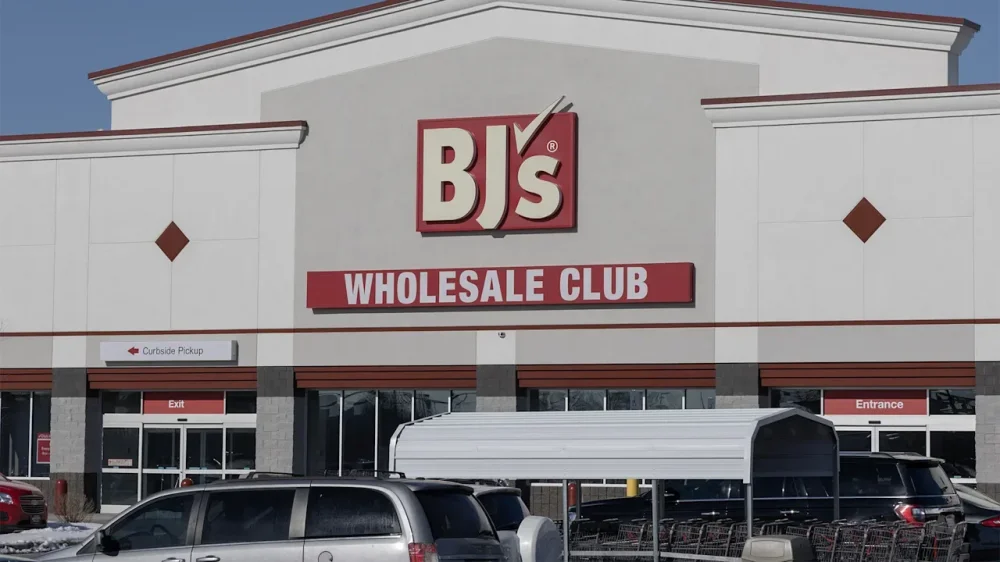
BJ’s Wholesale Club is planning to open nine new U.S. stores in 2026, and already debuted a new location on December 17 in Casselberry, Florida—its third in December alone, following openings in Springfield, Massachusetts, and Sumter, South Carolina. BJ’s currently has more than 250 clubs in 20-plus states. In 2025, the membership-based warehouse chain added 12 new locations in a number of states, including Georgia, Kentucky, New Jersey, Massachusetts, New York, North Carolina, South Carolina, and Tennessee. “Our momentum remains strong as we continue to bring unbeatable value and convenience to new communities,” Bill Werner, BJ’s Wholesale Club’s EVP of strategy and development, told Fast Company in a statement. “We’re on track to open our first clubs in the Dallas-Fort Worth area in 2026 and look forward to bringing BJ’s Wholesale Club to even more families in 2026 and beyond.” BJ’s confirmed to Fast Company that it will open clubs in the following locations in 2026: Selma, North Carolina Delray Beach, Florida Chattanooga, Tennessee Forney, Texas Waxahachie, Texas Grand Prairie, Texas SW Fort Worth, Texas Foley, Alabama Mesquite, Texas How does BJ’s work? Like Costco and Sam’s Club, BJ’s is a membership-based warehouse chain that sells both bulk and regular-size products at a discount. Everything from groceries to tech, home goods, apparel, and gasoline is known to be competitively priced. Members pay an annual fee, and can shop online or in-store. BJ’s Wholesale Club financials The Massachusetts-based chain reported strong third-quarter earnings, including a 9.8% increase to $126.3 million in revenue from membership fees, and adjusted earnings per share of $1.16, which beat analysts’ expectations. Total revenue came out to $5.35 billion, a 4.9% year-over-year increase. BJ’s Wholesale Club Holdings (NYSE: BJ) was up more than 1% in midday trading on Wednesday, December 17. View the full article
-
Woodside Energy boss who clashed with climate campaigners in Australia is taking one of the industry’s toughest jobsView the full article
-
As readers look to curl up with a proverbial good book this winter—and put their holiday bookstore gift cards to work—they’ll be faced with an obvious question: What should they pick up next? “People find it much harder than you think, because there’s so much choice out there,” says Rachel Van Riel, founder and owner of the book recommendation website Whichbook. “Where do you start?” Whichbook employs human readers to classify books along dimensions like moods, levels of violence and sexual content, attributes of the main characters, and length. It’s a process Van Riel says artificial intelligence can’t yet replicate, though it’s still quite mathematical in nature, with new hires guided in tuning their scores to the site’s standard. Then, Whichbook users can indicate their own current preferences with a set of sliders to find a set of books that match. Operating for free since 2003, at times thanks to funding from libraries, it’s designed to be a low-pressure way to discover interesting books. “I think when it’s more playful, people take more risks, and that’s where they end up finding something that maybe suits them better,” Van Riel says. “It’s also very nonjudgmental—whatever you like, lots of sex, no sex at all, your choice.” Whichbook shies away from recommending big bestsellers—since, as Van Riel says, people are generally already aware of them—but it can suggest books similar to current literary hits, or help people find books from particular parts of the world via an interactive map. It’s one of a growing number of websites, apps, and online communities helping people find something to read through various mixtures of algorithms and human insights. Readers can take cues from influencers, like the loose community of literary-themed TikTok creators commonly called BookTok, or ask for personal recommendations on any of several subreddits set up for the purpose, like r/suggestmeabook or r/booksuggestions. Or they can take to book-based social networks, like Amazon’s Goodreads, The Storygraph, or Fable (recently acquired by Scribd ebook unit Everand), sharing suggestions and reviews with friends or friendly strangers. Each of those social sites also offers some automated recommendation features, as do many online bookstores, though the nuances of what makes a book a good read at a particular time can make the problem especially tricky. “We began just from the idea that there isn’t a great book recommendation system,” says Sebastian Cwilich, cofounder and CEO of online bookseller Tertulia, which launched in 2022. “Even to this day, I don’t think us or anyone else have absolutely cracked it.” Tertulia began with the idea of building machine learning models to generate recommendations based on literary conversations then happening on Twitter. That approach became less viable once Elon Musk acquired the site, now X, since book-related posting on the site “dramatically dropped” and the new ownership significantly raised prices to access such data, Cwilich says. Its recommendations are still fairly data-driven, albeit more hand-curated, with the company tracking bestsellers, critical reviews, celebrity book clubs, and recommendations posted on Instagram. Much of that information is organized into a database for easy access by Tertulia’s editorial team. “I think we do a really, really good job of unpacking a particular micro-genre or a particular author that’s kind of trending or in the cultural zeitgeist,” says cofounder Lynda Hammes. Tertulia also offers a sprawling set of other features, from recommendations by authors from poet and novelist Patricia Lockwood to actor and memoirist Lukas Gage, an integration with online book club community Belletrist, and a newly launched platform for authors to quickly build their own websites. Of course, it’s also a bookstore, complete with a paid membership co-op program, and all those sources of book recommendations naturally help sell books, much like the staff recommendations bookstores large and small have long offered visitors. Even bookselling giant Amazon, in addition to personalized recommendations, offers editorial recommendations through its Amazon Book Review subsite. “We’re all very passionate readers, so we really try to keep our fingers on the pulse of what’s trending and what’s interesting,” says Amazon’s senior editor Lindsay Powers, who is also a published author. The site isn’t simply recapitulating a list of Amazon bestsellers or titles highlighted by publishers, says Powers, whose work includes compiling monthly nonfiction and history lists for the site. She and her colleagues collectively read thousands of books each year, with Powers alone reading more than 300, and are given considerable freedom in their choices, she says. The site recently published a set of Best of 2025 lists, as well as holiday gift recommendations. Since 2013, Amazon has also owned the online reading community Goodreads, which enables readers to log and share their own reading, see updates from friends, and access a mix of algorithmic recommendations and editorial content. “One day, you might see a book recommendation from a friend in your newsfeed,” says managing editor Cybil Wallace. “The next, you might see an editorial roundup that really appeals to you. We just want to make sure there are lots and lots of different ways for you to find a book that you love.” Goodreads has almost two decades worth of data about what people like to read, and even editorial write-ups are heavily driven by what the stats show. “We really pride ourselves in looking to our reading community to inform what we write about,” Wallace says. Other sites use their own data-driven approaches to connect people to books and help them track their reading, sometimes also attracting users who prefer minimizing their ties to industry giant Amazon. The StoryGraph, often compared to Goodreads, offers tracking features along with AI-driven recommendations and filters to find new reads. And PipeRead, another startup, recently launched with its own AI-powered recommendations, presenting suggested books in a Tinder-style swipe interface. Fable, which launched in 2021 as a platform for online book clubs and now hosts more than 100,000 clubs for almost four million users, also includes an AI recommendation agent, as well as fitness tracker-style visualizations of individual reading habits that are often shared on social media. But the platform, which was acquired by Scribd’s digital book division Everand in 2025, still focuses heavily on person-to-person recommendations, whether that’s through small-scale private book clubs, sprawling public clubs that can have thousands of members, or recommendations from celebrities like LeVar Burton or Paris Hilton. There’s a big crossover between Fable and BookTok, which makes sense with 90% of Fable users younger than 40, says Kim Allee, marketing director for Fable and Everand. And a recent survey the company conducted found personal recommendations still remain one of the most popular ways to find something good to read. “I think finding that right book at the right moment from the right person means you’re going to have a deeper, kind of more human experience actually engaging with that book,” says Allee. “And I think especially in this day and age, that’s something that people really explicitly value.” Some book recommendation sites still rely entirely on human expertise. Five Books, launched in 2009, offers readers what it calls “the best books on everything,” presented through interviews with various experts where they’re asked to discuss their areas of interest and five books from the field. The site, says cofounder and editor Sophie Roell, was inspired by the classic British university system, where tutors assign a list of books to study. It has recently featured a noir fiction list curated by activist and science fiction writer Cory Doctorow, a list of books on World War II chosen by military historian Antony Beevor, and a set of five books on Jesus selected by Oxford theologian Robert Morgan. Their expertise means their recommendations can carry more weight than casual posts on social media. Morgan, for instance, has read more than 100 books on Jesus, says Roell. “I thought he’s a reasonable person to choose the best books on Jesus, because if he’d only read seven, then, quite frankly, I’m not interested in his top five,” she says. “But if he’s read 100, that’s good—that’s a pretty good filtering mechanism.” The site takes donations but is primarily funded by Amazon affiliate commissions, meaning its recommendations also need to appeal to readers enough to sell books and keep the business afloat. One advantage is that many visitors come to the site through Google, searching for books to buy on a specific subject rather than seeking a general-purpose recommendation. “It’s just such different strokes for different folks, really, with books,” Roell says, “which makes recommendations very hard.” View the full article

-
The small American bookstore is back. Over the last five years, the number of independent bookstores in the U.S. jumped by 70%. In 2025 alone, 422 new bookstores opened, according to the American Booksellers Association. The industry’s success was far from inevitable. For a long time, indie bookstores were struggling. In 1995, when Amazon opened as the “Earth’s largest bookstore” and started undercutting the prices at brick-and-mortar stores, readers quickly started shopping online. Small stores, which were already facing competition from chains like Borders, started to close. By 2009, the number of independent bookstores across the country had dropped to an all-time low. Experts predicted that the industry would collapse. But then instead of continuing to declline, the numbers instead started to reverse The growth accelerated after the pandemic. “If you step back and try to understand what really happened from 2010 to today, it is a story of resilience,” says Ryan Raffaelli, a professor at Harvard Business School who studies industries that beat the odds and survive in unexpected ways in the wake of technological change. Raffaelli has spent years researching the turnaround of indie bookstores. “It’s a story of hope. And it’s a story about the power of community.” A new strategy for a digital threat Soon after the rise of Amazon, some bookstores tried to compete directly with the online giant by adding more titles to their stores, Raffaeli says. But others eventually adopted a different strategy, doubling down on what’s uniquely possible in a physical space. First, there’s the ability to convene people—something that small bookstores have always done with readings and other events, but that they’re doing even more now. Some stores have as many as 500 events a year. “These are not just author events, but birthday parties, all these other types of things that are inviting people into the actual physical space to engage with other like-minded individuals that are passionate about literary topics,” says Raffaeli. “People start finding their own tribe and they go, and I want to be around these people.” They’ve also leaned into curation: “They start curating what’s in the stores quite differently than what you would experience if you were going on Amazon, where you have this algorithm that’s sort of saying, okay, here’s the last three things you bought, this is what you’d like,” he says. “Independents, because they’re so tapped into the author community, are often doing things to introduce readers to books and genres that the algorithm has yet to figure out. It’s unclear if it will ever figure it out.” That’s possible because the people who work at independent bookstores are at the cutting edge of what’s happening in literary culture, he says. Amazon hasn’t duplicated that. (When Amazon tried to open physical bookstores itself, they quickly failed because they didn’t have the same foundation of book lovers choosing books, or any sense of authenticity.) Maybe most importantly, independent bookstores have made a sense of community core to their identity. They were some of the first businesses to advocate for shopping local. “It begins to shift the value proposition for why you would pay more in the independent bookstore compared to as if you were shopping online at a discount,” says Raffaeli. “Because many consumers will say, I will pay extra because I know that this is actually an investment in my community.” That wasn’t the case in the early 2000s, when consumers were more willing to chase a deal online. Now more people are aware of the value of keeping physical bookstores open. “This is a part of a two-decade process of educating the consumer,” he says. “And also retooling the stores to highlight things that may have always been there, but to really help people understand and appreciate the experience of entering an environment like this.” The pandemic boosted support The pandemic was another existential threat for bookstores, but ended up boosting support. “I think that in some ways, the pandemic woke people up to processes that were invisible to them before and made them realize that they had to act to support what was important to them,” says Andy Hunter, the founder of Bookshop.org, a platform that launched in 2020 to help indie bookstores sell books more easily online. Online sales helped many bookstores survive the shutdown, and still provide significant support. (Bookshop.org has sent more than $9 million to local stores in 2025, and independent bookstores’ own online sales have also grown.) But after the pandemic, there was even more interest in spending time in stores in person. “I think they benefitted from digital fatigue,” says Raffaeli. “People were excited to come back in and shop local and feel like the experience could exist and engage with other people in the store.” Bookstores have always been a meeting place, but they keep finding ways to nudge people to stay longer. “I didn’t want to have a bookstore where it was just transactional, like you’re coming in, looking at books, and leaving,” says Maura Cheeks, the owner of Liz’s Book Bar, a bookstore in Brooklyn with a cozy bar that serves wine, beer from local breweries, and coffee and tea. “I wanted to create a public space where people could come and relax, feel inspired, meet strangers, and just sort of spend time.” The store is one of a growing number to have a bar. It’s also a way to help a low-margin business survive and afford steep New York City rents. On a typical weekday, Liz’s Book Bar is filled with people talking and working at the bar; the store sees higher book sales on weekends, but the bar provides critical revenue. Other bookstores have found creative ways to add other merchandise with higher margins than books, from literary-themed socks to cookware next to a section of cookbooks. Sharing best practices Because the stores are geographically constrained, they’re more willing than other businesses to share best practices with each other. (They’re also motivated by the fact that bookstores are seen as cultural institutions, and there’s a shared goal to preserve that culture, not just compete as a small business.) The industry association, the American Booksellers Association, hosts frequent events where booksellers can meet and share tips or take classes. “I took a class and you could see how these practices were being institutionalized into the new way of thinking about how we compete,” says Raffaeli. “All these stores that start opening are benefiting from this experimentation that happened in the early 2000s…the survivors around that time started diffusing these practices at the industry level. I think that’s a big part of the story: they’re coming together and they’re teaching each other.” Raffaeli is now studying how the lessons from booksellers can be applied to other situations, from museums to movie theaters to companies that want to bring workers back to the office. “We’re seeing people want to engage with one another,” he says. “They want to feel like they’re part of something, a part of the social fabric of their community or their organization. But you have to give them a reason to engage and you have to create the right conditions for that to happen.” View the full article