ResidentialBusiness
Administrators
-
Joined
-
Last visited
Everything posted by ResidentialBusiness
-
Now the Bank of England has called the top, I’ve never been so bullish about stocksView the full article
-
The activist known as Teacher Li on the dangerous work of cataloguing everyday life in China — and why he wants to change the CCP, not destroy itView the full article
-
Hello again, and welcome back to Fast Company’s Plugged In. When last Saturday’s White House Correspondents’ Dinner was disrupted by a would-be assassin, an event intended to celebrate the First Amendment descended into chaos. After President Donald The President and other administration officials were whisked to safety, it was unclear whether the festivities would resume. More than an hour later, White House Correspondents’ Association President Weijia Jiang returned to the dais to acknowledge that The President had posted that the night was over but would be rescheduled. “This is a room full of reporters,” she said. “So I know you’ve all seen the president’s tweet.” Then she immediately corrected herself: She was talking about The President’s Truth Social post, not one on Twitter/X. It almost didn’t matter. Yes, The President had posted his announcement on the site he cofounded after being banned from Twitter and Facebook in the aftermath of a throng of his supporters storming the U.S. Capitol on January 6, 2021. But in screengrab form, his message was instantly omnipresent on Twitter/X, Threads, and beyond. The same has been true of countless previous Truth Social posts, including The President sharing an AI meme of himself looking like Jesus, threatening to eradicate Iran, announcing his firings of Cabinet secretaries Pam Bondi and Kristi Noem, and on and on. Even on Bluesky, where the population of The President fans must be close to zero, legions of users share his rants in order to hate on them. The power of The President’s Truth Social megaphone has surprised me. When social media’s overlords deemed his use of their platforms to incite violence to be beyond the pale in 2021, I was relieved. I was dismayed when their “permanent” bans were undone less than two years later. And then I was relieved again when The President chose to mostly post on Truth Social, which I figured would greatly limit his reach. But The President’s current online presence has little to do with Truth Social. It turns out that it’s possible to dominate the conversation regardless of the social network you’re on—at least if you’re Donald The President. As a media presence unto itself, Truth Social is dinky, averaging 700,000 global daily active users in April, according to market intelligence firm Sensor Tower. That’s 0.35% of X’s 200 million and 0.38% of the 185 million on Threads. Though it positions itself as a bastion of free speech and offers groups on topics such as fitness, photography, and dogs, the site is resolutely The President-centric. Memes boosting him and bashing his adversaries are plentiful, but some discontent over the Iran war is also apparent. By anything resembling conventional standards, Truth Social is also not much of a business. Its parent company, The President Media & Technology Group, had revenue of just $3.7 million in 2025—about what Meta rakes in every 10 minutes—and managed to lose $712 million. A public company and textbook example of a meme stock, it has a market cap that’s down nearly 90% from its post-IPO peak. The company seems more focused on operating a cryptocurrency treasury and its bizarre plan to merge with a nuclear fusion startup than operating a social network, which it’s reportedly thinking about spinning off. Whatever Truth Social’s ultimate impact on The President’s pocketbook, it’s already his dream online home. Posting on the one social network where he’s impervious to moderation and then watching it spread is a superpower. Far more than his comparatively sedate in-person speeches, press conferences, and other modes of communication, it drives news. No wonder he can’t keep away from it. Even in the Musk era, X has policies on hate speech and violent content, including a ban on “explicitly threatening, inciting, glorifying, or expressing desire for violence.” Regardless, it’s tough to imagine the service would have held The President to account for posting that Iran’s “whole civilization will die tonight.” But the president was posting from the safety of Truth Social, and his threat became the talk of X and other networks anyhow. So did his The President-as-Jesus post—and when he ended up deleting that one from Truth Social, it didn’t retract the screengrabbed version that appeared everywhere else. When Musk let The President back on Twitter in 2022, the then ex-president’s contract with Truth Social required him to give it a six-hour window of exclusivity on his social posts. Since I’m not on Twitter/X much these days, I hadn’t been paying attention to his current tweets there (which, since the rebrand, are technically just “posts”). Checking in recently, I found they’re relatively sporadic and anodyne by his standards, skewing to stuff like get-out-the-vote messages and promos for products from his family members. This explains why they’ve fallen off the cultural radar, though they continue to get tens of thousands of comments and hundreds of thousands of likes. But again, where The President posts is now largely irrelevant. From the days when he used his Twitter presence as a springboard to win the 2016 Republican nomination and then the presidency, he has often been called a master of social media, a misleading term given that he’s always been a broadcaster, not a conversationalist. His posts are wholly self-contained, which is why they lose nothing when they travel around the internet as static screenshots. (On Truth Social, his replies tab is empty, indicating that he’s never publicly interacted with its members except through reposts.) As long as the president uses his online presence as a mashed-up blog, bulletin board, burn book, and expression of pure id, he could be posting on Friendster—which still exists—and the world would have no choice but to take heed. He gets that. He revels in it. And billions of people who will never log on to Truth Social have to live with it. More stuff I’m following this week: The Vision Pro: Toast? MacRumors’s Juli Clover reports that Apple has “all but given up” on the Vision Pro after last year’s minor update, sporting an M5 chip, failed to boost the $3,500 headset’s sales. The team, she says, has already been dispersed to more urgent products, such as Siri, as Apple diverts its attention to smart glasses more akin to Meta’s Ray-Bans. I count myself as a fan of VisionOS and hope that the wildly ambitious, polished “spatial computing” operating system has a future—preferably on a device with a price tag mere mortals can afford. Electrical slop revisited When I was a kid, I could have asked my great-grandmother what it was like to witness electricity becoming a thing as the 19th century gave way to the 20th. Sadly, I didn’t have the presence of mind to ask. But there are some wonderfully evocative details in venture capitalist/LinkedIn cofounder Reid Hoffman’s “In Defense of AI Slop,” which contends that electricity was disruptive and gimmicky before it became essential. His point is that we should be patient with AI. However it pans out, I loved reading about an advertising sign atop a New York hotel that used “nearly 20,000 light bulbs controlled by high-speed mechanical switches to stage a 30-second loop of stampeding horses and spinning wheels that was so mesmerizing it compelled some onlookers to view it for hours on end.” You’ve been reading Plugged In, Fast Company’s weekly tech newsletter from me, global technology editor Harry McCracken. If a friend or colleague forwarded this edition to you—or if you’re reading it on fastcompany.com—you can check out previous issues and sign up to get it yourself every Friday morning. I love hearing from you: Ping me at hmccracken@fastcompany.com with your feedback and ideas for future newsletters. I’m also on Bluesky, Mastodon, and Threads, and you can follow Plugged In on Flipboard. More top tech stories from Fast Company Netflix goes vertical with its new mobile app By launching a vertical video feed, Netflix wants to help users discover shows and podcasts—and have one less reason to turn to YouTube or Instagram. Read More → The AI industry’s massive bet on transformer models may not be enough for true AGI As Big Tech pours unprecedented resources into scaling large language models, critics argue that transformer-based systems face fundamental limitations. Read More → Thumbtack’s new AI wants to diagnose your leaky ceiling The home-services marketplace is overhauling its app to help homeowners figure out what’s wrong—and which of its 300,000 pros can actually fix it. Read More → Social media’s big tobacco moment is just a first step It’s still unclear whether the California jury verdict will result in healthier social networking experiences. Read More → We obtained nearly 1,000 complaints about SpaceX’s Starlink. Here’s what they reveal New documents show how the satellite provider has become a lifeline—and, for some customers, a headache. Read More → Celebrities like Taylor Swift are setting the guardrails for the AI age The elite want to protect themselves from AI. What about the rest of us? Read More → View the full article

-
In a general sense, workplace leaders are trained to focus on what can be seen and measured. They’re taught to pay close attention to employee performance, productivity, and efficiency—often without realizing that some of the most important aspects of work will never appear in any of these metrics. What too often goes unseen is how people experience their work. Whether they find meaning in what they do. Whether they feel connected to it and to the people around them. Whether their work aligns with who they are. To some, these may sound abstract or insignificant. They are not. They are core drivers of human well-being—and therefore of employee motivation and achievement. And when they are missing, leaders inevitably lose access to the full capacity, commitment and creativity of their people. In truth, most organizations and leaders do not intentionally ignore these factors. They simply struggle to define and prioritize them in ways that feel concrete and actionable. As a result, they are often addressed indirectly—through isolated initiatives—rather than embedded in how leadership is actually practiced. This is the shift leaders today must make. If we are willing to name this clearly, what we are discussing are spiritual needs—deep human needs for meaning, belonging, and a sense that one’s work reflects who they are. These needs are not religious, mystical, ideological or non-important. They are fundamental to human nature. And every person brings them to work, whether they are recognized or not. While often treated as independent concerns—each warranting its own initiatives and support if acknowledged at all—these experiences are inseparable. They converge around a single question every employee carries, spoken or not. Does this work matter, and do I matter in it? When the answer is yes, people invest discretionary energy. They bring dimensions of themselves leaders dream of: initiative, resilience, ownership, and creativity—call it passionate commitment. When the answer is no, effort defaults into the transactional. Work gets done but is not owned in any sense. Over time, true engagement becomes impossible, burnout often occurs—even among high performers—and employees’ progressively loosened ties often lead to quitting. Research in organizational psychology consistently supports these connections. Studies show that when people experience their work as meaningful—when it feels that what they do matters and aligns with their values—they report higher well-being, stronger intrinsic motivation, greater persistence in the face of stress and a greater capacity for resilience under pressure. When meaning erodes, each of these declines as well. Leaders who recognize this dimension begin to lead differently. They routinely clarify how individual roles contribute to something larger. They listen more carefully to how people are experiencing their work, not just how they are performing in it. And they ask employees personally how their roles could be shaped to feel more meaningful, more connected, and more aligned with who they are. Years ago, when I was leading a team of over thirty managers, one of my highest-performing and most experienced leaders, Glenda, asked if she could take over planning my monthly, all-day team meetings. It struck me as an unusual request—and one I was initially reluctant to grant. I knew how much time and effort went into those meetings, and I worried it might distract her from her already exceptional performance. When I asked why she wanted to take it on, however, her answer was immediate. She told me she loved that kind of work, but more importantly, it would give her a closer working relationship with me and allow her to have a more direct impact on her peers and, ultimately, the hundreds of employees they led. It instantly became clear that Glenda was looking to make her work even more meaningful by making a broader and deeper contribution to the success of our team. I gave her the responsibility. She excelled in it—and remained an extraordinary performer for years to come. I learned in this moment how very powerful my accommodation was to Glenda, and it taught me that leaders have the ability to influence people this profoundly—whether they realize it or not. Howard Thurman captured this idea wonderfully when he wrote: “Don’t ask what the world needs. Ask what makes you come alive and go do it. Because what the world needs is people who have come alive.” What he’s describing is neither abstract nor aspirational. It is what naturally happens when something far more fundamental within us is being fulfilled. And, at work, this sense of being “alive” is driven by three deeply interconnected human needs: First, the need to matter. People need to know and feel that their contributions make a difference and are valued by others. Without that, it becomes difficult for them to sustain the level of care, effort, and commitment that meaningful work requires. Second, the need to belong. We are, as Brené Brown has said, “psychologically, emotionally, cognitively and spiritually hard-wired for connection, love and belonging.” And this most certainly applies at work. Employees want and need to feel known, respected, safe and connected to those around them—especially with people on their team. It’s often said that people don’t quit companies, they quit their manager. But research shows employees more often leave when they no longer feel they belong on their team. Third, the need for alignment. People need to feel their work reflects who they are—that their strengths, identity and values are expressed through what they do each day. Research from Amy Wrzesniewski shows that employees who feel connected to their work this way—who experience alignment between their roles and their core values—are more engaged, resilient, and willing to go above and beyond. As Wrzesniewski writes, “How people experience their work has profound effects on their motivation, performance, and well-being.” Alignment, therefore, isn’t a “nice-to-have”; it’s essential to leaders unlocking human potential at work. Making Work Matter Just as leaders cannot ignore fair pay, recognition, opportunities for growth, and the autonomy employees need to do their jobs effectively, they can no longer ignore the deeply human—indeed, spiritual—dimension of work. Journalist, Studs Terkel famously said that “Work is about a search for daily meaning as well as daily bread.” In essence, work is a means through which people seek significance, a sense of contribution, and connection to something larger than themselves. Leaders have the power to cultivate this sense of aliveness. Just as Glenda found deeper purpose when given the chance to personally shape her work, every employee can flourish when leaders intentionally nurture their need to matter, belong, and align their work with who they are. The responsibility is clear: leaders mustn’t treat these human needs as optional. To unlock the full potential of their people—and their organization—they must create workplaces where work matters not only practically, but existentially. View the full article

-
Britain has been pushed into an unusual trade deficit with its largest trading partnerView the full article
-
Judge Yvonne Gonzalez Rogers didn’t mince words in court this week while adjudicating the ongoing trial between Elon Musk and OpenAI in Oakland, California. Musk and Sam Altman, OpenAI’s CEO, needed to stop being messy bitches. While she didn’t put it like that (she advised both men: “Control your propensity to use social media to make things worse outside this courtroom”), the underlying message was clear. The fact that the case even made it to court is indication enough of how strongly both men feel about one another. Social media name-calling is hardly necessary to make that plain. But the reason they’re so eager to throw digital barbs at each other stems from a fundamental difference in belief about the future of AI. Musk doesn’t trust Altman to oversee it. Many people might say the same about Musk. The anger and messiness between the two is simply the highest-profile example of how the debate over AI is pushing everyone closer to the brink. The wider cultural debate around artificial intelligence is increasingly polarized—some might say unhinged—and is spilling into dangerous territory. Altman attended court just days after his house was firebombed, then shot at, by Daniel Moreno-Gama, a 20-year-old from Texas who was charged after allegedly throwing a Molotov cocktail at Altman’s home and later threatening OpenAI’s headquarters. The motivation? A fundamental belief that the future direction of AI needs to be stopped. Even if most people aren’t taking to the streets in the same way Moreno-Gama did, there is a growing divide on social media and in society between those who believe AI is the future we’ve all been waiting for and those who believe it’s the future we’ve all been dreading. Scroll through social media and you won’t spend long before finding people crowing about AI’s potential to transform how we live and work, arguing that anyone holding out is simply a Luddite with no concept of how vital the technology will become in the years ahead. Many seem to take it personally when others don’t share their enthusiasm. On the other side are those who loathe the way AI is running roughshod over copyright law, the world of work, and nearly every other aspect of society. They view AI boosters as ignorant tech bros who would gladly consign them to penury, enslaved to an AI overlord indifferent to their survival. Both camps feel wholly vindicated in their judgment of how awful or ignorant the other side is. There is no compromise. Increasingly it feels like there’s no space left to occupy the middle ground. Why do we feel this way? “When a new technology is sold to the public on false promises, people tend to react badly; they feel they’ve been tricked,” says Mar Hicks, historian of technology and associate professor at the University of Virginia. “I think that’s a big part of what’s happening with the growing backlash against AI and the data centers the industry is building throughout the U.S.” The heightened tension many of us are experiencing stems from the potential existential risks AI poses to how we live, or the material ways it could reshape our lives, depending on whether you believe AI’s boosters or its cynics. If you’re of working age, haven’t gotten to grips with AI, and are absorbing a constant drip-drip of commentary from social or traditional media, you may well believe this technology is capable of eliminating your job entirely, or that it’s so overhyped it could attract destabilizing investment, tank your 401(k), and wreck your future. Neither scenario is reassuring. “Historically, new technologies often come with a level of risk and cost,” says Hicks, “but when that risk and cost is disproportionately pushed onto the people who have less power while allowing the wealthy to gain ever more control, we often see situations and public discourses like we are seeing now with AI.” Part of this is driven by the gulf between the hype and the reality of what the public was told the technology would deliver. “AI was presented as a public good, but people are becoming increasingly skeptical of that idea,” Hicks says. For the likes of Musk and Altman, however, the equation behind the heightened emotion is different, Hicks argues. “I’m inclined to see that more through the lens of those particular men’s personalities and their feelings of entitlement,” she says. “They both think that they’re going to lose out not just on money but on an enormous amount of control over society’s future—and for whatever reason both men seem to feel very entitled to being in charge.” View the full article

-
US supermajors stick to prewar strategies despite White House plea for more drilling to curb soaring petrol pricesView the full article
-
When Kenya’s Sabastian Sawe crossed the finish line at the London Marathon on April 26, an Adidas attendant was waiting on the sidelines to collect his shoes. The attendant wrote Sawe’s record-breaking time, 1:59.30, on the side of the shoes, waited for him to take some photos with them, and then whisked them off to Adidas’s archives in Herzogenaurach, Germany. In that moment, the Adidas Adizero Adios Pro Evo 3 became the fastest shoe in the world. Sabastian Sawe Sawe was the first person to ever run a sub-two-hour marathon in an official race, followed closely by Ethiopia’s Yomif Kejelcha, who finished with a time of 1:59.41. Fellow Ethiopian Tigist Assefa set a women’s world record of 2:15.41. All three of these runners, who are official Adidas partners, wore the Evo 3. Yomif Kejelcha The Evo 3 is the lightest, fastest race shoe Adidas has ever made. Its design is changing the game for every other athletic company on the market. In the days since the race, awareness of the Evo 3, which Adidas first unveiled on April 23, has skyrocketed. Marc Makowski, Adidas’s SVP of innovation, says an initial limited launch of 200 pairs sold out in less than two minutes (they’re already reselling online for up to $4,000). Adidas expects to drop several more limited runs of the shoe in the coming months, followed by a more broadly available commercial iteration of the design around the Berlin Marathon in September. But, for Adidas, the Evo 3 represents much more than its potential commercial success: It’s proof, on the world stage, that the brand is on the cutting edge of marathon running innovation. That’s a status that other brands have been doggedly competing to achieve, including Nike with its Alphafly 3 (worn by the previous all-time marathon record holder, Kelvin Kiptum), On with its LightSpray technology, and Asics with its Metaspeed Edge. “Marathon racing is, in our industry, a bit like F1 in the automotive industry,” Makowski says. “It’s become that battleground where, as a brand, if you want to showcase your performance credibility, that’s where you do it.” It’s an intense race to design the most high-tech “supershoe” on the market—and, for now, Adidas is in the lead. A shoe that weighs less than a bar of soap Adidas has been developing ultra-light running shoes for more than three years as part of its Adizero Adios Pro effort. The goal, Makowski says, is to work with elite athletes to find out “what it really takes to produce the fastest running shoe.” The team’s first key insight: It would need to embrace a literal “less is more” approach. Like in F1 racing, even the smallest design details can have a tide-turning impact on performance in elite marathon running—especially when it comes to weight. Adidas’s pro athletes told the team that they were looking for the lightest possible shoe that could still offer stability, cushioning, and traction. Alasdhair Willis, chief creative officer at Adidas, says that a minimalist approach is nothing new for the company’s design team: “When I came to the brand, I was working on a project called Project Silence, which was about the idea that, when you cut away the noise, the silence gets louder. It’s this sense of reducing, removing the superfluous to get us down to the essence of what’s required.” Makowski explains that prior to Evo, Adidas’s professional running shoes averaged around 230 grams. After in-house testing, the design team found that taking around 100 grams off of that total could achieve a 1% reduction in running economy (a key measurement of a runners’ physiological performance). One percent might sound like a small blip, but Makowski’s team found that it could potentially shave 60 seconds off of a total marathon time. The first Evo launched in September 2023 and weighed in at 138 grams. The Evo 2 arrived in April 2025 and had the same average weight. Both of these models produced major results: Adidas says the two shoes helped their athletes break three world records and win over 30 key road races, including six World Marathon Major wins, seven national records, five course records, and one Olympic record time. Then, last September, Sabastian Sawe stepped out in the Evo 2 to run the Berlin Marathon. He hit a record-breaking time of 2:02:16, despite intensely hot weather—leading many fans to speculate that with a more comfortable temperature, he could’ve clinched the first sub-two-hour time then and there. “That moment then further accelerated a lot of the work, because we felt like we had it, and it somehow got taken away from us by the weather conditions,” Makowski says. “So we thought, Okay, what else can we do from a product perspective to take our destiny even more into our hands?’” The answer was a moonshot design concept that would stretch Adidas’s innovation chops to their limits: A supershoe weighing less than 100 grams. Foam, carbon, and kitesurfing The team reworked the entire design of the Evo, from stitching to laces, to bring the total weight down in almost imperceptible increments. The most critical element of the design was its foam base, which cushions the athletes’ foot and provides maximum energy return. Essentially, it needed to function like a spring propelling the foot up and forward. For the base of the Evo 2, Makowski’s team created a 39 millimeter stack of proprietary foam, called Lightstrike. For the Evo 3, they went back to the drawing board to devise an updated Lightstrike formula that could stand at the exact same height, just with less total density. While Makowski says the specific recipe is under wraps, the process generally entailed identifying which lighter chemicals in the mix could be bumped up to a higher total of the composition, while also mixing a greater ratio of air into the foam. “Ultimately, what we’ve done is created a foam that is 50% lighter than its predecessor with 11% more energy return,” Makowski says. With such a thick piece of foam cushioning the foot, the Evo 3 needed to be stabilized with a structural component sandwiched inside the Lightstrike layer. To solve this problem on the Evo 2, the team had already designed a five-fingered rod system—imagine this like a structural plate in the shape of a spread hand—to keep the sole stable. With the Evo 3, though, that component proved too heavy. Makowski’s team stripped it back from five rods to just one horseshoe-shaped carbon-fiber-infused piece (named the Energyrim) that circles around the bulk of the foam. When it came time to design the upper material of the Evo 3, the design team quickly realized that none of the conventional materials on hand would allow them to reach their weight goal. They started looking at other industries that might be using ultra-light materials. They landed on an unexpected source of inspiration: kitesurfing. “We looked at thin, lightweight foils that actually have a high level of rigidity and stability, and then we embedded polyester yarns that have a 50% higher strength than a regular polyester yarn,” Makowski says. “We created an upper that is ultra-light, but gives you way more stability than what you would get from any other existing lightweight material.” In a series of final touches, the team stripped away any unnecessary stitching on the upper component, added a strategically placed sole for traction, and created stretchy laces to reduce their total length and weight. After countless prototypes and rounds of testing in the Herzogenaurach lab and with athletes at Adidas’s facilities in Kenya and Ethiopia, the Evo 3 was complete. It weighs 97 grams: about the same as a pack of cards, a bar of soap, or four small batteries. “There were moments when we handed athletes the shoe in a box, they picked it up, and they’re like, ‘You gave me an empty box,’” Makowski recalls. “The box weighs more than the actual shoe.” The race to design the next supershoe The Evo 3 is already proving to be a bright spot for Adidas’s business. The day after the London Marathon, the company saw a small boost in share prices as investors reacted to coverage of the shoe. Shares rose even further on April 29, when the brand revealed strong first quarter financial results—including a total 14% revenue increase year over year, driven in part by a 10% jump in running gear sales. Going forward, Makowski says, the brand plans to apply some of the new technologies and methods that it developed for the Evo 3 to other shoes in the Adidas catalog. Willis says that the shoe’s success is bound to have a “material effect on the business from a commercial standpoint.” More importantly, though, he hopes that it begins to position Adidas as more of an “innovation brand” that is constantly cooking up its next groundbreaking design. “You can’t be a truly successful sports brand if you’re not successful in running,” Willis says. “We have been really heavily committed to winning the performance race category for the last three or four years. It is clearly quite literally a race in terms of how quickly innovation can be brought to the market—and to the athlete.” View the full article

-
Given the rhetoric coming from today’s military leaders, you’d be right to think climate change and sustainability has been tossed aside. The nation’s 2025 National Security Strategy labeled climate change a “disastrous” ideology. “The Defense Department is not in the business of climate change, solving the global thermostat. We’re in the business of deterring and winning wars,” said Secretary of Defense Pete Hegseth. And yet, there is still progress on sustainability being made; only now, it’s been rebranded as resiliency. At an Army base at Fort Polk in Louisiana, a renovation promises a cleaner, less carbon-intensive future, as well as a better living situation for servicemembers and their families. Completed in early March, the base represents a first-of-its-kind, $30 million investment in modernizing traditionally outdated and poorly maintained housing. It includes the installation of a large-scale geothermal energy system, all using U.S.-made equipment. It’s the first such geothermal installation at a U.S. military base, and an investment in reducing the installation’s carbon footprint. “What they get out of it is a much more efficient system that responds to their needs a lot better,” says John Plack, Senior Vice President of Engineering and Implementation at Ameresco, the contractor that oversaw the retrofit. “We’re directly eliminating fossil fuel for heating.” Now, the 3,600 homes on base will see their energy bills slashed by 30%. The upgrades are projected to reduce the Fort Polk family housing portfolio’s annual electrical consumption and deliver more than $2.6 million in annual utility and operational cost savings. Beyond delivering long-term savings to the installation, the initiative fostered local economic growth by investing in the community and supporting the local workforce. Resilient housing on the rise The military has a lengthy history of making substantial investment in more sustainable and resilient buildings and housing, even during the current administration. As far back as 2003, during the George W. Bush administration, the Department of Defense was commissioning reports on climate risks. Typically it has viewed this issue through the lens of resiliency: adapting bases to rising sea levels, making installations more self-sufficient, and cutting the military’s massive reliance on unstable oil supplies. Right now, Tyndall Air Force Base in Panama City, Florida, is being rebuilt as a demonstration of resilient military construction, in response to a 2018 storm that caused $5 billion in damages. New buildings rest more than a foot above the ground, roofs have been hardened to survive 165–mile-per-hour winds, and a manmade oyster reef offshore is meant to break up waves. It’s one of a number of resiliency-focused projects that have continued under the current administration. The military has continued this work set in motion during previous administrations, despite policy shifts coming from the White House and Pentagon, for resilience and budget reasons. A Bloomberg Law analysis found that roughly $400 billion in federal assets, mostly in the Defense Department, stand at risk of a major flood or storm. Ameresco, which does a lot of federal work with groups like Veterans Affairs or the General Services Administration, built Fort Polk’s geothermal system by taking advantage of a program called ESPC, or Energy Savings Performance Contracts. Enacted as part of the Energy Policy Act of 1992, it’s a way to invest in energy performance/efficiency upgrades on federal property without specific congressional appropriations, as long as there’s no upfront capital costs. The funding is structured as such that the base pays the private contractor over 25 years via the energy savings achieved by the installation. So when a contractor like Ameresco comes in—bringing drill rigs into the backyard, trenching around utilities, and running piping through buildings—they’re paid as a down payment on future energy systems. According to the Army’s own reporting, it’s a great way to upgrade outdated military and other government facilities without spending government money, and it tends to exceed projected savings. It’s a massive program—the latest batch of funding for these kinds of projects, ESPC IV, was worth $3 billion—and Ameresco is working on a number of other, similar programs, including an array of energy-saving additions including solar and battery storage. Plack says that over the last few decades Ameresco has been doing this work, the projects have become more sophisticated, as technology has improved. A recently finished project in Petaluma, California, retrofitted the Coast Guard training facility to be more resilient in the event of a grid failure; a new microgrid, with solar panels and a storage battery, was added in response to a previous fire that left the installation without power for five days. When it comes to the Armed Forces and sustainability, practicality tends to be a consistent objective. “We’re able to be very flexible with the technologies that fit the specific base or use case,” says Plack. “We’re pretty technology agnostic. It’s really what fits best.” View the full article

-
National Mortgage News spoke with Shant Banosian of Rate, Mark Cohen of Cohen Financial and Amanda Sessa of SWBC on how they stand out in their markets. View the full article
-
Alison Rand is a strategist, author, and design leader working at the intersection of design strategy, organizational structure, and operations. A former developer who helped build early UX practices at agencies like Huge and Hot Studio, she now consults with organizations to untangle complexity—how people work, how decisions travel, and how culture is shaped through structure. She is pursuing a master’s degree in Strategic Foresight at the University of Houston, co-founded Forty Fifty, a social health platform for women navigating midlife, and is the author of Sentido with MIT Press. In her interview with Doreen Lorenzo, Alison explores what it means to lead creative teams inside systems that weren’t built with you in mind. She discusses adversity as a professional superpower, why representation and emotional labor are core design concerns, and how systems thinking and foresight can help designers meet AI with sharper judgment, intuition, and responsibility for the futures they’re shaping. Fast Company: Tell us about your career path? When did you realize you were interested in design? Alison Rand: My path is meandering. I studied art history, wanting to be a fresco restorer. That was my dream. But when I graduated, my father said, “Happy Independence Day.” And I was like, “Oh my God, I have to get a job.” I ended up getting a job at IBM as a secretary and landed in their intranet department with everybody who was my age. I fell into that dot-com life; I learned how to code, I became a developer, a front-end programmer. But I always had my foundational fine art background. That was how I was raised: the love and passion for creativity. On my career path, I feel like I tripped and fell in so many directions. But in hindsight, I realized I also took advantage of the things presented to me and made intentional decisions, such as landing at Huge and learning about user experience for the first time, and then landing at Hot Studio as employee number one in their New York office and learning more about human-centered design. I always had so much curiosity about so many different things and so much passion for relationships and humans, so it was unintentionally intentional. What is your recent book Sentido about? Sentido is a Spanish word that means sense but is multilayered––sense, meaning, direction, awareness. That word has always been a guiding light for me. Sentido is part personal story, part leadership field guide. It’s about navigating systems that weren’t built with you in mind, which is true for so many people, especially women. There are additional intersections—it’s about intuition, identity, power. It’s part feminist manifesto and about the emotional work behind leading creative teams. The goal of Sentido was to key into non-traditional thinkers, doers, and makers. The thesis of it was to understand that organic intelligence is an incredibly undervalued skill, but equally—if not more—important than academic intelligence. In the book you talk about how adversity shapes a person professionally. What are some of the personal stories or experiences that shaped you? It was difficult to write the book for me because I needed to unpack my own personal journey and a lot of that adversity. I was raised in New York City in the ‘70 and ‘80s. My mother was Puerto Rican, my father was Jewish. I was raised in what felt like a safe space because it was such a multicultural environment that I never knew was anything other. But I always knew that my father’s family didn’t talk to him because he married my mother. And there were always these undercurrents of “less than” or “not enough.” When we would go to Puerto Rico, I didn’t quite fit in there, but I loved it. I was always living in the in-between. I always felt really proud of that. Navigating a lot of life difficulties—my parents getting divorced, moving to Puerto Rico—was really challenging, and yet it changed me. Then my mom died when I was 16. I lived with her being sick for many years, just the two of us. That was a crucible moment for me in terms of adversity and figuring out my path independently. I wasn’t raised with helicopter parents, although my mother was a deeply Latina, strong-armed, parent. I was a child of the seventies running wild in New York City. I didn’t have a lot of oversight. So when my mom died, that adversity empowered me to work harder, focus, go to college, do all the things I thought I was supposed to do. I was surrounded by so much love through friendships—my chosen family. But when I moved into professional spaces, I additionally felt isolated, judged, and alone. I didn’t know if it was because I was a woman, because I was ethnic, because I wasn’t the right kind of intelligent, or because I didn’t have enough accolades. I just felt like I was constantly trying to prove myself or swimming upstream. It harkened back to the past—I was seen enough to get to this place, but now I wasn’t good enough. I learned that adversity can be a superpower. It took me a long time to realize that all of those things are really valuable. That’s me. That’s who I am. That’s how I am. That’s the superpower I bring—all of those experiences. How do you think all of those experiences have helped you become a better design leader? A lot of what all of that instilled in me is a deep compassion for the people around me, especially the people who are less visible. All of the experiences that made me feel a certain way are things I don’t want the people I lead to feel. That ability to read a room, to walk in and say, “This feels weird,” or “This isn’t right,” or to connect dots quickly helps me craft the right teams and say, these people are going to work magic together, and this is the problem that we’re working to solve. These need to be the right people. It’s not a one size fits all model. My ability to be flexible and understand the people around me has allowed me to curate their experiences and be able to listen and learn what it is that they need so that I can be the facilitator of that. At the end of the day, I believe that the employee experience is directly related to the customer experience. What is your view on where AI fits in and how it’s influencing design? I see it in a couple of different ways. Design has brought clarity, empathy, and user centricity into conversations that used to be purely operational in a lot of ways. I had hoped that design would be more infused in business because yes, design is a process and a practice, but it is also a way of working and a way of thinking. In the same way I keep getting relegated to this “niche” design operation space, I feel as though operations and strategy would naturally be better served if we applied design minds to them. Where it sometimes failed, design was not evolving fast enough—staying focused on that immediate experience without considering long-term systems or future states. I think the next decade of design has to be much more strategic, more anticipatory, and far less reactive, because I think AI will handle the repeatable parts of design. What it won’t replace is that strategic sense—making, understanding, context, ethics, meaning, culture, longer term impact. Designers should lean more into behavioral psychology or even cognitive neuroscience, and foresight, scanning the environment, connecting disparate signals, understanding weak signals, and shaping products in ecosystems in ways AI can’t predict—and then understanding the ways in which humans will respond to it all. That intersection would be really powerful. How will systems thinking help us navigate this new reality? When I talk to teams or think about systems, I try to pull people out of the mindset that they’re designing for isolated features or screens or whatever it may be. To me, design has always been closer to ecology than engineering. Everything we build sits inside a larger environment of people, culture, incentives, past, present, future power. If you’ve ever spent time in a forest, or even just paid attention to a block in New York City, you know that everything is in relationship. I often use living systems as my reference point because they make an idea tangible. It’s that mutualism and that interdependence, like in nature—if you uncover one part of the ecosystem, something else will respond. It might show up immediately or have a slow ripple effect. Organizations or organisms behave the same way. You change a workflow, you shift a metric, you make a design decision, and it impacts people across the board, upstream, downstream, emotionally, culturally. If you’re not thinking about those, systems thinking shifts design from making to understanding. In today’s context, it means recognizing that every design decision has downstream consequences. We’ve seen the effects of this already through the pandemic and we know these things. However, we still get caught up in the very current state rabbit hole. I try to advocate for teams to take that step back and see the bigger picture of what we are actually trying to shift. What’s changing in the surrounding landscape? What futures are we unintentionally building towards? Who’s not involved in this conversation and who should be? Pausing and asking the right questions and seeing the forest and the trees can allow us to anticipate and make better decisions in the present and for the future. That’s the most important part of it—getting out of the state of only designing for the present. How should designers be thinking about representation in their work? AR: Representation is integral to the work that designers do. I actually think that’s been a big part of a failure in design when there were all these conversations about, is design thinking canceled? Part of that was because there wasn’t enough representation. There were many times in my career where we would walk into rooms to present things to clients and I would be surrounded by a group of people who were exactly the same. I would say, how are we solving anybody’s problem when everybody who should be at the table is not here? Design shapes the conditions of life at scale, which means representation isn’t optional. It’s our responsibility to ask who is centered, who isn’t, and who’s paying the cost of the decision. That’s true across design, product design, organizational design, and even how we build our experiences with one another. If the people at the table don’t reflect the people who will be impacted, you’re designing blind spots into the system. Representation is a design choice every time. It has to be intentionally thought of. What’s your advice to people entering the design field today? I’m such a proponent of lived experience. Be intentional, be curious, be thoughtful because that might allow you to pause and consider the additional skills that you have that you could bring to the table, not just this degree you got that says you could do it. View the full article

-
50% of the global population is ageist against older people, according to the World Health Organization. As the Managing Director of a recruitment company, I know this is true. Spend enough time listening in on hiring conversations, and a curious pattern emerges. When companies talk of innovation, adaptability, and fresh thinking, they often imagine a young, agile, fast-moving team with the latest technologies at their fingertips. So, we see hiring decisions that favor younger or mid-career employees, under the assumption that younger employees are naturally more creative, more technologically fluent, or better suited to fast-moving industries. There’s also the idea that they’re unencumbered by inconvenient habits of the past. It’s a false assumption. There are fewer differences between the age groups than we might have imagined. Here are seven advantages that an experienced older worker can bring you: 1. Institutional memory Organizations talk about the importance of knowledge management. Yet, one of the most valuable knowledge assets is experienced employees. These knowledge holders have seen (and tried) numerous strategies, experienced various systems implemented, and probably survived a restructure or two. They know what happened and why. This context prevents organizations from repeating mistakes or chasing ideas that the company has already tested. 2. Credibility in a trust-deficient world In an era where people have very little, credibility matters. The experience of more mature workers often brings reputational capital that algorithms (or new hires) can’t replicate. Mature professionals bring steadiness and professional judgment. They have managed difficult moments, navigated uncertainty, and developed the ability to respond with perspective rather than urgency. That credibility strengthens teams, reassures clients, and provides a stabilizing influence. 3. Innovation Innovations rarely rely solely on novelty. They come from recognizing patterns others miss, making calm decisions under pressure, and possessing the ability to understand how an idea will behave once it collides with reality. Those capabilities come with experience and accumulate over time. The Nobel Prize, awarded for groundbreaking contributions, has an average age of 58 to 61 years. In the world of entrepreneurship, the average age of successful startup founders is 45, with a 50-year-old founder nearly twice as likely to build a high-growth company as a 30-year old founder, according to the Harvard Business Review. 4. Fast-paced environments The faster organizations move, the more valuable judgment, pattern recognition, and long-cycle thinking become, capabilities that tend to deepen with experience. They emerge from years of navigating uncertainty, seeing strategies succeed and fail, and understanding how organizations and markets actually behave. 5. Adaptable Change is the only constant in the modern workplace. Few groups have navigated change as well as workers 45 and over. This cohort has adapted through multiple technological revolutions, from paper to digital, fax to internet, office phones to smartphones, and now into the era of artificial intelligence. Companies often cite adaptability as a desired skill, yet mature workers have already spent decades proving they possess it. 6. Translators If you need to join the dots, ask your mature worker. Mature workers have often seen companies change processes, replace systems, and introduce new standards. Because of this, they don’t just follow procedures; they understand the thinking behind them. That knowledge allows them to troubleshoot problems and adapt systems when their circumstances change. When something breaks, understanding the “why” often matters more than simply knowing the steps. 7. Mentorship multiplier When mature workers join a team, their value extends well beyond their performance. Some of the most valuable workplace learning doesn’t happen in formal training sessions. It occurs through conversations, observation, storytelling, and the guidance of experienced colleagues. Mature workers have decades of lessons under their belt, and younger colleagues benefit from access to earned wisdom. The knowledge transfer window is closing I could provide a well-scripted, statistic-backed statement about the benefits of multigenerational workforces. You’ve heard it all before. Instead, consider this: Over the next decade, we will lose the last group of people who know how organizations functioned before the digital era. For the first time in modern economic history, the majority of the workforce will have grown up entirely inside the digital economy. Right now, the workforce still includes people who understand pre-Internet business systems, non-automated processes, non-digital regulatory frameworks, and analog problem-solving. But by the mid-2030s, the silent generation and Baby Boomers will have exited the workforce. Generation X will be retiring, and the analog-to-digital bridge will disappear with them. The question isn’t whether younger generations will shape the future. They will. The defining question is whether organizations will capture the wisdom and knowledge of those who built the present. View the full article

-
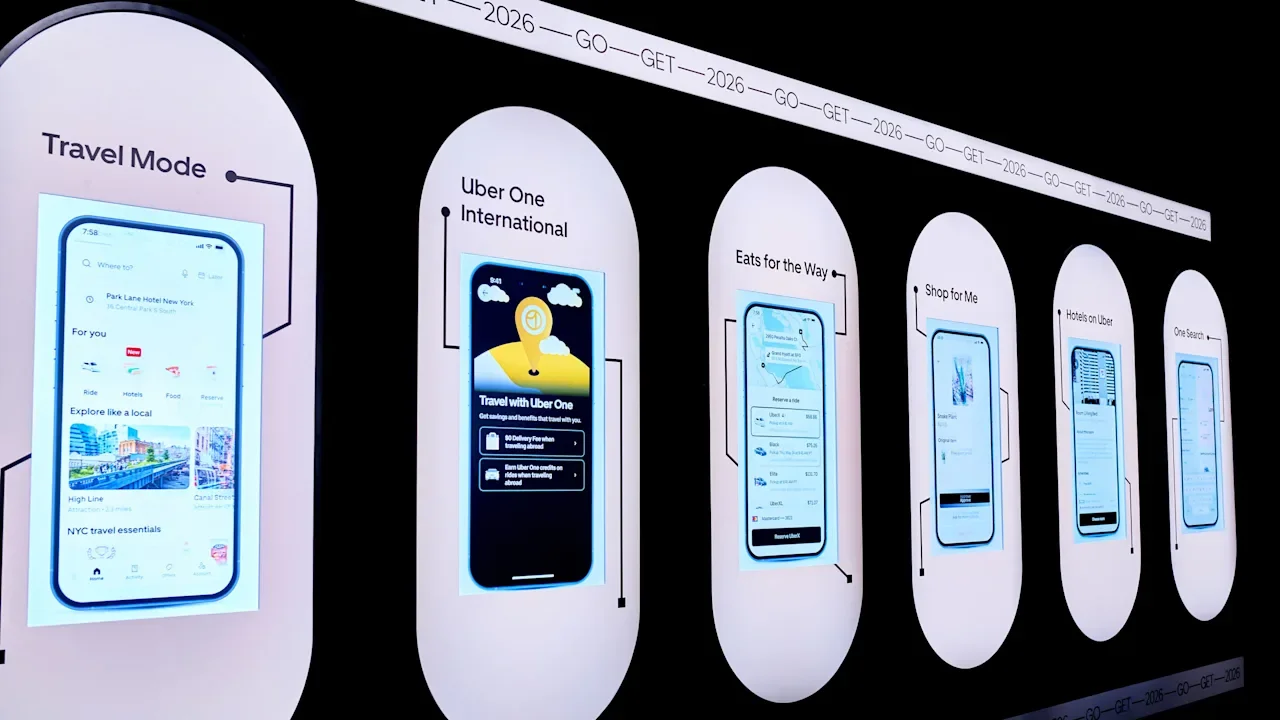
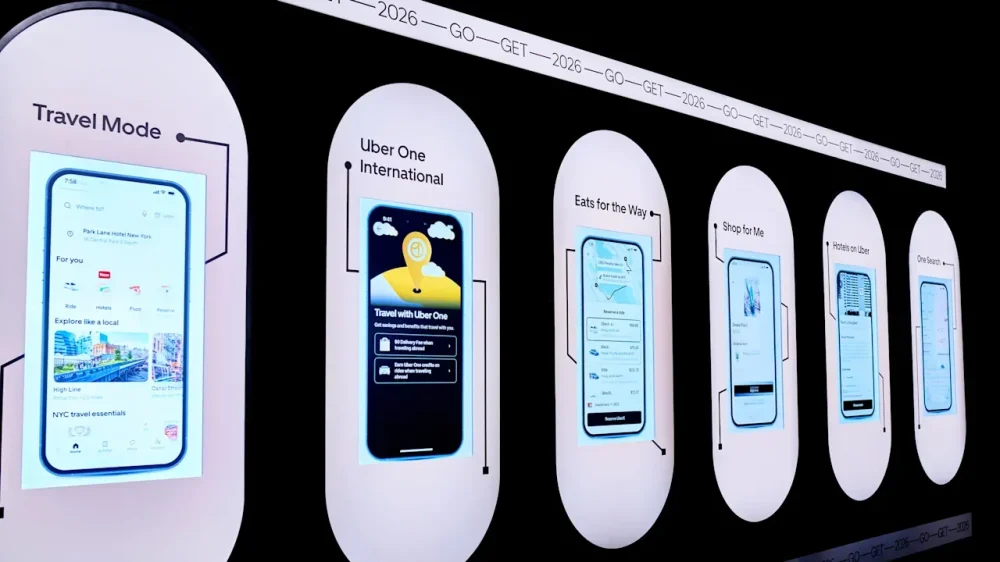
The company that pulled onto the road nearly 16 years ago as UberCab increasingly seems less interested in driving than in what users do before and after summoning a ride through its app. The latest evidence of Uber’s shift toward becoming a broader services platform came at its Go-Get event this week in New York, where the company led with hotel keys instead of car keys. “I believe that Uber truly offers one service: We give you your time back,” CEO Dara Khosrowshahi said at the start of the company’s roughly 40-minute presentation. The features unveiled invited a new comparison for Uber, not to ride-hail rival Lyft, but to one of its corporate neighbors in San Francisco: Airbnb. Much like Airbnb’s expansion into “experiences” and other services, alongside its move into listing boutique hotels, Uber’s latest offerings suggest similar ambitions to make its app indispensable throughout an entire trip. But ambitions that sweeping, captured in the “One app for everything” headline of Uber’s press release, warrant scrutiny over what customers actually gain from this single-app convenience. (See also: Elon Musk’s still-unrealized plans to turn X into an “everything” app.) Uber, but for hotels Consider the in-app hotel booking feature that opened the presentation, which essentially embeds the hotel-search functionality of Khosrowshahi’s former employer, Expedia, and routes it through Uber’s payment system. “Booking a hotel on Uber is going to feel as easy as booking a ride,” VP of Product Amit Fulay said onstage. Subscribers to Uber’s $9.99-per-month Uber One membership, the subject of a Federal Trade Commission lawsuit filed in April 2025 over allegedly deceptive marketing, receive additional perks: at least 20% savings at what small print on a slide described as “a rolling list of properties,” along with a 10% rebate in Uber One credits. As any expert in travel-loyalty programs can tell you, booking a hotel through a third-party site often means forfeiting rewards points or elite-status credits within a hotel chain’s own program. Uber’s approach effectively assigns that loyalty role to itself, much as Expedia does through its One Key rewards program. That could still work in your favor, depending on how you value Uber One credits compared with points from hotel brands like Marriott. But travelers should understand that this trade-off exists. Fulay noted that Uber’s app will allow users to filter hotel listings by price, reviews, amenities, and other criteria, but the default ranking remains unclear. A search I ran during Uber’s event for a downtown Chicago hotel from May 8 through May 10 surfaced the The President International Hotel and Tower as the top result, with a discounted total of $1,322. Even among luxury properties near the Loop, better options are available. I could not repeat that search after returning to D.C., where my copy of the app listed hotel search as “Coming Soon.” Representatives for Uber did not say whether you could set preferences in the app to rank or downrank hotel brands, so in this scenario you may not be able to 86 The President. Uber, but for travel advice Another new feature builds on a behavior Khosrowshahi proudly highlighted onstage: “We’re the first app that you open when you get into your city.” Travel Mode, which may soon appear in the app when users visit other cities, is designed to keep them returning. If you land at one of the 29 airports where Uber offers wayfinding (though the company has not yet published the full list), the app will provide walking directions from your terminal to the designated ride-hail pickup area. That sort of guidance could prove genuinely useful in unfamiliar airports, which helps explain why airlines like United and Delta have offered similar features for years. But unlike Uber’s standard ride search, Travel Mode surfaces only rides bookable through Uber. That may be a practical option at many airports (Las Vegas comes to mind), but in others the design could steer travelers toward unnecessarily expensive rides while overlooking cheaper public transit options that, especially during rush hour, may get them downtown faster. Uber’s own presentation offered an inadvertent example. A screenshot of Travel Mode showed fares of $80 to $90 from JFK Airport to a hotel on Central Park South in Manhattan. Mid-afternoon Thursday, Google Maps and Apple Maps listed shorter travel times for that route via the JFK AirTrain and New York City subway, despite requiring two transfers. The cost per rider: $11.75. In an interview afterward, Fulay said Uber intends to broaden the range of transportation choices shown in this interface. “We do have a trains product,” he said, referencing Uber’s in-app train booking in the U.K. “Our goal is to show you various multimodal options.” Other aspects of Travel Mode do suggest smoother travel, including “curated” local restaurant recommendations with integrated OpenTable reservations, as well as the option to have food, clothing, and travel accessories delivered directly to your hotel. But travelers may want to avoid following one example featured in Uber’s presentation: paying $15.99 for an Apple-branded USB-C cable. Uber, but for personal shoppers Another Uber announcement Wednesday felt, at least in part, like an effort to revive the spirit of dot-com-era delivery service Kozmo.com: an upcoming feature called “Shop for Me.” The service will allow time-strapped customers to submit a detailed description of an item they want from a store, along with a photo, if necessary, and have one of Uber’s highest-rated couriers visit that location—even if the retailer is not part of Uber’s platform—purchase the item after confirming it meets the customer’s needs, and then deliver it. What remains less clear is how much couriers will earn for what appears to be a relatively high-touch service. Uber executives did not address compensation details during the Go-Get event, though Fulay said afterward that the earnings would be “compelling.” Uber did roll out a tip guarantee for couriers in early April, but customers would still be wise to tip generously for a service like this. The workers powering Uber’s convenience economy remained largely invisible throughout the New York presentation. Most notably, company leaders did not discuss the relatively limited measures Uber has taken to offset rising fuel costs for drivers as gas prices have climbed amid the Iran war. No such tipping concerns apply to the AI-powered shopping tools Uber is adding to its Cart Assistant, first introduced in February. One feature will allow users to photograph a meal, have AI generate a list of likely ingredients, and then automatically assemble a grocery order based on that analysis. Uber’s road ahead Seeing transportation take a back seat at an Uber event felt striking, given the company’s recent history. Last year’s Go-Get event, for example, focused on more affordable ride options, including bus-like Route Share scheduled service and shared autonomous-vehicle rides. But Uber’s own earnings reports underscore its evolution into a broader services company. Operational metrics from the fourth quarter of 2025 show the gap narrowing between its “Mobility” and “Delivery” divisions, with delivery growing faster in both gross bookings ($27.4 billion to mobility’s $25.4 billion) and revenue ($8.2 billion to $4.9 billion). Against that backdrop, one final feature unveiled at this year’s Go-Get event comes as little surprise: Uber’s app home screen, which already elevated delivery and other non-transportation services in a 2023 redesign, will soon add a “One Search” interface that surfaces all relevant service options for a user’s query instead of defaulting to transportation. View the full article
-
There’s an idea in AI called “liquid content.” It typically refers to the idea of morphing the facts, ideas, and expressions from one medium to another. The most well-known example is a feature within Google’s NotebookLM: Once you’ve filled a folder with various kinds of data, it can whip up a podcast about that data, enlisting a couple of cheery AI-generated voices to give you an overview, analysis, or debate. Taken to its logical extreme, liquid content suggests a future for media companies where what you create is repurposed across any and all formats. Making a podcast? With the right tools and prompting, in mere minutes, it can be reimagined as a series of clips, a feature article, or even an interactive presentation. And if you’re a traditional news publisher, all that content can serve as raw material for videos, which you may have dismissed in previous eras as too expensive to produce. This isn’t theoretical anymore. I recently attended a couple of industry conferences—the NAB Show and Adobe Summit—and systems that intelligently derive one type of content from another are becoming more common. Just two examples: Amagi showed off an AI system that can scan a live newscast, understand the different stories covered, and create short-form videos for each one on the fly, populating a TikTok or Instagram feed almost as soon as the news is out. And Stringr’s Genna system can intelligently turn any news article into a video, mining photos and licensed video repositories (e.g., Getty) for footage. Repurposing content isn’t new, of course, but now that artificial intelligence can do most of the heavy lifting—interpreting the content, determining how it’s best expressed in a new form, and then pulling all the levers to do the actual work—it can be done much faster and cheaper than ever before. Production is the easy part If you’re detecting a “not so fast” turn, you’re right to be skeptical. AI can be a great catalyst in reimagining content, but it doesn’t solve every problem associated with pushing into new formats, and can even create new ones. The opportunity is real, but publishers should treat liquid content less like a magic growth engine and more like a new production layer that requires nurturing. As media companies turn to AI to expand their content footprint, there are important reality checks to keep in mind. 1. Using generative content will likely produce diminishing returns. A quick but important distinction: There’s a difference between using AI to assemble content and using it to create content. It’s particularly relevant in visual media, where accuracy in the imagery matters greatly. Besides the obvious ethical issues in using generative video in news media, there’s another problem: Audiences don’t respond to it in the same way. Inception Media is a podcast company based on AI-generated scripts and synthetic voices. It does respectable numbers, but they’re far below what it might get from human-driven shows. AI may be a great accelerator, but audiences still value authenticity. Publications looking to take their first steps into podcasting or short-form video with AI may find the audience numbers lacking. The safer route is to stick with non-generative content and simply use AI to assemble existing footage and imagery. But that still requires you to either produce or acquire that material, blunting any cost savings. 2. Good AI needs good data. For AI to understand and interpret content reliably, it needs the data surrounding that content to be as accurate and comprehensive as possible. That means things like tags, categorization, metadata, dates, and notes (e.g., exactly who appears in a video) should all be present and correct. Even if your existing operations do this well, there’s a good chance it wasn’t always the case, and data is often garbled, isolated, or lost during system migrations. It’s an unfortunate truth in media that messy data operations are more common than well-nurtured ones, and that will hamper many outlets from fully taking advantage of their archives. 3. This all still needs management. AI is a tool that gets better and more versatile every day, but it’s still far from perfect. It can hallucinate and misinterpret, and because it lacks experience with the real world, it sometimes makes mistakes humans never would (pointing out that volleyball is hard to play without a ball, for instance). Audiences have low tolerance for slop or poor quality. In short, AI can do a lot, but humans are still needed. And not just to review the work of the AI: Venturing into new platforms requires more strategic thinking than simply putting the content out there. To zero in on just one use case: AI can do competent translation, but that doesn’t mean you can skip the hard work of managing and nurturing a new market. The archives get interesting All that said, using AI as the ultimate content-repurposing engine still has great potential for those who figure out how to do it right. 1. Archives are a gold mine. Most outlets will reshare evergreen “hits” on social media, which can drive a decent amount of views. AI can turbocharge this idea—not just resharing an article once, but extracting the best parts and turning each “nugget” into its own video, gallery, or social post. AI can likewise expand on the “this day in history” idea, looking at patterns in current news and trends and finding the perfect stories to resurrect and remix. 2. Access to newer, younger audiences. Many small and midsize outlets simply haven’t had enough content to really monetize on a platform like YouTube or Instagram Reels. Success is often a numbers game, demanding regular posting to even have a hope of showing up in someone’s feed. AI-assembled video won’t attract the same audience as MrBeast, but it can open your brand up to younger audiences, 63% of whom primarily get their news from these platforms. 3. It takes a fraction of the staff. Venturing into a new platform used to require weeks of study, hiring dedicated staff, and building out a strategy. Now AI can accelerate all of that—not just the nuts and bolts of remixing the content itself. As already mentioned, humans still need to manage the process and have the final judgment over whatever’s produced, but building a content-remixing department won’t be nearly as expensive as a pivot to video. That doesn’t necessarily answer the big question, however: Will the ROI be worth it? As more media adopts remixing strategies and agentic systems, the inevitable result will be a large increase in supply of repurposed content—especially video. That suggests a commensurate drop in demand, diluting audiences even further. As a result, the revenue benefits of a remixing strategy could be incremental at best. However, there’s an X factor. For niche publications with few competitors, there’s less of a danger of saturating their market, and making a move to a multimedia strategy—cheaply—might improve audience growth and retention with readers who prefer formats like video and podcasts. That counts for local and regional publications, too. The dream of a general-purpose content engine that can reliably spin out engaging stories in any format is getting less fictional by the day. But it’s still just a machine. Building a successful strategy around it requires intention, careful curation, and a strong understanding of both the audience and the platform they’re on. Liquid content may be a powerful idea, but there’s still art in the pour. View the full article

-
It’s understandable that following the announcement that John Ternus will succeed Tim Cook as Apple CEO, people will pore over his résumé for signs of how the company might change. Cook was famously an operations and logistics wizard, handpicked by Steve Jobs to manage Apple with his trademark efficiency. But his successor is more of a mystery. Ternus has been a senior vice president of hardware engineering at Apple for five years, and a VP since 2013, but beyond that he hasn’t been credited with steering the company in a particular direction. All anyone can really say for now is that Apple will be led by someone who is strongly experienced in hardware, which sounds like a meaningful change from Cook. Of course, Ternus’s stewardship will be defined by a lot more than how he chooses to manage the hardware portfolio. The state of Apple’s software and how it handles developer relations will continue to be hot topics, not to mention how it adapts to the destabilizing impact of AI. As CEO, those issues will land at Ternus’s door. Still, as a hardware enthusiast myself, I have to admit it’s encouraging to think that Apple will soon be led by someone who may share some of the same passions. And following many years of Ternus’s influence, it’s hard to say that Apple’s hardware is in a bad spot. The iPhone 17 lineup is excellent, while the new $599 MacBook Neo might be the most impressive example yet of the Apple Silicon advantage. But as someone who uses a wide range of devices, I do know that Apple doesn’t always ship the best hardware available. Let’s dream for a minute and imagine that Ternus makes it a priority to change that reality. Here’s where I’d want him to focus. Cameras Apple will tell you that the iPhone is the most popular camera in the world, and it would be correct. That doesn’t make it the best, though, even if we’re only talking about phones. Even the iPhone 17 Pro Max has pedestrian sensors and optics when compared to the best Android phones out there. Apple regularly introduces features like periscope lenses and 48-megapixel sensors many years after the competition, without having the usual excuse of a better implementation when it does get around to it. And it’s not just about the hardware. Whether it’s Oppo’s work with Hasselblad or Xiaomi’s partnership with Leica, other smartphone brands have made huge strides when it comes to delivering more natural, tasteful image processing compared to the iPhone’s artificial results. Outside of China, many of these high-end Android phones have niche appeal among hardcore enthusiasts. But they do show what’s actually possible to ship in a practical smartphone. Apple should always strive to ship the best technology available, and right now it simply isn’t. Batteries Apple is under far more scrutiny than other companies because of its sheer scale and mainstream appeal, so it can perhaps be forgiven for a degree of caution regarding any component that could pose a fire risk. The Galaxy Note 7 debacle was bad enough for Samsung. Remember those flight warnings? That said, there’s little evidence at this point that the latest generation of smartphone battery technology should be cause for concern, while there is a lot of evidence that Apple is lagging behind. Silicon-carbon batteries have enabled competing manufacturers to include much higher-capacity cells or design much thinner devices—or both. Last year’s Oppo Find X9 Pro, for example, is not a particularly exotic or expensive device. But its 7,500 mAh battery has more than 50% the capacity of the iPhone 17 Pro Max, and that’s in a frame that’s half a millimeter thinner. It also charges much faster, at up to 80 watts. If there’s a good reason for Apple to be biding its time on better batteries, I’m yet to hear it. It’s not like the 17 Pro Max has terrible battery life, but the ultrathin iPhone Air would have been a great opportunity to get on board. Displays Ever since making the belated switch to OLED displays with the iPhone X nine years ago, Apple’s record when it comes to its most important screen has been impeccable. The high-end iPhones always get the best panels Samsung has to offer, and Apple does an impeccable job both tuning them and providing them with ideal content—whether it’s Dolby Vision video through iTunes or HDR flourishes throughout the iOS user interface. But the story is less convincing across the rest of Apple’s lineup. Important devices like the MacBook Air and iPad Air are saddled with basic 60 Hz LCDs that don’t feel appropriate for the price point. Apple’s stand-alone Studio Display for the Mac is similarly uncompetitive. There are some signs of improvement here. The MacBook Pro is rumored to be getting a redesign with an OLED screen in the near future, and last year the base-model iPhone finally adopted a 120 Hz ProMotion panel. But Apple still has some way to go to make a lot of its displays feel like they’re worth paying for, and I’d like to think Ternus might want to demand higher standards here. Ternus once gave a commencement speech at Penn Engineering School, where he explained how he paid attention to detail on the original Cinema Display, right down to the finish on the individual screws on the back. It’s a great anecdote told well; I hope he pays the same attention to the panel quality available from Apple’s competitors at the same price as some of its current offerings. There are undoubtedly other hardware conundrums that Ternus will have to solve once he takes the reins. What will become of the Vision Pro, for example? What’s next for the meandering iPad line? And how, if at all, will Apple approach dedicated AI devices? But it doesn’t get more fundamental than cameras, displays, and batteries. If Ternus really is a hardware guy, I hope that his first priority is to focus on the basics up and down Apple’s product lineup. View the full article

-
A few times every month, I push and force my brain to come up with new ideas. The process is counterintuitive. I become bored on purpose. I believe an idle mind connects better dots. I feel guilty every time. But I push through it. I’m supposed to be working. I have a to-do list and emails to respond to. And I deliberately allow my mind to do nothing. This idea is a hard sell right now. People swear by all sorts of productivity frameworks. We’ve built entire work cultures around the idea that idle time is wasted time. So we fill every moment with work or content. With something. Anything to avoid the discomfort of just being. History’s great minds understood the value of boredom. Isaac Newton was sent home from Cambridge in 1665 when the plague shut the university down. No lectures, no colleagues, no structured work. He spent 18 months at his family farm in Woolsthorpe, largely alone, with nothing obvious to do. In that stretch of “forced” idleness, he invented calculus. Developed his theory of optics. And worked out the foundations of universal gravitation. He later called it his annus mirabilis, the miracle year. His non-busy year turned out to be his most productive year. Unexpected connections There is tons of research that supports the value of boredom. When you’re not focused on a specific task, your brain doesn’t switch off. It switches into the default mode network, a system of interconnected regions that becomes more active during rest. This is where you make unexpected connections. Where you integrate knowledge. Where the distant idea meets the half-remembered fact, and suddenly, something new becomes obvious. You’ve probably experienced this before. The solution that comes during a walk when you were not even thinking about the problem. The answer you get when you were not even trying. Your brain does its best work when you finally stop interrupting it. Walk this way Charles Darwin was obsessive about his daily walks. He built what he called the Sandwalk at Down House, a circular gravel path in his garden. And he’d pace it for hours each day. Just walking, thinking, letting ideas make connections. He used to count his laps with a pile of stones, kicking one away each circuit. The Origin of Species was, in many ways, assembled on that path. Tchaikovsky believed walking was essential to composition. The composer did it twice a day, for exactly two hours each time, regardless of the weather. He said he was certain that if he skipped the walk, he would fall ill. Whether or not that’s literally true, the walks were clearly doing something. The creative output they sustained was extraordinary. Beethoven walked after lunch every single day, carrying a pencil and some piece of paper in his coat. The walks were not breaks from his work. They were his work. The thinking and the strolling were inseparable. Getting away from it all The fascinating thing right now is that we have more tools than ever to be productive. But creative breakthroughs don’t seem to be happening faster. If anything, many people report feeling less creative, more stuck, more anxious—the people who were meant to benefit most from “always-on” connectivity. Writers, designers, and scientists say they do their best thinking outside those hours. When they are away from it all. Part of the problem is that we’ve collapsed the space between stimulus and response to almost nothing. A thought appears, and before it has time to become anything, we’ve checked Twitter. An idea starts to form, and we’ve opened Slack. We’re in a permanent state of reaction, which means we’re rarely in a state of creation. Novelist and poet Gertrude Stein understood this. She and Alice B. Toklas used to drive through the French countryside, and Stein would sit in the back and stare out the window. For hours. Alice would wait. Stein explained that she needed to see the countryside moving, to let her eyes travel without her mind following. This was, she said, how she thought. Poet William Wordsworth composed poetry in his head while walking, then dictated it when he got home. The countryside was his permission to be slow and present, and let thought arrive in its own time. John Keats coined the term “negative capability” in 1817 to describe the ability to sit with questions and doubts without anxiously reaching for answers. The poet thought it was the defining quality of great writers and thinkers. The long game Modern creative industries have stumbled onto this accidentally. Pixar, the animation studio, has notoriously long production timelines. Films take years. And a significant portion of that time is spent in what the studio culture calls “failing forward.” Making something bad, stepping back, thinking, walking away, coming back. John Lasseter used to talk about how his team would go home when they were stuck on a story problem because they knew the answer wouldn’t come at the desk. Finding Nemo almost didn’t exist. The story broke repeatedly. Director Andrew Stanton spent months doing nothing productive on the film while the team tried to figure out what was wrong. The answer only came when he stopped pushing. The people we call creative geniuses were better at not working. They protected their idle time the way we protect our calendar. They treated it as productive, even when it looked like nothing. Their sudden illuminations were the product of the unconscious work of the brain. We can all learn from them. Do your conscious struggle and then step away. Make space for your brain to connect the dots. Maya Angelou wrote in spare hotel rooms, with almost nothing in them. No family photos, no interesting views. She wanted a blank space where nothing could happen. She arrived early in the morning, lay on the bed with a legal pad, and spent hours writing very little. Just existing in that room, letting time pass. She said the blankness was the point. You had to give yourself enough boredom that the imagination got desperate enough to start working. I suspect most of us know the wisdom of doing nothing. We just don’t trust it. Boredom feels like failure. Like laziness. Or proof that we’re not trying hard enough. We mistake busyness for virtue. But the best ideas don’t run on a schedule. You can’t force them. You can only clear the conditions in which they might arrive. A walk in nature, a blank notebook, a window with something passing outside it, and the patience to wait. Put the phone down. Go for a walk. Stare at the sky for a while. You’re not wasting time. You’re doing the work. View the full article

-
“When are you looking to retire?” It may seem like a harmless question for a boss to pose to an employee, but for older workers, it can come with a coded message—it’s time for you to end your career. “There could be insinuations, like, ‘What are you looking to do after this?’ Or, ‘how long do you anticipate being here?’” says New York-based employment lawyer Mahir Nasir, who’s had multiple older clients come to him with scenarios of getting nudged towards retirement. He’s seen this play out in various ways. For instance, say an employee’s been working at a bank for 20 years, during which they’ve established strong relationships in the specific territory they’ve been serving. “Because [the employer] can’t really find any performance issues, but they’re concerned about the cost” of that long-time employee’s salary, Nasir says, “they will move that person out into another territory where they don’t know anybody.” Then, their performance will suffer—giving the employer an excuse to let them go. This type of ageist discrimination is technically illegal, but that hasn’t stopped employers. According to survey results AARP published in January, nearly a quarter of respondents ages 50 and older felt like they were being “pushed out of their jobs,” while 60% reported experiencing “subtle forms” of ageism, such as assumptions that they aren’t knowledgeable about technology or getting passed over for new training opportunities. Making matters worse for older employees who plan to keep working is that employers often believe nudging these workers toward retirement is in their best interests. “There’s this assumption that when you hit 60 or 65, you’re looking to retire,” says Colleen Paulson, founder of Ageless Careers, where she provides career consulting to baby boomers and Gen X. However, per a poll she conducted last year on LinkedIn that garnered 2,472 responses, 26% of respondents said they didn’t ever plan to retire, suggesting that assumption no longer reflects employees’ realities. “As we live longer, more and more people are looking to work longer,” Paulson says. But facing this type of ageism, often from long-time employers, can be so disheartening to employees that they’ll end up looking for new jobs or acquiescing into retirement anyway. The “big red flags” The ways employers nudge older workers toward retirement range from outright asks about post-career plans to more discreet hints that they’re no longer valued. “They’re not being considered for promotions. They might not be considered for upskilling opportunities that other employees are being considered for,” says Carly Roszkowski, vice president of Financial Resilience Programming at AARP. Roszkowski has also heard from older employees who witness discouraging hiring patterns at their companies, where only workers in their 20s and 30s are getting job offers. Paulson has seen this play out multiple times, having witnessed Fortune 500 companies let go of experienced talent, and then, “literally in the same week, advertise on LinkedIn that they’re hiring,” she says. With those hiring announcements, she adds, they’ll post photos of people who appear to be in their 20s, sending a clear message about the demographic they’re targeting. While all these behaviors constitute the “big red flags” Roszkowski and colleagues tend to observe among ageist employers, quieter instances of pushing older workers to retire abound: Getting excluded from social activities with colleagues can signal to older workers that they’re no longer welcome at an organization, as can cultures where age-related comments or jokes are permitted by, or even come from, higher-ups. Employers will sometimes “use language that addresses [older workers’] speed,” says Nasir, betraying an “underlying bias associated with people…in their 50s or 60s.” Negative changes in performance reviews or a decrease in raises that don’t line up with glowing work histories may also indicate that an employer is trying to send a hint—they don’t believe the worker is providing the value they once they did, and it’s time for them to retire. “We’re looking to cut the biggest salaries” False stereotypes play a large role in employers pushing older workers to retire. Those include ideas about older workers’ diminishing productivity and lack of tech savvy compared to their younger counterparts. The notion that older workers are “just waiting to retire,” says Roszkowski, means employers might think “upskilling them would not be worth the investment.” Often, companies can hide pushing out older workers behind cost-cutting initiatives. “They can say, we were looking to cut the biggest salaries,” Paulson says, which happens to mean those employees whose salaries have grown throughout years of consistent employment. But while “older workers might cost more,” says Roszkowski, that’s often for good reasons. Their years of experience can save organizations time and money on hiring and training new workers, which Roszkowski notes can be an expensive process—especially if it calls for frequent repetition, as younger workers tend to rotate into new jobs every few years to advance their careers. Lately, the cost of living has been going way up, and seniors report that Social Security increases aren’t keeping pace. The economic impact of retiring before you’re ready, therefore, can mean not being able to afford basic living expenses. Senior workers should be in “their highest income years,” Roszkowski says, but instead, they’re getting cut off early from increasingly necessary earnings. “Document, document, document” The federal Age Discrimination in Employment Act (ADEA) prohibits age-based discrimination at work for those 40 and older, including when it comes to firing, layoffs, opportunities for assignments, promotions, trainings, and benefits. “It’s unlawful…to treat somebody in an adverse, negative way on the basis of their age,” says Nasir. Consequences of not following the ADEA can include having to cough up significant fees. Even though age discrimination claims with the US Equal Employment Opportunity Commission have been on the rise, experts say ageism remains very difficult to prove. “People will come to me and say, ‘They’re letting me go, and it feels like they’re letting go of everyone who’s over 50,’” Paulson says, but naming age as the common denominator can require substantial recorded evidence. “Document, document, document,” advises Roszkowski, who also suggests sharing those documented instances of employers pushing workers to retire with HR. Reporting that you feel your employer is practicing ageism won’t go far from a legal perspective, but having a dated list of concrete instances—like a recent history of raise decreases after years of positive employee reviews—can contribute to a viable case. However, for some older employees, the burden of fighting back, which can take years in court, may not feel worth the results of a legal win. “Most of the people I talk with, they are just not in the mood for a five-year lawsuit over this,” says Paulson. “They want to move on with their lives.” For instance, though a jury ultimately awarded Joy Slagel $103 million in the age discrimination case she brought against her 30-year employer Liberty Mutual in 2017 (the largest win for an age discrimination case in the US, per the Los Angeles Times), the case didn’t reach a verdict until 2025. As a result, many older workers facing their employer’s push to retire may opt for other ways out of their ageist office environment. Some of Paulson’s clients, she says, retain lawyers just to figure out the maximum severance they can get out of the situation. Even if you do have legal standing to push back against ageism, once you’ve been treated like you don’t have any more value at your office, you’re not likely to want to keep working there. When a 70-year-old C-suite executive recently told Stacie Haller, Chief Career Adviser at Resume Builder, that her boss had been asking when she was going to retire and reassigning some of her work to younger employees, Haller suggested she contact an attorney—but she’s still helping that executive look for another job. “She was never planning on retiring,” says Haller, “but how would you want to still continue to work there?” Losing age diversity By pushing older workers to retire, employers don’t only harm those workers—they also do their own organizations a disservice by depriving employees of an age-diverse workforce. “We see that…mixed-age teams bring more innovation and more creativity, so it can help your bottom line,” Roszkowski says. They also offer wider professional networks and mentorship. But so long as employers assume older workers want to hurry to retire, those employees aren’t going to feel welcome at their organizations. “I would try to get out as soon as I could,” Paulson, 51, says if this were happening to her. “I have clients who are in their 60s and even 70s finding new jobs all the time—even in this competitive market.” She’d rather join their ranks than feel undervalued. View the full article

-
As an online business owner, comprehending your key tax obligations is crucial for compliance and success. You’ll need to grasp the nuances of sales tax, including state-specific rates and the concept of nexus, which determines your tax responsibilities. Accurately classifying your products, knowing when to collect sales tax, and filing returns on time can help you avoid penalties. Let’s explore how to navigate these complex requirements and guarantee your business remains compliant in a changing environment. Key Takeaways Understand sales tax rates and nexus laws relevant to your state to ensure proper tax collection. Maintain accurate records of sales and tax collected to support compliance and facilitate audits. Monitor economic nexus thresholds, as exceeding them may trigger sales tax collection obligations in multiple states. Utilize automated solutions to streamline tax calculations, filings, and updates on changing tax laws across jurisdictions. Ensure proper documentation for tax exemptions and maintain compliance to avoid penalties for non-registration or incorrect tax collection. Understanding Sales Tax Basics When you start an online business, comprehension of sales tax basics is fundamental, especially since it varies markedly from state to state. Most U.S. states impose sales tax on goods and services, with notable exceptions like Alaska and Oregon. For instance, California‘s sales tax rate is 7.25%, but local rates can increase that. Certain items, such as food and clothing, may be exempt in various states, so you’ll need to familiarize yourself with these exemptions to avoid unnecessary liabilities. Your obligation to collect sales tax usually kicks in when you have a physical presence or nexus in a state, including having a store or employees there. Since sales tax laws change frequently, it’s vital to stay updated on compliance requirements. Utilizing a service like my money tax service can help you navigate these intricacies, ensuring your online business tax obligations are met efficiently. Determining Your Sales Tax Collection Obligations Determining your sales tax collection obligations is a crucial step for any online business, especially after grasping the basics of sales tax. To begin, you need to assess whether you’ve established nexus in a state, which can occur through physical presence or exceeding sales thresholds, such as $100,000 in revenue or 200 transactions. If your customers are in a state where you have nexus, you’re typically required to collect sales tax there, with some exceptions like Delaware and Oregon. It’s essential to stay updated on varying local sales tax rates and potential exemptions, as these can differ considerably. The 2018 Supreme Court ruling in South Dakota v. Wayfair reshaped nexus definitions, increasing your compliance responsibilities. Regularly monitor your sales activity across states, and consider consulting an online tax advisor to make sure you meet your obligations and avoid hefty penalties for unpaid taxes. Navigating Nexus and Its Implications Grasping nexus and its implications is essential for any online business aiming to comply with tax obligations. Nexus establishes a connection between your business and a state, triggering tax responsibilities. This connection can arise from physical presence, like a retail store or warehouse, or from economic thresholds, as defined by state laws. Following the 2018 Supreme Court ruling in South Dakota v. Wayfair, Inc., states can enforce sales tax collection based on economic nexus, typically triggered by exceeding $100,000 in sales or 200 transactions within a state. You must continuously monitor your sales across different states to guarantee compliance, as failure to do so can lead to significant penalties. Each state has its own criteria for nexus, so familiarize yourself with these laws to avoid unexpected tax liabilities. Furthermore, remote employees or fulfillment centers can inadvertently create nexus, complicating your tax compliance even further. Sales Tax Collection Requirements and Thresholds When you run an online business, you need to understand the sales tax collection requirements that vary by state. Each state has its own laws, and some set specific economic nexus thresholds based on your sales volume or transaction count, which determines if you must collect sales tax. Knowing these regulations is fundamental to guarantee compliance and avoid potential penalties. State-specific Sales Tax Laws As you navigate the terrain of online sales, comprehension of state-specific sales tax laws is vital for your business’s compliance and financial health. Most states require you to collect sales tax once you exceed certain revenue thresholds, which can vary. For example, California and Texas set their thresholds over $500,000, whereas Alabama and Mississippi require $250,000. New York has a unique requirement of $500,000 in sales and at least 100 transactions. Only four states—Delaware, Montana, New Hampshire, and Oregon—do not impose any sales tax. Furthermore, local jurisdictions may add their own taxes on top of state rates, so staying informed about both state and local tax laws is critical for your business to guarantee full compliance. Economic Nexus Thresholds Grasping economic nexus thresholds is vital for online businesses to guarantee they meet their sales tax collection obligations across different states. These thresholds can differ markedly, impacting how and when you collect sales tax. Here are key points to reflect on: Some states require sales tax collection after exceeding $100,000 in sales or 200 transactions. California and Texas have higher thresholds, often over $500,000 in sales. States like New York use both sales volume and transaction counts to determine obligations. Monitoring your sales activity across these various thresholds is fundamental to assure compliance and avoid penalties. Staying informed about the specific requirements in each state will help you navigate the intricacies of sales tax collection effectively. Identifying Exemptions and Risks When running an online business, it’s crucial to understand the types of exemptions available, as some purchases may not require sales tax based on state laws. Compliance is critical, so you’ll need to collect valid exemption certificates for any tax-exempt transactions to avoid financial penalties. Furthermore, being aware of the specific risks associated with non-compliance can help you navigate the intricacies of sales tax obligations more effectively. Types of Exemptions Comprehending the various types of tax exemptions is crucial for online business owners who want to navigate the intricacies of sales tax compliance effectively. Different exemptions exist based on state laws and buyer types, each carrying specific documentation requirements. You should be aware of: Exempt items: Certain goods like food, clothing, and medical supplies may be exempt in your state. Buyer types: Non-profits and resellers often qualify for exemption but require valid certificates. Sales tax holidays: Some states offer temporary tax-free periods for specific purchases. Understanding these exemptions helps you avoid potential liabilities. Compliance Risks Overview Grasping compliance risks associated with sales tax obligations is critical for online business owners, as non-compliance can lead to costly penalties and fines. Failing to register or collect sales tax may result in penalties exceeding $1,500, plus late fees and interest on unpaid balances. It’s important to recognize that some purchases may qualify for sales tax exemptions based on state laws, particularly for items like food and medical supplies. As a seller, you’re responsible for collecting and validating exemption certificates for tax-exempt purchases; neglecting this could leave you liable for unpaid sales tax. Furthermore, accurately identifying and classifying product taxability is crucial, as tax treatment varies greatly by state and product type, impacting your overall tax obligations. Ensuring Compliance and Recordkeeping To guarantee compliance with sales tax laws, maintaining accurate and detailed records is vital for online businesses. This recordkeeping allows you to track sales by state and monitor nexus-related obligations, which is significant for your tax responsibilities. Here are key elements to take into account: Keep detailed records of all sales transactions, including the sales tax collected, to confirm accurate remittance. Stay organized about your filing frequency, as it varies by state; missing deadlines can lead to late fees and penalties. Document tax exemptions with valid certificates and retain these records for audits. Implementing automated tax compliance solutions can simplify your recordkeeping processes and help you manage sales tax obligations efficiently across different jurisdictions. Frequently Asked Questions How Do Taxes Work for an Online Business? When you run an online business, taxes can get complicated. You need to collect sales tax in states where you have a nexus, which could be a physical presence or meeting sales thresholds. Many states require you to track sales by state, as penalties can arise from non-compliance. Furthermore, comprehending product taxability is important, since different states have various rules on which items are taxable or exempt. Keeping accurate records is crucial for smooth operations. What Is the $600 Rule? The $600 rule requires online marketplaces to issue a Form 1099-K to sellers whose gross sales exceed $600 in a calendar year. This rule, established by the IRS in 2022, notably lowers the previous threshold of $20,000 and 200 transactions, impacting many small sellers. If you receive a 1099-K, you’re responsible for accurately reporting your income, despite your total sales being below this amount. Comprehending this rule is essential for compliance. How Much Can I Sell Online Without Paying Tax in 2025? In 2025, the amount you can sell online without paying tax varies by state because of specific sales thresholds. States like California and Texas set thresholds over $500,000, whereas Alabama and Mississippi have lower thresholds of $250,000. Some states, such as New York, require both a sales amount and a minimum number of transactions. If you exceed these thresholds, you’ll need to collect sales tax, so keep track of your sales closely. What Are the Tax Obligations for a Small Business? As a small business owner, you’re responsible for various tax obligations. You must report income, pay self-employment taxes, and potentially collect sales tax if you have nexus in certain states. You’ll need to register for a sales tax permit where applicable. Furthermore, you should track deductible expenses to reduce taxable income. Regularly filing your taxes and remitting any owed amounts on time is essential to avoid penalties and interest charges. Conclusion In summary, comprehending your tax obligations is crucial for running a successful online business. By determining your sales tax collection responsibilities, traversing nexus implications, and identifying exemptions, you can avoid penalties and guarantee compliance. Keeping accurate records and utilizing automation tools can simplify the process and help you adapt to changing tax laws across different states. Staying informed and proactive about these requirements will eventually support your business’s growth and sustainability in a competitive market. Image via Google Gemini and ArtSmart This article, "Key Tax Obligations for Online Business" was first published on Small Business Trends View the full article
-
As an online business owner, comprehending your key tax obligations is crucial for compliance and success. You’ll need to grasp the nuances of sales tax, including state-specific rates and the concept of nexus, which determines your tax responsibilities. Accurately classifying your products, knowing when to collect sales tax, and filing returns on time can help you avoid penalties. Let’s explore how to navigate these complex requirements and guarantee your business remains compliant in a changing environment. Key Takeaways Understand sales tax rates and nexus laws relevant to your state to ensure proper tax collection. Maintain accurate records of sales and tax collected to support compliance and facilitate audits. Monitor economic nexus thresholds, as exceeding them may trigger sales tax collection obligations in multiple states. Utilize automated solutions to streamline tax calculations, filings, and updates on changing tax laws across jurisdictions. Ensure proper documentation for tax exemptions and maintain compliance to avoid penalties for non-registration or incorrect tax collection. Understanding Sales Tax Basics When you start an online business, comprehension of sales tax basics is fundamental, especially since it varies markedly from state to state. Most U.S. states impose sales tax on goods and services, with notable exceptions like Alaska and Oregon. For instance, California‘s sales tax rate is 7.25%, but local rates can increase that. Certain items, such as food and clothing, may be exempt in various states, so you’ll need to familiarize yourself with these exemptions to avoid unnecessary liabilities. Your obligation to collect sales tax usually kicks in when you have a physical presence or nexus in a state, including having a store or employees there. Since sales tax laws change frequently, it’s vital to stay updated on compliance requirements. Utilizing a service like my money tax service can help you navigate these intricacies, ensuring your online business tax obligations are met efficiently. Determining Your Sales Tax Collection Obligations Determining your sales tax collection obligations is a crucial step for any online business, especially after grasping the basics of sales tax. To begin, you need to assess whether you’ve established nexus in a state, which can occur through physical presence or exceeding sales thresholds, such as $100,000 in revenue or 200 transactions. If your customers are in a state where you have nexus, you’re typically required to collect sales tax there, with some exceptions like Delaware and Oregon. It’s essential to stay updated on varying local sales tax rates and potential exemptions, as these can differ considerably. The 2018 Supreme Court ruling in South Dakota v. Wayfair reshaped nexus definitions, increasing your compliance responsibilities. Regularly monitor your sales activity across states, and consider consulting an online tax advisor to make sure you meet your obligations and avoid hefty penalties for unpaid taxes. Navigating Nexus and Its Implications Grasping nexus and its implications is essential for any online business aiming to comply with tax obligations. Nexus establishes a connection between your business and a state, triggering tax responsibilities. This connection can arise from physical presence, like a retail store or warehouse, or from economic thresholds, as defined by state laws. Following the 2018 Supreme Court ruling in South Dakota v. Wayfair, Inc., states can enforce sales tax collection based on economic nexus, typically triggered by exceeding $100,000 in sales or 200 transactions within a state. You must continuously monitor your sales across different states to guarantee compliance, as failure to do so can lead to significant penalties. Each state has its own criteria for nexus, so familiarize yourself with these laws to avoid unexpected tax liabilities. Furthermore, remote employees or fulfillment centers can inadvertently create nexus, complicating your tax compliance even further. Sales Tax Collection Requirements and Thresholds When you run an online business, you need to understand the sales tax collection requirements that vary by state. Each state has its own laws, and some set specific economic nexus thresholds based on your sales volume or transaction count, which determines if you must collect sales tax. Knowing these regulations is fundamental to guarantee compliance and avoid potential penalties. State-specific Sales Tax Laws As you navigate the terrain of online sales, comprehension of state-specific sales tax laws is vital for your business’s compliance and financial health. Most states require you to collect sales tax once you exceed certain revenue thresholds, which can vary. For example, California and Texas set their thresholds over $500,000, whereas Alabama and Mississippi require $250,000. New York has a unique requirement of $500,000 in sales and at least 100 transactions. Only four states—Delaware, Montana, New Hampshire, and Oregon—do not impose any sales tax. Furthermore, local jurisdictions may add their own taxes on top of state rates, so staying informed about both state and local tax laws is critical for your business to guarantee full compliance. Economic Nexus Thresholds Grasping economic nexus thresholds is vital for online businesses to guarantee they meet their sales tax collection obligations across different states. These thresholds can differ markedly, impacting how and when you collect sales tax. Here are key points to reflect on: Some states require sales tax collection after exceeding $100,000 in sales or 200 transactions. California and Texas have higher thresholds, often over $500,000 in sales. States like New York use both sales volume and transaction counts to determine obligations. Monitoring your sales activity across these various thresholds is fundamental to assure compliance and avoid penalties. Staying informed about the specific requirements in each state will help you navigate the intricacies of sales tax collection effectively. Identifying Exemptions and Risks When running an online business, it’s crucial to understand the types of exemptions available, as some purchases may not require sales tax based on state laws. Compliance is critical, so you’ll need to collect valid exemption certificates for any tax-exempt transactions to avoid financial penalties. Furthermore, being aware of the specific risks associated with non-compliance can help you navigate the intricacies of sales tax obligations more effectively. Types of Exemptions Comprehending the various types of tax exemptions is crucial for online business owners who want to navigate the intricacies of sales tax compliance effectively. Different exemptions exist based on state laws and buyer types, each carrying specific documentation requirements. You should be aware of: Exempt items: Certain goods like food, clothing, and medical supplies may be exempt in your state. Buyer types: Non-profits and resellers often qualify for exemption but require valid certificates. Sales tax holidays: Some states offer temporary tax-free periods for specific purchases. Understanding these exemptions helps you avoid potential liabilities. Compliance Risks Overview Grasping compliance risks associated with sales tax obligations is critical for online business owners, as non-compliance can lead to costly penalties and fines. Failing to register or collect sales tax may result in penalties exceeding $1,500, plus late fees and interest on unpaid balances. It’s important to recognize that some purchases may qualify for sales tax exemptions based on state laws, particularly for items like food and medical supplies. As a seller, you’re responsible for collecting and validating exemption certificates for tax-exempt purchases; neglecting this could leave you liable for unpaid sales tax. Furthermore, accurately identifying and classifying product taxability is crucial, as tax treatment varies greatly by state and product type, impacting your overall tax obligations. Ensuring Compliance and Recordkeeping To guarantee compliance with sales tax laws, maintaining accurate and detailed records is vital for online businesses. This recordkeeping allows you to track sales by state and monitor nexus-related obligations, which is significant for your tax responsibilities. Here are key elements to take into account: Keep detailed records of all sales transactions, including the sales tax collected, to confirm accurate remittance. Stay organized about your filing frequency, as it varies by state; missing deadlines can lead to late fees and penalties. Document tax exemptions with valid certificates and retain these records for audits. Implementing automated tax compliance solutions can simplify your recordkeeping processes and help you manage sales tax obligations efficiently across different jurisdictions. Frequently Asked Questions How Do Taxes Work for an Online Business? When you run an online business, taxes can get complicated. You need to collect sales tax in states where you have a nexus, which could be a physical presence or meeting sales thresholds. Many states require you to track sales by state, as penalties can arise from non-compliance. Furthermore, comprehending product taxability is important, since different states have various rules on which items are taxable or exempt. Keeping accurate records is crucial for smooth operations. What Is the $600 Rule? The $600 rule requires online marketplaces to issue a Form 1099-K to sellers whose gross sales exceed $600 in a calendar year. This rule, established by the IRS in 2022, notably lowers the previous threshold of $20,000 and 200 transactions, impacting many small sellers. If you receive a 1099-K, you’re responsible for accurately reporting your income, despite your total sales being below this amount. Comprehending this rule is essential for compliance. How Much Can I Sell Online Without Paying Tax in 2025? In 2025, the amount you can sell online without paying tax varies by state because of specific sales thresholds. States like California and Texas set thresholds over $500,000, whereas Alabama and Mississippi have lower thresholds of $250,000. Some states, such as New York, require both a sales amount and a minimum number of transactions. If you exceed these thresholds, you’ll need to collect sales tax, so keep track of your sales closely. What Are the Tax Obligations for a Small Business? As a small business owner, you’re responsible for various tax obligations. You must report income, pay self-employment taxes, and potentially collect sales tax if you have nexus in certain states. You’ll need to register for a sales tax permit where applicable. Furthermore, you should track deductible expenses to reduce taxable income. Regularly filing your taxes and remitting any owed amounts on time is essential to avoid penalties and interest charges. Conclusion In summary, comprehending your tax obligations is crucial for running a successful online business. By determining your sales tax collection responsibilities, traversing nexus implications, and identifying exemptions, you can avoid penalties and guarantee compliance. Keeping accurate records and utilizing automation tools can simplify the process and help you adapt to changing tax laws across different states. Staying informed and proactive about these requirements will eventually support your business’s growth and sustainability in a competitive market. Image via Google Gemini and ArtSmart This article, "Key Tax Obligations for Online Business" was first published on Small Business Trends View the full article
-
Investors cheer after company unveils plans to boost output of semiconductor componentsView the full article
-
AI experiments are usually simple to launch and often produce promising results in controlled settings. But translating those successes into scaled, enterprise-wide impact can be much harder. As Chair and CEO of Deloitte Consulting LLP, I have counseled many senior leaders on AI implementation, and this has become a recurring theme in my conversations with clients. Many of them turn to us to help them move beyond what I’d call “pilot fatigue.” Our latest State of AI in the Enterprise research points to the same trend: companies are launching numerous pilots but are scaling fewer than 30% of them. The pace of AI innovation is extraordinary. New models, tools, and capabilities arrive almost weekly. It’s easy to focus on the newest breakthrough and assume that’s where progress will come from. But in most organizations, the limiting factor isn’t the technology. It’s the foundation around it: Data architecture. Integration through APIs. Governance. Process redesign. Performance. These are not the headlines in AI, but essentials for scaling AI across a business. Without them, even the most advanced models can remain isolated experiments. And AI transformation is not just technical. It changes how people work together and how decisions are made. Judgment, creativity, and accountability remain human responsibilities. That means leaders must think just as carefully about operating models, ethics, and workforce design as they do about model selection. Organizations that succeed tend to approach AI from this broader perspective. They see it as a shift in how the enterprise works, not just a new set of tools. Seven principles for moving beyond pilots Building an organization around AI is not a single initiative. It’s a series of deliberate shifts. A few principles can help leaders move forward. 1. Start with the work, not the technology Adding AI to an existing process may make it faster. But real value comes from redesigning the process itself. Leaders should begin by asking what outcome the organization is trying to achieve, not how a current workflow might be automated. 2. Let data guide the decisions If AI investments are meant to make an organization more data-driven, then the choices about where and how to deploy AI should follow the same discipline. 3. Establish governance early AI capabilities evolve quickly. Governance cannot follow behind. It needs to be designed upfront and integrated into existing risk and oversight structures, so responsibility is shared across the organization. 4. Build a unified strategy without forcing a single toolset. An enterprise can have a clear AI direction while still applying different technologies where they make sense. In some areas, advanced agentic systems will drive change. In others, traditional machine learning or automation tools may be the better answer. 5. Listen to the people closest to the work. AI adoption rarely succeeds through mandates alone. Frontline teams often see opportunities first. Leaders should create pathways for those insights to scale, with clear sponsorship and shared strategy guiding which ideas move forward. 6. Focus on real business problems. Generic tools have their place, but lasting advantage comes from solutions tailored to an organization’s industry, operations, and customers. 7. Think holistically. Technology alone does not transform an enterprise. Progress comes when people, processes, governance, and technology move together. This is not incremental Overcoming the pilot-to-production gap requires more than accelerating experimentation. It requires leadership willing to get down to basics and rethink how the organization operates. When I sit down with clients, conversations about AI are increasingly becoming more complex: Where can AI drive the most value across our business—and how do we scale it? It’s a meaningful shift from questions a year ago about AI’s value and where to start, but even this more complex framing can still treat AI as something adjacent to the enterprise, rather than embedded within it. In reality, the organizations positioned to succeed are those integrating AI into the fabric of how they operate. Many of the organizations leading tomorrow’s economy will carry familiar names. But their structures, capabilities, and even their missions may look very different. Those leaders will be the ones who set a clear path to move beyond pilots and do the harder work of enterprise transformation. And that work needs to start now. View the full article

-
Studio’s boss has run into free speech crisis just weeks into his job View the full article
-
Despite higher costs, shipping companies opt for safer Asia-Europe freight passages via Cape of Good HopeView the full article
-
Thousands of shareholders in Omaha this weekend will be eager to hear new chief’s vision for the conglomerateView the full article
-
Big Four accountancy balks at high cost of medication it says has become ‘cultural phenomenon’View the full article