Newsletter
Want to keep up to date with all our latest news and information?


ResidentialBusiness
Administrators
-
Joined
-
Last visited
Everything posted by ResidentialBusiness
-
Contract closings increased 1.5% to an annual rate of 4.06 million in September, the highest in seven months, according to National Association of Realtors figures released Thursday. View the full article
-
Breaches are an unfortunate reality of the digital era. Chances are, some of the companies you trust your data to are going to get hacked, and sensitive information stored on those servers is going to leak. If you've been online for a long time, that means quite a bit of your data is floating around various corners of the internet. While there isn't one centralized database for all the stolen credentials on the web, one researcher has compiled quite a large database, that you can check to see if your email address is affected. 183 million email addresses Cybersecurity researcher Synthient has compiled a massive database of stolen credentials from sources across the internet, amounting to 3.5 terabytes of data. (That's 3,584 gigabytes). The vast majority of this data—91% of it—has been noted by other researchers already. But because the database is so huge, the 9% that's new represents a large pool of credentials we haven't seen before. The database itself contains 183 million unique email addresses, along with both the websites they were attached to, as well as the passwords used to log into them. According to security researcher and blogger Troy Hunt, 9% of that figure represents 16.47 million credentials that have never been reported in any previous data breach. Hunt reached out to "a bunch" of his subscribers to see whether any of them could find their credentials in this database. One subscriber verified that the database contained a password that they did previously use with their Gmail account, while another confirmed the database contained websites they frequently visited. At this time, there's no reason to believe the database isn't legitimate. These 183 million email addresses—and their associated websites and passwords—are just floating around the internet, while over 16 million of them have never been seen before. Yours could be among them. How to check if your credentials are in this databaseThe entire database of 183 million email addresses has been uploaded to Have I Been Pwned. The site catalogues websites that have experienced data breaches, as well as the accounts that were involved. All you need to do is enter your email address in the provided field, and Have I Been Pwned will check it against its database to see whether the address has been involved in any known breaches. As such, if your email address is included in this latest database, it'll show up here. It doesn't look like any of my personal email addresses are in this database, but they've been included in plenty of other breaches. View the full article
-
Seth Todd was wearing an inflatable frog costume while protesting outside the U.S. Immigration and Customs Enforcement Building in Portland, Oregon, when a federal officer unleashed a torrent of chemical spray directly into the costume’s air vent. Video of the incident on Oct. 2 has spread, and puffed-out costumes — hippos in tutus, Mr. Potato Heads, dinosaurs — have quickly become a feature of protests against President Donald The President’s administration, including the massive “No Kings” marches across the U.S. last weekend. Todd, 24, said that while the attention has been overwhelming, he is nonetheless “honored to have inspired a movement like this.” “It’s helping to … combat that specific narrative that we are violent and we are agitating,” he said. Countering The President, in costume For protesters like Todd, the costumes are a way of fighting absurdity with absurdity: a playful counter to The President’s portrayal of Portland as “war ravaged,” “burning down” and “like living in hell.” The The President administration’s efforts to deploy the National Guard there for the stated purpose of protecting federal property are still blocked by the courts for now. Portland’s ICE building outside downtown has been the site of nightly protests that peaked in June when police declared one demonstration a riot. Smaller clashes have also occurred since then, and federal officers have fired tear gas to clear crowds, which at times have included counter-protesters and live-streamers. Nighttime protesters, frequently numbering just a couple dozen in the weeks before The President called up the Guard, have used bullhorns to shout obscenities. They have also sought to block vehicles from entering and leaving the facility. Federal officials argue that they have impeded law enforcement operations. ‘Keep Portland Weird’ The inflatable costumes are a testament to the city’s quirky protest culture — which also recently included a naked bike ride — and its unofficial motto, “Keep Portland Weird.” “Portland has always prided itself on this spirit of protest,” said Marc Rodriguez, a Portland State University professor of history and expert in social justice movements. The costumes also play well on social media, showing the protesters as nonviolent, he added. Frogs and more trend beyond Portland Some groups have started giving out the costumes to encourage more demonstrators to wear them. In Austin, Texas, college student Natalie McCabe got a free inflatable bald eagle costume. At the recent No Kings rally, she hung out with a unicorn and a frog. “Seeing people happy and having a good time and doing something different, like a distraction, it’s just how it should be,” she said. At the No Kings march in Chicago, Kristen Vandawalker dressed up as an inflatable “pegacorn” — part Pegasus, part unicorn — and posed for photos with the city’s The President tower in the background, as bubbles from a bubble machine floated by. “I think everybody just got the memo after Portland that this is something that we can do, and it’s something that the right doesn’t know what to make of,” said Vandawalker, the political action director for Indivisible Chicago Northwest. “Certainly, like the ICE agents don’t seem to know what to make of people in costumes. It’s hard to look threatening when there’s a fan blowing you up.” The Department of Homeland Security and ICE did not immediately respond to an emailed request for comment on the inflatable costumes at protests. Operation Inflation In recent weeks, Portland residents have launched groups such as the Portland Frog Brigade, whose members sport inflatable frog costumes, and Operation Inflation, which hands out inflatable costumes to protesters for free. On Tuesday, Operation Inflation co-founders Brooks Brown and Jordy Lybeck dropped off about 10 costumes — among them a mushroom, Frankenstein and panda — outside Portland’s ICE building. They placed some on a costume rack and helped demonstrators put them on. The group has seen donations pour in and plans to expand to other U.S. cities, Brown said. “It feels really light-hearted and it feels that we’re showing these guys that we are not scared of them,” said protester Briana Nathanielsz, who opted for one of the Frankenstein costumes. “We’re going to keep having fun and keep Portland weird and safe.” —Claire Rush and Jonathan Mattise, Associated Press View the full article

-
David Ellison’s Paramount Skydance is seen as the top contender to buy Warner Bros Discovery, with analysts and experts saying the tech scion’s access to deep pockets and Washington ties give him an edge in what could be the media industry’s biggest merger in years. Fresh off the Paramount-Skydance deal in August, the newly minted media mogul is eyeing one of Hollywood’s prized assets that is home to HBO, Warner Bros Studio and a streaming unit with more than 120 million subscribers. His $60 billion approach was rejected by Warner Bros Discovery on Tuesday, Reuters first reported. But the company has put a for-sale sign and attracted other potential suitors including Comcast, Netflix and Apple, according to media reports. POTENTIAL $74 BILLION VALUATION At $30 a share — the price Bank of America analyst Jessica Reif Ehrlich estimates Warner Bros Discovery could fetch in a sale — the company would be valued at about $74 billion, a figure analysts say could deter some bidders but remains within reach for Ellison, whose father Larry Ellison is the world’s second-richest person with a net worth of about $330 billion. Apple had $36.3 billion in cash at June-end and could easily raise debt to fund a takeover but it has historically avoided large deals — its biggest remains the $3 billion Beats purchase. Netflix holds about $9.3 billion in cash and has never done a deal exceeding $1 billion, while Comcast’s $9.7 billion cash pile means any bid would likely rely heavily on debt or outside partners. “It seems that Paramount appears to be in pole position,” said PP Foresight analyst Paolo Pescatore. IN PARTS OR WHOLE? Unlike Paramount, the other companies are also likely to be more interested in parts of Warner Bros Discovery than the whole company, which will saddle its buyer with around $35 billion in debt and declining cable TV assets, analysts said. “The studio would make sense for Netflix and Apple. The TV networks would make sense for the Comcast spinoff, while the studio would make sense for what is left of NBCU,” eMarketer analyst Ross Benes said. Netflix co-CEO Ted Sarandos on Tuesday reiterated the streamer is not interested in buying traditional TV networks but he did not mention studios. “We’ve been very clear in the past that we have no interest in owning legacy media networks, so there is no change there,” he said during an earnings call. Apple has also shown little appetite for cable TV assets. Still, Warner Bros’ vast film and TV library, along with HBO’s acclaimed shows, would be a strong addition to Apple TV+. Comcast, meanwhile, is narrowing its focus to theme parks, streaming and core NBCUniversal film and TV assets by spinning off most of its waning cable networks. Buying Warner Bros would deepen that strategy, giving Universal’s parks access to lucrative franchises such as “DC Comics” and “Harry Potter”. The President CARD David Ellison also enjoys a unique advantage over rival bidders — his father’s close ties with U.S. President Donald The President. Larry Ellison has long been a Republican mega-donor and one of the few high-profile tech executives who were openly supportive of The President before last November’s election. Analysts say that could help ease regulatory concerns arising from Paramount’s potential buyout of Warner Bros Discovery – a deal that would hand control of a big swathe of U.S. cable networks as well as two crucial studios to Ellison. “If anyone does buy the whole thing, or even split it into two and buy the two bits, it’s going to have to have the blessing of the current U.S. administration,” said Clea Bourne, Head of Subject of Strategic Communications and Journalism at the Goldsmiths, University of London. “And that’s where the Ellisons stand out very easily, because their cart is very close to the administration.” —Zaheer Kachwala, Harshita Mary Varghese and Aditya Soni, Reuters View the full article

-
As the holiday season approaches, small businesses are gearing up for one of the busiest periods of the year. Recognizing this, Intuit has unveiled enhancements to its Mailchimp platform designed specifically for retailers to optimize their marketing strategies and drive revenue growth. These tools come at a critical time, as a recent Mailchimp report indicates that 43% of shoppers engage in holiday shopping as early as October. Among the standout features in this update is an improved integration with Shopify, which now boasts deeper behavioral insights. Retailers can leverage new triggers—like product views and checkout history—to create tailored marketing campaigns that resonate with potential customers. This enhancement aims to maximize sales potential by allowing businesses to personalize offers at scale with features such as single-use discount codes. Diana Williams, vice president of product management at Intuit Mailchimp, highlights the importance of these advancements: “With these improvements, businesses can move faster, personalize with more precision, and measure the tangible business impact of every omnichannel campaign.” For many small business owners, having the ability to deliver personalized content can make a substantial difference in conversion rates, particularly during a time when consumer spending spikes. The update also introduces global SMS capabilities, allowing marketers to reach customers across multiple countries while maintaining personalized communications. According to a QuickBooks study, 65% of consumers plan to use their phones to shop this holiday season, indicating a significant opportunity for retailers willing to meet customers on their preferred platforms. In addition to SMS, Mailchimp’s new unified performance dashboard consolidates data across email and SMS campaigns, enabling small businesses to identify trends and track the effectiveness of their marketing efforts seamlessly. “Having really strategic, Shopify-specific campaigns built in Mailchimp helps us convert with confidence every customer we legitimately can,” notes Connor Swegle, co-founder and CMO of Priority Bicycles. The ability to track revenue uplift related to specific campaigns allows small businesses to iterate on their strategies quickly. Small businesses may also find value in the advanced analytics introduced by Mailchimp, which enable retailers to measure campaign ROI in real time. For instance, improved audience analytics can help businesses track the performance of their customer segments more effectively, while conversion insights provide a granular look at user behaviors that can drive conversions. The holiday-ready email templates and automation journeys included in the update facilitate quicker, on-brand campaign creation, essential for standing out amid the noise of the festive shopping rush. With major shopping days like Black Friday and Christmas Day showing up to 74% spending propensity, having a comprehensive and attractive marketing strategy can significantly impact a small business’s bottom line. However, while these enhancements present exciting opportunities for small businesses, there are practical considerations. The integration of SMS and advanced analytics may necessitate a learning curve for those unfamiliar with these technologies. Additionally, managing multiple audience segments effectively requires a thoughtful approach to ensure messaging is tailored rather than overwhelming. Moreover, the new features come with associated costs, particularly for SMS campaigns which are available as an add-on to paid plans. Small business owners will need to weigh these costs against the potential revenue gains from more effective marketing. Intuit’s Mailchimp updates represent a concerted effort to equip small retailers with powerful tools to maximize their marketing impact during the holiday season. As Williams succinctly puts it, “When marketers can quickly and accurately turn data into action, they unlock new ways to serve existing customers and acquire new ones.” For small business owners navigating this holiday shopping season, using these enhanced Mailchimp features could translate into better customer engagement, increased sales, and improved overall marketing performance. To explore the full extent of these recent enhancements, visit the original announcement on Intuit’s platform here. This article, "Intuit Unveils New Mailchimp Tools to Boost Holiday Retail Success" was first published on Small Business Trends View the full article
-
As the holiday season approaches, small businesses are gearing up for one of the busiest periods of the year. Recognizing this, Intuit has unveiled enhancements to its Mailchimp platform designed specifically for retailers to optimize their marketing strategies and drive revenue growth. These tools come at a critical time, as a recent Mailchimp report indicates that 43% of shoppers engage in holiday shopping as early as October. Among the standout features in this update is an improved integration with Shopify, which now boasts deeper behavioral insights. Retailers can leverage new triggers—like product views and checkout history—to create tailored marketing campaigns that resonate with potential customers. This enhancement aims to maximize sales potential by allowing businesses to personalize offers at scale with features such as single-use discount codes. Diana Williams, vice president of product management at Intuit Mailchimp, highlights the importance of these advancements: “With these improvements, businesses can move faster, personalize with more precision, and measure the tangible business impact of every omnichannel campaign.” For many small business owners, having the ability to deliver personalized content can make a substantial difference in conversion rates, particularly during a time when consumer spending spikes. The update also introduces global SMS capabilities, allowing marketers to reach customers across multiple countries while maintaining personalized communications. According to a QuickBooks study, 65% of consumers plan to use their phones to shop this holiday season, indicating a significant opportunity for retailers willing to meet customers on their preferred platforms. In addition to SMS, Mailchimp’s new unified performance dashboard consolidates data across email and SMS campaigns, enabling small businesses to identify trends and track the effectiveness of their marketing efforts seamlessly. “Having really strategic, Shopify-specific campaigns built in Mailchimp helps us convert with confidence every customer we legitimately can,” notes Connor Swegle, co-founder and CMO of Priority Bicycles. The ability to track revenue uplift related to specific campaigns allows small businesses to iterate on their strategies quickly. Small businesses may also find value in the advanced analytics introduced by Mailchimp, which enable retailers to measure campaign ROI in real time. For instance, improved audience analytics can help businesses track the performance of their customer segments more effectively, while conversion insights provide a granular look at user behaviors that can drive conversions. The holiday-ready email templates and automation journeys included in the update facilitate quicker, on-brand campaign creation, essential for standing out amid the noise of the festive shopping rush. With major shopping days like Black Friday and Christmas Day showing up to 74% spending propensity, having a comprehensive and attractive marketing strategy can significantly impact a small business’s bottom line. However, while these enhancements present exciting opportunities for small businesses, there are practical considerations. The integration of SMS and advanced analytics may necessitate a learning curve for those unfamiliar with these technologies. Additionally, managing multiple audience segments effectively requires a thoughtful approach to ensure messaging is tailored rather than overwhelming. Moreover, the new features come with associated costs, particularly for SMS campaigns which are available as an add-on to paid plans. Small business owners will need to weigh these costs against the potential revenue gains from more effective marketing. Intuit’s Mailchimp updates represent a concerted effort to equip small retailers with powerful tools to maximize their marketing impact during the holiday season. As Williams succinctly puts it, “When marketers can quickly and accurately turn data into action, they unlock new ways to serve existing customers and acquire new ones.” For small business owners navigating this holiday shopping season, using these enhanced Mailchimp features could translate into better customer engagement, increased sales, and improved overall marketing performance. To explore the full extent of these recent enhancements, visit the original announcement on Intuit’s platform here. This article, "Intuit Unveils New Mailchimp Tools to Boost Holiday Retail Success" was first published on Small Business Trends View the full article
-
Move by parliament prompts heated exchanges between US, Arab allies and Israeli far rightView the full article
-
We may earn a commission from links on this page. Deal pricing and availability subject to change after time of publication. If you’re in the market for a new mesh router that’s smart-home ready and has a minimalist appearance, the Google Nest Wifi Pro is currently down to $121.14 (originally $199.99). At a nearly 40% discount, this system offers comprehensive, high-speed coverage for anyone dealing with dead spots or spotty wifi. Google Nest Wifi Pro $121.14 at Walmart $199.99 Save $78.85 Get Deal Get Deal $121.14 at Walmart $199.99 Save $78.85 The Nest WiFi Pro supports tri-band Wi-Fi 6E, providing a speedy connection and good range that's sufficient for streaming and gaming. It also has a built-in Thread radio and Matter support, ensuring compatibility with smart-home devices across brands. According to this PCMag review, setup is easy, especially for those who are already in the Google ecosystem. It excels in apartments and single-story homes, and for people with homes up to 3,500 square feet, it provides consistent coverage. It’s compact and modern in appearance, which may be important to you if your router is placed in a visible space. It supports both wired and wireless security with WPA3 encryption, but it doesn’t come with anti-malware software. PCMag notes that there are built-in parental controls that let you apply Restricted Access rules to some devices with Google’s SafeSearch filtering tech. That said, it has limited wired connectivity with just two networking ports, neither of which is rated for higher than 1 Gbps. If your internet plan is greater than that or you need lots of local wired transfers, this may not be the ideal choice. It also has fewer advanced settings than other routers with full web interfaces, and while it is fast, it’s not the fastest in its class compared to competitors like the Eero Pro 6E. If you don’t have a very large home or need a system with multi-gig capability, the Nest Wifi Pro is an easy-to-use, auto-optimized mesh router with a high capacity that will perform well for most homes. Our Best Editor-Vetted Tech Deals Right Now Apple AirPods 4 Wireless Earbuds — $114.80 (List Price $129.00) Apple iPad 11" 128GB A16 WiFi Tablet (Blue, 2025) — $299.00 (List Price $349.00) Amazon Fire TV Stick 4K (2nd Gen, 2023) — $29.99 (List Price $49.99) Shark AV2501AE AI XL Hepa- Safe Self-Emptying Base Robot Vacuum — $299.99 (List Price $649.99) Ring Pan-Tilt Indoor Cam, White with Ring Indoor Cam (2nd Gen), White — $59.99 (List Price $99.99) Deals are selected by our commerce team View the full article
-
On Wednesday, October 22, Tesla released its third-quarter earnings with a side of begging from CEO Elon Musk. The report and subsequent investors’ call was pretty standard. Tesla announced $28.1 billion in revenue, a 12% increase year-over-year (YOY) from $25.2 billion. A majority of Tesla’s revenue came, unsurprisingly, from automotive sales, which grew 6% YOY to $21.2 billion. Quarter three was the last push for U.S. customers to buy Tesla vehicles before the federal EV tax credit expired. However, it wasn’t enough. Tesla failed to meet Wall Street’s predicted $26.4 billion in total revenue, according to consensus estimates cited by CNBC. Its reported earnings per share also failed to make the mark, reaching 50 cents adjusted instead of the estimated 54 cents. Tesla’s net income fell 37% YOY to $1.37 billion and its operating income dropped 40% to $1.6 billion. The company blamed the latter on greater operating expenses—due to “AI and other R&D projects”—along with increased deliveries and each vehicle costing more overall, thanks to factors like higher tariffs. Tesla shares (Nasdaq:TSLA) were down roughly 4% in premarket trading on Thursday. The stock price is up 15.74% year to date, slightly underperforming the Nasdaq Composite’s growth of 17.94%. Musk wants more control as he focuses on robots AI was one of the main topics of conversation in Tesla’s earnings call, while Musk also focused on robotaxis and his plan for Optimus humanoid robots. The call ended with a plea from Musk and CFO Vaibhav Taneja. On November 6, investors will vote on a $1 trillion compensation package for Musk—which would be contingent on the company hitting certain milestones. Notably, the extra income would be in the form of Tesla shares, providing Musk with greater control over the company. “[There] needs to be enough voting control to give a strong influence, but not so much that I can’t be fired if I go insane,” Musk said. He then took aim at proxy firms Institutional Shareholder Services (ISS) and Glass Lewis, both of which are encouraging investors to vote against the new package. “I just don’t feel comfortable building a robot army here and then being ousted because of some recommendations from ISS and Glass Lewis, who have no freaking clue,” Musk stated. “I mean, those guys are corporate terrorists.” View the full article

-
In the midst of a federal government shutdown, the U.S. government’s gross national debt surpassed $38 trillion Wednesday, a record number that highlights the accelerating accumulation of debt on America’s balance sheet. It’s also the fastest accumulation of a trillion dollars in debt outside of the COVID-19 pandemic — the U.S. hit $37 trillion in gross national debt in August this year. The $38 trillion update is found in the latest Treasury Department report, which logs the nation’s daily finances. Kent Smetters of the University of Pennsylvania’s Penn Wharton Budget Model, who served in President George W. Bush’s Treasury Department, told The Associated Press that a growing debt load over time leads ultimately to higher inflation, eroding Americans’ purchasing power. The Government Accountability Office outlines some of the impacts of rising government debt on Americans — including higher borrowing costs for things like mortgages and cars, lower wages from businesses having less money available to invest, and more expensive goods and services. “I think a lot of people want to know that their kids and grandkids are going to be in good, decent shape in the future — that they will be able to afford a house,” Smetters said. “That additional inflation compounds” and erodes consumers’ purchasing power, he said, making it less possible for future generations to achieve home ownership goals. The The President administration says its policies are helping to slow government spending and will shrink the nation’s massive deficit. A new analysis by Treasury Department officials states that from April to September, the cumulative deficit totaled $468 billion. In a post on X Wednesday, Treasury Secretary Scott Bessent said that’s the lowest reading since 2019. “During his first eight months in office, President The President has reduced the deficit by $350 billion compared to the same period in 2024 by cutting spending and boosting revenue,” White House spokesman Kush Desai said in a statement, adding that the administration would pursue robust economic growth, lower inflation, tariff revenue, lower borrowing costs and cuts to waste, fraud and abuse. The Joint Economic Committee estimates that the total national debt has grown by $69,713.82 per second for the past year. Michael Peterson, chair and CEO of the Peter G. Peterson Foundation, said in a statement that “reaching $38 trillion in debt during a government shutdown is the latest troubling sign that lawmakers are not meeting their basic fiscal duties.” “Along with increasing debt, you get higher interest costs, which are now the fastest growing part of the budget,” Peterson added. “We spent $4 trillion on interest over the last decade, but will spend $14 trillion in the next ten years. Interest costs crowd out important public and private investments in our future, harming the economy for every American.” The U.S. hit $34 trillion in debt in January 2024, $35 trillion in July 2024 and $36 trillion in November 2024. —Fatima Hussein, Associated Press View the full article

-
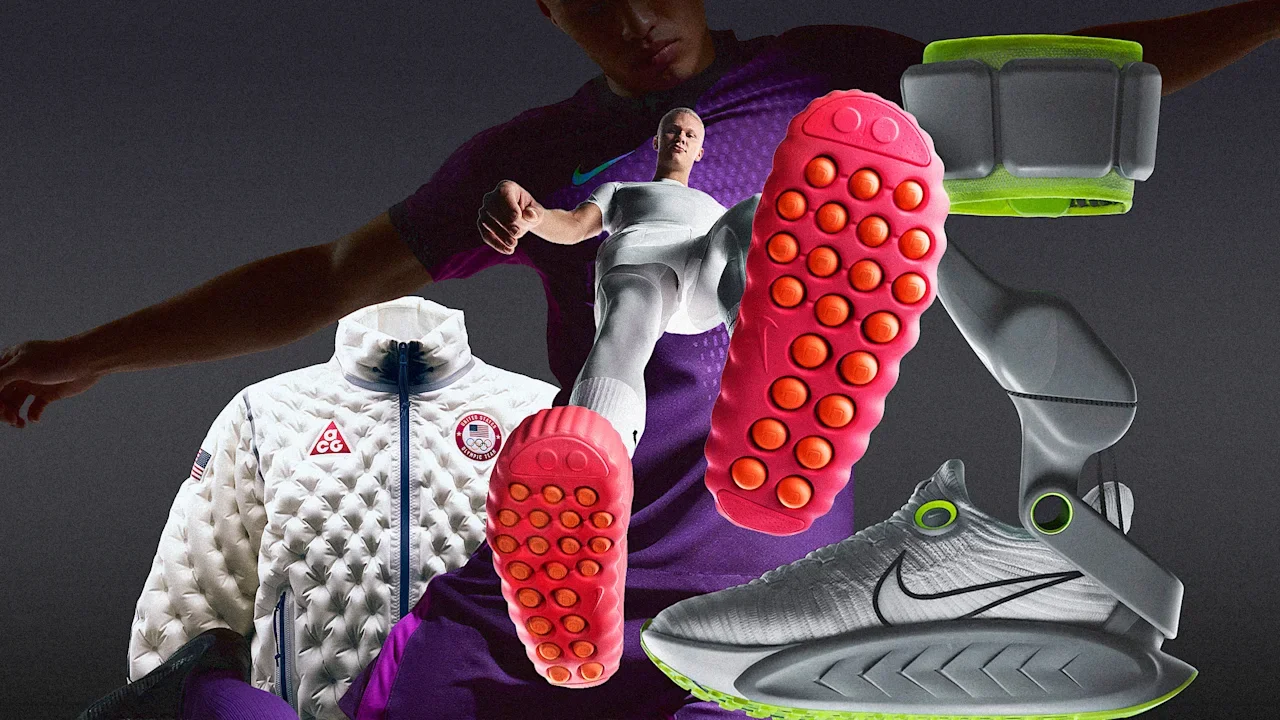
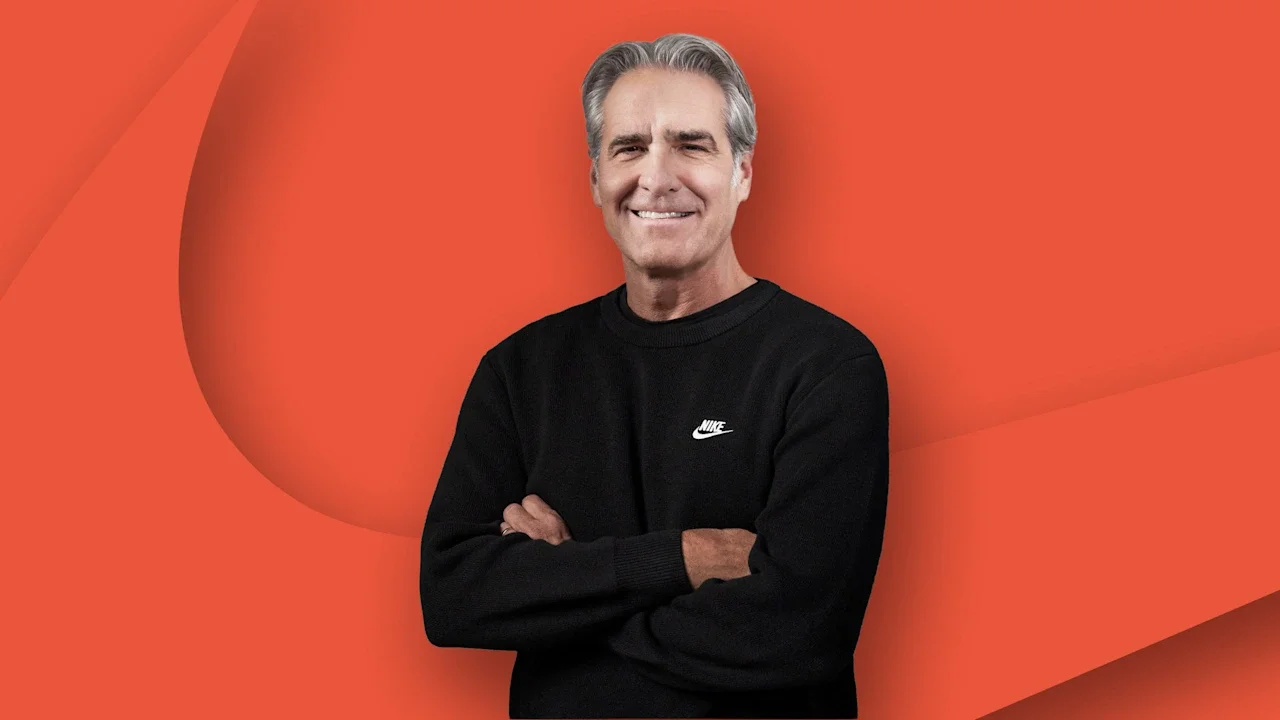
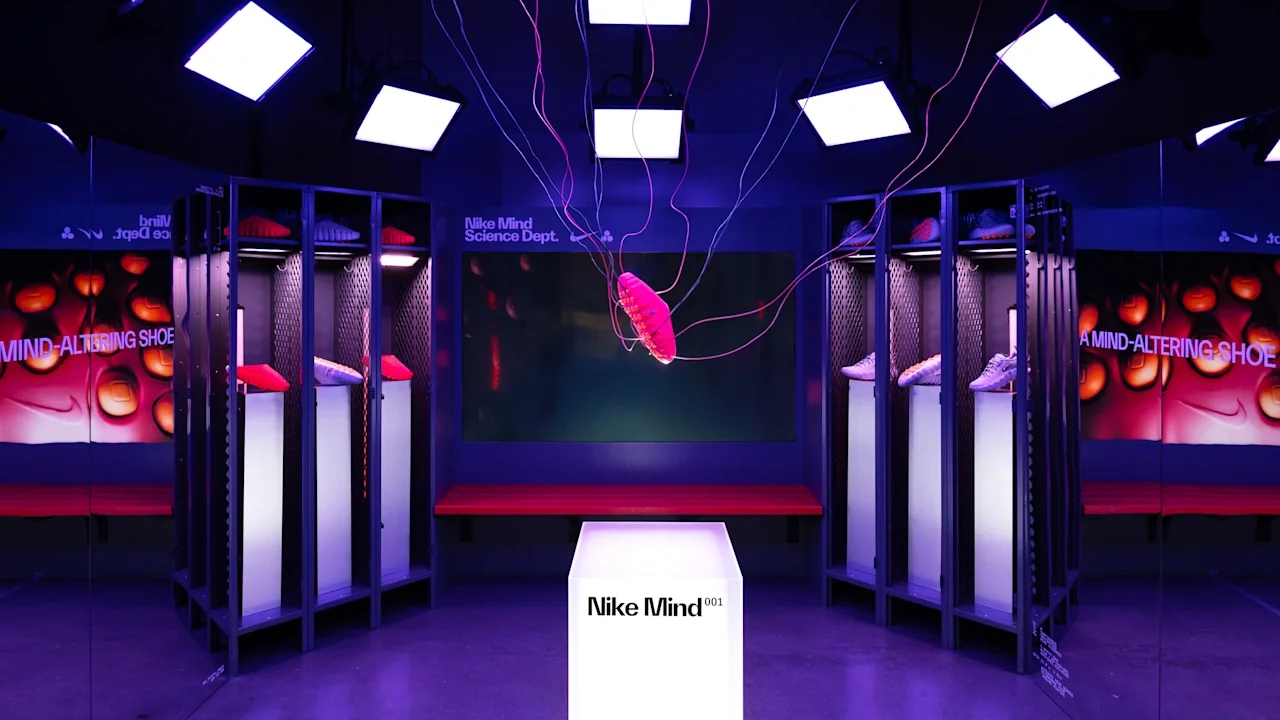
There’s not a more fairy-tale story in business. Nike CEO Elliott Hill began as an intern. Worked about every job imaginable at the company. Was passed up as a fave for the CEO role in 2020 when John Donahoe was brought in from Bain. And then, finding himself retired, and charter member of a silver fox baseball league in Austin, the swoosh boomeranged in from the clouds and Hill hitched a ride back to Beaverton. Now, after a year at the helm, Hill’s still dealing with Nike’s COVID hangover, brought about (at least in part) by Donahoe, who bolstered profits by selling waves of retro sneakers to people at home, all while reorganizing the core innovation team structure that had made Nike successful for decades. When Hill showed up in 2024, Nike revenue was down 10% yoy. This year, it’s down 9.8%, and The President’s tariffs took a $1.5 billion bite out of Nike’s net profits. “One point five billion,” fires off Hill’s tongue as we sit together in the swank office at the top of Nike’s Lebron James Innovation Center in Beaverton, OR—a number I don’t feel a need to say aloud that’s clearly been imprinted in his psyche. Following a year of Hill’s media quarantine, I was invited alongside a small group of global journalists to get a peek at what Hill has up his sleeve—and let me be honest in admitting that it felt a little strange to be back so soon. I was just at Nike in March 2024 profiling Donahoe’s swansong when I wrote our Spring cover story. The campus was a little dead back then; and more than one executive seemed to be biting their tongue. Keep in mind, most of Nike leadership is a collection of people who’ve been there for decades (often 20 and 30 years). They have an earned ownership of Nike’s POV, like a family sharing kitchen cabinets. And I don’t think it’s just the endless buffets of salmon and vegan lox Nike plowed on the press talking: Campus did feel more energized. Interviews felt less guarded. But more so, Nike’s new product lines are genuinely more exciting than about anything that’s come out of Nike for years. Nike didn’t invite us here for a casual photo opp; it is quite intentionally seeding its own turnaround narrative. The company has something to prove to fans and shareholders alike—namely, that it can still innovate. But it’s making a strong case that it can. From its Project Amplify exoskeleton-in-a-shoe, to Nike Mind brain-hacking footwear, to a new inflatable jacket called Project Milano, to recycled fabrics known as Aero-FIT that are 2x more breathable, every big new idea out of Nike looks more promising than another Dunk colorway. Here are my four big takeaways on what is going on at Nike, and where the company is going next. Elliott Hill seems like the guy for this moment Elliott Hill’s job is to get Nike growing again. (And you can read my full Q&A with Hill here.) But as Hill put it to me, “not all one percents of revenue are created equal.” And accomplishing just 1% growth for Nike, which is $500,000,000 by the way, means it has to essentially launch the equivalent of a new company every year. Will Nike’s onslaught of new innovation help achieve this revenue growth? On that he hedges a bit. The lowest hanging fruit is still simply spreading the Nike gospel farther across the world. (That’s my sacrilege not his.) Elliott Hill “Sport exists in every country, and we’re doing business in almost 190 countries. And . . . we’re not meeting our full potential in some of these countries,” says Hill, citing southeast Asia and Malaysia in particular. “We have tremendous opportunity to still grow there, when we run our offense.” Keep in mind Hill’s earliest duties at the company involved hopping on the phone and pitching Nike products to shops, building its retailer network. The same network that Donahoe torched thousands of small retailer relationships by pivoting the company to direct-to-consumer. Hill’s job has been a lot like the task ahead of whichever president follows The President—reinstituting dismantled systems just to get the machine running again. Hill has been repairing retailer relationships. He’s relaunched marketing under Just Do It. And he’s also rewound the entire innovation engine of the company back to its old structure. Donahoe blew up about 40 years of Nike hierarchies when he reorganized all product development under Men’s, Women’s, and Kid’s. Hill put these teams back into sports like running and basketball. Look, I talked to Hill for all of 17 minutes. He really feels like some platonic ideal of a Nike executive, with a penchant for slapping you in the knee when he makes a point. There’s a sort of “wake up, stay focused” energy to him. Execs on Hill’s payroll have called him “more trusting” and “unflinchingly supportive.” I’ve gotten to meet, and re-meet, a lot of Nike execs and designers over the last decade. And truly, they all have a new bounce in their step. But I also appreciated how Jannett Nichol, a 32-year Nike veteran who is VP, Apparel & Advanced Digital Creation Studio Innovation, threw lukewarm water on my question: Was all of the new product I was seeing the result of Hill taking charge with a more aggressive innovation strategy? “I mean, I think Elliot coming on has been fantastic. There’s no denying what he brings to the company . . . he’s always been that personality type,” she says. “But the work was in flight. And it was going to happen, whether it was Elliot or not.” The truth Nike won’t tell you: It’s a wellness company One of Hill’s best decisions was promoting Matt Nurse to become Nike’s chief science officer. Nurse is a researcher who runs Nike’s big athlete testing facility, the Nike Sports Research Lab. (For some reason, whenever I’m there, Nike has hired these fitness models to demonstrate sports, and the soccer players, seemingly carved from marble, always have their shirts off. Doesn’t Nike sell shirts? NIKE DO YOU NEED ME TO LEND YOU A SHIRT?!?) Anyway, Nurse has always seen Nike as something more than shoes. And that’s important for Nike. Sneakers are increasingly commoditized. Even Nike’s marathon-busting Vaporfly shoes were quickly copied by the entire footwear industry. Nurse has to juggle a somewhat complicated narrative that underlies Nike. They are inspired by the elite athlete, and their dialogues with these superhumans is intimate and ongoing—as evidenced when chief innovation officer Tony Bignell swiped through his own text message thread with Eliud Kipchoge to pull up a picture. But their other message is that, um, also, well “if you have a body you’re an athlete!” Nike’s marketing and business model has a lot of ways to grow in this regard, and I think Nurse’s team sits at the fulcrum in making that work. One of Nurse’s pet projects is the launch of Nike Mind, two new neurophysiological shoes that poke into your feet to measurably calm down your brain. I compare Nike Mind to Nintendo’s Brain Age moment, when with a single app, it expanded its premise and addressable market from gamers to anyone concerned about aging. It starts with these shoes that essentially force mindfulness by connecting pressure points on your foot to textures on the ground. 22 foam nodes stick through the outsole, angling and resonating shapes and sensations straight into your foot. They’re funky to walk in. You can feel blades of grass, even trough socks. They increase alpha waves in your brain, just like meditation, though Nurse admits they don’t reach the point of “meditation shoe.” Cognitive neuroscience, and the way products and spaces measurably affect us, is the cutting edge of design right now. Two decades of worldwide academic research are just begging to be commercialized. And these Mind shoes are just a taste of what that could be as Nike neurosciences the hell out of the rest of your body. “You can imagine where we’re headed,” says Nurse. “You start thinking about tapping into [our] sensory systems. The foot is one area . . . you’ve got a whole body . . . this whole canvas.” He points out that we have all sorts of emotional states that we might want to activate, other than calm. Another area where Nike is inherently thinking outside sport is in its Project Amplify exoskeleton, or a robotic Achilles tendon that clips onto the back of a shoe. Cognitive neuroscience, and the way products and spaces measurably affect us, is the cutting edge of design right now. Project Amplify isn’t built for Lebron. Vaporfly broke marathoning with 4% energy return. Project Amplify will offer something more like a 20% boost in energy when it debuts mid-ish next year. At launch, Nike imagines a similar market to people who bought e-bikes—athletes who want to adventure further, faster. But in my opinion, so much energy amplification offers a new opportunity for Nike to shift the narrative from just being faster to being more able-bodied—something that will resonate with the aging population in particular. That’s not Be Like Mike stuff! But Nike has the potential to be the first and most aggressive to democratize the exoskeleton as a slip-on shoe, or an “ebike for your feet” as the company is positioning it. If all Amplify does is help you hike or run another few miles, it’s a failure. This is a training tool. A rehab tool. A healthcare tool. A way to keep boomers (and every generation that comes after them) walking consistently and healthily through their lives, not necessarily to dunk, but to buy groceries. Nurse gets this but is treading carefully. “Maybe you just need to get around the city,” he muses. “We got you. It’s okay. You’re still moving. We’re going to help you.” The Apple Watch is now a $17 billion business for Apple and all it does is display texts and track some health metrics. Apple found a way to appeal to athletes and people worried about a fall. Nike needs to master that same balance to grow. Quite simply: The global footwear industry is worth somewhere around $150 billion. The global wellness industry is worth $6.3 trillion. Hill’s revenue answer exists everywhere off the track, court, or pitch. One of Nike’s most important investments is architecture Nike has invested about $1 billion in new architecture since 2017, and following my four visits over the last 14 years, I can’t begin to emphasize how important these investments were. With apologies to buildings named after Mia Hamm and Tiger Woods, so much of HQ feels like an office park stuck in the ‘90s. Meanwhile four new buildings—including the Lebron James Innovation Center (one giant staircase, designed to look fast, where athletes sweat in rooms straight out of Dragon Ball Z and a lot of the designers work) and the Serena building (a million square feet of undulating offices with a stunning events space on the roof)—are both a pleasure to be in, and bring a sense of possibility. These are modernist marvels set to a backdrop of Oregon forest. They exemplify the mix of nature and technology. Nike convincingly claims they have the best facilities to measure human performance on the planet, and they will become increasingly important as tools for Nike’s teams to break out of their own silos. The Lebron building, for instance, is off limits for most Nike employees to visit, given the sensitivity of the designs inside. But Nike’s new head of innovation, Tony Binell, has worked to shift development spaces up a level, and open the first floor—an atrium celebrating Lebron’s first 30,000 points that’s ensconced by many meeting rooms—to all 3,500 people on Nike’s product creation teams, so that people who work on different sports can share ideas and mingle. “That’s how you get some of that sharing we sort of missed because I can’t be bothered to walk across campus, you know?” says Binell. “But actually, [it should be like] ‘That shoelace is cool! We could use that shoelace!’” Nike ACG gets even hauter To grow its business, one thing Nike wants to do is expand its brands—and Hill told me he’s even open to acquiring the right companies to do so. But the entire technical and trail-inspired outdoor industry, ranging from The North Face to Arc’Teryx, is one of its fastest growing categories in sport, worth around $130 billion a year by Nike’s estimation. And as it happens, Nike has had a very respected, slightly underground (for Nike) label called ACG that plays in this space. ACG puts out some of the most experimental, hypebeastiest drops each year. And Nike is about to put it front-and-center on the podium at the Milan Winter Olympics. (RIP EVERYONE WHO LIKED ACG AS A PERSONALITY TRAIT.) Their new Air Milano jacket reinterprets Nike Air as a haute, inflatable winter jacket. Its computationally quilted baffling catches the light in a captivating way. (You’d never know that pattern is actually an abstraction of the ACG logo.) And a handheld inflater puffs the jacket up in about 10 seconds, creating insulation on demand. This coat is wild. Absurd. Beautiful. I love it. It also feels high-end. Nike intends to relaunch ACG around this moment, making the sub brand the “pinnacle expression” for an athlete, with the “reemergence of ACG in a new premium way,” according to Nichol. “[It’s the] most technical garment we’ve ever made that’s not going to space,” Nichol says. In other words, it’s going to be expensive. Consider: this probably means that Nike is selling air for more than down. That’s a somewhat wild possibility to comprehend! The ultimate margins are likely appealing on a balance sheet. But I do also worry that if Nike stays too premium with this tech, it’ll get Sketchersed or Sheined to death before it can own the space. When I mention to Nichol that the jacket felt like it would make a great sleeping bag or tent, I asked, does stuff like that make sense for Nike? “I think through the lens of ACG it fits perfectly,” she says. Nike simply cannot look new while looking so old Nike hit its low point in 2023 with the release of Ben Affleck’s Air. A company that was about to get trounced for doing nothing more than rereleasing old shoes gave the whole company the Argo treatment. How do you ruin Michael Jordan? By making his story look old instead of timeless. Look, Nike Air is from 1978. That shit is almost 50 years old. The last incredible, mainstream tech release was its Flyknit material in 2012. And the truth is, Nike’s launched its last category-busting product almost a decade ago now, with its Alphafly shoes that returned 4% of someone’s stride and literally broke long distance running. This was 2017—lifetimes ago—pre COVID and ChatGPT. And let’s be very honest: In this moment of massive technological advancement, consumers are naturally developing higher expectations as to what constitutes a breakthrough. Nobody beyond the most advanced athletes are interested in 4% margins anymore. This is the moment to reinvent how we live. Nike has made billions off of its classic IPs, remixed with new colorways and design sensibilities. But it’s hard to see the sheer scale of modern collab culture as anything but late stage capitalism. Every designer I know is lamenting the thirst of the social/product feed. And through that lens, Nike’s days of selling fancy foams feel numbered. But erase a few bad news cycles, and I challenge you to name a company more exciting than Nike right now in terms of sheer potential. Consider that Nike is a UX company that doesn’t really make software, and a technology company that doesn’t touch phones. It builds products for the human body—things to make us move faster, more comfortably, and more joyfully. I’m excited about Nike because slip-on exoskeletons and brain-activating apparel introduce the possibility to reshape our day-to-day lives. But most of all, I’m hopeful that Nike seems to be recognizing that its potential is so much greater than what we stereotypically think of as footwear and apparel—of that 1970s brown Argo filter fogging over the swoosh. Nike’s new tagline, born from its EVP and chief innovation, design & product officer, Phil McCartney, is “Make epic shit.” The remit really is both that hard and that simple. View the full article
-
We may earn a commission from links on this page. Deal pricing and availability subject to change after time of publication. If you’ve been eyeing a big-screen upgrade without blowing past your budget, the Vizio 65-inch 4K UHD LED Smart TV (V4K65M-08) might just be the solution you need. It’s currently $348 at Walmart (down from $428)—a solid deal for a name-brand 65-inch TV that supports 4K, Dolby Vision, and HDR10. VIZIO V Series 65" 4K HDR Full Array LED Smart TV (V4K65M-0804) $348.00 at Walmart $428.00 Save $80.00 Get Deal Get Deal $348.00 at Walmart $428.00 Save $80.00 The design is simple but modern, with slim bezels and a brushed-metal look at the bottom that keeps it from feeling like a “budget TV.” At this price, though, expectations need to be realistic: You’re getting a solid, serviceable panel for movies, shows, and casual gaming, not OLED-level brilliance. Picture quality is respectable for a set this cheap. The contrast ratio of 5,036:1 gives decent depth to darker scenes, though overall brightness (around 282 nits) can feel dim in well-lit rooms. It handles standard dynamic range content well and offers accurate colors when viewed head-on, but move too far off to the side, and saturation drops noticeably. It’s not ideal for wide living rooms, but if your couch faces the TV directly, you’ll get a consistent image, notes this PCMag review. Motion handling is decent for everyday use, though the 60Hz refresh rate means it won’t match higher-end models for fast-paced sports or gaming fluidity. That said, input lag is impressively low (around 3ms), which helps keep gameplay responsive even without fancy gaming features like VRR or FreeSync. Vizio’s SmartCast platform runs the show, offering access to popular apps like Netflix, Disney+, Prime Video, and YouTube. It’s simple and no-frills, with built-in AirPlay and Chromecast support for streaming from your phone or iPad. The included remote gets the job done with dedicated buttons for major services and a microphone for voice search (though it can’t control smart home devices). Connectivity is basic—three HDMI ports, one USB, and no Ethernet—but that’s par for the price. Still, for under $350, the Vizio 4K 65-inch offers a balanced mix of size, streaming, and 4K sharpness that makes it a solid pick for bedrooms, spare rooms, or anyone just looking to go big on a budget. Our Best Editor-Vetted Tech Deals Right Now Apple AirPods 4 Wireless Earbuds — $114.80 (List Price $129.00) Apple iPad 11" 128GB A16 WiFi Tablet (Blue, 2025) — $299.00 (List Price $349.00) Amazon Fire TV Stick 4K (2nd Gen, 2023) — $29.99 (List Price $49.99) Shark AV2501AE AI XL Hepa- Safe Self-Emptying Base Robot Vacuum — $299.99 (List Price $649.99) Ring Pan-Tilt Indoor Cam, White with Ring Indoor Cam (2nd Gen), White — $59.99 (List Price $99.99) Deals are selected by our commerce team View the full article
-
I don’t know how Henri Cartier-Bresson would have reacted to Leica replacing the optical viewfinder on his camera with an artificial display. Perhaps the French photographer and cofounder of Magnum Photos wouldn’t have cared one bit about it. Or maybe he—a profound humanist—would have disliked the idea of it almost as much as I do. Cartier-Bresson once famously said that his Leica “became the extension of [his] eye, prowling the streets all day, feeling very strung up and ready to pounce, determined to ‘trap life’—to preserve life in the act of living.” That’s a little harder to accomplish with Leica’s new camera. Today, Leica is launching the M EV1. It’s the first M camera with a digital viewfinder, meaning the M’s most distinct asset—its beautiful optical viewfinder—is no more. Henri Cartier-Bresson What is the new Leica M EV1? Before we get to the new camera, it’s important to understand what came before. For the last seven decades, the soul of the Leica M has been its optical rangefinder viewfinder. For those not obsessed with cameras, this is a beautiful, entirely mechanical system of mirrors and prisms. When you look through it, you see the world directly, as if through a window, but with a ghostly “double image” in the center. To focus, you turn a ring on the lens, and this second image moves. When it perfectly overlaps with the main image, your subject is in focus. It’s a method that is precise, completely free of electronic lag, and creates a unique, unfiltered connection to the world. This system, first pioneered by Leica, made the M camera the tool that defined 20th-century photojournalism. Its compact, quiet, and discreet nature allowed photographers like Robert Capa to get closer to their subjects than ever before, capturing history as it unfolded without intrusion. The M was more than a camera; it was a philosophy of seeing, demanding a manual, deliberate approach that became synonymous with the craft of photography itself. At first glance, the M EV1 is undeniably an M. It has the same satisfying density, the same minimalist silhouette carved from magnesium and aluminum. But then you notice the changes. The front is cleaner, almost sterile, without its iconic rangefinder windows. The top plate is also different; the traditional ISO dial is gone, sacrificed to make room for the new electronic viewfinder’s housing. The camera is also noticeably lighter—46 grams less than its rangefinder cousins, a direct result of removing the complex optical and mechanical guts of the rangefinder system. Inside, the M EV1 is built on the same foundation as the stellar M11 series. It uses the same 60-megapixel full-frame BSI CMOS sensor, a chip renowned for its incredible detail, 15 stops of dynamic range, and superb performance in low light. That sensor is paired with the company’s Maestro III processor. The company says that this combination makes the camera extremely responsive and quick. The camera also includes 64GB of internal memory, a practical feature for anyone who has ever filled a memory card at a critical moment. And then there’s the entire raison d’être for this camera: the electronic viewfinder (EVF). It’s a high-resolution, 5.76-million-dot screen, which, according to Leica’s claims, offers a “what you see is what you get” experience. It is, like I said, a fundamental departure from the rangefinder’s optical approximation. The Eye of Sauron For the first time in an M, the photographer doesn’t see real reality. It doesn’t see kids crying, running from a napalm strike in Vietnam. It doesn’t see Muhammad Ali’s fist. It doesn’t see a sailor kissing a nurse in New York’s Time Square. Or any of the photos taken with rangefinders that have arguably defined the 20th century. Út, Hoepker, or Eisenstaedt wouldn’t have seen those scenes through their own eyes but through the filter of a display that, rather than reality itself, shows a direct feed from the sensor, showing exactly how the final image will look in terms of exposure, depth of field, and color. Not the world, but the final photograph. While showing me the new camera, Nathan Kellum-Pathe, Trade Marketing Product Communications manager at Leica USA, admitted that taking this step “was a significant topic of discussion within the company.” A decision that was ultimately justified by looking at the brand’s history and its current “strategic goals.” Read that as “sell more cameras to a new public who want an easier-to-use experience.” He also noted that there was historical precedent, as “not every M had a rangefinder inside of it.” He believes it is a good time to do it, pointing at the 70th anniversary of the M system as the right moment to “show the market that Leica is open to changing what the M is defined by.” This will likely rankle purists like myself (I’m writing this under embargo, so there are no public reactions at this time). Kellum-Pathe insisted that the Leica M EV1 doesn’t mean they were going to kill the traditional M. “We’ve had 70 years of the M with the rangefinder,” he says. “We will continue to have the M with the rangefinder.” Kellum-Pathe points out that a digital viewfinder has practical advantages. It makes using wide-angle or telephoto lenses much easier, as the EVF shows the lens’s true field of view, unlike a traditional rangefinder, which is limited in its perspective. It also makes focusing with fast, shallow-depth-of-field lenses like Leica’s own Noctilux much simpler, thanks to digital tools like “focus peaking” (which highlights sharp areas in color) and magnification. Even the frame-line selector lever on the front of the camera has been repurposed into a customizable function button to toggle these aids without taking your eye from the viewfinder. And heck, for photographers who wear glasses, a built-in diopter adjustment wheel is a nice convenience compared to the screw-on lenses required for optical viewfinders. It’s all really cool. But it is an artificial pixel wall between a photographer’s retina and the real world. A screen is a layer of interpretation of reality, no matter how technologically good it can be. It is not a keyhole to the real world, as the optical rangefinder is. The direct human connection to the moment gets lost. In the middle of this AI clusterfrak, the last thing I need is for yet another analog instrument to become digital. But I get it. According to Kellum-Pathe, this move is a direct response to customer demand. “The market has asked for it for quite some time,” he told me, explaining that many love the idea of the compact M body and its legendary lenses but are intimidated by the steep learning curve of the manual rangefinder system. The M EV1 is designed to be a bridge. It creates a new, third pillar in the M lineup, sitting alongside the analog and digital rangefinder models, offering an easier entry point into the Leica ecosystem, he argues. Next Gen Leica Priced at $8,995, the camera is also about $850 less than its rangefinder sibling, a price difference Kellum-Pathe is the result of eliminating the very object that forever defined the M: The complexity of the hand-assembled optical mechanics versus a digital panel. Much like cars getting rid of analog controls in the name of a money savings and alleged consumer demand, Leica is betting that this new model will attract a new generation of users without taking away from the purists who will always have the traditional M waiting for them. “For those who prefer the rangefinder experience, that’s never going to go away,” he insists. Well, good. I sure hope so. And yes, of course the M EV1 will be a better camera for most people in most situations. The EVF is technically superior, more accurate, and more versatile than the 70-year-old optical rangefinder system it replaces. It makes the famously demanding process of shooting with an M camera significantly more accessible. It will probably sell like crazy (or as crazy as a $9K gadget can sell). But again, I just can’t shake the feeling that it misses the very essence of what makes the M the M. A magic that was never about technical perfection. It was about the direct, visceral connection between the photographer’s eye and the world, viewed through a bright, clear pane of glass. The rangefinder, with all its quirks and limitations, forces a different kind of seeing. It’s an active, mental process of aligning frames and focusing patches, a collaboration between mind and machine. It’s a peephole, not a television screen. Looking through the M EV1’s brilliant little display, as sharp and clear as it is, will always feel like watching a broadcast of reality rather than witnessing it. The digital aids, while useful, add another layer of interpretation, of noise, of things to distract you. I think of Robert Capa on the beaches of Normandy and his vision narrowed to a small, glowing rectangle in a digital viewfinder with the chaos raging around him. And I keep coming to the idea that, while the new Leica M EV 1 is probably a perfect digital camera, while it may look and click like a regular Leica M, it will never have, by definition, the same “take a look through the magic hole and let’s see what comes at the end of this” je ne sais quoi. And for sure, it will never be the extension of Cartier-Bresson or anyone else’s eye. View the full article

-
Elliott Hill spent his entire career at Nike. But he spent a full year as its CEO before giving his first media interview in the role. In mid-October, the company invited a select group of global journalists to Beaverton, Oregon, to see the latest in Nike innovations. We tried a slew of ambitious products that will hit the market over the next year plus: mind-altering footwear, exoskeleton sneakers, and a jacket that inflates to keep you warm. And a few of us got to speak with Hill. Hill is the third Nike CEO I’ve interviewed for Fast Company. He’s not as introspective or soft-spoken as the design leader Mark Parker. He’s not as unapologetic or headstrong as the bean counter John Donahoe. Truth be told, after our brief chat, I’m still wrapping my head around who he is. But something about his manner—quick speech, a lean-forward posture, and a penchant for hitting you in the knee to make a point—that makes it hard to avoid the obvious sports metaphor. As he discusses reshaping his team and fixing Nike’s culture, Hill sounds a lot like Nike’s head coach. For a full tour of Nike, don’t miss my deep dive on the 48 hours I spent on campus. Below are my most pressing questions since Hill took over the company last year. And if there’s any single takeaway, it’s that Hill doesn’t like talking about structure (despite deeply restructuring the company to drive innovation again). Instead, he wants to talk about wholesalers, sport, culture, expanding the brand, and the greater possibilities lying ahead, as the company works under a new mantra developed by his new chief innovation, design, and product officer, Phil McCartney: “Make epic shit.” The interview has been edited for length and clarity. I think this is my fourth trip to Nike over the past 13 years. I would say, though, the energy feels really good on campus right now—whether that’s staged or not! By the way, that’s not by accident, right? If I may respond to that, I know that wasn’t really a question, it was a statement. But one of the first things that I, and we as a leadership team, wanted to do was to win back the locker room. You had to get back to a strong sense of purpose and culture. Because ultimately—and it’s not just Nike, I think it’s any business—I’m a firm believer that if you have the best strategy in place and the right structure and the processes but you don’t have the right culture, you’re not going to have the success that you expect, and certainly won’t meet your full potential. So I’m glad that you at least see it and feel it. We’ve put a lot of time, energy, and effort into it. Culture is a nebulous term. It is. It’s one of those words like love, which means a little bit too much, and it means something different to everyone you talk to. No question, it does. We’re close to 80,000 employees, which is why I think it’s important to try to define the type of culture that we want and expect. And we’ve spent a lot of time doing that . . . through how we communicate, through all employee meetings, through written communication, and just how you show up day to day. We have a book. I don’t know if you’ve seen our maxims; it’s what we believe in. There are five maxims. And then each of those maxims has three to four actions. What can I and we collectively do to help bring those maxims to life? And I know it sounds, again, pretty textbook, but if you live them and breathe them, it does start to come to life and help to define what you want the culture to be. And, more importantly, you start to see it come to life. I am curious about structure. You completely restructured development teams when you returned to Nike. And they look like they did before [John] Donahoe, right? It seems like it’s a rewind to that structure, which was clearly proven at Nike for a long time. Is your plan fundamentally different than that? Here’s what I would say: I’m a big believer in having clarity of purpose and strategy, and then that drives structure and processes. All of them have to work together to help deliver the type of results that we want to try to drive. And so the first thing we wanted to do is get back to strategy. Why do we exist? And our sense of purpose is that “We exist to serve the athlete.” It’s about inspiration and innovation. For all 8 billion consumers in the world, if you have a body, you’re an athlete. And the whole idea is, if we can invite consumers, more and more athletes, into the world of sport, fitness, and lifestyle, we grow the overall marketplace. So that really anchors in sport. Then we said, “Okay, what [is] important?” We’re a consumer products company. People buy stuff from us. So we have to have the most beautiful, innovative, and coveted product, first and foremost. And then we’ve got to tell emotional, inspiring stories. And finally, we’ve got to pay it off in a marketplace where consumers shop. Not everybody shops Nikedirect.com or Nike digital commerce. And so that was the fourth action. We had lost how we connected with consumers down in cities that create influence. And again, whether it was cultural icons in those cities or sports icons, we lost some of that connectivity. So those are the actions we put in place. And then you started to think, Oh, how do you do that across Men’s, Women’s, Kid’s [introduced by Donahoe], and it’s kind of hard to do! So we then decided, let’s shift. Let’s take the $45 billion-plus of revenue, and let’s break it down by brand: Nike, Jordan, Converse. What are the sports that are most important? Let’s [have] small, cross-functional teams with a general manager who are empowered to run and move at the speed of the consumer. This is what I’m saying—that’s classic Nike structure, no? You organized the company by sport rather than the Men’s, Women’s, Kid’s teams that Donahoe adopted. Yeah that’s classic Nike structure. But what is different is, the whole idea is it makes us more responsive with consumers and athletes, and more competitive. Let me just say, when I reported the last feature, when Donahoe was here, the criticism I heard from people internally at Nike was “We left the structure that works.” It’s not about structure! Everybody keeps going back to it. What is it [really] about? It’s about sports. It’s Nike running. It’s Nike basketball. It’s Nike training. It’s Nike football, soccer. Because the consumers who play those sports are very different. There are some who cross over, but the elite consumer who runs, or the everyday runner, could be very different than the elite footballer, soccer player, and/or the everyday soccer player. So they want and need different things from us, from a product perspective and a storytelling perspective. And oh, by the way, the competition in both of those sports is very different as well. So being structured by sport gives you the sharpness and crispness on the athlete or consumer that we’re serving, but it also gives us a sharpness and crispness against the competitive set as well. And you empower [these teams]. You let them run. Okay, what has changed then? First of all, what I have done is flatten my organization, so I have 15 direct reports now; 11 of them are new roles. I’m really excited about the talent that we have in the roles from the experience that they bring, the depth of knowledge in the industry, people from outside the industry who joined us—that helps round us out. So I’m excited about my leadership structure. The challenge that I’ve given that structure is two things: It’s pretty simple, individually and collectively. Individually, each one of us should be inspiring and aspirational. People should look up and be inspired by and aspire to be us, individually and collectively. That’s our challenge as a leadership team. What then is different—and I’ll just jump into product: We have three brand presidents, and we have one leader over innovation, design, footwear, apparel, and accessory. The craft of making product that cuts across all three brands will enable us to leverage what I believe is one of our strongest core competencies, and that’s product management. If we choose to add other brands, we can do that, so that then sets us up for the future. Once we get the machine running, generating the cash and the revenue that we all expect, it allows us then to leverage some of our core competencies for the future. You just touched on something that’s been on my mind, which is this idea of Nike being such a big brand. Wall Street or analysts can criticize Nike’s growth, but it’s a gargantuan company. It is profitable, right? And it’s touching a lot of the world all the time. I guess my my curiosity is— —and not all one percents of revenue are created equal! There’s a quote for you. Think about that. You know, no one really thinks about it: 1% of growth for us is $400 million to $500 million. That’s a company. We grow the size of a company annually! Scaling a company your size is daunting. You bring up this possibility of introducing different brands. I wonder if there can be a sort of monolithic brand like Nike, or even two or three others like Jordan and Converse. I feel like you need even more sub brands to reach more people. I think that might be a part of the conversation, and it’s our responsibility to set the structure up and our capabilities up, that if we choose to do that, we can do that—we can use the balance sheet to go acquire brands if we choose to. Here’s what I would say: I still think there’s tremendous opportunity in the core of our business. I didn’t even mean acquire. I meant spin off. Of course. Spin off and create. And we have some that we’re already starting to see, Nike ACG being one of them, going after the outdoor industry that I think is roughly $130 billion total addressable market, going at it through trail. Very unique Nike way and point of view. Skims is another interesting opportunity. But even beyond that, we believe there’s tremendous growth still in the core. Because if you think about sport, it exists in every country, and we’re doing business in almost 190 countries. When we get down to countries, we’re not meeting our full potential. In some of these countries, we haven’t been able to make the investments that we believe we need to make to inspire and attract the consumers in those countries as a truly global company. I could go through the list: Southeast Asia is a tremendous opportunity for us. Pick a country there, whether Malaysia, Indo—you pick it. We have tremendous opportunity to still grow there, when we run our offense, and we’re still in the process of getting our offense in place. Not only from a product creation perspective, but out into the marketplace, where we truly connect with consumers. And the last thing I’d say, the sports industry is growing 3% to 5% a year. It’s about growing the overall marketplace versus getting worried about market share. And when we grow the marketplace, I like our chances of growing. It’s a pretty intellectual sort of conversation, but I’ve seen it work, and I believe in it. When The President’s tariffs were announced, I remember being like, Does Nike have to pull a lot of manufacturing out of Vietnam? Obviously, we learned in the last quarter how much tariffs are cutting into profit. It’s significant. $1.5 billion. How are you responding to that right now? And how much is that affecting your strategy? Is it worth shifting manufacturing internationally? Can you even get ahead of tariffs, given the changing rules week to week, given that a lot of other countries are being affected with really high tariffs, too? [It’s] clearly making an impact. We talked about how we’ll offset it. The good news is we do have a sourcing base that we’ve built up over 50 years. It’s global, and it’s expansive, and we’re pulling each of the levers to try to offset the tariffs at a super high level, working with our manufacturing partners to share in some of those costs, our retail partners. And then ultimately we have to, as a company, share in some of that. We’re looking for efficiencies here, inside of our business and our own P and L to help offset that. So that’s what we’re doing, short term. Longer term—you know, we can build factories anywhere. Setting up a factory and building lines, we know how to do. The challenge is, in our industry, we have tens of thousands of materials. Yeah, exactly that. It’s the supply chain. It’s the material sourcing that is the bottleneck. And so that is what we’re working on right now. The simple idea there, conceptually, is to go: “Well, just make fewer materials.” But then you change choice, and you put designers and innovators and creatives in a box. That’s what we’re working through right now. We’re trying to figure out, “Okay, can we, should we, and where should our manufacturing base be for the future?” And it’s definitely something that’s top of mind. Near term, I’m just telling our team, let a few of us deal with that, and you control what you can control. And that gets back to making beautiful products and telling stories and making sure our brand looks the way it should look at retail. Because that’s how we drive sell-through. So control what you control. Let a few of us deal with the tactical—and it is some tactical—moves that we have to make around tariffs while also thinking strategically about what does the supply chain of the future look like? I haven’t checked out your new Project Amplify powered footwear yet, but I’m anxious to. I’ve used a couple of exoskeletons. I’m really bullish on these assistive technologies. And I’m curious: How key is that more electronic, or mechanical, innovation to Nike’s innovation pipeline of the future? Is it a really big growth category for you? We’ve yet to put a number on it in terms of growth. We’re still working through what we believe it can be. We do think it’s, without question, a big part of positioning our brand as an innovative thought leader that’s willing to think outside the box. I think the biggest [idea] we keep using as an example . . . If you look at the sales of mountain bikes versus e-bikes—if you look at the growth curve—mountain bike growth has slowed. And then e-bikes are [growing] because people want to go further faster. We think there’s an insight there. How big [Nike exoskeletons] will become, I think the consumer is ultimately going to decide. View the full article

-
Even in the age of electric cars and AI generated everything, we’re still using the same three technologies to insulate most of our clothing. And they work mostly the same way. Wool, down, and most recently, Primaloft (aka synthetic down) are all used to create “loft”—a fluffy substance that traps pockets of air. It’s that air that’s ultimately creating a barrier between you and the outside cold to keep you warm. But now, Nike is taking this premise to its ultimate conclusion, and launching its first coats that are insulated by nothing but air. And to tweak their warmth, you can even pump them up and deflate them as you like. The technology will debut in the Therma–FIT Air Milano Jacket, which will be worn by medal winners standing on the podium at the Winter Olympics this February. Nike calls the jacket “four jackets in one.” Deflated, it’s supposed to feel like a windbreaker. Inflated, it’s somewhere close to a midweight puffer. After trying on the jacket earlier this month at Nike HQ, I’d say that’s precisely right—and even more so, it feels luxuriously soft to the touch. But more on the wear test in a minute. Cracking the code of inflatable outwear Nike has been designing inflatable jackets for nearly 20 years, since it first started putting air bladders in a coat for Nike ACG, its outdoor performance line. When the design team shared early experiments from its archives, I noted that all have that waterproof windbreaker look—and each uses different inflatable mechanisms, ranging from a blow straw, to a hand pump, to an iPhone and an app. But Air Milano isn’t a jacket that contains some Nike air bladders inside. Instead, the entire jacket is inflatable. How is that possible? Years of iteration. First, Nike sourced a fabric that feels somewhere between a cotton comforter and a swim shirt. It somehow feels naturally soft and synthetically stretchy at the same time. Nike takes two pieces of this fabric, and then welds them together at the seams, while adding a pattern of dotted welds in between to create baffling (think of baffling as architecture that channels air). Whereas most insulated jackets have to be constructed to keep insulation in place, with latitudinal structures that give them a ribbed look, Air Milan is created from computationally designed patterns that ensure air flow through the garment. Eighty percent of these patterns were tested in software simulations and never built. As I walk around a display of Nike’s early material tests, I’m taken by the array of patterns Nike did attempt. Some baffling looks like the fine scaling of reptiles, while others look like marshmallow quilts. Some have sharp geometric diamonds, some burst radially in a way that almost feels floral. Nike ultimately went with a baffling pattern inspired by the ACG logo—as this jacket will be Nike’s first attempt to bring the ACG brand info the greater public consciousness. Nike CEO Elliott Hill estimates that the outdoor segment represents a $130 billion market, and Nike would like to take a bigger chunk. From prototype to finished product Developing the jacket to functionally work was a long, difficult process. Early versions took up to 7 minutes to inflate. They’d stay inflated 30 minutes max. (The design team would actually inflate the jacket only moments before presenting its progress to executives, so that it would stay puffy for the full meeting.) Now, the jacket comes with a small electronic pump that fits in your hand. You plug it into a port near your waste, and it inflates in about 15 seconds. I’m told it will stay inflated, should you like, for weeks or even months. The sensation of the jacket filling on your body is trippy. Your arms feel it first, as they Popeye outwards and begin to constrict your skin like a soft blood pressure cuff. Then you see your chest and stomach being filled as well. Once inflated, it took only a minute before I felt the heat. I started feeling a bit steamy, and I realized that the jacket doesn’t breathe (yes, Nike has some ideas to fix that—like adding small ports that, like Gortex, can keep heat in but allow moisture out). It was just as wild to deflate it. All you have to do is pull another tab, and poooshhhhhhhhh, the jacket deflates back to where you started. Nike built this jacket as a one-off product for the Winter Olympics, and it will not be coming to market in this form. But the jacket also demonstrates what Nike does best: It creates performance innovations that advertise themselves in an irresistible way. The jacket simply looks like it works differently than any jacket you’ve ever worn. And the Air Milano is really gorgeous to behold in person, as the baffling catches light and shadow, you can appreciate the technical efforts and high level of taste that went into the garment. Jannett Nichol, VP, Apparel & Advanced Digital Creation Studio Innovation, confirmed that whenever Nike’s inflatable technology comes to the wider market, it won’t be cheap. Instead, the company sees the future of the ACG brand as the “pinnacle expression” of Nike. And as a material, that inflatable Therma-FIT surface could make its way out of clothing into outdoor gear as well. Wherever Therma-FIT goes next, I’m glad to see Nike working on it. Few companies have the R&D resources and experimental know-how to really impact what the future of performance garments can be. And longer term, there is simply no way that down is a more sustainable option to insulation than pure air. Besides, it’s just mind-bending to consider just how warm you can feel with a little fabric and a hand pump. View the full article

-
It looks like I’m walking on Nerf darts. Twenty-two foam nubs protrude from the bottom of this shoe. When I slide it on, it almost feels like I’m walking on bubble tape—or like, with every step, an octopus tentacle is suctioning to my foot. Even through a thick cotton sock and all that foam, I can feel textures underfoot. I sense the individual blades of grass on a soccer pitch, and dragging my sole along a textured running track feels a bit akin to licking the roof of my mouth. Am I calmer? Perhaps. I’m certainly more mindful. But I also wonder if I’d notice this sensation in an hour. This is Nike Mind—the company’s first foray into apparel that puts your brain before your body, hacking your physiology to change your state of mind through applied neuroscience. Available January 2026 in two flavors (a slide called Mind 01 and a sneaker called Mind 02), the new line “was designed to help amplify that dialogue between your brain and your feet,” says Matthew Nurse, chief science officer at Nike. But in fact, the possibilities behind Mind are much larger. For 45 years, Nike has been focused on tools to enhance physical performance. Now it’s considering how the things we wear can measurably change the way we feel. Using apparel to change how we think Nurse calls the human body one big “sensory antenna.” Everything around us is stimuli that ultimately affects our brain, and designers are now taking a closer look at how we can apply the past 20 years of neuroscience (in a field often dubbed neuroaesthetics) to their work. Nike is positioning Mind as a “sensory intervention” in an athlete’s pregame ritual, a way to calm down in the locker room before a big competition. What the designers have really done is create a sort of automated mindfulness that prompts you to get outside your own head and feel the world around you. “There’s a unique, specific utility for athletes,” says Nurse. “[But] if you just need some Zen on the way to work, if you just need something on the way home, we’re hoping this is going to work for you, too.” Seven years ago, the company began building its Mind Science team of neuroscientists that would have the specialization required to bring product to market. First, the Nike team built a prototype: a sock with 40 pressure points pushing right into your foot. Why 40? The team felt that figure represented the ceiling of what your foot could perceive. It was a good proof of concept, but it wasn’t really a shoe. So they kept iterating. The effort that went into the nodes themselves is extraordinary. Nike used computer modeling to iterate and simulate different geometries that it then tested IRL with athletes and EEGs. The work sounds almost silly until you poke at one of these nodes with your finger and realize it’s not just a piston that runs up and down. It actually captures different angles, more like a video game controller’s thumbstick. That’s what gives the sensation so much fidelity. When Nike brought that Mind prototype to its manufacturers in Korea, they found their original design would take 41 steps (including gluing each node by hand) to turn into a shoe—too many steps for reasonable mass production. Over time, the team simplified the shoe to 22 nodes, and reconfigured the whole design so it could be produced in just two steps. Seeing the Mind deconstructed reveals all of its industrial design efficiencies. The midsole looks like a chunk of foam honeycomb. Into it slip the nodes, which Nike figured out how to produce in just two molded pieces (it looks a lot like one of those reusable bubble tape fidgets that were so popular with the kids a few years ago). The project also required Nike to reimagine the strobe—a thin fabric layer in the insole that helps make the shoe feel flexible. The problem, Nike found, was that it also absorbs the sensations of the ground (and one designer pointed out that this is even true for barefoot shoes like Vibram). So the team created a new, elastic version that wouldn’t dampen sensation. The shoes have now been tested on 2,000 athletes, doctors, nurses, and physical therapists for more than 100,000 hours on the job and in Nike’s own research lab. In many cases, people were connected to EEGs to measure their brain patterns. Nike confirmed that the Mind boosts activity in the somatosensory cortex (which processes touch) and increases in alpha wave frequencies (the same signals in your brain that increase during meditation). When I ask Nurse how much of a boost they see in alpha waves—and if the shoe reaches levels akin to meditation—he says it would still be too much to call the shoes “meditation light.” When I ask if the effects might wear off over time, as people are more habituated to the footwear, he agrees that’s possible, but notes the shoes don’t disappear from your senses like a pair of glasses on your face. Because those nodes have been designed to constantly fire as you shift, on and off. “What we hear from people is, if you’re standing a while, maybe you stop paying attention for a little bit, but then [you move and] suddenly you’re aware,” says Nurse. “We also hear that even while people are sitting, they notice they’re just probing more. . . . You’re almost searching and exploring that feedback, because it’s new and novel.” The future of Nike Mind Mind is a fascinating product. I found the slides, which I tried in an imperfect size, to be subtle enough that I almost didn’t notice. But the full sneaker felt far more activating, and I would be tempted to try them without a sock. What’s certain is that these are early days for this field, and even Nurse admits that Nike’s first Mind products are just a hint of what’s possible. Nurse calls Mind 01 and 02 “chapter one of the feet.” He notes that Nike has “other chapters we’re interested in [beyond] the feet,” with a most definite emphasis of what’s possible across our skin. As for the experience of calm, it’s simply one sensation Nike designers are after, knowing that in different parts of your day, the goal is not always to be full Zen. “You can imagine where we’re headed,” Nurse says. “You start thinking about tapping into [all sorts of] sensory systems. . . . You’ve got a whole body.” View the full article
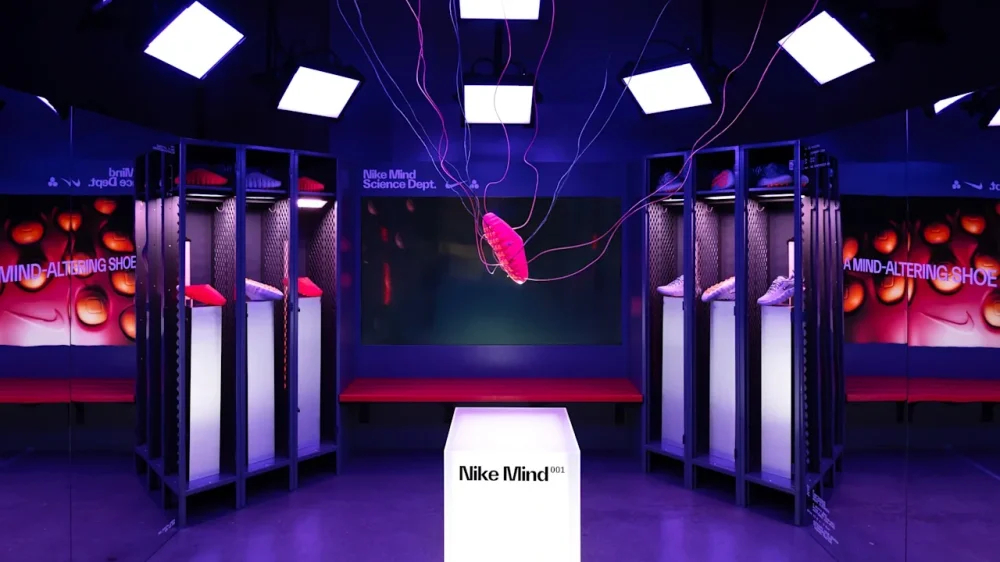
-
The government shutdown has reopened debate on what has been a central issue for both major political parties in the last 15 years: the future of health coverage under the Affordable Care Act. Tax credits for people who get health insurance through the marketplaces created by the Affordable Care Act, also known as Obamacare, expire at the end of the year. Democrats say they won’t vote to reopen the government until Republicans negotiate an extension of the expanded subsidies. Republicans say they won’t negotiate until Democrats vote to reopen the government. Lawmakers in both parties have been working on potential solutions behind the scenes, hoping that leaders will eventually start to talk, but it’s unclear if the two sides could find compromise. As Congress circles the issue, a poll from The Associated Press-NORC Center for Public Affairs Research found that about 6 in 10 Americans are “extremely” or “very” concerned about their health costs going up in the next year. Those worries extend across age groups and include people with and without health insurance, the poll found. A look at the subsidies that are expiring, the politics of the ACA and what Congress might do: Enhanced premium help during the pandemic Passed in 2010, the ACA was meant to decrease the number of uninsured people in the country and make coverage more affordable for those who don’t have private insurance. The law created state by state exchanges, some of which are run by the individual states, to try to increase the pool of the insured and bring down rates. In 2021, when Democrats controlled Congress and the White House during the COVID-19 pandemic, they expanded premium help that was already in the law. The changes included eliminating premiums for some lower-income enrollees, ensuring that higher earners paid no more than 8.5% of their income and expanding eligibility for middle-class earners. The expanded subsidies pushed enrollment to new levels and drove the rate of uninsured people to a historic low. This year, a record 24 million people have signed up for insurance coverage through the ACA, in large part because billions of dollars in subsidies have made the plans more affordable for many people. If the tax credits expire, annual out-of-pocket premiums are estimated to increase by 114% — an average of $1,016 — next year, according to an analysis from KFF. Democrats push to extend subsidies Democrats extended those tax credits in 2022 for another three years but were not able to make them permanent. The credits are set to expire Jan. 1, with Republicans now in full control. Lacking in power and sensing a political opportunity, Democrats used some of their only leverage and forced a government shutdown over the issue when federal funding ran out on Oct. 1. They say they won’t vote for a House-passed bill to reopen the government until Republicans give them some certainty that the subsidies will be extended. Democrats introduced legislation in September to permanently extend the premium tax credits, but they have suggested that they are open to a shorter period. “We need a serious negotiation,” Senate Democratic leader Chuck Schumer has repeatedly said. Republicans try to scale the ACA back, again The Democratic demands on health care have reignited longstanding Republican complaints about the ACA, which they have campaigned against for years and tried and failed to repeal in 2017. Many in the party say that if Congress is going to act, they want to scrap the expanded subsidies and overhaul the entire law. The problem is not the expiring subsidies but “the cost of health care,” Republican Sen. Rick Scott of Florida said Tuesday. In a virtual briefing Tuesday, the libertarian Cato Institute and the conservative Paragon Health Institute branded the subsidies as President Joe Biden’s “COVID credits” and claimed they’ve enabled fraudsters to sign people up for fully subsidized plans without their knowledge. Others have pitched more modest proposals that could potentially win over some Democrats. Senate Majority Leader John Thune, R-S.D., has said he is open to extending the subsidies with changes, including lower income limits and a stop to auto-enrollment that may sign up people who don’t need the coverage. The ACA is “in desperate need of reform,” Thune has said. House Republicans are considering their own ideas for reforming the ACA, including proposals for phasing out the subsidies for new enrollees. And they have begun to discuss whether to combine health care reforms with a new government funding bill and send it to the Senate for consideration once they return to Washington. “We will probably negotiate some off-ramp” to ease the transition back to pre-COVID-19 levels, said Maryland Rep. Andy Harris, the head of the conservative House Freedom Caucus, during a virtual town hall Tuesday. Is compromise possible? A number of Republicans want to extend the subsidies. Sen. Josh Hawley, R-Mo., said most people who are using the exchanges created by the ACA “don’t really have another option, and it’s already really, really expensive. So I think there are things we can do to reform the program.” Hawley said he had been having conversations with other senators about what those changes could be, including proposals for income limits, which he said he sees as a “very reasonable.” Bipartisan groups of lawmakers have been discussing the income limits and other ideas, including making the lowest-income people pay very low premiums instead of nothing. Some Republicans have advocated for that change to ensure that all enrollees are aware they have coverage and need it. Other proposals would extend the subsidies for a year or two or slowly phase them out. It’s unclear if any of those ideas could gain traction on both sides — or any interest from the White House, where President Donald The President has remained mostly disengaged. Despite the public stalemate, though, lawmakers are feeling increased urgency to find a solution as the Nov. 1 open enrollment date approaches. Democratic Sen. Jeanne Shaheen of New Hampshire has been talking to lawmakers since the shutdown began, trying to find areas of compromise. On Tuesday, she suggested that Congress could also look at extending the enrollment dates for the ACA since Congress is stalled on the subsidies. “These costs are going to affect all of us, and it’s going to affect our health care system,” she said. Associated Press writers Lisa Mascaro and Joey Cappelletti in Washington and Ali Swenson in New York contributed to this report. —Mary Clare Jalonick, Associated Press View the full article

-
Over the past few months, I felt overwhelmed by all the changes going on in my life—and the things I need to do because of and for them. I've been providing administrative help to my partner as he opens a new business, managing professional expansions of my own, studying for a certification exam, overseeing renovations to my apartment, and restructuring my finances while still keeping up with my regular jobs and responsibilities. For a while, I was waking up tired before the day even started despite the fact that most of these boil down to never-ending, tedious, but little tasks like "send that email," "return that phone call," "confirm that account number," and "pick a paint color." I'm convinced it's actually those smaller tasks that burn you out. If every day were one where I was taking a big swing and doing something that felt monumental, I wouldn't be procrastinating as much as I am. Well, as much as I was. I started falling back on my old friend, the "two-minute rule," and the procrastination I was dealing with a few weeks ago came to a quick halt. I am certain you're busy and overwhelmed, too, so here's how this simple rule works and what it can do for you at times when you feel like you have so much to do that you can't functionally do any of it. What’s the two minute rule?The two minute rule came from David Allen, author of Getting Things Done. The idea is simple: If you can get something done in two minutes, just do it. Don’t think it over. Don’t ponder whether it’s more or less important than the heavier lifts you have to do. If it takes two minutes or less to get done, just do it right now. Doing tasks when they’re still small potatoes stops them from snowballing into bigger projects—the kind that take longer than two minutes. For instance, it takes you less than two minutes to clean the dishes after a single meal. If you let them pile up every time you eat, it’ll take longer when you finally have to do it, and you’re more likely to procrastinate knowing that it’s going to be a time-suck. Getting a bunch of minor tasks knocked off your to-do list builds momentum: With several smaller responsibilities taken care of, you’re likely to feel more capable of diving into deeper work. This method is similar to the idea of “eating the frog” in that way, although there are notable differences. When you practice “eating the frog,” you knock out your biggest responsibility first; when you use the two-minute rule, you do the opposite. Which you choose depends on the type of work you have and your personal preference, but both result in a feeling of accomplishment that can propel you through the rest of your workload. How to use the two minute rule effectivelyUnlike eating the frog, the two minute rule isn’t specific about getting your task done right away when you wake up. Rather, it encourages you to do any simple task the moment it occurs to you. Think of the things that lead you to procrastinate in a regular day. For me, it’s responding to emails: I see emails come in but don’t reply right away, even though that would take me a few seconds. Eventually, I have to respond, but with the added weight of expressing remorse for my untimely reply on top of addressing whatever the original message was about. In worst-case scenarios, the event or need the original email was expressing has evolved, too, because I didn't take care of it right away. Then, I have to deal with a situation that is worse or more urgent than it was when the email first came in. I've been two-minute ruling my emails consistently for the past few weeks, and it's helped me in a number of ways. First, I just feel better and like I have less of a weight on me if I reply, "Thanks, I got this. I'll check it out and get back to you." Even just acknowledging the message is forward progress. Second, it's stopped people from having to send follow-ups or attempting to work on something without my approval or input, possibly doing it in a way I don't prefer or isn't helpful to my goals. This goes beyond emails, of course; that's just the example of the small tasks that bog down my life. For what it's worth, I think it's valuable to get a little abstract with the "two-minute" idea, but not too abstract. For instance, if your gas tank is on 25%, it will take longer than two minutes to pull off and fill it up, sure, but that's still a small, quick task that needs to get done. The other benefit here is you stop fretting over everything and wasting so much time. I had to select a wallpaper color the other day and I was dragging that out, exemplifying Parkinson's Law, which states, "Work expands so as to fill the time available for its completion." I called on my two-minute rule, made a firm decision instead of continuing to deliberate, and got the wallpaper the next day. Now it's up and I can move on to other things. View the full article
-
It’s been a wild 24 hours for the stock prices of America’s “big four” publicly traded quantum computing companies, which include D-Wave, IonQ, Quantum Computing Inc., and Rigetti. Yesterday, all four quantum firms saw their stock prices fall significantly along with a broader market selloff—mostly related to fears about a growing trade war with China and disappointing tech earnings. But today, shares of the Quantum Four are up on the rumors that the The President administration is interested in taking an equity stake in quantum computing firms. Here’s what you need to know. Commerce Department reportedly interested Last night, the Wall Street Journal reported that the U.S. Commerce Department was in talks with “several” quantum computing companies over equity stakes in those firms in return for federal funding. Specifically, the Journal said D-Wave, IonQ, and Rigetti were in discussions with the federal government about the matter. The report stated that Quantum Computing Inc. and the privately held Atom Computing were “considering similar arrangements.” Fast Company has reached out to all the quantum firms named in the WSJ’s report. IonQ declined to comment. Others did not immediately reply. The exact terms of any such deal are unknown. However, the report states that minimum federal government funding awards would be for $10 million each. It is unknown how much equity the U.S. government would want in exchange for funding, though the level of equity and the amount of funding will likely be correlated. The funding would come from the Chips Research and Development Office, which is overseen by Commerce Secretary Howard Lutnick. The Commerce Department did not immediately reply for comment. The next frontier in computing That the The President administration is reportedly interested in an equity stake in America’s quantum computing firms is of little surprise. This past year alone, the administration has taken stakes in chipmaker Intel. and rare earths mining operator MP Materials. The link between these two companies is that they produce products and materials—advanced chips and rare earth elements—that are seen as vital to America’s national security supply chain. Intel’s chips power everything from navigation systems to military technology, and MP’s rare earths are needed to make the components that go into critical electronics used by the government and military. Quantum computing differs in that, as of now, quantum computers don’t play a critical role in powering the tools behind U.S. economic, military, or security power. But that is expected to change in the years ahead as quantum computers advance and have the potential to be more revolutionary than even AI. Quantum computers are different than the classical computers we use today. A classical computer operates using bits, where each bit of data can either be a one or a zero. However, a quantum computer utilizes qubits, where each unit of data can represent a one and a zero—or anything in between—at the same time. This means that quantum computers can carry out computation tasks in a matter of minutes or hours that would take a classical computer thousands of years or more to compute. Given the potential for quantum computers to revolutionize everything from materials science to healthcare to communications and security, it’s no surprise that countries, including the United States and China, are deeply interested in the development of this technology. ‘Quantum Four’ stocks jump on Thursday After the WSJ report broke, shares of the four publicly traded quantum computing companies spiked in premarket trading on Thursday morning. As of the time of this writing, all quantum four stocks are currently up significantly, including: D-Wave Quantum Inc. (NYSE: QBTS): up 13% IonQ, Inc. (NYSE: IONQ): up 12% Quantum Computing Inc. (Nasdaq: QUBT): up 11% Rigetti Computing, Inc. (Nasdaq: RGTI): up 9% Today’s price jump helps wipe out much of the losses that the Quantum Four experienced yesterday amid a broader market selloff. Yesterday, D-Wave closed 15% lower, IonQ closed down 6%, Quantum Computing Inc. lost 7%, and Rigetti lost 9%. Over the past 12 months, the stock prices of the Quantum Four have surged. As of yesterday’s close, D-Wave was up 2,174%, IonQ was up 269%, Quantum Computing Inc. was up 1,215%, and Rigetti was up 2,831% View the full article

-
US president’s measures are intended to bring Putin to the table but also risk stoking oil pricesView the full article
-
In an era where remote collaboration is vital, Slack has rolled out an updated version of its Community Forum Companion App, designed to enhance user experience in connecting and learning within the platform. Small business owners can benefit significantly from this new iteration, which aims to create a seamless environment for asking questions, sharing insights, and accessing a wealth of resources—all within the Slack workspace. The companion app brings the versatility of the Slack Community Forum directly into the familiar interface of Slack. This integration allows users to engage with a global community of Slack users without the need to switch back and forth between applications, streamlining productivity. “With this app, you can ask a question, reply to another member’s post, browse content and stay up to date on how many badges you’ve collected, all without ever leaving Slack,” a Slack spokesperson noted. This feature particularly appeals to small to medium-sized business owners who may be looking for quick solutions or advice that can save time and optimize their workflows. Getting started with the Companion App involves a few simple steps. First, business owners must ensure the app is authorized for use within their workspace. Depending on the specific permissions set by the Workspace Owner, users may need to collaborate with them to facilitate this access. Once authorized, connecting a Forum account to your Slack workspace allows for deeper engagement with the community and access to features that can drive efficiency in work processes. The app includes several sections, each designed to facilitate user interaction. The “Home” section acts as a personalized command center for users to ask questions and track topics of interest. Notifications and quick replies can be managed from the “Messages” section, ensuring that important updates and interactions are not missed. The “About” tab provides users with essential information and a link back to the Forum’s homepage. Small business owners in particular may find this app useful for troubleshooting specific issues, exploring best practices, or gathering innovative ideas from like-minded users. Whether a business is just starting with Slack or is already familiar with the platform, the Community Forum offers a space to overcome obstacles collaboratively. This shared knowledge base can lead to enhanced productivity and creativity, translating to better business outcomes. However, there are potential challenges to consider. The initial setup may require a deep understanding of the permissions structure within the Slack workspace. For companies with strict IT policies, navigating approval processes could take time and effort. Additionally, while the app provides robust features, the actual experience may vary depending on user preferences for communication and interaction styles. Organizations should be aware of how their teams prefer to share information and connect with the community. Even though the Companion App is a powerful tool for collaboration, it remains important for users to engage adequately in order to reap the full benefits. Business owners may find it valuable to encourage teams to participate actively in both asking questions and sharing their experiences, creating a culture of knowledge exchange. The updated Slack Community Forum Companion App stands as an accessible and efficient means for small business owners to maximize their use of Slack while connecting with a global network. Whether looking for specific solutions, innovative strategies, or simply engaging in conversations with other users, this app opens up new pathways for collaboration. For a more detailed look at the features and capabilities of the Companion App, you can check the original announcement here: Slack Community Forum Companion App. This article, "Slack Enhances User Experience with New Community Forum Companion App" was first published on Small Business Trends View the full article
-
In an era where remote collaboration is vital, Slack has rolled out an updated version of its Community Forum Companion App, designed to enhance user experience in connecting and learning within the platform. Small business owners can benefit significantly from this new iteration, which aims to create a seamless environment for asking questions, sharing insights, and accessing a wealth of resources—all within the Slack workspace. The companion app brings the versatility of the Slack Community Forum directly into the familiar interface of Slack. This integration allows users to engage with a global community of Slack users without the need to switch back and forth between applications, streamlining productivity. “With this app, you can ask a question, reply to another member’s post, browse content and stay up to date on how many badges you’ve collected, all without ever leaving Slack,” a Slack spokesperson noted. This feature particularly appeals to small to medium-sized business owners who may be looking for quick solutions or advice that can save time and optimize their workflows. Getting started with the Companion App involves a few simple steps. First, business owners must ensure the app is authorized for use within their workspace. Depending on the specific permissions set by the Workspace Owner, users may need to collaborate with them to facilitate this access. Once authorized, connecting a Forum account to your Slack workspace allows for deeper engagement with the community and access to features that can drive efficiency in work processes. The app includes several sections, each designed to facilitate user interaction. The “Home” section acts as a personalized command center for users to ask questions and track topics of interest. Notifications and quick replies can be managed from the “Messages” section, ensuring that important updates and interactions are not missed. The “About” tab provides users with essential information and a link back to the Forum’s homepage. Small business owners in particular may find this app useful for troubleshooting specific issues, exploring best practices, or gathering innovative ideas from like-minded users. Whether a business is just starting with Slack or is already familiar with the platform, the Community Forum offers a space to overcome obstacles collaboratively. This shared knowledge base can lead to enhanced productivity and creativity, translating to better business outcomes. However, there are potential challenges to consider. The initial setup may require a deep understanding of the permissions structure within the Slack workspace. For companies with strict IT policies, navigating approval processes could take time and effort. Additionally, while the app provides robust features, the actual experience may vary depending on user preferences for communication and interaction styles. Organizations should be aware of how their teams prefer to share information and connect with the community. Even though the Companion App is a powerful tool for collaboration, it remains important for users to engage adequately in order to reap the full benefits. Business owners may find it valuable to encourage teams to participate actively in both asking questions and sharing their experiences, creating a culture of knowledge exchange. The updated Slack Community Forum Companion App stands as an accessible and efficient means for small business owners to maximize their use of Slack while connecting with a global network. Whether looking for specific solutions, innovative strategies, or simply engaging in conversations with other users, this app opens up new pathways for collaboration. For a more detailed look at the features and capabilities of the Companion App, you can check the original announcement here: Slack Community Forum Companion App. This article, "Slack Enhances User Experience with New Community Forum Companion App" was first published on Small Business Trends View the full article
-
Throughout my academic and professional journeys, one thing has remained my constant ally: Google Docs. Not only is having all your documents available no matter where you are helpful, but the software itself is surprisingly versatile and intricate. I have used it for over 15 years to manage basically my entire life. I have never encountered anything I couldn’t do with Google Docs, from signing a contract to seamlessly working with huge groups of collaborators. There are other, smaller hacks for the word processor that you may not even know about, though, whether you're a student or not. Google Docs hacks for essays and notesSo much of schoolwork centers on writing, from essays to memos to notes, so here are the hacks that will serve you best when you’re in the zone on a paper or taking down information in class. Change capitalization formattingEasily change the capitalization formatting of anything in the doc by highlighting it and choosing Format, then Text. At the bottom of the menu, you’ll see Capitalization, and hovering over it gives you three options: lowercase, UPPERCASE, and Title Case. When you accidentally type in all-caps or need to make a title but don’t want to rewrite what you already have, this is a little-known quick fix that will save so much time. Paste without formattingIf I have one pet peeve with Google Docs, it's that pasting without formatting isn't standard. When I'm copying something into my document, the last thing I want is for it to be in another font or a giant size. If you've used Google Docs at all, you know it aggressively pushes keyboard shortcuts for some reason, so you can't always right click (or however you have your trackpad set up to "right click" or pull up a menu) and hit Paste without formatting. You just have to learn another shortcut: Cd + Shift + V on a Mac and Ctrl + Shift + V on a PC. It just means adding the shift key to the two buttons you're already pressing to paste, and it removes a ton of frustration. Use Voice Typing for note-takingMake note-taking in class easier by selecting Voice Typing from the Tools menu. Once you click the little microphone icon that appears, anything your computer mic pics up will be put into the doc. It won’t be perfect, but it will be editable, so let it jot down everything your professor says, then revise it later for notes that match up with your lecture. Revise your notes strategically, which you can do right in Docs, too. Here are my favorite note-taking formats. If you took notes by hand in class, don't forget to digitize those and add them into the master Google Doc, either. Use an integrated dictionary for papersYou can use Google Docs' built-in dictionary within your doc by going to Tools in the top menu, then hitting Dictionary. You can even highlight a word in the doc and hit Command + Shift + Y to look it up right away. The dictionary appears in the sidebar of the screen, so you don’t need to leave the doc to Google your word. Perhaps best of all, the bottom of the panel shows synonyms that you can swap into your doc to take your vocab up a notch, which is helpful for when you’re writing an essay. (Another dictionary tip: Add any technical terms to your “personal dictionary” so the spell-checker stops flagging them by right-clicking the word and adding it. This works great for those of us with weird last names, too.) Use Find and Replace to quickly edit essaysYou can find and replace text in Google Docs by hitting Command + F. The usual search bar will appear in the top-right of the window, but if you click the three-dot menu, you’ll see not only Find, but Replace. If you’ve been misspelling someone’s name over and over throughout an essay, or using a word too many times, you can replace it quickly. You even have the option to do a full “Replace All,” or jump from instance to instance to decide if you only want to replace a few of them. Make a table of contents with little effortInsert a table of contents from the Insert menu if you need to keep a long doc organized. This only works if you format the headings on your sections by highlighting them, selecting the Format button in the menu, hovering over Paragraph styles, then selecting a header option, but it creates a great table of contents that automatically updates. If information you had on page two ends up on page three after you insert a paragraph of text above it, the table of contents will update on its own, so you don’t have to do it manually. You can also click the headers within the table of contents to quickly navigate to that section of the doc. Google Docs hacks for group projectsVersion History will save lost drafts of papers and deleted notesYou can find older versions of your doc by hitting “Version history” in the “File” menu. I didn’t know about this for a long time, and thought that since Google Docs updates automatically, any revisions I made were permanent. Not so! I’m writing this in Google Docs right now, and the software has saved two different versions in the 45 minutes I’ve been at it. This comes in handy if someone deletes something important or makes a major structural change. Compare documents, tooA similar feature is called Compare Documents and it's best if you're trying to combine input from multiple people or you're working on different drafts. Click Tools and then select Compare documents. A pop-up window will prompt you to upload the document you want to compare (like an older draft or someone else's version of the work) and fill in your name so the changes it finds can be attributable to you. If you're uploading a partner's work to compare to yours, enter their name. Once you've uploaded your document, Google Docs will highlight all the differences and attribute changes to whoever made them. Enable line numbers for long documents or group projectsIf you are working with a bunch of people in a collaborative Google Doc, enable line numbers so you can all quickly reference portions of the work among yourself. The feature simply adds little numbers down the left side of the document. This is particularly helpful if you're editing something massive, like a thesis, because it helps you keep track of exactly where information appears within your document. It's so much easier to tell your project partner they need to address an issue on page two, line seven, than to try to describe which sentence needs attention. Toggle these numbers on by hitting Tools, then Line numbers. In the line numbers sidebar, select Show line numbers. Force collaborators to work on copies, not the actual Google DocI've run across this a few times when working on assignments from professors: I'll open a Google Docs link, usually containing instructions for a project, and find their doc is not editable. So, I have to "Make a copy" that generates the document a second time in my Docs. Teachers do this so they can easily distribute a worksheet and all the students can fill it in without affecting the original version everyone has access to. It works well in that scenario, but could also be helpful if you need group members to do some independent work and don't want everyone typing into the primary document at the same time. Click "Share" on the top right of the document, change the link settings to "Anyone with the link," and choose "Editor" from the dropdown next to it. Next, copy the link and paste it into whatever you're using to share it. Before hitting send, edit the end of the link by replacing the word "edit" and everything after it with "template/preview." Use Smart Chips and Building BlocksThere's a newer feature called Smart Chips available that lets you stick interactive elements like dates, tags, files, and calendar events right into your doc. You type "@," like you would if you wanted to tag someone on Instagram, and a list of taggable options comes up. You can use it to tag group members so they are directed to a particular part of the document, link out to source material, or add in deadlines everyone can see at a glance. A complementary feature, Building Blocks, lets you add in pre-made templates using Smart Chips. You can find meeting notes or project trackers, for instance. Try typing "@project roadmap" or "@meeting notes." Google Docs hacks for everything elseYou can (and definitely do) use Google Docs for more than just writing essays. Here are some of the most convenient things I’ve been able to do with Google Docs, which usually require multiple programs when using other software. Take advantage of Google KeepFinally, don't forget about Google Keep, the note-taking app that integrates perfectly with Google Docs. I use Google Keep for all kinds of things, like shopping lists and sudden brilliant ideas, but it's excellent for jotting down notes in class, too. Tap the yellow lightbulb icon on the top right while you're in a doc to reveal the Keep sidebar menu, which will allow you to drag and drop notes and ideas straight into your document. There are plenty of note-taking apps out there, but if you're a frequent Google Docs user, I'd highly recommend trying Keep for the Docs integration here. Make editable PDFs with Google Docs (for free)You can turn your PDFs into editable text documents by uploading them to your Google Drive, then hitting “Google Docs” in the “Open With…” menu. I didn’t know you could do this until a few months ago, when my Adobe subscription lapsed and I was refusing to pay for it again on principle, since I only needed to edit one document. There can be some formatting issues when doing this, but for the most part, I’ve found that Google Docs seamlessly turns the PDF into editable text, so it's easy to make changes before saving, again, as a PDF. Sign documents for free, tooSign your documents by adding a “scribble” in Google Docs. I find the extensions for Word too complicated and the online doc editors too expensive, so before I realized you could do this right in Google Docs for free, I was printing out all these documents, signing them with a pen, and uploading pictures of them wherever they needed to go. Humiliating. Famously, I once used the doodle tool in the Instagram Story editor to sign a contract. Beyond humiliating, if innovative. To sign within Google Docs, go to Insert, then Drawing, then New. A box will appear for you to draw in. Just go to the menu option that says Select Line and hit Scribble. Now, scribble your signature in the box, hit save, and you’ll be able to insert it right in the document. Create Google Docs tasks to keep yourself focused You can also add in-text “tasks” to stay on track. This is helpful if you’re working collaboratively with a group or just need to get a massive assignment done on a particular timeline. By typing @task into the doc, you’ll prompt a dialog box that allows you to name the task, delegate it to someone (even yourself), and set a date that it needs to be completed by, so you’ll get reminders. It’s helpful to put a blank page at the beginning or end of your full doc and add all the tasks there. Google Docs puts a little checkbox next to all the tasks, too, so you can tick them off as you go. View the full article
-
Metropolitan Police reports ‘increasing number’ of people recruited by foreign intelligence servicesView the full article
-
Comments by president Jonathan Gray come as private capital group reports better than expected resultsView the full article