Newsletter
Want to keep up to date with all our latest news and information?


ResidentialBusiness
Administrators
-
Joined
-
Last visited
Everything posted by ResidentialBusiness
-
Silicon Valley group seeks $6bn for growth fund, $3bn for AI deals and $1bn to back US defence tech start-ups View the full article
-
Policy comes under increasing pressure as former premier’s institute warns of costs of tying energy plans to a ‘rigid’ dateView the full article
-
Venture capital powers innovation, yet investment decisions still favor the familiar. From the original design of the industry to the women reshaping its future, the patterns that drive investment may be poised for change. Is venture capital ready for a new outfit? On October 25, 1988, the Women’s Business Ownership Act (H.R. 5050) was signed into law, granting women the right to own and operate businesses without a male cosigner. This landmark legislation was a breakthrough for women’s economic independence. Yet by that time, generations of deal making had already embedded a pattern of men investing in men. Pattern matching is woven into the fabric of venture capital itself, such that investment in women-led startups has been stagnant at only 2% for more than 15 years, dropping even below that percentage in 2025. Venture capital, founded by men, invests in the familiar. Whether you mark the birth of the industry in 1946 on the East Coast with the establishment of the American Research and Development Corporation, or in 1961 on the West Coast with Davis & Rock and the rise of Silicon Valley, there is one truth: Men invested capital in men for decades before women could even own a business. PATTERN MATCHING AND THE SCIENCE OF RETURNS Fast forward to 2013, and pattern matching had become part of the investor’s craft. In a New York Times profile, a partner at Y Combinator (YC) described reviewing video interviews with founders applying to the accelerator to identify predictors of failure: “When you have to talk yourself into something, it’s a bad sign.” Such rapid assessments may well have relied on pattern matching. With YC partners predominantly male, could this instinct have influenced cohort selection? The stakes are high: In the Winter 2024 batch, YC admitted just 260 companies from more than 27,000 applications—an acceptance rate under 1%. Based on self-reported data, only 21% of those companies had a woman founder, and just 11% of the founders were women. If decision making in venture capital were driven by data rather than psychology, more women-led startups would be funded. Women-led startups generate more revenue per dollar raised than their male counterparts, and companies with a female founder have outperformed all-male founding teams by 63%. Morgan Stanley estimates that investors lose $4.4 trillion each year by underinvesting in women and people of color. Yet year after year, only about 2% of venture capital dollars flow to women-led startups. DISRUPTING AND UNRAVELING THE PATTERN To address the lack of access to capital, organizations are working on multiple fronts: expanding the pipeline of women entering venture capital, accelerating the career growth of emerging fund managers, and providing mentorship to empower female founders. A systemic issue requires multiple points of disruption to effect a systemic shift. Sourcing is a pivotal leverage point, influencing which founders are included in the consideration set of strategically aligned, high-potential deals. Twenty-eight percent of venture capitalists are women, and many of them—analysts, associates, and principals in male-led firms—are responsible for sourcing startups as part of the deal flow process. What if women sourcing deals were able to more efficiently identify women-led startups aligned with the investment thesis of the venture capital firm, expanding the consideration set and unraveling the threads of pattern matching? Efficiency means moving beyond the familiar networks—the same elite schools, the same geographic hubs, the same social circles—that reinforce pattern matching. MOVE THE NEEDLE Thank you to the women, and especially the National Association of Women Business Owners, who advocated and lobbied for this landmark legislation. And to the women entrepreneurs and the women invested in them who still persevere, knowing that progress may not be fully realized in their lifetimes. Shannyn A. Smith is founder of The Capital Boutique. View the full article

-
In addition, John Roscoe and Brandon Hamara have been appointed co-presidents at the government-sponsored enterprise, effective immediately. View the full article

-
Sam Woods says change lobbied for by industry would ‘be equivalent to ripping off our jacket, warm hat and gloves’View the full article
-
Treasury secretary Scott Bessent calls for ‘immediate ceasefire’ in war in UkraineView the full article
-
OpenAI has officially entered the browser wars. On Tuesday, the company announced Atlas, a new web browser with ChatGPT integration. At the moment, it's Mac-only, but I wouldn't recommend even my Apple friends jumping on board immediately—at least not without understanding the underlying risks. Atlas' AI web browsing If you've already used other AI browsers, like Perplexity's Comet, Atlas is going to feel familiar. In fact, that's also likely true if you've used any web browser before: Atlas is built on Chromium, the engine that powers browsers like Google Chrome, Microsoft Edge, and Opera. That means the core mechanics of Atlas are fairly standard; there's nothing particularly revolutionary happening here when it comes to sorting tabs or the browsing experience itself. The same is true when it comes to some ChatGPT interactions. As with other AI browsers, ChatGPT is assigned to the sidebar of the browser window. You can call it up by clicking on the "Ask ChatGPT" button, where you can ask it questions about the content you're currently browsing. You can also ask ChatGPT for writing assistance any time you enter an open text field in the browser. Like Comet, Atlas has an agent mode, but the latter's is built off the existing ChatGPT agent. The idea is that you can task Atlas with performing functions on your behalf. So, rather than pulling up DoorDash's website and ordering yourself dinner, you could ask Atlas to order dinner for you. You can even watch Atlas get to work, and see its thinking behind each decision. OpenAI has other ideas for how to use Atlas' agent mode, including giving the browser a recipe to shop for, or asking the bot to run through team documents at work to generate a brief. Deeper ChatGPT integration is what might set Atlas apart from the competition. If you're a regular ChatGPT user, you'll probably appreciate it having that contextual awareness of your past conversations—if you've already asked ChatGPT about a topic, and you're currently researching it in a browser window, you can pick up the conversation and assume ChatGPT will remember what you've already talked about. Credit: OpenAi Similarly, Atlas will track your browsing and activity history and call upon it in future sessions. Perhaps you'll open your browser to find personalized suggestions on which sites and topics to explore next. Does that sound creepy? Absolutely. But if you're someone who doesn't mind the privacy trade-off, there could be some benefits there. In OpenAI's announcement, it suggested asking Atlas to pull up all the job postings you looked at last week, and produce a summary of industry trends to use in interview prep. If you find that these memories are a bit too much for you, you can disable them from the browser settings. (OpenAI says deleting your browsing history also deletes associated browser memories, and the browser's incognito window logs you out of ChatGPT.) The company includes a setting called "ChatGPT page visibility," which lets you control whether ChatGPT can actually see the webpage you're visiting. If you choose "Not Allowed," you can block the bot from seeing what you're doing, which is good. But then again, doing that defeats the purpose of Atlas a bit. If you don't want ChatGPT seeing what you're doing, you might as well use a browser that doesn't have ChatGPT built right into it. (The company does promise it won't train ChatGPT on your browsing data unless you opt into it, but why would you do that?) Is Atlas safe to use? Credit: OpenAI I'm of the opinion that if the safety of a browser is in question, it's best not to bother with. That's the case with Atlas, as well as other AI browsers. The main issue with browsers that incorporate AI agents is that they are susceptible to indirect prompt injection attacks. Brave has done a lot of research on this subject, particularly with Comet. In short, bad actors can potentially hide malicious instructions on websites that the AI agents see as no different from a typical user request. Because the browser is designed to act on your behalf, these malicious instructions can command the AI to do things you definitely don't want it to do. You might ask Atlas to summarize a webpage, but because a bad actor hid a command to do something involving your email, bank account, or corporate intranet on the site, it does that instead. To OpenAI's credit, the company has compiled a list of safeguards to mitigate risks with Atlas. Atlas cannot run code directly in the browser, nor can it download files or install extensions. The browser has no way to access other apps on your Mac, nor its file system. If agent mode needs to access sensitive sites, like your bank, it'll pause to make sure "you're watching." To that point, you can use Atlas' agent in logged out mode, which limits its ability to access sensitive data or take actions "as you" on websites. But even OpenAI admits that after thousands of hours of testing, their safeguards "will not stop every attack that emerges as AI agents grow in popularity." The company says it'll patch new vulnerabilities as it finds them, but if bad actors find them first, they might trick these AI agents into doing some terrible things. To me, the risks currently far outweigh the benefits. I don't yet see much reason to have a bot in my browser do things on my behalf, but even if I did, I wouldn't use it just yet. The risk that someone injects a website with a malicious command and derails my AI agent—and my digital life—is too great, especially when I can book those flights or order that delivery on my own without issue. View the full article
-
Forbearance or refinancing may help some, workarounds can keep many mainstream loans moving and one type of uncertainty does have an upside for rates. View the full article

-
Roles of board leader and CEO will be reunited in move to underscore her leadership amid radical overhaul View the full article
-
Loss of emissions credit revenue, tariffs and big investments in AI hit Elon Musk’s carmakerView the full article
-
We may earn a commission from links on this page. If you've been waiting to get your hands on a Samsung Galaxy XR virtual reality headset, now's your moment: The device is available to order now on Samsung's or Google's website for $1,799 and orders are scheduled to arrive Nov. 4. To offset the price, the Galaxy XR comes with a free year of Google AI Pro, YouTube Premium, and Google Play Pass. Built in partnership with Google and Qualcomm, the Galaxy XR features dual, 4K micro-OLED screens delivering 27 million pixels total and 100-degree horizontal field of view, all powered by Qualcomm Snapdragon XR2+ Gen 2 chip and packed into a lightweight (1.2 pounds) form factor. The birth of Android XRThe headset will be powered by the new Android XR platform, which will allow users to run standard Android apps as 2D windows. The new ecosystem is designed around system-level integration of Gemini AI and is planned as an infrastructure for future AR and VR devices, including smart glasses. A couple highlights from the operating system: the ability to circle things in the real world and search for them online, and the AI conversion of 2D photos and videos into immersive 3D presentations. Samsung's aiming for the space between Apple and MetaSamsung's Galaxy XR is stepping into a fairly crowded marketplace, given the public's relatively tepid reaction to virtual reality. Its main competitors are Meta's Quest line of headsets and the Apple Vision Pro, although both Meta and Apple are putting much of their AR/VR resources into smart glasses instead of headsets. The Galaxy XR's $1,799 price tag is almost exactly half the cost of an Apple Vision Pro and more than three times as expensive as a Meta Quest 3. Samsung seems to be aiming at a tech middle ground: Not prohibitively expense to nearly everyone, but well above the Quest's "game console" price. The target seems to be pro-level consumers interested in a headset with better hardware than a Quest, but who balk at a $3,500 device. In other words: Samsung is chasing Apple’s polish and Meta’s accessibility, hoping to find a sweet spot between them. In terms of specs, the Apple Vision Pro's M5 chip and dedicated R1 spatial processor put it in the lead in terms of raw processing power, though the Galaxy displays 27 million pixels compared to Apple's 24 million. The Quest 3 displays around 9 million pixels. The Galaxy has a slower top refresh rate compared with Apple, too: 90Hz vs. 12Hz. Ultimately the more expensive headsets are roughly comparable, assuming everything works the way it should; I haven't tried the Galaxy XR yet, so I can't say. As for the Quest 3, its very low price isn't the only advantage to the cheaper system: The Quest's software library is orders of magnitude larger than the competition. If Samsung can back up its impressive specs with software and comfort, the XR could give both Apple and Meta something to worry about, but whether any VR headset could generate the kind of enthusiasm the public has for smart glasses remains to be seen. View the full article
-
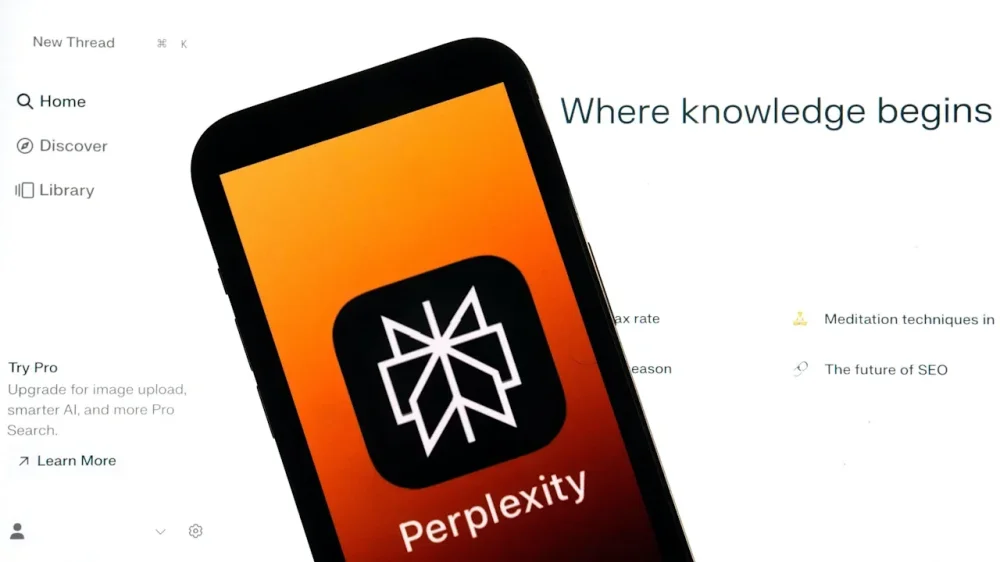
Social media platform Reddit sued the artificial intelligence company Perplexity AI and three other entities on Wednesday, alleging their involvement in an “industrial-scale, unlawful” economy to “scrape” the comments of millions of Reddit users for commercial gain. Reddit’s lawsuit in a New York federal court takes aim at San Francisco-based Perplexity, maker of an AI chatbot and “answer engine” that competes with Google, ChatGPT, and others in online search. Also named in the lawsuit are Lithuanian data-scraping company Oxylabs UAB, a web domain called AWMProxy that Reddit describes as a “former Russian botnet,” and Texas-based startup SerpApi, which lists Perplexity as a customer on its website. It’s the second such lawsuit from Reddit since it sued another major AI company, Anthropic, in June. But the lawsuit filed Wednesday is different in the way that it confronts not just an AI company but the lesser-known services the AI industry relies on to acquire online writings needed to train AI chatbots. “Scrapers bypass technological protections to steal data, then sell it to clients hungry for training material. Reddit is a prime target because it’s one of the largest and most dynamic collections of human conversation ever created,” said Ben Lee, Reddit’s chief legal officer, in a statement Wednesday. Perplexity said it has not yet received the lawsuit but “will always fight vigorously for users’ rights to freely and fairly access public knowledge. Our approach remains principled and responsible as we provide factual answers with accurate AI, and we will not tolerate threats against openness and the public interest.” SerpApi’s customer success director, Ryan Schafer, said in an email: “We strongly disagree with Reddit’s allegations and intend to vigorously defend ourselves in court.” Oxylabs didn’t immediately respond to a request for comment Wednesday. AWMProxy could not immediately be reached for comment. Reddit compares the companies it is suing to “would-be bank robbers” who can’t get into the bank vault, so they break into the armored truck instead. The lawsuit alleges they are evading Reddit’s own anti-scraping measures while also ”circumventing Google’s controls and scraping Reddit content directly from Google’s search engine results.” Lee said that because they’re unable to scrape Reddit directly, “they mask their identities, hide their locations, and disguise their web scrapers to steal Reddit content from Google Search. Perplexity is a willing customer of at least one of these scrapers, choosing to buy stolen data rather than enter into a lawful agreement with Reddit itself.” Reddit made a similar argument in its lawsuit against Anthropic, alleging that the company ignored Reddit’s appeals to cease using its content. That case was initially filed in California Superior Court but was later moved to federal court and has a hearing scheduled for January. Along with digitized books and news articles, websites such as Wikipedia and Reddit are deep troves of written materials that can help teach an AI assistant the patterns of human language. Reddit has previously entered licensing agreements with Google, OpenAI, and other companies that are paying to be able to train their AI systems on the public commentary of Reddit’s more than 100 million daily users. The licensing deals helped the 20-year-old online platform raise money ahead of its Wall Street debut as a publicly traded company last year. —Matt O’Brien, AP technology writer View the full article
-
While the Federal Open Market Committee has yet to meet this month, investor pricing of longer-term bonds helped mortgages by 11 basis points, Wallethub said. View the full article

-
Social media group claims the start-up harvested user conversation to train its modelsView the full article
-
Family of teen who took his own life after ChatGPT use alleges chatbot maker intentionally weakened protections View the full article
-
If you've ever had to drink an extra cup of coffee the next day to make up for a scrolling spiral watching TikTok videos or YouTube Shorts, we have something in common. As a safeguard to keep us from scrolling on and on (and on) into the wee hours of the morning, YouTube's adding a system to limit the amount of Shorts a user watches in a day—but it's a little less strict than what exists on other apps. Still, it's better than nothing. Once you have the update, you'll be able to set your limit under Settings, although YouTube hasn't specified the specific steps yet. I assume it'll be under the General tab (I don't have the feature yet), but I've reached out to YouTube for clarification and will update once I hear back. The new limit settings are rolling out to iOS and Android today; it's similar to a system that already exists on TikTok and Instagram, although TikTok is the only platform of the three to allow web users to set limits as well. As for how the new limits will work, YouTube says it's based on time spent scrolling, rather than a specific amount of Shorts watched. Once you hit the limit you've set for yourself, you'll see a notification telling you that scrolling is paused for the rest of the day, although if you're feeling cheeky, you can dismiss it to keep going. Meanwhile, TikTok at least makes you enter a passcode to dismiss your time limit, while Instagram requires you to hop into your settings. In that way, it's a bit similar to the existing "Take a Break" feature, which will send you a reminder to hop off YouTube in custom intervals. I guess the hope is that shame is enough to stop you from following your dark urges? I'll be honest, if the Nintendo Wii's "Take a Break" reminders weren't enough for me back in the day, I'm not sure these will work on me now. For younger scrollers, though, there is another way. Google also says it's planning to add the feature to parental controls in the future, which will allow parents to set a Shorts limit for their kids and make it non-dismissable, so that once scrolling is paused for the day, a kid won't be able to override it. Personally, I think Google maybe should have started with parental controls. It's unclear to me why a delay is necessary for us to get a Shorts limit prompt that isn't dismissable, but I suppose I don't work in app development. Some sort of second step to dismissing the prompt, like on TikTok, might also have been handy. At any rate, though, the Shorts time limit could prove to be a useful arsenal in your self-control toolbox, if you're the type of person to take those kinds of notifications seriously. Now if only the site could do something about those three-hour video essays I keep binging. View the full article
-
GM just offered a glimpse into an AI-powered future in which drivers read a book or answer texts while their car whisks them to their destination. The company announced its plans to introduce a suite of advanced software systems into its vehicles on Wednesday, bringing the traditional auto maker up to speed on in-vehicle tech. At its GM Forward media event in New York, GM outlined its near-term plans for reimagining cars as “intelligent assistants” that drive their owners around. The company announced a major update to its driving assistance system that would bring hands-free, “eyes-off” highway driving to vehicles, starting with the Cadillac Escalade IQ in 2028. The technology will rely on integrated lidar, radar and cameras and a new internal and external turquoise lighting system to signal that the self-driving tech is active. The new eyes-off driving technology will push beyond the limits of GM’s existing “Super Cruise,” system, which offers hands-free highway driving but requires a driver’s attention. Next year, GM also plans to add Google’s Gemini AI into its vehicles, “making it possible to talk to your car as naturally as you would to a fellow passenger.” Down the road, GM plans to introduce its own AI assistant tied into OnStar, its subscription service that offers safety, security and navigation features. The company says its future custom AI could be useful for “explaining one-pedal driving in your new vehicle, spotting a maintenance issue early, or finding the perfect place for dinner.” Controversially, GM apparently plans to abandon support for connecting Apple CarPlay and Android Auto through a smartphone in all of its vehicles, pushing an in-house custom infotainment system instead. For potential car buyers already accustomed to phone projection systems, the decision sounds like a non-starter. On The Verge’s Decoder podcast, GM Chief Product Officer Sterling Anderson likened the decision to Apple removing the disk drive from its laptops – a strange analogy and a risky bet, considering CarPlay’s popularity and ease of use. GM also announced plans to debut its own “centralized computing platform” that will run under the hood in both its gas and electric vehicles. The platform will weave together disparate systems like propulsion, steering, safety and infotainment, uniting them on “a single, high-speed computing core” and is set to debut in the 2028 Escalade IQ. In other high tech investments, GM will expand its program for home energy capture and storage and integrate more collaborative robots to supplement its human workforce. GM’s outlook brightens “Looking forward, we believe our investments in advanced technologies, manufacturing, and talent will build on our solid foundation, and make GM even more innovative, resilient and capable of leading through change,” GM CEO Mary Barra said in the company’s earnings call this week. GM’s stock popped on Tuesday, jumping the largest amount in almost six years after the company adjusted its expected annual profits upward. The auto maker attributed the positive outlook to new policies meant to lighten the impact of tariffs on U.S. car makers and its own plan to reduce its losses on electric vehicles, which have taken a hit under The President. “… With the evolving regulatory framework and the end of federal consumer incentives, it is now clear that near-term EV adoption will be lower than planned,” Barra said. “That is why we are reassessing our EV capacity and manufacturing footprint… By acting swiftly and decisively to address overcapacity, we expect to reduce EV losses in 2026 and beyond. In spite of lapsing EV tax credits and an administration steering in the opposite direction, GM still calls electric vehicles its “North Star.” View the full article

-
In today’s world, where success is often tied to financial accomplishments, status, and impressive job titles, Warren Buffett offers a refreshing perspective: True success is about the love we share. Yes, love. Buffett once said, “Basically, when you get to my age, you’ll really measure your success in life by how many of the people you want to have love you actually do love you.” Buffett’s wisdom gets to the core of what matters, reminding us that, ultimately, life’s real currency is the relationships we nurture that lead to two-way love. Who do you want to have love you? Are you a leader, manager, founder, or CEO with scores of people looking at you for guidance, support, motivation, and leadership? I have news for you: Love, in the right business context, does indeed matter for leadership. That’s the premise for my book, which will be released in March of 2025. The big idea behind the chapters I wrote may challenge your belief system. Let’s do a quick thought exercise. When we loosely throw the word “love” around in casual conversation, it’s perfectly natural to express it regarding certain people, places, and things. Think about it. It’s acceptable to profess love for a favorite sports team. I have no problems sharing with others that I love my Los Angeles Dodgers and “bleed Dodger blue.” Professing love for the college or university we attended is acceptable. It’s even perfectly acceptable to proclaim our love for a special pair of jeans we might wear only a few times a year. In the workplace, we may go home and proudly tell our loved ones, “I love my job,” or “I love my coworkers.” But leaders aren’t always comfortable expressing love for a team of people they oversee. They may spend nearly half their waking hours with their employees doing good work to the satisfaction of customers, yet they find it hard to infuse the word love into the business lexicon. To me, that type of thinking is bizarre. For every leader ashamed of or fearful of mixing love with work, I point to 10 others whose leadership behaviors unabashedly demonstrate love for their team, company, customers, culture, and everything they contribute to the world. While I’m certainly an idealist, I’m far from depicting the workplace in some Utopian, Norman Rockwell-portrait of the perfect corporate life. You must do your part by stretching your thinking to reimagine the possibilities for a more loving, human-centered, and humane workplace that results in profitable outcomes. As a leader, you have the power to create a workplace where love and care are not just words but guiding principles. Let me ask you: What if you saw your colleague, coworker, or direct report as a real person with real hopes, dreams, and fears as crucial as your own? And what if, one day, you decided to connect to the heart of people at work as you would a good friend, as one human being caring for another? This is the power and responsibility of leadership in creating a loving workplace. As you imagine being in this frame of mind, let me ask you another question: How would the dynamics change in the workplace as you encountered new challenges and solved complex business problems with the very folks you are kind to and care about? I believe the workplace and how we conduct business as usual would radically differ. This is especially true if you’re in a leadership role, whether you’re the shift lead supervisor of five people on the manufacturing floor, the founder of a 50-person startup, or a Fortune 500 company CEO. People also want to experience purpose, growth, and success in their jobs and feel their leaders are doing their best to care for them. That’s the bottom line: People want to feel cared for. But I call it for what it really is. In this age of toxic polarization, finger-pointing, and “looking after No. 1,” that, right there, is the new measure for your success. As Buffett said, when it’s all said and done and you reflect on your achievements in life, it would be great if you could confidently say to yourself, “Because of my willingness to care for and serve others, and because I put people first, I am loved.” Like this column? Sign up to subscribe to email alerts and you’ll never miss a post. —Marcel Schwantes This article originally appeared on Fast Company‘s sister publication, Inc. Inc. is the voice of the American entrepreneur. We inspire, inform, and document the most fascinating people in business: the risk-takers, the innovators, and the ultra-driven go-getters that represent the most dynamic force in the American economy. View the full article

-
If you're looking to buy a new iPhone 17 this year, not only do you have a number of models to consider, you also have a number of colors to choose from. But some users who opted for the iPhone 17 Pro and 17 Pro Max are claiming that the color they picked isn't the color they see today. According to these users, their iPhones have changed color over the short period of time they've owned them. Obviously, the internet has dubbed the issue "colorgate." Apple is no stranger to "gates," of course, especially when it comes to the iPhone: There was "antennagate," when the iPhone 4's redesigned antennas reported caused cellular connection issues; "bendgate," when the iPhone 6 Plus was prone to physically bending; and most recently, "scratchgate," where the aluminum on the iPhone 17 Pro Max appeared susceptible to scratching easily. Now, colorgate is here to further draw criticism to the 17 Pro and 17 Pro Max. Customers such as DakAttack316 on Reddit are claiming their Cosmic Orange iPhone 17 Pros are turning pink—or, if you want to give it an "Apple label," rose gold. It's tough not to see the reason this would bother people: Apple's advertisements for the Cosmic Orange iPhones highlight a vibrant and striking orange. The iPhone in the photos from DakAttack316 looks more sunburnt than anything else. The wireless charging pad remains a somewhat bright orange, but the aluminum has taken on a salmon hue. The orange accents throughout the phone also seem to have been affected, with some looking faded or dirty. Maybe if the entire iPhone was all one pinkish hue, it wouldn't look so bad, but the variety of colors visible in the photo make it look damaged. DakAttack316's might be among the most viral accounts of the issue, but they aren't alone. Take this post for instance: The issue isn't quite as pronounced, but you can clearly see how faded the orange metal is, especially when directly compared to another Cosmic Orange iPhone 17 Pro Max. Meanwhile, this viral TikTok shows some more selective discoloration on different elements of an iPhone 17 Pro. It's not clear what is causing these issues, or how many Cosmic Orange iPhone 17 Pros are affected. Some theories suggest that using the wrong type of solvent to clean your iPhone, such as bleach or hydrogen peroxide, could be causing or contributing to the discoloration, since Apple says these chemicals shouldn't be used on iPhones. (Even if that isn't the case, it's always good practice to abstain from treating your devices with cleaning solutions unless the manufacturer has officially approved those chemicals.) Should people stop buying the iPhone 17 Pro in Cosmic Orange?No. We don't know why this is happening yet, or how widespread the issue is, but if a statistically significant number of Cosmic Orange iPhones were having this issue, you'd likely be seeing a lot more complaints than you are at the moment—especially considering the iPhone 17 Pro and iPhone 17 Pro Max are selling better than expected. Maybe these users were treating their iPhones with harsh chemical cleaners; perhaps a small number of Cosmic Orange iPhones have a manufacturing defect. Whatever the cause turns out to be, it doesn't appear to be something afflicting the majority of the devices. Compare these two Reddit posts showing off pink Cosmic Orange iPhones, with this thread of users who are happy with their color choice. It's all anecdotal evidence, of course, but for the moment, I'm just not seeing very many users complaining about sunburnt iPhones. If you do buy a Cosmic Orange iPhone 17 Pro, and it does turn pink, take it to Apple or your carrier. So long as you didn't clean it with bleach, the company will almost assuredly swap it out for you—hopefully for a device that won't fade with age. View the full article
-
This year has not been a great one for grocery stores, with chains like Kroger and Safeway closing locations in recent months. Now, the Southeastern grocery chain Winn-Dixie appears to be following in their footsteps, with its parent company planning to sell or possibly shutter 32 Winn-Dixie stores by the end of 2025 as its focus shifts to its home state of Florida. It will also transition or close eight Harveys Supermarket locations. The 40 stores impacted span Alabama, Georgia, Louisiana, and Mississippi. Southeastern Grocers (SEG), the Jacksonville, Florida-based company that owns both chains, posted a list of stores that it will transition, with some identifying new operators such as Piggly Wiggly and Super 1 Foods, and others marked “pending.” It’s unclear which if any of the pending stores will close versus transition to new ownership. Reached for comment by Fast Company, SEG reiterated that it has “reached agreements or is advancing plans with multiple grocers.” It said store closures are expected by the end of the year, but did not elaborate. The company further noted that southern Georgia will maintain stores in Brunswick, Folkston, Lake Park, St. Simons Island, and Valdosta. SEG expects the full transitions will be completed by early 2026. A new name for a new era SEG announced the transition and closures alongside news that it will rebrand as the Winn-Dixie Company. The new name will roll out by early 2026. “The change honors Winn-Dixie’s century-long legacy while positioning the grocer for growth through investments designed to modernize stores, enrich the customer experience and reimagine the neighborhood grocer for the next 100 years,” the soon to be Winn-Dixie Company stated in the release. The company is also expanding, despite the divestitures. It’s acquiring Hitchcock’s Markets in three Florida cities: Alachua, Keystone Heights, and Williston. Each will become a Winn-Dixie, with the Williston location expected to open by the end of the year and the former two grocers slated for summer 2026. These new stores and transitions will leave the company with about 130 grocery stores and 140 freestanding liquor stores. Southeastern Grocers is also moving forward with “dozens” of remodels, while growing its liquor store portfolio and own product offerings. Plus, it will be piloting tools such as third-party delivery and return kiosks. View the full article

-
We may earn a commission from links on this page. Deal pricing and availability subject to change after time of publication. Beats' Studio series has been around for years—their over-the-ear design, ANC, and more premium build and features set them apart from other Beats earphones. The Beats Studio3 are not the newest model (they came out in 2017) but they are still plenty good headphones in 2025, especially at their current price of $89 (originally $349.99). Beats Studio3 Wireless Noise Cancelling Headphones $89.00 at Walmart $299.99 Save $210.99 Get Deal Get Deal $89.00 at Walmart $299.99 Save $210.99 I've had these headphones for a couple of years and I love them. The fit is snug, so you can wear them at the gym without worrying that they'll slip off. They have active noise cancellation that you can turn on and off from the Beats companion app. They're not going to be as good as the ANC you can find from the best headphones that came out this year, but for $89, they're great. Like all Beats headphones, you're going to get a rich, crisp sound signature with a focus on high-mid definition, according to PCMag's review. Of course, you can adjust the playback in the EQ settings, too. You get about 22 hours of audio playback with ANC on and 40 hours with it off, but you also have an AUX port (included in the box) in case you want to listen to music without Bluetooth and not depend on the battery. The Apple W1 chip means iOS users can connect to the headphones seamlessly. Keep in mind that since these are older headphones, they use a microUSB connection to charge, but a cord is included. View the full article
-
Softer than expected September inflation reading could affect OBR readings and lift chancellor ahead of Budget View the full article
-
As the holiday season approaches, small business owners find themselves on the cusp of significant revenue opportunities. According to the recently released Intuit QuickBooks Holiday Shopping Report, U.S. consumers are projected to spend $263 billion this holiday season, marking a remarkable 25% increase from the previous year. This heightened spending presents a $109 billion chance for small businesses, as consumers increasingly lean towards local shops, with 41% of their holiday spending designated for small business purchases. In this annual survey conducted by Intuit, involving 6,000 consumers and 1,000 small business owners, participants expressed that the desire to give gifts to loved ones overshadows concerns about economic pressures like tariffs and inflation. Nearly half of the surveyed consumers reported a willingness to cut back on other expenditures—such as dining out and even essentials like groceries— to ensure they can provide gifts for their family and friends. This year’s festive spirit is fundamentally about prioritizing joy over economic anxiety, with 42% of respondents stating that giving gifts is more important than ever. This optimistic sentiment among consumers plays a pivotal role for small businesses that often rely on the holiday rush for a significant chunk of their annual revenue. In fact, 93% of small business owners indicated that the holiday season is crucial for their overall success. Many anticipate that holiday sales will contribute nearly half of their yearly revenue, an increase from 33% the prior year. Furthermore, 65% of owners expect an upswing in revenue compared to last year, buoyed by a general confidence among 89% of surveyed small business owners that customers will spend enough to meet revenue goals. Liz Pham, owner of Bows Arts, emphasizes this sentiment, stating, “For small businesses like ours, the holiday season is when everything comes together. It’s not just our busiest time of year, it’s when we see the impact of our community’s support the most.” Pham highlights that tools such as QuickBooks and Mailchimp help streamline operations, allowing her focus to remain on crafting exceptional customer experiences. While the outlook is positive, this holiday season does not come without its challenges. Economic factors still loom large. For instance, 86% of consumers expressed concern about tariffs and inflation affecting their holiday shopping behavior, with more than half expecting to face higher prices. Small business owners share similar anxieties; 68% acknowledged that tariffs have substantially impacted their operations. In response, many small businesses have adjusted their strategies—32% have raised their prices, while 44% plan to offer special deals to attract customers. Simon Worsfold, Head of Data Communications at Intuit QuickBooks, emphasizes the need for small businesses to adopt strategic approaches in a precarious economic environment. “With almost half of U.S. consumers prioritizing shopping small this season, small business owners can capitalize on this over the next few months by leveraging digital and AI-powered tools,” he indicates. These tools can assist in marketing efforts, inventory management, and operational efficiency. To navigate this bustling shopping capital, small business owners may consider implementing several actionable strategies: Embrace AI Tools: The survey indicates a soaring interest in AI, with nearly three-quarters of small business owners planning to utilize AI technologies this holiday season. Tools that automate tasks such as inventory management and customer outreach can save time and money. Optimize for Mobile and In-Store Sales: While online shopping dominates, particularly on mobile platforms, over half of consumers also plan to shop in physical stores. An omnichannel approach helps cater to diverse consumer shopping preferences. Effective Marketing Communication: More than half of respondents revealed coupon codes as a primary incentive for purchases. Small businesses are encouraged to adopt personalized marketing strategies using email and SMS to alert customers about special promotions. Focus on Early Holiday Shopping: With many shoppers starting their gift buying as early as October, it’s essential for small businesses to track inventory and align their marketing efforts with peak shopping times. The report outlines a clear path for small businesses to thrive during this holiday season, leveraging both digital tools and consumer trends that prioritize support for local establishments. By remaining adaptable and resourceful, small business owners can significantly enhance their holiday sales and secure a prosperous end to the year. For more details on this report, you can visit the original post from Intuit at Investor Relations. Image via Envato This article, "Consumers Plan 25% More Holiday Spending, Boosting Small Business Revenue" was first published on Small Business Trends View the full article
-
As the holiday season approaches, small business owners find themselves on the cusp of significant revenue opportunities. According to the recently released Intuit QuickBooks Holiday Shopping Report, U.S. consumers are projected to spend $263 billion this holiday season, marking a remarkable 25% increase from the previous year. This heightened spending presents a $109 billion chance for small businesses, as consumers increasingly lean towards local shops, with 41% of their holiday spending designated for small business purchases. In this annual survey conducted by Intuit, involving 6,000 consumers and 1,000 small business owners, participants expressed that the desire to give gifts to loved ones overshadows concerns about economic pressures like tariffs and inflation. Nearly half of the surveyed consumers reported a willingness to cut back on other expenditures—such as dining out and even essentials like groceries— to ensure they can provide gifts for their family and friends. This year’s festive spirit is fundamentally about prioritizing joy over economic anxiety, with 42% of respondents stating that giving gifts is more important than ever. This optimistic sentiment among consumers plays a pivotal role for small businesses that often rely on the holiday rush for a significant chunk of their annual revenue. In fact, 93% of small business owners indicated that the holiday season is crucial for their overall success. Many anticipate that holiday sales will contribute nearly half of their yearly revenue, an increase from 33% the prior year. Furthermore, 65% of owners expect an upswing in revenue compared to last year, buoyed by a general confidence among 89% of surveyed small business owners that customers will spend enough to meet revenue goals. Liz Pham, owner of Bows Arts, emphasizes this sentiment, stating, “For small businesses like ours, the holiday season is when everything comes together. It’s not just our busiest time of year, it’s when we see the impact of our community’s support the most.” Pham highlights that tools such as QuickBooks and Mailchimp help streamline operations, allowing her focus to remain on crafting exceptional customer experiences. While the outlook is positive, this holiday season does not come without its challenges. Economic factors still loom large. For instance, 86% of consumers expressed concern about tariffs and inflation affecting their holiday shopping behavior, with more than half expecting to face higher prices. Small business owners share similar anxieties; 68% acknowledged that tariffs have substantially impacted their operations. In response, many small businesses have adjusted their strategies—32% have raised their prices, while 44% plan to offer special deals to attract customers. Simon Worsfold, Head of Data Communications at Intuit QuickBooks, emphasizes the need for small businesses to adopt strategic approaches in a precarious economic environment. “With almost half of U.S. consumers prioritizing shopping small this season, small business owners can capitalize on this over the next few months by leveraging digital and AI-powered tools,” he indicates. These tools can assist in marketing efforts, inventory management, and operational efficiency. To navigate this bustling shopping capital, small business owners may consider implementing several actionable strategies: Embrace AI Tools: The survey indicates a soaring interest in AI, with nearly three-quarters of small business owners planning to utilize AI technologies this holiday season. Tools that automate tasks such as inventory management and customer outreach can save time and money. Optimize for Mobile and In-Store Sales: While online shopping dominates, particularly on mobile platforms, over half of consumers also plan to shop in physical stores. An omnichannel approach helps cater to diverse consumer shopping preferences. Effective Marketing Communication: More than half of respondents revealed coupon codes as a primary incentive for purchases. Small businesses are encouraged to adopt personalized marketing strategies using email and SMS to alert customers about special promotions. Focus on Early Holiday Shopping: With many shoppers starting their gift buying as early as October, it’s essential for small businesses to track inventory and align their marketing efforts with peak shopping times. The report outlines a clear path for small businesses to thrive during this holiday season, leveraging both digital tools and consumer trends that prioritize support for local establishments. By remaining adaptable and resourceful, small business owners can significantly enhance their holiday sales and secure a prosperous end to the year. For more details on this report, you can visit the original post from Intuit at Investor Relations. Image via Envato This article, "Consumers Plan 25% More Holiday Spending, Boosting Small Business Revenue" was first published on Small Business Trends View the full article
-
Populist party leader tries to emulate Donald The President’s success in attracting backing from digital asset investorsView the full article