Newsletter
Want to keep up to date with all our latest news and information?


ResidentialBusiness
Administrators
-
Joined
-
Last visited
Everything posted by ResidentialBusiness
-
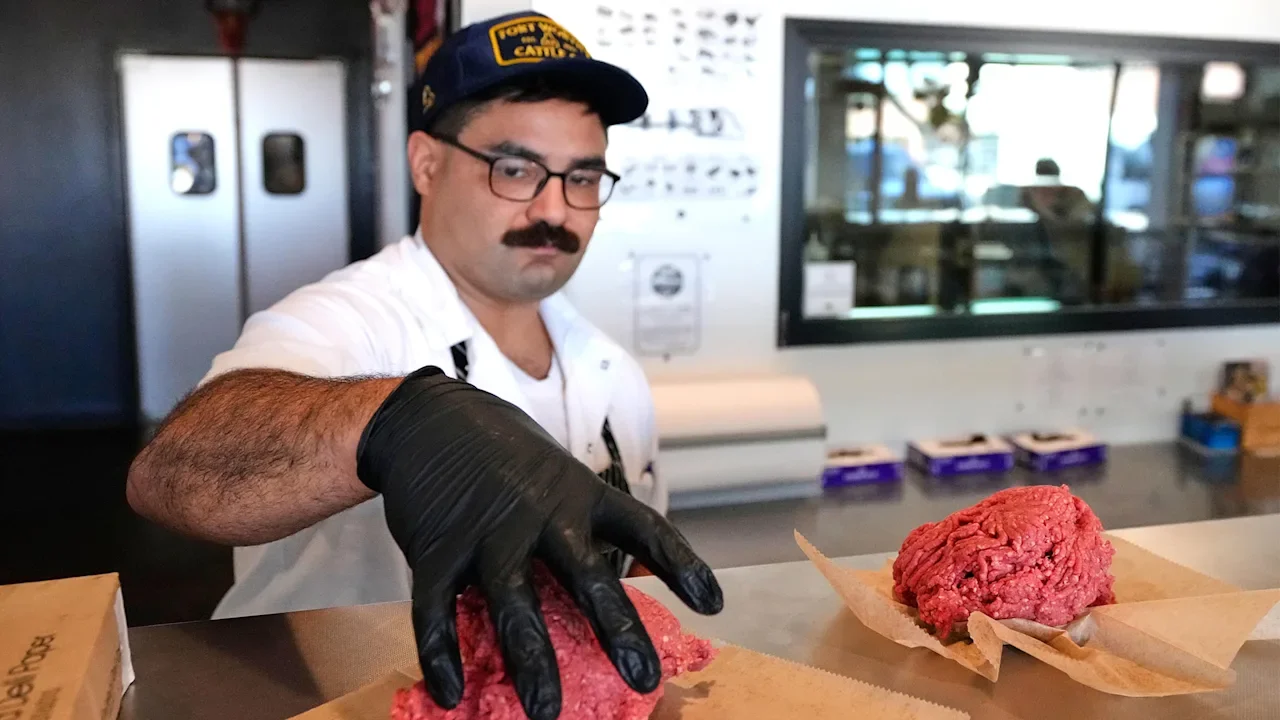
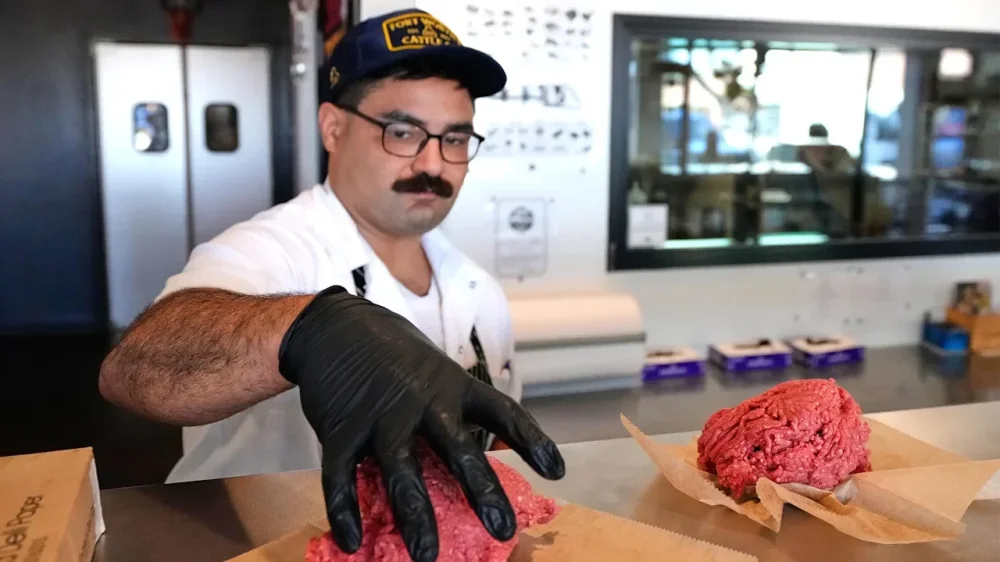
President Donald The President’s plan to cut record beef prices by importing more meat from Argentina is running into heated opposition from U.S. ranchers who are enjoying some rare profitable years and skepticism from experts who say the president’s move probably wouldn’t lead to cheaper prices at grocery stores. The National Cattlemen’s Beef Association along with the Ranchers-Cattlemen Action Legal Fund United Stockgrowers of America and other farming groups — who are normally some of the president’s biggest supporters — all criticized The President’s idea because of what it could do to American ranchers and feedlot operators. And agricultural economists say Argentine beef accounts for such a small slice of beef imports — only about 2% — that even doubling that wouldn’t change prices much. South Dakota rancher Brett Kenzy said he wants American consumers to determine whether beef is too expensive, not the government. And so far there is little sign that consumers are substituting chicken or other proteins for beef on their shopping lists even though the average price of a pound of ground beef hit its highest point ever at $6.32 in the latest report before the government shutdown began. “I love ‘Make America Great Again’ rhetoric. I love ‘America First’ rhetoric,” he said. “But to me this feels a lot like the failed policies of the past — the free trade sourcing cheap global goods.” Several factors have sent beef prices soaring, starting with continued strong demand combined with the smallest U.S. herd size since 1961. In part, that small herd is due to years of drought and low cattle prices. Beef imports also are down overall because of the 50% tariffs that The President imposed on Brazil, a big beef exporter, and limits on Mexico, where the country is fighting a flesh-eating pest. Kansas State University agricultural economist Glynn Tonsor said Argentina can’t produce enough beef to offset those other losses of imports. Through July, the United States has imported 72.5 million pounds of Argentine beef while producing more than 15 billion pounds of beef. Much of what is imported is lean beef trimmings that meatpackers mix with fattier beef produced in the United States to produce the varieties of ground beef that domestic consumers want, so any change in imports would affect primarily hamburger. Steak prices that were averaging $12.22 per pound probably wouldn’t change much. Idea creates uncertainty among US ranchers Even if increased imports from Argentina won’t reduce prices, the idea creates uncertainty for ranchers, making them less likely to invest in raising more cattle. “We’re always going to have uncertainty in the world. But the more uncertain something is, the less likely most are to put money on the line,” Tonsor said. Argentine livestock producers like Augusto Wallace are excited about the prospect of selling more beef to America because he said “whenever an additional buyer comes, it’s beneficial for everyone, right? For all the producers.” But economists caution that exporting too much beef could backfire for Argentina because that would drive up prices for consumers there. American ranchers say the idea of boosting imports from Argentina runs counter to the stated purpose of The President’s tariffs to encourage more domestic production and help American ranchers compete. “It’s a contradiction of what we believed his new course of action was. We thought he was on the right track,” said the president of R-CALF, Bill Bullard, who hoped The President’s policies would discourage imports and encourage ranchers to expand their herds. Texas A&M livestock economist David Anderson said “ranchers are finally getting prices that are going to make up for some really bad years in the past with the drought, low prices and high costs. We finally get some good prices. And we start talking about government policy to bring down prices.” Bryant Kagay, part owner of Kagay Farms in Amity, Missouri, said he thinks the plan would hurt ranchers. Cattle prices that had been averaging around $3,000 for a 1,250-pound animal slipped more than $100 immediately after The President mentioned the idea of intervening in beef prices last week, though they have recovered a bit since then. Ranchers hope The President changes his mind Although Kagay voted for The President in the last election, he worries the trade war is hurting farmers and ranchers by driving up costs and costing them major markets like China. “I continue to see things that I don’t really think are in the best interest of our country and the average citizen,” Kagay said. “I guess I hope he starts to see that and quits worrying about punishing opponents and winning whatever battle he’s involved in, and then tries to do what’s best for everybody.” Ranchers are hopeful The President will reconsider this plan. Agriculture Secretary Brooke Rollins said Tuesday on CNBC that the administration remains committed to helping ranchers prosper while trying to reduce consumer prices. She promised more details soon about the Argentina plan and a larger effort to reinvigorate U.S. beef production by opening up more land and opening new processing plants while securing trade deals for new markets. The administration wants ranchers to raise more cattle and produce more beef. “The bigger supply — even aligned with a bigger demand — is going to allow those prices to come down, but also to have a vital industry for these ranchers to be able to survive, which is what we’ve got to do,” Rollins said. Sen. John Hoeven, a North Dakota Republican, said Tuesday that after talking to The President and others in the administration, he expected to see more details about the policy. “It’s very important that we support our cattle ranchers,” Hoeven said. Rancher Cory Eich, who lives near Epiphany, South Dakota, said he doesn’t consider the Argentina idea a serious threat in the long term and doubts ranchers will make changes to their operation in light of the news. “Nobody’s happy about it, let’s put it that way,” Eich said. “Personal opinion, I thought it was kind of a ruse when he mentioned it. I mean, it’s coming from The President, so take everything there with a grain of salt.” Funk reported from Omaha, Nebraska. Associated Press videographer Cristian Kovadloff contributed from Coronel Brandsen, Argentina. —Josh Funk and Sarah Raza, Associated Press View the full article
-
Cable giant Charter Communications is laying off close to 1,200 employees, or just over 1% of its 95,000-person workforce, a source familiar with the matter told Reuters on Tuesday. The job cuts will be related to corporate management positions within the company and will not impact sales or service roles, the source said, adding that the layoffs are intended to streamline operations. Charter follows other media and cable peers that are trimming their workforce. Last month, Reuters reported exclusively that Comcast was planning to cut jobs at its biggest unit, housing broadband and pay TV, to centralize operations. Newly merged Paramount Skydance will begin mass layoffs next week, eliminating around 2,000 U.S. jobs, according to media reports. Charter is facing growing pressure from telecom carriers offering bundled internet and 5G mobile plans. The company lost 117,000 internet customers in the second quarter, and 60,000 in the January-March period. The company added 500,000 mobile lines in the second quarter, compared with Visible Alpha’s expectations for a rise of 538,450 customers. Charter is seeking to expand through the $21.9 billion acquisition of Cox Communications that would position it as the largest cable TV and broadband provider in the U.S. The company also announced a partnership with Comcast to establish a mobile virtual network operator that will use T-Mobile’s 5G network to serve wireless business customers, with a commercial launch set for 2026. The Wall Street Journal first reported the job cuts. —Harshita Mary Varghese, Reuters View the full article

-
The Louvre in Paris reopened on Wednesday, three days after thieves made off with historic jewellery worth an estimated 88 million euros ($102 million) in a spectacular heist that has raised urgent questions over security lapses at the museum. Visitors queued to enter through the Louvre’s glass pyramid for the first time since Sunday’s brazen robbery, in which hooded assailants broke through a second-floor window using a stolen movers’ lift before making off with jewels from the royal collection. Later on Wednesday the museum’s director will appear before the French Senate to answer lawmakers’ questions. The Galerie d’Apollon, the ornate gilded hall that was robbed, remains closed. Amid rising frustration in France that no senior official has taken responsibility, French Interior Minister Laurent Nunez said there had clearly been security failures and Culture Minister Rachida Dati had launched an administrative inquiry. “There was a burglary at the Louvre, some of the most precious jewels in France were stolen. So obviously it’s a failure, there is nothing else I can say,” Nunez told Europe 1 radio. But he added that “the alarm system worked perfectly, as soon as the window was attacked, it was activated. Police were notified, and within three minutes they were on the scene. The whole system worked, it didn’t fail, but what happened has happened.” He declined to comment on the police manhunt, but said he was confident the perpetrators would be found. Dati came under fire after saying in parliament on Tuesday there had not been any security lapses. MUSEUM DIRECTOR TO BE HEARD IN SENATE Louvre director Laurence des Cars will be questioned by senators later on Wednesday. Des Cars warned in January that the centuries-old building was in a dire state. President Emmanuel Macron has announced a six-year renovation of the Louvre, which will include money for security upgrades. Asked on RTL radio whether state budget cuts had led to security lapses in French museums, the head of France’s national audit office Pierre Moscovici said that was not the case for the Louvre. “It is richly endowed, there are sponsorships, really, the Louvre is not without resources.” Built in the late 12th century, the Louvre Palace used to be the official residence of the kings of France, until Louis XIV abandoned it for Versailles. It was turned into a museum for the royal art collection in 1793, four years after the French Revolution. It is now the world’s most-visited museum, with 8.7 million visitors last year. It hosts the Mona Lisa, the world’s most famous painting, and the Venus de Milo statue, as well as countless old masters. ($1 = 0.8575 euros) —Geert De Clercq and Manuel Ausloos, Reuters View the full article

-
We may earn a commission from links on this page. Deal pricing and availability subject to change after time of publication. The Meta Quest Pro is currently down to $799.95 at Walmart, a $200 drop from its original $999 price tag and a solid $90 less than what Amazon is asking right now. It’s one of the most advanced VR and mixed reality devices you can buy without needing a gaming PC (meaning you can dive straight into immersive apps and environments right out of the box). PCMag named it the best VR headset of 2022, and even two years later, it remains one of the most well-built and feature-rich VR headsets around. Meta Quest Pro $799.95 at Walmart $999.00 Save $199.05 Get Deal Get Deal $799.95 at Walmart $999.00 Save $199.05 It’s stylish, comfortable, and built for extended use, with a balanced strap design that places the battery at the back to distribute weight evenly. Battery life, though, is short—around two hours per charge—which might be its biggest limitation for heavy users. Inside, the hardware is serious: a Snapdragon XR2+ chip (which Meta says is 50% faster than the Quest 2), 12GB of RAM, and 256GB of storage. Each lens delivers 1,920 by 1,800 resolution per eye with improved contrast and a 130% wider color gamut, thanks to a local dimming backlight. That means brighter highlights, deeper blacks, and a much sharper image overall. As for the Quest Pro’s controllers, Meta removed the bulky tracking rings and replaced them with built-in cameras, so each controller tracks itself independently. The result is smoother hand movement and better precision for things like drawing or sculpting in 3D. Eye and face tracking are also part of the package, letting your avatar mimic your actual expressions in real time. That said, if you want full immersion, you’ll need the $32.90 light blocker since the default face padding lets light leak in from the sides, notes this PCmag review. Our Best Editor-Vetted Tech Deals Right Now Apple AirPods 4 Wireless Earbuds — $114.80 (List Price $129.00) Apple iPad 11" 128GB A16 WiFi Tablet (Blue, 2025) — $299.00 (List Price $349.00) Amazon Fire TV Stick 4K (2nd Gen, 2023) — $29.99 (List Price $49.99) Deals are selected by our commerce team View the full article
-
Advisory opinion from top court follows de facto ban on UNRWA operating in devastated stripView the full article
-
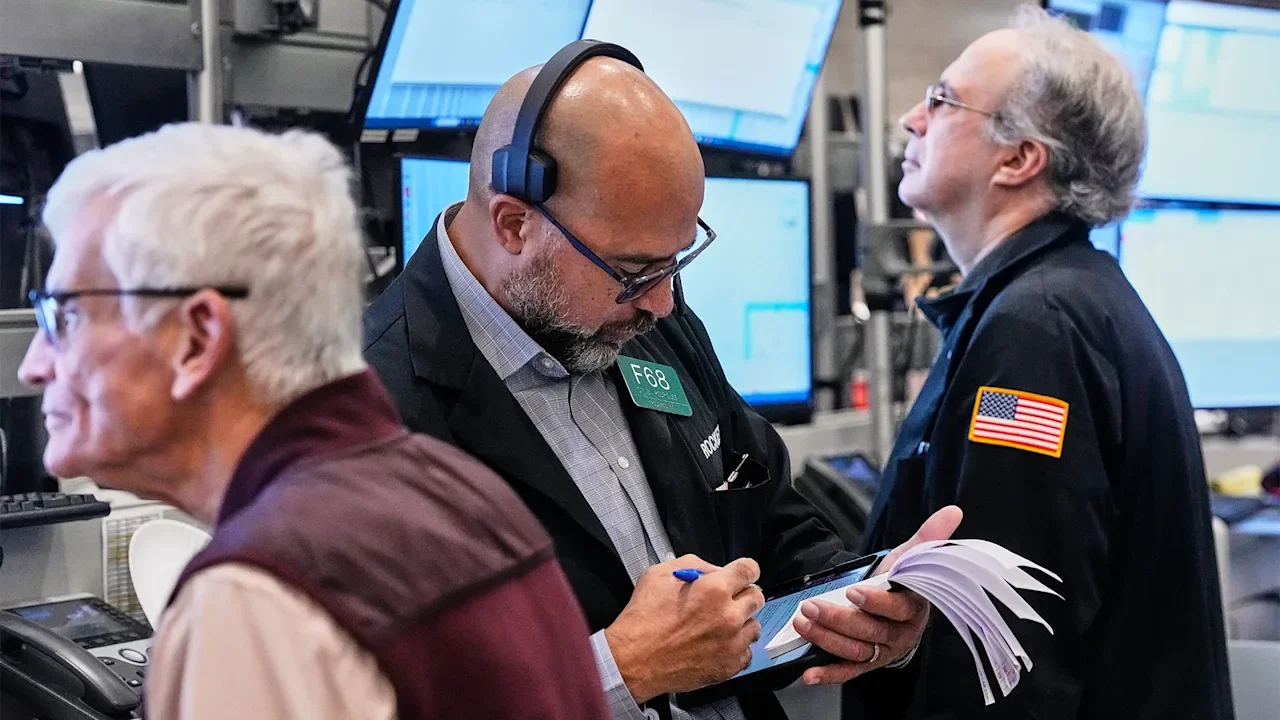
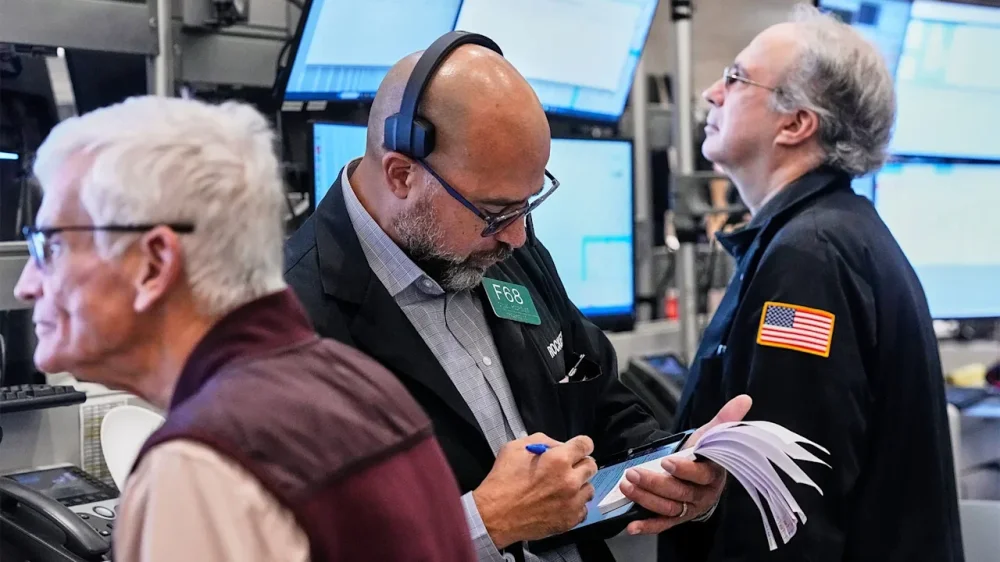
Stocks are drifting near their record heights on Wall Street Wednesday, while the price of gold falls again to trim more off its tremendous gain for the year. The S&P 500 slipped 0.1% in early trading and is sitting just underneath its all-time high, which was set earlier this month. The Dow Jones Industrial Average was down 65 points, or 0.1%, coming off its own record. The Nasdaq composite was 0.3% lower, as of 9:35 a.m. Eastern time. Bank stocks were holding relatively steady after Capital One Financial, Western Alliance Bancorp and others reported stronger profits for the summer than analysts expected. The report from Western Alliance was particularly welcome after it helped shake confidence in the industry last week. It’s one of several banks that have warned of potentially bad loans on its books, possibly because of fraud. Intuitive Surgical, which sells robotic-assisted surgical systems, soared 16.5%, and GE Vernova added 0.5% after they likewise reported better profits for the latest quarter than analysts expected. It’s usually the case that the majority of companies deliver better profits each quarter than analysts had forecast. But the pressure is higher on companies to do so this time around because of criticism that their stock prices shot too high following a 35% romp for the S&P 500 from a low in April. Netflix’s stock, for example, came into the day with a jump of 39.3% for the year so far, more than double the S&P 500’s gain. But its stock tumbled 8.3% on Wednesday after it delivered weaker results for the latest quarter than expected. AT&T fell 4.5% after delivering a profit that only matched analysts’ expectations, while Texas Instruments sank 7.7% after its profit fell just short of forecasts. Beyond Meat, meanwhile, continued its meme-stock run and soared another 48.9% to bring its stunning gain for the week to nearly 735%. Part of Beyond’s rise could be due to a recent announcement that Walmart will increase availability of some of its products at over 2,000 U.S. stores. The maker of plant-based meat alternatives was also the biggest holding in the Roundhill Meme Stock exchange-traded fund, as of Tuesday. The ETF holds companies where investors have piled in almost regardless of their financial prospects in hopes of catching a wave. Momentum was continuing to head the other way for gold, which slipped 0.8% to $4,075 per ounce. That’s after Tuesday’s 5.3% slide knocked it off its record high. Many of the same factors that drew buyers to gold this year are still there. Expectations are still for the Federal Reserve to cut interest rates through next year, concerns are growing about inflation remaining high and the worrisome mountains of debt that the U.S. and other governments worldwide have amassed are only rising further. But no investment’s price goes up forever, and criticism had been growing that gold’s price had gone too far, too fast after it shot up even more than the overall U.S. stock market. Gold’s price is still up more than 50% for the year so far. In stock markets abroad, indexes were mixed across Europe and Asia. London’s FTSE 100 rose 1% after a report on U.K. inflation raised hopes for another cut to interest rates next month. South Korea’s Kospi jumped 1.6% for another one of the worlds bigger gains. But indexes fell 0.9% in Hong Kong and 0.2% in Paris. In the bond market, the yield on the 10-year Treasury edged down to 3.96% from 3.98% late Tuesday. AP Business Writers Yuri Kageyama and Matt Ott contributed. —Stan Choe, AP Business Writer View the full article
-
Facebook has revitalized its job search capabilities, giving small businesses a powerful new tool to connect with local job seekers. As of today, the social media giant is reintroducing jobs on Facebook, aiming to streamline the hiring process and facilitate community employment connections across the U.S. For small business owners seeking talent, this initiative could be a game-changer. The platform now features a dedicated jobs tab within Marketplace, where job listings are easily accessible to all adults 18 years and older. With the click of a button, businesses can reach potential employees, making the hiring process as simple as posting on their Facebook pages. The jobs tool allows users to browse and apply for positions in their area, whether they are looking for entry-level opportunities, part-time work, or roles within the service and trade industries. Think of the convenience: browsing through listings, connecting with businesses, and even applying all within Facebook’s familiar interface. Employers will benefit from various features designed to simplify their hiring efforts: Jobs Tab on Marketplace: By leveraging the Marketplace’s dedicated jobs section, businesses can showcase current openings effectively. Group Engagement: Many local and career-focused Facebook Groups will feature job postings, increasing visibility without requiring extensive marketing. Direct Page Listings: Businesses can post jobs directly on their Facebook pages, creating a seamless transition for users who browse their profiles. According to Facebook, small business owners will also have the ability to communicate directly with applicants through Messenger, offering immediate engagement from potential hires. “Reach out to employers instantly via Messenger to ask questions or schedule interviews,” a statement emphasized by Facebook in its release. This can help candidates stand out and foster quicker decision-making among business owners. Small business owners can create job listings through Marketplace, their Pages, or the Meta Business Suite. There are simple steps outlined by Facebook for setting up these listings, making it easier for business owners to jump in. However, while these new features present exciting opportunities, small business owners should also consider potential challenges. First, competition for candidates may become fiercer as more businesses turn to Facebook to promote their job openings. Owners must think creatively about how to attract attention and differentiate themselves from others in their market. Second, Facebook’s eligibility criteria for certain job listings may restrict some businesses. Employers will need to familiarize themselves with these guidelines to ensure their listings comply. Additionally, while Facebook offers personalized job recommendations based on browsing history, there’s still an element of unpredictability in terms of who will see these listings. Consistently updating job descriptions and engaging in community-focused marketing could play a pivotal role in improving visibility. In the rapidly evolving landscape of job recruitment, Facebook’s new job search tools provide an efficient and community-centric approach for small business owners aiming to connect with local talent. By utilizing this platform effectively, businesses can streamline their hiring processes while reinforcing local relationships. As small businesses look to grow, tapping into Facebook’s capabilities might just provide the edge they need in attracting the right employees. For more details on the features and how to make the most out of them, you can visit the original news release here. Image via Envato This article, "Facebook Revives Job Listings to Connect Locals with New Opportunities" was first published on Small Business Trends View the full article
-
Facebook has revitalized its job search capabilities, giving small businesses a powerful new tool to connect with local job seekers. As of today, the social media giant is reintroducing jobs on Facebook, aiming to streamline the hiring process and facilitate community employment connections across the U.S. For small business owners seeking talent, this initiative could be a game-changer. The platform now features a dedicated jobs tab within Marketplace, where job listings are easily accessible to all adults 18 years and older. With the click of a button, businesses can reach potential employees, making the hiring process as simple as posting on their Facebook pages. The jobs tool allows users to browse and apply for positions in their area, whether they are looking for entry-level opportunities, part-time work, or roles within the service and trade industries. Think of the convenience: browsing through listings, connecting with businesses, and even applying all within Facebook’s familiar interface. Employers will benefit from various features designed to simplify their hiring efforts: Jobs Tab on Marketplace: By leveraging the Marketplace’s dedicated jobs section, businesses can showcase current openings effectively. Group Engagement: Many local and career-focused Facebook Groups will feature job postings, increasing visibility without requiring extensive marketing. Direct Page Listings: Businesses can post jobs directly on their Facebook pages, creating a seamless transition for users who browse their profiles. According to Facebook, small business owners will also have the ability to communicate directly with applicants through Messenger, offering immediate engagement from potential hires. “Reach out to employers instantly via Messenger to ask questions or schedule interviews,” a statement emphasized by Facebook in its release. This can help candidates stand out and foster quicker decision-making among business owners. Small business owners can create job listings through Marketplace, their Pages, or the Meta Business Suite. There are simple steps outlined by Facebook for setting up these listings, making it easier for business owners to jump in. However, while these new features present exciting opportunities, small business owners should also consider potential challenges. First, competition for candidates may become fiercer as more businesses turn to Facebook to promote their job openings. Owners must think creatively about how to attract attention and differentiate themselves from others in their market. Second, Facebook’s eligibility criteria for certain job listings may restrict some businesses. Employers will need to familiarize themselves with these guidelines to ensure their listings comply. Additionally, while Facebook offers personalized job recommendations based on browsing history, there’s still an element of unpredictability in terms of who will see these listings. Consistently updating job descriptions and engaging in community-focused marketing could play a pivotal role in improving visibility. In the rapidly evolving landscape of job recruitment, Facebook’s new job search tools provide an efficient and community-centric approach for small business owners aiming to connect with local talent. By utilizing this platform effectively, businesses can streamline their hiring processes while reinforcing local relationships. As small businesses look to grow, tapping into Facebook’s capabilities might just provide the edge they need in attracting the right employees. For more details on the features and how to make the most out of them, you can visit the original news release here. Image via Envato This article, "Facebook Revives Job Listings to Connect Locals with New Opportunities" was first published on Small Business Trends View the full article
-
“What?!” That single word is the most frequent reaction Aasiyah Abdulsalam gets when she tells people about her company, Renatural, which makes wigs with no lace. The surprise stems from the fact that most commercial wigs today are built with a lace base—a lightweight mesh cap that mimics the scalp but is really scratchy and only comes in a limited palette of colors. Instead of lace, Abdulsalam has designed a proprietary silicone band to anchor the wig without visible mesh. After launching the Wig Fix three years ago and selling 80,000 units in her first year, she decided to expand from simply supplying an accessory to reinventing the wig itself. Launching today, with a waitlist of 40,000 customers and counting, Renatural’s hyper-realistic wigs are made by a custom-built robot that can make 350 wigs a week. While some wigs can take 8-12 weeks to make, Renatural’s robot can sew a wig in 45 minutes. The brand’s most exciting feature will depend on who you ask. For investors—who have poured just over $6 million into the company—the robot signals scalability. For consumers, it’s the absence of lace. Either way, Renatural may well upend the wig industry. The wig culture boom Wigs have a long history that dates back to Ancient Egypt, where they symbolized status and rank (and helped prevent lice infestations). Later, they were embraced by royalty and aristocracy, and popularized by figures like Queen Elizabeth I and Kings and Louis XIV. Throughout the 20th century, wigs have been used as a medical accessory and a fashion statement, but for Abdulsalam, wigs are having a moment in the sun today thanks to celebrity culture and social media trends like WigTok. “It’s like the ultimate lazy girl hack,” she says. “You don’t have to do anything, and your hair looks good.” Renatural is far from the first company to have noticed the rise in popularity. By some recent estimates, the global hair wigs and extension market is worth just under $9 billion in 2025, and is projected to reach $20 billion by 2035. In the U.S., DTC brands like Parfait have started to leverage AI to make more personalized wigs. But the large majority of wigs are still made in one Chinese city called Xuchang, in Henan province. With more than 4,000 companies making 60% of the global supply of wigs, Xuchang remains the world’s wig capital. “It’s like an oligopoly,” says Abdulsalam. “These companies have hundreds of thousands of subsidiaries that supply the whole world with wigs.” Cutting through the noise Abdulsalam, a 30-year-old Black woman from the U.K. who now lives in New York City, began wearing wigs at age 16 to manage scalp psoriasis. She went on to study at the London School of Economics, where she wrote her undergraduate dissertation on wigs, and became “kind of obsessed.” At age 20, she moved to South Korea—then home to the world’s largest wig-manufacturing complex—and worked in a wig factory for six months. “I got to see why things are the way they are,” she says. “That gave me a good foundation on wig-making and all the techniques.” Most recently, she founded an early version of Renatural that focused on accessories like the iconic Wig Fix. She then sold that business in 2019, reinvested the proceeds into Renatural 2.0, and built an early prototype of the robotic system by jerry-rigging a 3D printer and an embroidery machine in her apartment—all without an engineering degree. “Funny story,” she says. “I watched 34 out of the 38 seasons of How It’s Made and I feel like that gives me a bootleg degree.” To leapfrog other competitors without relying on cheap labor abroad, Abdulsalam knew she had to build a vertically-integrated business that controls everything—from sourcing to manufacturing. At her HQ in Dumbo, Brooklyn, every step of wig-making unfolds on-site in a space the size of four parking garages. The star of that vertical structure is, of course, the robotic system. The robot sorts and aligns human hair by root and tip, then stitches each strand into a soft, scalp-like base, following digital maps that mimic how hair naturally grows. As it works, it adjusts the angle and tension of every strand to recreate natural details like partings and cowlicks. The result is a hyper-realistic wig that looks, moves, and shines like real hair. (Wigs come in three signature collections—all made with human hair—and an assortment of lengths. They cost anywhere between $950 and $1,950.) The robot will be key to the brand’s success, but Abdulsalam maintains that humans remain integral to the process. “There is deep craftsmanship involved to make the wig actually wearable,” she says. For her, Renatural is more than a wig business—it’s a beauty-brand that is built around wigs. Products arrive in shiny silver boxes reminiscent of luxury-beauty packaging. There are even cutesy merch items like hair cuffs and pocket mirrors with integrated combs. Other companies have developed their marketing strategies around specific demographics (Black women, people who wear wigs for religious beliefs, those who suffer from hair loss, fashion-first clients). But Renatural embraces all categories, and more. “We’re just Renatural,” says Abdulsalam, “for people who want to look and feel their best.” View the full article

-
YouTube is about to get less scammy. The video-sharing platform today rolled out likeness-detection technology designed to identify AI-generated content featuring fake faces and voices of YouTube creators. This program is only open to eligible creators in the YouTube Partner Program right now. Creators interested in the program upload a picture and a voice recording of themselves with proof of their identity, then they can view any detected videos, and request their removal, either through YouTube’s privacy guidelines or a copyright request. There's also an option to archive the video, to prevent sneaky deletions. In the short term, this is unlikely to nuke the growing scourge of videos featuring influencers endorsing products or ideas they've never heard of. But with new AI tools making realistic video fakes possible in minutes, this kind of protection may soon be something everyone uses. YouTube's larger AI-control programThe likeness identification program is part of YouTube’s broader effort to deal with the glut of AI-generated content on its site. Earlier this year, the company began requiring creators to label “realistic” AI videos and updated its monetization policies to cut the revenues earned from the kind of low-effort, inauthentic content that is often generated by AI. The potential danger of large-scale identity verificationOf course proving you're you isn't risk-free. Proving your identity to any company involves uploading a driver's license, passport, or other official ID, or handing over biometric data, and tech companies often fail to keep that private information out of the hands of bad actors. Here are only a few recent examples: Seventy thousand people recently had their identities compromised after sharing age verification information with Discord. All the users of Tea had their identifying documents stolen. About a million Coinbase accounts were recently hacked and identifying documents were stolen. YouTube’s new system might fight deepfakes and make the platform less spammy, but it also adds to the growing library of personal data people are trusting tech companies to guard. View the full article
-
Home Office says it will not ‘accept abuse of borders’ after man re-enters Britain on small boat View the full article
-
Chancellor’s plan to end NIC exemption for partnerships would have a significant impact on lawyers and accountantsView the full article
-
Mind-mapping is beneficial for productivity in your daily tasks, but it’s also a technique that is widely used for studying. A mind map isn’t just a diagram that lays out tasks, but a visualization of how ideas connect to one another. Once you see the core concepts represented with shapes and their connections represented with lines, you can better understand your material overall, especially if you're more of a visual learner. Here’s what you need to know when using a mind map for studying and how to make the creation of one a lot easier. What is the benefit of a mind map for studying?A mind map helps you generate ideas based on their association to other concepts, plus better retain information. You start by placing your central idea in the center of the page, then drawing branches for other ideas. For instance, if you have to write an essay about the Civil War, you’d write that in the center, then add branches like “causes,” “participants,” and “outcomes.” Each of those related concepts can and should have its own branches. From "participants," you might draw two lines branching out to "the Union" and "the Confederacy." Under those, you can list the states that were on each side. Obviously, these maps can get big pretty fast, so while I normally recommend using a pencil and paper for your studies, as it helps you retain more information, a mind map is an example of an exception to the rule. Apps and digital templates are better because you won't run out of space or waste time erasing and crossing things out to make room. You can prepare for this endeavor by taking your notes carefully in class and writing down the most important keywords; you can even use mapping as a standalone note-taking technique, branching related ideas and words off of one another as you hear them. Again, this could get convoluted quickly, so only try it if you're relatively familiar with the material already or are prepared to revise and redo a map quickly in real time. When mind-mapping, keep expanding outward. For instance, in the example above, “causes” would include slavery, of course, but also differing economic policies, cultural values, and opinions on how far the federal government’s reach should go. Use different kinds of lines to connect all related ideas, too; all three of those were related to slavery in some way, as well, so they can be connected not only to “causes,” but to “slavery,” which helps make it even clearer, visually, that the Civil War was fought primarily over slavery. In that case, you might want to use dotted lines to represent ideas that are connected to more than one core component of the material. The way you set it up is dependent on your preferences; just make sure you put a key somewhere so you remember what dotted, squiggly, straight, or any other kind of line means. Don't forget to mess with shapes, either. Facts can be squares, dates triangles, etc. Stick it all in your key. The goal of this is to stimulate your creative thinking and help you make connections between ideas, plus visualize main themes, which is useful for grasping subjects or outlining an essay. Studying use casesLike I said, you can try doing this while you take notes in class. Depending on your capacity for quickness and your overall artistic ability, it might be a solid note-taking approach for you. But there are other ways to incorporate mind maps into your studies. Some reading comprehension techniques call for you to summarize your reading periodically, for instance. Creating a mind map here, instead of writing out a paragraph of a summary, can be a good way to reframe how you're thinking. Another example is a technique like 2357, which asks you to revise and review your materials on the second, third, fifth, and seventh day after first studying them. Mixing up your revision styles helps you come at the content from all angles, so one of those days should include a mind-mapping session. You can also make a mind map while dual coding, or practicing using audio and visual cues to stick something in your memory twice as well. You can make a mind map while listening to a lecture or speaking your content out loud for that one-two punch. The best mind-mapping templatesYou can do this on a piece of paper or in Microsoft Word or similar software, using different kinds of lines and shapes to connect and outline your ideas. You know what’s even easier, though? Using pre-made templates. Here are my favorites: Lucidchart is an online software that allows you to create three editable charts with its free version, but you can buy an individual subscription for $9 per month if you want unlimited documents. The free version also only allows you to have 60 shapes on a given document, but it does come with 100 templates. The paid version allows unlimited objects and comes with premium shapes and templates, too. Miro is free to use and extremely collaborative, so this is a great option if you’re working on a group project. It’s easy to use, comes with a variety of templates, and works well across devices, so you can change your map on your phone if you’re on the go. There are 5,000 templates in the free version and, like Lucidchart, you can make three boards, but to unlock unlimited boards, the option to export in higher definition, and the ability to sort boards into folders, it'll cost you $8 per month. Of course, Canva, the free online graphics software, is always an option for mind-mapping or any other visual tasks. The site has over 1,000 pre-made templates available for you to use and is extremely easy to navigate. I had a professor in grad school who loved assigning mind maps and, cheap as I am, this was the option I always went with. There are a little over 4,000 built-in mind map templates here, which I didn't actually know in school, so if you use those, you'll already be smarter than I am because I was making these things by hand, dragging and dropping shapes all over my Canvas. My favorite: XmindThere are apps available that work seamlessly across not only your computer, but your phone. I'm partial to Xmind, which allows you to use drag-and-drop templates that come color-coded and ready to fill in. It's excellent for group project, as it allows multiple people to access and edit the same map, and most of its functionality is totally free. For no cost, you can access a three-day version history cache to see previous edits and map versions, plus unlimited topics and maps, which is rare in the mind-mapping space. Xmind Premium is $10 per month and a Pro tier is $15, but annual subscriptions are much cheaper: $59 for Pro and $99 for Premium. Pro gives you more color and slide options, plus the ability to add equations, topic links, numbering, tasks, and attachments to maps, so if you're studying materials that rely on those, you might need to upgrade. You'll also net custom themes and more export formats. Premium adds AI-generated to-do lists to the package, alongside a 30-day version history cache, unlimited storage space, and unlimited collaboration. View the full article
-
Top industry minds emphasized they're still bullish on the technology and said humans will still provide irreplaceable traits like empathy and trust. View the full article
-
At Dreamforce, Slack unveiled transformative updates designed to reshape how teams communicate and collaborate. This latest integration of artificial intelligence within Slack aims to streamline workflows and enhance productivity, particularly for small businesses navigating the complexities of remote work. By shifting Slack into what it calls an “agentic operating system,” users can now interact with their customer relationship management (CRM) data—like Salesforce information or Tableau dashboards—through natural language. This streamlining of operations could alleviate the issues many small businesses face with fragmented tools and siloed information. Instead of toggling between applications, everything can happen seamlessly within Slack’s conversational interface. Denise Dresser, CEO of Slack, stated, “Every company is asking where their agents will live, how they’ll get context, and how to make them useful. Slack is the answer. By making Slack the conversational interface for Salesforce, we’re giving every employee a trusted, unified home for AI and agents—and transforming how work gets done.” The updates promise various benefits for small business owners, who often juggle multiple roles and tasks. The new features include: Conversational CRM: With functions such as Agentforce Sales, teams can manage customer records and notifications directly within their conversation threads. This means sales representatives can quickly strategize based on real-time data without the cumbersome process of filling out forms or switching screens. AI-driven Support: The enhanced Slackbot serves as a customizable personal assistant, helping employees navigate routine tasks, create project plans, and analyze reports. This capability allows small business teams to focus on core activities rather than administrative duties. Contextual Assistance: The newly introduced Channel Expert agent provides immediate responses to frequently asked questions, enabling employees to find answers swiftly. This could potentially decrease the time spent waiting for responses, resulting in faster decision-making. Moreover, companies like Engine, a travel management firm, highlight the practical implications of Slack’s capabilities. Mollie Bodensteiner, Engine’s SVP of Operations, noted, “We’re building for scale, not just speed. Slack and Salesforce give us the structure to automate the work that slows people down and the flexibility to keep innovating as we grow.” While there are undeniable advantages, small business owners should also navigate potential challenges. Integrating these technologies into existing workflows may require a shift in company culture, and employees might initially face a learning curve. Additionally, it will be essential to consider data security given the expansive integration of various AI tools. Finally, with upcoming enhancements like the Real-Time Search API and more connections to commonly used platforms (including Dropbox and Notion), Slack aims to position itself as the central hub for collaboration and productivity. By bringing disparate tools into one space, teams can maintain momentum in projects while ensuring easier access to relevant data. With Slack elevating its platform, the opportunity for small businesses to leverage AI for enhanced operational efficiency looks promising. As team members and agents collaborate more effectively, the overall potential for growth and innovation remains substantial. Image via Envato This article, "Slack Transforms Collaboration with AI-Driven Conversational CRM Integration" was first published on Small Business Trends View the full article
-
At Dreamforce, Slack unveiled transformative updates designed to reshape how teams communicate and collaborate. This latest integration of artificial intelligence within Slack aims to streamline workflows and enhance productivity, particularly for small businesses navigating the complexities of remote work. By shifting Slack into what it calls an “agentic operating system,” users can now interact with their customer relationship management (CRM) data—like Salesforce information or Tableau dashboards—through natural language. This streamlining of operations could alleviate the issues many small businesses face with fragmented tools and siloed information. Instead of toggling between applications, everything can happen seamlessly within Slack’s conversational interface. Denise Dresser, CEO of Slack, stated, “Every company is asking where their agents will live, how they’ll get context, and how to make them useful. Slack is the answer. By making Slack the conversational interface for Salesforce, we’re giving every employee a trusted, unified home for AI and agents—and transforming how work gets done.” The updates promise various benefits for small business owners, who often juggle multiple roles and tasks. The new features include: Conversational CRM: With functions such as Agentforce Sales, teams can manage customer records and notifications directly within their conversation threads. This means sales representatives can quickly strategize based on real-time data without the cumbersome process of filling out forms or switching screens. AI-driven Support: The enhanced Slackbot serves as a customizable personal assistant, helping employees navigate routine tasks, create project plans, and analyze reports. This capability allows small business teams to focus on core activities rather than administrative duties. Contextual Assistance: The newly introduced Channel Expert agent provides immediate responses to frequently asked questions, enabling employees to find answers swiftly. This could potentially decrease the time spent waiting for responses, resulting in faster decision-making. Moreover, companies like Engine, a travel management firm, highlight the practical implications of Slack’s capabilities. Mollie Bodensteiner, Engine’s SVP of Operations, noted, “We’re building for scale, not just speed. Slack and Salesforce give us the structure to automate the work that slows people down and the flexibility to keep innovating as we grow.” While there are undeniable advantages, small business owners should also navigate potential challenges. Integrating these technologies into existing workflows may require a shift in company culture, and employees might initially face a learning curve. Additionally, it will be essential to consider data security given the expansive integration of various AI tools. Finally, with upcoming enhancements like the Real-Time Search API and more connections to commonly used platforms (including Dropbox and Notion), Slack aims to position itself as the central hub for collaboration and productivity. By bringing disparate tools into one space, teams can maintain momentum in projects while ensuring easier access to relevant data. With Slack elevating its platform, the opportunity for small businesses to leverage AI for enhanced operational efficiency looks promising. As team members and agents collaborate more effectively, the overall potential for growth and innovation remains substantial. Image via Envato This article, "Slack Transforms Collaboration with AI-Driven Conversational CRM Integration" was first published on Small Business Trends View the full article
-
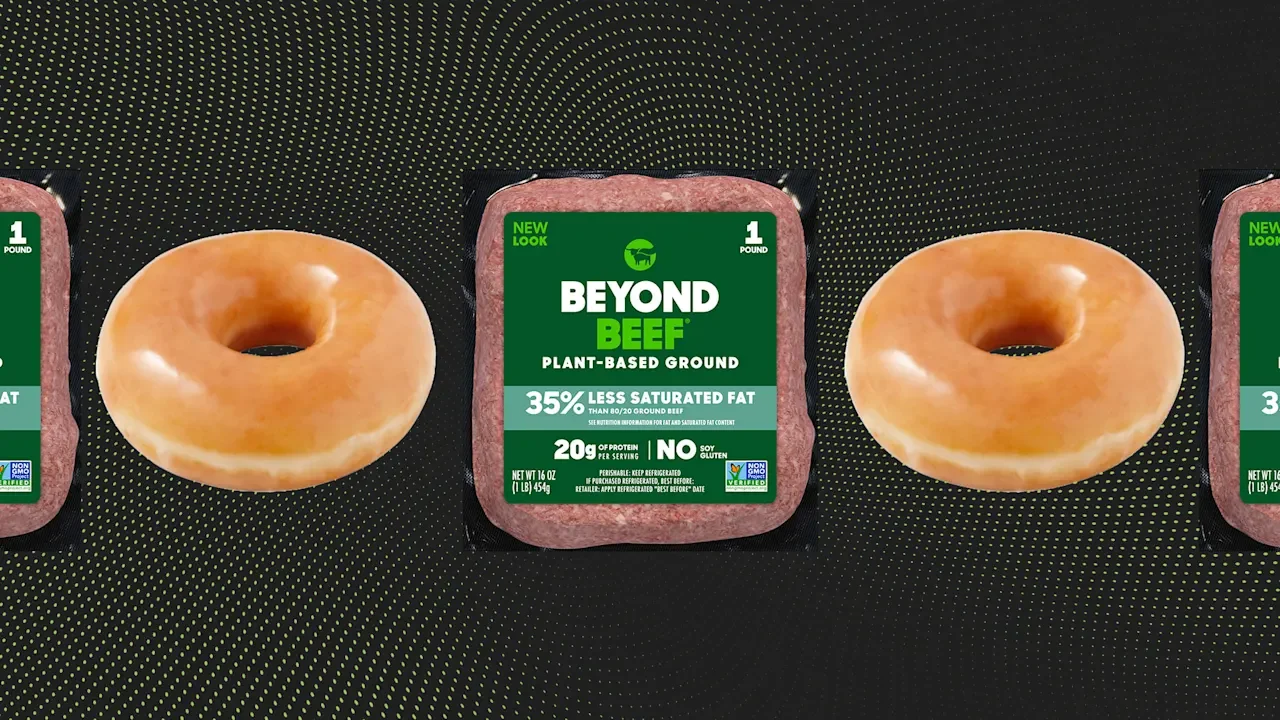
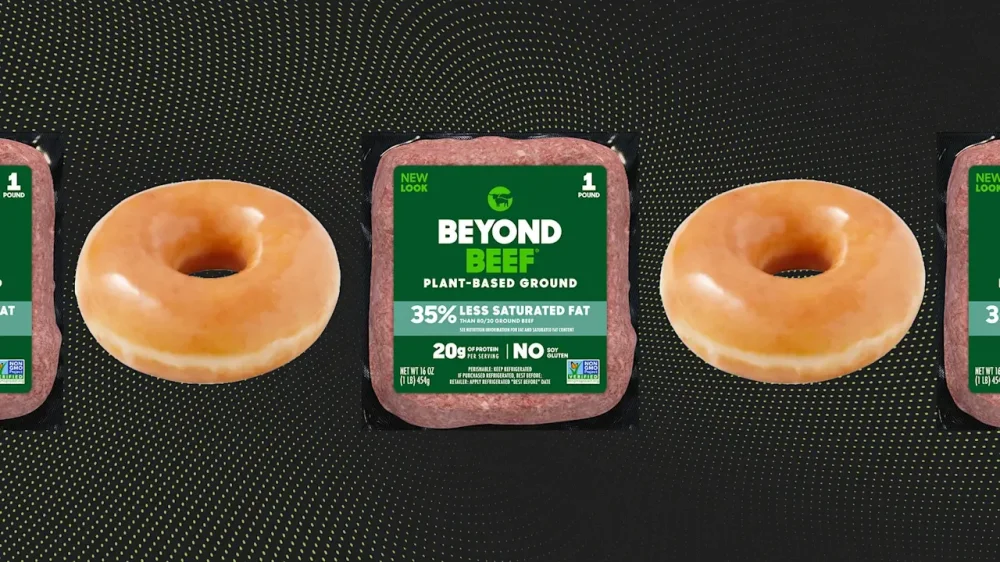
Don’t look now, but meme stock mania appears to be back with a vengeance this week. This time around, Beyond Meat, Inc. (Nasdaq: BYND) and Krispy Kreme, Inc. (Nasdaq: DNUT) are the two main stocks getting all the attention from meme investors. Here’s what you need to know. Beyond Meat shares skyrocket again On Monday, Fast Company reported on the surging share price of Beyond Meat, the producer of plant-based meat alternatives. The company started the trading week by enjoying a stock price surge of more than 67% in premarket trading that day. But far from any change in the company’s financial fundamentals, what seemed to be driving shares higher were short sellers and meme stock enthusiasts. Indeed, Beyond Meat’s business has been struggling in recent years as consumers have turned away from plant-based meat alternatives. More recently, Beyond Meat announced that its creditors had agreed to a debt swap, which will result in the issuance of 316 million new BYND shares, thereby diluting existing shares. But a struggling company in penny stock territory can be red meat to meme investors. For much of the past week, meme traders on Reddit and elsewhere have been pumping up the stock—and it appears to be working. Yesterday, Beyond Meat shares rose a staggering 146% to close at $3.62 per share. And today in premarket trading, as of the time of this writing, BYND shares are up another 103% to $7.37. That puts Beyond Meat shares at a price they have not seen since 2024. It also puts Beyond Meat’s shares firmly in the green for this year. The stock began 2025 at around $4 per share, but that price had fallen to as low as 50 cents per share just last week, before meme stock traders decided to take a bite. One other contributing factor to Beyond Meat’s surge this week is that, as CNBC notes, the stock was added to Roundhill Investment’s Meme Stock ETF on Monday, cementing its place in the meme stock pantheon. Meme stock traders want dessert, too Krispy Kreme’s stock is also seeing some meme stock action this week. DNUT shares rose more than 13% yesterday to $3.71, and as of the time of this writing, in premarket trading this morning, the company’s shares are up another 40% to $5.23 apiece. While those gains are a far cry from the ones BYND shares are experiencing, DNUT shares have more experience in the meme stock arena. Meme stock investors heavily traded DNUT shares earlier this year. Other factors that may be impacting interest in Krispy Kreme’s stock include the company’s recent international expansion in Spain, with additional countries, Brazil and Uzbekistan, planned before the end of the year. Investors likely hope that this expansion can help offset domestic sales issues. Still, despite its recent gains, DNUT shares remain significantly down from where they were at the beginning of this year. In January, the stock traded at more than $9.80 apiece. And as of yesterday’s close, DNUT shares have fallen more than 67% over the past 12 months. View the full article
-
One of the best ways to maximize your productivity and output is to plan out what you need to do in advance, which you can do with a brain dump, a ruthlessly curated daily schedule, a collection of planning tools, or any other number of methods. Unfortunately, even the best practices come with a dark side if you take them too far. In this case, that dark side is Parkinson’s Law, an observation that suggests the longer you give yourself to do something, the longer you’ll take to actually get it done. The truth of the matter is that you can schedule, plan, and fret your way right into accomplishing nothing. It’s always better to get difficult things done as soon as possible, so let’s consider the pitfalls of Parkinson’s Law, and how you can overcome them. What is Parkinson’s law?The origins of the axiom are a little delightful: Cyril Northcote Parkinson described the phenomenon in a 1955 humorous essay in The Economist, and it’s been credited to him ever since. You can read the entire essay, but its main point is this: "Work expands so as to fill the time available for its completion." Though it had a funny start, the idea grew until it was being studied in more serious capacities. Researchers published their findings on Parkinson’s law in the Psychonomic Bulletin & Review in 1999, finding that people tend to consider how much time is available to complete a task rather than considering how little time it might actually take. Basically, we give our future selves a little too much wiggle room when planning our schedule, then our future selves graciously accept all that extra time that could be spent doing something else. After all, our past selves, wise as they were, carved out that time for one task, and who are we to challenge that? You can probably find examples of this in your own life. If your boss gives you an easy task but sets a deadline for the following week, are you likely to get the work done immediately? Parkinson's Law gets me, more often than I'd like to admit, especially when I'm getting ready in the morning. When I used to give myself an hour to get out of the house, I'd spend it dawdling, scrolling on my phone, or generally loafing, so I started giving myself half an hour instead, with an added goal of grabbing coffee. Essentially, I started the "getting ready" process at the same time each day, but with an earlier deadline and an extra task. I found I still made it to where I needed to be on time, even after stopping to treat myself. Set shorter deadlines—and stick to themConsider the example of having a week to do a simple task at work. Instead of setting a week from now as the goal date and letting the task hang over you, pick a day to get it all done—ideally, one or two days before the due date, so it’s fresh in your mind if you have to discuss or explain it afterward. Schedule a block of time to do whatever needs to be done, but give yourself less time than you normally would. If you think distractions or other issues might crop up during your work time, take steps (like indicating you’re busy) to mitigate them instead of accommodating them with a time buffer. This approach is useful because it prompts you toget things done sooner and without overthinking them. It also gives you a bit of a failsafe: If you submit your work early and discover there are issues with it, you have all that saved time to address those problems and resubmit while still meeting your original deadline. (This is why I always recommend setting two deadlines for any big project.) Give yourself less time to complete tasks, not moreAs you can see by now, to defeat Parkinson’s Law, you need to give yourself less time to complete your tasks. Consider the Yerkes-Dodson Law, which says that to be your most productive, you have to have just the right amount of stress—not too little and not too much. When you have too much time to devote to something, you don’t have enough stress to motivate you. To test this out, spend a few weeks shaving some time off your allotments for different responsibilities. Use timeboxing to schedule your entire day down to the minute, using blocks of time in your calendar. If you think it will take you 30 minutes to answer all your emails in the morning, give yourself 20. If you think it will take an hour to compile reports for a big project, give yourself 45 minutes. When you cut that time down and know you only have limited space to finish a task, you will hopefully find yourself locking into a state of deep work, where you're totally focused on the task and can move through it systemically. That feeling of urgency is key. View the full article
-
Selected companies will have the opportunity to demo their compliance-related solutions at a February 2026 tech sprint following a December kickoff event. View the full article

-
The future, like the recent past, will be shaped in the public realmView the full article
-
Anthropic insists that it’s getting along with the The President administration just fine. In a new blog post published on October 21, the company’s CEO, Dario Amodei, pushed back on what he called “a recent uptick in inaccurate claims about Anthropic’s policy stances.” His comments come after David Sacks, a prominent tech venture capitalist currently serving as the The President administration’s AI czar, accused Anthropic of having an “agenda to backdoor Woke AI” through state-level regulation and working with Democratic mega-donors. That narrative has since gained traction within online right-wing spaces. The comments also follow the White House’s release of an executive order specifically focused on combating “woke AI” earlier this year, though officials have yet to say how it will be enforced. Now Anthropic is defending its work on AI safety, which Amodei argued should prioritize “policy over politics.” He also doubled down on the company’s position on regulating AI on the state level, in absence of a national standard. Citing JD Vance’s comments on AI directly, Amodei pointed to several areas of agreement with the The President administration, including to “maximize applications that help people, like breakthroughs in medicine and disease prevention, while minimizing the harmful ones.” The CEO also questioned the notion that Claude, the company’s flagship chatbot, is more susceptible to political bias than other similar large language models. Republicans, including President Donald The President, have increasingly leveled accusations that the country’s leading AI companies are building biased AI models, echoing the accusations made against social media companies in recent years. In short, Anthropic wants to toe the line between sticking to its commitment to study AI safety—safeguarding against general artificial intelligence endangering the human species and society in all sorts of destabilizing ways—and appeasing the professed concerns of the The President administration. That’s all happening while the company attempts to scoop up more government work. “Anthropic is committed to constructive engagement on matters of public policy. When we agree, we say so,” wrote Amodei. “When we don’t, we propose an alternative for consideration. We do this because we are a public benefit corporation with a mission to ensure that AI benefits everyone, and because we want to maintain America’s lead in AI. Again, we believe we share those goals with the The President administration, both sides of Congress, and the public. We are going to keep being honest and straightforward, and will stand up for the policies we believe are right. The stakes of this technology are too great for us to do otherwise.” Federal contracts Amodei underscored that Anthropic already has myriad partnerships with the federal government, including a contract with the Pentagon and work with the Energy Department’s national laboratory system. Along with competitors like OpenAI, Google, and xAI, Anthropic is also working with the General Services Administration to offer its enterprise Claude service to federal agencies at a discounted price. Anthropic’s work within the GSA seems to be unaffected by whatever might be happening within the Office of Science and Technology Policy, where Sacks serves as an adviser, a government official familiar with the matter told Fast Company. Last month, Democrats launched an ethics inquiry into the investor, who has received waivers that allow him to participate in the administration while maintaining some of his investments. Anthropic has gotten good feedback from the GSA about government use of the tool, a company spokesperson says. The AI developer also points to its ongoing partnership with Palantir on meeting Federal Risk and Authorization Management Program (FedRAMP) requirements, a wonky but critical cloud security review program used to offer technology across federal agencies. Palantir is a controversial technology contractor that’s seen its business with both the defense and civilian sides of government grow in recent years. As part of that work, Palantir has already been cleared to provide its cloud technology to federal agencies. While Anthropic has been picking up government contracts, it appears to be falling behind OpenAI on independent FedRAMP authorization. This could be a game changer for OpenAI: Should OpenAI earn that accreditation, it won’t need to work through another company—like Microsoft—to offer its technology directly to the government. At that point, OpenAI would be a more freestanding government contractor, maintaining far more independence from other major cloud companies. The same government official told Fast Company that Anthropic has yet to share a plan for gaining accreditation for its systems through that program, or securing a sponsorship for review in another way. A spokesperson for the GSA declined to comment. View the full article

-
For many, picking up a controller at the end of a long day to neutralize some zombies or take on a side quest with a fairy is a way to unwind and escape from the demands of work. But it might also have some unexpected benefits that follow you from the character select screen and into the office. A new report from the Entertainment Software Association (ESA) finds that the motivations behind gaming go far beyond fun. While 66% of the more than 24,000 players in 21 countries surveyed say they play primarily for enjoyment, the majority credit gaming with developing real-world skills, like problem-solving, teamwork, adaptability, and critical thinking. All useful transferable skills to play up in a job interview. (Maybe don’t reveal you honed them playing Fortnite, though.) More than half the respondents say playing video games helps relieve stress (58%). Forty-five percent say playing video keeps their minds sharp, and nearly half (43%) of players say video games have positively influenced their education or career path. “The player perspective is supported by scientific research, with many studies concluding that video games improve cognitive skills and decision-making,” Stanley Pierre-Louis, president and CEO, Entertainment Software Association, told Fast Company. “A number of industries have already embraced interactive technologies for training employees, from medical treatments and surgery to astronautics and emergency response,” says Pierre-Louis. “I anticipate more will recognize gameplay as a way to engage with and develop their workforce in the near future.” Brain health experts are a bit divided as to whether some games, like Wordle, actually improve cognitive function. And while the ESA report is of course an industry one, there’s other data out there that may support its findings. A 2022 study found that kids who play video games showed better impulse control and working memory than those who didn’t. Another from 2021 found that playing video games does improve not only cognitive functions, but also mood and emotional well-being in elderly people. Another, from 2020 from University of Liechtenstein, found a strong correlation between video game skills and managerial ability. “In fact, being adept at video games can significantly boost one’s career,” the researchers wrote. A literature review published in Procedia Computer Science, cited in the ESA report, also found that gaming can enhance perception, attentional control, and decision-making. Nurses and doctors, for example, who trained with simulation games showed improvements in both risk assessment and response time. These benefits aren’t limited to just life-or-death scenarios. Retailers have also turned to game-based tools to prepare employees for peak shopping events, the report notes. Sports teams use simulation tech to help athletes train. Across industries, gaming has become a quick fix to boost preparedness and improve team outcomes. Of course, spending hours gaming in the evening is not always the answer to your work woes. Sometimes it’s just a way to unwind after a long day. (There’s research that suggests mental health benefits of having hobbies, by the way.) But research has also previously found that gaming can actually hinder the amount of work young men do by 15 to 30 hours over the course of one year. And excessive gaming can be detrimental to mental health, or even spiral into addiction for some people. As companies struggle to maintain engaged employees, burnout is on the up. Who knows? Maybe a chill pastime in front of a glowing screen is just the thing to take the edge off. (Or, in some ways, may also give the edge you need to perform better at work.) View the full article
-
Fast-food companies, beware: Gas stations and convenience stores are coming for your customers. Fireside Market, a Wisconsin convenience store chain, announced a new store concept in Slinger, Wisconsin, designed to sell more burgers and less gas. It has a drive-through, curbside pickup area, and gourmet menu items—and it’s a model of the convenience store of the future. Fireside Market’s burger and sandwich menu is several steps up from the outdated idea of day-old taquitos spinning on a rotating food warmer at the local convenience store. Instead, its menu has items like a burger topped with bacon, pastrami, and balsamic-onion jam, and a grilled-salmon sandwich. Falling demand for gas, tobacco, and lottery tickets has upended the business model convenience stores once relied on. In a world with fewer smokers and more Teslas, it’s no longer enough for convenience stores to be an afterthought for drivers stopping to fuel up on gas or soda. They need kitchens. The percentage of in-store sales that comes from food service—a category that includes prepared foods, commissary, and beverages—is on the rise. It grew from 23% of in-store sales in 2021 to nearly 29% today, according to the National Association of Convenience Stores trade group. That trend is especially noticeable at breakfast time: Sales from morning-meal traffic at food-forward convenience stores grew 9% in the third quarter this year, compared to just 1% at fast-food chains, according to data from market research firm Circana. Fireside Market’s 9,700-square-foot Slinger location, its first with EV chargers, is designed for this new reality. 7-Eleven closed more than 400 stores in North America last year, but it’s looking to grow its fresh prepared-food offerings as part of its comeback. Meanwhile, food-forward chains are in expansion mode. Buc-ee’s opened its largest location ever in Luling, Texas, last year, while convenience store chain Sheetz opened its 800th location in Raleigh, North Carolina, in August. Casey’s General Stores, known for its pizzas, has broadened its menu to include burgers and sandwiches, while Fast Stop, a Louisiana-based convenience store chain, is taking the trend a step further, spinning off its made-to-order menu of Cajun-inspired foods into its own restaurant with nary a gas pump in sight, according to trade publication C-Store Dive. In a world that runs on less gas, gas stations have to adapt to survive. Many are finding food is the answer. View the full article

-
Kyiv and other cities across the country suffer missile and drone attacks as ceasefire efforts falterView the full article
-
As small business owners, we all know that growth comes with both opportunity and challenge. Scaling efficiently—without losing control over operations, finances, or customer experience—has always been one of the toughest balancing acts. For years, technology has promised to make that journey easier, yet many of us still find ourselves managing a patchwork of systems that barely communicate with each other. At SuiteWorld 2025, Oracle NetSuite’s annual user conference, that conversation took center stage—particularly around how artificial intelligence is shifting what’s possible for small and midsize businesses. I sat down with Sam Levy, Senior Vice President of Growth and Execution at Oracle NetSuite, to talk about what’s new, what’s next, and how the company continues to shape its vision for small businesses that want to compete like large enterprises—but without the complexity. From the debut of NetSuite Next and its conversational AI “Ask Oracle” assistant, to real-world success stories from customers who doubled their revenue without doubling staff, Levy offered a front-row look at how automation and integrated systems are redefining small business efficiency. For entrepreneurs considering when to move beyond QuickBooks or spreadsheets, or for those already seeking smarter, faster ways to grow, this discussion highlights where NetSuite sees the greatest potential—and what small business leaders should be doing now to prepare for the AI-driven future ahead. Leland McFarland All right, I am here at Oracle’s NetSuite, um, SuiteWorld 2025 with Sam Levy, SVP of Growth and Execution at Oracle NetSuite. Um, got a few questions for you. So, SuiteWorld always brings exciting uh updates. Uh, for those who couldn’t attend, what’s the key message Oracle NetSuite wants small and mid-sized business business owners to take away this year? Sam Levy Obviously. Well, well, SuiteWorld’s our annual user conference. And what’s more exciting, this is, I think our 12th or 13th year doing SuiteWorld as a as a conference where we bring all of our customers together and talk about strategies of what we’re where we’re going. Our theme this year is “No Limits.” And it’s really been practiced into “no limits of scaling your business.” And whether you’re a small or medium-sized business, scaling, growth can be hard. And so the things that we are talking about and the themes we’re talking about is “no limits” is how do companies scale? What’s the current trends of scaling? How is technology an enabler? And now this exponential multiplier, what we call AI, how is AI going to help me scale or how should I be, you know, consuming AI in our business? Leland McFarland Perfect. So, NetSuite has long uh served growing companies. How would you describe its current vision for SMB companies compared to five years ago? Sam Levy Well, the vision has much been the same for us uh for NetSuite for since 27 years ago when Evan started the company and really being one, a revolutionary company that was cloud-first. So, we only service cloud, we only deliver in the cloud, and that was from the born-on date 27 years ago through today. And so, part of what our transformation strategy of helping small and medium businesses is to transform their business. One, to do that digital experience of how do you take and do that digital transformation? Digital transformation is not just moving your books from on-prem to the cloud. That is kind of just a functional shift and lift of technology. Processes have to evolve in that, and so there’s a maturation that occurs. And our biggest strength is one, we go to business and go to market by industry. So, we understand your industry, what it takes to operate your industry. And so, whether you’re a healthcare company or you’re a manufacturer or you’re a retailer, there’s a different set of automation and industry metrics that you need to solve your business issues. And we come to small businesses and help them mature that. So, when we talk about digital transformation, the first thing is looking at is, how do we help businesses just get control of their current environment? Look at their processes and then unify them. Because we’re a suite for each industry, we offer all the components to run your business. And it’s really nice for a small or mid-sized business that they really want to act like a big company, but they want the processes and the scaling of the entry points to be for the small and medium-sized companies. Exactly what we do. Provide them that level of industry comfort, and then let them scale. Leland McFarland Perfect. So, for many small businesses, they see uh ERP or Enterprise Resource Planning, um, they they kind of view it as enterprise software. I mean, it’s kind of in the name. Um, and it’s kind of meant for larger or maybe medium-sized businesses. Uh, how is NetSuite breaking down that perception to make ERP accessible for smaller companies? Sam Levy Yeah. This is something that we introduced a decade ago with the conversation of “SuiteSuccess.” And SuiteSuccess was essentially is taking an industry playbook and saying, “For this industry, here is your stairway.” Start with financials first, then add on operations, then add on sales, then add on your supply chain, then add on commerce, whatever it might be for your industry. And what’s the nice part about that is how we scale down for businesses that are very simple, but yet they’re going to evolve, is we have that stairway approach. Making it really fast and simple for them to join NetSuite, and then have a growth patch, you know, pattern with capabilities that they never have to leave. It’s simply as kind of what we look at probably with our iPhones. You get onto the iPhone platform, you buy a few modules and applications, and the outset is, you need some more capacity, you just turn it on. You need another module, you get another application and you go with it. Same with business, making it really easy for a business platform to start the financials and then grow the rest of the way. Leland McFarland Perfect. So, what are some of the biggest pain points that you see small and medium-sized businesses that are facing um that are they’re facing today, um, that NetSuite directly helps to solve? Sam Levy Most businesses today, and I was just, you know, meeting with hundreds of customers this week, have a business need for certain systems and requirements. They have business issues. And whether they need to fill out a timesheet, they don’t have tracking, they need some information for human capital and talent, they can’t close the books, they have business issues. And I think what one of the things that NetSuite’s making it really easy for companies to do is, jeez, if you have these ripe issues, how do we help you, you know, transform your business? And that’s been the secret sauce for for us, I think is is the first part of your question. I think the second part was, how are we transforming? What was the second part of your question? Leland McFarland Um, how are are you using or what what’s involved with the NetSuite? You know, what what does NetSuite have that can kind of really address those uh pain points? Sam Levy Okay. So the the main thing I was talking about is, well, I was saying they say business issues that arise from small businesses, they want to grow quickly or they want to manage cost. And most small businesses have to chew gum and walk at the same time, meaning both. They have to grow, but they don’t have a bunch of people that they can add into their business. So they need some automation, a platform to help them. Let me give you an example. A company that comes with us with $25 million in revenue, they want to double and get to $50 million in revenue. They need to invest in their product and R&D, but they don’t want to add in a bunch of accounting and operational staff. They come to NetSuite because they can automate their business and grow without adding additional headcount to support their business system. They’re adding the investments where it truly is going to make them grow. So that’s one of the offsets that we see is, just basic automation and operational improvement helps them get control of their operational costs. Leland McFarland Okay. That seems like it’ll be very helpful, um, for small businesses, uh, who need to get, you know, as you said, control over their finances and and whatnot. Um, can you share a recent example or a customer story where a small business significantly improved operations or profitability using NetSuite? Sam Levy Yeah, I mean, I’ll talk about some of the companies that were on stage even this week. We did some keynote addresses. One that comes to mind is a company called Cymbiotika. Now, Cymbiotika is a wellness company. They’re well-known for taking supplements and wellness, liposomal, I should say. It’s not supplements, but it’s just liposomal. And those are good for your body. And so one of their challenges is as they were growing from a $50 million company to $100 million company and launching their brands, is the complexity with them. Now, their organization adopted NetSuite and they went live with NetSuite. And what’s interesting about their operations is their operation headcount has roughly stayed flat through their growth patterns. They’ve added a few employees, but as they doubled their revenue, they did not double their employees. I think that’s a true testament, I think, a case study of, how do you look at leaders in your industry and what are they doing that perhaps we should be considering doing? Or how do they do it? What is their secret sauce? So how do you double revenue without adding double staff? And so for them, they were using automation to do that. They were doing the things that that once took a team of people can now be done by an individual. An individual now instead of owning one account can manage 10 times the number of accounts. And so that became their offsetting maneuver. That was a great story that Kimberly talks about on their growth strategy. Leland McFarland Oh, that’s perfect. All right, switching over to AI and automation, which has been basically uh most of what’s been talked about this week. Um, AI has been a huge theme this year. How is uh NetSuite’s approach to AI helping small businesses uh compete on the same level as the uh big boys? Sam Levy The big boys? This is interesting. Uh, AI is in every, you know, it’s in every conversation seems like in business today. How we are helping companies is twofold. One, we are unique that every one of our customers is on the same version, the same release, and ultimately the same data model. So 43,000 organizations all use the software the same, from the biggest to the smallest. AI, we believe that the best AI comes from the best data. So having all of your data in one place, there’s two approaches: outside-in versus inside-out. The outside-in approach is, let me take a Claude or a large language model like ChatGPT or Claude and use it against my current NetSuite account. So how do I unlock all of my data in my current infrastructure and tie it into a large language model? And that’s what we’ve done. We announced Model Context Protocol (MCP), which is a connector. It’s free for all of our customers to connect their NetSuite data to Claude or to ChatGPT. Now you can go in there and simply ask prompts inside of Claude, which is, “Who are my top five customers?” “What is my inventory levels?” “What’s my financial statements?” Your conversational AI, that’s an outside view in. That’s our first approach to AI being outside-in. It’s been really successful and taking an enterprise product like that and really making it simple for small and medium businesses. The inside-out approach is doing the opposite. Building AI with inside of NetSuite and solely for just NetSuite data is you can go into NetSuite now and use certain AI capabilities inside your your your application. So, you can use either either or or and or both ways to do it. There’s a lot of things that we use and we’ve released now for years of continuing to add onto AI capabilities from the inside-out. The outside-in approach has been good because sometimes you want NetSuite data connected to other systems. And Model Context Protocol allows then chat to not just interface with NetSuite data, but also maybe another system that you have out there. Maybe it’s a commerce system or maybe it’s Salesforce data, you can then pull in together through MCP. Leland McFarland Right. Um, are you partnering with any outside LLMs to kind of or are you building from scratch, um, your own LLM, um, or or AI uh protocols within uh um your own system? Sam Levy We definitely partner because those best-of-breed applications are certainly market leaders. When you think about ChatGPT and what they’ve done, you think about what Google has done, you think about what Meta has done, you think about xAI, they’re big in R&D and billions of dollars just in these large language models. Uh, we did we first start with Cohere two or three years ago as our first large language model, and then we’ve adopted all the others as subprocessors within inside of our environment. So we’re definitely leveraging all of them. Leland McFarland Perfect. Um, what are some practical ways SMBs can use NetSuite’s new AI capabilities to save time or make smarter decisions without needing a data science team? Sam Levy Well, the new interface, and I don’t know if you use ChatGPT, hopefully you probably do to summarize notes and so forth, or if you’ve used Claude, I think that the most interesting piece of it is it’s taking what used to be a technical way to get your answers, and it’s it’s really making it simple into context, a simple language context. So before, if you wanted to go ask a question, which is summarize summarize my financial statements and show me year-on-year compares and show me, you know, FEs that I had, you might have to go run data from multiple systems or multiple NetSuite reports and searches to do that. You’d have to write the research or report and then pull it all together. So, very feasible, and that’s what customers have done for years. Very linear though, one report, one answer, one report, one answer, and then pulling it all together. The nice part about taking chat is I just ask the question inside ChatGPT or I ask it inside of Claude. Show me the same data, pull my financial statements, do the year-on-compairs, do the FEs, change my visualization, show it to me in a chart, make it beautiful, hit enter. It goes and runs the searches, runs the reports inside the data, shows you where it’s got its data, and then it presents it back to you in matter of minutes now, what perhaps was days before. And that’s a simple way, I think that the most people are getting the biggest value is just taking a non-technical approach just asking the conversational questions. Leland McFarland All right, perfect. That’s seems very useful. Hopefully it’ll save uh small business owners a bunch of time and effort. Sam Levy And give them the visibility to their business, right? Most important, yeah. Leland McFarland Um, switching over to industry and growth trends. Uh, from your perspective, what are the next biggest trends shaping the future of small and mid-sized businesses over the next two to three years? Sam Levy Well, I think everyone is being asked, the biggest trend is, how can I grow but yet control my operational cost? And we’re seeing that with these, you know, the invention of the AI business models out there where, you know, we call it the multiplier effect with AI. And I think the biggest trend right now is, how can AI give me an advantage, a competitive advantage going forward? One, I got to simplify my back-office processes, make it really simple to do business from the back office, meaning how do I enter an order? How do I collect cash? How do I create a procurement transaction, receive it, and so on? So making that really simple is number one. But then how do you take that simplified process and make that a competitive advantage externally? So when a customer comes and does business with you, they don’t find it five, you know, it may take them too long to get their product or their service. Making it very easy to do business with them, and that’s been the growth lever is they’re trying to simplify things, because transactions are happening faster and faster. But we’re simplifying the complexity of the transaction, which has been the big theme today. Not a lot of complexity, simplify it, but just more transactions. Leland McFarland More transactions, more money. Sam Levy Well, that’s good. That should be the simple linear equation with that one. Yeah. Leland McFarland Um, are there specific industries like manufacturing, retail, or services where you’re seeing especially strong SMB adoption or innovation through uh NetSuite? Sam Levy This is a uh it’s a good leading question of which industry is hot and which one’s not. They all seem to have challenges going on in their business and headwinds, whether that’s macroeconomic or it’s industry pressure. You know, some product and inventory-based companies had tariff issues. And so that helped, you know, that helped help create a big headwind for them. How they reacted to it, though, I think were a little bit differently. And so, I look at some of these industries are breakthrough, meaning inventory ones that had to deal with tariffs, they were forced to use better planning and budgeting tools to get the right SKU assortments and so on. The people that were in healthcare on the other side of it, finding more avenues to service their customers. And so they wanted to automate billing, automate billing to their insurance carriers. So they needed help on automating. For them to grow, their issue wasn’t buying more product, it was making billing to their insurance carriers more easily and more streamlined without people. And so we’re we’re seeing it kind of all industries are growing. And some are some are, I wouldn’t say contracting. High-tech has been a good one because of AI, and you’re a high-tech company creating AI. So you see a lot of sourcing, you know, uh capital going into AI companies. But I think that money is being used now across all the other industry segments. Leland McFarland All right. Um, flipping that a little bit, are you seeing any kind of industries that it’s it’s a little difficult for you for for NetSuite and in general to kind of break into for the small business? Sam Levy For small business? Well, one of the things we we generally say is if you’re in a regulated industry, that can be more difficult for NetSuite. Government or municipalities have a lot of restrictions. Some health and biotech have a lot of restrictions. Some government contracting and DOD have a lot of restrictions. And the restrictions are how and their compliance works with their data and how it works with the government entities and businesses that they solve. So for our commercial business, we tend not to go after heavily regulated industries. There’s compliance, but heavily regulated industries, when you look at public sector or uh financial uh institutions that have different type of governance, we generally stay away from those. Uh, just not not our bellywick, right? We stay to the ones that are commercially available that we are really good with. Leland McFarland All right, that’s good to know. Um, many small businesses are moving from QuickBooks or spreadsheets to cloud platforms. What triggers this transition and how is NetSuite supporting them in that journey? Sam Levy One of the most popular systems that we replace on the entry-level market is QuickBooks. And it’s not even it’s just entry level anymore. We’re finding that it’s not just entry-level, they’re medium-sized businesses that are running QuickBooks, but they’ve certainly outgrown it, mostly for the capabilities. The number one reason they usually come to us is they can’t do something or it’s too bespoke. So, if they’re growing internationally, they have too many databases to manage, and they want to put it in one infrastructure and have one global process. It’s very hard to do with QuickBooks. So that’s an interesting one. If they have advanced inventory items, where they’re putting in multiple warehouses and demand planning and point of sale and distribution, QuickBooks is for very simple companies. Once you add a lot of complexity to it or start to customize it, you’ve really outgrown it. And that’s where NetSuite picks up and really excels. The complex small business. Leland McFarland All right. If you had, if you had uh one piece of advice for a small business owner looking to future-proof their operations, what would it be? Sam Levy Wow, hire the right people. I mean, that’s a bit, you know, people and human capital and certainly in a small business is critical. And and some of the traits you say, “Well, that’s fine, but what type of competencies would you look for?” Certainly the entrepreneur spirit, challenge the status quo, and you you’ve got to make some big bets. And if you’re not making the bets around using AI in your companies, I tell founders all the time, I think you’ll be leapfrogged by a founder who is using AI to get that competitive advantage. Leland McFarland All right, final question. What’s next for NetSuite when it comes to serving the small business market? Any areas of investment or innovation where you’re uh you’re especially um excited about? Sam Levy Well, we announced it this week, “NetSuite Next.” It is our next generation of how we’re evolving our AI strategy and just making it available everywhere in the application from the inside-out. What we’re building and what we’re releasing for all of our customers and new customers is the kind of “Ask Oracle” concept. It’s AI-ready everywhere at any time. And it’s the conversational piece of it. You don’t have to go learn a menu structure and navigation, the how-tos. Our firm belief is the way that you interact in the future is going to be conversational. Like we’re having now, that’s how you’re going to be interacting with your business system. Very much conversational, not menu-driven, searching for data. You’re going to be asking and prompting versus clicking and pointing. And so that is, right, the big excitement that we have is we’re doing it, we’re prototyping it now, and we’re slowly releasing it to the masses. This time next year, it’ll be fully available and it’ll be so exciting to see so many customers on it. Leland McFarland That will be exciting and I’m I’m I’m interested in trying it out. Having a nice digital assistant. Sam Levy Yeah, exactly. Leland McFarland All right. Well, that’s all I got for you today. Thank you so much for uh coming on and uh putting up with all my questions. Sam Levy Great. Good to meet you, Leland. After speaking with Sam Levy, one thing became clear: small businesses no longer have to choose between growth and control. The tools that once seemed out of reach—enterprise-grade analytics, automation, and now AI-driven insights—are being built with accessibility in mind. NetSuite’s approach to scalability, especially through its “SuiteSuccess” industry playbooks and AI integrations, is transforming how entrepreneurs operate. The idea of “no limits,” this year’s SuiteWorld theme, isn’t just a marketing slogan—it’s a mindset shift. Levy’s point about AI serving as an “exponential multiplier” resonated deeply. Small business owners have always worn multiple hats. Now, AI can help us wear them more efficiently—managing data, identifying trends, and freeing up time for strategic decisions. Whether it’s automating billing, unifying processes, or simply asking conversational questions to get answers that used to take days, the value of accessible AI is undeniable. What’s most encouraging is NetSuite’s commitment to making this technology practical—not just powerful. As Levy put it, the future of business systems will be “conversational, not menu-driven.” For small businesses, that future is arriving faster than many realize. The real question now is how quickly we’ll adapt. Those who embrace AI as a trusted partner in growth, rather than a distant concept, will likely define the next wave of small business success. This article, "NetSuite’s Sam Levy on How AI and Automation Are Redefining Small Business Growth" was first published on Small Business Trends View the full article