Newsletter
Want to keep up to date with all our latest news and information?


ResidentialBusiness
Administrators
-
Joined
-
Last visited
Everything posted by ResidentialBusiness
-
Are you ready to hand over control of your portfolio to artificial intelligence? Fahad Hassan, cofounder and CEO of AI-powered wealth management platform Range, thinks you should seriously consider it. Hassan’s five-year-old company is introducing “Rai,” a new proprietary AI wealth advisor that, he believes, will give a huge swath of American households access to the sophisticated advice and planning that was traditionally only accessible to those with sky-high net worths. “Rai is the first product, the first AI agent, that we believe can do the work of human advisors just as well, if not better,” Hassan says. And while plenty of other fintech companies have rolled out or otherwise introduced AI tools to help with wealth planning in recent years, Hassan says that Rai is different for a couple of key reasons. First, Rai has access to more and better data than other tools, Hassan says. Range’s customers who use Rai can connect dozens of accounts (real estate information, retirement and investments, restricted or private stock holdings, etc.). That gives the tool a broader picture of an individual’s financial status. Second, Rai has been rigorously trained against regulatory standards—that is, it’s designed to pass the sorts of exams that human advisors would need to pass, which are administered by organizations like the Financial Industry Regulatory Authority (FINRA). Not only that, but that level of sophistication also allows Rai to continuously self-improve and learn as it goes. But Hassan says that Rai goes yet another step further. “It can take action against your money, such as file your taxes, develop an estate plan, and more,” he says. Those sorts of actions, which would traditionally require that customers enlist an accountant or an attorney, can now be done in-house by Rai, potentially saving users huge amounts of money. “We can provide hundreds of thousands of dollars in value in 10 seconds,” Hassan says. “You don’t need to wait for a human anymore.” More Waymo than Uber? If this sounds something like “Robinhood for wealth advisories,” Hassan says that’s not quite the goal. “We think of this as Waymo, not Uber,” he adds. Uber democratized access to ride-sharing and connected drivers with riders. It may be more helpful to think of Rai as connecting you with a ride, and doing the driving. It’s a one-stop shop, and you can access it without the relationship-building process—country club lunches, tee times, or whatnot—that human advisors traditionally use to build their client bases. Headquartered in McLean, Virginia, Range most recently raised $28 million in a November 2024 round led by Cathay Innovation, 10X Group, Brave Capital, Gaingels, and others, according to data from PitchBook, for a total raised to date of $40 million. Of course, whether or not people adopt Rai, like they did Robinhood or other financial tools, has yet to be seen. If they do, the tool could potentially shake up a lucrative yet traditionally walled-off branch of financial services for more households. It’s the speed and granularity that the company’s leadership believes will make a difference. “Rai analyzes your complete financial picture in seconds—every account, every asset, every opportunity,” said David Cusatis, Range’s cofounder and CTO, in a statement. “We built proprietary technology to deliver recommendations that no human advisor could match at this speed and scale.” View the full article

-
Dainty fashion darling Sandy Liang is bringing her playful, delicate designs to the masses. The New York City-based designer, who until now has had a small retail footprint and big fashion clout, is releasing a limited collection with Gap (big footprint, big clout). The collection is anchored by core Gap and Sandy Liang categories, like denim and outerwear, including a precious pair of carpenter jeans with bow stitching on the pocket, a faux fur half zip in a Bambi-inspired print, and two heavy-weight fleece hoodies glamified with the Sandy Liang logo or her signature bow. Baby and toddler styles are also available for the first time. Prices range between $15 and $268. Prior to today, you could only buy a Sandy Liang piece in two places: on her website, or in her Orchard Street boutique in New York City’s Lower East Side. Now, you can also get the collab pieces on the Gap website, and at select U.S. and global Gap stores (until they sell out). The collection gives Gap fashion cachet, Liang access to a huge new audience, and the rest of us easier access to Liang’s covetable, girlish pieces—which typically have a pricing floor of several hundred dollars under her own high-end label. That cachet-by-association is important to Gap because it establishes its authority in the fashion space by targeting a new audience with in-the-know fashion taste. The aim is to win over the tastemakers and conversation starters who later adopters look to for cultural signals, gain cultural relevancy, and then become a driver of cultural conversation itself. The Sandy Liang partnership brings “fashion credibility through her lens,” Gap brand president and CEO Mark Breitbard says. And it’s indicative of Gap’s broader partnerships strategy. “What you can see is that we have a reason for each,” Breitbard says, referring to Gap’s recent collaborations. “There is a story behind each. There it’s a real true marriage of their brand and our brand in each, and it’s something that continues to bring energy.” Core memories This collection started with Liang’s mood board of creative inspirations: Nancy Myers, herself as a kid in the ’90s, and phrases like “Gap kids for adults,” and “Gap adults for kids.” All of her designs started from this tensile idea of creating the most serious baby clothes possible, and the silliest, most fun adult clothes ever. “I really wanted to play with that dynamic of kids things for adults and adult things for kids because when I was a kid going to the Gap stores, so much of that time being in the physical Gap stores was spent fantasizing about what my adult closet would look like, what the adult Sandy would like from this collection,” Liang says. With that lens, she then took some of her favorite Sandy Liang pieces and reinterpreted them for everyday wearability and comfortability in the Gap way. Liang describes the collection as one “for your inner child,” which is also a core driver of her own label. She recalls being a student at New York City’s Parsons School of Design, where she says she was taught to find a particular subject and sketch a collection from that. “For me, being instructed to do that just felt so emotionless and not personal,” she says. Instead, the inspiration for her senior thesis came from a capability of the iPhone, which had just come out a few years earlier. Liang recalls scrolling through her iPhone photo albums, which had become an instant and unlimited pool of inspiration. “I remember being like, ‘why can’t I just reference the moments that I’m finding in life?’” asked Liang, originally from Queens. “Whether it be this Chinatown grandma or my grandma’s blanket or this floral motif I found in this random store. So that’s why personal memories influenced me so much.” And it’s how her brand story originated. Bows, stars, and frills: childhood motifs as brand emblems The Sandy Liang label is known for particular motifs: bows, stars, and rhinestones, girly details that stem from her own childhood doodles. These appear in small, premium garment details in the collection, like star grommets on the jeans and work pants, star zipper pulls, eyelet trim on an athletic black tracksuit, bow stitching on the pockets, and bows on the back of the trench and a navy work trouser. In combination, these design elements create a garment that is “comfortable, sporty, easy, but also just like the slight hit of ‘that was unexpected,’” she says. (See the zip-up hoodie with fur trim, for instance.) “The star motif is something that I’ve been doing a lot with my own collection,” says Liang. “Again, it goes back to childhood emblems that I always reference back to. It felt right for Gap, obviously because childhood memories are such a big influence on the collection.” On a practical level, “star” was also the perfect size to put on a ball cap in the classic Gap font. The recurring bow motif, meanwhile, is “kind of born out of this fascination with princesses and crowns and that sort of thing,” says Liang. “Growing up, I was a bit of a tomboy and I felt insecure to lean more into the pink, girly side. Now that I’m an adult, what I’ve been trying to do is always fulfill my inner child. So I’m doing all the things that I wish I had.” All her design references come down to core memories and are interpreted through the eyes of childhood. Her interest in the ’90s is because that’s when she was a kid. Rather than referencing it in a literal sense, she references her “memories of what the adults were wearing in the ’90s and what it felt like to be a kid in the ’90s and less so real references,” she says. “It’s more like the energy and feeling.” The opposite of a trend forecaster Her consistent use of childhood motifs has led content creators to missassociate her with ephemeral TikTok trends that bubble up over the years, which the chronically online might remember: like “balletcore” and “girlhood.” Who What Wear claimed Liang’s ballet references were one of many to emerge following MiuMiu’s fall/winter 2022 show. Last year, Marie Claire put Sandy Liang’s spring/summer 2024 collection within the popularizing “catch-all of the girlhood aesthetic.” However this is purely coincidental. The idea of childhood, or girlhood for her, has been driving her brand since it was founded in 2014. Her Mary Jane pointe shoes ended up in a lot of #balletcore roundups, but it had actually been in production for two years prior. That trend may be in the internet’s dustbin, but the shoe is still a core shorthand for Sandy. In fact, you can get it on a Sandy Liang x Gap sweater. “I literally am the opposite of a trend forecaster. I’m just trying to find what makes me happy and inspires me, whether it’s a TV show or being a mom right now, or whatever,” she says. “I had no idea what ballet core even meant. That’s just the timing of life.” A similar coincidence of timing happened with bows, an internet microtrend which outlets like the Guardian and Harper’s Bazaar say Liang popularized and was associated with balletcore and hashtags like #girlhood. “I just happened to really love bows and satin,” she says. The conflation “was really funny for me because none of it’s intentional and none of it’s me trying to play a part. Or even being with ‘Girlhood.’ That is something that I identify with, but it’s not a new thing for me. It’s something that’s always driving me, but it’s the thing right now, so people like to associate that. The internet is just so crazy.” Girlhood forever Once again, the bow “trend” if there ever was one, is over—but the bow as a core symbol of the Sandy Liang brand lives on. Today, you can find it stitched onto a pocket of Sandy Liang x Gap jeans, and it’s these kinds of recurring visual symbols and related aesthetic tensions of practicality and frivolity and adulthood and girlishness that appeal to Liang’s core customers year over year. And with this release, Liang will likely have many more customers on her hands. The Sandy Liang hoodies also show how Gap is improving the quality of its overall product lines. They have a boxy contemporary fit but also a weighty hand feel that led me to inquire about the fleece make itself. The company told me it expanded its fleece assortment last fall to include “heavyweight” (400 grams per square meter) and “extra heavyweight,” (650 grams per square meter) its most premium fleece offerings to date. The Sandy logo hoodie is extra heavyweight, and the bow hoodie is heavyweight, which establishes quality in addition to exclusivity as a limited drop. It will release the classic Arch Logo hoodie in extra heavyweight fleece later this month. Collaborations can also create leads for Gap’s core brand: 20% of consumers who made a collab purchase also added a Gap item to their cart, the company told me in September. So just maybe, the fashion set will buy into Gap, too. View the full article

-
We may earn a commission from links on this page. Deal pricing and availability subject to change after time of publication. Amazon Big Deal Days is on October 7-8, and Lifehacker is sharing the best sales based on product reviews, comparisons, and price-tracking tools. Follow our live blog to stay up to date on the best sales we find. Subscribe to our shopping newsletter, Add to Cart, for the best sales sent to your inbox. New to Prime Day? We have a primer on everything you need to know. Sales are accurate at the time of publication, but prices and inventory are always subject to change. If you're hoping to catch the future early, you should check out these XReal One AR smart glasses. They're on sale for $449, down from $569.00. This is the lowest price they've ever been on sale on Amazon. XREAL One AR Glasses with X1 Chip $449.00 at Amazon $579.00 Save $130.00 Get Deal Get Deal $449.00 at Amazon $579.00 Save $130.00 If you're not familiar: XReal Ones are augmented-reality display glasses. They're compatible with any device with USB-C video, and when you slip 'em on, it's like looking at bright, clear 147" high-def monitor. Plus, the built-in G1 chip gives you 3DOF augmented reality, so you can anchor your virtual screen into real space. I have a pair of the XReal One Pro version of these glasses, and I highly recommend them, whether you want to have a second screen for productivity, play games in a new way, or just have the best entertainment experience possible on an airplane. I recently spent a day with them on, using them to replace every screen I look at, and it was like living in a science fiction movie. XReal has also lowered the price of its Beam Pro device by 20%. This optional "spacial computing companion" powers XReal glasses, adds a 3D camera, gives you enhanced controls, and improves the augmented reality experience. Looking for something else? Retailers like Walmart and Best Buy have Prime Day competition sales that are especially useful if you don’t have Amazon Prime. Walmart’s Prime Day competition sale runs from Oct. 6 at 7 p.m. ET through Oct. 12 and includes deals up to 50% off. It’s an especially good option if you have Walmart+. Best Buy’s Prime Day competition sale runs from Sept. 27 through Oct. 12, and has some of the best tech sales online. It’s an especially good option if you’re a My Best Buy “Plus” or “Total” member. Target’s Prime Day competition sale runs from Oct. 5 through Oct. 11, and it has deals going up to 50% off. You can become a Circle member for free. Our Best Editor-Vetted Prime Day Deals Right Now Apple AirPods Pro 2 Noise Cancelling Wireless Earbuds — $169.99 (List Price $249.00) Meta Quest 3S 128GB All-In-One VR Headset — $249.00 (List Price $299.99) Apple iPad 11" 128GB A16 WiFi Tablet (Blue, 2025) — $279.00 (List Price $349.00) DJI Mini 4K 3-Axis Gimbal Camera Drone (Under 249 Grams) — $239.00 (List Price $299.00) Samsung Galaxy Tab A9+ 10.9" 64GB Wi-Fi Tablet (Graphite) — $148.94 (List Price $219.99) Blink Mini 2 1080p Indoor Security Camera (2-Pack, White) — $34.99 (List Price $69.99) Ring Battery Doorbell Plus — $79.99 (List Price $149.99) Shark AV2501S AI Ultra Robot Vacuum with HEPA Self-Empty Base — $229.99 (List Price $549.99) Amazon Fire HD 10 (2023) — $69.99 (List Price $139.99) Wyze Cam v4 2K Wired Wi-Fi Smart Security Camera (White) — $25.95 (List Price $35.98) Deals are selected by our commerce team View the full article
-
We may earn a commission from links on this page. Deal pricing and availability subject to change after time of publication. Amazon Big Deal Days is coming October 7-8, and Lifehacker is sharing the best sales based on product reviews, comparisons, and price-tracking tools before it's over. Subscribe to our shopping newsletter, Add to Cart, for the best sales sent to your inbox. New to Prime Day? We have a primer on everything you need to know. Sales are accurate at the time of publication, but prices and inventory are always subject to change. If you’re looking for a smart alarm clock that will help you gently ease into the day (and wind down at night), the 2024 Amazon Echo Spot is currently 44% off for Prime Day, marking its lowest price ever, according to price-trackers. An update to the original Echo Spot, the new version is available in three colors and is built around Amazon’s Alexa voice assistant. It also doubles as a speaker, integrating well with the rest of an Alexa-compatible smart home. 2024 Amazon Echo Spot $44.99 at Amazon $79.99 Save $35.00 Get Deal Get Deal $44.99 at Amazon $79.99 Save $35.00 As this PCMag review notes, it resembles the Echo Pop in shape (also on sale) but is slightly larger, featuring a speaker grille on the bottom and a vivid color touch screen. It has dual-band wifi and Bluetooth, and can be easily set up via the Alexa app. While it stays visible from a few feet away regardless of the lighting in the room you’re in, visibility drops if it’s viewed from an off-angle, and the resolution of 320 by 240 pixels doesn’t make it a first choice for visual communication and content, especially since it doesn’t have a camera or support video playback—though for those with privacy concerns, no camera is a perk. However, it does show more information than the Echo Dot with Clock and has basic touch controls, allowing you to easily see the time and weather, check what music is playing, and adjust other smart devices in your home. According to the PCMag review, the speaker itself offers “decent audio with little bass” for its size, making it suitable for everyday listening, but is not a full-fledged speaker. If you don’t mind the information on the display screen being somewhat limited and want a touch alarm clock that offers basic smart home controls, responds reliably to Alexa, and offers good sound quality for its size, the 2024 Amazon Echo Spot is a modern version of a clock radio that doesn’t try to do too much. However, if you want a full smart display experience or more powerful audio, this may not be ideal. Still, at $45, this bedside companion checks a lot of boxes. Looking for something else? Retailers like Walmart and Best Buy have Prime Day competition sales that are especially useful if you don’t have Amazon Prime. Walmart’s Prime Day competition sale runs from Oct. 6 at 7 p.m. ET through Oct. 12 and includes deals up to 50% off. It’s an especially good option if you have Walmart+. Best Buy’s Prime Day competition sale runs from Sept. 27 through Oct. 12, and has some of the best tech sales online. It’s an especially good option if you’re a My Best Buy “Plus” or “Total” member. Target’s Prime Day competition sale runs from Oct. 5 through Oct. 11, and it has deals going up to 50% off. You can become a Circle member for free. Our Best Editor-Vetted Prime Day Deals Right Now Apple AirPods Pro 2 Noise Cancelling Wireless Earbuds — $169.99 (List Price $249.00) Meta Quest 3S 128GB All-In-One VR Headset — $249.00 (List Price $299.99) Apple iPad 11" 128GB A16 WiFi Tablet (Blue, 2025) — $279.00 (List Price $349.00) DJI Mini 4K 3-Axis Gimbal Camera Drone (Under 249 Grams) — $239.00 (List Price $299.00) Samsung Galaxy Tab A9+ 10.9" 64GB Wi-Fi Tablet (Graphite) — $148.94 (List Price $219.99) Blink Mini 2 1080p Indoor Security Camera (2-Pack, White) — $34.99 (List Price $69.99) Ring Battery Doorbell Plus — $79.99 (List Price $149.99) Shark AV2501S AI Ultra Robot Vacuum with HEPA Self-Empty Base — $229.99 (List Price $549.99) Amazon Fire HD 10 (2023) — $69.99 (List Price $139.99) Wyze Cam v4 2K Wired Wi-Fi Smart Security Camera (White) — $25.95 (List Price $35.98) Deals are selected by our commerce team View the full article
-
When it’s time to face the day first thing in the morning, everybody needs information—about the weather, their calendar, and what’s going on. Most of us get all this information manually, building habits like listening to the radio, browsing various news and media apps, and checking schedules. But a storied few have personal assistants who will curate all of that, creating a highly personalized set of prioritized information. That, as far as I can tell, is exactly what ChatGPT Pulse is supposed to be: a digital assistant in the true sense of the word. Pulse is a new feature in ChatGPT that’s available initially only to ChatGPT Pro subscribers (that’s the $200 monthly tier). After you set it up by telling it what topics you’re most interested in (among other things), Pulse will build a highly tailored daily update, just for you. And it’s not just the news of the day: Pulse will look to your chat history, email, and calendar for context, assembling a highly personalized custom summary. ChatGPT Pulse is arguably an inflection point in our relationship with AI. It’s different from previous AI products because it shifts AI from a passive tool to a proactive one. Intelligence is no longer something you go to with a specific query—it’s now pushed to you when you’re not even engaging with it. How Pulse is a different kind of aggregator That’s a pretty big change, one with a lot of opportunity. If Pulse takes off, there’s no doubt media, marketing, and PR companies will compete for its attention. And where there’s attention, advertising soon follows. In fact, Pulse looks like a pretty obvious play to build something that could end up being an ad platform for OpenAI, which, given its ambitions, needs all the cash it can get. That of course depends on whether people actually want it. It’s not like there’s a shortage of apps and features in apps vying to be everyone’s “start your day” touchstone—even the default home screen in Windows will show you headlines. When you set them up, some get you to pick news sources, and some offer you topics. But OpenAI is betting its intelligence, paired with the right context, will produce something better. And it may be onto something. I’ve been using Pulse for several days, and I like how it writes summaries of not just the news I’m interested in, but how that news intersects with my work. I often write about how AI search engines and agents are changing how content is discovered, and Pulse surfaced a new report from DataDome on bot security the morning it came out. Your mileage on this might vary depending on how much you use ChatGPT for work versus personal tasks, but because I’m constantly collaborating with ChatGPT on writing, courses, consulting, and more, Pulse (my version anyway) is heavily skewed toward what I’m working on as opposed to what I relax with. I’d wager that’s probably true for most users. And that’s OK. I’d much rather want an executive assistant than a butler. Trust: the biggest hurdle To be an effective assistant, though, Pulse will need to consistently bring users good, actionable information. There are of course many platforms out there built for media monitoring, but Pulse is something different. Not an alert system, but a kind of opportunity assessment, one with a large dash of personal context. That’s valuable, but only if it doesn’t miss things, eliminates redundancies (I don’t want to see the same stuff highlighted day after day), and doesn’t fill my update with junk when there isn’t anything of use. If it can do that, though, OpenAI might finally crack the notification barrier, earning a place among the apps that send you push alerts you might actually open. One of the primary reasons newsletters took off in the last decade is because your email inbox was a reliable way to get user attention. Is AI in that category? ChatGPT’s 700-million-strong user base suggests it’s built a large degree of trust. Pulse could leverage that to success—as long as the content is good. In that future, where AI is powering not just our active queries but the information we’re using to start our days, news providers start to look a lot more like information wholesalers, providing the raw data that AI will curate, summarize, and put in context for the user. And that’s an existential threat to a big chunk of what the media does. While morning newsletters, digests, and story roundups are helpful, they won’t be able to compete with Pulse. And that’s because they’ll never have what ChatGPT has: the entire picture of everything you care about. View the full article

-
Did you know you can customize Google to filter out garbage? Take these steps for better search results, including adding Lifehacker as a preferred source for tech news. Of all the study tips out there, from those that enhance reading comprehension to those that improve retention, the one I use the most is association, which has its own entry in the APA Dictionary of Psychology: It's "a connection or relationship between two items (e.g., ideas, events, feelings) with the result that experiencing the first item activates a representation of the second. Associations are fundamental to learning theory and behaviorism." Essentially, it's any connection you can form between two items—like a phrase and an idea or a color and a word—that can help you later when you think of the associated item, which will inspire the second one to pop in your brain. It might seem silly or like a call-back to elementary school, but making up little personal memory devices helps me with everything from test-taking to completing daily work tasks. There's a reason it worked when you were in the first grade and there's no real reason you should have stopped employing it as you aged. Here are some of the easiest ways to use association when you’re trying to improve your memory. Make up a mnemonic phraseIn primary school, we all learned mnemonic phrases, like “my very educated mother just sat upon nine pizzas.” That one was designed to help us remember the names and orders of the planets by starting each word in the sentence with the first letter of its corresponding planet: Mercury, Venus, Earth, etc. I still make up nonsensical phrases to help me remember ordered lists; I did it for a number of my classes in grad school, though the content we were studying in my MPH program was arguably a lot more elevated and serious than pizzas and planets. The particular phrase I used in my Research Methods class was a little more gauche and inappropriate, so I shan’t reveal it here, but it stuck in my brain well enough that I remember it two years after I took the final exam I made it up for. It’s not just me, either; loads of research shows mnemonic devices truly help retention. I prefer to make up a sentence that somehow applies to my real life, but if the absurdity of mothers sitting upon pizzas works better for you, run with it. Use rhymes and songsMaking up little rhymes or songs is also beneficial, though I’ll admit I don’t do this one as often. The “30 days hath September, April, June, and November…” rhyme is a famous one, but don’t overlook the value of songs. It worked for your ABCs and your 50 Nifty United States. Start by organizing what you need to study and look for anything that might rhyme—but make sure it all stays in order if it needs to. Use a tune you know or make up a rhyme on the spot, but repeat it to yourself over and over until it sticks. As an example, let’s look at the first four basic steps to take before conducting research: Identifying and developing your topic, preliminarily searching for existing research, locating materials, and evaluating your sources. A rhyme here could be something like, “Identify what you want to know / but check who’s done it before you go / now you find the tools to help / and judge the work of someone else.” If you're struggling here, you might want to ask ChatGPT. I don't usually advocate for calling in AI when you're studying, since you need to be learning the material yourself and not letting some robot do the work for you, but where I've found it to shine is in generation of things like this. There are a handful of ethical ways to study with AI and this is one of them. You won't get the benefits that go with thinking and coming up with something on your own, but if you're not creative by nature, the software can spit out a tune for you, you can rehearse it, and you can reap the benefits of that, instead. I just gave it the same prompt as above—a well-known tune to help me remember the first four basic steps of research—and got this, which is meant to be set to the tune of "Twinkle, Twinkle, Little Star": Step one, choose a topic right,Make it clear and not too wide.Step two, search and look around,What’s already out there to be found.Step three, go and find the source,Books and journals, charts, of course.Step four, check if it makes sense —Is it strong, or just pretense? Now you're ready, well-prepared,To research with thoughtful care. Whatever works! Paint a mental pictureThis is what I do most often: I assign little scenarios to groups of words and paint a mental picture that helps me remember them. For instance, the other night I was helping my boyfriend study accounting and discovered that “book value,” “carrying value,” and “net realizable value” all refer to the same thing. To help him remember that, I suggested imagining a little guy carrying a book and a net. The book could be in the net or the little guy could be carrying them both separately, but once you imagine the scene, it’s hard to forget it, even if it makes no sense or has nothing to do with the real topic at hand. Sure enough, he took his test and remembered all three words to describe the same concept with ease thanks to the fictitious little guy (and me). When you’re studying for a test, think creatively. If something strikes you as interesting or brings to mind a silly, unrelated picture or idea, don’t dismiss it. Fortifying that mental relationship and making an association will only enhance your memory. View the full article
-
Small business owners are increasingly navigating a competitive landscape when it comes to hiring top talent. Workday, a leader in enterprise AI solutions, just took a significant step to ease this challenge by acquiring Paradox, a candidate experience agent known for its conversational AI technology. This acquisition promises to transform how businesses approach talent acquisition, providing tools that streamline the hiring process and enhance the candidate experience—both critical factors for small businesses aiming to attract qualified candidates in high-demand markets. Aashna Kircher, Workday’s group general manager for the office of the CHRO, emphasizes the importance of speed and personalization in modern hiring. “As competition for talent intensifies, hiring needs to be quick, personal, and engaging,” she said. This acquisition aims to equip small businesses with an end-to-end, AI-powered talent acquisition suite designed to hire faster and improve overall efficiency. With the integration of Paradox, Workday is integrating a suite of features that enhance recruiter capabilities. The suite includes smarter talent discovery through existing Workday Recruiting features combined with Paradox’s AI-driven recruitment tools. This aims to provide a seamless hiring and onboarding experience that empowers businesses to find the right candidates without getting bogged down in tedious administrative tasks. The Paradox solution excels in providing a high-touch candidate experience. It allows for instant responses to applicants, self-scheduling options, and round-the-clock support. This is particularly advantageous for small businesses tasked with filling high-volume roles. By automating complex processes like application tracking and interview scheduling, recruiters can devote more time to building relationships with potential employees. Adam Godson, CEO of Paradox, adds, “We built Paradox to make hiring simpler and more human with AI. Joining Workday means we can bring that vision to more organizations.” For small businesses, this means less time spent on repetitive tasks allows for a more personal connection with candidates, which can ultimately lead to better hiring outcomes. However, while the benefits of this AI-driven platform are clear, small business owners should remain mindful of potential challenges. Transitioning to a new technology platform can involve initial learning curves and training time. Additionally, the investment required to integrate these advanced tools into existing systems may raise budgetary concerns. Small business owners need to carefully consider their current hiring processes and evaluate how these new tools can be leveraged effectively without overwhelming their current operations. Workday has made the Paradox Candidate Experience Agent available for both new and existing customers. This strategic acquisition aligns with Workday’s commitment to advancing its AI capabilities while providing robust support to businesses of all sizes. Ultimately, this move represents a significant opportunity for small businesses to enhance their recruitment strategies. By leveraging the combined capabilities of Workday and Paradox, they can create a more efficient hiring process, ultimately attracting and maintaining top talent. As the hiring landscape evolves, small business owners must remain adaptable and informed. Workday’s efforts in integrating AI within the recruitment process could very well set a new standard for hiring, enhancing not only productivity but also the candidate experience. For more information, visit the original press release here. This article, "Workday Completes Paradox Acquisition to Enhance AI-Powered Hiring" was first published on Small Business Trends View the full article
-
Small business owners are increasingly navigating a competitive landscape when it comes to hiring top talent. Workday, a leader in enterprise AI solutions, just took a significant step to ease this challenge by acquiring Paradox, a candidate experience agent known for its conversational AI technology. This acquisition promises to transform how businesses approach talent acquisition, providing tools that streamline the hiring process and enhance the candidate experience—both critical factors for small businesses aiming to attract qualified candidates in high-demand markets. Aashna Kircher, Workday’s group general manager for the office of the CHRO, emphasizes the importance of speed and personalization in modern hiring. “As competition for talent intensifies, hiring needs to be quick, personal, and engaging,” she said. This acquisition aims to equip small businesses with an end-to-end, AI-powered talent acquisition suite designed to hire faster and improve overall efficiency. With the integration of Paradox, Workday is integrating a suite of features that enhance recruiter capabilities. The suite includes smarter talent discovery through existing Workday Recruiting features combined with Paradox’s AI-driven recruitment tools. This aims to provide a seamless hiring and onboarding experience that empowers businesses to find the right candidates without getting bogged down in tedious administrative tasks. The Paradox solution excels in providing a high-touch candidate experience. It allows for instant responses to applicants, self-scheduling options, and round-the-clock support. This is particularly advantageous for small businesses tasked with filling high-volume roles. By automating complex processes like application tracking and interview scheduling, recruiters can devote more time to building relationships with potential employees. Adam Godson, CEO of Paradox, adds, “We built Paradox to make hiring simpler and more human with AI. Joining Workday means we can bring that vision to more organizations.” For small businesses, this means less time spent on repetitive tasks allows for a more personal connection with candidates, which can ultimately lead to better hiring outcomes. However, while the benefits of this AI-driven platform are clear, small business owners should remain mindful of potential challenges. Transitioning to a new technology platform can involve initial learning curves and training time. Additionally, the investment required to integrate these advanced tools into existing systems may raise budgetary concerns. Small business owners need to carefully consider their current hiring processes and evaluate how these new tools can be leveraged effectively without overwhelming their current operations. Workday has made the Paradox Candidate Experience Agent available for both new and existing customers. This strategic acquisition aligns with Workday’s commitment to advancing its AI capabilities while providing robust support to businesses of all sizes. Ultimately, this move represents a significant opportunity for small businesses to enhance their recruitment strategies. By leveraging the combined capabilities of Workday and Paradox, they can create a more efficient hiring process, ultimately attracting and maintaining top talent. As the hiring landscape evolves, small business owners must remain adaptable and informed. Workday’s efforts in integrating AI within the recruitment process could very well set a new standard for hiring, enhancing not only productivity but also the candidate experience. For more information, visit the original press release here. This article, "Workday Completes Paradox Acquisition to Enhance AI-Powered Hiring" was first published on Small Business Trends View the full article
-
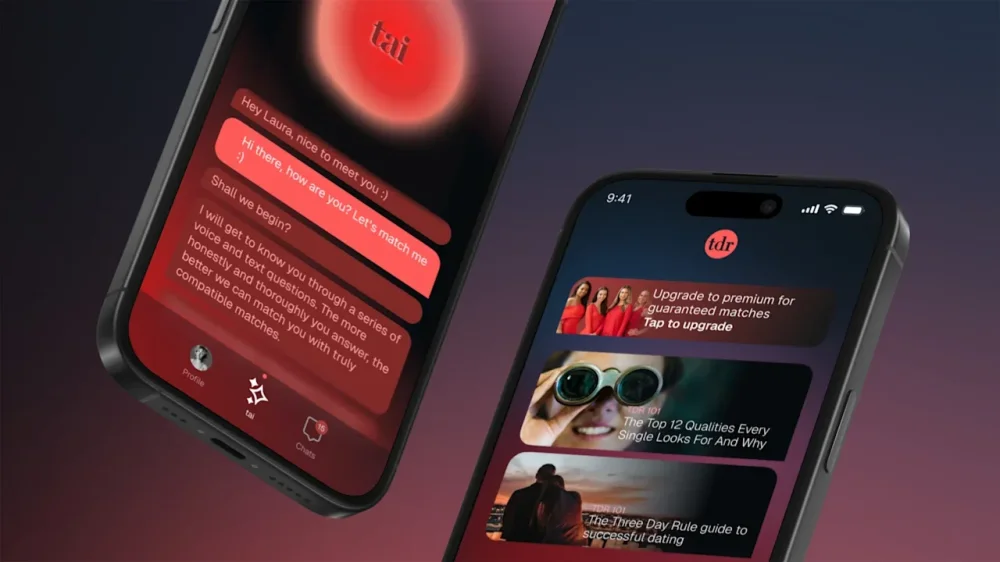
Matchmaking is an ancient dating process that stretches back thousands of years. But as online dating fatigue has begun to dominate the modern-day discourse around finding love, one company is betting that matchmaking will see a revival, and they’ve spent years developing a tool to make it happen: an AI matchmaker named Tai. One might argue that all modern dating apps aim to serve as a kind of matchmaker; an intermediary whose purpose is to connect two singles with each other. But Adam Cohen-Aslatai, CEO of the matchmaking company Three Day Rule, says dating apps still put the onus on users to choose the right partners based on what the algorithm serves. In contrast, he explains, a traditional matchmaker uses their in-depth knowledge of the client to facilitate that process, selecting matches that aren’t just compatible on a screen, but in real life. Now, Three Day Rule is rolling out its first-ever app designed to bring that human-centric matchmaking experience to a broader client base. The app leverages multiple AI models built upon 15 years of matchmaking data collected by the company. While Three Day Rule’s elite “white-glove” matchmaking services typically run clients around $2,000 per month, its AI matchmaker is available starting for free. AI features have become increasingly popular on existing dating apps in recent months. But Cohen-Aslatai says none of them are fixing the larger problem: Self-serve dating apps just don’t work very well. Traditional dating apps are effective 9-11% of the time, he claims, compared with an 70-80% success rate for traditional matchmaking. “Matchmakers aren’t self-serve; they are serving you,” Cohen-Aslatai says. “They are doing all the work for you. And they’re saying, ‘I know you better than you know yourself. I know what you need for long term relationships. And I’m not going to let you waste your time on people that are candy, I’m going to give you the full meal.’” Is matchmaking the new swiping? For many singles searching for love, AI-powered tools are becoming an integral part of the swiping process. Hinge now uses AI to help users craft better profile prompt responses; Tinder is set to roll out AI-powered personalized matches; the AI assistant app Rizz uses AI exclusively to help users come up with responses on dating apps; the AI relationship advice app Meeno helps men find love; and Bumble founder Whitney Wolfe Herd even announced that the company is currently working on its own AI matchmaking service. Cohen-Aslatai has seen it all. He previously worked at dating apps including The Meet Group, Zoosk, and Bumble’s gay dating app Chappy, and even founded and sold his own app called S’More. But, over the past few years, he’s become convinced that matchmaking is the most effective dating option out there. He argues that, on dating apps, users are looking for a match that meets their requirements on paper—standards that, oftentimes, are preventing them from taking healthy risks. Matchmakers are trained to take those preferences into consideration while also encouraging clients to try people slightly outside their comfort zone. Three Day Rule’s process starts by assigning three experts to each client: A matchmaker tasked with learning everything about the client’s needs and wants in a relationship, a coach to help advise clients on dates, and a recruiter who meets potential matches at places like the airport or the beach. For its highest paying VIP members, the company offers everything from personal stylists to hair and makeup services. It’s dating for people with more than just a little extra money who don’t want to leave their love lives up to chance. Cohen-Aslatai stepped in as the CEO of Three Day Rule last October. In the past year, he says company sales have increased by a whopping 40%. Its VIP matchmaking membership—which costs a head-turning $100,000 for 16 months—has also shot up from accounting for 5% of its business to 50% in the same period. Last year, Three Day Rule conducted its own survey to understand how singles outside of its network are thinking about matchmaking. The report, which included 250 respondents, found that 74% would try matchmaking, while only 1% actually have. The main reason for that discrepancy is the price barrier. “So, if you think that matchmaking works, and everyone would try it, but it’s too expensive, the question is, how do we democratize this concept?” Cohen-Aslatai says. How Three Day Rule built an AI matchmaker The answer he’s landed on is Tai. Cohen-Asla”tai” and Sneha Ramachandran, general manager of Three Day Rule’s new app, have been working on perfecting this AI matchmaker for the past two years. Whereas Three Day Rule’s services typically start at a hefty $1,500 for a three-month plan, its new app comes in a free tier, which gives users five minutes of daily voice conversation with Tai and a separate AI coach (alongside unlimited texting), as well as five ongoing conversations with matches. A second premium tier costs $99 per month and includes four guaranteed match introductions per month, 10 minutes of daily conversation with Tai and an AI coach, and unlimited conversations with matches. Tai is built off of ChatGPT, which, Cohen-Aslatai says, has the fastest voice response rates of any other models on the market. But while ChatGPT serves as the base of the model, it’s trained on data collected by Three Day Rule. That means that all of Tai’s interactions—from their tone to the questions they ask—are informed by data collected through Three Day Rule’s human matchmakers. Unlike other dating services, which are primarily focused on facilitating first dates, Cohen-Aslatai explains that Three Day Rule has collected a wealth of post-date data. This information, gathered through multi-question surveys sent after every date, lets matchmakers know exactly what the client did and didn’t like about their match. All of these insights have helped to refine Tai’s matching abilities. When users first download Three Day Rule, they’ll have to complete a mandatory photo verification process in order to join. From there, they’ll have an initial conversation with Tai (via text or voice messages), during which Tai will gather key details like important preferences, demographic and psychographic information, and relationship deal-breakers. After that discussion, Tai will begin searching the app’s database for matches. Over time, the model will make its way through 150 questions identified by Three Day Rule as important topics to understand exactly what a client is looking for. “We’re trying to really deeply understand your personality,” Cohen-Aslatai explains. Part of that process means attempting to replicate the uniquely human touch of a matchmaker in AI form. If a user is giving brief “yes” or “no” answers, Ramachandran says, Tai will adjust its responses to match that cadence and probe deeper in later conversations. A chattier user will get chattier answers. Tai is even programmed to trick you by asking the same question in different ways if it suspects you may just be giving the answer it wants to hear. When the app identifies potential matches, both parties have to approve the decision before they’re connected online. From there, users can also chat with a second AI model in the app, which stands in for the human coach the company offers to its clients. This model has been trained using company podcasts, articles, and coaching guidelines to field questions about dates, debrief interactions, and help clients overcome personal obstacles to love. In response to a question like, “I liked him, but how can I know if he liked me?” for example, it might give three potential signals of mutual attraction. The app is built to offload the effort of swiping, searching, and vetting potential partners from the user onto the AI matchmaker. All the client should have to worry about, in theory, is uncovering what they really want in a partner. Why relationship experts are wary about AI-powered dating apps Tai is designed to make navigating the online dating world less complicated. But Treena Orchard, an associate professor at the School of Health Studies at Western University in London and author of the book Sticky, Sexy, Sad: Swipe Culture and the Darker Side of Dating, isn’t convinced. As a researcher specializing in the intersection of sex, relationships, gender, and tech, Orchard is generally wary about the claims made by many dating apps that AI features will make dating easier—especially considering that, from her perspective, that shouldn’t necessarily be the goal. “The problem I have with a lot of these different services is that it just really amplifies the difficulties that already exist,” Orchard says. “Dating is going to be hard no matter who’s doing it, because relationships are strange and we’re humans, and we have lots of desires and things pent up, and we’re not really good at teaching each other how to talk about these things.” When we start to rely on an external source to facilitate dating—whether that be a matchmaker or a digital device—she says that we become removed from the process of actually getting to know each other. In regard to Three Day Rule’s new app, Orchard sees the utility of tapping into a network created by professional matchmakers who have experience in pulling together eligible singles. Still, she says, it’s important to recognize that, while matchmaking may be statistically more effective than dating apps, that’s also because it’s historically required a much greater financial investment. “Okay, it’s been trained by high end white-glove matchmakers—great—but it’s still AI,” Orchard says. “One of the critiques I have is that variety is so important. Taking a chance on someone new and someone different can open up a whole interesting Pandora’s box of experiences that you could never have calculated in your wildest dreams if you just rely on an algorithm.” On a broader scale, she’s concerned about what it might mean to continuously find new ways to incorporate AI into our romantic relationships. For those who feel trapped in the online dating cycle, she recommends balancing the apps with trying new in-person events and hobbies—even, and especially, if it’s hard. “The struggle is how we learn about rejection, about resilience, about failure, about one another, and how we get better at dating and become confident in ourselves,” Orchard says. View the full article
-
Did you know you can customize Google to filter out garbage? Take these steps for better search results, including adding Lifehacker as a preferred source for tech news. I really don't recommend studying with other people. In my adult life, I've accumulated an Associates, Bachelors, and Masters, plus a bunch of certificates—in all those years of studying, I was frustrated with group work much more often than I was not. Sessions would devolve into chit-chat and venting sessions or someone would try to avoid pulling their weight by foisting work off on the rest of us. I became the person who would complete the entire project and let everyone put their name on it because I just wanted to avoid all that—but it was probably because I didn't know the right methods to make these sessions productive. There are actually a few effective methods that will help you study with partners or groups, but you have to know them before you get into that group setting—or else run the risk of no one getting much working done. Try one of my favorite group study methods—“think, pair, share”—the next time you want to study with someone else. I wish I'd known about this one in college, but you still have a chance. What is “think, pair, share”? Think, pair, share is a teaching technique typically employed by instructors, but it's easily modifiable for people getting some studying done, too. According to Western Governors University, it was developed by a professor named Frank Lyman in 1981 and is helpful for shy students, as it encourages them to engage in discussion. The name basically tells you what you need to do: First, you think about the subject at hand, studying it until you are pretty sure you grasp it. Then, you pair up with someone to discuss it. Finally, you share what you read, understand, and don’t understand with the group afterward. Ideally, by going over the material together, you’ll help each other fill in gaps in your understanding and enhance what you already know. Use TPS to its maximumThose are overly simplistic steps, so you need to have a plan for how you'll approach each one. "Think about the subject" is too general. On your own, you should be reading your material critically, using a reading comprehension aid like KWL or SQ3R. Those ask you to write down what you think you know, what you want to know, and what you eventually learn, which forces you to read carefully so you find the answers. When using TPS, they perform a dual function: They give you questions you can ask to the larger group, too. When it comes time to share, approach it with a plan, too. Volunteer to structure the study session and have everyone go around one at a time to share their favorite insight from the material or idea for the project. Split into pairs and use the Feynman technique, which asks you to teach a concept to another person and relies on the idea that if you can break an idea down well enough to explain it simply, you understand it well. Why think, pair, share works for studyingIf you’re familiar with other group study methods, like the jigsaw method or Feynman, some of the elements of TPS might sound familiar. With jigsaw, each person in the group studies one part of the assigned text, then explains it to everyone else. When using Feynman, you explain the topic you studied as simply as you can to someone else who knows nothing about it. The difference is that with TPS, everyone in the group knows the material before discussing, so you’re not necessarily teaching anyone or being taught, so much as you’re comparing ideas. When you’re sharing what you know, you make space for someone else to ask follow-up questions, forcing your brain to use active recall to search around for the answer—or sending you back to the source material to look it up. Hearing someone else’s perspective can help you reframe how you think of the topic, causing it to stick in your brain even more. View the full article
-
Shares in AppLovin Corp were up slightly in premarket trading today after falling by double digits on Monday. The volatile movement follows a Monday report about a rumored probe by the Securities and Exchange Commission (SEC), which reversed the fortunes of what had been a high-growth tech stock for much of 2025. Here’s the latest on AppLovin and what to know: What was reported about AppLoving? On Monday, Bloomberg reported that the SEC was looking into the ad tech company’s data collection practices in response to a whistleblower complaint and multiple short-seller reports published earlier this year. Specifically, the regulatory agency is looking into whether AppLovin violated service agreements with its platform partners to “push more targeted advertising to consumers,” Bloomberg reported, citing anonymous sources. Reuters reported on the rumored probe later on Monday. AppLovin did not immediately respond to a request for comment from Fast Company. A spokesperson for the SEC said the agency was unable to respond to press requests due to the ongoing government shutdown. How has AppLovin’s stock reacted? AppLovin Corp stock (Nasdaq:APP) has fallen significantly since the reports surfaced. Shares were down more than 14% by market close on Monday. On Tuesday morning, however, the stock remained volatile. It was down close to 4% in premarket trading earlier in the morning but moved into positive territory later in the session. It was up about 1.11% as of this writing. The stock had seen tremendous growth this year, trading at around $341 a share in early January and mushrooming to over $682 as of Friday of last week—an increase of around 100%. In terms of growth, it has outperformed Big Tech giants such as Nvidia, Meta, Google, and Apple. In September, AppLovin’s stock was added to the S&P 500. This followed a better-than-expected earnings report in August in which net income more than doubled to $819.5 million, CNBC reported. At the time, the company was seen as benefiting from its AI-powered technology that helps advertisers better target users in mobile games. This story is developing… View the full article
-
We may earn a commission from links on this page. Deal pricing and availability subject to change after time of publication. Amazon Big Deal Days is coming October 7-8, and Lifehacker is sharing the best sales based on product reviews, comparisons, and price-tracking tools before it’s over. Follow our live blog to stay up to date on the best sales we find. Subscribe to our shopping newsletter, Add to Cart, for the best sales sent to your inbox. New to Prime Day? We have a primer on everything you need to know. Sales are accurate at the time of publication, but prices and inventory are always subject to change. Apple's AirTags have changed the way I travel. I no longer worry about losing my belongings because one AirTag always stays in my backpack and one lives in my luggage. The moment I leave my backpack behind anywhere, I get a notification that reminds me to retrieve it; when I land, I do a quick check to confirm that my luggage has also arrived. If you're in the market for a great Bluetooth tracker to use with your iPhone, the AirTags are hard to beat—and the four-pack is almost 35% off during the October Prime Day sale. That matches its lowest ever price with a $40 discount over the list price. Apple AirTags (4-pack) $64.99 at Amazon $99.00 Save $34.01 Get Deal Get Deal $64.99 at Amazon $99.00 Save $34.01 If you do need four AirTags (or can split the purchase with a friend), this discount brings the cost down to nearly $16 per unit—that's $4 less than the current deal price of $20 for a single AirTag (which is a dollar above its all-time low price). Once you buy an AirTag, check out all their hidden features to get the most out of it. Even though it may sound tempting, you should avoid using AirTags to track your kids—it won't give you real-time updates on a person's location, so it's best used in cases where you don't need that feature. Looking for something else? Retailers like Walmart and Best Buy have Prime Day competition sales that are especially useful if you don’t have Amazon Prime. Walmart’s Prime Day competition sale runs from Oct. 6 at 7 p.m. ET through Oct. 12 and includes deals up to 50% off. It’s an especially good option if you have Walmart+. Best Buy’s Prime Day competition sale runs from Sept. 27 through Oct. 12, and has some of the best tech sales online. It’s an especially good option if you’re a My Best Buy “Plus” or “Total” member. Target’s Prime Day competition sale runs from Oct. 5 through Oct. 11, and it has deals going up to 50% off. You can become a Circle member for free. Our Best Editor-Vetted Prime Day Deals Right Now Apple AirPods Pro 2 Noise Cancelling Wireless Earbuds — $169.99 (List Price $249.00) Meta Quest 3S 128GB All-In-One VR Headset — $249.00 (List Price $299.99) Apple iPad 11" 128GB A16 WiFi Tablet (Blue, 2025) — $279.00 (List Price $349.00) Samsung Galaxy Tab A9+ 10.9" 64GB Wi-Fi Tablet (Graphite) — $148.94 (List Price $219.99) Blink Mini 2 1080p Indoor Security Camera (2-Pack, White) — $34.99 (List Price $69.99) Ring Battery Doorbell Plus — $79.99 (List Price $149.99) Blink Video Doorbell Wireless (Newest Model) + Sync Module Core — $34.99 (List Price $69.99) Shark AV2501S AI Ultra Robot Vacuum with HEPA Self-Empty Base — $229.99 (List Price $549.99) Amazon Fire HD 10 (2023) — $69.99 (List Price $139.99) Wyze Cam v4 2K Wired Wi-Fi Smart Security Camera (White) — $25.95 (List Price $35.98) Deals are selected by our commerce team View the full article
-
Working with your romantic partner isn’t just a niche phenomenon; it’s a growing trend. A recent study from the National Library of Medicine reveals nearly one in four U.S. small businesses are run by romantic couples. Yet, for all the talk of “power couples” in the startup world, precious little unfiltered insight exists on what it actually takes to share a bed, a budget, and a booming enterprise. For many, the lines between personal and professional don’t just blur; they cease to exist. My husband, Joe, and I are the founders behind Serenity Kids, now the fastest-growing shelf-stable baby food brand in the U.S. Our origin story is uniquely intertwined with our personal one: the business was our first “baby,” meticulously nurtured from a shared frustration with the unhealthy baby food aisle. Our second? A literal, adorable human baby who is, unbelievably, seven this year. As we scale a multimillion-dollar company while simultaneously navigating the exhilarating chaos of parenthood, I’ve gained an interesting perspective on the strategic moves and nonnegotiable rules that keep our marriage, and our company, thriving. The Nonnegotiable Boundary That Saved Our Marriage It sounds counterintuitive for founders whose lives are inextricably linked to their venture: put a hard stop on work discussions once you walk through the front door. But for Joe and me, this rule became the lynchpin of our relationship’s resilience. In the early days of Serenity Kids, it was 24/7. Every meal, every car ride, every evening was a business meeting. Our passion was relentless, but I quickly realized the constant operational debriefs were eroding our identity as a couple. We were colleagues who lived together, not partners. The encroachment was subtle. We’d be dissecting strategy over dinner or debating a supply chain hiccup right before bed. I realized that I missed him. And I had no idea what was truly happening in my partner’s life outside of work. The breaking point was Joe sleeping in the guest room because we’d had yet another work fight at bedtime. Those nights were disconnecting and actually set us back—both personally and professionally. Because close connection is our special sauce. Personality-wise, we are total opposites in every way—he’s an extrovert while I’m an introvert, I’m a perfectionist while he’s a “good enough” kind of guy, etc. So when we’re disconnected, we’re each operating as only half of a complete whole. I knew we needed a sacred space where we could simply be Serenity and Joe, disconnected from our job titles. Our solution: an unwavering commitment to compartmentalization. Of course, genuine emergencies warrant discussion. But the default is clear: once we’re home, we consciously shift gears. We discuss our day as parents and individuals. We prioritize connecting on a human level over any work-related issues. We have 1:1 meetings on the calendar three times a week just to discuss work. And if either one of us tries to bring up a work topic, we say “put it on the agenda!” We also have dedicated date days or date nights where we commit to avoiding both work and kid talk, so we can focus on each other, as well as quarterly vision retreats where we visualize the future of our relationship, family, and business. This rigorous boundary, challenging as it was to implement initially, has proven invaluable. It forces hyperefficiency during work hours and provides essential emotional bandwidth to nurture our romantic relationship, separate from the relentless demands of the business. Strategic Division of Labor In any cofounder dynamic, clear role definition is paramount. When you add parenting to the equation, that clarity shifts from crucial to existential. For Joe and me, this has been a huge area of growth and evolution. For the first several years after we had our daughter, I had the constant hum in my head that most working moms experience. “What’s for dinner? Who’s handling bath and bedtime tonight? What meetings do I have today and what should I wear?” For a long time, I wrestled with that mental load. Not just about completing the task, but all the thinking, planning, and worrying that drained my energy. I wasn’t sleeping well, I wasn’t eating well, and I just wasn’t taking care of myself. While Joe watched TV at night, I stayed up late washing bottles, ordering next-size-up baby clothes, and researching Della’s latest mystery rash. All while still working full time plus managing our family’s finances and anything that required paperwork. I was miserable. And after a brush with death from COVID pneumonia, I knew something had to change. I found the Fair Play method by Eve Rodsky, and my mind was blown. I now could see the mountains of invisible work I had been doing since Della was born that Joe had no idea even existed. After some hard conversations and Joe’s willingness to experiment with a different way, the constant weight began to lighten. Throughout this process, he and I have become true partners. He is no longer a partner who just “helps out.” This philosophy has shaped how Joe and I built our marriage and approach parenting. He dives deep into this in Episode 7 of his podcast Dadicated Joe, sharing how we’ve worked to keep the spark alive after becoming parents. Applying these principles has not only brought more harmony to my family but also reinforced the importance of clear roles, mutual respect, and holistic well-being at Serenity Kids. We work to build culture and sustainable systems where everyone can truly thrive. While encouragement is nice, what we all really need is a partner willing to jump in and fold the laundry when the piles get high. We’ve learned to be that support for each other. At home. At work. Everywhere. 5 Crucial Lessons I’ve learned a wealth of actionable insights I’d offer to other romantic partners considering, or currently navigating, the high-stakes journey of entrepreneurial cofounding: Strict Role Definition (and Unwavering Trust): This is nonnegotiable. You need to clearly delineate who owns what. Then, extend absolute trust in your partner’s domain. Undermining their decisions in their area of responsibility is a direct threat to both business progress and relationship integrity. Cultivate Separate Spaces (Even Symbolic Ones): Joe and I quickly learned that constant physical proximity, transitioning from “work mode” to “couple mode” in the same room, was counterproductive. Whether it’s different offices or simply dedicated “zones,” creating some physical and mental separation during work hours is vital for psychological resets. Proactive Relationship Investment: Your business will demand everything, but your personal relationship is the fundamental platform. Prioritize dedicated date nights, even if they’re modest. Engage in non-work conversations. Actively recall and reinforce the shared values and affection that initially drew you together, beyond the business ambition. Embrace Dynamic Balance, Not Static Perfection: The concept of “perfect balance” is a myth. Some days, the business will command absolute priority. On others, your child will need every ounce of your attention. Success lies in embracing this inherent fluidity and adapting, rather than chasing an unattainable, rigid ideal. Leverage Objective External Counsel: Engaging an objective third party—a business coach, a therapist specializing in entrepreneurial couples, or even a trusted mentor—provides invaluable perspective. They can facilitate healthy conflict resolution, reinforce boundaries, and ensure that communication remains robust and constructive. The journey of building Serenity Kids has served as a rigorous masterclass in leadership, partnership, and parenthood for Joe and me. We’re not merely disrupting the baby food market; we’re actively demonstrating a new paradigm for how ambitious couples can build a thriving enterprise and a fulfilling family life. It’s not perfect. It’s often messy. But I hope our story encourages others to set strategic boundaries, show mutual respect, and find an abundance of resilience. Maybe those of us crazy enough to do both journeys together truly can have it all—even if it means putting your first “baby” to bed before focusing on bedtime at home. View the full article

-
We may earn a commission from links on this page. Deal pricing and availability subject to change after time of publication. Amazon Big Deal Days is coming October 7-8, and Lifehacker is sharing the best sales based on product reviews, comparisons, and price-tracking tools before it’s over. Follow our live blog to stay up to date on the best sales we find. Subscribe to our shopping newsletter, Add to Cart, for the best sales sent to your inbox. New to Prime Day? We have a primer on everything you need to know. Sales are accurate at the time of publication, but prices and inventory are always subject to change. The iPad mini is Apple’s smallest iPad in the lineup, but not its cheapest. If you’re someone who likes compact devices, that aren’t compromised in performance and hardware, you’ll like the latest iPad mini. For Amazon’s October Prime Day sale, the iPad mini is discounted by $120. The base 128GB model can be yours for just $379, instead of the regular $499 sticker price. This is the lowest price we've seen yet for the iPad mini, matching the Amazon Prime Day sale back in July. 2024 Apple iPad mini A17 Pro chip, Built for Apple Intelligence, Wi-Fi 128GB - Blue $631.68 at Amazon Get Deal Get Deal $631.68 at Amazon The latest iPad mini (2024) is a lot more powerful than the outgoing model, boasting Apple’s A17 Pro chip, the same found in the iPhone 15 Pro. It can handle multitasking and gaming with ease, and it also supports Apple Intelligence. Perhaps more surprisingly, it supports iPadOS 26’s new windowing mode where you can open multiple floating windows on the small 8.3-inch screen. The latest model also features more storage, now starting at 128GB. This means more room for your apps and games. The iPad mini looks like any other iPad in the lineup, but it’s small, measuring in at 7.69 by 5.30 by 0.25 inches (HWD) and weighing 0.65 pounds. The iPad mini features the Touch ID sensor at the top, like the iPad air, and it also supports Apple Pencil, as well as the new Apple Pencil Pro with new features like squeeze to select, barrel roll for rotating pen tips, haptic feedback, and more. There’s a USB-C port that can be used for charging and data transfer. There’s a single 12MP camera on the back that’s good enough for casual use and for scanning documents. PCMag gave the iPad mini a rating of four stars in this review, noting that it "remains a well-built and highly portable tablet." If you're looking for a larger model, Apple has also discounted the regular 11-inch iPad down to $279, and the iPad Air to $449 ($150 off, and the lowest price we've seen yet). Looking for something else? Retailers like Walmart and Best Buy have Prime Day competition sales that are especially useful if you don’t have Amazon Prime. Walmart’s Prime Day competition sale runs from Oct. 6 at 7 p.m. ET through Oct. 12 and includes deals up to 50% off. It’s an especially good option if you have Walmart+. Best Buy’s Prime Day competition sale runs from Sept. 27 through Oct. 12, and has some of the best tech sales online. It’s an especially good option if you’re a My Best Buy “Plus” or “Total” member. Target’s Prime Day competition sale runs from Oct. 5 through Oct. 11, and it has deals going up to 50% off. You can become a Circle member for free. Our Best Editor-Vetted Prime Day Deals Right Now Apple AirPods Pro 2 Noise Cancelling Wireless Earbuds — $169.99 (List Price $249.00) Meta Quest 3S 128GB All-In-One VR Headset — $249.00 (List Price $299.99) Apple iPad 11" 128GB A16 WiFi Tablet (Blue, 2025) — $279.00 (List Price $349.00) Samsung Galaxy Tab A9+ 10.9" 64GB Wi-Fi Tablet (Graphite) — $148.94 (List Price $219.99) Blink Mini 2 1080p Indoor Security Camera (2-Pack, White) — $34.99 (List Price $69.99) Ring Battery Doorbell Plus — $79.99 (List Price $149.99) Blink Video Doorbell Wireless (Newest Model) + Sync Module Core — $34.99 (List Price $69.99) Shark AV2501S AI Ultra Robot Vacuum with HEPA Self-Empty Base — $229.99 (List Price $549.99) Amazon Fire HD 10 (2023) — $69.99 (List Price $139.99) Wyze Cam v4 2K Wired Wi-Fi Smart Security Camera (White) — $25.95 (List Price $35.98) Deals are selected by our commerce team View the full article
-
Our second annual Ignition Schools awards recognizing the colleges and universities shaping future entrepreneurs and innovators arrives at a crucial crossroads for higher education. On one hand, artificial intelligence has caused us to rethink assumptions about how far and how quickly technology can improve our society and our lives. On the other hand, a storm of skepticism brewing in a sea of disinformation has dimmed the view of many toward college educations, which some have also accused of being politically indoctrinating. That has led to unprecedented attacks on university research funding at a time when core research is needed to develop advanced solutions in such fields as healthcare, defense, and education. The colleges that lead our list represent the diversity of education approaches that will be needed to prepare the next generation of disrupters to prevail. They include centuries-old institutions, sprawling public universities, colleges in the hearts of tech hubs, business schools with global footprints, and innovation centers helping to lift up new voices and communities. But they all recognize that they must offer more to today’s students than the business savvy that has long defined the MBA pipeline. In addition to focusing more on adaptability in a rapidly shifting tech and economic landscape, colleges are nurturing the inventive spirit by hosting pitch competitions, celebrating industry recognition, and addressing the needs and resources of their communities. In many cases, they have launched or forged ties with incubators and accelerators that promote networking with peers and successful entrepreneurs. These can also serve to leverage IP as the “secret sauce” providing an advantage to startups, enterprises, or thriving rural businesses without the pressures of exit-maximizing venture investors. In encouraging entrepreneurship, their programs are helping to develop the advancements of the next generation while inspiring alumni who can keep the innovation ecosystem healthy for future generations. 1. Stanford University Stanford, California Located in the heart of Silicon Valley, Stanford’s entrepreneurial engines have yielded incredible results. StartX funds and mentors founder teams involving at least one member of the Stanford community, while Launchpad challenges students to get their startups off the ground in 10 weeks, emphasizing action over planning. 2. University of Pennsylvania Philadelphia, Pennsylvania Beyond pursuing a master’s in entrepreneurship or engineering or participating in startup clubs and competitions, students can find entrepreneurship opportunities at Penn’s Venture Lab, a hub catering to four different routes. The Founder, Explorer, Joiner, and Investor “pathways” offer resources to students curious about entrepreneurship as well as those looking to gain investing experience.>/p> 3. Harvard University Cambridge, Massachusetts Through its One Harvard approach, the school’s entrepreneurship initiatives reach across its 13 colleges, leveraging an extensive network of alumni and resources. The Harvard Innovation Lab, or i-lab, is the physical space where students and alumni build community and startups with access to funding and specialized programming. 4. Massachusetts Institute of Technology (MIT) Cambridge, Massachusetts When it comes to business, MIT takes advantage of its world-class science and technological research. The two disciplines merge under the Martin Trust Center for MIT Entrepreneurship, with programs and courses stemming from the Disciplined Entrepreneurship framework. Developed at MIT, the step-by-step guideline helps founders transform their research or ideas into market-ready ventures. 5. Columbia University New York, New York Crowning Manhattan’s rapidly growing entrepreneurial scene, Columbia offers direct access to an expert network in the city, support for student ventures with groups like the Columbia Organization of Rising Entrepreneurs, and a postgraduate resource in the Columbia Startup Lab for recent alumni.> 6. University of Michigan Ann Arbor, Michigan The Innovation Partnerships Startup Incubator helps shape the University of Michigan’s state-of-the-art IP into real-world applications. The program pairs founders from around the world with entrepreneurial mentors and provides access to world-class lab and office spaces. The incubator represents just one of the university’s business innovation programs, which include its Center for Entrepreneurship and the Zell Lurie Institute for Entrepreneurial Studies. 7. Tel Aviv University Tel Aviv, Israel Consistently ranked at the top for global entrepreneurship programs, Tel Aviv University offers students access to a network situated in a global startup hub, an in-house accelerator program and funding, and courses emphasizing a hands-on approach, including one that pairs students with Israeli startups. 8. New York University New York, New York The NYU Entrepreneurial Institute brings the university’s new founders and seasoned researchers and alumni together under a shared goal of launching startups. Community members can follow a clear path designed by the Startup Accelerator Program, including the Bootcamp, Sprint, and Launchpad phases, and continue toward a market-ready venture with seed funding and fellowships. 9. Cornell University Ithaca, New York The spirit of entrepreneurship rises far above Cayuga’s waters in Ithaca, New York. Any undergraduate may pursue a minor in the field, while eLab serves as an accelerator for student-led ventures. More specialized resources are offered, too, such as the training program for female and nonbinary PhDs and postdocs and an incubator for science and engineering-based businesses. 10. University of California, Berkeley Berkeley, California For the sixth year in a row, PitchBook named UC Berkeley the top public university producing venture-backed startup founders. Berkeley SkyDeck, the university’s incubator and accelerator, commercializes research and provides programming and coursework through the engineering and business schools. 11. Northwestern University Evanston, Illinois At the center of Northwestern’s entrepreneurship ecosystem is the Garage, which offers mentorship, events, and workspaces to more than 3,000 Northwestern students each year. The university emphasizes science-driven startups at the Querrey InQbation Lab and rewards top initiatives with funding and exposure through VentureCat, its annual startup competition. 12. Yale University New Haven, Connecticut Bulldogs of all disciplines are encouraged to embrace their entrepreneurial spirit at the Tsai Center for Innovative Thinking at Yale. One program, Launch, invites incoming first-year students to hear from alumni founders and collaborate in workshops, equipping them early on with the tools they need to excel as business leaders. 13. Tsinghua University Beijing, China Tsinghua University, which lies in startup hot spot Zhongguancun, Beijing, boasts the government’s support through national funding and partnerships. The institution hosts competitions such as the Great Idea Challenge and the President’s Innovation Challenge for startups and helps research efforts transform into successful commercial ventures via its private equity firm Tsinghua Holdings. 14. Duke University Durham, North Carolina Duke Innovation & Entrepreneurship emphasizes problem-solving through programs, courses, competitions, and mentorship; students can join entrepreneurial-forward campus organizations like the Cube and HackDuke. Physical resources are available too. These include spaces like the Foundry for developing ideas and building prototypes and the Innovation Co-Lab for exploring emerging technologies like 3D printing. 15. University of Texas, Austin Austin, Texas UT Austin bridges budding entrepreneurs and Austin’s booming tech scene. The Austin Technology Incubator, the longest running of its kind, connects students with investors and experts who help commercialize their innovations. The college also supports female entrepreneurs through the Kendra Scott Women’s Entrepreneurial Leadership Institute. 16. University of Washington Seattle, Washington The University of Washington has climbed the entrepreneurship rankings in recent years. The Arthur W. Buerk Center offers programming to undergraduates as well as master’s students and PhD candidates, while the CoMotion hub supports student founders from industry-targeted incubators. 17. University of Southern California (USC) Los Angeles, California Known as the longest-running entrepreneurship program in the country, the Lloyd Greif Center for Entrepreneurial Studies at USC encourages flexible thinking in dynamic situations. Students across all industries and experience levels are encouraged to participate in coursework and programming, including a connection to the extensive network in the neighboring tech startup hub, Silicon Beach. 18. University of Oxford Oxford, England EnSpire, the hub of entrepreneurship at Oxford, encourages all community members to develop business innovation skills. The university focuses on commercializing scientific and technological research. Oxford University Innovation manages the university’s IP and helps transform the research into companies, while Oxford Science Enterprises funds and develops those companies. 19. Johns Hopkins University Baltimore, Maryland The Pava Marie LaPere Center for Entrepreneurship hosts a range of programs and funding for JHU community members. The institution is also committed to strengthening Baltimore. The President’s Venture Fellowship provides funding to recent graduates pursuing full-time startups in the city, while courses like CityLab for MBA students explore livability challenges and solutions. 20. INSEAD Fontainebleau, France A graduate-only business school, INSEAD has a strong focus on fostering entrepreneurship. The Maag INSEAD Centre for Entrepreneurship offers boot camps for startups, venture competitions, and mentorship through programs like Entrepreneurs in Residence. Its LaunchPad—located in Paris’s Station F, the world’s largest startup campus—promotes alumni-led business ventures through networking events and workspaces. 21. University of Toronto Toronto, Ontario Recognized as the top university in Canada for entrepreneurship, U of T offers extensive resources to its students, faculty, and alumni. Its incubators and accelerators include the Creative Destruction Lab, which supports seed-stage tech companies with high potential, and the Entrepreneurship Hatchery, which helps students team up to develop startups. 22. University of Maryland College Park, Maryland The University of Maryland’s approach to entrepreneurship builds on its strength in technology and health sciences, supporting both social and commercial ventures. The Startup Shell is a student-led incubator equipped with coworking spaces, while the President’s Entrepreneurial Fellowship offers Terrapin students a chance to bring faculty research to market. 23. University of California, San Diego San Diego, California UCSD’s entrepreneurship offerings span its engineering and management schools. Students and alumni find like-minded peers and mentors amid the programs and funding of the Sullivan Center for Entrepreneurship and Innovation, where disruption is viewed as an opportunity to build positive change. Specialized offerings include the Institute for the Global Entrepreneur, which trains engineers, and the Triton Sustainability Challenge, which spotlights environmental solutions. 24. Carnegie Mellon University Pittsburgh, Pennsylvania CMU community members are encouraged to submit their startups through its website to receive access to an array of resources and networks. These include the Swartz Center for Entrepreneurship’s VentureBridge, a pre-seed fund and accelerator program for full-time founders, and the Innovation Commercialization Fellows Program, which helps the university’s research evolve into marketplace offerings. 25. Babson College Wellesley, Massachusetts Babson is consistently ranked at the top of the country’s universities for entrepreneurship. In addition to funding the Butler Launch Pad, a community of entrepreneurs, the small New England powerhouse launched the first U.S. business-school center dedicated to female founders: the Frank & Eileen Center for Women’s Entrepreneurial Leadership. 26. University of Chicago Chicago, Illinois Entrepreneurship at the University of Chicago takes form at the Polsky Center for Entrepreneurship and Innovation. With accelerator programs like the New Venture Challenge, which launched Grubhub and Braintree, and incubators like Polsky Exchange, the institution takes an interdisciplinary approach to foster a collaborative entrepreneurial environment. 27. University of Waterloo Waterloo, Ontario Structured in a co-op program that integrates work experience with academics, the University of Waterloo offers 45 for-credit programs for entrepreneurs. The university hosts four incubators and fosters corporate partnerships to drive research to commercialization. Its unique creator-owned intellectual property policy ensures that their researchers own their inventions. 28. University of Cambridge Cambridge, England According to the university, the Cambridge Cluster is the most successful technology cluster in Europe. From within that sea of incubators and innovation hubs, the 816-year-old institution offers support through mentorship, lectures, and training to aspiring founders all the way to enterprise-stage businesses. 29. Pennsylvania State University University Park, Pennsylvania Invent Penn State is the overarching hub of all things entrepreneurial at the university, connecting students to coaches, conferences, and competitions. The LaunchBox Network provides free business resources to community members. Its statewide locations enable widespread access. 30. University of Virginia Charlottesville, Virginia Although a longtime supporter of entrepreneurship, UVA launched a new phase of commitment with UVA Innovates in September 2024. With the Foundry, a new student entrepreneurship hub, and Enterprise Studio, which partners with faculty, researchers, and investors to bring ideas to market, the university is amplifying the impact of its innovations. 31. Arizona State University Tempe, Arizona In September, U.S. News & World Report named Arizona State the most innovative school in the U.S. for the 11th consecutive year. Business advancement is baked into the university through the J. Orin Edson Entrepreneurship and Innovation Institute, which gives students tools to get their ideas off the ground and tackle challenges, and extends to connected entrepreneurship centers at the business, engineering, and design schools. 32. HEC Paris Jouy-en-Josas, France HEC Paris supports startups, regardless of the stage or industry, through its Incubation & Acceleration Center, Deep Tech Center, and Social Entrepreneurship Center. The innovation hubs offer a slew of programming, from a six-month-long acceleration program, Women Entrepreneurs for Good, to longer HEC Challenges. 33. University of Minnesota Minneapolis, Minnesota The Holmes Center for Entrepreneurship works in tandem with the Carlson School of Management to ignite an entrepreneurial spirit within its members. Student-owned Atland Ventures funds early-stage tech companies while the MN Cup, the largest startup competition in the country, supports Minnesota entrepreneurs. 34. University of North Carolina, Chapel Hill Chapel Hill, North Carolina In joining Innovate Carolina, the UNC community opens the door to resources that enhance and boost its innovative sparks. At the Junction, Tar Heel students and faculty, corporations, and citizen entrepreneurs can find the Launch Chapel Hill startup accelerator, mentorship, and co-working spaces. The Carolina EcoMap brings all these tools together on one platform. 35. Imperial College London London, England The Imperial Enterprise Lab encourages its community to test ideas and launch products to drive positive change. It connects students with mentors, co-founders, and workspaces and recommends relevant books and accelerators. The institution also offers a prototyping hub through the Advanced Hackspace and resources specific to climate, tech, and global health solutions. 36. University of Illinois, Urbana-Champaign Urbana-Champaign, Illinois The University of Illinois encourages students to get involved in the entrepreneurial ecosystem. They can attend networking events each week at the Research Park, gain real-world experience at student-run consulting firm EntreCorps, or explore 3D printing at the Illinois MakerLab. Faculty and alumni can participate as mentors or competition judges in addition to pursuing their own innovations. 37. Texas A&M University College Station, Texas Texas A&M’s McFerrin Center, housed within the Mays Business School, offers programs to community trailblazers. Beyond the university-wide Aggie Pitch competition, students can meet and learn from peer entrepreneurs through a series of discussions at Entrepreneurs Exposed. Each year, the Aggie 100 celebrates the college’s entrepreneurs. 38. Princeton University Princeton, New Jersey In October 2024, Princeton launched the Office of Innovation to strengthen its commitment to entrepreneurship, which includes educational programs, mentorship, and funding. The hub hosts Strategic Partnerships and Engagement, Technology Licensing and New Ventures, and Innovation Infrastructure and Programs, all focused on promoting the university’s innovative minds and honing the impact of its research and education. 39. Washington University St. Louis, Missouri WashU splits its entrepreneurial offerings between its Olin School of Business and Skandalaris Center for Interdisciplinary Innovation and Entrepreneurship, both of which emphasize a hands-on approach. In addition to workshops and events, the Center operates the Student Enterprise Program, in which students run businesses that serve the WashU community, while the business school hosts competitions and pitch events like the Olin Cup. 40. University of Colorado, Boulder Boulder, Colorado The University of Colorado offers entrepreneurial resources across each of its four campuses. Venture Partners at CU Boulder supports the commercialization of university research, and the Jake Jabs Center at CU Denver offers entrepreneurship program scholarships to students pursuing degrees, minors, or certificates. 41. Georgia Institute of Technology Atlanta, Georgia Georgia Tech’s Create-X educates students about business fundamentals and provides the tools and space they need to innovate. The program’s three categories, Learn, Make, and Launch, instill entrepreneurial confidence through coursework, launch programs, and funding. Regular networking events provide students with connections and information to further refine business concepts. 42. University of California, Los Angeles Los Angeles, California Accelerators and coursework support entrepreneurial education throughout UCLA’s schools, but Startup UCLA is the root. The hub is home to the Blackstone LaunchPad mentor network, which sets students up for innovation success; Innovation Fellows, which advances faculty projects into startups; and Bruin Impact, which drives students toward positive change through innovation. 43. Boston College Chestnut Hill, Massachusetts While Boston College’s Carroll School of Management roots entrepreneurship in business fundamentals across all fields, the Shea Center for Entrepreneurship offers programs such as TechTrek@Shea, a professional development course in which students meet with senior leaders at companies such as Airbnb and Tesla and travel to business hubs like New York City and Silicon Valley. 44. McGill University Montreal, Quebec In 2024, PitchBook ranked McGill number one in Canada for both producing the greatest number of successful undergraduate startups and supporting the most female entrepreneurs. McGill’s Dobson Centre for Entrepreneurship supports the community’s entrepreneurial minds through resources like the X-1 Accelerator and the annual Dobson Cup competition for seed funding. 45. London Business School London, England Located in a European startup hub, LBS offers its students an array of unique entrepreneurial development options. These include Global Experiences, which introduces students to international business approaches and cultures through panels and workshops. Others include the INcubator program and Entrepreneurship Summer School. 46. Purdue University West Lafayette, Indiana Purdue Innovates is a bustling network targeting each stage of the startup process. Students find their footing through the incubator and grow through programs like Firestarter and Market Readiness. Meanwhile, seasoned entrepreneurs scale their ideas through the accelerator. And the Alumni Entrepreneurship Network provides long-term connections. 47. Iowa State University Ames, Iowa In 1996, philanthropist and entrepreneur John Pappajohn funded the Pappajohn Center for Entrepreneurship at Iowa State, laying the foundation for what has become an innovation ecosystem. The Student Innovation Center and the ISU Research Park complement the entrepreneurship center, with all three supporting the university’s creative and motivated self-starters. 48. Boston University Boston, Massachusetts From teaching technology creation and commercialization to fundamentals of interactive media, the urban campus overlooking the Charles overlooks little in developing entrepreneurial acumen. Through seed grants, a summer accelerator, and mentorship, students are encouraged to build the future. BU also hosts Idea Con, the only cross-college innovation conference in the world. 49. Georgetown University Washington, D.C. Georgetown’s entrepreneurship program leverages its unmatched proximity to the seat of government power. Venture in the Capital—the university’s first student-led conference—hosts forums at which attendees discuss the intersection of entrepreneurship and public policy. The founder spirit extends into the community, too. The Pivot Program offers a certificate in business and entrepreneurship to those who have been incarcerated. 50. University of Florida Gainesville, Florida UF’s Entrepreneurship and Innovation Center aims to instill a sunbaked entrepreneurial spirit into its community through the core principles “every student an entrepreneur” and “total entrepreneurial immersion.” The center hosts competitions like the UF AI Days Gator Tank for AI businesses and offers an incubator, accelerator, and “dreammaker” through the Gator Hatchery. View the full article

-
Universities have long launched startups in fields like software and biomedicine, but many are now taking increasingly prominent roles backing entrepreneurship around farming, food, and agricultural technology. Part of Purdue’s Applied Research Institute, DIAL Ventures hosts a fellowship aimed at digitizing the agriculture and food industry. The “venture studio” connects fellows with startup experience to corporate partners and university experts who help them hone businesses addressing real market needs, says Professor Allan Gray, the program’s executive director. “The problem is our incumbent companies who feed the world—they’re not digital-native, and so for them to innovate in the digital space is actually quite difficult for them,” he says. “That’s where DIAL Ventures steps in.” So far, the program has backed companies in areas like farmland management, rural logistics, and agricultural equipment maintenance as well as a digital marketing platform for farmers as content creators called Make Hay. They are coming to market as experts say burgeoning technologies like artificial intelligence, robotics, and drones can help address long-standing issues in food production, thanks to innovations from automated harvesting and pest control to data-driven crop yield and logistics optimization. Gray says he expects multiple successful exits by startups within the next few years. Funding in the U.S. “agrifoodtech” sector grew 14% year over year in 2024, according to a recent report from venture firm AgFunder. But tech meant to handle real-world crops and food, not just abstract bits and bytes, can’t be built from isolated offices in Silicon Valley. A key part of Purdue’s role, Gray says, is ensuring technically adept entrepreneurs learn from the experts on the agricultural side. “You’ve got to be open-minded and really be careful about listening to what the industry is telling you is the challenge that’s in front of you,” he says. Of course, at universities serving rural communities, it’s not unusual for students to arrive with their own agricultural expertise, often from working on the family farm. And many of those schools are now helping those students sow their own business ideas. At Iowa State University’s College of Agriculture and Life Sciences, a program called Start Something includes a Student Incubator that supports work in emerging areas like soil analytics and drone pesticide application. One student doubled his drone business from one summer to the next, bringing in more than $200,000 in revenue, says Kevin Kimle, Start Something’s director. Kimle’s own son, Iowa State alum Jackson Kimle, runs a business harnessing innovative water filtration technology for a novel kind of Iowa livestock: fresh shrimp. More than 1,200 students participate in Start Something programs every year, including roughly 200 who take the program’s capstone class, which culminates with business plans presented to real investors and entrepreneurs. Kimle envisions adding programming for high school students interested in agricultural entrepreneurship, which can in turn help recruit them to Iowa State. Successfully pursuing new ideas can help graduates thrive in rural areas while giving back to the community, Kimle says, and entrepreneurial ventures can make it easier for family farms to stay viable for a new generation. Other ag-minded schools, including many that are part of the historic U.S. land-grant program with its long ties to farm and food innovation, boast similar programs, often backed by successful founders among their alums. The U.S. Association for Small Business and Entrepreneurship, which promotes entrepreneurial education, has a subgroup for agricultural and rural entrepreneurship, and student startup hubs have launched at schools like the University of Nebraska, North Carolina State, Texas A&M, and Pennsylvania State University. Penn State offers support for entrepreneurial students throughout the campus, including the College of Agricultural Sciences, which launched an Entrepreneurship & Innovation program in 2012. Today, it includes offerings like Ag Springboard, a Shark Tank-style student pitch competition that draws hundreds of entries and works with students from a range of majors, says teaching professor Mark Gagnon, cofounder of the program. “A good number of our students from [the College of Information Sciences and Technology] and computer science come over the ag space, because these are some big challenges to solve, to figure out how to feed the world and reduce the impacts on our footprint,” says Gagnon. Students have launched companies like Phospholutions, which has developed a soil additive that makes phosphorus fertilizer use more cost-effective while reducing its environmental impact. Perhaps equally important, undergrad innovators train their startup muscles for later use, says Gagnon. “Having that experience at 20 years old is incredible,” he says. “Because when they’re 45 years old and they have the connections and the capital and they see an opportunity that has value and is scalable, they’re just that much further along.” This story is part of Fast Company and Inc.‘s 2025 Ignition Schools awards, the 50 colleges and universities making an outsize impact on business and society through entrepreneurship and innovation. Read about the methodology behind our selection process. View the full article

-
Startups bubbling with new perspectives, fresh technologies, and a war chest to spend on disruption while their businesses find their footing are often rife with innovation, but they don’t hold a monopoly on it. Young talent looking to disrupt legacy industries traditionally looked to entrepreneurship and startups. As corporations prepare for AI they’re trying to convince innovators that the best place to turn their ideas into reality is within the enterprise. “It’s fundamentally shifted in the last year and a half to two years,” says Michele Capra, a senior client partner for talent recruiting and consulting firm Korn Ferry. “Clients are now coming to me saying, ‘we’re looking at our skills across the organization at the entry level, those skills have changed, and we need to recruit differently because of that.’” That transition, Capra explains, has also forced large employers across industries — from tech to financial services to consumer goods — to abandon one of their signatures selling points, namely a clear and predictable career development plan. “Traditionally you knew which roles would be here in 10 years, so there were career paths that offered true stepping stones,” she says. “Now organizations don’t know what roles will be like in 10 years, so they’re hiring for skills, because the career paths will look very different for these individuals.” While some formal AI credentials are widely valued amongst large employers Capra says they’re also looking to hire those that demonstrate more human or “soft” skills, which can help them put the technology to use solving challenges or developing new products or services. Traditionally, many courses on innovation within a larger business, or “intrapreneurship”, have targeted executives in professional learning programs. Cornell University offers an online course to obtain a certificate in intrapreneurship. Some programs, like one at Temple Univerisity, offer courses that span organization types, focusing on “big-picture thinking needed to launch your own business or propose innovative initiatives within existing organizations.” Northwestern University’s Farley Center for Entrepreneurship and Innovation however, offers an advanced class in Corporate Innovation, wherein students “delve into corporate venture capital, internal incubation processes, M&A decisions, and gain the tools to champion change within organizations.” While the Northwestern course is offered through its engineering college, the disruptive potential of artificial intelligence is compelling many institutions to broaden students’ technology education experience. “We have several institutional partners that are doing this, but one I would call out is Emory University in Atlanta,” says Christine Cruzvergara, the chief education strategy officer for Gen Z career platform Handshake. “They proactively hired AI experts within each of their academic domains to be embedded into those programs. Cruzvergara adds that, in her experience, graduates with highly desirable skills and attributes are often less concerned with a prospective employer’s size, and more concerned with its values, “They’re usually looking for a place that has a larger mission or vision around something that they can get behind,” she says. “[Employers’] ability to articulate that pretty clearly and upfront in early conversations really determines whether that conversation is going to continue.” That said, as with graduates pursuing startups, savvy candidates may realize that a lofty mission can have negative consequences.Nor does it mean that the corporate career ladder is the endgame. Cruzvergara says enterprises, much like many colleges, are highlighting the accomplishments of alumni— especially those who went on to become successful entrepreneurs — to imply that the company can offer young innovators a crucial stepping stone whenever they’re ready to trade greater risk for a greater potential reward. This story is part of Fast Company and Inc.‘s 2025 Ignition Schools awards, the 50 colleges and universities making an outsize impact on business and society through entrepreneurship and innovation. Read about the methodology behind our selection process. View the full article

-
In the long-established American ecosystem of scientific advancement, fundamental research—not geared toward immediate application—has mostly been conducted at universities with federal funding. The commercial sector, on the other hand, has been more likely to fund more applied research around ideas closer to market, including backing university studies in promising areas of computer science and medicine. Over time, industry has increasingly built its own innovations on top of basic, federally funded research, says Lee Fleming, professor at the University of California, Berkeley’s Haas School of Business. One prominent recent example is artificial intelligence, he says, which received federal funding for decades before exploding into commercialization in recent years. Earlier this year, though, when sudden federal funding cuts upended university research budgets, the ecosystem fell into turmoil. Faculty whose work often flew under the public radar publicly pleaded the case for their academic pursuits. Researchers at UCLA even held an old-school science fair highlighting the work federal cuts have left in limbo, including studies of brain cancer; the college’s renowned math professor Terence Tao argued for a restoration of federal funding or donations to help make up some of the difference. But non-federal agencies can only make up a fraction of the sums that these institutions depend on to continue their work. Universities have leaned on sources such as philanthropies founded by businesspeople who have built innovations on university research foundations. The Gates Foundation, charged with donating the fortune of Microsoft’s former CEO, has long offered support for medical research, for instance, and a new $3.1 billion Fund for Science and Technology, backed by the estate of his cofounder Paul Allen, recently announced plans to award at least $500 million in grants over the next four years. When staffers at the Spencer Foundation, which funds educational research, learned that their federal funding had been suddenly terminated, they—along with the Kapor Foundation, the William T. Grant Foundation, and the Alfred P. Sloan Foundation—quickly stepped into action, offering $25,000 bridge grants to scholars affected by the sudden cuts. “We heard stories like, I really just need to fund my grad student through the summer,” says Leah Bricker, Spencer’s director of programs. “Or, I’ve spent so much time partnering with X, Y, or Z community, and we’ve invested so much time, and now, overnight, I’m just going to have to leave.” It was just one of a number of rapid moves by the sometimes slow-turning philanthropic sector to get funds researchers needed to continue their work and pay grad students and other vital staff. The Robert Wood Johnson Foundation, for instance, has provided millions of dollars to researchers at academic institutions in “rapid response” health research funding to make up for lost federal money, with plans to offer more over the next year. As universities have also stepped up outreach efforts to alumni and corporate sponsors, states with strong tech sectors, including Massachusetts and California, have proposed providing their own funds for research. California, for example, is proposing a $23 billion, bond-funded science research agency. Nonprofits, including some backed by industry, have also pushed into historically federal domains, such as managing infrastructure, for vital scientific data that could improve efficiency, even as they receive rapidly rising numbers of applications for existing grant programs. “While it’s really hard for any of us to say there’s opportunities coming out of all this uncertainty, I think there would be a better path forward for how scientists have access to and have data infrastructure,” says Elizabeth Weiss, senior director of philanthropic advising at the Science Philanthropy Alliance. But experts agree that any such efforts likely won’t be enough to make up for the potential shortfall anytime soon. “There’s a lot of creativity going on right now,” says Amy Miller, president of the PhRMA Foundation, which supports health-related university research with backing from drugmakers that also often fund research directly, including science at academic institutions. “But I really want to emphasize there is absolutely no way that the foundations and industry together can fill the gaps.” This story is part of Fast Company and Inc.‘s 2025 Ignition Schools awards, the 50 colleges and universities making an outsize impact on business and society through entrepreneurship and innovation. Read about the methodology behind our selection process. View the full article

-
View the full article

-
View the full article

-
View the full article

-
Despite the president’s claims, the South American country is nowhere close to being the US’s biggest drug supplierView the full article
-
Let’s hear it for the frazzled. Those multitasking, multiskilled superhero women (and let’s be honest, they’re almost always women) whose days are packed to the brim—juggling leadership roles and caregiving, studying in between appointments, work calls, and late-night birthday party prep. They’re keeping it all going and doing it well, even if they feel like they’re barely holding it together. Procrastination? They don’t have time for it. In my new book Small Moves, Big Life, I lay out clear, accessible daily practices for dialing down overwhelm, especially for women in high-performance positions. It’s all about small, repeatable actions that keep you productive, focused, and moving forward, even on your busiest days. These aren’t chakra-activating, crystal-powered wellness goals (not that there’s anything wrong with that; you do you), they’re practical, no-nonsense, science-backed shifts that take just a few minutes and truly deliver momentum, not just in your work output, but in your mindset, too. Do the Thing “Do the Thing” is one of the key tools in that framework. It’s incredibly simple, effective, and designed to reduce decision fatigue. A hack, if you will. It’s an approach I’ve used for years, and I honestly couldn’t have founded and built an international business, led teams, and raised two daughters without it. I’ll admit, it’s a little counterintuitive, but hear me out. At its core, “Do the Thing” is a smarter way to write a to-do list. We’ve all scribbled down an overwhelming list of everything we need to do only to freeze at the sight of it. When your workload is intense and your brain’s already at full capacity, even planning becomes exhausting. That list of “everything” ends up doing the opposite of what we need. It stirs up guilt, triggers decision fatigue, and makes us feel like we’re falling behind, no matter how many hours we put in. I’ve seen this firsthand. In 2019, I was moving my family to New York City, restructuring my business, managing school logistics, and navigating a divorce all at once. I had big plans and even bigger responsibilities, and even though I knew I was doing my best, I was overwhelmed and out of sync. Despite constant effort, I didn’t feel like I was making real progress; I was doing everything but not really achieving anything. I needed to reclaim clarity, and fast. So, I did something radical: I ripped up the endless to-do list and rebuilt it from scratch. That’s how “Do the Thing” was born. The Power of Three I started with a blank sheet of paper and wrote down just three things: the highest-priority, biggest-impact actions for that day. These were my nonnegotiables. At the time, they were things like finalize a franchise agreement, review legal documents, renew a passport. Just three high priority tasks I told myself I would absolutely get done, no matter what. Once those were completed, I didn’t move on right away. I took a beat and recognized the win. I even gave myself a quiet, mental “Atta girl.” Because progress deserves acknowledgment. Then, I added two bonus tasks, things that would also move my day along but wouldn’t be the end of the world if I didn’t get to them. Finally, I added one “feel good” action: something to look forward to that restored energy. That might’ve been a 15-minute walk, calling a friend, or trying out some new skincare. Just a tiny, intentional reset. What I created was a reverse pyramid: • 3 must-do items • 2 nice-to-haves • 1 mood-boosting reset It was short, focused, and completely doable. And it changed everything. That day, I got more done, not by doing everything, but just by doing what really mattered. My decision fatigue lifted, my energy returned, and I had a clear view of what success looked like. I finally had momentum, and it felt good. Doing Less Can Actually Drive More Results Over time, my “Do The Thing” tool became a mindset. It helped me reframe how I defined success, not by how busy I felt, but by whether I made meaningful progress. There’s expert thinking to back this up. According to Don Sull and Charlie Sull in the MIT Sloan Management Review, “The power of specific, ambitious goals to improve the performance of individuals and teams is one of the best documented findings in organizational psychology.” So, being specific wins, but I would add consistency and intention, too. One of the best benefits of “Do the Thing” is that it creates space for “full-out” effort. In my dance training, this meant not just learning the choreography, but performing “full-out” it like it was opening night. Now, years later, I apply that same mindset to work: show up fully, deliver with intention, and then move on. Here’s the equation I live by: Consistency + Full-Out Effort + Time = Results When you apply that formula, even to just three tasks, you start seeing big change. You go from exhausted to accomplished. Your long-term strategy becomes clear. And you go from spread-too-thin to truly impactful. Getting it done Perfectionism convinces us we need to do more, try harder, and never miss a beat. But the real magic? It’s in being specific, doing what matters most, and doing it with focus, clarity, and intention. “Do the Thing” doesn’t require a life overhaul, expensive systems, or elaborate rituals. Just a short list, written with clarity and intention, and followed consistently. Over time, that’s how momentum is built. That’s how high performers stay grounded. And that’s how you trade feeling frazzled for the extraordinary feeling of getting it done. Excerpted from Small Moves, Big Life: 7 Daily Practices to Supercharge Your Energy, Productivity, and Happiness (in Just Minutes a Day) (BenBella Books, October 7, 2025) View the full article
-
When asked, 88% of Americans will say they’re above average drivers. In the ability to get along with others, 25% of students rate themselves in the top 1%. When couples are asked to estimate their individual contributions to household work, the combined total routinely exceeds 100%. These are all statistical impossibilities. They’re also great examples of how we’re predisposed to overrate our abilities and contributions. As an aspiring CEO candidate, it’s important to have the humility to recognize your inherent, self-serving bias and counteract it through the following steps: Objectively assess your capabilities versus what’s needed Fill your skill gaps and gauge your progress on the way Refuse to play politics in the process What the company needs Assessing your capabilities starts with understanding what the company needs in its next leader. Brad Smith, the former CEO of financial software giant Intuit, uses a horse racing analogy: “The reason there are very few Triple Crown winners,” he says, “is because the Kentucky Derby is a very different track from the Preakness, which are both different from the Belmont. The right horse will win on the right track. If you’re a candidate, first ask yourself in an intellectually honest way, ‘What does the company most need?’ and then ‘Do I have that skill set today?’” To understand if you have what’s needed, and where you stand, analyze your abilities along at least four dimensions. The first is breadth of experience and record (for example, leading transformational change, delivering a profit-and-loss statement, and representing the company externally). The second is knowledge and expertise (as it relates to such things as financial acumen, sales leadership, technology, target markets, and industry trends). The third is leadership skill (for example, your ability to think strategically, establish executive presence, build teams, and show self-awareness). The fourth is the strength of your relationships and overall reputation. How are you viewed by internal stakeholders, such as your boss, peers, direct reports, and influencers? How about by external stakeholders, such as investors, customers, suppliers, regulators, and community leaders? And how do board members size you up? Michael Dell, founder and CEO of Dell Technologies, summarizes success on this dimension as whether you have “followership.” “The best definition of a leader,” he reflects, “is if people are willing to follow you.” Consult others To help break through your self-serving bias, it’s important to seek others’ views. That might involve getting feedback from mentors, confidants, peers, and so on, but more often than not, you should ask someone else to gather that 360-degree information. The person who collects the feedback could be a trusted colleague, but most often, it’s an external coach. While some leaders view having a coach as a weakness, the best point to the sporting world, where no player or team gets to the championship without a great coach. Nasdaq’s CEO Adena Friedman shares, “Before I became CEO, I was getting 360s and coaching over a period of years. The coach gathered all the feedback. Then I sat down with them, and we discussed it together. It helped crystalize the feedback into ideas for improvement and action.” Robert Smith, founder and CEO of private equity firm Vista Equity partners, explains the value of doing so. “If you’re right-handed, you usually have a weak left hand.” A great coach, he suggests, helps you see “What’s your left hand? What are you weak at that you can learn to be better at? And what are the things you need?” A learning journey Once you’ve assessed how you score along these four dimensions, it’s time to start improving yourself. Think of it as embarking on a learning journey that involves cycles of taking action and then reflecting with a close group of advisers on the progress being made. Such journeys typically combine ongoing leadership coaching with participation in various forums or roundtables, visits to other companies, targeted reading lists, briefings from experts, and finding opportunities to gain experience and build relationships by dealing with the media, presenting to the board, and representing the company externally. Pursuing this path requires striking a delicate balance. Without being seen as self-promoting or currying favor, you’ll want to increase your visibility so those who need to know are aware that you want to make the final ascent. “I’ve seen this go awry so many times when people begin to run for the job,” shares Intuit’s Smith. “They almost campaign for the role, and that’s the quickest way to throw you off track.” How it all comes together Former CEO of Westpac, Gail Kelly shares her keys to success: “Don’t play politics. Don’t undermine people. None of that ends well. Be authentic, transparent, a team player, and an active supporter of colleagues for the greater good, even if they’re also in the running for the role.” Her advice reinforces the importance of taking a gut check of your motivations and intentions. If they’re not sustainable, you simply won’t be able to walk the line with authenticity. Michael Fisher, the CEO of Cincinnati Children’s Hospital Medical Center summarizes how it all comes together: “It’s a quiet ambition pursued with humility. You gain confidence as you go by learning and growing every day.” Getting the balance right doesn’t just set you in good stead as a CEO candidate. It’s also a win for the institution. What company isn’t better off for having more service-oriented leaders connecting across the enterprise and boldly solving for the good of the whole organization—especially if they’re doing so while delivering on their core responsibilities, building their self-awareness, and developing new capabilities and more fruitful relationships? Adapted from CEO for All Seasons. Copyright © 2025, Dewar, Keller, Malhotra, Strovink. Reproduced by permission of Scribner, an imprint of Simon & Schuster. All rights reserved. View the full article

-
Legal experts say the Supreme Court's decision not to immediately rule on a request to remove Federal Reserve Gov. Lisa Cook from office suggests that, whatever the court's views on independent agencies may be, it views the central bank differently. View the full article