Newsletter
Want to keep up to date with all our latest news and information?


ResidentialBusiness
Administrators
-
Joined
-
Last visited
Everything posted by ResidentialBusiness
-
Privately produced data takes on added significance as government shutdown halts key official figuresView the full article
-
Several pharmaceutical companies have said they will sell drugs direct to patients in the U.S. and offered discounts following President Donald The President’s calls to bring down drug prices and cut out “middlemen” like pharmacies, insurers and pharmacy benefit managers. The The President administration announced on Tuesday plans to launch a government-run website called The PresidentRx.gov in early 2026, offering reduced prices for prescription drugs. U.S. patients currently pay by far the most for prescription medicines, often nearly three times more than in other developed nations. The President sent letters to 17 major companies in July demanding they slash U.S. prescription drug prices. Below is an overview of pharmaceutical companies which recently announced direct-to-consumer sales and price cuts in the U.S: PFIZER Pfizer and President Donald The President said on Tuesday they had cut a deal in which the U.S.-based drugmaker agreed to lower prescription drug prices in the Medicaid programme to what it charges in other developed countries, in exchange for tariff relief. Pfizer will invest $70 billion in research and development and domestic manufacturing and received a three-year grace period during which its products will not be subject to U.S. tariffs on pharmaceuticals, Pfizer CEO Albert Bourla said. PhRMA U.S. pharmaceutical lobby group PhRMA said on Monday it would launch a new website, AmericasMedicines.com, next January to help patients buy prescription drugs directly from manufacturers. NOVO NORDISK Danish pharmaceutical company Novo Nordisk said in August that it would offer its diabetes drug Ozempic for $499 per month to eligible cash-paying patients with type 2 diabetes in the U.S. via its own pharmacy, a tie-up with telehealth service GoodRx and other platforms. It had announced earlier in April that it was working with telehealth firms Hims & Hers, Ro and LifeMD to sell Wegovy to cash-paying US customers. ELI LILLY Eli Lilly said in June it would ship the two highest doses of its popular weight-loss drug Zepbound to cash-paying customers on its website starting early August. ASTRA ZENECA AstraZeneca said on Friday it will sell its diabetes and asthma drugs direct to cash-paying U.S. patients at a discount of up to 70% off list prices. SANOFI French drugmaker Sanofi said on Friday it would offer a month’s supply of any of its insulin products for $35 to all patients in the U.S. with a valid prescription, regardless of insurance status. ROCHE Roche is considering selling its prescription medicines in the U.S. directly to consumers to bring costs down for patients, as part of talks with the U.S. government, CEO Thomas Schinecker said in July. The model could appeal not only to the uninsured or under-insured, but also to insured patients comparing the cost of accessing drugs through insurers with cash prices, an industry source told Reuters. ZEALAND PHARMA Zealand Pharma is considering a direct-to-patient sales model as well as traditional insurer channels for the experimental weight-loss drug it is developing with Roche, its CEO told Reuters in September. BRISTOL-MYERS SQUIBB U.S. pharmaceutical company Bristol-Myers Squibb will cut prices to eligible U.S. patients for blood clot treatment Eliquis and plaque psoriasis drug Sotyktu, with the latter being offered at a more than 80% discount to the list price, it said in September. WISP Women’s telehealth provider Wisp said in September it expanded its weight-care offerings to include sale and doorstep delivery of Novo Nordisk’s and Eli Lilly’s popular drugs without the need for insurance. It priced Ozempic, Wegovy, and Mounjaro at $598, $558, and $489 per month, respectively, with the cost also including consultation, monthly follow-ups, and direct-to-door delivery. ABBVIE AbbVie said on Monday it would launch its ovarian cancer drug Elahere in the UK at a list price matching that in the U.S. following The President’s demands for drugmakers to offer the U.S. “most-favored-nation” pricing. —Javi West Larrañaga and Emanuele Berro, Reuters View the full article

-
Blistering attack at Labour conference comes after tech billionaire has used X to hit out at British governmentView the full article
-
It’s a familiar frustration: You miss your connection because of a delayed flight. The line at the customer assistance desk is 30 people deep. The airline app offers little help, and the call center puts you on hold for half an hour. Will you ever escape Newark Liberty International Airport (EWR)? Enter Hopper Technology Solutions (HTS) Assist, a new generative AI travel agent that helps customers with post-booking travel questions, changes, and disruptions. HTS assist was built by Hopper, the mobile-only travel-booking platform that’s known for its intuitive, user-friendly interface and for predicting flight prices with near-flawless accuracy and pinging users when it’s time to book. A few clicks—“my trips” and “contact support”—from Hopper’s main page now opens an interface where travelers can talk to or text the AI assistant for help with things like rebooking missed connections and processing refunds for canceled trips. HTS Assist is built to converse in natural language—it’s been trained on millions of real-world conversations—and is capable of communicating in 30 different languages. Hopper says it has taken a “model-agnostic” approach to creating HTS Assist, working with leading large language models and its own travel-specific training data. Crucially, the chatbot is plugged directly into the complex travel tech stack of airline booking platforms, hotel reservation systems, car rental options, payments, and more, allowing other travel companies to offer customers their own version of the customer service chatbot. HTS Assist already lives inside a couple of partner platforms—Korean credit card company Lotte Card and Japanese bank Sumitomo Mitsui Banking (SMB)—with more deals in the works, according to Hopper. These partnerships are handled by Hopper’s B2B arm, Hopper Technology Solutions, or HTS, which currently powers the travel portals of Capital One, Uber, Lloyds, and others with personalized booking software. HTS is now responsible for 90% of Hopper’s revenue. This new agent could unlock even more. A growing demand for shrinking customer service Over the past few decades, the number of frontline service reps has steadily shrunk, even as passenger numbers climb. (American Airlines, for example, cut 8.2% of its customer service positions last year.) Automated phone trees and maddening chatbots have taken their place, infamous for endless loops and little transparency, leaving travelers stranded at the exact moment they need help most. “Travel is one of the most stressful, emotionally charged, and operationally complex industries,” says Jo Lai, head of AI solutions and customer Experience at HTS. “Unlike other consumer categories, when things go wrong in travel, people’s lives are immediately disrupted.” Hopper believes HTS Assist’s capabilities are uniquely suited to bridge the gap between customer demand—half of travelers require some kind of servicing during their trip—and rising expectations: travelers want instant, consistent resolutions across various platforms. The assistant can be scaled during peak surges without requiring an army of new hires, and it resolves issues with the same tools human agents use. “HTS Assist doesn’t mind if it’s helping one person or 65,000,” says Frederic Lalonde, Hopper founder and CEO. “It’s there for you immediately, and stores all of your information in one place.” According to Hopper, HTS Assist works four times as fast as traditional customer service channels. And cost savings for companies could be meaningful. Thanks to fewer backlogs, lower error rates, and less reliance on constantly hiring and retraining agents, Hopper estimates that airlines and travel providers could reduce service costs by up to 65%. Assist could also drive ancillary revenue. If a passenger misses a flight, the agent will first comb through available benefits like meal or hotel vouchers. If those fall short, it offers hotel stays or car rentals that feel like natural extensions of the interaction. So far, 15% of AI agent conversations have led to ancillary sales. Putting the assistant to the test The travel industry is already awash in chatbots offering to help with everything from travel planning to booking. Tripadvisor has an AI assistant tailor-made for trip planning. Marriott is testing a personalized chatbot for its loyalty program members that can act as both a booking agent and concierge. Airlines of all stripes, meanwhile, have debuted chatbots, with varying degrees of success. As they’re discovering, a good chatbot can solve problems and smooth travel hiccups. A bad one just makes things worse. To get a sense of HTS Assist’s capabilities, Fast Company participated in a few live demos to test the system against common traveler frustrations: missed flights, refund requests, and alternative plans. Prompted by Lai, the virtual assistant worked fluidly through a casual back and forth. The first demonstration was based on Hopper Technology Solutions’ flagship design for potential external partners. Playing the part of the rushed traveler, Lai interrupted HTS Assist (it recovered easily) and asked it to handle trickier tasks, like rerouting rental cars to different drop-off locations and syncing with friends’ travel plans. The assistant also asked helpful questions—a manual or automatic car?—that trimmed down options. The design interface, which shifted colors and communicated behind-the-scenes “thinking” with a trio of merging dots, was almost meditative. “We can also dial up or down the assistant’s formality and empathy level,” says Lai, depending on a company’s culture, branding, and voice. A second set of self-led demos via Hopper’s in-app chat and customer service phone line was a bit more clunky, and has yet to incorporate HTS Assist’s new design and feel (that will roll out in the coming days). The assistant couldn’t upgrade a flight to business class, for example, without canceling and rebooking the flight altogether. It also couldn’t add a day to a hotel reservation without also canceling and rebooking new dates. Still, it was compelling—it listed airline baggage fees associated with our reservation, for example, and it had tips for going through security in Canada, the flight’s country of origin. HTS Assist also can’t replicate the sympathetic agent who ignores an overweight bag or lets you change seats free of charge (yet). But it is designed to escalate to a live agent when needed. And while the technology is currently focused on post-booking fallouts rather than the travel planning journey, the ladder is certainly on the horizon. “We’re really excited about the AI commerce category and conversational commerce as a whole,” says Lai. For now, at least, you won’t be stuck at EWR. View the full article

-
We may earn a commission from links on this page. Did you know you can customize Google to filter out garbage? Take these steps for better search results, including adding my work at Lifehacker as a preferred source. Peloton announced a whole new fleet of equipment devices and the addition of AI fitness coaching, all in an effort to usher in "a new era of connective wellness." The upgraded Bikes and Treads will probably be the biggest news of the day, but I was interested in another development: the brand's new partnerships and acquisition, which are also aligned with that "connective wellness" goal. The company deepened its partnership with Hyrox, partnered with two new companies, and acquired Breathwrk, all while also adding more depth to existing elements of "human connection" on its robust platform. Peloton acquired BreathwrkYesterday, I attended the press event announcing all the big Peloton news. For the most part, everything made sense. New devices, better software, and updated classes to go along with them seemed like logical steps for a leading at-home fitness company to take over a decade into its existence. But then a presenter mentioned that Peloton had "acquired Breathwrk." This, it turns out, is exactly what it sounds like: It's an app that guides the user through breathing exercises—like calming breaths, breathing for sleep, and breathing for energy—designed to "unleash your peak mental and physical potential." Earlier this year, Peloton execs hinted at price increases for memberships and mentioned a plan to roll out more "fitness and wellness experiences." To that end, I've noticed a lot more "wellness," generally, in the app's offerings. Beyond the cardio and strength classes Peloton is known for, I've found meditation, "reflection rides," and nutritional content. It's been obvious for a while that the company's aspirations are greater than dominating the exercise space; they want to go deeper on mental health, nutrition, and everything else that goes into being well-rounded and healthy. Per Peloton, All Access and App+ members can now access Breathwrk's app by using their Peloton login credentials. Further integrations between the two will be "coming soon." Peloton's new partnershipsPeloton also announced partnerships with the Hospital for Special Surgery and Respin Health. HSS is a leader in orthopedics and rheumatology. Together, the two will "produce programming focused on musculoskeletal injury prevention and recovery." That's all expected to start rolling out in the next few weeks. It's another bit of news that makes sense. In announcing the addition of an AI coach to personalize every member's workout plan, Peloton's reps pointed out that the software will use users' goals and existing workout data to outline what they should do for the next week—including when they should take rests. While ramping up wellness initiatives, Peloton hasn't overlooked the role rest plays in overall health. I'm interested to see what the HHS programming looks like in practice. Respin is a platfor, launched by Halle Berry for those going through everything from perimenopause to postmenopause. The two brands will co-create an eight-week program of Peloton classes to specifically target symptom relief and various improvements for members going through those life changes. Again, these are coming in the next few weeks. Finally, Peloton is doubling down on its partnership with Hyrox. That isn't a new partnership, but it's one that has apparently been fruitful enough to warrant the allocation of more resources. If you don't know, Hyrox is a relatively new sport that involves running plus competing in things like sled pulls and pushes, among other exercises. You have to row, do burpees, and do a farmer's carry, too, all in the name of demonstrating how versatile you are as an athlete. Peloton has had a special Hyrox training program in place for a few months now, but plans to expand its offerings with new branded classes that support training for the various parts of the race. Improvements to "human connections"Peloton is also expanding what users can do with its existing offerings aimed at "human connections." Primarily, this involves the addition of Club Peloton and Official Peloton Teams. Club Peloton is a recognition program that awards users a rank based on how consistently they work out and whether they try new types of exercises. If you check your Peloton app right now, you might find you've already been assigned a rank, like bronze, silver, gold, or legendary. The idea is that your rank will eventually earn you rewards, like discounts on products or early access to classes. You'll also get a profile badge which will be visible to others when you're on a class leaderboard. Official Peloton Teams is an expansion of Peloton's popular Teams feature, which I already love. With Teams, you join forces with friends and compete with or against them to hit certain goals, like a particular amount of workouts per week. You can also join Teams based on attributes like life stage (like being a new mom) or region (like the city where you live). Official Peloton Teams are the newest part of all that and are helmed by the company's famous instructors. You can join ones like Move for Life, Cross Training, Hyrox training, and Menopause Health. View the full article
-
The U.S. federal government shut down one minute into October, bringing with it uncertainty about jobs and the economy. The shutdown hasn’t brought significant turmoil to the stock market as of yet. Most notably, futures have dropped but not significantly, with the Dow shrinking 0.41%, the S&P 500 down 0.45%, and the Nasdaq losing 0.50%, at the time of publishing. Meanwhile, gold prices have skyrocketed in response to the shutdown, reaching an all-time high early Wednesday morning that neared $4,000. Just after the day’s 12:01 a.m ET shutdown, spot gold reached over $3,894, while U.S. gold futures hit $3,922. Both have since dropped slightly, but remained at significant highs at the time of publishing. Gold prices have risen significantly this year amid increasing economic uncertainty and a weaker dollar. As of early Wednesday, they were up roughly 46% year to date. Investors tend to gravitate toward so-called safe-haven assets during times of uncertainty. Bitcoin and other cryptocurrencies were also up on Wednesday as the shutdown began. How bad could depend on how long Historically speaking, a typical government shutdown shouldn’t have a lasting impact on the economy, experts point out. “Government shutdowns tend to be high profile though low-impact market events,” according to a report last week from financial company Truist. “In the previous 20 shutdowns, there has been almost no change, on average, for the S&P 500, while it has been in positive territory 50% of the time during the shutdown period.” However, Truist notes that this is “barring a prolonged shutdown.” Most government shutdowns have gone on for less than a few days, though the most recent one—during President The President’s first term in office—lasted from December 22, 2018 to January 25, 2019. That’s a record total of 35 days. The Congressional Budget Office reported that it cut $3 billion in real GDP for the last quarter of 2018. At the time, about 300,000 employees were furloughed, while another approximately 500,000 individuals had to work without pay. All federal workers received back pay once the shutdown was over. As Truist notes, this influx of payments should allow the GDP to recover on its own. But this time around, the shutdown could bring permanent job loss, according to a memo viewed by Politico ahead of the shutdown. Under Director Russ Vought, the Office of Management and Budget (OMB) instructed agencies to look at removing employees working on programs, projects, or activities that have another source of funding, will see their discretionary funding lapse on October 1, and don’t align with The President’s priorities. Pushback has been swift. On Tuesday, U.S. Representative James Walkinshaw, a Democrat from Virginia, called the OMB’s order an “illegal power grab” in an MSNBC opinion piece. The same day saw the American Federation of State, County and Municipal Employees (AFSCME) and the American Federation of Government Employees (AFGE) sue the The President administration for these “mass firing” threats. The groups claim that the administration is “misusing the shutdown process for partisan ends and violating the very laws that govern how shutdowns are supposed to function.” View the full article

-
Order issued in September comes after The President administration said London had backed down in fight over encryption View the full article
-
Did you know you can customize Google to filter out garbage? Take these steps for better search results, including adding Lifehacker as a preferred source for tech news. With October Prime Day on the horizon, now is a smart time to make an Amazon wishlist to keep track of all the things you plan to buy using your Prime account. You can also share your list with friends or family (hint, hint) in case they need gift ideas in the future. How to create and add to an Amazon wishlistTo create an Amazon wishlist in your browser, hover over Accounts & Lists in the upper-right corner of the navigation bar and select Create a list from the left column. (You can also access this by clicking Accounts & Lists > Your Lists > Create a List). Enter the name of your list in the pop-up and click Create List. To create a new list on the Amazon Shopping app, select the profile icon on the bottom navigation bar and click Your Lists. Hit the plus icon next to Your lists and registries, enter the list name, and click Create List. To add an item to a wishlist, go to the product’s page and look for the Add to List drop-down (simply text on mobile) underneath the Add to Cart/Buy Now box. You can either select an existing list or hit Create a List to make a new wishlist right there. If you create a public list, its name and contents will be visible to anyone with whom you share the link. Your address, however, will never be visible. Only your city will be. How to share an Amazon wishlistAll Amazon wishlists are private by default, but you can share specific lists with friends and family. If you're using a browser, open the menu on the top right, find list you want to send, and hit Invite or Send list to others. On the mobile app, find the menu in the bottom row of buttons. It looks like three lines stacked on top of each other. You'll see a button for Lists in the menu; tapping it will bring up all your wishlists, which you can open and invite people to share. Like in other cases, you have the option to allow others to view and edit your wishlist, or view only, and to copy the link to your list or invite other users via email. If you decide you want to change your privacy settings, update the name of your list, or enable Alexa to add items to your list, simply hover over the three horizontal “More” dots and select Manage list. You can also toggle on Don’t spoil my surprises if you want others to be able to gift you items from your wishlist without you knowing about it. If that box is checked, Amazon won't let you know when something from your wishlist has been purchased for you and the platform will keep that item available on your list. Only if you attempt to buy that item yourself will Amazon reveal the surprise. You can also toggle on or off the option to Keep purchased items on this list, which is helpful if you want more than one of something. View the full article
-
Washington is bracing for what could be a prolonged federal shutdown after lawmakers deadlocked and missed the deadline for funding the government. Republicans supported a short-term measure to fund the government generally at current levels through November. 21, but Democrats blocked it, insisting the measure address their concerns on health care. They want to reverse the Medicaid cuts in President Donald The President’s mega-bill passed this summer and extend tax credits that make health insurance premiums more affordable for millions of people who purchase through the marketplaces established by the Affordable Care Act. Republicans called the Democratic proposal a nonstarter that would cost taxpayers more than $1 trillion. Neither side shows any signs of budging. Here’s what to know about the shutdown that began Wednesday: What happens in the shutdown? Now that a lapse in funding has occurred, the law requires agencies to furlough their “non-excepted” employees. Excepted employees, which include those who work to protect life and property, stay on the job but don’t get paid until after the shutdown ends. The White House Office of Management and Budget begins the process with instructions to agencies that a lapse in appropriations has occurred and they should initiate orderly shutdown activities. That memo went out Tuesday evening. The Congressional Budget Office estimates that roughly 750,000 federal employees could be furloughed each day of the shutdown, with the total daily cost of their compensation at roughly $400 million. What government work continues during a shutdown? A great deal, actually. FBI investigators, CIA officers, air traffic controllers, and agents operating airport checkpoints keep working. So do members of the Armed Forces. Those programs that rely on mandatory spending generally continue during a shutdown. Social Security payments still go out. Seniors relying on Medicare coverage can still see their doctors and health care providers can be reimbursed. Veteran health care also continues during a shutdown. Veterans Affairs medical centers and outpatient clinics will be open, and VA benefits will continue to be processed and delivered. Burials will continue at VA national cemeteries. Will furloughed federal workers get paid? Yes. In 2019, Congress passed a bill enshrining into law the requirement that furloughed employees get retroactive pay once operations resume. While they’ll eventually get paid, the furloughed workers and those who remain on the job may have to go without one or more of their regular paychecks, depending upon how long the shutdown lasts, creating financial stress for many families. Service members would also receive back pay for any missed paychecks once federal funding resumes. Will I still get mail? Yes. The U.S. Postal Service is unaffected by a government shutdown. It’s an independent entity funded through the sale of its products and services, not by tax dollars. What closes during a shutdown? All administrations get some leeway to choose which services to freeze and which to maintain in a shutdown. The first The President administration worked to blunt the impact of what became the country’s longest partial shutdown in 2018 and 2019. But on Tuesday, The President threatened the possibility of increasing the pain that comes with a shutdown. “We can do things during the shutdown that are irreversible, that are bad for them and irreversible by them,” The President said of Democrats. “Like cutting vast numbers of people out, cutting things that they like, cutting programs that they like.” Each federal agency develops its own shutdown plan. The plans outline which workers would stay on the job during a shutdown and which would be furloughed. In a provocative move, the White House’s Office of Management and Budget has threatened the mass firing of federal workers in a shutdown. An OMB memo said those programs that didn’t get funding through The President’s mega-bill this summer would bear the brunt of a shutdown. Agencies should consider issuing reduction-in-force notices for those programs whose funding expires, that don’t have alternative funding sources and are “not consistent with the President’s priorities,” the memo said. That would be a much more aggressive step than in previous shutdowns, when furloughed federal workers returned to their jobs once the shutdown was over. A reduction in force would not only lay off employees but eliminate their positions, which would trigger another massive upheaval in a federal workforce that’s already faced major rounds of cuts due to efforts from the Department of Government Efficiency and elsewhere in The President’s Republican administration. What agencies are planning Health and Human Services will furlough about 41% of its staff out of nearly 80,000 employees, according to a contingency plan posted on its website. As part of that plan, the Atlanta-based Centers for Disease Control and Prevention would continue to monitor disease outbreaks, while activities that will stop include research into health risks and ways to prevent illness. Meanwhile, research and patient care at the National Institutes of Health would be upended. Patients currently enrolled in studies at the research-only hospital nicknamed the “house of hope” will continue to receive care. Additional sick patients hoping for access to experimental therapies can’t enroll except in special circumstances, and no new studies will begin. At the Food and Drug Administration, its “ability to protect and promote public health and safety would be significantly impacted, with many activities delayed or paused.” For example, the agency would not accept new drug applications or medical device submissions that require payment of a user fee. National Park Service: As the shutdown neared, the National Park Service had not yet said whether it will close its more than 400 sites across the U.S. to visitors. Park officials said Tuesday afternoon that contingency plans were still being updated and would be posted to the service’s website. Many national parks including Yellowstone and Yosemite stayed open during a 35-day shutdown during The President’s first term. Limited staffing led to vandalism, gates being pried open and other problems including an off-roader mowing down one of the namesake trees at Joshua Tree National Park in California. Smithsonian Institution: In the event of a government shutdown, our museums, research centers, and the National Zoo will remain open through at least Monday, October 6. Impact on the economy Phillip Swagel, director of the Congressional Budget Office, said a short shutdown doesn’t have a huge impact on the economy, especially since federal workers, by law, are paid retroactively. But “if a shutdown continues, then that can give rise to uncertainties about what is the role of government in our society, and what’s the financial impact on all the programs that the government funds.” “The impact is not immediate, but over time, there is a negative impact of a shutdown on the economy,” he added. Markets haven’t reacted strongly to past shutdowns, according to Goldman Sachs Research. At the close of the three prolonged shutdowns since the early 1990s, equity markets finished flat or up even after dipping initially. A governmentwide shutdown would directly reduce growth by around 0.15 percentage points for each week it lasted, or about 0.2 percentage points per week once private-sector effects were included, and growth would rise by the same cumulative amount in the quarter following reopening, writes Alec Phillips, chief U.S. political economist at Goldman Sachs. Associated Press writer Ali Swenson, Fatima Hussein, Matthew Brown and Annie Ma contributed to this report. —Kevin Freking, Associated Press View the full article

-
Chase and Marriott Bonvoy have recently unveiled enhancements to the Marriott Bonvoy Bold Credit Card, a product designed to not only elevate the travel experience for cardholders but also potentially benefit small business owners who frequently engage in both travel and everyday spending. One of the standout features is the new Travel Now, Pay Later option, which allows cardmembers to break qualifying travel purchases of $100 to $5,000 into equal monthly payments without accruing interest or incurring plan fees. This feature offers flexibility, enabling small business owners to manage travel-related expenses more easily while still earning points on those purchases. Given that many small businesses rely on travel for client meetings or conferences, this can alleviate financial pressures during busy months. Additionally, the card has increased earning potential, providing 2X points for every dollar spent at grocery stores, rideshare services, select food delivery, and various streaming and utility services. This enhancement supports everyday spending, enabling small businesses to quickly accumulate points that can be redeemed for hotel stays and experiences. As many small business owners juggle numerous expenses, the ability to earn points on regular purchases can facilitate access to valuable perks. In addition to earning potential, cardholders automatically receive Marriott Bonvoy Silver Elite status each year, which grants additional perks like priority late checkout and a 10% boost in points earned from hotel stays. The card also awards users 5 Elite Night Credits annually, providing pathways to higher elite status within the Marriott Bonvoy program. Elevating travel experiences can be crucial in building relationships with clients or partners, and this card strives to make those experiences more accessible. Khary Barnes, Managing Director and General Manager of Marriott Bonvoy Co-Brand Cards at Chase, noted, “We relaunched the Marriott Bonvoy Bold Credit Card from Chase with the goal of helping new and existing cardmembers make their travel dreams with Marriott Bonvoy a near-term reality.” This speaks to the desire to engage younger audiences, particularly among Gen Z and Millennial demographic groups, who are becoming an increasingly important segment for small businesses. The best offer to date for new cardmembers includes 60,000 bonus points and a Free Night Award valued up to 50,000 points after spending $2,000 within the first three months. This offer represents an attractive option for small business owners who may frequently travel or need accommodations for business events. While these advancements present enticing opportunities, potential challenges remain for small business owners considering the Marriott Bonvoy Bold Card. One concern could be the availability of the Travel Now, Pay Later feature, as access is not guaranteed, which could complicate travel budgeting and planning. Additionally, the card’s focus on points accumulation could encourage higher spending, which might not always align with tight budgets inherent to small businesses. Chase operates a vast network serving more than 82 million consumers and 6.4 million small businesses, providing a robust range of financial services. This connection allows small business owners to choose how they want to engage with their banking needs, offering potential pathways to financial resources that can support their growth. As the business landscape evolves, leveraging tools that provide financial flexibility and opportunities for earning rewards can be crucial for small business owners aiming to stay competitive. The enhancements to the Marriott Bonvoy Bold Credit Card, while primarily targeting frequent travelers, can also serve as a resource for small businesses looking to manage expenses connected to travel and enhance their overall operational efficiency. For additional details about the Marriott Bonvoy Bold Credit Card and its benefits, you can visit Chase’s official page. With the right approach to leveraging these offerings, small business owners may find a pathway not only to better travel management but also enhanced customer relationships through rewarding travel experiences. Image via Chase This article, "Chase Revamps Marriott Bonvoy Bold Card with New Travel Benefits" was first published on Small Business Trends View the full article
-
Chase and Marriott Bonvoy have recently unveiled enhancements to the Marriott Bonvoy Bold Credit Card, a product designed to not only elevate the travel experience for cardholders but also potentially benefit small business owners who frequently engage in both travel and everyday spending. One of the standout features is the new Travel Now, Pay Later option, which allows cardmembers to break qualifying travel purchases of $100 to $5,000 into equal monthly payments without accruing interest or incurring plan fees. This feature offers flexibility, enabling small business owners to manage travel-related expenses more easily while still earning points on those purchases. Given that many small businesses rely on travel for client meetings or conferences, this can alleviate financial pressures during busy months. Additionally, the card has increased earning potential, providing 2X points for every dollar spent at grocery stores, rideshare services, select food delivery, and various streaming and utility services. This enhancement supports everyday spending, enabling small businesses to quickly accumulate points that can be redeemed for hotel stays and experiences. As many small business owners juggle numerous expenses, the ability to earn points on regular purchases can facilitate access to valuable perks. In addition to earning potential, cardholders automatically receive Marriott Bonvoy Silver Elite status each year, which grants additional perks like priority late checkout and a 10% boost in points earned from hotel stays. The card also awards users 5 Elite Night Credits annually, providing pathways to higher elite status within the Marriott Bonvoy program. Elevating travel experiences can be crucial in building relationships with clients or partners, and this card strives to make those experiences more accessible. Khary Barnes, Managing Director and General Manager of Marriott Bonvoy Co-Brand Cards at Chase, noted, “We relaunched the Marriott Bonvoy Bold Credit Card from Chase with the goal of helping new and existing cardmembers make their travel dreams with Marriott Bonvoy a near-term reality.” This speaks to the desire to engage younger audiences, particularly among Gen Z and Millennial demographic groups, who are becoming an increasingly important segment for small businesses. The best offer to date for new cardmembers includes 60,000 bonus points and a Free Night Award valued up to 50,000 points after spending $2,000 within the first three months. This offer represents an attractive option for small business owners who may frequently travel or need accommodations for business events. While these advancements present enticing opportunities, potential challenges remain for small business owners considering the Marriott Bonvoy Bold Card. One concern could be the availability of the Travel Now, Pay Later feature, as access is not guaranteed, which could complicate travel budgeting and planning. Additionally, the card’s focus on points accumulation could encourage higher spending, which might not always align with tight budgets inherent to small businesses. Chase operates a vast network serving more than 82 million consumers and 6.4 million small businesses, providing a robust range of financial services. This connection allows small business owners to choose how they want to engage with their banking needs, offering potential pathways to financial resources that can support their growth. As the business landscape evolves, leveraging tools that provide financial flexibility and opportunities for earning rewards can be crucial for small business owners aiming to stay competitive. The enhancements to the Marriott Bonvoy Bold Credit Card, while primarily targeting frequent travelers, can also serve as a resource for small businesses looking to manage expenses connected to travel and enhance their overall operational efficiency. For additional details about the Marriott Bonvoy Bold Credit Card and its benefits, you can visit Chase’s official page. With the right approach to leveraging these offerings, small business owners may find a pathway not only to better travel management but also enhanced customer relationships through rewarding travel experiences. Image via Chase This article, "Chase Revamps Marriott Bonvoy Bold Card with New Travel Benefits" was first published on Small Business Trends View the full article
-
The U.S. government has shut down. Last night, Congress failed to pass a new funding bill that would have kept the federal government operating normally. However, at 12:01 a.m. today, the existing funding bill ceased to be in effect, and with no new one in place, large parts of the government are now shut down. Fast Company has previously explored how the government shutdown will affect everyone, from Social Security recipients to travelers to federal workers. But the shutdown will also no doubt have an effect on the markets. And not just the stock markets. The U.S. government shutdown appears to already be having an impact on cryptocurrency markets. Here’s how Bitcoin and other major cryptocurrencies are performing in the hours after the federal government shut its doors—and how cryptocurrencies reacted the last time there was a government shutdown. The government is down, but crypto is up The first thing to note about markets of all stripes today is that some are down and some are up. As of the time of this writing, futures of the three major stock market indexes in the United States are all down—but not by a staggering amount. S&P futures are currently down by about 0.58%, Dow futures are down by about 0.52%, and Nasdaq futures are down by about 0.67%. But those declines are opposite to how most major cryptocurrencies are performing. As of the time of this writing, nearly every major cryptocurrency is up by multiple percentages, including: Bitcoin: Up 2.8% to $116,281 Ethereum: Up 2.8% to $4,283 XRP: Up 3.1% to $2.93 Other popular cryptocurrencies are also up as of the time of this writing, including Dogecoin, up 5.2%, and Solana, up 4.81%. Why are crypto prices rising? Many major cryptocurrencies began spiking around the time that the U.S. government officially entered its partial shutdown. But why? Investors are likely seeking safe-haven assets—investments that are seen as safer bets than stocks or bonds when there is a wave of economic uncertainty—uncertainty that is often created by a government shutdown. Historically, gold has been seen as the de facto safe-haven asset during uncertain economic times. But in recent years, as cryptocurrencies have become more mainstream, investors often see the digital assets as safe havens when political turmoil has the potential to upset traditional markets. However, investors in crypto would be wise to act cautiously because while crypto currently seems to be benefiting from those seeking safe-haven assets, there’s no guarantee that the digital assets will continue to rise—or remain stable—in the days and weeks ahead. Indeed, the last time there was a government shutdown, Bitcoin lost value during the period that the U.S. government shut its doors. Bitcoin lost value during the last shutdown Prior to this government shutdown, the federal government last shut down during President The President’s first term. The U.S. government entered a partial shutdown between December 22, 2018, and January 25, 2019. This was the longest government shutdown on record. And in the early days of the shutdown, Bitcoin appeared to receive a boost. According to Yahoo Finance data, Bitcoin opened at $3,898 per coin on December 22, 2018. It closed the day above $4,014. Two days later, Bitcoin climbed to an intraday high of $4,271 on December 24. But then the gradual slide began. Over the course of the next month, Bitcoin steadily declined, and by January 25, 2019, it closed below $3,600. If you go by Bitcoin’s closing prices of $4,014 on December 22, 2018, and below $3,600 on January 25, 2019, that means Bitcoin lost roughly 10% of its value during the last U.S. government shutdown. Of course, this historic loss cannot be relied upon to predict what might happen to digital assets during the current federal government shutdown. However, what this history suggests is that asset prices can vary significantly in the later stages of a government shutdown compared to the early stages. View the full article

-
We may earn a commission from links on this page. Did you know you can customize Google to filter out garbage? Take these steps for better search results, including adding Lifehacker as a preferred source for tech news. To make the most out of next week's Prime Big Deal Days, you need to be an Amazon Prime member, which costs for $139 per year or $14.99 per month. Being a Prime member comes with a lot of perks, like faster shipping on many items and access to Prime Video streaming, but a lesser-known feature is that you can share all those membership benefits with your family and only pay one membership fee. You can add one other adult and up to four kids to your Amazon Family, which allows everyone in the group to access all the standard benefits—and you don't have to live together. This feature used to be called the "Amazon Household," but was recently changed with the intention of making it a little less confusing. (A different feature, which allowed Prime members to invite others outside their household to share their free shipping benefits, also officially ended as of Oct. 1.) Here's how the new Amazon Family program works. How to share Amazon Prime benefits with your familyTo get started, you’ll need an Amazon account and a Prime membership (so here’s how to sign up for Amazon Prime if you don’t have it already). After logging in, head over to the Amazon Family page, which you'll find by clicking Your Account, then Your Amazon Family. There, you'll find the option to add one other adult and up to four kids under age 12. (You used to be able to add up to four teens, too, but as of April 2025, Amazon stopped that practice, stating "Amazon accounts and shopping profiles are intended for adult shoppers." Sorry, teens. However, if your teen was added before April 7, they'll retain their status in your Amazon Family.) If you want to add an adult, you’ll be prompted to enter their name and the email associated with their Amazon account. You’ll then have to agree to link your payment wallet and choose which types of content—apps, audiobooks, and/or e-books—you want to share. Amazon does notify you if a Family member moves one of your payment methods to their wallet. From here, they will receive an invitation via email to join your Family. To accept, they’ll click Get Prime Benefits and follow the prompts to agree to wallet sharing (and to cancel their own Prime membership if they have one). Invitations are valid for 14 days. If the person you want to invite doesn’t have an Amazon account, they can create one during sign-up. Children can’t shop on Amazon, but can access Amazon Kids content and features. From the Family landing page, you can access a dashboard to manage the kinds of content and features they have access to. A few limitations: Amazon Families can only contain two adults and up to four children. Families members must have an address in the same country (but do not have to have the same address). If an adult has left an Amazon Family, neither adult on the account can join a different one for 180 days. If you need to remove someone from your Amazon Family, you can do so via the Manage Your Family page. View the full article
-
Every holiday season feels high stakes, but 2025 may be the most unforgiving yet. Consumer demand remains resilient, but retailers are facing a tangle of economic headwinds, from tariffs and supply chain volatility to rising ad costs and leaner teams. In an uncertain economy, the margin for error shrinks, and the cost of a slow site or a fragile storefront grows even steeper. For years, retailers have measured holiday readiness by promotions, inventory planning, and staffing strategies. But there’s a blind spot: performance readiness. How fast, resilient, and visible your digital storefront is when shoppers show up can determine whether you hit your holiday forecast or miss it by millions. The challenge is that many e-commerce leaders still operate under assumptions that no longer hold true. These assumptions quietly undermine performance and cause retailers to stumble at the moment they most need to shine. Assumption 1: Performance Is a Side Project Retail leaders spend months calibrating promotional calendars, forecasting inventory swings, and allocating marketing budgets. Yet digital performance gets treated like an afterthought, or a box to be checked by IT. In reality, it is a revenue program. What happens in the first few hundred milliseconds of a visit sets the tone for everything that follows and has measurable consequences. A faster, more resilient storefront doesn’t just “feel smoother.” It directly drives higher conversion rates, greater cart completion, and improved ROI on every marketing dollar. Research shows that 63% of shoppers abandon a page that takes longer than four seconds to load, and shaving even one second off load time can lift mobile conversions by 3%. That’s not just a technical win—it’s a financial one. When ad costs are rising, supply chains are fragile, and budgets are tight, squeezing more value out of the traffic you already have is one of the most dependable levers retailers can pull. The companies that win in 2025 will be those that recognize speed and stability not as a side project but as a boardroom priority. Assumption 2: Shoppers Are Only Human This holiday season has a twist: not every shopper will be human. 2025 will be the first year of “Cyborg Monday.” AI agents are already comparing prices, summarizing reviews, and recommending products. They do not get tired, they do not impulse-buy, and they have little patience for heavy pages or unstable components. Just as SEO reshaped how teams built for Google, the rise of AI answers and generative engine optimization (GEO) is pushing a new discipline that favors clean markup, predictable rendering, and fast pages so experiences are easy for humans and machines to understand. Recently, I wanted to find a kid-friendly music player with streaming capabilities. I did not start with a traditional search engine. Instead, I asked an AI. In seconds it produced options, pulled in reviews, and linked to retailers. In that moment, the agent was the primary shopper. Multiply that instinct across millions of households this holiday season, and you can see why 2025 will be different. Retailers aren’t just competing for human clicks anymore. They’re competing for placement in AI-generated answers, shopping summaries, and bot-driven carts. That’s why performance readiness is about more than keeping the lights on. It’s about ensuring your site is fast, resilient, and discoverable, whether the shopper is a person on a smartphone or an AI agent buying on their behalf. Assumption 3: More Traffic Equals More Revenue In uncertain economic times, the reflex is to double down on traffic acquisition. Retailers pour money into ads, believing more visitors will guarantee growth. But the assumption that volume alone drives revenue is increasingly flawed. When load times lag or pages break, additional visitors do not translate into additional sales. Instead, they magnify losses. Every click that doesn’t convert represents wasted spend. Buying more top-of-funnel only works if your experience converts reliably under pressure. Under peak load, third-party tools can stall or fail. Without orchestration, you pay for clicks that never become customers. The smarter bet is to extract more value from the traffic you already have by raising conversion, reducing abandonment, and protecting every paid visit with speed and stability. The Imperative: Build for Speed and Agility Recognizing flawed assumptions is only the beginning. Most teams don’t lose sales because they lack a strategy; they lose them because they’re weighed down by fragility. Modern e-commerce storefronts are like orchestras—dozens of third-party vendors, from ratings and reviews to personalization engines, all playing at once. But under the heavy traffic of peak shopping season, many of those instruments stall, fall out of sync, or fail to load entirely. Performance readiness in 2025 means more than checking a Lighthouse score. It means building agility into the stack itself: Continuous optimization, not one-time fixes. Performance isn’t static. Codebases evolve, vendors push updates, and new scripts pile up. Optimization must be ongoing. Real-time resilience under load. Peak traffic reveals fragility. Stress-testing and load resilience need to be continuous capabilities, not seasonal exercises. Orchestrate third parties and don’t blindly trust them. Every vendor integration affects performance. Leaders must demand visibility and orchestration across the stack. Tie visibility to revenue. Technical scores are helpful, but what matters is the financial translation: how many sales are lost or gained through performance. The Bottom Line Holiday pressure is coming. You can’t control tariffs, shipping costs, or consumer sentiment. You can control what happens when shoppers or their agents hit your site. The first “Cyborg Monday” will not reward those with the loudest promotions or the biggest ad budgets. It will reward those who have built fast, resilient, bot-friendly storefronts. In this new era of e-commerce, milliseconds won’t just decide whether you win or lose a customer. They will decide whether you appear in the consideration set at all. View the full article

-
It will take buyer’s remorse about Labour and fear of the economic consequences of Nigel FarageView the full article
-
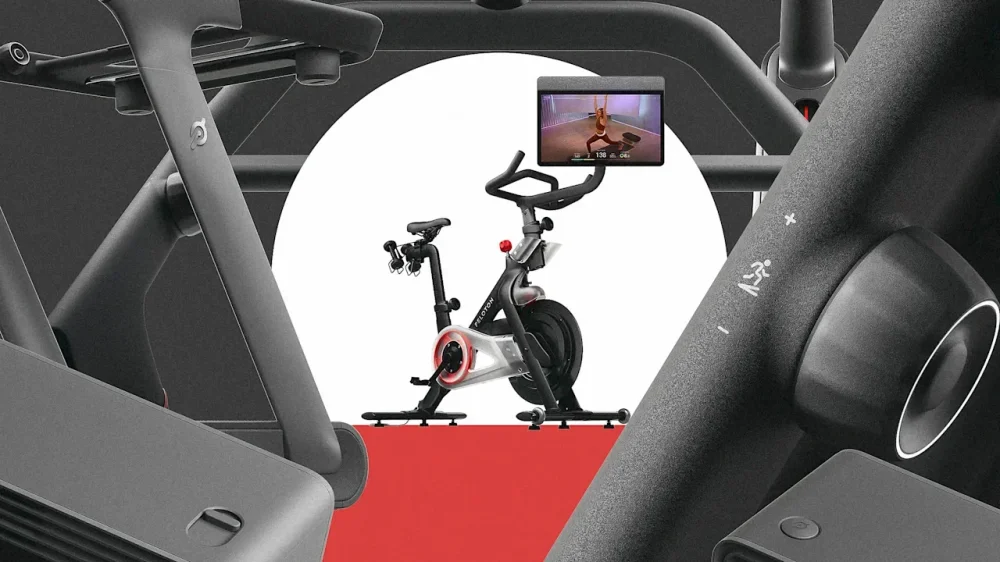
We may earn a commission from links on this page. Did you know you can customize Google to filter out garbage? Take these steps for better search results, including adding Lifehacker as a preferred source for tech news. As of today, a ton of massive changes just hit the Peloton ecosystem. The at-home fitness giant didn't just overhaul one part of the structure 6 million people rely on for quality workouts—it made improvements and tweaks across its hardware, software, content, and partnerships. Everything is available for members to explore now, both in the mobile app and on the brand's proprietary equipment devices, but I don't blame you if you're not even sure what to start looking first. Here's what you need to know. Peloton devices got a makeoverPeloton became most famous for its classic Bike, a stationary bicycle with a touchscreen that, since 2014, has allowed anyone anywhere to take a virtual spin class. Since the introduction of the Bike, the brand has rolled out an upgraded version, plus two kinds of treadmills and one rowing machine. The first big announcement of the day has to do with all those products: The five-part lineup is staying the same, but the Bike, Bike+, Tread, Tread+, and Row all got a significant makeover. Known collectively as the Peloton Cross Training Series, the new lineup is this: The Cross Training Bike The Cross Training Bike+ The Cross Training Tread The Cross Training Tread+ The Cross Training Row+ Each of the devices features a swiveling screen (which users of the old Bike+ will be familiar with) designed to allow users to switch more seamlessly between cardio and Peloton's other class offerings, like strength, yoga, and Pilates. That is where the whole "cross training" thing comes in. They also have enhanced audio, better processors for touchscreen responsiveness, and upgraded wifi and Bluetooth, giving them a distinct edge over their predecessors. Of particular note is what comes with the Plus line, or any device with a "+" after the name. Those all have a built-in, movement-tracking camera that will monitor your form, count your reps, and help the software suggest weights for you to use in your strength workouts. I tested it out yesterday at Peloton Studios in New York and was impressed. (If you recall, a few months ago, Peloton phased out the Guide, a camera that connected to users' TVs and did a much rougher version of what these built-in cameras are now going to do. We should have seen this new integration coming then.) The Plus line also comes with Sonos audio, hands-free control so you can make vocal commands to adjust your weight or pause a workout, and accessories and features based on users' requests. They have a three-speed fan built in to cool you down, for instance, and the Bike+ finally has a tray that can hold your phone. The Bike and Bike+ have cushier seats, though you can also purchase one of these new seats separately for your older Bike and Bike+ models. Peloton IQThe brand also announced the launch of its AI component, Peloton IQ. Remember how I mentioned the Plus line allows for voice commands? You can say, "OK, Peloton, skip this exercise," or "OK, Peloton, pause this workout." That's pretty useful if you're, say, doing a lift or yoga exercise and your touchscreen isn't within reach. But the AI does more than that. Its real purpose is to provide "dynamic coaching." Basically, your Peloton app got a major redesign (which you can see for yourself by opening it on your phone or Peloton device right now). Across the top, you'll see suggested workouts that are based on your goals, your past workouts, and your schedule. Crucially, this works on older models, too. I asked reps at Peloton Studios about this specifically yesterday and everyone was quite clear that they're not trying to force users to give up existing Bikes, Treads, or Rows. Still, the most advanced features of Peloton IQ are only available on the new Plus line, since those devices have the movement-tracking camera that enables the AI to give feedback, correct form, count reps, and suggest weights. The Plus line also allows for self-paced strength workouts similar to the ones you can find on Peloton's Strength+ app. Instead of following along with a class and instructor, you can generate a workout plan that simply walks you through a series of exercises and you can go at your own speed. You can pick your target muscle groups, deny exercises you don't want to do, and change the weight you're using for a totally custom experience. One cool thing I saw during yesterday's demo was that if you nail your form too easily or do more reps than suggested, the AI will automatically tell you when it's time for you to consider using heavier weights. You can accept or deny this suggestion and if you accept, from then on, it will be set so you're always doing that exercise with that weight. You can input any weights you have on hand at home, so even if you only have a set of five-pound dumbbells, the app will tell you when to use them and won't suggest exercises with anything heavier or lighter. Club Peloton, better Teams, and moreOn your Peloton app, you'll also now see something called Club Peloton, which is a recognition program that rewards you for consistency and variety in your workouts. You'll be assigned a level—bronze, silver, gold, or legendary—based on things like workout streaks or trying new types of exercises. Reps told me at the demo event that Club Peloton will eventually evolve to start giving back. For instance, members of a certain level may be eligible for discounts on certain items or to get early access to classes. Peloton says this is part of its "further investment in human connections." Obviously, the company is famous for making it possible to do complete workouts all on your own at home, but a big part of its success comes from the ways it approximates the in-person feeling by offering virtual group classes, personable instructors, and other features like Teams. You can join Teams with your friends and compete together or against one another or even join Teams based on mutual attributes like being a new mother or living in a certain region, but with today's overhaul, you can now also join something called Official Peloton Teams. These are helmed by Peloton instructors and include options like Move for Life, Cross Training, Menopause Health, and more. Peloton pricingPeloton's prices are going up, which isn't exactly a surprise. The company's letter to investors during the last earning period hinted at that and it's to be expected with all these new features rolling out. At least now it finally makes sense why Bikes, Treads, and Rows were being phased out at sporting goods stores a few months ago, and Peloton launched its own resale platform over the summer for people who want to sell their old equipment: We're getting a whole new fleet of devices. So, the new prices for membership are: All-Access Membership goes up from $44 to $49.99 per month App+ Membership goes up from $24 to $28.99 App One Membership goes up from $12.99 to $15.99 The devices are priced like this: The Cross Training Bike is $1,695 (plus $150 for expert assembly if you don't want to do it yourself for free) The Cross Training Bike+ is $2,695 (plus $150 for optional expert assembly) The Cross Training Tread is $3,295 (plus $150 for optional expert assembly) The Cross Training Tread+ is $6,695 and you'll need to pay $299 for assembly The Cross Training Row+ is $3,495 (plus $150 for optional expert assembly Final notes and first impressionsI saw all of this at a press event yesterday and was truly impressed, especially because there wasn't much of a hint about what the event was even about before I got there. The brand kicked off today's big launch by adding 2,000 classes compatible with the new AI features and everyone, even people with the lowest-level, app-only membership, can now access most of the new offerings (besides the motion-tracking features). That's a lot to keep under wraps. From what I saw during demos, these are genuinely solid improvements. Even the swiveling screens, fans, and phone tray are nice touches, since those are the kinds of things Peloton users have been paying extra to third parties to get for years. This is just the broad view of all the changes and it'll take me some time to work through all the new features and options on my app and Bike, but I'll update my old posts and create highlights for the truly noteworthy changes over the next few days. I already know I'm going to be thrilled by the new integration with Apple Health, for instance, even though I haven't gotten to play with it yet. I've been tracking all my non-Peloton workouts through the Peloton app for weeks, since it's easier than tracking some with Apple Health and others with Peloton. Now, any workout I complete on or off the app will be reflected in my Peloton history and will contribute to the AI's suggestions for what I should do on a given day. Over the next month, there will be promotions available so anyone who wants to upgrade to a new piece of equipment can do it more economically. As I find out more about those, I'll keep you updated. Personally, after all of yesterday's demos, I'm already pretty sure it's about time for me to retire my classic Bike and invest in the new Bike+. View the full article
-
Peloton is pushing off with a new strategy for making workouts personal and more useful. The at-home fitness company today unveiled a turnaround strategy that it says will overhaul and improve its offerings by relying on AI-powered features. The company’s ultimate goal? Leveraging technology to increase personalization and create a more sticky workout experience and prevent churn, create communities between members that will bind them to the program. The new strategy comes after a rocky few years for the company. Peloton went public in 2019 at a price of $27 per share, but is now trading at $9 after incorrectly predicting demand for its products after a COVID-19-fueled surge drove the price to a height of $167.42 in January 2021. In an August earnings call, CEO Peter Stern—an Apple Fitness+ cofounder who joined Peloton in Januaary—announced a 6% workforce reduction. On the same calll, the company posted a fourth-quarter profit and signaled it would adjust prices to offset the impact of extra costs associated with tariffs. Some of those price adjustments were announced today; the company’s All-Access Membership from $44 to $49.99 and App+ Membership from $24 to $28.99, and App One Membership from $12.99 to $15.99 effective this month. With today’s announcement, the company is banking on AI-powered workout advice, personalization, and more community-focused content that will restore its usership (and stock price) back to its pandemic height. AI Integration Peloton’s newest features involve AI integration to personalize users’ experiences. Today, the company launched Peloton IQ, an AI and computer vision system available on its new product models to provide personalized guidance and class recommendations for members, based on movement tracking via built-in cameras, class history, and fitness level. To power Peloton IQ, the company built its own large language model (LLM) using the data it’s collected over time. “We’re not using off the shelf LLMs,” Peloton’s Chief Product Officer Nick Caldwell says. “No else on the planet has the ability to do the sort of movement tracking that you’re going to see in our products. For some aspects of the product the company is using other LLMs like Meta’s Llama. To match the company’s new AI capabilities, Peloton also unveiled new base and premium equipment. Its new bikes, treadmills, and rowing machines have built-in cameras that track users’ movements and offer them real-time feedback on their form during strength workouts. The cameras can also track weight-lifting reps and suggest different weights for each exercise. The new equipment also has swiveling screens to make cross-training in view of the camera easier. Getting Personal The upgraded software also includes a workout generator which comes up with personalized workout plans based on a user’s goals (like getting stronger or losing weight), and a self-paced strength setting that lets members take on-demand classes at their own pace while they receive live feedback from Peloton IQ. The equipment can be integrated with fitness trackers including products from Apple, Fitbit, and Garmin. Once Peloton’s products have registered a user’s goals, workout history, and data, the app can even rate classes for them. For example, a member might see a “harder than your usual” tag next to a class while they are browsing. “At the end of the class we can look at how you performed and we can give you insights,” says Jen Kotter, Peloton’s chief content officer. “Every week we roll that up into a report that is meant to directly affect the actions that you take on our platform.” To prepare for the launch, the company has already banked 2,000 instructor-led classes that can track users—all available on the platform starting today. Custom workouts for more people As Peloton uses AI to expand its personalization capabilities, it’s also unveiling tailored content for different groups of users, including one that has been the target of a growing focus from companies: people in menopause. In 2024 the market for menopause-related products and services was worth approximately $17.79 billion. By 2030, that number is projected to reach around $24.35 billion. Today the company announced a partnership with Respin Health, which provides coaching, community support, and products geared towards women in menopause. The programming, set to launch October 6, will feature curated classes designed to relieve certain menopause symptoms, and will let women join a dedicated digital community on the Peloton app. Kotter says it’s an example of Peloton listening to what its riders—and instructors—want from it. “[Menopause] started to be a big conversation for a lot of members who had been with us for many years,” she says. “They didn’t like the way they were feeling, and they honestly didn’t know what kind of workouts would help them and they didn’t want to lose traction.” The company is also launching other dedicated content collections to help groups including those with runner’s knees or tennis elbows, new moms, and office workers. In tandem, Peloton is doubling down on digital teams in the app, letting users join them based on various affinities or hobbies to encourage each other, all in the hopes of getting them to stay. “Ultimately, we want to be able to have a one-to-one relationship with each one of those 6 million [members],” Caldwell says. View the full article
-
Miklu Silvanto, Oura’s chief design officer, says incorporating advanced computing power into a tiny ring is a major challenge. It’s just as challenging to make a ring that people will actually want to wear around the clock. So Silvanto, an industrial design veteran who has worked at Apple and Bang & Olufsen, must also think of himself as a jewelry designer. “A ring is such an intimate object,” he says. “You might wear it alongside your wedding ring. You need to think comfort, and beauty, and fashion.” On October 1, Oura launches a new collection of ceramic rings that are more fashion-forward than its previous ones, which resemble metallic wedding bands. Since ceramic takes well to color, the new rings come in an array of hues, including petal pink, tide green, cloud white, and midnight blue. The company has also developed a new charging system that will allow wearers to switch between rings seamlessly, without losing any data. These new rings cost $499, while the metallic versions are priced between $350 and $500 depending on the finish. Users must also pay $70 annually to use the app that presents their health data, analysis, and advice. Given how expensive this product is, the idea of switching rings based on your outfit of the day may be an affordable reality to only a small, wealthy slice of the population, epitomized by some of the most famous Oura wearers—Mark Zuckerberg, Kim Kardashian, Prince Harry, and Gwyneth Paltrow, to name a few. Still, the rings are resonating with consumers around the world. Oura sold 2.5 million rings last year, making up half of its total sales since 2015. And the company expects to generate $1 billion in sales this year, making it one of the biggest players in the wearable technology industry. After its $825 million Series E round, it’s now valued at $11 billion. The Tiniest Computer For a designer like Silvanto, working on a smart ring involves incorporating as much technology as possible into the tiniest of products. When Oura launched a decade ago as a Kickstarter project, its first ring was much chunkier and could monitor only sleep and daily activity. Since then, the Oura’s designers have managed to make the ring smaller. Both the metal rings and the new ceramic ones are roughly 8 millimeters wide, 2 millimeters thick, and weigh between 5 and 8 grams depending on the size. And the rings are able to track around 50 biometrics. To do this, they use several sensors, including an infrared LED that measures blood oxygen levels, green and infrared PPG (photoplethysmogram) sensors that track heart rate, a digital thermometer that measures body temperature, and a sensitive accelerometer that tracks movement. Oura has benefited from broader changes in the technology industry that has been working toward miniaturization. (This is similar to what has been happening at, say, Dyson, which is incorporating more and more powerful motors into smaller hairdryers and vacuums.) Silvanto says Oura has focused on incorporating this tech into a design that is as comfortable and beautiful as possible. The new rings are made from zirconia ceramic, which is significantly harder and more durable than the ceramic used for vases and dishware. The rings are shaped and then fired in a kiln, which chemically transforms them into the harder material. (In fact, it is so hard that it can scuff softer metals.) Silvanto stresses the appeal of the material’s ability to take on colors. The four hues in the new collection are glossy and vibrant. If Oura’s metallic rings look like simple wedding bands, these ceramic rings evoke the color of gemstones. It’s jewelry that allows users to express their tastes and aesthetic preferences. Oura ring as fashion object Now that Oura is framing its rings as fashion objects, it wanted to ensure users were able to easily swap them on a daily basis to go with their various styles or moods. Silvanto says creating a system that would allow users to change rings while keeping all their data intact wasn’t simple. Data is stored in the ring itself, in the app, and in the cloud. “When a user switches between rings, all of this data needs to be synchronized to ensure that the tracking would be accurate,” he says. (This new data-synching capability is live on iOS apps today and will be available on Android starting October 10.) While the new ceramic designs are a significant launch for Oura, Silvanto says his team is already focused on dreaming up the company’s next-gen rings. As sensor technology continues to shrink, rings will become even thinner. And the team will continue to work on making them as stylish and fashion-forward as possible. “The best ring is one that people actually want to wear,” Silvanto says. “And to do that, you need to think beyond technology and about culture.” View the full article

-
Andrew Bailey signals softening of stance towards digital tokens View the full article
-
An innovative technology must still answer old central banking questionsView the full article
-
Want more housing market stories from Lance Lambert’s ResiClub in your inbox? Subscribe to the ResiClub newsletter. As ResiClub has closely documented, Florida has been the epicenter of U.S. housing market weakness in 2025. However, KB Home executives now believe the worst may be behind them—at least for their business—in the Sunshine State. While giant homebuilder KB Home—which has a $4.3 billion market capitalization—isn’t ready to call it an inflection point for the entire state, it believes its price cuts in Florida were more than sufficient to stabilize demand for its business. In fact, it may have cut too deeply in Florida and could now need to raise prices in some communities. On the company’s September 24 earnings call, chief operating officer Rob McGibney said its business in Florida appears to be stabilizing after the builder moved aggressively to cut prices earlier this year. In fact, KB Home now thinks some of those cuts went too far. “We’ve actually found, in some cases, we’ve gone above what we needed to [and cut home prices too much in Florida]. So, in order to optimize those assets, we’re now increasing [the] price,” McGibney said. The executive added that KB Home’s new home sales in Florida in the third quarter were higher than in the second, a sign that the price adjustments worked to restore demand. He also pointed to a decline in housing starts across the state, which is easing pressure from supply. ”The good news for us is that [price cuts in Florida] worked, and now you’re seeing the orders come back up [in Florida] as a result of that. It’s also, as I mentioned earlier, one of the markets where we’ve seen the biggest decline in [housing] starts. So we’ve had some of our best results in cost reductions there, too. And now, as I’m calling, that is starting to stabilize—we’ve got that combination. I think we found that market [in Florida]. We’ve driven cost [in Florida] down, and now we’re starting to take it back the other way,” McGibney said. McGibney stopped short of declaring a statewide turnaround but said the builder is encouraged by recent trends. “I’m not necessarily calling it an inflection point for the whole state of Florida, but we’ve been encouraged by what we’ve seen recently.” KB Home executives also noted varying conditions across other major markets. California’s Inland Empire, Las Vegas, Houston, and Charlotte, North Carolina, all posted solid demand in Q3, while coastal California, Seattle, and Denver remain more challenged. Still, for Florida—the market that’s defined much of 2025’s housing weakness—the shift from deep price cuts toward selective price increases marks a notable change in tone. ResiClub PRO members can read our full report on KB Home here. View the full article

-
A few years into the AI boom, it’s clear that designers can rely on AI for some things. It can automate tedious tasks in Photoshop that once took up precious time. It can generate images on command (quality be damned!). It can schedule a meeting, respond to an email, and take notes on a Zoom call. But for all the hype, we know that AI isn’t a silver bullet for the real problems creatives face. Far from it. So we wondered: When it comes to design and creative work, in a blue-sky scenario, what do today’s design leaders wish AI would actually take care of for them? We asked nine great designers that very question, and got back some interesting answers. Their answers, seen below, reveal more than productivity hacks. They are a prism into the pain points of a modern design practice, and a view of how some of the best minds in design are thinking about AI. Pum Lefebure, cofounder and chief creative officer, Design Army 1. Dream Harvester: An AI that records my dreams and subconscious visions while I sleep, then turns them into usable moodboards, storyboards, or campaign concepts the next morning. 2. Taste DNA Engine: AI that learns your creative fingerprint so deeply it can filter endless options, then only show ideas that match your intuition—like your own inner taste amplified. 3. Multidimensional Story Weaver: You give it one idea and AI spins it simultaneously into a film, song, sculpture, VR world, fragrance, and fashion line—all cohesive, all connected. Sara Vienna, chief design officer, Metalab Everyone says they want AI to take away the busywork, and of course I agree. But I want to push it further. I wish AI could act less like a task runner and more like a thought partner—a thought partner that I actually trust with context and nuance. Point out the edge cases, flag accessibility issues without watering everything down, remind me when I’m stretching myself too thin, even help me recognize the milestones that matter in the lives of people around me. Because we’re living in a sea of sameness where anyone can vibe code and ship something, the quality bar is so low. But is it good? Is it new? Does it deserve to exist? That’s the gap I want AI to help close, not just speed up production, but raise the bar on quality and meaning. Jessica Walsh, CEO, founder and creative director, &Walsh Join meetings for me? I know that’s not great to say, but I find that when I’m in meetings all day, it takes a toll on my creativity . . . yet I know how important it is to be present for our clients. The more obvious answer—handling all the financial aspects of the business, like accounting, invoicing, forecasting, etc. For any creative agency owner, it can be a huge creative time suck to constantly think about. I also think there could be a much better system for archiving our work and project learnings so that anyone who touches those projects in the future has access to them in a really easy-to-understand way. After leading an agency for more than 15 years with a ton of repeat clients, we’re always looking to optimize this, and I think AI could integrate here in some really exciting ways Aaron Draplin, owner, Draplin Design Co. I will say it’s already doing exactly what I would have really ever hoped and dreamed that it would ever do, which is just that generative fill thing in Adobe. The idea that if I have a vertical image that’s given to me and I have to make it into a square, I can just do a couple clicks for that generative fill—it’s not crossing an ethical line at that point. It’s just filling in dead space. That’s amazing, because I would have had to do that myself through trickery and fades and gradients and bullshits and things and stuff. Now that thing can go do it that quick. Gui Seiz, director of design, Figma My biggest wish for AI is to hold on to context and intent the same way a good collaborator does. I want to see AI shift from a productivity hack to a genuine thought partner in the creative process. It should track the intent behind decisions, suggest course corrections when I veer off track, and help me stay in flow. The goal isn’t just to work faster, it’s to work with clarity and help designers navigate the messy parts of the process: the ambiguity, the feedback loops, the gap between rough sketch and refined product. Where it gets interesting is when AI really remembers your creative journey across projects, it can start connecting dots you can’t see. Maybe it surfaces a discarded approach from months ago that suddenly fits your current work, or reveals patterns in your decision-making that point toward unexplored directions. Leta Sobierajski, partner, Wade and Leta I’m hyperconscious of how utilizing AI is shortening my thought process. And while it is enjoyable to embrace cut corners and shortcuts of, say, writing an artist statement or summarizing a brief, I’m a bit terrified by its ability to think more succinctly than I do and automate the processes that have led me to become the creative person that I am today, no matter how grueling they have been. A benefit to the way I work is that my interpretations are never black or white—following an artistic practice is about the meandering and the daydreaming, and with the use of AI that magic may be depleted. So, clearly I’m trying to avoid it for any high-level thinking and writing, as this dependence feels like a gradual dulling of a sharp knife. That said, I’d appreciate it more if it served me a sandwich every so often when I forget to eat, or if perhaps it could remove me from my chair when I’ve sat for too long to encourage me to go enjoy the weather instead. Giorgia Lupi, partner, Pentagram My “blue-sky scenario” would be an AI model that reduces the labor of tedious tasks, allows us to test ideas faster, but does not erase the important moments of frustration, collaboration, redirection, and happy accidents in the design process, as that is ultimately what brings the language of design to life. But I think there are important considerations to be made. First of all, when you ask about how AI can be used in the design process, you would likely get different answers from a design director than you would from a hands-on designer who might see a time-saving benefit to AI-powered visual modeling tools. And secondly, although I see value in continuing to explore what AI can do for the field, I still have open questions: Can the shortcuts made possible by AI lead to similarly valuable designs? Do these shortcuts preclude designers from important processes and experiences? Is there a way that AI can be used to eliminate tedium without necessarily informing the visual outcome? Without AI, whether you design alone or with a team, the design’s detours, loose experimentation, happy accidents, and outright mistakes all lead to a unique result. As much as I’ve enjoyed generative AI in the early days, lately my experience has been marked by frustration, as AI agreeably translates my requests into outcomes that feel like the result of a very different process that is neither collaborative nor solely mine, which is what I am reflecting on these days. When I think about why our clients come to us, it is to transform their stories, ideas, and brands into visual languages that people can connect with. For me, that still means finding the human element. No two designers will craft the same solution for a project, and the beauty in this is that a designer’s work so uniquely reflects their own perspective. I do not want the integration of AI, with its specific training and incentive to please, to result in a great flattening of design, where well-worn algorithmic decisions make everything look the same. Forest Young, executive director of design, FundamentalCo In a blue-sky scenario, a designer would never need to wait to be the recipient of a mediocre brief—one that reeks with a desperate hunger for relevance. She could scrape the subreddits for unmet needs, painful experiences, and problems worth solving, for communities that she felt a kinship with, and design a solution—a brand, a product, an experience with an inspired sense of autonomy and empathy. In short, designers should not believe the hype, but instead [they should] believe in themselves. We must endure the torrent of efficiency-laden rhetoric until we reach an equilibrium, and discover a way to harness this technology to capacitize; to imagine beyond new skins of things to new things altogether. As industries furiously build on top of identical infrastructures and de facto research implications, unique expression will become a peerless signature. Self-assured designers empowered by AI will drive world-building, product visions, and MVPs, as well as unforeseen form language. Like any worthwhile growing pains, we must place a wager on who we can become beyond who we once were. Brian Collins, cofounder, Collins Imagine if every deck, doc, and post of yours stays on-brand. Not because you had to police them all to death, but because the brand itself is living and defending its own borders like a benevolent nightclub bouncer. If AI helps the scaffolding hold itself up, we get to spend our energy on the big swings—the ideas, the products, the campaigns no one’s ever seen before—while the system keeps the everyday stuff from collapsing into chaos. The dream, the way I saw it, was never to sit in front of a drafting table for three days adjusting kerning by hand. That wasn’t noble. That was carpal tunnel. The dream for designers was to have a creative system that keeps running when you’re asleep or sulking. To have a collaborator who has ideas faster than you can write them down, and keeps yours intact from the moment they leave your desk to the minute they appear on a screen, in a store, or in someone’s home. Charles Eames warned us, “Never delegate your understanding.” Fine. Don’t. But now you can delegate everything else and watch it go. View the full article

-
TikTok has been abuzz with the workplace trend “task-masking”—that is, making yourself look busy so that your boss thinks you’re hard at work. Cue behaviors like pounding hard on the keyboard, always keeping your status to “active,” or walking around the office with your laptop and looking like you have somewhere to be when you don’t. “It’s all show. It’s all performance,” one TikTok user posted. “They could be typing a thousand words a minute, but really be typing nothing,” posted another. Some argue that it’s backlash against return-to-office policies: “Many of these employees, especially Gen Z, feel like their presence doesn’t equal productivity,” a TikTok user said. And crucially, “it’s not just about laziness,” wrote another, arguing the pressure to look busy “could actually be a sign of overwhelm.” The term has come to be associated with Gen Z on social media, but in reality, the act (and art) of looking busy has been around for decades. “Task-masking is the digital equivalent of shuffling papers,” says employee coach and attorney Theresa D’Andrea, known as That Work Girl, who’s also discussed the trend on TikTok. “It’s an employer’s market right now to get a job, so people feel like they have to be busier than usual in order to keep their jobs.” Nearly half (48%) of managers are concerned about employees who fake their productivity on the job—and not without reason. That’s because 37% of managers and 32% of non-managers themselves admit to such “fauxductivity,” or trying to appear busy even when they’re not, according to a 2024 survey of 3,000 full-time employees in the U.S., U.K., and Ireland by Workhuman, an HR software company. That’s not good for employees—or companies. Such pressure to look busy can lead to burnout and inefficiencies, D’Andrea says. Rampant task-masking may be a sign of workflow or cultural issues that management needs to address. And it may be an act of defiance for some, but a scrambling to prove worth for others. If you’re feeling the pressure to look busy to show your boss how important you are, try these tactics instead of pretending to answer emails during the next all-hands meeting. Get clear about what’s important, and prioritize ZipRecruiter career expert Sam DeMase says that in order for employees to truly add value, they need to understand the metrics used for “success” by both their supervisors and the company. “You just need to focus on doing work that actually moves the needle,” she says. DeMase suggests asking your boss questions to get clarity: “How is success defined for this project?” “How does this project serve the company’s goals for 2025?” Know your core strengths and communicate those. D’Andrea agrees. Instead of responding to every text, email, and communication platform notification immediately in an attempt to look busy, focus on what matters. That’s especially true after you’ve gotten a sense of what your boss and the organization value. “Maybe even help your boss put together a KPI [key performance indicators] dashboard to track the performance of the team if your boss doesn’t already have something like that,” says Korn Ferry senior client partner Maria Amato. “I would be delighted if someone on my team did that.” Keep learning Instead of tackling a task just for the sake of crossing it off the to-do list, keep learning where you can, says workplace culture expert Marissa Andrada. Work on understanding more about the company and its culture and values. “If you get the context of how the work that you’re doing fits in [to the team and values]—why it’s important—then you can show, ‘Here’s what I think about it,’” she says. Not only does this give you a better perspective on the work you’re doing, but it can also help frame your work as more essential to your team (and boss). “It’s making your manager be successful by delivering on time and on point,” she adds. It replaces the performative busywork of task-masking with strategic thinking that demonstrates real value. Taking on stretch roles or additional projects can help you keep learning, too. However, Amato cautions that it’s important to understand the culture of your company and the nature of your supervisor: Don’t make it seem like you are trying “to get away or are not interested in what you’re currently doing—not wanting to pay your dues, for example, in your current role.” Document your wins DeMase suggests keeping a weekly log of your progress and wins, such as meaningful contributions to meetings, goal completion, positive feedback, project milestones, and processes you improve along the way. She adds that documenting your successes can also keep you motivated in your job. Amato says what you do with that information depends, again, on the culture of your organization and team. You might tell your supervisor that you’ve collected some data on your performance, and ask whether they would like you to share the information with them. “Your boss may say, ‘Oh, I would love to see that as it comes in. Just send it to me each and every time.’ But if they haven’t actually asked for [the info], it could be sort of like spamming your boss,” she adds. “We need to move away from ‘busyness bringing value,’” D’Andrea says. By getting more clarity about your role, reconnecting with your work’s meaning, and documenting your wins, you can add value and get more satisfaction. Those are payoffs that marching around the office with an open laptop simply can’t deliver. View the full article

-
Medical equipment company linked to Michelle Mone breached state contract during pandemic, judge saysView the full article
-
Chief executive’s pay jumps after British team ends 26-year wait for constructors’ championshipView the full article