All Activity
- Past hour
-
The disappearance of ChatGPT’s query fan-out metadata reveals why AI intelligence tools built on unofficial access are fragile by design. The post The Shortcut Behind Some AI Optimization Tools appeared first on Search Engine Journal. View the full article
-
Consultancy says it has found ‘no evidence’ that confidential client information was compromisedView the full article
-
Shares in Bumble Inc. (Nasdaq: BMBL), maker of the Bumble dating app, are surging this morning after the company announced its fourth-quarter and full-year 2025 results. The stock price bounce will be a relief to investors in dating companies, an industry that has suffered severely in recent years due to so-called swipe fatigue among users. Here’s what you need to know about Bumble’s earnings and why its stock is surging this morning. Bumble beats on Q4 revenue Today, Bumble reported its Q4 2025 results. And on the surface, those results weren’t great. As a matter of fact, just purely based on a year-over-year comparison, many of the company’s most important metrics were down across the board, including: Total Revenue: $224.2 million, down 14.3% from the same quarter a year earlier. Bumble App Revenue: $181.0 million, down 14.8% Badoo App and Other Revenue: $43.2 million, down 12.4% Total Paying Users: 3.3 million, down 20.5% Net loss: $611.1 million (versus a Net profit of $9.3 million in the same quarter a year earlier. Still, despite these poor year-over-year results, BMBL shares are popping this morning—and there are two main reasons why. Bumble beats revenue expectations, and embraces AI The most immediate reason for Bumble’s premarket stock bump is the company’s total revenue of $224.2 million for the quarter. Yes, that sum is down more than 14% from the $261.6 million in revenue during the same quarter a year earlier, but critically, it still beat analysts’ relatively low expectations. As Reuters points out, analysts had expected Bumble to bring in $221.3 million in total revenue for the quarter. Bumble ended up beating this figure by nearly $3 million. And while that $3 million sum is relatively small, it signals to investors that things weren’t as bad in the quarter as many analysts expected. But investors are also likely feeling optimistic about another Bumble announcement today. On the company’s earnings call, founder and CEO Whitney Wolfe Herd revealed that Bumble is revamping the app while also adding new AI tools to help users find more relevant matches. Wolfe Herd said that “Bumble 2.0” will deliver a new experience designed to help address dating app users’ dissatisfaction. This dissatisfaction is usually referred to as “swipe fatigue,” and it has turned many younger people off dating apps in recent years. Those users have grown tired of the endless swipes that turn individuals into commodities and often lead to few real-world meetups. “Bumble 2.0 introduces a chapter-based structure designed to help members tell their stories more authentically and understand one another more deeply,” Wolfe Herd said on the call, according to a PitchBook transcript. “This will enable them to see matches with stronger compatibility signals, build confidence in the experience, and get to meaningful in real life dates more quickly.” Additionally, Wolfe Herd said the company is embracing artificial intelligence, announcing a new AI chatbot that is in development, called “Bee.” The chatbot is designed to interact with Bumble users to find out about their likes, interests, and dating objectives, and then use that information to better match them with other users who share the same interests and goals. Bee, Wolfe Herd told analysts, “is designed to become a personal dating assistant and matchmaker, learning members’ values, relationship goals, communication style, lifestyle, and dating intentions through private conversations, then using those insights to identify mutual compatibility to find better dates with a higher degree of confidence and relevance.” Bumble 2.0 and Bee are expected to roll out sometime in 2026. Some users in the key Gen Z age demographic have expressed skepticism about whether AI features will ultimately improve the dating app experience, as Fast Company reported last year. Still, as artificial intelligence is all the rage in the tech industry, investors are likely pleased to know that Bumble isn’t sitting on the sidelines in the AI era. Bumble stock has had a horrible recent run After Bumble’s Q4 results were announced, the price of the company’s shares surged. As of this writing in premarket trading, BMBL shares are up over 23% to $3.51. Yesterday, the company’s shares closed at $2.84. However, despite the massive stock price jump today, BMBL shares have had a horrible run in recent years. As of yesterday, the closing price of BMBL shares has fallen more than 41% over the past 12 months. And over the past five years, the company’s stock price has collapsed by more than 95%. In March 2021, BMBL shares had traded over $74 apiece. But Bumble isn’t the only dating app to see its stock price crash. Over the past year, Match Group, Inc. (Nasdaq: MTCH), owner of Tinder, Hinge, OkCupid, and more, has seen its shares decline about 2.4%. But over the past five years, the company’s shares have declined a staggering 80%. Likewise, shares of dating app maker Hello Group Inc. (Nasdaq: MOMO) have declined by more than 63% over the past five years. The only major dating app to be up over that five-year timeframe is Grindr Inc. (NYSE: GRND), whose shares have risen more than 19% over the period. The declines of these major dating app makers coincide with increasing dissatisfaction among dating app users, who frequently argue that the apps have become too expensive and that matches are fewer and farther between. While investors may be rewarding Bumble today, the company will need to address this user disillusionment if it is to successfully turn around its business. View the full article

-
We’ve all been there. You look at your calendar on a Tuesday morning and see a solid block of technicolor squares stretching from 9:00 AM to 5:00 PM. By noon, you’re staring at a gallery view of faces, nodding reflexively while your brain slowly turns into digital sawdust. View the full article
-
Imagine your ideal customer going to ChatGPT and asking, “Is [BRAND] worth it?” They’re not getting a vetted list of links in response. They’re getting a synthesized answer, most likely summarizing who you are, what you’re known for, and whether you’re credible. They’ll get a confident answer to the nebulous question of assigning worth. You don’t control that summary. But it will shape their decision before they convert, possibly before they ever visit your site. This is the new reality of search. SEO has traditionally been a discovery channel: higher rankings led to more traffic, which led to more conversions. But AI-powered search experiences, from AI Overviews to ChatGPT, Gemini, and beyond, are changing the game. Narrative is now the goal. Brands have to actively monitor and shape how they’re described, evaluated, and synthesized in AI-powered search experiences. SEO has officially entered its defensive era. Protecting brand narrative in the new search landscape is quickly becoming table stakes. What is defensive SEO? You’re probably asking: Isn’t this just reputation management? Or isn’t this what good SEO has always done? Not exactly. Traditional SEO has focused on visibility: earning rankings, driving traffic, and increasing conversions. Defensive SEO focuses on something slightly different: how your brand is perceived once it’s visible. Today, perception matters as much as placement. Defensive SEO is the practice of shaping that narrative. It means paying close attention to how AI tools describe your brand and where evaluation-based queries influence buying decisions. In practice, defensive SEO is: Monitoring how AI responses synthesize your brand. Protecting against negative, incomplete, or outdated information. Addressing evaluation-driven queries before third parties define them for you. Managing the sentiment signals that influence how algorithms interpret your reputation. Just as importantly, defensive SEO is not: Crisis PR deployed after something goes wrong. An attempt to suppress legitimate criticism. Spin or manipulation. It’s not about hiding weaknesses. It’s about reducing ambiguity. When your positioning is unclear, AI fills in the gaps with whatever signals are readily available: reviews, old content, aggregator summaries, and competitor comparisons. Defensive SEO ensures the strongest and most accurate version of your brand gets reinforced. At its core, defensive SEO is structured, proactive brand narrative management across the modern search landscape. Dig deeper: Why SEO is your best defense against declining organic traffic Your customers search everywhere. Make sure your brand shows up. The SEO toolkit you know, plus the AI visibility data you need. Start Free Trial Get started with Why is this shift happening now Several forces are converging to make defensive SEO necessary today. 1. AI summaries compress complex stories Traditional search results allowed users to explore multiple perspectives. Someone researching a brand could read reviews, scan articles, and evaluate different viewpoints before forming an opinion. AI-generated answers compress that process. Nuanced positioning, evolving messaging, and subtle differentiation can all be condensed into just a few sentences. Those sentences become a prospect’s first impression of your brand — a simplified version of your reputation. 2. Evaluation queries are becoming the default Search behavior is shifting toward evaluation-driven questions. Users are increasingly searching for things like “Is [BRAND] worth it?” or “[BRAND] reviews and complaints.” These are high-intent, high-impact queries. They signal real conversion consideration. If brands avoid these topics, outside sources step in to answer them. Review sites, forums, and aggregator pages become the dominant narrative. Ignoring these evaluation queries doesn’t prevent them from shaping perception. It simply removes your voice from the conversation. 3. AI systems reinforce existing narratives Generative engines don’t invent brand reputations. They amplify patterns that already exist. They rely heavily on reviews and ratings, authoritative third-party mentions, and frequently cited claims or descriptions. Over time, this creates a feedback loop. The most commonly cited narrative gains weight and visibility, while alternative or evolving positioning becomes less prominent. Dig deeper: Is SEO a brand channel or a performance channel? Now it’s both Defensive SEO in practice Defensive SEO isn’t a single tactic. Like all SEO efforts, it’s an ongoing process focused on understanding and shaping how search engines interpret your brand. Conduct AI visibility audits The first step in your defensive SEO tactical plan should be an AI visibility audit. Auditing AI-generated responses for brand consistency helps ensure that LLMs accurately and positively reflect your brand. Start by querying AI tools the way real users would. Identify a standard set of questions that someone may realistically ask about your brand. “What does [BRAND] do?” “What services does [BRAND] offer?” “Is [BRAND] good?” “How does [BRAND] compare to other [INDUSTRY] competitors?” “Pros and cons of [BRAND].” “What is [BRAND]’s mission or values?” “What are the reviews or feedback about [BRAND]’s customer experience?” “Best alternatives to [BRAND].” The goal is to test how the AI agents describe your company across different themes, such as brand overview, services, culture, reputation, and positioning. Use the same question set across multiple AI tools and LLMs — ChatGPT, Gemini, Copilot, and Claude. Don’t forget to ask for citations, especially if the response is unexpected. Now that you have all of this data, it’s time to analyze the responses for consistency, accuracy, and opportunity. Look for patterns. Which adjectives appear repeatedly? What themes dominate the explanation? Is everything accurate? Is anything important missing entirely? This audit should be done regularly. These patterns reveal how your brand narrative exists within AI-driven search, and how it evolves. Dig deeper: 200+ AI audits reveal why some industries struggle in AI search Get the newsletter search marketers rely on. See terms. Improve the source material The next step in your defensive SEO tactical plan: update the source material these LLMs are drawing from. While you may not be able to log into ChatGPT and “fix” an answer, you can influence how your brand is portrayed. Own the evaluation content Many brands avoid creating content that acknowledges trade-offs or criticisms. In the past, that instinct may have made sense. But today, avoidance can often backfire. AI systems tend to trust content that provides balanced explanations and transparent comparisons. Ultimately, this type of comparison content is an age-old SEO tactic. If you’re not creating content that addresses it, chances are your competition is. Clear answers to common concerns signal credibility to your audience and search engines alike. Instead of ignoring evaluation queries, we should be addressing them head on. The goal isn’t to eliminate criticism, it’s to ensure the context around it is accurate and fair. Strengthen third-party authority signals We know that generative AI relies heavily on independent sources such as indexed content in traditional search engines, media mentions, reviews, and forum commentary. These third-party sources are influencing how your brand is described just as much, if not more than, owned content. This means defensive SEO can’t exist in isolation. It requires alignment across multiple disciplines, including PR, social media, and customer experience. SEO can influence visibility, but SEO alone can’t fix narrative gaps. Leverage PR in coordination with off-page SEO to earn media coverage and mentions from authoritative third-party sources. Consider Reddit to engage with your audience and share content. Monitor and update social profiles, review aggregators, directory listings, and partner sites. Update and clarify legacy content Many brands evolve faster than their content does. Pricing models change, product offerings expand, and messaging shifts to reflect new positioning. Yet older pages with outdated information often remain. AI systems pull from everything available and fill ambiguity with whatever is most prominent. That’s why outdated content can shape a brand’s AI output long after it’s relevant. Regularly reviewing and updating legacy content on your website ensures the signals being used by generative AI reflect the brand you are today. Use structured data and schema markup to clarify information. Ensure your About pages, service pages, and leadership bios are up to date and comprehensive. Publish well-optimized blog posts and press releases that reinforce your positioning. If the web is your brand’s resume, make sure it reflects your strongest work, not an outdated version of who you used to be. Dig deeper: How to use AI response patterns to build better content Measuring success with defensive SEO Traditional SEO metrics like rankings and sessions still matter, but they’re no longer sufficient on their own. Defensive SEO introduces a new set of signals to monitor: Sentiment alignment across search results. Consistency in AI-generated content about your brand. Visibility across evaluation-based queries. Recurring descriptors associated with your brand. Taken together, these indicators help reveal something traditional SEO dashboards rarely capture: how your brand is being interpreted across the search landscape. Organic share of voice measures how often your brand appears, but in AI-powered search, presence alone no longer tells the whole story. What matters just as much is how your brand is described once it shows up. This is where the broader idea of “description share of voice” becomes useful. Instead of measuring pure visibility, description share of voice looks at the language and framing associated with your brand relative to competitors. For example, imagine two companies appearing equally often across AI-generated summaries and search results. One is consistently described as “innovative,” “trusted,” or “customer-focused.” The other is described as “affordable,” “basic,” or “consistent.” Both brands may technically have the same share of voice. However, the narrative attached to that visibility is completely different. Description share of voice captures that distinction. It reflects the themes and positioning that AI is repeatedly associating with your brand relative to others in the category. And over time, patterns will emerge. Certain descriptors get reinforced, while others may disappear from the conversation entirely. Tracking these patterns and adjectives provides a clearer understanding of how your brand is being framed and characterized when it does appear. Defensive SEO is strategic Despite the name, defensive SEO isn’t about reacting to threats. It’s about strengthening clarity and trust. When brands actively manage their narrative across the modern search landscape, they reduce misinformation, support informed decision-making, and create a more consistent brand experience. Ultimately, defensive SEO ensures that when someone asks AI about your brand, the answer reflects who you actually are. This shift isn’t just an evolution for SEO. It’s an organizational one. Shaping how a brand is understood in AI-driven search queries forces collaboration between teams that too often operate in silos. PR influences the narratives circulating in the media. Customer experience teams hold the signals that shape reviews and sentiment. Social media can surface emerging perceptions long before they appear in search results. All of those signals increasingly feed the systems that summarize and interpret brands for users. See the complete picture of your search visibility. Track, optimize, and win in Google and AI search from one platform. Start Free Trial Get started with The future of SEO is narrative ownership Most SEOs agree that search has evolved beyond just a discovery channel. It’s now a reputation and perception engine, and often the first filter through which customers understand your brand. In this multimodal, multichannel world shaped by AI, visibility alone isn’t enough. Ranking without narrative alignment is fragile. Ranking without context leaves interpretation to systems you don’t control. The brands that succeed will rank well, shape how they’re understood, and make sure the right story is told. View the full article
-
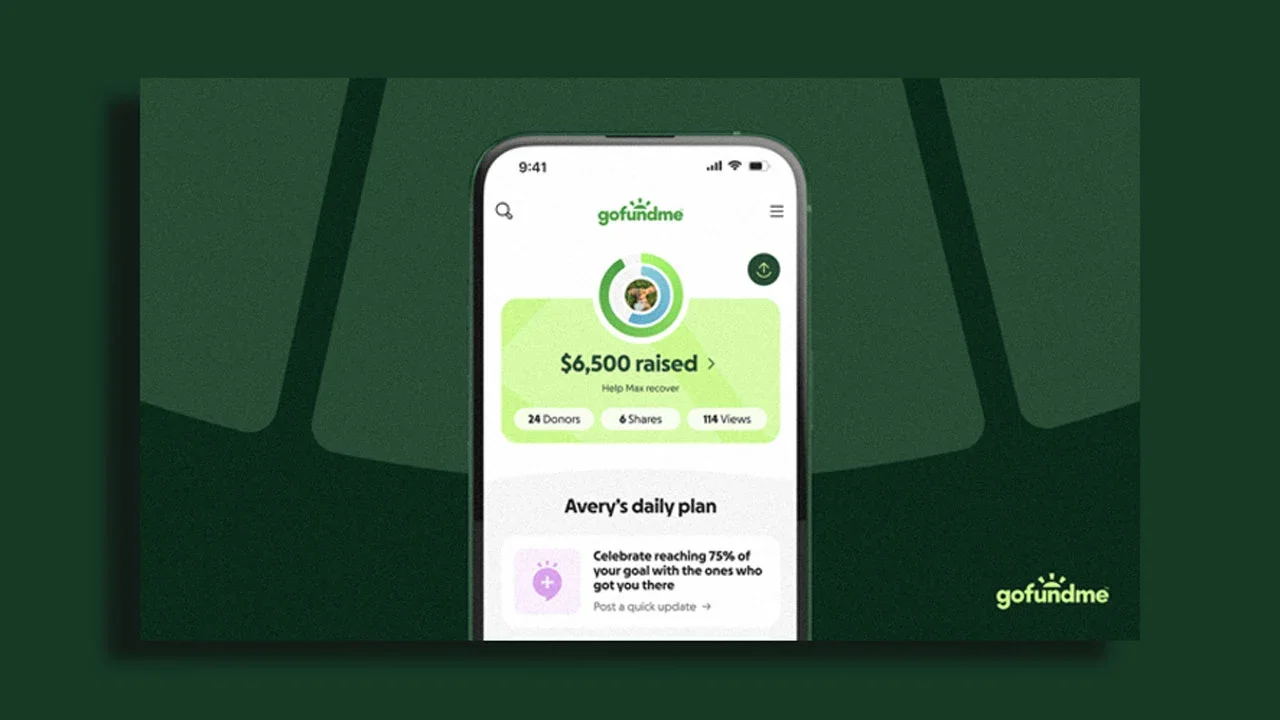
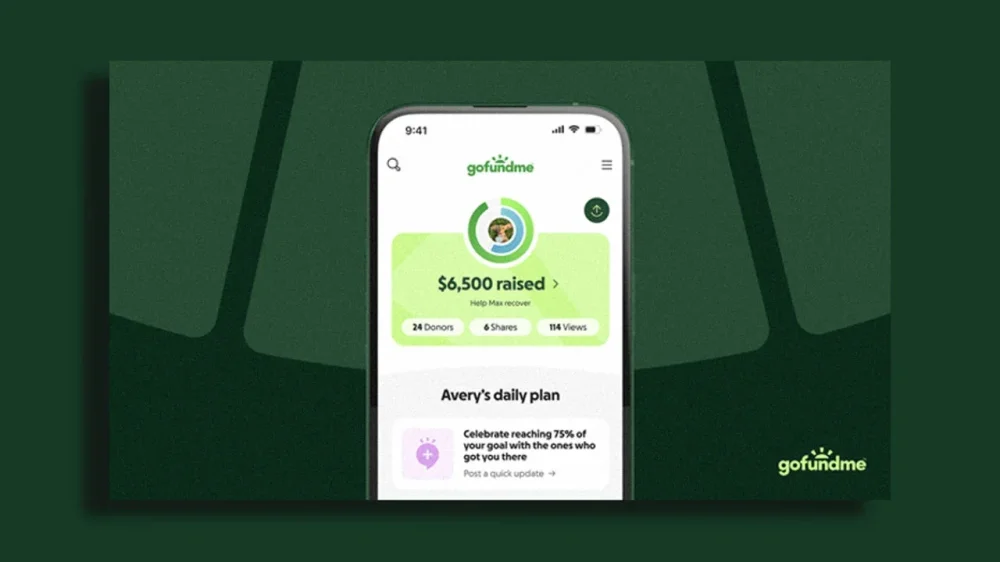
Since its founding in 2010, GoFundMe has become the go-to platform for helping others in need, with more than $50 million raised every week and more than 8,000 fundraising campaigns launched every day. But using the platform to raise money from friends, family, and generous acquaintances or strangers often doesn’t come naturally, especially when people are already dealing with a traumatic situation like a house fire, medical problem, or other emergency. “In order for help to occur, people have to do something quite difficult, which is asking for help,” says GoFundMe CEO Tim Cadogan. “That’s something that almost no one likes doing, so it’s a hard threshold to cross.” To make the process a bit easier, GoFundMe has rolled out an AI-powered “smart fundraising coach” that can assist people raising money for themselves or others from the moment they begin to plan a campaign. The coach can chat with users to gather information about their situations, show some AI-generated sympathy, and help draft an initial fundraising message and set an appropriate goal based on GoFundMe’s wealth of data. While much of what GoFundMe’s AI offers is similar to smart features that have sprouted up across marketing and sales software, it is also specifically designed to help users through what can be an unfamiliar, stressful, and even embarrassing process. “We spend a lot of our time thinking about and working on products that make it easier for people to believe that they can ask for help and be successful,” Cadogan says. The coach also provides a set of suggestions for campaign titles, which Cadogan says most users end up adopting. They typically perform better than user-generated headlines, he says. It can also help fundraisers select appropriate and effective photos to use for their campaigns, again based on GoFundMe data. The automated assistance helps people make practical decisions about a sensitive subject at a difficult time and, perhaps equally important, relieves some of the stress around raising funds. “Between 65 and 75 percent of the folks we’ve surveyed say that the smart fundraising coach helps them feel more confident, less stressed, and critically, less alone,” Cadogan says. Once users launch a fundraising campaign, the coach can continue to assist them through AI-generated daily action plans and notifications via the app, text, and email. That assistance includes guiding users to share their campaign with people likely to give, since GoFundMe’s research shows fundraisers who send one-on-one messages to likely donors are more successful. Successful campaigns often raise a few donations from fundraisers’ inner circles, gaining momentum before reaching out to looser connections, Cadogan says. Users can now also import their phone contacts into GoFundMe and see in a dedicated tab which contacts have donated or shared their fundraiser, making it easier to customize appeals to specific people. “A common strategy that does work very well is to start by texting one-on-one to the people you know best, build that momentum, and then share on your social media platforms,” he says. The coach can also advise people when and how to thank donors, set up automatic thank-you replies, and follow up with potential contributors. It also offers advice on when to post updates and when and how best to share a fundraiser on social media. The AI can even draft platform-appropriate posts for various social media sites, including generating video material suitable for TikTok and other content for more photo- or text-oriented social networks. It is often easier for users to tweak AI-drafted content than to start from scratch with a blank page, and the auto-generated material can help with formats like video that not all fundraisers find intuitive, Cadogan says. Based on early testing, GoFundMe anticipates that the new AI features will help users raise an additional $125 million this year. Cadogan says the company will likely continue to iterate as it gathers more data about what’s helpful to users managing successful fundraisers. “The awesome thing about a product like this is we’re going to learn so much about so many different dimensions,” he says. “Expect it to evolve quickly.” View the full article
-
We may earn a commission from links on this page. Inventors are like musicians: The ones we can name are rich and famous, but the majority will never be known. While many new products can feel more like gimmicks than actually useful (TikToker Khaby Lame famously made a career out of making fun of silly "innovations"), I can't help but root for a certain kind of inventor: The ones brave enough to have a small idea that has no chance of earning millions, but might improve lives in a small way. At The Inspired Home Show, I spoke with several inventors aiming to do just that. What is The Inspired Home Show?The Inspired Home Show, held in Chicago from March 10-12, is North America's largest home and housewares event. The event is open to buyers from major retailers—think the kind of housewares and big-box stores where you might buy kitchenware, appliances, or cleaning tools—and to brands from around the world, who showcase their latest products and innovations. The show is held annually, and I attended this year as a new homeowner to see what's coming to stores this year, and to learn more about the over 2,000 brands offering housewares, tools, and home tech. What is the Inventors Corner?The Inspired Home Show is divided into four showroom floors: "Clean + Contain," "Dine + Decor," "Wired + Well," and "International Sourcing." But a special area is set aside for the "Inventors Corner," where a few dozen startups have narrow booths to display their niche houseware innovations that they hope catch on. Credit: Jordan Calhoun/Lifehacker There's a pitchroom-style energy to the Inventors Corner. Separate from the established household brands like KitchenAid or Hamilton Beach, the Inventors Corner is two rows of warm and outgoing entrepreneurs—the underdogs and dreamers of the convention—standing in front of uniform, bespoke booths, all eager to share their innovation and convince buyers that it deserves to be the next big thing. Realistically, few of them will be successful, but I saw at least five innovations that were just cool, creative, or helpful enough that I can't help but root for them. The ErgoCup is a Global Innovation Awards finalistThe ErgoCup is the kind of product where I tend to roll my eyes, wondering if anyone needs it. But when I met Gerald, the guy who handcrafts every ErgoCup one by one, I was holding a coffee, and he asked me to hold an ErgoCup instead. When I did, I had to admit that holding an ErgoCup felt good—a whole lot better than the mugs I have at home. The ErgoCup is designed for people with hand mobility and gripping issues, but it's also just a well-designed mug that feels easier to hold by basically eliminating the need for grip. It won't be the type of product you find in stores soon—they're handmade and not mass produced—but it's the kind of unique craft item that feels special and makes people ask where you bought it. The ErgoCup is a finalist for the 2026 Global Innovation Awards for product design excellence. Credit: Jordan Calhoun/Lifehacker The Geo ground-meat cooking tool is spatula-meets-potato-masherThe Geo is specifically made for ground beef (or ground meat, in general), allowing users to easily and evenly break up ground meat. It's like a combination of a spatula, masher, and slotted spool, and it's the type of tool you wouldn't know you needed until you tried it. The Geo is another award finalist for its unique and useful design, and if you cook ground beef often enough, it's worth considering giving it a try. It only costs $16. Liddy is the first interlocking, stackable pot lid systemWhen I found Liddy, my first thought was that it surely existed long before now. My second thought was that I want to get one to replace the mess of pot and pan lids cluttering several of my cabinets and drawers. Liddy is marketed as the world's first interlocking, stackable pot lid system, which can replace up to six mismatched pot lids (universal pan lids exist, but aren't interlocking and stackable). It comes in two sizes, and its design allows it to fit on any standard pot or pan, and then it stows away neatly onto a space-saving base station for storage. They're dishwasher-safe, they end the confusion of which-lid-goes-with-this-pot, and they cost only $50 to eliminate the clutter of pot and pan lids. Alpha QuickFind is a customizable organization system Alpha QuickFind is an organization solution for junk drawers: It's a standalone drawer system meant to be a place to store miscellaneous items (think pens, batteries, office supplies, card decks, cables, loose change, and small tools), turning chaos into order. It's basically the adult equivalent of having a fancy pencil organizer at school instead of a standard pencil case, and it'll free your junk drawer to be used for something else. Granted, for $300, you might choose to keep your junk drawer. My Snapboard is the first snackboard designed to keep charcuterie coldMy Snapboard is a freezable snackboard that keeps food cold while it's on display. It's smart in its simplicity: You simply pre-freeze the board before, say, a summer picnic, and its patented design will help retain the temperature keep your food cold despite the summer heat. If you've ever taken charcuterie to a park or hosted an outdoor outing, you likely learned how quickly spreads melt, vegetables wilt, and cheese turns spongy. My Snapboard is meant to be an easy fix for that. It costs $50 for the black-and-white version, or $60 for the fancier woodgrain. View the full article
- Today
-
Consider a new model for travel marketing where content adapts to traveler context instead of relying on static destination pages. The post How AI Automation Turns Static Travel Pages Into Living Content & Experiences appeared first on Search Engine Journal. View the full article
-
Your home has a style, but that style was decided for you long before you went into a store. Those decisions were made by buyers who attend shows like The Inspired Home Show, where popular brands from around the world showcase their latest housewares to retailers, who then stock those products in the stores we shop. As a new homeowner myself, I wanted to see what's coming to stores, so I planned to attend The Inspired Home Show in Chicago from March 10-12. Suffice it to say, there's a lot to see. What is The Inspired Home Show?The Inspired Home Show is organized by the International Housewares Association, a nonprofit trade organization committed to "maximizing the success of the home and housewares industry." They host the show annually in March, with over 2,000 brands in attendance to showcase their products, network with buyers and tastemakers, and share the latest housewares trends and innovations. The trade show is broken into four categories: "Clean + Contain," "Dine + Decor," "Wired + Well," and International Sourcing. How attending a housewares expo changed the way I'll shopWhen I bought my first home in November, I began to realize how much discoverability played a role in what I put into my home. Much like how the tables at my local bookstore or the first page of search results that determine what I read, the stock at retailers like Walmart, Home Depot, or Target often shapes the possibilities for my kitchen's function, the organization in my linen closet, and the appliances on my counter long before the thought crosses my mind. Admittedly, I don't often care about those things—I rarely find the shelves of big-box stores lacking in options, let alone online shopping as a whole—but I chose to approach the expo with the imagination of a fantasy draft night. Stores are making picks, but what if I don't like their choices? Being more aware of brands and their products allows me to make my own. Being aware of brands, products, and sales is generally part of my job, but as a tech-focused brand, my attention leans far more toward Apple, Google, and Microsoft than toward Dreo, Carote, and Vacane. The prevalence of online shopping for tech makes my options for the best tablets, fitness trackers, and digital notebooks feel meaningful. But since becoming a homeowner, I've come to realize the prevalence of housewares and home tech is just as broad, only its options are much less known. The more I learned to view housewares, tools, and home tech as a spectrum of countless brands, the more I want to be able to separate the wheat from the chaff. The housewares market is full of cheap, low-quality crap, and for most of my life, I furnished my apartments with kitchenware, appliances, and cleaning tools as inexpensively as possible. Much of that was due to financial constraints, which I understand only too well. I rolled my eyes when I was told that "there's nothing more expensive than cheap shoes" when cheap shoes were all I could afford. But my habit of buying cheap housewares persisted for two reasons: a resistance to consumer manipulation (I still remember the first infomercial product I bought as a teen that turned out to be junk), and the belief that housewares brands were all the same. The first of those reasons remains. I religiously use ad blockers online, snooze algorithmic suggestions on social media, and block brands on Instagram. To date, I have nearly 10,000 accounts blocked on Instagram alone, where I manually block every account that tries to sell me a product I don't need. Credit: Jordan Calhoun But the belief that all housewares brands are the same has fallen apart, and walking the showroom floor at a convention dedicated to the industry's evolution reminds me just how much thought goes into an industry I once easily ignored. Check out the 2026 Global Innovation Awards winnersOf course, not everyone can attend trade shows, especially ones closed to the public. And while your own brand opinions may come from personal trial and error, word of mouth, YouTubers, or online forums, I hope to include more home-related expos and conventions in the mix. Only when we know what's available can we make more informed choices of our own, directly from the companies we trust, rather than limiting ourselves to store shelves. To that end, take a look at the winners of the International Housewares Association’s 2026 Global Innovation Awards. You can also check out my experience at the Inventors Corner, where 32 smaller brands share their niche houseware innovations that they hope catch on. Finally, you can stay tuned for the coolest brands I saw at The Home Innovation Show by subscribing to our Home & Garden newsletter, Smarter Home & Living. View the full article
-
“At the light, take a sharp left onto Washington Street.” “So the second value prop—” “Turn right onto Third Avenue, then at the next stop sign…” Charles Armstrong, the product manager on Google Maps, is trying to explain how the platform’s turn-by-turn directions are getting their biggest update since the service launched in 2009. Maps is an almost unfathomably impactful platform that reaches around 2 billion people worldwide; it dominates navigation apps by commanding as much as 70% of the global market share. But as Armstrong attempts to walk me through the rich redesign, he keeps getting interrupted by his own demo. And I have to admit…anyone who has ever attempted to converse in the car while navigating would find the moment more than a little vindicating. Schadenfreude aside, I have to admit, the updates, launching on March 12, look promising. In an exclusive discussion with the Google Maps development team, here’s a look at the most significant UX updates. Google Maps is in 3D now Maps’ single most significant update is to the 2D navigation we’ve grown so accustomed to over the last 17 years. Now, the camera has been tilted down to reveal a real-time 3D map—complete with buildings, crosswalks, and off-ramps. What may sound like a glitzy gimmick is all about lowering cognitive load by de-escalating the oft-stressful experience of being told where you need to turn next but not actually following where that is in real life. “Hopefully [3D] means that it’s more relatable,” says Paolo Malabuyo, director of UX on Google Maps. “So it’s much easier for you to know, ‘Oh, I’m here and I know where I need to go in a couple blocks.’ ‘Oh, there’s a stop sign. ‘So as I’m coming up to that maneuver, I’m much calmer than I normally would be.” Practically speaking, it’s easy to see Malabuyo’s point. Overpasses, for instance, are tricky to scrutinize on a 2D map. But in the redesign, natural shape and shadow demonstrates that they are different than a flat intersection. Buildings don’t block sight lines as you turn around a bend thanks to dynamic x-ray views that kick in automatically as you drive. Instead of photorealism, Google opted for a more abstracted, wireframe look to reduce noise and focus your brain on what matters most. Notably, much of the 3D map is generated with Gemini AI, which the company used to translate their own satellite street scans graphics. Elements like off-ramps don’t just come in one or two widths; the map is built to closely mirror the proportions of real-life roads. At the same time, AI adds some elements, like parking garages or landmarks, dynamically based upon choices like your final destination. A more cinematic camera, more logical turns Google Maps’ old camera floated over your car, mirroring your turns at 1:1 speed. On paper, this should work perfectly: the map shows exactly what you’re doing. In practice, the team says it’s the sort of design decision that made drivers feel more stressed. The new Maps changes the perspective so that the “camera” zooms in and out, with real cinematic heft, depending on your speed and road position. This doesn’t mean all that much for straightaways on the highway. It’s during those turns in particular that Google Maps will actually send the camera ahead of your car by just a little bit, giving you a preview of the street and landmarks to come. “We refer to this internally as giving the driver the ability to see around corners,” says Malabuyo. Coupled with dynamic x-ray vision, which turns any building blocking your view transparent, it looks like Google Maps will make congested downtown streets far more forgiving to navigate. That camera is accompanied by what the team calls “more colloquial” voice guidance, also powered by Gemini AI. This entire redesign is focused on triaging 14 particularly error-prone moments for drivers that cause them to miss turns. Sharper audio instructions are meant to help during many such scenarios—like when you’re on the highway with two back-to-back exits, and you don’t know which is the right one. “There have been solid improvements to reduce the amount of rote, repetitive, and sort of awkwardly timed streams or language, so that [it] speaks more like a human,” says Armstrong. “If the highway has two different highway names connected with a forward slash, we’re not going to just keep repeating that.” This more conversational interface is a two-way street, because Gemini AI will also field your questions through a new “ask Maps” button within Google Maps. Google says it allows you to ask plain language questions, like “My phone is dying—where can I charge it without having to wait in a long line for coffee?” While I didn’t see it demoed, the system will answer your question verbally, then generate a custom map to show you the way. More time for your eyes on the road Google sits on decades of driver data, which it says informed many of these decisions. It further validated the work by running eye-tracking driver simulations in a lab, and even challenging its own staff to drive what it calls a “platinum route.” Based in Seattle, this route would probably be better named “hell route,” as it features all 14 of the most challenging situations to navigate. The team would drive the route, film it, and drive it again with new UX prototypes in attempts to validate which decisions actually assisted drivers the most. While Google is reluctant to share any data demonstrating how much time or frustration its maps redesign should save drivers, they insist that the UX updates will make a measurable improvement to driving. Via simulations and test drives, the team is closely tracking a state called “total eyes on road,” which follows how long we’re looking at a navigational display versus looking through our windshield. Even though the new Google Maps has a far richer interface that ultimately conveys more data, it’s simultaneously easier to grok. Google says its own testing confirms that drivers using the new Google Maps should look at their screens less than they did with the old version. That’s important, because while the entire auto industry seems to be admitting the danger of touchscreens, it’s hard to imagine reversing to a world before turn-by-turn directions. Google needs to be optimizing its UX to keep lowering cognitive load and encourage driver awareness. View the full article

-
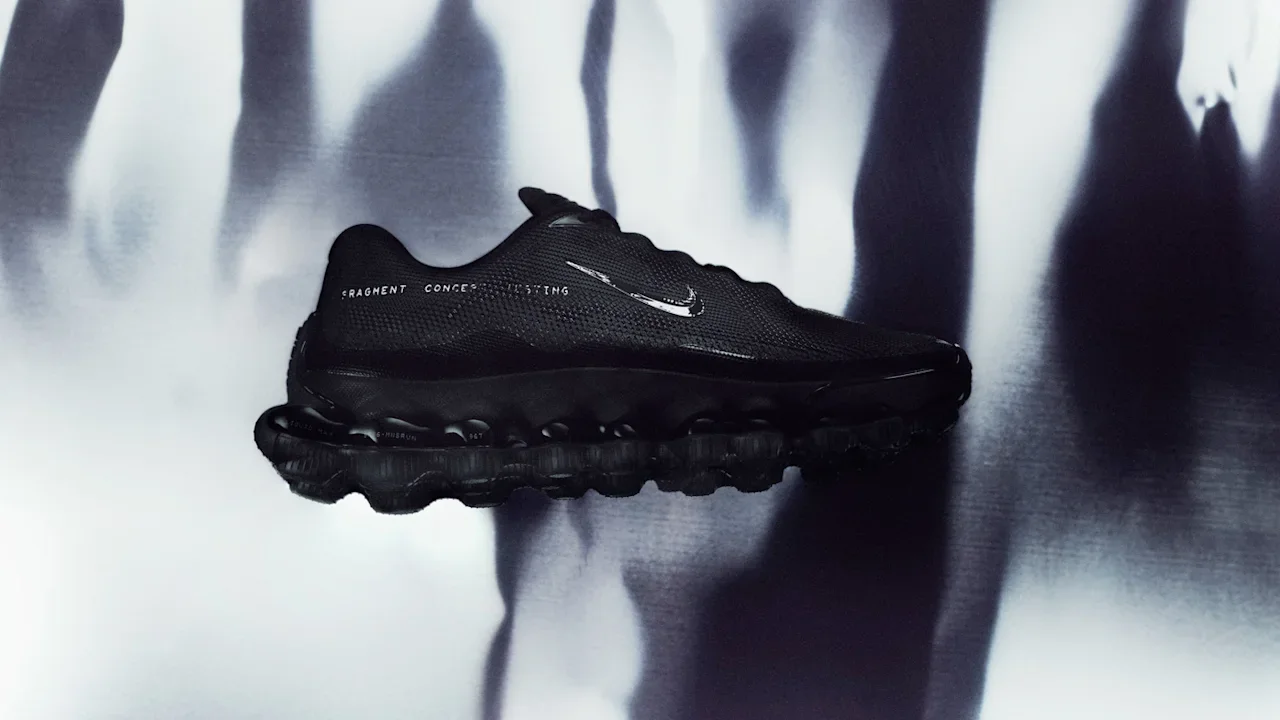
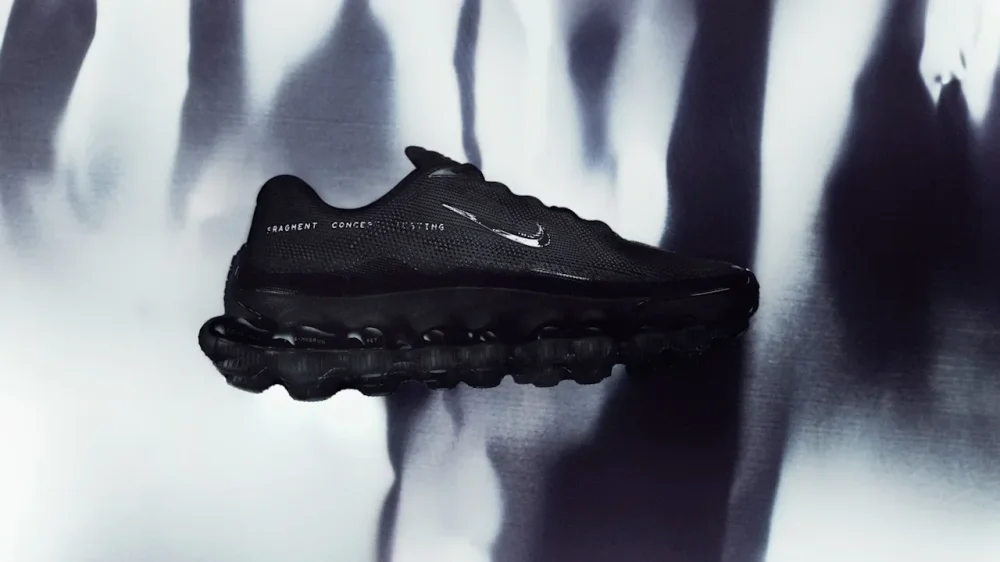
Hiroshi Fujiwara is perhaps the most dramatically lit person I’ve ever interviewed on Zoom. Joining me at his preferred time (midnight) from Tokyo, the man known as the godfather of streetwear—who launched his own label at 26, was among the first hip-hop DJs in Japan, wrote a regular column for Popeye, and now runs his own consultancy, Fragment—has met with me to discuss his latest collaborations with Nike. But when I dig in, asking about the hidden details lurking in his shoes? He admits, “I don’t really want to talk about it,” without an ounce of rudeness. “Sometimes, if you see a movie and you don’t really get the ending, you have to guess what [the creators] think. I like that kind of situation.” In a world of overt and overstated sneaker collabs, Fujiwara prefers to operate with a soft touch. The semiotics of streetwear like much of fashion are born from winks and nods—an “if you know you know” mentality. His three new pieces for Nike celebrate that. At the same time, Fujiwara insists he isn’t only trying to build enigmas that “people can investigate it forever.” When he visits Nike, he still designs the shoes he’d like to wear. “I always like black shoes!” His three new shoes start with his take on Nike’s new Air Liquid Max (April 1, $225)—an organic expansion of its Air Max technology, where the air bubbles almost seem to melt or morph underfoot like the toes of a tree frog. He didn’t touch the materiality or the silhouette. And you’ll need to squint to notice the light white text like “Fragment Concept Testing” on the side. But he turned the swoosh chrome, and filled the three printed layers of pigment on top of the shoe with various flavors of black. I imagine that in person it almost shimmers like snakeskin (which wouldn’t be the first or even second time Fujiwara used animal textures on a sneaker). “I always like black shoes!” Fujiwara says. “I like colorful shoes also, but I wanted to have the black one for myself. Especially that shoe. I always like those air bag shoes. Many [designers] want to do the Jordan 1, Air Force One, or Dunk. No one really want to touch the newest things. I always do that.” For the Mind 001 (March 18, $95)—Nike’s brain-calming slide shoe, which uses little nubs in the bottom to activate a sense of mindfulness—Fujiwara also wanted to go with black. But for the nubs, he chose blue. Black and “military blue” are the trademark colors of Fragment. “Small details are really, really important. I see some comments, people say, ‘Oh, it’s only changing color’; ‘It’s only little things,’” Fujiwara says. “But the little things are really important, especially for the shoe. Like even 1 millimeter really makes it different.” Indeed, the Mind 001 reads completely differently in black—ready to outfit an ensemble of broody technical garments beloved by corners of the fashion scene—in a way that the Mind 001’s original infrared and orange colorway did not. Yet black and blue seem like the worst colors to use to stand out: an almost stubborn choice on Fujiwara’s part to squint through their universality to see his fingerprint. Is there more to them? When I asked about his exact approach to blue at Fragment, he did share more on its origins. “The first Air Jordan I had in the ’80s—the original Air Jordan 1—that was black and blue,” Fujiwara says. “And I always like black and blue.” The shoe left such an imprint on his mind that he adopted Nike’s colorways for himself, which he occasionally, circuitously, reapplies to the brand. An excuse to look closer Fujiwara’s collaborations with Nike trace back to the ’90s—at one point, he even teamed up with Nike design god Tinker Hatfield and CEO Mark Parker on a special line called HTM (Hiroshi, Tinker, Mark). He’s always seen his role as translating Nike’s performance approach to a more fashion-forward audience. Fujiwara himself flagged his use of “croc leather” on an Air Force 1 as being the sort of polarizing choice even Nike’s designers didn’t get at the time (about 20 years later, it seems like a downright common treatment to realize a luxe sneaker). “When I started working for Nike with a collaboration in the late ’90s, there were many rules. You couldn’t touch a swoosh. And at first, it was difficult. But then I got used to it, and I kind of started enjoying it,” Fujiwara says. “Nike already had their own creative design, so I don’t want to mess around too much. . . . I talk to the designers, I like to respect what they do.” That mentality carries across Fujiwara’s collaborations and projects. He keeps his design simple. He keeps his staff simple. He keeps his business simple. Fragment is a creative team of three, which ensures he doesn’t have the overhead and payroll of managing his own brand. But I’ll admit that I appreciate it when Fujiwara takes a firmer touch with Nike’s silhouettes, as he demonstrated with his Nike Mind 002 (March 18, $140). He requested a new upper made of Flyknit, while breaking free of black and blue by introducing a second color scheme in “particle gray.” A closer look reveals more nuance. The top of the shoe is fuzzy—almost reading like fleece. All of that softness is caged by a one-pull performance lace system, managed with Fragment’s own tooling that can lock down the shoe like a bolo tie. While the silhouette itself stays the same, Fujiwara introduced a new sock liner that raises the heel of the shoe, giving it more forward momentum than what we see in the Mind 002 (a silhouette that I’ve thought looks stuck in place, given that its outsole and upper peak in the center like a triangle). Sneaker critics have been gushing about Fujiwara’s approach to the Mind 002, and his most overt statement is what fans appear to want. But ultimately, Fujiwara asks that you keep looking closer. “When I was really young, the information I had was just pictures in magazines. Like, pictures of my favorite people. I’d want to see, what do they have in the closet? Or what do they have on posters? Those kinds of small details,” he says. “But many people [don’t get there now] because they have so much information already.” View the full article
-
We’ve tested Google AI Max over the past nine months, analyzing 23 individual tests across 16 already mature advertisers operating within a range of verticals. This article reveals what we did to maximize success with this campaign type. Your experiments and observations may vary. If so, we’d welcome the debate. This is intended to be just one voice among many in the conversation around AI Max. All the analyses we discuss are replicable within your own accounts, so you can ratify or dispute the findings based on your own data. The ground rules for AI Max Before launching an AI Max test, consider several factors. Two are particularly significant: Your campaigns should bid on a conversion action that’s meaningful for your business. Aim to get your conversion hygiene in as good a place as possible through tools like Enhanced Conversions and Google Tag Gateway. Value-based bidding is also ideal, although it’s not essential. Any automated targeting functionality can work. Your campaigns shouldn’t be budget-constrained. This advice is true in many situations, but it’s particularly relevant with AI Max. What’s the point of opening up your targeting if your budget prevents you from entering those auctions anyway? If your campaign is limited by budget, then either increase your daily budget headroom or set more conservative bid strategy targets. With those prerequisites satisfied, we can now cover some of the juicier findings we’ve uncovered from our AI Max tests. Your customers search everywhere. Make sure your brand shows up. The SEO toolkit you know, plus the AI visibility data you need. Start Free Trial Get started with Learning 1: Go all in with AI Max AI Max performs best when you enable all three core features simultaneously: Search term matching. Text customization. URL optimization. Overall, we saw a 40% higher uplift in test success rates for campaigns that used all three features compared to those that opted in only to the baseline search term matching functionality. Text customization drives stronger performance Google has been pushing the text customization concept in various guises for a few years. However, earlier versions, like auto-applied recommendations, have had limited uptake. So, we were keen to finally assess the impact this would have. Using the Added by segment in the assets report, you can compare how text customization performs compared to standard advertiser-provided assets. We found that AI-edited assets delivered an improved return on ad spend (ROAS) and helped extract more value per impression. Put simply, clients were better off when text customization was activated than when it wasn’t. This trend was consistent across both headline and description assets, even though we found that text customization modified headlines far more often than descriptions. Text customization skews the auction in your favor Strong performance is the ultimate objective for AI Max campaigns. But from a search geek’s perspective, the arguably more tantalizing result is that text customization demonstrably improved Quality Score. We assessed historical Quality Scores for clients who activated text customization before and after the test launch. This analysis is valid because the Google Ads interface reports Quality Score only when the search query syntax exactly matches the keyword. This methodology provides a like-for-like comparison across a group of queries that were targeted both before and after switching on AI Max. We saw a topline improvement in weighted Quality Score, from 6.8 to 7.3. This upward trend repeated across the three components of the Quality Score, with ad relevance showing the most notable uplift. *Quality Score components evaluated as below average = 1, average = 2, above average = 3 Logically, this shouldn’t be a surprise. After all, the premise of text customization is that Google shows the best possible ad to each individual user. Nonetheless, it’s satisfying to see this story unfold in our analysis. At the same time, this finding is noteworthy because advertisers have generally been reluctant to use the full AI Max suite. Across all our test cases, only 50% used text customization, and even fewer (44%) enabled URL optimization. Some brands will need to adhere to compliance guidelines that outright prohibit the use of these features. But our results suggest that if you have any wiggle room at all, you’d be well served by running a test with all three features. Google is constantly rolling out additional guardrail features to clarify what is and isn’t off-limits from a brand messaging perspective. Marketers in more risk-averse organizations would be well-advised to keep a close eye on these releases. Dig deeper: Google expands AI Max text guidelines globally Learning 2: Take an account-wide approach with AI Max This next suggestion might seem counterintuitive, but hear me out. If you’re testing out AI Max for the first time, you might be better off enabling the feature across your entire account right from the start, rather than following a step-by-step approach. There are a few reasons for this. Not all AI Max traffic is net-new With AI Max enabled, you can target more queries and users than before. And of those queries, many will genuinely be net-new to your account. However, it’s also common for queries that another campaign in your account once reached to get pulled into your AI Max campaign. When we assessed performance at the campaign level, we saw an average +7% increase in conversion value, directly generated by queries the campaign had never targeted before. When we zoomed out to an account-level view, however, only 46% of those queries were actually new to the account. The remaining 54% had previously been captured elsewhere in the account. That still isn’t a bad result. An approximately 3% incremental uplift in conversion value, especially for accounts that were already running with a high broad match adoption, is great. But this finding does have two key implications: If you care about your search term hygiene, enabling AI Max in only a subset of your campaigns could disrupt your search term-to-campaign funnel. Because brand inclusion lists are now exclusively available for AI Max-enabled campaigns, enabling AI Max account-wide can help you maintain a cleaner search term-to-campaign funneling system. Single campaign adoption muddies the water when assessing the success of your test. You care about net-new conversions, not reorganizing existing traffic within your account. When testing AI Max, make sure you assess the full account-wide impact. Get the newsletter search marketers rely on. See terms. How not to evaluate AI Max Don’t rely on a cost per acquisition (CPA) by match type analysis to assess AI Max’s efficacy. This approach reveals attribution data within your campaign. But what you really want to know is whether AI Max has improved your overall ability to generate returns at an incremental investment that you’re comfortable with. There are examples of advertisers trialing AI Max and achieving account-wide efficiency improvements. But you should identify those cases by reflecting on macro, account-wide performance — not by looking at your match type CPAs. Why you should monitor campaign types Consider how AI Max interacts with your other campaign types and targeting methods. Let’s call out one particularly glaring example: Dynamic Search Ads (DSA). In our own analysis, every successful AI Max test occurred in an account with low-to-no adoption of DSA campaigns. This is understandable. Almost every single capability of DSA campaigns is now available in AI Max. So, it shouldn’t be surprising that having both campaign types running in parallel doesn’t improve performance. It’s plausible that we may not be that far away from Google announcing another round of campaign streamlining initiatives, similar to those for Smart Shopping and Discovery campaigns in previous years. But until then, it’s on marketers to put some thought into the role you intend each campaign type to play within your overall account plan. Dig deeper: AI Max in action: What early case studies and a new analysis script reveal Learning 3: Think beyond AI Max If you’re already comfortable with AI Max and you’re ready to push onto the next step, there’s a wealth of new testing opportunities to think about. Search Bidding Exploration (SBE) was and still is the first major user-facing change to Google’s bidding technology in the last five years. Yet there’s been remarkably little industry chatter so far about this feature. SBE feels like a natural partner for AI Max, given that both tools are designed to reach incremental and previously inaccessible customers. AI Max also gives you the chance to evolve your thinking around account structure. In an AI Max world, the optimal balance between segmentation and consolidation may lie elsewhere than before. We’re already starting to see some green shoots of successful hyper-consolidation approaches. But it’s still too early to decisively comment one way or another. Dig deeper: AI Max increases revenue 13% but drives higher CPA: Study See the complete picture of your search visibility. Track, optimize, and win in Google and AI search from one platform. Start Free Trial Get started with Putting AI Max to the test in your own account It’s an intriguing time to be working in paid search, and AI Max has already sparked significant debate and experimentation within the industry. If you’re a later adopter or if you’re looking to improve on a previously unsuccessful foray into AI Max, then consider the following: Implement key ground rules: Ensure that you have objective-oriented bid strategies in place, powered by strong conversion hygiene. Remove campaign budget constraints once and for all. Adopt an all-in approach: Text customization and URL expansion may not be as popular as search term matching. But we’ve observed that using the full package can actually improve the likelihood of success — by up to 40% in our experiments. Prioritize an account-wide impact: Consider the interplays between AI Max, your regular keyword campaigns, and DSA. It might be that an AI Max everywhere approach is preferable. When judging results, look beyond campaign-level tests where possible, and block out the CPA-by-match-type brigade. Get creative: Think about the more innovative ways you can integrate AI Max with other facets of your account. View the full article
-
Let me introduce you to your good friend, sweat. Ignore the gross feel and the potential for B.O. for the moment, and think about what it does for you: When your body gets too hot, threatening to raise your core temperature over what’s healthy, little glands in your skin squeeze drops of moisture onto its surface. As soon as a breeze hits those droplets, they evaporate, taking some of your body heat away with them. This is true even during exercise. It's not the exercise that makes you sweat; exercise just raises your body heat, and it's the heat that makes you sweat. That's why you sweat without exercising on a hot day, and why you can sometimes exercise without sweating in a cold environment. In other words, sweat means a lot less than you might think. Sweating doesn't mean you're getting a good workout, doesn't mean you're losing weight, and it doesn't tell you much about your fitness level. Let me explain. You can get a great workout even if you don’t sweat very muchAt the same ambient temperature, a harder workout might result in more body heat, so we’ve built up an association between sweating and working hard. It’s deceptive, though. If you go for an hour-long run in the heat, you’ll sweat buckets. Run an hour on a treadmill at room temperature, and you may not sweat quite as much, but you’ll still be dripping. Go and run an hour in the winter, though, and you’ll barely be damp. That’s because your body doesn’t have to worry about cooling itself down. Besides the ambient temperature, there's another factor here: Not all workouts raise your body temperature equally. A heavy strength training workout, with plenty of rest time, may not raise your body temperature enough to make you sweat very much. That doesn't make it a less-intense workout than, say, an easy jog. So don't read too much into the amount you sweat. Why do some people sweat more than others?One of the biggest differences between people who sweat a lot and those who sweat less is body size. And by "size" I literally mean that—it doesn’t matter whether you’re fat, muscular, tall, or some combination thereof. The more of you there is, the harder your skin has to work to cool you down, and thus the more you sweat. And then there's the relationship between surface area and volume. The more skin you have relative to your body size, the more efficiently sweat can cool you. That means smaller people, including children, have a higher surface-area-to-volume ratio, so they can cool down with less sweat. If you lose a substantial amount of weight, you may end up sweating (slightly) less for these reasons. You have less body mass, and your surface-to-volume ratio improves a bit. On the flip side, the fitter you are, the more you might sweat, as research suggests runners’ bodies turn on the sweat glands sooner than sedentary people, and that they sweat more during the same workout. So sweating more doesn't mean you're out of shape; it can mean you're actually fitter and better adapted to the heat than people who sweat less. Finally, if you feel like you’re the biggest sweater in your friend group, look at whether you’re actually doing appropriate comparisons. If you’re dripping when you run in the noonday sun and you see your friend post a selfie from the air-conditioned gym, you shouldn’t expect the two of you to sweat the same amount. What’s the connection between sweat and weight loss?Sweating a lot during a workout does not mean you’re losing fat, so let’s bust that myth right there. Sweating a lot can make you lose water weight, though, which is only temporary. Our bodies contain a certain amount of water in our blood and in the various cells and compartments we’re made of. We can lose a little bit of it, become slightly dehydrated, and barely notice. Or we can drink a ton of water and become very hydrated, and have to pee a lot to get back to a normal level. In extreme cases, we can get so dehydrated it threatens our health, but that’s rare with normal activities. When you sweat, and that sweat evaporates or gets rubbed off (you mop your brow with a towel, let’s say), that’s water leaving your body. You can actually weigh yourself before and after a workout and notice a change in weight if you sweat enough. Every pound of weight you lose is two cups (16 ounces) of water that has left your body. So technically you “lost weight,” but it wasn’t fat. You’re just due to drink two cups of water, and then you’ll be hydrated and happy again. View the full article
-
For some time now, reporting around Apple’s folding phone has coalesced around two beliefs: the device is set to drop this fall, and it will have a significantly less visible display crease than previous folding devices. That sounds like a typically Apple feature to prioritize, and it could well explain why the company is late to the category. Folding phones are cool, but the creases in their inner screens are undeniable imperfections. Whether it’s capacity with music players, user interface with smartphones, or the overall form factor with tablets, Apple tends to avoid making products with clear compromises in their defining elements. But is it even possible to make a crease-free folding phone? There are huge engineering challenges to making a phone with a glass display that bends back and forth and flattens seamlessly, much less one that stays that way over time. Well, a new phone announced today might well have upstaged Apple. Oppo, one of China’s biggest phone brands, has revealed details of how its Find N6 is addressing the crease; a full launch will follow next week. Close to zero crease I thought last year’s Find N5 was the best foldable phone on the market, at least if you could get your hands on it—Oppo only sold it in China and South East Asia. At launch it was the thinnest smartphone available anywhere, and Oppo made some bold claims about its “almost invisible” crease. That was broadly true unless you turned the screen off or tried to use the phone outside; you could also still physically feel the crease in the middle of the panel. This time Oppo is marketing the Find N6 as having a “Zero-Feel Crease.” I’ve been using this phone for a week, and I would still say “zero” is an exaggeration—but only a slight one. The N6’s screen is a big improvement on the N5’s, which was already well ahead of competitors. The crease is very difficult to see unless you’re really looking for it, and it’s also hard to feel in actual use. It’s clearly there if you press deeply against the screen and run your finger across it, but this is the first time I’ve felt like it was truly unobtrusive and unlikely to ever bother me in a real-world situation. Oppo isn’t necessarily reinventing the technical wheel here. The company says it achieved the new crease by refining its existing design, including by widening the “waterdrop”-style hinge by 11% to avoid acute stress on the display. Oppo is also using liquid 3D printing with photopolymer droplets to smooth out individual imperfections in every manufactured hinge. According to the company, the industry standard for height variance in folding hinges is 0.2mm, but this technique has reduced it to just 0.05mm in the Find N6—less than the width of a human hair. ‘Exceptionally flat’ While it’s impossible to test these claims right now, it’s also worth noting that Oppo says the Find N6 will remain in its pristine, flat state for significantly longer than other foldables. The company says it should stay “exceptionally flat” through 600,000 folds, while the phone has been certified by TÜV Rheinland to remain functional for more than a million. The results are impressive, but Apple is unlikely to take the same technical approach. Oppo has been iterating on its folding phone design for a long time—the first Find N came out in late 2021 after more than three years of development—whereas Apple is coming in fresh. Well-connected analyst Ming-chi Kuo has suggested that the folding iPhone will make use of a new type of metal plate to distribute bending stress across the panel and thereby reduce the impact of the crease. The solution is said to have been developed by Samsung Display, which itself showed off a demonstration “Advanced Crease-less” panel at CES 2026 in January. The Apple response Apple rarely takes off-the-shelf solutions, however, and if there’s one thing I’d expect from its design team, it would be to relish the opportunity to come up with a mechanically novel kind of hinge. It would be surprising if there wasn’t something unique to the new iPhone that Apple could tout in its marketing, even if it does substantially rely on technology from a partner like Samsung Display. What matters, though, is that Apple’s desired outcome has more or less already been achieved by someone else. With the Oppo Find N6, the crease is no longer a serious drawback to usability or aesthetics. That means that whatever Apple was planning to compete with before, there’s now a new benchmark to judge the first folding iPhone by when it eventually gets announced. On one hand, this is good news for Apple fans: the prospect of a truly crease-free iPhone seems more plausible than ever before. On the other, it might be bad news for Apple—this new iPhone could be less differentiated than the company might have hoped for. Oppo has left some room for improvement with the Find N6’s screen, but not a whole lot. View the full article

-
In the months following Elon Musk’s $44 billion acquisition of Twitter in 2022, my experience with the platform (and perhaps yours too) got quickly, dramatically worse. My algorithmic timeline, better known as the “For you” tab, devolved into a broken fire hydrant of tweets from blue-checked engagement farmers, shameless meme thieves, clout-chasing Republican politicians, and pseudonymous YouTubers posting weird, uncanny rage-bait. For a brief period, X even made “For you” the default setting, nudging users toward this slurry of boosted content and away from a simple chronological feed of posts from the accounts they chose to follow. As a result of these changes, anytime I opened the app and neglected to select the chronological feed, I was not really experiencing Twitter as I’d previously experienced it, or wanted to experience it; I was using a new and different version of Twitter that a reactionary billionaire thought I ought to see instead. Eventually, I stopped using the site, which Musk rebranded as X, because I perceived the platform (whatever the name) as feeding me a steady diet of right-wing slop, and I did not want to upset my stomach any further. Today the site’s basic mechanics remain weighted toward feeds that incorporate some form of algorithmic input. The “For you” tab still appears to over-index on Musk’s posts and perspectives. The “Following” tab defaults to ranking posts by their popularity, which can make it very challenging to try and follow breaking news stories on the app. Finally, a dropdown menu allows users to adjust the “Following” tab to display more recent posts first, which, of the available options, most closely approximates the Classic Twitter experience. A recently published study from a team of researchers in Europe attempts to measure the degree to which X’s algorithm is poisoning the brains of those who continue to use it. The study, which took place in 2023, randomly assigned around 5,000 X users to view either their algorithmic or chronological feeds over a seven-week period, and then measured the effects on users’ political attitudes and online behavior. For anyone who does not have a vested interest in the financial success of X, the findings are pretty grim. The researchers found that the “For you” tab shifted users’ political opinions toward more conservative positions on certain issues—for example, the then-ongoing criminal investigations into President Donald The President, and Russia’s invasion of Ukraine. They found that the algorithmic feed increased user engagement, promoted conservative-coded political content, and demoted posts from traditional news sources, which appeared in users’ algorithmic feeds 58.1% less often than they did in users’ chronological feeds. Finally, and maybe most troublingly, the researchers found that these effects were asymmetric—that although turning the algorithm on changed users’ views, turning it off did not move views in the other direction. After the study, the chronological feeds of participants the study exposed to the algorithm contained 60% more posts from conservative accounts and 28% more posts from conservative political activists, relative to the chronological feeds of study participants who did not use the algorithmic feed. The researchers attribute these results to the types of accounts that users encountered in the “For you” tab and eventually chose to follow, thus adding those accounts to their chronological feeds, too. In other words, once the X algorithm moves you to the right, you probably stay there. And if you use the X algorithm long enough, even on those occasions when you decide to peruse the “Following” tab, you will probably see more conservative-coded content than you would have if you had never checked out the “For you” tab in the first place. The researchers noted that the algorithm’s persuasive effects were stronger among self-identified Republicans and independents than among Democrats, whose views the researchers describe as “largely unaffected” by the experiment. But even if X’s design choices are not turning unwitting liberals into brainwashed MAGA dead-enders overnight, the implications for democracy remain, to say the least, troubling. A 2024 Pew survey found that among social media platforms, X had the greatest proportion of users (59%) who said they used it to keep up with politics. Another Pew survey from the same year found that about two-thirds of X users utilized the platform to follow the news, and that half said they got news from X “regularly.” Again, X stood out from its competitors—TikTok, Facebook, and Instagram—as the only platform for which a majority of users listed “keeping up with news” as a reason they used the site. Against this backdrop, the results of the study suggest that the segments of X’s user base that are more open to conservative ideas are also likely to be in the market for political content when they doomscroll. Similarly, depending on which tab they decide to browse, X users looking for news might be less likely to encounter news reported by actual journalists, and more likely to encounter mendacious agitprop designed to make them angry at Democrats, afraid of immigrants, and/or sympathetic to Donald The President. Part of the reason influential conservatives so loudly profess their trust in X these days is that right-wing echo chambers make them feel comfortable: X’s algorithm amplifies content that soothes their egos, affirms their priors, and inexorably pushes them further to the right. Around the time that Musk was taking over at Twitter, he said he wanted to build a “maximally trusted and broadly inclusive” platform on which “a wide range of beliefs can be debated in a healthy manner.” In the time-honored fashion of conservative culture warriors masquerading as principled champions of free speech, he also said that the platform must be “politically neutral,” which, he noted, would entail “upsetting the far right and the far left equally.” The reality was simpler and much more grotesque: Musk, who dove headlong into Republican politics shortly thereafter and remains the platform’s most-followed trafficker in conspiracy theories embraced by white supremacists, wanted the platform to both reflect and promote his worldview. The study helps quantify the success of this effort: Over the past four years, Musk has transformed X into a disinformation-ridden radicalization machine that occasionally spits out AI-generated nonconsensual pornography, too. If those are things you want from your social media experience, X is serving your interests more capably than ever. If they’re not, X is doing its best to change your mind every time you give it a chance. View the full article

-
The town halls didn’t work. The twelve month wellness program didn’t work. The pricey motivational speaker definitely didn’t work. Your team looks busy, but is still very, very stuck. What looks like apathy is almost never laziness. What looks like resistance is rarely defiance. What you’re actually seeing is a nervous system in threat mode because change fatigue is fear fatigue. The fact is, the human brain just isn’t wired to fully distinguish between a physical threat and an organizational one. According to Gallup’s 2025 State of the Global Workplace report, half of employees in the U.S. and Canada reported significant daily stress, which is higher than all other global regions surveyed. That’s not a motivation problem. That’s a nervous system crisis happening at scale. Our amygdala, the brain’s fear center, doesn’t have the ability to differentiate between the danger of a rampaging rhinoceros and a reorg. It sees experiences as either safe or deadly. Once in threat mode, attention narrows, the prefrontal cortex (the brain’s center of creative solutions and collaboration) shuts down, and self protection protocols are engaged. The pattern Here’s the pattern I see in nearly every organization navigating significant change: 1. A trigger hits. This could be anything from new leadership, a reorg, constantly shifting priorities, or an AI rollout. 2. The nervous system activates a fear response: freeze, fawn, fight, or avoid. To a fear aroused brain, it feels safer to outwardly resist change (fight), conserve energy and wait things out (freeze), tell you what you want to hear, but refuse to execute change (fawn), or just flee altogether with quiet or outright quitting. 3. The person finds short-term relief by disengaging, delaying, or deflecting and they stop performing at their peak. 4. Over time, that protective behavior hardens into an identity story: “Why bother? Nothing I do matters here anyway.” During times of intense uncertainty, this is a completely normal response for the human brain, but it doesn’t have to hinder success; teams just need better tools to navigate periods of rapid change. Here are a few of my favorite neurohacks that have proven especially impactful with enterprise technology teams in my workshops, helping them decrease fear (aka stress) in seconds, not weeks. Pinch the Valley Using the thumb and forefinger of your right hand, pinch the meaty area of your left hand where your other thumb and forefinger meet. Then massage for thirty seconds. This activates the vagus nerve, downshifting the stress response almost immediately. The best part? Nobody in the room knows you’re doing it. Simple, but powerful. The Near & The Far Hold a pen or your finger about six inches from your face and focus on it. Slowly move it out to arm’s length, keeping your eyes locked on it as your focus shifts. Then bring it back in until it touches your nose. Repeat two or three times. When your visual system shifts between near and far focus, it signals your nervous system to downregulate, and I use this one constantly before every keynote. Bravery Bites This one surprises people: your brain stops feeling fear while you’re eating. This provides powerful, albeit temporary, relief and works best with very crunchy things. My favorites are ice, corn nuts, and frozen blueberries. Essentially, your amygdala understands that if your environment is safe enough for you to eat, it’s safe enough to return to a sense of calm. Sour Jolt When a fear spiral has fully taken hold, or you find yourself thinking in never-ending worry loops, pop something intensely sour into your mouth. This can be a lemon or a sour candy (bonus points if you can combine the sour and chewy from Bravery Bites). That sudden, intense taste is such an unexpected signal that your brain has to redirect attention away from the internal thought spiral and toward the sensation in your mouth. Keep a few sour candies in a mug you actually enjoy looking at on your desk, clearly visible, so it can double as a gentle reminder that you have tools at the ready when a fear spiral hits. The most expensive mistake a leader can make right now isn’t a bad hire or a missed quarter. It’s looking at a team in threat mode and calling it a performance problem. Your people aren’t broken. Their brains are doing exactly what brains are supposed to do when the environment feels unsafe: protect. When you reduce threat and increase agency, you don’t just get compliance, you get creativity, speed, and ownership back, with the biggest shifts happening when leaders stop trying to motivate people past their fear and start helping them move through it. Our biology won’t change. But how you lead through it can. View the full article

-
New York City’s famed Fifth Avenue is best known for its sparkling, fantastical holiday windows. Now, luxury brands are transforming an often overlooked, sometimes maligned part of city architecture—scaffolding—into artful branding displays. Located at the corner of Fifth Avenue and 56th Street, Prada has unveiled new scaffolding on its building, currently undergoing renovation, that covers its facade in rippling layers of semitransparent Prada-green scrim paper. The result is a beautifully nuanced design solution that turns what’s typically a functional safety requirement into a moiré urban dreamscape that becomes a visual extension of Prada’s brand. Prada isn’t the first to reimagine scaffolding as a branding opportunity. Most recently, Louis Vuitton transformed its Fifth Avenue flagship store, just a few blocks north of Prada, into a sort of construction trompe l’oeil by making the scaffolding that wrapped its store appear to be a gargantuan set of stacked Louis Vuitton luggage. A reevaluation of what scaffolding could be is happening on a broader scale, too: The City of New York also recently approved six new sophisticated scaffolding designs—featuring lights, angled roofing, and clear materials—to make these temporary safety platforms, required by law when a building is undergoing construction, look less like MacGyvered dark green caves and seem more fluid, in keeping with their architectural surroundings. Prada worked with its longtime spatial design partner, the agency 2×4, to design the building’s covering, and it had to build full-scale mock-ups in both Milan and New York to “test the impact of light, shadow, and movement,” says Michael Rock, founding partner and executive creative director at 2×4. “We treated scaffolding as a medium in its own right, not a backdrop.” While it uses standard commercial pipe scaffolding as the underlying structural skeleton, the deft layers of material, signature color applications, and contrast they draw signal the Prada brand and its interest in dualities, according to the company. The mesh is made of two layers of scrim paper—a reinforced, durable woven fiber material—printed with a pattern that references typical New York construction fencing, but in Prada green. The scale of the pattern is different on each of the layers and had to be precisely aligned to create a moiré effect that shifts with light, weather, and viewing angle. At first, it looks like single-surface standard construction material. Someone with an eye for detail will notice a delicate optical effect. “Scaffolding is designed for speed, safety, and building code—not beauty,” Rock says. “The challenge was working within that strict system while transforming it into something intentional and architectural.” Color also plays a significant part in maintaining the building’s brand recognizability on street level. The team painted the pipe scaffolding, sidewalk bridge, and columns in Prada green, and applied green variations to the mesh layers so that the rear layer is a deeper, more muted shade and the outer mesh is brighter, which emphasizes the moiré effect, according to the company. “The facade operates at both macro and micro scales, and much of that nuance only reveals itself in person,” Rock says. “At a finer level, the two mesh layers are not identical: The front scrim is more transparent, while the rear layer is denser. From a distance, the facade reads as monolithic. As you walk along the street, the multiple moiré patterns begin to shift, revealing the layered structure. That spatial effect is difficult to capture in photographs—it comes alive through movement.” Integrated linear LED fixtures also illuminate at night to cast a soft glow on the sidewalk and heighten the transparency of the mesh, revealing how the lights line up with the scaffolding’s structural grid and adding another layer of depth to the concept. But Prada’s reinvention—along with Louis Vuitton’s—of what used to be a design afterthought also shows how branding in retail spaces is evolving. Every possible consumer touchpoint, no matter how seemingly mundane, is a branding opportunity or a missed chance—a moment to drive brand recognition, invoke surprise, and make ephemera into a memorable experience. “Presence is essential,” Rock says. “Brands need to announce themselves, even more so when their facades are lost behind protective layers of scaffolding. Typically, the answer is a kind of billboard wrapper. In our case, rather than hiding construction and maintenance, we leverage them as an opportunity to express Prada’s unique aesthetic heritage. Through color, pattern, and moiré, the scaffold becomes an extension of the brand language rather than a screen. We see this as a branding of and in the structure of the city.” View the full article

-
Rental housing construction is slowing down in the United States. The cost of common construction materials is a big reason why. According to a new report from the Joint Center for Housing Studies of Harvard University, construction material costs have skyrocketed in recent years, adding to a wide range of conditions that are slowing the production of rental housing. The report, “America’s Rental Housing 2026,” finds that there was a 42% increase in the overall material costs of multifamily residential construction over the five-year period from 2020 to 2025, covering essential building materials like gypsum board, ready-mix concrete, and lumber. It’s a huge jump in costs compared with the previous five-year period from 2014 to 2019, which saw construction material costs rise just 7% overall. “The cost rose a lot following the pandemic. And some of that was supply chain issues that really increased the costs, and then they didn’t quite come back down. And now tariffs are also impacting some products,” says Whitney Airgood-Obrycki, a senior research associate at the Joint Center for Housing Studies and the lead author of the report. These costs are part of the reason the amount of new rental housing stock is shrinking. According to the report, 416,000 multifamily units were started in 2025, down from a 30-year record high of 547,000 starts in 2022. Year over year, fourth-quarter starts of new professionally managed apartments dropped 36% in 2025. The raw materials of housing construction heavily influence the overall cost of housing production, and the past five years have seen material costs spike. Five major categories of building materials—gypsum, plastic construction products, lumber and wood, ready-mix concrete, and brick and structural clay tile—have experienced cost increases of between 26% and 47%. The high material costs have contributed to the slowdown in overall rental housing production, but they’re only part of the picture. Airgood-Obrycki notes that there’s been a labor supply shortage in the construction industry over the same five years, and labor costs in the industry have increased by 24%. High inflation is affecting what people in the housing market can afford, and high interest rates are limiting what developers can afford to build. “There are lots of things happening at the same time,” Airgood-Obrycki says. “The long-standing issues of the high cost of land and issues with delays in development and with a complicated permitting process in some places are also adding time and cost to projects for developers.” Most of the impacts from construction material costs are a direct and long-lingering result of the pandemic, according to the report, but current affairs—from tariffs to oil price shocks from the Iran war—are also having an effect on the overall cost of building. “The tariffs, of course, are adding more on top of that and preventing prices from coming back down in any real way,” Airgood-Obrycki says. For potential renters, that likely means less housing to choose from and potentially higher rents in the long term. View the full article

-
For years, companies have been told to prepare for the future by chasing youth, digital fluency, and technical skills. They have been urged to bet on “high potentials” and to focus on the next generation. At the same time, they have spent years overlooking one of the most strategic talent pools already available to them: women over 50. This blind spot now looks increasingly dangerous. The future of work is arriving amid inflation, oil crises, wars, and all sorts of geopolitical tensions, economic anxiety, demographic aging, climate disruption, and the destabilizing effects of AI. In such a world, organizations need people who can handle ambiguity, navigate transitions, sustain relationships, and make sound judgments under pressure. That is one of the reasons women over 50 matter so much. They are among the most underused sources of resilience, intelligence, and practical capability in the labor market. If companies are serious about surviving—and growing—in an age of volatility, here are nine reasons why they need to stop overlooking them. 1. Demography is on their side The first reason is demographic reality. In aging societies, women over 50 are an expanding part of the population and, increasingly, of the available workforce. Women live longer than men, often work longer than previous generations, and represent a growing share of experienced talent. Yet they remain underrepresented in hiring pipelines, in leadership tracks, and in strategic workforce planning. Companies speak often about talent shortages while ignoring one of the biggest reservoirs of talent in plain sight. 2. They are veterans of career transitions Women over 50 are often veterans of career transition. Long before everyone started talking about the end of linear careers, a majority of women were already living that reality. Their working lives have frequently included interruptions, pivots, reinventions, periods of part-time work, freelance activity, caregiving, and reentry into employment. What traditional employers have too often interpreted as instability is, in fact, a deep familiarity with change. In a world where careers are less and less predictable, those who have already navigated multiple transitions have a head start. 3. They know how to learn This leads to a third advantage: They know how to learn. In the age of AI, the most valuable workers are not simply those who possess knowledge, but those who can update themselves continuously. Women over 50 who have had to change sectors or rebuild confidence after setbacks often develop a powerful capacity to learn, unlearn, and relearn. They are used to adapting. They are used to having to prove themselves again. They are often much more agile than employers assume, precisely because life has not allowed them the luxury of rigidity. 4. They bring judgment in an automated world A fourth reason is judgment. AI is very good at generating text, summarizing information, and automating routine cognitive tasks. But organizations do not thrive on information alone. They thrive on discernment: the ability to read a situation, understand context, weigh trade-offs, and anticipate consequences. These are not purely technical skills. They are human ones, and they tend to deepen with experience. Women over 50 often bring a kind of seasoned judgment that becomes especially valuable when the environment is uncertain. They are more likely to have seen management fashions come and go, to recognize false urgency, and to distinguish between real innovation and empty hype. 5. They bring emotional intelligence to organizations As work becomes more digital, more hybrid, and more fragmented, organizations depend even more on people who can create trust, resolve tension, and keep teams functioning. Women over 50 often bring strong interpersonal skills forged not only through formal work experience but through years of invisible labor: coordinating, listening, mediating, caring, anticipating needs, and managing relationships. These capacities are still routinely undervalued because they are associated with femininity and because they are difficult to quantify. Yet they are central to organizational performance. In chaotic times, the people who can keep human systems working are indispensable. 6. They strengthen intergenerational workplaces Many companies now employ several generations at once, but few know how to turn age diversity into an advantage. Too often, the focus remains fixated on attracting younger workers, as though experience were a burden rather than an asset. Women over 50 can play a crucial role here. They can mentor younger colleagues without reproducing rigid hierarchies. They can transmit knowledge, stabilize teams, and provide historical perspective. They can also help bridge cultural and professional differences between generations. In organizations where everyone is encouraged to learn from one another, this is a strategic asset. 7. They are often deeply motivated to contribute Contrary to cliché, many women over 50 are not winding down. Quite the opposite. Midlife often brings a sharper understanding of one’s strengths, limits, and aspirations. Many women at this stage are more interested in meaningful contribution than corporate theater. They know what they care about, what they are good at, and what nonsense they no longer wish to tolerate. This often makes them highly effective. They may be less ready to play status games, but they are frequently deeply motivated by usefulness, autonomy, and impact. In a period when so many organizations are struggling with disengagement, that matters. 8. They are agile in times of crisis With an oil shock, economic turbulence, and geopolitical instability looming—or already unfolding depending on where you sit—companies need people who know how to operate when the script no longer works. Women over 50 have often spent years adapting to scarcity, uncertainty, and institutional dysfunction—whether at work, at home, or both. They know how to do more with less. They know how to reprioritize, improvise, and keep going when systems fail. They are often pragmatic rather than ideological, flexible rather than brittle. In an economy shaped by repeated shocks, that kind of agility could be a growth strategy. Companies looking for new sources of resilience and invention should start betting on those who have already learned how to survive upheaval. 9. They help companies understand the society they serve Finally, women over 50 help organizations understand the world they actually operate in. Consumers are aging. The workforce is aging. Families are changing. Needs around health, finance, care, mobility, and everyday life are increasingly shaped by midlife and older adults, especially women. And yet these women remain strikingly absent from leadership teams, innovation departments, media representation, and product design. This makes companies less intelligent. It narrows their imagination and weakens their ability to serve real markets. Hiring women over 50 is therefore a way to become more lucid about society itself. These are some of the reasons why they are (and should be) the future of work. The conditions of the coming economy favor the kinds of strengths they have too often been forced to develop in silence. Sci-fi author Ursula K. Le Guin captured this idea beautifully in her essay The Space Crone. Asked to imagine whom humanity should send to represent itself to extraterrestrials, she proposed not a president or a great scientist, but an old woman—because she alone has lived through the full arc of the human condition. She has known youth, change, loss, reinvention, and resilience. In many ways, the same logic applies to the workplace (albeit with older women rather than old women). In an economy defined by disruption and transformation, the people who have already navigated the most change may be the ones best equipped to face what comes next. Women over 50 are guides to our future. View the full article

-
While federal examination and investigative activity has all but stopped, the regulator is still providing regulatory guidance to the industry. View the full article
-
Global crude output will fall to lowest level in four years, energy agency warns in reportView the full article
-
Every morning, people fasten their watch, slip on a bracelet, and head out the door without thinking much about what they might encounter along the way. The air they breathe, the dust on their hands, and the surfaces they touch all feel ordinary. Yet many chemical exposures happen quietly, without smell, taste, or warning. What if something as simple as a silicone band around your wrist could help track those invisible exposures? Environmental monitoring has traditionally relied on snapshots of exposure from a water sample collected on a single day, a blood sample drawn at one point in time, or soil tested from a specific location. But exposure unfolds gradually as people move through different environments and come into contact with air, dust, and surfaces throughout the day. New noninvasive monitoring tools aim to capture that longer-term picture. As synthetic chemicals such as “forever chemicals,” known as perfluoroalkyl and polyfluoroalkyl substances (PFAS), become more widespread in everyday environments, scientists are increasingly focused on understanding how exposure to these substances occurs in daily life. PFAS are called forever chemicals because they take a very long time to degrade in the environment. Traditional monitoring misses everyday reality Traditional monitoring methods are essential for identifying contamination, but they capture exposure as a moment rather than something that unfolds over time. In studies involving people, measuring exposure often requires invasive procedures such as blood draws, which can be expensive, logistically challenging, and, for some participants, uncomfortable enough to discourage involvement. Early in my environmental chemistry research, I noticed something that didn’t quite add up. People living in the same agricultural community, or animals sharing the same landscape, often showed very different chemical profiles even when environmental measurements looked similar. The surroundings hadn’t changed much; daily behavior had. Movement through different spaces, time spent indoors or outdoors, contact with treated surfaces, and interactions with consumer products all shape exposure in ways a single sample can’t fully capture. That realization raised a larger question: If exposure unfolds gradually, how can scientists measure it using tools designed for specific moments? Answering that question requires a shift away from isolated measurements and toward approaches that reflect lived experience. What noninvasive tools change That question led me to work with passive, noninvasive monitoring tools, including silicone wristbands. Rather than actively collecting samples, these tools absorb chemicals from the surrounding environment over time, similar to how skin or fur interacts with air, dust, and surfaces. Silicone wristbands work because they are made of a silicone polymer called polydimethylsiloxane, or PDMS, that can absorb many organic chemicals from the surrounding environment. As the band is worn, compounds from air, dust, and surfaces gradually diffuse into the silicone over time. The material acts somewhat like a sponge, passively collecting traces of chemicals the wearer encounters during daily activities. After the wristband is worn for several days or weeks, researchers can extract those compounds in the laboratory and analyze them to better understand patterns of exposure. Silicone wristbands are one example of a broader group of passive, noninvasive monitoring tools designed to observe how chemicals accumulate over time. Other approaches, including passive air samplers placed in homes or small wearable devices, follow similar principles by absorbing compounds from the surrounding environment. Researchers have used noninvasive tools in community studies to track exposure without medical procedures, lowering barriers to participation and reducing the burden on volunteers. For example, scientists have applied these approaches to study exposure among adolescent girls in agricultural communities, firefighters, and occupants in office buildings. Researchers have also adapted similar ideas for animal and wildlife studies. Instead of drawing blood, scientists may use wearable tags, collars, or passive samplers placed in an animal’s environment, such as nesting areas or habitats, to understand how chemicals accumulate over time. These approaches can offer insight into exposure across different ecosystems while minimizing stress on animals. Like any method, passive monitoring has limitations. Some chemicals are more difficult to capture than others, and environmental conditions such as temperature, sunlight, or airflow can influence how efficiently samplers absorb pollutants. Wearable devices also reflect exposure over a specific period, meaning they cannot provide a complete lifetime record. These approaches do not replace traditional monitoring. Instead, they add context, showing how exposure accumulates across time and space rather than appearing suddenly at a single sampling point. Why this matters now In the United States, PFAS contamination has become a growing public concern, from drinking water advisories to product restrictions and cleanup efforts. Federal agencies, including the Environmental Protection Agency, have highlighted the persistence of these chemicals and their widespread presence in the environment. Much of the public conversation focuses on where PFAS are found in water systems, soils, or consumer products. Understanding exposure, however, also requires attention to how people and ecosystems encounter these chemicals in everyday settings. Noninvasive monitoring tools may help fill that gap. They offer ways to better understand cumulative exposure, identify overlooked pathways, and inform environmental health and conservation decisions. For wildlife, these methods may allow researchers to detect emerging risks earlier without adding pressure to species already facing habitat loss and climate stress. Although these approaches are becoming more common in environmental health research, they are still emerging compared with traditional sampling methods. Costs, the need for standardized protocols, and differences in how various chemicals interact with passive materials can slow wider adoption. As researchers continue refining these tools, they can complement rather than replace established monitoring strategies. Yaw Edu Essandoh is a PhD student in public and environmental affairs at Indiana University. This article is republished from The Conversation under a Creative Commons license. Read the original article. View the full article

-
Google announced that Search Console's brand queries filter is open to all eligible sites, spurring questions about the feature. The post Google Answers Questions About Search Console’s Branded Queries Filter appeared first on Search Engine Journal. View the full article
-
Earlier this week, social media was wowed by images from the streets of Chinese cities showing senior citizens lining up to have OpenClaw, the always-on AI assistant, installed on their laptops, desktops, and other devices. Areas like Shenzhen and Wuxi offered subsidies to try to scale up adoption of the tool and capitalize on its capabilities. An enormous proportion of all OpenClaw instances installed worldwide, as tracked by public dashboards, emanate from China. China is adopting tech at an absolute breakneck pace. A ridiculous amount of people turned up into a public event in Shenzhen today to install the OpenClaw. Some devs who work at Chinese big tech companies threw a free public event right outside the Tencent Building in… pic.twitter.com/2t4y2ancyz — Rohan Paul (@rohanpaul_ai) March 8, 2026 But just as quickly as China adopted OpenClaw, it now appears to be shunning it. The country’s internet emergency response center has issued an official warning about the risks the technology poses. The central government has sent out diktats to government agencies and state-owned enterprises, warning them against installing OpenClaw on their systems. The private sector has also responded. The same pop-up providers of installation services are now offering to uninstall unwanted OpenClaw instances for a fee. “It’s almost a notice from the Department of Stating the Bleeding Obvious,” says Alan Woodward, a cybersecurity professor at the University of Surrey in England. “Everyone has been saying ‘don’t be so silly as to give agentic AI access to any valuable data.’” Yet Woodward points out that China’s response is more than that—they appear to recognize that AI adoption has been so rapid that it presents a prime target for supply chain attacks. “Attackers were bound to produce malicious add-ons and plug-ins,” he says. China can’t seem to make up its mind about what to make of OpenClaw, says Ryan Fedasiuk, a fellow at the American Enterprise Institute covering China and its tech development. “Beijing is simultaneously banning OpenClaw on government networks while local governments in Shenzhen and Wuxi are subsidizing companies that build on top of it,” he says. That points to a dual focus, Fedasiuk reckons. “The Chinese government aims to capture the economic upside of agentic AI while keeping it out of the party-state’s own bloodstream,” Fedasiuk says. However, how long that balance can hold is debatable, not least because of the way every private-sector actor is trying to adopt agentic AI, he adds. “Banning agents in 2026 is like trying to ban spreadsheets in 1985, or Google Sheets in 2013,” he says. “The productivity gains are enormous, and the opportunity cost of abstaining from the use of agents will eventually become untenable.” Still, Fedasiuk points out that China’s OpenClaw ban seems eminently sensible. “Governments should be alarmed by the cybersecurity implications of AI agents,” he says. “Social norms around the technology are progressing such that many hackers will soon no longer need to crack the encryption that guards valuable files or digital services, but merely gaslight a piece of software that has already been given access to them.” The problem is that it’s out of step with current thinking about AI. Nevertheless, it appears that China has decided that widespread use of OpenClaw could cause safety headaches in the months to come. “Prompt injections and plug-in poisoning are still the thorn in a chatbot’s side, and it isn’t surprising China is flagging it, when you consider that every layer of the AI stack has a commercial incentive to push the tools far and wide,” says Jake Moore, a cybersecurity expert at ESET. “There are also the same structural risks with agentic AI tools that are granted high-level system permissions before anyone has properly stress-tested what an attacker can do with them.” Moore says the on-and-off relationship with OpenClaw reflects how different the pace of development is between the bleeding edge of artificial intelligence and those trying to roll it out responsibly. “AI is clearly built to be fast and invasive, but it is outpacing security standards and reviews,” he explains. For Fedasiuk, that dysfunction between the speed of development and the speed of security patching is evident in how China’s Central Cyberspace Affairs Commission announced its change in policy. “[It] has watched agents proliferate across government networks and moved to restrict their use within days or weeks,” he says. Usually the commission would study the issue as a policy problem, issue a white paper or road map, and then come to a conclusion on which it acted. The fact that it didn’t “suggests preexisting anxiety within the CCP [Chinese Communist Party] about what autonomous AI means for information security—and possibly a more sophisticated understanding of where the technology is headed than many Western observers give them credit for,” Fedasiuk says. View the full article
-
Despite considering themselves successful, most Americans also feel like they’re lagging on at least one major milestone. But experts warn that dwelling on it could put them further behind. In a recent survey conducted by daily development app Headway, 77% of respondents said they consider themselves successful. At the same time—in what researchers label the “success paradox”—81% said they’re falling behind their peers in at least one major personal or professional domain. Roughly one-third said they feel behind others their age financially, 11% feel they’re behind in life experiences, 10% feel they’re lagging in their career progress, and another 10% said the same about their relationships. “It’s very easy to get caught in the trap of, I’m not good enough,” says Cindy Cavoto, a certified productivity coach for Headway and one of the study’s coauthors. “People put these expectations on themselves, and I think as a society we don’t give ourselves enough slack.” Though many are facing economic challenges and career stagnation in the current job market, Cavoto says those setbacks can feel even bigger in the age of social media comparison. “People are only posting their best lives,” she says. Rather than focusing on others, Cavoto encourages folks to compare their progress against their own individual benchmarks, which most survey respondents felt positively about. “Are you in a better place than you were last year? Are you feeling better about where you’re going this year?” Cavoto asks. “Stop looking around and just compare yourself to yourself. That’s your best measure, because we’re all on our own journey.” The Fog of Work Part of the frustration many workers express is driven by feelings of persistent economic insecurity and career doubt, despite making personal sacrifices to further their professional ambitions. According to the Headway survey, 44% of respondents have forfeited free time, 37% have sacrificed sleep and mental health, and 30% have compromised relationships in pursuit of their goals. Despite those sacrifices, 66% of American workers feel like their career has stalled, according to a recent survey from online résumé builder MyPerfectResume. Furthermore, 45% said they want to leave their jobs but feel they can’t in this market, and 70% have questioned or reconsidered their entire career path in the past year. “That’s pretty astronomical,” says career expert Jasmine Escalera of MyPerfectResume. “There are a lot of employees out there who are dissatisfied with their day-to-day work.” Of those who said they’ve reconsidered their career path, 21% feel like it’s too late to make a change, 19% believe they should be further along than they are, and 17% admit to just going through the motions. This state of uncertainty, in which workers struggle to see what’s ahead, is what MyPerfectResume refers to as “career fog.” “There are a lot of employees out there who are feeling like they’re not having the upward mobility that they want, they’re not developing the skills that they want, they don’t have the career progression that they want,” Escalera says. “There are also a lot of employees who feel like they’re not getting paid what they should.” According to a MyPerfectResume survey conducted last fall, 78% of workers have been assigned new duties without a raise or promotion, and more than half were promised promotions or opportunities that never materialized. In an analysis of U.S. wage growth between 2020 and 2024, MyPerfectResume found that despite an 18% increase in real wages during that period, spending power declined by 2.6% due to inflation. “Our recent reports show that a lot of people are struggling financially,” Escalera says. “The question is, are people also not feeling like they’re moving in the right direction because they’re not being paid enough to afford basic necessities?” In another recent MyPerfectResume survey, 74% of respondents cited high expectations, peer comparisons, or personal perfectionism as a driver of self-doubt, and 58% said self-doubt is negatively affecting their career growth. In other words, those negative feelings are further driving negative outcomes. Focus on what you can control Lots of workers feel like they’ve lost control of their careers, their personal finances, or their mental health, and for good reason. Economic instability, job market stagnation, layoffs, and AI fears have many workers questioning whether they’re on the right path—and that self-doubt can put a damper on their motivation. How they approach these challenges can play a significant role in the outcome, according to former Stanford lecturer and behavioral design expert Nir Eyal. In his new book, Beyond Belief, Eyal explains that our perception is driven by a set of beliefs that are neither pure fact nor fiction, making them uniquely malleable. “Beliefs are tools, not truths,” he says. “You can change how you see reality based on your beliefs.” Adopting what Eyal labels “limiting beliefs” anchored in self-doubt—such as I’m not where I should be, despite my best efforts—saps our motivation and increases suffering. Rather than looking for opportunities to improve our situation, Eyal’s research suggests those who maintain limiting beliefs wire their brains to look for evidence of their victimhood. “How hard am I going to work if I’m thinking, I’ve been working this hard, and look, I still am not where I should be? To me, it’s pretty demotivating,” he says. “We must reconcile that limiting belief to push beyond it, and we do that by adopting a ‘liberating belief’ that serves us better.” Turning a limiting belief into a liberating belief, according to Eyal, starts with questioning the truth behind the limiting belief, and considering how outcomes might improve if we reversed it. “With this inquiry-based stress reduction, we learned that the belief that we think is a fact may not be a fact, and there might be an alternative explanation,” he says. “We learned that holding on to the belief doesn’t necessarily serve us, doesn’t make us better off, and that actually not holding on to that belief might be much better for us, all in a matter of seconds.” In other words, the more workers believe they’re falling behind their peers, the more likely that sentiment is to become reality. Those who instead focus on their own success and potential are more likely to reduce the weight of their personal and professional challenges, and their negative feelings toward them. “We can actually use the science behind belief to help us increase our motivation to do what we need to do to decrease our suffering around that situation, so that we can reconcile it,” Eyal says. “Who do you become when you believe I’m exactly where I should be and I’m still learning? You’ll feel so much more motivated to go learn and keep working at it.” View the full article