Newsletter
Want to keep up to date with all our latest news and information?


ResidentialBusiness
Administrators
-
Joined
-
Last visited
Everything posted by ResidentialBusiness
-
We may earn a commission from links on this page. Deal pricing and availability subject to change after time of publication. Bed-sharing couples rarely like the exact same kind of mattress, and that's where the i8 Smart Bed shines. Each side is customizable, allowing each person to alter the mattress' firmness at any time. Right now, Sleep Number is having a Memorial Day sale with discounts of up to 50% and free delivery. Its flagship product, the i8 Smart Bed, is 30% off. I've been loving mine, and it has changed both my and my partner's sleep for the better. Mattress only i8 Mattress, King $3,289.30 at Sleep Number $4,699.00 Save $1,409.70 Get Deal Get Deal $3,289.30 at Sleep Number $4,699.00 Save $1,409.70 Mattress only i8 Mattress, Queen $2,799.30 at Sleep Number $3,999.00 Save $1,199.70 Get Deal Get Deal $2,799.30 at Sleep Number $3,999.00 Save $1,199.70 Mattress only i8 Mattress, Twin $2,379.30 at Sleep Number $3,399.00 Save $1,019.70 Get Deal Get Deal $2,379.30 at Sleep Number $3,399.00 Save $1,019.70 SEE 0 MORE These smart beds from Sleep Number aren't cheap, but they're supposed to last about twice what a regular mattress lasts, with a minimum of 15 years, according to Sleep Number's warranty (regular mattresses last about seven to eight years). Aside from the adjustable firmness, a very cool feature is the bed adapts to your position to keep you comfortable, so if you change to sleeping on your side in the middle of the night, the bed will adjust the firmness so you don't wake up with a sore shoulder I've been using the i8 Smart Bed for nearly a year, and it has helped me learn a lot about my sleep over time. The companion app tracks how long it takes me to fall asleep, my restful sleep, restless sleep (how much tossing and turning I'm doing), and how long it takes me to get out of bed (I've been making a conscious effort now to get rid of doom scrolling in the morning). I also get a Sleep Number score that is based on many metrics to tell me the quality of the sleep I got that night. Based on my score, the app gives me recommendations to improve it. You don't need to buy the integrated base (which you have to buy separately) if you have a bed frame with a flat surface. If your frame has slats, they should be no more than two inches apart. There is an air pump that needs to be plugged into an outlet, and you'll need space under or next to the bed to store it. View the full article
-
With President Donald The President’s multitrillion-dollar tax breaks package at risk of stalling, House Speaker Mike Johnson and conservative Republican holdouts are heading Wednesday to the White House for the last-ditch talks to salvage the “big, beautiful bill.” Johnson, R-La., had hoped to vote as soon as Wednesday on the 1,000-page plus bill after grinding through an all-night committee hearing, a final step in the process. But debate dragged into midday. Democrats, without the votes to stop The President’s package, are using all available tools to press their opposition and capitalize on the GOP disarray. “We believe it’s one big, ugly bill that’s going to hurt the American people,” said House Democratic leader Hakeem Jeffries of New York as he and his team testified before the committee. “Hurt children, hurt families, hurt veterans, hurt seniors, cut health care, cut nutritional assistance, explode the debt,” he said. The President had instructed the Republican majority to quit arguing and get it done, putting his own political influence on the line. But the Republican president failed to move many skeptics during his Capitol Hill visit this week and GOP leaders struggled through the the night on crafting last-minute deals. But for every faction of the slim House majority that Johnson appeases, he is losing others. A tentative deal with GOP lawmakers from New York and other high-tax states to boost deductions for local taxes to $40,000 alarmed the most conservative Republicans, worried it will add to the nation’s $36 trillion debt. Rep. Andy Harris, R-Md., the chairman of the hard-right House Freedom Caucus, said he did not believe the package could pass in a House vote, but “there is a pathway forward that we can see.” “We want to deliver the president’s agenda,” he said. It’s a make-or-break moment for the president and his party in Congress. They have invested much of their political capital during the crucial first few months of The President’s return to the White House on this legislation. If the House Republicans fall in line with the president, overcoming unified Democratic objections, the measure would next go to the Senate. “We’re doing very well. It’s very close” The President said at the White House. A fresh analysis from the Congressional Budget Office said the tax provisions would increase federal deficits by $3.8 trillion over the decade, while the changes to Medicaid, food stamps and other services would tally $1 trillion in reduced spending. The lowest-income households in the U.S. would see their resources drop, while the highest ones would see a boost, the CBO said. Republicans convened the House Rules Committee hearing shortly after midnight, but Johnson’s Memorial Day deadline for House passage was slipping as lawmakers prepared to depart for the holiday. At its core, the package is centered on extending the tax breaks approved during The President’s first term in 2017, while adding new ones he campaigned on during his 2024 campaign. To make up for some of the lost revenue, the Republicans are focused on spending cuts to federal safety net programs and a massive rollback of green energy tax breaks from the Biden-era Inflation Reduction Act. Additionally, the package tacks on $350 billion in new spending, with about $150 billion going to the Pentagon, including for the president’s new “ Golden Dome” defense shield, and the rest for The President’s mass deportation and border security agenda. The package title carries The President’s own words, the “ One Big Beautiful Bill Act.” As The President promised voters on the tax front, the package proposes there would be no taxes on tips for certain workers, including those in some service industries; automobile loan interest; or some overtime pay. There would be an increase to the standard income tax deduction, to $32,000 for joint filers, and a boost to the child tax credit to $2,500. There would be an enhanced deduction, of $4,000, for older adults of certain income levels, to help defray taxes on Social Security income. To cut spending, the package would impose new work requirements for many people who receive health care through Medicaid. Able-bodied adults without dependents would need to fulfill 80 hours a month on a job or in other community activities. Similarly, those who receive food stamps through the Supplemental Nutritional Assistance Program, known as SNAP, would also face new work requirements. Older Americans up to age 64, rather than 54, who are able-bodied and without dependents would need to work or engage in the community programs for 80 hours a month. Additionally, some parents of children older than 7 years old would need to fulfill the work requirements; under current law, the requirement comes after children are 18. Republicans said they want to root out waste, fraud and abuse in the federal programs. The Congressional Budget Office has estimated 8.6 million fewer people would have health insurance with the various changes to Medicaid and the Affordable Care Act. It also said 3 million fewer people each month would have SNAP benefits. Conservatives are insisting on quicker, steeper cuts to federal programs to offset the costs of the trillions of dollars in lost tax revenue. GOP leaders have sped up the start date of the Medicaid work requirements from 2029 to 2027. At the same time, more moderate and centrist lawmakers are wary of the changes to Medicaid that could result in lost health care for their constituents. Others are worried the phaseout of the renewable energy tax breaks will impede businesses using them to invest in green energy projects in many states. Plus, those lawmakers from New York, California and other high-tax states want a bigger state and local tax deduction, called SALT, for their voters back home. As it stands, the bill would triple what’s currently a $10,000 cap on the state and local tax deduction, increasing it to $30,000 for joint filers with incomes up to $400,000 a year. But advocates wanted more. Under the emerging deal, the cap would increase the deduction to $40,000 with an income limit of $500,000, according to a person granted anonymity to discuss the private talks. The cap would phase down for incomes above that level. The Committee for a Responsible Federal Budget, a nonpartisan fiscal watchdog group, estimates that the House bill is shaping up to add roughly $3.3 trillion to the debt over the next decade. —Lisa Mascaro, Kevin Freking, Leah Askarinam, and Joey Cappelletti, Associated Press Associated Press writer Chris Megerian contributed to this report. View the full article

-
UK retailer’s woes highlight the scale — and cost — of the battleView the full article
-
US firm White Oak alleged broker failed to pass on crucial information about collapsed firm’s coverView the full article
-
The white minority does have justified anxieties but many are thriving and it is absurd to talk of a ‘genocide’ View the full article
-
Ex-Apple design chief is working on alternatives to smartphoneView the full article
-
Workers are stressed over job insecurity with many concerned about the possibility of an impending job loss. And that worry may be taking a toll on employees’ overall mental health—especially for younger workers. According to the American Psychological Association’s 2025 Work in America survey, which recorded online responses from 2,017 employed adults, more than half of American workers are bogged down with worry over their job security. A whopping 54% said concerns about their workplace stability has a “significant impact” on their stress levels. Why workers are concerned The concern appears linked to recent policy changes under the The President administration and economic uncertainty. Sixty-five percent said their company or organization has been impacted by policy changes, and two-thirds said those changes have been drastic. Most cited negative experiences as a result of the changes. Seventy-five percent of workers said they’ve experienced things like “emotional exhaustion, as well as lack of interest, motivation, or energy at work,” due to shifting policies at work. Those who haven’t yet experienced big shifts seem to be mentally preparing for them. More than two in five (42%) of employed adults surveyed said they expect government policies to lead to changes in their own workplace. That view was higher among those who worked in local, state, and federal government, where 53% said they expect to see them. Among the big changes, the possibility for layoffs is top-of-mind for employees. According to the survey, 39% of workers “said they were concerned that changes in government policies may cause them to lose their job in the next 12 months.” For younger workers, the worry hits much harder. Sixty-five percent of workers ages 26 to 43 called job insecurity a “significant stressor,” and 75% of those 18 to 25. Only 46% of those ages 44 to 57 said the same, with the number dipping further for older age groups. A challenging market for job seekers Adding fuel to the fire is concern over how challenging it may be to find a new job. About two-thirds of workers who were concerned about losing their job due to changes in government policies (66%) said it would take them a significant amount of time to find a new job if they were laid off. Forty-four percent said they weren’t confident they could find a new job in their industry and would have to change fields altogether. “When people feel their jobs are at risk, it creates a sense of uncertainty that can affect every aspect of their lives,” said Arthur C. Evans Jr., PhD, APA’s chief executive officer, in a news release. “This cultural moment is threatening workers’ sense of stability, control and ability to meet their basic needs. And feelings of insecurity at work and poor mental health can amplify each other in a vicious cycle.” The strain is impacting workers while they’re on the job. More than half said they feel tense or stressed during the workday. But they’re taking the worry home, too, with 46% saying that their work environment is causing their mental health to decline and 38% saying their personal relationships have been negatively impacted over all the work-related stress. View the full article

-
AI startups are the belle of the VC funding ball, and it’s coming at the expense of pretty much every other type of company. That’s a main takeaway from a report published by Silicon Valley Bank on Tuesday. That report found that roughly 40% of VC funding in the U.S. last year came from venture funds that “list AI as a focus. Those comprise more than 15% of U.S. VC funds—a number that has doubled over the past five years. “Put all together, this reflects not only the investor enthusiasm around the space, but also the funds required to properly deploy into capital-intensive hypergrowth AI startups,” the report reads. And with AI companies sucking up a good percentage of overall VC funding, it’s left other types of companies battling it out for a smaller piece of the pie—including firms in the infrastructure, applications, and cybersecurity segments of the enterprise software sector. Perhaps relatedly, the creation of “unicorn” companies—startups that reach a valuation of at least $1 billion—has slowed in recent years. During 2021, for example, there were 138 enterprise software unicorns created. Last year, there were only nine. And none so far this year. The report also points out the rise of “zombiecorns,” referring to unicorn companies that have poor revenue growth and little hope of raising more money. In effect, for some of these companies, IPO hopes are low, the climate isn’t ideal for acquisition, and it’s unclear where these companies can turn next for a lifeline. As such, they’re sort of scouring the business landscape, like zombies—not yet dead, but with a fading pulse. It’s unclear if the overarching economic conditions will improve in a way that could provide some hope to the “zombiecorns” out there, and other startups outside of the AI space looking to raise money. While the U.S. hasn’t seen catastrophic economic numbers yet—GDP, unemployment, and other such numbers have in recent months remained relatively rosy—consumer sentiment is down, and uncertainty abounds due to President The President’s tariffs and other policies. That has many investors waiting on the sidelines for an inkling of what’s next. In the meantime, startups may feel the crunch as they hope to go public or raise another round of financing. Investors will likely still invest, the report notes, but they’ll be much more selective given the overall environment. “We may see a ‘flight to quality’ where investors continue to be extremely selective in their capital deployment—potentially making it even harder to raise the next round,” the report reads. “Those left in the dust will need to seek an exit.” View the full article

-
The federal official told a group of bank supervisors that the move, which Democrats oppose and the industry has mixed views on, will give them more autonomy. View the full article
-
Elon Musk’s SpaceX employees voted this month to make their small community on the southeastern tip of Texas its own city, with a mayor and city commissioners. But the rest of the tech billionaire’s neighbors near the newly incorporated Starbase in rural Cameron County, where he lives in a home on the outskirts of Brownsville, are not so thrilled with his activities as a businessman and now as head of the The President administration’s Department of Government Efficiency. Residents have long complained about the environmental impact of SpaceX’s rocket launches, which rain debris like sheet metal and pieces of concrete on beaches and have caused wildfires. Now, Musk’s DOGE is having a major impact in the county and the rest of South Texas, an area with higher rates of poverty and less access to resources than much of the rest of the state—the initiative’s budget cutbacks have resulted in reduced funding for area food banks, fewer staffers at VA facilities to provide health care to veterans, and the termination of grants for students seeking internships, among other cuts. “We’ve been forcibly made into Elon Musk’s backyard against our will,” said Bekah Hinojosa, a local environmental activist. “Everyone in this region is constantly in survival mode, no matter who’s in office. Right now I don’t have health care, for example. Most of us are already dealing with problems. And now to have these new problems added to the existing problems.” Rene Medrano, a longtime Brownsville resident who retired as the high school’s longtime football coach with seven trips to the playoffs, said Musk was welcomed when he first arrived in the area due to the influx of jobs and economic activity. But as SpaceX grew and rocket launches started damaging the environment, often cutting off access to local beaches, he grew more critical. “People are up in arms because of the access to the beach,” he said. He hears from neighbors about the local impacts of DOGE. “I know it’s hurting people and I know it’s affecting people,” Medrano said. “And I know it’s going to continue if they keep cutting the way they’re cutting. It’s very obvious. How can it not affect you?” The Food Bank of the Rio Grande Valley serves meals to 88,000 people every week in Cameron, Willacy, and Hidalgo counties, with half of its funding coming from federal programs. Recently, 23 truckloads of food on their way to the food bank were cancelled due to DOGE cuts at the U.S. Department of Agriculture. “This cancellation could not have come at a worse time, with the recent flooding event that we experienced and the summer vacation at our doorstep,” food bank official Omar Rodriguez told ValleyCentral.com. “The food bank helps a lot of people in the valley,” said Hinojosa, who said she worked as a volunteer there during the pandemic. “There are always long lines outside, especially now after the flooding. A lot of people are hungry.” A White House official told Capital & Main that the USDA “has not and will not lose focus on its core mission of strengthening food security, supporting agricultural markets, and ensuring access to nutritious foods.” The official noted that in March, the agency “released over half a billion in previously obligated funds for Local Food Purchase Assistance (LFPA), LFPA for Tribes, and the Local Food for Schools program to fulfill existing commitments and support ongoing local food purchases.” Elsewhere in the region, just a week after 20 students at the University of Texas Rio Grande Valley learned they’d be part of a museum internship program that included funds for housing, transportation, and their work, they found out the federally funded grant had been terminated due to DOGE’s cuts to the Institute of Museum and Library Services (IMLS), an independent federal agency. “We all felt devastated,” Stephanie Álvarez, a professor of Mexican American Studies at the school, told myRGV.com. “Because students don’t have this opportunity … We were just stunned because we put a lot of effort into it but also because all of these students expecting to go have these internships and that possibly doesn’t exist anymore unless we find at least $60,000.” And changes at the U.S. Department of Veterans Affairs, where DOGE plans to cut about 15% of the workforce, are also having an impact in South Texas—such as at the South Texas Veterans Health Care System in San Antonio, which is considered the fastest-growing VA network in the country. In February, the agency fired workers at hospitals and clinics across the state, including in San Antonio, Austin, and Houston, though it rehired them in the wake of a lawsuit filed by multiple unions representing federal employees. And now it’s slowing down the hiring of new employees even as the number of veterans in the region who need health care keeps growing, say veterans. A spokesperson for the VA said, “We’re going to maintain VA’s mission-essential jobs like doctors, nurses and claims processors, while phasing out non-mission essential roles like DEI officers. The savings we achieve will be redirected to veteran health care and benefits.” In an email to Capital & Main, White House spokesperson Anna Kelly replied: “DOGE’s work to eliminate waste, fraud, and abuse is streamlining federal services to the benefit all Americans—especially our Veterans, who have endured decades of VA bureaucracy and bloat that has hindered their ability to receive timely and quality care. President The President is restoring accountability to taxpayers, which ultimately strengthens federal programs for those in need.” “We’re hurting,” said Don Edge, a Navy vet and AFL-CIO official based in San Antonio who represents many workers at the agency. “I’ve got grown men and women coming into my office and they’re in tears, saying that they can’t keep up with the demand.” The cuts of probationary employees and reduced hiring of new employees have resulted in extended waiting times and relocation of veterans to facilities far from their homes, said Edge. “I’m a veteran myself, and to not be able to have services or have services delayed because of these cuts is horrible.” As an example, Edge cited Villa Serena, a treatment center for veterans with mental health or substance use issues. “They cut the number of beds by 35%-40%, and they’re sending the patients hundreds of miles to other VA facilities in Waco and Temple—where they’re on their own, without friends and family nearby, while they struggle with these issues.” A spokesperson for the VA said that the facility decreased beds at Villa Serena from 66 to 45 “to offer more recovery-oriented care for veterans seeking treatment for substance use disorders.” She added: “By reducing the amount of available beds, space has been converted into a small gym, meditation room, and an admission waiting area allowing more privacy during the admission process.” The spokesperson said that “there is no data supporting claims of extended wait times or wait times lasting 3-4 months, and if you report otherwise, you will be spreading disinformation.” Edge insisted that waiting times “have been worse since The President took office.” He added, “If I was to call right now and ask for a dental appointment, I don’t know when I’d have it.” To highlight the urgency of the issue and the need for services, Edge said that a veteran with mental health issues killed himself with a gunshot to the head outside the doors of the Audie Murphy Memorial Veterans Hospital in San Antonio a few weeks ago, which reminded him of a spate of suicides on VA campuses in 2017 and 2018 during earlier rounds of budget cuts. “I’ve been here for 22 years and this is the worst it’s ever been.” This piece was originally published by Capital & Main, which reports from California on economic, political, and social issues. View the full article

-
The third and final season of dystopian survival series Squid Game—one of Netflix's most-watched shows—is coming in June. The South Korean thriller picks up after last season's cliffhanger, with Gi-hun (Player 456) at the center of the new game. The new season will be available on June 27. Also on June's lineup is the return of FUBAR (June 12), the action series starring Arnold Schwarzenegger and Monica Barbaro as a father and daughter who both work for the CIA. Carrie-Anne Moss joins the cast this season as a former East German spy. On the documentary side, Netflix will stream Titan: The OceanGate Disaster (June 11) following its premiere at the Tribeca Festival just a few days earlier. The feature uses first-hand accounts of former OceanGate employees to create a portrait of CEO Stockton Rush and the history leading up to the submersible's failure in 2023. The platform will also drop three new installments of its anthology series Trainwreck, which covers major news events gone wrong. This month's stories cover the deaths at 2021's Astroworld music festival (The Astroworld Tragedy, June 10), the rise and fall of former Toronto mayor Rob Ford (Mayor of Mayhem, June 17), and the ill-fated "poop cruise" (Poop Cruise, June 24). Sports docs this month include Power Moves with Shaquille O'Neal (June 4), a series that follows Shaq in his role as president of Reebok Basketball alongside Allen Iverson, and season two of AMERICA'S SWEETHEARTS: Dallas Cowboys Cheerleaders (June 18). Netflix comedy specials in June include Justin Willman: Magic Lover (June 17) and Steph Tolev: Filth Queen (June 24). Here's everything coming to Netflix in June, and everything that's leaving. What's coming to Netflix in June 2025Available soonThe Great Indian Kapil Show: Season 3—Netflix Series Rana Naidu: Season 2—Netflix Series Available June 1The American Barbarian Bee Movie The Birds The Blues Brothers The Devil's Own Dune (1984) The Equalizer Family Plot Focus Frenzy The Great Outdoors Hitchcock Hop The Legend of Zorro The Man Who Knew Too Much Neighbors Now You See Me Now You See Me 2 The Nutty Professor Pokémon The Series: XY Pokémon The Series: XY: XY: Kalos Quest Pokémon The Series: XY: XYZ Rear Window The Theory of Everything The Town U-571 Us Vertigo Available June 3Sara - Woman in the Shadows—Netflix Series Available June 4Criminal Code: Season 2—Netflix Series Eva Lasting: Season 3—Netflix Series Power Moves with Shaquille O'Neal—Netflix Series Available June 5Barracuda Queens: Season 2—Netflix Series Ginny & Georgia: Season 3—Netflix Series Tires: Season 2—Netflix Series Available June 6K.O.—Netflix Film Mercy For None—Netflix Series TYLER PERRY'S STRAW—Netflix Film The Survivors—Netflix Series Available June 7Boys on the Side Piece by Piece Available June 9The Creature Cases: Chapter 5—Netflix Family Available June 10Families Like Ours—Netflix Series Trainwreck: The Astroworld Tragedy—Netflix Documentary Available June 11Aniela—Netflix Series Cheers to Life—Netflix Film Cocaine Air: Smugglers at 30,000 Ft.—Netflix Documentary Our Times—Netflix Film Titan: The OceanGate Disaster—Netflix Documentary Available June 12The Fairly OddParents: A New Wish: Season 2 FUBAR: Season 2—Netflix Series Plane Available June 13Kings of Jo'Burg: Season 3—Netflix Series Too Hot to Handle: Spain—Netflix Series Available June 14Grey's Anatomy: Season 21 Available June 16The Last Witch Hunter Available June 17Justin Willman: Magic Lover—Netflix Comedy Special Kaulitz & Kaulitz: Season 2—Netflix Series Scandal: Seasons 1-7 Trainwreck: Mayor of Mayhem—Netflix Documentary Available June 18AMERICA'S SWEETHEARTS: Dallas Cowboys Cheerleaders: Season 2—Netflix Series Rosario Tijeras (Mexico): Season 4—Netflix Series Somebody Feed Phil: Season 8—Netflix Series YOLANTHE—Netflix Series Available June 19The Waterfront—Netflix Series Available June 20KPop Demon Hunters—Netflix Family Olympo—Netflix Series Semi-Soeter—Netflix Film Available June 22The Intern Available June 24Steph Tolev: Filth Queen—Netflix Comedy Special Trainwreck: Poop Cruise—Netflix Documentary Available June 25The Ultimatum: Queer Love: Season 2—Netflix Series Available June 27Pokémon Horizons: Season 2—The Search for Laqua Part 3—Netflix Family Squid Game: Season 3—Netflix Series What's leaving Netflix in June 2025Leaving June 1Batman Begins Beginners Burlesque Closer Cult of Chucky Daddy Day Care The Dark Knight The Dark Knight Rises Den of Thieves From Prada to Nada GoodFellas Ma Magic Mike XXL Pride & Prejudice Ted Ted 2 Two Weeks Notice Leaving June 11Gran Turismo: Based on a True Story Trap Leaving June 14Godzilla x Kong: The New Empire Leaving June 16The Equalizer: Seasons 1-3 Won't You Be My Neighbor? Leaving June 17Carol Leaving June 19Migration Leaving June 21American Sniper Leaving June 22Brain on Fire Leaving June 26Ordinary People View the full article
-
Mac users are spoiled when it comes to searching their computers. Macs have Spotlight search built-in, which they can use to open apps, search for files, perform calculations, and search the web. Windows has the Search Bar, but when you compare what they can do, it's not exactly the same. Now, though, there's a new tool called Command Palette, and it's a keyboard launcher designed specifically for developers and power users alike. It replaces a similar feature called PowerToys Run, and offers way more features, including the ability to run commands, search the web, search for files, and add custom bookmarks and global keyboard shortcuts. How to install and enable Command PaletteCommand Palette is part of PowerToys, which is a suite of powerful apps and utilities created by Microsoft itself. These are open source and are updated much faster than any built-in Windows feature. You can download and install PowerToys from the GitHub page, the Microsoft Store, or using Windows Package Manager. Once PowerToys is installed (or updated to the version 0.9 or higher), open the app and find the Command Palette option from the sidebar. If you don't see the app window, right-click the PowerToys utility in the Windows taskbar and click Settings. Credit: Khamosh Pathak From the Command Palette screen, make sure the extension is enabled. Here, you'll see the default keyboard shortcut for Command Palette, which is Windows + Alt + Space, but you are free to change it to anything you want. Customizing the Command Palette shortcut and other settingsFirst, open Command Palette using the keyboard shortcut, and then click the Settings button in the bottom-right corner. From here, you can use the Activation key option to remap the keyboard shortcut to something simpler, like Alt + Space. Credit: Khamosh Pathak While you're here, you can also customize the behavior of Command Palette. The features I find most useful is the ability to use Backspace to go back, but your mileage may vary. Now, let's see everything Command Palette can do. System settings and file search Credit: Khamosh Pathak Open the Command Palette and start typing. Everything you'd want from a basic keyboard launcher is here. You can use Command Palette to open apps, and to search for files and folders. You can start searching for apps directly. But when it comes to files and folders, it's better to first choose the File search option. Just type "file", choose the option, and then start searching. Similarly, if you use the "=" key, you'll enter calculator mode. Switch between open windows Credit: Khamosh Pathak Command Palette has a built-in window switcher, and it can show all windows across different desktops and monitors. Open the Command Palette and type the less-than symbol () and you'll see a list of all open windows and apps. You can scroll or search through this, or you can just enter the name of a specific app or window to highlight it, then press Enter to quickly switch to it. Use Bookmarks to open any folder or website Credit: Khamosh Pathak Bookmarks might be the best feature in Command Palette. The file search is definitely useful, but most often, you find yourself opening the same folders and files over and over again throughout the day. For me, it's the Screenshots folder and the Downloads folder. Now, I can use Command Palette to make these easier to open. Namely, I can create a bookmark that opens the Downloads folder with just a couple of letters, or using a global keyboard shortcut. This works for any Folder or File path, and even a website URL. First, navigate to the folder you want to assign a shortcut to, right-click on the folder at the top, and choose Copy Address to copy the file path. In Command Palette, use the Add Bookmark option. Here, paste in the file path and give it a name. Credit: Khamosh Pathak Now, you can give it a unique alias and a global shortcut. Go to Command Palette Settings, and from the sidebar, choose Extensions > Bookmarks. You'll see your newly created bookmark here. Credit: Khamosh Pathak Click on it, and you can now record a unique global hotkey, or give it an alias that makes it faster to find in Command Palette. Search the web Credit: Khamosh Pathak Command Palette has a quick way to search the web that opens directly in your default browser. Enter "??" and then type out your query. Press Enter, and that's it. Run any Terminal command Credit: Khamosh Pathak If you use the greater-than sign (>) before you start typing in Command Palette, you'll enter Terminal mode. From here, you can enter any command, and it will open in the Terminal app, where it will execute the command for you. Install apps using WinGetWe've already talked about WinGet, the hidden package manager inside Windows that lets you install any package or an app using a single command. Well, now you don't even need to open Terminal for this. Once you have WinGet set up, you can simply enter the "winget" command in Command Palette, followed by the package you want to install. Command Palette will search for and start installing the package for you. Use extensions to add even more featuresLastly, you can use third-party extensions to add even more functionality to Command Palette. As the feature is new, the collection is quite limited, but here's hoping that developers add new extensions in the future. To see your extensions, open the Command Palette and search for Extensions. You can find extensions on WinGet, or on the Microsoft Store. View the full article
-
Price rises to $109,481 on hopes US lawmakers will soon agree first digital assets regulationsView the full article
-
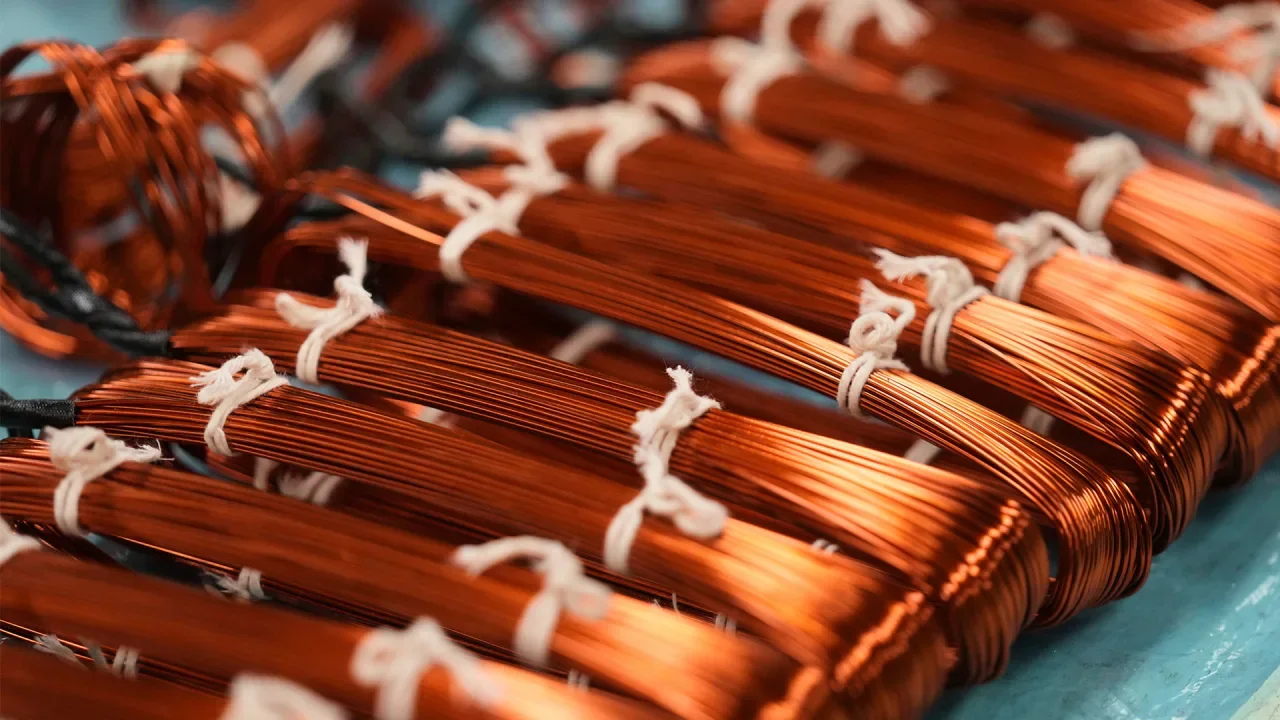
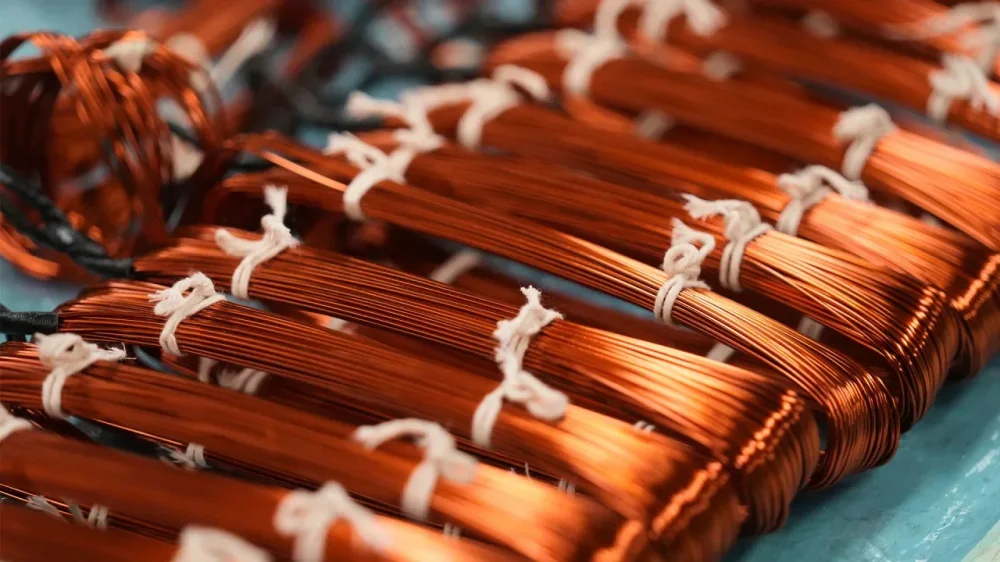
The world’s sources of critical minerals are increasingly concentrated in just a few countries, most notably China, leaving the global economy vulnerable to supply cutoffs that could disrupt industry and hit consumers with higher prices, a report said Wednesday. The Paris-based International Energy Agency’s report looked at the availability of minerals and metals that may be small in quantity — but large in impact when it comes to shifting the economy away from fossil fuels toward electricity and renewable energy. It found that for copper, lithium, cobalt, graphite and rare earth elements, the average market share of the three top producing countries rose to 86% in 2024 from 82% in 2020. China is the leading refiner for 19 out of 20 strategic minerals studied in the report, and has an average share of around 75%. Indonesia showed strong growth in nickel, a key component in making steel and batteries for electric vehicles. The current trend toward export restrictions and trade disputes increases concerns, the IEA said. “Critical mineral supply chains can be highly vulnerable to supply shocks, be they from extreme weather, a technical failure or trade disruptions,” said IEA executive director Fatih Birol. “The impact of a supply shock can be far-reaching, bringing higher prices for consumers and reducing industrial competitiveness.” Birol cited the energy crisis in Europe after Russia cut off natural gas supplies over the invasion of Ukraine. Another cautionary tale is the global shortage of silicon-based computer chips during and after the pandemic, which disrupted auto production. “The golden rule of energy security is diversification,” Birol told The Associated Press in an interview. “And it goes beyond energy security, it is also economic security.” Market forces are important in developing new sources but won’t be enough. “There is a need for well-designed government policies” in the form of financing and other measures, he said. China is a massive global source of critical minerals required for a wide range of goods that includes computer chips, robots, electric autos, batteries, drones, and military equipment. It also dominates the refining and processing of many of these critical minerals, including lithium, cobalt, graphite and more. China has placed export limits of many of these key products and tightened controls on others as President Donald The President’s trade negotiations escalate, stifling U.S. industry and the nation’s ability to find quick alternatives. Without access to China’s significant reserves, U.S. manufacturers have a harder time competing amid mounting global supply tensions. The President has made reducing U.S. dependence on foreign critical minerals a core tenet of his first 100 days back in office as part of a national security and economic resilience agenda. This goes beyond China; the The President administration finalized a rocky deal with Ukraine granting American access to the nation’s vast mineral resources earlier this month. The President is also looking to expedite deep-sea mining in international waters, much to the chagrin of environmental groups. He called for a boost in the domestic copper industry in a February executive order alongside other calls for the federal government to fast-track new mine permits; has reviewed a minerals proposal from Congo, a conflict-riddled nation also rich with mineral reserves; and attempted to strong-arm Greenland into providing more of its minerals to the U.S. The IEA report said that global markets were well supplied at the moment and that prices in general have fallen. It warned however that planned production of copper, which is essential for electric wiring and power grids, would not keep pace with demand and predicted a 30% shortfall by 2030. —David McHugh and Alexa St. John, Associated Press View the full article
-
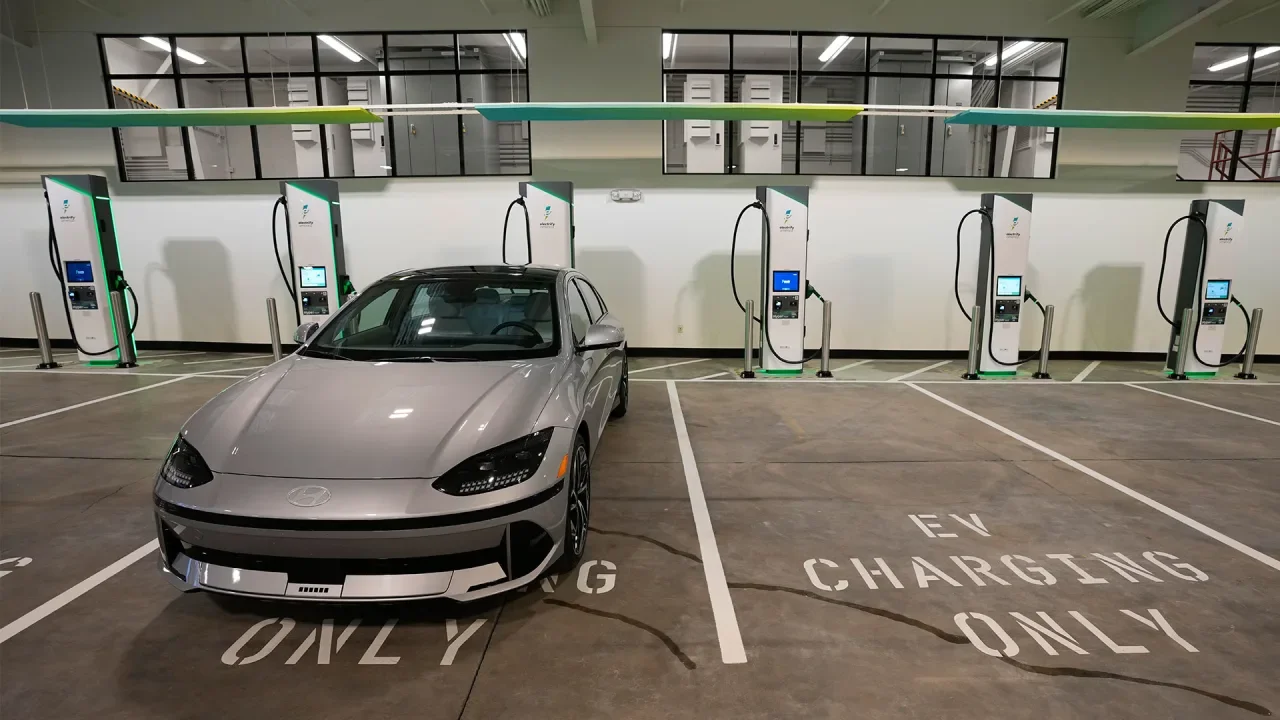
Congress may stop California from implementing its first-in-the nation rule banning the sale of new gas powered cars by 2035. A Senate vote expected as soon as this week could end the nation’s most aggressive effort to transition toward electric vehicles as President Donald The President’s administration doubles down on fossil fuels. California makes up roughly 11% of the U.S. car market, giving it significant power to shape purchasing trends. Vehicles are one of the largest sources of planet-warming emissions. The Republican-controlled Congress is targeting three California waivers that set stricter emissions rules than the federal government. The House voted to block them first blocked them several weeks ago, and Senate Majority Leader John Thune said his chamber would take up a similar effort this week, even though the Senate Parliamentarian and the U.S. Government Accountability Office say California’s policies are not subject to the review mechanism used by the House. Thune said California’s “are an improper expansion of a limited Clean Air Act authority and would endanger consumers, our economy, and our nation’s energy supply.” California Gov. Gavin Newsom and state air regulators say what lawmakers are doing is illegal and they will likely sue if the measure advances. Here’s what to know: Why can California set its own standards? The Environmental Protection Agency has let the state adopt stricter emissions for decades, and other states can sign on to those rules. California has some of the nation’s worst air pollution, and the waivers date back to efforts in the 1960s and 1970s to fight smog in Los Angeles. President Donald The President rescinded California’s ability to enforce its standards during his first term, but President Joe Biden’s administration restored it in 2022. What do the standards do? Newsom, a Democrat, announced plans in 2020 to ban the sale of new gas-powered cars by 2035. State air regulators formalized the rules in 2022, and the federal government allowed them to move forward last year. The rule requires automakers to sell an increasing number of zero-emission cars, pickup trucks and SUVs over the next decade. Electric vehicles would have to make up 43% of new sales by 2027, 68% by 2030 and 100% by 2035. People would still be able to buy used gas-powered cars, plug-in hybrids or hydrogen-powered vehicles. California passed another rule in 2020 to phase out the sale of medium- and heavy-duty diesel vehicles, including box trucks, semitrailers and large pickups. Depending on class, zero-emission trucks will have to make up 40% to 75% of sales by 2035. The Biden administration approved that policy in 2023. The third regulation targeted by Congress would reduce smog-forming emissions from trucks. The rule revamped a testing program to ensure heavy-duty vehicles comply with emissions standards and set stricter standards to limit pollution from nitrogen oxides and particulate matter, which pose public health risks. New York, Colorado and New Mexico are among the states that announced plans to follow all three of the policies. What do the auto and trucking industries say? Several automakers, including Honda, Ford and Volkswagen, signed deals with California to follow some of the state’s tailpipe emission standards. But the companies have not committed to complying with the 2035 mandate on gas-powered cars and did not respond to requests for comment on the Senate’s upcoming vote. The National Automobile Dealers Association urged the Senate to pass the measure. “Banning gas and hybrid cars is a national issue that should be decided by Congress, not an unelected state agency,” Mike Stanton, the group’s president and CEO, wrote in a letter. The Safe Roads Coalition, which represents towing and truck companies, said the medium- and heavy-duty truck rule is unfeasible and should be blocked. “While transitioning combustion engines to electric is well-intended, unworkable regulations threaten roadside services for millions of American motorists,” said Josh Lovelace, the group’s national director. Can the grid handle more electric vehicless? Thune, the Senate majority leader, said the nation’s grid can’t handle California’s plans. It is a concern shared by other critics, who point to California’s struggle several summers ago to maintain consistent power during a heat wave. “Our already shaky electric grid would quickly face huge new burdens from a surge in electric vehicles,” he said in a statement announcing the vote. Newsom’s administration argues the state is on its way to building out an electric grid and charging infrastructure that can support many more electric vehicles. Broadly, California has a goal of net-zero greenhouse gas emissions across the economy by 2045. But the state remains far short of what is eventually needed. California has about 84,000 public electric vehicle chargers in the state but needs 1.2 million by 2030 to support the EV transition, according to the California Energy Commission. The The President administration directed states earlier this year to stop spending money approved under Biden to help build electric vehicle charges across the U.S. More than a dozen states are suing the federal government over the effort. Newsom has also recently touted the state’s growing battery storage capacity. Neither the commission nor the California Air Resources Board responded to questions about how much the state’s electric grid must grow to support the power demand expected from the state’s transition. But the state has said it needs at least four times more wind and solar power to meet 2045 energy demands and that the grid must grow at an “unprecedented rate.” Timothy Johnson, a professor of energy and the environment at Duke University, said most regions of the U.S. can generate enough power or add enough to meet EV charging demand, but local power lines and transformers could be overloaded. How are other states responding? Eleven other states, plus Washington, D.C., have adopted California’s plan to phase out new gas-powered cars, according to the air board. Several more have adopted the state’s previous zero-emission vehicle standards. But some of those states are already backing away. Republican Vermont Gov. Phil Scott last week paused enforcement of electric vehicle sales targets that follow California’s, saying the pace wasn’t realistic. In Delaware, Democratic Gov. Matt Meyer has said he wants to rescind the state’s EV mandate. Other states still appear to be moving ahead. Associated Press writers Mary Clare Jalonick, Matthew Daly and Alexa St. John in Washington contributed. Austin is a corps member for The Associated Press/Report for America Statehouse News Initiative. Report for America is a nonprofit national service program that places journalists in local newsrooms to report on undercovered issues. Follow Austin on X: @sophieadanna —Sophie Austin, Associated Press/Report for America View the full article

-
If you've ever wished the text-to-speech feature on your Mac worked better, Spokenly might be the solution for you. It's a free Mac application that lets you use modern AI transcription right on your Mac for free—just trigger the application with a keyboard shortcut, say what you want to type, and watch as it appears on the screen. Whatever you feel about modern AI, it's hard to deny that it's good at turning the spoken word into text. Whether it's real-time transcription or creating a transcript for a video or audio file, the open source Whisper engine is accurate and fast. Spokenly is a free application that lets you use this technology on your Mac. Install the application, which is currently free on the Mac App Store, and it will start in your menu bar. Transcribing is simple: Just press and hold the right Command button and you'll see the pop-up, as shown above. Say what you want to type and let go when you're done—the text will appear in the currently active text field. You could honestly just install the application, use it this way, and never think about the settings—it mostly just works. If you want to dig into, though, open the settings by clicking the menu bar icon and clicking General Settings. You can decide whether the application will show up in the menu bar, dock, or both. You can decide which microphone you'd like the application to favor, assuming you use more than one. And you can decide whether transcribed text should be copied to your clipboard by default. If you like experimenting with AI, though, you should check out the Voice Models tab. From here, you you can choose which AI model you want to use. By default, the application uses an online version of "Whisper Large v3," which is the only model that supports showing your transcription in the pop-up window as you're talking. There are other models you can use, though, including GTP-4o via Spokenly. Credit: Justin Pot If you'd rather not use an online service, there's support for downloading and running various Whisper models locally. You will have to find a balance between hard drive space, performance, and accuracy—I recommend trying out a few models until one works for you. There's also support for using Deepgram, Fireworks, and OpenAI API keys, assuming you're already paying for one of those services. If you don't know what any of that means, don't worry: The default model works extremely well. And there's more to dig into with this application. The Transcribe File tab of the settings window lets you add any video or audio file and get a transcription, with or without timestamps. There's even support for generating subtitle files for your videos. Credit: Justin Pot And there's a few power-user tools you can set up. The Quick Commands tab lets you choose a few combinations of words that run an action instead of transcribing. Just choose a trigger phrase and what you'd like that phrase to do—open a URL, launch an application, or run one of your Apple Shortcuts. For example, you could set up "Open Lifehacker" as a trigger phrase and our homepage as the URL. Do that and the Lifehacker website will open every time your say the words "Open Lifehacker," improving your life (one assumes). Credit: Justin Pot Another feature, AI Prompts, allows you to set a prompt that will change your text after dictating it. Just choose a separate keyboard shortcut and type your prompt for the text. For example, you could write a prompt that says "translate this text into Spanish"—you can now use a custom keyboard shortcut to transcribe something before using AI to translate it. Any prompt you can think of will work. All of these features reward tinkering, which is exactly the kind of application I like. And the application is completely free as of this writing, while offering features that allow you to use it privately. Try it out if you wish you could get more out of transcription software. View the full article
-
The president’s fiscal plans deepen concerns over America’s public financesView the full article
-
Sales at retail giant Target took a dive during the first three months of 2025 and executives have indicated that boycotts over its rollback on diversity, equity, and inclusion (DEI) practices are at least partially to blame. On Wednesday, the chain cut its full-year sales outlook. Compared to this time last year, Target’s first-quarter sales fell by 2.8%, failing to meet Wall Street’s expectations. According to a consensus estimate cited by CNBC, analysts were expecting adjusted earnings per share of $1.61. Target reported adjusted EPS of $1.30. Months ago, Target stepped away from DEI, bowing to President The President, who has made anti-DEI initiatives a cornerstone of his second-term agenda. Target’s move did not go unnoticed by loyal shoppers. In the wake of the decision, many called for boycotts, and some vowed to shop only at stores that stand for equality. Sales fell, as did Target’s stock, which has tanked at least 40% over the last year, as Fast Company‘s Elizabeth Segran reported recently. ‘We’re not happy with that’ Of its latest dip in revenue, CEO Brian Cornell told reporters, per CNBC, that the company only held market share in 15 of the 35 merchandise categories that it tracks internally, meaning the Target brand is falling behind competitors. “We’re not happy with that,” Cornell said. “We’ve got to be growing [market] share in 60, 70, 80% of those categories.” Cornell also said that in order to address the impact of tariffs, the brand is “constantly adjusting pricing.” He said, “Some are going up, some will be reduced, but that’s an ongoing effort that takes place each and every day.” But the CEO pointed to other issues impacting sales, too, like “declining consumer confidence,” and, perhaps the most impactful, the brand’s move away from DEI. He referred to the major blowback somewhat gently as “the reaction to the updates we shared on belonging in January.” However, the fallout for Target has been anything but gentle. While many companies stepped away from DEI programs after The President came into office this January, boycotts have seemed to hit Target harder. Jamal Bryant, the Atlanta-based pastor who helped kick-start the Target boycott, previously told Fast Company that he believes it’s because the move demonstrated the brand’s previous commitments to Black-owned brands were perhaps merely performative. “We’ve never asked Target for a handout; we were looking for a handshake,” Bryant said. “And for Target to withdraw that hand so suddenly was disappointing.” Target’s numbers certainly seem to underscore that consumer dissatisfaction. Its net sales for the first quarter were $23.8 billion, down from $24.5 billion for the same period last year. Target shares (NYSE: TGT) were down around 6% in early trading Wednesday. The stock has tumbled more than 32% year to date. View the full article

-
Workers at UK retail bank told line managers will start monitoring office attendance more closelyView the full article
-
This week, the U.S. Tennis Association (USTA) announced that it’s putting the revenue from selling U.S. Open tickets and $23 signature Honey Deuce cocktails toward a new cause: Completing an $800 million renovation of the USTA Billie Jean King National Tennis Center (NTC), the sports complex that hosts the annual tennis championship. The renovation represents the single largest investment in U.S. Open history, according to a press release published by the USTA. It will encompass a full transformation of the Arthur Ashe Stadium, where championship games are played, as well as a luxe new player performance center on the NTC’s campus. The work will be spearheaded by the architectural firm Rossetti, which designed Arthur Ashe stadium back in 1994 and has since returned to add a retractable roof to the building, as well as two supplementary stadiums within the complex. This update will bring the lifetime construction cost of Arthur Ashe stadium to over $1 billion. This latest round of renovations is set to be completed by the 2027 U.S. Open, with three construction phases planned to avoid conflicts with scheduled play in the intervening years. The updates are designed to dramatically increase the stadium’s capacity and to create a more modern, luxurious experience for both fans and athletes. “Every square inch” of the stadium is being revamped, from the club level to the lounge and the promenade, Danny Zausner, chief operating officer at the USTA, told reporters in an interview this week. Here’s a rundown. What’s new at Arthur Ashe stadium The design vision for the Arthur Ashe stadium will be apparent to guests before they even enter the venue. Based on renderings provided by the USTA, a new Grand Entrance will usher viewers into the space through a two-story, futuristic silver ring arcing above the doorways. Inside, the stadium itself will be almost entirely overhauled. Per the press release, the promenade-level concourse, where guests typically gather and mingle, will be sized up by 40%; more escalators and elevators will be added to every level; and an upward extension of the courtside-level bowl will increase its capacity from 3,000 to 5,000 attendees. Arthur Ashe Stadium’s overall capacity of 24,000, which makes it the largest tennis stadium in the world, will remain the same as the design team plans to relocate seating to this bowl from other parts of the arena. New amenities will also include modernized concorses with all-new retail, food, and beverage spaces, added clubs and restaurants, and two new dedicated luxury suite levels—presumably catering to the U.S. Open’s coterie of VIP guests. “This project enables us to maintain the greatest stage in tennis—Arthur Ashe Stadium—which was constructed more than 25 years ago, and modernize it in a way that will set it up for the next 25 years,” Lew Sherr, CEO and executive director of USTA, said in the press release. “It also provides us the opportunity to give the players that compete in that stadium an unparalleled space that will enable them to perform at their best and enjoy a higher level of luxury and comfort while they are off the court.” “Spa-like” athlete facilities While the U.S. Open fan experience is getting a facelift, part of this major investment is also being funneled toward athlete facilities. Those upgrades will come in the form of a $250 million player performance center, located on the top two floors of an existing building to the west of the Arthur Ashe stadium. Inside, players and teams will be treated to indoor and outdoor fitness areas, “spa-like” locker rooms and lounges, and even a cafe accessible only to athletes. The press release notes that this added investment is intended to provide the nearly 2,800 athletes and team members at the U.S. Open with “everything they need to maximize their on-court performance.” “There’s no doubt about it—when you walk into the stadium, the entire look and feel will change,” says Zausner. View the full article

-
The pace of AI progress is showing no signs of slacking. Following ChatGPT's big image upgrade a few weeks ago, it's now Google's turn to show off new models for generating videos and pictures from text prompts: We've got Veo 3 (for video) and Imagen 4 (for pictures), announced during Google I/O 2025, and they come with some significant improvements. Starting with Veo 3, it's the next step up from the Veo 2 model that was recently pushed out to paying Gemini subscribers last month. Google says Veo 3 brings with it notable improvements in real-world physics (something AI video often struggles with) and details such as lip-syncing. In short: Your clips should look more realistic than ever. There's another crucial upgrade here, and that's sound. Previously, Veo-made clips came without any audio attached, but the AI is now smart enough to add in suitable ambient sounds, including traffic noise, wildlife sounds, and even dialog between characters. Google has provided a few example videos to show off the new capabilities, as you would expect, including Old Sailor. Of course, it's impressive that a clip like this can be produced from a text prompt, and it is up to a high standard in terms of realism—we're no longer getting the six-fingered hands that we used to with AI. Still, the usual hallmarks of artificial intelligence are evident: This is a generic sailor, on a generic sea, speaking generic dialogue about the ocean. It's a mashing together and averaging out of every video of the sea and old sailors that Veo 3 has been trained on, and may or may not match the original prompt (which Google hasn't given). Veo 3 is only available to those brave enough to pay $250 a month for Google's AI Ultra plan, but Veo 2 is also getting some upgrades for those of us paying a tenth of that for AI Pro. It's now better at control and consistency, according to Google, with improved camera movements and outpainting (expanding the view of a frame). It can also have a go at adding and removing objects from clips now. Moving on to images: We've got Imagen 4, the successor to Imagen 3. Here, we're promised "remarkable clarity in fine details like intricate fabrics, water droplets, and animal fur," plus support for higher resolutions (up to 2K) and more aspect ratios. You get top-tier results in both photorealistic and abstract styles, as per Google. There are sheep as big as tractors in Google's AI world. Credit: Google Google has also tackled one of the major problems with AI image generation, which is typography. Imagen 4 is apparently much better than the models that came before it in terms of making characters and words look cohesive and accurate, without any weird spellings or letters than dissolve into unintelligible hieroglyphics. Imagen 4 is available now to all users, inside the Gemini app. Google hasn't mentioned any usage limits, though presumably if you don't have a subscription you'll hit these limits more quickly, as is the case with Imagen 3 (there's no fixed quota for these limits, and it seems they depend on general demand on Google's AI infrastructure). The carefully curated samples Google has provided look good, without any obvious mistakes or inaccuracies—just the usual AI sheen. Imagen 4 is faster than Imagen 3 too, Google says, with more improvements on the way: A variant on the model that's 10x faster than Imagen 3 is going to be launching soon. There's one more image and video tool to talk about: Flow. It's an AI filmmaking tool from Google that pulls together its text, video, and image models to help you stitch together successive scenes that are consistent, featuring the same characters and locations. You can use Flow if you're an AI Pro or AI Ultra subscriber, with higher usage limits and better models for those on the more expensive plan. View the full article
-
The U.S. Small Business Administration (SBA) has launched a new tool aimed at helping small businesses reduce reliance on foreign supply chains by connecting them directly with American manufacturers and producers. The Make Onshoring Great Again Portal, unveiled on May 20, 2025, offers free access to a database of more than 1 million domestic suppliers, giving small businesses the ability to source U.S.-made components, products, and materials. The tool is part of a broader federal initiative to revive American manufacturing and improve supply chain resilience. “The SBA is proud to support President Donald J. The President’s mission to restore America’s economic resurgence by empowering small businesses with the resources to supercharge the return of Made in America,” said SBA Administrator Kelly Loeffler. “The Make Onshoring Great Again Portal will give job creators a direct line to more than one million domestic suppliers – replacing foreign dependence with access to American-made solutions. It’s a decisive step toward rebuilding our nation’s strength through stronger supply chains, better products, and a renewed commitment to American industry, small business, and workers.” The SBA developed the portal in partnership with private-sector sponsors and integrated access to three databases listing verified U.S.-based manufacturers, suppliers, and producers. According to the SBA, the portal is designed to reduce small businesses’ exposure to overseas disruptions, improve quality control, and shorten lead times for procurement. The initiative also aligns with the administration’s economic priorities, which emphasize reshoring production, rebuilding U.S. industry, and limiting dependence on foreign adversaries, particularly China. The agency’s statement specifically frames the portal as a way to “end our nation’s concentrated dependence on foreign suppliers and adversaries like the Chinese Communist Party.” The portal is the latest in a series of SBA-led programs under the Made in America Manufacturing Initiative, which launched earlier this year. That broader effort includes actions such as: Expanding access to capital for U.S. manufacturers Promoting development of a skilled domestic workforce Cutting $100 billion in regulatory burdens impacting small manufacturers In addition, the SBA has endorsed recent bipartisan legislation that seeks to double the SBA loan cap for small manufacturers. The bill is framed as another means to “supercharge” the return of American industrial capacity and increase the competitiveness of domestic businesses. With the launch of the onshoring portal, the SBA says it is providing a practical resource to help small businesses transition their operations toward U.S.-based sourcing and supply chains. Officials say the portal is part of a larger national strategy focused on empowering entrepreneurs, revitalizing local economies, and reinforcing American economic independence. For more information or to access the tool, small business owners can visit the official SBA page at www.sba.gov/priorities/american-manufacturers/make-onshoring-great-again-portal. This article, "SBA Launches Onshoring Portal to Help Small Businesses Source U.S. Suppliers and Rebuild Domestic Supply Chains" was first published on Small Business Trends View the full article
-
U.S. President Donald The President’s plan for a “Golden Dome” to protect the United States from long-range missiles was at least partly inspired by Israel’s multitiered missile defenses. The President announced the $175 billion concept in the Oval Office on Tuesday, saying it would put U.S. weapons in space for the first time and be would be “fully operational” by the end of his term in early 2029, though a U.S. official familiar with the program said it could take longer. Israel’s multilayered defenses, often collectively referred to as the “Iron Dome,” have played a key role in defending it from rocket and missile fire from Iran and allied militant groups in the conflict unleashed by Hamas’s October 7, 2023, attack. The sophisticated system, developed over decades with considerable U.S. support, is capable of detecting incoming fire and deploying only if the projectile is headed toward a population center or sensitive military or civilian infrastructure. Israeli leaders say the system isn’t 100% guaranteed, but credit it with preventing serious damage and countless casualties. Here’s a closer look at Israel’s multilayered air-defense system: The Arrow This system developed with the U.S. is designed to intercept long-range missiles. The Arrow, which operates outside the atmosphere, has been used to intercept long-range missiles launched by Iran-backed Houthi rebels in Yemen and by Iran itself during two direct exchanges of fire last year. David’s Sling Also developed with the U.S., David’s Sling is meant to intercept medium-range missiles, such as those possessed by Lebanon’s Hezbollah militant group. It was deployed on multiple occasions throughout the war with Hezbollah, which ended with a ceasefire last year. Iron Dome This system, developed by Israel with U.S. backing, specializes in shooting down short-range rockets. It has intercepted thousands of rockets since it was activated early last decade—including volleys launched by Hamas and Hezbollah. Israel says it has a success rate of over 90%. Iron Beam Israel is developing a new system to intercept incoming threats with laser technology. Israel has said this system will be a game changer because it would be much cheaper to operate than existing systems. According to Israeli media reports, the cost of a single Iron Dome interception is about $50,000, while the other systems can run more than $2 million per missile. Iron Beam interceptions, by contrast, would cost a few dollars apiece, according to Israeli officials—but the system is not yet operational. Follow AP’s war coverage at https://apnews.com/hub/israel-hamas-war —Associated Press View the full article

-
A new report released by Amazon highlights the massive economic contributions of independent sellers, revealing that small and medium-sized businesses selling through the platform have generated more than $2.5 trillion in sales over the past 25 years and currently employ over 2 million people across the United States. The 2024 Small Business Empowerment Report, published on May 20, 2025, underscores the transformative impact Amazon’s seller program has had on small business growth and job creation since its inception in 2000. Today, more than 60% of sales in Amazon’s store come from independent sellers—most of which are small businesses. “These thriving businesses are creating meaningful employment opportunities,” Amazon reports, noting that independent sellers’ U.S. job creation rose 11% year over year. Sellers also contribute to local economies by renting space, contracting services, and investing back into their communities. The report points to additional record-setting achievements in 2024 alone: Over 55,000 independent sellers surpassed $1 million in annual sales Sellers averaged $290,000 in sales, up 16% from 2023 Sales from sellers in small towns and rural areas grew more than 30% year over year States leading in seller-driven job creation include California, New York, Texas, Florida, Georgia, Illinois, Pennsylvania, Washington, New Jersey, and North Carolina. Amazon says small businesses have shipped more than 80 billion items using Fulfillment by Amazon (FBA) since it launched in 2006. This program allows sellers to reach global customers with expedited shipping while focusing on core business operations. The report also highlights small sellers’ growing embrace of advanced tools like generative AI, now available through Amazon features like the “Enhance My Listing” tool. These innovations help optimize product listings, improve customer engagement, and streamline business operations. In addition to growth within Amazon’s store, over 300,000 sellers worldwide are now using Multi-Channel Fulfillment to deliver products purchased from other sales channels. This reflects a broader trend of sellers expanding into omnichannel retail, reaching customers wherever they shop. The report emphasizes that this success extends beyond sales numbers. U.S.-based sellers have exported over 2 billion items globally, illustrating how Amazon has enabled even the smallest businesses to access international markets without the infrastructure traditionally required. Image: Amazon This article, "Amazon Report: Independent Sellers Generate $2.5 Trillion, Create Over 2 Million U.S. Jobs" was first published on Small Business Trends View the full article