Newsletter
Want to keep up to date with all our latest news and information?


ResidentialBusiness
Administrators
-
Joined
-
Last visited
Everything posted by ResidentialBusiness
-
The Consumer Financial Protection Bureau under President The President plans to make changes to the rule governing consumer financial data rights despite rare bipartisan support for the regulation. View the full article

-
Decision to leave non-profit arm in control of group comes after pressure campaign by Elon MuskView the full article
-
Key Takeaways Emphasize Team Morale: In-office events serve to boost team morale and strengthen the bonds among colleagues, creating a positive workplace culture. Diverse Event Ideas: Incorporate various activities such as team-building exercises, workshops, and themed parties to cater to different interests and promote collaboration. Engaging Workshops: Facilitate professional development through workshops on essential skills like leadership and communication, enhancing both personal growth and team dynamics. Volunteer Opportunities: Organizing community service projects not only builds team spirit but also enhances your brand’s reputation, connecting employees to their community. Fun and Competitions: Host enjoyable competitions like Office Olympics and trivia contests to break the routine, fostering a sense of camaraderie and healthy competition among employees. Cultural Appreciation: Celebrate diversity through cultural days and themed events, enriching the workplace environment and promoting collaboration among team members. Revitalizing your office environment can be as simple as hosting engaging in-office events. These gatherings not only boost team morale but also foster collaboration and creativity among colleagues. Whether you’re looking to break the monotony of daily routines or strengthen team bonds, the right event can make all the difference. From fun team-building activities to informative workshops, there’s a world of possibilities waiting for you. By incorporating unique ideas tailored to your team’s interests, you can create memorable experiences that resonate long after the event ends. Let’s explore some exciting in-office event ideas that will transform your workplace into a vibrant hub of connection and productivity. Creative In Office Event Ideas In-office events can significantly improve workplace dynamics and boost team productivity. Here are some engaging ideas that foster collaboration and enhance team spirit. Team-Building Activities Collaborative Challenges: Organize problem-solving exercises that require teamwork. Examples include escape rooms, scavenger hunts, or trivia contests related to your business operations. Workshops and Training Sessions: Host regular workshops focused on leadership, communication skills, or employee management. This fosters professional development while strengthening team relationships. Feedback Forums: Set up structured sessions where employees can share insights and suggestions. This promotes open communication, encourages conflict resolution, and aligns with your business goals. Volunteer Days: Engage in community service projects as a team. Not only does this improve team bonding, but it also enhances your small business’s reputation through customer feedback and brand management. Themed Parties Seasonal Celebrations: Host parties for holidays or seasonal events, such as a summer barbecue or a winter holiday gathering. Utilize these occasions to celebrate achievements and boost morale. Cultural Days: Encourage diversity by hosting themed days that highlight different cultures within your team. This enhances collaboration and supports employee development while enriching your workplace. Costume Competitions: Create fun and informal environments with costume themes, allowing employees to express creativity. It strengthens camaraderie and heightens engagement. Wellness Events: Organize themed wellness days focused on mental and physical health. Activities such as yoga sessions or healthy cooking classes can enhance productivity and promote a positive work culture. Incorporating these creative in-office event ideas can facilitate employee development, enhance teamwork, and create an inspiring environment for your small business. Engaging Workshops Engaging workshops enhance teamwork and foster continuous learning within your small business. These sessions empower employees to develop essential skills while collaborating in a dynamic environment. Skill Development Sessions Skill development sessions focus on critical topics like leadership, communication, and time management. These sessions cater to various employee roles, ensuring each participant gains valuable insights. For example, offering workshops on project management and problem-solving can improve operational efficiency and productivity. Incorporating real-world scenarios promotes practical applications, making learning relevant and actionable. Guest Speaker Events Guest speaker events introduce expertise that can inspire and motivate your team. Invite industry professionals to share insights on topics like business strategies, customer service best practices, or financial planning. These sessions foster innovation and invigorate discussion around business goals and growth opportunities. Guest speakers can also offer guidance on managing business processes, enhancing team management techniques, and driving employee development through effective conflict resolution strategies. Fun Competitions Engaging in fun competitions can significantly boost morale and teamwork within your small business. These activities not only break up the daily routine but also foster a sense of collaboration and healthy competition among employees. Office Olympics Office Olympics provide an exciting way to enhance team spirit through various competitive games. Here are several ideas: Virtual Parade of Nations: Remote employees represent different countries, donning native attire and setting their backgrounds to national flags. This colorful event encourages creativity, and the team with the best presentation wins a prize. Typing Speed Race: Employees test their typing speed and accuracy. Participants complete a typing test, and the top three performers receive awards, promoting a bit of friendly competition while improving productivity skills. Flags of the World: Create a game where participants identify countries by their flags. The first to type the correct answer scores points, encouraging quick thinking and teamwork. Office Steeplechase: Design a race course with physical barriers in the office. Employees speed walk through the course, enhancing employee management dynamics and creating a fun, competitive atmosphere. Trivia Contests Trivia contests offer an interactive way to engage employees while reinforcing knowledge relevant to business operations. Consider these approaches: Business and Management Trivia: Craft questions focusing on company history, industry standards, and management principles. This format improves communication skills and enhances understanding of business processes. Pop Culture Challenge: Incorporate general knowledge questions about current events, entertainment, and local happenings. This encourages collaboration and team bonding while injecting fun into the workplace. Custom Category Trivia: Tailor trivia questions to your company’s unique products or services, enhancing employee engagement and customer service awareness. Employees learn more about your brand while working together to score points. Implementing office competitions engages employees, enhances productivity, and strengthens teamwork. These fun events contribute to a robust workplace culture conducive to business growth and operational efficiency. Conclusion Revamping your office with engaging events can truly transform the workplace atmosphere. By fostering collaboration and creativity you not only boost team morale but also create lasting memories. Whether it’s team-building challenges or wellness workshops each idea contributes to a more connected and productive environment. Embracing these in-office event concepts can lead to a vibrant culture that inspires your employees. As you explore different activities remember that the goal is to enhance relationships and spark innovation. With the right approach your office can become a dynamic space where everyone thrives. Frequently Asked Questions What are the benefits of in-office events for teams? Engaging in-office events boost team morale, enhance collaboration, and spark creativity. They break the monotony of daily routines, creating memorable experiences that strengthen team bonds and improve productivity. What types of in-office events can organizations implement? Organizations can implement team-building activities, themed parties, workshops, wellness events, and competitions. Ideas include collaborative challenges, cultural days, and skill development sessions that foster engagement and teamwork. How do wellness events contribute to workplace culture? Wellness events focus on mental and physical health, promoting a positive work culture. They encourage employees to prioritize their well-being, leading to reduced stress, higher morale, and improved productivity. Why are workshops important in an office environment? Workshops enhance teamwork and foster continuous learning. They address essential topics like leadership and communication, providing employees with valuable insights that apply directly to their roles. What role do guest speakers play in stimulating workplace growth? Guest speakers bring industry expertise, sharing business strategies and best practices. Their insights inspire innovative discussions and encourage employees to think creatively about growth opportunities. How can fun competitions improve team dynamics? Fun competitions, like Office Olympics and trivia contests, foster collaboration and healthy competition. These activities boost morale, encourage team bonding, and reinforce understanding of company operations, enhancing workplace culture. Image Via Envato This article, "Creative In Office Event Ideas to Boost Team Spirit and Enhance Workplace Culture" was first published on Small Business Trends View the full article
-
Key Takeaways Emphasize Team Morale: In-office events serve to boost team morale and strengthen the bonds among colleagues, creating a positive workplace culture. Diverse Event Ideas: Incorporate various activities such as team-building exercises, workshops, and themed parties to cater to different interests and promote collaboration. Engaging Workshops: Facilitate professional development through workshops on essential skills like leadership and communication, enhancing both personal growth and team dynamics. Volunteer Opportunities: Organizing community service projects not only builds team spirit but also enhances your brand’s reputation, connecting employees to their community. Fun and Competitions: Host enjoyable competitions like Office Olympics and trivia contests to break the routine, fostering a sense of camaraderie and healthy competition among employees. Cultural Appreciation: Celebrate diversity through cultural days and themed events, enriching the workplace environment and promoting collaboration among team members. Revitalizing your office environment can be as simple as hosting engaging in-office events. These gatherings not only boost team morale but also foster collaboration and creativity among colleagues. Whether you’re looking to break the monotony of daily routines or strengthen team bonds, the right event can make all the difference. From fun team-building activities to informative workshops, there’s a world of possibilities waiting for you. By incorporating unique ideas tailored to your team’s interests, you can create memorable experiences that resonate long after the event ends. Let’s explore some exciting in-office event ideas that will transform your workplace into a vibrant hub of connection and productivity. Creative In Office Event Ideas In-office events can significantly improve workplace dynamics and boost team productivity. Here are some engaging ideas that foster collaboration and enhance team spirit. Team-Building Activities Collaborative Challenges: Organize problem-solving exercises that require teamwork. Examples include escape rooms, scavenger hunts, or trivia contests related to your business operations. Workshops and Training Sessions: Host regular workshops focused on leadership, communication skills, or employee management. This fosters professional development while strengthening team relationships. Feedback Forums: Set up structured sessions where employees can share insights and suggestions. This promotes open communication, encourages conflict resolution, and aligns with your business goals. Volunteer Days: Engage in community service projects as a team. Not only does this improve team bonding, but it also enhances your small business’s reputation through customer feedback and brand management. Themed Parties Seasonal Celebrations: Host parties for holidays or seasonal events, such as a summer barbecue or a winter holiday gathering. Utilize these occasions to celebrate achievements and boost morale. Cultural Days: Encourage diversity by hosting themed days that highlight different cultures within your team. This enhances collaboration and supports employee development while enriching your workplace. Costume Competitions: Create fun and informal environments with costume themes, allowing employees to express creativity. It strengthens camaraderie and heightens engagement. Wellness Events: Organize themed wellness days focused on mental and physical health. Activities such as yoga sessions or healthy cooking classes can enhance productivity and promote a positive work culture. Incorporating these creative in-office event ideas can facilitate employee development, enhance teamwork, and create an inspiring environment for your small business. Engaging Workshops Engaging workshops enhance teamwork and foster continuous learning within your small business. These sessions empower employees to develop essential skills while collaborating in a dynamic environment. Skill Development Sessions Skill development sessions focus on critical topics like leadership, communication, and time management. These sessions cater to various employee roles, ensuring each participant gains valuable insights. For example, offering workshops on project management and problem-solving can improve operational efficiency and productivity. Incorporating real-world scenarios promotes practical applications, making learning relevant and actionable. Guest Speaker Events Guest speaker events introduce expertise that can inspire and motivate your team. Invite industry professionals to share insights on topics like business strategies, customer service best practices, or financial planning. These sessions foster innovation and invigorate discussion around business goals and growth opportunities. Guest speakers can also offer guidance on managing business processes, enhancing team management techniques, and driving employee development through effective conflict resolution strategies. Fun Competitions Engaging in fun competitions can significantly boost morale and teamwork within your small business. These activities not only break up the daily routine but also foster a sense of collaboration and healthy competition among employees. Office Olympics Office Olympics provide an exciting way to enhance team spirit through various competitive games. Here are several ideas: Virtual Parade of Nations: Remote employees represent different countries, donning native attire and setting their backgrounds to national flags. This colorful event encourages creativity, and the team with the best presentation wins a prize. Typing Speed Race: Employees test their typing speed and accuracy. Participants complete a typing test, and the top three performers receive awards, promoting a bit of friendly competition while improving productivity skills. Flags of the World: Create a game where participants identify countries by their flags. The first to type the correct answer scores points, encouraging quick thinking and teamwork. Office Steeplechase: Design a race course with physical barriers in the office. Employees speed walk through the course, enhancing employee management dynamics and creating a fun, competitive atmosphere. Trivia Contests Trivia contests offer an interactive way to engage employees while reinforcing knowledge relevant to business operations. Consider these approaches: Business and Management Trivia: Craft questions focusing on company history, industry standards, and management principles. This format improves communication skills and enhances understanding of business processes. Pop Culture Challenge: Incorporate general knowledge questions about current events, entertainment, and local happenings. This encourages collaboration and team bonding while injecting fun into the workplace. Custom Category Trivia: Tailor trivia questions to your company’s unique products or services, enhancing employee engagement and customer service awareness. Employees learn more about your brand while working together to score points. Implementing office competitions engages employees, enhances productivity, and strengthens teamwork. These fun events contribute to a robust workplace culture conducive to business growth and operational efficiency. Conclusion Revamping your office with engaging events can truly transform the workplace atmosphere. By fostering collaboration and creativity you not only boost team morale but also create lasting memories. Whether it’s team-building challenges or wellness workshops each idea contributes to a more connected and productive environment. Embracing these in-office event concepts can lead to a vibrant culture that inspires your employees. As you explore different activities remember that the goal is to enhance relationships and spark innovation. With the right approach your office can become a dynamic space where everyone thrives. Frequently Asked Questions What are the benefits of in-office events for teams? Engaging in-office events boost team morale, enhance collaboration, and spark creativity. They break the monotony of daily routines, creating memorable experiences that strengthen team bonds and improve productivity. What types of in-office events can organizations implement? Organizations can implement team-building activities, themed parties, workshops, wellness events, and competitions. Ideas include collaborative challenges, cultural days, and skill development sessions that foster engagement and teamwork. How do wellness events contribute to workplace culture? Wellness events focus on mental and physical health, promoting a positive work culture. They encourage employees to prioritize their well-being, leading to reduced stress, higher morale, and improved productivity. Why are workshops important in an office environment? Workshops enhance teamwork and foster continuous learning. They address essential topics like leadership and communication, providing employees with valuable insights that apply directly to their roles. What role do guest speakers play in stimulating workplace growth? Guest speakers bring industry expertise, sharing business strategies and best practices. Their insights inspire innovative discussions and encourage employees to think creatively about growth opportunities. How can fun competitions improve team dynamics? Fun competitions, like Office Olympics and trivia contests, foster collaboration and healthy competition. These activities boost morale, encourage team bonding, and reinforce understanding of company operations, enhancing workplace culture. Image Via Envato This article, "Creative In Office Event Ideas to Boost Team Spirit and Enhance Workplace Culture" was first published on Small Business Trends View the full article
-
Starting this week, Google will start rolling out the ability for kids under the age of 13 to use Gemini on their own accounts. Both on the web and through the Gemini mobile app, kids will be able to use Google Gemini to help with their homework, create songs, draft poems, and more. Parents started getting notified about the update towards the end of last week, according to an email seen by The New York Times and Chrome Unboxed. It makes a major change for the company, and a bold one, too. While parents will receive an email the first time their child uses Gemini, AI access is nonetheless being added as a default, rather than an opt-in. Google does encourage talking to your kids about what to expect from the AI, but if you'd rather go beyond that, you can, at least, opt out. How Google Gemini for kids worksKids under the age of 13 will, once the update rolls out out to them, have automatic access to Gemini AI using the Gemini website and Gemini apps for iPhone and Android. This also includes personal assistant features on Android, which are now handled by Gemini instead of Google Assistant. Google does say that kids accounts will have filters in place, and restrictions to make sure that your kids don't see anything that they aren't supposed to. It also says that the release will be gradual, and some features may not be available in certain regions. But the company warns that parents should still practice vigilance. Google suggests that you sit down with your kids to have a real, honest conversation about what AI is and how it works. According to Google, you should explain to your kids that Gemini isn't a real person, that it can sometimes make things up, and to always cross-check Gemini's work. Oh, and you should also tell them not to share any personal information with Gemini. All of this is solid advice not just for kids, but for anyone who uses AI tools. How to disable access to Google Gemini for kids accountsGoogle Gemini access can be disabled and controlled using Google Family Link, which is Google's suite of parental controls. First, go to the Family Link website or open the Family Link app. Then choose your Child's account from the list. Next, go to Controls > Gemini. Disable the Gemini Apps feature to keep your kid from being able to access Google's AI on either the web or its mobile apps (at least using their own account). View the full article
-
Warren Buffett’s announcement Saturday that he would be retiring as CEO of Berkshire Hathaway came as a surprise to lots of people, including the person who was elected to succeed him the next day. Greg Abel has been Buffett’s right-hand man for many years and the public heir apparent for the past five, but Buffett, in making his announcement, said he hadn’t told Abel the moment was coming. Buffett, 94, will stay on as chairman at Berkshire, but by the end of this year, Abel will be in the driver’s seat – and will have a big legacy to follow. Buffett took over Berkshire Hathaway in 1965. Things began to take off in 1978, when he convinced his friend Charlie Munger to come on board. Together, the two created a company that was the envy of the investing world. The price of Berkshire Class B shares (NYSE: BRK-B), the most widely held shares of the company, has gone up more than 2,000% since they began trading in 1996. The price of Class A shares (NYSE: BRK-A), held by Buffett and institutional shareholders, is up 42,413% since they began trading in 1985. Abel is fairly well-known to people who closely follow Berkshire Hathaway, but he’s less familiar to people who only know Buffett. Here’s a look at the man who will try to fill Warren Buffett’s shoes. Who is Greg Abel? Abel, 62, currently serves as vice chair of non-insurance operations at Berkshire. He’s also the chair of Berkshire Hathaway Energy, which Buffett called one of the company’s four “jewels” in his 2021 shareholder letter. (The other three are Berkshire’s property and casualty insurance businesses, Burlington Northern Santa Fe railroad, and the company’s stake in Apple.) He has been the designated successor to Buffett for at least four years and has joined Buffett on stage at the company’s investor meeting for the past several years, even before Munger’s death in November 2023. Away from the office, he’s a huge hockey fan and serves as assistant volunteer coach for his son’s team in his hometown of Des Moines, Iowa. He’s said to have a quick wit and nurtures strong personal relationships. “He’s not loud or bombastic, but he’s 500% friendly,” Mark Oman, a retired Wells Fargo executive and friend of Abel’s told Fortune. What is Greg Abel’s background? Abel started his career at the PricewaterhouseCoopers consulting firm in Canada, eventually moving to the San Francisco office. He joined CalEnergy in 1992, which six years later would acquire Des Moines-based MidAmerican Energy Holdings (which would eventually be renamed Berkshire Hathaway Energy). He began running that company in 2009. In 2018, he was asked to join the Berkshire board. Why did Buffett pick Greg Abel to succeed him at Berkshire Hathaway? Abel’s performance with Berkshire Hathaway Energy caught the eye of senior Berkshire executives. Through a series of acquisitions, he transformed that company into a major player in the power industry, with earnings of $5 billion in the first quarter of 2025. In 2023, Buffett told CNBC that Abel “does all the work and I take all the bows.” He’s also seen, in many ways, as the spiritual successor to the plain-spoken, non-flashy Buffett, ensuring the culture at Berkshire Hathaway doesn’t change. What is Greg Abel’s investment strategy? Abel, when asked Saturday to compare his approach to dealing with Berkshire’s subsidiaries to Buffett’s, said he saw himself as “more active, but hopefully in a very positive way.” Buffett jokingly offer a more succinct answer: “Better.” He later added, “You really need someone that behaves well on top and is not playing games for their own benefit.” Munger, in 2023, told CNBC Abel was “a tremendous learning machine” and one could “argue that he’s just as good as Warren in learning all kinds of things.” Abel’s not expected to pick the companies that go into the Berkshire portfolio. That will be handled by Todd Combs and Ted Weschler, who already help Buffett with that. View the full article

-
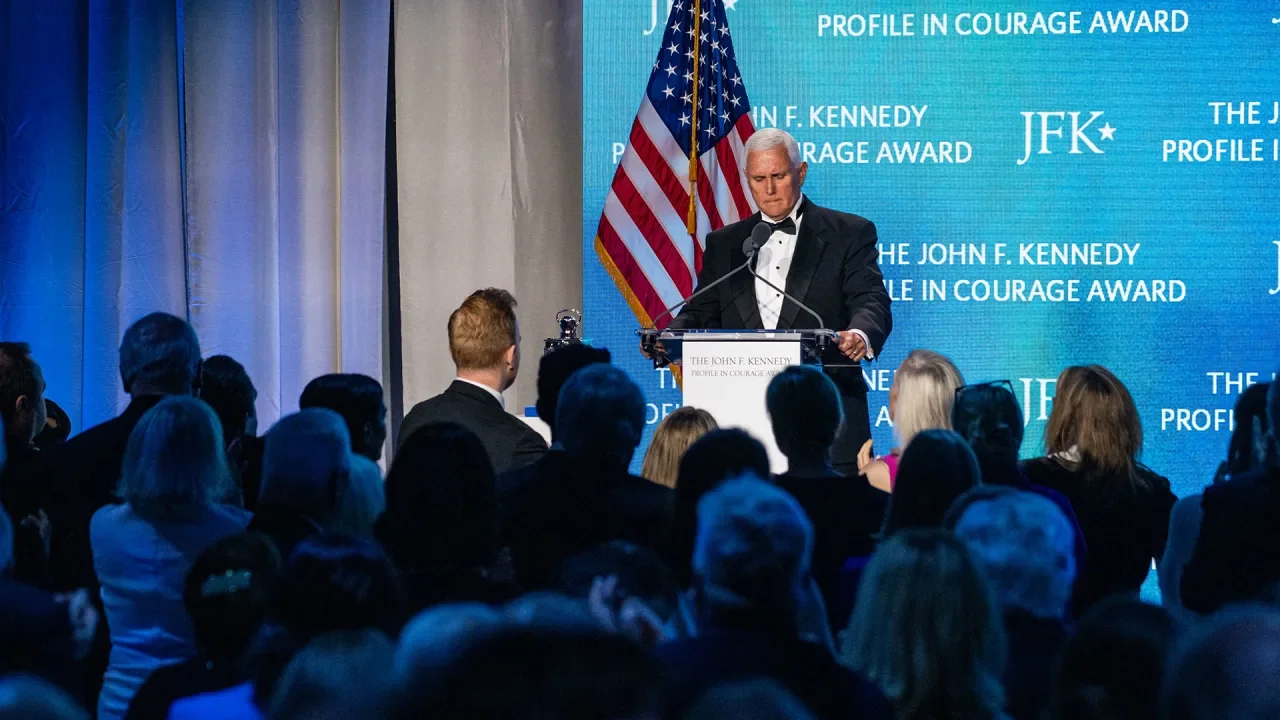
It’s not every day that a Republican from the The President administration gets a standing ovation, or three, from a roomful of Democrats. But as Mike Pence showed on January 6, 2021, he doesn’t always stick to the party line. According to the former vice president, the attacks on the Capitol four years ago were ultimately unsuccessful and “a triumph of freedom” because “our institutions held that day, not because of any one person, but because leaders in both political parties, Republicans and Democrats, did their duties,” Pence said while receiving the John F. Kennedy Profile in Courage Award in Boston at the JFK Library on Sunday. Pence received the award for “putting his life and career on the line to ensure the constitutional transfer of presidential power.” After repeated pressure to overturn the results of the 2020 election, which Joe Biden won, Pence was to preside over Congress and the certification process, which includes counting the Electoral College votes, when a violent mob of The President supporters stormed the Capitol to stop the process. While the Secret Service urged him to evacuate, Pence, his wife, Karen, and their daughter Charlotte refused to leave the Capitol, coordinating with the military and congressional leaders during the attack. Once the Capitol was cleared, Pence resumed the certification process. “In these divided times, in these anxious days, I know in my heart that we will find our way forward as one nation,” Pence said, acknowledging the current The President administration’s agenda, without naming the president specifically. He added: It’s the Constitution that “binds us all together.” Unpopular positions, principled stands The award—named after President Kennedy’s 1957 Pulitzer Prize-winning book, Profiles in Courage, which recounts the stories of eight U.S. senators who risked their careers by taking principled stands for unpopular positions—is presented each year to public servants for making a courageous decision of conscience without regard for the personal or professional consequences. Kennedy’s daughter, Caroline Kennedy, and grandson, Jack Schlossberg, presented the award to Pence, acknowledging the new political climate of fear that has taken over in the last four months. “We are especially grateful for your presence this year, as many are afraid to speak out or show up,” Kennedy said. “It’s hard to believe that attending a black-tie gala could be described an act of courage—but here we are. President Kennedy called his time ‘the hour of maximum danger’ and welcomed the challenge. We are living in a similar moment now.” Just as President Kennedy famously stated, “my fellow Americans: Ask not what your country can do for you; ask what you can do for your country,” Caroline Kennedy said, “now is the time to act because, as we have seen in the past 100 days, we can no longer take our democracy for granted.” “Everyone should be speaking their hearts” Those in attendance included Democratic Sen. Ed Markey of Massachusetts, who called Pence “a profile in courage [for] standing up against a leader of his own party,” and comedian David Letterman, who said, “In this day and age, courage needs to be identified and celebrated in this way. It didn’t use to be that way.” When asked what Americans can do right now, Letterman told Fast Company: “They should be speaking their hearts. Everyone should be speaking their hearts.” “This was a moment when the vice president stood up for the constitution, and we have to all remember that today,” U.S. presidential historian Doris Kearns Goodwin told Fast Company. “History shows that people working from the ground up are what make all the changes. So it’s at your local area, it’s in your state, it’s in your city. Every change—whether it’s civil rights, women’s rights, gay rights—has come from the ground up. That’s what we need to do.” Previous award recipients include former presidents Barack Obama and George H. W. Bush, Ukraine President Volodymyr Zelenskyy, former Republican Congresswoman Liz Cheney, and former Democratic Congresswoman Gabrielle Giffords. View the full article

-
The $1.15 billion agreement earmarked for general corporate purposes can increase to $2.25 billion pending the lender's acquisition of Mr. Cooper. View the full article

-
If you're looking to send personal messages securely, Signal is a great option. If you're a government official discussing classified information? Not so much. So is the case with The President administration officials: Last month, we learned that highly sensitive war plans were being discussed in Signal group chats, after Jeffrey Goldberg, editor-in-chief of The Atlantic, was accidentally added to the conversation by then-U.S. National Security Advisor Mike Waltz. (The President has since fired Waltz—and then nominated him to be U.N. ambassador.) 'Signalgate' continuesThere are many reasons why the administration's "Signal strategy" is problematic, but the issues didn't end there. On Thursday, Reuters posted a photograph of Mike Waltz during a cabinet meeting at the White House. While there are plenty of important people in the photograph to pay attention to, 404 Media zeroed in on Waltz—specifically, his iPhone. The outlet spotted that Waltz had what appeared to be a thread opened with officials like Tulsi Gabbard (Director of National Intelligence), Marco Rubio (Secretary of State), and JD Vance (Vice President), with the PIN verification message that Signal will routinely send to users to keep their credentials fresh in their minds. However, 404 Media spotted that this wasn't Signal's usual PIN verification pop-up: The message says "TM SGNL PIN," which is the PIN verification screen for TeleMessage, a Signal "clone" that advertises itself as a way to archive your Signal messages. While the app claims it does not break Signal's secure messaging system to archive messages, 404 Media reports that the service as advertised has many security vulnerabilities. It didn't take long for those vulnerabilities to manifest in disaster, either. On Sunday, 404 Media reported a hacker broke into TeleMessage's networks and stole customer data. While the hacker didn't take everything, they did obtain some DMs and group chats, in addition to data of modified versions of other chat apps, like WhatsApp, Telegram, and WeChat, all in about 15 to 20 minutes of hacking. 404 Media says the hacker did not access Waltz' chats or the conversations of any cabinet members, but they did access government officials' names and contact information, credentials to log into TeleMessage's backend panel (the tool that lets TeleMessage admins manage the service), as well as information that points to which agencies might use TeleMessage. Some of the stolen messages appeared to show a discussion about an ongoing effort to whip up votes in support of a cryptocurrency bill. One text read, "Just spoke to a D staffer on the senate side - 2 cosponsors (Alsobrooks and gillibrand) did not sign the opposition letter so they think the bill still has a good chance of passage the senate with 5 more Ds supporting it.” The hack didn't expose classified information, but it did reveal political conversations that the senders likely never intended to be printed in the press. Why is TeleMessage insecure?To understand why TeleMessage is not a secure service—and why it is unbelievable that a government agency would rely on it for classified conversations—you need to understand what makes Signal secure. Signal chats are end-to-end encrypted. That means when you talk to someone over the app, only you and the recipient can access the conversation. When you send a message, that text is encrypted in transit, and decrypted when it reaches the other user's device. If someone were to intercept the message in transit, it would look like a scramble of code—only the devices of the people in the chat can decrypt the message and return it to a readable form. Because of this setup, not even Signal can access your messages. No authority can compel Signal to release your messages, since the company itself doesn't have access to the only thing that can decrypt the messages: your device. Even if someone hacked Signal's database, they'd be out of luck. TeleMessage, on the other hand, breaks that security chain. In order to archive those messages, TeleMessage must first intercept them as plain-text and store them. While the company says that they do so while maintaining security, the fact that this hacker was able to obtain DMs proves end-to-end encryption is broken. The stolen information was taken from data captured for "debugging purposes," an unintended leak of decrypted data in TeleMessage's security chain. It doesn't matter if the service stores all messages in an encrypted archive: The company handles decrypted data in insecure ways, which leaves it open for hackers to access. Even before the hack, 404 Media was skeptical of the service's security, since they advertised archiving these "end-to-end encrypted" messages in Gmail, a platform that is infamously not end-to-end encrypted. (Though TeleMessage said the Gmail aspect was just for a "demo.") The outlet also highlights how Signal does not guarantee the privacy and security of unofficial versions of their app. Signal is great for personal use—not classified informationSignal—and other end-to-end encrypted services like it—are great for personal security. Your messages cannot be accessed by anyone without physical access to the trusted devices involved, which goes a long way toward protecting your digital privacy. But encryption isn't the only security concern here. There are still plenty of vulnerabilities and weak points when it comes to digital communication of any kind—end-to-end encryption included. Hackers know that these messages can only be decrypted by the devices involved. So, a great way to break that security is to hack the devices themselves. Hackers use malware like "Pegasus" to silently stow away onto a target's device and access sensitive data—encrypted data included. Hackers routinely target high-profile individuals with this type of malware, so much so that Apple issues a regular warning to affected users. Waltz is no exception: In the view of Mike Casey, the former director of National Counterintelligence and Center, there's a "zero percent chance that someone hasn’t tried to install Pegasus or some other spyware on [Mike Waltz's] phone...he is one of the top five, probably, most targeted people in the world for espionage.” Of course, that's just the concern with your own personal device. You also have to worry about the other end of the conversation. If you're chatting with someone over an encrypted chat app, and their phone is compromised, it doesn't matter how secure you are: Your messages are vulnerable. They don't even need to be hacked: They could leave their phone unlocked for anyone to pick up and access. And if you're talking in group chats—like The President administration officials have been—the security implications only multiply. There is risk involved in all digital communication: It's up to you to decide what risk level the data you're transferring is worth. For most personal conversations, you're probably just fine sticking with an encrypted service like Signal. If you're discussing details that could put lives at risk, however, it might be best to keep it in the SCIF. View the full article
-
Sponsored Post Key Takeaways Personalized Touch: Holiday printing, including custom cards and decorations, adds a unique, personal element to celebrations that enhances memorable experiences for loved ones and clients alike. Business Engagement: For small businesses, effective holiday printing creates branding opportunities, fosters connections with customers, and boosts retention through meaningful interactions. Strategic Planning: To maximize the impact of holiday printing, plan your projects carefully, allocate budgets wisely, and use scheduling tools to ensure timely delivery of materials. Technology Utilization: Leveraging software tools for managing holiday printing can streamline processes, improve productivity, and facilitate better resource management during the busy season. Collaboration and Community: Partnering with local vendors for holiday printing needs can reduce costs and enhance community relations, benefiting both your brand and local businesses. Quality and Variety: Selecting the right printing service with a solid reputation and a diverse range of high-quality products is crucial for effective holiday marketing and overall customer engagement. As the holiday season approaches, the excitement of decorating and celebrating fills the air. One of the best ways to make your festivities memorable is through holiday printing. From personalized cards to custom banners, holiday printing adds a unique touch that can elevate your celebrations and impress your loved ones. Imagine sending out beautifully designed greeting cards that showcase your family’s personality or creating stunning decorations that bring your vision to life. With the right printing options, you can turn your ideas into tangible keepsakes that capture the spirit of the season. Whether you’re planning a cozy gathering or a grand celebration, holiday printing offers endless possibilities to express your creativity and spread joy. Overview Of Holiday Printing Holiday printing serves as a vital tool for small businesses looking to enhance engagement during the festive season. Custom greeting cards, decorations, and promotional materials create unique branding opportunities that resonate with customers. These items not only reflect your business’s personality but also foster connections with your clientele, thereby boosting customer retention. Effective holiday printing can transform your branding strategy. You can showcase special promotions or highlight new products through personalized designs. Incorporating quality printing enhances the perceived value of your offerings, which can lead to increased sales. Planning your holiday print projects involves strategic decision-making. Allocate your budget effectively to ensure high-quality results without overspending. Use calendar tools to schedule production timelines, ensuring your materials arrive ahead of holiday rushes. This proactive approach supports your workflow and prevents last-minute stress. Leverage technology solutions for more efficient management of your holiday printing projects. Software tools can assist in tracking expenses, managing inventory, and analyzing customer feedback. Implementing these tools streamlines your operations, resulting in improved productivity and operational efficiency during the busy season. Explore collaboration opportunities with local vendors for sourcing materials. Partnering with other small businesses can reduce costs and enhance your holiday offerings. These partnerships enrich your brand’s presence and improve community relations. By emphasizing holiday printing in your marketing campaigns, you strengthen your connection with customers and elevate your business’s profile during the holiday season. Popular Holiday Printing Products Holiday printing products play a crucial role in enhancing festive celebrations for small businesses and individuals alike. Effective prints can elevate your brand and leave lasting impressions. Custom Invitations Custom invitations help set the tone for holiday events like parties and dinners. Personalizing these invitations with themes, colors, or graphics aligned with your brand strengthens brand recognition. Choose from various templates to accommodate different events and create a consistent look that resonates with your audience. This approach not only promotes your event but also aligns with your marketing strategy, fostering customer retention through meaningful interactions. Personalized Cards Personalized holiday cards create a heartfelt connection between you and your clients. Customizable features like design elements, logos, and messages add a unique touch to each card. These cards serve as effective tools for customer acquisition, allowing you to showcase your brand while spreading cheer. Regularly sending personalized cards can improve customer service and maintain relationships beyond the holiday season, positioning your business for growth in the coming year. Holiday Decor Holiday decor, including banners and signage, enhances physical spaces, creating an inviting atmosphere for customers. Custom prints that reflect your brand’s identity can effectively amplify your marketing campaigns and engage customers. Incorporating festive elements in your decor also showcases your commitment to quality and attention to detail. Leverage holiday decor as part of your overall business strategies to attract foot traffic, foster loyalty, and boost overall sales during the holiday season. Benefits Of Holiday Printing Holiday printing offers unique advantages for small businesses, enhancing customer relationships and driving engagement during the festive season. Utilizing printed materials like greeting cards and decorations fosters personal connections that digital communications simply can’t achieve. Enhancing Festive Spirit Custom holiday printing contributes to a festive spirit that sets the tone for celebrations. Printed items such as banners, posters, and personalized greeting cards transform your business environment into a vibrant holiday space, reflecting your brand’s personality. These tactile elements engage customers and elevate their overall experience, boosting customer retention. Decorating your storefront with printed materials reinforces your marketing strategy, creating a visually cohesive brand presence during the holiday season. Creating Lasting Memories Holiday printing not only enhances the festive atmosphere but also helps create lasting memories for customers. Personalized cards and custom invitations serve as heartfelt tokens that customers cherish, strengthening their emotional connection to your brand. These thoughtful gestures not only elevate customer service but also align with your business growth goals by encouraging repeat purchases and referrals. When customers feel valued through personalized communication, they’re more likely to return, thus improving customer acquisition and retention rates. Incorporating holiday printing into your project management strategy elevates your branding efforts while fostering meaningful relationships with your audience. Focusing on these benefits can enhance your operational efficiency and overall success during the bustling holiday season. Choosing The Right Printing Service Selecting the right printing service can greatly impact your holiday marketing efforts and strengthen customer connections. Focus on critical factors to ensure quality results. Factors To Consider Experience and Reputation: Choose companies with a solid history in printing. Experienced printers handle issues effectively and ensure timely delivery, which supports your business goals. Range of Services: Opt for a service that offers diverse printing options. Look for various card formats, customization features, and additional services like addressing and mailing. This versatility aligns with your marketing strategy and meets different customer needs. Quality and Technology: Assess the print quality and technology used by the company. Request samples or review portfolios to gauge standard quality. Advanced printing technology often leads to better quality prints, enhancing your brand’s image. Recommended Services Custom Greeting Cards: Personalized greeting cards create emotional connections with clients. Use these cards to stand out during the holiday season and improve customer retention. Holiday Decor: Invest in custom decorations that reflect your brand identity. Effective decor not only enhances physical spaces but also boosts customer engagement. Promotional Materials: Utilize holiday-themed promotional materials to support marketing campaigns. These materials increase brand awareness and encourage customer interaction, leading to potential sales growth. Addressing and Mailing Services: Consider services that include addressing and mailing. This simplifies logistics, saves time, and allows you to focus on business management and leadership tasks. Partnering with the right printing service helps you streamline workflow while enhancing your holiday campaigns. Prioritize quality and a broad range of services to elevate your brand during the festive season. Conclusion Embracing holiday printing can elevate your celebrations and strengthen your business connections. Personalized items not only add a special touch to your festivities but also create lasting memories for you and your loved ones. For small businesses, custom prints offer a unique opportunity to engage customers and enhance brand identity during the bustling season. By investing in quality printing services and collaborating with local vendors, you can streamline your projects and make a memorable impact. Whether you’re crafting heartfelt cards or eye-catching promotional materials, holiday printing is a powerful tool that can transform your celebrations and marketing efforts. Make this holiday season unforgettable with the right printed materials that reflect your creativity and brand personality. Frequently Asked Questions What is holiday printing? Holiday printing involves creating customized greeting cards, decorations, and promotional materials to enhance festive celebrations. It allows individuals and businesses to personalize items, adding a unique touch to their holiday festivities. How does holiday printing benefit small businesses? Holiday printing helps small businesses engage with customers through custom greeting cards and decorations. This fosters connections, enhances brand identity, and boosts customer retention during the festive season. What types of products are popular for holiday printing? Popular products for holiday printing include custom invitations, personalized greeting cards, and holiday decor. These items help set the tone for events and promote services while reflecting brand identity. Why is personalization important in holiday printing? Personalization adds a heartfelt touch to holiday items, making them more memorable. It helps businesses foster emotional connections with customers, encouraging repeat purchases and referrals. How can businesses choose the right printing service? Businesses should consider the experience, reputation, and range of services offered by a printing company. Evaluating the quality of materials and technology used is also crucial to ensure effective holiday marketing efforts. Image Via Envato This article, "Elevate Your Celebrations with Creative Holiday Printing Ideas and Tips" was first published on Small Business Trends View the full article
-
Sponsored Post Key Takeaways Personalized Touch: Holiday printing, including custom cards and decorations, adds a unique, personal element to celebrations that enhances memorable experiences for loved ones and clients alike. Business Engagement: For small businesses, effective holiday printing creates branding opportunities, fosters connections with customers, and boosts retention through meaningful interactions. Strategic Planning: To maximize the impact of holiday printing, plan your projects carefully, allocate budgets wisely, and use scheduling tools to ensure timely delivery of materials. Technology Utilization: Leveraging software tools for managing holiday printing can streamline processes, improve productivity, and facilitate better resource management during the busy season. Collaboration and Community: Partnering with local vendors for holiday printing needs can reduce costs and enhance community relations, benefiting both your brand and local businesses. Quality and Variety: Selecting the right printing service with a solid reputation and a diverse range of high-quality products is crucial for effective holiday marketing and overall customer engagement. As the holiday season approaches, the excitement of decorating and celebrating fills the air. One of the best ways to make your festivities memorable is through holiday printing. From personalized cards to custom banners, holiday printing adds a unique touch that can elevate your celebrations and impress your loved ones. Imagine sending out beautifully designed greeting cards that showcase your family’s personality or creating stunning decorations that bring your vision to life. With the right printing options, you can turn your ideas into tangible keepsakes that capture the spirit of the season. Whether you’re planning a cozy gathering or a grand celebration, holiday printing offers endless possibilities to express your creativity and spread joy. Overview Of Holiday Printing Holiday printing serves as a vital tool for small businesses looking to enhance engagement during the festive season. Custom greeting cards, decorations, and promotional materials create unique branding opportunities that resonate with customers. These items not only reflect your business’s personality but also foster connections with your clientele, thereby boosting customer retention. Effective holiday printing can transform your branding strategy. You can showcase special promotions or highlight new products through personalized designs. Incorporating quality printing enhances the perceived value of your offerings, which can lead to increased sales. Planning your holiday print projects involves strategic decision-making. Allocate your budget effectively to ensure high-quality results without overspending. Use calendar tools to schedule production timelines, ensuring your materials arrive ahead of holiday rushes. This proactive approach supports your workflow and prevents last-minute stress. Leverage technology solutions for more efficient management of your holiday printing projects. Software tools can assist in tracking expenses, managing inventory, and analyzing customer feedback. Implementing these tools streamlines your operations, resulting in improved productivity and operational efficiency during the busy season. Explore collaboration opportunities with local vendors for sourcing materials. Partnering with other small businesses can reduce costs and enhance your holiday offerings. These partnerships enrich your brand’s presence and improve community relations. By emphasizing holiday printing in your marketing campaigns, you strengthen your connection with customers and elevate your business’s profile during the holiday season. Popular Holiday Printing Products Holiday printing products play a crucial role in enhancing festive celebrations for small businesses and individuals alike. Effective prints can elevate your brand and leave lasting impressions. Custom Invitations Custom invitations help set the tone for holiday events like parties and dinners. Personalizing these invitations with themes, colors, or graphics aligned with your brand strengthens brand recognition. Choose from various templates to accommodate different events and create a consistent look that resonates with your audience. This approach not only promotes your event but also aligns with your marketing strategy, fostering customer retention through meaningful interactions. Personalized Cards Personalized holiday cards create a heartfelt connection between you and your clients. Customizable features like design elements, logos, and messages add a unique touch to each card. These cards serve as effective tools for customer acquisition, allowing you to showcase your brand while spreading cheer. Regularly sending personalized cards can improve customer service and maintain relationships beyond the holiday season, positioning your business for growth in the coming year. Holiday Decor Holiday decor, including banners and signage, enhances physical spaces, creating an inviting atmosphere for customers. Custom prints that reflect your brand’s identity can effectively amplify your marketing campaigns and engage customers. Incorporating festive elements in your decor also showcases your commitment to quality and attention to detail. Leverage holiday decor as part of your overall business strategies to attract foot traffic, foster loyalty, and boost overall sales during the holiday season. Benefits Of Holiday Printing Holiday printing offers unique advantages for small businesses, enhancing customer relationships and driving engagement during the festive season. Utilizing printed materials like greeting cards and decorations fosters personal connections that digital communications simply can’t achieve. Enhancing Festive Spirit Custom holiday printing contributes to a festive spirit that sets the tone for celebrations. Printed items such as banners, posters, and personalized greeting cards transform your business environment into a vibrant holiday space, reflecting your brand’s personality. These tactile elements engage customers and elevate their overall experience, boosting customer retention. Decorating your storefront with printed materials reinforces your marketing strategy, creating a visually cohesive brand presence during the holiday season. Creating Lasting Memories Holiday printing not only enhances the festive atmosphere but also helps create lasting memories for customers. Personalized cards and custom invitations serve as heartfelt tokens that customers cherish, strengthening their emotional connection to your brand. These thoughtful gestures not only elevate customer service but also align with your business growth goals by encouraging repeat purchases and referrals. When customers feel valued through personalized communication, they’re more likely to return, thus improving customer acquisition and retention rates. Incorporating holiday printing into your project management strategy elevates your branding efforts while fostering meaningful relationships with your audience. Focusing on these benefits can enhance your operational efficiency and overall success during the bustling holiday season. Choosing The Right Printing Service Selecting the right printing service can greatly impact your holiday marketing efforts and strengthen customer connections. Focus on critical factors to ensure quality results. Factors To Consider Experience and Reputation: Choose companies with a solid history in printing. Experienced printers handle issues effectively and ensure timely delivery, which supports your business goals. Range of Services: Opt for a service that offers diverse printing options. Look for various card formats, customization features, and additional services like addressing and mailing. This versatility aligns with your marketing strategy and meets different customer needs. Quality and Technology: Assess the print quality and technology used by the company. Request samples or review portfolios to gauge standard quality. Advanced printing technology often leads to better quality prints, enhancing your brand’s image. Recommended Services Custom Greeting Cards: Personalized greeting cards create emotional connections with clients. Use these cards to stand out during the holiday season and improve customer retention. Holiday Decor: Invest in custom decorations that reflect your brand identity. Effective decor not only enhances physical spaces but also boosts customer engagement. Promotional Materials: Utilize holiday-themed promotional materials to support marketing campaigns. These materials increase brand awareness and encourage customer interaction, leading to potential sales growth. Addressing and Mailing Services: Consider services that include addressing and mailing. This simplifies logistics, saves time, and allows you to focus on business management and leadership tasks. Partnering with the right printing service helps you streamline workflow while enhancing your holiday campaigns. Prioritize quality and a broad range of services to elevate your brand during the festive season. Conclusion Embracing holiday printing can elevate your celebrations and strengthen your business connections. Personalized items not only add a special touch to your festivities but also create lasting memories for you and your loved ones. For small businesses, custom prints offer a unique opportunity to engage customers and enhance brand identity during the bustling season. By investing in quality printing services and collaborating with local vendors, you can streamline your projects and make a memorable impact. Whether you’re crafting heartfelt cards or eye-catching promotional materials, holiday printing is a powerful tool that can transform your celebrations and marketing efforts. Make this holiday season unforgettable with the right printed materials that reflect your creativity and brand personality. Frequently Asked Questions What is holiday printing? Holiday printing involves creating customized greeting cards, decorations, and promotional materials to enhance festive celebrations. It allows individuals and businesses to personalize items, adding a unique touch to their holiday festivities. How does holiday printing benefit small businesses? Holiday printing helps small businesses engage with customers through custom greeting cards and decorations. This fosters connections, enhances brand identity, and boosts customer retention during the festive season. What types of products are popular for holiday printing? Popular products for holiday printing include custom invitations, personalized greeting cards, and holiday decor. These items help set the tone for events and promote services while reflecting brand identity. Why is personalization important in holiday printing? Personalization adds a heartfelt touch to holiday items, making them more memorable. It helps businesses foster emotional connections with customers, encouraging repeat purchases and referrals. How can businesses choose the right printing service? Businesses should consider the experience, reputation, and range of services offered by a printing company. Evaluating the quality of materials and technology used is also crucial to ensure effective holiday marketing efforts. Image Via Envato This article, "Elevate Your Celebrations with Creative Holiday Printing Ideas and Tips" was first published on Small Business Trends View the full article
-
Full-screen message effects are among the most fun-to-use features in iMessage, and now they're becoming a lot easier to use in Google Messages for Android, too. In the latest Google Messages beta, these full-screen effects will now automatically play for you (and your texting partner, if they're also on the beta) when you send them certain emoji in Google Messages for Android. That makes them a bit easier to use than Apple's version of this feature, which can only be triggered by certain phrases (eg: "Happy New Year"), or by long-pressing the send button and selecting the effect manually. Google had previously rolled out full-screen effects for certain phrases, but this time around, all you need to do is send one emoji to trigger them. How to use Android's full-screen message effectsAt the moment, Google is still testing this new way to send full-screen message effects, which means you'll have to become a beta tester for Google Messages in order to try them out. To do that, either follow this link or go to the Play Store page for Google Messages, tap Become a tester, and follow the on-screen instructions. Once you have the beta up and running, just send an applicable emoji to any of your contacts to trigger its corresponding full-screen effect. Message effects aren't enabled for every single emoji, but they do work with quite a few commonly used ones, such as clap, sleep, party, etc. Note that you'll need to limit your text to just one emoji to see the effect. If you send an emoji along with some text, or more than one emoji, it won't work (prior versions of the feature required you to send two of the same emoji to trigger an effect, although I couldn't make that work on the new beta). Personally, I quite like how these effects look. It's like watching a short, animated video the moment you send an emoji, which makes for some really pleasing feedback. How to turn off full-screen effects in Google Messages Credit: Khamosh Pathak Unless you find yourself frequently sending or receiving texts that only have a single emoji in them, these effects probably won't pop up so frequently that you'll need to turn them off. However, if they do start to annoy you, you can easily disable them. In Google Messages, tap the profile icon and select Settings. Disable Show expressive animations to stop seeing full-screen effects. View the full article
-
Stock prices for Netflix, Disney, and Warner Bros. Discovery fell this morning after President The President took to social media to warn of major incoming tariffs for films made overseas. This Sunday, The President used Truth Social to announce another escalation of his ongoing trade war. In the post, The President claimed that America’s movie industry is dying “a very fast death,” as “Other Countries are offering all sorts of incentives to draw our filmmakers and studios away.” The president went on to call this rise of foreign production both “propaganda” and a national security threat, ending by stating that, “I am authorizing the Department of Commerce, and the United States Trade Representative, to immediately begin the process of instituting a 100% Tariff on any and all Movies coming into our Country that are produced in Foreign Lands.” Howard Lutnick, the U.S. commerce secretary, responded to The President’s rant with the brief note posted to X: “We’re on it.” Neither The President nor Lutnick provided any clarification on how such a tariff would be applied, or who might be affected. But this morning, production and streaming companies are already feeling the impact of The President’s proposed plan: Shares for Netflix, Disney, Warner Bros. Discovery, and Paramount Global took a sharp decline in early Monday trading, although Disney has since quickly bounced back. A potential industry-wide “chilling effect” So far, The President’s announcement has left media experts scratching their heads—and incited its fair share of backlash. First, it’s difficult to parse how an 100% tariff on movies “produced in foreign lands” would actually be implemented. Experts have noted that it’s unclear whether this tariff would apply only to foreign-language films imported to the United States or to any production shot overseas, including those led by major U.S. studios. It’s also not apparent whether this move will affect streaming services like Netflix and Disney+, which host plenty of titles that are either fully foreign-made or produced in part in another country, and whether short-form content like TV shows will also be impacted. “So many questions,” Simon Pulman, an entertainment lawyer at Pryor Cashman, wrote on LinkedIn. “Who is ultimately charged the tariff, and on what basis? Production spend? Distributor gross? Do you seek to hit the distributors and platforms that exhibit foreign-produced content? What about Netflix, whose titles do not generate direct revenue? What happens if production occurs offshore but post happens in the US? What about cross-border productions?” It’s true that producers are filming more overseas In an interview with Fast Company, Pulman said that while the implementation of The President’s proposed plan is unknown, its main goal appears to be convincing major movie studios to bring production back to the U.S. In the wake of Hollywood’s 2023 writer and actor strikes, it’s become more common for major Hollywood films (Gladiator II, the soon-to-be-released Mission: Impossible—The Final Reckoning, and several upcoming Avengers films, for example) to be produced at least partly overseas. That’s because, Pulman says, the strikes caused many production companies to reevaluate costs, while, simultaneously, foreign jurisdictions like the U.K., Hungary, and the Czech Republic began instating “aggressive tax incentives” for producers. Already, politicians and executives from Australia, New Zealand, France, and Italy have spoken out against The President’s plan. According to the nonprofit media tracker FilmLA, film and television production in Los Angeles has fallen by nearly 40% over the past decade. Given this offshoring trend, Pulman says, the idea of re-incentivizing production in the U.S. is laudable to some extent. But he thinks adding major tariffs to overseas production is more likely to both increase domestic ticket prices and decrease the number of movies being made rather than convincing American filmmakers to shoot in the U.S. “To my knowledge, every jurisdiction, whether it’s a state in the U.S. or a country like France or Canada, they don’t achieve [more production] by penalizing companies that go offshore,” Pulman says. “They try to attract and incentivize companies to shoot in their jurisdictions by offering various benefits to them.” The worst kind of Hollywood cliffhanger At this point, Pulman adds, it’s difficult to predict exactly how production companies will react to The President’s announcement—but he believes it’s most likely to have a “chilling effect” on the industry. “The reality is, until we know the details, and until there’s actually some kind of plan here, we’re not going to have a true sense of what this means,” Pulman says. “But the challenge with that is it creates uncertainty. If you’re a major streamer or a major studio, you’ve got this potentially hanging over your head.” View the full article

-
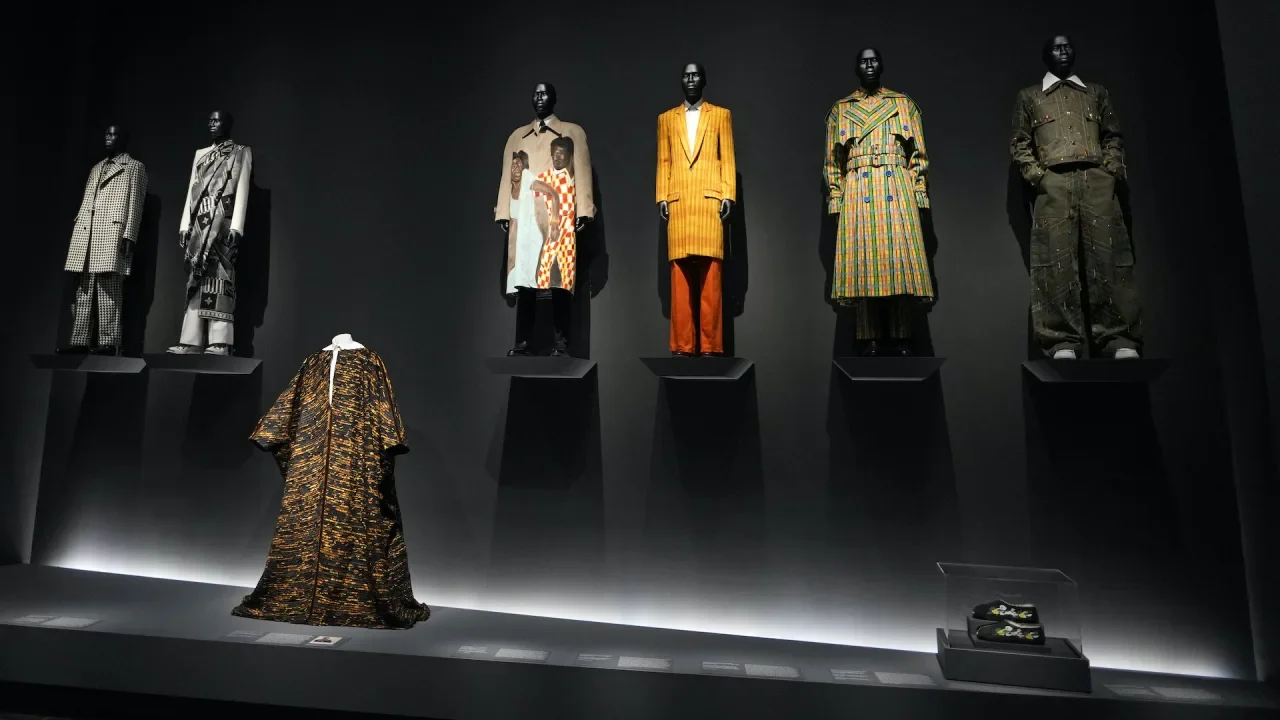
When the email came from the Metropolitan Museum of Art, Jacques Agbobly at first didn’t quite believe it. The Brooklyn-based fashion designer had only been in the business for five years. Now, one of the world’s top museums was asking for two of his designs to be shown in “Superfine: Tailoring Black Style,” the exhibit launched by the starry Met Gala. “I was just floored with excitement,” Agbobly said in an interview. “I had to check to make sure it was from an official email. And then the excitement came, and I was like . . . am I allowed to say anything to anyone about it?” Agbobly grew up in Togo, watching seamstresses and tailors create beautiful garments in part of the family home that they rented out. Studying fashion later in New York, the aspiring designer watched the Met Gala carpet from afar and dreamed of one day somehow being part of it. “Superfine: Tailoring Black Style” is the first Costume Institute exhibit to focus exclusively on Black designers, and the first in more than 20 years devoted to menswear. Unlike past shows that highlighted the work of very famous designers like Karl Lagerfeld or Charles James, this exhibit includes a number of up-and-coming designers like Agbobly. “The range is phenomenal,” says guest curator Monica L. Miller, a Barnard College professor whose book, “Slaves to Fashion: Black Dandyism and the Styling of Black Diasporic Identity,” is a foundation for the show. “It’s super exciting to showcase the designs of these younger and emerging designers,” says Miller, who took The Associated Press through the show over the weekend before its unveiling at Monday’s Met Gala, “and to see the way they’ve been thinking about Black representation across time and across geography.” The gala had already raised a record $31 million, Metropolitan Museum of Art CEO Max Hollein said Monday—the first time the fundraiser for the Met’s Costume Institute has crossed the $30 million mark and eclipsing last year’s haul of more than $26 million. Defining dandyism The exhibit covers Black style over several centuries, but the unifying theme is dandyism, and how designers have expressed that ethos through history. For Agbobly, dandyism is “about taking space. As a Black designer, as a queer person, a lot of it is rooted in people telling us who we should be or how we should act . . . dandyism really goes against that. It’s about showing up and looking your best self and taking up space and announcing that you’re here.” The exhibit, which opens to the public May 10, begins with its own definition: someone who “studies above everything else to dress elegantly and fashionably.” Miller has organized it into 12 conceptual sections: Ownership, presence, distinction, disguise, freedom, champion, respectability, jook, heritage, beauty, cool and cosmopolitanism. How clothing can dehumanize, but also give agency The “ownership” section begins with two livery coats worn by enslaved people. One of them, from Maryland, looks lavish and elaborate, in purple velvet trimmed with gold metallic threading. The garments were intended to show the wealth of their owners. In other words, Miller says, the enslaved themselves were items of conspicuous consumption. The other is a livery coat of tan broadcloth, likely manufactured by Brooks Brothers and worn by an enslaved child or adolescent boy in Louisiana just before the Civil War. Elsewhere, there’s a contemporary, glittering ensemble by British designer Grace Wales Bonner, made of crushed silk velvet and embroidered with crystals and the cowrie shells historically used as currency in Africa. There’s also a so-called “dollar bill suit” by the label 3.Paradis—the jacket sporting a laminated one-dollar bill stitched to the breast pocket, meant to suggest the absence of wealth. How dress can both disguise and reveal The “disguise” section includes a collection of 19th-century newspaper ads announcing rewards for catching runaway enslaved people. The ads, Miller notes, would often describe someone who was “particularly fond of dress”—or note that the person had taken large wardrobes. The reason was twofold: The fancy clothes made it possible for an enslaved person to cloak their identity. But also, when they finally made it to freedom, they could sell the clothing to help fund their new lives, Miller says. “So dressing above one’s station sometimes was a matter of life and death,” the curator says, “and also enabled people to transition from being enslaved to being liberated.” The contemporary part of this section includes striking embroidered jackets by the label Off-White that purposely play with gender roles—like displaying an ostensibly “male” jacket on a female mannequin. Views of an emerging Black middle and upper-middle class Stopping by a set of portraits from the early 19th century, as abolitionism was happening in the North, Miller explains that the subjects are Black men who were successful, well off enough to commission or sit for portraits, and dressed “in the finest fashions of the day.” Like William Whipper, an abolitionist and wealthy lumber merchant who also founded a literary society. They represent the beginnings of a Black middle and upper middle class in America, Miller says. But she points out a group of racist caricatures in a case right across from the portraits. “Almost as soon as they are able to do this,” she says, referring to the portraits, “they are stereotyped and degraded.” Projecting respectability: W.E.B. Du Bois and Frederick Douglass W.E.B. Du Bois, Miller points out, was not only a civil rights activist but also one of the best-dressed men in turn-of-the-century America. He traveled extensively overseas, which meant he needed “clothing befitting his status as a representative of Black America to the world.” Objects in the display include receipts for tailors in London, and suit orders from Brooks Brothers or his Harlem tailor. There is also a laundry receipt from 1933 for cleaning of shirts, collars, and handkerchiefs. Also highlighted in this section: Frederick Douglass, the abolitionist, writer, and statesman and also “the most photographed man of the 19th century.” The show includes his tailcoat of brushed wool, as well as a shirt embroidered with a “D” monogram, a top hat, a cane and a pair of sunglasses. Designers reflecting their African heritage One of Miller’s favorite items in the heritage section is Agbobly’s bright-colored ensemble based on the hues of bags that West African migrants used to transport their belongings. Also displayed is Agbobly’s denim suit embellished with crystals and beads. It’s a tribute not only to the hairbraiding salons where the designer spent time as a child, but also the earrings his grandmother or aunts would wear when they went to church. Speaking of family, Agbobly says that he ultimately did tell them—and everyone—about his “pinch-me moment.” “Everyone knows about it,” the designer says. “I keep screaming. If I can scream on top of a hill, I will.” —Jocelyn Noveck and Gary Gerard Hamilton, Associated Press View the full article
-
Adobe has released new survey findings showing how small business owners in the U.S. are redefining entrepreneurship through digital savvy, relentless hustle, and tools like Adobe Express. According to Adobe, the survey of 400 small business owners reveals a mix of optimism, overwork, and creative ambition among today’s entrepreneurs — many of whom are leveraging Adobe Express to overcome marketing challenges and build meaningful brands. The data show a significant shift in the makeup and mindset of small business owners. Forty percent of respondents have been in business for fewer than four years, indicating a rise in new, digitally native entrepreneurs. Adobe describes this group as bold, mobile, and creative, with many working from anywhere — including their beds, cars, or while running errands. Driven by Passion and Purpose Among the top reasons small business owners started their ventures: a desire to be their own boss, a passion turned into business, and income potential. For Gen Z founders, passion led the way. “My favorite thing about being a business owner is being able to be my own boss. I realized quickly that I didn’t like having someone tell me how to spend my time every day. It made me feel trapped, like I didn’t have any control over my own life. Now I can make my own schedule and prioritize things I think are important, not just what my boss cares about,” said Lexi Larson, founder of Sunday Cherries. “I started my entrepreneurial journey during Covid, just looking for a way to simply connect with other people my age when everything felt super isolating. What began as a little passion project turned into Our Era–my digital and print magazine all about Gen Z culture and media,” said Lucy Ivey, founder and editor-in-chief of Our Era Magazine. “Like a lot of Gen Z founders, I built this from pure passion, not just for the income or independence (though that’s been cool too!). For our generation, it’s not just about starting a business, it’s about building something that’s actually meaningful.” Pressures and Pain Points Despite high energy and intent, SMB owners report challenges balancing workload and growth. Adobe found that 41 percent say wearing “all the hats” is their biggest challenge, followed by generating consistent income (39 percent), and work-life balance (14 percent). Three out of four work full-time or more, and 43 percent report working well over 40 hours a week. Even with the strain, 77 percent say they rarely or never considered giving up their business in the past year. Marketing Confidence Gaps Marketing remains a sore spot for many. Adobe’s data show that 71 percent of small business owners consider themselves “average” marketers, and only 14 percent rate themselves highly. Just 10 percent feel their marketing content provides a competitive edge, while a quarter believe it blends in. Adobe says tools like Adobe Express are helping close that confidence gap. By providing professionally designed, easy-to-customize templates and AI-powered features, Adobe Express supports small businesses in producing high-quality, brand-consistent content more efficiently. “Biggest lesson? Consistency and clarity are better than perfection. Early on, I used to overthink every single post,” said Jerry Lee, Co-Founder of Wonsulting. Video and animation content remain intimidating for most respondents. Eighty percent say they lack confidence in video creation, and 60 percent rarely or never use animation. Gen Z is the exception, with 44 percent confident in video and twice as likely to use animation as the general SMB population. Social Media is Essential — and Overwhelming The survey highlights that 53 percent of small business owners see social media as their primary visibility tool, far ahead of websites. Gen Z SMB owners rely on social media even more, at 65 percent. Yet only 12 percent believe their social content gives them a competitive edge, and 30 percent say it looks like everyone else’s. Adobe notes that features in Adobe Express — such as customizable templates and AI-powered enhancements — are aimed at helping small business owners stand out more confidently and consistently. Confidence and Commitment Remain Strong Despite long hours and tough marketing terrain, small business owners report a strong sense of perseverance. Twenty-three percent say they’re outperforming competitors, and 36 percent of Gen Z respondents say they feel especially confident. Adobe concludes that today’s small business owners are resilient, passionate, and leaning on creative tools to succeed on their own terms. Image: Canva This article, "Adobe Express Survey Reveals How Small Business Owners Are Hustling with Passion and Creative Tools" was first published on Small Business Trends View the full article
-
Adobe has released new survey findings showing how small business owners in the U.S. are redefining entrepreneurship through digital savvy, relentless hustle, and tools like Adobe Express. According to Adobe, the survey of 400 small business owners reveals a mix of optimism, overwork, and creative ambition among today’s entrepreneurs — many of whom are leveraging Adobe Express to overcome marketing challenges and build meaningful brands. The data show a significant shift in the makeup and mindset of small business owners. Forty percent of respondents have been in business for fewer than four years, indicating a rise in new, digitally native entrepreneurs. Adobe describes this group as bold, mobile, and creative, with many working from anywhere — including their beds, cars, or while running errands. Driven by Passion and Purpose Among the top reasons small business owners started their ventures: a desire to be their own boss, a passion turned into business, and income potential. For Gen Z founders, passion led the way. “My favorite thing about being a business owner is being able to be my own boss. I realized quickly that I didn’t like having someone tell me how to spend my time every day. It made me feel trapped, like I didn’t have any control over my own life. Now I can make my own schedule and prioritize things I think are important, not just what my boss cares about,” said Lexi Larson, founder of Sunday Cherries. “I started my entrepreneurial journey during Covid, just looking for a way to simply connect with other people my age when everything felt super isolating. What began as a little passion project turned into Our Era–my digital and print magazine all about Gen Z culture and media,” said Lucy Ivey, founder and editor-in-chief of Our Era Magazine. “Like a lot of Gen Z founders, I built this from pure passion, not just for the income or independence (though that’s been cool too!). For our generation, it’s not just about starting a business, it’s about building something that’s actually meaningful.” Pressures and Pain Points Despite high energy and intent, SMB owners report challenges balancing workload and growth. Adobe found that 41 percent say wearing “all the hats” is their biggest challenge, followed by generating consistent income (39 percent), and work-life balance (14 percent). Three out of four work full-time or more, and 43 percent report working well over 40 hours a week. Even with the strain, 77 percent say they rarely or never considered giving up their business in the past year. Marketing Confidence Gaps Marketing remains a sore spot for many. Adobe’s data show that 71 percent of small business owners consider themselves “average” marketers, and only 14 percent rate themselves highly. Just 10 percent feel their marketing content provides a competitive edge, while a quarter believe it blends in. Adobe says tools like Adobe Express are helping close that confidence gap. By providing professionally designed, easy-to-customize templates and AI-powered features, Adobe Express supports small businesses in producing high-quality, brand-consistent content more efficiently. “Biggest lesson? Consistency and clarity are better than perfection. Early on, I used to overthink every single post,” said Jerry Lee, Co-Founder of Wonsulting. Video and animation content remain intimidating for most respondents. Eighty percent say they lack confidence in video creation, and 60 percent rarely or never use animation. Gen Z is the exception, with 44 percent confident in video and twice as likely to use animation as the general SMB population. Social Media is Essential — and Overwhelming The survey highlights that 53 percent of small business owners see social media as their primary visibility tool, far ahead of websites. Gen Z SMB owners rely on social media even more, at 65 percent. Yet only 12 percent believe their social content gives them a competitive edge, and 30 percent say it looks like everyone else’s. Adobe notes that features in Adobe Express — such as customizable templates and AI-powered enhancements — are aimed at helping small business owners stand out more confidently and consistently. Confidence and Commitment Remain Strong Despite long hours and tough marketing terrain, small business owners report a strong sense of perseverance. Twenty-three percent say they’re outperforming competitors, and 36 percent of Gen Z respondents say they feel especially confident. Adobe concludes that today’s small business owners are resilient, passionate, and leaning on creative tools to succeed on their own terms. Image: Canva This article, "Adobe Express Survey Reveals How Small Business Owners Are Hustling with Passion and Creative Tools" was first published on Small Business Trends View the full article
-
I'm Lifehacker's resident marathon runner and senior finance writer—and now, I'm merging my two worlds. While running requires minimal equipment compared to other activities, the right footwear can make or break your experience—and your budget. Let's break down what various types of runners should expect to spend on shoes, which investments are worth it, and where you can save without compromising your running experience. The casual beginner ($60-$90)If you're just starting out with one or two short runs per week, or mixing running with other forms of exercise, you don't need to spend a fortune. Marketing will tempt you, but I promise, you shouldn't have to go over $100. What to look for: Simple cushioning, basic support, and comfort. Worth investing in: A proper fitting. Even at discount retailers like DSW or Famous Footwear, find someone who can watch you walk or run to ensure you're not severely overpronating. Where to save: Last year's models from major brands like Nike, Adidas, and Asics often hit the $60-90 range during clearance sales. The Asics Gel-Contend ($59.95) and Nike Revolution ($60-75) offer reliable performance at accessible price points. What to avoid: Ultra-cheap generic athletic shoes under $40—these often lack the minimal cushioning and support needed even for casual running. Asics Women's Gel-Content 9 $59.95 at Amazon $70.00 Save $10.05 Shop Now Shop Now $59.95 at Amazon $70.00 Save $10.05 The practical enthusiast ($100-$140)For those running three to four times weekly, totaling 10-20 miles, you'll want something more substantial that balances price and performance. What to look for: Good cushioning, modest stability features, and durability for at least 300-400 miles. Worth investing in: One "do-everything" shoe from a reputable running brand. Popular options include the Brooks Ghost ($109.95), Saucony Ride ($139.95), or New Balance 880 ($139.99). Where to save: Shop previous generation models or check running specialty stores' clearance racks. Running warehouse websites frequently offer last season's designs at significant discounts. What to avoid: Premium racing shoes or highly specialized models—you'll pay more for features you don't need yet. The dedicated athlete ($120-$160+)These days, I find myself in this category. If you're running 20+ miles weekly, training for half or full marathons, or hitting the track for speedwork, your footwear becomes a crucial training tool. What to look for: Shoes specific to your running style, gait, and training needs. Worth investing in: A professional fitting at a specialty running store. The $10-20 premium you might pay for shoes is offset by expert guidance preventing injury. Consider a rotation of two complementary shoes—a cushioned model for long runs (like the NUCLEO 2 at $160) and a lighter, responsive shoe for faster workouts (like the Saucony Kinvara at $119.95). Where to save: Look for shoes with high mileage ratings (450-500+) to get more value per dollar. They might cost more upfront, but often outlast cheaper alternatives. What to avoid: Buying solely based on looks or trends. That Instagram-famous shoe might not work for your specific running style. Saucony Men's Kinvara 15 $119.95 at Amazon /images/amazon-prime.svg Shop Now Shop Now $119.95 at Amazon /images/amazon-prime.svg The competitive racer ($160-$250+)For serious competitors focused on performance, shoe technology becomes a legitimate competitive advantage. My word of advice: Don't spend money like a competitive racer unless you're confident this is your running identity. What to look for: Race-specific shoes with carbon plates, specialized foams, and performance-oriented features. Worth investing in: A proper "super shoe" for race day. The Nike Vaporfly/Alphafly ($250+), Saucony Endorphin Pro ($225), or Adidas Adios Pro ($249.90) can genuinely improve performance through energy return technology. Again: This science only matters once you're running at true elite paces. Where to save: Reserve these expensive shoes exclusively for races and key workouts. For daily training, use more durable, less expensive models. What to avoid: Using these high-tech racing shoes for everyday training—they'll wear out quickly and you'll lose the "special" feeling on race day. The minimalist ($80-$110)If you prefer natural running with minimal interference between your foot and the ground, you can sometimes spend less—but not always. What to look for: Low drop (difference between heel and forefoot height), flexible materials, wide toe box. Worth investing in: Proper transition shoes if you're new to minimalist running. The Altra Escalante ($99.99) or Topo Athletic Phantom 3 ($97.95) offer good value in this category. Where to save: True minimalist shoes, like Xero Shoes, often cost less than traditional running shoes—but you have to be prepared to train as a borderline barefoot runner. What to avoid: Ultra-cheap "barefoot-style" knockoffs that don't actually provide the proper anatomical fit needed for safe minimalist running. ALTRA Men's Escalante 3 $99.99 at Amazon /images/amazon-prime.svg Shop Now Shop Now $99.99 at Amazon /images/amazon-prime.svg The trail runner ($130-$180)While I don't have as much personal experience here, I know off-road enthusiasts face different demands and usually require specialized footwear. What to look for: Aggressive tread patterns, rock plates, durable uppers, and protective features. Worth investing in: Good traction and protection. The Salomon Speedcross ($145) or Brooks Men’s Cascadia 18 Mountain Trail ($139.95) are popular for a reason—they prevent slips and protect against rocks and roots. Where to save: Unless you're exclusively a trail runner, one pair of trail shoes alongside your road shoes is sufficient. Many road shoes can handle light trails, eliminating the need for multiple specialized trail models. What to avoid: Waterproof trail shoes unless you run in consistently cold, wet conditions—they're more expensive and less breathable. What's never really worth itRegardless of your running style, here are some features that I constantly see marketed, but in my opinion never justify a higher price tag: Fashion collaborations: Designer-branded running shoes typically add $30-50 without performance benefits. Gimmicky technology: Be skeptical of proprietary features that can't be explained in simple terms. "Smart" shoes: Shoes with smart tracking and embedded sensors are neat for about one day, but their value proposition can't compete with a good running watch or app. Limited edition designs: While they look cool, they function identically to standard versions. As a runner, I understand the temptation. As a personal finance writer, I cannot endorse this type of spending. Where everyone can saveThe right shoes aren't just about performance—they're injury prevention tools. Some money-saving strategies work across all runner types: Rotation to extend life: Using two pairs alternately can give each shoe time to decompress, allowing you to extend how long each pair lasts. Outlet shopping: Factory outlets for major brands often sell shoes at 30-40% below retail. Timing purchases: New models typically release annually, making previous versions excellent values. Running specialty store loyalty programs: Many offer discounts after multiple purchases or will price-match online retailers. Remember that the most expensive shoe isn't necessarily the best for you—it's about finding the right match for your specific needs, gait, and running goals. A proper fitting at a specialty running store is worth the time investment, even if you eventually purchase elsewhere. For more, check out my round-up of the best running shoes on the market right now, according to the experts. View the full article
-
Running a small business demands many skills, including ambition and resilience. However, nothing beats financial preparedness—especially as the The President administration’s tariffs loom. A new survey from TD Bank suggests that small business owners may not be as prepared for revenue shortfalls as they’d like to believe. Wakefield Research conducted the Financial Preparedness Survey among U.S. small business owners who have 100 employees or fewer and revenues of $100,000+ annually. Overwhelmingly, respondents reported that their business is equipped for whatever challenges the next 12 to 18 months may bring, with 94% saying they were ready. But most also admitted their business could not withstand temporary revenue shortfalls. In the survey, 72% of respondents said insufficient revenue for two quarters or less would cause them concern about their business’s future. And, more concerningly, 43% said longer dips, for three to four quarters, would be catastrophic. In other words, their business would not survive the impact of more than two quarters where revenue fell short. With the impact of federal layoffs and tariffs already setting in, 99% of respondents said they are assessing overall preparedness more frequently. “Now, more than ever, it is critical for business owners to be financially prepared,” Andy Bregenzer, cohead of U.S. Commercial Banking at TD Bank, said in the report. “Business owners who invest the time to create a financial plan will be better positioned to face challenges and seize new opportunities.” Still, respondents were divided on how to gauge their readiness. More than half say a positive cash flow is a telltale signal for how well equipped they are, while 37% said enough capital to cover emergencies is the most important way to stay afloat. Small business owners are not the only ones who are worried about stability in the wake of tariffs. In a recent survey of 5,000 frontline workers, 52% said they fear they will be laid off, while 74% said they expect The President’s tariffs to impact their earning potential. Unsurprisingly, 77% of these workers said it’s small business owners, rather than Wall Street, who will be hurt by tariffs. View the full article

-
The company took a break from securitization during the first quarter but was able to get a deal done shortly after the fiscal period ended. View the full article

-
The Federal Home Loan Bank of Atlanta exceeded its funding commitment by nearly $1 million, while its Dallas counterpart gave out $2 million in 2024. View the full article

-
Is a side hustle really the only thing separating you from the life you desire? Listening to some influencers on social media could certainly have you thinking so. Side hustles encompass a range of self-directed entrepreneurial activities undertaken while also working a job. For young people with limited access to capital, they’re the most accessible opportunity to engage in entrepreneurship. Yet, we still know very little about who takes them on and why, and what kind of impact they have on working life in economies like Australia. Our new report, Side Hustles: How Young People Are Redefining Work, presents the first wave of findings from an ongoing three-year, mixed-methods study that seeks to answer these questions. In our first year of data collection, we surveyed 1,497 side hustlers ages 18 to 34 and interviewed a further 68. Our findings raise questions about the merits of entrepreneurship as a solution to youth unemployment or a pathway to financial freedom. What makes a side hustle? To be included in our project, a young person had to be employed, but also carrying out some form of entrepreneurship. We defined entrepreneurship as self-directed economic activity, where the side hustler has some measure of control over when they work, who they work for, and what they charge. The most popular side hustle among participants was selling goods (42.9%). Others included: services such as gardening, dog-walking or moving furniture (29.2%) creating media content (16.5%) creative work such as graphic design or photography (11.3%). Side hustling could include some “gig work” through online platforms, but only when these platforms allow workers to negotiate prices with clients and make choices about their work. As such, we excluded ride-share and food delivery drivers from the project. Projects for the privileged While some people may assume that young people start a side hustle out of financial stress, we found side hustlers are actually a relatively privileged cohort. They are a well-educated group. Almost two-thirds of our sample had university degrees and many of the remainder were studying. They also generally report their financial well-being as comfortable. Why is this? Side hustles often don’t make much money, cost money to set up, and carry risk—all of the hallmarks of entrepreneurship. Median hourly earnings from their side hustles are less than what they would make working in retail or hospitality, and on average they are about 50% what they make in their main job. As one e-commerce side-hustler put it: “If I really put my time and energy into the consideration, I would say we’re not making much money at all. … It’s just something I enjoy doing in my free time.” Their side-hustle earnings are also uncertain: 65% say they are unsure what their earnings will look like in three months. In other words, you need to be financially secure already to even contemplate a side hustle. Passion over pay Side hustles don’t make enough to help someone who is really financially struggling, and they are unlikely to be a pathway out of the employment “rat race.” Despite this, our participants are overwhelmingly satisfied with their side hustles and say they have good work-life balance. So what motivates them? The top motivation reported in our study is passion and enjoyment. Side hustlers say they want work that relates to their interests and enjoy the autonomy and flexibility that a side hustle allows. Even though side hustles are often less profitable than a second job, the second-highest motivation was still money. That’s likely because they offer a way of making some supplementary income in a way that is flexible and autonomous. They’re often a source of “play money.” One 33-year-old man with an e-commerce side hustle told us: “If I was to pick up a second job, like … Uber driving at night time, I won’t be happy. I’ll be tired. I’ll be stressed out trying to do that. Whereas, I think because I’ve got the passion for it here, I’m happy to do it because, like I said, I’m doing it at my own pace.” Pressure to be productive Our research suggests that rather than being a pathway out of unemployment, side hustles actually represent a broader social and economic trend: More and more of young people’s lives are being encompassed by work. Interviewees frequently talked about feeling like they needed to make their time outside of work productive in some way. For some, it was as though they could not justify leisure time unless it was financially profitable. One participant told us: “You obviously want to enjoy life and have a bit of a chill time, but some days you just go, like, ‘What am I doing? Just sitting at home and just relaxing watching Netflix or whatever. I should probably be out there making more money.’ ” Blurring work life boundaries? Most participants were also not very concerned about growing their side hustles into businesses. Instead, they aspired for balanced working lives with a side hustle offering passion, flexibility, and autonomous work, and paid employment supporting them financially and offering the option of a traditional career. They also did not necessarily see the time spent on their side hustles as work, being much more personally invested and self-directed in their side hustles than in their paid jobs. But this means that much of their “leisure” time looks very much like work, and more and more of their lives are dedicated to being productive. David Farrugia is an ARC Future Fellow at the School of Education at Deakin University. Brendan Churchill is an ARC senior research fellow and senior lecturer in sociology at The University of Melbourne. Kim Allen is a professor of sociology of youth and culture at the University of Leeds. Stephanie Patouras is a research officer and PhD candidate at Deakin University. This article is republished from The Conversation under a Creative Commons license. Read the original article. View the full article

-
A U.S. lawmaker plans to introduce legislation in coming weeks to verify the location of artificial-intelligence chips like those made by Nvidia after they are sold. The effort to keep tabs on the chips, which drew bipartisan support from U.S. lawmakers, aims to address reports of widespread smuggling of Nvidia’s chips into China in violation of U.S. export control laws. Nvidia’s chips are a critical ingredient for creating AI systems such as chatbots, image generators and more specialized ones that can help craft biological weapons. Both President Donald The President and his predecessor, Joe Biden, have implemented progressively tighter export controls of Nvidia’s chips to China. But Reuters and other news organizations have documented how some of those chips have continued to flow into China, and Nvidia has publicly claimed it cannot track its products after they are sold. U.S. Representative Bill Foster, a Democrat from Illinois who once worked as a particle physicist, said the technology to track chips after they are sold is readily available, with much of it already built in to Nvidia’s chips. Independent technical experts interviewed by Reuters agreed. Foster, who successfully designed multiple computer chips during his scientific career, plans to introduce in coming weeks a bill that would direct U.S. regulators to come up with rules in two key areas: Tracking chips to ensure they are where they are authorized to be under export control licenses, and preventing those chips from booting up if they are not properly licensed under export controls. Foster told Reuters that there are already credible reports – some of which have not been publicly disclosed – of chip smuggling occurring on a large scale. “This is not an imaginary future problem,” Foster told Reuters. “It is a problem now, and at some point we’re going to discover that the Chinese Communist Party, or their military, is busy designing weapons using large arrays of chips, or even just working on (artificial general intelligence), which is as immediate as nuclear technology.” Nvidia declined to comment for this story. Chip smuggling has taken on new urgency after the emergency of China’s DeepSeek, whose AI systems posed a strong challenge to U.S. systems and were built with Nvidia chips that were prohibited for sale to China, according analyst firm SemiAnalysis. Prosecutors in Singapore have charged three Chinese nationals with fraud in a case that involved servers that may have contained Nvidia chips. Though it has not been put into broad use, the technology to verify the location of chips already exists. Alphabet’s Google already tracks the location of its in-house AI chips and others in its vast network of data centers for security purposes, according to two sources with direct knowledge of its operations. Google did not respond to a request for comment. Foster’s legislation would give the U.S. Department of Commerce six months to come up with regulations to require the technology. Bipartisan support Foster’s bill has support from fellow Democrats such as Representative Raja Krishnamoorthi, the ranking member on the House Select Committee on China. “On-chip location verification is one creative solution we should explore to stop this smuggling,” Krishnamoorthi said in a statement. Republicans are also supportive, with Representative John Moolenaar, who chairs the committee, telling Reuters that “the Select Committee has strong bipartisan support for requiring companies like Nvidia to build location-tracking into their high-powered AI chips — and the technology to do it already exists. The technology for verifying the location of chips would rely on the chips communicating with a secured computer server that would use the length of time it takes for the signal to reach the server to verify where chips are, a concept that relies on knowing that computer signals move at the speed of light. Tim Fist, a former engineer and director of emerging technology policy at Washington think tank Institute for Progress, said such tracking would provide a general, country-level location for chips. But that is far more information than the Bureau of Industry and Security, the arm of the U.S. Commerce Department responsible for enforcement of export controls, currently has. “BIS has no idea which chips they should be targeting as a potential high priority to investigate once they’ve gone overseas,” Fist said. With location verification, “they now at least have bucketed the set of chips that are out there in the world into ones that are very likely to not have been smuggled and ones that warrant further investigation.” Foster’s second legislative goal of preventing AI chips from booting up if they are not properly licensed under U.S. export controls would be more technologically complex to implement than location verification, but he said the time has come to begin discussions for both efforts. “We’ve gotten enough input that I think now we can have more detailed discussions with the actual chip and module providers to say, ‘How would you actually implement this?'” Foster told Reuters. —Stephen Nellis and Max A. Cherney, Reuters View the full article
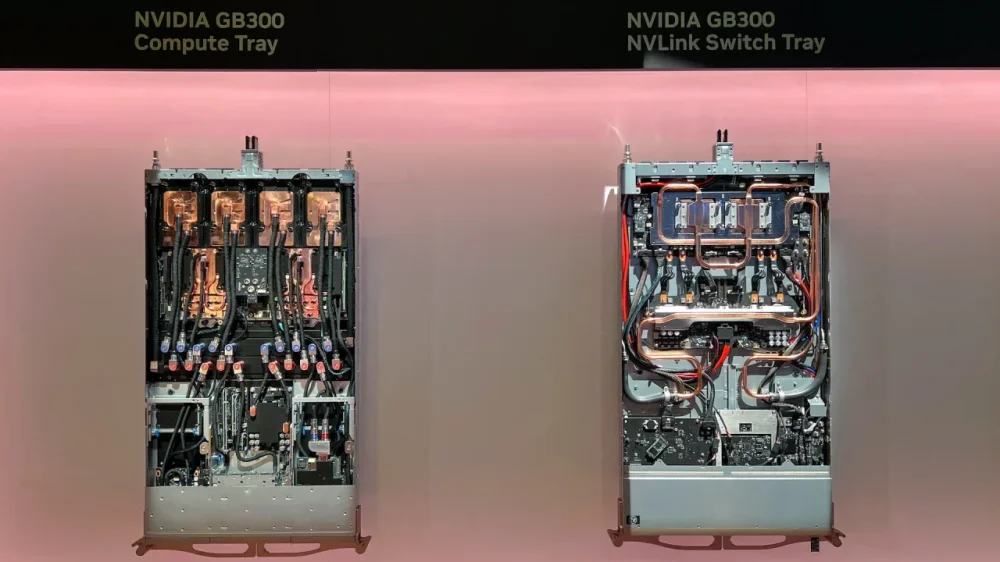
-
Even if you're on top of your finances and never miss a payment, in the current economic climate, managing your bills can feel like swimming frantically and just keeping your head above water, with your paycheck evaporating before you even have a chance to appreciate it. If you’re on salary and get paid bi-weekly, however, there are two months out of the year in which you are paid three times instead of two—and May is one of those months. Because your budget is probably based on getting paid twice per month, that thirdpay day can feel like a bonus—and it actually can serve you very well, if you play it smart. Here’s how to make the most of this month's "extra" paycheck. Don't budget for itStep one is to live your life like you only get paid 24 times every year. When setting up your budget and planning out your spending for the year (which you totally do...right?), you should pretend those two extra paychecks don’t exist. If you count them in your income, they’ll be absorbed into your everyday spending. That’s not necessarily a bad thing (and you have no choice, if your financial situation calls for it), but the benefit will be diluted. If you want those extra paychecks to feel like a bonus, start by forgetting all about them. Then when they roll in you, have a few smart ways to use them. Put it into a savings account with interestThe most obvious smart way to use that third paycheck is to stash it in your savings—especially if you have a high-yield savings account (HYSA) you can dump it into. This puts that extra money to work for you, and gives you a little more breathing room during the rest of the year, or it can be put aside for future expenses like holiday shopping, a vacation you’ve planned, or a big purchase you know is coming up. If you’re saving that third paycheck you need to have a plan for it. If you just leave it in your bank account there’s a risk it will just evaporate over time as you dip into it here and there when your budget gets a little busted. Again, using it to cover overages isn’t exactly a bad use of the money you earned, but it might not be the most impactful. Invest itA better option might be to invest the money. If you have retirement accounts, you can look into making extra contributions to help Future You have a more comfortable retirement plan. If you don’t have a retirement account, creating one with that extra paycheck could be the best thing you do all year—setting up an Individual Retirement Account (IRA) is pretty easy, and if you make a habit of stuffing your third paychecks into that IRA every year you’ll be very glad you did. Alternatively, if you already have an investment portfolio you can apply that paycheck there and beef up your holdings. Invest in yourselfSpeaking of investment, don’t forget about investing in yourself. That bonus paycheck could be used to make your future brighter in several ways: Professional development. Using that extra money to earn a credential that can help you get promoted or find a better job can pay off in the long term without impacting your daily life. Deferred healthcare. If you’ve been holding off on dental work or some other form of big-ticket healthcare due to the cost, a third paycheck offers an opportunity to do some very necessary self-care. Lifestyle improvement. You could also use the bonus paycheck to pay for a gym membership or equipment to jump-start an exercise regimen that will pay off handsomely. Start a businessA little extra cash can be used to launch a lucrative side hustle (many of these little businesses don’t require much—or any—startup cash) or small business. If you’ve had an idea for a service or product that you think could be turned into a money-making endeavor, that third paycheck might be all the startup capital you need to get it off the ground. Create an emergency fundDistinct from your general savings, an emergency fund protects you from unexpected disasters that would otherwise wipe out your savings and leave you in a terrible financial position. These include job loss, medical emergencies, and home repairs, any of which could spell doom if you’re not ready for them. Since we live in a world where 42% of Americans don’t have any sort of emergency fund at all, setting that extra paycheck aside specifically for that purpose is a very smart idea. Pay down debtYou’re living in the world, which means you’re most likely carrying debt—it’s just a fact of modern life. If you have sufficient savings and an emergency fund, chipping away at your debt is a terrific use for an extra paycheck: Pay down credit cards. The interest rates credit cards charge can be insane, and if you’re paying just minimum payments each month it will take you a very, very long time to erase even a modest balance. A balloon payment thrown at the card charging the most interest can be a dramatic improvement in your financial outlook moving forward. Make an extra mortgage payment. If you have a mortgage on your house and the two third paychecks you get every month allows you to make two extra payments, you can literally shave years off your mortgage. For example, if you have a $300,000 30-year fixed-rate mortgage at 6.75% interest, your principal and interest comes out to $1,946 per month. If you can throw 2 extra payments totaling $3,900 per year using your two third paychecks, you can shave 10 years off your mortgage term and save $145,000 in interest. Other debt. Any other kinds of debt you’re carrying can be reduced or eliminated, of course—student loan debt, personal loans, auto loans. As long as there’s no penalty for paying more than the monthly payment, you can whittle these down by applying that third paycheck. It’s not often we get a break in this world. An extra paycheck is one of those times—but only if you make a plan to take advantage of it. View the full article
-
The The President administration says the sweeping tariffs it unveiled April 2, then postponed for 90 days, have a simple goal: Force other countries to drop their trade barriers to U.S. goods. Yet President Donald The President’s definition of trade barriers includes a slew of issues well beyond the tariffs other countries impose on the U.S., including some areas not normally associated with trade disputes. Those include agricultural safety requirements, tax systems, currency exchange rates, product standards, legal requirements, and red tape at the border. He’s given countries three months to come up with concessions before tariffs ranging from 10% to more than 50% go into effect. Tariffs on China are already in effect. On many issues it will be difficult, or in some cases impossible, for many countries to make a deal and lower their tariff rates. In addition, many trade officials from targeted countries say privately that it isn’t always clear what the The President administration wants from them in the negotiations. Vice President JD Vance announced that India has agreed to the terms of trade talks with the United States, but other countries are still trying to set the contours for any negotiations. The White House has highlighted conflicting goals for its import taxes: It’s seeking to raise revenues and bring manufacturing back to the U.S., but it also wants greater access to foreign markets and massive changes to other nations’ tax and regulatory policies. Here are several non-tariff areas the administration is targeting: CURRENCY EXCHANGE RATES The President has accused Germany, China and Japan of “global freeloading” by — in his view — devaluing their currencies to make their exports cheaper. The European Central bank has been cutting interest rates to support growth. That could also weaken the euro, which has strengthened sharply against the dollar since The President took office. The ECB says it doesn’t target the exchange rate. In Japan’s case, the Bank of Japan has been gradually raising rates anyway after keeping them at zero or in negative territory for years, which should drive the yen up against the dollar. The U.S. dollar has fallen recently to 140-yen levels, down from about 160 yen last summer. Shrikant Kale, a strategist at Jefferies, believes the dollar will fall to 120 yen over the next 18 months. FARM PRODUCTS Agricultural safeguards against importing pests or health hazards have been a sticking point with U.S. trade partners for years. They include Japan’s restrictions on rice and potato imports, the EU’s ban on hormone-treated beef or chlorine-disinfected chickens and Korea’s ban on beef from cows more than 30 months old. Yet changes face stiff political resistance from voters and farm lobbies in those countries. For years, U.S. potato growers have sought access to Japan’s potential $150 million market for table potatoes. Japan has engaged in talks but taken years simply to supply a list of concerns to U.S. negotiators. The delay is “pure politics,” intended to protect domestic growers, says National Potato Council CEO Kam Quarles. If Japanese politicians perceive the pain from The President’s tariffs might be worse than from their own potato growers, “that makes it more likely to make a deal,” Quarles said. But “if they perceive the pain domestically will be worse than the The President administration can bring to them … we’re going to be stuck where we are.” Korea’s beef restrictions started as a measure to keep out bovine spongiform encephalopathy, or mad cow disease. The 30-month rule has been maintained in the wake of mass protests in 2008, even as the U.S. has become the largest beef exporter to Korea. “It’s still politically controversial because of the scar at the time in 2008. I think the government will be very cautious,” said Jaemin Lee, professor of law at Seoul National University and an expert on trade issues. TAXATION The President has railed against value-added tax as a burden to U.S. companies, although economists say this kind of tax is trade-neutral because it applies equally to imports and exports. Value-added tax, or VAT, is paid by the end purchaser at the cash register but differs from sales taxes in that it is calculated at each stage of the production process. The President’s view could mean higher tariffs for Europe, where individual countries levy VAT of 20% or more depending on the type of good, and for the more than 170 countries that use this kind of tax system. The U.S. is an outlier in that it doesn’t use VAT; instead, individual states levy sales taxes. There’s little chance countries will change their tax systems for The President. The EU for one has said VAT is off the table. “The domestic taxation system has not been a conventional topic in trade negotiation because domestic taxation is directly related to national sovereignty or the domestic economic regime,” trade expert Lee said. “It’s very hard to understand why VAT has become an important topic in the trade discussion.” PRODUCT STANDARDS U.S. officials have complained about Japan’s non-recognition of U.S vehicle safety standards and its different testing procedures for car equipment. Japan also provides subsidies for the Japanese-designed ChaDeMo plug standard for electric cars, requiring foreign makers to use an outdated technology if they want the subsidy. BUREAUCRACY Concerns about excessive or baffling bureaucratic procedures to get goods into a country are mentioned repeatedly in the administration’s latest trade assessment. The U.S. has complained about expensive delays getting permission to export seafood to Japan. Meanwhile, Japan requires wheat imports to be sold to a government entity and has “highly regulated and intransparent” quota system that keeps rice imports from the U.S. to a minimum. Most of these issues are years old, raising questions about whether 90 days is enough to make a deal over them. U.S. pharmaceutical companies have complained about Korea’s system for drug imports, while automakers say environmental equipment standards are unclear and expose only importers to criminal penalties in case of violations. BUY AMERICAN Analysts say that despite the long list of non-tariff issues, the administration’s main focus may lie elsewhere: on The President’s desire to reduce trade deficits, cases where a country sells more to the U.S. than it buys. And the solution may be other countries buying more U.S. products, from energy to soybeans, and builingd more plants in the U.S. U.S. energy is already a major export to Europe. The President has mentioned a figure of $350 billion for potential EU gas imports. The EU does need imported gas. But The President’s figure would be a stretch given that last year’s exports of liquefied natural gas to the EU were around $13 billon, and that Europe is seeking to reduce its use of fossil fuels over the longer term. THE HEART OF THE MATTER? Discussions about non-tariff issues may simply be leverage to underpin The President’s stiff tariff levels. “It’s just a thing that’s there to justify my tariffs,” said Tobias Gehrke, senior policy fellow at the European Council of Foreign Relations. While lower level trade officials and industry representatives are acutely aware of non-tariff issues like agricultural safety, “The President and his cabinet… don’t really care about chlorinated chicken regulations in Europe and food standards,” Gehrke said. “They have much bigger thinking.” “They want to have European companies significantly move production to America… and to export from America to Europe. That would change the trade balance.” “And if that’s the main logic, then there’s no real deal to be had on non-tariff barriers.” Rugaber contributed from Washington DC and Kageyama from Tokyo. —David McHugh, Christopher Rugaber and Yuri Kageyama, AP Business Writers View the full article

-
Plan to be announced by European Commission aimed at forcing member states to end imports of Russian gas View the full article