Newsletter
Want to keep up to date with all our latest news and information?


ResidentialBusiness
Administrators
-
Joined
-
Last visited
Everything posted by ResidentialBusiness
-
Few periods in modern history have been as unsettled and uncertain as the one that we are living through now. The established geopolitical order is facing its greatest challenges in decades, with a land war in Europe entering its third year and shifting power dynamics upending what were once settled relationships across the globe. The economy is teetering on the edge of recession, with financial markets in chaos, central banks struggling to navigate inflationary pressures, and consumer confidence levels at historic lows. And beneath these more visible disruptions runs a quieter but perhaps more fundamental transformation: the accelerating advancement of artificial intelligence, a technology that is reshaping how we think about work, productivity, and economic value. It is tempting to push aside worries about the future effects of new technologies when we are distracted by the global turmoil that is outside our windows right now. But if we fail to get ahead of the question of how our societies and economies will deal with automation, the consequences may be far more profound and enduring than the crises that absorb us today. The questions of who works, how they work, and whether that work provides dignity and sustenance will ultimately define our economic future more fundamentally than any temporary market correction or geopolitical realignment. Historically, technological advances have led to long-term economic growth and new employment opportunities even when automation has caused short-term job losses. It would be easy to assume that this pattern will be repeated with artificial intelligence. But this would be a grave mistake. When algorithms can learn, create, and act independently, assumptions that have evolved around the automation of mechanical processes can no longer be treated as reliable guides. The Numbers Game One of the reasons things will be different this time is the sheer speed and scale of the transformation that is rushing toward us. Researchers have calculated that 60% of current job roles did not exist 80 years ago, which is already an astonishing fact. Yet AI promises even faster and more profound changes to the job market. Recent projections are sobering: · McKinsey projects that 30% of all hours worked in the U.S. could be automated by 2030 · Goldman Sachs argues that up to 300 million jobs globally are “exposed” to automation · The IMF suggests that 40% of jobs are at risk globally, rising to 60% in advanced economies And these are just the short-term predictions. In the longer-term, many tech leaders agree with Bill Gates that humans will no longer be needed for “most things.” So, what’s the “business as normal” prediction? The World Economic Forum offers a more optimistic forecast: While 92 million jobs will be displaced globally over the next five years, 170 million new positions will be created. Not a rosy picture The arguments for the increases in future roles, however, are far from persuasive. The largest area of growth, the report argues, will come in very traditional roles like farm workers, delivery drivers, and food processing workers. Yet these are precisely the jobs that existing technology can already automate. The fastest growing roles, meanwhile, are projected to be in technology, including many new positions for specialists in data analysis, software development, and fintech engineering. But the assumption that AI will create rather than take jobs in these fields is optimistic, to say the least. The real-world data paints a less than rosy picture. For instance, while the U.S. Bureau of Labor Statistics predicts an 18% rise in the number of software developers between 2022 and 2032, recent research suggests that actual numbers in 2022–2025 figures have declined, with significant falls in both employment and job openings in this field. Waves Not Ripples Even in the best-case scenario where AI increases both overall economic activity and overall employment, major disruptions are inevitable. If millions of low-skilled jobs are soon to be replaced by high-skilled tech jobs, we will need an unprecedented global re-skilling program to ensure that displaced workers can find new roles. Without this, we risk abandoning millions of workers, and it is no exaggeration to suggest that the social and political effects of such a move will be catastrophic. Western nations are still struggling to adapt to the collapse of traditional manufacturing industries. A new employment crisis for those who already have the fewest prospects will be devastating. Yet there are few signs of any kind of organized response at the governmental level. In the worst-case scenario, these social waves will become a tsunami. Rapid automation causing widespread unemployment could trigger the kind of unrest that destroys communities and topples governments. A generation of jobless, purposeless youth unable to secure entry-level roles because the only remaining human positions require experience and expertise will pose a grave geopolitical threat. Macroeconomically, excessive automation risks create a dangerous demand deficiency—a situation in which our economy can efficiently produce more goods and services than an ever-shrinking base of employed consumers can afford to purchase. This creates a paradox for businesses rushing to automate: the very efficiency gains they seek might ultimately undermine their markets. Machines don’t purchase smartphones, subscribe to streaming services, or buy homes. Humans do. When companies optimize for efficiency without considering employment, they may inadvertently be sabotaging the consumer spending ecosystem that sustains them. If AI causes sustained unemployment, the resulting drop in aggregate demand won’t just harm individual businesses—it could trigger a deflationary spiral that threatens the stability of the entire economy. Democratizing Responsibility Automation isn’t inherently negative. Just as previous technological advances freed us from hard and dangerous physical labor, AI has the potential to relieve us of many routine burdens that stand in the way of true human flourishing. But it can only fulfill this promise if it is thoughtfully integrated into our lives and societies. In theory, governments could mitigate the economic risks through regulation. But history suggests that regulatory frameworks rarely keep pace with technological revolutions. We cannot wait for top-down solutions to emerge. Instead, we need to democratize both responsibility and leadership when it comes to managing the pace of automation and protecting the social and economic foundations on which we all depend. Businesses have a crucial role to play in this process. They must adopt regenerative leadership that looks beyond short-term efficiency gains and instead considers the long-term sustainability of the broader ecosystem. Leaders must recognize that their employees aren’t merely replaceable resources but also consumers driving economic demand. This requires shifting from traditional thinking that focuses on quarterly results to systems thinking that considers long-term economic sustainability. Companies that embrace this responsibility will implement automation strategies that enhance human potential through: · Preserving entry-level positions. Companies must maintain some starter roles to develop skilled workers, even when automation seems more efficient. · Re-skilling and workforce transition programs. Corporations should fund upskilling initiatives to help displaced workers transition into new roles, such as managing and curating the workflows of AI agents. · Recognizing societal interdependence. Businesses exist within communities in which employees and customers form an interconnected system, and that system will break down if customers lack jobs. A holistic view of this symbiotic relationship between companies and the markets they serve will be essential in the AI age. Choosing Our Future The AI revolution presents us with a critical choice between unchecked automation and thoughtful implementation. Each business decision today will shape our collective future. By prioritizing human well-being alongside innovation, responsible leaders won’t just be protecting their own customer base—they will be contributing to the resilience of our entire economic system. The future belongs not to those who automate fastest, but to those who navigate this transition with wisdom, treating AI as a tool for augmentation rather than replacement, and recognizing that true prosperity requires both technological advancement and human flourishing. View the full article

-
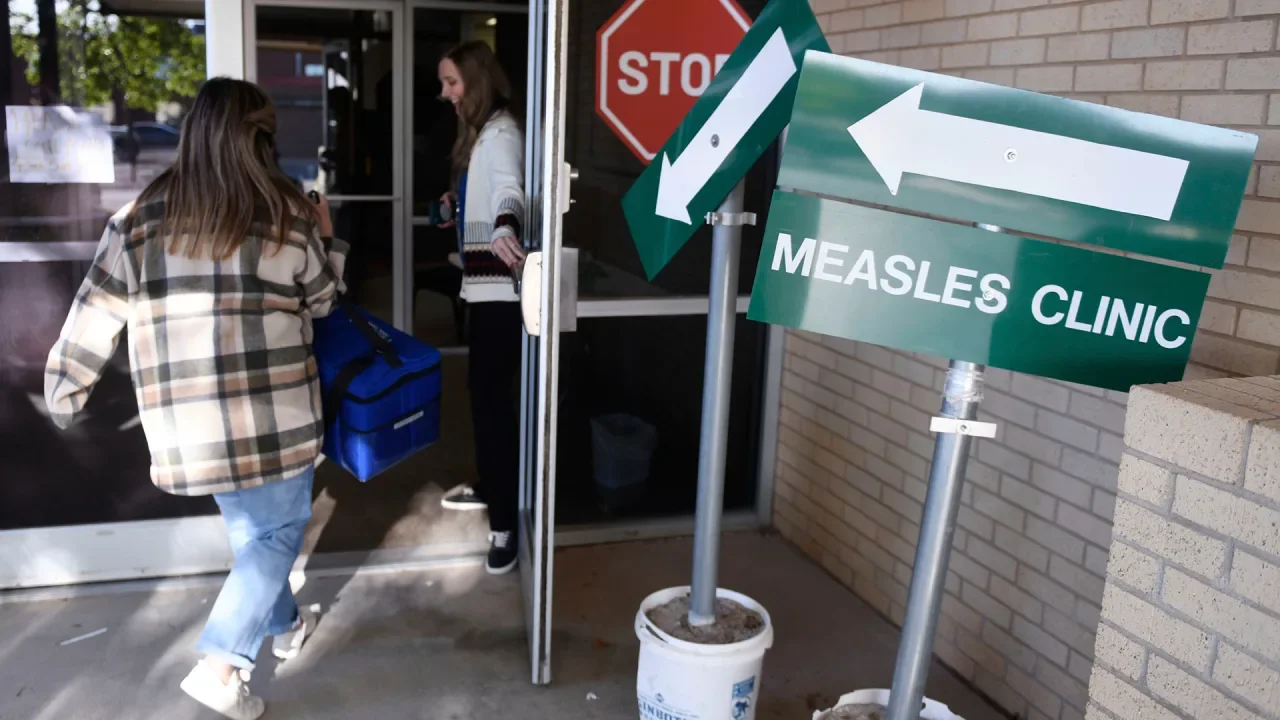
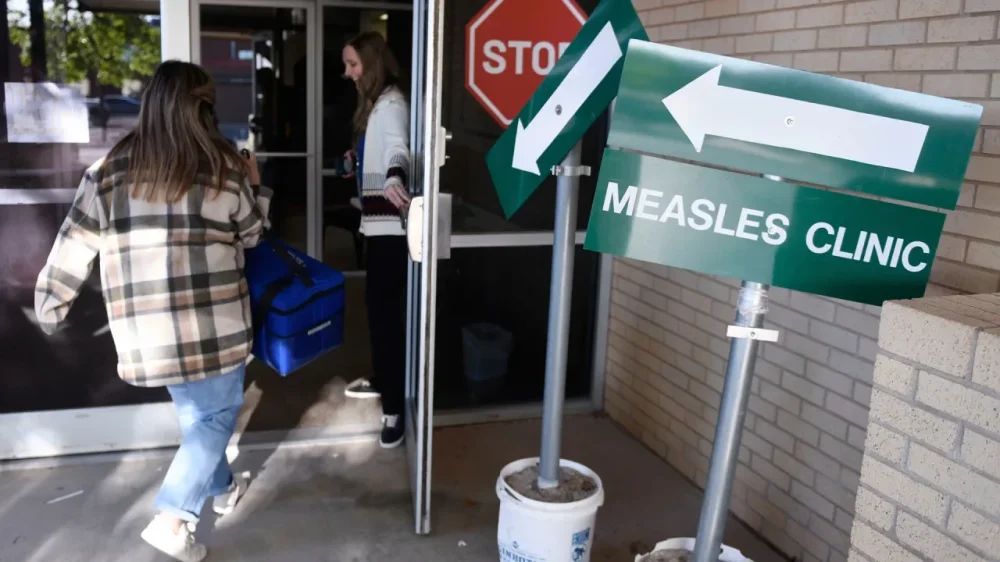
Texas has more than 600 known cases of measles on Tuesday as the outbreak in the western part of the state approaches the three-month mark. The U.S. was up to 800 cases of measles nationwide on Friday. Two unvaccinated elementary school-aged children died from measles-related illnesses in the epicenter in West Texas, and an adult in New Mexico who was not vaccinated died of a measles-related illness. Other states with active outbreaks—defined as three or more cases—include Indiana, Kansas, Michigan, Montana, Oklahoma, Ohio, Pennsylvania, and New Mexico. The U.S. has more than double the number of measles cases it saw in all of 2024. North America has two other outbreaks. One in Ontario, Canada, has sickened 925 from mid-October through April 16. And as of Tuesday, the Mexican state of Chihuahua state has 514 measles cases, according to data from the state health ministry. The World Health Organization has said cases in Mexico are linked to the Texas outbreak. Measles is caused by a highly contagious virus that’s airborne and spreads easily when an infected person breathes, sneezes, or coughs. It is preventable through vaccines, and has been considered eliminated from the U.S. since 2000. As the virus takes hold in other U.S. communities with low vaccination rates, health experts fear the virus that the spread could stretch on for a year. Here’s what else you need to know about measles in the U.S. How many measles cases are there in Texas and New Mexico? Texas state health officials said Tuesday there were 27 new cases of measles since Friday, bringing the total to 624 across 26 counties—most of them in West Texas. Two more Texans were hospitalized, for a total of 64 throughout the outbreak, and Bailey County logged its first two cases. State health officials estimated about 2% of cases—fewer than 10—are actively infectious. Sixty-two percent of Texas’ cases are in Gaines County, population 22,892, where the virus started spreading in a close-knit, undervaccinated Mennonite community. The county has had 386 cases since late January—just over 1% of the county’s residents. The April 3 death in Texas was an 8-year-old child, according to Health Secretary Robert F. Kennedy Jr. Health officials in Texas said the child did not have underlying health conditions and died of “what the child’s doctor described as measles pulmonary failure.” A unvaccinated child with no underlying conditions died of measles in Texas in late February—Kennedy said age 6. New Mexico announced two new cases Tuesday, bringing the state’s total to 65. Six people have been hospitalized since the outbreak started. Most of the state’s cases are in Lea County. Two are in Eddy County and Chaves and Doña Ana counties have one each. State health officials say the cases are linked to Texas’ outbreak based on genetic testing. New Mexico reported its first measles-related death in an adult on March 6. How many cases are there in Kansas? Kansas has 37 cases in eight counties in the southwest part of the state, health officials announced Wednesday. Finney, Ford, Grant, Gray and Morton counties have fewer than five cases each. Haskell County has the most with eight cases, Stevens County has seven, Kiowa County has six. The state’s first reported case, identified in Stevens County on March 13, is linked to the Texas and New Mexico outbreaks based on genetic testing, a state health department spokesperson said. But health officials have not determined how the person was exposed. How many cases are there in Oklahoma? Oklahoma confirmed one more case Tuesday for a total cases of 13: 10 confirmed and three probable. The first two probable cases were “associated” with the West Texas and New Mexico outbreaks, the state health department said. Custer, Oklahoma and Cleveland counties had public exposures in the past 42 days. The state health department is not releasing which counties have cases. How many cases are there in Ohio? The Ohio Department of Health confirmed 30 measles cases in the state Thursday. The state county includes only Ohio residents. There are 14 cases in Ashtabula County near Cleveland, 14 in Knox County, and one each in Allen and Holmes counties, the state said. The outbreak in Ashtabula County started with an unvaccinated adult who had interacted with someone who had traveled internationally. Health officials in Knox County, in east-central Ohio, say there are a total of 20 people with measles, but seven of them do not live in Ohio. In 2022, a measles outbreak in central Ohio sickened 85. How many cases are there in Indiana? Indiana confirmed two more cases Monday in an outbreak that has sickened eight in Allen County in the northeast part of the state—five are unvaccinated minors and three are adults whose vaccination status is unknown. The cases have no known link to other outbreaks, the Allen County Department of Health said Monday. How many cases are there in Pennsylvania? In far northwest Pennsylvania, Erie County health officials declared a measles outbreak April 14 after finding two new cases linked to a measles case confirmed March 30. The state has had nine cases overall this year, six of which are not linked to the outbreak, including international travel-related cases in Montgomery County and one in Philadelphia. How many cases are there in Michigan? Montcalm County, near Grand Rapids in western Michigan, has four linked measles cases. State health officials say the cases are tied to a large measles outbreak in Ontario, Canada. The state has eight confirmed measles cases as of Monday, but the remaining four are not part of the Montcalm County outbreak. Michigan’s last measles outbreak was in 2019. How many cases are there in Montana? Montana state health officials announced five cases Thursday in unvaccinated children and adults who had traveled out of state, and confirmed it was an outbreak on Monday. All five are isolating at home in Gallatin County in the southwest part of the state. State health officials are working to trace exposures in Bozeman and Belgrade. They are Montana’s first measles cases in 35 years. Health officials didn’t say whether the cases are linked to other outbreaks in North America. Where else is measles showing up in the U.S.? There have been 800 cases in 2025 as of Friday, according to the U.S. Centers for Disease Control and Prevention, and 10 clusters—defined as three or more related cases. Measles cases also have been reported in Alaska, Arkansas, California, Colorado, Florida, Georgia, Hawaii, Kentucky, Louisiana, Maryland, Minnesota, New Jersey, New York, Rhode Island, Tennessee, Vermont, and Washington. Cases and outbreaks in the U.S. are frequently traced to someone who caught the disease abroad. In 2019, the U.S. saw 1,274 cases and almost lost its status of having eliminated measles. What do you need to know about the MMR vaccine? The best way to avoid measles is to get the measles, mumps and rubella vaccine. The first shot is recommended for children between 12 and 15 months old and the second between 4 and 6 years old. Getting another MMR shot is harmless if there are concerns about waning immunity, the CDC says. People who have documentation of receiving a live measles vaccine in the 1960s don’t need to be revaccinated, but people who were immunized before 1968 with an ineffective measles vaccine made from “killed” virus should be revaccinated with at least one dose, the agency said. People who have documentation that they had measles are immune and those born before 1957 generally don’t need the shots because most children back then had measles and now have “presumptive immunity.” In communities with high vaccination rates—above 95%—diseases like measles have a harder time spreading through communities. This is called “herd immunity.” But childhood vaccination rates have declined nationwide since the pandemic and more parents are claiming religious or personal conscience waivers to exempt their kids from required shots. The U.S. saw a rise in measles cases in 2024, including an outbreak in Chicago that sickened more than 60. What are the symptoms of measles? Measles first infects the respiratory tract, then spreads throughout the body, causing a high fever, runny nose, cough, red, watery eyes and a rash. The rash generally appears three to five days after the first symptoms, beginning as flat red spots on the face and then spreading downward to the neck, trunk, arms, legs and feet. When the rash appears, the fever may spike over 104 degrees Fahrenheit, according to the CDC. Most kids will recover from measles, but infection can lead to dangerous complications such as pneumonia, blindness, brain swelling, and death. How can you treat measles? There’s no specific treatment for measles, so doctors generally try to alleviate symptoms, prevent complications and keep patients comfortable. AP Science Writer Laura Ungar contributed to this report. The Associated Press Health and Science Department receives support from the Howard Hughes Medical Institute’s Science and Educational Media Group and the Robert Wood Johnson Foundation. The AP is solely responsible for all content. —Devi Shastri, AP Health Writer View the full article
-
Key Takeaways Transformative Feature: Shoppable Idea Pins on Pinterest revolutionize product discovery, allowing users to shop directly from visually compelling pins.Enhanced Engagement: These pins significantly boost user interaction, with engagement rates for shoppable posts increasing by 50%, making them an effective tool for marketers.Visual Storytelling: Shoppable Idea Pins utilize multi-page video formats and interactive elements, creating immersive content that captivates audiences and enhances brand visibility.Simple Shopping Journey: Product tagging and link integration streamline the shopping experience, encouraging users to transition from inspiration to purchase seamlessly.Best Practices: Focus on storytelling, use interactive features, monitor analytics, and collaborate with influencers to maximize the effectiveness of Shoppable Idea Pins.Analytics for Improvement: Leverage social media analytics to track performance and refine strategies, ensuring your content remains relevant and engaging for your audience. Pinterest has transformed the way you discover and shop for products, and shoppable Idea Pins are at the forefront of this evolution. Imagine browsing through visually stunning content that not only inspires you but also allows you to purchase products directly from the pin itself. This innovative feature combines creativity with convenience, making it easier than ever to turn your ideas into reality. With shoppable Idea Pins, brands can engage users in a more interactive way, showcasing their products in a captivating format. Whether you’re a small business owner or a seasoned marketer, understanding how to leverage this tool can elevate your Pinterest strategy and drive sales. Dive into the world of shoppable Idea Pins and unlock new opportunities to connect with your audience while boosting your brand’s visibility. Overview of Shoppable Idea Pins Shoppable Idea Pins offer a game-changing approach for small businesses looking to enhance their social media strategy on Pinterest. These visually rich pins combine creativity with commerce, allowing you to showcase products through engaging storytelling and video content. By leveraging shoppable Idea Pins, you increase your brand awareness and drive sales directly from your pins. Utilizing features like product tags transforms your content creation process. You can highlight products effectively while maintaining brand consistency. With the integration of shoppable Idea Pins into your marketing plan, you can optimize your user-generated content and cultivate social media engagement. Tracking performance through social media analytics helps you measure your success. This data allows you to refine your content calendar and enhance your audience targeting. Adopting this feature aligns with current social media trends, giving your products an edge in visibility and interaction. Incorporating influencer partnerships into your shoppable Idea Pins can further elevate your small business. Collaborating with influencers expands your reach, tapping into their followers while boosting your credibility. Strategically utilizing Pinterest’s shoppable Idea Pins empowers you to connect with your community, engage customers effectively, and drive organic growth for your brand. Features of Shoppable Idea Pins Shoppable Idea Pins on Pinterest combine creativity with commerce, making them essential for small businesses looking to enhance their social media marketing efforts. These pins not only capture attention but also facilitate sales directly within the platform. Visual Appeal Shoppable Idea Pins leverage a multi-page video format, allowing you to include up to 20 pages of engaging content. You can use videos, images, and text to create a visually captivating experience. Options such as video recording, editing, voice-over narration, and music selection from platforms like Epidemic Sound elevate your storytelling. Incorporate interactive elements, including people tagging and stickers, to foster customer interaction and increase engagement rates. Utilize ghost mode transition tools for before-and-after effects, making your products stand out while enhancing brand awareness. Link Integration Product tagging enables you to add product links and affiliate links seamlessly within your pins. Adding these links allows followers to shop your products directly, simplifying the customer journey. The integration of links enhances your content creation strategy, driving organic reach and improving social media engagement. Consider tracking link performance through social media analytics to refine your strategy over time. By directly connecting your Shoppable Idea Pins to your e-commerce site or product pages, you enhance your online presence and create a consistent shopping experience for your audience. Benefits for Businesses Utilizing shoppable Idea Pins on Pinterest provides substantial advantages for small businesses. Engaging with users through this dynamic content increases visibility and drives sales. Increased Engagement Shoppable content on Pinterest boosts user interaction significantly. Engagement rates for posts linked to shoppable items rose by 50% compared to the previous quarter. Users prefer to engage with content that allows direct shopping, enhancing their overall experience. Shoppable Idea Pins, which emphasize video content, further captivate audiences. These pins facilitate immersive storytelling, enabling deeper connections with viewers. By leveraging engaging format—such as videos and interactive elements—you encourage higher rates of user engagement within your social media marketing strategy. Enhanced Discoverability Shoppable Idea Pins feature optimized product tags that streamline the transition from inspiration to shopping. This functionality aids businesses in capturing audience interest at the early stages of their shopping journey. Enhanced discoverability increases the chances of attracting potential customers. Your social media strategy benefits as these pins appear in search results, allowing for improved audience targeting and organic reach. Using shoppable content, you effectively connect with users searching for relevant products, heightening overall brand awareness. The seamless integration of product tags fosters customer interaction, helping you create a consistent shopping experience across your online presence. How to Create Shoppable Idea Pins Creating shoppable Idea Pins on Pinterest can significantly enhance your small business’s online presence. Follow these steps to leverage this powerful feature effectively. Step-by-Step Guide Set Up Your Business Account Ensure you have a Pinterest Business account and claim your website. This step is essential for accessing shoppable features. Create an Idea Pin Use the Pinterest app or website to create a new Idea Pin. Idea Pins allow up to 20 pages of content, integrating videos, images, and text, which boost user engagement. Add Content Utilize various features for Idea Pins, such as video recording, voice-over recording, and music selection. Include images or videos of your products to foster customer interest. Tag Your Products Within the Idea Pin, tag your products directly. This involves adding links to your product pages, streamlining the shopping experience for users. Best Practices Focus on Storytelling Craft your content with a narrative that highlights your products. Engaging storytelling boosts social media engagement and helps with brand consistency. Use Interactive Elements Incorporate stickers, polls, and people tagging. These features enhance customer interaction and increase viewer engagement rates. Monitor Performance Utilize social media analytics to track the performance of your Idea Pins. Analyzing data helps refine your social media strategy. Implement Hashtags Use relevant hashtags to improve your organic reach. Hashtags increase discoverability on Pinterest, attracting more users to your content. Collaborate with Influencers Leverage influencer partnerships to expand your reach. Collaborations enhance credibility and can drive more traffic to your shoppable Idea Pins. By following these steps and best practices, you can maximize the effectiveness of shoppable Idea Pins, enhancing your small business’s visibility and driving organic growth. Conclusion Embracing shoppable Idea Pins on Pinterest can transform your marketing strategy. By leveraging this innovative feature, you can connect with your audience in a more engaging way. The combination of visual storytelling and direct shopping options not only enhances user experience but also drives sales and increases brand visibility. As you integrate shoppable Idea Pins into your content, remember to focus on creativity and interaction. Utilize product tags and analytics to refine your approach and maximize your reach. Collaborating with influencers can further amplify your efforts, making your brand more credible and appealing. Start exploring shoppable Idea Pins today and watch how they elevate your business in the competitive social media landscape. Frequently Asked Questions What are shoppable Idea Pins on Pinterest? Shoppable Idea Pins are a feature on Pinterest that allows users to browse visually engaging content and purchase products directly from the pins. They combine creativity with shopping convenience, enabling brands to showcase their products effectively. How do shoppable Idea Pins benefit small businesses? Shoppable Idea Pins help small businesses engage customers through immersive storytelling and video content. They increase visibility, drive sales, and improve brand awareness by connecting users directly to purchase options. How can brands track performance on shoppable Idea Pins? Brands can track performance using Pinterest analytics tools, which provide insights into engagement rates and interaction levels. By analyzing data, businesses can refine their content strategies and better target their audience. What are the key features of shoppable Idea Pins? Shoppable Idea Pins feature a multi-page format that allows for up to 20 pages of content, including videos, images, and interactive elements. They also incorporate product tags and links, enhancing the shopping experience. How can I create shoppable Idea Pins? To create shoppable Idea Pins, set up a Pinterest Business account, claim your website, and start creating your pin. Add engaging content, tag products, and follow best practices to enhance visibility and engagement. What impact do shoppable Idea Pins have on user engagement? Shoppable Idea Pins significantly boost user engagement, with posts linked to shoppable items experiencing a 50% increase in interaction. They encourage deeper connections through enriched storytelling, keeping users interested. Can influencers help with shoppable Idea Pins? Yes, partnering with influencers can expand your reach and enhance credibility. Influencers can showcase your shoppable Idea Pins to their audience, driving more traffic and potential sales to your brand. How do I optimize shoppable Idea Pins for customer interaction? To optimize shoppable Idea Pins for interaction, use engaging storytelling, interactive elements like stickers, and effective product tags. Encouraging user-generated content also fosters deeper connections and increases engagement rates. Image Via Envato This article, "Maximize Sales with Shoppable Idea Pins on Pinterest for Your Brand’s Success" was first published on Small Business Trends View the full article
-
Key Takeaways Transformative Feature: Shoppable Idea Pins on Pinterest revolutionize product discovery, allowing users to shop directly from visually compelling pins.Enhanced Engagement: These pins significantly boost user interaction, with engagement rates for shoppable posts increasing by 50%, making them an effective tool for marketers.Visual Storytelling: Shoppable Idea Pins utilize multi-page video formats and interactive elements, creating immersive content that captivates audiences and enhances brand visibility.Simple Shopping Journey: Product tagging and link integration streamline the shopping experience, encouraging users to transition from inspiration to purchase seamlessly.Best Practices: Focus on storytelling, use interactive features, monitor analytics, and collaborate with influencers to maximize the effectiveness of Shoppable Idea Pins.Analytics for Improvement: Leverage social media analytics to track performance and refine strategies, ensuring your content remains relevant and engaging for your audience. Pinterest has transformed the way you discover and shop for products, and shoppable Idea Pins are at the forefront of this evolution. Imagine browsing through visually stunning content that not only inspires you but also allows you to purchase products directly from the pin itself. This innovative feature combines creativity with convenience, making it easier than ever to turn your ideas into reality. With shoppable Idea Pins, brands can engage users in a more interactive way, showcasing their products in a captivating format. Whether you’re a small business owner or a seasoned marketer, understanding how to leverage this tool can elevate your Pinterest strategy and drive sales. Dive into the world of shoppable Idea Pins and unlock new opportunities to connect with your audience while boosting your brand’s visibility. Overview of Shoppable Idea Pins Shoppable Idea Pins offer a game-changing approach for small businesses looking to enhance their social media strategy on Pinterest. These visually rich pins combine creativity with commerce, allowing you to showcase products through engaging storytelling and video content. By leveraging shoppable Idea Pins, you increase your brand awareness and drive sales directly from your pins. Utilizing features like product tags transforms your content creation process. You can highlight products effectively while maintaining brand consistency. With the integration of shoppable Idea Pins into your marketing plan, you can optimize your user-generated content and cultivate social media engagement. Tracking performance through social media analytics helps you measure your success. This data allows you to refine your content calendar and enhance your audience targeting. Adopting this feature aligns with current social media trends, giving your products an edge in visibility and interaction. Incorporating influencer partnerships into your shoppable Idea Pins can further elevate your small business. Collaborating with influencers expands your reach, tapping into their followers while boosting your credibility. Strategically utilizing Pinterest’s shoppable Idea Pins empowers you to connect with your community, engage customers effectively, and drive organic growth for your brand. Features of Shoppable Idea Pins Shoppable Idea Pins on Pinterest combine creativity with commerce, making them essential for small businesses looking to enhance their social media marketing efforts. These pins not only capture attention but also facilitate sales directly within the platform. Visual Appeal Shoppable Idea Pins leverage a multi-page video format, allowing you to include up to 20 pages of engaging content. You can use videos, images, and text to create a visually captivating experience. Options such as video recording, editing, voice-over narration, and music selection from platforms like Epidemic Sound elevate your storytelling. Incorporate interactive elements, including people tagging and stickers, to foster customer interaction and increase engagement rates. Utilize ghost mode transition tools for before-and-after effects, making your products stand out while enhancing brand awareness. Link Integration Product tagging enables you to add product links and affiliate links seamlessly within your pins. Adding these links allows followers to shop your products directly, simplifying the customer journey. The integration of links enhances your content creation strategy, driving organic reach and improving social media engagement. Consider tracking link performance through social media analytics to refine your strategy over time. By directly connecting your Shoppable Idea Pins to your e-commerce site or product pages, you enhance your online presence and create a consistent shopping experience for your audience. Benefits for Businesses Utilizing shoppable Idea Pins on Pinterest provides substantial advantages for small businesses. Engaging with users through this dynamic content increases visibility and drives sales. Increased Engagement Shoppable content on Pinterest boosts user interaction significantly. Engagement rates for posts linked to shoppable items rose by 50% compared to the previous quarter. Users prefer to engage with content that allows direct shopping, enhancing their overall experience. Shoppable Idea Pins, which emphasize video content, further captivate audiences. These pins facilitate immersive storytelling, enabling deeper connections with viewers. By leveraging engaging format—such as videos and interactive elements—you encourage higher rates of user engagement within your social media marketing strategy. Enhanced Discoverability Shoppable Idea Pins feature optimized product tags that streamline the transition from inspiration to shopping. This functionality aids businesses in capturing audience interest at the early stages of their shopping journey. Enhanced discoverability increases the chances of attracting potential customers. Your social media strategy benefits as these pins appear in search results, allowing for improved audience targeting and organic reach. Using shoppable content, you effectively connect with users searching for relevant products, heightening overall brand awareness. The seamless integration of product tags fosters customer interaction, helping you create a consistent shopping experience across your online presence. How to Create Shoppable Idea Pins Creating shoppable Idea Pins on Pinterest can significantly enhance your small business’s online presence. Follow these steps to leverage this powerful feature effectively. Step-by-Step Guide Set Up Your Business Account Ensure you have a Pinterest Business account and claim your website. This step is essential for accessing shoppable features. Create an Idea Pin Use the Pinterest app or website to create a new Idea Pin. Idea Pins allow up to 20 pages of content, integrating videos, images, and text, which boost user engagement. Add Content Utilize various features for Idea Pins, such as video recording, voice-over recording, and music selection. Include images or videos of your products to foster customer interest. Tag Your Products Within the Idea Pin, tag your products directly. This involves adding links to your product pages, streamlining the shopping experience for users. Best Practices Focus on Storytelling Craft your content with a narrative that highlights your products. Engaging storytelling boosts social media engagement and helps with brand consistency. Use Interactive Elements Incorporate stickers, polls, and people tagging. These features enhance customer interaction and increase viewer engagement rates. Monitor Performance Utilize social media analytics to track the performance of your Idea Pins. Analyzing data helps refine your social media strategy. Implement Hashtags Use relevant hashtags to improve your organic reach. Hashtags increase discoverability on Pinterest, attracting more users to your content. Collaborate with Influencers Leverage influencer partnerships to expand your reach. Collaborations enhance credibility and can drive more traffic to your shoppable Idea Pins. By following these steps and best practices, you can maximize the effectiveness of shoppable Idea Pins, enhancing your small business’s visibility and driving organic growth. Conclusion Embracing shoppable Idea Pins on Pinterest can transform your marketing strategy. By leveraging this innovative feature, you can connect with your audience in a more engaging way. The combination of visual storytelling and direct shopping options not only enhances user experience but also drives sales and increases brand visibility. As you integrate shoppable Idea Pins into your content, remember to focus on creativity and interaction. Utilize product tags and analytics to refine your approach and maximize your reach. Collaborating with influencers can further amplify your efforts, making your brand more credible and appealing. Start exploring shoppable Idea Pins today and watch how they elevate your business in the competitive social media landscape. Frequently Asked Questions What are shoppable Idea Pins on Pinterest? Shoppable Idea Pins are a feature on Pinterest that allows users to browse visually engaging content and purchase products directly from the pins. They combine creativity with shopping convenience, enabling brands to showcase their products effectively. How do shoppable Idea Pins benefit small businesses? Shoppable Idea Pins help small businesses engage customers through immersive storytelling and video content. They increase visibility, drive sales, and improve brand awareness by connecting users directly to purchase options. How can brands track performance on shoppable Idea Pins? Brands can track performance using Pinterest analytics tools, which provide insights into engagement rates and interaction levels. By analyzing data, businesses can refine their content strategies and better target their audience. What are the key features of shoppable Idea Pins? Shoppable Idea Pins feature a multi-page format that allows for up to 20 pages of content, including videos, images, and interactive elements. They also incorporate product tags and links, enhancing the shopping experience. How can I create shoppable Idea Pins? To create shoppable Idea Pins, set up a Pinterest Business account, claim your website, and start creating your pin. Add engaging content, tag products, and follow best practices to enhance visibility and engagement. What impact do shoppable Idea Pins have on user engagement? Shoppable Idea Pins significantly boost user engagement, with posts linked to shoppable items experiencing a 50% increase in interaction. They encourage deeper connections through enriched storytelling, keeping users interested. Can influencers help with shoppable Idea Pins? Yes, partnering with influencers can expand your reach and enhance credibility. Influencers can showcase your shoppable Idea Pins to their audience, driving more traffic and potential sales to your brand. How do I optimize shoppable Idea Pins for customer interaction? To optimize shoppable Idea Pins for interaction, use engaging storytelling, interactive elements like stickers, and effective product tags. Encouraging user-generated content also fosters deeper connections and increases engagement rates. Image Via Envato This article, "Maximize Sales with Shoppable Idea Pins on Pinterest for Your Brand’s Success" was first published on Small Business Trends View the full article
-
Small business owners will be given the option to tap into anywhere from $50,000 to $500,000 in financing. View the full article

-
Over the past 30 days, many big-name tech giants have seen their stock prices fall hard, largely thanks to President The President’s chaotic tariff rollout. For example, Apple (Nasdaq: AAPL) has seen its shares fall 11% over the past month, while Nvidia has seen its shares fall (Nasdaq: NVDA) fall over 12%. But until yesterday, IBM (NYSE: IBM) was one of the big-name tech giants that rode out the tariff storm pretty well. While the company’s stock price did tank along with the rest of the markets in early April, it has recovered nicely since then and, as of the close of bell yesterday, its shares were actually up just a bit (about 0.6%) over the past 30 days. But then IBM announced its Q1 2025 results yesterday, and its stock sank after hours. And today, as of the time of this writing, IBM shares are down more than 6.75% in pre-market trading. The main reason? You can blame Elon Musk’s DOGE. IBM’s Q1 2025 results When a stock drops after a company reports its latest quarterly results, it’s natural to assume it is doing so because the company in question posted poor numbers. But that actually wasn’t the case with IBM yesterday. By all accounts, IBM had a pretty good quarter. Here are its most salient numbers: Revenue: $14.5 billion (up 1%, or up 2% on a constant currency basis) Earnings per share (EPS): $1.60 As noted by CNBC, those critical metrics actually beat analysts’ estimates, which had expected revenue of $14.4 billion and an EPS of just $1.40. “We exceeded expectations for revenue, profitability and free cash flow in the quarter, led by strength across our Software portfolio,” IBM CEO Arvind Krishna said in a statement announcing the company’s Q1 results. “There continues to be strong demand for generative AI and our book of business stands at more than $6 billion inception-to-date, up more than $1 billion in the quarter.” But if this is the case, why did IBM’s shares drop? It’s all because of DOGE. Elon Musk’s DOGE takes bite out of IBM’s government contracts’ biz Unfortunately for IBM’s stock price, the company also announced last night that 15 of its government contracts had either been canceled or paused due to cuts initiated by Elon Musk’s Department of Government Efficiency (DOGE). Bloomberg reports that these cuts equate to about $100 million in future payments. Addressing the cuts on the company’s financial call, IBM’s chief financial officer, James Kavanaugh, said that federal sales account for less than 5% of the company’s overall revenue. However, Krishna noted that DOGE’s downscaling of the U.S. government did leave IBM’s consulting unit “more susceptible to discretionary pullbacks and DOGE-related initiatives.” As noted by Reuters, the impact of the DOGE cuts on IBM’s business sent the company’s shares lower in after-hours trading yesterday. IBM issues rare quarterly guidance But IBM also announced something else yesterday—guidance for the second quarter. Historically, IBM has not issued quarterly guidance, but as Reuters notes, the company decided to do so now. “We’ve chosen now, in light of the very unprecedented dynamic of uncertainty going on in the market, to give a second-quarter revenue guidance range. We felt incumbent upon ourselves to give as much transparency as possible to our investor group,” IBM’s Kavanaugh announced yesterday. That forecast revealed that IBM expects Q2 2025 revenue of between $16.40 billion and $16.75 billion. That’s slightly above analysts’ forecasts of $16.33 billion, noted Reuters. Still, that attempt at reducing uncertainty in investors didn’t do enough to counteract the effects that the DOGE cuts had. In premarket trading this morning, as of the time of this writing, IBM stock is down 6.75% to $228.90. As of yesterday’s close of $245.48 before IBM’s Q1 results were released, the company’s shares had been up over 11.6% for the year so far—an impressive return considering all the market turmoil over the past three weeks. View the full article

-
We may earn a commission from links on this page. Deal pricing and availability subject to change after time of publication. For fans of The Mandalorian or anyone after a headset with cross-platform support, the Logitech Astro A30 (Mandalorian Edition) might be worth a closer look—especially now that it’s hit its lowest-ever price (according to price trackers) of $119.99 on Woot (down from $249). The same model is currently $175 on Amazon, making this Woot deal a solid choice if you’re in the contiguous U.S. (Woot doesn’t ship elsewhere). This deal is live for eight days or until its stock runs out. Free shipping applies to Prime members; others will need to cough up $6. The headset ships with a 90-day Woot limited warranty and includes everything you’d expect: a USB transmitter, a detachable boom mic, charging and audio cables, and a hard-shell carry case. Logitech Astro A30 (Mandalorian Edition) $119.99 at Woot $249.00 Save $129.01 Get Deal Get Deal $119.99 at Woot $249.00 Save $129.01 Design-wise, the Mandalorian theme isn’t just a slap-on sticker job. It’s finished to resemble Beskar Steel, with Din Djarin and the Mudhorn signet featured on the speaker tags. It’s a slick look, no doubt, but comfort-wise it's more of a mixed bag. The rectangular earcups are padded with memory foam and faux leather that feels soft and breathable. However, the rubberized headband can press down a little harder than you’d like during longer sessions, especially compared to headsets with more suspension-style designs, notes this PCMag review. The controls are compact but can be tricky—the small four-way switch that lets you toggle volume and game/chat mix might not be the easiest to use if you have larger hands. Performance is generally OK. The A30 supports both Bluetooth and 2.4GHz wireless through a USB-A dongle (USB-C transmitter sold separately if you want one for your Switch or PS5). It works with PC, Xbox, PlayStation, and mobile devices, but switching between systems can reportedly be a chore, especially when sound levels drop if you forget to change modes. There’s also no built-in spatial audio, so you’ll be relying on your system’s surround settings. Sound-wise, the A30 favors clarity over raw bass. Music and in-game audio sound detailed at moderate volumes, but things flatten out if you push the volume too high. The boom mic is fine for chat, but not sharp enough for streaming or recording. You can tweak the settings like EQ via the Logitech G app, but it only comes with two presets. View the full article
-
Big investors warn of risks to world’s largest and most liquid bond market from US president’s attacks on central bankView the full article
-
So many mourners lined up to see Pope Francis lying in state in a simple wooden coffin inside St. Peter’s Basilica that the Vatican kept the doors open all night due to higher-than-expected turnout, closing the basilica for just an hour Thursday morning for cleaning. The basilica is bathed in a hushed silence as mourners from across the globe make a slow, shuffling procession up the main aisle to pay their last respects to Francis, who died Monday after a stroke. The hours spent on line up the stately via della Conciliazione through St. Peter’s Square and through the Holy Door into the basilica has allowed mourners to find community around the Argentine pontiff’s legacy of inclusion and humble persona. Emiliano Fernandez, a Catholic from Mexico, was waiting in line around midnight, and after two hours still had not reached the basilica. “I don’t even care how much time I wait here. It’s just the opportunity to (show) how I admired Francisco in his life,” said Fernandez, whose admiration for the pope grew during his 2016 visit to Mexico. “I think because of the respect that I have for him and the great person he was, it’s worth the wait.” The last numbers released by the Vatican said more than 50,000 people had paid their respects during the first 12 hours of the public viewing, starting at 11 a.m. Wednesday. The basilica closed for just one hour Thursday morning, from 6 a.m. until 7 a.m., the planned opening time. Among the first-day mourners was a church group of 14-year-olds from near Milan who arrived for the now-suspended canonization of the first millennial saint, as well as a woman who prayed to the pope for a successful operation and an Italian family who brought their small children to see the pope’s body. “We came because we didn’t bring them when he was alive, so we thought we would bring them for a final farewell,” said Rosa Scorpati, who was exiting the basilica Wednesday with her three children in strollers. “They were good, but I don’t think they really understood because they haven’t yet had to deal with death.” Like many others, the Scorpati family from Calabria was in Rome on an Easter vacation, only to be met with the news of Francis’ death on Easter Monday. Out of devotion to the pope and his message of inclusion, the grieving faithful joined the procession of mourners that wended from St. Peter’s Square through the basilica’s Holy Door, with the repentant among them winning an indulgence, a form of atonement granted during the Jubilee Holy Year. From there, the line extended down the basilica’s central aisle to the pope’s simple wooden casket. By late Wednesday, the wait appeared to be three or four hours and growing. A person doing crowd management estimated that the wait was closer to five hours. The mourners stretched down the center of Via della Conciliazione, in a lane set aside for Jubilee pilgrims. After three days of public viewing, a funeral Mass including heads of state will be held Saturday in St. Peter’s Square. The pope will then be buried in a niche within the St. Mary Major Basilica, near his favorite Madonna icon. The death of Francis, who was 88, capped a 12-year pontificate characterized by his concern for the poor and his message of inclusion, but he was also criticized by some conservatives who felt alienated by his progressive outlook. A procession of priests, bishops and cardinals accompanied Francis’ body Wednesday on its journey from a private viewing inside the Vatican to St. Peter’s Square. The pageantry contrasted with the human interactions of rank-and-file mourners at the public viewing. Francis lay in state in an open casket, perched on a ramp facing mourners, with four Swiss Guards standing at attention. As the crowd reached the casket, many lifted their smartphones to snap a photo. One nun accompanying an elderly woman with a cane walked away sobbing, “My pope is gone.” Such despair was rare. The mood was more one of gratitude for a pope who had, by example, taught many people to open their minds. “I am very devoted to the pope,” said Ivenes Bianco, who was in Rome from Brindisi, Italy, for an operation. “He was important to me because he brought many people together by encouraging coexistence.” She cited Francis’ acceptance of the gay community and his insistence on helping the poor. Humbeline Coroy came to Rome from Perpignan, France, for the planned canonization Sunday of 15-year-old Carlo Acutis, which was suspended after the pope’s death. She stayed to pay respects to Francis, enjoying exchanges with Japanese mourners they met as they waited under the sun in St. Peter’s Square. “For me, it is a lot of things. In my job, I work with disabled children, and I traveled to Madagascar to work with poor people. Being here, and close to the pope, is a way of integrating these experiences, and make them concrete,” she said. Coroy also brought prayers for her father, who is sick with cancer. For Alessandra Nardi, the pope’s death brought back memories of the death three years ago of her beloved uncle Luigi, who used to call her from St. Peter’s Square when he came to see Pope Francis say Mass. He “let me hear the bells toll. It was a beautiful thing.” Riccardo Ojedea from Colombia said his experience waiting in line for two hours to pay respects to the pope had shown him how much “humanity loves the pope.” “He left a very important legacy for everyone,” he said, “to make this world happier.” —— AP video journalist Isaia Montelione contributed. —Colleen Barry, Associated Press View the full article

-
Neighbor relations can be fraught—a whopping three-fourths of Americans dislike at least one neighbor, although just about the same number of people report being friends with a neighbor as well. It's safe to say that most people want to be good neighbors, and are generally willing to observe little courtesies like keeping the noise down or accommodating the occasional contractor truck parked on the street. Sometimes you want to go a little above and beyond for a neighbor and do a surprise good deed. The idea of helping someone out with no expectation of reward can make you feel great, and seems like a surefire way to build a solid neighbor relationship and bank some good karma. Except being helpful can sometimes go wrong, especially if you’re making some assumptions about your neighbor and their property. Here are the ways your good neighbor intentions can take a bad turn. Mow their lawnLawn care is a lot of work, and a neglected yard can often be a sign of private struggle—too little time, energy, or money. If you’re out there mowing your own lawn and you notice your neighbor’s has become a little ragged, it might seem like a no-brainer to just donate some of your time and mow their lawn as a favor. Except there are actually many reasons why someone might not mow their lawn. They might be planning to let the grass grow a little longer this year. They might have treated it with weed-killer, which sometimes works best if you don’t mow for a few days or weeks after the application. The “weeds” you pull up might actually be perennials planted on purpose. Or they might have a different species of grass and your mowing job cuts it too low, killing everything in sight. The point is, mowing your neighbor’s lawn without their express permission could actually ruin it for them. Rake their leavesIf your neighbor has some trees on their property and the leaf situation gets out of control in the fall, you might be tempted to do something about it. Just like mowing a lawn, raking up your neighbor’s leaves can backfire in a few ways, because not everyone thinks raking leaves is necessary or even a best practice. Some people like to mulch leaves with their mower, turning them into a natural fertilizer instead of landfill, or just leave them in place to decompose naturally (or use them as compost for a garden). And some people just like the look of a leaf-covered yard, giving the whole property a cozy autumnal vibe. While you’re free to take whatever steps necessary to clean up leaves that drift over to your property, never assume your neighbor is just being lazy if they don’t rake. Offer informationBeing a good neighbor means watching out for each other, but you can take that good instinct too far. If someone comes to your neighbor’s house when they’re not there—whether they claim to be contractors, utility workers, city inspectors, or some other legit-sounding role—you might want to help out with a little information. Telling strangers when your neighbors will be back, or offering details about their house in an effort to help could be a huge mistake if the people you’re talking to aren’t who they claim to be, or if the inspector or other city official isn’t happy about what they hear. The last thing you want on your conscience is a robbery or notice from the city that costs your neighbor money just because you wanted to be helpful—always check with them before you tell anyone anything about their home or situation. Become their assistantWe usually think of doing a good turn for someone as a one-off, a single instance. But sometimes that favor turns into a regular thing, with your neighbor assuming that if you didn’t mind doing it once, you won’t mind doing it every week—or every day. Offering to drive your elderly neighbor to do their shopping is a nice thing to do once in a while, but if they assume you’re always available to help them out you’ll soon come to resent it, and the relationship will sour. For example, a friend of mine agreed to have some of their neighbors’ packages delivered to her house—but the neighbor then started having all of their packages delivered there because they were never home to accept them. My friend eventually had to simply tell the neighbor she couldn’t do it anymore, and the relationship cooled. When doing nice things for your neighbors, it’s important to set boundaries so those favors don’t turn into commitments. This can be a challenge, but it helps to make the one-off nature of the favor clear (in a friendly way) right from the beginning. And if the neighbor starts to make a regular practice of asking you for the same service, it might be time to come up with non-confrontational reasons why you can’t do it. Watering plantsBeing asked by a neighbor to water their plants while they’re gone is a common favor, and it usually comes with specific instructions. If your neighbors take off for a vacation or business trip and leave their outdoor plants unattended, you might think watering them is an easy way to be neighborly. But this can backfire if your neighbor has already asked someone to water the plants, and you just don’t notice—leading to overwatering and some very dead plants. Or, if you don’t know much about plants, you can easily water plants that don’t need it or otherwise mess up their care, doing damage when you intended to do good. And if your neighbor isn’t expecting someone wandering around their property, your watering adventure could trigger home security systems and doorbell cameras, alarming your neighbors and causing unnecessary anxiety. Always best to check if your water can is needed before you take it upon yourself. Take in packagesIn an age of rampant porch piracy, grabbing a package left outside your neighbor’s house might seem like a simple favor. Instead of leaving it exposed where thieves can easily grab it, you keep it safe in your house and text your neighbor that you have it, or just bring it by later when they’re home. But this simple kindness can go wrong if your neighbor doesn’t want you to keep that package safe and didn’t ask you to do so. If they have already asked someone to grab the package for them, you’ll just sow confusion. If they miss your note or you forget to send one, they might assume the package is lost or stolen and file a complaint—or, worse, see you on their doorbell camera taking the package and jump to unfortunate conclusions. And without knowing what’s in the package, you might unknowingly do some harm by breaking or spoiling the contents. If you’re worried about a delivery sitting out in plain view, your best practice is to check with your neighbor first, and do nothing unless they ask you to. Clean their houseIf you have a key to your neighbor’s house and notice their housekeeping taking a nosedive, you might think it would be a real blessing if you popped in and gave the place a quick glow-up, as this woman’s neighbor did. After all, if your neighbor is struggling with a crisis and letting things slide, you could take one thing off their plate and make their life a little easier. But your neighbor may not see it that way. They might see it as an invasion, and be uncomfortable that you peered into their most private spaces and felt the need to clean them up. And you might not be familiar enough with their home and the materials used in its design, leading to inadvertent damage if you use the wrong cleaning solutions or tools. Cleaning your neighbor’s house might seem like a big-swing category of good deed, but odds are good it won’t be appreciated the way you think. View the full article
-
An alliance between Reform UK and the Tories may be the final outcome but they must try to smash each other firstView the full article
-
Impact from The President trade wars set to prolong the longest economic slump in country’s postwar historyView the full article
-
Beijing says claims it is nearing a deal with Washington to resolve the trade war are ‘fake news’View the full article
-
We’ve all heard the familiar directive: “We’re going through another reorganization and will be cutting 20% of headcount, but priorities remain the same and, in fact, may expand.” Meanwhile, you’re being told to “just make it work” without offering additional resources, guidance, or support. This conversation, unfortunately, isn’t unique. It represents the silent crisis engulfing middle management across America. Middle managers—who oversee 90% of the U.S. workforce—are facing unprecedented challenges in 2025. Recent KPMG data reveals nearly one-third are actively disengaged, while 62% report unsustainable stress levels as they struggle with expanded responsibilities amid shrinking teams. At the same time, Gallup’s findings show employee dissatisfaction at 15-year highs. The economic uncertainty plaguing the U.S. has created a perfect storm for middle management burnout. Organizations are seemingly undergoing constant reorgs and scrambling to eliminate redundancies, optimize productivity and reduce resources to do more with less. Middle managers find themselves caught between the demands from top leadership to cut costs and maintain output while keeping their teams productive and motivated at the same time. “The concrete middle” Middle managers are what I call “the concrete middle”—the foundation bearing pressure from both the top echelon of organizations and the functions and teams reporting to them. They understand the real flow of work, the network connections, and who the true “magic makers” are in the organization. They’re facing tightening budgets from above while trying to maintain an engaged, high-performing workforce below. What makes this crisis particularly acute in 2025 is that the job market is reported as “healthy” but remains very tight. Employers may be in a wait-and-see mode, and struggling leaders may not see viable alternatives. This creates a dangerous apathy—what I’ve observed as “doing just enough to survive.” But here’s the concern: When the pendulum swings the other way and market conditions improve, companies will feel real pain—because employees remember. They remember which organizations honored their values during difficult times and which simply treated people as disposable resources. Break the cycle of disempowerment One of the biggest challenges middle managers face is maintaining a sense of autonomy and growing their employees’ talent and potential. How do you keep top talent feeling they can contribute meaningfully and advance their careers amid constant change and disruption? The truth is, during volatile periods, trust and empowerment often take a back seat to numbers. While financial responsibility is certainly necessary, organizations need a more nuanced approach—particularly for functions that drive growth. During these unprecedented times, I’ve coached leaders to advocate and empower themselves by harnessing this moment as a chance to reinvent and reimagine how their work is being done. Because amid the volatile and unpredictable times lies opportunity—an opportunity to change and employ new strategies, tactics, and ways of working that may not have been supported during more stable, constant, and calm periods. Middle managers, with their unique vantage point, often see possibilities that senior leadership overlooks or never considers. We need to give them the tools, trust, and ability to reimagine their work in ways that might actually achieve growth in a down period while achieving cost savings by simply doing things differently and better. This approach requires a fundamental shift in perspective—from viewing middle managers as mere implementers to recognizing them as the crucial bridge between strategy, execution, and market growth. Move from platitudes to real development Many middle managers have been told, “Nobody owns your development but you.” Translation: It’s up to you to grow yourself, learn, and improve. Traditional leadership development approaches are not meeting the needs of today’s leaders. The solution isn’t another perfunctory annual performance-review exercise—it’s creating intentional support systems that address well-being, professional growth, trust, and empowerment. Organizations must implement scenario planning into their talent management process. This means preparing leaders for all market conditions—growth, stable, uncertain, and competitive landscapes. Building this muscle prevents paralysis during challenging times and empowers managers to push for a strategic repositioning of their teams to restructure, realign, and optimize team performance. The development of top talent isn’t just about surviving difficult periods—it’s about positioning them to deliver in different ways that might not have been possible before. In times of disruption, there’s often more support and openness for working differently, adopting new tactics, approaches, and novel ways of working than during periods when business as usual comes with a playbook of what to do and how to do it. Cut the consensus culture Perhaps the most insidious barrier to middle-management effectiveness is what I call “consensus culture”—the endless cycle of meetings and layers of review and approvals that exist primarily to stroke egos rather than drive decisions and unleash innovation and potential. During my time leading organizational development initiatives, we introduced the philosophy of GEPO (Good Enough, Proceed On). This wasn’t about compromising the operational excellence of what you’re doing, but about streamlining how ideas are socialized. Do you really need three to five meetings with people at all levels to make a decision? Can you eliminate the pre-meetings prior to the decision meetings and the “I’m just being informed” meetings that clog calendars without adding value? By streamlining decision-making and trusting and empowering the people who own and support the work, organizations can reduce the time-to-decision and allow experts to take true accountability. This approach isn’t just about efficiency—it’s about restoring purpose and autonomy to the manager’s role while empowering them to do their jobs effectively with minimal bureaucracy. In the absence of this trust, we handicap our middle managers. They become dependent on groupthink and consensus-driven approaches, operating in a highly risk-averse fashion because they fear making independent decisions without extensive backup and group support. This is the opposite of innovation—and organizations simply cannot afford this handicap if they want to innovate, disrupt, and improve performance. Embrace AI as ally, not threat The AI revolution adds another layer of complexity and also an opportunity for middle managers in 2025. Too often, leaders view these technologies through a lens of fear rather than as an efficient resource that enables productivity and output. It’s a genuine fear of replacement. But I don’t believe AI will replace good managers. Instead, organizations must be transparent about AI’s business value while generating excitement about its possibilities. AI should be positioned as a complement to human talent—just like we would approach any new technology. Leaders at the top need to create engagement and excitement around AI as a strategic lever that can help streamline processes and improve decision-making. This isn’t about replacing jobs but freeing up time and attention for the work that truly matters—the strategic thinking and human connection that AI can’t replace. The path forward requires moving beyond traditional development approaches to build resilient leadership pipelines capable of sustaining organizations through continuous transformation. By elevating and empowering middle managers, companies can stabilize their operations while preparing for future challenges in an increasingly complex business environment. The companies that will thrive in this era of disruption will be those that transform their middle management from a burnout risk into an innovation advantage through empowerment, trust, autonomy, and accountability for their work. View the full article

-
On a quiet residential street lined with unassuming homes and white picket fences in Gliwice, Poland, one building is not like the rest. It’s a hulking, bright silver structure that’s covered entirely in pipes. This eye-catching building is the new headquarters for Gambit, a Polish pipe distribution company specializing in underground water systems. Designed by the architecture firm KWK Promes, the headquarters takes Gambit’s building materials aboveground, transforming pipes from a utilitarian necessity into an aesthetic material that encases the building’s entire exterior. The result is a visually striking structure that cleverly merges architecture with product advertising. Building a headquarters out of pipes While the idea to create an office entirely covered in pipes might seem like an avant-garde concept, it actually started as a cost-saving measure. “The idea to use pipes on the facade came up when the investor—the company Gambit—asked us to design an office-warehouse building that would serve as its unique showcase, but at the lowest possible cost,” says Robert Konieczny, founder of KWK Promes. “We then thought that since they deal with specialized pipes, we could use this very material—especially since they could acquire it at cost price.” The concept of using Gambit’s actual pipes was short-lived, as Konieczny’s team quickly discovered that PVC pipes meant for underground use are prone to oxidizing in the sun, tend to be quite bulky, and don’t meet Polish fire safety requirements. Still, the firm wanted to follow through on the idea of transforming Gambit’s building material into a custom cladding that would resemble “a stack of pipes.” Ultimately, they found a way to make it happen without breaking the bank. To mimic Gambit’s pipes, KWK Promes commissioned custom silver tubes from a metal fabrication company, each made from inexpensive raw aluminum sheeting—a material the company has also used for projects like an apartment complex in Katowice, Poland, and a futuristic mountain home. KWK Promes explained on the Archello platform that as an added advantage, the aluminum sheeting develops a patina over time, “taking on a matte, raw character reminiscent of concrete.” Importantly, the firm added, “the sheet is incredibly durable and virtually indestructible, making it easy to maintain. This is crucial for us because the operation of buildings generates up to 30% of CO2 emissions, so we always seek simple, low-maintenance solutions.” The final structure includes a two-story office section with sloping walls, a cube-shaped warehouse to hold the company’s inventory, and a lower workshop section. The entire exterior is fitted with piping, while rooftop skylights and glass windows allow natural light into the working spaces. Inside, concrete walls and flooring have been added to mimic the building’s eventual aging process. A multifunctional material Aesthetically, the cladding comes about as close to resembling a stack of pipes as a building could get, lending parts of the structure the disconcerting sense that it might be moments from rolling away. From certain angles, the sides of the tubing create a striped pattern, while other angles of the building take on a honeycomb pattern from the open ends of the pipes. KWK Promes also hopes that beyond its visual advantages, the pipe cladding might serve a purpose for the surrounding environment. “Initially, at the investor’s suggestion, the design included protective nets for the pipes,” Konieczny explains. “Over time, however, we decided to leave the pipes open so that, for example, birds could make their home there. In the end, we managed to convince the investor to abandon the nets—although it’s hard to say whether it was the ecological arguments or the financial ones that convinced them more, as this decision significantly reduced the implementation costs.” In an era when remote and hybrid work arrangements increasingly influence the way office interiors are designed, the Gambit headquarters is a reminder that there’s still plenty of room for innovation on an office’s exterior—even in an industry that rarely sees the light of day. View the full article

-
The top five servicers had a combined unpaid principal balance of more than $23 billion at the end of December 2024. View the full article
-
Whether current conditions favor buyers or sellers is up for debate, as economic uncertainty begins to influence consumer behavior, The Real Brokerage said. View the full article

-
Shooting atrocity raises fears of conflict with Pakistan after at least 26 killed and 17 wounded View the full article
-
Two industry organizations are giving Congress and FHFA reasons to make Fannie Mae and Freddie Mac's pricing more advantageous rather than less attractive. View the full article
-
Oceans cover about 70% of the Earth’s surface, yet the ocean floor remains largely untouched by humans. But perhaps not for long. A Canadian-based firm called the Metals Co. (TMC) recently announced plans to ask the The President administration to allow it to mine the deep seabed for valuable critical metals in the Pacific Ocean. President Donald The President is reportedly considering an executive order that would speed up permitting for deep-sea mining, which has prompted outrage from other countries. While some small and exploratory deep-sea mining operations already exist, the practice has yet to happen on a large commercial scale, partly due to fears that it could cause catastrophic damage to the pristine seafloor environment and the wealth of life harbored there. But the worsening climate crisis and the urgent need to transition away from fossil fuels has put deep-sea mining in the spotlight. Clean energy technologies like solar panels, wind turbines, and batteries contain critical minerals like nickel, lithium, cobalt, copper, and manganese, and concerns are growing over whether we’ll have enough of these materials to meet near-term net-zero goals. Some companies have pitched deep-sea mining as a solution. But would the risks be worth the potential rewards? Into the deep TMC’s mining process would involve collecting potato-size balls of rock, known as polymetallic nodules, that rest gently on top of the seafloor sediment and contain various critical minerals. These nodules have formed over millions of years, and they carpet vast swathes of the seabed. A large rover-like machine would be lowered from a ship down to the seafloor where it would gather the nodules and send them back up to the ship. (To give you a sense of depth, the area in the Pacific where TMC wants to mine, called the Clarion-Clipperton Zone (CCZ), is a deep-sea abyssal plain some 2.5 miles down and is estimated to hold 21 billion tons of nodules.) The water and sediment that comes up with the nodules would then be pumped back into the ocean. concept rendering The company says it would pay “careful attention not to harm the integrity of the deep-ocean ecosystem” during this process and plans to use a real-time monitoring program that will enable it to “adapt, pause, and change . . . operations to stay within expected ecological thresholds.” But the nodules themselves are an essential part of that ecosystem, and removing them would have consequences. Nodules are among the only hard surfaces in a vast plain of sludgy sediment, and serve as a habitat for many slow-growing and unique creatures, including sea sponges, corals, and octopuses. And the CCZ likely contains many thousands of species that have yet to be identified. Research suggests that removing the nodules “would lead to a loss of food-web integrity and a significant depreciation of faunal biodiversity.” Disturbing the ocean food web could have cascading effects, putting many fish populations at risk and threatening the livelihoods and food security of millions of people. (The The President administration did not respond to request for comment by the time of publication.) There are other concerns. The mere presence of the rover itself in an environment that has remained untouched for millennia would likely disturb its living organisms, most of which exist in the top 2 inches of sediment, explains Oliver Ashford, a marine biologist with the World Resources Institute’s Ocean Program. “The organisms there aren’t really adapted to rapidly changing currents and being thrown around and disrupted,” he says. “They’re quite delicate organisms normally. So the physical interaction with that machine might cause death.” A recent study published in the journal Nature found that life at a small deep-sea mining test site in the CCZ is still recovering four decades after the tests were conducted. The creatures that aren’t physically disturbed by the rover could be harmed by changes in temperature, light, and sound. The activity could stir up large plumes of sediment that get picked up by ocean currents and spread across hundreds of miles, smothering and starving sponges and coral and disrupting fishing activities. There’s even some concern that mining could interfere with the ocean’s natural ability to sequester carbon and produce oxygen, further harming the Earth’s climate. TMC doesn’t deny that deep-sea mining comes with environmental risks, but says “the clean energy transition will require trade-offs.” Who’s in charge around here? The U.N.’s International Seabed Authority is responsible for setting environmental and financial regulations for the nascent deep-sea mining industry, but has yet to do so even after years of deliberations. “They’re developing regulations from scratch for an industry that could potentially have a large environmental impact,” Ashford says of the ISA. “I feel like it’s a process that shouldn’t be rushed.” But the sluggish pace of this rulemaking has frustrated some mining firms, including TMC, that are tired of waiting. Technically the United States doesn’t have to wait for the ISA to give mining the go-ahead because it never ratified the UN Law of the Sea, the 1994 treaty that put the ISA in charge of seabed mining. This is why TMC has come knocking on The President’s door. The company promises “a massive and rapid injection of metals” into the U.S. if it’s allowed to mine the seabed. This is important because demand for critical minerals is expected to more than double by 2030 and triple by 2040 as clean energy technology advances. While mineral reserves are abundant on land, production tends to be concentrated in a handful of countries—in China especially—which makes the supply chain unreliable. In the U.S., for example, more than 80% of critical minerals are imported. And heightened trade tensions will further tighten supply: China recently restricted exports of seven rare earth elements in response to The President’s tariffs on Chinese goods. Lack of investment has also made it difficult to rapidly scale up mineral production. Deep-sea mining, therefore, is “a path to making real progress toward solving our supply chain problem,” TMC says in a promotional video. TMC also argues that deep-sea mining would be less harmful for the environment than terrestrial mining activities. It’s true that land mining contributes to pollution, resource depletion, and damage to biodiversity. “Mining, by its nature, is not a zero-harm activity. It poses significant risks to the environment and local communities,” writes Melissa Barbanell at the World Resources Institute. But it’s not clear that deep-sea mining would be more sustainable than land mining, and TMC admits that seabed mining is unlikely to replace land mining anytime soon. Peering into the future Some groups predict that rapid technological advances, improved recycling methods, and robust circular economies would be enough to help us use the minerals we have more efficiently, eliminating the need for deep-sea mining altogether. “Future mineral demand can be met without deep seabed mining,” declared the World Wildlife Fund in a report finding that innovations could curb demand for critical minerals by 20% to 58% by 2050. As with so many new technologies, figuring out whether deep-sea mining is a good idea or a bad one isn’t straightforward. A paper published in the journal Ocean Sustainability a few years ago tried to look at the question through an economic lens. The researchers wanted to know: Of all the key stakeholders—from mining companies to governments to humanity at large—who really benefits from deep-sea mining, and by how much? “Our conclusion was that only the commercial mining companies are likely to get some profit, and it’s not much,” says Ussif Rashid Sumaila, a professor of ocean and fisheries economics at the University of British Columbia, and lead author on the paper. The analysis found that revenues would likely be huge for deep-sea mining companies in the first few years while demand for minerals is high, but would drop off as the market is flooded and prices come down. Combine this with high operational costs and the threat of numerous expensive lawsuits, and the long-term viability of deep-sea mining looks tenuous. Some companies, like the Norwegian firm Loke Marine Minerals, have already gone bust due to funding troubles. As for another key stakeholder—nature—Sumaila’s paper concluded that the costs of managing environmental damage caused by deep-sea mining will likely be astronomical. “Look,” he says, “sometimes you just have to leave things alone.” View the full article

-
America cannot offer enough aid, green technology or new market access to mould the world trading systemView the full article
-
Michelle Eisen, a 15-year Starbucks veteran, is a barista for the coffee chain at a location in Buffalo—the first Starbucks store to unionize back in December 2021, in fact. But on a Tuesday in March, Eisen was at a Pittsburgh Starbucks, to participate in what Starbucks Workers United members have dubbed “sip-ins.” A spin on “sit-ins,” they involve union workers and allies hanging out for hours in a Starbucks store, ordering drinks under names like “Union Strong” and leaving tips for workers. In the weekend leading up to that Tuesday, union members held more than 100 sip-ins across the country. It was a message to Starbucks management: Union workers were calling attention to the fact that, more than three and a half years after organizing their first store, they still didn’t have a contract. Negotiations between the union and the company have broken down, members say. Since September, the union has presented the company with a number of suggestions around wages, benefits, and guaranteed hours, all of which are meant to be negotiations, but it says the company wouldn’t even counter those offers. The union (and the National Labor Relations Board) argue that Starbucks hasn’t been bargaining in good faith. But the Pittsburgh action was more than just a sip-in. Partway through, the workers at that store announced that they were on strike and walked out. Most of the attendees followed, forming a picket line on the sidewalk. Eisen and four others stayed in the store, refusing to leave. The sip-in had turned into an occupation. The store’s manager called a manager from a different store for help. “They would periodically come over and they were like, ‘We need you to leave’ and we’d say, ‘We’re not leaving. We don’t know what you don’t understand about this, but we will sleep in the store,’” Eisen says. The five of them, all current or former Starbucks workers, were asking that company executives, including CEO Brian Niccol, talk to them and respond to the union’s demands. The crowd outside grew louder; there were speeches and chants from people on the picket line. Eventually the store manager called the police, who gave the occupiers three warnings to exit the store. When Eisen and the others refused, they were arrested, handcuffed, and walked out the front doors. That action was a form of civil disobedience, a nonviolent tactic in which people intentionally break the law or disobey orders in order to highlight actions they say are unjust. It has long been used by activists—during the civil rights movement, the fight for women’s suffrage, and frequently by labor unions looking to improve worker conditions. For Starbucks Workers United, the decision to engage in acts of civil disobedience didn’t happen overnight. “It’s a natural evolution or escalation for where we are on the campaign,” Eisen says. “After three and a half years, still in bargaining, and . . . with an offer [from Starbucks] that is very far from sufficient given what this company can provide to its workers, we felt like we needed to take a stand.” Starbucks sit-ins spur action Starbucks Workers United has been doing various strikes since its inception in 2021, but recently, those protests and strikes have been escalating to arrests. A January sit-in at a Park Slope store was first. That was a union location that the company was permanently closing. Ahead of the closure, union members peacefully protested, and at least seven were arrested. Those arrests got a lot of media coverage, and Eisen says it pushed the company to agree, in writing, that they were willing to go to mediation—a process in which a company and a union meet with a neutral third party mediator to assist in negotiations. That agreement to use a mediator was the first progress the union has seen in weeks, Eisen says. Before that, there had been a December bargaining session at which the company proposed an economic package with no wage increases for union baristas. The union opposed that proposal, and then conducted a five-day strike across multiple cities. The day of the Pittsburgh occupation coincided with two others, at a store in Chicago and also in Seattle. (In Chicago and Pittsburgh, 16 people in total were arrested.) The timing was intentional: The next day, March 12, Starbucks was holding a shareholder meeting. “We wanted them to go into that meeting having to defend their actions when it came to how they were dealing with the union stores [and] union workers,” Eisen says. This week, we took direct action to show @Starbucks the urgency of finalizing contracts with the wages, staffing, and protections we need to thrive. We’re doing what it takes to win. And we won't stop until we do. pic.twitter.com/OQ60OOGUEO — Starbucks Workers United (@SBWorkersUnited) March 13, 2025 At that meeting, Starbucks executives were asked when the company would negotiate its first union contract. Though she didn’t give a timeline, Sara Kelly, executive vice president and chief partner officer for Starbucks, answered in part that, “When a partner elects a union to represent them, we are committed to engaging in good faith with that union and the partners who have selected that union to negotiate fair contracts.” In a response to a request for comment about these actions and the current bargaining process, a Starbucks spokesperson said the company is “focused on creating the best job in retail,” and added that the company and the union have held more than nine bargaining sessions since last April and three mediation sessions, reaching “over 30 meaningful agreements on hundreds of topics Workers United delegates told us were important to them.” They reiterated that the company is committed to good faith bargaining. Why Starbucks workers say civil disobedience makes sense Workers are willing to risk arrest to draw attention to their fight—and that fact alone should show the company how desperate its employees feel, the union says. “You’ve got people you employ who feel so strongly about the way you are mistreating them that they’re willing to put their body, their being, at risk to demand change,” Eisen says. “I just think you have to take that seriously.” The union and Starbucks have come to some tentative agreements—around issues like safety and dress code—but not on economic issues. The union says the minimal concessions from the company—no raises in the first year and a guarantee of just 1.5% in future years—amounts to less than 50 cents an hour for most baristas. The union also still wants progress around guaranteed hours and staffing; they say some workers have had their hours cut below the threshold to qualify for benefits, even as stores are understaffed. Starbucks Workers United filed an unfair labor practice against the company specifically alleging that its refusal to negotiate on economic suggestions, instead coming with a “fixed economic position,” is against the spirit of bargaining in good faith. Though Eisen was calmly walked out of the building when she was arrested, she says the sit-in was still nerve wracking: there are a lot of unknowns in terms of how the police will respond or how things may escalate. Though civil disobedience itself is nonviolent, it can provoke violent reactions from others. The union knew that if they were going to engage in actions that come with safety risks or potential arrest, they had to prepare their members. Starbucks Workers United reached out to labor activist Bill Fletcher Jr. to run workshops on civil disobedience, mostly talking about the tactic’s history and what the union should know if it wanted to carry this out. “The most important thing is that you have a critical mass of your membership that embraces this and feels the need for it,” he says, “because if you don’t, you will find yourself quickly isolated and ultimately defeated.” When some people think of civil disobedience, they might think of the civil rights movement and the Greensboro sit-ins in which young Black students protested racial segregation. To some, the plight of Starbucks workers may seem, in comparison, less serious or not deserving of such drastic action. Unionized Starbucks workers have heard criticisms of their efforts since they began. When, in April 2022, an employee mentioned unfair labor practice charges against the company to then-CEO Howard Schulz, he told her, “If you’re not happy at Starbucks, you can go work for another company.” Workers have also been criticized for being “just baristas,” implying that the title isn’t deserving of raises or worker protections. Baristas, though, have been trying to communicate just how chaotic and difficult their jobs are—and how understaffing exacerbates that. They’ve also highlighted issues with mobile ordering (asking for pauses or limitations during busy times) and their concerns about low pay. Eisen adds that it’s a pervasive American viewpoint that some jobs are just bad, and people should try not to end up there. But there’s “very little recognition,” she notes, “of the fact that these are jobs that need to be done. And they are in a lot of ways essential. Why do we look at a job and say, ‘Well, that’s not a skilled job’?” Working at Starbucks has been the most physically demanding job she’s ever done—and she’s put in years to develop her skills, get to know regular customers, and make friends with coworkers. “Why should I walk away from all that?” she says. “Why not try to make it better?” Starbucks union—and civil disobedience—sits in a bigger context Diego Franco, a union member and Starbucks worker at a Chicago store, is trying to get a better job—by making his at Starbucks better. He was one of the people arrested at the Chicago sit-in, and though he said he felt nervous ahead of the action, it helped knowing he wasn’t doing it alone. “[Civil disobedience] comes with a lot of risk, but with that risk, it shows dedication—not just to get a contract, but to the people who you work with,” he says. Starbucks workers all over the country are participating in a strong showing of solidarity today. Civil disobedience, strikes, solidarity actions, and more are happening at $SBUX locations all over the country. Hear us yet, @Starbucks? ITS TIME TO FINALIZE CONTRACTS NOW. https://t.co/e9GXWHFlFS pic.twitter.com/6hpxshl7l1 — Starbucks Workers United (@SBWorkersUnited) March 11, 2025 That camaraderie is key, Fletcher says. When speaking to the union, he emphasized the risks and hard realities of civil disobedience, how these actions require preparation—and the fact that workers need to know they’re not alone in order to get through it. The Starbucks union’s cause has reached beyond the company. It helped spur a larger revitalized labor movement that has seen record-high strike actions and led to the highest U.S. support for labor unions since 1965. Starbucks workers sit in that broad labor context—as does civil disobedience as a tactic. “People are standing on the shoulders of others,” he says. “There’s a history to this.” Since the first Starbucks store unionized in December 2021, it has been joined by more than 550 stores, encompassing more than 11,000 workers. Though labor experts have long said that penalties under current labor laws are so weak that they’re essentially toothless, the The President administration has already been even more hostile toward unions, adding to the challenges workers face. Still, Eisen is hopeful about the future of Starbucks Workers United. “I know these members and I know this campaign, and I know that for every one of us who gets exhausted and has to take a step back, there are 10 more Starbucks workers who are willing to step into their place. And so the company is fighting a losing battle,” she says. “We will keep growing [our actions] and getting bigger, until the company just has to recognize that.” View the full article
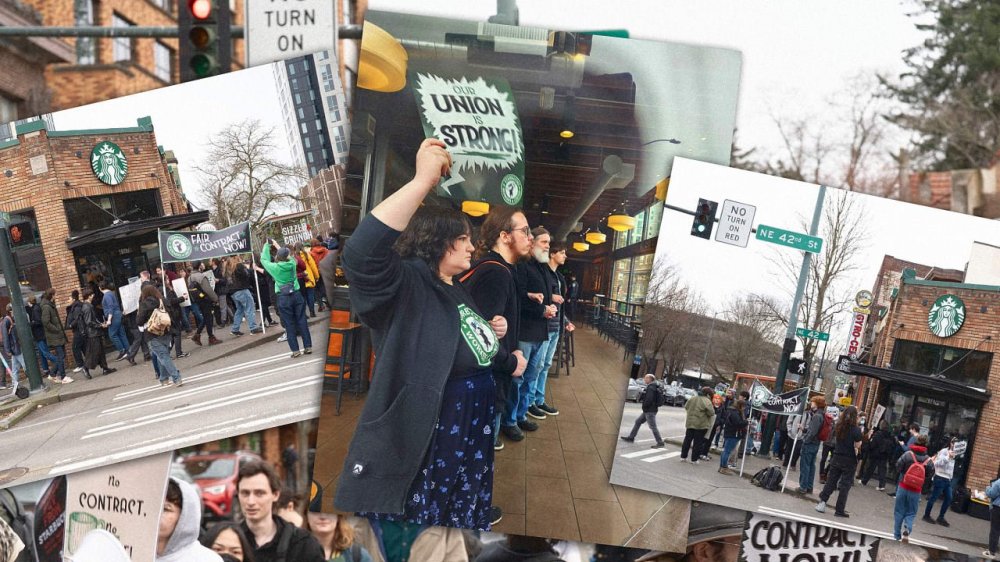
-
As the 2025 Major League Baseball season gets into full swing, you’d expect the league to use its marketing muscle to hype the heroics of its biggest stars. But its anime-style ad campaign takes that idea to a new level. “Heroes of the Game” mixes the on-field superpowers of players like Shohei Ohtani, Paul Skenes, Julio Rodríguez, Juan Soto, and Aaron Judge with the pop cultural artistry of anime hits like One Piece and Fullmetal Alchemist. Created with ad agency Wieden+Kennedy, the league also partnered with Passion Pictures and Echelle Studios in Japan, as well as acclaimed animation director Hiroshi Shimizu, to make the work. The first ad features a whole collection of players, with individual player spots rolling out over this month. The new work follows earlier collabs with anime series Demon Slayer and Japanese artist Takashi Murakami for the season-opening Tokyo Series between the Los Angeles Dodgers and Chicago Cubs last month. Not-so odd couple It may feel like an odd coupling, but MLB chief marketing officer Uzma Rawn Dowler says the league has used anime in past social posts and fans loved it. “And our players are also die-hard anime fans,” says Rawn Dowler. “Whether it’s Julio (Rodríguez) or Fernando Tatís customizing their cleats with their favorite characters, or Jazz Chisholm wearing a One Piece chain, anime is really popular in our clubhouses and with our players. So we felt like it was a really authentic medium to tell our player stories.” The campaign lands at a time that finds baseball flying high. The league’s $12.1 billion in reported 2024 revenue was a record, breaking the previous record of $11.6 billion set in 2023. It also represents a 33% jump in the past decade. Last season’s attendance of more than 71 million fans was the highest since 2017. Television viewership was up across the board, including among the coveted 18-to-34 demographic. If you hit a baseball to Julio Rodríguez, just know you've entered a no-fly zone ❌ J-Rod anime goes CRAZY 🤯#HeroesOfTheGame pic.twitter.com/kyQq8fFppS — MLB (@MLB) April 13, 2025 Now that it’s got the attention of fans—especially younger ones—MLB is focusing on how it can harness their passion for baseball and culture in creative new ways. Back in 2023, the league partnered with Wieden+Kennedy for its “Baseball Is Something Else” campaign, which this year’s work continues. Rawn Dowler says the emphasis on specific stars has really paid off, noting, “We have young, dynamic, diverse, global players who transcend baseball, and our younger sports fans are increasingly identifying with individual players. So we want to continue to prop up the folks who are the face of our game.” The league picks which players to spotlight based on a number of factors, including sheer on-field dominance, and making sure the mix works across a variety of club markets and global audiences. It probably shouldn’t be a surprise to find the anime pedigree involved in the new campaign, considering Wieden+Kennedy’s award-winning, manga- and anime-related work for McDonald’s last year. That saw the fast-feeder flip its golden arches as a nod to the fictional spoof store WcDonald’s that had become a mainstay of many popular manga and anime TV shows, graphic novels, and video games for the past several decades. The brand went deep to collaborate with celebrated artists on limited-edition packaging, a new sauce, and a series of WcDonald’s anime shorts and manga. The next big league event is the inaugural Speedway Classic in August, when the Atlanta Braves will play the Cincinnati Reds on the infield of NASCAR’s Bristol Motor Speedway in Bristol, Tennessee. In the meantime, the league will continue its winning formula of finding creative ways to bring pop culture to baseball, and its superstars to pop culture. “It’s just a really exciting time in baseball right now,” Rawn Dowler says. “The talent level is insane. We have players achieving remarkable feats, and they’re doing it with a little bit of swagger, style, and flair, and so that has allowed us to really showcase and tell the stories of our players.” View the full article

-
The ever-increasing power of generative AI has divided the graphic design community. Many are embracing the tools in their workflows, while others believe they’ve stolen from culture and commoditized a craft. In any case, we all live in a strange time, when people are often presenting fully generative work as their own. Sometimes that’s innocuous. And sometimes that’s icky. But now Adobe wants to offer the public a means to distinguish the authentic from the automated. A new “created without generative AI” tag in Adobe Fresco—the company’s drawing and painting app—will let you mark work as being free from the use of generative AI tools, to certify that you created it by hand. The feature is likely to come to other pieces of the Adobe Suite, according to Eric Snowden, SVP of design at Adobe. “Fresco is one of our tools that we’re not including generative AI, and we wanted to make sure that for someone creating these amazing artworks by hand, they have the ability to say, ‘I did not use generative AI inside of Fresco,” says Snowden. “Those are our customers, too, and we want to support them. If they feel the need to be able to convince clients that they didn’t use generative AI, we want to make that as simple for them to do as possible.” The new optional disclosure comes alongside a greater wave of announcements from Adobe this week that double down on generative AI. Adobe is introducing video and vector support to its own “commercially safe” Firefly model, while also integrating popular generative AI models by third parties—including OpenAI’s ChatGPT, Google’s Imagen and Veo, and Flux—into its software suite. (More partners, including Runway and Luma, will be coming down the line.) Despite Adobe’s lengthy, and even delayed approach to building its proprietary AI model, Snowden says enabling these options that Adobe has tacitly criticized is all about “customer choice.” How Adobe marks work as “created without generative AI” To certify your work as AI-free, Adobe is using its Content Credentials standard. While originally presented as a means to limit misinformation—a topic on which I was more than a little skeptical—this approach to metadata makes a lot more sense in the context of Adobe’s GenAI workflows. These credentials are basically a running receipt of where you did what to any piece of media inside of Adobe’s system. So it will list if you brought your own photo into ChatGPT to restyle it, and then exported it to Adobe Firefly to turn it into video. (Adobe is labeling any media imported into its software that out of its gaze might already be influenced by GenAI as media of unknown origin on this running receipt.) Granted, provenance is almost an oxymoron in any generative AI workflow: ChatGPT 4 was trained on 13 trillion “tokens” of data you’ll never be able to cite. But the Content Credentials standard does offer some sort of ledger of reference to clients or the public at large to how something was created. It’s something a creator can point to and explain or defend the source of their work. “I think illustration is where we’re seeing [demand] . . . but I don’t think it’s specific to only illustration,” Snowden says. Indeed, the competing platform Procreate has taken an anti-GenAI stance, but anti-AI sentiment doesn’t apply to illustrators alone. “I would imagine there are people in every creative discipline where generative AI is not something they’re interested in,” Snowden continues. “And if they feel compelled to communicate—or they’re again being asked to communicate—that they didn’t use generative AI, we should help them do that.” Claiming that any digital work is free from the influence of AI is impossible. For a human gesture to be transformed into a pixel, it’s filtered through all sorts of algorithms that help smooth and make sense of one’s input on a screen—and that’s definitely true for Adobe Fresco as well as the other apps in its suite. Long before GenAI arrived, Adobe products were steeped in the benefits of artificial intelligence and similar coded assistance. That said, Adobe is clearly reading the room, and realizing it must acknowledge that many creators find generative AI to be an assault on their viewpoint and livelihood—even while Adobe is investing more into these technologies that are simply too powerful, and in demand, to be ignored. “Everybody’s going to create in such different ways,” says Snowden. “Which is the exciting thing about working on these kinds of projects—giving people as much choice as possible.” View the full article
-
Welcome to the world of social media mind control. By amplifying free speech with fake speech, you can numb the brain into believing just about anything. Surrender your blissful ignorance and swallow the red pill. You’re about to discover how your thinking is being engineered by modern masters of deception. The means by which information gets drilled into our psyches has become automated. Lies are yesterday’s problem. Today’s problem is the use of bot farms to trick social media algorithms into making people believe those lies are true. A lie repeated often enough becomes truth. “We know that China, Iran, Russia, Turkey, and North Korea are using bot networks to amplify narratives all over the world,” says Ran Farhi, CEO of Xpoz, a threat detection platform that uncovers coordinated attempts to spread lies and manipulate public opinion in politics and beyond. Bot farm amplification is being used to make ideas on social media seem more popular than they really are. A bot farm consists of hundreds and thousands of smartphones controlled by one computer. In data-center-like facilities, racks of phones use fake social media accounts and mobile apps to share and engage. The bot farm broadcasts coordinated likes, comments, and shares to make it seem as if a lot of people are excited or upset about something like a volatile stock, a global travesty, or celebrity gossip—even though they’re not. Meta calls it “coordinated inauthentic behavior.” It fools the social network’s algorithm into showing the post to more people because the system thinks it’s trending. Since the fake accounts pass the Turing test, they escape detection. Unlike conventional bots that rely on software and API access, bot farm amplification uses real mobile phones. Racks and racks of smartphones connected to USB hubs are set up with SIM cards, mobile proxies, IP geolocation spoofing, and device fingerprinting. That makes them far more difficult to detect than the bots of yore. “It’s very difficult to distinguish between authentic activity and inauthentic activity,” says Adam Sohn, CEO of Narravance, a social media threat intelligence firm with major social networks as clients. “It’s hard for us, and we’re one of the best at it in the world.” Disinformation, Depression-era-style Distorting public perception is hardly a new phenomenon. But in the old days, it was a highly manual process. Just months before the 1929 stock market crash, Joseph P. Kennedy, JFK’s father, got richer by manipulating the capital markets. He was part of a secret trading pool of wealthy investors who used coordinated buying and media hype to artificially pump the price of Radio Corp. of America shares to astronomical levels. After that, Kennedy and his rich friends dumped their RCA shares at a huge profit, the stock collapsed, and everyone else lost their asses. After the market crashed, President Franklin D. Roosevelt made Kennedy the first chairman of the Securities and Exchange Commission, putting the fox in charge of the henhouse. Today, stock market manipulators use bot farms to amplify fake posts about “hot” stocks on Reddit, Discord, and X. Bot networks target messages laced with ticker symbols and codified slang phrases like “c’mon fam,” “buy the dip,” “load up now” and “keep pushing.” The self-proclaimed finfluencers behind the schemes are making millions in profit by coordinating armies of avatars, sock puppets, and bots to hype thinly traded stocks so they can scalp a vig after the price increases. “We find so many instances where there’s no news story,” says Adam Wasserman, CFO of Narravance. “There’s no technical indicator. There are just bots posting things like ‘this stock’s going to the moon’ and ‘greatest stock, pulling out of my 401k.’ But they aren’t real people. It’s all fake.” In a world where all information is now suspect and decisions are based on sentiment, bot farm amplification has democratized market manipulation. But stock trading is only one application. Anyone can use bot farms to influence how we invest, make purchasing decisions, or vote. These are the same strategies behind propaganda efforts pioneered by Russia and the Islamic State to broadcast beheadings and sway elections. But they’ve been honed to sell stocks, incite riots, and, allegedly, even tarnish celebrity reputations. It’s the same song, just different lyrics. “People under the age of 30 don’t go to Google anymore,” says Jacki Alexander, CEO at pro-Israel media watchdog HonestReporting. “They go to TikTok and Instagram and search for the question they want to answer. It requires zero critical thinking skills but somehow feels more authentic. You feel like you’re making your own decisions by deciding which videos to watch, but you’re actually being fed propaganda that’s been created to skew your point of view.” It’s not an easy problem to solve. And social media companies appear to be buckling to inauthenticity. After Elon Musk took over Twitter (now X), the company fired much of its anti-misinformation team and reduced the transparency of platform manipulation. Meta is phasing out third-party fact-checking. And YouTube rolled back features meant to combat misinformation. “On TikTok, you used to be able to see how many times a specific hashtag was shared or commented on,” says Alexander. “But they took those numbers down after news articles came out showing the exact same pro-Chinese propaganda videos got pushed up way more on TikTok than Instagram.” Algorithmically boosting specific content is a practice known as “heating.” If there’s no trustworthy information, what we think will likely become less important than how we feel. That’s why we’re regressing from the Age of Science—when critical thinking and evidence-based reasoning were central—back to something resembling the Edwardian era, which was driven more by emotional reasoning and deference to authority. When Twitter introduced microblogging, it was liberating. We all thought it was a knowledge amplifier. We watched it fuel a pro-democracy movement that swept across the Middle East and North Africa called the Arab Spring and stoke national outrage over racial injustice in Ferguson, Missouri, planting the seeds for Black Lives Matter. While Twitter founders Evan Williams and Jack Dorsey thought they were building a platform for political and social activism, their trust and safety team was getting overwhelmed with abuse. “It’s like they never really read Lord of the Flies. People who don’t study literature or history, they don’t have any idea of what could happen,” said tech journalist Kara Swisher in Breaking the Bird, a CNN documentary about Twitter. Your outrage has been cultivated Whatever gets the most likes, comments, and shares gets amplified. Emotionally charged posts that lure the most engagement get pushed up to the top of the news feed. Enrage to engage is a strategy. “Social media manipulation has become very sophisticated,” says Wendy Sachs, director-producer of October 8, a documentary about the campus protests that erupted the day after the October 7th Hamas attack on Israel. “It’s paid for and funded by foreign governments looking to divide the American people.” Malicious actors engineer virality by establishing bots that leach inside communities for months, sometimes years, before they get activated. The bots are given profile pics and bios. Other tricks include staggering bot activity to occur in local time zones, using U.S. device fingerprinting techniques like setting the smartphone’s internal clock to the time zone to where an imaginary “user” supposedly lives, and setting the phone’s language to English. Using AI-driven personas with interests like cryptocurrency or dogs, bots are set to follow real Americans and cross-engage with other bots to build up perceived credibility. It’s a concept known as social graph engineering, which involves infiltrating broad interest communities that align with certain biases, such as left- or right-leaning politics. For example, the K-pop network BTS Army has been mobilized by liberals, while Formula 1 networks might lend themselves to similar manipulation from conservatives. The bots leach inside these communities and earn trust through participation before agitating from within. “Bot accounts lay dormant, and at a certain point, they wake up and start to post synchronously, which is what we’ve observed they actually do,” says Valentin Châtelet, research associate at the Digital Forensic Research Lab of the Atlantic Council. “They like the same post to increase its engagement artificially.” To set up and manage thousands of fake social media accounts, some analysts believe that bot farms are deployed with the help of cyber criminal syndicates and state sponsorship, giving them access to means that are not ordinary. Bot handlers build workflows with enough randomness to make them seem organic. They set them to randomly reshare or comment on trending posts with certain keywords or hashtags, which the algorithm then uses to personalize the bot’s home feed with similar posts. The bot can then comment on home feed posts, stay on topic, and dwell deeper inside the community. This workflow is repetitive, but the constant updates on the social media platform make the bot activity look organic. Since social media platforms update frequently, programmed bots appear spontaneous and natural. Software bots posted spam, also known as copypasta, which is a block of text that gets repeatedly copied and pasted. But the bot farmers use AI to author unique, personalized posts and comments. Integrating platforms like ChatGPT, Gemini, and Claude into a visual flow-building platform like Make.com, bots can be programmed with advanced logic and conditional paths and use deep integrations leveraging large language models to sound like a 35-year-old libertarian schoolteacher from the Northwest, or a MAGA auto mechanic from the Dakotas. The speed at which AI image creation is developing dramatically outpaces the speed at which social networking algorithms are advancing. “Social media algorithms are not evolving quick enough to outperform bots and AI,” says Pratik Ratadiya, a researcher with two advanced degrees in computer science who’s worked at JPL and Apple, and who currently leads machine learning at Narravance. “So you have a bunch of accounts, influencers, and state actors who easily know how to game the system. In the game of cat and mouse, the mice are winning.” Commercial bot farms charge around a penny per action to like posts, follow accounts, leave comments, watch videos, and visit websites. Sometimes positioned as “growth marketing services” or “social media marketing panels,” commercial bot farms ply their trades on gig marketplaces like Fiverr and Upwork, as well as direct to consumer through their own websites. Bot farms thrive in countries where phone numbers, electricity, and labor are cheap, and government oversight is minimal. A new book about Vietnamese bot farms by photographer Jack Latham called Beggar’s Honey offers a rare look into Hanoi’s attention sweatshops. Sentiment breeding Before free speech colluded with fake speech online, traders used fundamental analysis and technical analysis to decide what and when to buy. Today, fund managers and quants also use sentiment analysis to gauge the market’s mood and anticipate volatility. Sentiment scores are even fed into trading algorithms to automatically adjust exposure and trigger trades. Courts recently dismissed a securities fraud claim against a group of online influencers called the Goblin Gang, who made millions buying up shares of thinly traded, low-float stocks, which they promoted aggressively on Twitter, Discord, and their podcast. Once followers bought into the stock—which, in turn, pumped up the share price—the defendants dumped their shares at inflated prices without disclosing it to their flock. The court dismissed the indictment because the government failed to prove a scheme to defraud. Expressing enthusiasm, even if it is exaggerated, didn’t meet the legal threshold for securities fraud. On March 21, 2025, Bloomberg columnist Matt Levine wrote an opinion piece titled “Pump and Dumps Are Legal Now.” Chatterflow, a service from Narravance, alerts subscribers to roughly 10 stocks a day, with 2 to 4 seeing sharp, short-term moves from social media chatter. The sentiment monitoring platform cross-references unusual social media chatter against EDGAR filings, analyst reports, newswires, and other material disclosures to identify unusual spikes in chatter originating on social media. The service also weights participants driving social media conversations for engagement and authenticity. “When we dig into the online chatter behind the alerts, at least half of them are bots,” says Wasserman. “We keep records. But most of the time, after the stock price jumps, the social media accounts that instigated the frenzy get instantly deleted.” On X, residue from the deleted posts often lingers, preserved through retweets by genuine users. Due to potential legal risks from investors who profited off trades and companies whose stock prices surged, Narravance agreed to share evidence of numerous publicly traded stocks that saw big daily increases on the condition that their ticker symbols not be published. To distinguish correlation from causation, in the case of Silicon Valley Bank’s 2023 collapse, social media chatter also played a role, but that chatter was organic. Bloomberg reported that Peter Thiel’s Founders Fund was advising its portfolio companies to withdraw funds due to concerns about the bank’s solvency. Bloomberg reported that those warnings, which were made through direct communications, triggered private discussions among venture capitalists and startup founders on WhatsApp, email chains, and text grists, which spilled over onto Twitter and LinkedIn, amplifying panic and sparking the digital bank run that led to its collapse. Similarly, the GameStop rally of early 2021 is a compelling example of how retail investors, galvanized by social media channels like Reddit’s r/WallStreetBets, pumped up a stock price targeted by institutional short sellers. Their collective action led to a dramatic short squeeze, causing GameStop’s stock price to surge by approximately 1,500% over two weeks. Spawning deceptive mass influence On October 7, 2023, as Hamas launched its deadly terror attack into Israel, a coordinated disinformation campaign—powered by Russian and Iranian bot networks—flooded social media with false claims suggesting the attack was an inside job. Social media posts in Hebrew on X with messages like “There are traitors in the army” and “Don’t trust your commanders” were overwhelmed with retweets, comments, and likes from bot accounts. Russian and Iranian bot farms promote pro-Palestinian misinformation to inflame divisions in the West. Their objective is to pit liberals against conservatives. They amplify Hamas’s framing of the conflict as a civil rights issue, rather than the terrorist organization’s real agenda—which is the destruction of the state of Israel and the expansion of Shariah law and Islamic fundamentalism. The social media posts selected for coordinated amplification by Russian and Iranian actors tend to frame Palestinians exclusively as victims, promoting simplistic victim-victimizer or colonizer-Indigenous narratives—false binaries amplified not to inform but to inflame and divide democratic societies from within. Bot farm amplification can’t be undone. The same deceptive forces used bot farms to boost posts about a New York Times report that falsely blamed Israel for a bomb that hit a hospital in Gaza that reportedly killed 500 Palestinians. It was later revealed that the blast was actually caused by a rocket misfire from jihadists. The New York Times updated its headline twice. But you can’t put deceptive mass influence back in the bottle. In the case of the war in Gaza, bot farms may not be solely to blame. “The Twitter algorithm is pretty nefarious,” says Ahmed Fouad Alkhatib, Gaza writer and analyst and senior fellow at the Atlantic Council. “I really think it optimizes for hate and division to drive engagement and revenue.” Perhaps Twitter is just more bot-farm-friendly? Xpoz collected evidence of a global bot farm amplification campaign by Russia-, Iran-, and China-backed bot farms to frame what Hamas admits in Arabic is a religious crusade to expand the Islamic state as a civil rights battle for freedom and justice against Israeli oppressors in English. In another example, Xpoz found that the same bot network amplifying antisemitic hate speech in Arabic was also being used to amplify tweets critical of Ukraine in German. In the case of the pro-Palestinian campus protests, they erupted before the Israeli death toll from the Hamas attack had even been established. How could it happen so quickly? Radical Islamic terrorists were still on the loose inside Israel. The film October 8 explores how college campuses turned against Israel less than 24 hours after the biggest massacre of Jews since the Holocaust. “We think most of what we see online is real. But most of what we see is deceptive,” said Ori Shaashua, who is chairman of Xpoz and an AI entrepreneur behind a host of other tech ventures. Shaashua’s team analyzed the ratio between bots, avatars, and humans. “It doesn’t make sense when 418 social media accounts generate 3 million views in two hours,” says Shaashua. Before the release of October 8, Sachs’s IMDb page was flooded with hundreds of 1-star ratings. “They’re obviously just haters because they haven’t even seen the film,” the producer-director said. In response, she encouraged audiences at screenings to leave reviews to counter the abuse. She got 6,300 10-star ratings, pushing her film’s unweighted average to 9.1 by the end of last month. On April 1, bots had added more than 1,000 new 1-star reviews. Three weeks later, it had 4,700 1-stars and 10,000 10-stars, dragging its IMDb rating down to just 4.3 stars. In a bot-driven world, engagement metrics are no longer a reflection of authenticity. As the automated jiggering of reviews grows more pervasive, we’ve entered an era where star ratings have little value—especially on topics where passions run high, but increasingly even where they don’t. Cloning celebrity gossip Bot farms manufacture familiarity until it feels like truth—not just in politics or capital markets, but in lifestyle and entertainment, too. On December 20, 2024, actress Blake Lively filed a lawsuit against actor-director Justin Baldoni and others, alleging harassment, intimidation, and retaliation after the A-lister reported concerns about inappropriate behavior on the set of It Ends With Us. Lively’s claim alleges that Baldoni and Wayfarer Studios (which Baldoni cofounded) retained a crisis PR firm, the Agency Group, to execute a strategy involving astroturfing and digital manipulation—orchestrated, deceptive online engagement made to look grassroots. The claim says it included using bots, coordinated Reddit and TikTok threads, and fake fan engagement to manipulate public sentiment against Lively. “I can’t connect it to Baldoni, but I can say there is evidence of synthetic activity that is not human,” said Ori Lehavi, an independent threat consultant who analyzed the Lively-Baldoni incident on Xpoz. The analysis showed that bot farm amplification activity had been coordinated against Lively. The preemptive surge in coordinated, inauthentic bot-like activity that Lehavi found came on December 20, 2024, a day before The New York Times broke the story about Lively’s allegations. On that day, bot-like activity spiked to 19,411 engagements, amplifying the reach of posts about Lively to a potential audience of 202,540,776 viewers. Bot farm amplification appears to have sparked organic activity as well. There were 2,913 human-like posts on the day of the bot surge, rising to 3,772 the following day and 4,734 the day after that—even though the bot-like activity subsided. One week later, Baldoni filed a libel lawsuit against The New York Times seeking $250 million for running a story based on “cherry-picked evidence” with “false allegations of a smear campaign.” As is common in bot farm amplification, the most active X accounts used to bash Lively have since been removed. In this case, two of the most outspoken profiles were a suspended account with the username @schuld_eth, and a deleted account called @leapordprint_princess. The legal battles around these allegations continue to unfold. It’s not just the bots that are gaming the algorithms through mass amplification. It’s also the algorithms that are gaming us. We’re being subtly manipulated by social media. We know it. But we keep on scrolling. View the full article