ResidentialBusiness
Administrators
-
Joined
-
Last visited
Everything posted by ResidentialBusiness
-
Public opinion and elite sentiment has turned decisively against NetanyahuView the full article
-
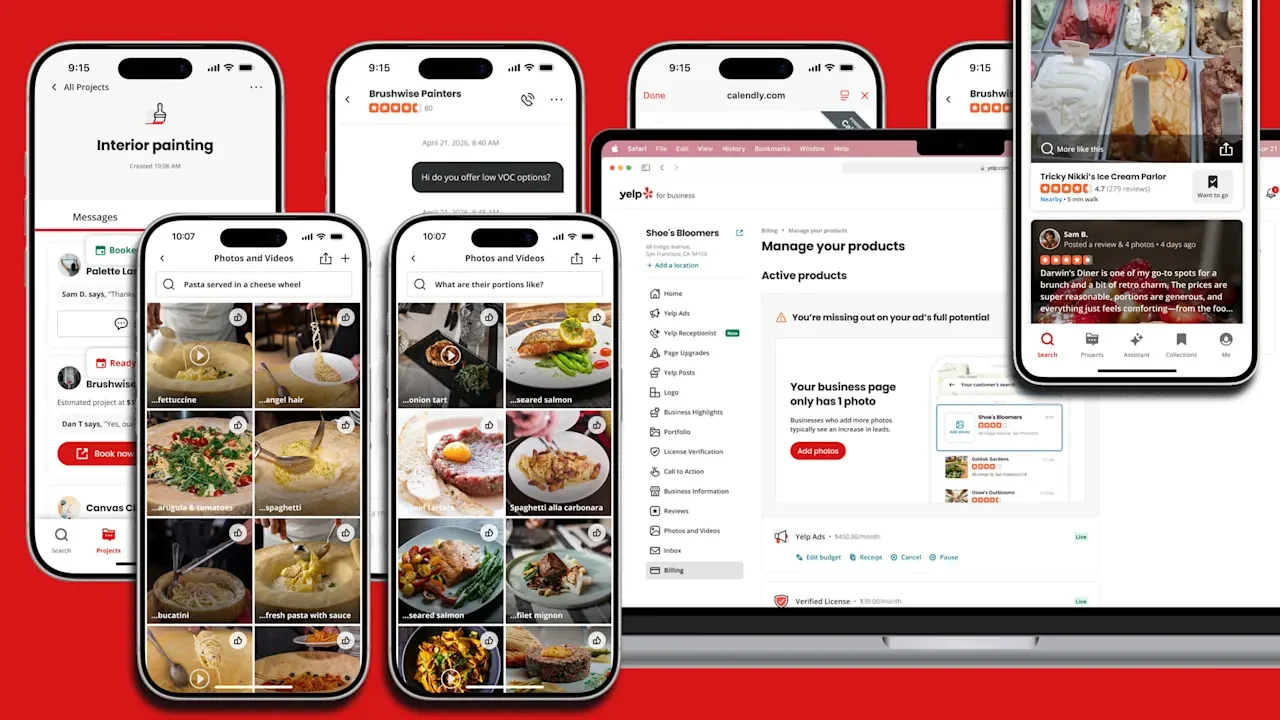
You can now book haircuts, doctors’ appointments, and food deliveries through Yelp. The business search and review platform has rolled out integrations with providers including DoorDash, Zocdoc, and Vagaro, letting users book appointments and order food directly from a Yelp listing or through the AI-powered Yelp Assistant. Users could already request quotes from businesses ranging from home and auto repair professionals to beauty experts. The Yelp Assistant is also getting its own tab in the app, as the company aims to become a destination not just for its hundreds of millions of user-contributed reviews but for answering questions about local businesses and booking their services. “We would like consumers to reconceive Yelp not just as a place where they read reviews,” says Akhil Kuduvalli Ramesh, SVP of product, “but as a place where they can actually find answers and complete their actions.” In a demo for Fast Company, Kuduvalli showed how the Yelp Assistant can locate specific businesses and other places that meet user needs, like a park suitable for walking a dog off-leash or a restaurant fit for date night. The assistant returns a list similar to Yelp’s standard search results, but adds a brief explanation of why each result matches the query, highlighting relevant details from reviews and, in some cases, company websites. It can also handle follow-up questions, such as parking at a dog park or vegetarian options at a restaurant, pulling in details from reviews and photos. “What’s particularly interesting to a consumer about it is the fact that every answer has a narrative,” Kuduvalli says. “The narration brings a sense of transparency, and it also gives the user confidence as to why they’re seeing what they’re seeing, and it gets them excited.” Yelp saw net revenue rise 4% year-over-year last year to a record $1.46 billion, with net income of $146 million, the company said in February regulatory filings. Advertising from services businesses makes up the bulk of Yelp’s revenue, bringing in $948 million last year compared to $444 million for Yelp’s “restaurants, retail & other” category. But as Yelp faces new forms of competition with some consumers increasingly turning to AI for questions about home repair projects or where to get a quick meal—or following the advice of influencers on TikTok and Instagram—the company is betting that its wealth of information from reviews and businesses themselves will continue to make it a trusted destination. Yelp points to a recent survey it conducted with Morning Consult: while 65% of Americans have used AI search tools in the last six months, just over half say those tools can feel like a “walled garden” that makes results hard to verify. About 63% say they double-check AI answers with other sources, including review platforms and news sites. That matters especially for local businesses, Kuduvalli says, where users want confidence that hours and services are up to date. In theory, then, the Yelp Assistant can offer the best of both worlds, using AI to answer questions and provide citations and photos from Yelp reviews to back their claims. And once people find a business they like, they’ll increasingly be able to reserve a table or book an appointment directly from Yelp. Integrations with Vagaro and Zocdoc are already live on iOS, and the company plans to make them available through Android and desktop versions of its platform later this year, along with a Calendly integration for businesses that take appointments through that scheduling tool. Yelp can even provide cited information as users look at menus in restaurants. A Menu Vision feature that debuted in October can pop up dish photos, highlight popular items, and link to reviews when diners scan menus through the Yelp app. Yelp has continued to enhance Menu Vision since its launch, Kuduvalli says. “It will identify far more dishes than it did before,” he says. Yelp’s AI model still depends in part on user contributions, and reviewing remains active: Users submitted 22 million new reviews in 2025, up 7% from the prior year, according to the company. Yelp is also rolling out an AI-personalized home feed on iOS, with more tailored content and updates from people users know, as it leans into its core strengths in the AI era. View the full article

-
Power has a way of narrowing progress—and the narrowing follows a pattern. Early in my career, a senior colleague took credit for ideas and work I had shared while onboarding him to the team. It wasn’t subtle: same thinking, same framework, different owner. When I raised it, I was told to assume good intentions. When I pushed for accountability, I was told I was being “testy.” The behavior was never examined. The outcome was never corrected. I have since seen the same logic repeat across organizations: good intent is treated as a substitute for accountability. This is not a rare story. This is a system caught in the act. Women now earn the majority of college degrees in the United States and enter the workforce at near parity with men. Yet they hold only about 29% of C-suite roles in corporate America. McKinsey’s Women in the Workplace research shows the gap begins much earlier: for every 100 men promoted from entry level to manager, only 87 women are promoted. The gap compounds at every subsequent level until, by the time leadership roles narrow into P&L ownership and executive authority, women are significantly underrepresented. The problem is not awareness. It is permission for inequity to persist. The Inequity Awareness–Accountability Gap What’s happening is a structural breakdown that I think of as an Awareness–Accountability Gap. Organizations develop awareness of inequity but fail to translate it into results. The gap persists through three recognizable and reinforcing patterns. The first is the empathy ceiling, in which empathy comes to function as an endpoint rather than a baseline for leadership. Once a leader expresses awareness through language, identity, or stated intent, scrutiny recedes. Leaders perceived as “getting it” are questioned less, even when hiring and promotion outcomes for women remain unchanged. The second is intent inflation. Organizations routinely over-credit leaders for intent while under-pricing the cost of inaction. Leaders earn credit for expressing the right values even when advancement outcomes remain flat. When intent is rewarded without regard to outcome, intervention becomes optional. The third and most operationally consequential pattern is ambiguity transfer: when unclear ownership gets converted into invisible cleanup labor and pushed onto those without the formal authority to assign, decline, or be rewarded for it. In practice, this burden often settles in middle management and below—the layers expected to translate strategy into execution while managing interpersonal fallout, timeline drift, and cross-functional confusion. That matters because management is also where women’s advancement often starts to stall. At the same time, women in these layers are too often excluded from the business development conversations, strategic calls, and opportunities that generate the sponsorship required to move up. According toMcKinsey’s research, only 31% of entry-level women report having had a sponsor, compared with 45% of men. How the Gap Recruits Its Defenders As a Go-to-Market (GTM) and marketing leader, I work regularly with a concept called the growth loop—a behavior that is rewarded, reinforced, and normalized until it becomes self-sustaining. The Awareness–Accountability Gap works the same way. When leaders perform empathy and express good intent, they receive immediate positive reinforcement: trust, goodwill, credibility. That reinforcement lowers scrutiny, which reduces pressure for action. Over time, even the people most harmed by the system can begin to favor awareness because it preserves stability. For women already navigating higher qualification thresholds and narrower margins for error, insisting on accountability can register as friction rather than leadership. In those conditions, accommodation becomes easier than escalation. The rise of the “girl dad” as a workplace identity captures this dynamic neatly. In some workplaces, being a “girl dad” has become shorthand for progressive intent—a signal that a leader “gets it.” But understanding inequity and interrupting it are not the same act. When organizations accept identity as evidence of commitment, they complete the loop: awareness signals virtue, virtue generates protection, and the demand for measurable outcomes quietly dissolves. The “girl dad” is not the problem. The organization that treats the identity as proof of action is. The path toward closing the gap is accountability First, track advancement velocity: time to first P&L role, promotion rates relative to male peers, and retention of high-performing women at key inflection points. What gets measured with consequences gets changed. Second, stop awarding credit for awareness alone. Leaders should be evaluated not on whether they say the right things, but on whether women advance, stay, gain authority, and receive credit under their leadership. Third, make sponsorship visible. Political capital is finite, and where it is deployed reveals more about leadership than any expressed value. When a leader sponsors someone, record the outcome: Did the person get the role? The visibility? The credit? Fourth, assign ownership to ambiguity. When decisions are delayed, deferred, or left intentionally vague, organizations should ask a simple question: who is absorbing the downstream cost? Who is aligning stakeholders, repairing fallout, updating timelines, and carrying unresolved work forward? Proximity to women is not the same as stewardship of women. Accountability, by contrast, requires leaders to redistribute power, absorb conflict, and make loss visible. Avoiding that disruption is not harmless. It produces stagnation and, over time, compounds into poorer leadership decisions, diminished performance, and weaker organizational capacity. The cost is not abstract. Research points to trillions of dollars in lost productivity and reduced economic potential when poor leadership drives disengagement. Organizations that claim ownership of culture must also own who gains power as that culture hardens into structure. Until awareness is paired with accountability for outcomes that are measurable, tracked, and consequential, inequity will persist behind the language of progress. View the full article

-
As inflation causes prices to rise, there is a cost that disproportionately impacts women—the “egg freezing tax.” In 2023, over 40,000 women froze their eggs—a safe, proven way to invest in more control over the timing of one’s family—which has grown in popularity for many reasons: general declines in fertility rates, delayed family building, and increasing numbers of women choosing to become a single mom by choice. Despite having founded three companies, one of the hardest things I’ve ever done was freeze my eggs. In my early thirties, while building my first startup in San Francisco, my nights were a blur of teaching myself to self-inject and tracking complex medication dosages, all while trying to keep my new company afloat. Four rounds later, paid entirely out of pocket, I had seen the reality of the system. At approximately $20,000 per cycle, the cost of preserving one’s eggs is a luxury few can afford. Women are gambling over $50,000 to keep their dreams of a biological family alive. Ironically, the time when egg freezing is the most effective is the same time as when career-driven individuals are focused on climbing the corporate ladder with the least amount of disposable income. A $50,000 out-of-pocket cost in your early thirties isn’t just $50,000. Invested over 30 years at typical market returns, that same money could grow to roughly $400,000 to $800,000 by retirement. America’s Population Decline The “silent tax” of egg freezing is not just a private burden on individual women. It’s a public-policy failure lacking corporate attention, and one with macroeconomic consequences. When fertility preservation and treatment are financed out of pocket, the people most likely to delay or forgo family-building are also the people the economy most depends on keeping in the labor force: educated, urban, high-skill workers facing the steepest career penalties for mistimed childbearing. Data shows fertility is now below replacement in nearly every OECD country, and the organization explicitly warns that sustained low fertility poses risks to future prosperity, labor supply, and public finances. Birth rates are at record lows, and for the first time in U.S. history, more women are having babies in their 40s than as teenagers. A low-birth-rate environment is a workforce issue: population aging raises the old-age dependency ratio, shrinking the future labor pool and putting pressure on tax bases and care systems. That makes egg freezing an integral part of family-formation infrastructure, along with childcare and paid leave. Fertility preservation allows for an investment in American families at a time when working women most need support. If governments and employers support only the back end of family formation and ignore the front end, they leave a major timing problem unsolved. Freezing Eggs and Debt These costs disproportionately impact certain groups. LGBTQIA+ families, for example, may start their career knowing they’ll need medical support to have biological children, but usually do not have workplace benefits to freeze eggs, sperm, or embryos. As individuals early in their careers struggle to pay the “egg freezing tax,” they take on debt. Options to pay for egg freezing include fertility-focused loans and payment plans, which tend to come with more educational support, or simply using a high-interest credit card. This means that the women and families who want the option to become parents later in life are forced to burden the investment in future American families on their own. Women already face lower wages, carry 64% of the country’s student loan debt, and now, a new tax on their careers. This impact further compounds for women of color: black women are twice as likely to experience infertility and less likely to seek treatment. The Gap in Family Building Infrastructure Having spent the past two decades working in New York and Silicon Valley, I’m familiar with seeing how quickly solutions emerge for expensive pain points. But the U.S. is unique among developed countries in terms of how fragmented fertility access is. Coverage for egg freezing is usually only included in health insurance if there is a specific health need, such as a cancer diagnosis. Only 16% of employers covered egg freezing in 2024. What’s needed is a major investment by policymakers, business leaders, and technology innovators to address this problem. The evidence suggests that when women can delay motherhood until they are more established, they earn more and stay more attached to the workforce. In a 2024 survey of more than 1,200 HR leaders and 3,000 employees in the U.S. and U.K., 75% of employers said reproductive health benefits matter for retention, 57% of employees said they have taken or might take a job because it offered family or reproductive health benefits, and 46% of Gen Z said these benefits influence whether they stay or leave. Investing in fertility preservation and family-building flexibility is important economic infrastructure, and young women should not be forced to bear this silent tax alone. We’ve built systems to support every other major life decision: 401(k)s to plan for retirement, mortgages and digital platforms to buy homes, robo-advisors to grow wealth. But we have failed to build comparable infrastructure for family formation. I’ve been supporting aspiring parents for years now, currently as CEO of Sunfish, a tech company that supports fertility solutions, and previously as a Director at one of the largest fertility companies. What I see consistently is not a lack of awareness, but a lack of access. Women understand the tradeoffs and know it’s not a guarantee. A system that requires individuals to sacrifice hundreds of thousands of dollars in long-term wealth to preserve the option of having children is not a system designed for a competitive, modern workforce. If we want to sustain talent, productivity, and population growth, fertility preservation has to become a structured part of our infrastructure. View the full article

-
Sacked head of Foreign Office says there was ‘dismissive attitude’ to security vetting of former ambassadorView the full article
-
Two teen chat sites also being probed by watchdogView the full article
-
First Mortgage Co., a long-defunct lender led by convicted executive Ron McCord, blamed the advisory firm for his failure to accept a $20 million offer. View the full article
-
The annual Lyrid meteor shower is back, reaching its peak on Tuesday evening and at predawn on Wednesday. On average, 10 to 20 meteors are produced per hour during a Lyrid shower. But, in some rare occasions “outbursts” can occur, with up to 100 meteors produced in an hour. According to the American Meteor Society, Lyrids will be mostly visible in the Northern hemisphere at dawn, although limited availability will also be available to those in the Southern Hemisphere. The Lyrid shower is among the oldest recorded meteor showers, dating back as far as 2,700 years. The meteor shower is visible when Earth travels through the path of Comet Thatcher, rendering a trail of the comet’s remnants visible to skywatchers. The comet’s crumbs create a bright streak in the sky as they burn up on Earth’s atmosphere, becoming what most refer to as a shooting star. “When comets come around the sun, the dust they emit gradually spreads into a dusty trail around their orbits,” the National Aeronautics and Space Administration (NASA) says. “Every year the Earth passes through these debris trails, which allows the bits to collide with our atmosphere where they disintegrate to create fiery and colorful streaks in the sky. How to watch the Lyrid meteor shower Meteors will appear to be coming from Vega, one of the brightest starts in the Lyra constellation. According to experts, its best to look slightly away from the radiant point to spot some of the meteors with the longest tails. In order to identify the radiant point, stargazing apps can guide users towards Vega. According to NASA, stargazers should look towards the east starting April 21 at 10 pm onwards. While the shower runs through April 16 to 25, its peak visibility will arrive midweek, and does not require equipment to spot. In order to gain visibility, experts suggest moving away from areas with high brightness like city lights or even the moon. This year, the moon is not expected to interfere with visibility. Experts recommend spending at least an hour meteor watching, as eyes can take up to 20 minutes to fully adjust to the darkness—and longer viewing windows help account for natural lulls in activity. Stargazers should also dress warmly and bring hot drinks, as late-night temperatures can dip significantly depending on location. View the full article

-
Grocery stores waste around four million tons of food in the U.S. each year—mostly fresh food, since it’s hard for store managers to know exactly how many cartons of strawberries or pounds of beef to keep in stock to meet demand. Until fairly recently, most of that planning happened manually. But AI tools from the startup Afresh are helping stores cut waste by as much as 25%. The company announced $34 million in new funding today to expand, co-led by Just Climate and High Sage Ventures. A decade ago, when Afresh cofounders Matt Schwartz and Nathan Fenner were MBA students at Stanford and looked at the challenge of food waste, they started visiting grocery stores and saw produce managers using printed spreadsheets to estimate inventory and write orders. While some stores used software to track and order packaged food, fresh food still relied on basic methods and educated guesses. “It was ultimately a pen and paper process,” Schwartz says. Schwartz and Fenner started building a tool that could more accurately estimate how much food was in the store—a complicated challenge. Produce that’s sold by weight might literally be evaporating as it loses water. Customers in the self-checkout aisle might be paying for a non-organic apple when they’re actually buying organic. Food that goes bad on the shelf, from raspberries to salmon fillets, often isn’t accurately counted when it’s thrown away. The software uses data from each grocer—in some cases, hundreds of billions of transactions—and looks at pricing, promotions, where the food shipped from, and other factors to understand the perishability of each product. Deep learning models also forecast demand based on another range of factors, from the timing of food stamps to the weather. Then an optimization algorithm suggests how much of each product to order. Over time, the models continue to learn and improve. The company often begins with a test in 10 to 20 stores in a chain, and then compares that performance to a control group of stores during the same time period. “We typically see 20% to 25% reduction in shrink when we go live with our system,” says Schwartz. It’s now in use more than 12,500 grocery store departments nationally, including Safeway and Albertsons. Stores can use the data in other ways—in some stores, for example, Afresh has flagged that produce displays are too large so stores can resize them or use “dummy” displays to make piles look bigger with less actual fruit. Grocers can also use fruit and vegetables that are about to go bad in prepared products, such as repurposing avocados in guacamole. (Afresh also recently rolled out another tool to help grocers accurately forecast demand for prepared food in store delis.) By better predicting how much can sell in the store, it helps reduce waste in other parts of the supply chain. “When you clean up store ordering, it makes it easier for distribution centers to buy the right amount,” Schwartz says. “Then, ideally, if DCs are buying the right amount, that gives a cleaner demand signal to growers, who can better react and fulfill demand to the grocers.” As stores have the right amount of food at the right time, they can also get customers fresher food that lasts longer in the fridge. There’s a clear environmental win to reducing the waste; food waste from retail stores was responsible for around 16 million tons of CO2-equivalent emissions in 2024. But there’s also an obvious financial incentive for stores, who lost $26.9 billion in sales the same year. “If you can avoid a dollar of food waste, you’re creating a dollar profit for a grocer,” Schwartz says. “And for a 1-3% net margin business, that’s a profound impact on their bottom line.” View the full article

-
The last time I set foot in this historic Chicago mansion built in the heart of Michigan Avenue, I’d been served one less-than-generous slice of lukewarm prime rib. This is back when it was a Lawry’s steakhouse. I remember white tablecloths, silver serving trays, one decent staircase, and just the stodgiest of old rooms that felt less like I was in the Gilded Age than at a funeral parlor. Now, when I step inside the lobby, a large wooden door slides open in front of me. I enter a room with a ringing telephone. And when I pick it up, my journey begins . . . With the help of the architecture firm Rockwell Group and the design firm Pentagram, the McCormick mansion has been transformed into The Hand & The Eye, the largest magic venue in the world at 35,000 square feet. The overall vision—and $50 million investment behind it—comes from Glen Tullman, who is both a Chicago-based venture capitalist and a lifelong magic enthusiast. His bet is that locals and tourists will spend $225 for a three-hour, no-cameras-allowed experience (with $75 in credits for food and drink) as they bounce from intimate rooms to larger theaters—seeing more magic at every turn in a setting that’s as much of a spectacle as the illusions themselves. “We built this to be a 100-year venture from every little aspect of what we’ve done,” says Tullman, as he excitedly gives me a tour through the space. “We built it to be for the performers and for the guests. We didn’t build it to say, ‘Let’s maximize profits.’ [Though] sometimes when you do that, you actually maximize profits, because people say, ‘This is so special.’” What is The Hand & The Eye? The Hand & The Eye is a theater, club, school, and networking spot for the magic-inclined. But ultimately, it’s an ode to mid-century Chicago-style magic: point-blank, reality-shattering card tricks that filled the city’s taverns as magicians walked from table to table, casually blowing people’s minds with nothing more than 52 small pieces of waxed paper. The mansion is designed to transport you out of any particular place and time, with a mishmash of motifs pulled from the 1870s to 1930s, the golden age of magic. Rich wallpapers, marble bars, careful carpentry, custom brass plaques, and copious amounts of fringe and velvet serve as a baseline across a space where no two rooms are alike. And since the mansion has few windows, it feels like a permanent 10:30 p.m. inside. I can see how the environment could make time disappear. The careful ode to magic never feels like kitsch, largely due to the fact that, ironically, most of what you’re looking at is real. This isn’t an escape room or some Disneyland ride. A mix of antique and custom-built furniture fills the space, and a museum’s worth of art and ephemera are staged everywhere you look—ranging from one of Harry Houdini’s milk cans (he’d lock himself inside and escape from the roughly 36-by-26-inch steel churn) to Alexander Herrmann’s “Chinese rings” and decapitation cloth. Many are sourced right from Tullman’s own collection. Both the space and service are architected to create an unpredictable night. When you arrive, you’re given a schedule for a three-hour experience (and one you don’t need to follow to the minute—color-coded pins ensure that staff know to signal you when it’s time to move on, should you lose track of time). You may be ushered from communal bars and two large dining rooms into cozy spaces that squeeze in maybe a dozen people for close-up work, and then into one of four auditoriums for larger stage shows. I was particularly taken by a safe room lined with shining safety deposit boxes that belong to VIP members, who can bring their keys to unlock the occasional surprise. A séance room features one large table . . . but I’m told that when the lights go low, you never know what spirits might show up. The mansion contains too many rooms to fully enjoy in one night. So the club saves your journey, and it will never schedule you the same path through the space twice. I hear there are secret passages and rooms—none of which are revealed to me during my visit. In fact, even as a member of the media, I’m not allowed to photograph my tour. My phone’s camera, like everyone else’s who visits, is covered with a sticker upon arrival. “Today you go to a concert, and if you’re not in the front row, you mostly see it through the back of someone’s phone,” Tullman says. “Here, you’re in the moment and people walk out, and they’re, like, ‘That’s just the best evening I’ve had.’ Some of them don’t even think about why it was so good. And it’s because you were totally focused on enjoying it with people next to you.” Building the brand So much of the vibe—from the name and the logo to the signage and the merch—was developed alongside a 12-person team from Pentagram with support from Paper Tiger. The club was originally named “Metamorphosis,” after one of Houdini’s most famous tricks. Finding that a little too on-the-nose, the team went through a vast branding process to rename it. What they landed on—The Hand & The Eye—is stately, mysterious, and descriptive. “We wanted a name that wasn’t just a pun or had the word ‘magic’ in it,” Pentagram partner Emily Oberman says. “The hand is about how all the magicians perform their magic, and then the eye is how the audience experiences it.” Visually, the team wanted to avoid magical tropes—no rabbits or top hats, no wands, no lightning scars. For the logo, Pentagram went literal, drawing a slightly curled hand with a floating eyeball between the thumb and index finger. When the team first showed Tullman the idea for the logo over a Zoom call, he surprised the team by making a ball float between his fingers. Oberman calls the project “a love letter to Chicago.” It incorporates the city’s stars and brass signage found around town. The color system—a rich, rotating mix of seasonal colors—pulls in a soft blue that locals might not even realize is straight from the Chicago flag. Meanwhile, the filigree and patterns used across Pentagram’s brand design—and gosh, there is so much intricate work—were pulled from the facade of the mansion itself. I can’t help but feel that the brand is so rich and retro because it’s not overly scripted or matchy-matchy. “It’s kind of like a mix of styles; all the filigree is a little bit different, too, and unique to the piece that it’s on,” notes Mira Khandpur, associate partner at Pentagram and lead designer on the project. You’ll find all of that branding across the typical touchpoints you’d expect, but also across magic tricks and card decks the team designed to be sold at the venue’s store (which, yes, is staffed by a magician who will gladly teach you a thing or two). I imagine it will be impossible to visit without at least buying a deck of cards to bring home. For Chicago, the investment is a boon to revitalizing its Mag Mile, which has faced challenges with vacancy since COVID—and Tullman claims that since he bought the building, it’s attracted other business owners to the block. But for the wider world of magic, it’s something more: It’s a space where mind-bending tricks—honed over endless hours in solitary confinement—can be put on a pedestal and shared with the world. View the full article

-
Nearly two out of three American adults have used an AI-powered search tool in the past six months. But here’s the stat that should keep every product builder up at night: only 15% say they trust the results “a lot.” That gap between adoption and trust is the defining challenge for the next era of AI search. Consumers are showing up, but they are questioning the results. As product builders, we have to ask ourselves an uncomfortable question: Are we building experiences that earn and deserve consumer trust? The Walled Garden Problem Yelp partnered with Morning Consult to survey more than 2,200 U.S. adults on how they use and perceive AI-powered search. The findings point to a single, recurring problem: consumers feel trapped. More than half of respondents (51%) say AI results feel like a “walled garden” that makes it hard to verify what they’re reading. Sixty-three percent say they double-check AI search results against other trusted sources like news websites and review platforms. And 57% say they’re less likely to use AI-powered search specifically because it lacks trusted sources. The early days of AI search were defined by hallucination, with models confidently fabricating answers. Most leading platforms have largely solved that technical problem. But what lingers is a deeper skepticism: not just “Is this answer correct?” “How would I even know?” When platforms strip away sources, citations, and links to the real-world content that informed their answers, they’re building walls, not bridges. Consumers are telling us, loudly, that they want the links, the sources, the ability to verify for themselves. What It Takes to Open the Gates and Build Trust The research paints a remarkably consistent picture of what it would take to close the trust gap. Nearly three out of four respondents (72%) say AI platforms should always show where their information comes from. Two-thirds (66%) want more proof of trusted sources, like links to review platforms and news sites, alongside AI-generated answers, while more than half (52%) say visual evidence, like photos of a dish or before-and-after shots of a service, would increase their trust. Consumers aren’t anti-AI. They’re anti-black boxes. They want AI to do the heavy lifting of parsing massive amounts of information and then show the receipts. The average person isn’t using AI to vibe code or other technical use cases, they are using it for daily local searches. More than half of respondents (57%) use AI tools to find local businesses at least monthly. They want advice on where to take their family for a birthday dinner or choosing who to let into their home to fix a burst pipe, and a self-contained AI summary without reliable proof isn’t going to cut it. And when consumers turn to AI to help with these decisions, the expectations are unambiguous: 76% say seeing where the information comes from is important, 73% say ratings and reviews from real customers matter, and 76% say seeing multiple reliable sources is important. Local businesses are also inherently dynamic. Chefs leave, menus change, hours shift. Without authentic, regularly updated human content from trusted sources, AI risks serving up stale or unreliable information. If anyone assumed the digital natives of Gen Z would be more trusting, the data says otherwise. Gen Z has the highest adoption rate, with 84% having used an AI search platform in the past six months, but they’re also the most demanding. Seventy-two percent say AI platforms should provide more proof of trusted sources, compared to 63% of Millennials and 59% of Gen X. This is a generation saturated with AI slop, and they’ve developed sharper instincts for distinguishing authentic from synthetic. Platforms that keep them inside a walled garden risk losing the most AI-fluent generation first. The Counterargument, and Why It Falls Short Some will argue that adding citations, links, and source indicators creates friction, and that the entire promise of AI search is a seamless, self-contained answer. Why send users away from your platform? But this framing confuses walls with value. Consumers aren’t rejecting AI-generated summaries. They’re rejecting answers they can’t verify. The majority (69%) of consumers want the option to leave AI platforms and visit trusted sites to do their own research. And when we tested this in practice, showing consumers two versions of an AI search result, one with transparent sourcing and one without, 80% preferred the version that included authentic human content, trusted sources, and actionable links. Tearing down the walls doesn’t drive users away. It drives confidence. The AI industry is at a crossroads. The platforms that win won’t be the ones generating the most convincing synthetic answers. They’ll be the ones that seamlessly connect users to authentic, real-world experiences, using AI as a bridge to trusted human content. As the AI ecosystem matures, the platforms that strike the right balance between AI-generated summaries and transparent, authentic human-generated content won’t just close the trust gap. They’ll set the standard for what consumers expect. And, the good news is that more generous, transparent linking is a rising tide that lifts all boats: consumers get the ability to do their own research and decide with confidence, content creators and publishers receive the traffic that sustains a healthy content ecosystem, and AI platforms themselves benefit from stronger relationships with the quality sources that make their answers worth trusting in the first place. Transparency isn’t a trade-off. In the attention economy, it’s the moat. View the full article

-
I have been thinking about a question that nobody in enterprise software seems to want to sit with: why can the most advanced AI models in the world solve Olympiad-level mathematics but fail to reliably extract a total from an invoice? This is not an academic exercise for me. I have been building automation software for twenty years. My company has processed billions of documents for some of the largest enterprises in the world. Yes, I have a stake in this answer. But twenty years of watching models work on real enterprise data, not benchmarks, gives you a different view than turning a model in a lab. And when those real-world models cannot get the simple stuff right, I notice. The conventional answer to my question goes something like this: math is a reasoning problem and AI is good at reasoning now. Invoices are a perception problem—messy layouts, bad scans—and we just need better models. Give it another generation. I think this is wrong. The math Let me start with math, because I think people misunderstand what is actually happening when an LLM solves an olympiad problem. It looks like reasoning. But competitive mathematics has maybe a few hundred proof techniques that appear over and over. A “novel” problem is really a novel combination of familiar building blocks. The model has trained on tens of thousands of proofs. It has learned to remix those blocks very well. Call it composable pattern matching. Chess is the opposite. Every serious middlegame position is genuinely new in the way that matters. You can know every pattern, every tactical idea, and still be completely wrong about whether a particular sacrifice works. The only way to know is to calculate the concrete lines. Chess engines solved this—by building a system around the neural network, not by making the neural network bigger. That distinction matters more than people realize. Where the risk lives Most clerical work looks like the math problem, not the chess problem. Claims processing, compliance checks, loan document review. You are applying known rules to new instances. An LLM can handle 85 to 95% of the volume—and that is a real win. But the remaining 5 to 15% is where the risk lives. These are the cases where the pattern does not match. And the dangerous thing is that the model does not know it is stuck. It gives you a confident answer anyway. We have spent years testing AI models on document extraction. Not edge cases—invoices. The simplest version of the task: read a value, put it in the right field. No reasoning. No judgment. Just read the number. Even the best models cannot do it at 100% accuracy. A less experienced human will. I remember when we first saw this clearly. I assumed it was our pipeline. It was not. We tested multiple models. Same result. And it stuck with me, because you do not need to reach the hard part of the process, the judgment calls, the exceptions, to find the failure. The failure is in the reading. The human knows what an invoice “is.” They know a total should be bigger than the line items. They know that “Montant TTC” means the same thing as “Total incl. VAT.” The model is matching patterns from training data. When the layout shifts, the match breaks. Not because the task is hard. Because the model was never actually reading the invoice. A more powerful model that still does not understand what an invoice is becomes a more confident model, not a more reliable one. And here is what people miss: every generation of models makes the problem look more solved, which means you trust it more, which means you route more volume through it, which means the damage from the remaining failures gets bigger, not smaller. A wrong number on an invoice that feeds into a payment that feeds into a regulatory filing is a different kind of 2% error than a wrong number on a dashboard. A specific argument I am not making an argument against AI. I am making an argument against a specific idea: that a powerful enough model, deployed on its own, can be trusted with enterprise operations. The model is not the thing that matters. The system around it is—the part that knows when the model cannot be trusted. Validation rules. Cross-field checks. Confidence scoring. Escalation to a human when something does not look right. When you are pushing 90% of your volume through a system that can fail without telling you it failed, governance is not a nice-to-have. It is the product. Every enterprise AI vendor right now is selling you the composable pattern matching. That part is real. But the hard problem is knowing when pattern matching is not enough—knowing when you have hit a chess position, not a math problem, and you need to stop interpolating and start checking. The companies that figure that out will build something that lasts. The ones that pretend the problem does not exist will spend the next ten years explaining to customers why the AI got the invoice wrong. View the full article

-
Tim Cook’s replacement must lead iPhone-maker through industry shiftView the full article
-
When ChatGPT launched in November 2022, the reaction was immediate and visceral: this works. For the first time, millions of people experienced AI not as a distant promise, but as something useful, intuitive, and even with its flaws, astonishingly capable. That instinct was correct. The conclusion that followed was not. Because what works brilliantly for an individual at a keyboard has proven surprisingly ineffective inside an organization. Two years later, after billions in investment, countless pilots, and an endless stream of “copilots,” a different reality is emerging: generative AI is exceptional at producing language. But companies do not run on language: they run on memory, context, feedback, and constraints. That’s the gap. And that’s why so many enterprise AI initiatives are quietly failing. High adoption, low impact… and a growing sense of déjà vu This is not a story about a technology that failed to gain traction. It’s the opposite. A widely cited MIT-backed analysis found that around 95% of enterprise generative AI pilots fail to deliver meaningful results, with only about 5% making it to sustained production. Other coverage of the same findings points to the same pattern: massive experimentation, minimal transformation. And the explanation is telling: the problem isn’t enthusiasm, or even capability: it’s that the tools don’t translate into real, operational change. This is not an adoption problem. It’s an architecture problem. The uncomfortable paradox: everyone uses AI, but nothing changes Inside most companies today, two realities coexist: on one side, employees use tools like ChatGPT constantly. They draft, summarize, ideate, and accelerate their work in ways that feel natural and effective. On the other, official enterprise AI initiatives struggle to scale beyond carefully controlled pilots. The same MIT-related analysis describes a widening “learning gap”: individuals quickly find value, but organizations fail to integrate that value into workflows that matter. The result is something close to “shadow AI”: people use what works, while companies invest in what doesn’t. That’s not resistance to change. That’s a signal. The core mistake: treating a language model like an operating system Most explanations for this failure focus on execution: bad data, unclear use cases, lack of training. All true. All secondary. The real issue is simpler and far more fundamental: large language models are designed to predict text. That’s it. Everything else, from reasoning, to summarization, conversation, etc. is an emergent property of that capability. But companies do not operate as sequences of text. They operate as evolving systems with state, memory, dependencies, incentives, and constraints. This is the mismatch. As I’ve argued before, this is AI’s core architectural flaw: LLMs do not “see” the world. They do not maintain persistent state. They do not learn from real-world feedback unless explicitly engineered to do so. They generate convincing language about reality. They do not operate within it. You can’t run a company on predictions of words This leads to a pattern that should feel familiar. Ask an LLM to: “Increase my sales” “Design a go-to-market strategy” “Improve team performance” And you will get an answer. Often a very good one. A structured, articulate and persuasive answer. And almost entirely disconnected from the actual system it is supposed to influence. Because an LLM cannot track a pipeline, manage incentives, integrate CRM data, or adapt based on outcomes. It can describe a strategy. But it cannot execute one. The MIT findings reinforce this point: generative AI tools are effective for flexible, individual tasks, but break down in enterprise contexts where adaptation, learning, and integration are required. In other words: an LLM can write the memo. But it cannot run the company. Throwing more compute at the problem won’t fix it The industry’s response so far has been predictable: build bigger models, deploy more infrastructure, scale everything. But scale does not fix a design flaw. If a system lacks grounding in reality, more parameters will not give it grounding. If it lacks memory, more tokens will not give it memory. If it lacks feedback loops, more data centers will not create them. Scale amplifies what exists. It does not create what’s missing. And what’s missing here is not more language. It’s more world. The next layer won’t be about better answers The next phase of enterprise AI will not be defined by better chat interfaces or more powerful LLMs. It will be defined by something else entirely: systems that can maintain state, integrate into workflows, learn from outcomes, and operate under constraints. Systems that don’t just generate text, but act within real environments. This is why the future of AI in companies will not be built on LLMs alone, but on architectures that embed them within richer models of reality. Or, as I’ve argued in previous work, why world models are likely to become a foundational capability rather than a niche concept. Saying what many already know… but rarely say If this feels obvious, it’s because many people inside organizations already see it: they’ve run the pilots. They’ve seen the demos. They’ve experienced the gap. But saying it out loud is still uncomfortable. There is too much momentum, too much investment, and too much narrative built around the idea that scaling LLMs will eventually solve everything. It won’t. The emperor is not just underdressed. He is wearing the wrong clothes entirely. The real opportunity This is not the end of enterprise AI: it is the end of a misconception. Language models are not enterprise architecture: they are an interface layer. A powerful one, but insufficient on its own. The companies that understand this first will not just deploy AI better: they will build something fundamentally different. And when that happens, it will feel, once again, like magic. But this time, it won’t be an illusion. View the full article

-
Evidence from Sir Olly Robbins comes after PM blamed civil servant for keeping him in the dark over vetting failure View the full article
-
Figures come as energy shock sparked by conflict poses new challenge for Bank of EnglandView the full article
-
If you’re looking to learn bookkeeping, it’s vital to start with the fundamentals like balance sheets and income statements. Comprehending these concepts is critical for managing your finances effectively. Next, you’ll need to decide on a bookkeeping method that fits your specific needs. As you progress, organizing your financial documents and practicing with real transactions will improve your skills. There are additionally numerous resources available to support your learning process, so let’s explore them further to guarantee you have all the tools you need. Key Takeaways Grasp fundamental concepts like balance sheets and income statements through courses in accounting or bookkeeping. Choose the appropriate bookkeeping method, such as single-entry or double-entry, based on your business needs. Organize financial documents digitally, categorizing receipts and invoices for easy access and clarity. Practice real transactions using software like QuickBooks to enhance your practical bookkeeping skills. Utilize online resources, courses, and webinars to stay updated on bookkeeping practices and enhance your knowledge. Understand the Basics of Bookkeeping Grasping the basics of bookkeeping is fundamental for anyone looking to manage their finances effectively. To start, you need to comprehend key concepts like balance sheets, income statements, and cash flow statements. These terms are crucial for interpreting financial data and making informed decisions. You might consider enrolling in an accounting bookkeeping course or taking an introduction to accounting class to build your foundation. In addition, bookkeeping programs online offer flexible options to learn bookkeeping at your own pace. Familiarizing yourself with the chart of accounts, which categorizes transactions into assets, liabilities, equity, revenue, and expenses, is important. Knowing the difference between single-entry and double-entry methods will also improve your accuracy. Regularly reviewing financial records helps identify trends and prepare for tax obligations, so consider tax preparation courses or tax classes online to further your knowledge. Engaging in tax accounting courses online can solidify your grasp and readiness for financial responsibilities. Choose the Right Bookkeeping Method Choosing the right bookkeeping method is essential for effectively managing your business’s finances, especially since each approach offers distinct advantages depending on your specific needs. You can select from single-entry, double-entry, cash-based, or accrual-based methods. Method Best For Key Benefit Single-Entry Small businesses Easy tracking of income/expenses Double-Entry Growing businesses thorough financial view Cash-Based Service industries Real-time cash flow tracking Evaluate your business needs and resources when deciding on these methods. For example, if you’re looking to take a bookkeeping class online, consider the best bookkeeping courses or a certified bookkeeper course. Furthermore, if tax preparation is part of your focus, explore online tax preparation courses or tax accounting classes online to deepen your insight. Organize Your Financial Documents After selecting the right bookkeeping method, the next step involves organizing your financial documents. Start by collecting all your receipts, invoices, and bank statements to create a thorough record of your transactions. Use digital tools to categorize and label these documents, ensuring they’re organized by type, date, or project for easy retrieval. Implement a consistent naming convention for your digital files to maintain clarity and prevent confusion when searching for specific documents. It’s likewise crucial to regularly back up your organized financial documents on secure cloud storage to safeguard against data loss. In addition, create a dedicated physical or digital folder for tax-related documents to streamline preparation during tax season. This organization will make your life easier, especially if you decide to pursue a quickbooks certification near me or take online tax courses for beginners. Knowing how to get certified in bookkeeping can as well be beneficial when organizing your finances effectively. Practice Regularly With Real Transactions Regularly practicing with real transactions is essential for solidifying your bookkeeping skills and comprehension of core concepts like debits and credits. Engaging with actual financial data allows you to apply what you’ve learned and prepare for real-world situations. Here are some effective ways to practice: Use the QuickBooks Learning Center to record income and expenses, enhancing your accuracy. Participate in hands-on tax preparation training to create invoices and categorize expenses. Take tax prep classes online that offer practical simulations, including bank reconciliations with real statements. Enroll in a tax accounting course or income tax prep course that emphasizes cash flow management. Utilize Resources and Tools for Continuous Learning Utilizing resources and tools for continuous learning is crucial in developing and refining your bookkeeping skills. Start by enrolling in online tax filing courses or tax prep courses to build foundational bookkeeping knowledge at your own pace. Websites like Coursera and Udemy offer valuable tax preparation classes online that can improve your comprehension of taxation courses and income tax courses. Engaging with reliable blogs guarantees you stay updated on bookkeeping practices and industry trends. Furthermore, participating in webinars and workshops provides hands-on learning experiences, allowing you to ask questions directly to professionals. Practicing with user-friendly bookkeeping software like Wave or QuickBooks helps you gain familiarity with vital functions. Regularly assess your progress to confirm you’re effectively handling bookkeeping tasks. As your skills grow, consider pursuing tax prep certification online or moving to more advanced tools for continuous improvement. Frequently Asked Questions What Are Common Mistakes to Avoid When Starting Bookkeeping? When starting bookkeeping, avoid common mistakes that can hinder your progress. Make certain you don’t neglect to keep personal and business finances separate, as this can lead to confusion. Furthermore, don’t overlook the importance of accurate record-keeping; errors can cause significant issues down the line. In addition, be cautious about skipping reconciliations, as they help guarantee your records match bank statements. Finally, always stay updated on tax regulations to prevent costly penalties. How Can I Enhance My Bookkeeping Accuracy and Efficiency? To improve your bookkeeping accuracy and efficiency, start by organizing your financial documents systematically. Use accounting software to automate calculations and reduce errors. Regularly reconcile your accounts to catch discrepancies early. Establish a routine for data entry, ensuring it’s timely and consistent. Create checklists for common tasks to streamline your process. Finally, invest time in ongoing education, as staying updated on best practices will greatly enhance your skills and comprehension of bookkeeping. What Software Is Best for Beginners in Bookkeeping? For beginners in bookkeeping, user-friendly software options include QuickBooks, FreshBooks, and Wave. QuickBooks offers robust features like expense tracking and invoicing, whereas FreshBooks outshines in time tracking and client invoicing. Wave is a free option with crucial features for small businesses. Each software provides tutorials and customer support to help you get started. Choosing the right software depends on your specific needs, budget, and preferred functionalities, so consider trying a few before deciding. How Do I Handle Bookkeeping for Multiple Income Sources? To handle bookkeeping for multiple income sources, start by organizing each source separately. Create distinct accounts for each income stream, whether they’re freelance work, rental income, or investments. Use accounting software to track income and expenses, ensuring you categorize transactions accurately. Regularly reconcile these accounts to maintain accuracy. Don’t forget to keep detailed records for tax purposes, as different income sources may have varying tax implications. This method helps streamline your financial management. What Certifications Are Available for Aspiring Bookkeepers? If you’re looking to become a certified bookkeeper, several options are available. The American Institute of Professional Bookkeepers (AIPB) offers a certification that validates your skills. The National Association of Certified Public Bookkeepers (NACPB) likewise provides certification, focusing on compliance and ethics. Furthermore, many community colleges and online platforms offer bookkeeping courses that can lead to certification. Each certification improves your credibility, making you more attractive to potential employers or clients. Conclusion By following these five crucial steps, you can effectively learn bookkeeping and improve your financial management skills. Start with a solid comprehension of the basics, choose the right method for your needs, and keep your documents organized. Regular practice with real transactions will build your confidence, as using various resources guarantees you stay updated. With dedication and the right tools, you’ll be well-equipped to manage your finances accurately and efficiently. Image via Google Gemini This article, "5 Essential Steps to Learn Bookkeeping Today" was first published on Small Business Trends View the full article
-
If you’re looking to learn bookkeeping, it’s vital to start with the fundamentals like balance sheets and income statements. Comprehending these concepts is critical for managing your finances effectively. Next, you’ll need to decide on a bookkeeping method that fits your specific needs. As you progress, organizing your financial documents and practicing with real transactions will improve your skills. There are additionally numerous resources available to support your learning process, so let’s explore them further to guarantee you have all the tools you need. Key Takeaways Grasp fundamental concepts like balance sheets and income statements through courses in accounting or bookkeeping. Choose the appropriate bookkeeping method, such as single-entry or double-entry, based on your business needs. Organize financial documents digitally, categorizing receipts and invoices for easy access and clarity. Practice real transactions using software like QuickBooks to enhance your practical bookkeeping skills. Utilize online resources, courses, and webinars to stay updated on bookkeeping practices and enhance your knowledge. Understand the Basics of Bookkeeping Grasping the basics of bookkeeping is fundamental for anyone looking to manage their finances effectively. To start, you need to comprehend key concepts like balance sheets, income statements, and cash flow statements. These terms are crucial for interpreting financial data and making informed decisions. You might consider enrolling in an accounting bookkeeping course or taking an introduction to accounting class to build your foundation. In addition, bookkeeping programs online offer flexible options to learn bookkeeping at your own pace. Familiarizing yourself with the chart of accounts, which categorizes transactions into assets, liabilities, equity, revenue, and expenses, is important. Knowing the difference between single-entry and double-entry methods will also improve your accuracy. Regularly reviewing financial records helps identify trends and prepare for tax obligations, so consider tax preparation courses or tax classes online to further your knowledge. Engaging in tax accounting courses online can solidify your grasp and readiness for financial responsibilities. Choose the Right Bookkeeping Method Choosing the right bookkeeping method is essential for effectively managing your business’s finances, especially since each approach offers distinct advantages depending on your specific needs. You can select from single-entry, double-entry, cash-based, or accrual-based methods. Method Best For Key Benefit Single-Entry Small businesses Easy tracking of income/expenses Double-Entry Growing businesses thorough financial view Cash-Based Service industries Real-time cash flow tracking Evaluate your business needs and resources when deciding on these methods. For example, if you’re looking to take a bookkeeping class online, consider the best bookkeeping courses or a certified bookkeeper course. Furthermore, if tax preparation is part of your focus, explore online tax preparation courses or tax accounting classes online to deepen your insight. Organize Your Financial Documents After selecting the right bookkeeping method, the next step involves organizing your financial documents. Start by collecting all your receipts, invoices, and bank statements to create a thorough record of your transactions. Use digital tools to categorize and label these documents, ensuring they’re organized by type, date, or project for easy retrieval. Implement a consistent naming convention for your digital files to maintain clarity and prevent confusion when searching for specific documents. It’s likewise crucial to regularly back up your organized financial documents on secure cloud storage to safeguard against data loss. In addition, create a dedicated physical or digital folder for tax-related documents to streamline preparation during tax season. This organization will make your life easier, especially if you decide to pursue a quickbooks certification near me or take online tax courses for beginners. Knowing how to get certified in bookkeeping can as well be beneficial when organizing your finances effectively. Practice Regularly With Real Transactions Regularly practicing with real transactions is essential for solidifying your bookkeeping skills and comprehension of core concepts like debits and credits. Engaging with actual financial data allows you to apply what you’ve learned and prepare for real-world situations. Here are some effective ways to practice: Use the QuickBooks Learning Center to record income and expenses, enhancing your accuracy. Participate in hands-on tax preparation training to create invoices and categorize expenses. Take tax prep classes online that offer practical simulations, including bank reconciliations with real statements. Enroll in a tax accounting course or income tax prep course that emphasizes cash flow management. Utilize Resources and Tools for Continuous Learning Utilizing resources and tools for continuous learning is crucial in developing and refining your bookkeeping skills. Start by enrolling in online tax filing courses or tax prep courses to build foundational bookkeeping knowledge at your own pace. Websites like Coursera and Udemy offer valuable tax preparation classes online that can improve your comprehension of taxation courses and income tax courses. Engaging with reliable blogs guarantees you stay updated on bookkeeping practices and industry trends. Furthermore, participating in webinars and workshops provides hands-on learning experiences, allowing you to ask questions directly to professionals. Practicing with user-friendly bookkeeping software like Wave or QuickBooks helps you gain familiarity with vital functions. Regularly assess your progress to confirm you’re effectively handling bookkeeping tasks. As your skills grow, consider pursuing tax prep certification online or moving to more advanced tools for continuous improvement. Frequently Asked Questions What Are Common Mistakes to Avoid When Starting Bookkeeping? When starting bookkeeping, avoid common mistakes that can hinder your progress. Make certain you don’t neglect to keep personal and business finances separate, as this can lead to confusion. Furthermore, don’t overlook the importance of accurate record-keeping; errors can cause significant issues down the line. In addition, be cautious about skipping reconciliations, as they help guarantee your records match bank statements. Finally, always stay updated on tax regulations to prevent costly penalties. How Can I Enhance My Bookkeeping Accuracy and Efficiency? To improve your bookkeeping accuracy and efficiency, start by organizing your financial documents systematically. Use accounting software to automate calculations and reduce errors. Regularly reconcile your accounts to catch discrepancies early. Establish a routine for data entry, ensuring it’s timely and consistent. Create checklists for common tasks to streamline your process. Finally, invest time in ongoing education, as staying updated on best practices will greatly enhance your skills and comprehension of bookkeeping. What Software Is Best for Beginners in Bookkeeping? For beginners in bookkeeping, user-friendly software options include QuickBooks, FreshBooks, and Wave. QuickBooks offers robust features like expense tracking and invoicing, whereas FreshBooks outshines in time tracking and client invoicing. Wave is a free option with crucial features for small businesses. Each software provides tutorials and customer support to help you get started. Choosing the right software depends on your specific needs, budget, and preferred functionalities, so consider trying a few before deciding. How Do I Handle Bookkeeping for Multiple Income Sources? To handle bookkeeping for multiple income sources, start by organizing each source separately. Create distinct accounts for each income stream, whether they’re freelance work, rental income, or investments. Use accounting software to track income and expenses, ensuring you categorize transactions accurately. Regularly reconcile these accounts to maintain accuracy. Don’t forget to keep detailed records for tax purposes, as different income sources may have varying tax implications. This method helps streamline your financial management. What Certifications Are Available for Aspiring Bookkeepers? If you’re looking to become a certified bookkeeper, several options are available. The American Institute of Professional Bookkeepers (AIPB) offers a certification that validates your skills. The National Association of Certified Public Bookkeepers (NACPB) likewise provides certification, focusing on compliance and ethics. Furthermore, many community colleges and online platforms offer bookkeeping courses that can lead to certification. Each certification improves your credibility, making you more attractive to potential employers or clients. Conclusion By following these five crucial steps, you can effectively learn bookkeeping and improve your financial management skills. Start with a solid comprehension of the basics, choose the right method for your needs, and keep your documents organized. Regular practice with real transactions will build your confidence, as using various resources guarantees you stay updated. With dedication and the right tools, you’ll be well-equipped to manage your finances accurately and efficiently. Image via Google Gemini This article, "5 Essential Steps to Learn Bookkeeping Today" was first published on Small Business Trends View the full article
-
Employees are jostling to level up their AI skills, and, according to a new report, also using AI to help them learn more, whether it’s asking for extra help to clarify concepts and solve problems, or picking up new skills. The report uses results from a survey conducted by Fractl on behalf of the The American College of Education (ACE). The survey included more than 1,000 U.S. workers who use AI tools as part of their day to day. Somewhat unsurprisingly, a large percentage of workers are using AI to improve their skills. Sixty-three percent of workers said that they used AI to learn skills they didn’t get formal training on from their employer. However, 65% of workers say they worry about AI’s accuracy. Even so, 23% of workers still say AI is their first choice when they need to learn something new. Part of this might be because AI provides answers quickly: nearly one in two (46%) of workers said they used AI to seek out answers because it’s faster than asking for help. Perhaps even more desirable, using the technology also means workers don’t have to admit when they don’t know something. Almost a third (29%) said they use AI to learn new skills without advertising they didn’t know something. Managers are particularly susceptible: 32% admitting they are learning on the down-low. Overall, 69% of workers said that using AI improved their productivity and over 55% said it helped them feel more confident in their jobs. Still, while workers are clearly using AI to bridge a gap, they aren’t completely satisfied with its teaching abilities. Only 7% of workers said that they feel learning skills from AI is enough and 39% said they view the training they get from AI as a starting point for further learning. Almost half (48%) said that they enrolled in training after AI introduced them to certain topics that they wanted to explore further. Even more impressively, 80% of workers said that they continue learning in one way or another after first learning something with AI. While AI may not be able to entirely replace hands-on training, it’s currently a jumping off point for the majority of workers who are seeking to learn new skills. View the full article

-
Conflict, while uncomfortable, is a fact of life. However, few of us deal with it well–either we avoid it until it swells into resentment, or it explodes creating damage we often fail to repair. In her new book, Anchored, Aligned and Accountable: A Framework For Transcending B*llshit and Transforming Our Lives and Work, (foreword by Brené Brown) leadership coach Aiko Bethea lays out a framework for transforming conflict into personal growth. For Fast Company, Brené Brown sat down with Aiko Bethea to discuss the cornerstones of the framework and how applying it can change our lives. Brené Brown: Your Anchored, Aligned and Accountable Framework, has completely shifted how I lead and how I engage with my husband, kids, friends, and family. So I’ll start with saying thank you. In both of our experiences helping folks identify their core values, we’re often asked: “Do you want me to focus on my professional or personal values?” If the two of us are in a room together, we often share knowing glances and say, “Your core values drive all parts of your life. There is only one set of core values.” My questions: What do you think drives the reflexive response to compartmentalize this way? Aiko Bethea: We’ve been trained to bifurcate ourselves. I’m at home Aiko and at work Aiko. That argument with my parent or partner isn’t expected to (or allowed to) show up at work with me. Then there are the other ways we divide ourselves so that we can fit in, be successful, or not be targeted or perceived as a threat. I speak with a softer tone. I may even laugh when I don’t think the joke is funny. When you consider the ways we divide ourselves—it makes sense to assume these very different versions of ourselves would have different values. However, we are the same person at home and at work, despite the artificial shifts we make to feel safe, liked, and obtain success and safety. How does thinking about different values for different areas of our lives get in the way of the anchoring we need to do? Our values reflect what’s most important to us as a whole person. They inform our boundaries, decisions and intrinsic motivation. Values are your truth and like an anchor they hold weight under pressure. If values shift based on the room we’re in, you’re no longer anchored into your core truth. You’re unmoored and unstable. We look to external validation and judgment to inform us of who to be and who we’re becoming. This is the opposite of self-leadership. My biggest work is in the middle of your framework—aligning intention with impact. Here’s my toughest question for you: If my intention is reasonable and the impact that it has on someone is really tough, how do I get aligned without back-peddling or over-apologizing? For example, a colleague interrupts me three or four times in a meeting and I work with my coach to address this in a respectful and productive way while also setting an appropriate boundary. If this person gets really defensive or goes into a shame spiral because they’re uncomfortable with the accountability, I don’t feel like apologizing or taking care of them. What do you make of this? Do I need more coaching? Alignment isn’t about comfort—it’s about consistency between your values, your actions, and the impact you create. Too often, people equate alignment with keeping things smooth or avoiding discomfort. But alignment doesn’t guarantee that others will feel good, respond calmly, or avoid defensiveness. And it doesn’t mean softening the truth to the point that it loses clarity. Instead, alignment requires three things: your intention is grounded in your values, your delivery reflects those values, and you take responsibility for the impact you actually create. In this instance you can be aligned with your values and the impact is also what you desired: your co-worker no longer interrupts you. And, your co-worker may have resentment and be defensive. There’s an opportunity to grow with the co-worker who has an emotional response like a shame spiral. Ask them how they would have wanted you to provide this feedback. If they simply say they didn’t want you to give any feedback and for you to endure the interruptions, then there is simply a fundamental difference between the two of you. You asked for what you needed and they don’t want to support that. You have the choice to set a different boundary in this working relationship since you two may be extremely far apart on how to support one another and how to work together. What you do have is clarity, not finding yourself constantly apologizing, fawning, or even moving against someone. On the other hand, the colleague may say, I wish you didn’t elevate your voice and give this feedback in front of the whole team. In this case, you can hear them out and practice empathy and compassion. Thank them for the feedback and share that you’ll do your best to keep these preferences in mind and apologize for the impact. Last, let’s talk about accountability. I feel like repair plays a critical role in accountability and trust-building across all domains of our lives. What do we get wrong about repair and what are one or two things we can do better? Asking for a friend. Repair is about the relationship, about connection. It is a wholehearted sport. For repair, we look beyond words to the full context of a conversation, picking up on tone, energy, body language, and what remains unspoken in order to understand what’s really happening. There is no repair without tending to emotions. Also, repair can’t be outsourced. Here are two steps that are helpful: Anchor in your values: First, we go back to being anchored and grounded into our values. And we understand what that means in terms of how we show up with this other person. For me that can mean what do my values of loyalty and growth require me to do/not do in this situation? Align our actions and get curious: Get our actions and delivery aligned with those values. And when practicing curiosity we explore what impact we had on this person. Curiosity is care. When we suspend our inner chatter, put the stories we tell ourselves on pause, and invite the other party to share not only how they feel- but what could have been done differently, we are showing care. We are also learning. When I am asking someone what didn’t work for them, they must pause and actually think about where they’re coming from and communicate this. They must hear themselves. In just this part of the conversation a lot can shift. I am getting data and insight about this person….and they are also becoming more self-aware. Sometimes, they may simply hear themselves and falter, recognizing their hurt or activation wasn’t about you. It was about context, or a story they were living in. These conversations that only center on connection and repair are rare. When we have them, it’s like an amazing exhale, a gift. If readers take away just one shift or practice in how they show up at work or in relationships, what do you hope it is? The most important shift right now is practicing self-leadership. When everything feels fast-moving and uncertain, it’s easy to outsource your judgment—to trends, pressure, or external expectations. Instead, get clear on your values, align your behavior with what matters, and take ownership of your impact. That begins with self-awareness and extends to how you make decisions and show up day to day. Without it, people and organizations lose focus. With it, they operate with greater clarity, consistency, and accountability. View the full article

-
Walk into any office and you’ll hear it. “She’s so nurturing — she’d be great leading the wellness committee.” “Don’t worry, the guys will handle the heavy lifting on this pitch.” “You look amazing today!” These statements arrive warmly, often from people who genuinely mean well. That’s exactly what makes benevolent sexism one of the most insidious and under-addressed forces in modern workplaces. Unlike overt harassment, benevolent sexism doesn’t announce itself. It hides behind chivalry, compliments, and cultural tradition. It flatters women while quietly limiting them, wraps restriction in a ribbon and calls it care. And for that reason, it tends to go unchallenged far longer than it should. Now, a growing body of research is quantifying what many women have long felt in their bones. This isn’t just uncomfortable. It’s career-damaging. What the Research Actually Shows A 2025 study published in Behavioral Sciences examined how benevolent sexism shapes women’s professional trajectories, surveying 410 female employees over time. The results were striking. Benevolent sexism negatively influences career growth by reducing self-esteem and increasing emotional exhaustion. That’s a crucial finding. The damage isn’t delivered in a single incident. It’s cumulative. The study’s model showed that the relationship between benevolent sexism and diminished career growth is serially mediated. First, women’s self-esteem takes a hit; that eroded self-confidence then fuels emotional exhaustion, which in turn degrades work performance and professional advancement. The smile, the compliment, the well-meaning steering toward a “better fit” role, each chips away until a woman who was once confident in her abilities is second-guessing herself in meetings she used to run. What We’re Actually Talking About Benevolent sexism idealizes femininity in ways that seem positive on the surface. Women are nurturing, emotionally intelligent, naturally gifted with children. The problem isn’t the traits themselves, it’s when those traits become a professional cage. Think of the nursery rhyme most of us learned before we could read. Girls are “sugar and spice and everything nice,” while boys are “snips and snails and puppy dog tails.” From childhood, we encode the idea that women should be pleasant, palatable, and soft. Those early messages don’t disappear when someone gets a job title. In the workplace, benevolent sexism shows up when a woman is steered toward “people-focused” roles because she’s “so warm,” when she’s complimented on her appearance in a meeting where her male counterparts are recognized for their ideas, when she’s assumed to be the one who’ll take notes, plan the holiday party, or mentor the new hire, because women just “get” those things. Benevolent sexism thrives on the mental load, the invisible, unpaid labor of organizing and smoothing social dynamics, and assigns that burden to women without asking whether they want it. Importantly, this isn’t about criticizing personal choices. A woman who chooses to stay home, take on caregiving roles, or embrace traditionally feminine work is making a valid decision, as long as it’s genuinely hers to make. The harm comes when the choice is manufactured, pressured, or assumed on her behalf. Why It’s So Hard to Name The defining feature of benevolent sexism is that it feels good, at least initially. Being called nurturing isn’t an obvious insult. Being offered help isn’t obviously condescending. This makes it genuinely difficult to call out in the moment without feeling ungrateful or humorless. But the research is clear about the slow-burning cost. When women are repeatedly guided away from challenging roles, consistently praised for their warmth rather than their strategy, and quietly loaded with the team’s administrative and emotional labor, they begin to internalize a narrowed view of their own professional value. Self-esteem drops. Exhaustion builds. The ambition that was there at the start of a career gets rerouted into coping rather than advancing. What Employees Can Do If you’re on the receiving end of benevolent sexism, you have more options than absorbing it silently or snapping back in a way that invites backlash. Invest strategically in your professional development The research is direct on this point. Career development strategies mitigate the adverse effects of benevolent sexism, weakening the relationship between it and career growth. Pursue skill-building that places you visibly in strategic, results-oriented territory. This doesn’t mean the burden is yours alone; it means you’re building insulation while the bigger structural work happens. Redirect the framing When someone praises your warmth and steers you toward a caretaking role, broaden their picture of you. “I appreciate that. I’m deeply invested in the revenue strategy side of this project, so I’d love to take the lead on the financial modeling.” You don’t have to reject their perception; you just don’t have to be confined to it. Name the pattern, not the person If a colleague consistently defaults to you for organizational tasks outside your job description, address the dynamic rather than the individual. “I’ve noticed I’m often the one coordinating the team’s calendar. I’d love for us to rotate that responsibility.” This opens a conversation without triggering defensiveness. Build alliances One of the most effective tools against benevolent sexism is collective visibility. When colleagues, especially men, notice a pattern and intervene, it carries social weight that the affected person sometimes can’t safely apply alone. If you observe someone being sidelined, interrupted, or funneled into a soft role, say something. “She’s been leading on the analytics; she should present that section.” What Managers Can Do If you lead a team, benevolent sexism is a management problem, whether or not you’re personally engaging in it. Audit your assignments Look honestly at who you tap for which kinds of work. Who presents to leadership? Who handles logistics? Who gets stretch assignments versus support roles? If the split follows gender lines, that’s a structural issue worth correcting, now, not after the next performance review. Stop commenting on appearance in professional settings Even when well-intentioned, remarks about how someone looks introduce an irrelevant dimension into a context that shouldn’t require women to navigate it. This is a clean, actionable line to hold. Redistribute the mental load explicitly Don’t wait for women to push back on invisible labor. Assign coordination tasks, mentorship responsibilities, and administrative burdens deliberately and equitably. Create feedback channels that people will use If someone on your team signals that a compliment landed wrong or an assignment felt like a detour, receive that feedback without reassuring yourself that you meant well. Meaning well is the floor, not the ceiling. A Different Kind of Nice Benevolent sexism persists partly because it asks so little of us. We don’t have to intend harm. We just have to let the comfortable assumption stand. Let the patterns quietly compound until a woman who was once ambitious is exhausted, and the organization mistakes her exhaustion for her ceiling. Research has given us the mechanism now. We know how it works: self-esteem erodes, emotional exhaustion builds, career growth stalls. We also know what helps: intentional development, structural awareness, and organizations willing to treat this as the real professional obstacle it is. A workplace that genuinely respects women isn’t one that flatters them into roles they didn’t choose. It’s one that refuses to let “being nice” substitute for the recognition women deserve. View the full article

-
Smoking among the rich has declined dramatically — and digital dependency could follow a similar patternView the full article
-
The UK defence company is building Type 31 frigates quickly at Rosyth to fill an awkward gapView the full article
-
Borrowing facility adds another layer of debt to auction house owned by billionaire Patrick DrahiView the full article
-
Proposal examined having Emirati company manage supply chains and logistics as part of US plan for devastated enclaveView the full article