Newsletter
Want to keep up to date with all our latest news and information?


ResidentialBusiness
Administrators
-
Joined
-
Last visited
Everything posted by ResidentialBusiness
-
Watch an exclusive 30-minute webinar for Modern CEO subscribers featuring Matt Fitzpatrick, CEO of Invisible Technologies, in conversation with Stephanie Mehta. Learn where AI is driving real business impact, how to separate hype from opportunity, and the key questions CEOs should be asking as AI adoption accelerates. View the full article

-
Female leveraged finance executive says allegations are concocted for ‘improper purpose of personal enrichment’View the full article
-
AI lab is preparing for $1tn listing with bankers Goldman Sachs and Morgan Stanley and lawyers at CooleyView the full article
-
And the layoffs continue: Intuit plans to axe 17% of its workforce, about 3,000 of its approximately 18,200 global employees (as of July 31, according to its annual report), Reuters reported Wednesday. The company said it will focus on accelerating integrating AI across the company and its services, while streamlining operations. The news is based on a an internal memo sent to employees from CEO Sasan Goodarzi, which argued the move would help the software company behind TurboTax, QuickBooks, Credit Karma, and Mailchimp deliver better products. In an effort to restructure and streamline, Intuit is also reportedly closing key hubs in Reno, Nevada and Woodland Hills, California. The memo cites July 31 as the last day for impacted workers, who will reportedly receive a severance pay package that includes 16 weeks, plus two additional weeks for each year of employment. Fast Company has reached out to Intuit for comment. The move comes just hours before Intuit is due to report third-quarter earnings following Wednesday’s closing bell, and the same day Meta is notifying 8,000 employees of layoffs while canceling another 6,000 open roles. That’s amid a major wave of layoffs in the tech sector as Silicon Valley races to pivot toward AI-first restructuring. The tech industry has seen cuts at Cloudflare, Coinbase, and Upwork in just the last 10 days, and cuts at Amazon, Block, Microsoft, and Oracle already this year. But it’s not just tech workers that are being hit hard with layoffs. Since the beginning of May, Starbucks and retail giant Walmart have also confirmed layoffs. Shares of Intuit (Nasdaq: INTU) fell 5% in morning trading and were still down nearly 4% by midday Wednesday at the time of this writing. Intuit’s second-quarter earnings reported $4.7 billion in revenue, beating expectations of $4.53 billion, and up 17% year over year. Adjusted earnings per share (EPS) of $4.15 topped analyst estimates of $3.68. View the full article

-
The share of sellers dropping their asking price fell in April as buyer demand picked up, though Sun Belt markets — especially in Texas — still saw widespread price cuts. View the full article
-
Small business owners looking to thrive in a competitive landscape should take note of findings from Square’s recent 2026 Local Economy Report. The report reveals crucial insights into consumer behavior that can empower local businesses to turn infrequent visitors into loyal customers. A staggering 65% of customers rank affordability as the main reason for returning to local establishments. However, price is just part of the equation. High-quality products (54%) and exceptional service (44%) significantly enhance customer experiences, with 56% of consumers highlighting the importance of knowledgeable and attentive staff in making a local business memorable. “Lead with perceived value, and bolster the cost with an experience worth repeating,” the report suggests, indicating a clear path for operators regardless of their price point. Interestingly, the willingness of consumers to absorb price increases in exchange for added value is noteworthy. Seventy-two percent of surveyed individuals stated they would continue shopping at a local business, even if prices rose, as long as the increase came with improved quality and service. This trend reflects growing consumer loyalty toward businesses that prioritize value addition over mere cost-cutting. Frequent customers represent a substantial asset for small businesses. According to the report, customers who visit at least four times a year generate six times the annual revenue of a one-time visitor. This multiplier effect is even stronger in cities like Atlanta, where regular customers contribute seven times more in annual revenue. These loyal patrons also tend to tip 11% more than one-time visitors. In 2025, revenue from regular customers nationally saw a growth rate of 7.67%, which surpassed the overall revenue growth rate of 6.97%. The implications are immense for small business owners who are eager to cultivate a loyal customer base. With 24% of consumers expressing their intention to shop and dine locally more often in 2026, creating personalized and rewarding experiences can solidify these relationships and sustain businesses through economic fluctuations. Another positive indicator emerging from the report is the rise in tipping rates within the food and beverage sector. Average tips have steadily climbed from 14.85% in Q3 2025 to nearly 15% in Q1 2026. Bars have led this trend with tips averaging at 17.30%, while full-service restaurants garnered 14.82%. This growth signals that consumers are willing to express appreciation for memorable dining experiences, presenting an opportunity for businesses to enhance their service quality. Yet, challenges remain in leveraging these trends effectively. With an increase in local competition, small business owners must strike the right balance between affordability and experience. The challenge lies in ensuring that even while prices may rise in tandem with quality enhancements, the perception of value remains strong among consumers. To navigate these hurdles, focusing on training staff to be knowledgeable and attentive will be vital. As over half of consumers attribute memorable experiences to staff interactions, investing in employee development can amplify not only the customer experience but also overall business performance. Ultimately, the findings from Square’s report indicate that small business owners are well-positioned to harness emerging consumer trends. By emphasizing value, investing in quality, and prioritizing customer experiences, local businesses can turn transient visitors into loyal patrons. For more details, check out the full report at Square’s official site here. Image via Google Gemini This article, "Local Businesses Thrive as Consumers Seek Value and Connection, Says Square Report" was first published on Small Business Trends View the full article
-
My fellow Lifehacker writer Beth Skwarecki is a weightlifter. I'm a marathon runner. Together, we make one reasonably competent Hyrox athlete—and in a little over one week, we're going to find out if that's enough. Beth and I are competing together in a Hyrox doubles race on May 29. It's something of a joint experiment to see just how little training you can get away with before showing up to one of these things. Hopefully, we will each bring our respective strengths to the competition, cover for the other's weaknesses, and survive. But before we're put to the test, let's take a look at what proper Hyrox prep looks like, and the bare minimum you can (probably) get away with if you want to show up to a competition without a ton of training. What is Hyrox, exactly?Beth goes into more depth elsewhere, but here’s a quick primer on Hyrox. In brief, it's a running race combined with functional workout stations, repeated eight times. You run 1 km, hit a workout station, run another 1 km, hit another station, and so on. The stations include activities like sled pushes, rowing, burpee broad jumps, walking lunges, and wall balls. While each station may sound manageable on its own, they become far more difficult when your legs have already been tired out through multiple rounds. You can compete in Hyroc solo, in doubles, or as a relay team. Naturally, your strategy will depend on which format you’re attempting. For doubles specifically, both athletes run together, but you can split the functional movements however you want. That's where smart planning can make a real difference, and where Beth and I are currently scheming to the best of our ability. What does Hyrox training actually look like?You can sign up for a Hyrox-style class at your local gym and get a great hybrid workout without ever joining an official race. "A regular Hyrox class gives you a taste of the format and builds general fitness for the event," says Elaine Cotter, head trainer and manager at an F45 gym in Brooklyn. "A dedicated training plan is more structured and performance-focused—including specific running workouts, both endurance and interval focused, strength progression, race simulations, pacing, and recovery. Taking some classes here and there means 'I want to be ready.' A dedicated training plan means 'I want to race this well.'" If you're aiming to genuinely compete—that is, to push your time and finish strong—Cotter recommends starting at least 12 weeks out, and ideally, give yourself 16 weeks. That's enough runway to build a running base, develop muscular endurance across all the stations, and reduce injury risk. But what if you don't have 12 weeks? What if you have, say, one week? Can you do Hyrox without training at all?What’s the bare minimum of training a Hyrox athlete can hypothetically get away with? Well, in theory, "anyone with any running or strength training experience can complete a Hyrox," Cotter says. "Does that mean you may have to walk some of it or really take your time to recover in certain parts? Probably—but that's okay." Unlike Crossfit (to which it is constantly compared), Hyrox is fundamentally a running race. "The run is the limiting factor for most people, and it takes up the most time in the race," Cotter says. "So at bare minimum, you should be able to confidently run an 8K [about five miles] without getting super winded. Even a 10K [6.2 miles]...will help simulate the general endurance needed." Strength matters too, and you should be familiar enough with the movements to perform them safely. But at the end of the day, the run is where most people lose time and hit their wall. That said, Hyrox is far from a road race. You're doing things like heavy wall balls or sled pulls and then immediately going into a run. Running on such heavy legs is “the wildest feeling," Cotter says, "and it happens the entire time during the race." Practicing that sort of transition should be a priority leading up to race day. Can you prepare for Hyrox with studio classes alone?This one is relevant to Beth and me, since we've each taken about four or five Hyrox-specific classes in the lead-up to our race. Can our class attendance substitute for a dedicated 12-week training plan? Well, sort of—but only if you're also running. "F45 classes and Hyrox-focused training are awesome for building the strength, endurance, and engine needed for the race," Cotter says, "but in a class setting, you aren't necessarily getting the running required. If you are just taking classes with no running outside of that, I fear you will find the race quite challenging." Luckily, I was independently training for a half-marathon before we started this Hyrox journey, so I feel solid about my cardio. I know Beth has been prioritizing her runs the past few weeks, too. Anyone relying purely on studio classes without additional running should temper their expectations for race day. How long should you taper before a Hyrox race?I’m no stranger to taper madness. Especially if you know you've undertrained, the temptation is to keep cramming right up until race day. Unfortunately, that’s almost always a mistake. "The trap people fall into is thinking 'I'm underprepared, so I need to cram fitness until the last second,'" Cotter says. "But realistically, in the final week or two you're not building much new fitness—you're mostly deciding whether you show up tired or fresh." Her recommendation for someone who started training late is to lean toward a shorter taper. The focus should be on maintaining confidence and rhythm, rather than gaining fitness. In the final days, aim for shorter sessions of 20–30 minutes with some intensity and running, but avoid anything that will leave your legs sore. "Showing up slightly undertrained but recovered is usually better than showing up technically fitter but cooked." Her taper guidelines by length: 7 days: Ideal for most recreational athletes. 4–5 days: Probably fine, if training volume wasn't super high. 2–3 days: Survivable, but she wouldn't recommend going shorter than this. The bottom lineIf you're starting from scratch and want to do Hyrox well, give yourself 12 to 16 weeks to train, and build up your running base first. If you're doing a doubles race and already have some general fitness under your belt, you can probably survive on much less—provided you can handle an 8K and you know what you're getting into with the workout stations. (For Beth and me, there’s reason to hope that our complementary weaknesses and strengths will be well-suited to the doubles format. Beth will likely handle more of the heavy strength pieces—sled push, sled pull, lunges—while I keep us moving on the runs.) The final piece of advice is to have a plan for how you'll split each station before you arrive. Reps of 10? Reps of 5? Splits of 150 meters? Figure it out ahead of time so you're not negotiating mid-station with burning legs—and have the stronger runner finish each station so the person who struggles more on the run can get a little extra rest before the next one. (Plus, sitting down and strategizing is a great hack to distract yourself from the temptation to sabotage your taper.) How will all this theory work out in practice? We'll report back soon. View the full article
-
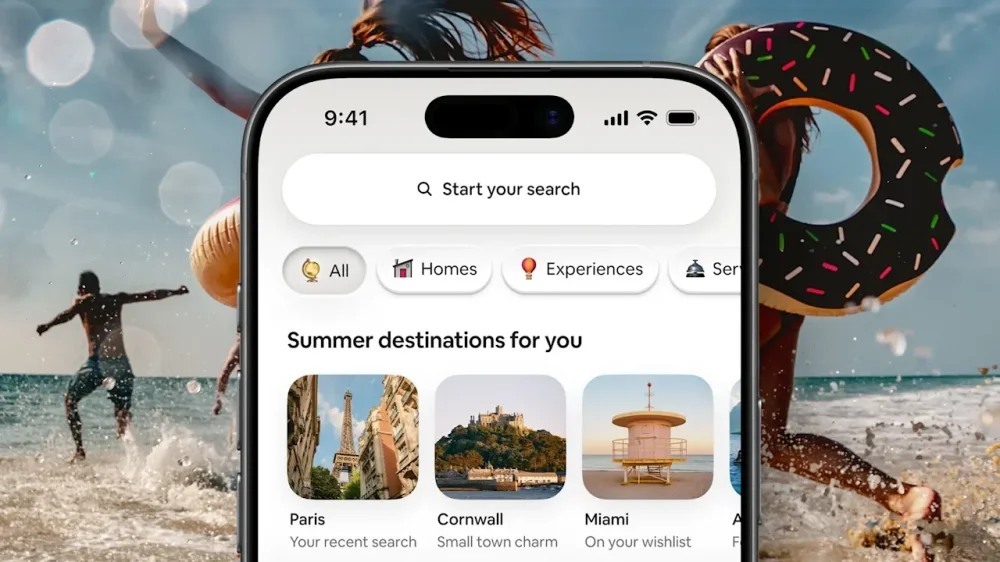
Airbnb is becoming Airb-n-bigger. In an attempt to become what is something of an all-encompassing trip platform, Airbnb announced several new features and offerings on Wednesday, including a redesigned homepage, new service categories (such as airport pickups, grocery-delivery options, luggage-storage, and car rentals, along with new experiences), and even the ability to book rooms at boutique or independent hotels. That’s right: the company that built a name for itself offering alternatives to hotels is now folding some of them into its platform. Airbnb inflates The new features are wide-ranging, and users can even take advantage of social elements, like the ability to add friends or family members as connections to see their previous itineraries. There’s a new AI assistant feature, too, and later this year, the platform will incorporate a travel map, which will allow users to see nearby points of interest, among other things. In all, Airbnb is making it easy to plan an entire trip on its platform—far beyond merely finding a place to stay. “It’s funny how it comes full circle,” says Jud Coplan, Airbnb’s VP of product marketing. “We’re adding boutique hotels, and Airbnb all started with an air bed.” Coplan says that the main idea behind the new upgrades and updates was to make it as easy as possible to organize and plan a trip, and to get inspired for future trips. The new features—such as the ability to book a private car for airport transfers, or finding a place to store luggage—were added in response to user feedback, as more and more people wanted to use the Airbnb platform for other aspects of their trip, not just finding and booking lodging. “Our expansion started last year in a big way,” says Coplan, referring to when Airbnb introduced Services and Experiences to the platform. “And we’re going much further this year. The idea remains the same, though: the things we offer, we have a very unique perspective on them, in that they’re provided by people, by hosts, and you can’t get the same experience anywhere else.” Creating separation from the other “everything” apps That’s an important detail, too, as Airbnb is facing other platforms that are likewise expanding into “everything” apps. Uber, for instance, recently announced a host of similar upgrades and new features—such as hotel bookings, Travel Mode, and more—taking it far beyond its original ride-hailing services. Coplan says that it’s the unique offerings made by hosts—and the company’s focus on curated experiences and other services—that will allow it to stand out among the competition going forward. “The thing that we do, that nobody else does, is put everything together in a travel app that feels different. We have a clear perspective on how to bring you on a journey,” he says, noting that each Airbnb host offers an experience that differs from the others, unlike most hotels or tourist-focused attractions. “We’re offering a thoughtful, well-designed journey through the app,” he says. “We’re not just trying to pipe in an API and get as many hotels on the platform as possible.” View the full article
-
The real estate investment trust, while reporting a first quarter net loss, benefitted from growth and stable margins in its three mortgage production units. View the full article
-
The co-author of the landmark Dodd-Frank Act and progressive congressional trailblazer Rep. Barney Frank, D-Mass., has died. View the full article
-
When considering financing options for your business, comprehending the differences between SBA 504 and SBA 7(a) loans is crucial. Each loan serves unique purposes, with varying amounts, usage, and other critical factors. For instance, the SBA 504 is typically used for purchasing fixed assets, whereas the SBA 7(a) can fund working capital needs. By exploring these distinctions, you can make an informed decision that aligns with your business goals and financial situation. What will you choose? Key Takeaways Loan Purpose: SBA 504 loans are primarily for purchasing fixed assets, while SBA 7(a) loans offer broader uses like working capital and debt refinancing. Down Payment: SBA 504 loans typically require a lower down payment (around 10%) compared to SBA 7(a) loans, which generally require at least 15%. Interest Rates: SBA 504 loans feature fixed interest rates tied to U.S. Treasury bonds, whereas SBA 7(a) loans often have variable rates linked to the prime rate. Repayment Terms: SBA 504 loans offer longer repayment terms (10, 20, or 25 years) compared to the maximum of 10 years for working capital under SBA 7(a) loans. Eligibility Criteria: SBA 504 loans require a tangible net worth of less than $20 million, while SBA 7(a) loans allow for a slightly higher average net income limit of $6.5 million. Loan Amounts and Usage When considering financing options for your business, grasp of the differences in loan amounts and usage between the SBA 504 and SBA 7(a) loans is vital. The SBA 504 loan permits amounts ranging from $250,000 to $30 million, particularly aimed at purchasing commercial real estate or heavy equipment. Conversely, the SBA 7(a) loan caps at $5 million and offers broader utility, covering working capital, debt refinancing, and inventory purchases. You can only use 504 loans for fixed asset acquisitions, concentrating on long-term investments, whereas 7(a) loans provide the flexibility to address immediate cash flow needs and operational expenses. Comprehension of the differing uses and limits of these loans is significant in determining which option aligns with your business goals. Moreover, both loan types are subject to particular SBA 504 interest rates and SBA 504 loan rates that can impact your financing choice in the long run. Down Payment Requirements When you’re considering financing options, comprehending the down payment requirements for SBA loans is crucial. The SBA 504 loan typically needs a down payment of around 10%, which is lower than many conventional loans. Whereas the SBA 7(a) usually demands 15% or more, depending on how you plan to use the funds. Keep in mind that these percentages can change based on the type of property and your creditworthiness, so it’s important to review your specific situation. SBA 504 Down Payment The SBA 504 loan typically requires a down payment of about 10%, making it an attractive option for small businesses seeking to finance commercial real estate or heavy equipment. For loans exceeding $1 million, the down payment can increase to 15% or 20%, depending on the project’s specifics and the lender’s criteria. This lower down payment is advantageous compared to the SBA 7(a) loan, which usually requires a higher down payment of at least 15%. The down payment demonstrates your commitment to the project and helps reduce the lender’s risk. You can likewise use personal assets as collateral in some cases. To better understand your financial commitment, consider using an SBA 504 loan calculator to estimate your down payment based on current SBA 504 rates. SBA 7(a) Down Payment A down payment of at least 15% is usually required for SBA 7(a) loans, though this can vary depending on the specific use of funds and the lender’s guidelines. For certain loans, especially those involving real estate, you might qualify for a lower down payment of just 10% if you meet specific criteria. Unlike the fixed down payment for SBA 504 loans, SBA 7(a) loans offer some flexibility based on factors such as: Your creditworthiness The purpose of the loan The overall financial strength of your business The total loan amount requested Understanding these down payment requirements is essential, as they impact your overall borrowing costs and the equity you need to invest in your business. Interest Rate Structures In terms of interest rate structures, SBA 504 and SBA 7(a) loans present different options that can impact your financing decisions. SBA 504 loans offer fixed interest rates linked to U.S. Treasury bonds, ensuring consistent payments over time. Conversely, SBA 7(a) loans typically feature variable rates that can fluctuate based on the prime interest rate, potentially leading to unexpected changes in your monthly payments. Fixed vs. Variable Rates Interest rate structures play a crucial role in determining the overall cost and predictability of a loan. With SBA 504 loans, you benefit from fixed interest rates, which provide stability for long-term financial planning. Conversely, SBA 7(a) loans offer flexibility, allowing you to choose between fixed and variable rates. Keep in mind: SBA 504 loans have fixed rates that are typically lower than market rates. These rates provide consistent monthly payments over terms of 10, 20, or 25 years. SBA 7(a) loans can have variable rates tied to the prime interest rate, leading to fluctuating payments. Rising interest rates can increase overall costs for variable rate loans, whereas fixed rates shield you from such fluctuations. Rate Determination Factors Grasping the factors that determine interest rates for SBA loans is important for making informed borrowing decisions. SBA 504 loans typically offer fixed rates linked to U.S. Treasury bonds, ensuring consistent payments over time. Conversely, SBA 7(a) loans feature variable rates often tied to the prime rate, which can lead to fluctuating repayment costs. Here’s a quick comparison of their interest rate structures: Loan Type Rate Structure SBA 504 Fixed rates (U.S. Treasury) SBA 7(a) Variable or fixed options Additionally, your creditworthiness, current market conditions, and the loan amount influence the rates. Comprehending these factors will help you choose the best loan for your needs. Repayment Terms Grasping the repayment terms of SBA loans is vital for businesses looking to make informed financial decisions. The repayment structures differ greatly between SBA 504 and SBA 7(a) loans. SBA 504 loans offer terms of 10, 20, or 25 years, providing long-term stability for fixed asset investments. SBA 7(a) loans have a maximum term of 10 years for working capital, but real estate loans can extend to 25 years. Payments for SBA 504 loans are typically fixed, ensuring predictable budgeting, whereas SBA 7(a) loans may have both fixed and variable rates. Longer terms in SBA 504 loans often lead to lower monthly payments compared to the shorter terms of SBA 7(a) loans for working capital. Both loan types allow for amortization, which helps businesses manage cash flow effectively throughout the repayment period. This makes it vital to evaluate these factors when choosing the right option for your needs. Eligibility Criteria When considering SBA loans, comprehension of the eligibility criteria is crucial for ensuring your business qualifies for the funding you need. For SBA 504 loans, your business must have a tangible net worth of less than $20 million and an average net income of $5 million or less over the past two years. On the other hand, SBA 7(a) loans allow a maximum net worth of $20 million and an average net income limit of $6.5 million. Both loan types require your business to operate as a for-profit entity in the U.S. or its territories. Moreover, SBA 504 loans necessitate that your business meets specific job creation or public policy goals, whereas SBA 7(a) loans don’t impose such requirements. Nevertheless, you must demonstrate attempts to utilize alternative financial resources before applying for an SBA 7(a) loan. Finally, both loans are only available to businesses classified as “small” by the SBA. Collateral Requirements Comprehending collateral requirements is essential when evaluating SBA loans, as these can greatly influence your financing options. For SBA 504 loans, collateral typically consists of fixed assets like real estate or equipment, without the need for additional UCC filings. Alternatively, SBA 7(a) loans may demand collateral at 90%, covering a broader range of assets. Here are some key points to reflect on: SBA 504 loans usually involve a conventional lender covering 50% and a CDC covering up to 40%, reducing your collateral burden. SBA 7(a) loans may require personal guarantees on your residence if not fully secured. Both loan types need personal guarantees from anyone owning 20% or more of the business. SBA 7(a) collateral requirements can be more extensive, encompassing various business assets beyond just real estate and equipment. Understanding these differences helps you make an informed decision about which loan option suits your needs best. Application Process and Fees Maneuvering the application process for SBA loans can be challenging, particularly when comparing the SBA 504 and 7(a) programs. The timelines and documentation requirements differ markedly, impacting your decision. Loan Type Application Time Documentation Complexity SBA 504 60-90 days High SBA 7(a) 30-60 days Moderate Both loans require you to work with an SBA-approved lender, but the SBA 504 program adds complexity by involving a Certified Development Company (CDC). The SBA 504 likewise has structured fees that can be lower for larger loans, particularly those above $1 million. Conversely, the SBA 7(a) may come with a wider range of fees, which can increase your overall financing costs. Comprehending these differences is vital for selecting the right loan for your business needs. Frequently Asked Questions What Is the Difference Between SBA 7A and SBA 504? The difference between SBA 7(a) and SBA 504 loans lies in their purposes and terms. SBA 7(a) loans can fund various needs, like working capital or refinancing, whereas SBA 504 loans are particularly for purchasing real estate or equipment. You’ll find that 504 loans require a lower down payment of 10%, compared to the 15% or more for 7(a) loans. Furthermore, 504 loans feature fixed interest rates, whereas 7(a) loans can have variable rates. What Can an SBA 7 a Loan Be Used For? An SBA 7(a) loan can be used for a variety of business needs. You can purchase real estate, acquire an existing business, or secure working capital for operational expenses. It furthermore allows for refinancing existing debt, enabling you to consolidate loans into one with potentially lower payments. In addition, you can buy equipment, inventory, and supplies, making it a flexible financing option for both short-term and long-term business goals. What Are the Disadvantages of a 504 Loan? The disadvantages of a 504 loan include a lengthy application process that can take 60 to 90 days because of complex documentation and the involvement of a Certified Development Company. Furthermore, these loans can only be used for fixed asset acquisitions, limiting their versatility. You’ll likewise face strict eligibility criteria, including a tangible net worth limit of $20 million and paperwork requirements, which can complicate and delay access to funding for your business. Can SBA 504 Be Used to Buy a Business? No, you can’t use an SBA 504 loan to buy a business. These loans are particularly meant for financing fixed assets like real estate or heavy machinery, not for acquiring operational businesses. If you’re looking to purchase a business, you’ll need to explore SBA 7(a) loans instead, which provide more flexible funding options for that purpose. Conclusion In conclusion, comprehending the differences between the SBA 504 and SBA 7(a) loans is crucial for making informed financing decisions. The SBA 504 is ideal for acquiring fixed assets with larger loan amounts and lower down payments, whereas the SBA 7(a) offers flexibility for various business needs, albeit with higher down payments and variable rates. By evaluating your specific financial requirements and eligibility, you can choose the right loan product that aligns with your business goals. Image via Google Gemini This article, "SBA 504 Vs SBA 7(A) – 7 Key Differences Explained" was first published on Small Business Trends View the full article
-
We may earn a commission from links on this page. Deal pricing and availability subject to change after time of publication. The Sony WH-1000XM6 are one of the best premium headphones of 2026, and right now, Amazon is offering them with a $60 discount and a $30 Amazon gift card. You're not likely to see these headphones drop any further in price anytime soon, even with Prime Day around the corner. So if you've had your eyes on the XM6, this is likely the best deal you'll get for a while. Sony WH-1000XM6 Noise Canceling Headphones $30 Amazon Gift Card $398.00 at Amazon Get Deal Get Deal $398.00 at Amazon The XM6 headphones came out three years after the XM5, the longest gap in the WH-1000XM series. The release was much anticipated, so I expected more than just a few tweaks to features and hardware—but they're still one of the best premium headphones you can get in 2026. The active noise cancellation (ANC) on the XM6 are impressive. I flew with them and they managed to cancel out 90% of the noise in an airplane (including crying babies). With the LDAC codec, the audio is crystal clear for Android phones, but they use the same AAC codec you find in regular AirPods. It has 12 microphones (four more than the XM5), and the Spatial Audio, AI noise suppression feature, Adaptive Sound Control, and Ambient sound are much better than the XM5s. The XM6 can now fold into themselves, making them much easier to throw in a backpack, and making the carrying case more compact. I love that you can charge and listen to the headphones at the same time as well. If you want one of the best premium headphones of 2026 with a $30 gift card, take advantage of this deal while you can. Our Best Editor-Vetted Tech Deals Right Now Apple AirPods 4 Active Noise Cancelling Wireless Earbuds — $148.99 (List Price $179.00) Apple Watch Series 11 (GPS, 42mm, S/M Black Sport Band) — $329.00 (List Price $399.00) Apple iPad 11" A16 128GB Wi-Fi Tablet (Silver, 2025) — $299.00 (List Price $349.00) Fire TV Stick 4K Plus Streaming Player With Remote (2025 Model) — $29.99 (List Price $49.99) Sonos Move 2 — $399.00 (List Price $499.00) Sony WH1000XM6- Best Wireless Noise Canceling Headphones — $398.00 (List Price $459.99) Ring 2nd Gen 2K Wired Video Doorbell (2026 Release) — $49.99 (List Price $79.99) Deals are selected by our commerce team View the full article
-
First there was nutrient timing, then proteinmaxxing—now, fibermaxxing is the latest viral wellness trend everyone is talking about. On TikTok, social media influencers can be seen extolling the virtues of fiber (hashtag #fibermaxxing). One such influencer is @shanny_do, a self-proclaimed “fiber-obsessed gastroenterologist,” who posted with gusto about what she packs each day for work at the hospital. (For the curious, that’s a bowl that includes: Ethiopian spicy lentils, some plain black beans straight from the can, baba ganoush and carrots; a second small bowl of berries—black, blue and raspberries; a Z bar—a kid’s protein snack bar made of oats—and an apple.) And it’s not just your health that’s impacted by fibermaxxing. What’s trending on social media isn’t just a fad, it’s big business: Wellness is a $6.3 trillion global industry, one that’s forecast to hit $9 trillion by 2028, according to the Global Wellness Institute. Here’s what to know about the latest trend. What is fibermaxxing? In short, fibermaxxing is exactly what it sounds like—eating a high amount of fiber at every meal, throughout the day. That’s as the Department of Health and Human Services recommends 25 grams for women, 38 for men a day. Most Americans, however, are woefully fiber deficient, with 95% failing to consume the recommended amount, instead averaging a mere 16 grams daily. The recent popularity of gluten-free products, along with fiber-and-nutrient poor cereals and breads has only made that problem worse. Why do I need fiber? “Fiber is a type of carbohydrate that’s beneficial for gut health,” Monica Kelly, associate health and wellbeing manager at Montefiore Einstein, explains. Consuming enough fiber not only helps regulate weight, but also “reduces your risk of cardiovascular disease, type two diabetes, [and] lowers your risk for certain types of cancer, especially colorectal cancer,” says Hannah Holscher, a professor of nutrition at the University of Illinois Urbana-Champaign. There are two types of fiber, soluble and insoluble. Each helps maintain our health in different ways. The former helps to regulate blood sugar, lower cholesterol levels, and reduce the risk of heart disease; while insoluble fiber helps regulate bowel movements, removing bodily waste and and preventing constipation, according to a Harvard Medical School article. Soluble fiber is in fruits, vegetables, beans, and seeds. Insoluble fiber is what we traditionally think of as fiber—foods like oats, whole grains, and some fruits. What should I eat if I want to consume more fiber? Soluble fiber is found in beans (black and lima), broccoli, Brussels sprouts, apples and carrots. To eat more insoluble fiber, try potatoes, whole wheat flour, wheat bran—plus brown rice, nuts and seeds, according to UCLA Health. View the full article

-
Netflix's June lineup has a little something for everyone: true crime docs, sports series, comedy films, reality TV, and more. First, the live-action fantasty series Avatar: The Last Airbender (June 25) returns for its second season at the end of the month. Netflix is also launching a Survivor-style competition show—Outlast: The Jungle (June 10) lands 16 players on a remote island to play for a $1 million prize. Following its May slate of soccer content in the lead-up to the 2026 World Cup, the streamer is hosting The Hot Seat (June 3), a comedy roast featuring World Cup winners from France 1998 and France 2018 alongside stand-up comedians. The Rest is Football (June 10) is a daily series hosted by Gary Lineker, Alan Shearer, and Micah Richards with analysis from the 2026 tournament. And USA 94: Brazil's Return to Glory (June 7), a documentary originally scheduled for release in May, covers Brazil's 1994 World Cup run. Other sports content includes the third season of AMERICA'S SWEETHEARTS: Dallas Cowboys Cheerleaders (June 16) and Chris & Martina: The Final Set (June 26), a documentary exploring Chris Evert and Martina Navratilova's friendship and dominance in tennis. The film lineup for June includes Office Romance (June 5), a rom-com starring J.Lo and Brett Goldstein as an airline CEO and the corporate lawyer she falls for (relatable!), and Little Brother (June 26), also a comedy, with John Cena as a well-known real estate agent opposite Eric André as his "little brother." Here's everything else coming to Netflix in June, and everything that's leaving. What's coming to Netflix in June 2026Available soonBAKI-DOU: The Invincible Samurai: Season 1 Part 2—Netflix Series Husbands in Action—Netflix Film Jae-seok's B&B Rules!—Netflix Series Notes from the Last Row—Netflix Series Available June 1Bee Movie The Big Lebowski The Chronicles of Riddick Cinderella Man Creed Creed II Creed III Father of the Bride Father of the Bride: Part II The Fault in Our Stars Four Weddings and a Funeral Fried Green Tomatoes The Girl on the Train The Hand that Rocks the Cradle Hawaii Five-0: Seasons 1-5 Hot Summer Nights House on Haunted Hill Identity Thief Inside Man Inside Man: Most Wanted The Karate Kid The Karate Kid The Karate Kid Part II The Karate Kid Part III Little Miss Sunshine Made of Honor Miracle Muriel's Wedding My Best Friend's Wedding Out of Africa Pitch Black Rachel Getting Married Riddick Rocky Rocky Balboa Rocky III Rocky IV Rocky V Rookie of the Year Rudy Runaway Bride Scooby-Doo Scooby-Doo 2: Monsters Unleashed Tyler Perry's The Family That Preys The Wedding Date The Wedding Planner Available June 3David The Hot Seat—Netflix Comedy Special Available June 4Maa Behen—Netflix Film The Murder of Rachel Nickell—Netflix Documentary Night Shift For Cuties—Netflix Series Poldi—Netflix Documentary The Witness—Netflix Series Available June 5The Marked Woman—Netflix Film Mexico 86—Netflix Film Office Romance—Netflix Film Teach You a Lesson—Netflix Series Available June 6Grey's Anatomy: Season 22 Resident Alien: Season 4 Available June 7Poor Things USA 94: Brazil's Return to Glory—Netflix Documentary Available June 8Sesame Street: Volume 3—Netflix Family Shrill: Seasons 1-3 Available June 9Norway: The Dark Horse—Netflix Documentary Available June 10Colors Of Evil: Black—Netflix Film My Family: Season 2—Netflix Series Outlast: The Jungle—Netflix Series The Rest is Football—Netflix Sports Series Rosario Tijeras (Mexico): Season 5—Netflix Series Available June 11The Evil Lawyer—Netflix Series Sweet Magnolias: Season 5—Netflix Series Viral Hit—Netflix Series Available June 12I Am Frankelda—Netflix Film Maternal Instinct—Netflix Documentary The Polygamist—Netflix Series Available June 13Song Sung Blue Available June 14Piece by Piece Available June 15Drinking Buddies Percy Jackson & the Olympians: The Lightning Thief Percy Jackson: Sea of Monsters Available June 16AMERICA'S SWEETHEARTS: Dallas Cowboys Cheerleaders: Season 3—Netflix Series Beavis and Butt-head: The Mike Judge Collection: Vol. 1-3 Funny People Mike Judge's Beavis and Butt-Head: Seasons 1-2 Available June 17André Is an Idiot Available June 18I Will Find You—Netflix Series Available June 19The Amazing Digital Circus: The Finale Color Book—Netflix Film Oasis—Netflix Series Voicemails for Isabelle—Netflix Film Available June 20The Root Of The Game—Netflix Sports Series Available June 22The Last Ship: Seasons 1-5 Rhythm + Flow Italy: Season 3—Netflix Series Available June 23Ryan Hamilton: This Just Hit Me—Netflix Comedy Special Available June 24The American Experiment—Netflix Series Another Self: Season 3—Netflix Series In the Hand of Dante—Netflix Film Available June 25Avatar The Last Airbender: Season 2—Netflix Series Available June 26Chris & Martina: The Final Set—Netflix Documentary Little Brother—Netflix Film Pokémon Horizons: Season 3—Rising Hope Part 3—Netflix Family Available June 27Agent Kim Reactivated—Netflix Series Available June 30Sullivan's Crossing Season 4 What's leaving Netflix in June 2026Leaving June 1Fifty Shades of Grey Fifty Shades Darker Fifty Shades Freed Glory Jurassic World: Fallen Kingdom The Lego Movie Ray Leaving June 2Kim's Convenience: Seasons 1-5 Leaving June 3Brockmire: Seasons 1-4 Leaving June 7Blindspot: Seasons 1-5 Shiva Baby Leaving June 9A Lot Like Love Leaving June 10TURN: Washington's Spies: Seasons 1-4 Leaving June 16Aquarius: Seasons 1-2 Unbroken Leaving June 19The Iron Claw Leaving June 20The Expendables The Expendables 2 The Expendables 3 The Expendables 4 Leaving June 21Zoey 101: Seasons 1-2 Leaving June 30Sex and the City: Seasons 1-6 View the full article
-
When considering where to establish or relocate your business, examining tax environments is essential. States like Wyoming, South Dakota, and Florida stand out because of their low or nonexistent income taxes. Meanwhile, Nevada and Montana offer competitive corporate rates and unique benefits, such as Montana’s lack of sales tax. Comprehending these tax structures can greatly influence your business decisions, especially as some states, like Iowa and Georgia, have recently made notable reforms. Are you prepared to explore how these factors could impact your strategy? Key Takeaways Wyoming, South Dakota, and Alaska lead with no individual and corporate income taxes, making them highly attractive for businesses. Florida offers a 0% individual income tax and a low corporate tax rate of 5.5%, enhancing its business appeal. Nevada has no corporate or individual income taxes but features a relatively high sales tax of 6.85%. Montana’s corporate tax rate is 6.75%, while New Hampshire only taxes dividends and interest, making it unique. Recent tax reforms in states like Iowa and Georgia have improved their rankings, showcasing the impact of tax policy changes. Overview of the Top States for Business Taxes When considering where to establish a business, it’s essential to look at the tax climate, as different states offer varying advantages. States like Wyoming, South Dakota, and Alaska stand out owing to their lack of individual and corporate income taxes, creating favorable conditions for businesses. Florida is likewise attractive, with a 0% individual income tax and a corporate tax rate of just 5.5%. Nevada presents another option, offering no corporate or individual income taxes, though it has a higher sales tax of 6.85%. Montana features a corporate tax rate of 6.75% with no sales tax, whereas New Hampshire, in spite of an individual income tax on dividends and interest, has no sales tax and a competitive corporate tax rate of 8.2%. These factors greatly influence business taxes by state. Criteria for Evaluation When evaluating state business tax climates, you’ll want to focus on several key criteria. Tax structure simplicity plays an essential role, as states with straightforward tax systems are often more appealing to businesses. Furthermore, examining major tax types and competitive state rankings can give you insight into how different states attract or deter business investment. Tax Structure Simplicity A simple tax structure is vital for businesses, as it improves compliance and reduces administrative burdens. States that rank well in the State Business Tax Climate Index often have low rates and broad bases, making tax obligations easier to understand. For example, Wyoming, South Dakota, and Alaska attract businesses with no corporate or individual income taxes. Florida likewise exemplifies simplicity with its state corporate tax, which is relatively straightforward compared to other states. Tax systems with fewer exemptions and deductions promote clarity, helping businesses comply with regulations. States like Utah and Indiana have streamlined their tax processes, further enhancing their attractiveness for new investments. Major Tax Types Evaluating major tax types is vital for comprehending how state tax policies impact the business environment. The State Business Tax Climate Index analyzes five key categories, including corporate income tax, which directly affects business profits. States without corporate income tax, like Wyoming and South Dakota, often enjoy higher rankings in tax friendliness. Consider these points when evaluating tax types: Corporate income tax rates can greatly influence business decisions. Individual income tax structures can vary widely, affecting personal finances. Sales tax rates and their bases play a role in customer spending. Property and unemployment insurance taxes as well contribute to overall costs. Understanding these factors helps you gauge a state’s business climate effectively. Competitive State Rankings The Competitive State Rankings provide a clear framework for evaluating how well states cultivate a favorable business environment through their tax policies. The State Tax Competitiveness Index assesses states based on five key subindices, including individual income taxes and corporate taxes. For instance, states like Wyoming and South Dakota rank highest owing to their absence of major taxes, such as corporate or individual income tax, which attracts businesses. Conversely, states like Massachusetts and California fall to the bottom, facing high tax rates and complex structures that hinder growth. Recent reforms in places like Iowa and Georgia show how strategic tax changes can boost rankings. If you’re wondering, does Washington have an income tax? The answer is no, contributing to its favorable business climate. Detailed Examination of the Top 10 States Now, let’s take a closer look at the tax structures of the top 10 states, which include Wyoming, South Dakota, and Florida, among others. Each state has unique business-friendly policies that can greatly impact your bottom line, such as Wyoming’s absence of corporate income tax and Florida’s low corporate tax rate. Comprehending these factors will help you assess their economic growth potential and determine which state aligns best with your business goals. Tax Structures Overview When considering the best states for business taxes, you’ll find that many of them share a common trait: the absence of significant tax burdens like corporate or individual income taxes. Here’s a quick overview of some key states: Wyoming and South Dakota have no corporate or individual income tax at all. Alaska features no individual income tax and no sales tax, creating an appealing environment. Florida does have a corporate income tax at 5.5% but boasts no personal income tax, enhancing its attractiveness. Indiana is reducing its corporate tax rate from 6% to 4.9%, whereas Utah maintains a low rate of 5%. These structures make these states particularly inviting for businesses looking to minimize tax liabilities. Business-Friendly Policies Comprehending the business-friendly policies in the top 10 states for business taxes can greatly influence your decision-making process. States like Wyoming, South Dakota, and Alaska offer no corporate or individual income tax, creating a favorable terrain for entrepreneurs. Florida, with its 0% individual income tax and a corporate rate of 5.5%, attracts businesses aiming to reduce tax burdens. Montana and New Hampshire are appealing as well; Montana has a corporate tax of 6.75% whereas New Hampshire only taxes interest and dividends at 5%. Indiana’s corporate tax is currently 6%, with plans to lower it to 4.9%, and Texas boasts no personal income tax. Washington, too, stands out for its lack of an income tax, enhancing its business-friendly policies. Economic Growth Potential Comprehending the economic growth potential of the top 10 states for business taxes reveals how tax structures can greatly influence business development. States like Wyoming, South Dakota, and Alaska, with no corporate or individual income tax, create an inviting environment for businesses to flourish. Florida’s 0% individual income tax and a low corporate tax rate have led to a remarkable 26% increase in new workers in 2024. Similarly, Montana’s absence of sales tax and competitive corporate rate encourages entrepreneurship. Washington State no income tax promotes spending capacity. North Carolina‘s tech hub attracts innovation. Indiana’s corporate tax reduction boosts competitiveness. Florida’s tax environment supports workforce growth. These factors notably improve economic growth across these states. Notable Ranking Changes in 2024 As states continue to adapt their tax policies, notable ranking changes in 2024 highlight the shifting terrain of business taxes across the country. Arizona climbed from 19th to 14th after implementing a flat tax rate of 2.5%, enhancing its competitiveness. Iowa improved from 38th to 33rd because of a reduction in its top marginal income tax rate. Conversely, Massachusetts dropped 12 places after adopting a graduated-rate income tax with a surtax on high incomes, illustrating the drawbacks of high tax rates. Moreover, Mississippi’s ranking rose from 27th to 20th, whereas Colorado fell from 21st to 27th overall. State 2023 Rank 2024 Rank Arizona 19 14 Iowa 38 33 Massachusetts 12 24 For reference, you might wonder, does Washington have state tax? No, it doesn’t. Impact of Tax Structures on Business Decisions The recent shifts in state rankings illustrate how tax structures can markedly influence business decisions. States like Wyoming and South Dakota, with no corporate or individual income taxes, create a favorable environment that attracts new businesses. Conversely, high property taxes in states like New Jersey and California deter growth. Consider these factors when evaluating tax structures: Simplified flat tax rates, like those in Idaho and Iowa, improve compliance. Relying on temporary tax incentives can backfire, as seen with Dell in North Carolina. Stable tax environments encourage expansion, exemplified by Intel‘s investment in Arizona. The absence of a state income tax in Seattle may appeal to businesses looking for lower burdens. Ultimately, comprehending tax structures can lead to informed business decisions. Comparison of Major Tax Types Across States Comprehending how major tax types compare across states is crucial for businesses considering expansion or relocation. The Tax Foundation‘s State Business Tax Climate Index evaluates five key tax types, including individual income taxes and corporate taxes. States like Wyoming and South Dakota excel because of their absence of major taxes, whereas New Jersey and California struggle with high rates and complex systems. For example, California’s individual income tax is the highest at 13.3%, whereas Florida and Texas have no individual income tax at all. Corporate tax rates likewise vary considerably; Nevada and Wyoming have none, but New Jersey imposes a 9.0% rate. In addition, sales tax rates, like California’s 7.25%, can greatly affect business costs, including the implications of the proposed Seattle income tax. States With the Most Favorable Tax Incentives When evaluating states with the most favorable tax incentives, businesses often find that certain regions stand out owing to their attractive tax structures. States like Wyoming and South Dakota, for example, have no corporate or individual income taxes, making them prime locations for incorporation. Other notable states include: Florida, with a 0% individual income tax and a corporate tax rate of 5.5% Nevada, boasting no corporate or individual income taxes Alaska, offering a 9.4% corporate tax rate but no state-level sales tax Texas, recognized for its low tax burden and 0% personal income tax Additionally, Washington is appealing as a result of its no state income tax, making it an attractive option for businesses looking to maximize profitability. Risks Associated With Tax Incentives Even though tax incentives can initially seem like a boon for businesses, they come with significant risks that can undermine long-term stability. For instance, whereas Dell Computers benefited from incentives in North Carolina, its eventual closure highlighted the dangers of relying solely on such measures. By depending on tax incentives, you might overlook the underlying economic conditions, including the income tax in Seattle, Washington. This reliance can mask unfavorable tax climates and hinder necessary reforms, leading to market distortions. Generous incentives may deliver short-term gains but often fail to address future tax intricacies and burdens. As a business owner, it’s essential to evaluate the sustainability of tax incentives and their potential impact on your long-term profitability and operational health. Future Trends in State Tax Competitiveness Tax incentives can offer short-term benefits, but as you look toward the future, comprehension of state tax competitiveness is vital for making informed business decisions. The State Tax Competitiveness Index highlights significant factors that will shape future trends: States with no income tax, like Wyoming and South Dakota, attract more businesses. States with high tax burdens, such as California and New Jersey, see declines in competitiveness. Methodological changes in the Index reflect the evolving tax environment. Corporate and individual tax reductions in states like Iowa improve their standings. Understanding these trends helps you evaluate whether you want to know, is there a state income tax in Washington? This knowledge is fundamental for strategic planning as you consider where to grow your business. Recommendations for Businesses Considering Relocation As you consider relocating your business, evaluating the tax environment in potential states can greatly impact your decision-making process. States like Wyoming, South Dakota, and Alaska stand out because of their lack of corporate and individual income taxes. Florida’s 0% individual tax and 5.5% corporate tax rate make it a growing hub for businesses. New Hampshire‘s absence of sales tax and low taxation on dividends can similarly be appealing. Conversely, states like New Jersey and California pose challenges with their high tax rates. If you’re wondering, “does WA have income tax?” know that it does, making it less favorable. Here’s a table to encapsulate the tax climates: State Key Tax Features Wyoming No corporate or individual income tax Florida 0% individual, 5.5% corporate tax New Hampshire No sales tax, 5% on dividends South Dakota No corporate or individual income tax Alaska No corporate or individual income tax Frequently Asked Questions Which State Has the Best Business Taxes? When considering the best state for business taxes, you should look at factors like income tax and corporate tax rates. States like Wyoming, South Dakota, and Alaska stand out since they impose no corporate or individual income taxes. Florida likewise offers an attractive environment, with no personal income tax and a corporate tax rate of 5.5%. Conversely, states like New Jersey and California have markedly higher tax burdens, making them less favorable for businesses. What Is the Cheapest State for Business Taxes? If you’re looking for the cheapest state for business taxes, consider Wyoming, South Dakota, or Alaska. These states have no corporate or individual income taxes, making them attractive for businesses. Florida additionally stands out with a 0% individual income tax and a 5.5% corporate tax rate. Nevada has no corporate or individual income taxes, but it does have a sales tax of 6.85%. Each option can markedly reduce your overall tax burden. What Are the Top 10 States With the Highest Income Tax? If you’re looking at states with the highest income tax rates, California leads with a staggering 13.3% for incomes over $1 million. New Jersey follows, imposing a 10.75% rate for similar earners. Vermont’s rate is 8.95% for incomes exceeding $200,000, whereas Oregon charges 9.9% for those earning over $125,000. Hawaii likewise features prominently, taxing high incomes at 11% for amounts above $200,000, making these states significant for high earners. What State Is the Most Tax Friendly for LLC? If you’re looking for the most tax-friendly state for your LLC, consider Wyoming, South Dakota, or Alaska. These states don’t impose corporate or individual income taxes, making them highly attractive for business owners. Florida and Nevada likewise offer favorable conditions, with Florida’s 5.5% corporate tax rate and no individual income tax. Texas stands out too, with a 0% personal income tax and a solid economy. These options provide significant tax advantages for your LLC. Conclusion In summary, choosing a state with favorable business tax structures can greatly impact your company’s financial success. States like Wyoming, South Dakota, and Florida offer low or no income taxes, whereas options like Nevada and Montana provide competitive corporate tax rates and unique benefits. As tax policies evolve, staying informed about changes and incentives will be essential for businesses considering relocation. By carefully evaluating the tax environment, you can make strategic decisions that improve your operational efficiency and profitability. Image via Google Gemini This article, "Top 10 States for Business Taxes and a Comprehensive Comparison" was first published on Small Business Trends View the full article
-
Love it or hate it, the Apple ecosystem has its perks. Take "Handoff," for example: If you have at least two connected devices, such as an iPhone and a Mac, you can start a task on one and carry it over to the other. You can start reading an article in Safari on your iPhone, then pick it up when you get to your Mac. Or, say you're on a FaceTime call on your Mac, but you have to run; you can simply switch to your iPhone to keep the conversation going, without having to call them back. It isn't perfect, but it works, it works. Android doesn't quite have the same setup. While some functions work across devices, like transferring calls, users with an Android phone often don't have the ability to open the same task on their tablet, and vice versa. If you're reviewing a spreadsheet in Google Sheets on your phone, you can't just pick it up on your tablet for a larger view; you instead need to open Sheets on your tablet, then find your way to the document in question. The same goes for many other Google apps, like Chrome, Gmail, Drive, and Docs: Android could really benefit from a dedicated cross-platform option. Luckily, it's on the way, in the form of a new feature called "Continue On." How "Continue On" works on AndroidGoogle announced "Continue On" during its "What's new in Android" discussion on Tuesday. As reported by 9to5Google, this is a new feature as of Android 17, and will be available in Android 17 RC1. If you've ever used Handoff in the Apple ecosystem, you'll understand the core idea behind Continue On: When you open an app on one of your Android devices, you'll notice the app appear on your other device, with a "Handoff Suggestion label" hovering above it. Credit: Google Say you're working on a Google Doc on your Pixel phone. When you open your Pixel tablet, you'll notice the Google Docs icon populate in the doc, with a special label—even if you already have Google Docs in your dock. If you tap the standard Google Docs icon, you'll open the app as per usual; if you tap the Handoff Suggestion, you'll open the Google Doc you're working on on your phone. In another example, you might be reading through a Gmail thread on your phone, but prefer to finish catching up on your tablet. In this case, the Handoff Suggestion would be Chrome: Tap it on your tablet, and you'll pull up the thread in Gmail on the bigger screen. Google appears to be taking its time with implementing Continue On. While the feature will work "bidirectionally" in the future, at launch, it only works from phone to tablet. That means you won't be able to hand off a Google Doc from your tablet to your phone, only from your phone to your tablet. Additionally, Google says it's up to developers to decide how they want this experience to run with their own apps. They can open the same app across both devices (Google Docs to Google Docs), or open the web app from the mobile app (Gmail mobile app to Gmail web app in Chrome). Developers can also opt for a mix of both: While the default can be app-to-app, developers can choose to fall back to the web app if the user doesn't have the app installed on their tablet. View the full article
-
Accessing reliable accounting software support is crucial for your business to navigate complex financial regulations and stay compliant with tax laws. Effective support minimizes downtime during critical periods and improves client trust. When choosing software, consider user-friendly interfaces, seamless integration, and security features. Comprehending common issues and solutions can help you make informed decisions. As you explore these aspects, you’ll find that the right support can greatly impact your organization’s growth and financial management strategies. Key Takeaways Look for accounting software providers that offer 24/7 support to resolve urgent issues quickly and maintain business continuity. Ensure the software includes integration capabilities with tools like PayPal and CRMs for streamlined workflows and efficient financial management. Choose a solution with a user-friendly interface and customizable dashboards for easy navigation and quick access to key metrics. Assess the provider’s compliance with industry standards, such as SOC 2 and IRS regulations, to protect sensitive client data effectively. Evaluate support models for response times, pricing flexibility, and expertise in accounting software like QuickBooks or Sage 50. Importance of Accounting Software Support Accounting software support plays a vital role in the success of small businesses, especially when maneuvering the intricacies of financial regulations and reporting standards. Reliable support guarantees your compliance with tax regulations, which can be complex and constantly changing. During important periods like tax season, effective accounting software support can reduce downtime, preventing loss of client trust and billable hours. Many providers offer 24/7 assistance, fundamental for addressing urgent issues that could disrupt your financial operations. Moreover, the integration of AI agents in payroll reporting software and accounting and HR software improves user experience by automating routine tasks and delivering real-time insights. Regular access to expert resources allows you to leverage advanced features within your accounting software, eventually enhancing your financial management and decision-making processes. Prioritizing this support not just streamlines operations but also fortifies your business’s financial integrity. Key Features to Look for in Accounting Software When choosing accounting software, you should prioritize a user-friendly interface that simplifies navigation and minimizes the learning curve. Integration capabilities with other vital tools can improve your workflow by allowing seamless data exchange. Robust reporting and analytics features empower you to make informed financial decisions. User-Friendly Interface Design A well-designed user interface in accounting software is vital for enhancing your overall experience, as it allows you to navigate the system intuitively. Look for software that prioritizes easy navigation, so you can quickly locate crucial features without extensive training. Customizable dashboards can help you view key financial metrics at a glance, improving your efficiency. Furthermore, context-sensitive help and tooltips can provide guidance without interrupting your workflow. Features like drag-and-drop functionality for invoice creation simplify tasks, making the software accessible even for those without an accounting background. Finally, a mobile-friendly design guarantees you can manage your finances on-the-go, maintaining a seamless experience across all your devices. Integration Capabilities With Tools Integrating your accounting software with popular tools can greatly improve your financial management processes, making it easier to handle your business operations. Look for software that connects seamlessly with platforms like PayPal, Square, and various CRM systems. Solutions like QuickBooks Online and Xero offer extensive API support for improved functionality and data synchronization. Multi-user access is essential as it allows your team to collaborate in real-time, enhancing efficiency. Additionally, consider software that automates data syncing with your American Express and Visa transactions, reducing manual entry errors. Evaluating integration capabilities with payroll, inventory management, and project management tools can centralize operations, providing a thorough financial overview that helps you make informed business decisions. Robust Reporting and Analytics Robust reporting and analytics features play a vital role in effective financial management, as they empower you to generate customizable financial reports that reveal insights into cash flow, expenses, and profitability. Look for software that provides real-time data analytics, allowing you to track KPIs and metrics as they evolve. Visual dashboards with charts and graphs make interpreting complex data straightforward. Furthermore, advanced tools should enable automated report generation and scheduling, minimizing manual effort and guaranteeing timely access to important financial information. Integration with other systems is fundamental for thorough reporting, guaranteeing a holistic view of your financial health. Feature Benefit Importance Real-Time Analytics Immediate insights into trends Quick decision-making Visual Dashboards Easy data interpretation Simplifies complex information Automated Reporting Saves time and effort Guarantees timely updates Benefits of Professional IT Support for Accounting When you consider the intricacies of accounting, the benefits of professional IT support become clear. First, having expert IT support guarantees compliance with critical regulations like the FTC Safeguards and IRS Publication 4557, safeguarding your sensitive client data. Furthermore, IT partners experienced in accounting offer customized solutions that improve operational efficiency, addressing the unique demands of the industry. Many providers, such as Verito and Rightworks, deliver 24/7 assistance, allowing for quick issue resolution, often within an hour. This support also boosts security measures, implementing multi-layer encryption and disaster recovery solutions fundamental for protecting information in cloud environments. Moreover, reliable IT partners optimize the performance of accounting software applications by guaranteeing compatibility and integration, important for maintaining smooth workflows and accurate data. Essentially, professional IT support protects your business and streamlines processes, making your accounting operations more effective. Common Issues and Solutions in Accounting Software When using accounting software, you might encounter common issues like integration challenges and data security concerns. Many platforms require supplementary fees for integrating critical features, which can complicate your workflow and increase costs. Furthermore, ensuring your sensitive financial data is secure should be a top priority, as breaches can lead to significant compliance and financial risks. Software Integration Challenges Integrating accounting software with other business applications can often present significant challenges that may disrupt your financial operations. Common issues include: Compatibility problems with existing systems, hindering data transfer. Difficulties in integrating tools like payroll and project management, increasing manual entry. A lack of standardized APIs complicating the connection between applications. Problems with real-time data synchronization, resulting in outdated financial information. Increased risk of errors because of integration failures. To tackle these challenges, consider choosing accounting software with strong integration capabilities, investing in middleware tools to connect applications, and ensuring ongoing support and updates from your software providers. Addressing these integration hurdles can lead to smoother financial operations and more accurate reporting. Data Security Concerns Data security concerns are critical for businesses using accounting software, as these systems often manage sensitive financial information. To protect your data, look for software that employs 128-bit SSL encryption. Regular automatic backups are vital for recovering data in case of system failures or breaches. Compliance with regulations like the FTC Safeguards Rule guarantees adherence to data protection standards, whereas multi-factor authentication (MFA) adds an extra layer of security. Here’s a quick overview of key security features: Security Feature Importance Recommended Action 128-bit SSL encryption Protects user information Verify software uses this standard Automatic data backups Safeguards against data loss Schedule regular backups Multi-factor authentication Prevents unauthorized access Enable MFA in your account settings Choosing the Right IT Support Provider How do you guarantee your accounting firm receives the right IT support? Choosing the right IT support provider is essential for maintaining your firm’s efficiency and security. Here are key factors to take into account: Expertise in Accounting Software: Look for providers like Verito or Rightworks, who specialize in applications such as QuickBooks and Sage 50. Support Models: Evaluate if they offer 24/7 assistance, like Verito, or focus on cybersecurity like Nerds Support. Compliance Standards: Make certain they align with SOC 2 Type II, FTC Safeguards, and IRS regulations to protect sensitive data. Pricing Structure: Take into account flexible options, such as tiered packages from CorpTech, that cater to your firm’s size without long-term commitments. Response Times: Assess accessibility and speed, with firms like Solution Builders promising first responses under 30 minutes for urgent issues. Best Practices for Maintaining Accounting Software Security In the context of safeguarding your accounting software, adopting best practices is fundamental to protect sensitive financial information. Start by implementing 128-bit SSL encryption to secure communications, similar to what leading platforms like QuickBooks Payroll use. Regular updates to your software are critical, as they patch vulnerabilities and improve security features. Furthermore, utilizing multi-factor authentication (MFA) adds an important layer of protection against unauthorized access. It’s significant to conduct routine backups of your financial data to secure locations, ensuring quick recovery in case of data loss because of breaches. Finally, establish a compliance framework that aligns with standards like SOC 2 and IRS Publication 4557, which helps maintain data protection for client information. Practice Importance Action Step SSL Encryption Protects data in transit Implement 128-bit SSL Regular Software Updates Patches vulnerabilities Schedule automatic updates Multi-Factor Authentication (MFA) Prevents unauthorized access Enable MFA across all accounts Frequently Asked Questions Which Accounting Software Has the Best Customer Support? When evaluating accounting software for the best customer support, FreshBooks stands out for its responsive service customized to service-based businesses. QuickBooks Online offers diverse support options, including a dedicated help center and live chat, ensuring high user satisfaction. Xero provides 24/7 online assistance, whereas Wave Accounting is praised for its user-friendly design, though it may charge for certain features. Zoho Books additionally shines with extensive resources, including live chat and phone support for small to medium-sized businesses. What Software Helps With Accurate Accounting? For accurate accounting, QuickBooks Online stands out because of its customizability and sturdy features, making it ideal for small to medium-sized businesses. If you need multiuser access and AI capabilities, Xero’s a solid choice. FreshBooks shines at invoicing and expense tracking, particularly for service-based businesses. For freelancers, Wave Accounting offers free, unlimited invoicing and financial reporting. Finally, Sage 50 Accounting provides strong inventory tracking for detailed financial management. What Is Access Accounting Software? Access Accounting Software is a thorough platform designed for small to medium-sized businesses. It offers features like inventory management, invoicing, and financial reporting, which help you streamline your accounting processes. You can customize solutions to meet your specific needs, and it integrates with various business applications for better data management. Furthermore, it guarantees compliance with relevant regulations, maintaining accurate financial records during the provision of ongoing support and updates to adapt to your changing business requirements. What Is the Most Commonly Used Accounting Software? The most commonly used accounting software is Intuit QuickBooks Online, favored for its extensive features and high customizability, earning a rating of 4.5 out of 5. FreshBooks follows, especially popular among service-based businesses, with a user-friendly design and a 4.0 rating. Xero additionally rates 4.0 and is well-liked for its AI integration and multiuser access. Wave Accounting, another 4.0 option, appeals to freelancers, whereas Sage 50 stands out in inventory tracking for businesses with advanced needs. Conclusion In summary, accessing reliable accounting software support is vital for maintaining compliance and operational efficiency. By selecting a provider that offers extensive features, professional IT assistance, and effective solutions for common issues, you can guarantee your business runs smoothly. Furthermore, adhering to best practices for software security safeguards your financial data. Prioritizing these elements enables you to focus on growth and informed decision-making, ultimately reinforcing trust with your clients and enhancing your organization’s performance. Image via Google Gemini This article, "Accessing Reliable Accounting Software Support" was first published on Small Business Trends View the full article
-
Vessels bound for China and South Korea are carrying 6mn barrels of crude oilView the full article
-
WhatsApp is taking a bold step into the realm of private communication with the launch of Incognito Chat, powered by Meta AI. This innovative feature is designed primarily for users seeking confidentiality while engaging with AI, a demand that resonates particularly well with small business owners who often navigate sensitive topics such as customer inquiries, business strategies, and financial advice. Incognito Chat enables users to interact with AI without the lingering apprehension of eavesdropping or data breaches. Traditional chat modes still allow access to incoming and outgoing messages, but WhatsApp’s new offering ensures that not even Meta can read your conversations. This promises a level of privacy that is becoming increasingly desirable in an age rife with data concerns. Starting an Incognito Chat on WhatsApp is simple: users initiate a temporary dialogue with Meta AI that exists solely in their private space. Essential to this feature is WhatsApp’s Private Processing technology, which secures messages in a safeguarded environment where even Meta lacks access. Notably, conversations are not saved and are set to disappear by default, providing users a unique platform to explore inquiries without fear of observation. The versatility of Incognito Chat could prove beneficial to small business owners. Here are a few key takeaways that demonstrate how this feature can be applied in practice: Sensitive Discussions: Business owners can ask highly sensitive questions regarding finances or HR issues without worrying about privacy. Whether it’s exploring loan options or getting career advice for employees, the incognito mode fosters an atmosphere of trust with the AI, leading to more candid and useful interactions. Brainstorming Ideas: The ephemeral nature of Incognito Chat allows entrepreneurs to brainstorm ideas freely. Since conversations are temporary and not stored, business owners can bounce ideas off the AI without leaving a digital footprint. Customer Relationship Management: Having a private avenue to draft and refine customer queries or responses could enhance communication strategy, ensuring that messages are both effective and sensitive to individual preferences. Quick Access to Information: Instantaneous access to AI-driven insights means that business owners can make informed decisions quickly, which is crucial in the fast-paced environment many small businesses operate within. However, while the benefits are notable, there are potential challenges that small business owners should bear in mind as they consider integrating this feature into their operations. First, the novelty of the technology means that it may take some time for users to become comfortable with the AI’s capabilities. There could be a learning curve in understanding the most effective ways to engage with the AI under this new private mode. Additionally, small business owners relying heavily on data analytics may need to adjust their expectations regarding the absence of message storage. Furthermore, it remains to be seen how effective such AI interactions will be in delivering nuanced responses, especially as business owners may often need context-specific advice. Ensuring that AI can tailor its responses accurately based on previous conversations could be a significant factor in how useful this feature becomes. In the coming months, WhatsApp plans to enhance its AI communication capabilities further with a feature dubbed Sidechat. This will allow users to receive private assistance without disrupting ongoing conversations. It’s a promising sign for small business owners looking for innovative ways to integrate technology into their workflows. As WhatsApp rolls out Incognito Chat and plans for future expansions, small business owners should keep an eye on how these developments could reshape their interaction with AI and enhance both customer and internal communication processes. For a more detailed exploration of organizations’ innovations in secure digital communication, visit the original press release. Image via Google Gemini This article, "WhatsApp Unveils Incognito Chat: Private AI Conversations Secured" was first published on Small Business Trends View the full article
-
Move aims to speed up spending of country’s expanded defence budgetView the full article