ResidentialBusiness
Administrators
-
Joined
-
Last visited
Everything posted by ResidentialBusiness
-
We may earn a commission from links on this page. Deal pricing and availability subject to change after time of publication. A like-new unit of the Amazon Fire TV Soundbar Plus is down to $109.99 (originally $249.99) on Woot, and using the code FIRE20—valid through April 14, 2026—drops the price another 20 percent to $88. For comparison, a brand-new unit is currently listed at $189.99 on Amazon, and most past discounts haven’t gone much lower than $149.99, according to price trackers. Shipping is free if you have Prime; otherwise, expect to pay about $6. It is also worth noting that shipping is limited to the contiguous U.S. Amazon Fire TV Soundbar Plus Extra 20% off with code $88.00 at Woot $250.02 Save $162.02 Get Deal Get Deal $88.00 at Woot $250.02 Save $162.02 This is a 3.1-channel soundbar with an integrated center channel, designed to make dialogue clearer and give movies a fuller sound than standard TV speakers. It is a straightforward setup that connects over HDMI eARC or optical, so it works with most TVs without extra configuration. There’s also Bluetooth if you want to stream music from your phone. Despite the name, it does not run Fire TV software. You control everything with a basic remote that lets you switch inputs, tweak bass and treble, and cycle through modes like Movie or Night. There is no on-screen interface, so you rely on voice prompts and small LED indicators to confirm changes. Sound-wise, it’s a noticeable improvement over built-in TV speakers, notes this PCMag review. Dialogue is easier to follow, and overall audio has more presence. The limitation shows up in the low end. The built-in bass is present but not strong, so action scenes and music can feel a bit flat. Amazon sells bundles with a separate subwoofer or rear speakers, and those add noticeable depth, but they also cost significantly more. This bar also supports Dolby Atmos in a basic way, though it lacks height channels, so you will not get the full overhead effect. For under $100 after the code, this works as a straightforward upgrade for smaller rooms or casual viewing. Our Best Editor-Vetted Tech Deals Right Now Apple AirPods Pro 3 Noise Cancelling Heart Rate Wireless Earbuds — $199.99 (List Price $249.00) Apple iPad 11" 128GB A16 WiFi Tablet (Blue, 2025) — $299.00 (List Price $349.00) Apple Watch Series 11 (GPS, 42mm, S/M Black Sport Band) — $299.00 (List Price $399.00) Fire TV Stick 4K Plus Streaming Player With Remote (2025 Model) — $29.99 (List Price $49.99) Amazon Fire TV Soundbar — $99.99 (List Price $119.99) Blink Video Doorbell Wireless (Newest Model) + Sync Module Core — $35.99 (List Price $69.99) Ring Indoor Cam (2nd Gen, 2-pack, White) — $59.98 (List Price $79.99) Deals are selected by our commerce team View the full article
-
Managing multiple businesses requires effective bookkeeping software to guarantee accuracy and efficiency in your financial operations. The right tool can streamline processes, support collaboration, and provide insights crucial for decision-making. You’ll find options like QuickBooks Online, FreshBooks, and Xero, each with unique features customized for various needs. Comprehending what each software offers is vital, especially when considering aspects like automated billing and multi-currency support. Let’s explore these top choices further to see which might fit your requirements best. Key Takeaways QuickBooks Online offers a centralized dashboard and unlimited invoicing for managing multiple businesses efficiently. FreshBooks provides automated billing features and real-time financial insights from a single platform. Xero supports multi-entity functionality with a user-friendly interface and unlimited users at no extra cost. Sage Intacct delivers real-time reporting and automated inter-company transactions for multi-entity organizations. NetSuite features robust multi-entity accounting and strong security measures for data protection. QuickBooks Online QuickBooks Online is a robust tool for managing finances across multiple businesses. This accounting software for multiple businesses allows you to create separate company files for each entity while providing a centralized dashboard, making financial oversight straightforward. You can enjoy unlimited invoicing, detailed expense tracking, and customized financial reports that improve decision-making for each business. With pricing plans ranging from $35 to $235 per month, QuickBooks Online scales to fit different business sizes and intricacies. Moreover, features such as automated bank reconciliation, multi-currency support, and a customizable chart of accounts streamline your bookkeeping processes. This bookkeeping software for multiple businesses also integrates seamlessly with various third-party applications, enhancing its functionality. FreshBooks For those managing multiple businesses, FreshBooks offers a thorough bookkeeping solution that simplifies financial management from a single platform. You can handle invoicing, expense tracking, and financial reporting seamlessly across various entities. With automated billing features, such as recurring invoices and late payment reminders, managing cash flow becomes easier, reducing late payments. FreshBooks provides real-time financial insights, mobile receipt scanning, and bank account imports, automating expense categorization for each business. Tax filing is simplified with consolidated financial reports, making it easier to prepare tax-ready documents. Here’s a quick overview of FreshBooks’ features: Feature Benefits Rating Automated Billing Improves cash flow 4.8/5.0 Expense Management Streamlines expense tracking Over 120,000 reviews Financial Reporting Simplifies tax preparation High user satisfaction Mobile Access Manage finances on-the-go User-friendly This platform is particularly effective for freelancers and small businesses managing multiple accounts. Xero Xero stands out for its multi-entity functionality, allowing you to manage several businesses from one platform without extra user fees. Its user-friendly interface makes it easy for you and your team to navigate through features like bank reconciliation and expense tracking. With the ability to customize your chart of accounts and support for multi-currency transactions, Xero caters to the specific financial needs of each entity efficiently. Multi-Entity Functionality Managing multiple businesses can be challenging, especially with regard to bookkeeping; nonetheless, software that offers robust multi-entity functionality can make this task considerably easier. Xero allows you to manage unlimited organizations from a single account, providing seamless access through one dashboard. This is particularly beneficial if you operate in various countries, as Xero supports multi-currency transactions, ensuring accurate financial reporting across currencies. You can customize your chart of accounts for each entity, aligning financial management with the specific needs of each business. Furthermore, Xero’s real-time financial reporting provides consolidated views of performance, enhancing oversight. With features like automated bank feeds and expense tracking, Xero greatly simplifies bookkeeping, reducing manual data entry and improving efficiency across your multi-entity operations. User-Friendly Interface Steering bookkeeping across multiple businesses doesn’t have to be complicated, especially when you have a user-friendly interface at your disposal. Xero features an intuitive design that makes navigation seamless, even for those without accounting expertise. The dashboard presents a clear overview of key financial metrics, such as bank balances and outstanding invoices, all in one place. You can invite unlimited users at no extra cost, allowing your team to collaborate effortlessly across various business accounts. Xero likewise offers customizable invoice templates, helping you maintain brand consistency. Plus, with the mobile app, you can access real-time financial data from anywhere, ensuring you stay on top of your finances no matter where you are. Sage Intacct When you’re looking to streamline financial management across multiple businesses, Sage Intacct stands out as a robust solution. This cloud-based software is particularly designed for multi-entity organizations, providing advanced capabilities to manage various businesses under one platform. With Sage Intacct, you can enjoy real-time financial reporting and analytics, allowing you to consolidate financial data effortlessly across different entities and currencies. The software simplifies complex accounting processes with features for automated inter-company transactions and eliminations, making it easier to manage subsidiaries. Its multi-currency functionality supports accurate financial management for global operations, accommodating various accounting standards and fiscal periods. Users often report a significant productivity boost, with a 79% reduction in close time and an impressive average ROI of 250% within just six months of implementation. NetSuite For businesses managing multiple entities, NetSuite offers a potent ERP solution that surpasses in multi-entity accounting through its OneWorld Suite. This all-encompassing software is customized for complex business needs, excelling in global operations and multi-currency management. You’ll appreciate the real-time financial reporting and dashboards, which provide a consolidated view of financial data across all your entities and subsidiaries, enhancing oversight. NetSuite further simplifies accounting processes with features like automated inter-company transactions and eliminations, greatly reducing the manual workload. Its customizable chart of accounts allows you to modify financial management to fit the unique structures and transaction behaviors of each entity. Moreover, the platform’s robust security measures and compliance capabilities guarantee your data is protected during adherence to financial regulations, no matter the jurisdictions in which you operate. Zoho Books Zoho Books stands out as a versatile bookkeeping solution, especially for businesses managing multiple entities under a single account. Its user-friendly interface allows you to create and manage several organizations easily, making it ideal for your diverse business needs. The software offers vital features like expense tracking, invoicing, and thorough financial reporting, all designed to streamline your financial management across different entities. With built-in multi-currency support, you can handle international transactions effortlessly, which is important for businesses with a global presence. Moreover, Zoho Books integrates seamlessly with other Zoho products and various third-party applications, enhancing its overall functionality. The flexible pricing structure is another advantage, offering a free plan for very small businesses and scalable paid plans starting at $0 for one organization, making it accessible for companies at various growth stages. Tipalti Tipalti offers a robust set of features customized for businesses managing multiple entities, focusing on accounts payable automation and global payments. With its self-service supplier onboarding, paperless invoice processing, and extensive payment rules, you can streamline your financial operations effectively. As we explore Tipalti’s integration capabilities and pricing, you’ll see how it can improve your bookkeeping across various business units. Key Features Overview When managing multiple businesses, having a robust bookkeeping software like Tipalti can greatly improve operational efficiency. Its key features are designed to streamline processes and strengthen security. Feature Description Supplier Onboarding Self-service onboarding and blacklist validation guarantee security. Paperless Invoice Processing OCR scanning reduces manual data entry errors and boosts efficiency. Global Payments Supports payments in over 200 countries and 120 currencies, ideal for international operations. Additionally, with over 26,000 payment rules and 3-way matching, Tipalti improves error detection. The integration of AI-driven insights via Tipalti Pi offers actionable data analytics, empowering you to make informed decisions across your business units. Integration Capabilities For businesses managing multiple entities, integration capabilities play a vital role in enhancing financial operations. Tipalti offers seamless integration with over 200 third-party applications, allowing you to streamline your financial processes efficiently. With automated data synchronization across platforms, you can reduce manual entry errors as you save time on financial management tasks. The software’s API supports custom integrations customized to your specific needs, guaranteeing connectivity with existing ERP systems and enhancing data flow. Being cloud-based means these integrations are accessible from anywhere, promoting collaboration among teams situated in different locations. Moreover, Tipalti focuses on supplier management by integrating onboarding processes and validation checks, which guarantees compliance and minimizes risk in financial transactions. Cost and Pricing Comprehending the cost and pricing model of Tipalti is crucial for businesses looking to optimize their financial operations across multiple entities. Tipalti offers a flexible pricing structure customized to your specific needs, allowing you to personalize based on the scale of your operations and desired features. By utilizing their all-encompassing suite of accounts payable automation tools, you can achieve significant cost savings through decreased manual processing and improved payment efficiency. Furthermore, Tipalti supports global payments in over 120 currencies, minimizing international transaction fees. Many organizations report an impressive ROI, with some users experiencing up to 250% returns owing to improved financial controls. You can inquire about custom pricing plans to guarantee you only pay for the features that matter to your business. Frequently Asked Questions What Is the Best Accounting Software for Multiple Small Businesses? When choosing accounting software for multiple small businesses, consider factors like user-friendliness, pricing, and crucial features. FreshBooks stands out in invoicing and expense tracking, whereas QuickBooks Online offers flexible pricing and separate bookkeeping for each entity. Xero supports unlimited users and multi-currency transactions, ideal for international operations. If budget is a concern, Wave Accounting allows management of up to 15 business profiles for free. Evaluate these options based on your specific needs to find the best fit. Can I Use Freshbooks for Multiple Businesses? Yes, you can use FreshBooks for multiple businesses. It allows you to manage different business accounts from a single login, streamlining your financial oversight. You can customize invoicing and expense tracking for each entity, ensuring everything stays organized. FreshBooks likewise generates consolidated financial reports, making tax filing simpler. Plus, it automates processes and reduces manual bookkeeping errors, providing real-time insights that help you maintain efficient financial management across all your businesses. Which Quickbooks Is Best for Multiple Businesses? For managing multiple businesses, QuickBooks Online offers several plans customized to your needs. The Fundamental plan, at $65/month, supports up to three users and includes invoicing and expense tracking. If you need advanced features like project tracking, consider the Plus plan for $99/month. For larger operations, the Advanced plan at $235/month allows up to 25 users and provides improved reporting. You can easily switch between company files using a centralized dashboard, streamlining management. What Is the Best Way to Legally Structure Multiple Businesses? To legally structure multiple businesses, consider forming separate entities like LLCs or corporations for each one. This approach protects your personal assets by limiting liability. A parent company structure can streamline management and financial reporting as well as allowing each subsidiary to maintain its legal identity. Moreover, a holding company can provide tax benefits and facilitate asset transfers. Always check state regulations and tax laws, as they vary and can greatly impact your choice. Conclusion Choosing the right bookkeeping software for managing multiple businesses is crucial for streamlining your financial processes. Each option, from QuickBooks Online to Tipalti, offers distinct features customized to various business needs, such as automated billing and real-time reporting. By selecting the software that aligns best with your operations, you can improve efficiency and gain valuable insights into your finances. Assess your specific requirements carefully to make an informed decision that supports your organization’s growth and success. Image via Google Gemini This article, "7 Best Bookkeeping Software for Managing Multiple Businesses" was first published on Small Business Trends View the full article
-
Managing multiple businesses requires effective bookkeeping software to guarantee accuracy and efficiency in your financial operations. The right tool can streamline processes, support collaboration, and provide insights crucial for decision-making. You’ll find options like QuickBooks Online, FreshBooks, and Xero, each with unique features customized for various needs. Comprehending what each software offers is vital, especially when considering aspects like automated billing and multi-currency support. Let’s explore these top choices further to see which might fit your requirements best. Key Takeaways QuickBooks Online offers a centralized dashboard and unlimited invoicing for managing multiple businesses efficiently. FreshBooks provides automated billing features and real-time financial insights from a single platform. Xero supports multi-entity functionality with a user-friendly interface and unlimited users at no extra cost. Sage Intacct delivers real-time reporting and automated inter-company transactions for multi-entity organizations. NetSuite features robust multi-entity accounting and strong security measures for data protection. QuickBooks Online QuickBooks Online is a robust tool for managing finances across multiple businesses. This accounting software for multiple businesses allows you to create separate company files for each entity while providing a centralized dashboard, making financial oversight straightforward. You can enjoy unlimited invoicing, detailed expense tracking, and customized financial reports that improve decision-making for each business. With pricing plans ranging from $35 to $235 per month, QuickBooks Online scales to fit different business sizes and intricacies. Moreover, features such as automated bank reconciliation, multi-currency support, and a customizable chart of accounts streamline your bookkeeping processes. This bookkeeping software for multiple businesses also integrates seamlessly with various third-party applications, enhancing its functionality. FreshBooks For those managing multiple businesses, FreshBooks offers a thorough bookkeeping solution that simplifies financial management from a single platform. You can handle invoicing, expense tracking, and financial reporting seamlessly across various entities. With automated billing features, such as recurring invoices and late payment reminders, managing cash flow becomes easier, reducing late payments. FreshBooks provides real-time financial insights, mobile receipt scanning, and bank account imports, automating expense categorization for each business. Tax filing is simplified with consolidated financial reports, making it easier to prepare tax-ready documents. Here’s a quick overview of FreshBooks’ features: Feature Benefits Rating Automated Billing Improves cash flow 4.8/5.0 Expense Management Streamlines expense tracking Over 120,000 reviews Financial Reporting Simplifies tax preparation High user satisfaction Mobile Access Manage finances on-the-go User-friendly This platform is particularly effective for freelancers and small businesses managing multiple accounts. Xero Xero stands out for its multi-entity functionality, allowing you to manage several businesses from one platform without extra user fees. Its user-friendly interface makes it easy for you and your team to navigate through features like bank reconciliation and expense tracking. With the ability to customize your chart of accounts and support for multi-currency transactions, Xero caters to the specific financial needs of each entity efficiently. Multi-Entity Functionality Managing multiple businesses can be challenging, especially with regard to bookkeeping; nonetheless, software that offers robust multi-entity functionality can make this task considerably easier. Xero allows you to manage unlimited organizations from a single account, providing seamless access through one dashboard. This is particularly beneficial if you operate in various countries, as Xero supports multi-currency transactions, ensuring accurate financial reporting across currencies. You can customize your chart of accounts for each entity, aligning financial management with the specific needs of each business. Furthermore, Xero’s real-time financial reporting provides consolidated views of performance, enhancing oversight. With features like automated bank feeds and expense tracking, Xero greatly simplifies bookkeeping, reducing manual data entry and improving efficiency across your multi-entity operations. User-Friendly Interface Steering bookkeeping across multiple businesses doesn’t have to be complicated, especially when you have a user-friendly interface at your disposal. Xero features an intuitive design that makes navigation seamless, even for those without accounting expertise. The dashboard presents a clear overview of key financial metrics, such as bank balances and outstanding invoices, all in one place. You can invite unlimited users at no extra cost, allowing your team to collaborate effortlessly across various business accounts. Xero likewise offers customizable invoice templates, helping you maintain brand consistency. Plus, with the mobile app, you can access real-time financial data from anywhere, ensuring you stay on top of your finances no matter where you are. Sage Intacct When you’re looking to streamline financial management across multiple businesses, Sage Intacct stands out as a robust solution. This cloud-based software is particularly designed for multi-entity organizations, providing advanced capabilities to manage various businesses under one platform. With Sage Intacct, you can enjoy real-time financial reporting and analytics, allowing you to consolidate financial data effortlessly across different entities and currencies. The software simplifies complex accounting processes with features for automated inter-company transactions and eliminations, making it easier to manage subsidiaries. Its multi-currency functionality supports accurate financial management for global operations, accommodating various accounting standards and fiscal periods. Users often report a significant productivity boost, with a 79% reduction in close time and an impressive average ROI of 250% within just six months of implementation. NetSuite For businesses managing multiple entities, NetSuite offers a potent ERP solution that surpasses in multi-entity accounting through its OneWorld Suite. This all-encompassing software is customized for complex business needs, excelling in global operations and multi-currency management. You’ll appreciate the real-time financial reporting and dashboards, which provide a consolidated view of financial data across all your entities and subsidiaries, enhancing oversight. NetSuite further simplifies accounting processes with features like automated inter-company transactions and eliminations, greatly reducing the manual workload. Its customizable chart of accounts allows you to modify financial management to fit the unique structures and transaction behaviors of each entity. Moreover, the platform’s robust security measures and compliance capabilities guarantee your data is protected during adherence to financial regulations, no matter the jurisdictions in which you operate. Zoho Books Zoho Books stands out as a versatile bookkeeping solution, especially for businesses managing multiple entities under a single account. Its user-friendly interface allows you to create and manage several organizations easily, making it ideal for your diverse business needs. The software offers vital features like expense tracking, invoicing, and thorough financial reporting, all designed to streamline your financial management across different entities. With built-in multi-currency support, you can handle international transactions effortlessly, which is important for businesses with a global presence. Moreover, Zoho Books integrates seamlessly with other Zoho products and various third-party applications, enhancing its overall functionality. The flexible pricing structure is another advantage, offering a free plan for very small businesses and scalable paid plans starting at $0 for one organization, making it accessible for companies at various growth stages. Tipalti Tipalti offers a robust set of features customized for businesses managing multiple entities, focusing on accounts payable automation and global payments. With its self-service supplier onboarding, paperless invoice processing, and extensive payment rules, you can streamline your financial operations effectively. As we explore Tipalti’s integration capabilities and pricing, you’ll see how it can improve your bookkeeping across various business units. Key Features Overview When managing multiple businesses, having a robust bookkeeping software like Tipalti can greatly improve operational efficiency. Its key features are designed to streamline processes and strengthen security. Feature Description Supplier Onboarding Self-service onboarding and blacklist validation guarantee security. Paperless Invoice Processing OCR scanning reduces manual data entry errors and boosts efficiency. Global Payments Supports payments in over 200 countries and 120 currencies, ideal for international operations. Additionally, with over 26,000 payment rules and 3-way matching, Tipalti improves error detection. The integration of AI-driven insights via Tipalti Pi offers actionable data analytics, empowering you to make informed decisions across your business units. Integration Capabilities For businesses managing multiple entities, integration capabilities play a vital role in enhancing financial operations. Tipalti offers seamless integration with over 200 third-party applications, allowing you to streamline your financial processes efficiently. With automated data synchronization across platforms, you can reduce manual entry errors as you save time on financial management tasks. The software’s API supports custom integrations customized to your specific needs, guaranteeing connectivity with existing ERP systems and enhancing data flow. Being cloud-based means these integrations are accessible from anywhere, promoting collaboration among teams situated in different locations. Moreover, Tipalti focuses on supplier management by integrating onboarding processes and validation checks, which guarantees compliance and minimizes risk in financial transactions. Cost and Pricing Comprehending the cost and pricing model of Tipalti is crucial for businesses looking to optimize their financial operations across multiple entities. Tipalti offers a flexible pricing structure customized to your specific needs, allowing you to personalize based on the scale of your operations and desired features. By utilizing their all-encompassing suite of accounts payable automation tools, you can achieve significant cost savings through decreased manual processing and improved payment efficiency. Furthermore, Tipalti supports global payments in over 120 currencies, minimizing international transaction fees. Many organizations report an impressive ROI, with some users experiencing up to 250% returns owing to improved financial controls. You can inquire about custom pricing plans to guarantee you only pay for the features that matter to your business. Frequently Asked Questions What Is the Best Accounting Software for Multiple Small Businesses? When choosing accounting software for multiple small businesses, consider factors like user-friendliness, pricing, and crucial features. FreshBooks stands out in invoicing and expense tracking, whereas QuickBooks Online offers flexible pricing and separate bookkeeping for each entity. Xero supports unlimited users and multi-currency transactions, ideal for international operations. If budget is a concern, Wave Accounting allows management of up to 15 business profiles for free. Evaluate these options based on your specific needs to find the best fit. Can I Use Freshbooks for Multiple Businesses? Yes, you can use FreshBooks for multiple businesses. It allows you to manage different business accounts from a single login, streamlining your financial oversight. You can customize invoicing and expense tracking for each entity, ensuring everything stays organized. FreshBooks likewise generates consolidated financial reports, making tax filing simpler. Plus, it automates processes and reduces manual bookkeeping errors, providing real-time insights that help you maintain efficient financial management across all your businesses. Which Quickbooks Is Best for Multiple Businesses? For managing multiple businesses, QuickBooks Online offers several plans customized to your needs. The Fundamental plan, at $65/month, supports up to three users and includes invoicing and expense tracking. If you need advanced features like project tracking, consider the Plus plan for $99/month. For larger operations, the Advanced plan at $235/month allows up to 25 users and provides improved reporting. You can easily switch between company files using a centralized dashboard, streamlining management. What Is the Best Way to Legally Structure Multiple Businesses? To legally structure multiple businesses, consider forming separate entities like LLCs or corporations for each one. This approach protects your personal assets by limiting liability. A parent company structure can streamline management and financial reporting as well as allowing each subsidiary to maintain its legal identity. Moreover, a holding company can provide tax benefits and facilitate asset transfers. Always check state regulations and tax laws, as they vary and can greatly impact your choice. Conclusion Choosing the right bookkeeping software for managing multiple businesses is crucial for streamlining your financial processes. Each option, from QuickBooks Online to Tipalti, offers distinct features customized to various business needs, such as automated billing and real-time reporting. By selecting the software that aligns best with your operations, you can improve efficiency and gain valuable insights into your finances. Assess your specific requirements carefully to make an informed decision that supports your organization’s growth and success. Image via Google Gemini This article, "7 Best Bookkeeping Software for Managing Multiple Businesses" was first published on Small Business Trends View the full article
-
Fund says British economy faces heavy blow from global energy crisis this yearView the full article
-
Expansion of global economy would fall to 2.5% in an ‘adverse scenario’ of persistent $100-per-barrel oil View the full article
-
The standoff between the United States and Iran deepened Tuesday as the U.S. declared it had blockaded Iran’s ports, Tehran threatened to strike targets across the region, and Pakistan said it was racing to bring the sides together for more talks. Though last week’s ceasefire appeared to hold, the showdown over the Strait of Hormuz risked reigniting hostilities and deepening the region-wide war’s economic fallout. Talks aimed at permanently ending the conflict — which began Feb. 28 with U.S. and Israeli strikes on Iran — failed to produce an agreement last weekend, though Pakistan has proposed hosting a second round in the coming days. Two Pakistani officials, who spoke on condition of anonymity because they weren’t authorized to discuss the matter with the media, said that the first talks were part of an ongoing diplomatic process rather than a one-off effort. Two U.S. officials, who spoke on the condition of anonymity to discuss sensitive diplomatic negotiations, said on Monday that discussions were still underway about a new round of talks. They said that the venue, timing and composition of the delegations hadn’t been decided, but that talks could happen Thursday. The war, now in its seventh week, has jolted markets and rattled the global economy as a great deal of shipping has been cut off and airstrikes have torn through military and civilian infrastructure across the region. The fighting has killed at least 3,000 people in Iran, more than 2,000 in Lebanon, 23 in Israel and more than a dozen in Gulf Arab states. Thirteen U.S. service members have also been killed. Tanker reported rounding the corner The blockade is intended to pressure Iran, which has exported millions of barrels of oil, mostly to Asia, since the war began. Much of it has likely been carried by so-called dark transits that evade sanctions and oversight, providing cash flow that’s been vital to keeping Iran running. Both the nature of enforcement and the extent to which ships will comply remained unclear during its first full day in effect on Tuesday. Tankers approaching the strait on Monday turned around shortly after it took effect, though one turned around and transited the waterway early Tuesday. The tanker Rich Starry had been waiting off the coast of the United Arab Emirates, according to shipping data firm Lloyd’s List, which cited data from the energy cargo-tracking firm Vortexa. It wasn’t immediately clear whether the Rich Starry had earlier docked in Iran. Yet it is listed by the U.S. Treasury’s Office of Foreign Assets Control as linked to Iranian shipping. Lloyd’s List, citing ship registry and tracking data, reported that it’s owned by a Chinese shipping company and ultimately bound for China. U.S. Central Command didn’t immediately respond to questions about the vessel after it cleared the 21-mile-wide (nearly 34-kilometer) waterway. A day earlier, it said that the blockade applied to vessels going to and from Iranian ports. Since the start of the war, Iran has curtailed maritime traffic, with most commercial vessels avoiding the waterway. Iran’s effective closure of the strait, through which a fifth of global oil transits in peacetime, has sent oil prices skyrocketing, pushing up the cost of gasoline, food and other basic goods far beyond the Middle East. U.S. President Donald The President on Monday said that Iran’s control of the strait amounted to blackmail and extortion as the U.S. blockade took effect. He said in a social media post that Iran’s navy had been “completely obliterated,” but still had “fast attack ships.” He warned that “if any of these ships come anywhere close to our BLOCKADE, they will be immediately ELIMINATED.” Iran threatened to retaliate against Persian Gulf ports if attacked. “If you fight, we will fight,” Iran’s parliamentary speaker, Mohammad Bagher Qalibaf, said in a statement addressed to The President. French President Emmanuel Macron and British prime Minister Keir Starmer will co-chair a conference Friday for nations willing to deploy warships to escort oil tankers and container ships through the Strait of Hormuz. The deployment will happen “when security conditions allow,” Macron’s office said Tuesday. Israel and Lebanon scheduled for talks Meanwhile, direct talks between Israel and Lebanon were set to begin in Washington on Tuesday, the first such negotiations in decades. Israel has pressed ahead with its air and ground campaign since last week’s ceasefire in Iran, insisting that it doesn’t apply to fighting in Lebanon. It has, however, halted strikes in the country’s capital since April 8, after a deadly bombardment that hit several crowded commercial and residential areas in central Beirut. It sparked an international outcry and threats by Iran that it would end the ceasefire. After more than a year of near-daily strikes in southern Lebanon, Israel escalated its offensive in the early days of the war following Hezbollah launching rockets into Israel. The fighting has carved a path of destruction from agricultural towns near the border to Beirut, killing more than 2,000 people and displacing in excess of 1 million others, according to Lebanese authorities. The talks are expected to be preliminary, focused on setting parameters rather than resolving core issues. Lebanese officials have pushed for a ceasefire, while Israel has framed the negotiations around Hezbollah’s disarmament and a potential peace deal, without publicly committing to halting hostilities or withdrawing its forces. Israel wants Lebanon’s government to assume responsibility for disarming Hezbollah, much like was envisaged in a November 2024 ceasefire. But the militant group has survived efforts to curb its strength for decades and said on Monday that it won’t abide by any agreements that may result from the talks. Aamer Madhani, Matthew Lee and Farnoush Amiri contributed to this report. —Munir Ahmed and Sam Metz, Associated Press View the full article

-
Meg O’Neill plans to return BP to structure before its complicated 2020 reorganisationView the full article
-
Demand drops 3.4% in March due to soaring prices, supply shortages and collapse of Middle East air travelView the full article
-
Seven & i Holdings, the Japan-based owner of 7-Eleven, has announced that it plans to close hundreds of stores in North America over the next year. The store closures are an attempt to reduce costs and increase profitability for the chain of convenience stores ahead of a U.S. initial public offering for its North American unit, which was recently delayed. Here’s what you need to know. 645 store closures in North America Tucked away in Seven & i Holdings’ brief summary for its fiscal year 2025 last week was news that the company plans to close more than 1,000 locations in its fiscal year 2026, which runs from March 1, 2026, to February 28, 2027. According ot the document, Seven & i Holdings plans to shutter 645 locations in North America. During the same period, 205 new 7-Eleven locations are set to open, meaning a net loss of 440 of the beloved convenience stores is expected. For context, 645 closures represent about a 5% reduction in the company’s current footprint of 12,272 North American locations. However, it should be noted that Seven & i Holdings says some of the closing locations won’t be shuttered entirely. Many 7-Eleven locations in North America sell both gas at the pump and food inside the convenience store. Locations that don’t have an operating convenience store and only sell gas are known as wholesale fuel stores. Seven & i Holdings says that the “645 store closures in the full-year FY2026 forecast include the conversion to wholesale fuel stores.” This means some locations will close their convenience store segment, but continue to operate as gas stations. However, the locations that undergo a transition to wholesale fuel stores only will no longer count as part of the chain’s total footprint, hence a wholesale fuel stores conversion counts as a closure. Which 7-Eleven locations are closing? It’s unknown which of the company’s 12,272 North American locations are closing. Fast Company has reached out to Seven & i Holdings for comment. However, the 645 North American locations aren’t the only 7-Eleven locations that Seven & i Holdings is shuttering over the next year. The company says it will close additional stores internationally, including: 350 in Japan 18 in Australia 30 in Beijing, China 25 in Tianjin, China 10 in Chengdu, China How has 7-Eleven’s delayed IPO impacted closures? While Seven & i Holdings is a publicly traded company in Japan, the 7-Eleven owner has long intended to list its North American operations separately on a U.S. stock exchange. This initial public offering for 7-Eleven was expected to take place this year, but has now been delayed until at least 2027. As the Financial Times reported last week, Seven & i Holdings has announced that the U.S. IPO would be delayed until the company’s 2027 financial year “at the earliest.” That financial year runs from March 1, 2027, until the end of February 2028. The delayed IPO is being driven by the company’s desire to turn around profits at its North American locations ahead of the listing. The company’s North American locations have been hit by declining sales as cash-strapped consumers cut back on spending. The ongoing U.S. war with Iran is also not helping the company’s bottom line, as it is raising fuel prices, thereby eating into profits. Companies also tend to cut costs wherever they can before an IPO to help present a better bottom line to potential investors. So the upcoming IPO is also likely having an impact on Seven & i Holdings’ decision to close hundreds of North American locations. When will 7-Eleven close its stores? That is unknown. But it is unlikely that the 645 stores marked for closure will all close at once. Instead, locations will likely close individually throughout Seven & i Holdings’s 2026 fiscal year. That fiscal year runs until February 28, 2027, so expect the 645 North American locations to be closed by that date. View the full article

-
UK carmaker tests limits of the market with its personalised vehicles for the super-richView the full article
-
Saying “my back hurts” is a bit like saying “my car is making a noise.” It may be serious, or it may be nothing, and only a professional will know for sure. But if you have back pain, especially in your lower back, you’re not alone: By some estimates, 75% of us will have an achy lower back at some point in our lives, often without any obvious cause. I cannot diagnose your back pain over the internet. That said, I can tell you about common reasons for back pain, and provide general strategies that can help you feel less achy. Back pain doesn’t always mean you’re injuredWe tend to assume that pain is a sign that some part of our body is damaged and needs fixing. But that’s not always true. When it comes to back pain, around 90% of the time there is no detectable injury. That doesn’t mean that the pain is imaginary—there can be physical causes that don’t show up on x-rays or MRIs, and other factors also contribute to us feeling a sensation of pain. Doctors and scientists used to think of pain as a simple signal sent from damaged body parts to the brain. It’s now considered more accurate to say that pain is a perception created in the brain in response to a variety of things we experience. Tissue damage can be one of them, but our experience of pain is also shaped by our expectations, our fears, and other things going on in our brain and body. You might feel pain more acutely if you’re stressed or worried about it. This increases your stress, and things snowball from there. Or maybe you’ve been to the doctor about something that was worrying you, only to find out that the issue is actually very minor, and you’ll be fine. It’s not unusual to experience less pain from that point onward, even though nothing has physically changed. Obviously, there are back problems that are physical and fixable, so it’s definitely worth getting checked out to rule out serious issues. But if you just have an achy back sometimes and your doctor says nothing is seriously wrong, what can you do? A strong back tends to be a healthier backExercise tends to help people with low back pain feel better, according to a 2021 meta-analysis of trials that included everything from strength training to Zumba. If you’re dealing with pain on a daily basis, the first step doesn’t have to be finding the “best” exercises to deal with it. Instead, focus your efforts on finding something you can do without experiencing pain, or at least without increasing your pain. A physical therapist can help guide you through this process, especially one who specializes in sports medicine or who has experience working with active people. (Some physical therapists prescribe exercises that are too easy to be effective, especially to older adults; this is a recognized problem in the industry.) There is still disagreement on exactly what kind of exercise is best to prevent or treat back pain. Some PTs focus on core work, believing that it’s crucial for your deep core muscles, such as the transverse abdominis, to be strong to protect your back. Using this approach, you may find yourself doing a lot of dead bugs and bird dogs, and get a lot of practice drawing your belly button in toward your spine. Another school of thought holds that core muscles are only a small part of the picture, and that strengthening your back muscles themselves should be the focus of training. This approach is more likely to favor work with free weights, like deadlifts, dumbbell rows, and lunges. Done correctly, these moves also work your core; you need to brace your core to stabilize your spine for a deadlift or squat, and that’s as legitimate a type of core work as anything you do on a yoga mat. Sore muscles are okay, actuallyIt’s normal to be concerned about protecting your back. After all, if you’ve heard a million times not to “lift with your back,” you might worry that any soreness after lifting or bending means you injured something. But there are muscles in your back, and they can get fatigued or sore when you use them a lot—just like the muscles in your arms or legs. You wouldn’t be surprised or worried if you had sore thighs after a heavy squat day or after running a race. The muscles in your lower back can feel sore after your deadlift day at the gym, or even after a long day of standing and walking more than you’re used to. Sometimes people confuse this normal soreness with injury, and worry that those deadlifts did something terrible to their back. But before you panic, consider treating your back the same way you would any other sore muscle: Use gentle heat, walk around a bit, and consider foam rolling or massage. The pain from sore muscles tends to feel a bit better with activity, and will usually fade within a few days. Stretches and exercises that are good for people with back painWhat exercises can you do to potentially prevent back pain and possibly manage back pain you already have? Again, it’s best to check with a professional to be sure of what makes the most sense for you, but here are some strengthening and stretching exercises that are often recommended: Core exercisesBird dogs Dead bugs Planks Side planks Back-strengthening exercises (with barbells, dumbbells, or kettlebells)Deadlifts or Romanian deadlifts Rack pulls or block pulls Bent-over rows Split squats or your favorite regular squat Reverse hypers StretchesCat/cow Jefferson curls Figure 4 stretch Spinal twist Lying hamstring stretch View the full article
-
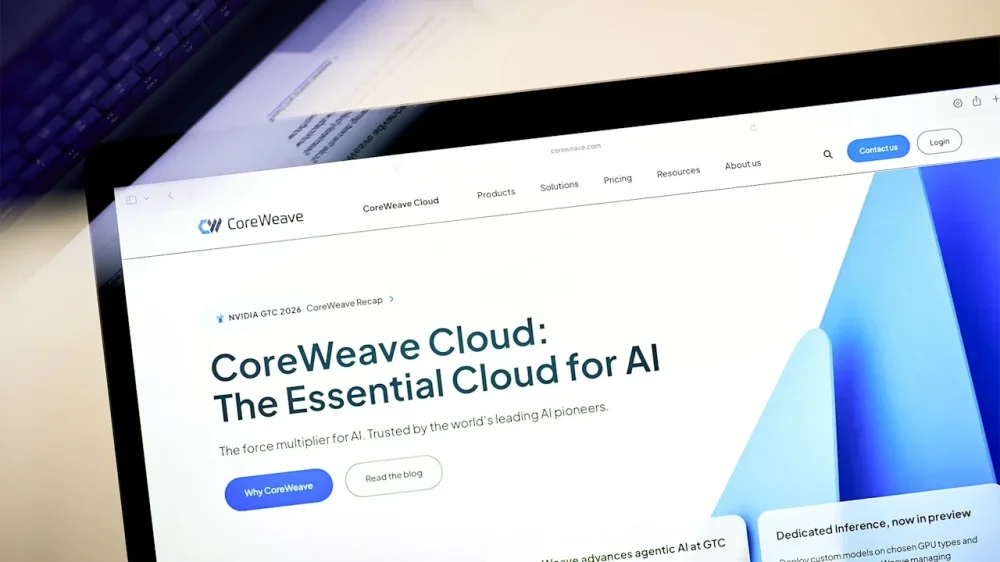
CoreWeave is having a very eventful week, and its stock price reflects it. Shares of the AI cloud-computing firm (Nasdaq: CRWV) are up more than 37% in five days following deals with Meta Platforms and Anthropic. On Thursday, April 9, CoreWeave announced a six-year agreement with social media giant Meta, parent company of Facebook and Instagram. CoreWeave will supply AI cloud capacity to Meta through December 2032. “The dedicated capacity will be deployed across multiple locations and will include some of the initial deployments of the Nvidia Vera Rubin platform,” CoreWeave stated in a release. “This distributed approach is designed to optimize performance, resilience, and scalability for Meta’s AI operations.” The agreement is worth about $21 billion for CoreWeave. Then, on Friday, April 10, the company announced another deal, this time with Anthropic. The multi-year agreement will see CoreWeave support Anthropic’s development and deployment of the latter’s Claude AI models. The plan is to bring compute online by the end of the year. “CoreWeave joins Anthropic’s growing ecosystem of infrastructure partners helping to scale the adoption of Anthropic’s AI models across developers, startups, and enterprises worldwide,” the company stated in another release. “With the addition of Anthropic, nine of the leading ten AI model providers now leverage CoreWeave’s platform, reflecting the growing demand for infrastructure that can support AI at scale.” Analyst goes from hold to buy In response to these developments, Macquarie analyst Paul Golding upgraded CoreWeave’s position from Hold to Buy. Golding further increased its target price from $90 to $125 per share. Currently, it’s at about $115 per share. As of early Tuesday, CoreWeave shares are up another 4.53% in premarket trading. The stock has increased 39% year to date. Although it has been volatile along with many tech stocks in 2026, CoreWeave has far outperformed the broader Nasdaq Composite, which has declined 0.22% over the same period. View the full article
-
“I would like to introduce our Principal Auctioneer for the Broad Arrow sale today, Lydia Fenet at the Amelia.” As I walk up the steps to the podium to take my place next to the auction reader, I look out at a packed room of over a thousand people sitting and standing around the room. 10, 9, 8. Adrenaline floods my body. Deep breath in. Deep breath out. 7, 6, 5. Shoulders back. Chin up. Eyes forward. I listen as the reader finishes the last minute sale announcement and gives a brief description of the first car we will be selling. 4, 3. As he is finishing the description I open the binder that holds all the auction information in front of me, glancing at the reserve price which is the amount agreed upon by the seller and the company to make sure the number is fully in my head. 2, 1. Lydia, Lot Number One. I lift my head, smile, and bring the gavel down three times. For the next five hours, I’ll stand onstage representing Broad Arrow as the first woman to serve as Principal Auctioneer for a major car company. For some, seeing a woman preside over a car auction, where men have traditionally held the gavel, still feels surprising, maybe even a little uncomfortable. But after more than twenty years refining my craft, I have complete confidence in my ability to command a room. Over a career as a charity auctioneer that has helped raise more than $1 billion for nonprofits around the world, I’ve developed techniques that allow me to perform at the same level, regardless of the size of the stage or the prominence of the audience. The beauty of those techniques is that they work anywhere. No matter the pressure or the people in front of you, the same strategies that hold a room at auction work just as well in the boardroom. Find Your Strike Method In my first book, The Most Powerful Woman in the Room Is You, I introduced what I call The Strike Method. The three cracks of the gavel against the podium serve two purposes. They steady my nerves and focus the surge of adrenaline that comes with stepping into a high pressure moment. That rush is universal. It can unsettle even seasoned speakers, and it can overwhelm someone who hasn’t spent a lot of time onstage. The Strike Method narrows my focus to a single, controllable action. When the gavel hits the podium, everything else fades. It allows me to step onto any stage and command attention with intention. Everyone needs a version of The Strike Method. It might be a mantra. It might be a small object that reminds you of your strength. Some people tap the underside of their desk before a meeting and whisper, “Here we go,” before they begin a Zoom call. A friend of mine carries a small red pebble in her pocket when she walks into a presentation. The ritual matters because it centers you. Once you use it, have your opening lines ready so you move forward with complete control. Equally important is what happens next. If you are a nervous public speaker, make sure you have lined up your next sentence so that no matter what happens you are already locked in. The minute you start speaking onstage the adrenaline dissipates so the further into your speech you can go, the easier it will be. Mindset Over Everything Ask someone why they fear public speaking and they will describe the physical sensations. Shaking hands, a dry mouth, the feeling of standing at the top of a roller coaster. Even the most seasoned performers feel the same sensations. The difference is how they interpret them. Instead of labeling those feelings as fear, see them as energy. Your body is preparing you to rise to the moment. Think of that energy as fuel and channel it toward the outcome you want to create in the room. Your Audience Wants You to Succeed One of the fastest ways to derail a presentation is to obsess over how you are being perceived. Remember this: your audience wants you to succeed. No one wants to sit through a bad presentation. Think of the audience as your supporters. They are hoping you will deliver something worth their time. When you focus on serving them rather than judging yourself, your confidence grows. Give them your full presence and they will respond in kind. View the full article

-
Twenty-six years ago a Lebanese militant leader stood in Bint Jbeil to hail a landmark Israeli retreat. Now the IDF is set to take the townView the full article
-
The call comes on a Tuesday morning. Taiwan Strait tensions have escalated overnight. Markets are already moving. Your CFO is on one line, your General Counsel on another. By the time you’ve hung up, your head of communications is in the doorway. Most CEOs have planned and prepared for this moment. In my work running a global communications firm, I’ve been part of the war-gaming sessions. But I’d contend that most leaders aren’t ready for it. Not because they haven’t been paying attention to geopolitics—they have. But because their teams have been assessing the Taiwan risk through a single lens: geoeconomic exposure. The financial model has been stress-tested. The team has contingencies for supply chain disruption, semiconductor access, and revenue at risk in Asia-Pacific. What hasn’t been stress-tested is everything else. For most companies today, a crisis in the Taiwan Strait won’t arrive purely as a geoeconomic event. It will cut across the four modern risk domains—political, economic, cultural, and technological. Companies that have only prepared for one will be managing the other three in real time. The four modern risk domains Political Risk Your company’s existing posture in China becomes a liability overnight. Your joint venture in Shenzhen, the market access statement you made two years ago, and the politically-connected hire you made in Beijing are all read through a new lens by lawmakers in Washington and Brussels. Economic Risk The first casualties aren’t on the balance sheet—they’re in the narrative. A Substack reporter with 200,000 subscribers publishes a thread mapping your China revenue exposure—incomplete and partially wrong, but specific enough to travel. Within 24 hours, AI-driven research tools have ingested it, flagged your ticker, and surfaced it in portfolio managers’ morning briefings. By the time your team is returning calls, two analysts have downgraded their outlook. Cultural Risk Within hours, an internal petition circulates among your workers: “Don’t use this as cover to shift production to cheaper markets and call it patriotism.” It gets screenshotted. It lands on X. A mid-level manager’s LinkedIn post about “what this company really stands for” gets ten thousand shares before your team has even seen it. The fault lines already forming around AI displacement, economic anxiety, and corporate trust crack open wider. Technological Risk The geopolitical tension brings data security and reputation into collision. You are hit with a sophisticated ransomware attack that paralyzes key systems. Within hours “OSINT” social feeds, Taiwanese state media, and others are attributing the attack to China. You aren’t sure where the attack has come from, but narrative is outstripping assessment. On Reddit threads, you’re accused of concealing China’s involvement. The Single-Lens Problem Most companies are not ignoring risk. But they’re assessing it through a single domain, while the threat is multidimensional. Consider this: A major financial institution announces it will eliminate a significant share of its analyst workforce due to AI-driven efficiencies. It’s a technology and efficiency-driven decision. Share price volatility hits the markets as soon as it becomes public. The political and regulatory environment—already sensitized to AI’s workforce implications—sharpens its focus. Employees take to social media, followed by customers. Or this: A global manufacturer, caught between U.S. and Chinese trade policy on a critical issue, announces it will reduce reliance on Chinese manufacturing for U.S.-bound goods. It warns investors—then finds itself targeted by an AI-generated content campaign mocking U.S. trade policy. Chinese influencers encourage American customers to buy direct, bypassing the manufacturer entirely. All of this spreads before the company can frame a coherent response. These are not hypotheticals. They’re real events that occurred at major multinational corporations within the past year. Navigating The New Era The modern risk environment demands a different approach—one that treats political, economic, cultural, and technological exposure as interconnected by default. Every domain of risk in the modern era is ultimately experienced as narrative—by investors, regulators, employees, and customers. The mandate for modern corporate affairs teams is to bring upstream intelligence on how decisions will land before they’re made, which demands a new conversation inside the C-suite. What’s needed is a genuine, integrated assessment—political, economic, cultural, and technological exposure mapped together—before the Tuesday morning call comes. The companies that build this discipline won’t just manage risk better. They’ll be faster to act, and more credible and better positioned when they do. When a single geopolitical trigger can cascade across all four domains in 24 hours, the capacity to navigate across all of them isn’t defensive. It’s the foundation for value creation. View the full article

-
Shake-up spurred on by rise of AI and threat of major upheaval across the industryView the full article
-
Have you noticed the junk-food aisle at your local grocery store is looking a little, well, funky lately? Blame the youngest generations of shoppers. While the preferences of Gen Z and Gen Alpha consumers are likely leading to healthier choices for all of us, they’re also reshaping the snacking industry. Some changes include snacks that are available in smaller sizes and have cleaner ingredients, according to data from Nielsen IQ, as reported by the National Association of Convenience Stores (NACS), an industry trade group. One of the most consequential changes is that shoppers are seeking out healthier snacks. Among parents of Gen Alpha kids who are buying snacks for the household, Nielsen IQ (NIQ) research has found that 35% are prioritizing natural ingredients and 34% said they’re looking for high-protein options. Meanwhile, about one-in-four shoppers actively avoid buying ultra-processed snacks and a comparable share look for snacks that don’t have artificial ingredients. That means shoppers are carefully scrutinizing ingredients and looking for products that bear organic claims or gluten-free certifications. And young shoppers don’t necessarily take brands at their word—compared with older shoppers, they’re far more likely to use third-party mobile scanning apps to evaluate foods and closely compare products, according to NIQ figures. “The baseline for Gen Alpha is a better product. It’s a cleaner product. It’s a more transparent product,” Chris Costagli, vice president of thought leadership at NIQ and the lead for food and non-alcoholic beverage insights, told NACS. BETTER-FOR-YOU SNACKS The evolution of snacking preferences can also be explained by health trends, John Baumgartner, an analyst at Mizuho, wrote in a note to clients last week. That’s seen a rising demand for more functional snacks, including snack bars, meat snacks, and fruit snacks, as Barron’s recently reported. Protein-packed snacks are the top snack trend for 2026, according to Innova Market Insights, while snacks that deliver gut health benefits are also gaining in popularity. The U.S. market for “better for you” snacks, which raked in nearly $13 million in 2024, is expected to grow at a compound annual growth rate of 7.4% to reach $19.8 million by 2030, according to projections by Grand View Horizon. SMALLER SIZING But cash-strapped younger shoppers may also be contributing to the frustrating trend of shrinkflation—in which package sizes get smaller but the price doesn’t budge (or even, potentially, increases). Because Gen Z shoppers prioritize lower unit prices versus bulk savings, that makes smaller pack sizes more appealing, according to Costagli. Shrinkflation is such a popular topic of discussion that there’s a subreddit devoted to it that attracts more than 88,000 people weekly. It’s also on the radar of the Bureau of Labor Statistics, as examples of shrinkflation are treated as a price increase when calculating inflation numbers, according to a Federal Reserve report. While the latest consumer price index report showed that inflation rose at the fastest annual clip since April 2024, Americans aren’t likely to give up snacking—something that about three-quarters of consumers do daily, according to Innova Market Insights surveys. Instead, we may have to be satisfied with the smaller packaging we’re finding at stores. Companies have already started churning out a wider range of shrunken snack sizes—a trend that’s likely to continue, as The Wall Street Journal reported in July. “Consumers are going into small pack sizes to optimize their absolute budget,” Luca Zaramella, the chief financial officer for Mondelez International, told the publication at the time. “The $3, $4 as opposed to the $6, $7, particularly in snacks, are becoming a clear center of gravity.” View the full article

-
Hello and welcome to Modern CEO! I’m Stephanie Mehta, CEO and chief content officer of Mansueto Ventures. Each week this newsletter explores inclusive approaches to leadership drawn from conversations with executives and entrepreneurs, and from the pages of Inc. and Fast Company. If you received this newsletter from a friend, you can sign up to get it yourself every Monday morning. “If you elegantly avoid the subject of money,” says Emma Grede, “money will somehow elegantly avoid you.” Grede is most certainly not avoiding the subject of money, ambition, or other topics some women may consider taboo. In her new book, Start With Yourself: A New Vision for Work and Life, the Skims and Good American cofounder aims to dismantle “Old Thoughts” and biases, including the way women talk—or don’t talk—about wealth. She notes that there are many reasons for the reticence: many women are acculturated to believe that talking about money is impolite, or worse, selfish. “I think sometimes that there is this misconception that if somebody is really focused on the money that they have nothing else that they care about,” she says. “And that’s just not the case.” Indeed, she says, women should embrace the idea of being well compensated for doing work that they find personally rewarding. “What I want to do is to connect this idea that you can do deeply meaningful and impactful work and still be paid for it,” she says. Grede’s perspective reminds me of a piece I wrote about in 2020, encouraging affluent women to earmark some of the money they donate to charity for backing female-founded startups. Women “give a tremendous amount of money, and they have things they believe in,” investor and entrepreneur Kay Koplovitz told me at the time. “But they can also invest in missions and values they hold dear.” Growing to give back Little seems to have changed since then. Research from HSBC finds that affluent women prioritize saving for retirement over investing at every stage of life. Women in their 20s say planning for children is their top financial priority; caring for aging parents is the No. 1 financial goal for women in their 40s. The data support one of Grede’s observations: “I see far too often women thinking about everybody else in their lives before they think about themselves— and before they think about their ability to grow that money to make more money,” she says. And Grede believes that making money—at a company or attaining personal wealth—supports philanthropic and purpose-driven efforts rather than detracting from them. “I’ve always had companies that have done really great important work and been able to give back once they’re profitable,” she says. “We have to put money at the center of the conversation. We have to start with money in the same way that we have to start with ourselves.” With women set to control 40% of global wealth by 2030, according to HSBC, Grede’s message feels especially urgent. Your AI questions answered Next month, Modern CEO subscribers will have an opportunity to hear join me in conversation with Matt Fitzpatrick, CEO of Invisible Technologies, discussing the most urgent AI issues of the day. Register here and submit your burning questions to stephaniemehta@mansueto.com, and we’ll try to tackle as many as possible in the live session on May 18 at 1 p.m. ET/10 a.m. PT. Read more: Emma Grede’s world Skims was No. 1,168 on the 2024 Inc. 5000 ranking. Is it ready for an IPO? Female founders on what helped them level up Emma Grede says remote work is sabotaging careers View the full article

-
When I launched TaskRabbit in 2008, I thought entrepreneurship was about persistence. The narrative in Silicon Valley was simple. If you believe in an idea strongly enough and push hard enough, success eventually follows. Years later, after building TaskRabbit into one of the companies that helped define the early gig economy, I started hosting a podcast called “Breaking Precedent.” I wanted to talk with founders, investors, and innovators who had changed the rules in their industries. What I expected to hear were stories about grit and determination. What I actually heard were stories about something else entirely. Again and again, the most pivotal moments in their journeys were not about staying the course. They were about changing it. After dozens of conversations, a clear pattern emerged. The leaders who ultimately break precedent are not the ones who stubbornly defend their original plan. They are the ones who recognize when reality has changed and have the courage to pivot. The pivot is not a failure. In many cases, the pivot is the point. Climbing the Wrong Mountain I learned this lesson firsthand while building TaskRabbit. In the early days, our platform looked a lot like eBay. Customers posted a task and workers, whom we called Taskers, bid on the job. The model made perfect sense in 2008. Online marketplaces were built around auctions, and we assumed the same system would work for everyday services. For a while, it did. The platform grew quickly, and we built a vibrant community of users and workers. But by 2012 something fundamental had changed. Smartphones had transformed consumer expectations. People no longer wanted to post a request and wait hours for responses. They wanted help immediately. The more we studied our data, the clearer it became that our marketplace model was slowing the experience down rather than enabling it. Recognizing the problem was one thing. Acting on it was another. By that point we had millions of users, tens of thousands of Taskers, and years of engineering invested in the bidding system. Walking away from that infrastructure felt almost unthinkable. Eventually, we had to admit the truth. The company was not failing. We were simply climbing the wrong mountain. So we rebuilt the platform as a mobile-first, on-demand service where tasks could be booked instantly. Rather than risk the entire company, we first tested the new model quietly in London. The results were immediate. Usage doubled. Customer retention improved dramatically. Revenue followed. That pivot ultimately helped TaskRabbit become profitable and, years later, led to our acquisition by IKEA. At the time, the decision felt terrifying. Looking back, it was the moment the company finally started working the way it was meant to. The Data That Forces a Pivot Once you start listening for these moments, you begin to hear them everywhere. On my podcast, I recently spoke with venture capitalist Ann Miura-Ko about the early days of Lyft. Before Lyft existed, the founders were building a long-distance ridesharing platform called Zimride. It helped people carpool between cities and seemed like a promising idea. Then, a data scientist analyzed their most engaged users. The results were brutal. Their best customers used the platform twice a year. Each ride generated roughly thirty dollars in revenue. In marketplace economics, that combination is extremely difficult to scale. A business built on low transaction values and infrequent usage rarely creates momentum. Instead of ignoring the data, the founders confronted it directly. They held a hackathon and began experimenting with a completely different idea: on-demand rides within a city. That experiment eventually became Lyft. What stands out about the story is that the pivot was not driven by inspiration or creativity. It was driven by honesty about what the numbers were saying. Pivoting the Path, Not the Dream The pivot does not only appear in startup stories. One of the most memorable conversations on Breaking Precedent came from Dr. Eiman Jahangir. For most of his life, Eiman had one dream. He wanted to go to space. He pursued the traditional path. He built an impressive medical career and applied to NASA’s astronaut program multiple times. He even made it to the final rounds. Each time he came close, but each time he was ultimately rejected. Most people would have taken that as the end of the road. Eiman saw it differently. Instead of abandoning the dream, he changed the path. As commercial spaceflight expanded, he explored alternative routes into the industry and eventually entered a decentralized organization’s lottery for a seat on a rocket. Against extraordinary odds, he won. Last year, he became the 705th human in history to travel to space. His story captures something entrepreneurs understand deeply. Sometimes the vision is right. The path simply is not. The Leadership Pivot What I have come to appreciate through these podcast conversations is that pivoting is not simply a tactical move. It is a leadership decision. Pivoting requires founders and leaders to admit that the original plan might be wrong. It requires prioritizing evidence over ego and recognizing that the mission matters more than the strategy used to pursue it. Great entrepreneurs do not pivot because they lack conviction. They pivot because their conviction is focused on the outcome rather than the plan. The mission remains constant. The path evolves. The Pattern Behind Breaking Precedent Across every story I have heard on Breaking Precedent, one pattern stands out. The leaders who ultimately reshape industries tend to pivot earlier than everyone else. They listen closely to signals others ignore. They treat discomfort as useful information. Most importantly, they understand that persistence and adaptability are not opposites. When I think back to the moment we realized TaskRabbit was climbing the wrong mountain, I remember how much it felt like failure. Today I see it as something else entirely. It was the moment we stopped protecting the past and started building the future. Breaking precedent rarely happens through one dramatic leap. More often, it happens when someone dares to change direction while everyone else is still insisting the original path is the only one. Because the pivot is not the detour. The pivot is the moment the vision finally becomes possible. View the full article

-
After a series of setbacks, the vice-president is no longer The President’s obvious successorView the full article
-
Google’s sustainability webpage once specifically mentioned the company’s goal to reach net-zero emissions by 2030, and included a subpage titled “operating sustainably.” But that pledge has disappeared from the main page, which now highlights the company’s commitment to artificial intelligence. The subpage was renamed “our operations.” Google maintains that it is still aiming for a 2030 goal, though executives have acknowledged that the growth of AI makes it challenging. Still, the change to the sustainability page is an example of how tech companies are being a bit quieter about their climate goals as they expand their use of AI. The explosive growth of data centers to support the AI surge is “calling into question” whether the major tech companies—Google, Meta, Microsoft, Apple, and Amazon—can meet their pledges to reduce emissions, according to a 2025 corporate responsibility report from the NewClimate Institute. Already, companies are reporting emissions increases in their annual sustainability reports. Along with complicating their climate goals, the AI push seems to be changing how Big Tech talks about, and even considers, the climate. These companies are “just in a rush to build out as much as they can, and to stay ahead of the competition with new trends with AI,” says Thomas Day, one of the report’s authors, who analyses such commitments for the NewClimate Institute. “Climate appears to be the last thing that they’re thinking about.” Emissions targets have ‘lost their meaning’ When that NewClimate report came out in June 2025, it warned that tech companies’ emissions targets “appear to have lost their meaning and relevance.” It did note that some companies, like Microsoft and Google, had “promising” strategies for how to power data centers with renewable electricity. But already, that outlook is out of date. “Those [companies] that we identified before as having more constructive or ambitious positions have gone relatively quiet,” Day says, “while those pushing for more problematic approaches really doubled down.” Microsoft’s emissions could surge 44% due to just one West Virginia data center that will run entirely on natural gas, according to Stand.earth research. Google also recently announced it will use natural gas to power a massive Texas data center, which could emit, according to one calculation, as much as 4.5 million tons of carbon dioxide a year—more than the entire city of San Francisco. In 2023, Amazon’s operational carbon emissions grew 182% compared to three years prior, according to a 2025 United Nations report, due to higher energy demands to power data centers. Amazon continues to announce new data center investments. Big Tech says AI will help climate goals The five major tech companies all have net zero or carbon neutral commitments by either 2030 or 2040. These companies maintain that they’re committed to those goals and working on sustainability. A Microsoft spokesperson said the company is still committed to being carbon negative, water positive, and zero waste by 2030, and that it continues to expand its clean energy portfolio. A Meta spokesperson said “We’re working towards our goal to achieve net zero emissions across our value chain in 2030.” But online, its language has changed: Meta’s sustainability page previously said the company “commit[s] to reaching net zero emissions” by 2030. Now, the page says “we have set a goal to achieve net zero emissions” by then. And as Big Tech talks about sustainability, it often does so in conjunction with AI. “We remain committed to our ambitious moonshot of reaching net-zero emissions across our operations and value chain,” a Google spokesperson said without specifying a timeline. “Reaching this moonshot will be non-linear and has become increasingly complex. We’re working to build efficiency into every layer of our infrastructure, catalyzing new energy sources like nuclear, geothermal and battery storage, and using AI itself to accelerate climate solutions. ” “Rather than viewing AI as a barrier to sustainability, we see it as an opportunity to pioneer solutions at scale,” an Amazon spokesperson said. “We’re harnessing the power of AI to help us find science-based solutions at a rapid pace while remaining committed to our goal of net-zero carbon by 2040.” The spokesperson added that Amazon is “diversifying its carbon-free energy portfolio, including our first investments in nuclear energy.” A 2025 Microsoft blog noted that its sustainability goals were a “moonshot,” and “nearly five years later, we have had to acknowledge that the moon has gotten further away.” Then it said that the same thing making those goals less attainable now will bring them closer in the future: AI. Apple did not respond to a request for comment. Claims that AI will solve climate change often lack scientific evidence, according to a 2026 report by multiple climate groups. Tech companies also tend to lump together “traditional AI” with the more environmentally harmful generative AI when making such statements, that report said. The actions that tech companies are taking to develop data centers and expand AI are “simply not in line” with their climate pledges,” Day says. “The priority seems to be, put up as many data centers as you can, wherever you can, and make sure there’s enough immediate power to run it,” he says. “And that’s, in almost all cases, going to be gas.” The AI data center boom is directly linked to an increase in natural gas development. The U.S. now has the most gas-fired power capacity in development (including projects that have been announced as well as those in preconstruction and/or construction), according to Global Energy Monitor—with more than a third of that capacity slated to directly power data centers. Regulatory changes could alter climate targets It’s not that tech companies are abandoning their climate pledges, Day notes. But in some cases, they’ve omitted prhases, or changed how they talk about climate. “It feels a bit more like they just put their head in the sand, and no one is really putting pressure on them to clarify their climate pledges,” he says. “The regulatory environment at the moment is not exactly conducive to holding them accountable.” The system of accounting for corporate emissions is currently being revised, and those changes may force companies to reassess their climate goals. The Greenhouse Gas Protocol, which provides emissions accounting and reporting standards for corporations, currently gives companies two ways to count Scope 2 emissions, which are the indirect emissions from a company’s purchase of electricity, steam, heat, or cooling: the location-based method or the market-based method. Location-based refers to the emissions associated with the grid where that energy is consumed. The market-based method means companies can “artificially reduce the emissions they report,” Day says, by buying renewable energy certificates. Take a data center in Ireland, for example. At night in the winter, renewables can’t do much to power that data center—but the company that owns it could buy a certificate from solar panels in the summer based in Spain to claim that that data centers’ emissions are zero. Several companies only report market-based emissions, Day says, and they purchase enough of those certificates to report zero emissions. This is why it can be difficult to glean how well tech companies are doing to reduce emissions based on their own reports. In its most recent sustainability report, for example, Google said it reduced its data center emissions by 12%, but that was calculated through the market-based method. But the standards are considering changes that would mean companies can only claim renewable energy certificates from places in the same location, and concerning electricity generated at the same time. “That will make it far more difficult to make these kind of misleading claims,” Day says. “But it’ll also change the targets that companies set, because many of them have just set 100% renewable energy targets, knowing that they can just buy these certificates for peanuts when they have very little impact in reality.” (The Amazon spokesperson said that it wants to ensure its climate effort is “pointed towards decarbonizing the overall electricity system, and that goes far beyond the power that we consume and where we consume it.”) Kicking the climate can down the road This potential change to emissions accounting may be one reason why tech companies are quieter about their climate goals. If that rule goes through and they have to revise their pledges, they may not want to be loud about their current goals. Day questions if counting emissions is even the right framework for tech companies in the AI age, though. Through AI, Big Tech companies are becoming more like financial institutions or marketing companies. They may not have large emissions footprints themselves, but what does matter is who they sell their products to—if they are financing fossil fuel expansion, or doing advertising work for oil companies, for example. Similarly, if an AI tool is being used to ramp up fossil fuel production, or even to improve algorithms that drive up environmentally harmful overconsumption, that’s an impact that goes beyond direct emissions. When it comes to Big Tech, we need to ask “What can climate leadership look like for these types of companies?” Day says. “I think it really requires them to be a bit more selective about how they use AI, and I don’t see it as a very good political environment right now for that discussion,” he notes. Tech companies may be kicking the climate can down the road, figuring that they’ll work it out after the manic rush of the AI buildout cools off. But the planet may not have that time. “It’s quite a frustrating moment for all this to be happening the way it is, because we didn’t get as far as we needed to as a society on all of these objectives over the last 10 years,” Day says. “What we did achieve in the last 10 years was to get a lot of companies talking about climate change, and get them setting targets,” he adds. Opinions about how impactful that was differ, but mentioning climate change seemed to become a norm in business discussions. What needed to happen around 2024, however, was for those pledges to turn more into “high-quality action.” By that time, though, the AI boom was beginning, and companies got on board. “There was the narrative two years ago when this all started to say, ‘Hey, don’t worry so much about our emissions. Look the look how much of a force for good we are, or we can be,'” Day says. But now, “I rather get the sense at the moment that tech just doesn’t talk about climate.” View the full article

-
Washington’s demand that Tehran halt uranium enrichment has been a barrier to progress on talksView the full article
-
Financial institutions that are members could gain access to expedited funding through a Fed partnership and advances secured by a broader range of collateral. View the full article
-
Adjustable rate mortgages accounted for 12% of total home loan volume in March, reaching its highest share of the market since October 2022. View the full article
-
For months, President Donald The President has shown off various prototypes of an arch monument he wants to build in Washington, D.C., and finally he’s landed on a concept: an extra-tall “Triumphal Arch” that he hopes will soon rise just outside Arlington National Cemetery overlooking the National Mall. Nearly a quarter of the arch’s 250-foot height is thanks to a gilded statue on top. The The President administration submitted renderings for the massive arch to the president’s handpicked Commission of Fine Arts on April 17. The renderings by Harrison Design, an architecture, interiors, and landscapes firm, show an arch and park that would stand in a roundabout between the cemetery and the Lincoln Memorial. The design carries some of the hallmarks of The President’s second-term federal buildings initiative with its oversize, gold-accented classical architecture, which would look right at home at Mar-a-Lago. Harrison Design did not respond to a request for comment. The height of the arch is a hat tip to the semiquincentennial anniversary of the nation’s founding, which will be celebrated in July. But like a skyscraper that adds a spire or antenna for a few extra feet, it gets there with some help from its ornamentation: a 60-foot winged Lady Liberty-like gold statue flanked by gold bald eagles. The rendering also shows gilded lions at the base and the phrases “ONE NATION UNDER GOD” and “LIBERTY AND JUSTICE FOR ALL” inscribed on either side. The President wrote in an April 10 post on his social network that the structure would be “the GREATEST and MOST BEAUTIFUL Triumphal Arch, anywhere in the World. This will be a wonderful addition to the Washington, D.C. area for all Americans to enjoy for many decades to come!” Though he said the arch would be completed by Independence Day, construction hasn’t started. The President’s planned arch would tower above the 99-foot-tall Lincoln Memorial on the other side of the Potomac River. Architecture critic Catesby Leigh, who supports the idea of an arch monument in D.C. like those found in other Western capital cities like Paris, nevertheless told PBS that The President’s proposal is “way out of scale” and “way too big.” Sue Mobley, director of research at the nonprofit public art studio Monument Lab, calls it “banal.” “I believe it is traditional to have some sort of victory prior to erecting a triumphal arch,” Mobley tells Fast Company. “That said, one of the more exhausting traditions of authoritarians is to perform victory out of a loss, and to imagine that the aesthetic will overwrite the actual.” As with The President’s push to build a massive White House ballroom and add his name to any number of prominent structures (from the Kennedy Center to New York’s Penn Station), his proposal to build an arch has also drawn fierce scrutiny and lawsuits. Demonstrators marched on the site of the proposed arch during last month’s No Kings protest, and a group of Vietnam War veterans accused The President of not getting the proper congressional approvals to build the arch in a suit filed in February by the watchdog group Public Citizen. In their court filing, attorneys for the veterans said the arch, which would be roughly as tall as an 18- to 25-story office building, would obstruct “a line of sight” between Arlington National Cemetery and the Lincoln Memorial “that was designed to represent the unification of the Nation following the Civil War and that has existed for nearly a century.” The filing further states that the plaintiffs believe the structure would “dishonor their military and foreign service and the legacy of their comrades and other veterans buried at Arlington National Cemetery, and would degrade their personal experience when visiting Arlington Cemetery.” The President announced his plans for an arch last year, but if pushback to the project is anything like pushback to his ballroom, there could still be hurdles. A federal judge halted construction of the ballroom earlier this month. View the full article