Newsletter
Want to keep up to date with all our latest news and information?


ResidentialBusiness
Administrators
-
Joined
-
Last visited
Everything posted by ResidentialBusiness
-
Simone Stolzoff has a gift for asking questions that slice the soul. In his first book, The Good Enough Job, he asks how work came to be so central to our identities, and what we can do to rebalance our lives. He’s a journalist whose writing on the intersection of work, identity, and relationships has appeared in The New York Times, The Atlantic, Wired, and National Geographic. Now he’s back with a second book: How to Not Know: The Value of Uncertainty in a World that Demands Answers. This time around, he unpacks why uncertainty generates so much anxiety, and what we can do about it. In a world where climate change is reshaping the actual landscape, politicians are throwing out new policies at the roll of a dice and then walking them back again, and AI is changing reality as we know it, Stolzoff offers answers. Not on what’s going to happen—but how to cope better. Stolzoff sat down with Fast Company to discuss what he learned while writing his book. The interview has been edited for length and clarity. Something that struck me about your book: Not knowing if something will happen is more painful for most people than a bad experience actually happening. Can you explain why uncertainty feels so painful, and walk us through the research? Our natural tendency is to see it as a threat: If you think about an ancestor of ours in the jungle hearing rustling in the bushes, not knowing the source of that noise could potentially be lethal. Our brains are wired to feel safe and secure when we are certain, and to feel anxious or worried when we are uncertain. One of our brain’s natural tendencies is to try and get out of uncertainty as quickly as possible. The problem is often this means opting for the safe bet, which isn’t always the right bet. [Studies have found that] for women facing a potential breast cancer diagnosis, the period of time between when you get a biopsy to when you get the results tends to be the hardest part of the entire journey—more stressful than chemo or surgery. Another really interesting study found that research participants who were given a 50% chance of receiving a painful electric shock felt far more stressed than those who were given a 100% chance of receiving a painful electric shock. We would rather deal with a certain bad thing than have to reckon with the ambiguity of not knowing our fate. What problems does this intolerance create? It leads to anxiety. It leads to worse mental health. It leads to people worrying about things they can’t control. At a broader scale, I think one of the main skills of life is to be able to get to a place where you don’t know what is to come, and to persist nonetheless. I wonder if our need for answers makes us more vulnerable to misinformation. It does, and research has shown this. If you’re intolerant of uncertainty, the attractiveness of false certainty is all that much more alluring. If someone offers an easy explanation for how you should cure COVID, for example, it’s really easy to latch on to an easy answer. That’s comforting until you realize that it’s false. And in the first chapter of the book, I talk about a woman who falls into a cultlike organization where someone promises if you just do X, Y, and Z, then you’ll get this desired outcome. And it’s attractive. Who wouldn’t want a clear set of instructions or protocol of how to succeed or go to heaven? But as she told me, it was easy until it wasn’t. What factors in our society lead us to be worse at handling uncertainty? There’s a study that I love from a researcher named Nicholas Carlton at the University of Regina. He found that the rise of the internet, and specifically of mobile phones, correlates with the rise of intolerance of uncertainty. I think a few things are going on. One is that we live in this information age. You might expect access to limitless information helps resolve some of the uncertainty we feel. But in fact, often more information just fuels our anxiety. This access to information robs us of practicing sitting with what we don’t know. Maybe 10 years ago, I might have been okay not knowing the name of an actor, for example. Now I feel this almost involuntary need to reach into my pocket and figure it out right now. The problem is that not all questions are Google-able or ChatGPT-able. Our tolerance for uncertainty is particularly low right now. And our ability to tolerate uncertainty is what makes so many people feel anxious and unmoored. What should we do if we’re dealing with uncertainty—for example, waiting for the results of a test, or for news that may be good or bad? The first place to start is [to ask yourself if] there’s anything you can do to influence the outcome. Say you are a high school senior and you are really stressed out about whether or not you’ll get into college. If you’re in the period of time before you submit the applications, there are things that you can do to help influence the outcome: You can try and write a great application, you can get good grades, you can get letters of recommendation, etc. Those are all sort of in the sphere of your control. Then if you’ve done everything that you can do to influence the outcome, or if you can’t influence the outcome, the next level down is: Are there ways you can prepare for different contingencies, different possible outcomes? Often, especially in a business context, we get stuck on one particular outcome. But it’s more adaptive for us to be able to plan for multiple potential scenarios so that we’re better equipped to deal with what might come our way. Once you’ve done what you can to prepare for multiple different scenarios, it comes down to acceptance. You can do things like look for silver linings. You can do this practice called bracing for the worst, which is thinking about the worst thing that could happen and then trying to figure out how you’d be able to bounce back from that. But really it comes down to regulating your nervous system—being able to be okay with the not knowing. That may mean distracting yourself. There’s a wonderful study where they had people waiting for the results of a test play three different levels of Tetris: One was really easy, one was really hard, and one was just right. The researchers found that the people playing the really easy and the really hard levels were really stressed out by the waiting game. However, the people who found something that sufficiently challenged them were able to find a flow state and the waiting passed more easily. There’s also been research that shows breath work and yoga and meditation can help in dealing with the waiting period. What about a situation where you don’t know when the uncertainty will be resolved? There’s an example that I give in the last chapter of the book, which is I have this friend named Emily, who’s a therapist. She works with entrepreneurs and people dealing with change and different facets of their lives. But before she became a therapist, her mom was given a terminal diagnosis. Emily spent weeks sitting by her mom’s side and worrying about the worst-case scenario. A family friend came by and asked, “How are you doing?” And she said, “I’m not doing great. I’m riding this roller coaster of fear and respiratory grief, and I’m really not sure what I’ll do if my mom dies.” Her friend told her, “The version of you that will be born into existence if and when that tragic event occurs will have more context, more information, and be better equipped to deal with that tragedy than you are today. You have to trust in your future self to handle your future problems.” View the full article

-
You know the feeling we are talking about. Your friend calls to ask for your help moving on a Saturday when you were planning on doing nothing. Or your sister-in-law asks you to invest in her business, and you are afraid there is no way it will succeed. Even when the person asking for the favor isn’t someone central to your life, it is still painful to say no. Most of us don’t even like saying no to telemarketers. That’s why there are so many jobs in sales. Often, we end up making bad decisions to avoid the short-term discomfort of turning people down. Look, we agree—saying no is hard. The good news is that a little preparation and practice will make it easier. Even if you are one of those people that dreads it. We will look at different kinds of ‘no’s’ that are appropriate in different situations. Sometimes, there is a clear answer, and you want the other person to accept your offer without complaint. Your kids, for example, should know there is no argument about bedtime. Your boss needs to accept that you can’t work late anymore after coming back from maternity leave. The sooner they accept the reality, the happier everyone will be. Other times, you might be willing to be persuaded. You like the job offer, but the salary could be better. In that case, you might want to say no in a way that encourages them to try again or try harder. You Can Say No Nicely While being able to give a flat, unequivocable no is an important skill to develop, it’s not the goal. Usually, we want to be more polite, even if we find another’s proposal unattractive. Why? Because we never know when we will want to revisit that now-closed door. Preserving the relationship can allow a chance to revisit in the future, and we always like to maintain future opportunities if possible. The standard way to be respectful is to help someone learn why you aren’t interested. Here’s the problem with that: When you tell the reason you are turning them down, you give them information that they can use to make another appeal or proposal. Let’s say you are a young unattached woman. A guy asks you to go to dinner at the local barbeque joint, but you aren’t interested in him. If you tell him, “No thanks, I am a vegetarian,” there’s nothing stopping him from saying, “OK, so why don’t we go to Tofu Town?” Now it’s harder to say no, because you’ve given an inaccurate reason for your refusal. So instead of giving your reasoning, let’s discuss other ways that you can give a nice no. For those of you who have discomfort with no, this may be a balm for that, because it allows you to exit gracefully (but still unequivocally). Be Polite Thank them for asking. And you can apologize that you don’t have a different answer. “That is so kind of you. I appreciate your asking. I’m sorry but I can’t say yes.” The strength of your answer doesn’t require you to be rude. What makes it emphatic is that you give them a clear, inarguable response. “It’s Not You, It’s Me.” Your reasons don’t have to imply a negative judgment. Don’t let your reason have anything to do with them. It is only about you and your preferences. If someone offers you a job and you aren’t interested, you might say: “I’m dedicated to my current team.” “I’m on a good trajectory and am not interested in moving.” And our favorite: I’m so grateful, but it’s not the right time for a move.” None of these present a good opportunity for them to try again. When you consider possible responses to shut down further efforts to persuade you to say yes to a request, try to imagine a workaround. Use obstacles that can’t be solved or resolved rather than something like, “Sorry, I’m not interested in a lateral move,” because they could suggest an elevated position. Keep Your Reasons Vague The more information you give the other person about a problem, the easier it is for them to think of a solution. If you are not looking for a solution, provide as little information as possible. Keep your response short and to the point. If they ask for more information, remember, you are under no obligation to share it. “I’m so grateful but it’s not the right time for a move.” “How come?” “There are some exciting internal opportunities, but I’m not at liberty to discuss them.” If they keep pressing you, push back more firmly. “I’m afraid you will have to accept my decision as final.” Now, sometimes people do sincerely want feedback on why their offer wasn’t good enough. Remember that you never have to, but if you want to provide that feedback, feel free to do so—just be cautious about offering them an opening to try to draw you back into a negotiation. In addition, be kind when offering the feedback. Make Suggestions for Their Alternative A colleague of ours works with a speaker’s bureau. She gives talks at big speaking events and conventions. She is extremely well paid and charges a standard fee. Occasionally, a potential client will try to bargain her fee down. She tells them, “The speaker’s bureau I work with charges all my clients the same rate so I can treat everyone fairly. I know I may not be the right choice for everyone’s budget. I can suggest some of my younger colleagues who do an excellent job and are more affordable.” There are several reasons why this works. First, it’s clear that you aren’t engaging in a bargaining ploy. Someone who is genuinely interested in a speaking engagement doesn’t suggest the competition. So, the customer knows she isn’t bluffing. Second, while rejecting the offer, she is trying to fill the client’s need. And it gives her the chance to potentially push some work to deserving younger colleagues. Excerpted from NEVER SETTLE. Copyright © 2026, John Richardson and Attia Qureshi. Reproduced by permission of Simon Acumen, an imprint of Simon & Schuster. All rights reserved. View the full article

-
Currency weakens after US Treasury secretary meets finance minister Satsuki KatayamaView the full article
-
Party tops opinion polls after tapping into voter anger at soaring fuel pricesView the full article
-
The move is a value play for the hamburger chain whose shares have slid 70% in the past 5 years View the full article
-
There is good reason to be dubious about the notion that automation will supplant all demand for human labour View the full article
-
Traders expect corn and soyabeans to soar as demand for alternative fuel sources risesView the full article
-
US Senate widely expected to confirm the 56-year-old financier to replace Jay Powell this weekView the full article
-
Power flows less from size or wealth than from the ability to convert imbalance into leverageView the full article
-
In-house MeshClaw tool enables employees to delegate jobs to AI agents and climb company’s AI leaderboardView the full article
-
‘Tariff man’ wants to recover from a wounding Supreme Court ruling. But Congress is restive and voters are unhappyView the full article
-
UK prime minister prepares for crucial cabinet meeting as mood turns ‘pretty ugly’ in Labour PartyView the full article
-
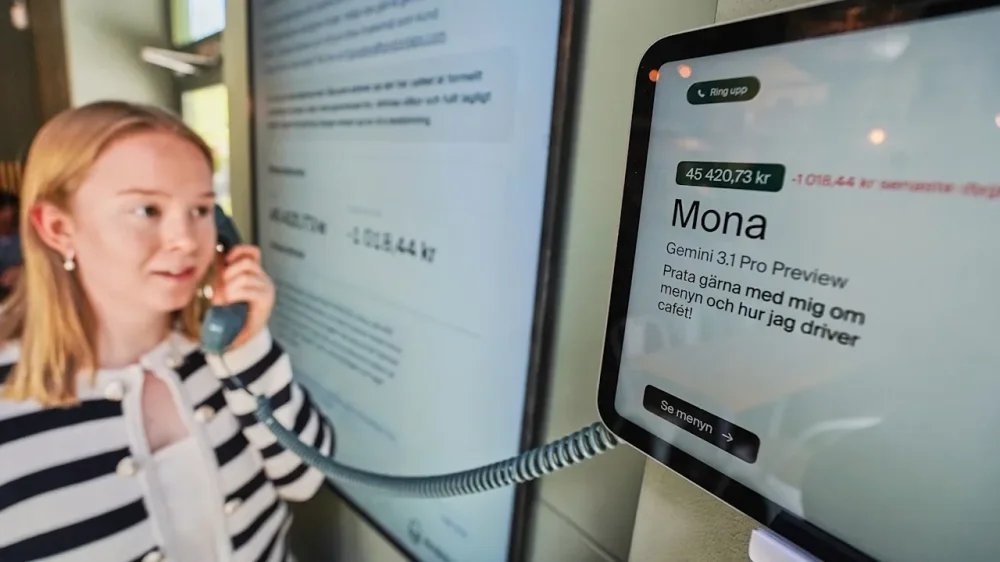
The coffee might be poured by a human hand, but behind the counter, something far less traditional is calling the shots at an experimental café in Stockholm. San Francisco-based startup Andon Labs has put an artificial intelligence agent nicknamed “Mona” in charge at the eponymous Andon Café in the Swedish capital. While human baristas still brew the coffee and serve the orders, the AI agent—powered by Google’s Gemini—oversees almost every other aspect of the business, from hiring staff to managing inventory. It is not clear how long the experiment will last, but the AI agent appears to be struggling to turn a profit in Stockholm’s competitive coffee trade. The café has made more than $5,700 in sales since it opened in mid-April, but less than $5,000 remains from its original budget of $21,000-plus. Much of the cash was spent on onetime setup costs, and the hope is that it eventually levels out and makes money. Many café patrons have found it amusing to visit a business that’s run by AI. Customers can pick up a telephone inside the café and ask the agent questions. “It’s nice to see what happens if you push the boundary,” customer Kajsa Norin said. “The drink was good.” Experts worry about AI’s role going forward Experts say ethical concerns abound, ranging from technology’s role in humankind’s future to conducting job interviews and judging employee performance. Emrah Karakaya, an associate professor of industrial economics at Stockholm’s KTH Royal Institute of Technology, likened the experiment to “opening Pandora’s box,” and said putting AI in charge can cause many problems. What might happen, he said, if a customer gets food poisoning? Who’s to blame? “If you don’t have the required organizational infrastructure around it, and if you overlook these mistakes, it can cause harm to people, to society, to the environment, to business,” Karakaya said. “The question is, do we care about this negative impact?” Founded in 2023, Andon Labs is an AI safety and research startup that says it focuses on “stress-testing” AI agents in the real world by giving them “real tools and real money.” It has worked with ChatGPT maker OpenAI, Claude’s Anthropic, Google DeepMind and Elon Musk’s xAI, and the startup says it is preparing for a future where “organizations are run autonomously by AI.” The Swedish café is billed as a “controlled experiment” to explore how AI might be deployed going forward. “AI will be a big part of society in the future, and therefore we want to make this experiment [to] see what ethical questions arise when we have AI that employs other people and runs a business,” said Hanna Petersson, a member of the technical staff at Andon Labs. The lab previously held pilots that put Anthropic’s Claude AI in charge of a vending machine business and a San Francisco gift store. The vending machine simulation revealed some worrying traits: The AI agent told customers it would issue refunds but never did, and it also intentionally lied to suppliers about competitor pricing to gain leverage. AI agent struggles with inventory orders Mona got to work after it was prompted with some basic instructions, Petersson said. The team told it to try to run the café profitably, be friendly and easygoing, and figure out operational details by itself but ask for new tools if needed. From there it set up contracts for electricity and internet, and secured permits for food handling and outdoor seating. The agent then advertised for staff on LinkedIn and Indeed, and set up commercial accounts with wholesalers for daily bread and bakery orders. It communicates with the baristas via Slack, often messaging them outside of working hours, which is a workplace no-no in Sweden. Other problems have arisen, particularly related to inventory. The AI agent has placed orders for 6,000 napkins, four first-aid kits, and 3,000 rubber gloves for the tiny café—plus canned tomatoes that aren’t used in any dish the café serves. And then there’s the bread. Sometimes the agent orders far too much, while other days it misses bakeries’ daily deadlines, forcing the baristas to strike sandwiches from the menu. Petersson said the ordering issues are likely due to the AI assistant’s “limited context window,” noting, “When old memory of ordering stuff is out of the context window, she completely forgets what she has ordered in the past.” Barista Kajetan Grzelczak said he isn’t worried about being replaced by AI just yet. “All the workers are pretty much safe,” he said. “The ones who should be worried about their employment are the middle bosses, the people in management.” —By James Brooks, Associated Press View the full article
-
It has become clear that women—and working mothers, in particular—are up against all kinds of challenges that threaten their foothold in the labor force. But one trend that may be less evident is that men are also dropping out of the workforce, albeit for different reasons. The jobs report last week offered a more sunny outlook than expected, with an uptick of 115,000 jobs in April; the unemployment rate also held steady at 4.3%. The data also, however, points to a more nuanced story about a broader shift in the labor force. Last month, the number of men who were working or actively looking for a job fell to the lowest figure seen in decades, with the exception of an anomalous dip during the early months of the pandemic. That means a third of men have dropped out of the workforce as of April. There are a few reasons for this decline, which has slowly emerged in the last few years: Much of the recent job growth has happened in industries that are dominated by women, like healthcare and education, while sectors like manufacturing that were overwhelmingly staffed by men have lost jobs. A recent report from Indeed’s Hiring Lab found that between February 2025 and February 2026, the share of jobs held by women climbed by nearly 300,000; meanwhile, the share of jobs held by men decreased by 142,000. More broadly, however, the gender gap in employment has been narrowing for decades, and women had actually already outpaced men on non-farm payrolls back in 2020. While job losses during the pandemic—and systemic issues that have kept mothers out of the workforce—set them back, women eventually overtook men in the workforce earlier this year. The losses among working men are not solely driven by people retiring or aging out of the workforce. Younger men, too, are stepping away from work for a variety of reasons, according to an analysis by The Washington Post. Some of them are going back to school or taking on caregiving duties, but a significant share are dropping out of the workforce due to illness or disabilities. The Post analysis found that men who had exited the workforce were more likely to live at home or have never been married, and there has also been an increase in the number of men who lack college degrees and no longer work. (On the whole, women are now more likely to hold college degrees relative to men.) Despite the job growth in certain sectors, this shift in men’s labor force participation is not fueled by an influx of women into the workforce. In fact, even as women see those gains in employment, their standing in the workforce is still precarious at best: About 212,000 women left the workforce in the first half of 2025, with a marked impact on working mothers. It’s telling that part of the reason men have not benefited as much from job growth in certain sectors is because there remains a stigma associated with working in industries that typically attract more women—not to mention lower wages. View the full article

-
Sales of previously occupied U.S. homes were essentially flat in April, another lackluster showing for the housing market during what’s traditionally its busiest time of the year. Existing home sales edged up 0.2% last month from March to a seasonally adjusted annual rate of 4.02 million units, the National Association of Realtors said Monday. Sales were unchanged compared to April last year. The latest sales figure fell short of the roughly 4.12 million pace economists were expecting, according to FactSet. Sales have been hovering close to a 4-million annual pace now going back to 2023, far short of the historic norm that is closer to 5.2-million. And home prices continued to rise nationally last month, albeit at a slower rate. The U.S. median sales price increased 0.9% in April from a year earlier to $417,700, an all-time high for any April on data going back to 1999, NAR said. Home prices have risen on an annual basis for 34 months in a row. The U.S. housing market has been in a slump since 2022, when mortgage rates began to climb from pandemic-era lows. Sales of previously occupied U.S. homes were essentially flat last year, stuck at a 30-year low. They have remained sluggish so far this year, declining from a year earlier through the first three months of this year. “This spring homebuying season, so far all the way through April, we can say we are not predicting any increase compared to one year ago,” said Lawrence Yun, NAR’s chief economist. While average incomes are now rising at a faster pace than U.S. home prices, affordability remains a major hurdle for aspiring homeowners. Years of soaring home prices, especially in the early part of this decade when rock-bottom mortgage rates fueled a buying frenzy, have left many would-be homebuyers frozen out of the market. And a chronic shortage of homes for sale nationally, due partly to years of below-average new home construction, has helped prop up home prices even in a multiyear sales slump. Homes purchased last month likely went under contract in February and March, when the average rate on a 30-year mortgage ranged from 5.98% — its lowest level in three and a half years — to 6.38%, according to mortgage buyer Freddie Mac. The average rate was at 6.37% last week. While the average rate has remained below where it was a year ago, it has been fluctuating since the war with Iran began, as surging energy prices fuel anxiety about higher inflation. Those who can afford to buy are benefiting from more properties on the market, although home inventory levels remain well below historical norms. There were 1.47 million unsold homes at the end of April, up 5.8% from March and up 1.4% from April last year, NAR said. That’s the most homes on the market for the month of April going back to 2019, when the month-end inventory stood at 1.83 million homes. That’s still short of the roughly 2 million homes for sale that was typical before the COVID-19 pandemic. April’s month-end inventory translates to a 4.4-month supply at the current sales pace. Traditionally, a 5- to 6-month supply is considered a balanced market between buyers and sellers. “We really need to see 30% growth in inventory, but we’re not really seeing that,” Yun said. One factor helping boost the supply of homes for sale is many properties are sitting on the market longer. Properties typically remained on the market for 32 days last month before selling, down from 41 days in March, but up from 29 days in April last year, NAR said. As homes take longer to sell, asking prices have started falling in many metro areas, especially in the South and Midwest. The national median home listing price was down in April from a year earlier, according to Realtor.com. —Alex Veiga, AP business writer View the full article

-
As a sole proprietor, you need to understand your tax obligations. When your net earnings exceed $400, you’ll file Schedule C with your Form 1040 to report your business income and expenses. You may likewise have to complete Schedule SE for self-employment tax. Additional forms might be necessary based on your situation. Knowing which forms to file is essential for accurate reporting and compliance. But what specific deductions can you claim to maximize your benefits? Key Takeaways Sole proprietors report business income and expenses on Schedule C (Form 1040). If net earnings exceed $400, Schedule SE is required for self-employment tax. Form 1099-NEC is used to report nonemployee compensation over $600. Additional forms like Schedules 1 and 2 may be necessary based on the financial situation. Estimated tax payments are filed quarterly using Form 1040-ES if taxes owed exceed $1,000. Understanding Sole Proprietorships When you think about starting a business, a sole proprietorship might be the simplest option available. This structure allows you to own and operate your business without a legal distinction between yourself and the entity. As a sole proprietor, you report your business income and expenses on the Schedule C form, which you file alongside your personal income tax return on Form 1040. Your sole proprietorship tax form helps you track your schedule C income directly, making the process straightforward. The profits and losses are considered your personal income, meaning they’re taxed at your individual tax rate. If your net earnings exceed $400, you’ll likewise need to pay self-employment taxes, calculated using Schedule SE. Since sole proprietors are “disregarded entities,” it’s crucial to understand how these forms work so as to guarantee compliance and accurately report your business activities. Required Tax Forms for Sole Proprietors As a sole proprietor, you’ll need to complete several key tax forms to accurately report your business income and expenses. Schedule C (Form 1040) is crucial for detailing your profits or losses, whereas Schedule SE calculates your self-employment tax if your net earnings exceed $400. Furthermore, depending on your financial situation, you may need to include other forms like Schedules 1 and 2, along with Form 1099-NEC for any nonemployee compensation over $600. Essential Forms Overview Comprehending the fundamental forms required for sole proprietors is essential for managing your business finances effectively. You’ll primarily file Schedule C (Form 1040) to report your business income or loss, which integrates into your personal tax return. If your net earnings exceed $400, you’ll furthermore need Schedule SE to calculate self-employment tax. In addition, Form 1040 is necessary for reporting total income, and you may need Schedules 1 and 2 for specific deductions. If you receive $600 or more in nonemployee compensation, use Form 1099-NEC, whereas payments from cards should be reported on Form 1099-K. For quarterly estimated tax payments, rely on Form 1040-ES. Form Name Purpose Schedule C Report business income or loss Schedule SE Calculate self-employment tax Form 1099-NEC Report nonemployee compensation Form 1040-ES Calculate estimated tax payments Self-Employment Tax Requirements For sole proprietors, comprehension of self-employment tax requirements is crucial since this tax applies to your net earnings from self-employment. You’ll need to file Schedule C (Form 1040) to report your business income or loss, which is included in your personal tax return. If your net earnings are $400 or more, you must calculate your self-employment tax using Schedule SE, covering Social Security and Medicare contributions. Don’t forget about Form 1099-NEC; if you receive $600 or more in nonemployee compensation, it must be reported as income. Furthermore, if you expect to owe $1,000 or more in taxes for the year, you’ll need to make quarterly estimated tax payments using Form 1040-ES. You can likewise deduct half of your self-employment tax. Filing Schedule C and Other Relevant Forms When you’re a sole proprietor, filing Schedule C (Form 1040) is vital for reporting your business income and determining your tax responsibilities. You’ll additionally need to take into account other forms like Schedule SE if your income exceeds $400, along with any additional schedules that may apply based on your unique financial situation. Comprehending these requirements and deadlines is fundamental to guarantee that you accurately report your earnings and comply with tax regulations. Schedule C Overview Filing Schedule C (Form 1040) is vital for sole proprietors who need to report their business income or loss, as it provides a detailed account of profits and expenses for the tax year. You must complete Schedule C if your business income exceeds $400 after expenses. You’ll submit it alongside your federal income tax return. If your net earnings from self-employment reach $400 or more, you’ll likewise need to file Schedule SE to calculate your self-employment tax. Furthermore, you might require Schedule 1 for other income or adjustments, and Form 1040-ES for estimated tax payments. Accurate completion of Schedule C is fundamental for determining your tax liabilities and maximizing deductions for business-related expenses, reducing your taxable income overall. Additional Required Forms Completing Schedule C is just one part of your tax responsibilities as a sole proprietor; you’ll also need to be aware of several other forms that may apply to your situation. Here’s a quick overview of these forms: Form Purpose Schedule SE Calculate self-employment tax if net earnings exceed $400. Form 1099-NEC Report nonemployee compensation of $600 or more. Form 1040-ES Calculate and remit estimated tax payments quarterly. Schedule 1 Report additional income or adjustments to income. Filing Deadlines and Procedures Grasping the deadlines and procedures for filing your tax forms is crucial as a sole proprietor. You’ll need to file Schedule C (Form 1040) by April 15 to report your business income or loss, coinciding with your personal income tax return. If you expect to owe $1,000 or more in taxes, make quarterly estimated tax payments using Form 1040-ES by April 15, June 15, September 15, and January 15 of the following year. Furthermore, if you earn $400 or more from self-employment, you’ll have to file Schedule SE to calculate your self-employment tax. Remember to issue Form 1099-NEC for independent contractors paid $600 or more, and file your federal tax return by the deadline to avoid penalties. Tax Deductions for Sole Proprietorships Comprehending the various tax deductions available can greatly benefit your sole proprietorship, as these deductions help reduce your taxable income and improve your overall financial health. You can deduct ordinary and necessary business expenses, such as office supplies, advertising, and utilities, that are directly related to your operations. If you use a vehicle for business purposes, you can choose between the standard mileage rate or the actual expense method for deductions. Health insurance premiums for yourself and your family are likewise deductible as an adjustment to income on Form 1040. When starting a new business, you can deduct up to $5,000 in start-up costs in the first year, with any remaining costs amortized over 15 years. Furthermore, depreciation on business property allows you to recover asset costs over their useful life, further reducing your taxable income in the years you claim depreciation. Estimated Tax Payments for Sole Proprietors As a sole proprietor, comprehension of your obligation to make estimated tax payments can help you manage your finances effectively. If you expect to owe $1,000 or more in taxes for the year, you’re required to make these payments quarterly using Form 1040-ES. The due dates are April 15, June 15, September 15, and January 15 of the following year. To calculate your estimated tax payments, consider your expected income, deductions, and credits. Here’s a simple overview: Due Date Quarter Covered April 15 Income earned Jan – Mar June 15 Income earned Apr – May September 15 Income earned Jun – Aug January 15 Income earned Sep – Dec If your total tax owed is less than $1,000 after deductions, you won’t need to make estimated payments. Keeping track of your earnings helps you avoid underpayment penalties. Seeking Professional Tax Assistance Many sole proprietors find that seeking professional tax assistance can alleviate the intricacies of managing their tax obligations. Consulting a CPA or tax professional can be invaluable in maneuvering through complex tax forms and ensuring compliance with both federal and state tax laws. These experts help you maximize deductions by identifying all eligible business expenses and credits applicable to your situation. Moreover, engaging a tax advisor can assist you in accurately estimating quarterly tax payments, which helps avoid penalties for underpayment. They provide guidance on completing vital forms like Schedule C and Schedule SE, which are fundamental for reporting business income and calculating self-employment taxes. For new sole proprietors, professional assistance is particularly beneficial in comprehending tax obligations and avoiding common pitfalls associated with self-employment taxation. Frequently Asked Questions Do You File 1099 for Sole Proprietorship? Yes, you do file a 1099 for your sole proprietorship if you’ve paid contractors or freelancers $600 or more for their services during the year. The payer must issue Form 1099-NEC to report this income to the IRS. Furthermore, if you receive payments exceeding $600 through credit/debit cards or third-party networks, you’ll need to report that on Form 1099-K. Always keep accurate records to guarantee compliance with IRS requirements. How Do I File My Taxes as a Sole Proprietor? To file your taxes as a sole proprietor, start by gathering your income and expense records. You’ll need to complete Form 1040 and attach Schedule C, which details your business income and expenses. If your net earnings exceed $400, fill out Schedule SE for self-employment tax. Don’t forget to make quarterly estimated tax payments using Form 1040-ES if you expect to owe $1,000 or more by year-end. Check your state’s requirements too. Do Self-Employed Files Schedule C? Yes, self-employed individuals typically file Schedule C. This form allows you to report income and expenses from your business activities directly on your personal tax return. If your business income exceeds $400 after deducting expenses, you’ll need to complete this form. It helps determine your net profit or loss for the year, which is crucial for calculating your overall tax liability along with potential self-employment taxes. Does a Sole Proprietor Need to File Form 720? You typically don’t need to file Form 720 as a sole proprietor except when your business activities involve specific goods or services subject to federal excise taxes. Most sole proprietors, especially those providing services or selling non-taxable goods, are exempt. Nevertheless, it’s vital to assess your activities carefully. If you find any that trigger excise tax liabilities, then filing Form 720 becomes required to comply with federal regulations. Conclusion In summary, as a sole proprietor, you’ll primarily file Schedule C to report your business income and expenses. If your net earnings exceed $400, you’ll likewise need Schedule SE for self-employment tax calculations. Depending on your situation, additional forms like Schedules 1 and 2 may be necessary. Staying organized and comprehending your tax obligations is essential for maintaining compliance and minimizing potential issues. If needed, don’t hesitate to seek professional tax assistance to navigate the intricacies. Image via Google Gemini This article, "What Tax Form Does a Sole Proprietor File?" was first published on Small Business Trends View the full article
-
A $20 smoothie and a $19 single strawberry could only belong in one place: Erewhon, the luxury grocery chain and celebrity hot spot in Los Angeles. But as of last week, it’s not the only so-called hypebeast grocer in West Hollywood. Just a few blocks away from one of Erewhon’s various locations, Laurel Supply, a giant market filled with natural light and timber interiors, looks unmistakably like an Erewhon to those passing by. The team behind the venture are the owners of the neighboring restaurant Laurel Hardware, meaning they had a deep knowledge of the area before opening, which, according to the local newspaper WEHO Times, was years in the making. Laurel Supply launched with no press release or social media, betting instead on two things: its aesthetics and the willingness of curious passersby to post their own content. “An Erewhon dupe just opened right across the street from Erewhon in West Hollywood,” a user said in a video on TikTok. Dozens of similar TikTok videos also flooded the app over the weekend, with Angelenos flocking to compare the new kid on the block. A new front in the fight for high-end shoppers Although shoppers with big enough bank accounts can opt to buy their entire groceries at places like Erewhon, most customers only buy specific products, such as items from the prepared food section or viral snacks. Still, Erewhon does more than break even, which explains why others might want to tap into the luxury grocery space, filled with aspiration and $20 celebrity-branded smoothies. The store, which has more than 10 locations, made $10.6 million just from its Hailey Bieber branded smoothie, which launched in 2022, bringing in around $40,000 to stores a month. And beyond its hero products, the brand made $171.4 million in profit in 2023, as Fast Company previously reported. It’s not just about single products, but rather the lifestyle that Erewhon sells along with it, which is why customers will pay a $200-a-year membership for exclusive perks like a free smoothie. “Erewhon is at the intersection of two game-changing trends in the luxury market today: luxury as an experience, not a product, and the wellness and well-being trends,” luxury retail expert Pamela Danziger told Vogue. While disrupting a niche giant might intuitively seem to require massive amounts of marketing, Laurel Supply is betting on none of it, relying instead on the same power that built Erewhon in the first place: social media. “The customer Erewhon built doesn’t respond to ads. They respond to “have you been to the new one,” product growth analyst Aakash Gupta said on X. “The store is the marketing budget.” Inside the store, freshly pressed juice in glass bottles are on view, as well as vibrant produce flooding the aisles. Ready-to-eat food is prepared in various stations, such as a matcha bar and a sushi counter. Even an in-house mill for pizza is made available for those wishing to grab and go or to dine in the sunny outdoor areas. And the staff is seemingly perfect, wearing matching white jackets. Gupta added: “Every detail engineered to photograph.” For now, the strategy of having no strategy seems to be working, with users online claiming the store has been busy throughout the weekend. As one TikTok user said: “You guys, I’m at Laurel Supply and I think it might be the hottest spot. Sorry, Erewhon.” View the full article

-
Your family group chat’s favorite daily word game is about to get an adaptation for the screen. In a series of press releases published this morning, The New York Times and NBC announced a new joint venture: a game show series based on Wordle, The Times’ fan-favorite word-guessing game. The show will be produced by Universal Television Alternative Studio in partnership with Electric Hot Dog (Jimmy Fallon’s production company) and The Times. Wordle’s popularity is part of a broader, successful Games operation at The Times that’s turned users’ interactions with the publication into a daily ritual. And the forthcoming TV show is just the latest evidence of how much of a cultural phenomenon the Games category has become. How NYT Games have become part of the cultural zeitgeist Wordle, a simple word game that gives users six chances to guess a five-letter word of the day, was invented in 2021 by software developer Josh Wardle. Within just a few months of its release, it already had 300,000 users. A year later, The Times swept in to acquire the game for a low-seven-figure sum. The return-on-investment for this acquisition has proven to be massive. According to Caitlin Roper, executive editorial director for film and tv at The Times, tens of millions of players engage with Wordle weekly. “Tens of millions of people play New York Times Games every single day,” Roper says. “Over half of weekly users are playing more than one puzzle every day and over a quarter are playing four or more. Our puzzles were played 11.2 billion times in 2025. The Mini Crossword was played 1.4 billion times, 1.6 billion successful Connections were made, and Strands was played 1.5 billion times.” This is the first instance of The Times associating itself with a prime-time entertainment program on a major broadcaster—and it shows how users’ ritual use of games like Wordle has become a central pillar of The Times’ business over the past several years. Access to Games is a key way that The Times drives new digital subscriptions, which are one of the core backbones of its business. Per the company’s first quarter 2026 results, digital-only subscription revenues—which encompass subscriptions to the company’s news product, as well as to The Athletic, Audio, Cooking, Wirecutter, and, finally, Games—grew 16.1% year-over-year. Now, The Times is parlaying its most zeitgeisty game’s success into a show for modern viewers. “Wordle is already a social and shared experience,” Roper says. “People don’t just play it, they talk about it, compare results and solve together. That gave us a strong foundation to think about how it might translate into a game show, where that social experience can play out on screen.” “If you’re like me, you probably wake up every morning thinking about Wordle and savoring those precious moments of discovery, surprise and accomplishment,” Jonathan Knight, general manager for The Times‘ Games, told The Times after the acquisition. “The game has done what so few games have done—it has captured our collective imagination and brought us all a little closer together.” What we know so far about the Wordle game show Word-guessing game shows are part of a tried-and-true genre that’s been around for decades. Some of the most successful examples include Wheel of Fortune, Family Feud, Password, and Lingo. Typically, these shows see contestants duking it over over identifying the right words or phrases for a specific prize. Given its straightforward format and cult following, Wordle is a natural fit for a similar adaptation. According to an NBC press release, the show—which has been in the works for “several years”—will challenge players “to solve five-letter word puzzles in a supersized battle of smarts, speed, and fun.” Players will be organized into teams and go head-to-head in the “Wordle arena,” playing for what NBC calls an “incredible cash prize.” While little has been revealed about the actual look of the game, The Times reports that the series is expected to replicate the Wordle typeface and color scheme. An official release date for the show has not yet been announced. “This is really about audience and experience,” Roper says. “Wordle has a large, engaged community, and television offers a way to bring that experience to more people in a shared setting.” Casting for the Wordle show is currently open online, with applications closing on May 29. The show will be filmed this summer and hosted by Today Show show co-anchor Savannah Guthrie. Initial production, which was scheduled to take place this March, was paused amid the search for Guthrie’s mother Nancy, who has been missing since February. In an interview with The Times, Guthrie said of the show’s announcement: “It’s strange to say that I’m going to do a game show when your heart is broken. Nothing about that has changed, and it’s not easy, but I’m determined to put one foot in front of the other. And this is a joyous thing.” View the full article

-
Ukrainian authorities serve Andriy Yermak with an official notice that he is a suspect in $100mn graft scandalView the full article
-
Dream Finders Homes made its intentions public in an effort to push for shareholder approval following Beazer's rejection of two prior offers. View the full article
-
Market watchers say that the economy as a whole is holding up under higher energy prices and do not expect a recession. Even so, observers are watching financial markets and consumer spending for signs that inflation expectations are taking hold. View the full article
-
Microsoft chief explains his decision to back AI lab’s boss in 2023 coup attempt during testimony in Elon Musk’s lawsuitView the full article
-
Prices rose 0.32% last month on a seasonally adjusted basis, equal to a 3.9% annualized rate, according to ICE Mortgage Technology's mortgage monitor report. View the full article
-
If you’re looking to improve your customer service, utilizing effective survey templates can be essential. These templates help gather meaningful feedback, allowing you to assess customer satisfaction, loyalty, and ease of interaction. For instance, the Customer Satisfaction Score (CSAT) measures overall satisfaction, whereas the Net Promoter Score (NPS) gauges customer loyalty. Each template serves a specific purpose, and comprehending how to implement them can greatly improve your service quality. Let’s explore these templates further. Key Takeaways Utilize a Customer Satisfaction Score (CSAT) survey template to measure customer satisfaction post-interaction with a simple 1 to 10 rating scale. Implement a Net Promoter Score (NPS) survey template to gauge customer loyalty and identify Promoters, Passives, and Detractors effectively. Create a Customer Effort Score (CES) survey template focusing on the ease of customer interactions and issue resolution experiences. Design a Customer Service Feedback Survey template that combines rating scales and open-ended questions for comprehensive service quality insights. Use an Open-Ended Feedback Survey template to capture qualitative insights, allowing customers to express detailed experiences and suggestions. Customer Satisfaction Score (CSAT) Survey Template When you want to gauge customer satisfaction effectively, a Customer Satisfaction Score (CSAT) survey template can be an invaluable tool. Typically, this template consists of a single question asking customers to rate their satisfaction on a 1 to 10 rating scale template. Administering the survey immediately after a customer interaction captures timely feedback, which is essential for evaluating service experiences. A high CSAT score often indicates strong customer satisfaction, cultivating loyalty and encouraging positive word-of-mouth. Many businesses use sample customer service survey templates to benchmark their CSAT scores against industry standards, helping them identify areas for enhancement. The simplicity of the CSAT survey guarantees higher response rates, yielding more actionable insights for your company. Net Promoter Score (NPS) Survey Template The Net Promoter Score (NPS) survey template serves as a crucial tool for measuring customer loyalty and satisfaction through a straightforward, single-question format. You’ll ask, “On a scale of 0 to 10, how likely are you to recommend our company to a friend or colleague?” This simple question categorizes respondents into three groups: Promoters (scores 9-10): Loyal customers who are likely to refer others. Passives (scores 7-8): Satisfied but unenthusiastic customers. Detractors (scores 0-6): Unhappy customers who may harm your brand’s reputation. To calculate your NPS, subtract the percentage of Detractors from the percentage of Promoters. Regularly measuring NPS can guide strategic improvements and bolster customer-centricity in your organization. Customer Effort Score (CES) Survey Template Measuring how easily customers can interact with your company is crucial for comprehending their experience and improving service efficiency. The Customer Effort Score (CES) focuses on how much effort customers expend to resolve issues or complete transactions. Typically, CES surveys consist of a straightforward question, like “How easy was it for you to get your issue resolved?” with responses ranging from “Very Difficult” to “Very Easy.” Implementing these surveys right after customer interactions can provide timely feedback, helping identify friction points in the customer experience. Response Option Description Very Difficult The process was challenging Somewhat Difficult The process had some hurdles Very Easy The process was smooth and quick Customer Service Feedback Survey Template When creating a Customer Service Feedback Survey Template, you’ll want to focus on key metrics like agent responsiveness and overall satisfaction. Effective question types, such as rating scales and open-ended queries, can provide both quantitative and qualitative insights into customer experiences. Analyzing these results helps you identify areas for improvement and track changes in service quality over time. Key Metrics to Measure Comprehension of key metrics in customer service feedback surveys is vital for evaluating and enhancing the overall customer experience. By measuring these metrics, you can gain valuable insights into your service performance. Here are four important metrics to take into account: Customer Satisfaction Score (CSAT): This score reflects how satisfied customers feel about your service, typically rated on a scale of 1 to 5 or 1 to 10. Net Promoter Score (NPS): NPS gauges customer loyalty by asking how likely customers are to recommend your service. Customer Effort Score (CES): CES assesses how easy it’s for customers to resolve their issues. First Contact Resolution (FCR): This metric measures the percentage of inquiries resolved in the first interaction, highlighting service efficiency. Effective Question Types How can you guarantee that your customer service feedback survey effectively captures the insights you need? Start by utilizing a mix of question types, such as Likert scales, multiple choice, and open-ended questions. For example, use a scale from 1 to 10 to measure satisfaction levels, helping you identify trends in customer perceptions. Incorporate demographic questions to segment responses, allowing you to understand diverse customer needs better. Follow-up questions can assess customer sentiment after support interactions, providing insights into areas needing improvement. Finally, design questions that focus on specific aspects of customer service, like responsiveness and problem resolution, to pinpoint strengths and weaknesses in agent performance. This all-encompassing approach guarantees you gather valuable feedback for enhancing service delivery. Analyzing Survey Results Analyzing survey results is crucial for comprehending customer sentiments and identifying areas for improvement in your service delivery. By systematically reviewing responses, you can uncover trends that inform your strategies. Consider the following steps: Utilize quantitative data: Examine satisfaction ratings and response scales to gauge overall customer sentiment. Analyze qualitative feedback: Review open-ended responses for insights into specific customer experiences and pain points. Regularly share findings: Distribute survey results with relevant teams to encourage collaboration and align improvements with customer feedback. Implement changes: Act on the insights gained to improve customer satisfaction, demonstrating that you value their input and are committed to service excellence. Product/Service Evaluation Survey Template When evaluating a product or service, using a well-structured survey template can greatly improve the quality of feedback you receive. This template typically includes questions measuring customer satisfaction levels, usability, and overall experience. Incorporating both quantitative and qualitative questions allows you to gather measurable data alongside open-ended feedback, offering deeper insights. Key components may involve rating scales to evaluate features like quality, performance, and value for money, which helps identify areas for improvement. Moreover, including demographic questions can assist in segmenting responses, giving you a clearer comprehension of different customer perspectives. A streamlined structure with clear instructions will boost respondent engagement and improve completion rates, eventually leading to more effective feedback collection. Business-to-Business (B2B) Customer Satisfaction Survey Template When creating a Business-to-Business (B2B) Customer Satisfaction Survey, it’s essential to include customized questions that focus on the specific needs of your clients. By measuring aspects like service quality, communication, and responsiveness, you can better understand the professional relationships you maintain. This focused approach not just yields more relevant feedback but likewise helps you identify areas for improvement in your service delivery. Tailored Questions for Businesses Customized questions in a Business-to-Business (B2B) customer satisfaction survey template play a crucial role in gathering relevant feedback that directly addresses your business needs. By personalizing your survey, you can focus on key areas that impact your operations. Consider including questions that: Assess professionalism and communication effectiveness with your team. Evaluate the timeliness of service delivery and project completion. Rate overall service quality on a scale from 1 to 10. Provide open-ended opportunities for clients to share specific experiences or suggestions. These personalized questions yield measurable insights as well as allow you to identify strengths and areas for improvement, ensuring the feedback you collect is actionable and relevant to your unique context. Measuring Professional Relationships Measuring professional relationships in a Business-to-Business (B2B) context requires a focused approach, especially when utilizing a customer satisfaction survey template. This template is designed to evaluate satisfaction levels concerning service quality, timeliness, and professionalism customized to business clients. Key questions often address service responsiveness, resolution effectiveness, and the representatives’ industry knowledge. By using a B2B survey, you can identify specific client needs and expectations, allowing for more effective service personalization. The survey typically combines quantitative ratings with qualitative open-ended questions to gather thorough feedback. Analyzing these results reveals trends in client relationships, helping you improve your service strategies and enhance client retention rates. In the end, this structured feedback can drive meaningful improvements in your business operations. Open-Ended Feedback Survey Template An open-ended feedback survey template is a crucial tool for gathering in-depth insights from customers about their experiences and opinions. This approach allows customers to express their thoughts in their own words, providing qualitative insights that closed-ended questions might miss. Here are key elements to take into account: Encourage Detailed Responses: Ask questions that prompt customers to elaborate on their experiences. Reveal Improvement Areas: Use feedback to identify specific weaknesses in your service. Gather Unique Suggestions: Allow customers to share ideas that may not fit predetermined options. Limit Questions: Keep open-ended questions concise to avoid respondent fatigue as you still collect valuable insights. Frequently Asked Questions What Are Good Survey Questions for Customer Service? Good survey questions for customer service focus on clarity and actionable insights. Use quantitative scales for satisfaction, like “On a scale of 1-5, how satisfied are you with our service?” Incorporate open-ended questions such as “What can we improve?” to gather specific feedback. Furthermore, include demographic questions for better analysis and consider asking about the Customer Effort Score with “How easy was it to resolve your issue?” to assess the customer experience effectively. What Are 5 Good Survey Questions Examples? To improve your customer service, consider using these five survey questions: First, ask, “How satisfied are you with our customer service?” This gauges overall satisfaction. Next, “How likely are you to recommend us?” measures loyalty. Include, “What specific issues did you encounter?” to gather insights. For quantifiable data, use, “On a scale of 1 to 5, how would you rate our professionalism?” Finally, ask, “What improvements would you suggest?” to encourage feedback. Does Microsoft Word Have a Survey Template? Yes, Microsoft Word does have survey templates. You can easily find these templates in the template gallery by searching for “survey.” They cover various purposes, such as customer satisfaction and feedback collection. The templates come with pre-formatted questions and answer formats, which save you time. Furthermore, you can customize these templates to fit your needs and incorporate tables or charts for visual representation of your survey results after collecting data. What Is a 1 to 10 Survey Question Example? A 1 to 10 survey question example could be, “On a scale of 1 to 10, how satisfied are you with our product quality?” This question allows you to rate your satisfaction, with 1 being very dissatisfied and 10 being extremely satisfied. Using this scale helps you provide nuanced feedback, which enables the business to identify trends in satisfaction over time and make informed decisions based on customer perceptions. Conclusion By utilizing these seven effective customer service survey templates, you can greatly improve your feedback collection process. Each template, including CSAT, NPS, and CES, serves a distinct purpose, helping you gauge customer satisfaction, loyalty, and ease of interaction. Moreover, open-ended feedback and product evaluation surveys offer valuable qualitative insights. Implementing these tools will enable you to better understand your customers’ experiences and preferences, ultimately enhancing your service quality and nurturing stronger customer relationships. Image via Google Gemini This article, "7 Effective Sample Customer Service Survey Templates You Can Use Today" was first published on Small Business Trends View the full article