Newsletter
Want to keep up to date with all our latest news and information?


ResidentialBusiness
Administrators
-
Joined
-
Last visited
Everything posted by ResidentialBusiness
-
China holds the cards — and might settle for flashy but empty announcements while playing a long gameView the full article
-
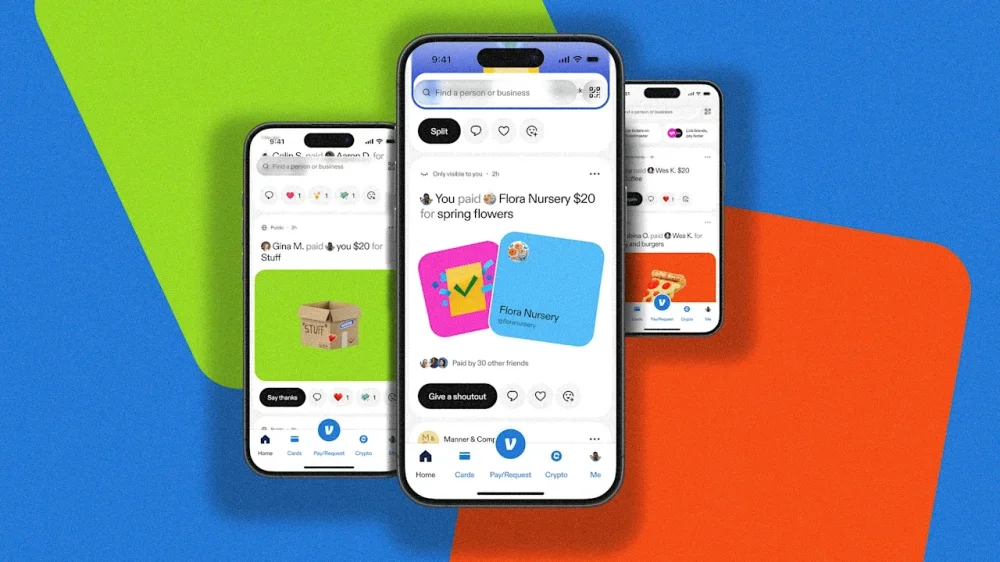
Venmo is getting its first full app overhaul since its inception in 2009, and it’s addressing some major UX issues that have made using the platform feel like the digital equivalent of flipping through a phone book. When Venmo was launched, it was a breath of fresh air in the finance space. It stood out for its social network-style approach to bill splitting and rent requests. Since then, though, Venmo’s aspirations have far outgrown its app interface. In the first quarter of 2026, PayPal (Venmo’s parent company) shared that Venmo’s total payment volume was up 14% year-over-year, marking its sixth consecutive quarter of double-digit growth. According to Alexis Sowa, Venmo’s SVP and general manager, the app boasts over 100 million active accounts and 67 million monthly active users, with the average user visiting the app 10 times per month. That user behavior reflects a broader effort at Venmo; the brand has spent the last several years shifting from an occasional peer-to-peer money lending service to a more all-encompassing financial tool. In 2018, the company introduced a debit card feature that took it from an app to part of users’ wallets, which it has since expanded through partnerships with retailers like TikTok Shop, Uber, McDonald’s, Taco Bell, and more. And, last fall, Venmo debuted its own rewards program to keep users engaging with the platform. Venmo is expanding its capabilities to become an everyday payment method. For users, though, many of those updates have gotten buried in the app’s archaic, scattered design. Finally, it’s getting a facelift that brings its UX out of the 2010s—and fixes one of its most perennially irritating features. Venmo’s complicated design web Sowa and her team have spent the last year interviewing customers to learn how they use Venmo, which features they like the most, and where they’re experiencing the biggest sticking points on the app. Their biggest learning, she says, was how many new Venmo features customers simply don’t know about—or can’t find. As Venmo began introducing more advanced features over time, Sowa says its engineering team needed places to put them that fit within the app’s existing information architecture. That meant new functionalities would get buried in unexpected places. To send a gift card, for example, users would have to first initiate a payment to the recipient in order to activate the gift card flow; or to split an expense with a group, they would have to navigate out of the payment tab and into their own profile settings. Using Venmo was starting to feel less intuitive, and more like hunting for buried Easter eggs. Untangling this convoluted web of information required Sowa’s team to rework Venmo’s app from the ground up—updating each of its key sections to surface new features and make payments easier. Username search is finally getting the boot Venmo’s app updates will roll out in phases over the coming months, starting with the Home page. The ethos of this page remains relatively unchanged; you can still browse through others’ transactions and interact with them. Now, though, the feed has been pared down to be less information-dense and more proactive. The design team increased the feed’s font sizes to highlight relevant details, like who was paid and how much, and given users the option to browse through a portfolio of curated hero images to accompany their payments. They’ve also added buttons to make payment flows simpler. If a user grabs some seats on Ticketmaster, for example, Venmo will automatically surface a “Split” button to share the cost with friends; or if a user pays a friend, Venmo will automatically offer a “Pay again” feature to make the next payment quicker. Outside the feed, the app’s most noticeable changes will show up in the new version of the Pay/Request hub. In the old version of Venmo, this page loaded as a black-and-white list of individual contacts and names crowding the screen. In order to make a group for splitting payments, users had to navigate out of this hub and into their personal settings. Perhaps most frustrating, though, was the process for adding a new friend. Every Venmo user will be familiar with the experience of trying to search for someone on the app, only to realize that the only way to find them is by already knowing their exact Venmo username—dashes, nicknames, and all. In the new version of the Pay/Request hub, the phonebook-style list of names has been scrapped for a more aesthetically pleasing bubble layout. This function analyzes users’ payment history to display their top contacts inside a central web graphic. The new layout also allows users to make groups directly in the Pay/Request hub, and displays frequently used groups within the web. Sowa says her team is working on AI tools designed to suggest new groups based on payments—like, for example, a roommate cohort based on recurring rent payments. And, at last, the search function has gotten an upgrade. Now, users can search for new friends with their phone number and instantly locate their profile, bypassing the rigamarole of reading usernames aloud. According to Sowa, this feature rolled out in early 2026 as part of a new integration with PayPal, which allows Venmo and PayPal users to send money to each other directly through either app. As Venmo angles for an expansion of its brand’s capabilities, its new app is providing the UX jumping board it needs to make sure that users can find new features—and start to treat Venmo more like a one-stop shop for managing their money. View the full article
-
Voters need hope, but so do his MPs — and he did not give them anyView the full article
-
Defining a business entity is essential for determining how your organization will operate, manage liability, and fulfill tax obligations. You need to evaluate various structures, such as sole proprietorships, partnerships, LLCs, and corporations, each with unique benefits and drawbacks. Comprehending these options can help you make informed decisions about asset protection and management flexibility. The right choice can greatly affect your business’s long-term success and compliance. So, what factors should you consider next? Key Takeaways A business entity is a legal structure that defines how an organization operates and its liabilities. Common types of business entities include sole proprietorships, partnerships, LLCs, and corporations. Each entity type has distinct implications for liability, taxation, and operational governance. Choosing the right structure affects personal asset protection and the ability to raise capital. Registration involves selecting a business name, filing formation documents, and obtaining necessary licenses. Understanding Business Entities Grasping business entities is crucial for anyone looking to start or manage a business. A business entity, by definition, is a legal structure that enables an organization to operate, outlining its liability, tax obligations, and operational framework. To explain business entity options, consider the common types: sole proprietorships, partnerships, limited liability companies (LLCs), and corporations. Sole proprietorships are the simplest form, with one owner bearing unlimited personal liability. Partnerships involve multiple owners sharing profits and liabilities. LLCs offer limited liability protection, keeping personal assets separate from business debts, with flexible tax treatment. Conversely, corporations function as distinct legal entities, providing strong liability protection for shareholders but may incur double taxation unless they elect S Corporation status. Comprehending these distinctions helps you make informed decisions about which business entity aligns best with your goals and needs. Importance of Business Structure Choosing the right business structure is fundamental to your company’s success and sustainability. The structure you choose not merely defines what is a business entity but likewise greatly impacts your tax obligations, personal liability, and ability to raise capital. Sole proprietorships and partnerships expose you to unlimited personal liability for business debts, whereas LLCs and corporations can protect your personal assets. Business Structure Key Features Sole Proprietorship Simple, few regulations, high liability Limited Liability Company (LLC) Protects personal assets, flexible taxation Corporation Complicated, potential double taxation, limited liability Understanding the importance of business structure helps you navigate legal intricacies. Consulting with professionals, like attorneys and accountants, is advisable to guarantee you choose the appropriate structure customized to your specific needs. This choice lays the foundation for your company’s future. Key Considerations When Choosing a Business Entity When you’re choosing a business entity, comprehending liability protection and tax implications is vital. Different structures offer varying levels of personal liability; for example, LLCs and corporations limit your risk, whereas sole proprietorships expose you to more. Furthermore, tax treatment differs considerably among entities, so it’s important to analyze how each option could impact your overall tax burden. Liability Protection Importance Comprehending the significance of liability protection is essential for anyone considering a business entity. Choosing a structure like an LLC or corporation can protect your personal assets from business debts and legal claims, minimizing your financial risk. Conversely, sole proprietorships and general partnerships expose you to unlimited personal liability, making them less favorable, especially in high-risk industries. LLCs offer liability protection and allow profits to pass through to your personal tax return, avoiding double taxation during the preservation of your assets. Corporations provide strong liability protection but may face double taxation unless you opt for S Corporation status. Thus, when selecting a business entity, carefully evaluate the liability protection each option offers, as it impacts your long-term financial security and risk management. Tax Implications Analysis How can the choice of a business entity affect your tax obligations? Your selection considerably influences how you’re taxed. Sole proprietorships and general partnerships face single taxation, whereas corporations experience double taxation except they opt for S Corporation status. Limited Liability Companies (LLCs) offer flexibility, allowing you to choose among various tax treatments, potentially optimizing your tax situation. Be aware that self-employment taxes apply to profits from sole proprietorships and partnerships, and LLC members might incur these taxes too except taxed as an S Corporation. C corporations face corporate tax rates, whereas S corporations allow profits and losses to pass through to shareholders, avoiding double taxation. Consulting a tax professional can help you navigate these intricacies effectively. Types of Business Entities When you’re starting a business, comprehending the different types of business entities is essential for making informed decisions. Each structure, whether it’s a sole proprietorship, partnership, LLC, corporation, or nonprofit, comes with its own tax implications and levels of liability. Common Business Structures There are several common business structures you can choose from, each with distinct characteristics and implications for liability, taxation, and management. A Sole Proprietorship is the simplest, where one individual owns the business and faces unlimited personal liability. Partnerships can be general, where partners share liability and profits, or limited, offering protection to limited partners based on their investments. A Limited Liability Company (LLC) blends the benefits of a corporation and partnership, providing liability protection as it allows profits to pass through to personal income. Corporations, classified as C or S Corporations, are separate legal entities that offer limited liability for shareholders. Nonprofit corporations focus on public benefit and can qualify for tax-exempt status, adhering to specific regulations. Tax Implications and Liability Choosing the right business entity is crucial since it greatly affects your tax obligations and liability exposure. Comprehending these implications can help you make informed decisions. Here’s a quick overview: Sole Proprietorships & General Partnerships: Simpler tax processes, but owners face unlimited personal liability. Limited Liability Companies (LLCs): Offer pass-through taxation, protecting personal assets and potentially reducing tax liabilities. C Corporations: Taxed at the corporate rate and may encounter double taxation on profits and dividends. S Corporations: Allow pass-through taxation to shareholders, avoiding double taxation. Limited Partnerships: Offer limited liability for limited partners, whereas general partners maintain unlimited personal liability. Your choice greatly impacts both taxation and personal financial risk, so choose wisely. Sole Proprietorship Defined A sole proprietorship is the most straightforward business structure, allowing an individual to own and operate a business without the need for formal registration. This form of business organization has no legal distinction between you and your business, meaning you’re personally liable for all debts and obligations incurred. Here’s a quick comparison of sole proprietorships with other business structures: Feature Sole Proprietorship Ownership Individual Liability Personal Registration Not required Taxation Personal income Common Users Freelancers, consultants Sole proprietorships are popular among freelancers and small business owners owing to their operational flexibility and minimal regulatory requirements. As they simplify tax processes, you should be aware that profits are taxed as personal income, which could lead to higher self-employment taxes. General and Limited Partnerships When considering partnerships, it’s important to understand the key differences between general and limited partnerships. In a general partnership, all partners share equal management responsibilities and face unlimited personal liability, whereas in a limited partnership, at least one partner has unlimited liability and others enjoy liability protection up to their investment. Furthermore, both types typically share profits based on their agreements, but the mechanics of these arrangements can vary considerably. Ownership Structure Differences Comprehending the differences between general and limited partnerships is crucial for anyone considering these ownership structures. Here’s a breakdown of key distinctions: Management: General partners manage the business; limited partners usually don’t participate in daily operations. Liability: General partners have unlimited personal liability; limited partners’ liability is confined to their investment. Profit Sharing: In general partnerships, profits are shared equally; limited partnerships may have different profit-sharing arrangements. Taxation: Profits in both types are taxed only once at individual rates, avoiding corporate double taxation. Formation: General partnerships require minimal formalities, whereas limited partnerships need to file a certificate of limited partnership with state authorities to formalize their structure. Understanding these differences can help you make informed decisions when choosing a partnership type. Liability Implications Comprehending liability implications is essential for anyone involved in general or limited partnerships, as these structures have distinct legal protections. In a general partnership, all partners face unlimited personal liability for the debts and obligations of the business, meaning your personal assets could be at risk. Conversely, in a limited partnership, general partners bear unlimited liability, whereas limited partners enjoy protection, only liable up to their investment amount. Nevertheless, to maintain this limited liability, limited partners shouldn’t engage in daily management activities. In Idaho, you can further clarify liability by formalizing your status with a statement of partnership authority or organizational documents. These steps help define the extent of your legal responsibilities and protect your assets effectively. Profit Sharing Mechanics Profit-sharing mechanics in both general and limited partnerships play a vital role in defining how earnings and losses are distributed among partners. In a general partnership, profits and losses are typically shared equally except specified otherwise in a partnership agreement. Conversely, limited partnerships involve general partners who manage the business and limited partners with restricted liability. Here are key points to reflect on: General partners assume unlimited personal liability. Limited partners’ liability is confined to their investment. Profit-sharing often follows the partnership agreement’s terms. General partnerships benefit from pass-through taxation. A written agreement is important for clarity and dispute prevention. Understanding these mechanics helps guarantee fair distribution and protects partners’ interests in the business. Limited Liability Company (LLC) Overview If you’re considering starting a business, grasping the structure of a Limited Liability Company (LLC) can be crucial for your success. An LLC combines the liability protection of a corporation with the tax benefits of a partnership, safeguarding your personal assets from business debts. To establish an LLC, you’ll need to file a Certificate of Organization with your state. The profits and losses typically pass through to your personal income, which helps you avoid double taxation, even though you might face self-employment taxes. Here’s a quick overview of key characteristics: Feature Description Liability Protection Shields personal assets from business debts. Tax Structure Pass-through taxation or elect C/S Corporation tax. Formation Requirement Requires filing a Certificate of Organization. Management Flexibility Fewer formalities than corporations. Understanding these aspects can help you make informed decisions for your business. Corporations Explained When you consider forming a corporation, it’s crucial to understand the different types available and their respective advantages and disadvantages. Corporations can be categorized mainly into C Corporations and S Corporations, each with unique tax implications and structural requirements. Types of Corporations Comprehending the various types of corporations is crucial for anyone looking to establish a business entity, as each type offers distinct advantages and disadvantages. Here’s a brief overview of the main types: Benefit Corporation (B Corporation): A for-profit entity that focuses on social missions alongside profit, with annual performance reporting. Advantages and Disadvantages Comprehending the advantages and disadvantages of corporations is vital for anyone considering this business structure. One major advantage is limited liability protection, which safeguards your personal assets from business debts and legal issues. Furthermore, corporations can raise capital easily by selling stock, attracting more investors compared to other structures. On the other hand, they face disadvantages, including double taxation on profits and dividends, which can reduce overall earnings. Additionally, corporations require extensive documentation and compliance with regulations, like maintaining a board of directors and formal records, adding complexity to operations. Finally, although corporations can exist indefinitely, allowing for smooth ownership shifts, this permanence can likewise create challenges in management and decision-making. Balancing these factors is critical in your decision-making process. Nonprofit Organizations Nonprofit organizations play an important role in addressing societal needs by operating for public or charitable purposes rather than for profit. If you’re considering starting a nonprofit, it’s important to understand the regulations and requirements involved: Nonprofits can obtain tax-exempt status under IRS Section 501(c)(3) if they meet specific criteria. Profits generated must be reinvested into the organization’s mission, not distributed to shareholders. To keep their tax-exempt status, nonprofits must file annual reports with the IRS and adhere to state regulations. Funding can come from donations, grants, and fundraising, but transparency is vital for public trust. Many states require a charitable solicitation license before reaching out for donations, ensuring accountability. Understanding these key points will help you navigate the complex environment of nonprofit organizations effectively, allowing you to focus on fulfilling your mission. Comparing Business Structures When you’re considering starting a business, grasp of the various structures available can help you make informed decisions that align with your goals. The main business structures include Sole Proprietorships, Partnerships, Limited Liability Companies (LLCs), and Corporations. Sole Proprietorships are the simplest, requiring no formal registration but exposing you to unlimited personal liability. Partnerships allow shared management and profits; yet, general partners face unlimited liability, whereas limited partners enjoy some protection based on their investment. LLCs offer limited liability protection, letting profits and losses pass through to your personal income, though self-employment taxes may apply. Finally, Corporations are distinct legal entities that provide strong liability protection but can be subject to double taxation unless you meet specific IRS criteria for S Corporation status. Comprehension of these structures is essential in determining how best to protect yourself and manage your business finances. Advantages and Disadvantages of Each Entity Comprehending the advantages and disadvantages of different business entities is crucial for making the best decision for your venture. Each structure has its unique traits that can impact your business greatly. Here’s a quick overview: Sole Proprietorship: Offers simplicity and control, but exposes personal assets to unlimited liability and makes raising capital difficult. General Partnership: Facilitates shared decision-making and resources, yet each partner faces unlimited liability, risking personal assets. Limited Liability Company (LLC): Provides limited liability protection and flexibility, but involves more paperwork and potential self-employment taxes. C Corporation: Delivers strong liability protection and capital-raising through stock, but is subjected to double taxation, increasing overall tax burden. S Corporation: Avoids double taxation by passing income to shareholders, though it has strict eligibility requirements and limits on shareholders, which may hinder growth. Understanding these factors helps you choose the right entity for your needs. Tax Implications of Different Business Entities Tax implications play a significant role in determining the right business entity for your venture. Sole proprietorships are taxed as personal income, meaning all business profits appear on your individual tax return, which could push you into higher tax brackets. Partnerships likewise face pass-through taxation, with profits reported on partners’ tax returns, potentially leading to increased tax liabilities. Limited Liability Companies (LLCs) provide flexible taxation options, allowing you to choose how you want to be taxed, optimizing your tax obligations based on your specific situation. Corporations, conversely, encounter double taxation—profits are taxed at the corporate level and again when dividends are paid to shareholders, unless you elect S Corporation status. Nonprofit corporations may qualify for tax-exempt status, meaning they don’t pay federal income tax on profits, but they must follow strict regulations regarding profit distribution and transparency in operations. Comprehending these tax implications is essential for informed decision-making. The Role of Professional Advice in Entity Selection Choosing the right business entity isn’t just about comprehending tax implications; it furthermore involves traversing legal requirements and operational goals, which can be complex. Seeking professional advice is vital in this process. Here’s how professionals can assist you: Tailored Advice: Consultants offer insights based on your unique circumstances and objectives. Tax Clarity: Tax specialists help you understand the implications of different entities, preventing costly mistakes. Streamlined Setup: Early professional engagement can ease compliance with legal requirements, reducing administrative burdens. Complex Structures: Experts can clarify non-standard business entities, which often require supplementary documentation. Enhanced Decision-Making: Professional guidance improves your choices regarding liability protection and long-term planning, encouraging sustainability. Incorporating professional advice guarantees you navigate the intricacies of entity selection effectively, setting a solid foundation for your business’s future success. Steps to Register a Business Entity Registering a business entity involves several essential steps that lay the groundwork for your new venture. First, determine the appropriate business structure, such as a sole proprietorship, partnership, LLC, or corporation, considering liability, taxation, and operational needs. Next, choose a unique business name that complies with state regulations and conduct a name search through the Secretary of State’s office to confirm it’s available. After that, file the necessary formation documents, like Articles of Incorporation or a Certificate of Organization, with the appropriate state agency. You’ll additionally need to obtain a federal Employee Identification Number (EIN) from the IRS for tax purposes and hiring, except you’re a sole proprietorship without employees. Finally, acquire any required licenses or permits specific to your business type and location to operate legally. Following these steps will help you successfully register your business entity and start your entrepreneurial expedition. Frequently Asked Questions What Is a Business Entity Example? A business entity example is a limited liability company (LLC). In an LLC, you can operate your business while enjoying personal liability protection. This means your personal assets are typically safe from business debts. Profits can pass through to your personal income without facing corporate taxes. An LLC combines the flexibility of a partnership with the liability protections of a corporation, making it a popular choice for small business owners like you. What Is the IRS Definition of a Business Entity? The IRS defines a business entity as an organization formed to conduct business activities. This includes various structures like sole proprietorships, partnerships, limited liability companies (LLCs), and corporations. Each type has its own tax implications; for example, sole proprietorships and partnerships typically allow for pass-through taxation. To comply with tax regulations, business entities need a Tax Identification Number (TIN) for accurate reporting and classification, influencing how they report profits and losses. How Do You Determine Your Business Entity Type? To determine your business entity type, start by evaluating your need for personal liability protection, as some entities like LLCs shield you from personal risk. Next, consider tax implications; entities such as S Corporations may offer tax benefits. Evaluate the complexity of formation and ongoing requirements, with sole proprietorships being simpler. Finally, think about your fundraising needs, as partnerships and corporations attract investors more easily. Consulting with a professional can help clarify your options. What Are the 4 Types of Entities? The four primary types of business entities are Sole Proprietorship, Partnership, Limited Liability Company (LLC), and Corporation. A Sole Proprietorship is owned by one person, who’s unlimited liability. A Partnership involves two or more individuals sharing responsibilities and liabilities. An LLC offers limited liability protection during allowing profits to pass to members’ personal income. Finally, a Corporation is a separate legal entity that protects owners from personal liability but may face double taxation on profits. Conclusion Choosing the right business entity is essential for your organization’s success. By comprehending the various structures, including sole proprietorships, partnerships, LLCs, and corporations, you can make informed decisions that align with your operational needs and financial goals. Consider factors like liability, taxation, and management flexibility before finalizing your choice. Consulting with a professional can further clarify your options, ensuring compliance with legal requirements and optimizing your business’s growth potential. Take the time to define your entity wisely. Image via Google Gemini This article, "How to Define a Business Entity" was first published on Small Business Trends View the full article
-
AI use is becoming pervasive across the legal system, with both experienced staff and absolute novices turning to ChatGPT and other tools to try to make the most persuasive case possible when they arrive in court, even if some of those claims turn out to be literally too good to be true. Last month, top law firm Sullivan & Cromwell was forced to apologize for filing fictitious case names and fabricated quotes in a legal document submitted in a case, as well as citing incorrect statutes in the U.S. Bankruptcy Code. “We deeply regret this occurred,” the firm wrote in an apologetic letter to the judge in a case about an alleged scam operation run out of Cambodia, which the defendant denies. It’s far from the only legal hitch blamed on AI. A 2025 High Court case in the U.K. saw a barrister submit 18 fictitious case-law citations out of 45 total. In another 2025 disciplinary case, a barrister used AI to prepare for a hearing and attempted to mask fabricated citations, while the widely publicized 2023 Mata v. Avianca case was among the first major examples of an attorney using ChatGPT to draft a legal filing that relied on entirely nonexistent judicial precedents. The impact of AI on the legal system is also starting to come into focus through new research examining the underlying numbers. A recent study suggests that U.S. federal courts are beginning to see significant increases in their caseloads. “The pro se share of all civil cases has been 11% for quite some time,” says Anand Shah, a researcher at the Massachusetts Institute of Technology who led the research. “And then in the post-AI world, we see it jumping all the way up to something like 18%.” At the same time, Shah and his co-author, Joshua Levy of the University of Southern California, analyzed the proportion of AI-generated text in complaints using a random sample of 1,600 filings drawn from an eight-year period. They found that AI-generated text rose from “basically 0%” before generative AI to about 18% in early 2026. “We were just floored,” says Shah. By digging deeper into the filings themselves, Shah and Levy found that the increase was concentrated in simpler, more templatable case types, rather than highly technical areas like patents or securities law. Shah believes that may suggest AI is helping people pursue cases they previously would not have attempted, because it has become far easier to generate the framework of a legal argument and the accompanying documents with minimal effort. While anecdotal evidence suggests the AI influx is beginning to strain the legal system, Shah says the broader disruption has not yet fully materialized in the data. “Cases are not resolving any faster or slower, which itself is a little surprising,” he says. But he notes that the back-and-forth between opposing parties is increasing, dramatically expanding the number of filings judges must review. That number is up roughly 158%, Shah says. Just because judges are managing to work through their expanded workloads, at least for now, doesn’t mean the system can absorb the pressure indefinitely, Shah argues. Society, he says, needs to start setting boundaries around AI in the courts before the strain becomes severe enough to slow the legal system down. The adoption of AI isn’t entirely negative, according to Will Pearce of Orbital, a company that provides legal AI tools to the real estate sector. “There’s a complete paradigm shift, not only in legal, but just generally in terms of how society accesses and interprets information,” he says. Pearce claims that AI has been “incredibly empowering,” opening up a legal system once dominated by dense legalese and arcane processes to people who can now use AI tools to parse documents and figure out possible next steps. But the risks remain significant. Shah says the lower courts are already under intense strain, and warns that the pressure is likely to grow quickly as AI models improve and more people realize they can use them to generate legal filings. “I don’t think we have a lot of time,” he says. That means more work is needed to establish rules and norms governing how and when AI should be used in the legal system. “We very much should not YOLO this transition of letting AI courts pop up willy-nilly and try a lot of stuff,” Shah warns. View the full article

-
Hello and welcome to Modern CEO! I’m Stephanie Mehta, CEO and chief content officer of Mansueto Ventures. Each week this newsletter explores inclusive approaches to leadership drawn from conversations with executives and entrepreneurs, and from the pages of Inc. and Fast Company. If you received this newsletter from a friend, you can sign up to get it yourself every Monday morning. A year ago, amid a wave of DOGE cuts to federal agencies, Modern CEO highlighted the things government gets right, notably its ability to solve problems that businesses can’t or won’t because doing so isn’t necessarily profitable. Finding solutions to many of those challenges—including affordable housing, mass transit, and public education as well as environmental sustainability and climate change—is increasingly falling on city leaders, says Mike Bloomberg, the former mayor of New York and founder of Bloomberg LP. “The more [that] national governments retreat from the world stage, the more important mayors become,” Bloomberg said last month at the Bloomberg CityLab 2026 summit, hosted by Bloomberg Philanthropies and the Aspen Institute. “Mayors have to move quickly and adapt to big change.” And, like CEOs, these city leaders must often think big while also managing minutiae. “Mayors, perhaps more than any other civic leaders, are expected to advance strategic, multiyear infrastructure and policy initiatives while at the same time being attentive to the hyperlocal needs of individual residents,” says Daniel Ramot, CEO of Via Transportation, a tech company that serves public transit systems. Adds Ramot, whom I interviewed onstage at Bloomberg CityLab: “I have always been impressed by how the very best mayors are able to manage this tension. It requires genuine empathy and attention to detail, combined with the ability to look beyond the status quo, dream big, and perhaps most importantly, ground those dreams in a reality informed, first and foremost, by data.” (Disclosure: Bloomberg CityLab covered my travel and accommodation.) Put another way, city hall can be as complex as a business. Here are three leadership lessons gleaned from Bloomberg CityLab sessions featuring mayors from around the world. Build inclusive coalitions Baltimore Mayor Brandon Scott says one of his signature initiatives—reducing the number of vacant properties in the city—“is not just my strategy; it’s the community strategy.” Other stakeholders include the state of Maryland and philanthropic partners, but Scott singles out BUILD, a community organization, as a key contributor. The program, which provides capital to transform vacant buildings into neighborhood housing, appears to be working. Scott says the number of vacant properties in Baltimore has dropped from 16,000 when he took office in 2020 to 11,800 today. Use the spotlight as a forcing function Anne Hidalgo, who served as mayor of Paris from 2014 until earlier this year, talked about how the 2024 Olympic and Paralympic Games helped galvanize a number of improvements, including a cleanup of the Seine River. The games provided a deadline for making the river swimmable for athletes and the added pressure of global scrutiny. Indeed, even as the games approached, officials reported health concerns about the quality of the water. Hidalgo herself donned a wet suit to take a dip in July 2024, and the city and the Paris Olympic Committee ultimately cleared the river for competition. But Hidalgo, who made environmental sustainability a hallmark of her mayoralty, says investment in the river wasn’t just for the Olympic Games. Last year 100,000 tourists and Parisians swam in the Seine, engaging with nature in an urban setting. Embrace AI on your own terms London Mayor Sadiq Khan is an AI realist who recognizes the risks and rewards of the technology. The city, he says, is already using AI to predict traffic congestion and tackle housing challenges. At the same time, he’s aware of the impact on employment and earlier this year launched a task force aimed at helping residents strengthen skills for the jobs of the future and guiding companies on how to create new high-paying jobs leveraging AI. “We don’t want to move fast and break things,” he says. “We’re gonna move fast and make things—without leaving anyone behind.” Programming note As a reminder, our first live-streamed event exclusively for Modern CEO subscribers will take place on Monday, May 18, at 1 p.m. ET. I’m hosting The CEO’s Guide to AI featuring Matt Fitzpatrick, CEO of Invisible Technologies. The session aims to help leaders understand where AI can have an impact—and what’s hype. You can RSVP here, and if you’re not already a subscriber, you can sign up here. And if you have questions for Matt, you can submit them to stephaniemehta@mansueto.com. Read more: most innovative cities Here’s how Mobile, Alabama, is fighting blight Los Angeles is rethinking home ownership on vacant lots Paris redesigned itself to be a city of bikes, not cars View the full article

-
Conflict is reverberating across the US economy at cost of hundreds of billions of dollars in lost outputView the full article
-
The changes include clearer and revamped questions and updated requirements for criminal, regulatory and financial disclosures, the CSBS said. View the full article
-
The changes put out by Fannie Mae and Freddie Mac make it clear the Nov. 2 date applies to valuation submissions to the UDCP, not when the loan is delivered. View the full article
-
The letter suggests Mortgage Connect review and end the use of any noncompete or other agreements that aren't necessary and to notify workers of updates. View the full article
-
Designers love to experiment, but there’s one particular object where they tend to get especially creative and even weird: lighting. Picture a ceramic lamp sculpted into a car, a fixture and shade cast in metal swirls, and something that looks like a cork UFO. These out-of-the-box designs are part of a new exhibition during New York’s Design Week showing the unusual territory where designers are taking lighting. Mazhariyya LampSolid Lacebeacons (scale-less-ness) Now in its sixth edition, the Head Hi Lamp Show brings together 36 eccentric lamps from designers located around the world. It is organized by Alexandra Hodkowski and Alvaro Alcocer, the founders of Head Hi, an architecture bookstore and cafe in Brooklyn. This year they brought in Stephen Markos, founder of the design gallery Superhouse, to curate the show. Alexandra HodkowskiAlvaro Alcocer “The exhibition celebrates our universal relationship to light, design and creative expression and, more specifically, objects that have the ability to change our spatial understanding, to tone our immediate atmosphere,” the organizers said in a news release. LandcruisingColonneLamp (Fragment)H3LLR8SR The lamps on view all function, but they celebrate creativity and form above all. The lineup also includes a lamp composed of a red metal frame draped with a sky print fabric as its shade by the Malaysian designer Jun Ong, a paper sconce printed with a figurative graphic by the San Francisco–based practice Studio Ahead, and a totemic marble piece by the Venetian artist Giacomo Bianco. AERO LAMPMOSTRO VIIMan Kozo Lantern The show is on view at Head Hi and online from May 18 through October. All the lamps are available for sale, too. View the full article

-
It was the shock that the design world didn’t see coming, but should have. In mid-April, Anthropic, the maker of Claude, launched a stand-alone design tool called Claude Design. No matter that Google had already tried the same thing with its platform Stitch, and there were also plenty of perfectly good vibe coding tools on the market. The possibility that Anthropic—the same AI company known for upending product development by rapidly commoditizing code—was coming for design next introduced a sudden urgency into the conversation around design tools and automation. Friends suddenly looked a lot more like competitors. Designer-influencers reacted in hyperbolic doomerism. Investors concurred that Claude’s aspirations spelled danger for design tools, and Figma’s stock dropped approximately 7% the day of the announcement, while Adobe’s was knocked down by around 2.5%. That’s the way competition works in any industry. But in this case, Figma and Adobe (alongside Canva, which is privately owned) are all long-standing partners with Anthropic. I connected with the three design companies following the news. For the most part, even Anthropic’s own partners in the design tool world seemed surprised by the announcement. And I can say with certainty that the acting product design teams at Figma and Adobe had no idea that a competitive product from Anthropic was about to drop. While this is all just business, the announcement underscored what has been increasingly clear for a while now: Design—as judged by the tools its practitioners use, at least—is in a messy moment where it can feel like design is eating itself. Why everybody collabs with Anthropic This particular moment was so surprising to the design tools industry because, for the most part, new AI frontier model companies have been playing nicely with incumbents. Figma (like Adobe and Canva) has been operating under a multiyear collaboration with Anthropic to integrate Claude into Figma and Figma into Claude. Yes, it’s a strangely interdependent relationship. Design tools need the best frontier models to power their software. And yet, they also want to appear as part of those models, not only to attract new users but to remain relevant in a world where people increasingly work within an AI feed. Despite this collaboration, Anthropic’s sudden announcement of a rich graphical user interface (GUI) editing tool seems to have gone a step beyond anything that Anthropic had disclosed to Figma was in the works. A few days before the announcement dropped, Mike Krieger, Anthropic’s chief product officer, stepped down from Figma’s board. As Figma’s cofounder Dylan Field put it (with a wink to Sam Altman’s firing from OpenAI): “They were not consistently candid in their communications,” according to a report on Upstarts Media. I got a similar impression during a background call with Adobe, in which the company reiterated that it has had an excellent, long-term relationship with Anthropic, and it recently collaborated on integrating Adobe workflows into Anthropic’s large language model (LLM). However, I also concluded that the news of Claude Design had arrived with very little notice. There was enough polite talking around my specific follow-ups that I suspect that Adobe got the same fuzzy-facts presentation about what Claude Design actually constituted that was given to Figma. (Anthropic declined an interview request.) The outlier here, perhaps, is Canva—which is the only company claiming to have co-developed Claude Design with Anthropic. According to press releases, the company announced that its Canva Design Engine powered Claude Design the day before Claude Design was even announced—and Canva is the only company that has its own preferential “export to [Canva]” button in Claude Design. When I asked about the platform’s co-development, Canva declined to share much more than that. When asked how long that development work had gone on for, Canva cofounder and COO Cliff Obrecht only offered the time frame of “more recently.” No doubt, NDAs have limited what most companies can share regarding their ongoing development work with Anthropic. But I also get why these companies would hesitate to say that Anthropic left them out of Claude Design: Everyone wants a date to the AI dance. And nobody wants to look like they were stood up while Anthropic went stag instead. A network of frenemies Truthfully, this development shouldn’t have been surprising to any of us. Technology companies have long operated as frenemies, competitors who are forced to rely on one another for certain pieces of the puzzle that they each need to thrive. It’s why even though Apple and Google are fierce competitors in smartphones, Google is building Apple’s new AI model while it pays Apple billions a year to promote Google search on iPhones. But for Anthropic—a company that’s successfully positioned itself as the darling, more morally grounded alternative to OpenAI—the launch of Claude Design felt particularly ambitious. By complementing code with design, Claude could become a one-stop shop of product development, potentially compromising goodwill with long-standing corporate partners in design in order to make a surprise splash and capture market share. Anthropic did not opt to comment for this piece. However, Joel Lewenstein, the company’s thoughtful head of product design (who we’ve spoken to twice in the past), took to X to publish what seemed to be a response to the widespread speculation that his company was aiming to obliterate the entire field of digital design tools. “I don’t imagine Claude Design (or any tool) will ever replace all the tools around it . . . creative people have their own preferences on how to explore and refine ideas. Most notably, Claude Design doesn’t yet address that last mile craft and delight that differentiates the best products from the OK ones. As with many things in our practice, we’re just not sure where or how that gap closes: better models, better tools, a more focused design skill set, or (most likely) some combination of the three,” Lewenstein wrote, ultimately concluding that he hopes Claude Design is “one tool amongst many.” On this point, it seems that Anthropic and design tool companies agree. So far, the market is still signaling a strong desire for these seemingly vulnerable stand-alone design tools. Adobe’s revenue grew a respectable 11.5% in 2025, while Figma’s grew by an impressive 41%. Canva not only added 35% to its revenue, but also 85 million new users over the course of last year. The ongoing vulnerability of giant AI models The problem for Anthropic, meanwhile, is that it’s also vulnerable to market pressures. There’s no doubt that, since the launch of Claude Code last year, the company has been in the pole position of innovative, productive artificial intelligence. However, for any third-party piece of software, swapping in a new AI model is as easy as updating a single line of code. Training and operating a model like Claude is incredibly expensive. Cheaper or open-source AI models don’t lag so far behind the state-of-the-art ones. And, perhaps most crucially, there’s no reason that Canva, Figma, and Adobe need to support Claude in the longer term if it’s not the best solution for their platforms. In fact, both Figma and Adobe positioned themselves to me as AI-agnostic. “We will partner with models when it makes sense to partner with them for different things. And one of the benefits we have, of course, is getting to be model-agnostic in different places,” says Noah Levin, VP of design at Figma. “We use Gemini and Nano Banana for imagery when it makes sense. We’re not in the game of forming one extreme, deep partnership when all of these models excel at different things. And it’s an advantage to not be a model company right now when you can actually just incorporate the pieces that make sense.” Ever since Adobe opted to allow third-party models beyond its homegrown Firefly, you can generate imagery simply by selecting a different AI model like any other traditional Adobe plug-in. In the future, Adobe imagines that its customers will be generating imagery from several different AI models at the same time (much like coders juggle multiple AI agents at once), able to choose whichever option comes out the cleanest. Adobe goes so far as to call itself an AI “model curator.” The rise of the AI curator This point of view marks a fascinating evolution in software development and positioning. In this age of AI, a company like Adobe, once built to be a one-stop shop for production in the Creative Cloud, morphs from a singular titan of industry defined by its own technologies like clone stamping to a multiheaded hydra that might juggle several AI models for you all at once via a unified interface. Adobe becomes more like a retailer you visit because you like their general selection (like Walmart or Target), rather than because they make every product so perfectly themselves (like Muji or Ikea). Alongside Figma and Canva, Adobe’s value is that its own tools are powerful and familiar, sure—and also that Adobe becomes your simplest gateway to using Claude and every other generative AI model out there to ensure you’re always getting the best result. Meanwhile, your frontier model companies, like Anthropic, will still only want to present their own AIs to the public. There’s no feasible future in which Anthropic suddenly includes OpenAI’s latest generative models to run the same prompts with a tap. And so, depending on the angle from which you view this market, no one entity has built the perfect moat. “We designers are loyal to capability. Platforms are interchangeable,” says Natasha Jen, partner at the design consultancy Pentagram. “We’ve seen that over and over, from Quark to InDesign, Freehand to Illustrator, Sketch to Figma. The software you open to make something may stop being the meaningful unit of work. Any company built on selling that unit has a real problem once it dissolves.” However, as much as we’re all experimenting with new AI tools, unless one platform is measurably better, most professionals would rather stay with what’s fast and familiar than deal with the hassle of switching. According to Andy Allen, the designer behind the early hit iPad design tool Paper, who now makes his own craft apps with Not Boring, “the professional software designers I know are much more excited about AI coding tools like Claude Code and Codex [than Claude Design], which are much further along and rapidly moving up the S-curve now in terms of improvement. “Like most AI tools, the capabilities are more aligned with raising the floor for those new to the field rather than the ceiling for pro creators—more iMovie than Final Cut Pro,” he continues. “That should expand the market [as Canva did], but it may not cannibalize the pro tool incumbents so much as limit their growth. All the claims of fields or tools being ‘cooked’ are mostly social engagement bait.” For now, at least. View the full article

-
Rumination is one of the most overlooked risks to effective leadership. It’s also one of the most common and most contagious. When leaders engage in rumination, it quietly erodes their well-being, judgment, and the psychological climate of their teams. In psychology, rumination refers to repetitive, unwanted, past-centered, and intrusive negative thinking. Unlike self-reflection, which is purposeful and forward-looking, rumination can become a vicious cycle that loops leaders into “What if?” or “Why did I…?” with very little learning in return. I’ve noticed an increasing number of leaders who are particularly prone to rumination. This might come down to the fact that they sit at the intersection of significant responsibility, high visibility, and constant ambiguity. Perfectionism, relentless stressors, and unforeseen challenges can all amplify this. How rumination harms decision-making and health Rumination has a payoff, or else we wouldn’t do it. Overthinking can offer comfort. A constant loop of worry, analysis, replaying details, and playing out possible scenarios can provide our brains a sense of control and purpose at times when life feels devoid of both. For many of us, it evolved as a protective strategy. And yet, that same strategy can ultimately decimate the very qualities we need to cultivate for leading and functioning optimally. Rumination ties up the cognitive resources leaders need most: working memory, attention, and cognitive flexibility. Work-related rumination can lead to greater exhaustion and poorer psychological well-being over time. This can impair clear thinking and judgment. Physiologically, rumination prevents recovery. Instead of switching off after hours, the nervous system stays in a state of threat. Stress hormones stay elevated, which disrupts your sleep. My own habit of overthinking contributed to my debilitating burnout as a corporate finance lawyer. Relinquishing the habit of rumination and creating a healthier, more balanced relationship with my thoughts has formed an essential aspect of my recovery. The ripple effects on teams and culture The impact of rumination rarely stops at the leader. Its impact on their nervous system creates a micro-stress climate that harms team morale and cohesion. Leaders who are mentally preoccupied struggle to stay grounded in the present moment. Instead, they’re distracted, irritable, or indecisive. This has a deleterious effect on team culture. Over time, this effect shows up in subtle but profound ways. That might look like delayed decisions, constantly revisiting topics, or “parking lot” issues that never actually leave the parking lot. Team members begin to mirror their leader’s hypervigilance and overthinking as a coping mechanism, which reduces risk-taking and innovation. This kind of “affective rumination”—spreading negative stories, replaying injustices, or catastrophizing future scenarios—can dampen productivity. It can also hamper creativity as people spend far more time thinking about (or even just imagining) problems than solving them. At a cultural level, rumination can normalize rehashing and blame. Teams become more cautious, interpersonal tensions linger, and psychological safety declines as people grow fearful of becoming the next trigger. Five ways to break the rumination loop Below are some research-informed strategies designed to help leaders shift thinking style, prioritize well-being, and model healthier habits for their teams. Schedule “worry appointments” with a decision boundary. Set a 10–15 minute block to deliberately think about a sticky issue, write down concrete options, and end with a “next tiny step”. Time-limited, structured worry reduces rumination and supports more solution-focused thinking. Use mindfulness “micro-pauses” to change your relationship with thoughts. Practices like three slow breaths, stretching, shaking out your hands, rolling your shoulders, or doing a short meditation between meetings help you interrupt rumination by shifting attention into physical sensations. Even a few minutes can break the mental pattern and reduce stress and burnout risk. Protect real psychological detachment after hours. Create specific no-work zones and intentionally engage in activities like exercise or hobbies to refuel perspective and cognitive capacities. Use short movement bursts to discharge tension. Stand up and do 2–3 minutes of brisk walking, stair-climbing, or dynamic stretching. Even very brief “micro-bursts” of movement during the workday can lower physical tension and improve cognitive performance, helping you come back to the issue with a calmer mind and a clearer perspective. Normalize “thinking out loud” with trusted others. Share ruminative loops with a coach, mentor or therapist and ask specifically for help distinguishing between reflection and rumination. This can disrupt repetitive patterns and introduce alternative perspectives. Building an anti-rumination culture Leaders who work on letting go of their own rumination habits send a powerful cultural signal. By acknowledging their tendency to ruminate, understanding it as a common stress response, and modeling how to pivot back to action, they give teams the permission to do the same. This might mean simple practices that help reconnect people with their agency, like beginning meetings with “What’s in our control today?” or closing difficult conversations with a brief recap of decisions and next steps to reduce post-meeting mental replay. Organizations can reinforce this by embedding recovery, reflection, and psychological safety into how work gets done. Ensuring realistic workloads, providing access to coaching and evidence-based well-being and mindfulness programs, and training leaders to recognize signs of burnout and chronic overthinking all help reduce the conditions that fuel rumination. Rumination will always be a temptation for conscientious, high-responsibility leaders. But when you leave it unchecked, it quietly undermines the very capabilities that modern leaders and organizations need. And that’s clear thinking, emotional steadiness, and cultures where people feel safe to learn and take risks. Treating rumination not as a personal failing but as a predictable, manageable cognitive pattern is the first step toward leading with more clarity, calm, and collective confidence. View the full article

-
The top note in a new perfume called Miami Split comes from an unexpected place: a banana processing plant in Ecuador. The fragrance is extracted from banana-scented water, a byproduct of washing fruit, that was previously thrown away. It’s one of the unusual ingredients sourced by Abel Fragrance, a company that avoids using any fossil fuels in its products. Instead, it is looking to biotech to make natural fragrances. Right now, petrochemicals are the status quo in the industry. “Almost all fragrance molecules are synthesized from fossil fuels,” says Frances Shoemack, the brand’s founder. A typical fragrance is made from between a dozen and a few hundred fragrance molecules and more than 95% of those come from crude oil. “They’re cheap and readily scalable, and it’s really what’s kind of created the modern fragrance world,” she adds. The quest for a natural perfumeShoemack, a former winemaker originally from New Zealand, started Abel Fragrance in 2013 after a move to Amsterdam. At the time, she saw natural, more sustainable options for skincare and makeup, but nothing comparable for perfume. “It just started out as a bit of a real search for this product,” she says. “And then a little bit of like, if no one’s doing it, is it something I could do if I find the right people to surround myself with?” Isaac SinclairFrances ShoemackShe partnered with the master perfumer Isaac Sinclair and initially worked only with essential oils, but quickly ran into limitations. Many aren’t long-lasting, and dissipate within hours. They’re difficult to make shelf-stable, without synthetic preservatives like sunscreen. They’re expensive. They’re complex compounds, making them harder to work with in a precise way. The startup team wanted to rethink how natural fragrances are made. Their theory: it should be possible to compete with fossil-based fragrances on performance. A biotech answerAs Shoemack and Sinclair looked at innovation happening in other sectors like food production, they started to find biotech versions of fragrance ingredients. Ambroxin, for example, is a molecule that’s typically made from fossil fuels to replicate ambergris—a rare natural substance that was originally sourced from whales for its warm, woody scent and ability to act as a fixative in perfume. Now, it can also be made in a lab by fermenting plant sugars. The chemical structure of the resulting molecule is the same as the fossil fuel version, but only plants are involved. Right now, Shoemack estimates that there are only around 100 biotech fragrance molecules on the market, compared to thousands of fossil-based molecules that are available. “It’s still expensive, and it’s still early days,” she says. As the war in Iran has pushed up the price of crude oil, though, “that might spur some innovation in this space.” Abel Fragrance also works with isolates—compounds that are extracted and purified from complex mixtures like lavender oil or peppermint oil. And it searches for other unique natural fragrances, like the banana note, which is produced by a company called Symrise. The company developed a low-energy process to extract scents from water, making it possible to have natural fruit scents, like cherry and passionfruit, that couldn’t be made in the past. That natural banana scent isn’t something that could easily be reproduced synthetically. “It’s green and tart and almost kind of pithy, like when you peel back the banana layers,” says Shoemack. “It’s so different to the banana candy note that’s otherwise available.” More creative fragrancesBeyond being more sustainable to produce, it also allows more creativity, she says, since the scent wasn’t otherwise available. “This [scent] literally started with that banana note, like, wow, this is radical,” she says. “How can we make this into a fragrance that is really interesting, exciting, boundary-pushing? It’s this dark, edgy oud fragrance, as opposed to what you would expect, which is bright, creamy, sunny, vanilla-y.” The company also still uses some traditional natural scents, like Atlas Mountain cedarwood, which is harvested from the wild by communities in Morocco. It plans to always use a mix of certain heritage ingredients alongside biotech ingredients that help with longevity and other factors. Technology is at a point now where a bigger shift in the industry could be possible. While the cost of biotech ingredients still needs to come down, “the trajectory is there, and the big players know it,” Shoemack says. “They’re watching this space closely, and from what I can see, the intent to transition is genuine. This isn’t a fringe conversation anymore.” “Biotech is to fragrance what EVs were to the car industry; a fundamental rethinking of where the raw material comes from, and proof that the alternative can actually be better,” she adds. “Not a compromise. Better. That shift in the conversation is enormous. Abel isn’t positioned as a proof of concept, but nor was the goal to be niche for niche’s sake. We’re paving a path forward and I hope the industry will follow suit.” View the full article

-
“Something is up in academic research,” write the members of an AI Task Force convened by the journal Organization Science. As they go on to elaborate: “If you are an editor or reviewer at a journal these days, you probably already know this. The manuscripts are arriving in greater volume, with a particular feel that is hard to pin down. On the surface, the papers look the same as ever, but the writing feels weightless in a way that rarely describes academic writing…you find yourself scratching your head at the meaning the words are trying to convey.” The culprit? The task force crunched the numbers and produced a clear answer. Starting in 2023, after ChatGPT became available, the number of submissions to Organization Science rapidly increased. At the same time, the percentage of submissions classified as using minimal AI has plummeted from near 100% down closer to 30%. The impact of this shift on readability has been marked, with scores on a standard “reading ease” metric falling by 1.28 standard deviations between January 2021 and January 2026: “Submissions have become far harder to read,” the Task Force reports. “This is counterintuitive. Most people assume that AI produces cleaner, more polished text. And in some narrow dimensions, it does…but on the measures that capture whether a reader can actually parse and absorb the prose, AI writing is worse…[using] longer words, more complex sentence structures, more jargon, and more nominalizations.” Papers that are more difficult to read might be worth it if AI increased the amount of good science being produced. But this doesn’t seem to be the case. Organization Science is desk-rejecting (e.g., rejecting a paper before even sending it to peer reviewers) nearly 70% of manuscripts that made heavy use of AI. This number drops to 44% for papers written without AI. Similarly, only 3.2% of high-AI papers are ultimately accepted compared to 12% of low-AI papers. (It’s important to note here that the editors making these decisions do not themselves know the role of AI in the paper construction. These are retrospective analyses.) All of this points to a distressing conclusion: generative AI tools are leading to many more poor paper submissions, which are taxing the time and patience of the community tasked with reviewing this research. These tools make individual researchers’ lives easier in the moment (writing is hard!), but they are leading to worse outcomes for the field as a whole. I tell this story because I think it’s a useful cautionary tale about AI. As I’ve been trying to argue from many different angles in recent weeks (e.g., 1 2), making things faster or easier is not the same as making things better. Sometimes there really is no shortcut to taking your time. The post Easy is Overrated appeared first on Cal Newport. View the full article
-
If you filed a tax extension using Form 4868, your federal tax return is due by October 15, except that day falls on a weekend or holiday. It’s essential to recognize that any taxes owed were due back on April 15 to avoid penalties. To guarantee you’re on track, you’ll want to confirm your extension status and check any specific state requirements. Comprehending these deadlines can prevent unexpected issues, so let’s explore how to manage your tax obligations effectively. Key Takeaways Filing a tax extension moves the federal tax return deadline to October 15, unless it falls on a weekend or holiday. Taxes owed must be paid by the original deadline of April 15 to avoid penalties and interest. Check for confirmation of your extension status within 24 to 48 hours for online submissions; contact the IRS if no confirmation is received. State tax extensions often require separate applications; verify your state’s specific requirements and deadlines. Prepare your tax return promptly to avoid complications if your extension is rejected or if you miss the October 15 deadline. Understanding Tax Extension Deadlines When you file a tax extension, it’s vital to comprehend the associated deadlines to avoid unnecessary penalties. By submitting a Form 4868 extension, you automatically push your federal tax return deadline to October 15. Nonetheless, if that date falls on a weekend or holiday, it shifts to the next business day. Keep in mind that although you have more time to file, any taxes owed are still due by the original April 15 deadline. To prevent penalties and interest, make certain you submit estimated tax payments by that date, even if you’ve filed for an extension. Furthermore, note that state regulations regarding tax extensions may differ; some states accept the federal extension automatically, while others require separate requests. Always check your state’s specific rules to guarantee compliance and avoid potential issues when filing your return. Comprehending these deadlines is vital for a smooth tax filing experience. Confirming Your Federal Tax Extension Status After comprehending the importance of tax extension deadlines, it’s important to verify your federal tax extension status to confirm you can file your return on time. If you filed a federal tax extension using IRS Form 4868 online, you can expect confirmation of your extension status within 24 to 48 hours. Nevertheless, if you submitted your extension by mail, the IRS doesn’t provide any confirmation, so it’s wise to contact them directly if you haven’t heard back. Remember, even with an extension, any tax payments owed are still due by the original April 15 deadline to avoid penalties and interest. Missing the October 15 deadline without a valid extension could lead to further complications, so make sure you confirm your extension status well before that date. Being proactive about your tax obligations can save you from unnecessary stress and financial penalties down the line. Checking Your State Tax Extension Requirements How can you guarantee you’re meeting your state tax extension requirements? First, keep in mind that most states require a separate extension application for state taxes, even if you filed a federal extension using Form 4868. Check your state’s specific rules to see if you need to take action. States like Alabama, Utah, Virginia, Wisconsin, and West Virginia offer automatic extensions but still require payment by the original April deadline. If you live in a state with no income tax, such as Florida or Texas, there are no extensions or requirements. Some states, like Vermont, need you to file for an extension if you owe taxes, whereas others automatically grant one if no taxes are owed. Always verify your state’s payment deadlines, as these can vary, affecting your overall tax obligations. Staying informed guarantees you meet your state’s requirements without issue. Important Payment Deadlines to Remember Comprehending important payment deadlines is vital for managing your tax obligations effectively. If you filed for a tax extension, keep in mind the original payment deadline for any taxes owed remains April 15. This means you still need to make estimated tax payments by this date to avoid late payment penalties, even if you plan to file Form 4868 online. Late payment penalties accrue at a rate of 0.5% of your unpaid balance each month, potentially reaching a maximum of 25% of the total tax owed. Although your final deadline to submit your tax return after an extension is usually October 15, be mindful that this date may shift if it falls on a weekend or holiday. Furthermore, state tax extension deadlines can vary, so checking your specific state’s requirements is vital to guarantee compliance with all payment deadlines and avoid unnecessary penalties. Consequences of a Rejected Tax Extension Receiving a rejection for your tax extension can lead to significant consequences that you need to address quickly. If your extension is rejected, you must file your tax return by the original deadline to avoid penalties. Here are some vital points to reflect on: The IRS will notify you of the rejection, but lack of confirmation may indicate a problem. Failing to file on time can result in penalties up to 5% of unpaid taxes for each month late, capped at 25%. It’s important to follow up with the IRS if you don’t receive confirmation after mailing form 4868, as grasping your filing status is significant. To mitigate risks, prepare your tax return as soon as possible. Knowing where to send form 4868 can additionally help streamline your process and guarantee compliance with the IRS. Don’t delay—address these issues quickly to avoid further complications. Filing Your Tax Return After an Extension When you’ve filed for a tax extension, it’s crucial to keep in mind that the new deadline for submitting your return is typically October 15, except it falls on a weekend or holiday. Extensions give you extra time to file your return, but any taxes owed must still be paid by the original deadline of April 15 to avoid penalties. If you submitted your 1040 extension form by mail, verify it was postmarked by April 15, as the IRS doesn’t send confirmations for paper submissions. When filing after an extension, consider submitting your tax return electronically, which is often quicker and provides immediate confirmation. If you miss the October 15 deadline, be aware that late filing penalties can accrue at 5% of unpaid taxes for each month your return is late, up to a maximum of 25%. Timely filing helps you avoid these unnecessary costs. Keeping Track of Your Tax Obligations Keeping track of your tax obligations is essential to avoid penalties and guarantee compliance. Start by marking important deadlines on your calendar, like the original filing date of April 15 and the extended deadline, typically October 15. Important Deadlines Overview Comprehending important tax deadlines is vital for managing your financial obligations effectively. If you filed a tax extension, your new deadline for submitting your federal tax return is usually October 15. Nevertheless, if that date falls on a weekend or holiday, it might shift to the next business day. Keep in mind that any taxes owed are still due by the original April 15 deadline to avoid penalties. Here’s a quick overview of key deadlines: April 15: Estimated tax payments and taxes owed are due. October 15: Extended filing deadline for your federal tax return. Check with your state taxing authority for local extension deadlines. Staying organized with a calendar can help you keep track of these vital dates and avoid late fees. Payment vs. Filing Dates Comprehending the distinction between tax payment deadlines and filing dates is vital for avoiding penalties and managing your tax obligations effectively. If you filed for an extension, when are taxes due? The original deadline for tax payment remains April 15, regardless of whether you’ve secured an extension to file your return until October 15. You must still pay any taxes owed by April 15 to prevent penalties. Late payment penalties accrue at 0.5% per month on the unpaid balance, potentially reaching up to 25% of the total tax owed. If you miss the payment deadline, additional interest and penalties will apply, so it’s important to track both the payment and extended filing deadlines to guarantee compliance. Frequently Asked Questions What Day Are My Taxes Due if I Filed an Extension? If you filed for a tax extension, your new deadline to submit your federal tax return is typically October 15. Nevertheless, if that date falls on a weekend or holiday, it shifts to the next business day. Remember, even with an extension, any tax owed must be paid by the original April 15 deadline to avoid penalties. Always check your state’s requirements, as they may differ from federal deadlines. How Can I Tell if I Filed an Extension on My Taxes? To determine if you’ve filed an extension on your taxes, start by checking your email for a confirmation message if you e-filed. If you submitted a paper Form 4868, you won’t get a confirmation, so consider contacting the IRS for verification. Remember, extensions filed on time are usually granted. Keep records of any discussions with your tax preparer, as they can likewise help clarify your filing status. How to Look up Tax Extension Status? To look up your tax extension status, you can start by contacting the IRS directly. If you filed electronically, check for an acceptance confirmation within 48 hours. For paper submissions, follow up if you haven’t received a confirmation. Don’t forget to check with your state tax authority for any state extension status. Keep records of all communications to maintain compliance and track your extension request effectively. What Happens if I File Taxes After October 15TH? If you file your taxes after October 15th, you could face significant penalties. You’ll incur a failure-to-file penalty of 5% of your unpaid taxes for each month your return is late, up to 25%. Furthermore, interest will accrue on any owed taxes from the original due date. If you delay filing for over 60 days, the minimum penalty increases to $450 or 100% of the unpaid tax, whichever is smaller. Conclusion In conclusion, if you’ve filed a tax extension, keep in mind that your federal return is due by October 15, except it falls on a weekend or holiday. Nonetheless, any taxes owed must still be paid by the original April 15 deadline to avoid penalties. Always check your state’s specific requirements, as they may differ. Staying organized and informed about these deadlines helps guarantee you fulfill your tax obligations without incurring unnecessary fees or complications. Image via Google Gemini and ArtSmart This article, "How to Know When Taxes Are Due if You Filed an Extension" was first published on Small Business Trends View the full article
-
Virus detected in passengers from US and France hours after being removed from MV HondiusView the full article
-
In an article a couple of weeks ago, I argued that the failure of enterprise AI was not really about enthusiasm, adoption, or even model capability. It was architectural: large language models were never built to run a company. Companies run on memory, context, feedback, and constraints, while LLMs remain, at their core, systems for predicting text. In a second one, I argued that the answer was not “better prompts,” but a deeper shift: from tools to systems, from answers to outcomes, from copilots to systems of action, and from prompts to constraints. Enterprise AI cannot be session-based. It has to remember. That argument now needs a third step, because something important is starting to happen: the systems that are beginning to work in enterprise AI don’t look like better chatbots, better copilots, or even better prompt chains. They look like something else entirely. And if you look closely, the evidence is already there. The shift from tools to systems is no longer theoretical For the last two years, the AI industry has mostly optimized the visible layer: bigger models, better interfaces, more polished copilots, and now, more ambitious agents. But the clearest signals of value are not coming from that visible layer alone: they are coming from organizations that are redesigning workflows, embedding AI into processes, and treating intelligence less like a tool and more like infrastructure. McKinsey’s latest global survey says it plainly: AI use is broad, but most organizations still have not embedded it deeply enough into workflows and processes to create material enterprise-level benefits. It also finds that workflow redesign is one of the strongest contributors to meaningful business impact. That matters because it confirms the core argument of my first two articles: the problem was never just whether models could answer well. The problem was where we were putting them. The organizations getting further are not simply “using more AI.” They are redesigning the company around it. The systems that work don’t start from prompts This is where the real change begins. The most interesting enterprise AI systems emerging today do not start from a prompt in the narrow sense; they start from context: persistent, structured, governed context. Anthropic’s own engineering team now describes context engineering as the natural progression beyond prompt engineering, arguing that the real challenge is no longer just how to phrase instructions, but how to manage the entire context state around the model: system instructions, tools, external data, message history, and environment. That is a profound shift. It means the center of gravity is moving away from “what should I ask the model?” toward “what environment, state, and constraints should the system already know before any question is asked?” Anthropic reinforces the same point in its guidance for long-running agents, where it emphasizes environment management and the need to set up future agents with the context they will need to work effectively across multiple windows and longer time horizons. This is starting to get close to what my previous two pieces were getting at. A company is not a session: it is an evolving system with memory. Enterprise AI that keeps rebuilding context from scratch is already starting from the wrong premise. The biggest change is not intelligence. It’s disappearance This is the part many people still miss. The next phase of enterprise AI will not necessarily be defined by systems that feel more obviously intelligent. It will be defined by systems that feel less visible. When intelligence is embedded into workflows, linked to systems of record, aligned with rules, and continuously updated by outcomes, it stops behaving like a separate layer that users “go to.” It becomes part of how the organization itself works. Microsoft’s 2025 Work Trend Index points in that direction when it argues that companies are moving from rigid org charts toward more dynamic, outcome-driven “work charts,” powered by humans and agents working together around goals rather than functions. That is not just a statement about new tools. It is a statement about a new organizational substrate. Accenture is making a similar argument from a different angle, describing AI as something that is beginning to flatten structures and create more adaptive, self-organizing forms of work rather than simply bolting intelligence onto old hierarchies. So the deepest shift is not that the models are getting smarter. It is that intelligence is starting to disappear into the fabric of the company. Why copilots and agents were always transitional None of this means the last wave was irrelevant. Copilots, assistants, and agents were important transitional forms. They made AI tangible. They taught people how to interact with these systems. They helped organizations discover use cases. But they also anchored the conversation at the interface layer. That was always going to be temporary. A copilot suggests. An agent can plan and execute. But a company requires continuity, coordination, governance, permissions, risk thresholds, and feedback loops. That is why so many current implementations still feel impressive in demos and frustrating in operations. The intelligence is visible, but the architecture underneath remains thin. That pattern now shows up not only in the earlier MIT-related failure analyses I cited before, but also in more recent work from McKinsey and Deloitte, both of which point to the same issue: layering AI onto legacy workflows is not enough; organizations have to redesign operations and architectures around it. Deloitte puts it bluntly in its recent agentic AI strategy: many enterprises are hitting a wall because they are trying to automate processes designed for humans instead of reimagining the work itself. Its conclusion is almost identical to the one we’ve been building: value comes from redesigning operations and building agent-compatible architectures, not layering agents onto old workflows. The real architecture shift is already underway This is why I think this third article has to say something stronger than “we need better systems.” It has to posit that those systems are already beginning to emerge. Look at where the energy is going. Anthropic is writing about context engineering and long-running agent harnesses. IBM is writing about context engineering for trusted agentic AI, stressing that enterprises need lineage, provenance, auditability, runtime governance, and the ability to inspect and redirect agents in motion. McKinsey is finding that the organizations getting the most value are the ones redesigning workflows, embedding AI in processes, and building management practices around validation, governance, data, and operating models. Microsoft is explicitly describing a move toward firms built around intelligence on tap, human-agent teams, and dynamic operating structures rather than static hierarchies. Deloitte is warning that many agentic implementations are stalling because legacy systems cannot support modern AI execution demands and because enterprises are still trying to automate the wrong things. These are not random observations. They all point in the same direction: the architecture shift is no longer hypothetical. The real divide will not be “uses AI” versus “doesn’t use AI” That divide is already meaningless. McKinsey’s data shows that nearly nine out of ten organizations are using AI in at least one business function, yet most are still in experimentation or pilot mode, and only about one-third report that they have begun to scale their AI programs. In other words, usage is widespread, but transformation remains uneven. So the meaningful divide is becoming something else entirely: it is the divide between companies that treat AI as a visible tool layer and companies that treat it as a systemic capability. One group will continue to generate outputs. The other will begin to change outcomes. One will keep adding assistants and interfaces. The other will embed memory, constraints, workflow logic, and learning into the operating core of the organization. That is the discontinuity my previous article was already pointing toward. And when that discontinuity becomes visible, it will probably feel sudden, even if the groundwork has been building quietly for months. The moment it becomes visible, it won’t look like progress It will look like something else. MIT Sloan has been arguing that leaders need to rethink how they manage people, processes, and projects around AI rather than simply add the technology to existing routines. Its framing is revealing: the real challenge is organizational redesign, not just access to models. That is why the next winners in enterprise AI may not look, from the outside, like companies with the fanciest assistant or the most visibly “AI-powered” products. They may look like companies whose internal systems have quietly become more adaptive, more context-aware, more constraint-sensitive, and more capable of acting coherently across functions. In other words, when enterprise AI finally works, it will not feel like another tool adoption cycle. It will feel like the company itself just got smarter. The future of enterprise AI is not something you use. It’s something your company becomes. That is the shift my first two pieces were already preparing: the first established that LLMs were never enterprise architecture. The second argued that enterprise AI must move from tools to systems. The next step is clear, since this transition is no longer theoretical: the evidence across research, consulting practice, vendor engineering, and organizational design all suggests that the real frontier lies several layers deeper than the chatbot. And when that layer becomes visible, it will not look like better prompts, better copilots, or better demos. It will look like a different kind of company. View the full article

-
A few weeks ago, I stood on a stage at California State University, San Bernardino (CSUSB), looking out at the Class of 2026. The air was thick with a very modern kind of tension. While previous generations might have experienced the standard “graduation jitters,” what I saw was something far more intense: a profound sense of confusion and chaos. I was there to help them decode it. For the past four years, these students have been caught in a crossfire of conflicting narratives. On one side is the traditional establishment promising that a degree is a golden ticket to a linear, predictable path. On the other is a loud, disruptive chorus telling them that in the age of Artificial Intelligence, their education is a map to a world that no longer exists. As someone who helped scale a global workforce from 50,000 to 100,000 employees at Tesla and led talent engagement at Handshake, I’m here to tell the Class of 2026 that both stories are wrong. If you enter this labor market waiting for a “path” to reveal itself, you’ve already lost. To win in this environment, you have to stop being a “passenger” and start being the strategic navigator. Let’s be honest about the shift: AI will inevitably dismantle specific roles. It is already automating the rote, execution-heavy tasks that used to define the “entry-level” experience. But while technology can replace a job, it cannot replace a career. Your degree is the internal GPS of your professional life. It is proof of your structural agility. But to thrive, you must master high-velocity navigation in a workplace where the roads are being re-routed in real time. The Immediate Pivot: Recalibrating Your Signal Your first task is to stop treating your degree as a static credential and start treating it as your navigational foundation. In the 2026 economy, the specific “facts” you learned in 2022 are already being challenged by faster algorithms. You must identify the structural agility your degree gave you: the proven ability to synthesize chaos, meet deadlines, and learn at high speed. When you enter an interview chat room, do not lead with what you know; lead with how you find and solve problems. The “entry-level” label is now a trap. In a world of generative AI, there is no longer a slow “training period.” You are expected to deliver value on Day One. You must arrive with a “Day One” mindset already looking past your assigned tasks to the strategic roadblocks the company hasn’t cleared yet. To navigate the current chaos, you must be the person who adds a new sense of direction to the room. The Invaluable Compass of the Liberal Arts If you are a Liberal Arts major (or minor), do not let the tech-heavy headlines make you feel like you’ve been left behind. In a world where anyone can generate content with a prompt, the person who understands the context of that content is the one who leads.The Liberal Arts provide exactly what AI lacks: contextual empathy and ethical judgment. The ability to read a room, understand human history, and communicate with nuance is your greatest competitive advantage. When AI produces a data set, the Liberal Arts graduate knows why those numbers matter to the humans on the other side of the screen. These aren’t “soft skills.”They are your most resilient navigational assets. The 5-Point Strategy for High-Velocity Navigation 1. Position AI as Your Strategic Partner Stop asking if AI will replace you; ask how it will expand your reach. AI is not your replacement; it is your partner in execution. Use these tools to 10x your research and synthesis so you can spend your energy on high-level strategy. If you aren’t using AI to automate the mundane, you are wasting the human potential you spent four years developing. Let the machine handle the volume so you can handle the value. 2. Leverage Your EQ for Essential Context AI is mathematically brilliant but emotionally bankrupt. It can generate a strategy, but it cannot provide the necessary human context to get a project over the finish line. Your Emotional Intelligence (EQ) will power your ability to build trust and navigate conflict. Your EQ is the ultimate career stabilizer. Leverage your EQ to provide the context that data alone cannot. In a crisis, people don’t look to algorithms; they look to leaders who understand the human stakes. 3. Master the Art of Real-Time, In-Person Connection In a world increasingly mediated by screens, the ability to connect human-to-human, in person and in real time, is a superpower. You must get good at this. The most important professional breakthroughs don’t happen in a Slack thread; they happen in the hallway, over coffee, and in the “meeting after the meeting.”You need to build a personal board of directors, mentors and sponsors, and you must cultivate those relationships through real, physical presence. In-person influence is a skill; nurture it early and often. 4. Become the Chief Problem Solver Look beyond your job description to identify friction points within the organization. A “new hire” waits for a task; a “problem solver” identifies a bottleneck and presents a solution before they are asked. Being the person who can translate technical insights into a work-ready fix is the definition of a modern leader. 5. “Back-cast” Your 12-Month Leap The career ladder is a relic of a slower time. Instead of looking at a vague five-year plan, set an audacious vision for what you want to learn in the next 12 months and “back-cast” the steps to get there. What skills do you need to acquire? Who do you need to know? What problems do you need to solve to prove you belong at the next level? High-velocity growth comes from moving multi-dimensionally at a speed traditional systems aren’t built to handle. The Final Word The chaos of 2026 isn’t a signal to slow down; it’s a signal to accelerate. The AI era isn’t coming for your passion, your judgment, or your leadership. It’s only coming for those who refuse to evolve beyond an “entry-level” mindset. Don’t let the noise about “obsolete degrees” make you passive. Your education gave you the GPS. Now, I am calling on you to drive. Own your career, create your own path. Employee + Entrepreneur x Influencer? That’s a Tuesday for you. Do not let anyone diminish what you have accomplished by earning your degree. You’re on the right track. Keep Progressing, Valerie View the full article

-
AI is transforming the world of work—and many people are unhappy about that fact. KPMG’s 2025 American Worker Survey found that 52% of workers worry that AI will take their jobs, with that figure rising to 60% for Gen Z. A recent report by the AI firm Writer found that almost a third of employees report sabotaging their company’s efforts towards AI transformation. There are few, if any, parallels for this level of resistance to the adoption of a technology in the modern workplace. Yet most businesses that fail to adapt to the emergence of AI will soon find themselves out of business altogether. In early 2023, Eric Vaughan, CEO of the enterprise software company IgniteTech, decided that generative AI was an existential threat and that his entire organization needed to transform or it would die. He dedicated 20% of payroll to AI training, reimbursed employees for tools they purchased themselves, brought in outside experts, and instituted “AI Mondays”—a mandate that every employee, across every function, should spend one full day per week working exclusively on AI projects. The result was resistance rather than radical adoption. People refused to use the new tech, skipped out on training sessions, and even deliberately sabotaged the company’s AI transformation efforts. Vaughan’s response was to largely abandon the idea of transforming the existing workforce. It turned out that “changing minds was harder than adding skills,” so Vaughn began a program aimed at building a new workforce that was more amenable to AI. Within a year, IgniteTech had replaced nearly 80% of its staff. On one level, this scorched-earth policy seems to have worked. IgniteTech has since developed new products, completed a major acquisition, and posted operating margins that are rare in the software industry. Vaughan has said he would do it all again. But consider what success required. Vaughan’s inability to successfully deliver a cultural transformation to match the technological one meant he was left with no option but to gut his company and rebuild it, with all the inefficiencies and financial and human costs that strategy involves. There are smoother, more efficient routes to success in the AI future. The 90-day plan below offers one path forward. The 90-Day Plan Days 1-30: Diagnose The goal of this phase is to understand your existing culture in terms of its day-to-day employee experience, because that’s where the AI transformation will ultimately succeed or fail. 1. Surface the gap between stated and lived culture. Every organization has a stated culture—the values on the wall, the mission on the website, the language used in leadership communications. Every organization also has a lived culture—what actually happens in meetings, how decisions really get made, the behaviors that are rewarded on the ground. Use a combination of employee listening, direct observations, and one-to-one conversations between senior leaders and workers to map the gap. 2. Assess psychological safety with rigor. Use validated instruments to measure psychological safety at the team level. Pockets of low safety are where your AI initiatives will fail first. Identify them and prioritize them. 3. Audit the signals employees actually receive. Are employees who experiment rewarded or subtly punished? Are the people who raised concerns about risk listened to or sidelined? Did the last layoff protect the employees most likely to help the organization adapt, or did it hit them hardest? These signals shape behavior much more than any pronouncements about culture ever could. 4. Map the informal power structure. Every organization has an official org chart and a shadow hierarchy of people whose opinions shape how colleagues interpret leadership’s actions. In a well-functioning culture change effort, these people become the most important accelerators of the transformation. In a dysfunctional one, they become the most effective blockers. You cannot succeed without engaging them explicitly and early. 5. Have the conversation about AI fears. Ask employees directly: What do they fear about AI in this organization? What do they believe leadership is not telling them? What would have to be true for them to trust the strategy? The fears that are never surfaced are the ones that most powerfully shape behavior—and no cultural system can be redesigned around forces that leadership refuses to acknowledge. For a deeper look at why cultural change exhausts organizations and what to do about it, see How to beat change fatigue. Days 31-60: Rewire Now that the system is mapped, the focus moves to changing it. This phase targets the specific mechanisms—signals, structures, and conversations—that transform culture. 1. Change what gets rewarded. Culture is downstream of incentives. Redesign performance evaluations and recognition to visibly value the behaviors that an AI-ready culture requires. Reward experiments run, failures named and learned from, knowledge shared across teams, psychological safety built. The changes do not have to be huge but they do have to be visible and consistent enough that staff can see that the rules have really changed. 2. Make experimentation safe and cheap. Create structures that make it easy for employees to run small AI experiments without bureaucratic friction. Provide access to sandboxed environments, a defined approval pathway for low-risk experimentation, and a small pool of discretionary funding. If your current system requires a business case and three levels of approval before someone can test an AI tool on a real workflow, it is not ready for AI. 3. Redesign meetings as the cultural operating system. Meetings are where culture is reinforced or broken every single day. Audit your most important recurring meetings. Do they reward the person with the most confident opinion or the person who has actually learned something? Do they create space for dissent or shut it down? Small, deliberate changes to meeting design—who speaks first, how disagreement is handled, whether learning is surfaced alongside results—produce outsized cultural shifts. 4. Protect the truth-tellers. In every organization managing a transformation, someone is raising hard truths that leadership does not want to hear. How those people are treated is the single most important signal of whether the culture is actually changing. If they are visibly valued, protected, and listened to, the culture shifts. If they are sidelined, every employee watching will learn that the lesson and the culture will inevitably revert to its past state. 5. Communicate honestly about the workforce transition. The defining question in most employees’ minds is what AI means for their job. Vague reassurance about augmentation over replacement fools no one. Specific, honest communication about what is changing, which roles are being redefined, who is being reskilled, how affected employees will be supported, and what the organization commits to is what builds trust. 6. Create cross-functional working sessions. AI-ready cultures are built on cross-functional collaboration—data teams, business teams, security, legal, and frontline operators working together on problems that none of them could solve alone. Stand up regular working sessions that force this collaboration at the practitioner level: joint problem-solving on active AI projects, monthly sharing sessions where teams present what they have tried and what they have learned, quarterly retrospectives that bring diverse functions to the same table. These are not leadership review meetings. They are the sessions where the people doing the work will build the shared understanding and mutual trust that AI deployment demands. For more on why AI readiness requires organizational redesign rather than individual training, see What AI Reskilling Really Requires. Days 61-90: Embed Energy fades. Attention moves on. The system snaps back to its defaults. This phase is about building the mechanisms that prevent reversion. The goal is to ensure that your cultural changes survive their first real stress test. 1. Celebrate the new behaviors. Identify the teams and individuals who are modeling the culture the organization is trying to build. Make their stories visible—the team that ran an experiment and openly shared what failed, the manager who protected time for learning even when delivery pressure was intense. The stories you choose to tell become the culture you build. 2. Address the blockers openly. Every organization has senior people whose daily behavior is incompatible with the culture it says it wants. By Day 75, you will know who they are. Ignoring these behaviors sends an unmissable cultural signal—one that tells every employee watching that the stated values do not really matter. The organizations that confront these situations directly earn the credibility that will allow them to keep pushing the culture forward. 3. Measure and publish the culture metrics. Track the indicators you diagnosed in Phase 1 on a defined cadence. Publish the results internally. When culture becomes something the organization looks at the same way it looks at revenue or attrition, it starts to get managed with the same rigor. 4. Make culture a question in every AI decision. When a major AI initiative is reviewed, you should always ask: What is this doing to our culture? Is this deployment building organizational capability and trust, or is it eroding both? Is the way we are implementing this consistent with the culture we say we want, or are we sacrificing the culture to hit the timeline? These questions, asked consistently over time, are what prevent transformation from hollowing out the organization from the inside. 5. Iterate. By Day 90, you have data. Use it to design the next cycle. Double down on what is working, redesign what isn’t, and confront what needs confronting. For more on designing organizational systems around real human needs, see What is human-centric design, and why does it matter? Conclusion Eric Vaughan decided that cultural transformation was too hard, opting to replace most of his company’s staff instead. In some circumstances, that can be a viable strategy. But it is an extremely risky one. Replacing 80% of a workforce effectively ends the previous company and builds a new one from scratch. This process is both inefficient and expensive, gambling with the organization’s institutional knowledge, client relationships, and operational continuity. It is far better to drive a successful cultural transformation that brings your people with you. The 90-day plan outlined above will not complete your cultural transformation. But it will diagnose the system you are actually working with, rewire the mechanisms that shape behavior, and embed the structures that prevent backsliding. The organizations that make these practices permanent will not need to choose between their workforce and their future success. They will have built the capacity to advance both together. View the full article

-
“Challenges with memory and thinking have emerged as a leading health issue reported by U.S. adults,” associate professor of neurology Adam de Havenon of the Yale School of Medicine has reported. A 2025 Yale Study, authored by de Havenon, found an alarming increase in self-reported cognitive disability, particularly among adults ages 18 to 34. The younger cohort rate nearly doubled over a decade—from 5.1% in 2013 to 9.7% in 2023—driving most of the overall increase. By comparison, the rate among adults overall increased more modestly from 5.3% to 7.4% over the same period. The study tracked 4.5 million adults over 10 years. Is there a youth dementia epidemic? While the findings are a cause for concern, they do not necessarily suggest an emerging dementia epidemic. “This isn’t a diagnosis of dementia or even of cognitive impairment,” de Havenon explained. “It’s a subjective report of people saying they’re having serious difficulty concentrating, remembering, or making decisions. With dementia, there’s a structural brain disease and a specific pathology that’s injuring the brain and leading to cognitive impairment.” That said, the Yale study notes that these findings should be investigated further, “as growing cognitive problems among the population can pose future healthcare and workplace consequences.” Because participants in the Yale study have not had their brains scanned, there’s no way of knowing yet if they display the structural brain changes associated with dementia. Further research would be needed to determine if there is a link between early self-reported cognitive decline and the structural brain changes associated with dementia. But if such a link is established, it would pose a significant economic cost; a study published in Frontiers in Neurology notes that dementia cost the global economy $1.3 trillion in 2019. That’s what makes research in treating dementia—from behavioral interventions to anti-inflammatory nasal spray—so important. The Yale study also found a connection to socioeconomic factors among the participants, which demonstrates that the difficulties “may be becoming more widespread, especially among younger adults, and that social and structural factors likely play a key role.” Is technology to blame? While de Havenon’s report might have relied on subjective self-reporting, other studies support his findings. Earlier this year, neuroscientist Jared Cooney Horvath provided written testimony before the U.S. Senate Committee on Commerce, Science, and Transportation, noting that “over the past two decades, the cognitive development of children across much of the developed world has stalled and, in many domains, reversed,” Horvath wrote. Rather, he blamed federal policy that “continues to incentivize large-scale digital adoption without demanding independent efficacy evidence, privacy protections, and developmental safeguards,” which “risks compounding long-term educational and workforce harm.” For two decades, state governments have invested in providing students with laptops and tablets, digitizing classroom functions, and making Gen Z a beta test for a digital-first generation. The result? Despite having unprecedented access to information from an early age, Gen Z has become the first generation to score lower on standardized tests than previous generations. Undoing decades’ worth of damage Horvath says the fix is not about “rejecting technology,” but “a question of aligning educational tools with how human learning actually works. Evidence indicates that indiscriminate digital expansion has weakened learning environments rather than strengthened them.” In a 2026 world, fully rejecting technology has become largely unrealistic, but scientists are increasingly exploring how to undo the psychological and cognitive damage. Inc. has previously reported on a large study that followed more than 400 adults over a 14-day period as they used an app called Freedom, which essentially turns smartphones into dumb phones. Functionally, the app blocks internet access and removes browsing and social media apps, but still allows for calls and texts. The results were striking. By cutting constant digital stimulation—reducing daily screen time to under three hours—participants “showed measurable improvements in sustained attention, mental health, and overall well-being. The gains in focus were particularly notable—equivalent, the researchers said, to reversing about a decade of age-related cognitive decline,” Inc. wrote. —Victoria Salves, Editorial Fellow This article originally appeared on Fast Company’s sister website, Inc.com. Inc. is the voice of the American entrepreneur. We inspire, inform, and document the most fascinating people in business: the risk-takers, the innovators, and the ultra-driven go-getters that represent the most dynamic force in the American economy. View the full article

-
Prime minister to give crucial speech on Monday as he battles to save premiership following dire election resultsView the full article
-
PM asks citizens to work from home, limit gold purchases and stop travelling abroad to conserve foreign exchangeView the full article