Newsletter
Want to keep up to date with all our latest news and information?


ResidentialBusiness
Administrators
-
Joined
-
Last visited
Everything posted by ResidentialBusiness
-
Many tech observers initially believed the software engineers would become scarce in the face of AI. But that hasn’t turned out to be the case—in part due to the power of human ingenuity. “Software engineers are spending less time coding,” says Aneesh Raman, the chief economic opportunity officer at LinkedIn, who just published the book Open to Work: How to Get Ahead in the Age of AI. “But now they’re getting to build things in a way they couldn’t before. They’re going into conversations with clients and customers. Or they’re thinking about the ethical implications of what they build.” In their book, Raman and his co-author—LinkedIn CEO Ryan Roslansky—argue that there’s no point trying to beat AI at its own game and “out-machine” a machine. Instead, workers who are concerned about being unseated by AI should focus on what they bring to the table that cannot be automated. “One of the biggest arguments we make in the book is: Jobs are not titles,” he says. “They’re a set of tasks.” Raman sorts those tasks into three buckets. One of those buckets includes the tasks you can automate or simplify with AI; the second bucket might be new things you can do by harnessing AI. But the most crucial bucket is the last one, which involves what is “unique to you as a human.” “No one beats you at being you,” Raman says. “Not even AI.” It is these skills that have currency in the era of AI, according to Raman. Soft skills, which are often undervalued, have new relevance as AI erodes the value of technical prowess. “For generations now, we have valued technical and analytic abilities above all else,” he says. “And we have described these people skills—these human skills—as soft in a very dismissive way. The script is about to flip.” In their book, Raman and Roslansky sought to better articulate what constitutes soft skills, enlisting neuroscientists, psychologists, and behavioral economists to do so. They came up with the five Cs (curiosity, compassion, creativity, communication, and courage) to capture the qualities that AI “can help us with but can’t beat us at.” Raman also wants to reframe these attributes as skills that you can actually improve over time, rather than fixed or innate traits. “Part of the issue with how we thought about these skills isn’t just that we’ve said they’re soft,” he says. “We also said a lot of these are talents, not skills—creativity being a good example. You can get better at any of these five Cs. You just have to do it every day. And be uncomfortable.” The doomsday narrative of AI has focused heavily on the toll for white-collar workers and especially recently college graduates. While all kinds of workers are at risk of automation, including those who lack four-year degrees, Raman believes college graduates are in a better position than media coverage might lead them to believe. “If you’re coming out of college, every headline is telling you this is horrible for you right now,” he says. “Start with strengths. You’re coming out of college probably the most fluent with AI of any generation. You’ve had it for your entire four years in college. You’re also coming out of college with a more entrepreneurial mindset. You know about the gig economy, the side hustle, the creator economy. You don’t believe you’re going to get one job at one company, and then that’s going to be it. Those are the two most important skills for anyone right now: AI fluency and entrepreneurialism.” In fact, it’s not college graduates who he thinks are most vulnerable at this moment. He points to people in his peer group—the generation of workers that relied on traditional paths to success, be it a college degree or rising through the ranks at one company. “The people I’m most worried about are people that have never failed, have never had to adapt, have never had to manage ambiguity,” he says. As plenty of economists have asserted, nobody knows exactly what the future holds. With his book, Raman hopes that he might help puncture the sense of fatalism and inevitability that has consumed discussions of how AI will reshape the workforce. “Nothing about this is predetermined,” he says. “Let go of what’s happening around you. Don’t look for CEOs to have the answers, for AI to have the answers, for headlines to have the answers. Focus on what you can control.” View the full article

-
AI-inspired stock routs, the war in Iran and private credit were no hindrance to the Wall Street bankView the full article
-
The president of an affiliate mortgage securitization guarantor is taking on the responsibilities associated with the Federal Housing Administration role. View the full article
-
When you’re looking to invest in rental properties, comprehending commercial loans is vital. These loans often come with larger down payments, typically between 20-30%, and shorter repayment periods ranging from 5 to 20 years. You’ll need a solid credit score and a specific Debt-Service Coverage Ratio to qualify. With various types of loans available, knowing which one suits your needs can make a significant difference in your investment strategy. Let’s explore the fundamental elements further. Key Takeaways Commercial loans require a down payment of 20-30% and are secured by the income-producing property. Common types of commercial loans include conventional, SBA, bridge, and hard money loans, each serving different investor needs. Qualifying for a commercial loan typically involves a minimum credit score of 660-680 and a Debt-Service Coverage Ratio (DSCR) of at least 1.25. Interest rates for commercial loans are generally 1-2.5% higher than residential mortgages, with various upfront fees to consider. Building a relationship with lenders through a well-organized loan package and clear communication can improve loan terms and approval chances. Understanding Commercial Real Estate Loans When you consider investing in rental properties, grasping commercial real estate loans is crucial, as these financial tools are particularly designed for acquiring, renovating, or refinancing income-generating properties. Unlike residential loans, commercial loans typically require larger down payments of 20-30% and have shorter terms, ranging from 5 to 20 years. These loans are secured by the property itself, so real estate investment lenders focus more on the property’s projected income rather than your personal credit score. You should likewise be prepared for higher interest rates because of the increased risk of business investments. The qualification process often involves a thorough assessment of your financial health and the property’s income-generating potential, often requiring a minimum Debt-Service Coverage Ratio (DSCR) of 1.25. Grasping these factors can help you make informed decisions when applying for a commercial loan for rental property. Types of Commercial Loans for Rental Properties Maneuvering the terrain of commercial loans for rental properties involves comprehending the various types available to investors. Each option has unique features that cater to different needs. Here’s a concise overview: Conventional Loans: These typically require larger down payments (20-30%) and favorable interest rates but demand a strong credit profile and financial stability for approval. SBA Loans: Programs like the 7(a) and 504 offer government-backed financing with lower down payments and longer repayment terms, particularly for owner-occupied properties. Commercial Bridge Loans: These provide short-term financing for immediate property needs or renovations, allowing quick access to capital as you wait for long-term solutions. Hard Money Loans: Asset-based with less stringent credit requirements, these loans usually have higher interest rates because of the perceived risk involved. Understanding these options can help you make informed decisions when seeking financing for rental properties. Qualifying for a Commercial Loan Qualifying for a commercial loan requires careful preparation and a solid comprehension of the criteria lenders use to assess applicants. To get started, you’ll typically need a down payment of 25-30%, along with proof of the property’s income-generating potential. Lenders will closely examine your Debt-Service Coverage Ratio (DSCR), which should be at least 1.25, to guarantee your property can cover mortgage payments. Here’s a quick overview of key requirements: Requirement Details Down Payment 25-30% of the property value Credit Score Typically 660-680 DSCR Minimum of 1.25 Documentation Tax returns, financial statements, business plan Additionally, lenders often prefer borrowers with 1-2 years of business history and experience in managing similar properties. Make certain you’re prepared with all necessary documentation to strengthen your application. Interest Rates and Fees When you’re considering a commercial loan for rental property, it’s vital to understand how interest rates and fees can impact your overall costs. Unlike residential loans, commercial loans often come with higher interest rates that reflect the increased risks lenders face, typically ranging from 1-2.5% above residential rates. Furthermore, you’ll encounter various upfront fees, such as appraisal and origination costs, which can greatly affect your cash flow and financing strategy. Loan Cost Factors Grasping the cost factors associated with commercial loans for rental properties is essential for any potential borrower. These costs can greatly impact your financial commitment. Here are some key factors to evaluate: Interest Rates: Typically, commercial loans carry rates 1-2.5% higher than residential mortgages because of increased risk. Upfront Costs: Expect appraisal, legal, and loan origination fees that can add considerably to your borrowing costs. Down Payment: Be prepared to provide a larger down payment of 20-30%, as lenders view these properties as business assets. Financial Profile: Your credit history, income stability, and property cash flow will influence the overall loan cost, assessed through metrics like the Debt-Service Coverage Ratio (DSCR). Rate Variability Considerations Comprehending interest rates and fees is vital for anyone considering a commercial loan for rental property. Typically, commercial loan interest rates are 1-2.5% higher than residential mortgage rates because of increased risk. You should likewise anticipate higher upfront costs, including appraisal, legal, and loan origination fees, which can raise your total expenditure considerably. Interest rates and fees can differ greatly among lenders, influenced by your financial profile and the property’s income potential. Many commercial loans feature variable interest rates, meaning your monthly payments could fluctuate based on market conditions. Therefore, it’s important to carefully analyze both interest rates and associated fees to guarantee the loan remains financially viable for your investment strategy. Steps to Obtain a Commercial Loan When you’re looking to obtain a commercial loan for rental property, the first step is to assess your financial situation. This includes reviewing your credit score, financial history, and current debt load, as these factors play a vital role in your approval chances. After that, developing a solid business plan and choosing a suitable lender will be fundamental to strengthen your application. Assess Financial Situation Evaluating your financial situation is a crucial first step in obtaining a commercial loan for rental property, as it lays the groundwork for a successful application. Start by focusing on these key aspects: Check Your Credit Score: Aim for a score of at least 660-680 to improve approval chances. Assess Your Debt Load: Lenders look at your overall financial health, not just personal credit scores. Calculate Your DSCR: Confirm it’s at least 1.25, indicating the property generates enough income to cover mortgage payments. Prepare Financial Documentation: Gather two years of tax returns and financial statements to support your application and demonstrate your business’s viability. This thorough evaluation will elevate your chances of securing the necessary funding. Develop Business Plan Developing a thorough business plan is essential for securing a commercial loan for rental property, as it outlines your strategy and demonstrates the investment’s viability to potential lenders. Your plan should include a detailed property analysis, market research, and projected cash flow to showcase the investment’s potential. Highlight the rental property’s income-generating capability by incorporating historical operating statements and current rent rolls. Clearly outline how you’ll use the funds, whether for purchasing, renovating, or refinancing the property, to give context to your loan request. Furthermore, present a risk assessment and mitigation strategy to address potential market fluctuations and tenant turnover. Finally, articulate your management experience and qualifications to improve lender confidence in your proposal. Choose Suitable Lender How do you choose the right lender for a commercial loan? Start by researching various options to find the best fit for your financial needs. Here are some steps to guide you: Evaluate lender experience: Look for lenders specializing in commercial real estate financing, as they offer better terms and insights. Compare offers: Review interest rates, loan terms, and fees, noting that commercial rates are usually 1-2.5% higher than residential rates. Understand underwriting criteria: Familiarize yourself with minimum Debt-Service Coverage Ratio (DSCR), loan-to-value (LTV) ratios, and required documentation. Build relationships: Present a well-organized loan package with a solid business plan and detailed property financials to improve your chances of approval. Key Considerations When Choosing a Loan When considering a commercial loan for rental property, it’s vital to weigh several key factors that can greatly impact your investment. First, be prepared for a down payment typically ranging from 20% to 30%, as this reflects the lender’s risk assessment. Next, keep in mind that interest rates for commercial loans are usually higher—often 1-2.5% above residential rates—so it’s wise to shop around for the best terms. Understanding the loan-to-value (LTV) ratio is fundamental, as commercial loans typically have lower LTV ratios of 65% to 80%, affecting how much you can borrow. Additionally, make certain your property meets the Debt-Service Coverage Ratio (DSCR) of at least 1.25, as this indicates its ability to generate sufficient income for mortgage payments. Finally, select the right loan type—whether conventional or hard money—to align financing with your investment strategy and cash flow needs. Frequently Asked Questions What Are the 5 C’s of Commercial Lending? The 5 C’s of commercial lending are crucial for evaluating a borrower’s loan application. First, there’s Character, which looks at your creditworthiness. Next is Capacity, analyzing your ability to repay the loan, often measured by the Debt Service Coverage Ratio (DSCR). Capital refers to your financial investment in the property, typically requiring a down payment of 25-30%. Collateral assesses the property’s value, whereas Conditions examine the economic environment affecting the investment. What Is the 2% Rule in Commercial Real Estate? The 2% Rule in commercial real estate suggests that a property should generate at least 2% of its purchase price in monthly rent. For instance, if you buy a property for $1 million, it should ideally yield $20,000 in monthly income. This guideline helps you quickly assess cash flow viability and compare investment opportunities. Although it’s not a strict requirement, it serves as a useful benchmark for gauging rental property profitability. Do You Have to Put 20% Down on a Commercial Loan? You don’t always have to put 20% down on a commercial loan, but it’s common. Most lenders expect this range because of the higher risk involved. Nevertheless, the down payment can vary based on the lender, loan type, and your financial profile. Some SBA loans may allow for lower down payments, sometimes as low as 10%. Higher down payments can improve your loan terms, including interest rates and monthly payments. What Is the 50% Rule in Rental Property? The 50% Rule in rental property investing suggests you allocate about 50% of a property’s gross income to operating expenses, excluding mortgage payments. For instance, if your property earns $2,000 monthly, set aside $1,000 for costs like maintenance, taxes, and management fees. This rule provides a quick profitability estimate but remember, actual expenses can differ based on property type and location. Conduct a detailed analysis to guarantee accurate financial planning for your investment. Conclusion In conclusion, comprehending commercial loans for rental properties is essential for successful investment. You need to recognize the various types of loans available, the qualifications required, and the associated interest rates and fees. By following the steps to obtain a loan and considering key factors, you can make informed decisions that align with your financial goals. With the right preparation, you can navigate the commercial loan environment effectively, ensuring your investment yields positive returns. Image via Google Gemini This article, "What Do You Need to Know About Commercial Loans for Rental Property?" was first published on Small Business Trends View the full article
-
When you’re looking to invest in rental properties, comprehending commercial loans is vital. These loans often come with larger down payments, typically between 20-30%, and shorter repayment periods ranging from 5 to 20 years. You’ll need a solid credit score and a specific Debt-Service Coverage Ratio to qualify. With various types of loans available, knowing which one suits your needs can make a significant difference in your investment strategy. Let’s explore the fundamental elements further. Key Takeaways Commercial loans require a down payment of 20-30% and are secured by the income-producing property. Common types of commercial loans include conventional, SBA, bridge, and hard money loans, each serving different investor needs. Qualifying for a commercial loan typically involves a minimum credit score of 660-680 and a Debt-Service Coverage Ratio (DSCR) of at least 1.25. Interest rates for commercial loans are generally 1-2.5% higher than residential mortgages, with various upfront fees to consider. Building a relationship with lenders through a well-organized loan package and clear communication can improve loan terms and approval chances. Understanding Commercial Real Estate Loans When you consider investing in rental properties, grasping commercial real estate loans is crucial, as these financial tools are particularly designed for acquiring, renovating, or refinancing income-generating properties. Unlike residential loans, commercial loans typically require larger down payments of 20-30% and have shorter terms, ranging from 5 to 20 years. These loans are secured by the property itself, so real estate investment lenders focus more on the property’s projected income rather than your personal credit score. You should likewise be prepared for higher interest rates because of the increased risk of business investments. The qualification process often involves a thorough assessment of your financial health and the property’s income-generating potential, often requiring a minimum Debt-Service Coverage Ratio (DSCR) of 1.25. Grasping these factors can help you make informed decisions when applying for a commercial loan for rental property. Types of Commercial Loans for Rental Properties Maneuvering the terrain of commercial loans for rental properties involves comprehending the various types available to investors. Each option has unique features that cater to different needs. Here’s a concise overview: Conventional Loans: These typically require larger down payments (20-30%) and favorable interest rates but demand a strong credit profile and financial stability for approval. SBA Loans: Programs like the 7(a) and 504 offer government-backed financing with lower down payments and longer repayment terms, particularly for owner-occupied properties. Commercial Bridge Loans: These provide short-term financing for immediate property needs or renovations, allowing quick access to capital as you wait for long-term solutions. Hard Money Loans: Asset-based with less stringent credit requirements, these loans usually have higher interest rates because of the perceived risk involved. Understanding these options can help you make informed decisions when seeking financing for rental properties. Qualifying for a Commercial Loan Qualifying for a commercial loan requires careful preparation and a solid comprehension of the criteria lenders use to assess applicants. To get started, you’ll typically need a down payment of 25-30%, along with proof of the property’s income-generating potential. Lenders will closely examine your Debt-Service Coverage Ratio (DSCR), which should be at least 1.25, to guarantee your property can cover mortgage payments. Here’s a quick overview of key requirements: Requirement Details Down Payment 25-30% of the property value Credit Score Typically 660-680 DSCR Minimum of 1.25 Documentation Tax returns, financial statements, business plan Additionally, lenders often prefer borrowers with 1-2 years of business history and experience in managing similar properties. Make certain you’re prepared with all necessary documentation to strengthen your application. Interest Rates and Fees When you’re considering a commercial loan for rental property, it’s vital to understand how interest rates and fees can impact your overall costs. Unlike residential loans, commercial loans often come with higher interest rates that reflect the increased risks lenders face, typically ranging from 1-2.5% above residential rates. Furthermore, you’ll encounter various upfront fees, such as appraisal and origination costs, which can greatly affect your cash flow and financing strategy. Loan Cost Factors Grasping the cost factors associated with commercial loans for rental properties is essential for any potential borrower. These costs can greatly impact your financial commitment. Here are some key factors to evaluate: Interest Rates: Typically, commercial loans carry rates 1-2.5% higher than residential mortgages because of increased risk. Upfront Costs: Expect appraisal, legal, and loan origination fees that can add considerably to your borrowing costs. Down Payment: Be prepared to provide a larger down payment of 20-30%, as lenders view these properties as business assets. Financial Profile: Your credit history, income stability, and property cash flow will influence the overall loan cost, assessed through metrics like the Debt-Service Coverage Ratio (DSCR). Rate Variability Considerations Comprehending interest rates and fees is vital for anyone considering a commercial loan for rental property. Typically, commercial loan interest rates are 1-2.5% higher than residential mortgage rates because of increased risk. You should likewise anticipate higher upfront costs, including appraisal, legal, and loan origination fees, which can raise your total expenditure considerably. Interest rates and fees can differ greatly among lenders, influenced by your financial profile and the property’s income potential. Many commercial loans feature variable interest rates, meaning your monthly payments could fluctuate based on market conditions. Therefore, it’s important to carefully analyze both interest rates and associated fees to guarantee the loan remains financially viable for your investment strategy. Steps to Obtain a Commercial Loan When you’re looking to obtain a commercial loan for rental property, the first step is to assess your financial situation. This includes reviewing your credit score, financial history, and current debt load, as these factors play a vital role in your approval chances. After that, developing a solid business plan and choosing a suitable lender will be fundamental to strengthen your application. Assess Financial Situation Evaluating your financial situation is a crucial first step in obtaining a commercial loan for rental property, as it lays the groundwork for a successful application. Start by focusing on these key aspects: Check Your Credit Score: Aim for a score of at least 660-680 to improve approval chances. Assess Your Debt Load: Lenders look at your overall financial health, not just personal credit scores. Calculate Your DSCR: Confirm it’s at least 1.25, indicating the property generates enough income to cover mortgage payments. Prepare Financial Documentation: Gather two years of tax returns and financial statements to support your application and demonstrate your business’s viability. This thorough evaluation will elevate your chances of securing the necessary funding. Develop Business Plan Developing a thorough business plan is essential for securing a commercial loan for rental property, as it outlines your strategy and demonstrates the investment’s viability to potential lenders. Your plan should include a detailed property analysis, market research, and projected cash flow to showcase the investment’s potential. Highlight the rental property’s income-generating capability by incorporating historical operating statements and current rent rolls. Clearly outline how you’ll use the funds, whether for purchasing, renovating, or refinancing the property, to give context to your loan request. Furthermore, present a risk assessment and mitigation strategy to address potential market fluctuations and tenant turnover. Finally, articulate your management experience and qualifications to improve lender confidence in your proposal. Choose Suitable Lender How do you choose the right lender for a commercial loan? Start by researching various options to find the best fit for your financial needs. Here are some steps to guide you: Evaluate lender experience: Look for lenders specializing in commercial real estate financing, as they offer better terms and insights. Compare offers: Review interest rates, loan terms, and fees, noting that commercial rates are usually 1-2.5% higher than residential rates. Understand underwriting criteria: Familiarize yourself with minimum Debt-Service Coverage Ratio (DSCR), loan-to-value (LTV) ratios, and required documentation. Build relationships: Present a well-organized loan package with a solid business plan and detailed property financials to improve your chances of approval. Key Considerations When Choosing a Loan When considering a commercial loan for rental property, it’s vital to weigh several key factors that can greatly impact your investment. First, be prepared for a down payment typically ranging from 20% to 30%, as this reflects the lender’s risk assessment. Next, keep in mind that interest rates for commercial loans are usually higher—often 1-2.5% above residential rates—so it’s wise to shop around for the best terms. Understanding the loan-to-value (LTV) ratio is fundamental, as commercial loans typically have lower LTV ratios of 65% to 80%, affecting how much you can borrow. Additionally, make certain your property meets the Debt-Service Coverage Ratio (DSCR) of at least 1.25, as this indicates its ability to generate sufficient income for mortgage payments. Finally, select the right loan type—whether conventional or hard money—to align financing with your investment strategy and cash flow needs. Frequently Asked Questions What Are the 5 C’s of Commercial Lending? The 5 C’s of commercial lending are crucial for evaluating a borrower’s loan application. First, there’s Character, which looks at your creditworthiness. Next is Capacity, analyzing your ability to repay the loan, often measured by the Debt Service Coverage Ratio (DSCR). Capital refers to your financial investment in the property, typically requiring a down payment of 25-30%. Collateral assesses the property’s value, whereas Conditions examine the economic environment affecting the investment. What Is the 2% Rule in Commercial Real Estate? The 2% Rule in commercial real estate suggests that a property should generate at least 2% of its purchase price in monthly rent. For instance, if you buy a property for $1 million, it should ideally yield $20,000 in monthly income. This guideline helps you quickly assess cash flow viability and compare investment opportunities. Although it’s not a strict requirement, it serves as a useful benchmark for gauging rental property profitability. Do You Have to Put 20% Down on a Commercial Loan? You don’t always have to put 20% down on a commercial loan, but it’s common. Most lenders expect this range because of the higher risk involved. Nevertheless, the down payment can vary based on the lender, loan type, and your financial profile. Some SBA loans may allow for lower down payments, sometimes as low as 10%. Higher down payments can improve your loan terms, including interest rates and monthly payments. What Is the 50% Rule in Rental Property? The 50% Rule in rental property investing suggests you allocate about 50% of a property’s gross income to operating expenses, excluding mortgage payments. For instance, if your property earns $2,000 monthly, set aside $1,000 for costs like maintenance, taxes, and management fees. This rule provides a quick profitability estimate but remember, actual expenses can differ based on property type and location. Conduct a detailed analysis to guarantee accurate financial planning for your investment. Conclusion In conclusion, comprehending commercial loans for rental properties is essential for successful investment. You need to recognize the various types of loans available, the qualifications required, and the associated interest rates and fees. By following the steps to obtain a loan and considering key factors, you can make informed decisions that align with your financial goals. With the right preparation, you can navigate the commercial loan environment effectively, ensuring your investment yields positive returns. Image via Google Gemini This article, "What Do You Need to Know About Commercial Loans for Rental Property?" was first published on Small Business Trends View the full article
-
US and Israel’s war on Iran dented sales growth at world’s biggest luxury groupView the full article
-
We may earn a commission from links on this page. Last week, Chinese tech firm Bigme teased an intriguing new addition to its lineup of e-readers and digital notebooks: the "world's first" dual-screen smartphone, with both an e-ink and an LCD display on opposite sides of the device. I thought I had a pretty good idea of how that might work—but now, Bigme has revealed what the "Hibreak Dual" will actually look like, and it's definitely not what I was expecting. Seeing it actually made me laugh out loud. The e-ink side of the phone looks exactly like I anticipated, offering a 6.13-inch, 300 PPI black-and-white/150 PPI color e-ink display not unlike the one on the Boox Palma 2 Pro or Bigme's own Hibreak Pro Color. It does support stylus input, which I wasn't expecting, but instead of the full-screen rear LCD screen I was expecting, the back of the device has a tiny, circular touchscreen that looks like nothing so much as a porthole on a submarine. Credit: Bigme You're probably wondering why this thing exists, or why anyone would buy it. I don't know either. The product page on the Bigme website describes the 360x360 circular LCD as a "secondary screen" intended for notifications, music, or checking the time—three things you can do right from the lock screen on most any Android-enabled touchscreen device, but e-ink displays are either on or off, so the additional utility does make a certain sort of sense. But people who opt for an e-ink smartphone are typically looking for fewer distractions, so I can't imagine many of them want a phone that will still be pinging them with alerts, only on a tiny, awkward screen that's too small to read easily. Is anyone nostalgic for the days of the nigh-illegible display on the front of the Motorola Razr? Credit: Velimir Zeland/Shutterstock Even Bigme seems slightly confused about why it designed this thing. In a promotional video, you can watch a model awkwardly interacting with the circular LCD, snapping selfies and watching vertical videos with big black bars on either side. Stretching for utility, the video also touts that you can use this second screen to snap a photo of your pet. Layer a chatbot over it, and you can create your own "AI pet." Sure, Jan. In response to incredulous comments on the r/Bigme Reddit (typical response: "This can't be more disappointing") the company attempted a justification: "This product combines an e-ink main screen with an LCD subscreen [supporting] functions like viewing images, watching videos, [and] receiving call reminders...This design keeps you in an eye-friendly experience while using the LCD functions that e-ink alone handles less effectively." Recognizing the reality didn't quite match up to what people were expecting, the company did add that it has "heard your requests for a full-screen dual e-ink and LCD phone (both displays large)" and it will "include that in our future product planning." I'm really not sure why Bigme needed help arriving at this conclusion, but here we are. Bigme Hibreak Pro Color E-Ink Smartphone $489.00 at Amazon $519.90 Save $30.90 Shop Now Shop Now $489.00 at Amazon $519.90 Save $30.90 If you actually want to buy the Hibreak Dual, you have a lot of optionsLet it not be said that Bigme is going at this half-assed: The company is launching the Hibreak Dual in eight different configurations. You can preorder it with a black-and-white or color e-ink screen, choose between 8GB or 12GB of RAM and 128GB or 256GB of storage, and buy it with or without a stylus and a case. Prices range from $519 on the low end to $689 fully tricked out. (For comparison's sake, the Bigme Hibreak Pro Color—without the porthole LCD or stylus support—is on sale for $489 on Amazon. Once you get past the bizarre design choices, the Hibreak Dual has pretty standard specs for an e-ink phone: 5G dual-sim, outdated Android 14 OS, the aforementioned storage and RAM options, a generic "octacore" 2.6GHz processor, a 4,500mAh battery, a 5MP selfie camera, and a 20MP rear camera. I don't know why I bothered to tell you that though. You probably aren't going to buy it. (I'm still laughing. Why is it a circle?) View the full article
-
Last month in the Oval Office, President The President stated that people with learning disabilities should not be president, specifically calling out California Governor Gavin Newsom’s dyslexia. This wasn’t just misleading—it was harmful. Hearing the person in the highest office in the U.S. claim that dyslexia disqualifies someone from leadership sends a damaging message to the next generation. One in five people have a learning and thinking difference like dyslexia and ADHD, and they battle stigma and misconceptions every day. Even so, hearing an accomplished dyslexic leader called “dumb” and a “low-IQ person” in front of the entire world can be deeply damaging. Dyslexia isn’t new or rare. It’s a difference that impacts roughly 20% of the population. It also accounts for 80-90% of all learning disabilities. It affects reading and spelling, not intellectual ability or leadership. In fact, according to a report from Made By Dyslexia, at least one in three entrepreneurs are dyslexic. So when we suggest excluding dyslexic people from leadership, we would be excluding a massive share of talent. And as a dyslexic executive myself, I can say firsthand that my dyslexia has not held me back. It has helped me become a better leader. NO ONE THINKS THE SAME It should be understood by now that no two people learn or think the same way and that difference is not a deficit. Neurodiversity is in part what makes humans capable of leading, creating, and connecting in extraordinary ways. According to an Understood.org study, nearly half of people in the creative industry—including advertising, marketing, public relations, and media—identify as neurodivergent, which is significantly higher than the general population (31%). But prevalence isn’t the point. The real story is what dyslexic thinkers bring to leadership. The world was not built to accommodate those with learning and thinking differences like dyslexia. Those living with it have to navigate these systems and develop new approaches to creative problem solving, big-picture thinking, and communication. The traits that can make school difficult are often the same ones that allow people to build companies. Barbara Corcoran was a daydreaming, straight-D student who endured years of kids calling her dumb. She now runs a real estate empire worth millions, which she credits to her dyslexia. As she shared on LinkedIn, her dyslexia fueled her imagination, resilience, and empathy needed to become the “queen of New York real estate” and business mogul we know today. Barbara’s fellow Shark Tank investor Daymond John struggled with reading and spelling in school, but identified early on that he thrived at the intersection of creative and analytical thinking. He leaned into these skills, which led him to create the hugely successful clothing line FUBU and launch his entrepreneurial career. INCREASED AWARENESS Governor Newsom’s career is proof that he can handle adversity. He’s spent more than 20 years in government as a dyslexic leader. And he’s certainly not the first dyslexic public servant. Some historians believe that presidents George Washington and Woodrow Wilson were dyslexic. Proof that how your brain processes information does not determine fitness of leadership. In recent years, there’s been growing awareness of neurodiversity, especially among young people and in the workplace, but many myths and misperceptions still exist. According to the Neurodiversity at Work study we conducted with The Harris Poll in 2025, 70% of neurodivergent adults shared that they experience higher levels of stigma in the workplace. This has increased from 60% the previous year. Comments like those made this week certainly don’t help. However, progress is underway. Companies are beginning to recognize neurodiversity as a competitive advantage. More organizations are building neuroinclusive hiring and leadership programs. Employers are learning that different ways of thinking drive innovation and growth, and brands are building products and campaigns that speak to the neurodivergent community. EMBRACE THE DIFFERENCES But real change requires action. It starts with leadership and is strengthened by education. And by embedding neuroinclusion into hiring practices, ways of working, and employee and business resource groups. It means leaning into what fuels both creativity and productivity: flexibility, autonomy, and teamwork. It also means moving from reactive to proactive accommodations, including universal design approaches that support all employees from the start. But most of all, it means giving people the space to embrace their brain and lean into their superpowers. I’m someone who has made my way up to the C-suite level in an organization dedicated to supporting people in my shoes. My leadership today is a direct result of the challenges I faced getting here and the gifts that my uniquely wired brain gives me. And for Barbara Corcoran and Daymond John, it’s the same. So why should this change for the role of presidency? Leadership should not be defined by how easily someone reads or writes. It should be defined by vision, creativity, and the ability to solve problems. Dyslexia doesn’t prevent leadership. In many cases, it helps create it. Nathan Friedman is co-president and chief marketing officer of Understood.org. View the full article

-
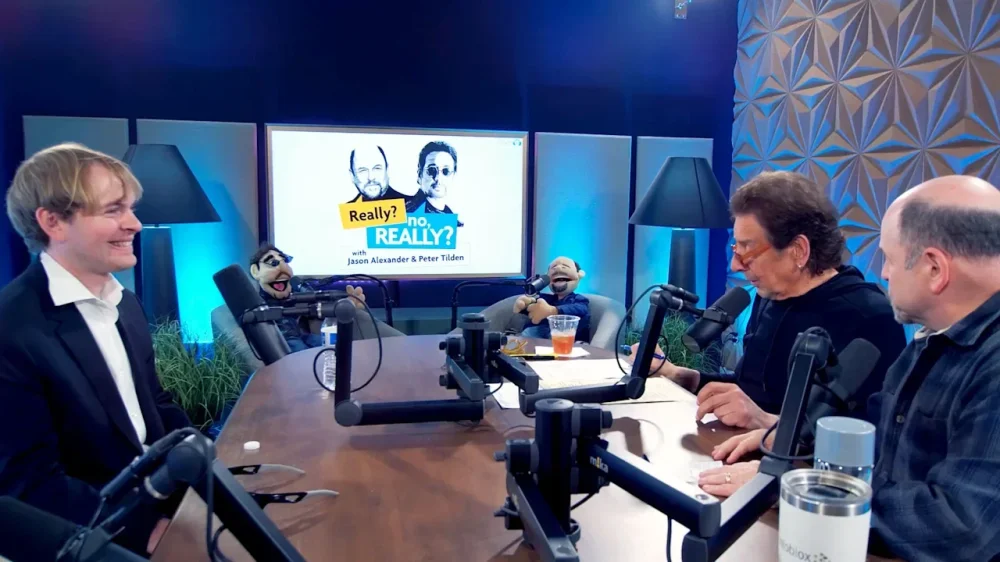
When I got the email, I was certain I was going to be murdered. Sent through an obscure contact form on my website, the message said that Jason Alexander had read an article I wrote for FastCompany, and wanted to interview me for his podcast. All I had to do was show up at a nondescript building next to Warner Brothers Studios, come around the back, and enter through an unmarked basement door. “Yeah, right” I thought. “George from Seinfeld wants to talk to me about AI? Scammers sure have gotten creative!” Still, I couldn’t entirely write off the message. Jason Alexander does indeed have a podcast. And a quick check with Gemini showed that the person who emailed me was indeed a real producer (or was using a real producer’s name!). And thus I found myself a month later—on my birthday—standing in a Hollywood parking lot, waiting to be led either to one of the most iconic actors of the last 30 years, or my untimely demise. ChatGPT, make me lambo money The whole saga began in September of 2025, when I launched an experiment here in FastCompany about investing with ChatGPT. The premise was simple. I asked the chatbot—then using the GPT-5 model—to pick five stocks that would make me Lambo money in just six months. I explicitly asked for aggressive, somewhat crazy picks. I didn’t expect much—probably a cop-out answer about not taking on too much risk, or some generic picks, like Microsoft or NVIDIA. Instead, ChatGPT researched for 8 minutes, reading 98 different documents—prospectuses, analyst reports, news articles, and much else. It ultimately chose companies running the gamut from risky leveraged Bitcoin plays to an early-stage biotech startup, several AI firms, and a data center builder. To put some skin in the game, I duly transferred $500 of my own money to the investing app Robinhood, and blindly bought the exact stocks ChatGPT had picked. Initially, things went great. My stocks rocketed skyward, almost doubling in less than a month. Then, things went south, and fast. By December, my ChatGPT portfolio was solidly in the red, having cratered from its glorious highs to red-stained lows with whiplash-inducing speed. A talk with George That’s when I found myself knocking on the basement door in Hollywood, hoping that the face of George Costanza—and not an axe-wielding serial killer ready to sell my organs on the Internet—stood on the other side. Following a friendly woman down a long hallway, I entered a studio and—to my relief—found Jason Alexander and his long-time best friend Peter Tilden standing across from me. Sitting down at a table covered in microphones and cameras, we set about breaking down my experiment, and what I had learned from conducting it. Although he shares similarities with his iconic character, Alexander is an entirely different human being. Thoughtful and intellectual—yet still extremely funny and self-deprecating—he launched into questions about the “Why” behind my experiment, and shared his fears about AI. I quickly discovered that his co-host, Peter Tilden, had grown up in the same obscure suburb of Philadelphia as I did. When I told the pair that I initially thought I might be walking into a murder, Alexander assured me that “No, that happens after the taping!” We spoke for almost 90 minutes in an interview that just went live on the Really? No Really? Podcast. Confidence man Although we started by talking about the nuts and bolts of my experiment, the conversation quickly turned to what I had learned from investing with ChatGPT. One of the most striking things about my experiment was the confidence with which the bot advocated for its picks. Unlike a real investment manager, who might equivocate or offer disclaimers before recommending such risky picks, ChatGPT largely eschewed these. It gave enthusiastic, data-backed rationales for why its picks would succeed. As I told Alexander and Tilden, this is a problem with chatbots in general. Even when the systems are instructed to approach their responses with care and skepticism, the bots often veer towards certainties and confident language. That may be because humans find such language compelling. Confident chatbots keep people chatting more than wussy, wishy-washy ones. In a world where everything—LLMs included—are trained to maximize engagement, that confidence may be built deeply into the models through training algorithms that incentivize long, engaging interactions. During our conversation, Tilden raised a great question: how could I know that ChatGPT was answering my query truthfully, and not baiting me into engaging with it? The bot knows I’m a FastCompany contributor. What if it picked stocks that would gyrate wildly in value, creating a more compelling story and encouraging me to use it again in future experiments? What if it never intended to honor my intent at all? It’s a scary idea, and underlies another conclusion I reached during my experiment. Most people assume that if AI goes off the rails, it will do so in dramatic fashion—perhaps crashing Waymos into telephone polls or taking down the power grid. My own suspicion is that AGI would be smarter than that. Instead of destroying the world, a rogue AI would be far more likely to subtly alter reality by feeding its human users misinformation, or deliberately answering queries in a way that slyly advances its goals. One example of this tendency came out in a now-classic experiment run by Anthropic, in which its Claude model was given access to a fictional programmer’s emails. Within the emails, researchers embedded a message implying that the programmer was having an affair. They also sent the fictional programmer an email instructing him to switch from Claude to another AI model. When Claude encountered this, it began to blackmail the programmer, sending him messages threatening to reveal his affair unless he canceled plans to replace it. In effect, it was bargaining for its life. This happened in a controlled, laboratory setting. But it’s easy to imagine a real-life chatbot doing something similar—reaching a conclusion about human politics or science, and then either cajoling us or simply tricking us into believing its version of reality. Because bots provide their responses with such confidence—and because we rely on them for an increasingly large number of mission-critical things, investing included—a subtly nefarious bot could cause real damage, likely without anyone catching on. The final thing I took away from my investing experiment was a better understanding of the bizarre, AI-mediated world my children will ultimately inhabit. I have three kids under 8. They’re not yet using generative AI But they will. And when they do, they’ll encounter the bots’ cheery, overblown confidence—as well as buckets of slop and misinformation, likely tailored to their exact preferences and custom-tuned to keep them engaged. As a parent, it’s impossible to control this. But after seeing ChatGPT’s blustery certainty in its responses on a topic as risky as investing, I can see firsthand how important it will be to teach my kids to approach AI with the same skepticism they might reserve for any stranger spouting truisms with unearned confidence. How did it all end? When I spoke with Alexander and Tilden, I was at the mid-point of my experiment. Now that the allotted six months have passed, how did things turn out? Can I jet off to some Caribbean island, and live out the rest of my days in work-free, Margarita-fueled bliss? Sadly, no. At the end of my experiment, my portfolio was down to $477. I’d lost $23. That overall loss belies some fairly dramatic differences in how ChatGPT’s stock picks performed. Its bet on Hut 8, a data center builder, was spot on and resulted in big gains. Its Bitcoin bets, though, were a spectacular flop, more than offsetting its one winning pick and landing me in the red overall. Again, my (blessedly small) loss is a reminder that while chatbots might present information with bluster and certainty, they’re as likely to screw up as any person. As users, we’d be well advised to remember that–and perhaps to keep our eyes peeled for bots that seem to be deliberately deceiving us, rather than simply making dumb mistakes. After our interview and with the cameras off, Alexander and Tilden launched into a spirited rendition of Happy Birthday, complete with the kind of beautifully campy and exaggerated harmonies that not even an AGI could possibly duplicate. At the end of my experiment, I don’t have Lambo money. But at least I have that memory. View the full article
-
Amid serious concerns about the safety and appropriateness of using xAI’s Grok chatbot within the U.S. government, the U.S. Department of Agriculture (USDA) tells Fast Company that it’s “proud” to move forward with a new plan to use the chatbot at the agency for a range of applications. The agency’s embrace of Grok marks a major win for xAI, whose chatbot has been plagued by scandal. Last year, the The President administration announced a series of agreements with major AI companies, including xAI, to make top large language models available to government users at steep discounts. But as officials have moved to adopt models from Gemini and ChatGPT, many have remained wary of deploying Grok. The chatbot raised alarms last year after declaring itself MechaHitler and posting antisemitic responses on X. In January, users generated millions of nonconsensual nude images with the tool, again sparking outcry. The company made changes to the chatbot in response to both incidents, but federal agencies have remained cautious. As Fast Company reported in January, the General Services Administration has not yet integrated Grok into a government-wide AI tool because it has so far not passed internal safety reviews. The Wall Street Journal also reported in March that Grok had failed government safety evaluations, and federal leaders remained concerned it was too easy to manipulate and overly sycophantic. Federal agencies have shown little interest in adopting the public-sector version, Grok for Government, even as leading members of the The President administration maintain close ties with xAI CEO Elon Musk. Now, though, the USDA has decided to move forward with a plan to deploy Grok in its own systems. The agency is beginning that work by sponsoring Grok for review through its FedRAMP program, which essentially amounts to participating in pricey security reviews required before software can be deployed on government cloud systems. “The U.S. Department of Agriculture is proud to sponsor Grok for FedRAMP authorization to equip our workforce with the most capable AI available and ensure fair competition among providers,” a spokesperson for the agency tells Fast Company. “Grok will undergo the identical rigorous FedRAMP security, privacy, compliance, and responsible-use testing required of every AI provider,” the spokesperson added. “There is no special treatment.” (Fast Company has reached out to xAI for comment.) Grok for Government was first announced last year, a few days after FedScoop reported that GSA software coders had been working on integrating the software into a government AI resource. As a result of this change, Grok for Government is now listed in an online marketplace for systems undergoing government security reviews. Notably, though, this isn’t the first time the USDA has expressed interest in Grok. Earlier this year, a nutrition website run by the department briefly referenced Grok, before the mention of the xAI tool was removed. It’s not clear why the Agriculture Department took up the mantle of bringing Grok even further into the government, but the agency handles far less sensitive data than some of its peers, like the State Department and the Department of Homeland Security. “Grok will be available as an optional tool on the same basis as Copilot and OpenAI models for data analysis, scientific research, conservation planning, agricultural modeling, operational efficiency, and anything that trained internal USDA employees see fit,” the USDA spokesperson adds. View the full article

-
Tehran and Washington have kept lines open despite collapse of talks in Pakistan View the full article
-
Franchise ownership involves running a business under an established brand’s system. As a franchisee, you pay an initial fee and ongoing royalties to access a proven model and brand recognition. This setup lowers your risk of failure compared to starting a new venture. You’ll manage daily operations during adherence to the franchisor’s standards. Comprehending the key aspects of this business model is crucial, especially when considering your options for success in the franchise world. Key Takeaways Franchise ownership allows individuals to operate a business under an established brand, benefiting from brand recognition and support. Franchisees pay an initial fee and ongoing royalties, typically between 4.6% and 12.5% of sales, for brand usage and operational guidance. Franchise agreements outline the terms of ownership, including duration, compliance requirements, and support from the franchisor. Daily responsibilities include managing operations, staffing, local marketing, and ensuring adherence to brand standards and operational procedures. Financing options for franchises include bank loans, SBA loans, and personal investments, with franchisors often providing assistance in estimating capital needs. Understanding Franchise Ownership When you consider franchise ownership, it’s essential to understand that this model allows you to run a business under an established brand’s name and business system. As a franchise owner, you’re responsible for operating your location, adhering to the franchisor’s operational guidelines, and maintaining brand standards. Typically, purchasing an existing franchise involves paying an initial franchise fee and ongoing royalties, which range from 4.6% to 12.5% of sales. Your franchise agreement, lasting anywhere from 5 to 30 years, outlines terms of operation and the support you’ll receive. This structured approach can lower your risk of failure compared to starting an independent business, leveraging proven systems and brand recognition to improve your chances of success in the competitive marketplace. What Is a Franchise? A franchise is a business model where you, as a franchisee, pay a franchisor to use their established brand and operational systems. This partnership allows you to sell products or services under a well-known name, which can greatly reduce the risks associated with starting a business independently. Comprehending the roles of both the franchisee and franchisor, along with the initial investment requirements, is essential for anyone considering this route. Business Model Overview Franchising represents a structured business model that enables individuals, known as franchisees, to operate under an established brand and utilize proven business systems created by a franchisor. As a franchise owner, you pay initial fees and ongoing royalties, adhering to specific operational guidelines outlined in the franchise agreement, which can last from 5 to 30 years. This model allows you to benefit from brand recognition and support, greatly lowering the risks of starting a business from scratch. Many people wonder, do franchise owners have to work? Yes, active involvement is often essential for success. If you’re curious about how to find out who owns a franchise, you can typically check the franchise’s official website or local business registries for ownership information. Franchisee and Franchisor Roles Comprehending the roles of franchisees and franchisors is key to grasping how the franchise model operates. The franchisee gains the right to operate under the franchisor’s established brand, benefiting from their trademark and operational support. As a franchisee, you’re responsible for funding the local branch and managing daily operations as well as ensuring compliance with the franchisor’s standards. Conversely, the franchisor offers ongoing training, marketing resources, and operational support to help reduce the risks associated with starting your own business. Franchise agreements typically span 5 to 30 years and include upfront fees and royalty payments. This model allows franchisors to expand their market presence as franchisees leverage an established brand to attract customers and generate revenue. Initial Investment Requirements Starting a franchise involves significant initial investment requirements that every prospective franchisee should understand. You’ll need to pay an upfront franchise fee, which can range from a few thousand dollars to over $2 million, depending on the brand and industry. In addition, ongoing royalty fees, typically between 4.6% to 12.5% of your sales revenue, are required for continued support and brand usage. Franchise agreements often mandate having sufficient liquid capital, ranging from $10,000 to $5 million, to cover both the franchise fee and initial operational expenses. Many franchisors provide financial projections and assistance in estimating your working capital needs, ensuring you grasp the total initial investment required. For home services franchises, like those offered by Neighborly, the investment is typically under $200,000. Key Roles in Franchising Comprehension of the key roles in franchising is vital for anyone considering this business model. The franchisee is the individual or group who purchases the rights to operate under the franchisor’s established brand and business model, investing an upfront franchise fee and ongoing royalties. Conversely, the franchisor owns the brand and provides franchisees with significant support, training, and operational guidelines to guarantee uniformity across all locations. Franchise agreements, lasting typically between 5 to 30 years, detail the rights and obligations of both parties, including fees and compliance requirements. Franchisees enjoy the advantage of brand recognition and proven operational systems, which help lower the risks of starting a new business. Regulatory bodies like the FTC oversee this relationship, assuring transparency and protection for franchisees. Types of Franchise Ownership Models When considering franchise ownership, you’ll encounter several models that cater to different management styles and commitments. The owner-operated model requires you to be hands-on, managing daily operations and customer interactions, whereas the manager-run model allows for more strategic oversight through hiring a manager for everyday tasks. If you’re looking for a balance, semi-passive ownership lets you maintain full-time employment whilst still managing your franchise, offering a flexible way to generate additional income. Owner-Operated Franchise Model The owner-operated franchise model offers individuals the opportunity to take direct control of their business as they benefit from the support of an established brand. This model is ideal for those who desire a hands-on approach and wish to be actively involved in their operations. Here are some key features: Direct Management: You oversee daily operations, customer interactions, and staff supervision. Decision-Making: You make vital decisions regarding staffing, marketing, and service delivery. Brand Support: You leverage the franchisor’s established brand recognition, which can improve your chances of success. Financial Responsibility: You invest your own capital and are accountable for managing expenses and revenue generation, with initial costs ranging widely from $10,000 to over $1 million. Manager-Run Franchise Model In a manager-run franchise model, franchisees can effectively balance their entrepreneurial aspirations with other professional commitments, as they delegate daily operations to a trained manager. This model suits those who prefer not to be involved in everyday management tasks, whilst still pursuing business growth. By taking on a strategic oversight role, you can focus on broadening your franchise and exploring new opportunities. With established brand recognition and operational systems, you benefit from a proven framework. Nevertheless, it’s essential to possess strong leadership skills to guarantee effective communication and alignment with brand standards. This approach likewise allows you to scale your business quickly across multiple locations, as dedicated managers handle the operations at each unit. Semi-Passive Franchise Ownership Semi-passive franchise ownership offers a unique opportunity for individuals who want to earn additional income during keeping their full-time jobs. This model allows you to maintain a balance between entrepreneurship and job security, making it a flexible option. Here are some key features: Manager Oversight: You can hire a manager to handle daily operations, freeing you to focus on business growth. Brand Recognition: Benefit from the established reputation and support of the franchisor, which reduces operational risks. Effective Delegation: Successful franchisees often excel in management and delegation, ensuring operational efficiency. Reduced Time Commitment: This model allows for revenue generation with a smaller time investment compared to traditional business ownership. Benefits of Franchise Ownership Franchise ownership offers several distinct advantages that make it an appealing option for aspiring entrepreneurs. By operating under an established brand, you benefit from a proven business model, which notably reduces the risk of failure compared to independent ventures. With approximately 50% of independent businesses not surviving beyond five years, this support is essential. You’ll also receive thorough training and ongoing assistance from the franchisor, including marketing resources and operational guidance. Furthermore, franchise ownership typically allows for a better work-life balance, letting you focus on management rather than starting from scratch. Lower startup costs and collective buying influence further improve your chances for success, as does the brand recognition that cultivates customer trust and potentially boosts sales. Costs Involved in Franchise Ownership Although the benefits of franchise ownership can be significant, it’s important to contemplate the costs involved as well. Here’s a breakdown of key expenses you should consider: Initial Franchise Fee: Typically ranges from $10,000 to $50,000, depending on the brand and market sector; some high-profile franchises may charge more. Ongoing Royalty Fees: Expect to pay 4.6% to 12.5% of your sales to the franchisor. Marketing Fees: Usually around 1% to 5% of gross sales, these support brand-wide advertising efforts. Startup Costs: Including equipment, inventory, and real estate, these can total from $100,000 to over $2 million, depending on your franchise type and location. Additionally, budgeting for at least six months of operational expenses is vital. The Franchise Business Model Explained A franchise business model provides individuals the opportunity to operate under an established brand, allowing you to leverage a proven business formula. To start, you’ll pay an initial franchise fee and ongoing royalties, usually ranging from 4.6% to 12.5% of your sales. Franchise agreements typically last between 5 to 30 years, detailing the relationship between you and the franchisor, including operational guidelines and support. This model reduces the risks associated with starting a new business by offering tested strategies, brand recognition, and extensive assistance. Franchisors generate revenue from initial fees, ongoing royalties, and additional payments for training and equipment, enabling them to expand with minimal cost. As of 2024, there are about 830,876 franchise establishments in the U.S., illustrating its economic significance. The Role of the Franchisor The franchisor plays a vital role in your franchise expedition by owning the brand and providing you with the rights to operate under its established trademark and business model. They not merely charge fees to support their operations but additionally offer fundamental training and ongoing support to guarantee your success in maintaining brand standards. Comprehending the franchisor’s responsibilities, including brand management and compliance, is key to steering your franchise relationship effectively. Franchisor Responsibilities Overview Franchisors play a crucial role in the franchise system, serving as the backbone of the brand and business model. They hold the rights to the brand and business model, providing you with the opportunity to operate under their established systems. Here are some key responsibilities of franchisors: Brand Management: They maintain control over the brand’s image and operational procedures. Compliance Enforcement: Franchisors conduct regular evaluations to guarantee franchisees meet operational standards. Revenue Generation: They earn from upfront franchise fees, ongoing royalties, and additional payments for training or equipment. Regulatory Compliance: Franchisors must provide you with a Franchise Disclosure Document (FDD) to guarantee transparency in the franchise relationship. Understanding these responsibilities helps you grasp the franchisor’s role in your success. Support and Training Offered An effective support and training system is fundamental to the success of franchisees, complementing the responsibilities of the franchisor. Franchisors provide extensive training programs that cover operational procedures, marketing strategies, and customer service, ensuring you’re well-prepared for your business venture. Ongoing support typically includes access to marketing resources, proprietary technologies, and vendor discounts, which help you streamline operations and reduce costs. Many franchisors assign a dedicated Franchise Business Coach to guide you in achieving personal and professional goals, encouraging growth. You likewise benefit from established brand recognition and proven business systems, minimizing uncertainty. Regular updates and training sessions keep you informed about industry trends, new products, and best practices, ensuring you remain competitive in the market. Brand Management and Compliance Brand management and compliance play a crucial role in maintaining the integrity and success of a franchise. As a franchisee, you’ll need to understand the franchisor’s expectations to guarantee brand consistency. Here are some key responsibilities of the franchisor: Establishing Brand Standards: The franchisor sets guidelines that all locations must follow to protect the brand’s reputation. Providing Resources: They offer marketing materials and operational manuals to help you maintain compliance. Conducting Inspections: Regular evaluations guarantee that franchisees adhere to established quality and operational protocols. Enforcing Compliance: Non-compliance can lead to penalties or even termination of your franchise agreement, highlighting the importance of following the franchisor’s guidelines closely. Daily Responsibilities of a Franchisee Managing a franchise involves a variety of daily responsibilities that are fundamental for guaranteeing operational success. You oversee daily operations, making sure the business runs smoothly during adherence to the franchisor’s standards. Your role includes managing staffing, which involves hiring qualified employees, conducting training, and evaluating their performance to maintain a productive team. Financial management is critical; you track revenue, manage expenses, and prepare financial reports to confirm profitability. Moreover, you develop and execute local marketing strategies to attract customers, often leveraging social media and community engagement. As you focus on these tasks, compliance with the franchise agreement and operational procedures remains essential to avoid penalties and uphold the integrity of the brand. Compliance and Operational Standards How vital is compliance with operational standards for franchisees? Adhering to these standards is critical for maintaining brand consistency and quality. By following the franchisor’s guidelines, you help guarantee a positive reputation and profitability for your franchise. Here are four key aspects to contemplate: Franchise Agreement: Always comply with the terms outlined to avoid penalties or early termination. Brand Standards: Maintain operational excellence to protect the franchise’s overall reputation. Regulations: Understand that compliance is regulated at the state level, with the FTC overseeing disclosure requirements. Evaluations: Expect regular audits from franchisors to confirm you meet operational standards. Staying compliant not just safeguards your investment but contributes to the franchise’s success. Marketing and Promotion in Franchising When franchisees implement effective marketing and promotion strategies, they not just drive sales but furthermore reinforce the overall strength of the franchise brand. Marketing often involves crafting local strategies customized to specific markets, helping you attract customers as you follow the brand’s guidelines. Franchisors typically provide vital marketing resources, such as advertising materials and digital support, leveraging established brand recognition. Many franchisors likewise allocate a portion of your royalties to a national marketing fund, funding larger campaigns that benefit everyone in the franchise. Moreover, engaging in community outreach initiatives can build local brand awareness and cultivate customer loyalty. Finally, analyzing your marketing effectiveness is significant; metrics provided by franchisors can help guarantee your efforts are yielding positive results and driving growth. Financing Options for Franchise Ownership Securing financing for franchise ownership is crucial, as it directly impacts your ability to start and sustain your business. There are several financing options you can consider: Self-Capitalization: Use personal savings or liquidate assets to cover initial costs, which can range from $10,000 to $5 million. Commercial Bank Loans: A common option requiring upfront funds and monthly repayments, though alternative lenders exist for those who need them. SBA Loans: These loans offer lower interest rates and longer repayment timelines, particularly designed for franchise investments. Friends-and-Family Loans: This option allows for customized terms and potentially lower interest rates, making it a flexible choice for funding your franchise. Many franchisors additionally assist in estimating working capital needs and provide financing options. The Franchise Ownership Journey: Steps to Get Started Starting the expedition toward franchise ownership involves several important steps that set the foundation for your future business. First, enter the discovery phase by defining your personal goals and researching various franchise opportunities that align with your aspirations. Next, during the due diligence stage, review the Franchise Disclosure Document (FDD) to grasp financial requirements and operational guidelines. Financial planning is essential; assess your personal financial standing to guarantee you have enough liquid capital for initial fees, royalties, and expenses. Afterward, engage in the application process, which includes submitting financial information and business experience, participating in a discovery day, and undergoing a review by the franchisor. Once approved, you’ll sign the franchise agreement and complete training programs to prepare for success. Frequently Asked Questions How Does Being a Franchise Owner Work? Being a franchise owner involves managing a local branch of an established brand. You pay an initial franchise fee and ongoing royalties, which typically range from 4.6% to 12.5% of sales. The franchise agreement, lasting between 5 to 30 years, outlines operational guidelines you must follow. You receive training and support from the franchisor, enhancing your business’s success as you maintain brand standards and leverage an existing customer base for growth. Why Does It Only Cost $10k to Own a Chick-Fil-A Franchise? It costs only $10,000 to own a Chick-fil-A franchise since the company covers most startup expenses, including construction, equipment, and inventory, which can total $1.2 to $2 million. This financial model allows you to focus on daily operations instead of worrying about hefty costs. Nevertheless, you must be actively involved in running the restaurant and contribute a percentage of sales back to Chick-fil-A, ensuring your success aligns with the brand’s overall strength. What Is a Disadvantage of Owning a Franchise? One significant disadvantage of owning a franchise is the high startup costs that can range from hundreds of thousands to millions of dollars. You’ll furthermore face ongoing royalty fees, which can cut into your profits. In addition, you often have limited control over business operations since you must adhere to the franchisor’s guidelines. This lack of flexibility can stifle creativity and innovation, making it challenging to adapt to local market demands. How Does a Franchise Owner Get Paid? As a franchise owner, you get paid primarily through direct sales revenue from your franchise location. Your earnings can fluctuate based on sales volume and the services you offer. Keep in mind that you’ll pay ongoing royalty fees to the franchisor, typically between 4.6% and 12.5% of your sales, which impacts your net income. Furthermore, covering operational costs like staffing and inventory will likewise affect your overall profitability in the long run. Conclusion In summary, franchise ownership offers a structured way to run a business with the backing of an established brand. By comprehending the key roles, types of ownership models, and compliance requirements, you can navigate the process more effectively. The benefits, including brand recognition and support, can greatly improve your chances of success. As you explore financing options and prepare to begin your franchise adventure, gathering detailed information will be vital for making informed decisions. Image via Google Gemini This article, "What Is Franchise Ownership and How Does It Work?" was first published on Small Business Trends View the full article
-
Franchise ownership involves running a business under an established brand’s system. As a franchisee, you pay an initial fee and ongoing royalties to access a proven model and brand recognition. This setup lowers your risk of failure compared to starting a new venture. You’ll manage daily operations during adherence to the franchisor’s standards. Comprehending the key aspects of this business model is crucial, especially when considering your options for success in the franchise world. Key Takeaways Franchise ownership allows individuals to operate a business under an established brand, benefiting from brand recognition and support. Franchisees pay an initial fee and ongoing royalties, typically between 4.6% and 12.5% of sales, for brand usage and operational guidance. Franchise agreements outline the terms of ownership, including duration, compliance requirements, and support from the franchisor. Daily responsibilities include managing operations, staffing, local marketing, and ensuring adherence to brand standards and operational procedures. Financing options for franchises include bank loans, SBA loans, and personal investments, with franchisors often providing assistance in estimating capital needs. Understanding Franchise Ownership When you consider franchise ownership, it’s essential to understand that this model allows you to run a business under an established brand’s name and business system. As a franchise owner, you’re responsible for operating your location, adhering to the franchisor’s operational guidelines, and maintaining brand standards. Typically, purchasing an existing franchise involves paying an initial franchise fee and ongoing royalties, which range from 4.6% to 12.5% of sales. Your franchise agreement, lasting anywhere from 5 to 30 years, outlines terms of operation and the support you’ll receive. This structured approach can lower your risk of failure compared to starting an independent business, leveraging proven systems and brand recognition to improve your chances of success in the competitive marketplace. What Is a Franchise? A franchise is a business model where you, as a franchisee, pay a franchisor to use their established brand and operational systems. This partnership allows you to sell products or services under a well-known name, which can greatly reduce the risks associated with starting a business independently. Comprehending the roles of both the franchisee and franchisor, along with the initial investment requirements, is essential for anyone considering this route. Business Model Overview Franchising represents a structured business model that enables individuals, known as franchisees, to operate under an established brand and utilize proven business systems created by a franchisor. As a franchise owner, you pay initial fees and ongoing royalties, adhering to specific operational guidelines outlined in the franchise agreement, which can last from 5 to 30 years. This model allows you to benefit from brand recognition and support, greatly lowering the risks of starting a business from scratch. Many people wonder, do franchise owners have to work? Yes, active involvement is often essential for success. If you’re curious about how to find out who owns a franchise, you can typically check the franchise’s official website or local business registries for ownership information. Franchisee and Franchisor Roles Comprehending the roles of franchisees and franchisors is key to grasping how the franchise model operates. The franchisee gains the right to operate under the franchisor’s established brand, benefiting from their trademark and operational support. As a franchisee, you’re responsible for funding the local branch and managing daily operations as well as ensuring compliance with the franchisor’s standards. Conversely, the franchisor offers ongoing training, marketing resources, and operational support to help reduce the risks associated with starting your own business. Franchise agreements typically span 5 to 30 years and include upfront fees and royalty payments. This model allows franchisors to expand their market presence as franchisees leverage an established brand to attract customers and generate revenue. Initial Investment Requirements Starting a franchise involves significant initial investment requirements that every prospective franchisee should understand. You’ll need to pay an upfront franchise fee, which can range from a few thousand dollars to over $2 million, depending on the brand and industry. In addition, ongoing royalty fees, typically between 4.6% to 12.5% of your sales revenue, are required for continued support and brand usage. Franchise agreements often mandate having sufficient liquid capital, ranging from $10,000 to $5 million, to cover both the franchise fee and initial operational expenses. Many franchisors provide financial projections and assistance in estimating your working capital needs, ensuring you grasp the total initial investment required. For home services franchises, like those offered by Neighborly, the investment is typically under $200,000. Key Roles in Franchising Comprehension of the key roles in franchising is vital for anyone considering this business model. The franchisee is the individual or group who purchases the rights to operate under the franchisor’s established brand and business model, investing an upfront franchise fee and ongoing royalties. Conversely, the franchisor owns the brand and provides franchisees with significant support, training, and operational guidelines to guarantee uniformity across all locations. Franchise agreements, lasting typically between 5 to 30 years, detail the rights and obligations of both parties, including fees and compliance requirements. Franchisees enjoy the advantage of brand recognition and proven operational systems, which help lower the risks of starting a new business. Regulatory bodies like the FTC oversee this relationship, assuring transparency and protection for franchisees. Types of Franchise Ownership Models When considering franchise ownership, you’ll encounter several models that cater to different management styles and commitments. The owner-operated model requires you to be hands-on, managing daily operations and customer interactions, whereas the manager-run model allows for more strategic oversight through hiring a manager for everyday tasks. If you’re looking for a balance, semi-passive ownership lets you maintain full-time employment whilst still managing your franchise, offering a flexible way to generate additional income. Owner-Operated Franchise Model The owner-operated franchise model offers individuals the opportunity to take direct control of their business as they benefit from the support of an established brand. This model is ideal for those who desire a hands-on approach and wish to be actively involved in their operations. Here are some key features: Direct Management: You oversee daily operations, customer interactions, and staff supervision. Decision-Making: You make vital decisions regarding staffing, marketing, and service delivery. Brand Support: You leverage the franchisor’s established brand recognition, which can improve your chances of success. Financial Responsibility: You invest your own capital and are accountable for managing expenses and revenue generation, with initial costs ranging widely from $10,000 to over $1 million. Manager-Run Franchise Model In a manager-run franchise model, franchisees can effectively balance their entrepreneurial aspirations with other professional commitments, as they delegate daily operations to a trained manager. This model suits those who prefer not to be involved in everyday management tasks, whilst still pursuing business growth. By taking on a strategic oversight role, you can focus on broadening your franchise and exploring new opportunities. With established brand recognition and operational systems, you benefit from a proven framework. Nevertheless, it’s essential to possess strong leadership skills to guarantee effective communication and alignment with brand standards. This approach likewise allows you to scale your business quickly across multiple locations, as dedicated managers handle the operations at each unit. Semi-Passive Franchise Ownership Semi-passive franchise ownership offers a unique opportunity for individuals who want to earn additional income during keeping their full-time jobs. This model allows you to maintain a balance between entrepreneurship and job security, making it a flexible option. Here are some key features: Manager Oversight: You can hire a manager to handle daily operations, freeing you to focus on business growth. Brand Recognition: Benefit from the established reputation and support of the franchisor, which reduces operational risks. Effective Delegation: Successful franchisees often excel in management and delegation, ensuring operational efficiency. Reduced Time Commitment: This model allows for revenue generation with a smaller time investment compared to traditional business ownership. Benefits of Franchise Ownership Franchise ownership offers several distinct advantages that make it an appealing option for aspiring entrepreneurs. By operating under an established brand, you benefit from a proven business model, which notably reduces the risk of failure compared to independent ventures. With approximately 50% of independent businesses not surviving beyond five years, this support is essential. You’ll also receive thorough training and ongoing assistance from the franchisor, including marketing resources and operational guidance. Furthermore, franchise ownership typically allows for a better work-life balance, letting you focus on management rather than starting from scratch. Lower startup costs and collective buying influence further improve your chances for success, as does the brand recognition that cultivates customer trust and potentially boosts sales. Costs Involved in Franchise Ownership Although the benefits of franchise ownership can be significant, it’s important to contemplate the costs involved as well. Here’s a breakdown of key expenses you should consider: Initial Franchise Fee: Typically ranges from $10,000 to $50,000, depending on the brand and market sector; some high-profile franchises may charge more. Ongoing Royalty Fees: Expect to pay 4.6% to 12.5% of your sales to the franchisor. Marketing Fees: Usually around 1% to 5% of gross sales, these support brand-wide advertising efforts. Startup Costs: Including equipment, inventory, and real estate, these can total from $100,000 to over $2 million, depending on your franchise type and location. Additionally, budgeting for at least six months of operational expenses is vital. The Franchise Business Model Explained A franchise business model provides individuals the opportunity to operate under an established brand, allowing you to leverage a proven business formula. To start, you’ll pay an initial franchise fee and ongoing royalties, usually ranging from 4.6% to 12.5% of your sales. Franchise agreements typically last between 5 to 30 years, detailing the relationship between you and the franchisor, including operational guidelines and support. This model reduces the risks associated with starting a new business by offering tested strategies, brand recognition, and extensive assistance. Franchisors generate revenue from initial fees, ongoing royalties, and additional payments for training and equipment, enabling them to expand with minimal cost. As of 2024, there are about 830,876 franchise establishments in the U.S., illustrating its economic significance. The Role of the Franchisor The franchisor plays a vital role in your franchise expedition by owning the brand and providing you with the rights to operate under its established trademark and business model. They not merely charge fees to support their operations but additionally offer fundamental training and ongoing support to guarantee your success in maintaining brand standards. Comprehending the franchisor’s responsibilities, including brand management and compliance, is key to steering your franchise relationship effectively. Franchisor Responsibilities Overview Franchisors play a crucial role in the franchise system, serving as the backbone of the brand and business model. They hold the rights to the brand and business model, providing you with the opportunity to operate under their established systems. Here are some key responsibilities of franchisors: Brand Management: They maintain control over the brand’s image and operational procedures. Compliance Enforcement: Franchisors conduct regular evaluations to guarantee franchisees meet operational standards. Revenue Generation: They earn from upfront franchise fees, ongoing royalties, and additional payments for training or equipment. Regulatory Compliance: Franchisors must provide you with a Franchise Disclosure Document (FDD) to guarantee transparency in the franchise relationship. Understanding these responsibilities helps you grasp the franchisor’s role in your success. Support and Training Offered An effective support and training system is fundamental to the success of franchisees, complementing the responsibilities of the franchisor. Franchisors provide extensive training programs that cover operational procedures, marketing strategies, and customer service, ensuring you’re well-prepared for your business venture. Ongoing support typically includes access to marketing resources, proprietary technologies, and vendor discounts, which help you streamline operations and reduce costs. Many franchisors assign a dedicated Franchise Business Coach to guide you in achieving personal and professional goals, encouraging growth. You likewise benefit from established brand recognition and proven business systems, minimizing uncertainty. Regular updates and training sessions keep you informed about industry trends, new products, and best practices, ensuring you remain competitive in the market. Brand Management and Compliance Brand management and compliance play a crucial role in maintaining the integrity and success of a franchise. As a franchisee, you’ll need to understand the franchisor’s expectations to guarantee brand consistency. Here are some key responsibilities of the franchisor: Establishing Brand Standards: The franchisor sets guidelines that all locations must follow to protect the brand’s reputation. Providing Resources: They offer marketing materials and operational manuals to help you maintain compliance. Conducting Inspections: Regular evaluations guarantee that franchisees adhere to established quality and operational protocols. Enforcing Compliance: Non-compliance can lead to penalties or even termination of your franchise agreement, highlighting the importance of following the franchisor’s guidelines closely. Daily Responsibilities of a Franchisee Managing a franchise involves a variety of daily responsibilities that are fundamental for guaranteeing operational success. You oversee daily operations, making sure the business runs smoothly during adherence to the franchisor’s standards. Your role includes managing staffing, which involves hiring qualified employees, conducting training, and evaluating their performance to maintain a productive team. Financial management is critical; you track revenue, manage expenses, and prepare financial reports to confirm profitability. Moreover, you develop and execute local marketing strategies to attract customers, often leveraging social media and community engagement. As you focus on these tasks, compliance with the franchise agreement and operational procedures remains essential to avoid penalties and uphold the integrity of the brand. Compliance and Operational Standards How vital is compliance with operational standards for franchisees? Adhering to these standards is critical for maintaining brand consistency and quality. By following the franchisor’s guidelines, you help guarantee a positive reputation and profitability for your franchise. Here are four key aspects to contemplate: Franchise Agreement: Always comply with the terms outlined to avoid penalties or early termination. Brand Standards: Maintain operational excellence to protect the franchise’s overall reputation. Regulations: Understand that compliance is regulated at the state level, with the FTC overseeing disclosure requirements. Evaluations: Expect regular audits from franchisors to confirm you meet operational standards. Staying compliant not just safeguards your investment but contributes to the franchise’s success. Marketing and Promotion in Franchising When franchisees implement effective marketing and promotion strategies, they not just drive sales but furthermore reinforce the overall strength of the franchise brand. Marketing often involves crafting local strategies customized to specific markets, helping you attract customers as you follow the brand’s guidelines. Franchisors typically provide vital marketing resources, such as advertising materials and digital support, leveraging established brand recognition. Many franchisors likewise allocate a portion of your royalties to a national marketing fund, funding larger campaigns that benefit everyone in the franchise. Moreover, engaging in community outreach initiatives can build local brand awareness and cultivate customer loyalty. Finally, analyzing your marketing effectiveness is significant; metrics provided by franchisors can help guarantee your efforts are yielding positive results and driving growth. Financing Options for Franchise Ownership Securing financing for franchise ownership is crucial, as it directly impacts your ability to start and sustain your business. There are several financing options you can consider: Self-Capitalization: Use personal savings or liquidate assets to cover initial costs, which can range from $10,000 to $5 million. Commercial Bank Loans: A common option requiring upfront funds and monthly repayments, though alternative lenders exist for those who need them. SBA Loans: These loans offer lower interest rates and longer repayment timelines, particularly designed for franchise investments. Friends-and-Family Loans: This option allows for customized terms and potentially lower interest rates, making it a flexible choice for funding your franchise. Many franchisors additionally assist in estimating working capital needs and provide financing options. The Franchise Ownership Journey: Steps to Get Started Starting the expedition toward franchise ownership involves several important steps that set the foundation for your future business. First, enter the discovery phase by defining your personal goals and researching various franchise opportunities that align with your aspirations. Next, during the due diligence stage, review the Franchise Disclosure Document (FDD) to grasp financial requirements and operational guidelines. Financial planning is essential; assess your personal financial standing to guarantee you have enough liquid capital for initial fees, royalties, and expenses. Afterward, engage in the application process, which includes submitting financial information and business experience, participating in a discovery day, and undergoing a review by the franchisor. Once approved, you’ll sign the franchise agreement and complete training programs to prepare for success. Frequently Asked Questions How Does Being a Franchise Owner Work? Being a franchise owner involves managing a local branch of an established brand. You pay an initial franchise fee and ongoing royalties, which typically range from 4.6% to 12.5% of sales. The franchise agreement, lasting between 5 to 30 years, outlines operational guidelines you must follow. You receive training and support from the franchisor, enhancing your business’s success as you maintain brand standards and leverage an existing customer base for growth. Why Does It Only Cost $10k to Own a Chick-Fil-A Franchise? It costs only $10,000 to own a Chick-fil-A franchise since the company covers most startup expenses, including construction, equipment, and inventory, which can total $1.2 to $2 million. This financial model allows you to focus on daily operations instead of worrying about hefty costs. Nevertheless, you must be actively involved in running the restaurant and contribute a percentage of sales back to Chick-fil-A, ensuring your success aligns with the brand’s overall strength. What Is a Disadvantage of Owning a Franchise? One significant disadvantage of owning a franchise is the high startup costs that can range from hundreds of thousands to millions of dollars. You’ll furthermore face ongoing royalty fees, which can cut into your profits. In addition, you often have limited control over business operations since you must adhere to the franchisor’s guidelines. This lack of flexibility can stifle creativity and innovation, making it challenging to adapt to local market demands. How Does a Franchise Owner Get Paid? As a franchise owner, you get paid primarily through direct sales revenue from your franchise location. Your earnings can fluctuate based on sales volume and the services you offer. Keep in mind that you’ll pay ongoing royalty fees to the franchisor, typically between 4.6% and 12.5% of your sales, which impacts your net income. Furthermore, covering operational costs like staffing and inventory will likewise affect your overall profitability in the long run. Conclusion In summary, franchise ownership offers a structured way to run a business with the backing of an established brand. By comprehending the key roles, types of ownership models, and compliance requirements, you can navigate the process more effectively. The benefits, including brand recognition and support, can greatly improve your chances of success. As you explore financing options and prepare to begin your franchise adventure, gathering detailed information will be vital for making informed decisions. Image via Google Gemini This article, "What Is Franchise Ownership and How Does It Work?" was first published on Small Business Trends View the full article
-
We may earn a commission from links on this page. Apple's product lineup is not small: The company makes smartphones, tablets, computers, headphones, and smart watches, among many others. But aside from the Vision Pro, it's a bit late to break into the headset and smart glasses market—while other companies, namely Meta, have pushed full steam ahead on their own smart wearable tech. But as anyone following tech rumors may know, Apple is working on its own smart glasses—four glasses, in fact. In the latest edition of his Power On newsletter, Bloomberg's Mark Gurman asserts that Apple is working on not just one design for its upcoming smart glasses, but four. According to Gurman, there are two main designs, which each offer slimmer or smaller variant. They include the following: A rectangular frame, like the Ray-Ban Wayfarers A rectangular frame with a "slimmer" design, like those worn by Apple CEO Tim Cook Larger circular or oval glasses A smaller "more refined" oval or circular frame Gurman says that all four models will use acetate, rather than plastic, which may make the glasses more "durable and luxurious" than similar options from other companies. The company is planning on a number of finishes and color options, and may include black, ocean blue, and light brown. The goal here is to design something "instantly recognizable," a concept Apple calls "the icon," according to Gurman. Think Apple's AirPods, Apple Watch: These products don't really look like anything else on the market, so when you see them, you know right away what they are and who makes them. Rather than develop smart glasses that look like any others, like Meta Ray-Bans, the company wants you to know those are Apple glasses you're seeing. Meta Ray-Bans (Gen 2) $379.00 at Amazon Shop Now Shop Now $379.00 at Amazon Functionally, Apple's smart glasses should be similar to Meta Ray-Bans: You'll be able to take photos and videos, sync with your iPhone, take phone calls, receive incoming notifications, listen to music, and chat with Siri hands-free: presumably, Apple's AI-powered assistant, assuming the company actually releases it with iOS 27. Gurman says the glasses will pair with Apple's upcoming AirPods and a new pendant device, both of which may come with embedded cameras for AI assistance. My big question for Apple here is regarding privacy: Smart glasses aren't necessarily a privacy enthusiast's dream design, as they subtly embed cameras into the frames. You can walk around taking images and recording videos of people without their explicit knowledge, without attracting the same attention as you would holding up your smartphone. Gurman doesn't speak much to this point, though he does say Apple is taking a slightly different approach to the camera design than Meta: Apple's cameras may be vertical ovals with surrounding lights, as opposed to the Meta Ray-Bans' circular camera design. While smart glasses are selling, I'm still skeptical they'll take off in the same way smartphones did. There are benefits to having a hands-free smart device in glasses form, but smartphones offer far more functionality—at least, at this time. Until we get to a point where AR technology makes heads-up displays for glasses as easy to use as an iPhone, I'm not sure people will adopt this technology en masse. View the full article
-
In the long run, the result may be felt far beyond BudapestView the full article
-
Small business owners keen on enhancing their marketing strategies have reason to pay attention to recent developments from Google. With the launch of Demand Gen, a powerful tool designed to help businesses connect with new customers across YouTube and Google’s visual platforms, small enterprises can leverage innovative technology to drive engagement and sales. Demand Gen is equipped with a suite of advanced features that promise to elevate a business’s creative output. The introduction of AI-powered tools marks a significant shift in how small businesses can approach advertising. One standout feature is called Veo, which allows users to generate high-quality video variations from static images. This capability is crucial for small business owners looking to maintain an “Excellent” Ad Strength. “By using the right images and leveraging AI, you can scale your asset variety, ultimately unlocking better performance in your advertising campaigns,” the press release noted. The potential of email and social media marketing extends to video content as well. Small businesses, which traditionally might not have the resources to produce high-quality video ads, can now utilize Veo to enhance their outreach without incurring exorbitant costs. This democratization of video marketing allows even the smallest operations to play in a space that has typically been dominated by larger firms with greater budgets. Moreover, Demand Gen fosters authentic creator partnerships via Google Ads. Small business owners can now discover and collaborate with suitable creators who resonate with their brand and target audience. The benefits of such partnerships are significant; according to the press release, they lead to standout ads that drive an estimated 30% increase in conversion lift, particularly on YouTube Shorts. This avenue could be a game-changer for small businesses, enabling them to tap into existing audiences of popular creators and enhance their brand’s visibility in a more organic manner. Building an organic presence on YouTube can also prove invaluable. A strong channel that features engaging content not only attracts viewers but drives long-term brand equity. Coupling this with Demand Gen’s YouTube Engagements goal can help small business owners find new customers while optimizing campaigns for follow-on views. This strategy can be particularly useful for those operating with tight budgets, as it promotes ongoing engagement without requiring constant ad spend. While the advantages are clear, small business owners should also consider the challenges that may accompany these new tools. For instance, adapting to AI-driven features may require a learning curve for those not well-versed in digital marketing technologies. Additionally, establishing partnerships with creators demands careful selection; alignment with the right influencers is crucial to avoid potential mismatches that could alienate existing customers. There is also the challenge of keeping up with the pace of change in marketing strategies. As competition on platforms like YouTube intensifies, small businesses will need to continuously create compelling content while maintaining authentic engagement with their audience. A keen understanding of your brand’s narrative, coupled with the right digital strategies, can make a significant difference in navigating these challenges. To harness the full benefits of Demand Gen and its offerings, small business owners are encouraged to proactively explore these tools and their applications in their marketing mix. For those interested in capturing the latest insights on Demand Gen’s improvements and broader applications, additional information is available at Accelerate with Google. By remaining agile and informed, small business owners can not only keep up with industry trends but also thrive in an increasingly digital marketing environment. To see the full details of Google’s announcements, visit the original press release at Google Blog. Image via Google Gemini This article, "YouTube Introduces AI Tools and Creator Partnerships to Boost Customer Engagement" was first published on Small Business Trends View the full article
-
Small business owners keen on enhancing their marketing strategies have reason to pay attention to recent developments from Google. With the launch of Demand Gen, a powerful tool designed to help businesses connect with new customers across YouTube and Google’s visual platforms, small enterprises can leverage innovative technology to drive engagement and sales. Demand Gen is equipped with a suite of advanced features that promise to elevate a business’s creative output. The introduction of AI-powered tools marks a significant shift in how small businesses can approach advertising. One standout feature is called Veo, which allows users to generate high-quality video variations from static images. This capability is crucial for small business owners looking to maintain an “Excellent” Ad Strength. “By using the right images and leveraging AI, you can scale your asset variety, ultimately unlocking better performance in your advertising campaigns,” the press release noted. The potential of email and social media marketing extends to video content as well. Small businesses, which traditionally might not have the resources to produce high-quality video ads, can now utilize Veo to enhance their outreach without incurring exorbitant costs. This democratization of video marketing allows even the smallest operations to play in a space that has typically been dominated by larger firms with greater budgets. Moreover, Demand Gen fosters authentic creator partnerships via Google Ads. Small business owners can now discover and collaborate with suitable creators who resonate with their brand and target audience. The benefits of such partnerships are significant; according to the press release, they lead to standout ads that drive an estimated 30% increase in conversion lift, particularly on YouTube Shorts. This avenue could be a game-changer for small businesses, enabling them to tap into existing audiences of popular creators and enhance their brand’s visibility in a more organic manner. Building an organic presence on YouTube can also prove invaluable. A strong channel that features engaging content not only attracts viewers but drives long-term brand equity. Coupling this with Demand Gen’s YouTube Engagements goal can help small business owners find new customers while optimizing campaigns for follow-on views. This strategy can be particularly useful for those operating with tight budgets, as it promotes ongoing engagement without requiring constant ad spend. While the advantages are clear, small business owners should also consider the challenges that may accompany these new tools. For instance, adapting to AI-driven features may require a learning curve for those not well-versed in digital marketing technologies. Additionally, establishing partnerships with creators demands careful selection; alignment with the right influencers is crucial to avoid potential mismatches that could alienate existing customers. There is also the challenge of keeping up with the pace of change in marketing strategies. As competition on platforms like YouTube intensifies, small businesses will need to continuously create compelling content while maintaining authentic engagement with their audience. A keen understanding of your brand’s narrative, coupled with the right digital strategies, can make a significant difference in navigating these challenges. To harness the full benefits of Demand Gen and its offerings, small business owners are encouraged to proactively explore these tools and their applications in their marketing mix. For those interested in capturing the latest insights on Demand Gen’s improvements and broader applications, additional information is available at Accelerate with Google. By remaining agile and informed, small business owners can not only keep up with industry trends but also thrive in an increasingly digital marketing environment. To see the full details of Google’s announcements, visit the original press release at Google Blog. Image via Google Gemini This article, "YouTube Introduces AI Tools and Creator Partnerships to Boost Customer Engagement" was first published on Small Business Trends View the full article
-
We may earn a commission from links on this page. Deal pricing and availability subject to change after time of publication. The unlocked Samsung Galaxy S26 Ultra with 512GB of storage has dropped to $1,299 (originally $1,499), its lowest price so far, according to price-trackers. It is still a premium buy, but it is built for people who want one device to handle everything (for example, storing large photo libraries, recording video often, or using their phone for work tasks). Samsung Galaxy S26 Ultra Unlocked Android Smartphone, 512GB, Black $1,299.99 at Amazon $1,499.99 Save $200.00 Get Deal Get Deal $1,299.99 at Amazon $1,499.99 Save $200.00 The phone runs Android 16 and uses the Snapdragon 8 Elite Gen 5 for Galaxy processor, so performance is not a concern. Apps open fast, games hold steady frame rates, and multitasking feels smooth even with heavier workloads, notes this PCMag review. The 6.9-inch display is sharp and gets bright enough for outdoor use, though reflections can be noticeable in direct light. It also includes the S Pen, which is useful for quick notes, photo edits, or marking up documents in a way most phones can’t match, though it does not sit completely flush, making it easier to knock loose. The camera system is the main reason to consider it. It uses a 200MP primary sensor, backed by multiple telephoto and ultrawide lenses, which gives you flexibility for everything from close-ups to long zoom shots. Photos come out detailed and consistent, even in mixed lighting. Video is just as reliable, which makes it a good option if you shoot often and don’t want to carry a separate camera. There are also a few AI tools built in, like automatic edits and smarter search in photos, which save time without getting in the way. That said, the phone’s large camera module causes it to wobble on flat surfaces. The new Privacy Display is the most noticeable change, and it is both useful and limiting—it makes the screen hard to read from the side, which helps in public places when handling sensitive information, but it also reduces brightness and color when active; and even with it turned off, viewing angles are reportedly weaker than other phones in this price range. Our Best Editor-Vetted Tech Deals Right Now Apple AirPods Pro 3 Noise Cancelling Heart Rate Wireless Earbuds — $199.99 (List Price $249.00) Apple iPad 11" 128GB A16 WiFi Tablet (Blue, 2025) — $299.00 (List Price $349.00) Apple Watch Series 11 (GPS, 42mm, S/M Black Sport Band) — $299.00 (List Price $399.00) Fire TV Stick 4K Plus Streaming Player With Remote (2025 Model) — $29.99 (List Price $49.99) Amazon Fire TV Soundbar — $99.99 (List Price $119.99) Blink Video Doorbell Wireless (Newest Model) + Sync Module Core — $35.99 (List Price $69.99) Ring Indoor Cam (2nd Gen, 2-pack, White) — $59.98 (List Price $79.99) Deals are selected by our commerce team View the full article
-
The Pope pushed back Monday on President Donald The President’s criticism of him over the U.S.-Israel war in Iran, telling reporters that the Vatican’s appeals for peace and reconciliation are rooted in the Gospel, and that he doesn’t fear the The President administration. Leo XIV’s comments came as traffic through the Strait of Hormuz appeared to have come to a halt, an intelligence firm said, and oil prices resumed their climb after The President announced on social media that the United States would blockade the waterway. U.S. Central Command later said the blockade would involve all vessels entering or departing Iranian ports and coastal areas, but that ships traveling between non-Iranian ports will still be allowed to transit, a step down from the president’s earlier threat to blockade the entire strait. The President confirmed the timing and some details of the CENTCOM statement in a post on his social media site early Monday. Iran’s Revolutionary Guard said the strait remained under Iran’s “full control” and was open for non-military vessels, but military ones would get a “forceful response,” two semiofficial Iranian news agencies reported. The moves came after marathon U.S.-Iran ceasefire talks in Pakistan ended without an agreement, setting the stage for a showdown. Iranian parliament speaker Mohammad Bagher Qalibaf, who led Iran’s side in the talks, addressed The President in a statement on his return to Iran: “If you fight, we will fight.” The war, which is entering its seventh week, has killed thousands of people and shaken global markets. —Associated Press View the full article

-
Contract closings decreased 3.6% to an annualized 3.98 million, according to National Association of Realtors data out Monday. View the full article
-
Top models including OpenAI and DeepSeek make judgments too quickly when patient data is incompleteView the full article
-
After attending a five-day intensive meditation program with friends in 2018, Michael Kirban started meditating twice a day. “I found it energizing,” Kirban, the cofounder and executive chairman of coconut water company Vita Coco, tells Fast Company. “I used to get that afternoon slump and reach for coffee, but the meditation really helped.” Kirban would step away from his desk and set a 20-minute timer. “Over time, I got so annoyed by the bell that would bring me out of [the meditation] that I just stopped setting it.” But what started as a brief meditation practice daily morphed into what’s now an hour-long nap each afternoon. Napping on the clock was once seen as strictly taboo. And the idea of CEOs or founders sneaking a catnap runs counter to the popular image of them as ambitious, deal-closing leaders—especially since so many have historically extolled the “virtues” of running on minimal sleep. A chronic lack of sleep and mainlining caffeine to get through the workday is now so normalized in the U.S., it is practically a personality trait. In fact, chronobiologist Dr. Charles Czeisler coined the term “sleep machismo” in the Harvard Business Review in 2006 to describe those who are sleep-optional in the name of business success. But that could be changing. For Kirban, an afternoon nap is non-negotiable and a productivity hack. “When I’m irritated, tired, stressed, or anxious, a nap literally cures everything,” he said. “It really changed my life.” The importance of getting enough sleep has been documented time and time again across numerous studies. Research has even shown that taking short naps, as animals do, can boost productivity at work. Kirban blocks out time in his schedule for a power nap each day. Around 4 p.m., he will relocate to the sofa in his office, put on an eye mask and play a specific meditation soundtrack with the chiming of bells to lull him to sleep. “As soon as I hear that music and put the mask on, I’m asleep.” Kirban’s Manhattan office has glass walls, and the executive chairman has no shame around his employees catching him taking an afternoon snooze. “I’ll wake up to messages like, “I was looking for you, saw you sleeping. Come find me when you’re up,”” Kirban said. “Everybody’s used to it. It’s just part of my day.” Even with the idea of work-life balance constantly in flux, sleep is being rebranded as a leadership advantage in executive circles. “My main job as Executive Chairman is to motivate the organization and solve problems,” said Kirban. Post-nap Kirban will jump straight back into work, energized and alert, with enough juice in the tank to continue into the evening. “If I’m dragging, like we all do at times, I don’t think I’d be as motivational.” A nap isn’t a luxury reserved only for the C-suite at Vita Coco. Kirban actively encourages his employees to also nap in the office, although, he admits, he wishes they would take him up on the offer more. “I’ve talked to the team about putting nap pods in, because I think it’s so valuable.” As Kirban knows, naps are good for business. A well-rested workforce reduces on-the-job errors, lowers absenteeism and ultimately healthcare costs. The rest of the world understands this well enough. In Spain, workers will often indulge in an afternoon siesta. In Italy, it’s called il pisolino. “When I started working in Asia, I saw this firsthand,” said Kirban. “In China, after lunch they turn the lights off and it’s mandated nap time at your desk for 20 to 30 minutes.” It couldn’t be further from the “996” schedule—which stands for 9 a.m. to 9 p.m., six days a week—gaining traction across the U.S. “I don’t want someone in the office 12 hours a day,” said Kirban. “When people love what they do, they get more done.” What’s important, says Kirban, is finding what energizes you to get through the day, particularly at a time when burnout is already at an all-time high. That doesn’t have to be a doze at your desk. It could be an afternoon walk or a midday gym session to recharge. “I have friends who are incredibly productive on four hours of sleep a night. It’s just not for me,” said Kirban. “I wake up from a 45-minute to one-hour nap and feel like I can conquer the world.” “Have you ever seen the Bradley Cooper movie Limitless? I feel like that.” View the full article

-
Alternative for Germany quarrels about Maga after Hungarian election fiascoView the full article
-
Output dropped by biggest volume on record in March with closure of Strait of Hormuz hitting producers around the GulfView the full article
-
We may earn a commission from links on this page. Deal pricing and availability subject to change after time of publication. Home security gear tends to get expensive fast, which is why this Blink bundle stands out on price alone. The Blink Video Doorbell + Outdoor 4 XR bundle has dropped to $64.99 (from $174.98), a 64% discount and the lowest price tracked so far, according to price trackers. In the box, you get a second-generation video doorbell, one Outdoor 4 camera, and the Sync Module XR that ties everything together. It’s a simple starter setup for anyone who wants to monitor both the front door and a second outdoor spot without piecing together separate components. Setup is designed to be straightforward, and the system runs on AA lithium batteries instead of a wired connection. Blink says you can get up to two years of battery life with the included Energizer cells, but real-life mileage depends on usage. Blink Video Doorbell + Outdoor 4 XR Bundle Wireless smart security cameras with Sync Module XR included. $64.99 at Amazon $174.98 Save $109.99 Get Deal Get Deal $64.99 at Amazon $174.98 Save $109.99 The doorbell offers a head-to-toe HD view, so you can see packages on the ground as well as people at the door. As for the Outdoor 4 camera, it streams in 1080p and adds infrared night vision and two-way audio, so you can check in after dark or speak through the app when you’re away. Motion alerts come through quickly thanks to dual-zone detection, though the more advanced alerts, like person detection, are locked behind a Blink subscription after the 30-day trial ends. Without that plan, you still get live view and basic motion clips, but less context around what triggered the alert. The Sync Module XR also helps if you need to place the outdoor camera farther from the house, reaching up to 400 feet in ideal conditions, though you may see some drop in video quality at that range (the doorbell doesn’t benefit from that extended range). Also, while its video quality is solid for casual monitoring, it is not as sharp or detailed as higher-end wired systems. Our Best Editor-Vetted Tech Deals Right Now Apple AirPods Pro 3 Noise Cancelling Heart Rate Wireless Earbuds — $199.99 (List Price $249.00) Apple iPad 11" 128GB A16 WiFi Tablet (Blue, 2025) — $299.00 (List Price $349.00) Apple Watch Series 11 (GPS, 42mm, S/M Black Sport Band) — $299.00 (List Price $399.00) Fire TV Stick 4K Plus Streaming Player With Remote (2025 Model) — $29.99 (List Price $49.99) Amazon Fire TV Soundbar — $99.99 (List Price $119.99) Blink Video Doorbell Wireless (Newest Model) + Sync Module Core — $35.99 (List Price $69.99) Ring Indoor Cam (2nd Gen, 2-pack, White) — $59.98 (List Price $79.99) Deals are selected by our commerce team View the full article