Newsletter
Want to keep up to date with all our latest news and information?


ResidentialBusiness
Administrators
-
Joined
-
Last visited
Everything posted by ResidentialBusiness
-
Fast Company is extending its application deadline for Best Workplaces for Innovators 2026 to Friday, April 3 at 11:59 p.m. Pacific Time. This marks the eighth year Fast Company will be recognizing companies and organizations from around the world that most effectively empower employees at all levels to improve processes, create new products, or invent whole new ways of doing business. In addition to ranking the world’s Best Workplaces for Innovators, we will also recognize companies in 19 different categories. What differentiates Best Workplaces for Innovators from existing best-places-to-work lists is that it goes beyond benefits, competitive compensation, and collegiality (mere table stakes in today’s competitive talent marketplace) to identify which companies are actively creating and sustaining the kinds of innovative cultures that many top employees value even more than money. With Best Workplaces for Innovators, Fast Company aims to identify companies where employees can do the best work of their careers and improve the lives of hundreds, thousands, even millions of people around the world. For more than a decade, Fast Company has been recognizing outstanding achievement in business innovation with its annual awards programs. In addition to Best Workplaces for Innovators, Fast Company’s Most Innovative Companies, Innovation by Design, World Changing Ideas, Brands That Matter, and the Next Big Thing in Tech lists have celebrated thousands of organizations transforming industries and shaping society through paradigm-shifting products, insights, or services. For more information on applying, see the FAQs. The final deadline is now April 3 at 11:59 p.m. PT. To sign up for Best Workplaces for Innovators notifications, register here. View the full article

-
We may earn a commission from links on this page. Watching a show or a movie has quite literally never been easier. The streaming services you already subscribe to have more content than you could possible ever watch. If something you want to see is only on a specific platform, you can subscribe to it. If it's only available to buy or rent digitally, you can do that too. But with the rise of streaming, the concept of owning and curating a home video collection has fallen away. It seems fewer and fewer of us want a collection of discs in our homes. We'd prefer everything to fit neatly into our smart TVs. But streaming isn't perfect—far from it. Maybe you were counting on watching something on a service you already pay for, but discover it's now gone; maybe that movie isn't streaming anywhere at all, and there's no way to watch it online. Owning a physical copy of a show or movie really is the only way to guarantee that you'll be able to watch it whenever (or wherever) you want. Plus, building a collection of films perfectly suited to your tastes is just fun—entertainment feels less ephemeral when you can tie it to a physical object rather than an icon in a sea of them on the Netflix home screen. If you want to go back to how things used to be, here's how to go about starting your own home video collection in 2026: Buying movies and shows digitally isn't the same as owning them Modern streaming devices and TVs aren't exactly gatekeeping you from purchasing movies or TV shows. If you want to, you can still buy them through your Apple TV, Fire TV, Roku, Google TV, or through the various apps you use. Prime Video will happily sell you Titanic; Apple will let you buy a "box set" of every season of The Office; you can even buy The Dark Knight on YouTube, by way of Google Play Movies & TV. The thing is, buying digitally isn't really ownership. It might feel that way: You have to click a "Buy" button, pay a good chunk of change, and you get access to that content at any time from any compatible, connected device. But when you buy a digital show or movie through Apple, Amazon, or Google, what you're actually paying for isn't ownership rights, but a license. You're paying for the privilege of viewing that content for as long as the platform has the rights to it. If Prime Video loses the rights to Titanic, so do you, even if you paid $19 for it. That's not to say digital content doesn't have its place. These stores are particularly great for renting movies when the flick you want to watch isn't available on streaming. It might also make sense for you to "buy" shows and movies on these platforms, as the license can cost less than the price of a movie ticket, and you can definitely get your money's worth in viewings this way. I have a number of movies I bought on iTunes a decade ago that I still have access to, and I watch them regularly across all my Apple devices. But back when I bought them, I assumed I owned them. I was wrong, and that's why I haven't clicked "buy" on one of those platforms in years. True ownership requires buying physical mediaIf you want to truly own your TV shows and movies, and know for sure that you won't lose access to them, you need to invest in physical media. In 2026, that largely means on a disc. If you've fully transitioned to the streaming lifestyle, the idea of bringing DVDs and Blu-rays into your home might sound downright medieval—but without them, your collection is forever at the mercy of the platforms that license said content. Here's the real kicker, though: Even when buying your shows and movies physically, you're still just buying a license to watch that content—that's why you can't publicly screen a movie just because you own the DVD; you still have to pay for the rights to show it outside of your home. Technically, the companies that own the content can revoke that license at any time—it's just way more difficult to cut someone off when they have a physical disc. That gets a bit dicier with modern Blu-rays and Blu-ray players, which connect to the internet, and could theoretically block your access in the future. But as far as I know, there's no documented case of this happening, whereas marketplaces like Prime Video have lost licenses and revoked users' content. So generally, if you buy a movie or a TV show on a disc, you own it, for all intents and purposes. There are many video formats out there, especially if you're interesting in owning legacy media (from VHS, to Betamax, to LaserDisc). But for now, let's assume you want to start a collection of DVDs and Blu-rays. They're the easiest physical media to buy when it comes to shows and movies, and the most versatile when it comes to playback. Physical media often looks and sounds better than a digital copyThis isn't an opinion driven by nostalgia: While streaming quality can be excellent, modern discs will always be superior. Sure, your 4K Prime Video stream is going to crush a low-resolution DVD, but even a 1080p Blu-ray has it beat in certain categories. A 4K Blu-ray, meanwhile, is the absolute gold standard. The main reason comes down to bitrates—the amount of information displayed on your screen at once. In general, the higher the bitrate, the more visual detail a video will have at any given moment. This is different than resolution, which is simply total number of pixels a video contains. (4K has roughly 8.3 million pixels per frame—3,840 pixels by 2,160 pixels—while 1080p has just over two million pixels per frame—1,920 pixels by 1,080 pixels). When you buy shows and movies digitally, you're only really sold on the resolution—whether the content is "HD" (1080p) or 4K—and not the bitrate. While that 4K stream has more available pixels to work with than a 1080p disc, if the disc's bitrate is higher, it can show more details in its two million pixels than the 4K stream can show in its 8.3 million. While discs can run off of the information they contain alone, streaming has to contend with all sorts of variables with your home internet connections—and, thus, it has to compromise on the bitrate. Take The Dark Knight, for example: I have the 1080p Blu-ray, which has a bitrate of 24 Mbps. I also have a license for the 4K Dolby Vision version from Apple TV. After hacking my Apple TV a bit, I was able to see the streaming data, which showed that while the maximum bitrate was 24.24 Mbps, my average hovered around 15 Mbps. That's still a good amount of data, but it's interesting to see that even at 4K resolution and in Dolby Vision HDR audio, my Apple TV stream moves less data than my 1080p Blu-ray. I have a good internet connection, but maybe if I were able to connect my Apple TV directly to the router via ethernet, I could get that 24.24 Mbps bitrate and match that of the Blu-ray. But what if I upgrade to the 4K Blu-ray, since that has a bitrate of 47.16 Mbps and supports HDR? While a 4K stream may be comparable (or even preferable) to a 1080p Blu-ray, the Blu-ray (4K or not) will always outclass it in the audio department. Streaming audio bitrates are more compressed than discs, even more than the video bitrates. While my Apple TV copy of The Dark Knight could theoretically reach the bitrate of my Blu-ray copy, its audio maxes out at 383.88 kbps. The Blu-ray, however, has support for 16-bit 48kHz Dolby TrueHD 5.1 audio, which has a variable bitrate, but should theoretically reach 4,608 kbps (16 bits times 48 kHz times six audio channels)—as well as Dolby Digital 5.1 at 640 kbps. Simply put, you get a lot more audio data from the disc. The 4K Blu-ray ups that to DTS-HD Master Audio 5.1 at 24-bit 48kHz, which applying the same math gets you 6,912 kbps. The big caveat here is that all of this is dependent on the TV and sound system you use to experience your movies or shows. If you use your TV's built-in, backwards-facing speakers, you might not notice the uptick in quality. But if you have at least a soundbar, if not a more elaborate home theater setup, discs are definitely going to sound better. The same goes for picture quality: If you have a high-quality TV panel, you'll notice sharper scenes, more film grain, and a lack of compression, especially in dark scenes. Where to buy Blu-rays and DVDs in 2026The good news is, even in 2026, it's not hard to find physical shows and movies to buy. You don't need to find specialty stores or shop secondhand: major retailers like Walmart and Target still sell physical media of all kinds, including Blu-rays and DVDs. You can walk into a Walmart right now and buy Zootopia 2 on Blu-ray, or head to Target and buy Vice on DVD. But for a more curated selection, you'll definitely want to keep tabs on Amazon, or even Best Buy. Barnes & Noble famously sells The Criterion Collection Blu-ray and DVDs, though you can always buy directly through Criterion. You might think that because "nobody" buys discs anymore, that these things would be dirt cheap. Au contraire: Physical media can get pricey, especially Blu-ray (and particularly 4K Blu-ray). My recommend is to follow a site that tracks deals on physical media, like Blu-ray.com. You can sort by type (4K Blu-ray, Blu-ray, DVD, etc.) or just browse all types of deals to see if any of your favorites get to a price you find acceptable. But if you're getting into this type of collecting, and especially if you're buying new movies and TV shows, be prepared to spend some cash (there's a reason folks in the r/Criterion Reddit group mark the Barnes & Noble semi-annual 50% off sale on their calendars). You'll need something to play your DVDs and Blu-raysIf you're all-in on streaming, you might not actually have anything to play a DVD or Blu-ray on. If so, you'll need to remedy that. Believe it or not, there are companies still making Blu-ray players, though the numbers are dwindling. Two companies, Pioneer and Reavon, abandoned the market in 2025, but there are still good options out there, with Sony and Panasonic leading the pack. CNET recommends the Sony UBP-X700M, which you can pick up for under $300 used on Amazon. On the flip side, if you have a game console, like a PlayStation or Xbox, you already have a Blu-ray player—with some caveats: The Xbox models, as well as the PS5, don't support Dolby Vision HDR, only HDR10. If you're looking for Dolby Vision, you'll need to buy a dedicated player. But if all you want is a machine to reliably play your budding movie collection, your PlayStation or Xbox will work just fine. (Just make sure you buy one with a disc drive.) PlayStation 5 $549.00 at Amazon Shop Now Shop Now $549.00 at Amazon You can rip your discs to enjoy the flexibility of digital ownershipIf you want the permanence of physical media and the convenience of digital ownership, you can actually take things full circle and create your own private streaming service. You can take any of the physical discs you buy, rip the video files, and upload them to a private server. You can then use a program like Plex or Jellyfin to access those files from anywhere. You can watch them from your own home, of course, but also stream them when traveling. Plus, it serves as a backup method: Should something happen to the disc (or should the movie studio actually somehow revoke your Blu-ray license) you always have a backup copy of your disc. You may need some extra hardware to get this done, however. If you're ripping DVDs, you'll need a DVD player connected to your computer, and a program like Handbrake. If you're ripping Blu-rays, you'll similarly need a Blu-ray player that can connect to your computer, and a program like MakeMKV. While ripping DVDs is pretty straightforward, ripping Blu-rays can get a bit tricky, especially if they're 4K, so you might want to follow a full guide for the best results. As for the legality of this method, well, most films are encoded onto discs with digital rights management software (DRM), and while making a backup copy is often considered fair use, bypassing DRM in the U.S. is also a violation of the Digital Millennium Copyright Act, which means it's illegal. You know, technically. And while I won't encourage you to break the law, if you invite me over to stream a movie from your personal Plex server, I promise not to tell on you. View the full article
-
Farmers around the world are feeling the squeeze of the Iran war. Gas prices have shot up and fertilizer supplies are waning due to Tehran’s near shutdown of the Strait of Hormuz in retaliation for U.S. and Israeli bombing. The fertilizer shortage is putting the livelihood of farmers in developing countries — already troubled by rising temperatures and erratic weather systems — further at risk, and could lead to people everywhere paying more for food. The poorest farmers in the Northern Hemisphere rely on fertilizer imports from the Gulf, and the shortage comes just as planting season begins, said Carl Skau, deputy executive director of the World Food Program. “In the worst case, this means lower yields and crop failures next season. In the best case, higher input costs will be included in food prices next year.” Baldev Singh, a 55-year-old rice farmer in Punjab, India, says smallholders — the bulk of the country’s farmers — may not survive if the government cannot subsidize fertilizers when demand peaks in June. “Right now, we are waiting and hoping,” he said. The war halts supplies of key nutrients Iran is seriously limiting shipments through the Strait of Hormuz, a narrow passage that usually handles about a fifth of the world’s oil shipments and nearly a third of global fertilizer trade. On Friday Iranian ambassador to the United Nations in Geneva Ali Bahreini said Tehran has accepted a request from the U.N to let humanitarian aid and agricultural shipments move through the critical waterway, even as it endured strikes on its nuclear facilities. The aid plan would be the first breakthrough at the shipping chokepoint after a month of war. While markets and governments have largely focused on blocked supplies of oil and natural gas, the restriction of fertilizer threatens farming and food security around the world. Nitrogen and phosphate — two major fertilizer nutrients — are under immediate threat from the blockade. Supplies of nitrogen including urea, the most widely traded fertilizer that helps plants grow and boosts yields, are the hardest hit because of shipping delays and the soaring price of liquefied natural gas — an essential ingredient. The conflict has restricted about 30% of global urea trade, said Chris Lawson of CRU Group, a London-based commodities consultancy. Some countries are already facing critical shortages, according to Raj Patel, a food systems economist at the University of Texas. For example, Ethiopia gets over 90% of its nitrogen fertilizer from the Gulf through Djibouti, a supply route that was strained even before the war began in February. “The planting season is now,” Patel said. “The fertilizer isn’t there.” Phosphate supplies, which support root development, are also under pressure. Saudi Arabia exports about a fifth of the world’s phosphate fertilizer, and the region exports more than 40% of the world’s sulfur, a key ingredient and byproduct of oil and gas refining, Lawson said. Even after the war ends, producers in the Gulf would need clear security guarantees before resuming shipments through the strait, and insurance costs would almost certainly rise, said Owen Gooch, an analyst with London-based Argus Consulting Services. In India, the government has prioritized urea supplies for domestic use and provides fertilizer manufacturers with about 70% of their natural gas needs. Some plants are still running below capacity, leading to lower output. “The food system is fragile, and it depends on stable fertilizer supply chains to ensure farmers can produce the food the world relies on,” said Hanna Opsahl-Ben Ammar of Yara International, one of the world’s largest fertilizer companies. Shortages hit at a critical time Fertilizers are generally applied just before or at planting, so crops miss key early growth stages and yields can fall when deliveries are delayed, even if supplies improve later. The impact is already being felt in the United States and Europe, where the main planting season is underway, and it is expected to hit the first planting season in much of Asia in the coming months. “Our crops out in the field need nitrogen now — the sooner the better — so they can get off to a good start, helping them establish themselves and build up reserves for the harvest later this summer,” said Dirk Peters, an agricultural engineer who runs a farm outside Berlin. Fertilizer prices are below the peaks seen after Russia’s invasion of Ukraine, but grain prices were higher then, helping farmers absorb the costs, said Joseph Glauber of the International Food Policy Research Institute. Grain prices are lower now meaning margins are tighter and farmers may have to switch to less fertilizer-intensive crops — such as soybeans in the U.S. — or apply less fertilizer, reducing yields. Lower yields can lead to higher consumer prices. Other nations likely won’t make up the shortfall. China, the world’s largest producer of nitrogen and phosphate fertilizers, is prioritizing domestic supply, and urea shipments probably won’t resume until May, Lawson said. Plants in Russia, another major producer, are already running near full capacity, he said. Developing nations are vulnerable The disruptions are already being felt across Africa, where many farmers rely on fertilizer imported from the Middle East and Russia. Early heavy rains in East Africa have left farmers with about a week of dry weather to prepare fields and apply fertilizer, said Stephen Muchiri, a Kenya maize farmer and CEO of the Eastern African Farmers Federation, which represents 25 million smallholders. Fertilizer shortages and price hikes hit farmers hard, forcing them to use less and leading to reduced yields. Even short delays can reduce maize yields by about 4% in a season, Patel said, citing research from Zambia. Governments can intervene by applying subsidies, promoting domestic production and controlling exports. India already subsidizes fertilizer to ease the financial strain on farmers, but those subsidies leave less money for long-term farming investments. It has budgeted $12.7 billion this year for urea subsidies alone, according to the U.S.-based Institute for Energy Economics and Financial Analysis. Efforts to produce domestic urea have increased India’s dependence on imported gas, and excessive urea use has harmed local soil, said Purva Jain of IEEFA, who supports the use of organic fertilizers. Less reliance on imported fertilizers could protect farmers and consumers from energy price swings and climate shocks, said Oliver Oliveros, executive coordinator of the Agroecology Coalition. “This could be a turning point,” he said. This story was first published on March 27, 2026. It was updated on March 30, 2026, to correct Saudi Arabia’s involvement in the fertilizer industry. Saudi Arabia exports about a fifth of the world’s phosphate fertilizer. It does not produce about a fifth of the world’s phosphate fertilizer. Associated Press writer Jamey Keaten and Kerstin Sopke contributed. The Associated Press’ climate and environmental coverage receives financial support from multiple private foundations. AP is solely responsible for all content. Find AP’s standards for working with philanthropies, a list of supporters and funded coverage areas at AP.org. —Aniruddha Ghosal and Allan Olingo, Associated Press View the full article

-
Your favorite spot for slow-cooked riblets might be cooked. A number of Applebee’s Neighborhood Grill + Bar restaurants have closed their doors in the wake of mounting financial distress and declining foot traffic, according to a recent bankruptcy filing. The 10 shuttered stores, located in Florida and Georgia, are all owned by an Atlanta-based Applebee’s franchisee that last week became the latest regional restaurateur to seek Chapter 11 protection. The list of impacted locations includes long-standing Applebee’s restaurants near top tourist destinations such as SeaWorld, Walt Disney World, and the Daytona International Speedway. Most of the locations were closed at some point before the franchisee’s initial bankruptcy petition on March 24, although online reviews suggest that some of the restaurants were still operating as recently as last week. Applebee’s had roughly 1,520 franchised locations as of December 2025. Which franchisee went bankrupt? According to court records, the bankrupt franchisee operates as a holding company called NRPF Group Two, along with multiple subsidiaries. Together, they own more than 50 Applebee’s locations in Florida, Georgia, and Alabama. Unfortunately, not all of its restaurants are going to survive the bankruptcy process. NRPF (short for Neighborhood Restaurant Partners Florida) is now seeking to reject the leases at the 10 properties in Florida and Georgia where the locations have shuttered, court documents reveal. Applebee’s restaurants had operated at the locations for more than a decade in some cases, with one lease dating all the way back to 1995. It’s unclear how many jobs have been impacted by the closures, or if more restaurants are expected to shutter. At the time of its bankruptcy filing, NRPF said it employed around 2,000 workers, including employees and independent contractors. The restaurant group has hired GGG Partners, a turnaround firm, to oversee its restructuring process. Fast Company reached out to GGG Partners for comment. News of the bankruptcy comes as increasing numbers of struggling chain restaurant franchisees appear to be turning to the courts to manage unsustainable debt loads. Earlier this year, a Miami-based owner of roughly 130 Popeyes Louisiana Kitchen locations closed at least 17 establishments after filing for bankruptcy. Franchisees for Subway, Domino’s Pizza, and Firehouse Subs have also filed for bankruptcy in recent weeks. Why is the Applebee’s franchisee bankrupt? Business was apparently bright for the regional restaurant owner in the first few years after it acquired 65 Applebee’s locations in 2012. As described in court documents, NRPF enjoyed growth and profitability well into 2015, but then business started to fall off at the end of that year. The story from there is a familiar one for many legacy restaurant chains, particularly in the casual dining space. The COVID-19 pandemic and subsequent inflationary pressures had a detrimental impact on the company’s bottom line. Operating costs increased, customers felt the pinch from higher prices, and foot traffic dropped. As of last year, the company was operating in the red, despite having closed several locations in 2025 in an attempt to stem losses. In February, NRPF reached a tentative deal with the parent company of Applebee’s, Dine Brands Global, through which Applebee’s would acquire 53 of NRPF’s locations. But escalating financial struggles forced NRPF to file for bankruptcy before the deal could be finalized. The transaction is still expected to be completed by mid-May, with Dine Brands now acting as a “stalking horse” bidder for NRPF’s stores in the bankruptcy process. It was not immediately clear if a deal with Dine Brands could change the fate of the 10 shuttered stores. Fast Company reached out to Dine Brands for comment. Scooping up franchise-owned restaurants is not unprecedented for Dine Brands. In a 2025 financial report with the Securities and Exchange Commission (SEC), it said it acquired 47 restaurants from franchisees in 2024 and another 12 last year. Which Applebee’s locations are closing? According to a March 24 court docket, nine Florida locations and one Georgia location were either closed as of the bankruptcy petition date, or were expected to be closed after the date. The locations were described by NRPF as “unprofitable,” with the properties being “burdensome” and providing little to no value for the company. The 10 locations are as follows: 150 Williamson Boulevard, Ormond Beach, Florida 14990 E. Orange Lake Blvd., Kissimmee, Florida 2503 S. Kirkman Road, Orlando, Florida 6290 W. Irlo Bronson Memorial Highway, Celebration, Florida 11036 International Drive, Orlando, Florida (SeaWorld) 3315 U.S. Highway 17-19, Casselberry, Florida 678 West 23rd Street, Panama City, Florida 637 Westover Boulevard, Albany, Georgia 10071 Hutchison Boulevard, Panama City Beach, Florida 1700 W. Intl. Speedway Blvd., Unit 600, Daytona Beach, Florida Is Applebee’s in trouble? The overall Applebee’s brand has struggled in recent years, although there there have been recent glimmers of hope. Dine Brands, which also owns IHOP, reported a 0.4% decline in Applebee’s same-store for the fourth quarter of 2025, but sales were up 1.3% for the year. In its February earnings report, Dine Brands projected that Applebee’s in 2026 would see U.S. sales growth of 0% to 2%. That’s nothing to brag about, but it’s a significant improvement over two years ago, when Applebee’s sales declined 4.2%. Still, investors don’t seem to be as impressed. Shares of Dine Brands Global Inc (NYSE: DIN) are down more than 24% year to date, compared to a dip of around 7% for the S&P 500. The stock saw significant declines during the post-COVID era and has not fully recovered since. This story is developing… View the full article

-
We may earn a commission from links on this page. Deal pricing and availability subject to change after time of publication. Most window air conditioners follow a simple formula: cool the room, maybe add a fan setting, and leave it at that. The LG LW8023HRSM window air conditioner, currently on sale for $399.99 on StackSocial, takes a slightly more flexible approach. It still installs like a typical window unit, but it adds heating and smart controls, making daily use easier. For someone cooling a bedroom, small apartment living room, or home office, the main appeal here is convenience. You can control the unit with a remote, the onboard buttons, or the LG ThinQ app on your phone. If you already use Amazon Alexa or Google Assistant, you can also adjust the temperature with a voice command instead of getting up to press buttons. The cooling capacity is 7,600 BTU, which LG recommends for rooms up to 330 square feet. In practical terms, that size works well for most bedrooms, studio apartments, or compact office spaces. It should bring the temperature down fairly quickly after a hot afternoon, especially if the room stays closed. This unit also includes 3,850 BTU of heating, which can be helpful during cooler months when you want a little warmth without turning on central heat. You can also switch between cool, heat, fan, and dehumidify modes, depending on what the room needs that day. Two cooling speeds and two fan speeds give you some control over how aggressively the unit runs. Airflow is adjustable in four directions, so you can angle the air away from your bed or couch. LG lists the noise level at about 50–52 dB, so it produces a steady background hum, but not enough to drown out conversation or a TV. Rounding things out, there’s a 24-hour programmable timer that lets you schedule the AC to turn on before you get home or shut off overnight. You’ll also find an auto-restart function that restores your previous settings after a power outage, so you don't have to reset everything. The main limitation is coverage—at this size, it's built for smaller rooms, not large open living spaces. But if you want a window unit that cools reliably and gives you a few more ways to control it, this one fits the role without stepping into premium pricing. Our Best Editor-Vetted Tech Deals Right Now Apple AirPods Pro 3 Noise Cancelling Heart Rate Wireless Earbuds — $199.00 (List Price $249.00) Apple iPad 11" 128GB A16 WiFi Tablet (Blue, 2025) — $299.00 (List Price $349.00) Samsung Galaxy Tab A11+ 128GB Wi-Fi 11" Tablet (Gray) — $202.00 (List Price $249.99) Sony WH1000XM6- Best Wireless Noise Canceling Headphones — $398.00 (List Price $459.99) Apple Watch Series 11 (GPS, 42mm, S/M Black Sport Band) — $299.00 (List Price $399.00) Blink Video Doorbell Wireless (Newest Model) + Sync Module Core — $35.99 (List Price $69.99) Fire TV Stick 4K Max Streaming Player With Remote — $34.99 (List Price $59.99) Amazon Kindle Colorsoft 16GB 7" eReader (Black) — $169.99 (List Price $249.99) Deals are selected by our commerce team View the full article
-
We may earn a commission from links on this page. Deal pricing and availability subject to change after time of publication. Amazon’s Big Spring Sale is still going strong, and smart home upgrades are getting some real price cuts. One among them is the Philips Wi-Fi Smart Lock with Handle, which is down to $149.99 (originally $229.99)—its lowest price so far, according to price trackers. That drop makes it a more approachable way to switch from a traditional lock to something smarter without committing to a full security system. It’s a complete set with handles included, so you’re not mixing and matching parts or dealing with awkward installs that don’t look right on your door. Philips Wi-Fi Smart Lock Keyless entry keypad door lock with handle $149.99 at Amazon $229.99 Save $80.00 Get Deal Get Deal $149.99 at Amazon $229.99 Save $80.00 This lock focuses on flexibility in how you get in and out. You can unlock it with your fingerprint, a PIN, the Philips app, a physical key, or even voice commands through Alexa or Google Assistant. Fingerprint unlock is fast—around 0.3 seconds, according to the manufacturer. The app adds another layer of control. You can lock or unlock your door remotely, check access history, and create temporary or one-time PINs for guests, deliveries, or house help. That comes in handy if you don’t want to hand out permanent access. The auto-lock feature also helps cover those moments when you forget to lock the door, with a timer you can set between 30 and 180 seconds. That said, there are a few things to keep in mind—the wifi features depend on the included gateway, so you’ll need to set that up for remote access and voice control. Installation is straightforward for most standard doors, but you may need to drill if your door isn’t a perfect fit. And this is still a smart lock, so battery management and occasional maintenance are part of the experience. Our Best Editor-Vetted Amazon Big Spring Sale Deals Right Now Apple AirPods Pro 3 Noise Cancelling Heart Rate Wireless Earbuds — $199.00 (List Price $249.00) Apple iPad 11" 128GB A16 WiFi Tablet (Blue, 2025) — $299.00 (List Price $349.00) Samsung Galaxy Tab A11+ 128GB Wi-Fi 11" Tablet (Gray) — $202.00 (List Price $249.99) Sony WH1000XM6- Best Wireless Noise Canceling Headphones — $398.00 (List Price $459.99) Apple Watch Series 11 (GPS, 42mm, S/M Black Sport Band) — $299.00 (List Price $399.00) Blink Video Doorbell Wireless (Newest Model) + Sync Module Core — $35.99 (List Price $69.99) Fire TV Stick 4K Max Streaming Player With Remote — $34.99 (List Price $59.99) Amazon Kindle Colorsoft 16GB 7" eReader (Black) — $169.99 (List Price $249.99) Deals are selected by our commerce team View the full article
-
The next few days could be a historic one for manned spaceflight. After a previous delay, it’s possible that NASA’s Artemis II manned lunar mission may finally blast off this week. But no matter what, Krispy Kreme’s limited-edition doughnut commemorating the mission is a go. Here’s what you need to know. What is Artemis II? The Artemis II mission is a historic one for NASA. It is the second major phase of the five-stage Artemis Program, whose ultimate goal is to establish a permanent base on the Earth’s moon, with future missions envisioned for Mars. Artemis I launched in 2022 and sent the unmanned Orion spacecraft into lunar orbit around the moon. That mission was a prelude to Artemis II, which may launch this week. Artemis II will be different than Artemis I, in that it will be a manned mission to the moon. However, its four astronauts will not be setting foot on the moon. Instead, they will remain in the orbiter as it circles the lunar body. Yet while the four astronauts will not actually land on the moon, the crew of the Artemis II will make history. The Artemis II mission will be the first crewed mission to the moon—and the first to go beyond the range of low Earth orbit—in the 21st century. That last manned mission to the moon happened all the way back in 1972. As CNN notes, the Artemis II mission also features the first woman to travel into deep space, Christina Koch; the first person of color to do so, Victor Glover; and the first non-U.S. citizen to do so, Canadian Jeremy Hansen. The goal of the Artemis II mission is to act as the first test flight ahead of the Artemis IV mission in 2028, which will actually land astronauts on the moon. Has the Artemis II mission been delayed? The Artemis II mission was originally scheduled for launch in February, but a helium flow issue prevented that launch. As a result, the launch date was pushed back to April 2026. Currently, NASA is aiming to launch Artemis II this week, but whether that launch goes ahead will depend on safety checks and weather conditions at Cape Canaveral, Florida. As of the time of this writing, NASA’s Artemis II website lists its current launch date as “No Earlier Than April 1, 2026.” Yes, there’s an Artemis II Krispy Kreme doughnut Whether or not the Artemis II launch actually goes ahead this week, fans of NASA, the mission, or just spaceflight in general, can celebrate the mission by picking up the limited-edition Artemis II Doughnut at participating Krispy Kreme stores nationwide. Krispy Kreme says the doughnut is “inspired by NASA’s iconic imagery” and is comprised of an Original Glazed doughnut with blue vanilla-flavored icing, black and white sprinkles, a buttercream dollop, and “a red chevron nod to the NASA logo.” But if you want to take a bite into the Artemis II Doughnut, you’ll need to act fast. It will only be available from tomorrow, Tuesday, March 31, to Thursday, April 2. It is unknown if Kirspy Kreme will reissue the Artemis II Doughnut if the launch is delayed beyond Thursday. Fast Company has reached out to Kripsy Kreme for comment. View the full article

-
Making the move to management is not for every employee, yet many think it’s the only option for climbing the ladder. There’s an art to coaching individual contributors who either want to take that step, or offering a promotion to someone you think is ready. It’s important to approach this not just as an opportunity, but a teachable moment. We asked our Fast Company Impact Council members how they coach team members to make this move and got much wise counsel in return. Their ideas might improve how you approach this with your employees. 1. TRUST YOUR PEOPLE I tell them I am trusting them, and in turn, they need to trust their people. Trust is giving someone an assignment and getting out of their way. Let them go do it and understand it might not be how you would do it, and that is okay. It sounds so easy but it can be so hard to let go and trust that teammate to get it done on time, on budget, and with quality. I also share that a little empathy and a few simple words can work magic: “How can I help you?” — Steven McKay, DLR Group 2. MOVE FROM HERO TO COACH The biggest trap I see talented individual contributors fall into when they become managers is continuing to do the work instead of multiplying it. The shift from individual contributor to manager is fundamentally an identity shift from hero to coach. You stop being the one who solves the problem and start being the one who creates the conditions for others to solve it. — Hala Hanna, MIT Solve 3. FROM DOING TO DELEGATING That transition is pivotal. The skills that make someone a strong individual contributor are different from those required to lead. I coach people to shift from doing to delegating, from execution to leverage, and to keep your arms wide, sweeping everyone forward with you. It starts with organization and clearly defining outcomes. Then it becomes about motivating others, listening closely, and giving direct, transparent feedback that drives growth. That’s our ethos: inspirational, direct, driven, empowering, and agile. — Meredith Rosenberg, NU Advisory Partners 4. SHIFT IN APPROACH A manager must step into a founder/owner mindset. They shift from an individual approach to one in which they look to their team as a tool towards achieving organizational goals. Importantly, they stay close to the work that happens as an individual contributor, because the nuances of that work inform their leadership. — Michael Tannenbaum, Figure 5. LEAD QUIETLY SO OTHERS CAN SHINE I tell people the move from individual contributor to manager is a complete mindset shift. You stop being the hero and start building them, multiplying impact through others. The focus moves to people and outcomes and how we get there quickly, intelligently, without fear. It starts with delegation, clear intent, honest feedback, and disciplined listening. Most of all, treat everyone like real human beings. Great managers clear obstacles, create air cover, and lead quietly so others can shine. Leadership is trading the dopamine of doing for the leverage of coaching. If you don’t feel the weight of it, you’re probably not doing it right. — Peter Smart, Fantasy 6. NO LONGER BE THE SMARTEST PERSON IN THE ROOM I believe the transition from individual contributor to manager is about shifting from being the expert to empowering experts. As a manager, your job is no longer to be the smartest person in the room, but to build strong teams and clear their path. I encourage leaders to develop a deep understanding of the work so they can support with credibility while giving trust and freedom to their teams. Great managers connect dots, people, and possibilities to help others perform at their best. — Ben Jeffries, Influencer 7. PROACTIVELY HOLD BACK It’s the hardest jump in leadership. As an independent contributor, you’re rewarded for doing. As a manager, you have to proactively hold back, which is uncomfortable for high performers. I give three rules: Stop rescuing. Define outcomes, not steps. Measure success by how well the team performs without you. At some point, leadership isn’t about being the most capable person. It’s about creating an environment where capability multiplies. — Emily Kortlang, Yerba Madre 8. DEVELOP DIFFERENT SKILL SETS High-performing individual contributors excel in their specific area of focus: the quality, consistency, and impact of their work. That doesn’t mean they can automatically shift to manager with additional responsibilities. It’s important for them to develop different skill sets—especially if this is their first time managing people. Coaching and directing work can help people learn how to effectively delegate, when to empower their teams to make the decision, and how they give meaningful feedback at various points throughout a year, not just at an annual review. — Nathan Friedman, Understood.org 9. VALUE OTHERS’ CONTRIBUTIONS MORE THAN YOURS Once you truly value the contributions of others more than your own, then (and only then) are you ready for leadership. — William H. Dodge, P-U-B-L-I-C 10. LEADERS ABSORB THEIR TEAMS’ FEARS The key behavioral shift here is that leaders absorb their teams’ fears. Periods of uncertainty are a given, so I tell my managers: Don’t pretend to have all the answers, just be the steady hand that hears your teams’ concerns, and reflects the real opportunity back to them. — Khozema Shipchandler, Twilio 11. DO THEY ACTUALLY WANT TO MANAGE? Management isn’t automatically a promotion. It’s a different job. Being a great individual contributor is about mastering your craft. Being a manager is about helping others master theirs. When someone says they want to move up, we talk about what they actually want. Do they like building things, or do they get energy from coaching others? Your wins come through your team. Some people love that. Some don’t. If they’re serious, we focus on a few fundamentals: defining success, communicating constantly, and resisting the urge to fix everything yourself. Good managers create clarity. They don’t rescue. — Logan Mulvey, GoDigital Music 12. EXTREME OWNERSHIP We recommend embracing three essential core principles, starting with radical candor. We’ve brought in renowned leadership coach and author Kim Scott to talk about the importance of providing honest and respectful conversations with team members, even in challenging times. It’s very effective. Leaning into extreme ownership is key to building a cohesive, accountable team. Finally, taking a clean escalation approach to problem-solving will help demonstrate critical thinking and build credibility. — Leerom Segal, Klick Health 13. UNDERSTAND THEIR GOALS When I coach team members on this transition, I want to understand why they want to be a manager. For many it’s because of pay, perceived status, or the view that they need to progress “up.” These are not good indicators of success, as the skills required for success as a manager differ significantly from those of a top performing individual contributor. The best solution for these talented individuals is to provide them a path to seniority that allows them to focus on their strengths and interests. This is especially true for highly technical roles where talented individuals can be a huge multiplier in a business. — Tony Grimminck, Scribd, Inc. 14. PROACTIVE TRAINING We developed the Tactacam Leadership accelerator program to create a “ready-now” talent pool. Upon successful graduation, participants are not merely given a certificate; they are formally designated within the company’s talent pool as “ready now” for promotion to the next leadership level. It creates a clear, tangible, and highly motivating career pathway for participants, answering the “what’s next?” question from day one. It also ensures that the investment in developing these leaders is realized through internal placements, strengthening the leadership bench and reducing recruitment costs. — Jeff Peel, Tactacam 15. THINK: LEADERS I don’t think in terms of managers. I think in terms of leaders. You don’t need direct reports to start leading. Leadership begins with ownership of outcomes. If someone consistently drives clarity, accountability, and results, they’re already leading whether they manage people or not. Eventually, when someone proves they can lead outcomes, they’re given the opportunity to lead people. But the mindset comes first. Titles come later. — Elery Pfeffer, Nift 16. IT’S NOT ABOUT CAREER ADVANCEMENT First I make sure they understand management is about caring for their employees, not about career advancement. So many people tell me they don’t want to manage people but they feel like they should to progress. In our company we create career progression paths as individual contributors to ensure people move to management roles for the right reasons. — Shely Aronov, InnerPlant 17. SHOW INITIATIVE By example. We live and act our values and expect all team members to do so too. Those who show initiative can move to the role of managing others—others prefer not to. — Larraine Segil, Exceptional Women Alliance View the full article

-
We may earn a commission from links on this page. Deal pricing and availability subject to change after time of publication. Apple’s latest tablet is still one of the most powerful pieces of hardware you can carry in a backpack, and right now, the refurbished 13-inch M4 iPad Pro is on sale for $899.99 on StackSocial. That price gets you the 256GB Wi-Fi model in Space Black with a Grade-A rating, meaning it should look and work like new with little to no visible wear. If you need more storage or cellular, prices scale up: 256GB with Wi-Fi + 5G is $999.99, 512GB Wi-Fi is $1,044.99, and configurations go up to 2TB with Wi-Fi + 5G at $1,674.99. All models include a USB-C charger and a 30-day third-party parts-and-labor warranty, and they ship only within the contiguous U.S. The 13-inch OLED display is sharp at 2,752 by 2,064 pixels, and it gets extremely bright for HDR video. Colors look rich without being oversaturated, and scrolling feels smooth thanks to the adaptive refresh rate. The M4 chip inside is the same class of processor Apple puts in its laptops, so this tablet can handle heavy tasks like editing high-resolution photos, cutting 4K or even 8K video, or juggling multiple apps without slowing down. It's also thin at 0.20 inches and weighs about 1.28 pounds, so it's easier to carry than most laptops. Battery life is rated up to 10 hours for web browsing or video playback, though demanding work will likely get you closer to seven hours, notes this PCMag review. Beyond performance, it covers the basics well. There are 12MP cameras on both sides for video calls and quick photos, speakers that sound fuller than most tablets, clear microphones, Face ID for unlocking, and a Thunderbolt/USB 4 port for connecting a monitor or fast external drive. It runs iPadOS 17 and will support future updates, including iOS 18 and beyond. Accessories like the Apple Pencil Pro and Magic Keyboard work with it, but they are sold separately and add a noticeable amount to the total cost. Even at a discount, this is a high-end tablet, suitable if you want more than what a standard iPad offers for streaming, email, and casual browsing. It makes sense if you want top-tier power in a thin, touch-first device. Our Best Editor-Vetted Apple Deals Right Now Apple AirPods Pro 2 Noise Cancelling Wireless Earbuds — $199.00 (List Price $249.00) Apple iPad 11" A16 128GB Wi-Fi Tablet (Silver, 2025) — $321.00 (List Price $349.00) Apple Watch Series 10 GPS 46mm with Jet Black Aluminium Case with Black Sport Band — $392.09 (List Price $429.00) Apple MacBook Air M4 Chip 256GB SSD 16GB RAM 13.6" Laptop (Midnight) — $899.00 (List Price $999.00) Apple AirTag Tracker (4-Pack) — $90.49 (List Price $99.00) Apple 1M USB-C Woven Charging Cable (3-Pack) — $21.99 (List Price $57.00) Apple 1M 15W MagSafe Wireless Charger (1st Gen) — $14.99 (List Price $39.00) Apple AirPods Pro 3 Noise Cancelling Heart Rate Wireless Earbuds — $199.00 (List Price $249.00) Apple Watch Ultra 3 (GPS, Cellular, 49mm, Black Ocean Band) — $779.00 (List Price $779.00) Apple Watch Series 11 (GPS, 42mm, S/M Black Sport Band) — $299.00 (List Price $399.00) Deals are selected by our commerce team View the full article
-
The Islamic republic aims to set up a toll booth on the Strait of Hormuz. It may succeedView the full article
-
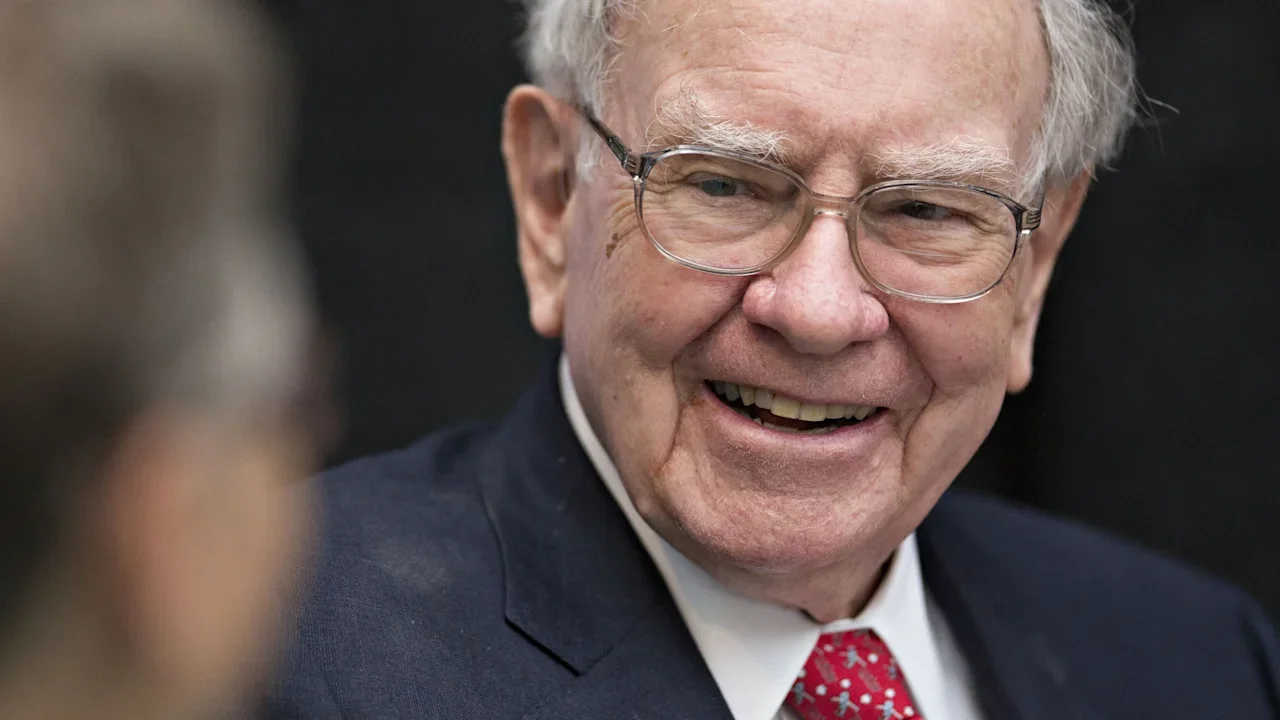
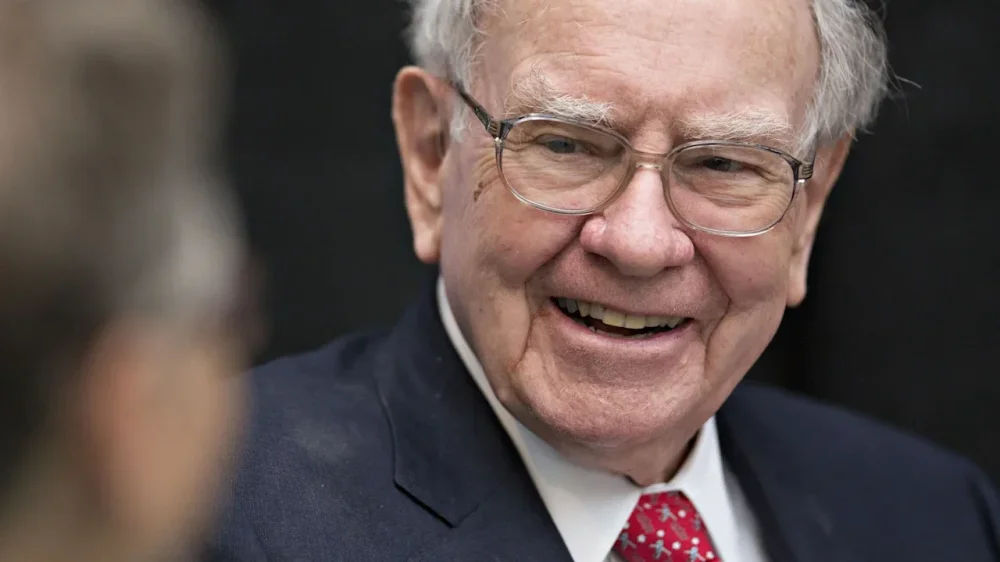
For 60 years, people have read Warren Buffett’s annual Berkshire Hathaway shareholder letters to gain insights into his investment philosophies. Every year, thousands convened at Berkshire Hathaway’s annual meeting to gain insights from Buffett and his partner, the late Charlie Munger. Buffett has also done countless interviews over the years. Winnowing all that advice down to four items isn’t an easy task, but this is my attempt. Here’s Buffett on leadership, focus, the best investment you can make, and the true meaning of success. Buffett on leadership What model does Buffett use for managing people? A baseball batboy. As Buffett wrote in his 2002 shareholder letter: My managerial model is Eddie Bennett, who was a batboy. In 1919, at age 19, Eddie began his work with the Chicago White Sox, who that year went to the World Series. The next year, Eddie switched to the Brooklyn Dodgers, and they, too, won their league title. Our hero, however, smelled trouble. Changing boroughs, he joined the Yankees in 1921, and they promptly won their first pennant in history. Now Eddie settled in, shrewdly seeing what was coming. In the next seven years, the Yankees won five American League titles. What does this have to do with management? It’s simple — to be a winner, work with winners. In 1927, for example, Eddie received $700 for the one-eighth World Series share voted him by the legendary Yankee team of Ruth and Gehrig. This sum, which Eddie earned by working only four days (because New York swept the Series) was roughly equal to the full-year pay then earned by batboys. Eddie understood that how he lugged bats was unimportant; what counted instead was hooking up with the cream of those on the playing field. I’ve learned from Eddie. At Berkshire, I regularly hand bats to many of the heaviest hitters in American business. Buffett doesn’t just study companies to spot opportunities. He also works to identify companies with leaders capable of seizing, and then building on, those opportunities. Clearly, he’s a great manager, but more important, he’s a great identifier. Where team effectiveness is concerned, the impact ratio is roughly 90 percent team to 10 percent leader; a great team with a mediocre leader nearly always outperforms a mediocre team with a great leader. Put together a team of awesome salespeople and you can basically leave them alone. Put together a team of awesome engineers and you can basically leave them alone. No matter how transformational, inspirational, or exceptional, even the best leaders can only produce incremental improvements. As Buffett wrote: Berkshire’s operating CEOs are masters of their crafts and run their businesses as if they were their own. My job is to stay out of their way and allocate whatever excess capital their businesses generate. It’s easy work. That doesn’t mean you shouldn’t spend significant time developing the people you currently lead. You definitely should. But you should also spend time identifying people who won’t really need to be led. Add great people to your team, and you’ll be able to spend less time managing that team and even more time identifying great people to add to the team. Which will make it easier to attract great people, since superstars love to work with superstars. Do that, and to paraphrase Buffett, while your work may never be easy, it will definitely be much easier. Buffett on focus Here’s what Buffett thinks about how to best use your time: The difference between successful people and really successful people is that really successful people say no to almost everything. People are going to want your time. It’s the only thing you can’t buy. I can buy anything I want, basically, but I can’t buy time. Think about it this way. Efficient people are organized and competent. They check things off their to-do list. They complete projects. They get things done. Effective people do all that, but they check the right items off their to-do lists. They complete the right projects. They get the right things done. They do what makes the biggest difference for their business, and for themselves. If you’re struggling to accomplish what you want to achieve, take a step back. Determine what really matters. Determine what really drives results. In most cases, what really drives results is you. So stop thinking your presence is absolutely necessary in every meeting and on every call. That’s especially true if you’re a leader, because when you’re not there, your teams naturally feel a greater sense of freedom, autonomy, and, most important, responsibility. Do what Buffett does: See an open calendar as an opportunity, not a liability. Because a full calendar is a terrible proxy for success. Buffett on the most important investment Buffett doesn’t feel investing in stocks, or even businesses, is the best investment you can make. As Buffett says: Generally speaking, investing in yourself is the best thing you can do. Anything that improves your own talents; nobody can tax it or take it away from you. They can run up huge deficits and the dollar can become worth far less. You can have all kinds of things happen. But if you’ve got talent yourself, and you’ve maximized your talent, you’ve got a tremendous asset that can return 10-fold. You may not have the connections. You may not have the talent or skills. You may not have the experience — yet. But what you do have is the time to invest in yourself. To build your connections. To improve your skills. To gain experience. And unlike an investment, skill doesn’t depreciate in value. Nor does inflation lessen its value. More important, skill typically does pay off 10-fold. Simple example. My wife and I own residential real estate properties, and we decided to learn how to install hardwood floors. Not LVT, which we can also do. But lay, sand, and finish real hardwood floors. (And, because we’ve gotten good at it, to use less expensive materials and still make the end result look great.) Sure, it took time to learn. And takes time to do. But over the past couple of years, we’ve saved at least a total of $70,000 across a number of projects. (And we can charge slightly more in rent.) Hardwood floor work is a skill we have, one that we can leverage for the rest of our lives. You might not be into home renovation. But there are things you pay others to do that you could learn to do yourself. If you’re a small-business owner, bookkeeping. Social media marketing. Logistics planning and fulfillment. If you’re a homeowner, basic electrical or plumbing repairs. Most people try to learn to be better financial investors, and that’s great. But make sure you spend some of your time deciding which skills you should invest in. Those are the best investments you can make, because the return is guaranteed. As Buffett says, investing in yourself will produce better long-term results than any other investment you can make, if only because it’s the one investment outcome you can almost totally control. Put in the effort, get a return. What’s not to love about that? Warren Buffett on success As Buffett says he tells college students: When you get to be my age, you will be successful if the people whom you hope to have love you, do love you. Clearly, that’s true where family and friends are concerned; for example, research shows you’ll definitely be more successful if you marry the right person. Substitute “like” for “love,” and it’s also true in business. Skills, education, experience — where success is concerned, all those things and more matter. But one thing matters more. True success — the kind of success that also results in happiness — isn’t possible unless you build great relationships. Granted, you can be self-serving, obnoxious, and insufferable and still get rich. But you’ll be rich and lonely. Plus, it’s a lot easier to be successful if people like you; when your employees, your customers, your partners, and your colleagues not only hope you succeed but, without being asked, actively help you succeed. Those kinds of relationships don’t just make you successful in business. They make you successful in life. And make you a lot happier. —Jeff Haden This article originally appeared on Fast Company’s sister website, Inc.com. Inc. is the voice of the American entrepreneur. We inspire, inform, and document the most fascinating people in business: the risk-takers, the innovators, and the ultra-driven go-getters that represent the most dynamic force in the American economy. View the full article
-
Toxic bosses are not only a “people issue.” They are a balance-sheet issue, a culture issue, and a reputational issue. And if you are a CEO, founder, or a leader trying to build something lasting, you cannot afford to treat them as background noise. Here’s the truth: a single toxic boss can kill psychological safety, drain creativity, spike turnover, and teach your next generation of leaders that fear is an acceptable management tool. I’ve spent 25 years in organizational psychology, watching this pattern repeat across industries, including tech and other high-growth environments. I’ve also conducted interviews and surveys across North America to dig deep into the behaviors and impacts. Toxic bosses harm people’s engagement, productivity, and well-being, and ultimately the organization’s culture through their ongoing destructive behaviors. I refer to them as toxic bosses, not leaders, as a leader brings out the best in their people, while a toxic boss depletes their performance and health. Yet toxic bosses can be tricky to identify as they often present as confident, smart, and polished. This problem is widespread, and leaders underestimate it A 2023 survey reported that 87% of professionals have had at least one toxic boss, and 30% more than one. That isn’t a niche problem, but a workplace epidemic. Another stat should make every executive pause: 57% of employees have left at least one job because of a bad boss, according to DDI’s Frontline Leader Project. People do not quit lightly in this economy, only when the cost of staying becomes too steep. Staggering financial costs The business costs are gradual and easy to excuse away to other reasons. Toxic bosses are masters at passing the blame to anything or anyone but themselves. Turnover driven by bad managers is estimated to be 50–60% of voluntary attrition, equating to $600B–$1T+ annually in North America. Lost productivity from disengagement costs an estimated $450–$550B USD per year. Toxic bosses suffocate innovation If you lead a future-facing company, you likely run on ideas. Toxic bosses kill these through daily fear-inducing behaviors, including micromanagement, manipulation, and gaslighting. Under that pressure, people share less. They do “safe work” instead of bold work. You still get output for a while, but it is brittle. Your top talent does not thrive in survival mode. They exit, disengage, or contort themselves into a smaller version of who they are. Toxic bosses harm health, and that becomes a business cost Through interviewing 40 toxic boss survivors from numerous industries and levels across North America, as well as surveying hundreds more, the health and productivity related costs of toxic bosses are undeniable. One study found workers under toxic bosses faced greater risk of cardiovascular disease. Another study found toxic workplaces increased the risk of depression by 300%. When health declines, your organization pays in absenteeism, presenteeism, disability costs, medical leaves, and churn. You also pay in slower decision-making and weaker collaboration, because exhausted people do not think expansively. “But they get results” is the most expensive sentence in leadership. Or you might even hear: “They’re tough, but they make us better.” Let me translate what that means: “They create fear. Fear produces compliance.” Yet compliance is not commitment and does not create inventive teams. Learn the patterns, then stop promoting them In my new book I Wish I’d Quit Sooner: Practical Strategies for Navigating and Escaping a Toxic Boss, I describe eight common toxic boss personas, including the Self-Serving Egomaniac, Dishonest Manipulator, Great Divider, and Gaslighter. While no boss fits perfectly, these personas give people a language to use. Eradicating toxic bosses Eradicating toxic bosses involves a set of decisions, repeated consistently, even when difficult. My recommendations for executives to prune toxic leadership include: 1) Treat toxic leadership as a core risk. Track it the way you track security incidents and quality defects. Collect specific feedback on each leader and regular pulse checks on your climate and act on the results. 2) Stop rewarding “results at any cost.” Promotion criteria must weigh how leaders achieve outcomes, not just what they achieve. If your top performer leaves a trail of burnout, their “wins” came at costs too great. 3) Make 360 feedback count. If a leader consistently scores as abusive, manipulative, or unsafe, executive coaching alone is not enough. If they are truly a toxic boss, they should not be in a people leadership role. 4) Protect reporting pathways. People do not speak up when retaliation is likely, even if it’s subtle. Provide multiple reporting channels, ensure confidentiality, and communicate actions in aggregate so trust builds over time. 5) Create escape routes inside the company. Internal mobility is a pressure-release valve. If someone is doing strong work under a harmful manager, your system should allow them to move without needing a dramatic, career-risking complaint process. If you are suffering under a toxic boss, there is a way out If you are currently suffering under toxic leadership: this is not your fault, and you are not weak for feeling the impact. I’ve seen the most brilliant professionals and leaders lose their confidence from reporting to a toxic boss, at any level, including executives. In I Wish I’d Quit Sooner, I urge people to start documenting incidents and to build an exit plan, including a “Good Riddance date,” because toxic bosses rarely improve over time. The path out is often stepwise, not cinematic: protect your energy, gather support, get clear on options, and move deliberately. What will your business tolerate? You can build breathtaking technology and still lose the plot if you allow toxic bosses to thrive. Culture is shaped by what you tolerate, especially when the person causing harm brings in great revenue. So here’s my question for you: what would your people create if they weren’t spending countless energy enduring a manager they fear? If you want a deeper, practical roadmap for identifying toxic bosses, protecting yourself, exiting, and recovering, my new book I Wish I’d Quit Sooner: Practical Strategies for Navigating and Escaping a Toxic Boss is designed to help. You can learn more here. View the full article

-
Zoho became ubiquitous in 2026. Zoho’s trademark business software also includes management solution ManageEngine, enterprise automation and integration software Qntrl and online course launching software TrainerCentral. Today these brands together serve over 1 million customers and more than 150 million users around the globe. And those customers have plenty to say about the service Zoho provides. “‘Partnership’ is a word that gets frequently used in business,” says David Fauser, VP of Sales, Marketing and Strategy for CIMCO Refrigeration. The company specializes in engineering, manufacturing and construction of sustainable thermal solutions and runs their US operations out of South Carolina. “With Zoho, I can say that they have always genuinely felt like a true partner,” Fauser adds. Zoho does more than just deliver software, he explains. The company acts like a collaborator. Zoho helps Fauser’s team think through challenges, adapt to change and improve operations. “That level of customer focus and long-term perspective is what has made our relationship endure over eight years,” Fauser adds. What Other Customers Say To commemorate its 30th anniversary, Zoho asked customers some forward thinking questions about the year ahead. Where do they see their businesses, business technology in general and AI specifically heading in 2026? And what advice might they offer other entrepreneurs seeking to get their businesses up and running? You may find some answers surprising. What Do You Most Look Forward To? Zoho begins with an ice breaker. And the responses prove telling. What are you looking forward to the most in 2026 when it comes to your business? LaVerne Cox, CEO, Evergreen Investments LaVerne Cox, CEO of Evergreen Investments, gives a fairly straightforward answer. The Duluth, Ga.-based real estate service provider offers a plethora of services for owner occupants and real estate investors. The company provides brokerage services to help clients obtain income producing properties. It also handles investment sales of residential real estate. Finally, it offers property management services to help clients optimize their real estate investment and refinance services when needed. “In 2026, we are rolling out a web and mobile customer application that will connect our customers to our service operations within our Zoho One applications, which we use to manage our brands,” Cox explains. Zoho offers full automation through Zoho Creator and a payment portal through Zoho Payments. These and other services allow you to run much of your business directly through Zoho. “We hope to also roll out a new brand offering in Summer 2026,” Cox adds. Jessica Miller, Director of Compliance and Systems, Island Practice Management How Can Zoho’s Technology Transform Your Business? Many current Zoho clients use a substantial amount of the Zoho platform to run and automate their businesses. Take Island Practice Management, a company supporting mental health and wellness practitioners and based in Port Jefferson Station, NY. The company offers a huge variety of services to full and part-time mental health and wellness businesses. These services include everything from logo development and website creation to appointment and call management. They also include a full array of billing services, office rental and supply services. On the technical side, Island Practice Management uses Zoho tools to provide its growing set of offerings. “We have already seen how impactful the right technology can be,” says Jessica Miller, Director of Compliance and Systems at Island Practice Management. “We use a large portion of the Zoho platform, and the way the tools integrate with one another has made a huge difference for us.” she adds. This year, the company plans to expand its consulting services using AI to help clinicians create documentation faster. They used a Creator app they made and documentation became a breeze. “As someone who has worked as a therapist for most of my adult life, I have always loved the clinical work and honestly disliked the documentation,” Miller explains. “AI has helped reduce that burden so clinicians can spend more time focused on clients while keeping human judgment at the center of care,” she adds. And what about the results? “With that said, the documentation generated by AI isn’t perfect, but it is a great starting point,” Miller says. And Speaking of AI… Zoho also asked clients more broadly how they see AI and other technology evolving to better serve small businesses in 2026. Clients clearly feel the most useful evolutions involve AI in a supportive role in small businesses rather than replacing human creativity and judgment. Surge Web Design based in Boise, Idaho provides its clients with responsive web design, copywriting services for websites and even SEO and logo design. Natalie Hansen, Co-Founder and President, Surge Web Design Natalie Hansen, Co-Founder and President of Surge Web Design, sees AI as becoming more useful and less intimidating. “I hope that small businesses can learn to use AI as a tool, not to replace people, but to help us do our job better and give better service,” Hansen explains. Hansen observes that for a small team or even a solopreneur, AI can help organize data, create task lists, and even brainstorm ideas. This can prove helpful when you lack other team members with whom to collaborate. Other clients suggest AI’s limits will define how it evolves and how small businesses and entrepreneurs use it. LaVerne Cox of Evergreen Investments, for example, believes AI still needs human intervention. “AI automations and agents have proven their inability to work without the necessity of seasoned professionals who can handle more complex protocols and rationalizations,” says Cox. On the other hand, she believes these limitations will lead to AI development that ultimately becomes much more useful to small businesses. “I think this deepening of understanding will allow the tools to engage more remotely without as many human interactions, but I also believe it will never replace the complexities provided by human beings within the strategy or creation process,” Cox explains. Elea Lopez, Project Lead, Parametrics Medical What’s In It For Me? Still other Zoho customers believe the main factor developers need to keep in mind remains whether new tools actually make life easier for customers. Parametrics Medical provides biologic implants, allograft tissue and regenerative medicine for the medical industry and is located in Leander, Texas. The company uses Zoho Analytics dashboards and automation services across departments. Elea Lopez, Project Lead for the company, says she’s impressed with new AI developments but hopes developers stay focused on the right issues. “For an AI company to say they have the most advanced AI is cool, but what does that do for me and my business?” Lopez asks. “Does the most advanced AI make my day-to-day tasks easier or is it just good at making conversation?” she adds. “Does it actually reduce the amount of work I have to carry out or does it add extra work because I have to go back and check what it did, then correct it?” Zoho began introducing AI across much of its business software in 2025. Zoho Analytics and Zoho Creator, the company’s main automation tool, now both include AI features. But Zoho has also always put customers first when developing those tools. “Vendors don’t need our help, businesses do, which is why delivering customer value has, for 30 years, been Zoho Corporation’s North Star,” explains Sridhar Vembu, Co-founder and Chief Scientist at Zoho Corporation. “Before any innovation, strategy, or guiding principle becomes a product, pivot, or policy, it must first affirm the question, ‘Will this help businesses?’” Vembu adds. Zoho believes this philosophy more than any other factor has led to the company’s success and continued growth. What Development in Small Business Software Would You Most Like To See? In keeping with the company’s customer centric approach, Zoho also asked small businesses another important question. What evolution would they most want to see in small business software? Miller insists her greatest wish involves small businesses being put first for a change. “I would like to see more software built with small businesses in mind from the start,” Miller explains. “Too often, technology is designed for large organizations that have dedicated teams for IT, operations, and compliance, and small businesses are expected to adapt themselves to systems that were never built for their reality.” She then spells out what such software would look like. “For small businesses, software needs to be intuitive, flexible, and integrated without requiring constant customization or outside support,” Miller says. “The ability to start with something usable out of the box, and then grow into more advanced features over time, makes a huge difference when teams are small and time is limited.” “I’d love to see software become simpler and more intuitive,” Hansen agrees. “Many small business tools promise to save time, but end up creating more complexity with overlapping features,” she adds. “I’d like to see platforms that communicate better with each other, require less setup, and are designed around how small businesses actually operate, not how large corporations do – but still be able to scale with you.” What Worries You The Most About AI and Technology Development In The Future? Zoho also asked customers what they are most cautious about in 2026 when it comes to technology and AI. Not surprisingly, security ranked high up on the list of concerns. “While the promise of making our days more efficient through AI is great in theory, we have to consider what could go wrong,” Lopez says. “What if there is a data leak? What if the data we feed into AI programs is twisted and convoluted? What if it is used against us by an opposing company?” she asks. “When new technology comes around, it is easy to think it will change the way we do everything,” Lopez concludes. “But I think most businesses aren’t looking to change everything, just to make what they have more efficient in key areas without sacrificing security.” Zoho remains committed to security as it has throughout its entire history. Product security, data security and operational security at Zoho are ensured through the company’s globally recognized compliance certifications and its emphasis on privacy. What Advice Could Zoho Customers Offer Solopreneurs and Small Business Owners? Zoho also asked customers for advice they might offer other entrepreneurs seeking to get their businesses up and running in 2026. “My biggest piece of advice is to start, even if you do not have everything figured out,” says Miller. “When we launched Island Practice Management, none of us had formal business training,” she adds. ”We were mental health professionals building on what we had learned running Island Psychiatry, and a lot of our learning happened along the way.” “Curiosity, flexibility, and a willingness to take thoughtful risks mattered far more than having a perfect plan,” Miller says. “Investing in the right software early was also important for us, but just as important was taking the time to really understand it.” “One of the most helpful lessons we learned was that you should not try to fit yourself into a piece of software,” she explains. “You need software that fits your business. Having that mindset has helped us avoid chasing tools that look good on paper but do not support our real workflows.” And Zoho certainly fits the bill in this respect. Quebec-based global security company GardaWorld Security Systems and Technology relies on Zoho’s ability to adapt to a company’s growth while offering maximum flexibility. “As our business has evolved over the past 10 years through further acquisitions, organizational restructures and new operating models, Zoho has continued to scale with us rather than forcing us into rigid frameworks,” says Brandon Lennix, Director of Commercial Operations. Become a Zoho Customer Today As Zoho celebrates 30 years of success and growth and crosses the threshold of 1 million customers worldwide, it also recognizes some of its most recent customer additions. These include Rapid Response Monitoring and Synergy HomeCare in the U.S.; and Mercedes-Benz India, Force Motors, Joyalukkas and Union Bank of India in South Asia. Also included are Flora Food Group, Handl Tyrol and Atout France in Europe; Al-Ahli Saudi FC and Al Qadsiah FC in the Middle East; Grupo Gonher in Latin America; and Creditas and Editora Globo in Brazil. These customers and more come to Zoho because of the way the company’s unique philosophy sets it apart. “Being bootstrapped, private, and built entirely in-house makes Zoho an outlier among competitors,” says Vembu. For more on how Zoho’s solutions can help your small business grow, visit the Zoho website or contact their sales team. This article, "Zoho Users Discuss The Future As Company Reaches 1 Million Customers" was first published on Small Business Trends View the full article
-
Zoho became ubiquitous in 2026. Zoho’s trademark business software also includes management solution ManageEngine, enterprise automation and integration software Qntrl and online course launching software TrainerCentral. Today these brands together serve over 1 million customers and more than 150 million users around the globe. And those customers have plenty to say about the service Zoho provides. “‘Partnership’ is a word that gets frequently used in business,” says David Fauser, VP of Sales, Marketing and Strategy for CIMCO Refrigeration. The company specializes in engineering, manufacturing and construction of sustainable thermal solutions and runs their US operations out of South Carolina. “With Zoho, I can say that they have always genuinely felt like a true partner,” Fauser adds. Zoho does more than just deliver software, he explains. The company acts like a collaborator. Zoho helps Fauser’s team think through challenges, adapt to change and improve operations. “That level of customer focus and long-term perspective is what has made our relationship endure over eight years,” Fauser adds. What Other Customers Say To commemorate its 30th anniversary, Zoho asked customers some forward thinking questions about the year ahead. Where do they see their businesses, business technology in general and AI specifically heading in 2026? And what advice might they offer other entrepreneurs seeking to get their businesses up and running? You may find some answers surprising. What Do You Most Look Forward To? Zoho begins with an ice breaker. And the responses prove telling. What are you looking forward to the most in 2026 when it comes to your business? LaVerne Cox, CEO, Evergreen Investments LaVerne Cox, CEO of Evergreen Investments, gives a fairly straightforward answer. The Duluth, Ga.-based real estate service provider offers a plethora of services for owner occupants and real estate investors. The company provides brokerage services to help clients obtain income producing properties. It also handles investment sales of residential real estate. Finally, it offers property management services to help clients optimize their real estate investment and refinance services when needed. “In 2026, we are rolling out a web and mobile customer application that will connect our customers to our service operations within our Zoho One applications, which we use to manage our brands,” Cox explains. Zoho offers full automation through Zoho Creator and a payment portal through Zoho Payments. These and other services allow you to run much of your business directly through Zoho. “We hope to also roll out a new brand offering in Summer 2026,” Cox adds. Jessica Miller, Director of Compliance and Systems, Island Practice Management How Can Zoho’s Technology Transform Your Business? Many current Zoho clients use a substantial amount of the Zoho platform to run and automate their businesses. Take Island Practice Management, a company supporting mental health and wellness practitioners and based in Port Jefferson Station, NY. The company offers a huge variety of services to full and part-time mental health and wellness businesses. These services include everything from logo development and website creation to appointment and call management. They also include a full array of billing services, office rental and supply services. On the technical side, Island Practice Management uses Zoho tools to provide its growing set of offerings. “We have already seen how impactful the right technology can be,” says Jessica Miller, Director of Compliance and Systems at Island Practice Management. “We use a large portion of the Zoho platform, and the way the tools integrate with one another has made a huge difference for us.” she adds. This year, the company plans to expand its consulting services using AI to help clinicians create documentation faster. They used a Creator app they made and documentation became a breeze. “As someone who has worked as a therapist for most of my adult life, I have always loved the clinical work and honestly disliked the documentation,” Miller explains. “AI has helped reduce that burden so clinicians can spend more time focused on clients while keeping human judgment at the center of care,” she adds. And what about the results? “With that said, the documentation generated by AI isn’t perfect, but it is a great starting point,” Miller says. And Speaking of AI… Zoho also asked clients more broadly how they see AI and other technology evolving to better serve small businesses in 2026. Clients clearly feel the most useful evolutions involve AI in a supportive role in small businesses rather than replacing human creativity and judgment. Surge Web Design based in Boise, Idaho provides its clients with responsive web design, copywriting services for websites and even SEO and logo design. Natalie Hansen, Co-Founder and President, Surge Web Design Natalie Hansen, Co-Founder and President of Surge Web Design, sees AI as becoming more useful and less intimidating. “I hope that small businesses can learn to use AI as a tool, not to replace people, but to help us do our job better and give better service,” Hansen explains. Hansen observes that for a small team or even a solopreneur, AI can help organize data, create task lists, and even brainstorm ideas. This can prove helpful when you lack other team members with whom to collaborate. Other clients suggest AI’s limits will define how it evolves and how small businesses and entrepreneurs use it. LaVerne Cox of Evergreen Investments, for example, believes AI still needs human intervention. “AI automations and agents have proven their inability to work without the necessity of seasoned professionals who can handle more complex protocols and rationalizations,” says Cox. On the other hand, she believes these limitations will lead to AI development that ultimately becomes much more useful to small businesses. “I think this deepening of understanding will allow the tools to engage more remotely without as many human interactions, but I also believe it will never replace the complexities provided by human beings within the strategy or creation process,” Cox explains. Elea Lopez, Project Lead, Parametrics Medical What’s In It For Me? Still other Zoho customers believe the main factor developers need to keep in mind remains whether new tools actually make life easier for customers. Parametrics Medical provides biologic implants, allograft tissue and regenerative medicine for the medical industry and is located in Leander, Texas. The company uses Zoho Analytics dashboards and automation services across departments. Elea Lopez, Project Lead for the company, says she’s impressed with new AI developments but hopes developers stay focused on the right issues. “For an AI company to say they have the most advanced AI is cool, but what does that do for me and my business?” Lopez asks. “Does the most advanced AI make my day-to-day tasks easier or is it just good at making conversation?” she adds. “Does it actually reduce the amount of work I have to carry out or does it add extra work because I have to go back and check what it did, then correct it?” Zoho began introducing AI across much of its business software in 2025. Zoho Analytics and Zoho Creator, the company’s main automation tool, now both include AI features. But Zoho has also always put customers first when developing those tools. “Vendors don’t need our help, businesses do, which is why delivering customer value has, for 30 years, been Zoho Corporation’s North Star,” explains Sridhar Vembu, Co-founder and Chief Scientist at Zoho Corporation. “Before any innovation, strategy, or guiding principle becomes a product, pivot, or policy, it must first affirm the question, ‘Will this help businesses?’” Vembu adds. Zoho believes this philosophy more than any other factor has led to the company’s success and continued growth. What Development in Small Business Software Would You Most Like To See? In keeping with the company’s customer centric approach, Zoho also asked small businesses another important question. What evolution would they most want to see in small business software? Miller insists her greatest wish involves small businesses being put first for a change. “I would like to see more software built with small businesses in mind from the start,” Miller explains. “Too often, technology is designed for large organizations that have dedicated teams for IT, operations, and compliance, and small businesses are expected to adapt themselves to systems that were never built for their reality.” She then spells out what such software would look like. “For small businesses, software needs to be intuitive, flexible, and integrated without requiring constant customization or outside support,” Miller says. “The ability to start with something usable out of the box, and then grow into more advanced features over time, makes a huge difference when teams are small and time is limited.” “I’d love to see software become simpler and more intuitive,” Hansen agrees. “Many small business tools promise to save time, but end up creating more complexity with overlapping features,” she adds. “I’d like to see platforms that communicate better with each other, require less setup, and are designed around how small businesses actually operate, not how large corporations do – but still be able to scale with you.” What Worries You The Most About AI and Technology Development In The Future? Zoho also asked customers what they are most cautious about in 2026 when it comes to technology and AI. Not surprisingly, security ranked high up on the list of concerns. “While the promise of making our days more efficient through AI is great in theory, we have to consider what could go wrong,” Lopez says. “What if there is a data leak? What if the data we feed into AI programs is twisted and convoluted? What if it is used against us by an opposing company?” she asks. “When new technology comes around, it is easy to think it will change the way we do everything,” Lopez concludes. “But I think most businesses aren’t looking to change everything, just to make what they have more efficient in key areas without sacrificing security.” Zoho remains committed to security as it has throughout its entire history. Product security, data security and operational security at Zoho are ensured through the company’s globally recognized compliance certifications and its emphasis on privacy. What Advice Could Zoho Customers Offer Solopreneurs and Small Business Owners? Zoho also asked customers for advice they might offer other entrepreneurs seeking to get their businesses up and running in 2026. “My biggest piece of advice is to start, even if you do not have everything figured out,” says Miller. “When we launched Island Practice Management, none of us had formal business training,” she adds. ”We were mental health professionals building on what we had learned running Island Psychiatry, and a lot of our learning happened along the way.” “Curiosity, flexibility, and a willingness to take thoughtful risks mattered far more than having a perfect plan,” Miller says. “Investing in the right software early was also important for us, but just as important was taking the time to really understand it.” “One of the most helpful lessons we learned was that you should not try to fit yourself into a piece of software,” she explains. “You need software that fits your business. Having that mindset has helped us avoid chasing tools that look good on paper but do not support our real workflows.” And Zoho certainly fits the bill in this respect. Quebec-based global security company GardaWorld Security Systems and Technology relies on Zoho’s ability to adapt to a company’s growth while offering maximum flexibility. “As our business has evolved over the past 10 years through further acquisitions, organizational restructures and new operating models, Zoho has continued to scale with us rather than forcing us into rigid frameworks,” says Brandon Lennix, Director of Commercial Operations. Become a Zoho Customer Today As Zoho celebrates 30 years of success and growth and crosses the threshold of 1 million customers worldwide, it also recognizes some of its most recent customer additions. These include Rapid Response Monitoring and Synergy HomeCare in the U.S.; and Mercedes-Benz India, Force Motors, Joyalukkas and Union Bank of India in South Asia. Also included are Flora Food Group, Handl Tyrol and Atout France in Europe; Al-Ahli Saudi FC and Al Qadsiah FC in the Middle East; Grupo Gonher in Latin America; and Creditas and Editora Globo in Brazil. These customers and more come to Zoho because of the way the company’s unique philosophy sets it apart. “Being bootstrapped, private, and built entirely in-house makes Zoho an outlier among competitors,” says Vembu. For more on how Zoho’s solutions can help your small business grow, visit the Zoho website or contact their sales team. This article, "Zoho Users Discuss The Future As Company Reaches 1 Million Customers" was first published on Small Business Trends View the full article
-
Elon Musk and Jeff Bezos’s commitment to putting data centres in space boosts fortunes of smaller playersView the full article
-
There’s a pigeon pitcher on the dining table. A large burl wood button mounted on the wall as art. A doormat in the shape of an apple. Emma Chamberlain, one of Gen Z’s most influential tastemakers, has designed a 100-piece collection for West Elm that spans furniture, textiles, and decor. It’s full of elegant pieces including a velvet sofa, a round wooden dining table, and cabinets wrapped in cream lacquer. But woven into this lush aesthetic are kitschy little details meant to feel like thrift shop finds. It’s a collaboration that offers a glimpse into what today’s twenty-somethings are looking for as they outfit their first homes. Three years ago, when Chamberlain was 21, she opened her Los Angeles home to Architectural Digest, and West Elm’s team took note. The space had elements of the West Elm aesthetic—nods toward mid-century and Scandinavian style—but the house was also distinct. There were unexpected pieces, like a chandelier made of acrylic chain links, and a groovy 1970s inspired mirror. It was hard to simply categorize whether the look was minimalist or maximalist, futuristic or retro. “My approach to home decorating is inherently eclectic,” Chamberlain tells Fast Company. “Rather than choosing pieces based on what should go together, I choose what feels right to me, mixing styles and eras to create a space that feels unique.” When Day Kornbluth, West Elm’s President, saw the pictures of Chamberlain’s house, she immediately wanted to collaborate with her. She felt that Chamberlain’s aesthetic would appeal to a new generation of consumers who are just beginning to create their homes. But on a personal level, she wanted to get a glimpse into Chamberlain’s personal creative process, to see how she arrives at a look that feels so fresh. “For many tastemakers in our culture, the home is a secret obsession,” Kornbluth. “They have a private, creative process to create their spaces. As a home brand, we have this enormous privilege of getting a glimpse into how our collaborators create.” West Elm reached out, and Chamberlain said yes. This came as as surprise to Kornbluth, since Chamberlain’s life is packed. She first rose to prominence as a YouTube creator in her mid-teens, building a following on the strength of her candid, self-deprecating persona. She has since expanded into fashion—becoming a recurring presence at Paris Fashion Week and a face of Louis Vuitton—and launched Chamberlain Coffee, a thriving business. Home, though, had always been a quieter personal pursuit, but one she has been itching to explore. “It turns out, she had a lot to say about the home,” Kornbluth says. The design process was collaborative to a degree that surprised even the West Elm team. Chamberlain sat on every piece of furniture before signing off on it. She was interested in both the beauty and the functionality of the pieces. “Furniture isn’t only about aesthetics. More than anything, it’s about function,” Chamberlain says. “Everything should serve a purpose. Even the pitcher that looks like a pigeon? You can actually pour things out of it.” Together, West Elm’s design team worked with Chamberlain to create a modular sofa in a ticking-stripe fabric that can expand or contract depending on your square footage. A floor pouf has a hidden side pocket for the remote—a detail that came from Chamberlain’s annoyance at never having a place to store a remote. A telephone bench, nodding to the entryway furniture of another era, serves the same purpose it always did: sit down, take off your shoes, put your key somewhere. The lacquer wrapped 6-drawer dresser has a raised compartment along its back edge to corral skincare and makeup brushes. But sprinkled among these practical pieces are quirky vintage-inspired pieces that bring Chamberlain joy. There’s the pigeon paraphernalia, the button motif that appears in everything from coasters to wall art, and apple-shaped throw pillows and doormats. The aesthetic reads a little like a thrifting, which makes sense for Gen Z, which has grown up on Depop and Salvation Army finds. The tension between the rigorously functional and kitschy is part of the secret to Chamberlain’s distinct look. The collection also charts something larger for West Elm. The brand has spent two decades as a kind of gateway to mid-century modern living—accessible price points, clean lines, the language of Ray and Charles Eames and Eero Saarinen translated for Brooklyn apartments and suburban starter homes. Kornbluth has been thinking about how to evolve that DNA without abandoning it. The Chamberlain collaboration, she says, isn’t a departure so much as an expression of where mid-century has gone for a new generation. “There are things we would never have done if we weren’t doing them with Emma,” she says. “But they feel right for West Elm too.” What makes it feel right is a shared philosophy about what home is for. “Your home should be a place to express yourself and experiment stylistically and creatively,” Kornbluth says. “We don’t want to be a brand that tells you what you shouldn’t do. Our energy is: your home is going to be good if it feels like you.” That philosophy has a particular resonance right now, because it encapsulates how Gen Z thinks about design. Kornbluth says that many on the West Elm team are in their twenties, and Chamberlain’s approach resonated strongly with them. “They’re not interested in having the home or look that is like everyone else,” Kornbluth says. “They’ve grown up with access to so much visual information on the internet. You might worry that they would get lost in all of this, but in fact, they just seem to know themselves better. And as a result, they’re clear and brave in their choices.” Chamberlain puts it more simply. “The most timeless thing you can do is choose pieces that bring you joy,” she says. “Something funny will stand the test of time more than something trendy. You’d be surprised how you can style something kind of ridiculous and make it look intentional. It’s like fashion. You can wear almost anything. If you wear it with confidence, people think it’s cool.” View the full article

-
Hello and welcome to Modern CEO! I’m Stephanie Mehta, CEO and chief content officer of Mansueto Ventures. Each week this newsletter explores inclusive approaches to leadership drawn from conversations with executives and entrepreneurs, and from the pages of Inc. and Fast Company. If you received this newsletter from a friend, you can sign up to get it yourself every Monday morning. If you want a glimpse of the future of business, I recommend spending a few hours with Steven Bartlett, entrepreneur, investor, and host of the The Diary of a CEO podcast. I did just that earlier this month, when I interviewed Bartlett alongside PwC partners at a series of Daily Decode sessions the professional services firm hosted at South by Southwest (SXSW). Bartlett’s observations and experiences are worth clocking because he is, in many ways, a leading indicator of where business is going: He is an AI power user and promotes its widespread use at the companies he’s founded. He’s young (33 years old), and he’s influencing a new generation of leaders: The Diary of a CEO was Spotify’s No. 1 business and tech podcast last year. Here are three insights that stood out from my conversations with Bartlett: 1. He’s hiring “agent maxxers.” Bartlett says that as more labor can be handled by AI agents—software that can autonomously perform tasks—he sees work at his companies increasingly shifting to specialists, such as a chief financial officer with irreplaceable domain and company knowledge who can direct an agent to supplement their job. He calls these people “agent maxxers”—those who truly understand the technology. “I’m not [hiring] anyone in between,” he says, noting that he recently spoke with a promising candidate who said she’d not used Claude Code—nor had she built anything with agents. She didn’t get the job. 2. Obvious pain paralysis is the new Innovator’s Dilemma. Bartlett suggests that many companies have “obvious pain paralysis”—a tendency to try to address or lessen the pain in front of them, deferring decisions when the upside is vague and distant. He points to return-to-office policies as an example: Leaders didn’t bring folks back to the office for fear that people would quit and because management couldn’t articulate or quantify the benefits. He says he sees the same thing happening with AI and urges executives to think expansively about the possibilities: “In moments of great transition, you have to take bold, decisive action and make difficult decisions now or [face] more difficult decisions later,” he says. “We’re all in that position, including me.” Bartlett’s assessment feels like a 2026 take on Clayton Christensen’s Innovator’s Dilemma, which chronicled how successful companies failed because they focused on addressing the issues of today while failing to foresee new technologies that would make them obsolete. The lesson of both: disrupt before you get disrupted. 3. He’s creating a culture of “pushing on paper walls.” One way Bartlett makes sure that his companies stay nimble (and perhaps avoid disruption) is to institutionalize challenging the status quo. He calls this “pushing on paper walls” or questioning whether a constraint, or wall, is real or flimsy like paper. If a vendor says a project will take six weeks, Bartlett’s team is encouraged to ask for a tighter turnaround; internal processes are constantly evaluated to see if they can be done quicker or smarter. His companies use their communications channels to celebrate the dismantling of paper walls. “When you open up Slack, and you see the intern or the CFO going, ‘I found a paper wall today,’ [you] can imagine what that breeds in an organization in terms of culture,” he says. From his perch as an entrepreneur, creator, and millennial, Bartlett certainly has the flexibility to experiment and provide a window into the future of business. But his worldview—a landscape that’s AI-centric, fast-moving, and disruptive—isn’t radical. It’s the new normal. How are you preparing for what’s next? How are you future-proofing your company? Do you have a version of “agent maxxers” or “paper walls” that you celebrate? Send your ideas to me at stephaniemehta@mansueto.com. I’ll publish the best examples in a future newsletter. Read more: secrets of the most successful podcasters TBNP built a media empire by tapping into the ”internet’s dive bar” The making of ”Acquired,” the tech podcast sensation Inside “Call Her Daddy” podcaster Alex Cooper’s next move View the full article
-
British embassy official expelled from Moscow as Putin increases pressure on foreign missionsView the full article
-
In a 1944 issue of Arts & Architecture magazine, the architect and designer Charles Eames sounded an alarm. “It has been estimated that one million five hundred thousand houses each year for a period of 10 years will be needed to relieve the urgent housing problem of this country,” he wrote. “The enormity of such a need cannot even be partially satisfied by building techniques as we have known and used them in the past. Large scale industry would seem to be the only logical means by which we can achieve an enterprise of such proportion.” Throughout their careers, Charles and Ray Eames explored how industrial production could impact home building, most famously through their own Pacific Palisades residence, also known as Case Study #8. But a fully factory built house was their elusive white whale. Now it’s finally becoming a reality through a collaboration between the Eames Office, a non-profit organization dedicated to stewarding and extending the couple’s work, and Kettal, a Spanish manufacturer of furniture and prefabricated pavilions. At Milan Design Week, the two organizations are debuting The Eames Pavilions, a modular construction system based on the designers’ philosophy of efficient, flexible, and adaptable architecture. A four meter square indoor pavilion, which is roughly 170 square feet, will start at 45,000 Euros (about $52,000) and is expected to go on sale worldwide in late 2026. An outdoor version of the same size starts at 60,000 Euros (about $69,000) with an estimated availability in 2027. Customers can combine modules to create larger pavilions and it’s possible to stack them to two stories, too. For the Milan installation, on view at the Triennale Museum from April 21 to May 10, 2026, Kettal and the Eames Office will show two of the myriad configurations that the system can produce. The first is a double-height iteration, which looks a lot like the Case Study #8. It has a black-painted metal frame, floor-to-ceiling glass walls, zig-zag trusses, chicken wire–reinforced windows, and vivid wall panels in primary colors. (The price tag for this specific build? $145,000 Euros, or about $167,000.) The second is a single module featuring wall panels adorned with geometric shapes the Eameses liked. While not a one-to-one replica of any previous Eames house, the kit of parts represents an amalgamation of the designers’ core ideas around materiality, structure, and proportion and, importantly, channels the captivating spirit of their residential projects. “The Eames house and their other houses, were meant to be the beginning of something that would turn into a system or into a series, but they were experiments,” says Eckart Maise, author of the forthcoming book The Eames Houses and a design consultant who worked closely on the product’s development. “Charles and Ray were very clear in their intent to mass produce.” The housing crisis is even worse now than when Charles wrote his Arts & Architecture article. According to Zillow, the housing deficit has grown to 4.7 million units in 2025. Could an Eames prefab offer a solution? A long road to mass production The Eames Office has been exploring an answer to this question for years. In 2021, the Eames Office attempted to revive a never-built 1951 wood-framed prefab Charles & Ray developed with Kwikset (Kwikset went out of business before construction could begin), but learned that the regional business model of most prefab housing companies limited the scale at which they could work. So instead, they shifted gears and focused on manufacturers with an international reach who could fabricate metal framing, which is more practical than carpentry for mass distribution. This led Maise to Kettal. Thirty percent of the company’s business comes from an indoor-outdoor modular pavilion system, which it has produced for a decade. The company had the infrastructure in place to manufacture, distribute, and install the pavilions worldwide. Fortunately, Antonio Navarro, Kettal’s creative director, was also interested in exploring an Eamesian design. “It’s difficult not to fall in love with the solutions, the atmosphere that they created, the lighting,” Navarro says. “It’s the kind of architecture that we need for the future because it’s ecological, it’s easy to assemble, it’s easy to transport, and it’s easy to manufacture.” Maise and Kettal spent three years researching and developing the Eames Pavilion System. They began by visiting the Case Study #8 and took measurements, color samples, and material studies. Getting the details right, all the way down to window profiles, would be “important to keep the magic” of Charles and Ray’s spaces, Maise says. They also combed the archives for information on the houses the duo designed for Arts & Architecture editor John Entenza (also known as Case Study #9), the actor Billy Wilder (Maise uncovered an unpublished design concept for the house), and Max De Pree, the son of Herman Miller founder D.J. De Pree. Across the houses, Maise noticed how Charles & Ray established modules and extended floorplans based on the dimensions of those modules. “It gave us the security to say it’s an open system and you can build many different things because across those five or six designs, you realize how open they thought in their configurations,” Maise says. Adapting an icon The Kettal-manufactured system, which ships flat, has similar DNA to the Eameses’ architecture but, “it’s really important to understand that the Pavilion is not a facsimile of the Eames House,” Maise says. Still, the options for customization will be recognizable to fans of the couple’s work. For example, buyers can choose a roofline that’s flush with the walls, just like Case Study #8, or a roof with deep eaves for shading, which nods to the overhang at the Wilder house. For the exterior walls, the combinations could include solid walls, glass, and panels reinforced with X-braces, details borrowed from Case Study #8, or a solid panel adorned with two triangles, just like the Entenza house. Interior finishes like wood paneling and draperies also reference the details the Eameses used across their residential projects. Today’s materials and manufacturing process have improved since the Eameses designed their homes. Meanwhile, building codes across the globe have become much more rigorous for energy efficiency, seismic activity, and wind tolerances. Because of this, Kettal is integrating modern materials and products into the pavilions including aluminum windows with performance glass for thermal insulation instead of single-pane glazing, lightweight concrete panels instead of poured-in-place elements, and aluminum alloy framing which has the same resistance as steel. The Eames Office and Kettal see opportunities for the Pavilion System to serve as Accessory Dwelling Units, backyard pavilions, pool houses, or even a single-family home. But first, it needs to test how the pavilion performs outdoors and prove that it meets the most rigorous building codes and technical requirements around the world. Additionally, creating meeting rooms or private offices in open-plan workspaces represents a “huge potential,” Maise says. (Kettal already sells its indoor products to customers like Tesla, Apple, Google, Amazon, LinkedIn, and Salesforce.) “It’s exciting to make the magic of [Charles & Ray’s] architecture available as a product,” says Maise, who previously collaborated with the Eames Office on furniture when he was the chief design officer at Vitra. “When you walk into an interior, you walk in with all your senses. It’s different from an object.” View the full article

-
A section of The President's executive order on mortgage credit called for eliminating requirements for loan officer registration, a process industry experts say has never been considered a burden. View the full article
-
A federal appeals court ruled mortgages in REMIC trusts may qualify as ERISA plan assets, reviving fiduciary duty claims against Onity in a case brought by a union pension fund. View the full article
-
The gas station convenience chain Buc-ee’s is known for selling a slew of logo-ed merch to its devoted brand fans. And increasingly, it’s also known for aggressive trademark enforcement, suing competitors, apparel brands, and small businesses over logos, mascots, and even names it argues are too close to its signature smiling beaver. Most recently, Buc-ee’s, which has locations across the South, has gone after Ohio chain Mickey’s for its mascot logo, a cartoon moose, a move greeted with some skepticism. After all, as one skeptical commentator noted: “A beaver is not a moose.” Fair enough. But as the Texas-based chain grows, such lawsuits—often focused on cartoon animals, circular badge designs, and “-ee’s”-style naming—have become a defining feature of the company’s expansion, and a notable step beyond routine trademark protection against obvious copycats. “I would say this strategy is not typical,” says Darius Gambino, an intellectual property lawyer and partner in Philadelphia-based firm Saul Ewing. “Most times we see brands go after things that are more exact matches for their mark or their logo.” Buc-ee’s has been willing to go after cartoon chickens, ducks, dogs, even an alligator, in an approach that’s “a little bit outside the norm,” he adds. (Saul Ewing has no current or past involvement in litigation with Buc-ee’s.) The Buc-ee’s legal campaign over its intellectual property dates back more than a decade, but has accelerated in recent years as the company, founded in 1982, has grown into a national roadside phenomenon. Early disputes tended to focus on direct competitors—gas stations and convenience stores whose logos or branding, Buc-ee’s argued, too closely resembled its beaver mascot or overall visual identity. The company consistently invoked the “likelihood of confusion” standard in trademark law, which hinges on a seemingly simple question: Might a consumer mistakenly confuse the alleged imitator with the real thing? These claims emphasize similarities in layout, expression, and color schemes rather than exact duplication. By the mid-2020s, Buc-ee’s enforcement broadened both in scope and frequency. The company filed a wave of lawsuits against businesses well outside the traditional gas station space, including apparel brands, independent retailers, and reportedly at least one dog park. In these cases, Buc-ee’s argued that even stylized or humorous takes on a beaver—or other cartoon animals presented in a similar format—could dilute its brand. At the same time, it began targeting not just imagery but naming conventions, challenging businesses whose names echoed its distinctive “-ee’s” construction. As Buc-ee’s has expanded into new regions, this assertiveness has followed. The upshot is a deliberate, sustained strategy: protect a highly recognizable brand identity at all costs, even if critics argue the targets are often small businesses with only tangential similarities. It’s been effective. In most instances, Gambino notes, the litigation has settled with the Buc-ee’s target making branding changes. And in plenty of cases, the infringement was actually hard to dispute. Others seem less clear cut, but may be risky to fight. “If you’re looking at this landscape now and how aggressive Buc-ee’s is being,” Gambino says, a smaller business might err on the side of caution in staying away from potential branding overlaps. To critics, that raises questions about the line between brand protection and brand bullying. The Mickey’s moose dispute is a case in point. The 42-location chain dates back to 1982 and uses a cartoon moose logo, reportedly trademarked in 2020. While it’s looking to the right, like Buc-ee, and the colors are similar, the illustration style is arguably different. And, you know, it’s a moose. “We’ve been challenged by an out-of-state corporation, questioning the very identity and symbols that have been developed by our family since I was that kid on a milk crate years ago,” the CEO of Mickey’s declared in a statement. “We intend to move forward as the Mickey’s you’ve always known … We aren’t going anywhere.” (Buc-ee’s did not respond to an inquiry from Fast Company, but in a statement to Cleveland.com about the Mickey’s suit its general counsel said: “Buc-ee’s will not stand idly by while others infringe upon its intellectual property rights it has worked tirelessly to build and protect.”) Buc-ee’s might be unusual in its willingness to pursue infringement claims beyond the obvious (or even beyond the mascot’s species), but for now that approach’s success speaks for itself, Gambino suggests. “I think that’s a great strategy to keep people away from your brand,” he says. “Having trademarks is like building a fence. The more fences that you have around your brand or around your property, the better off you are.” In fact, he suspects big brands in the restaurant and convenience store spaces, among others, might be keeping an eye on Buc-ee’s and its trademark battles with an eye toward getting a little more aggressive too. That said, Gambino adds, many of the Buc-ee’s trademark squabbles have been mismatches: a big and profitable chain going after smaller players, largely resulting in settlements rather than actual judgments. The wisdom of the strategy could change if an opponent really wants to hash out the parameters of the Buc-ee’s trademarks. “The more you do this,” he says, “the more you might run into somebody who has the means or the will to fight with you about it.” View the full article

-
Ten years ago, I published Deep Work. It was my second mainstream hardcover idea book. The previous title, So Good They Can’t Ignore You, hadn’t sold as well as we hoped, so the expectations were lower for this follow-up. This turned out to be freeing, as it allowed me to write Deep Work largely for myself – exploring the conceptual edges of the issues surrounding distraction that interested me most. I was fascinated, for example, by the economic reality that so many knowledge work organizations systematically undervalued focus, and was convinced that this provided a massive opportunity for those willing to correct for this mistake. In this way, I saw myself as articulating something like Moneyball for the cubicle class. I also firmly believed that the act of thinking was at the core of the post-Paleolithic human experience; the source of our greatest ideas, satisfactions, and even moments of transcendence. This mixture of the economic and philosophical was different from the typical book in this genre at the time. Readers probably expected that I would open on a breathless tale of an overworked executive, then regurgitate some stats about interruptions, before proceeding with long lists of tips calibrated to be practical, but also not too challenging, presented in a conversational tone and accompanied by clearly manipulated case studies. But Deep Work was much weirder and more intense than that. Re-reading it recently, I was struck by how many of my stories had nothing to do with the knowledge sector at all. I quoted philosophers of religion and a blacksmith who forged swords with ancient techniques. I profiled a memory champion and discussed chavruta, the Jewish practice of studying Talmud or Torah in pairs. Rather than opening the book on a frustrated executive, I focused on Carl Jung’s efforts to break free from Sigmund Freud’s capriciousness. It was a direct look at the sources and ideas that most resonated with me. This idiosyncratic approach seemed to reveal something fundamentally true about the problematic state of work at that time, as the book soon found an audience, going on to sell more than two million copies in over forty-five languages. (In its wake, So Good They Can’t Ignore You finally found its groove as well, quietly selling more than half a million copies, providing me with a dash of retrospective vindication.) All of this led me recently to ask a natural follow-up question: How have things changed since that book first came out in 2016? I tackled this query in a long-form essay I published in the New York Times over the weekend. My answer wasn’t optimistic: “The problems I focused on in Deep Work, and in my writing since, have been getting steadily worse. In 2016 my main concern was helping people find enough free time for deep work. Today I think we’re rapidly losing the ability to think deeply at all, regardless of how much space we can find in our schedules for these efforts.” Distractions in the workplace intensified over the past decade with the addition of instant messaging tools like Slack and low-friction digital meeting programs like Zoom. Outside of work, social media, which was generally still admired when Deep Work came out, has morphed into an addictive TikTok-ified slurry of optimized brain rot. Meanwhile, new AI tools offer quick-fix short-cuts to whatever intellectually engaging work activities remain. None of this is great news. So, what should we do? The obvious short answer is to read Deep Work. (Or, if you already have, buy some copies for people you know who need to hear its message!) But that’s only a small step toward our larger goal of a world in which we once again respect the act of cognition. In my Times piece, I suggest a louder response: we launch a revolution in defense of thinking. I go on to suggest multiple concrete actions that such a revolution can include, such as: Stop consuming social media (which is, if we are being honest, digital junk food and something adults largely need to eliminate from a healthy content diet). Keep your phone plugged in and charging when at home instead of on your person. Push Congress to follow Australia’s lead and ban social media for kids. Build work cultures in which phones and laptops stay out of meetings, and find collaboration strategies that don’t require constant messaging. Stop vague demands to “use AI” and instead carefully integrate these tools where they actually make us smarter, not just busier. But more important than any specific suggestion is the larger spirit of revolution. “I’m done ceding my brain — the core of all that makes me who I am — to the financial interests of a small number of technology billionaires or the shortsighted conveniences of hyperactive communication styles,” I write in the conclusion of my Times op-ed. “It’s time to move past fretting about our slide into the cognitive shallows and decide to actually do something about it.” The post In Defense of Thinking appeared first on Cal Newport. View the full article
-
UK imposes £390,000 penalty on European operation for payments to video streaming service OkkoView the full article
-
The promise of AI was always that it would handle certain kinds of work so we could focus on others. It was going to free our time, reduce friction, and let us concentrate on what requires human judgment and creativity. That promise assumed we would divide the labor wisely. That we would hand off the operational drag—the scheduling, formatting, and summarizing that eats the day before we’ve had a chance to think. We would keep the cognitive friction—the hard work of wrestling with ambiguity, forming a point of view, and figuring out the right approach. The work where your value is actually made. Instead we handed over the thinking first. Because cognitive friction is the effort you most want relief from, and AI makes it so easy to skip. ChatGPT became the fastest-adopted platform in history, appealing directly to our instinct for instant gratification. We did not divide the labor. We outsourced it. The cost is becoming clear. When we outsource the cognitive struggle, we erode our capacity to think. At work, it shows up as “workslop”: polished output with no real thinking behind it. More than 40% of workers have already encountered it. At the individual level, the pattern is even more troubling. A recent study of 1.5 million AI conversations mapped what this looks like in practice. First, users ask: “What should I do?” Then they accept the answer with minimal pushback. Then they come back and do it again. And then, often too late, comes the regret: “I should have listened to my intuition.” This is not a single moment of poor judgment. It is a pattern that compounds. Each cycle makes the next one more likely, and over time, it does not just reduce the quality of output. It atrophies the judgment that made the person valuable in the first place. This is a division-of-labor problem. And it is one that economics has been grappling with since Adam Smith broached the topic in his revolutionary 1776 book, The Wealth of Nations. He showed that 10 workers in a pin factory, each handling one step, could produce around 48,000 pins a day, while one worker doing every step might not finish a single pin. But Karl Marx observed something that Smith’s efficiency model did not account for: When you divide labor, workers can lose connection to what they produce. They make parts of things and never see the whole. As he wrote in his seminal 1867 work, Das Kapital, they become “appendages of the machine.” Smith showed what division of labor produces. Marx showed what it can cost. What makes this 21st-century moment different is that for the first time, the labor being divided is not physical. It is cognitive. In an industrial economy, alienation was a real cost. Workers lost connection to what they made, to the meaning and wholeness of their work. But they still had labor to sell. Their hands, their skill, and their physical effort were still needed. In a knowledge economy, the thinking is the labor. Lose connection to it, and you do not just feel alienated from the product—you lose the capacity to produce it at all. There is a comfort in letting the machine handle the thinking, while you still feel like you are working, or at least going through the motions. But cognitive friction is where the substance behind the motions is actually made. Skip it, and the output carries none of you. None of your judgment, your instinct, the context that only you can bring. That is the work that is uniquely ours, and it is not work we should be relieved of. The alternative path, where artificial intelligence does give us agency, is within reach. But it takes intention and discipline. The temptation is always to let these eloquent thinking machines go further, to let them think through the implications before you have had a chance to form your own view. Giving in to it threatens to distance you further from your own thoughts—your most valuable asset. If the division is working, you should notice something changing in your day. Not more output, but faster clarity. More time spent on the thinking that actually matters. The industrial age measured productivity in units per hour. In the knowledge economy, the measure that matters is the time to insight (TTI): how quickly you arrive at the understanding that moves things forward. If you feel, instead, like an appendage to the machine—disconnected from what you produce—the division is working against you. Division of labor creates efficiency. It does not have to produce alienation from your own thinking. Done right, it creates the space for human ingenuity. The machine handles the operational drag. And I get to sit here, wrestling with what this all means and what we should do about it. View the full article