Newsletter
Want to keep up to date with all our latest news and information?


ResidentialBusiness
Administrators
-
Joined
-
Last visited
Everything posted by ResidentialBusiness
-
Education secretary Bridget Phillipson says eligibility rules are being examinedView the full article
-
As return-to-office mandates tighten, many workers are reckoning what life in a cubicle looks like. If it’s up to the Swiss furniture and design firm Vitra, your next cubicle might not look much like a cubicle at all. Vitra partnered with German industrial designer Konstantin Grcic to create Scout, a family of minimalist office furniture built to adapt to the flexible ways people work today. Launched on March 19, Scout is comprised of five pieces that range in sizes, offering stationary and mobile workspaces with customizable options for workplaces and schools. Konstantin Grcic The tables feature trapezoidal desks that have metal tubular frames. Attachments that hang from the tubes can turn the desks into a cubicle-like set-up or connect multiple desks to create a shared workspace. “The aim is not to replace what already exists,” Grcic told Vitra Magazine. “Rather, the system is an extension or complementary offering that responds to different levels and styles of work.” The collection offers various desk options. Scout Work allows for manually adjustable heights and tilts that don’t require electricity. A frame encases the desk and can be used for privacy screens or to hang accessories. Scout Work Mobile offers the same features but on wheels, allowing for mobility around spaces. Another product on wheels is Scout Sprint, a small table made in both a seating or standing height, with nesting bases and foldable tabletops. The collection also offers products for meeting configurations. Take Scout Summit, a trapezoidal table which can be nested together for easy storage, and Scout Meet, a long rectangular table offered in two heights which seats up to eight people. “As with tableware or cutlery, where a fork and knife belong to the same family yet serve different purposes,” Grcic said. “Each piece is defined by its own form and proportion, depending on its intended use.” The collection is the latest in Grcic and Vitra’s examination of what workspaces can look like. In 2016, they collaborated on Scout’s predecessor, Hack, which turned utilitarian wooden boards into adjustable workspaces. Scout is more mobile and more industrial than Grcic’s previous design for Vitra, but both are a playful alternative to what can otherwise be a pretty staid office furniture landscape. “All the pieces are straightforward and highly adaptable,” he said. “People will inevitably invent their own way of using them.” View the full article

-
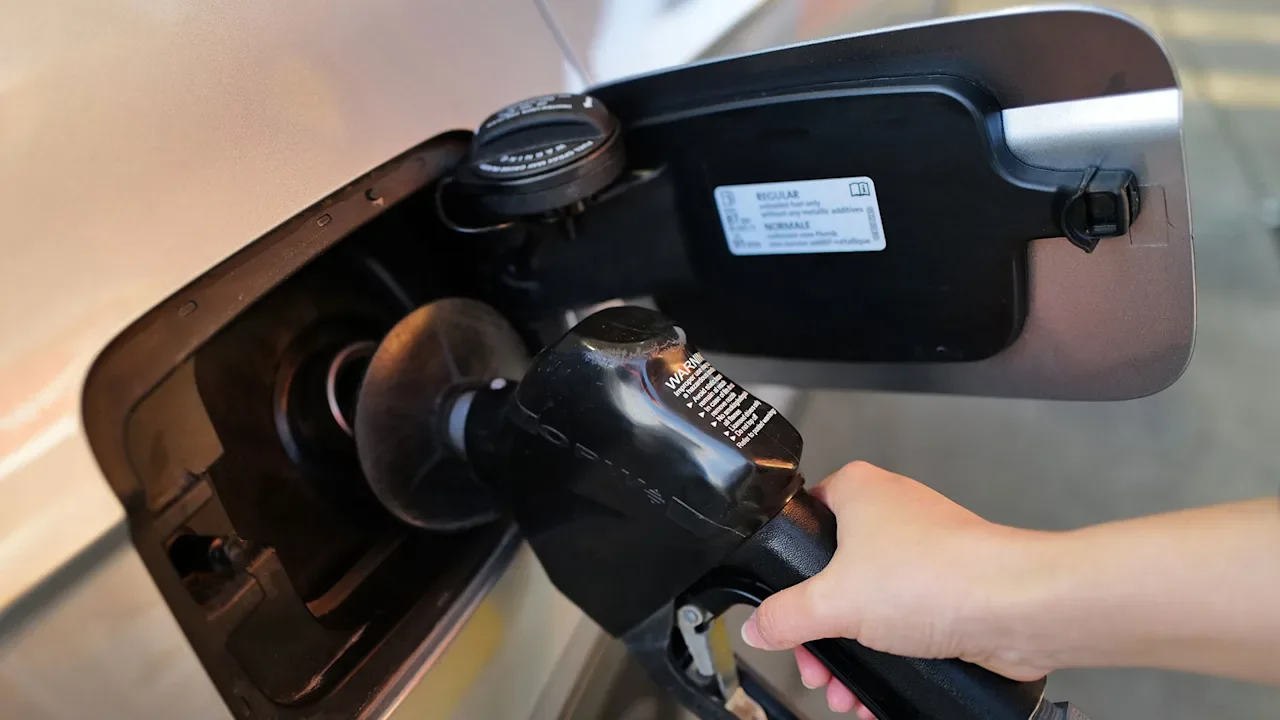
The U.S. economy was supposed to start the year with a bang, fueled by an unusually large jump in tax refunds from President Donald The President’s tax cut legislation. Yet spiking gas prices are on track to eat up those refunds, leaving most Americans with little extra to spend. “Next spring is projected to be the largest tax refund season of all time,” The President said in a prime-time speech in December that was intended to address voters’ concerns about the economy and stubbornly high prices. But that was before the Iran war, which began Feb. 28. Oil and gas prices have soared since then, with the nationwide average price of gas reaching $3.94 Sunday, up more than a dollar from just a month earlier. Gas prices are likely to remain elevated for some time, even if the war ends soon, because shipping and production have been disrupted and will take time to recover. Economists now expect slower growth this spring and for the year as a whole, as dollars that are spent on gas are less likely to be used for restaurant meals, new clothes, or entertainment. Lower and middle-income households are likely to be hit particularly hard, because they receive lower refunds, while spending a greater proportion of their earnings on gas. “The energy shock is to going to hit those who have the least cushion,” said Alex Jacquez, chief of policy at the left-leaning Groundwork Collaborative and a former economist in the Biden White House. “And it doesn’t look like those tax refunds are going to be here to save them.” Neale Mahoney, director of the Stanford Institute for Economic Policy Research, calculates that gas prices could peak in May at $4.36 a gallon, based on oil price forecasts by Goldman Sachs, followed by slow declines for the rest of the year. The notion that gas prices decline much more slowly than they rise is so ingrained among economists that they refer to it as the “rocket and feathers” phenomenon. In that scenario, the average household would pay $740 more in gas this year, nearly equal to the $748 increase in refunds that the Tax Foundation has estimated the average household will receive. Through March 6, refunds have risen by much less than that, according to IRS data: They have averaged $3,676, up $352 from $3,324 in 2025. Still, average refunds could rise as more complex returns are filed. Other estimates show similar impacts. Economists at Oxford Economics, a consulting firm, estimate that if gas prices average $3.70 a gallon all year, it will cost consumers about $70 billion — more than the $60 billion in increased tax refunds. The gas price spike comes with many consumers already in a precarious position, particularly compared to 2022, when gas prices also soared because of Russia’s invasion of Ukraine. At that time, many households still had fattened bank accounts from pandemic-era stimulus payments and companies were hiring rapidly and sharply lifting pay to attract workers. Now, hiring is nearly at a standstill and Americans’ saving rate has steadily fallen in the past few years as many households borrow more to sustain their spending. “When you start looking across the perspective from a consumer side, you’re seeing people who have maxed out their credit cards, are using ‘buy now, pay later’ to purchase their groceries,” said Julie Margetta Morgan, president of The Century Foundation, a think tank. “They’re making it work for now, but that can fall apart quite quickly.” The impact will likely worsen the “K-shaped” narrative around the U.S. economy, analysts said, in which higher income households have fared better than lower-income households. The bottom 10% of earners spend nearly 4% of their incomes on gasoline, Pantheon Macroeconomics estimates, while the top 10% spend just 1.5%. For now, most analysts still expect the U.S. economy to expand this year, even if more slowly, given the gas price shock. Higher gas prices will likely worsen inflation in the short run, but over time weaker spending will also slow growth. American consumers and businesses have repeatedly shaken off shocks since the pandemic — soaring inflation, rising interest rates, tariffs — and continued to spend, defying concerns that the economy would tip into recession. Many economists note that the proportion of their incomes that Americans spend on gas and other energy has fallen significantly compared with a decade ago. Data from the Bank of America Institute, released Friday, showed that spending on gas on the bank’s credit and debit cards shot 14.4% higher in the week ended March 14 compared with a year ago. Before the war, such spending was running 5% below the previous year, a benefit to consumers. Spending on discretionary items — restaurant meals, electronics, and travel — is still growing, the institute said, evidence of consumer resilience. But there is little sign it is accelerating, as many economists had hoped. “The longer these gasoline prices persist, the more that will gradually sap consumer discretionary spending,” said David Tinsley, senior economist at the institute. Other analysts expect growth will slow because of the war. Bernard Yaros and Michael Pearce, economists at Oxford Economics, forecast that the U.S. economy will grow just 1.9% this year, down from an earlier estimate of 2.5%. “We had anticipated a lift in spending from a bumper tax refund season,” they wrote, “but the rise in gasoline prices, if sustained, would more than offset that boost.” —Christopher Rugaber, AP Economics Writer View the full article
-
Ukrainian-American billionaire bought majority stake in controversial porn streaming platform in 2018View the full article
-
Stocks reverse losses and oil tumbles after US President says there have been ‘constructive’ talks with TehranView the full article
-
Choosing the right name for your business is essential, and using a business name generator can simplify the process. Tools like Shopify, Namelix, and Looka offer customized suggestions based on your industry, as well as AI-driven features improve creativity. Furthermore, unique domain name checkers guarantee your chosen name has an online presence. Comprehending how these generators work can greatly impact your branding strategy, leading to effective decisions. Let’s explore these top options and their unique features. Key Takeaways Shopify Business Name Generator provides unique, industry-specific suggestions with unlimited searches and domain availability checks for entrepreneurs. Namelix AI uses advanced algorithms for personalized name ideas, allowing users to filter by length and keywords for tailored results. Looka Business Name Generator creates distinctive names while offering logo design ideas and instant checks for domain availability and social media handles. Magic Write integrates with Canva to generate customized names, featuring logo previews and collaboration tools for team input on branding. Unique Domain Name Checkers ensure quick domain availability checks and suggest alternatives while analyzing SEO potential for enhanced online visibility. Shopify Business Name Generator Have you ever struggled to come up with a catchy name for your business? The Shopify Business Name Generator can help you overcome that challenge. By simply entering a keyword related to your business idea, this user-friendly tool generates unique brand names instantly. It’s particularly useful if you’re in construction, as it includes a construction name generator feature for industry-specific ideas. This random name generator offers hundreds of creative suggestions, allowing you to compare and brainstorm effectively. Plus, it checks domain availability to guarantee you can establish an online presence with your chosen name. Best of all, it’s completely free, so you can conduct unlimited searches, making it accessible for entrepreneurs at any stage of their expedition. Namelix AI Name Generator Finding the perfect name for your business can often feel overwhelming, but the Namelix AI Name Generator simplifies this process considerably. This innovative business name generator uses advanced AI name generation to produce unique name suggestions customized to your specific ideas and keywords. You can filter results based on name length, preferred keywords, and domain extensions, ensuring the names generated are relevant to your needs. Namelix encourages a creative naming process, offering catchy and memorable options that are ideal for startups and new ventures. Plus, the user-friendly interface allows you to explore diverse naming possibilities quickly. By saving your preferred names, you help the algorithm learn, improving future suggestions and making your naming experience even smoother. Looka Business Name Generator When you’re launching a new business, choosing an effective name can be a critical step that influences your brand’s identity. Looka’s Business Name Generator excels in creating unique names customized to your specific industry. Its user-friendly interface streamlines the process, allowing you to filter results by name length and related terms. Key features include: Categorized naming options: invented, multi-word, and traditional Instant checks for domain availability and social media handles Logo design ideas accompanying name suggestions Improved branding experience for entrepreneurs With Looka, you’ll find a business name generator that assists you in brainstorming and guarantees your chosen name aligns with your business goals and vision. Magic Write for Creative Naming Magic Write for Creative Naming offers an innovative solution for businesses seeking to develop a distinctive brand identity. This AI-powered tool, integrated within Canva, generates customized business name ideas based on your prompts. You can easily customize suggestions to suit your unique selling points and target market. Simply create or open a design in Canva and use the /Magic shortcut or Canva Assistant. With 50 free queries available, it’s a cost-effective option for startups and established businesses alike. Moreover, Magic Write includes logo preview capabilities, allowing you to visualize your brand alongside name suggestions. It also promotes collaboration among team members, making it an effective ai team name generator and an interesting name generator for creating an elaborate name or even a name generator Instagram. Unique Domain Name Checkers To establish a strong online presence, using unique domain name checkers is essential for entrepreneurs and businesses alike. These tools let you input desired business names and instantly check for domain availability across various extensions. If your first choice is taken, they often suggest alternatives that align with your brand vision. Here are some benefits of using unique domain name checkers: Check domain availability quickly and easily. Get alternative name suggestions that fit your brand. Analyze SEO potential for better online visibility. Verify social media handle availability for consistent branding. Frequently Asked Questions How to Generate a Catchy Business Name? To generate a catchy business name, start by brainstorming keywords relevant to your brand. Use tools like AI-powered generators to create unique combinations. Incorporate techniques such as alliteration or puns to improve memorability. Check the availability of domains and social media handles to guarantee consistency. Prioritize clarity and uniqueness, aiming for a name that reflects your identity. Finally, review and refine your options based on feedback, making sure the chosen name resonates with your audience. How Do I Name My Creative Business? To name your creative business, start by identifying your unique selling point and target market. Brainstorm names that reflect these elements, ensuring they’re memorable and easy to pronounce. You can use AI tools to generate options customized to your industry. Check domain and social media availability for your chosen name. Finally, consider using alliteration or puns to improve creativity, making your business name stand out in a competitive environment. How Do I Come up With a Catchy Craft Business Name? To come up with a catchy craft business name, start by brainstorming keywords that reflect your style, materials, or techniques. Use tools like Canva’s Magic Write or Namelix for name generation. Incorporate alliteration or rhymes for memorability. Check domain and social media availability to guarantee consistency. Finally, engage your audience through surveys to gather feedback on potential names, making certain they resonate and capture the essence of your craft effectively. How Do I Come up With a Creative LLC Name? To create a creative LLC name, start by defining your core values, offerings, and target audience. This foundation helps guarantee your name reflects your brand’s identity. Use online tools to generate ideas, but prioritize names that are memorable and easily pronounceable. Check domain and social media availability to maintain a consistent online presence. Finally, conduct trademark searches to avoid legal issues and guarantee your chosen name is unique and protectable. Conclusion In summary, utilizing business name generators like Shopify, Namelix, Looka, Magic Write, and unique domain name checkers can greatly simplify your naming process. These tools not only provide creative suggestions customized to your industry but also guarantee domain availability, enhancing your online presence. By leveraging these resources, you can save time and focus on developing your brand, allowing you to explore diverse options that resonate with your vision as you support your entrepreneurial expedition. Image via Google Gemini This article, "5 Best Business Name Generators to Ignite Creativity" was first published on Small Business Trends View the full article
-
Choosing the right name for your business is essential, and using a business name generator can simplify the process. Tools like Shopify, Namelix, and Looka offer customized suggestions based on your industry, as well as AI-driven features improve creativity. Furthermore, unique domain name checkers guarantee your chosen name has an online presence. Comprehending how these generators work can greatly impact your branding strategy, leading to effective decisions. Let’s explore these top options and their unique features. Key Takeaways Shopify Business Name Generator provides unique, industry-specific suggestions with unlimited searches and domain availability checks for entrepreneurs. Namelix AI uses advanced algorithms for personalized name ideas, allowing users to filter by length and keywords for tailored results. Looka Business Name Generator creates distinctive names while offering logo design ideas and instant checks for domain availability and social media handles. Magic Write integrates with Canva to generate customized names, featuring logo previews and collaboration tools for team input on branding. Unique Domain Name Checkers ensure quick domain availability checks and suggest alternatives while analyzing SEO potential for enhanced online visibility. Shopify Business Name Generator Have you ever struggled to come up with a catchy name for your business? The Shopify Business Name Generator can help you overcome that challenge. By simply entering a keyword related to your business idea, this user-friendly tool generates unique brand names instantly. It’s particularly useful if you’re in construction, as it includes a construction name generator feature for industry-specific ideas. This random name generator offers hundreds of creative suggestions, allowing you to compare and brainstorm effectively. Plus, it checks domain availability to guarantee you can establish an online presence with your chosen name. Best of all, it’s completely free, so you can conduct unlimited searches, making it accessible for entrepreneurs at any stage of their expedition. Namelix AI Name Generator Finding the perfect name for your business can often feel overwhelming, but the Namelix AI Name Generator simplifies this process considerably. This innovative business name generator uses advanced AI name generation to produce unique name suggestions customized to your specific ideas and keywords. You can filter results based on name length, preferred keywords, and domain extensions, ensuring the names generated are relevant to your needs. Namelix encourages a creative naming process, offering catchy and memorable options that are ideal for startups and new ventures. Plus, the user-friendly interface allows you to explore diverse naming possibilities quickly. By saving your preferred names, you help the algorithm learn, improving future suggestions and making your naming experience even smoother. Looka Business Name Generator When you’re launching a new business, choosing an effective name can be a critical step that influences your brand’s identity. Looka’s Business Name Generator excels in creating unique names customized to your specific industry. Its user-friendly interface streamlines the process, allowing you to filter results by name length and related terms. Key features include: Categorized naming options: invented, multi-word, and traditional Instant checks for domain availability and social media handles Logo design ideas accompanying name suggestions Improved branding experience for entrepreneurs With Looka, you’ll find a business name generator that assists you in brainstorming and guarantees your chosen name aligns with your business goals and vision. Magic Write for Creative Naming Magic Write for Creative Naming offers an innovative solution for businesses seeking to develop a distinctive brand identity. This AI-powered tool, integrated within Canva, generates customized business name ideas based on your prompts. You can easily customize suggestions to suit your unique selling points and target market. Simply create or open a design in Canva and use the /Magic shortcut or Canva Assistant. With 50 free queries available, it’s a cost-effective option for startups and established businesses alike. Moreover, Magic Write includes logo preview capabilities, allowing you to visualize your brand alongside name suggestions. It also promotes collaboration among team members, making it an effective ai team name generator and an interesting name generator for creating an elaborate name or even a name generator Instagram. Unique Domain Name Checkers To establish a strong online presence, using unique domain name checkers is essential for entrepreneurs and businesses alike. These tools let you input desired business names and instantly check for domain availability across various extensions. If your first choice is taken, they often suggest alternatives that align with your brand vision. Here are some benefits of using unique domain name checkers: Check domain availability quickly and easily. Get alternative name suggestions that fit your brand. Analyze SEO potential for better online visibility. Verify social media handle availability for consistent branding. Frequently Asked Questions How to Generate a Catchy Business Name? To generate a catchy business name, start by brainstorming keywords relevant to your brand. Use tools like AI-powered generators to create unique combinations. Incorporate techniques such as alliteration or puns to improve memorability. Check the availability of domains and social media handles to guarantee consistency. Prioritize clarity and uniqueness, aiming for a name that reflects your identity. Finally, review and refine your options based on feedback, making sure the chosen name resonates with your audience. How Do I Name My Creative Business? To name your creative business, start by identifying your unique selling point and target market. Brainstorm names that reflect these elements, ensuring they’re memorable and easy to pronounce. You can use AI tools to generate options customized to your industry. Check domain and social media availability for your chosen name. Finally, consider using alliteration or puns to improve creativity, making your business name stand out in a competitive environment. How Do I Come up With a Catchy Craft Business Name? To come up with a catchy craft business name, start by brainstorming keywords that reflect your style, materials, or techniques. Use tools like Canva’s Magic Write or Namelix for name generation. Incorporate alliteration or rhymes for memorability. Check domain and social media availability to guarantee consistency. Finally, engage your audience through surveys to gather feedback on potential names, making certain they resonate and capture the essence of your craft effectively. How Do I Come up With a Creative LLC Name? To create a creative LLC name, start by defining your core values, offerings, and target audience. This foundation helps guarantee your name reflects your brand’s identity. Use online tools to generate ideas, but prioritize names that are memorable and easily pronounceable. Check domain and social media availability to maintain a consistent online presence. Finally, conduct trademark searches to avoid legal issues and guarantee your chosen name is unique and protectable. Conclusion In summary, utilizing business name generators like Shopify, Namelix, Looka, Magic Write, and unique domain name checkers can greatly simplify your naming process. These tools not only provide creative suggestions customized to your industry but also guarantee domain availability, enhancing your online presence. By leveraging these resources, you can save time and focus on developing your brand, allowing you to explore diverse options that resonate with your vision as you support your entrepreneurial expedition. Image via Google Gemini This article, "5 Best Business Name Generators to Ignite Creativity" was first published on Small Business Trends View the full article
-
As usual, this week's collection of youth culture flotsam is all over the map. We got the surprising appearance of ancient Greek philosopher Socrates in AI-generated brainrot videos; a meme about winning at gambling that's becoming a meme about hypocrisy; an emoji that probably means something different than you think; and truly creative videos that, whew, don't use AI. Viral video of the week: Socrates and skeletonThe breakout star of viral videos this week is foundational Athenian philosopher Socrates, with his co-star, a living skeleton. In these AI -generated videos, the skeleton represents the viewer, and the idea is to illustrated hypothetical scenarios like "What if you and Socrates opened a Chick-fil-A in ancient Greece?" or "what if you ended up dating Socrates in Ancient Rome?" The trend started with this Instagram video: They then spread to TikTok, where anyone can generate one by posting a dumb prompt to an AI video generation app. Maybe it's good that kids are incorporating Socrates into their internal hierarchy of meme characters, but Socrates is portrayed as the most annoying person imaginable, who goes around pestering strangers with pseudo-philosophical questions. This isn't that far from actual descriptions of the philosopher, who was so confrontational and condescending that his fellow Athenians voted to make him drink poison. But it wasn't because his questions were annoying; it was because they revealed unpleasant contradictions at the center of people's beings. The Socratic Method is about arriving at truth through fearless self-assessment, not about being a jerk. Also, Socrates was from Greece, not Rome. Socratic Irony is using feigned ignorance to reveal the truth, while Internet Irony is using AI to imagine modern people are superior to ancient philosophers when they don't even know the difference between Greece and Rome. The story behind the "I just hit the jackpot" memeIt might be impossible to really know why Socrates has become popular now, so let's take a look at an easier-to-explain trend. "I just hit the jackpot" is a meme format where a clip of rapper GameboyJones singing the chorus to his song "HIT THE JACKPOT! (Hakari Dance)" is overlaid with text about a situation in which someone has hit a metaphorical jackpot. Like when there's a substitute teacher: or when a test you haven't studied for is delayed: GameboyJones originally posted the song to accompany an edit of the anime series Jujutsu Kaisen. The song and meme are tied to the character Kinji Hakari, whose superpower is themed around gambling and "hitting the jackpot." The anime connection means many of the memes made from the clip go deep into corners of the anime world that only the hardest of hardcore understand. Your guess is as good as mine with clips like this: Also, many of these memes refer to "love over lust mfers," so let's get into that, shall we? What does "love over lust mfers" mean?The mfers part means "motherfuckers," but "love over lust" is a little harder to explain. On the surface, it's self-explanatory and refers to people who say they're into love over lust. Videos like these have been cropping up on TikTok lately: The self-conscious, performative sincerity in these videos is so thick, a backlash is inevitable. It's come in the form of videos where the joke is that anyone who says they're into love over lust is secretly a huge freak, a joke that happens to pair perfectly with the "I just hit the jackpot" meme: What does 🪫, the low battery emoji, mean? Among young people, 🪫, the low battery emoji, is not saying "I need to find a charger, right away." It means something like "I am experiencing emotional depletion, heartbreak, or a general feeling of 'I can't anymore.'" It's a more general version of 🥀, the wilted rose emoji, but unlike the rose, it doesn't only refer to heartbreak. (If you can't get enough definitions of Gen Z and Gen A slang, check out Lifehacker's glossary.) These cartoon chase videos are inspired Here's something young people are doing that's original, creative, clever, and doesn't use AI. Cartoon chase videos employ old-fashioned sound effects, video editing, and cleverness to recreate iconic cartoon moments, like so: I'm sure Socrates would have some serious questions about reenacting old Looney Tunes cartoons, like "When a coyote runs off a cliff, does it fall because of gravity or because it looks down and holds up a sign that reads, 'Yipes'?" and "When Bugs Bunny dresses as a sexy female rabbit to trick his enemy, is it Bugs or Elmer who is deceived?" But that annoying prick's been dead since 399 bc, so screw him. Six-Seven! View the full article
-
We may earn a commission from links on this page. Deal pricing and availability subject to change after time of publication. Amazon’s Spring Sale is set to kick off later this week, but some early discounts are already live. One worth paying attention to is the Insta360 X5 Essentials Bundle. Currently listed at $559.99 (originally $659.99), this is the lowest this bundle has ever reached, according to price trackers. It’s also worth noting that PCMag gave the X5 an “outstanding” rating and named it the best action camera of 2025. That context makes the $100 discount feel more meaningful, especially since this bundle already includes most of what you need to get started, including a selfie stick and a carry case. You’ll still need to factor in a microSD card, but this gets you most of the way there without needing to piece things together later. Insta360 X5 Essentials Bundle Waterproof 8K 360° Action Camera $559.99 at Amazon $659.99 Save $100.00 Get Deal Get Deal $559.99 at Amazon $659.99 Save $100.00 The X5 is built around the idea that you don’t have to frame your shot perfectly while filming. It captures everything in 360 degrees at up to 8K, so you can decide what the shot should look like later in the app. That approach makes a lot of sense for fast-moving situations like biking, traveling, or navigating crowded places where stopping to adjust angles just isn’t practical. It can also shoot 4K at 120fps for slow-motion clips and take 72MP photos that are detailed enough for social media. You can take it straight into the water too, since it’s waterproof up to 49 feet without needing a case. One of the more practical upgrades is the user-replaceable lenses. Scratches are common with action cameras, and this lets you fix the problem without replacing the entire unit. Plus, the touchscreen is easy to work with, and the app does a decent job of guiding you through edits with AI tools that can pull together highlights or suggest templates. That said, the learning curve is the main trade-off. You can shoot quickly, but getting polished results takes some effort, especially when reframing clips and applying edits. As for its battery life, it’s rated for up to 185 minutes in endurance mode, though that number drops with higher resolutions and frequent use of features. Our Best Editor-Vetted Amazon Big Spring Sale Deals Right Now Apple AirPods 4 Active Noise Cancelling Wireless Earbuds — $148.99 (List Price $179.00) Apple iPad 11" 128GB A16 WiFi Tablet (Blue, 2025) — $299.00 (List Price $349.00) Sony WH1000XM6- Best Wireless Noise Canceling Headphones — $398.00 (List Price $459.99) Apple Watch Series 11 (GPS, 42mm, S/M Black Sport Band) — $299.00 (List Price $399.00) Blink Video Doorbell Wireless (Newest Model) + Sync Module Core — $35.99 (List Price $69.99) Ring Indoor Cam Plus 2K Wired Security Camera (White) — $39.99 (List Price $59.99) Fire TV Stick 4K Max Streaming Player With Remote — $34.99 (List Price $59.99) Deals are selected by our commerce team View the full article
-
If you pick up plastic trash from a beach, you’re helping protect marine wildlife from harm. And every little piece—from a plastic bottle cap to food wrappers—matters, because even small amounts of this trash can be deadly to animals like sea turtles and seabirds. A new calculator from Ocean Conservancy can now quantify that impact. If you enter the amounts of different types of plastic that you clean up into the Wildlife Impact Calculator, it will tell you how many animal lives would have been at risk, had those items made their way into the ocean and been ingested. “We hope that people really see that beach cleanups matter,” says Erin Murphy, Ocean Conservancy’s manager of Ocean Plastics Research and lead co-author of the study that underpins the Wildlife Impact Calculator. The issue of ocean plastic pollution Plastic pollution in the ocean is a massive, global environmental issue. Every day, 2,000 truckloads worth of plastic waste enter ocean waters. Addressing that pollution would require research into better kinds of food packaging and recycling, and policies like an international plastic treaty. In the meantime, though, beach cleanups can also make a difference. Ocean Conservancy has been hosting an annual International Coastal Cleanup for 40 years. Nearly 19 million volunteers have taken part, removing more than 400 million pounds of plastics and other debris from coastlines over those decades. Volunteers count and weigh all the pollution they pick up—with common items ranging from candy and chip wrappers to cigarette butts and grocery bags. But raw numbers, like the fact that the volunteers collected 1.4 million plastic bottles in 2023’s cleanup, don’t always connect people to the real impact they’re making on wildlife, Murphy says. With the calculator, that impact is clear, even for small quantities. Say your beach cleanup collected 20 plastic bottles, 15 bottle caps, and 10 plastic bags. Enter those figures into the calculator (which covers more than 20 types of plastic pollution, all of which have been found inside marine animals), and it tells you that you protected five sea turtles and 25 seabirds. It also shares info about such species, plus details on those types of plastic pollution. Small amounts of plastic can be deadly The calculator highlights the danger that even small amounts of plastic can pose to animals. And that was the point. The calculator is based on a study Murphy led, published in 2025, that aimed to identify the lethal dose of plastic for all sorts of animals. “That’s something that at a broad scale hasn’t been done before,” she says. “And what we found was that very, very small amounts of plastic can still kill marine life.” Just three sugar cubes worth of plastic, for example, has a 90% chance of killing a seabird like the Atlantic puffin, which is only 11 inches in length. For those birds, ingesting less than one sugar cube worth of plastic comes with a 50% chance. Even bigger animals are at risk: ingesting just over two baseball’s worth of plastic has a 90% likelihood of death for Loggerhead turtles, and for harbor porpoises, a soccer ball’s worth of plastic is deadly. With the calculator, Murphy says, “We wanted to flip that on its head and understand, what are the benefits of cleanups?” Coastal areas, where cleanups take place, are often where these animals nest or feed, too. Picking up whole pieces of plastic trash from beaches also prevents that trash from breaking up in the ocean and harming wildlife when they ingest fragments of plastic. Understanding these risks, and the benefits of cleaning up beaches, could spur regulatory decisions around plastic pollution. But ultimately, Ocean Conservancy hopes the calculator buoys individuals who undertake this effort. “We know that systemic change is going to be needed to address this plastic pollution globally,” Murphy says, “but it’s just a reminder that every single person can be part of the solution.” View the full article

-
President Donald The President on Monday extended his deadline for Iran to reopen the crucial Strait of Hormuz to international shipping, saying the U.S. would hold off on strikes against Iranian power plants for five days. Shortly after The President made the announcement on his Truth Social site, Iranian state television put up a graphic that read: “U.S. president backs down following Iran’s firm warning.” The reprieve came hours ahead of The President’s self-imposed deadline later in the day. Writing in all capital letters, The President said the U.S. and Iran have had “very good and productive conversations” that could yield “a complete and total resolution” in the war. Talks would continue “throughout the week,” he said. The President added that the suspension of his threat to attack power plants was “subject to the success of the ongoing meetings and discussions.” The President did not elaborate on the negotiations that had taken place. Iran did not immediately acknowledge any talks between the countries, but Iranian Foreign Minister Abbas Araghchi did say he spoke by phone with his Turkish counterpart, Hakan Fidan. Turkey has been an intermediary before in negotiations between Tehran and Washington. The President’s announcement came as the United Arab Emirates reported its air defense were attempting to intercept new incoming Iranian fire Monday afternoon. Earlier Monday, Iran warned it would strike electricity plants across the Middle East and mine the Persian Gulf after The President threatened to bomb power stations in the Islamic Republic if it did not reopen the strait. The war, now in its fourth week, has already seen several dramatic turning points — the killing of Iran’s supreme leader, the bombing of a key Iranian gas field, and strikes targeting oil and gas facilities and other civilian infrastructure in Gulf Arab nations. The conflict has killed more than 2,000 people, shaken the global economy, sent oil prices surging, and endangered some of the world’s busiest air corridors. The President’s ultimatum and Iran’s promise of retaliation threatened to raise the stakes yet again, with potentially catastrophic repercussions for civilians across the region. If carried out, the attacks could cut electricity to wide swaths of people in Iran and around the Gulf and knock out desalination plants that provide many desert nations with drinking water. There are also increasing concerns about the consequences any of strikes on nuclear facilities. The fever pitch of the rhetoric shows how the war has spiraled to a point unimaginable at the start of the conflict on Feb. 28, when the United States and Israel began bombing Iran. The President issues a deadline and trades threats with Tehran The President said the U.S. would “obliterate” Iran’s power plants unless the country releases its stranglehold on the Strait of Hormuz within 48 hours — a deadline that would expire late Monday Washington time but has now been extended. Iran has shut the strait, through which a fifth of the world’s oil is shipped along with other important commodities, in response to U.S. and Israeli strikes. A trickle of ships has gotten through, and Iran insists the crucial waterway remains open — just not to the U.S., Israel or their allies. The chokehold has wreaked havoc on energy markets, pushed up the prices on food and other goods well beyond the Middle East and sent shock waves throughout the global economy. “No country will be immune to the effects of this crisis if it continues to go in this direction,” said Fatih Birol, the head of the Paris-based International Energy Agency. Iran’s paramilitary Revolutionary Guard promised retaliation if The President made good on his threat, saying Iran it would hit power plants in all areas that supply electricity to American bases, “as well as the economic, industrial and energy infrastructures in which Americans have shares.” Iranian parliament speaker Mohammad Bagher Qalibaf said Iran would consider vital infrastructure across the region to be legitimate targets, including energy and desalination facilities critical for drinking water in Gulf nations. Iran’s semiofficial Fars news agency, which is close to the Revolutionary Guard, published a list of such facilities, including the United Arab Emirates’ nuclear power plant. Over the weekend, Iran launched missiles targeting Dimona in Israel, near a facility key to its long-suspected atomic weapons program. The Israeli facility wasn’t damaged. United States Central Command chief Adm. Brad Cooper, meanwhile, claimed in an interview that Iran was launching missiles and drones from populated areas, and suggested those areas would be targeted. “You need to stay inside for right now,” Cooper told Iranian civilians in the interview with the Farsi-language satellite network Iran International that aired early Monday. In his first one-on-one interview since the war started, Cooper said the U.S. and Israel were targeting infrastructure and manufacturing facilities to destroy Iran’s capabilities to rebuild its military. “It’s not just about the threat today,” he said. “We’re eliminating the threat of the future.” Israel strikes Tehran and Iran warns against any invasion Israel launched new attacks Monday on the Iranian capital, saying it had “begun a wide-scale wave of strikes” on infrastructure targets in Tehran without immediately elaborating. Explosions were heard in multiple locations in the afternoon. It wasn’t immediately clear what had been hit. With the U.S. deploying more amphibious assault ships and additional Marines to the Middle East, Iran warned against any ground attack. “Any attempt by the enemy to target Iran’s coasts or islands will, naturally and in accordance with established military practice, lead to the mining of all access routes … in the Persian Gulf and along the coasts,” Iran’s Defense Council warned said in a statement. The widespread use of mines could imperil not only military vessels but scores of commercial ships waiting to pass through the Strait of Hormuz, and a cleanup would last long after the conflict ends. The President has said he has no plans to send ground forces into Iran but also has said that he retains all options. Israel has suggested its ground forces could take part in the war. Israel has also targeted the Iran-linked Hezbollah militant group in Lebanon during the war, while the group has fired hundreds of rockets into Israel. In recent days, Israel has hit many apartment buildings in Beirut and bombed bridges over the Litani river in the Lebanon’s south. Lebanese President Joseph Aoun called the targeting of bridges “a prelude to a ground invasion,” while Egypt denounced the strikes as the “collective punishment” of civilians for the actions of Hezbollah. Authorities say Israeli strikes have killed more than 1,000 people in Lebanon and displaced more than 1 million. Iran’s death toll has surpassed 1,500, its Health Ministry has said. In Israel, 15 people have been killed by Iranian strikes. At least 13 U.S. military members have been killed, along with more than a dozen civilians in the occupied West Bank and Gulf Arab states. Oil prices are up more than 50% since start of the war Oil prices remained stubbornly high in early trading, with the price of Brent crude, the international standard, at around $113 a barrel, up some 55% since the war began. Jorge Moreira da Silva, a senior United Nations official, said the world has already seen a ripple effect, including “exponential price hikes in oil, fuel and gas” that have had a far-reaching impact on millions, primarily in Asian and African developing countries. “There is no military solution,” he said. In another sign of the far-reaching effects, South Korean chemical giant LG Chem said Monday it had to shut down a major industrial plant because the war had disrupted supplies of naphtha, a petroleum product used in plastic manufacturing. AP writers Charlotte Graham-McLay, Sally Abou AlJoud, Bassem Mroue, and Tong-hyung Kim contributed to this report. —Jon Gambrell, David Rising and Samy Magdy, Associated Press View the full article

-
Governments are wrong to assume the US is arguing in good faith for the organisation to reformView the full article
-
We may earn a commission from links on this page. Deal pricing and availability subject to change after time of publication. Amazon’s Spring Sale hasn’t officially started, but some of the better discounts are already live, like the OnePlus Buds 4. These latest earbuds from the brand are down to $79.99 (from $129.99), their lowest price so far, according to price trackers. Amazon is also testing one-hour and three-hour delivery in select locations, as reported by our senior tech editor Jake Peterson, which makes these early deals easier to act on if you need something fast. The Buds 4 are positioned as a step up from the Buds 3, borrowing a few ideas from the more expensive Pro series, particularly in how they handle noise cancellation and overall tuning. OnePlus Buds 4 Wireless earbuds with active noise cancellation $79.99 at Amazon $129.99 Save $50.00 Get Deal Get Deal $79.99 at Amazon $129.99 Save $50.00 The biggest reason to consider these is the noise cancellation—it cuts down steady background sounds like traffic, fans, or office chatter well enough that you don’t have to keep increasing the volume. They’re also light enough to wear for a few hours without ear fatigue. Sound-wise, these lean toward bass. Songs with heavier beats feel fuller and more engaging, though it can come at the cost of some clarity in vocals or instruments. You also get Bluetooth connectivity that stays stable, along with decent battery life that can stretch through most of a day with the case. That said, the experience isn’t perfect. The companion app can feel inconsistent, with occasional bugs that make adjusting settings more frustrating than they should be. Plus, the touch controls take some getting used to and can misfire if you’re adjusting the earbuds on the go. There’s also the fact that these cost more than the Buds 3 (at full price), which still hold up well for less money. Still, at $79.99, the Buds 4 makes more sense as a value buy, especially if strong noise cancellation is high on your list. Our Best Editor-Vetted Amazon Big Spring Sale Deals Right Now Apple AirPods 4 Active Noise Cancelling Wireless Earbuds — $148.99 (List Price $179.00) Apple iPad 11" 128GB A16 WiFi Tablet (Blue, 2025) — $299.00 (List Price $349.00) Sony WH1000XM6- Best Wireless Noise Canceling Headphones — $398.00 (List Price $459.99) Apple Watch Series 11 (GPS, 42mm, S/M Black Sport Band) — $299.00 (List Price $399.00) Blink Video Doorbell Wireless (Newest Model) + Sync Module Core — $35.99 (List Price $69.99) Ring Indoor Cam Plus 2K Wired Security Camera (White) — $39.99 (List Price $59.99) Fire TV Stick 4K Max Streaming Player With Remote — $34.99 (List Price $59.99) Deals are selected by our commerce team View the full article
-
It’s another bad day for gold and silver. Traders in precious metals are seeing both gold and silver plummet significantly as the week kicks off, with gold down nearly 7% and silver down 8% over the past 24 hours. Worse, gold has now fallen nearly 20% since its all-time high of over $5,586 in January. Silver is down even more, falling more than 44% since its all-time high earlier this year of over $121. Here’s what you need to know. The ‘safe haven’ trade is absent Silver and especially gold are generally considered “safe haven” assets—assets investors turn to when economic uncertainty abounds, and they want to park their money in a valuable that isn’t likely to fluctuate much, or at least not go down in value significantly. Safe haven assets like gold and silver contrast with other assets like stocks and cryptocurrencies, which are traditionally more volatile, especially in times of economic uncertainty. Given their safe-haven status, it’s natural to assume that the geopolitical and economic uncertainty unleashed by President The President’s war in Iran over the past two weeks would cause investors to flock to gold and silver. But just the opposite has happened. After both metals hit all-time highs earlier this year, they have slowly lost value, and their sell-off has only intensified with the breakout of the Iranian war. That incongruity has left many scratching their heads, asking “why?” Government bonds are starting to look more attractive than metals While any individual investor has their own reason for selling off a valuable asset, there are two likely factors that have contributed significantly to the fall in gold and silver both today and in recent weeks. The first is solidly related to the war in Iran. While wars breed geopolitical conflict and economic uncertainty, which usually sends investors to safe-haven assets like gold and silver, they can also affect interest rates, especially if central banks need to reconsider their positions due to rising prices in things like oil, which can have a knock-on inflationary effect across the economy. And, as the Wall Street Journal notes, thanks to the war in Iran, many investors now believe that central banks around the world are unlikely to cut interest rates this year. That’s the opposite of what investors believed before the war. If interest rates remain the same or even increase, government bonds become more attractive due to their higher yields. This can lead investors to park their money in bonds rather than precious metals, which don’t offer a guaranteed income stream. Profit taking after gold and silver’s great run A second significant factor likely contributing to gold and silver’s demise recently is, ironically, how well the two metals have performed lately. Between January 2025 and gold’s all-time high in January 2026, gold rose more than 100%. In that same timeframe, silver rose by more than 275%. Those are massive gains. But big gains don’t translate into big profits until you sell. And it’s very likely that some of the reasons gold and silver are falling so much lately are due to profit taking, so investors can lock in some of those stratospheric gains they’ve made over the past 12 months. Investors are generally also more interested in cashing out on assets they’ve made a killing on when the other assets they own are experiencing downturns, such as stocks. And lately, stocks have been hit hard. In the past five weeks, the Dow has lost around 9% of its value, the Nasdaq has dropped more than 6%, and the S&P has also dropped more than 6%. Many investors fear that markets could drop further the longer the Iran war drags on, and that the resulting increase in oil prices would negatively impact the overall economy. One way to hedge against a fall in stocks is to lock in any precious metal gains by selling them. After hitting an all-time high in January, gold is currently sitting at around $4,397. That is a price point gold last saw in December 2025. Silver is currently around $68.40, a price it has also not seen since December 2025. View the full article

-
Market research can be a slow, fragmented, and difficult process, often involving tedious internet searches, questionable data sources, and time-consuming manual synthesis. This makes it a great candidate for some assistance from AI. What’s more, an update to a popular feature on ChatGPT has made it even better at doing this kind of work. Imagine that you have a potential business idea but still need to validate how viable it actually is, identify primary competitors in your market, and develop an ideal customer persona. Instead of spending hours collating data, explains Dan McCarthy, an associate professor of marketing at the University of Maryland, you can use Deep Research, a ChatGPT feature that directs an AI agent to develop a comprehensive, well-cited report on any topic. Last week, OpenAI upgraded Deep Research with some new abilities. The feature now runs on GPT-5.2, one of the company’s most recent models (previously it ran on a much older o3 model), and can now prioritize specific websites in its search process. Deep Research is available for all paid ChatGPT users. Here’s how to use it to get some thorough market research done quickly. Step 1: Get your prompt right To test out how this feature could help with market research, I pretended that I wanted to start a digital transformation firm based in Denver with a focus on upgrading bars with mobile, bar-to-table ordering capabilities. All I needed to do in order to get started was click the plus button next to the text box, select More, then Deep Research, and enter a prompt. This prompt will determine the information that ChatGPT prioritizes in its search, so it helps to be verbose. If you need help developing a lengthy prompt, try using ChatGPT to help write it. McCarthy, who uses AI tools extensively, says that an easy way to develop a comprehensive prompt is to activate the chatbot’s voice mode and simply have a conversation with it. Once you’ve explained what you want, McCarthy says, you can ask ChatGPT, “Given all this that I’m telling you, what do you think would be the best thing that I should even be asking you?” That should help clear up any blind spots you might’ve missed. According to McCarthy, this method should produce a solid prompt that you can give to the Deep Research agent. When I asked ChatGPT to help expand my prompt, the platform generated a 673-word result. This prompt (which you can view here) defined the agent as a market research analyst and gave it objectives to determine the business idea’s viability, map out the competition, and define my ideal customer’s persona. Additionally, it provided details on the scope of the research, and information for how the agent should format its report. I also used ChatGPT to develop a list of specific websites for the Deep Research agent to prioritize in its search. Step 2: Start the research I entered my ChatGPT-created prompt, selected the Deep Research feature, and pressed return. Before getting to work, the agent broke down its objectives into the following bullet points: Collect primary vendor docs and pricing pages starting with user-preferred sites. Survey industry, local Denver sources, and hospitality reports for market context. Compile POS integration lists, local competitors, and implementation partners in Denver. Analyze demand, model ROI scenarios, and estimate Denver bar counts and adoption rates. Draft recommendations, ICP personas, GTM plan, and cite sources with confidence ratings. Over the next 21 minutes, the agent searched through hundreds of web pages. It found liquor license databases, census information, and data regarding competitors in Denver’s hospitality-focused digital transformation market. It compiled all this information into a multi-section report. Step 3: Read the report That report (which you can view here) ended up being roughly 4,000 words. It included an overview of the market, identified customer pain points, and listed out my potential competitors. The report also included recommendations for how to position my business, strategies to break into the Denver hospitality scene, and even identified a small business that would likely be my direct competitor: a Denver-based POS integrator called Megabite. ChatGPT found that while my business idea had potential, it wouldn’t fully meet the needs of Denver-based bar owners, who have reported that bar-to-table ordering can actually lead to fewer sales and tips. Instead, the report suggested, I should consider a system that can sit on top of popular POS in which diners don’t need to pay for every new drink they order, and can instead open a digital tab. What the expert thinks of the result McCarthy told me he was impressed by the report that Deep Research produced. In particular, he was pleasantly surprised by the agent’s cleverness in using liquor licenses to get a sense of the market size, and its thoughtfulness in calling out disruption to bar culture as a potential blocker to the business. But the report wasn’t perfect. McCarthy said much of what was included was unnecessary or needlessly complex. An easy prompt to fix this? “Just tell it, ‘Explain it to me like I’m an idiot.’” McCarthy adds, “I do that all the time.” He says that a solid market research report should also answer questions regarding the scope of adoption and how often repeat purchasing is expected. McCarthy also says that users should direct the Deep Research agent to be very upfront about the data it attempted to get but couldn’t. Many websites block AI agents from engaging with their content to prevent data scraping, which can hinder the research process. By telling your agent to list out the sites that it couldn’t access, you can manually obtain that data and add it to the analysis. Our bar-to-table digital transformation firm will have to remain a pipe dream for now, but it’s clear that AI has made the process of taking an idea from zero to one easier and faster than ever. If you have an idea for a new business or are planning on an expansion or pivot in your current business, consider giving Deep Research a spin. It might unearth something that makes you think in a different way. —Ben Sherry This article originally appeared on Fast Company’s sister website, Inc.com. Inc. is the voice of the American entrepreneur. We inspire, inform, and document the most fascinating people in business: the risk-takers, the innovators, and the ultra-driven go-getters that represent the most dynamic force in the American economy. View the full article
-
Perpetual war and fading American popular support is a formula for disasterView the full article
-
US administration seeks diplomatic thaw with authoritarian ally of Vladimir PutinView the full article
-
Hello and welcome to Modern CEO! I’m Stephanie Mehta, CEO and chief content officer of Mansueto Ventures. Each week this newsletter explores inclusive approaches to leadership drawn from conversations with executives and entrepreneurs, and from the pages of Inc. and Fast Company. If you received this newsletter from a friend, you can sign up to get it yourself every Monday morning. When Valerie Oswalt became CEO of breakfast and snack products company Kodiak in November 2022, she inherited a fast-growing business with beloved products, dedicated employees, and an outdoorsy vibe, befitting its Park City, Utah, headquarters. She also walked into a company that needed to bolster the talent, tools, and systems needed to scale the company. Her challenge: bring the discipline and knowledge she’d acquired during leadership stints at consumer packaged goods (CPG) giants such as The Campbell’s Company and Mondelēz International without losing the nimbleness and authenticity that had made Kodiak a household name. “It was a powerhouse brand that had a startup mindset,” Oswalt recalls. A recipe for success Kodiak has classic entrepreneurial roots. Founder and former CEO Joel Clark started selling his mother’s homemade whole-grain pancake mix as an 8-year-old. The company catapulted to national attention when an episode of ABC’s “Shark Tank” featuring Clark and cofounder Cameron Smith aired in 2014. Kodiak passed on a deal with the Sharks, but the publicity and the launch of protein-packed pancakes boosted sales. Private equity firm L Catterton acquired Kodiak in 2021, and Oswalt became CEO 17 months later, replacing cofounder Clark, who remains chairman of the company’s board of directors. To support Kodiak’s growth, Oswalt, who ran Campbell’s $4 billion snack division prior to joining Kodiak, brought in leaders with key experience in certain areas. She revamped the performance review process and instituted a new incentive plan tied to financial outcomes. (All 160 full-time employees have equity in the company.) “There were more processes that needed to be put in place than I had originally anticipated,” she recalls. Still, she was mindful of the impact change would have on the company’s entrepreneurial culture. “I did listening tours,” she says. “I talked to every person in the organization. It took about six months, but that was really important.” From there, her team identified the gaps, explained the rationale behind changes, and celebrated wins. She also course corrected when her changes were “too heavy” for an organization Kodiak’s size, such as when she rolled out a robust integrated business planning process to help gain insight into inventory and cash flows, plus do forecasting and planning. The fix was to listen to feedback and provide more training. “We wanted to ensure the proper education was provided to effectively” use the tools, she says. On a roll attracting celebrity investors Meanwhile, Kodiak has kept its in-house creative team, which handles all design, photography, and videography. Because the creatives are all employees, Oswalt says they are intimately familiar with the brand, which helps Kodiak retain an authentic voice even as it grows. She also notes that the team can quickly test and make design changes. Oswalt’s moves appear to be paying off. Last year, the company’s retail sales value hit $580 million, up 30% from 2023, Oswalt’s first full year in the role. “Valerie is building the kind of brand that earns deep loyalty—one that sits at the intersection of performance, trust, and culture,” says Mark Patricof, whose sports-focused investment firm invested in Kodiak in 2022. Athletes who participated in the round include football stars Travis Kelce and Joe Burrow, who have teamed up with Kodiak to donate meals in Kansas City and Cincinnati, respectively. Investors also include tennis player Sloane Stephens and baseball legend CC Sabathia. “That’s a big reason Kodiak has connected so well with our athlete investors, who recognize the authenticity of the mission. Each of our athlete clients who came into this deal have told me time and again how proud they are to be investors in Kodiak,” Patricof says. I asked Oswalt what advice she might have for other corporate executives thinking of making the move to a more entrepreneurial brand. “You have to be scrappy. It gets messy,” she says. “If you’re inspired by overcoming challenges and being connected—to your people, your consumers, your suppliers, your customers—then it’s awesome. And if you can find partners who are aligned with your priorities and your values, it’s absolutely magical.” Go big or go small What’s your experience bringing big-company discipline to a smaller organization—or vice versa? I’d love to hear what’s worked and what hasn’t. Send examples to me at stephaniemehta@mansueto.com. I’ll publish the best examples in a future newsletter. Read more: from big to small What Alicia Boler David had to ‘unlearn’ from Amazon Inside the founder factory known as Palantir Laid off from Big Tech, these are the rebounder founders View the full article

-
Sundar Pichai was blindsided by ChatGPT. Soon after being named Google CEO in 2015, he’d declared that the world was entering an AI-first era. He went on to bet his stewardship of the entire company on his belief that the technology would be “an intelligent assistant helping you throughout your day,” as he put it in his first shareholder letter. Yet his prescience hadn’t prevented OpenAI from swooping in on November 30, 2022, with the first product that truly demonstrated the epoch-shifting power of generative AI, a breakthrough that had emerged from Google’s research labs in the first place. Pichai remembers his instinctive response to ChatGPT: “Wow, this technology is going to diffuse earlier and faster than we were expecting.” The feeling, he says, was “uncomfortably exciting.” He knew that if AI was entering hyperdrive ahead of schedule, Google would have to scramble. Pichai is sharing this memory in a conference room at Google’s expansive office at Manhattan’s Pier 57, a former steamship cargo facility. As we talk, in early January, he radiates his usual air of genial unflappability—the same manner with which he apparently received the arrival of ChatGPT just over three years ago. “I felt we had all the right building blocks in place,” he explains. “And so my genuine reaction was, ‘How do we meet that moment with the resources we have?’ I was deeply focused on what I needed to do.” Assembling those building blocks was a yearslong process that led to the company’s newest series of AI models, Gemini 3. It debuted in November with Gemini 3 Pro, which beat its rivals from OpenAI and Anthropic across an array of industry-standard benchmarks for gauging AI capabilities—sometimes by dramatic margins. A faster, more computationally efficient version, Gemini 3 Flash, followed the next month. Both are already powering Google Search and other products, impressing AI watchers. Even OpenAI CEO Sam Altman acknowledged the wind in Google’s sails: “I expect the vibes out there to be rough for a bit,” he told staffers in an internal memo after Gemini 3 Pro’s release. Gemini 3’s strong start capped a year of steady AI progress mirrored in the stock price of Alphabet, Google’s parent company. After underperforming throughout the broad AI rally and bottoming out in April 2025, its stock price has more than doubled. In January 2026, when Google and Apple announced a deal to run future versions of Siri and other Apple AI features on Gemini, Alphabet hit a $4 trillion market cap for the first time. That Google is suddenly so widely regarded as one of AI’s biggest winners is striking given the skepticism that once clouded its efforts. Many observers saw the 28-year-old company’s previous success—particularly in monetizing its market-dominating search engine—as an obstacle to it being able to reimagine itself around the technology. “Google may be only a year or two away from total disruption,” tweeted ex-Googler and Gmail inventor Paul Buchheit the day after ChatGPT’s appearance. “AI will eliminate the Search Engine Result Page, which is where they make most of their money. Even if they catch up on AI, they can’t fully deploy it without destroying the most valuable part of their business!” Sundar PichaiBenedict Evans Though the next couple of years didn’t spell Google’s doom, they also failed to quell doubts about its future. Outside the company, “there were questions around, ‘Will we be able to do new things? Can we catch up? Can we have momentum?’ ” says Josh Woodward, the VP in charge of the Gemini app. The tech giant with the most AI juice seemed to be Microsoft, thanks in large part to the OpenAI partnership it had established by plowing billions into the startup, starting in 2019. By some measures, Google is still playing catch-up. According to market intelligence firm Sensor Tower, monthly downloads of the Gemini app grew by 480% over 2025, but its 376 million monthly active users fall far short of ChatGPT’s 945 million. (Using its own methodology, which includes both the Gemini app and its web-based interface, Google says that Gemini has 750 million monthly users.) Another firm, Similarweb, reports that Gemini accounts for 22% of traffic to AI chatbot sites—up more than 670% year over year, but still barely a third of ChatGPT’s 63% share. But with Gemini coming into its own, there are signs Google can finally take full advantage of some of its defining strengths as a company. The company’s myriad products for work and home, running in data centers equipped with Google-designed Tensor Processing Unit chips, provide it with a wealth of touchpoints for Gemini. Even Alphabet’s Waymo robotaxis call on Gemini to help with particularly tricky scenarios, such as what to do if a vehicle ahead is in flames. “The same underlying technology is driving momentum across what look like very different businesses,” says Pichai. OpenAI also had a busy 2025, but much of it involved trying to be, well, more like Google. For instance, it released a web browser, Atlas, and started production on its own bespoke AI processors. It’s also in the earliest stages of competing with Google’s $295 billion ad business and—with its $6.5 billion acquisition of Jony Ive’s hardware startup Io—getting into consumer electronics, where Google already offers its Pixel, Home, and Nest gadgets. (Google doesn’t disclose its hardware sales, which it rolls up into a “subscriptions, platforms, and devices” revenue line that totaled $48 billion in 2025.) Both companies have much left to prove, but even observers who thought AI might be a textbook example of Clayton Christensen’s “innovator’s dilemma” in action have reconsidered their gut reactions. “Google has definitely woken up,” says Gmail creator Buchheit, who now believes it might be the best-positioned company in tech. Suddenly, Pichai’s vision of useful AI everywhere is feeling more like a reality. Pichai may have been optimistic about Google’s ability to take on ChatGPT, but he treated its arrival as an emergency. Just three weeks after the OpenAI chatbot appeared, The New York Times reported that Google had declared a “Code Red,” instructing staffers to set aside other projects to fast-track new AI products and features. In early February 2023, the company announced a decidedly ChatGPT-esque bot called Bard. Actually, Bard had been in the works all along but hadn’t previously been considered ready for deployment. Google, which Pichai says aspires to be “bold but responsible,” had been bothered by generative AI’s tendency to hallucinate misinformation. Watching the world become smitten with ChatGPT, the company steeled its nerves and moved forward. In its initial form, Bard felt like it had been rushed to market. Widely regarded as a tepid response to the white-hot OpenAI, it had so little brand equity after its first year that Google relaunched it as Gemini, aligning the chatbot’s name with the LLM that powered it. Even as Bard foundered, though, Google was making consequential moves behind the scenes. Cofounders Larry Page and Sergey Brin, who had long been absent from day-to-day operations, threw their weight behind the effort to quicken Google’s AI progress. Brin in particular returned to active duty, participating in everything from hiring decisions to code reviews. “Having the founder of the company sitting together with your engineers sweating out the details of the model—I can’t imagine a more motivating thing for people,” says Pichai, his ego apparently unbruised by Brin’s return. [carousel_block id=”carousel-1773695343155″] The need for speed also led Google to take a hard look at its AI research organization—or, rather, organizations. The company had two of them, each managed separately and bulging with world-class talent. One, Google Brain, had been catalyzed within Google X, Google’s incubator for big ideas known as “moonshots.” Eight Google Brain scientists had coauthored “Attention Is All You Need,” the groundbreaking 2017 paper that introduced the concept of transformers, the technology that makes all generative AI possible. Google’s other AI research arm was London-based DeepMind, a 2014 acquisition. Formed to pursue artificial general intelligence, or AGI—AI capable of at least equaling human cognitive abilities across all domains—it had thrived under Google ownership. Its breakthroughs included the creation of AlphaFold, a protein research technology with the potential to dramatically accelerate drug discovery for which DeepMind cofounder and CEO Demis Hassabis and director John Jumper won the 2024 Nobel Prize in Chemistry. This sprawl and overlap of responsibilities wasn’t unusual at Google. “While it was great to have two teams, that moment called for more focus,” says Pichai. In April 2023, the labs joined forces to become Google DeepMind, with Hassabis running the combined operation and Google Brain cofounder Jeff Dean as its chief scientist. The merger acknowledged that Google needed to shift more aggressively from pure research to turning innovations into products. “It’s still research, but it’s research that has impacted the real world,” says Google DeepMind chief technology officer Koray Kavukcuoglu, who joined DeepMind as a research scientist when it was a two-year-old startup. “It has to be done with that mentality and with that collaboration across all of Google.” (In June 2025, Kavukcuoglu pushed this integration even further by taking on an additional role—chief AI architect for all of Google, reporting directly to Pichai.) Shortly after Google Brain and DeepMind became one, Google hosted I/O, its annual developer conference. The event was its first big chance to steal back some of the attention that OpenAI had sucked up. Among the announcements: Google was reviving an opt-in program, called Google Labs, as a way for users to try AI features under development, with the understanding that they were works in progress. One of Google Labs’ first rough drafts was an update to Google Search called the Search Generative Experience, or SGE. Its results pages retained the familiar blue links to external websites. In some cases, however, it preceded them with AI-generated summaries. Google spent a year refining the SGE before fully deploying it. But when the feature—renamed AI Overviews—started showing up in search results in volume in spring 2024, it made the news for all the wrong reasons. In a mishap demonstrating AI’s inability to recognize an old Reddit post’s absurdist humor, one AI Overview suggested using glue to help cheese stick to pizza. Another recommended eating a rock a day. According to VP of search Liz Reid, these goofs were few in number and sometimes stemmed from Google underestimating the degree to which people would prankishly mess around with AI. As she dryly notes, “Before we had AI Overviews, nobody went to us and was like, ‘How many rocks should I eat?’ ” As the company ironed out AI Overviews’ bugs, it was heartened by research indicating that users valued the feature. “They really wanted to be able to continue this conversation,” she says. And when the overview didn’t show up, “they were grumpy.” That led to Google Search’s second major foray into generative AI, a tab called AI Mode. Introduced as a Labs experiment in March 2025, it lets users click into a chatbot-style experience that provides more detailed responses than AI Overviews and permits follow-up questions. Reid likens it to the engine’s long-standing tabs for images, news, and shopping—an optional complement to search in its classic, general-purpose form, not a substitute for it. Nobody thinks Google Search is anywhere near its AI end state. Like everyone else in the tech industry, Google is certain that we’ll increasingly call on agents to perform complex jobs with minimal supervision. Already, a Google Labs experiment called Gemini Agent can assist with tasks such as researching and booking a car rental, though Woodward acknowledges that agentic AI can be “hit or miss” and “slow.” For now, Search strikes a balance that’s tough to get right: enough AI, but not too much. “It wasn’t like we were going to go change the default to AI Mode,” says Reid. “I don’t think AI for the sake of AI is useful. [Google Search] exists because 2 billion people like using it. You don’t want to betray that trust. You want to continue to live up to that promise.” Last August, Google DeepMind product manager Naina Raisinghani uploaded a cutting-edge new generative AI image model to LMArena, a widely used AI benchmarking platform. When it came time to fill out a field specifying its name, she didn’t give the matter a whole lot of thought—it was 2:30 a.m.—and mashed up two of her own nicknames. Ta-da: The new model was known as Nano Banana. The wacky monicker was an attention grabber, but so was the model’s skill set. In seconds, it could perform practically any photo-editing trick that popped into someone’s head—say, replacing a portrait subject’s hoodie with a sequined tuxedo jacket. Google quickly rolled it into the Gemini app, where it became a sensation. “We almost put a superpower in people’s hands,” says Woodward. “And you could see how fast people were like, ‘Did you see this? Look what I created. Look what I did.’ ” As word spread, Gemini downloads in Apple’s and Google’s app stores surged, briefly passing even those of ChatGPT. This publicity bonanza was reminiscent of OpenAI’s knack for seizing the spotlight by helping its users create shareable content, such as when ChatGPT added a filter that could give photos a Studio Ghibli–esque anime look. “Google, historically, has not been as good at that,” says independent investor and writer (and Google alum) M.G. Siegler. “Part of it, I think, is just a cultural reticence around wanting to do these viral moments. But they honed it in with Nano Banana.” (Meanwhile, OpenAI’s biggest launch of 2025—the much-anticipated GPT-5—was widely deemed a dud, though its recently released GPT-5.3 Codex is getting rave reviews.) Google was still riding a wave of buzzy goodwill when it announced Gemini 3 Pro in November. Instead of tentatively making it available to a subset of users for testing purposes, the company went wide. The new model immediately began powering the Gemini app and, for paying subscribers, Google Search’s AI Mode. Google also made it available as a service for developers via Google Cloud and incorporated it into a new coding platform called Antigravity, a competitor to hot products such as Claude Code and Cursor. Within weeks, it shipped two additional versions: the high-end Gemini 3 Deep Think, optimized for math and science questions, and the lighter-weight Gemini 3 Flash. Gemini 3’s big bang effect isn’t just evidence of Google’s confidence in its quality. It’s a reflection of its yearslong build-out of the cloud infrastructure necessary to deliver AI to billions of people and do it with optimal speed. Thanks to the Google DeepMind merger, the company has also gotten better at putting new models into the hands of internal teams so they can begin building with them. “We were able to simultaneously bring it to life across many of our products, and that made the launch much, much better,” says Pichai. More than anything else, Gemini 3 is a foundation—both for future models and useful features Google hasn’t even thought of yet. There’s no lack of work left to do. For example, like Microsoft, Google hasn’t made AI feel essential inside productivity mainstays such as word processing and spreadsheets. “A lot of the things they built specifically for Gemini are great, and then, when they’re throwing Gemini into existing apps . . . it’s basically not useful,” says Creative Strategies analyst Max Weinbach. Even Pichai concedes that users are wary about AI until it proves its worth. “Forcing the technology on people just because it’s a moment and you think you can put it everywhere, I think that’s where there’s backlash,” he says. That said, Google is not shy about leveraging its existing apps to Gemini’s advantage. For example, after the company’s search engine business was declared a monopoly under U.S. antitrust law in August 2024, it argued that new restrictions imposed by a U.S. District judge on its distribution tactics shouldn’t prevent it from bundling the Gemini app with Google staples such as Maps and YouTube. OpenAI—whose only blockbuster app is ChatGPT itself—couldn’t pursue a similar strategy. Two basic facts about generative AI have been in conflict. Running the technology in enormous data centers is pricey—in February, Alphabet startled analysts by saying it may spend $185 billion on capital expenditures in 2026, more than double its 2025 total—yet the overwhelming majority of people who use AI chatbots haven’t been paying or seeing advertising. More than anything else, that explains OpenAI’s estimated $9 billion loss in 2025—and why, in January, the company announced that it had begun testing targeted advertising in ChatGPT, sharing an example in which a user asks the chatbot for Mexican recipes and sees a small boxed promo for hot sauce. Intermingling organic generative AI responses with paid messaging is still a new proposition. Done badly, it might damage users’ faith that AI-based services are working on their behalf—a point Google’s Hassabis made during an Axios interview at the World Economic Forum in Davos, Switzerland. He expressed surprise that OpenAI was moving ahead with ads in ChatGPT and said Google had no immediate plans to follow suit with Gemini. It’s a competitive advantage that Google—the world’s largest seller of advertising—can afford, at least for now. That’s not to say that Google refuses to sully new AI products with ads. In 2025, it started testing them in Google Search’s AI Overviews and AI Mode. Rather than selling ads specifically into these features, its algorithms pluck relevant ads from its massive inventory for display. Google is also working with Target, Walmart, Etsy, and others to integrate commerce links into both AI Mode and the Gemini app. What AI will do to Google’s search revenue over time is anyone’s guess. Early third-party data indicates a high click rate for ads associated with AI Overviews. But it also reports reduced interaction with ads positioned among the classic blue links, which users might ignore altogether if an AI Overview has done its job. Talking about the future, Pichai exhibits the same sort of self-assurance that once led Page and Brin to launch their groundbreaking search engine without having a business model in place at all. “I’ve always felt if you solve problems for users in meaningful ways, there will be commercial value,” he says. “And inherently, a lot of what people are looking for is also commercial in nature. So I think it’ll tend to work out fine in the long run.” As Google goes about selling ads and signing up paid users—Google offers three AI plans with progressively unfettered access to its latest models and features, priced from $8 to $250 a month—the company is also managing the tricky economics of AI computational resources. Here, too, it has an underappreciated head start on OpenAI, which wasn’t even founded until four months after Pichai became Google’s CEO. “They have advantages in a bunch of areas,” says Zach Lloyd, the CEO of AI coding platform Warp and a former Google principal engineer. “They make their own chips, and that really matters. They have all of the cloud infrastructure for serving these models. They have an extremely profitable business with which to fund capital expenditures and train models.” Google’s investment in AI computing capacity hasn’t attracted much attention, at least compared to Stargate, OpenAI’s splashy collaboration with SoftBank and Oracle to sink up to $500 billion into state-of-the-art AI farms. But Google is spending $40 billion in Texas, where it’s building three huge new AI and cloud data center campuses. It’s pouring tens of billions more into Arkansas, Iowa, Missouri, Oklahoma, South Carolina, and Virginia. Outside the U.S., it’s building out infrastructure in India, Germany, Belgium, and Thailand. Should Wall Street develop jitters over the tech industry’s present level of spending on AI, even Google might have to dial back. “The market might say, ‘Sorry, but not right now—let’s revisit this in a couple of years,’ ” says investor/writer and ex-Googler Siegler. Asked whether we’re currently in an AI bubble, Pichai pauses long enough to suggest he’s taking the question seriously. Eventually, an answer comes: “We are going to go through periods of underinvestment and then periods of overinvestment. It’s always tough to predict that. But if I were to take a decade-long view, no, I don’t think we are in an AI bubble.” Every tech CEO claims to think 10 years into the future. Many move onto new grand pronouncements within a couple of years, well before making the old ones a reality. But when Pichai says he’s taking a decade-long view of where the technology is going, it’s not just a platitude. That universal assistant he wrote about in that 2016 shareholder letter? Google is on the cusp of creating it. Explore the full 2026 list of Fast Company’s Most Innovative Companies, 720 honorees that are reshaping industries and culture. We’ve selected the companies making the biggest impact across 59 categories, including advertising, applied AI, biotech, retail, sustainability, and more. View the full article
-
I recently met with 300 leaders at one of the country’s top-performing transit authorities. I asked them to raise their hands if they’d ever worked for a leader who truly cared about them. Nearly every hand rose. The room lit up with warmth, as people recalled a boss who’d looked after them. Then I asked: on that team, how many of you were pushed to truly exceptional results? Lots of hands dropped. Then I turned the question around: Who has worked for a leader who drove performance like no other? Hands shot up. And how many of you felt valued and understood as a member of that team? Many hands fell. Only a smattering of people kept their hands up through all four questions. And you could see that they were proud. Heads nodded, and there was a visible pride having worked with someone rare—an “Expect a Lot, Care a Lot” leader. New data from FranklinCovey Institute’s The Case for the 6 Critical Practices Survey confirms just how rare they are. · Only 7% of leaders scored high on both expectations and care when rated by their team members. · Only 13% of leaders scored high on both expectations and care when rated by their leaders. · And the ones who do have an exceptional impact: 43% of their direct reports rate themselves in the highest engagement tier—what we call Creative Excitement—compared to just 20% of everyone else’s team members. That’s more than a two-to-one advantage. · Some 92% of leaders, who were rated as Expect A Lot, Care A Lot Leaders, inspire either Willing Cooperation or Creative Excitement from their teams, versus 78% of leaders who Expect A Lot or Care A Lot, but don’t do both. · And 76% of Expect a Lot, Care a Lot leaders are rated by their own managers as exceptional at delivering performance, versus just 23% of other leaders. The Consistency Problem Almost by definition, it requires consistency and balance to be an Expect a Lot, Care a Lot leader. The late Joel Peterson, who served on FranklinCovey’s board of directors for more than 30 years, put it this way: a CEO’s real job, once the right team is in place and the direction is set, is to weigh in only on the true jump balls, the decisions where talented leaders genuinely need a tiebreaker. But your team has to know you’re consistent. If they can’t predict what you would do, how you would navigate a challenge, they won’t run far without you. And you need them to be willing to run a long way. Imagine a leader who genuinely possesses both qualities, deep care and intense drive, but can’t regulate them. He revs high in the heat of the moment, says things he regrets, realizes he’s crossed a line, then floods the zone with warmth. His team members probably wouldn’t say they distrust him on a macro level, but day-to-day, his unpredictability erodes their sense of safety. In need of interim feedback on a big project—but reluctant to bring the boss something that he will tear apart—they slow down and wait for relevant insights they might pick up through back channels or in a chance encounter. We found this in our data as well. FranklinCovey Institute’s recent Insight Report, AI Transformation & the Human Imperative, found 36% of employees hesitate to make decisions without manager approval, and 92% of employees spend hours every week waiting for clarity or resolving misalignment. When care and demand are applied in inconsistent bursts, rather than together, performance is subjected to a kind of tax, paid in the form of hesitation and doubt. Reality Check: What Is ‘Care,’ Anyway? As we evaluate leadership along these lines, it’s easy to oversimplify what it means to care, reducing it to something that exists at the surface level—like asking how someone spent their weekend. It’s much more than that. One leader at the transit authority gathering described a colleague whose care was bidirectional: she cared deeply about her people and deeply about the organization’s mission. For leaders, care requires thoughtfully engaging with others in the context of what you’re all trying to accomplish together. It’s not just being nice or kind. By the same token, a lack of care can show up in unexpected ways. If you never give someone performance feedback, never have a hard conversation, and then one day let them go—that’s demand without care. If you avoid difficult discussions because they’re uncomfortable, that’s not kindness. It’s abandonment. Most leaders I encounter struggle to give feedback. Most employees, as a result, work in a feedback-free environment. And I believe the gap stems from a misunderstanding—the idea that giving honest, direct feedback is somehow at odds with caring. It’s not. It’s one of its highest expressions of care. A Walmart-Sized Example Doug McMillon offers one of the clearest illustrations. When he became CEO of Walmart roughly 12 years ago, many had written the company off as a legacy retailer destined to be overtaken by Amazon. His first move was to advocate to the board for a $3 billion investment in employee wages. The stock took a short-term hit, but the message was unambiguous: This is a people business. At the same time, McMillon told employees that just about everything was going to change, from roles and operations to expectations—with only a few exceptions, like mission and culture. And he promised to support teams as they made the transition into the new environment and took stock of the new expectations they’d be accountable for. McMillon treated people with transparency and humanity. The results speak for themselves. So You Want to Be an ‘Expect a Lot, Care a Lot’ Star? If you’re a leader somewhere in the middle of an organization today—managing a team of six or sixteen or sixty, not setting enterprise strategy or being profiled in the business press for your leadership prowess—what should you do? One starting point might be to think about which side of the ledger you’re undersupplying. Most leaders, when they’re being honest with themselves, already have a good sense of the answer. The manager who runs a tight ship but hasn’t had a real conversation with a direct report in months knows something. So does the department head who genuinely loves their team but habitually procrastinates on performance feedback. You might also take a first, uncomfortable step by asking team members what they think. Maybe not everyone all at once, but a few individuals you trust to tell you the truth. Do you feel like I push this team toward work that genuinely stretches them? Do you feel like I care about our mission? About work-life balance? Most leaders never ask these questions because they’re afraid of what they’ll learn. But that reluctance, that avoidance is itself a form of the problem. The leaders people remember, the ones whose current and former team members kept their hands raised through all four questions, were anything but avoidant. Somewhere along the way they’d resolved a) not to let the demands of the work make them strangers to the people doing it, and b) not to let their care for those people become an excuse to go easy on them. Knowing where you’re strong or weak is only a starting point, however. To shore up one dimension of leadership without neglecting the other, while avoiding the trap of inconsistency, requires discipline and intention. But as the data makes plain, the few leaders who can sustain it, and their teams, get a payoff in terms of both how they feel at work, and how they perform. View the full article

-
A surge of affordable used EVs is about to hit the market—at exactly the same time as drivers are looking to avoid high gas prices. Around 300,000 EV leases are set to expire this year, driven by a leasing boom that started around three years ago, when leasing offered the widest range of models eligible for federal tax credits. A wave of hybrid leases is also expiring this year. At the same time, there are fewer used gas cars on the market than usual because of slow sales in 2023 and 2024. Used EV sales are already strong, even as the rest of the EV market is struggling. Right now, buying an electric car can be a better deal than a similar used gas vehicle. At $20,000 to $30,000, a typical used gas option might be a five-year-old Toyota Camry or RAV4 with 50,000 miles, according to Recurrent, a company that studies the EV industry. In the same price range, you can get a Tesla Model 3 or Volkswagen ID.4 that’s a year newer, with 20,000 fewer miles on it. For cars that cost less than $20,000, the average EV is two years newer than a gas car, with 40,000 fewer miles. “For the same amount of money, you’re getting a newer used car with lower miles on it and more technology,” says Scott Case, Recurrent’s cofounder and CEO. “And also, right from the jump, you’re saving a substantial amount of money in gas prices.” EVs have depreciated faster than gas cars in part because the technology is improving so quickly; the latest models have the best features. But for budget-conscious buyers, a two or three-year-old EV is still a good option and “very undervalued,” Case says. When the The President administration ended EV tax credits last September, including incentives for used EVs, sales were expected to plummet. “Everyone thought, ‘That’s it for EVs—there aren’t going to be more sales,’” says Case. “I think to an extent that was true on the new side—there was just a ton of pull-forward demand and Q4 was really, really soft. But we work with used EV specialists all over the country and almost immediately—October 1st, the day after the deadline—we were hearing from dealers all over that were selling used EVs.” By December, used EV sales were up 10.2% year-over-year. Total used EV sales in 2025 were up 35% compared to 2024. More than half of the inventory is $30,000 or less. Now, as leases end, there will be many more options. “What that means is that for consumers who have found new car sales to be too high and have wanted to get an electric vehicle but have found it too pricey in the past, they’re now going to have two or three-year-old vehicles that are top quality, and still under EV battery warranty,” says Corey Cantor, research director at the nonprofit Zero Emission Transportation Association. In the past, consumers have cited cost as one of the top barriers to buying an EV. Range or charging is the other top issue, but that’s less of a challenge now as well. A typical EV might have a range of 300 miles. More than 18,000 new public fast chargers were added throughout the U.S. last year, up 30% from 2024. And current batteries aren’t degrading quickly. Recurrent tracks battery health, and has found that after three years, EV batteries still show 97% of their original range. In many cases, three-year-old EVs are getting better than their initial advertised EPA range. “Across the board, batteries and range are holding up better than people think,” says Case. “There’s this big misconception about buying an ‘iPhone on wheels’ and expecting the battery to wear out in three years just like an iPhone. And that’s not true.” Recurrent has also studied how gas prices affect EV sales. Spikes in gas prices don’t necessarily mean that people run out to buy electric vehicles. When the company looked at data over the last 10 years, gas prices only had a meaningful impact when they stayed high in the wake of the Ukraine invasion. Still, that could happen again now. “If this is just a spike that jumps and then goes back down, that probably doesn’t lead to a lot of new EV sales, but if it stays around, we’ve forecasted that could lead to an extra two to four percentage points above baseline [sales] for the year,” Case says. Already, Edmunds reports that it’s seeing an uptick in searches for EVs. EV dealers also say that they’re seeing more interest. “I’ve never seen so many trade-ins come in on fumes because people are trading in a gas car and literally, we can’t get it to the other side of the parking lot because it has so little gas in it—people don’t want to hit the pump one more time,” says Jesse Lore, CEO of Green Wave Electric Vehicles, with dealerships in Massachusetts and New Hampshire. Lore says that he recently sold a plug-in hybrid to a The President supporter with a big diesel pickup. “He was putting $60 in his tank every weekend, and that was going to go up 20 or 30%,” he says. “We did the math. On the plug-in hybrid, he has a 20-mile commute. He’s going to put $40 in every six weeks.” Even for new EVs, and even when gas prices are lower, the total cost of ownership is often less than the cost of owning a similar gas car. That’s both because of fuel savings and because EVs require less maintenance over time. The benefit varies by location, as this gas-versus-electric calculator shows. But the cost savings are clearest for used cars. Many customers who are concerned about gas prices now are particularly interested in lower-cost used EVs, says Shannon Golbienko, co-owner of Eco Auto Northwest in Washington State. “They’re looking for Chevy Bolts, and they’re looking for Nissan LEAFs,” she says. A used Bolt can sell for around $15,000. Historically, “whenever there is a gas price spike new car sales collapse, and used car sales stay remarkably resilient,” says Case. “People don’t stop buying cars, they just trade down to cheaper ones. What I think is interesting and unique about 2026 is this is the first time—if gas prices stay high—that there have been enough used EVs to make that a really interesting segment.” View the full article
-
Is leadership dead? Perhaps not, but its branding is definitely on life support. Younger professionals are not chasing titles for prestige or salary alone. In fact, many are actively opting out of traditional leadership tracks because the trade‑offs look misaligned with the life they want. It’s a trend many people and culture leaders I speak with are worried about. For Gen Z and younger millennials, leadership no longer automatically signals status and security; it often looks like stress, fragility, and moral compromise. In Deloitte’s 2025 Gen Z and Millennial Survey, only 6% of Gen Z respondents cited reaching a leadership position as their primary career goal, with far more prioritizing work–life balance, learning, and flexibility. Other research finds that 74% of Gen Z professionals prefer a career path with more autonomy rather than managing others, with only 1 in 4 envisioning advancement through traditional people management. This isn’t pure anti‑ambition. Many younger workers want influence, impact, and financial upside—but without the sacrifice of health, identity, and personal values they saw their parents make. They watched earlier generations grind through the dot-com bubble, the 2008 recession, and then the pandemic, take on more responsibility while pay stagnated, run back to the office as soon as remote work was optional, and still face layoffs and burnout. Younger workers are meeting the question of leadership with a simple response: “hard no.” When leadership looks like “high stress, low reward” Gen Z and millennials frequently view middle management roles as “high stress, low pay,” with limited creativity and constrained decision‑making authority. They watch their managers caught between conflicting demands, bearing accountability while powerless to change systems or workload. Burnout is a major part of the story. Research on leader burnout points to a triple threat: burned‑out leaders are significantly less effective, far more likely to leave, and less able to engage and develop their teams. One analysis found burnt‑out leaders are 3.5 times more likely to exit their roles to improve their well‑being, undermining succession plans and destabilizing teams. Qualitative studies of leader vitality show how emotional labor, loss of job control, constant self‑monitoring, and isolation quietly drain leaders over time. Younger employees bear the brunt of who their managers become under this strain. When they see leaders working 60‑hour weeks, living in their inboxes and Slack channels, and losing touch with meaningful work, it reinforces a simple conclusion: “Whatever that is, I don’t want it.” This was my experience: as a young lawyer, I saw the business and performance pressures on the senior associates and partners I worked for manifest in wildly unhealthy behaviors at work and beyond. I lost all desire to chase the same career: given the visible toll it took, no amount of prestige seemed worth that sacrifice. The culture problem behind the pipeline problem Beneath the reluctance to lead is a deeper culture issue. Many younger workers are not rejecting leadership per se; they’re rejecting the version they’ve experienced. While most young professionals feel managers should provide guidance and support, few meaningfully receive that from their current managers. This gap makes it harder for them to imagine themselves in those positions. At the same time, organizations are facing a looming succession risk. HR leaders in global forecasts report low confidence in their leadership pipelines, with younger employees more likely than others to step away from leadership tracks to protect their well-being. Poorly supported leaders burn out; disillusioned employees avoid stepping up. The result is a hollowing of the bench at exactly the moment companies need adaptive, human‑centered leadership most. For people and culture leaders, this is not a branding problem to solve with a new high‑potential program and a glossy brochure. It’s a structural and psychological problem about how leadership is designed, resourced, and experienced day to day. What people and culture leaders can do differently The good news: when leadership is reframed around autonomy, support, and purpose—not just pressure and politics—interest rises again. Research on younger workers shows they still want growth and influence; they just want a version of leadership that aligns with their values and lives. That means redesigning the role, not just the rhetoric. Forward‑thinking organizations are experimenting with dual career paths that allow deep experts to progress without people management, while redefining people leadership as a craft with real training, time, and support. They are also rebuilding the social fabric around leadership: mentoring, sponsorship, and cross‑generational collaboration that make leadership feel attainable and shared, rather than lonely and heroic. Organizations need to treat leadership as a wellbeing and design challenge as much as a talent challenge. That requires shifts in workload, expectations, and how leaders are evaluated—not just who gets promoted. Practical steps to attract young leaders 1. Redesign leadership roles for sustainability, not martyrdom Audit manager workloads, meeting loads, and span of control; remove low‑value tasks and invest in operations support so leaders have time for actual leadership work (coaching, strategy, decision‑making). 2. Create dual career paths with real parity Build expert and people‑leader tracks with comparable status, pay bands, and visibility so employees don’t feel forced into management just to advance—or punished for opting out. 3. Make wellbeing a core leadership KPI Tie leader evaluation to team indicators like engagement, turnover risk, and burnout signals, not just output and financial metrics, and give leaders training and resources to support psychological safety and sustainable performance. 4. Invest early in mentoring and “preview” experiences Pair emerging talent with leaders who model healthy, human‑centered leadership, and create low‑risk stretch assignments (project leadership, temporary team leads) so younger employees can test leadership without a permanent title change. 5. Train leaders in modern management skills, not just technical excellence Prioritize coaching, feedback, boundary‑setting, and remote/hybrid management skills in leadership development, addressing the documented gap between what younger employees expect from managers and what they experience. 6. Increase autonomy and real decision rights for leaders Give managers clearer authority commensurate with their accountability so leadership doesn’t feel like “all of the blame, none of the power,” a dynamic younger workers strongly resist. 7. Tell truer stories about leadership inside your company Spotlight leaders who protect boundaries, admit mistakes, and sustain long‑term careers without burning out, and invite younger employees into honest conversations about what they need to make leadership a viable, attractive choice. Leadership isn’t dead—but we have to let go of the old promise of prestige in exchange for self‑sacrifice. When organizations design leadership as a sustainable, supported, and values‑aligned path, the next generation won’t just say yes to leadership—they will redefine it for the better. View the full article

-
It’s still more than two years until the cauldron lights up for the 2028 Summer Olympics in Los Angeles, but we now know what the multibillion-dollar global sports spectacle will look like. The design team at LA28, the local organizing committee for the games, has given Fast Company a preview of the concepts and visuals that will guide the look and feel of the 2028 Olympics. The design approach is conceptually based on the superbloom, a natural phenomenon sometimes experienced in Southern California when an unusually wet winter leads to an explosively colorful spring bloom of wildflowers. The LA28 design approach uses bright, almost neon tones and an abstract graphic that will become the basis for the design of everything from stadium decorations to event tickets to promotional material and signage plastered across Southern California. “It’ll take over miles of printed graphics, probably the same amount of digital screens, thousands of pieces of sport equipment from batons to hurdles to rugby balls,” says Geoff Englehardt, head of brand and design for LA28. As a branding expert who has worked in the Olympics sphere since a stint with Team USA’s official outfitter, Ralph Lauren, for the 2008 Summer Olympics, Englehardt is deeply versed in the history and complexity of designing for the games. Working alongside LA28 executive design director Ric Edwards, Englehardt has helped craft a 250-page guidebook that sets the visual tone for every aspect of the games. “All of these things will carry our look,” Englehardt says. “To create a system that can work for all of that was quite challenging.” The superbloom concept became a framework for this design language, providing a vibrant color scheme as well as the visual form of flower petals to guide the graphic treatment. The team developed a core superbloom graphic made of 12 long horizontal rows that are subdivided into kaleidoscopic arrays of primary and secondary colors. Different patterns within the graphic form 13 discrete “blooms” that represent different aspects of L.A.’s culture and history, including its status as a world stage, a culinary crossroads, and a diverse melting pot. The shapes within each bloom are designed to seamlessly flow into each other, allowing them to either stand alone on a poster or flow together for miles along a marathon route. “It was really important that we developed a toolkit that worked for millions of brand impressions,” says Edwards. “Each real estate is not always a one-by-one square ratio or perfect rectangle. You have to solve for everything and anything.” A high bar for L.A. Olympic design Defining the visuals of a Summer Olympics is no small task, but it carried an even greater weight in L.A., which last hosted the event in 1984 and had one of the most beloved designs in Olympics history. Led by the design firm Sussman/Prezja, the look of the 1984 Olympics was a flamboyant and celebratory event that diverged from the more conventional and austere Olympics of the past. Defined by a bold magenta, yellow, and teal color scheme that spread across dozens of sites and venues in the city, it became a widely celebrated and influential design. “I saw in my head this sky and the ground sprinkled with confetti, sprinkled with all this magical stuff that shimmered and expressed joy, excitement—expressed the goals of the Olympics,” designer Deborah Sussman told Los Angeles Magazine in 2014. That even extended to the bouquets of flowers handed to Olympians on the medal stands. Sussman insisted that local flowers take the place of conventional roses, so every medalist at the games ended up holding pointy, multi-colored bird of paradise flowers. That same flower—the official flower of the city, no less—has been re-embraced for the main color palette of the 2028 Olympics, which is made up of the four colors: poppy, scarlet flax, bluebell, and sage brush. “It shows up in every neighborhood in LA, from the inner city to the hills to the beach to the desert. This thing can grow. It’s the grittiest thing you’ve ever seen. It could be two feet tall or 20 feet tall, and just thrives in any condition, which is such a great metaphor for the people that that make up this beautiful city,” Edwards says. “But also it’s just awesome to look at.” Designed for broadcast The LA28 design team worked closely with the Culver City office of Koto to translate the concept and bird of paradise color scheme into a more detailed design guidebook. Koto and the LA28 team developed four bespoke typefaces inspired by the hand-painted signage of L.A. strip malls, and consulted with LA28’s in-house athletes’f department to better understand how certain design approaches may or may not distract an athlete during an event. Crucially, the team also made early contact with the Olympic Broadcasting Services, the official camera crew that captures all the Olympic event video that gets broadcast around the world. “Their point of view is the view that the world sees,” Englehardt says. The designers consulted with them to better understand whether graphics they created would work onscreen or if color treatments on an event sideline would blur or vibrate when captured on video. “It’s very important for them to kind of understand our not only graphic direction, but our color direction. And it was quite frankly a surprise to us that those teams historically have not been brought into the creative process.” Edwards says this kind of early consultation was done with a variety of stakeholders and partners with the intention of solving downstream problems before they become too costly or complicated to solve. “This creative concept is the foundation for anything that’s created after. This will inspire the medals, this will inspire the torch, this will inspire the mascot,” he says. “If we’re not crossing every T and dotting every I when we’re thinking about this design system, it will fail when we need to do simple tasks like wrap a building or create fencing for a marathon.” Designed for sponsors The 2028 Olympics design approach also considers how its partners—particularly its sponsors—will be able to use these guidelines to aid their own preparations and brand activations ahead of the Olympics. Englehardt notes that Olympic organizing committees usually reveal the look and feel of their games about a year or so before the actual event, which doesn’t leave much time for partners like broadcasters and major sponsors to fall in line. As a result, these partners end up making their own visuals and physical sets, which can clash with the official design on the ground. “As a viewer, there’s a disconnect from what shows up on the field of play to what shows up in the broadcast partner’s animation. We want to eliminate that and have every partner show up whether on the ground or on broadcast in the same theme,” Englehardt says. LA28 revealed its look and feel to partners in early 2026. “We want 100% adoption. That’s a big part of why we developed the look with over two and a half years to the games,” Englehardt says. “We want to get all of our stakeholder ecosystem excited about this so that they don’t have to worry about going off and creating something new. We want everybody to show up dressed for the party in ’28.” This approach shows up most transparently in the official LA28 emblem, revealed back in 2020, which makes the “A” portion of the logo a variable that can be endlessly designed and redesigned by partner organizations. Edwards calls it “a big departure from traditional Olympic emblems,” and Englehardt says “it has afforded us a ton of opportunity.” Some critics have blasted this approach. “In LA28’s quest to have so many logos, now LA’s games have no logo,” writes design journalist Alissa Walker in her L.A. Olympics publication Torched. But, on the business side, the approach has already proven successful, with brands like Delta, Visa, and NBC making their own versions of the LA28 emblem. Many others are likely to follow in the next two years. LA28’s design team is also hopeful this visual approach will extend further, with brands embracing the design guide and possibly even making their own LA28-inspired products and packaging ahead of the games, from superbloom soda cans to bird of paradise-colored clothing. “Our partners shouldn’t feel like outsiders during the games,” says Englehardt. “We wanted to get our design elements into their hands with enough time for them to experiment.” Image is increasingly important for this Olympics, which is facing a range of existential controversies, from LA28 chairman Casey Wasserstein’s salacious emails revealed in the files of convicted sex offender Jeffrey Epstein to the potential for politically motivated Olympic boycotts. But even more important is business. By December 2025, LA28 reported that it had already inked deals for more than $2 billion in domestic sponsorship revenue, putting it on pace to be one of the most commercially successful Olympics in history. In multiple ways, this is by design. View the full article

-
Last week in this newsletter, I summarized some interesting results from a study that analyzed the behavior of 164,000 knowledge workers. It found that introducing AI tools increased administrative tasks by more than 90% while reducing deep work effort by almost 10%. The problem, I concluded, was that digital productivity tools sometimes speed up the wrong tasks, which might feel efficient in the moment, but lead us to accomplish less over time. As I emphasized, AI is not the only technology to produce this paradoxical side effect —we saw something similar with email, mobile computing, and online meeting software as well. So, what’s the solution to avoid these traps? In today’s episode of my podcast, I suggested three ideas that might help. I want to summarize them here as well: Idea #1: Use a Better Scoreboard Make sure you measure what actually matters in your job. If you’re a professor at a research institution, for example, this might be the number of papers you publish per year. If you’re a team manager, it might be the number of priority projects completed per month. When you introduce new digital productivity tools into your workflow, don’t focus too much on their impact on individual tasks (e.g., “Wow! That email was much faster to send than a fax,” or “AI just finished a task in 20 minutes that would have taken me 3 hours!”). Pay attention instead to your scoreboard. If you’re not producing more valuable output than before, the tool isn’t really making you more productive. Idea #2: Focus on the Right Bottlenecks If you look closer at many knowledge work projects, you’ll identify a key bottleneck that determines how fast they can be accomplished. If you want to become more productive, you should look for ways to deploy tools that improve this specific step. When working on Deep Work, for example, I spoke with a prominent Wharton professor who told me that one of the keys to publishing journal papers in his field was access to interesting data sets. He published more papers per year than most of his peers, largely because he spent more time building relationships with companies and institutions in search of good data. This was the bottleneck for his work. Accordingly, any tool that could help him cultivate more such relationships and gather better data from the relationships he had already formed would directly improve his productivity. Compare this, for example, to using Claude Code to speed up the process of producing plots for his papers. This might, in limited windows of time, make his job more convenient, but not necessarily increase the number of papers he publishes per year. Idea #3: Separate Deep from Shallow Work My final idea is the simplest: on your daily calendar, clearly separate time for focused effort that directly produces value from administrative, logistical, and collaborative tasks. In this way, if a digital productivity tool ends up accidentally increasing the volume of shallow work you face each day, you’ll limit the damage to your ability to make progress on important projects. This makes it easier to experiment with different tools without worrying that you might end up — like many of the subjects in the study cited above — suddenly overwhelmed by the ultra-fast processing of minutiae while the big things slowly languish. The post Avoiding Digital Productivity Traps appeared first on Cal Newport. View the full article
-
Former Stockton originators are suing their ex-bosses for violating their privacy, in searching their personal accounts to show they were diverting borrowers. View the full article