Newsletter
Want to keep up to date with all our latest news and information?


ResidentialBusiness
Administrators
-
Joined
-
Last visited
Everything posted by ResidentialBusiness
-
Global energy prices soared Thursday after Iran attacked two oil refineries in Kuwait and a key natural gas facility in Qatar that can supply one-fifth of the world’s liquified natural gas. The attacks added to fears the energy crisis triggered by the closure of the Strait of Hormuz to tanker traffic may be longer and more extensive than feared, with lasting damage to oil and gas production. Brent crude, the international benchmark, rose nearly 6% to $113.77 per barrel, up from less than $73 per barrel on the eve of the war. U.S. benchmark crude was less affected by the latest attacks in the Middle East, rising less than 1% to $96.26 per barrel. The European TTF benchmark for natural gas prices traded 17% higher on Thursday and has doubled in the past month. The Iranian attack hit the Ras Laffan terminal for shipping out liquefied natural gas in Qatar. Qatar normally supplies some 20% of the world’s consumption of LNG, which can be carried by ship. The facility shut down after a drone attack. The closure of the Strait of Hormuz to most tanker traffic also left the gas with nowhere to go. If the disruptions from Iran’s attacks on its Gulf Arab neighbors’ energy infrastructure keep oil and gas prices high for long, they could create a debilitating wave of inflation for the global economy. Markets on Wall Street slipped before the opening bell. Futures for the S&P 500 and Dow Jones Industrial Average each fell a 0.1%, while Nasdaq futures dipped 0.3%. On Wednesday, the Federal Reserve opted to leave its benchmark interest rate alone and projected just one more quarter-point cut this year due to ongoing elevated inflation and uncertainty about the ramifications the Iran war will have on the global economy. Prices for gold and silver also tumbled, dragging down major mining stocks with them. Gold fell 4% to $4,697 an ounce, while silver slipped 8.7% to $70.80. Most industrial metals also saw their prices fall. Shares in miners Hecla and Newmont slid 7.8%, while Freeport-McMoRan fell 4.6%. Markets in Europe and Asia were getting hit much harder than U.S. markets. Germany’s DAX lost 2.4% by midday, the CAC 40 in Paris fell 1.7% and Britain’s FTSE 100 shed 2.1%. In Asian trading, Tokyo’s Nikkei 225 fell 3.4% to 53,372.53 as the Bank of Japan also opted to keep its benchmark interest rate on hold at 0.75%, citing the war with Iran as one factor. In its monetary policy statement the BOJ said that “in the wake of increased tension in the Middle East, global financial and capital markets have been volatile and crude oil prices have risen significantly; future developments warrant attention.” Higher oil prices are a heavy burden for Japan, which like South Korea and Taiwan depends on imports of most raw materials for industries that rely heavily on oil and its derivatives. The Kospi in Seoul lost 2.7% to 5,763.22. In Hong Kong, the Hang Seng slipped 2% to 25,500.58, while the Shanghai Composite index shed 1.4% to 4,006.55. Australia’s S&P/ASX 200 lost 1.7% to 8,497.80 and Taiwan’s Taiex fell 1.9%. In India, which has also suffered from shocks to supplies of oil and gas, the Sensex lost 2.7%. “The combination of higher oil, rising U.S. yields, and a stronger dollar is acting as a macro wrecking ball across Asian assets and currencies,” Stephen Innes of SPI Asset Management said in a commentary. Business Writer Matt Ott reported from Washington. —Elaine Kurtenbach and David McHugh, AP Business Writers View the full article

-
“I have no idea if this is what they want me to do. I barely get any feedback.” This is a statement I often hear from leaders in my coaching calls, even those at a senior level. When these leaders were early in their careers, there was more frequent guidance and coaching on what success looked like for them and if their work met expectations. However, research by Amy Edmondson shows that the higher you rise in an organization, the less feedback you tend to receive, which can make it feel like you’re losing reassurance. In coaching calls with my clients, we often discover how reliant they were on their leader’s affirmation, and that this recognition served as motivation. In addition to getting less feedback from leaders, as your level of influence increases, transparency can decrease. Authority bias can take over as direct reports put their leaders on a pedestal and withhold critical feedback, assuming that their leader knows best or fearing the repercussions of sharing a divergent opinion. As you rise, there are simply fewer people in the organization who can guide you on your next steps. Here are some strategies you can leverage to get better feedback at work. ASK FOR ADVICE INSTEAD OF FEEDBACK People sometimes hesitate to give feedback, but most people love giving advice. A phrase I often use is this: “I’d love some advice on what I can try next time to make this meeting agenda clearer and more actionable for our group.” Recent research finds that framing the ask as advice rather than “feedback” helps reviewers focus on future-oriented, tangible suggestions instead of only dwelling on past performance. NURTURE PSYCHOLOGICAL SAFETY To create an environment where your team feels comfortable sharing advice or feedback, you can model vulnerability (this signals that it’s safe for others to take interpersonal risks). You can also explicitly invite input and questions from everyone (for instance, “What could we improve here?”) and respond in ways that reinforce openness (like thanking people for their honesty). In addition, you can also call out where you saw yourself needing improvement. This might sound like, “I noticed I started rambling at the end of that meeting. Where could I have shortened my message for better clarity?” AVOID VAGUE QUESTIONS Vague requests, like asking, “How can I improve this?” can lead to insubstantial or equally vague responses. Instead, focus on clearly defining your goal and ask for advice on how to do a better job reaching that goal. For example, instead of saying, “I want to improve my presentation skills,” you can instead lead with, “I want to improve my presentation flow for clarity and brevity.” It can also be helpful to set the purpose before you make the request. This means sharing why you want the feedback (for example, to be more influential in asking for resources for our team) and how you’ll use it. This can help people frame their thoughts in a way that moves you closer to your goal. If they have a shared interest in your outcome, this also incentivizes them to give you helpful input. BE INTENTIONAL ABOUT YOUR CIRCLE Leaders often end up surrounded by similar perspectives (people who think like them or report to them), which reduces the likelihood of honest challenge. If your current circle is limited, try exploring your industry or professionally affiliated groups. Because of the shared common interest in the type of work you do, this is a great place to foster connection. You can do this by participating in conferences, meet-ups, or even online forums. Ask them to challenge your viewpoints or provide evidence from their experience that contradicts your viewpoints. As you rise in the organization, your relationships with your colleagues to get work done can also be just as important as the relationship with your leader. This is especially true at executive levels when you often need resources from your peers’ teams to accomplish your own projects. To nurture these relationships, you can schedule recurring 1:1s with peers that allow them to also raise topics of importance. Another great way to build these relationships is to set up collaborative coworking sessions where advice naturally flows as you work alongside them. As you gain more visibility, seniority, and decision-making ownership in your organization, feedback will flow differently to you. You have to cultivate it intentionally, with clarity and from a new circle of sources. View the full article

-
Assessment from MPC adds to sell-off in gilts and prompts traders to increase bets on higher borrowing costsView the full article
-
Ride-hailing app to buy as many as 50,000 autonomous vehicles and invest an initial $300mn in California EV companyView the full article
-
Darren Graves will become Big Four firm’s new chief if approved by colleaguesView the full article
-
When electricity demand is set to surge—say, from a new power-hungry data center—the default response from a utility is often to build a new (and expensive) power plant and other infrastructure. A new report released by a cross-industry coalition called Utilize argues that we can make better use of existing power on the grid instead. Roughly half of the total capacity goes unused most of the time because the grid was built to meet spikes in demand. But as technology has shifted, it’s become easier to unlock that extra power. Smart thermostats, for example, can pre-cool your house when demand is lower. EVs can charge at optimal hours (and, in some cases, send power back to the grid when it’s needed.) Networks of home batteries, being rolled out by startups like Base Power, can also store power when demand is low and then provide it later. Data centers and other large power users can use load flexibility, moving their power use to certain times of the day. Sensors, software, and other new tech can help transmission lines carry more power. A mix of these solutions added together, along with others, can free up more power for new uses, from data centers and factories to millions of drivers charging new EVs. If new electric demand can be added without a major new investment in infrastructure—and more customers are actually sharing the same fixed costs—the cost of electricity can go down for everyone. The same solutions can also make the grid more resilient in extreme weather. “We’ve heard a lot about affordability of electricity in the last year,” said Utilize executive director Ian Magruder at a press conference yesterday. (The group includes members like Google, Carrier, and Tesla.) “We think that there are a lot of solutions being proposed, but our view is that this solution of grid utilization is one of the only near-term solutions that can meaningfully reduce the cost of electricity at scale in short order.” The report modeled what could happen at a typical midsized utility, and then calculated what the approach could mean nationally. By increasing grid utilization by 10% as electricity demand increases, the report says that consumers could save between $110 billion and $170 billion on electric bills over the next decade. That’s on top of savings that people could get from participating in specific utility programs that pay consumers to use appliances or charge EVs at certain times. Virtual power plant programs already exist throughout the country, and there are a variety of ways that they can scale up. Base Power, for example, owns the batteries that it deploys at homes (consumers save on electric bills and have backup power if the grid goes down, while Base Power makes money by selling the power it stores back to utilities). Utilities lead other programs. Hyperscalers could also help. “One interesting emerging model is referred to as the ‘bring your own distributed capacity’ model, where a hyperscaler like Google could come into a utility service territory where the hyperscaler is hoping to develop a new data center, and actually pay for these resources themselves,” says Ryan Hledik, a principal at the Brattle Group, a consultancy that partnered on the report. “For example, pay to expand the utility’s energy efficiency and demand response portfolio beyond what the utility was already planning to do. And then take credit for the new capacity that creates on the system.” Utilize is advocating for new policies that can help grid utilization grow, such as a newly passed bill in Virginia that will require utilities to provide grid utilization metrics to regulators for the first time, and incorporate those metrics into planning. “We see this as an exciting first step, and we think that other states are already interested in following,” Magruder told Fast Company. “We’ve received a lot of inbound [interest] from red, blue, and purple states. This is not a partisan issue.” The U.S. has been slower than some other countries to adopt grid utilization, but there’s more interest now. “I think the urgency hasn’t been there in the past,” says Magruder. “For 25 years, we had very stable load growth in this country. Electricity demand wasn’t meaningfully changing. The price of electricity that Americans pay was relatively stable. We’re in a very different environment now in the last couple of years, and that’s creating new political and economic pressures that are forcing us to think differently.” View the full article

-
Prediction markets like Polymarket and Kalshi have hit the headlines—not least because of their role in making some people filthy rich off the back of the Middle Eastern war. But they’ve also drawn the attention of legislators concerned about their growing prominence. Many officials have privately raised concerns about platforms like Polymarket and Kalshi. Arizona’s attorney general has gone further, charging Kalshi with offering what the state alleges are illegal bets on election outcomes. “Kalshi may brand itself as a ‘prediction market,’ but what it’s actually doing is running an illegal gambling operation and taking bets on Arizona elections, both of which violate Arizona law,” said Kris Mayes, the state’s attorney general, in a statement. At the same time, Sen. Chris Murphy and Rep. Greg Casar, both Democrats, have introduced the BETS OFF Act, which would ban wagering on government actions, terrorism, war, assassination, and events where an individual knows or controls the outcome. The recent developments are “wild,” says John Holden, associate professor of business law and ethics at the Kelley School of Business at Indiana University. “This is the most aggressive we have seen a state be with going after any of the prediction market sites.” Gaming law specialist lawyer Daniel Wallach adds that “this represents a true inflection point.” For Holden, what stands out is that Arizona is pursuing Kalshi under both general betting laws and specific prohibitions on election wagering. “Election wagering is something that many states prohibit via specific statutes,” he says. That approach could criminalize betting on elections, rather than relying solely on civil enforcement. “This is clearly an escalation,” says Karl Lockhart, assistant professor of law at DePaul University. The strategy itself marks a shift. “Arizona, and actually a lot of states, have these laws that forbid people from gambling on elections,” says Lockhart. Using those statutes to argue that Kalshi cannot serve customers in the state is a novel attempt to rein in the platform. “Arizona is going to be the first to test this, to see if this election betting law approach works,” he says. The companies’ expansion into a wider range of markets has helped regulators begin building a potential case against them—while also underpinning their rapid growth. In December, Kalshi was valued at $11 billion. But that diversification is also part of the companies’ defense. Lockhart says prediction market firms have broadened their offerings by arguing they are tied to real economic outcomes that users may want to hedge, from weather events to government decisions. The goal, he suggests, is to avoid resembling traditional sportsbooks. “They don’t want to just be purely offering sports contracts, because then it seems very, very clear that this is just what they’re doing,” he says. By offering contracts on elections, policy outcomes, and other real-world events, the companies can argue they are something more expansive—and more financially legitimate—than gambling sites. That argument has come under increased scrutiny alongside the BETS OFF Act. “Too often, prediction markets are becoming yet another place for rich and powerful people to cash in on insider information,” said Rep. Casar in a statement. “This bill will put a stop to that.” However, Wallach doesn’t believe this is going to be a perceived problem solved through legislation alone. “This battle over the legality of event contracts is going to be waged in the courts,” he says. More broadly, Arizona’s approach marks a significant escalation in enforcement. “The criminal charges are a different approach from the civil litigation that has been going on in a seemingly ever-growing list of states,” says Holden. “Ultimately, however, it looks like the ends that the state is looking for would be roughly the same, stopping prediction market sites from serving customers in the state, if they are not licensed and registered through the same channels as other gaming companies.” A Kalshi spokesperson said in a statement: “Sadly, a state can file criminal charges on paper-thin arguments. States like Arizona want to individually regulate a nationwide financial exchange, and are trying every trick in the book to do it.” (Polymarket did not respond to Fast Company‘s request for comment.) If Arizona succeeds in applying criminal election-wagering statutes to a federally regulated prediction market, other states may follow. “There are a number of states that have these election wagering specific statutes,” says DePaul’s Lockhart. “So it will be interesting to see if there are other states that are willing to sort of take this escalating the stakes for Kalshi.” For now, he says, it is a “very, very interesting, quickly evolving situation.” View the full article

-
It’s one of the trickiest questions for any leader, especially in times of transformative change: when to follow the herd and when to go it alone. Since taking the reins as CEO of Tubi in September 2023, Anjali Sud has been finding a unique path for the Fox-owned streamer. The biggest streaming services in the world—Disney+, Netflix, Prime—battle for premium content and subscription dollars. Tubi, meanwhile, has gone all in on free, with its on-demand streaming app and library of more than 300,000 movies and shows. Tubi was the first streamer to add a TikTok FYP-style video scroll to its mobile interface to help users discover new shows by replicating the UX of the social media app that competes for their attention. (Netflix has since launched its own version.) All of this aligns with the streamer’s strategy to target young people who have never had a cable subscription and prefer rabbit holes to broad buckets of content (an approach Sud has called “niche as core”). Tubi’s genre-spanning library includes everything from blockbusters like Jurassic World and originals like the young adult sports romance Sidelined: The QB and Me to content from a growing roster of social media creators including Jubilee, Kinigra Deon, and FunnyMike. It’s working. While user growth seems to have slowed after exploding from 64 million in February 2023 to 97 million by the end of 2024 (Tubi now has more than 100 million users), profitability has arrived earlier than expected. Tubi generated $1.1 billion in fiscal year 2025 revenue and closed its second consecutive EBITDA-profitable quarter at the end of last year, powered by 19% year-over-year revenue growth and a 27% surge in user engagement. I spoke to Sud about how she got here—and how she plans to maintain Tubi’s momentum in the face of ferocious competition. When you left Vimeo for Tubi in 2023, you wanted to redefine the streaming experience, especially for younger users. Take us back to that moment. What was your vision for Tubi? I had spent almost a decade at Vimeo, helping to provide tools for creators to tell their stories. What I learned from that experience was that creators need audience, and it helps if the experience is free. Gen Z, Gen Alpha—they expect that streaming should feel as easy and personalized as when they open up Instagram or TikTok. Where Tubi has approached it a little bit differently is that most of the [free advertising-supported television] platforms out there [e.g., Pluto TV and Roku] were taking live linear television and putting that [up] for free. You open up an episode guide, you scroll through channels, and you watch. We made a different bet: free on-demand streaming. Think of it like a free Netflix. We have Hollywood movies and TV series all on demand. We make original movies, we now have creator content on the platform—all on demand. Audiences want what they want when they want it. Tubi’s fans seem to both love it and gently mock it. I’m curious how you see that. Does Tubi have to be cool? Or does Tubi just have to be thought of with affection, as long as people are using it. I love it [the mocking]! I really do. For years, Tubi, we’ve had a little shade, particularly, I’d say, Hollywood, this questioning of, well— The B movies, yeah. Wait, are you premium? But actually, I’ll tell you, I think the root [question] for consumers is more like: What’s the catch? In a world where streaming prices are dramatically increasing while the amount of original content is going down, you’ve got Tubi improving its value proposition, growing its content library. There is no catch. Andrew Boyle Well, the catch for any ad-supported medium is that the user is the product. You get something for free, advertisers sell to you. Fair enough— we’ve been willing to make that deal for a long time. But let’s go a little bit deeper on the modern economics of free. What does it take to make free TV profitable right now? Scale. It’s a typical flywheel business. The more people we have watching Tubi, the better we are at understanding what they want. That allows us to monetize through ads that engage, which then allows us to reinvest in the content and the experience. If you look at Tubi’s growth in engagement, it’s not coming from a single hit [show or movie], it’s coming from that flywheel. As we get better at that—as that flywheel spins faster and faster—our margins will improve. That profitability and that improvement doesn’t come through cost cutting. It comes through growth. Is there a particular ad tech or feature that you feel has especially high potential? With the latest foundation models and machine learning, there’s still plenty of room to improve personalization. The average person today, when they turn on their television, it takes them over 10 minutes to figure out what to watch. It’s got to go down to seconds, and I do think it’s possible. Something like 20% of us just give up and start scrolling [social media] on our phone. There’s no reason why we shouldn’t get to a point where you’re immediately like: Oh, there’s something here I want to watch. And then with advertisers, it’s the same thing. It’s our job to make ads feel seamless, helpful, and useful to our audiences. We will use AI to analyze every single millisecond of content on our platform and contextually target an ad based on the scene, based on the sentiment and the feeling that the scene is evoking. What’s an example of that? Imagine you’re watching Fast & Furious, and you pause during a car-racing scene. First of all, we should be able to pop up stats and things that are relevant to that scene that you might find interesting. We should also be able to pop up a car ad that has the same sentiment and feeling—and maybe even makes a contextual reference—to the scene you were just watching. Let’s talk about “niche as core,” your strategy of embracing these culturally specific fandoms. First, we’re very committed to continuing to grow our library. Having a large library, it’s a listening tool. It’s a way for us to make sure we aren’t being prescriptive about what audiences want but letting them tell us what they want. We’ve recently added quite a lot of stories from creators. For each individual viewer, we know there’s a paradox of choice. When every viewer opens Tubi, we want to surprise them with something that our data tells us they might like, even though they wouldn’t know it. How do you define success for emerging storytellers on Tubi versus YouTube or TikTok? What is the pitch to them? It’s about expanding the pie for creators. We definitely don’t want to create a scenario where we’re saying: Don’t put your content on YouTube, or only put your content on Tubi. We’re not creating a walled garden. We’re not trying to own their IP or limit their creative freedom. And I think that approach is somewhat unique in the industry. When we talk to creators, what we hear from them—especially the ones that have already built thriving businesses—is that they just want to elevate their storytelling. They want to take more creative risks, they want to graduate into Hollywood in some instances, maybe they want to do more with longer-form formats. And if you look at the direction a lot of the other social platforms are going, they’re moving into even more short form. What is the default business model for creators on Tubi? Do you just calculate engagement and you give them a share of advertising, or is it more complicated than that? It’s actually the same pyramid we use for Hollywood content. We have nonexclusive content. Anyone can just work with us, and we will put their content on Tubi for a revenue share, very similar to what YouTube does. And then we listen. And when we see that our audience is really interested or fans are really interested in more from this creator, we will pay a licensing fee for an exclusive window on Tubi, all the way up to creating and producing and funding an original. You led Vimeo, which evolved into a SaaS company that made tools for creators. What did you leave behind as you transitioned to Tubi, and what did you bring with you? Both are businesses where technology is meeting creativity and storytelling, and you need to find a way to bring those two cultures together. And I actually think it’s very hard. We have to be at the intersection now of Silicon Valley, Hollywood, and Madison Avenue. You have engineers who are deep into ML [machine learning] research, having to work hand in hand with creatives on the Hollywood lot who are producing content, and then you’re having to translate all that to brands. And I think what I’ve learned is that those different cultures tend to be very siloed and there’s a lot of internal friction. How do you solve for that? First, the incentives have to be aligned. At Tubi, we have a single metric that we use to define success, which is viewer engagement. And increasingly, it’ll be viewer passion. It’s not just: Did somebody watch something? It’s: Did they love it? Did they comment on it? And every single [employee] has to feel like they will only succeed and fail if we are all together in that one thing. We just gathered our top 50 leaders in Orlando, Florida, last week, and we spent a lot of time together kind of working through the tensions and the trade-offs. What were some of the main tensions that you worked through? We have a core model and a business that’s working and growing, and yet there are so many other things we can expand into. There are so many different things that seem great, but which of these are just “shiny object syndrome” and which are actually leading indicators that this is the future? There’s no playbook for what Tubi is trying to do. The things we debate the most are: What are we going to stop doing? What are we going to say no to? Yeah, it’s such a hard question. There’s so much that you can do. Technology enables almost anything. But there’s only so much that you should do. We try hard to avoid the “let’s do this because other people are doing it” or because there are a lot of articles right now about how this is the new thing. That’s always a warning sign to me. And in our industry, there’s a lot of that. We try to think only about our audience. Instead of spending hours reading what everyone’s saying on podcasts and who’s buying who or all of that, it’s: How much time are we spending on Reddit or Wattpad understanding what fans are excited about? How much are we educating ourselves and taking the pulse on our culture and what our audience in particular cares about? How does your audience inform your leadership team? A diversity of perspectives leads to better decisions and better businesses. I’ve always been a big believer in that. The leadership team at Tubi is diverse. We are diverse from a gender, ethnicity, and industry perspective. We have the Silicon Valley technologists, we have the social-first brand builders, we have the Hollywood born-and-bred studio people. We just launched what we call the Tubi Builders Program for AI and machine learning. We have engineers right out of college, and we are letting them immediately build stuff on Tubi. We need the people who are AI-native, who are naturally embracing these new tools. And we have to hire people who represent the generation that we serve. If you look at our marketing team, there are a lot of Gen Z, socially native people on that team, as there should be. One of the best ways to have empathy for your customers is to have your customers on your team. Explore the full 2026 list of Fast Company’s Most Innovative Companies, 720 honorees that are reshaping industries and culture. We’ve selected the companies making the biggest impact across 59 categories, including advertising, applied AI, biotech, retail, sustainability, and more. View the full article

-
When FBI Director Kash Patel arrived at a joint training session with the mixed martial arts league UFC over the weekend at the FBI Academy in Virginia, he was wearing a custom pair of Nike sneakers that past directors wouldn’t have dared to step out in. Patel’s bespoke shoes were black, white, and yellow, and featured a number 9 on the side to signify that he is the bureau’s ninth director. A “K$H” logo on the tongue is Patel’s personal logo (FBI directors have personal logos now), and a skull from the Marvel character Punisher appeared across the back of the shoe, along with the FBI’s slogan “Fidelity, Bravery, Integrity,” according to images that a source sent to William Turton, a reporter for ProPublica who covers federal law enforcement. However, Nike didn’t design or produce the customized embellishments, Fast Company can confirm. A photo from a LinkedIn post that’s no longer public showed Patel color-coordinating his Nike shoes with a matching black-and-yellow hoodie and hat. The casual outfit was typical for Patel, who sold branded merch like hats and socks before taking his current job, and who showed up to the Winter Olympics in a team jersey, like one of the guys. It’s a stark departure from how his predecessors dressed, though. The FBI’s dress code, as set at the top of the organization, once symbolized strict professionalism. Now it screams podcaster-occupied government. A source sent me this photo of Kash Patel’s customized Nike’s. The shoes feature a number 9 (Patel is the 9th FBI director), a Punisher skull (a vigilante killer from Marvel Comics), and his personal logo (K$H). The backs of the shoes show the FBI motto: "Fidelity, Bravery,… pic.twitter.com/WWLXrLrP70 — William Turton (@WilliamTurton) March 16, 2026 When former FBI Director Robert Mueller served under former Presidents George W. Bush and Barack Obama, not only did he not stray from his uniform of dark suits, white shirts, and red or blue ties, but he would chide aides who ever wore shirts that were pink or blue, according to Garrett M. Graff, author of The Threat Matrix, about the FBI under Mueller. For Mueller, this conservative, professional dress was a matter of integrity, and it communicated continuity and tradition without drawing attention to itself. The only way you saw him was dressed for the job. Though Patel wore a white shirt, suit, and tie on Wednesday, when lawmakers questioned him and other national security officials, his accumulating fashion faux pas in other situations communicate another message entirely. It’s more MrBeast than Mueller—which is to say it’s flashy and done with an eye toward self-promotion and juvenile tastes. Everyone is 12. The tacky look of Nikes customized after-market with a personal logo and comic book character isn’t exactly what you’d expect from a 46-year-old in an important job overseeing a law enforcement agency that’s over a century old. (At least they’re not oversized Florsheims.) From an administration led by a president who has normalized casual, promotional branded dress in office, though, it’s really not that surprising. View the full article

-
Microsoft PowerToys feels like something that shouldn’t exist in Windows today. What started in 2019 as a couple of utilities for things like window and shortcut management has gradually expanded to nearly 30 useful tools, including a keyboard shortcut creator, an image-to-text extractor, and a better search bar than the one that’s built into Windows proper. PowerToys has become wildly popular among Windows power users, with more than 70 million downloads to date, but it’s also completely free, with no ads, Office upsells, or ham-fisted Copilot integrations. Instead of directly monetizing PowerToys, Microsoft sees it as a way to build goodwill among software developers and Windows enthusiasts while also incubating ideas for the future of Windows. It’s like a hippie commune within the Microsoft empire, building cool software mostly for its own sake. When I ask Principal Product Manager Clint Rutkas if a business model might ever emerge from all this, he seems almost taken aback by the question. “Nope,” he says. “Our goal is to empower power users to do more.” PowerToys 1.0 The history of PowerToys goes back a lot further than 2019, launching first as a free collection of utilities for Windows 95. Raymond Chen, an early Microsoft employee who is now a principal software engineer at the company, says those tools started out as a way for Microsoft’s engineers to experiment with new features. Windows 95 applications, for instance, could display their own options in File Explorer’s right-click menu, so Microsoft’s developers tested an option for viewing .CAB files. They also built a circular desktop clock to play with Windows 95’s non-rectangular window support and a way to switch display resolutions directly from the system tray. “They were ways of verifying the features that we were adding (to Windows 95) by actually using them,” Chen says. While PowerToys started off as just an internal experiment, Microsoft soon decided to throw the utilities on its website for download. The software came with no documentation and no tech support, but it quickly gained word of mouth through online user groups and became a hit with the PC press. “The important thing about the PowerToys is that they set you free to use Windows 95 the way you want to,” Paul Bonner wrote in the September 1996 issue of PC Magazine. After the initial release, PowerToys became less about releasing internal experiments and more about showcasing neat side projects, Chen says. Even if Microsoft didn’t deem a feature appropriate for Windows proper, a developer could still build it on their own and potentially get it into PowerToys. The bar for acceptance was low; Chen doesn’t remember ever rejecting anything that a developer submitted. Raymond Chen “Somebody would email me and say, ‘Hey, I got a cool PowerToy. Can you add it?’ And I’d be like, ‘Sure,’” he says. Over time, the PowerToys concept expanded within Microsoft. Chen himself spearheaded a set of PowerToys for the Windows Kernel, and Microsoft included a new set of PowerToys for Windows XP in 2001. Microsoft’s OneNote and Windows Media Player teams came up with their own PowerToys, and there was even a batch of PowerToys for Windows XP’s Tablet PC Edition. But in the early 2000s, a series of Windows security vulnerabilities brought the PowerToys party to an end. In response to computer worms such as SQL Slammer and Blaster, Microsoft decreed that it would no longer put unsupported software on its website. Chen recalls that any downloadable program needed a dedicated support person, an escalation path, and all sorts of burdensome onboarding. He couldn’t just round up a collection of .EXE files and slap them on Microsoft’s website as-is. PowerToys was effectively dead, and would stay that way for the next 15 years. “At that point, it’s just not fun anymore,” Chen says. “It didn’t discourage people from writing random side projects—everybody loves writing random side projects—it’s just that you lost a publishing model for them.” The comeback PowerToys went dormant until 2019, when Microsoft was looking to improve Windows’ credibility with software developers through things like Windows Subsystem for Linux and a modern command line terminal. Mike Harsh, Microsoft’s director of Windows developer experiences, had the idea to bring PowerToys back as part of that effort. “The mission statement was creating a bunch of really cool, super-powerful utilities and experiences for developers,” Rutkas says, the idea being that developers and power users would have overlapping needs. But this time around, Microsoft didn’t just solicit side projects from within. After announcing some potential ideas at its Build conference, it launched an open-source project on GitHub and began asking its community for feedback. Rutkas recalls an overwhelming response, both at Build and online. “We had no source code, and in under 24 hours, it had, I think 5,000 stars, which at the time was unheard of for a [GitHub] repository,” he says. Clint Rutkas Rutkas briefly left Microsoft in early 2019 for a job at Meta, but returned in the fall to spearhead PowerToys, just after its initial release for Windows 10. The first version included just a couple of utilities: One for arranging windows into preset layouts, and another for looking up keyboard shortcuts. Then it started piling on more, including a bulk file renaming tool, a batch image resizer, a keystroke remapper (for instance, to make caps lock do something else), and a way to search for open windows. Microsoft also began leaning on open-source developers for help. When the PowerToys team wanted to add a utility for extracting text from images, for instance, it turned to Joseph Finney, an independent developer who’d already built an open-source app for that purpose called TextGrab. Finney had a day job as a mechanical engineer and made apps in his spare time. When TextGrab came up in a discussion among PowerToys users on GitHub, Microsoft asked if he’d be willing to build a text extractor into PowerToys. Finney figured that if he didn’t do it, someone else would, and he saw it as a way to be part of a fun open-source project. “Ultimately, I’m like, ‘You know what? I’m getting my little goofy idea into the hands of more people. That seems like a big win,’” he says. Of the 28 utilities in PowerToys today, 12 of them credit the work of one or more open-source developers. Microsoft doesn’t pay for these contributions, but Finney says he’s benefitted in other ways, like earning a Microsoft MVP award and joining weekly calls with the PowerToys team. PowerToys is also one of the top referrers to his standalone TextGrab app, which has additional features and is available for free on GitHub or for $10 through the Microsoft Store. “Being an indie software developer who’s doing this nights and weekends, the big motivating thing is energy,” he says. “Being part of any community is where that energy comes from.” Future Windows ideas today Even if Microsoft doesn’t gain direct financial benefit from PowerToys, it’s at least succeeded in generating developer goodwill. On Microsoft’s GitHub page, it’s the second most-starred project behind only Visual Studio Code. But over the past few years, PowerToys has also become a proving ground for new Windows features. Joseph Finney’s Text Extractor utility, for instance, is still available within PowerToys, but its settings page now recommends using Windows 11’s built-in “Snipping Tool,” which includes its own text extractor inspired by the PowerToys version. PowerToys’ FancyZones tool, which lets users drag and drop windows into preset layouts, also helped inform the window tiling features in Windows 11. Rutkas says the Microsoft developer who originally built FancyTools worked on Windows 11’s tiling features as well. Why not just test these features through Microsoft’s preview versions of Windows? Rutkas says PowerToys lets the company try out new ideas faster, with rough prototypes that it refines through community feedback. And even if a feature does graduate to Windows proper, the PowerToys may still serve a narrower audience. “We’re helping out an extremely advanced user, so that lets us be a lot more free on the UI for certain things. But we can take those experiences and learnings and then bring them back into Windows,” Rutkas says. Some recent PowerToys developments seem more overtly aimed at becoming future Windows features. A tool called Advanced Paste, for instance, can use AI to rewrite or translate text in users’ clipboards, while the Command Palette tool is equivalent to the Spotlight search bar built into MacOS. Users can bring up Command Palette with a keyboard shortcut and use it to launch apps, locate files, search the web, and perform calculations. Users can even create and share extensions that add more features to the search bar. It’s by far the most ambitious tool that PowerToys offers. Rutkas won’t comment on whether tools like Command Palette will become core Windows features in the future, but it may not matter either way. What makes PowerToys great is that it exists on its own little island without overt pressure to become something bigger. Meanwhile, Windows proper has stretched out in so many directions that it’s lost sight of the basics, prompting Microsoft to acknowledge that it needs to rebuild trust again. Leaving PowerToys alone to do its own thing would be a start. “We’re testing, incubating, pushing the bleeding edge of a lot of these things,” Rutkas says. “We love developers on Windows, and this is one of the ways we help get very powerful experiences, very quickly, to our end users.” View the full article

-
Figure comes ahead of Bank of England decision on interest ratesView the full article
-
Is it even worth having a kid in the AI era? It’s the question at the heart of The AI Doc: Or How I Became an Apocaloptimist, a new documentary about the promise, peril, and uncertainty surrounding artificial intelligence. Codirected by Charlie Tyrell and Academy Award winner Daniel Roher, the film follows Roher, a soon-to-be father, as he tries to understand how AI works, what risks it may carry, and what kind of world he and his wife are bringing their son into. Along the way, he encounters both AI’s loudest skeptics and its most ardent utopians. The film features dozens of experts, including CEOs like OpenAI’s Sam Altman and Anthropic’s Dario Amodei, longtime researchers concerned about the future, and critics like Tristan Harris, who also appeared in the 2020 documentary The Social Dilemma about the harms of social media. Ahead of its theatrical release on March 27, the film screened at SXSW, where AI hype and anxiety have been everywhere. While in Austin, Fast Company sat down with Tyrell and producer Ted Tremper to talk about the film, their process, and why the movie resonates—why, for example, after screenings, when the lights come up, strangers start talking to each other. This interview has been edited for length and clarity. What inspired you to create this film? Tremper: The purpose of the film is we wanted to make something that would—regardless of who you are, where you are—meet you where you’re at and create the invitation to ask yourself, What do I value? What are the things I care about? What are the things I value about my work and life? How can I develop intuitions about how the technology is being built so I can look out for what I need to protect and also the ways that it can benefit me? We try to be very clear in the film that if anybody tells you there’s a “good AI” and a “bad AI,” and we can get one without the other, that’s not how it is. You interviewed so many experts, but did you also interview average people? Tyrell: It was a thing that we were really looking at and considering as a narrative backbone of the film in some ways. For one reason or another, we opted not to use them, mostly because that became the main focus and purpose of Daniel’s character and story in the film. It gave a proxy for the audience to have a person who asked a lot of questions that people wanted to ask. Were you intentional with the structure—about starting with the AI realists and later interviewing the AI startup experts at OpenAI? Tyrell: When you’re new to [AI] and you go and you read about it, you’re gonna find the doomer stuff first. And then you’re gonna find that there’s this counter to that—the accelerationists—and then there’s a whole counter to both of those, which is the realists who will look at what’s doing right now. No matter what you look at and in what order, it leaves you in the space of, What are the actual answers and what is the plan? That’s why in the film we go to the CEOs, because they’re the guys building this. So they should have the plan, right? . . . Surely there are adults in the room who have a plan. And then, as you know in the film, you go there and there is no plan. So that puts the onus on the users, the non-technologists, to ask what we do. Were you guys disappointed with the answers they gave? Tyrell: Absolutely. As a filmmaker, you want people to be demonstrative with their emotions. Because that’s just how we’re used to watching films, where things are kind of elevated. Theater takes it way up here. Film takes it here, but in real life if you see someone who just got in a car crash, or watch their house burn down, they’re usually pretty flat. That’s the reality. So filmmaking is a storytelling technique where you have to demonstrate that in a human space so the audience watching knows that person is feeling on the inside. That really comes through in Daniel’s reactions, where you see his disappointment after hearing people with influence over the pace and direction of AI steamrolling ahead [despite being] worried. Tremper: There’s a section of the film where people talk about present-day harms. To me, those are the sense-makers, because they are the ones who are actually talking about the impacts. These are people like [AI journalist] Karen Hao, [Mozilla fellow] Deborah Raji, and others. It was super important to have them as part of the conversation. . . . The challenge is that because by and large the conversations have become siloed and adversarial—because of the nature of social media—a lot of them don’t actually realize that they agree on things. And so the sort of landing point of the film is that so much of it is about coordination. Tyrell: Everyone believes in their own truth that they decided in this space. And it’s really tough for people when you believe in something and you discern it as fact, to understand there could be other truths. And that’s what this technology is: It’s going to be more than one thing at the same time, . . . and everyone needs to kind of regain that understanding. Because right now, especially when everything is broken down in such binaries—good, bad, left, right—we’re so acclimated to this right-or-wrong nature. But people are way more complicated than that, and the issues that we’re facing and the technologies that we’re using are way more complicated. It seems to be a pretty emotional film for such a heady topic. Tyrell: People keep saying they weren’t expecting a film about technology to make them emotional. But you have to be emotional to face this technology, to realize what we have that separates us from something that isn’t technology, that isn’t human, to figure out what it is that we value. We need to decide what is important, what makes us, and how we can make that machine. It’s been interesting to see how there’s a groundswell of AI backlash that’s been bipartisan. Tremper: What you just described is a thing that will really give me hope. Because at a certain point, no matter how good the promises are that people are making, whether they’re politicians or people in the Big Tech companies, when the realities begin to become so asymmetrically shitty, [people] don’t care about promises anymore. If you promise me the future of education is going to be bright, but all I’m seeing is my kid is using ChatGPT for his homework, and my kid’s teacher is using it to grade that homework, there’s no actual human interaction happening. There are going to be tens of thousands of benefits and tens of thousands of trespasses against every part of our lives. If there’s one thing people take away from this film, [we hope] it’s that [AI] is not going to be either good or bad, it’s going to be both. The way you navigate this territory is just by looking at your life right now and asking What do I care about? Who do I care about? And how is this technology affecting me? After the Pentagon and Anthropic thing happened, 1.5 million people unsubscribed to ChatGPT. Five years ago, The Social Dilemma arrived when change felt almost too late. Is this meant to be more proactive? Tremper: That was actually one of the major challenges of starting the film, because we started it before ChatGPT 3.5 came out. I’m from Seattle; the joke I make is that a lot of this felt like we started making a documentary about Nirvana six months before Nevermind came out. Because it was just like nobody knows this is happening, this thing is coming, and now it’s become more ubiquitous. Tyrell: Even with the feeling [of being] too late after The Social Dilemma, you get to things when you get to them, and sometimes that means that you can’t lament how late you are when there’s still work that needs to be done, right? So The Social Dilemma was able to activate quite a lot of people and reorient a lot of people’s thinking towards social media, including my own. And I grew up as a digital native. Instagram was a cool thing once upon time. Now it’s just a mall. I can’t stand it. But that awareness of what was actually going on there [helped]. Was it too late? It would have been nice if it was earlier, but it’s not too late. View the full article

-
“The purpose of computers is human freedom.” – Ted Nelson, Computer Lib/Dream Machines (1974) The computer is as emblematic of the American dream as the automobile. Perhaps it’s only natural that Apple, HP, Adobe, Google, and Amazon were each launched out of a garage. It was inside the garage that the modern era of personal computers was born, where anyone could own the power to calculate millions, and then billions of processes per second. PCs are a tool designed to move us faster, with a hood you can pop open to soup up. We insist that our computers speed up every year if only because it’s proof of progress. The very term “personal computer” promises liberty and autonomy; this isn’t the bus, but a transistor-powered rocket carrying a payload of rare earth minerals and rainbow hued headlights. The PC shrunk whole industries of work to our desktops, driving our ambitions anywhere they wanted to go. Whether you were publishing without a publisher, creating art without a studio, balancing books without an accountant, or mailing without a post office, the computer offered an all-in-one device for self-starters—a business in a box. Like cars, we invest in new computers because they are more expensive to fix than keep. And they enable us to pursue the two most important American ideals: self-expression and capitalism. But half a century since the idea of the PC went mainstream, the personal computer as both a product and an ideal has never been more at risk. In the age of AI, companies are acquiring unprecedented amounts of hardware, driving up prices, and affecting the entire PC market along the way. It’s affecting everyone from Dell dudes to kids dreaming about a Playstation 6. You can call the PC endangered, or on the precipice of anthropogenic evolution. Either way, we’re currently shifting toward a world of consolidated processing, where the PC is trending toward a luxury item. Meanwhile, computation itself is becoming a utility, priced and positioned as intelligence that we rent on demand. Buying a computer today Computers of all types are generally more expensive to acquire today than they were a year ago. As companies including OpenAI, Google, Meta, and Amazon plan unprecedentedly massive data centers to process AI, they’ve gobbled up the available stock of chips—all while tariffs add an extra dollop of pain to one’s wallet. DRAM in particualr—the semiconductor inside computers that holds information used by the CPU—is the culprit, with prices ballooning by 172% in 2025. Then they grew another 90% in Q1 of 2026 alone. On top of that, the NAND flash memory powering most solid state hard drives has also been on the rise, up by 50% in Nov 2025 and projected to keep growing. In practical terms, this means a midrange gaming PC will cost hundreds more this year than last, as computer component prices have become one of the richest sources of memefodder on the internet. (Wedding gift, anyone?) Major OEMs like Dell and Acer are warning that 20% price increases are coming later this year. One analyst expects a 12% drop in desktop and laptop shipments. On one hand, 262 million PCs still sell every year, and sales were up 9% last year (though some of that was due to defensive purchasing as prices skyrocketed.) On the other, the PC hardly dominates mainstream computing these days. Smartphones already outsell PCs by 5 to 1. Hit first and hardest will be the low end of the PC market, where margins are tightest. Chromebooks shipments could drop by 28% due to component shortages. Meanwhile, our cheapest, most specialized proxy for a PC—game consoles—are also feeling the sting. Nintendo, Sony, and Microsoft all raised prices on their products in the last year, while Sony and Microsoft in particular need to plan how they’ll build their next generation of Playstation and Xbox. The next Xbox is rumored to cost $1,000 (almost doubling the price). Sony may delay the PS6, anticipated for 2027, until 2029 in hopes that hardware gets cheaper. PCs as we know them seem like they’ll be forced to evolve—they may offer you a familiar mouse and keyboard, but the insides will be a little bit different (with less power and customization). There may be no better sign of the times than the Macbook Neo. Apple’s latest laptop uses the guts of an iPhone to stay cheap, and it limits RAM to a mere 8GB that’s soldered right onto the motherboard. For a majority of people, the Neo has plenty of power, much like a 4-cylinder sedan can get you onto the same highway as a Ferrari. But as a “new” approach, its single core architecture is inherently limited for the most compute-heavy tasks—tasks like advanced media production and running local AI—even compared to Apple’s other budget machines like the Macbook Air or Mac Mini. Apple seems to be tacitly stating the obvious while it camped outside Samsung to negotiate lower RAM prices: People can’t afford PCs anymore. We need something neo. Intelligence is the new utility At the same time that PC ownership is costing us more, modern AI providers are stepping in with a rent-to-never-own alternative. They are structuring computers as a utility rather than a product. The PC is becoming less something that you buy a couple times a decade, and more a phenomenon that you pay for through the wires in perpetuity. That means your Gemini, Anthropic, or OpenAI subscription probably cost you about $20 a month today. NVIDIA, knowing its GPUs are in high demand to train AI, even lets you rent a GPU in the cloud through its GeForce Now service (also about $20/month). The tech industry has dreamed about this sticky subscription revenue for decades—consider how everything from the Adobe Suite to Spotify are now a monthly line item. Steve Ballmer promoted the future of the “cloud” back in 2009, as tech companies framed the consolidation of computing power from individuals to corporations as an event every bit as natural as the weather. As Sam Altman himself recently put it: “We see a future where intelligence is a utility, like electricity or water, and people buy it from us on a meter.” The true cost of this seemingly efficient setup isn’t just directly out of our pockets, though. These cost scale when you realize that modern LLMs are the very engine behind modern software and services. Apps, instead of running on their own servers (their own PCs hooked up to the internet, if you will) or even using servers from Amazon’s AWS, need to pay the meter every time their AI tools pick the brain of ChatGPT. Their expenses grow with your queries. You might pay for your own ChatGPT subscription, then pay for an app that’s paying for its ChatGPT subscription. In Silicon Valley, we can get an early peek at how this adds up. I’ve heard of one popular AI assistant that was paying $150/user per month, eating a majority of that cost to build market share. Meanwhile, the coders who are pushing AI to its limits discover just how quickly those Claude Code credits can go. A single employee can easily spend four to five figures a month on AI coding. The value of that expenditure is proving worth it since AI can effectively amplify their workforce (or in Amazon’s recent case, effectively reduce their workforce). But companies don’t own this power. They rent it. This trendline isn’t without pushback. As AI positions itself as a utility, we are seeing a countertrend from vibecoders fighting for autonomy. As AIs get better, they also get more efficient. These AIs can theoretically be run locally. But in current practice, they’re actually hybrids, running some things locally, and some in the cloud. OpenClaw arrived in 2026 as something of a Model T for personal AI…an AI for the PC era, if you will. All you need is a Mac Mini and an openness to risk to build your own customized assistant. (Oh, but you still need to connect to a subscription LLM to really put it to work—and Claude is a popular choice.) Perplexity created its own version of OpenClaw with what they call, wait for it, “Personal Computer.” Also built for a Mac Mini, it’s a Perplexity agent that can access your files and coordinate tasks for you. (Oh, but there’s a catch again: The AI processing still happens on Perplexity’s servers.) I get the desire people have to operate our own AIs. It’s the lingering promise of the PC: computational autonomy, or homesteading in the digital age. Especially in the long term, it feels like these homesteaders could use hyper processing efficient, open source AI models so well that the Anthropics and OpenAIs can’t compete on a majority of daily tasks. But in the nearer term, while the most technically proficient will certainly keep experimenting with local AIs with increasing capability, anything short of an AI crash seems to ensure that building these PC systems will only get more cost prohibitive. Because none of the frontier model providers has any incentive to ween you off its drip. The rise of the collective computer Later this year, we’ll be getting a look at OpenAI’s first piece of consumer hardware, something spiritually akin to the iPhone for the AI age. While we know close to nothing about it, it does seem part of a larger suite of AI devices from Meta, and likely Google and Apple, that are designed less like self-reliant PCs than they are sensors. Ever listening, seeing, and recording, they promise to bring AI’s brain to every part of your life. In this scenario, we’ve more or less abandoned the PC completely, as we’ve abstracted the computer from PC (ours), to smartphone (half ours, half a company’s), to something new (and theirs). Such AI hardware as we’ve imagined it is little more than a data collector—a nerve ending—for a greater, centralized machine. Our many AI computers distributed around the world would be like a massive, receptive body for corporate brains like Gemini and ChatGPT. That grand computer will not be a personal computer. It would be a collective computer, technically owned by the many but controlled by the few—the equivalent of installing a Nest thermostat but letting the power company set your home’s temperature. And while I’m not arguing that such a computer could be more capable than anything we’ve yet realized in the age of silicon, it is one we would own even less than the systems and services filled with strange terms and conditions today. That collective computer is not a hot rod you wax in front of the neighborhood, nor is it a sensible sedan that quietly ferries your children to school. It’s a train that will go only as fast and as far as you can shovel the coal. Unless it all goes off the rails, first. View the full article

-
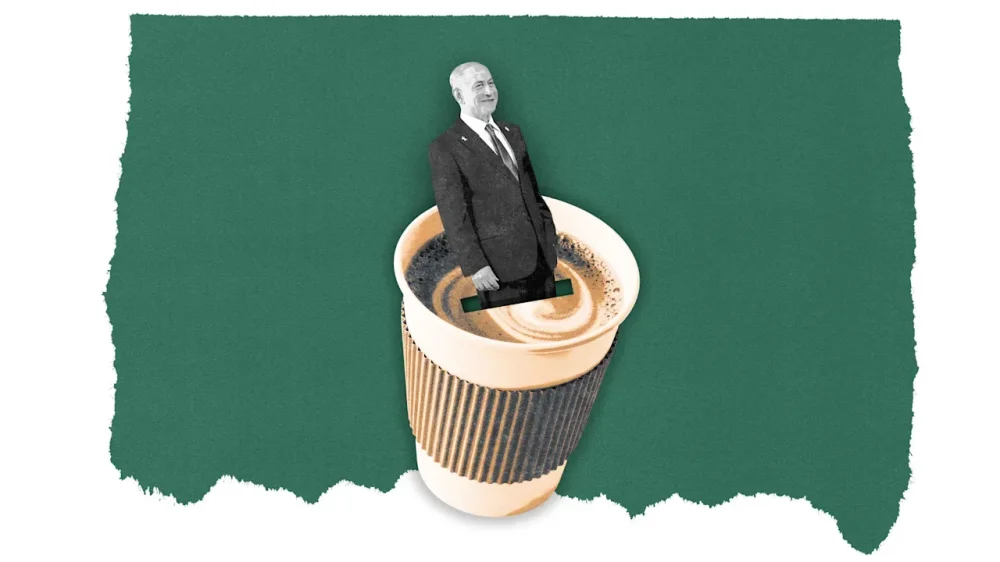
Is Benjamin Netanyahu dead? According to this video posted on March 15 by the Israeli prime minister’s office, he’s alive and thriving. You may have seen it online, along with a rabid debate between the crowd who claims it is fake (it is not) and the people who say it is real (which is correct, as determined by fact checkers and independent intelligence analysts). But we are not here to debate about what is true or not. What matters is the debate itself. It’s another point of proof in our new normal: Since AI can make up believable new realities, people now doubt reality itself, using that claim to support their beliefs and push their agendas. The rumors of Netanyahu’s demise caught fire after the U.S. and Israel executed strikes on Iran on February 28. Following those attacks, the prime minister’s public appearances at military bases and targeted towns were heavily restricted, creating an information vacuum that Iranian state broadcasters eagerly filled with claims of his death. To squash the noise, his office dropped a casual clip on Telegram and X showing him grabbing a drink with an aide at The Sataf café on the outskirts of Jerusalem. To mock the assassination conspiracists, as Reuters pointed out later, he leaned into a Hebrew linguistic pun where the slang for “dead” translates to being “crazy about” something. Referencing a past video in which bad compression made him look like he had six digits, he tells his aide: “I’m crazy about coffee. I’m crazy about my people. They are behaving phenomenally. Do you want to count my fingers? You can. Here and here. See?” אומרים שאני מה? צפו >> pic.twitter.com/ijHPkM3ZHZ — Benjamin Netanyahu – בנימין נתניהו (@netanyahu) March 15, 2026 His bad puns and show-and-tell didn’t matter. Within minutes, the internet mobilized to declare the footage a forgery synthesized by artificial intelligence. Conspiracists pointed to the café’s cash register screen, falsely claiming it proved the footage was from 2024. “Got some serious questions about the validity of this blatantly obvious AI video…” one X user wrote. “Close up blur shot which looks more AI than the last one. Even the clothes look sketchy,” said another. “Credit where due though, they gave some good prompt this time.” Even Elon Musk’s Grok chatbot poured gasoline on the fire by confidently hallucinating and telling users the video was a “100% deepfake.” A labyrinth of mirrors But the Netanyahu footage is legitimate. Reuters confirmed that it was real by cross-referencing architectural details in the background with archival pictures of the establishment, as well as other photos and videos of the events. The verification team at Spanish national broadcaster RTVE ran the file itself through detection software like Google SynthID, Sightengine, and IVERES—all of which flagged the video as human-made. Furthermore, slow-motion playback clearly shows the café’s register displaying the time as “14:59” on March 15, 2026. The coffee shop itself uploaded photos corroborating his presence, and Netanyahu followed up the next day with another video of him chatting with locals on the exact same patio. As open-source intelligence analyst Tal Hagin pointed out to RTVE: “This is not AI.” He says that “the edits are quite normal, especially in a video recorded for a prime minister’s social media. Almost all the errors can be explained by the cuts and angles.” None of that evidence moves the needle anymore. This is like the case of the fake military influencer Jessica Foster, but reversed. With Foster, a million people willfully ignored obvious visual deformities because they desperately wanted her to exist. Here, people will instantly reject verified reality if it contradicts their ideological worldview. The perimeter of objective truth has been entirely vaporized by the computational power of silicon giants. We have essentially handed God-level reality-warping capabilities to any troll with a broadband connection and a few bucks to run the latest video-generation tools. Hagin summarized our current dystopia when those new models came out from China: “We are no longer at the stage where it’s six months away. We are already there: unable to identify what’s AI and what’s not.” As we predicted three years ago, this “fun” technological parlor trick will become the ultimate political weapon and bullying wrench, and a huge legal loophole, allowing defense attorneys to casually dismiss damning security footage in actual crimes. On the flip side, it will be weaponized to digitally frame the innocent and the weak. I’m beginning to think that not even an aggressive educational campaign about generative AI will change the course of society. Silicon Valley and its Chinese brothers have gotten us into a labyrinth made of mirrors that show a mix of dreamed-up and real stuff. One that is packed with the Minotaurs of misinformation, injustice, and desperation. And the worst thing is that I don’t think there’s an exit. It feels like a new infinite plane of reality that leads nowhere but to oblivion—unless governments force the technology companies to put a stop to it. Fat chance that is going to happen. View the full article
-
The more you use artificial intelligence, the less you fear it. At first, it’s easy to be intimidated by what it can do. The deeper you engage with it, the more the tool reveals its limits and, more importantly, the irreplaceable value of human judgment. I’ve worked with AI models and tools for more than a decade. From early machine learning applications in data analytics to the generative systems reshaping workflows today, I’m comfortable with the technology. Yet I’ll be the first to admit that I’ve felt the anxiety. I’ve lost sleep thinking about the pace of change, and what that might mean for the future. Like most parents, I worry about my child’s career prospects. Will the paths we once considered safe still exist when she enters the workforce? This is the time to look at history, which can offer us some perspective. You see, every major technological shift has triggered similar fears. What is different are the tools. What endures are the fundamentals of how organizations function and how people create value. Despite the headlines, we’re not moving toward a world where humans are subservient to machines. We are entering the era of the AI-augmented workforce. And in that era, the human element remains the most critical variable. The productivity ceiling has shifted At the organizational level, companies are experimenting. Leaders are trying to understand where AI creates value and where it introduces risk. But at the individual level, expectations are rising. AI can significantly increase output. Tasks that once required hours can now take minutes. It’s never been quicker to draft, research, code, and provide analysis. That shift can feel intimidating, but it doesn’t automatically mean longer hours or widespread irrelevance. It does, however, mean that the productivity ceiling has moved. If you’re not using AI tools, you might find yourself working harder to keep up. If you embrace them, you may find yourself producing more with greater efficiency. I’ve seen this firsthand in my own daily workflow. As with any transformative technology, there will be growing pains. You will make mistakes and waste resources. That process is part of how organizations learn what delivers real value and what doesn’t. The fundamentals have not changed Even with advanced AI systems, we still need people who understand how things work. We still need critical thinking. We still need the ability to define problems clearly before we attempt to solve them. Effective use of AI often comes down to asking the right questions. But asking the right questions requires foundational knowledge. Before we can prompt a system effectively, we need to understand the system we are trying to improve. AI can multiply output. It cannot replace the need to understand how systems function, how they fail, and how we respond when they do. In my classroom, I encounter students who struggle with basic digital organization. If they have weak foundational skills, layering sophisticated AI tools on top doesn’t create mastery. It creates fragility. Adoption lags behind innovation Technology almost always moves faster than institutions do. AI capabilities may advance rapidly, but corporate culture, governance structures, and workflow redesign take time. That lag can feel frustrating. It can also provide breathing room. The tools may be ready, but integration is gradual, not immediate. Workers who choose to engage and learn will be in a better position than those who wait for change to settle around them. How to use AI to your benefit A common fear is that AI will primarily be used to eliminate jobs. Some roles will evolve. Some may disappear. That is part of technological change. But in many small and midsize businesses, leaders aren’t focused on cutting staff. They’re focused on increasing capacity. Higher productivity creates room for growth, expansion, and improved service. They’re not thinking about doing more with less; they’re just thinking about doing more period. The challenge of abstraction AI introduces additional layers between human intent and the final output. As that distance grows, verification becomes more important. Expecting perfection from AI misunderstands what it is. AI systems training is based on human knowledge and behavior. They reflect our strengths and our blind spots. That’s why human oversight is not optional, but essential. As humans, our role is shifting from sole executor to orchestrator. It’s up to us to define the objective, review the output, and decide how we’ll use AI. Judgment remains central to it all. The importance of collaboration rather than replacement It is fundamentally human to create tools that extend our capabilities. The steam engine amplified physical strength. The computer amplified the calculation. AI amplifies pattern recognition and synthesis. But tools don’t replace the need for responsibility. They heighten it. The most successful professionals in the years ahead won’t be those who resist AI or rely on it blindly. There will be those who integrate human creativity, ethics, and contextual understanding with AI’s speed and scale. As humans, we tend to fear what we don’t understand. In business and technology, ignorance doesn’t create safety. It creates anxiety. The more you engage with AI systems, the clearer their limitations become. They’re powerful, but not omniscient. Currently, we’re in a period of technological exuberance where there will be disruption and missteps. That pattern has accompanied every major shift in how we work. What has endured through each transformation is the need for capable people. The fundamentals have not changed. We still need thinkers. We still need leaders. We still need the human touch. The workforce is not becoming obsolete. It is becoming augmented, and it’s a future that still needs you. View the full article

-
We’re excited to announce the judges of the 2026 Innovation by Design Awards. Innovation by Design honors the best projects and ideas across the design spectrum, as represented by our fantastic group of jurors, who come from some of the world’s most exciting design-led companies. You can read more about their expertise and backgrounds below. And remember to apply for the Innovation by Design Awards by April 11. Erik Carter, Designer Erik Carter is a designer, illustrator, art director, and writer whose work bridges commercial design and critical discourse. He has designed for Verso Books, The New York Times, MIT Technology Review, The New Yorker, and New Directions Publishing, and his essays explore the ethics, the contradictions, and the future of visual communication. Carter’s first book of essays, Design Harder, was published in 2025 by Book Ideas and is currently in its second printing. He has taught at the School of Visual Arts and the Pratt Institute, both in New York City, as well as the California College of the Arts, and he currently teaches at San Diego City College. Abidur Chowdhury, Head of Design, Hark Born and raised in London, Abidur Chowdhury has recently joined a new startup in California as its head of design. He’s interested in creating advanced intelligence with the goal of freeing people from the digital clutter of the technology we have today—in hopes of creating space for meaning, focus, and creativity. Prior to his current appointment, Chowdhury was a member of Apple’s industrial design team for seven years, helping craft a variety of Apple’s products used daily by hundreds of millions of people across the world. Prior to Apple, he had worked with many of London’s top design agencies. He graduated from Loughborough University with a Bachelor of Science degree in product design. Eames Demetrios, Director, Eames Office, and Chairman of the Board, Charles & Ray Eames Foundation Eames Demetrios is a multidisciplinary artist, storyteller, and filmmaker, and the leading global authority on his grandparents, the American designers and creative visionaries Charles and Ray Eames. As director of the Eames Office and chairman of the newly launched Charles & Ray Eames Foundation, he’s spearheaded efforts to preserve and expand their legacy for the past 35 years. His work has included curating exhibitions; overseeing authentic design reissues and collaborations with Herman Miller, Vitra, and Cassina; and restoring numerous Eames films. A prolific author, Demetrios has written several books—including An Eames Primer; Eames: Beautiful Details; Kcymaerxthaere: The Story so Far; and Essential Eames—which have been translated into more than 25 languages. His ongoing global art project, Kcymaerxthaere, reimagines storytelling through a parallel universe, with 159 installations in 30 countries across six continents—and counting. As a filmmaker, Demetrios has created more than 70 works of various lengths, and as a sought-after speaker, he has presented in 53 countries on subjects ranging from design and science to storytelling and scale, including the TED mainstage and many TEDx events. He lives in Los Angeles. Jay Kamath, Cofounder and Chief Creative Officer, Haymaker Jay Kamath founded the independent, Emmy-winning, L.A./NYC-based creative agency Haymaker in 2017. Since then, it’s grown a functioning couch-potato farm for Pluto TV, launched the Seattle Kraken, and let Ty Burrell teach kids what not to do with money through Greenlight. Before that, Kamath learned from the best at 72andSunny, R/GA, and Google, where he launched signature shoes for Kevin Durant and Kyrie Irving; brought an exclusive Jay-Z album to Samsung devices; and helped Kenny Powers complete a hostile corporate takeover of K-Swiss. In 2023, Haymaker became a certified minority-owned business. Kamath’s mom marked the occasion by feeding the whole company homemade Indian food. There were no leftovers. Originally from Augusta, Georgia, he lives in Culver City, California, with his wife, kids, and dog, and enjoys singing Enrique Iglesias songs poorly at karaoke. Arshiya Lal, Director of Corporate Development, Circ At Circ, Arshiya Lal is working alongside brands and the textile supply chain to bring the first blended textile-to-textile recycling solution to market. It’s probably no surprise that she’s also a devoted secondhand shopper and clothing-swap host, or that her personal fashion projects have included 3D-printed and cognitive clothing. Before joining Circ, Lal was head of product at the biotech company Modern Meadow, launching the startup’s first lab-created leather products with global fashion brands. And prior to that, she led enterprise blockchain partnerships at IBM to bring transparency to fragmented supply chains. Lal graduated with high honors from the Georgia Institute of Technology, studying finance and industrial design, and in 2022, she was named to her alma mater’s “40 Under 40 Alumni” list. Katy O’Brien, Head of Sustainable Innovation, New Balance Katy O’Brien serves as head of sustainable innovation at New Balance, where she is a passionate leader who’s committed to driving positive impact in the global footwear and apparel industry. Under her leadership, New Balance has joined The Footwear Collective, a nonprofit focused on advancing circularity in the sector, reflecting her belief that brands must openly share knowledge and collaborate to create meaningful change. O’Brien has a background in engineering and holds a master’s degree from MIT in system design, which she applies to tackling sustainability challenges across the full supply chain. Her focus areas include decarbonization, materials reuse, and product end-of-life—with a firm conviction that true sustainability requires transparency and trust across the industry. Zac Posen, Executive Vice President and Creative Director, Gap Inc., and Chief Creative Officer, Old Navy Zac Posen is the executive vice president and creative director of Gap Inc., and the chief creative officer of Old Navy. As creative director of Gap Inc., he serves as a cultural curator and creative partner to CEO Richard Dickson, and as chief creative officer of Old Navy, he leads design, merchandising, and marketing for the second-largest apparel brand in the U.S., and Gap Inc.’s largest brand. Posen is an award-winning fashion designer and entrepreneur, celebrated for his technical excellence and body-positive designs. Over 25 years, his extensive career has included red-carpet couture, ready to wear, accessories, and costume design. He was invited to be a member of France’s Chambre Syndicale de la Haute Couture, and his work has received awards from the Council of Fashion Designers of America (CFDA) and many others. During his tenure at his namesake clothing line, Zac Posen, he also served as creative director for Brooks Brothers women’s wear, designed secondary lines at the House of Z LLC, and redesigned uniforms for Delta Air Lines. His work has also been featured in the 2022 film The Outfit, the Sex and the City franchise, and in Ryan Murphy’s TV series Feud. Born and raised in New York, Posen attended London’s Central Saint Martins University. Gullivar Shepard, Partner, Michael Van Valkenburgh Associates Gullivar Shepard is recognized for his skill in navigating programmatic requirements, regulatory and jurisdictional hurdles, and problematic site conditions to create rich public spaces. With a background in architecture, his expertise ranges from the fine details of building landscapes to planning and managing the firm’s large, complex urban projects. These qualities bring an expanded interdisciplinary perspective to MVVA’s leadership. Since Shepard joined the firm in 1999, he has applied his integrated design approach to challenges such as ecological restoration, flood control, transportation planning, and choreographing connections to parks and waterfronts. He always aims to tease out the most powerful design solutions within the constraints of budget and site. His projects and research are a laboratory for innovative building methods, communication tools, and project management. Kelly Wearstler, Designer Kelly Wearstler is a designer and creative director whose work has shaped contemporary design and culture worldwide. Her Los Angeles-based studio spans architecture and interiors, product and furniture design, creative direction, and curation, operating as a multidisciplinary laboratory for new ideas. Known for her fearless use of texture, color, and historical reference, she has redefined contemporary interiors through an expressive layering of art, furniture, and materials across eras. Wearstler’s global practice has produced hundreds of objects and collaborations with partners including Bergdorf Goodman, Christofle, Farrow & Ball, Dior, and Louis Vuitton. Beyond design, she is an influential cultural voice through books, media, and her newsletter, Wearstlerworld, championing emerging creatives and exploring the evolving relationship between craft, technology, and design. Juliane Wolf, Design Principal and Partner, Studio Gang Architect Juliane Wolf is a design principal and partner in Studio Gang’s Chicago office. She designs and advocates for built structures that simultaneously serve the community and the environment. Wolf brings expertise in the design of sustainable public spaces, complex visitor-serving organizations, towers, and large-scale international projects. For the firm’s institutional clients, she has led the design of many award-winning projects, including the Writers Theatre in Illinois, the Arkansas Museum of Fine Arts, the St. Regis Chicago, and the Beloit College Powerhouse in Wisconsin. She is also the deputy lead designer for the O’Hare Global Terminal at the Chicago airport. Wolf is a graduate of the Architectural Association (AA) in London, where she received a Master of Science degree in sustainable environmental design, and remained there following graduation to teach as unit master at the Diploma School. She holds a Bachelor of Architecture degree from the Illinois Institute of Technology. Wolf has served as a juror for the American Institute of Architects (AIA), participated in panel discussions at the American Society of Landscape Architects (ASLA) National Conference, and lectured at the Chicago Committee on High Rise Buildings (CCHRB) and the Chicago Building Congress (CBC). Jason Yuan, Founder and CEO, Future Lovers Jason Yuan is the founder and CEO of Future Lovers, a social intelligence company. Previously, he co-founded AI startup New Computer and built Dot, a personal companion with narrative memory, and designed intelligent operating systems on Apple’s Human Interface team. His earlier work includes Mercury OS, a speculative operating system that generated UI from intent, anticipating the shift toward language-driven computing. Yuan studied graphic design at the Rhode Island School of Design, and theater at Northwestern University, and he has worked as an art director and motion designer with clients including Inez and Vinoodh, Klim Type Foundry, and FKA Twigs. View the full article

-
Move part of wider crackdown on Tehran-linked institutions as conflict intensifiesView the full article
-
Message to Jeffrey Epstein from former Labour minister represented a ‘potential criminal offence’View the full article
-
During last year’s NCAA Tournament, basketball fans complained about the lack of a team-focused Cinderella storyline to define the event. The only double-digit seed to advance to the Sweet 16 was Arkansas, out of the SEC, coached by Hall of Famer John Calipari. That’s hardly the kind of underdog we’re used to seeing. In 2023, Princeton made it to the Sweet 16, Florida Atlantic lasted until the Final Four, and Fairleigh Dickinson University beat No. 1 seed Purdue. And we’re unlikely to ever see a repeat of 2022, when Saint Peter’s made the Elite 8. The 2025 tournament was one of the “chalkiest” of all time, meaning the teams that made the final rounds were pretty much the ones you’d expect. It was actually just the second-ever Final Four in history that featured four No. 1 seeds. There are a few factors that account for the change. One is the evolution of the transfer portal—which has turbocharged the process of players transferring from school to school during their college career. Another is that name, image, and likeness (NIL) rules that allow student-athletes to receive financial compensation fundamentally changed the shape of college sports. Over the past few years, the markets for players have exploded. Third, teams at the top levels of basketball are simply better than ever, making it much harder for the mid-major programs to compete in even a single game setting. But look at the rosters of the best teams in the country, and you’ll find plenty of Cinderella DNA in there. Three March Madness stars are born If you remember a single player from last year’s NCAA Tournament, it’s probably Walter Clayton Jr., the All-American point guard who led Florida to the national championship with heroic second-half performances. But Clayton wasn’t always an All-American. In fact, he had higher-profile scholarship offers to play football out of high school than basketball, but he preferred the court to the field. Walter Clayton Jr. So he passed up on the opportunity to play football at Georgia, Notre Dame, Tennessee, and other power programs to play basketball at tiny Iona College, a school with fewer than 4,000 students more than 1,000 miles from his hometown of Lake Wales, Florida. Iona is a regional mid-major basketball powerhouse, and at the time, its coach was Hall of Famer Rick Pitino. Clayton made a name for himself, winning MAAC Player of the Year as a sophomore and leading the Gaels to an NCAA Tournament appearance in 2023. He then entered the transfer portal, went to Florida, and the rest is history. If that’s not an underdog story, I don’t know what is. In the National Semifinal, Clayton and the Gators defeated top-seeded Auburn, a team led by Johni Broome, another Florida native who had been overlooked coming out of high school. Broome didn’t have any high-major offers, so he committed to Morehead State in the Ohio Valley and became a superstar there. Two years later, Broome transferred to Auburn, earning a hefty sum after proving his worth at the mid-major level. He won SEC Player of the Year in his third year at Auburn. He was the second-consecutive recipient of that award to have started their career outside of the power conferences. Tennessee’s Dalton Knecht won SEC Player of the Year in the 2023-24 season. He was a junior college player coming out of high school, needing to make up the grades and ability to play at a higher level. Now Clayton, Broome, and Knecht are all playing in the NBA. Yaxel Lendeborg Fresh faces, unlikely journeys This is college basketball’s “Year of the Freshmen,” filled with superstars who have been household names (at least in basketball circles) since they were in eighth grade, such as AJ Dybantsa, Darryn Peterson, and Cameron Boozer. But there are plenty of Cinderella stories to follow as well. The best player on perhaps the best team in the country, Michigan’s Yaxel Lendeborg, didn’t have the grades to play Division I basketball out of high school. He had to face significant adversity, going across the country to play junior college ball in Arizona. Over three years, however, he evolved into a dominant junior college player, and signed to play for the University of Alabama-Birmingham, a mid-major program. After two seasons at Alabama, making the conference first team twice, he transferred to Michigan, having earned a college degree. (He could continue playing thanks to the Pavia waiver). Just five years ago, he wasn’t sure if he’d get a high school diploma. Now he’s got a chance to win a national championship at the elite college level. Melvin Council Jr. Melvin Council Jr. climbed the ladder from junior college to Wagner College (a school in one of Division I’s weakest conferences) to St. Bonaventure University (a school in the Atlantic 10, one of the better non-power conferences in Division I) to become one of the best players for Kansas—one of the most storied programs in college basketball—in the mighty Big 12 Conference. Purdue’s Oscar Cluff moved to the U.S. from Australia in 2021 to play junior college ball, then made stops at Washington State and South Dakota State universities before landing at Purdue this season. Iowa’s Bennett Stirtz started his career in Division II. Texas Tech has three starters who began their careers at mid-major programs outside the five power conferences. Ben Humrichous, now at Illinois, previously played for a school that wasn’t even part of the NCAA. Oscar CluffKooper Jacobi New kinds of March Madness success stories These are the Cinderella stories that are emerging for March Madness 2026: meteoric rises focused on individuals, not teams. What’s interesting is how certain schools have adjusted—and thrived. A mid-major program like the one at Belmont University has watched players it recruited out of high school depart for schools like Florida (Will Richard, now in the NBA), Maryland (Ja’Kobi Gillespie, now at Tennessee), and North Carolina (Cade Tyson, now at Minnesota). Instead of those players making up a formidable team for the Belmont Bruins as upperclassmen last season, they competed in the NCAA Tournament on different teams, with Richard winning the national championship alongside the aforementioned Clayton, as well as a few other mid-major transfers with the Gators. Belmont has had to find new waves of players each year to replace departed stars, or develop younger players into stars, only to watch them get picked away as well. The team consistently loses top players, but keeps winning games anyway. The Bruins had a strong season this year, going 26-6, but were eliminated in the quarterfinals of the Missouri Valley Tournament and did not qualify for the Big Dance. It’s always a terrific March Madness story when a mid-major star player decides to stay at their school, passing up a bigger payday. And watching young players navigate successfully from a smaller school to the national stage can be gratifying, too. But as college sports change, so must the lens we use to look at the narratives behind them. Belmont University’s consistency in spite of so much upheaval shows that there will always be great mid-major teams vying to be Cinderellas. They might just be harder to come across. View the full article

-
For the past two years, the dominant corporate conversation around artificial intelligence has been painfully predictable. Executives talk about productivity, copilots, efficiency gains, and cost savings. Boards demand AI road maps. Consultants package urgency into slides. Entire organizations scramble to prove that they are “doing something with AI.” But beneath all that noise lies a much bigger shift, one that many companies still seem determined not to see: AI is not simply a tool for making organizations more efficient. It is a technology that changes the minimum viable size of an organization. And once that happens, many of the assumptions that defined the modern company begin to look far less stable than they used to. I’ve argued before that AI won’t replace strategy — it will expose it, and that focusing on cost-cutting during the AI revolution is a strategic mistake. Both ideas point in the same direction: Companies that treat AI as a layer of operational optimization are likely to miss the real transformation. Because the real transformation is not that AI helps people work faster. It is that AI changes how much can be done by how few people. The end of head count as destiny For more than a century, scale meant head count. If you wanted to do more, you hired more people. If you wanted to grow, you added layers: more analysts, more managers, more coordinators, more specialized roles, more internal reporting, more processes. The modern corporation was built around one simple assumption: Complexity requires humans, and humans require structure. That assumption is now under pressure. A single person equipped with the right AI tools can already do work that, not long ago, required a small team. Research, drafting, coding, analysis, translation, design exploration, synthesis, customer support, prototyping—none of these functions disappear, but many of them are increasingly being compressed. Academic research is beginning to show exactly this effect: Human-AI collaboration can significantly increase productivity and reduce the need for traditional team structures in certain workflows. That compression matters far more than most managers seem willing to admit. Because when output stops being tied so tightly to head count, the logic of the organization itself begins to change. The question is no longer just how AI affects jobs. The much more interesting question is how AI affects the very architecture of the firm. From management to orchestration Most companies are still thinking about AI in managerial terms. How can it improve productivity? How can it automate tasks? How can it reduce friction? How can it lower costs without causing too much disruption? Those are not irrelevant questions. But they are secondary. The more important shift is from management to orchestration. In the traditional company, value came from coordinating large groups of people. In the AI-enabled company, value increasingly comes from designing systems in which a relatively small number of humans coordinate workflows, agents, models, data sources, and decision processes. That is a very different skill. It is less about supervising labor and more about architecting capability. The winners will not necessarily be the companies with the largest AI budgets, the biggest models, or the loudest announcements. They will be the ones that learn how to combine human judgment with machine leverage in a way that actually changes their operating model. And that is precisely where many incumbent organizations may struggle. Bureaucracy does not disappear simply because a company buys licenses. In fact, many organizations are about to discover that AI does not just automate tasks. It also exposes how much of their structure existed to compensate for inefficiency, fragmentation, and internal inertia. Why most companies are still asking the wrong question The wrong question is this: How can AI make our current company more efficient? The right question is much more uncomfortable: If we were building this company today, in a world where AI already exists, would we build it like this at all? In many cases, the answer is obviously no. We would not build so many handoffs. We would not create so many reporting layers. We would not separate functions in the same way. We would not assume that every form of growth requires proportional hiring. We would not define professionalism by the ability to navigate internal complexity. And yet, that is exactly what many AI strategies are trying to preserve. This is why so many corporate AI initiatives feel underwhelming. They are designed not to rethink the company, but to protect it from rethinking itself. They use a transformative technology in the most conservative way possible. That may be politically convenient. It may even produce a short-term bump in productivity. But it is not where the real strategic value lies. Because general-purpose technologies do not merely optimize existing structures. They tend to make some of those structures obsolete. Economists have long described technologies such as electricity, steam engines, and computers as general-purpose technologies: innovations that reshape entire economic systems rather than individual industries. Artificial intelligence increasingly appears to belong to that category. The coming age of the tiny giant The internet reduced the cost of publishing, and media was transformed. Suddenly, individuals and very small teams could do things that once required entire institutions. AI is beginning to do something similar to organizations more broadly. We are entering an era in which small teams will be able to generate outputs, speed, and market impact that once required far larger companies. Not because humans have become superhuman, but because leverage has changed. Researchers studying innovation dynamics have long observed that small teams tend to produce more disruptive breakthroughs, while large teams focus more on developing existing ideas. And global institutions are already warning that AI could dramatically expand the productive capacity of small organizations, enabling them to compete with much larger firms. This dynamic is also visible in the startup ecosystem, where AI tools are enabling companies to scale with dramatically smaller teams than was previously possible. This dynamic is already visible in the way AI capabilities are spreading and commoditizing across platforms, a trend I explored in previous articles such as “This is the next big thing in corporate AI” and “Why world models will become a platform capability, not a corporate superpower.” That does not mean every company will become tiny, nor does it mean scale stops mattering. Distribution, trust, capital, brand, regulation, and execution will continue to matter enormously. But it does mean that the gap between a small, well-orchestrated organization and a large, badly designed one is going to shrink dramatically. And when that happens, many incumbents will face a problem they are not used to facing: They will no longer be protected by their own size. For decades, scale was a moat. In the AI era, scale without adaptability may become a liability. The real AI divide The real divide in the AI economy will not be between companies that use AI and companies that do not. That distinction is already becoming meaningless. The real divide will be between companies that use AI to reinforce old structures and companies that use it to redesign themselves around a new logic of leverage. One group will get incremental gains. The other will redefine what a company can be. That is why the most successful organizations of the next decade may not look like the successful organizations of the last one. They may have fewer employees, fewer layers, fewer silos, and fewer rituals inherited from an industrial logic that no longer fits. They may look, from the outside, almost unnervingly small for what they are capable of doing. And that is the point. The companies that win with AI won’t simply use new tools; they will abandon old assumptions. And once they do, they may not look like companies at all. View the full article
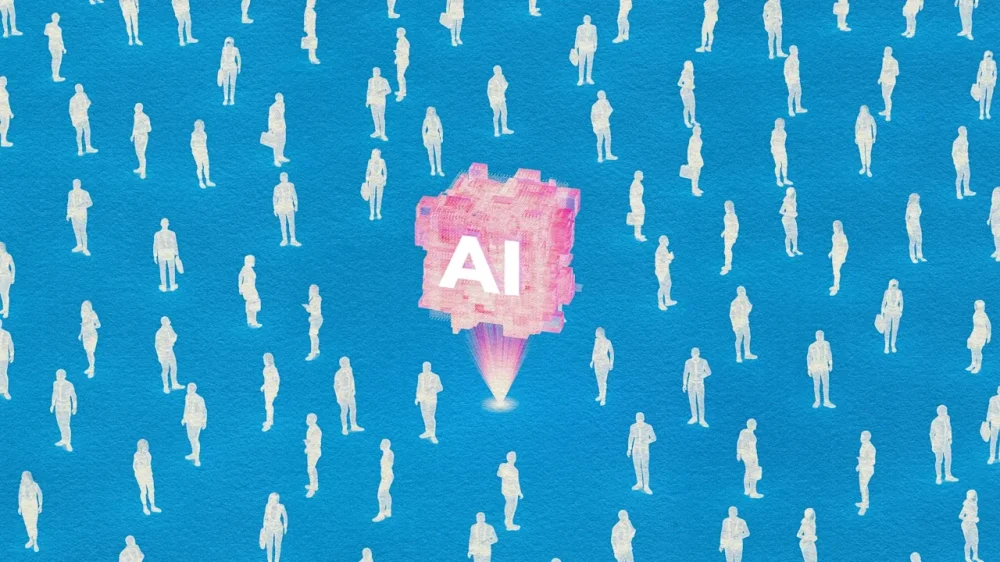
-
Day by day there’s more evidence that AI is eating up the media world. A recent report from Growtika, a self-described SEO and AI search agency, analyzed data from the search analytics platform Ahrefs to show that traffic to many tech media sites is way down over the past couple of years. Hardest hit were Digital Trends (down 97%), ZDNet (down 90%), and The Verge (down 85%). Even the most seemingly resilient publications (Mashable was down only 30% and CNET 47%, both Ziff-Davis properties) took significant hits. Some of these reductions are no doubt exaggerated—Growtika compared each publication’s peak month with traffic in January 2026, which doesn’t account for seasonal reductions—but no one’s disputing the overall trend, or who’s to blame: AI. At first glance, the numbers appear to reinforce the idea that the bottom is rapidly falling out from beneath the media industry. But that’s overly simplistic, and it fails to take into account that publishers have seen this trend for years, and many have been adapting around it. The Verge is actually a great example of this: Not only was it out early in questioning what AI does to content, but it also introduced a paywall in late 2024, part of a larger, four-point strategy. So traffic decline doesn’t necessarily mean business decline. Authority still wins The Verge is an example of something else that’s important in the AI era: having a strong brand with a loyal audience. The publication has been synonymous with tech news, commentary, and analysis since its debut in 2011. Many tech brands choose to break their news there. That credibility has influence in what appears in AI answers, which tend to favor journalistic content above other types—a point that a recent Gartner report on the communications industry hammered home. So while it’s easy to see AI as a traffic destroyer, the flip side of that is it’s an audience qualifier—the people who find your brand through an AI summary are clearly deeply engaged. In other words, they’re probably the most willing to pay for your content, and The Verge has given them that opportunity. But The Verge has had a strong brand for 15 years. The audience is clear and already engaged. For many publications, that might not be as true, and the Growtika numbers should be a wake-up call for them to better understand their brand, their audience, and even what business they’re in. With AI now fully in the picture as the ultimate information synthesizer, publishers have to understand what they’re layering on top of that information that only they—specifically, the humans that work for them—can provide. Journalists tell stories because humans are storytellers. More importantly, they’re story listeners—audiences will seek out publications and writers with voices that resonate with them, AI or no AI. The content that doesn’t do that, by contrast, has less value and is easily substituted by AI. For most publishers, this means favoring analysis, opinion, and scoops. Aggregated news (i.e. stuff broken elsewhere, or broad announcements) is less valuable, though with a caveat: It’s difficult for a publication to appear authoritative if they don’t cover “big” news on their beat. But for that to be worthwhile, it requires that: You have a very clear idea of what your beat is. When you cover it, you seize the opportunity to show your unique value. Small is the new big The implication of that approach is that it favors smaller publications and independent voices, and it’s no surprise that those areas are flourishing in the age of AI. Substack reached 5 million paid subscriptions last year, and competitor Beehiiv—home to many journalists who used to work at places like The Verge and CNN—is set to double its revenue this year to $50 million. Still, some of the numbers in the Growtika report suggest that larger organizations with strong internet domains still have resilience. Mashable and CNET are both Ziff publications, and having worked for the company twice, I can say with some authority that Ziff is very strong when it comes to SEO. Larger outlets also have resources to quickly spin up formats that audiences are gravitating towards, such as vertical videos. But ultimately, those resources will dwindle if they haven’t taken a hard look at their audience, the value they’re bringing, and how they’re encouraging loyalty (or “conversion” if you’re on the business side). For many publications, especially those that thrived during the 2010s, that means narrowing focus. It also means adapting or even pivoting your business around a new model. There’s a reason media events are on the rise; research from Vendelux, an event intelligence company, reported that 23% of publishers received a “large or very large portion” of revenue from events in Q1 2025, up from 8% in Q1 2024. The metric after metrics So what the great traffic drop of 2026 tells us isn’t that AI is eating the media, but traffic is losing its relevance as an indicator of success. Brands that have built businesses around things that aren’t just “articles”—such as subscriptions, newsletters, podcasts, and events—can still succeed, albeit with a somewhat altered definition of success. In almost all cases, the audience is fewer in number, but more engaged in a way that’s measurable and monetizable. For those that haven’t had that reckoning, however, the runway is getting shorter by the day. If all of the metrics around how you measure the success of your media business are falling, then it’s a strong indicator you’re in the wrong business. There’s no more time to put off the hard questions about your audience, the value you bring, and how to connect those two in ways that can grow. In other words, it’s time to panic. View the full article

-
Islamic regime is digging in for a protracted conflict as it seeks to ensure the US and Israel will not attack againView the full article
-
The market’s historic strength in marine war insurance is being challenged by the USView the full article
-
Vessels seeking protection may be required to take out cover from programme run by Development Finance CorporationView the full article
-
Company denies any accounting irregularity or retaliationView the full article