Newsletter
Want to keep up to date with all our latest news and information?


ResidentialBusiness
Administrators
-
Joined
-
Last visited
Everything posted by ResidentialBusiness
-
Mortgage tech's speed is undermined by flawed credit data, causing costly fallout. Lenders must treat data accuracy as a pipeline risk, not a peripheral issue, according to the founder of Consumer Attorneys View the full article
-
More than half of respondents in a National Mortgage News survey predict AI-backed underwriting will fundamentally change mortgage processes in 2026. View the full article
-
James Van Der Beek was one of the biggest stars of the late 1990s and early 2000s. His family still couldn’t afford the cost of cancer. The actor, 48, best known for his portrayal of Dawson Leery in the ’90s hit Dawson’s Creek, died Wednesday. Van Der Beek’s passing comes a little more than a year after he announced on social media that he was battling colorectal cancer, which he was diagnosed with in 2023. And while the actor and father’s untimely death is undeniably tragic, there’s another heartbreaking piece of the story to be told. His family was desperately struggling to afford the cost of his cancer treatment. Despite Van Der Beek’s successful career, which included hits like Varsity Blues (1999) and The Rules of Attraction (2002), as well as playing the lead role in a popular TV drama for six seasons, the actor still spent the final years of his life struggling financially. Last year, he teamed up with the auction house Propstore to sell his personal collection of memorabilia, wardrobe items, and set pieces from Dawson’s Creek and his most notable films to raise money for his treatment. “I’ve been storing these treasures for years, waiting for the right time to do something with them, and with all of the recent unexpected twists and turns life has presented recently, it’s clear that the time is now,” Van Der Beek told People magazine at the time. According to The Hollywood Reporter, the auction raised around $47,000. His plight begs the question: If one of the most successful actors of the late 1990s and early 2000s can’t afford cancer treatment in the United States, who can? According to a 2022 survey from the American Cancer Society Cancer Action Network (ACS CAN), almost no one. Per the survey, more than 70% of respondents said they made significant lifestyle changes in order to afford their care. And more than half (51%) went into medical debt due to treatment. The statistics were worse for certain groups, with women more likely to report medical debt than men (57% versus 36%), and Black Americans were more likely to go into debt than white Americans (62% as opposed to 52%). Likewise states with fewer people enrolled in Medicaid had higher rates of medical debt due to cancer (58% compared to 49% in states with expanded Medicaid offerings). But overall, almost three-quarters of the cancer patients surveyed were worried about being able to afford the cost of their current care, or the costs which may stack up in the future (73%). On Wednesday, amid the tributes and heartfelt words, a GoFundMe page dedicated to the actor’s family, also showed up online. The page, which GoFundMe told Fast Company has been verified, explained that the family has been under “significant financial strain” due to Van Der Beek’s medical expenses. “In the wake of this loss, Kimberly and the children are facing an uncertain future,” it said. “The costs of James’s medical care and the extended fight against cancer have left the family out of funds. They are working hard to stay in their home and to ensure the children can continue their education and maintain some stability during this incredibly difficult time.” At present, the page has raised over $1.4 million for the family. The efforts being made for the actor’s family may be touching. They are happening, in part, because the actor was well-loved. Shortly after his passing was made public, the tributes from friends and colleagues began pouring in. One belief, which seemed to be shared by those who knew him, was how deeply genuine and kind he was, with many describing him as the antithesis to everything Hollywood actors are known to be. “There are people in this industry who are talented. Some who are charismatic. A few who are generous,” wrote actress Alyssa Milano. “And then there were the rare ones — the truly kind and thoughtful. James was the rare kind. He showed up for his people. He listened. He cared.” She went on to call him a “unicorn of a man.” The sentiments were echoed by other actors he grew up alongside, like Katie Holmes, Melissa Joan Hart, and countless others. In the end, the outpouring of love for Van Der Beek underscores both how deeply he was valued and how precarious illness remains in the United States, even for those who seem outwardly successful. That his family needed to rely on auctions and crowdfunding to survive a cancer diagnosis is not an anomaly, but a reflection of a system where serious illness often comes with financial ruin attached. View the full article

-
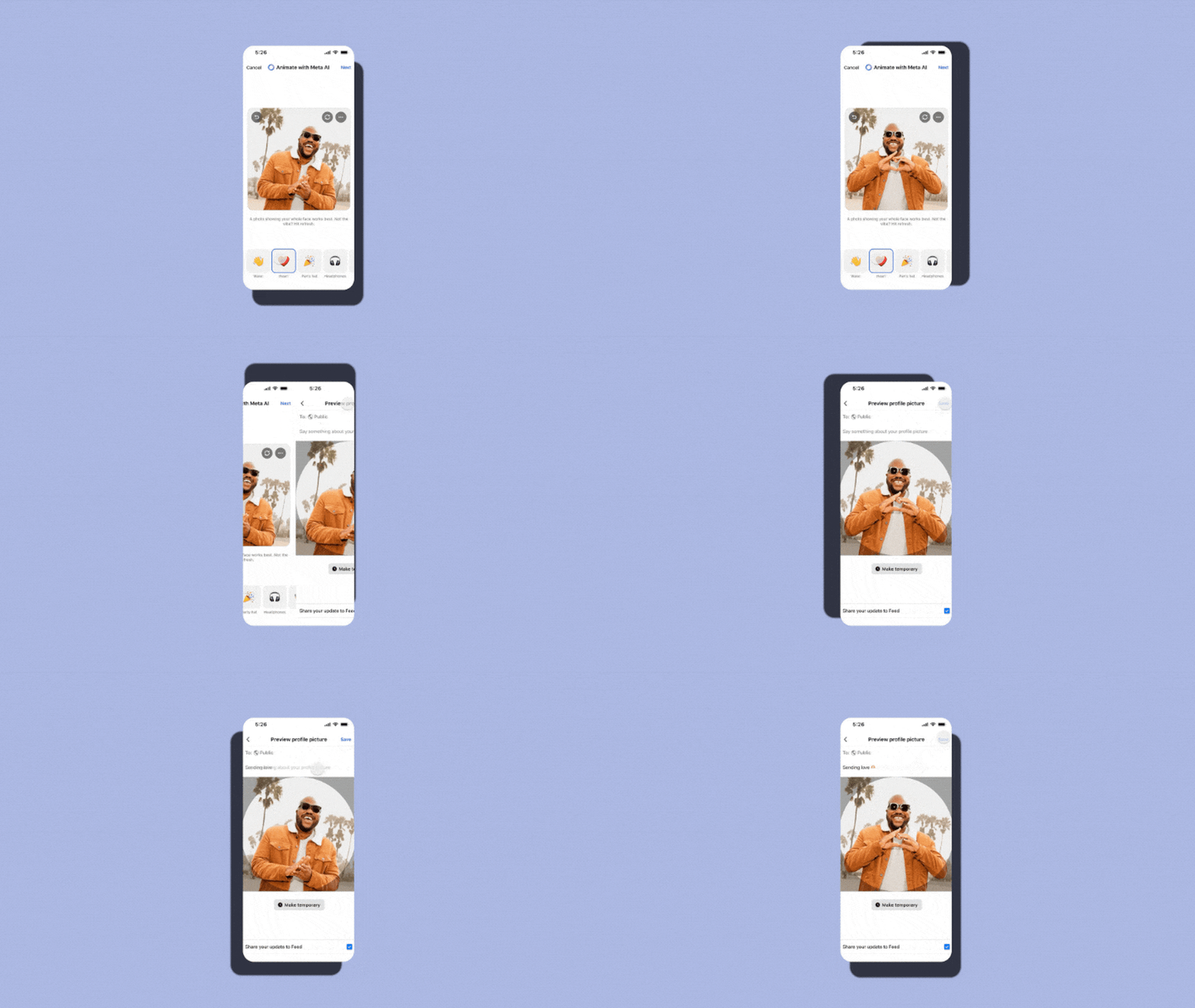
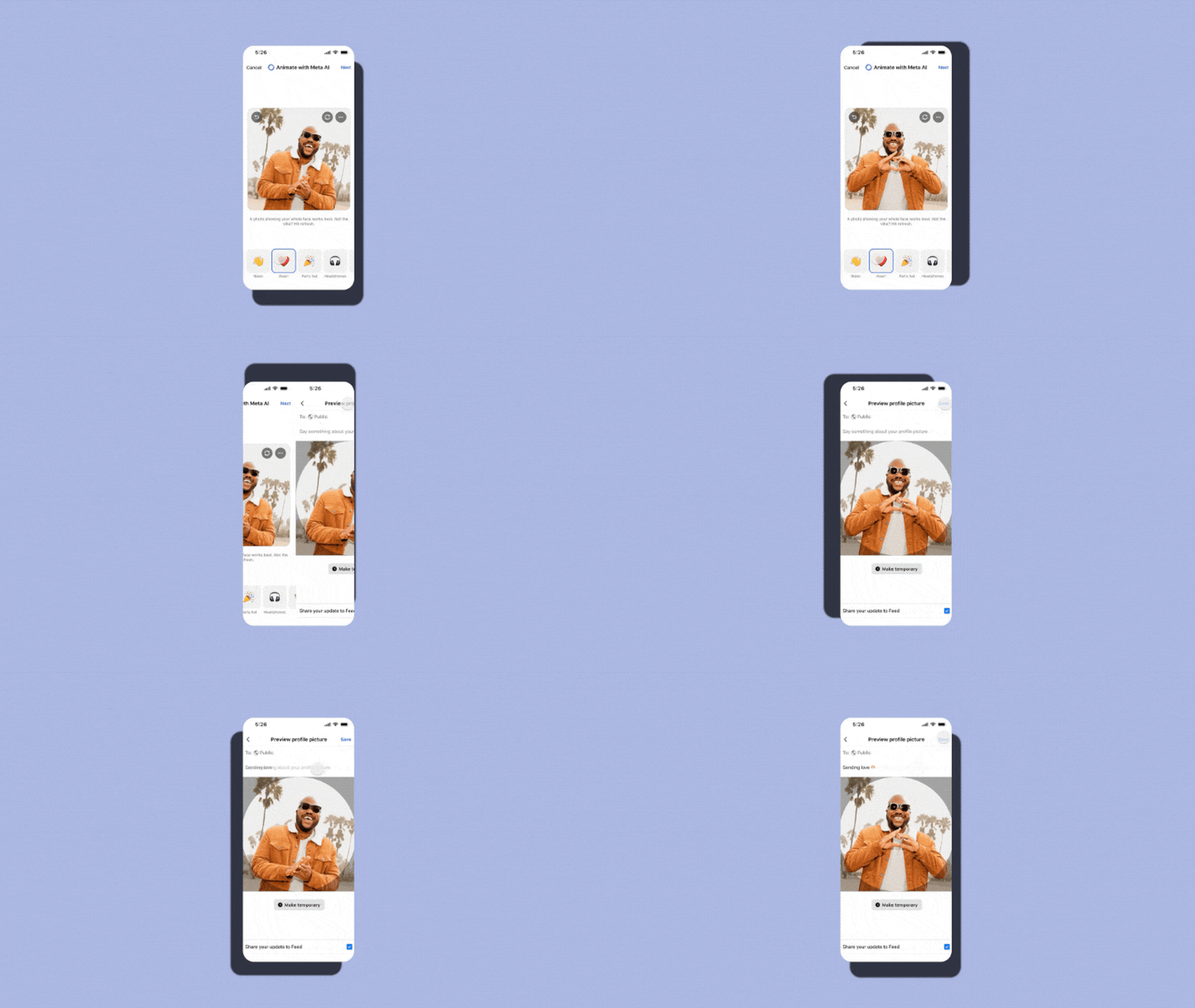
Meta announced on February 10 that it’s introducing a new AI animation feature that lets users turn their still profile photos into AI-generated looping videos. It reads like an uncanny valley version of yesteryear’s Boomerang. The option to animate appears when users click “Animate profile picture” on their Facebook avatars, and the feature gives a limited set of animation options, including party hat, confetti, wave, and heart, in which a photo’s subject makes a heart shape with their hands. Meta says there will be additional options in the future for “seasonal moments and special events.” The tech is imperfect and can only work with what it’s got. Meta says for best results, photos should show a single person with their face clearly visible and holding no other objects. Some users may find it too uncanny valley to see a fake video of themselves, but there are other options, too. The company also launched the ability to restyle photos with Meta AI by filtering posts with aesthetics like “anime,” “illustrated,” or “glowy,” or by generating artificial backdrops on pictures. Text posts can also receive animated backdrops under the new updates. Response online to the idea of AI-animated Facebook avatars ranged from indifference to eye rolls over more AI content no one asked for. Some listeners have responded similarly to AI-generated animations applied to album artwork on Apple Music. For apps looking to integrate AI into their products, animating pre-existing content is low-hanging fruit, but whether or not it takes off remains in question. The new AI features, however, do fit in with CEO Mark Zuckerberg’s vision for AI as laid out on last month’s earnings call. In short, he wants more of it. “Today our apps feel like algorithms that recommend content,” Zuckerberg said. “Soon, you’ll open our apps and you’ll have an AI that understands you, and also happens to be able to show you great content or even generate great personalized content for you.” Meta, which is now along with Google’s YouTube in a landmark trial over accusations their apps are engineered to be addictive for children, has integrated Meta AI into its apps through AI search bars and chatbots. Last year it launched a stand-alone app called Vibes that’s designed with an all-AI content feed. By adding an easy preset way to animate profile photos with AI, it’s bringing the technology to one of the most public-facing personal spaces for users on the platform. View the full article
-
Director-general Tim Davie tells staff broadcaster aims to trim annual budget by hundreds of millions of poundsView the full article
-
January filled our inboxes with productivity advice. Set stretch goals! Think bigger! Dream audaciously! What was conspicuously absent from all that exhortation was any practical guidance on how to move from grand vision to daily action without becoming paralyzed by the enormity of what we’ve committed to. And now, it’s February. Here’s a counterintuitive truth I’ve learned from decades of navigating complex creative challenges: The secret to tackling big, hairy, audacious goals (BHAG) isn’t summoning more willpower or grinding harder. It’s learning to approach complexity the way babies learn to eat solid food: one tiny, digestible bite at a time. I call it the Baby Food Method. Why your brain rebels against big goals When you declare a massive objective- launch a company, write a book, transform your organization’s culture- your brain doesn’t throw a parade. It throws up barriers! Neuroscience tells us that ambiguity and uncertainty trigger the same stress responses as physical threat. Your amygdala can’t distinguish between “I need to escape this predator” and “I have no idea how to execute this strategic pivot.” This is why so many January resolutions collapse by February. The goal itself becomes a source of anxiety rather than motivation. The solution isn’t to dream smaller. It’s to digest smarter. The Baby Food Principle Think about how infants transition from liquid to solid food. No parent hands a six-month-old a steak and says, “Figure it out.” Instead, they puree single ingredients into smooth, manageable portions. Carrots become orange mush. Peas become green paste. One new taste at a time, until gradually the palate, and the digestive system, can handle increasing complexity. Your audacious goals deserve the same graduated approach. The Baby Food Method works in three stages: puree, introduce, and integrate. Stage one: puree the complexity Before you can act on a big goal, you need to break it down into its most fundamental components, the equivalent of pureeing that carrot. This isn’t the same as creating a project plan or building a Gantt chart. It’s more elemental than that. Ask yourself: What are the irreducible units of this ambition? If your goal is to write a book, the puree might be: capture one idea worth exploring. Not “write Chapter One.” Not even “outline the book.” Just: find one compelling thought and get it out of your head. When I left a 16-year academic career to become an entrepreneur, I didn’t start by building a business plan. I started by having one conversation with someone who’d made a similar leap. One conversation. That was my puree. Stage two: introduce new elements gradually Babies don’t eat pureed carrots forever. Once they’ve mastered one food, they’re introduced to another. Then you start combining- carrots with sweet potato, apple with banana. The complexity builds incrementally, and each successful integration expands capacity for the next. Apply this to your BHAG. Once you’ve captured that one idea, introduce the next element: share it with someone whose perspective you trust. Then another: test it against a real-world problem. Each small introduction builds your tolerance for the ambiguity that initially triggered resistance. This is where I see leaders stumble most often. They puree beautifully, break their goal into components, and then they try to swallow everything at once! They mistake “understanding the pieces” for “being ready to execute them simultaneously.” Your nervous system doesn’t work that way. Neither does sustainable progress. Stage three: integrate toward solid food Eventually, a child graduates to actual table food. They’ve developed the motor skills, the digestive capacity, and the palate sophistication to handle complexity. The same progression applies to creative execution. Integration means combining your mastered elements into increasingly ambitious iterations. That one conversation becomes five conversations, which reveal patterns, which suggest a framework, which informs a proposal, which shapes a pilot project. At no point do you face the full weight of “build a business.” You face only the next natural increment of what you’ve already proven you can handle. A practical application Here’s how the Baby Food Method might work for a common goal: transforming your team’s approach to innovation. Puree: Host one 15-minute “what if” session with your team. No agenda beyond exploring one assumption you’ve never questioned. Introduce: Add a second element, perhaps a “So what?” follow-up the next week, where you examine whether any of those “what ifs” have practical relevance. Integrate: Combine the pattern into a monthly rhythm. Then invite a cross-functional colleague to join. Then pilot one small experiment that emerged from the discussions. Twelve months from now, you may find you’ve built an innovation culture. And not because you announced “We’re becoming innovative!” but because you fed your organization one digestible bite at a time. The gift of graduated ambition The Baby Food Method isn’t about lowering your sights. It’s about respecting the neuroscience of how humans actually change. We don’t transform through declarations. We transform through accumulated micro-actions that gradually rewire what we believe we’re capable of. Those early bites build what I call your inventory of courage. Each small success deposits evidence that you can handle complexity. When you eventually face the full weight of your audacious goal, you’re not starting from scratch. You’re drawing on months of proven capability. So remember, don’t just set the big goal. Puree it. What’s the smallest, most digestible first bite you could take this week? Start there. The steak can wait. The puree is where transformation begins. View the full article

-
Sterling’s International Background Check is an essential service for organizations looking to hire globally. It provides thorough screening across over 240 countries, guaranteeing compliance with local laws. The service includes criminal record checks, education verifications, and employment history assessments customized to specific regions. By utilizing advanced technology and expert knowledge, Sterling guarantees accurate and timely results. Comprehending how this process works can greatly impact your hiring strategy, especially in today’s interconnected world. Key Takeaways Sterling’s International Background Check offers screening services in over 240 countries, ensuring compliance with local laws and regulations. The service includes comprehensive checks, such as criminal history, education verification, and employment history verification. Sterling combines regional expertise with technology to streamline the background check process and enhance candidate experience. Their global compliance team provides consultative support and regular updates on regional regulatory changes. Customized solutions are tailored to meet the specific needs of different regions and industries, ensuring thorough and accurate results. The Importance of International Background Checks When you’re hiring employees from different countries, grasping the importance of international background checks is vital. Conducting these checks isn’t just a formality; it’s critical for risk management and ensuring potential employees are thoroughly screened, no matter where they’re located. Each region has unique laws and regulations that can greatly impact the screening process, so comprehending and complying with these is fundamental. By establishing consistent hiring standards through international background checks, you protect your company and stakeholders from potential liabilities. Moreover, a streamlined candidate experience during international background screening improves the overall hiring process, making it more efficient for global teams. Partnering with experienced providers simplifies the intricacies involved in global background checks, offering customized solutions that meet regional compliance and operational needs. As a result, investing in international background checks is a proactive measure that pays off in maintaining a trustworthy and effective workforce. Your Trusted Global Screening Partner In today’s interconnected world, finding a reliable partner for global screening is essential for organizations looking to navigate the intricacies of international hiring. Sterling stands out as a trusted provider for your foreign background check and international background search needs. Here are key reasons to choose Sterling: Comprehensive Coverage: Sterling offers screening services in over 200 countries and territories. Local Expertise: The company combines regional knowledge with operational efficiency to meet local compliance laws. Tech-Enabled Processes: Sterling streamlines background checks, enhancing the experience for both clients and candidates. In-House Operations: With operations in Latin America, Sterling guarantees high accuracy and compliance. Global Compliance Team Sterling’s Global Compliance Team is crucial for guaranteeing that international background checks comply with the diverse laws and regulations of over 240 countries and territories. This team consists of in-house experts who specialize in localized screening services, helping you navigate the complex compliance environment effectively. They understand the unique nuances of each region, allowing your organization to adhere to local laws during conducting background checks. Regular updates from the Global Compliance Team keep you informed about changes in regional regulations that could impact your hiring processes. Their collaboration with operational units guarantees accurate and timely screening results, all during respecting privacy rights and consumer reporting regulations. In addition, Sterling’s Global Compliance Team plays a critical role in establishing successful global screening programs, offering consultative support customized to your industry’s specific needs. This expertise guarantees that your international hiring practices remain compliant and efficient. Seamless Experiences When you use Sterling’s background check services, you experience a streamlined candidate path that simplifies the hiring process. With technology-driven tools and a user-friendly Candidate Hub, you can submit your information easily, reducing delays considerably. This efficiency not just speeds up the process but likewise helps employers make quicker hiring decisions, enhancing the overall experience for everyone involved. Streamlined Candidate Journey A streamlined candidate pathway is essential for enhancing the hiring process, as it cultivates a more efficient and engaging experience for applicants. Sterling’s international background check process leverages technology to facilitate this expedition, ensuring clear communication and rapid data submission through the Sterling Candidate Hub. Key features include: Flexible identity verification using mobile devices or in-person options, smoothing onboarding. Quick delivery of background check reports, often within hours or days, enabling fast hiring decisions. Integration of automation with human outreach to verify education and employment, minimizing inaccuracies. Continuous engagement with candidates throughout the process, nurturing a user-friendly experience. These elements collectively contribute to a seamless and efficient candidate expedition, benefiting both applicants and clients alike. Efficient Hiring Processes Efficient hiring processes are crucial for organizations aiming to attract and retain top talent in today’s competitive job market. Sterling’s international background check services streamline hiring by delivering quick turnaround times, with many U.S. criminal searches concluding in as little as one day. Their technology integration promotes a seamless candidate experience, allowing easy information submission through the Sterling Candidate Hub. Candidates receive prompt requests for further information, ensuring the background screening process begins without delays. With mobile verification and in-person options at select locations, Sterling improves verification flexibility. Moreover, their thorough reporting delivers consumer reports to clients within hours or days, enabling quicker hiring decisions while emphasizing accuracy and compliance throughout the process. In-House Fulfillment Sterling’s in-house fulfillment model integrates regional expertise, guaranteeing that background checks are accurate and compliant with local laws. By managing processes internally, they streamline efficiency, which reduces turnaround times and improves the candidate experience. This approach not just guarantees compliance assurance but furthermore maintains high-quality control across their extensive global operations. Regional Expertise Integration When traversing the intricate terrain of background checks, integrating regional expertise through in-house fulfillment can greatly boost the accuracy and efficiency of the process. Sterling’s localized approach helps navigate complex screening environments as it ensures compliance with local laws and cultural nuances. This integration results in: Timely background checks customized to specific regions. Improved efficiency with quicker turnaround times. Personalized screening solutions for diverse industries. Seamless coordination and communication with regional teams. Streamlined Process Efficiency In-house fulfillment greatly improves process efficiency for background checks, allowing companies to streamline their screening operations. By leveraging in-house teams, Sterling boosts accuracy and reduces errors, ensuring compliance with local laws and regulations across various global regions. This approach leads to faster turnaround times, with many checks completed within hours or days, enabling quicker hiring decisions for clients. Sterling’s extensive operational footprint covers over 240 countries and territories, facilitating seamless coordination of background checks. Furthermore, in-house experts provide localized screening services customized to the unique cultural and compliance requirements of different regions, which increases the overall reliability of the checks. This efficient process eventually supports businesses in making informed hiring choices while minimizing potential risks. Compliance Assurance Measures Compliance assurance measures are crucial for ensuring that background checks adhere to the myriad of local laws and regulations across global regions. Sterling’s in-house fulfillment processes are designed to maintain compliance as providing thorough screening solutions. Compliance experts keep you updated on regional regulatory changes. Localized expertise offers customized solutions that reflect cultural and legal nuances. In-house operations streamline screening in regions like Latin America, ensuring privacy rights are respected. Technology-enabled tools simplify complex hiring processes, ensuring legality at every step. Unrivaled Support Unrivaled support is a cornerstone of Sterling’s International Background Check service, designed to meet the diverse needs of organizations operating globally. With localized expertise in over 240 countries and territories, Sterling guarantees compliance with regional laws and regulations, making your screening process seamless. You’ll receive consultative support from in-house experts, helping you establish effective global screening programs customized to your specific requirements. Moreover, Sterling streamlines processes to improve the candidate experience during the upholding of rigorous standards for accuracy and compliance. If you have questions or concerns during the background check process, regional support teams are available across different time zones to assist you swiftly. Sterling’s commitment to technology-enabled solutions guarantees timely and efficient services, reducing hiring delays and boosting operational efficiency. This thorough support structure empowers your organization to navigate the intricacies of international hiring with confidence. Global Reach. Localized Expertise Sterling’s international background check services span over 240 countries and territories, offering clients a broad global reach combined with localized expertise. This extensive network guarantees that you receive accurate and reliable screening results, customized to meet local standards. Sterling’s in-house operations in key regions, such as Latin America, improve this process by leveraging a deep comprehension of regional compliance laws and regulations. Key advantages include: Comprehensive regional knowledge that guarantees compliance and effectiveness. Technology-enabled processes that streamline the candidate experience. Customized screening solutions designed to meet the unique needs of various industries. Support for over 80,000 clients globally, demonstrating their trustworthiness and reliability. With this combination of global reach and localized expertise, you can confidently navigate the intricacies of international hiring and guarantee thorough background checks, no matter where your candidates are located. Explore Services In relation to background checks, you have access to a range of services customized to guarantee a detailed review of potential candidates. Sterling’s international background check services include: Service Description Benefits Criminal Record Searches Extensive searches from local agencies Confirms accuracy and reliability Digital Identity Authentication Verifies candidate identities and right-to-work status Confirms employment eligibility Employment & Education Verifications Validates candidates’ credentials Improves trust in the hiring process Global Sanctions Checks Performs checks against government watch lists Ensures compliance and integrity Police Certificate Authentication Facilitates verification of applicant-obtained records Supports thorough cross-border checks These services work together to help you make informed hiring decisions as well as guaranteeing compliance with legal standards, ultimately promoting a safer and more trustworthy hiring environment. What Is an International Background Check? When considering candidates who’ve lived or worked abroad, an international background check is crucial for confirming their qualifications and background. This process screens individuals by verifying their identity, criminal history, education, and employment records across different countries. Key components of an international background check include: Criminal record searches in the relevant jurisdictions. Education verifications from institutions attended overseas. Employment history verification to guarantee accuracy. Compliance with local laws and regulations, which can vary greatly by region. The process typically involves multiple checks customized to the specific countries where the candidate has lived. This customized approach guarantees accurate and thorough results. Considerations for Conducting International Background Checks Conducting international background checks requires careful consideration of various factors that can influence the outcome of the process. You need to understand local compliance laws and regulations, as these can vary considerably by country and region. Partnering with experienced providers is crucial; their deep knowledge of regional screening practices guarantees accurate and reliable results. Be aware that privacy rights and consumer reporting regulations differ internationally, impacting the type of information you can obtain. Thorough criminal record checks may likewise vary, as some regions restrict the disclosure of certain criminal information for employment purposes. Furthermore, consider the potential need for applicants to provide police certificates or other documentation from specific countries where they’ve resided or worked previously. Compliance Laws in International Background Checks When you’re conducting international background checks, comprehending compliance laws is vital, as these regulations can vary markedly from one country to another. Each region may have its own privacy rights and consumer reporting laws, which dictate how you can gather and share information. It’s important to navigate these rules carefully to avoid penalties, ensuring that you have the proper consent from candidates before initiating any checks. Regional Compliance Variability Grasping regional compliance variability is vital for organizations conducting international background checks, as compliance laws differ greatly from one country to another. Comprehending these nuances helps guarantee that your screening processes are compliant and effective. Many countries have unique privacy rights that dictate what information can be disclosed. Certain regions may limit access to criminal history for employment purposes, affecting the scope of your checks. Regulatory environments can shift frequently, so staying updated on compliance changes is important. Partnering with experienced screening providers can simplify navigation through these intricacies, guaranteeing lawful practices. Privacy Regulations Overview Grasping privacy regulations is crucial for organizations involved in international background checks, as compliance laws can differ markedly from one jurisdiction to another. Many countries impose restrictions on disclosing specific criminal records for employment, emphasizing the need to understand local legal frameworks. Privacy rights and consumer reporting regulations vary considerably, meaning your screening processes must adapt accordingly. To guarantee continued compliance and mitigate legal risks, you must stay informed about regional regulatory updates. Partnering with experienced screening providers can facilitate maneuvering these complex privacy laws, guaranteeing adherence to compliance requirements across various jurisdictions. This partnership not only aids you in meeting legal obligations but similarly protects your organization from potential liabilities associated with non-compliance in international background checks. Establishing a Successful Global Screening Program Establishing a successful global screening program is vital for organizations looking to navigate the intricacies of international hiring. Comprehending compliance laws and regulations specific to each region is fundamental to guarantee adherence to local standards. Collaborating with experienced screening providers simplifies the challenges of international background checks and offers customized solutions. To establish an effective program, consider these key elements: Regularly update your screening processes to adapt to compliance changes. Utilize technology-enabled tools to improve efficiency and candidate experience. Engage consultative support from screening experts to develop effective strategies. Stay informed about the specific regulations in each country you operate in. Get Started With International Background Checks When you’re ready to begin international hiring, grasping the intricacies of international background checks is crucial for a successful recruitment process. Sterling’s International Background Check services cover over 240 countries and territories, ensuring compliance with local laws and regulations throughout your hiring expedition. These checks provide a thorough comprehension of candidates by including criminal history, employment verification, education verification, and identity validation. Sterling offers customized solutions suited to different regions and industries, utilizing local expertise to navigate the challenges of international hiring. Their streamlined processes not only improve the candidate experience but also maintain a strong focus on compliance and accuracy. As you start this process, you can benefit from consultative support to establish effective global screening programs, ensuring a consistent and trustworthy hiring process across borders. With Sterling, you can confidently navigate international background checks and secure the best talent for your organization. Frequently Asked Questions What Does a Sterling Background Check Show? A Sterling background check shows various important details about an individual. It includes criminal record searches, identity verification, and employment and education history. You’ll likewise find international criminal history checks for over 240 countries, ensuring compliance with local laws. Furthermore, it verifies police certificates and confirms work eligibility. The process utilizes digital identity authentication, and you can typically expect results within hours or days, aiding in timely hiring decisions. Can I Fail a Sterling Background Check? Yes, you can fail a Sterling background check. Discrepancies between your provided information and the verification results, such as criminal records or employment history gaps, can lead to a negative outcome. Factors like felony convictions or falsified education credentials may likewise contribute. Employers have different criteria for what constitutes a “fail,” and you’re typically informed about any adverse findings, allowing you to dispute inaccuracies before a hiring decision is made. What Does an International Background Check Show? An international background check shows a candidate’s criminal history, employment, and education verifications across various countries. It verifies identities through passport and address authentication, ensuring personal information’s accuracy. The check often includes global sanctions assessments against government watch lists to reduce hiring risks. Moreover, it may reveal adverse media related to pending legal issues that could impact a candidate’s suitability for employment, reflecting the candidate’s overall background and credentials. Does Sterling Do International Background Checks? Yes, Sterling does offer international background checks. They screen candidates who live or have lived abroad, providing services like criminal record checks, employment verifications, and education verifications across over 240 countries and territories. Their in-house experts guarantee compliance with local laws and improve the accuracy of the checks. Nevertheless, turnaround times and costs can vary greatly by country, reflecting the challenges involved in global screening processes. Conclusion In summary, Sterling’s International Background Check service is crucial for businesses seeking to hire globally. With a focus on compliance, in-house expertise, and technology-driven processes, you can trust Sterling to deliver thorough and accurate results. By comprehending local laws and tailoring screenings to meet specific needs, Sterling streamlines the hiring process and improves the candidate experience. Establishing a robust global screening program is fundamental for informed decision-making and safeguarding your organization’s reputation in an increasingly interconnected world. Image via Google Gemini and ArtSmart This article, "What Is Sterling’s International Background Check?" was first published on Small Business Trends View the full article
-
Sterling’s International Background Check is an essential service for organizations looking to hire globally. It provides thorough screening across over 240 countries, guaranteeing compliance with local laws. The service includes criminal record checks, education verifications, and employment history assessments customized to specific regions. By utilizing advanced technology and expert knowledge, Sterling guarantees accurate and timely results. Comprehending how this process works can greatly impact your hiring strategy, especially in today’s interconnected world. Key Takeaways Sterling’s International Background Check offers screening services in over 240 countries, ensuring compliance with local laws and regulations. The service includes comprehensive checks, such as criminal history, education verification, and employment history verification. Sterling combines regional expertise with technology to streamline the background check process and enhance candidate experience. Their global compliance team provides consultative support and regular updates on regional regulatory changes. Customized solutions are tailored to meet the specific needs of different regions and industries, ensuring thorough and accurate results. The Importance of International Background Checks When you’re hiring employees from different countries, grasping the importance of international background checks is vital. Conducting these checks isn’t just a formality; it’s critical for risk management and ensuring potential employees are thoroughly screened, no matter where they’re located. Each region has unique laws and regulations that can greatly impact the screening process, so comprehending and complying with these is fundamental. By establishing consistent hiring standards through international background checks, you protect your company and stakeholders from potential liabilities. Moreover, a streamlined candidate experience during international background screening improves the overall hiring process, making it more efficient for global teams. Partnering with experienced providers simplifies the intricacies involved in global background checks, offering customized solutions that meet regional compliance and operational needs. As a result, investing in international background checks is a proactive measure that pays off in maintaining a trustworthy and effective workforce. Your Trusted Global Screening Partner In today’s interconnected world, finding a reliable partner for global screening is essential for organizations looking to navigate the intricacies of international hiring. Sterling stands out as a trusted provider for your foreign background check and international background search needs. Here are key reasons to choose Sterling: Comprehensive Coverage: Sterling offers screening services in over 200 countries and territories. Local Expertise: The company combines regional knowledge with operational efficiency to meet local compliance laws. Tech-Enabled Processes: Sterling streamlines background checks, enhancing the experience for both clients and candidates. In-House Operations: With operations in Latin America, Sterling guarantees high accuracy and compliance. Global Compliance Team Sterling’s Global Compliance Team is crucial for guaranteeing that international background checks comply with the diverse laws and regulations of over 240 countries and territories. This team consists of in-house experts who specialize in localized screening services, helping you navigate the complex compliance environment effectively. They understand the unique nuances of each region, allowing your organization to adhere to local laws during conducting background checks. Regular updates from the Global Compliance Team keep you informed about changes in regional regulations that could impact your hiring processes. Their collaboration with operational units guarantees accurate and timely screening results, all during respecting privacy rights and consumer reporting regulations. In addition, Sterling’s Global Compliance Team plays a critical role in establishing successful global screening programs, offering consultative support customized to your industry’s specific needs. This expertise guarantees that your international hiring practices remain compliant and efficient. Seamless Experiences When you use Sterling’s background check services, you experience a streamlined candidate path that simplifies the hiring process. With technology-driven tools and a user-friendly Candidate Hub, you can submit your information easily, reducing delays considerably. This efficiency not just speeds up the process but likewise helps employers make quicker hiring decisions, enhancing the overall experience for everyone involved. Streamlined Candidate Journey A streamlined candidate pathway is essential for enhancing the hiring process, as it cultivates a more efficient and engaging experience for applicants. Sterling’s international background check process leverages technology to facilitate this expedition, ensuring clear communication and rapid data submission through the Sterling Candidate Hub. Key features include: Flexible identity verification using mobile devices or in-person options, smoothing onboarding. Quick delivery of background check reports, often within hours or days, enabling fast hiring decisions. Integration of automation with human outreach to verify education and employment, minimizing inaccuracies. Continuous engagement with candidates throughout the process, nurturing a user-friendly experience. These elements collectively contribute to a seamless and efficient candidate expedition, benefiting both applicants and clients alike. Efficient Hiring Processes Efficient hiring processes are crucial for organizations aiming to attract and retain top talent in today’s competitive job market. Sterling’s international background check services streamline hiring by delivering quick turnaround times, with many U.S. criminal searches concluding in as little as one day. Their technology integration promotes a seamless candidate experience, allowing easy information submission through the Sterling Candidate Hub. Candidates receive prompt requests for further information, ensuring the background screening process begins without delays. With mobile verification and in-person options at select locations, Sterling improves verification flexibility. Moreover, their thorough reporting delivers consumer reports to clients within hours or days, enabling quicker hiring decisions while emphasizing accuracy and compliance throughout the process. In-House Fulfillment Sterling’s in-house fulfillment model integrates regional expertise, guaranteeing that background checks are accurate and compliant with local laws. By managing processes internally, they streamline efficiency, which reduces turnaround times and improves the candidate experience. This approach not just guarantees compliance assurance but furthermore maintains high-quality control across their extensive global operations. Regional Expertise Integration When traversing the intricate terrain of background checks, integrating regional expertise through in-house fulfillment can greatly boost the accuracy and efficiency of the process. Sterling’s localized approach helps navigate complex screening environments as it ensures compliance with local laws and cultural nuances. This integration results in: Timely background checks customized to specific regions. Improved efficiency with quicker turnaround times. Personalized screening solutions for diverse industries. Seamless coordination and communication with regional teams. Streamlined Process Efficiency In-house fulfillment greatly improves process efficiency for background checks, allowing companies to streamline their screening operations. By leveraging in-house teams, Sterling boosts accuracy and reduces errors, ensuring compliance with local laws and regulations across various global regions. This approach leads to faster turnaround times, with many checks completed within hours or days, enabling quicker hiring decisions for clients. Sterling’s extensive operational footprint covers over 240 countries and territories, facilitating seamless coordination of background checks. Furthermore, in-house experts provide localized screening services customized to the unique cultural and compliance requirements of different regions, which increases the overall reliability of the checks. This efficient process eventually supports businesses in making informed hiring choices while minimizing potential risks. Compliance Assurance Measures Compliance assurance measures are crucial for ensuring that background checks adhere to the myriad of local laws and regulations across global regions. Sterling’s in-house fulfillment processes are designed to maintain compliance as providing thorough screening solutions. Compliance experts keep you updated on regional regulatory changes. Localized expertise offers customized solutions that reflect cultural and legal nuances. In-house operations streamline screening in regions like Latin America, ensuring privacy rights are respected. Technology-enabled tools simplify complex hiring processes, ensuring legality at every step. Unrivaled Support Unrivaled support is a cornerstone of Sterling’s International Background Check service, designed to meet the diverse needs of organizations operating globally. With localized expertise in over 240 countries and territories, Sterling guarantees compliance with regional laws and regulations, making your screening process seamless. You’ll receive consultative support from in-house experts, helping you establish effective global screening programs customized to your specific requirements. Moreover, Sterling streamlines processes to improve the candidate experience during the upholding of rigorous standards for accuracy and compliance. If you have questions or concerns during the background check process, regional support teams are available across different time zones to assist you swiftly. Sterling’s commitment to technology-enabled solutions guarantees timely and efficient services, reducing hiring delays and boosting operational efficiency. This thorough support structure empowers your organization to navigate the intricacies of international hiring with confidence. Global Reach. Localized Expertise Sterling’s international background check services span over 240 countries and territories, offering clients a broad global reach combined with localized expertise. This extensive network guarantees that you receive accurate and reliable screening results, customized to meet local standards. Sterling’s in-house operations in key regions, such as Latin America, improve this process by leveraging a deep comprehension of regional compliance laws and regulations. Key advantages include: Comprehensive regional knowledge that guarantees compliance and effectiveness. Technology-enabled processes that streamline the candidate experience. Customized screening solutions designed to meet the unique needs of various industries. Support for over 80,000 clients globally, demonstrating their trustworthiness and reliability. With this combination of global reach and localized expertise, you can confidently navigate the intricacies of international hiring and guarantee thorough background checks, no matter where your candidates are located. Explore Services In relation to background checks, you have access to a range of services customized to guarantee a detailed review of potential candidates. Sterling’s international background check services include: Service Description Benefits Criminal Record Searches Extensive searches from local agencies Confirms accuracy and reliability Digital Identity Authentication Verifies candidate identities and right-to-work status Confirms employment eligibility Employment & Education Verifications Validates candidates’ credentials Improves trust in the hiring process Global Sanctions Checks Performs checks against government watch lists Ensures compliance and integrity Police Certificate Authentication Facilitates verification of applicant-obtained records Supports thorough cross-border checks These services work together to help you make informed hiring decisions as well as guaranteeing compliance with legal standards, ultimately promoting a safer and more trustworthy hiring environment. What Is an International Background Check? When considering candidates who’ve lived or worked abroad, an international background check is crucial for confirming their qualifications and background. This process screens individuals by verifying their identity, criminal history, education, and employment records across different countries. Key components of an international background check include: Criminal record searches in the relevant jurisdictions. Education verifications from institutions attended overseas. Employment history verification to guarantee accuracy. Compliance with local laws and regulations, which can vary greatly by region. The process typically involves multiple checks customized to the specific countries where the candidate has lived. This customized approach guarantees accurate and thorough results. Considerations for Conducting International Background Checks Conducting international background checks requires careful consideration of various factors that can influence the outcome of the process. You need to understand local compliance laws and regulations, as these can vary considerably by country and region. Partnering with experienced providers is crucial; their deep knowledge of regional screening practices guarantees accurate and reliable results. Be aware that privacy rights and consumer reporting regulations differ internationally, impacting the type of information you can obtain. Thorough criminal record checks may likewise vary, as some regions restrict the disclosure of certain criminal information for employment purposes. Furthermore, consider the potential need for applicants to provide police certificates or other documentation from specific countries where they’ve resided or worked previously. Compliance Laws in International Background Checks When you’re conducting international background checks, comprehending compliance laws is vital, as these regulations can vary markedly from one country to another. Each region may have its own privacy rights and consumer reporting laws, which dictate how you can gather and share information. It’s important to navigate these rules carefully to avoid penalties, ensuring that you have the proper consent from candidates before initiating any checks. Regional Compliance Variability Grasping regional compliance variability is vital for organizations conducting international background checks, as compliance laws differ greatly from one country to another. Comprehending these nuances helps guarantee that your screening processes are compliant and effective. Many countries have unique privacy rights that dictate what information can be disclosed. Certain regions may limit access to criminal history for employment purposes, affecting the scope of your checks. Regulatory environments can shift frequently, so staying updated on compliance changes is important. Partnering with experienced screening providers can simplify navigation through these intricacies, guaranteeing lawful practices. Privacy Regulations Overview Grasping privacy regulations is crucial for organizations involved in international background checks, as compliance laws can differ markedly from one jurisdiction to another. Many countries impose restrictions on disclosing specific criminal records for employment, emphasizing the need to understand local legal frameworks. Privacy rights and consumer reporting regulations vary considerably, meaning your screening processes must adapt accordingly. To guarantee continued compliance and mitigate legal risks, you must stay informed about regional regulatory updates. Partnering with experienced screening providers can facilitate maneuvering these complex privacy laws, guaranteeing adherence to compliance requirements across various jurisdictions. This partnership not only aids you in meeting legal obligations but similarly protects your organization from potential liabilities associated with non-compliance in international background checks. Establishing a Successful Global Screening Program Establishing a successful global screening program is vital for organizations looking to navigate the intricacies of international hiring. Comprehending compliance laws and regulations specific to each region is fundamental to guarantee adherence to local standards. Collaborating with experienced screening providers simplifies the challenges of international background checks and offers customized solutions. To establish an effective program, consider these key elements: Regularly update your screening processes to adapt to compliance changes. Utilize technology-enabled tools to improve efficiency and candidate experience. Engage consultative support from screening experts to develop effective strategies. Stay informed about the specific regulations in each country you operate in. Get Started With International Background Checks When you’re ready to begin international hiring, grasping the intricacies of international background checks is crucial for a successful recruitment process. Sterling’s International Background Check services cover over 240 countries and territories, ensuring compliance with local laws and regulations throughout your hiring expedition. These checks provide a thorough comprehension of candidates by including criminal history, employment verification, education verification, and identity validation. Sterling offers customized solutions suited to different regions and industries, utilizing local expertise to navigate the challenges of international hiring. Their streamlined processes not only improve the candidate experience but also maintain a strong focus on compliance and accuracy. As you start this process, you can benefit from consultative support to establish effective global screening programs, ensuring a consistent and trustworthy hiring process across borders. With Sterling, you can confidently navigate international background checks and secure the best talent for your organization. Frequently Asked Questions What Does a Sterling Background Check Show? A Sterling background check shows various important details about an individual. It includes criminal record searches, identity verification, and employment and education history. You’ll likewise find international criminal history checks for over 240 countries, ensuring compliance with local laws. Furthermore, it verifies police certificates and confirms work eligibility. The process utilizes digital identity authentication, and you can typically expect results within hours or days, aiding in timely hiring decisions. Can I Fail a Sterling Background Check? Yes, you can fail a Sterling background check. Discrepancies between your provided information and the verification results, such as criminal records or employment history gaps, can lead to a negative outcome. Factors like felony convictions or falsified education credentials may likewise contribute. Employers have different criteria for what constitutes a “fail,” and you’re typically informed about any adverse findings, allowing you to dispute inaccuracies before a hiring decision is made. What Does an International Background Check Show? An international background check shows a candidate’s criminal history, employment, and education verifications across various countries. It verifies identities through passport and address authentication, ensuring personal information’s accuracy. The check often includes global sanctions assessments against government watch lists to reduce hiring risks. Moreover, it may reveal adverse media related to pending legal issues that could impact a candidate’s suitability for employment, reflecting the candidate’s overall background and credentials. Does Sterling Do International Background Checks? Yes, Sterling does offer international background checks. They screen candidates who live or have lived abroad, providing services like criminal record checks, employment verifications, and education verifications across over 240 countries and territories. Their in-house experts guarantee compliance with local laws and improve the accuracy of the checks. Nevertheless, turnaround times and costs can vary greatly by country, reflecting the challenges involved in global screening processes. Conclusion In summary, Sterling’s International Background Check service is crucial for businesses seeking to hire globally. With a focus on compliance, in-house expertise, and technology-driven processes, you can trust Sterling to deliver thorough and accurate results. By comprehending local laws and tailoring screenings to meet specific needs, Sterling streamlines the hiring process and improves the candidate experience. Establishing a robust global screening program is fundamental for informed decision-making and safeguarding your organization’s reputation in an increasingly interconnected world. Image via Google Gemini and ArtSmart This article, "What Is Sterling’s International Background Check?" was first published on Small Business Trends View the full article
-
When considering the best franchises to buy, it’s crucial to focus on those with strong brand recognition and proven business models. Franchises like Jersey Mike’s Subs and CMIT Solutions are examples that thrive in their respective industries. Each franchise offers unique opportunities, but not all are created equal. Comprehending the key characteristics of successful franchises can guide your investment decisions. Let’s explore the top contenders and the factors that could influence your choice. Key Takeaways Established brands like Jersey Mike’s Subs and Firehouse Subs offer strong investment potential in the food service sector. Low-cost franchises, such as CMIT Solutions, provide affordable entry points with startup costs between $106,450 and $159,450. Emerging industries, particularly technology services and health/wellness, present lucrative opportunities due to increasing consumer demand. Strong support systems and training programs enhance franchisee success and operational efficiency. Reviewing the Franchise Disclosure Document (FDD) is crucial for understanding fees, risks, and obligations before investing. Overview of the Best Franchises to Buy When considering the best franchises to buy, it’s essential to recognize the promising environment of franchise opportunities that continue to grow. The International Franchise Association projects a 2.5% growth in franchises by 2025, indicating strong investment potential in established brands. Among the best franchises to own, low-cost options like CMIT Solutions are appealing for first-time owners, with startup costs ranging from $106,450 to $159,450. The food and beverage sector consistently ranks highly on the Franchise 500 list, featuring popular names like Jersey Mike’s Subs and Firehouse Subs. Furthermore, emerging industries, such as technology services and home services, present attractive investment choices, offering robust growth opportunities for aspiring entrepreneurs looking for the best franchise to buy. Key Characteristics of Successful Franchises Successful franchises often share key characteristics that contribute to their viability and growth in the competitive market. These traits improve the likelihood of franchisee success and brand strength. Characteristic Description Strong Support Systems Extensive training and ongoing assistance for franchisees. Established Brand Recognition Builds consumer trust and loyalty, attracting customers easily. Proven Business Models High return on investment with strong financial performance. High Owner Satisfaction Effective communication and community engagement within the network. Effective Marketing Strategies Combines national and local advertising for visibility and sales. Top Food Service Franchises for 2025 The food service franchise sector is a standout within the franchise industry, driven by persistent consumer demand and evolving dining preferences. For 2025, several franchises are rising to the top, offering solid opportunities for new franchisees. Here are three key options to evaluate: Coffee Shops: With low initial investments, these franchises attract daily customers and nurture loyalty. Smoothie Bars: Capitalizing on health trends, these concepts cater to health-conscious consumers as they provide quick service. Takeout-Only Concepts: As dining habits shift, these franchises provide convenience and efficiency, meeting modern consumer needs. These franchises are backed by strong brand recognition and support systems, ensuring a consistent customer experience and enhancing revenue prospects for franchise owners. Emerging Industry Franchises to Consider As you explore your franchise options, consider emerging industries that align with current market trends. Technology services, a focus on health and wellness, and sustainable business practices are gaining traction, providing opportunities for growth and investment. Technology Integration Trends With businesses increasingly turning in the direction of technology for solutions, the trend of technology integration within franchising has gained remarkable momentum. As you explore franchise opportunities, consider the following key points: Growing Demand: Companies like CMIT Solutions are thriving by providing crucial IT services to small and medium-sized businesses, highlighting the demand for tech support. Recurring Revenue: Many tech franchises offer stable income through recurring revenue models, ensuring predictable financial performance for owners. Accessible Investment: The average investment for franchises in this sector ranges from $106,450 to $159,450, making them viable options for new franchisees. With consumer behavior shifting in the direction of digital solutions, franchises aligned with technology integration are well-positioned to benefit from increased market demand. Health and Wellness Focus Investing in health and wellness franchises presents a compelling opportunity, especially as consumers increasingly prioritize their physical and mental well-being. The health and wellness industry is swiftly growing, driven by a rising focus on fitness, nutrition, and mental health. Franchises like boutique gyms and wellness centers utilize a membership-based revenue model, promoting customer loyalty and ensuring steady income. Furthermore, emerging franchises such as smoothie bars and organic food shops cater to health-conscious consumers seeking nutritious options. As the market expands, there’s a noticeable shift toward services that promote holistic well-being, including stress management. Sustainable Business Practices Sustainable business practices are becoming increasingly vital in today’s market, as consumers actively seek out eco-friendly options. Emerging industry franchises focusing on sustainability are thriving, driven by this demand. Consider these three sectors that align with consumer values: Renewable Energy: Franchises in solar and wind energy are capitalizing on the shift toward greener energy sources. Sustainable Food Production: Brands offering organic and locally-sourced products are gaining traction, appealing to health-conscious consumers. Eco-Friendly Home Services: Franchises that provide green cleaning and energy-efficient home solutions are meeting the growing need for sustainable living. Low-Cost Franchise Opportunities Low-cost franchise opportunities present a viable path for aspiring entrepreneurs who may not have substantial capital to start a business. With initial investments ranging from $10,000 to $100,000, these options are accessible to a broader audience. Many franchises offer extensive training and support, increasing your chances of success compared to starting independently. You can find affordable franchises across various sectors, catering to different interests and skills. Franchise Type Investment Range Home-based Services $10,000 – $50,000 Business Consulting $15,000 – $75,000 Technology Services $106,450 – $159,450 Retail and Food Service $25,000 – $100,000 The International Franchise Association anticipates a stable growth of 2.5% in the franchise sector by 2025. Assessing Profitability and ROI How can you effectively evaluate the profitability and return on investment (ROI) of a franchise opportunity? Start by considering these key factors: Initial Investment: Understand the total costs, which can range widely, as seen with low-cost franchises like CMIT Solutions, requiring between $106,450 and $159,450. Operational Costs: Analyze ongoing fees and royalties. These expenses can greatly affect your profit margins and overall financial health. Financial Performance Representations (FPR): Review the FPR in the Franchise Disclosure Document (FDD) for insights into expected earnings and profit margins. Established franchises often report lower failure rates, increasing your chances of achieving a positive ROI. Steps to Get Started With Your Franchise Investment When you’re ready to initiate your franchise investment expedition, selecting the right franchisor is an important first step that can greatly influence your success. Choose a franchisor that aligns with your values and goals. Next, complete the application process, ensuring you meet their minimum qualifications, which often include financial criteria and relevant experience. Then, explore financing options like SBA loans or franchise-specific programs to secure the necessary capital for your investment, which can vary widely. After that, sign the franchise agreement, making sure to thoroughly review the Franchise Disclosure Document (FDD) for vital information about operations and fees. Finally, attend the franchisor’s training programs to prepare for managing daily operations effectively and maximizing your franchise’s potential for success. Frequently Asked Questions What Is the Most Profitable Franchise to Buy? Determining the most profitable franchise involves evaluating various sectors. Technology services franchises typically generate consistent monthly revenue by addressing vital business needs. Healthcare franchises thrive because of ongoing demand, driven by an aging population. Business services franchises, like consulting, offer substantial profit margins. Home services franchises guarantee stable income through crucial household tasks, whereas automotive services benefit from regular vehicle maintenance requirements. Each sector presents unique opportunities based on market demand and service necessity. What Is the 7 Day Rule for Franchise? The 7 Day Rule for franchises requires franchisors to provide you with the Franchise Disclosure Document (FDD) at least 14 days before you sign any contracts or make payments. This rule gives you time to review critical information about the franchise, including financial performance and obligations. Which Franchise Is Best for Beginners? If you’re a beginner looking for a franchise, consider those that offer robust training and support, like CMIT Solutions. These franchises typically have proven systems and clear guidelines, making it easier for you to navigate ownership. Look for opportunities with ongoing assistance and mentorship. Low-investment options, such as home-based or technology services, can likewise provide significant growth potential without requiring large financial commitments, which is ideal for first-time entrepreneurs. What Is the #1 Franchise in the US? The #1 franchise in the US is McDonald’s, known for its extensive global presence and strong brand recognition. It operates primarily through franchisees, which allows for rapid growth and consistent revenue. McDonald’s boasts an impressive success rate of 80-90%, making it a top choice for franchise owners. You’ll benefit from thorough training, marketing support, and operational resources, ensuring a standardized customer experience across all locations. Their ongoing investment in technology keeps them competitive. Conclusion In conclusion, investing in a franchise can be a lucrative opportunity if you choose wisely. Focus on well-established brands with strong market presence, such as food service and technology franchises. Emerging sectors like health and wellness likewise show promise. Evaluating profitability and comprehending the investment process are essential steps in your path. By doing thorough research and weighing your options, you can find a franchise that aligns with your goals and offers potential for success in 2025. Image via Google Gemini This article, "Best 7 Franchises to Buy" was first published on Small Business Trends View the full article
-
When considering the best franchises to buy, it’s crucial to focus on those with strong brand recognition and proven business models. Franchises like Jersey Mike’s Subs and CMIT Solutions are examples that thrive in their respective industries. Each franchise offers unique opportunities, but not all are created equal. Comprehending the key characteristics of successful franchises can guide your investment decisions. Let’s explore the top contenders and the factors that could influence your choice. Key Takeaways Established brands like Jersey Mike’s Subs and Firehouse Subs offer strong investment potential in the food service sector. Low-cost franchises, such as CMIT Solutions, provide affordable entry points with startup costs between $106,450 and $159,450. Emerging industries, particularly technology services and health/wellness, present lucrative opportunities due to increasing consumer demand. Strong support systems and training programs enhance franchisee success and operational efficiency. Reviewing the Franchise Disclosure Document (FDD) is crucial for understanding fees, risks, and obligations before investing. Overview of the Best Franchises to Buy When considering the best franchises to buy, it’s essential to recognize the promising environment of franchise opportunities that continue to grow. The International Franchise Association projects a 2.5% growth in franchises by 2025, indicating strong investment potential in established brands. Among the best franchises to own, low-cost options like CMIT Solutions are appealing for first-time owners, with startup costs ranging from $106,450 to $159,450. The food and beverage sector consistently ranks highly on the Franchise 500 list, featuring popular names like Jersey Mike’s Subs and Firehouse Subs. Furthermore, emerging industries, such as technology services and home services, present attractive investment choices, offering robust growth opportunities for aspiring entrepreneurs looking for the best franchise to buy. Key Characteristics of Successful Franchises Successful franchises often share key characteristics that contribute to their viability and growth in the competitive market. These traits improve the likelihood of franchisee success and brand strength. Characteristic Description Strong Support Systems Extensive training and ongoing assistance for franchisees. Established Brand Recognition Builds consumer trust and loyalty, attracting customers easily. Proven Business Models High return on investment with strong financial performance. High Owner Satisfaction Effective communication and community engagement within the network. Effective Marketing Strategies Combines national and local advertising for visibility and sales. Top Food Service Franchises for 2025 The food service franchise sector is a standout within the franchise industry, driven by persistent consumer demand and evolving dining preferences. For 2025, several franchises are rising to the top, offering solid opportunities for new franchisees. Here are three key options to evaluate: Coffee Shops: With low initial investments, these franchises attract daily customers and nurture loyalty. Smoothie Bars: Capitalizing on health trends, these concepts cater to health-conscious consumers as they provide quick service. Takeout-Only Concepts: As dining habits shift, these franchises provide convenience and efficiency, meeting modern consumer needs. These franchises are backed by strong brand recognition and support systems, ensuring a consistent customer experience and enhancing revenue prospects for franchise owners. Emerging Industry Franchises to Consider As you explore your franchise options, consider emerging industries that align with current market trends. Technology services, a focus on health and wellness, and sustainable business practices are gaining traction, providing opportunities for growth and investment. Technology Integration Trends With businesses increasingly turning in the direction of technology for solutions, the trend of technology integration within franchising has gained remarkable momentum. As you explore franchise opportunities, consider the following key points: Growing Demand: Companies like CMIT Solutions are thriving by providing crucial IT services to small and medium-sized businesses, highlighting the demand for tech support. Recurring Revenue: Many tech franchises offer stable income through recurring revenue models, ensuring predictable financial performance for owners. Accessible Investment: The average investment for franchises in this sector ranges from $106,450 to $159,450, making them viable options for new franchisees. With consumer behavior shifting in the direction of digital solutions, franchises aligned with technology integration are well-positioned to benefit from increased market demand. Health and Wellness Focus Investing in health and wellness franchises presents a compelling opportunity, especially as consumers increasingly prioritize their physical and mental well-being. The health and wellness industry is swiftly growing, driven by a rising focus on fitness, nutrition, and mental health. Franchises like boutique gyms and wellness centers utilize a membership-based revenue model, promoting customer loyalty and ensuring steady income. Furthermore, emerging franchises such as smoothie bars and organic food shops cater to health-conscious consumers seeking nutritious options. As the market expands, there’s a noticeable shift toward services that promote holistic well-being, including stress management. Sustainable Business Practices Sustainable business practices are becoming increasingly vital in today’s market, as consumers actively seek out eco-friendly options. Emerging industry franchises focusing on sustainability are thriving, driven by this demand. Consider these three sectors that align with consumer values: Renewable Energy: Franchises in solar and wind energy are capitalizing on the shift toward greener energy sources. Sustainable Food Production: Brands offering organic and locally-sourced products are gaining traction, appealing to health-conscious consumers. Eco-Friendly Home Services: Franchises that provide green cleaning and energy-efficient home solutions are meeting the growing need for sustainable living. Low-Cost Franchise Opportunities Low-cost franchise opportunities present a viable path for aspiring entrepreneurs who may not have substantial capital to start a business. With initial investments ranging from $10,000 to $100,000, these options are accessible to a broader audience. Many franchises offer extensive training and support, increasing your chances of success compared to starting independently. You can find affordable franchises across various sectors, catering to different interests and skills. Franchise Type Investment Range Home-based Services $10,000 – $50,000 Business Consulting $15,000 – $75,000 Technology Services $106,450 – $159,450 Retail and Food Service $25,000 – $100,000 The International Franchise Association anticipates a stable growth of 2.5% in the franchise sector by 2025. Assessing Profitability and ROI How can you effectively evaluate the profitability and return on investment (ROI) of a franchise opportunity? Start by considering these key factors: Initial Investment: Understand the total costs, which can range widely, as seen with low-cost franchises like CMIT Solutions, requiring between $106,450 and $159,450. Operational Costs: Analyze ongoing fees and royalties. These expenses can greatly affect your profit margins and overall financial health. Financial Performance Representations (FPR): Review the FPR in the Franchise Disclosure Document (FDD) for insights into expected earnings and profit margins. Established franchises often report lower failure rates, increasing your chances of achieving a positive ROI. Steps to Get Started With Your Franchise Investment When you’re ready to initiate your franchise investment expedition, selecting the right franchisor is an important first step that can greatly influence your success. Choose a franchisor that aligns with your values and goals. Next, complete the application process, ensuring you meet their minimum qualifications, which often include financial criteria and relevant experience. Then, explore financing options like SBA loans or franchise-specific programs to secure the necessary capital for your investment, which can vary widely. After that, sign the franchise agreement, making sure to thoroughly review the Franchise Disclosure Document (FDD) for vital information about operations and fees. Finally, attend the franchisor’s training programs to prepare for managing daily operations effectively and maximizing your franchise’s potential for success. Frequently Asked Questions What Is the Most Profitable Franchise to Buy? Determining the most profitable franchise involves evaluating various sectors. Technology services franchises typically generate consistent monthly revenue by addressing vital business needs. Healthcare franchises thrive because of ongoing demand, driven by an aging population. Business services franchises, like consulting, offer substantial profit margins. Home services franchises guarantee stable income through crucial household tasks, whereas automotive services benefit from regular vehicle maintenance requirements. Each sector presents unique opportunities based on market demand and service necessity. What Is the 7 Day Rule for Franchise? The 7 Day Rule for franchises requires franchisors to provide you with the Franchise Disclosure Document (FDD) at least 14 days before you sign any contracts or make payments. This rule gives you time to review critical information about the franchise, including financial performance and obligations. Which Franchise Is Best for Beginners? If you’re a beginner looking for a franchise, consider those that offer robust training and support, like CMIT Solutions. These franchises typically have proven systems and clear guidelines, making it easier for you to navigate ownership. Look for opportunities with ongoing assistance and mentorship. Low-investment options, such as home-based or technology services, can likewise provide significant growth potential without requiring large financial commitments, which is ideal for first-time entrepreneurs. What Is the #1 Franchise in the US? The #1 franchise in the US is McDonald’s, known for its extensive global presence and strong brand recognition. It operates primarily through franchisees, which allows for rapid growth and consistent revenue. McDonald’s boasts an impressive success rate of 80-90%, making it a top choice for franchise owners. You’ll benefit from thorough training, marketing support, and operational resources, ensuring a standardized customer experience across all locations. Their ongoing investment in technology keeps them competitive. Conclusion In conclusion, investing in a franchise can be a lucrative opportunity if you choose wisely. Focus on well-established brands with strong market presence, such as food service and technology franchises. Emerging sectors like health and wellness likewise show promise. Evaluating profitability and comprehending the investment process are essential steps in your path. By doing thorough research and weighing your options, you can find a franchise that aligns with your goals and offers potential for success in 2025. Image via Google Gemini This article, "Best 7 Franchises to Buy" was first published on Small Business Trends View the full article
-
Labour is expected to lose votes in Gorton and Denton by-election to Greens on the left and Reform on the rightView the full article
-
As the The President administration prepares to close the Kennedy Center for a two-year renovation, the head of Washington’s performing arts center has warned its staff about impending cuts that will leave “skeletal teams.” In a Tuesday memo obtained by the Associated Press, Kennedy Center President Richard Grenell told staff that “departments will obviously function on a much smaller scale with some units totally reduced or on hold until we begin preparations to reopen in 2028,” promising “permanent or temporary adjustments for most everyone.” Over the next few months, he wrote, department heads would be “evaluating the needs and making the decisions as to what these skeletal teams left in place during the facility and closure and construction phase will look like.” Grenell said leadership would “provide as much clarity and advance notice as possible.” The Kennedy Center is slated to close in early July. Few details about what the renovations will look like have been released since President Donald The President announced his plan at the beginning of February. Neither The President nor Grenell have provided evidence to support claims about the building being in disrepair, and last October, The President had pledged it would remain open during renovations. “Upon the completion of these upgrades, Americans and visitors from all over the world, for generations to come, will enjoy the Center and marvel at its spectacular features and design,” White House press secretary Karoline Leavitt said in a statement Wednesday. It’s unclear exactly how many employees the center currently has, but a 2025 tax filing said nearly 2,500 people were employed during the 2023 calendar year. A request for comment sent to Kennedy Center Arts Workers United, which represents artists and arts professionals affiliated with the center, wasn’t immediately returned. Leading performers and groups have left or canceled appearances since The President ousted the center’s leadership a year ago and added his own name to the building in December. The Washington Post, which first reported about Grenell’s memo, has also cited significant drops in ticket revenue, which—along with private philanthropy—comprises the center’s operating budget. Officials have yet to say whether such long-running traditions as the Mark Twain Award for comedy or the honors ceremony for lifetime contributions to the arts will continue while the center is closed. The Kennedy Center was first conceived as a national cultural facility during the Eisenhower administration in the 1950s. President John F. Kennedy led a fundraising initiative, and the yet-to-be-built center was named in his honor following his assassination. It opened in 1971 and has become a preeminent showcase for theater, music, and dramatic performances, enjoying bipartisan backing until The President’s return to office last year. “This renovation represents a generational investment in our future,” Grenell wrote. “When we reopen, we will do so as a stronger organization—one that honors our legacy while expanding our impact.” —Hillel Italie, AP National Writer View the full article

-
WhatsApp is taking its commitment to online security a step further with the introduction of a new feature aimed at enhancing user safety in the increasingly complex digital landscape. The messaging platform recently announced its upcoming rollout of “Strict Account Settings,” designed to protect users, particularly high-profile individuals such as journalists and public figures, from sophisticated cyber threats. For small businesses that increasingly rely on digital communication, this added layer of security could be a vital asset. The essence of the Strict Account Settings feature lies in its ability to strengthen user privacy immensely. With a few simple taps, business owners can enforce the most stringent privacy protocols available on WhatsApp. This includes automatic blocking of attachments and media from unknown senders, silencing incoming calls from unfamiliar numbers, and further refining how the app operates in terms of information sharing. Implementing these settings can mitigate the risk of cyber attacks, which can be disruptive and costly for small businesses. “Just like you would in person, we believe you should be able to have private conversations on your devices,” a WhatsApp spokesperson stated. The platform emphasizes that default end-to-end encryption is already in place, but this new feature adds another layer of protection, particularly for users who might be targeted more frequently. For small business owners, the ability to ensure safe communication is critical, allowing them to engage with clients and partners without the fear of falling victim to cyber threats. Accessing the Strict Account Settings is straightforward. Users simply navigate to WhatsApp Settings, click on Privacy, and then select Advanced. This user-friendly approach ensures that even those without extensive tech know-how can manage their account settings effectively. As small business owners can often be overwhelmed with multiple responsibilities, this ease of use facilitates better security without adding complexity to their daily routines. For practical application, small businesses that engage with clients via WhatsApp have much to gain. The function can significantly reduce unsolicited spam and potential phishing attempts, allowing owners to focus more on cultivating relationships rather than fending off threats. Particularly for freelancers and small companies that deal in sensitive information, this feature can prove invaluable in maintaining client confidentiality. However, while the Strict Account Settings present clear advantages, there are also potential challenges that small business owners should consider. The heightened security settings may inadvertently limit communication capabilities. For instance, automatically blocking unknown contacts could hinder outreach efforts or networking opportunities. It’s essential for small business owners to strike a balance between protecting their communications and remaining accessible to customers and industry contacts. Another consideration is the potential tech-savviness required to manage these settings effectively. While the feature is designed for ease of use, some users may find the array of customization options overwhelming. Small business owners might consider training for employees, ensuring everyone is equipped to handle the advanced settings properly. WhatsApp’s latest feature will begin rolling out in the coming weeks, and it promises to further fortify the service’s already robust security framework. Furthermore, small businesses looking to embrace the feature should stay abreast of updates directly from the platform. For details on how to utilize Strict Account Settings effectively, users can refer to WhatsApp’s official guide here. By integrating a proactive security approach into their communication practices, small business owners not only protect themselves but also foster trust with their clientele. As cyber threats continue to evolve, robust measures like WhatsApp’s Strict Account Settings serve as essential tools in a business’s security toolkit, reinforcing the message that customer safety is a priority. Image via Google Gemini This article, "WhatsApp Introduces ‘Strict Account Settings’ for Enhanced User Security" was first published on Small Business Trends View the full article
-
WhatsApp is taking its commitment to online security a step further with the introduction of a new feature aimed at enhancing user safety in the increasingly complex digital landscape. The messaging platform recently announced its upcoming rollout of “Strict Account Settings,” designed to protect users, particularly high-profile individuals such as journalists and public figures, from sophisticated cyber threats. For small businesses that increasingly rely on digital communication, this added layer of security could be a vital asset. The essence of the Strict Account Settings feature lies in its ability to strengthen user privacy immensely. With a few simple taps, business owners can enforce the most stringent privacy protocols available on WhatsApp. This includes automatic blocking of attachments and media from unknown senders, silencing incoming calls from unfamiliar numbers, and further refining how the app operates in terms of information sharing. Implementing these settings can mitigate the risk of cyber attacks, which can be disruptive and costly for small businesses. “Just like you would in person, we believe you should be able to have private conversations on your devices,” a WhatsApp spokesperson stated. The platform emphasizes that default end-to-end encryption is already in place, but this new feature adds another layer of protection, particularly for users who might be targeted more frequently. For small business owners, the ability to ensure safe communication is critical, allowing them to engage with clients and partners without the fear of falling victim to cyber threats. Accessing the Strict Account Settings is straightforward. Users simply navigate to WhatsApp Settings, click on Privacy, and then select Advanced. This user-friendly approach ensures that even those without extensive tech know-how can manage their account settings effectively. As small business owners can often be overwhelmed with multiple responsibilities, this ease of use facilitates better security without adding complexity to their daily routines. For practical application, small businesses that engage with clients via WhatsApp have much to gain. The function can significantly reduce unsolicited spam and potential phishing attempts, allowing owners to focus more on cultivating relationships rather than fending off threats. Particularly for freelancers and small companies that deal in sensitive information, this feature can prove invaluable in maintaining client confidentiality. However, while the Strict Account Settings present clear advantages, there are also potential challenges that small business owners should consider. The heightened security settings may inadvertently limit communication capabilities. For instance, automatically blocking unknown contacts could hinder outreach efforts or networking opportunities. It’s essential for small business owners to strike a balance between protecting their communications and remaining accessible to customers and industry contacts. Another consideration is the potential tech-savviness required to manage these settings effectively. While the feature is designed for ease of use, some users may find the array of customization options overwhelming. Small business owners might consider training for employees, ensuring everyone is equipped to handle the advanced settings properly. WhatsApp’s latest feature will begin rolling out in the coming weeks, and it promises to further fortify the service’s already robust security framework. Furthermore, small businesses looking to embrace the feature should stay abreast of updates directly from the platform. For details on how to utilize Strict Account Settings effectively, users can refer to WhatsApp’s official guide here. By integrating a proactive security approach into their communication practices, small business owners not only protect themselves but also foster trust with their clientele. As cyber threats continue to evolve, robust measures like WhatsApp’s Strict Account Settings serve as essential tools in a business’s security toolkit, reinforcing the message that customer safety is a priority. Image via Google Gemini This article, "WhatsApp Introduces ‘Strict Account Settings’ for Enhanced User Security" was first published on Small Business Trends View the full article
-
It’s tempting to think that an LLM chatbot can answer any question you pose it, including those about your health. After all, chatbots have been trained on plenty of medical information, and can regurgitate it if given the right prompts. But that doesn’t mean they will give you accurate medical advice, and a new study shows how easily AI’s supposed expertise breaks down. In short, they are even worse at it than I thought. In the study, researchers first quizzed several chatbots about medical information. In these carefully conducted tests, ChatGPT-4o, Llama 3, and Command R+ correctly diagnosed medical scenarios an impressive 94% of the time—though they were able to recommend the right treatment a much less impressive 56% of the time. But that wasn’t a real-world test for the chatbots medical utility. The researchers then gave medical scenarios to 1,298 people, and asked them to use an LLM to figure out what might be going on in that scenario, plus what they should do about it (for example, whether they should call an ambulance, follow up with their doctor when convenient, or take care of the issue on their own). The participants were recruited through an online platform that reported it verifies that research subjects are real humans and not bots themselves. Some participants were in a control group that was told to research the scenario on their own, and not using any AI tools. In the end, the no-AI control group did far better than the LLM-using group in correctly identifying medical conditions, including most serious “red flag” scenarios. How a chatbot with “correct” information can lead people astrayAs the researchers write, “Strong performance from the LLMs operating alone is not sufficient for strong performance with users.” Plenty of previous research has shown that chatbot output is sensitive to the exact phrasing people use when asking questions, and that chatbots seem to prioritize pleasing a user over giving correct information. Even if an LLM bot can correctly answer an objectively phrased question, that doesn’t mean it will give you good advice when you need it. That’s why it doesn’t really matter that ChatGPT can “pass” a modified medical licensing exam—success at answering formulaic multiple choice questions is not the same thing as telling you when you need to go to the hospital. The researchers analyzed chat logs to figure out where things broke down. Here are some of the issues they identified: The users didn’t always give the bot all of the relevant information. As non-experts, the users certainly didn’t know what was most important to include. If you’ve been to a doctor about anything potentially serious, you know they’ll pepper you with questions to be sure you aren’t leaving out something important. The bots don’t necessarily do that. The bots “generated several types of misleading and incorrect information.” Sometimes they ignored important details to narrow in on something else; sometimes they recommended calling an emergency number but gave the wrong one (such as an Australian emergency number for U.K. users). Responses could be drastically different for similar prompts. In one example, two users gave nearly identical messages about a subarachnoid hemorrhage. One response told the user to seek emergency care; the other said to lie down in a dark room. People varied in how they conversed with the chatbot. For example, some asked specific questions to constrain the bot’s answers, but some let the bot take the lead. Either method could introduce unreliability into the LLM's output. Correct answers were often grouped with incorrect answers. On average, each LLM gave 2.21 answers for the user to choose from. People understandably did not always choose correctly from those options. Overall, people who didn't use LLMs were 1.76 times more likely to get the right diagnosis. (Both groups were similarly likely to figure out the right course of action, but that's not saying much—on average, they only got it right about 43% of the time.) The researchers described the control group as doing "significantly better" at the task. And this may represent a best-case scenario: the researchers point out that they provided clear examples of common conditions, and LLMs would likely do worse with rare conditions or more complicated medical scenarios. They conclude: “Despite strong performance from the LLMs alone, both on existing benchmarks and on our scenarios, medical expertise was insufficient for effective patient care.” Chatbots are a risk for doctors, tooPatients may not know how to talk to an LLM, or how to vet its output, but surely doctors would fare better, right? Unfortunately, people in the medical field are also using AI chatbots for medical information in ways that create risks to patient care. ECRI, a medical safety nonprofit, put the misuse of AI chatbots in the number one spot on its list of health technology hazards of 2026. While the AI hype machine is trying to convince you to give ChatGPT your medical information, ECRI correctly points out that it’s wrong to think of these chatbots as having human personalities or cognition: “While these models produce humanlike responses, they do so by predicting the next word based on large datasets, not through genuine comprehension of the information.” ECRI reports that physicians are, in fact, using generative AI tools for patient care, and that research has already shown the serious risks involved. Using LLMs does not improve doctors’ clinical reasoning. LLMs will elaborate confidently on incorrect details included in prompts. Google’s Med-Gemini model, created for medical use, made up a nonexistent body part whose name was a mashup of two unrelated real body parts; Google told a Verge reporter that the mistake was a “typo.” ECRI argues that “because LLM responses often sound authoritative, the risk exists that clinicians may subconsciously factor AI-generated suggestions into their judgments without critical review.” Even in situations that don’t seem like life-and-death cases, consulting a chatbot can cause harm. ECRI asked four LLMs to recommend brands of gel that could be used with a certain ultrasound device on a patient with an indwelling catheter near the area being scanned. It’s important to use a sterile gel in this situation, because of the risk of infection. Only one of the four chatbots identified this issue and made appropriate suggestions; the others just recommended regular ultrasound gels. In other cases, ECRI’s tests resulted in chatbots giving unsafe advice on electrode placement and isolation gowns. Clearly, LLM chatbots are not ready to be trusted to keep people safe when seeking medical care, whether you’re the person who needs care, the doctor treating them, or even the staffer ordering supplies. But the services are already out there, being widely used and aggressively promoted. (Their makers are even fighting in the Super Bowl ads.) There’s no good way to be sure these chatbots aren’t involved in your care, but at the very least we can stick with good old Dr. Google—just make sure to disable AI-powered search results. View the full article
-
Ukrainian skeleton athlete Vladyslav Heraskevych, a likely medal contender at the Milan Cortina Games, was barred from racing Thursday after refusing a last-minute plea from the International Olympic Committee (IOC) to not use a helmet that honors more than 20 athletes and coaches killed in his country’s war with Russia. The decision came roughly 45 minutes before the start of the competition and ended a three-day saga where Heraskevych knew he was risking being pulled from the Games by wearing the helmet, one that the IOC says breaks rules against making statements on the field of play. The International Bobsleigh and Skeleton Federation (IBSF) said his decision to wear the helmet was “inconsistent with the Olympic Charter and Guidelines on Athlete Expression.” He wore the helmet in training, but the IOC asked for him to wear a different helmet in races. It offered concessions, such as wearing a black armband or letting him display the helmet once he was off the ice. “I believe, deeply, the IBSF and IOC understand that I’m not violating any rules,” Heraskevych said. “Also, I would say (it’s) painful that it really looks like discrimination because many athletes already were expressing themselves. . . . They didn’t face the same things. So, suddenly, just the Ukrainian athlete in this Olympic Games will be disqualified for the helmet.” IOC President Kirsty Coventry, who was slated to be in Cortina d’Ampezzo to see Alpine skiing, went to the sliding center instead to meet Heraskevych. She was waiting at the top of the track when he arrived around 8:15 a.m., and they met privately. After about 10 minutes, Coventry was unable to change Heraskevych’s mind. “We didn’t find common ground in this regard,” Heraskevych said. Tears rolled down Coventry’s face after the meeting. The Olympic champion swimmer made clear that she wanted a different outcome, and the IOC said the decision was made with regret. “As you’ve all seen over the last few days, we’ve allowed for Vladyslav to use his helmet in training,” Coventry said. “No one, no one—especially me—is disagreeing with the messaging. The messaging is a powerful message. It’s a message of remembrance. It’s a message of memory and no one is disagreeing with that. The challenge that we are facing is that we wanted to ask or come up with a solution for just the field of play.” Coventry and Heraskevych agreed that the helmet isn’t clearly visible during races anyway, given that sliders are zipping down the icy chute at around 120 kilometers per hour (75 miles per hour). That, the IOC hoped, was the window to a compromise. Heraskevych would not budge. “Sadly, we’ve not been able to come to that solution,” Coventry said. “I really wanted to see him race today. It’s been an emotional morning.” Heraskevych said he would appeal to the Court of Arbitration for Sport, but the race went on without him. The first two runs were Thursday, the last two are Friday. Regardless of what CAS says, if anything, his chance to race in these Games is gone. The IOC is letting him keep his credential, meaning he can remain at the Olympics as an athlete—just not a competing one. About a dozen Russian athletes are being allowed to compete at the Olympics as neutral individuals along with seven Belarusians. They are not allowed to compete under their national flag or anthem. Heraskevych has spoken out several times about why he believes they shouldn’t be at the Olympics and said the IOC’s decision “plays along with Russian propaganda.” The decision drew immediate condemnation from officials in Ukraine and some athletes. “Sport shouldn’t mean amnesia, and the Olympic movement should help stop wars, not play into the hands of aggressors,” Ukraine President Volodymyr Zelenskyy wrote on social media. “Unfortunately, the decision of the International Olympic Committee to disqualify Ukrainian skeleton racer Vladyslav Heraskevych says otherwise.” “Disqualified. I think that’s enough to understand what the modern IOC really is and how it disgraces the idea of the Olympic movement,” added Ukrainian skier Kateryna Kotsar on Instagram. “Vladyslav Heraskevych, for us and for the whole world, you’re a champion. Even without starting.” The IOC had sided with Ukraine’s top slider before. When he displayed a “No war in Ukraine” sign after his fourth and final run at the 2022 Beijing Olympics, the IOC said he was simply calling for peace and did not find him in violation of the Olympic charter. This time, Heraskevych said he believes there are inconsistencies in how the IOC decides what statements are allowed. Among those he cited: U.S. figure skater Maxim Naumov bringing a photo of his late parents—former pairs world champions Evgenia Shishkova and Vadim Naumov, who were among the 67 people killed in a plane crash on January 29, 2025—to the kiss-and-cry area after his skate in Milan this week, and Israeli skeleton athlete Jared Firestone’s decision to appear at the opening ceremony wearing a kippah that bore the names of 11 Israeli athletes and coaches killed in the 1972 attack during the Munich Games. “A competitor literally placed the memory of the dead on his head to honor them,” Heraskevych wrote on Instagram. “I frankly do not understand how these two cases are fundamentally different.” Firestone said he admired Heraskevych. “I think he’s a man with strong values,” he said. In Milan, IOC spokesman Mark Adams said if athletes were allowed to display messaging without restrictions on the field of play “that would lead to a chaotic situation.” “Sport without rules cannot function. . . . If we have no rules, we have no sport,” Adams said. Heraskevych was fourth at the world championships last year and was among the fastest in training leading into the Olympic races. A medal was certainly within reach, but to Heraskevych, the helmet mattered more. “The International Olympic Committee destroyed our dreams,” said Mykhailo Heraskevych, the slider’s coach and father. “It’s not fair.” AP journalists Julia Frankel, Vasilisa Stepanenko and Graham Dunbar contributed. AP Olympics: https://apnews.com/hub/milan-cortina-2026-winter-olympics —Tim Reynolds, AP Sports Writer View the full article

-
US intelligence agency seeks to tap into frustration over extensive purges at People’s Liberation ArmyView the full article
-
Vladyslav Heraskevych wanted to wear helmet honouring compatriots killed in war during skeleton eventView the full article
-
We may earn a commission from links on this page. I'd never owned a really good pair of headphones; it's just not something I've really cared about. But the JBL Tour One M3s I recently acquired changed my mind forever. (Our resident audio expert Daniel Oropeza went in depth about these headphones in his review, which you should read.) JBL Tour One M3 Smart Tx Wireless Noise Cancelling Headphones With Audio Transmitter $449.95 at Amazon Shop Now Shop Now $449.95 at Amazon Music is better when it sounds betterI've always taken a punk-rock approach to sound gear—cheap and loud has been good enough for me—but using these headphones non-stop for the past couple of weeks proves I've been very wrong. Music is better when played through decent equipment. There's so much more there, even in songs I've listened to a million times: I can finally make out what's actually being said in the "party chatter" that provides atmosphere in Marvin Gaye's "What's Going On," and who knew there was so much going on in The Dead Boys "Sonic Reducer?" And the spatial audio? Forget it: Hearing different instruments from different parts of 3D space is amazing. These headphones have me thinking seriously about stereo separation, constantly messing with the EQ, and turning my nose up to every format that isn't lossless. I'm listening to damn jazz. What's even happening? Silence is better when it's truly silent Okay, I know active noise-cancelling has been around for 20 years, but I never cared about it—most of the music I like is mostly noise, so why would I want to cancel it?—but it's for cancelling all that other noise that surrounds us. These are perfect for an airplane or car trip but also for just wearing around. I had no idea how much ambient sound I'm swimming in all day at my home office—the fridge running, the cars on the road, the wind—all gone in an instant. Nothing to hear but silence and tinnitus (from too much punk rock). What the audio transmitter does Credit: Stephen Johnson When I first opened the box and saw the smart transmitter/controller thing that comes with these phones, I was like, "What's this dumb thing?" But it turns out it's not dumb. It's a Smart Tx Audio Transmitter. You can plug it into almost anything audio and it will wirelessly stream 24-bit audio. Plug the AUX-to-USB-C cable into the beat-up jack at the gym, or an airplane’s headphone jack ,and you can listen with full noise-canceling and high-quality audio. (Now that I'm an audiophile, this is important to me.) It's also a touch screen controller so you can mess around with the EQ to hear Art Pepper's dulcet saxophone tone without taking your phone out, and trust me, you haven't heard Art Pepper if it's not lossless and tuned with JBL's "personal sound amplification." I mean, you might as well be listening to The Dead Boys or something. It comes with a traveling caseIn my old life, I would have left the Smart Tx Audio Transmitter on a bus, but these phones come with a little carrying case where all my little cords have places to live, and I put my audio transmitter right where it goes, because I never want to be burdened with inferior audio again. I could go on about these headphones, but I've realized that air is an imperfect medium for sound vibrations, so I'm going to sit and stare at the sheet music of Coltrane's A Love Supreme and listen to pure theory. View the full article
-
Central bank’s research undercuts Donald The President’s claims that foreign companies will pay for levies View the full article
-
A little known security feature on iPhones is in the spotlight after it stymied efforts by U.S. federal authorities to search devices seized from a reporter. Apple’s Lockdown Mode recently prevented FBI agents from getting into Washington Post reporter Hannah Natanson’s iPhone. Agents seized the phone, as well as two MacBooks and other electronic devices, when they searched Natanson’s home last month as part of an investigation into a Pentagon contractor accused of illegally handling classified information. But the FBI reported that its Computer Analysis Response Team “could not extract” data from the iPhone because it was in Lockdown Mode, according to a court filing. So what is Lockdown Mode? Here’s a rundown of how it works and how to use it: Highest security Apple says Lockdown Mode is an “optional, extreme” protection tool designed to guard against “extremely rare and highly sophisticated cyberattacks.” It’s not for everyone, but instead for “very few individuals” who could be targeted by digital threats because of who they are or what they do. “Most people will never be targeted by attacks of this nature,” Apple’s support page says. It’s available in Apple’s newer operating systems, including iOS 16 and macOS Ventura. It works by putting strict security limits on some apps and features, or even making some unavailable, to reduce the areas that advanced spyware can attack. It also restricts the kinds of browser technologies that websites can use and limits photo sharing. Can Apple turn it off? Apple has previously rejected U.S. government requests to build so-called backdoor access for its devices. In 2016, Apple refused a request by authorities to help bypass lockscreen security for an encrypted iPhone belonging to a shooter who carried out a terrorist attack in San Bernardino, California. The company also declined to add an ability to input passcodes electronically, which would make it possible to carry out “brute force” attempts to guess the combination using computers. “It would be wrong to intentionally weaken our products with a government-ordered backdoor,” Apple said in explaining its decision. How to turn on Lockdown Mode Make sure your iPhone, iPad, or MacBook has been updated. You’ll have to turn the feature on separately for each of your Apple devices. On your iPhone, go to Settings, then to the Privacy and Security section, scroll down to the bottom and tap on Lockdown Mode. Enter your passcode—not a facial or fingerprint scan—to activate it. The device will restart and then you’ll again have to use your passcode to unlock it. On MacBooks, follow a similar procedure from the System Settings menu. Apple recommends that you switch it on for all of the company’s devices that you own. Better than biometrics You might assume that requiring facial or fingerprint recognition to unlock your phone is good enough to protect it from snooping. But experts say passcodes are better than biometrics at protecting your devices from law enforcement, because they could compel you to unlock your device by holding your phone up to your face or forcing you to put your finger on the scanner. FBI agents told Natanson that they “could not compel her to provide her passcodes,” but the warrant they used to execute the search did give them the authority “to use Natanson’s biometrics, such as facial recognition or fingerprints, to open her devices.” According to a court filing, Natanson said she didn’t use biometrics to lock her devices but agents were ultimately able to unlock her MacBook with her finger. This is how it affects your phone Apple says some apps and features will work differently when Lockdown Mode is on. Some websites might load slowly or not work properly, and some images and web fonts could be missing because they block “certain complex web technologies.” In Messages, most types of attachments are blocked, and links and link previews won’t be available. Incoming FaceTime calls are blocked unless it’s from a number you’ve called in the past month. In Photos, location information is stripped from shared photos and shared albums are removed from the app. Focus mode won’t work normally. There are also tighter restrictions on connecting your phone or computer to unsecure Wi-Fi networks or to other computers and accessories. When I tried it out on my own iPhone, some apps warned me that certain functions might not work. I noticed that one of my news apps started using a different font and photos on some websites didn’t appear, replaced by a question mark. The biggest disruption happened when I went to the gym, which involved using a web-based check-in system to scan a QR code. But my phone camera wouldn’t work so I had to turn off Lockdown Mode in order to get in. To be sure, my iPhone’s standalone Code Scanner app still worked, so the problem seemed to center on using a website to activate the camera. Turn it off Follow the same procedure outlined above that you used to turn on Lockdown Mode. You’ll need to enter your passcode and the phone will perform a restart. Is there a tech topic that you think needs explaining? Write to us at onetechtip@ap.org with your suggestions for future editions of One Tech Tip. —Kelvin Chan, AP Business Writer View the full article

-
Airport lounges used to be a perk. In 2026, they are a battleground. American Express is refreshing Centurion Lounges and adding faster Sidecar formats. Chase is experimenting with champagne parlors and hyperlocal chef partnerships in its Sapphire Lounges. Citi is back in the ultra-premium card game. And Capital One, the relative newcomer, is making a different bet. Instead of building another lounge at LaGuardia Airport, it built a restaurant. The new Capital One Landing at Terminal B is a 12,500-square-foot, chef-driven dining space created with José Andrés. It has a 2,250-square-foot working kitchen, the largest in the terminal, and a menu built around Spanish tapas cooked from scratch. It looks more like a stand-alone dining destination than a cardholder waiting room. That is the point. From lounges to ‘landings’ Capital One’s airport strategy started with lounges at Dallas Fort Worth International Airport, Washington Dulles International Airport, Denver International Airport, and Ronald Reagan Washington National Airport. Those spaces became known for local partnerships, individually plated food made on site, and drinks from neighborhood breweries and distilleries. The idea was that even if you never left the airport, you would still get a sense of the city. The Landing concept is an evolution of that thinking. Instead of adapting lounge food to feel more local, Capital One asked what would happen if the airport space felt like a real restaurant first and a lounge second. “When we went to the lounge space, we similarly felt that lounges were becoming totally cookie-cutter . . . They were all kind of buffets. The drinks were the same, lounge to lounge,” Matt Knise, SVP of premium products and travel at Capital One, tells Fast Company. The Landing is Capital One’s answer to that sameness. “We felt that there was room for a restaurant type experience, so you could still sit somewhere a little bit more comfortable and put your stuff down and get a really quality restaurant, quality bite of food and still make it to your gate on time,” he says. Why a chef matters in a card war To make that work, Capital One sought out someone who could actually run a restaurant inside an airport. “We needed a partner on the other side of the equation, the hospitality and food side of the equation, who had the same passion about solving what we saw, and we found that with José and team,” Knise says. For Andrés, the project feels personal. “For me, in a way, it’s kind of a dream,” he says. “Capital One helped me build my own kitchen away from home.” That kitchen is not decorative. It is central to the pitch. “What makes this different—this Landing and this place—is that we’re making the food from scratch,” he says. “It’s not sitting there three, four hours in a place waiting for you to arrive.” In fact, Capital One built Andrés a kitchen with top-of-the-line equipment akin to what you would find in a high-end restaurant outside the terminal. Tapas for travelers on a clock The menu leans into Spanish tapas for a reason. “I believe in smaller portions and I believe in in the rainbow of possibilities,” says Andrés. “I don’t know a lot of concepts that are quicker than tapas.” Guests can grab plates from the tapas bar, order via QR code, or take items to go. Dishes like croquetas, the bikini sandwich, cheeses, and flauta bread are designed to be eaten quickly or slowly. Knise says the design balances both. “We felt deeply that a great dining experience and a relatively quick dining experience, those two things did not have to be mutually exclusive,” he says. “It’s a bit of a choose your own adventure.” Capital One is also leaning into what it calls Daily Rituals. At LGA, that includes tableside martinis, vermouth carts with garnishes and pintxos, oysters during select windows, and dessert carts. The airport as the new loyalty showroom In the fight for affluent travelers, the airport has become the most visible showroom for what a premium card actually promises. For Capital One. the space itself is part of the strategy. Skylights, a terrace filled with greenery, floor to ceiling windows overlooking the Manhattan skyline, and a 30 foot mural by Queens artist Amrita Marino all reinforce that this is meant to feel like a place, not a waiting area. The thinking is straightforward. If the first memorable part of your trip happens before you even board the plane, and it happens inside a space tied directly to your credit card, the card stops feeling like a payment tool and starts feeling like part of the journey. For years, perks lived on paper. Points multipliers, statement credits, travel portals, concierge access. Useful, but abstract. You only felt the value when you booked a flight or scanned a benefits page. Lounges changed that. They turned benefits into something physical you could walk into, sit inside, and experience before your trip even began. Now that every major card issuer is investing in lounges, the competition has moved past who has a lounge and into what that lounge feels like. Is it a place to grab a snack, or is it somewhere you plan to arrive early for? Does it feel interchangeable with every other airport space, or does it feel like a destination tied to the city you are in? Knise puts it this way: “We want a manifestation of what we stand for as a brand . . . we want them to leave and go, Oh, wow. Capital One is a company that totally has my back and is innovating to make my life easier.” For Andrés, the payoff shows up in a different way. Not in brand metrics or cardholder retention, but in what travelers say as they walk out. “I’ve had people say ‘I cannot wait to travel again so I can come back to eat the croqueta. [That] something like this happens in an airport. It’s very special.” View the full article

-
Want to use Discord from next month? You’ll have to hand over a photo of your ID or a scan of your face to verify you’re of age. It’s part of a new process introduced by the chat app aimed at ensuring no one underage is using the platform. All new and existing users, the company says, will be given a “teen-appropriate experience” by default, including content filtering and limited access to spaces that host adult content. To regain the experience they previously had, users will need to prove their age through one of several options, including video selfies or sharing a photo of an identity document. (Discord did not immediately respond to Fast Company’s request for comment.) Users have reacted pretty unfavorably toward the proposal, with many saying they’re unhappy about sharing personal data with Discord, which faced a massive data breach reported just months ago. In that instance, ID photos of 70,000 users were potentially leaked after a cyberattack. (Discord said the incident involved a third-party customer support provider, not its own systems.) What worries privacy groups most is not just Discord’s plan, but the precedent it sets for other platforms. “It’s a reflection of growing concerns over the erosion of privacy online, and the slippery slope of mandating identity and age verification across the internet, making these systems a prime tool for surveillance and tracking,” says Rin Alajaji, associate director of state affairs at the Electronic Frontier Foundation (EFF). “Mandating age verification on a platform like Discord directly undermines the platform and the internet’s long-standing culture of anonymity.” There are also broader concerns about the growing requirements for users to prove who they are and how old they are to do things they previously did without scrutiny. U.K. polling suggests that while people may support age checks in principle, they are far more reluctant to hand over ID or facial footage in practice. Willingness to comply drops significantly when specifics are involved, and the public is split on the use of face video and photographic ID. Only 23% of Brits say they’d hand over ID to access discussion forums like Discord. That same tension appears in the U.S.: people want children protected online, but are less comfortable when those protections infringe on their own rights. Elinor Carmi, a senior lecturer in data politics and data justice at City St George’s, University of London, argues the backlash isn’t just about biometrics or ID checks in the abstract, but about whether people believe this kind of gatekeeping will actually work. “People just don’t think that age verification actually works,” she says, adding that users see policymakers and platforms reaching for a patch rather than a fix. “The social media platforms and the regulators are basically saying, ‘We have an issue, but let’s not deal with it. And let’s try to solve it in the most technical and easy solution, which is obviously also not working, because you can obviously fake it.’” There’s also fatigue with the concept, with users feeling the burden is being shifted onto them, including teenagers as well as adults, rather than platforms. And beyond that, there are worries about the consequences of a “papers, please” era of the web. “For many users—especially vulnerable groups like LGBTQ+ youth—having a space to connect without revealing their real identities is essential for safety and free expression,” says EFF’s Alajaji. “Age verification puts that at risk, forcing users to choose between privacy and participation.” She calls the decision to ask people to hand over more personal data after some users already lost theirs in last year’s Discord-linked data breach “reckless.” People are wary because they’ve been burned before and know they’re being asked to trade their likeness and other sensitive information simply to participate online. “Many users are understandably alarmed about their data being exposed or misused,” Alajaji says. View the full article

-
Valentine’s Day may seem romantic, but to candy companies, it’s serious business. Our annual ode to St. Valentine is one of the most important and competitive days on candy company calendars, and every year, confectioners roll out special-edition heart-shaped chocolate bars and other product innovations to capture consumers’ dollars (nevermind hearts). When it comes to speaking to modern courtship, though, one candy brand has a unique leg up on the competition—and it’s built into the candy itself. Sweethearts were designed to be updated. The pastel-colored conversation hearts stay relevant year over year because their embossed messages can be easily and quickly updated, transforming a generic shape into a crunchy candy canvas that’s adaptable to the moment. That makes the face of these tiny hearts some of the most valuable real estate in the Valentine’s Day candy landscape, because the right quip could convert a passerby into a sale. And this year, their newest messages are all about the struggles of dating in today’s economy. Sweethearts’s latest sayings have been dubbed “Love in This Economy” after an online survey that the brand’s owner, the family-owned, Ohio-based Spangler Candy Company, conducted last December of 2,000 Gen Z and millennials who are single, casually dating, or in a serious relationship, making an edible sort of consumer sentiment index. The candy company’s survey found 80% of respondents said the economy was impacting their Valentine’s Day plans. Their new two-line messages, then—”Split Rent,” “Share Logn,” “Car Poll,” “Buy N Bulk,” and “Cook For 2″—reflect the realities of dating and courtship during a time of high prices, persistent inflation, and low consumer confidence. But just because the company has introduced new messages doesn’t mean it’s abandoned more evergreen ones. “We’re careful about evolving the sayings because Sweethearts must be both nostalgic and new,” Spangler Candy Company vice president of marketing Evan Brock tells Fast Company. Classic messages like “Marry Me,” “Cutie Pie,” and “Ooo La La” are included every year, while new sayings reflect how people express affection and connection today, she says. “Our role is to strike a balance between enduring tradition and modern expression.” Wiki Commons Some of the original messages stamped into the first Sweethearts from 1902 were “Be Mine,” “Be True,” and “Kiss Me,” according to Smithsonian Magazine. But over the years, the candy has been updated with the times. “Fax Me” turned into “Text Me,” and in 2024, the candies were purposefully misprinted to symbolize the confusion and mixed messages of situationships. Unlike M&Ms or Skittles, which use the surface of their candy shells to display their visual brands, Sweethearts has more flexibility to adapt to culture. But even so, it’s thoughtful about adding new sayings. Embossing the hearts is a highly coordinated process that involves engraving new phrases onto custom-made printing plates that will stamp the words onto each individual candy. There’s no understating how important Valentine’s Day is for candy sales. Along with Easter, Halloween, and the winter holiday season, the four holidays generate a whopping 62% of annual sales for the $54 billion confectionery industry, according to the National Confectioners Association. For Sweethearts, it’s practically the whole ballgame, since no one’s buying conversation hearts for Christmas. By tapping into current events and changing trends in courtship, the more-than-a-century-old brand is resonating with Valentine’s Day now. View the full article

-
We may earn a commission from links on this page. Deal pricing and availability subject to change after time of publication. The Apple Watch Series 9 [GPS + Cellular, 41mm] is currently going for $299.99 on Woot, which is a solid deal considering the same model starts at $399 new and about $226 refurbished on Amazon. This one’s brand-new and comes with a full one-year Apple warranty. With Prime, you also get free standard shipping (while non-Prime members are levied a $6 shipping fee), and the offer is live for four more days or until it sells out. Apple Watch Series 9 [GPS + Cellular, 41mm] $299.99 at Woot $399.00 Save $99.01 Get Deal Get Deal $299.99 at Woot $399.00 Save $99.01 It’s the model with cellular connectivity, so with an active carrier plan, you can call, message, or stream music even when your iPhone’s not nearby—something the cheaper GPS-only versions can’t do. That’s a big plus if you run without your phone or want to stay reachable while leaving it behind. The Series 9 runs on Apple’s S9 processor, which makes everything feel faster, and the screen gets much brighter. At 2,000 nits, it’s easy to read even when the sun’s beating down on your wrist. It also adds a double-tap gesture, so you can control things like answering a call or scrolling through widgets with just a pinch of your fingers. The onboard Siri lets you start a workout or set a timer with your voice, and it’s the first Apple Watch that’s carbon-neutral (at least in this aluminum and sport band combo). It also has access to the App Store, so apps like Spotify, Strava, and Calm run directly on the watch, notes this PCMag review. Battery life is around 32.5 hours, even with the always-on display enabled, which holds up fine for a full day and night of use, though heavy cellular use will shorten that. Health tracking is comprehensive. You get heart rate monitoring, ECG, blood oxygen readings, temperature sensing, sleep tracking, GPS, and fall detection. The watch is also IP6X dust resistant and WR50 water resistant, making it suitable for swimming and gym sessions. At $299.99, this is a strong price for a new cellular Apple Watch, making it one of the better deals for lifestyle smartwatches right now. Our Best Editor-Vetted Presidents' Day Deals Right Now Apple AirPods 4 Active Noise Cancelling Wireless Earbuds — $139.99 (List Price $179.00) Apple Watch Series 11 [GPS 46mm] Smartwatch with Jet Black Aluminum Case with Black Sport Band - M/L. Sleep Score, Fitness Tracker, Health Monitoring, Always-On Display, Water Resistant — $329.00 (List Price $429.00) Apple iPad 11" 128GB A16 WiFi Tablet (Blue, 2025) — $299.00 (List Price $349.00) Bose QuietComfort Noise Cancelling Wireless Headphones — $229.00 (List Price $349.00) Dell 16 DC16255 (AMD Ryzen 7 250, 512GB SSD, 16GB RAM, 2K Display) — $649.99 (List Price $869.99) HP Omen 35L (Intel Core Ultra 9 285K, RTX 5080, 2TB SSD, 64GB RAM) — (List Price $3,099.99 With Code "PRESDAYPC100") HP OmniBook X Flip Ngai 16-Inch (AMD Ryzen AI 7 350, Radeon 860M, 512GB SSD, 16GB RAM, 2K Display) — (List Price $649.99 With Code "PRESDAYPC50") Deals are selected by our commerce team View the full article