Newsletter
Want to keep up to date with all our latest news and information?


ResidentialBusiness
Administrators
-
Joined
-
Last visited
Everything posted by ResidentialBusiness
-
A business law attorney is vital for companies managing the intricacies of legal matters. They provide guidance on legal rights and responsibilities, ensuring compliance with regulations. Moreover, they draft and negotiate contracts to safeguard business interests and assist in forming entities like LLCs or corporations. Their expertise in dispute resolution can likewise be significant when conflicts arise. Comprehending these roles can clarify how a business law attorney impacts your company’s success. Let’s explore this further. Key Takeaways Guides clients through legal matters related to business operations and compliance with local, state, and federal laws. Drafts, reviews, and negotiates contracts to ensure clarity, enforceability, and protection of interests. Assists in forming business entities like LLCs and corporations, providing ongoing support for regulatory compliance. Conducts due diligence in commercial transactions to identify potential legal issues and risks. Represents businesses in dispute resolution processes, including negotiation, mediation, and litigation. Understanding the Role of a Business Law Attorney A business law attorney plays a crucial role in guiding clients through the intricacies of legal matters that arise in the course of running a business. They advise you on your legal rights and responsibilities, helping to guarantee compliance with laws and regulations. In relation to contracts, they draft, review, and negotiate terms to protect your interests and reduce the risk of disputes. If you’re forming a new business entity, a business law attorney can help determine the best structure, such as an LLC or corporation, to maximize your legal and tax benefits. Moreover, they provide ongoing support regarding employment contracts, intellectual property, and regulatory compliance, making it easier for you to focus on daily operations. Searching for a business law attorney near me can connect you with the right professional. Key Responsibilities in Commercial Transactions When maneuvering through commercial transactions, comprehending the key responsibilities of a business law attorney is critical for ensuring successful outcomes. These professionals play an important role in drafting and negotiating contracts, ensuring clarity and enforceability to minimize disputes. They furthermore provide fundamental legal guidance on compliance with local, state, and federal regulations, helping you adhere to applicable laws. Business law attorneys near me assist in structuring business deals, like mergers and acquisitions, to optimize financial outcomes as they manage risks. They conduct thorough due diligence to uncover potential legal issues before finalizing agreements, protecting your interests. Moreover, these attorneys resolve disputes through negotiation, mediation, or litigation, helping maintain the integrity of your business relationships. Navigating Legal Compliance and Regulations Steering through the terrain of legal compliance and regulations can be challenging for businesses, especially given the intricate web of local, state, and federal laws that govern operations. Business law attorneys near you play a crucial role in guiding your company through these intricacies. They help you interpret and implement compliance policies relevant to your industry, such as labor laws and environmental regulations. By drafting and reviewing contracts, they guarantee necessary compliance clauses protect you from legal disputes and penalties. Moreover, they conduct risk assessments to identify potential legal exposures, developing strategies to mitigate those risks. Staying updated on changes in laws, these attorneys advise you on how new regulations might impact your operations and compliance strategies. Dispute Resolution and Representation Dispute resolution and representation are essential functions of business law attorneys, as they help you navigate conflicts that may arise in the course of your operations. These attorneys negotiate settlements and represent you in both informal negotiations and formal litigation processes. They handle various disputes, including contract disagreements, shareholder issues, and fraud claims, guaranteeing your interests are effectively advocated. Most disputes are settled through negotiation or mediation, where your attorney uses their skills to achieve favorable outcomes. Furthermore, they represent businesses in arbitration, a cost-effective alternative to traditional litigation. Throughout the dispute resolution process, a business attorney near me guarantees compliance with applicable laws, protecting you from potential legal repercussions during the pursuit of the best resolution. Specializations Within Business Law Business law is a broad field that includes several specializations, each addressing different legal aspects that can affect your company. You might need a business lawyer near me focusing on corporate law, which handles company formation, governance, and regulatory compliance. Intellectual property law protects your innovations through patents, trademarks, and copyrights, guaranteeing you retain rights to your creations. Tax law is essential for maneuvering regulations to minimize liabilities and guarantee compliance. If your business involves transactions, commercial law guarantees contracts are enforceable and protects against disputes. Furthermore, environmental law addresses regulations impacting operations, especially in sectors like manufacturing and energy. Comprehending these specializations helps you choose the right attorney for your specific business needs. Frequently Asked Questions What Does a Business Law Lawyer Do? A business law lawyer guides you through various legal issues your business might face. They draft and review contracts, ensuring your interests are protected and helping to avoid disputes. If conflicts arise, they represent you in negotiations or legal proceedings. They likewise advise on corporate governance, mergers, and compliance with laws. Staying updated on legal changes, they help you navigate risks and seize opportunities, ensuring your business operates within the legal framework. Why Would I Need a Business Lawyer? You’d need a business lawyer to navigate the complex terrain of regulations and legal obligations. They help you draft and review contracts, guaranteeing they’re enforceable and protect your interests. A lawyer likewise assists in choosing the right business structure, like an LLC or corporation, and guarantees compliance with legal requirements. What Are the Responsibilities of Business Law? Business law encompasses various responsibilities, including ensuring compliance with local, state, and federal regulations. It involves drafting and reviewing contracts to safeguard interests and mitigate disputes. Moreover, business law helps in selecting the right legal structure for new ventures. It addresses legal disputes, such as breaches of contract and intellectual property issues. Ongoing legal support is likewise essential for daily operations and strategic planning, ensuring businesses navigate complex legal environments effectively. What’s the Difference Between a Corporate Lawyer and a Business Lawyer? A corporate lawyer mainly handles legal issues related to corporate governance, mergers, and regulatory compliance, often focusing on large companies. Conversely, a business lawyer deals with a wider array of concerns, including contracts and employment law, typically serving smaller businesses or startups. Although both require a Juris Doctor degree, corporate lawyers might take more specialized courses. Their work environments differ, with corporate lawyers often in large firms and business lawyers in smaller practices. Conclusion In conclusion, a business law attorney is vital for traversing the intricate legal environment that businesses encounter. They provide critical advice on compliance, handle contract negotiations, and offer representation in disputes. By comprehending their role and responsibilities, you can better appreciate how these professionals help protect and guide your business. Whether you’re forming a new entity or managing ongoing operations, their expertise guarantees you’re equipped to handle legal challenges effectively. Image via Google Gemini and ArtSmart This article, "What Does a Business Law Attorney Do?" was first published on Small Business Trends View the full article
-
A business law attorney is vital for companies managing the intricacies of legal matters. They provide guidance on legal rights and responsibilities, ensuring compliance with regulations. Moreover, they draft and negotiate contracts to safeguard business interests and assist in forming entities like LLCs or corporations. Their expertise in dispute resolution can likewise be significant when conflicts arise. Comprehending these roles can clarify how a business law attorney impacts your company’s success. Let’s explore this further. Key Takeaways Guides clients through legal matters related to business operations and compliance with local, state, and federal laws. Drafts, reviews, and negotiates contracts to ensure clarity, enforceability, and protection of interests. Assists in forming business entities like LLCs and corporations, providing ongoing support for regulatory compliance. Conducts due diligence in commercial transactions to identify potential legal issues and risks. Represents businesses in dispute resolution processes, including negotiation, mediation, and litigation. Understanding the Role of a Business Law Attorney A business law attorney plays a crucial role in guiding clients through the intricacies of legal matters that arise in the course of running a business. They advise you on your legal rights and responsibilities, helping to guarantee compliance with laws and regulations. In relation to contracts, they draft, review, and negotiate terms to protect your interests and reduce the risk of disputes. If you’re forming a new business entity, a business law attorney can help determine the best structure, such as an LLC or corporation, to maximize your legal and tax benefits. Moreover, they provide ongoing support regarding employment contracts, intellectual property, and regulatory compliance, making it easier for you to focus on daily operations. Searching for a business law attorney near me can connect you with the right professional. Key Responsibilities in Commercial Transactions When maneuvering through commercial transactions, comprehending the key responsibilities of a business law attorney is critical for ensuring successful outcomes. These professionals play an important role in drafting and negotiating contracts, ensuring clarity and enforceability to minimize disputes. They furthermore provide fundamental legal guidance on compliance with local, state, and federal regulations, helping you adhere to applicable laws. Business law attorneys near me assist in structuring business deals, like mergers and acquisitions, to optimize financial outcomes as they manage risks. They conduct thorough due diligence to uncover potential legal issues before finalizing agreements, protecting your interests. Moreover, these attorneys resolve disputes through negotiation, mediation, or litigation, helping maintain the integrity of your business relationships. Navigating Legal Compliance and Regulations Steering through the terrain of legal compliance and regulations can be challenging for businesses, especially given the intricate web of local, state, and federal laws that govern operations. Business law attorneys near you play a crucial role in guiding your company through these intricacies. They help you interpret and implement compliance policies relevant to your industry, such as labor laws and environmental regulations. By drafting and reviewing contracts, they guarantee necessary compliance clauses protect you from legal disputes and penalties. Moreover, they conduct risk assessments to identify potential legal exposures, developing strategies to mitigate those risks. Staying updated on changes in laws, these attorneys advise you on how new regulations might impact your operations and compliance strategies. Dispute Resolution and Representation Dispute resolution and representation are essential functions of business law attorneys, as they help you navigate conflicts that may arise in the course of your operations. These attorneys negotiate settlements and represent you in both informal negotiations and formal litigation processes. They handle various disputes, including contract disagreements, shareholder issues, and fraud claims, guaranteeing your interests are effectively advocated. Most disputes are settled through negotiation or mediation, where your attorney uses their skills to achieve favorable outcomes. Furthermore, they represent businesses in arbitration, a cost-effective alternative to traditional litigation. Throughout the dispute resolution process, a business attorney near me guarantees compliance with applicable laws, protecting you from potential legal repercussions during the pursuit of the best resolution. Specializations Within Business Law Business law is a broad field that includes several specializations, each addressing different legal aspects that can affect your company. You might need a business lawyer near me focusing on corporate law, which handles company formation, governance, and regulatory compliance. Intellectual property law protects your innovations through patents, trademarks, and copyrights, guaranteeing you retain rights to your creations. Tax law is essential for maneuvering regulations to minimize liabilities and guarantee compliance. If your business involves transactions, commercial law guarantees contracts are enforceable and protects against disputes. Furthermore, environmental law addresses regulations impacting operations, especially in sectors like manufacturing and energy. Comprehending these specializations helps you choose the right attorney for your specific business needs. Frequently Asked Questions What Does a Business Law Lawyer Do? A business law lawyer guides you through various legal issues your business might face. They draft and review contracts, ensuring your interests are protected and helping to avoid disputes. If conflicts arise, they represent you in negotiations or legal proceedings. They likewise advise on corporate governance, mergers, and compliance with laws. Staying updated on legal changes, they help you navigate risks and seize opportunities, ensuring your business operates within the legal framework. Why Would I Need a Business Lawyer? You’d need a business lawyer to navigate the complex terrain of regulations and legal obligations. They help you draft and review contracts, guaranteeing they’re enforceable and protect your interests. A lawyer likewise assists in choosing the right business structure, like an LLC or corporation, and guarantees compliance with legal requirements. What Are the Responsibilities of Business Law? Business law encompasses various responsibilities, including ensuring compliance with local, state, and federal regulations. It involves drafting and reviewing contracts to safeguard interests and mitigate disputes. Moreover, business law helps in selecting the right legal structure for new ventures. It addresses legal disputes, such as breaches of contract and intellectual property issues. Ongoing legal support is likewise essential for daily operations and strategic planning, ensuring businesses navigate complex legal environments effectively. What’s the Difference Between a Corporate Lawyer and a Business Lawyer? A corporate lawyer mainly handles legal issues related to corporate governance, mergers, and regulatory compliance, often focusing on large companies. Conversely, a business lawyer deals with a wider array of concerns, including contracts and employment law, typically serving smaller businesses or startups. Although both require a Juris Doctor degree, corporate lawyers might take more specialized courses. Their work environments differ, with corporate lawyers often in large firms and business lawyers in smaller practices. Conclusion In conclusion, a business law attorney is vital for traversing the intricate legal environment that businesses encounter. They provide critical advice on compliance, handle contract negotiations, and offer representation in disputes. By comprehending their role and responsibilities, you can better appreciate how these professionals help protect and guide your business. Whether you’re forming a new entity or managing ongoing operations, their expertise guarantees you’re equipped to handle legal challenges effectively. Image via Google Gemini and ArtSmart This article, "What Does a Business Law Attorney Do?" was first published on Small Business Trends View the full article
-
Amazon has unveiled its latest figures for Prime delivery, revealing a remarkable growth trajectory that could reshape how small businesses operate and connect with customers. In 2025, Amazon Prime members globally received over 13 billion items within a day—marking the fastest delivery speeds in the service’s history. This development underscores not only the logistical prowess of Amazon but also the increasing expectations consumers have regarding delivery times and convenience. U.S. Prime members reported an average savings of $550 on fast, free delivery within the year. With more than 8 billion items being delivered the same or next day—an increase of over 30% from the previous year—Amazon solidifies its position as a leader in immediate consumer gratification. Notably, groceries and everyday essentials comprised half of these rapid deliveries, emphasizing that customers are increasingly relying on these quick services for their staple purchases. “One of the big reasons customers join Prime is to save time and money, and our record-breaking delivery speeds are helping members save more of both,” stated Doug Herrington, CEO of Worldwide Amazon Stores. As small business owners, it’s vital to recognize the implications of this trend. The convenience provided by such speedy service means customers are less likely to visit local stores for everyday items. The change has profound practical implications. Small businesses can potentially leverage the growing consumer appetite for rapid delivery by creating partnerships with local delivery services or investing in their logistics. The current landscape suggests that consumers expect not just quality but also immediacy. As more products are offered for same-day delivery, small businesses could face increased pressure to enhance their delivery speeds or risk losing out to larger market players like Amazon. For small business owners considering how to adapt in this new environment, there are several strategies to explore. Investing in technology, such as artificial intelligence for inventory management and demand forecasting, can help position them competitively. Amazon is utilizing AI to optimize inventory placement, which allows for quicker deliveries. By analyzing local demand patterns, small businesses could better meet customer expectations through timely product availability. However, there are challenges worth considering. High operational costs and logistical complexities could hinder small businesses from matching Amazon’s delivery capabilities. The pressure to offer similar shipping speeds may lead to overspending or unsustainable business practices if not executed carefully. Therefore, it is essential to approach enhancements in logistics with a clear strategy—balancing customer expectations with financial viability. The expansion of same-day delivery services into rural areas is noteworthy for small business owners in those regions. Amazon transformed rural delivery stations into hybrid hubs to serve a broader community, significantly increasing access to everyday essentials. This move highlights a potential market opportunity for local businesses that can provide similar offerings. By catering specifically to the needs of these communities, small businesses may capture a loyal customer base that values local support and personalized service. In terms of consumer behavior, the convenience offered by Amazon’s extensive product range and expedited delivery may create a lasting shift. For instance, Prime members saved over 64 trips to physical stores in 2025, equating to more than 55 hours saved. This statistic indicates that consumers may increasingly favor online shopping for not just groceries but a diverse range of products. Thus, small businesses need to explore online sales platforms to create a presence where their offerings are easily accessible. As Amazon continues to innovate—adding features like same-day prescription deliveries and leveraging cutting-edge delivery technologies—small business owners should strategically assess how to differentiate themselves. If they capitalize on the shipping and convenience trends while maintaining their unique value propositions, they could still thrive in an environment dominated by larger players. Ultimately, the new delivery benchmarks set by Amazon pose both opportunities and challenges for small business owners. By understanding consumer expectations and investing wisely in logistics and technology, smaller enterprises can navigate this evolving landscape successfully. For further details, Amazon’s full press release is available here. Image via Google Gemini This article, "Amazon’s Prime Members Save $550 on Fast Delivery as Service Expands" was first published on Small Business Trends View the full article
-
Amazon has unveiled its latest figures for Prime delivery, revealing a remarkable growth trajectory that could reshape how small businesses operate and connect with customers. In 2025, Amazon Prime members globally received over 13 billion items within a day—marking the fastest delivery speeds in the service’s history. This development underscores not only the logistical prowess of Amazon but also the increasing expectations consumers have regarding delivery times and convenience. U.S. Prime members reported an average savings of $550 on fast, free delivery within the year. With more than 8 billion items being delivered the same or next day—an increase of over 30% from the previous year—Amazon solidifies its position as a leader in immediate consumer gratification. Notably, groceries and everyday essentials comprised half of these rapid deliveries, emphasizing that customers are increasingly relying on these quick services for their staple purchases. “One of the big reasons customers join Prime is to save time and money, and our record-breaking delivery speeds are helping members save more of both,” stated Doug Herrington, CEO of Worldwide Amazon Stores. As small business owners, it’s vital to recognize the implications of this trend. The convenience provided by such speedy service means customers are less likely to visit local stores for everyday items. The change has profound practical implications. Small businesses can potentially leverage the growing consumer appetite for rapid delivery by creating partnerships with local delivery services or investing in their logistics. The current landscape suggests that consumers expect not just quality but also immediacy. As more products are offered for same-day delivery, small businesses could face increased pressure to enhance their delivery speeds or risk losing out to larger market players like Amazon. For small business owners considering how to adapt in this new environment, there are several strategies to explore. Investing in technology, such as artificial intelligence for inventory management and demand forecasting, can help position them competitively. Amazon is utilizing AI to optimize inventory placement, which allows for quicker deliveries. By analyzing local demand patterns, small businesses could better meet customer expectations through timely product availability. However, there are challenges worth considering. High operational costs and logistical complexities could hinder small businesses from matching Amazon’s delivery capabilities. The pressure to offer similar shipping speeds may lead to overspending or unsustainable business practices if not executed carefully. Therefore, it is essential to approach enhancements in logistics with a clear strategy—balancing customer expectations with financial viability. The expansion of same-day delivery services into rural areas is noteworthy for small business owners in those regions. Amazon transformed rural delivery stations into hybrid hubs to serve a broader community, significantly increasing access to everyday essentials. This move highlights a potential market opportunity for local businesses that can provide similar offerings. By catering specifically to the needs of these communities, small businesses may capture a loyal customer base that values local support and personalized service. In terms of consumer behavior, the convenience offered by Amazon’s extensive product range and expedited delivery may create a lasting shift. For instance, Prime members saved over 64 trips to physical stores in 2025, equating to more than 55 hours saved. This statistic indicates that consumers may increasingly favor online shopping for not just groceries but a diverse range of products. Thus, small businesses need to explore online sales platforms to create a presence where their offerings are easily accessible. As Amazon continues to innovate—adding features like same-day prescription deliveries and leveraging cutting-edge delivery technologies—small business owners should strategically assess how to differentiate themselves. If they capitalize on the shipping and convenience trends while maintaining their unique value propositions, they could still thrive in an environment dominated by larger players. Ultimately, the new delivery benchmarks set by Amazon pose both opportunities and challenges for small business owners. By understanding consumer expectations and investing wisely in logistics and technology, smaller enterprises can navigate this evolving landscape successfully. For further details, Amazon’s full press release is available here. Image via Google Gemini This article, "Amazon’s Prime Members Save $550 on Fast Delivery as Service Expands" was first published on Small Business Trends View the full article
-
My subscription fatigue is real, but at the end of the day, I do recognize that companies need to make money. If one of them manages to put together a compelling package of features for a reasonable price, I can decide whether or not I find that value worth the money. That's fine. What isn't fine is offering a feature for free for years, and then suddenly deciding to lock it behind a paywall. It seems YouTube didn't get that memo. Starting on Saturday, outlets like 9to5Google began reporting that YouTube Music had started to remove the ability to vie lyrics for free users. If you want a full lyrics experience, you'll need to subscribe to either YouTube Music Premium, or YouTube Premium (the latter includes Music Premium). The service hasn't cut these users off cold turkey. According to anecdotal user experiences, YouTube Music is opening lyrics access to free users for five songs per month. Once they play song number six, they'll only have access to the first two lines of each song, as the rest of the lyrics will be blurred out. These users will have to wait until the following month to view another five songs. There appears to be no confusion about why the lyrics are blurred out, either. When you switch to the "Lyrics" tab on YouTube Music as a free account, a new banner appears, telling you how many views you have remaining. Beneath this, you'll see the option to "Unlock lyrics with Premium," a clear message that, unless you pay up, you only get a limited number of lyrics views. This, apparently, follows a months-long period where YouTube Music tested lyrics as a Premium-only feature. For what it's worth, when I tried to see what the current lyrics situation looks like on my free YouTube Music app, the service gave me two weeks of Premium for free, with no option to skip it. That's, um, nice of YouTube, but since I already have an Apple Music subscription, the only real consequence here is that I can't test these new lyrics limitations out. Free music services that offer lyricsI don't see the strategy here. Lyrics aren't something I feel people would feel compelled to pay for specifically—but they might be annoyed enough at losing them to look elsewhere. Spotify, for example, offers a full lyrics experience for free users. It was only last week the company added offline lyric downloads for Premium users only, but, even then, that's adding a feature for the subscription tier—not taking away an existing feature from free users. It's not just Spotify, either. Other free music streaming services offers lyrics, as well, including Pandora, Amazon Music Free, and Freefy. These are largely radio services, so you may not have as much flexibility as you would have with YouTube Music free—but, hey, you at least have lyrics. Losing lyrics isn't the end of the world for free YouTube Music users, either. Just about any song's lyrics can be found on the internet. Sometimes, the lyrics show up in a Google search window without you needing to even click a link. Otherwise, sites like Genius and AZLyrics do exist. It's just a bummer YouTube feels the need to gatekeep the in-app experience. View the full article
-
Peter Mandelson faces allegations of misconduct but the charges being investigated have a high bar for convictionView the full article
-
Editing videos stored in Google Drive can be straightforward if you follow the right steps. First, confirm your video is in MP4 format and uploaded to your Google account. Then, choose an editing platform like AceMovi or Clipchamp, which offers useful features for trimming and adding effects. After editing, you’ll want to save your final video back to Google Drive, but there are important considerations for maintaining quality and storage. Let’s explore the best options available to improve your video editing experience. Key Takeaways Upload videos in MP4 format to Google Drive for optimal editing performance with supported third-party apps. Access and edit videos using tools like Clipchamp, FlexClip, or MiniTool MovieMaker directly from Google Drive. Utilize features such as trimming, cropping, and adding filters for effective video enhancement in your chosen editing tool. Export edited videos back to Google Drive, ensuring sufficient storage space for successful saving. Confirm video quality during export and check downloaded files to ensure successful editing completion. Edit Video in Google Drive When you want to edit a video stored in Google Drive, the process is straightforward, although the platform itself offers limited built-in features. First, upload your video in MP4 format for ideal performance. To edit, select the video in Google Drive, click on “Open with,” and choose a third-party app like Clipchamp or FlexClip, which you can install via the “Connect more apps” option. These tools will guide you on how to edit Google Drive videos efficiently. For instance, if you need to cut a video on Android or crop video Android, these apps provide user-friendly interfaces. After editing, simply download the final product back to your Google Drive for easy access and sharing. Acemovi Video Editor – a Smart Option to Edit Videos From Google Drive When you’re looking to edit videos from Google Drive, AceMovi Video Editor stands out as a smart option. It offers high-quality video exports up to 4K, ensuring your visuals remain sharp and detailed after editing. Plus, with its user-friendly interface and advanced editing features, you can easily improve your videos without any hassle. High-Quality Video Exports If you’re looking to produce high-quality video exports from your Google Drive files, AceMovi Video Editor stands out as a smart choice. With support for resolutions up to 4K/2160p, your final product will maintain exceptional clarity and detail. The software is compatible with Windows and Mac, making it accessible for everyone. Here are a few notable features: Record clips directly within the editor, eliminating the need for extra software. Utilize free filters and effects to improve your video’s aesthetics. Choose from multiple export channels suited for social media and mobile formats. Additionally, if you want to know how to shorten a video on Android or how to crop a video, AceMovi provides intuitive tools for those tasks as well. User-Friendly Interface A user-friendly interface is one of the standout features of AceMovi Video Editor, making it a smart option for editing videos sourced from Google Drive. This software is compatible with both Windows and Mac systems, ensuring accessibility for a wide range of users. You can easily navigate the intuitive design, allowing you to focus on your creative process. AceMovi enables direct recording of clips without needing extra software, simplifying your workflow. It likewise offers a variety of free resources, such as filters and changes, to improve your videos creatively. Moreover, multiple export channels let you tailor your final product for specific social media platforms and mobile formats, streamlining the sharing process. Advanced Editing Features Building on the user-friendly interface, AceMovi Video Editor furthermore boasts advanced editing features that cater to both novices and experienced editors alike. This software allows you to achieve professional-grade results during editing videos from Google Drive. With AceMovi, you can: Export videos in stunning 4K quality, ensuring clarity and detail. Record clips directly within the application, streamlining your editing process. Utilize free resources like filters and transitions to improve your video’s visual appeal. The intuitive toolbar makes it easy to split, crop, and apply filters, making advanced editing accessible. Plus, AceMovi offers multiple export channels customized for social media and mobile formats, enabling seamless sharing of your edited videos directly from Google Drive. How to Split, Crop, and Add Filters to Videos From Google Drive When you want to improve videos stored in Google Drive, splitting, cropping, and adding filters can greatly upgrade your final product. To split a video, import it into a compatible editing tool like AceMovi, highlight the clip, and use the Split function from the toolbar. For cropping, select the Crop option in your editing software, then adjust the aspect ratio or manually resize the crop area to fit your needs. To add filters, explore various options in the toolbar, applying them to a new track as you adjust their properties for better visuals. How to Save and Download Videos From Google Drive To save and download videos from Google Drive, first log into your account and navigate to the Video sub-category where your file is stored. Once you find your video, double-click on the thumbnail to play it before downloading. After confirming it’s the right file, click on the Download option located in the upper right corner of the video player interface. Make certain to keep these points in mind: The video file will save directly to your computer, usually in your browser’s default download folder. Confirm you have enough storage space on your device to accommodate the downloaded video file. Check your downloaded files to confirm the video was saved successfully. Following these steps will make the process smooth and easy. Edit Video in Google Drive With Clipchamp After successfully downloading your video from Google Drive, you might want to refine it further before sharing or using it in projects. To edit your video with Clipchamp, first, open the video file in Google Drive and select “Open with.” You’ll then need to connect to Clipchamp by choosing the “Connect more apps” option. After installing Clipchamp, click the Clipchamp button to access its editing tools, including trimming, cutting, and adding subtitles or effects. Clipchamp allows you to import media directly from Google Drive, making it easy to improve your video project. Once you’re done editing, save the edited video back to Google Drive for convenient access and sharing with others. Edit Video in Google Drive With Flexclip To edit videos in Google Drive using FlexClip, start by signing in with your Google account so you can easily access and import your files. Once you’ve selected a video, you can utilize a variety of editing tools, like trimming and adding text, to improve your project. After completing your edits, simply export the video back to Google Drive for easy sharing and storage. Accessing Google Drive Files How can you effectively edit videos stored in Google Drive? Start by signing into your Google account. This step allows you to access your Drive files directly within FlexClip. Once logged in, follow these steps to import your video for editing: Select a video from your Google Drive. Import it into FlexClip’s timeline for editing. Confirm your internet connection is stable to avoid interruptions. FlexClip provides various templates and stock media to improve your project during the editing process. After finishing your edits, you can easily export the final video and save it back to your Google Drive for convenient access and sharing. This streamlined process makes video editing straightforward and efficient. Editing Tools Overview When you’re ready to edit videos in Google Drive using FlexClip, you’ll find a range of robust tools intended to improve your editing experience. FlexClip allows you to access and edit your videos directly from Google Drive by signing in with your Google account. You can import videos into FlexClip’s timeline after granting access, making the process seamless. The platform features various templates and stock media options, enhancing your video’s appeal for diverse styles and purposes. Key editing tools include trimming, adding subtitles, and utilizing picture-in-picture effects. Once you complete your edits, exporting your video back to Google Drive is straightforward, ensuring easy access and sharing with others. Edit Video From Google Drive With Minitool Moviemaker Editing videos stored in Google Drive with MiniTool MovieMaker is a straightforward process that boosts your editing capabilities. First, download the video file to your computer. Then, import it into MiniTool MovieMaker’s interface, where you can access a variety of editing features. Here are some key editing options you can utilize: Splitting and cropping to refine your video’s length and content. Adding music and stickers for a personal touch. Applying transitions and filters to improve visual appeal. Once you finish editing, exporting the final video to your computer is easy, and you won’t have to deal with watermarks. With its user-friendly experience, MiniTool MovieMaker is a reliable choice for editing videos from Google Drive. The Best Way to Edit Videos for Google Drive To achieve the best results when editing videos for Google Drive, using 4Easysoft Total Video Converter is a top choice. This software supports a wide range of formats and provides crucial tools for converting files, ensuring ideal compatibility with Google Drive. You can edit video effects effectively, achieving high-quality outputs during file sizes manageable for easier sharing. With over 15 toolkits available, you can split, crop, and add filters to improve your videos. The ability to export in all formats supported by Google Drive guarantees a better viewing experience. By preparing your videos through editing and conversion with 4Easysoft, you’ll enjoy seamless playback and enhanced accessibility, making it a valuable tool for your Google Drive projects. About The Author Lydia, a multimedia columnist, specializes in writing about photos, audio, and video content. Her passion for writing has equipped her with a deep comprehension of multimedia topics, making her a reliable source of information. She’s committed to providing useful suggestions, helping you explore various aspects of multimedia production. In her free time, Lydia enjoys: Traveling to capture diverse cultures through her lens Reading to stay updated on the latest trends in multimedia Socializing to exchange ideas and insights with fellow creatives Through her articles, she aims to share knowledge and insights on multimedia topics, contributing to your education. You can trust Lydia’s expertise to guide you in effectively editing your Google Drive videos and enhancing your storytelling skills. Frequently Asked Questions How Do I Edit Google Drive Videos? To edit videos stored in Google Drive, start by selecting the video you want to edit. Click the “Open with” button and choose a third-party editing tool like Clipchamp. Make sure your video format is compatible, preferably MP4. Once in the editor, you can split, crop, and apply filters to improve your footage. After completing your edits, save the changes back to Google Drive or download the edited version to your device for sharing. Does Google Have a Video Editing Tool? Google doesn’t offer a built-in video editing tool within its Drive platform. Instead, it focuses on file storage and sharing. Nevertheless, you can integrate third-party applications like Clipchamp or FlexClip to edit videos directly. Although Drive allows you to upload various video formats, it lacks advanced editing features. For more thorough editing tasks, consider using dedicated software, then you can save the edited videos back to your Drive for easy access. Can You Edit Directly From Google Drive? You can’t edit videos directly in Google Drive, as it primarily serves as a storage and sharing platform. To edit a video, you’ll need to download it first, then use a third-party editing tool like Clipchamp or FlexClip. After making your edits, you’ll upload the revised video back to Drive. Although this process is straightforward, for advanced editing, consider using dedicated video editing software instead for better features and capabilities. How Do I Edit an Existing Video? To edit an existing video, start by selecting the video file in your Google Drive. Click on “Open with” and choose a compatible third-party editing app, like Clipchamp or FlexClip. Once the editor opens, import your video and make desired changes such as trimming, adding filters, or subtitles. After you’ve finished editing, save the video back to Google Drive using the export or save option. Confirm your video is in a compatible format, preferably MP4. Conclusion In conclusion, editing videos stored in Google Drive is efficient with the right tools and steps. By utilizing platforms like AceMovi, Clipchamp, or MiniTool MovieMaker, you can easily trim, crop, and improve your videos. Remember to export your final product back to Google Drive, ensuring you maintain quality and have enough storage space. Following this guide will help streamline your video editing process, making it straightforward and accessible for your needs. Image via Google Gemini This article, "Editing Google Drive Videos: A Step-by-Step Guide" was first published on Small Business Trends View the full article
-
Editing videos stored in Google Drive can be straightforward if you follow the right steps. First, confirm your video is in MP4 format and uploaded to your Google account. Then, choose an editing platform like AceMovi or Clipchamp, which offers useful features for trimming and adding effects. After editing, you’ll want to save your final video back to Google Drive, but there are important considerations for maintaining quality and storage. Let’s explore the best options available to improve your video editing experience. Key Takeaways Upload videos in MP4 format to Google Drive for optimal editing performance with supported third-party apps. Access and edit videos using tools like Clipchamp, FlexClip, or MiniTool MovieMaker directly from Google Drive. Utilize features such as trimming, cropping, and adding filters for effective video enhancement in your chosen editing tool. Export edited videos back to Google Drive, ensuring sufficient storage space for successful saving. Confirm video quality during export and check downloaded files to ensure successful editing completion. Edit Video in Google Drive When you want to edit a video stored in Google Drive, the process is straightforward, although the platform itself offers limited built-in features. First, upload your video in MP4 format for ideal performance. To edit, select the video in Google Drive, click on “Open with,” and choose a third-party app like Clipchamp or FlexClip, which you can install via the “Connect more apps” option. These tools will guide you on how to edit Google Drive videos efficiently. For instance, if you need to cut a video on Android or crop video Android, these apps provide user-friendly interfaces. After editing, simply download the final product back to your Google Drive for easy access and sharing. Acemovi Video Editor – a Smart Option to Edit Videos From Google Drive When you’re looking to edit videos from Google Drive, AceMovi Video Editor stands out as a smart option. It offers high-quality video exports up to 4K, ensuring your visuals remain sharp and detailed after editing. Plus, with its user-friendly interface and advanced editing features, you can easily improve your videos without any hassle. High-Quality Video Exports If you’re looking to produce high-quality video exports from your Google Drive files, AceMovi Video Editor stands out as a smart choice. With support for resolutions up to 4K/2160p, your final product will maintain exceptional clarity and detail. The software is compatible with Windows and Mac, making it accessible for everyone. Here are a few notable features: Record clips directly within the editor, eliminating the need for extra software. Utilize free filters and effects to improve your video’s aesthetics. Choose from multiple export channels suited for social media and mobile formats. Additionally, if you want to know how to shorten a video on Android or how to crop a video, AceMovi provides intuitive tools for those tasks as well. User-Friendly Interface A user-friendly interface is one of the standout features of AceMovi Video Editor, making it a smart option for editing videos sourced from Google Drive. This software is compatible with both Windows and Mac systems, ensuring accessibility for a wide range of users. You can easily navigate the intuitive design, allowing you to focus on your creative process. AceMovi enables direct recording of clips without needing extra software, simplifying your workflow. It likewise offers a variety of free resources, such as filters and changes, to improve your videos creatively. Moreover, multiple export channels let you tailor your final product for specific social media platforms and mobile formats, streamlining the sharing process. Advanced Editing Features Building on the user-friendly interface, AceMovi Video Editor furthermore boasts advanced editing features that cater to both novices and experienced editors alike. This software allows you to achieve professional-grade results during editing videos from Google Drive. With AceMovi, you can: Export videos in stunning 4K quality, ensuring clarity and detail. Record clips directly within the application, streamlining your editing process. Utilize free resources like filters and transitions to improve your video’s visual appeal. The intuitive toolbar makes it easy to split, crop, and apply filters, making advanced editing accessible. Plus, AceMovi offers multiple export channels customized for social media and mobile formats, enabling seamless sharing of your edited videos directly from Google Drive. How to Split, Crop, and Add Filters to Videos From Google Drive When you want to improve videos stored in Google Drive, splitting, cropping, and adding filters can greatly upgrade your final product. To split a video, import it into a compatible editing tool like AceMovi, highlight the clip, and use the Split function from the toolbar. For cropping, select the Crop option in your editing software, then adjust the aspect ratio or manually resize the crop area to fit your needs. To add filters, explore various options in the toolbar, applying them to a new track as you adjust their properties for better visuals. How to Save and Download Videos From Google Drive To save and download videos from Google Drive, first log into your account and navigate to the Video sub-category where your file is stored. Once you find your video, double-click on the thumbnail to play it before downloading. After confirming it’s the right file, click on the Download option located in the upper right corner of the video player interface. Make certain to keep these points in mind: The video file will save directly to your computer, usually in your browser’s default download folder. Confirm you have enough storage space on your device to accommodate the downloaded video file. Check your downloaded files to confirm the video was saved successfully. Following these steps will make the process smooth and easy. Edit Video in Google Drive With Clipchamp After successfully downloading your video from Google Drive, you might want to refine it further before sharing or using it in projects. To edit your video with Clipchamp, first, open the video file in Google Drive and select “Open with.” You’ll then need to connect to Clipchamp by choosing the “Connect more apps” option. After installing Clipchamp, click the Clipchamp button to access its editing tools, including trimming, cutting, and adding subtitles or effects. Clipchamp allows you to import media directly from Google Drive, making it easy to improve your video project. Once you’re done editing, save the edited video back to Google Drive for convenient access and sharing with others. Edit Video in Google Drive With Flexclip To edit videos in Google Drive using FlexClip, start by signing in with your Google account so you can easily access and import your files. Once you’ve selected a video, you can utilize a variety of editing tools, like trimming and adding text, to improve your project. After completing your edits, simply export the video back to Google Drive for easy sharing and storage. Accessing Google Drive Files How can you effectively edit videos stored in Google Drive? Start by signing into your Google account. This step allows you to access your Drive files directly within FlexClip. Once logged in, follow these steps to import your video for editing: Select a video from your Google Drive. Import it into FlexClip’s timeline for editing. Confirm your internet connection is stable to avoid interruptions. FlexClip provides various templates and stock media to improve your project during the editing process. After finishing your edits, you can easily export the final video and save it back to your Google Drive for convenient access and sharing. This streamlined process makes video editing straightforward and efficient. Editing Tools Overview When you’re ready to edit videos in Google Drive using FlexClip, you’ll find a range of robust tools intended to improve your editing experience. FlexClip allows you to access and edit your videos directly from Google Drive by signing in with your Google account. You can import videos into FlexClip’s timeline after granting access, making the process seamless. The platform features various templates and stock media options, enhancing your video’s appeal for diverse styles and purposes. Key editing tools include trimming, adding subtitles, and utilizing picture-in-picture effects. Once you complete your edits, exporting your video back to Google Drive is straightforward, ensuring easy access and sharing with others. Edit Video From Google Drive With Minitool Moviemaker Editing videos stored in Google Drive with MiniTool MovieMaker is a straightforward process that boosts your editing capabilities. First, download the video file to your computer. Then, import it into MiniTool MovieMaker’s interface, where you can access a variety of editing features. Here are some key editing options you can utilize: Splitting and cropping to refine your video’s length and content. Adding music and stickers for a personal touch. Applying transitions and filters to improve visual appeal. Once you finish editing, exporting the final video to your computer is easy, and you won’t have to deal with watermarks. With its user-friendly experience, MiniTool MovieMaker is a reliable choice for editing videos from Google Drive. The Best Way to Edit Videos for Google Drive To achieve the best results when editing videos for Google Drive, using 4Easysoft Total Video Converter is a top choice. This software supports a wide range of formats and provides crucial tools for converting files, ensuring ideal compatibility with Google Drive. You can edit video effects effectively, achieving high-quality outputs during file sizes manageable for easier sharing. With over 15 toolkits available, you can split, crop, and add filters to improve your videos. The ability to export in all formats supported by Google Drive guarantees a better viewing experience. By preparing your videos through editing and conversion with 4Easysoft, you’ll enjoy seamless playback and enhanced accessibility, making it a valuable tool for your Google Drive projects. About The Author Lydia, a multimedia columnist, specializes in writing about photos, audio, and video content. Her passion for writing has equipped her with a deep comprehension of multimedia topics, making her a reliable source of information. She’s committed to providing useful suggestions, helping you explore various aspects of multimedia production. In her free time, Lydia enjoys: Traveling to capture diverse cultures through her lens Reading to stay updated on the latest trends in multimedia Socializing to exchange ideas and insights with fellow creatives Through her articles, she aims to share knowledge and insights on multimedia topics, contributing to your education. You can trust Lydia’s expertise to guide you in effectively editing your Google Drive videos and enhancing your storytelling skills. Frequently Asked Questions How Do I Edit Google Drive Videos? To edit videos stored in Google Drive, start by selecting the video you want to edit. Click the “Open with” button and choose a third-party editing tool like Clipchamp. Make sure your video format is compatible, preferably MP4. Once in the editor, you can split, crop, and apply filters to improve your footage. After completing your edits, save the changes back to Google Drive or download the edited version to your device for sharing. Does Google Have a Video Editing Tool? Google doesn’t offer a built-in video editing tool within its Drive platform. Instead, it focuses on file storage and sharing. Nevertheless, you can integrate third-party applications like Clipchamp or FlexClip to edit videos directly. Although Drive allows you to upload various video formats, it lacks advanced editing features. For more thorough editing tasks, consider using dedicated software, then you can save the edited videos back to your Drive for easy access. Can You Edit Directly From Google Drive? You can’t edit videos directly in Google Drive, as it primarily serves as a storage and sharing platform. To edit a video, you’ll need to download it first, then use a third-party editing tool like Clipchamp or FlexClip. After making your edits, you’ll upload the revised video back to Drive. Although this process is straightforward, for advanced editing, consider using dedicated video editing software instead for better features and capabilities. How Do I Edit an Existing Video? To edit an existing video, start by selecting the video file in your Google Drive. Click on “Open with” and choose a compatible third-party editing app, like Clipchamp or FlexClip. Once the editor opens, import your video and make desired changes such as trimming, adding filters, or subtitles. After you’ve finished editing, save the video back to Google Drive using the export or save option. Confirm your video is in a compatible format, preferably MP4. Conclusion In conclusion, editing videos stored in Google Drive is efficient with the right tools and steps. By utilizing platforms like AceMovi, Clipchamp, or MiniTool MovieMaker, you can easily trim, crop, and improve your videos. Remember to export your final product back to Google Drive, ensuring you maintain quality and have enough storage space. Following this guide will help streamline your video editing process, making it straightforward and accessible for your needs. Image via Google Gemini This article, "Editing Google Drive Videos: A Step-by-Step Guide" was first published on Small Business Trends View the full article
-
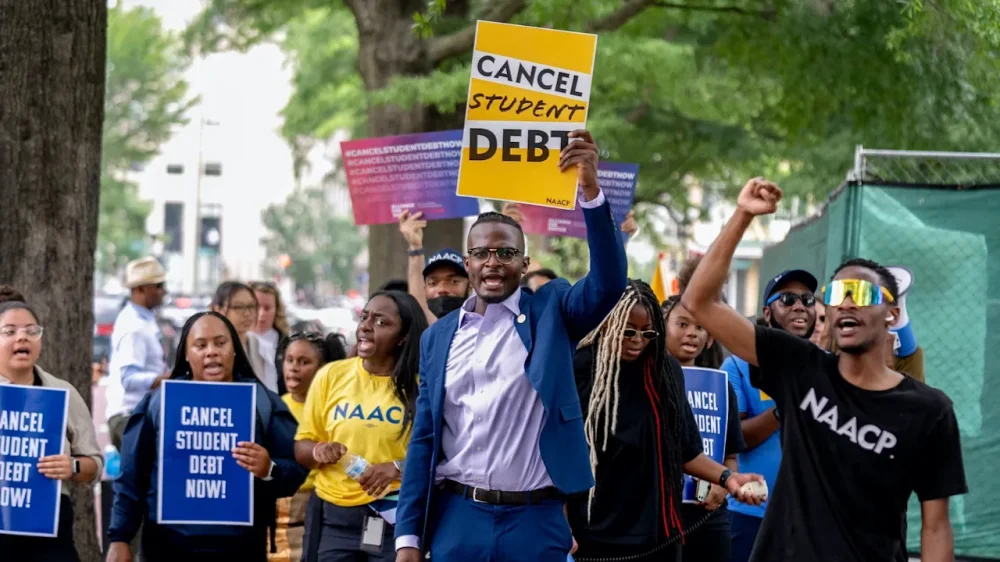
It’s been a confusing time for people with student loans. Collections restarted, then were put on hold. At the same time, borrowers had to stay on top of changes to key forgiveness plans. Last year, the long-contested SAVE plan introduced by the Biden administration ended with a settlement agreement. President Donald The President’s “Big Beautiful Bill” introduced new borrowing limits for graduates and raised challenges to the Public Service Loan Forgiveness program. While several changes for student loan borrowers will take effect this summer, other key questions remain unresolved. More than 5 million Americans were in default on their federal student loans as of September, according to the Education Department. Millions are behind on loan payments and at risk of default this year. Borrowers “genuinely struggle to afford their loans and then to hear that the administration is making it more expensive and taking away some of the tools and resources that help folks afford their loans is really, it’s panic-inducing,” said Winston Berkman-Breen, legal director at Protect Borrowers. Last month, the Education Department announced that it would delay involuntary collections for student loan borrowers in default until the department finalizes its new loan repayment plans. The date for this is still unclear. If you’re a student loan borrower, here are some key things to know: If you were enrolled in the SAVE plan The SAVE plan was a repayment plan with some of the most lenient terms ever. Soon after its launch it was challenged in court, leaving millions of student loan borrowers in limbo. Last December, the Education Department announced a settlement agreement to end the SAVE plan. What is next for borrowers who were enrolled in this repayment plan is yet to be determined. “Seven and a half million borrowers who are currently enrolled in SAVE need to be moved to another plan,” Berkman-Breen said. As part of the agreement, the Education Department says it will not enroll new borrowers, deny pending applications, and will move all current SAVE borrowers into other repayment plans. The Education Department is expected to develop a plan for borrowers to transition from the SAVE plan, yet borrowers should be proactive about enrolling in other repayment plans, said Kate Wood, a lending expert at NerdWallet. If you are looking to enroll in an income-driven repayment plan Borrowers can apply for the following income-driven plans: the Income-Based Repayment Plan, the Pay as You Earn plan, and the Income-Contingent Repayment plan. “They all have similar criteria, and they function similarly. Your payment is set as a percentage of your income, not how much you owe, so it’s usually a lower payment,” Berkman-Breen said. The payment amount under income-driven plans is a percentage of your discretionary income, and the percentage varies depending on the plan. Since many people are looking to switch plans, some applications to income-driven repayment plans might take longer to process, said Jill Desjean, director of policy analysis at the National Association of Student Financial Aid Administrators. You can find out which repayment plan might work best for you by logging on to the Education Department’s loan simulator. If you’re working toward your Public Service Loan Forgiveness There are no changes to the Public Service Loan Forgiveness Program yet. Last year, the The President administration announced plans to change the eligibility requirements for participating nonprofits. The policy seeks to disqualify nonprofit workers if their work is deemed to have “substantial illegal purpose.” The The President administration said it’s necessary to block taxpayer money from lawbreakers, while critics say it turns the program into a tool of political retribution. The proposal says illegal activity includes the trafficking or “chemical castration” of children, illegal immigration, and supporting foreign terrorist organizations. This move could cut off some teachers, doctors, and other public workers from federal loan cancellation. “This is something that obviously is very stressful, very nerve-wracking for a lot of people, but given that we don’t know exactly how this is going to be enforced, how these terms are going to be defined, it’s not really something that you can try to plan ahead for now,” Wood said. While this policy is currently being challenged by 20 Democrat-led states, it’s expected to take effect in July. In the meantime, Wood recommends that borrowers enrolled in the PSLF program continue making payments. If your student loans are in default Involuntary collections on federal student loans will remain on hold. The The President administration announced earlier this month that it is delaying plans to withhold pay from student loan borrowers who default on their payments. Federal student loan borrowers can have their wages garnished and their federal tax refunds withheld if they default on their loans. Borrowers are considered in default when they are at least 270 days behind on payments. If your student loans are in default, you can contact your loan holder to apply for a loan rehabilitation program. “They essentially come up with a payment plan where you’re making a reduced payment,” Woods. “After five successful payments on that rehabilitation plan, wage garnishment will cease.” If you’re planning to attend graduate school The President’s “ Big Beautiful Bill ” has changed the amount graduate students can borrow from federal student loans. Graduate students could previously borrow loans up to the cost of their degree; the new rules cap the amount depending on whether the degree is considered a graduate or a professional program. Wood said that if you’re starting a new program and taking out a loan after July 1, you will be subject to the new loan limits. Under the new plan, students in professional programs would be able to borrow up to $50,000 per year and up to $200,000 in total. Other graduate students, such as those pursuing nursing and physical therapy, would be limited to $20,500 a year and up to $100,000 total. The Education Department is defining the following fields as professional programs: pharmacy, dentistry, veterinary medicine, chiropractic, law, medicine, optometry, osteopathic medicine, podiatry and theology. If you want to consolidate your loan The online application for loan consolidation is available at studentaid.gov/loan-consolidation. If you have multiple federal student loans, you can combine them into a single loan with a fixed interest rate and a single monthly payment. The consolidation process typically takes around 60 days to complete. You can only consolidate your loans once. ___ The Associated Press receives support from Charles Schwab Foundation for educational and explanatory reporting to improve financial literacy. The independent foundation is separate from Charles Schwab and Co. Inc. The AP is solely responsible for its journalism. —Adriana Morga, Associated Press View the full article
-
When I asked real people why they post their workouts online, I received well over a hundred replies, many of them filled with venting about body image issues and unattainable beauty standards. That's didn't surprise me. What did surprise me was that the majority of these responses came from men. Carefully measured chicken and rice, obsessive tracking of macros, the guilt when a workout is missed: On social media, these behaviors are framed in the language of performance and strength. The same rituals that would be clear indications of disordered behavior for women are redefined as “discipline” and “optimization” for men. How many men suffer in silence because eating disorders are coded as a women's issue? How many cases go unrecognized when they're framed as "clean eating" or "serious training"? When eating disorders and body dysmorphia get rebranded as "fitness goals," a lot of men are left struggling in plain sight. Men can have eating disorders, tooBoys and men now make up about a third of those diagnosed with eating disorders, and that figure likely understates the crisis. In particular, muscle dysmorphia—sometimes called "bigorexia"—is characterized by excessive and compulsive exercise, a persistent belief that one is insufficiently muscular, and an obsession with muscle mass, size, and leanness. Unfortunately, much of fitness culture allows men to engage in disordered behaviors by wrapping them in performance language. "Bulking" and "shredding" cycles can mask seriously problematic eating patterns. Without giving certain men in my life an armchair diagnosis, I can confidently say I’ve seen the mental fallout when someone’s extreme caloric restriction becomes "cutting" or compulsive exercise becomes "staying on track." Unsurprisingly, social media amplifies these harmful messages. Mason Boudrye, who describes himself as "someone known to post gratuitous thirst traps," shared with me the mental fallout of always trying to look a certain way. “Even if people don't admit that the obsessive tracking and strict adherence to diet qualifies as disordered eating, I know it’s true for me,” he says. The social media of it all makes these feelings even more public and persistent. We all scroll through feeds of chemically enhanced physiques presented as natural and achievable. This naturally breeds more self-scrutiny, more comparison, more perceived inadequacy. Matthew Singer, a yoga teacher, says most “fitspo” (fitness inspiration) “is as helpful for fitness as previous winning lottery numbers are for winning millions. Fitspo cannot take into account genetics, job and family circumstances, health history, or any of the other countless factors that influence health outcomes." Our bodies are treated like projects always in need of correction, devoid of much-needed context. What’s most troubling to me is the way men don’t get to call out disordered behaviors by name. There is both a misconception around who eating disorders affect, and a deep reluctance among affected men to seek help for a problem they've been socialized to handle alone. Society has constructed a masculine ideal that equates vulnerability with weakness, making it nearly impossible for some men to admit they're struggling with their relationship to food and their bodies. Unattainable beauty standards stay unattainableBotox injections in men may get called “Brotox," but a cheeky nickname shouldn't shroud the fact that unattainable beauty standards are leading men to take more extreme measures. Dr. Claudia Kim of New Look New Life Cosmetic Surgery says she's seen a rise in men turning to beauty treatments: jawline contouring, under-eye correction, hair restoration, skin rejuvenation. “These approaches offer noticeable yet discreet results with little downtime,” says Kim, fitting neatly into lives that were never supposed to include these concerns. What's telling, Kim adds, is that her male patients are usually entering the aesthetic realm for the first time. In this sense, men are catching up to beauty regimens women have been undertaking for generations, and slowly learning what women have long understood: Namely, that appearance affects professional success, social capital, and romantic prospects—and the goalposts are always moving. At the same time, the masculine ideal demands stoic self-sufficiency, even as it requires costly and constant aesthetic labor. What does all this mean for the average person with an average budget? The treatments Kim describes—jawline contouring, hair restoration, aesthetic procedures—aren't cheap. Nor are supplements, meal prep services, personal trainers, specialized equipment, and so on. Beauty standards increasingly require you to spend more money, meaning your appearance is yet another health arena where class determines outcomes. And if they can’t afford to look the way they feel pressured to look, men are uniquely left behind to suffer in silence. As a woman, I’ve spent most of my life jealous of how men were allowed to age, or gain weight, or simply be in their bodies without constant intervention. Now I have a more sympathetic gaze, especially after hearing so many men admit they were never given the language to articulate aesthetic concerns without shame. The bottom lineThere’s a big difference between healthy self-care and the sense that your body is never good enough. Meticulously tracking every calorie, every rep, every perceived flaw—why should one woman’s obvious eating disorder be another man’s enviable achievement? Women have been battling body image issues and unattainable beauty standards since birth, but a lot of men were never taught how to fight this particular war. To me, the takeaway is that we all need to be on the same side. To fight this war, we need a more honest conversation about what we're doing to men's relationships with their bodies. Until we acknowledge that, all this talk of "cutting" and "discipline" will allow dangerous behaviors to keep hiding in plain sight. View the full article
-
Whoopi Goldberg has been a household name since she starred in The Color Purple in 1985. Fast forward over 50 years, and she’s still as driven as ever. Goldberg, 70, cohosts daytime talk show The View. In 2024, she founded AWSN, the All Women’s Sports Network. She’s also an author, activist, mother, and grandmother. And, she’s also doing it all solo. Goldberg is happily single and has been for decades. She says that will never change. In a recent interview with Interview magazine, Goldberg opened up about her solo life, which she happens to genuinely love. So much, in fact, that she says she plans to stay single because, as she put it, “in the last 25 years, I recognized that not everybody’s cut out to be in a relationship.” She continued, revealing that she doesn’t ever “want to live with anybody,” echoing her 2016 statement to The New York Times when she famously said “I don’t want somebody in my house!” A growing trend While we don’t hear women talking about how glad they are to be single all that often, the tide seems to be turning. More women are deciding to stay single, and studies suggest that trend will continue. A 2019 Morgan Stanley study, based on Census Bureau historical data and Morgan Stanley forecasts, found that 45% of prime working-age women (ages 25-44) will be single by 2030. That’s the largest share in history. That’s why hearing Goldberg’s perspective, and witnessing her joy and continued drive, is refreshing. It’s also more relevant than ever as some women feel unbothered by not being in a relationship, regardless of the fact that society has long pushed women toward marriage and motherhood. Are single women more ambitious? Surely there are plenty of ambitious people in long-term relationships that manage to balance both. However, Goldberg’s view that that doesn’t work for her, is important to hear. Because, quite simply, no matter what lens you’re looking from, relationships are work, too—and sometimes, they can steal your energy and your ambition. Likewise, some research has shown that those single women are powerful forces at work. A 2023 Wells Fargo study found that women who aren’t married are becoming an increasingly influential part of the workforce. Despite not living with a partner, Goldberg isn’t lonely, she says. Perhaps because she keeps astoundingly busy. “I’m not good at [romantic] relationships because you have to think about other people, and I have enough to think about with my daughter and her husband and my grandkids and my great-grandkids and all the people at work.” Some might call it selfish. But, as Goldberg put it way back in 2016, she’s simply “a woman who knows what she wants.” What she wants just happens to be “a home all to her damn self.” View the full article

-
On Monday, Discord announced its plan to begin rolling out mandatory age verification globally. Starting in March, new and existing accounts will start moving over to a "teen-by-default" setting, which will lock certain chats and features away until the account's owner proves they're an adult. Here's what you'll lose, how to get it back, and for good measure, what your other options are. Discord will require age verification starting in MarchIn its announcement, Discord said the new age verification settings will start with a "phased global rollout" in March, so it may be some time until it hits you. However, once the changes make their way to your region, you'll lose access to the following features until you verify your age: Age-restricted channels and servers: This is the most obvious one. Any channels that are set to adults only will now be off-limits to your account until you verify your age. In some cases, this could include whole servers, or depending on the server, certain app commands. Spicy content: Until you verify your age, Discord's content filters will be active for you, and the app will blur any images it thinks are too sensitive or graphic. Message requests: Direct messages from people you don't know will now go to a separate inbox. Speaking in Stages: Accounts that aren't age-verified won't be able to speak in Stage channels, which are livestreams where a few server members can broadcast to everyone on the server at once. Warnings on friend requests: This one adds something rather than taking it away. Until you verify your age, you'll now see a warning prompt when getting a friend request from someone you don't know. How to verify your age in DiscordDiscord has two ways to verify your age, though it will tell you if you need to go through the process. To the platform's credit, it won't suddenly strip away a bunch of features from you without explanation. To start verifying your age on Discord, either click Get Started on a prompt the platform should send you once age verification hits your region, or navigate to User Settings > My Account > Age Group to see your age group and verify from there. Now, you can either take a video selfie or scan a valid government ID. For video selfies, just select Take a selfie from the verification page, follow the on-screen instructions, and click Done to submit. For verifying through a government ID, select Use your ID, scan the provided QR code with your mobile device, take a clear photo of your ID on said device, and tap Done to submit. Discord says that video selfies used for age verification are processed purely on-device, and that while photos of government IDs do go to "vendor partners" for verification, they are "deleted quickly—in most cases, immediately after age confirmation." Once you've submitted your video selfie or ID, the app will then begin the process of assigning you an "age group," which you'll be able to see under User Settings > My Account > Age Group. Discord says most users only need to verify once, but that you might need to provide a government ID in addition to a video selfie if the app can't confidently determine your age from just a face scan. You're also able to attempt re-verification at any time, but if the app determines that you're under the 13-year-old minimum for using Discord, your account will be banned. (You can appeal this and attempt to re-instate your Discord account via an ID.) According to Discord, the age verification process "typically takes just a few minutes," and you'll get a notification and DM once it's completed. Best Discord alternatives that don't use age verificationAs countries around the world add new laws for age verification online (Discord mentions the UK and Australia in particular), it seems like Discord is just throwing its hands up and deciding to play it as safe as possible by taking the feature global. The move mimics similar decisions from Google, ChatGPT, and Roblox, but even adult users might be uncomfortable with it, since they'll need to show the company—and the company's third-party processors—personal identifying information to comply with it. If that leaves a bad taste in your mouth, there are a few Discord alternatives you can try that don't yet require age verification, although they might not completely match the app's feature set: Slack: Discord basically stole Slack's entire flow, and that's great news for anyone looking for a Discord alternative. About the only Discord feature missing here is persistent voice channels, although you can still talk to others over voice using huddles. Slack can be a strong Discord replacement or supplement to another Discord replacement, but if you're a teen looking for a new home, be careful. Technically, users under 16 are banned from Slack, according to the app's terms of service. TeamSpeak: TeamSpeak has been updated since the 2000s to match many of Discord's features, including adding persistent chat channels. However, it's still lagging behind on some features, like video chat. Additionally, only 32 users can be in a free TeamSpeak server at a time. This is what I used as a teen before moving onto other platforms. Mumble and Ventrilo: These are no-frills, voice-first clients that primarily focus on privacy and low latency connections, with Mumble even being open source. They aren't as robust as Discord, but they could serve as a strong voice channel supplement to another Discord alternative, like Slack. View the full article
-
Valentine’s Day is known as the day to celebrate all things love—and also a day for expensive dates. However, a new offering from one of your favorite fast food chains may have you skipping the white table cloths and snagging something from McDonald’s instead. McDonald’s is serving up caviar this Valentine’s Day. But there’s a catch. In a Feb. 2 announcement, the chain explained what the latest offering entails. “To be known is to be loved, and we know our fans love pairing our crispy Chicken McNuggets with their favorite caviar,” it said. “Inspired by this perfect match, we’re dropping our first-ever McNugget Caviar kits featuring premium Baerii Sturgeon caviar on Feb. 10… After all, nothing says ‘ILY’ quite like a limited drop from McDonald’s just in time for your Valentine’s Day plans.” McDonald’s has partnered with Paramount Caviar to bring customers the offering free of charge. “Each kit includes everything you need for an upscale yet effortless celebration: a 1oz tin of McNugget Caviar, $25 Arch Card for plenty of Chicken McNuggets, plus crème fraîche and a Mother of Pearl caviar spoon to top it all off,” it said. It’s been a tough time for fast food joints, but McDonald’s has managed to stay ahead of competitors, in part, due to meal deals, budget offerings, and nostalgic throwbacks. Plus, this isn’t the first time we’ve seen McDonald’s test out an offbeat partnership. The chain previously linked up with Krispy Kreme donuts, but dissolved the collaboration last year, citing profitability issues. While it would be nice to grab the offering at your local McDonald’s restaurant, unfortunately, you won’t be able to snack on caviar at the Golden Arches. The offering is only available online at McNuggetCaviar.com. The deal starts Tuesday, Feb. 10 at 11 a.m. EST, so if you’re hoping to get your caviar kit for Valentine’s Day, you better hurry up and place your order. According to the announcement, kits are limited. If caviar isn’t exactly your jam, that’s okay. McDonald’s says they’ll be providing customers with plenty of other ways to celebrate the day of love, but you’ll have to follow along on their socials to keep up. View the full article

-
A trial focused on the dangers of child sexual exploitation on social media and whether Meta misrepresented the safety of its platforms is set to start in New Mexico with opening statements Monday. It’s the first stand-alone trial from state prosecutors in a stream of lawsuits against major social media companies, including Meta, over harm to children, and one that is likely to highlight explicit online content and its effects. New Mexico Attorney General Raúl Torrez sued Meta in 2023. His team built the case by posing as kids through social media accounts, then documenting the arrival of sexual solicitations as well as the response by Meta, the owner of Facebook, Instagram and WhatsApp. Prosecutors say they’ll provide evidence and testimony that Meta’s algorithms and account features enticed and addicted young people to social media, while also creating a “breeding ground” for predators who target children for sexual exploitation. Prosecutors allege Meta failed to disclose what it knew about those harmful effects, in violation of state consumer protection laws. Meta also is accused of creating a public nuisance. “Meta knowingly exposes children to the twin dangers of sexual exploitation and mental health harm,” the lawsuit states. “Meta’s motive for doing so is profit.” Meta denies any legal violations and says prosecutors are cherry-picking evidence to make sensationalist arguments. On Sunday, Meta called the state’s investigation “ethically compromised” in its use of child photos on proxy accounts, delays in reporting child sexual abuse material and the disposal of data from devices used in the investigation, in social media posts on X by company spokesperson Andy Stone. The company says lawsuits are attempting to place the blame for teen mental health struggles on social media companies in a way that oversimplifies matters. Meta says it has a longstanding commitment to supporting young people, highlighting a steady addition of account settings and tools — including safety features that give teens more information about the person they’re chatting with and content restrictions based on PG-13 movie ratings. “For over a decade, we’ve listened to parents, worked with experts and law enforcement, and conducted in-depth research to understand the issues that matter most,” the company said in a statement. “We’re proud of the progress we’ve made.” It’s unclear whether Meta CEO Mark Zuckerberg will testify at trial. New Mexico limits the ability to compel out-of-state witnesses to testify in person, while prosecutors can present testimony by Zuckerberg from a deposition. Personal opinions of Zuckerberg and evolving attitudes toward social media loomed over jury selection from a pool of more than 200 residents of Santa Fe County, including several educators, young adults who grew up with social media and others who never signed up. “Quite frankly, he’s the tech bro making money off of all of us,” one person said of Zuckerberg. An attorney for the state warned that there would be “very sensitive and very explicit material discussed in terms of safety to children” during the trial. More than 40 state attorneys general have filed lawsuits against Meta, claiming it is deliberately designing features that addict children to its platforms. The majority filed their lawsuits in federal court, and New Mexico’s case against Meta is the first to reach trial. Opening statements have been postponed in a bellwether trial underway in California against social video companies, including Meta’s Instagram and Google’s YouTube, that focuses on a 19-year-old who claims her use of social media from an early age addicted her to technology and exacerbated depression and suicidal thoughts. TikTok and Snapchat parent company Snap Inc. settled claims in the case. Torrez, a Democrat seeking reelection this year to a second term, has urged Meta to implement more effective age verification and remove bad actors from its platform. He’s also seeking changes to algorithms that can serve up harmful material and criticizing end-to-end privacy encryption that can prevent the monitoring of communications with children for safety. —Morgan Lee, Associated Press View the full article
-
Timothy Boyle has become the last of eight defendants sentenced in a sweeping $7.7 million pandemic fraud scheme that targeted Small Business Administration (SBA) programs and state unemployment benefits. This case, which highlights both the vulnerabilities in fraud detection systems and the relentless pursuit of justice by government agencies, serves as a critical reminder for small business owners about the significance of safeguarding their operations and ensuring compliance. The scheme, orchestrated primarily by DeAngelo Jackson-Portwood, involved fraudulent claims for pandemic unemployment assistance and bogus applications for loans designed to help businesses weather the economic storm caused by the COVID-19 pandemic. Between early 2020 and May 2021, Jackson-Portwood and his co-defendants forged identities and submitted over 1,000 claims across 17 states, yielding more than $5.6 million in ill-gotten gains from unemployment programs. Additionally, they filed 575 fraudulent applications for Paycheck Protection Loans and Economic Injury Disaster Loans, ultimately obtaining approximately $2.1 million. US Attorney Jerome F. Gorgon Jr. emphasized the scale of the deception: “Today’s sentence concludes one of the largest pandemic fraud cases in our state. Jackson-Portwood fleeced the American taxpayer through a brazen fraud scheme.” The repercussions of this fraud extend beyond financial loss; they disrupt the livelihoods of hard-working individuals who relied on these resources during a national crisis. The financial fallout from such schemes often lands heavily on the shoulders of legitimate small businesses, particularly as state workforce agencies are forced to absorb the losses incurred through fraudulent claims. This situation leads to increased scrutiny and potential delays in the processing of legitimate claims. Small business owners may find themselves faced with tighter regulations or even increased premiums, affecting cash flow and operations. The nature of the fraud also raised substantial privacy concerns. As noted in a quote from Jennifer Runyan, Special Agent in Charge of the FBI Detroit Field Office, “Among those victims was a nurse working 12-plus hour shifts on the front lines during COVID-19, who then had to fight to clear her name after her identity was stolen.” Small business owners must be aware of the importance of protecting personal and company information. Identity theft can have far-reaching implications that stretch beyond individual victims to affect business operations and reputations. In light of these crimes, there are key takeaways and actionable insights for small business owners: Be Vigilant with Sensitive Information: Protect customer and employee data with robust cybersecurity measures. Regularly update passwords, use encryption, and educate staff about phishing attacks. Understand SBA Programs Thoroughly: Familiarize yourself with SBA lending programs, including the criteria and documentation required. This knowledge can help safeguard against potential misunderstandings or fraudulent activities that could impact your business. Report Suspicious Activity: If you notice unusual claims or suspect fraud, report it to local authorities immediately. Partners such as the SBA and the Department of Labor are committed to investigating such issues, as evidenced by their relentless pursuit of the defendants in this case. Stay Informed: Subscribe to updates from the SBA Office of Inspector General to remain aware of recent investigative findings, guidelines, and reforms that can affect your business operations. Knowledge is an essential defense against fraud. Challenges lie ahead, as the increased scrutiny following this case could mean more rigorous audits and longer processing times for legitimate claims. Small business owners should anticipate an evolving regulatory environment and remain proactive in compliance to avoid potential pitfalls. While the sentencing of these defendants marks a significant closure to a substantial fraud case, it also opens the dialog around the protection of legitimate businesses. The fraudsters have illustrated vulnerabilities in our systems, but also the perseverance of law enforcement to hold them accountable. As stated by Michelle Blank, Acting Special Agent-in-Charge of SBA-OIG, “This sentencing serves as a reminder that fraud is not a victimless crime.” Entrepreneurs must recognize their role in fostering a culture of security and integrity in their businesses. For more detailed information on the case and the implications for small businesses, visit the original SBA article here. Image via Google Gemini This article, "Final Defendant Sentenced in $7.7 Million Pandemic Fraud Scheme" was first published on Small Business Trends View the full article
-
Timothy Boyle has become the last of eight defendants sentenced in a sweeping $7.7 million pandemic fraud scheme that targeted Small Business Administration (SBA) programs and state unemployment benefits. This case, which highlights both the vulnerabilities in fraud detection systems and the relentless pursuit of justice by government agencies, serves as a critical reminder for small business owners about the significance of safeguarding their operations and ensuring compliance. The scheme, orchestrated primarily by DeAngelo Jackson-Portwood, involved fraudulent claims for pandemic unemployment assistance and bogus applications for loans designed to help businesses weather the economic storm caused by the COVID-19 pandemic. Between early 2020 and May 2021, Jackson-Portwood and his co-defendants forged identities and submitted over 1,000 claims across 17 states, yielding more than $5.6 million in ill-gotten gains from unemployment programs. Additionally, they filed 575 fraudulent applications for Paycheck Protection Loans and Economic Injury Disaster Loans, ultimately obtaining approximately $2.1 million. US Attorney Jerome F. Gorgon Jr. emphasized the scale of the deception: “Today’s sentence concludes one of the largest pandemic fraud cases in our state. Jackson-Portwood fleeced the American taxpayer through a brazen fraud scheme.” The repercussions of this fraud extend beyond financial loss; they disrupt the livelihoods of hard-working individuals who relied on these resources during a national crisis. The financial fallout from such schemes often lands heavily on the shoulders of legitimate small businesses, particularly as state workforce agencies are forced to absorb the losses incurred through fraudulent claims. This situation leads to increased scrutiny and potential delays in the processing of legitimate claims. Small business owners may find themselves faced with tighter regulations or even increased premiums, affecting cash flow and operations. The nature of the fraud also raised substantial privacy concerns. As noted in a quote from Jennifer Runyan, Special Agent in Charge of the FBI Detroit Field Office, “Among those victims was a nurse working 12-plus hour shifts on the front lines during COVID-19, who then had to fight to clear her name after her identity was stolen.” Small business owners must be aware of the importance of protecting personal and company information. Identity theft can have far-reaching implications that stretch beyond individual victims to affect business operations and reputations. In light of these crimes, there are key takeaways and actionable insights for small business owners: Be Vigilant with Sensitive Information: Protect customer and employee data with robust cybersecurity measures. Regularly update passwords, use encryption, and educate staff about phishing attacks. Understand SBA Programs Thoroughly: Familiarize yourself with SBA lending programs, including the criteria and documentation required. This knowledge can help safeguard against potential misunderstandings or fraudulent activities that could impact your business. Report Suspicious Activity: If you notice unusual claims or suspect fraud, report it to local authorities immediately. Partners such as the SBA and the Department of Labor are committed to investigating such issues, as evidenced by their relentless pursuit of the defendants in this case. Stay Informed: Subscribe to updates from the SBA Office of Inspector General to remain aware of recent investigative findings, guidelines, and reforms that can affect your business operations. Knowledge is an essential defense against fraud. Challenges lie ahead, as the increased scrutiny following this case could mean more rigorous audits and longer processing times for legitimate claims. Small business owners should anticipate an evolving regulatory environment and remain proactive in compliance to avoid potential pitfalls. While the sentencing of these defendants marks a significant closure to a substantial fraud case, it also opens the dialog around the protection of legitimate businesses. The fraudsters have illustrated vulnerabilities in our systems, but also the perseverance of law enforcement to hold them accountable. As stated by Michelle Blank, Acting Special Agent-in-Charge of SBA-OIG, “This sentencing serves as a reminder that fraud is not a victimless crime.” Entrepreneurs must recognize their role in fostering a culture of security and integrity in their businesses. For more detailed information on the case and the implications for small businesses, visit the original SBA article here. Image via Google Gemini This article, "Final Defendant Sentenced in $7.7 Million Pandemic Fraud Scheme" was first published on Small Business Trends View the full article
-
Even after the final whistle blew on the Seattle Seahawks’ 29-13 win over the New England Patriots, Rocket’s Super Bowl was far from over. Sure, the brand had a Super Bowl ad featuring Lady Gaga singing a Mr. Rogers classic, but that was just the beginning. At 8 p.m. ET, immediately after Rocket and Redfin’s Super Bowl spot aired, the brands released the first of six app-exclusive clues that would roll out over the next 48 hours for users to play a contest in order to win a million-dollar home. This last part of Rocket’s Super Bowl strategy is perhaps its most important because it’s not just focused on entertaining audiences or attracting their attention; it’s about recruiting their participation. Rocket CMO Jonathan Mildenhall told me last week that Super Bowl strategies must now have pre-game, in-game, and post-game stages, and participation was key. “We’re going to ensure that we’ve got eyeballs on the spot looking for the home, but it’s only after it airs that the first of six clues are given, and the remaining six clues are given over a 48-hour period to ensure that Rocket and Redfin are in the postgame conversation,” Mildenhall said. “So the new strategy that I would implore all marketers to be thinking about is you’ve got three stages of Super Bowl investment, and one of those stages has to be dominated by your audience participation.” The Super Bowl is simultaneously a singular moment for advertisers, and a microcosm of the broader challenges facing brands every single day. Sure, it’s the biggest, most high profile collective cultural moment we have left, but it retains the same difficulty of standing out, making a mark, and really getting our attention as any other moment. As a result, more brands are working to get audiences involved in some way, shape or form, in order to break through all the noise. Here’s a look at how four brands tackled participation in each stage of the Super Bowl. Pre-game prep Comcast Xfinity’s Jurassic Park-themed spot is one of the most Super Bowl-y things a brand could do. Bringing back a beloved franchise classic—including de-aged versions of the original cast—and putting its own quirky twist on it to tie in its product is not exactly rocket science. It’s obvious people will love it. But how do you make sure they really love it and remember it? Comcast’s chief growth officer for connectivity and platforms Jon Geiselman says that the Super Bowl used to be a single, high-stakes moment, now it’s a runway. “Audiences don’t just show up on game day anymore,” says Geiselman. “For marketers, that’s changed the job. The ad isn’t the finish line; it’s the centerpiece of a much longer story.” Created with agency Goodby, Silverstein & Partners (GS&P), Comcast Xfinity’s longer story included an in-game NBA take-over at Philly’s Xfinity Arena during the Sixers-Bucks game on January 26. Then, in San Francisco in the week leading up to the game there were Jurassic Park Lyft Rides, where the brand turned some Lyft vehicles into the iconic Jurassic Park tour cars, had dinosaur projections light up the city’s historic Hobart Building, a motion-sensored T. Rex billboard on Market Street, and taking “Baby Tango” raptor character outside of Universal Orlando to roam the city and engage with fans. GS&P creative director Jen Hart says the pre-game strategy was itself split into stages. “The first thing out of the gate was taking down an NBA arena during primetime, with Reggie Miller and Noah Eagle offering commentary on live TV about what was unfolding,” says Hart. “The next day on social, we invited the world to bring the park back online with an alluring grand prize: a trip back to Jurassic Park’s set in Hawaii. We then opened the doors to the park—including a ‘lost commercial’ running on television for a fully functional Jurassic Park, as well as the original cast teasing our Super Bowl spot on social.” In-game action Getting fans involved during the game is a unique challenge given there’s, you know, an actual football game people are watching. But a good marketer’s job is to find the space, no matter how small, to squeeze in a compelling reason for us to pay attention. Three brands who worked in different ways to do that this year were Coinbase, OpenAI, and Kraft. OpenAI released three regional ads before the game, but saved its direct pitch to coders for the big game itself. CMO Kate Rouch says that not only was their ad aiming to be a rallying cry for builders to try its newest version of Codex, but it was littered with easter eggs—small signs within the ad—for coders to find and use to get prizes and other goodies. “Actions speak louder than words, so we’re offering Codex for free, and we have this point of view about building and making things, that anyone can do this,” says Rouch. “So this Easter egg, is actually tied to a behavior in Codex, and you have to participate in the product to unlock the merch. It’s just a small, simple thing, but we wanted to signal that this is about making things, and kind of lift up people who are going to do something.” Crypto platform Coinbase had a lot to live up to. Under former CMO Rouch, the brand made a splash at the 2022 Super Bowl with a bouncing QR code, so current CMO Cat Ferdon knew they needed to continue that legacy of uniquely getting people’s attention. Her solution: why not get people singing karaoke? The Coinbase ad brilliantly mimicked old school karaoke machine screen to get viewers to sing-along with its adapted version of the Backstreet Boys’ 1997 hit “Everybody.” Coinbase vice-president of creative Joe Staples says that what makes the Super Bowl unique is that there are 120 million people actively watching ads. “So you can choose to do the thing you normally do with more famous people, or you can take it as a time to talk to a nation,” says Staples. “Or you can just acknowledge that everyone’s had six beers and loads of wings, and are in the room with 15 friends watching a commercial.” The participation goal here was to get people laughing and singing with each other. Ferdon says that it’s about carving out a moment, and making an event out of that moment. “Ideally, we’re giving the audience something to participate in so that people in the room, wherever they’re watching, can feel like they’re a part of that event with us,” she says. “And that in itself is actually the spectacle.” Kraft Heinz didn’t have an official big game spot for Mac & Cheese, but it did invest in a celebrity to get people participating during the game. The brand had comedian John Mulaney, who voices its ongoing Best Thing Ever campaign, to respond to every Super Bowl ad in real-time—including Coinbase’s karaoke—with custom video ads during the big game on social. Kraft Heinz CMO Todd Kaplan says the point is to try and engage the audience where they are, specifically, on the second screen during the game. “Listen, not all 50 plus ads are going to be home runs,” he says. “It’s about finding the moments to come in a humorous way with a point of view for our brand and just drive a conversation, which is really what our job is as marketers.” Post-game work This is perhaps the toughest Super Bowl nut to crack. It’s also the most recent part of the game that brands have been trying to tap into. Rocket essentially decided to combine all the trappings of more traditional ad, pack it with an emotional punch, and then do its own version of “DoorDash All The Ads.” In 2024, DoorDash pulled off a Super Bowl hat-trick in that it had a creative idea that got attention and awareness right away—delivering a lucky winner everything advertised during the game—with the short-term pay off of actual DoorDash app downloads. It got more than eight million contest submissions and 11 billion impressions. With a clue to winning a million dollar home embedded in its Super Bowl ad, Mildenhall says that the contest will drive Redfin app downloads—you need the app to enter the contest—and ideally even provide a post-game boost to its commercial. “I’m hoping that our ad becomes the most-viewed Super Bowl ad this year,” he says. “Because we’re driving people back to it six times so that they can identify which of the homes you’ve seen in the ad is actually available on Redfin tp win.” View the full article

-
Critical operational zones are becoming more unpredictable View the full article
-
We may earn a commission from links on this page. In the world of exercise, variety abounds. You can lift light weights, or heavy weights, or no weights at all. If you don’t lift at all right now, it doesn’t matter much where you start. But that doesn’t mean that all of these options are equivalent. Light weights can build muscle, but they do not have the same benefit as heavier weights. It takes different workouts to get the most benefit out of light weights versus heavy weights. And heavy weights can do some things that light weights can't. I'm going to unpack all of that below, but right now the most important thing I want you to understand is that it's not correct when people say light weights are "as good as" heavy weights or that it "doesn't matter" which you use. Friends, it does matter. You might decide that lighter weights are best for you, or you might want the benefits that heavy weights provide. But you deserve to know the difference. Because there is definitely a difference. Even the studies that show benefits of lighter weights for muscle gain still find that heavy weights have advantages. For example, this meta-analysis gathering the results of 178 different studies found that "Higher-load (>80% of single repetition maximum) prescriptions maximised strength gains, and all prescriptions comparably promoted muscle hypertrophy [growth]." In short: light weights can help you gain muscle (with caveats, which we’ll discuss) but they aren’t a good way to build your strength, in the sense of your real-world ability to lift heavy things. When you should exercise with light weightsYou can do a lot with light weights, and I’m not knocking them. They’re especially great for beginners, since they’re easy to handle and not too intimidating. If you’ve never lifted a weight before, it makes sense to grab the 5-pound or 10-pound dumbbells rather than heading straight for the squat rack. I even have a list of exercises that work best with light weights, like wrist curls and weighted deadbugs. If you’d like to continue with light weights past the beginner stage, that can work too—depending on your goals. It is true that you don’t need to lift heavy weights to build muscle. Light weights, which I’ll define here as anything you need to lift for 12+ reps before you start to feel any burn or fatigue, can signal your body to build more muscle tissue as long as you keep lifting until you literally cannot lift them any more. That’s called lifting “to failure.” The problem is, lifting light weights to the point of failure is boring as hell. It’s also easy to stop short of failure, because you’re tired and bored and you want to quit. If you’re capable of lifting 20 reps with a certain weight, but you stop around 12, you’re going to miss out on most of those muscle-building benefits. We also know that most people underestimate themselves, doing fewer reps or choosing a too-light weight for their intended exercise. If you aren’t constantly asking yourself “can I do more?”, you might be missing out on the muscle growth (or “toning”) that you’re hoping to get. When you should exercise with heavy weightsA muscle’s size and its strength are two different but overlapping concepts. A bigger muscle does tend to be a stronger one, and vice versa. But if you want to be able to lift something heavy in real life—like a 50 pound bag of cement at Home Depot—a person who trains with 50-pound weights is going to have an easier time of it than a person who never has never picked up a dumbbell bigger than 10 pounds. Remember how light weights need to be lifted to failure to stimulate muscle growth? That’s because our bodies can choose to only “recruit” a few muscle fibers at a time to do a job. If you pick up a 2-pound dumbbell, your nervous system says “ehh, we only need a few motor units to do this job” and doesn’t bother activating the rest. But as you reach your 18th, 19th, 20th rep, it has to recruit more and more of those fibers as the ones you used at first begin to tire out. With heavy weights, though, you end up recruiting large numbers of muscle fibers right from the start. Heavier weights tell your body to grow the muscle and they teach your muscle fibers and your brain how to work together. The first time you try a new exercise, it will seem hard. After a few weeks, or maybe even a few days, you’ll be able to move a lot more weight more smoothly—even if you haven’t grown any extra muscle tissue by that time. You need to work with heavy weights if you want to learn to move heavy weights. Many people also prefer heavy weights because each set of an exercise is over in just a few reps—maybe eight or 10, or in some cases as little as a single rep. What counts as "heavy" depends on the person—I've written about how to know what counts as a heavy weight for you. You also don’t need to go all the way to failure when you’re training with heavy weights, which is something that lifters often appreciate. If I have 200 pounds on the barbell for squats, I might technically be able to squeeze out seven reps. But my workout for the day might only call for four or five. I find that a lot more enjoyable than doing 20+ goblet squats with a dumbbell. The dumbbell is lighter, but using a heavy barbell means I get to stop before I’m exhausted. How to combine the benefits of heavy and light weightsAs with many things in life, the “why not both?” approach is best for most people. Strength athletes (including powerlifters, Olympic weightlifters, and Crossfitters, to name a few) will typically center their routines around a few heavy lifts, and then get in some extra work with lighter or medium-ish “accessory” lifts. That’s still a solid approach for the average person who just wants to lift for fun or for health. It’s also important to remember the “light” weights need to get heavier over time, as you get stronger. Even Jane Fonda, remembered for eight-count exercises with small dumbbells, told viewers in the introduction to her famous vifdeo that they’ll want to switch out for heavier weights as they gain experience. This is, in a nutshell, the concept of progressive overload. Meanwhile, “heavy” just means any weight that doesn’t take dozens of reps to get results. If you can only do about 10 pushups, then pushups count as a “heavy” exercise for you. Going for something heavy on a compound exercise (one that involves multiple body parts) gives your body a loud signal to increase your strength, while leaving you plenty of time for lighter exercises if those are how you prefer to spend your gym time. View the full article
-
The world’s biggest social media companies face several landmark trials this year that seek to hold them responsible for harms to children who use their platforms. Opening arguments for the first, in Los Angeles County Superior Court, begin this week. Instagram’s parent company Meta and Google’s YouTube will face claims that their platforms deliberately addict and harm children. TikTok and Snap, which were originally named in the lawsuit, settled for undisclosed sums. “This was only the first case — there are hundreds of parents and school districts in the social media addiction trials that start today, and sadly, new families every day who are speaking out and bringing Big Tech to court for its deliberately harmful products,” said Sacha Haworth, executive director of the nonprofit Tech Oversight Project. At the core of the case is a 19-year-old identified only by the initials “KGM,” whose case could determine how thousands of other, similar lawsuits against social media companies will play out. She and two other plaintiffs have been selected for bellwether trials — essentially test cases for both sides to see how their arguments play out before a jury and what damages, if any, may be awarded, said Clay Calvert, a nonresident senior fellow of technology policy studies at the American Enterprise Institute. It’s the first time the companies will argue their case before a jury, and the outcome could have profound effects on their businesses and how they will handle children using their platforms. KGM claims that her use of social media from an early age addicted her to the technology and exacerbated depression and suicidal thoughts. Importantly, the lawsuit claims that this was done through deliberate design choices made by companies that sought to make their platforms more addictive to children to boost profits. This argument, if successful, could sidestep the companies’ First Amendment shield and Section 230, which protects tech companies from liability for material posted on their platforms. “Borrowing heavily from the behavioral and neurobiological techniques used by slot machines and exploited by the cigarette industry, Defendants deliberately embedded in their products an array of design features aimed at maximizing youth engagement to drive advertising revenue,” the lawsuit says. Executives, including Meta CEO Mark Zuckerberg, are expected to testify at the trial, which will last six to eight weeks. Experts have drawn similarities to the Big Tobacco trials that led to a 1998 settlement requiring cigarette companies to pay billions in health care costs and restrict marketing targeting minors. “Plaintiffs are not merely the collateral damage of Defendants’ products,” the lawsuit says. “They are the direct victims of the intentional product design choices made by each Defendant. They are the intended targets of the harmful features that pushed them into self-destructive feedback loops.” The tech companies dispute the claims that their products deliberately harm children, citing a bevy of safeguards they have added over the years and arguing that they are not liable for content posted on their sites by third parties. “Recently, a number of lawsuits have attempted to place the blame for teen mental health struggles squarely on social media companies,” Meta said in a recent blog post. “But this oversimplifies a serious issue. Clinicians and researchers find that mental health is a deeply complex and multifaceted issue, and trends regarding teens’ well-being aren’t clear-cut or universal. Narrowing the challenges faced by teens to a single factor ignores the scientific research and the many stressors impacting young people today, like academic pressure, school safety, socio-economic challenges and substance abuse.” A Meta spokesperson said in a recent statement that the company strongly disagrees with the allegations outlined in the lawsuit and that it’s “confident the evidence will show our longstanding commitment to supporting young people.” José Castañeda, a Google Spokesperson, said that the allegations against YouTube are “simply not true.” In a statement, he said, “Providing young people with a safer, healthier experience has always been core to our work.” The case will be the first in a slew of cases beginning this year that seek to hold social media companies responsible for harming children’s mental well-being. A federal bellwether trial beginning in June in Oakland, California, will be the first to represent school districts that have sued social media platforms over harms to children. In addition, more than 40 state attorneys general have filed lawsuits against Meta, claiming it is harming young people and contributing to the youth mental health crisis by deliberately designing features on Instagram and Facebook that addict children to its platforms. The majority of cases filed their lawsuits in federal court, but some sued in their respective states. TikTok also faces similar lawsuits in more than a dozen states. In New Mexico, meanwhile, opening arguments begin Monday for trial on allegations that Meta and its social media platforms have failed to protect young users from sexual exploitation, following an undercover online investigation. Attorney General Raúl Torrez in late 2023 sued Meta and Zuckerberg, who was later dropped from the suit. Prosecutors have said that New Mexico is not seeking to hold Meta accountable for its content but rather its role in pushing out that content through complex algorithms that proliferate material that can be harmful, saying they uncovered internal documents in which Meta employees estimate that about 100,000 children every day are subjected to sexual harassment on the company’s platforms. Meta denies the civil charges while accusing Torrez of cherry-picking select documents and making “sensationalist” arguments. The company says it has consulted with parents and law enforcement to introduce built-in protections to social media accounts, along with settings and tools for parents. —Kaitlyn Huamani and Barbara Ortutay, AP technology writers Associated Press Writer Morgan Lee contributed to this story. View the full article

-
After weeks of rumors, the company that operates Eddie Bauer stores in the United States and Canada has filed for Chapter 11 bankruptcy protection. As part of the proceedings, Eddie Bauer LLC, which is owned by Catalyst Brands, is planning to wind down operations and close all of its remaining stores. Catalyst also oversees operations for brands including Lucky Brand, Aéropostale, Nautica, Brooks Brothers, and JCPenney. The company is currently on the lookout for a buyer that could potentially acquire some portion of the Eddie Bauer’s stores. In the meantime, though, a total of 175 Eddie Bauer locations will close their doors in the coming weeks. Here’s what you need to know: What’s happened? According to a court filing, Eddie Bauer has faced significant financial strain at its retail locations for years. In the wake of the COVID-19 pandemic, the company was saddled with supply-chain issues, followed by persistent inflation and reduced discretionary spending on outdoor apparel. Catalyst acquired Eddie Bauer’s retail operations back in January 2025. In a press release, Catalyst’s CEO, Mark Rosen, said that the brand’s challenges have only worsened since then. “Even prior to the inception of Catalyst Brands last year, [Eddie Bauer] was in a challenged situation, with declining sales, supply chain challenges and other issues,” Rosen said. “Over the past year, these challenges have been exacerbated by various headwinds, including increased costs of doing business due to inflation, ongoing tariff uncertainty, and other factors.” Eddie Bauer joins a long list of retail chains that have recently shuttered some or all of their brick-and-mortar operations due to the ongoing “retail apocalypse,” including Party City, Big Lots, Joann, Claire’s, Saks Off 5th, and Francesca’s. As Fast Company previously reported, these bankruptcy proceedings will not impact Eddie Bauer’s locations overseas or its e-commerce and wholesale operations, which are led by separate companies. What’s next for Eddie Bauer? In the next few weeks, as Eddie Bauer LLC’s Chapter 11 proceedings move forward, the company plans to try to find a bidder to take over some or all of its stores and remaining assets. As of February 9, Catalyst said it had received two indications of interest from different companies. The brand plans to accept final bids on March 3 and proceed with any potential sale hearing on March 12. While those negotiations are underway, Eddie Bauer has already begun to wind down its physical presence. Per the bankruptcy filing, 49 of the company’s leases were allowed to expire at the end of January and all of those stores are now closed. The remaining 175 stores have all begun the process of liquidating their inventory, furniture, and fixtures in preparation for a final closure, which is expected to take about 13 weeks. Which Eddie Bauer stores are closing? The impacted retail locations include about 25 Canadian locations and the remaining 150 in the U.S. The full list is as follows: Alaska Anchorage, 320 West 5th Ave, Suite #C44A, Anchorage, AK, 99501 Alabama The Outlet Shops at Grand River, 6200 Grand River Blvd E, Suite 118-G, Leeds, AL, 35094 Tanger Outlet at Foley, 2601 S McKenzie St Ste 260, Foley, AL, 36535 California San Clemente Outlet, 101 W Avenida Vista Hermosa Suite 158, San Clemente, CA, 92672 Shasta Outlet, 1699 Hwy 273, Anderson, CA, 96007 Factory Stores at Vacaville, 131-F Nuttree Rd, Vacaville, CA, 95687 Village at Topanga, 6256 Topanga Canyon Blvd, Space #1240, Canoga Park, CA, 91303 Galleria at Roseville, 1151 Galleria Blvd., Ste. 133, Roseville, CA, 95678 Gilroy Outlet, 8325 Arroyo Circle, Bldg. D, Sp 28, Gilroy, CA, 95020 Great Mall Outlet, 447 Great Mall Drive Space 155A, Milpitas, CA, 95035 Fig Garden Village Shopping Center, 738 W. Shaw Ave., Fresno, CA, 93704 Folsom Factory Outlet, 13000 Folsom Blvd., Space 1450, Folsom, CA, 95630 Petaluma Outlets, 2200 Petaluma Blvd N, Petaluma, CA, 94952 Viejas Outlet Center, 5001 Willows Road, Space J101, Alpine, CA, 91901 Colorado Colorado Mills, 14500 W. Colfax Avenue, Space 160 A, Lakewood, CO, 80401 Castle Rock Factory Outlet, 5050 Factory Shops Blvd Suite 850, Castle Rock, CO, 80108 Silverthorne Outlet, 145A Stephens Wy, Silverthorne, CO, 80498 Centerra, I-25 and Eisenhower Blvd., Loveland, CO, 80538 Connecticut Tanger Outlet at Foxwoods, 455 Trolley Line Boulevard Suite 280, Mashantucket, CT, 06338 Westbrook Factory Stores, 314 Flat Rock Place, Suite C-105, Westbrook, CT, 06498 Delaware Rehoboth Ocean Outlet, 36502 Seaside Outlet Drive Suite 1250, Rehoboth Beach, DE, 19971 Florida Citrus Park Town Center, 7911 Citrus Park Town Center Mall, #520, Tampa, FL, 33625 St. Augustine Outlet Center, 2700 State Road 16, Suite 103, St. Augustine, FL, 32092 Silver Sands Factory Stores, 10562 Emerald Coast Parkway Space 10-14, Destin, FL, 32550 Lake Buena Vista Outlet, 15813 State Road 535, Orlando, FL, 32821 Georgia Commerce II Outlet, 800 Steven B Tanger Blvd Ste 809, Commerce, GA, 30529 North Georgia Premium Outlets, 800 Hwy 400 South, Suite 835, Dawsonville, GA, 30534 Discover Mills, 5900 Sugarloaf Pkwy #280, Lawrenceville, GA, 30043 Outlet Shops at Atlanta, 915 Ridgewalk Pkwy Suite #620, Woodstock, GA, 30188 Iowa Southern Hills Mall, 4400 Sergeant Road, Suite 108, Sioux City, IA, 51106 Outlets of Des Moines, 801 Bass Pro Dr NW Suite 110, Altoona, IA, 50009 Coral Ridge Mall, 1451 Coral Ridge Ave., Ste 232, Coralville, IA, 52241 Valley West, 1551 Valley West Dr., Ste 110, West Des Moines, IA, 50266 Lindale Mall, 4444 First Ave NE #124, Cedar Rapids, IA, 52402 Tanger Outlet at Williamsburg, 236 Tanger Drive, Williamsburg, IA, 52361 Idaho Boise Town Square, 350 N. Milwaukee, #1321, Boise, ID, 83704 Illinois Woodfield, Woodfield Shopping Center E-329, Schaumburg, IL, 60173 Burr Ridge, 750 Village Center Drive, Burr Ridge, IL, 60527 Village Plaza, 7232A Dempster, Morton Grove, IL, 60053 Chicago Premium Outlet, 1650 Premium Outlets Blvd. #325, Chicago, IL, 60502 Indiana Heritage Square, 7135 Heritage Square Drive Suite #320, Granger, IN, 46530 Edinburgh Outlet, 3000 Outlet Drive, Space F120, Edinburgh, IN, 46124 Lighthouse Place Outlet, 1105 Lighthouse Place, Michigan City, IN, 46360 Clay Terrace, 14395 Clay Terrace Blvd., Carmel, IN, 46032 Kansas NewMarket Square, 2441 N Maize Rd, Ste 805, Wichita, KS, 67205 Legend Outlet, 1813 Village West Pkwy #Q116, Kansas City, KS, 66111 Kentucky Outlet Shoppes of the Bluegrass, 1155 Buck Creek Rd., Suite D-406, Simpsonville, KY, 40067 Massachusetts Burlington, 75 Middlesex Turnpike Space 1068B, Burlington, MA, 01803 Wrentham Village Outlets, One Premium Outlets Blvd Suite 640, Wrentham, MA, 02093 Prime Outlets @ Lee, 270 Premium Outlets Blvd, Lee, MA, 01238 Maryland Queenstown Outlet, 126 Outlet Center Dr, Queenstown, MD, 21658 Prime Outlets of Hagerstown, 500 Premium Outlets Boulevard, Hagerstown, MD, 21740 Arundel Mills, 7000 Arundel Mills Circle, Ste 476, Baltimore, MD, 21076 Maine Maine Mall, 364 Maine Mall Road, Space E-113, S. Portland, ME, 04106 Marketplace at Augusta, 8 Stephen King Dr. Suite 1, Augusta, ME, 04330 Michigan Twelve Oaks, 27394 Novi Road #A-203, Novi, MI, 48377 Kensington Valley Factory Shops, 1475 N Burkhart Rd, Ste G340, Howell, MI, 48855 Village of Rochester, 388 N. Adams Rd., Rochester Hills, MI, 48309 Tanger Outlet at West Branch, 2990 Cook Rd. Suite 113A, West Branch, MI, 48661 Birch Run Outlet, 12150 S. Beyer Road, Sp F-20, Birch Run, MI, 48415 Partridge Creek, 17420 Hall Road, SPC 133, Clinton Township, MI, 48038 Great Lakes Crossing Outlet, 4720 Baldwin Rd., Sp 210, Auburn Hills, MI, 48326 Minnesota Ridgedale, 12715 Wayzata Blvd Ste 2280, Minnetonka, MN, 55305 Medford Outlet Center, 6750 W Frontage Rd. Suite 321, Medford, MN, 55049 Outlets at Albertville, 6415 Labeaux NE, Space B-290, Albertville, MN, 55301 Eden Prairie, 8251 Flying Cloud Drive, Space #1136, Eden Prairie, MN, 55344 Twin City @ Eagan, 3945 Eagan Outlets Parkway Suite 1030, Eagan, MN, 55122 Miller Hill Mall, 1600 Miller Trunk Hwy, Duluth, MN, 55811 Mall of America, 214 South Avenue, Bloomington, MN, 55425 Missouri Osage Beach Premium Outlet, 4540 Highway 54, Suite J1, Osage Beach, MO, 65065 Tanger Outlets of Branson, 300 Tanger Blvd., suite 313, Branson, MO, 65616 Columbia Mall, 2300 Benadette Dr., Sp 432, Columbia, MO, 65203 St Louis Galleria, 1115 Saint Louis Galleria Space 1113, St. Louis, MO, 63117 Saint Louis Premium Outlet, 18501 Outlet Blvd. Suite 300, Chesterfield, MO, 63005 Montana Rimrock, 300 South 24th St.West, Billings, MT, 59102 North Carolina Nags Head Outlets, 7100 South Croatan Hwy, Nags Head, NC, 27959 Concord Mills Outlets, 8111 Concord Mills Blvd., Space 614, Concord, NC, 28027 Carolina Outlet Center, 1205 Outlet Center Drive STE 1239, Smithfield, NC, 27577 Asheville, 3 South Tunnel Road, Sp A-14, Asheville, NC, 28805 North Dakota West Acres, 3902 13th Ave. SW, Ste 228, Fargo, ND, 58103 New Hampshire Settler’s Green, OVP-D2; Route 16 Box 54, North Conway, NH, 03860 Tilton Outlet, 120 Laconia Rd., Ste 225, Tilton, NH, 03276 New Jersey American Dream, 1 American Dream Way, Suite B237, East Rutherford, NJ, 07073 Garden State Plaza, 1 Garden State Plaza Space T7, Paramus, NJ, 07652 Rockaway, 301 Mount Hope Ave #1082, Rockaway, NJ, 07866 Gloucester Premium Outlet, 100 Premium Outlets Drive Suite 330, Blackwood, NJ, 08012 Jersey Store, 1 Premium Blvd, Suite 830, Tinton Falls, NJ, 07753 New Mexico Santa Fe Premium Outlets, 8380 Cerrillos Rd, Santa Fe, NM, 87507 ABQ, 2240 Q Street Space 10H, Albuquerque, NM, 87110 Meadowood, 5108 Meadowood Mall Circle, Reno, NV, 89502 New York Walden Galleria, 2000 WALDEN AVENUE #G-107, Cheektowaga, NY, 14225 Adirondack Outlet Mall, 1444 State Road 9, Space 23, Lake George, NY, 12845 Eastview, 781 Eastview Mall #159, Victor, NY, 14564 Northway Mall, 1440 Central Ave, Colonie, NY, 12205 Tanger Outlet Center at Riverhead, 602 Tanger Mall Drive Spc 602A, RIVERHEAD, NY, 11901 Destiny Outlet, 306 Hiawatha Blvd. W Space J217, Syracuse, NY, 13204 Waterloo Premium Outlet, 655 Route 318, Space #95, Waterloo, NY, 13165 Ohio Jeffersonville Outlet, 8195 Factory Shops Blvd, Jeffersonville, OH, 43128 Town Center at Easton, 4047 Gramercy Street, Space A-125, Columbus, OH, 43219 Summit Mall, 3265 W. Market St., Sp 430, AKRON, OH, 44333 Aurora Premium Outlet, 549 S. Chillicothe Rd., Route 43 #630, Aurora, OH, 44202 Oregon Clackamas, 12000 SE 82nd Avenue, Suite 2076, Portland, OR, 97086 Woodburn Company Stores, 1001 Arney Road, Suite 600, Woodburn, OR, 97071 Lincoln City Outlet, 1500 SE East Devils Lake Road, Suite 312, Lincoln City, OR, 97367 Seaside Factory Outlet Center, 1111 North Roosevelt #100, Seaside, OR, 97138 Bend Outlet, 61338 S Highway 97 Ste 210, Bend, OR, 97702 Columbia Gorge Outlet, 450 NW 257th Ave, #200, Troutdale, OR, 97060 Pennsylvania Gettysburg Village, 1863 Gettysburg Village Dr. Suite A6, Gettysburg, PA, 17325 Montgomery, 248 Montgomery Mall Space 2128, North Wales, PA, 19454 South Hills Village, 301 South Hills Village Blvd., Sp 1340, Pittsburgh, PA, 15241 Shoppes at Susquehanna, 2603 Brindle Road Space G, Harrisburg, PA, 17110 Crossings Factory Stores, 1000 Premium Outlets Dr. Sp#C09, Tannersville, PA, 18372 Tanger Outlet Center Lancaster, 1140 Stanley K. Tanger Blvd, Lancaster, PA, 17602 The Arena Hub Plaza, 417 Arena Hub Plaza, Wilkes-Barre, PA, 18702 Grove City Outlet, 1911 Leeburg Road, Sp 900/PO Box 1101, Grove City, PA, 16127 Philadelphia Premium Outlet, 18 Light Cap Road #1099, Philadelphia, PA, 19464 Tanger at Pittsburgh, 2200 Tanger Blvd, Suite 805, Pittsburgh, PA, 15301 The Shoppes at Brinton Lake, 961 Baltimore Pike, Concord Township, PA, 19342 South Carolina Hilton Head Outlet, 1414 Fording Island Rd Ste G-140, Bluffton, SC, 29910 Myrtle Beach Factory Stores, 4620 Factory Store Blvd, Myrtle Beach, SC, 29579 South Dakota Rushmore, 2200 N. Maple, Ste 466, Rapid City, SD, 57701 The Empire, 1580 W Empire Mall Sp 116, Sioux Falls, SD, 57106 Tennessee Hamilton Place, 2115 Gunbarrel Rd, Chattanooga, TN, 37421 The Pinnacle Outlet, 554 Pinnacle Parkway, Space #749, Bristol, TN, 37620 Texas Southlake Town Square, 1402 Main St., Southlake, TX, 76092 Tanger Factory Outlet San Marcos, 4015 I-35 South, Ste 640, San Marcos, TX, 78666 Round Rock Outlet, 4401 I 35 N Frontage Rd #0793, Round Rock, TX, 78664 Rio Grande Outlet, 5001 East Expressway 83 Building 8, space 820, Mercedes, TX, 78570 Traverse Mountain Outlet, 3700 North Cabelas Blvd Ste 440, Lehi, UT, 84043 Zion Factory Stores, 250 N. Red Cliff Dr. Suite 12, ST. GEORGE, UT, 84790 Virginia Valley View Mall, 4802 Valley View Blvd., Ste LB50, Roanoke, VA, 24012 Williamsburg Outlet, 5715-75 Richmond Road, Williamsburg, VA, 23188 Fair Oaks, 11715-U Fair Oaks Mall, Sp J225, Fairfax, VA, 22033 Leesburg Corner, 241 Fort Evans Rd. NE, Ste. 1257, Leesburg, VA, 20176 Vermont Manchester Designer Outlet, 135 Depot St #82, Manchester Center, VT, 05255 Washington Factory Stores at North Bend, 661 S Fork Ave. SW Suite 4-C, North Bend, WA, 98045 University Village, 2690 N.E. University Village St. – Space A, Seattle, WA, 98105 Supermall of the NW Outlet, 1101 Supermall Wy., Sp 1336, Auburn, WA, 98001 Westfield South Center Mall, 670 Southcenter Mall, Tukwila, WA, 98188 Alderwood, 3000 184th St SW Space #294, Lynnwood, WA, 98037 Spokane Valley Plaza Outlet, 15635 East Broadway, Spokane, WA, 99037 Centralia Outlet, 1404 Lum Road, Centralia, WA, 98531 Columbia Center, 1321 N Columbia Center Blvd #537, Kennewick, WA, 99336 Woodinville Outlet, 13910 NE Mill Pl, Woodinville, WA, 98072 Seattle Premium Outlet, 10600 Quilceda Blvd. #340, Tulalip, WA, 98271 Wisconsin Johnson Creek Factory Shoppes, 595 West Linmar Lane, Ste B-40, Johnson Creek, WI, 53038 Mayfair, 2500 North Mayfair Road, Sp 432, Wauwatosa, WI, 53226 Oshkosh Mfg Outlet, 3001 S. Washburn, Ste #E-80, Oshkosh, WI, 54904 Fox River, 4301 West Wisconsin Ave #128, Appleton, WI, 54913 Wisconsin Dells, 210 Gasser Road Spc 581, Wisconsin Dells, WI, 53913 Pleasant Prairie Outlet, 11601 108th St Unit 554, PLEASANT PRAIRIE, WI, 53158 Oakwood, 4800 Golf Rd, Space 822, Eau Claire, WI, 54701 Alberta Kingsway Garden, 109th and Princess Elizabeth Ave Spc 628, Edmonton, AB, T5G 3A6 West Edmonton, 8770 170 St NW # 1992, Edmonton, AB, T5T 4M2 Market Mall, 3625 Shaganappi Trail NW #40R, Calgary, AB, T3A 0E2 Chinook Centre, 6455 McCloud Trail SW Space 1229, Calgary, AB, T2H 0K8 British Columbia Coquitlam Centre, 2929 Barnet Highway, Coquitlam, BC, V3B 5R5 Woodgrove Centre, 102-6631 Island Hwy North #80, Nanaimo, BC, V9T 4T7 Government Street, 1254 Government St., Victoria, BC, V8W 1Y3 Park Royal, 2002 Park Royal S. Space 997, West Vancouver, BC, V7T 2W4 Mayfair, 638 Mayfair Shopping Centre, Victoria, BC, V8Z 6E3 Tsawwassen Outlet, 130-5000 Canoe Pass Way, Tsawwassen, BC, V4M 0B3 New Brunswick Champlain Place, 477 Paul St., Sp W4, Dieppe, NB, E1A 4X5 Nova Scotia Mic Mac Mall, 21 Mic Mac Blvd., Sp 137A, Dartmouth, NS, B3A 4N3 Ontario Tanger Outlets Cookstown, 3311 Simcoe Road 89 Ste #H40, Cookstown, ON, L0L 1L0 Bayshore Shopping Centre, 100 Bayshore Dr., Ottawa, ON, K2B 8C1 Station Mall, 293 Bay St Space #K5, Sault Ste. Marie, ON, P6A 1X3 Lime Ridge Mall, 999 Upper Wentworth Street, Unit 411, Hamilton, ON, L9A 4X5 Don Mills, 32 Karl Fraser Rd CRU J10, TORONTO, ON, M3C 0E8 Vaughan Mills Outlet, 1 Bass Pro Dr. Ste 713, Vaughan, ON, L4K 5W4 Place d’Orleans, 110 Place d’Orleans Dr, Space 700, Ottawa, ON, K1C 2L9 Upper Canada Mall, 17600 Yonge St #DD16, Newmarket, ON, L3Y 4Z1 The Outlet Collection @ Niagara, 300 Taylor Rd Unit#317 Bldg 300, Niagara-on-the-Lake, ON, L0S 1J0 Tanger Outlets Ottawa, 8555 Campeau Dr Unit#380, Ottawa, ON, K2T 0K5 Quinte Mall, 390 North Front St, Belleville, ON, K8P 3E1 Saskatchewan Midtown Plaza, 21 1st Ave. S., Saskatoon, SK, S7K 1J5 View the full article

-
If you tuned into Super Bowl LX on Sunday, you may have caught Ring's big ad of the night: The company tried to tap into us dog owners' collective fear of losing our pets, demonstrating how its new "Search Party" feature could reunite missing dogs with its owners. Ring probably thought audiences would love the feature, with existing users happy to know Search Party exists, and new customers looking to buy one of their doorbells to help find lost dogs in the neighborhood. Of course, that's not what happened at all. Rather than evoke heartwarming feelings, the ad scared the shit out of many of us who caught it. That's due to how the feature itself works: Search Party uses AI to identify pets that run in its field of vision. But it's not just your camera doing this: The feature pools together all of the Ring cameras that have Search Party enabled to look for your lost dog. In effect, it turns all these individual devices into a Ring network, or, perhaps in harsher terms, a surveillance state. It does so in pursuit of a noble goal, sure, but at what cost? The reactions I saw online ranged from shock to anger. Some were surprised to learn that Ring cameras could even do this, seeing as you might assume your Ring doorbell is, well, yours. Others were furious, lashing out at anyone who thinks Search Party is a good idea, or that the feature isn't the beginning of a very slippery slope. My favorite take was one comparing Search Party to Batman's cellphone network surveillance system from The Dark Knight, which famously compromised morals and ethics in the name of catching the bad guy. This Tweet is currently unavailable. It might be loading or has been removed. According to Ring, Search Party is a perfectly safe and wholesome way to look for lost dogs in the area. The company's FAQs explain that users can opt-out of the feature at any time, and only Ring doorbells in the area around the home that started the current Search Party will look for the dog. In addition, Ring says the feature works based on saved videos, so Ring doorbells without a subscription and a saved video history won't be able to participate. (Though I'm not sure the fact that the feature works with saved videos assuages any fears on my end.) I am not pro-missing dogs. But I am pro-privacy. At the risk of sounding alarmist, Search Party really does seem like a slippery slope. Today, the neighborhood is banding together to find Mrs. Smith's missing goldendoodle; tomorrow, they're looking for a "suspicious person." Innocent until proven guilty, unless caught on your neighbor's Ring camera. Can law enforcement request Search Party data?Here's the big question regarding Search Party and its slippery slope: Can law enforcement—including local police, FBI, or ICE—request saved videos from Ring cameras participating in Search Party in order to track down people, not pets? You won't be surprised to learn that that wasn't answered by Ring's Super Bowl ad, nor is it part of the official Search Party FAQs. However, we do know that, as of October 2025, Ring partnered with both Flock Safety as well as Axon. Axon makes and sells equipment for law enforcement, like tasers and body cameras, while Flock Safety is a security company that offers services like license plate recognition and video surveillance. These partnerships allow law enforcement to post requests for Ring footage directly to the Ring app. Ring users in the vicinity of the request have the choice to either share that footage or ignore the petition. Flock Safety says that users who do choose to share footage remain private. Of course, law enforcement isn't always going to ask for volunteers. According to Ring's law enforcement guidelines, the company will comply with "valid and binding search warrants." That's not surprising, of course. But the company does note an important distinction in what it will share: Ring will share "non-content" data in response to both subpoenas and warrants, including a user's name, home address, email address, billing info, date they made the account, purchase history, and service usage data. The company says it will not share "content," meaning the data you store in your account, like videos and recordings of service calls, for subpoenas, only warrants. Ring also says it will tell you if it shares your data with law enforcement, unless it is barred from doing so, or it's clear your Ring data breaks the law. This applies for both standard data requests, as well as "emergency" requests. Based on its current language, it seems that Ring would give up the footage used in Search Party to law enforcement, assuming they present a valid warrant. The thing is, it's not clear whether Search Party has any actual impact on that data: For example, imagine a dog runs in front of your Ring doorbell, and the footage is saved to your history. Now, a valid warrant comes through requesting your footage. Whether you have Search Party enabled or disabled, Ring may share that footage with law enforcement—the feature itself had no impact on whether your doorbell saved the footage. The difference would be whether law enforcement has access to the identification data within the footage: Can they see that Ring thinks that dog is, in fact, Mrs. Smith's goldendoodle, or do they simply see a video of a fluffy pup running past your house? If so, that would be your slippery slope indeed: If law enforcement could obtain your footage with facial recognition data of the suspect they're looking for, we'd be in particularly dangerous territory. I've reached out to Ring for comment on this side of Search Party, and I hope to hear back to provide a fuller answer to this question. How to opt-out of Search Party on your Ring camerasIf you'd rather not bother with the feature at all, Ring says it's easy enough to turn off. To start, open the Ring app, tap the hamburger menu, then choose "Control Center." Here, choose "Search Party," then choose the "blue Pet icon" next to each of your cameras for "Search for Lost Pets." To be honest, if I had a Ring camera, I'd go one step further and delete my saved videos. Law enforcement can't obtain what I don't save. If you want to delete these clips from your Ring account, head to the hamburger menu in the app, tap "History," choose the "pencil icon," then tap "Delete All" to wipe your entire history. View the full article
-
Grasping loans is crucial for anyone considering borrowing money. A loan is fundamentally a financial agreement where you receive funds that you must repay, usually with interest. You’ll encounter various loan types, such as secured and unsecured loans, each with unique terms and conditions. Familiarizing yourself with key concepts like principal, interest rates, and repayment schedules will help you navigate the borrowing process effectively. So, what are the first steps you should take before applying for a loan? Key Takeaways Loans are financial agreements to borrow money, requiring repayment of the principal plus interest, usually influenced by the borrower’s credit score. There are two main types of loans: secured loans (with collateral) and unsecured loans (without collateral), each with different interest rates. The loan process involves submitting an application, assessing creditworthiness, signing a contract, and adhering to a repayment schedule. Understanding loan terms, such as principal, interest rates, and amortization, is essential for effective financial management and avoiding default. Regularly monitoring credit reports and maintaining timely payments can improve credit scores and reduce overall loan costs. What Is a Loan? A loan is fundamentally a financial agreement that allows you to borrow money from a lender, with the expectation that you’ll repay the borrowed amount, known as the principal, along with interest over a specified period. So, what’s a loan? It’s crucial to understand that loans fall into two primary categories: secured and unsecured. Secured loans require collateral, like property or vehicles, which can lower interest rates, whereas unsecured loans don’t require collateral but usually come with higher interest rates. The annual percentage rate (APR) for personal loans typically ranges from 10% to 30%, depending on your creditworthiness. Before being approved, you’ll need to demonstrate your ability to repay the loan, which includes factors such as your income, credit score, and debt-to-income ratio. The loan process involves submitting an application, undergoing a credit assessment, and signing a contract that outlines the terms, including repayment schedule and interest rates. Key Takeaways Grasping key takeaways about loans can greatly impact your financial decisions. Comprehending loans meaning is fundamental, as a loan is simply a sum of money borrowed that you’ll need to repay, often with interest. You can choose between secured loans, which require collateral, and unsecured loans, which don’t. When you borrow, it’s critical to review the loan terms, like interest rates and repayment schedules, outlined in a contract. Typically, personal loans have varying Annual Percentage Rates (APR) depending on your credit score, starting at around 10%-12% for excellent credit. Before taking on debt, assess your financial capabilities and set a limit to avoid jeopardizing your future income or savings. Clear communication about repayment expectations is significant, so consider documenting the loan through agreements or promissory notes to prevent misconceptions. Knowing how do loans work can empower you to make informed choices. Understanding Loans Comprehending loans is crucial for making informed financial decisions. You’ll encounter various types of loans, each with unique features like secured and unsecured options, which can impact your borrowing experience. Familiarizing yourself with the loan process and key terms will help you navigate agreements, repayment schedules, and the implications of interest rates. Types of Loans When considering the various types of loans available, it’s essential to recognize that they can be broadly categorized into secured and unsecured loans. Here’s a quick overview of these loan categories: Secured Loans: Backed by collateral, such as mortgages and auto loans. Unsecured Loans: Typically carry higher interest rates and include credit cards and personal loans. Term Loans: Fixed monthly payments over a specified period, often seen in personal loans. Revolving Loans: Allow repeated borrowing up to a credit limit, like credit cards. Different types of loans serve various purposes, including student loans for education, auto loans for vehicles, and mortgage loans for real estate. Comprehending these distinctions helps you make informed borrowing decisions. Loan Process Overview Steering through the loan process can seem intimidating, but breaking it down into manageable steps can help simplify the experience. First, you’ll apply for a loan by providing vital details like the loan purpose, your financial history, and necessary documentation. Lenders will then assess your creditworthiness, considering factors such as your credit score, income, and debt-to-income ratio before deciding on approval. Once approved, you’ll sign a contract that outlines significant details like the loan principal, interest rate, and repayment schedule. Funds are disbursed according to these terms, which may include specific timelines for repayment. Throughout the loan duration, comprehending repayment terms is fundamental, as adhering to the schedule helps you avoid defaulting and protects your credit score. Loan Terms Explained Loan terms play a crucial role in defining the conditions under which you borrow money, impacting both your financial obligations and overall loan experience. Comprehending these terms helps you make informed decisions. Here’s what to reflect upon: Loan Principal Definition: This is the original sum of money borrowed, excluding interest. Interest Rates: These can be fixed or variable, influencing your total repayment amount. Amortization: Refers to the repayment schedule, detailing how much you pay periodically. Loan Type Comparison: Be aware of secured loans, like mortgages, versus unsecured loans, such as credit cards, as this affects your rates and risks. The Loan Process Grasping the loan process is essential for anyone considering borrowing money. It starts with you submitting an application to lenders, where you detail the loan purpose and your financial history. Lenders then assess your creditworthiness by reviewing your credit score and debt-to-income ratio, helping them determine how does a loan work for you. If approved, you’ll sign a contract outlining the loan principle, interest rate, repayment terms, and any collateral requirements. Once the contract is signed, funds are disbursed, and a repayment schedule is established based on the agreed terms. You’ll need to stick to this schedule, which may include fixed monthly payments for term loans or a revolving balance for revolving loans. Grasping each step guarantees that you’re prepared for your responsibilities as a borrower, making the loan process smoother and more manageable. Why Are Loans Used? Loans serve various crucial purposes, helping you manage significant personal financial needs and support business expansion. Whether you’re funding education, purchasing a home, or investing in your business, loans allow you to spread costs over time through manageable payments. Comprehending how loans can meet these needs can empower you to make informed financial decisions. Personal Financial Needs With regard to managing personal financial needs, borrowing money often plays a crucial role. Comprehending the loans definition can help you make informed decisions. Here are some common uses for personal loans: Education expenses: Financing your education can lead to better job opportunities. Home renovations: Improving your home can increase its value and your quality of life. Vehicle purchases: Spreading the cost of a car over time makes it more manageable. Emergency funds: Personal loans can provide quick access to cash during unexpected situations. Utilizing personal loans wisely can consolidate high-interest debts and improve your overall financial health. Business Expansion Capital In regard to growing a business, acquiring the right capital can make all the difference. Loans define an essential resource for many entrepreneurs, especially in relation to business expansion capital. You might consider different types of loans to finance new projects, upgrade facilities, or boost inventory without straining cash reserves. In fact, around 75% of small businesses utilize loans for expansion, according to the Small Business Administration. Secured loans can be particularly appealing because of lower interest rates, as they’re backed by collateral. Moreover, these loans help cover operational costs during expansion, ensuring stable cash flow as new revenue streams develop. In the end, access to loans improves your market competitiveness, enabling investments in technology, staffing, and marketing efforts. Components of a Loan When considering a loan, it’s essential to comprehend its key components, as they each play an important role in the borrowing process. Here’s what you need to know: Principal Amount: The initial sum you borrow, which needs to be repaid. Interest: The cost of borrowing, often expressed as an annual percentage rate (APR), varying based on your creditworthiness. Repayment Terms: The duration you have to repay the loan, influencing your monthly payments. Collateral: For secured loans, this is an asset you provide that the lender can claim if you default. These components create a framework for your loan agreement, outlining terms, conditions, repayment schedules, and any associated fees. Comprehending these elements helps you make informed decisions and manage your finances effectively. Tips on Getting a Loan Securing a loan can often be a straightforward process if you approach it with the right knowledge and preparation. Start by demonstrating your ability to repay; provide proof of income and maintain a solid credit score. Higher scores can lead to lower interest rates and better terms. Lenders assess your debt-to-income ratio, which should ideally remain under 36% to 43%, depending on the types of mortgage you’re considering. To help you navigate the loan process, here’s a simple comparison of important factors: Factors Considerations Credit Score Higher scores = better rates Debt-to-Income Ratio Keep it below 36%-43% Loan Type Research different types of mortgage Lender Options Compare banks, credit unions, online Loan Agreement Review all terms, fees, and penalties Always read the loan agreement carefully to avoid surprises. Relationship Between Interest Rates and Loans Grasping the relationship between interest rates and loans is crucial for anyone looking to borrow money. Interest rates on loans represent the cost of borrowing and can greatly impact your financial decisions. Here are some key points to reflect on: Higher interest rates increase the total borrowing cost, making loans more expensive. Fixed interest rates provide predictable repayments, whereas variable rates can fluctuate, affecting your budget. Secured loans typically have lower rates than unsecured loans owing to reduced lender risk. Economic factors like inflation and central bank policies can drive interest rates up or down. Understanding these aspects can help you make informed choices about the types of loans you contemplate. A strong credit score can lead to better rates, whereas poor credit might mean facing higher costs. Always evaluate how interest rates will affect your overall loan repayment plan. Types of Loans Grasping the various types of loans available can help you choose the right financial product to meet your needs. There are different types of loans, primarily classified as secured or unsecured. Secured loans, like mortgages and car loans, require collateral, whereas unsecured loans, such as credit cards and personal loans, typically carry higher interest rates. Personal loans can be term loans, offering fixed monthly payments, or revolving loans, allowing for repeated borrowing with flexible repayment options. When considering types of bank loans, you might additionally encounter federal student loans, which typically have lower interest rates and flexible repayment options compared to private loans. Another option is a bridge loan, a short-term solution that covers immediate expenses until long-term financing is secured, often used in real estate. Grasping these distinctions can guide you in selecting the loan that best fits your financial situation. What Is a Loan Shark? A loan shark is an unlicensed lender who offers quick cash to those in urgent need, often at exorbitantly high interest rates. They typically target individuals with poor credit or financial desperation. Engaging with a loan shark can lead to severe consequences. Here are some key points to contemplate: High interest rates: Loan sharks charge much higher rates than legitimate lenders. Aggressive tactics: They may use intimidation or violence to guarantee repayment. Exploitative terms: Loans often come with hidden fees and penalties that trap borrowers in a cycle of debt. Legal risks: Unlike legitimate types of loans, contracts with loan sharks may not be enforceable in court. It’s vital to remain cautious, as borrowing from a loan shark can result in significant financial and personal repercussions, including loss of collateral or legal troubles. Always seek licensed lenders for safer borrowing options. How Can You Reduce Your Total Loan Cost? To reduce your total loan cost, consider making extra payments toward the principal, which can lower the amount of interest you’ll pay over time. It’s likewise crucial to shop around for better interest rates and avoid unnecessary fees that can add up quickly. Pay More Monthly When you pay more than the minimum monthly payment on your loan, you can considerably lower the total interest costs over time. By reducing the principal balance faster, you shorten the overall duration of your mortgage loan terms. Here are some benefits of making higher payments: Decreases total interest paid over the life of the loan Shortens the average house loan length, allowing you to pay off the loan sooner Helps you avoid long-term financial strain Provides flexibility to adjust your payment plan as needed Be sure to take into account any prepayment penalties, as they might affect your savings. Using a personal loan calculator can likewise help visualize how different amounts impact your total loan cost. Shop for Rates Finding the right loan rate can greatly impact your overall financial health, as even a small difference in interest rates can lead to substantial savings over time. To reduce your total loan cost, it’s essential to shop around. Compare rates among various lenders, particularly online lenders, as they often provide competitive rates and easy comparison tools. If you have a credit score of 720 or higher, you may qualify for lower APRs, which can save you thousands. Remember to evaluate the total loan cost, including origination fees and other charges, not just the interest rate. Using a personal loan calculator can help you estimate monthly payments and total interest, allowing you to make more informed decisions when choosing the best lender for mortgage loans and types of loans. Avoid Unnecessary Fees Avoiding unnecessary fees can considerably reduce your total loan cost and improve your financial situation. To achieve this, consider the following strategies: Shop around for different types of mortgages to compare interest rates and terms. Opt for a secured loan, lowering both your interest rates and overall borrowing costs. Pay more than the minimum payment when possible, reducing your principal balance and total interest paid. Carefully review your loan agreement to avoid hidden fees like origination fees, prepayment penalties, and late charges. How Do You Become a Loan Officer? Have you ever wondered what it takes to become a loan officer? To start, you typically need a high school diploma or equivalent. Many employers prefer candidates with a bachelor’s degree in finance or a related field. You’ll need to complete at least 20 hours of pre-licensing education and pass the NMLS National Test, which varies by state. Experience in banking, sales, or customer service can improve your prospects, as strong interpersonal skills are vital. Familiarizing yourself with financial regulations and the various types of residential loans, like fixed-rate or adjustable-rate mortgages, is important. Consider pursuing additional credentials, like the Certified Mortgage Consultant (CMC) designation, to advance your career. Steps to Become a Loan Officer Requirements Skills Needed Obtain diploma/degree 20 hours education Interpersonal skills Complete pre-licensing education Pass NMLS test Financial knowledge Gain experience License varies by state Customer service skills The Bottom Line When you consider entering the domain of loans, it’s vital to grasp the fundamental aspects that underpin these financial agreements. Comprehending loans and borrowings can empower you to make informed decisions. Here are key points to remember: Loans involve money paid or loaned to one party by another. Secured loans require collateral, whereas unsecured loans typically carry higher interest rates. Your credit score greatly influences the annual percentage rate (APR) you’ll receive. Timely payments can improve your credit score and financial health. Being aware of these elements can help you navigate the loan process effectively. You’ll need to apply with lenders who’ll assess your creditworthiness and financial history. Frequently Asked Questions What Is the Basic Knowledge of a Loan? A loan is fundamentally a financial agreement where you borrow money, agreeing to repay it with interest over a set period. There are two main types: secured loans, which use collateral, and unsecured loans, which don’t. Your credit score heavily influences the interest rate, typically ranging from 10% to 30%. Comprehending terms like principal and interest is vital, as they shape your repayment structure and overall loan cost. What Is a Beginner Loan? A beginner loan is designed for individuals with little to no credit history, often targeting first-time borrowers or young adults. These loans typically feature flexible qualification criteria, allowing you to secure funding in spite of limited credit scores. Common types include secured credit cards, personal loans, and student loans, which help establish credit when managed responsibly. Interest rates can be higher than those for seasoned borrowers, reflecting the increased risk lenders face. How Much Will a $10,000 Loan Cost a Month? A $10,000 loan’s monthly payment varies based on the interest rate and loan term. For example, at a 10% interest rate over three years, you’d pay about $322 monthly. If you extend the term to five years, your payment drops to roughly $212. Keep in mind that higher interest rates will increase payments; at 15% over five years, you’d pay around $239 monthly. Moreover, loan origination fees may apply, impacting the total cost. What Are the Five 5 Types of Loans? There are five main types of loans you should know about. Secured loans require collateral, reducing lender risk and often resulting in lower interest rates. Unsecured loans don’t need collateral, typically carrying higher interest rates. Revolving loans, like credit cards, let you borrow repeatedly up to a limit. Term loans provide a fixed amount for a set period, often used for large purchases. Finally, commercial loans cater to business needs, either secured or unsecured. Conclusion Grasping loans is crucial for making informed financial decisions. By familiarizing yourself with key concepts such as secured and unsecured loans, interest rates, and repayment terms, you can navigate the borrowing process more effectively. Always assess your creditworthiness before applying to secure better terms. Whether you’re considering a loan for personal needs or business purposes, being well-informed helps you manage costs and avoid pitfalls like loan sharks. In the end, knowledge empowers you to make sound financial choices. Image via Google Gemini This article, "A How-To Guide for Beginners on Loans Meaning" was first published on Small Business Trends View the full article
-
Grasping loans is crucial for anyone considering borrowing money. A loan is fundamentally a financial agreement where you receive funds that you must repay, usually with interest. You’ll encounter various loan types, such as secured and unsecured loans, each with unique terms and conditions. Familiarizing yourself with key concepts like principal, interest rates, and repayment schedules will help you navigate the borrowing process effectively. So, what are the first steps you should take before applying for a loan? Key Takeaways Loans are financial agreements to borrow money, requiring repayment of the principal plus interest, usually influenced by the borrower’s credit score. There are two main types of loans: secured loans (with collateral) and unsecured loans (without collateral), each with different interest rates. The loan process involves submitting an application, assessing creditworthiness, signing a contract, and adhering to a repayment schedule. Understanding loan terms, such as principal, interest rates, and amortization, is essential for effective financial management and avoiding default. Regularly monitoring credit reports and maintaining timely payments can improve credit scores and reduce overall loan costs. What Is a Loan? A loan is fundamentally a financial agreement that allows you to borrow money from a lender, with the expectation that you’ll repay the borrowed amount, known as the principal, along with interest over a specified period. So, what’s a loan? It’s crucial to understand that loans fall into two primary categories: secured and unsecured. Secured loans require collateral, like property or vehicles, which can lower interest rates, whereas unsecured loans don’t require collateral but usually come with higher interest rates. The annual percentage rate (APR) for personal loans typically ranges from 10% to 30%, depending on your creditworthiness. Before being approved, you’ll need to demonstrate your ability to repay the loan, which includes factors such as your income, credit score, and debt-to-income ratio. The loan process involves submitting an application, undergoing a credit assessment, and signing a contract that outlines the terms, including repayment schedule and interest rates. Key Takeaways Grasping key takeaways about loans can greatly impact your financial decisions. Comprehending loans meaning is fundamental, as a loan is simply a sum of money borrowed that you’ll need to repay, often with interest. You can choose between secured loans, which require collateral, and unsecured loans, which don’t. When you borrow, it’s critical to review the loan terms, like interest rates and repayment schedules, outlined in a contract. Typically, personal loans have varying Annual Percentage Rates (APR) depending on your credit score, starting at around 10%-12% for excellent credit. Before taking on debt, assess your financial capabilities and set a limit to avoid jeopardizing your future income or savings. Clear communication about repayment expectations is significant, so consider documenting the loan through agreements or promissory notes to prevent misconceptions. Knowing how do loans work can empower you to make informed choices. Understanding Loans Comprehending loans is crucial for making informed financial decisions. You’ll encounter various types of loans, each with unique features like secured and unsecured options, which can impact your borrowing experience. Familiarizing yourself with the loan process and key terms will help you navigate agreements, repayment schedules, and the implications of interest rates. Types of Loans When considering the various types of loans available, it’s essential to recognize that they can be broadly categorized into secured and unsecured loans. Here’s a quick overview of these loan categories: Secured Loans: Backed by collateral, such as mortgages and auto loans. Unsecured Loans: Typically carry higher interest rates and include credit cards and personal loans. Term Loans: Fixed monthly payments over a specified period, often seen in personal loans. Revolving Loans: Allow repeated borrowing up to a credit limit, like credit cards. Different types of loans serve various purposes, including student loans for education, auto loans for vehicles, and mortgage loans for real estate. Comprehending these distinctions helps you make informed borrowing decisions. Loan Process Overview Steering through the loan process can seem intimidating, but breaking it down into manageable steps can help simplify the experience. First, you’ll apply for a loan by providing vital details like the loan purpose, your financial history, and necessary documentation. Lenders will then assess your creditworthiness, considering factors such as your credit score, income, and debt-to-income ratio before deciding on approval. Once approved, you’ll sign a contract that outlines significant details like the loan principal, interest rate, and repayment schedule. Funds are disbursed according to these terms, which may include specific timelines for repayment. Throughout the loan duration, comprehending repayment terms is fundamental, as adhering to the schedule helps you avoid defaulting and protects your credit score. Loan Terms Explained Loan terms play a crucial role in defining the conditions under which you borrow money, impacting both your financial obligations and overall loan experience. Comprehending these terms helps you make informed decisions. Here’s what to reflect upon: Loan Principal Definition: This is the original sum of money borrowed, excluding interest. Interest Rates: These can be fixed or variable, influencing your total repayment amount. Amortization: Refers to the repayment schedule, detailing how much you pay periodically. Loan Type Comparison: Be aware of secured loans, like mortgages, versus unsecured loans, such as credit cards, as this affects your rates and risks. The Loan Process Grasping the loan process is essential for anyone considering borrowing money. It starts with you submitting an application to lenders, where you detail the loan purpose and your financial history. Lenders then assess your creditworthiness by reviewing your credit score and debt-to-income ratio, helping them determine how does a loan work for you. If approved, you’ll sign a contract outlining the loan principle, interest rate, repayment terms, and any collateral requirements. Once the contract is signed, funds are disbursed, and a repayment schedule is established based on the agreed terms. You’ll need to stick to this schedule, which may include fixed monthly payments for term loans or a revolving balance for revolving loans. Grasping each step guarantees that you’re prepared for your responsibilities as a borrower, making the loan process smoother and more manageable. Why Are Loans Used? Loans serve various crucial purposes, helping you manage significant personal financial needs and support business expansion. Whether you’re funding education, purchasing a home, or investing in your business, loans allow you to spread costs over time through manageable payments. Comprehending how loans can meet these needs can empower you to make informed financial decisions. Personal Financial Needs With regard to managing personal financial needs, borrowing money often plays a crucial role. Comprehending the loans definition can help you make informed decisions. Here are some common uses for personal loans: Education expenses: Financing your education can lead to better job opportunities. Home renovations: Improving your home can increase its value and your quality of life. Vehicle purchases: Spreading the cost of a car over time makes it more manageable. Emergency funds: Personal loans can provide quick access to cash during unexpected situations. Utilizing personal loans wisely can consolidate high-interest debts and improve your overall financial health. Business Expansion Capital In regard to growing a business, acquiring the right capital can make all the difference. Loans define an essential resource for many entrepreneurs, especially in relation to business expansion capital. You might consider different types of loans to finance new projects, upgrade facilities, or boost inventory without straining cash reserves. In fact, around 75% of small businesses utilize loans for expansion, according to the Small Business Administration. Secured loans can be particularly appealing because of lower interest rates, as they’re backed by collateral. Moreover, these loans help cover operational costs during expansion, ensuring stable cash flow as new revenue streams develop. In the end, access to loans improves your market competitiveness, enabling investments in technology, staffing, and marketing efforts. Components of a Loan When considering a loan, it’s essential to comprehend its key components, as they each play an important role in the borrowing process. Here’s what you need to know: Principal Amount: The initial sum you borrow, which needs to be repaid. Interest: The cost of borrowing, often expressed as an annual percentage rate (APR), varying based on your creditworthiness. Repayment Terms: The duration you have to repay the loan, influencing your monthly payments. Collateral: For secured loans, this is an asset you provide that the lender can claim if you default. These components create a framework for your loan agreement, outlining terms, conditions, repayment schedules, and any associated fees. Comprehending these elements helps you make informed decisions and manage your finances effectively. Tips on Getting a Loan Securing a loan can often be a straightforward process if you approach it with the right knowledge and preparation. Start by demonstrating your ability to repay; provide proof of income and maintain a solid credit score. Higher scores can lead to lower interest rates and better terms. Lenders assess your debt-to-income ratio, which should ideally remain under 36% to 43%, depending on the types of mortgage you’re considering. To help you navigate the loan process, here’s a simple comparison of important factors: Factors Considerations Credit Score Higher scores = better rates Debt-to-Income Ratio Keep it below 36%-43% Loan Type Research different types of mortgage Lender Options Compare banks, credit unions, online Loan Agreement Review all terms, fees, and penalties Always read the loan agreement carefully to avoid surprises. Relationship Between Interest Rates and Loans Grasping the relationship between interest rates and loans is crucial for anyone looking to borrow money. Interest rates on loans represent the cost of borrowing and can greatly impact your financial decisions. Here are some key points to reflect on: Higher interest rates increase the total borrowing cost, making loans more expensive. Fixed interest rates provide predictable repayments, whereas variable rates can fluctuate, affecting your budget. Secured loans typically have lower rates than unsecured loans owing to reduced lender risk. Economic factors like inflation and central bank policies can drive interest rates up or down. Understanding these aspects can help you make informed choices about the types of loans you contemplate. A strong credit score can lead to better rates, whereas poor credit might mean facing higher costs. Always evaluate how interest rates will affect your overall loan repayment plan. Types of Loans Grasping the various types of loans available can help you choose the right financial product to meet your needs. There are different types of loans, primarily classified as secured or unsecured. Secured loans, like mortgages and car loans, require collateral, whereas unsecured loans, such as credit cards and personal loans, typically carry higher interest rates. Personal loans can be term loans, offering fixed monthly payments, or revolving loans, allowing for repeated borrowing with flexible repayment options. When considering types of bank loans, you might additionally encounter federal student loans, which typically have lower interest rates and flexible repayment options compared to private loans. Another option is a bridge loan, a short-term solution that covers immediate expenses until long-term financing is secured, often used in real estate. Grasping these distinctions can guide you in selecting the loan that best fits your financial situation. What Is a Loan Shark? A loan shark is an unlicensed lender who offers quick cash to those in urgent need, often at exorbitantly high interest rates. They typically target individuals with poor credit or financial desperation. Engaging with a loan shark can lead to severe consequences. Here are some key points to contemplate: High interest rates: Loan sharks charge much higher rates than legitimate lenders. Aggressive tactics: They may use intimidation or violence to guarantee repayment. Exploitative terms: Loans often come with hidden fees and penalties that trap borrowers in a cycle of debt. Legal risks: Unlike legitimate types of loans, contracts with loan sharks may not be enforceable in court. It’s vital to remain cautious, as borrowing from a loan shark can result in significant financial and personal repercussions, including loss of collateral or legal troubles. Always seek licensed lenders for safer borrowing options. How Can You Reduce Your Total Loan Cost? To reduce your total loan cost, consider making extra payments toward the principal, which can lower the amount of interest you’ll pay over time. It’s likewise crucial to shop around for better interest rates and avoid unnecessary fees that can add up quickly. Pay More Monthly When you pay more than the minimum monthly payment on your loan, you can considerably lower the total interest costs over time. By reducing the principal balance faster, you shorten the overall duration of your mortgage loan terms. Here are some benefits of making higher payments: Decreases total interest paid over the life of the loan Shortens the average house loan length, allowing you to pay off the loan sooner Helps you avoid long-term financial strain Provides flexibility to adjust your payment plan as needed Be sure to take into account any prepayment penalties, as they might affect your savings. Using a personal loan calculator can likewise help visualize how different amounts impact your total loan cost. Shop for Rates Finding the right loan rate can greatly impact your overall financial health, as even a small difference in interest rates can lead to substantial savings over time. To reduce your total loan cost, it’s essential to shop around. Compare rates among various lenders, particularly online lenders, as they often provide competitive rates and easy comparison tools. If you have a credit score of 720 or higher, you may qualify for lower APRs, which can save you thousands. Remember to evaluate the total loan cost, including origination fees and other charges, not just the interest rate. Using a personal loan calculator can help you estimate monthly payments and total interest, allowing you to make more informed decisions when choosing the best lender for mortgage loans and types of loans. Avoid Unnecessary Fees Avoiding unnecessary fees can considerably reduce your total loan cost and improve your financial situation. To achieve this, consider the following strategies: Shop around for different types of mortgages to compare interest rates and terms. Opt for a secured loan, lowering both your interest rates and overall borrowing costs. Pay more than the minimum payment when possible, reducing your principal balance and total interest paid. Carefully review your loan agreement to avoid hidden fees like origination fees, prepayment penalties, and late charges. How Do You Become a Loan Officer? Have you ever wondered what it takes to become a loan officer? To start, you typically need a high school diploma or equivalent. Many employers prefer candidates with a bachelor’s degree in finance or a related field. You’ll need to complete at least 20 hours of pre-licensing education and pass the NMLS National Test, which varies by state. Experience in banking, sales, or customer service can improve your prospects, as strong interpersonal skills are vital. Familiarizing yourself with financial regulations and the various types of residential loans, like fixed-rate or adjustable-rate mortgages, is important. Consider pursuing additional credentials, like the Certified Mortgage Consultant (CMC) designation, to advance your career. Steps to Become a Loan Officer Requirements Skills Needed Obtain diploma/degree 20 hours education Interpersonal skills Complete pre-licensing education Pass NMLS test Financial knowledge Gain experience License varies by state Customer service skills The Bottom Line When you consider entering the domain of loans, it’s vital to grasp the fundamental aspects that underpin these financial agreements. Comprehending loans and borrowings can empower you to make informed decisions. Here are key points to remember: Loans involve money paid or loaned to one party by another. Secured loans require collateral, whereas unsecured loans typically carry higher interest rates. Your credit score greatly influences the annual percentage rate (APR) you’ll receive. Timely payments can improve your credit score and financial health. Being aware of these elements can help you navigate the loan process effectively. You’ll need to apply with lenders who’ll assess your creditworthiness and financial history. Frequently Asked Questions What Is the Basic Knowledge of a Loan? A loan is fundamentally a financial agreement where you borrow money, agreeing to repay it with interest over a set period. There are two main types: secured loans, which use collateral, and unsecured loans, which don’t. Your credit score heavily influences the interest rate, typically ranging from 10% to 30%. Comprehending terms like principal and interest is vital, as they shape your repayment structure and overall loan cost. What Is a Beginner Loan? A beginner loan is designed for individuals with little to no credit history, often targeting first-time borrowers or young adults. These loans typically feature flexible qualification criteria, allowing you to secure funding in spite of limited credit scores. Common types include secured credit cards, personal loans, and student loans, which help establish credit when managed responsibly. Interest rates can be higher than those for seasoned borrowers, reflecting the increased risk lenders face. How Much Will a $10,000 Loan Cost a Month? A $10,000 loan’s monthly payment varies based on the interest rate and loan term. For example, at a 10% interest rate over three years, you’d pay about $322 monthly. If you extend the term to five years, your payment drops to roughly $212. Keep in mind that higher interest rates will increase payments; at 15% over five years, you’d pay around $239 monthly. Moreover, loan origination fees may apply, impacting the total cost. What Are the Five 5 Types of Loans? There are five main types of loans you should know about. Secured loans require collateral, reducing lender risk and often resulting in lower interest rates. Unsecured loans don’t need collateral, typically carrying higher interest rates. Revolving loans, like credit cards, let you borrow repeatedly up to a limit. Term loans provide a fixed amount for a set period, often used for large purchases. Finally, commercial loans cater to business needs, either secured or unsecured. Conclusion Grasping loans is crucial for making informed financial decisions. By familiarizing yourself with key concepts such as secured and unsecured loans, interest rates, and repayment terms, you can navigate the borrowing process more effectively. Always assess your creditworthiness before applying to secure better terms. Whether you’re considering a loan for personal needs or business purposes, being well-informed helps you manage costs and avoid pitfalls like loan sharks. In the end, knowledge empowers you to make sound financial choices. Image via Google Gemini This article, "A How-To Guide for Beginners on Loans Meaning" was first published on Small Business Trends View the full article
-
Most days, an email lands in my inbox with the promise to amplify my growth—my newsletter subscribers, the reach of my podcasts, the number of client leads, etc. I’ve gotten used to random people pitching me on their services, and some of the messages expertly prey on my insecurities as a business owner (“you’re leaving so much on the table,” et al.). I never answer any of them, but I sometimes wonder which ones might actually be legit. A few months back, I opened up the Assistant sidebar in my AI-powered browser when I was browsing one of these emails and asked if it looked suspicious (I think “this look sus?” was the actual prompt). It replied that yes, the message, which pitched finding funding for The Media Copilot, was missing key information that an established organization would include, plus it was sent by someone with an email address from a nonexistent domain and no LinkedIn profile. I thought about my experience as I read in Time about how a team at MIT maintains an online portal that chronicles how harmful AI incidents have risen over the past few years. The TL;DR is that the use of AI to cause harm, whether deliberately or accidentally, has increased significantly over the past few years. The incidents include everything from simple mistakes to deliberate violations, and the broad categories that have increased the most have to do with misinformation and malicious actors. That sadly makes sense: Those looking to mislead, misinform, or outright scam people have never had better tools for doing so. One of the roles of the news media is to provide a check on misinformation, and most high-profile incidents connected with AI—like when those Biden robocalls were making the rounds—are debunked pretty quickly. But incidents that rise to that level are the exception, not the rule. Deepfakes may never fool enough people to swing an election, but the numbers suggest the number of lower-profile incidents are accumulating rapidly. At the same time, the number of journalism jobs is shrinking, and the reporters who are left have only so much bandwidth. Skepticism isn’t strategy As misinformation from AI scales up, it’s creating a world where everyone is increasingly skeptical of what they read, see, and hear. Last year, a paper from the National Bureau of Economic Research found that exposure to AI-driven misinformation led to less trust in media in general. But skepticism alone isn’t productive. Where journalists can help the most isn’t in trying to debunk every deepfake or scam (clearly a losing battle), but in educating their audience on how to properly channel that skepticism. As with my email assistant, the tools of verification—which can very quickly check sources, analyze claims, and discover supporting evidence—are now conveniently available to everyone. That’s not to say everyone should immediately trust what an AI chatbot says about a particular story. But AI is a tool, and when used as a journalistic lens, it can be a powerful one. The key is treating the AI as an assistant to skepticism, not an authority. To return to the email example, my back-and-forth with the browser found in seconds what would have taken me minutes, looking up subjects, flagging inconsistencies, and suggesting new questions to follow up on. This all aligns with the principles of good journalism, and by passing some practical guidance on that, readers will be empowered not just to spot bad info, but potentially not immediately dismiss the good info that’s out there. How to avoid the cynical trap So what does a good “AI verification layer” look like? It starts with understanding that skepticism is a starting point, not the goal. Using it effectively means leveraging AI to both interrogate the information and avoid reinforcing your own suspicions in an unproductive way. Here are three habits, based on journalistic principles, that can be applied to any AI tool. Ask the same question twice: Many incidents where AI has caused harm started innocently enough, but eventually the user was led down some kind of rabbit hole, sometimes ending tragically. A helpful habit that might avoid this in some cases is to ask the same question a second time, just rephrased or with different framing. Check how the answers compare, following up on any significant inconsistencies. Force specificity: All good interviewers apply this one in targeted fashion. When a person makes a broad claim or declaration, ask AI to make it more specific. What supports that claim? Who was involved, what were the facts of the underlying evidence, when did it happen? Any vague answers should be treated as a red flag. Spot-check sources: If any claim is based on a link on the internet, it should not take long to verify it. When you can’t verify something in a minute or two, that should make you think twice, though keep in mind there could be reasons some true claims are difficult to verify (anonymous sources, for example). The world is increasingly fuzzy. Between AI hallucinations, deliberate disinformation, and the prevalence of meme culture, it’s understandable that everyone’s adopted a lot more skepticism of what they see. Without principles and habits to guide you to good information, though, that skepticism will too often slide into cynicism. Journalists might not be able to verify all the things we want them to, but their principles can help a new generation of news consumers tell the good from the bad—at scale. View the full article