Newsletter
Want to keep up to date with all our latest news and information?


ResidentialBusiness
Administrators
-
Joined
-
Last visited
Everything posted by ResidentialBusiness
-
We may earn a commission from links on this page. Deal pricing and availability subject to change after time of publication. Nothing’s Ear (a) earbuds launched at $109, which always felt a little ambitious for a midrange pair trying to punch above its weight. But at their current sale price of $58.99 right now, their lowest price to date (according to price trackers), they’re in a range where the design, sound quality, and software finally make sense for the money. Nothing Ear (a) Wireless Earbuds with ChatGPT Integration, 45dB Hybrid Noise Cancelling Earbuds, Hi-Res Audio, Advanced Equaliser, Dual Connect, 6 Mics, 42.5H Playtime Earbuds Wireless Bluetooth White $58.99 at Amazon $109.00 Save $50.01 Get Deal Get Deal $58.99 at Amazon $109.00 Save $50.01 The Ear (a) look unmistakably Nothing, with a transparent shell that shows off the internals. They fit snugly without much fiddling, and the IP54 rating means sweat, dust, and light rain won’t be a problem. That said, the case itself is only IPX2, so it can handle splashes but not much else. Sound is where these earbuds mostly earn their keep. The 11mm dynamic drivers deliver a bass-forward presentation that still manages to stay relatively balanced. Low-end hits with real weight, especially at moderate to higher volumes, and doesn’t immediately swallow vocals or guitars, notes this PCMag review. You can tweak things further in the Nothing app, either by choosing preset EQ modes or manually adjusting bass, mids, and highs. Codec support is strong for the money, with AAC, SBC, and LDAC all on board over Bluetooth 5.3, plus multipoint for two devices at once. Noise cancellation is effective for the price, particularly on the default High setting. It reduces low-frequency rumble and busy background sounds well, though rivals from Sony or Bose still do more heavy lifting in this area. The controls are stem-based pinches and feel consistent once you learn them. Playback, calls, track skipping, and noise modes are all handled without needing to pull out your phone, and the app lets you customize most gestures. There’s even a pinch-to-speak ChatGPT feature if you’re using a Nothing phone. Battery life lands around 9.5 hours with ANC off or 5.5 hours with it on, with the case extending that to roughly 33 or 19 hours, respectively. Those numbers will drop if you use higher-quality codecs or listen at a loud volume, but they’re competitive. In short, Nothing Ear (a) makes the most sense for someone who values sound tuning, bass-heavy audio, and a slick design, all for under $60. Our Best Editor-Vetted Tech Deals Right Now Apple AirPods 4 Active Noise Cancelling Wireless Earbuds — $139.99 (List Price $179.00) Apple Watch Series 11 [GPS 46mm] Smartwatch with Jet Black Aluminum Case with Black Sport Band - M/L. Sleep Score, Fitness Tracker, Health Monitoring, Always-On Display, Water Resistant — $329.00 (List Price $429.00) Apple iPad 11" 128GB A16 WiFi Tablet (Blue, 2025) — $299.99 (List Price $349.00) Blink Mini 2 1080p Security Camera (White) — $23.99 (List Price $39.99) Amazon Fire TV Stick 4K Plus — $29.99 (List Price $49.99) Samsung Galaxy Tab A9+ 10.9" 64GB Wi-Fi Tablet (Graphite) — $149.99 (List Price $219.99) Bose QuietComfort Noise Cancelling Wireless Headphones — $229.00 (List Price $349.00) Deals are selected by our commerce team View the full article
-
Files released by US justice department showed former prince shared information with child sex offenderView the full article
-
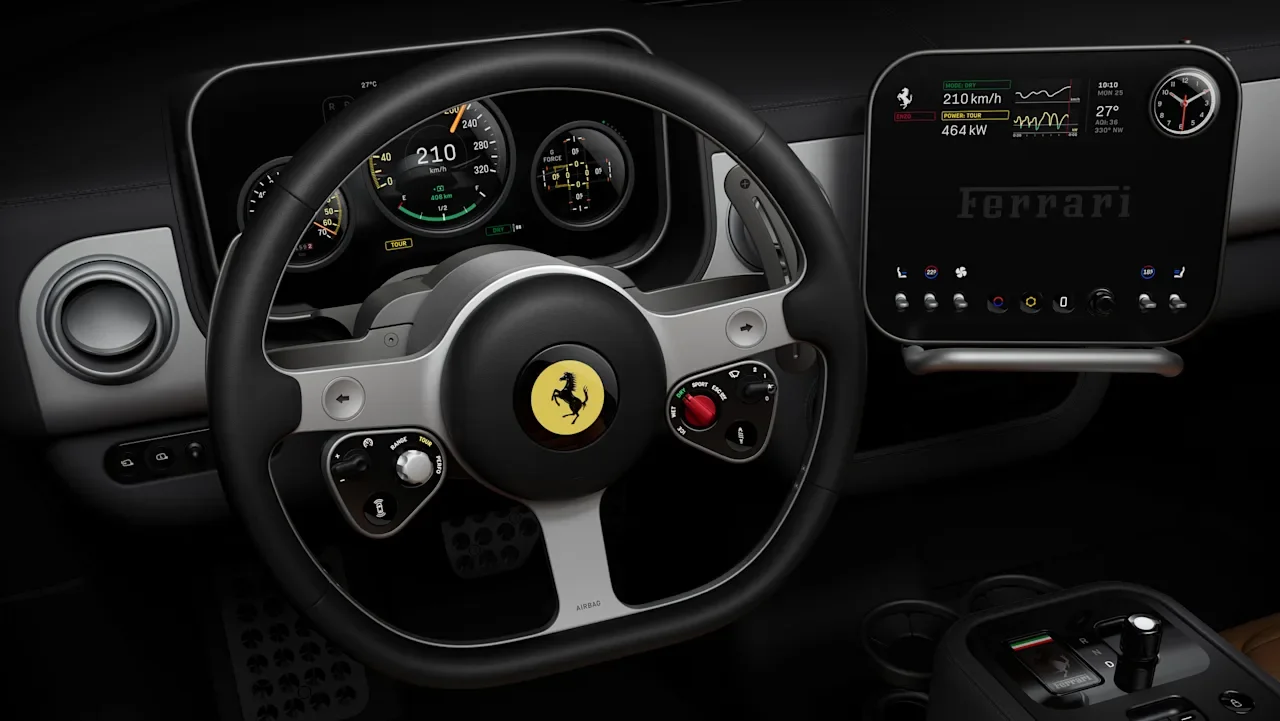
I hold the key to the Ferrari in my hand. I press it, like a puzzle piece, into a notch by my right hip. Yellow fades from the key as the hue enters the shifter and the dashboard comes to life with a wave of yellow. I’m enchanted. My foot can’t wait to slam down on the pedal. The only thing I’m missing is . . . the entire rest of the car. Even for a legendary automaker launching its first EV, it was a preposterous pitch: Ferrari’s big car reveal would not show the car. And it wouldn’t show the car’s interior, either. Instead, journalists were asked to fly—some of them halfway across the world—to scope out a steering wheel, a few chunks of dashboard, a center console, and a seat. I can count the designers I’d do that for, not on one hand, but on one finger. As it happens, that was the designer pointing the way. While the world will never get a ride in Jony Ive’s long lost Apple Car, they will get a spiritual sequel with a 1,000+ horsepower upgrade, Jony Ive’s spin on Ferrari. Ferrari meets Silicon Valley Designed over the last five years with the firm LoveFrom, the Ferrari “Luce” (translation to “light” or “illumination”) is a generationally important car for the Italian automaker as it transitions to an electric future. Everything from the car’s form, to its layout, to its buttons, to an e-ink key that’s the size and shape of a Zippo lighter, to the vehicle’s interface and typeface, was designed through the gaze of the San Francisco firm. It’s nearly impossible to ignore the Venn diagram between Ferrari’s first electric vehicle and the golden era of Apple products. And you certainly don’t need to squint to spot some of Ive’s favorite materials, like the prominent use of anodized aluminum and Gorilla Glass across the components. But this outcome seems largely by Italy’s own design. Ferrari’s CEO, Benedetto Vigna, spent two decades on semiconductors before turning to Italian supercars in 2021. He wants to carve a future for Ferrari in a rapidly changing world, and also crack the code to court new customers, like Silicon Valley billionaires, to spend some of their fortune on cars. The project—to be fully revealed later this year before shipping in October—was led by the aforementioned Ive and Marc Newson. Before co-founding LoveFrom, they were best friends for decades, and collaborators on projects ranging from a 1.5-ton desk auctioned for charity to the Apple Watch. Ive, of course, defined the modern era by designing products ranging from the iMac to the iPhone. While Newson, a lesser-known name in Apple history, is a star in his own rite. He’s also an almost archetypal designer to reimagine a luxury automaker. Long before he posted his own exploits racing vintage cars on his Instagram, he crafted just about every object imaginable (including a public bathroom for Japan, Nikes built for space, and the influential Ford 021C), with a particular penchant for high-end brands. His Lockheed Lounge is still the most expensive piece of furniture ever sold by a living designer. (Get a deep look into his career and design process here.) Backing the two of them, of course, are the industrial, UX, mechanical, and graphic design experts at LoveFrom—many of whom worked with Ive during his days at Apple. Ive, as it turns out, had good reason for extending the hype cycle for LoveFrom’s first major client outside of Apple. If they showed the body of the Luce now, it’s all anyone would notice. Meanwhile, LoveFrom has been working for years on dozens of components inside the car, each of which they treated as beloved products all their own. Ferrari’s chief design officer, Flavio Manzoni, frames the Luce as something of a capsule project that’s independent from Ferrari’s full lineup, which offered LoveFrom license to create a thesis that can live self-contained. “This is very inspiring, and certainly will influence everything [we do],” says Manzoni. “But it also must be kept as something really singular and unique. Everything has been done interpreting the soul of a very special car.” Deconstructed and organized atop white tables during the preview, I could appreciate not only the Luce’s components like its wheel, but its subcomponents of knobs, switches, and paddles—perhaps a dozen different buttons each offering their own feeling. With nested, CNCd aluminum housings, you can almost see a watch, or a game controller, or just some irresistibly interesting thingamabob living harmoniously inside another. The vehicle is an ecosystem of mini gadgets. Pulse-rocketing supercars couldn’t be more disparate from the ever-serene atmosphere inside LoveFrom’s San Francisco studio, where fresh cut flowers casually adorn each nook. As I sit with Ive and Newson at a long white table, upon soft blue, yellow, and orange stools mirrored by their Moncler collection at the far end of the room, the duo conjures a whole other thought space, riffing on their high-octane handiwork. “We really wanted every part, every component, to be designed as an individual product. So it’s like dozens and dozens of cameras and watches. The idea [was] we could spend the time and invest the care on every part and have it work,” says Ive. “Even the forms are very self-contained and modular.” The components, as it turned out, are worth talking about. As the auto industry inevitably transitions to electric, LoveFrom’s design team created a love letter to tactile interface, offer solutions to blending digital and physical experiences in the vehicle, and tease the sort of auteur-driven work that’s disappeared in an increasingly blanded and averaged automotive industry that sold its soul chasing Tesla. “We’re very aware that we love the sounds of our big old Ferrari engines,” says Ive. “And so rather than trying to figure out some sort of surrogate or something inauthentic to [compensate], we worked so hard to try and create as visceral and direct connection with the object [as possible].” Focusing the driver’s experience A Ferrari is a driver’s car, and without looking around at any other spectacle in the Luce, the driver experience has been designed for focus. It begins with the car’s seats, which seem plucked from somewhere between a race car and a living room. After sinking into them, drivers place their key into the console, and they take the wheel. Most wheels tilt up and down independently from the car’s instrument panel, making it sometimes difficult to be comfortable while having a clear line of sight through the wheel to your gauges. But the Luce moves this entire rig as one unified gesture: The wheel, steering column, and instrument panel shift as one. (What I hear was a particular engineering challenge for both safety and mitigating vibration.) The wheel feels like a natural conclusion to Ferrari’s last few generations of fussing with its own icon. The manufacturer added controversial touch capabilities in 2019, before reversing course last year with a modernized, more mechanical option that can be retrofitted into older vehicles. The LoveFrom wheel reads rounder all around, veering more toward vintage Ferrari than an oblong reference to F1. Its aluminum core is earnestly exposed rather than obfuscated in leathers and rubber. The controls gently reorganize Ferrari mainstays, like the bold red Manettino dial (to adjust your driving mode), into something you feel like your brain can process alongside new touches like left and right buttons (they’re turn signals). The instrument panel—or binnacle—is not just a wide screen with widgety virtual controls: it’s a collection of four screens. Three round screens, making up the speedometer and other dials, live recessed inside a fourth screen. Lenses and parallax effects give the panels additional depth and physicality. But that physicality is more than an illusion of pixels and refraction: the speedometer needle is real. The combined effect will be something drivers haven’t exactly seen or felt before, punctuated by a pared back interface that tells most of the story through the three hues of the Tricolore—without it feeling like a trip through our grocery store’s international aisle. Chris Wilson, who you know for his work on the Apple Watch UI, worked with Ferrari engineers to marry onscreen UX with its new torque shifting technology. While electric motors require no shifting, pulling the paddle on the left side of the wheel provides a virtual downshift (turning the dial green while motors slow the car to recoup energy). When it’s time for an extra jolt of power, the interface blinks red, and you pull the paddle on the right. Meanwhile, the numbers you see on the instrument panel are part of a new typeface family called “LF Maranello” designed by LoveFrom’s Antonio Cavedoni, who worked alongside Wilson on Apple’s San Francisco typeface before making LoveFrom’s own. Bucking the wide stance letters Ferrari is known for, the clean san serif is an amalgamation of midcentury Ferrari engine stamping, the numbers on old Ferrari dials (themselves often plucked from whatever watch manufactures were already using), and local signage from Ferrari’s hometown of Maranello. With the slightest expressive indulgences—a curvy flag on the 1, a short stem on the 4—it manages to look vintage and contemporary at the same time. “The hardware is geometrically perfect,” says Cavedoni. “But here, we can do anything.” Fixing human factors at high speeds Over two days of previews, Ive doesn’t mince words about the influential approach Tesla has taken, in which, through some desperate attempt to create sci-fi mystery, the vehicles mask the simplest functions. One such example is the way a Tesla handles its gaspers (that’s the technical term for the fans built into the dash). Whereas Tesla literally hides them so well you can only control them via a screen, LoveFrom’s gaspers almost glow. With spherical aluminum bodies, they could double as Macbook satellite speakers. You twist a ring, and a visible, central flap swings open or closes with a satisfying click. You don’t need to dig through a UI, or even squint to look for an “X” symbol on some dial on the dash. The object explains itself. “Clarity is so important. Not only in terms of physical interaction, but intellectual clarity,” says Newson. Since Elon Musk stuck what Ive calls “an iPad” into the center of a Tesla, a disjointed center screen has increasingly taxed the experience of driving. It’s why I was perhaps the most and least surprised by LoveFrom’s choice to have a tablet in the center of the vehicle. However, Luce’s tablet is foundationally different. It’s entirely unnecessary for driving, and, perhaps ironically, a screen that’s usable without looking at it. The tablet sits atop a large aluminum handle, which allows you to tilt the screen or blindedly rest your palm for a point of reference. That handle also adds impact protection from a series of aluminum toggle switches that live in the bottom of the display, managing tasks like climate control and seat warming. Yes, these switches appear straight out of midcentury Ferrari design language. And yes, LoveFrom produced four thick books charting the history of Ferrari gifted to the company at the start of their collaboration. But the team bristles when I characterize the choice for toggle switches as an homage. Newson points out the toggle itself is a known typology, “because it’s the best tool for the job.” That’s why it’s in the Luce and all sorts of vintage control panels, he notes—and that’s also why we innately think toggles are so cool. “If you look at helicopters from the ‘50s, ‘60s, they weren’t screwed up with design,” says Ive. “Their beauty was a function of them being so brilliantly utilitarian. And I think so often stuff just gets ugly when design gets in the way.” Setting the stage for performance But that’s not to say the Luce is some unflinching commitment to minimalism, or that a serious commitment to craft requires the driver to never crack a smile. In the upper right hand corner of that tablet is a “multigraph.” At a glance, it looks like a clock with physical minute and hour hands that could be straight out of a fine timepiece. But a split second later, it can turn into a compass or one of two stopwatches (in 60-second, and 5-second launch variants). Unlike typical timepieces, the hands will spin independently from one another, animating in an unexpected way. Is this touch purely about function? Ha! Of course not—a virtual clock could appear on the screen in the same spot. It’s LoveFrom stunting, taking its own metaphorical Ferrari out of the garage and bringing fans along for the ride. “We’re introducing an impediment…an engineering challenge, but it makes it way more engaging,” says Ive, before holding his own iPhone into the air looking like an Uber driver scanning for their next ride. “Or it could just be [that] mounted.” We see a similar celebration of driver engagement with Luce’s launch control. This is a setting that preps the car, the battery, and the driver to coax the maximum straight-line power for acceleration. Instead of pressing a button on the wheel, this new launch control requires the driver to hold the brake while reaching above their head and pull on a cylindrical, pneumatic handle. After a few seconds, I’m told, the car’s entire cabin lights up orange, enlisting everyone into the vehicle to hold on with dramatic flare. Back in LoveFrom’s studio, Ive and Newson deconstruct their code-orange approach. “The Ferrari brand is extremely visceral. And in some ways there’s a theatricality you really need to embrace,” says Newson. “So things like the launch control, things like the key ceremony—there’s a nice, ‘humor’ is the wrong word…” “…It’s tough to figure out the word for the yellow of the key translating into the car…I mean, it’s sort of funny,” chuckles Ive. “It’s fun—joyful. It needs to be,” says Newson. “No one needs a Ferrari, sorry to say, but you own a Ferrari, because it will just be a much more fun way of [driving].” “We love that there was such a focus on being fun and joyful to drive, and it’s like, no apology,” says Ive. View the full article

-
His presidency may eventually be seen as an aberration rather than a permanent shiftView the full article
-
Solopreneurs wear many different hats but also need to use a bewildering array of different tools to operate their businesses. Suppose everything from managing clients to handling projects to tracking expenses and more could be managed by just one app? ”So that’s why we have brought Zoho Solo as a single point solution,” says Ashok Ramamoorthy, Director of Product Management for Zoho Solo. Zoho launched this specialized freemium app in September 2024 in the U.S. and Canada specifically for solopreneurs like you. A paid version offers more robust features for $96 a year. Zoho Solo exists as a mobile app only with no current desktop version available. So download it from the appropriate app store depending on your device. The Pain Point Seems Pretty Obvious You might run a life coaching business from a spare room in Eugene, Oregon. Or maybe you offer a handyman service providing help to homeowners in Detroit, Michigan. In either case, you operate your business alone. And you use a ton of tools. You track clients and contacts across half a dozen social and messaging apps. You send invoices with one app, take payments with a second and do your bookkeeping on a third. The results include fragmented workflows, lack of seamless data exchange, manual processes reducing productivity and disconnected systems resulting in inefficiency. “They’ll be using at least ten to twelve tools to manage that business,” Ramamoorthy explains. And this explains precisely why the company built Zoho Solo in the first place. Too Many Tools and Too Little Time All these tools take too long to use because so often data must be taken from one and added into another manually. Automation often proves impossible because tools don’t belong to the same ecosystem or talk to one another. This also makes having a good overview of your business more problematic. “They’ll be using Google spreadsheets or maybe they may be using a free invoicing solution,” says Ramamoorthy. “But the problem here is the data doesn’t tie up together, which means you’ll not be able to identify at the end of the day which customer is paying you more, which task has taken you a longer time,” he states. One App to Replace Them All Zoho believes the answer involves uniting all these functions and more in one application. “So just imagine the power of this application where all the essential workflows, like all the essential data you need to run your business, are under one hood,” says Ramamoorthy. “Which means you can manage the work simultaneously. You can create invoices. You can typically do anything which helps you do your business more effectively.” he adds. “It’s a suite of essential business functions and all in one toolkit platform.” The company expresses the ambition to gradually make the evolving Zoho Solo into a single unifying replacement for those other tools. To get a better feel of just what Zoho Solo does, we take a deep dive into what’s on offer. Solve the Contact Conundrum First, Zoho Solo allows you to manage your business contacts all in one place. Think of this as a big digital rolodex … or a list of contacts on your phone. But in this case, you have more than just a list of names. Because Zoho Solo allows you to categorize them as partners, customers and leads. How cool is that? You now possess a 360 degree view of all your contacts and their relationships to your business. Take a look at how Zoho Solo helps you build and maintain that list. Collect Names at your Next Event Whether you work as a financial consultant in Milwaukee, Wisconsin or a tax attorney in San Antonio, Texas, you likely attend events and mixers. There you meet both potential clients and important connections who may prove vital to your business in the future. Don’t try to jot down a name and a contact number on a cocktail napkin – which you’ll be unable to decipher later. Instead, whip out your phone if you’ve already downloaded the Zoho Solo app. You’ll find a variety of options. Add Some Contacts with A Few Clicks Zoho One makes creating and segmenting your list simple. “So right now the application provides three ways to add your contacts. One is obviously a manual way of adding the name and other details,” says Ramamoorthy. When attending a chamber of commerce mixer or similar event, our financial consultant might meet potential partners like attorneys, CPAs and insurance specialists. While our tax attorney might meet partners like wealth managers, estate planners and tax preparation firms. Build and Segment Your List At the same event our financial consultant might meet with potential leads or clients like retirees, pre-retirees or professionals with young families. Meanwhile our tax attorney might bump into potential leads and clients including high net worth individuals, and business owners. Zoho Solo allows you to enter names, contact information and any other relevant details as easily as you might send a snarky text or selfie. Then segment these people into partners, clients and leads for later retrieval. Scan Your Contact Info Right From a Business Card Oh, and if contacts have business cards, that simplifies things even further. “The application provides an option to scan a business card and it automatically extracts the data out of it and they can act as a contact,” Ramamoorthy explains. No more stuffing business cards in your wallet or pockets. This also saves you time trying to organize business cards or manually transfer the information to digital later. Consolidate Your Digital Contacts But what if you already have a large collection of digital contacts spread over a number of digital platforms? Suppose you work as a fashion or lifestyle influencer in New York City or LA, for example. Contacts cram your LinkedIn, Facebook, Instagram and even Google Chat accounts. But they represent a mix of followers, potential sponsors, potential customers for your affiliate products and more. What if you want to consolidate all these into one big list? Well, so long as you load all these apps onto your phone, Zoho Solo makes this a breeze! “For example, assume that you have synced your Instagram contacts or synced your Google contacts,” explains Ramamoorthy. “It’s a single click to import from your phone into Zoho Solo. It is very easy.” Kick the Tires On These Other Features Look at these other features to make the life of a solopreneur easier. Zoho Solo makes it easier to manage projects. “When it comes to your work management, you can primarily log your job or tasks within the application,” Ramamoorth says. Imagine you serve as an SEO consultant for clients all over the world, a career coach with clients throughout North America or an attorney with clients mostly in Southern California. In each case, tracking your hours proves crucial to how you bill clients. ”In the case of consultants or in the case of coaches or lawyers, time is money for them,’” Ramamoorthy adds. Track Hours You Work For Clients Expertly Zoho Solo’s work management tool allows you an overview of your day in a single place. Log in and it starts tracking your hours. If you provide SEO services to clients, this might include providing a website audit examining a site’s crawlability, architecture, mobile friendliness and more. Deliverables would include a report with suggestions to improve both search ranking and user experience. If you run a career counseling service, you’ll spend time administrating and evaluating tests to assess a client’s suitable career paths. Your service may also include creation of an individualized job search strategy for your client and perhaps creating resumes and cover letters for them. Create a Billable Timesheet For Your Invoice All of this allows for creation of a billable timesheet which you can send to your clients. Zoho Solo does all this for you! Imagine the time you save and the productivity you gain. You now can add an itemized list of completed tasks with your invoice. And Zoho says more features are on the way. “In the future we will be bringing Meetings as a part of this so you can initiate client meetings within the application,” Ramamoorthy explains. “And with the help of the timer and Meetings you will be able to do efficient meetings and consulting.,” he adds. Bill and Collect Payments Whether you work as a virtual assistant in Edmonton, Alberta or a content creator in Little Rock, Arkansas, billing becomes a job in itself. A variety of third party software options allows you to create and send invoices. But going through your timesheet and creating an itemized invoice takes more time away from your main business. You operate as a solopreneur after all with no billing department or help of any kind. Fortunately, the free version of Zoho Solo allows you to create and send invoices with time sheets already created for you in the work management section of the app. “You can have your own logo, you can have your taxation number and it is local tax compliant,” Ramamoorthy says. Track Expenses With Ease Whether you work as a shared ride driver in Memphis, Tennessee, or a personal shopper in Albany, New York, you must track expenses. “When it comes to your business, it’s always very important to track your expenses because this is one place where you generally miss out where you’re losing money,” explains Ramamoorthy. Fortunately, Zoho Solo offers a unified way to scan receipts and record expenses even categorizing them by type. The app also offers a way to link expenses to specific clients or jobs. This allows you to see at a glance which clients or jobs cost the most and which are most profitable once subtracting your expenses. Integrate Third Party Payment Portals with Zoho Option Coming Soon When it comes to getting paid, Zoho Solo integrates with third party payment options like PayPal, Stripe, Verifone, Braintree, CSG Forte Payments, and Authorize.net. How does it work? Well, with the click of a button, you can integrate your existing payment portal with Zoho Solo. This means when you send your invoice a URL allows customers or clients to use a credit card or other payment of choice. And the payment will appear in your payment portal. Zoho Solo also plans to integrate its own Zoho Payments portal into the app as an alternative to third party options. Take Your Business’s Temperature Finally, Zoho Solo offers a way to create and customize reports to check on your business’s progress. For example, you might create reports showing income by customer or client, by profit and loss, or invoices by year or by month. This reporting system allows you to uncover insights including identifying your most valuable customers or most profitable times of the year. It can even help you see at a glance whether or not your business is truly profitable or how far you are away from profitability. The App Is Mightier than the Pen (and Paper) Truthfully, however, Zoho believes many of the top solopreneurs to benefit from Zoho Solo will be those who currently use no digital tools at all. In fact, Ramamoorthy explains one reason the company introduced a freemium app was to encourage more solopreneurs to move to a digital platform in the first place. “Solopreneurs use pen and paper to manage their business, so they are not growing effectively,” he explains. Zoho also candidly admits the aim of encouraging you to move to the more robust Zoho One or other Zoho packages as your business grows. Final Thoughts Whether you run a one person plumbing business in Fresno, California or a one person graphic design studio in Boise, Idaho, you wear a lot of hats. If you use a flurry of digital tools from PayPal to Microsoft Excel, you may suffer severe inefficiencies and lack of productivity. If your favorite business tool is still a legal pad and a ballpoint pen, you may face significantly greater challenges still. Fortunately, an answer exists. Download the free Zoho Solo app. Or spend a bit extra for the paid version. Start improving your productivity and getting a better picture of your business today. This article, "Zoho Solo Unifies Workflows for Busy Solopreneurs" was first published on Small Business Trends View the full article
-
Solopreneurs wear many different hats but also need to use a bewildering array of different tools to operate their businesses. Suppose everything from managing clients to handling projects to tracking expenses and more could be managed by just one app? ”So that’s why we have brought Zoho Solo as a single point solution,” says Ashok Ramamoorthy, Director of Product Management for Zoho Solo. Zoho launched this specialized freemium app in September 2024 in the U.S. and Canada specifically for solopreneurs like you. A paid version offers more robust features for $96 a year. Zoho Solo exists as a mobile app only with no current desktop version available. So download it from the appropriate app store depending on your device. The Pain Point Seems Pretty Obvious You might run a life coaching business from a spare room in Eugene, Oregon. Or maybe you offer a handyman service providing help to homeowners in Detroit, Michigan. In either case, you operate your business alone. And you use a ton of tools. You track clients and contacts across half a dozen social and messaging apps. You send invoices with one app, take payments with a second and do your bookkeeping on a third. The results include fragmented workflows, lack of seamless data exchange, manual processes reducing productivity and disconnected systems resulting in inefficiency. “They’ll be using at least ten to twelve tools to manage that business,” Ramamoorthy explains. And this explains precisely why the company built Zoho Solo in the first place. Too Many Tools and Too Little Time All these tools take too long to use because so often data must be taken from one and added into another manually. Automation often proves impossible because tools don’t belong to the same ecosystem or talk to one another. This also makes having a good overview of your business more problematic. “They’ll be using Google spreadsheets or maybe they may be using a free invoicing solution,” says Ramamoorthy. “But the problem here is the data doesn’t tie up together, which means you’ll not be able to identify at the end of the day which customer is paying you more, which task has taken you a longer time,” he states. One App to Replace Them All Zoho believes the answer involves uniting all these functions and more in one application. “So just imagine the power of this application where all the essential workflows, like all the essential data you need to run your business, are under one hood,” says Ramamoorthy. “Which means you can manage the work simultaneously. You can create invoices. You can typically do anything which helps you do your business more effectively.” he adds. “It’s a suite of essential business functions and all in one toolkit platform.” The company expresses the ambition to gradually make the evolving Zoho Solo into a single unifying replacement for those other tools. To get a better feel of just what Zoho Solo does, we take a deep dive into what’s on offer. Solve the Contact Conundrum First, Zoho Solo allows you to manage your business contacts all in one place. Think of this as a big digital rolodex … or a list of contacts on your phone. But in this case, you have more than just a list of names. Because Zoho Solo allows you to categorize them as partners, customers and leads. How cool is that? You now possess a 360 degree view of all your contacts and their relationships to your business. Take a look at how Zoho Solo helps you build and maintain that list. Collect Names at your Next Event Whether you work as a financial consultant in Milwaukee, Wisconsin or a tax attorney in San Antonio, Texas, you likely attend events and mixers. There you meet both potential clients and important connections who may prove vital to your business in the future. Don’t try to jot down a name and a contact number on a cocktail napkin – which you’ll be unable to decipher later. Instead, whip out your phone if you’ve already downloaded the Zoho Solo app. You’ll find a variety of options. Add Some Contacts with A Few Clicks Zoho One makes creating and segmenting your list simple. “So right now the application provides three ways to add your contacts. One is obviously a manual way of adding the name and other details,” says Ramamoorthy. When attending a chamber of commerce mixer or similar event, our financial consultant might meet potential partners like attorneys, CPAs and insurance specialists. While our tax attorney might meet partners like wealth managers, estate planners and tax preparation firms. Build and Segment Your List At the same event our financial consultant might meet with potential leads or clients like retirees, pre-retirees or professionals with young families. Meanwhile our tax attorney might bump into potential leads and clients including high net worth individuals, and business owners. Zoho Solo allows you to enter names, contact information and any other relevant details as easily as you might send a snarky text or selfie. Then segment these people into partners, clients and leads for later retrieval. Scan Your Contact Info Right From a Business Card Oh, and if contacts have business cards, that simplifies things even further. “The application provides an option to scan a business card and it automatically extracts the data out of it and they can act as a contact,” Ramamoorthy explains. No more stuffing business cards in your wallet or pockets. This also saves you time trying to organize business cards or manually transfer the information to digital later. Consolidate Your Digital Contacts But what if you already have a large collection of digital contacts spread over a number of digital platforms? Suppose you work as a fashion or lifestyle influencer in New York City or LA, for example. Contacts cram your LinkedIn, Facebook, Instagram and even Google Chat accounts. But they represent a mix of followers, potential sponsors, potential customers for your affiliate products and more. What if you want to consolidate all these into one big list? Well, so long as you load all these apps onto your phone, Zoho Solo makes this a breeze! “For example, assume that you have synced your Instagram contacts or synced your Google contacts,” explains Ramamoorthy. “It’s a single click to import from your phone into Zoho Solo. It is very easy.” Kick the Tires On These Other Features Look at these other features to make the life of a solopreneur easier. Zoho Solo makes it easier to manage projects. “When it comes to your work management, you can primarily log your job or tasks within the application,” Ramamoorth says. Imagine you serve as an SEO consultant for clients all over the world, a career coach with clients throughout North America or an attorney with clients mostly in Southern California. In each case, tracking your hours proves crucial to how you bill clients. ”In the case of consultants or in the case of coaches or lawyers, time is money for them,’” Ramamoorthy adds. Track Hours You Work For Clients Expertly Zoho Solo’s work management tool allows you an overview of your day in a single place. Log in and it starts tracking your hours. If you provide SEO services to clients, this might include providing a website audit examining a site’s crawlability, architecture, mobile friendliness and more. Deliverables would include a report with suggestions to improve both search ranking and user experience. If you run a career counseling service, you’ll spend time administrating and evaluating tests to assess a client’s suitable career paths. Your service may also include creation of an individualized job search strategy for your client and perhaps creating resumes and cover letters for them. Create a Billable Timesheet For Your Invoice All of this allows for creation of a billable timesheet which you can send to your clients. Zoho Solo does all this for you! Imagine the time you save and the productivity you gain. You now can add an itemized list of completed tasks with your invoice. And Zoho says more features are on the way. “In the future we will be bringing Meetings as a part of this so you can initiate client meetings within the application,” Ramamoorthy explains. “And with the help of the timer and Meetings you will be able to do efficient meetings and consulting.,” he adds. Bill and Collect Payments Whether you work as a virtual assistant in Edmonton, Alberta or a content creator in Little Rock, Arkansas, billing becomes a job in itself. A variety of third party software options allows you to create and send invoices. But going through your timesheet and creating an itemized invoice takes more time away from your main business. You operate as a solopreneur after all with no billing department or help of any kind. Fortunately, the free version of Zoho Solo allows you to create and send invoices with time sheets already created for you in the work management section of the app. “You can have your own logo, you can have your taxation number and it is local tax compliant,” Ramamoorthy says. Track Expenses With Ease Whether you work as a shared ride driver in Memphis, Tennessee, or a personal shopper in Albany, New York, you must track expenses. “When it comes to your business, it’s always very important to track your expenses because this is one place where you generally miss out where you’re losing money,” explains Ramamoorthy. Fortunately, Zoho Solo offers a unified way to scan receipts and record expenses even categorizing them by type. The app also offers a way to link expenses to specific clients or jobs. This allows you to see at a glance which clients or jobs cost the most and which are most profitable once subtracting your expenses. Integrate Third Party Payment Portals with Zoho Option Coming Soon When it comes to getting paid, Zoho Solo integrates with third party payment options like PayPal, Stripe, Verifone, Braintree, CSG Forte Payments, and Authorize.net. How does it work? Well, with the click of a button, you can integrate your existing payment portal with Zoho Solo. This means when you send your invoice a URL allows customers or clients to use a credit card or other payment of choice. And the payment will appear in your payment portal. Zoho Solo also plans to integrate its own Zoho Payments portal into the app as an alternative to third party options. Take Your Business’s Temperature Finally, Zoho Solo offers a way to create and customize reports to check on your business’s progress. For example, you might create reports showing income by customer or client, by profit and loss, or invoices by year or by month. This reporting system allows you to uncover insights including identifying your most valuable customers or most profitable times of the year. It can even help you see at a glance whether or not your business is truly profitable or how far you are away from profitability. The App Is Mightier than the Pen (and Paper) Truthfully, however, Zoho believes many of the top solopreneurs to benefit from Zoho Solo will be those who currently use no digital tools at all. In fact, Ramamoorthy explains one reason the company introduced a freemium app was to encourage more solopreneurs to move to a digital platform in the first place. “Solopreneurs use pen and paper to manage their business, so they are not growing effectively,” he explains. Zoho also candidly admits the aim of encouraging you to move to the more robust Zoho One or other Zoho packages as your business grows. Final Thoughts Whether you run a one person plumbing business in Fresno, California or a one person graphic design studio in Boise, Idaho, you wear a lot of hats. If you use a flurry of digital tools from PayPal to Microsoft Excel, you may suffer severe inefficiencies and lack of productivity. If your favorite business tool is still a legal pad and a ballpoint pen, you may face significantly greater challenges still. Fortunately, an answer exists. Download the free Zoho Solo app. Or spend a bit extra for the paid version. Start improving your productivity and getting a better picture of your business today. This article, "Zoho Solo Unifies Workflows for Busy Solopreneurs" was first published on Small Business Trends View the full article
-
My Non-Negotiable Mindset started with exercise, or more accurately, with not wanting to. That moment of resistance became a turning point in how I show up and follow through. I wasn’t lazy or undisciplined. I was human. And that’s when it clicked: if I only exercised when I felt like it, I’d never do it often enough to matter. So I made exercise non-negotiable, like brushing my teeth or showing up to teach a class. This commitment was to myself. No mood checks. No internal bargaining. No excuses. Four times a week, minimum. That was the contract. What changed wasn’t just my behavior; it was my identity. My thinking shifted from I need to exercise to I’m the kind of person who exercises. Commitment replaced motivation. Routine replaced inspiration. Once that clicked, I started applying the same logic everywhere I noticed myself negotiating. Why was I waiting for the perfect moment to write? Why did a project I already knew mattered require inspiration before action? What began as a personal experiment became something I couldn’t help but share. Years later, when I introduced this mindset to faculty I mentor through a national design-writing fellowship, it clicked for them, too. One day, I casually mentioned that I sometimes write on my laptop while on the elliptical or stationary bike. The room went quiet. Their expressions hovered somewhere between disbelief, admiration, and curiosity. We’ve been conditioned to believe meaningful work requires perfect conditions. It doesn’t. It just needs to happen. Not long after, I started hearing the same question on repeat: “How do you get so much writing done while working full-time and parenting?” The answer wasn’t superhuman discipline. It was decision design—deciding once, then removing the debate. High performers don’t rely on motivation; they make decisions their Future Self won’t regret. They design hesitation out of their day by asking one simple question before important choices: Will tomorrow’s me thank me for this—or have to clean up after it? The hidden cost of hesitation Most productivity systems treat hesitation as harmless. It isn’t. Every small internal debate—Should I start now or later? Email first or focus?—drains cognitive energy before meaningful work even begins. You don’t just lose minutes. You lose momentum, follow-through, and the ability to act decisively when it matters most. In organizations, this shows up as delayed launches, deferred decisions, and teams waiting for clarity that never quite arrives. This is why capable, motivated professionals struggle to execute: not because they lack discipline, but because they burn cognitive bandwidth negotiating instead of doing. The Non-Negotiable Mindset The solution isn’t more motivation. It’s fewer decisions. The Non-Negotiable Mindset eliminates hesitation by turning essential actions into pre-commitments: decisions made once and executed automatically. When something is non-negotiable, there’s no internal debate. You just do it. Most habit advice says to start small and repeat until the behavior becomes automatic. The Non-Negotiable Mindset reverses that logic. Automaticity comes first, not last. You block time on your calendar, show up, and act. An author writes because that’s what the writer version of herself does. An entrepreneur schedules investor outreach every Tuesday morning because their Future Self needs those relationships built. These people aren’t more disciplined than everyone else. They’ve stopped asking permission from their present-moment selves. We’ve been trying to solve a systems problem with motivational tools. This mindset flips that equation. Why Future-Self thinking beats willpower What makes this approach stick isn’t grit or self-control. It’s perspective. Your Future Self isn’t a distant stranger. It’s you, living with the consequences of today’s choices. Research by psychologist Hal Hershfield shows that the more connected people feel to their future selves, the more likely they are to make wise, long-term decisions. But the real shift happens when you don’t just think about your Future Self—you decide as your Future Self. Non-negotiables aren’t arbitrary rules. They are actions anchored to identity, not momentary comfort. When you ask What would my Future Self do? follow-through stops feeling optional. The decision is already locked in. A four-step execution framework You can implement the Non-Negotiable Mindset immediately: Identify what matters to your Future Self. Choose actions that compound over time. Not everything deserves non-negotiable status. Focus on the critical few. Systematize only what truly moves the needle. Automating everything creates rigidity. Act consistently, not reactively. Systems run whether you feel inspired or not. Consistency beats intensity. Make it non-negotiable. Remove the option to delay or debate. Flex the method if needed, but honor the commitment. When action becomes automatic, you free mental energy for creativity, judgment, and strategic thinking—the work humans still do better than machines. Why this matters now In 2026, competitive advantage will belong less to those with the best ideas and more to those who act on them consistently while others hesitate. As AI absorbs routine cognitive labor, human value increasingly depends on what machines can’t yet replicate: discernment, prioritization, and action under uncertainty. Your Future Self is building a company, leading a team, or creating meaningful work. That person needs you to act on what matters, now. This mindset isn’t about hustle. It’s about protecting what moves the needle from the daily erosion of indecision. It’s productivity designed for the attention economy, where the scarcest resource isn’t time, but the clarity to use it well. What to do today Think like your Future Self right now. Pick one action you’ve been negotiating with yourself about, something important you’ve been “meaning to get to.” Ask yourself: Six months from now, will I wish I had started today? Then decide once. Make it non-negotiable. Set a time. Remove the debate. The only question is whether you’ll decide as the person you are today or the person you’re becoming. Stop negotiating. Start doing. View the full article

-
Hello and welcome to Modern CEO! I’m Stephanie Mehta, CEO and chief content officer of Mansueto Ventures. Each week this newsletter explores inclusive approaches to leadership drawn from conversations with executives and entrepreneurs, and from the pages of Inc. and Fast Company. If you received this newsletter from a friend, you can sign up to get it yourself every Monday morning. I recently celebrated my 56th birthday, and I’m feeling my age. Not because I’m slowing down (which I am), but because I feel increasingly removed from the passions, peeves, and predilections of Gen Z and Generation Alpha. This matters, as young people shape popular and workplace cultures, and their tastes drive big swaths of consumer and tech spending—all things Inc. and Fast Company cover. To help me figure out how to stay tuned into their wants and needs, I asked six executives to share their strategies for staying ahead of the youth culture curve. They shared some interesting initiatives and resources in the edited insights that follow. Craig Brommers, chief marketing officer, American Eagle “At AE, we have a Gen Z panel, a group of our key consumers between the ages of 15 to 25 that help us test everything we do. They are excellent sounding boards for key marketing initiatives, product decisions, partnerships, and more. They help to drive insight into the consumer and also allow us to figure out what matters most to the people shopping our brand. “We also have a very large network of creators we work with at any given time. They are not just making content for us; they are teaching us. From the biggest macro influencer down to the most micro, the more creators we are working with the more patterns and trends we have seen emerge, even before they hit the mainstream feed.” Jackie Jantos, CEO, Hinge “I try to be very intentional about surrounding myself with folks whose lived experiences are different from my own, so I’m always learning. Humility, curiosity, and listening go a long way. I love newsletters, Substacks, and fiction—Willa Bennett, Casey Lewis, Shit You Should Care About, The Audacity, and Sylvain’s Progress Report are a few people and places I regularly return to for inspiration. “I’m [based] in New York City, so I get to walk the streets and ride the subway—you can learn a ton just from being out in the world and paying attention. But best of all, is this incredible Hinge team. The shortcut to staying current is to surround yourself with people different from you. The education and inspiration unfolds on its own.” Kory Marchisotto, chief marketing officer, E.l.f. Beauty “My intention word is ‘Shoshin’ [a Buddhist term] meaningfully chosen to remind me to wake up each day with a beginner’s mindset. Staying current is about showing up curious, staying grounded, and engaging with total presence. At E.l.f., 78% of our employee base is Gen Z or millennial, so culture is in the room with me every day. I am also an active member of our community. It’s me responding to every comment on LinkedIn, engaging in director dialog equally on TikTok lives, in social comment pools, and alongside the shoppers at shelf. Tuning E.l.f. into what gives people energy is my rocket fuel. Every conversation, every story, every connection is a new star in my constellation. It’s zero distance between me and the community we serve.” Maureen Polo, CEO, Hello Sunshine “Our Sunnie Gen Z Advisory Board functions as both a cultural council and a co-creation engine. They’re not a focus group; they’re collaborators who act as cultural translators between lived youth behavior and brand and creative strategy. We engage this group through regular working sessions, collaborative projects, and early-stage creative reviews. They help surface emerging trends, challenge assumptions, and shape concepts before they’re finalized. “With our brand partners, we collaborate on insight, not just activation, using shared learnings to co-create platforms that feel culturally meaningful and deliver unforgettable consumer experiences. This is how we’ve approached building Sunnie and Sunnie Reads alongside partners like E.l.f. Beauty, If/Then, an initiative of Lyda Hill Philanthropies, Purdue University, Victoria’s Secret Pink, Invisalign, and Coach: grounding creativity in real youth insight, inviting the audience into the process and building ecosystems rather than campaigns.” Josh Rosenberg, CEO and cofounder, Day One Agency “Nearly 40% of the Day One team is Gen Z, and I learn so much from each of them—what they read, watch, and listen to, where they hang out and travel, how they’re embracing adulthood (or not!). We also host a youth insights focus group called Group Chat. It’s a Slack community made up of 75 Gen Zers from across the country who share their perspective on trends, headlines, or specific client asks—their thoughtful answers are an invaluable part of how we know what young people are actually thinking about, focused on. And then my other youth culture go-to is our good friend Casey Lewis, who tirelessly reports upon both Gen Z and Alpha in her daily After School Substack. We recently published a report on Gen Alpha in collaboration with Lewis.” Jane Wakely, chief consumer and marketing officer, chief growth officer, international foods, PepsiCo “For me, scrolling TikTok or Insta remains the fastest way to understand what’s resonating, what’s becoming a trend, what’s already passé, and what people are quietly rolling their eyes at. Looking for the weak signals and using data and tech to help create real foresight is key. I also have college-aged kids, which is maybe the most authentic insight you can have. They have no tolerance for anything that feels ‘try-hard’ or inauthentic, and just listening to how they talk, what they buy, what they share, what they laugh at, and what they ignore is incredibly insightful. Seeing through their eyes is so powerful. “At PepsiCo, we pair our instinctive read with constant cultural listening and rapid signal-sharing. Our teams are always tracking what’s bubbling up across social, sports, entertainment, and creator ecosystems, looking for momentum: what’s accelerating, what’s losing energy, and where sentiment is shifting. Those signals move quickly across our organization so our brands can make real-time decisions in how we show up in cultural moments, which creators we partner with, and how we adjust creative, media, and experiences.” Keeping up with Gen Z and Gen Alpha culture How do you keep current on youth culture? And what trends are you watching in 2026? I asked Brommers, Jantos, Marchisotto, Polo, Rosenberg, and Wakely to share their top trends, and I’ll publish them—along with reader insights—in an upcoming newsletter. Read and watch more: understanding the next generation Managing Gen Z: Fast Company’s 143-point guide for leaders What Gen Z really wants at work Gen Alpha may find the workplace even tougher than Gen Z does View the full article

-
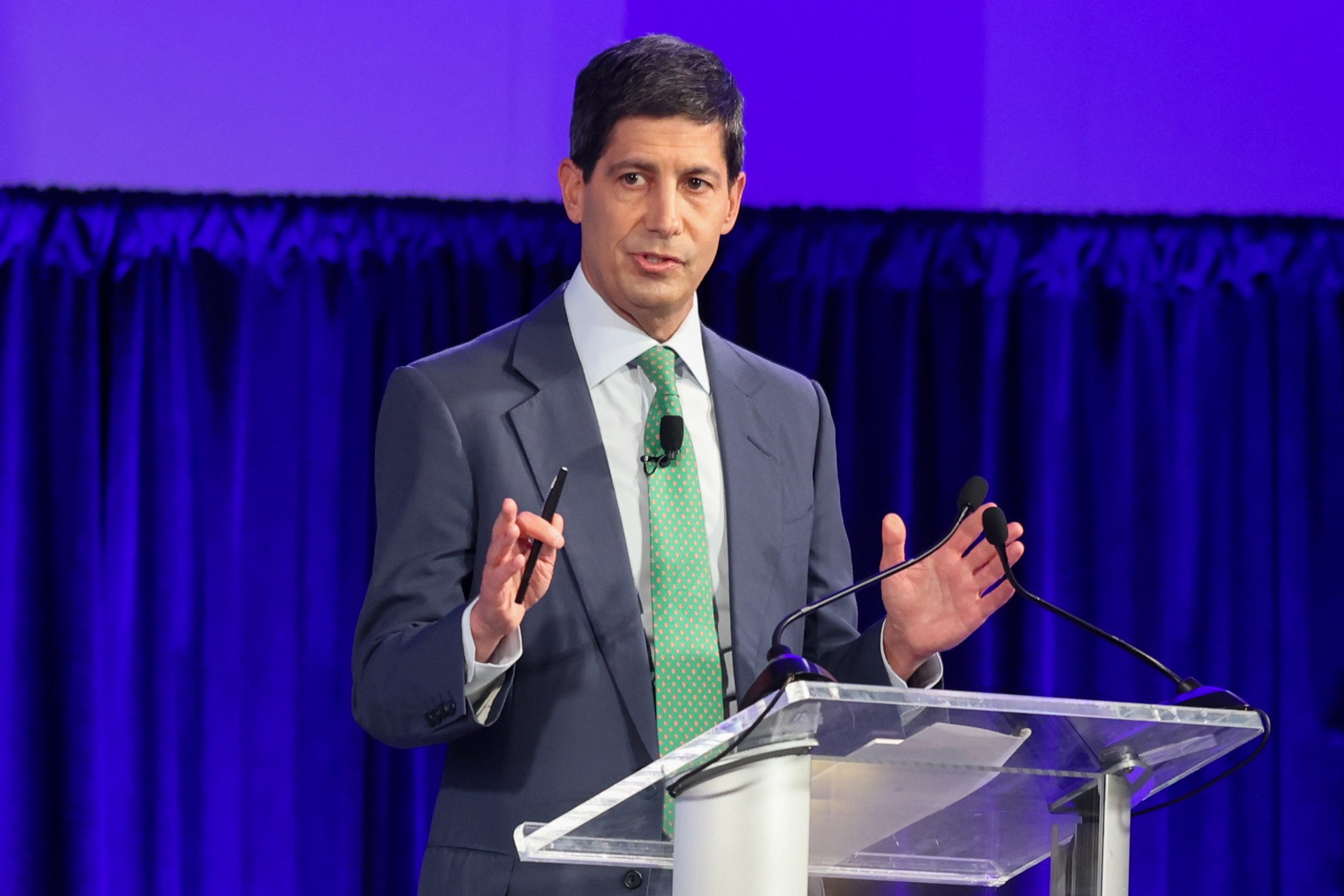
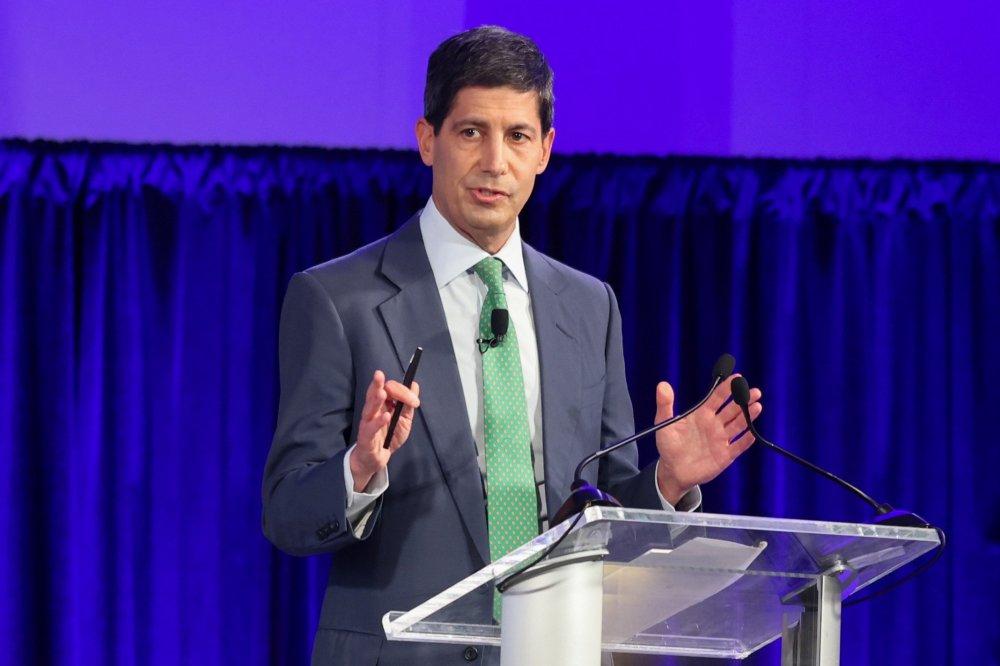
Kevin Warsh floated plenty of ideas for how he would run the Federal Reserve during his campaign for the job as chair. For Wall Street, few are as cryptic — or potentially consequential — as his call for a new accord with the Treasury Department. View the full article
-
Tim Allan resigns as Mandelson scandal intensifiesView the full article
-
Prime minister says she feels ‘heavy responsibility’ to strengthen country View the full article
-
A few leftover donuts may not seem like a major problem, but for a fast-food operation with nearly 100 stores, unnecessary waste can add up to serious costs. To better predict donut demand, a Knoxville, Tennessee–based Dunkin’ franchisee, Bluemont Group, has rolled out an AI system called Do’Cast designed to cut waste while keeping popular flavors in stock. Developed in partnership with restaurant AI company PreciTaste, the system uses in-store cameras to track inventory in real time and forecast demand for each type of donut. Those predictions factor in recent sales, weather, seasonal patterns, holidays, days of the week, and major local events such as college football games. So far, the companies say, Do’Cast has reduced donut and Munchkin donut hole waste by up to 25%, lowering costs while ensuring top-selling treats stay available. “Adjusting the product mix based on what the cameras are monitoring, I think that’s one of the sweet spots for this technology,” says Moritz Illi, PreciTaste’s head of product development and lead on the Do’Cast project. Bluemont operates about 99 Dunkin’ locations across multiple states, with donuts delivered to individual stores daily from a central bakery. Any unsold donuts are tossed at the end of the day, and before rolling out Do’Cast about seven months ago, the company saw an average of just under $100 per waste at each store per day, says Margo Hughes, Bluemont’s director of business services. That adds up to more than $3 million in discarded donuts each year, Hughes says. “Even to cut that in half is one-and-a-half-million dollars in savings,” she says. “That’s a big deal.” The system combines predictive modeling with image recognition, since workers in busy stores do not log each individual donut that goes out the door, particularly when customers order complex assortments. Hughes says she had read about other AI systems capable of identifying baked goods, including one used in Japan that can distinguish among hundreds of pastry varieties, and realized a similar approach could be trained to tell the difference between an Old Fashioned and a Chocolate Creme. PreciTaste, which got its start in Germany developing AI-powered oven technology that can automatically recognize different items and cook them on the correct settings, already had experience classifying baked goods. “They had rolls, and breads, and croissants, and whatever, and these are all brown,” says Hughes. “So, I thought, surely if they can identify breads, they can identify donuts.” The system now captures images of the donut display case several times a day so it can understand how store inventory shifts during the day and also records a definitive count of waste at the end of the day, as excess items are tossed in the trash. Having excess donuts is a waste of money, but running out of popular varieties—especially early in the day—is also a problem, and even being down to just one of a particular category isn’t ideal, since many customers are reluctant to buy the last donut, Hughes says. “This is where the cameras are so important to assess availability throughout the day that we react quickly to non-performant algorithms based on the product mix,” Illi says. The AI still isn’t perfect—humans at PreciTaste still supervise and validate the counts, Illi says, and store managers can communicate with the company to override the AI’s donut orders and suggest factors the system may be overlooking. It’s also still learning from new data about how different factors impact sales. Recent snowstorms led to drastically decreased demand, for instance, and changes in Dunkin’ product lineups can mean new varieties of donuts the system is unfamiliar with, so human managers may give better sales estimates for them at first. PreciTaste, which offers ingredient prep planning for a variety of restaurant types, holds weekly calls with Bluemont to discuss how the system is performing and how it can best be tweaked. The companies also hope to incorporate other factors that can help with production planning, like understanding which donuts can serve as substitutes for each other. “If you want chocolate, you’re not going to buy strawberries,” Hughes says. Hughes compares the process training the puppy she got around the time Bluemont rolled out the PreciTaste technology: “I know that in the long run, all the training and all the investment and all of the time is going to be worth it,” she says, “because we’re going to be best friends for life.” View the full article

-
It has been two weeks since Winter Storm Fern swept through the United States, and many cities are still busy digging themselves out of waist-high snow mountains. A brand-new building in Antarctica—where temperatures average 14 degrees Fahrenheit along the coast—might offer some useful insights for a more efficient approach. Perched on the southern edge of Adelaide, an island on the Antarctica Peninsula, the Discovery Building spans two stories and nearly 50,000 square feet. It is clad in highly insulated metal composite panels and topped with a mono-pitch roof that slopes in just one direction, so snow slides right off instead of piling up. Most notably: it sports an innovative feature called a wind deflector, which protrudes on the leeward edge of the building (the one sheltered from the prevailing wind) and prevents snow from piling up right next to the building. So far, the system has most commonly been used above doors to clear snow that would otherwise fall adjacent to the building, but the architects say it’s never been used at this scale before. The feature could change the way we design buildings for harsh climates. Design for extreme conditions The Discovery Building is located within Rothera Research Station—a center for marine and atmospheric studies and the UK’s largest research facility in Antarctica. (The station is famously served by one of the most advanced, icebreaking polar research vessels in the world, the RRS Sir David Attenborough, which itself carries the autonomous underwater vehicle Boaty McBoatface, of internet fame.) For years, the research station was spread across nine separate buildings, meaning researchers often had to navigate between them in blizzard conditions. Now, all functions are consolidated under one (very unique) roof, in a building that acts as the station’s nerve center. The Discovery Building was designed by British firm Hugh Broughton Architects, which, over the past decade, has a gained a reputation for designing buildings that exist in extreme conditions. In 2013, the firm completed Halley VI, a raised building that sits on a floating ice shelf. Mounted on hydraulic legs with retractable skis, the station was specifically designed to be relocated if the ice shelf showed signs of breaking off, which it did in 2017. The entire base was successfully moved 14 miles inland. Wiki Commons Halley VI, which went on to earn over a dozen awards, led to several commissions in other extreme, isolated environments, including a health center in the world’s most remote island, Tristan de Cunha, and Juan Carlos 1, a radial modular research base also on the Antarctic Peninsula. The firm is also currently designing a new building for the Australian Antarctic Division at Davis Station in East Antarctica. What keeps bringing Broughton back to such punishing conditions? “The briefs are interesting and challenging,” he says of the requirements and constraints such projects often demand. Over the years, Broughton has gained an understanding of the challenges that come with harsh climate of the Antarctic, but every site, he says, continues to bring with it its own set of complications and peculiarities, whether those are topographical, climate-related, or simply differences in the way the building is used. “I must admit, when we first started on Halley VI, I thought ‘is there any chance for a cookie cutter approach here?’ But there most definitely isn’t,” Broughton says. “Every site has its own idiosyncratic, environmental, but also cultural and social challenges.” The wind as a resource In the case of the Discovery Building at Rothera, which took six years to build due to the limited construction season (October-March), wind was one of the primary challenges. Lifting the building on stilts, like the architects did at Halley VI, would have helped the wind blow underneath the building and chase the snow away from it. But the building’s requirements—which called for workshops and science offices, a heating and power plant, a health facility, and stations that could serve as a launchpad for expeditions in the field—made it too heavy to be lifted. The need for constant vehicle access to stage expeditions also meant the building had to sit on the ground. The architects had to find another way to prevent snow from building up. To understand snow behavior in those particular windy conditions, Broughton’s team worked with Canadian engineering agency RWDI, which conducted detailed wind and snow modeling studies. It was RWDI that introduced Broughton to wind deflectors, which look a bit like angled metal fins and function like aerofoils in Formula One cars, redirecting airflow to work with the building rather than against it. By channeling wind down the facade and along the ground, the deflector transforms what would normally be a liability into an asset that actively clears snow. This means the building remains accessible, but also that snow doesn’t pile up right up against the facade, which could lead to damage. In a climate where blizzards can last for days, a wind deflector reduces the amount of effort needed to clear the snow, as well as the fuel required to power the snow plows. “There’s both a resource and a carbon cost,” says Broughton. Lessons from Antarctica There are currently 70 permanent research stations dotted around Antarctica, representing 29 countries from every continent on Earth. Many of these stations were built in the late 1950s, after the explosion of polar research that took place during the International Geophysical Year—an 18-month global scientific collaboration that involved more than 60 countries conducting coordinated research on Earth. After an initial renovation period in the ’80s, many of these buildings have been reaching the end of their lifespan. This, combined with an increased emphasis on climate change research, is leading to what Broughton calls a construction boom on the Antarctic Peninsula. “There’s also a geopolitical aspect to it,” he says. “Everybody wants to have a presence.” Antarctica is not under the sovereignty of any single country and is regarded as the “international continent.” Over the past few decades, scientists have become better at understanding how wind blows and snow drifts around a building, and as a result, Broughton’s team has become better at responding to these challenges. He thinks these lessons can carry over to the urbanized world. As climate change reinforces the strength and frequency of extreme weather events—like Fern in the U.S., and Storm Goretti in Europe—cities are scrambling to mobilize resources and clear snow. (New York City, for example, converted garbage trucks into snowplows.) Broughton believes that buildings where winters are harsh and winds are strong could benefit from relatively low-cost systems like wind deflectors, but he says there are other lessons architects can borrow from Antarctica. These include a focus on thermal efficiency by favoring air-tight envelopes instead of relying on heating, as well as efficient planning that means you’re achieving more with less built space. “There is a whole raft of principles that are applied to these buildings by absolute necessity that could be applied more by choice in a more temperate environment,” he says. View the full article

-
The monthly principal and interest payment needed to purchase the average-priced home dropped 7%, or $164, year over year to $2,091, according to ICE. View the full article
-
The lawsuit, which doesn't target UWM, accuses the REIT's CEO and board of directors of suspicious stock sales around the December announcement. View the full article
-
State regulators and attorneys general could be picking up the gauntlet on anti-kickback provision enforcement, especially in the mid-Atlantic states. View the full article

-
Last fall, I filmed a course for MasterClass. It’s mainly based on my book Slow Productivity, but there’s some Deep Work in there too. It’s called: “Rebuild Your Focus & Reclaim Your Time.” The course launched last week, so you should definitely check it out. It gets to the core of a lot of the topics we tackle in this newsletter about the intersection of technology and productivity, and it’s an incredibly polished final product. It’s actually this latter point that I want to talk a little bit more about today, as it sparks an interesting question about the future of online media more generally… One of the most striking things about working with MasterClass is its production values. I’ve been a guest on many major video podcasts (from Mel Robbins to Andrew Huberman to Rich Roll). These shows look good. They all have reasonable sets with diffused lights and three-camera setups. MasterClass, however, operates at another level. They use high-end TV-quality production crews. There’s a director, a cinematographer, and multiple camera operators distinct from the focus pullers, all of whom work with gaffers and grips, supported by production assistants. My make-up artist had recently worked on Sinners. In my career as a writer, I’ve been on TV before as a guest on morning shows and cable news programs, but this was as close as I’ll ever come to starring in a dramatic series or independent film. For me, this experience implied an important reality about the current state of visual media: there remains a non-trivial quality gap between independent video (e.g., as produced for YouTube) and legacy video (e.g., as produced for streaming platforms or linear television). This gap matters. Because these two categories still look different, we treat them distinctly. We’re willing to pay for access to content on Netflix, but we relegate the next rung down on the quality ladder to ad-supported general-use platforms like YouTube. But here’s what’s interesting about the near future: that difference is diminishing. MasterClass, for example, is not funded by a streaming service or television studio; however, they achieve streaming/TV-level production values. Other independent video producers are also closing this gap. This raises a key question: What will happen to video content as the difference between independent and legacy production value vanishes? We can see a glimpse of this future in a project that fascinates me: Dropout TV – also stylized online as :Dropout – which can best be described as a comedy streaming service. It costs $6.99 a month, which gains you access to a slate of original unscripted shows all filmed at a quality level indistinguishable from what you would find on, say, Netflix programs like Is it Cake? or Nailed It!. Except, they’re not Netflix. Dropout TV doesn’t have multi-billion dollar production budgets or massive venture capital backing. It grew out of the early 2000s website CollegeHumor.com. With the rise of YouTube, CollegeHumor turned more attention to producing content for the platform. But they were frustrated by a model that required them to live or die by a third-party algorithm and the whims of advertisers, so they eventually launched their own subscription app. Today, Dropout boasts over a million subscribers. I refer to this type of niche subscription service, defined by a combination of legacy-quality programming and a focused audience, as a micro-streamer. Keep an eye on this market segment. As it becomes easier to produce high-end video, more independent creators will leave the mass-aggregation platforms like YouTube and offer up targeted competition to the major streaming players. Who knows, maybe one day you’ll even have a Deep Life TV app next to Disney+ on your smart TV. Until then, however, you can get your fill of movie-quality Cal content over at MasterClass. The post What I Learned from MasterClass appeared first on Cal Newport. View the full article
-
Fashion weeks around the world are dominated by four main shows: New York, Paris, Milan, and London. But in 2020, Copenhagen Fashion Week (CPHFW) made a bold move that helped it garner attention. It launched a framework with nearly 20 sustainability standards that fashion brands must meet to participate. The choice came at a time when fashion’s sustainability practices were under increased scrutiny. Every year the industry contributes up to 10% of global carbon emissions, pollutes billions of cubic meters of clean water, and produces metric tons of textile waste. Copenhagen’s fashion week was applauded for its forward-thinking approach. However, over the next few years, that facade started to crack. Brands that had helped establish Copenhagen as an up-and-coming fashion mecca departed for bigger fashion weeks (see Ganni and Cecilie Bahnsen). And its sustainability claims came under fire. This year marks the 20th year of CPHFW, and with the anniversary, the city and its fashion scene are ready to double down on the idea that Copenhagen is one of the best cities for sustainable, emerging fashion. The sustainability debacle Danish anti-greenwashing specialist Tanja Gotthardsen and the Danish Consumer Council (Forbrugerrådet Tænk), as well as consultancy firm Continual, brought a complaint to Danish Consumer Ombudsman (that overlooks marketing and consumer protection laws) against CPHFW and some of its participants for greenwashing. It alleged the days-long Danish fashion event made misleading claims about its sustainability requirements, and the brand Baum und Pferdgarten admitted to failing to meet its pledge against polyester. While there could have been severe ramifications from the complaint, the Ombudsman ultimately dismissed it since CPHFW is not directly consumer facing and instead gave something of a warning to strengthen its oversight. “The dialogue with the Ombudsman was constructive and valuable, and it has allowed us to stay focused on further developing the Sustainability Requirements as a strong screening and development tool for the fashion industry,” Cecilie Thorsmark, Copenhagen Fashion Week’s CEO, tells Fast Company. As a result, the Fall/Winter 2026 season saw two new minimum standards “focusing on circular design principles and responsible purchasing practices, and overall, the bar has been raised across the existing Minimum Standards taking many of them from a commitment level to an actual implementation level.” It maintained its “green” reputation within the industry, too. It’s important to acknowledge that the most sustainable choice would be to not make new clothes, but that’s not realistic. CPHFW’s framework aims to tame the beast, encouraging upcycled materials, decreasing virgin plastic-based fiber use, and having transparent supply chains that aren’t fueled by exploited labor. For many designers gunning to show at CPHFW, this culture determines how they design, and they often work to incorporate framework tenets into their brand from day one. “It was very important for us that we had a thoughtful production from the beginning,” OpéraSport co-founder Awa Malina Stelter says. The contemporary womenswear brand, which she created in 2019 with Stephanie Gundelach, met the framework and survived the screening by CPHFW partner Rambøll on the first try. The impact of the sustainability-aware culture is also evident for Forza Collective’s Kristoffer Kongshaug. Four years ago when he started the brand, the founder and creative director says, “It was a given that if you were to start a brand, it had to be sustainable. You’re not doing it right if you leave that out of the conversation. Secondly, I wanted to be a part of the [CPHFW] calendar.” Exits and homecoming This go-round, some homegrown talent made a return. For the Fall/Winter 2026 show season, CPHFW debuted a “homecoming slot,” specifically targeting Nordic talents that left CPHFW to calendars in other cities. Brands returning to the event act as proofpoints that CPHFW can indeed help launch an emerging brand, and it remains a valuable place to keep growing. Oslo-born ready-to-wear label Holzweiler led in the inaugural spot, after a few year’s hiatus away from Copenhagen while showing at London Fashion Week. Andreas Holzweiler, co-founder of the label, says the team worked closely with Thorsmark for the return. “There was a shared understanding that returning should feel meaningful, not symbolic,” he says. “Leaving Copenhagen wasn’t about stepping away from the platform itself, but about following a natural progression at the time. London offered a different scale and challenged us in new ways,” Holzweiler tells Fast Company. “What brought us back was clarity. After taking time to strengthen the brand internally, Copenhagen feels aligned again with where we are today.” Its scale, he adds, feels best right now for the brand to cut through. Thorsmark doesn’t take brands leaving the schedule as an insult. “[It] underlines that we have built a platform that allows these brands to grow and thrive, which we are incredibly proud of, as well as being proud of these brilliant brands themselves,” she says. For other brands that have left the schedule and not returned to it, some have found ways to still have a CPHFW presence. Ganni, for example, put on an event with Disney. Leaving the schedule is often a business question and more about getting in front of the right people to sell the pieces and create culture. Staying or returning to CPHFW signals the right people are more consistently showing up in the Scandi city. More than a launchpad CPHFW is becoming a platform for emerging brands to start—and stay. It’s always been where you can “go and see the cool kids,” Forza Commercial Strategy Head Ariana Milton says. This is aided by the fact that the org is dedicated to emerging talent through programs like its Newtalent directive, which launched in 2022 and provides three seasons of support, including money, mentorship, and more. Its “One to Watch” label also helps the industry know who to keep an eye on. This all helps brands find their footing, and then what? Historically, they leave. “Five to ten years back in Copenhagen, it had always been like that the brands that grew big enough to leave would eventually do it,” Kongshaug explains. “[But] if we keep up the pace and the level of fashion that comes out of the city right now, there would probably not be any reason to leave because the right people are here. The exposure is here. Today, honestly, the platform is here.” For young brands like Nicklas Skovgaard’s eponymous line, founded in 2020, Copenhagen is home. It’s where he feels most creative and where he wants to stay. Plus, it seems to be working for the balance sheet. His womenswear label is already in several stockists across Europe, Asia, and the U.S. Another way it’s supporting its designers and new talents is by working more closely with the Copenhagen International Fashion Fair (CIFF), which takes place at the same time bi-annually and has expanded over recent years. To CIFF Director Sofie Dolva, the two group’s fates are intertwined. For both to succeed, and help boost Nordic fashion brands, it’s important they keep working together. The key is “to be close and to coordinate also with the schedule across so you get the right mix,” according to Dolva, who’s been at her post since 2022. “Both for us and Copenhagen Fashion Week, it is really important to support the new talents. Without the new talents and new brands showing some innovativeness, it gets boring. Our industry needs excitement and newness.” The Fall/Winter 2026 season was an example of how that can be done. Not only did the two orgs host events together and sync on timing so that buyers and press were in town for both, but many CPHFW designers, including those in the Newtalent program, had booths at CIFF. Two on-calendar labels, Forza Collective and Fine Chaos, even had their runway shows at the fair’s massive location just outside Copenhagen’s center. CIFF also plans to increase its partnerships with retailers, which could have a positive ripple effect on designers looking for wholesale partners. This season, it debuted a partnership with Milan’s 10 Corso Como, hosting a mini version of the conceptual store at the trade fair. Dolva says she wants to “go from a transactional relationship to a more partnership level [with retailers] because if we don’t work together, we will not win together.” For a homecoming Holzweiler, it’s about what you can get in the Danish city that the others, like Paris and London, can’t offer. “Copenhagen operates at a different scale,” he says. “It allows for more focus and continuity around the collections, which can be valuable depending on where you are as a brand. Both [larger and more intimate] contexts matter—they just create different conditions.” View the full article

-
When viewers tune in to the 2026 Winter Olympics, they will see pristine, white slopes, groomed tracks, and athletes racing over snow-covered landscapes, thanks in part to a storm that blanketed the mountain venues of the Italian Alps with fresh powder just in time. But at lower elevations, where cross-country and other events are held, athletes and organizers have been contending with rain; thin, sometimes slushy snow; and icy, machine-made surfaces. “Most of our races are on machine-made snow,” 2026 U.S. Olympic team cross-country skier Rosie Brennan told us ahead of the Games. “TV production is great at making it look like we are in wintry, snowy places, but this year has been particularly bad.” As scientists who study mountain snow, water resources, and the human impact of warming winters, we see winter’s changes through data: rising temperatures, shrinking snowpack, shorter snow seasons. Olympic athletes experience changing winter conditions personally, in ways the public and scientists rarely do. Lack of snowfall and more frequent rain affect when and where they can train, how they train and how dangerous the terrain can become. We talked with Brennan and cross-country skiers Ben Ogden and Jack Young as they were preparing for the 2026 Winter Games. Their experiences reflect what many athletes describe: a sport increasingly defined not by the variability of natural winter but by the reliability of industrialized snowmaking. What the cameras don’t show Snowmaking technology makes it possible to create halfpipes for freestyle snowboarding and skiing competitions. It also allows for races when natural snow is scarce—the 2022 Winter Olympics in Beijing relied entirely on machine-made snow for many races. However, machine-made snow creates a very different surface than natural snow, changing the race. In clouds, each unique snowflake shape is determined by the temperature and humidity. Once formed, the iconic star shape begins to slowly erode as its crystals become rounded spheres. In this way, natural snow provides a variety of textures and depths: soft powder after a storm, firm or brittle snow in cold weather, and slushy, wet snow during rain or melt events. Machine-made snow varies less in texture or quality. It begins and ends its life as an ice pellet surrounded by a thin film of liquid water. That makes it slower to change, easier to shape, and, once frozen, it hardens in place. “They’re faster, icier, and carry more risk” When artificial snow is being made, the sound is piercing—a high-pitched hiss roars from the pressurized nozzles of snow guns. These guns spew water mixed with compressed air, and it freezes upon contact with the cold air outside, creating small, dense ice particles. The drops sting exposed skin, as one of us, Agnes Macy, knows well as a former competitive skier. Snow machines then push out artificial snow onto the racecourse. Often, the trails are the only ribbons of snow in sight—a white strip surrounded by brown mud and dead grass. “Courses built for natural snow feel completely different when covered in man-made snow,” Brennan, 37, said. “They’re faster, icier, and carry more risk than anyone might imagine for cross-country skiing.” There’s nothing quite like skiing on fresh snow. After a storm brings a blanket of light, fluffy powder, it can almost feel as though you’re floating. The snow is forgiving. On artificial snow, skiers carry more speed into downhill runs. Downhill racers may relish the speed, but cross-country skis don’t have metal edges like downhill skis do, so step-turning or skidding around fast, icy corners can make an athlete feel out of control. It “requires a different style of skiing, skill sets and strengths than I grew up learning,” Brennan said. How athletes adapt, with help from science Athletes must adjust their technique and prepare their skis differently, depending on the snow conditions. At elite levels, this is science. Snow crystal morphology, temperature, ski base material and structure, ski stiffness, skier technique, and environmental conditions all interact to determine an athlete’s speed. Before cross-country, or Nordic, races, ski technicians compare multiple ski pairs prepared with different base surfaces and waxes. They evaluate how quickly each ski glides and how long it maintains that glide—traits that depend on the friction between the ski and the snow. Compared to natural snow, machine-made snow generally provides a more durable and longer-lasting surface. In cross-country racing, that allows for more efficient and stronger pushes without skis or poles sinking deep into snow. Additionally, improvements in the machines used to groom snow now provide harder and more homogeneous surfaces that permit faster skiing. While fast skiing is the goal, ski crashes are also the most common cause of injury in the Winter Olympics. With machine-made snow, ski jump competitors and anyone who falls is also landing on a harder surface, which can increase the risk of injury. Why winters are changing Weather can always deal surprises, but long-term climate trends are shifting what can be expected of a typical winter. In the Alps, air temperature has increased by about 3.6 degrees Fahrenheit since the late 1800s, before rising fossil fuel use began increasing the levels of greenhouse gases trapping heat in the atmosphere. Globally, 2025 was the third-warmest year on record, following 2024 and 2023. For mountain regions, these warmer conditions have consequences. Snow melts earlier and more frequently in midwinter, especially during warm spells that used to be rare. Midwinter snowmelt events are occurring more often at higher elevations and earlier in the season across many mountain ranges of western North America. At the same time, the snow line—the elevation where precipitation shifts from snow to rain—is moving upslope. Warming in high mountain environments is also causing the threshold where rain turns to snow to rise by tens of meters per decade in some regions. This means storms that once blanketed entire valleys in snow now may deliver snow only to upper slopes, with rain falling below. Together, these changes mean that many winter storms produce less snow, over less area, and for shorter durations than they did a generation ago. Training venues The changing winter landscape has also transformed how athletes train. Traditional training venues, such as glaciers once used for summer skiing, have become unreliable. In August 2025, the Hintertux Glacier—the only year-round training center operating in Austria—announced its first temporary closure. “It’s been increasingly hard to make plans for locations to train between races,” Brennan said. “Snow reliability isn’t great in many places. We often rely on going to higher elevations for a better chance of snow.” Higher-elevation training can help, but it concentrates athletes in fewer places, reduces access for younger skiers due to the remoteness and raises costs for national teams. Some of these glaciers—like Canada’s Haig Glacier or Alaska’s Eagle Glacier—are accessible only by helicopter. When skiers can’t get to snow, dryland training on rollerskis is one of the only options. Winter athletes see the climate changing Because winter is their workplace, athletes often notice subtle changes before those changes show up in long-term statistics. Even athletes in their early twenties, like Young, said they have noticed the rapid expansion of snowmaking infrastructure at many racing venues in recent years. Snowmaking requires large amounts of energy and water. It is also a clear sign that organizers see winters becoming less dependable. Athletes also witness how communities are affected when poor snow conditions mean fewer visitors. “In the Alps, when conditions are bad, it is obvious how much it affects the communities,” Ogden, 25, said. “Their tourism-based livelihoods are so often negatively affected, and their quality of life changes.” Many winter athletes are speaking publicly about their concerns. Groups such as Protect Our Winters, founded by professional snowboarder Jeremy Jones, work to advance policies that protect outdoor places for future generations. A wintry look, but an uncertain future For athletes at the 2026 Olympics, the variability within the Olympic region—snow at higher elevations, rain at lower ones—reflects a broader truth: The stability of winter is diminishing. Athletes know this better than anyone. They race in it. They train in it. They depend on it. The Winter Games will go on this year. The snow will look good on television. But at the same time, winter is changing. Keith Musselman is an assistant professor in geography, mountain hydrology, and climate change at the University of Colorado Boulder. Agnes Macy is a graduate student in geography at the University of Colorado Boulder. This article is republished from The Conversation under a Creative Commons license. Read the original article. View the full article

-
Time could be up for TikTok’s metronomic For You feed, which pushes videos to users with clock-like accuracy. The endless scroll that defines the TikTok experience has been flagged as part of a broader set of features that make the app addictive by design, according to the European Commission. The regulator has issued a preliminary decision under the Digital Services Act, a sweeping piece of tech regulation, arguing that TikTok has not done enough to mitigate the risk of user addiction tied to those features. European regulators have asked TikTok to tweak the offending system, along with others, to make the app less addictive or face fines of up to 6% of parent company ByteDance’s total annual turnover, reportedly forecast at $186 billion in 2025. Under the terms of the Digital Services Act, TikTok has the right to respond to the European Commission’s preliminary decision and to contest it. A TikTok spokesperson tells Fast Company that the company “will take whatever steps are necessary to challenge these findings through every means available to us.” If TikTok does push back and the two sides remain at odds, the result could be a prolonged standoff. “I am fearing that this will become a game of cat and mouse, but we will see I am interested and watching and grabbing the popcorn,” says Carolina Are, a social media researcher at the London School of Economics. Still, some observers believe there is a real chance TikTok ultimately bends to the EU’s demands. “This is the future of enforcement action in the EU,” says Lilian Edwards, director of Pangloss Consulting and a law professor at Newcastle University. Edwards notes that EU legislation such as the Digital Markets Act, the Digital Services Act, and the AI Act is not designed primarily to generate fines that “companies can shrug off.” Instead, the goal is to force “actual design changes to become less addictive and less toxic especially to children,” she says. She also points out that “companies have made changes for EU markets in the past though never at such fundamental design levels.” There is precedent for TikTok accommodating political pressure to alter how its app operates, including in the very recent past. In the United States, TikTok moved toward partial U.S. ownership to satisfy a law enforced by the The President administration, a reminder that compromise for continued operation is already part of the company’s playbook. “What we saw with TikTok and the United States deal, recently, is that the app will change to continue operations,” says Jess Maddox, a social media expert at the University of Georgia. “This EU ruling is not an exception, so this could mark the end of the endless scroll, at least for minors. I could see TikTok then going the way of YouTube, with YouTube Kids, or even teen accounts with Instagram.” Such changes could also extend to region-specific versions of the app, depending on where users live. Tama Leaver, a professor of social media at Curtin University in Australia, argues that this has already happened to some degree under the U.S. compromise deal. That alone would represent a significant shift. But the ripple effects could go further if TikTok concedes ground under the Digital Services Act. “It’s an interesting moment for the architecture, considering that every other platform has to [potentially] redesign and tweak as well,” says Leaver. If TikTok’s endless scrolling feed is deemed addictive by law, other platforms could soon face similar scrutiny. That prospect marks a turning point, says social media analyst Matt Navarra. “If this holds, infinite scroll, auto-play, frictionless feeds could become legally risky for the platforms, and not just ethically dubious,” he says. “I think the EU’s […] pretty much saying, ‘If your design patterns override self-regulation in young users, we’re going to consider that systemic harm.’” The consequences could extend far beyond TikTok alone. They could end up reshaping social media norms entirely. “And I think,” Navarra adds, “that’s quite a bold and some might argue long overdue statement.” View the full article
-
MacKenzie Scott helped build one of the most recognizable companies in modern history—all while writing her first novel. As Amazon scaled from a fledging startup to a global force, Scott was simultaneously cultivating a literary life. Long before Amazon, Scott launched her literary career. While studying creative writing at Princeton University, Scott landed herself a highly coveted spot as one of Toni Morrison’s advisees, a relationship that would shape her literary pursuits. “This writer that I admired so much also turned out to be such a gifted and devoted teacher,” Scott said at the dedication for Princeton’s Morrison Hall. “She has given me a real example of a life of passionate devotion to more than one calling.” For some time, those callings competed. In Amazon’s early years, Scott’s writing necessarily receded as she supported the company’s founding and expansion. But by 1996, she stepped into a less involved role, carving out space for her literary ambitions and for her family. She consequently forged a slow, deliberate writing life. And after a decade of work—balanced alongside raising her children and supporting Amazon’s growth—Scott published her debut novel, The Testing of Luther Albright. Morrison continued to mentor her through the process, offering advice and encouragement. “Your hand is sure, your technical ability sophisticated,” Morrison said, according to Howard University. “Don’t worry about overdoing it at this point. It is so much easier to cut back than to write up.” Morrison’s mentorship proved pivotal, as Scott went on to win the American Book Award for her novel, cementing her literary career. Morrison, however, was not the only writer to leave a lasting imprint. In her Giving Pledge letter years later, Scott returned to The Writing Life by Annie Dillard, a slim meditation on the discipline and solitude of writing with no promise of success. Scott rediscovered the book on a shelf of college-era favorites, its pages underlined and started. One passage, in particular, stuck with her. For Scott, the advice was no longer just about writing. It became a framework for philanthropy. “I have no doubt that tremendous value comes when people act quickly on the impulse to give,” she wrote in her pledge letter. The same philosophy that propelled Scott’s literary success also undergirds her philanthropic pursuits, treating wealth not as something to preserve, but as something meant to be spent with intention. —By Leila Sheridan This article originally appeared on Fast Company’s sister site, Inc.com. Inc. is the voice of the American entrepreneur. We inspire, inform, and document the most fascinating people in business: the risk-takers, the innovators, and the ultra-driven go-getters that represent the most dynamic force in the American economy. View the full article
-
When Obvious Ventures launched 12 years ago with a focus on “world positive” companies, the idea was a contrarian bet: that startups tackling climate, health, and economic resilience could deliver big returns, not just feel-good impact. Founded by Twitter cofounder Ev Williams and others, the firm backed companies like Beyond Meat, the AI drug discovery company Recursion Pharmaceuticals, and Diamond Foundry, which makes sustainable lab-grown diamonds. By 2020, other VC firms had gotten into the climate investing space, and overall investment in climate tech surged. Now, as the The President administration rolls out anti-climate policy and some investors retreat, Obvious is leaning in. Fresh off closing its fifth fund—at the precise figure of $360,360,360—the firm remains bullish. We talked to managing director Andrew Beebe about how Obvious has grown—and the current state of climate investing in the age of The President. ‘World positive’ investing went mainstream In the beginning, Obvious’s approach was unusual. “We started with this basic idea that the biggest companies of our time are going to be those that solve the world’s biggest problems,” Beebe says. Some people misunderstood it as “impact investing” that would only have concessionary returns. But Obvious was thinking differently: the thesis was that solving global challenges could drive financial success. Over time, as Obvious Ventures had early successes with companies like Beyond Meat, a growing number of investors moved in the same direction. (Beyond Meat has since struggled, but had the best-performing IPO in the U.S. in 2019.) “Twelve years forward, we’ve had many venture firms copy, or let’s say lift, some of our language,” Beebe says. “But we appreciate that. We definitely consider imitation a sincere form of flattery. And because of that, but also because of the successes of these early companies, it’s been easier to explain what ‘world positive’ means. That’s important with limited partners. But it’s also really important with founders, so that we are not just getting, you know, sort of a yoga mat cleaning service or something, but instead getting these extraordinary ideas like radically reducing the cost of geothermal energy or AI for drug discovery. The big change is that I think more people can more easily digest what we do and why we do it. And the movement of world positive companies is stronger than ever.” Smart climate investors aren’t pulling back As the federal government pivoted on climate policy—pulling back billions of dollars in funding for clean energy projects, tax credits for EVs and other incentives, and pouring more support into the fossil fuel industry—climate investing dropped. But the fundamentals haven’t changed, and Beebe says that climate investing still makes sense. “Venture firms outlast presidential cycles by definition,” he says. “And in this case, easily, because we only have two more years. But more importantly, with regard to climate, I love climate investing because it’s the macro of all macros. Unfortunately, we can very predictably see where things are going. And that’s just not always true. In health care, it’s hard to predict where things are going. But climate, the problem literally gets worse by the day, even if the government chooses to ignore it—oftentimes, because they choose to ignore it. And yet there are a lot of investors in the US who say, ‘Well, the government support’s gone. And look, people aren’t buying EVs anymore. So, let’s move on.’ And I love that. Those tourists should go home. And, I guess, go back to enterprise SaaS or whatever. Meanwhile, both on the founder side and on the investor side, the people who really understand the science and really understand the macro are not going anywhere.” As climate investing grew over the past several years, Obvious Ventures had focused more of its last fund in other areas like health and robotics. Climate “got really frothy and overpriced,” he says. But it’s a better investment now. “It’s only over the last year, and this year, where I’m much more comfortable going really hard into climate.” The One Big Beautiful Big Act slashed support for a wide swath of climate startups. Still, Beebe argues that some of what was in the original Inflation Reduction Act wasn’t necessary. “I was very supportive of the climate bill as an American, as an Earthling,” he says. “But from an investment standpoint, there was too much hype because of it, and it threw a lot of money at things that I did not think were going to work. We sort of stepped back and we only had one company out of maybe 25 that was really impacted by all of that being yanked. Now, because of that, a lot of those things that I didn’t think deserved investment are not going to get more investment. I would say an example of that is direct air capture—a lot of people are really into it as an investment category, I just don’t believe it. So, I think a lot of those things are going to die on the vine.” He believes that other technology, from tech to help the electric grid to electric aviation, can grow now. “All of these things are not getting as much attention and are better priced, but are awesome, better solutions than what’s out there today,” he says. “It’s hard to say we’re doubling down on climate because we’ve always been in it, but, for sure, I am more bullish on the investment landscape and climate that I’ve been in probably five years.” There’s still room for optimism on climate In its latest annual report, Obvious includes some predictions from Beebe on what could come in the next decade—like the idea that we’ll have energy that’s too cheap to meter, and we’ll stop selling gas-powered cars. Despite the headwinds, Beebe is optimistic. “I love that Gates quote that we overestimate what we can do in two years and underestimate what we can do in 10,” he says. “Decade-long predictions I find pretty easy, but the near term is a different bucket. You know, I’m a professional optimist, I’m a venture capitalist, we have to do that. But I do think that graded on a curve, I’m much more optimistic than a lot of folks out there.” Even with the “unfortunate rhetoric” from the federal government, he says, states, utility companies, and startups are still moving forward with solutions. American car companies risk falling behind on EVs, but globally, they’re still booming. “The rest of the world has also figured out that solar plus storage, wind plus storage, is much cheaper than natural gas,” he says. “Most U.S. utilities have figured that out, too. Unfortunately, there are some people in the administration who I actually think know that as well, but have decided to just take a very head in the sand approach. That won’t last. This is going to be our biggest solar year of installations yet, and I think we’ll probably see something of the same size next year. It’ll dip without changes after that. But I think we’ll see some changes. I’m pretty optimistic.” View the full article

-
They were only ever superficially interested in policies that convinced voters, rather than in governing seriously View the full article
-
Informing people about political deepfakes through text-based information and interactive games both improve people’s ability to spot AI-generated video and audio that falsely depict politicians, according to a study my colleagues and I conducted. Although researchers have focused primarily on advancing technologies for detecting deepfakes, there is also a need for approaches that address the potential audiences for political deepfakes. Deepfakes are becoming increasingly difficult to identify, verify, and combat as artificial intelligence technology improves. Is it possible to inoculate the public to detect deepfakes, thereby increasing their awareness before exposure? My recent research with fellow media studies researchers Sang Jung Kim and Alex Scott at the Visual Media Lab at the University of Iowa has found that inoculation messages can help people recognize deepfakes and even make people more willing to debunk them. Inoculation theory proposes that psychological inoculation—analogous to getting a medical vaccination—can immunize people against persuasive attacks. The idea is that by explaining to people how deepfakes work, they become primed to recognize them when they encounter them. In our experiment, we exposed one-third of participants to passive inoculation: traditional text-based warning messages about the threat and the characteristics of deepfakes. We exposed another third to active inoculation: an interactive game that challenged participants to identify deepfakes. The remaining third were given no inoculation. Participants were then randomly shown either a deepfake video featuring Joe Biden making pro-abortion rights statements or a deepfake video featuring Donald The President making anti-abortion rights statements. We found that both types of inoculation were effective in reducing the credibility participants gave to the deepfakes, while also increasing people’s awareness and intention to learn more about them. Why it matters Deepfakes are a serious threat to democracy because they use AI to create very realistic fake audio and video. These deepfakes can make politicians appear to say things they never actually said, which can damage public trust and cause people to believe false information. For example, some voters in New Hampshire received a phone call that sounded like Joe Biden, telling them not to vote in the state’s primary election. This deepfake video of President Donald The President, from a dataset of deepfake videos collected by the MIT Media Lab, was used in this study about helping people spot such AI-generated fakes. Because AI technology is becoming more common, it is especially important to find ways to reduce the harmful effects of deepfakes. Recent research shows that labeling deepfakes with fact-checking statements is often not very effective, especially in political contexts. People tend to accept or reject fact-checks based on their existing political beliefs. In addition, false information often spreads faster than accurate information, making fact-checking too slow to fully stop the impact of false information. As a result, researchers are increasingly calling for new ways to prepare people to resist misinformation in advance. Our research contributes to developing more effective strategies to help people resist AI-generated misinformation. What other research is being done Most research on inoculation against misinformation relies on passive media literacy approaches that mainly provide text-based messages. However, more recent studies show that active inoculation can be more effective. For example, online games that involve active participation have been shown to help people resist violent extremist messages. In addition, most previous research has focused on protecting people from text-based misinformation. Our study instead examines inoculation against multimodal misinformation, such as deepfakes that combine video, audio and images. Although we expected active inoculation to work better for this type of misinformation, our findings show that both passive and active inoculation can help people cope with the threat of deepfakes. What’s next Our research shows that inoculation messages can help people recognize and resist deepfakes, but it is still unclear whether these effects last over time. In future studies, we plan to examine the long-term effect of inoculation messages. We also aim to explore whether inoculation works in other areas beyond politics, including health. For example, how would people respond if a deepfake showed a fake doctor spreading health misinformation? Would earlier inoculation messages help people question and resist such content? The Research Brief is a short take on interesting academic work. Bingbing Zhang is an assistant professor of journalism and mass communication at the University of Iowa. This article is republished from The Conversation under a Creative Commons license. Read the original article. View the full article
-
Investors fearful of political turmoil following a period of relative calm in UK marketsView the full article