Newsletter
Want to keep up to date with all our latest news and information?


ResidentialBusiness
Administrators
-
Joined
-
Last visited
Everything posted by ResidentialBusiness
-
In a significant shift for the U.S. Small Business Administration (SBA), William “Bill” Kirk has stepped into the role of Inspector General, following his recent confirmation by the U.S. Senate. This appointment signals a renewed commitment to combating fraud and ensuring that federal resources effectively support America’s small businesses. Administrator Kelly Loeffler expressed her enthusiasm over Kirk’s appointment, emphasizing the urgency of tackling fraud, particularly in the wake of pandemic response programs. “We will expose and end the fraud – to ensure our programs only benefit legitimate, eligible job creators,” Loeffler noted. This pronouncement paints a clear picture for small business owners: the SBA aims to create a safer and more supportive environment for entrepreneurs, protecting them from the fallout of misuse of federal funds. Kirk, who boasts over three decades of governmental and educational experience, pledges to bring his expertise to the forefront of fraud prevention at the SBA. He previously held key positions within the Environmental Protection Agency’s Office of Inspector General and has served in various capacities within the U.S. Department of Education. His extensive background in oversight and accountability positions him to be a vital player in safeguarding the interests of small business owners across the country. For small business owners, Kirk’s focus on eradicating waste and abuse brings multiple benefits. First, a robust fight against fraud ensures that federal funding and resources are allocated genuinely, rather than being siphoned off by illicit actors. This proactive stance may result in more reliable access to programs aimed at fostering growth, such as loans and grants designed to support startups and expansions. Moreover, as Kirk collaborates with law enforcement agencies, it might lead to heightened accountability among those who might misuse federal contracting programs. The potential for criminal action against fraudsters could deter others from engaging in similar activities, thus reducing the overall incidence of fraud that impacts legitimate businesses. While the aims are commendable, Kirk’s agenda does present challenges that small business owners must consider. The tightening of oversight measures may lead to increased scrutiny of federal aid applicants. Business owners must be fully prepared to comply with evolving guidelines and standards. In addition, as investigations ramp up, some small businesses might feel the effects of delayed funding or assistance while the SBA works to clean house. Kirk’s comment on his role highlights the goal of fostering “efficiency, effectiveness, and integrity” within SBA programs. This could lead to changes in how applications are processed or reviewed. Small business owners will need to stay informed and adapt quickly to any new requirements that emerge from this increased oversight. As Kirk settles into his new role, the collective actions taken by the SBA may instill greater confidence among small business owners. The commitment to promoting a transparent and accountable environment suggests that legitimate entrepreneurs could expect a more favorable landscape for securing the necessary support to build their businesses. The appointment of Inspector General Bill Kirk reflects a pivotal moment for the SBA, one that emphasizes a strong stance against fraud while remaining vigilant about the needs and aspirations of small business owners. Entrepreneurs would do well to keep abreast of developments that arise from this leadership change, as it could profoundly affect their access to resources and the overall health of the small business ecosystem. For more details, please refer to the original press release here. Image via Google Gemini This article, "Bill Kirk Sworn in as SBA Inspector General to Combat Fraud and Abuse" was first published on Small Business Trends View the full article
-
In a significant shift for the U.S. Small Business Administration (SBA), William “Bill” Kirk has stepped into the role of Inspector General, following his recent confirmation by the U.S. Senate. This appointment signals a renewed commitment to combating fraud and ensuring that federal resources effectively support America’s small businesses. Administrator Kelly Loeffler expressed her enthusiasm over Kirk’s appointment, emphasizing the urgency of tackling fraud, particularly in the wake of pandemic response programs. “We will expose and end the fraud – to ensure our programs only benefit legitimate, eligible job creators,” Loeffler noted. This pronouncement paints a clear picture for small business owners: the SBA aims to create a safer and more supportive environment for entrepreneurs, protecting them from the fallout of misuse of federal funds. Kirk, who boasts over three decades of governmental and educational experience, pledges to bring his expertise to the forefront of fraud prevention at the SBA. He previously held key positions within the Environmental Protection Agency’s Office of Inspector General and has served in various capacities within the U.S. Department of Education. His extensive background in oversight and accountability positions him to be a vital player in safeguarding the interests of small business owners across the country. For small business owners, Kirk’s focus on eradicating waste and abuse brings multiple benefits. First, a robust fight against fraud ensures that federal funding and resources are allocated genuinely, rather than being siphoned off by illicit actors. This proactive stance may result in more reliable access to programs aimed at fostering growth, such as loans and grants designed to support startups and expansions. Moreover, as Kirk collaborates with law enforcement agencies, it might lead to heightened accountability among those who might misuse federal contracting programs. The potential for criminal action against fraudsters could deter others from engaging in similar activities, thus reducing the overall incidence of fraud that impacts legitimate businesses. While the aims are commendable, Kirk’s agenda does present challenges that small business owners must consider. The tightening of oversight measures may lead to increased scrutiny of federal aid applicants. Business owners must be fully prepared to comply with evolving guidelines and standards. In addition, as investigations ramp up, some small businesses might feel the effects of delayed funding or assistance while the SBA works to clean house. Kirk’s comment on his role highlights the goal of fostering “efficiency, effectiveness, and integrity” within SBA programs. This could lead to changes in how applications are processed or reviewed. Small business owners will need to stay informed and adapt quickly to any new requirements that emerge from this increased oversight. As Kirk settles into his new role, the collective actions taken by the SBA may instill greater confidence among small business owners. The commitment to promoting a transparent and accountable environment suggests that legitimate entrepreneurs could expect a more favorable landscape for securing the necessary support to build their businesses. The appointment of Inspector General Bill Kirk reflects a pivotal moment for the SBA, one that emphasizes a strong stance against fraud while remaining vigilant about the needs and aspirations of small business owners. Entrepreneurs would do well to keep abreast of developments that arise from this leadership change, as it could profoundly affect their access to resources and the overall health of the small business ecosystem. For more details, please refer to the original press release here. Image via Google Gemini This article, "Bill Kirk Sworn in as SBA Inspector General to Combat Fraud and Abuse" was first published on Small Business Trends View the full article
-
The latest Lower acquisition comes after several previous mergers with lenders as well as two last year that incorporated technology and real estate platforms. View the full article

-
DIY fixes around the house can save you a lot of money and headaches—with few basic skills and a few basic tools, you can tackle a wide range of home projects while other folks pay professionals enormous amounts of money to get the same work done. But sometimes, you get what you pay for. Professionals may be pricey, but they bring with them a wealth of experience and knowledge that helps them avoid simple mistakes that can lead to real trouble—including code violations. A lot of DIYers tend to skip steps like pulling permits and inspections on the assumption that they’re not necessary for minor fixes, but hacks that seem like clever solutions when you’re DIY-ing can actually be illegal. And code violations can and will come back to haunt you once you try to sell the house, if not sooner. Here are some of the most common DIY choices that could also cause code violations. Using the wrong electrical outletChanging electrical receptacles (also commonly, if incorrectly, referred to as outlets) is a relatively easy DIY project that just about anyone with a screwdriver can tackle, from upgrading to modern three-prong receptacles or adding USB capabilities. But even if your project is successful in the sense that you end up with working receptacles and you haven't electrocuted yourself or burned down the house, you can still wind up with a major code violation if you don’t use ground-fault circuit interruption (GFCI) receptacles in areas where water sources are present, such as bathrooms, kitchens, or laundry areas. The applicable codes can be exacting when it comes to minimum distances from water sources, daisy-chaining receptacles, and using GFCI breakers instead of individual outlets. If you’re just slapping any old outlet into place, you’re probably violating electrical codes, even if everything works. Handrails without proper returnsIf you have a set of stairs that lacks a handrail (or has an old handrail that’s loose and coming free from the wall), it’s easy to buy a new one, cut it to size, and attach it to the wall with fresh screws. But if your handrail isn’t at the correct height (typically somewhere between 30 and 38 inches from the stair tread), you’re in violation of most residential codes. And if your handrail doesn’t make a 90-degree turn toward the wall, floor, or a post at the end—known as a return—you’re also violating code. It’s a safety issue, because clothing and straps can loop over the handrail as you start up or down the stairs, leading to a potential fall and injury. Venting into a voidA few years after buying my house, I decided to replace the ugly ventilation fan in the bathroom. Imagine my surprise when I yanked that sucker out and discovered it was vented directly into the ceiling void. Ventilation fans in bathrooms, kitchens, or laundry rooms must vent outside the house, not into an attic or basement. Even if the fan you’re replacing currently vents into an interior space, you have make upgrades to vent it outside or your repair will also violate codes. Overloading your electrical box If you know that you need a metal electrical box when running wiring through your house, that’s great. If you cram way too many wires and clamps into that box, you’ll be in violation of the electrical code—and in real danger of burning down your house. Each electrical box is rated by volume—not the number of wires, but their total volume. Calculating this can be complex if you’re not deeply familiar with wiring, so a good rule of thumb is to avoiding adding wires to a box unless you’re absolutely certain you’re not breaking code by doing so. Cutting into beams Running electrical or plumbing work through walls, basements, or crawl spaces seems straightforward: You start at A, run the material to B, and close everything up. Except you will quickly run into a common problem when a beam or joist invariably blocks your wires or pipes from advancing. Drilling through studs to run wiring is pretty common, as is notching joists to squeeze pipes through. But if you cut into a load-bearing stud or beam with too large a notch, you can easily run into a code violation (and a dangerous one, at that). That’s because cutting into a load-bearing structure weakens it, and weakens everything it's supporting as a result. As with electrical work, the code for notching lumber in the house can be difficult to parse unless you’re experienced with it. You can usually use common sense here and be okay, but it’s also very easy to drill a hole or cut a notch that’s a little too large, setting yourself up for future headaches. Unmarked breakersDid you know that your breaker box is supposed to be clearly—and accurately—labeled? Unlabeled breakers (or, worse, incorrectly labeled breakers that don’t reflect changes to the wiring) are dangerous to anyone who works on them, because critical assumptions will be made based on those labels. If you did some DIY wiring in the house that’s otherwise up to code but you forgot to label or update your breakers, you’re violating code anyway. Overusing extension cordsEveryone uses extension cords, whether it’s to bring power to something that can’t be plugged into the wall or as a temporary solution to a problem. With stress on the word temporary, because extension cords are never supposed to be used as permanent wiring. That means if you’ve been powering something in your basement, yard, or even a bedroom for a long time, you’re probably violating your local fire code. Extension cords are simply not rated for constant use—if you’ve been using one to deliver power for a while, it’s time to call an electrician and have some proper wiring done. (If you want to double extra violate that code, go ahead and run an extension cord—or even an appliance cord—inside your walls.) Too-tall fencingNeighbors can be nosy (and annoying), and the old saying that “good fences make good neighbors” is all too true. Just don’t let the desire for privacy and dominion over your lands lead you into violating local codes, because privacy fences usually have strict upper height limits. Most building codes limit privacy fencing to about six feet at most, so if you build a 12-foot green monster in your backyard to block your neighbor’s view of your sunbathing area, you’re setting yourself up for a future problem. View the full article
-
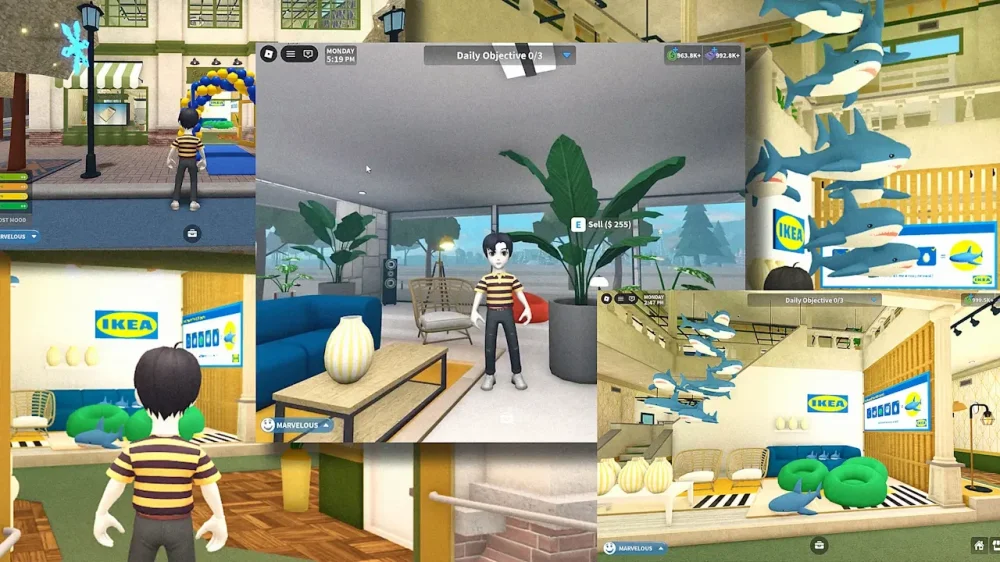
Ikea’s new store is in the metaverse. The company announced Wednesday it’s piloting a limited-edition pop-up in Roblox’s “Welcome to Bloxburg” game offering players Ikea products they can use to decorate virtual homes. This is the first time that the Swedish furniture retailer has entered gaming in a meaningful way, since an earlier Roblox game in 2024, according to the company. It comes after noticing for years how young adults and teens were building and designing homes in games and wondering why Ikea wasn’t a part of it. “Ikea wanted to better understand how Gen Z and Gen Alpha think about furnishing and self-expression, recognizing the need to meet them on platforms they already use and learn from how they interact with products and spaces in a digital environment,” Ikea’s chief digital officer Parag Parkekh tells Fast Company. “At Ikea we are always curious and eager to develop and connect with people where they are. Today many people are online, and many people are gaming,” he says. “This is an area where we want to see if there is an appetite for Ikea as a brand and our products also in the gaming world.” Ikea’s goal: better understand Gen Z and Gen Alpha The pilot is intentionally small, as its primary goal is to gather learnings for the company. For now it will be available only for people in Australia and Sweden from January 22 to February 5. Located inside the virtual Bloxburg Fancy Furniture Store, which players can access in the the game’s town center, people can choose from items like the Stockholm sofa, the Brännboll inflatable gaming chair, and Ikea’s shark toy named Blåhaj. The company says it chose its selection of products based on items that are less common in the game, are classic Ikea designs, or are items that the Bloxburg team suggested players might like. “Overall, the aim is less about ‘selling’ a catalogue and more about understanding how customers express home furnishing ideas and how Ikea products can support that in a digital world,” Parkekh says. Unboxing Ikea’s tech moves Ikea’s entry into gaming comes on the heels of other tech-forward moves. Last year the company relaunched its smart home line and opened branded kiosks selling Ikea products in select U.S. Best Buy locations. But it’s also late to the metaverse party. Brands including Gucci, Nike, and Walmart opened their own Roblox experiences in 2022—but the trend never caught on in a big way. Today, the dream of a widely used virtual metaverse has been declared effectively dead, and Meta laid off hundreds in its own virtual reality division Tuesday. There are signs of a possible resurgence, though, with examples like Ikea’s foray into the space and Coach’s collection on Sims 4 this week proving brands aren’t abandoning virtual worlds as spaces to show off their products completely. For Ikea, the challenge in translating its physical home furnishings for a virtual world was balancing recognizability and simplicity, since items needed to feel instantly like they had Ikea proportions, colors, and silhouettes while also working smoothly in a gaming context. Luckily, Ikea already has all its products created in 3D, and Bloxburg modified those same models with Ikea’s approval to turn them into gamified objects. “We are very pleased with the outcome,” Parkekh says. There will also an in-person component for Ikea’s Roblox experience, with hidden QR codes set to go up at Ikea locations in the two pilot countries that visitors can scan to unlock extra items. And an Ikea in the metaverse could one day come to other countries too. The company says its virtual shop pilot is a just starting point, and it believes we’ll see more of its home furnishings in games going forward. View the full article
-
The State Department says it will suspend the processing of immigrant visas for citizens of 75 countries whose nationals are deemed likely to require public assistance while living in the United States. The State Department, led by Secretary Marco Rubio, said Wednesday it had instructed consular officers to halt immigrant visa applications from the countries affected in accordance with a broader order issued in November that tightened rules around potential immigrants who might become “public charges” in the U.S. The suspension will not apply to applicants seeking non-immigrant, or temporary tourist or business visas. “The The President administration is bringing an end to the abuse of America’s immigration system by those who would extract wealth from the American people,” the department said in a statement. “Immigrant visa processing from these 75 countries will be paused while the State Department reassess immigration processing procedures to prevent the entry of foreign nationals who would take welfare and public benefits.” The statement did not identify which countries would be affected by the pause, but President Donald The President’s administration has already severely restricted immigrant and non-immigrant visa processing for citizens of dozens of countries, many of them in Africa. The suspension will begin on Jan. 21. —Matthew Lee, AP diplomatic writer View the full article

-
To improve your social media presence, consider implementing five key post types that greatly boost interaction. Polls and surveys can provide valuable insights into your audience’s preferences, whereas user-generated content showcases authentic customer experiences. Behind-the-scenes content humanizes your brand, and interactive quizzes invite participation. Live Q&A sessions encourage real-time engagement. Each of these strategies can strengthen brand loyalty and visibility, making your social media efforts more effective. What’s the best way to implement these ideas? Key Takeaways Create interactive polls and surveys to gather insights and boost audience engagement with minimal effort from users. Share user-generated content to enhance brand visibility and trust, showcasing authentic experiences that resonate with consumers. Post behind-the-scenes content to humanize your brand, fostering transparency and encouraging audience loyalty through candid glimpses. Develop interactive quizzes that invite participation and promote community discussion while gathering insights on customer interests. Host live Q&A sessions to facilitate real-time interaction, building trust and generating valuable user-generated content for expanded reach. Polls and Surveys How can you effectively engage your audience and gather valuable insights? Using polls and surveys is a practical approach. These tools require minimal effort from users while providing significant feedback. Platforms like Instagram Stories, Twitter, Facebook, and LinkedIn make it easy to conduct polls in real-time, encouraging interaction. By asking engaging questions about product preferences or service features, you can boost interaction rates, as people enjoy sharing their opinions. According to a DemandGen report, interactive content like polls can double audience engagement compared to static posts. Additionally, the data you gather from polls and surveys can inform your future content and marketing strategies, ensuring you align your offerings with your audience’s preferences. User-Generated Content User-generated content (UGC) is an influential tool that not just improves brand visibility but also builds trust among consumers. By showcasing authentic customer experiences, UGC nurtures a sense of community and credibility. In fact, 79% of people say user-generated content greatly impacts their purchasing decisions. Brands that incorporate UGC into their marketing strategies can experience a 28% increase in engagement rates, as it resonates more with audiences than traditional advertising. Encouraging followers to share their content using branded hashtags can help you track contributions, boosting organic reach. Furthermore, featuring real customers in your marketing can strengthen customer loyalty, with 50% of consumers more likely to engage with such brands, creating a valued connection and sense of belonging. Behind-the-Scenes Content Behind-the-scenes content offers a unique glimpse into your brand’s operations, allowing you to showcase the people and processes that bring your products or services to life. This type of content humanizes your brand, nurturing transparency and authenticity with your audience. By sharing relatable insights into daily operations, you can considerably boost facebook engagement posts, creating a stronger emotional connection with your followers. In fact, 96% of consumers are more likely to remain loyal to brands that demonstrate authenticity. Incorporating casual, candid moments in behind-the-scenes posts encourages audience interaction, as people often feel more connected to brands that show their human side. This increased engagement not only improves loyalty but also enhances your social media visibility. Interactive Quizzes What makes interactive quizzes such an effective tool for social media engagement? These engaging posts invite participation, leading to higher interaction rates than static content. Quizzes can be shared across platforms like Instagram Stories, Facebook, and TikTok, helping brands reach wider audiences as they gather insights into user preferences. By incorporating fun, relevant questions related to your brand or industry, you promote community and encourage discussion among followers. Here’s a quick comparison of interactive quiz benefits: Benefits Details Increased Engagement Higher interaction rates than static posts Data Collection Gathers insights on customer interests Easy Sharing Shareable across multiple social platforms Community Building Sparks discussions among followers Utilizing quiz stickers on Instagram further boosts engagement, keeping users invested in your content. Live Q&A Sessions Live Q&A sessions offer a dynamic way for brands to interact with their audiences in real time, building community and trust. These sessions facilitate direct engagement, allowing followers to connect with company representatives or industry experts. Hosting a live Q&A can boost engagement rates considerably, with brands experiencing up to a 300% increase in comments and questions compared to regular posts. Utilizing platforms like Instagram Live, Facebook Live, and TikTok improves visibility, as these platforms notify followers when a session starts. Incorporating audience-submitted questions can tailor the content to their interests, making the experience more relevant. Furthermore, live Q&A sessions generate valuable user-generated content, amplifying brand reach as attendees share their experiences across social media interactive posts. Frequently Asked Questions What Is the 5 5 5 Rule on Social Media? The 5 5 5 rule on social media suggests you share five posts about your business, five posts from others, and engage with five posts from your audience. This balance helps nurture community and interaction. By following this strategy, you not just promote your brand but additionally build relationships with your followers. It encourages active participation, leading to increased engagement rates and a more authentic social media presence, which is particularly beneficial for small businesses. What Type of Social Media Posts Get the Most Engagement? To maximize engagement on social media, focus on interactive posts like polls and quizzes, as they encourage participation. User-generated content, such as testimonials and photos, builds trust and nurtures community. Visuals, including images and videos, attract more attention than text alone. Furthermore, seasonal and holiday-themed posts resonate well, whereas contests and giveaways incentivize users to engage more, leading to increased visibility and interaction with your brand. What Is the 70/20/10 Rule in Social Media? The 70/20/10 rule in social media suggests that 70% of your content should provide engaging and informative material, whereas 20% should share content from other sources or user-generated posts. Only 10% should be promotional. This strategy helps you maintain audience interest, builds your brand’s authority, and reduces the risk of overwhelming followers with constant sales pitches. How to Make Engaging Social Media Posts? To create engaging social media posts, start by using interactive elements like polls and quizzes, which encourage participation. Incorporate eye-catching visuals and concise captions, as they attract more views. Encourage user-generated content to promote community and brand loyalty. Connect your posts to trending topics or seasonal events for relevance. Finally, include clear calls to action, guiding your audience toward desired interactions, which can markedly improve engagement and drive conversions. Conclusion Incorporating engaging posts like polls, user-generated content, behind-the-scenes glimpses, interactive quizzes, and live Q&A sessions can greatly improve your social media interaction. These strategies not just encourage audience participation but additionally nurture a sense of community around your brand. By utilizing these techniques, you can gather valuable insights, showcase authentic experiences, and humanize your brand, in the end, strengthening brand loyalty. Implementing these approaches will create a lively and dynamic social media presence that resonates with your audience. Image via Google Gemini This article, "5 Engaging Posts That Boost Social Media Interaction" was first published on Small Business Trends View the full article
-
To improve your social media presence, consider implementing five key post types that greatly boost interaction. Polls and surveys can provide valuable insights into your audience’s preferences, whereas user-generated content showcases authentic customer experiences. Behind-the-scenes content humanizes your brand, and interactive quizzes invite participation. Live Q&A sessions encourage real-time engagement. Each of these strategies can strengthen brand loyalty and visibility, making your social media efforts more effective. What’s the best way to implement these ideas? Key Takeaways Create interactive polls and surveys to gather insights and boost audience engagement with minimal effort from users. Share user-generated content to enhance brand visibility and trust, showcasing authentic experiences that resonate with consumers. Post behind-the-scenes content to humanize your brand, fostering transparency and encouraging audience loyalty through candid glimpses. Develop interactive quizzes that invite participation and promote community discussion while gathering insights on customer interests. Host live Q&A sessions to facilitate real-time interaction, building trust and generating valuable user-generated content for expanded reach. Polls and Surveys How can you effectively engage your audience and gather valuable insights? Using polls and surveys is a practical approach. These tools require minimal effort from users while providing significant feedback. Platforms like Instagram Stories, Twitter, Facebook, and LinkedIn make it easy to conduct polls in real-time, encouraging interaction. By asking engaging questions about product preferences or service features, you can boost interaction rates, as people enjoy sharing their opinions. According to a DemandGen report, interactive content like polls can double audience engagement compared to static posts. Additionally, the data you gather from polls and surveys can inform your future content and marketing strategies, ensuring you align your offerings with your audience’s preferences. User-Generated Content User-generated content (UGC) is an influential tool that not just improves brand visibility but also builds trust among consumers. By showcasing authentic customer experiences, UGC nurtures a sense of community and credibility. In fact, 79% of people say user-generated content greatly impacts their purchasing decisions. Brands that incorporate UGC into their marketing strategies can experience a 28% increase in engagement rates, as it resonates more with audiences than traditional advertising. Encouraging followers to share their content using branded hashtags can help you track contributions, boosting organic reach. Furthermore, featuring real customers in your marketing can strengthen customer loyalty, with 50% of consumers more likely to engage with such brands, creating a valued connection and sense of belonging. Behind-the-Scenes Content Behind-the-scenes content offers a unique glimpse into your brand’s operations, allowing you to showcase the people and processes that bring your products or services to life. This type of content humanizes your brand, nurturing transparency and authenticity with your audience. By sharing relatable insights into daily operations, you can considerably boost facebook engagement posts, creating a stronger emotional connection with your followers. In fact, 96% of consumers are more likely to remain loyal to brands that demonstrate authenticity. Incorporating casual, candid moments in behind-the-scenes posts encourages audience interaction, as people often feel more connected to brands that show their human side. This increased engagement not only improves loyalty but also enhances your social media visibility. Interactive Quizzes What makes interactive quizzes such an effective tool for social media engagement? These engaging posts invite participation, leading to higher interaction rates than static content. Quizzes can be shared across platforms like Instagram Stories, Facebook, and TikTok, helping brands reach wider audiences as they gather insights into user preferences. By incorporating fun, relevant questions related to your brand or industry, you promote community and encourage discussion among followers. Here’s a quick comparison of interactive quiz benefits: Benefits Details Increased Engagement Higher interaction rates than static posts Data Collection Gathers insights on customer interests Easy Sharing Shareable across multiple social platforms Community Building Sparks discussions among followers Utilizing quiz stickers on Instagram further boosts engagement, keeping users invested in your content. Live Q&A Sessions Live Q&A sessions offer a dynamic way for brands to interact with their audiences in real time, building community and trust. These sessions facilitate direct engagement, allowing followers to connect with company representatives or industry experts. Hosting a live Q&A can boost engagement rates considerably, with brands experiencing up to a 300% increase in comments and questions compared to regular posts. Utilizing platforms like Instagram Live, Facebook Live, and TikTok improves visibility, as these platforms notify followers when a session starts. Incorporating audience-submitted questions can tailor the content to their interests, making the experience more relevant. Furthermore, live Q&A sessions generate valuable user-generated content, amplifying brand reach as attendees share their experiences across social media interactive posts. Frequently Asked Questions What Is the 5 5 5 Rule on Social Media? The 5 5 5 rule on social media suggests you share five posts about your business, five posts from others, and engage with five posts from your audience. This balance helps nurture community and interaction. By following this strategy, you not just promote your brand but additionally build relationships with your followers. It encourages active participation, leading to increased engagement rates and a more authentic social media presence, which is particularly beneficial for small businesses. What Type of Social Media Posts Get the Most Engagement? To maximize engagement on social media, focus on interactive posts like polls and quizzes, as they encourage participation. User-generated content, such as testimonials and photos, builds trust and nurtures community. Visuals, including images and videos, attract more attention than text alone. Furthermore, seasonal and holiday-themed posts resonate well, whereas contests and giveaways incentivize users to engage more, leading to increased visibility and interaction with your brand. What Is the 70/20/10 Rule in Social Media? The 70/20/10 rule in social media suggests that 70% of your content should provide engaging and informative material, whereas 20% should share content from other sources or user-generated posts. Only 10% should be promotional. This strategy helps you maintain audience interest, builds your brand’s authority, and reduces the risk of overwhelming followers with constant sales pitches. How to Make Engaging Social Media Posts? To create engaging social media posts, start by using interactive elements like polls and quizzes, which encourage participation. Incorporate eye-catching visuals and concise captions, as they attract more views. Encourage user-generated content to promote community and brand loyalty. Connect your posts to trending topics or seasonal events for relevance. Finally, include clear calls to action, guiding your audience toward desired interactions, which can markedly improve engagement and drive conversions. Conclusion Incorporating engaging posts like polls, user-generated content, behind-the-scenes glimpses, interactive quizzes, and live Q&A sessions can greatly improve your social media interaction. These strategies not just encourage audience participation but additionally nurture a sense of community around your brand. By utilizing these techniques, you can gather valuable insights, showcase authentic experiences, and humanize your brand, in the end, strengthening brand loyalty. Implementing these approaches will create a lively and dynamic social media presence that resonates with your audience. Image via Google Gemini This article, "5 Engaging Posts That Boost Social Media Interaction" was first published on Small Business Trends View the full article
-
After two years of declines, United States greenhouse gas emissions increased in 2025—a change driven by increased electricity use, due in part to data centers and cryptocurrency mining, as well as cold winter temperatures that meant homes required more heating. Emissions increased 2.4% in 2025, according to preliminary data from the research firm Rhodium Group. That’s higher than the country’s GDP growth, which increased by a projected 1.9%. That the country’s emissions grew more than its GDP is notable: Climate experts have long noted that it’s both possible and necessary to reduce emissions while still growing the economy. And for the past few years, the U.S. has done just that. (Multiple states have also individually reduced their emissions while growing their economies.) Now, though, 2025 has broken a three-year trend in which the economy’s growth outpaced our emissions growth. Heating, data centers, and crypto mining The main drivers of this emissions increase came from the buildings and power sectors. Colder temperatures meant more homes had to rely on natural gas and coal for heating. The winter of 2025 specifically “led to increased direct combustion of these fuels in buildings, driving up emissions by 56 million metric tons, or 6.8%, compared to 2024,” per Rhodium. Coal generation grew 13% compared to the year prior, making 2025 just the second year in the past decade in which coal generation increased. (Since its peak in 2007, coal generation has shrunk by 64%.) Coal use grew in part because natural gas prices increased. Utility companies also delayed planned retirements for coal plants in order to meet a growing demand for power, and due to Department of Energy orders. At the same time, electricity use increased. Total electricity generation grew 2.4% in 2025, mostly because of commercial buildings “where data centers, cryptocurrency mining operations, and other large load customers drove electricity demand,” according to Rhodium. The surge in electricity demand comes as AI has fueled a boom in data center construction. (Rhodium’s report also notes that investments in artificial intelligence infrastructure were a major source of U.S. economic growth, as well.) While transportation is responsible for the highest share of emissions, that sector only saw a 0.1% growth in greenhouse gases compared to 2024. Road traffic actually increased, but the growing share of battery electric vehicles and plug-in hybrids on the road meant gas consumption declined. How The President policies could impact emissions Though U.S. emissions increased in 2025, they’re still below pre-pandemic levels—6% below 2019’s emissions, and 18% below 2005’s emissions. But The President administration policies could mean greenhouse gas emissions grow even more. The The President administration has already made efforts to curtail climate progress, bolstering the use of fossil fuels, canceling clean energy products, and removing federal tax incentives that would get more people to buy EVs or other energy-efficient technologies. Despite those efforts, which began as soon as The President took office in January for his second presidential term, the emissions growth in 2025 wasn’t really impacted by recent The President or congressional policies, Rhodium says. “Apart from some modest contributions to increased coal generation from Department of Energy orders to keep a few plants running, we aren’t yet seeing the direct effects of these policy changes in U.S. emissions,” the report reads. That could change in the next year or two, though, the researchers note, “particularly if data center electricity demand continues to surge and the grid responds with more output from existing fossil generators instead of new, clean resources.” View the full article

-
American intervention in Iran carries far greater risks than in VenezuelaView the full article
-
Tehran’s Grand Bazaar, whose shopkeepers helped bring Islamist clerics to power in 1979, once again became a hotspot for anti-regime ralliesView the full article
-
Move is part of an effort to limit entries from foreigners who rely on government welfare View the full article
-
Short form videos are addicting. They're also often low quality, AI-generated, misinformation, or some combination of the bunch, and may have a negative impact on our attention spans and mental health. In short, they're just not that good for us. It's bad enough for grown adults to control their scrolling habits, but it's another thing entirely for children, which poses quite the a challenge. It's easy enough to ban short-form video apps entirely, like TikTok. But what about apps that have short-form content as just one pillar of the overall package? Take YouTube: You might not mind your child having limited access to the app or site to watch long-form content you approve of, but having Shorts always in the way throws a wrench in that system. Any type of short-form video feed would be an issue here, but YouTube Shorts is particularly egregious, allowing kids to watch some truly horrific content, often generated by AI. Choosing whether your kids watch YouTube ShortsLuckily, YouTube finally appears to be giving parents some control here. As spotted by TechCrunch, YouTube announced updates to its parental controls on Wednesday. While there are a few changes on the way, the headline for me concerns Shorts. Not only will YouTube let parents choose a timer for how often their kids can watch Shorts, they can choose to set the timer to zero—effectively blocking Shorts for their kids' and teens' accounts. This should be welcome news to any parents struggling to limit the short-form video content their kids are watching. You can let them watch other types of videos on YouTube Kids, or even standard YouTube if its a teen account, without worrying about them going down short-form video rabbit holes for hours. The control here can be even more granular than an outright ban, too. Since you're always in control of the timer, YouTube says you can customize timers based on the scenario: You could set the Shorts timer to zero during homework time, then offer 30 minutes of scrolling after dinner. You could bump that to 60 minutes on weekends, or when in the car. If your child is under a supervised account, you'll also be able to control both custom Bedtime and "Take a Break" reminders. This is not the first time YouTube has offered users more control over Shorts. Last week, the company rolled out a new search filter that lets you choose to only see long-form videos in any given result, and since October, you've been able to limit the number of shorts you can watch in a day. YouTube, and parent company Google, are also expanding parental controls and enhancing protections for kids and teens. YouTube now uses AI to guess your age, and, if it believes you're under 18, will add restrictions to your account. Google also gives parents more control over supervised accounts: Previously, teens could choose to remove supervision after turning 13, but now, they need their parents to sign off on it too. View the full article
-
Then, as now, Iranians took to the streets and risked their lives for free speech and economic prosperity View the full article
-
In a bold move set to transform the retail landscape, HP Inc. has launched its Intelligent Retail Solutions, marking a significant advancement in unified commerce. Aimed at empowering retailers, these solutions merge hardware, software, and intelligent services, offering businesses greater control, consistency, and visibility in their operations. This initiative comes at a crucial time for small businesses navigating a post-pandemic retail environment, where customer expectations are evolving rapidly. Retailers face a myriad of challenges, from inventory management to customer engagement. HP’s new offerings could be the game-changing resources they need. “Our Intelligent Retail Solutions illuminate the path forward for retailers as they embrace a dynamic landscape that demands flexibility and resilience,” said an HP spokesperson. This sentiment reflects a broader understanding that small businesses require innovative tools to effectively compete. One of the standout features of these retail solutions is their ability to integrate seamlessly into existing systems. For small business owners not equipped to invest heavily in new infrastructure, this feature is particularly advantageous. As inventory management becomes increasingly complex, having a solution that can bridge various systems—such as online and brick-and-mortar operations—will likely create a smoother experience for both staff and consumers. The integration also allows for enhanced data analysis, which is crucial for making informed business decisions. With real-time analytics, retailers can better manage stock levels, forecast trends, and tailor their marketing efforts. This data-driven approach can ultimately lead to increased customer satisfaction and, hence, higher sales—vital for small businesses aiming to grow. Moreover, HP is focusing on sustainability, another key interest area for modern consumers. Their solutions incorporate environmentally friendly practices which can enhance a brand’s reputation. Small businesses can leverage this aspect to connect more deeply with eco-conscious consumers, thus positioning themselves competitively in the marketplace. However, while the benefits are undeniable, small business owners should also consider potential challenges. Implementing new technology can be daunting—especially for businesses with limited resources and expertise. There may be a learning curve associated with the transition to these advanced systems, which could initially disrupt existing workflows. Additionally, while the prospect of enhanced inventory management and customer engagement is appealing, the upfront costs associated with these new systems could be a barrier for smaller retailers. It’s essential for business owners to weigh these costs against the potential for increased efficiency and sales. HP has positioned itself as a partner in this journey, offering support through training and resources to ease the transition. Small business owners should take advantage of these offerings to ensure they fully utilize the capabilities of the Intelligent Retail Solutions. As retailers continue to evolve, embracing technology will become not just advantageous but essential. HP’s Intelligent Retail Solutions offer a compelling opportunity for small businesses to adapt and thrive in an increasingly competitive landscape. For those looking to get ahead, this innovation could be the key to maintaining relevance and driving growth in an ever-changing economic environment. For more information on HP’s Intelligent Retail Solutions, visit the original press release here. Image via Google Gemini This article, "HP Launches Smart Retail Solutions to Enhance Unified Commerce" was first published on Small Business Trends View the full article
-
In a bold move set to transform the retail landscape, HP Inc. has launched its Intelligent Retail Solutions, marking a significant advancement in unified commerce. Aimed at empowering retailers, these solutions merge hardware, software, and intelligent services, offering businesses greater control, consistency, and visibility in their operations. This initiative comes at a crucial time for small businesses navigating a post-pandemic retail environment, where customer expectations are evolving rapidly. Retailers face a myriad of challenges, from inventory management to customer engagement. HP’s new offerings could be the game-changing resources they need. “Our Intelligent Retail Solutions illuminate the path forward for retailers as they embrace a dynamic landscape that demands flexibility and resilience,” said an HP spokesperson. This sentiment reflects a broader understanding that small businesses require innovative tools to effectively compete. One of the standout features of these retail solutions is their ability to integrate seamlessly into existing systems. For small business owners not equipped to invest heavily in new infrastructure, this feature is particularly advantageous. As inventory management becomes increasingly complex, having a solution that can bridge various systems—such as online and brick-and-mortar operations—will likely create a smoother experience for both staff and consumers. The integration also allows for enhanced data analysis, which is crucial for making informed business decisions. With real-time analytics, retailers can better manage stock levels, forecast trends, and tailor their marketing efforts. This data-driven approach can ultimately lead to increased customer satisfaction and, hence, higher sales—vital for small businesses aiming to grow. Moreover, HP is focusing on sustainability, another key interest area for modern consumers. Their solutions incorporate environmentally friendly practices which can enhance a brand’s reputation. Small businesses can leverage this aspect to connect more deeply with eco-conscious consumers, thus positioning themselves competitively in the marketplace. However, while the benefits are undeniable, small business owners should also consider potential challenges. Implementing new technology can be daunting—especially for businesses with limited resources and expertise. There may be a learning curve associated with the transition to these advanced systems, which could initially disrupt existing workflows. Additionally, while the prospect of enhanced inventory management and customer engagement is appealing, the upfront costs associated with these new systems could be a barrier for smaller retailers. It’s essential for business owners to weigh these costs against the potential for increased efficiency and sales. HP has positioned itself as a partner in this journey, offering support through training and resources to ease the transition. Small business owners should take advantage of these offerings to ensure they fully utilize the capabilities of the Intelligent Retail Solutions. As retailers continue to evolve, embracing technology will become not just advantageous but essential. HP’s Intelligent Retail Solutions offer a compelling opportunity for small businesses to adapt and thrive in an increasingly competitive landscape. For those looking to get ahead, this innovation could be the key to maintaining relevance and driving growth in an ever-changing economic environment. For more information on HP’s Intelligent Retail Solutions, visit the original press release here. Image via Google Gemini This article, "HP Launches Smart Retail Solutions to Enhance Unified Commerce" was first published on Small Business Trends View the full article
-
“Never skip leg day” sounds like something a swole gym bro with killer quads might harp on about. But doctors also sing the praises of lunges and split bench squats, and not for the reason you might think. In a recent article for Vogue, California-based physician Dr. Chris Renna said: “Stronger leg muscles are linked to better cognitive function in aging mainly through their effects on blood flow, metabolic health, brain structure, and physical/social activity patterns.” Muscle mass starts to decline at age 30. As the largest muscle group in the body, maintaining muscle strength in the thighs and glutes is especially important for healthy aging—and apparently, brain function. Multiple studies back this up. A 2015 study of over 300 female twins, ages 43 to 73, found the more powerful their legs (measured by pushing one foot as hard and fast as possible against a pedal), the better their cognition a decade on (measured by a series of tests on memory and processing speed). Another study of 1,500 older adults, with an average age of 70, conducted in 2018, also found an association between stronger legs and better performance on tests of their cognitive function. A separate study also in 2018, this time conducted on mice, found exercising the lower extremities to be critical to brain and nervous system health. Researchers discovered that neurological health depends as much on signals sent from the leg muscles to the brain as it does the other way around. This offers an explanation for why patients with neurological diseases experience rapid decline once their movement becomes limited. “It is no accident that we are meant to be active: to walk, run, crouch to sit, and use our leg muscles to lift things,” the study’s author, Dr. Raffaella Adami, told academic journals publisher Frontiers. “Neurological health is not a one-way street with the brain telling the muscles ‘lift,’ ‘walk,’ and so on.” The brain-leg connection can be explained by tiny proteins called myokines. When the leg muscles are exercised, they release these messenger molecules, which reach the brain via the bloodstream. Here, they support learning ability, memory, and neural adaptation, the process by which the nervous system adjusts and improves its functioning. A simple leg day session that includes weight-bearing exercises like lunges, squats, and calf raises will not only improve physical strength. By increasing blood flow, the brain floods with extra oxygen, helping to decrease harmful inflammation in the body. If you’ve been known to skip squats or lunges at the gym, it doesn’t help that modern life is, for many, characterized by a concerning lack of movement. Commuting to work to sit at a desk for hours, before commuting home again to sit some more on the couch, means our legs often aren’t getting the regular exercise they need to keep our brain working optimally. So drop some squats in front of some Netflix or while listening to a podcast. Your glutes won’t be the only part of your body that thanks you. View the full article

-
The contract rate on a 30-year mortgage dropped 7 basis points to 6.18% in the week ended Jan. 9, according to Mortgage Bankers Association data released Wednesday. View the full article
-
China’s trade surplus surged to a record of almost $1.2 trillion in 2025, the government said Wednesday, as exports to other countries made up for slowing shipments to the U.S. under President Donald The President’s onslaught of higher tariffs. China’s exports rose 5.5% for the whole of last year to $3.77 trillion, customs data showed, as Chinese automakers and other manufacturers expanded into markets across the globe. Imports flatlined at $2.58 trillion. The 2024 trade surplus was over $992 billion. In December, China’s exports climbed 6.6% from the year before in dollar terms, better than economists’ estimates and higher than November’s 5.9% year-on-year increase. Imports in December were up 5.7% year-on-year, compared to November’s 1.9%. China’s trade surplus surpassed the $1 trillion mark for the first time in November, when the trade surplus reached $1.08 trillion in the first 11 months of last year. Economists expect exports will continue to support China’s economy this year, despite trade friction and geopolitical tensions. “We continue to expect exports to act as a big growth driver in 2026,” said Jacqueline Rong, chief China economist at BNP Paribas. While China’s exports to the U.S. fell sharply after The President returned to office and escalated his trade war with the world’s second-largest economy, that decline has been largely offset by shipments to other markets in South America, Southeast Asia, Africa and Europe. For the whole of 2025, China’s exports to the U.S. fell 20%. In contrast, exports to Africa surged 26%. Those to Southeast Asian countries jumped 13%; to the European Union 8%, and to Latin America, 7%. Strong global demand for computer chips and other devices and the materials needed to make them were among categories that supported China’s exports, analysts said. Exports of electronics and electrical equipment were by far the largest export category, rising 8.4% from a year earlier. Car exports also grew last year. Auto exports surged 21% in 2025 to more than 7 million units, driven by electric vehicles and plug-in hybrids, according to the China Association of Automobile Manufacturers, an industry group, on Wednesday. China also exported more grain and fertilizer, while its sales of furniture, shoes and other labor intensive products fell. Strong exports have helped keep China’s economy growing at an annual rate close to its official target of about 5%. That has triggered alarm in countries that fear a flood of cheap imports is damaging local industries. China faces a “severe and complex” external trade environment in 2026, Wang Jun, vice minister of China’s customs administration, told reporters in Beijing. But he said China’s “foreign trade fundamentals remain solid.” The head of the International Monetary Fund last month called for China to fix its economic imbalances and speed up its shift from reliance on exports by boosting domestic demand and investment. A prolonged property downturn in China after the authorities cracked down on excessive borrowing, triggering defaults by many developers, is still weighing on consumer confidence and domestic demand. China’s leaders have made increasing spending by consumers and businesses a focus of economic policy, but actions taken so far have had a limited impact. That included government trade-in subsidies over the past months that encouraged consumers to buy newer, more energy efficient items, such as home appliances and vehicles. “We expect domestic demand growth to stay tepid,” said Rong of BNP Paribas. “In fact, the policy boost to domestic demand looks weaker than last year — in particular the fiscal subsidy program for consumer goods.” In the case of autos, domestic sales rose 6% in 2025, but they fell back toward the end of the year as those subsidies were scaled back or phased out in some areas. Gary Ng, a senior economist at French investment bank Natixis, forecasts that China’s exports will grow about 3% in 2026, less than the 5.5% growth in 2025. With slow import growth, he expects China’s trade surplus to remain above $1 trillion this year. —Chan Ho-Him, AP Business Writer View the full article

-
Contract closings rose 5.1% to a 4.35 million annualized pace last month, the highest since February 2023, according to figures released Wednesday by the National Association of Realtors. View the full article

-
The MySBA Loan Portal is a digital tool that can greatly improve your small business’s financial management. It offers a user-friendly dashboard to monitor your SBA 504 loans, allowing you to view outstanding balances and payment histories easily. With features like direct payments and messaging with SBA representatives, this portal streamlines your cash flow management. Interested in how these functionalities can particularly benefit your business operations? Key Takeaways MySBA Loan Portal is a web-based platform that centralizes the management of SBA 504 loans for small businesses. It features a user-friendly dashboard displaying loan balances, maturity dates, and payment history for easy monitoring. The portal allows direct payments for various SBA loans, streamlining cash flow management for businesses. Users can access IRS 1098 tax forms, simplifying tax preparation and documentation. The platform provides direct messaging with SBA representatives, ensuring efficient support and communication for loan inquiries. Overview of MySBA Loan Portal The MySBA Loan Portal serves as a thorough, web-based platform that enables borrowers to efficiently manage their SBA 504 loans. This centralized hub allows you to access crucial loan information and documents with ease. From the user-friendly dashboard, you can view key details like outstanding balances, maturity dates, loan amounts, and monthly payments, simplifying financial oversight. Furthermore, the portal provides access to your complete payment history and IRS 1098 tax forms, making record-keeping straightforward. New users can register by entering their SBA loan number and social security number, whereas existing users can use their credentials for secure mysba login. The MySBA Loan Portal likewise facilitates direct messaging with SBA representatives, ensuring you receive support for your loans and accounts when needed. Overall, this platform improves your ability to manage your SBA 504 loans efficiently, enhancing your financial management experience. Key Features and Benefits When you utilize the MySBA Loan Portal, you’ll discover a range of significant features and benefits aimed at improving your loan management experience. The portal offers a centralized dashboard where you can monitor all your SBA loans, including outstanding balances, payment history, and important details like maturity dates and monthly payments. You’ll additionally have easy access to vital loan information and IRS 1098 tax forms, which can improve your financial management capabilities. Furthermore, the portal enables direct payments for PPP loans, Economic Injury Disaster Loans (EIDL), and SBA 7(a) loans, streamlining the repayment process. You’ll receive automatic email notifications for new document uploads, keeping you informed about your loan status and important updates. With its user-friendly interface and messaging capabilities, you can efficiently manage your loans and communicate with SBA representatives whenever you need assistance. How to Access the Portal Accessing the MySBA Loan Portal is a straightforward process that allows you to manage your loans effectively. To get started, visit the link https://lending.sba.gov/. If you already have an account, simply log in using your existing MySBA credentials, which may include those from CAFS and Veteran Certification accounts. If you’re a new user, you’ll need to register for an account. During this process, be ready to provide your social security number and at least one SBA loan number. Once you’re registered, you’ll find the portal’s user-friendly interface helpful for maneuvering through your loan details. You can easily check your outstanding balances, review payment history, and make payments directly through the portal. This secure access guarantees you can manage your loans efficiently, keeping all necessary information at your fingertips. Customer Support and Resources Once you’ve logged into the MySBA Loan Portal, you might find yourself needing extra assistance or resources to better understand your loan details. Fortunately, the portal provides a customer service center where you can call 1-833-572-0502 for support inquiries related to your loan specifics and payment processes. Experienced loan experts are on hand to help you grasp loan terms and conditions, in addition to answering questions about more SBA 504 loans. You can likewise communicate directly with SBA representatives through the portal, allowing for timely assistance regarding your loans and accounts. If you encounter access issues or have general inquiries, reach out to SDC at (334) 244-1801 or via email for personalized support. Furthermore, stay informed through SDC spotlight features and road show events in Alabama, which share regular updates and resources to keep you engaged in your borrowing experience. Impact on Small Business Management The MySBA Loan Portal greatly impacts small business management by providing a centralized dashboard that simplifies the monitoring and management of SBA loans. You can easily track outstanding balances and payment histories, which helps you stay on top of your financial obligations. The portal’s user-friendly interface allows for informed decision-making, enabling you to assess your loan performance effortlessly. You can as well make payments directly through the portal, streamlining your cash flow management. Automatic email notifications for new document uploads keep you updated on important changes, allowing for proactive loan management. Furthermore, access to IRS 1098 tax forms simplifies your tax preparation, reducing the time spent on administrative tasks. This combination of features not only improves your ability to manage loans effectively but likewise contributes to better overall financial health for your business. Frequently Asked Questions What Is the Mysba Loan Portal? The MySBA Loan Portal is an online platform that simplifies your management of SBA loans. It features a dashboard where you can view important loan details, such as outstanding balances and payment history. You can easily sign in or create an account using your social security number and loan number. The portal additionally allows you to make payments, access statements, and communicate with SBA representatives, ensuring you stay organized and informed about your loans. How Do Loans Help Businesses? Loans help businesses by providing vital capital for various needs, like starting operations, broadening facilities, or purchasing equipment. They enable you to manage cash flow, ensuring you can meet operational costs during market fluctuations. Furthermore, securing a loan can improve your credit profile when payments are made on time, paving the way for better financing options later. Certain loan programs offer favorable terms, making long-term financing more accessible and affordable for small businesses like yours. What Is Mysba? MySBA is a digital platform created by the Small Business Administration, focusing on managing 504 loans. It offers a user-friendly dashboard where you can view all your loans, including outstanding balances and payment history. By logging in with your social security number and SBA loan number, you can access crucial documents like IRS 1098 tax forms. The portal likewise allows direct communication with the SBA, making it easier to address any loan-related inquiries. Can Someone Help Me With My SBA Loan Login? If you’re having trouble logging into your SBA loan account, you can reach out for help. First, verify you’re using the correct credentials. If you still can’t access your account, call the customer service center at 1-833-572-0502 for assistance. They can guide you through troubleshooting steps. Conclusion In conclusion, the MySBA Loan Portal offers a thorough solution for managing SBA 504 loans, providing crucial features like direct payments and easy access to loan information. By utilizing this platform, you can improve your business’s financial management and decision-making processes. Accessing the portal is straightforward, and ample customer support is available to assist you. Overall, integrating the MySBA Loan Portal into your operations can greatly enhance your efficiency and streamline your loan management tasks. Image via Google Gemini This article, "What Is MySBA Loan Portal and How Can It Help Your Business?" was first published on Small Business Trends View the full article
-
The MySBA Loan Portal is a digital tool that can greatly improve your small business’s financial management. It offers a user-friendly dashboard to monitor your SBA 504 loans, allowing you to view outstanding balances and payment histories easily. With features like direct payments and messaging with SBA representatives, this portal streamlines your cash flow management. Interested in how these functionalities can particularly benefit your business operations? Key Takeaways MySBA Loan Portal is a web-based platform that centralizes the management of SBA 504 loans for small businesses. It features a user-friendly dashboard displaying loan balances, maturity dates, and payment history for easy monitoring. The portal allows direct payments for various SBA loans, streamlining cash flow management for businesses. Users can access IRS 1098 tax forms, simplifying tax preparation and documentation. The platform provides direct messaging with SBA representatives, ensuring efficient support and communication for loan inquiries. Overview of MySBA Loan Portal The MySBA Loan Portal serves as a thorough, web-based platform that enables borrowers to efficiently manage their SBA 504 loans. This centralized hub allows you to access crucial loan information and documents with ease. From the user-friendly dashboard, you can view key details like outstanding balances, maturity dates, loan amounts, and monthly payments, simplifying financial oversight. Furthermore, the portal provides access to your complete payment history and IRS 1098 tax forms, making record-keeping straightforward. New users can register by entering their SBA loan number and social security number, whereas existing users can use their credentials for secure mysba login. The MySBA Loan Portal likewise facilitates direct messaging with SBA representatives, ensuring you receive support for your loans and accounts when needed. Overall, this platform improves your ability to manage your SBA 504 loans efficiently, enhancing your financial management experience. Key Features and Benefits When you utilize the MySBA Loan Portal, you’ll discover a range of significant features and benefits aimed at improving your loan management experience. The portal offers a centralized dashboard where you can monitor all your SBA loans, including outstanding balances, payment history, and important details like maturity dates and monthly payments. You’ll additionally have easy access to vital loan information and IRS 1098 tax forms, which can improve your financial management capabilities. Furthermore, the portal enables direct payments for PPP loans, Economic Injury Disaster Loans (EIDL), and SBA 7(a) loans, streamlining the repayment process. You’ll receive automatic email notifications for new document uploads, keeping you informed about your loan status and important updates. With its user-friendly interface and messaging capabilities, you can efficiently manage your loans and communicate with SBA representatives whenever you need assistance. How to Access the Portal Accessing the MySBA Loan Portal is a straightforward process that allows you to manage your loans effectively. To get started, visit the link https://lending.sba.gov/. If you already have an account, simply log in using your existing MySBA credentials, which may include those from CAFS and Veteran Certification accounts. If you’re a new user, you’ll need to register for an account. During this process, be ready to provide your social security number and at least one SBA loan number. Once you’re registered, you’ll find the portal’s user-friendly interface helpful for maneuvering through your loan details. You can easily check your outstanding balances, review payment history, and make payments directly through the portal. This secure access guarantees you can manage your loans efficiently, keeping all necessary information at your fingertips. Customer Support and Resources Once you’ve logged into the MySBA Loan Portal, you might find yourself needing extra assistance or resources to better understand your loan details. Fortunately, the portal provides a customer service center where you can call 1-833-572-0502 for support inquiries related to your loan specifics and payment processes. Experienced loan experts are on hand to help you grasp loan terms and conditions, in addition to answering questions about more SBA 504 loans. You can likewise communicate directly with SBA representatives through the portal, allowing for timely assistance regarding your loans and accounts. If you encounter access issues or have general inquiries, reach out to SDC at (334) 244-1801 or via email for personalized support. Furthermore, stay informed through SDC spotlight features and road show events in Alabama, which share regular updates and resources to keep you engaged in your borrowing experience. Impact on Small Business Management The MySBA Loan Portal greatly impacts small business management by providing a centralized dashboard that simplifies the monitoring and management of SBA loans. You can easily track outstanding balances and payment histories, which helps you stay on top of your financial obligations. The portal’s user-friendly interface allows for informed decision-making, enabling you to assess your loan performance effortlessly. You can as well make payments directly through the portal, streamlining your cash flow management. Automatic email notifications for new document uploads keep you updated on important changes, allowing for proactive loan management. Furthermore, access to IRS 1098 tax forms simplifies your tax preparation, reducing the time spent on administrative tasks. This combination of features not only improves your ability to manage loans effectively but likewise contributes to better overall financial health for your business. Frequently Asked Questions What Is the Mysba Loan Portal? The MySBA Loan Portal is an online platform that simplifies your management of SBA loans. It features a dashboard where you can view important loan details, such as outstanding balances and payment history. You can easily sign in or create an account using your social security number and loan number. The portal additionally allows you to make payments, access statements, and communicate with SBA representatives, ensuring you stay organized and informed about your loans. How Do Loans Help Businesses? Loans help businesses by providing vital capital for various needs, like starting operations, broadening facilities, or purchasing equipment. They enable you to manage cash flow, ensuring you can meet operational costs during market fluctuations. Furthermore, securing a loan can improve your credit profile when payments are made on time, paving the way for better financing options later. Certain loan programs offer favorable terms, making long-term financing more accessible and affordable for small businesses like yours. What Is Mysba? MySBA is a digital platform created by the Small Business Administration, focusing on managing 504 loans. It offers a user-friendly dashboard where you can view all your loans, including outstanding balances and payment history. By logging in with your social security number and SBA loan number, you can access crucial documents like IRS 1098 tax forms. The portal likewise allows direct communication with the SBA, making it easier to address any loan-related inquiries. Can Someone Help Me With My SBA Loan Login? If you’re having trouble logging into your SBA loan account, you can reach out for help. First, verify you’re using the correct credentials. If you still can’t access your account, call the customer service center at 1-833-572-0502 for assistance. They can guide you through troubleshooting steps. Conclusion In conclusion, the MySBA Loan Portal offers a thorough solution for managing SBA 504 loans, providing crucial features like direct payments and easy access to loan information. By utilizing this platform, you can improve your business’s financial management and decision-making processes. Accessing the portal is straightforward, and ample customer support is available to assist you. Overall, integrating the MySBA Loan Portal into your operations can greatly enhance your efficiency and streamline your loan management tasks. Image via Google Gemini This article, "What Is MySBA Loan Portal and How Can It Help Your Business?" was first published on Small Business Trends View the full article
-
Scroll through TikTok or Instagram, and you'll find influencers swearing by unconventional treatments, posting dramatic before-and-after photos and glowing testimonials about their rejuvenated skin. And the skincare "It Girl" of the moment? It's salmon sperm. Yeah. As we kick off the new year—prime time for beauty resolutions!—a growing number of people are seeking out "salmon sperm facials." Before your imagination paints an extra fishy picture (pun intended), understand that people aren't really smearing straight-up salmon sperm on their face. The secret ingredient is something called PDRN, or polydeoxyribonucleotide, a compound extracted from salmon DNA. So, what exactly is this secret ingredient, and is it truly the next frontier in anti-aging skincare? The science behind the hypePDRN isn't totally snake oil; the compound has legitimate clinical backing for its regenerative properties. Research suggests that PDRN can stimulate tissue repair, promote collagen production, and improve skin elasticity by activating adenosine receptors in cells. Several sources claim it's been used in medical applications since the 1980s in Italy and South Korea. Whatever the actual origins, PDRN has gradually made its way into mainstream skincare. The treatment typically involves a series of micro-injections delivered directly into the skin, similar to mesotherapy or microneedling procedures. In the U.S., however, PDRN is only legal to use topically, since the FDA qualifies it as a beauty product and not a drug. Proponents claim it can reduce fine lines, improve skin texture, minimize scarring, and create an overall more youthful appearance. Unlike other cosmetic procedures that simply fill or temporarily plump the skin, PDRN is said to actually stimulate the skin's natural healing processes. But as always, there's a significant gap between reality and what you see online. The reality checkSocial media thrives on transformation narratives, and skincare content is no exception. The algorithms favor dramatic reveals, leading creators to emphasize stunning results while downplaying less glamorous details—like the fact that these injections can be quite painful according to some. "While PDRN has legitimate clinical data supporting skin repair and regeneration," says Dr. Claudia Kim, "viral content often exaggerates results and glosses over who is—and isn't—an appropriate candidate. Context and medical supervision matter." When it comes to the injections specifically, these treatments can cause temporary swelling and bruising. At the very least, they could require multiple sessions to see results. Again: If you're in the U.S., and there's a syringe full of salmon sperm headed straight for you, it might not be FDA-approved. That means its purity, safety, and effectiveness are not regulated. As with any medical aesthetic procedure, you shouldn't sign up for PDRN treatments without careful consideration—considerations that extend beyond the promise of better skin. Do you know which salmon DNA procedure you're signing up for? Is it an injection, or is it technically microneedling? Did you opt for PDRN or PN (polynucleotides), a purer and more concentrated form of PDRN? To make things even more confusing, these treatments can go by different names, from “salmon skin facials,” to “salmon sperm injections,” or “PDRN facials” to the brand name Rejuran. One thing is sure: As demand grows, so does the risk of unqualified practitioners offering the treatment, potentially leading to complications or disappointing results. The bottom lineThe salmon sperm trend may sound bizarre, but there is science backing it up. And when your favorite beauty influencer credits their glowing skin to a specific treatment, it's tempting to believe you can achieve the same results. Social media will always continue to drive beauty trends, and there's nothing inherently wrong with being inspired by what you see online. But for your looks and your safety, you need to understand the difference between a carefully curated social media moment and the full reality of medical aesthetic procedures. If you're intrigued by PDRN treatments after seeing them online, consult with a qualified dermatologist or licensed aesthetic practitioner. They can assess whether you're an appropriate candidate, explain realistic expectations, discuss potential side effects, and ensure the treatment is administered safely. As more advanced treatments become increasingly accessible and visible online, don't let TikTok influencers replace professional medical consultation. View the full article
-
S&P 500 on course for worst day since mid-December as tech shares also hit View the full article
-
Since the days when Google Gemini was still called Bard, it's been able to connect with the company's other productivity apps to help pull context from them to answer your questions—but you still had to connect those apps to the AI manually using extensions. And even after bringing your apps together, you usually had to tell Gemini where to look for your data to get much use out of its abilities. For Instance, if you wanted it to pull information from your emails, you might have started a prompt with "Search my email." Now, Google is making it easier to connect Gemini to its various services, and adding "reasoning" when pulling context from across your Google Workspace. It's calling the feature "Personal Intelligence." Rolling out in beta for paid subscribers in the U.S. today (and coming to other countries and free users "soon"), Personal Intelligence is an opt-in feature that currently works with Gmail, Photos, YouTube, and Search, all of which you can connect in one tap while setting up the feature. That alone makes it more convenient than a collection of extensions, but there are supposedly a few upgrades to general usability as well. The biggest is that Gemini will apparently be able to "learn" about you from a grab bag of sources all at once, without you having to specify where to look, and use that information to answer your questions. Credit: Google In an example, Google has a user say "I need to replace the tires for my car. Which ones would you suggest for me?" The bot then runs through multiple reasoning steps, pulling from all the data available to it, to find out what car the prompter drives and which tires would be best for it. This can take a while, which is why there's an "Answer now" button next to the reasoning progress bar to stop the bot from getting stuck. In the example, it took about 10 seconds for the AI to generate a response. Google is promising its typical Workspace privacy guarantees with Personal Intelligence, saying "because this data already lives at Google securely, you don't have to send sensitive data elsewhere to start personalizing your experience." In other words, it's not going to move the needle on how much data about you Google can access, but at least it'll prevent you from having to connect your Workspace to third parties. Google also says, "Gemini will try to reference or explain the information it used from your connected sources so you can verify it," although we don't have any examples of that in action yet. It's worth keeping an eye out, though, if you're worried about hallucinations. To that end, the company does suggest asking Gemini for more information about what it used to come to its answers if you're unsatisfied, and to correct it "if a response feels off," perhaps by saying something like "Remember, I prefer window seats." Theoretically, Gemini will then remember this for next time, using its existing chat history feature. If you're continually unsatisfied, you can hit the thumbs down button on responses to provide feedback. How to turn on Personal Intelligence in Google GeminiGoogle says that eligible users should see an invitation to try Personal Intelligence on the Gemini home screen as soon as it's rolled out to them, but if you don't, you can turn it on manually by following these steps: Open Gemini and click or tap Settings. Click or Tap Personal Intelligence. Under Connected Apps, select which apps you would like Personal Intelligence to take information from. And that's it! Remember, Personal Intelligence is off by default and is only available for paid subscribers for now, so it may be some time until you can actually use it. Google also stresses the Gemini might not personalize every response, as that will save time on more simple requests. The company also said Personal Intelligence for AI Mode in Google Search is currently planned, but does not have a set release date. View the full article