Newsletter
Want to keep up to date with all our latest news and information?


ResidentialBusiness
Administrators
-
Joined
-
Last visited
Everything posted by ResidentialBusiness
-
Move comes amid growing concern American action against Tehran could destabilise regionView the full article
-
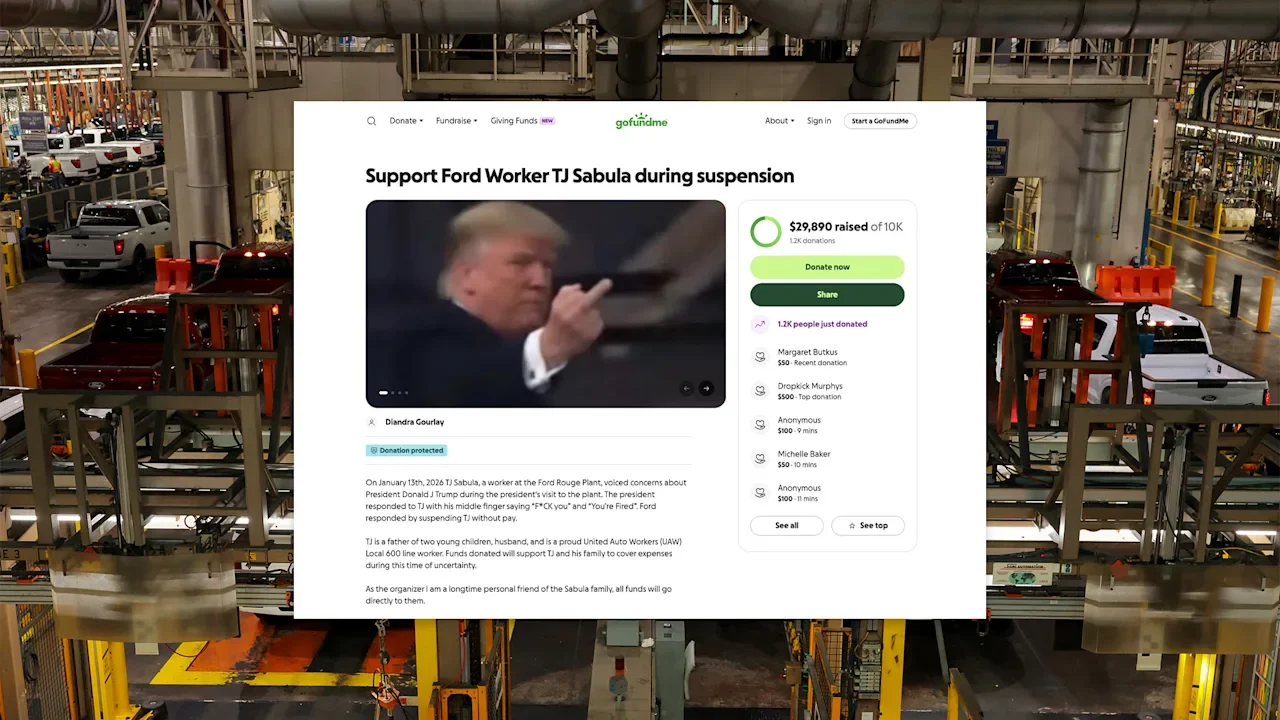
A GoFundMe page is raising thousands to support a worker at the Ford Rouge Plant in Dearborn, Michigan, after he openly criticized President The President—to his face. The worker, identified in media reports as TJ Sabula, heckled The President while he was visiting the plant on January 13. In a video obtained by TMZ, Sabula can be heard calling the president a “pedophile protector.” In response, the president can be seen mouthing an expletive and telling Sabula “you’re fired” before flipping him off. Ford reportedly didn’t hesitate to act, with the automotive giant immediately suspending Sabula, according to the Wall Street Journal. Fast Company reached out to Ford for comment. Predictably, and almost just as fast, a GoFundMe page was launched in support of Sabula. “TJ is a father of two young children, husband, and is a proud United Auto Workers (UAW) Local 600 line worker,” the page reads. “Funds donated will support TJ and his family to cover expenses during this time of uncertainty.” At present, the fundraising page, which has only been live for about 11 hours, has raised more than $90,000. Given that GoFundMe and other crowdfunding platforms are increasingly relied upon to help people going through financial challenges—sometimes spurred by political events—it’s not the first time the site has made headlines recently. Less than a week ago, after 37-year-old Renee Good was shot by an ICE agent in her neighborhood, a fundraiser was launched to support her family. The page has amassed over $1.5 million. Additionally, a page for Jonathan Ross, the ICE agent who shot and killed Good, was also created. That page has raised $700,000 at present, including a $10,000 donation from billionaire Bill Ackman. Fast Company has reached out to GoFundMe to ask if it has verified the campaign for Sabula. Engine troubles Sabula’s suspension is not terribly surprising. While Ford Motor CEO Jim Farley and the president have had a complicated relationship at times, Farley has also expressed optimism about The President’s second term. He joined President The President in December when he announced a proposal to slash Biden-era fuel economy standards. Ford also donated $1 million in cash and a fleet of vehicles to the president’s January 2025 inauguration. Following his suspension, Sabula told The Washington Post that he has “no regrets whatsoever” about heckling the president. He added that The President was only standing about 60 feet away and heard him “very, very, very clearly.” View the full article
-
If you’d like to do a thorough review of your portfolio and plan, here are the key steps to take. I recommend doing them over a series of sessions, not all at once. Step 1: Gather your documentation This could be your current investment statements, plus Social Security and pension. Pro tip: Set up a My Social Security account to get an overview of your benefits and earnings history. Step 2: Ask and answer: How am I doing? To find out if you’re on track to reach your financial goals, review your current portfolio balance, combined with your savings rate. Tally your contributions across all accounts. A decent baseline savings rate is 15%, but higher-income folks will want to aim for 20% or more. Also factor in other goals you’d like to achieve, such as college funding or a home down payment. Are they realistic? Make sure you’re not giving short shrift to retirement. If you’re retired or about to be, the key gauge of the viability of your total plan is your withdrawal rate—your planned portfolio withdrawals divided by your total portfolio balance. The 4% guideline is a good starting point, but aim for less if you can. Step 3: Check up on your long-term asset allocation Does your total portfolio’s mix of stocks, bonds, and cash match your targets? High-quality target-date series such as those from Vanguard and BlackRock’s LifePath Index Series can help benchmark asset allocation. My model portfolios can also help. A portfolio that tilts mostly or even entirely toward stocks makes sense for younger investors. If your portfolio is notably equity-heavy and you’re within 10 years of retirement, shifting to bonds and cash is more urgent. Just mind the tax consequences when you rebalance. Step 4: Assess liquid reserves Holding some cash is crucial to ensure you don’t have to tap your investments or resort to credit cards in a financial crunch. For retired people, I recommend holding six months to two years worth of portfolio withdrawals in cash investments. For those still working, holding three to six months’ worth of living expenses in cash is a good starting point. Step 5: Assess suballocations, sector positioning, and holdings Your broad asset-class exposure largely determines how your portfolio behaves. But your positioning within each asset class also deserves a look. Market strength has recently broadened, but growth stocks and funds that own them have outpaced value by a wide margin over the past decade. Finally, check up on your sector positioning, allocation to foreign stocks, and actual holdings. Step 6: Identify opportunities to streamline Why have scores of accounts and holdings if a more compact portfolio could do the job just as well? If you’ve changed jobs, you may have multiple 401(k)s and rollover IRAs. Consider consolidating into a single IRA. If you have several small cash accounts, you may be losing out on a (slightly) higher yield. Could you reduce the number of holdings in your portfolios? Index funds and ETFs provide pure asset-class exposure and a lot of diversification in a single package. I also like target-date funds for smaller accounts to provide diversification without any maintenance obligations. Step 7: Manage for tax efficiency At this point, if you think changes are in order, be sure to take tax and transaction costs into account. Focus any selling in your tax-sheltered accounts, where you won’t incur tax costs and you can usually avoid transaction costs, too. Within your taxable accounts, review the tax implications and/or get tax advice before executing trades. Also review whether you’re managing your portfolio with an eye toward tax efficiency. Are you making contributions to your tax-sheltered vehicles? Are your taxable accounts as tax-efficient as possible? For a lot of people, this is as simple as holding equity ETFs and/or municipal bonds and bond funds for their taxable accounts. Finally, think about tax-efficient withdrawal sequencing. Step 8: Troubleshoot other risk factors Uninsured long-term-care risk is a significant factor for those who are neither well off nor eligible for Medicaid. Develop a plan in case you have sizable long-term-care outlays later in life. Another common risk factor is providing help to loved ones. In this case, it’s often helpful to talk to a financial advisor and/or estate planner to figure out how you can help without jeopardizing your financial future. This article was provided to The Associated Press by Morningstar. For more personal finance content, go to https://www.morningstar.com/personal-finance. Christine Benz is director of personal finance and retirement planning for Morningstar. Related Links 5 Smart Ways to Diversify Your Portfolio for 2026 https://www.morningstar.com/portfolios/5-smart-ways-diversify-your-portfolio-2026 8 Reasons You Might Need to Tweak Your Portfolio https://www.morningstar.com/portfolios/8-reasons-you-might-need-tweak-your-portfolio An Investing Guide for Every Life Stage https://www.morningstar.com/personal-finance/an-investing-guide-every-life-stage —Christine Benz of Morningstar View the full article

-
Rate cut bets and easing tensions over government borrowing fuel gilts rallyView the full article
-
If you’re exploring profitable local franchise opportunities, several options stand out in today’s market. Techy specializes in gadget repairs, catering to the increasing demand for sustainable solutions. Blaze Pizza offers a customizable dining experience with rapid expansion potential. Other notable franchises include Right at Home for senior care, Fitness Together for personalized training, and Smoothie Factory for health-focused offerings. Each franchise presents unique business models that can lead to success, but which one aligns best with your goals? Key Takeaways Techy Franchise offers a growing demand for gadget repair services, focusing on sustainability and recurring revenue streams. Blaze Pizza’s unique build-your-own model and extensive support make it a solid investment in the fast-casual dining sector. Right at Home taps into the booming senior care market, providing essential services to an aging population with projected growth. Fitness Together emphasizes personalized training, fostering community engagement, and boasts low failure rates, ensuring profitability for franchisees. Smoothie Factory capitalizes on the health trend with high-profit margins and low overhead costs, appealing to health-conscious consumers. Techy Franchise: Best for Parts, Accessories, and Gadget Repair In today’s tech-driven world, the demand for gadget repair services is on the rise, making tech franchises an attractive business opportunity for aspiring entrepreneurs. Local franchises specializing in parts, accessories, and gadget repair offer established business models that simplify operations. This means you can focus more on customer service and satisfaction rather than starting from scratch. With consumers increasingly opting for repairs over replacements, you can tap into a growing market that values sustainability. Many tech franchises additionally provide recurring revenue streams through maintenance contracts and service plans, ensuring stability in your earnings. Although some franchises can be costly, options like CMIT Solutions offer entry costs starting around $106,450, making it a viable choice for those seeking a free franchise opportunity. Blaze Pizza: Best Franchise Opportunity With over 400 locations, Blaze Pizza stands out as a leading franchise opportunity in the fast-casual dining sector. Founded in 2011, it’s gained recognition for its unique build-your-own pizza model, allowing customers to customize their pizzas with fresh ingredients. This approach promotes a loyal customer base, driving repeat business. The initial investment to open a franchise ranges from $500,000 to $800,000, which includes a $30,000 franchise fee. Franchisees benefit from extensive training programs and ongoing support, ensuring they adhere to a proven operational model. Blaze Pizza has been recognized as one of the fastest-growing restaurant chains in America, highlighting its strong market presence and innovative approach to dining that emphasizes high-quality ingredients and customer satisfaction. Right at Home: Best for Senior Care Right at Home stands out as a premier choice for those interested in the senior care franchise sector, especially considering the growing need for in-home care services. With the senior population projected to reach 70 million by 2030, the demand for thorough care is increasing. Operating over 300 locations in the U.S. and internationally, Right at Home boasts strong brand recognition and extensive reach. Their services, including personal care, companionship, and assistance with daily living activities, cater to families seeking support for elderly loved ones. The senior care market is expected to double in value, reaching approximately $141 billion by 2033. Franchisees receive continuous support and resources, ensuring they’re well-equipped to provide high-quality care. Fitness Together: Best Gym Franchise Fitness Together stands out as a leading choice for those interested in the gym franchise industry, primarily due to its unique focus on personalized training. This franchise model emphasizes one-on-one sessions, tailoring fitness plans to meet individual client needs and goals. With over 200 locations across the United States as of 2023, Fitness Together has proven its effectiveness and popularity in the fitness market. The franchise likewise promotes community engagement, creating a supportive atmosphere that improves member retention and satisfaction. In addition, Fitness Together provides thorough training and ongoing support for franchisees, equipping you to operate successfully. Its established business model boasts a strong track record of profitability and low failure rates, making it an appealing option for aspiring entrepreneurs. Smoothie Factory: Best Franchise for Health Care As the health and wellness movement continues to gain momentum, Smoothie Factory emerges as a top choice for entrepreneurs looking to invest in a health-focused franchise. This franchise offers a variety of smoothies, juices, and healthy snacks, catering to the rising demand for nutritious food options. With over 30 years of experience, Smoothie Factory boasts a proven business model emphasizing quality ingredients and customer satisfaction. An initial investment starts around $150,000, allowing for low overhead costs and high-profit margins because of affordable ingredients. Franchisees benefit from extensive support, including training and marketing assistance. As the global health food market is projected to reach $1 trillion by 2027, joining Smoothie Factory positions you for substantial growth opportunities. Frequently Asked Questions What Franchise Is the Most Profitable to Own? When considering which franchise is the most profitable to own, you should evaluate various sectors. Quick-service restaurants typically offer strong profit margins of 4-6% and gross margins around 65-70%. The fitness industry is likewise booming, with revenue expected to double in the coming years. Senior care franchises are gaining traction because of their recession resistance. Finally, cleaning services present low startup costs and high recurring revenue, making them attractive options for prospective franchisees. What Is the 7 Day Rule for Franchise? The 7 Day Rule for franchises requires franchisors to provide you with a Franchise Disclosure Document (FDD) at least seven days before you sign any agreement or make payments. This rule, mandated by the Federal Trade Commission (FTC), guarantees you have time to review important details, like fees, obligations, and the franchisor’s financial performance. Adhering to this rule is vital for franchisors, as non-compliance can lead to legal issues and potential rescission of agreements. What Is the Cheapest Most Profitable Franchise to Own? The cheapest, most profitable franchise to own often includes service-based options like mobile pet grooming or cleaning services, which can start under $50,000. Fast-casual food franchises, such as coffee shops, additionally provide a solid return, with investments typically between $50,000 and $100,000. Education franchises in tutoring can be affordable too, often around $30,000, capitalizing on growing demand. These franchises usually come with strong support systems that help guarantee success and profitability. Why Is It Only $10,000 to Open a Chick-Fil-A? It’s only $10,000 to open a Chick-fil-A since the company covers most startup costs like equipment, real estate, and construction. This low initial investment is attractive, especially since franchisees pay a 15% royalty fee on sales, which is higher than many competitors. Nevertheless, Chick-fil-A’s selective franchisee process guarantees you possess strong leadership skills and commitment, requiring you to be hands-on in operations for at least 40 hours a week to secure success. Conclusion In conclusion, exploring these five profitable local franchises—Techy, Blaze Pizza, Right at Home, Fitness Together, and Smoothie Factory—can lead to successful business opportunities. Each franchise caters to specific market demands, from technology repair to health food, ensuring a diverse range of options. By comprehending their unique business models and support systems, you can make an informed decision that aligns with your interests and financial goals, in the end positioning yourself for growth in a competitive market. Image via Google Gemini This article, "5 Profitable Local Franchises to Consider" was first published on Small Business Trends View the full article
-
If you’re exploring profitable local franchise opportunities, several options stand out in today’s market. Techy specializes in gadget repairs, catering to the increasing demand for sustainable solutions. Blaze Pizza offers a customizable dining experience with rapid expansion potential. Other notable franchises include Right at Home for senior care, Fitness Together for personalized training, and Smoothie Factory for health-focused offerings. Each franchise presents unique business models that can lead to success, but which one aligns best with your goals? Key Takeaways Techy Franchise offers a growing demand for gadget repair services, focusing on sustainability and recurring revenue streams. Blaze Pizza’s unique build-your-own model and extensive support make it a solid investment in the fast-casual dining sector. Right at Home taps into the booming senior care market, providing essential services to an aging population with projected growth. Fitness Together emphasizes personalized training, fostering community engagement, and boasts low failure rates, ensuring profitability for franchisees. Smoothie Factory capitalizes on the health trend with high-profit margins and low overhead costs, appealing to health-conscious consumers. Techy Franchise: Best for Parts, Accessories, and Gadget Repair In today’s tech-driven world, the demand for gadget repair services is on the rise, making tech franchises an attractive business opportunity for aspiring entrepreneurs. Local franchises specializing in parts, accessories, and gadget repair offer established business models that simplify operations. This means you can focus more on customer service and satisfaction rather than starting from scratch. With consumers increasingly opting for repairs over replacements, you can tap into a growing market that values sustainability. Many tech franchises additionally provide recurring revenue streams through maintenance contracts and service plans, ensuring stability in your earnings. Although some franchises can be costly, options like CMIT Solutions offer entry costs starting around $106,450, making it a viable choice for those seeking a free franchise opportunity. Blaze Pizza: Best Franchise Opportunity With over 400 locations, Blaze Pizza stands out as a leading franchise opportunity in the fast-casual dining sector. Founded in 2011, it’s gained recognition for its unique build-your-own pizza model, allowing customers to customize their pizzas with fresh ingredients. This approach promotes a loyal customer base, driving repeat business. The initial investment to open a franchise ranges from $500,000 to $800,000, which includes a $30,000 franchise fee. Franchisees benefit from extensive training programs and ongoing support, ensuring they adhere to a proven operational model. Blaze Pizza has been recognized as one of the fastest-growing restaurant chains in America, highlighting its strong market presence and innovative approach to dining that emphasizes high-quality ingredients and customer satisfaction. Right at Home: Best for Senior Care Right at Home stands out as a premier choice for those interested in the senior care franchise sector, especially considering the growing need for in-home care services. With the senior population projected to reach 70 million by 2030, the demand for thorough care is increasing. Operating over 300 locations in the U.S. and internationally, Right at Home boasts strong brand recognition and extensive reach. Their services, including personal care, companionship, and assistance with daily living activities, cater to families seeking support for elderly loved ones. The senior care market is expected to double in value, reaching approximately $141 billion by 2033. Franchisees receive continuous support and resources, ensuring they’re well-equipped to provide high-quality care. Fitness Together: Best Gym Franchise Fitness Together stands out as a leading choice for those interested in the gym franchise industry, primarily due to its unique focus on personalized training. This franchise model emphasizes one-on-one sessions, tailoring fitness plans to meet individual client needs and goals. With over 200 locations across the United States as of 2023, Fitness Together has proven its effectiveness and popularity in the fitness market. The franchise likewise promotes community engagement, creating a supportive atmosphere that improves member retention and satisfaction. In addition, Fitness Together provides thorough training and ongoing support for franchisees, equipping you to operate successfully. Its established business model boasts a strong track record of profitability and low failure rates, making it an appealing option for aspiring entrepreneurs. Smoothie Factory: Best Franchise for Health Care As the health and wellness movement continues to gain momentum, Smoothie Factory emerges as a top choice for entrepreneurs looking to invest in a health-focused franchise. This franchise offers a variety of smoothies, juices, and healthy snacks, catering to the rising demand for nutritious food options. With over 30 years of experience, Smoothie Factory boasts a proven business model emphasizing quality ingredients and customer satisfaction. An initial investment starts around $150,000, allowing for low overhead costs and high-profit margins because of affordable ingredients. Franchisees benefit from extensive support, including training and marketing assistance. As the global health food market is projected to reach $1 trillion by 2027, joining Smoothie Factory positions you for substantial growth opportunities. Frequently Asked Questions What Franchise Is the Most Profitable to Own? When considering which franchise is the most profitable to own, you should evaluate various sectors. Quick-service restaurants typically offer strong profit margins of 4-6% and gross margins around 65-70%. The fitness industry is likewise booming, with revenue expected to double in the coming years. Senior care franchises are gaining traction because of their recession resistance. Finally, cleaning services present low startup costs and high recurring revenue, making them attractive options for prospective franchisees. What Is the 7 Day Rule for Franchise? The 7 Day Rule for franchises requires franchisors to provide you with a Franchise Disclosure Document (FDD) at least seven days before you sign any agreement or make payments. This rule, mandated by the Federal Trade Commission (FTC), guarantees you have time to review important details, like fees, obligations, and the franchisor’s financial performance. Adhering to this rule is vital for franchisors, as non-compliance can lead to legal issues and potential rescission of agreements. What Is the Cheapest Most Profitable Franchise to Own? The cheapest, most profitable franchise to own often includes service-based options like mobile pet grooming or cleaning services, which can start under $50,000. Fast-casual food franchises, such as coffee shops, additionally provide a solid return, with investments typically between $50,000 and $100,000. Education franchises in tutoring can be affordable too, often around $30,000, capitalizing on growing demand. These franchises usually come with strong support systems that help guarantee success and profitability. Why Is It Only $10,000 to Open a Chick-Fil-A? It’s only $10,000 to open a Chick-fil-A since the company covers most startup costs like equipment, real estate, and construction. This low initial investment is attractive, especially since franchisees pay a 15% royalty fee on sales, which is higher than many competitors. Nevertheless, Chick-fil-A’s selective franchisee process guarantees you possess strong leadership skills and commitment, requiring you to be hands-on in operations for at least 40 hours a week to secure success. Conclusion In conclusion, exploring these five profitable local franchises—Techy, Blaze Pizza, Right at Home, Fitness Together, and Smoothie Factory—can lead to successful business opportunities. Each franchise caters to specific market demands, from technology repair to health food, ensuring a diverse range of options. By comprehending their unique business models and support systems, you can make an informed decision that aligns with your interests and financial goals, in the end positioning yourself for growth in a competitive market. Image via Google Gemini This article, "5 Profitable Local Franchises to Consider" was first published on Small Business Trends View the full article
-
Meeting with senior US figures follows escalating Donald The President campaign to take GreenlandView the full article
-
In a rapidly changing labor market, speed and simplicity in hiring can differentiate successful businesses from their competitors. Workday is addressing this need directly with the launch of its new Paradox Conversational Applicant Tracking System (ATS), now available for organizations that hire frontline workers. This innovative tool leverages artificial intelligence to streamline the hiring process, transforming how small businesses approach staffing. Workday, recognized for its enterprise AI platform, is set to enhance the recruitment experience with the Paradox Conversational ATS. By replacing lengthy application forms and complex logins with a straightforward chat-like interface, businesses can significantly reduce the friction traditionally associated with applying for frontline roles. Aashna Kircher, Workday’s group general manager for the office of the CHRO, emphasized the solution’s potential: “Paradox Conversational ATS removes that friction by helping to streamline up to 90% of hiring tasks and letting candidates apply in minutes via their phone.” The system is particularly aimed at industries with high-volume hiring needs, such as retail and hospitality. These sectors often face hurdles with traditional recruitment methods, which can alienate potential candidates who are busy or less tech-savvy. With the new ATS, candidates can inquire about job openings, submit applications, and even undergo interviews through natural, text-based conversations—often concluding the entire process within just a few days. Proven benefits for small businesses include the ability to attract more applicants quickly. Organizations utilizing this ATS note an impressive 72% average application completion rate, as candidates engage with a two-minute chat. Additionally, Workday reports that this tool minimizes administrative burdens by automating screening and scheduling functions, transforming tasks that used to take hours into mere minutes. One of the standout features of the Paradox ATS is its efficiency in the hiring cycle. Businesses using this system currently experience an average time-to-hire of just three and a half days, a significant reduction compared to traditional methods. Moreover, candidates report a 95% satisfaction rating during onboarding due to automatic delivery of offers and documentation via text, enhancing the overall experience. While the advantages are clear, small business owners should also be mindful of potential challenges. Transitioning to an automated system requires an initial investment in training and technology; not all staff may be comfortable with a tech-driven approach at first. Additionally, businesses must ensure they maintain a personal touch throughout the recruiting experience—something crucial in frontline roles where employee engagement is particularly important. For smaller organizations that rely heavily on frontline workers, the Paradox Conversational ATS presents a compelling case for improvement. Not only does it relieve the administrative backlog often experienced in high-volume hiring, but it also allows small businesses to focus on candidate experience, which can lead to better retention in the long run. As part of a holistic workforce management strategy, the Paradox Conversational ATS works alongside other tools in Workday’s suite, such as the forthcoming Workday Frontline Agent, set to launch in Spring 2026. This complementary system will help managers oversee time, absences, and scheduling changes through simple text interactions, aiming to cut down management time spent by up to 90%. Given the pressing need for innovative solutions in recruitment, especially in high-demand industries, the Paradox Conversational ATS could mark a turning point for small businesses. The ability to hire faster while ensuring a positive candidate experience can lead to not just immediate gains but sustainable success in attracting and retaining talent. Organizations interested in leveraging this AI-driven solution can learn more about its availability and features by visiting Workday’s official page. With the right tools, small businesses can not only keep pace with industry demands but also position themselves as employers of choice in a competitive marketplace. Image via Google Gemini This article, "Workday’s New Conversational ATS Streamlines Frontline Hiring Process" was first published on Small Business Trends View the full article
-
In a rapidly changing labor market, speed and simplicity in hiring can differentiate successful businesses from their competitors. Workday is addressing this need directly with the launch of its new Paradox Conversational Applicant Tracking System (ATS), now available for organizations that hire frontline workers. This innovative tool leverages artificial intelligence to streamline the hiring process, transforming how small businesses approach staffing. Workday, recognized for its enterprise AI platform, is set to enhance the recruitment experience with the Paradox Conversational ATS. By replacing lengthy application forms and complex logins with a straightforward chat-like interface, businesses can significantly reduce the friction traditionally associated with applying for frontline roles. Aashna Kircher, Workday’s group general manager for the office of the CHRO, emphasized the solution’s potential: “Paradox Conversational ATS removes that friction by helping to streamline up to 90% of hiring tasks and letting candidates apply in minutes via their phone.” The system is particularly aimed at industries with high-volume hiring needs, such as retail and hospitality. These sectors often face hurdles with traditional recruitment methods, which can alienate potential candidates who are busy or less tech-savvy. With the new ATS, candidates can inquire about job openings, submit applications, and even undergo interviews through natural, text-based conversations—often concluding the entire process within just a few days. Proven benefits for small businesses include the ability to attract more applicants quickly. Organizations utilizing this ATS note an impressive 72% average application completion rate, as candidates engage with a two-minute chat. Additionally, Workday reports that this tool minimizes administrative burdens by automating screening and scheduling functions, transforming tasks that used to take hours into mere minutes. One of the standout features of the Paradox ATS is its efficiency in the hiring cycle. Businesses using this system currently experience an average time-to-hire of just three and a half days, a significant reduction compared to traditional methods. Moreover, candidates report a 95% satisfaction rating during onboarding due to automatic delivery of offers and documentation via text, enhancing the overall experience. While the advantages are clear, small business owners should also be mindful of potential challenges. Transitioning to an automated system requires an initial investment in training and technology; not all staff may be comfortable with a tech-driven approach at first. Additionally, businesses must ensure they maintain a personal touch throughout the recruiting experience—something crucial in frontline roles where employee engagement is particularly important. For smaller organizations that rely heavily on frontline workers, the Paradox Conversational ATS presents a compelling case for improvement. Not only does it relieve the administrative backlog often experienced in high-volume hiring, but it also allows small businesses to focus on candidate experience, which can lead to better retention in the long run. As part of a holistic workforce management strategy, the Paradox Conversational ATS works alongside other tools in Workday’s suite, such as the forthcoming Workday Frontline Agent, set to launch in Spring 2026. This complementary system will help managers oversee time, absences, and scheduling changes through simple text interactions, aiming to cut down management time spent by up to 90%. Given the pressing need for innovative solutions in recruitment, especially in high-demand industries, the Paradox Conversational ATS could mark a turning point for small businesses. The ability to hire faster while ensuring a positive candidate experience can lead to not just immediate gains but sustainable success in attracting and retaining talent. Organizations interested in leveraging this AI-driven solution can learn more about its availability and features by visiting Workday’s official page. With the right tools, small businesses can not only keep pace with industry demands but also position themselves as employers of choice in a competitive marketplace. Image via Google Gemini This article, "Workday’s New Conversational ATS Streamlines Frontline Hiring Process" was first published on Small Business Trends View the full article
-
As someone who regularly switches between the Mac and PC, I really can't live without the PowerToys app on Windows. It adds little missing features that I really like on the Mac, like a Spotlight Search alternative, auto dark mode, screen awake, on-screen OCR (which lets you pull text from images), and more. But the reverse is also true. When I'm on MacOS, I start to miss the little features and commands that I've been used to Windows having for decades now (I started using Windows in school, but was only exposed to macOS when I was in college). It's the little things, like not being able to cut and paste files in Finder. And why must I accidentally open the Music app every time I press the play button? This is just the beginning. Enter Supercharge, a utility from prolific indie developer Sindre Sorhus. Think of it not as a single app, but as a Swiss army knife for your menu bar—a collection of micro-utilities designed to patch the specific usability holes that Apple has left open, many of which Microsoft has already plugged. The app offers an unlimited free trial (with a prompt to upgrade every 12 hours), or you can buy it outright for $18. It's also available as part of a Setapp subscription. Credit: Supercharge The best Supercharge tweaks that you should enableThe Supercharge app works in two ways. The first is by giving you a set-and-forget settings menu. Secondly, it adds a menu bar app where you can quickly access small features on the fly. The tweaks part, to me, is a lot more interesting. Once the app is installed, open the menu bar app and go to Settings. Go to the Tweaks tab and take some time to customize your Mac's behavior. Make Finder work more like Windows File Explorer Credit: Khamosh Pathak The Finder is where Supercharge shines, fixing legacy behaviors that have frustrated Windows switchers for years. The first thing I enabled was the "Cut and Paste" functionality. Finally, you can use Cmd+X to cut a file and Cmd+V to move it, eliminating the awkward Cmd+C followed by Cmd+Option+V dance required by default. Beyond moving files, the app allows you to enable the Option+N shortcut to instantly create a new text file in your current folder—another Windows muscle memory I've had for decades. Additional tweaks include toggling the Enter key to open a file instead of renaming it, and an option to show hidden files by default. Mission Control featuresApple's Mission Control provides a bird's-eye view of all your windows, but it's hardly interactive. Supercharge changes that by adding window management buttons directly to the overlay. You can now add dedicated Close, Minimize, and Quit buttons for every window inside Mission Control, helping you clear cluttered app windows in seconds, and in a fairly visual way. Dock enhancementsSupercharge also brings much-needed flexibility to the Dock, making it more like the taskbar on Windows or Linux. Enable the Click-to-Hide feature, and you can minimize or hide an app simply by clicking on the app icon. My favorite, though, is the option to open folders directly in the Finder from the Dock. You can also set Supercharge to add spacers to the Dock, and quit apps using the middle-click mouse button. The Apple Music app fixPerhaps the most useful fix in the entire suite is the ability to stop Apple Music from launching automatically. This feature stops the app from popping up when you press Play on your keyboard or Bluetooth headphones. If you are a dedicated Spotify user or simply dislike it when your headphones accidentally wake up Apple Music, this feature alone makes a Supercharge installation worth it. Other useful featuresThe Supercharge app includes several other quality-of-life improvements. The Notification Nuke feature allows you to set a global hotkey to instantly clear all notifications from Notification Center, acting as a panic button for focus. To prevent accidents, you can also enable Accidental Quit Prevention, which requires a double-press or a Shift + Cmd + Q combo to actually quit an application. Add these features to the Supercharge menu bar app Credit: Khamosh Pathak The second part of the equation here is the menu bar app. Here, you can add small missing features that usually require downloading separate apps. There are more than two dozen options. Go to Settings > General > Show Menu Items to see the whole list. Here, you can add options to quickly capture and copy any text from an image (or translate it). There are one-click options for hiding all windows, showing the desktop, quitting all apps except the current one, clearing all notifications, and more. There's also a simple Keep Awake feature that will keep your Mac active even when the screen is off. And there's also a simple default browser switcher built-in, though I prefer using Sindre's dedicated Default Browser app. View the full article
-
Heinz’s newest product isn’t a ketchup, or a mayo, or some Frankenstein combination of the two. It’s a box—and it’s solving a problem that’s plagued lovers of french fries for decades. The patent-pending “Heinz Dipper,” unveiled on January 13, is an innovation the company is describing as a “first-of-its-kind fry box.” At first glance, it looks like a classic french fry box that you’d get at any run-of-the-mill fast-food joint, but a closer examination reveals a pullout compartment (shaped like Heinz’s keystone logo) that can hold two packets of whatever condiment you prefer. The Heinz Dipper is debuting at more than 33 restaurant and sports stadium partners around the world in 2026 as a test for potential broad distribution in the future. “We don’t know why the fry box wasn’t always designed this way,” Heinz’s website reads. “We just know you can’t have fries without Heinz. So, we fixed it.” Over the past few years, Heinz has become known for its stable of, frankly, strange product developments, including Buffaranch (a mixture of Buffalo and ranch sauce), a burger dipping device, and squeezable turkey gravy. Of these clever, often out-of-the-box concepts, the Heinz Dipper feels the most like a product that could become a genuine mainstay in fast-food joints everywhere because it solves a truly universal design flaw. A fry box built for the modern snacker According to a new ad from Heinz posted to YouTube, the design of the fry box “hasn’t changed since 1950.” Indeed, the design might’ve been perfectly serviceable back when a majority of people dined in. Now that takeout and delivery are vastly more popular, though, the form isn’t exactly optimized for eating in the car or in front of the TV after a long night out. “Whether balancing sauce packets on car dashboards or squeezing ketchup directly onto individual fries, fans have long struggled to enjoy their favorite pairing away from the table,” a Heinz press release reads, noting that 70% of ketchup-and-fry lovers admit to having “spilled ketchup when dipping on-the-go,” and 80% say they’ve “considered skipping condiments altogether due to a lack of dip-friendly packaging options.” For Heinz, a patented fry box is a clever way to expand its physical presence into the kinds of establishments where sauce is king—like fast-food restaurants and stadiums—which it currently achieves by serving as a supplier of branded sauces and sauce dispensers. And unlike some of Heinz’s other head-scratching innovations (let’s be honest, who really needed Barbie ketchup?) the Heinz Dipper has one key hallmark of good design: It raises the question, How has no one thought of this before? View the full article

-
The San Francisco-based banking giant reported solid gains in credit card and auto lending as credit remained in check and quarterly operating costs declined from a year ago. View the full article

-
The megabank's net income declined by 13% during the fourth quarter as a result of a $1.2 billion pre-tax loss on sale related to the divestiture of its remaining operations in Russia. View the full article

-
A proposed billionaires’ tax in California has ignited a political uproar in Silicon Valley, with tech titans threatening to leave the state while Democratic Gov. Gavin Newsom maneuvers to defeat a levy that he fears will lead to an exodus of wealth. A technology mecca, California has more billionaires than any other state — a few hundred, by some estimates. Nearly half its personal income tax revenue, a financial backbone in the nearly $350 billion budget, comes from the top 1% of earners. A large health care union is attempting to place a proposal before voters in November that would impose a one-time 5% tax on the assets of billionaires — including stocks, art, businesses, collectibles and intellectual property — to backfill federal funding cuts to health services for lower-income people that were signed by President Donald The President last year. In a state with a vast gap between rich and poor, the plan has resulted in a tangle of competing interests at a time when both Democrats and Republicans are struggling to respond to economic anxiety driven by rising costs ahead of this year’s midterm elections. An online war of words has tech leaders pondering a hollowing out of Silicon Valley, and millions of dollars are flowing to political committees engaged in the fight. That includes $3 million from billionaire Peter Thiel, a founder of PayPal, to a committee tied to a business group opposing the tax. However it’s not clear if the proposal will make the ballot, with more than 870,000 petition signatures required for it to qualify. Threatened exodus Although the tax would affect only a minuscule slice of California’s roughly 39 million residents, it would siphon money from an immense pool of wealth. If would apply retroactively to billionaires living in the state as of Jan. 1. At least 25 billionaires listed among Forbes magazine’s 2025 rankings of the world’s 500 wealthiest people either lived in California or had some significant ties to the state, based on a review by The Associated Press. But determining whether they were full-time residents or just frequent visitors could turn into a matter of dispute, since many of them own property elsewhere. “You are really playing with fire with this one,” said Aaron Levie, CEO of the publicly traded Silicon Valley company Box. He fears that the proposed tax would drive entrepreneurs to look elsewhere to run their companies and launch startups. Even liberal-leaning tech pioneers would “find it absurd just on pure economic and structural grounds, even if they might agree that the cause itself is very worthy,” said Levie, who is not a billionaire. Governor worries about a competitive disadvantage Newsom has long opposed state-level wealth taxes, believing such levies would be disadvantageous for the world’s fourth-largest economy. At a time when California is strapped for cash and he is considering a 2028 presidential run, he is trying to block the proposal before it reaches the ballot. Analysts say an exodus of billionaires could mean a loss of hundreds of millions of tax dollars. “It’s one of the reasons why Newsom’s path to the Democratic nomination is not going to be an easy one,” Claremont McKenna College political scientist Jack Pitney said. “He’s already facing a (budget) deficit the size of which is uncertain … and in the years to come, a billionaires tax that could backfire badly.” Democrats divided on the issue The proposal has created a deep rift between Newsom and prominent members of his party’s progressive wing, including Vermont Sen. Bernie Sanders, who endorsed it and said it should be a template for other states. “Our nation will not thrive when so few have so much while so many have so little,” Sanders said on the social platform X. Another supporter, and a potential 2028 Newsom rival, is Democratic Rep. Ro Khanna, who mocked billionaires for threatening to flee over a tax intended to provide health care for lower-income people. The measure’s lead proponent, the Service Employees International Union, sees the threat of an exodus as exaggerated. The tax is a “workable response to a crisis created by Congress,” Suzanne Jimenez, chief of staff of SEIU-United Healthcare Workers West, said in a statement. She added that it would “keep emergency rooms open, hospitals staffed and health care systems functioning.” The California Business Roundtable, meanwhile, is leading an effort to defeat the measure, saying it would “undermine our economy, decimate the state budget, drive investment out of the state and ultimately make everyday life more expensive for working families.” A business climate known for heavy regulation and steep costs Fleeing California because of its high cost of living and reputation for stringent regulations started to gather momentum well before the proposed wealth tax began circulating last year. Elon Musk, the world’s wealthiest man with a $724 billion fortune, bought a home in Texas and moved his electric automaker Tesla to Austin several years ago. The financial threat posed by the proposed tax apparently is pushing even more of Silicon Valley’s renowned pioneers to curtail their exposure to California and its liberal policies, including Google co-founders Larry Page and Sergey Brin, who moved to the state during the mid-1990s for graduate study at Stanford University. Page and Brin stepped away from their executive roles years ago but remain the largest shareholders in Google parent company Alphabet, with stakes that account for most of their combined fortunes of $530 billion, according to Forbes. But both men have begun moving more of their assets to Florida, according to multiple reports. Google, which has been based in Mountain View for the past quarter century, did not respond to an AP inquiry about their recent moves. Associated Press writer Sophie Austin in Sacramento, California, contributed. —Michael R. Blood and Michael Liedtke, Associated Press View the full article

-
We may earn a commission from links on this page. The expected release of glasses from huge players like Apple and Google has industry analysts predicting sales of smart glasses will rise from six million units in 2025 to 20 million in 2026. In other words, this year is looking like an inflection point, where tech-enabled spectacles make the transformation from tech wear for early adopters to everyday gear for regular folks. Whether you're looking for a pair of audio-first glasses, display glasses, or full augmented reality, here's what to expect from the major players and smaller operators in the smart-glasses space. CES's major smart glasses announcementsThis year's Consumer Electronics Show saw a ton of companies introducing new smart glasses, including "been in the space forever" firms like XReal and "these are the first smart glasses for us" companies like XGimi. Below are four of the most notable new smart glasses announced at CES. XReal 1S Credit: XReal XReal was an early player in the smart glasses space. They've been releasing high-end, display-first glasses like the Xreal One Pro since 2019. They're the go-to if you want specs that put a high-def display in your pocket. At CES, the company unveiled the 1S: Glasses that promise a massive virtual display as large as 500", 3Dof augmented reality capability, and a smooth as silk refresh rate of 120Hz, all powered by an onboard X1 chip. XReal 1S is available now for $449. Even Reality G2 Credit: Even Reality Even Reality is aiming for people who wanted fashionable glasses that do extraordinary things. The company followed its excellent G1 smart glasses with the G2, a new model with a bigger, sharper monochrome display, "contextual AI" that can flash helpful conversation suggestions to users, and an integrated smart ring to make all of it easier to control. They also don't look dorky, so no one needs to know you're wearing smart glasses. Even Reality G2 glasses are available now for $599 and up. RayNeo Air 4 Pro Credit: Stephen Johnson Released in 2025, RayNeo's impressive X3 glasses provided a glimpse into the future, where we'll have instantly available HUDs. The Air 4 Pro, on the other hand, is more about the present. Display glasses that are for streaming games and movies instead of wearing all the time, Air 4 Pros feature dual Micro-OLEDs creating a virtual 200-inch screen, HDR10 support for high dynamic range video, a Vision 4000 custom processor for upscaling, and Bang & Olufsen-tuned audio. They're aggressively priced at $299 and set to be released on Jan. 25. XGimi Memomind Air Display Credit: XGimi XGimi is known for projectors, but its first line of smart glasses, dubbed Memomind Air Display, made waves at CES for their lightweight, stylish frames, monochrome display integrated with AI, and a battery that lasts all day. Memomind glasses are available with a dual lens display, single lens display, and audio-only. There's no set release date for these, but the company is expecting them to hit the market around March. Upcoming smart glasses releasesAs the year rolls on, we'll be seeing new models of smart glasses dropping from huge companies like Google and Snap, not to mention smaller companies that are likely to surprise us with something unexpected. Google and SamsungGoogle was the first company on the smart glasses scene with the release of Google Glass, and in 2026, it's getting back in the game. Google is collaborating with Samsung, Gentle Monster, and Warby Parker to release two different Android-powered smart glasses: an audio-first pair that will allow users to access Gemini AI, and glasses with an in-lens display that displays things like directions and language translations. AppleAfter the relatively lukewarm response to Apple's VR gear, the company is rumored to be shifting its resources into smart glasses. The company hasn't officially announced anything, but the rumor mill says Apple's glasses will include camera, microphone, and AI capabilities, and could be released this year. SnapThe company behind Snapchat is planning to release some high-powered augmented reality smart glasses sometime in 2026. Snap's Spectacles are designed to allow you to "interact with digital objects the same way you interact with the physical world, using voice, gesture, and touch." AmazonIf you were hoping for a consumer release of Amazon smart glasses in 2026, it's not happening, but the company is planning to equip its army of nearly 400,000 delivery drivers with smart delivery glasses designed to help them "identify hazards, seamlessly navigate to customers’ doorsteps, and improve customer deliveries." MetaAll the companies above are essentially gunning for Meta, whose smart glasses make up about 73% of the total market in 2025, a dominant position it earned by making smart glasses feel normal and futuristic. Meta hasn't announced any plans for 2026, as its Meta Display glasses and second generation of Ray-Bans and Oakleys came out in late 2025. The end goal for smart glasses: replacing your phoneIf you combined the best features from each kind of smart glasses, you'd have a wearable that essentially does everything your phone does and corrects your vision. Replacing phones is the game behind the game, and it explains the number of companies fighting for the same real estate. Maybe a pair of smart glasses will eventually come out that's so easy to use, cool-looking, and powerful that everyone ditches their smart phone, but probably not in 2026—the tech is not quite there and neither is the public acceptance. Still, a lot more people will be using smart glasses this year. View the full article
-
Over 46% of mortgage transactions examined had at least one significant wire fraud or title risk, with 3.2 findings per transaction, Fundingshield said. View the full article

-
On the surface, Apple’s announcement on Tuesday of a subscription service called Apple Creator Studio does not demand a whole lot of explanation or analysis. The Mac/iPad/iPhone offering, which bundles the Final Cut Pro video editor, Logic Pro audio editor, Pixelmator Pro image editor, and other apps for making and manipulating media for $13 a month or $129 a year, is exactly the sort of thing you’d expect the company to get around to introducing. After all, its strategy of expanding the portion of its revenue that comes from services has already resulted in offerings such as Apple TV, Apple Music, Apple Arcade, and Apple News+. It would have been weird if Apple hadn’t pushed its creativity apps in a service-y direction—a process that began a couple of years ago when the first iPad versions of Final Cut Pro and Logic Pro carried subscription pricing. But Creator Studio, which arrives in the App Store on January 28, also ties together several other ongoing plot lines relating to Apple’s business. Its very existence helps answer questions about how the company sees AI as a creative tool. The company has the opportunity to address others as it builds out the product in the coming years. I spoke with Apple’s VP of Worldwide Product Marketing Bob Borchers, and senior director of Worldwide Product Marketing Brent Chiu-Watson, about the new service—starting with the fundamental question of what sort of people they envision using it. Apple’s history in creativity software is long: For example, Final Cut Pro and Logic Pro both date to the previous century. Yet at times, it hasn’t been entirely clear whether the company saw the customer base for such tools as consisting literally of professionals, prosumers who’d outgrown products such as iMovie and GarageBand, or some combination thereof. Even now, Creator Studio does not add up to a full-blooded rival to Adobe’s Creative Cloud, which offers many more apps in various editions at much higher prices, up to $70 a month for the full shebang. Still, Borchers offered me a reasonably crisp definition of Creator Studio’s intended audience: creators who, increasingly, do a little bit of everything. “A musician isn’t just songwriting,” he told me. “They’re producing the tracks, they’re creating album artwork, they’re editing music videos, they’re designing merch. They’re doing all of those things, and they’re inherently working across some of those traditional boundaries.” With that in mind, Apple is spreading useful functionality between Creator Studio’s apps in ways that share the wealth and reduce the learning curve. For example, Pixelmator Pro—a much-loved indie app whose developer Apple acquired last year—already had AI-infused features that can intelligently auto-crop images and scale them up without losing detail. Now, Creator Studio subscribers will find the same tools in Keynote, Pages, and Numbers. Similarly, Logic Pro’s Beat Detection feature, which uses AI to visualize an audio track’s tempo, will be available in Final Cut Pro as well, where it will help creators edit video to stay in sync with what audiences hear. The more features that show up in multiple apps, the more Creator Studio should feel like a coherent suite with a unified personality. “That sort of consistency, we think, is really, really valuable, and we’re going to find more connection points over time,” says Chiu-Watson. It’s no shock that the new features Creator Studio is launching with are largely about AI-based assistance. Some run on-device and use Apple’s own technology, including visual and audio search options that can find media such as a track with “funky upbeat drum.” Others draw on OpenAI cloud-based models, like image-generation options that go beyond Apple Intelligence’s Image Playgrounds, as well as Keynote’s newfound ability to turn text outlines into presentations and write speaker notes for slides. (Google’s Gemini LLM plays no role in Creator Studio, though given the new Apple-Google AI partnership announced on Monday, it’s tough to imagine that will stay true forever.) Apple—which is still an underdog in AI but has learned to be sensitive about suggesting that it’s trying to automate deeply human tasks—is taking pains to emphasize that it’s not trying to turn content creation over to algorithms. Nor is it (or OpenAI) training models on the media people produce in Creator Studio. “The key thing is, we’re doing this with the philosophy that AI should amplify one’s ideas and not replace any piece of human artistry or creativity,” says Chiu-Watson. “We’re just trying to make someone more efficient as they explore their process.” As someone who’s used an iPad as my primary work computer for almost 15 years, I am heartened by the fact that Creator Studio represents the iPad debut of Pixelmator Pro. The app supports drawing with pressure-sensitive art materials via the Pencil stylus, and is particularly welcome given that Adobe’s iPad version of Photoshop remains a dim echo of the desktop version. (Pixelmator’s sister app Photomator—a rough counterpart to Apple’s Lightroom, and an essential part of my own iPad toolkit—is not part of the new suite, and remains available via standalone subscription.) For years, the iPad Pro’s powerful hardware has felt like it’s sprinted well ahead of most of the apps it runs. Creator Studio won’t change that overnight. But it does give Apple new incentive to beef up its own iPad software—a boon in itself and, with any luck, a good example for other developers. “Our guiding principle here is we wanted to put the most powerful tools in the hands of our creative community wherever they are,” says Borchers. The price of progress It must be acknowledged that the shift in business model reflected in Creator Studio’s bundling of apps for a monthly or yearly fee—rather than a one-time price—is not going to be universally hailed. Just ask Adobe, whose Creative Cloud has managed to disaffect a meaningful percentage of creative types who want nothing to do with subscription plans. (Some of those users have gravitated to apps from Affinity, whose new owner Canva recently crammed photo editing, vector illustration, and page layout into one free product.) To be fair, Apple has gone to some length to allay such concerns, at least for the moment. All Mac apps in Creator Studio will remain available as one-time purchases in the App Store. The company is also grandfathering in users who had standalone subscriptions to the iPad versions of Final Cut Pro and Logic Pro and prefer to keep them, though some content may be exclusive to the Creator Studio versions. Until now, the only version of Pixelmator available for the iPad has been a basic, non-Pro edition; Apple says it won’t get any more updates, but will remain functional. Apple fans with long memories may remember the long-ago days when Apple packaged Keynote, Numbers, and Pages into a $79 Microsoft Office alternative called iWork. More recently, it’s shipped them gratis on every new device. Only paying customers will get the new AI features that turn these apps—and the Freeform whiteboarding tool—into sort of honorary members of the Creator Studio portfolio. But Chiu-Watson told me that the free versions aren’t turning into dead ends or demoware. Indeed, they’ll continue to get upgrades of their own. “Some premium features and premium content are only for subscribers, but that’s just a choice,” he says. “You can opt in, [but] there’s no necessity to do so.” In the end, Creator Studio, like any software experience, will speak for itself, in large part through how it evolves over time. Having assembled its disparate elements and given them an initial round of updates, Apple has the opportunity to keep the momentum going through ongoing improvements that make the price feel like money well invested. As Chiu-Watson puts it, “We hope people pay attention, because it’s one thing what we say. It’s another how we exemplify it.” View the full article

-
In a parking lot in Detroit next to the Henry Ford Museum, three streetlights now double as EV chargers. The site is one of the first installations of the Voltpost Air, a device that taps into existing infrastructure to quickly add charging capability at the side of the road or in parking lots. The approach is simpler than adding stand-alone EV chargers: Installation takes just a few hours. “We don’t have to do costly utility upgrades to the grid in order to this,” says Jeff Prosserman, cofounder and CEO of Voltpost. “We’re just finding pockets where power already exists and then making it work.” That’s possible partly because the chargers are Level 2, meaning they charge more slowly than others and don’t need large amounts of power. Slower charging is still useful for the target customers—apartment dwellers or others who don’t have a garage where they can easily charge at home, but who may park in the same spot next to streetlights during the day for hours at a time. Installing conventional EV chargers often involves much more work. “You would rip up the sidewalk, you rip up the street, and then you’d lay down new wire, and basically that would be a very large expense to repair effectively,” Prosserman says. Instead of digging up the road to install new conduit, Voltpost checks to see whether those conduits have spare capacity under electrical code. Then they open up existing access points and pull a single bundled power cable through. If power is overhead, the cable can drop down the pole from above. The chargers are mounted about 10 feet above the ground. (In the case of the new installation in Detroit, each streetlight has two charging connectors; in other cases there might be one per pole.) Drivers access the charger with an app or by tapping a credit card, and then push a button to extend the charging cable up to 25 feet to their car. Once charging is complete, the cable automatically recoils inside, protecting the hardware from vandalism or rough weather. The company partnered with AT&T to add connectivity to the devices for remote diagnostics, firmware updates, and performance monitoring so drivers know that the charger is working before they arrive. AT&T is also exploring the possible use of the same poles and conduit for telecom gear like 5G or fiber alongside the chargers, stacking infrastructure to cut costs for both. Voltpost now has hundreds of new chargers in its pipeline, including many more in Michigan, where the state’s Office of Future Mobility and Electrification and DTE’s Emerging Tech Fund are helping fund the rollout. More funding is likely to come from the federal government, despite the The President administration’s efforts to roll it back. The President froze funds for the National Electric Vehicle Infrastructure (NEVI) charger program a year ago, but courts blocked the move. The money goes first to high-speed chargers, but states that have built out a network of those chargers can also use the money to install Level 2 chargers like Voltpost’s. Around 820,000 new Level 2 EV chargers will be needed by 2030, according to an estimate from the International Council on Clean Transportation. (That many are needed even without the federal EV incentives that were cut last year.) Retrofitting streetlights could be one of the fastest ways to fill that gap. View the full article

-
Customers of automated investment platform Betterment are being targeted with a cryptocurrency rewards scam following a data breach that allowed threat actors to obtain some user data and send fake emails promising huge returns on Bitcoin and Ethereum deposits. According to a Jan. 12 security update posted on Betterment's website (and sent to users via email), hackers gained unauthorized access on Jan. 9 to a third-party platform used for marketing and operations. Following the breach, they sent fraudulent messages to some customers with offers to triple crypto investments. Betterment crypto rewards scamThe scam emails were sent to Betterment users on Jan. 9, soon after the data breach, with subject lines like "We'll triple your crypto!" The message inside claimed that Betterment was "giving back" for a limited time and tripling Bitcoin and Ethereum deposits as large as $750,000 to specified wallets. Threat actors tried to create a sense of urgency with an expiration deadline for the promotion (a typical scam tactic). The messages came from support@e.betterment.com, which is a legitimate Betterment subdomain, allowing them to appear verified in users' inboxes. Note that this is the same email address Betterment used to send the security update to all of its customers. A nearly identical crypto scheme targeted Grubhub users in December with emails—also sent from a real Grubhub subdomain—promoting a 10x return on $1,000 in deposited bitcoin. Betterment data hackedCybercriminals were able to steal some customer information from the compromised system, including names, email addresses, mailing addresses, phone numbers, and dates of birth. Betterment has said that no passwords or credentials were included in the breach, nor did threat actors gain access to user accounts. While few official details have been published, the company is reportedly being extorted as the target of the distributed denial-of-service (DDoS) attack. If you're a Betterment customer, be wary of any unsolicited communication in the coming days and weeks about your account. Scammers will use events like this as a phishing opportunity. Know that Betterment (and other legitimate companies) will not request your password or other personal information via email, text, or phone call. If you are concerned about your account or want to update your credentials or other data, go directly to the website or app and do so there—this is generally safer than clicking links in communication, even if messages from Betterment are (or seem) legitimate. View the full article
-
In the fourth quarter of 2025, America's second-largest bank posted earnings that came in just above Wall Street's forecasts. View the full article

-
One thing has become reliable over the past year of worldwide uncertainty: the price of gold and silver has continued to rise. The precious metals reached record highs again in the early hours of Wednesday. Silver hit over $91 per ounce, more than a 26% increase year-to-date and a 201% increase over the last 12 months. Silver had reached more than $90 for the first time on Tuesday. Meanwhile, gold rose this morning to more than $4,637 an ounce—up more than 7% in 2026 and over 73% for the past year. Why do gold and silver continue to rise? Gold hit a record $4,600 an ounce on Monday after news broke that federal prosecutors are investigating Federal Reserve Chair Jerome Powell. Officially, the U.S. Attorney’s Office for the District of Columbia is looking into $2.5 billion spent to renovate the Federal Reserve headquarters. However, President The President has made his disdain for Powell well known, with the latter refusing The President’s demands to slash interest rates. In a video statement, Powell pointed to the current administration’s pattern of going after anyone who dares to disagree with it. “No one—certainly not the chair of the Federal Reserve—is above the law,” said Powell. “But this unprecedented action should be seen in the broader context of the administration’s threats and ongoing pressure.” This development occurred as tumultuous news around the world—notably, Iran’s mass executions of protesters—has pushed investors toward safe-havens like gold and silver. As for silver, the increase could also be attributed to China’s recent restrictions on exporting the metal, limiting access to it in the U.S. A January 2025 report from the U.S. Geological Survey stated that China is one of the largest silver producers in the world. View the full article

-
For as long as people have been using AI to churn out text, other people have been coming up with “tells” that something was written by AI. Sometimes it’s punctuation that comes under suspicion. (The em dash is generally considered the shadiest.) Other times it’s words that robot writers seem to love and overuse. But what if the biggest giveaway that a text was written by AI isn’t a word, phrase, or punctuation mark, but a particular sentence structure instead? Why is it so hard to make AI writing sound human? The idea that certain rhythms of sentences might be a sign of AI writing first came to my attention through my work as a professional word nerd. Recently, I a potential new client contacted me about helping to polish up some of their writing. As an editor, that’s not unusual. But like several recent inquiries, this assignment came with an AI-age twist. The client had conducted a good amount of research for a work project and then asked a popular LLM to synthesize the findings. Afterward, they checked it for factual errors and removed anything that seemed an obvious red flag for AI writing. But the text still just didn’t sound human. Could I fix it? I agreed that despite the client’s considerable efforts, something still sounded off about the text. I also concurred it wasn’t immediately easy to spot what it was. All the commonly cited tells of AI writing had been removed. There wasn’t an em dash or a delves in sight. Still, it felt like it came from a bot, not a human. The problem was clearly deeper than word choice. I faced this dilemma from the perspective of a communications pro. But there are plenty of others scratching their heads over the same issue. These are the entrepreneurs, marketers, and others who want to use AI to speed up their workflows but don’t want to annoy others with robotic off-note emails and reports. The group also includes writer Sam Kriss. AI tells are more than weird words and punctuation In a fascinating article in The New York TImes Magazine, Kriss delves into the stylistic tics that are certain, frequently infuriating, tells of AI writing. Unlike more quantitatively focused recent studies, he doesn’t focus on easy-to-measure features like the frequency of certain words or punctuation marks. Instead, he investigates the larger patterns in AI writing that contribute to its uncanny and often deeply annoying feel. AI, for instance, lacks any direct experience of the physical world. As a result, AI writing tends to be full of imprecise abstractions. There are a lot of mixed metaphors. Bots also overuse the rule of three. (Lists of descriptors or examples are generally more satisfying for the reader in groups of three.) Phrases that are common in one country or context are reproduced in others where they sound foreign. If you’re either a language lover despairing about the current flood of AI slop or a practically minded professional looking to use AI without irritating human readers, the article is definitely worth a read. But one of Kriss’s observations in particular set alarm bells ringing in my mind. ‘It’s not X. It’s Y’ “I’m driven to the point of fury by any sentence following the pattern ‘It’s not X, it’s Y,’ even though this totally normal construction appears in such generally well-received bodies of literature as the Bible and Shakespeare,” he writes. Kriss goes on to cite instances of this “It’s not X, it’s Y” sentence construction in everything from politicians’ tweets to pizza ads. Appearances in great literature notwithstanding, the recent flood of examples has transformed this phrasing into a sure-fire way to know you’re reading something written by a machine. Hmm, I thought, reopening my client’s document. Sure enough, when I reread my new client’s oddly mechanical writing, I saw that particular sentence construction in nearly every paragraph. One AI tell that’s easy to scrub Getting rid of all the giveaways that a particular text is written by AI is difficult. It might just take you longer to do a thorough scrub job than to just actually put in the intitial effort to write the thing yourself. (Which is, as a side note, what I often tell clients looking for this sort of editorial work.) Plus, writing is good for your brain. In other instances of more mechanistic writing, keeping AI style might not matter. Who cares about the literary merits of the executive summary of a data analysis if the numbers and the takeaways are correct? If that’s the case, don’t sweat the odd, “It’s not X. It’s Y.” But if you’re producing ad copy, a presentation, or persuasive content and you want the reader to feel like a human actually wrote it, Kriss’s article is a helpful reminder. Sure, certain words or language ticks might be more common in AI writing. But the overall problem is usually deeper. If you really want to try to make AI language passably human, you need to worry not just about word choice and eliminating hallucinations. You need to look more deeply at the way the sentences are constructed. And you definitely want to avoid “It’s not x. It’s y.” As a bot might put it, this sentence structure isn’t just a cliché. It’s now a dead giveaway that AI wrote the text. View the full article

-
Conflict in the workplace can stem from various sources, such as poor communication, unclear job expectations, and differing work habits. These issues often lead to misconceptions and tensions among employees. Addressing these conflicts effectively is vital for maintaining a productive environment. By implementing strategies like open communication and team-building initiatives, organizations can encourage collaboration. Comprehending the root causes and resolution methods is fundamental, so let’s explore how to create a more harmonious workplace. Key Takeaways Workplace conflict often stems from poor communication, personality clashes, and unclear job expectations, affecting morale and productivity. Effective conflict resolution involves collaboration and compromise, transforming disputes into opportunities for growth and understanding. Clear communication regarding roles and responsibilities can alleviate misunderstandings and reduce the potential for disputes among employees. Engaging employees in discussions about workplace changes fosters acceptance and reduces resistance, enhancing overall team dynamics. Implementing team-building initiatives encourages camaraderie and open communication, creating a more harmonious work environment. Understanding Workplace Conflict Workplace conflict, as it’s often viewed negatively, is a natural occurrence that arises from differing opinions, interests, and values among employees. Interpersonal conflict in the workplace can notably impact morale and productivity, with managers spending about 25% of their time addressing these issues. Ignoring conflict leads to missed deadlines, resentment, and decreased efficiency, costing American businesses an estimated $359 billion annually. Comprehending how to resolve interpersonal conflict is crucial for nurturing a harmonious work environment. Effective conflict and conflict resolution in the workplace involve strategies like collaboration and compromise, which can transform disputes into opportunities for creativity and improved team dynamics. Common Sources of Conflict In the workplace, conflicts often arise from communication breakdowns, personality clashes, and unclear expectations. When team members struggle to convey their thoughts or understand each other, it can lead to misunderstandings that escalate tensions. Furthermore, if roles and responsibilities aren’t clearly defined, the potential for disputes increases, highlighting the importance of effective communication and clarity in managing workplace dynamics. Communication Breakdowns Effective communication is vital for maintaining a harmonious work environment, as misunderstandings can quickly lead to conflict. Poor communication is a leading cause of workplace issues, with nearly 85% of employees experiencing some form of conflict. To minimize communication breakdowns, consider these key points: Clarity: Make certain your messages are clear and concise to prevent assumptions about roles, as 22% of conflicts arise from unclear job descriptions. Active Listening: Encourage open dialogue; misunderstandings often escalate because of lack of attention. Tailoring Messages: Adapt your communication style to your audience, addressing workplace stress that contributes to 34% of conflicts. Nonverbal Cues: Be mindful of body language, as 33% of conflicts stem from heavy workloads leading to tension. Personality Clashes Conflicts can arise from various sources, with personality clashes being one of the most prevalent. These clashes account for 49% of workplace conflict, highlighting how differing temperaments and egos can create significant interpersonal tensions. In environments marked by incivility, employees are three times more likely to be dissatisfied with their jobs, demonstrating the detrimental effects on morale. Approximately 85% of employees face some form of conflict, with personality differences often serving as a major underlying factor. Stress, which contributes to 34% of workplace disputes, can intensify when incompatible personalities work together. Furthermore, ongoing challenging relationships rooted in personality clashes represent 28% of the interpersonal conflicts reported by U.K. employees each year, emphasizing the need for effective conflict resolution strategies. Unclear Expectations When employees lack clear expectations regarding their roles and responsibilities, misunderstandings can easily arise, leading to significant workplace conflict. Unclear job roles contribute to 22% of workplace issues, as employees may not fully grasp their responsibilities. To mitigate this, consider the following strategies: Provide detailed job descriptions to clarify roles and reduce defensiveness. Communicate non-negotiable activities clearly to set performance expectations. Clarify reporting procedures to improve accountability and prevent confusion. Regularly review and update job expectations to maintain alignment with company culture. Resistance to Change When faced with change, you might notice that fear of the unknown often creates resistance among your colleagues, leading to stress and conflict. Clear communication about the reasons for changes can help ease these fears, as well as involving team members in the process nurtures a sense of ownership. Fear of the Unknown Fear of the unknown often emerges as a prominent challenge during workplace changes, leading to resistance among employees. This fear can trigger stress and emotional responses such as denial, anger, and confusion. To effectively manage this resistance, consider these strategies: Communicate the reasons for change – Clearly explain why changes are necessary to promote comprehension. Involve team members – Engage employees in the change process to improve buy-in and reduce apprehension. Provide training – Equip employees with knowledge about new roles and responsibilities to build confidence. Encourage feedback – Create open channels for employees to express concerns, helping to address fears early. Importance of Communication How can effective communication transform resistance to change in the workplace? Clear communication helps employees understand the reasons behind changes, reducing their fear of the unknown. When you convey information concisely, you prevent misunderstandings that often cause conflict. Furthermore, addressing employee concerns through open dialogue encourages a sense of ownership and acceptance. Training staff on new roles clarifies expectations, minimizing confusion during shifts. Here’s a quick overview of the impact of communication: Communication Strategy Impact on Resistance Clear Messaging Prevents misunderstandings Open Dialogue Alleviates concerns and stress Training on New Responsibilities Clarifies roles and expectations Involving Team Members Involving team members in the change process is crucial for encouraging buy-in and reducing resistance to new initiatives. Engaging your employees helps them feel valued and informed, which can greatly ease the shift. Here are some effective strategies to take into account: Communicate Clearly: Explain the reasons behind changes to alleviate fears of the unknown. Provide Training: Equip staff with the necessary skills to adapt to new responsibilities, minimizing confusion and stress. Foster Discussions: Encourage open conversations about changes to address concerns early and prevent conflicts. Include Employees: Involve team members in decision-making processes to lower feelings of denial, anger, and confusion. Unclear Job Expectations Many employees find themselves grappling with unclear job expectations, which contribute greatly to workplace conflicts. In fact, research shows that ambiguous roles account for 22% of these issues. Often, job descriptions offer a broad overview but lack the specific details needed for clarity. This uncertainty can lead to defensiveness and diminished performance among employees. To mitigate these conflicts, it’s crucial to clearly communicate non-negotiable activities and specific job responsibilities. Furthermore, defining company culture and clarifying reporting procedures can help you adapt to your role more effectively, promoting a sense of accountability. When you’re involved in discussions about your own roles and expectations, it improves your buy-in and reduces the likelihood of misunderstandings. Poor Communication Unclear job expectations can often lead to poor communication, which serves as a significant source of conflict in the workplace. Misinterpretations can arise at multiple stages of the communication process, causing confusion and tension among employees. To improve communication and reduce conflict, consider these strategies: Clarify Messaging: Confirm that your messages are clear and specific to prevent misinterpretations. Practice Active Listening: Encourage open dialogue by actively listening to your team’s ideas and concerns. Personalize Communication: Tailor your messages to individual team members, as this boosts engagement and comprehension. Manage Nonverbal Cues: Be aware of body language and other nonverbal signals to avoid misunderstandings that could escalate conflicts. Toxic Work Environment A toxic work environment can drastically reduce your productivity and overall job satisfaction. Open communication plays an essential role in addressing the issues that fuel this toxicity, allowing you to tackle conflicts before they escalate. Furthermore, team-building initiatives can cultivate collaboration and improve relationships, creating a more positive atmosphere that boosts both morale and performance. Impact on Employee Productivity When employees find themselves in a toxic work environment, their productivity often takes a notable hit. This decline can be traced back to several factors: Nearly 2/3 of U.S. workers report experiencing incivility, leading to increased dissatisfaction. Workers in uncivil environments are three times more likely to feel unsatisfied and 51% actively seek new positions. American businesses lose approximately $359 billion annually because of unresolved conflicts, which worsen in toxic settings. Companies with poor cultures see a turnover rate of 48.4%, compared to just 13.9% in healthier organizations. With around 85% of employees facing some form of conflict, it’s clear that a toxic work environment considerably diminishes both productivity and overall morale. Open Communication Importance Open communication plays a vital role in preventing conflicts from escalating in a toxic work environment, where employee feelings can greatly impact productivity and morale. When organizations prioritize clear and concise messaging, they can greatly reduce misunderstandings, a common source of conflict. By cultivating an environment of open dialogue, you encourage team members to voice concerns and share ideas, which helps mitigate resentment and frustration. Furthermore, addressing poor communication habits, like ignoring feedback or misinterpreting messages, is essential for nurturing a positive workplace culture. A commitment to open communication not only improves relationships among colleagues but also creates a more harmonious work atmosphere, ultimately leading to increased productivity and employee satisfaction. Team-Building Initiatives Team-building initiatives are critical for addressing the challenges posed by a toxic work environment. They promote a sense of community, which can help improve productivity and morale. Here are some effective strategies to evaluate: Organize team-building events to promote camaraderie and collaboration, reducing feelings of isolation. Encourage open communication during these activities to prevent conflicts from escalating. Implement clear procedures that define roles and responsibilities, minimizing misunderstandings and tensions. Address poor work habits as you nurture mutual respect, enhancing overall workplace morale. Differences in Personality Differences in personality can greatly impact workplace dynamics, often leading to misunderstandings and conflicts that stem from contrasting approaches to work and problem-solving. Approximately 49% of workplace conflict arises from personality clashes and egos. To nurture a healthy workplace culture, mutual respect is crucial. Recognizing the value of diverse backgrounds and temperaments can help mitigate conflicts. Personality Type Approach to Work Potential Conflict Introverted Reflective and analytical Misunderstood as aloof Extroverted Engaging and open Seen as dominating Detail-oriented Methodical and precise Perceived as overly critical Poor Work Habits Workplace dynamics can be greatly affected by poor work habits, which often create friction among colleagues and disrupt team cohesion. When individuals exhibit negative behaviors, it can lead to decreased productivity and morale. Here are some common poor work habits that can strain relationships: Chronic lateness: Arriving late consistently can irritate colleagues and disrupt planned activities. Distraction: Frequent use of personal devices or chatting can divert attention from tasks, impacting overall performance. Gossiping: Engaging in gossip undermines trust and can promote a toxic environment, heightening conflict. Disorganization: Missing deadlines or being unprepared can disrupt project timelines, reflecting poorly on the entire team. Addressing these habits privately encourages accountability, as well as clear communication about expectations helps align everyone on shared goals. Importance of Addressing Workplace Conflict Addressing conflict in the workplace is fundamental, as unresolved issues can escalate and disrupt team dynamics. Conflict is inevitable because of diverse backgrounds and personalities among employees, making effective management critical for maintaining productivity and morale. When you ignore workplace conflict, it can lead to missed deadlines and increased resentment, with U.S. companies losing approximately $359 billion annually because of unresolved disputes. Furthermore, about 53% of employees avoid “toxic” situations, which can cost organizations over $7,500 per employee and result in lost workdays. Leaders who promote healthy conflict resolution help create a safe and productive work environment, fundamental for employee engagement and retention. In addition, addressing conflicts improves communication within teams, boosts overall morale, and strengthens cohesion. These enhancements are crucial for achieving better organizational outcomes, ensuring that teams can work effectively together, contribute to goals, and encourage a positive workplace culture. Strategies for Conflict Resolution Effective conflict resolution strategies are vital for maintaining a productive workplace. Comprehending the Thomas-Kilmann Conflict Model can guide you in choosing the right approach. Here are four strategies to reflect on: Collaborating: This is the most effective method, aiming for a win-win solution where both parties’ needs are met, especially in complex situations. Compromising: Suitable when both goals and relationships are moderately important, this strategy encourages flexibility and big-picture thinking, allowing for mutual concessions. Avoiding: Rarely effective in high-stakes conflicts, this approach may be useful in low-stakes situations where the issue isn’t critical. Competing: This assertive strategy can be appropriate in situations where quick decisions are necessary, but it may damage relationships. To resolve conflicts effectively, articulate the causes clearly, acknowledge differing perceptions, and engage in face-to-face discussions to cultivate comprehension and collaboration. Responsibilities of Leaders in Conflict Resolution Though conflicts are a natural part of any workplace, leaders play a significant role in resolving them effectively. You must address personal conflicts and help employees navigate their disputes to promote a healthy environment. Upholding ethical, legal, and economic responsibilities is paramount; this guarantees fair treatment and support for all team members. As a leader, you should focus on your team’s well-being, balancing accountability with support to navigate conflicts constructively. Promoting open communication is crucial, as it allows you to identify and resolve issues before they escalate into bigger problems. Furthermore, committing to ethical treatment within your organization improves trust and collaboration among employees. By cultivating a culture of respect and transparency, you empower your team to engage in healthy conflict resolution, eventually contributing to a more cohesive and productive workplace. Frequently Asked Questions What Are the Causes of Conflict in the Workplace? Conflicts in the workplace often arise from various sources. Personality clashes and differing egos can lead to tensions, whereas unclear job roles create confusion about responsibilities. Emotional stress and heavy workloads contribute considerably to disputes, as employees struggle to manage their tasks. Furthermore, conflicting personal or professional values can create friction among team members. Comprehending these causes helps you identify potential issues and work in the direction of a more harmonious work environment. What Are the Causes of Conflict and How Can We Resolve It? Conflicts often arise from misconceptions, differing opinions, or unclear roles. You may notice that personality clashes can escalate tensions, leading to disputes. To resolve these issues, you should focus on open communication and collaboration. Establishing clear job responsibilities can minimize confusion. Moreover, practicing active listening promotes comprehension. Training in conflict management techniques is essential, as it equips you with the skills needed to navigate disputes effectively, in the end improving workplace relationships. How to Conflict Resolution in the Workplace? To resolve conflict in the workplace, start with clear communication. Engage in face-to-face discussions to clarify misunderstandings, rather than relying on written messages. Familiarize yourself with the Thomas-Kilmann Conflict Model to choose an appropriate strategy, like collaborating or compromising, based on your goals and relationships. Furthermore, consider conflict management training to improve your skills. Implementing structured procedures, such as mediation, can likewise promote open dialogue and maintain workplace harmony effectively. What Are the 5 Ways of Conflict Resolution? The five ways to resolve conflict are avoiding, competing, accommodating, compromising, and collaborating. Avoiding works for low-stakes issues, whereas competing is effective in crises but can damage relationships. Accommodating focuses on preserving relationships at the expense of personal goals. Compromising seeks a balanced solution where both sides give up something. Finally, collaborating aims for a win-win outcome, requiring input from all involved, making it ideal for complex situations needing multiple perspectives. Conclusion In conclusion, workplace conflict often stems from communication issues, unclear expectations, and personality differences. By recognizing these sources, you can implement effective strategies to resolve conflicts, such as encouraging open dialogue and clarifying roles. Leaders play an essential role in promoting a collaborative environment and addressing disputes swiftly. By taking proactive steps, you can turn conflicts into opportunities for growth, enhancing overall team dynamics and morale, eventually leading to a more productive workplace. Image via Google Gemini and ArtSmart This article, "What Causes Conflict in the Workplace and How Can Conflict Resolution Be Achieved?" was first published on Small Business Trends View the full article
-
Conflict in the workplace can stem from various sources, such as poor communication, unclear job expectations, and differing work habits. These issues often lead to misconceptions and tensions among employees. Addressing these conflicts effectively is vital for maintaining a productive environment. By implementing strategies like open communication and team-building initiatives, organizations can encourage collaboration. Comprehending the root causes and resolution methods is fundamental, so let’s explore how to create a more harmonious workplace. Key Takeaways Workplace conflict often stems from poor communication, personality clashes, and unclear job expectations, affecting morale and productivity. Effective conflict resolution involves collaboration and compromise, transforming disputes into opportunities for growth and understanding. Clear communication regarding roles and responsibilities can alleviate misunderstandings and reduce the potential for disputes among employees. Engaging employees in discussions about workplace changes fosters acceptance and reduces resistance, enhancing overall team dynamics. Implementing team-building initiatives encourages camaraderie and open communication, creating a more harmonious work environment. Understanding Workplace Conflict Workplace conflict, as it’s often viewed negatively, is a natural occurrence that arises from differing opinions, interests, and values among employees. Interpersonal conflict in the workplace can notably impact morale and productivity, with managers spending about 25% of their time addressing these issues. Ignoring conflict leads to missed deadlines, resentment, and decreased efficiency, costing American businesses an estimated $359 billion annually. Comprehending how to resolve interpersonal conflict is crucial for nurturing a harmonious work environment. Effective conflict and conflict resolution in the workplace involve strategies like collaboration and compromise, which can transform disputes into opportunities for creativity and improved team dynamics. Common Sources of Conflict In the workplace, conflicts often arise from communication breakdowns, personality clashes, and unclear expectations. When team members struggle to convey their thoughts or understand each other, it can lead to misunderstandings that escalate tensions. Furthermore, if roles and responsibilities aren’t clearly defined, the potential for disputes increases, highlighting the importance of effective communication and clarity in managing workplace dynamics. Communication Breakdowns Effective communication is vital for maintaining a harmonious work environment, as misunderstandings can quickly lead to conflict. Poor communication is a leading cause of workplace issues, with nearly 85% of employees experiencing some form of conflict. To minimize communication breakdowns, consider these key points: Clarity: Make certain your messages are clear and concise to prevent assumptions about roles, as 22% of conflicts arise from unclear job descriptions. Active Listening: Encourage open dialogue; misunderstandings often escalate because of lack of attention. Tailoring Messages: Adapt your communication style to your audience, addressing workplace stress that contributes to 34% of conflicts. Nonverbal Cues: Be mindful of body language, as 33% of conflicts stem from heavy workloads leading to tension. Personality Clashes Conflicts can arise from various sources, with personality clashes being one of the most prevalent. These clashes account for 49% of workplace conflict, highlighting how differing temperaments and egos can create significant interpersonal tensions. In environments marked by incivility, employees are three times more likely to be dissatisfied with their jobs, demonstrating the detrimental effects on morale. Approximately 85% of employees face some form of conflict, with personality differences often serving as a major underlying factor. Stress, which contributes to 34% of workplace disputes, can intensify when incompatible personalities work together. Furthermore, ongoing challenging relationships rooted in personality clashes represent 28% of the interpersonal conflicts reported by U.K. employees each year, emphasizing the need for effective conflict resolution strategies. Unclear Expectations When employees lack clear expectations regarding their roles and responsibilities, misunderstandings can easily arise, leading to significant workplace conflict. Unclear job roles contribute to 22% of workplace issues, as employees may not fully grasp their responsibilities. To mitigate this, consider the following strategies: Provide detailed job descriptions to clarify roles and reduce defensiveness. Communicate non-negotiable activities clearly to set performance expectations. Clarify reporting procedures to improve accountability and prevent confusion. Regularly review and update job expectations to maintain alignment with company culture. Resistance to Change When faced with change, you might notice that fear of the unknown often creates resistance among your colleagues, leading to stress and conflict. Clear communication about the reasons for changes can help ease these fears, as well as involving team members in the process nurtures a sense of ownership. Fear of the Unknown Fear of the unknown often emerges as a prominent challenge during workplace changes, leading to resistance among employees. This fear can trigger stress and emotional responses such as denial, anger, and confusion. To effectively manage this resistance, consider these strategies: Communicate the reasons for change – Clearly explain why changes are necessary to promote comprehension. Involve team members – Engage employees in the change process to improve buy-in and reduce apprehension. Provide training – Equip employees with knowledge about new roles and responsibilities to build confidence. Encourage feedback – Create open channels for employees to express concerns, helping to address fears early. Importance of Communication How can effective communication transform resistance to change in the workplace? Clear communication helps employees understand the reasons behind changes, reducing their fear of the unknown. When you convey information concisely, you prevent misunderstandings that often cause conflict. Furthermore, addressing employee concerns through open dialogue encourages a sense of ownership and acceptance. Training staff on new roles clarifies expectations, minimizing confusion during shifts. Here’s a quick overview of the impact of communication: Communication Strategy Impact on Resistance Clear Messaging Prevents misunderstandings Open Dialogue Alleviates concerns and stress Training on New Responsibilities Clarifies roles and expectations Involving Team Members Involving team members in the change process is crucial for encouraging buy-in and reducing resistance to new initiatives. Engaging your employees helps them feel valued and informed, which can greatly ease the shift. Here are some effective strategies to take into account: Communicate Clearly: Explain the reasons behind changes to alleviate fears of the unknown. Provide Training: Equip staff with the necessary skills to adapt to new responsibilities, minimizing confusion and stress. Foster Discussions: Encourage open conversations about changes to address concerns early and prevent conflicts. Include Employees: Involve team members in decision-making processes to lower feelings of denial, anger, and confusion. Unclear Job Expectations Many employees find themselves grappling with unclear job expectations, which contribute greatly to workplace conflicts. In fact, research shows that ambiguous roles account for 22% of these issues. Often, job descriptions offer a broad overview but lack the specific details needed for clarity. This uncertainty can lead to defensiveness and diminished performance among employees. To mitigate these conflicts, it’s crucial to clearly communicate non-negotiable activities and specific job responsibilities. Furthermore, defining company culture and clarifying reporting procedures can help you adapt to your role more effectively, promoting a sense of accountability. When you’re involved in discussions about your own roles and expectations, it improves your buy-in and reduces the likelihood of misunderstandings. Poor Communication Unclear job expectations can often lead to poor communication, which serves as a significant source of conflict in the workplace. Misinterpretations can arise at multiple stages of the communication process, causing confusion and tension among employees. To improve communication and reduce conflict, consider these strategies: Clarify Messaging: Confirm that your messages are clear and specific to prevent misinterpretations. Practice Active Listening: Encourage open dialogue by actively listening to your team’s ideas and concerns. Personalize Communication: Tailor your messages to individual team members, as this boosts engagement and comprehension. Manage Nonverbal Cues: Be aware of body language and other nonverbal signals to avoid misunderstandings that could escalate conflicts. Toxic Work Environment A toxic work environment can drastically reduce your productivity and overall job satisfaction. Open communication plays an essential role in addressing the issues that fuel this toxicity, allowing you to tackle conflicts before they escalate. Furthermore, team-building initiatives can cultivate collaboration and improve relationships, creating a more positive atmosphere that boosts both morale and performance. Impact on Employee Productivity When employees find themselves in a toxic work environment, their productivity often takes a notable hit. This decline can be traced back to several factors: Nearly 2/3 of U.S. workers report experiencing incivility, leading to increased dissatisfaction. Workers in uncivil environments are three times more likely to feel unsatisfied and 51% actively seek new positions. American businesses lose approximately $359 billion annually because of unresolved conflicts, which worsen in toxic settings. Companies with poor cultures see a turnover rate of 48.4%, compared to just 13.9% in healthier organizations. With around 85% of employees facing some form of conflict, it’s clear that a toxic work environment considerably diminishes both productivity and overall morale. Open Communication Importance Open communication plays a vital role in preventing conflicts from escalating in a toxic work environment, where employee feelings can greatly impact productivity and morale. When organizations prioritize clear and concise messaging, they can greatly reduce misunderstandings, a common source of conflict. By cultivating an environment of open dialogue, you encourage team members to voice concerns and share ideas, which helps mitigate resentment and frustration. Furthermore, addressing poor communication habits, like ignoring feedback or misinterpreting messages, is essential for nurturing a positive workplace culture. A commitment to open communication not only improves relationships among colleagues but also creates a more harmonious work atmosphere, ultimately leading to increased productivity and employee satisfaction. Team-Building Initiatives Team-building initiatives are critical for addressing the challenges posed by a toxic work environment. They promote a sense of community, which can help improve productivity and morale. Here are some effective strategies to evaluate: Organize team-building events to promote camaraderie and collaboration, reducing feelings of isolation. Encourage open communication during these activities to prevent conflicts from escalating. Implement clear procedures that define roles and responsibilities, minimizing misunderstandings and tensions. Address poor work habits as you nurture mutual respect, enhancing overall workplace morale. Differences in Personality Differences in personality can greatly impact workplace dynamics, often leading to misunderstandings and conflicts that stem from contrasting approaches to work and problem-solving. Approximately 49% of workplace conflict arises from personality clashes and egos. To nurture a healthy workplace culture, mutual respect is crucial. Recognizing the value of diverse backgrounds and temperaments can help mitigate conflicts. Personality Type Approach to Work Potential Conflict Introverted Reflective and analytical Misunderstood as aloof Extroverted Engaging and open Seen as dominating Detail-oriented Methodical and precise Perceived as overly critical Poor Work Habits Workplace dynamics can be greatly affected by poor work habits, which often create friction among colleagues and disrupt team cohesion. When individuals exhibit negative behaviors, it can lead to decreased productivity and morale. Here are some common poor work habits that can strain relationships: Chronic lateness: Arriving late consistently can irritate colleagues and disrupt planned activities. Distraction: Frequent use of personal devices or chatting can divert attention from tasks, impacting overall performance. Gossiping: Engaging in gossip undermines trust and can promote a toxic environment, heightening conflict. Disorganization: Missing deadlines or being unprepared can disrupt project timelines, reflecting poorly on the entire team. Addressing these habits privately encourages accountability, as well as clear communication about expectations helps align everyone on shared goals. Importance of Addressing Workplace Conflict Addressing conflict in the workplace is fundamental, as unresolved issues can escalate and disrupt team dynamics. Conflict is inevitable because of diverse backgrounds and personalities among employees, making effective management critical for maintaining productivity and morale. When you ignore workplace conflict, it can lead to missed deadlines and increased resentment, with U.S. companies losing approximately $359 billion annually because of unresolved disputes. Furthermore, about 53% of employees avoid “toxic” situations, which can cost organizations over $7,500 per employee and result in lost workdays. Leaders who promote healthy conflict resolution help create a safe and productive work environment, fundamental for employee engagement and retention. In addition, addressing conflicts improves communication within teams, boosts overall morale, and strengthens cohesion. These enhancements are crucial for achieving better organizational outcomes, ensuring that teams can work effectively together, contribute to goals, and encourage a positive workplace culture. Strategies for Conflict Resolution Effective conflict resolution strategies are vital for maintaining a productive workplace. Comprehending the Thomas-Kilmann Conflict Model can guide you in choosing the right approach. Here are four strategies to reflect on: Collaborating: This is the most effective method, aiming for a win-win solution where both parties’ needs are met, especially in complex situations. Compromising: Suitable when both goals and relationships are moderately important, this strategy encourages flexibility and big-picture thinking, allowing for mutual concessions. Avoiding: Rarely effective in high-stakes conflicts, this approach may be useful in low-stakes situations where the issue isn’t critical. Competing: This assertive strategy can be appropriate in situations where quick decisions are necessary, but it may damage relationships. To resolve conflicts effectively, articulate the causes clearly, acknowledge differing perceptions, and engage in face-to-face discussions to cultivate comprehension and collaboration. Responsibilities of Leaders in Conflict Resolution Though conflicts are a natural part of any workplace, leaders play a significant role in resolving them effectively. You must address personal conflicts and help employees navigate their disputes to promote a healthy environment. Upholding ethical, legal, and economic responsibilities is paramount; this guarantees fair treatment and support for all team members. As a leader, you should focus on your team’s well-being, balancing accountability with support to navigate conflicts constructively. Promoting open communication is crucial, as it allows you to identify and resolve issues before they escalate into bigger problems. Furthermore, committing to ethical treatment within your organization improves trust and collaboration among employees. By cultivating a culture of respect and transparency, you empower your team to engage in healthy conflict resolution, eventually contributing to a more cohesive and productive workplace. Frequently Asked Questions What Are the Causes of Conflict in the Workplace? Conflicts in the workplace often arise from various sources. Personality clashes and differing egos can lead to tensions, whereas unclear job roles create confusion about responsibilities. Emotional stress and heavy workloads contribute considerably to disputes, as employees struggle to manage their tasks. Furthermore, conflicting personal or professional values can create friction among team members. Comprehending these causes helps you identify potential issues and work in the direction of a more harmonious work environment. What Are the Causes of Conflict and How Can We Resolve It? Conflicts often arise from misconceptions, differing opinions, or unclear roles. You may notice that personality clashes can escalate tensions, leading to disputes. To resolve these issues, you should focus on open communication and collaboration. Establishing clear job responsibilities can minimize confusion. Moreover, practicing active listening promotes comprehension. Training in conflict management techniques is essential, as it equips you with the skills needed to navigate disputes effectively, in the end improving workplace relationships. How to Conflict Resolution in the Workplace? To resolve conflict in the workplace, start with clear communication. Engage in face-to-face discussions to clarify misunderstandings, rather than relying on written messages. Familiarize yourself with the Thomas-Kilmann Conflict Model to choose an appropriate strategy, like collaborating or compromising, based on your goals and relationships. Furthermore, consider conflict management training to improve your skills. Implementing structured procedures, such as mediation, can likewise promote open dialogue and maintain workplace harmony effectively. What Are the 5 Ways of Conflict Resolution? The five ways to resolve conflict are avoiding, competing, accommodating, compromising, and collaborating. Avoiding works for low-stakes issues, whereas competing is effective in crises but can damage relationships. Accommodating focuses on preserving relationships at the expense of personal goals. Compromising seeks a balanced solution where both sides give up something. Finally, collaborating aims for a win-win outcome, requiring input from all involved, making it ideal for complex situations needing multiple perspectives. Conclusion In conclusion, workplace conflict often stems from communication issues, unclear expectations, and personality differences. By recognizing these sources, you can implement effective strategies to resolve conflicts, such as encouraging open dialogue and clarifying roles. Leaders play an essential role in promoting a collaborative environment and addressing disputes swiftly. By taking proactive steps, you can turn conflicts into opportunities for growth, enhancing overall team dynamics and morale, eventually leading to a more productive workplace. Image via Google Gemini and ArtSmart This article, "What Causes Conflict in the Workplace and How Can Conflict Resolution Be Achieved?" was first published on Small Business Trends View the full article
-
Customer returns management is a critical process for retailers, particularly in the e-commerce sector. It involves handling return requests, processing refunds or replacements, and analyzing returns data. Effective management not just streamlines operations but additionally boosts customer satisfaction and loyalty. Comprehending this process can greatly influence a retailer’s profitability and overall success. As you explore the intricacies of returns management, you’ll uncover strategies that can transform challenges into opportunities for growth. Key Takeaways Customer returns management involves efficiently handling returned products, aiming for customer satisfaction and cost-effectiveness. It significantly impacts profitability, with efficient processes potentially saving businesses 20-65% of an item’s value. A clear returns policy enhances customer trust, reducing the likelihood of brand switching after negative experiences. Analyzing returns data helps identify trends, improving product quality and customer retention strategies. Effective communication throughout the returns process fosters transparency, enhancing overall customer experience and loyalty. Understanding Customer Returns Management Grasping customer returns management is essential for any business, especially in the e-commerce sector, where return rates can soar between 20% and 30%. This process involves efficiently handling returned products, starting with the return request and concluding with the product’s processing. Effective returns management aims for customer satisfaction during the process and being cost-effective. You’ll find that optimized customer returns management can greatly reduce processing costs, which often range between 20% and 65% of an item’s value, helping to protect your profit margins. Furthermore, enhancing the returns process can improve customer experience; 81% of consumers say they’ll switch brands after a poor return experience. By analyzing returns data, you can identify trends and refine product offerings, finally boosting customer satisfaction and retention. Comprehending these elements of e-commerce returns management can lead to better decision-making and a more loyal customer base. The Importance of Returns Management for Retailers In today’s competitive retail environment, particularly within e-commerce, effective returns management holds considerable importance for retailers working to maintain their profitability and customer satisfaction. With return rates soaring between 20-30%, it’s crucial to implement robust product returns management software that streamlines the process. Here are a few reasons why returns management is fundamental: Cost Efficiency: Processing returns can consume 20% to 65% of an item’s value; efficient systems can greatly reduce these costs. Customer Retention: 81% of consumers would switch brands after a negative return experience, highlighting the need for a seamless process. Brand Loyalty: Positive post-purchase service improves trust and encourages repeat purchases. Operational Improvement: A clear returns policy helps identify product issues and boosts overall efficiency. The Returns Process: A Step-by-Step Breakdown When you decide to return an item, the process begins with you submitting a return request through an online form, a phone call, or a chat. After that, your request goes through an approval phase where the company assesses its eligibility, and you’ll receive updates on whether it’s approved or denied. Once approved, you’ll get shipping labels and instructions to help you return the item efficiently, setting the stage for the next steps in reverse logistics and finally, a refund or replacement. Initiating Return Requests Initiating a return request is a straightforward process that allows you to address issues with your purchase effectively. To begin, you’ll need to provide a reason for the return and specify your desired resolution, such as a refund, exchange, or store credit. Here’s what typically happens next: Your request is reviewed against the retailer’s return policy. Eligibility is determined based on conditions like time limits and product condition. If approved, you’ll receive return labels and shipping instructions. Finally, ship the items back to the fulfillment center. This process guarantees that returns are handled efficiently, allowing businesses to track trends in returns to improve their products and customer satisfaction. Processing Return Approvals Processing return approvals is a crucial step in the returns management process, as it guarantees that each request is carefully evaluated for compliance with the retailer’s policies. When you initiate a return, the retailer reviews your request for eligibility, checking the reason for the return, adherence to the return policy, and the product’s condition. If approved, you’ll receive return labels and instructions, simplifying the shipping process. This validation includes issuing a Return Merchandise Authorization (RMA), ensuring the returned product meets the company’s criteria. Once the item arrives at the fulfillment center, the retailer inspects it and processes refunds or exchanges according to their policy. They likewise document the return reasons to help improve future products and services. Managing Reverse Logistics Effective management of reverse logistics is essential for retailers, as it directly impacts both customer satisfaction and operational efficiency. The returns process consists of several key steps: Customers initiate a return request via online forms, calls, or chats. The request undergoes validation through a Return Merchandise Authorization (RMA) process to confirm eligibility. After validation, customers are instructed to ship the product back to the fulfillment center, where the return is tracked. Once received, the item is inspected for restocking or disposal, and refunds or replacements are processed according to company policy. Additionally, documenting reasons for returns helps you gain insights into product quality and customer satisfaction, allowing for informed improvements. Implementing a streamlined process can notably improve your reverse logistics efficiency. Best Practices for Effective Returns Management To manage returns effectively, you need to implement clear return policies that customers can easily understand. This transparency not only encourages purchases but additionally sets the stage for a smoother returns process. Clear Return Policies When customers know exactly what to expect from a return policy, it can greatly improve their shopping experience and nurture loyalty. Clear return policies set expectations early, detailing important aspects of the returns process. This transparency can notably reduce confusion and dissatisfaction. Here are some best practices to take into account: Clearly outline return windows and condition requirements. Specify any shipping costs associated with returns. Place your return policy on product pages, footers, and during checkout for easy access. Offer options like free returns or easy exchanges to build trust. Efficient Returns Processing Efficient returns processing is crucial for maintaining customer satisfaction and loyalty, as it directly impacts how shoppers perceive your brand. To improve your returns management, start by establishing clear return policies that outline return windows and conditions, minimizing misunderstandings. Automating your returns system can save time, generating return labels quickly and cutting processing times by up to 50%. Implementing a self-service returns portal allows customers to initiate returns with ease, enhancing their experience and reducing pressure on your customer service team. Regularly analyzing return data helps you identify patterns and problematic products, enabling informed adjustments that can decrease return rates by 20-30%. Finally, providing real-time tracking and automated notifications keeps customers informed, cultivating transparency and trust. The Role of Technology in Returns Management As technology continues to evolve, it considerably transforms returns management by automating various processes that were once time-consuming and prone to errors. This automation leads to improved efficiency and accuracy, benefiting both retailers and customers. Here are some key roles technology plays in returns management: Automation of Processes: Reduces manual errors in generating return labels and processing refunds. Real-Time Tracking: Provides visibility for both retailers and customers throughout the returns process. Data Analytics: Identifies patterns in return reasons, helping businesses address quality issues and improve products. Integration with Inventory Systems: Guarantees accurate stock levels and facilitates quicker restocking of returned items. Analyzing Returns Data for Continuous Improvement Analyzing returns data provides valuable insights that can drive continuous improvement in your business operations. By identifying patterns in customer behavior, you can discover frequently returned products and common reasons for dissatisfaction, allowing you to make informed adjustments to your offerings. Tracking return rates by SKU, category, and customer type helps pinpoint problematic items, enabling you to refine your inventory and marketing strategies. Moreover, continuous examination of returns data can uncover operational efficiencies. Streamlining processes based on return reasons and resolution speed improves your overall workflow. Feedback collected during the returns process also informs quality control measures, ensuring issues are addressed proactively, which can greatly reduce future return rates. Utilizing analytics tools to assess this data not merely aids in improving customer experience but likewise helps you adapt your offerings based on real-time insights into customer preferences and pain points. Customer Communication Throughout the Returns Process How can effective communication improve the returns process for both customers and businesses? Clear and timely communication throughout the returns process is essential. It minimizes inquiries and keeps customers informed, improving their experience. Here are key aspects to examine: Automated notifications at each stage, such as request approval and refund processing, keep customers engaged. Providing real-time tracking for returned parcels boosts transparency and reduces anxiety. Clear communication about return policies, including timelines and conditions, sets proper expectations and prevents misunderstandings. User-friendly self-service return portals streamline the process and gather valuable feedback on return reasons. A proactive customer service approach, with dedicated teams ready to assist, can further improve the overall experience and cultivate brand loyalty. Sustainable Practices in Returns Management Sustainable practices in returns management are becoming increasingly crucial for businesses seeking to reduce their environmental impact as they maintain customer satisfaction. One effective strategy is offering returnless refunds for low-value items, which cuts shipping emissions and processing costs. Encouraging customers to drop off returns in-store not merely minimizes carbon footprints but also aligns with eco-friendly initiatives that appeal to environmentally conscious shoppers. Implementing quality checks and secure packaging during returns helps reduce waste, ensuring items can be refurbished or resold instead of discarded. Companies are likewise utilizing data analytics to identify return patterns, enabling informed decisions that minimize returns and improve sustainable product development. In addition, advanced technologies like AI optimize reverse logistics by predicting return trends, streamlining processes, and lowering overall resource consumption. By adopting these practices, businesses can effectively balance customer satisfaction with a commitment to sustainability. Case Studies: Successful Returns Management Strategies In today’s competitive retail environment, companies are increasingly recognizing the importance of effective returns management strategies to improve customer satisfaction as they reduce costs. Successful case studies illustrate diverse approaches that boost both customer experience and operational efficiency: Zappos offers free returns on used shoes, boosting confidence and encouraging repeat purchases. Ecru analyzes returns data to improve product design, leading to lower return rates and better customer satisfaction. Best Buy implements a virtual parts returns process, cutting freight emissions and costs during the maintenance of high service quality. Gunner Kennels uses augmented reality and 3D technology, helping customers visualize products accurately, which reduces sizing issues and returns. Frequently Asked Questions Why Is Managing Returns Important? Managing returns is essential for maintaining customer satisfaction and loyalty. If your return process is inefficient, you risk losing up to 81% of customers to competitors. Furthermore, processing returns can cost you considerably, ranging from 20% to 65% of an item’s value. As e-commerce return rates rise, effective returns management can help improve brand trust and encourage repeat purchases as well as providing essential data to identify trends and better your overall customer experience. How Important Are Returns to Customers? Returns are incredibly important to you as a customer. A hassle-free return process increases your confidence in making purchases, with many shoppers indicating they’d buy more if returns were easy. You likely value free return shipping, as it greatly influences your buying decisions. When retailers offer transparent return policies, you’re more inclined to shop with them repeatedly, often even willing to pay more for products from brands that prioritize customer-friendly returns. What Is the Primary Focus of Return Management? The primary focus of return management is to streamline the process of handling customer returns. You’ll want to guarantee efficiency from initiating a return request to processing the returned product. This involves minimizing friction for customers by providing clear return policies and easy procedures. Furthermore, effective return management integrates customer support with logistics and inventory control, helping to quickly resolve return requests as well as keeping operational costs low and improving overall customer satisfaction. What Is the Meaning of Customer Return? Customer returns refer to the process where you send back products you’ve purchased, often because of defects, dissatisfaction, or receiving the wrong item. This process is common in e-commerce, with return rates typically ranging from 20% to 30%. Comprehending why you return items helps retailers improve their products and services. Efficient returns management is crucial, as it can greatly influence both your satisfaction and the retailer’s overall profitability. Conclusion In conclusion, effective customer returns management is vital for retailers aiming to maintain customer satisfaction and improve operational efficiency. By comprehending the returns process and implementing best practices, businesses can reduce costs and boost loyalty. Utilizing technology and analyzing returns data further optimizes this process, enabling continuous improvement. Furthermore, maintaining clear communication with customers and adopting sustainable practices can strengthen relationships and support long-term success. Overall, a well-managed returns system can greatly impact a retailer’s profitability and reputation. Image via Google Gemini This article, "What Is Customer Returns Management and Its Importance?" was first published on Small Business Trends View the full article