ResidentialBusiness
Administrators
-
Joined
-
Last visited
Everything posted by ResidentialBusiness
-
Iran said it was reviewing the latest American proposals on ending the war, as U.S. President Donald The President threatened the country with a new wave of bombing unless a deal is reached that includes reopening the crucial Strait of Hormuz to international shipping. Hope that the two-month conflict could soon end buoyed international markets on Thursday, even as the U.S. military fired on an Iranian oil tanker attempting to breach an American blockade of Iran’s ports hours earlier. The developments followed days of mixed messaging from the The President administration over its strategy to end the war. The President posted on social media that the two-month war could soon end and that oil and natural gas shipments disrupted by the conflict could restart. But he said that depends on Iran accepting a reported agreement that he did not detail. “If they don’t agree, the bombing starts,” The President wrote. A fragile ceasefire between the U.S. and Iran has largely held since April 8. But in-person talks between the two countries hosted by Pakistan last month failed to reach an agreement. The war began Feb. 28, when the U.S. and Israel launched strikes against Iran. Pakistan says it expects a deal soon “We expect an agreement sooner rather than later,” Pakistan’s Foreign Ministry spokesperson Tahir Andrabi said Thursday. “We hope the parties will reach a peaceful and sustainable solution that will contribute not only to peace in our region but to international peace as well.” But he declined to give a timeline, saying Pakistan would not disclose details of the ongoing diplomatic efforts. “What I can tell you and this is what I have stated before that we remain positive, we remain optimist, and we hope the settlement will be soon rather than later,” he said. Asked whether Pakistan was expecting any response from Iran later Thursday, Andrabi said: “I will not comment on specifics or the movement of the messages.” Pakistan’s Prime Minister Shehbaz Sharif, speaking in televised remarks Thursday, said Islamabad remained in “continuous contact with Iran and the United States, day and night, to stop the war and extend the ceasefire.” A shifting narrative of the war The The President administration’s messaging throughout the Iran war has been shifting and often contradictory. This week, the president and his aides presented a dizzying narrative over the U.S. strategy to unblock the Strait of Hormuz and wrap up the war that drastically changed over the course of mere hours. Iran has effectively shut the strait, a vital waterway for the shipment of supplies of oil, gas, fertilizer and other petroleum products, while the U.S. is blockading Iranian ports. On Wednesday, a U.S. fighter jet shot out the rudder of an Iranian oil tanker in the Gulf of Oman as it tried to breach the American blockade, U.S. Central Command said in a social media post. The President suggests U.S. might force a deal with Tehran The President insisted Wednesday that Iranian officials want to end the war. “We’re dealing with people that want to make a deal very much, and we’ll see whether or not they can make a deal that’s satisfactory to us,” the president said. He suggested the U.S. could ultimately force a settlement. “If they don’t agree, the bombing starts,” The President said on social media, “and it will be, sadly, at a much higher level and intensity than it was before.” The White House believes it is near an agreement with Iran on a one-page memorandum to end the war, according to reporting by the news outlet Axios. Provisions include a moratorium on Iranian uranium enrichment, lifting of U.S. sanctions, distribution of frozen Iranian funds and opening the strait for ships. The White House did not immediately respond to questions about the possible agreement. A spokesman for the Iranian Foreign Ministry, Esmaeil Baghaei, told state TV that Tehran had “strongly rejected” U.S. proposals reported by Axios, but that it was still examining the latest U.S. proposal. US effort to reopen Strait of Hormuz suspended The President has sought to increase pressure on Tehran after suspending on Tuesday a short-lived U.S. effort, dubbed Project Freedom, to force open a safe passage for commercial ships through the Strait of Hormuz. Only two American-flagged merchant ships are known to have passed through the U.S.-guarded route after it opened Monday. The U.S. military said it sank six Iranian small boats threatening civilian ships. Hundreds of merchant ships remain bottled up in the Persian Gulf, unable to reach the open sea without passing through the Strait of Hormuz. The strait’s closure has sent fuel prices skyrocketing, rattled the global economy and put enormous economic pressure on countries, including major powers such as China. Hapag-Lloyd, one of the world’s largest shipping companies, said in a statement that the strait’s shutdown is costing it around $60 million per week, with rising fuel and insurance costs hitting particularly hard. On Thursday, the price of Brent crude oil stabilized at around $100 a barrel as investors waited to see whether the strait would reopen. Meanwhile, French President Emmanuel Macron said Wednesday that France’s aircraft carrier strike group was moving into the Red Sea in preparation for a potential French-British mission to restore maritime security in the Strait of Hormuz as soon as conditions allow. China’s foreign minister called for a comprehensive ceasefire Wednesday after meeting in Beijing with Iranian Foreign Minister Abbas Araghchi. Wang Yi said his country was “deeply distressed” by the conflict. China’s close economic and political ties to Tehran give it a unique position of influence. The The President administration is pressing China to use that relationship to urge the Islamic Republic to open the strait. Iranian envoy visits China ahead of The President Araghchi’s visit to China came ahead of a planned trip to Beijing by The President, who is scheduled to attend a high-profile summit on May 14-15 with Chinese President Xi Jinping. The President was the last U.S. president to visit China in 2017. Araghchi told Iranian state TV that his visit included discussions about the Strait of Hormuz, Iran’s nuclear program and sanctions imposed on Tehran. The President has demanded a major rollback of Tehran’s disputed nuclear program. Joshua Boak, Ben Finley, Russ Bynum, Munir Ahmed, E. Eduardo Castillo and David McHugh contributed. —Adam Schreck and Elena Becatoros, Associated Press View the full article

-
Billionaire behind $13bn company says rule changes to encourage UK listings make plan more attractiveView the full article
-
Soaring S&P propelled by Big Tech equities prompts warnings about ‘fragility’ of rallyView the full article
-
We may earn a commission from links on this page. The rumors are true: Google has announced a $99.99 smart band called the Fitbit Air, and is relaunching the Fitbit app as Google Health. There's a lot here I'm excited about: an affordable smart band without a mandatory subscription, with a full-featured app that may, if Google's promises check out, offer a meaningful alternative to Whoop's app. Here's what we know about the band, and how it's going to fit into the ecosystem if you already have a Fitbit or a Pixel Watch. The band is impressively lightweight and comfortable-looking Left: the Fitbit Air from the underside, showing how the device fits into the strap. Right: what the device looks like when removed. Credit: Fitbit I haven't yet seen the Fitbit Air in person (although I expect to give you a hands-on review soon), but from the pictures, I'm impressed with the design. Remember when I was trying to figure out from photos whether the device is attached to the strap, since I couldn't see a connecting piece? Well, it turns out that the Fitbit Air device (the "pebble") pops into the underside of the strap, like the old Fitbit Flex. That means you can swap out the strap for a different color or material, without any hardware showing. The device is 1.4 inches by 0.7 inches by 0.3 inches. It weighs 5.2 grams, and 12 grams with the band. The color offerings include black, light gray, a bluish color that Fitbit calls Lavender, and a pinkish red it calls Berry. (Lavender is shown in the image at the top of this page.) So what happened to the gray-and-orange band Stephen Curry has been wearing? That's a special edition, complete with his jersey number worked into the stitching. It will retail for $129.99. With a regular band, the price is $99.99. Replacement bands (without the device) will retail for $34.99. The Fitbit Air is available to pre-order now, and will ship later this month. What the Fitbit Air actually doesThe Fitbit Air, like the Whoop and other smart bands before it, is mainly a heart rate sensor that can pair to your phone. There is no display; if you want to see your heart rate during a workout, you'll need to check that from your phone. Unlike the old Fitbit Flex, which had some indicator lights, the Fitbit Air doesn't have any kind of display. The Fitbit Air also includes accelerometers to detect motion, a blood oxygen sensor, and a vibration motor. There is a temperature sensor so the device can report skin temperature variations, but Google said in a briefing that it's not sensitive enough for menstrual cycle tracking. The device also has enough storage to hang onto your workout data for a day before needing to sync to your phone, so you don't need to have your phone with you for every workout. You can now pair a Fitbit and a Pixel Watch to the same phoneI have good news and bad news on multi-device support. Fitbit users have long complained that the Fitbit app only allows you to pair one device. Pixel watches use this same app, so when I reviewed the Pixel Watch 4 I had to unpair the Fitbit Charge 6 that I had previously paired. That is changing! You will now be able to pair a Pixel Watch and a Fitbit. But that is specifically the only combination you'll be able to do, Google says: one Pixel and one Fitbit. So you can wear a Pixel Watch and swap it for a Fitbit Air for workouts or sleep or any time you don't want a watch on your wrist. But you can't swap between a Fitbit Charge 6 and a Fitbit Air, or between any other two Fitbits. That's a shame for people who already own a Fitbit device that tells the time. The Fitbit Public Preview will become the new Google Health appThe Fitbit app is getting an overhaul and a new name, and it sounds like it's going to be great. That said, my initial experiments with the Public Preview did not inspire confidence. I found that the AI coach hallucinated freely, kept forgetting my goals, and generally made a terrible coach. Google says it's been listening to feedback, and that fixes are either in the works or have already been applied. The Public Preview was missing key features while it was in development, like nutrition tracking, but those will be available at the relaunch. Google says the developers have made information easier to find, the coach less verbose, and the coach now tracks your progress toward weekly goals. I'm looking forward to trying the app, and I won't pull any punches if the coach still has serious flaws. It doesn't exactly inspire confidence that I saw this on Reddit yesterday: A Public Preview user said that the coach keeps insisting they need to wake up at 5:30 a.m. and recently went through a big move, neither of which were true. Another redditor replied to say they were a product manager at Google and said "sorry to hear about these hallucinations. we've seen a number of these and have made some progress getting rid of them, so it's helpful to dig into the ones that are still happening." If Google can successfully address the coach's issues, I'm going to be really impressed with the app. I've been saying for years that you don't make a Whoop killer by sticking a heart rate monitor on a wrist band—Whoop's strength is its incredibly full-featured app that integrates all your data into actionable advice. I love Whoop's app for its weekly plans and I've joked that the Whoop Coach is "the only AI I'm on speaking terms with." Fitbit's new app will have weekly plans, and its coach is programmed to take input from conversations and to access data from throughout the app. It sounds a lot more useful than a lot of fitness app chatbots. How the Fitbit Air compares to other smart bandsI'm honestly excited for this. There are now multiple smart bands on the market, but the Fitbit Air seems to be hitting a sweet spot that none of the others have gotten quite right. Whoop is undeniably the leader, but its $239/year subscription is a lot for most of us to swallow. Polar's no-subscription Loop band sounded promising, but ultimately doesn't do very much, and it's $200. Amazfit's Helio strap was my favorite of the bunch, with a $99.99 price tag, no subscription, and the ability to trade off with other Amazfit devices (like the company's sports watches) in a no-frills app. The Fitbit Air combines the low price tag, no subscription, and (possibly) a full-featured, easy-to-use app. It can feed data to the same app as a watch you might already be wearing—at least if you're a Pixel watch user. I'm looking forward to trying it out and seeing whether the app keeps its promises well enough to give it the edge over other smart bands. View the full article
-
They are finance’s saviours as well as its villainsView the full article
-
The online real estate marketplace sees second-quarter adjusted earnings before interest, taxes, depreciation and amortization in a range of $150 million to $165 million, missing the average analyst estimate of $191 million. View the full article
-
Judgment is scarce in the age of agentic AI. Access is not scarce, and nearly every enterprise can now reach the same frontier models. Yes, automation is the starting line, but reimagining end-to-end processes and having context–rich process intelligence are how you get ROI from artificial intelligence. And that is incredibly hard to build overnight. That is where competitive advantage now lives, in the ability to apply AI with discipline, context, and consequence, with accountability for outcomes. Agentic AI is redrawing the competitive landscape quickly. The winners will go deep instead of wide, deliberately owning the last stretch of the process where context, risk, and trust still determine the result. OUTCOMES ARE DECIDED IN THE FINAL 20% Research labs are producing increasingly capable general‑purpose tools that can handle a large share of many tasks. In enterprise environments, especially regulated and mission‑critical ones, that still leaves a meaningful remainder. That remainder is often described as the “last 20%.” In practice, it is not an edge case. It is the work. This is where exceptions surface, judgment calls matter, and errors carry real consequences. In finance, insurance, supply chain, and risk functions, brand equity and enterprise value are built or lost in these moments. Accuracy, explainability, and accountability matter as much as speed. Well‑designed agentic systems start from this reality. They are built to execute end-to-end while deliberately surfacing uncertainty, ambiguity, and risk. Machines handle what can be standardized. Humans intervene where judgment materially changes the outcome. The goal is reliable performance at scale rather than full autonomy. That balance produces durable results. MOATS FORM WHERE “JUST ADD AI” STOPS WORKING In the agentic era, competitive moats are shifting. Some long‑standing advantages will erode as access to technology levels the field. Others will need to be reinforced. New moats will be built in a different place altogether. Layering AI on top of broken processes does not create competitive advantage. In mission‑critical workflows, “just add AI” fails without deep operational understanding. Agents designed around real workflows and real constraints do what generic tools cannot. They route work intelligently, detect risk early, and focus scarce human expertise where it has the greatest impact. Consider an example from insurance. AI agents can triage and classify incoming submissions at scale, quickly separating routine cases from complex ones. Straightforward work moves through rapidly. But the system is designed to escalate with precision. Submissions with novel risk signals, incomplete information, or policy ambiguity are routed to underwriters with clear context: what the agent evaluated, where uncertainty remains, and what decision is required. The benefits are faster processing and better work. Underwriters spend time on judgment instead of rework. The operating model shifts from reviewing everything to validating what matters most. That is a structural advantage instead of a technology upgrade. AGENTIC OPERATIONS ARE AN OPERATING MODEL Incremental automation can improve individual processes. Agentic operations, done well, create advantage across the enterprise. The real power comes from embedding agents directly into workflows so that each execution strengthens the system. Exceptions are captured. Policies are clarified. Guardrails improve. Components are reused. Institutional knowledge is encoded rather than lost in handoffs and tribal memory. Over time, these systems become more resilient and more precise because they learn from every escalation. What begins as automation becomes a self‑reinforcing engine for execution, judgment, and speed. This is also why high‑performing organizations do not deploy AI evenly. They concentrate it where mistakes are costly, trust is fragile, and decisions have consequences. Done right, they achieve speed without recklessness and accountability without drag. WHEN EVERYONE HAS AI, DEPTH IS THE DIFFERENTIATOR When access to AI is universal, companies need to move beyond deployment as a strategy. The real question is where you choose to apply judgment, and how deliberately you scale it. The strongest organizations go deep, not wide. They focus on the parts of the work where the world gets messy and decisions matter most. They design agentic systems that move quickly, but also know when to stop. A simple test makes this practical: Where does the process break under real‑world conditions? Who is accountable when the system is uncertain? How does the organization learn from exceptions instead of burying them? These are leadership decisions instead of technical details. Agentic systems are a new way to build advantage. In the agentic era, differentiation will come from knowing where machines stop, and being decisive about what happens next. It’s not necessary to “just add AI.” Balkrishan “BK” Kalra is president and CEO of Genpact. View the full article

-
In terms of maximizing your shopping and travel experiences, joining the right reward programs can make a significant difference. Programs like Starbucks Rewards offer personalized perks, whereas Amazon Prime provides benefits such as free shipping and streaming. Similarly, Delta SkyMiles allows for flexible mileage usage. Each program caters to different interests, enhancing your lifestyle in various ways. Comprehending these options can help you make informed decisions about which programs are worth your time and investment. Key Takeaways Starbucks Rewards offers personalized offers, birthday rewards, and access to exclusive promotions, enhancing customer loyalty and engagement. Amazon Prime provides free two-day shipping, streaming services, and exclusive deals, making it a valuable membership for frequent shoppers. Delta SkyMiles allows miles to never expire and offers flexible redemption options, making it ideal for frequent travelers. REI Co-op Membership provides a 10% annual dividend on purchases and access to community events, promoting outdoor activities and connections. Ulta Beauty’s Ultamate Rewards features tiered rewards and birthday gifts, catering to beauty enthusiasts with customizable redemption options. Starbucks Rewards If you frequently enjoy coffee from Starbucks, joining the Starbucks Rewards program can greatly improve your experience as well as providing valuable benefits. When you sign up for this rewards program, you earn 2 stars for every $1 spent, allowing you to redeem 150 stars for a free drink. This system encourages repeat visits and increases loyalty. In addition, members receive personalized offers and birthday rewards, enhancing your overall experience. You’ll furthermore gain access to exclusive promotions and early announcements for new products, keeping you engaged with the brand. The Starbucks app further streamlines your experience by allowing you to order ahead and pre-load funds, making your coffee runs more convenient. Amazon Prime Amazon Prime stands out as a robust membership program that delivers a variety of benefits, making it a valuable option for frequent online shoppers and entertainment seekers alike. For $139 annually, you enjoy free two-day shipping on eligible items, exclusive deals during major sales like Prime Day, and access to streaming services such as Prime Video and Prime Music. Here’s a quick overview of the benefits: Benefit Description Free Shipping Two-day shipping on eligible items Streaming Services Access to Prime Video and Prime Music Exclusive Deals Special offers during Prime Day Prime Reading Borrow eBooks and magazines Amazon Photos Unlimited photo storage With continuous improvements, Amazon Prime guarantees you receive new benefits regularly. Delta SkyMiles Delta SkyMiles is a premier loyalty program designed for frequent flyers who want to maximize their travel experience. One of the standout features is that your miles never expire, so you can earn rewards without the pressure of a time limit. You can accumulate miles through flights, co-branded credit cards, and partner services, which boosts your earning potential considerably. The program likewise includes a Companion Pass, allowing you to take a designated companion on flights for free, only covering taxes and fees. Delta frequently offers promotions and bonus mile opportunities, keeping you engaged. Furthermore, the flexible redemption options let you book flights, upgrade seats, and access exclusive experiences, making SkyMiles a versatile choice for travelers. Hilton Honors When you join Hilton Honors, you can earn points quickly through various activities like hotel stays, dining, and even surveys. The program offers exclusive member benefits, including late check-outs and complimentary breakfasts, which improve your travel experience. Plus, with flexible redemption options, you can use your points for free nights or upgrades whenever it suits you, making your travels more rewarding. Earning Points Quickly Earning points swiftly with the Hilton Honors program is a straightforward process that can greatly improve your travel experiences. As a member, you earn 10 points for every dollar spent on eligible hotel stays, allowing you to accumulate points quickly toward free nights and upgrades. Moreover, you can earn points through various partners, including airlines, car rental services, and dining, considerably boosting your total. Points never expire as long as there’s at least one qualifying activity within a 15-month period, giving you flexibility in how you accumulate rewards. Hilton Honors furthermore offers bonus points promotions, providing opportunities to earn extra points during specific periods, enhancing your earning potential even further. This program is ideal for frequent travelers. Exclusive Member Benefits Hilton Honors members enjoy a range of exclusive benefits that improve their travel experiences and provide added value for their loyalty. By participating in the program, you can enjoy perks such as late check-outs, lounge access, and bonus points on eligible stays. These elite status benefits elevate your comfort during travels, making each stay more rewarding. Furthermore, members receive customized promotions and personalized offers, maximizing points and rewards. With points that never expire as long as you remain active, you have the flexibility to redeem them when it suits you best. Benefit Description Value Late Check-Out Enjoy extra time before check-out Convenience Lounge Access Relax in exclusive lounges Comfort and luxury Bonus Points Earn additional points on stays Increased rewards Flexible Redemption Options How can you make the most of your points in the Hilton Honors program? This program offers flexible redemption options that cater to various travel needs. You can enjoy your points in several ways, enhancing your travel experience. Free Nights: Redeem points for complimentary stays at over 6,800 hotels worldwide, with no blackout dates, allowing you to plan your trips without restrictions. Upgrades and Experiences: Use points for room upgrades or unique experiences that can make your stay even more enjoyable. Points & Money Option: Combine points with cash for bookings, giving you more flexibility regarding budgeting for your travels. Plus, your points never expire as long as you have qualifying activity every 24 months, ensuring their long-term value. Mywalgreens With the MyWalgreens program, you can easily improve your shopping experience during saving money on everyday purchases. Members earn 1% cash back on all purchases, and 5% back on Walgreens-branded products, which is especially beneficial for health and wellness items. You’ll likewise receive personalized deals customized to your shopping habits, ensuring the offers you get are relevant to your needs. In addition, during your birthday month, you’ll enjoy special rewards, adding even more value. Tracking and redeeming points is simple through the Walgreens app, allowing for a seamless experience. Plus, MyWalgreens integrates community initiatives, enabling you to support charitable causes as you shop, making your purchases feel even more rewarding. Sephora Beauty Insider Sephora‘s Beauty Insider program stands out as a valuable loyalty initiative for beauty enthusiasts, offering members a straightforward way to earn rewards on their purchases. You earn 1 point for every dollar spent, and with 500 points, you can redeem a free product of your choice. The program features three tiers: Insider, VIB (spending $350), and Rouge (spending $1,000), each providing increasing benefits and exclusive access to events. Here are three key perks you can enjoy: Customized recommendations suited to your preferences. Birthday gifts that improve your shopping experience. Access to beauty classes and workshops, cultivating a sense of community. Regular promotions, such as double points opportunities, keep you engaged and incentivized to shop more frequently. REI Co-op Membership Joining the REI Co-op Membership offers you a one-time, lifetime fee of $30 that opens up a variety of valuable benefits, such as 10% off eligible purchases and 20% off services at their snow and bike shops. You can furthermore enjoy up to 33% off rental services, making it easier to test gear before you buy. Moreover, your membership encourages community engagement through exclusive events and the chance to earn a share of the co-op’s profits based on your purchases. Membership Benefits Overview The REI Co-op Membership offers a range of valuable benefits intended to improve your outdoor adventures and shopping experience. For a one-time fee of $30, you’ll reveal numerous perks that can elevate your time spent outdoors. Annual Dividend: Enjoy a 10% dividend on eligible purchases, providing you with rewards for your spending. Discounts on Services: Receive 20% off services in snow and bike shops, along with free shipping on all orders, ensuring your gear is always ready for your next adventure. Rental Discounts: Access up to 33% off rental services for outdoor gear, making it more affordable to try new activities without a long-term commitment. These benefits nurture a strong relationship between you and the REI community. Community Engagement Opportunities REI Co-op Membership opens doors to numerous community engagement opportunities that improve your outdoor experience. For a one-time fee of $30, you gain access to over 1,000 community events annually. Members participate in group hikes, workshops, and local conservation efforts, nurturing connections with fellow outdoor enthusiasts. Plus, you’ll receive a 10% annual dividend on eligible purchases, encouraging further involvement in community activities. Engagement Opportunity Description Benefits Group Hikes Join others on organized nature walks Meet like-minded individuals Workshops Attend skill-building classes Learn new outdoor skills Community Service Participate in local conservation projects Contribute to environmental stewardship These activities help create a sense of belonging as well as enhancing your outdoor adventures. Panera Bread’s MyPanera Panera Bread‘s MyPanera program stands out as a popular choice for those who frequent the café chain, boasting over 52 million active members. This program offers personalized rewards based on your visit frequency and spending habits, making it unique. Unlike traditional points systems, you can choose your rewards, adding flexibility to your experience. As a member, you’ll enjoy exclusive offers, including: Birthday rewards that celebrate you with special treats. Discounts and specialty items available only to members. Personalized deals easily accessed through the Panera app. With its focus on community connection and member engagement, MyPanera improves your visits by making them more rewarding and customized to your preferences. Join now to experience these benefits firsthand. Ulta Beauty’s Ultamate Rewards With over 42.2 million active members, Ulta Beauty‘s Ultamate Rewards program ranks among the largest beauty loyalty programs available. You earn 1 point for every dollar spent, which you can redeem for exclusive products and discounts, encouraging repeat purchases. The program features tiered rewards based on your annual spending, offering benefits like birthday gifts and bonus points during special events, enhancing your overall experience. As a member, you furthermore receive personalized recommendations customized to your preferences and access to exclusive events, nurturing a sense of community. In addition, the flexible redemption options allow you to choose rewards that suit your beauty needs, making Ultamate Rewards a valuable asset for any beauty enthusiast looking to maximize their shopping experience. Best Buy Rewards Best Buy Rewards offers a structured loyalty program that caters to a wide range of shoppers, boasting three distinct membership tiers: My Best Buy (free), My Best Buy Plus ($49.99/year), and My Best Buy Total ($179.99/year). Each tier provides escalating benefits, enhancing your shopping experience. Free standard shipping with no minimum purchase for My Best Buy members. Free 2-day shipping and exclusive member prices for My Best Buy Plus subscribers. Protection plans like AppleCare+, 24/7 tech support, and a 20% discount on repairs with My Best Buy Total. These programs are available to residents in all 50 states, D.C., and Puerto Rico, starting from age 13 with parental permission, promoting customer loyalty through exclusive sales and events. Frequently Asked Questions What Is the World’s Most Generous Rewards Program? The world’s most generous rewards program is often regarded as American Express Membership Rewards. It allows you to earn points through strategic spending, especially on travel and dining. You can redeem points for travel, shopping, and gift cards, with values potentially exceeding 1 cent per point when transferred to travel partners. The program additionally features promotional offers for earning extra points and has an app for tracking points and discovering personalized offers. Should I Join Rewards Programs? Joining rewards programs can be beneficial for you, especially if you frequently shop at certain brands. Many members report purchasing more because of exclusive offers and promotions. Programs often provide personalized discounts, early access to sales, and unique experiences that improve your shopping. Statistics show that about 79% of consumers participate in at least one loyalty program, indicating their popularity and the value they bring. It’s worth considering if you want to maximize your spending. What Is the Best Buy Rewards Program? The Best Buy rewards program offers three tiers: My Best Buy, My Best Buy Plus, and My Best Buy Total. In My Best Buy, you get free standard shipping without a minimum purchase. Upgrading to My Best Buy Plus provides free 2-day shipping and exclusive pricing. The top tier, My Best Buy Total, adds benefits like 24/7 tech support and discounts on repairs. Each tier caters to different shopping needs, enhancing your overall experience. What Is the Good Rewards Loyalty Program? A good rewards loyalty program offers valuable benefits that improve your shopping experience. For instance, programs like Starbucks Rewards let you earn points for every purchase, which can be redeemed for free drinks or food items. Similarly, Amazon Prime provides free shipping and exclusive access to deals. These programs often feature mobile apps, making it easy for you to track points and redeem rewards, ultimately motivating you to spend more and stay loyal to the brand. Conclusion Joining these ten reward programs can greatly improve your shopping and travel experiences. Each program offers unique benefits customized to various interests, whether you’re seeking free shipping with Amazon Prime or travel rewards with Delta SkyMiles. By participating in programs like Starbucks Rewards or Ulta‘s Ultamate Rewards, you can enjoy personalized perks and exclusive promotions. Take advantage of these opportunities to maximize value in your purchases and lifestyle, in the end enhancing your daily experiences. Image via Google Gemini and ArtSmart This article, "10 Best Reward Programs You Need to Join" was first published on Small Business Trends View the full article
-
In terms of maximizing your shopping and travel experiences, joining the right reward programs can make a significant difference. Programs like Starbucks Rewards offer personalized perks, whereas Amazon Prime provides benefits such as free shipping and streaming. Similarly, Delta SkyMiles allows for flexible mileage usage. Each program caters to different interests, enhancing your lifestyle in various ways. Comprehending these options can help you make informed decisions about which programs are worth your time and investment. Key Takeaways Starbucks Rewards offers personalized offers, birthday rewards, and access to exclusive promotions, enhancing customer loyalty and engagement. Amazon Prime provides free two-day shipping, streaming services, and exclusive deals, making it a valuable membership for frequent shoppers. Delta SkyMiles allows miles to never expire and offers flexible redemption options, making it ideal for frequent travelers. REI Co-op Membership provides a 10% annual dividend on purchases and access to community events, promoting outdoor activities and connections. Ulta Beauty’s Ultamate Rewards features tiered rewards and birthday gifts, catering to beauty enthusiasts with customizable redemption options. Starbucks Rewards If you frequently enjoy coffee from Starbucks, joining the Starbucks Rewards program can greatly improve your experience as well as providing valuable benefits. When you sign up for this rewards program, you earn 2 stars for every $1 spent, allowing you to redeem 150 stars for a free drink. This system encourages repeat visits and increases loyalty. In addition, members receive personalized offers and birthday rewards, enhancing your overall experience. You’ll furthermore gain access to exclusive promotions and early announcements for new products, keeping you engaged with the brand. The Starbucks app further streamlines your experience by allowing you to order ahead and pre-load funds, making your coffee runs more convenient. Amazon Prime Amazon Prime stands out as a robust membership program that delivers a variety of benefits, making it a valuable option for frequent online shoppers and entertainment seekers alike. For $139 annually, you enjoy free two-day shipping on eligible items, exclusive deals during major sales like Prime Day, and access to streaming services such as Prime Video and Prime Music. Here’s a quick overview of the benefits: Benefit Description Free Shipping Two-day shipping on eligible items Streaming Services Access to Prime Video and Prime Music Exclusive Deals Special offers during Prime Day Prime Reading Borrow eBooks and magazines Amazon Photos Unlimited photo storage With continuous improvements, Amazon Prime guarantees you receive new benefits regularly. Delta SkyMiles Delta SkyMiles is a premier loyalty program designed for frequent flyers who want to maximize their travel experience. One of the standout features is that your miles never expire, so you can earn rewards without the pressure of a time limit. You can accumulate miles through flights, co-branded credit cards, and partner services, which boosts your earning potential considerably. The program likewise includes a Companion Pass, allowing you to take a designated companion on flights for free, only covering taxes and fees. Delta frequently offers promotions and bonus mile opportunities, keeping you engaged. Furthermore, the flexible redemption options let you book flights, upgrade seats, and access exclusive experiences, making SkyMiles a versatile choice for travelers. Hilton Honors When you join Hilton Honors, you can earn points quickly through various activities like hotel stays, dining, and even surveys. The program offers exclusive member benefits, including late check-outs and complimentary breakfasts, which improve your travel experience. Plus, with flexible redemption options, you can use your points for free nights or upgrades whenever it suits you, making your travels more rewarding. Earning Points Quickly Earning points swiftly with the Hilton Honors program is a straightforward process that can greatly improve your travel experiences. As a member, you earn 10 points for every dollar spent on eligible hotel stays, allowing you to accumulate points quickly toward free nights and upgrades. Moreover, you can earn points through various partners, including airlines, car rental services, and dining, considerably boosting your total. Points never expire as long as there’s at least one qualifying activity within a 15-month period, giving you flexibility in how you accumulate rewards. Hilton Honors furthermore offers bonus points promotions, providing opportunities to earn extra points during specific periods, enhancing your earning potential even further. This program is ideal for frequent travelers. Exclusive Member Benefits Hilton Honors members enjoy a range of exclusive benefits that improve their travel experiences and provide added value for their loyalty. By participating in the program, you can enjoy perks such as late check-outs, lounge access, and bonus points on eligible stays. These elite status benefits elevate your comfort during travels, making each stay more rewarding. Furthermore, members receive customized promotions and personalized offers, maximizing points and rewards. With points that never expire as long as you remain active, you have the flexibility to redeem them when it suits you best. Benefit Description Value Late Check-Out Enjoy extra time before check-out Convenience Lounge Access Relax in exclusive lounges Comfort and luxury Bonus Points Earn additional points on stays Increased rewards Flexible Redemption Options How can you make the most of your points in the Hilton Honors program? This program offers flexible redemption options that cater to various travel needs. You can enjoy your points in several ways, enhancing your travel experience. Free Nights: Redeem points for complimentary stays at over 6,800 hotels worldwide, with no blackout dates, allowing you to plan your trips without restrictions. Upgrades and Experiences: Use points for room upgrades or unique experiences that can make your stay even more enjoyable. Points & Money Option: Combine points with cash for bookings, giving you more flexibility regarding budgeting for your travels. Plus, your points never expire as long as you have qualifying activity every 24 months, ensuring their long-term value. Mywalgreens With the MyWalgreens program, you can easily improve your shopping experience during saving money on everyday purchases. Members earn 1% cash back on all purchases, and 5% back on Walgreens-branded products, which is especially beneficial for health and wellness items. You’ll likewise receive personalized deals customized to your shopping habits, ensuring the offers you get are relevant to your needs. In addition, during your birthday month, you’ll enjoy special rewards, adding even more value. Tracking and redeeming points is simple through the Walgreens app, allowing for a seamless experience. Plus, MyWalgreens integrates community initiatives, enabling you to support charitable causes as you shop, making your purchases feel even more rewarding. Sephora Beauty Insider Sephora‘s Beauty Insider program stands out as a valuable loyalty initiative for beauty enthusiasts, offering members a straightforward way to earn rewards on their purchases. You earn 1 point for every dollar spent, and with 500 points, you can redeem a free product of your choice. The program features three tiers: Insider, VIB (spending $350), and Rouge (spending $1,000), each providing increasing benefits and exclusive access to events. Here are three key perks you can enjoy: Customized recommendations suited to your preferences. Birthday gifts that improve your shopping experience. Access to beauty classes and workshops, cultivating a sense of community. Regular promotions, such as double points opportunities, keep you engaged and incentivized to shop more frequently. REI Co-op Membership Joining the REI Co-op Membership offers you a one-time, lifetime fee of $30 that opens up a variety of valuable benefits, such as 10% off eligible purchases and 20% off services at their snow and bike shops. You can furthermore enjoy up to 33% off rental services, making it easier to test gear before you buy. Moreover, your membership encourages community engagement through exclusive events and the chance to earn a share of the co-op’s profits based on your purchases. Membership Benefits Overview The REI Co-op Membership offers a range of valuable benefits intended to improve your outdoor adventures and shopping experience. For a one-time fee of $30, you’ll reveal numerous perks that can elevate your time spent outdoors. Annual Dividend: Enjoy a 10% dividend on eligible purchases, providing you with rewards for your spending. Discounts on Services: Receive 20% off services in snow and bike shops, along with free shipping on all orders, ensuring your gear is always ready for your next adventure. Rental Discounts: Access up to 33% off rental services for outdoor gear, making it more affordable to try new activities without a long-term commitment. These benefits nurture a strong relationship between you and the REI community. Community Engagement Opportunities REI Co-op Membership opens doors to numerous community engagement opportunities that improve your outdoor experience. For a one-time fee of $30, you gain access to over 1,000 community events annually. Members participate in group hikes, workshops, and local conservation efforts, nurturing connections with fellow outdoor enthusiasts. Plus, you’ll receive a 10% annual dividend on eligible purchases, encouraging further involvement in community activities. Engagement Opportunity Description Benefits Group Hikes Join others on organized nature walks Meet like-minded individuals Workshops Attend skill-building classes Learn new outdoor skills Community Service Participate in local conservation projects Contribute to environmental stewardship These activities help create a sense of belonging as well as enhancing your outdoor adventures. Panera Bread’s MyPanera Panera Bread‘s MyPanera program stands out as a popular choice for those who frequent the café chain, boasting over 52 million active members. This program offers personalized rewards based on your visit frequency and spending habits, making it unique. Unlike traditional points systems, you can choose your rewards, adding flexibility to your experience. As a member, you’ll enjoy exclusive offers, including: Birthday rewards that celebrate you with special treats. Discounts and specialty items available only to members. Personalized deals easily accessed through the Panera app. With its focus on community connection and member engagement, MyPanera improves your visits by making them more rewarding and customized to your preferences. Join now to experience these benefits firsthand. Ulta Beauty’s Ultamate Rewards With over 42.2 million active members, Ulta Beauty‘s Ultamate Rewards program ranks among the largest beauty loyalty programs available. You earn 1 point for every dollar spent, which you can redeem for exclusive products and discounts, encouraging repeat purchases. The program features tiered rewards based on your annual spending, offering benefits like birthday gifts and bonus points during special events, enhancing your overall experience. As a member, you furthermore receive personalized recommendations customized to your preferences and access to exclusive events, nurturing a sense of community. In addition, the flexible redemption options allow you to choose rewards that suit your beauty needs, making Ultamate Rewards a valuable asset for any beauty enthusiast looking to maximize their shopping experience. Best Buy Rewards Best Buy Rewards offers a structured loyalty program that caters to a wide range of shoppers, boasting three distinct membership tiers: My Best Buy (free), My Best Buy Plus ($49.99/year), and My Best Buy Total ($179.99/year). Each tier provides escalating benefits, enhancing your shopping experience. Free standard shipping with no minimum purchase for My Best Buy members. Free 2-day shipping and exclusive member prices for My Best Buy Plus subscribers. Protection plans like AppleCare+, 24/7 tech support, and a 20% discount on repairs with My Best Buy Total. These programs are available to residents in all 50 states, D.C., and Puerto Rico, starting from age 13 with parental permission, promoting customer loyalty through exclusive sales and events. Frequently Asked Questions What Is the World’s Most Generous Rewards Program? The world’s most generous rewards program is often regarded as American Express Membership Rewards. It allows you to earn points through strategic spending, especially on travel and dining. You can redeem points for travel, shopping, and gift cards, with values potentially exceeding 1 cent per point when transferred to travel partners. The program additionally features promotional offers for earning extra points and has an app for tracking points and discovering personalized offers. Should I Join Rewards Programs? Joining rewards programs can be beneficial for you, especially if you frequently shop at certain brands. Many members report purchasing more because of exclusive offers and promotions. Programs often provide personalized discounts, early access to sales, and unique experiences that improve your shopping. Statistics show that about 79% of consumers participate in at least one loyalty program, indicating their popularity and the value they bring. It’s worth considering if you want to maximize your spending. What Is the Best Buy Rewards Program? The Best Buy rewards program offers three tiers: My Best Buy, My Best Buy Plus, and My Best Buy Total. In My Best Buy, you get free standard shipping without a minimum purchase. Upgrading to My Best Buy Plus provides free 2-day shipping and exclusive pricing. The top tier, My Best Buy Total, adds benefits like 24/7 tech support and discounts on repairs. Each tier caters to different shopping needs, enhancing your overall experience. What Is the Good Rewards Loyalty Program? A good rewards loyalty program offers valuable benefits that improve your shopping experience. For instance, programs like Starbucks Rewards let you earn points for every purchase, which can be redeemed for free drinks or food items. Similarly, Amazon Prime provides free shipping and exclusive access to deals. These programs often feature mobile apps, making it easy for you to track points and redeem rewards, ultimately motivating you to spend more and stay loyal to the brand. Conclusion Joining these ten reward programs can greatly improve your shopping and travel experiences. Each program offers unique benefits customized to various interests, whether you’re seeking free shipping with Amazon Prime or travel rewards with Delta SkyMiles. By participating in programs like Starbucks Rewards or Ulta‘s Ultamate Rewards, you can enjoy personalized perks and exclusive promotions. Take advantage of these opportunities to maximize value in your purchases and lifestyle, in the end enhancing your daily experiences. Image via Google Gemini and ArtSmart This article, "10 Best Reward Programs You Need to Join" was first published on Small Business Trends View the full article
-
I am obsessed with the "Conversate" app in my Even Realities G2 smart glasses. Overall, the glasses are sci-fi cool—they project a small, monochrome HUD in front of your eyes but look like normal glasses—but Conversate is essential. The AI-driven productivity tool is designed for work meetings but it's fun in social settings too, and you can use it to scam free drinks from bartenders. Use Conversate and never take notes in a meeting againIf you've ever left a work meeting thinking, "wait, am I supposed to file the TPS reports, or is it Gary's week?" consider Conversate. I don't multi-task well, so listening while taking notes can be difficult. Conversate solves that problem. Here's how it works: You hit the start button on the app, and the AI listens and transcribes everything anyone says in real time. The text is just out of your eyesight unless you glance up at it, so it isn't distracting but if someone asks a factual question, you'll get a silent answer in a pop-up window in your glasses. If you share this fact, it can make you look very smart. Or like a know-it-all, so use wisely. If someone says a person's or a company's name, you get a pop-up that tells you who/what they are too. Usually this is useless (I already know what Google is and who Jesus Christ is), but occasionally, it gives needed context. Credit: Stephen Johnson When the meeting is over, you can check out a summary of what was discussed, and Conversate will highlight anything that looks like a task for you. You can then take those tasks and migrate them to your glasses' to-do list with a click, so you have a checkable list of action items floating before your eyes whenever you want it. I realize that all of these functions could be done with a number of smart phone apps, but with Conversate, you keep your phone in your pocket—much more unobtrusive. How to use Conversate to win bar bets and fake being smartI used the last generation of Even Realities smart glasses to win a drink from a bartender, and Conversate makes this kind of skullduggery even easier. It's constantly listening for questions and feeding you answers, so if you're a dishonest person, you can totally rule at trivia night, impress your friends with your human calculator skills, or tell everyone the day of the week they were born. An added trickery bonus: G2s don't look like smart glasses, and if you pair them with the ring controller, no one will ever know that you are cheating your way through life. How to have fun at parties with ConversateThis last use really depends on who you hang out with, but in the right crowd, Conversate becomes a hilarious party game. It's funny to read the AI's stilted definitions for common terms back to people, a beat behind the conversation. It's fun when your friends start saying obscure names to see whether your spectacles will tell you who they are. It's fun for people to invent "action items" that you will supposedly have to do later too. Everyone at the party will call you a nerd, but they will still want to try out your glasses. Are they secretly jealous of your cutting-edge techness? Probably not, to be honest. Anyway, when you are finished hanging out with your friends, Conversate will translate the party's banter and small talk into "corporate-speak" summaries, which I find delightful. Later in your life, you can remember the barbecue you went to like this: Meeting Summary: : Retrospective on Social Logistics and Lifecycle Events 1. Resource Management & Historical Social Models Context: Discussion regarding the evolution of "barbecue social gatherings." Key Point: Participants compared current hospitality standards to a legacy "Bring Your Own Meat" (BYOM) model. Outcome: The BYOM framework was noted for its ability to facilitate social gatherings with zero capital expenditure from the host. 2. Asset Utility: Off-Road Platforms Context: Review of 4-Wheel Drive (4WD) Jeep performance. Key Point: The group discussed the long-term viability and "fun" ROI of Jeep vehicles. Outcome: High consensus that the mobility benefits of 4WD systems outweigh the mechanical maintenance requirements. View the full article
-
Secretary of state dispatched to Vatican to defuse tensions over Iran war View the full article
-
President Donald The President’s proposal to put a coat of white paint on the exterior of a 19th-century historic landmark building next to the White House is slated for a hearing Thursday by a key federal agency he expects to approve what would be a dramatic makeover. The proposed painting of the Eisenhower Executive Office Building is one piece of a broader plan the Republican president has said will make Washington more beautiful. The President is making numerous changes inside and outside the White House and its grounds, most notably razing the East Wing to build a 1,000-person ballroom. Across the street from the mansion, Lafayette Park is closed for renovations that include getting the fountains working again. The National Capital Planning Commission is scheduled to begin considering the plan on Thursday, according to its meeting agenda. The President calls for painting all or most of the Eisenhower building’s gray granite exterior with white paint. He last year called the gray a “really bad color.” Josh Fisher, a White House official, in April told the U.S. Commission of Fine Arts — a separate federal agency that also must approve the proposal — that the The President administration prefers painting the entire building because the exterior is stained and in “great disrepair.” The White House also presented an alternative proposal to paint most of the building in white while leaving the granite as is on the base. Fisher said in April that experts consulted by the government could not guarantee that an exterior cleaning would improve the condition of the building. But the proposal has alarmed preservationists, architects, historians and others who argue that granite is not meant to be painted and that paint would trap moisture, deteriorate the stone and not solve problems the administration wants to fix. There’s also scant public support for the paint job. Hundreds of pages of public comment submitted to the National Capital Planning Commission and available on the agency’s website were overwhelmingly against the plan on the grounds that the granite would be harmed by being painted and that problems would remain, at great expense to taxpayers. Others suggested improved landscaping, lighting and other steps to improve the building’s appearance. Members of the Society of Architectural Historians sent a letter this week to Will Scharf, a top White House aide and chair of the planning commission, outlining why the project “will adversely and permanently alter this important part of American heritage and should be rejected.” A report by the planning commission’s staff recommends that commissioners support cleaning the building but said more information is needed to evaluate the proposals to paint the exterior. Staff also recommends asking the White House to provide information about the type of paint to be used, including where it has been successfully used on exterior granite facades in other projects. It also recommends the White House summarize other ways to achieve the goal, including cleaning the building and/or lighting. The Eisenhower Executive Office Building is a National Historic Landmark and is listed on the National Register of Historic Places. A lawsuit against the proposed paint job is working its way through federal court. The Eisenhower building sits across a driveway from the West Wing, and its granite, slate and cast iron exterior makes it one of America’s best examples of the French Second Empire style of architecture. It was the original home for the State, War and Navy departments, and it currently houses ceremonial offices for the vice president and offices for the second lady, the National Security Council and other White House components. At its April meeting, the fine arts commission directed White House officials to return at a future date to present more information, including the results of paint testing. —Darlene Superville , Associated Press View the full article

-
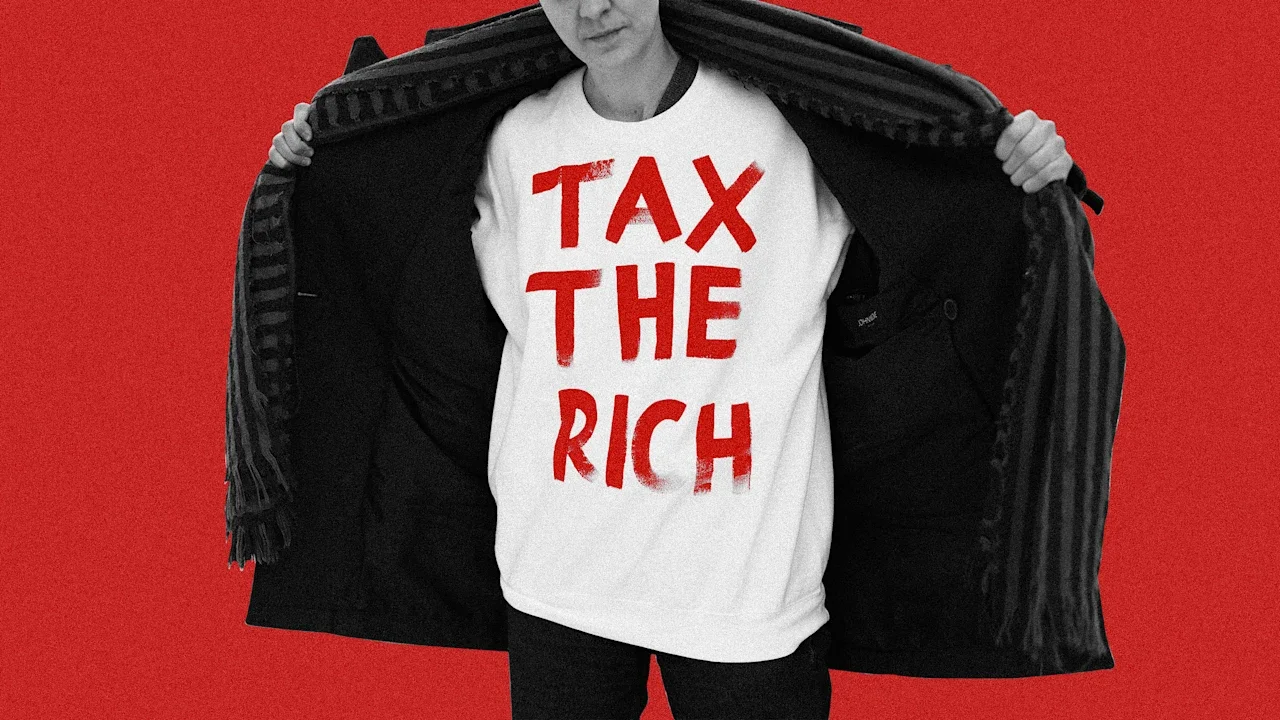
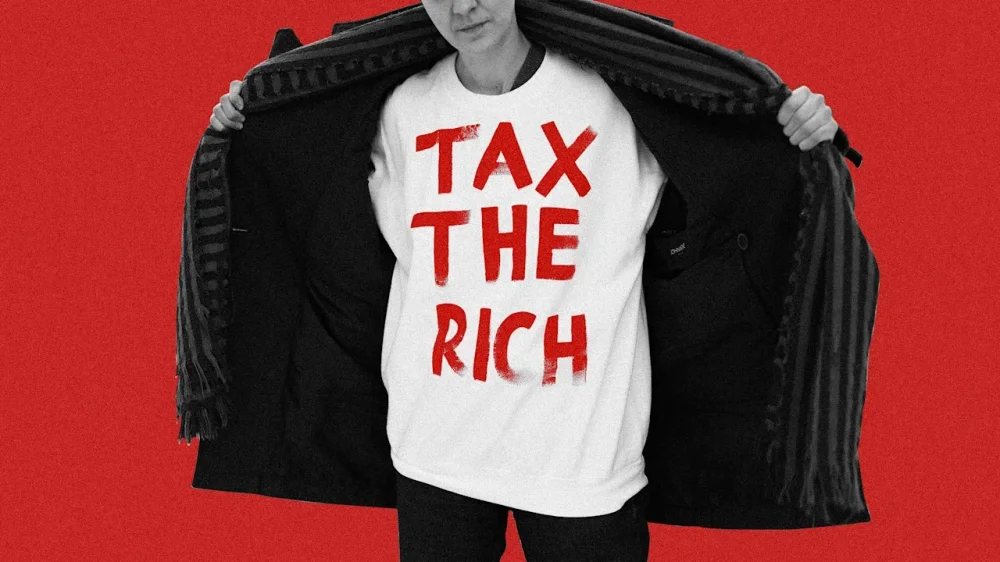
In New York, lawmakers are considering a pied-à-terre tax on second homes worth $5 million or more. It’s part of a growing wave of legislation focused on taxing the rich. But some wealthy people aren’t too happy about it. On an earnings call this week, Steven Roth, chief executive of Vornado Realty Trust, likened the rhetoric around taxing the rich to hate speech. Steven Roth Roth was specifically referring to what he called a “spat” between New York City Mayor Zohran Mamdani and billionaire Citadel CEO Ken Griffin. Mamdani recently filmed a video saying he would “tax the rich” outside Griffin’s multimillion-dollar penthouse. (The building, as noted by the New York Times, was developed by Vornado.) “I must say that I consider the phrase ‘tax the rich’ . . . when spit out with anger and contempt by politicians both here and across the country, to be just as hateful as some disgusting racial slurs, and even the phrase ‘from the river to the sea,’” Roth said on the call. “The rich whom the politicians are targeting started with nothing, are the epitome of the American dream,” he continued. “They are at the top of the great American economic pyramid for a reason. They should be praised and thanked.” However, a majority of regular Americans say that billionaires “make it harder” for them to achieve their American dreams, according to a 2025 Harris poll. Some rich people actually want fairer taxes Meanwhile, some wealthy people disagree with Roth’s assessment, too. Erica Payne, president and founder of Patriotic Millionaires, says she embraces the phrase “tax the rich”—so much so that it’s what she titled her 2021 book. “We believe that wealthy people like our members should be taxed for a number of reasons,” Payne tells Fast Company. As an organization, Patriotic Millionaires is made up of high-net-worth individuals who advocate for more progressive taxes in order to close the wealth gap. One reason, Payne says, is that since 1975, about $80 trillion has been transferred from the bottom 90% of Americans to the top 1%. Another is that “the wealth concentration at the level it has reached is an existential threat to democracy, period,” she says. Multiple studies have linked wealth and economic inequality to democratic erosion. It’s a greater threat to democracy, as one study put it, than military coups. “Anyone who doesn’t understand that, including people who possess that level of wealth, should be seen as acting in opposition to our agreed upon system of self governance,” Payne says. Why else should we tax the rich? “Because currently we’re taxing the poor,” she adds, “and that doesn’t seem to be working out particularly well for us.” After the 2017 Republican law that changed the tax codes, billionaires paid a lower effective tax rate than the rest of Americans. Speaking with Fast Company this week, Payne bluntly criticized Roth’s comments, calling them a sign of insecurity—and a sign that rich people “might understand they’re not remotely worth the amount of money in the economy that they currently control.” “Over-inflated egos” It’s not the first time the ultra-wealthy have been criticized for portraying themselves, as a Washington Post op-ed put it in 2021, as “sensitive and oppressed.” “They are having an emotional response and a sensitivity to what is the only logical choice in a capitalist democracy,” Payne says, “and that is to acknowledge that the level of wealth that they currently enjoy is based substantially more on a deliberate misstructuring of the economy, so that it definitionally delivers outsized returns to people in their class, relative to the actual value they bring.” Just as Roth said billionaires should be praised and thanked, many defend the ultra-wealthy by pointing out that they’ve created jobs and economic value through their companies. But Payne contests that framing. In some instances, she says, business owners actually destroy value. (Consider one study from 2009, which found that for each new retail job created by Walmart, 1.4 existing jobs are lost at competing businesses.) “The ‘sky-is-falling,’ ‘chicken-little,’ ‘the-economy-will-collapse-without-our-talent’ mythology they’re trying to spread is patently absurd,” Payne says of wealthy people who oppose taxes or other policies to address wealth inequality. “The only thing that will collapse if we tax billionaires at an appropriate level is an over-inflated ego or two,” she adds, “and I think that would be a wonderful thing for all of us.” View the full article
-
Working mothers are sleep-deprived. While parenting and sleep deprivation go hand in hand, at work, moms are expected to be on their A-game. However, a new report is shedding light on how too little sleep is impacting how moms are able to show up at work, or even, if they’re able to show up at all. According to the new Bedtime Report from Better Sleep, a relaxation and sleep app with over 65 million users worldwide, moms are struggling to get enough rest. The research, which was conducted by Wakefield Research and involved 1,000 U.S. mothers, found that over the past year more than half of working moms (53%) have either called in sick, left work early, or underperformed at their job, due to lack of sleep. And it’s not just a one-off incident for most of them: 36% said it’s happened repeatedly. The sleep stats are eye-opening (pun intended): 35% of moms said they clock around six to seven hours of sleep a night and 26% get between five and six. Worse off are the 14% who said they are only getting four or five, and the very weary 2% who get less than four. Alarmingly, only around 23% of moms get a solid seven hours of shuteye on the average weeknight. So, why aren’t moms getting enough sleep? According to the research, it’s not because they all have colicky babies or are up late binge-watching The Bear and eating Pop Chips all night. It’s because they’re stressed and can’t quiet their minds enough to get a decent night’s sleep. Seven in ten moms cited anxiety, racing thoughts, or thinking about their daily responsibilities as a top reason for their exhaustion. Worryingly, even more (73%) say they don’t feel that their lack of sleep is seen which, in turn, means there’s no real support to help them actually relax, rest, and reset. Nathalie Walton, General Manager of BetterSleep says the issue is all too common but that the implications are huge. “Moms are operating in a state of sustained depletion that affects every part of their lives,” she said in a press release. “This data makes visible what millions of mothers already know, but rarely say out loud. Rest is not a luxury. It’s what makes everything else possible—and right now, far too many moms are running on empty.” All the sleep stats are troubling because going through the day delirious with exhaustion is tough. It makes 48% of moms feel less connected to their kids, 46% short-tempered, and 34% say they are more willing to rely on screens to occupy their kids. But when it comes to how moms are managing at work, lack of sleep is majorly problematic there, too. Nearly a fifth (19%) say they’ve retreated from their career goals or promotions that were once within their reach due to their pure and utter exhaustion. The research doesn’t mean that moms are failing. It means they are having to manage too much. “What we’re seeing is not a personal failing, it’s a structural one,” Dr. Shelby Harris, clinical sleep psychologist and sleep expert at BetterSleep said in a press release. “Mothers have been conditioned to treat rest as something they have to earn, not something they deserve. Changing that starts with understanding the full scale of the problem.” From that lens, the report should shed light on the fact that moms—who are often holding down the fort at home and working outside of the home, too—urgently need more support, both inside their home (Hello, partners? Are you there?) and outside it (affordable childcare anyone?). That seems especially true for Gen Z moms who experienced the highest rate of work disruptions due to lack of sleep: 65% of Gen Z moms fell off at work due to exhaustion compared to 55% of millennials and 39% of Gen X moms. It might be easy to blame the baby, but according to the research, it’s the tireless mental load that’s the real culprit. View the full article

-
We may earn a commission from links on this page. Deal pricing and availability subject to change after time of publication. A good OLED gaming monitor still costs more than most mid-range GPUs, which is why this Acer Predator X27U deal stands out. At $369.99, down from $549.99, this is the lowest price the monitor has hit so far, according to price trackers. Acer Predator X27U OLED Gaming Monitor $369.99 at Amazon $549.99 Save $180.00 Get Deal Get Deal $369.99 at Amazon $549.99 Save $180.00 For PC gamers, the Predator X27U gets most things right—the 240Hz refresh rate and 0.03ms response time make fast shooters and racing games feel incredibly smooth, especially if you are coming from a standard 144Hz LCD panel. Motion blur is minimal, and its FreeSync Premium compatibility helps reduce tearing without much setup hassle. The 1440p resolution also feels like a good balance for most people. You get sharper visuals than 1080p without needing the kind of graphics card power that 4K gaming still demands. Plus, its stand adjusts for height, tilt, swivel, and pivot, which sounds minor until you spend eight hours staring at a screen positioned slightly wrong. The OLED panel makes a bigger difference than spec sheets usually explain. Dark scenes in games stop looking washed out, HDR content has more depth, and colors look richer without feeling oversaturated. Meaning, horror games, space games, and anything with nighttime scenes benefit from the perfect black levels and strong contrast in ways IPS panels still struggle to match. It also helps that Acer included features that make it easier to use outside of gaming, including USB-C connectivity and a built-in KVM switch (which lets you swap between a desktop and a laptop with the same keyboard and mouse) saves desk space if you bounce between work and gaming setups. That said, despite having HDMI 2.1 ports, the monitor does not fully support variable refresh rate on the PlayStation 5 or Xbox Series X, so console players will not get the same experience PC users do. Input lag also rises at lower refresh rates, though most PC players running games at higher frame rates probably will not notice it much. Still, if you're focused mainly on PC gaming, this deal makes a lot of sense. You are getting a fast 1440p OLED display with excellent motion handling and strong image quality at a price that used to buy a midrange LCD monitor just a couple of years ago. Our Best Editor-Vetted Tech Deals Right Now Apple AirPods Pro 3 Noise Cancelling Heart Rate Wireless Earbuds — $199.99 (List Price $249.00) Apple Watch Series 11 [GPS 46mm] Smartwatch with Jet Black Aluminum Case with Black Sport Band - M/L. Sleep Score, Fitness Tracker, Health Monitoring, Always-On Display, Water Resistant — $329.00 (List Price $429.00) Fitbit Versa 4 Fitness Smartwatch (Black) — $149.95 (List Price $199.95) Apple iPad 11" A16 128GB Wi-Fi Tablet (Silver, 2025) — $299.00 (List Price $349.00) Anker 20,000mAh Portable Power Bank With Built-in USB-C Cable — $49.99 (List Price $69.99) Deals are selected by our commerce team View the full article
-
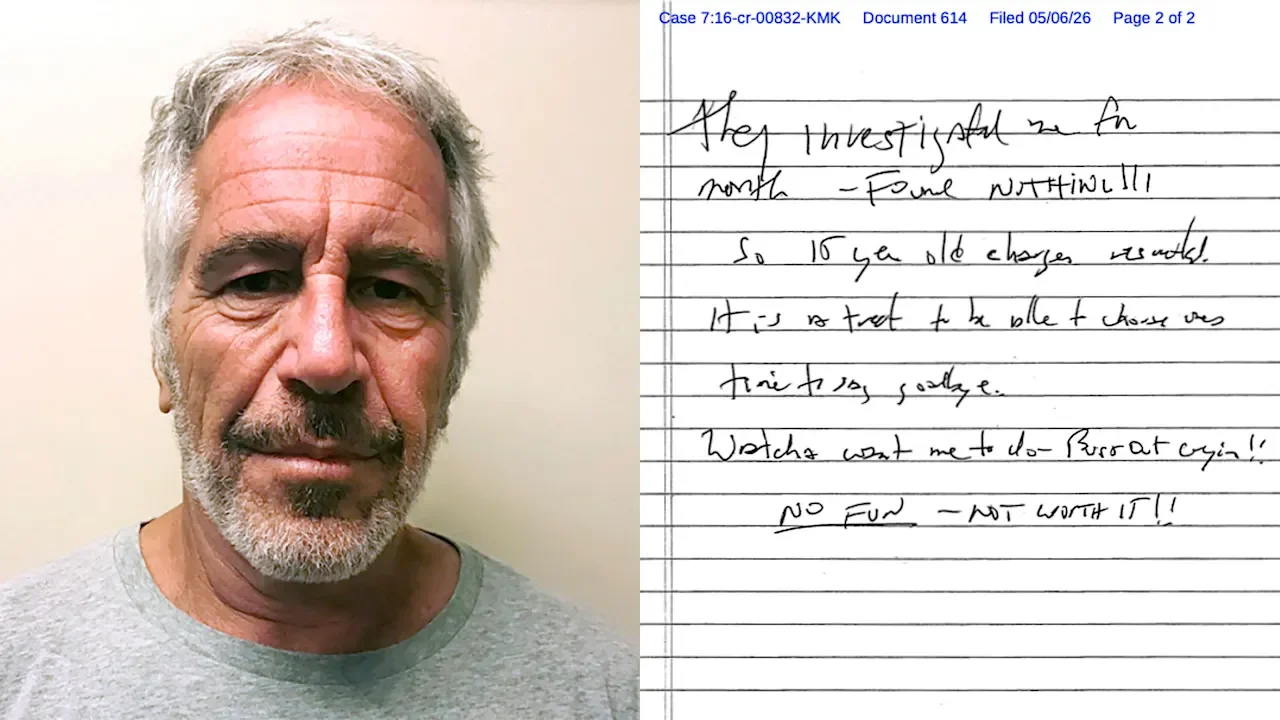
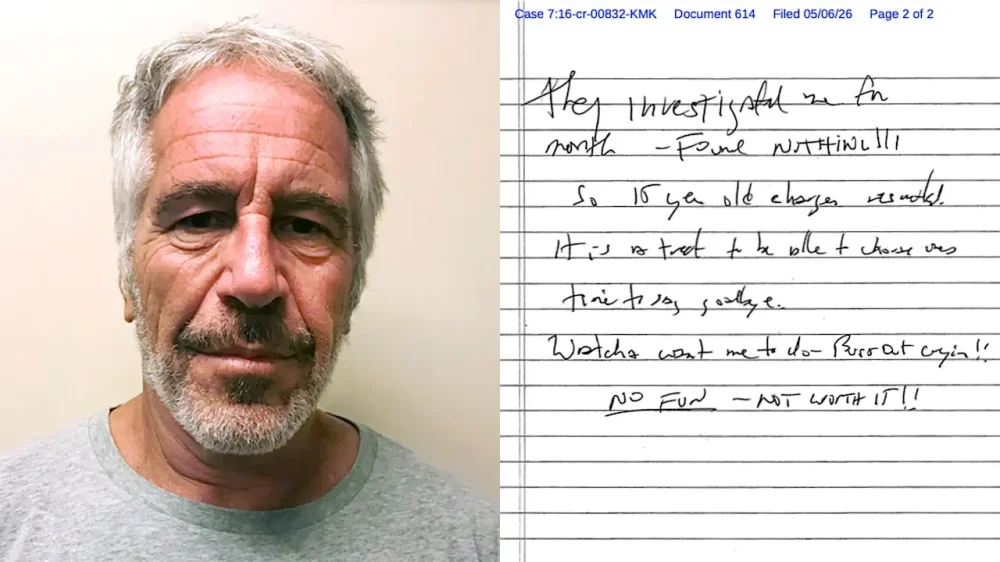
A note Jeffrey Epstein’s former cellmate claimed he found after the millionaire sex offender’s first suspected jail suicide attempt was made public Wednesday, years after being sealed and locked in a courthouse vault as part of an unrelated legal dispute. U.S. District Judge Kenneth Karas in White Plains, New York, ordered the release of the note after The New York Times asked him last week to unseal it and other documents in a case involving the former cellmate, Nicholas Tartaglione. Federal prosecutors did not oppose the request. Few people had known about the note until Tartaglione, a former police officer serving a life sentence for killing four people, mentioned it last year on writer Jessica Reed Kraus’ podcast. Tartaglione claimed he discovered the note in a book after Epstein was found on the floor of their cell at a Manhattan federal jail on July 23, 2019, with a strip of bedsheet around the financier’s neck. That was about three weeks before Epstein was found dead in his cell in what authorities concluded was a suicide. “They investigated me for month — found nothing!!!” said the short note, which is hard to decipher in some places. “It is a treat to be able to choose” the “time to say goodbye,” the note continues. “Watcha want me to do — Bust out cryin!!” “NO FUN,” the note concludes, with those words underlined. “NOT WORTH IT!!” It is unclear who wrote the note Tartaglione claimed to have found. It wasn’t mentioned in the lengthy government reports examining the circumstances of Epstein’s death, nor did it surface in the Justice Department’s recent release of files on the late financier. In a written ruling, Karas said he weighed the privacy interests of third parties, including Epstein, before ruling to release the note. He said existing case law suggests that privacy interests of a deceased person, such as Epstein, “are vastly reduced and disclosure of the deceased’s information is unlikely to ‘work a concrete harm.'” According to jail records, Epstein had friction marks and skin irritation on his neck from the suspected July 23 attempt. Jail officers said he was breathing heavily but responsive. One officer reported at the time that Epstein said he believed Tartaglione had tried to kill him, according to a memo included in the Justice Department’s files. Jail officials placed Epstein on suicide watch for 31 hours after the incident before downgrading him to psychiatric observation — his status when he killed himself. According to jail records, he denied trying to harm himself, telling a jail psychologist that suicide was against his Jewish religion and that he was a “coward” who didn’t like pain. A chronology included in the files states that Tartaglione told his lawyer about the note four days after the suspected July 23 attempt. The note was later submitted as evidence in Tartaglione’s criminal case and was placed under seal amid a dispute over his legal representation. Both men were interviewed by jail personnel on July 31, 2019, according to jail records. Epstein said he had never had any issues with Tartaglione, wasn’t threatened by him and didn’t “want to make up something that isn’t there.” Tartaglione said he didn’t have any issues being Epstein’s cellmate, though he said they kept their conversations to a minimum. On July 23, he said, he thought Epstein was having a heart attack because his eyes were open and he appeared to be snoring. Epstein and Tartaglione shared a cell for about two weeks, beginning soon after Epstein’s July 6, 2019, arrest and ending with the suspected suicide attempt. Both were awaiting trials — Epstein on sex trafficking charges and Tartaglione on charges that in 2016 he killed four men, including a man he tortured and strangled over stolen drug money. Tartaglione, who had been an officer in the Hudson River Valley village of Briarcliff Manor, was convicted in 2023. He is currently incarcerated at a federal penitentiary in California and has petitioned President Donald The President for a pardon. Epstein was without a cellmate when he was found dead at the Metropolitan Correctional Center in Manhattan, on Aug. 10, 2019. Authorities have pointed to a series of missteps by jail personnel — including browsing the internet and sleeping when they should’ve been checking on Epstein — for allowing him to take his own life. Officials said they found a handwritten note in Epstein’s cell at the time of his death, but that it didn’t appear to be a suicide note. Rather, they said, it appeared to be a list of grievances about conditions at the jail, including about food, showers and the presence of bugs. EDITOR’S NOTE — This story includes discussion of suicide. If you or someone you know needs help, the national suicide and crisis lifeline in the U.S. is available by calling or texting 988. There is also an online chat at 988lifeline.org —Michael R. Sisak and Larry Neumeister, Associated Press View the full article
-
Blue Cross Blue Shield is set to begin issuing nearly $2 billion in payouts to claimants in a long-running class action lawsuit. The payments are expected to begin this month and could see individuals receiving checks worth hundreds of dollars. Here’s what you need to know about the settlement and its massive payout. What is the settlement about? The settlement payout is the culmination of a nearly 14-year legal battle between Blue Cross Blue Shield and its subscribers. Blue Cross Blue Shield (BCBS) operates a federation of health insurance companies under its umbrella. As of 2026, there are 33 such BCBS-affiliated health insurers. Back in 2012, individuals who subscribed to policies from various BCBS health insurers sued Blue Cross Blue Shield, alleging that the company engaged in anti-competitive practices that led to higher health insurance premiums. Specifically, subscribers alleged that Blue Cross Blue Shield got BCBS insurers to agree not to offer their services in overlapping jurisdictions, limiting competition. And since more competition usually lowers prices, that kept premiums higher than they otherwise would have been. Given the number of lawsuits alleging this and related claims, the individual litigation received class-action status in 2013. By 2020, Blue Cross Blue Shield agreed to settle the claims for $2.67 billion, rather than incur additional legal costs and a potentially more costly outcome if the case went to trial. It’s important to note, however, that no verdict was ever rendered against Blue Cross Blue Shield, and the company has denied any wrongdoing. After 2020, several objections were made to the settlement, but following further court proceedings, the settlement was upheld. Now, nearly 14 years after the first legal actions were taken, Blue Cross Blue Shield is finally sending out billions in payments to affected parties. Who is included in the BCBS settlement? Despite agreeing to a $2.67 billion settlement, Blue Cross Blue Shield will pay out less than $2 billion to affected subscribers. This is because the difference will go toward court costs, administrative costs, and legal fees. The remaining roughly $1.9 billion is being distributed to claimants. Blue Cross Blue Shield has also agreed to change the way it does business to avoid similar issues in the future. How do I know if I am included in the settlement? In order to be included in this settlement, you would have needed to file a claim by 2021. According to the settlement’s official website, successful claimants include people who had an Individual, Insured Group, or Self-Funded Account with a BCBS company between February 2008 and October 2020. The policy dates for those with Self-Funded Accounts are September 1, 2015, through October 16, 2020. If you have forgotten whether you may have filed a claim years ago, not to worry. Claimants have been notified through email and postal mail, so be sure to check both if you think you are covered under the settlement. How much can I get from the settlement? That depends on how many people ultimately filed a claim, among other factors specific to your policy. The more people who filed, the less settlement money there will be to go around. The settlement agreement also states that those calculated to receive less than $5 will receive no payment at all. TopClassActions has stated that around 6 million people filed claims. That suggests that the average payout could be around $333 per claim, but again, final payouts will depend on an individual’s circumstances. When will payments be made? Payments will begin being sent out this month. You will receive your payment based on the method you selected when you filed a claim. Those methods include physical checks, pre-paid cards, or digital payments. View the full article

-
We may earn a commission from links on this page. Deal pricing and availability subject to change after time of publication. Google’s Pixel phones have spent the last few years becoming the default recommendation for people who want a straightforward Android experience without dealing with heavy software skins or overloaded features. The Google Pixel 10 Pro continues that approach, though its original $1,219 price made it harder to justify against competing flagship phones. Now, Amazon has dropped the unlocked 512GB model to $969 (its lowest price yet, according to online price trackers), and that makes it easier to appreciate what Google actually does well here. Google Pixel 10 Pro (Obsidian) 512GB nlocked Android smartphone $969.00 at Amazon $1,219.00 Save $250.00 Get Deal Get Deal $969.00 at Amazon $1,219.00 Save $250.00 The hardware itself is familiar in a good way—the flat display makes it easier to grip and use one-handed, the matte glass back does a better job resisting fingerprints than many glossy competitors, and the overall build feels solid without becoming bulky. Google also continues to offer one of the better long-term Android support policies, so you aren't buying something that will feel outdated in two years. Performance is solid for day-to-day use, though the Tensor G5 chip still trails behind Snapdragon-powered competitors in heavier gaming and more demanding apps, notes this PCMag review. That said, the biggest reason to buy this phone is still the camera system. Google continues to deliver photos that look natural without over-sharpening faces or cranking up colors, and its triple-camera setup handles low-light shots especially well. The 6.7-inch OLED display of the Pixel 10 Pro also gets brighter than last year’s model, making it easier to use outdoors, and Qi2 charging plus Google’s new PixelSnap magnetic system make wireless charging less annoying in daily use—snapping the phone onto a desk stand or car mount feels simple in the same way Apple’s MagSafe accessories do, says our writer in her review of the product. Battery life is good enough for a full day with regular use, but frequent video recording, navigation, or extended camera sessions can drain it faster. Also, one thing to keep in mind is the switch to eSIM-only support. For people who travel often or frequently change carriers, losing the option for a physical SIM card may feel limiting. Our Best Editor-Vetted Tech Deals Right Now Apple AirPods Pro 3 Noise Cancelling Heart Rate Wireless Earbuds — $199.99 (List Price $249.00) Apple Watch Series 11 [GPS 46mm] Smartwatch with Jet Black Aluminum Case with Black Sport Band - M/L. Sleep Score, Fitness Tracker, Health Monitoring, Always-On Display, Water Resistant — $329.00 (List Price $429.00) Fitbit Versa 4 Fitness Smartwatch (Black) — $149.95 (List Price $199.95) Apple iPad 11" A16 128GB Wi-Fi Tablet (Silver, 2025) — $299.00 (List Price $349.00) Anker 20,000mAh Portable Power Bank With Built-in USB-C Cable — $49.99 (List Price $69.99) Deals are selected by our commerce team View the full article
-
In November 2025, nearly 300 designers began work on their submissions for the competition of a lifetime: the opportunity to design a bathroom for one of the most famous architects of all time. The competition called on designers to imagine a new public restroom for the Gropius House, the family home of the late German architect Walter Gropius. Gropius founded the famed art and design school the Bauhaus (1919–1933), which defined an entire era of modernist design through its innovative approach to technology and almost reverent obsession with materials. His self-designed home is now preserved and made open to the public by Historic New England, a non-profit that oversees 127 privately owned historic properties in New England. On May 7, the organization announced Isabel Strauss as the winner of its call for submissions. The Gropius House’s actual on-site restrooms are not available to the dozens of visitors that stop by every day, given the property’s age. Instead, according to Vin Cipolla, CEO of Historic New England, visitors had to use a single porta-potty propped up against the property’s visitor’s center. “Our visitor experience team estimates that about 4,000 people a year use the porta-potty,” Cipolla says. “We’re considering this a somewhat urgent matter.” Last fall, Historic New England decided to share its bathroom design process with the public by turning it into a competition open to designers around the world. So how does one create a commode worthy of literally standing alongside Gropius’ work? Strauss says the answer is all about materials. A bathroom on a famous site The bathroom competition came with a list of guidelines and two main goals: to represent research and reflection on Bauhaus design principles, and to offer a creative design solution to a decades-long infrastructure problem. Submissions needed to be situated as either an extension of the visitor’s center, which is located inside what was once Gropius’ garage, or a separate structure nearby. They had to be ADA accessible and include two toilets and two wash basins. Finally, they needed to reflect the intense care and thought that Gropius put into the construction of the actual home and its grounds. From its Bauhaus furniture to its local construction materials, modern fixtures, and gleaming white exterior sandwiched snuggly in a transplanted copse of trees, every part of the Gropius House was deeply considered. “Gropius House combined traditional elements of New England architecture—wood, brick, and fieldstone—with innovative materials including glass block, acoustical plaster, chrome banisters, and the latest technology in fixtures,” Historic New England’s official webpage on the site reads, adding, “He designed the grounds of the home he built for his family in 1938 as carefully as the structure itself.” Strauss, who is a graduate of Harvard’s School of Design and currently works as an assistant professor of architecture at Smith College in Northampton, Massachusetts, had already visited the Gropius House several times given her proximity to the site. Last year, on a bike trip with her husband (who also works as an architect) to the nearby Waldon Pond, she first learned about the bathroom competition. “My husband was going to do the competition, and then he didn’t have time because he had too many other projects,” Strauss says. “I was like, ‘I’ll give this a try.’” A humble—yet design-forward—commode Strauss’ first step was to turn directly to Gropius’ own work. She used his original sketches of the Gropius Home’s garage to design the bones of a bathroom that would mimic the garage’s exact dimensions, standing just a few feet off to the side—like a modern reimagining of Gropius’ original structure. The bathroom is nearly square, with two equally-sized rooms on either side of a central divider, similar to something that one might find at the start of a hiking trail. Strauss says she was inspired by the “classic outhouse typology” for the building’s lay-out, but its similarities to a toilet in the woods end there. Nearly all of the materials making up the bathroom are pulled directly from the same sources as the Gropius house: the outside, for example, is clad in layers of fieldstone, which serves as the house’s foundations; the ripple glass in the transom windows also appears in the house; and even the simple white tiles in the stalls are recreations of the original bathroom tile. Strauss’ Bauhaus bathroom is so simple and organic that it almost slides into the background of the natural wooded environment. Cipolla says that, amidst hundreds of other designs his team received, the competition judges were continuously drawn back to her humble-yet-grounded approach. “It’s quiet—it doesn’t call attention to itself,” Cipolla says. “It sits within the fabric of the site in a rather unobtrusive way, drawing on vernacular materials, a naturalistic solution, and reflecting the materiality that already exists.” Now that the competition is closed, he adds, the Historic New England team hopes to get construction underway within the next couple of years and finally put the porta-potty to rest. Strauss’ bathroom is evidence that, in the hands of a dedicated artist, even something as quotidien as a pair of stalls can become a reflection of design history. “What I hope the spirit of my interpretation of Bauhaus design captures is taking materials that are ordinary or industrial that are not necessarily luxury, and, with careful design, elevating them so that everyone has access to beautiful and functional design,” Strauss says. View the full article

-
Fast food group beat expectations but record US ground beef prices threaten marginsView the full article
-
Also in today’s newsletter: a new company seeks to tackle the power constraints on European data centre growth View the full article
-
A new library is opening up in New York City this Friday, but rather than books, the space will house 3,437 volumes and roughly 3.5 million pages of the Epstein Files. The Donald J. The President and Jeffrey Epstein Memorial Reading Room is a project by the Institute for Primary Facts, a nonprofit organization dedicated to government transparency. Housed in an undisclosed location in Tribeca, the exhibition will allow visitors to see the records in a new way. It will be open to the public from May 8 through 21 by appointment only. “The truth is hard to deny when it’s printed and bound for you to see,” the project’s website reads. “The Reading Room keeps public attention fixed on the crimes of Epstein and the Epstein class, and on The President’s desperate attempts to bury them, to support the victims and survivors as they seek justice.” The controversial records have garnered media and public attention since the arrest and death of convicted sex offender Jeffrey Epstein, leading to widespread calls for the release of the files gathered through numerous investigations. The Department of Justice finally released a redacted version of the files in January 2026. The massive number of documents has led many to come up with creative ways for the public to read and interact with the files. Take Jmail, for example: The digital project led by a small group of engineers helps the public navigate the trove of documents via a user-friendly interface modeled after Gmail. Subsequent iterations of this project include an Amazon-looking storefront to explore Epstein’s purchases and a camera roll to browse through the images contained in the files. While from afar the exhibition looks like a regular public library, upon closer inspection each “book” is an analog version of the controversial records, categorized by volume. The bookshelves hold what the Reading Room says is 17,000 pounds of printed records. The bookshelves wrap the walls of the room, enclosing a draped square structure filled with candles, serving as a tribute to Epstein’s victims and survivors. There’s a seating area that resembles a public library reading room, although only journalists and law enforcement officials will be able to actually look through and read the documents. All visitors will be able to view a carefully curated timeline plastered on the walls that details the long relationship between Epstein and The President. For members of the public who are interested in attending, the Reading Room is offering reservations for free 20-minute visits; prior registration is required. Before the visit, those attending will receive a text message with the venue’s location, which is being kept secret due to security concerns. View the full article
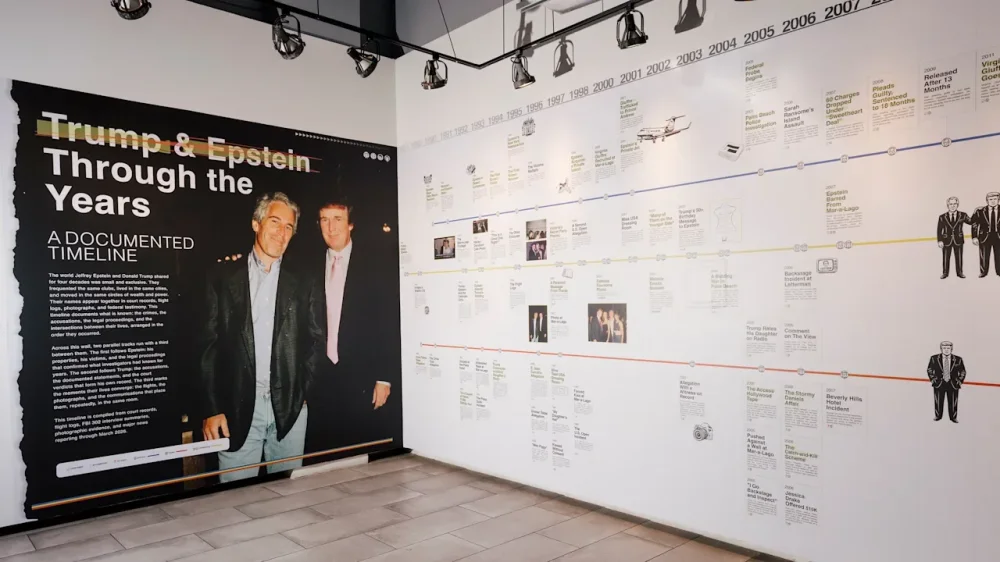
-
Since Donald The President named then-Senator JD Vance of Ohio his running mate in July 2024, his campaign logo has included both of their last names placed within a rectangular frame. In fundraising emails sent to the president’s mailing list last month, though, a different version of the logo included just one name: The President. The President last used a Vance-less version of a MAGA Box logo during the 2024 campaign, but it reappeared in April in fundraising emails for an “Official Midterms Patriot Roster.” It’s one of a dozen or so logos used in fundraising emails over the past month by Never Surrender, The President’s leadership PAC, which manages the mailing list from his most recent presidential campaign. While variations of the The President-Vance logo remain in circulation, a growing number of alternative logos and email header graphics don’t mention Vance at all. It’s a subtle branding shift that puts the sole focus on The President, and comes amid growing questions over who the president might back as a successor in the 2028 race. The President-only logos started appearing in fundraising appeals as early as The President’s first month back in office in January 2025, but their number has grown. The percentage of logos in The President’s fundraising emails that are branded solely for him and not his VP has risen from 25% in March 2025 to a high of 42% in March 2026, according to a review of the Archives of Political Emails, a database. In April, it was more than 30%. Some of these logos say The President in all-caps letters. The campaign seems to favor the “Memo from The President” header to visually frame emails as personal appeals, which is valuable to connect the fundraising request as being from the man himself. The “The President 47” logo variation puts The President’s name inside a shield. At the same time, The President’s PAC stopped sending emails branded for Vance. Last year, the president’s mailing list received eight emails with solo Vance logos signed by the vice president. This year Never Surrender hasn’t sent an email signed by Vance since January, and it didn’t get its own logo. The PAC’s treasurer, Bradley T. Crate, did not respond to a request for comment sent through Red Curve, his political consultancy. Oftentimes, Never Surrender’s small-dollar email fundraising efforts on behalf of the president are manipulative and bizarre. One email threatened to sic officers from Immigration and Customs Enforcement on supporters who didn’t take a survey to prove they’re U.S. citizens. Another offered access to private national security briefings in exchange for donations. Increasingly, custom logos are used to communicate all this. Brand variants for recent promotions like “Elite Swamp Drainers for The President,” “The President Inner Circle,” and “The President Platinum” give potential small-dollar donors the illusion of access to the president with a logo for a made-up group. “Sitting presidents can and do continue to fundraise, usually for their own party as a whole, particularly when they’re popular among their voters,” SoRelle Wyckoff Gaynor, an assistant professor of public policy at the University of Virginia, tells Fast Company, noting that President Barack Obama held fundraisers for down-ballot races during his second term in office. “The The President-specific brand of these emails is super interesting—and someone like The President whose entire career is really built on branding, not building, I think it’s right to assume that all of these decisions are very strategic,” she says, noting the shift away from Vance indicates to her that The President wants to “leave the door open” for a successor, whether that’s Vance, Secretary of State Marco Rubio, or even his eldest son, Don Jr. Never Surrender keeps more than three-quarters of the money it raises and splits up the rest with the Republican National Committee and Working for Ohio, Vance’s leadership PAC. That means even when The President sends an email that leaves out Vance’s name in the logo, the VP’s group still gets 5% of whatever it raises. By omitting Vance’s name, however, The President is leaving room for people to question his allegiance to the vice president. The President has sent mixed signals about whether he’ll back Vance in the 2028 Republican primary, should Vance run. “I think you have a lot of very capable people,” The President said last year when asked, noting it’s still early. Perhaps the return of The President’s Vance-less logo was inevitable. As the first president since Richard Nixon to have two different vice presidents while in office, The President isn’t known for loyalty to his running mates. And to The President’s biggest supporters, it doesn’t really matter whether Vance or former Vice President Mike Pence are mentioned at all, as long as The President is on top of the ticket. As a small-dollar fundraising strategy, The President’s PAC is doubling down on the reason people subscribed to the mailing list in the first place. The President’s fundraising focus on himself is a reminder of who’s at the center of his political movement. MAGA is held together less by a coherent, consistent ideology than it is by fealty to a single man. The proof is in the logos. View the full article

-
Just as they did with televisions, many people used the pandemic as an excuse to upgrade their PC or laptop. It was a move that made sense at the time. Telecommuting became essential, and not all devices could adequately handle the demands of Zoom, Teams, and other work software. At the same time, digital communication was often the only way to stay in touch with friends and family. Smartphones handled some of that heavy lifting, of course, but the PC industry still saw shipments spike 14.5% from 1999 to 2000. Now, much like the TV market, many PC owners are reaching the point where a new device is becoming necessary. But unlike that living room fixture, PC shoppers are entering a hostile market defined by higher prices and fewer meaningful performance gains. IT research firm Gartner notes that many people replace their business devices, typically laptops, every three to five years. International Data Corp. puts that timeline closer to five to eight years when businesses actively manage upgrades and repairs. Personal-use computer owners tend to follow a similar replacement cycle. That means a refresh wave is looming for pandemic-era buyers, just as component prices are soaring amid AI-driven demand for hardware. RAM prices have jumped anywhere from 150% to more than 200% over the past year, depending on the type, according to PCPartPicker.com. Storage prices, including the cost of hard drives, have followed similar trends. Meanwhile, video card prices have remained elevated for years, as GPUs, the chips that power graphics cards, have become a core component of AI systems. For gamers, that has been especially frustrating. PC gaming is rapidly becoming a more important part of the video game ecosystem, threatening to displace consoles, according to some industry leaders at the recent Iicon conference hosted by the Entertainment Software Association. Analysts, however, say Nvidia is not expected to release a new generation of its GeForce GPUs in 2026. If that happens, it will mark the first time in three decades the company has skipped an annual release cycle. And finding a top-of-the-line RTX 50-series card remains difficult for many enthusiasts, with some retailers charging double the suggested retail price. A vanishing entry level As frustrating as the price hikes already are for consumers in need of an upgrade, analysts do not expect the situation to improve anytime soon. A separate Gartner projection predicts that PC prices will rise 17% this year compared with 2025. Worse still for consumers simply looking for a functional home computer, the era of low-cost machines may be nearing its end. “The sub-$500 entry-level PC segment will disappear by 2028,” says Ranjit Atwal, senior director analyst at Gartner. “In addition, rising AI PC prices will delay the projected 50% market penetration of AI PCs until 2028.” PC vendors, Gartner says, are likely to accept lower sales volumes to protect profit margins rather than aggressively pursue price-sensitive customers, noting that the first half of this year represents a “critical window.” By the end of the year, the firm predicted, combined prices for DRAM and solid-state drives could rise 130%. The surge in component costs, combined with uncertainty over how long those increases will last, could reshape the U.S. computer refresh cycle in one of two ways. Some analysts believe laptop users may simply hold onto devices as long as they remain “good enough” to run everyday programs and apps. Desktop users with some technical know-how can also upgrade individual components at a lower cost, or turn to services like Geek Squad if opening up a PC feels too intimidating. Others argue that buyers may rush to upgrade now before prices climb even higher. Distributors appear to be betting on that scenario. Worldwide PC shipments rose 4% in the first quarter of 2026, to 62.8 million units. That increase is notable because 2025 figures were already inflated as companies front-loaded inventory ahead of the The President tariffs. “The 4% year-over-year PC shipment growth in the first quarter of 2026 was artificially inflated,” says Rishi Padhi, research principal at Gartner, in a statement. “It was not due to genuine demand, but instead because of vendors’ and channel distributors’ increase of inventory levels ahead of expected price hikes in the second quarter.” View the full article

-
Peter Gold has always loved making films. While attending film school in New York, he became involved with a film called Our Hero Balthazar, directed by Oscar Boyson, known for his work as an executive producer on Uncut Gems. Gold instantly knew the film was something special. He also knew it would be tough to find distribution in today’s theatrical marketplace. The dramedy, starring Jaeden Martell as a wealthy New York City teenager Balthazar Malone, who, eager to impress his activist crush, follows an online connection (Asa Butterfield) to Texas where he believes he can stop an act of violence, was passed over by A24 and Neon. So Gold, 26, decided to launch his own distribution company, WG pictures, financed through outside investors, with film producer Brad Wyman to make sure it saw theatrical release. “Filmmaking and storytelling are the heart of my passion. Getting into distribution really came from a place of frustration with the state of independent cinema,” Gold told Fast Company. “So many movies, including my own, were being overlooked by existing distributors and weren’t being given the opportunity they deserved.” Our Hero Balthazar opened March 27 at Regal Union Square as the number 2 film in the theater, generating $33,138 opening weekend gross, second only to Project Hail Mary. The film’s budget was under $2 million. The film opened sold-out in LA on April 4 and is now expanding across the country. Hollywood should take note. The amount WG Pictures has spent on distribution is less than $1 million. WG Pictures pulled off the feat without spending a single dollar on paid media and instead relied entirely on social media to drive awareness. From TikTok fan edits to Letterboxd influencers, social media has proven a boon for cinema. With it, a new kind of showmanship-based marketing has emerged. Cynthia Erivo and Ariana Grande mastered the art of going viral on social media during the Wicked press tour. Timothée Chalamet appeared on a Wheaties box and hosted a table tennis tournament to promote his most recent project, Marty Supreme. “Honestly, I thought A24 did an interesting job with Marty Supreme, but they have Timothée Chalamet,” said Gold. “We don’t have Timothée Chalamet. We have to work with what we have.” Gold worked with the filmmakers closely to come up with a social media strategy driven by the characters and the story. They started by creating an Instagram account for the film’s protagonist, with the handle @bboymalone212, that has since amassed more than 72,000 followers. One post on the Instagram page features a custom starter pack meme inspired by the character of Balthazar, with performative male staples like a New Yorker tote bag, Lorde album cover and wire headphones. Another post features an Erewhon haul of coconut matcha cold foam and Lemme Purr vaginal probiotic gummies, touching on the film’s themes of exhibitionism in the social media age. “We’re telling the story of this character and building awareness around the movie without just running a trailer with paid ad spend,” said Gold. The social media generation no longer wants to be marketed at, Gold understands, they want to feel like an active participant. The Instagram account’s most viral post tapped content creator Caleb Simpson, who on his own has more than 2.8 million followers with his viral street series where he asks strangers, and more recently celebrities, “How much do you pay for rent?” and follows it up with, “Can I get a tour of your apartment?”. Simpson and Martell, in character as Balthazar, joined up for the Instagram Reel, touring the 80th floor New York City apartment overlooking Central Park, which was also a set in the film. “I try not to focus too much on money,” says Martell as Balthazar in the clip. “I’m more focused on making a change.” The comments are a mix of those in on the joke and bemused onlookers, none the wiser. “That was the first time Caleb had ever done a fictional person,” says Gold. WG Pictures also took advantage of the impressive social media following of those involved in the film, including actress and singer Halsey and actor Noah Centineo, boasting a combined 40 million followers. Each pulled their weight with non-stop posting about the film in the run up to its release, culminating in more than 30 million organic social impressions. Gen Z and Millennials say social media is the number one form of discovery for films, according to a new Fandango study. Higher ticket prices, the rise of streaming platforms and worsening theater etiquette, have all contributed to deflated box office numbers. A survey from October shows that overall cinema attendance has remained flat since 2019, but the percentage of frequent movie-goers has dropped from 39% to 17% in 2025. In 2025, 780 million people actually went to the movies according to EntTelligence’s annual report, down from 820 million in 2024. Over the same period, ticket prices jumped 5.7%. Between 2005 to 2019 – before the Pandemic shuttered screens and accelerated a shift towards streaming – the industry averaged well over 1B tickets sold annually. While Hollywood has expressed its fears that the streaming era and smartphones will stop the social media generation from leaving the house and going to watch films the old fashioned way, in a dark room filled with strangers, the opposite is proving true. Gen Z is now the most active cinemagoing demographic, according to Fandango, having seen seven films on average in 2025, compared to 5.3 for the general population. And while millennials mainly treat moviegoing as an escape from daily grind, Gen Z sees it primarily as a social activity. Gen Z also attributes a better selection of movies and the appeal of leaving the home as key motivators for going to the movies. In the US, 95% of Gens Y and Z are now interested in exploring their online interests through in-person events, according to Eventbrite data. Both Gen Z and Millennials also prefer to extend moviegoing beyond the screen, pairing it with dining and drinking, according to Fandango. Gold and WG pictures are meeting that audience where they are at. Opening weekend for Our Hero Balthazar, WG pictures hosted a rave at the Museum of Sex in New York City. “I felt like that was something Balthazar would have thrown himself,” says Gold. To gain access, attendees needed a ticket stub for the film. A slightly less extreme marketing stunt than film distributor, Focus Features, who only permitted fans with bald heads (there was a barber in the foyer for those ‘willing to become bald’) for an early screening of sci-fi comedy film Bugonia. WG Pictures also hosted an immersive gallery experience with visual artist Jet Le Parti, where they created original artwork inspired by the film and the issue of gun violence, reflects WG’s broader strategy of eventizing cinema. They also hosted an event with Third Space–hosted event, designed to convert awareness into active participation and, subsequently, ticket sales. This social driven strategy is a shift for what has, and still is, a mostly solitary experience. When the lights dim and the film starts rolling, talking or, worse, scrolling, is strictly forbidden. And yet, Gold is banking on community being the next big drive getting Gen Z to the box office. “It’s not just cinema in a crowded theater,” as Gold sees it. “It’s an opportunity to connect with the community.” The success of platforms like Letterboxd and WG picture’s IRL marketing strategy is a testament to that. “Someone said to me after one of the screenings at Roxy Cinema that this is a movie that starts after it’s over,” he explains. “In terms of the conversation it provokes.” For Gold, the biggest challenge isn’t getting Gen Z to the cinema, it’s finding the right movies. “We’re working on Toad, which is a stoner comedy, and looking at some really interesting documentaries,” he said of future releases. “But it’s really just about finding the next exciting movie and continuing to distribute films theatrically.” Find the right movie, market it right, and Gen Z will come. View the full article