Newsletter
Want to keep up to date with all our latest news and information?


ResidentialBusiness
Administrators
-
Joined
-
Last visited
Everything posted by ResidentialBusiness
-
A loyalty program is a structured marketing strategy that rewards customers for their continued patronage. Typically, customers earn points with each purchase, which can then be redeemed for discounts or exclusive offers. These programs often incorporate tiered levels to incentivize higher spending. Comprehending the components of a loyalty program and how they function can help businesses cultivate customer relationships and drive sales. Let’s explore the purpose and benefits of these programs in more detail. Key Takeaways A loyalty program is a marketing strategy that rewards customers for repeat purchases, enhancing retention and engagement. Members of loyalty programs typically spend 62% more on the brand compared to non-members. Common types include points-based programs, tiered rewards, and paid memberships, each offering unique benefits. Loyalty programs gather data on consumer behavior, aiding in personalized marketing strategies. Technology plays a crucial role in tracking rewards, simplifying redemption, and enhancing customer experience. What Is a Loyalty Program? A loyalty program is a structured marketing strategy designed to reward customers for their repeat purchases and ongoing engagement with a brand. The loyalty program benefits both consumers and businesses, creating a win-win situation. By participating, you can enjoy exclusive perks, discounts, or points that accumulate over time. These advantages of customer loyalty programs encourage you to spend more—about 18% more than non-members. Furthermore, companies gain valuable insights into consumer behavior, helping them tailor their offerings. To effectively reward customer loyalty, businesses may implement tiered systems, offering greater rewards as you engage more. This approach boosts satisfaction, as 91% of consumers are likely to buy more frequently from brands they trust, enhancing overall customer retention. How Do Loyalty Programs Work? Loyalty programs operate by rewarding you for your repeat purchases, providing tangible benefits that incentivize ongoing engagement. When you sign up for a loyalty program, you typically provide personal information, which allows businesses to track your spending habits. This data helps them tailor rewards particularly for you, maximizing the benefits of customer loyalty programs. Most programs use points-based systems, where you accumulate points for discounts or products, or tiered structures that increase rewards based on your spending levels. These programs integrate into your shopping routine, encouraging you to participate through exclusive offers and personalized communication. By refining their marketing strategies with insights from loyalty programs, businesses aim to improve your overall customer experience. Purpose of a Loyalty Program Though many customers appreciate the rewards they receive, the primary purpose of a loyalty program is to improve customer retention. By offering incentives for repeat purchases, these programs increase customer lifetime value, making it more cost-effective to keep existing customers rather than acquire new ones. Moreover, loyalty programs allow businesses to collect valuable data on consumer spending habits and preferences, which can boost marketing strategies and product development. Successful programs can cultivate a community of brand advocates, as satisfied customers are likely to refer others through word-of-mouth. Research shows that members of loyalty programs tend to spend 62% more on the brand compared to non-members, demonstrating how effective these programs can be in driving sales and customer engagement. Benefits of Customer Loyalty Programs Customer loyalty programs offer several key benefits that can greatly impact your business. By encouraging repeat purchases, these programs can lead to increased spending, with members often buying more than non-members. Furthermore, they provide valuable consumer insights, allowing you to tailor your marketing strategies and improve customer engagement based on the preferences of your loyal customers. Increased Repeat Purchases Many businesses recognize that implementing a loyalty program can greatly increase repeat purchases among their customers. In fact, customers in these programs are 43% more likely to shop weekly and spend 18% more than non-members. This surge in purchasing behavior is often thanks to exclusive rewards and personalized offers that improve customer value. Customer Type Purchase Frequency Average Spend Loyalty Program Members Higher 18% more Non-Members Lower Baseline spend Additionally, loyalty program members contribute to a 12-18% increase in annual revenue growth, highlighting their importance. With 85% of shoppers preferring brands with loyalty programs, it’s clear these initiatives effectively drive repeat purchases and elevate overall sales. Enhanced Brand Loyalty As businesses aim to promote deeper connections with their clientele, implementing a loyalty program can greatly improve brand loyalty. When you join a loyalty program, you’re 59% more likely to choose that brand over competitors. This preference translates into increased spending, with loyalty members typically spending 18% more than non-members. Moreover, approximately 85% of shoppers continue buying from brands that offer loyalty programs, which leads to strong retention rates. Members often demonstrate a 46% loyalty rate, thanks to well-structured rewards that encourage repeat engagement. In addition, 72% of consumers are likely to purchase more frequently from brands they’re enrolled with, highlighting the direct impact of loyalty programs on customer interaction and repeat business. Valuable Consumer Insights Loyalty programs offer businesses a treasure trove of consumer insights that are crucial for shaping marketing strategies and product offerings. By analyzing data on spending habits and preferences, you can tailor your marketing efforts more effectively. Members of these programs tend to spend up to 18% more than non-members, boosting your revenue. In addition, 85% of shoppers are likely to continue buying from brands that offer loyalty programs, enhancing customer retention. With personalized offers based on collected data, you can achieve a 36% increase in customer loyalty. Moreover, satisfied loyalty program members are 62% more likely to refer your brand to friends and family, helping you acquire new customers and expand your market reach efficiently. Types of Loyalty Programs In terms of loyalty programs, you’ll find several effective types intended to improve your shopping experience. Points-based programs reward you for each purchase, allowing you to accumulate points that can be redeemed for various perks, as seen with brands like Starbucks. On the other hand, tiered reward systems motivate you to spend more by offering greater benefits at higher spending levels. Whereas paid membership options, like Amazon Prime, give you immediate access to exclusive rewards for a fee. Points-Based Programs Points-based programs are among the most popular types of loyalty programs as they provide customers with tangible rewards for their purchases. In these programs, you earn points for each dollar spent, which can be redeemed for various incentives. Here’s what you can typically expect: Points redeemable for discounts, free products, or exclusive offers. Earning bonus points during promotional periods or on specific items. Diverse redemption options, including merchandise and gift cards. Amplified value perception through engaging experiences. Evidence showing that members spend 18% more than non-members. Tiered Reward Systems Many brands improve their loyalty offerings by incorporating tiered reward systems, which build on the foundation of points-based programs. In these systems, you’ll find that your benefits increase as you spend more or engage with the brand. Customers often enjoy exclusive perks like early access to new products, special discounts, or complimentary services as they climb the tiers, such as Silver, Gold, and Platinum. Each level reveals greater rewards, encouraging a sense of recognition and motivation. Studies show that these programs greatly boost customer retention, encouraging you to keep purchasing from brands that reward loyalty. For effective implementation, clear communication about the benefits and milestones associated with each tier is crucial in motivating your engagement and spending. Paid Membership Options Paid loyalty programs offer a unique approach to improving customer experiences by requiring an upfront fee in exchange for exclusive benefits and perks. These programs attract customers willing to invest for immediate advantages, promoting higher retention rates and loyalty. Here are some key features of paid membership options: Access to exclusive discounts and promotions Free shipping on eligible purchases Early access to new products and services Members-only events or experiences Improved customer support services Successful examples like Amazon Prime and Grubhub+ showcase how these programs can drive revenue and customer engagement. For paid loyalty programs to work effectively, they must deliver compelling rewards that resonate with members, ensuring that the perceived value justifies the membership cost. Examples of Effective Loyalty Programs Loyalty programs have become essential tools for businesses aiming to improve customer retention and engagement. Several effective programs stand out: Brand Program Type Starbucks Points-based rewards for purchases Sephora Tiered benefits based on spending Amazon Paid membership with exclusive perks Starbucks Rewards allows you to earn stars for every purchase, redeemable for free drinks and food, boasting over 25 million members. Sephora‘s Beauty Insider offers personalized perks through tiered benefits, enhancing customer engagement. Amazon Prime, a paid program, encourages spending with benefits like free shipping and streaming. Delta‘s SkyMiles Medallion program rewards frequent flyers with tiered travel benefits, whereas The North Face XPLR Pass engages outdoor enthusiasts through rewards for activities, aligning with brand values. Creating a Successful Loyalty Program Creating a successful loyalty program requires a strategic approach that aligns with both your business objectives and the preferences of your customers. To achieve this, consider the following key elements: Establish clear goals that reflect customer experience strategies. Choose a program type that suits your business, like points-based or tiered systems. Regularly review and adjust the program based on performance metrics and customer feedback. Simplify the sign-up process and reward redemption to improve participation. Invest in marketing the program across various channels to clearly communicate benefits. The Role of Technology in Loyalty Programs In a competitive marketplace, leveraging technology in your loyalty program can greatly improve customer engagement and streamline operations. Modern loyalty programs rely on apps and websites to track customer activity and rewards, improving user experience. You can promote participation using online tools, like social media and email marketing, ensuring customers remain connected with your brand. By utilizing data analytics, you gain insights into customer preferences, allowing for personalized communications and targeted rewards. Many loyalty programs as well implement automated systems, simplifying the reward process so customers can easily earn and redeem points. Integrating technology not only boosts efficiency but also considerably improves customer satisfaction, as data shows that well-implemented tech solutions lead to higher engagement rates among program members. Frequently Asked Questions How Does a Loyalty Program Work? A loyalty program works by tracking your purchases and rewarding you for your spending habits. When you enroll, you usually provide personal information and receive a unique identifier. As you shop, you accumulate points or discounts based on how often you buy and how much you spend. Some programs have tiers, offering greater rewards as you reach higher spending levels, which keeps you engaged and encourages repeat purchases customized to your preferences. What Is an Example of a Loyalty Program? An example of a loyalty program is Starbucks Rewards. When you make purchases, you earn stars that can be redeemed for free drinks and food items. This encourages you to visit more frequently and spend more on each visit. Another example is Sephora’s Beauty Insider program, which offers tiered rewards based on your spending, providing perks like exclusive discounts and product samples, effectively incentivizing your loyalty to the brand. What Are the Cons of a Loyalty Program? Loyalty programs can come with significant downsides. They often require hefty investments in technology and marketing, which can strain your budget. Moreover, if rewards become too generous, profit margins may shrink. Customers might expect better deals, increasing their negotiating influence. In addition, managing these programs can lead to ongoing operational costs that may outweigh benefits. Many businesses find it challenging to achieve a positive return on investment, with only a small percentage reporting success. What Are the Three R’s of Loyalty Programs? The three R’s of loyalty programs are Reward, Retain, and Recruit. Reward involves offering incentives, like points or discounts, to encourage repeat purchases. Retain focuses on maintaining customer relationships, as keeping existing customers is often cheaper than acquiring new ones. Finally, Recruit emphasizes leveraging satisfied customers to attract new clientele through positive recommendations. Conclusion In conclusion, loyalty programs serve as effective tools for businesses to improve customer engagement and retention. By rewarding repeat purchases with points or exclusive offers, these programs create a mutually beneficial relationship. Different types, such as tiered or cashback programs, cater to varying consumer preferences. Furthermore, incorporating technology can streamline the experience and provide valuable insights into customer behavior. In the end, a well-structured loyalty program can drive revenue growth while nurturing long-term loyalty among your customers. Image via Google Gemini This article, "What Is a Loyalty Program and How Does It Work?" was first published on Small Business Trends View the full article
-
We may earn a commission from links on this page. Deal pricing and availability subject to change after time of publication. The latest AirPods Pro are a big step up from the first-generation buds. The third (and newest) generation comes with OTA updates that the AirPods Pro 2 also get to enjoy—but considering the second and third generations are the same price right now, why not go with the newer version? The AirPods Pro 3 are down to $199 (originally $249.99), which they briefly hit back in December during the holiday sales—the lowest price yet, according to price tracking tools. Apple AirPods Pro 3 Noise Cancelling Heart Rate Wireless Earbuds $199.99 at Amazon $249.00 Save $49.01 Get Deal Get Deal $199.99 at Amazon $249.00 Save $49.01 The AirPods Pro 3 improve on already great premium earbuds with new features (like a heart rate sensor) without increasing the list price. You'll get Personalized Spatial Audio (so you can hear sounds seemingly coming from different directions as you move your head) and the ability to use head gestures to tell Siri "yes" or "no" (this also works for answering or denying calls). Apple added a live translation feature to both the second- and third-generation AirPods Pro when iOS 26 rolled out earlier this year. You'll also get features like Conversation Awareness, which lowers your music volume when your AirPods detect that you're talking to someone; Transparency Mode, which lets you better hear your surroundings while your earbuds are in; and Adaptive Audio, which combines ANC and Transparency mode to adjust ANC levels based on the noise around you. Since these are in-ear earbuds (as supposed to regular earbuds like the AirPods 4) the ANC is much better since it naturally blocks out the noise with a tight seal, but the ANC technology itself has also improved—as has the sound quality, thanks to the new H3 chip, as PCMag detailed in its "exemplary" review, calling them the best earbuds your money can buy. You can expect about eight hours of juice, depending on your usage, and another 24 hours from the charging case. View the full article
-
If you visit the Hermès website in search of a scarf or a handbag, you’ll be greeted by a collection of whimsical sea creatures swimming across the screen. To navigate to the watch section, you’ll click on an image of a watch flanked by an eel. To locate shoes, you’ll click on a loafer with a pelican sitting inside it as if it were riding a boat. These sea horses and fish and eels and star fish are intriguing to the eye. While digitally-rendered images are hyper smooth, symmetrical, and flawless, these pictures bear all the imperfections of a hand-drawn illustration. We see the texture of the paper grain in the background, a slight irregularity in the lines, unevenness in the coloring. In a world of AI-generated images, these pictures feel special, perhaps even luxurious. Hermès, which unveiled a new website this week, partnered with the French artist Linda Merad to create these images. Merad, whose pen and ink illustrations have appeared in The New York Times, Texas Monthly, and The Atlantic, specializes in hand-drawn images. It was her old-fashioned, analog process that appealed to the brand. “They wanted t create the impression that the art was made by a human,” Merad explains. “They wanted the viewer to feel the materiality of the drawing.” For Hermès, it is on-brand to tap a small artist for its imagery. The 188-year-old fashion house has become a luxury giant (generating $13.8 billion in revenue last year) by emphasizing the handcrafted nature of its products, which are made in European factories by well-trained artisans. Through its Instagram page, Hermès has put out calls to artists who are interested in offering their own interpretation of the brand, from creating images of horses as a reference to the brand’s equestrian roots to drawing pieces from the collection. Merad answered the call six months ago, illustrating Hermès hats in her own fantastical style, drawing the bucket hats and caps with legs, dancing across a field of mushrooms. The Hermès team was so taken with her work that they invited her to create images of sea animals that would be featured on the brand’s Instagram campaign. Then, a few weeks ago, the Hermès team said they would be incorporating the images onto the e-commerce website, which came as a surprise. This is the first time that Hermès is using illustrations on its website. “It wasn’t planned,” Merad says. “The e-commerce team really liked my universe, so they wanted illustrations.” Given how enormous the company is, Merad says she was given remarkable creative freedom. She only worked with four other people, two Hermès art directors, one animator, and one musician. She says she was compensated for her work, with the Hermès team accepting her first offer. Hermès wanted to start with the motif of a seahorse, but she was free to build out an entire under sea world. “It’s the year of the horse in the Chinese calendar, and Hermès felt that horse imagery would be everywhere, so they wanted to do something distinct,” she says. Her main constraint was including various products in the imagery, such as shoes, jewelry, and scarves, since they would be used to help customers navigate to product categories. Merad says she didn’t find this very onerous because she often juxtaposes animals with human elements. “I was surprised to get so much creative freedom from a luxury brand,” she says. “I like to mix several ideas and create hybrid forms. It allows me to make images that are funny and poetic.” In a world where AI can produce high quality images for free, many artists fear that there will be less demand for their work. Indeed, AI image generators are trained on existing art, which effectively means that they are using artists’ work without compensating them, then reworking it into new images. But this partnership with Hermès suggests that original art made by human beings will also become increasingly valuable. Standing out in a digital world full of slop will require taking the time and money to work with artists. Merad believes there is already a growing desire, in some quarters, for hand-drawn work. From the time she was a child, she always loved drawing pictures, particularly of clothing. She considered becoming a fashion designer, but she didn’t like the idea of having to creating large collections every season; she preferred to spend time focusing on each individual image. She thought her best chance of finding work as an artist was to become a graphic designer, so she attended the French art school, École nationale supérieure des arts appliqués et des métiers d’art, to learn graphic design. But over the last few years, she’s found that clients are more interested in her hand drawn illustrations. She believes all the imperfections that come along with handcrafted work create images that are more interesting to the eye in a world where so much digital art looks the same. “When things are made by hand, you can tell there is a soul behind them,” she says. “There is charm and humanness in the imperfections than something that looks more robotic.” View the full article

-
Yields across maturities were higher by less than three basis points after rebounding from session lows. View the full article

-
If you’re looking to streamline your Instagram marketing efforts, exploring the best scheduling apps can be a transformative factor. These tools not just help you plan and automate posts but likewise offer features like content curation and analytics. With options like Pallyy, SocialBee, and Sendible, you can improve your social media strategy effectively. Comprehending their unique capabilities is crucial for optimizing your engagement and growth. Let’s take a closer look at what each of these apps has to offer. Key Takeaways Pallyy offers unlimited post scheduling, auto-publishing, and a visual content calendar for efficient Instagram management. SocialBee provides a category-based scheduling system, automation features, and performance reports to enhance content engagement. Sendible supports multi-platform scheduling, collaboration tools, and integrated analytics for tracking post performance and optimizing strategies. ContentStudio includes user-friendly collaboration tools, a shared content calendar, and content discovery features to keep teams organized and engaged. Iconosquare focuses on Instagram optimization with robust analytics, hashtag management, and grid planning features for improved visibility and engagement. Pallyy Pallyy stands out as a top choice among Instagram scheduling apps, offering both a free plan and a premium option priced at $25 per month for each social group. As one of the best Instagram planning apps, it allows you to schedule an unlimited number of posts, including Grid Posts, Reels, and Stories, with auto-publishing features that simplify your workflow. The platform also includes a visual content calendar and an Instagram Grid Planner, making it easy to plan and preview your posts effectively. Furthermore, Pallyy’s content curation tool enables you to repost and credit original creators, which promotes community engagement. With its focus on visual content management, Pallyy is ideal for users who prioritize aesthetics in their social media strategy. SocialBee If you’re looking to streamline your Instagram marketing efforts, SocialBee offers a robust solution with its category-based scheduling system. This app to schedule Instagram posts allows you to organize your content into different categories, making it easier to automate Instagram posts free. With features like RSS feed integration and content curation, you can quickly share relevant content directly to your audience. SocialBee supports various post types, including carousels, stories, and first comments, enhancing engagement with your followers. Moreover, its collaboration features and performance reports make it an excellent choice for agencies and freelancers managing multiple clients. Starting at $29/month, SocialBee likewise includes a 14-day free trial, letting you test its capabilities before committing. Sendible Sendible stands out as a potent tool for Instagram scheduling, offering multi-platform capabilities that streamline your posting process. With its collaboration and management features, you can easily coordinate with your team, thanks to tools like a shared content library and smart queues for efficient post scheduling. Furthermore, Sendible provides performance analytics to help you track engagement and optimize your strategy, making it a well-rounded choice for agencies looking to improve their social media efforts. Multi-Platform Scheduling Features Managing social media can be an intimidating task, especially when juggling multiple platforms, but with Sendible’s multi-platform scheduling features, you can streamline the process considerably. This app to post Instagram allows you to manage your content across various platforms, including Facebook, Twitter, and LinkedIn, all from a single dashboard. You can easily schedule posts using the social media calendar, which improves collaboration among team members. Sendible also lets you auto-publish posts and first comments on Instagram, boosting engagement. With integrated image editing tools and Canva support, creating visually appealing content is effortless. Furthermore, the smart queue feature optimizes post timing for different platforms, ensuring maximum audience reach and engagement without overwhelming your schedule. Collaboration and Management Tools Collaboration becomes seamless when using Sendible’s robust management tools, designed particularly to meet the needs of agencies. This platform offers a shared content library that allows multiple users to manage and schedule posts efficiently. With a built-in image editor and Canva integration, you can create visually appealing posts without needing separate design software. The smart queue system optimizes your post scheduling, ensuring content is published at the best times for audience engagement. Moreover, Sendible’s client connect onboarding feature improves the overall management experience, boosting client satisfaction. Feature Description Shared Content Library Multiple users can collaborate on posts easily. Built-in Image Editor Create posts without external software. Smart Queue System Optimizes scheduling for better engagement. Client Connect Onboarding Facilitates easy client onboarding. Automated Reporting Measures performance and provides insights. Performance Analytics Capabilities Performance analytics capabilities are crucial for any successful social media strategy, and Sendible thrives in this area. With advanced tools, you can track engagement metrics, audience growth, and post effectiveness across platforms like Instagram. The automated reporting features allow you to generate thorough reports that highlight key performance indicators, providing insights for strategic adjustments. Furthermore, Sendible offers a pre-populated scheduling calendar with 300 social media holidays, helping you plan content around peak engagement times. Real-time monitoring of audience interactions enables timely adjustments to your content strategy based on audience behavior. Finally, the client connect onboarding feature improves communication with clients by providing transparent performance analytics and reports, making Sendible one of the best apps for Instagram. ContentStudio ContentStudio stands out with its user-friendly collaboration tools, making it easy for teams to manage Instagram content together. The shared content calendar helps keep everyone organized and on the same page, which is crucial for businesses with multiple contributors. Furthermore, its content discovery features allow you to find trending topics, ensuring your posts are relevant and engaging for your audience. User-Friendly Collaboration Tools When managing social media, tools that amplify teamwork can greatly improve your workflow and efficiency. ContentStudio is one of the best apps for Instagram posts, offering user-friendly collaboration tools that boost your team’s productivity. Shared Content Calendar: Allows multiple users to schedule and manage posts efficiently. Custom Queues and Categories: Streamlines the scheduling process, ensuring a cohesive content strategy. Clear Visibility of Tasks: Facilitates easy management and organization among team members. With its intuitive interface, you’ll find it easy to coordinate your Instagram feed planner free. Plus, the inclusion of robust analytics helps you monitor performance, enabling your team to refine content strategies based on real data. ContentStudio truly simplifies the collaborative aspect of social media management. Content Discovery Features Finding the right content to share is just as important as collaborating effectively on your social media strategy. ContentStudio’s content discovery features streamline this process for you. The Discover tool generates fresh content ideas by pulling trending topics and relevant articles from across the web, ensuring you stay current with industry trends. You can easily search for content inspiration using keywords, making it simple to find engaging topics related to your niche. Plus, you can curate content based on your preferences and share it across your social media profiles. With a shared content calendar, your team can collaborate efficiently, helping you organize Instagram photos and manage content ideas collectively, whereas custom queues and preset categories simplify the scheduling process. Iconosquare Iconosquare stands out as a thorough social media management tool that focuses primarily on Instagram scheduling. This app is ideal for users who want to optimize their Instagram grid planning. Here are some reasons to take into account Iconosquare: Automatic posting across Instagram, Twitter, and Facebook Robust analytics for performance tracking and engagement Social listening tools for brand mentions and audience interaction With features like hashtag and caption lists, it helps improve post visibility and engagement. Iconosquare likewise functions as a preview app for Instagram, allowing you to visualize your feed before posting. Starting at $59/month, it offers a 14-day free trial, giving you a chance to explore its functionalities without any commitment. Agorapulse Agorapulse serves as a detailed social media management tool that not just supports Instagram scheduling but furthermore accommodates a wide range of platforms, including X, Facebook, TikTok, Pinterest, LinkedIn, YouTube, and Google Business. You can easily schedule Instagram posts on desktop, making it a convenient choice for busy marketers. The platform features advanced inbox management, allowing you to respond to comments and messages directly, which improves community engagement. In addition, Agorapulse offers extensive analytics capabilities to track performance metrics and gain insights into audience interactions. Although its pricing might be higher than some alternatives, the vast features justify the cost. You can likewise take advantage of a 30-day free trial to explore its functionalities before committing to a subscription. Metricool When you’re looking to improve your Instagram marketing strategy, Metricool offers a robust scheduling tool that simplifies content management. With its automatic posting capabilities, you can manage your content calendar effortlessly. Here’s what makes Metricool stand out: Visualize your strategy with an Instagram grid preview. Use drag-and-drop functionality for easy rescheduling. Generate campaign URLs and AI-driven captions for optimized posts. If you’re wondering how to schedule posts on Instagram from mobile, Metricool’s user-friendly interface makes it straightforward. Furthermore, its analytics help you identify the best times to post, ensuring maximum engagement. With a limited free plan and paid options starting at $18 per month, this platform is budget-friendly for anyone looking to improve their Instagram presence. Frequently Asked Questions What Is the Best Instagram Scheduling App? The best Instagram scheduling app depends on your specific needs. If you want user-friendly features, Pallyy is excellent, offering unlimited scheduling on its premium plan. For content recycling, SocialBee balances affordability with smart automation. If you’re managing multiple clients, Sendible’s collaboration tools are invaluable. For in-depth analytics, Iconosquare provides detailed insights. Finally, Buffer’s simplicity makes it great for beginners, allowing you to manage up to three accounts with ten scheduled posts for free. What Is the Best Scheduling Tool for Social Media? When considering the best scheduling tool for social media, it’s essential to assess your needs. Tools like Buffer offer a user-friendly interface, whereas SocialBee stands out in content recycling. If you’re managing multiple clients, Sendible provides collaboration features. For in-depth analytics, Iconosquare is ideal. Each tool has unique strengths, so evaluate features like automation, analytics, and ease of use to find the right fit for your social media strategy. What Is the Best Way to Schedule Instagram Posts? The best way to schedule Instagram posts is to use dedicated scheduling apps that cater to visual content. These tools allow you to create a content calendar, ensuring your posts are organized and timely. Many apps offer analytics to determine the best posting times based on audience engagement. Features like drag-and-drop interfaces make scheduling intuitive, whereas grid previews help you visualize your feed. Test free trials to find the right app for your strategy. What Is the Best Planner for Instagram? When choosing the best planner for Instagram, consider your specific needs. Pallyy offers a thorough visual content calendar, ideal for organized posting. If budget’s a concern, SocialBee’s automation features can streamline your workflow. For agencies, Sendible’s collaboration tools are advantageous. Metricool’s free plan is great for beginners, whereas Iconosquare provides in-depth analytics for professionals. Assess what features matter most to you, and select a planner that aligns with your Instagram strategy. Conclusion In conclusion, utilizing Instagram scheduling apps like Pallyy, SocialBee, and Sendible can greatly improve your social media strategy. These tools not merely streamline the scheduling process but additionally offer valuable features such as content curation and performance analytics. Platforms like Iconosquare and Agorapulse help you track engagement metrics, whereas Metricool and ContentStudio facilitate team collaboration. By leveraging these resources, you can effectively manage your content, optimize engagement, and in the end drive growth on your Instagram profile. Image via Google Gemini This article, "7 Best Instagram Scheduling Apps to Enhance Your Social Media Strategy" was first published on Small Business Trends View the full article
-
If you’re looking to streamline your Instagram marketing efforts, exploring the best scheduling apps can be a transformative factor. These tools not just help you plan and automate posts but likewise offer features like content curation and analytics. With options like Pallyy, SocialBee, and Sendible, you can improve your social media strategy effectively. Comprehending their unique capabilities is crucial for optimizing your engagement and growth. Let’s take a closer look at what each of these apps has to offer. Key Takeaways Pallyy offers unlimited post scheduling, auto-publishing, and a visual content calendar for efficient Instagram management. SocialBee provides a category-based scheduling system, automation features, and performance reports to enhance content engagement. Sendible supports multi-platform scheduling, collaboration tools, and integrated analytics for tracking post performance and optimizing strategies. ContentStudio includes user-friendly collaboration tools, a shared content calendar, and content discovery features to keep teams organized and engaged. Iconosquare focuses on Instagram optimization with robust analytics, hashtag management, and grid planning features for improved visibility and engagement. Pallyy Pallyy stands out as a top choice among Instagram scheduling apps, offering both a free plan and a premium option priced at $25 per month for each social group. As one of the best Instagram planning apps, it allows you to schedule an unlimited number of posts, including Grid Posts, Reels, and Stories, with auto-publishing features that simplify your workflow. The platform also includes a visual content calendar and an Instagram Grid Planner, making it easy to plan and preview your posts effectively. Furthermore, Pallyy’s content curation tool enables you to repost and credit original creators, which promotes community engagement. With its focus on visual content management, Pallyy is ideal for users who prioritize aesthetics in their social media strategy. SocialBee If you’re looking to streamline your Instagram marketing efforts, SocialBee offers a robust solution with its category-based scheduling system. This app to schedule Instagram posts allows you to organize your content into different categories, making it easier to automate Instagram posts free. With features like RSS feed integration and content curation, you can quickly share relevant content directly to your audience. SocialBee supports various post types, including carousels, stories, and first comments, enhancing engagement with your followers. Moreover, its collaboration features and performance reports make it an excellent choice for agencies and freelancers managing multiple clients. Starting at $29/month, SocialBee likewise includes a 14-day free trial, letting you test its capabilities before committing. Sendible Sendible stands out as a potent tool for Instagram scheduling, offering multi-platform capabilities that streamline your posting process. With its collaboration and management features, you can easily coordinate with your team, thanks to tools like a shared content library and smart queues for efficient post scheduling. Furthermore, Sendible provides performance analytics to help you track engagement and optimize your strategy, making it a well-rounded choice for agencies looking to improve their social media efforts. Multi-Platform Scheduling Features Managing social media can be an intimidating task, especially when juggling multiple platforms, but with Sendible’s multi-platform scheduling features, you can streamline the process considerably. This app to post Instagram allows you to manage your content across various platforms, including Facebook, Twitter, and LinkedIn, all from a single dashboard. You can easily schedule posts using the social media calendar, which improves collaboration among team members. Sendible also lets you auto-publish posts and first comments on Instagram, boosting engagement. With integrated image editing tools and Canva support, creating visually appealing content is effortless. Furthermore, the smart queue feature optimizes post timing for different platforms, ensuring maximum audience reach and engagement without overwhelming your schedule. Collaboration and Management Tools Collaboration becomes seamless when using Sendible’s robust management tools, designed particularly to meet the needs of agencies. This platform offers a shared content library that allows multiple users to manage and schedule posts efficiently. With a built-in image editor and Canva integration, you can create visually appealing posts without needing separate design software. The smart queue system optimizes your post scheduling, ensuring content is published at the best times for audience engagement. Moreover, Sendible’s client connect onboarding feature improves the overall management experience, boosting client satisfaction. Feature Description Shared Content Library Multiple users can collaborate on posts easily. Built-in Image Editor Create posts without external software. Smart Queue System Optimizes scheduling for better engagement. Client Connect Onboarding Facilitates easy client onboarding. Automated Reporting Measures performance and provides insights. Performance Analytics Capabilities Performance analytics capabilities are crucial for any successful social media strategy, and Sendible thrives in this area. With advanced tools, you can track engagement metrics, audience growth, and post effectiveness across platforms like Instagram. The automated reporting features allow you to generate thorough reports that highlight key performance indicators, providing insights for strategic adjustments. Furthermore, Sendible offers a pre-populated scheduling calendar with 300 social media holidays, helping you plan content around peak engagement times. Real-time monitoring of audience interactions enables timely adjustments to your content strategy based on audience behavior. Finally, the client connect onboarding feature improves communication with clients by providing transparent performance analytics and reports, making Sendible one of the best apps for Instagram. ContentStudio ContentStudio stands out with its user-friendly collaboration tools, making it easy for teams to manage Instagram content together. The shared content calendar helps keep everyone organized and on the same page, which is crucial for businesses with multiple contributors. Furthermore, its content discovery features allow you to find trending topics, ensuring your posts are relevant and engaging for your audience. User-Friendly Collaboration Tools When managing social media, tools that amplify teamwork can greatly improve your workflow and efficiency. ContentStudio is one of the best apps for Instagram posts, offering user-friendly collaboration tools that boost your team’s productivity. Shared Content Calendar: Allows multiple users to schedule and manage posts efficiently. Custom Queues and Categories: Streamlines the scheduling process, ensuring a cohesive content strategy. Clear Visibility of Tasks: Facilitates easy management and organization among team members. With its intuitive interface, you’ll find it easy to coordinate your Instagram feed planner free. Plus, the inclusion of robust analytics helps you monitor performance, enabling your team to refine content strategies based on real data. ContentStudio truly simplifies the collaborative aspect of social media management. Content Discovery Features Finding the right content to share is just as important as collaborating effectively on your social media strategy. ContentStudio’s content discovery features streamline this process for you. The Discover tool generates fresh content ideas by pulling trending topics and relevant articles from across the web, ensuring you stay current with industry trends. You can easily search for content inspiration using keywords, making it simple to find engaging topics related to your niche. Plus, you can curate content based on your preferences and share it across your social media profiles. With a shared content calendar, your team can collaborate efficiently, helping you organize Instagram photos and manage content ideas collectively, whereas custom queues and preset categories simplify the scheduling process. Iconosquare Iconosquare stands out as a thorough social media management tool that focuses primarily on Instagram scheduling. This app is ideal for users who want to optimize their Instagram grid planning. Here are some reasons to take into account Iconosquare: Automatic posting across Instagram, Twitter, and Facebook Robust analytics for performance tracking and engagement Social listening tools for brand mentions and audience interaction With features like hashtag and caption lists, it helps improve post visibility and engagement. Iconosquare likewise functions as a preview app for Instagram, allowing you to visualize your feed before posting. Starting at $59/month, it offers a 14-day free trial, giving you a chance to explore its functionalities without any commitment. Agorapulse Agorapulse serves as a detailed social media management tool that not just supports Instagram scheduling but furthermore accommodates a wide range of platforms, including X, Facebook, TikTok, Pinterest, LinkedIn, YouTube, and Google Business. You can easily schedule Instagram posts on desktop, making it a convenient choice for busy marketers. The platform features advanced inbox management, allowing you to respond to comments and messages directly, which improves community engagement. In addition, Agorapulse offers extensive analytics capabilities to track performance metrics and gain insights into audience interactions. Although its pricing might be higher than some alternatives, the vast features justify the cost. You can likewise take advantage of a 30-day free trial to explore its functionalities before committing to a subscription. Metricool When you’re looking to improve your Instagram marketing strategy, Metricool offers a robust scheduling tool that simplifies content management. With its automatic posting capabilities, you can manage your content calendar effortlessly. Here’s what makes Metricool stand out: Visualize your strategy with an Instagram grid preview. Use drag-and-drop functionality for easy rescheduling. Generate campaign URLs and AI-driven captions for optimized posts. If you’re wondering how to schedule posts on Instagram from mobile, Metricool’s user-friendly interface makes it straightforward. Furthermore, its analytics help you identify the best times to post, ensuring maximum engagement. With a limited free plan and paid options starting at $18 per month, this platform is budget-friendly for anyone looking to improve their Instagram presence. Frequently Asked Questions What Is the Best Instagram Scheduling App? The best Instagram scheduling app depends on your specific needs. If you want user-friendly features, Pallyy is excellent, offering unlimited scheduling on its premium plan. For content recycling, SocialBee balances affordability with smart automation. If you’re managing multiple clients, Sendible’s collaboration tools are invaluable. For in-depth analytics, Iconosquare provides detailed insights. Finally, Buffer’s simplicity makes it great for beginners, allowing you to manage up to three accounts with ten scheduled posts for free. What Is the Best Scheduling Tool for Social Media? When considering the best scheduling tool for social media, it’s essential to assess your needs. Tools like Buffer offer a user-friendly interface, whereas SocialBee stands out in content recycling. If you’re managing multiple clients, Sendible provides collaboration features. For in-depth analytics, Iconosquare is ideal. Each tool has unique strengths, so evaluate features like automation, analytics, and ease of use to find the right fit for your social media strategy. What Is the Best Way to Schedule Instagram Posts? The best way to schedule Instagram posts is to use dedicated scheduling apps that cater to visual content. These tools allow you to create a content calendar, ensuring your posts are organized and timely. Many apps offer analytics to determine the best posting times based on audience engagement. Features like drag-and-drop interfaces make scheduling intuitive, whereas grid previews help you visualize your feed. Test free trials to find the right app for your strategy. What Is the Best Planner for Instagram? When choosing the best planner for Instagram, consider your specific needs. Pallyy offers a thorough visual content calendar, ideal for organized posting. If budget’s a concern, SocialBee’s automation features can streamline your workflow. For agencies, Sendible’s collaboration tools are advantageous. Metricool’s free plan is great for beginners, whereas Iconosquare provides in-depth analytics for professionals. Assess what features matter most to you, and select a planner that aligns with your Instagram strategy. Conclusion In conclusion, utilizing Instagram scheduling apps like Pallyy, SocialBee, and Sendible can greatly improve your social media strategy. These tools not merely streamline the scheduling process but additionally offer valuable features such as content curation and performance analytics. Platforms like Iconosquare and Agorapulse help you track engagement metrics, whereas Metricool and ContentStudio facilitate team collaboration. By leveraging these resources, you can effectively manage your content, optimize engagement, and in the end drive growth on your Instagram profile. Image via Google Gemini This article, "7 Best Instagram Scheduling Apps to Enhance Your Social Media Strategy" was first published on Small Business Trends View the full article
-
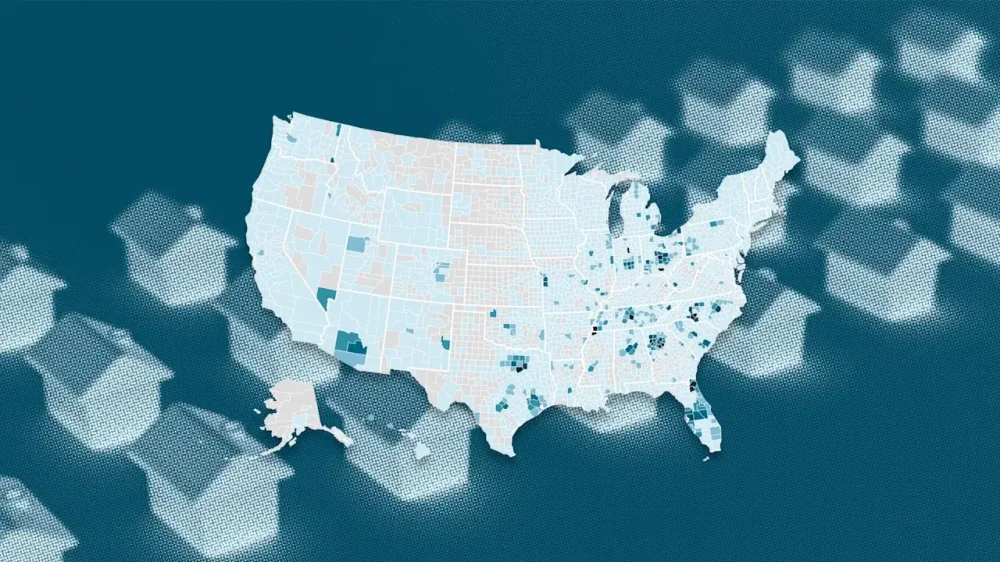
Want more housing market stories from Lance Lambert’s ResiClub in your inbox? Subscribe to the ResiClub newsletter. On Wednesday, President Donald The President announced: “I am immediately taking steps to ban large institutional investors from buying more single-family homes, and I will be calling on Congress to codify it.” Soon afterwards, Senator Bernie Moreno (R-Ohio) tweeted that he’ll “introduce legislation in the Senate to codify this [ban] into law.” The general idea has some support on the other side of the aisle as well. Back February 2025, the Humans over Private Equity for Homeownership Act was introduced by Senator Jeff Merkley (D-Oregon) and co-sponsored by Angus King (I-Maine), Chris VanHollen (D-Maryland), Ruben Gallego (D-Arizona), Bernie Sanders (I-Vermont), and Mark Kelly (D-Arizona). The President’s announcement on Wednesday raises a lot of questions that have yet to be answered. Is this just midterm-year politicking, or a policy proposal that could actually be enacted? Would such a ban be challenged in court? What qualifies as a “large institutional investor” under The President’s proposed ban? Would it target only scatter-site acquisitions, or also build-to-rent development? Would the ban require institutional investors to sell off their current single-family rental portfolios? Given what we know today, I’ve outlined 5 things housing stakeholders should keep in mind. 1. The effects of an institutional single-family homebuying ban would vary sharply by region On a national level, “large investors”—those owning at least 100 single-family homes—only own around 1% of total single-family housing stock. That said, in a handful of regional housing markets, institutional and large single-family landlords have a much larger presence. Markets like Phoenix and Atlanta became major hubs for institutional single-family rental investment following the 2008 housing crash as the asset class started to institutionalize. Firms such as Invitation Homes, Progress Residential, and AMH built sizable portfolios in these metros by acquiring distressed homes. That early activity helped establish a reliable local SFR ecosystem—including property management firms, leasing infrastructure, and contractor networks—that makes it easier to scale and expand single-family rental and build-to-rent operations today. Following the bottom-buying wave, institutional capital remained concentrated in high–population-growth Sun Belt markets, where investors anticipated stronger long-term growth in incomes and overall rental growth. Looking ahead, if a ban on institutional homebuying were enacted, its effects would likely be most pronounced in high-growth Sun Belt markets—especially in specific neighborhoods within metros such as Phoenix, Dallas, Atlanta, Austin, Tampa, Jacksonville, and Charlotte—where institutional ownership is more concentrated. 2. A forced institutional sell-off could temporarily put additional downward pressure on home prices in certain Sun Belt neighborhoods that are already experiencing corrections Many of the Sun Belt markets with the largest institutional footprints are also among those already seeing home-price corrections. If a ban were to force institutions to sell existing holdings, some of these communities in places like Atlanta and Tampa could experience a short-term spike in listings from institutional sell-offs, adding further downward pressure in certain neighborhoods that already have downward home pricing pressure. But in The President’s post, he said he wants to “ban large institutional investors from buying more single-family homes.” That word, “more,” could imply that the proposal would NOT include a forced institutional sell-off, making the scenario above less likely. 3. With institutional buying already well below Pandemic Housing Boom levels, there’s less demand left that can be squeezed out If Congress were to ban institutional homebuying—and if the policy were to withstand legal challenges—it would reduce housing demand that currently accounts for about 1% of total U.S. homebuying activity. That contraction would have been much larger if the ban had been enacted a few years ago. At the height of the Pandemic Housing Boom, large investors—those owning at least 100 single-family homes—made up an all-time high of 3.1% of home purchases in Q2 2022, according to John Burns Research and Consulting. That period, at the tail end of the boom, was when yields were particularly attractive as borrowing costs were ultra-low, home prices were soaring, and rents were climbing rapidly. However, since mortgage rates spiked and capital markets shifted, their share has fallen to around 1.0% of transactions over the past three years. The math isn’t as favorable right now. 4. A full-blown institutional ban—including a build-to-rent ban—could negatively impact U.S. homebuilding One of the biggest questions right now is whether The President’s proposed institutional ban would apply only to institutional scatter-site purchases (i.e., buying existing homes on the market) or also to build-to-rent development (i.e., building communities and homes specifically for rent). If policymakers were to also restrict institutional build-to-rent development, it could have a noticeable negative impact on overall homebuilding later in the decade, in 2027, 2028, and 2029. While single-family build-to-rent is currently only hovering around 8% of total U.S. single-family housing starts, it has driven much of the marginal increase in U.S. single-family housing starts in recent years. Back in pre-pandemic 2017 to 2019, single-family build-to-rent starts made up just around 3% of total U.S. single-family housing starts. Look no further than giant SFR landlord AMH. Not long after interest rates spiked in mid-2022 and the Pandemic Housing Boom fizzled out, many institutional landlords, including AMH, stopped buying via the MLS. However, AMH continued to barrel ahead building its own single-family rentals. Indeed, 95.7% of institutional landlord AMH’s single-family acquisitions through the first three quarters of 2025 came via its in-house homebuilding unit. According to Builder100, AMH’s in-house homebuilding unit ranks as the nation’s 37th-largest homebuilder. Housing analyst Kevin Erdmann, author of the Erdmann Housing Tracker, tells ResiClub that he believes banning institutional homebuying and build-to-rent would negatively impact homebuilding and, in turn, long-term housing affordability. According to Erdmann: “American builders have been completing about 1 million new single-family homes annually since 2020—about 3 new homes per 1,000 Americans. That is a significant rise from the low of 1.4 new homes per 1,000 residents in 2011. It is roughly equal to the number of new single-family homes that were completed at the bottom of the 1982 recession. And, it is just over half the rate of homes that were typically built throughout the 20th century. Our problem isn’t that there are too many buyers for new homes. Our problem is that we are building too few. The main reason single-family housing construction has been so low is that the federal mortgage agencies that the The President administration is in complete control of greatly limited access to mortgages after 2008. So there aren’t enough buyers. For decades, before 2008, big Wall Street firms weren’t involved in single-family housing at all because families that can get mortgage funding happily pay more for new single-family homes to live in than Wall Street will pay to rent to them out. The The President administration could solve that problem by restoring late 20th century underwriting standards at Fannie Mae, Freddie Mac, and the FHA. But, instead, they apparently will add even more obstructions to the marketplace so that builders have nobody to sell new homes to while the rents American families have to pay to stay in the lousy supply of homes that we have skyrockets.” 5. Most institutionally owned homes are currently occupied—and most of their tenants can’t afford to buy right now SFR landlords note that if Congress were to force institutions to sell off their housing stock, it could potentially displace thousands of current tenants who would need to find somewhere else to live. Would those tenants turn around and buy? Even in normal times, many single-family renters—whether their landlord is an institution or a mom-and-pop—can’t afford to buy the home they’re living in. That’s even more true at this point in the housing cycle, as the gap between today’s mortgage payments (i.e., a home at today’s prices/rates) and market rents has widened. Sean Dobson, CEO of Amherst—which owns around 43,000 single-family rentals—tells ResiClub that “85% of their current tenants would not qualify to buy the homes they live in today.” According to Dobson: “Blaming institutional ownership for housing unaffordability is inaccurate and gets both the problem and the solution wrong. America’s housing crisis stems from years of policy failure, not the families who rent or the capital that houses them. At Amherst, we serve more than 200,000 residents, nearly 85% of whom would not qualify to buy the homes they live in today. Putting institutional rental housing at risk threatens real families and is unacceptable. Through private, unsubsidized investment, institutional capital restores neglected housing and delivers real solutions at a time when much of the housing finance system no longer works. Our industry is not the cause of the housing crisis, it is part of the solution.” View the full article
-
The latest Visa Retail Spend Monitor reveals that holiday spending in the U.S. soared by 4.2% this year. For small business owners, this surge presents both opportunities and challenges as they navigate a landscape increasingly shaped by consumer preferences and technological advancements. According to Visa’s report, physical store sales dominated the holiday spending scene, capturing 73% of the total retail expenditure. This strong performance underscores the ongoing relevance of brick-and-mortar locations, highlighting that small businesses still have a significant chance to compete against larger retailers. Wayne Best, Visa’s chief economist, noted that consumers are not merely spending more but also becoming increasingly strategic about their purchases. “This season also marked a turning point, with artificial intelligence shaping how people discover products, compare prices, and interact with offers,” he commented. This shift toward more intentional purchasing behaviors underscores the need for small businesses to adapt quickly to maintain a competitive edge. Small business owners should take note of the substantial increase in e-commerce, which grew by 7.8%. This trend illustrates that online sales are not only thriving but are also critical for reaching a broader audience. As customers increasingly prefer the convenience of online shopping, small businesses that have yet to establish robust e-commerce platforms may want to consider investing in digital sales capabilities. E-commerce enhances reach beyond local limitations, allowing small businesses to tap into national or even international markets. The data also sheds light on specific retail categories that performed particularly well during the season. Electronics sales experienced a notable rise of 5.8%, driven by consumer demand for high-performance devices. Small electronics retailers or those selling tech-related products might find this an opportune moment to enhance their promotion strategies, possibly leveraging online marketing to promote tech sales targeted at holiday shoppers. Clothing and accessories also saw a strong performance, climbing by 5.3%. For small fashion retailers, this demonstrates that innovative product offerings and marketing efforts tailored to trends can yield substantial returns. However, the Visa report indicates that while certain sectors flourished, others—like home improvement—experienced a decline, with sales of building materials and garden equipment dropping by 1%. This poses a cautionary tale for small businesses operating within those struggling categories. Owners should consider adjusting inventory or exploring new marketing strategies to boost sales. One of the most striking observations from this season is how technology, particularly artificial intelligence, is influencing consumer behavior. As Best emphasized, consumers today are more informed and intentional in their spending due to the convenience of digital tools. Small business owners must consider how they can leverage technology not just in sales but also in understanding their customers. Implementing data analytics tools may provide insights into consumer behavior, helping owners make informed decisions about inventory, pricing, and promotions. The Visa Consulting and Analytics team highlights that insights from their analysis can help small businesses adapt to changing consumer behaviors. They emphasize the importance of having the right data to identify trends and make data-driven decisions. As Kate Manfred, head of advisory services at Visa North America, noted, “Insights from the VCA Retail Spend Monitor help businesses adapt to changing consumer behaviors and prepare for the rapidly evolving future of commerce.” For small business owners, the key takeaway from Visa’s report lies in striking a balance between physical retail and e-commerce. While traditional store sales continue to play a pivotal role, the surge in online shopping indicates that small businesses can no longer afford to neglect their digital presence. As they move forward, small businesses should be proactive about leveraging new technologies and consumer trends to enhance their sales strategies. Abandoning outdated models in favor of integrated online and offline sales approaches could very well be the recipe for sustained growth in this and future seasons. For further insights into Visa’s findings, you can read the full press release at Visa’s official page. Image via Google Gemini This article, "U.S. Holiday Spending Jumps 4.2%, With In-Store Sales Leading the Way" was first published on Small Business Trends View the full article
-
The latest Visa Retail Spend Monitor reveals that holiday spending in the U.S. soared by 4.2% this year. For small business owners, this surge presents both opportunities and challenges as they navigate a landscape increasingly shaped by consumer preferences and technological advancements. According to Visa’s report, physical store sales dominated the holiday spending scene, capturing 73% of the total retail expenditure. This strong performance underscores the ongoing relevance of brick-and-mortar locations, highlighting that small businesses still have a significant chance to compete against larger retailers. Wayne Best, Visa’s chief economist, noted that consumers are not merely spending more but also becoming increasingly strategic about their purchases. “This season also marked a turning point, with artificial intelligence shaping how people discover products, compare prices, and interact with offers,” he commented. This shift toward more intentional purchasing behaviors underscores the need for small businesses to adapt quickly to maintain a competitive edge. Small business owners should take note of the substantial increase in e-commerce, which grew by 7.8%. This trend illustrates that online sales are not only thriving but are also critical for reaching a broader audience. As customers increasingly prefer the convenience of online shopping, small businesses that have yet to establish robust e-commerce platforms may want to consider investing in digital sales capabilities. E-commerce enhances reach beyond local limitations, allowing small businesses to tap into national or even international markets. The data also sheds light on specific retail categories that performed particularly well during the season. Electronics sales experienced a notable rise of 5.8%, driven by consumer demand for high-performance devices. Small electronics retailers or those selling tech-related products might find this an opportune moment to enhance their promotion strategies, possibly leveraging online marketing to promote tech sales targeted at holiday shoppers. Clothing and accessories also saw a strong performance, climbing by 5.3%. For small fashion retailers, this demonstrates that innovative product offerings and marketing efforts tailored to trends can yield substantial returns. However, the Visa report indicates that while certain sectors flourished, others—like home improvement—experienced a decline, with sales of building materials and garden equipment dropping by 1%. This poses a cautionary tale for small businesses operating within those struggling categories. Owners should consider adjusting inventory or exploring new marketing strategies to boost sales. One of the most striking observations from this season is how technology, particularly artificial intelligence, is influencing consumer behavior. As Best emphasized, consumers today are more informed and intentional in their spending due to the convenience of digital tools. Small business owners must consider how they can leverage technology not just in sales but also in understanding their customers. Implementing data analytics tools may provide insights into consumer behavior, helping owners make informed decisions about inventory, pricing, and promotions. The Visa Consulting and Analytics team highlights that insights from their analysis can help small businesses adapt to changing consumer behaviors. They emphasize the importance of having the right data to identify trends and make data-driven decisions. As Kate Manfred, head of advisory services at Visa North America, noted, “Insights from the VCA Retail Spend Monitor help businesses adapt to changing consumer behaviors and prepare for the rapidly evolving future of commerce.” For small business owners, the key takeaway from Visa’s report lies in striking a balance between physical retail and e-commerce. While traditional store sales continue to play a pivotal role, the surge in online shopping indicates that small businesses can no longer afford to neglect their digital presence. As they move forward, small businesses should be proactive about leveraging new technologies and consumer trends to enhance their sales strategies. Abandoning outdated models in favor of integrated online and offline sales approaches could very well be the recipe for sustained growth in this and future seasons. For further insights into Visa’s findings, you can read the full press release at Visa’s official page. Image via Google Gemini This article, "U.S. Holiday Spending Jumps 4.2%, With In-Store Sales Leading the Way" was first published on Small Business Trends View the full article
-
When a gunman began firing inside an academic building on the Brown University campus, students didn’t wait for official alerts warning of trouble. They got information almost instantly, in bits and bursts — through phones vibrating in pockets, messages from strangers, rumors that felt urgent because they might keep someone alive. On Dec. 13 as the attack at the Ivy League institution played out during finals week, students took to Sidechat, an anonymous, campus-specific message board used widely at U.S. colleges, for fast-flowing information in real time. An Associated Press analysis of nearly 8,000 posts from the 36 hours after the shooting shows how social media has become central to how students navigate campus emergencies. Fifteen minutes before the university’s first alert of an active shooter, students were already documenting the chaos. Their posts — raw, fragmented, and sometimes panicked — formed a digital time capsule of how a college campus experienced a mass shooting. As students sheltered in place, they posted while hiding under library tables, crouching in classrooms, and hallways. Some comments even came from wounded students, like one posting a selfie from a hospital bed with the simple caption: #finalsweek. Others asked urgent questions: Was there a lockdown? Where was the shooter? Was it safe to move? It would be days before authorities identified the suspect and found him dead in New Hampshire of a self-inflicted gunshot wound, later linking him to the killing of a Massachusetts Institute of Technology professor. Here’s a look at how the shooting unfolded. Stream of collective consciousness Described by Harvard Magazine as “the College’s stream of collective consciousness,” Sidechat allows anyone with a verified university email to post to a campus feed. On most days, the Brown feed is filled with complaints about dining hall food, jokes about professors, and stress about exams — fleeting posts running the gamut of student life. On the Saturday afternoon just before the shooting, a student posted about how they wished they could “play Minecraft for 60 hours straight.” Then, the posts abruptly shifted. Crowds began pouring out of Brown’s Barus and Holley building, and someone posted at 4:06 p.m.: “Why are people running away from B&H?” Others quickly followed. “EVERYONE TAKE COVER,” one wrote. “STAY AWAY FROM THAYER STREET NEAR MACMILLAN 2 PEOPLE JUST GOT SHOT IM BEING DEAD SERIOUS,” another user wrote at 4:10 p.m. Dozens of frantic messages followed as students tried to fill the information gap themselves. “so r we on lockdown or what,” one student asked. By the time the university alert was sent at 4:21 p.m., the shooter was no longer on campus — a fact Brown officials did not yet know. “Where would we be without Sidechat?” one student wrote. A university spokesperson said Brown’s alert reached 20,000 people minutes after the school’s public safety officials were notified shots had been fired. Officials deliberately didn’t use sirens to avoid sending people rushing to seek shelter into harm’s way, said the spokesperson, Brian E. Clark, who added Brown commissioned two external reviews of the response with the aim of enhancing public safety and security. Long hours of hiding Long after the sun had set, students sheltered in dark dorm rooms and study halls. Blinds were closed. Doors were barricaded with dressers, beds, and mini fridges. “Door is locked windows are locked I’ve balanced a metal pipe thing on the handle so if anyone even tries the handle from the outside it’ll make a loud noise,” one student wrote. Students reacted to every sound — footsteps in hallways, distant sirens, helicopters overhead. When alerts came, the vibrations and ringtones were jarring. Some feared that names of the dead would be released — and that they would recognize someone they knew. Law enforcement moved through campus buildings, clearing them floor by floor. A student who fled Barus and Holley asked whether anyone could text his parents to let them know he had made it out safely. Others said they had left phones behind in classrooms when they fled, unable to reach frantic loved ones. Ironically, those closest to the shooting often had the least information. Many American students expressed emotions hovering between numbness and heartbreak. “Just got a text from a friend I haven’t spoken to in nearly three years,” one student wrote. “Our last messages? Me checking in on her after the shooting at Michigan State.” Multiple students replied, saying they’d had similar experiences. International students posted about parents unable to sleep on the other side of the world. “I just want a hug from my mom,” one student wrote. Anxiety sets in As the hours dragged on, students struggled with basic needs. Some described urinating in trash cans or empty laundry detergent bottles because they were too afraid to leave their rooms. Others spoke of drinking to cope. “I was on the street when it happened & suddenly I felt so scared,” one student wrote. “I ran and didn’t calm down for a while. I feel numb, tired, & about to throw up.” Another wrote: “I’m locked inside! Haven’t eaten anything today! I’m so scared i don’t even know if I get out of this alive or dead.” Some students posted into the early morning, more than 10 hours into the lockdown, saying they couldn’t sleep. Sidechat also documented acts of kindness, including a student going door to door with macaroni and cheese cups in a dark dorm. Information, and its limits Students repeatedly asked the same questions — news? sources? — and challenged one another to verify what they saw before reposting it. “Frankly I’d rather hear misinformation than people not report stuff they’ve heard,” one student wrote. Others pushed back, sharing a Google Doc that would grow to 28 pages where students could find the most updated, verified information. Some posted police scanner transcriptions or warned against relying on artificial intelligence summaries of the developing situation. Professors — who rarely post on the app — joined the feed, urging caution and offering reassurance. “If you’re talking about the active situation please add a source!!!” one student wrote. But “reliable information,” students noted, often arrived with a delay. Within about 30 minutes of the shooting, posts incorrectly claimed the shooter had been caught. Reports of more gunshots — later proven false — continued into the night and the next day, fueling fear and frustration. Asked one student, what are police doing “RIGHT NOW”? Replies came quickly. “They are trying their best,” one person responded. “Be grateful,” another added. “They are putting their lives in danger at this moment for us to be safe.” A campus changed Students awoke Sunday to a campus they no longer recognized. It had snowed overnight — the first snowfall of the academic year. In post after post, students called the sight unsettling. What was usually a celebration felt instead like confirmation something had irrevocably shifted. “It truly hurt seeing the flakes fall this morning, beautiful and tragic,” one student wrote. Even as the lockdown lifted, many said they were unsure what to do — where they could go, whether dining halls were open, whether it was safe to move. “What do I do rn?” one student posted. “I’m losing my mind.” Students walked through fresh snow in a daze, heading to blood donation centers. Others noticed flowers being placed at the campus gates and outside Barus and Holley. Many mourned not only the two students killed, but the innocence they felt had been stripped from their campus. “Will never see the first snow of the season and not think about those two,” one student wrote. With the lockdown ended, students returned to their dorms as Sidechat continued to fill with grief and reflection. Many said Brown no longer felt the same. “Snow will always be bloody for me,” one person posted. —Leah Willingham, Associated Press View the full article

-
US vice-president blasts ‘leftwing radicals’ as death sparks anger at tactics used by The President anti-immigrant squadsView the full article
-
US policy of regional domination is being greeted with alarm by its northern neighbourView the full article
-
If you’re looking for reliable free editing software, you’ve got several great options at your disposal. Each tool serves different needs, whether you’re a beginner or more experienced. For instance, DaVinci Resolve offers professional-grade features, whereas CapCut stands out for its user-friendly design. Clipchamp provides a web-based solution for quick edits, and ACDSee Luxea is customized for serious beginners. Canva simplifies the editing process with its intuitive interface. Let’s explore these options further to find the best fit for your projects. Key Takeaways DaVinci Resolve offers professional-grade editing tools, including advanced color correction and audio features, suitable for both novices and experienced editors. CapCut is user-friendly, designed for quick content creation with keyframe animations and auto captions for improved accessibility. Clipchamp provides a straightforward web-based editing platform with multi-track editing and free templates, perfect for beginners needing quick edits. ACDSee Luxea Video Editor caters to serious beginners and intermediates, supporting 4K video and offering features like screen recording for tutorials. Canva simplifies video editing with a drag-and-drop interface, basic editing functions, and access to a library of royalty-free music and stock clips. DaVinci Resolve: Professional-Grade Editing for Free If you’re looking for professional-grade editing software without the hefty price tag, DaVinci Resolve stands out as an outstanding option. This software is often hailed as one of the best free editing software for Mac, offering advanced tools that cater to both novice and experienced editors. With its unique Cut page, you can quickly edit videos, whereas the Edit page gives you full timeline control for detailed projects. DaVinci Resolve thrives in color correction, featuring industry-standard grading tools and advanced tracking capabilities. In addition, it includes pro-level audio tools and motion graphics, all integrated within the timeline. For creators focused on YouTube, this software provides an extensive suite of features, making it a top choice among good editing programs for YouTube videos. CapCut: User-Friendly Editing for Short and Long-Form Content CapCut offers a user-friendly platform that caters to both short-form and long-form video content, making it a versatile choice for all types of creators. Developed by the team behind TikTok, it includes features like keyframe animations and auto captions, enhancing your videos’ professionalism and accessibility. Its intuitive timeline editor and drag-and-drop functionality simplify the editing process, perfect for beginners and efficient for experienced editors. Feature Description Keyframe Animations Add dynamic effects to your videos Auto Captions Improve accessibility for viewers No Watermark Exports Deliver polished final products Intuitive Interface Quick and easy editing experience Free with Pro Options Access advanced features if needed With its capabilities, CapCut ranks among the best film editing apps for iPhone and is a solid choice for good free editing software. Clipchamp: Accessible Web-Based Editing for Beginners For those seeking a straightforward and accessible video editing solution, Clipchamp emerges as a compelling option. This web-based software runs smoothly in Chrome or Edge, so you won’t need a high-end computer to get started. Clipchamp offers multi-track editing, allowing you to work with various video and audio layers, which is useful for creating detailed projects. With its free version, you can export videos in 1080p, making it one of the best video editing software for MacBook users who want quality without spending money. Furthermore, you’ll find a diverse library of free templates and assets, perfect for easing beginners into the editing process. Overall, it stands out as an affordable video editing software ideal for quick edits on-the-go. ACDSee Luxea Video Editor: Great for Serious Beginners and Intermediates Designed particularly for serious beginners and intermediates, ACDSee Luxea Video Editor offers a user-friendly interface that simplifies the video creation and editing process. This software is particularly valuable for users interested in music video editing, as it supports keyframing for precise control over animations and effects. With 4K video support, you can produce high-quality content with ease. Furthermore, it includes features for screen and webcam recording, making it versatile for tutorials and presentations. Whereas the free version adds an intro and outro and restricts commercial use, it’s excellent for personal projects. If you’re seeking good video editing programs for Mac, ACDSee Luxea is a great option for efficient video creation without a steep learning curve. Canva: Simple Video Editing With a Clean Interface If you’re looking for a straightforward and accessible video editing tool, Canva stands out with its user-friendly, drag-and-drop interface. This budget video editing software is perfect for beginners and casual users alike. Here are some key features you’ll appreciate: Basic editing functions like trimming, splitting, and adding changes. A library of royalty-free music and stock video clips to improve your projects. An intuitive design that makes it easy to create engaging videos without complexity. Upgrade options with Canva Pro for advanced features such as background removal. Frequently Asked Questions What Editing Software Do Most Creators Use? Most creators use a variety of editing software based on their specific needs. For instance, DaVinci Resolve is popular for its advanced features like color grading, whereas iMovie appeals to Mac users for its simplicity. Adobe Premiere Rush is chosen for quick edits, and Kdenlive is favored in the open-source community for its robust tools. Beginners often opt for Clipchamp because of its user-friendly, web-based platform, which allows for easy drag-and-drop editing. What Is the Best Completely Free Editing Software? The best completely free editing software depends on your needs. DaVinci Resolve stands out for its professional-grade tools, including advanced color correction and audio editing. If you prefer an open-source option, Kdenlive offers multitrack editing and keyframeable effects. For Mac users, iMovie provides user-friendly features like stabilization. Shotcut is versatile with crucial tools, whereas Lightworks gives a taste of high-end editing, though it limits exports to 720p. Choose based on your specific requirements. What Do Youtubers Use to Edit for Free? Many YouTubers edit their videos for free using various software options. DaVinci Resolve offers professional features, including color correction and motion graphics. iMovie provides a user-friendly experience for Mac users. Kdenlive supports multitrack editing and extensive effects as an open-source tool. Clipchamp, integrated into Windows 11, is great for quick edits. CapCut, developed by TikTok‘s team, features intuitive tools like auto captions and background removers, appealing to creators of all content types. Is Capcut Worth It? CapCut is definitely worth considering if you’re looking for effective video editing software. It offers a user-friendly interface, allowing you to easily arrange clips with its drag-and-drop functionality. You’ll find advanced features like keyframe animations and auto captions helpful for enhancing your videos. Plus, you can export your projects without watermarks, giving them a professional touch. Whereas some features require a Pro subscription, the free version covers a lot of ground for creators. Conclusion To sum up, choosing the right free editing software depends on your specific needs and skill level. DaVinci Resolve offers advanced features for those ready to plunge deep into editing, whereas CapCut provides quick solutions for engaging content. If you prefer web-based tools, Clipchamp is a solid choice. For serious beginners, ACDSee Luxea Video Editor offers intuitive options, and Canva simplifies the process with its user-friendly design. Each of these tools can improve your creative projects effectively. Image via Google Gemini This article, "5 Good Free Editing Software Options for Every Creator" was first published on Small Business Trends View the full article
-
If you’re looking for reliable free editing software, you’ve got several great options at your disposal. Each tool serves different needs, whether you’re a beginner or more experienced. For instance, DaVinci Resolve offers professional-grade features, whereas CapCut stands out for its user-friendly design. Clipchamp provides a web-based solution for quick edits, and ACDSee Luxea is customized for serious beginners. Canva simplifies the editing process with its intuitive interface. Let’s explore these options further to find the best fit for your projects. Key Takeaways DaVinci Resolve offers professional-grade editing tools, including advanced color correction and audio features, suitable for both novices and experienced editors. CapCut is user-friendly, designed for quick content creation with keyframe animations and auto captions for improved accessibility. Clipchamp provides a straightforward web-based editing platform with multi-track editing and free templates, perfect for beginners needing quick edits. ACDSee Luxea Video Editor caters to serious beginners and intermediates, supporting 4K video and offering features like screen recording for tutorials. Canva simplifies video editing with a drag-and-drop interface, basic editing functions, and access to a library of royalty-free music and stock clips. DaVinci Resolve: Professional-Grade Editing for Free If you’re looking for professional-grade editing software without the hefty price tag, DaVinci Resolve stands out as an outstanding option. This software is often hailed as one of the best free editing software for Mac, offering advanced tools that cater to both novice and experienced editors. With its unique Cut page, you can quickly edit videos, whereas the Edit page gives you full timeline control for detailed projects. DaVinci Resolve thrives in color correction, featuring industry-standard grading tools and advanced tracking capabilities. In addition, it includes pro-level audio tools and motion graphics, all integrated within the timeline. For creators focused on YouTube, this software provides an extensive suite of features, making it a top choice among good editing programs for YouTube videos. CapCut: User-Friendly Editing for Short and Long-Form Content CapCut offers a user-friendly platform that caters to both short-form and long-form video content, making it a versatile choice for all types of creators. Developed by the team behind TikTok, it includes features like keyframe animations and auto captions, enhancing your videos’ professionalism and accessibility. Its intuitive timeline editor and drag-and-drop functionality simplify the editing process, perfect for beginners and efficient for experienced editors. Feature Description Keyframe Animations Add dynamic effects to your videos Auto Captions Improve accessibility for viewers No Watermark Exports Deliver polished final products Intuitive Interface Quick and easy editing experience Free with Pro Options Access advanced features if needed With its capabilities, CapCut ranks among the best film editing apps for iPhone and is a solid choice for good free editing software. Clipchamp: Accessible Web-Based Editing for Beginners For those seeking a straightforward and accessible video editing solution, Clipchamp emerges as a compelling option. This web-based software runs smoothly in Chrome or Edge, so you won’t need a high-end computer to get started. Clipchamp offers multi-track editing, allowing you to work with various video and audio layers, which is useful for creating detailed projects. With its free version, you can export videos in 1080p, making it one of the best video editing software for MacBook users who want quality without spending money. Furthermore, you’ll find a diverse library of free templates and assets, perfect for easing beginners into the editing process. Overall, it stands out as an affordable video editing software ideal for quick edits on-the-go. ACDSee Luxea Video Editor: Great for Serious Beginners and Intermediates Designed particularly for serious beginners and intermediates, ACDSee Luxea Video Editor offers a user-friendly interface that simplifies the video creation and editing process. This software is particularly valuable for users interested in music video editing, as it supports keyframing for precise control over animations and effects. With 4K video support, you can produce high-quality content with ease. Furthermore, it includes features for screen and webcam recording, making it versatile for tutorials and presentations. Whereas the free version adds an intro and outro and restricts commercial use, it’s excellent for personal projects. If you’re seeking good video editing programs for Mac, ACDSee Luxea is a great option for efficient video creation without a steep learning curve. Canva: Simple Video Editing With a Clean Interface If you’re looking for a straightforward and accessible video editing tool, Canva stands out with its user-friendly, drag-and-drop interface. This budget video editing software is perfect for beginners and casual users alike. Here are some key features you’ll appreciate: Basic editing functions like trimming, splitting, and adding changes. A library of royalty-free music and stock video clips to improve your projects. An intuitive design that makes it easy to create engaging videos without complexity. Upgrade options with Canva Pro for advanced features such as background removal. Frequently Asked Questions What Editing Software Do Most Creators Use? Most creators use a variety of editing software based on their specific needs. For instance, DaVinci Resolve is popular for its advanced features like color grading, whereas iMovie appeals to Mac users for its simplicity. Adobe Premiere Rush is chosen for quick edits, and Kdenlive is favored in the open-source community for its robust tools. Beginners often opt for Clipchamp because of its user-friendly, web-based platform, which allows for easy drag-and-drop editing. What Is the Best Completely Free Editing Software? The best completely free editing software depends on your needs. DaVinci Resolve stands out for its professional-grade tools, including advanced color correction and audio editing. If you prefer an open-source option, Kdenlive offers multitrack editing and keyframeable effects. For Mac users, iMovie provides user-friendly features like stabilization. Shotcut is versatile with crucial tools, whereas Lightworks gives a taste of high-end editing, though it limits exports to 720p. Choose based on your specific requirements. What Do Youtubers Use to Edit for Free? Many YouTubers edit their videos for free using various software options. DaVinci Resolve offers professional features, including color correction and motion graphics. iMovie provides a user-friendly experience for Mac users. Kdenlive supports multitrack editing and extensive effects as an open-source tool. Clipchamp, integrated into Windows 11, is great for quick edits. CapCut, developed by TikTok‘s team, features intuitive tools like auto captions and background removers, appealing to creators of all content types. Is Capcut Worth It? CapCut is definitely worth considering if you’re looking for effective video editing software. It offers a user-friendly interface, allowing you to easily arrange clips with its drag-and-drop functionality. You’ll find advanced features like keyframe animations and auto captions helpful for enhancing your videos. Plus, you can export your projects without watermarks, giving them a professional touch. Whereas some features require a Pro subscription, the free version covers a lot of ground for creators. Conclusion To sum up, choosing the right free editing software depends on your specific needs and skill level. DaVinci Resolve offers advanced features for those ready to plunge deep into editing, whereas CapCut provides quick solutions for engaging content. If you prefer web-based tools, Clipchamp is a solid choice. For serious beginners, ACDSee Luxea Video Editor offers intuitive options, and Canva simplifies the process with its user-friendly design. Each of these tools can improve your creative projects effectively. Image via Google Gemini This article, "5 Good Free Editing Software Options for Every Creator" was first published on Small Business Trends View the full article
-
New York Attorney General Letitia James is demanding more information about Instacart’s recent, and highly controversial, price tests, and suggesting that the scheme—which saw customers charged notably different prices for the same products, when offered at the same stores—might have violated a new state law. Late last year, Consumer Reports and the Groundwork Collaborative released an investigation that found that a single item posted on Instacart could have as many as five different prices, and that costs for a single item could range from just seven cents to $2.56. The investigation found that while some prices changed, and some differed only marginally, for some items—including Oscar Mayer turkey and Skippy peanut butter—they could vary by more than 20 percent. In response to the widespread outcry and accusations that Instacart had deployed surveillance pricing, the company turned off technology that, it argued, had sought only to allow retailers who wanted to experiment with prices offered at their own stores. Instacart denied ever using demographic information to set prices, or using “dynamic pricing or surveillance pricing.” “Pricing is complex, and retailers have long used different approaches across different markets,” wrote the company in a blog. “Just as prices can vary between physical store locations, retail partners may continue to vary item prices on a store-by-store basis on Instacart.” In a letter sent on Thursday, the New York attorney general’s office suggests that Instacart’s test may have violated a new state law, the Algorithmic Pricing Disclosure Act. The legislation went into effect in November and bans platforms from using algorithmic pricing without clear, prior disclosure to customers. It’s one of the first laws in the country that requires companies to be this transparent. New York is accusing Instacart of burying its disclosures. In the letter, the attorney general’s office says that Instacart’s “disclosure on a page linked to certain retail stores’ front pages” was “accessed by clicking fine print text” and wasn’t “clear and conspicuous.” Moreover, the office argues the prices didn’t appear on “category pages listing product prices” or “on individual product pages displaying price,” as required by law. New York is now asking for more details from Instacart about its price setting agreements, the tools the company used to control displayed prices, and information about its efforts to meet the standards set out in New York law. “Charging different prices for the exact same products leaves shoppers feeling cheated and threatens to raise costs at a time when consumers are already paying too much at the grocery store,” James said in a statement. “Instacart’s pricing experiments raise serious concerns about its use of algorithmic pricing.” View the full article

-
Fast-casual salad chain Salad and Go is closing more stores and exiting Texas and Oklahoma completely. The eatery will close a total of 32 stores, 25 in Texas and seven in Oklahoma, by January 11. The closures will impact around 600 employees. The company will also close its Dallas headquarters and relocate to Phoenix. Salad and Go operates as a drive-through and grab-and-go business, known for affordable salads, wraps, and other healthy menu items. The fast-casual chain was founded in 2013 in Gilbert, Arizona. Salad and Go began rapid expansion efforts in 2022. However, the salad chain has recently been reducing its retail footprint, closing 41 of its stores in September 2025. Salad and Go will focus its efforts in its home state of Arizona Until recently, the salad chain served customers in four states: Arizona, Nevada, Oklahoma, and Texas. Moving forward, it will only operate restaurants in Arizona and Nevada. “After assessing our business, we made the decision to exit our Texas and Oklahoma markets and refocus on strengthening our core operations in Arizona and Nevada,” CEO Mike Tattersfield told Fast Company in an email. “By consolidating our operations at our Phoenix area headquarters, we can focus on what matters most: food quality, menu innovation, guest experience and building for long-term growth.” “We’re grateful to our team members in Texas and Oklahoma for the care they brought every day, and we deeply appreciate the communities that welcomed Salad and Go,” Tattersfield said. Tattersfield, who is the former president and CEO of Krispy Kreme, joined Salad and Go in April 2025. Tattersfield also told the Phoenix Business Journal that the closures are the result of the economic burden of a flawed expansion plan and a large central kitchen in Dallas: “We were so focused on expanding out in Texas and other areas and we neglected Arizona,” he told the journal. View the full article

-
The dreaded performance review draws the ire of employees and managers alike. Workers fret that reviews fail to capture the full scope of their work, or that they are an unfair assessment of their performance. For managers, reviews can be a time-consuming nuisance and involve the challenging task of delivering tough feedback. But a new study from Cornell University finds that the structure of the performance review can have a huge impact on how workers feel about them. Over the last decade, a number of companies have revamped their performance reviews, seemingly to address the long-standing pain points. The likes of Goldman Sachs and Morgan Stanley have moved away from numerical ratings, while tech companies like Microsoft eliminated stack rankings (reviews that essentially rank employees against their colleagues) and Adobe eliminated reviews altogether. (More recently, however, tech giants like Google and Meta have actually pushed for more stringent evaluations of employees and, in turn, lower ratings.) The Cornell researchers examined how the shift away from numerical reviews has influenced employee sentiment. Emily Zitek, a professor of organizational behavior, and her coauthors analyzed how employees feel about performance reviews that emphasize “narrative” or qualitative feedback over numerical rankings. The team looked at three different performance review formats: those that exclusively used either numerical ratings or narrative feedback, and those that employed a mix of both. What the researchers found overall was that employees believed performance reviews were, in fact, more fair when they did not have numbers attached and were purely narrative-driven. “Even if they’re given kind of average numbers versus wording that says they were very average, it feels more fair if they just see the words and not the numbers,” Zitek says. “So we thought that was very interesting. We were originally expecting the combined feedback to still be viewed positively, but people didn’t like the numbers within that either.” Employees were also more likely to want to improve their performance if they received narrative feedback—and, more notably, if they felt their review was fair. “Obviously, one of the goals is improvement,” Zitek says. “[If you’re] just giving people numbers, they don’t know as much about what they need to do to perform better.” But there was an exception: If their reviews were very positive, then people perceived them as fair, regardless of format. “People love knowing if they’re at the top,” Zitek says. More average ratings, on the other hand, seem to betray an employee’s self-perception—which is why a more middling review feels more palatable if there is no number attached. “Psychology research has shown a lot of people think they are above average, or that they’re doing better than they are,” Zitek adds. “When they get narrative-only feedback, they’re able to maintain that view because there’s no explicit information showing that they didn’t do well.” That’s one of the reasons Zitek and her coauthors argue there is still a place for numerical ratings, in spite of the study’s findings: If one of the goals of performance reviews is to determine raises and bonuses, then including numbers-based feedback can be important—and arguably more fair. “If employees are deluding themselves that they’re performing really well, sometimes it helps to have the number,” she says. “Sometimes you want employees to realistically know where they stand. And yes, they’re going to be mad about it; they’re not going to think it’s fair. But that could be important.” The reality is that many companies still rely on numerical ratings to make decisions about compensation—and if they stop using those metrics in reviews, they may still utilize a ranking system without informing employees. “If the company is going to want some kind of number anyway, it seems worse to not tell the employee that number,” Zitek says. “And that’s what some companies are doing—they have shadow rankings behind the scenes. They don’t tell them to the employees, and then employees are like, ‘Wait, why did I get a smaller bonus than this other person?’” Regardless of format, one of the most frequent critiques of performance reviews is that they are vulnerable to bias. Even if reviews are standardized across a company, your performance rating can be impacted by a number of variables and often hinges on how your manager or team approaches reviews. A narrative component can help address this issue—but that still depends on how managers are trained and whether they understand the value of proffering real feedback. To ensure managers actually commit to the review process, Zitek says, it’s important for employers to emphasize the purpose of providing thoughtful feedback. “People are more willing to do things if they know why they’re doing it,” she says. “So it could just be making an effort to convince the managers [that] this isn’t just another box to check.” It’s also crucial that managers are trained on how to give constructive performance feedback, she adds—something that many employers fail to do effectively—and that they offer it at a more regular cadence so employees are not surprised when their review rolls around. “Feedback can be uncomfortable to give sometimes,” Zitek says. “But it’s more uncomfortable later if they don’t get promoted and don’t understand why—and they could have been performing better the entire time if they were given that feedback.” View the full article
-
Five Republicans join Democrats in advancing legislation that halts further strikes without Congress’s approvalView the full article
-
Shares in the New York-listed members’ club sank more than 20% following announcement by MCR HotelsView the full article
-
The 30-year fixed remains in its current range, but most expect the rate to reach 6% for 2026, and one observer feels it could actually break under this point. View the full article
-
We may earn a commission from links on this page. When shopping for cordless power tools, you'd think you could simply purchase the best option of each to fit your needs. But there's a big problem that makes this a lot harder (and more expensive) than it should be: battery incompatibility. By design, you can’t simply pop a Ryobi battery into a DeWalt tool and expect it to work. Engineering decisions aside, using proprietary batteries allows companies to create a sort of obligatory brand loyalty, forcing you to stick with their line of tools unless you want to invest in a whole new set of batteries for every new tool you buy. If you've been building your cordless tool collection for some time, you may wind up with four or five different chargers and multiple batteries cluttering your workspace. And that clutter can be expensive, because you wind up buying more chargers and batteries than you might not need if batteries were interchangeable. But it turns out they are, sort of. You can actually swap batteries between brands—you just need the right adapters. Adapters let you swap tool batteries between brandsThere are two kinds of battery adapters to consider: Inter-brand adapters allow you to use one brand’s batteries in another brand’s tool (like DeWalt batteries in Milwaukee tools). Voltage adapters allow you to use a different voltage battery than the tool expects (say, a 20-volt battery in a 18-volt tool). These adapters are a fairly simple solution to the problem of incompatible battery systems. If you have a lot of DeWalt tools, for example, you can purchase a Milwaukee tool without a battery (which will be cheaper) and just use an adapter to plug in one of the DeWalt batteries you already have. Of course, these batteries weren’t specifically designed for these tools, so there can be some trade-offs. While tool performance has been found to be broadly similar (and some tools even performed better when using batteries from different brands), for some tools (like grinders and some circular saws) there’s a dropoff in power and performance when using an adapter. That said, you might not notice it if you're just looking to tackling simple DIY projects around the house. Another caveat to consider: You might lose some features. Some tools are designed to communicate with the battery to modulate power draw in order to extend the life of the battery, and using an adapter will remove this functionality. But again, if you’re simply using a power drill for basic maintenance tasks, this might not be a huge issue for you. Universal adapters are a good solution if you own a bunch of brandsIf you’ve got a bunch of disparate tool brands, of course, buying multiple adapters might not seem like much of an improvement over your collection of batteries and chargers. If this is you, consider something like the Ceenr PDNation Universal Battery System, which provides an 18-volt battery and a series of adapters that allow it to be used in a wide range of power tools, including major brands like Ryobi, Milwaukee, and DeWalt. For example, you can buy a battery with an adapter for DeWalt tools, then buy a second adapter for the same battery that will work with Makita tools. This means you can standardize on one battery system for pretty much any tool you buy (it’s not a truly universal system, since you’re dependent on the range of adapters they offer, but it’s probably close enough for most people). As with other adapters, there can be some performance loss using a universal adapter, but by and large, it’s probably not a big issue if you’re doing work around the house, as opposed to working professionally on a job site. View the full article
-
American Airlines will begin offering free, high-speed Wi-Fi on flights beginning this month. The airline made the announcement this week in a press release, explaining that the service will extend to around two million flights in 2026. However, not all fliers will receive the perk. The new service will be sponsored by wireless provider AT&T. “Free high-speed Wi-Fi isn’t just a perk—it’s essential for today’s travelers,” said Heather Garboden, chief customer officer at American Airlines, in the release. The rollout won’t kick off all at once, the announcement explained, but instead will happen in phases. This month, the service will be available only on “narrowbody and dual-class regional fleets,” the announcement says. But in just a few months, it will be made available on “nearly every American Airlines flight.” Who gets free, high-speed Wi-Fi? While the service will be available on almost all flights, it’s not for everyone. Eligible fliers have to be in the airline’s loyalty program, AAdvantage. If you aren’t a member but want to become one, you can sign up for a free account on the American Airlines website by providing a few personal details. Doing so will enable you to start earning miles, loyalty points, and free Wi-Fi on flights. How can AAdvantage® members access free Wi-Fi on their flights? Accessing free Wi-Fi for AAdvantage members can be accomplished through the new and improved aainflight.com portal. Customers will be asked to log in using their AAdvantage® membership number and password. Then, they can select “Free Wi-Fi” to start using the service. If you don’t have access to free Wi-Fi, it’s available on most American Airlines flights for $10. Who else offers free Wi-Fi? Not having to pay for Wi-Fi is certainly a desirable perk for fliers. However, American Airlines is not the first to offer it. Many U.S. airlines, like Delta, United, Alaska Airlines, Hawaiian Airlines, and Southwest, also ensure free Wi-Fi for loyalty members. However, JetBlue remains the only U.S. airline that offers free Wi-Fi to all travelers on most of its flights—a service it first rolled out in 2013. By January 2017, the service was extended to all flights. Wi-Fi for non-members costs around $8 to $10 on most carriers. But for longer, international flights, prices can go up to as much as $35. Frequent fliers, especially those who are traveling internationally often and want Wi-Fi access, can save money by purchasing monthly Wi-Fi passes on their preferred airline, rather than paying for the service on each and every flight. View the full article

-
If you had a severe case of the Sunday Scaries last weekend, you are not alone. It’s a sentiment many have been sharing online. Ready or not, with it comes an influx of unread emails, meeting invites, and responsibilities—smugly pushed to the New Year in the last weeks of December—now coming back to haunt us all. Indeed, the first Monday of the year is the Monday-est Monday of all. “Oh god,” one TikTok user posted on Monday 6th. “Everyone is circling back.” “Worst aesthetic ever: Back to work in the first week of jan,” another wrote, riffing on TikTok’s “rare aesthetic” trend. Some have used the lyrics to The Smiths’ “Heaven Knows I’m Miserable Now” to sum up the feeling of corporate workers logging back on the first Monday of the year. After weeks of late nights of holiday fun, overindulgence, friends and family time and a slower pace of life, the abrupt shift back to the corporate grind can trigger feelings of anxiety in even the most enthusiastic of employees. “Monday 5th January isn’t for the weak,” another TikTok user wrote in the caption of a clip. “The idea of an unwanted convo at 9am on Monday 5th,” the closed captions reads, soundtracked to frantic voiceovers sputtering workplace jargon, including KPIs, decks, emails, and Salesforce. If this week so far you’ve felt unusually slow, unfocused, or overwhelmed, you’re likely experiencing what is commonly referred to as the “holiday hangover,” or January blues. These feelings are not unique to one generation or another, and tend to resurface like clockwork come January each year. As another TikTok user wrote: “The way I logged on after two weeks off only to realise i can barely remember what i was doing when I left or what im supposed to be doing now so im lowkey terrified and every email and teams alert feels like a jack-in-the-box.” Relatable. While time off work over the holidays has been linked to reduced stress and overall improved health, these benefits tend to vanish relatively quickly once back to work. And research has shown when workers are expected to hit the ground running after a break, they often experience depleted energy, focus and motivation. Reestablishing some semblance of routine post-holidays is essential for keeping the January blues to a minimum. This means fixing sleep schedules after going to bed consistently after midnight and waking up at midday for the past few weeks. Giving up the chocolate and leftovers from the fridge diet and going back to overnight oats and desk salads. And not only having to remember what day of the week it is, but also spending the next few months mistakenly writing 2025, crossing it out, and rewriting 2026. The key is to keep expectations low. If you simply showed up, caught up on the post-holiday small talk with colleagues, and made it to 5 p.m.? Honestly—that’s enough for this week. View the full article

-
Across-the-board decreases across all loan types drove the Mortgage Bankers Association's full credit availability index to its lowest in three months. View the full article
-
Shares in Danish territory’s biggest bank have risen 33% this weekView the full article