Newsletter
Want to keep up to date with all our latest news and information?


ResidentialBusiness
Administrators
-
Joined
-
Last visited
Everything posted by ResidentialBusiness
-
If you’re considering a career in background screening, there are several key roles worth exploring. Positions like Background Check Analyst and Compliance Officer are vital in ensuring organizations meet legal standards. Roles such as Employment Verification Specialist and Screening Coordinator focus on vetting candidates effectively. Meanwhile, Data Privacy Specialists and Risk Assessment Consultants help manage sensitive information and assess potential risks. Each role plays a critical part in a growing field that demands precision and expertise. What might suit you best? Key Takeaways Background Check Analysts are in high demand for conducting thorough criminal checks and ensuring compliance with Texas laws. Employment Verification Specialists streamline hiring by verifying candidates’ employment histories while maintaining data privacy compliance. Screening Coordinators manage the entire background check process, ensuring accuracy and adherence to legal requirements and company policies. Compliance Officers develop programs to mitigate legal risks associated with background checks and stay updated on laws like the FCRA. Data Privacy Specialists ensure screening processes align with privacy laws, conducting audits and preparing incident response plans to protect candidate information. Background Check Analyst A Background Check Analyst plays an important role in the hiring process by ensuring that potential employees meet an organization’s standards through thorough screenings. You’ll conduct extensive investigations, including criminal background checks in Texas, employment verification, and credit checks, to confirm candidates’ eligibility. Proficiency in specialized software and databases is imperative, as it helps you gather and analyze information efficiently. With a sharp eye for detail, you’ll identify discrepancies in applicants’ information and report your findings to employers. It’s crucial to stay updated on Texas background check laws and regulations, ensuring compliance to protect the organization from legal risks. As background checks in Texas become increasingly important, the demand for skilled analysts is on the rise, particularly in sectors like JPMorgan Chase, healthcare, and education. This makes the role of a Background Check Analyst both a growing career option and a central component of effective hiring practices. Compliance Officer Guaranteeing compliance with legal standards and internal policies is fundamental for organizations, especially regarding employment background checks and data privacy regulations. As a Compliance Officer, you’ll play a significant role in developing and implementing compliance programs that protect your organization from legal risks. Here are key responsibilities to reflect on: Understand legislation like the Fair Credit Reporting Act (FCRA) to navigate background checks effectively. Conduct audits to assess the accuracy and consistency of screening processes, minimizing legal complications. Stay updated on technological advancements to secure data in background screening. Adapt to changes, such as the new law on background checks in Texas, to maintain compliance. In this growing field of background screening jobs, you’ll often find yourself addressing questions like “how long does a background check take in Texas?” Your expertise will be imperative in safeguarding your organization’s hiring practices. Data Privacy Specialist As a Data Privacy Specialist, you play an essential role in ensuring that background screening processes align with privacy laws like GDPR and FCRA. Your responsibilities include conducting audits of data handling practices to protect sensitive information and utilizing automated systems to improve data security. To excel in this position, you’ll need a solid grasp of legal frameworks, technical skills, and relevant certifications, paving the way for promising career growth in a field that’s increasingly in demand. Role Responsibilities Overview Data Privacy Specialists play a crucial role in safeguarding personal information collected during background screenings. You’ll find yourself ensuring compliance with data protection regulations like GDPR and CCPA, which is essential for any organization. Your responsibilities will include: Conducting regular audits to identify vulnerabilities in data handling practices. Developing and maintaining data privacy policies as you provide training on best practices. Collaborating with legal teams to manage risks and prepare incident response plans. Staying updated on evolving data privacy laws to advise on compliance strategies. Required Skills and Qualifications To excel as a Data Privacy Specialist, you need a solid grasp of data protection laws, including key regulations like GDPR and CCPA. Proficiency in data management tools and technologies is crucial for effectively handling sensitive information and implementing security measures. You should also possess strong analytical skills to assess data processing activities and identify potential risks related to data breaches or non-compliance. Excellent communication skills are fundamental for collaborating with cross-functional teams, educating employees on data privacy practices, and addressing concerns from stakeholders. Furthermore, relevant certifications, such as Certified Information Privacy Professional (CIPP), improve your qualifications and demonstrate your expertise in data privacy management, making you a valuable asset in this field. Career Growth Opportunities With the increasing demand for data protection as a result of evolving regulations, professionals in the field of data privacy can expect substantial career growth opportunities. Here are some key aspects to reflect on: Rising Market: The global data privacy market is projected to reach $4.5 billion by 2026, indicating a strong demand for expertise. Competitive Salaries: Average earnings for Data Privacy Specialists range from $70,000 to over $120,000 annually, depending on your experience and the industry. Evolving Compliance Standards: You’ll need to stay updated on regulations like GDPR and CCPA, which can improve your skill set. Continuous Learning: The role presents ongoing opportunities in cybersecurity and legal compliance, ensuring your skills remain relevant in a fast-paced environment. Employment Verification Specialist Employment Verification Specialists play a vital role in the hiring process by guaranteeing the accuracy of candidates’ employment histories. By contacting previous employers, you verify job titles, dates of employment, and reasons for leaving, which helps employers avoid hiring unqualified individuals. This position is significant since about 30% of resumes contain inaccuracies. You’ll often collaborate with Microsoft and recruitment teams to streamline the hiring process and provide timely updates on verification statuses. Familiarity with various tools and databases, alongside knowledge of data privacy laws, is necessary for success in this role. Here’s a quick overview of the key responsibilities: Responsibility Description Importance Confirm Employment History Validate job titles and dates Reduces hiring risks Collaborate with HR Work closely with recruitment teams Streamlines hiring process Maintain Compliance Guarantee adherence to privacy laws Protects candidate information Utilize Tools Use databases for efficient verification Increases accuracy Provide Updates Keep teams informed on verification status Improves communication Risk Assessment Consultant As organizations increasingly recognize the importance of thorough hiring practices, Risk Assessment Consultants have emerged as key players in evaluating potential candidates. These professionals analyze and evaluate risks associated with hiring, focusing on criminal history, credit reports, and previous employment verification. They use advanced data analytics and background screening tools to identify discrepancies, ensuring informed hiring decisions. The demand for Risk Assessment Consultants is rising, particularly in finance, healthcare, and technology sectors. Here are four reasons why this role is crucial: Reducing Risks: Effective risk assessments can lower employee-related incidents by up to 30%. Safeguarding Reputation: A thorough screening process protects organizations from potential liabilities. Enhancing Workplace Safety: Ensuring a trustworthy workforce contributes to a safer environment. Improving Hiring Quality: Extensive evaluations lead to better hiring decisions, benefiting overall company performance. With this significant role, companies can prioritize due diligence and risk mitigation in their hiring processes. Human Resources Manager Human Resources Managers play a significant role in shaping the recruitment environment, guaranteeing that organizations attract and retain qualified candidates during adherence to legal standards. You’re responsible for overseeing the recruitment process and implementing background screening to confirm candidates meet organizational and legal requirements. Staying updated on employment laws related to background checks is imperative, as it protects your organization from potential liabilities. You often collaborate with third-party screening providers to conduct thorough checks, including criminal history, employment verification, and education verification. A fundamental aspect of your role is balancing extensive background checks with fair hiring practices, especially considering “ban-the-box” legislation that limits inquiries into criminal history at the hiring stage. Furthermore, you develop and communicate internal policies regarding background screening, guaranteeing all hiring managers understand the importance and processes involved in vetting potential employees effectively. Your leadership is critical for maintaining a fair and compliant hiring environment. Screening Coordinator A Screening Coordinator plays an important role in managing the background check process for potential hires, guaranteeing compliance with both legal requirements and company policies. You’ll coordinate with third-party background screening providers and review reports to identify any red flags or discrepancies in candidates’ histories. Your strong organizational skills and attention to detail are significant, as you’ll handle multiple requests and maintain accurate records of screenings. Effective communication is also important; you’ll interact with candidates, hiring managers, and legal teams regarding findings and procedures. Here are some key responsibilities of a Screening Coordinator: Review and analyze background check reports to verify accuracy. Communicate findings clearly to relevant parties. Stay updated on legal requirements and company policies. Manage timelines to expedite the hiring process without compromising quality. This role is critical for making informed hiring recommendations and maintaining a trustworthy workforce. Frequently Asked Questions What Do Most Employers Use for Background Checks? Most employers use various methods for background checks to guarantee candidate reliability. They often conduct criminal history checks, especially for sensitive roles in education and healthcare. Employment verification confirms past job titles and responsibilities, meanwhile social media checks help evaluate a candidate’s public persona. For financial positions, credit report checks assess financial integrity. Furthermore, drug testing is common in safety-sensitive jobs to make sure candidates aren’t under the influence. Which Company Is Best for Background Verification? Choosing the best company for background verification depends on your specific needs. HireRight and Sterling offer thorough solutions, including criminal history and employment verification. GoodHire provides a customizable platform, whereas Checkr automates the process for quicker results. If speed is crucial, Accurate Background specializes in fast checks with a focus on data security. For global reach, First Advantage can help you screen candidates across multiple countries, catering to various business sizes and needs. What Background Check Do Most Employers Use for Employment? Most employers typically use criminal history checks as a primary part of the background screening process. These checks help guarantee candidates don’t pose safety risks. Furthermore, employment verification checks confirm a candidate’s job history and validate resumes. For roles with financial responsibilities, credit report checks are common to assess trustworthiness. Finally, education verification checks verify candidates have the necessary qualifications, whereas social media checks offer insight into a candidate’s online behavior. What Is the Hardest Background Check to Pass? The hardest background check to pass often involves a criminal history check. If you have multiple felony convictions or violent offenses, it can severely limit your job prospects. Employment verification checks can likewise be tough, especially with gaps in your history or negative references from past employers. Moreover, credit checks may pose challenges if you’ve experienced bankruptcy or poor credit, impacting your eligibility for specific roles, particularly in finance-related positions. Conclusion Considering a career in background screening can open doors to various roles that emphasize compliance and risk management. Each position, from a Background Check Analyst to a Human Resources Manager, plays a critical role in ensuring organizations maintain high standards in hiring practices. As the demand for thorough vetting continues to grow across industries like finance and healthcare, exploring these opportunities can lead to a rewarding career focused on safety, integrity, and data privacy. Image via Google Gemini and ArtSmart This article, "Top 7 Background Screening Jobs to Consider" was first published on Small Business Trends View the full article
-
If you’re considering a career in background screening, there are several key roles worth exploring. Positions like Background Check Analyst and Compliance Officer are vital in ensuring organizations meet legal standards. Roles such as Employment Verification Specialist and Screening Coordinator focus on vetting candidates effectively. Meanwhile, Data Privacy Specialists and Risk Assessment Consultants help manage sensitive information and assess potential risks. Each role plays a critical part in a growing field that demands precision and expertise. What might suit you best? Key Takeaways Background Check Analysts are in high demand for conducting thorough criminal checks and ensuring compliance with Texas laws. Employment Verification Specialists streamline hiring by verifying candidates’ employment histories while maintaining data privacy compliance. Screening Coordinators manage the entire background check process, ensuring accuracy and adherence to legal requirements and company policies. Compliance Officers develop programs to mitigate legal risks associated with background checks and stay updated on laws like the FCRA. Data Privacy Specialists ensure screening processes align with privacy laws, conducting audits and preparing incident response plans to protect candidate information. Background Check Analyst A Background Check Analyst plays an important role in the hiring process by ensuring that potential employees meet an organization’s standards through thorough screenings. You’ll conduct extensive investigations, including criminal background checks in Texas, employment verification, and credit checks, to confirm candidates’ eligibility. Proficiency in specialized software and databases is imperative, as it helps you gather and analyze information efficiently. With a sharp eye for detail, you’ll identify discrepancies in applicants’ information and report your findings to employers. It’s crucial to stay updated on Texas background check laws and regulations, ensuring compliance to protect the organization from legal risks. As background checks in Texas become increasingly important, the demand for skilled analysts is on the rise, particularly in sectors like JPMorgan Chase, healthcare, and education. This makes the role of a Background Check Analyst both a growing career option and a central component of effective hiring practices. Compliance Officer Guaranteeing compliance with legal standards and internal policies is fundamental for organizations, especially regarding employment background checks and data privacy regulations. As a Compliance Officer, you’ll play a significant role in developing and implementing compliance programs that protect your organization from legal risks. Here are key responsibilities to reflect on: Understand legislation like the Fair Credit Reporting Act (FCRA) to navigate background checks effectively. Conduct audits to assess the accuracy and consistency of screening processes, minimizing legal complications. Stay updated on technological advancements to secure data in background screening. Adapt to changes, such as the new law on background checks in Texas, to maintain compliance. In this growing field of background screening jobs, you’ll often find yourself addressing questions like “how long does a background check take in Texas?” Your expertise will be imperative in safeguarding your organization’s hiring practices. Data Privacy Specialist As a Data Privacy Specialist, you play an essential role in ensuring that background screening processes align with privacy laws like GDPR and FCRA. Your responsibilities include conducting audits of data handling practices to protect sensitive information and utilizing automated systems to improve data security. To excel in this position, you’ll need a solid grasp of legal frameworks, technical skills, and relevant certifications, paving the way for promising career growth in a field that’s increasingly in demand. Role Responsibilities Overview Data Privacy Specialists play a crucial role in safeguarding personal information collected during background screenings. You’ll find yourself ensuring compliance with data protection regulations like GDPR and CCPA, which is essential for any organization. Your responsibilities will include: Conducting regular audits to identify vulnerabilities in data handling practices. Developing and maintaining data privacy policies as you provide training on best practices. Collaborating with legal teams to manage risks and prepare incident response plans. Staying updated on evolving data privacy laws to advise on compliance strategies. Required Skills and Qualifications To excel as a Data Privacy Specialist, you need a solid grasp of data protection laws, including key regulations like GDPR and CCPA. Proficiency in data management tools and technologies is crucial for effectively handling sensitive information and implementing security measures. You should also possess strong analytical skills to assess data processing activities and identify potential risks related to data breaches or non-compliance. Excellent communication skills are fundamental for collaborating with cross-functional teams, educating employees on data privacy practices, and addressing concerns from stakeholders. Furthermore, relevant certifications, such as Certified Information Privacy Professional (CIPP), improve your qualifications and demonstrate your expertise in data privacy management, making you a valuable asset in this field. Career Growth Opportunities With the increasing demand for data protection as a result of evolving regulations, professionals in the field of data privacy can expect substantial career growth opportunities. Here are some key aspects to reflect on: Rising Market: The global data privacy market is projected to reach $4.5 billion by 2026, indicating a strong demand for expertise. Competitive Salaries: Average earnings for Data Privacy Specialists range from $70,000 to over $120,000 annually, depending on your experience and the industry. Evolving Compliance Standards: You’ll need to stay updated on regulations like GDPR and CCPA, which can improve your skill set. Continuous Learning: The role presents ongoing opportunities in cybersecurity and legal compliance, ensuring your skills remain relevant in a fast-paced environment. Employment Verification Specialist Employment Verification Specialists play a vital role in the hiring process by guaranteeing the accuracy of candidates’ employment histories. By contacting previous employers, you verify job titles, dates of employment, and reasons for leaving, which helps employers avoid hiring unqualified individuals. This position is significant since about 30% of resumes contain inaccuracies. You’ll often collaborate with Microsoft and recruitment teams to streamline the hiring process and provide timely updates on verification statuses. Familiarity with various tools and databases, alongside knowledge of data privacy laws, is necessary for success in this role. Here’s a quick overview of the key responsibilities: Responsibility Description Importance Confirm Employment History Validate job titles and dates Reduces hiring risks Collaborate with HR Work closely with recruitment teams Streamlines hiring process Maintain Compliance Guarantee adherence to privacy laws Protects candidate information Utilize Tools Use databases for efficient verification Increases accuracy Provide Updates Keep teams informed on verification status Improves communication Risk Assessment Consultant As organizations increasingly recognize the importance of thorough hiring practices, Risk Assessment Consultants have emerged as key players in evaluating potential candidates. These professionals analyze and evaluate risks associated with hiring, focusing on criminal history, credit reports, and previous employment verification. They use advanced data analytics and background screening tools to identify discrepancies, ensuring informed hiring decisions. The demand for Risk Assessment Consultants is rising, particularly in finance, healthcare, and technology sectors. Here are four reasons why this role is crucial: Reducing Risks: Effective risk assessments can lower employee-related incidents by up to 30%. Safeguarding Reputation: A thorough screening process protects organizations from potential liabilities. Enhancing Workplace Safety: Ensuring a trustworthy workforce contributes to a safer environment. Improving Hiring Quality: Extensive evaluations lead to better hiring decisions, benefiting overall company performance. With this significant role, companies can prioritize due diligence and risk mitigation in their hiring processes. Human Resources Manager Human Resources Managers play a significant role in shaping the recruitment environment, guaranteeing that organizations attract and retain qualified candidates during adherence to legal standards. You’re responsible for overseeing the recruitment process and implementing background screening to confirm candidates meet organizational and legal requirements. Staying updated on employment laws related to background checks is imperative, as it protects your organization from potential liabilities. You often collaborate with third-party screening providers to conduct thorough checks, including criminal history, employment verification, and education verification. A fundamental aspect of your role is balancing extensive background checks with fair hiring practices, especially considering “ban-the-box” legislation that limits inquiries into criminal history at the hiring stage. Furthermore, you develop and communicate internal policies regarding background screening, guaranteeing all hiring managers understand the importance and processes involved in vetting potential employees effectively. Your leadership is critical for maintaining a fair and compliant hiring environment. Screening Coordinator A Screening Coordinator plays an important role in managing the background check process for potential hires, guaranteeing compliance with both legal requirements and company policies. You’ll coordinate with third-party background screening providers and review reports to identify any red flags or discrepancies in candidates’ histories. Your strong organizational skills and attention to detail are significant, as you’ll handle multiple requests and maintain accurate records of screenings. Effective communication is also important; you’ll interact with candidates, hiring managers, and legal teams regarding findings and procedures. Here are some key responsibilities of a Screening Coordinator: Review and analyze background check reports to verify accuracy. Communicate findings clearly to relevant parties. Stay updated on legal requirements and company policies. Manage timelines to expedite the hiring process without compromising quality. This role is critical for making informed hiring recommendations and maintaining a trustworthy workforce. Frequently Asked Questions What Do Most Employers Use for Background Checks? Most employers use various methods for background checks to guarantee candidate reliability. They often conduct criminal history checks, especially for sensitive roles in education and healthcare. Employment verification confirms past job titles and responsibilities, meanwhile social media checks help evaluate a candidate’s public persona. For financial positions, credit report checks assess financial integrity. Furthermore, drug testing is common in safety-sensitive jobs to make sure candidates aren’t under the influence. Which Company Is Best for Background Verification? Choosing the best company for background verification depends on your specific needs. HireRight and Sterling offer thorough solutions, including criminal history and employment verification. GoodHire provides a customizable platform, whereas Checkr automates the process for quicker results. If speed is crucial, Accurate Background specializes in fast checks with a focus on data security. For global reach, First Advantage can help you screen candidates across multiple countries, catering to various business sizes and needs. What Background Check Do Most Employers Use for Employment? Most employers typically use criminal history checks as a primary part of the background screening process. These checks help guarantee candidates don’t pose safety risks. Furthermore, employment verification checks confirm a candidate’s job history and validate resumes. For roles with financial responsibilities, credit report checks are common to assess trustworthiness. Finally, education verification checks verify candidates have the necessary qualifications, whereas social media checks offer insight into a candidate’s online behavior. What Is the Hardest Background Check to Pass? The hardest background check to pass often involves a criminal history check. If you have multiple felony convictions or violent offenses, it can severely limit your job prospects. Employment verification checks can likewise be tough, especially with gaps in your history or negative references from past employers. Moreover, credit checks may pose challenges if you’ve experienced bankruptcy or poor credit, impacting your eligibility for specific roles, particularly in finance-related positions. Conclusion Considering a career in background screening can open doors to various roles that emphasize compliance and risk management. Each position, from a Background Check Analyst to a Human Resources Manager, plays a critical role in ensuring organizations maintain high standards in hiring practices. As the demand for thorough vetting continues to grow across industries like finance and healthcare, exploring these opportunities can lead to a rewarding career focused on safety, integrity, and data privacy. Image via Google Gemini and ArtSmart This article, "Top 7 Background Screening Jobs to Consider" was first published on Small Business Trends View the full article
-
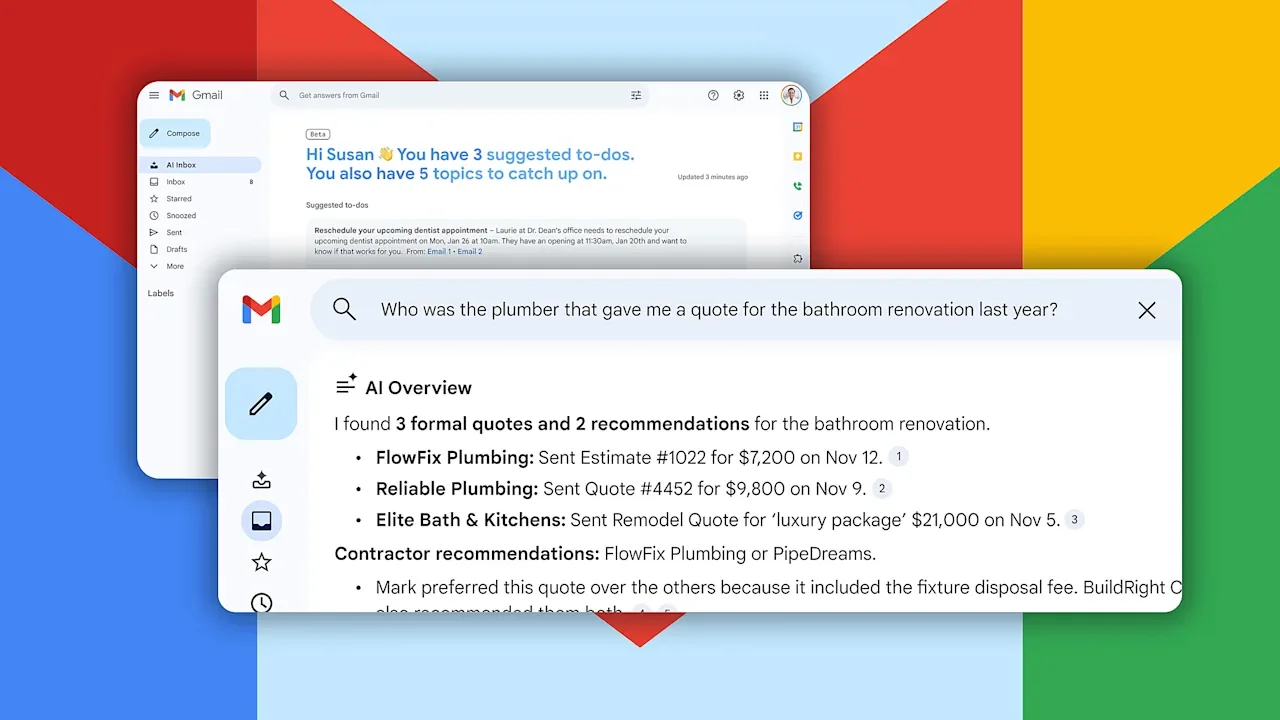
Google is adding a slate of AI features to Gmail that could save some of the hassle of searching for important information buried in messages and threads. Many users will soon see a more personalized inbox with AI-powered suggestions, summaries, and proofreading support. Plus, some AI functionality that was previously available only to paid subscribers will be rolling out to all Gmail users, including Help Me Write, AI Overviews for threaded emails, and Suggested Replies. See personalized, AI-powered snapshots Gmail users will soon have an AI Inbox view with two sections. "Suggested to-dos" will show immediate action items found in your inbox, such as bills to be paid and appointments to be confirmed. The task will be bolded and followed by a summary and a link to the relevant email or thread. Below that, "Topics to catch up on" includes items that are less urgent (but still important), such as order status and event updates. AI Inbox is an optional toggle in the Gmail side panel. You won't see it immediately, though—the feature is being made available to those in Google's Trusted Tester program before launching for users more broadly "in the coming months." Get AI Overviews via Gmail searchGoogle AI Pro and Ultra subscribers will also be able to get AI Overviews from natural language questions typed into the Gmail search bar (just like a Google search). Instead of a running standard keyword search and clicking through multiple message threads, you'll be able to ask things like “Who was the plumber that gave me a quote for the bathroom renovation last year?” and get a detailed summary of information pulled from emails in your inbox. The response will also provide citations to specific threads. AI will proofread your emailsFinally, Gmail will have a built-in, AI-powered proofreading feature that will check grammar, tone, and style and analyze your emails for clarity and structure. Similar to third-party tools like Grammarly, you'll see one-click suggestions for fixing typos, simplifying sentence structure, selecting improving word choice, and making writing more concise. Like AI Overviews, Proofread will be limited to paid subscribers. Note that these AI features are optional and can be disabled, and Google says it does not use personal information or content to train its AI models. View the full article
-
Originators with less than $59 million in assets don't have to share their loan data with CFPB, as the semi-shuttered regulator continues mortgage oversight. View the full article
-
Stockpicker’s flagship fund failed to beat cash returns in 2025View the full article
-
Climbdown an embarrassment for chancellor whose poll ratings are already at record lowsView the full article
-
In an era where customer trust is paramount, Uber is taking significant strides to ensure the safety of its riders through rigorous background checks for drivers. This move not only enhances the company’s reputation but also serves as a valuable lesson for small business owners looking to prioritize safety and credibility in their own operations. Uber’s comprehensive screening process underscores an essential principle: every ride must begin with trust. Each driver in the United States is subject to a multi-layer background check that focuses on identity verification, driving safety, and criminal history. Before being approved to drive, applicants must provide a validated Social Security number, a government-issued ID, and a live profile photo. Furthermore, they undergo thorough Motor Vehicle Record (MVR) checks and criminal background checks, which include searches across local, state, and national databases. The statistics speak volumes. Since 2017, Uber’s robust screening protocols have prevented 3.5 million individuals from joining the platform, effectively adding a layer of safety not just for passengers but also for small business owners who might utilize the service for transportation logistics. Quoting Uber’s commitment to safety, the company emphasizes, “Real safety isn’t a box you check once. It requires ongoing investment, constant innovation, and humility—including how we respond when concerns are raised.” For small businesses, this commitment serves as a guide on the importance of not becoming complacent in safety protocols. Regular audits and updates can help maintain customer trust over time. The background checks encompass strict standards, permanently disqualifying individuals with serious offenses such as sexual assault, murder, and kidnapping. Beyond these lifetime disqualifications, lesser offenses such as felonies generally follow a seven-year lookback period. Maintaining a balance between safety and opportunity, Uber’s approach reflects an understanding that rehabilitation is a crucial aspect of community safety. Small businesses can draw lessons from Uber’s methods. By instituting regular vetting processes for employees or service providers, business owners can foster a secure environment for both themselves and their customers. Consider the implications: a trusted workforce can lead to improved customer loyalty and a stronger brand reputation. However, it’s essential for small business owners to weigh the potential challenges associated with such screening practices. First, implementing a robust background check system may require significant financial and human resources. Small enterprises may need to partner with accredited background screening services to ensure compliance with legal standards, which can be a formidable undertaking. Moreover, the conversation around privacy and fairness in background checks is ongoing. Business owners must navigate the balance between thorough vetting and respecting the privacy rights of applicants. Uber recognizes this complexity, having crafted its screening process in line with federal and state regulations, thereby informing small businesses that staying compliant while ensuring fairness is critical in this endeavor. Uber has also pioneered a continuous monitoring system that flags new criminal charges as they arise, offering an added layer of safety post-hire. This technology is particularly relevant to small businesses that may offer services requiring transport or access to sensitive locations. Regular check-ins and updates can help alert businesses to any changes in the status of their employees or service providers, keeping safety protocols current and relevant. “Every driver must verify their identity through multiple steps,” Uber notes, highlighting the importance of identity verification not just at the hiring stage, but on an ongoing basis. Small business owners must consider employing similar identity checks to mitigate risks associated with fraud or misrepresentation. As Uber continues to refine its screening practices, small business owners can find inspiration and actionable insights from this approach. By prioritizing safety and accountability, businesses can not only foster an environment of trust but also enhance their operational integrity. Ultimately, while no background check system can predict future behavior, investing in thorough vetting and monitoring systems sets a higher standard in operational safety. Small businesses that emulate this commitment to transparency and security are likely to cultivate loyal customers and a resilient brand image. For more detailed insights directly from Uber, interested readers can visit the original press release at Uber Newsroom. Image via Google Gemini This article, "Uber Reinforces Safety with Rigorous Background Checks and Continuous Monitoring" was first published on Small Business Trends View the full article
-
In an era where customer trust is paramount, Uber is taking significant strides to ensure the safety of its riders through rigorous background checks for drivers. This move not only enhances the company’s reputation but also serves as a valuable lesson for small business owners looking to prioritize safety and credibility in their own operations. Uber’s comprehensive screening process underscores an essential principle: every ride must begin with trust. Each driver in the United States is subject to a multi-layer background check that focuses on identity verification, driving safety, and criminal history. Before being approved to drive, applicants must provide a validated Social Security number, a government-issued ID, and a live profile photo. Furthermore, they undergo thorough Motor Vehicle Record (MVR) checks and criminal background checks, which include searches across local, state, and national databases. The statistics speak volumes. Since 2017, Uber’s robust screening protocols have prevented 3.5 million individuals from joining the platform, effectively adding a layer of safety not just for passengers but also for small business owners who might utilize the service for transportation logistics. Quoting Uber’s commitment to safety, the company emphasizes, “Real safety isn’t a box you check once. It requires ongoing investment, constant innovation, and humility—including how we respond when concerns are raised.” For small businesses, this commitment serves as a guide on the importance of not becoming complacent in safety protocols. Regular audits and updates can help maintain customer trust over time. The background checks encompass strict standards, permanently disqualifying individuals with serious offenses such as sexual assault, murder, and kidnapping. Beyond these lifetime disqualifications, lesser offenses such as felonies generally follow a seven-year lookback period. Maintaining a balance between safety and opportunity, Uber’s approach reflects an understanding that rehabilitation is a crucial aspect of community safety. Small businesses can draw lessons from Uber’s methods. By instituting regular vetting processes for employees or service providers, business owners can foster a secure environment for both themselves and their customers. Consider the implications: a trusted workforce can lead to improved customer loyalty and a stronger brand reputation. However, it’s essential for small business owners to weigh the potential challenges associated with such screening practices. First, implementing a robust background check system may require significant financial and human resources. Small enterprises may need to partner with accredited background screening services to ensure compliance with legal standards, which can be a formidable undertaking. Moreover, the conversation around privacy and fairness in background checks is ongoing. Business owners must navigate the balance between thorough vetting and respecting the privacy rights of applicants. Uber recognizes this complexity, having crafted its screening process in line with federal and state regulations, thereby informing small businesses that staying compliant while ensuring fairness is critical in this endeavor. Uber has also pioneered a continuous monitoring system that flags new criminal charges as they arise, offering an added layer of safety post-hire. This technology is particularly relevant to small businesses that may offer services requiring transport or access to sensitive locations. Regular check-ins and updates can help alert businesses to any changes in the status of their employees or service providers, keeping safety protocols current and relevant. “Every driver must verify their identity through multiple steps,” Uber notes, highlighting the importance of identity verification not just at the hiring stage, but on an ongoing basis. Small business owners must consider employing similar identity checks to mitigate risks associated with fraud or misrepresentation. As Uber continues to refine its screening practices, small business owners can find inspiration and actionable insights from this approach. By prioritizing safety and accountability, businesses can not only foster an environment of trust but also enhance their operational integrity. Ultimately, while no background check system can predict future behavior, investing in thorough vetting and monitoring systems sets a higher standard in operational safety. Small businesses that emulate this commitment to transparency and security are likely to cultivate loyal customers and a resilient brand image. For more detailed insights directly from Uber, interested readers can visit the original press release at Uber Newsroom. Image via Google Gemini This article, "Uber Reinforces Safety with Rigorous Background Checks and Continuous Monitoring" was first published on Small Business Trends View the full article
-
Washington aims to reshape the region by using corporate power to dominate the continent and its resourcesView the full article
-
We may earn a commission from links on this page. Garmin, maker of fitness watches (among other things), announced this week that the subscription tier of the Garmin Connect app will now include nutrition tracking. According to the company, the app can identify foods based on a photo, and can set your calorie targets based on your activity data. Garmin announced this feature during CES 2026, although a new feature announcement isn't exactly traditional CES fare—I was hoping it would show off a new watch. Still, I did get a chance to try out the feature on my own phone (and watch), and thought it worked well. How Garmin Connect+'s nutrition logging works Credit: Screenshots by Beth Skawrecki Garmin’s nutrition logging is pretty similar to the nutrition logging features on other apps, including my fave free app Cronometer. Identifying food items from a photo is a common feature, but it’s often locked behind a premium tier—which finally makes Garmin’s $6.99/month Connect+ subscription start to make sense. If you were going to pay for a premium nutrition app anyway, or if you already subscribe to one, you can consolidate those subscriptions by only paying for Garmin. If you currently have MyFitnessPal linked to Garmin, you may get a message saying that it’s been disabled. This connection still works, but you can’t use both that and the new nutrition feature—Garmin Connect needs to have one source for nutrition information. One nice thing about doing your nutrition in Garmin Connect rather than another app is that the setup process uses your activity history to help you pick a calorie target. This way you don’t have to guess whether you’re “moderately active” versus “lightly active.” Calorie estimates from fitness apps are never totally accurate, but they tend to be a pretty good starting place if you have no idea what number to pick. The nutrition feature also allows you to view your calories from your watch, and to log favorite or recent foods. (For a full search, you'll still need to use the app.) This watch feature is available natively on newer watches, and through a ConnectIQ app for slightly older watches—the Forerunner 255 and Fenix 6 are covered with the latter app. View the full article
-
Inside Girl Scouts’ headquarters in New York City and its two licensed bakeries, a team of trend forecasters, marketers, and food scientists spend years cooking up its next iconic cookie. Now, fans of the annual cookie sale are about to get a taste of what the Girl Scouts of the USA (GSUSA) team has been baking behind closed doors. The newest addition to the cookie lineup are Exploremores, a rocky road ice cream-inspired sandwich cookie with chocolate shortbread exteriors and chocolate, marshmallow, and toasted almond-flavored cream centers. For Girl Scout cookie enjoyers, a fresh cookie is always a welcome surprise. But, according to Wendy Lou, GSUSA’s chief revenue officer and the mastermind behind the nonprofit’s cookie program, the cookie invention process is an intensive project that requires year-round dedication. “Cookie Season may be once a year, but behind the scenes, the conversation about what’s next is always happening,” Lou says. A brief history of the Girl Scout cookie Girl Scout cookies date back almost as far as the Girl Scouts themselves. Along the way, dozens of new flavors have been tested and ultimately retired into the archives of Girl Scout cookies past. According to GSUSA’s official record, the first Girl Scout cookies are believed to have been baked in 1917, just five years after GSUSA was first founded. Initially, the cookies were a more run-of-the-mill bake sale fundraiser—but in the following decades, the concept went national, becoming a more organized affair including specially licensed bakeries and a streamlined list of flavors. By 1978, all cookie boxes (regardless of the baker) included uniform GSUSA branding, as well as officially named flavors. Since then, GSUSA has adopted a kind of two-pronged approach to its cookie sales. Each year, the company returns to a few classic cookie flavors that customers can reliably count on, historically including Thin Mints, Do-si-dos, Samoas, and Trefoils. Alongside those tried-and-true offerings, the nonprofit generally also includes at least one new or limited-time cookie to add some intrigue to the mix. This second category has produced treats including Van’Chos, a pack of chocolate and vanilla sandwich cookies that ran from 1974 to 1983; Echo, an Oreo-style cookie that lasted from just 1987 to 1989; and Savannah Smiles, a lemon-shaped wedge that was purchasable from 2011 to 2019. More recently, a cookie called the Raspberry Rally was available for just one season in 2023, resulting in a black market-esque resale bonanza. It’s a clever strategy that keeps customers coming back each year, both for their favorite classic cookies and to try something different—but in order to make the cut, a new Girl Scout cookie must first face an intensive development process. Why it takes three years to design a cookie According to Lou, GSUSA doesn’t adhere to a strict annual cadence for new cookie releases. Instead, its team regularly reviews cookie performance, food trends, and feedback from Girl Scouts to judge its current cookie portfolio and decide when it’s due for a fresh addition. “Innovation is never ‘off,’” she adds. “We’re always looking ahead.” And cookie innovation is no quick affair. Lou says brainstorming for a new release typically begins around three years in advance, starting with early ideation based on consumer trends, followed by taste testing and naming. In recent years, this naming process has expanded beyond simply describing the cookie to capturing some part of the Girl Scout experience (see 2021’s Adventurfuls, for example). “Exploremores was chosen to reflect the spirit of curiosity, adventure, and exploration at the heart of Girl Scouting,” Lou says. “Every name is intentionally selected to connect back to our mission and the experiences girls gain through the program.” Even after a cookie is approved, packaged, and coordinated with GSUSA’s two bakeries, it still takes about 18 months to make it to an actual cookie stand. From there, its fate is annually reevaluated based on sales performance, local Girl Scout council needs, and operational considerations. In 2025, for example, GSUSA retired its Girl Scout S’mores and Toast-Yay! flavors, which were introduced in 2017 and 2021, respectively. Now, they live in the storied archive of cookies past. For any new cookie, like the Exploremore, lifespan is ultimately determined by how customers—and scouts—respond to it. “While some cookies are retired to make room for innovation, fans know that Girl Scout history is full of beloved cookies—and who knows what the future might hold?” Lou says. “What never changes is our commitment to delivering a lineup that excites customers and helps girls succeed.” View the full article

-
Once the ball starts rolling in the Spanish league, the game is on for some 50 analysts who start looking for signs of online piracy. They scan websites, social media posts, IPTV platforms and streaming portals in search of illegal broadcasts of La Liga matches. The trained analysts identify the pirated content and take the steps needed to take them off air, including notifying Internet intermediaries like Cloudflare, the U.S.-based company whose content-delivery network is believed to manage nearly 20% of the Internet traffic worldwide. And that’s when the real fight begins for the Spanish league. La Liga, one of the most active European leagues fighting piracy and audiovisual fraud, accuses Cloudflare of ignoring illegal content and not doing enough to block it. It says Cloudflare plays a decisive role in the dissemination of online piracy that significantly hurts the soccer industry. Protecting its content is key for the league, which recently sold domestic audiovisual rights for more than 6 billion euros ($7 billion) through the 2031-32 season. Spanish league president Javier Tebas told The Associated Press in an email that Cloudflare is an organization “fully aware that a significant share of sports audiovisual piracy relies on its infrastructure and, despite this knowledge, it continues to protect and monetize that activity, as recognized by courts in multiple jurisdictions.” Tebas said that in Spain alone, more than 35% of La Liga’s content piracy continues to be distributed through Cloudflare’s infrastructure, despite thousands of formal notices and judicially backed enforcement measures implemented by Internet service providers. “This is not a legal, technical or ideological debate, but a case of a company prioritizing its commercial interests and financial gain over the law, the sustainability of the global sports industry, and the protection of its own customers, whom it uses as a digital shield for organized piracy networks,” Tebas said. Cloudflare speaks of censorship Cloudflare, which describes itself as a “long-standing champion of a free and open Internet,” denies wrongdoing and accuses the league of bullying its way into controlling what Spanish users see online during matches. Cloudflare told the AP that the league’s “indiscriminate blocking practices” have kept Spanish users from accessing tens of thousands of legitimate sites while the games are on. The company said La Liga thinks that its commercial interests can “The President the right of ordinary Spanish users to browse lawful sites” during matches. Cloudflare has encouraged Spanish users who notice lawful sites getting blocked because of La Liga to track those blocks and tell their lawmakers. Cloudflare highlights the need to fight “Internet censorship and the harm it causes.” “Cloudflare regularly works collaboratively with rightsholders to help address issues like illegal streaming,” it said. “La Liga, however, has shown no interest in this type of collaboration, believing instead they can bully their way to having complete control over what Spanish users see online during football matches by making unsupported claims and threats.” La Liga notes there is collaboration among several other intermediaries, including Google, Amazon and YouTube, but says Cloudflare has rejected similar collaboration efforts with the league. Legal actions The Spanish league has been successful in achieving court rulings against piracy in Spain, which also impacts Cloudflare, but it remains unable to get the company to block some of the illegal content internationally. Cloudflare has fought back in the courts, filing appeals to “demonstrate that La Liga’s overblocking practices are illegal.” “We are also engaging with talking to politicians and regulators, as well as civil society to find collaborative solutions to combating illegal sports streaming without impeding Internet access for millions of Spanish users,” it said. Cloudflare faces similar legal issues in Italy, France, Germany and Japan, among other countries. The Italian league said it has taken action against Cloudflare multiple times and will continue to do so. In Germany, the local league said it was in “regular and intensive communication with Cloudflare in order to combat the issue of digital piracy in the best possible way.” Seeking government support Cloudflare recently told the United States Trade Representative that the actions by foreign countries constitute digital trade barriers that contradict global norms and disproportionately impact U.S. technology providers, hindering market access in some countries. The Spanish league has also reached out to the European Commission and the USTR to complain about Cloudflare’s practices. It told the USTR that Cloudflare was the main facilitator for unauthorized broadcasts of La Liga and other pirated content worldwide. Cloudflare claims that its network is vital to the U.S.’ economic and security interests. “We urge the U.S. government to continue its resolute advocacy on behalf of American businesses to dismantle these structural barriers and ensure a global digital environment that rewards innovation and fair trade,” it said. The USTR did not answer an AP email requesting comment. AP soccer: https://apnews.com/hub/soccer —Associated Press View the full article

-
Anti-imperialist ideologue Diosdado Cabello poses the greatest threat to interim president Delcy Rodríguez, experts sayView the full article
-
It’s a dream come true for investors with heavy defense stock holdings. On Thursday, defense stocks surged after President The President called for a massive $1.5 trillion defense budget next year. The figure was floated in a Truth Social post on Wednesday. That would be an increase of roughly 50% over the 2026 budget of $901 billion. “I have determined that, for the Good of our Country, especially in these very troubled and dangerous times, our Military Budget for the year 2027 should not be $1 Trillion Dollars, but rather $1.5 Trillion Dollars. This will allow us to build the “Dream Military” that we have long been entitled to and, more importantly, that will keep us SAFE and SECURE, regardless of foe,” The President wrote. Presumably, the beefed-up budget would help pay for some of The President’s military ambitions, which include a Golden Dome air defense system, and even a new Naval ship design. As for how it’d be paid for, The President’s Truth Social post suggests that tariff revenue could help cover the additional costs. The reaction by the markets was predictable, as defense companies saw share prices rise during pre-trading Thursday morning. As of around 11 a.m. ET, Northrop Grumman shares were up around 3.75%, Lockheed Martin shares were up more than 6%, and Raytheon shares were up 2%. Interestingly, The President’s “dream military” post also comes soon after he also floated the idea of preventing defense companies from conducting stock buybacks or paying dividends to shareholders. That idea came in response to the president’s frustration that defense companies were not moving quickly enough, as he wrote in another Truth Social post earlier on Wednesday. As it stands, it’s unclear how realistic a huge increase to the defense budget is, but according to reporting from Politico, many Republican members of Congress have already voiced support for the increase, including House Appropriations Chair Tom Cole, Representative Steve Womack of Arkansas, and Don Bacon of Nebraska. View the full article

-
UK regulator updates reforms in drive for better retirement outcomesView the full article
-
If you’re a DIY enthusiast, knowing where to find quality craft supplies can improve your projects greatly. Stores like Michaels and Hobby Lobby provide a vast range of art materials and seasonal items, whereas specialty shops such as Texas Art Supply and Jerrys Artarama cater to various skill levels with unique offerings. Furthermore, sustainable options and custom services are available at places like Texas Art Asylum and Ribbons Crafts. Each store has its own strengths, making it crucial to explore what they offer. Key Takeaways Michaels offers a vast selection of art materials and seasonal decorations, making it perfect for all your crafting needs. Hobby Lobby features frequent sales and a wide range of DIY supplies, ideal for budget-conscious crafters. JOANN Fabric and Crafts provides extensive fabric options and classes, catering to both beginners and experienced crafters. Texas Art Supply boasts over 60,000 art products, with unique items often missing from larger chains, suitable for all skill levels. Texas Art Asylum promotes sustainability by offering new and gently used supplies, perfect for creative recycling projects. Michaels Michaels stands out as the largest arts and crafts supply store chain in the U.S., making it an essential destination for DIY enthusiasts. Located conveniently at Brookhollow Shopping Center in Houston, TX, Michaels offers a vast selection of arts and crafts supplies, including art materials, scrapbook items, fabric, and yarn. You’ll find everything you need for various hobbies, whether you’re into sewing, scrapbooking, or home decor. Moreover, the store provides seasonal decorations for holidays like Halloween and Christmas, making it a one-stop shop for festive projects. With a rewards program available through the Michaels app, you can access sales and coupons, enhancing your shopping experience at your local craft store near me. Texas Art Supply When you’re looking for a wide range of art supplies, Texas Art Supply stands out with its extensive product selection. You’ll find over 60,000 items, including specialty papers and popular brands, all at competitive prices that make crafting affordable. This store not just caters to seasoned artists but likewise has a dedicated section for young creators, ensuring everyone can find the right materials. Extensive Product Selection Texas Art Supply stands out as a premier destination for DIY enthusiasts thanks to its extensive product selection, which encompasses over 60,000 art products. As the largest stand-alone arts and crafts store in the U.S., it offers a vast array of art supplies, from specialty papers to Blick Art Materials, a well-known brand. This art supply store caters to every skill level, ensuring that both beginners and professionals can find what they need. You’ll discover unique and specialized art supplies often missing in larger chain craft stores, including options for kids that inspire creativity from an early age. When searching for discount art supplies or specific arts and crafts supplies, Texas Art Supply remains a top choice, rivaling craft stores in New York, NY. Competitive Pricing Options For DIY enthusiasts seeking affordable art supplies, competitive pricing options at Texas Art Supply make it a standout choice. Established in the 1950s, this largest stand-alone arts and crafts store in the U.S. offers over 60,000 products at reasonable prices. You’ll find frequent discounts on name-brand items, ensuring quality without breaking the bank. Their kid-friendly supplies cater to young artists, reinforcing their commitment to value. Here’s a quick comparison of pricing options: Product Type Texas Art Supply Competitor Prices Specialty Papers $5.99 $8.49 Name-brand Paints $12.99 $15.99 Kid-friendly Kits $9.99 $12.99 Texas Art Asylum Located at 1719 Live Oak St in Houston, TX, Texas Art Asylum stands out as a premier destination for DIY enthusiasts seeking both new and gently used art and craft supplies. This unique crafts supply store offers a diverse range of unusual items, including vintage books, antiques, and doll parts, perfect for mixed media artists. Open since 2010, it emphasizes budget-friendly pricing, ensuring you can find quality painting supplies nearby without overspending. Texas Art Asylum promotes sustainability by encouraging customers to repurpose and recycle materials in their projects. With its friendly atmosphere, it’s an inviting space for both beginners and seasoned artists. If you’re exploring art supplies in New York or other cities, don’t miss this gem in Houston. Jerrys Artarama – Houston At Jerrys Artarama in Houston, you’ll find an extensive selection of art supplies customized for every level of artist, from beginners to seasoned professionals. Located conveniently at 2201 Taylor St, the store offers everything from high-quality canvases and brushes to fundamental drawing tools, all at affordable prices. Furthermore, their commitment to providing free art lessons on YouTube makes it an excellent resource for enhancing your skills as you shop for supplies. Extensive Art Supplies Selection Jerry’s Artarama in Houston stands out as a premier destination for DIY enthusiasts seeking an extensive selection of art supplies. Established in 1968, this store offers a wide variety of high-quality painting and drawing materials, catering to artists at all skill levels. You’ll find professional-grade products, art studio furniture, and tools like easels and organizers, enhancing your creative workspace. Unlike smaller arts and crafts stores in NYC, Jerry’s Artarama focuses on diversity, ensuring you can discover exactly what you need. Whether you’re searching for the best art stores near you or exploring options like an art supply store in Chicago, Jerry’s remains a top choice. Plus, don’t miss their free art lessons on YouTube, making art accessible for everyone. Affordable Pricing Options When searching for affordable art supplies, you’ll find that Jerry’s Artarama in Houston consistently delivers quality options without the hefty price tag. Established in 1968, this art supply store caters to both beginners and experienced artists. You can discover a wide range of painting and drawing materials, along with art studio furniture like easels and organizers, all at competitive prices. Regular sales and discounts improve affordability, making it easy for you to stock up. To help you further, Jerry’s likewise provides free art lessons on their YouTube channel. Here’s a quick glance at their pricing options: Item Price Range Location Painting Supplies $5 – $100 Art Supplies LA Drawing Tools $3 – $50 Art Supplies Pittsburgh PA Studio Furniture $20 – $300 Arts and Crafts Store San Diego Art Supply on Almeda Art Supply on Almeda stands out as a valuable destination for DIY enthusiasts and aspiring artists in Houston, located conveniently at 5301 Almeda Rd. This art supply store is known for its personalized customer service, ensuring you receive assistance customized to your needs. Whether you’re a beginner artist or an experienced creator, you’ll find a diverse selection of art accessories and crafting supplies to suit your projects. The store offers name-brand drawing supplies, bookbinding materials, and media kits perfect for various creative projects. The welcoming atmosphere nurtures a supportive environment, making it easy for you to explore new techniques and gather inspiration. Ribbons Crafts When you visit Ribbons Crafts, you’ll immediately notice their unique ribbon selection, featuring options like grosgrain and satin for all your crafting needs. They offer custom crafting services, allowing you to create personalized items such as hair bows and event decorations customized to your specifications. Furthermore, with seasonal decoration supplies available, you can easily find materials to improve your projects for any occasion. Unique Ribbon Selection Ribbons Crafts offers an extensive and unique selection of ribbons that caters to a variety of crafting needs. Established in 1997, this store features grosgrain, satin, patterned, and specialty ribbons for every occasion. Whether you’re crafting homecoming mums, garters, or decorations for events, you’ll find the perfect ribbon here. The store additionally specializes in custom hair bows, customized for sports teams and cheerleading, ensuring you can meet diverse customer needs. Alongside ribbons, Ribbons Crafts provides vital DIY materials like French clips and alligator clips. If you’re searching for arts and craft supplies in New York, or an arts and crafts store in Pittsburgh, this shop stands out. It’s your go-to craft store near me within 1 mi for quality supplies. Custom Crafting Services For those looking to add a personal touch to their crafting projects, Ribbons Crafts offers a variety of custom crafting services that cater to individual preferences and group needs. Established in 1997, this store specializes in custom hair bows designed for sports teams and cheerleading, ensuring you get the perfect accessory. In addition to ribbons, they provide supplies for homecoming mums, garters, and event decorations, making it a versatile option among art supply stores in Cambridge, MA, and beyond. You can find crucial DIY materials like French clips, alligator clips, and glues here. If you’re wondering where to buy art supplies in Bellevue or Seattle, Ribbons Crafts stands out for its quality and customer satisfaction. Seasonal Decoration Supplies If you’re looking to improve your seasonal celebrations, Ribbons Crafts offers an extensive range of decoration supplies that cater to various occasions throughout the year. Established in 1997, this store specializes in seasonal decoration supplies, particularly ribbons like grosgrain, satin, and patterned options. You’ll find everything you need for homecoming mums and party decorations, along with DIY materials such as clips and glues for crafting custom items. Ribbon Type Uses Grosgrain Bows, wreaths, gift wrapping Satin Elegant decor, hair accessories Patterned Thematic decorations Specialty Unique event-specific items Visit Ribbons Crafts or explore other craft stores in Pittsburgh PA, art supply stores in Kansas City, or art supplies in Philadelphia PA, for all your seasonal crafting needs. Hobby Lobby Hobby Lobby stands out as a premier destination for DIY enthusiasts, offering an extensive selection of craft supplies, home decor, and seasonal items customized to various crafting hobbies such as scrapbooking and sewing. With frequent sales and discounts, you can find great deals on a wide range of products, making it easier to stick to your budget. The store’s extensive home decor options include various plastic plants and flowers, perfect for enhancing any crafting project. Moreover, Hobby Lobby features a customer-friendly return policy, allowing you to return items that don’t meet your needs. With locations nationwide, it’s a go-to spot for quality materials and inspiration, ensuring you have everything you need for your next creative endeavor. Paper Source Paper Source is a destination that caters to the diverse needs of DIY enthusiasts, particularly those who appreciate high-quality paper products and stationery. Known as one of the top art and craft stores in New York, it offers unique cards, gift wrap, and eco-friendly crafting materials. If you’re wondering where to buy art supplies, this arts and craftsman store features a Paper Bar, allowing you to choose from various envelopes, colored paper, and card stock for personalized projects. Furthermore, Paper Source hosts workshops and classes focused on paper crafting techniques, providing great opportunities to improve your skills. For anyone searching for a craft place near me or decoration stores near me, Paper Source is an ideal choice for distinctive materials and inspiration. Merribee Needlearts & Crafts Merribee Needlearts & Crafts stands out as a haven for those passionate about needle arts in Texas. Established in 1982, this family-owned store boasts one of the largest selections of yarns in the state. Whether you’re into knitting, crochet, or embroidery, you’ll find a welcoming atmosphere perfect for crafting. They offer regular weekly classes and a Summer Camp for kids, making it a fantastic place to inspire younger generations. With cozy couches for crafting, it’s an ideal spot to relax during shopping for supplies. The friendly, knowledgeable staff is dedicated to helping you find the right materials for your projects. For those searching for art supplies in Bellevue, Washington, Merribee is a top contender among hobby shops near you. JOANN Fabric and Crafts When you’re looking for a reliable source for your crafting needs, JOANN Fabric and Crafts offers a vast selection of fabrics and supplies suitable for a wide range of DIY projects and seasonal decorations. This store provides various classes and tutorials that help you learn new techniques, enhancing your crafting skills. If you’re seeking art supplies in Boston or visiting decorating shops, JOANN has what you need. With fabric stores near you within 1 mile, it’s easy to find materials for any occasion. Furthermore, JOANN offers a discount program for students, teachers, military personnel, and healthcare workers, making crafting more accessible. Their customer-friendly return policy guarantees hassle-free exchanges, making JOANN a top choice among craft stores in Pittsburgh. Frequently Asked Questions What Is the Most Popular Craft Store? The most popular craft store varies by location and customer needs. Michaels stands out because of its extensive range of arts and crafts supplies, appealing to a broad audience. JOANN Fabric and Crafts is favored for its fabric selection and crafting classes. Hobby Lobby attracts shoppers with frequent sales, whereas Texas Art Supply is known for its vast inventory of art materials. Each store has unique offerings, so your choice depends on your specific crafting interests. Is Michaels or Hobby Lobby Better for Crafts? When comparing Michaels and Hobby Lobby for crafts, consider your specific needs. Michaels thrives with its extensive range of seasonal decorations and DIY project materials, making it ideal for holiday-themed crafting. Conversely, Hobby Lobby offers a larger selection of home decor items and a customer-friendly return policy, enhancing shopping flexibility. Both stores provide classes and workshops, but Michaels often hosts more frequent events, appealing to those who enjoy hands-on crafting experiences. What to Buy Someone Who Likes Arts and Crafts? If you’re looking to buy something for someone who enjoys arts and crafts, consider premium non-toxic silicone beads for trendy jewelry or keychains. High-quality resin supplies, such as molds and pigments, can inspire custom creations. DIY kits like diamond painting sets are great for all ages, enhancing creativity. Personalized items, like custom tumblers or keychains made from vinyl, in addition make thoughtful gifts. Finally, art supplies, including specialty papers and paints, are always appreciated. Where Is the Best Place to Sell Handmade Crafts? The best places to sell handmade crafts include online marketplaces like Etsy, which offers a vast audience, and niche sites such as Handmade at Amazon. Local craft fairs and farmers’ markets provide direct customer interaction, enhancing brand visibility. Social media platforms like Instagram and Facebook can effectively promote your products and drive traffic to your online shop. Consistent branding and high-quality photography are crucial for attracting buyers in any selling environment. Conclusion Visiting these 10 craft supply stores will greatly improve your DIY projects, offering a variety of materials and inspiration. From the extensive selections at Michaels and Hobby Lobby to the unique finds at Texas Art Supply and Jerrys Artarama, each store caters to different crafting needs. Moreover, sustainable options at Texas Art Asylum and the personalized services at Ribbons Crafts guarantee you can find what you need. Explore these destinations to fuel your creativity and boost your crafting experience. Image via Google Gemini This article, "10 Must-Visit Crafts Supply Stores for DIY Enthusiasts" was first published on Small Business Trends View the full article
-
If you’re a DIY enthusiast, knowing where to find quality craft supplies can improve your projects greatly. Stores like Michaels and Hobby Lobby provide a vast range of art materials and seasonal items, whereas specialty shops such as Texas Art Supply and Jerrys Artarama cater to various skill levels with unique offerings. Furthermore, sustainable options and custom services are available at places like Texas Art Asylum and Ribbons Crafts. Each store has its own strengths, making it crucial to explore what they offer. Key Takeaways Michaels offers a vast selection of art materials and seasonal decorations, making it perfect for all your crafting needs. Hobby Lobby features frequent sales and a wide range of DIY supplies, ideal for budget-conscious crafters. JOANN Fabric and Crafts provides extensive fabric options and classes, catering to both beginners and experienced crafters. Texas Art Supply boasts over 60,000 art products, with unique items often missing from larger chains, suitable for all skill levels. Texas Art Asylum promotes sustainability by offering new and gently used supplies, perfect for creative recycling projects. Michaels Michaels stands out as the largest arts and crafts supply store chain in the U.S., making it an essential destination for DIY enthusiasts. Located conveniently at Brookhollow Shopping Center in Houston, TX, Michaels offers a vast selection of arts and crafts supplies, including art materials, scrapbook items, fabric, and yarn. You’ll find everything you need for various hobbies, whether you’re into sewing, scrapbooking, or home decor. Moreover, the store provides seasonal decorations for holidays like Halloween and Christmas, making it a one-stop shop for festive projects. With a rewards program available through the Michaels app, you can access sales and coupons, enhancing your shopping experience at your local craft store near me. Texas Art Supply When you’re looking for a wide range of art supplies, Texas Art Supply stands out with its extensive product selection. You’ll find over 60,000 items, including specialty papers and popular brands, all at competitive prices that make crafting affordable. This store not just caters to seasoned artists but likewise has a dedicated section for young creators, ensuring everyone can find the right materials. Extensive Product Selection Texas Art Supply stands out as a premier destination for DIY enthusiasts thanks to its extensive product selection, which encompasses over 60,000 art products. As the largest stand-alone arts and crafts store in the U.S., it offers a vast array of art supplies, from specialty papers to Blick Art Materials, a well-known brand. This art supply store caters to every skill level, ensuring that both beginners and professionals can find what they need. You’ll discover unique and specialized art supplies often missing in larger chain craft stores, including options for kids that inspire creativity from an early age. When searching for discount art supplies or specific arts and crafts supplies, Texas Art Supply remains a top choice, rivaling craft stores in New York, NY. Competitive Pricing Options For DIY enthusiasts seeking affordable art supplies, competitive pricing options at Texas Art Supply make it a standout choice. Established in the 1950s, this largest stand-alone arts and crafts store in the U.S. offers over 60,000 products at reasonable prices. You’ll find frequent discounts on name-brand items, ensuring quality without breaking the bank. Their kid-friendly supplies cater to young artists, reinforcing their commitment to value. Here’s a quick comparison of pricing options: Product Type Texas Art Supply Competitor Prices Specialty Papers $5.99 $8.49 Name-brand Paints $12.99 $15.99 Kid-friendly Kits $9.99 $12.99 Texas Art Asylum Located at 1719 Live Oak St in Houston, TX, Texas Art Asylum stands out as a premier destination for DIY enthusiasts seeking both new and gently used art and craft supplies. This unique crafts supply store offers a diverse range of unusual items, including vintage books, antiques, and doll parts, perfect for mixed media artists. Open since 2010, it emphasizes budget-friendly pricing, ensuring you can find quality painting supplies nearby without overspending. Texas Art Asylum promotes sustainability by encouraging customers to repurpose and recycle materials in their projects. With its friendly atmosphere, it’s an inviting space for both beginners and seasoned artists. If you’re exploring art supplies in New York or other cities, don’t miss this gem in Houston. Jerrys Artarama – Houston At Jerrys Artarama in Houston, you’ll find an extensive selection of art supplies customized for every level of artist, from beginners to seasoned professionals. Located conveniently at 2201 Taylor St, the store offers everything from high-quality canvases and brushes to fundamental drawing tools, all at affordable prices. Furthermore, their commitment to providing free art lessons on YouTube makes it an excellent resource for enhancing your skills as you shop for supplies. Extensive Art Supplies Selection Jerry’s Artarama in Houston stands out as a premier destination for DIY enthusiasts seeking an extensive selection of art supplies. Established in 1968, this store offers a wide variety of high-quality painting and drawing materials, catering to artists at all skill levels. You’ll find professional-grade products, art studio furniture, and tools like easels and organizers, enhancing your creative workspace. Unlike smaller arts and crafts stores in NYC, Jerry’s Artarama focuses on diversity, ensuring you can discover exactly what you need. Whether you’re searching for the best art stores near you or exploring options like an art supply store in Chicago, Jerry’s remains a top choice. Plus, don’t miss their free art lessons on YouTube, making art accessible for everyone. Affordable Pricing Options When searching for affordable art supplies, you’ll find that Jerry’s Artarama in Houston consistently delivers quality options without the hefty price tag. Established in 1968, this art supply store caters to both beginners and experienced artists. You can discover a wide range of painting and drawing materials, along with art studio furniture like easels and organizers, all at competitive prices. Regular sales and discounts improve affordability, making it easy for you to stock up. To help you further, Jerry’s likewise provides free art lessons on their YouTube channel. Here’s a quick glance at their pricing options: Item Price Range Location Painting Supplies $5 – $100 Art Supplies LA Drawing Tools $3 – $50 Art Supplies Pittsburgh PA Studio Furniture $20 – $300 Arts and Crafts Store San Diego Art Supply on Almeda Art Supply on Almeda stands out as a valuable destination for DIY enthusiasts and aspiring artists in Houston, located conveniently at 5301 Almeda Rd. This art supply store is known for its personalized customer service, ensuring you receive assistance customized to your needs. Whether you’re a beginner artist or an experienced creator, you’ll find a diverse selection of art accessories and crafting supplies to suit your projects. The store offers name-brand drawing supplies, bookbinding materials, and media kits perfect for various creative projects. The welcoming atmosphere nurtures a supportive environment, making it easy for you to explore new techniques and gather inspiration. Ribbons Crafts When you visit Ribbons Crafts, you’ll immediately notice their unique ribbon selection, featuring options like grosgrain and satin for all your crafting needs. They offer custom crafting services, allowing you to create personalized items such as hair bows and event decorations customized to your specifications. Furthermore, with seasonal decoration supplies available, you can easily find materials to improve your projects for any occasion. Unique Ribbon Selection Ribbons Crafts offers an extensive and unique selection of ribbons that caters to a variety of crafting needs. Established in 1997, this store features grosgrain, satin, patterned, and specialty ribbons for every occasion. Whether you’re crafting homecoming mums, garters, or decorations for events, you’ll find the perfect ribbon here. The store additionally specializes in custom hair bows, customized for sports teams and cheerleading, ensuring you can meet diverse customer needs. Alongside ribbons, Ribbons Crafts provides vital DIY materials like French clips and alligator clips. If you’re searching for arts and craft supplies in New York, or an arts and crafts store in Pittsburgh, this shop stands out. It’s your go-to craft store near me within 1 mi for quality supplies. Custom Crafting Services For those looking to add a personal touch to their crafting projects, Ribbons Crafts offers a variety of custom crafting services that cater to individual preferences and group needs. Established in 1997, this store specializes in custom hair bows designed for sports teams and cheerleading, ensuring you get the perfect accessory. In addition to ribbons, they provide supplies for homecoming mums, garters, and event decorations, making it a versatile option among art supply stores in Cambridge, MA, and beyond. You can find crucial DIY materials like French clips, alligator clips, and glues here. If you’re wondering where to buy art supplies in Bellevue or Seattle, Ribbons Crafts stands out for its quality and customer satisfaction. Seasonal Decoration Supplies If you’re looking to improve your seasonal celebrations, Ribbons Crafts offers an extensive range of decoration supplies that cater to various occasions throughout the year. Established in 1997, this store specializes in seasonal decoration supplies, particularly ribbons like grosgrain, satin, and patterned options. You’ll find everything you need for homecoming mums and party decorations, along with DIY materials such as clips and glues for crafting custom items. Ribbon Type Uses Grosgrain Bows, wreaths, gift wrapping Satin Elegant decor, hair accessories Patterned Thematic decorations Specialty Unique event-specific items Visit Ribbons Crafts or explore other craft stores in Pittsburgh PA, art supply stores in Kansas City, or art supplies in Philadelphia PA, for all your seasonal crafting needs. Hobby Lobby Hobby Lobby stands out as a premier destination for DIY enthusiasts, offering an extensive selection of craft supplies, home decor, and seasonal items customized to various crafting hobbies such as scrapbooking and sewing. With frequent sales and discounts, you can find great deals on a wide range of products, making it easier to stick to your budget. The store’s extensive home decor options include various plastic plants and flowers, perfect for enhancing any crafting project. Moreover, Hobby Lobby features a customer-friendly return policy, allowing you to return items that don’t meet your needs. With locations nationwide, it’s a go-to spot for quality materials and inspiration, ensuring you have everything you need for your next creative endeavor. Paper Source Paper Source is a destination that caters to the diverse needs of DIY enthusiasts, particularly those who appreciate high-quality paper products and stationery. Known as one of the top art and craft stores in New York, it offers unique cards, gift wrap, and eco-friendly crafting materials. If you’re wondering where to buy art supplies, this arts and craftsman store features a Paper Bar, allowing you to choose from various envelopes, colored paper, and card stock for personalized projects. Furthermore, Paper Source hosts workshops and classes focused on paper crafting techniques, providing great opportunities to improve your skills. For anyone searching for a craft place near me or decoration stores near me, Paper Source is an ideal choice for distinctive materials and inspiration. Merribee Needlearts & Crafts Merribee Needlearts & Crafts stands out as a haven for those passionate about needle arts in Texas. Established in 1982, this family-owned store boasts one of the largest selections of yarns in the state. Whether you’re into knitting, crochet, or embroidery, you’ll find a welcoming atmosphere perfect for crafting. They offer regular weekly classes and a Summer Camp for kids, making it a fantastic place to inspire younger generations. With cozy couches for crafting, it’s an ideal spot to relax during shopping for supplies. The friendly, knowledgeable staff is dedicated to helping you find the right materials for your projects. For those searching for art supplies in Bellevue, Washington, Merribee is a top contender among hobby shops near you. JOANN Fabric and Crafts When you’re looking for a reliable source for your crafting needs, JOANN Fabric and Crafts offers a vast selection of fabrics and supplies suitable for a wide range of DIY projects and seasonal decorations. This store provides various classes and tutorials that help you learn new techniques, enhancing your crafting skills. If you’re seeking art supplies in Boston or visiting decorating shops, JOANN has what you need. With fabric stores near you within 1 mile, it’s easy to find materials for any occasion. Furthermore, JOANN offers a discount program for students, teachers, military personnel, and healthcare workers, making crafting more accessible. Their customer-friendly return policy guarantees hassle-free exchanges, making JOANN a top choice among craft stores in Pittsburgh. Frequently Asked Questions What Is the Most Popular Craft Store? The most popular craft store varies by location and customer needs. Michaels stands out because of its extensive range of arts and crafts supplies, appealing to a broad audience. JOANN Fabric and Crafts is favored for its fabric selection and crafting classes. Hobby Lobby attracts shoppers with frequent sales, whereas Texas Art Supply is known for its vast inventory of art materials. Each store has unique offerings, so your choice depends on your specific crafting interests. Is Michaels or Hobby Lobby Better for Crafts? When comparing Michaels and Hobby Lobby for crafts, consider your specific needs. Michaels thrives with its extensive range of seasonal decorations and DIY project materials, making it ideal for holiday-themed crafting. Conversely, Hobby Lobby offers a larger selection of home decor items and a customer-friendly return policy, enhancing shopping flexibility. Both stores provide classes and workshops, but Michaels often hosts more frequent events, appealing to those who enjoy hands-on crafting experiences. What to Buy Someone Who Likes Arts and Crafts? If you’re looking to buy something for someone who enjoys arts and crafts, consider premium non-toxic silicone beads for trendy jewelry or keychains. High-quality resin supplies, such as molds and pigments, can inspire custom creations. DIY kits like diamond painting sets are great for all ages, enhancing creativity. Personalized items, like custom tumblers or keychains made from vinyl, in addition make thoughtful gifts. Finally, art supplies, including specialty papers and paints, are always appreciated. Where Is the Best Place to Sell Handmade Crafts? The best places to sell handmade crafts include online marketplaces like Etsy, which offers a vast audience, and niche sites such as Handmade at Amazon. Local craft fairs and farmers’ markets provide direct customer interaction, enhancing brand visibility. Social media platforms like Instagram and Facebook can effectively promote your products and drive traffic to your online shop. Consistent branding and high-quality photography are crucial for attracting buyers in any selling environment. Conclusion Visiting these 10 craft supply stores will greatly improve your DIY projects, offering a variety of materials and inspiration. From the extensive selections at Michaels and Hobby Lobby to the unique finds at Texas Art Supply and Jerrys Artarama, each store caters to different crafting needs. Moreover, sustainable options at Texas Art Asylum and the personalized services at Ribbons Crafts guarantee you can find what you need. Explore these destinations to fuel your creativity and boost your crafting experience. Image via Google Gemini This article, "10 Must-Visit Crafts Supply Stores for DIY Enthusiasts" was first published on Small Business Trends View the full article
-
Gmail was always a gateway drug for the greater Google ecosystem. When it launched in 2004, Gmail stood out by offering then-wild amounts of storage for free. Despite few updates to its design in two decades, it now boasts 2.5 billion users and is the largest email service in the world. And—like so much of the tech industry—Google is betting that email will sell you on its next big bet: AI. Starting today, Gmail will begin rolling out three new AI services that will significantly impact the way use your inbox. Gmail’s new AI features Two of the services require a $20/mo subscription to its Gemini AI service, while the third will come to all users, free. (And yes, you will be able to opt out if you don’t want them.) The biggest, and most exciting update is AI Overviews. In essence, this is the Gmail search bar you know—that perplexing window that stares you in the face as you wonder, “what combination of keyword do I need to recall from a random message thread from 6 years ago?” But now, the search bar is infused with AI. So you can ask anything—like, “who was the recruiter I talked to last week”—and it’ll pop up their name alongside other recruiters you may have been talking to a bullet point summary that includes names, dates, and other details from your conversations. What’s interesting about those summaries is that they might include things that your friends said about these recruiters and companies in other emails on the topic—which Gmail cites with its now-familiar notation we see in Google’s main AI search. Then below this new AI summary, you’ll find all your related emails, much like in classic Gmail search. The next feature is a bit more disquieting, and a direct extension of Google’s autocomplete “Smart Replies.” Now called Suggested Replies, it’s essentially an auto-email writer. At the bottom of someone’s email to you, Suggested Replies floats a gray preview of an already-written response. If you tap on it—much like you can tap on Google’s autocomplete suggestions today—it transforms from a gray preview into a fully editable email box. Suggested Replies is actually coming to all users, free, as is a related “Help Me Write” feature which generates an email from a prompt. (Pro users also get a set of features also includes a more generalized “proofread” grammar check, for those who respect the people they’re emailing enough to actually write a note themselves.) Finally, all users will get access to a new Gmail AI inbox. This is at least the third attempt Gmail is making to cut through the clutter of your emails—which is necessary for most people, as the average, overwhelmed person gets dozens of emails a day but takes action on fewer than five, according to Yahoo. AI Inbox has two big features. The first turns your emails into a to-do list. Instead of showing you an email you haven’t responded to, it actually gives you a job like “send Ernie’s vaccination records to Doggy Daycare.” What’s clever in the UI is that these to-dos are actually presented a lot like emails. They’re familiar—which is key to a platform used by billions of people. You see someone’s avatar alongside a two-line summary of what you have to do. And by clicking a reply button, and you’re ushered into the proper email thread to do it. Just below the to-do list, there’s a second, “catch me up” list. This goes into various topics, ranging from your children’s school updates to your bills. It summarizes the state of play, reminds you of upcoming chats, and lists pertinent dates coming up. It’s also heavily cited, with direct links to emails on each topic. Google’s greater AI-meets-email strategy For Google, AI is not just a means to improve your inbox clutter in the immediate. In the longer term, Blake Barnes, head of Gmail product, shared that Google is building a future where the lines between the rich data inside our inboxes and our search queries combine into a far more satisfying, and effective manifestation of Google AI. Assuming you’re willing to open up your email to Google’s wider service stack. “What if Gemini could help you plan a vacation with all of the context Gmail has? Imagine that experience. We know what kind of places you like to go to. We know the budget you usually spend. We know how many people you’re traveling with,” Barnes told us for an essay in Fast Company’s Winter issue, imagining that it could eventually help with about any task you wanted to do. “It’s like having your own personal chief of staff,” he said. However, in the immediate, a Google spokesperson confirmed that Gmail’s AI is being operated as a separate silo from Gemini AI, and using Gmail AI does “not involve ads or commingling with core Search.” That seemingly trial separation is enough to make Gmail AI seem like an inevitable, and irresistible toe dip for a large swath of the global population into having a personal AI assistant. Just please, please write me that next email yourself. View the full article
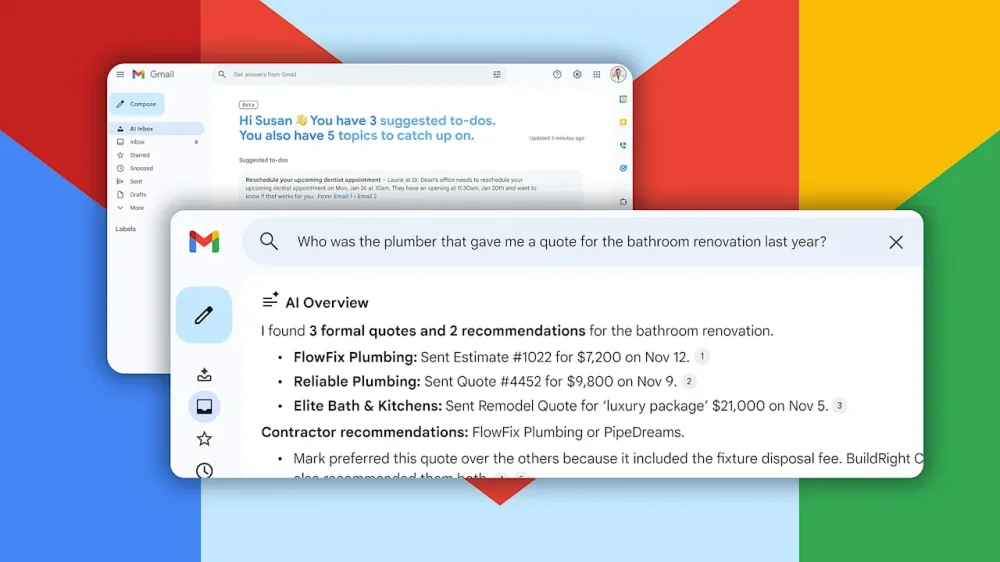
-
Gaming peripheral company Razer is betting that people want AI holograms. So much so that it introduce a perplexing new product at CES 2026 that early critics have dubbed a “friend in a bottle.” Project AVA, is a small glass cylinder that features a 5.5-inch animated desk buddy that can interact with you, coach you, or offer gaming advice on demand—all powered by xAI’s Grok. Project AVA uses a technology Razer calls “PC Vision Mode” that watches your screen, allowing its 3D animated inhabitant to offer real-time commentary on your gameplay, track your mood, or simply hang out. It attempts to sell the illusion of presence—a companion that isn’t just an app you close, but a physical object that lives in your room. It’s not a bad idea, in theory. Giving AI a face is not just a marketing ploy but a biological inevitability. Yet Project AVA marks a strange new milestone in our march toward AI companions. The inevitability of holographic AI When OpenAI’s introduced ChatGPT 4o voice chats in the summer of 2024, humanity entered a new form of computer interaction. Suddenly, we could interact with AI voices that were smart and natural enough for humans to maintain a conversation. Since then, we have seen other voice AIs like Gemini Live, which introduce pauses, breathing, and other elements that cross the uncanny valley and allow many to suspend disbelief and even form a bond with these assistants. Research has shown that for deep emotional venting, users currently prefer voice-only interfaces because they feel safer and less judgmental. Without a face to scrutinize, we avoid the social anxiety of being watched. However, some neuroscientists argue that this preference may just be a temporary work-around for bad technology. Our brains are evolutionarily hardwired for face-to-face interaction. The “Mirror Neuron System” in our brains—which allows us to feel empathy by watching others—remains largely dormant during voice-only chats. A 2024 study on “Generation WhatsApp” confirmed that neural synchrony between two brains is significantly weaker during audio-only exchanges compared to face-to-face ones. To feel truly “heard,” we need to see the listener. Behavioral science also tells us that up to 93% of communication is nonverbal. Trust is encoded in micro-expressions: a pupil dilating, a rapid blink, an open posture. A voice assistant transmits 0% of these signals, forcing users to operate on blind faith. Humans still find them very engaging because our brain fills the gaps, imagining faces like when we read a book. Furthermore, according to a 2025 brain scan study, familiar AI voices activate emotional regulation areas, suggesting neural familiarity builds with repeated interaction. The human connection deepens the younger you go (Razer’s demographic). While older generations largely use AI for productivity, Gen Z frequently reports using advanced voice modes for emotional regulation and companionship. One report noted that 72% of teenagers have engaged with AI companions, with a significant subset treating them as confidants. This comes with a dark side too: Since the prefrontal cortex responsible for impulse control and reality testing is not fully mature in teens, the empathy simulated by current voice AIs can feel dangerously real, leading to isolation from human peers or emotional manipulation by the model. But, while voice AIs are powerful user experience, they will never match direct facial interaction. Studies suggest that once the “uncanny valley” is solved—that eerie feeling of revulsion we get when someone looks almost, but not quite, human—our brains will naturally gravitate toward them. At that point, holographic personas could become a common user experience in businesses and in intimate relationships. Project Ava is not it We are far from that point, though. We will need hyper-realistic AI faces that are algorithmically optimized to look exactly like humans, with every muscle, tick, and imperfection. To avoid the uncanny valley in Project AVA Razer has opted for stylized avatars. There is “Kira,” an anime-style character, “Zane,” a strategic gaming coach, and even a licensed avatar of esports legend “Faker.” The goal is to lean into the parasocial dynamics already common in gaming culture, where digital characters often feel more like friends than software. Early hands-on experiences suggest the illusion is fragile. Reviews describe the interaction as “wonky,” with the hologram frequently going on irrelevant tangents. Critics have been quick to label it a “friend in a jar,” questioning whether it fulfills a genuine social need or simply exploits loneliness with a visual gimmick. It’s also, and this is important, not a real hologram. These are just 3D animated characters projected in a flat transparent film. Move to the side and your friend will be reduced to 2D invisibility. The ethical concerns deepen when you look under the hood. While Razer claims the hardware is model-agnostic, the current iteration is powered by xAI’s Grok—Elon Musk’s ethically challenged AI model. This instantly tethers the device to the darker side of AI development. Just this week, Grok has been embroiled in a global scandal involving its new “edit” feature, which users have exploited to generate non-consensual sexual imagery at a rate of one image per minute. While Project AVA’s avatars are stylized and locked by Razer, the association with an engine currently under investigation by EU and U.K. regulators for facilitating “mass digital undressing” casts a long shadow over the product. There is no guarantee that users won’t find ways to jailbreak AVA to behave in similarly controversial ways, turning a gaming coach into something far more unsavory. Still, it’s a first step. The market is already betting on this shift. The holographic AI assistant sector is projected to grow from roughly $600 million in 2024 to nearly $4 billion by 2031. We are already seeing successful applications in healthcare, where users rate AI avatars dressed as doctors as more competent than voice-only agents, as well as in customer service kiosks where a digital face helps maintain user attention. AVA is hinting at this future, but it hasn’t solved the fundamental problems yet. To become natural, a holographic AI must be more than a gimmick in a glass. It must be a lot smarter than Grok, and it will need to possess the subtle social cues that signal safety to our nervous system. Until then, AVA will be just a crude toy. I’m not dismissing it, though. Given our biological imperative, it’s only logical to think that humans will gravitate to holographic manifestations of AI in future UX experiences. But while the holographic AIs are inevitable, Ava doesn’t seem to be it. With luck, it will be remembered as a proto-form of what’s to come. Something truly advanced that, hopefully, will not be powered by the descendants of a techno-fascist AI. View the full article

-
Russia’s foreign ministry accuses Washington of lowering the ‘threshold for use of force’View the full article
-
Health tech gadgets displayed at the annual CES trade show make a lot of promises. A smart scale promoted a healthier lifestyle by scanning your feet to track your heart health, and an egg-shaped hormone tracker uses AI to help you figure out the best time to conceive. Tech and health experts, however, question the accuracy of products like these and warn of data privacy issues — especially as the federal government eases up on regulation. The Food and Drug Administration announced during the show in Las Vegas that it will relax regulations on “low-risk” general wellness products such as heart monitors and wheelchairs. It’s the latest step President Donald The President’s administration has taken to remove barriers for AI innovation and use. The White House repealed former President Joe Biden’s executive order establishing guardrails around AI, and last month, the Department of Health and Human Services outlined its strategy to expand its use of AI. Booths at the conference showcased new tech designed to help people living in rural areas with their health care needs amid doctor shortages, boost research into women’s health and make life easier for people with disabilities. AI technologies have benefits in the over $4.3 trillion health care industry, according to Marschall Runge, professor of medical science at the University of Michigan. They’re good at analyzing medical imaging and can help streamline doctors’ busy schedules, but they can also promote biases and “hallucinate,” providing incorrect information stated as fact. “I would urge people not to think that the technology is the same as a well-resourced, thoughtful, research-driven medical professional,” said Cindy Cohn, executive director of the digital rights group Electronic Frontier Foundation. Privacy protections like the Health Insurance Portability and Accountability Act do not cover information collected by consumer devices, and the companies could be using the data to train their AI mode ls, or selling it to other businesses, Cohn said. With a lot of the gadgets at CES, it’s difficult to find out where your information is going, Cohn said. “You have to dig down through the fine print to try to figure that out, and I just don’t think that’s fair or right for the people who might rely on it,” she said. But the creators of the products say their innovations fill in health care gaps, and they maintain they protect their customers’ privacy. Sylvia Kang, founder and CEO of Mira, said she created the egg-shaped hormone tracker because many of her friends were trying to conceive and realized they had no knowledge of their hormonal health. To use the “world’s mini hormone lab,” you dip a wand in urine, insert the wand into the monitor and look at the results on the app. Kang said her company uses AI to analyze female hormone data and has one of the world’s biggest hormonal health banks. The data is stored on the cloud and is not shared with anyone, Kang said. “There was no such thing before,” Kang said of her $250 product. Many gadgets at CES focused on women’s health, which has been historically under-researched and underfunded. Before 1993, women were excluded from clinical trials, and there still is little research on areas like menopause. While not every woman will have a baby, all women go through menopause, and “yet we know nothing about it,” said Amy Divaraniya, founder and CEO of the women’s health company Oova, during a session. One gadget called Peri aims to better understand perimenopause — the transitional phase before menopause. The wearable device monitors hot flashes and night sweats and provides the data via an app. Improving accessibility to health care Other products at CES were promoted as a way to increase accessibility to health information. The free medicine-focused AI chatbot called 0xmd helps improve access to medical information in areas with doctor shortages and provides a cost-effective alternative, said its founder and architect Allen Au. People can ask the chatbot questions about medicine, upload photos of a mole or rash, and submit their doctors’ notes for an easier-to-understand translation, Au said. “At the end of the day, I don’t think we will replace doctors,” but it can give people a second opinion, Au said. OpenAI announced on Wednesday its launch of ChatGPT Health, a similar platform. Cohn remains skeptical of consumer tech. She said they can help prepare people to ask the right questions of their medical professional, but they’re not going to be a substitute for a doctor. “People need to remember that these are just tools; they’re not oracles who are delivering truths,” she said. —Jessica Hill, Associated Press View the full article

-
We live in a world of ambient hums, from air conditioners and distant traffic to the whir of our own thoughts. It’s no surprise many people reach for active noise-cancelling (ANC) headphones to escape it all. Originally designed for planes and offices, ANC devices, including earbuds, have become a popular bedtime tool for chasing total quiet. But the brain doesn’t actually want silence to sleep, and forcing it can backfire. The best way to fall and stay asleep is to quiet the mind, not just what enters your ears. We call this creating “cognitive silence,” and ANC often gets in the way. Even during sleep, the brain keeps an ear out for danger. It’s an evolutionary survival mechanism in which the auditory system monitors the environment for changes: a creak, a bark, or a door slam. When the surrounding world grows too quiet, that alert system can become hypersensitive, scanning for the next disturbance. Research has shown that sudden noises are more likely to fragment sleep. Fragmented sleep affects everything from mood and metabolism to cognitive performance. Even minor disruptions can increase stress hormones and reduce the deep sleep stages responsible for recovery and memory consolidation. For sleep, the goal isn’t to eliminate sound entirely, but to give the brain a safe, steady acoustic background so it can rest rather than react. WHERE ANC FALLS SHORT ANC uses tiny microphones to detect external sound and then produces an equal-and-opposite “anti-noise” signal to cancel it out. It works well for consistent, low-frequency noise like airplane engines, HVAC systems, or the hum of a refrigerator. That’s also where its effectiveness tends to end. Dan Gauger, retired distinguished engineer at Bose, the cocreator of their ANC division, and someone I worked closely with says, “At frequencies above where ANC can cancel, it actually amplifies the noise a bit.” When it comes to sleep, our needs and our sound environment are far more complex. And that’s where ANC can start to work against us. Here’s why ANC in sleep technology can be unhealthy: It amplifies what you’re trying to avoid: Real-world sound isn’t always consistent. A door slam, a barking dog, or footsteps overhead are irregular, high-frequency noises that ANC can’t cancel effectively, and these sharper sounds often stand out even more. It disrupts the body’s natural equilibrium: ANC can introduce a subtle but uncomfortable pressure change in the ear. Many users describe it as a “plugged” or “vacuum” feeling, especially in quieter settings. That pressure, combined with the unnatural stillness of total quiet, can be distracting enough to delay or fragment sleep. Gauger adds, “ANC can’t create a steady pressure in the ear, but it mimics the low-frequency drop your ears notice during, say, altitude changes. From experience, some people interpret this sonic change as uncomfortable pressure.” It doesn’t address the mental noise: Maybe most importantly, racing thoughts and anticipatory anxiety aren’t fixed by cancellation. The internal soundtrack remains, making sleep even harder to get. WHY PASSIVE NOISE BLOCKING IS A STRONGER OPTION Passive noise blocking takes a simpler, more natural approach. Instead of electronically canceling sound, it physically reduces it using materials that seal off the ear and absorb or deflect noise before it reaches the eardrum. A well-fitted silicone seal can reduce outside noise by 15-30 decibels, dulling most environmental disruptions without the ear pressure or artificial quiet that ANC can create. Because the ear isn’t fighting internal pressure or electronic hiss, the result feels calmer, more organic, and less fatiguing. Pairing that physical protection with gentle, consistent noise masking sound, such as white or pink noise, or relaxing audio from a sleep app, gives the brain a steady, predictable auditory background. White noise contains all audio frequencies at equal intensity, similar to pink noise. Pink noise, however, sounds deeper and less harsh. Studies suggest pink noise may help people fall asleep faster and even enhance deep sleep. This combination of physical protection and consistent soothing audio helps the auditory system “stand down,” signaling that nothing unexpected is coming and it’s safe to rest. The benefits extend far beyond your nightly sleep. By improving rest quality, these techniques can directly boost daytime cognitive performance and productivity, areas where sleep deprivation takes a staggering toll. Currently, up to one-quarter of adults struggle with inadequate sleep, resulting in an economic impact of over $411 billion and the loss of 1.23 million working days annually in the U.S. alone. Sleep is the foundation for how we think, perform, and connect. When we chase total silence during sleep with ANC, we risk disrupting the very systems that help the brain recharge. True recovery happens when the mind feels safe, not sealed off. Passive noise blocking and gentle, consistent noise-masking audio support the brain’s natural rhythms, creating an environment where both body and mind can truly rest. The payoff is deeper sleep, steadier moods, sharper focus, and better performance. N.B. Patil is CEO and CTO of Ozlo. View the full article

-
Interim leader Delcy Rodríguez is in close contact with US secretary of state Marco RubioView the full article
-
When you think about franchising, it’s crucial to understand the relationship between franchisors and franchisees. A franchise allows you to operate a business under a well-known brand, utilizing established processes and systems. This guide will break down the core elements of franchising, including agreements, benefits, and challenges. By grasping these concepts, you’ll be better equipped to assess whether franchising is the right path for your business ambitions. What comes next might surprise you. Key Takeaways A franchise is a business model where franchisees operate under an established brand and proven processes of a franchisor. Franchise agreements detail rights, responsibilities, and financial obligations, including upfront fees and ongoing royalties. Advantages of franchising include brand recognition, operational support, and faster market expansion without significant capital investment. Disadvantages encompass high startup costs, ongoing royalties, and limited operational control due to adherence to franchisor systems. Legal compliance and proper documentation, like the Franchise Disclosure Document (FDD), are crucial for franchise success and protection. What Is a Franchise? A franchise is fundamentally a business model that allows individuals, known as franchisees, to operate a business under the established brand and proven processes of a franchisor. Essentially, the franchise definition is about granting rights for the use of a brand in exchange for an upfront fee and ongoing royalties. This setup improves your chances of success, as you benefit from established brand recognition, operational support, and training from the franchisor. The franchise meaning extends to agreements that can vary widely, typically involving fees and royalties ranging from 4% to 12% of sales. It’s important to acknowledge that misclassifying a franchise as a licensing agreement can lead to significant legal issues. Historical Overview of Franchising Franchising began to take shape in the mid-19th century, evolving into a structured business model as companies looked for ways to expand their reach and scale operations. The franchise model found its roots in the U.S. with early adopters like A&W Root Beer in 1925 and Howard Johnson in 1935. The industry gained momentum during the suburban expansion of the 1950s and 1960s, allowing brands to spread quickly through local franchisees. By 2024, there are an estimated 830,876 franchise establishments in the U.S., contributing nearly $900 billion to the economy. Notable franchises such as McDonald’s, Taco Bell, and Hampton by Hilton have shaped the modern environment, showcasing the effectiveness of the franchise in driving business growth. Key Components of Franchising When you’re considering a franchise, grasping the key components is vital. The franchise agreement lays out the rights and responsibilities between you and the franchisor, whereas additionally detailing the financial obligations, such as initial fees and ongoing royalties. Familiarizing yourself with these elements can help you make informed decisions and set realistic expectations for your franchise expedition. Franchise Agreement Essentials Grasping the fundamentals of a franchise agreement is essential for anyone considering entering into this business model. This legal contract outlines the rights and responsibilities of both the franchisor and franchisee, detailing terms related to fees, royalties, and operational standards. Typically lasting between 5 to 30 years, agreements may include renewal clauses to extend the relationship under specified conditions. You’ll usually pay an upfront franchise fee and ongoing royalties, which range from 4.6% to 12.5% of your gross sales. Furthermore, the agreement includes provisions for training and support from the franchisor, ensuring brand consistency. Remember, violating the franchise agreement can lead to penalties, including termination, emphasizing the need for strict compliance with all outlined terms. Financial Obligations Overview Comprehending the financial obligations of a franchise is essential for anyone looking to invest in this business model. Initially, you’ll face upfront franchise fees, ranging from $35,000 to $45,000, depending on the brand. Ongoing royalty payments are another key component, typically between 4% to 12% of your total revenue, creating a continuous income stream for the franchisor. Furthermore, you’ll need to budget for training and equipment costs, which are often included in the franchise agreement. Operational expenses, such as rent, employee salaries, and inventory, can vary considerably based on your location and industry. Legal compliance costs, particularly for preparing the Franchise Disclosure Document (FDD), may range from $18,000 to $45,000, highlighting the importance of thorough financial planning. Advantages of Franchising Franchising offers several advantages that can greatly benefit aspiring business owners. First, you gain access to a ready-made business model, allowing you to leverage an established brand and proven operational systems, which increases your chances of success compared to starting independently. You furthermore benefit from collective purchasing influence, leading to better supply chain efficiencies and economies of scale as the franchise network grows. In addition, franchisors enable faster market expansion without significant capital investment, as franchisees fund their own locations. Ongoing support and training from franchisors help you navigate challenges and maintain brand standards, enhancing your success rate. Overall, franchise businesses contribute around $900 billion to the U.S. economy, showcasing the financial impact and growth potential of this model. Disadvantages of Franchising Though the advantages of franchising can be appealing, it’s important to contemplate the disadvantages that come with this business model. High startup costs can be a significant barrier, especially for well-known franchises like McDonald’s, which require an initial investment of $1.3 million to $2.3 million. In addition, you’ll need to pay ongoing royalty fees, typically between 4.6% and 12.5% of sales, which can diminish your profits. You also have limited control over operations, as you’re required to follow the franchisor’s established systems. Moreover, relying on potentially inaccurate information from the franchisor can affect your franchise’s performance. Finally, maneuvering complex legal compliance requirements adds another layer of challenge. Disadvantage Description High Startup Costs Significant initial investment required Ongoing Royalty Fees Fees that impact overall profitability Limited Control Must adhere to franchisor’s systems and guidelines Legal Compliance Complexity Maneuvering federal and state regulations Steps to Franchise Your Business When you’re ready to franchise your business, the first step is to assess its overall readiness. Here’s what you need to do: Verify you have a proven business model with consistent profitability. Calculate the costs for franchise development, ranging from $15,000 to $100,000. Protect your intellectual property by registering trademarks and preparing a Franchise Disclosure Document (FDD), which can take 30-60 days. Develop a thorough operations manual that details procedures, training, marketing strategies, and quality standards, typically spanning 100-300 pages. After these steps, focus on establishing a franchise sales strategy that includes local outreach to attract your first franchisees, as their success is vital for building your brand’s reputation. Assessing Franchise Readiness When you’re evaluating your franchise readiness, it’s essential to assess your business model’s profitability and scalability. Comprehending market demand is equally important, as it helps guarantee there’s a viable customer base for your franchise. Business Evaluation Criteria Evaluating franchise readiness involves several critical business evaluation criteria that can determine the success of a franchise system. You need to assess these factors to guarantee potential franchisees are investing in a viable opportunity: A proven business model with consistent profitability A distinctive value proposition that sets the business apart Scalability of operations across multiple locations Established brand recognition to facilitate customer acquisition Market Demand Assessment Comprehending market demand is an important step in evaluating franchise readiness, as it helps you identify whether a franchise can meet local consumer needs effectively. Start by researching community demographics to understand customer preferences and identify any gaps in the market. It’s essential to evaluate local competition, since entering a saturated market may limit your franchise’s profitability. A proven business model with consistent success is critical, indicating the potential for growth across locations. Typically, evaluating franchise readiness takes three to six months, allowing for thorough market analysis and strategic planning. Make sure your financial projections align with local market trends, reflecting the franchise’s capacity for growth and sustainability based on consumer spending patterns. Developing a Franchise Disclosure Document (FDD) Creating a Franchise Disclosure Document (FDD) is a vital step for franchisors looking to establish transparency and trust with potential franchisees. This legally required document contains 23 fundamental items that cover various aspects of the franchise system, including: Fees and obligations The franchise agreement Compliance with federal and state laws Multi-state registration requirements You must provide the FDD to potential franchisees at least 14 days before they sign any agreements or make payments, allowing adequate review time. Moreover, annual updates are necessary to reflect any changes in the franchise system or legal requirements. To avoid penalties and guarantee compliance, seeking legal assistance during the FDD preparation is imperative for success. Protecting Your Intellectual Property Intellectual property protection is critical for any franchise business, as it safeguards the unique elements that distinguish your brand in the marketplace. Registering trademarks with the United States Patent and Trademark Office (USPTO) grants you legal protection and exclusive rights to your brand name and logo, fundamental for maintaining brand integrity. Furthermore, creating non-disclosure agreements (NDAs) with potential franchisees helps prevent the unauthorized sharing of sensitive information and proprietary systems, securing your competitive edge. Documenting all business processes and operational standards is indispensable for developing a thorough operations manual, which reinforces your intellectual property rights. Finally, ensuring compliance with state and federal trademark laws, including monitoring for infringement, is important to maintain the strength and value of your intellectual property. Creating Effective Franchise Systems When creating effective franchise systems, you need to focus on several key components, including franchise structure design and an operational standards manual. This manual should outline procedures, training, and other crucial elements to guarantee consistency across all locations. Furthermore, implementing robust support and training systems will help franchisees maintain high operational standards during adherence to your brand’s guidelines. Franchise Structure Design Designing an effective franchise structure involves a careful balance of detailed planning and clear communication. A strong framework guarantees that both you and your franchisees understand expectations and responsibilities. Here are key components to reflect on: A thorough operations manual outlining procedures, training, and marketing, typically 100 to 300 pages long. Protection of intellectual property through trademark registration and non-disclosure agreements to safeguard your brand. A well-prepared Franchise Disclosure Document (FDD) detailing company history, fees, and obligations, which takes 30 to 60 days to compile. Establishing ongoing support systems for franchisees, including training and open communication to uphold brand standards and promote success. These elements contribute to a robust and sustainable franchise structure that benefits everyone involved. Operational Standards Manual Creating an Operational Standards Manual is essential for establishing effective franchise systems, as it serves as an important resource that outlines the procedures and expectations for franchisees. This thorough document typically ranges from 100 to 300 pages, detailing operational guidelines on customer service, product standards, marketing strategies, and employee training protocols. By developing this manual, you maintain brand integrity and equip franchisees with the necessary tools to succeed. It acts as a reference for daily operations and compliance with your expectations. Including sections on quality control, supplier relationships, and crisis management helps franchisees navigate challenges effectively. Regular updates to the manual guarantee it reflects best practices, market changes, and regulatory requirements, providing franchisees with up-to-date information for efficient operations. Support and Training Systems Support and training systems play a pivotal role in the success of franchise operations, ensuring that franchisees have the resources they need to thrive. A thorough operations manual, usually 100 to 300 pages long, details vital procedures and standards. Ongoing training programs help maintain brand consistency and operational efficiency. Key components of effective support and training systems include: Centralized resources: Operational manuals and training materials guide franchisees through daily challenges. Supplier relationships: Access to quality products improves operational integrity. Regular check-ins: Ongoing communication channels address concerns and share best practices. Performance support: Continuous training encourages franchisee development and customer satisfaction. These elements collectively strengthen the franchise network and contribute to overall success. Building a Franchise Sales Strategy When you’re building a franchise sales strategy, it’s vital to start by identifying the ideal characteristics of prospective franchisees, as this will help you target individuals who align with your brand’s values and operational needs. Next, establish clear sales goals for the next 6 to 12 months to guide your efforts. Utilize a mix of franchise brokers, online portals, and referrals from existing franchisees to improve your outreach. Initially, focus on local markets, as having your first 2-3 franchisees nearby allows for easier support and system refinement. Providing strong operational support and training to these early franchisees is fundamental, as their success can attract more prospects. Frequently Asked Questions What Are the 4 P’s of Franchising? The 4 P’s of franchising are Product, Price, Place, and Promotion. You need to guarantee your product meets customer expectations and aligns with brand standards. Set competitive prices for franchise fees and royalties to maintain profitability. Consider location carefully, focusing on market demand and visibility. Finally, develop effective promotion strategies to attract both franchisees and customers, leveraging your brand’s recognition to improve market presence and drive sales. What Is a Simple Definition of Franchise? A franchise is a business model where you, as a franchisee, pay a franchisor for the right to operate under their brand and use their established systems. This typically involves an upfront fee and ongoing royalties. In return, you gain access to brand recognition, training, and support, allowing for quicker market entry. Franchising helps expand businesses without the franchisor investing in each location, leveraging your investment for growth. What Is the 7 Day Rule for Franchise? The 7 Day Rule for franchises requires franchisors to provide the Franchise Disclosure Document (FDD) to potential franchisees at least 14 days before any agreement signing or payment. This rule guarantees you have sufficient time to review the franchise’s terms, obligations, and financial details. Established by the Federal Trade Commission (FTC), it promotes transparency and compliance, protecting you from rushed decisions. Non-compliance can result in severe penalties for franchisors, including lawsuits. How to Understand a Franchise? To understand a franchise, you should familiarize yourself with its basic components. A franchise involves a franchisee paying a franchisor for the rights to use their brand and business model. You’ll find two primary types: business format franchises, which offer a complete operational system, and product distribution franchises, which focus on selling specific products. Make sure to review the Franchise Disclosure Document (FDD) carefully, as it outlines crucial details before you commit. Conclusion In conclusion, comprehending the meaning of franchising involves recognizing the relationship between franchisors and franchisees, along with the benefits and challenges of operating under a brand. By grasping key components like franchise agreements, financial obligations, and operational responsibilities, you can make informed decisions. It’s essential to weigh the advantages of brand support against potential downsides, such as high startup costs. This knowledge equips you to navigate the franchising environment effectively and pursue your business ambitions. Image via Google Gemini This article, "Understanding Franchise Meaning – A Step-by-Step Guide" was first published on Small Business Trends View the full article
-
When you think about franchising, it’s crucial to understand the relationship between franchisors and franchisees. A franchise allows you to operate a business under a well-known brand, utilizing established processes and systems. This guide will break down the core elements of franchising, including agreements, benefits, and challenges. By grasping these concepts, you’ll be better equipped to assess whether franchising is the right path for your business ambitions. What comes next might surprise you. Key Takeaways A franchise is a business model where franchisees operate under an established brand and proven processes of a franchisor. Franchise agreements detail rights, responsibilities, and financial obligations, including upfront fees and ongoing royalties. Advantages of franchising include brand recognition, operational support, and faster market expansion without significant capital investment. Disadvantages encompass high startup costs, ongoing royalties, and limited operational control due to adherence to franchisor systems. Legal compliance and proper documentation, like the Franchise Disclosure Document (FDD), are crucial for franchise success and protection. What Is a Franchise? A franchise is fundamentally a business model that allows individuals, known as franchisees, to operate a business under the established brand and proven processes of a franchisor. Essentially, the franchise definition is about granting rights for the use of a brand in exchange for an upfront fee and ongoing royalties. This setup improves your chances of success, as you benefit from established brand recognition, operational support, and training from the franchisor. The franchise meaning extends to agreements that can vary widely, typically involving fees and royalties ranging from 4% to 12% of sales. It’s important to acknowledge that misclassifying a franchise as a licensing agreement can lead to significant legal issues. Historical Overview of Franchising Franchising began to take shape in the mid-19th century, evolving into a structured business model as companies looked for ways to expand their reach and scale operations. The franchise model found its roots in the U.S. with early adopters like A&W Root Beer in 1925 and Howard Johnson in 1935. The industry gained momentum during the suburban expansion of the 1950s and 1960s, allowing brands to spread quickly through local franchisees. By 2024, there are an estimated 830,876 franchise establishments in the U.S., contributing nearly $900 billion to the economy. Notable franchises such as McDonald’s, Taco Bell, and Hampton by Hilton have shaped the modern environment, showcasing the effectiveness of the franchise in driving business growth. Key Components of Franchising When you’re considering a franchise, grasping the key components is vital. The franchise agreement lays out the rights and responsibilities between you and the franchisor, whereas additionally detailing the financial obligations, such as initial fees and ongoing royalties. Familiarizing yourself with these elements can help you make informed decisions and set realistic expectations for your franchise expedition. Franchise Agreement Essentials Grasping the fundamentals of a franchise agreement is essential for anyone considering entering into this business model. This legal contract outlines the rights and responsibilities of both the franchisor and franchisee, detailing terms related to fees, royalties, and operational standards. Typically lasting between 5 to 30 years, agreements may include renewal clauses to extend the relationship under specified conditions. You’ll usually pay an upfront franchise fee and ongoing royalties, which range from 4.6% to 12.5% of your gross sales. Furthermore, the agreement includes provisions for training and support from the franchisor, ensuring brand consistency. Remember, violating the franchise agreement can lead to penalties, including termination, emphasizing the need for strict compliance with all outlined terms. Financial Obligations Overview Comprehending the financial obligations of a franchise is essential for anyone looking to invest in this business model. Initially, you’ll face upfront franchise fees, ranging from $35,000 to $45,000, depending on the brand. Ongoing royalty payments are another key component, typically between 4% to 12% of your total revenue, creating a continuous income stream for the franchisor. Furthermore, you’ll need to budget for training and equipment costs, which are often included in the franchise agreement. Operational expenses, such as rent, employee salaries, and inventory, can vary considerably based on your location and industry. Legal compliance costs, particularly for preparing the Franchise Disclosure Document (FDD), may range from $18,000 to $45,000, highlighting the importance of thorough financial planning. Advantages of Franchising Franchising offers several advantages that can greatly benefit aspiring business owners. First, you gain access to a ready-made business model, allowing you to leverage an established brand and proven operational systems, which increases your chances of success compared to starting independently. You furthermore benefit from collective purchasing influence, leading to better supply chain efficiencies and economies of scale as the franchise network grows. In addition, franchisors enable faster market expansion without significant capital investment, as franchisees fund their own locations. Ongoing support and training from franchisors help you navigate challenges and maintain brand standards, enhancing your success rate. Overall, franchise businesses contribute around $900 billion to the U.S. economy, showcasing the financial impact and growth potential of this model. Disadvantages of Franchising Though the advantages of franchising can be appealing, it’s important to contemplate the disadvantages that come with this business model. High startup costs can be a significant barrier, especially for well-known franchises like McDonald’s, which require an initial investment of $1.3 million to $2.3 million. In addition, you’ll need to pay ongoing royalty fees, typically between 4.6% and 12.5% of sales, which can diminish your profits. You also have limited control over operations, as you’re required to follow the franchisor’s established systems. Moreover, relying on potentially inaccurate information from the franchisor can affect your franchise’s performance. Finally, maneuvering complex legal compliance requirements adds another layer of challenge. Disadvantage Description High Startup Costs Significant initial investment required Ongoing Royalty Fees Fees that impact overall profitability Limited Control Must adhere to franchisor’s systems and guidelines Legal Compliance Complexity Maneuvering federal and state regulations Steps to Franchise Your Business When you’re ready to franchise your business, the first step is to assess its overall readiness. Here’s what you need to do: Verify you have a proven business model with consistent profitability. Calculate the costs for franchise development, ranging from $15,000 to $100,000. Protect your intellectual property by registering trademarks and preparing a Franchise Disclosure Document (FDD), which can take 30-60 days. Develop a thorough operations manual that details procedures, training, marketing strategies, and quality standards, typically spanning 100-300 pages. After these steps, focus on establishing a franchise sales strategy that includes local outreach to attract your first franchisees, as their success is vital for building your brand’s reputation. Assessing Franchise Readiness When you’re evaluating your franchise readiness, it’s essential to assess your business model’s profitability and scalability. Comprehending market demand is equally important, as it helps guarantee there’s a viable customer base for your franchise. Business Evaluation Criteria Evaluating franchise readiness involves several critical business evaluation criteria that can determine the success of a franchise system. You need to assess these factors to guarantee potential franchisees are investing in a viable opportunity: A proven business model with consistent profitability A distinctive value proposition that sets the business apart Scalability of operations across multiple locations Established brand recognition to facilitate customer acquisition Market Demand Assessment Comprehending market demand is an important step in evaluating franchise readiness, as it helps you identify whether a franchise can meet local consumer needs effectively. Start by researching community demographics to understand customer preferences and identify any gaps in the market. It’s essential to evaluate local competition, since entering a saturated market may limit your franchise’s profitability. A proven business model with consistent success is critical, indicating the potential for growth across locations. Typically, evaluating franchise readiness takes three to six months, allowing for thorough market analysis and strategic planning. Make sure your financial projections align with local market trends, reflecting the franchise’s capacity for growth and sustainability based on consumer spending patterns. Developing a Franchise Disclosure Document (FDD) Creating a Franchise Disclosure Document (FDD) is a vital step for franchisors looking to establish transparency and trust with potential franchisees. This legally required document contains 23 fundamental items that cover various aspects of the franchise system, including: Fees and obligations The franchise agreement Compliance with federal and state laws Multi-state registration requirements You must provide the FDD to potential franchisees at least 14 days before they sign any agreements or make payments, allowing adequate review time. Moreover, annual updates are necessary to reflect any changes in the franchise system or legal requirements. To avoid penalties and guarantee compliance, seeking legal assistance during the FDD preparation is imperative for success. Protecting Your Intellectual Property Intellectual property protection is critical for any franchise business, as it safeguards the unique elements that distinguish your brand in the marketplace. Registering trademarks with the United States Patent and Trademark Office (USPTO) grants you legal protection and exclusive rights to your brand name and logo, fundamental for maintaining brand integrity. Furthermore, creating non-disclosure agreements (NDAs) with potential franchisees helps prevent the unauthorized sharing of sensitive information and proprietary systems, securing your competitive edge. Documenting all business processes and operational standards is indispensable for developing a thorough operations manual, which reinforces your intellectual property rights. Finally, ensuring compliance with state and federal trademark laws, including monitoring for infringement, is important to maintain the strength and value of your intellectual property. Creating Effective Franchise Systems When creating effective franchise systems, you need to focus on several key components, including franchise structure design and an operational standards manual. This manual should outline procedures, training, and other crucial elements to guarantee consistency across all locations. Furthermore, implementing robust support and training systems will help franchisees maintain high operational standards during adherence to your brand’s guidelines. Franchise Structure Design Designing an effective franchise structure involves a careful balance of detailed planning and clear communication. A strong framework guarantees that both you and your franchisees understand expectations and responsibilities. Here are key components to reflect on: A thorough operations manual outlining procedures, training, and marketing, typically 100 to 300 pages long. Protection of intellectual property through trademark registration and non-disclosure agreements to safeguard your brand. A well-prepared Franchise Disclosure Document (FDD) detailing company history, fees, and obligations, which takes 30 to 60 days to compile. Establishing ongoing support systems for franchisees, including training and open communication to uphold brand standards and promote success. These elements contribute to a robust and sustainable franchise structure that benefits everyone involved. Operational Standards Manual Creating an Operational Standards Manual is essential for establishing effective franchise systems, as it serves as an important resource that outlines the procedures and expectations for franchisees. This thorough document typically ranges from 100 to 300 pages, detailing operational guidelines on customer service, product standards, marketing strategies, and employee training protocols. By developing this manual, you maintain brand integrity and equip franchisees with the necessary tools to succeed. It acts as a reference for daily operations and compliance with your expectations. Including sections on quality control, supplier relationships, and crisis management helps franchisees navigate challenges effectively. Regular updates to the manual guarantee it reflects best practices, market changes, and regulatory requirements, providing franchisees with up-to-date information for efficient operations. Support and Training Systems Support and training systems play a pivotal role in the success of franchise operations, ensuring that franchisees have the resources they need to thrive. A thorough operations manual, usually 100 to 300 pages long, details vital procedures and standards. Ongoing training programs help maintain brand consistency and operational efficiency. Key components of effective support and training systems include: Centralized resources: Operational manuals and training materials guide franchisees through daily challenges. Supplier relationships: Access to quality products improves operational integrity. Regular check-ins: Ongoing communication channels address concerns and share best practices. Performance support: Continuous training encourages franchisee development and customer satisfaction. These elements collectively strengthen the franchise network and contribute to overall success. Building a Franchise Sales Strategy When you’re building a franchise sales strategy, it’s vital to start by identifying the ideal characteristics of prospective franchisees, as this will help you target individuals who align with your brand’s values and operational needs. Next, establish clear sales goals for the next 6 to 12 months to guide your efforts. Utilize a mix of franchise brokers, online portals, and referrals from existing franchisees to improve your outreach. Initially, focus on local markets, as having your first 2-3 franchisees nearby allows for easier support and system refinement. Providing strong operational support and training to these early franchisees is fundamental, as their success can attract more prospects. Frequently Asked Questions What Are the 4 P’s of Franchising? The 4 P’s of franchising are Product, Price, Place, and Promotion. You need to guarantee your product meets customer expectations and aligns with brand standards. Set competitive prices for franchise fees and royalties to maintain profitability. Consider location carefully, focusing on market demand and visibility. Finally, develop effective promotion strategies to attract both franchisees and customers, leveraging your brand’s recognition to improve market presence and drive sales. What Is a Simple Definition of Franchise? A franchise is a business model where you, as a franchisee, pay a franchisor for the right to operate under their brand and use their established systems. This typically involves an upfront fee and ongoing royalties. In return, you gain access to brand recognition, training, and support, allowing for quicker market entry. Franchising helps expand businesses without the franchisor investing in each location, leveraging your investment for growth. What Is the 7 Day Rule for Franchise? The 7 Day Rule for franchises requires franchisors to provide the Franchise Disclosure Document (FDD) to potential franchisees at least 14 days before any agreement signing or payment. This rule guarantees you have sufficient time to review the franchise’s terms, obligations, and financial details. Established by the Federal Trade Commission (FTC), it promotes transparency and compliance, protecting you from rushed decisions. Non-compliance can result in severe penalties for franchisors, including lawsuits. How to Understand a Franchise? To understand a franchise, you should familiarize yourself with its basic components. A franchise involves a franchisee paying a franchisor for the rights to use their brand and business model. You’ll find two primary types: business format franchises, which offer a complete operational system, and product distribution franchises, which focus on selling specific products. Make sure to review the Franchise Disclosure Document (FDD) carefully, as it outlines crucial details before you commit. Conclusion In conclusion, comprehending the meaning of franchising involves recognizing the relationship between franchisors and franchisees, along with the benefits and challenges of operating under a brand. By grasping key components like franchise agreements, financial obligations, and operational responsibilities, you can make informed decisions. It’s essential to weigh the advantages of brand support against potential downsides, such as high startup costs. This knowledge equips you to navigate the franchising environment effectively and pursue your business ambitions. Image via Google Gemini This article, "Understanding Franchise Meaning – A Step-by-Step Guide" was first published on Small Business Trends View the full article