Newsletter
Want to keep up to date with all our latest news and information?


ResidentialBusiness
Administrators
-
Joined
-
Last visited
Everything posted by ResidentialBusiness
-
Entrepreneurs seek to steal march on bigger rivals that are still weighing risks of re-entering countryView the full article
-
The U.S. Small Business Administration (SBA) has launched a new initiative aimed at alleviating regulatory burdens on small businesses across the nation. The Deregulation Strike Force will identify and eliminate what it considers excessive regulations from the Biden administration, which the SBA argues have inflated costs for small businesses and consumers alike. SBA Administrator Kelly Loeffler emphasized the urgency of this mission, stating, “Bidenomics brought historic new highs in inflation that crushed working families and small businesses, driven in part by the massive bureaucracy that heaped trillions in new federal regulations.” The goal of the Deregulation Strike Force is to cut red tape that has particularly impacted key industries, including housing, healthcare, and agriculture. Key Takeaways: Focus on High-Impact Industries: The Deregulation Strike Force will particularly target regulations affecting housing, construction, healthcare, agriculture, energy, transportation, and logistics. This approach aims to streamline operations and reduce costs in sectors that are crucial for small business sustainability and growth. Response to Rising Regulatory Costs: With an estimated $6 trillion in cumulative regulatory costs attributed to the Biden administration, small business owners face significant administrative burdens. The SBA claims that each job creator has experienced an additional 356 hours of paperwork as a result of new rules and reporting requirements, contributing to soaring inflation rates. Formal Mechanism for Feedback: The Office of Advocacy within the SBA will actively solicit input from small business owners to identify the most onerous regulations. This feedback loop will facilitate a more targeted approach in the quest to eliminate ineffective regulations and promote small business growth. This new initiative is the latest effort by the SBA to advocate for small businesses against what it terms “regulatory overreach.” Since the start of President The President’s administration, the SBA reports having helped remove approximately $98.9 billion in federal regulations, which they suggest has benefited job creators significantly. Loeffler reaffirmed the SBA’s commitment, stating, “Through our Deregulation Strike Force, we are leveraging our unique authority to deregulate across the federal government and cut senseless red tape.” However, small business owners should also consider potential challenges in this deregulation effort. While the promise of reduced costs and streamlined regulations is appealing, navigating regulatory frameworks can sometimes lead to inconsistencies. Changes in federal policies may result in difficulties for businesses that have already adapted to existing regulations. Some owners might also question whether the initiative will meaningfully address the underlying issues driving costs higher or if it will focus solely on administrative ease. As the Deregulation Strike Force kicks off its efforts, small business owners are encouraged to actively participate in the feedback process. By sharing their experiences regarding burdensome regulations, they can influence which rules are prioritized for elimination. Engaging with the SBA can empower small businesses to advocate for their needs more effectively. The SBA’s action comes as many small businesses continue to struggle with the financial strain of inflation and increased operational costs. This strike force aims to create a business landscape where growth and entrepreneurship can flourish without the weight of unnecessary bureaucratic hurdles. For more information, small business owners can visit the SBA’s website and keep up with developments regarding the Deregulation Strike Force. To read the original press release, visit SBA. Image via Google Gemini This article, "SBA Launches Deregulation Strike Force to Alleviate Small Business Costs" was first published on Small Business Trends View the full article
-
AI must learn to reckon with a world much messier than any computer simulationView the full article
-
As CES 2026 gets underway, Havas Media Network North America is publishing its 2026 Predictions Forecast, outlining the forces we believe will define the year ahead and separate brands that grow from those that fade. This perspective is drawn directly from that report and grounded in what leaders are seeing, discussing, and debating in Las Vegas this week. CES has always been where the future shows up first. But walking the floors this year, one thing is unmistakable: The industry is no longer dazzled by what’s possible. It’s demanding proof of what works. As technology accelerates, consumer expectations fragment, and financial scrutiny intensifies, 2026 is shaping up to be a reckoning year for brands. According to Havas’ Meaningful Brands research, 78% of brands could disappear tomorrow and consumers wouldn’t care. Loyalty has become conditional. Attention is scarce. And relevance must be earned daily. CES 2026 isn’t about shiny demos. It’s about confronting the uncomfortable truths reshaping media, marketing, and how brands create value in people’s lives. The forces below reflect our point of view on the year ahead, based on the expanded Havas Media Network North America 2026 Predictions Forecast. AI MAKES VOLUME EASY—STANDING OUT HAS NEVER BEEN HARDER CES is flooded with AI promises. Personalization at scale. Automated creativity. Infinite content. But when everyone has access to the same tools, the tools stop being the advantage. Social feeds are already saturated with AI-generated sameness, creating a crisis of attention and trust. As Jackie Lyons, chief planning officer at Havas Media Network North America notes in the report, creator-led storytelling will become one of the most critical media effectiveness levers in 2026. Not because it scales fastest, but because it still feels human. Attention is no longer a vanity metric. It’s a business currency. Chris Chobanian, SVP at CSA Consulting, Havas Media Network North America, explains that attention will move from a nice-to-have to a metric directly correlated to business outcomes. The strategic shift is clear: Use AI to amplify human creativity, not replace it. Brands that rely on generic automation will blend into the noise. Brands that invest in emotional storytelling and cultural relevance will earn premium attention. DISCOVERY IS BEING REWRITTEN IN REAL TIME One of the loudest conversations at CES this year isn’t happening on stage. It’s happening inside AI interfaces. Over 60% of Gen Z now uses generative AI to discover products. Conversational AI and agent engines are collapsing discovery into single answers. As Trevor Carr, CEO of Noise Digital and head of CSA shared with Havas Media Network, this isn’t a new platform. It’s a fundamental change to the internet’s decision-making layer. For brands, that means traditional click-based strategies are eroding. The winners in 2026 will be those that optimize not just for SEO, but for agent engine optimization, ensuring their brand becomes the answer AI recommends before a click ever happens. CFOS ARE THE NEW GROWTH GATEKEEPERS CES conversations are no longer just happening between CMOs and CTOs. CFOs are firmly in the room. 2026 marketing budgets will be planned like investments, with required returns, not discretionary spend. Finance leaders expect clean attribution, incrementality, and month-to-month accuracy. Plan your marketing budget like an investment, Taimoor Qureshi, managing partner of Finance Media Operations shared with us. Start with business outcomes, not last year’s spend. Brands that can speak CFO language aren’t seeing budgets shrink. They’re seeing budgets protected and expanded. Those that can’t will struggle to justify relevance. CULTURE CAN’T BE RENTED—IT HAS TO BE EARNED CES reflects a broader cultural truth: Mass culture has fractured into thousands of micro-communities. Gaming, fandoms, creators, and sports communities don’t respond to one-off activations. They reward consistency, credibility, and commitment. Treat culture like a commitment, not a media plan, says Andrea Isaac, managing partner of Havas Play. Audiences are building identities around passions, rituals, and shared experiences, often guided by creators and platforms rather than institutions. Brands that show up episodically will be ignored. Brands that commit year-round will be welcomed in. THE GROWTH EVERYONE IS OVERLOOKING While much of CES targets youth and novelty, some of the most powerful growth opportunities are hiding in plain sight. Affluent consumers over 50 hold the majority of wealth. The premium pet economy continues to surge. And connected health is rapidly becoming a trillion-dollar market, reshaping daily consumer behavior and expectations. As Ray Romero, managing partner of client experience at Havas Media Network North America notes, connected devices and data-driven platforms are becoming embedded in how people manage everyday decisions. These are not niche opportunities. They are foundational growth engines for 2026 and beyond. WHAT WILL ACTUALLY WORK IN 2026 So what do brands do when they can’t outspend competitors and old playbooks stop working? They get clear. They commit deeply. They prove value rigorously. They respect culture. And they never lose sight of the human on the other side of the screen. A CES MOMENT, A 2026 MANDATE The convergence of AI democratization, discovery disruption, financial scrutiny, and cultural fragmentation makes CES 2026 a defining moment, not just a showcase. Most brands will leave Las Vegas inspired, then return to the same habits. The ones that matter will act. The question isn’t whether 2026 will be challenging. It’s whether your brand is ready to meet it. Greg James is CEO of Havas Media Network North America. View the full article

-
U.S. President Donald The President said on Wednesday that the United States would withdraw from dozens of international and U.N. entities, including a key climate treaty and a U.N. body that promotes gender equality and women’s empowerment, because they “operate contrary to U.S. national interests.” Among the 35 non-U.N. groups and 31 U.N. entities The President listed in a memo to senior administration officials is the U.N. Framework Convention on Climate Change — described by many as the “bedrock” climate treaty which is parent agreement to the 2015 Paris climate deal. The United States skipped the annual U.N. international climate summit last year for the first time in three decades. “The United States would be the first country to walk away from the UNFCCC,” said Manish Bapna, president and CEO of the Natural Resources Defense Council. “Every other nation is a member, in part because they recognize that even beyond the moral imperative of addressing climate change, having a seat at the table in those negotiations represents an ability to shape massive economic policy and opportunity,” said Bapna. The U.S. will also quit UN Women, which works for gender equality and the empowerment of women, and the U.N. Population Fund (UNFPA), the international body’s agency focused on family planning as well as maternal and child health in more than 150 countries. The U.S. cut its funding for the UNFPA last year. “For United Nations entities, withdrawal means ceasing participation in or funding to those entities to the extent permitted by law,” reads the memo. The President has already largely slashed voluntary funding to most U.N. agencies. A spokesperson for U.N. Secretary General Antonio Guterres did not immediately respond to a request for comment. The President WARY OF MULTILATERAL ORGANIZATIONS The President’s move reflects his long-standing wariness of multilateral institutions, particularly the United Nations. He has repeatedly questioned the effectiveness, cost and accountability of international bodies, arguing they often fail to serve U.S. interests. Since beginning his second term a year ago, The President has sought to slash U.S. funding for the United Nations, stopped U.S. engagement with the U.N. Human Rights Council, extended a halt to funding for the Palestinian relief agency UNRWA and quit the U.N. cultural agency UNESCO. He has also announced plans to quit the World Health Organization and the Paris climate agreement. Other entities on the U.S. list are the U.N. Conference on Trade and Development, the International Energy Forum, the U.N. Register of Conventional Arms and the U.N. Peacebuilding Commission. The White House said the dozens of entities that Washington was seeking to depart as soon as possible promote “radical climate policies, global governance, and ideological programs that conflict with U.S. sovereignty and economic strength.” It said the move is part of a review of all international intergovernmental organizations, conventions and treaties. “These withdrawals will end American taxpayer funding and involvement in entities that advance globalist agendas over U.S. priorities, or that address important issues inefficiently or ineffectively such that U.S. taxpayer dollars are best allocated in other ways to support the relevant missions,” the White House said in a statement. —Jasper Ward and Valerie Volcovici, Reuters View the full article

-
Garmin displays a real-time stress level from 0 to 100. Oura calculates "daytime stress" and resilience metrics. For Whoop, it’s the stress monitor; for Fitbit, a "stress management score." However it’s branded, some version of a “stress score” has become ubiquitous across smartwatches and wearables. This number is marketed as a window into our internal emotional state, turned into quantified proof of how our day is really going. The only issue: these numbers aren’t all that accurate. What your "stress score" actually tells youThe scores lighting up our wrists aren't measuring what most of us think they're measuring. When you check your smartwatch and see that your stress level spiked, you might assume the device somehow detected your anxiety about some direct stimulus, like a difficult conversation or frustrating traffic. But that's not totally accurate. Sure, your watch might have detected physiological arousal—changes in your heart rate variability, skin conductance, or movement patterns. And while those signals do tell us something real about the nervous system, they don't really tell us about stress in the psychological sense you actually care about. "Part of the discrepancy can be explained by different definitions of how stress is conceptualized," says Eiko Fried, who co-authored a 2025 study that found smartwatch stress measures did not align with self-reported stress scores for most individuals. The way most people understand the term "stressed"—as in "I was really stressed today!"—isn't the way Garmin defines its stress score, which measures physiological stress. So, your watch is not necessarily telling you how stressed you feel, just how your nervous system is behaving. "Such elevated activity can come from various sources," says Fried, "including many we would not typically consider a stressful experience." Physiological arousal shows up in response to all kinds of experiences that have nothing to do with distress. "What most smartwatches call a 'stress score' isn't stress itself," says Erwin van den Burg, a physiologist who specializes in the biology of stress. "It's usually based on indirect physiological signals like heart rate variability, skin conductance, or movement patterns. Those signals tell us something about arousal in the nervous system, but arousal can come from many sources—physical activity, excitement, caffeine, poor sleep, illness, or emotional engagement—not just psychological stress." The oversimplification becomes even more problematic when we consider that most stress algorithms fail to account for sex-specific physiology, particularly the menstrual cycle. Because hormonal fluctuations can meaningfully alter heart rate, heart rate variability, and temperature, "a perfectly healthy physiological shift can be interpreted by a wearable as 'high stress,'" says Emile Radyte, CEO at Samphire Neuroscience. This means women are more likely to receive misleading stress alerts for standard human biology, which can be confusing at best and anxiety-provoking at worst. Can you trust your "stress score" at all?Even setting aside the definition problem and the sex-bias issue, there's a basic question of measurement accuracy. "When you have problems with your heart, your cardiologist may ask you to wear a chest-worn device for a few days to monitor your heart rate and heart rate variability. This is a highly accurate medical-grade device," Fried says. "Your doctor will not ask you to wear a smartwatch, because there are many issues that make wrist-worn measurement less reliable. This affects in particular heart rate variability, for which we need highly accurate measurements." Heart rate variability is the cornerstone of most smartwatch stress scores, yet wrist-worn devices struggle to measure it with the precision required for medical-grade insights. The data isn't worthless, but it's noisy, and building definitive claims about internal states on top of noisy data is, well...scientifically dubious. So is your wearable useless? Of course not. My critique here isn't that wearables have no value—it's just that the value they provide is being misrepresented. Your smartwatch's "stress score" claims to tell you far more than the science really supports. And in some cases, a less-than-ideal score may even increase stress, rather than help people understand what their body is responding to. The great irony of the wellness industry persists. The bottom lineThe way you think about "stress" doesn't translate to a single biological state, let alone one that can be captured by number or "score." Your watch simply detects signs of arousal in your nervous system, which could mean almost anything. This distinction doesn't make the data useless, but it should make you a more informed consumer. It'd be nice if companies could stop using the word "stress" for what they're actually measuring—perhaps "physiological arousal" or "autonomic nervous system activity," which would be more accurate, but less marketable, so I'm not holding my breath. (Although, if I did, I'm sure my stress score would skyrocket.) A device marketed to help you manage stress may actually create more of it by generating anxiety-inducing alerts about normal physiological variation that it misinterprets as distress. The sooner we're honest about that gap, the sooner these devices can actually help us, rather than selling us a quantified illusion of self-knowledge they don't really have. View the full article
-
Dog owners have a lot of choices nowadays when it comes to picking out pet food for their pup. Dry kibble or wet? Beef or chicken? Frozen, fresh, or raw? Brands even boast “human-grade” ingredients and grain-free recipes. If you have a dog, your decision may be focused on nutrients, or maybe price. But one vet-turned-environmental researcher wants you to also consider the climate impact. And that impact could be huge—depending on the type of food, your dog’s diet could have a greater environmental impact than your own. Calculating the carbon footprint of dog food What we eat matters for the planet. Globally, food production is responsible for more than a quarter of all greenhouse gas emissions and has impacts on biodiversity, deforestation, and water use. Climate experts agree that eating less meat and more plants is better for the environment. What we feed our pets matters too, says John Harvey, a veterinary surgeon working on environmental sustainability at the University of Edinburgh. In Harvey’s newest study, published in the Journal of Cleaner Production this week, researchers calculated the carbon footprint of nearly 1,000 types of dog food that are commercially available in the United Kingdom. Though the study is U.K. focused, the dog food market there is similar to the United States: the sample included dry, wet, and raw foods, as well as grain-free and even plant-based options. Harvey and his team found that in the U.K., the production of ingredients for dog food accounts for about 1% of the country’s total greenhouse gas emissions. Though 1% may seem small, it “does matter,” Harvey says. “That’s big.” Scaled up, the impact is clearer: If all dogs around the world were fed like they are in the U.K., the emissions to produce that food would be equivalent to more than half of all jet fuel emissions from global commercial aviation. (Dog food emissions actually range enough that they could be 59% to 99% of jet fuel emissions, when scaled up.) It’s not clear what share of U.S. emissions comes from dog food, but dog ownership here is even higher. About 36% of U.K. households own a dog, for some 13 million total pups. In the U.S., more than 45% of households own a dog, for a total closer to 90 million, according to the American Veterinary Medical Association. What type of dog food is the most environmentally friendly? Your dog’s environmental pawprint depends on what exactly their food is made up of. And depending on the ingredients, that impact can change drastically: Over those nearly 1,000 different types of pet food, the researchers found a 65-fold difference between lower-impact feed options and higher-impact food. For comparison, the difference between human diets is much smaller: an average high-meat human diet produces 2.5 times the emissions as an average vegan diet. The dog foods with the highest greenhouse gas emissions were those that are meat-rich, wet, raw, or grain-free, the study found. “When we look at feeding a 20-kilogram [44-pound] dog on raw food or wet food, many of those have a higher impact than a high meat human diet,” Harvey says. Wet grain-free and raw foods also come with about twice the emissions of a human vegan diet. Terms like “grain free,” “fresh,” or “human grade” may sound appealing to pet owners, but studies have found that they don’t come with clear health benefits, or generally lack evidence that they’re superior. “There are people who really believe in a particular type of feeling, for example, that dogs must be fed like wolves, only meat and raw bones,” Harvey says. “Well, I would say the veterinary profession I’m not sure is aligned with that, and the evidence isn’t necessarily aligned with those particular positions.” Helping dog owners be more aware Harvey doesn’t want to demonize any way an owner might feed their dog; he just wants pet owners to be a bit more aware. “This is not about saying ‘You’re doing the wrong thing’ or blaming people,” he says. “There are opportunities within every single class of food that we looked at to pick a dramatically lower environmentally impactful formulation, and there’s opportunities for manufacturers to reformulate.” Beef and lamb are the worst climate offenders when it comes to proteins, for example, so it makes sense that beef and lamb dog foods come with higher emissions. Switching to dog food with chicken would reduce your pup’s diet emissions. Similarly, foods with “prime cuts,” similar to what humans eat, have a bigger environmental impact, while those that use meat byproducts are more sustainable. There are also plant-based dog foods, which come with some of the lowest emissions. Pet owners can also be cognizant of managing portion sizes and waste to make their dog’s diets more environmentally friendly. Harvey focused on food because it comes with a big impact, but also because it’s changeable. He even has a website with more information for pet owners. He hopes pet owners do become more aware of the impact of their dogs’ diets, and that dog food manufacturers become more transparent and better about labeling their ingredients, so customers can make informed choices. With his background as a vet, Harvey knows that pets matter to people. He also knows that we’re facing a climate crisis. “I’d like people to still be able to have a pet as the climate changes,” he says. “I want those two things to be compatible.” View the full article

-
U.S. Secretary of State Marco Rubio said he plans to meet with Danish officials next week after the The President administration doubled down on its intention to take over Greenland, the strategic Arctic island that is a self-governing territory of Denmark. Since the capture of former Venezuelan leader Nicolás Maduro, President Donald The President has revived his argument that the United States needs to control the world’s largest island to ensure its own security in the face of rising threats from China and Russia in the Arctic. Danish Foreign Minister Lars Løkke Rasmussen and his Greenland counterpart, Vivian Motzfeldt, had requested a meeting with Rubio, according to a statement posted Tuesday to Greenland’s government website. Previous requests for a meeting were not successful, the statement said. Rubio told a select group of U.S. lawmakers that it was the Republican administration’s intention to eventually purchase Greenland, as opposed to using military force. The remarks, first reported by The Wall Street Journal, were made in a classified briefing Monday evening on Capitol Hill, according to a person with knowledge of his comments who was granted anonymity because it was a private discussion. On Wednesday, Rubio told reporters in Washington that The President has been talking about acquiring Greenland since his first term. “That’s always been the president’s intent from the very beginning,” Rubio said. “He’s not the first U.S. president that has examined or looked at how we could acquire Greenland.” European leaders express concern The leaders of France, Germany, Italy, Poland, Spain and the United Kingdom joined Danish Prime Minister Mette Frederiksen in issuing a statement this week reaffirming that the mineral-rich island, which guards the Arctic and North Atlantic approaches to North America, “belongs to its people.” Frederiksen warned that a U.S. takeover would amount to the end of NATO. “The Nordics do not lightly make statements like this,” Maria Martisiute, a defense analyst at the European Policy Centre think tank, told The Associated Press on Wednesday. “But it is The President whose very bombastic language bordering on direct threats and intimidation is threatening the fact to another ally by saying, ‘I will control or annex the territory.'” Rubio, who was on Capitol Hill for a classified briefing Wednesday with the entire U.S. Senate and House, did not directly answer reporters’ questions about whether the administration was willing to risk the NATO alliance by potentially moving ahead with a military option regarding Greenland. “I’m not here to talk about Denmark or military intervention, I’ll be meeting with them next week, we’ll have those conversations with them then, but I don’t have anything further to add to that,” Rubio said. He added that every president retains the option to address national security threats to the United States through military means. White House press secretary Karoline Leavitt said Tuesday that using the military to acquire Greenland was an option, though she told reporters Wednesday that “the president’s first option always has been diplomacy.” Some Republican senators said they saw strategic value in Greenland, but they stopped short of supporting military action to acquire it. Kansas Sen. Roger Marshall said he hoped “we can work out a deal,” while North Dakota Sen. John Hoeven said some of the discussion about taking Greenland by force has been “misconstrued.” “One of the things about President The President, you may have noticed, is he keeps our adversaries off balance by making sure they don’t know what we’re going to do,” Hoeven said. But Alaska Sen. Lisa Murkowski said she hated “the rhetoric around either acquiring Greenland by purchase or by force,” adding, “I think that it is very, very unsettling.” Democratic Sen. Jeanne Shaheen of New Hampshire and Republican Sen. Thom Tillis of North Carolina, co-chairs of the bipartisan Senate NATO Observer Group, said the U.S. needs to honor its treaty obligations to Denmark. “Any suggestion that our nation would subject a fellow NATO ally to coercion or external pressure undermines the very principles of self-determination that our Alliance exists to defend,” the senators said in a joint statement. ‘This is America now’ Thomas Crosbie, an associate professor of military operations at the Royal Danish Defense College, said an American takeover would not help Washington’s national security. “The United States will gain no advantage if its flag is flying in Nuuk versus the Greenlandic flag,” he told the AP. “There’s no benefits to them because they already enjoy all of the advantages they want. If there’s any specific security access that they want to improve American security, they’ll be given it as a matter of course, as a trusted ally. So this has nothing to do with improving national security for the United States.” Denmark’s parliament approved a bill in June to allow U.S. military bases on Danish soil. It widened a previous military agreement, made in 2023 with the Biden administration, in which U.S. troops had broad access to Danish air bases in the Scandinavian country. Denmark’s foreign minister has said that Denmark would be able to terminate the agreement if the U.S. tries to annex all or part of Greenland. In the event of military action, the U.S. Department of Defense operates the remote Pituffik Space Base, in northwestern Greenland, and the troops there could be mobilized. Crosbie said he believes the U.S. would not seek to hurt the local population or engage with Danish troops. “They don’t need to bring any firepower. They don’t need to bring anybody,” Crosbie said Wednesday. “They could just direct the military personnel currently there to drive to the center of Nuuk and just say, ‘This is America now,’ right? And that would lead to the same response as if they flew in 500 or 1,000 people.” The danger in an American annexation, he said, lies in the “erosion of the rule of law globally and to the perception that there are any norms protecting anybody on the planet.” He added: “The impact is changing the map. The impact I don’t think would be storming the parliament.” Kim reported from Washington. Geir Moulson in Berlin, Mark Carlson in Brussels, and Ben Finley, Joey Cappelletti and Aamer Madhani in Washington contributed to this report. —Stefanie Dazio and Seung Min Kim, Associated Press View the full article

-
We may earn a commission from links on this page. Deal pricing and availability subject to change after time of publication. The Meta Quest Pro launched as Meta’s vision of what high-end virtual and mixed reality could look like without dragging a gaming PC into the equation. At $679.99 on Woot, it’s now $320 off its original $999 price and still more than $100 cheaper than Amazon at the time of writing. This deal runs for six days or until it sells out, with free standard shipping for Prime members and a $6 fee for everyone else. This headset won PCMag’s Best VR Headset award in 2022, and while it’s no longer the newest thing Meta sells, it’s still positioned well above entry-level VR in both build and capability. Meta Quest Pro $679.99 at Woot $999.99 Save $320.00 Get Deal Get Deal $679.99 at Woot $999.99 Save $320.00 What you’re really paying for here is comfort and hardware that doesn’t feel compromised. The Quest Pro uses a balanced halo-style strap with the battery placed at the back, which spreads the weight more evenly than front-heavy headsets. That makes longer sessions more tolerable, though “long” is relative—the battery lasts around two hours, which can feel limiting if you’re deep into work or creative apps. Inside, you get a Snapdragon XR2+ chip, 12GB of RAM, and 256GB of storage, which is generous for a standalone headset. The displays push 1,920 by 1,800 pixels per eye, with better contrast and richer colors thanks to local dimming. In practice, this means sharper text, deeper blacks, and fewer washed-out scenes compared to older Quest models, especially in mixed-reality apps where clarity matters. The controllers are another quiet upgrade. Meta removed the tracking rings and gave each controller its own cameras, so tracking doesn’t depend on where your headset is pointing. That pays off in tasks like 3D sculpting, painting, or precision-heavy productivity apps, where hand movement feels steadier and more predictable. Eye and face tracking also come built in, which lets avatars mirror your expressions in supported apps. It’s impressive, but not essential for everyone. One downside, according to this PCMag review, is immersion: The default open-style face interface lets in light from the sides, and full isolation requires an optional light blocker that costs extra. Still, if you're after a premium standalone headset with solid future-proofing, this is the lowest price the Quest Pro has seen, and a compelling offer while it lasts. Our Best Editor-Vetted Tech Deals Right Now Apple AirPods Pro 3 Noise Cancelling Heart Rate Wireless Earbuds — $199.99 (List Price $249.00) Apple Watch Series 11 [GPS 46mm] Smartwatch with Jet Black Aluminum Case with Black Sport Band - M/L. Sleep Score, Fitness Tracker, Health Monitoring, Always-On Display, Water Resistant — $329.00 (List Price $429.00) Amazon Fire TV Stick 4K Plus — (List Price $24.99 With Code "FTV4K25") Dell 15 DC15255 (AMD Ryzen 7 7730U, 1TB SSD, 16GB RAM) — $519.99 (List Price $688.99) Samsung Galaxy Tab A9+ 64GB Wi-Fi 11" Tablet (Silver) — $159.99 (List Price $219.99) Samsung Galaxy Watch 8 — $279.99 (List Price $349.99) Deals are selected by our commerce team View the full article
-
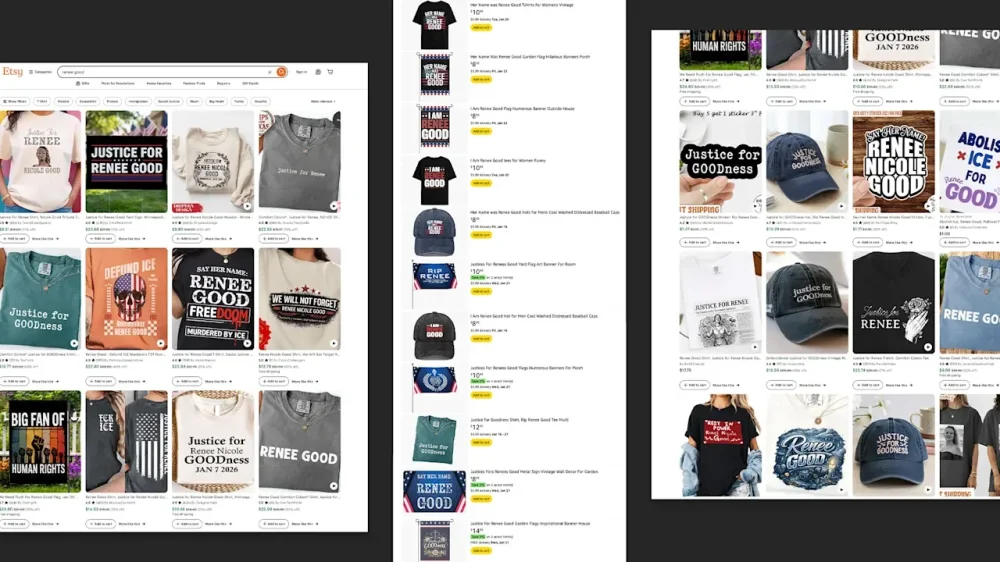
Less than 24 hours after the horrifying shooting of a woman by an Immigration and Customs Enforcement (ICE) agent in Minneapolis, merchandise related to the slain U.S. citizen is already proliferating on e-commerce shopping sites, including on Amazon and Etsy. Here’s what you need to know. What’s happened? On Wednesday, a woman was fatally shot by an ICE officer near a raid that federal officials were conducting. The woman was identified by authorities as Renee Nicole Good, a 37-year-old mother and U.S. citizen. As CNN reports, multiple videos taken by bystanders on the scene show ICE agents confronting the car that Good was driving, which was parked sideways on the street. After some verbal interaction between the driver and the officers, the car appears to begin turning, at which point an ICE agent fired multiple shots into the vehicle. Good was reportedly struck in the head by one of the shots and later pronounced dead at a local hospital. Kristi Noem, secretary of the U.S. Department of Homeland Security, has accused Good of weaponizing her vehicle in an effort to run over the ICE agent, but any such intent is far from certain at this point. Democratic leaders, on the other hand, have called for an investigation into the incident, and Minnesota Governor Tim Walz has said that his administration will “stop at nothing to seek accountability and justice.” The incident has quickly become the latest political flashpoint around President The President’s controversial decision to send federal agents into U.S. cities. Renee Good merch proliferates on Amazon and Etsy Within hours of Good’s death, thousands of mourners took to the streets in Minneapolis and other U.S. cities to honor the victim and peacefully protest the actions of the ICE agent. At the same time, another phenomenon began happening: merchandise related to Good and her shooting began rapidly proliferating on online shopping sites like Amazon and Etsy. As of the time of this writing, visitors to these sites can easily find everything from stickers to hats to T-shirts in support of Good and her memory. Such products often sport the phrase “Justice for Renee” or “Justice for GOODness” as well as other phrases, including “rest in power.” Sellers move quickly to capitalize on viral events The fact that Good-related merchandise already exists isn’t entirely shocking. As Fast Company previously reported, in recent months, politically contentious events have often led to a quick proliferation of merchandise related to the incidents. In November, the Epstein “Bubba” email led to an explosion of merch on both Amazon and Etsy, and earlier in 2025, “Alligator Alcatraz” merch spread on Etsy, where it met significant blowback on social media. However, the ideological motives behind the sellers making this merchandise aren’t always clear. For instance, some of the seller accounts appear to be new, and they don’t always state whether they are opposed or aligned with any of the events that have spawned the merch. What is interesting to note, however, in the case of the Good-related merch, is that some of the Amazon sellers appear to be based in China, suggesting at the very least that individuals overseas are eager to profit from the latest social and political turmoil engulfing the United States. Fast Company has reached out to Etsy and Amazon for comment. Renee Good GoFundMe exceeds $400,000 While some sellers on Amazon and Etsy’s platforms appear to be keen to profit from a tragic event, other individuals are actively using online platforms to support Renee Good’s wife and child. As of the time of this writing, a number of Renee Good fundraisers have been set up on GoFundMe. One such fundraiser, with the stated aim of raising funds for her wife and child, has already surpassed $400,000 in donations from more than 10,300 individuals. Reached for comment, a spokesperson for GoFundMe told Fast Company that the site is reviewing the campaign and that “All funds remain safely held at this time during this process.” This story has been updated with GoFundMe’s response to our inquiry. View the full article
-
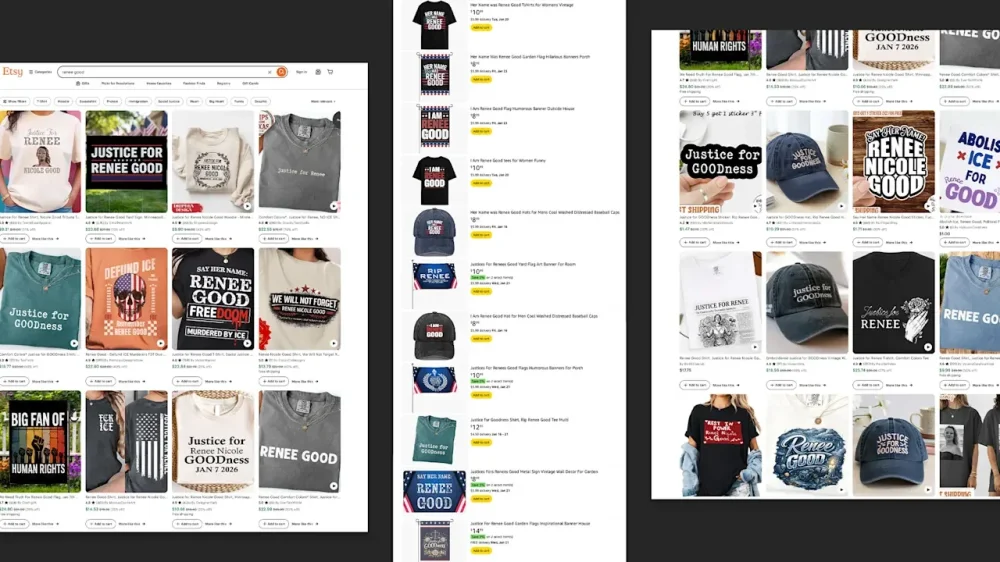
Less than 24 hours after the horrifying shooting of woman by an Immigration and Customs Enforcement (ICE) agent in Minneapolis, Minnesota, merchandise related to the slain U.S. citizen is already proliferating on e-commerce shopping sites, including on Amazon and Etsy. Here’s what you need to know. What’s happened? On Wednesday, a woman was fatally shot by an ICE officer near a raid that federal officials were conducting. The woman was identified by authorities as Renee Nicole Good, a 37-year-old mother and U.S. citizen. As CNN reports, multiple videos taken by bystanders on the scene show ICE agents confronting the car that Good was driving, which was parked sideways on the street. After some verbal interaction between the driver and the officers, the car appears to begin turning, at which point an ICE agent fired multiple shots into the vehicle. Good was reportedly struck in the head by one of the shots and later pronounced dead at a local hospital. Kristi Noem, secretary of the U.S. Department of Homeland Security, has accused Good of weaponizing her vehicle in an effort to run over the ICE agent, but any such intent is far from certain at this point. Democratic leaders, on the other hand, have called for an investigation into the incident, and Minnesota Governor Tim Walz has said that his administration will “stop at nothing to seek accountability and justice.” The incident has quickly become the latest political flashpoint around President The President’s controversial decision to send federal agents into U.S. cities. Renee Good merch proliferates on Amazon and Etsy Within hours of Good’s death, thousands of mourners took to the streets in Minneapolis and other U.S cities to honor the victim and peacefully protest the actions of the ICE agent. At the same time, another phenomenon began happening: merchandise related to Good and her shooting began rapidly proliferating on online shopping sites like Amazon and Etsy. As of the time of this writing, visitors to these sites can easily find everything from stickers to hats to t-shirts in support of Good and her memory. Such products often sport the phrase “Justice for Renee” or “Justice for GOODness” as well as other phrases, including “rest in power.” Sellers move quickly to capitalize on viral events The fact that Good-related merchandise already exists isn’t entirely shocking. As Fast Company previously reported, in recent months, politically contentious events have often led to a quick proliferation of merchandise related to the incidents. In November, the Epstein “Bubba” email led to an explosion of merch on both Amazon and Etsy, and earlier in 2025, “Alligator Alcatraz” merch spread on Etsy, where it met significant blowback on soclial media. However, the ideological motives behind the sellers making this merchandise aren’t always clear. For instance, some of the seller accounts appear to be new, and they don’t always state whether they are opposed or aligned with any of the events that have spawned the merch. What is interesting to note, however, in the case of the Good-related merch, is that some of the Amazon sellers appear to be based in China, suggesting at the very least that individuals overseas are eager to profit from the latest social and political turmoil engulfing the United States. Fast Company has reached out to Etsy and Amazon for comment. Renee Good GoFundMe exceeds $400,000 While some sellers on Amazon and Etsy’s platforms appear to be keen to profit from a tragic event, other individuals are actively using online platforms to support Renee Good’s wife and child. As of the time of this writing, a number of Renee Good fundraisers have been set up on GoFundMe. One such fundraiser, with the stated aim of raising funds for her wife and child, has already surpassed $400,000 in donations from more than 10,300 individuals. Fast Company has reached out to GoFundMe to ask whether the campaign is verified. We will update this story if we hear back. View the full article
-
Russian drone strikes trigger widespread electricity outage in two regions on WednesdayView the full article
-
Enhancing customer service is crucial for any business aiming to improve satisfaction and loyalty. By utilizing effective technology, investing in agent training, and cultivating open communication, you can create a more streamlined experience. Furthermore, prioritizing quality interactions and monitoring performance metrics can refine your approach. Personalizing experiences further boosts effectiveness. As you explore these strategies, consider how each can be customized to your specific business needs for best results. Key Takeaways Implement advanced technology like VoIP and AI tools for streamlined communication and enhanced customer insights. Invest in ongoing agent training to improve problem-solving skills and employee satisfaction. Foster open communication channels to ensure timely and effective customer support. Focus on quality interactions by prioritizing meaningful engagements and personalized responses. Regularly monitor performance metrics and gather customer feedback for continuous improvement. Utilize Technology Effectively In today’s fast-paced world, utilizing technology effectively can greatly improve your customer service operations. One of the best customer service best practices is implementing advanced phone systems like VoIP and IVR, which streamline communication. They reduce call transfers and improve how you handle customer interactions. You can moreover leverage AI-powered tools, such as Invoca, for real-time analysis of call transcripts, providing immediate feedback to your agents, which in the end improves the overall customer experience. Online chat systems allow you to respond quickly to basic inquiries, meeting customers’ expectations for assistance within minutes. Furthermore, help desk software centralizes your communication, improving response times and enabling your team to manage high call volumes more effectively. Finally, utilizing data analytics from customer interactions can help you identify trends and areas for improvement, leading to data-driven decisions that improve overall service quality, making it one of the most effective ways to enhance customer service. Invest in Comprehensive Agent Training Investing in thorough agent training is crucial for enhancing customer service effectiveness. By implementing ongoing training opportunities and ensuring effective onboarding processes, you equip your agents with the skills they need to resolve complex issues efficiently. This approach not just boosts their confidence but additionally contributes to higher customer satisfaction and improved performance metrics across your organization. Ongoing Training Opportunities Ongoing training opportunities are essential for improving the skills and effectiveness of customer service representatives. By prioritizing continuous education, companies experience higher employee satisfaction and lower turnover rates. Regular training sessions not only boost problem-solving skills and emotional intelligence but also lead to a 20% increase in customer satisfaction scores as agents handle complex inquiries more effectively. Implementing role-playing scenarios and providing real-time feedback enable agents to develop practical skills, resulting in a 30% reduction in average handling time. In addition, a commitment to ongoing training increases agents’ knowledge of products and services, meeting the 70% of customers who expect thorough comprehension. Organizations that invest in such training see a 68% correlation between employee enablement and overall business growth. Effective Onboarding Processes A well-structured onboarding process is crucial for ensuring that new customer service agents hit the ground running and contribute positively to the organization. Thorough training on products and services boosts retention and productivity, equipping agents to effectively handle customer inquiries. Providing quick-reference materials during onboarding allows agents to familiarize themselves with important information, as 70% of customers expect agents to know their account details. Investing in ongoing training keeps agents engaged and responsive to evolving customer needs, reducing churn. Regularly updating onboarding materials based on customer feedback encourages continuous improvement in service quality and agent confidence. Finally, incorporating role-playing scenarios helps develop soft skills like empathy and active listening, critical for delivering exceptional customer experiences. Foster Open Communication Channels Encouraging open communication channels is vital for enhancing customer service, as it allows customers to reach support through their preferred methods, whether that’s voice calls, SMS, live chat, or social media. By implementing help desk software, you can centralize communications, streamlining interactions and minimizing the risk of issues falling through the cracks. Remember, 68% of customers expect immediate access to human support when automated tools fail, so having effective escalation paths is critical. Furthermore, leveraging social listening software can help you manage interactions on social media, enabling proactive engagement and timely responses to customer concerns. It’s important to maintain consistency in messaging and service across all channels. By monitoring interactions, you guarantee that customers receive a uniform quality of service, regardless of how they reach out for support. This thorough approach cultivates trust and satisfaction, ultimately enhancing the overall customer experience. Prioritize Quality Over Quantity in Interactions Building on the foundation of open communication, prioritizing quality over quantity in customer interactions becomes a key strategy for improving customer service effectiveness. When you focus on meaningful engagements, you’re likely to see increased customer satisfaction and loyalty. Prioritizing quality reduces follow-up inquiries, as effective resolutions during initial contacts boost First Call Resolution rates, with top organizations achieving 80% or higher. Training your team in soft skills like empathy and active listening can lead to a 68% increase in customer satisfaction when empathy is shown. Furthermore, tailoring responses to individual customer needs improves retention, as retained customers tend to spend 67% more than new ones. By leveraging data-driven insights, you can enhance service quality, resulting in a potential 1% boost in customer satisfaction scores, which translates to a 4-5% increase in revenue growth. Emphasizing quality truly pays off in the long run. Regularly Monitor and Measure Performance To effectively improve your customer service, regularly monitoring and measuring performance is vital. By evaluating key performance indicators (KPIs), you can identify areas needing improvement and track your progress toward customer service goals. Consider the following important strategies: Utilize customer satisfaction scores like CSAT and NPS to gain insights into service effectiveness. Establish benchmarks to compare your performance against industry standards and make data-driven changes. Continuously monitor metrics to guarantee your team focuses on efficiency and quality of service delivery. Gather customer feedback through surveys and interaction analysis to inform your decisions. This ongoing evaluation helps you refine your approach, making sure your team remains aligned with customer needs and expectations. Actively Support and Empower Your Service Team Supporting and empowering your customer service team is crucial for nurturing an environment where agents can thrive and deliver exceptional service. Recognize and reward outstanding performance; this boosts morale and promotes a culture of excellence, leading to improved customer interactions. Implementing leaderboards can create a sense of friendly competition, driving higher engagement and productivity levels among your agents. Show your investment in their success by offering ongoing training and development opportunities, which can increase retention rates and improve overall effectiveness. Providing timely feedback and encouragement not only improves skills but also builds confidence, resulting in better service delivery. Furthermore, address high turnover rates by cultivating an engaging work culture and planning team-building activities. This approach helps develop a seasoned customer service team, in the end improving service quality and customer satisfaction. Prioritizing these strategies will greatly improve your team’s performance and the experiences you provide to customers. Personalize Customer Experiences for Greater Satisfaction Personalizing customer experiences is essential for achieving greater satisfaction, as it helps customers feel valued and understood. When you customize your interactions, you can greatly improve engagement and retention. Here are some effective strategies to implement: Utilize data-driven personalization to understand individual customer needs. Leverage AI tools, like Invoca’s PreSense technology, for real-time insights. Offer personalized follow-ups and customized communications to nurture loyalty. Align your offerings with customer preferences and past behaviors to boost sales. Frequently Asked Questions How Can You Enhance Customer Service? To improve customer service, focus on implementing advanced technology like AI tools to increase efficiency and response times. Offer ongoing training to your representatives, boosting their skills and empathy. Establish clear guidelines that empower agents to handle inquiries effectively. Regularly collect and analyze customer feedback to identify improvement areas. Finally, cultivate a customer-centric culture where employees prioritize customer needs, improving service delivery and building lasting relationships. What Are the 7 R’s of Customer Service? The 7 R’s of customer service include Respect, Responsiveness, Reliability, Reasonableness, Resourcefulness, Resolution, and Recognition. You need to treat customers with dignity, respond quickly, and guarantee consistent service quality. Being reasonable helps in comprehending customer needs, whereas resourcefulness allows you to solve problems effectively. Resolution focuses on addressing issues, and recognition acknowledges loyal customers, which can lead to increased retention and spending. Together, these principles create a positive customer experience. What Are the 5 R’s of Customer Service? The 5 R’s of customer service are essential for enhancing customer interactions. First, you need to Respond quickly to inquiries, ideally within four hours. Next, Resolve issues during the first contact to meet customer expectations. Third, Retain customers by nurturing relationships, as retention greatly boosts profits. Fourth, Reward loyal customers with recognition and incentives. Finally, Reassess your strategies regularly based on feedback to guarantee you’re adapting to changing customer needs effectively. What Is the 10 to 10 Rule in Customer Service? The 10 to 10 Rule in customer service stipulates that businesses should respond to customer inquiries within 10 minutes and resolve issues within 10 hours. This approach emphasizes swift communication, as 76% of consumers may stop engaging after a negative experience. By adhering to this rule, you can greatly improve customer satisfaction and loyalty, ultimately boosting your company’s revenue. Rapid responses are increasingly expected, making this rule crucial for effective customer interaction. Conclusion Enhancing customer service requires a strategic approach that integrates technology, training, and communication. By leveraging tools like VoIP and AI, you can improve efficiency and gain valuable insights. Investing in your agents’ training and cultivating open dialogue strengthens interactions. Prioritizing quality over quantity in engagements, along with continuous performance monitoring, guarantees effective strategies are in place. In the end, personalizing customer experiences leads to higher satisfaction and loyalty, making these practices vital for any successful business. Image via Google Gemini This article, "7 Proven Ways to Enhance Customer Service" was first published on Small Business Trends View the full article
-
Thomas Edison said that success is “1 percent inspiration and 99 percent perspiration.” But what if his famous formula is missing a key ingredient? What if success demands not just creativity and perseverance, but a third, much less discussed skill? Modern neuroscience suggests it does. Research shows mastering this often overlooked ability will not only upgrade your brain, but make it much more likely you’ll achieve your goals (with less perspiration along the way). The secret ingredient for success What is this magic ingredient? Some scientists call it a strategic mindset. Others term it metacognition. Whatever label you go with, the idea is straightforward enough. Metacognition is thinking about your thinking. It means not just doggedly pursuing your goals but questioning how you pursue them. If you’re a student, that might mean evaluating your study techniques. Is rereading the text over and over the most efficient way to study? (Science suggests not.) If you’re playing poker, it could look like observing when you’re letting emotion get in the way of a smart bet. Business leaders might not just ask, “Did I make the right decision?” but also, “Is there a smarter way to make similar decisions in the future?” This kind of strategic thinking can have big impacts, research out of Stanford and the National University of Singapore recently found. Scientists tested more than 850 volunteers chasing a variety of tough goals, from academic excellence to weight loss. The more study subjects employed metacognition, the more likely they were to reach their aims. The most successful people, in other words, weren’t necessarily the smartest or the grittiest, though those abilities certainly help. They were the ones who thought about their own thinking, probing for ways to improve. Metacognition can be taught That’s interesting to know, but the finding isn’t very useful for entrepreneurs unless it’s a skill that can be taught. Helpfully, it can. Not only did the researchers find that a strategic mindset makes you more likely to be successful, they also showed that when study participants were explicitly taught about metacognition, their odds of achieving their goals went up. “What we know now is that adults seem to naturally vary in their strategic mindset, and that a strategic mindset can be taught,” study co-author Patricia Chen summed up to the BBC. 5 tricks to upgrade your brain So how do you teach yourself to reflect on and improve thinking? “Above all, stay curious about how your mind works,” neuroscientist and author Anne-Laure Le Cunff suggested on Big Think recently. She went on to offer five specific ideas to upgrade your brain through metacognition: Explain things to yourself. “When learning something new, don’t just read or listen. Ask yourself why it makes sense and how it connects to what you already know,” she writes. Both Bill Gates and Elon Musk have recommended this same technique of trying to hook up new knowledge with previously learned information to speed learning. Study your mistakes. “If something goes wrong, resist moving on too quickly. Instead, dig into what happened: What was I thinking? Where did my reasoning break down? What was I assuming? What would I do differently?” suggests Le Cunff. Get detailed advice on how to learn more from your mistakes here. Think out loud. “When solving a problem or making a decision, narrate your thought process. Speak (or write) what you’re thinking as you think it. This makes your invisible reasoning visible so you can examine it,” she says. Le Cunff is far from the only expert claiming that writing is a powerful way to stress test and clarify your thinking. Check your confidence. “Notice how sure you feel when making a decision. Consider whether your confidence comes from solid evidence or gut feeling, and what information you might be missing,” she says. Psychologists insist that learning to think in probabilities can aid in this process. Notice your thoughts. “Just like in mindfulness meditation, simply observe your mental processes without judgment. You don’t need to meditate for hours; even a few minutes of paying attention to your thinking can be helpful,” Le Cunff concludes. Achieve more, sweat less All of these practices share a common thread. They nudge you to pay closer, more skeptical attention to your thoughts in progress. Watch yourself think and you’ll find ways to improve your approach to problems. Rather than muscle through with a suboptimal strategy or rickety logic, you’ll avoid pitfalls and proceed more efficiently. With respect to Mr. Edison, hard work definitely plays a big part in achievement. But upgrading your brain through metacognition can help you reach your goals with a whole lot less unnecessary perspiration. View the full article

-
Chancellor had commissioned officials to examine the impact of her Budget on the sectorView the full article
-
System of annual settlements from Foreign Office criticised by interim news chiefView the full article
-
The tremulous response to both the Venezuela coup and his threats to Greenland reflects hard truthsView the full article
-
Move follows investigation into bank’s handling of trades between 2014 and 2019View the full article
-
Profits available to be shared by partners fell by a fifth to £61mn for year to March 2025View the full article
-
The US leader represents a different kind of political authoritarianism View the full article
-
Single-use soy sauce packets for sushi take-out orders are now a whole lot more sustainable, thanks to a redesign that doesn’t use any plastic. While sushi lovers in the U.S. are used to getting their to-go soy sauce in rectangular packets like they do their ketchup and mustard, soy sauce in Australia often comes in small plastic fish bottles with a screw top. This typical mini fish-shaped bottle is cute, for sure, but the user is done with it in a few minutes. Its packaging lasts much, much longer by comparison, since plastics can take as long as 500 years to break down. Does the user experience really require packaging that lasts that long? The Holy Carp soy sauce dropper, now available for preorder, is a plastic-free and fully compostable alternative that solves this dilemma. The kraft-brown-colored dropper is made from bagasse pulp (plant residue), and it comes in two pieces that snap together. The lid, which is shaped like a fish, decomposes in four to six weeks, not centuries. Rather than a cap, the Holy Carp dropper dispenses sauce out of an opening under the fish’s eye, and restaurants fill them in-house. The dropper can hold sauce for 48 hours—probably longer than you’d want to keep your take-out sushi in the fridge anyway. The Holy Carp dropper was designed by Heliograf, an Australian design studio, with Vert Industrial Design House, and made in consultation with sushi restaurants. Since customers usually grab a handful of those plastic fish-shaped bottles with their take-out order, the designers made their compostable version of the fish dropper bigger, with 12 milliliters of capacity. The studios worked together in 2020, on Light Soy, a compostable fish-dropper lamp, to draw attention to single-use plastic waste, but with the Holy Carp, they’ve set their sights higher. You just need one fish lamp for your room, but you need soy sauce every time you get sushi. And that adds up to a lot of plastic: Heliograf estimates that somewhere between 8 billion and 12 billion fish bottles have been used since 1950. View the full article

-
You’ve probably heard the saying, “If you need to get something done, give it to the busiest person you know.” This statement often rings true. However, if you find yourself nodding along to this, you could be doing yourself a disservice. Yes, reliability and dependability are strengths, but they can quickly become your Achilles heel if you’re everyone’s go-to person, all the time. Research shows that teams composed of people who are dependable perform better. In fact, Google’s Project Aristotle found dependability to be the second most important factor in high-performing teams. And yet if this dependability extends beyond the sustainable (for example, if it turns into hyper-independence or people-pleasing), what starts as well-intentioned can result in a myriad of negative outcomes. The possibility of quiet cracking We get it. Being the go-to person feels good. It gives you a sense of purpose and contribution. But saying “yes” at all costs, even when you’re overloaded, has a real impact on your professional performance, and on you personally. The unintended consequences of being everyone’s go-to person can result in workload imbalances, unspoken resentment towards your team, and even quiet cracking, which are precursors to burnout. Quiet cracking is a subtle, internal experience of emotional and mental depletion that happens when you feel stretched too far for too long. And it makes sense, being everyone’s go-to person without feeling appreciated or a sense of progress and advancement will likely leave you unhappy and unmotivated. It happens somewhere between burnout and quiet quitting, when you still show up and perform, but your engagement is silently eroding. So if you’re a high performer who is quietly cracking beneath the surface, it might be time to take off that busy badge and honor how you’re really feeling. This is a call to action for those quiet go-to people who are feeling resentful, tired, irritable, or have just had enough. The reality is that when you’re spread too thin, you can’t perform at your best. Here are four things you can do right now to help yourself. 1. Acknowledge how you’re really feeling You can’t fix what you won’t face, and denial isn’t a long-term strategy for success. The first step to breaking the cycle is admitting that the way you’re working right now isn’t sustainable. High performers are often the best at pushing through, even when they’re exhausted. However, resilience without reflection quickly becomes self-sacrifice. Start by allowing yourself to pause and be honest. Are you coping, or just going through the motions? Acknowledging the truth isn’t weakness. It’s the gateway to change. Is the way you’re working today actually taking you to where you want to go? 2. Get clear on the priorities and set boundaries around what’s not Get clear on the tasks that are most mission-critical in your role for both individual and team success. When everything becomes a priority, nothing is. Once you have clarity around key priorities, protect your time and energy to focus on those by setting better boundaries. Learn to communicate with your manager when work demands aren’t realistic. Set firmer boundaries with your colleagues and team members about what work you’re accountable for, and what’s within their remit. When you’re always saying “yes,” you’re teaching others how to treat you and demonstrating that you’re always available when people need you. Instead, be clear about what capacity you do have, and what you need to deprioritize if you’re to take on extra responsibility. If you need to say no to your coworkers, say something along the lines of, “I understand this project is important to you, let’s bring it to the table with the team to see who’s best placed to help.” 3. Share the load so that you don’t carry it alone You don’t build thriving teams due to one hero. You build them on shared ownership, distributed responsibility, and collective accountability. If you’re always the one stepping in, fixing things, or saving the day, you may unknowingly be holding the team back from developing capability, confidence, and resilience. When you take everything on, others don’t get the chance to learn, experiment, or rise to the challenge. Start by getting curious: Where are the bottlenecks? Where does work pile up around you? What tasks could someone else take on with support? Instead of quietly carrying more, raise the issue with your manager from a solutions-focused perspective. Not only does this relieve pressure on you, but it also lifts the bar for everyone. 4. Redesign your role around your strengths Dependability is your strength, but every overplayed strength can become an Achilles heel. If the work that once energized you now leaves you depleted, it’s worth reflecting on where you can best use your skills. Consider which tasks light you up versus the ones that flatten your energy. Use this self-awareness as a starting point for a conversation with your manager about workload design, growth pathways, and skill development. Figure out where you can add the most value, and what you may be able to redesign so that you can thrive. You don’t need to do everything to be valuable. Often, the work that drains you might be an opportunity for someone else to grow. When you realign your role with what you do best, your performance improves and so does your well-being. Being the go-to person doesn’t make you indispensable; it makes you invisible when you’re struggling. Boundaries, collaboration, and better role design aren’t signs of weakness; they’re leadership behaviors. When you protect your time, share responsibility, and play to your strengths, you create space for your best work, and for others to rise too. View the full article

-
Defendants argued the vendor doesn't operate a pricing algorithm, and said some of the implicated home loan players never used the software. View the full article