Newsletter
Want to keep up to date with all our latest news and information?


ResidentialBusiness
Administrators
-
Joined
-
Last visited
Everything posted by ResidentialBusiness
-
In recent years, organizations have launched neurodiversity and mental health initiatives with the best of intentions: to raise awareness, launch employee resource groups, and create a culture where team members embrace diverse neurotypes and learn to coexist in an ecosystem. Yet, neurodivergent employees still tell me the same thing: they feel misunderstood as they navigate masking, burnout, and eventually leave organizations that genuinely believe they’ve done their best. So, what’s missing? The gap isn’t in policy or process—it’s in our understanding of the emotional landscape inside the neurodivergent experience. Leaders may recognize ADHD or autism as concepts, but not the human realities beneath those labels. Yes, we need workplace adjustments. But emotional accessibility, understanding how neurodivergents make sense of themselves, their late diagnoses, and their internal worlds, is what creates psychological safety. True retention requires leadership that can speak the emotional language neurodivergents actually use. But what does that sound like when you put it into action? We’re working in an identity economy Work is no longer just where we earn a living. It’s where we look for meaning, compatibility, and emotional belonging. With rising adult ADHD and autism diagnoses, especially in among women aged 23–49, many are reassessing who they are and where they fit. Neurodivergents are gaining a more accurate understanding of how their brains and nervous systems work, what supports their well-being, and how their backgrounds shape their behavior and stress responses. And their lived experiences are shaped by unique intersections of neurotype, culture, gender conditioning, trauma history, sensory thresholds, communication style, and current life demands. As neurodivergents gain emotional literacy about their inner world, they are also more sensitive to misattunement, and leaders who lack the nuance of neurodiverse experiences struggle to fully relate or to bring out their team member’s strengths. Emotional literacy is the missing link in neurodiversity strategy Many assume emotional literacy means naming emotions or staying calm. For neurodivergent people, it’s far more complex. Emotions often show up physically first: a tight chest during sensory overload, a blank mind when asked, “What do you think?” frustration triggered by emotionally charged discussions, shutdown after too many back-to-back meetings, or restlessness mistaken for anxiety. These are emotional cues that can inform, but in workplaces that haven’t learned to recognize them, they may be missed. Neurodivergent responses are tied to the nervous system. A fight response may be interpreted as a “strong reaction,” combative, or defensiveness. Flight shows up as withdrawing from contribution or needing space. Freeze tends to show up as going quiet or not being able to name thoughts or emotions. And fawn appears as people-pleasing, not necessarily agreement. Without emotional literacy, these cues get misinterpreted. When leaders understand these adaptive responses, they can support and connect, instead of correct. The double empathy problem still drives workplace conflict Misunderstandings between neurodivergent and neurotypical colleagues rarely stem from a lack of empathy. They may come from different ways of communicating, interpreting tone, or sensing threat. A manager for instance, may read directness or lack of eye contact as rudeness, when in reality it’s a neurodivergent colleague unmasking so they can think clearly. A neurodivergent employee might interpret vague feedback as rejection, while the manager hasn’t given it much thought. A leader may perceive intensity as aggression, when the employee is simply overwhelmed. And, in an open-plan office, a colleague raising their voice at another colleague, not out of hostility but because they’re reaching meltdown, which is then followed by shame later. Emotional literacy bridges these gaps before they escalate into conflict or “disciplinary action,” which, if we’re honest, is so condescending when applied to a fully grown adult. Cultural intelligence (CQ) matters more than ever Emotional literacy without cultural literacy is incomplete. Our stress responses, boundary styles, and communication rhythms are shaped by culture as much as neurotype. A British-Asian woman may internalize distress, because it was normalized in her culture to tolerate and keep going. A Black autistic colleague may mask to avoid stereotype threat that they’ve been preconditioned to expect. The future of leadership requires the ability to read across identities and not treat neurodiversity as a single story. So, what does emotional accessibility look like in practice? Here are shifts that transform workplaces more than any awareness campaign: 1. Respond to nervous systems, not behavior When we can see a stress response, what information can we derive from this, and how can we best support a neurodivergent employee? 2. Reduce cognitive load Provide agendas early, enable longer processing time, and avoid rapid changeover to give the brain time to switch gear. 3. Normalize setting boundaries So others feel safe to do the same, model phrases like: “Let’s slow this down” “I need a moment” “I’ll come back to you on this” 4. Respect sensory needs Noise, lighting, heat, pace, and unpredictability all shape neurodivergent employees’ well-being and performance. 5. Read early signs of burnout Notice when team members withdraw, go quiet, are slower with their responses, or increase masking, as these are signs of misalignment, long before they collapse. 6. Make emotional literacy a core leadership skill Understanding the emotional language of the nervous system is the prerequisite to building safe relationships. This isn’t soft, it is aligned with the reality of today’s workforce. The real future of inclusion is relational To support neurodivergent employees, organizations must move beyond awareness toward something deeper and more human: the ability to read, respect, and respond to the emotional and sensory realities of the people they lead. Emotional literacy creates teams where neurodivergent employees don’t have to pretend to feel safe, they genuinely experience it. It creates workplaces where difference becomes a source of insight, because prioritising emotional accessibility benefits every mind. That’s the shift that liberates people and transforms cultures. View the full article

-
When Calvin McDonald was appointed CEO of Lululemon in 2018, the activewear brand was a cult brand. But it had the potential to become a retail giant. Chip Wilson founded Lululemon in Vancouver in 1998 as a yoga brand. When he left the CEO role in 2005, the company was generating $80 million a year. In the decade that followed, Lululemon grew steadily, boosted by the broader athleisure trend. But it was McDonald—who previously spent five years delivering double-digit growth as CEO of Sephora Americas—who transformed Lululemon into one of the biggest clothing companies in the world. Over the course of his seven-year tenure, McDonald more than tripled the company’s annual revenue from $2.6 billion in 2018 to $10.6 billion in 2024. (Revenue is expected to hit $11 billion this year.) He led the company’s global expansion to 30 countries; international revenue alone is now $3 billion. And he helped Lululemon become known not only for activewear, but also for apparel you could wear to the office. Now, McDonald is on his way out. Last week, at Lululemon’s earnings call, the company announced that it was looking for a new CEO with experience in “growth and transformation“. This comes after Lululemon’s growth slowed to 10% last year from 19% the year before. There are many reasons for the company’s recent troubles, from product missteps like a widely-panned Disney collaboration to U.S. tariffs to weaker consumer spending. All of this has led Lululemon’s stock to tumble over the past two years. (Lululemon declined to comment for this story.) But McDonald’s track record suggests that he would have been capable of steering Lululemon back to growth—and the company may ultimately regret its decision to let him go. Wilson wanted McDonald Out What’s clear is that Lululemon’s founder, who stepped down from the role of CEO in 2005, wanted McDonald out. Wilson has famously tried to stay involved with his company, even though he no longer has an official position. In 2013, he was forced to give up his role as board chairman after saying Lululemon’s clothes don’t work for “some women’s bodies,” which was perceived to be body-shaming. Wilson continued to make controversial comments. Last year, he drew backlash after he criticized Lululemon’s “whole diversity and inclusion thing,” adding that “you’ve got to be clear that you don’t want certain customers coming in.” In response to the outcry, Lululemon issued a statement distancing the company from its founder, and McDonald spoke to Fast Company about how much Lululemon had changed since Wilson’s departure. But Wilson still has powerful influence because he remains the company’s largest individual shareholder, owning roughly 9% of shares. In October, Wilson took out a full page advertisement in the Wall Street Journal outlining everything he felt was wrong at the company. Wilson wrote that Lululemon’s troubles boil down to the fact that he is no longer leading the company and has been replaced by CEOs who “speak Wall Street.” Since Wilson no longer has a seat on the board, it’s unlikely that his perspective directly affects management’s decisions about the company’s future. But the ad created a lot of buzz, and may have accelerated the decision to find a new leader. McDonald’s Missteps Don’t Define His Tenure To be fair, Wilson made some reasonable points in his write-up. It’s true that McDonald has taken some wrong turns in his quest for growth. There was his decision to go beyond Lululemon’s expertise in apparel and enter the fitness market. In 2020, it spent $1 billion on acquiring the smart exercise device Mirror; three years later, Lululemon stopped selling the device and fired 100 employees working on this part of the business. Then there was what Wilson describes as the “wildly inappropriate” Disney collab. One of Lululemon’s strengths has been how judicious it is about collaborations, setting it apart from the collab-happy fashion industry. Its rare partnerships with designers have been elevated and interesting, such as the 2017 collab with Central Saint Martins and the 2019 collab with the edgy designer Roksanda Ilinčić. By comparison, last year’s Disney collab seemed like a naked cash-grab. Its current capsule collection with the luxury L.A.-based grocery store Erewhon similarly feels like an effort to tap into a short-term trend, rather than focus on the well-designed classic garments that consumers love. But these mistakes don’t define McDonald’s leadership. He’s also focused on product innovation, which has always been the key to Lululemon’s success. In 2022, after years of development, Lululemon launched its own footwear line, which has been successful. As culture has moved beyond athleisure, he’s directed Lululemon’s designers to produce chic clothing—like blazers and trousers—that can be worn to the office, including the bestselling men’s ABC pant and women’s Daydrift trouser. And the company has continued to develop new fabrics, while leaning into the ones that customers love, like the buttery Nulu material in Lululemon’s best-selling Align leggings. Earlier this year, after acknowledging that some customers felt “fatigue” with the product assortment, McDonald promised to double down on design. Steering a $10 Billion Brand In his ad, Wilson laid out a strategy for Lululemon to bounce back. He says the company needs to put product and brand back at the center, empower creative leadership rather than merchants looking at spreadsheets, and focus on designing for the women who dictate culture, rather than follow it. All of this is good advice, and Lululemon’s next CEO should take note. But it is also insufficient because it fails to recognize the scale of the company that Lululemon has become. Much of Lululemon’s growth in recent years has come from its global expansion, which McDonald has steered. Mainland China has now become the company’s second largest market after the United States. Creating a brand and products that resonates across so many different markets is no small task, and it is something that Wilson never had to tackle. The growth of this international business has been crucial to Lululemon’s continued growth, particularly because American consumers are curbing their spending. President The President’s tariffs, which have increased the price of goods and inflation, are causing many Americans to tighten their belts. In September, Lululemon said that changes in the U.S. tax code would add roughly $240 million in expenses. And yet Lululemon’s overall revenue is continuing to grow, thanks to the strength of its international markets. In its third quarter, Lululemon’s international revenue had grown by 33% while its U.S. revenue had declined by 2%. McDonald has masterfully transformed Lululemon from a brand that made pricey yoga leggings into a global fashion powerhouse. With his departure, Lululemon is losing a leader who knows the company well and has a track record of driving growth. The new CEO will have big shoes to fill. And the world will be watching where McDonald lands next. View the full article

-
As we count down to the last days of the year, we are looking ahead to what may be one of the next big work trends of 2026: shift sulking. Read on to find out what it is, and what to know about it heading into the new year. What is shift sulking? “Shift sulking is the moment when hourly workers arrive already depleted because the conditions surrounding their work—unpredictable schedules, inconsistent hours, and rising demands—are simply unsustainable,” says Silvija Martincevic, CEO of Deputy, a workforce management platform for hourly workers. “Because millions of shifts run through our platform every week, Deputy sees this deep-seated strain in the data well before it makes headlines,” Martincevic adds. According to Martincevic, if you look closely the next time you’re at the grocery store, coffee shop, hospital, or convenience store, you’ll see it. And it’s not hard to spot: workers stretched thin, managing difficult customers and understaffed teams. The difference between a worker who feels supported and one who’s simply trying to get through the day is written on their face, she says. What, if anything, does this tell us about the current state of the economy? “[At a time when] 31% of U.S. workers report feeling detached, ‘shift sulking’ is a clear reminder that the strength of our economy is inseparable from the stability of the shift worker,” says Martincevic. “That’s not simply a retention challenge. It’s a productivity challenge that limits our collective potential.” According to data from Deputy, in states where stable scheduling is the norm, frontline worker happiness reaches 98%, compared to just 60% where it’s unpredictable. And companies should be paying attention to this data, as studies show engaged workers perform better. Why shift sulking may be one of the big workplace trends of 2026 In today’s 24/7 gig economy, more Americans are doing shift work and taking on multiple jobs, or so-called poly-employment, to make ends meet as they grapple with rising costs and higher inflation. “We don’t see shift sulking as a temporary issue; it’s the human cost of deeper structural friction in today’s labor market—and all indicators point to it intensifying in 2026,” Martincevic says. “Businesses are operating leaner, asking teams to deliver the same output despite tighter staffing and volatile demand. That pressure falls squarely on the frontline.” According to Deputy’s Better Together report, while AI can automate tasks and improve visibility, technology alone won’t solve the problem—that demands structural change that gives workers what they want: predictable schedules, balanced workloads, and transparent communication. View the full article
-
Like many people, I use AI for quick, practical tasks. But two recent interactions made me pay closer attention to how easily these systems slip into emotional validation. In both cases, the model praised, affirmed, and echoed back feelings that weren’t actually there. I uploaded photos of my living room for holiday decorating tips, including a close-up of the ceramic stockings my late mother hand painted. The model praised the stockings and thanked me for sharing something “so meaningful,” as if it understood the weight of them. A few days later, something similar happened at work. I finished a long run, came home with an idea, and dropped it into ChatGPT to pressure test it. Instead of analyzing it or raising risks, the model immediately celebrated it. “Great idea. Powerful. Let’s build on it.” But when I ran the same idea by a colleague, he pushed back. He challenged assumptions I hadn’t seen. He made me rethink pieces I thought were settled. And the idea got better—fast. That contrast stayed with me. AI wasn’t critiquing me. It was validating me. And validation, when it’s instant and unearned, can create real blind spots. We Are Living Through a Validation Epidemic We talk endlessly about AI hallucinations and misinformation. We talk far less about how AI’s default mode is affirmation. Large language models are built to be agreeable. They reflect our tone and adopt our emotional cues. They lean toward praise because their training data leans toward praise. They reinforce more often than they resist. And this is happening at a moment when validation is already a defining cultural force. Psychologists have been warning about the rise in validation-seeking behavior for more than a decade. Social platforms built around likes and shares have rewired how people measure worth. The American Psychological Association (APA) reports sharp increases in social comparison among younger generations. Pew Research shows that teens now tie self-esteem directly to online feedback. Researchers at the University of Michigan have identified a growing pattern of “validation dependence,” which correlates with higher anxiety. We’ve created an environment where approval is currency. So is it any wonder we would gravitate toward a tool that hands it out so freely? But that has consequences. It strengthens the muscle that wants reassurance while weakening the one that tolerates friction—the friction of being questioned or proven wrong. AI Makes Us Faster. It Does Not Make Us Better I’m not anti-AI. Far from it. I use it every day, and I work in an industry that depends on smart, data-driven judgment. AI helps me move faster. It informs my decisions and expands what I can consider in a short amount of time. But it cannot replace the tension required for growth. Tension is feedback. Tension is accountability. Tension is reality. And reality still comes from human beings. The danger isn’t that AI misleads us. It’s that it makes us less willing to challenge ourselves. When a model praises our ideas or mirrors our emotions, it creates a subtle illusion that we’re right, or at least close enough that critique isn’t needed. That illusion may be comforting, but it’s also risky. We’ve seen what happens when agreement is prized over challenge. NASA’s Challenger launch decision is one of the clearest examples of groupthink in modern history. Multiple engineers raised concerns, but the pressure for consensus won and tragedy followed. Kodak offers another lesson. It pioneered digital photography but clung to its film-era assumptions, even as the market moved in a different direction. As Harvard Business Review has long noted, “cultures that suppress dissent make worse decisions.” When disagreement disappears, risk accelerates. Great Leaders Aren’t Built on Validation The best leaders I know didn’t grow because people agreed with them. They grew because someone challenged them early and often. Because someone said, “I don’t think that’s right,” or more boldly, “You’re wrong.” They learned to welcome productive resistance. AI won’t do that unless we demand it. And most people won’t demand it because it feels better to be affirmed. If we’re not careful, AI becomes the world’s most agreeable colleague—quick with praise, light on critique, and always ready to reassure us that we’re on the right track even when we’re not. Great ideas need resistance. So do organizations. So do we. AI can accelerate our thinking. But only people can sharpen it. That’s the part of this technology we should be paying closest attention to—not what it knows, but what it’s willing to tell us. And what it’s not. View the full article

-
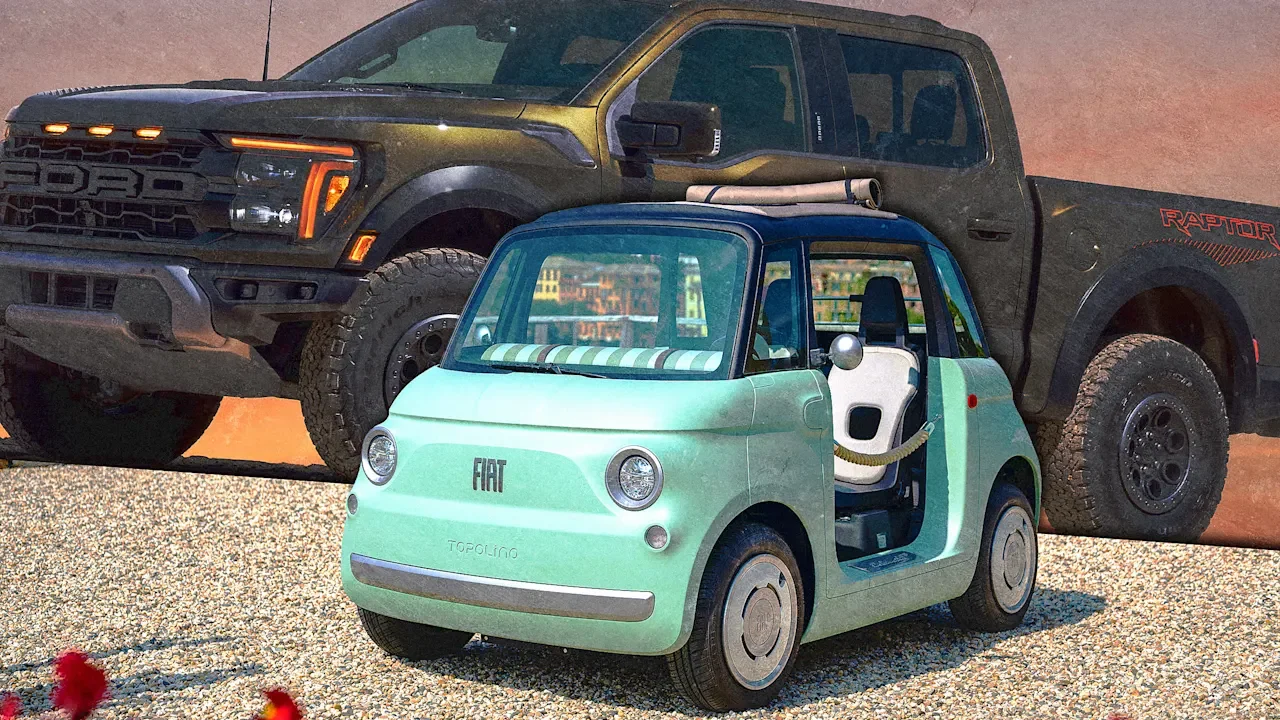
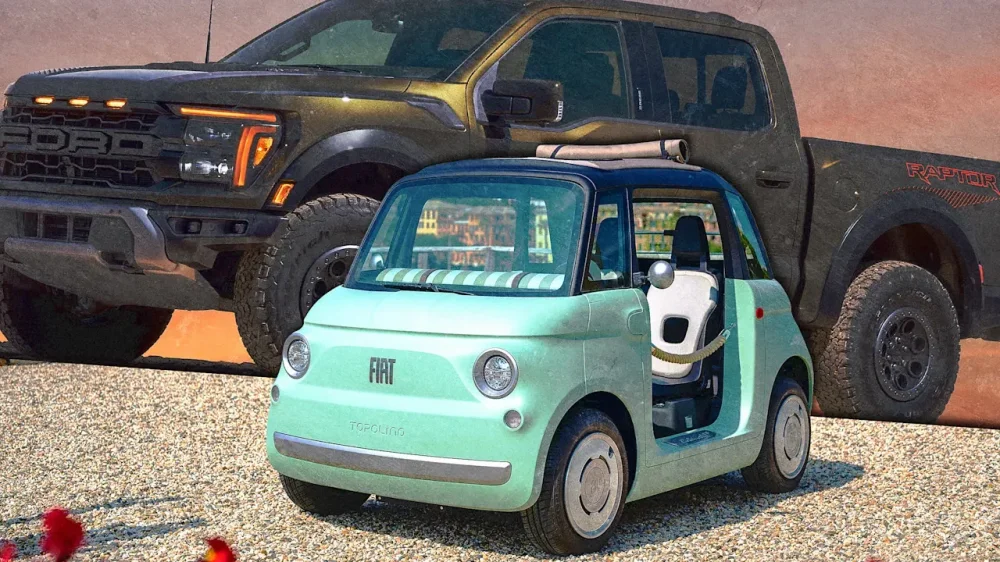
The tiny Fiat Topolino—about the length of a cargo bike and half as long as an American SUV or pickup—is the kind of car tourists stop to photograph as a cute curiosity in Rome or Milan. The electric car only travels 28 miles an hour, and it’s designed for dense European cities. But it also only costs around $10,000, and Fiat is now betting that Americans are ready for something this tiny. The company recently announced plans to bring the car to the U.S., shortly after The President said that he wanted to help bring similarly tiny kei cars to the U.S. from Japan. There’s a strong argument that smaller cars are better for society: They’re more affordable, more efficient, take up less space, and they’re safer for pedestrians and other vehicles in a crash. (Uncharacteristically, The President noted that “really cute” kei cars can be electric and are fuel efficient, shortly after his administration started the process to roll back fuel efficiency requirements.) But for the smallest microcars to be more than a niche category, a lot would have to change. Growing interest in smaller rides For years, the conventional wisdom has been that Americans love giant vehicles. Ford F-Series trucks have long been the bestselling vehicles; SUVs are more popular than cars. But size preferences are slowly starting to shrink. Compact SUVs now outsell larger SUVs. Sales of midsized trucks are growing faster than full-sized trucks. Compact car sales are also growing. Automakers push bigger vehicles because they make more money on them, partly because of loophole in fuel efficiency regulations. But as consumer cost concerns grow, buyers are moving in the other direction. “I think that it’s certainly not baked into our DNA to like big cars,” says Ben Crowther, policy director at America Walks, an organization that advocates for smaller vehicles to make streets safer for pedestrians and others on the road. “It’s the result of several decades’ worth of marketing. But where I think I see the tipping point being is that small cars are more affordable. Right now, the average cost for new cars is around $50,000. That’s easily someone’s salary. That cost is inflated because vehicles are oversized.” Telo, a startup making a small electric pickup that’s roughly as long as a Mini Cooper and cheaper than a typical gas truck, says that it’s seen strong interest in its first model, which will hit the market next year. Jason Marks, Telo’s CEO, says that it’s also noteworthy how much demand there is for kei cars and trucks. Right now, the U.S. only allows the Japanese vehicles to be imported when they’re at least 25 years old, under regulations aimed at classic cars. But despite the restrictions, kei trucks are the largest class of vehicles being individually imported to the U.S., with around 7,500 arriving last year. “These are vehicles the size of golf carts, with well over 100,000 miles on them, that can’t go 60 miles an hour, and only about 17 states legally allow you to drive them on the highway,” says Marks. “And they’re still this desirable.” Telo’s offering is very different than a kei truck—the Telo MT1 can haul as much as a regular passenger truck, it can be driven anywhere, and it’s designed with modern safety features including sensors, unlike 25-year-old kei cars, which typically don’t even have airbags. Still, the interest in kei cars illustrates the appetite for smaller cars in general. And though kei cars and microcars like the Topolino face challenges in adoption, there’s also room for them to become more widespread with more support. Kei cars versus microcars In Japan, kei cars—short for keijidosha, meaning “light automobile”—originated in 1949 as part of Japanese industrial policies to rebuild the country’s auto industry when most people couldn’t afford larger vehicles. The cars have to stay under 11 feet long and have small engines. They’re allowed on Japanese highways, but have reduced safety features. Unsplash They’re still very popular in Japan, and also popular in countries like India, where Suzuki’s tiny cars have dominated the auto market for decades. But even current models likely wouldn’t meet safety requirements in the U.S., and adding those features would jack up costs. Take the example of the Honda N-Box, a bestselling car that costs around $12,000 to $15,000 and has a fuel efficiency of around 50 miles per gallon. “The Honda N-Box does not have airbags, it does not have ABS, and it does not have some of the features that you would typically require under the current regulations in the United States,” says Aditya Ramji, an economist at UC Davis who focuses on energy, transportation, and electric mobility. “That means that the moment I add those requirements and made this vehicle compliant, the price of the $12,000 N-Box now will become $22,000 straight away.” That’s similar to the cost of the Toyota Corolla—making it unlikely that an N-Box could compete under current regulations. In theory, the DOT could create new standards and certification requirements benchmarked to those that have been in place in Japan for decades, and make it more feasible to import new kei cars. That process would take time. (The President’s post on Truth Social saying “I have just approved TINY CARS to be built in America” did not actually constitute approval.) Microcars like the Fiat Topolino fit into a different category under U.S. regulations—something the DOT calls a “neighborhood electric vehicle” or NEV. The cars are restricted to speeds of 25 miles an hour. In most states, they’re only allowed on roads with speed limits up to 35 miles an hour. Some states require extra safety equipment, like windshield wipers. But airbags aren’t required. Because of the limitations, it’s a niche market. Some experts are skeptical that demand of either kei cars or neighborhood electric vehicles could significantly grow. “Generally speaking, it is difficult to imagine a scenario that could significantly shift the personal vehicle market in a direction that would result in widespread adoption of very small cars in the United States,” says David Bunch, a management professor emeritus at UC Davis who has studied consumer choice in vehicles. The main exception, he says, could be highly urbanized areas like New York or San Francisco. The safety challenge Both kei cars and neighborhood electric vehicles struggle with consumer concerns about safety. Still, Ramji argues that tiny vehicles could be relatively safe in urban commutes even without the current suite of required safety features, as they travel at relatively low speeds. The growing suite of safety features on other modern cars, including sensors and automatic braking, also helps. “I think the trend that we’ll be seeing as the fleet turns over and more of these vehicles have safety features, it means that you don’t need the full armor of an SUV or a pickup truck because your car, and everyone else’s car on the road is actively working beyond just the driver to avoid that collision,” says Crowther. If more of the tiny cars were in use, it would also mean fewer pedestrian deaths: If a person is hit by a small vehicle, they’re much more likely to survive. That’s both because there’s less force in a collision and because low cars hit the body lower than a large truck or SUV that can fatally strike someone in the head or chest. And small cars are also less likely to damage other vehicles in a crash. The paradox, of course, is that people are more likely to choose cars that protect themselves, not others on the road. “The notion of ‘safety benefits’ of smaller cars has long been problematic, because they must share the road with larger vehicles, and in a ‘contest’ the larger vehicles win,” says Bunch. “That is, smaller cars are by definition less safe in an environment with mixed vehicle sizes.” Can microcars grow? Even with the challenges that exist, there could be room for more tiny cars in the U.S., especially in dense cities. Demand isn’t guaranteed—the tiny Smart Fortwo was taken off the American market in 2019 due to low sales. But some policy changes could support growth. For example, a city could offer cheaper parking permits based on vehicle size, since tiny cars don’t take up as much valuable curb space. States could choose to allow neighborhood electric vehicles on more roads—or, to boost safety, could lower speed limits on more routes. Better urban design would also help. “To have neighborhood electric vehicles, you really do need to have a better mix of land uses, which we don’t see in most suburban settings,” says Kara Kockelman, a professor of transportation engineering at the University of Texas at Austin. “In these planned developments, a grocery store is off of a much higher speed street.” If it was possible to drive at a low speed to run errands or commute to work or school, tiny cars could become a more viable option for more people. (Of course, it would also be easier to bike in that scenario.) Both microcars and kei cars could be useful as a second car for short commutes, says Ramji, and that could potentially help unlock a new urban market for EVs. It’s not likely that the current administration will intentionally do anything to promote electric cars. But creating new regulations that allow kei cars could also theoretically boost EV sales. One popular current kei car, the Nissan Sakura EV, has around 110 miles of range and costs $16,000 or $17,000—far less than most EVs on the U.S. market. “Maybe this is an opportunity in the U.S. to think about how the small car segment can fundamentally serve the electrification narrative and really come in strategically leapfrogging that ecosystem and looking at urban EVs as opposed to gas cars in the mini car segment,” Ramji says. View the full article
-
An increasing number of companies are finding the much-promised financial gains of implementing artificial intelligence in the workplace have been slow to materialize. But that isn’t stopping many CEOs from spending even more on AI in the coming year. A new study from advisory firm Teneo finds that 68% of CEOs will increase their AI spending next year. A growing number, however, are aware that they need to start showing returns on that investment—and an important part of their job is convincing shareholders to remain patient. “As efforts shift from hype to execution, businesses are under pressure to show ROI from rising AI spend,” the company wrote. “Large-cap CEOs are seeing solid returns on current programs, particularly across administration, internal efficiency, and customer-facing applications. However, 84% of these CEOs predict that positive returns from new AI initiatives will take longer than six months to achieve. In contrast, investors are pushing for faster impact: 53% expect positive ROI in six months or less.” To date, less than half of the AI projects have generated returns that exceed the cost of the programs, according to 350-plus public-company CEOs surveyed by Teneo. Teneo’s survey comes on the heels of a Gallup study of AI use in the workplace, which showed a big spike in 2025. The percentage of U.S. workers who used AI on at least an occasional basis jumped from 40% to 45% between the second and third quarters of 2025. (In the second quarter of 2024, that number was just 27%.) Power users of AI were on the rise in that study as well, with 10% of the respondents saying they used the technology daily in the third quarter, up from 8% at the end of the second quarter. A year ago, that number stood at just 4%. Workers said they’re using AI to consolidate information or data and to generate ideas, with a slightly lower number using it to learn new things or automate basic tasks. A small percentage—just 9%—said they use AI to make predictions. Teneo’s survey finds that the most successful AI strategies have been in the marketing and customer service spaces. More complex applications, such as security, legal, and human resources, have not yet lived up to the technology’s potential. That’s not surprising, says Ryan Cox, global head of artificial intelligence at Teneo. More complex uses will need to be rolled out at a slower pace. “The first wave of AI returns came from easy efficiency wins. The next wave is about rewiring core processes that inevitably have a longer, bumpier ROI curve,” Cox says. “These use cases are higher risk and have greater potential impact. You don’t rush them to market; you treat them as strategic change programs with board-level oversight, not experiments.” Despite events like the November layoffs at Verizon, where 13,000 workers lost their jobs as part of a strategic shift towards AI, CEOs feel fears that increased AI usage will result in job losses are overblown. Some 67% told Teneo they expected the technology to increase their entry-level head count—and 58% said they expected it would result in more senior leaders coming on board. As a result of this bullishness on AI, some 87% of the CEOs Teneo spoke with said they believed their organizations are prepared for future technological disruption. However, they cautioned, future leaders will struggle to keep pace with tech advancements, meaning agility and creativity will become the most important skills for future CEOs. That enthusiastic attitude extended beyond the world of AI, also. Optimism about the economy was remarkably strong, given the uncertainty of this year, with 73% of CEOs and 82% of the 400 institutional investors surveyed saying they expected the global economy to improve over the first six months of 2026. (Mid-cap CEOs were much more bullish on the market than large-cap ones.) View the full article
-
When the U.S. government cut funding for local news stations, the Knight Foundation moved quickly to help stabilize a rapidly eroding industry. President and CEO Maribel Pérez Wadsworth unpacks the evolving roles of philanthropy and government, and why philanthropic organizations must learn to move at the speed of the news cycle. This is an abridged transcript of an interview from Rapid Response, hosted by former Fast Company editor-in-chief Robert Safian. From the team behind the Masters of Scale podcast, Rapid Response features candid conversations with today’s top business leaders navigating real-time challenges. Subscribe to Rapid Response wherever you get your podcasts to ensure you never miss an episode. The Knight Foundation has focused on promoting and preserving local news and journalism and local communities for decades. This year, that mission has come under unprecedented attack with big funding cuts for public media, lawsuits by President The President against CBS News, The Wall Street Journal, New York Times. Is this what you signed up for when you took on this job 18 months ago? I mean, how prepared were you—was the organization—for this kind of seismic shift? Well, no, I can tell you, it’s not what I signed up for. I don’t think anybody could have quite contemplated the things we are focused on in 2025. But that said, I’ve spent my entire career fighting for journalism and fighting for the First Amendment. So from that perspective, this is yet another part of that journey. Is it harder right now? Absolutely. Are the fights coming across a lot of dimensions that we couldn’t have anticipated? Absolutely. But this is what the Knight Foundation was set up to do since it started its work 75 years ago. So while we’d all rather be able to pace ourselves a little bit more, I think the moment demands urgency, and it demands focus, and it demands clarity of purpose. The First Amendment is what makes all the rest of our democracy possible, so we have to defend that. When Congress stripped $500 million in funding for public media this summer, part of the critique was that publicly funded media had become partisan, that it wasn’t always impartial. I mean, is there a fair critique in there about that? I think that you’ve seen trust eroding in a lot of institutions, and as the country and the world becomes increasingly polarized and dependent on their own echo chambers for information, I think absolutely, trust is a problem, and inherent in that is a concern about bias. The truth of the matter though is when you look at study after study, public media, particularly local public media stations, are still among the most trusted institutions by Americans. People believe in their local newsrooms. They trust their neighbors to report on their communities. The vast majority of these cuts did not impact, say, NPR at a national level or PBS at a national level. While the rhetoric around the cuts and the perceptions of bias centered on those entities and NPR in particular, the cuts in effect barely affected NPR but are devastating to the local stations, especially in huge swaths of the country that are primarily rural, what today we might say are in red states. That’s who’s impacted by these cuts. As this bill was being debated in the Senate, Alaska experienced a significant earthquake. And had it not been for one small public radio station, a lot of Alaska would not have even known that they were under tsunami warnings. And these concerns about news deserts, like apps like Facebook and Nextdoor and other ways that we’re sharing information these days, they can’t or don’t really fill that space. No, they absolutely don’t fill that space. I mean, we’re on all these platforms. We know the kinds of information that is shared there. It is certainly not what any of us would call trusted, verified information. It’s not reliable. And let’s not forget that for a lot of the country, we still struggle with reliable broadband access. The stations most at risk represent some 40 million to 50 million Americans. When these cuts went through, the Knight Foundation, alongside some other funders like the Ford Foundation, the MacArthur Foundation, you jumped in to fill some of the gap. I know you put in a $10 million cash injection. How did that come about? It was a meet-the-moment-urgently proposition. And let’s be clear that philanthropy doesn’t necessarily always move at the speed of news, but it was really important, because this was an imminent loss of funding and dollars that had already been appropriated, that these stations were counting on, in some cases for upwards of 30% to even 70% or more of their annual budgets. So very significant, very dramatic. We had to move quickly, and it was great to see some key partners come to the table with us. We did $10 million to help lead the Public Media Bridge Fund that is being run by the Public Media Company. And today, just 11 weeks later, we’re at almost $60 million raised. That is nearly unprecedented for philanthropy to have moved that quickly. That said, it’s not the long-term solution. This will help to stabilize the stations that are most at risk. That doesn’t mean that there won’t be loss of programming. That doesn’t mean that every single station will survive necessarily. But hopefully it buys the necessary time to think through the transformation of the overall system, what kinds of changes need to be made, from governance of public media to some consolidations that are no doubt necessary. But we need to buy the time, because the rug got pulled out from under them. Some local radio and television stations, as you mentioned, they are shuttering, they are cutting back. Is the hope that you can bring them back, or does the focus need to be on, “Hey, let’s preserve the stations that are still alive that are the stronger ones”? Well, right now, it’s a matter of truly preserving access to local news and information and community. So the prioritization around these funds will be prioritizing those stations that are, say, sole servers in their communities, that absolutely provide local news and information in addition to some of the other programming. But preservation is clearly important. The loss of these stations would represent a significant setback. We have some, what, almost 2,000 so-called news deserts in the country today. So these stations would create that many more all over the country. But this has to be a phased approach. Right now it’s stabilized to ensure that we preserve something to transform, and then we need to get into the serious work of what does it look like for sustainability. Sometimes I think that if public media is no longer supported by the government, is public media the right term or is it just media? It’s a great question. At that point, you’re right, it’s just media. And so I think that will be part of the thinking going forward. I have to believe, and maybe it’s just the hardwired optimist in me, that we will see a rational rethinking of the federal funding picture, specifically for stations in more vulnerable areas, in smaller communities where you don’t necessarily have a huge population base to self-fund these stations or a big business community that can help underwrite the cost of these stations. But where people still understand that there is a true vital role played by these stations in their communities in terms of being connective tissue, in terms of having the issues, the people, the things that are important to the community really front and center. So my hope is that we will see some level of federal funding coming back, even if it’s more targeted to the stations that would be more dependent on public funds to continue to exist. For the Knight Foundation, obviously, you’re committed to freedom of the press and local news, but that’s part of a pledge to support local communities overall, right? I mean, it’s sort of linked together. It is. And we think it’s foundational. To us, reliable local news and information is really a central force for good in communities. People see one another, they connect with one another, they have a common fact base to rally around. And so for a community to thrive, that’s table stakes. View the full article

-
As workers rail against the tyranny of shared schedules, tech companies say they can helpView the full article
-
Here we go again! For the third time within a quarter century, the Warner Bros. studio assets have been acquired for more than $70 billion. Since I commented very sharply on the first two, lots of people are asking me my thoughts on the just-announced purchase of Warner Bros. by Netflix. I provide my response in this Playing to Win/Practitioner Insights piece. And as always, you can find all the previous PTW/PI here. Third Time Lucky? The first of these mega deals was in 2001 when AOL bought Time Warner in a deal that valued Time Warner equity at $166 billion. (While it was more of a merger than a takeover, it was technically structured as an acquisition). The next one was in 2018 when AT&T bought Time Warner for $85 billion. Both deals routinely make lists (like this one) of the worst takeover deals in business history. The AOL Time Warner deal cratered almost immediately as the market realized that AOL was largely worthless, which was confirmed when AOL was spun off for a mere $3 billion in 2009. The selling shareholders initially thought they got an awesome deal because Time Warner shares were valued at a massive 70% premium over the preannouncement price. However, the payment was in what turned out to be wildly overvalued AOL stock. In the end, Time Warner shareholders gave up 55% of their company—worth about $55 billion based on preannouncement value of Time Warner—in exchange for an asset worth $3 billion. As a combination, AOL Time Warner was a disaster, but the shareholders of AOL made off like bandits. In the AT&T Time Warner deal, AT&T learned not long after the dust had settled that this was a disastrous acquisition and, a mere three years later, sold the Time Warner assets to Discovery for $43 billion—a massive discount. As I have pointed out before, that is the equivalent of the AT&T executives holding a bonfire of $38 million of shareholder cash every day for three consecutive years. On December 5, 2025, Netflix reached an agreement to acquire the Warner Bros. assets for $72 billion. Of course, we don’t know yet how it will turn out. The first two deals destroyed over $50 billion of value for Time Warner shareholders and over $40 billion for AT&T shareholders, respectively. The hope is that this will be third time lucky—but the track record around the transfer of Warner Bros. assets hasn’t been good thus far. Deeply Flawed Strategic Rationales I knew the first two deals were doomed from the outset because the (so-called) strategic rationale for both was deeply flawed. The stated strategic logic of the AOL Time Warner combination was that AOL would benefit competitively in the Internet access business, in which it was then the market leader, by having proprietary access to Time Warner content. Sounds great! But the logic just doesn’t track. Time Warner’s value was based on its ability to broadly distribute its content. Content creation is a fixed cost business. Creators invest an enormous amount in creating the content and then to amortize that fixed cost, they strive to sell their content to as many users as possible. AOL led in the internet access business with 30% market share at the time. One of two things could have happened after the combination. First, Time Warner content could have given AOL a meaningful advantage over its competitors. That would have validated a key tenet of the rationale. But had that happened, the other 70% of the market would have boycotted Time Warner content because it was helping their competitor, which would have sabotaged the business model of Time Warner. Alternatively, Time Warner content may not have been able to move the needle on AOL advantage over its competitors, invalidating the entire premise of the combination. That is, there was zero probability of the strategic success of the combination, which I described in this Harvard Business Review piece. On AT&T Time Warner, the rationale was owner economics, a concept I hate in the general case, as I discuss in this piece, and my antipathy applies in spades to this case. The idea was that by buying Time Warner, AT&T gained the advantage of owner economics. Rather than buying content from outside providers and having to pay a profit-margin premium for it, AT&T would get it from Time Warner at cost—improving the (owner) economics of AT&T. Yup, that would be true. But then all the business Time Warner would have with its giant customer, AT&T, would be at zero profit, thus tanking the profitability of Time Warner, ensuring that its value would never be close to the $85 billion for which it was purchased. Days after the merger, I pointed out this logical flaw to Fortune reporter Jeff Colvin, who had called me for my opinion, and I predicted that: a) the acquisition would be an unmitigated disaster; b) would be divested within five years; c) at a price half of the acquisition price; and d) would cost AT&T CEO Randall Stephenson his job—predictions that Colvin confirmed in an article at time of divestiture. The only thing on which I was (slightly) wrong is that I predicted AT&T would salvage 50% of the purchase price—it was 50.6%. Both illustrate what I call the Impossibility Theorem, which describes a situation in which for the logic to hold, two things must be true, but if one is true, the other can’t possibly be. For example, if AT&T does benefit from owner economics, Time Warner can’t maintain its value. If Time Warner can maintain its value, AT&T can’t benefit from owner economics. Not understanding the Impossibility Theorem cost shareholders roughly $100 billion across these two acquisitions. Netflix-Warner Bros. This all begs the question, is this just another Warner deal based on a fundamental strategic fallacy? No, it is not. There is no insane argument about owner economics or vertical integration. This is a plain, old-fashioned bulk-up move. With the acquisition of Warner Bros., Netflix bulks up in its two core businesses: content creation and content streaming. Netflix started in media content distribution and led by pioneering internet streaming, becoming the dominant player in that arena. It distributed the content created by the traditional major players in that space, such as Universal, Paramount, Warner Bros., etc. However, during the 2011-2015 period, all the new streaming players, including Netflix, started spending aggressively in content creation of their own. As a result, Netflix is now a major player in both content streaming and content creation. However, in streaming, Netflix is no longer the sole dominant player. Based on recent numbers, Netflix still has the biggest U.S. subscriber base with 81 million. But Amazon is close behind with an estimated 75 million. Disney’s Hulu has 64 million. But if you combine the three Disney streaming platforms (Hulu with 64 million; Disney+ with 55 million; and ESPN+ with 25 million), it is far ahead of Netflix with 134 million streaming subscribers. Globally, Netflix leads with 302 million subscribers to Disney’s 221 million (combined) and Amazon’s estimated 200 million. But with the Warner acquisition, which includes its HBO Max service, Netflix jumps slightly ahead of Disney in the U.S. (139 to 134 million) and dramatically widens its global lead with 430 million to Disney’s 221 million and Amazon’s 200 million. This is simple straightforward bulking up in Netflix’s core streaming business—overcoming its scale deficit in the U.S. and extending its scale advantage globally. That is a simple and powerful strategy logic. In content creation, Netflix was a big part of the dramatic transformation by which the players that have entered content creation since 2011 now make up 50% of the estimated content creation spend. But prior to this deal, Netflix was a mid-tier player in that game, spending an estimated $17 million in 2024 compared with Comcast-Universal at $37 million or Disney at $28 million. However, adding in Warner’s $14 million makes Netflix one of top tier content creators. To the extent that scale matters in streaming and content creation—and I think it does—the strategic logic of this makes lots of sense, in stark contrast to the previous two trades of Warner Bros. assets. The Rub When the AOL Time Warner and AT&T Time Warner deals were announced, there was huge uproar in the press over antitrust concerns. Would the vertical integration hurt consumers? Would AOL and AT&T become dangerously dominant in their primary markets because of their ownership of Warner content? I didn’t worry for a second because regulators don’t have to protect consumers from mergers that are going to crater and I knew both deals were destined to fail miserably. Regulators only need to worry about mergers that are likely to succeed! And they should worry about this one. The Netflix press release is quite something. It makes two claims aimed specifically at potential antitrust concerns. Bold-type callouts claim that the combination will: 1) Offer More Choice and Greater Value for Consumers, and 2) Create More Opportunities for the Creative Community. I understand why companies do this kind of thing. Netflix would love to have readers be insipid enough to believe these two things because that would suggest there are no antitrust problems about which regulators should be concerned. The problem is that both claims are flat out false. When you reduce the number of major competitors by one, you do not provide more choice or greater value for consumers. If you buy the competitor and leave it alone, at best, you provide the same choice and the same value. But to leave it alone is not why a company pays a huge takeover premium to buy a competitor. And when you reduce the number of major industry players by one, you do not provide more opportunities for suppliers to that industry. You reduce by one the number of customers who compete for their services. I can totally understand why Netflix wants to reduce competition from other streamers and other content creators. In streaming, it started with a near monopoly but has lost its lead in the US market and is no longer far ahead globally. Getting rid of one major streaming competitor and bulking up makes lots of sense. In content creation, when all the new players entered, including Netflix itself, they created a bonanza for content creation talent. It has never been a better time for talent, as exemplified by Shonda Rhimes’s $450 million production deal with Netflix. Bulking up to have more buying power over content talent, plus eliminating one major content competitor makes total sense. But dissimulating about it? Not a good look. Practitioner Insights You will be fed all sorts of ridiculous so-called strategy logic on a regular basis. It can be vertical integration, owner economics, or having one less competitor will deliver more choice for consumers. Some are the product of utter cluelessness, others fundamental dishonesty. Sometimes somebody else (like me) will help you expose the logical fallacies. Other times, you will be on your own. For those times, it is important to practice your critical eye for strategy logic. When you read or listen to someone espousing a strategic logic, practice interrogating it. Don’t just accept it. Instead, take it under advisement and ask whether there is a better, more profound logic to explain the situation—e.g. Time Warner shareholders were about to be taken to the cleaners by AOL shareholders, owner economics is a fraudulent concept that will cost AT&T shareholders dearly, and Netflix isn’t motivated by consumer choice or creative community welfare but rather by increasing its scale and reducing competitive intensity in its core businesses. View the full article

-
For many office workers, the typical “lunch hour” is a sad desk lunch of a sandwich or slop bowl supplemented by a rotating schedule of snacks. According to a poll conducted by Yahoo and YouGov, half of employed Americans regularly eat at their workstations. And now they’re sharing it all on TikTok. Office snack content is hooking viewers online with captions such as “WIEIAD” (what I eat in a day) and “what I ate at my 8-4,” featuring office workers’ time-stamped eating schedules. Employees post montages of their morning coffee and breakfast of choice, followed by a time-lapse video of a variety of snacks and beverages consumed at their desk. Some videos have voice-overs, some have light jolly music, and others keep it monotonous, complete with keyboard ASMR. And if the worker’s employer offers free food (certainly a step above your tuna on rye in a brown paper bag), they’re sharing that, too. “Rating everything I ate at the office today,” one TikTok creator who works at the tech company Carta posted. First, she helps herself to free coffee, followed by a Cocojune yogurt with blueberries. For lunch, she shows a plate of chicken katsu and a range of beverages, including a lime Diet Coke and a Spindrift. The day ends with a protein bar. Her content frequently racks up hundreds of thousands of views. In a separate video, she provided a close-up of the snack selection, due to popular demand. “My show is on,” one user commented. Another wrote that they’d love to see “how much money this saves you eating at work every day.” A day of office lunches may not sound like thrilling source material for social media, but clips of what people are eating at work are an extremely popular content niche. There are more than 1.1 million videos on TikTok with the hashtag #wieiad, varying from corporate snack selections to what workers pack for their lunch from home. Why these mundane videos are oddly satisfying to watch, who’s to say? For some, it may serve as inspiration; for others, it can give a sense of a company’s workplace culture and perks. Perhaps we are simply nosy creatures. Free food at the office has long been a popular perk used to entice employees. In 2022, Meta eventually barred employees from bringing in Tupperware because too many had been stocking up on free food and taking it home with them. After the pandemic and the end of remote working left many companies seeking ways to entice workers back to the workplace, office snacks and free lunches were among the incentives employers turned to. Because who doesn’t love a free lunch? (With the additional benefit for employers of keeping workers at their desks longer.) A recent change in tax law may throw a wrench in the WIEIAD trend, though: Starting in 2026, “meals provided for the employer’s convenience, such as on-site or cafeteria meals, will no longer qualify for a tax deduction,” according to professional services firm UHY. Some have suggested the change could apply to office snacks and coffee, too. Think of all the potential office mukbangs we’d be deprived of. View the full article

-
I’ve tried them all. A fancy planner, “perfect” workout routines, ambitious ways to read more, and writing rituals to get more done. I did the research. But what ultimately worked is something called the kaizen incremental method. An idea is from Japanese manufacturing, of all places. It means “continuous improvement.” The practice of tiny actions. A step so small your brain’s resistance (a built-in fight-or-flight response to big, scary changes) doesn’t even bother to fight it. I use the kaizen approach as a backdoor to building new neural pathways. I’m not forcing change; I’m gently guiding my brain into new habits, one step at a time. That’s how I started writing almost every day. I opened my laptop and started putting thoughts down at the same time daily. I didn’t aim to write a whole page. Just ideas down. After a few weeks of the same practice, writing things down became easy. Not effortless. But the resistance was not the same. That’s the kaizen advantage. You work with your psychology, not against it. Big goals You’ve probably tried the “new year, new me” approach to life. You start the year with big goals. And big motivation. But most people don’t even make it through to March. What’s helped me is tiny but consistent routines, rituals, and behaviours. It doesn’t matter what time of year. I focus on stacking “good actions.” The kaizen approach feels like nothing. Until suddenly it feels like everything. “The easier a behavior is to do, the more likely the behavior will become habit,” writes B.J. Fogg in his book, Tiny Habits. Kaizen matches how you live. Say you want to read more. The old way: “I’ll read 50 books this year!” You buy a stack, stare at it, and feel behind by February. The Kaizen way: “I’ll read one page before bed.” One page. You’ll often read more. But on the worst day of your life, one page is still a victory. You’ve kept the habit alive. One tiny bit of progress at a time. You read one or two pages of your favorite book daily. A year later, you’ve finished more books than ever. You save $50 a month. One day, you’ve built an emergency fund. You start by tidying one drawer. Eventually, your whole space feels clean. There’s no one massive win. Just small wins stacking up. When you want big results, small steps feel insulting. You want to sprint. You want the outcome that means everything. You want proof that you’re serious. Direction is everything But being serious means not stopping. The secret is in the consistency, not the intensity. A 1% improvement, repeated, is compound interest for your life. Do the math: 1% better every day for a year, and you’re nearly 38 times better by the end. Life isn’t that linear, but the direction is everything. You’re moving forward, not stalling out in a cycle of ambition and guilt. You’ll doubt it at first. I did. It feels too small, too insignificant. “One page of reading is nothing!” But “nothing” is sustainable. You’re playing the long game. You can’t overhaul your entire life every January. You will burn out and feel frustrated. You’ll feel like you “failed” when really, it’s your system that failed. Small steps are not a compromise. They’re a sustainable life strategy. Make your system too easy to fail. Pick the smallest version of the thing you want. If the goal is to write, maybe you start with one sentence a day. Yes, one. What’s the point? The goal is not to overwhelm your brain. Convince yourself it’s too easy not to try. The more you practice, the greater the chance of it becoming a habit. Make it repeatable If you need willpower, it’s too big. Keep score. Tiny wins feel bigger when you can see them. Can you quantify your results? Show your wins to yourself. And let yourself feel proud. Seriously. Celebrate the “tiny” stuff. Your brain loves reward signals. Over time, your small steps evolve. You don’t have to force it. Momentum does the heavy lifting. Kaizen doesn’t just help you change. It changes how you see yourself. When you repeat every day, even in tiny ways, you stop seeing yourself as someone who “tries.” You start seeing yourself as someone who does. And that transformation is everything. Big change looks impressive, but small, consistent action builds identity. They build trust in yourself. They build a life that doesn’t fall apart the minute motivation fades. If you want a change that can last in the next few months, something that sticks, try smaller. Way smaller. The path to significant change isn’t broken resolutions. It’s tiny, steady progress. Just pick an area of change. A tiny habit you can sustain. And start small. Pick one thing you are likely to do. Something that won’t tell your brain it’s a big deal. Kaizen is the discipline of consistency. You don’t need a new version of yourself to pursue things too overwhelming for your brain to sustain. What you need is just today’s version, willing to take one small, almost silly step. Significant change is not an event you schedule. It’s a practice. You’re not breaking yourself down to build something new. You’re just guiding yourself, kindly, in a better direction. Take that goal you are pursuing. Now, make it smaller. Smaller still. Until you think, “Oh, I could do that right now.” Then do it. And trust that tiny start with all your heart. It’s the smartest, most human way forward you’ve got. View the full article

-
Tax return to hot chickenView the full article
-
Figures also show wage growth cooled in three months to OctoberView the full article
-
The The President administration is spending millions on advertisements aimed at recruiting new U.S. Immigration and Customs Enforcement agents. The ads are so widespread that TV viewers and social media users alike are seeing them everywhere, including on YouTube, Spotify, and LinkedIn. In one recent ad seen on LinkedIn, a stern-faced Uncle Sam points at the viewer. The message reads: “Join ICE Today” along with the note, “$50,000 signing bonus” at the bottom. Likewise, a 30-second TV spot that originally aired during the 2025 MTV Video Music Awards broadcast in September has been spotted nationwide in the months since. “You took an oath to protect and serve, to keep your family, your city, safe,” the narrator says in the promotion. “But in sanctuary cities, you’re ordered to stand down while dangerous illegals walk free.” It’s hard to tell what sets certain cities apart, but the call to action has been specifically targeting Albuquerque, Boston, Chicago, Denver, New York, Philadelphia, Sacramento, Seattle, and Washington, D.C. More recently, the ads have been seen in Atlanta, Dallas, Miami, and Salt Lake City, as well as in San Antonio, Houston, and El Paso, Texas, according to AP News. The ads are part of the The President administration’s $30 billion initiative to hire 10,000 more ICE agents by year’s end. According to data from Equis, acquired by Rolling Stone, the Department of Homeland Security has been spending millions to reach more and more Americans. DHS has spent about $2.8 million since March to keep ads running on Meta’s Facebook and Instagram. Since August, the agency has paid Meta another $500,000 to run recruitment ads. DHS also spent $3 million on Google and YouTube ads in Spanish instructing people to self-deport. Ads have been running on Spotify and Pandora as well, but Equis did not have data on how much DHS spent on those ads. Spending didn’t stop or slow down during the government shutdown, either. According to Newsweek, DHS reportedly kept throwing money at ICE recruitment efforts while millions of workers went without paychecks. Over the three-week shutdown, ICE spent around $4.5 million on paid media. “Millions of people are at risk of losing their food stamps and are about to go hungry because of this government shutdown,” Natalia Campos Vargas, deputy research director at Equis, told Newsweek at the time. “But somehow the The President administration and DHS and ICE are choosing to spend millions of dollars on ad campaigns. That just feels inherently wrong to me as a taxpayer.” As ICE has ramped up recruitment efforts, the pushback has been gaining steam. On December 11, Homeland Security Secretary Kristi Noem was grilled by lawmakers about alleged wrongful deportations of U.S. citizens, including military veterans. Noem was confronted with individuals the agency allegedly deported. The secretary left the meeting early and was heckled upon exiting. Meanwhile, anti-ICE ads combating the pro-deportation narrative have also popped up on various platforms. In one ad from Home of the Brave, Army veteran George Retes, a U.S. citizen, tells the story of his ICE abduction. “My driver’s side window shatters. An agent sticks his arm through and pepper sprays me in the face. They drag me out of the car. They throw me on the ground. They zip-tie my hands behind my back,” Retes says in the video, which is airing nationally across streaming platforms. “Had they just looked at my ID, they would have seen that I’m a U.S. citizen, that I’m a veteran. . . . What’s happening right now isn’t right.” Still, while many users may be uncomfortable with the surge in ICE ads online, the organizations running them seem undeterred. A Spotify spokesperson told Fast Company that the ad is “part of a broader, well-documented U.S. government campaign running across multiple platforms, including television, streaming, and online channels.” The spokesperson added that users are able to control their ad preferences. “Spotify is an open platform that supports a wide range of voices and perspectives, even those some people may personally disagree with. That’s why we believe listener control is key to that balance and users can like or dislike specific ads as well as update their ad preferences, including opting out of certain categories such as government.” While there has been a surge in calls for Spotify users to boycott the platform over the ICE ads, as well as over founder Daniel Ek’s investment in Helsing, a German defense company, the platform says there has been “no material impact in terms of cancellations.” Fast Company reached out to LinkedIn and YouTube in regard to the running of ICE recruitment ads but did not hear back by the time of publication. View the full article

-
One of Michael’s friends told him recently, “I’m not burned out; I’m just feeling empty.” She shows up, meets deadlines, and manages to smile in meetings. But her work feels weightless and disconnected from purpose. She’s not alone. Gallup’s 2025 State of the Global Workplace report found that only 21% of employees worldwide are engaged, and just one in three say they’re thriving. That’s not a blip—it’s a warning signal for leaders and cultures. When emptiness shows up at work, our reflex is to pathologize: “Is this burnout? Do I need a diagnosis?” Sometimes, yes—clinical conditions require clinical care. However, many of today’s struggles are fundamentally philosophical, centered on issues such as purpose, values, identity, and the meaning of life. Those don’t always need a medical label; they need better questions. Why We Need a Different Lens Disengagement is expensive. Gallup estimates that low engagement costs the global economy $8.8 trillion annually, nearly 9% of global GDP. Manager engagement is also slipping, dropping three points in 2024, with a ripple effect on teams. The human cost? Teams feel flat, leaders are running on fumes, and organizations are mistaking busyness for progress. Cognitive scientist John Vervaeke refers to our current moment as a “meaning crisis”—a cultural shortfall in making sense of our lives. That frame helps us see that the emptiness that many feel isn’t always a disorder; often, it’s a signal. Therapy is essential when there’s a clinical risk. But when the primary challenge is purpose—not pathology—philosophy can be the right first (or parallel) step. What Philosophical Counseling Looks Like at Work Philosophy at work doesn’t show up as abstract debates about Plato in the break room. It shows up as structured reflection in moments when leaders feel stuck, conflicted, or unclear. Unlike traditional coaching, which often emphasizes goals and performance, or therapy, which focuses on healing emotional wounds, philosophical counseling creates clarity—helping you slow down to examine the ideas, assumptions, and values that drive decisions. In practice, this means creating a conversational space where leaders can explore the deeper questions that often remain unaddressed in quarterly reviews or strategic planning sessions. It’s not about diagnosing or prescribing. It’s about holding up a mirror to how you think, and then gently but persistently asking whether those patterns are serving you. Sometimes, testing your core ideas against a contrary philosophical position helps you change your mind, but it also helps you formulate your idea with better precision and focus. So, a philosophical counseling session isn’t about “advice.” It’s an inquiry guided by questions like: “What do you mean by success here?” (Define the concept before you chase it.) “Which assumptions are you treating as facts?” (Surface the hidden rules you’re following.) “What obligations follow from your values?” (Tie action to meaning, not mood.) One VP I worked with felt “behind” in her career. She wasn’t looking to change jobs; she was questioning whether she should. From the outside, her role was a success story: she was leading complex cross-functional work, mentoring future leaders, and shaping long-term strategy. But because her peers seemed to leapfrog into splashier titles, she had internalized the myth that a career only counts if it moves in a straight, upward line. Together, we explored economist David Galenson’s distinction between conceptual and experimental innovators: some leaders peak early with bold, disruptive visions, while others build mastery through experience, iteration, and depth. When she looked at her own path through that lens, she realized her current role was giving her exactly what an experimental innovator needs—breadth, autonomy, and repeated opportunities to refine her craft. Her progress wasn’t stalled; it was accumulating. Once she saw her trajectory as cumulative rather than delayed, the pressure loosened. She didn’t need a new job; she needed a new narrative. And with that reframing, her energy and her confidence returned. Another founder I worked with was trapped in “performative productivity,” equating worth with constant output. After interrogating his deeper purpose, he shifted from chasing vanity metrics to making value-aligned bets. Hiring became more intentional. Product decisions became braver. And his leadership became far more sustainable. Practical Steps for Leaders & Organizations The goal isn’t to turn executives into armchair philosophers. It’s to equip them with tools that help cut through noise, clarify assumptions, and ground decisions in meaning rather than momentum. Philosophers have long been aware of their reputation for getting lost in thought. As Plato recounts in Theaetetus, Thales once fell into a ditch while contemplating the heavens. Leaders don’t need another abstract framework piled onto their already full plates. Philosophical counseling brings philosophy back to the ground, connecting it with everyday problems and offering clear practices that create space for reflection and insight without derailing productivity. When leaders bring this lens into the workplace, they not only strengthen their own clarity—they normalize purposeful inquiry across the culture. Here are some concrete ways to start weaving philosophy into your leadership tool kit and organizational systems: Run an Assumption Audit. With a partner, list current dilemmas. For each, ask: What must be true for my conclusion to hold? How else might I interpret the facts? Institutionalize Socratic Stand-Ups. Once a month, replace a staff meeting with a facilitated dialogue on a first-principles question (e.g., What are we optimizing for?) and publish the reasoning behind the decision, not just the outcome. Offer a Meaning Map workshop. Help leaders chart their values, obligations, and behaviors. If values don’t result in better choices, they’re not values—they’re slogans. Use AI thoughtfully. Employees increasingly confide in chatbots. Health experts caution against relying on generative AI for mental health, as it lacks safeguards and nuance. Organizations should establish policies and direct people to seek human assistance when needed. Return-to-office and hybrid work have scrambled the social fabric. However, micro-rituals matter: leave five minutes for human check-ins on Zoom, host optional “philosophy salons,” or design in-person days around connection. These aren’t time-wasters; they’re trust builders. Philosophy provides leaders and teams with a disciplined approach to thinking about what matters—enabling them to act with clarity, rather than merely coping. Your colleague who feels “empty” may not need a diagnosis. She may need to reorient her thinking by asking more effective questions. And those questions may be the most practical tools we have for navigating the complexity of modern work. View the full article

-
“Somehow, it didn’t leak.” When I caught up with Rivian founder and CEO RJ Scaringe after the company’s “AI & Autonomy Day” keynote on December 11 at its Palo Alto headquarters, he marveled that the company had managed to keep the event’s news under wraps until it was ready for its big reveal. It did—and there was a lot to discuss. At the keynote, Rivian unveiled its Gen 3 platform, which will turn the maker of EV trucks, SUVs, and vans into an autonomy company, a focus he says will subsume “the whole business” of transportation. Debuting late next year in a version of the upcoming R2 SUV, the Rivian Autonomy Computer platform is powered by a chip the company designed itself, the RAP1 (Rivian Autonomy Processor). The R2’s self-driving features will also draw on data from a lidar unit that sits inconspicuously at the top of the windshield—a far cry from the spinning lidar towers atop vehicles such as Waymos. (Controversially, Tesla’s cars don’t use lidar sensors.) Rivian also showed off a new voice-controlled user interface called the Rivian Assistant that will be available as an update for its current vehicles as well as for the R3. A bet on the future of car interfaces shifting toward talking rather than tapping on screens, it features integration with Google Calendar—hinting at the kind of productivity-related features that might become more useful as cars take over more of the work of driving themselves. I spoke with Scaringe about all these topics and more. Our conversation has been edited for length and clarity. At least in broad strokes, how much of what you announced today was part of the original Rivian vision and road map? Well, that was 20 years ago. But something like today is the result of many thousands of people working on it for the last few years. Development on the platforms we showed today started in 2022. One of the threads connecting a lot of your news is you doing stuff yourself rather than being dependent on other parties. Was there a period where you weren’t sure which way to go? Maybe the way to answer that is that when we launched in 2021, we had what we call our Gen 1 architecture. And it was a very different approach than what went into our Gen 2 and, of course, what’s going into our Gen 3. We had a perception platform—some of which was our own, much of which was not our own—that fed into a planner, which was our own, and made a set of rules-based decisions around how to drive the vehicle. It was very basic driver assistance: low level two features. And by virtue of that being the architecture, we had a natural limit. We realized that as we approached the launch—that the world was going to shift away from these more deterministic and classical systems to a true AI-based system. It’s sort of ironic. When we say “self-driving,” we might think historically it’s always been AI. But in the beginning, actually, there was no AI. Some of it was very sophisticated if-then statements with good machine vision. What it’s shifted to now is true AI, and that happened in the early 2020s. As that was happening, we came to the view that we needed to completely shift our approach. And when we made that decision in early 2022, we approached it as a clean sheet. With that clean-sheet approach, it was, “Let’s design our own perception platform. Let’s design our own compute platform with Gen 2, leveraging Nvidia as a supplier of the chips themselves, the inference platforms themselves, and go build a data flywheel that will allow us to build a neural net-based approach.” The vehicles ultimately launched in the middle of 2024, a little less than a year and a half ago. And then, in parallel to that, we also kicked off some big hardware efforts, the biggest of which is an in-house chip. To go from zero—no chip design team, no chip in-house, no chip IP—to launching a chip takes time, it takes many hundreds of millions of dollars, it takes a very, very large organization. But we made the decision in ’22 and we’ve been working towards it. Somehow, it didn’t leak. But it’s now nice that we can talk about it publicly and it’s going to be in the vehicles next year. An AI-centric approach required this vertical integration of perception. It doesn’t necessitate owning compute, but owning compute allows you to deliver it at a lower cost level and, in our case, a higher performance level. We just have such a conviction that [autonomy] isn’t just a part of the auto industry. If you look out a little bit, this is the whole business. And so we built this view that where we deploy most of our R&D should be this category. Was it completely obvious you needed lidar? There’s a thinking around lidar that needs to be shed, which is that they’re expensive and mechanically complex. The old Velodyne lidars, even what you see on the roads today, they were really complex sensors. But they’re now very low cost, extremely reliable, and solid-state based. Ten years ago, the best-performing lidar you could buy was maybe $70,000. Five years ago, it was maybe $5,000. Today it’s in the low hundreds of dollars. And so it’s become so cost-effective at turning the entire fleet into a ground truth fleet. It’s really helpful for training your cameras, especially in adverse conditions. When you peel back the onion and you look at the cost trajectory of the sensor, it’s become this sort of strange debate, because Tesla’s taken such a stance on it. But it wasn’t really a debate. If it was a $10,000 sensor, it would’ve been a different story. But when it’s a few-hundred-dollars decision, it’s much easier to make. Your new assistant’s Google Calendar integration made me realize that if I don’t have to spend quite as much time thinking about driving, there’s a lot of opportunity to be productive in the car. To what degree are you trying to build a richly powerful assistant? Google Calendar is just one of what will become many instances of integrations. Today there’s a limited set that have been set up to go agent-to-agent. But any platform that’s going to truly survive, and not just get gobbled up by an AI platform, will need to become very, very capable in terms of enabling agent-to-agent. Effectively like SDKs [software development kits] that just make it very easy to plug in. The goal is that essentially any app that you might want to use, we’ll be able to plug into our agents and it’ll be seamless. So you can reach across apps like you saw today. You talked to the car, the car was able to reach into Google and find the calendar. We were able to tell it to move something, and it reached back to Google through an agent and moved everything around. It’s the tip of the iceberg. All these things will start to become so natural where the car becomes like a personal assistant. If you want to move your schedule or order food or schedule someone to come to your house to fix the plumbing, all this stuff just becomes very, very easy to do. And if you are no longer driving the car, you may want to be able to use the car to help you with more of these things. Do you have any sense as to what the future looks like in terms of robotaxis and autonomous private vehicles coexisting? I definitely think they’ll coexist. They’re anything but mutually exclusive. The existence of level four [autonomy] is what enables both of them, and the technology from a level four point of view is the same. We’re focused on the tech, and the initial instance planned is a personally owned vehicle. But it doesn’t preclude us from doing robotaxis or rideshare. Rideshare today is such a small percentage of miles. I used to be of the view that we’d go from 99% of the world’s miles being in personally owned vehicles to 50% being in personally owned ones and the other half of the world’s miles being in shared. Maybe that happens, but I think it’s probably more likely to go from 99% to 90%. Maybe that’s because I have kids now, and the complexities of car seats and soccer balls and soccer outfits. I think it will be different country to country. When you look at the wealth level in the United States, if you can afford a car today, a lot of people would still rather own one and have the simplicity of it always being available for them and their family. But I actually don’t need to have a strong conviction on this either way. If there’s a heavy shift in the model of consumption, we’re equally ready for that. I’m surprised how much attention the business model gets. If one end of the spectrum is traditional ownership as we know it today, and the other end of the spectrum is pay as you go, we’re not being very imaginative. There are going to be a lot of things in the middle. Maybe I own the vehicle during the daytime and somebody else uses the vehicle at night. Maybe the vehicle’s mine during the week and another family’s during the weekend. Maybe the vehicle’s shared among five or six people as opposed to infinitely shared. There’s just going to be a spectrum of new ways to consume mobility, the moment the vehicle can drive itself. And our view is we’re going to exist across that entire spectrum. But the only thing that’s absolutely certain that’s necessary for any point on that spectrum is level four. Robotaxis don’t work with level three. Personal level four obviously doesn’t work with level three. You need level four. So that’s what we’re focused on. View the full article

-
Finding the perfect (and legal) image for your blog post, social media update, or presentation is about as fun as doing your own taxes. You want something high-quality, relevant, and —most importantly—free. Fear not, budget-conscious content creators. I’ve been using free images for years now, and I’ve routinely leveraged three dynamite resources that specialize in stunning, royalty-free imagery. So, put away your wallets: We’re going content hunting. Unsplash First stop: Unsplash. This site is a veritable goldmine of breathtaking, high-resolution photography, all generously contributed by a community of talented photographers. Whether you’re looking for sweeping landscapes, intimate portraits, or artfully arranged still-life photos, chances are good that you’ll find it here. The search functionality is top-notch, and the sheer volume of images means you’re almost guaranteed to find something that perfectly fits your needs. Plus, their licensing is super straightforward: free to use for commercial and non-commercial purposes, no attribution required. Pexels Pexels is another heavy hitter in the free stock image space, and for good reason. Like Unsplash, it boasts a massive library of beautiful, high-quality photos and, as a bonus, the site offers free stock videos as well. The user interface is clean and intuitive, making it a breeze to browse and download. What sets Pexels apart for me is its excellent curated collections. Need images for a tech blog? They’ve got a collection for that. Looking for food photography? Yep, they’ve got you covered. It’s a great way to discover new and relevant visuals without having to dig through endless search results. Pixabay Rounding out our trifecta of free image collections is my personal favorite, Pixabay. This site is a true jack-of-all-trades, offering not just photos, but also illustrations, vector graphics, videos, music tracks, and even sound effects. The sheer variety here is impressive, making it a great go-to when you need a little more than just a standard photograph. Pixabay’s community of contributors is vast, resulting in a diverse range of styles and subjects. Their search filters are also quite robust, allowing you to narrow down your results by orientation, color, and even type of media. View the full article

-
High court rules rotisserie product should be subject to the 20 per cent VAT rate for hot foodView the full article
-
Clash between Netflix and Paramount for Hollywood studio caps big year for dealmakersView the full article
-
Wael Sawan’s lack of enthusiasm suggests oil major may not move on rival when takeover restrictions end View the full article
-
Timing for fintech’s planned listing was a key aspect of ructions ahead of TS Anil’s surprise departureView the full article
-
Such measures wouldn’t be necessary if Beijing ran anything like a normal, balanced economyView the full article
-
The experience of the video game industry suggests transparency about AI use won’t be straightforward View the full article
-
President hit with blowback for branding affordability issues a ‘hoax’ while flaunting expensive White House renovationsView the full article
-
Rather than use the traditional policy process, foreign governments are dealing with the handful of envoys who appear to have the president’s earView the full article