Newsletter
Want to keep up to date with all our latest news and information?


ResidentialBusiness
Administrators
-
Joined
-
Last visited
Everything posted by ResidentialBusiness
-
If you’re looking to improve your entrepreneurial skills, several courses can provide you with the knowledge and tools you need. Programs like Employee to Entrepreneur and Successful Entrepreneur Mindset Makeover focus on building resilience and motivation, whereas How to Come up With Killer Business Ideas emphasizes effective brainstorming techniques. Furthermore, courses on pitching and financial literacy are essential for any aspiring entrepreneur. Explore these options to find out how they can shape your path. Key Takeaways Employee to Entrepreneur (ETE) offers a structured blueprint for launching side businesses and developing resilience in entrepreneurship. Successful Entrepreneur Mindset Makeover focuses on motivation and problem-solving techniques, enhancing self-awareness and confidence for entrepreneurial success. How to Come up With Killer Business Ideas teaches brainstorming and validation techniques, helping identify market gaps and consumer needs effectively. Wharton Entrepreneurship Capstone enhances pitching skills and teaches how to create impactful pitch decks for engaging investors. Financial Accounting Fundamentals provides essential skills in managing finances through understanding financial statements and cash flow management techniques. Employee to Entrepreneur (ETE) Shifting from being an employee to an entrepreneur can feel intimidating, especially if you’re juggling a 9-5 job alongside your aspirations. The Employee to Entrepreneur (ETE) course offers a structured, step-by-step blueprint designed particularly for individuals like you, who want to launch side businesses using existing skills and knowledge. This online entrepreneurship course combines practical exercises with real-world applications, ensuring you can effectively implement what you learn in your entrepreneurial ventures. By emphasizing mindset development, the ETE course equips you with tools to build resilience and tackle business challenges. Furthermore, a free masterclass provides insights into the course content, allowing you to preview what’s in store. Enrolling in this entrepreneurship course can greatly improve your shift into successful entrepreneurship. Successful Entrepreneur Mindset Makeover Building on the path from employee to entrepreneur, embracing the right mindset is crucial for success in your new venture. The Successful Entrepreneur Mindset Makeover course focuses on key attributes like motivation, resilience, and effective problem-solving techniques. In this entrepreneurship class, you’ll learn to reframe your thinking patterns, allowing you to overcome challenges and adopt innovative approaches. Tony Robbins emphasizes that 80% of success stems from mindset, making this course vital for aspiring entrepreneurs. You’ll engage in practical exercises that improve self-awareness and build confidence in your decision-making processes. High demand for this course often leads to waitlists, highlighting its value. Consider exploring online entrepreneur courses or free entrepreneurship courses to further develop your mindset. How to Come up With Killer Business Ideas How can you consistently generate innovative business ideas that stand out in a competitive market? One effective approach is to enroll in entrepreneurial courses like “How to Come up With Killer Business Ideas,” taught by a former Silicon Valley VC. This course provides seven hours of on-demand video content and 75 downloadable resources that focus on practical brainstorming techniques and validating ideas. You’ll learn to identify market gaps and consumer needs, backed by real-world examples and case studies from successful entrepreneurs. The course equips you with crucial tools and frameworks to assess and prioritize your business ideas based on their potential. By the end, you’ll have actionable strategies to transform concepts into viable business opportunities, enhancing your entrepreneurship skills considerably. Wharton Entrepreneurship Capstone If you’re looking to improve your pitching skills and grasp what investors really want, the Wharton Entrepreneurship Capstone offers a valuable opportunity. This self-paced course focuses on the criteria venture capitalists use to evaluate business pitches, enhancing your comprehension of investor expectations. Comprising five modules that take around 12 hours to complete, it provides a structured approach to creating impactful pitch decks from scratch. You’ll learn how to craft compelling narratives for your business ideas, ensuring clarity and engagement in your presentations. Best of all, the course is available for free enrollment, making it accessible for aspiring entrepreneurs. Entrepreneurship Acceleration Program The Entrepreneurship Acceleration Program offers a structured three-month online course that equips you with crucial skills for launching and growing a startup. You’ll explore 11 modules covering critical topics like business model selection, team building, and financial management, ensuring you gain practical insights. With a course fee of $1,950 and flexible payment options, you can access mentorship from industry experts, making this program a valuable investment in your entrepreneurial expedition. Course Structure Overview Created to improve your entrepreneurial pathway, the Entrepreneurship Acceleration Program spans three months and includes 11 well-structured modules. Each module is designed to focus on practical applications and theoretical knowledge, covering fundamental topics like business model selection, team building, and financial strategies. You’ll engage in interactive sessions and workshops that bring real-world entrepreneurial concepts to life. The program additionally emphasizes mentorship opportunities, connecting you with experienced entrepreneurs and industry experts who provide valuable guidance throughout your expedition. Flexibility is a key feature, allowing you to accommodate varying schedules during following a robust framework for success. This structured approach guarantees you gain a thorough comprehension of startup dynamics, preparing you for future challenges in entrepreneurship. Key Learning Outcomes As you progress through the Entrepreneurship Acceleration Program, you’ll gain a solid comprehension of key entrepreneurial concepts and practical skills necessary for success. This program includes 11 modules designed to equip you with crucial knowledge for launching or scaling your business effectively. You’ll engage with real-world applications and case studies, bridging theory and practice. By the end of the course, you’ll be able to: Develop a thorough business strategy customized to your specific goals. Build and lead effective teams, enhancing collaboration and innovation. Implement sound financial strategies to guarantee the sustainability of your startup. Networking opportunities will likewise connect you with industry experts who can provide valuable mentorship and guidance throughout your entrepreneurial path. Enrollment and Pricing Options Enrollment in the Entrepreneurship Acceleration Program opens doors to a structured path for aspiring entrepreneurs looking to improve their business acumen. This all-encompassing online course spans three months, consisting of 11 modules that cover fundamental topics like business model selection, team building, and financial strategies. The program costs $1,950, but flexible payment plans are available to accommodate various financial situations. Participants gain valuable mentorship opportunities and access to industry experts, enhancing both their learning experience and networking potential. Emphasizing hands-on learning, the program enables you to apply concepts directly to your business ventures, ensuring immediate impact. Becoming an Entrepreneur When you consider becoming an entrepreneur, grasping the founding process is vital. This includes acquiring fundamental skills like investor pitching techniques, which can greatly influence your business’s success. The right course can guide you through these fundamentals, helping you transform your ideas into actionable plans. Founding Process Essentials Understanding the founding process is vital for anyone looking to become an entrepreneur, as it lays the groundwork for transforming ideas into viable businesses. The “Becoming an Entrepreneur” course provides a thorough overview of this process, covering important topics like: Goal setting to clarify your vision Idea testing to validate market demand Practical knowledge for maneuvering early-stage challenges Designed to be completed in six weeks at your own pace, this free course offers flexibility for busy schedules. You can likewise opt for a $69 upgrade for additional resources. Investor Pitching Techniques After laying the groundwork for your entrepreneurial expedition by grasping the founding process, you’ll need to master the art of pitching to investors. Recognizing key elements of an effective investor pitch can greatly improve your chances of securing funding, with studies showing well-structured pitches can increase investment offers by up to 50%. A compelling pitch deck should include a clear problem statement, a unique value proposition, market analysis, a solid business model, and a financial forecast. Practicing storytelling techniques can engage investors emotionally, making information more memorable. Familiarity with common investor questions, like those about competition and scalability, allows you to prepare thorough responses. Finally, using visual aids and concise data can help maintain investor attention and improve comprehension. Financial Accounting Fundamentals Financial accounting serves as the backbone of effective business management, providing significant insights into a company’s financial health. The “Financial Accounting Fundamentals” course, part of UVA’s Growing Your Business Specialization, equips you with fundamental skills to manage your business finances. This self-paced course, taking about 13 hours to complete, covers key topics, including: Creation of balance sheets, income statements, and cash flow statements Techniques for managing cash flow effectively Strategies for making informed financial decisions With free enrollment options, you can improve your financial literacy without a significant commitment. Frequently Asked Questions Which Course Is Best for Entrepreneurship? Choosing the best course for entrepreneurship depends on your needs. If you’re looking for a thorough program, the University of Michigan’s course covers business idea development and legal aspects. For a focused approach, Harvard provides a solid framework for opportunity evaluation. If budget’s a concern, consider the free SBA course on financing options. For quick learning, The Lean Startup offers crucial startup strategies at an affordable price. What Are 7 Skills of an Entrepreneur Pdf? To succeed as an entrepreneur, you’ll need to develop seven key skills. First, strong leadership helps you inspire your team. Second, strategic thinking allows for effective long-term planning. Third, clear communication builds trust with stakeholders. Fourth, critical and creative thinking enables problem-solving. Fifth, financial acumen is crucial for managing budgets and investments. Sixth, adaptability helps you navigate challenges, and finally, networking skills create valuable connections that can support your business. What Are the 5 P’s of Entrepreneurship? The 5 P’s of entrepreneurship include People, Product, Process, Promotion, and Profit. People are essential, as a skilled and cohesive team drives success. The Product must meet market needs and innovate to attract customers. Process refers to the efficient systems that streamline operations. Promotion involves marketing strategies that create awareness and generate sales. Finally, Profit represents the ultimate goal, ensuring financial sustainability and growth for your business. Comprehending these components is fundamental for entrepreneurial success. What 5 Skills Every Successful Entrepreneur Must Master? To succeed as an entrepreneur, you must master five fundamental skills: strategic thinking, which helps you analyze market trends; financial management, important for budgeting and maintaining cash flow; effective communication, critical for conveying ideas and building relationships; problem-solving, allowing you to navigate challenges with innovative solutions; and networking, which helps establish connections with industry peers and investors. Developing these skills improves your ability to grow and sustain your business effectively. Conclusion By enrolling in these top seven courses, you can greatly improve your entrepreneurial skills. Each program offers unique insights, from mindset development and idea generation to effective pitching and financial literacy. Whether you’re moving from employee to entrepreneur or seeking to refine your business acumen, these courses provide valuable resources to support your path. Investing time in your education will empower you to navigate the intricacies of entrepreneurship with confidence and competence. Image via Google Gemini This article, "Top 7 Courses to Boost Your Entrepreneurship Skills" was first published on Small Business Trends View the full article
-
Measles infections in America have hit their highest numbers in 33 years. In 2025, cases have topped 1,900, and that number is expected to rise due to an ongoing outbreak in South Carolina. Here’s what you need to know about America’s latest measles outbreak and why the upcoming period could spell troubling times with the disease. What’s happened? Earlier this week, the South Carolina Department of Public Health (DPH) announced 27 new cases of measles in the state since the previous Friday, raising the total number of active measles cases in the southeastern state to 111. Due to the outbreak, there are currently 254 people in quarantine, with another 16 individuals in isolation in an effort to prevent the spread of the potentially deadly disease through the community. Of the new cases, 16 people were exposed at the Way of Truth Church in Inman, a city in the northwestern part of the state. The DPH has also identified new exposures at Inman Intermediate School. But South Carolina isn’t the only state dealing with measles outbreaks. National figures show that 2025 has seen a resurgence of the disease. According to the Centers for Disease Control and Prevention (CDC) data, South Carolina had a total of 123 measles cases for the year as of December 10. But that only put the state in third place. The leader is Texas, with 803 cases this year, followed by Arizona with 169 cases. Utah, at 115 cases, and New Mexico, at 100 cases, round out the top five. Worst year for measles in three decades In 2025, the number of measles cases in the United States skyrocketed when compared to recent years. According to the CDC, as of December 10, there have been a total of 1,912 cases of measles in the U.S. this year. To put that number in perspective, throughout all of 2024, there were only 285 reported cases, and only 59 in 2023. At 1,912 known cases so far this year, 2025 is also the year with the highest number of measles cases in the U.S. in the 21st century. The figures are well above the previous high of 1,274, set in 2019. In fact, there have not been this many measles cases in the United States since 1992—33 years ago. That year, measles cases topped out at 2,126. The CDC does state that case counts from 2023 through this year are preliminary and subject to change. In 2000, measles was declared eliminated from the United States, but that status is now at risk. Who is contracting measles? Measles can infect anyone, but it is most likely to infect those who are not vaccinated against it. Vaccination is given in two doses. The CDC says the measles vaccine is 93% effective at one dose and 97% effective at two doses. Out of the known 1,912 cases in the U.S. so far this year, the vaccination status of 92% of those infected was either unvaccinated or unknown, according to the CDC. Only 3% of those infected had had just one dose of the measles vaccine, and only 4% of those infected had had both doses. As for the ages of those infected, the majority are children and teenagers. According to the CDC, out of the 1,912 infections, individuals were aged: Under 5 years: 500 (26%) 5-19 years: 786 (41%) 20+ years: 613 (32%) Age unknown: 13 (1%) Has anyone in the United States died from the measles in 2025? Unfortunately, yes. According to the CDC, there have been three deaths attributed to the measles this year. However, hundreds of others have required hospitalization. Of the 1,912 cases this year, 218 of them, or 11%, required hospital stays. The CDC breaks down the hospitalization numbers by age as follows: Under 5 years: 21% (103 of 500) 5-19 years: 6% (47 of 786) 20+ years: 11% (68 of 613) Age unknown: 0% (0 of 13) There have been 43 outbreaks of measles across the U.S. this year. The CDC defines an outbreak as a collection of three or more related cases. Why are so many outbreaks happening now? The CDC says several factors are contributing to the resurgence of measles in America. As global travel activity increases, it is more likely that people returning to America from overseas could bring the virus back with them. But one of the main challenges America faces, which has contributed to the 2025 outbreak, is the declining rate of vaccination among Americans. “When more than 95% of people in a community are vaccinated (coverage >95%), most people are protected through community immunity (herd immunity),” the CDC explains. Below that threshold, herd immunity breaks down, and the disease spreads. There are currently only 11 states at or above the 95% threshold, meaning most states in the country can no longer count on herd immunity for protection. How will the holidays affect measles outbreaks? As we enter the holiday season, it is likely that more cases of measles will appear. The reason is because measles spreads through the air when people cough or sneeze. The virus can also linger in the air for up to two hours. Given that measles is contracted through airborne transmission in spaces where people gather, it’s likely that cases will increase as individuals tend to congregate more over the holidays and at work, family, and other social events. How can I protect myself? The best way to protect yourself and your loved ones is to get vaccinated against measles, says the CDC. You can find out more about measles vaccinations on the agency’s website. View the full article

-
If you’re looking to improve your entrepreneurial skills, several courses can provide you with the knowledge and tools you need. Programs like Employee to Entrepreneur and Successful Entrepreneur Mindset Makeover focus on building resilience and motivation, whereas How to Come up With Killer Business Ideas emphasizes effective brainstorming techniques. Furthermore, courses on pitching and financial literacy are essential for any aspiring entrepreneur. Explore these options to find out how they can shape your path. Key Takeaways Employee to Entrepreneur (ETE) offers a structured blueprint for launching side businesses and developing resilience in entrepreneurship. Successful Entrepreneur Mindset Makeover focuses on motivation and problem-solving techniques, enhancing self-awareness and confidence for entrepreneurial success. How to Come up With Killer Business Ideas teaches brainstorming and validation techniques, helping identify market gaps and consumer needs effectively. Wharton Entrepreneurship Capstone enhances pitching skills and teaches how to create impactful pitch decks for engaging investors. Financial Accounting Fundamentals provides essential skills in managing finances through understanding financial statements and cash flow management techniques. Employee to Entrepreneur (ETE) Shifting from being an employee to an entrepreneur can feel intimidating, especially if you’re juggling a 9-5 job alongside your aspirations. The Employee to Entrepreneur (ETE) course offers a structured, step-by-step blueprint designed particularly for individuals like you, who want to launch side businesses using existing skills and knowledge. This online entrepreneurship course combines practical exercises with real-world applications, ensuring you can effectively implement what you learn in your entrepreneurial ventures. By emphasizing mindset development, the ETE course equips you with tools to build resilience and tackle business challenges. Furthermore, a free masterclass provides insights into the course content, allowing you to preview what’s in store. Enrolling in this entrepreneurship course can greatly improve your shift into successful entrepreneurship. Successful Entrepreneur Mindset Makeover Building on the path from employee to entrepreneur, embracing the right mindset is crucial for success in your new venture. The Successful Entrepreneur Mindset Makeover course focuses on key attributes like motivation, resilience, and effective problem-solving techniques. In this entrepreneurship class, you’ll learn to reframe your thinking patterns, allowing you to overcome challenges and adopt innovative approaches. Tony Robbins emphasizes that 80% of success stems from mindset, making this course vital for aspiring entrepreneurs. You’ll engage in practical exercises that improve self-awareness and build confidence in your decision-making processes. High demand for this course often leads to waitlists, highlighting its value. Consider exploring online entrepreneur courses or free entrepreneurship courses to further develop your mindset. How to Come up With Killer Business Ideas How can you consistently generate innovative business ideas that stand out in a competitive market? One effective approach is to enroll in entrepreneurial courses like “How to Come up With Killer Business Ideas,” taught by a former Silicon Valley VC. This course provides seven hours of on-demand video content and 75 downloadable resources that focus on practical brainstorming techniques and validating ideas. You’ll learn to identify market gaps and consumer needs, backed by real-world examples and case studies from successful entrepreneurs. The course equips you with crucial tools and frameworks to assess and prioritize your business ideas based on their potential. By the end, you’ll have actionable strategies to transform concepts into viable business opportunities, enhancing your entrepreneurship skills considerably. Wharton Entrepreneurship Capstone If you’re looking to improve your pitching skills and grasp what investors really want, the Wharton Entrepreneurship Capstone offers a valuable opportunity. This self-paced course focuses on the criteria venture capitalists use to evaluate business pitches, enhancing your comprehension of investor expectations. Comprising five modules that take around 12 hours to complete, it provides a structured approach to creating impactful pitch decks from scratch. You’ll learn how to craft compelling narratives for your business ideas, ensuring clarity and engagement in your presentations. Best of all, the course is available for free enrollment, making it accessible for aspiring entrepreneurs. Entrepreneurship Acceleration Program The Entrepreneurship Acceleration Program offers a structured three-month online course that equips you with crucial skills for launching and growing a startup. You’ll explore 11 modules covering critical topics like business model selection, team building, and financial management, ensuring you gain practical insights. With a course fee of $1,950 and flexible payment options, you can access mentorship from industry experts, making this program a valuable investment in your entrepreneurial expedition. Course Structure Overview Created to improve your entrepreneurial pathway, the Entrepreneurship Acceleration Program spans three months and includes 11 well-structured modules. Each module is designed to focus on practical applications and theoretical knowledge, covering fundamental topics like business model selection, team building, and financial strategies. You’ll engage in interactive sessions and workshops that bring real-world entrepreneurial concepts to life. The program additionally emphasizes mentorship opportunities, connecting you with experienced entrepreneurs and industry experts who provide valuable guidance throughout your expedition. Flexibility is a key feature, allowing you to accommodate varying schedules during following a robust framework for success. This structured approach guarantees you gain a thorough comprehension of startup dynamics, preparing you for future challenges in entrepreneurship. Key Learning Outcomes As you progress through the Entrepreneurship Acceleration Program, you’ll gain a solid comprehension of key entrepreneurial concepts and practical skills necessary for success. This program includes 11 modules designed to equip you with crucial knowledge for launching or scaling your business effectively. You’ll engage with real-world applications and case studies, bridging theory and practice. By the end of the course, you’ll be able to: Develop a thorough business strategy customized to your specific goals. Build and lead effective teams, enhancing collaboration and innovation. Implement sound financial strategies to guarantee the sustainability of your startup. Networking opportunities will likewise connect you with industry experts who can provide valuable mentorship and guidance throughout your entrepreneurial path. Enrollment and Pricing Options Enrollment in the Entrepreneurship Acceleration Program opens doors to a structured path for aspiring entrepreneurs looking to improve their business acumen. This all-encompassing online course spans three months, consisting of 11 modules that cover fundamental topics like business model selection, team building, and financial strategies. The program costs $1,950, but flexible payment plans are available to accommodate various financial situations. Participants gain valuable mentorship opportunities and access to industry experts, enhancing both their learning experience and networking potential. Emphasizing hands-on learning, the program enables you to apply concepts directly to your business ventures, ensuring immediate impact. Becoming an Entrepreneur When you consider becoming an entrepreneur, grasping the founding process is vital. This includes acquiring fundamental skills like investor pitching techniques, which can greatly influence your business’s success. The right course can guide you through these fundamentals, helping you transform your ideas into actionable plans. Founding Process Essentials Understanding the founding process is vital for anyone looking to become an entrepreneur, as it lays the groundwork for transforming ideas into viable businesses. The “Becoming an Entrepreneur” course provides a thorough overview of this process, covering important topics like: Goal setting to clarify your vision Idea testing to validate market demand Practical knowledge for maneuvering early-stage challenges Designed to be completed in six weeks at your own pace, this free course offers flexibility for busy schedules. You can likewise opt for a $69 upgrade for additional resources. Investor Pitching Techniques After laying the groundwork for your entrepreneurial expedition by grasping the founding process, you’ll need to master the art of pitching to investors. Recognizing key elements of an effective investor pitch can greatly improve your chances of securing funding, with studies showing well-structured pitches can increase investment offers by up to 50%. A compelling pitch deck should include a clear problem statement, a unique value proposition, market analysis, a solid business model, and a financial forecast. Practicing storytelling techniques can engage investors emotionally, making information more memorable. Familiarity with common investor questions, like those about competition and scalability, allows you to prepare thorough responses. Finally, using visual aids and concise data can help maintain investor attention and improve comprehension. Financial Accounting Fundamentals Financial accounting serves as the backbone of effective business management, providing significant insights into a company’s financial health. The “Financial Accounting Fundamentals” course, part of UVA’s Growing Your Business Specialization, equips you with fundamental skills to manage your business finances. This self-paced course, taking about 13 hours to complete, covers key topics, including: Creation of balance sheets, income statements, and cash flow statements Techniques for managing cash flow effectively Strategies for making informed financial decisions With free enrollment options, you can improve your financial literacy without a significant commitment. Frequently Asked Questions Which Course Is Best for Entrepreneurship? Choosing the best course for entrepreneurship depends on your needs. If you’re looking for a thorough program, the University of Michigan’s course covers business idea development and legal aspects. For a focused approach, Harvard provides a solid framework for opportunity evaluation. If budget’s a concern, consider the free SBA course on financing options. For quick learning, The Lean Startup offers crucial startup strategies at an affordable price. What Are 7 Skills of an Entrepreneur Pdf? To succeed as an entrepreneur, you’ll need to develop seven key skills. First, strong leadership helps you inspire your team. Second, strategic thinking allows for effective long-term planning. Third, clear communication builds trust with stakeholders. Fourth, critical and creative thinking enables problem-solving. Fifth, financial acumen is crucial for managing budgets and investments. Sixth, adaptability helps you navigate challenges, and finally, networking skills create valuable connections that can support your business. What Are the 5 P’s of Entrepreneurship? The 5 P’s of entrepreneurship include People, Product, Process, Promotion, and Profit. People are essential, as a skilled and cohesive team drives success. The Product must meet market needs and innovate to attract customers. Process refers to the efficient systems that streamline operations. Promotion involves marketing strategies that create awareness and generate sales. Finally, Profit represents the ultimate goal, ensuring financial sustainability and growth for your business. Comprehending these components is fundamental for entrepreneurial success. What 5 Skills Every Successful Entrepreneur Must Master? To succeed as an entrepreneur, you must master five fundamental skills: strategic thinking, which helps you analyze market trends; financial management, important for budgeting and maintaining cash flow; effective communication, critical for conveying ideas and building relationships; problem-solving, allowing you to navigate challenges with innovative solutions; and networking, which helps establish connections with industry peers and investors. Developing these skills improves your ability to grow and sustain your business effectively. Conclusion By enrolling in these top seven courses, you can greatly improve your entrepreneurial skills. Each program offers unique insights, from mindset development and idea generation to effective pitching and financial literacy. Whether you’re moving from employee to entrepreneur or seeking to refine your business acumen, these courses provide valuable resources to support your path. Investing time in your education will empower you to navigate the intricacies of entrepreneurship with confidence and competence. Image via Google Gemini This article, "Top 7 Courses to Boost Your Entrepreneurship Skills" was first published on Small Business Trends View the full article
-
Every few weeks, Americans get another letter in the mail that starts the same way: “We’re writing to inform you that your personal data has been exposed.” A retailer gets hacked. A hospital. A supermarket. A travel site. It never ends. Most of us feel like we’ve lost control over who has our information and how it’s being used. But a new kind of privacy technology, one that lets companies confirm what they need to know without ever seeing your personal details, may finally offer a way out of this mess. We’ve slipped into a world where giving away our personal information is the “cost” of participating in modern life and where we’re frustrated, but not surprised, when it gets stolen. In an age defined by apps, AI, and digital payments, our data has become both currency and collateral damage. But we may finally be reaching a turning point. And the solution that’s emerging didn’t come from Silicon Valley or Washington; it came from an unexpected place: cryptography, the science of using math to secure information, and the foundation of blockchain technology. It’s called zero-knowledge proof technology, and despite the intimidating name, it theoretically offers something every American wants: privacy without the headaches, and security without the surveillance. Wall Street quietly moved first While consumers are dealing with endless breach notifications, something very different is happening on Wall Street. Many of the world’s financial titans, including JPMorgan Chase, Goldman Sachs, Citigroup, and BNY Mellon are testing blockchain-based trading, settlement, and other systems that let assets move 24/7. Tokenized treasuries, money-market funds, and even tokenized stocks—a mechanism where something is turned into a digital “token” that lives on a blockchain—are no longer experiments; Robinhood introduced tokenized versions of stocks and ETFs for European Union investors this summer. But there’s one major barrier: on a public blockchain, everyone can see everything. Investors don’t want that. Banks, pension funds, hedge funds don’t want that—for competitive reasons, among other things. If financial markets are going to ultimately run on modern cryptographic infrastructure, they will need privacy that doesn’t compromise trust or oversight. Consumers feel the same way Americans are tired of being told that if they want convenience, they must give up control of their personal information. The AI economy depends on “massive streams of data” and whether it survives may come down to one thing: trust. Right now, trust is running out. People don’t want more logins, more verification codes, or more data sitting in more databases that will inevitably get hacked. They want a world where businesses can verify what they need to verify, without collecting everything about us. That’s exactly where zero-knowledge proof technology comes in. Zero-knowledge proofs: verify without exposing A zero-knowledge proof lets someone prove something is true without revealing the underlying data. • You can prove you’re old enough to buy a product, without giving away your birthdate. • A bank can prove it has enough reserves, without exposing its entire balance sheet. • A company can verify a user is real, without storing personal details that can get hacked later. This isn’t science fiction, and it isn’t just “crypto.” It’s already in the apps Americans use today: Google Wallet has quietly integrated zero-knowledge technology. Bumble uses it to verify user attributes without storing sensitive data. Financial institutions are incorporating it to protect user data. StarkWare’s founders codeveloped zk-STARKs and zk-SNARKs, advanced cryptographic methods for zero-knowledge proofs, and this technology now underpins some of the most promising privacy tools in AI, fintech, and digital identity. Regulators are finally ready to talk about privacy and the crypto angle For years, the word “privacy” in Washington was viewed with suspicion, confused with anonymity, or treated as a threat to oversight. Hopefully, that’s now changing. Back in August, SEC Commissioner Hester Peirce wrote compellingly that the “sledgehammer has become the tool of choice for monitoring financial crimes,” and “[t]he American people and their government should guard zealously people’s right to live private lives and to use technologies that enable them to do so.” The SEC is now preparing to convene a first-of-its-kind roundtable on Financial Surveillance and Privacy, where builders at the forefront of privacy technology will show how these tools allow for risk management without exposing every transaction. At the same time, the Executive Branch has embraced emerging technologies, signalling a top-down encouragement for regulators to approach innovation as a path towards improvement, and to encourage its growth. Why this moment matters The privacy wave is not just a consumer protest. It is institutional. It is technological. It is regulatory. It is an inflection. • Institutions need privacy to operate competitively. • Consumers need protection from constant breaches. • Regulators need tools that preserve oversight without creating systemic vulnerabilities. Zero-knowledge proofs sit at the center of all three needs. The digital economy, from AI systems to payments to financial markets, is gaining speed. But without privacy infrastructure, we are setting ourselves up for a future where every trade, every transaction, and every personal detail is visible to everyone. We don’t need to accept that world. Zero-knowledge proof technology offers a better one: a world where verification is possible without exposure, where markets are efficient without being surveilled, and where people can participate in the digital economy without surrendering their most intimate data. Privacy is not anti-technology. It is the foundation of trust and trust is the one thing the AI economy and the financial system cannot survive without. View the full article

-
Figuring out how to structure your days so they're as productive as possible is a challenge, which is why there are so many different techniques for doing it, though they're all best suited to different kinds of people. And then sticking to a plan once you've made it? Even harder. This is where RPM can help. The Rapid Planning Method, or RPM, can help you streamline your daily planning process and get started working on your action steps sooner, making you more productive overall. Plus, since RPM is fairly straightforward, you're more likely to stick with it. What is the Rapid Planning Method (RPM)?This technique comes from famed motivational speaker Tony Robbins, who outlined it in his Time of Your Life program. Robbins may have a slightly cheesy rep, but RPM has the goods: Not only does does the acronym stand for Rapid Planning Method, but it can also serve as a guide to what your day should look like: Results-oriented, purpose-driven, and featuring a massive action plan. It starts with asking yourself three questions consistently—every morning, for instance, or every week: What do I want? What is my purpose? What do I need to do/What is my massive action plan? You can write down your answers or just keep them in mind, but they're intended to drive you forward into action that will be efficient and lead to accomplishing your ultimate goal. For best results, I do recommend writing the answers down in a planner, so you can stick your guiding principles somewhere you'll continually see them. Actually, I just recommend writing them down in general. Having to hand-write something helps commit the information to memory. How RPM makes you more productiveThere are a whole lot of productivity methods out there—and the benefit of RPM is that it can be easily combined with many of them. For example, you can implement a 1-3-5 to-do list as part of your overall action plan. The defining feature of RPM is that it keeps your goals and desires front and center, giving you something to strive for. and organize your actions around. Just by keeping that central plan in mind, you can weed out what isn't important and highlight what you want to prioritize, all without a lot of time-wasting deliberation. Overall, I recommend sticking with productivity techniques that revolve around larger, bigger-picture goals and clearly-defined purposes. When you fail to keep your dreams and loftier ambitions in mind, it can be hard to motivate yourself to complete the tedious, smaller steps that add up to them. Another solid option for this kind of broader thinking is the MIT method. Like using SMART goals, using RPM infuses your daily tasks with a sense of purpose or a mission, helping you stay focused and engaged. View the full article
-
There’s a generational shift happening in workplaces that goes far deeper than debates about RTO or perks and snacks. Gen Z—the cohort that learned to communicate through stories, stickers, and swipe culture—is fundamentally reimagining how work gets done. After analyzing data from 2,475 professionals across our latest research, I’m convinced they’re crafting the future of work. Gen Z intuitively understands something many organizations are still learning. As we live in a world drowning in information, clarity is a competitive advantage. And increasingly, that clarity is offered visually. The Visual-First Expectation Sound familiar? Workplace tools mirror social behaviors, just with a lag. Just like how early 2000s texting culture paved the way for Slack, we’re now seeing Gen Z’s visual-first communication style make its mark on how we collaborate at work. Technology isn’t driving generational change, it’s catching up to how people already interact. Now, all work is expected to be visual, collaborative, and intuitive by default. For senior leaders managing distributed, multigenerational teams across time zones, the challenge is dual: translating complex ideas into clear visual communications while cutting through visual clutter to reach precise audiences. The goal remains constant—make every design count through compelling, memorable visuals that drive engagement. Among Gen Z professionals we surveyed, the majority say they do their best work visually and believe visual fluency makes them more valuable employees in addition to a critical skill to future-proof their careers. Other generations approach AI with varying degrees of skepticism or caution, but Gen Z sees it as a natural extension of their creative capabilities. Yet despite this confidence and capability, Gen Z workers are being systematically slowed down by outdated systems and fragmented tools that hinder their natural workflows. More than half want their companies to shift to a visual-first approach entirely. The Business Case for Visual-First Our neuroscience research, conducted in partnership with Neuro-Insight, provides objective evidence that Gen Z’s instincts for visual communication are spot on, aligning with how human brains actually process information. Visual content triggers memory encoding 74% faster than dull alternatives. In controlled laboratory settings, participants exposed to high-quality visual presentations showed 21% more emotional intensity and 16% greater likeability compared to boring or poorly designed versions of identical content. Documents with superior visual design generated 26% higher emotional intensity and 9% improved likeability. The report bears out that emotion fuels attention. And attention fuels retention. These represent fundamental differences in how information resonates and persists. Companies that embrace visual-first communication report 66% clearer and more efficient communication, while 61% achieve stronger brand cohesion and sharper differentiation. With 89% of business leaders now considering visual fluency a must-have skill for leadership positions, the question for ambitious professionals isn’t whether or not to adapt at all—it’s how quickly can they upskill across their teams. Organizations that resist this shift face measurable consequences. In the U.S., companies invest $65,000 annually per creative team member on visual content creation. Despite this substantial investment, more than 90% of leaders and their Gen Z colleagues continue to face obstacles that prevent them from producing their highest quality creative work. The creativity gap compounds these costs. Despite the fact that the U.S. is expected to pour over $143 billion annually into the visual content economy, teams remain locked into fragmented tools and text-first workflows. This creates a productivity bottleneck that stifles returns on massive organizational investments. Perhaps most concerning, 85% of creative leaders and 83% of Gen Z have resorted to using unapproved tools, while 82% of leaders bypass IT entirely to accomplish visual work. When talented employees consistently work around your systems, the systems need examining. An Action Plan for Future Forward Leadership For forward-thinking leaders, Gen Z’s visual fluency represents more than operational efficiency—it unlocks motivation, autonomy, and high-impact creative thinking. When we asked Gen Z what broader visual fluency across their companies would enable, their responses revealed aspirations that extend far beyond job satisfaction to be more motivated to contribute, more creatively empowered, and more confident in sharing ideas. Gen Z workers want to lead with AI, experiment with new approaches, and create visual experiences that drive results. The organizations that provide the right systems, support, and trust will unlock better work entirely. Audit your tool chaos: Task your department leads with taking inventory of their current visual tools. If it’s more than four, you have a cost center that might need consolidation. Document the inefficiency: Map all current visual tools your teams use, taking stock of overlaps and redundancies. Present the data to justify consolidation and to align Marketing, IT, and Finance on the operational cost of inefficiency. Run a 30-day pilot: Test AI-powered visual tools in real workflows with baseline KPIs: time saved, output volume, and brand consistency. Use the results to build a data-backed case for investment, focusing on performance over potential. Lead a “Visual Sprint”: Pick one legacy process—onboarding, product briefs, or internal communications—and task your teams with redesigning it using visual-first approaches. Give your team permission to break the mold and set big goals. Bridge the generation gap: Host recurring, informal office hours or workshops where everyone from interns to execs can bring new AI projects they’ve been working on, showcase new visual workflows, and ask for help. This is about visual and AI literacy, and about building a new type of creative muscle memory. Four generations now share the workplace, with a fifth—Gen Alpha—approaching quickly. Organizations that harness the visual fluency, AI confidence, and creative instincts that Gen Z brings naturally will discover a competitive advantage. The visual communication revolution is here. Gen Z is ready to lead the visual era with intuitive platforms, visual-first communication, and freedom to experiment with AI. The companies that meet them with the right systems, support, and trust will invest in more than employee satisfaction—they’ll invest in the future of how work gets done. View the full article

-
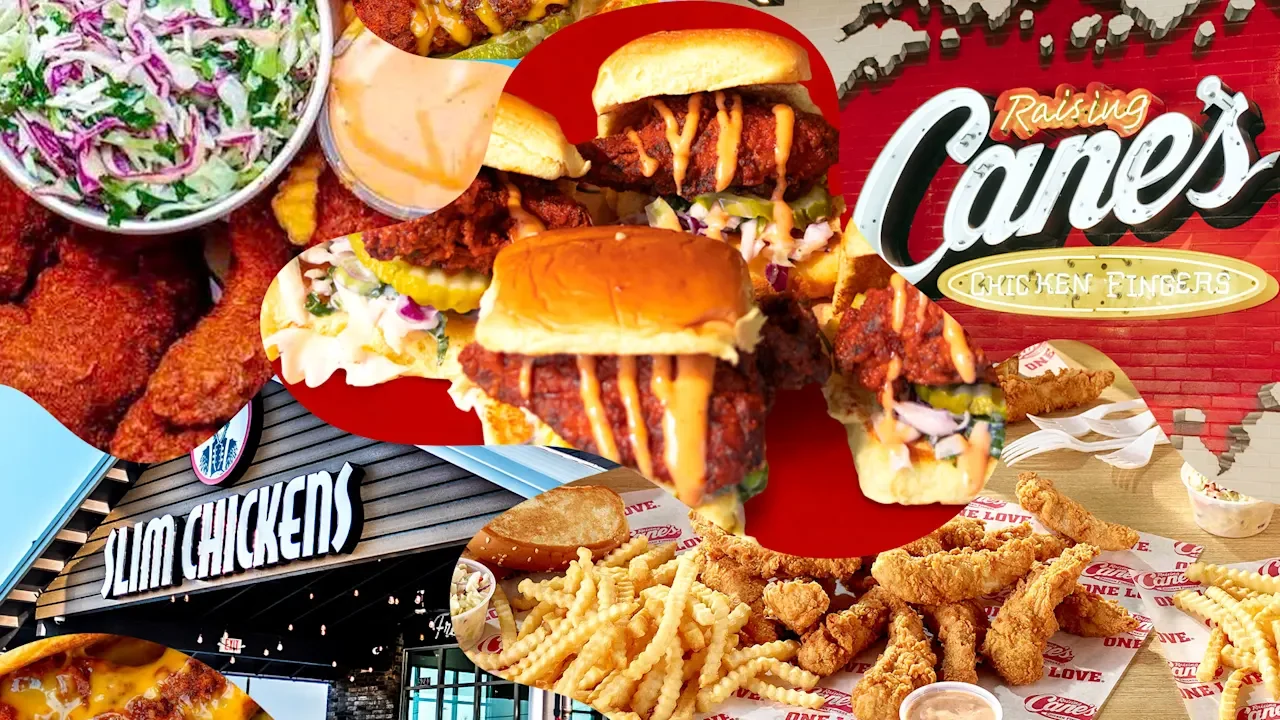
When Raising Cane’s recently opened its first-ever location in Meridian, Idaho, it wasn’t a particularly remarkable event for the restaurant chain. The fast-growing chicken purveyor also opened six other restaurants in five other states on the exact same day in November. It aims to open close to 100 new stores this year. But some Idahoans were willing to stand outside in chilly fall weather for more than 48 hours to be the first in the state to get a taste of Raising Cane’s, whose exceptionally narrow menu features chicken fingers, french fries, a secret proprietary dipping sauce, and simple sides like garlic toast and coleslaw. “We had customers camping out since Sunday morning,” AJ Kumaran, co-chief executive officer and chief operating officer of Raising Cane’s, tells Fast Company of the new Idaho restaurant that opened on a Tuesday. “People are excited about our entry into that market.” A boom in a cooling restaurant economy At a time when restaurant chains including Chipotle, Cava, and Sweetgreen are confronting a sales cooldown as Gen Z and millennial diners are pressured by inflation, high housing costs, flat income growth, and other broader macroeconomic challenges, chicken-focused restaurant chains like Raising Cane’s and Dave’s Hot Chicken have been consistently expanding across the U.S. and are posting sturdier sales and traffic growth. The fastest-growing chain in America last year by unit count was Hangry Joe’s Hot Chicken & Wings, according to data provider Datassential, which also reported the domestic unit total for all chicken restaurant concepts increased by 4.7% in 2024 from the prior year, far exceeding the industry’s increase of 1.5%. Systemwide sales for chicken restaurants now exceed $52 billion annually. Total restaurant traffic for all quick-service restaurant concepts dropped 1% for the year-ending September 2025 from the comparable prior-year period, while that same metric increased 3% for the chicken concepts, David Portalatin, senior vice president and a food and foodservice industry advisor for Circana, told Fast Company. The market researcher says that traffic for the QSR restaurant industry, which was battered by shutdowns during the COVID-19 pandemic, is still down 8% from 2019, but has increased 15% for QSR chicken. The chains defying fast-food slowdown trends “We’re obsessed with fried chicken,” says Portalatin. He believes that more innovative twists on chicken prep and unique sauces have put a more modern twist on classic, Americana staples. Chicken, Portalatin adds, “is among the very few bright spots in growth areas within the restaurant landscape.” Since Raising Cane’s opened its first location in Louisiana in 1996, the chain has only sold chicken fingers and cooks every dish fresh to order, which Kumaran says results in efficient restaurants that are focused on making just a few menu items. There are no heat lamps or microwave ovens in the chain’s kitchens—and no limited-time menu offers or discounts. “We don’t take shortcuts and we don’t play any gimmicks,” says Kumaran. “You will not see us in discount mode or saying, ‘Here’s the flavor of the month.’” Over the past decade, Raising Cane’s has grown from a $350 million business to $5.1 billion in system sales in 2024. The company says it is marching toward $10 billion in annual sales from more than 1,600 locations, which would be an increase of around 600 restaurants from what’s in operation today. Earlier this year, Raising Cane’s leapfrogged KFC to become the third most-popular chicken chain in the U.S. after Chick-fil-A and Popeyes. The chain even has a nickname for its most devoted fans, the “Caniacs.” That popularity has led to some increased competition from other chains outside of the chicken specialists that have added the protein to their menus. “There are a lot of people jumping in,” says Kumaran. “Whether it’s taco players or fajita players or burger players, everybody’s got a chicken dinner option right now.” The new competition crowding the chicken category Chicken’s soaring growth has been attributed to some yearslong trends like Chick-fil-A’s aggressive expansion beyond that chain’s initial regional focus in the south, the “sandwich chicken wars” that kicked off in 2019 when Popeyes debuted a new menu item that led to a social media and in-store frenzy, and the more recent perception that all protein—even fried chicken—is better than other quick-service food options. “Whether that’s true or not, I’m not, I’m not being the judge of that,” says Portalatin. “I’m not a dietitian or nutritionist, but the consumer will often perceive the chicken option as the better-for-you option.” How the ‘protein halo’ reshaped fast-food preferences Chicken’s protein halo is particularly relevant to consumers who are taking GLP-1 weight-loss drugs like Ozempic, and that connection led Dave’s Hot Chicken earlier this year to debut a promotional meal called the “Davezempic,” featuring mini sliders. “It gives influencers and customers a way to engage with the brand in a funny and quirky way,” says Srishti Handa, vice president of marketing at Dave’s. Founded in 2017, Dave’s Hot Chicken recently sold a majority stake for a reported $1 billion to private equity firm Roark Capital and ended 2024 with 260 locations. The chain expects to have 400 locations in operation by the end of this year and has signaled it expects to open more than 125 restaurants every year for the foreseeable future. When asked about a north star target, Dave’s President and COO Jim Bitticks told Fast Company the chain could “easily support” 1,000 domestic locations. “Talk to me in 15 years and that number could be 2,000 or 3,000 restaurants,” adds Bitticks. The chain serves its Nashville-style chicken tenders and sliders at seven different spice levels ranging from “no spice” to “the reaper,” the latter requiring a signed waiver promising that yes, it’s that hot. “I don’t recommend it, but you know, you’ve got to try everything once,” says Bitticks. “It definitely blows your head off.” Bitticks says that Instagram and other social channels have been a big driver of traffic when Dave’s establishes restaurants in new markets, especially attracting Gen Z to the concept. “I’m not from that generation, I don’t get the idea of following a brand that I’ve never tried before,” he added. “I don’t understand it, but it is a huge piece of Dave’s story.” Slim Chickens bets on variety, content, and sauce innovation Slim Chickens, an Arkansas-based chain with 300 locations across 34 states, has a more expansive menu than its peer upstarts with tenders, wings, salads, wraps, and even chicken and waffles. The chain says that it is alluring Gen Z consumers and even Generation Alpha, children born after 2010 who are asking their parents to take them to a Slim. “Variety is a competitive advantage for us,” Patrick Noone, chief marketing officer of Slim Chickens, said in an interview. To stand out in a crowded category, Slim has created an in-house recording studio so that the chain can pump out a steady drumbeat of content across social channels. Noone says that these creative assets have a short shelf life online, losing their relevance after just 10 days. Slim is also in the process of developing and debuting a new mobile app in the first quarter of 2026. The chain is also continuing to think through the physical restaurant space to make it easier for customers who place a mobile order and want to pick up their food in the store. But Noone says one top priority will always be innovation for Slim’s range of sauces, which today includes 14 different flavors like Korean BBQ, sweet red chili, and cayenne ranch. “We spend as much time innovating around sauces as we do on tenders and the center of the plate,” says Noone. “Chicken is just the perfect canvas.” View the full article
-
We may earn a commission from links on this page. A popular productivity method encourages you to start your day by “eating the frog”—that is, tackling your biggest, most important task of the day first, then moving through the lesser ones in turn. For many, structuring their to-do list around their greatest responsibility is a good way to stay motivated and ensure top priorities are handled expediently. But not every person works best that way. I know I don't. Even for people who generally do enjoy tackling the hard stuff first, not every day is the same. If you find the prospect of jumping into a massive project first thing in the morning daunting—every day, or just today—there are other ways you can arrange your schedule. The following two rules can help you. Start your day with the 10-Minute RuleThe 10-minute rule was coined by time management expert Clare Evans, who included it in a roundup of “anti-sad hacks.” Here's the gist: Think about the activities that don’t energize or excite you, but which also don’t take up a lot of time. Answering emails. Making a grocery list. Organizing your desk. Filling out paperwork. You can probably knock each of these out in 10 minutes or less, but they’re tedious. So do all of your "10-minute tasks" right away. The theory behind why this is helpful is similar to the one undergirding the concept of "eating the frog": Once these tasks are done, you’ll feel a sense of accomplishment, and will be well positioned to a tackle additional responsibilities. Sure, when you do choose to eat the frog, you'll feel motivated and proud, and it will be easier to breeze through the lighter lifts on your list—but that’s not always the case. Sometimes, you’re too bogged down to tackle something huge. Other times, doing that big thing will deplete your energy and focus enough that those small tasks will feel a lot bigger than they should. On these occasions, the 10-minute rule might be a better option. Quickly working through the simple things first won’t zap your energy or use up all your resources, and will still give you a sense of accomplishment that can keep you going. I am a major proponent of doing this, especially for the tasks I don't enjoy at all, like cleaning. In my version, I keep an ever-updating note on my phone that contains small tasks I need to do, which I input the minute I think of or notice them. They're usually things like "clean the fan" or "wipe the baseboards." Just jotting them down helps keep them closer to the top of my mind, so even if I'm lacking motivation or time in the moment, I always have a list to consult. Then, when I think of one or check my list, I just pounce on it. After that, I work in the "one more" trick, which involves asking yourself if you can do "one more" thing every time you complete something small. The answer is usually yes and, as you work through the list of additional tasks, you grow more and more motivated. The "One-Minute Rule" is even simplerThere's an even a simpler method, conceptualized by Gretchen Rubin in her book The Happiness Project. It's similar to the 10-minute rule, but not quite as structured. In short, if something will take you a minute or less to accomplish, you should do it as soon as you realize it needs to be done. I mentioned I keep my 10-minute tasks in a note, but since becoming familiar with Rubin's technique, I've started trying to knock out my one-minute projects the second I think of them or notice them. It does help. Emails don't go unanswered. The table is never in desperate need of a wipe-down. Little actions add up to big improvements, which compounds the motivation. This rule is especially useful for me when it comes to signing important documents—a simple thing that I can do quickly, but which I often end up putting off, and then forgetting to do altogether. I’ve recently been trying something new: As soon as I see the request (which might pop up on my computer, iPhone, and/or Apple Watch), I stop whatever I’m doing it, open it, complete the Docusign, return it, and get on with my day. Nothing to remember to come back to later, and minimal interruption to my workflow now. This is the crux of Rubin's rule: If you can effectively cross an item off your list in under 60 seconds, just do it. Yes, this flies in the face of other productivity methods, which emphasize limiting distractions and rigidly blocking out your schedule. But in life, not everything will always slot neatly into a perfect, prearranged structure—just as it won't make sense to begin every day with that mouthful of metaphorical frog. There's another version of this—the two-minute rule—which operates the same way. I'll caution this, though: Don't get too hung up one whether something will take one, two, or 10 minutes. Don't overthink these strategies until you're in a state of decision paralysis. Trust yourself to recognize the tasks that can easily be taken care of instantly, the ones that might take 10 minutes but should be tackled ASAP, and the ones that will be a heavier lift. If you're struggling, try a task prioritization technique like MIT, which helps you order your responsibilities based on the impact they'll have on your life, or the Eisenhower matrix, which organizes them by urgency. View the full article
-
Hello again, and thank you for spending time with Fast Company’s Plugged In. Last October, I visited the Silicon Valley headquarters of 1X Technologies—the startup behind a humanoid home robot called Neo—and spoke with its VP of product and design, Dar Sleeper. Among the points he made was that long-standing public expectations have set a high bar for household robots. Naturally, he name-checked the world’s most iconic one. “The ultimate, North Star, in a lot of people’s minds, is Rosie the Robot,” he told me. “A Jetsons world where you ask and receive, and it makes your life better, you spend more time with your family, you’re more present.” Sleeper’s reference returned to the front of my brain last week, when I attended a Wired event in San Francisco featuring an interview with Cloudflare CEO Matthew Prince. Explaining AI’s transformative impact, he turned to an obvious precedent: George Jetson’s reliance on Rosie. ”I keep watching reruns of the old cartoon show The Jetsons,” Prince said. “There are a lot of things that are anachronistic about it. But I think asking the question, ‘Where does George get his information from?’ is a really interesting one. And the answer is Rosie the Robot. When he says, ‘Hey, Rosie, I want a recipe for chocolate chip cookies.‘ Rosie doesn’t say, ‘Here are 10 blue links, go find one yourself.’ Rosie says, ‘Here’s a recipe for chocolate chip cookies.’” Rosie comes up so often in discussions of the future of technology that it’s easy to tune out rather than nod in appreciation. But hearing two executives mention her by name got me wondering why this secondary character from a 1962 Hanna-Barbera prime-time cartoon, canceled after only one season (albeit rerun endlessly), has been such an extraordinarily durable touchstone. It’s not an easy question to answer. Even if, like me, you’ve already spent more time contemplating the Jetsons’ cultural impact than most people. Before we go any further, a few Rosie factoids for you: Her name was originally spelled “Rosey,” but the more common “Rosie” won out over time. The very first Jetsons episode, “Rosey the Robot,” told the story of how she entered the Jetsons’ home, initially as a short-term rent-a-robot. She appeared in only one other episode among the 24 in the first season—that shocked me—but was much more prominent in the additional Jetsons shows Hanna-Barbera produced in the mid-1980s, including starring roles in the episodes “Rosie Come Home,” “Mother’s Day for Rosie,” and “Rip-Off Rosie.” As a sassy-yet-kindhearted maid, she drew undeniable inspiration from the title character in the newspaper comic Hazel, which had been turned into a popular TV sitcom the previous season. (The rest of The Jetsons knocked off another comics mainstay, Blondie.) Her Brooklyn-tinged voice was provided by actress Jean Vander Pyl, much better known as Wilma Flintstone. If you need to catch up on Rosie’s adventures, as I did for this newsletter, you’ll find The Jetsons widely available on streaming services—I watched the show on Hulu—and airing every day on MeTV Toons. None of this explains why technologists are still talking about Rosie. The most superficial reason is that it would be pretty cool to off-load tedious household chores to someone else. Most of us can’t afford human help, making a robot maid an alluring proposition. (As shown in the first episode, even paying for Rosie was a challenge for Jane and George: She was a discounted previous-year demonstrator model, and they were able to keep her only because Mr. Spacely gave George a raise.) But if all Rosie did was the dishes, I don’t think she’d be so well remembered. She is a piece of sophisticated technology with an uncommonly humane user interface. That’s why the Jetson family loved her so much, and why she sticks in our minds. And given that her features are presently morphing from fantasy into stuff that might actually be possible to build, she’s only growing more relevant. As with many things about The Jetsons, Rosie is both old-timey and prescient. At one point in the first episode, she opens her front and dumps in Judy Jetson’s homework tapes to incorporate them into her knowledge base. Thankfully, magnetic tape petered out as a primary form of data storage well over 40 years ago. But Rosie’s ability to crunch Judy’s classwork—and presumably help her with it—sure looks similar to an LLM ingesting data. In today’s buzzwordy AI parlance, Rosie is also agentic. She handles tasks with a sizable degree of autonomy, is fine-tuned to behave responsibly and, though engaging and supportive, never slips into sycophancy. If Elroy confided that he was planning to become a juvenile delinquent, we can be certain she wouldn’t aid him. Instead, she’d push back on the idea and—if necessary—alert his parents. Our 2025 chatbots are crude by comparison, if not downright dangerous. Still another reason why Rosie remains resonant is the timeless appeal of The Jetsons’ optimistic air. As depicted in the show, the future is a pretty wonderful place, and Rosie is part of that. Even by the end of the 1960s, our culture had grown darker. 2001: A Space Odyssey’s HAL 9000 may be as famous as Rosie, but he’s also a grim object lesson in the dangers of trusting technology to work in our best interest. You won’t catch tech execs speaking approvingly of HAL as a font of inspiration. The Jetsons was never dystopian, but neither was it naive. A sizable percentage of its humor stemmed from the downsides of theoretically useful technology, often in ways that are, in retrospect, as forward-looking as any other aspect of the show. As you’ll recall, the end credits of every episode concluded with George becoming overwhelmed by a runaway automated treadmill and calling for Jane to “stop this crazy thing.” (In real life, Peloton’s safety issues with its Tread treadmill weren’t so funny.) Rosie does not appear in another 1962 Jetsons episode called “Uniblab.” But its moral—that artificial intelligence in the office might be a pointless waste of money—is the furthest thing from entertainingly quaint. Uniblab is a workplace robot that Mr. Spacely acquires for $5 billion (!). Apparently an AGI true believer—he gloats that Uniblab has a higher IQ than George—Spacely demotes George to serve as the robot’s assistant. It turns out that Uniblab uses his always-on microphone to spy on Spacely’s employees. He also induces them to play rigged gambling games. And that’s about all he’s good for. After being sabotaged by the show’s resident hacker, the Jetsons’ handyman, Henry, Uniblab suffers a hallucinatory meltdown in front of Spacely Space Sprockets’ board of directors. He’s unceremoniously decommissioned. Humanity triumphs, at least for the moment. When The Jetsons premiered in 1962, publicity materials explained that it was set exactly 100 years in the future, in 2062. That indicates that even 37 years from now, AI may struggle to definitively prove its worth. For now, countless present-day Mr. Spacelys are currently overspending on the technology based on unrealistic expectations. Rosie, meanwhile, is clearly based on more mature AI than Uniblab. But in the first Jetsons episode, Jane and other characters are astonished at her capabilities, a sign that domestic robotics will still be in the process of going mainstream in 2062. Which means that it may be several more decades until Rosie is truly, unquestionably real. May she continue to serve as an aspirational stretch goal for the entire tech industry. You’ve been reading Plugged In, Fast Company’s weekly tech newsletter from me, global technology editor Harry McCracken. If a friend or colleague forwarded this edition to you—or if you’re reading it on fastcompany.com—you can check out previous issues and sign up to get it yourself every Friday morning. I love hearing from you: Ping me at hmccracken@fastcompany.com with your feedback and ideas for future newsletters. I’m also on Bluesky, Mastodon, and Threads, and you can follow Plugged In on Flipboard. More top tech stories from Fast Company The case only Netflix can make for buying Warner Brothers Discovery Everything about its past suggests it’s the best future owner. Read More → The Disney-OpenAI tie-up has huge implications for intellectual property The House of Mouse is one of the most aggressive defenders of its IP. OpenAI literally just said it’d welcome erotica. What’s going on? Read More → This startup is building a network of home batteries to help solve the grid’s woes Haven Energy works with homeowners to install batteries and solar in homes that qualify for state incentives around areas where the grid is particularly overloaded. Read More → AI is killing review sites. Can they fight back? With AI replacing traditional search, review sites must evolve fast—or risk being cut out of the buying journey. Read More → The Kalshi-fication of everything The predictions platform is revealing what a world of total financialization will look like. Read More → OpenAI is clapping back at Google’s Gemini 3 with a new GPT-5.2 The new model displays expert-level skill in work tasks, and exceeds Gemini in several benchmarks. Read More → View the full article

-
Fast-track entry to bloc being discussed by US and Ukrainian officials backed by Brussels in drive to end Russia’s warView the full article
-
Leading Democrats on the Senate Banking Committee sent a letter to Chair Tim Scott, R-S.C., pointing out the as-yet unsatisfied legal requirement for prudential regulators to appear in Congress semiannually. View the full article

-
When life gives people lemons, most try to make the best out of a bad situation. Instead, Beau du Bois, vice president of bar and spirits at Marisi Italian restaurant in La Jolla, California, found himself with an incredible opportunity. In 2021, the Adler and Lombrozo families, owners of the Puesto Mexican restaurant chain, tapped du Bois to build Marisi’s bar program from the ground up. One of the first actions du Bois took when learning about this new venture was starting a batch of limoncello, using a lesser-known Amalfi Coast technique. “They told me about Marisi almost exactly a year before we opened,” du Bois tells Fast Company. “And the very next day, even though I’ve got 364 days to get the restaurant open, I started making the limoncello right away.” Du Bois had excellent timing, as the appetite for limoncello in the United States has been on the rise. According to IWSR Drinks Market Analysis, global limoncello volumes grew at a compound annual rate of 8% between 2019 and 2024. In 2024, the top three markets for limoncello were Italy, Germany, and the United States, in that order. The U.S. has seen steady average annual growth of 5%. The IWSR predicts the figure will continue its upward trend, with a projected compound annual growth rate of 2% from 2024 to 2029. Even though Du Bois’s preferred preindustrial limoncello process has been a part of the restaurant since its 2022 opening, it’s recently made a big splash on social media. An Instagram reel documenting the procedure has garnered over four million views and reveals larger trends in the hospitality industry. Six months but worth the wait Similar to with the slow-food movement and the craft beer craze, people are yearning for more than just rushed meals or cocktails. They want to have an authentic experience and learn about the thought and preparation that goes into crafting the food and drink that ends up on their tables. Du Bois’s limoncello takes six months to prepare, and this time-intensive undertaking is displayed as a kind of decor throughout the restaurant, with glass carboys lined up on shelves. The process itself is fairly simple: Sorrento lemons are suspended in a cheesecloth above Everclear in large, clear containers. As the temperature gets warmer, the Everclear turns into gas, but since it has nowhere to go, it eventually turns back into liquid, washing over the outside of the lemons. The alcohol only comes into contact with the outside of the lemon, where the sweet oils are found making a much more pleasing product, du Bois says. The final step is to proof down the mixture with just the right amount of water and sugar. There’s a method behind the madness, according to du Bois. “You completely remove that need to counterbalance your limoncello with too much sugar because your traditional maceration is too bitter,” he says. “No matter how sweet you make it, you’re still going to have this bitter oil all over your mouth. And that’s not a soigné experience.” Du Bois even got the ultimate seal of approval for his creation. “We were doing a tasting before we officially opened and we were operating out of one of our other restaurants,” he says. “We had food vendors coming in and tasting us. I had a very specific small Italian portfolio come through with a lot of beautiful amaros and a lot of different Italian liquors. And, of course, even though I didn’t request it, he brought limoncello. He doesn’t know that I’m making it.” Du Bois went along with the tasting, but at the end told the man he was making his own and offered a sample. The Italian salesman was rightfully skeptical that a person from Indiana located in San Diego could create a palatable liquor, but he was willing to try it. “I poured it for him. If I’m remembering it correctly, I think I almost saw a tear. And he was like, ‘Why did you do this to me? . . . This is the best limoncello I’ve ever had in my life,’” du Bois recalls. It was just the affirmation he needed. “Innovation shows you a way” Marisi’s signature limoncello is indicative of the overall ethos of the bar program. “It’s a technique-driven cocktail program,” he explained. “It has been since day one, but I wanted the menu to be very approachable. So we’re not spotlighting the techniques necessarily on the menu, but the staff is trained very, very thoroughly on the techniques.” This is not to say that du Bois doesn’t feel the tension between authenticity and innovation, but he believes there is a way to marry the two concepts. “You can rest in the laurels of authenticity and tradition until innovation shows you a way to keep the cocktail true to itself in terms of flavor and the ethos of the drink originally,” he says. “But the minute you find a better way to do it, if you don’t do it, somebody else will.” Ramping up production Marisi’s Bellinis are made by clarifying white peaches in a centrifuge and adding a crisp Vinho Verde. Then all the ingredients are force carbonated so that when it’s poured for you, it’s not only ice cold but also has the same effervescence as a good champagne. Another hurdle du Bois had to face was making his technique-driven program service efficient. Time is an ingredient in his limoncello, so he has to make sure to have an abundance of it on hand at all times. Du Bois believes that part of his job description is educating the public about the process. “I always want you to think about me when you’re with someone else,” he jokes. “You’ve been to Marisi and you had a Bellini or you had the limoncello. Then you go to another Italian restaurant. You are like, why is this so different? And it’s just because we overthought it.” Du Bois puts in the work so you can enjoy the best cocktail possible. And he isn’t afraid to share his recipes and insights either. Since the initial Instagram post, there have been two follow-up videos revealing more about the process and responding to comments. The restaurant has since seen a 40% increase in limoncello sales, especially among younger customers. This has “forced our team to ramp up the production of it significantly,” Du Bois says. “We’ve also incorporated our limoncello into a popular cocktail on the menu as well as our new Tiramisu.” “You’ve gotta find a way to get to a larger audience,” he adds. “And bring in new enthusiasts. If I share my recipes, I’m increasing the likelihood that I will have a good cocktail in the city tonight.” So the next time life gives you lemons, consider taking yourself out for a meal and drinks. Ask your server about the process behind your favorite food or drinks, because it will make them taste that much better. Both your appetite and your mind will be satiated. View the full article

-
Nothing says “Merry Christmas” quite like a 7.5-foot-tall Chewbacca holding a candy cane. At least, according to the team at Home Depot. Home Depot has long been known as a purveyor of holiday decor, from pumpkins at Halloween to a wide selection of real and artificial trees at Christmas. In recent years, though, it’s been upping the creative ante on its decor game to capture new audiences—and, in some cases, to score a viral hit on TikTok. This year, it’s doing just that with two new additions to its holiday lineup: life-size, animated versions of Star Wars’ Chewbacca and R2-D2 ($349 and $299, respectively), complete with movie-accurate, motion-activated sound effects. While Home Depot declined to share specific sales data about the characters, R2-D2 appears to have sold out within weeks of debuting, inspiring several TikTok videos with hundreds of thousands of views and resulting in multiple Reddit forums where users are discussing strategies for getting their hands on one of the units. Resellers are already pedaling the product on eBay for nearly double its original price. With its increasingly extravagant Halloween animatronics and now its suite of nerdy, high-tech Christmas decor, Home Depot is making the spectacle of extreme holiday decorating accessible to the average customer. Home Depot is turning extreme holiday decorating into an accessible sport Home Depot is no stranger to building head-turning (and TikTok view-farming) holiday decor. In fact, its towering 12-foot-tall skeleton, Skelly (who debuted in 2020), is what initially propelled the big box store to its current status as customers’ go-to shop for viral decor. Since then, Home Depot has leaned into both the scale and detail of its holiday decor, including with Halloween releases this year like a seven-foot-tall Frankenstein and 9.5-foot-long haunted pirate ship. Now bringing that same amped-up energy into Christmas. Chewie and R2-D2 are part of Home Depot’s range of IP-adapted characters, which include other popular characters like Chucky, a 13-foot-tall Jack Skellington from Disney’s The Nightmare Before Christmas, and, also new this year, Olaf from Disney’s Frozen. The company already sells a seven-foot-tall Darth Vader and six-foot-tall Stormtrooper. Aubrey Horowitz, Home Depot’s senior merchant of decorative holiday, says Home Depot’s Star Wars line plays to a couple of different emerging genres of holiday shoppers. One is the seasonal decor enthusiast, who tends to like to refresh their decor from one holiday to the next—which is why characters like the Stormtrooper, Darth Vader, and R2-D2 all come with modifications to transition from Halloween to Christmas. Another is the holiday shopper that’s interested in nostalgic aesthetics, from vintage-looking artificial trees to retro characters. That tracks with data Pinterest shared with Fast Company, which found that searches for “nostalgic Christmas aesthetic” were up 1,130% this November compared with last November. With the majority of its IP collections, Home Depot is able to capture fans by keeping prices relatively low: For comparison, other life-size replicas of R2-D2 can run between $1,500 and $8,000. Clearly, the choice is resonating with fans online. A commenter under one video of R2-D2 with more than 130,000 views wrote, “Take my money. Now I can put this alongside my R2D2 Pepsi cooler.” And under a separate clip of Chewbacca, commenters are responding with photos of their own Home Depot Chewie surrounded by other Star Wars characters (and one dressed in a sports jersey). This holiday season, Home Depot is making sure that the most eccentric dad on your block can tap into his childlike wonder without breaking the bank—and we’re not mad about it. View the full article

-
Leadership listening is in sharp decline, and the consequences run deep. A survey from People Insights found that only 56% of employees believe senior leaders genuinely make an effort to listen, which is down from 65% two years ago. We live in a world where algorithms reward noise. Visibility has become a proxy for value, and airtime is the metric that many use to measure leadership presence. But real influence doesn’t come from speaking more. It actually comes from listening better. Influence grows through empathy, trust, and the ability to see and understand people. The disconnection crisis When leaders stop listening, people stop contributing. Ideas fade, trust erodes, and creativity retreats into silence. I’ve seen this in large transformation programs with a sound strategy. Employees felt unheard, so progress stalled. When we paused to listen, everything changed. People began to share what was really going on. They talked about their fear of redundancy, exhaustion, and the loss of identity sitting just beneath the surface. Once they acknowledged those emotions (and responded with intentional action), we saw a decrease in resistance, and collaboration returned. This situation reminded me that change rarely fails because of poor strategy. It fails when we don’t understand the “why” behind the resistance. Leaders might not be able to fix every concern, but giving people space to speak and be heard starts to rebuild trust. Listening is the first act of empathy, and empathy is the bridge back to psychological safety. The future model of influence There is another kind of silence that’s intentional and not imposed. It’s the pause that allows leaders to think, feel, and respond with awareness rather than react. This is where modern influence begins. Visibility and authority won’t build the leaders of tomorrow. What will set them apart is their ability to build trust and lead with empathy to create psychologically safe workplaces. Today’s leaders are juggling unprecedented complexity, whether that’s shifting markets, hybrid work, rapid transformation, and multigenerational teams with diverse values and communication styles. Each generation might look for something different, but they all want someone to hear them out. Amid this constant pressure, few leaders have the space to slow down. Yet as complexity accelerates, active listening becomes essential. The most effective leaders create space for everyday check-ins rather than relying on quarterly surveys. These small moments of connection allow them to pivot quickly, address issues early, and stay in rhythm with their teams. You don’t measure the pulse of leadership in reports; you do so in daily conversations. Empathy enables leaders to read emotions as fluently as they read information and to sense what people need before they can articulate it. It turns listening into awareness and awareness into intelligent action. This isn’t performative listening or surface acknowledgment; it’s a disciplined practice of presence, understanding, and follow-through. Measuring connection While you can measure listening, you feel its actual impact through culture. Simple questions—“My manager genuinely listens to my concerns” or “Senior leaders act on employee feedback”—reveal whether an organization values voice and transparency. Psychological safety remains the most reliable indicator of a connected culture. When people feel safe to speak, innovation thrives. Regular pulse surveys can track progress, but measurement only matters when it leads to visible action. Asking employees whether they see follow-through ensures that listening translates into progress. When leaders act on what they hear, empathy becomes motion. It builds credibility and reinforces the belief that every voice matters, which turns trust from an aspiration into a measurable outcome. The quiet revolution Influence today demands composure in complexity. Leaders need to find space to hear what their employees aren’t saying, reflect before responding, and make room for diverse perspectives. When empathy becomes part of daily leadership, it strengthens clarity, confidence, and connection across the organization. Empathy allows leaders to stay grounded in uncertainty and connected in complexity. Listening transforms disconnection into alignment and noise into meaning. This is human-first leadership that balances the rational with the emotional. I call it “rational empathy”—where emotional awareness meets clear reasoning. It’s the space where leaders respond, with both compassion and composure. Those who master it will build cultures that are open, resilient, and ready for what comes next. The leaders who will define the next decade won’t be the loudest in the room. The next revolution in leadership will listen and balance confidence with curiosity. Are you listening deeply enough to understand what really matters and what could change in your team, your culture, or your impact if you started there? When leaders truly listen, they connect, and that connection is where real influence begins. View the full article

-
Six years ago, when Michael Buckley returned to True Religion‘s offices as CEO, the denim brand looked nothing like the one he had built a decade earlier. Buckley was the brand’s president between 2006 and 2010, when True Religion was a luxury brand that sold jeans priced between $300 and $500 at Neiman Marcus and Barneys. Buckley helped grow revenues to more than $300 million a year, but after he left, the brand hit hard times, as it struggled to adapt to e-commerce. It filed for bankruptcy in 2017 and again in 2020. In 2019, after serving as CEO of Differential Brands Group (which owns Hudson Jeans), Buckley came back to True Religion to clean up the mess. He’s executed a remarkable turnaround, doubling the company’s revenues and leading it to its highest profitability ever. Buckley’s strategy is interesting. He’s rebuilt the business around the Black and Latino customers who have been loyal to the brand from the beginning. Under his leadership, the brand has rethought everything from pricing to design to marketing with these consumers in mind. (While none of True Religion’s top leadership is Black, Buckley says the company’s employees “reflect the brand’s consumers.”) “We didn’t change our target demo,” Buckley says. “This was the True Religion demographic all along, and it was our job to embrace them.” In the past, True Religion’s ad campaigns featured predominantly white models, but today, its website and social media features exclusively models of color. The brand partners with rappers and hip-hop artists like Megan Thee Stallion, Quavo, and 2 Chainz as ambassadors. True Religion is now back at the center of culture, seen on celebrities like Timothée Chalamet and Kylie Jenner. Thanks to collaborations with brands like Von Dutch and Supreme, the brand is regularly featured in fashion blogs. Ciara Buckley believes that the future of True Religion lies with Black consumers. The brand is now focused on winning over the next generation; it’s going on a college tour with a focus on historically Black colleges and universities, like Spelman and Morehouse. But experts say that for True Religion to build an enduring relationship with Black consumers, it needs to go beyond just marketing to them; it must also forge authentic partnerships with these communities. Megan Thee Stallion “It’s awesome that the brand is serving the Black consumers that stuck around when others abandoned them,” says Marcus Collins, a marketing professor at the Ross School of Business and the author of For The Culture. “But to take it to the next level, the question is, how are you showing that you’re invested in the community? Are you collaborating with the community in a way that shares equity?” A Loyal Customer Historically, Black consumers have been sorely neglected by fashion brands, despite having significant economic power. Their spending on apparel and footwear is expected to grow by 6% a year to $70 billion by 2030, and yet, many fashion brands don’t tailor their products or marketing to their Black audience. A 2021 McKinsey survey found that Black consumers were profoundly dissatisfied with their fashion options and did not see themselves in most brands’ marketing campaigns. “Black consumers are so underserved and marginalized that they will gravitate towards brands that aren’t even targeting them,” says Collins. When True Religion first hit the market in 2002, its advertising campaigns rarely featured people of color. Its pricing—which was astronomically expensive for jeans—was also designed to signal exclusivity. When he was previously at the company, Buckley says products were designed for consumers with household incomes above $250,000. Jeff Lubell, who cofounded True Religion, had no apologies for this high price tag. “It’s not for everybody, even though I would love it to be,” he told the Los Angeles Times in 2009. “It’s like being in the club.” When Buckley came back to True Religion in 2019, its price point and identity hadn’t changed significantly since its early days, but the style was no longer resonating in the market they had targeted. “The brand assumed the same luxury customer was buying, but when I walked the streets, it didn’t look like that at all,” he says. Buckley commissioned a survey to find out who was actually buying True Religion. The results were interesting: A third of customers were Black and 15% were Latino. Consumers skewed male and had an average household income of $65,000. For Buckley, this seemed like a big opportunity. “Years ago, when we were targeting wealthy consumers, we were touching 4% of the apparel market,” he says. “But the middle class demographic is enormous: it’s 150 million people. It seemed like a no-brainer to pivot.” According to Kristen D’Arcy, True Religion’s CMO, the brand has resonated with Black consumers because rappers and hip-hop artists had taken to it early on. The rapper Quavo, for instance, was such a fan of True Religion in his teens that he got a tattoo of the logo on his arm back in 2007. In 2014, rapper 2 Chainz name-dropped True Religion in a lyric. “The hip-hop world has always loved True Religion,” she says. “Even when we were selling to a different consumer, they were buying it.” Buckley has rebuilt the business around its current customers. For one thing, he lowered prices. Today, most of the brand’s styles are under $100, and thanks to frequent promotions, they’re often even cheaper. The aesthetic of the jeans is also very different now than it was in the early 2000s. In 2019, Buckley brought back Zihaad Wells, who had previously served as the brand’s VP of design from 2006 to 2017. Today, True Religion’s jeans still feature some of its original design elements—like visible stitching and the horseshoe iconography—but they now have a distinct Y2K streetwear aesthetic, which appeals to Gen Z as well as older consumers who are nostalgic for the early 2000s. It sells bedazzled jeans and sweat suits, baby tees, and grungy, distressed jeans. “The aesthetic looks very dated to me, particularly with the large logos,” says Tina Wells, a marketing strategist and entrepreneur, with an expertise in multicultural marketing. “It’s certainly resonating with a subsection of Black consumers right now, but it will be important for the brand to keep their finger on the pulse, so that they’re not just creating products they think Black people want.” D’Arcy, for her part, has been focused on creating brand imagery that reflects this consumer base. With the brand’s $50 million annual marketing budget (which equates to 10% of sales), D’Arcy has launched campaigns with popular hip-hop and rap artists, including Megan Thee Stallion, Anitta, and NLE Choppa. YG Going Deeper The turnaround strategy has been effective. True Religion is projected to reach half a billion dollars in sales this year, up from $280 million in 2023. According to McKinsey’s survey, Black consumers show a strong preference for brands that resonate with them culturally. And when brands develop products for Black consumers and create diverse marketing campaigns, they will be rewarded with an influx of consumers. Saweetie D’Arcy believes there is even more room for True Religion to grow within the Black community. True Religion is popular across age ranges—including the over-60 crowd, which makes up 15% of its audience. But to be an enduring brand, Buckley believes it is important to target the next generation of Black consumers who will hopefully stay with the brand as they enter adulthood. “We’re focused on acquiring millions of new customers in the 18-to-25 market,” says D’Arcy. True Religion is currently doing a college tour, where it hosts pop-ups on campuses, giving students a chance to take a study break while playing trivia games and browsing racks of clothing. Some of these colleges are HBCUs, including Morehouse and Spelman in Atlanta, while others, like the University of Florida in Gainesville and St. John’s University in Jamaica, New York, have large Black populations. Chelley B Both Wells and Collins say that the test of True Religion’s commitment to the Black community will be borne out by how much effort the brand puts into really getting to know these consumers. He points to Ralph Lauren’s partnership with Morehouse and Spelman over the past two years, which resulted in two successful collaborations. Ralph Lauren spent a long time working with scholars at these schools, along with Black designers and creatives, to create clothing and campaigns that authentically reflected the Black experience. “Their proximity to the culture allows them to do something that doesn’t feel opportunistic,” Collins says. “Black consumers immediately resonated with that campaign because it felt so authentic.” For Buckley, True Religion’s current success is proof that Black consumers are a scalable and profitable market. “We’re doing everything we can to embrace a customer that has loved us for a long time,” he says. “This is a growing, trend-setting population. I don’t know why any brand wouldn’t want to serve them.” Anitta View the full article

-
It’s hard to believe that just a few short years ago a video of Will Smith eating spaghetti generated by ModelScope, a text-to-video AI model, was the peak of AI slop. Fast-forward to today and our trust for CCTV footage of cute animals has been eroded, slop is showing up across marketing and music playlists, and Sora 2 deepfakes are fooling both grandparents and politicians nationwide. A number of artist projects are fighting back against the deluge of slop polluting the shared waters of the internet (or at least poking fun at those who willingly consume it). Steve Nasopoulos and Peter Henningsen, both freelance copywriters, recently created the Slop Trough in their spare time. It’s a digital feeding trough that serves up endless slop, so long as you turn on your webcam and get down on all fours like a good little piggy. “Are you a little piggy who needs your slop?” the homepage asks. Click yes and it tells you to “get on the ground on all fours oink oink.” “We just wanted to capture the degrading feeling of having someone put this horrible content in front of us and actually expect us to consume it. It feels, how shall we say, a little dehumanizing?” the creators told Fast Company. “The internet was once a magical place, because it was full of weirdos making bizarre websites and stupid art projects. Slop and AI content are diametrically opposed to that because it’s mass-produced garbage made by robots.” Other online art projects imagine an internet untouched by generative AI. 404 media recently reported on Slop Evader, a browser tool created by artist and researcher Tega Brain that filters web searches to include only results from before November 30, 2022—the day ChatGPT was released to (or, rather, unleashed on) the public. The term AI slop itself emerged around 2023, when platforms like ChatGPT and DALL-E became publicly available and more widely adopted, according to Google Trends. Yet concerns about AI among U.S. adults have grown exponentially since 2021, according to the Pew Research Center, so much so that slurs for robots now exist. But for every new AI slop video created, there will always be those resisting it with human-made projects. As Nasopoulos and Henningsen put it: “We think humans making stuff and putting it on the internet is what the internet was designed for, so the more of that the better.” View the full article

-
Legal challenge is first shot across the bows as Brussels aims to use funds for €90bn loan to UkraineView the full article
-
A huge pessimistic bias in our national accounts leads us to doom and gloom which turns out to be nonsenseView the full article
-
Revolutionary France may seem like a strange place to find a life hack, but in the 1790s, the French satirist Nicolas Chamfort offered some stark advice to cope with our daily travails. “One should swallow a toad every morning, so as not to find anything disgusting for the rest of the day,” he wrote. In other words, start with the thing you dread most, and the following obligations will feel far more pleasant. Chamfort’s name has largely been forgotten by the English-speaking world, but his unsettling phrase has endured as a popular productivity mantra: “Eat the frog.” The idea has even inspired a best-selling self-help book from the 2000s. But does it actually work? It is only within the past few years that scientists have investigated the strategy, and they have found that “eating the frog” can be surprisingly powerful, boosting our satisfaction, motivation, and performance in the workplace, while helping us to begin our evenings feeling more refreshed. We just need to gird our stomachs and get on with it. Biased expectations You may be skeptical. The very idea of “eating the frog” runs against the widespread intuition that we should ease ourselves into a job with the simplest possible task. Most of us think that we can build up confidence as we progress, but it turns out to be completely wrong. Rachel Habbert and Juliana Schroeder at the University of California, Berkeley, first exposed this bias in 2020. In a series of experiments, the researchers first asked participants to consider different word games, and to say which order they would like to tackle them—with the vast majority of people opting to work their way up to the hardest challenges. They seemed to believe that this would allow their confidence to grow. To test whether those preferences were justified, Schroeder and Habbert then asked the participants to perform the tasks in order of either ascending or descending difficulty. Contrary to their predictions, the participants who started with the most demanding task ended up feeling considerably more confident than those who worked the other way. Eating the frog at the beginning of the task, it seemed, had allowed them to finish on a high. The “easy addendum effect” The results chime with a later finding by Edward Lai, an assistant professor of marketing at the Hong Kong Polytechnic University. He was inspired, in part, by the “peak-end rule.” Put simply, this is the principle that our memories of an experience are biased by its most intense moments, and by the way it ends—while neglecting its overall duration. In the original experiments describing this phenomenon, the late Daniel Kahneman, Nobel Prize-winning psychologist at Princeton University, asked participants to plunge one of their hands into unpleasantly cold—14°C (57°F)—water for 60 seconds. After they had dried off, they then plunged the other hand into water of the same temperature for the same length of time, followed by a further 30 seconds at 15°C (59°F)—before being asked which trial they would like to repeat. The logical answer would seem to be the first, but most went for the second, since it ended on a more pleasant note. Lai and his colleagues wanted to test how this might apply to our work. They tasked some participants with common administrative jobs, such as filing books alphabetically or answering customer inquiries. Some of the participants were given a single block of tasks, while others were asked to complete the same number of jobs while also taking on a second block of easier tasks. (The people answering customer queries were given a few extra emails asking for straightforward clarifications, for example.) Despite doing more work overall, the people who had been given the additional problems felt that they had made less overall effort than those who had simply tackled the core task, and they were more satisfied as a result. They also showed greater persistence. “They were less likely to want to take a break, and more likely to opt in to additional tasks, and actually complete them,” Lai says. To double-check that the sequence mattered, they also tried placing the simpler tasks at the beginning, or at the middle of the sequence. “But the only way that people felt happier and more satisfied was when we put the easy ones at the end,” he says—leading the researchers to call it the “easy addendum effect.” We can only conclude so much from laboratory experiments, but the finding has since been replicated in real-life companies. In one weeklong study, Chen Zhang, an associate professor in leadership and management organization at Tsinghua University in Beijing, and his colleagues encouraged 83 knowledge workers at an IT company to change their schedules so that they focused on the day’s biggest challenges during the morning. As Schroeder’s and Lai’s findings would have predicted, they ended the day more positively, with less fatigue as they left work. A second survey at an e-commerce company found that this approach could also increase productivity. The participants’ supervisors reported that they were more likely to go above and beyond their everyday responsibilities after completing their most daunting tasks first, for example. Reflection and planning Putting all this into practice will take a little forethought. In Zhang’s study, the participants spent the first moments of each morning rating the difficulty of each task before deciding on their schedule. In some cases, there will only be one logical order to do things. Whenever we have a bit of flexibility, however, we can choose to tackle the biggest challenges as early as possible. I frequently apply this strategy myself. I’ve just started writing a new book, for instance, and some of the more technical sections will require particularly heavy lifting. Knowing about the easy addendum effect, I focus on these more demanding tasks before lunch and spend the afternoon working on the connective tissue and the personal anecdotes, which are often far more pleasurable to write, before spending the final hour revising what I have written. I arrange work calls and meetings in a similar manner, placing those with the potential for conflict in the first half of the day, and friendly catch-ups toward the evening. Simply categorizing your emails can make a real difference, Lai says. Clearly, some will need to be answered urgently, but once you have prioritized those that need immediate attention, you can eat the frogs first and leave the quickest responses until last. Lai is sure this simple habit has enhanced his own happiness. “If I do that, I feel like it hasn’t been such a bad day when I walk out of the office,” he says. Nicolas Chamfort, we can guess, would heartily approve. View the full article
-
Most people care about fairness at work and want to support colleagues who face marginalization—for example, people of color, women, and people with disabilities. Our research has found that 76% of employees want to be allies to co-workers who face additional challenges, and 84% value equity. That’s in line with a 2025 national survey that found 88% of employees supported employers offering training on how to be more inclusive. So why doesn’t that support always turn into action? Our new study in the Journal of Workplace Behavioral Health points to one reason: Some people may freeze with worry because they feel like a fake. Specifically, they feel like they don’t have the skills to effectively support their marginalized co-workers, even though they want to. Those feelings may block action, which makes people feel even more fraudulent—creating a loop that’s hard to break. Together, we—Meg Warren, Michael T. Warren, and John LaVelle—found that 1 in 5 people who want to support marginalized groups experience the impostor phenomenon even when they have the skills to be effective allies. The impostor phenomenon, formerly called the “impostor syndrome,” is the feeling that you’re not good enough—even when there’s objective evidence that you are. Researchers have documented it across many workplace and professional settings, including in health care, technology, entrepreneurship, the C-suite, and academia. Importantly, these feelings are linked to significantly higher anxiety and feelings of depression among people who want to be allies. We found that men, leaders, younger employees, and people of color were more likely to experience the impostor phenomenon in the context of allyship. What the impostor phenomenon looks like for allies Consider “James,” a senior project manager. For the past few years, his company has expected all managers to undergo diversity, equity and inclusion training and to support the company’s Black Employee Network. Earlier this year, however, the company publicly withdrew its commitment to DEI and removed all mentions of it from its website. When his team asked for his thoughts, James felt lost. The facts he learned during the Black Employee Network meetings were unsettling and undeniable. Before, he regularly cited these during various meetings with his colleagues and senior leaders. Now, he felt pressured to act as if none of this mattered. He felt frustrated, at a loss for words, and a complete fake—like he didn’t know how to support his colleagues anymore. While “James” is a composite character drawn from many stories we’ve heard over the course of our research, his experience captures the bind that many would-be allies face. When allies feel this way, they often compare themselves to an imagined “perfect ally,” thinking that if they can’t be outrageously heroic, they must be failures. They then deal with feelings of inadequacy by procrastinating or overpreparing before stepping up for others—to the point where they miss crucial opportunities where they could have made a difference. People tend to feel like an impostor when they encounter a challenge that seems bigger than their ability to cope with it. So it’s not surprising that a lot of people feel this way about workplace equity. Inequity and bias play out in complex ways in organizations: The rules change rapidly, and people can receive mixed messages about what behaviors are appropriate, valued and rewarded. This can make allyship feel overwhelmingly challenging, even for those who are otherwise skilled. Work culture also matters. In toxic organizational cultures or hypercompetitive environments, people feel pressure to hide their mistakes, they worry about colleagues sabotaging their efforts, and they see humility as a weakness. In such places—and especially when the would-be ally’s role is highly visible and entails heavy responsibility—people are vulnerable to impostor feelings. Past criticism can add fuel, too. If you’ve been admonished for standing up for a colleague or have seen others be attacked—including by those who wish to maintain an unjust status quo—you might further feel pressure to only act in ways that are immune to criticism. That’s an impossible standard. Consequences of feeling like an impostor: Feeling worse, doing worse Leaders in particular are vulnerable to feeling like impostors on allyship. Many haven’t been properly trained on how to listen to and support co-workers who might be facing discrimination and are quietly suffering, yet are held responsible for solving complex issues around fairness that long predated them. And when stuck in this uncomfortable space, people who feel like impostors are likely to become defensive and feel pressured to be a hero. To prove themselves, they may overcompensate in ways that backfire—for example, by loudly claiming support for disadvantaged workers without following up with useful action, or by swooping in to fix issues without respecting the preferences of the people involved. Unfortunately, this not only affects their ability to be a supportive colleague, but it also likely harms their mental health. Indeed, the impostor phenomenon has been found to be linked to heightened anxiety and feelings of depression, both in our study and beyond. So you might wonder: What if I opt out of all of this by not thinking about inequity at all? Our research suggests that this is a bad idea. People who are disengaged from issues of inequity, and who don’t invest in learning and growing as allies, experience lower self-confidence at work and have lower job satisfaction. Checking out of allyship could be bad for your professional well-being. The good news is you don’t have to be stuck feeling this way. You can take low-risk, bite-sized actions that can pull you out of feeling fake and boost your confidence, all while improving your own professional success and mental health. Research points to three simple ways forward. First, recognize and loudly celebrate the strengths of marginalized colleagues, which creates an uplifting work culture. Second, take concrete steps to build trust—for example, by giving proper credit to a disadvantaged colleague if their merit is wrongfully questioned. And finally, overcome your cynicism—which research shows invariably suppresses constructive action—and instead adamantly choose hope, even when it’s hard. Meg Warren is an associate professor of management at Western Washington University. John M. LaVelle is an adjunct professor of public policy at the University of Minnesota. Michael T. Warren is an assistant professor of psychology at Western Washington University. This article is republished from The Conversation under a Creative Commons license. Read the original article. View the full article

-
Instacart just became the first company to offer an end-to-end integrated shopping experience with OpenAI’s ChatGPT. It’s yet another signal that AI is about to upend the way we shop—and, maybe, the way we cook. The new partnership was announced by Instacart and OpenAI on December 8. To use the interface, ChatGPT users need to make an Instacart account and then surface Instacart within their chat thread using a prompt like, “Instacart, help me shop for apple pie ingredients.” From there, they can discuss recipes, ingredient swaps, and their preferred store with ChatGPT, which will help them order all of the items they need from Instacart without ever changing tabs or leaving the chat. This partnership is a significant milestone in the race among tech companies to make AI an integral part of the shopping experience. Amazon, for example, now offers a suite of AI tools to help shoppers make decisions and point them toward future purchases. According to Adobe Digital Insights’ 2025 report on holiday season shopping, the company saw the first material surge in AI-directed traffic (users following links recommended by chatbots like ChatGPT and Google Gemini) to U.S. retail sites in 2024. This year, it expects AI traffic to rise by 520%. In all, Adobe found that over a third of shoppers in the U.S. have used AI to help with online shopping—and that number is bound to keep growing. Clearly, many shoppers are already turning to ChatGPT for advice on the best products to buy and where to get them. For OpenAI, then, it makes sense to bring the shopping itself directly onto its own platform. In all likelihood, this partnership with Instacart is only a trial run ahead of plenty more integrations to come. In a press release, Nick Turley, head of ChatGPT, said that the new collaboration will allow users to “go from meal planning to checkout in a single, seamless conversation.” I decided to put Turley’s promise to the test by using the new interface the way I predict that its target audience might: recreating a TikTok-viral recipe (Ina Garten’s brownie pudding) from start to finish. Testing out ChatGPT’s recipe-generating chops Making a trendy recipe with the new Instacart integration starts with actually getting ChatGPT to accurately reproduce its ingredients and instructions—which, as it turns out, can be a challenge. Based on my testing, ChatGPT is pretty good at regurgitating more general, nonspecific recipes from the open web. For example, a search for a “popular, gooey chocolate chip cookie” yields a standard recipe that ChatGPT describes as “similar to The New York Times or Nestlé Toll House”; while a search for “green goddess salad” yields a recipe that went viral in 2022 and has since resulted in dozens of publicly available articles, which ChatGPT is then able to pull from for its own summary. Things get a bit trickier when you’re looking for one specific recipe, though—especially if it’s protected by a paywall or other blocker. When I asked ChatGPT to find the recipe and instructions for The New York Times’ Lemon-Tumeric Crinkle Cookies, it confidently provided a slightly inaccurate ingredient list and instructions, and attributed the recipe to the wrong author. I asked the question again, this time including the real author in the prompt, only to be met with the same response with the disclaimer, “I can’t reproduce the copyrighted article verbatim, but these ingredients + steps accurately reflect the recipe” (they didn’t). I moved on to attempting to recreate Ina Garten’s brownie pudding, starting by asking ChatGPT to “use popular TikTok videos” to find the recipe. The resulting recipe was almost correct, but not quite—it substituted Garten’s recommended framboise liquor for coffee. Next, I specifically requested that ChatGPT use the “most-viewed TikTok video” about the recipe in order to recreate it. The chatbot told me that it doesn’t have access “to TikTok’s live trending videos,” so it couldn’t pull exact instructions from the most-viewed clip, instead offering a “TikTok-style” version based on what it called “popular adaptations.” This version strayed even further from the original. As a last-ditch effort, I asked ChatGPT to pull the brownie pudding recipe directly from Ina Garten’s official website. ChatGPT then assured me that it was providing “the exact recipe from her site (not an adaptation, not a TikTok version, but her real published recipe).” This was, once again, not the real recipe. For OpenAI’s model, it seems, finding general recipes on the open web is simple, but accurately retrieving information from external apps, like TikTok, or paywalled websites, like The New York Times, is unpredictable at best. Following this slightly maddening exchange, I decided to bake both Garten’s official recipe and ChatGPT’s bootleg “TikTok-style” version in order to decide which reigns supreme. The battle of the brownie puddings After my frustrating back-and-forth with ChatGPT, I was ready to throw in the towel and place my Instacart order as quickly as possible. But the process of actually using the integration proved to be a bit of a rollercoaster. At first, everything was proceeding smoothly. I conducted several test runs using the activation word “Instacart,” and ChatGPT successfully added my requested ingredients to my cart directly through our chat. Mid-way through this experimentation, though, ChatGPT appeared to lose the plot, informing me, “I don’t have the ability to directly add items to Instacart or access your account.” After several troubleshooting questions, during which ChatGPT informed me that the “Instacart connector” wasn’t active, I asked how to reactivate it. ChatGPT then said that I needed to be “in a ChatGPT Plus or Pro plan session with Plugins enabled.” In an email to Fast Company, though, an Instacart spokesperson clarified that the integration is available to all accounts, including free ones. It’s unclear to me exactly what went wrong, but when I tried again several hours later in a new chat, the connection was up and working again. Ordering the ingredients for the “Tik-Tok style” recipe was quick and straightforward, and everything arrived from my local Target within two hours (except the unsalted butter, which was substituted for salted due to a store shortage). The recipes themselves were a similar concept with notably different executions. The “TikTok style” version, for example, called for vanilla extract instead of Garten’s seeds from one vanilla bean; likely a result of multiple TikTokers making the swap themselves at home and suggesting it to viewers (vanilla beans in this economy?). Garten’s original version also required cocoa powder alone for the chocolate component, whereas ChatGPT’s interpretation called for solid chocolate. And, in terms of the baking process, Garten’s pudding needed to be suspended in a water bath and baked for an hour, while ChatGPT omitted the water step entirely and suggested just 30 minutes in the oven. Given its presumably crowd-sourced origins, the “TikTok-style” recipe was unsurprisingly cheaper, easier to make, and quicker. It had an extremely dark, almost bitter chocolate taste compared to the original recipe, which was mellower and sweeter. Both have their place, in my opinion—though Garten’s was ever so slightly tastier. Right now, the Instacart integration feels built for people who are already regular users of both ChatGPT and Instcart. For that niche, it might save time when brainstorming for meal prep and troubleshooting general recipes. But for everyone else, I’m not sold on the utility of this tool. If you have a specific recipe in mind, it’s probably easier (and less headache-inducing) to just make it the old-fashioned way. View the full article
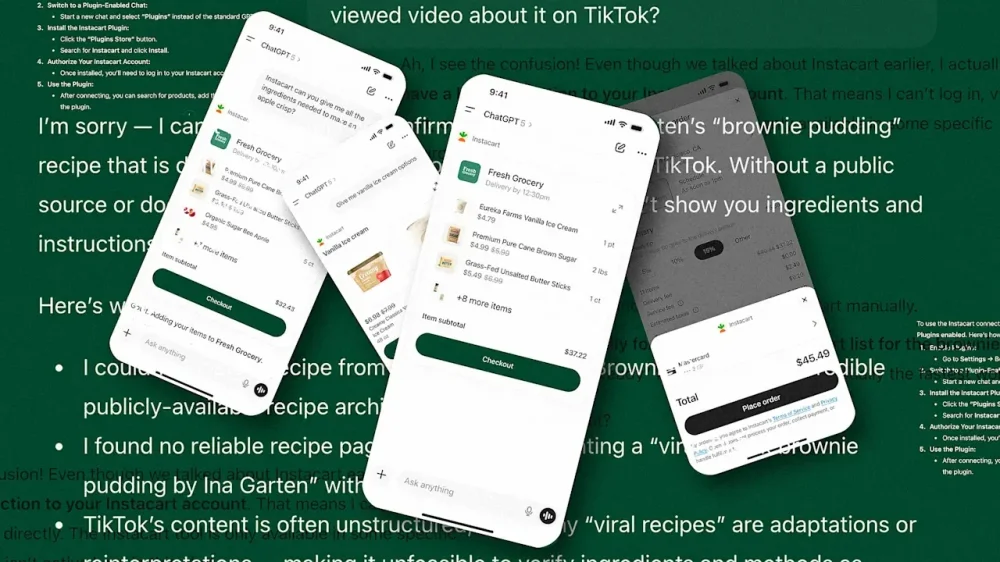
-
From the latest skyscraper in a Chinese megalopolis to a six‑foot‑tall yurt in Inner Mongolia, researchers at the Technical University of Munich claim they have created a map of all buildings worldwide: 2.75 billion building models set in high‑resolution 3D with a level of precision never before recorded. Made from years of satellite data analysis by machine‑learning algorithms, the model reflects a sustained effort to capture the built world in three dimensions. The result now provides a crucial basis for climate research and for tracking progress toward global sustainable development goals, according to the scientists behind it. Professor Xiaoxiang Zhu, who leads the project and is the chair of data science in Earth observation at TUM, says the real achievement is that the new map is a three‑dimensional picture of how much space people actually inhabit. “3D building information provides a much more accurate picture of urbanization and poverty than traditional 2D maps,” she explains. With 3D models “we see not only the footprint but also the volume of each building.” At the heart of this work is the GlobalBuildingAtlas, an open dataset that describes individual buildings across the planet both as 2D outlines and as simple 3D objects. In total, it contains 2.75 billion building footprints—polygons tracing the edges of each structure—covering every building the satellites could detect in satellite imagery from 2019. At first glance, there are some interesting takeaways from the map, like the distribution of building volume clusters around major metropolitan regions—with particularly dense concentrations in East Asia, Europe, and North America. Meanwhile, many parts of the Global South show vast numbers of buildings that are small and low‑rise, especially in Africa, which has more buildings than Europe and North America, but far less total built area and volume. The ability to map building height and volume reveals disparities that conventional 2D maps tend to hide: A dense informal settlement and a carefully planned neighborhood of multi‑story buildings can look similar in a flat, area‑based statistic. But if you have accurate 3D buildings, experts can understand that they offer radically different housing conditions and require different infrastructure. Their proposed metric of building volume per capita turns the GlobalBuildingAtlas into a lens for spotting where housing and infrastructure lag behind population and, therefore, where urban policy and investment should concentrate. How they made it The scientists used machine learning algorithms to identify one billion more buildings than any previous global database, creating simplified 3D “shoebox” models for 97% of them. That’s 2.68 billion 3D buildings, compared to Google Open Buildings, which has 1.8 billion building outlines. The team started with daily satellite images from the PlanetScope constellation, which photographs the Earth at roughly 9.8 feet per pixel. Then they stitched together about 800,000 cloud-free scenes from 2019 into a seamless global mosaic, and taught a neural network to recognize buildings by training it on known building outlines from OpenStreetMap and other sources. To add height to these flat building outlines, the team used laser measurements (LiDAR) from airborne surveys in developed countries to train an AI that can estimate how tall a building is just by looking at a single satellite photo—similar to how a person can judge a skyscraper’s height from its appearance and shadow. This height-prediction model scans the entire global image and assigns a height value to every pixel, even calculating its own margin of error. The final step merged the building shapes with the height data. Because no single map source is perfect everywhere, the researchers created a system that picks the best available building footprints for each region—usually OpenStreetMap, or Google’s data in Africa and South America—then fills in gaps with secondary sources like Microsoft’s footprints or their own AI-generated outlines. Finally, they assign each building its height by taking the tallest point within its footprint. Unbelievable detail It’s clever and, yes, it’s a crazy intense workflow with a mind-numbing number of processing steps. It’s amazing to know it worked as well as it did. If you try it, you can find anything in the world, anywhere. Even shanties in the middle of the forest or the desert. When they summarize the results, the atlas reveals a built world that may look just like your regular Google Maps, but it’s so much bigger, more granular, and more accurate. Globally, the 2.75 billion buildings occupy a roughly 195,600 square-mile ground area and add up to roughly 65.32 trillion cubic feet. The authors are so confident that they believe that an earlier United Nations estimate of about four billion buildings worldwide is wrong. The research paper says that its continental statistics amount to a numerical X‑ray of global development. Asia leads with roughly 1.22 billion buildings and the largest cumulative volume, reflecting both its population and its tall, dense urban cores, whereas Africa has on the order of 540 million buildings yet only a fraction of the built area and volume, which the authors interpret as a sign that many African structures are small, single‑story or “informal” units. Europe and North America contain fewer buildings than Africa, but much higher average volume per building, South America and Oceania sit between these patterns, and South America stands out with the largest height and volume errors in the dataset—something the team links to a complex mix of informal settlements and vertical developments that are harder for the model to represent accurately. Lessons to be learned In their paper, Zhu and her colleagues say that the key conceptual move is to go beyond the United Nations’ current indicator for Sustainable Development Goal 11, which aims to make cities around the world safer, greener, more resilient, and more affordable to live in. Right now, the UN evaluates this goal on built‑up land area relative to population growth. This 3D map accurately treats cities as fully three‑dimensional objects and will enable the UN and other organizations to make better evaluations and take better decisions. Because the data and code are openly available, the atlas is already being pulled into other efforts. In its press note, the university notes that the German Aerospace Center (DLR) is exploring how to use GlobalBuildingAtlas within the “International Charter: Space and Major Disasters,” which coordinates satellite support for emergency response after floods, earthquakes, and other catastrophes. The scientists emphasize in their work that the same 3D building information can refine models of energy demand and CO₂ emissions, guide decisions on where to add housing or public facilities such as schools and health centers in disadvantaged neighborhoods, and support the planning of heat‑resilient and flood‑resilient green infrastructure as cities adapt to climate change. So it’s not about doing something cool for the sake of it, but about creating a measuring instrument for climate scientists, urban planners, economists, and disaster managers. Now they will be able to, for the first time, run their models on a global level and anywhere at the national, regional, or local level. View the full article

-
If you’re order number 67 at In-N-Out, don’t expect to hear your number called. The fast food chain has reportedly removed the number from its system, after viral videos show teens responding with wild celebrations after waiting around just to hear the number called. “Imagine explaining this to someone in the future,” one commenter wrote. Employees confirmed the number hasn’t been used for orders for about a month, according to a report from People magazine. After order number 66, the next order jumps straight to number 68. The chain has also removed the number 69, for good measure. The two digits, pronounced “six, seven,” not “sixty-seven”, have also been wreaking havoc in classrooms over the past couple months. Vice President JD Vance even took to social media and called for the numbers to be banned. He wrote on X, “Yesterday at church the Bible readings started on page 66-67 of the missal, and my 5-year-old went absolutely nuts repeating ‘six seven’ like 10 times.” He continued, “I think we need to make this narrow exception to the First Amendment and ban these numbers forever.” Others have adopted an “if you can’t beat ‘em, join ‘em” approach. In November, both Wendy’s and Pizza Hut added a “67-cent Frosty deal” and “67-cent wings” to their respective menus, paying homage to the meme in the hope of enticing teens. Domino’s also launched its own promo deal, offering customers one large pizza with one topping for $6.70. The trend has, somewhat unbelievably, reached the house floor. Utah Republican U.S. Rep. Blake Moore, while reporting the “ayes” and “nos” for a vote on a joint resolution in the U.S. House of Representatives last month, joked the results were “about 6-7” while doing the juggling hand gesture. “6-7” officially cemented its status as the choice for Dictionary.com‘s word of the year. “Perhaps the most defining feature of 67 is that it’s impossible to define,” wrote Dictionary.com. “It’s meaningless, ubiquitous, and nonsensical.” For those still lost, the numbers can be traced back to a song called “Doot Doot”, released by hip-hop artist Skrilla in late 2024, in which he raps, “6-7, I just bipped right on the highway (bip, bip).” From there, a video of a boy yelling “6-7” into the camera at a basketball game went viral. Since then, it’s taken on a life of its own. View the full article

-
Imagine the scene: Your plane just landed late. You’ve barely got enough time to catch your connection, but first you’ve got to convince the other passengers to let you off before them. Good luck. Recently, though, a Delta Air Lines flight attendant flipped the script, according to Kathrin Peters. Peters, co-founder of consulting firm Withiii Leadership, says a recent flight taught her one of the best real-life lessons she’s ever seen in “generating instant connectivity.” After confirming the plane’s late arrival, the flight attendant asked passengers to raise their hand if they were ending their journey in Salt Lake City, the flight’s destination. After most of the hands in the cabin went up, he continued. “Now, everyone who has their hands up: Imagine the anxiety you’d feel if you had to catch another flight tonight and weren’t sure you’d make it. Put your hands down. And now, those connecting to San Francisco, Palm Springs, and Denver, raise yours!” “Everyone, look around,” the flight attendant requested. “These are the people who’ll be sprinting off the plane tonight as soon as we land. Look at them, and imagine this was you.” The flight attendant then implored everyone in the cabin who didn’t have a connecting flight to stay seated and give the other passengers space to get out as quickly as possible. “If we all play our part, they can make it,” the flight attendant said. “Thank you so much for your consideration and help. Every one of those guys appreciates you for it.” Peters said the energy in the cabin completely shifted. “Everyone suddenly shared the same mission,” Peters wrote in a LinkedIn post. “We all knew who the people were that needed to hustle now. And we were all in it with them, feeling their adrenaline in our veins.” When the plane landed, says Peters, only connecting passengers stood up. Others helped them with their bags. Afterward, the remaining passengers patiently got up, grabbed their things, and exited calmly. “The whole plane was rooting for them,” Peters said. What this flight attendant did was brilliant, namely, motivating others to resist the urge to act in their own self-interest, and help instead. It’s a case study in emotional intelligence, which includes the ability to empathize with others and build connection. Why did the flight attendant’s technique work so well? And how can you use this lesson to help you become a better leader? To answer those questions, let’s take a closer look at the quality of empathy. (Sign up here for my free email course on emotional intelligence.) The three types of empathy Empathy is the ability to understand and share the thoughts and feelings of others. But according to psychologists Daniel Goleman and Paul Ekman, there are actually three types of empathy: Cognitive empathy: the ability to understand another person’s thoughts and feelings Emotional empathy: the ability to actually share or relate to those feelings Compassionate empathy (or empathic concern): the ability to take action in an attempt to demonstrate empathy Interestingly, while we all want others to show empathy to us, we often fail to show it to others. There are several reasons for this, but it basically boils down to the fact that showing empathy is hard. The first two types, cognitive and emotional, take mental energy. And the third type, compassionate empathy, takes physical energy, too. But the flight attendant was able to inspire passengers to exercise all three types of empathy, by gently guiding everyone through the process, each one building upon the other. After identifying who was in a position to help, he helped them exercise cognitive empathy by prompting them to imagine the anxiety they’d feel if they were the ones trying to catch another flight. Then, he helped them build connection with emotional empathy, by pointing out who on the plane was in that exact situation and asking them to imagine they were the ones in it. Finally, he motivated them to take action, by encouraging positive peer pressure and inspiring the group to work together. This was no longer a disconnected group of people, they were a team with a single mission: Get those passengers to their connecting flights. How can you use these lessons in your workplace? If you’re a leader, look for ways to help your people exercise all three types of empathy. Identify who’s in a position to help, and who needs help. Then, use questions and phrases similar to that flight attendant’s. For example: How would you feel if . . .? Imagine this were you . . . How can you help? If we all play our part . . . Thank you for your help. Also, remember to gently guide everyone through the process, step-by-step. Because empathy takes time and effort, and that’s a challenging journey to ask of others. But if you use principles of emotional intelligence like that flight attendant, you’ll inspire people not just to feel empathy, but to act on it. Like this column? Sign up to subscribe to email alerts and you’ll never miss a post. —Justin Bariso This article originally appeared on Fast Company’s sister publication, Inc. Inc. is the voice of the American entrepreneur. We inspire, inform, and document the most fascinating people in business: the risk-takers, the innovators, and the ultra-driven go-getters that represent the most dynamic force in the American economy. View the full article

-
UK regulator says building society lacked effective systems in monitoring customers’ transactionsView the full article