Newsletter
Want to keep up to date with all our latest news and information?


ResidentialBusiness
Administrators
-
Joined
-
Last visited
Everything posted by ResidentialBusiness
-
Probe looked into why Economic and Fiscal Outlook was released ahead of chancellor’s speechView the full article
-
Chain stores have Black Friday. Online marketplaces have Cyber Monday. For local businesses, it’s Small Business Saturday. In the last 20 years, more segments of the retail industry have vied for their own piece of the holiday shopping season. The travel trade has firmly joined the trend with another post-Thanksgiving sales push: Travel Tuesday. On the same day as the nonprofit world’s Giving Tuesday, airlines, hotels, cruise ship companies, travel booking platforms and tour operators get in on the annual spirit to spend by promoting one-day deals. Consumer advocates say there are legitimate savings to be had but also chances to be misled by marketing that conveys a false sense of urgency. “People see ’40 percent off’ and assume it’s a once-in-a-lifetime steal, without recognizing that the underlying price may have been inflated or that the same itinerary was cheaper last month.” Sally French, a travel expert at personal finance site NerdWallet, said. She and other seasoned travelers advised consumers who want to see if they can save money by booking trips on Travel Tuesday to do research in advance and to pay especially close attention to the fine print attached to offers. People hoping to score last-minute deals for Christmas or New Year’s should double-check for blackout dates or other restrictions, recommended Lindsay Schwimer, a consumer expert for the online travel site Hopper. It’s also wise to to keep an eye out for nonrefundable fares, resort fees, double occupancy requirements or upgrade conditions that may be hidden within advertised discounts, according to French. Shoppers should be wary of travel packages with extra transportation options or add-on offers, French said. Instead of lowering fares or room rates, some companies use statement credits, extra points, included amenities and bundled extras as a way to tempt potential customers, she said. “Many travel brands want to keep sticker prices high to maintain an aura of luxury, but they still need to fill planes, ships and hotel rooms,” French said. “Add-on perks are their workaround.” Consumers who are prepared rather than impulsive and on the lookout for the up-sell are in a much better position to identify authentic bargains, consumer experts stressed. Knowing what a specific trip would typically cost and comparison shopping can help expose offers based on inflated underlying costs and whether the same itinerary might have been cheaper at other times, they said. “Compare prices, check your calendar and make sure the trip you’re booking is something you genuinely want, not something you bought because a countdown timer pressured you,” French said. “What gets glossed over is that the best deal might be not booking anything at all if it doesn’t align with your plans.” Travel Tuesday came about based on existing industry trends. In 2017, Hopper analyzed historical pricing data and found that in each of the nine previous years, the biggest day for post-Thanksgiving travel discounts was the day after Cyber Monday. The site named the day Travel Tuesday. The number of offers within that time-targeted window and the number of travelers looking for them has since expanded. “Nearly three times as many trips were planned on Travel Tuesday last year compared to Black Friday,” Hopper’s Schwimer said. “We continue to see growth in the day, year over year, as more travel brands and categories offer deals.” The event’s origin story is in line with the National Retail Federation coining Cyber Monday in 2005 as a response to the emerging e-commerce era. American Express came up with Small Business Saturday in 2010 to direct buyers and their dollars to smaller retailers, credit card fees and all. A report by the consulting firm McKinsey & Company last year noted that November and December tend to be slow months for travel bookings, making Travel Tuesday a “marketing moment” that could help boost revenue. Hotel, cruise and and airline bookings by U.S. travelers increased significantly on Travel Tuesday 2023 compared with the two weeks before and after the day, the report’s authors wrote, citing data provided by the travel marketing platform Sojern. While Travel Tuesday so far has been mostly confined to the United States and Canada, “European travel companies can anticipate the possibility that Travel Tuesday will become a growing phenomenon in their region, given that other shopping days such as Black Friday and Cyber Monday have spread beyond North America,” the report stated. Vivek Pandya, lead insights analyst for Adobe Analytics, which tracks online spending, said consumers have more tools than ever this holiday season to help them determine if deals hold up to scrutiny. “Social journeys, influencers providing promo codes and values, and generative AI platforms taking all that in — the prices, the social conversation, the reviews — and giving guidance to the consumer, that’s a very different, dynamic kind of journey consumers are taking than they have in previous seasons,” Pandya said. Both he and French emphasized that prices rise and fall based on multiple factors, and that the winter holidays are not the only major promotional period of the year. “We now have dozens of consumer spending ‘holidays,'” French said. “Amazon alone keeps adding new versions of Prime Day. So if you don’t buy on Travel Tuesday, you haven’t missed your moment.” —— The Associated Press receives support from the Charles Schwab Foundation for educational and explanatory reporting to improve financial literacy. The independent foundation is separate from Charles Schwab and Co. Inc. The AP is solely responsible for its journalism. —Cora Lewis, Associated Press View the full article

-
S&P and Nasdaq fall as investors await US economic data and Fed’s next interest rate decisionView the full article
-
The Challenger Sales Model is a strategic approach to selling that shifts the focus from relationship building to providing unique insights. It emphasizes teaching customers about their underlying challenges and reshaping their views on solutions. This methodology identifies five distinct sales archetypes, highlighting the Challenger as the most effective in complex sales environments. Comprehending how to implement this model can markedly improve your sales strategy, but what does it take to adopt Challenger skills effectively? Key Takeaways The Challenger Sales Model focuses on teaching customers about unknown problems, creating value through insights rather than traditional relationship-building methods. It identifies five sales representative archetypes, with Challengers being the most effective in complex sales environments. The selling process includes steps like Warm-up, Reframe, Rational Drowning, Emotional Impact, and A New Way to engage customers effectively. Challengers drive customer decision-making by leveraging a deep understanding of their business and creating constructive tension during conversations. Adopting the Challenger methodology can result in significant revenue growth and improved sales performance through tailored coaching and ongoing support. Origin of The Challenger Sale The Challenger Sale model emerged from research conducted by Gartner, which aimed to understand customer loyalty during times of economic uncertainty. The study revealed that 53% of customer loyalty is linked to the quality of the sales experience, prompting a need for a new sales approach. Traditional relationship-building methods fell short in complex sales environments, leading to the development of the Challenger selling methodology. This model positions salespeople as educators, challenging customers’ assumptions and providing fresh insights into their business problems. Research indicated that nearly 40% of top sales performers identified as Challengers, greatly outperforming the 7% of star performers classified as Relationship Builders, underscoring the effectiveness of the Challenger sales model. The Five Profiles of Sales Representatives In the Challenger Sales Model, you’ll find five distinct profiles of sales representatives, each with unique strengths and weaknesses that impact performance. Comprehending these archetypes—Challenger, Relationship Builder, Hard Worker, Lone Wolf, and Problem Solver—can help you identify effective strategies for different sales situations. Sales Representative Archetypes Sales representatives can be categorized into five distinct archetypes based on their characteristics and effectiveness in various sales environments: Challenger, Relationship Builder, Problem Solver, Lone Wolf, and Hard Worker. The Challenger archetype, which comprises 27% of sales reps, is the most effective, with nearly 40% of star performers fitting this profile. Challengers excel in the challenger sales model by teaching customers and offering disruptive insights. Conversely, Relationship Builders and Problem Solvers, each representing 21% of sales reps, are less effective in complex sales, contributing only 7% of star performers combined. Lone Wolves, making up 18%, often resist guidance, whereas Hard Workers, comprising 21%, may struggle regardless of their strong effort in challenging sales scenarios. Performance and Effectiveness Grasping the performance and effectiveness of different sales representative profiles is vital for optimizing sales strategies. The Challenger Sales Model identifies five profiles: Problem Solver, Lone Wolf, Hard Worker, Relationship Builder, and Challenger. Challengers, making up 27% of sales reps, are the most successful, representing nearly 40% of star performers in complex sales. They excel by deeply comprehending the customer’s business, teaching new insights, and challenging assumptions, which greatly improves their effectiveness. Conversely, Relationship Builders, although 21% of reps, contribute only 7% to star performance. The Challenger sales methodology summary emphasizes that to navigate intricate sales cycles, adopting Challenger traits is fundamental. Addressing these challenger sales model questions helps teams focus on what drives success in complex environments. Why Challenger Sellers Excel Challenger sellers excel primarily due to their unique approach in maneuvering complex sales environments. They make up nearly 40% of star performers, leveraging a deep comprehension of the customer’s business to provide unique insights. This allows them to challenge customer assumptions effectively, a key element of the challenger sales approach. By mastering the three core competencies of teaching, tailoring, and taking control, they manage sales conversations with finesse, creating constructive tension that drives decision-making. Research shows that these sellers hit their quotas 14% more often than their peers and are identified as Challengers by 54% of high performers in complex sales. The challenger selling model not only improves their effectiveness but also accelerates deal closures, making it a crucial strategy in today’s market. Can Anyone Become a Challenger? The skills that make someone a successful Challenger seller aren’t limited to a specific personality type; they can be learned and developed over time. Through focused challenger sales training, individuals can shift from various seller profiles to embrace the Challenger methodology. Seller Profile Key Shift Focus Hard Worker Improve teaching skills Relationship Builder Develop customized messaging Lone Wolf Learn to take control With effective coaching that addresses individual strengths and weaknesses, anyone can cultivate Challenger skills. Organizations that prioritize ongoing training can nurture a Challenger mindset among their sales teams, empowering them to navigate complex sales environments successfully. Coaching to Develop Challenger Skills To develop Challenger skills, you need to focus on enhancing behavioral capabilities through structured coaching. Ongoing support plays a vital role, as it guarantees that sales reps receive the guidance necessary to master teaching, tailoring, and taking control of conversations. Furthermore, embracing a mindset shift is fundamental, as it allows you to approach buyers differently, finally transforming your sales effectiveness. Behavioral Capability Focus Even though many sales models rely on inherent traits to drive success, developing effective selling skills within the Challenger framework hinges on focused coaching that emphasizes behavioral capabilities. This coaching approach is fundamental for mastering the Challenger sales process. With structured challenger sales training, you can cultivate the abilities to teach, tailor, and take control during sales conversations. It’s critical to provide ongoing support and customize coaching to help you apply these skills in real-world scenarios rather than just aiming for certifications. Research shows that teams adopting this Challenger methodology through proper coaching can achieve a 16.7% higher revenue growth compared to traditional methods. As a sales leader, inspiring your team to embrace this cultural shift is crucial for success. Ongoing Support Importance Ongoing support is crucial for developing Challenger skills among sales representatives. Effective coaching plays a pivotal role in helping you shift from your current sales profile to adopting the Challenger model. Research shows that teams receiving structured Challenger sales training experience 16.7% higher revenue growth compared to those without. This coaching should focus on the behavioral application of knowledge, ensuring you can confidently engage and challenge customers in meaningful conversations. Sales leaders must motivate teams to embrace the Challenger methodology, providing customized coaching that addresses individual strengths and areas for improvement. Mindset Shift Necessity Coaching to develop Challenger skills is essential for nurturing a mindset shift that prioritizes teaching and providing insights over merely building relationships. Effective challenger training cultivates the necessary skills to engage buyers by encouraging sales teams to challenge customer assumptions and offer valuable insights. Research shows that structured coaching can lead to a 16.7% increase in revenue growth, emphasizing the impact of targeted skill development. Sales leaders play a significant role in this transformation, providing ongoing support and personalized coaching to facilitate behavioral changes. The Importance of Organization-Wide Sales Training Effective organization-wide sales training is fundamental for successfully implementing the Challenger Sales Model. It guarantees that every team member comprehends and adopts the Challenger mindset and methodologies consistently. Research shows that nearly 40% of star performers in sales identify as Challengers, emphasizing the need for thorough challenger sales training across your organization. Additionally, ongoing support and customized coaching are crucial to reinforce behavioral changes in sales conversations. Cross-functional collaboration during training helps develop the commercial insights your team needs to thrive in complex selling environments. Regular updates and integration of the Challenger sales methodology into your processes are imperative for maintaining relevance and effectiveness in today’s swiftly changing sales environment. Key Aspect Importance Consistent Comprehension Aligns team on Challenger methods Ongoing Support Reinforces behavioral changes Cross-Functional Collaboration Improves commercial insights Regular Updates Maintains relevance Comparing Challenger to Other Sales Methodologies Though organization-wide sales training solidifies the Challenger Sales Model within your team, comprehending how it compares to other sales methodologies can improve your overall sales strategy. Here are four key distinctions: Focus on Teaching: The Challenger method emphasizes teaching customers about unknown problems, unlike Solution Selling, which uncovers existing needs. Understanding of Challenges: While SPIN Selling works well for defined issues, the Challenger approach thrives in reshaping customer perspectives on complex challenges. Trust Development: Consultative Selling relies on relationship-building, whereas the Challenger model earns trust through valuable insights. Performance Impact: Research shows that 54% of high performers in complex deals are Challengers, highlighting their effectiveness compared to other profiles. Challenger vs. Solution Selling When comparing the Challenger sales model to Solution Selling, you’ll notice some key differences in their approaches. Whereas Challenger emphasizes teaching and challenging customer assumptions to uncover unknown issues, Solution Selling focuses on discovering customer needs through questions and relationship-building. This distinction makes Challenger particularly effective in complex sales situations, where buyers often face overwhelming choices and may not fully understand their needs. Key Differences Highlighted The Challenger Sales Model fundamentally differs from Solution Selling in its approach to customer interactions and problem-solving. Here are four key differences: Challenging Assumptions: Challenger sellers push customers to reconsider their views, whereas Solution Selling aligns with existing customer needs. Constructive Tension: The Challenger method creates urgency for change, whereas Solution Selling nurtures rapport and collaboration. Deeper Insights: Challenger sellers focus on broader business implications, while Solution Selling often relies on customer-defined criteria. Driving Results: Research shows that 54% of high performers in complex sales are Challengers, highlighting their effectiveness compared to the less assertive Solution Selling approach. For effective implementation, invest in challenger sales model training and practice asking challenger sales questions to develop your skills. Effectiveness in Complex Sales In complex sales environments, the Challenger Sales Model proves to be considerably more effective than traditional Solution Selling methodologies. Research shows that 54% of high performers in complex deals identify as Challengers, highlighting their unique ability to teach customers about unknown problems. Unlike the Solution Selling approach, which primarily uncovers customer needs, the Challenger sale method offers insights that reshape buyers’ comprehension of their requirements. This is particularly valuable when customers feel overwhelmed by choices and are unaware of their true needs. Challenger sellers close larger, more difficult deals faster than their peers, cultivating customer loyalty by delivering differentiated insights. For more information, consider accessing a challenger sales model PDF to explore its strategies in-depth. Challenger vs. SPIN Selling Challenger and SPIN Selling represent two distinct approaches to sales, each with its own strengths and applications. The Challenger Sale overview emphasizes teaching customers about unknown problems, whereas SPIN Selling focuses on uncovering needs through questions. Here are key differences: Approach: Challenger emphasizes challenging customer assumptions; SPIN centers on a consultative relationship. Methodology: Challenger uses insights to educate; SPIN employs Situation, Problem, Implication, and Need-Payoff questions. Effectiveness: Challenger thrives in complex sales, closing bigger deals; SPIN works best for clearly defined problems. Control: Challenger reps take control of conversations; SPIN promotes collaboration. In the Challenger sales book, you’ll find evidence that the Challenger method often leads to better outcomes in ambiguous situations compared to SPIN Selling. The Five Steps in Challenger Selling Five critical steps form the backbone of the Challenger Selling process, transforming traditional sales conversations into more effective problem-solving discussions. First, the Warm-up builds credibility by showcasing your comprehension of the prospect’s challenges. Next, the Reframe step identifies and redefines the root causes of their pain points, positioning them as growth opportunities. During Rational Drowning, you present data illustrating the costs of inaction, whereas the Emotional Impact phase uses storytelling to evoke feelings about potential consequences. Finally, the A New Way step educates the prospect on a conceptual solution before introducing the product, effectively highlighting benefits. For a deeper comprehension, the challenger sale book summary can be a valuable resource, alongside challenger sales training for individuals seeking to master these techniques. Tips for Training Your Team in Challenger Selling Training your team in Challenger Selling requires a strategic approach that emphasizes key skills critical for success. Focus on these crucial tactics: Teach: Equip your team to communicate deep insights about the customer’s business and challenge assumptions. Tailor: Encourage members to customize their messages for different audiences, maximizing relevance. Take Control: Develop their comfort in discussing pricing and pressing for commitments, driving the sales conversation. Continuous Learning: Nurture a culture where team members share successful call recordings to promote best practices. Consider the Challenger Sales training cost and seek Challenger Sales certification for formal training. This structured coaching can lead to significant revenue growth and help your team master the Challenger methodology effectively. Staying Relevant With the Challenger Sales Approach In today’s intricate sales environment, where 57% of customers complete over half of their purchasing process before ever contacting a seller, it’s crucial to engage potential clients with valuable insights early on. The Challenger Sales approach allows you to navigate these intricacies by using challenger questions to challenge customer assumptions. By participating in a Challenger sales course, you can learn how to teach, customize, and take control of sales conversations effectively. This method improves customer loyalty and engagement, as it encourages prospects to reconsider their existing beliefs as they explore innovative solutions. Staying relevant means adapting to these market conditions, shifting from merely selling products to delivering customized experiences that address unique customer challenges and opportunities. Frequently Asked Questions What Are the 5 Types of Challenger Sales Model? The Challenger Sales Model identifies five types of sales representatives: Problem Solvers, Lone Wolves, Hard Workers, Relationship Builders, and Challengers. Problem Solvers focus on addressing issues but struggle in complex sales. Lone Wolves are independent and often meet quotas but resist guidance. Hard Workers are diligent yet may falter in complex scenarios. Relationship Builders excel in forming connections but are less effective in driving sales. Challengers, on the other hand, understand business deeply and excel by teaching customers. What Are the 3 T’s of Challenger Sales? The three T’s of Challenger Sales are Teach, Tailor, and Take Control. “Teach” means providing insights that reshape the customer’s perception of their business challenges. “Tailor” involves customizing your message to meet the specific needs of each customer, ensuring relevance. Finally, “Take Control” emphasizes guiding the sales conversation confidently, including discussing pricing and securing commitments. Acquiring these skills improves your effectiveness, increasing your chances for success in complex sales environments. What Is a Challenger Sales Personality Type? A Challenger sales personality type is characterized by a salesperson’s ability to teach customers about their business during tailoring insights to their specific needs. Challengers excel in taking control of sales conversations, often pushing customers to reconsider their assumptions. They represent about 27% of salespeople and greatly contribute to higher sales success rates. Their unique approach allows them to navigate complex sales environments effectively, making them valuable assets in any sales team. What Is the Challenger Strategy? The Challenger Strategy focuses on teaching customers new insights during challenging their existing assumptions. It emphasizes tailoring messages to specific needs and taking control of the sales conversation. This methodology involves a structured process: warming up the conversation, reframing problems, presenting emotional narratives, and ultimately showcasing the solution. Sales reps who adopt this approach often close deals faster and achieve higher quotas, making it particularly effective in complex B2B sales environments. Conclusion In conclusion, the Challenger Sales Model offers a strategic approach to complex selling by emphasizing the importance of teaching customers and reframing their perspectives. By recognizing the five archetypes of sales representatives and comprehending why Challengers excel, organizations can effectively develop these skills within their teams. Implementing coaching techniques and training aligned with this model can improve sales performance. Ultimately, staying relevant in today’s market requires adopting this proactive mindset to address evolving customer needs and drive successful outcomes. Image via Google Gemini This article, "What Is the Challenger Sales Model?" was first published on Small Business Trends View the full article
-
Gustaf Westman, the homeware designer known for his delightfully chunky objects, just unveiled his latest project. It’s a shelf inspired by classic puzzles. Gustaf Westman In a new video posted to his Instagram, Westman introduces the Puzzle Shelf, a modular unit that comes in the form of several components resembling giant puzzle pieces. Users can assemble the shelf however they see fit, as well as select their own piece colors, which include white, forest green, fire-engine red, pink, a range of blues, and even a metallic silver. It’s currently available on a made-to-order basis, as each unique shelf is produced by a London-based 3D-print artist. Westman’s irreverent take on design, which evokes memories of childhood play and imagination, is the reason that he’s managed to amass a cult following in just five years since opening his eponymous studio in 2020. The Puzzle Shelf expands on his existing niche of products that turn everyday objects and home decor into whimsical, colorful statements. Designing a puzzle shelf Westman’s most beloved designs take ordinary items—like a dinner plate or wine glass—and reimagine them with a twist, often by inflating them to satisfyingly rounded proportions. More recently, he’s also been delving into some more experimental designs, like a table specifically engineered to hold glass stems, a spiral bag made to carry a baguette, and a plate that perfectly cradles meatballs. In an interview with Fast Company back in August for his first collection with Ikea, Westman explained that his designs are often inspired by memories from his own childhood. For this new shelf, he says, “I’ve always loved toy aesthetics, and puzzles have such a simple, fun function. The idea of pieces connecting to create something new felt like a great starting point.” To test the design, Westman first sketched the shapes out on paper before rendering them digitally. Then, he created a 3D-printed miniature model of the structure, small enough to sit on a table. In the final design, each long “shelf” puzzle piece is supported by two smaller puzzle pieces, which stack together like Lincoln Logs. Westman told Vogue Scandinavia that the design can be styled as a coffee table, a bookshelf, a bar, a side table, and even a desk. “A puzzle can take many forms,” Westman said. “I wasn’t interested in copying the look of a flat puzzle piece—instead, I focused on the function and the idea of pieces interlocking and creating something new when they come together.” View the full article

-
Deal means start-up will take share in group set up by Josh Kushner’s Thrive CapitalView the full article
-
We may earn a commission from links on this page. More than 45 million people in the United States rent their homes, and as purchasing a home continues to be out of reach for many, that number probably isn’t going down anytime soon. If you’re a renter, you know that renting often comes with some compromises in terms of control over your environment, space, and interior design. Being limited in what you can do because you don’t actually own the walls and floors can be a real challenge when it comes to making the space nice. But with a few clever ideas, you can make your rental more comfortable, more useful, and less expensive—and ensure that you get all of your security deposit back when you move out. There are a lot of useful hacks out there for renters, but these are the fundamental, most useful hacks that you might not think of, but every renter should know. Upgrade the little thingsRenters—especially first-time renters—often assume that they can’t change anything in a rented place. This is absolutely not true—while you might not want to actually spend money on an actual renovation to a place you don’t own (although some people do just that), there are actually a lot of things you can temporarily upgrade to make your basic box of an apartment feel more luxurious. Basically, if you can remove it, you can swap it. Light fixtures, cabinet and drawer pulls, bathroom mirrors, shower heads, faucets, toilet seats, and wall plates can all be easily removed and replaced with better, more stylish options. You put the old stuff in storage until you move out, and then you just swap everything back—and take your nicer stuff with you to the next place. Peel-and-stick surfacesPainting is powerful, and it’s not uncommon for a landlord to allow you to paint your apartment or rental house, helping you to inject some color and personalization into the place. But paint can’t repair janky walls, and painting a whole apartment (or even one room) can be a messy prospect. And sometimes you want to jazz up a space with tile—like kitchen backsplashes. Peel-and-stick options like temporary, removable wallpaper or wall tiles is a prime hack. It covers any defects in the walls, offers an enormous range of styles and designs, and peels right off without leaving a mark when you move out. In some cases, you can even re-use the tile or wallpaper at your next home, if you’re really careful removing and storing it. Folding furniture in small spacesIf you’re renting a tiny space, like a studio apartment, making it feel larger and making it more functional can be a challenge, especially since you can’t just hire a contractor and renovate the heck out of it. If you’re puzzling out how to make a small space multifunctional and less cluttered, the answer is probably folding furniture. Wall desks that fold down, folding dining tables, folding chairs, freestanding Murphy beds—just about any furniture that you use can be found in folding format, allowing you to transform a space into several different rooms with just a few quick moves. Stove and sink covers for extra prep spaceApartments often come with small kitchens and bathrooms, which can make cooking and washing up an exercise in frustration. An easy hack is to pick up some stove and sink covers for both the kitchen and bathroom. These handy items are cheap and provide extra prep space when you need it, then lift away to let you use your stove and sinks for their intended purpose. They can make small bathrooms and kitchens a lot more functional. Install temporary flooringRentals often have floors that tell a fascinating story of abuse, damage, and poor design choices. From painted floors to carpets you’d prefer not to touch with your bare skin, nothing makes an apartment feel like a punishment than a terrible floor—and no amount of good taste on the walls or in your furniture choices will erase that awful floor. So, cover it. You may not be able to sand and stain an abused hardwood floor, or tear up a carpet that was last cleaned in the previous decade, but you can very effectively cover it with a temporary floor that will pop right off when it’s time to move. This hack not only beautifies the space while you’re living there, it also guarantees that you don’t add to the damage and get nicked for stains, tears, or gouges. This can be as simple as putting a rug over a gross carpet or putting peel-and-stick tile (or a vinyl rug) on a kitchen or bathroom floor. Deck tiles can upgrade a gouged and stained floor into an attractive and temporary surface. If you just want to cover an ugly floor and give your space a more modern, updated look, vinyl rolls are a cheap and easy option to install—and remove. Erase-A-Hole for covering wall damageDrywall is amazing stuff, but it’s not exactly strong. It’s very easy to dent, ding, and otherwise damage your walls just by living near them. And every dent and ding could cost you when it’s time to move out; while a strategically-placed piece of art might hide that hole in the wall, it’s eventually going to be a problem. Luckily, there’s Erase-A-Hole. With this stuff, you don’t have to spend six hours on YouTube learning how to mud and sand drywall repairs. You just rub the stick on the wall, let it dry, and then touch up the paint if necessary. If you love hanging things on your walls, this is going to save you hours of sweaty work when you move out. Get a stair-climbing cartIf your apartment is several flights up in a building without elevators, groceries soon become the biggest challenge in your life. Carrying heavy grocery bags up those stairs is not only a chore, it’s also an invitation to disaster because you’re probably going to try to carry everything in one trip, leading to broken bags, broken eggs, and possibly injuries because you can’t see your own feet. The stair-climbing cart is the hack you need. You use it as a normal grocery cart in the store, but when it’s time to get all those goods up to your apartment, it makes pulling everything up the stairs easy, safe, and fast. Install lots of tension rodsTension rods aren’t just for shower curtains. Investing in a pack of simple tension rods can transform your rented home in a wide variety of ways: Use them to hang curtains without drilling into walls Place them inside kitchen cabinets to create extra vertical storage (and under the sink to hang all those cleaning bottles) They can also be placed vertically inside cabinets to organize baking sheets and other flatware Maximize closet storage with closet trianglesCloset space is always a challenge in small rentals. That’s why every renter should know about these closet triangles. They can dramatically increase the storage capacity of any closet, allowing you to hang several shirts or pants in the same space without making any changes to the closet itself. They work with any type of hanger, and you’ll be able to use the extra space in your closet for any other storage needs you might have. Take a video diary when you move inWhen you sign a rental contract, you’re taking on a legal responsibility for the condition of the apartment. When you move out, landlords are quick to pounce on any perceived damage that goes beyond “wear and tear” from normal living. After living there for years, are you going to remember if that stain on the floor was already there? And even if you remember, can you prove it? Before you move in, take a video of the place as you walk through. Focus in on anything that’s already stained, scuffed, damaged, or simply aged. Take your time and fully document the condition of the place. When you move out, you’ll be able to demonstrate that you left the place in the same condition you found it, and ensure you get your security deposit back. View the full article
-
Major dairy producer Prairie Farms has announced a recall of select gallons of its popular Fat Free Milk due to concerns that the beverage may be contaminated with food-grade cleaning agents, which could make consumers ill if ingested. Here’s what you need to know. Prairie Farms recalls select Gallon Fat Free Milk Last week, Prairie Farms announced that it had initiated a voluntary recall of select Prairie Farms Gallon Fat Free Milk products produced at its Dubuque, Iowa, facility. The reason for the recall is that select gallons may have been contaminated with “food-grade cleaning agents,” according to the recall notice posted by the Food and Drug Administration (FDA). The cleaning agents have the possibility of causing illness in individuals if consumed. What Prairie Farms milk is being recalled? Given the popularity and widespread availability of Prairie Farms milk, news of a recall may cause significant concern. However, the company says the recall is limited to one product and only a subset of the gallons produced. Specifically, Prairie Farms says that the impacted product is the following: Product Information: Prairie Farms Gallon FAT FREE Milk Code Date: DEC08 Plant Code: PLT19-145 Facility: Dubuque, Iowa Impacted Production Window (Timestamp): 17:51–21:23 UPC: 7273023117 In the recall notice, Prairie Farms states that only a specific segment of the product run DEC08 was affected by the cleaning agent. “The affected product was processed between 17:51 and 21:23, representing a portion of that day’s production,” the notice explains. “To ensure complete containment, Prairie Farms is recalling Gallon Fat Free Milk with the DEC08 code date, PLT19-145 plant code produced during the impacted timeframe of 17:51 to 21:23.” The company says that “approximately 320 gallons” of the milk product were sold before the discovery of the possible cleaning agent contamination. Where was the recalled Prairie Farms milk sold? Prairie Farms says the recalled milk was distributed to Woodman’s stores in Illinois and Wisconsin. The company says the remaining product distribution locations include: Illinois Bloomingdale Buffalo Grove Carpentersville Lakemoor North Aurora Rockford Wisconsin Appleton Beloit Green Bay Janesville Kenosha Madison Menomonee Falls Oak Creek Onalaska Racine Sun Prairie Waukesha What should I do if I have the recalled Prairie Farms milk? Prairie Farms says that if you have the recalled milk, you should not consume it. Instead, you should return it to its place of purchase or safely dispose of it. Full details of the recall can be found on the FDA’s website here. View the full article

-
Deals promoted as some of the best of the holiday season are expected to keep people across the United States glued to their computers and smartphones as the post-Thanksgiving shopping marathon wraps up on Cyber Monday. It’s no secret that buying things online is now a staple of many people’s everyday routines. And year after year, those purchases mount during the gift-giving holiday rush. Experts expect consumers to drive record Cyber Monday spending this year, even amid wider economic uncertainty. Adobe Analytics has estimated that U.S. shoppers will spend $14.2 billion online Monday, or 6.3% more than in 2024. They already spent $11.8 billion online for Black Friday and another $6.4 billion on Thanksgiving Day, exceeding Adobe’s forecasts. Consumer spending for Cyber Week — the five major shopping days between Thanksgiving and Cyber Monday — provides a strong indication of how much shoppers are willing to spend for the holidays. “Cyber Week is off to a strong start,” Vivek Pandya, lead analyst at Adobe Digital Insights, said. “Discounts are set to remain elevated through Cyber Monday, which we expect will remain the biggest online shopping day of the season and year.” Deals on electronics and apparel are poised to peak Monday at 30% and 26% off average listed prices, per Adobe’s latest estimates. While the amount of money going into online shopping carts is expected to reach new heights as consumers try to get the biggest bangs for their bucks while they can, rising retail prices also may contribute to any record sales figures that materialize. Businesses and households have watched anxiously for financial impacts from U.S. President Donald The President’s tariffs on foreign imports. Workers in both the public and private sectors are also struggling with anxieties over job security amid both corporate layoffs and the after-effects of the 43-day government shutdown. For the November-December holiday season overall, the National Retail Federation estimates that U.S. shoppers will spend more than $1 trillion for the first time this year. But the rate of growth is slowing — with an anticipated increase of 3.7% to 4.2% year over year, compared to 4.3% during last year’s holiday season. At the same time, credit card debt and delinquencies on other short-term loans have been rising. More and more shoppers are turning to “buy now, pay later” plans, which allow them to delay payments on holiday decor, gifts and other items. Buy now, pay later loans are expected to drive $20.2 billion in online spending this holiday season, according to Adobe, up 11% from last year. The firm predicted that buy now, pay later loans would pass a new $1 billion milestone on Cyber Monday, the vast majority involving purchases made on mobile devices. Overall, mobile devices have become the dominant shopping platform consumers are turning to for the holidays. Adobe expects smartphones, wearable tech and other handheld electronics to account for 56.1% of online spending this season, worth a total of $142.7 billion. Five years ago, a majority of online purchases were made on desktops. Shopping services powered by artificial intelligence are also expected to play a role in what consumers choose to buy. Software company Salesforce estimated that AI asssitants and digital agents contributed to $14.2 billion of the total $79 billion it said was spent online worldwide on Black Friday. Cyber Monday’s “hot sellers” will include gaming consoles such as the Nintendo Switch 2 and toys-turned-fashion statements like Labubu Dolls, Adobe said. The analystics firm anticipates the newest editions of popular consumer electronics — including the iPhone 17, Google Pixel 10 and Samsung Galaxy S25 — will also see high demand. To many, Cyber Monday is billed as the “last call” to take advantage of the deepest discounts in the days following Thanksgiving. But its reach has grown over the years. Cyber Monday is two decades old now, dating back to when the National Retail Federation first coined the term in 2005. Today, sales continue to bubble up throughout the week — riding on the hype that the industry has built to fuel consumer spending. —Wyatte Grantham-Philips, AP Business Writer View the full article

-
Innovative retail promotion ideas can greatly improve your sales performance. Partnering with local brands creates unique experiences that attract customers. Engaging product displays can boost sales by up to 20%. Furthermore, loyalty programs incentivize repeat business, whereas in-store events cultivate community connections. By leveraging user-generated content and offering click-and-collect options, you can meet customer demands for convenience. These strategies can transform your retail approach, but there’s much more to explore in optimizing your promotional efforts. Key Takeaways Collaborate with other brands for co-promotions, creating unique customer experiences that drive foot traffic and increase visibility. Implement visually engaging product displays that rotate seasonally to enhance customer engagement and boost sales by up to 30%. Launch a loyalty program with tiered rewards to incentivize repeat customers and nurture long-term brand loyalty. Host interactive in-store events and collaborate with local influencers to attract diverse crowds and enhance community engagement. Offer click-and-collect options to provide convenience, increase foot traffic, and encourage additional in-store purchases during pickup. Partner With Other Brands or Local Retailers Partnering with other brands or local retailers can be a strategic move that considerably extends your market reach and plunges your customer base. Engaging in joint promotions can lead to unique customer experiences, drawing foot traffic from both businesses involved. For example, if you collaborate with a local café, you might offer discounts on each other’s products, effectively enticing your existing customers to explore new options. Co-branded products can improve visibility and create brand synergy, allowing each partner to leverage the other’s customer loyalty. Exploring these marketing promotion ideas for small businesses can lead to successful promotions that boost sales. Consider using online advertising ideas to attract attention for your retail store promotions, eventually driving engagement and increasing your market presence. Create Engaging Product Displays (Visual Merchandising) Creating engaging product displays, or visual merchandising, is essential for capturing customers’ attention and driving foot traffic into your retail store. Fresh, visually appealing displays can increase foot traffic by up to 30%. Regularly updated window displays that highlight seasonal themes can boost sales by 20%. To effectively create engaging product displays, consider the following retail marketing tactics: Tactic Benefit Rotate displays regularly Keeps the shopping experience dynamic Align with seasonal trends Improves customer experience and engagement Reflect brand personality Raises brand recall and loyalty Use cohesive design elements Encourages customers to spend more time Implementing these best marketing promotion ideas through effective visual merchandising can greatly improve your store’s appeal and sales performance. Incentivize Repeat Customers With a Loyalty Program A loyalty program is an influential tool to encourage repeat customers by implementing a points accumulation system that rewards purchases. By offering a tiered rewards structure, you can motivate customers to spend more to reach higher levels of benefits, which improves their overall shopping experience. This strategic approach not just nurtures customer loyalty but likewise increases your sales revenue over time as customers return to earn their rewards. Points Accumulation System Implementing a points accumulation system within your loyalty program can greatly improve customer retention and repeat business. This system allows customers to earn points for every purchase, which they can later redeem for discounts or rewards, considerably boosting customer retention rates. Approximately two-thirds of consumers are more likely to join loyalty programs that offer a points-based rewards system, showing its effectiveness. By incorporating gamified elements, such as tier levels or bonus point events, you improve customer engagement and encourage more frequent purchases. Moreover, flexible loyalty software can help you design and manage your points accumulation system, tailoring it to your specific needs. In the end, a successful points accumulation system can lead to a noticeable boost in sales and customer satisfaction. Tiered Rewards Structure When customers see a tiered rewards structure in your loyalty program, they often feel motivated to make repeat purchases, as they can earn escalating benefits based on their spending. This approach improves customer engagement by offering personalized experiences that align with different spending levels. As customers work to reach higher tiers, they reveal exclusive perks, which can greatly boost brand loyalty. For example, Sephora’s Beauty Insider program effectively utilizes a tiered system to create a sense of achievement among members. In addition, implementing such a structure allows you to collect valuable customer data, enabling customized promotions that resonate with your clientele. In the end, a well-designed tiered rewards structure can lead to increased sales and higher average transaction values. Host In-store Events Hosting in-store events, like interactive product demonstrations or themed community gatherings, can boost customer engagement considerably. These activities not only attract a diverse crowd but likewise allow customers to experience products firsthand, making them more likely to make a purchase. Promoting these events through social media and local advertising is crucial to maximize attendance and improve your store’s visibility. Interactive Product Demonstrations Interactive product demonstrations offer an effective way for retailers to engage customers by allowing them to experience products firsthand, which greatly increases the likelihood of a purchase. By hosting in-store events, you can invite local influencers or experts to lead demonstrations, promoting community engagement and considerably increasing brand visibility. These interactive demonstrations create a memorable shopping experience, with 80% of shoppers indicating that engaging events influence their decision to return to a store. Furthermore, utilizing customer feedback during these events helps you better understand consumer preferences, informing future product offerings. Promoting these demonstrations through social media can further boost your reach, encouraging participants to share their experiences and amplifying your brand’s presence online. Themed Community Gatherings Themed community gatherings represent a valuable opportunity for retailers to improve customer engagement and nurture a sense of belonging within their local markets. Hosting in-store events, like holiday parties or product launch celebrations, can create unique shopping experiences that resonate with your audience. Collaborating with local influencers boosts the event’s visibility, potentially increasing attendance by over 30%. As 70% of consumers prefer brands involved in local initiatives, these gatherings promote community ties, encouraging repeat visits. Effective promotion through social media can increase foot traffic by up to 20%. Additionally, showcasing new products during these events can lead to a 25% sales increase, making themed community gatherings a fundamental strategy for driving engagement and sales. Run Promotional Sales Running promotional sales is a strategic approach that can greatly boost your retail performance when executed effectively. You can utilize buy one get one promotions to attract more customers by providing perceived value. Flash sales create urgency, leveraging FOMO to encourage quick purchases and clear seasonal inventory. Offering percentage discounts or dollar reductions communicates savings effectively, as seen with retailers like J.Crew. Free shipping promotions can reduce shopping cart abandonment and improve customer loyalty, especially when tied to minimum purchase thresholds. Seasonal promotions and themed events help you engage customers during peak shopping periods, encouraging impulse buys with enticing displays. Leverage User-generated Content (UGC) Leveraging user-generated content (UGC) can greatly improve your brand’s marketing strategy, especially since consumers tend to trust peer-created content more than traditional advertising. By incorporating UGC into your promotional ideas, you can elevate customer engagement and cultivate a community around the brand. Here are some effective ways to use UGC: Showcase customer reviews and testimonials on your website. Create social media campaigns encouraging users to share their experiences. Feature UGC in email marketing to increase conversions. Host contests that invite customers to submit their photos or stories. Offer incentives for customers who share their content, boosting brand loyalty. Utilizing UGC not just boosts marketing strategies but can equally reduce marketing costs as it drives traffic to your retail locations. Implement Click-and-Collect Implementing a click-and-collect system can considerably improve your retail strategy, especially as consumer preferences shift in the direction of convenience and contactless shopping. By promoting click-and-collect offers, you can attract customers looking for small business promotional ideas that save them time and shipping costs. This strategy not only boosts customer satisfaction but can also increase foot traffic and in-store sales by roughly 20%. Utilize effective marketing strategies for retail stores to highlight this option, as 70% of consumers prefer it. Furthermore, customers often add more items to their carts during pickup, making it one of the most effective ways of sales promotion. Consider integrating this approach into your ecommerce promotion ideas and in-store marketing tactics for maximum impact. Frequently Asked Questions How Can Retail Promotions Be Improved? To improve retail promotions, focus on creating urgency with limited-time offers and flash sales that encourage quick purchases. Implement targeted loyalty programs to retain customers and improve engagement, utilizing personalized discounts through email marketing. Collaborate with local brands for co-branded promotions, broadening your reach. Furthermore, leverage digital signage for timely updates on promotions. What Are the 7 P’s of Retail? The 7 P’s of retail are Product, Price, Place, Promotion, People, Process, and Physical Evidence. Each element plays a crucial role in your retail strategy. Product refers to the items you sell and their quality. Price involves setting competitive rates. Place focuses on distribution channels. Promotion encompasses marketing strategies. People relate to staff and customer interaction. Process includes the systems in place for operations, and Physical Evidence pertains to the tangible aspects of your service or product. How Can Innovation Improve Sales? Innovation can greatly improve sales by introducing new products, enhancing customer experiences, and streamlining operations. For instance, adopting advanced technology, like AI and data analytics, helps you understand customer preferences and tailor offerings. Furthermore, innovative marketing strategies, such as interactive social media campaigns, engage consumers effectively. Implementing user-friendly online shopping experiences can likewise attract more customers, eventually driving revenue growth. Focusing on innovation guarantees you stay competitive in a swiftly changing marketplace. How to Increase Sales for Retail? To increase sales in retail, focus on strategies like seasonal promotions and loyalty programs. Implement limited-time offers to create urgency, encouraging quick purchases. Utilize social media for targeted campaigns, engaging potential customers effectively. Consider referral programs that reward existing customers for bringing in new ones. Furthermore, improve your store’s visibility with attractive displays and strategic signage, ensuring customers notice your products and promotions during shopping. These methods can greatly boost your sales performance. Conclusion Incorporating innovative retail promotion ideas can greatly improve your sales and customer engagement. By partnering with local brands, creating eye-catching displays, and incentivizing repeat purchases through loyalty programs, you can cultivate a loyal customer base. Hosting in-store events and leveraging user-generated content further strengthens community ties and boosts your brand’s visibility. Finally, offering click-and-collect options streamlines the shopping experience, providing convenience that attracts shoppers. Implementing these strategies will lead to increased foot traffic and enhanced sales revenue. Image via Google Gemini This article, "Innovative Retail Promotion Ideas to Boost Sales" was first published on Small Business Trends View the full article
-
We may earn a commission from links on this page. Deal pricing and availability subject to change after time of publication. Black Friday sales officially start Friday, November 28, and run through Cyber Monday, December 1, and Lifehacker is sharing the best sales based on product reviews, comparisons, and price-tracking tools before it's over. Follow our live blog to stay up-to-date on the best sales we find. Browse our editors’ picks for a curated list of our favorite sales on laptops, fitness tech, appliances, and more. Subscribe to our shopping newsletter, Add to Cart, for the best sales sent to your inbox. Sales are accurate at the time of publication, but prices and inventory are always subject to change. The DJI Osmo Action 5 Pro (Adventure Combo) is down to $369 from its usual $449, which price trackers confirm is the lowest it has ever gone. Plenty of people default to GoPro for action cams, but DJI has been steadily carving out a space of its own. The Action 5 Pro shows why, as highlighted in our Associate Tech Editor Michelle’s review. DJI Osmo Action 5 Pro Adventure Combo $369.00 at Amazon $449.00 Save $80.00 Get Deal Get Deal $369.00 at Amazon $449.00 Save $80.00 It’s small, light at 5.2 ounces, and surprisingly sturdy. It’s waterproof down to 65.6 feet without extra housing, which makes it safe for pool dives or sudden rainstorms. The camera shoots sharp 10-bit 4K120 footage, and its ultra-wide 155-degree field of view gives your clips a more dramatic look without obvious distortion. It also has dual touchscreens—front and back—which helps when you’re framing yourself or switching modes mid-shot. Most people buy an action camera for two things: stability and reliability. DJI leans hard into both. Its RockSteady stabilization keeps movement under control, even if you’re running, biking over uneven roads, or strapping it to a helmet. The tradeoff is a slight crop, but the wide sensor covers that gap well. What stood out in testing, including PCMag’s “Outstanding” review, which named it the Best Action Camera of 2024, is the battery performance. DJI uses a 1,950mAh Extreme Battery Plus and a new 4nm image processor, and the results hold up in real use. The reviewer recorded 26 minutes at 4K60, 154 minutes at 4K30, and 182 minutes at 1080p30 before needing a break, and none of these tests triggered overheating. A GoPro Hero13, under the same conditions, lasted only about half an hour at 4K60 and shut down from heat. For anyone planning long shoots or travel content, that difference matters more than any spec sheet. This particular Adventure Combo is also loaded with extras. You get the camera, three Extreme Battery Plus packs, a horizontal-vertical frame for quick orientation changes, two quick-release mounts, an adhesive curved base, locking screws, a USB-C PD cable, and a multifunctional battery case that holds and charges the batteries. DJI also includes a 1.5-meter extension rod, a rubber lens protector, a glass lens cover, and an anti-slip pad. It even has 48GB of internal storage, which is rare for action cams, plus a microSD slot for expansion. For $369, it's still not a small spend, but compared to the competition, this one’s clearly built to go further without burning out, and it gives you a full setup out of the box. What stores have the best sales on Black Friday?Nowadays, both large retailers and small businesses compete for Black Friday shoppers, so you can expect practically every store to run sales through Monday, December 1, 2025. The “best” sales depend on your needs, but in general, the biggest discounts tend to come from larger retailers that can afford lower prices: think places like Amazon, Walmart, Target, Best Buy, and Home Depot. You can find all the best sales from major retailers on our live blog. Are Black Friday deals worth it?In short, yes, Black Friday still offers discounts that can be rare throughout the rest of the year. If there’s something you want to buy, or you’re shopping for gifts, it’s a good time to look for discounts on what you need, especially tech sales, home improvement supplies, and fitness tech. Of course, if you need to save money, the best way to save is to not buy anything. Are Cyber Monday deals better than Black Friday?Black Friday used to be bigger for major retailers and more expensive tech and appliances, while Cyber Monday was for cheaper tech and gave smaller businesses a chance to compete online. Nowadays, though, the distinction is almost meaningless. Every major retailer will offer sales on both days, and the smart move is to know what you want, use price trackers or refer to guides like our live blog that use price trackers for you, and don’t stress over finding the perfect timing. Best Black Friday/Cyber Monday Top Deals Apple MacBook Air M1 13” Laptop — $749.00 (List Price $999.00) Apple Watch Series 9 (GPS, 41mm, Midnight, Sport Loop) — $299.63 (List Price $399.00) Bose QuietComfort Earbuds II — $229.00 (List Price $279.00) Samsung Galaxy Tab A8 Tablet (64GB, Dark Gray) — $239.00 (List Price $279.99) SAMSUNG Galaxy Buds 2 True Wireless Earbuds Noise Cancelling Ambient Sound Bluetooth Lightweight Comfort Fit Touch Control US Version, Black Graphite — $144.99 (List Price $144.99) HP Pavilion x360 (Intel Core i5 12th Gen, 256GB SSD, 16GB RAM) — $969.99 (List Price $969.99) Gigabyte G5 (Intel Core i5 12th Gen, RTX 4060, 512GB SSD, 8GB RAM) — $999.99 (List Price $999.99) Lenovo Slim 7 Pro X (AMD Ryzen 7 6800HS, RTX 3050 Max Q, 1TB SSD, 16GB RAM) — $394.99 (List Price $1,399.99) Alienware m18 (Intel Core i7 13th Gen, RTX 4060, 1TB SSD, 32GB RAM) — $1,699.99 (List Price $1,899.99) Lenovo LOQ (Intel Core i5 13th Gen, RTX 3050, 1TB SSD, 8GB RAM) — $258.99 (List Price $949.99) Alienware Aurora R16 (Intel Core i9 13th Gen, RTX 4080, 1TB SSD, 32GB RAM) — $2,199.99 (List Price $2,799.99) Motorola Razr+ (2023) — $499.00 (List Price $499.00) Roborock Q7 Max+ Self-Emptying Robot Vacuum — $869.99 (List Price $869.99) iRobot Roomba Combo j5+ Self-Empty Robot Vacuum and Mop — $519.99 (List Price $519.99) Samsung Galaxy Tab S6 Lite 10.4", 64GB WiFi Tablet Oxford Gray - SM-P610NZAAXAR - S Pen Included — $249.99 (List Price $249.99) 48" LG A2 Series OLED 4K HDR Smart TV — $143.99 (List Price $599.99) 75" Samsung TU690T 4K UltraHD HDR Smart TV — $509.99 (List Price $599.99) Samsung HW-B650 3.1ch Soundbar With Subwoofer — $399.99 (List Price $399.99) Dell XPS 13 9315 (Intel Core i7 12th Gen, 512GB SSD, 16GB RAM) — $799.00 (List Price $1,099.00) Alienware m16 (AMD Ryzen 9 7845HX, RX 7600M XT, 1TB SSD, 16GB RAM) — $1,299.99 (List Price $1,799.99) Dell Inspiron 15 3520 (Intel Core i7 12th Gen, 1TB SSD, 16GB RAM) — $519.99 (List Price $699.99) Dell Inspiron 15 3525 (AMD Ryzen 7 5700U, 1TB SSD, 16GB RAM) — $449.99 (List Price $649.99) Dell XPS 8960 (Intel Core i7 13th Gen, 1TB SSD, 16GB RAM) — $999.99 (List Price $1,099.99) Lenovo Legion Tower 5i (Intel Core i5 13th Gen, RTX 3060 LHR, 512GB SSD, 16GB RAM) — $625.99 (List Price $1,249.99) Deals are selected by our commerce team See 14 More See 14 Less View the full article
-
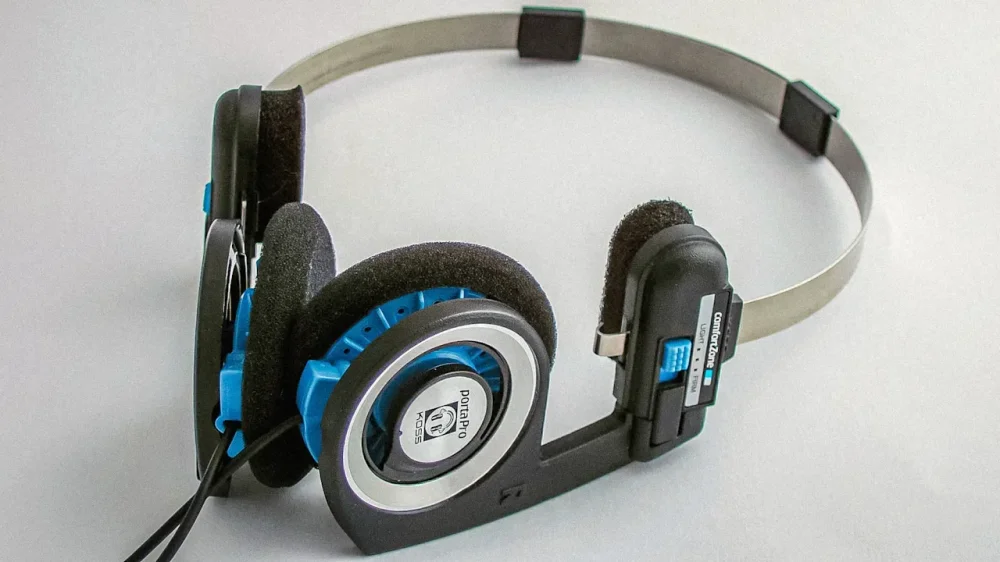
The Koss Porta Pro headphones are one of the most iconic and popular designs in the history of audio equipment. The headphones were first released in 1984 in response to the rise of the Sony Walkman and aimed to translate the company’s audio prowess into a portable, affordable form factor. The results were unmistakably odd. The collapsible headband, blue driver housings and striking shape meant you could spot them from a mile away. But Koss managed to deliver its trademark warm, bassy sound signature into an accessible product, and its retro-futuristic industrial design has never quite gone out of style. Wikimedia Koss, which is still a family-run business headquartered in Milwaukee, sold the Porta Pro virtually unchanged for decades. At under $50, they remained a great option for on-the-go listening. But with the demise of the smartphone headphone jack, eventually a modern wireless update was an obvious move. Going wireless Unfortunately, Koss’s first attempt in 2018 was a whiff. Despite coming after Apple’s AirPods made their debut, the wireless Porta Pro relied on a cable that housed an inline remote and a battery that rested on the wearer’s neck. Between the awkward wearability and a persistently flashing blue LED, the feedback was generally scathing. But recently, I found out that Koss released a radically updated version around a year ago, dubbed the Porta Pro Wireless 2.0. This feels like the sort of thing I should have noticed at the time, but apparently Koss didn’t feel the need to actually tell anyone about the new version. There’s a press release, sure, but for some reason the product got virtually no coverage in the usual channels. Major sites like The Verge didn’t follow up on withering coverage of the 1.0 model. You won’t find reviews on major audio equipment outlets. Even the thread on legendarily obsessive audiophile forum Head-Fi has just 13 posts. (For comparison, the thread on my own Koss go-tos, the relatively obscure KPH30i, has 392.) The Porta Pro Wireless 2.0 is, however, freely available to order on Amazon for $99, so obviously I had to check it out. Nailed it I am pleased to report that Koss actually nailed everything with this 2.0 edition. These are, for mostly better and occasionally worse, exactly what you would have expected from a wireless set of Porta Pro headphones in the first place. Most importantly, the dangly neck wire has been banished. It’s now actually accurate to call these “wireless.” You lose the controls on the inline remote, sure, but I think most people would take that tradeoff. And while the design of the cans themselves remains the same as the original, the lack of wire makes them much more practical to wear. On the tech side of things, Koss has thankfully upgraded the 2.0 model to USB-C for charging. There is still a pulsating LED that indicates connectivity, but it’s tucked away on the underside of the right earpiece and isn’t bright enough to be an annoyance. And unlike the previous model, these support analog audio through a cable when the battery dies. Porta Pro headphones were never known for their sturdy build quality—in fact, they’re positively flimsy. But the upside of this is that they’re very comfortable and can be squeezed down easily into a small circular footprint, which Koss takes advantage of with the helpful inclusion of a compact round hard case. As for the sound, well, they sound like Porta Pro headphones, which is to say they sound awesome for what they are. They’re not exactly reference-level audio hardware, but the thumping bass and smoothed-off treble is a great fit for rock, rap and beyond, while the semi-open-back design allows for sound that feels wider and less claustrophobic than noise-cancelling Bluetooth cans. The Porta Pro Wireless 2.0 does still feel pretty retro, for better and worse. There’s the lightweight plastic design, of course, which I imagine Koss correctly deemed to be nonnegotiable. But there’s also the lack of modern features that are standard on headphones these days, like easy pairing. Getting these up and running on your phone is a roughly equivalent experience to using a Bluetooth earpiece in your car 15 years ago. If you’ve never used Porta Pro headphones before, I should also point out that these are not necessarily the most versatile headphones around. The on-ear, semi-open-back design is what enables the surprisingly wide soundstage, but it also means they offer virtually no sound isolation, and your audio is going to leak out to people around you. In other words, don’t plan to use them on a plane. Still, overall the Porta Pro Wireless 2.0 does exactly what it ought to—these are Porta Pro headphones, but wireless. Maybe the muted launch was because Koss was stung by the reception to the previous wireless model. If so, I think that was a mistake. That was a bad product, and this is not. I think the world should know that you can, in fact, now buy a great wireless version of Porta Pro headphones, which remain a genuine design classic to this day. I’m honestly not sure why this was news to me, but if it’s news to you too, my work here is done. View the full article
-
UK move aims to make it easier for drugs to be approved for use in order to secure carve-out from import leviesView the full article
-
The Chinese leader is ending the year in a better position than his American and Russian counterpartsView the full article
-
December is a month that many look forward to as holiday festivities kick into full gear and extended R&R with our loved ones nears. But for cryptocurrency investors, the month is off to anything but a good start. As of the time of this writing, cryptocurrency prices are down across the board on the first day of December trading. This encompasses significant price drops of major cryptocurrencies, including Bitcoin, Ethereum, XRP, and Solana. Here’s what you need to know. Cryptocurrencies begin December with steep declines Nearly every major cryptocurrency is seeing significant declines on the first trading day of December. As of the time of this writing, most major coins are down over the past 24 hours, including: Bitcoin: down 5% Ethereum: down 5.5% XRP: down 6.8% BNB: down 5.9% Solana: down 6.8% Additionally, meme coins have also declined, with Dogecoin down 8%. Unfortunately, these drops aren’t outliers for cryptocurrencies as of late. Over the past month, big-name cryptocurrencies have been hit hard as investors sold off the digital tokens amid declining risk appetites. Over the last 30 days, Bitcoin has now declined 21%, dropping from around $111,000 per token to today’s current price of just over $86,600. During the same period, Ethereum fell by more than 26%, XRP by more than 18%, BNB by more than 24%, and Solana by more than 31%. Dogecoin is down more than 26% over the past month. Why are Bitcoin and other cryptocurrencies dropping today? There isn’t a single event weighing on Bitcoin and other cryptocurrencies today, just like there has not been one single event weighing on the digital token markets over the past month. Instead, the first trading day of December drops in cryptocurrencies across the board are likely being spurred by multiple factors. Perhaps the most significant factor behind the December 1 crypto drop is ongoing uncertainty about whether the Federal Reserve will vote to cut interest rates when the central bank meets to vote on the matter on December 9-10. A drop in interest rates is generally seen as a good thing for cryptocurrencies as rate drops increase liquidity in the markets, which typically spurs investors to take more risk. As cryptocurrencies are among the most volatile assets, increased risk-taking can stimulate investment in the coins, sending their prices higher. Yet if the Fed does not reduce rates, that increase in liquidity will not materialize, which could impact risk asset investments. Barchart reports that the markets are discounting an 83% chance that the Federal Reserve’s monetary policymaking group, the Federal Open Market Committee (FOMC), will cut interest rates by 25 basis points. However, rate drops aren’t the only reason Bitcoin and other cryptos are starting December on the wrong foot. As Fast Company previously reported, in November, investors increasingly turned sour on artificial intelligence stocks, including on AI heavyweights like Nvidia Corporation (Nasdaq: NVDA) and major OpenAI investor Microsoft Corporation (Nasdaq: MSFT). Over the past month, NVDA shares have declined nearly 12% and MSFT shares are down more than 9%. The share prices of AI and AI-adjacent companies have been highly volatile this year amid growing fears of an AI bubble. Many investors who invest in those companies have high-risk appetites, which is why many AI investors are also cryptocurrency investors. And when one high-risk asset declines, investors tend to sell off their other high-risk assets to lock in any gains and prevent further losses. Continuing fears of an AI bubble, then, could be influencing declines in cryptocurrency prices. Aside from these two ongoing factors that have been weighing on crypto markets for a while now, there are a few more recent events that may be contributing to crypto losses on the first trading day of December. According to a report from CNBC, People’s Bank of China issued a warning on Saturday about illegal activities involving digital tokens. That warning sent shares of companies in the digital asset sector lower on the Hong Kong market. Additionally, CoinDesk reports that early Monday saw notable forced liquidations in crypto markets as traders failed to meet margin requirements for leveraged positions, putting pressure on cryptocurrency prices. 2025 turns negative for crypto When the year began, many investors and industry watchers expressed optimism that Bitcoin and other cryptocurrencies were in for a tremendous year of growth in 2025, largely thanks to the incoming The President administration and its crypto-friendly policies. But while tokens like Bitcoin did reach an all-time high of more than $126,000 this year, the crypto king has declined well below its 2025 starting price. As of this writing, Bitcoin has lost about 7.24% of its 2025 opening value. Ethereum has lost 14.6% of its value, and Solana has lost 32%. BNB is a rare bright spot for major cryptocurrencies this year. The coin has seen growth of nearly 18% so far this year. Of course, given the volatile nature of cryptocurrencies, it’s always possible that things could reverse quickly. There is still one month left in the year, and if there is a late bull run on the tokens, Bitcoin and other cryptocurrencies could still come out green for the year. Whether or not that happens likely depends a lot on the Fed’s rate cut decision next week—and, of course, the greed and fear that investors feel in the run-up to the new year. View the full article

-
Hello and welcome to Modern CEO! I’m Stephanie Mehta, CEO and chief content officer of Mansueto Ventures. Each week this newsletter explores inclusive approaches to leadership drawn from conversations with executives and entrepreneurs, and from the pages of Inc. and Fast Company. If you received this newsletter from a friend, you can sign up to get it yourself every Monday morning. Leaders juggle a lot of demands and priorities. However, most CEOs tell me they’re highly attentive to company culture, change management, and workforce transformation in the age of AI—all areas that their chief human resources officers (CHROs) or chief people officers (CPOs) are tackling, too, notes Jennifer Wilson, cohead of the global Human Resources Officer practice at leadership advisory firm Heidrick & Struggles. “The only other seat besides CEO that has a cross-enterprise view is the chief human resources officer,” Wilson says. “The best CHROs these days are weighing in and shaping strategy around big corporate issues.” Yet CHROs are rarely tapped for the CEO role. Heidrick & Struggles’s data shows that only 16 CEOs at America’s 1,000 largest companies by revenue have previous HR experience. An overlooked role Most of those executives worked in HR as part of their climb up the corporate ladder. General Motors CEO Mary Barra, for example, was a vice president of global human resources at GM for two years between roles as a vice president of global manufacturing engineering and a promotion to senior vice president of global product development. Joanna Geraghty, CEO of JetBlue Airways, was the CPO of the airline for four years after serving as associate general counsel and before moving to an executive vice president role overseeing customer experience. More unusual is the case of Leena Nair, who was the CHRO at Unilever when Chanel, the privately held luxury brand, recruited her to be its global CEO. At a time when chief financial officers, chief technology officers, and even lawyers are moving to the CEO role, Tami Rosen, chief development officer and a board member at Pagaya, an AI-powered fintech, and former CPO at Atlassian, says overlooking HR executives is a miss. “For too long, CHRO and CPO roles have been miscast as operational or administrative when in reality they are the only seats with a true 360-degree view of the company, driving strategy, mission, culture, risk, performance, and people,” she says. The CEO’s support system Megan Myungwon Lee was CHRO and vice president of corporate planning and strategic initiatives when she was promoted to chairwoman and CEO of Panasonic North America in 2021. Lee says Osaka, Japan–based Panasonic has a history of viewing HR, finance, and strategy as a three-legged stool supporting the CEO. “In Japan, if you hire a person, it’s a $3 million investment because people usually retire with the company,” she notes. “It’s not a variable cost.” Lee says her experiences in HR—Panasonic initially hired her as a bilingual secretary—exposed her directly and indirectly to all aspects of the company. It has also shaped her leadership style. “Being a leader is like [being] a parent in that you lead with empathy—guiding, setting boundaries, and making tough decisions—while always asking, ‘How would I want someone to treat my own children in this situation?’” Boards of directors may disregard CHROs in their CEO succession planning for any number of reasons: Some want their chief executive to have client-facing experience; a tech company may prioritize a leader with an engineering background. But Pagaya’s Rosen says boards ignore HR talent at their peril. “More CHROs and CPOs should be elevated to CEO because theirs is the most well-rounded role in the company, connected to the business, the strategy, the culture, and every team,” she says. Does your team elevate HR pros to the top? Does your company have a CPO or CHRO who is a candidate to succeed the CEO? If so, what are the reasons why your company may elevate them? I’d like to hear your stories. Send them in an email to stephaniemehta@mansueto.com. Read more: human resources Meet Beth Galetti, the woman behind Amazon’s explosive growth Why Tesla and FedEx pay this staffing firm millions of dollars The most innovative HR companies of 2025 View the full article

-
PM defends last week’s Budget and says ‘there was no misleading’ about economic forecastsView the full article
-
As the U.S. and China battle over technology, tariffs, and global influence, one question still looms for Europeans: what is Europe’s edge? That was the question recently posed by 21st Century, a Copenhagen-based think tank that collaborates with policymakers and thought leaders to explore the future of Europe. According to Johanna Fabrin, managing director and partner at 21st Century, the answer lies in the EU’s regulatory backbone—think GDPR-level data protection, rigorous environmental standards, and food‑safety rules. “From a consumer perspective, knowing that if something is made in Europe, there will not be arsenic in it, there’s that trust that is important,” she says. To convey that trust, the team has proposed a “Made in Europe” label that would signal quality, safety, and adherence to European standards. Similar to the CE label, which signifies that a product meets EU health, safety, and environmental protections, companies could display it on products to help consumers make informed decisions. The ultimate goal? To elevate the European brand as one that is trusted. ‘Debrandifying’ the label “Made in Europe” was developed in collaboration with British studio Dada. But it is more than a label—it’s a certification. “A symbol of trust,” says Alice Shaughnessy, head of operations at Dada. Shaughnessy’s team worked hard to “debrandify” the design so it reads less like a corporate logo and more like a stamp of approval. They cycled through dozens of proposals—from a wordmark spelling out “EUR” to the words “Made in Europe” set into a circle—before landing on twelve stars arranged in the shape of a lowercase “e”. By referencing the quintessential European symbol found on the EU flag, the design creates a clear association with the European institution. It conveys clout while remaining instantly recognizable. “It was important for us to be able to sit within that hall of great European design in some small way,” says Shaughnessy. Like all initiatives developed by 21st Century, the label is intended as a blueprint that sparks conversation. The team has built a “living ecosystem” of use cases that show how the label could integrate into daily life—from a simple logo on a fruit sticker to an embossed mark on the side of a leather chair. The label was designed to pair with Digital Product Passports—a QR code the EU will require by 2027 for categories like batteries, textiles, electronics, and furniture. Eventually, it could subsume existing certifications like CE, acting as an umbrella label that is relatable and easy for consumers to understand. Instead of decoding what B-Corp or CE means, you would see ‘Made in Europe’ and immediately associate it with European values like sustainability, ethical production, and consumer protection. Building on a momentum This isn’t the first time the idea of a European “made in” label has surfaced. Back in 2014, the European Parliament backed a proposal for source-country labeling, including a voluntary “Made in the EU” tag. But the proposal stalled due to political resistance and fragmented enforcement. Now, Fabrin and Shaughnessy argue, the conditions are different. For one, Europe’s leverage on the geopolitical stage is rising: Russia’s war on Ukraine has renewed interest from candidate countries like Georgia, Moldova, and Ukraine; Brexit has made the EU passport all the more desirable; and growing disillusionment with the American brand has made some companies turn to the EU for answers. Fabrin says she is hearing it firsthand as some IT consultants ask for CRMs based in Europe because of GDPR regulations. “This kind of momentum usually motivates the European Commission to act quite quickly,” she says. The biggest hurdle may be adoption: smaller businesses will need incentives to retrofit supply chains for this label. But 21st Europe’s vision is not to wait for law—it’s to catalyze a movement. Countries like Canada and Denmark have already started to take action with their own versions of “made in” labels. If large corporations like, say, Lego, were to adopt the mark voluntarily, it could inspire smaller companies to think about the label as a positioning exercise. “[We’re] thinking about the European brand as a long-term investment,” says Fabrin, “and a ’Made in Europe’ label is one contributor to building that brand.” View the full article

-
Now that AI can control your web browser, the next frontier might be to take over your entire computer. At least that’s what Seattle-based startup Vercept is trying to do with Vy, a currently free Windows and Mac app that can manipulate your mouse and keyboard to automate tedious or repetitive tasks. You just tell it what you’re trying to do, and then it takes control. Vy first launched as a beta for Macs in May, but has now been rebuilt and is available for Windows as well. My experiments with Vy have yielded mixed results. If you’ve ever yelled at ChatGPT for failing to follow instructions, that frustration becomes magnified when AI is piloting your entire computer — tasks you might want to automate might just be done faster manually. Still, I can see some areas where an AI computer agent could be useful, which is why other companies (including Microsoft) are pursuing the same goal. I spent a lot of time waiting Kiana Ehsani, Vercept’s CEO and co-founder, says Vy is more human-like than the agent features in AI web browsers such as Perplexity Comet and ChatGPT Atlas. While those browsers reportedly work by inspecting the underlying structure of web pages, Vy takes frequent screenshots to analyze what’s happening on your screen. It then executes mouse or keyboard commands to mimic the way you’d control the computer yourself. Ehsani says people are using it to automate Excel work, extract data from the web for sharing into apps like Slack, or figure out how to use new software. “We want to have a model that understands your screen and takes action very similarly to how you do it,” Ehsani says. This ends up taking a while, though, as each individual action requires Vy to take a screenshot and upload it to its servers for analysis. Everything from opening an app to clicking a menu button requires another screenshot and more time waiting for a response — so a routine that takes 10 seconds for a human might take Vy five minutes. Vy has a couple ways to mitigate this. One option is to run tasks in “Background” mode, which lets you keep using your computer while Vy does its work in an invisible browser window. Vy’s capabilities are limited in this mode, though, as it can interact with files and web pages but can’t control other apps. (I had some impish fun getting Vy to fulfill various Microsoft Rewards tasks on my behalf—performing daily Bing searches, filling out various quizzes—but felt guilty about how much compute power must’ve been burned along the way.) The other option is to schedule tasks for when you’re not around. For instance, I set up a daily routine for 7 a.m. that minimizes any open windows on my desktop, opens Obsidian, moves it to the center of the screen, and loads my to-do list. Watching Vy do this in real-time is excruciating, but scheduling it to run before I sit down at my computer—thereby forcing me to confront my to-do list—is pretty helpful. Ehsani hopes that on-device AI will speed things up in the future. Instead of having to constantly upload screenshots and download instructions, the goal is for Vy to process everything directly on the computer, though it’s unclear when that might happen or how powerful a PC you’d need. It needs a lot of hand-holding Getting Vy to perform tasks on your computer can be a bit like bossing a child around, in that it’s liable to ignore or misinterpret your instructions. A quirk of Obsidian, for instance, is that if you load the app while it’s already running, it will load an entirely new instance of Obsidian with a menu for choosing which notebook vault to open. To keep this from happening in my to-do list scenario, I asked Vy to only click the Obsidian icon on the Windows taskbar, which would load any existing instance of Obsidian instead of launching a new one. But every time I tested the routine, Vy kept ignoring my instructions and would try to click the Obsidian icon on the desktop, thereby opening a new window. I would interrupt the assistant and tell it to focus on clicking the taskbar icon, but it had trouble finding it and kept trying to open the app in other ways. At one point it even clicked the Windows Start menu to launch Obsidian from there. Ultimately I had to edit my workflow with clear instructions to never click the desktop icon, never open the Windows Start menu, and avoid using other methods to open Obsidian outside of the taskbar. I also had to lay out explicit guidance to look for a purple crystal icon that appears next to other icons in the taskbar. All told, I spent about 20 minutes troubleshooting this tiny routine that mostly involved minimizing some windows and clicking a button. Vy does have an alternative “Watch and repeat” tool for creating workflows, in which it records your screen while you perform the desired steps. But this was even less reliable in my experience. When I tried setting up my Obsidian automation this way, Vy didn’t minimize any of my open windows and instead just moved its own app to the middle of the screen. It raises some privacy and security concerns Watching Vy take persistent screenshots of my desktop was also a reminder of how much personal info could wind up on Vercept’s servers. Every time Vy takes a screenshot, it captures everything on your screen, even if it’s unrelated to the task. Until I started asking Vercept about its data retention policies, the company did not publish them on its website. Vercept now says it keeps screenshots for six months unless you delete the underlying chat manually. Either way, it keeps data for up to 30 days for safety purposes. Ehsani says it doesn’t capture screenshots when Vy isn’t actively working on a task, and doesn’t perform any post-processing on screenshot contents. Still, a few people at Vercept have full access to users’ data, including their screenshots. “There is a trade-off here,” Ehsani acknowledges. As with any agentic AI system, Vy risks making users vulnerable to prompt injection attacks, in which an attacker hides malicious instructions in web pages, emails, or calendar invites. Vercept says it has some ways to mitigate this—for instance, by instructing Vy to watch for signs of malicious behavior—but no AI system has a foolproof answer to this problem yet. It seems inevitable anyway Despite the potential problems and limitations, AI agents that control your devices are coming. Microsoft already has a mode for its Copilot Windows assistant that can scan what’s on your screen and provide guidance, and it’s testing a “Copilot Actions” feature that can perform tasks on your behalf. Other developers are also pursuing this idea. Github is full of experimental AI control projects, and commercial alternatives include NeuralAgent and Screenpipe. Vercept is notable among these efforts for having raised a $16 million seed round in January, with backers including former Google CEO Eric Schmidt and DeepMind Chief Scientist Jeff Dean. Ehsani says the goal is to expand beyond just a single computer. An Android app is also in the works, and she hopes that you’ll eventually be able to give Vy instructions on your phone and have it carry the actions out on your computer, or vice versa. “One of our main visions is getting rid of mouse, keyboard, and touchscreens altogether,” Ehsani says. For now, at least, the natural speed at which humans can click around a desktop gives them the edge. View the full article
-
When the Los Angeles wildfires swept through the city earlier this year, experts flocked to the internet to dissect the anatomy of a fire-resistant building. Many of them ended up describing bunker-like architecture with boxy buildings, sparse landscape, and lots of concrete. A new building in Malibu offers a more nuanced approach. Malibu High School, which opened in August, is located in an area that Cal Fire (the California Department of Forestry and Fire Protection) recently designated as a very high fire hazard severity zone. This means that the school, which has replaced a nondescript building from the 1950s, had to comply with stringent fire safety regulations. The new school is distributed across two connected buildings. It was constructed entirely of noncombustible materials like concrete shear walls and floors, steel columns and beams, and fire-rated glass. It is surrounded by a newly built fire road to allow easy firetruck access, and drought-resistant landscaping. Still, it looks less like a fortified concrete bunker, and more like the kind of airy, low-lying buildings you might find elsewhere in Malibu. “The messages the building sends about your safety is much more like a community center,” says Nathan Bishop, lead architect and principal at local firm Koning Eizenberg Architecture. “It’s about making it feel like a social place to hang out and just be.” A balanced approach to fire-resistant architecture Malibu High School, part of the Santa Monica-Malibu Unified School District, is nestled between the Pacific Ocean and the Santa Monica Mountains. It is located near a ring of coastal shrubs that is notoriously flammable but is also protected by the California Coastal Act as Environmentally Sensitive Habitat Area (ESHA.) In 2018, the area was hit by the Woolsey Fire, which destroyed over 1,600 structures, and burned nearly 97,000 acres in Ventura and Los Angeles counties. The former high school building, which stood on the same site, narrowly survived, but according to Bishop, the “shared memory” of Woolsey was present in everyone’s mind. “There are still teachers who haven’t replaced their houses because they burned down,” he said. It’s no surprise, then, that fire resiliency was part of the architects’ mandate from the very beginning, when they won an RFP to redesign the school in 2019. The challenge was ensuring the school didn’t look like a bunker. To lighten the visible footprint of the building, the architects positioned solar panels over a canopy so they could cast shadows on the building’s glazed facade. This helped reduce solar gain while allowing the building to have more glass to balance the concrete. The panels, which remain quite visible, help the building achieve its net-zero goals, but they also help communicate the value of sustainability to students. The team used textured concrete that makes the building feel like it is part of the hillside, and copper panels that add some color and texture. They also implemented a dedicated air filtration system for wildfire events. “[The school] is fortified and strong, but not in a defensive way,” says Bishop, noting the school can now serve as a community wildfire shelter. The open design ensured the building feels like it belongs on the rugged hillside of Malibu. The surrounding drought-resistant landscape, by San Diego-based Spurlock Landscape Architects, further anchors the school with a coastal landscape that doubles as a fuel modification zone. This is meant to reduce the risk of wildfire by thinning or replacing combustible vegetation. The landscape architects used California-native plants like aloe vera and agave interspersed with locally sourced rock mulch. They laid out the plants so they would grow from low succulents closer to the building to larger canopies on the outer perimeter. Since many buildings catch fire from what is closest to them, the areas nearest to the building are mostly hardscape. (The January 2025 wildfires didn’t reach as far north as the high school, which was therefore spared.) Rethinking the American high school By the time Koning Eizenberg Architecture got involved in 2020, Malibu High School had been seeing enrollment issues for years. (The school enrolled about 440 students in 2021, compared to nearly 1,000 in 2017.) To compete with nearby private schools, where enrollment issues haven’t been as stark, the Santa Monica-Malibu Unified School District wanted to rethink not just the building but also the way high schoolers studied inside it. Instead of organizing the school by academic departments, the high school follows a more distributed model where “everything is everywhere,” as Bishop puts it. Science labs abut art studios and teacher rooms are scattered around the campus instead of concentrated in a single building. The distributed model allowed the architects to abolish the archetypal silos that have become high school movie tropes—science geeks hang out here; jocks hang out there—and foster more encounters between different disciplines. “There is something about rethinking the story of the American high school, and the social fabric of the American high school,” says Bishop. Before they moved into the new building, high schoolers shared the old building with local middle schoolers, where they studied in nondescript classrooms. Now, each classroom is adjacent to an outdoor space, creating a “fuzzy edge that lets the life of the building spill out,” says Bishop. Students in marine biology class go down to the beach to collect samples. Those in pottery class bring their wheels into the courtyard. Meanwhile, the preserved ESHA acts as a learning lab, where students can learn about ecology. Instead of cutting off the building from its surroundings, the architects carefully integrated it within the landscape, proof that students can learn from nature instead of turning their back on it. View the full article

-
Big-picture plans for the government-sponsored enterprises get the spotlight, but other issues may affect the industry more directly. Part 1 of a series. View the full article

-
Prosecutors alleged organisational ‘deficiencies’ relating to the Mozambique ‘tuna bonds’ scandalView the full article
-
“Parasocial” is the Cambridge Dictionary’s Word of the Year. That feeling that you and Harry Styles would instantly become friends if you ever bumped into each other? Yes, that’s parasocial. The term dates back to 1956, coined by sociologists Donald Horton and Richard Wohl to describe how TV watchers formed “para-social” relationships with those on their screen. The word has taken on even greater meaning in the age of social media, where we have unparalleled access to the lives of influencers, online personalities, and celebrities via phones. Take Taylor Swift and Travis Kelce’s engagement. The news triggered mass hysteria online, with many displaying genuine raw emotion for a couple they’ve never even met. Or British singer Lily Allen, whose latest album West End Girl details a breakup and sparked a “parasocial interest in her love life,” according to the Cambridge Dictionary. It’s not just celebrities. This year, the dictionary noted a surge in those looking up the word after the Youtube star IShowSpeed blocked an obsessive fan, identified as his “number 1 parasocial.” A number of popular female streamers have spoken publicly about dealing with stalking, some resorting to hiring security while navigating online fame. Oftentimes these parasocial relationships are built unintentionally. After spending so many hours consuming content from influencers and content creators, it’s only natural that fans feel a sense of kinship and emotional attachment, even if it’s one-sided. So strong are some of these parasocial ties, a 2024 study revealed that parasocial relationships with YouTubers more effectively filled emotional needs than relationships with “real” acquaintances or colleagues. However, it can bleed into something darker. Add artificial intelligence into the mix and things get even more complex. Many confide in AI tools like ChatGPT as they would friends or romantic partners. By September of 2025, the Cambridge Dictionary definition of parasocial was updated to include the possibility of a relationship with an artificial intelligence. Colin McIntosh, Cambridge Dictionary’s chief editor, said the word “captures the zeitgeist of 2025, as the public’s fascination with celebrities and their lifestyles continues to reach new heights.” He noted in a statement: “It’s interesting from a language point of view because it has made the transition from an academic term to one used by ordinary people in their social media posts.” The other words shortlisted this year were “pseudonymization”, which spiked in interest this year in relation to discussions around protecting personal data. Also “memeify” as it relates to internet culture. The dictionary added 6,000 new words this year, including internet neologisms like “delulu,” “skibidi” and “tradwife.” Looking ahead, words to watch include “glazing,” “vibey,” “bias,” “breathwork,” and “doomspending.” View the full article