Newsletter
Want to keep up to date with all our latest news and information?


ResidentialBusiness
Administrators
-
Joined
-
Last visited
Everything posted by ResidentialBusiness
-
Black Friday sales officially start Friday, November 28, and run through Cyber Monday, December 1, and Lifehacker is sharing the best sales based on product reviews, comparisons, and price-tracking tools before it's over. Follow our live blog to stay up-to-date on the best sales we find. Browse our editors' picks for a curated list of our favorite sales on laptops, fitness tech, appliances, and more. Subscribe to our shopping newsletter, Add to Cart, for the best sales sent to your inbox. Sales are accurate at the time of publication, but prices and inventory are always subject to change. With Black Friday fast approaching, I'm here to tell you Acer Chromebook Plus 515 is cheaper than ever—now just $299.99 on Amazon (almost a third off the original price of $429.99). That's a lot of laptop in return for relatively little outlay, and there won't be many better value deals on offer this week. Acer Chromebook Plus 515 $299.99 $429.99 Save $130.00 Get Deal Get Deal $299.99 $429.99 Save $130.00 I've recently written about the reasons why I often prefer picking up my Chromebook rather than firing up my Windows 11 or macOS computers: These ChromeOS machines are lightweight, fast, bloat-free, and always online. Everything you do on them is instantly saved to the cloud, making it easy to sync your work across computers. Sure, you can of course install Google Chrome on a Microsoft or Apple laptop and then get ChromeOS plus all the extras—but a lot of the time, I don't really need those extras. All I want is a fast window on the web, without background programs or software updates or any other distractions getting in the way. This 15.6-inch Acer laptop meets the Chromebook Plus standard for a superior ChromeOS experience, and you even get a year of Google AI Pro (normally $20 a month) included for free. If you weren't aware, Chromebooks can also run Android apps, which means there's even more you can do with this portable computer. Does Amazon have Black Friday deals?Yes, Amazon has Black Friday sales, but prices aren’t always what they seem. Use a price tracker to make sure you’re getting the best deal, or refer to guides like our live blog that use price trackers for you. And if you have an Amazon Prime membership, make the most of it. Are Black Friday deals worth it?In short, yes, Black Friday still offers discounts that can be rare throughout the rest of the year. If there’s something you want to buy, or you’re shopping for gifts, it’s a good time to look for discounts on what you need, especially tech sales, home improvement supplies, and fitness tech. Of course, if you need to save money, the best way to save is to not buy anything. Are Cyber Monday deals better than Black Friday?Black Friday used to be bigger for major retailers and more expensive tech and appliances, while Cyber Monday was for cheaper tech and gave smaller businesses a chance to compete online. Nowadays, though, distinction is almost meaningless. Every major retailer will offer sales on both days, and the smart move is to know what you want, use price trackers or refer to guides like our live blog that use price trackers for you, and don’t stress over finding the perfect timing. Apple AirPods Pro 3 Noise Cancelling Heart Rate Wireless Earbuds — $219.99 (List Price $249.00) Apple iPad 11" 128GB A16 WiFi Tablet (Blue, 2025) — $274.00 (List Price $349.00) Amazon Fire HD 10 (2023) — $69.99 (List Price $139.99) Sony WH-1000XM5 — $248.00 (List Price $399.99) Blink Outdoor 4 1080p Wireless Security Camera (5-Pack) — $159.99 (List Price $399.99) Amazon Fire TV Stick 4K Plus — $24.99 (List Price $49.99) NEW Bose Quiet Comfort Ultra Wireless Noise Cancelling Headphones — $298.00 (List Price $429.00) Shark AI Ultra Matrix Clean Mapping Voice Control Robot Vacuum with XL Self-Empty Base — $249.99 (List Price $599.00) Apple Watch Series 11 (GPS, 42mm, S/M Black Sport Band) — $349.00 (List Price $399.00) WD 6TB My Passport USB 3.0 Portable External Hard Drive — $134.99 (List Price $179.99) Deals are selected by our commerce team View the full article
-
We may earn a commission from links on this page. November is the ideal time to prepare your home for colder weather and to get ready to spend more time indoors. Not only can you save yourself from more expensive heating bills with thoughtful weatherproofing, but you can also be more confident in the event of winter storms or simply more comfortable when you choose to stay indoors. Keeping your house warm, cozy, and safe for the winter is made easier by addressing potential problems early through simple checks and chores now. Here are all the home maintenance tasks you should do in November. 1) Add vent covers to your vents and crawlspacesWhen the weather gets colder, wild animals seek a good place to shelter for the winter. If you have uncovered vents or crawl spaces, they can prove to be an inviting spot for creatures. To keep them out, see that you have vent covers in place and that crawl spaces or any other exterior nooks and crannies are sealed up or covered with a sturdy metal mesh. If you don't have vent covers installed, consider adding them. This method will help defend against squirrels, raccoons, rats, mice, birds, and bats. 2) Change the batteries in your fire and carbon monoxide alarmsIf you have non-wired smoke and carbon monoxide detectors, change the batteries once a year—even before they begin making the annoying low-battery beep, if you're up for it. While you're at it, check your various hazard detection systems to ensure they work properly. Since people spend more time indoors during the colder months, there is an elevated risk of fire from the use of heaters, candles, and cooking. Additionally, keeping windows closed and sealed can increase the risk of carbon monoxide accumulation inside. Giving your detectors a once-over can help reduce your risk. 3) Install weatherproofing to doors and windowsIf you live in an older home or have windows or doors that aren’t well-insulated, November is a good time to weatherproof problem areas. Begin by inspecting the weatherstripping around doors and windows, checking for leaks, broken, or worn stripping. If you find any gaps, use replacement weather stripping to seal them. If you have bigger leaks around windows or doors, or older windows that let in too much air, you can also use a weatherization kit to temporarily seal off leaky openings with heat-shrinking plastic wrap. This basic weatherproofing will keep you warmer and help save money on utility bills. 4) Organize your winter weather suppliesIf you live in an area that can get a lot of snow and ice in the winter, stock up on ice melt, shovels, and roof rakes. Take a look at your snow removal tools and make sure they’re in good shape before it’s time to use them, as replacing equipment before a storm can save you a lot of headache later. It's also a good time to stash your ice scraper, snow brush, and snow chains in your car's trunk. If you live in an area with heavy snowfall and ice, consider keeping a scraper and de-icer in your garage or utility room, so you can access them if your vehicle becomes frozen over. 5) Clean ovens, toasters, and other crumb-catching appliancesKitchen fires can be caused by ovens, toasters, and other cooking appliances that have crumbs and other burnt food deposits. Since people tend to stay home and use their ovens more during colder months—not to mention entertain more during the holiday season—ovens and toasters can get a more intense workout this time of year. Checking that your appliances are clean and hazard-free in November can save you from a disaster down the road, not to mention that you'll be happier with cleaner appliances and less work during spring cleaning season. View the full article
-
We may earn a commission from links on this page. Deal pricing and availability subject to change after time of publication. Black Friday sales officially start Friday, November 28, and run through Cyber Monday, December 1, and Lifehacker is sharing the best sales based on product reviews, comparisons, and price-tracking tools before it's over. Follow our live blog to stay up-to-date on the best sales we find. Browse our editors’ picks for a curated list of our favorite sales on laptops, fitness tech, appliances, and more. Subscribe to our shopping newsletter, Add to Cart, for the best sales sent to your inbox. Sales are accurate at the time of publication, but prices and inventory are always subject to change. If you have a gamer on your list, make this the year that you don't get them Lee Carvalla's Putting Challenge when they want Bonestorm. The list of Black Friday discounted items below contains everything from full systems to high-end monitors to novelty gifts that'll get a quick laugh—in other words, something for every kind of gamer. Meta Quest 3SIf the gamer in your life is virtual-reality-curious, Meta's Quest 3S headset is the best entry-level VR headset. It might not be the top of Meta's line of VR headsets, but it does everything its bigger brother the Meta Quest 3 does—at a much lower price. Check out my comparison for an in-depth look. The Meta Quest 3S is $249, down from $299. Huqjot retro gaming consoleIt's a golden age for fans of old school games—emulators have gotten so compact and so inexpensive that you can play almost any old game you can think of with just a memory stick plugged into your TV. There are a lot of emulators choose from, but this classic gaming stick comes pre-packaged with over 20,000 games and 23 emulators plus two controllers for less than $50. Retro Gaming Console Pro $39.99 at Amazon $79.99 Save $40.00 Get Deal Get Deal $39.99 at Amazon $79.99 Save $40.00 PlayStation 5 Digital Edition (Slim)It pains me to say this as a longtime Xbox user, but PlayStation has won this generation for serious console gamers. This sleek, slim version of the console is all digital, so there's no disc drive to worry about. It plays the entire catalog of PS5 games, and it comes with a controller. Plus, the Black Friday price is $399, as cheap as it has ever sold for. If you'd rather have a drive, the PS5 Slim disc version is on sale for $449. PlayStation DualSense wireless controllerIf you do gift a PS5, don't forget the extra controller. This DualSense encourages couch co-op and competitive gaming. It charges through a USB-C port, features haptics, and has a built-in mic, so it's everything you need to get Player 2 up and running fast on a PlayStation system. Sony - PlayStation 5 - DualSense Wireless Controller - Midnight Black $54.99 at Amazon $74.99 Save $20.00 Get Deal Get Deal $54.99 at Amazon $74.99 Save $20.00 Ice Breaker Xbox wireless controllerXboxers need a second controller, too.This first-party wireless controller works great and looks slick. It works for both Xbox and PC and includes a "share" button so you can instantly disseminate screenshots and videos. At $49, this Black Friday price is as low as the Ice Breaker has ever been priced. Xbox Wireless Controller Ice Breaker Special Edition $49.00 at Amazon $79.99 Save $30.99 Get Deal Get Deal $49.00 at Amazon $79.99 Save $30.99 Logitech G502 X Plus gaming mouseWhen you're serious about PC gaming, you need a serious gaming mouse like the Logitech G502 X Plus. This wireless mouse has programmable LED lighting, a dual-mode scroll wheel, and a Hero 25K gaming sensor that's precise down to the sub-micron. They're on Black Friday sale for $128.49, down from $179.99. KontrolFreek performance thumbsticksPC gamers aren't the only people who need more precise input. These simple accessories snap on to the thumbsticks of your console controller and give you a little more grip and a little more height, and thus a little better control. They're less than $15 for Black Friday. KontrolFreek FPS Freek Galaxy White for Xbox One and Xbox Series X Controller | Performance Thumbsticks | 1 High-Rise, 1 Mid-Rise | White $13.59 at Amazon $16.99 Save $3.40 Get Deal Get Deal $13.59 at Amazon $16.99 Save $3.40 Sceptre 34-Inch Curved Ultrawide WQHD This Sceptre PC monitor curves around you for better immersion. It packs 5 million pixels into its 34" frame, features 3440 x 1440, and the 21:9 aspect ratio provides you with 30% more screen space versus a conventional monitor. At $187.97, it's 30% off the list price. Sceptre 34-Inch Curved Ultrawide WQHD Monitor $187.97 at Amazon $269.97 Save $82.00 Get Deal Get Deal $187.97 at Amazon $269.97 Save $82.00 Logitech G Pro Flight Rudder PedalsIf your giftee is really into flight sims, a set of Logitech flight rudder pedals will take their gaming into the stratosphere (so to speak). Compatible with Windows 7, 8, 8.1 and 10, this controller has adjustable tension to give the feel of every kind of aircraft, from ultralights to passenger jets. It's $129.99 for Black Friday. Logitech G Pro Flight Rudder Pedals $129.99 at Amazon $179.99 Save $50.00 Get Deal Get Deal $129.99 at Amazon $179.99 Save $50.00 Bose QuietComfort HeadphonesThese noise-cancelling Bluetooth headphones from Bose have an onboard mic, USB-C charging, and play for 24 hours on a charge. They sound excellent too, whether you use them for listening to music or making sure you can hear someone sneaking up on you in Battlefield 6. The discount is substantial, too: $199 down from $349. Bose QuietComfort Noise Cancelling Wireless Headphones $199.00 at Amazon $349.00 Save $150.00 Get Deal Get Deal $199.00 at Amazon $349.00 Save $150.00 Duracell BatteriesEveryone needs batteries, but gamers really need batteries. This bundle combines 28 AA and 28 AAA batteries in one package. These aren't the cheap batteries, either; they're Duracells, so they're reliable and long-lasting. They're 18% off for Black Friday. Crucial X10 Pro 2TB Portable SSDCrucial's X10 Pro is a two-terabyte SSD drive that connects to just about everything—Windows, Mac, iPad, Chromebooks, Android, Linux, PS4, PS5, and Xbox—via USB-C and USB-A. It stores all kinds of data, and retrieves it fast too: up to 2,100MB/s read and 2,000MB/s write speeds. Plus, it's IP55 water and dust resistance and drop resistant up to 7.5 ft. It's currently $149.99, almost 50% off. Snactiv Pro Finger ChopsticksUnwrapping a pair of Snactiv Pros will definitely make your gamer smile. They're finger chopsticks that attach to your knuckles so you can eat snacks without hitting pause or getting Cheeto dust all over your controller, which is either ridiculous or useful, depending on your point-of-view. In other words, a perfect for a Christmas gift. Snactiv Pros Finger Chopsticks $14.99 at Amazon $17.99 Save $3.00 Get Deal Get Deal $14.99 at Amazon $17.99 Save $3.00 Online gift cardsYou might think there's something impersonal about buying gift cards for Christmas, but trust me, this is what gamers actually want—as long as you know what ecosystem they're in. You can set how much money to put on these cards and choose between digital delivery or a physical card. Steam card XBox card PlayStation card Nintendo card JSAUX controller charger for Nintendo Switch 2If there's a Nintendo gamer in your life, this JSAUX charger will power-up their controllers and look good doing it. It charges up to four controllers at once, and features LED lights that tell you how much gas is in the tank. It's $12.99, down from $15.99. What stores have the best sales on Black Friday? Nowadays, both large retailers and small businesses compete for Black Friday shoppers, so you can expect practically every store to run sales through Monday, December 1, 2025. The “best” sales depend on your needs, but in general, the biggest discounts tend to come from larger retailers who can afford lower prices: think places like Amazon, Walmart, Target, Best Buy, and Home Depot. You can find all the best sales from major retailers on our live blog. Are Black Friday deals worth it? In short, yes, Black Friday still offers discounts that can be rare throughout the rest of the year. If there’s something you want to buy, or you’re shopping for gifts, it’s a good time to look for discounts on what you need, especially tech sales, home improvement supplies, and fitness tech. Of course, if you need to save money, the best way to save is to not buy anything. Are Cyber Monday deals better than Black Friday? Black Friday used to be bigger for major retailers and more expensive tech and appliances, while Cyber Monday was for cheaper tech and gave smaller businesses a chance to compete online. Nowadays, though, distinction is almost meaningless. Every major retailer will offer sales on both days, and the smart move is to know what you want, use price trackers or refer to guides like our live blog that use price trackers for you, and don’t stress over finding the perfect timing. Apple AirPods Pro 3 Noise Cancelling Heart Rate Wireless Earbuds — $219.99 (List Price $249.00) Apple iPad 11" 128GB A16 WiFi Tablet (Blue, 2025) — $274.00 (List Price $349.00) Amazon Fire HD 10 (2023) — $69.99 (List Price $139.99) Sony WH-1000XM5 — $248.00 (List Price $399.99) Blink Outdoor 4 1080p Wireless Security Camera (5-Pack) — $159.99 (List Price $399.99) Amazon Fire TV Stick 4K Plus — $24.99 (List Price $49.99) NEW Bose Quiet Comfort Ultra Wireless Noise Cancelling Headphones — $298.00 (List Price $429.00) Shark AI Ultra Matrix Clean Mapping Voice Control Robot Vacuum with XL Self-Empty Base — $249.99 (List Price $599.00) Apple Watch Series 11 (GPS, 42mm, S/M Black Sport Band) — $349.00 (List Price $399.00) WD 6TB My Passport USB 3.0 Portable External Hard Drive — $134.99 (List Price $179.99) Deals are selected by our commerce team View the full article
-
To effectively boost your business, it’s essential to understand various sales strategies that can improve your approach. Each method, from inbound marketing to consultative selling, offers unique benefits customized to different customer needs. By diversifying your tactics, you can optimize your resource allocation and enhance conversion rates. Yet, with so many options available, which strategies should you prioritize for maximum impact? Let’s explore ten effective sales strategies that can propel your growth. Key Takeaways Inbound Sales Strategies: Focus on attracting customers through valuable content and engaging social media interactions to boost brand awareness and loyalty. Outbound Sales Strategies: Utilize proactive outreach methods like cold calling and targeted email campaigns to connect with potential leads directly. Consultative Selling: Build long-term relationships by understanding client needs and providing personalized solutions that address their specific pain points. Value-Based Selling: Prioritize solving customer problems with tailored pitches, enhancing conversion rates by focusing on the value provided. Account-Based Selling: Target high-value accounts with customized marketing efforts to improve relationships and increase overall sales effectiveness. Understanding Sales Strategies When you consider how to effectively sell your products or services, grasping sales strategies is fundamental for your business’s success. You need to recognize the different types of sales strategies that can drive your efforts. Broadly, these strategies fall into inbound and outbound categories; inbound focuses on attracting customers through engaging content, whereas outbound relies on direct outreach methods like cold calls and emails. Comprehending customer personas is likewise crucial, as it helps tailor your approach based on specific demographics and buying behaviors. The Importance of a Sales Strategy A well-structured sales strategy is crucial for any business aiming to thrive in a competitive environment. It provides a long-term roadmap that aligns your sales goals with organizational objectives. By implementing a strategic sales approach, you improve team performance, clarify roles, and enhance targeting and conversion rates. This clarity allows you to focus on high-potential leads, optimizing resource allocation. Moreover, a defined sales strategy helps you differentiate yourself from competitors by identifying your unique value propositions and ideal customer segments. Salesforce with a solid sales strategy can proactively adapt to market changes, ensuring future growth. Benefits of Sales Strategy Key Elements Aligns goals with objectives Clear roles and responsibilities Improves team performance Unique value propositions Optimizes resource allocation Ongoing assessment and refinement Differentiates from competitors Focus on high-potential leads Inbound Sales Strategies Inbound sales strategies are all about attracting potential customers by offering valuable content that meets their needs. By utilizing content marketing techniques and engaging on social media, you can effectively guide prospects through their buying path and improve their overall experience. This approach not merely boosts brand awareness but likewise cultivates trust and long-term relationships, making it a vital aspect of your sales strategy. Content Marketing Techniques Content marketing techniques play a crucial role in attracting potential customers by delivering valuable and relevant information that meets their needs. By creating engaging content—like blogs, videos, and infographics—you can establish your business as a thought leader in your industry. This approach not only builds trust but furthermore improves brand awareness and customer loyalty. In addition, businesses that prioritize these techniques experience six times higher conversion rates compared to those that don’t. Utilizing SEO within your content marketing boosts visibility on search engines, driving organic traffic. Significantly, inbound marketing strategies can be 62% less costly than traditional outbound methods as well as generating three times as many leads, making content marketing a smart choice among different kinds of sales approaches. Social Media Engagement How can social media engagement transform your sales strategy? By leveraging social media, you can notably boost brand awareness, as 83% of marketers agree it improves visibility. Engaging customers through different sales categories can lead to effective lead generation, with 65% of marketers noting its success. When you actively respond to comments and messages, you improve customer satisfaction—51% of consumers appreciate quick replies. Furthermore, utilizing targeted ads can improve your conversion rates, achieving a 2.00% click-through rate compared to a mere 0.10% for general ads. Sharing valuable content nurtures trust, influencing 61% of decision-makers in their purchasing choices. Embracing these 10 types of sales strategies through social media can effectively raise your business performance. Outbound Sales Strategies Outbound sales strategies represent an essential approach in modern business practices, involving proactive outreach methods like cold calling, email campaigns, and telemarketing to generate leads. This approach often relies on purchasing contact lists and directly reaching out to potential clients, which can lead to lower response rates compared to inbound strategies. In 2023, a study revealed that 60% of salespeople fell short of quotas, highlighting the challenges in effectively executing outbound tactics. To succeed, you need a clear comprehension of your target audience and a compelling sales pitch that engages prospects. Incorporating automated tools for lead generation and follow-up can improve efficiency, allowing your sales team to focus on high-value prospects and enhance overall results. Value-Based Selling Even though many sales strategies focus on features and pricing, value-based selling shifts the emphasis to grasping and solving customer pain points. This approach prioritizes insight into what your customer truly needs, allowing you to present specific benefits and solutions that your product or service offers. To succeed, you must engage in thorough research and active listening, tailoring your pitches to each client’s unique challenges. This method can lead to higher conversion rates, with studies showing a 10-20% increase in sales performance for businesses that adopt it. By positioning yourself as a trusted advisor, you improve customer loyalty through personalized attention, resulting in repeat business and referrals. In the end, value-based selling cultivates deeper relationships that are beneficial for both parties. Consultative Selling In consultative selling, you focus on comprehending client needs to build long-term relationships that benefit both parties. By acting as an advisor, you engage in active listening and ask questions that uncover specific challenges your clients face. This approach not merely improves customer satisfaction but additionally nurtures loyalty, making clients more willing to invest in customized solutions. Understanding Client Needs Grasping client needs through consultative selling is vital for building strong relationships and achieving sales success. This method emphasizes comprehending your clients’ specific challenges, allowing you to become a trusted advisor rather than merely a seller. By asking insightful questions and practicing active listening, you can identify pain points and tailor solutions effectively. Research shows that 61% of buyers prefer working with salespeople who invest time in grasping their problems. This collaborative approach not only improves customer satisfaction but also opens doors for upselling opportunities, as clients feel valued and acknowledged. Organizations that invest in ongoing training for consultative selling techniques experience a 25% improvement in sales performance, highlighting the method’s effectiveness in boosting business outcomes. Building Long-term Relationships Building long-term relationships with clients is essential for sustained business success, and consultative selling plays a significant role in this process. This approach positions you as an advisor who actively listens to your clients, grasping their unique needs. By asking open-ended questions, you can uncover their pain points and challenges, allowing you to offer customized solutions that nurture trust and loyalty. Companies using consultative selling often see a 25% increase in customer retention because of these improved relationships. Furthermore, focusing on providing value rather than simply pushing products leads to higher satisfaction rates. In fact, 70% of customers prefer personalized solutions, and adopting consultative techniques can yield a 50% higher conversion rate compared to traditional sales methods. SPIN Selling SPIN Selling is a powerful consultative sales technique that can transform your approach to engaging with customers. This method emphasizes asking four types of questions: Situation, Problem, Implication, and Need-payoff. By gathering background information through Situation questions, you can identify the customer’s specific issues with Problem questions. Implication questions then allow you to highlight the consequences of those issues, whereas Need-payoff questions explore the benefits of potential solutions. Research shows that employing SPIN Selling can markedly boost your closing rates, especially in complex sales environments where comprehending customer challenges is essential. Sales professionals trained in this technique report improved customer engagement and a more structured approach, resulting in stronger client relationships and increased sales success. Solution Selling In solution selling, you focus on comprehending your prospects’ specific needs and challenges, which allows you to offer customized recommendations. By actively listening and asking the right questions, you can build stronger, long-term relationships with your clients. This approach not only improves customer satisfaction but additionally positions you as a trusted advisor, leading to increased loyalty and potentially higher sales productivity. Understanding Prospect Needs How can comprehension of your prospects’ needs transform your sales approach? By focusing on their specific problems and challenges, you can tailor your offerings to provide real solutions. This requires in-depth research into their pain points and active listening during conversations. When you ask insightful questions, you can uncover underlying issues that prospects mightn’t initially express. Positioning yourself as a trusted advisor rather than a traditional seller boosts your credibility and nurtures long-term relationships. Companies embracing this solution selling approach have reported higher customer satisfaction rates, with 70% of buyers preferring consultative interactions. Grasping prospects’ needs ultimately leads to increased loyalty and satisfaction, ensuring your sales strategy is effective and aligned with what your customers truly want. Tailored Recommendations Comprehending your prospects’ needs sets the stage for delivering personalized recommendations that resonate with their specific challenges. Solution Selling focuses on identifying these unique problems, allowing you to suggest customized products or services that provide the most value. Engaging in deep conversations with potential customers helps you uncover their pain points, leading to more effective solutions. By prioritizing their needs over merely pushing products, you improve customer satisfaction and drive better outcomes. Research shows that sales teams using Solution Selling techniques can achieve conversion rates 30% to 50% higher than traditional methods. To implement this approach successfully, extensive training for sales personnel is essential, enhancing their problem-solving skills and ability to craft value-driven pitches that truly meet customer demands. Building Long-Term Relationships Building long-term relationships with customers is critical for sustained business success, especially when employing Solution Selling techniques. By truly comprehending your customers’ needs and challenges, you can recommend customized solutions that build trust and loyalty. This collaborative approach not merely deepens your comprehension of their pain points but also improves customer satisfaction. Benefits of Solution Selling Impact on Business Cultivates trust and loyalty 60% increase in customer retention Encourages ongoing communication Leads to additional sales opportunities Focuses on customer needs 70% of consumers prefer understanding salespeople Promotes referrals Satisfied customers recommend your business Challenger Selling Even though traditional sales methods often focus on building relationships and grasp of customer needs, Challenger Selling takes a different approach by positioning the salesperson as a knowledgeable expert who can provide unique insights. This strategy emphasizes teaching potential customers new perspectives, challenging their current thinking. By deeply comprehending the customer’s business and needs, you can tailor your approach and present solutions that align with their goals. Research shows that Challenger Sales representatives outperform their peers by up to 2.5 times in complex sales situations. This methodology involves three key components: teaching the customer, customizing your message, and controlling the conversation to guide decisions. Rigorous training and market knowledge are crucial for successfully implementing Challenger Selling strategies. Account-Based Selling When targeting high-value accounts in B2B sales, Account-Based Selling (ABS) stands out as a strategic approach that tailors marketing efforts to meet the unique needs of each client. This method involves thorough research on prospective clients, focusing on their business challenges and decision-making processes. Collaboration between sales and marketing teams is essential, allowing for personalized content and outreach strategies that resonate with key stakeholders. Companies utilizing ABS often experience higher conversion rates; 86% of marketers report improved client relationships. By prioritizing high-value accounts, businesses can greatly increase revenue potential, with ABS strategies yielding 10-20% higher win rates compared to traditional methods. Benefits of ABS Impact on Business Personalized marketing Improved client relationships Improved conversion rates Increased revenue potential Higher engagement Better alignment with clients Collaborative strategies Effective resource allocation Focus on high-value accounts Greater competitive advantage Frequently Asked Questions What Are Different Types of Sales Strategies? There are several types of sales strategies you can consider. Inbound sales attract customers through valuable content and engagement, whereas outbound sales involve active outreach like cold calling. Value-based selling focuses on addressing customer pain points, and consultative selling builds long-term relationships by tailoring solutions to client needs. Finally, account-based selling targets high-value customers with personalized marketing efforts. Each strategy serves different purposes and can improve your overall sales effectiveness. What Is the 3-3-3 Rule in Sales? The 3-3-3 Rule in sales helps you structure your pitch effectively. You spend three minutes preparing your key points, three minutes delivering your pitch, and three minutes engaging your customer with questions and feedback. This approach promotes concise communication, ensuring you respect the customer’s time as you remain focused. What Is the Best Strategy to Increase Sales? To increase sales effectively, focus on a value-based selling approach. Identify customer pain points and tailor your solutions accordingly. Consider implementing Account-Based Selling to target high-value clients, enhancing conversion rates. Utilize social proof, like testimonials, as 79% of consumers trust online reviews. Offering a free trial can additionally boost conversions, as nearly half of sales professionals find success with this tactic. Regularly analyze feedback and sales data to refine your strategies continuously. What Are the 5 W’s in Sales? The 5 W’s in sales are fundamental for comprehending your target market. First, Who identifies your ideal customers, helping you craft buyer personas. Next, “What” defines your product or service, highlighting its unique benefits. “When” focuses on the timing of your sales efforts, ensuring they align with customer needs. “Where” determines the best channels for outreach, and “Why” uncovers the motivations behind purchases, guiding your sales messaging effectively. Conclusion In summary, implementing a variety of sales strategies can greatly improve your business’s success. By comprehending and applying methods such as inbound marketing, outbound sales, and value-based selling, you can effectively reach and retain customers. Advanced techniques like Challenger Selling and Account-Based Selling allow for customized approaches to high-value clients. Exploring your tactics not just optimizes resources but also boosts conversion rates, leading to sustainable growth. Adapting your strategy to fit your unique business needs is essential for long-term success. Image via Google Gemini This article, "10 Different Types of Sales Strategies to Boost Your Business" was first published on Small Business Trends View the full article
-
To effectively boost your business, it’s essential to understand various sales strategies that can improve your approach. Each method, from inbound marketing to consultative selling, offers unique benefits customized to different customer needs. By diversifying your tactics, you can optimize your resource allocation and enhance conversion rates. Yet, with so many options available, which strategies should you prioritize for maximum impact? Let’s explore ten effective sales strategies that can propel your growth. Key Takeaways Inbound Sales Strategies: Focus on attracting customers through valuable content and engaging social media interactions to boost brand awareness and loyalty. Outbound Sales Strategies: Utilize proactive outreach methods like cold calling and targeted email campaigns to connect with potential leads directly. Consultative Selling: Build long-term relationships by understanding client needs and providing personalized solutions that address their specific pain points. Value-Based Selling: Prioritize solving customer problems with tailored pitches, enhancing conversion rates by focusing on the value provided. Account-Based Selling: Target high-value accounts with customized marketing efforts to improve relationships and increase overall sales effectiveness. Understanding Sales Strategies When you consider how to effectively sell your products or services, grasping sales strategies is fundamental for your business’s success. You need to recognize the different types of sales strategies that can drive your efforts. Broadly, these strategies fall into inbound and outbound categories; inbound focuses on attracting customers through engaging content, whereas outbound relies on direct outreach methods like cold calls and emails. Comprehending customer personas is likewise crucial, as it helps tailor your approach based on specific demographics and buying behaviors. The Importance of a Sales Strategy A well-structured sales strategy is crucial for any business aiming to thrive in a competitive environment. It provides a long-term roadmap that aligns your sales goals with organizational objectives. By implementing a strategic sales approach, you improve team performance, clarify roles, and enhance targeting and conversion rates. This clarity allows you to focus on high-potential leads, optimizing resource allocation. Moreover, a defined sales strategy helps you differentiate yourself from competitors by identifying your unique value propositions and ideal customer segments. Salesforce with a solid sales strategy can proactively adapt to market changes, ensuring future growth. Benefits of Sales Strategy Key Elements Aligns goals with objectives Clear roles and responsibilities Improves team performance Unique value propositions Optimizes resource allocation Ongoing assessment and refinement Differentiates from competitors Focus on high-potential leads Inbound Sales Strategies Inbound sales strategies are all about attracting potential customers by offering valuable content that meets their needs. By utilizing content marketing techniques and engaging on social media, you can effectively guide prospects through their buying path and improve their overall experience. This approach not merely boosts brand awareness but likewise cultivates trust and long-term relationships, making it a vital aspect of your sales strategy. Content Marketing Techniques Content marketing techniques play a crucial role in attracting potential customers by delivering valuable and relevant information that meets their needs. By creating engaging content—like blogs, videos, and infographics—you can establish your business as a thought leader in your industry. This approach not only builds trust but furthermore improves brand awareness and customer loyalty. In addition, businesses that prioritize these techniques experience six times higher conversion rates compared to those that don’t. Utilizing SEO within your content marketing boosts visibility on search engines, driving organic traffic. Significantly, inbound marketing strategies can be 62% less costly than traditional outbound methods as well as generating three times as many leads, making content marketing a smart choice among different kinds of sales approaches. Social Media Engagement How can social media engagement transform your sales strategy? By leveraging social media, you can notably boost brand awareness, as 83% of marketers agree it improves visibility. Engaging customers through different sales categories can lead to effective lead generation, with 65% of marketers noting its success. When you actively respond to comments and messages, you improve customer satisfaction—51% of consumers appreciate quick replies. Furthermore, utilizing targeted ads can improve your conversion rates, achieving a 2.00% click-through rate compared to a mere 0.10% for general ads. Sharing valuable content nurtures trust, influencing 61% of decision-makers in their purchasing choices. Embracing these 10 types of sales strategies through social media can effectively raise your business performance. Outbound Sales Strategies Outbound sales strategies represent an essential approach in modern business practices, involving proactive outreach methods like cold calling, email campaigns, and telemarketing to generate leads. This approach often relies on purchasing contact lists and directly reaching out to potential clients, which can lead to lower response rates compared to inbound strategies. In 2023, a study revealed that 60% of salespeople fell short of quotas, highlighting the challenges in effectively executing outbound tactics. To succeed, you need a clear comprehension of your target audience and a compelling sales pitch that engages prospects. Incorporating automated tools for lead generation and follow-up can improve efficiency, allowing your sales team to focus on high-value prospects and enhance overall results. Value-Based Selling Even though many sales strategies focus on features and pricing, value-based selling shifts the emphasis to grasping and solving customer pain points. This approach prioritizes insight into what your customer truly needs, allowing you to present specific benefits and solutions that your product or service offers. To succeed, you must engage in thorough research and active listening, tailoring your pitches to each client’s unique challenges. This method can lead to higher conversion rates, with studies showing a 10-20% increase in sales performance for businesses that adopt it. By positioning yourself as a trusted advisor, you improve customer loyalty through personalized attention, resulting in repeat business and referrals. In the end, value-based selling cultivates deeper relationships that are beneficial for both parties. Consultative Selling In consultative selling, you focus on comprehending client needs to build long-term relationships that benefit both parties. By acting as an advisor, you engage in active listening and ask questions that uncover specific challenges your clients face. This approach not merely improves customer satisfaction but additionally nurtures loyalty, making clients more willing to invest in customized solutions. Understanding Client Needs Grasping client needs through consultative selling is vital for building strong relationships and achieving sales success. This method emphasizes comprehending your clients’ specific challenges, allowing you to become a trusted advisor rather than merely a seller. By asking insightful questions and practicing active listening, you can identify pain points and tailor solutions effectively. Research shows that 61% of buyers prefer working with salespeople who invest time in grasping their problems. This collaborative approach not only improves customer satisfaction but also opens doors for upselling opportunities, as clients feel valued and acknowledged. Organizations that invest in ongoing training for consultative selling techniques experience a 25% improvement in sales performance, highlighting the method’s effectiveness in boosting business outcomes. Building Long-term Relationships Building long-term relationships with clients is essential for sustained business success, and consultative selling plays a significant role in this process. This approach positions you as an advisor who actively listens to your clients, grasping their unique needs. By asking open-ended questions, you can uncover their pain points and challenges, allowing you to offer customized solutions that nurture trust and loyalty. Companies using consultative selling often see a 25% increase in customer retention because of these improved relationships. Furthermore, focusing on providing value rather than simply pushing products leads to higher satisfaction rates. In fact, 70% of customers prefer personalized solutions, and adopting consultative techniques can yield a 50% higher conversion rate compared to traditional sales methods. SPIN Selling SPIN Selling is a powerful consultative sales technique that can transform your approach to engaging with customers. This method emphasizes asking four types of questions: Situation, Problem, Implication, and Need-payoff. By gathering background information through Situation questions, you can identify the customer’s specific issues with Problem questions. Implication questions then allow you to highlight the consequences of those issues, whereas Need-payoff questions explore the benefits of potential solutions. Research shows that employing SPIN Selling can markedly boost your closing rates, especially in complex sales environments where comprehending customer challenges is essential. Sales professionals trained in this technique report improved customer engagement and a more structured approach, resulting in stronger client relationships and increased sales success. Solution Selling In solution selling, you focus on comprehending your prospects’ specific needs and challenges, which allows you to offer customized recommendations. By actively listening and asking the right questions, you can build stronger, long-term relationships with your clients. This approach not only improves customer satisfaction but additionally positions you as a trusted advisor, leading to increased loyalty and potentially higher sales productivity. Understanding Prospect Needs How can comprehension of your prospects’ needs transform your sales approach? By focusing on their specific problems and challenges, you can tailor your offerings to provide real solutions. This requires in-depth research into their pain points and active listening during conversations. When you ask insightful questions, you can uncover underlying issues that prospects mightn’t initially express. Positioning yourself as a trusted advisor rather than a traditional seller boosts your credibility and nurtures long-term relationships. Companies embracing this solution selling approach have reported higher customer satisfaction rates, with 70% of buyers preferring consultative interactions. Grasping prospects’ needs ultimately leads to increased loyalty and satisfaction, ensuring your sales strategy is effective and aligned with what your customers truly want. Tailored Recommendations Comprehending your prospects’ needs sets the stage for delivering personalized recommendations that resonate with their specific challenges. Solution Selling focuses on identifying these unique problems, allowing you to suggest customized products or services that provide the most value. Engaging in deep conversations with potential customers helps you uncover their pain points, leading to more effective solutions. By prioritizing their needs over merely pushing products, you improve customer satisfaction and drive better outcomes. Research shows that sales teams using Solution Selling techniques can achieve conversion rates 30% to 50% higher than traditional methods. To implement this approach successfully, extensive training for sales personnel is essential, enhancing their problem-solving skills and ability to craft value-driven pitches that truly meet customer demands. Building Long-Term Relationships Building long-term relationships with customers is critical for sustained business success, especially when employing Solution Selling techniques. By truly comprehending your customers’ needs and challenges, you can recommend customized solutions that build trust and loyalty. This collaborative approach not merely deepens your comprehension of their pain points but also improves customer satisfaction. Benefits of Solution Selling Impact on Business Cultivates trust and loyalty 60% increase in customer retention Encourages ongoing communication Leads to additional sales opportunities Focuses on customer needs 70% of consumers prefer understanding salespeople Promotes referrals Satisfied customers recommend your business Challenger Selling Even though traditional sales methods often focus on building relationships and grasp of customer needs, Challenger Selling takes a different approach by positioning the salesperson as a knowledgeable expert who can provide unique insights. This strategy emphasizes teaching potential customers new perspectives, challenging their current thinking. By deeply comprehending the customer’s business and needs, you can tailor your approach and present solutions that align with their goals. Research shows that Challenger Sales representatives outperform their peers by up to 2.5 times in complex sales situations. This methodology involves three key components: teaching the customer, customizing your message, and controlling the conversation to guide decisions. Rigorous training and market knowledge are crucial for successfully implementing Challenger Selling strategies. Account-Based Selling When targeting high-value accounts in B2B sales, Account-Based Selling (ABS) stands out as a strategic approach that tailors marketing efforts to meet the unique needs of each client. This method involves thorough research on prospective clients, focusing on their business challenges and decision-making processes. Collaboration between sales and marketing teams is essential, allowing for personalized content and outreach strategies that resonate with key stakeholders. Companies utilizing ABS often experience higher conversion rates; 86% of marketers report improved client relationships. By prioritizing high-value accounts, businesses can greatly increase revenue potential, with ABS strategies yielding 10-20% higher win rates compared to traditional methods. Benefits of ABS Impact on Business Personalized marketing Improved client relationships Improved conversion rates Increased revenue potential Higher engagement Better alignment with clients Collaborative strategies Effective resource allocation Focus on high-value accounts Greater competitive advantage Frequently Asked Questions What Are Different Types of Sales Strategies? There are several types of sales strategies you can consider. Inbound sales attract customers through valuable content and engagement, whereas outbound sales involve active outreach like cold calling. Value-based selling focuses on addressing customer pain points, and consultative selling builds long-term relationships by tailoring solutions to client needs. Finally, account-based selling targets high-value customers with personalized marketing efforts. Each strategy serves different purposes and can improve your overall sales effectiveness. What Is the 3-3-3 Rule in Sales? The 3-3-3 Rule in sales helps you structure your pitch effectively. You spend three minutes preparing your key points, three minutes delivering your pitch, and three minutes engaging your customer with questions and feedback. This approach promotes concise communication, ensuring you respect the customer’s time as you remain focused. What Is the Best Strategy to Increase Sales? To increase sales effectively, focus on a value-based selling approach. Identify customer pain points and tailor your solutions accordingly. Consider implementing Account-Based Selling to target high-value clients, enhancing conversion rates. Utilize social proof, like testimonials, as 79% of consumers trust online reviews. Offering a free trial can additionally boost conversions, as nearly half of sales professionals find success with this tactic. Regularly analyze feedback and sales data to refine your strategies continuously. What Are the 5 W’s in Sales? The 5 W’s in sales are fundamental for comprehending your target market. First, Who identifies your ideal customers, helping you craft buyer personas. Next, “What” defines your product or service, highlighting its unique benefits. “When” focuses on the timing of your sales efforts, ensuring they align with customer needs. “Where” determines the best channels for outreach, and “Why” uncovers the motivations behind purchases, guiding your sales messaging effectively. Conclusion In summary, implementing a variety of sales strategies can greatly improve your business’s success. By comprehending and applying methods such as inbound marketing, outbound sales, and value-based selling, you can effectively reach and retain customers. Advanced techniques like Challenger Selling and Account-Based Selling allow for customized approaches to high-value clients. Exploring your tactics not just optimizes resources but also boosts conversion rates, leading to sustainable growth. Adapting your strategy to fit your unique business needs is essential for long-term success. Image via Google Gemini This article, "10 Different Types of Sales Strategies to Boost Your Business" was first published on Small Business Trends View the full article
-
A copy of the first Superman issue, unearthed by three brothers cleaning out their late mother’s attic, netted $9.12 million this month at a Texas auction house which says it is the most expensive comic book ever sold. The brothers discovered the comic book in a cardboard box beneath layers of brittle newspapers, dust and cobwebs in their deceased mother’s San Francisco home last year, alongside a handful of other rare comics that she and her sibling had collected on the cusp of World War II. She had told her children she had a valuable comic book collection hidden away, but they had never seen it until they put her house up for sale and decided to comb through her belongings for heirlooms, said Lon Allen, vice president of comics at Heritage Auctions. The brothers uncovered the box of comics and sent a message to the auction company, leading Allen to fly out to San Francisco earlier this year to inspect their copy of “Superman No. 1” and show it to other experts for appraisal. “It was just in an attic, sitting in a box, could have easily been thrown away, could’ve easily been destroyed in a thousand different ways,” Allen said. “A lot of people got excited because it’s just every factor in collecting that you could possibly want all rolled into one.” The “Superman No. 1” comic, released in 1939 by Detective Comics Inc., is one of a small number of copies known to be in existence and is in excellent condition. The Man of Steel was the first superhero to enter pop culture, helping boost the copy’s value among collectors, alongside its improbable backstory, Allen said. The previous record for the world’s most expensive comic book had been set last year, when an “Action Comics No. 1” — which first introduced Superman to the world as part of an anthology — sold for $6 million. In 2022, another Superman No. 1 sold for $5.3 million. A small, in-house advertisement in the comic book helped experts identify it as originating from the first edition of 500,000 Superman No. 1 copies ever printed. Allen estimates there are fewer than 500 in existence today. The copy was not given any special protection, but the cool Northern California climate helped preserve it, leaving it with a firm spine, vibrant colors and crisp corners, according to a statement from Dallas-based Heritage Auctions. The copy was rated a 9.0 out of 10 by comics grading company CGC, meaning it had only the slightest signs of wear and aging. The three brothers, in their 50s and 60s, did not wish to be identified due to the windfall involved nor did the buyer of the comic book, according to the auction house. “This isn’t simply a story about old paper and ink,” one brother said in a statement released by the auction house. “This was never just about a collectible. This is a testament to memory, family and the unexpected ways the past finds its way back to us.” Brook is a corps member for The Associated Press/Report for America Statehouse News Initiative. Report for America is a nonprofit national service program that places journalists in local newsrooms to report on undercovered issues. —Jack Brook, Associated Press/Report for America View the full article

-
Chancellor expected to continue with support package for households, including easing of electricity costsView the full article
-
We may earn a commission from links on this page. Deal pricing and availability subject to change after time of publication. Black Friday sales officially start Friday, November 28, and run through Cyber Monday, December 1, and Lifehacker is sharing the best sales based on product reviews, comparisons, and price-tracking tools before it's over. Follow our live blog to stay up-to-date on the best sales we find. Browse our editors’ picks for a curated list of our favorite sales on laptops, fitness tech, appliances, and more. Subscribe to our shopping newsletter, Add to Cart, for the best sales sent to your inbox. Sales are accurate at the time of publication, but prices and inventory are always subject to change. The Dyson Airstrait Straightener is down to $399.99 for Black Friday, its lowest price yet, according to price trackers. Normally $549.99, this $150 discount makes the premium hair tool a little more accessible, especially if you’ve been waiting for a deal to try it. Dyson Airstrait Straightener (Ceramic Pink/Rose Gold) $549.00 at Amazon Get Deal Get Deal $549.00 at Amazon What sets the Airstrait apart is its unique approach to styling—there are no hot plates, here. Instead, it uses precisely controlled airflow to straighten damp or dry hair without relying on direct heat. This helps minimize heat damage while still delivering a sleek finish, which could be a big deal if you regularly style your hair and want to keep it healthy long-term. Unlike traditional flat irons, the Airstrait is designed to dry and straighten your hair in one step. For people with thick or frizzy hair, that’s a big time saver. You clamp it closed like a regular straightener, but what’s happening inside is more like a mini hair dryer. You get two modes (wet and dry) and several airflow and heat settings depending on your hair type and needs. And because it doesn’t clamp your hair between burning hot plates, it’s gentler over time. The cord is also salon-length, which makes it easier to maneuver around your head without yanking or twisting. Still, this isn’t a budget buy, even with the discount. It's also bulkier and heavier than a typical flat iron, and it’s not the best choice for precise styles such as curls or flips. It also takes some getting used to. But for those who want a fast and efficient way to go from damp to done with less damage, the Airstrait holds up. If you already use a blow dryer and brush daily, this could replace both. And with this being the lowest price tracked so far, it’s a good time to grab it. How long do Black Friday deals really last? Black Friday sales officially begin Friday, November 28, 2025, and run throughout “Cyber Week,” the five-day period that runs from Thanksgiving through Cyber Monday, December 1, 2025. But Black Friday and Cyber Monday dates have expanded as retailers compete for customers. You can get the same Black Friday sales early, and we expect sales to wind down by December 3, 2025. Does Apple do Black Friday? Yes, Apple participates in Black Friday, though you may want to compare their sales with other retailers like Best Buy and Walmart. Apple is offering an exclusive $250 gift card for eligible purchases, but so far, the best Black Friday sale on an Apple product is the M4 MacBook on sale for cheaper than ever. Does Amazon have Black Friday deals? Yes, Amazon has Black Friday sales, but prices aren’t always what they seem. Use a price tracker to make sure you’re getting the best deal, or refer to guides like our live blog that use price trackers for you. And if you have an Amazon Prime membership, make the most of it. Our Best Editor-Vetted Early Black Friday Deals Right Now Apple AirPods Pro 3 Noise Cancelling Heart Rate Wireless Earbuds — $219.99 (List Price $249.00) Apple iPad 11" 128GB A16 WiFi Tablet (Blue, 2025) — $274.00 (List Price $349.00) Amazon Fire HD 10 (2023) — $69.99 (List Price $139.99) Sony WH-1000XM5 — $248.00 (List Price $399.99) Blink Outdoor 4 1080p Wireless Security Camera (5-Pack) — $159.99 (List Price $399.99) Amazon Fire TV Stick 4K Plus — $24.99 (List Price $49.99) NEW Bose Quiet Comfort Ultra Wireless Noise Cancelling Headphones — $298.00 (List Price $429.00) Shark AI Ultra Matrix Clean Mapping Voice Control Robot Vacuum with XL Self-Empty Base — $249.99 (List Price $599.00) Apple Watch Series 11 (GPS, 42mm, S/M Black Sport Band) — $349.00 (List Price $399.00) WD 6TB My Passport USB 3.0 Portable External Hard Drive — $134.99 (List Price $179.99) Deals are selected by our commerce team View the full article
-
Black Friday sales officially start Friday, November 28, and run through Cyber Monday, December 1, and Lifehacker is sharing the best sales based on product reviews, comparisons, and price-tracking tools before it's over. Follow our live blog to stay up-to-date on the best sales we find. Browse our editors’ picks for a curated list of our favorite sales on laptops, fitness tech, appliances, and more. Subscribe to our shopping newsletter, Add to Cart, for the best sales sent to your inbox. Sales are accurate at the time of publication, but prices and inventory are always subject to change. I love the ritual (and taste) of pour-over coffee, but it's not always feasible to brew two cups for the two adults in my household on busy mornings. Add in guests, and someone has to spend a significant chunk of time grinding beans, boiling water, overseeing the brewing process, cleaning the filter, rinse and repeat. I bought the Moccamaster KBGV Select coffee maker two years ago for Black Friday, and it has changed my mornings since. It takes a minute or so to grind beans and add water to the machine, and then you've got an excellent pot of coffee in 4–6 minutes with just the press of a button—all without sacrificing the complexity and flavor obtained through manual brewing methods. The machine replicates the bloom of a pour-over and brews at a speed that allows for "optimized coffee extraction." Moccamaster 53944 KBGV Select 10-Cup Coffee Maker, Candy Apple Red, 40 ounce, 1.25l $260.63 at Amazon $389.00 Save $128.37 Get Deal Get Deal $260.63 at Amazon $389.00 Save $128.37 The Moccamaster makes up to 40 ounces of coffee at once, keeps it warm, and automatically shuts off after 100 minutes. You can choose a half or full carafe, and the machine will adjust the brewing speed and hot plate temperature accordingly. Plus, it looks great on the kitchen counter. The only downside I found is that the carafe is pretty fragile—we ended up replacing ours with this sturdier version, also on sale for Black Friday. The Moccamaster is pricey, making Black Friday an ideal time to buy. Note that the deal is slightly different depending on the color you choose: As of this writing, Black, Red, Brushed Gold, Butter Yellow, Matte Silver, Midnight Blue, Pistachio, Off-White, Orange, Sandstone, Stone Grey, Turquoise, and Pink are 33% off. Apricot is 31% off, and Yellow Pepper, Matte Black, and Polished Silver are 35% off. (It's not quite the lowest price we've ever seen, according to price-tracking tools, but it's close.) Several other colors are listed at full price as of this piece—of course, it's always possible that availability will change throughout the deal period from what's covered here. How long do Black Friday deals really last?Black Friday sales officially begin Friday, November 28, 2025, and run throughout “Cyber Week,” the five-day period that runs from Thanksgiving through Cyber Monday, December 1, 2025. But Black Friday and Cyber Monday dates have expanded as retailers compete for customers. You can get the same Black Friday sales early, and we expect sales to wind down by December 3, 2025. Does Amazon have Black Friday deals?Yes, Amazon has Black Friday sales, but prices aren’t always what they seem. Use a price tracker to make sure you’re getting the best deal, or refer to guides like our live blog that use price trackers for you. And if you have an Amazon Prime membership, make the most of it. What stores have the best sales on Black Friday?Nowadays, both large retailers and small businesses compete for Black Friday shoppers, so you can expect practically every store to run sales through Monday, December 1, 2025. The “best” sales depend on your needs, but in general, the biggest discounts tend to come from larger retailers who can afford lower prices: think places like Amazon, Walmart, Target, Best Buy, and Home Depot. You can find all the best sales from major retailers on our live blog. Are Black Friday deals worth it?In short, yes, Black Friday still offers discounts that can be rare throughout the rest of the year. If there’s something you want to buy, or you’re shopping for gifts, it’s a good time to look for discounts on what you need, especially tech sales, home improvement supplies, and fitness tech. Of course, if you need to save money, the best way to save is to not buy anything. Are Cyber Monday deals better than Black Friday?Black Friday used to be bigger for major retailers and more expensive tech and appliances, while Cyber Monday was for cheaper tech and gave smaller businesses a chance to compete online. Nowadays, though, distinction is almost meaningless. Every major retailer will offer sales on both days, and the smart move is to know what you want, use price trackers or refer to guides like our live blog that use price trackers for you, and don’t stress over finding the perfect timing. Our Best Editor-Vetted Early Black Friday Deals Right Now Apple AirPods Pro 3 Noise Cancelling Heart Rate Wireless Earbuds — $219.99 (List Price $249.00) Apple iPad 11" 128GB A16 WiFi Tablet (Blue, 2025) — $274.00 (List Price $349.00) Amazon Fire HD 10 (2023) — $69.99 (List Price $139.99) Sony WH-1000XM5 — $248.00 (List Price $399.99) Blink Outdoor 4 1080p Wireless Security Camera (5-Pack) — $159.99 (List Price $399.99) Amazon Fire TV Stick 4K Plus — $24.99 (List Price $49.99) NEW Bose Quiet Comfort Ultra Wireless Noise Cancelling Headphones — $298.00 (List Price $429.00) Shark AI Ultra Matrix Clean Mapping Voice Control Robot Vacuum with XL Self-Empty Base — $249.99 (List Price $599.00) Apple Watch Series 11 (GPS, 42mm, S/M Black Sport Band) — $349.00 (List Price $399.00) WD 6TB My Passport USB 3.0 Portable External Hard Drive — $134.99 (List Price $179.99) Deals are selected by our commerce team View the full article
-
Government’s decision on controversial policy will again highlight complexity of Britain’s welfare systemView the full article
-
Black Friday sales officially start Friday, November 28, and run through Cyber Monday, December 1, and Lifehacker is sharing the best sales based on product reviews, comparisons, and price-tracking tools before it's over. Follow our live blog to stay up-to-date on the best sales we find. Browse our editors' picks for a curated list of our favorite sales on laptops, fitness tech, appliances, and more. Subscribe to our shopping newsletter, Add to Cart, for the best sales sent to your inbox. Sales are accurate at the time of publication, but prices and inventory are always subject to change. When I reviewed the Google Pixel 9 Pro Fold last year, I called it "a big step forward for foldables"—but it was undeniably expensive. Thanks to a big Black Friday discount, it's now a lot cheaper: It's currently $540 off, which means you can now pick it up for $1,259.99 from Amazon. Google Pixel 9 Pro Fold $1,259.99 $1,799.00 Save $539.01 Get Deal Get Deal $1,259.99 $1,799.00 Save $539.01 That's still a lot of money for a smartphone of course, but this is a smartphone than turns into a tablet when you open it up. The main 8-inch display is perfect for watching videos, browsing the web, and putting two apps side by side (so you can browse through social media and chat to your friends at the same time). Just as importantly, it feels like a standard phone when it's closed shut—when all you need is a normal form factor, you're not really making any compromises in terms of size or usability. (It comes with a Google Tensor G4 chipset and 16GB of RAM.) I was seriously impressed with the Pixel 9 Pro Fold when I reviewed it, and while Google launched an updated version with the Pixel 10 series, there's not all that much difference between the 2024 and 2025 models. Given the significant reduction now offered by Amazon, I'd say it's a more appealing buy than ever. Does Amazon have Black Friday deals?Yes, Amazon has Black Friday sales, but prices aren’t always what they seem. Use a price tracker to make sure you’re getting the best deal, or refer to guides like our live blog that use price trackers for you. And if you have an Amazon Prime membership, make the most of it. Are Black Friday deals worth it?In short, yes, Black Friday still offers discounts that can be rare throughout the rest of the year. If there’s something you want to buy, or you’re shopping for gifts, it’s a good time to look for discounts on what you need, especially tech sales, home improvement supplies, and fitness tech. Of course, if you need to save money, the best way to save is to not buy anything. Are Cyber Monday deals better than Black Friday?Black Friday used to be bigger for major retailers and more expensive tech and appliances, while Cyber Monday was for cheaper tech and gave smaller businesses a chance to compete online. Nowadays, though, distinction is almost meaningless. Every major retailer will offer sales on both days, and the smart move is to know what you want, use price trackers or refer to guides like our live blog that use price trackers for you, and don’t stress over finding the perfect timing. View the full article
-
We may earn a commission from links on this page. Deal pricing and availability subject to change after time of publication. Black Friday sales officially start Friday, November 28, and run through Cyber Monday, December 1, and Lifehacker is sharing the best sales based on product reviews, comparisons, and price-tracking tools before it's over. Follow our live blog to stay up-to-date on the best sales we find. Browse our editors’ picks for a curated list of our favorite sales on laptops, fitness tech, appliances, and more. Subscribe to our shopping newsletter, Add to Cart, for the best sales sent to your inbox. Sales are accurate at the time of publication, but prices and inventory are always subject to change. You can get the 2024 M3 MacBook Air available refurbished on StackSocial, starting at $829.99 for the 256GB SSD model and $909.99 for the 512GB version. At under three pounds and just 0.44 inches thick, this MacBook still feels like the lightweight, go-anywhere machine it's known to be, but with a much faster brain. The M3 chip brings an 8-core CPU and a 10-core GPU, and Apple claims it’s up to 60% faster than the earlier M1 model. You’re not just getting a newer processor, you’re getting better multitasking, faster app launches, and smoother performance across the board, especially if you rely on browser tabs, video calls, and creative tools throughout the day. The 13.6-inch Liquid Retina display remains a standout. It’s bright, reaching up to 500 nits, and supports over a billion colors, which is evident in everything from text clarity to editing images or streaming shows. Battery life remains a key selling point, offering up to 18 hours of video playback or approximately 15 hours of web browsing. The updated Wi-Fi 6E helps with faster downloads, and there’s now support for two external displays—great for anyone who splits their work across multiple screens. The machine also includes two Thunderbolt ports, MagSafe charging, and a headphone jack. The 1080p webcam and three-mic array offer sharp video and clear audio for meetings, while the Magic Keyboard and Touch ID provide a reliable typing and login experience. This is a refurbished unit with a Grade A rating, which means you may find signs of wear, but nothing that affects performance. A 30-day parts and labor warranty is included for added peace of mind. It runs macOS Monterey or later and can be updated to macOS Tahoe 26. For users who want Apple’s latest chip in a smaller form factor and don’t want to shell out full price for something brand new, this deal makes a lot of sense. Eight GB RAM might feel limiting if you tend to run heavy creative software or work with large files all day, but for most users, this MacBook Air M3 hits the right balance of power, portability, and price. How long do Black Friday deals really last?Black Friday sales officially begin Friday, November 28, 2025, and run throughout “Cyber Week,” the five-day period that runs from Thanksgiving through Cyber Monday, December 1, 2025. But Black Friday and Cyber Monday dates have expanded as retailers compete for customers. You can get the same Black Friday sales early, and we expect sales to wind down by December 3, 2025. Does Apple do Black Friday?Yes, Apple participates in Black Friday, though you may want to compare their sales with other retailers like Best Buy and Walmart. Apple is offering an exclusive $250 gift card for eligible purchases, but so far, the best Black Friday sale on an Apple product is the M4 MacBook on sale for cheaper than ever. Are Black Friday deals worth it?In short, yes, Black Friday still offers discounts that can be rare throughout the rest of the year. If there’s something you want to buy, or you’re shopping for gifts, it’s a good time to look for discounts on what you need, especially tech sales, home improvement supplies, and fitness tech. Of course, if you need to save money, the best way to save is to not buy anything. Our Best Editor-Vetted Early Black Friday Deals Right Now Apple AirPods Pro 3 Noise Cancelling Heart Rate Wireless Earbuds — $219.99 (List Price $249.00) Apple iPad 11" 128GB A16 WiFi Tablet (Blue, 2025) — $274.00 (List Price $349.00) Amazon Fire HD 10 (2023) — $69.99 (List Price $139.99) Sony WH-1000XM5 — $248.00 (List Price $399.99) Blink Outdoor 4 1080p Wireless Security Camera (5-Pack) — $159.99 (List Price $399.99) Amazon Fire TV Stick 4K Plus — $24.99 (List Price $49.99) NEW Bose Quiet Comfort Ultra Wireless Noise Cancelling Headphones — $298.00 (List Price $429.00) Shark AI Ultra Matrix Clean Mapping Voice Control Robot Vacuum with XL Self-Empty Base — $249.99 (List Price $599.00) Apple Watch Series 11 (GPS, 42mm, S/M Black Sport Band) — $349.00 (List Price $399.00) WD 6TB My Passport USB 3.0 Portable External Hard Drive — $134.99 (List Price $179.99) Deals are selected by our commerce team View the full article
-
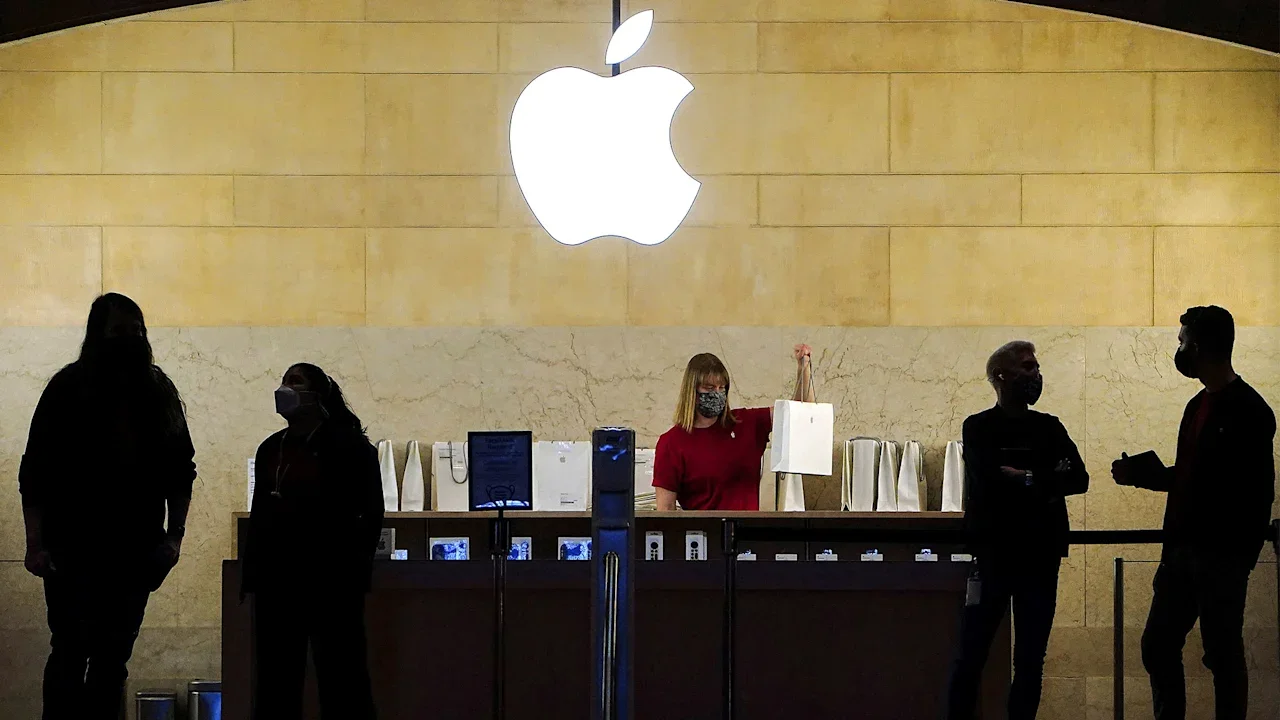
Apple said on Monday it is cutting jobs across its sales teams to strengthen its customer engagement efforts, noting that only a small number of roles will be impacted by the layoffs. An Apple spokesperson told Reuters that the company is continuing to hire and the affected employees can apply for new roles. The impacted employees include account managers serving major businesses, schools and government agencies, according to Bloomberg News, which had reported the news earlier in the day. Staff who operate Apple’s briefing centers for institutional meetings and product demonstrations for prospective customers were also affected, Bloomberg said. One of the major targets of the layoffs was a government sales team working with agencies, including the U.S. Defense Department and Justice Department, per the report. The team had already been facing tough conditions after the 43-day government shutdown and cutbacks imposed by the Department of Government Efficiency, or DOGE, Bloomberg added. In the past few weeks, companies including Verizon, Synopsys and IBM have announced job cuts. —Juby Babu and Stephen Nellis, Reuters View the full article
-
Only a week after experiencing a dreaded “death cross,” and subsequently seeing its value fall to less than $81,000, Bitcoin is showing some signs of recovering. On Monday, BTC’s price topped $89,000, and as of early Tuesday, are hovering around $87,500. To be clear, the slump is far from over—the coin saw its price top $124,000 just last month—and no one can predict what will happen next, but it’s a clear upswing in momentum. All told, when Bitcoin bottomed out at $81,000, it had fallen around 35% off its high. There were several reasons for the selloff, including outflows from large institutional investors and broader economic uncertainty, among other things. It was a wipeout of around $1 trillion in market value. Sentiment may be on the upswing As for this week, it’s anyone’s guess how much momentum the cryptocurrency will have, but investors appear to be felling a little better. The Crypto Fear and Greed Index from CoinMarketCap, a sentiment indicator for the crypto market, was at 15 on Tuesday. That’s still in the “extreme fear” portion of the spectrum, but it’s up from low pint of 10, where the index was on November 21. For context, the index hit a high point for 2025 back in May, tallying a 76 and putting it in the “greed” spectrum. At the time, BTC was trading for around $111,000. So there has been a wild swing in both momentum and sentiment within the past six months. And though Bitcoin has regained its footing a bit over the past week, the question is whether that momentum can be sustained and if values can start pushing back toward all-time highs. What’s next for crypto? Perhaps the next catalyzing moment for the crypto market will come after the Federal Reserve’s December meeting next month. The Fed will meet on December 9 and decide whether to cut interest rates further or hold steady—a decision that has been made more difficult by a lack of economic data (such as jobs reports) in recent months due to the government shutdown. The Fed and its chair, Jerome Powell, have been trying to balance concerns about persistent inflation and a weakening labor market—and doing so without data has it flying blind. Despite that, the odds of a rate cut appear to be the rise, and another cut could spur investors to put more money in stocks and the crypto markets. This story is developing… View the full article

-
Scammers love to impersonate government and law enforcement officials, from the FBI to the U.S. Marshals Service to Medicare and other health insurance programs. There's a good reason for this: Most Americans use government services at some point, and many may be apt to trust, or at least engage with, someone claiming to be from a well-known agency. Plus, the threat of losing benefits or being targeted by legal action is especially compelling when it comes from a government representative, and victims may be more likely to comply with scammers' demands. It's no surprise, then, that schemes currently making the rounds involve Social Security and Veterans Affairs benefits, according to warnings from the Social Security Administration and the Department of Veterans Affairs. Social Security account suspension scamSocial Security numbers are often part of identity theft, so it would be alarming to receive a notice that yours has been involved in criminal activity. Scammers are counting on this when impersonating the SSA's Office of the Inspector General (OIG) and trying to trick you into actually giving up your SSN and other sensitive information. Here's how the scheme works: Fraudsters are sending emails with the subject line "Alert: Social Security Account Issues Detected" and including attachments on letterhead that looks like it comes from the OIG. The notice contains official-seeming information, such as a reference number and case ID, and states that your SSN will be suspended within 24 hours due to fraudulent activity on your account. The letter also says that criminal charges have been filed and even includes the statutes that have supposedly been violated. Recipients are instructed to call the number listed to "respond to these allegations," but the person on the other end is a scammer impersonating an SSA employee. They will try to exploit your fear and confusion to collect personal and financial information from you. VA benefits overpayment scamScammers are also contacting veterans and military family members who receive VA benefits, claiming that said benefits have been overpaid and pressuring targets to pay back the money owed. According to the VA's advisory, fraudsters are using fake VA letterhead and logos on notices sent by mail and email as well as spoofing real VA phone numbers. They are trying to convince beneficiaries to make payments immediately using methods like wire transfers, cryptocurrency, prepaid debit cards, and gift cards, and they may also request sensitive information your VA login or bank account credentials. While VA benefits could legitimately be overpaid, the VA won't contact you and demand money—especially via bitcoin and other unrecoverable methods. Nor should you ever have to pay an upfront fee for assistance with managing VA debts and claims (the VA does this for free). If you do actually owe money, you will be able to find more information on repayment through your official VA.gov account. Always verify through official VA channels, such as VA.gov and the VA’s Debt Management Center (800-827-0648). Never rely solely on unsolicited communication, and never give out your password, SSN, or financial information. Government agencies don't send threatening notices via email (or by any other means), so if you receive a scary letter out of the blue, don't act without investigating. Always contact the agency via the information found on its website—don't call or text any number provided in these notices. View the full article
-
Initial release of data had been postponed because of federal government shutdownView the full article
-
When you’re looking to improve customer loyalty, selecting the right vendor can make a significant difference. Clavaa offers quick setup and cashback rewards, whereas FiveStars focuses on automated customer engagement. TapMango’s customizable app and marketing tools are impressive, and Square provides seamless POS integration. If you’re an online retailer, Smile.io is user-friendly. Each vendor has unique features that can boost your business. Let’s explore these options further to find the best fit for your needs. Key Takeaways Clavaa Loyalty Program offers automatic rewards and cashback, enhancing customer engagement with minimal setup time for businesses. FiveStars Loyalty Platform provides a cloud-based solution with automated customer engagement and detailed insights on behavior and campaign performance. TapMango features a custom-branded app with flexible points systems and extensive marketing tools to drive customer retention. Square Loyalty integrates with POS systems, simplifying customer enrollment and rewards tracking through SMS updates for better engagement. Loyalzoo modernizes loyalty programs for small and medium businesses with smartphone-based tracking and customizable rewards tailored to customer behaviors. Clavaa Loyalty Program The Clavaa Loyalty Program is an innovative solution designed particularly for local retail businesses, offering a digital wallet that provides automatic rewards and cashback incentives. As a loyalty platform provider, Clavaa enables you to reward your customers with a 3% cashback, increasing to 5% for VIP tier members, all without payment-processing fees. The setup process is quick, taking only five minutes, and integrates seamlessly with your existing Point of Sale (PoS) systems, requiring minimal staff training. Clavaa tracks customer visit frequency and spending patterns, offering valuable insights into behavior. Furthermore, it encourages community building by providing personalized demos, helping you tailor your loyalty strategies effectively. This makes Clavaa a top choice among loyalty program vendors for local businesses. FiveStars Loyalty Platform Building on the capabilities of programs like Clavaa, the FiveStars Loyalty Platform offers a cloud-based solution intended to boost customer retention through effective engagement strategies. This platform merges loyalty with marketing, providing vital tools for businesses. Here are some key features: AutoPilot: An automated customer engagement system that sends timely promotions. Multi-channel rewards tracking: Use phone numbers, mobile apps, and payment systems for versatile customer engagement. Data insights: Gain detailed information on customer behavior and campaign performance for data-driven decisions. Automated messaging: Send promotions via text, email, and push notifications to improve customer retention. TapMango Loyalty Features TapMango offers a robust suite of loyalty features created to improve customer engagement and retention for businesses of all sizes. You can benefit from a custom-branded loyalty app for both iOS and Android, upgrading customer interactions through a personalized platform. With a flexible points system, customers earn points for purchases, reviews, and referrals, promoting engagement at multiple levels. The online ordering capabilities track rewards automatically, streamlining the redemption process. Moreover, TapMango includes a marketing suite with tools for SMS, email, and push notifications, ensuring effective communication for promotions. These extensive features are designed to boost customer retention and drive repeat purchases, providing a seamless experience overall. Feature Description Benefit Custom-branded App Personalized app for iOS and Android Upgrades customer engagement Flexible Points Earn points through purchases and referrals Incentivizes multiple interactions Online Ordering Built-in capabilities for tracking rewards Simplifies redemption process Marketing Suite Tools for SMS, email, and push notifications Effective communication Customer Retention Extensive features for loyalty programs Drives repeat purchases Square Loyalty Square Loyalty offers a streamlined approach to customer engagement that integrates effortlessly with existing point-of-sale (PoS) systems. With this program, you can enroll customers using just their phone numbers, eliminating the need for apps or physical cards. Here are some key features: Automatic Tracking: Loyalty rewards are tracked automatically, providing customers with SMS updates for improved engagement. One-Tap Redemption: Customers can redeem rewards easily at checkout, simplifying the process for staff and shoppers alike. Real-Time Analytics: Businesses can access real-time data to monitor the loyalty program’s impact on customer behavior. Focus on Retention: Square Loyalty aims to convert occasional customers into regulars, which can lead to increased repeat purchases. Smile.io Smile.io offers advanced loyalty program features that can greatly boost customer engagement for your online retail business. Its seamless integration with popular e-commerce platforms means you won’t need technical expertise to set up or manage your program effectively. Plus, the user-friendly dashboard allows you to track performance and optimize your strategies with ease, ensuring you get the most out of your loyalty initiatives. Advanced Loyalty Program Features When you’re looking to improve customer loyalty through effective programs, comprehending advanced features can make a significant difference in your strategy. Smile.io offers several key elements to boost your loyalty programs: Freemium Model: Start with a no-cost option, allowing you to utilize advanced features without upfront investment. Pre-built Campaigns: Access over 20 campaigns designed to simplify implementation, so you don’t need technical expertise. Customization Options: Tailor your loyalty program with branding and flexible rewards that resonate with your customer base. Engagement Features: Utilize referral incentives and tiered rewards to encourage repeat purchases and deepen customer relationships. These features can streamline your efforts and ultimately drive customer loyalty effectively. Seamless E-commerce Integration Integrating a loyalty program into your e-commerce platform can greatly improve customer retention and engagement. Smile.io is particularly designed for online retailers, offering seamless integration with major platforms like Shopify, WooCommerce, and BigCommerce. You can easily implement a points-based loyalty system, referral programs, and VIP tiers without needing extensive technical expertise. With over 20 pre-built campaigns, you can quickly launch promotions that drive customer retention and increase sales. Moreover, Smile.io provides robust analytics and reporting tools, allowing you to gain insights into customer behavior and optimize your loyalty strategies effectively. This user-friendly approach guarantees that managing your loyalty programs is straightforward, helping you focus on enhancing the overall customer experience. User-Friendly Dashboard Experience A user-friendly dashboard experience is crucial for businesses looking to manage their loyalty programs effectively. With Smile.io, you can leverage an intuitive interface that simplifies program management. Here are four key features that improve your experience: Seamless Integration: Easily connects with major e-commerce systems, making it accessible for all business sizes. Customizable Programs: Create and tailor loyalty options like points, referrals, and VIP tiers with minimal setup. Advanced Analytics: Gain insights into customer engagement through detailed reporting, allowing for strategic adjustments. Flexible Pricing: Start with basic features through a freemium model, and scale as your customer base grows. These features guarantee you can effectively implement and manage your loyalty strategies without extensive technical knowledge. Kangaroo Rewards Kangaroo Rewards stands out as an expansive loyalty platform designed particularly for small and medium businesses, offering features that improve customer engagement and retention. It provides custom-branded mobile apps, enhancing the overall customer experience. With automated marketing tools, you can effectively drive customer engagement and analyze the success of your loyalty initiatives through thorough analytics. The platform supports points accumulation, referral incentives, and tiered rewards, encouraging repeat purchases and nurturing customer loyalty. Its user-friendly interface simplifies loyalty program management, making it accessible even for those without extensive technical expertise. Loyalzoo Loyalzoo transforms customer loyalty programs by modernizing the traditional punch card system with a user-friendly, smartphone-based approach. This platform is particularly beneficial for small and medium businesses, offering an all-in-one loyalty solution without the need for physical cards. Key features include: Phone Number Identification: Automatically track visits and purchases, allowing customers to earn points effortlessly. Customizable Rewards: Tailor rewards based on points or visits, aligning with customer behaviors. Marketing Capabilities: Run monthly promotions and engage customers through targeted communications. Comprehensive Analytics: Measure program effectiveness easily with detailed insights. With these features, Loyalzoo improves the customer experience and simplifies loyalty management, making it a practical choice for your business. Frequently Asked Questions What Is the Most Successful Loyalty Program in the World? The most successful loyalty program in the world is Starbucks Rewards, with over 34.6 million active members as of Q1 2025. Members earn “Stars” for their purchases, which can be redeemed for various rewards. Furthermore, they enjoy personalized perks, including free refills and special birthday rewards. This program effectively encourages repeat business and improves customer engagement through a structured rewards system that directly ties benefits to spending habits and customer loyalty. What Are the 3 R’s of Customer Loyalty? The 3 R’s of customer loyalty are Recognition, Reward, and Relationship. Recognition involves identifying loyal customers and making them feel valued through personalized communication. Reward systems, like points or exclusive discounts, incentivize repeat purchases, enhancing retention. Finally, nurturing a strong Relationship through consistent engagement and customized interactions transforms casual shoppers into brand advocates, greatly increasing customer lifetime value. Together, these elements create a foundation for lasting loyalty and increased brand advocacy. What Type of Loyalty Program Might You Use in Your Business? You might consider implementing a tiered loyalty program, where customers earn rewards based on their spending levels. This encourages higher purchases as customers aspire to reach the next tier for better benefits. On the other hand, a points-based program could work well, allowing customers to accumulate points for discounts or rewards. Cashback programs likewise provide straightforward incentives by offering a percentage back on purchases, which can effectively promote repeat business and improve customer loyalty. What Brand Has the Highest Brand Loyalty? Amazon currently holds the highest brand loyalty, with over 200 million global members in its Prime program. This program offers exclusive benefits like fast shipping and access to various entertainment services, which greatly improve customer retention. Other brands, such as Starbucks and Sephora, likewise show strong loyalty through their rewards programs, but none match Amazon’s scale. Comprehending these examples can help you design effective strategies to encourage brand loyalty in your own business. Conclusion Choosing the right loyalty program vendor is essential for enhancing customer engagement and retention in your business. Each option, from Clavaa’s cashback rewards to TapMango’s customizable app, offers distinct advantages customized to different needs. Square’s seamless POS integration simplifies tracking, whereas Smile.io serves online retailers effectively. Evaluate your specific requirements and customer base, and consider how each vendor can align with your business goals to create a successful loyalty strategy that drives repeat transactions and nurtures customer loyalty. Image via Google Gemini This article, "Top 7 Loyalty Program Vendors to Consider for Your Business" was first published on Small Business Trends View the full article
-
When you’re looking to improve customer loyalty, selecting the right vendor can make a significant difference. Clavaa offers quick setup and cashback rewards, whereas FiveStars focuses on automated customer engagement. TapMango’s customizable app and marketing tools are impressive, and Square provides seamless POS integration. If you’re an online retailer, Smile.io is user-friendly. Each vendor has unique features that can boost your business. Let’s explore these options further to find the best fit for your needs. Key Takeaways Clavaa Loyalty Program offers automatic rewards and cashback, enhancing customer engagement with minimal setup time for businesses. FiveStars Loyalty Platform provides a cloud-based solution with automated customer engagement and detailed insights on behavior and campaign performance. TapMango features a custom-branded app with flexible points systems and extensive marketing tools to drive customer retention. Square Loyalty integrates with POS systems, simplifying customer enrollment and rewards tracking through SMS updates for better engagement. Loyalzoo modernizes loyalty programs for small and medium businesses with smartphone-based tracking and customizable rewards tailored to customer behaviors. Clavaa Loyalty Program The Clavaa Loyalty Program is an innovative solution designed particularly for local retail businesses, offering a digital wallet that provides automatic rewards and cashback incentives. As a loyalty platform provider, Clavaa enables you to reward your customers with a 3% cashback, increasing to 5% for VIP tier members, all without payment-processing fees. The setup process is quick, taking only five minutes, and integrates seamlessly with your existing Point of Sale (PoS) systems, requiring minimal staff training. Clavaa tracks customer visit frequency and spending patterns, offering valuable insights into behavior. Furthermore, it encourages community building by providing personalized demos, helping you tailor your loyalty strategies effectively. This makes Clavaa a top choice among loyalty program vendors for local businesses. FiveStars Loyalty Platform Building on the capabilities of programs like Clavaa, the FiveStars Loyalty Platform offers a cloud-based solution intended to boost customer retention through effective engagement strategies. This platform merges loyalty with marketing, providing vital tools for businesses. Here are some key features: AutoPilot: An automated customer engagement system that sends timely promotions. Multi-channel rewards tracking: Use phone numbers, mobile apps, and payment systems for versatile customer engagement. Data insights: Gain detailed information on customer behavior and campaign performance for data-driven decisions. Automated messaging: Send promotions via text, email, and push notifications to improve customer retention. TapMango Loyalty Features TapMango offers a robust suite of loyalty features created to improve customer engagement and retention for businesses of all sizes. You can benefit from a custom-branded loyalty app for both iOS and Android, upgrading customer interactions through a personalized platform. With a flexible points system, customers earn points for purchases, reviews, and referrals, promoting engagement at multiple levels. The online ordering capabilities track rewards automatically, streamlining the redemption process. Moreover, TapMango includes a marketing suite with tools for SMS, email, and push notifications, ensuring effective communication for promotions. These extensive features are designed to boost customer retention and drive repeat purchases, providing a seamless experience overall. Feature Description Benefit Custom-branded App Personalized app for iOS and Android Upgrades customer engagement Flexible Points Earn points through purchases and referrals Incentivizes multiple interactions Online Ordering Built-in capabilities for tracking rewards Simplifies redemption process Marketing Suite Tools for SMS, email, and push notifications Effective communication Customer Retention Extensive features for loyalty programs Drives repeat purchases Square Loyalty Square Loyalty offers a streamlined approach to customer engagement that integrates effortlessly with existing point-of-sale (PoS) systems. With this program, you can enroll customers using just their phone numbers, eliminating the need for apps or physical cards. Here are some key features: Automatic Tracking: Loyalty rewards are tracked automatically, providing customers with SMS updates for improved engagement. One-Tap Redemption: Customers can redeem rewards easily at checkout, simplifying the process for staff and shoppers alike. Real-Time Analytics: Businesses can access real-time data to monitor the loyalty program’s impact on customer behavior. Focus on Retention: Square Loyalty aims to convert occasional customers into regulars, which can lead to increased repeat purchases. Smile.io Smile.io offers advanced loyalty program features that can greatly boost customer engagement for your online retail business. Its seamless integration with popular e-commerce platforms means you won’t need technical expertise to set up or manage your program effectively. Plus, the user-friendly dashboard allows you to track performance and optimize your strategies with ease, ensuring you get the most out of your loyalty initiatives. Advanced Loyalty Program Features When you’re looking to improve customer loyalty through effective programs, comprehending advanced features can make a significant difference in your strategy. Smile.io offers several key elements to boost your loyalty programs: Freemium Model: Start with a no-cost option, allowing you to utilize advanced features without upfront investment. Pre-built Campaigns: Access over 20 campaigns designed to simplify implementation, so you don’t need technical expertise. Customization Options: Tailor your loyalty program with branding and flexible rewards that resonate with your customer base. Engagement Features: Utilize referral incentives and tiered rewards to encourage repeat purchases and deepen customer relationships. These features can streamline your efforts and ultimately drive customer loyalty effectively. Seamless E-commerce Integration Integrating a loyalty program into your e-commerce platform can greatly improve customer retention and engagement. Smile.io is particularly designed for online retailers, offering seamless integration with major platforms like Shopify, WooCommerce, and BigCommerce. You can easily implement a points-based loyalty system, referral programs, and VIP tiers without needing extensive technical expertise. With over 20 pre-built campaigns, you can quickly launch promotions that drive customer retention and increase sales. Moreover, Smile.io provides robust analytics and reporting tools, allowing you to gain insights into customer behavior and optimize your loyalty strategies effectively. This user-friendly approach guarantees that managing your loyalty programs is straightforward, helping you focus on enhancing the overall customer experience. User-Friendly Dashboard Experience A user-friendly dashboard experience is crucial for businesses looking to manage their loyalty programs effectively. With Smile.io, you can leverage an intuitive interface that simplifies program management. Here are four key features that improve your experience: Seamless Integration: Easily connects with major e-commerce systems, making it accessible for all business sizes. Customizable Programs: Create and tailor loyalty options like points, referrals, and VIP tiers with minimal setup. Advanced Analytics: Gain insights into customer engagement through detailed reporting, allowing for strategic adjustments. Flexible Pricing: Start with basic features through a freemium model, and scale as your customer base grows. These features guarantee you can effectively implement and manage your loyalty strategies without extensive technical knowledge. Kangaroo Rewards Kangaroo Rewards stands out as an expansive loyalty platform designed particularly for small and medium businesses, offering features that improve customer engagement and retention. It provides custom-branded mobile apps, enhancing the overall customer experience. With automated marketing tools, you can effectively drive customer engagement and analyze the success of your loyalty initiatives through thorough analytics. The platform supports points accumulation, referral incentives, and tiered rewards, encouraging repeat purchases and nurturing customer loyalty. Its user-friendly interface simplifies loyalty program management, making it accessible even for those without extensive technical expertise. Loyalzoo Loyalzoo transforms customer loyalty programs by modernizing the traditional punch card system with a user-friendly, smartphone-based approach. This platform is particularly beneficial for small and medium businesses, offering an all-in-one loyalty solution without the need for physical cards. Key features include: Phone Number Identification: Automatically track visits and purchases, allowing customers to earn points effortlessly. Customizable Rewards: Tailor rewards based on points or visits, aligning with customer behaviors. Marketing Capabilities: Run monthly promotions and engage customers through targeted communications. Comprehensive Analytics: Measure program effectiveness easily with detailed insights. With these features, Loyalzoo improves the customer experience and simplifies loyalty management, making it a practical choice for your business. Frequently Asked Questions What Is the Most Successful Loyalty Program in the World? The most successful loyalty program in the world is Starbucks Rewards, with over 34.6 million active members as of Q1 2025. Members earn “Stars” for their purchases, which can be redeemed for various rewards. Furthermore, they enjoy personalized perks, including free refills and special birthday rewards. This program effectively encourages repeat business and improves customer engagement through a structured rewards system that directly ties benefits to spending habits and customer loyalty. What Are the 3 R’s of Customer Loyalty? The 3 R’s of customer loyalty are Recognition, Reward, and Relationship. Recognition involves identifying loyal customers and making them feel valued through personalized communication. Reward systems, like points or exclusive discounts, incentivize repeat purchases, enhancing retention. Finally, nurturing a strong Relationship through consistent engagement and customized interactions transforms casual shoppers into brand advocates, greatly increasing customer lifetime value. Together, these elements create a foundation for lasting loyalty and increased brand advocacy. What Type of Loyalty Program Might You Use in Your Business? You might consider implementing a tiered loyalty program, where customers earn rewards based on their spending levels. This encourages higher purchases as customers aspire to reach the next tier for better benefits. On the other hand, a points-based program could work well, allowing customers to accumulate points for discounts or rewards. Cashback programs likewise provide straightforward incentives by offering a percentage back on purchases, which can effectively promote repeat business and improve customer loyalty. What Brand Has the Highest Brand Loyalty? Amazon currently holds the highest brand loyalty, with over 200 million global members in its Prime program. This program offers exclusive benefits like fast shipping and access to various entertainment services, which greatly improve customer retention. Other brands, such as Starbucks and Sephora, likewise show strong loyalty through their rewards programs, but none match Amazon’s scale. Comprehending these examples can help you design effective strategies to encourage brand loyalty in your own business. Conclusion Choosing the right loyalty program vendor is essential for enhancing customer engagement and retention in your business. Each option, from Clavaa’s cashback rewards to TapMango’s customizable app, offers distinct advantages customized to different needs. Square’s seamless POS integration simplifies tracking, whereas Smile.io serves online retailers effectively. Evaluate your specific requirements and customer base, and consider how each vendor can align with your business goals to create a successful loyalty strategy that drives repeat transactions and nurtures customer loyalty. Image via Google Gemini This article, "Top 7 Loyalty Program Vendors to Consider for Your Business" was first published on Small Business Trends View the full article
-
We may earn a commission from links on this page. Deal pricing and availability subject to change after time of publication. As part of Amazon’s Black Friday deals, the Beats Studio Pro headphones have dropped to $149.95—down from their usual $349.95, and the lowest price they've hit so far, according to price trackers. At that price, you're getting a premium-looking pair of noise-canceling headphones with a few standout features, especially for Apple users. The build is solid, the fit is comfortable, and the overall feel leans high-end. Beats Studio Pro $149.95 at Amazon $349.95 Save $200.00 Get Deal Get Deal $149.95 at Amazon $349.95 Save $200.00 Audio-wise, the Studio Pro delivers the familiar Beats punch, with boosted bass and bright highs. Purists might find it less balanced, but if you like a little extra punch in your playlists, it works. You can get better audio quality by plugging in the USB-C cable, which unlocks hi-res listening and three preset EQ modes that offer some tailoring depending on what you’re listening to. Unfortunately, you can’t access those EQ options in Bluetooth mode, and there’s no custom EQ, either. Android users also get shortchanged, with only SBC and AAC codec support, so they miss out on AptX and LDAC for high-quality wireless audio. Noise cancellation is where the Studio Pro feels more average. It handles low-end noise fairly well but struggles with higher frequencies and busy environments. There’s also a faint hiss when ANC is on, notes this PCMag review. On the bright side, battery life holds up well—you can expect around 24 hours with noise cancellation on or up to 40 hours without it. Overall, the Studio Pro won’t outperform the best from Sony or Bose in terms of active noise canceling, and it’s not built for audio customization. But, for casual listeners who prioritize comfort, battery life, and seamless Apple integration, this Black Friday deal makes it easier to justify. Our Best Editor-Vetted Early Black Friday Deals Right Now Apple AirPods Pro 3 Noise Cancelling Heart Rate Wireless Earbuds — $219.99 (List Price $249.00) Apple iPad 11" 128GB A16 WiFi Tablet (Blue, 2025) — $274.00 (List Price $349.00) Amazon Fire HD 10 (2023) — $69.99 (List Price $139.99) Sony WH-1000XM5 — $248.00 (List Price $399.99) Blink Outdoor 4 1080p Wireless Security Camera (5-Pack) — $159.99 (List Price $399.99) Amazon Fire TV Stick 4K Plus — $24.99 (List Price $49.99) NEW Bose Quiet Comfort Ultra Wireless Noise Cancelling Headphones — $298.00 (List Price $429.00) Shark AI Ultra Matrix Clean Mapping Voice Control Robot Vacuum with XL Self-Empty Base — $249.99 (List Price $599.00) Apple Watch Series 11 (GPS, 42mm, S/M Black Sport Band) — $349.00 (List Price $399.00) WD 6TB My Passport USB 3.0 Portable External Hard Drive — $134.99 (List Price $179.99) Deals are selected by our commerce team View the full article
-
European and Asian shares mostly gained on Tuesday after U.S. stocks rallied on hopes the Federal Reserve will cut interest rates soon. The futures for the S&P 500 and the Dow Jones Industrial Average slipped 0.1%. Germany’s DAX edged 0.1% lower to 23,216.76 and the CAC 40 in Paris added 0.1% to 7,965.77. Britain’s FTSE 100 likewise gained 0.1%, to 9,542.55. In Asian trading, Tokyo’s Nikkei 225 picked up 0.1% to 48,659.52 as a plunge in technology giant SoftBank’s shares weighed on the market. It fell 10.3% on concerns that returns from its heavy investments in OpenAI may be threatened by the next generation Gemini artificial intelligence model that Google launched last week. In South Korea, the Kospi gained 0.3% to 3,857.78. Taiwan’s Taiex jumped 1.5%. Chinese markets also advanced. In Hong Kong, the Hang Seng climbed 0.7% to 25,894.55, while the Shanghai Composite index jumped 0.9% to 3,870.02. E-commerce giant Alibaba, which was due to report its earnings late Tuesday, gained 2.1% in Hong Kong. Australia’s S&P/ASX rebounded to edge 0.1% higher, closing at 8,537.00. U.S. markets will be closed on Thursday for the Thanksgiving holiday. A day later, it’s on to the rush of Black Friday and Cyber Monday. The U.S. stock market rallied on Monday, at the start of a week with shortened trading because of the Thanksgiving holiday. The S&P 500 climbed 1.5% in one of its best days since the summer. The Dow Jones Industrial Average rose 0.4%, and the Nasdaq composite jumped 2.7%. Stocks got a lift from rising hopes that the Fed will cut its main interest rate again at its next meeting in December, a move that could boost the economy and investment prices. The market also benefited from strength for stocks caught up in the artificial-intelligence frenzy. Alphabet, which has been getting praise for its Gemini AI model, rallied 6.3% and was one of the strongest forces lifting the S&P 500. Nvidia rose 2.1%. Monday’s gains followed sharp swings in recent weeks, not just day to day but also hour to hour, caused by uncertainty about what the Fed will do with interest rates and whether too much money is pouring into AI and creating a bubble. All the worries are creating the biggest test for investors since an April sell-off, when President Donald The President shocked the world with his “Liberation Day” tariffs. Despite all the recent fear, the S&P 500 remains within 2.7% of its record set last month. Several tests for the market lie ahead this week. One of the biggest will arrive Tuesday when the U.S. government will deliver data on inflation at the wholesale level in September. Economists expect it to show a 2.6% rise in prices from a year earlier, the same as in August. A higher-than-expected reading could deter the Fed from cutting its main interest rate in December for a third time this year, because lower rates can worsen inflation. Some Fed officials have already argued against a December cut in part because inflation has stubbornly remained above their 2% target. Traders are nevertheless betting on a nearly 85% probability that the Fed will cut rates next month, up from 71% on Friday and from less than a coin flip’s chance seen a week ago, according to data from CME Group. In other dealings early Tuesday, U.S. benchmark crude oil lost 47 cents to $58.37 per barrel. Brent crude, the international standard, shed 49 cents to $62.23 per barrel. The dollar fell to 156.30 Japanese yen from 156.91 yen. The euro rose to $1.1534 from $1.1521. Bitcoin rose 1.6% to $86,836. It was near $125,000 last month. —Elaine Kurtenbach, AP Business Writer View the full article

-
Shares in Alphabet Inc (Nasdaq: GOOG), the company better known as Google, are rising again in premarket trading today. The stock is currently up by more than 4% following yesterday’s rise of 6.2%. If those gains hold, Google could be set to become the world’s next company with a $4 trillion market cap today. Here’s what you need to know. Why are GOOG shares rising? Shares in Alphabet have had a stellar run as of late. Yesterday, they rose more than 6.2%. Over the past five days, they have been up more than 11.5%. Over the past month, they have jumped more than 22%. And over the past six months, they have been up more than 87%. And that’s before today’s further 4% gain in premarket trading. So why is Alphabet’s share price jumping recently, particularly over the past week? There’s one big reason: artificial intelligence. But the company’s boost from AI is the result of two different factors. The first: Last week, Google released Gemini 3, its proprietary AI chatbot and LLM. Industry watchers and consumers have widely praised the model for its speed, performance, and capabilities, which, in many tests, have outperformed OpenAI’s ChatGPT-5. Gemini 3’s capabilities and Google’s decision to quickly integrate it into Search helped spur the stock higher last week. But that isn’t the only AI boost Google that has gotten recently. On Monday, the Information reported that Facebook owner Meta is considering using Google’s AI chips in its data centers in 2027—a deal that could be worth billions to Google. Google’s AI chips are the company’s tensor processing units (TPUs). Google’s TPUs have been around for nearly eight years now, but, as CNBC noted, the company has recently begun designing them to handle AI tasks with efficiency in mind. Meta is one of the largest buyers of components that go into AI infrastructure, and Nvidia is the leading provider in supplying AI chips. If Meta is considering opting for Google’s TPUs over Nvidia’s AI chips, it suggests the company has confidence that Google’s chips are more than suitable for powering its data centers. If that’s the case, Google could be set to become a serious competitor to Nvidia in the AI hardware race. Indeed, Google investors seem to be celebrating that this morning. Fast Company reached out to Google and Meta for comment. Google could become the next $4 trillion company As of yesterday’s market close, Alphabet had a market cap of roughly $3.84 trillion, making it the third-most valuable company after Nvidia and Apple, both of which are currently valued at more than $4 trillion. But already in premarket trading this morning, GOOG shares have risen by more than 4%. The company’s share price needs to rise by just under 5% over yesterday’s close to reach a market cap of $4 trillion. If it does that, Google would become just the fourth company to ever reach that milestone, following Nvidia, Microsoft, and Apple. (Microsoft’s valuation has currently sunk back below $4 trillion). Given that Google’s stock price is already up around 4% in premarket this morning, it’s possible, but not guaranteed, that the search giant could cross the $4 trillion market cap before markets close today. Google is the best-performing Magnificent 7 stock of the year so far Google hasn’t had just a great run as of late. When you look back at the company’s stock price performance since 2025 began and compare it to the other companies in the Magnificent 7, Google is far and away the best-performing stock in the group so far this year. As of yesterday’s closing price of $318.47 per share, GOOG shares were up over 87% since the year began. Here’s how that compares to the other Magnificent 7 stocks: Alphabet Inc. (Nasdaq: GOOG): up 87.79% year to date (YTD) NVIDIA Corporation (Nasdaq: NVDA): up 35.94% YTD Microsoft Corporation (Nasdaq: MSFT): up 12.46% YTD Apple Inc. (Nasdaq: AAPL): up 10.18% YTD Meta Platforms, Inc. (Nasdaq: META): up 4.70% YTD Tesla, Inc. (Nasdaq: TSLA): up 3.45% YTD Amazon.com, Inc. (Nasdaq: AMZN): up 3.14% YTD Investors will be keenly watching where Google’s stock price goes from here. It’s impossible to predict which direction that will be, but as of this writing, GOOG is so far the clear winner as far as stock price gains go among the Magnificent 7 in 2025. View the full article
-
Since you're already carrying your phone with you everywhere like a digital appendage, you might as well use it for journaling. It's always at hand, can capture photos, videos, and voice notes as well as text, and is able to log locations, trips and more. Its new AI tools can even draft a few entries automatically for you. What's more, your phone probably now comes with a journal app preinstalled: Apple's Journal app launched in 2023, and a brand new Journal app from Google, initially exclusive to the Pixel 10, is now available on the Pixel 8 and Pixel 9 too (apparently because these phones also have Gemini Nano on board). Plus, a wide selection of third-party options is available on the Android and iOS app stores. In recent days, in an attempt to determine whether or not journaling on my phone might be for me, I've tested out both the Apple and Google offerings, as well as some of the best third-party alternatives. Here's what I found, and which apps I'd recommend if you want to log your thoughts and feelings on your phone. The built-in optionsJournal by AppleLet's start with Journal by Apple, launched in December 2023. It's fair to say there haven't been a ton of updates released for the app since then, but all of the essentials are covered: Your journal entries can combine text, photos, videos, audio, locations, and sketches, and you can even set up multiple journals for different purposes. I do like the way this app makes suggestions for journaling, particularly in terms of recent locations and photos—it means it's easier to get started or to jump back in after a while. There are also a good number of options for what you can attach to your journal entries, and I can see myself using the mood slider a lot. Journaling with Apple. Credit: Lifehacker Journal by GoogleAs for the Journal app that Google recently launched for Android, it is limited to those with a phone from the Pixel 8, Pixel 9, and Pixel 10 series. It's also pretty bare bones: I was able to log text, photos, videos, and places, as well as fitness data collected through Health Connect, but there's nothing here for audio or moods. In addition, the interface is rather plain—much more spartan than the Apple equivalent. You do get a neat overview of all your posts, but it's not particularly inspiring, and you can't configure multiple journals. In addition, the AI-powered prompts for what to write about remain exclusive to Pixel 10 handsets, so you have to do without these on the Pixel 8 and Pixel 9. Google's Journal app sticks to the basics. Credit: Lifehacker Neither of these are bad apps; each will do the job of getting down your thoughts in a digital format, with some useful extras attached. The biggest benefits are they're both well integrated into their respective operating systems, and you don't need new accounts to use them. Apple's journal app is certainly better than Google's at the moment, though it's had a two-year head start. If you just want something quick and simple that's made by the company that made your phone (and that may well come preinstalled on your phone), then they're fine. However, these two journal apps remain rather bare bones compared to the other options, as well as keeping you locked in on either Android or iOS. That's why, if you're serious about your journaling, I think it's worth exploring a third-party app installed. The best third-party journal appsDay One Day One was one of the first mobile journals to appear. Credit: Lifehacker Outside of Google and Apple, Day One (Android and iOS) has long been one of the best journaling apps around—and you can take it with you if you ever jump between the Apple and Google platforms. It's been around since 2011 and is stacked with features, including multiple view types, prompts, tags, summaries, recaps, and a gorgeous design that looks great on every device. Your entries can include all the usual features, plus weather details, playlists, health data, social media posts, and more. You get a lot for free, but there is also a premium plan available for $50 a year. It gives you support for unlimited images, videos, and audio, plus extras like the ability to create journal entries over email. 5 Minute Journal 5 Minute Journal focuses on positivity. Credit: Lifehacker As someone just dipping a toe into the world of journaling, 5 Minute Journal (Android and iOS) appeals right from the name. The idea is you don't have to spend too long jotting down your thoughts and ideas each day, and the app is geared towards getting you to record the more positive aspects of your life, boosting mindfulness and well-being. I like the writing prompts and journaling reminders this app provides to keep you motivated, as well as the really simple way you can log your mood as you go. It's also a beautifully designed and organized app—a completely different aesthetic experience than a more utilitarian option like Google Journal. However, some features (including unlimited photos and videos) requires a premium subscription, which starts at $5 a month. Rosebud Journal Rosebud comes with a few AI prompt extras. Credit: Lifehacker One more recommendation from my own experience: Rosebud (Android and iOS). It's branded as "AI-powered" but thankfully you don't have to worry too much about that, and it does a really nice job of summarizing and tracking your thoughts over time, as well as encouraging you to jot stuff down in the here and now. The app does quite a bit of hand-holding and prompting, but that's perfect if you're just getting started or struggling to journal each day, and you can always just jot down standard journal entries with text and images if you prefer. As you might have guessed given the other options on my list, there is a pro-level subscription for $13 a month that gives you a lot more insights in terms of past entries, trends, and emotional patterns and triggers, if an AI's summary of your life is interesting to you. The best journal app is the one you useOne of the benefits of there being so many journal apps out there is that there really is something for everyone, so there's no harm in testing out Google and Apple's offerings first—they are, after all, completely free. But for journaling apps that really invest in user design and features, there are much better options out there. Now I just need to pick the one I'm going to stick with, because in the end, the best journal app is the one that you use consistently. View the full article
-
Dutch historian Rutger Bregman hits out at corporation after US president threatens to sue over ‘Panorama’ documentaryView the full article
-
Foreign minister Sergei Lavrov suggests Moscow would walk away from proposal that differs substantially from Alaska talksView the full article
-
Move comes after brands change recipes to avoid levyView the full article