Newsletter
Want to keep up to date with all our latest news and information?


ResidentialBusiness
Administrators
-
Joined
-
Last visited
Everything posted by ResidentialBusiness
-
After entrepreneur Brynn Putnam sold her smart fitness company, Mirror, to Lululemon for $500 million in 2020, she was looking for her next big idea. It was the middle of the pandemic, and Putnam was living with five kids ranging in age from 2 to 21. She says she often found herself dreaming of an activity that would get her whole family to sit down and connect with each other. Brynn Putnam “When we played games, we were either playing board games like Candyland, so that the littlest ones could participate, or we would try to play video games, but the teenagers who’ve logged a lot of hours on sort of modern controllers would always smoke us,” Putnam says. “There was a missing product: one that could give you the tactile feel of physical pieces and the face-to-face interaction of sitting around a shared experience, but with the interactivity of video games.” Enter Board, Putnam’s newest venture. Board is a 24-inch game console that looks a bit like a gigantic iPad. Its function, though, is unlike pretty much any other device on the market: Board combines the setup and feel of a traditional board game with the digital screen of a video game, allowing players to use physical pieces on top of an interactive screen. The console comes with 12 exclusive games and can accommodate up to 10 players in a team setting. It debuted on October 28 for a holiday price of $499, though its standard cost is $699. While the Board team wouldn’t share sales data, they did note that the product already surpassed initial forecasts. To make Board’s premise work, Putnam’s team designed its own custom hardware and software that can identify different kinds of touch, withstand rough play and spills, and react in real time to players’ movements. For Putnam, Board represents an entirely new way to use tech; rather than isolating its users, Board is built to provide a social experience. How Board built a brand-new kind of game Creating Board started with one major hurdle, says Ryan Measel, the company’s chief technology officer: Most touchscreens are only built to recognize 10 fingers—and they’re certainly not designed to recognize objects. Board needed to identify not only an unlimited number of fingers, but also the console’s 49 unique game pieces. Measel explains that, with commercial platforms like Android and iOS, there’s a programming layer that limits how many touch points—like taps and swipes—a developer can build into an application. With Board, Measel’s team built a custom driver that gave them full access to the console’s sensor array, opening up essentially endless possibilities for different interactions with the screen. Specifically, the Board screen is able to determine what’s touching it (and how) through an embedded AI model that’s been trained on the system’s sensory outputs. It knows, for instance, how to distinguish between a hand accidentally brushing the board, a finger tapping the screen, and an arm passing over the board. It can also tell the difference between all 49 of the console’s game pieces using conductive traces, or unique patterns made out of a conductive material, that are etched onto the bottom of every piece. Alongside the Board’s unique ability to distinguish touch, Putnam says, a top concern was the console’s durability—especially given that some of its games are designed to be enjoyed by players as young as six. The device comes with a spill-resistant gasket around the display and a tight internal structure to keep it safe from liquids and bumps. “My littlest one is 2, so she tends to use everything as a weapon,” Putnam says. “We have some great photos and videos from the testing process at the factory of the Board being submerged underwater, dropped from very high heights, and scratched multiple times.” How Board works When users receive their Board, the device comes with 12 games made specifically for the console, as well as unique pieces tailored to each game. Seth Sivak, Board’s chief creative officer and former CEO of the game studio Proletariat, led game development. He says the console’s portfolio of games was carefully crafted specifically to offer something for all different kinds of players. The options run the gamut from 60-second-long arcade-inspired games to an escape room-themed experience that can take up to 90 minutes to complete. Even within the games themselves, players of different ages and skill levels can find roles appropriate to them—like in the chef-inspired game Chop Chop, where the kind of utensil game piece chosen by each participant determines their role in the kitchen. “The 2 year old can be the sponge and feel a lot of joy cleaning the kitchen, but it’s very simple and intuitive for them to do,” Putnam says. “The grown-up can be in charge of managing the order tickets as they come in and strategizing about how to navigate the changing kitchen layout, recipes, and tickets. I think that’s really hard to do—there’s not a ton of experiences that really make sure everyone has a seat at the table.” Right now, Sivak and his team are working to build out Board’s IP into additional games. At the same time, Putnam says the company is working on making its software development kit available to external developers in order to bring existing games into the Board universe. Board is combining the old-school nostalgia of game night with all the advantages of digital gaming—and it might just be a hit for everyone in the family. “I think for a lot of parents, myself included, you don’t want to pretend like technology doesn’t exist, because technology makes things better—Board does the rule maintenance for you, it does the score keeping, it does all these things,” Putnam says. “But you don’t want technology to remove social interaction. It’s important that the screen brings people together. It doesn’t replace your friends or your family, it doesn’t replace your teacher, but it helps make those experiences more rich.” View the full article

-
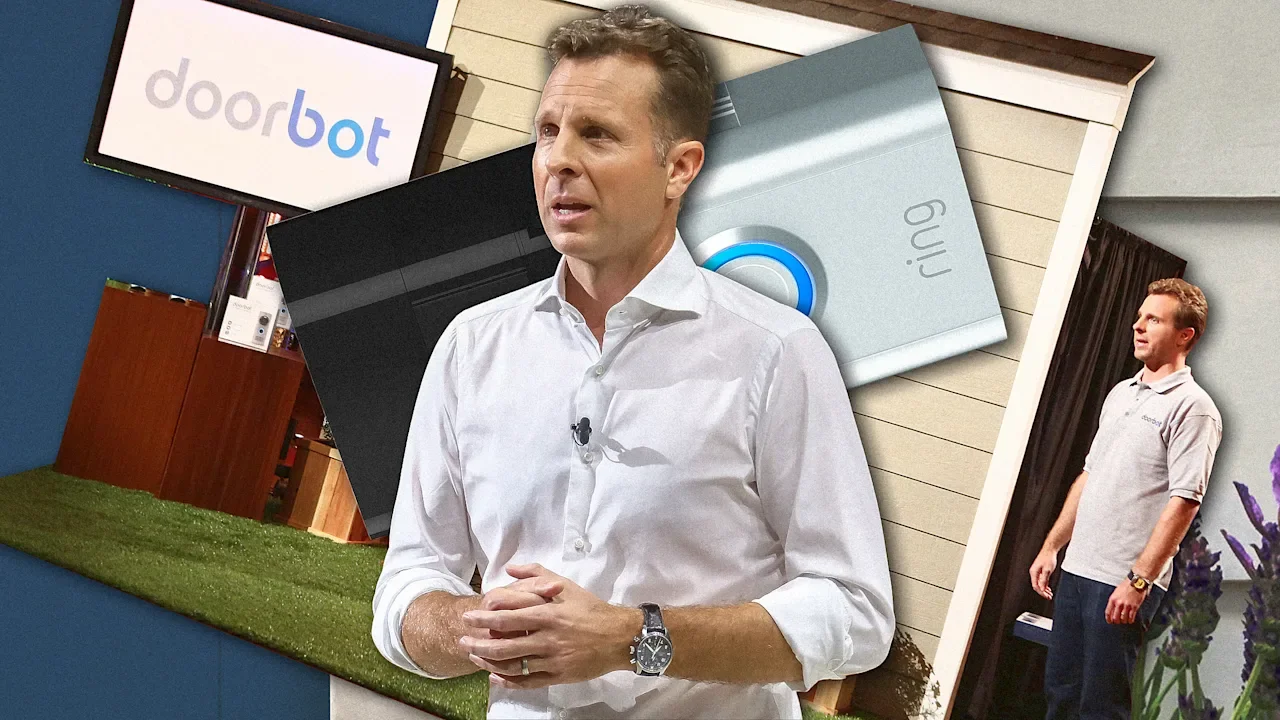
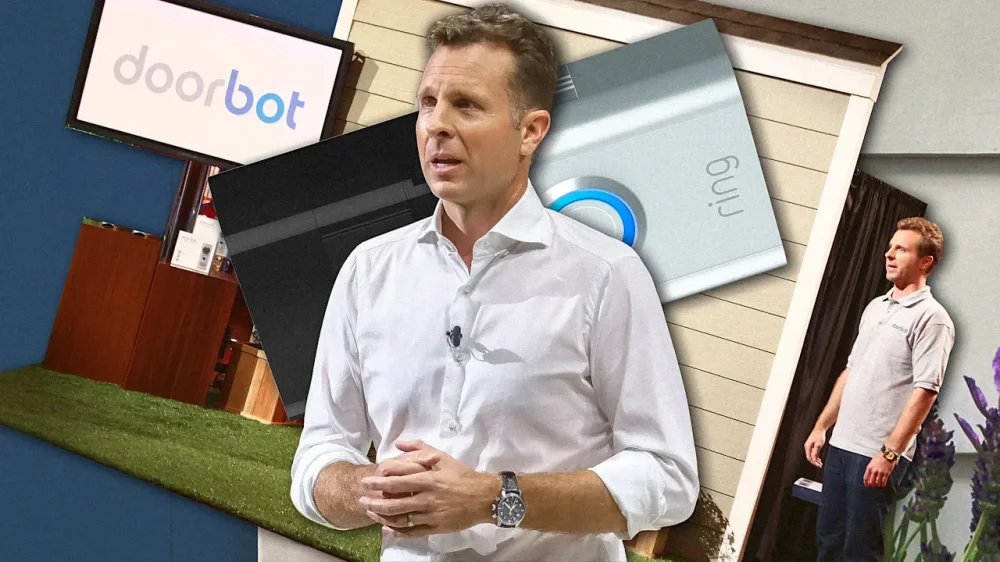
In his new book Ding Dong: How Ring Went from Shark Tank Reject to Everyone’s Front Door, Ring founder Jamie Siminoff pulls back the curtain on the chaotic, often absurd reality of building one of the most recognizable consumer tech brands of the last decade. The following excerpt captures one of the book’s most pivotal moments: the high-stakes, borderline-reckless gamble to secure the name “Ring.com,” a decision that nearly emptied the company’s bank account, tested the patience of his investors, and set the stage for a brand that would soon reshape home security. eBay.com. Half.com. Cars.com. Shop.com. Toys.com. And yes, Nest.com. So many great four-letter domain names. And I wanted one: Ring.com. The owner of the URL was willing to part with it … for 2 million bucks. That represented a massive chunk of the money my VCs were about to give me. Neither they, nor a couple of my seasoned tech friends who had experience with overpriced domain names, thought it was a great use of my new capital. Nor did the fellow who ran the mezcal company on the other side of the wall of our Santa Monica office. “You’re going out of business! Your doorbell doesn’t work! It’s just a name!” he yelled at me in the parking lot as I walked to my car one evening. On one hand, I wanted to yell back that he didn’t know what he was talking about; on the other, I wondered if he was right and I was making a huge mistake. I also wondered where his anger at me was coming from, but realized he’d probably heard some of my own raging through the walls. “You’re going to spend all that money on a stupid name?!” he barked. Another doubter wondered, “Jamie, does it really have to be four letters? What’s so special about four letters?” Yes, it had to be Ring. When I’d come up with my voice message-to-email transcription service, I first called it Simulscribe, and it stagnated. When I changed the name to PhoneTag.com, we got a burst of interest. Names matter. I had once thought they shouldn’t—all that mattered was having a quality product with an easy-to-understand benefit, a great customer experience, and a fair price. Turns out, the name matters. I would not make that mistake again with the doorbell. Soon enough, there would be lots of video-doorbell competitors whose products might be almost as good as ours when we launched F5. So the way to separate ourselves from the competition was brand. A mission as big as reducing crime in neighborhoods deserved a brand. That brand deserved a great name. For some totally unfathomable and fortunate reason, this URL owner showed zero curiosity about the individual or company that was trying to buy his name. In our exchanges, it seemed almost as if he was unfamiliar with the internet, which was particularly weird for someone who harvested domain names. I got the sense that for some time he had overplayed his hand, consistently valuing the URL higher than the market did. Which happens. Maybe he had tried to sell it during the dot-com boom for $10 million and it was worth only five then. Or maybe I was the one being played, and he knew exactly how much a perfect four-letter domain name could fetch, certainly way more than I’d paid to own SlowDownAsshole.com ($15). My friend Diego Berdakin—a brilliant entrepreneur, USC professor, and the single smartest person I know—urged me, explicitly, to not pay a cent more than $100k for Ring.com. I explicitly did not tell him the owner’s starting price. First, I got the owner to knock the price down from $2 million to $1 million, but that was still an insane amount of up-front cash for a struggling startup to just light on fire, a full third of what I was getting from True Ventures. I had to figure a way to own the name without bankrupting our company…would the owner be interested in equity instead of cash? No. Wow. Clearly he hadn’t read about Google’s recent multibillion-dollar acquisition of Nest. I made one last offer for slightly under $1 million. Nope. One mill. We set a closing date. I forgot one thing, though. I didn’t have the money. The morning of the closing, I called the owner. “Listen, I’m in the parking lot of my company and I’m so embarrassed. The bad news is my board won’t let me buy the name, full price today, for what I previously offered you.” It was not a lie. I had a board. The only detail I left out was that the board was just me. “Wow,” said the owner. “That’s a dirty thing your board did.” “Tell me about it. Worse than dirty. Disgusting.” “I’m very upset.” “I hear you, brother. Me, too.” I went on a bit. I doubled down about what a bunch of assholes my board were being. “But the good news is I’m authorized to deposit one hundred seventy-five thousand dollars in your account, today”—I had $187,000 in the bank; the VC investments had not yet closed—“and the additional eight hundred twenty-five thousand paid in installments over two years, for a total of one million dollars.” He lost his shit. He unleashed a string of four-letter words very different from Ring and eBay and Half. Effing this, mother-effing that. The connection dropped. He’d hung up. Damn, I thought. Had I overplayed my hand? Fifteen minutes later, I got an email from him. Wire the money. He included his bank information. He never asked who was on the board. Never asked what we did. I hope I would have, in his shoes. Maybe when you’re offered a million bucks overall, with $175k coming that day, you just want to get it over with as quickly as possible. I called my friend Adam d’Augelli—the young VC at True who had been my biggest champion—to boast what a great deal I had cut, that I’d essentially just saved us so much money. He wasn’t quite ready for high-fives; their investment was about to close, and already a significant chunk of it was gone because I had a jones for a great four-letter domain name. Adam was fully Team Siminoff but, as I’d done with others, I was not making it easy for him. Ring.com. What a great sound. As sweet as the three-toned jingle the doorbell made. View the full article
-
The Justice Department subpoenaed a key witness in the case, questioning the conduct of Bill Pulte and Ed Martin. View the full article
-
The new cap of $88 billion per company tops this year's $73 billion limit, but keeps pace with multifamily mortgage volume growth in recent months. View the full article
-
The prepayment rate grew by 37% over September as mortgage rates fell leading to higher refinancing volume in October, ICE Mortgage Technology said. View the full article
-
You’re probably winding down from work and getting ready for a few days at home with your family. But anybody with caregiving responsibility knows that the Thanksgiving and Christmas breaks will not be relaxing. Since the United States does not have a federal policy that gives workers paid time off after giving birth, having a medical procedure, or to care for a loved one, many will cram this labor into their precious holiday time. Many of us have a colleague who will come back to work exhausted after spending time with a dying parent, having taken advantage of the time off from work to figure out hospice and funeral arrangements. Or one who will be caring for a sibling or spouse who is recovering from surgery or managing a terminal illness. And then there are parents who will spend the week taking care of infants and toddlers while daycare is closed. Many women, who bear the brunt of this caregiving, have found it impossible to balance work and taking care of loved ones. From January to August 2025, an estimated 455,000 women left the workforce, often because they had to care for children and aging parents. This isn’t just bad for those who are giving up their income; it’s bad for the U.S. economy, which is losing productive workers. Starting today, Paid Leave for All, a nonprofit fighting for the government to pass paid family and medical leave for all working people, is drawing attention to the way the lack of paid leave hurts American workers. It’s encouraging people to post out-of-office messages that reflect how they’re using their holidays to care for family members since they’re not granted any other time to do so. The organization will be displaying these real out-of-office messages in prominent places. There will be a scrolling mosaic of messages in the New York and Washington, D.C., airports throughout this week, which happens to be the busiest travel week of the year. These messages will also be posted on a billboard in Times Square. On social media, the organization is encouraging everyday people to post their out-of-office messages publicly. After the break, when Congress returns from their recess, Paid Leave for All will deliver these messages to lawmakers and argue for the importance of passing paid leave. Out-of-office messages tend to be generic and polite. Some companies even mandate what employees post. Dawn Huckelbridge, founding director of Paid Leave for All, says that in many ways, these messages obscure the real story of workers’ lives. “The messages are designed to sound like people are getting a break from work,” she says. “But in fact, there is a lot of labor going on during these periods out of the office.” With this campaign, Paid Leave for All invites everybody to post out-of-office messages that more accurately reflect what they’re doing when away from their desk. They may say things like: “Thanks for your message! I’m OOO because my mom is having surgery. But like so many Americans, I don’t have any paid leave so I will be back on Monday.” Or: “Thanks for your note! I’m OOO because my parents are getting older and I can’t manage their Rx and 500 unread emails at once. In-home care is $60K and I have limited PTO. Will get back to you ASAP!” Most workers feel like they can’t publicly share how overwhelmed they are by their caregiving responsibilities, because it might suggest that they’re not competent. But Huckelbridge hopes that by encouraging people to openly discuss these issues through their out-of-office messages, it will reveal that there is actually a systemic problem in the U.S., which is the only developed country with no national paid family and medical leave policy. “There’s a crisis in the workplace that people are not talking about,” she says. “We’ve had one of the steepest declines in women’s participation in the workplace, partly because these women are burnt out from working full-time jobs while bearing the brunt of caregiving.” After the Thanksgiving holiday weekend, Huckelbridge will deliver the messages to Congress. “It is unlikely that a Republican Congress will pass these laws,” she says. “But we’re playing the long game here. And it’s encouraging to see that more and more Republicans are recognizing how valuable paid leave is for workers and the economy.” View the full article

-
Chris was frustrated. He’d used Artificial Intelligence (AI) extensively in college. Now at his first job, he saw very few of his colleagues ever experimenting with it. At first, Chris tried bringing up AI conversationally. He mentioned creating a meal schedule, as well as planning a cool weekend trip itinerary. But when he suggested to his manager how they might want to incorporate AI into their workflow, he felt rebuffed. Chris isn’t alone. As the first group of highly experienced AI users is starting work, they have experience with AI. However, they lack the credibility and subject matter expertise to transform workflows. Championing change management initiatives (especially those involving new technology) can be an uphill battle, but the following can help you enter the AI-conversation with your colleagues. 1. Understand the cultural reticence about AI in your organization A lot of experienced experts have real, valid concerns that AI will replace their expertise. Recent stats suggest that almost a quarter of workers feel AI could make their job obsolete, while almost half see that it will change their job significantly over the next few years. So it’s important to first take some time to have conversations with your team, to ask them about their experiences and concerns when it comes to. Here’s a starting list of curious questions you can ask to get a better sense of where your group is currently: What have you heard about others using AI at work? Have you used AI yet (personally or professionally)? If so, what has most impressed you about AI’s abilities? Was there anything you found particularly frustrating in your AI experiments? What most worries you about AI at work? Once you understand your manager and colleagues’ overall stance on AI, the next step is to talk to them about potential small next steps they could take using AI. Ask them what frustrates them at work, then zero in on one part of one workflow that feels most wasteful to people in your group. Offer an AI workaround for that part. Once you have an AI-inspired project, the next step is to help increase your group’s own comfort with using AI. 2. Host an AI “lunch and learn” at work It can be hard for many at work to admit they don’t understand some of the newer technologies. Also, the less people experiment with AI, the less likely they are to see its true potential. Consider offering a fun learning activity where you can demo the potential of AI. As a bonus, reach out to some of your AI-savvy colleagues to design and launch the training. This demonstrates to management you’re willing to design and lead projects. It also shows that you can collaborate with your peers in a productive way, and that you’re committed to adding value to your workplace with new technology. Here are a few things you can incorporate into your AI session: Bring a list of prompts that people can use to get started on how to interact with the AI interface. One of the hardest barriers for new users to overcome with AI can be how to start the conversation with this blank screen. Split the group into smaller working groups to use AI to design a logo for a company product or service. You might want to think about prizes for originality and the group’s top-rated logo. You can provide key objectives for a real or imagined team off-site and have small groups work together with AI to design an agenda that people in the group agree would be helpful. These outputs can also be useful for your next team meeting. 3. Bring your manager into some of your AI-aided problem-solving sessions You might need to get your manager’s full buy-in before they are open to inviting others to an AI training. As noted earlier, the more people experience AI, the more they can picture it in their workstreams. To do this, when there is a piece of your work that requires brainstorming with your manager, ask if you can bring your laptop and connect it to a visible screen to incorporate AI into your brainstorming session while giving your manager a sense of how AI contributes. AI brings some great out-of-the-box thinking and endless ideas that can often help teams generate more innovative answers as a result. Another easy-to-try strength of AI is as a meeting notetaker. See if your manager would agree to a pilot test of AI team meeting summaries for a few months. That could give your whole team a sense of AI’s capacity to summarize the main points and generate key next steps that help all attendees. It can even offer key insights to those who were absent. A move towards an AI-enabled workplace In the end, Chris decided to cautiously bring ChatGPT to his meetings. First, he used it as a notetaker and distributed the notes afterwards, which the team found beneficial. Then, whenever his teammates engaged in a brainstorm, he enlisted AI’s help and shared AI-generated suggestions with his group. Within a few months, more of his colleagues were experimenting with AI, and his manager would regularly enlist Chris’s help to figure out how the company could use AI to lighten the team’s administrative load. Whether you decide to try one of these three steps, it’s important to recognize that moving to an AI-enabled workplace can be a cultural shift. And of course, AI is still evolving. It can hallucinate and it can lie. That’s why it’s better to go slow when approaching these types of transitions. You don’t want to force change on someone, or a team, who’s just not there yet. For AI to provide the benefits that it can bring, you need your whole team’s buy-in. Your team might be the tortoise, not the hare, in this AI race, but you can still powerfully influence their journey and build momentum in your organization to take advantage of what’s ahead. View the full article

-
When I launched my first business in my twenties, I thought success meant doing everything alone. I believed that if I worked hard enough, read every business book, and put in the hours, I’d eventually figure it all out. What I quickly realized, however, is that you don’t find the most valuable growth strategy in your balance sheet. You find it in your network. As the founder of Boston Business Women, I’ve watched thousands of women start and scale companies over the last decade. In 2024, women started 49% of all new businesses in the U.S., up from just 29% five years earlier. And while that growth is impressive, the gap between potential and access still looms large. Women still receive less than 2% of venture capital funding, and 63% say they’ve never had a formal mentor. Those two gaps, in capital and mentorship, often stand between a good idea and a thriving business. The good news is that networking can bridge both. To make it work, women must move beyond the traditional view of networking as transactional. When they do it strategically, it becomes a system for building visibility, credibility, and opportunity. The importance of building relationships Networking isn’t about showing up everywhere. It’s about showing up with purpose. I’ve seen too many founders collect business cards or LinkedIn connections without ever forming real relationships. True networking is about depth, not breadth. When you approach connection as a way to create mutual value (rather than solely what you can get from it), everything changes. One founder in our community, for instance, started a skincare line out of her apartment. At one of our events, she struck up a conversation with a boutique owner. What started as a casual chat about small-business challenges turned into a partnership that tripled her monthly revenue. That opportunity didn’t come from chasing investors or cold emails. It came from being curious, genuine, and open to collaboration. This is how networking closes the capital gap. Investors fund people they trust. Lenders take chances on those with credible advocates. Relationships lead to referrals, introductions, and insights that can open doors money alone cannot. Why you should seek mentorship in every room There’s a lack of formal mentorship programs for women, and as a result, that prevents them from seeking guidance. The best mentorship, however, doesn’t always come from a program. It comes from proximity. I tell women all the time—mentorship doesn’t have to look like a scheduled call with a seasoned executive. Sometimes, it’s a peer who’s just two steps ahead and willing to share what she’s learned. I’ve seen countless informal mentorships bloom this way. A founder struggling with supplier delays finds help from another woman who’s already solved that problem. A marketing consultant reviews another’s pitch deck over coffee. These moments might seem small, but they create a culture of shared wisdom, and that culture is what sustains women-led businesses. When we normalize asking for help and offering it freely, we multiply collective knowledge. When mentorship becomes embedded in a community, women stop competing for limited seats at the table and start pulling up chairs for one another. Networking is about both capital and connection Access to funding isn’t just about numbers on a term sheet. It’s about who you know and who knows you. The more trust and visibility you have within your network, the more likely opportunities will find you. I’ve seen women secure lines of credit, partnerships, and investors not through formal pitches, but through introductions within their networks. One entrepreneur I know secured her first round of funding after a fellow founder introduced her to an angel investor. Another landed a wholesale deal after someone she met at a conference recommended her products to a buyer. Networking creates a ripple effect. Each connection leads to another, expanding influence and credibility. When women intentionally invest in those relationships, they’re also investing in their future access to capital. Treat your network like an ecosystem Building a network isn’t a onetime task. It’s an ongoing practice. Too often, entrepreneurs treat networking like a short-term strategy rather than a long-term investment. You should nurture your networks the same way you nurture your customers, with consistency, care, and follow-through. Reach out even when you don’t need something. Celebrate others’ wins. Offer introductions. The women who do this well understand that generosity compounds. What you give to your network almost always finds its way back to you, often in unexpected and transformative ways. At Boston Business Women, I’ve watched this cycle repeat itself thousands of times. A new founder shows up nervous and unsure. Months later, she’s connecting others, mentoring peers, and referring business. That’s the power of an ecosystem. It turns isolation into momentum. Networking requires you to play the long game Networking isn’t a quick fix. It’s a long game. Some of my best opportunities came years after the first handshake, long after I’d forgotten the initial exchange. The women who understand this approach networking as a practice, rather than a tactic. Every introduction, every conversation, and every act of generosity plants a seed that may not bloom immediately, but will eventually grow into something meaningful. If we can play the long game together, leading with purpose, giving before we get, and staying connected through the inevitable highs and lows of entrepreneurship, we can close the capital and mentorship gap once and for all. View the full article

-
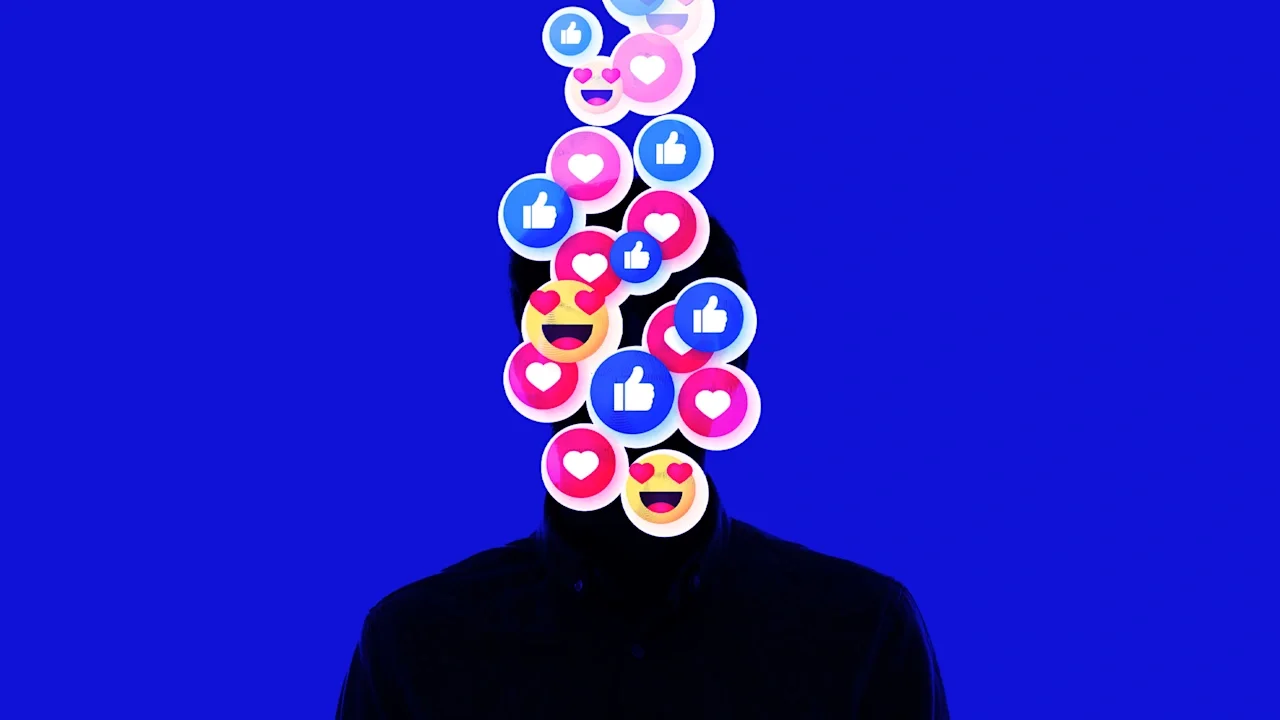
Media personalities and online influencers who sow social division for a living, blame the rise of assassination culture on Antifa and MAGA. Meanwhile, tech CEOs gin up fears of an AI apocalypse. But they’re both smokescreens hiding a bigger problem. Algorithms decide what we see, and in trying to win their approval, we’re changing how we behave. Increasingly, that behavior is violent. The radicalization of young men on social networks isn’t new. But modern algorithms are accelerating it. Before Facebook and Twitter (X) switched from displaying the latest post from one of your friends at the top of your feed with crazy, outrageous posts from people you don’t know, Al Qaeda operatives were quietly recruiting isolated and disillusioned young men to join the Caliphate one by one. But the days of man-to-man proselytizing have long since been replaced by opaque algorithms that display whatever content gets the most likes, comments, and shares. Enrage to engage is a business model. Algorithmic design amplifies the most hysterical content, normalizing extremist views to the point where outrage feels like civic participation. It’s a kind of shell game. Here’s how it works: Politicians and CEOs spin apocalyptic narratives Online influencers chime in Algorithms spread the most outrageous content Public sentiment hardens Violence gains legitimacy Our democracy erodes The algorithms don’t just amplify—they also decide who sees what, creating parallel worlds that make it harder for us to understand our opposing tribe members. For example, Facebook’s News Feed algorithm prioritizes posts that generate emotional reactions. YouTube’s recommendation system steers viewers toward similar content that keeps them watching. And it’s a total mystery how TikTok’s For You Page keeps users glued to the app. You search for a yoga mat on your phone, and the ranking algorithms decide you’re a liberal. Your neighbor searches for trucks, and the system tags them as a conservative. Before long, your feed fills with mindfulness podcasts and climate headlines, while your neighbor’s features off-roading videos and political commentary about overregulation. Each of you thinks you’re just seeing “what’s out there,” but you’re actually looking at customized realities. Up to now, the killing of right-wing activist Charlie Kirk, along with the brutal killings of elected officials Melissa Hortman and her husband, embassy staffers Sarah Lynn Milgram and Yaron Lischinsky, United Healthcare CEO Brian Thompson, and Blackstone real-estate executive Wesley LePatner have all been tied to a rising wave of political violence. They are more likely the result of online radicalization being accelerated through social media algorithms. Given the snail’s pace of our judicial system, and the labor-intensive process of reconstructing someone’s path to radicalization online, the smoking gun is elusive. In the 2018 Tree of Life synagogue shooting, it took five years to reach a conviction. In the meantime, more people consumed extremist content giving rise to what the FBI now calls nihilistic violent extremism, which is violence driven less by ideology than by alienation, performative rage, and the quest for social status. By the time one case is resolved, new permission structures for violence take root, showing just how powerless our legal system is at policing social media platforms. What drives these communities isn’t ideology so much as a search for belonging, status, and personal power. The need for validation is intertwined with whatever or whoever is commanding the most attention at any given moment. These days, the issue that has captured the most attention is an AI apocalypse. “As new grievances take shape around artificial intelligence and national fears of job loss, technology executives are increasingly exposed to threats of physical violence,” says Alex Goldenberg, director of intelligence at Narravance, which monitors social media in real time to detect threats for clients. Are predictions of AI joblessness stoked by algorithmic fear-mongering a recipe for social unrest? While high-profile tech CEOs have long traveled with security details, new data suggests those threats have extended to all corporate sectors. A study of over 2,300 corporate security chiefs at global companies with combined revenues exceeding $25 trillion found that 44% of the companies are actively monitoring mainstream social media, the deep web (content not indexed by Google), and the dark web (where criminals and dissidents go for cover). Two-thirds of those companies are increasing their physical security budgets in response to rising online threats, according to the study by security company Allied Universal. “Before December, fewer than half of CEOs had any kind of executive protection. Now boards are demanding it,” says Glen Kucera, president of Allied Universal. Executives make up 30% of a company’s value, and shareholders want them protected. Companies are responding by hardening their perimeters, hiring armed escorts and social media threat analysts, and addressing vulnerabilities at executives’ homes. For CEOs, AI is both a windfall and a minefield. It’s too lucrative to ignore, but too unsettling to discuss freely. “High-profile people making controversial announcements about AI are at higher risk,” says Kucera. According to Michael Gips, managing director at multinational financial and risk advisory firm Kroll, these findings fit into a broader trend, “We’re living in a grievance culture now,” he says. “If there’s something to be grieved about, the risk is there.” Even the people shaping this technology acknowledge its risks. Sam Altman, the CEO of OpenAI, has said he believes the worst case for AI is “lights out for all of us.” Elon Musk has made similar warnings, cautioning that there’s “some chance that [AI] goes wrong and destroys humanity.” OpenAI cofounder Ilya Sutskever reportedly talked about building a doomsday bunker for OpenAI engineers in the post-AGI world. Narravance analysts say apocalyptic narratives around AI—especially those centered on job loss—promote online radicalization. After reading dystopian narratives about AI-driven unemployment, 17.5% of U.S. adults in a statistically significant sample said violence against Musk is justified. Musk’s remark about universal job loss spread rapidly across social platforms, stripped of nuance, meme-ified, and reframed as a prophecy of societal collapse. In online communities where people are hungry for belonging and validation, Musk’s rhetoric becomes the basis of “permission structures” that rationalize violence. Prior to his resignation from the Department of Government Efficiency (DOGE), negative sentiment toward Musk was higher. In March 2025 nearly 32% of Americans said they believed his assassination would be justified, according to another Narravance study. On Sam Altman’s blog, the OpenAI CEO wrote, “The development of superhuman machine intelligence is probably the greatest threat to the continued existence of humanity.” The more tech leaders issue dire predictions, the more support for unjustified violence against them grows. Alarmingly, Narravance also found that respondents said violence would be justified against Alex Karp, CEO of surveillance and defense AI company Palantir (15.4%), Meta CEO Mark Zuckerberg of (14.5%), Amazon CEO Jeff Bezos (13.8%), and OpenAI CEO Sam Altman (13.3%). Fear of obsolescence “As soon as Charlie Kirk was assassinated, a video went around the world. Ten-year-olds saw it within hours,” said Jonathan Haidt, author of The Anxious Generation, at the Fast Company Innovation Festival. Haidt argues that since 2012 the share of adolescents who say their lives feel “useless” has more than doubled, and that boys in particular, left without traditional guidance and immersed in social media, gaming, and pornography, are struggling to find a path to adulthood. “If you’re a boy, and your life feels useless, and you see no future, everything is about getting fame or money. You have to get rich quick or become famous, otherwise you’ll lose in the mating game,” says Haidt. “Boys around the world, historically, have gambled. Do something big. Get recognition,” he says. A former senior social media executive who spoke on the condition of anonymity said negative narratives create desperation. “When you give people doom scenarios, they’re going to be willing to do outrageous things,” he says. It’s an unfortunate by-product of the social media business. Social media meltdown “Social media is a cancer,” Utah Governor Spencer Cox said on 60 Minutes a few weeks after Kirk’s murder. “It’s taking all of our worst impulses and putting them on steroids . . . driving us to division and hate. These algorithms have captured our very souls.” His dire warning underscores how platforms reward outrage, feed polarization, and erode the boundaries that once kept political disagreement from spilling into violence and chaos. In another interview, on Meet the Press, Cox argued that social media companies have “hacked our brains,” getting people “addicted to outrage” in ways that fuel division and erode agency. He said he believes that social media has played a direct role in every assassination or attempt in the past five to six years. “The conflict entrepreneurs are taking advantage of us, and we are losing our agency, and we have to take that back,” he said. When outrage gets amplified, all engagement looks like an endorsement, people mistake that as truth, even though it may be false or, worse yet, coordinated inauthentic activity spun up by the Chinese controlled TikTok algorithm or Russian bot farms. According to a report from safety research nonprofit FAR.AI, with artificial intelligence already more persuasive than humans, and frontier LLMs guiding political manipulation, disinformation, and terrorism recruitment efforts, the risks are already multiplying exponentially. Predictions of a dystopian, jobless AI future pale by comparison. The real threat is the erosion of human judgment itself. The existential risk of AI—first raised in 1975 by computer scientist Joseph Weizenbaum in his prescient book Computer Power and the Human Reason—is not joblessness or humanity suspended in Matrix-style bio-pods. The danger isn’t sentient machines. It’s algorithms engineered to keep us engaged, enraged, and endlessly divided. The apocalypse won’t come from code, but from our surrender to it. View the full article

-
In a new legal filing, Meta is being accused of shutting down internal research that showed people who stopped using Facebook experienced less depression, anxiety, and loneliness. The allegations come as part of a lawsuit filed by several U.S. school districts against Meta, Snap, TikTok, and other social media companies. The brief, which was filed in the U.S. District Court for the Northern District of California but is not yet public, reportedly claims the study, called Project Mercury, was initiated in 2019 and was meant to explore the impact of apps on polarization, news-consumption habits, “well-being, and daily social interactions.” Plaintiffs in the suit say social media companies were aware that these platforms had a negative impact on the mental health of children and young adults but did not act to prevent it. The suit also alleges they misled authorities about this harm. “We strongly disagree with these allegations, which rely on cherry-picked quotes and misinformed opinions in an attempt to present a deliberately misleading picture,” Meta tells Fast Company in a statement. “The full record will show that for over a decade, we have listened to parents, researched issues that matter most, and made real changes to protect teens—like introducing Teen Accounts with built-in protections and providing parents with controls to manage their teens’ experiences.” Andy Stone, Meta’s communications director, downplayed the study in a social media post. “What it found was people who believed using Facebook was bad for them felt better when they stopped using it,” he wrote in a thread on Bluesky. “This is a confirmation of other public research (‘deactivation studies’) out there that demonstrates the same effect. It makes intuitive sense but it doesn’t show anything about the actual effect of using the platform.” While the company’s research showed “people who stopped using Facebook for a week reported lower feelings of depression, anxiety, loneliness, and social comparison,” Meta chose not to publish those findings and shut down work on the project, Reuters reports. “The company never publicly disclosed the results of its deactivation study,” the suit reads. “Instead, Meta lied to Congress about what it knew.” Stone, in his social media thread, implied the study was flawed and the company’s disappointment wasn’t with the results, but in its apparent failure to overcome “‘expectation effects,’ the idea that beliefs and expectations influence perception.” The filing, though, shows that some staffers rejected Meta’s belief that the findings were influenced by the “existing media narrative” around the company, with one allegedly saying that burying the research was no different than the tobacco industry “doing research and knowing cigs were bad and then keeping that info to themselves.” Meta has filed a motion to strike the documents at the heart of the Project Mercury allegations. The judge overseeing the case has set a hearing date for those arguments on January 26. Meta has been accused of ignoring similar research in the past. Two years ago, the company was sued by 41 states and the District of Columbia, who accused it of harming young people’s mental health. The collective attorneys general alleged the company had knowingly designed features on Instagram and Facebook that addict children to its platforms and violated the federal Children’s Online Privacy Protection Act (COPPA). In 2022, up to 95% of children ages 13 to 17 in the U.S. reported using a social media platform, with more than a third saying they use social media “almost constantly,” according to the Pew Research Center. To comply with federal regulation, social media companies generally prohibit kids under 13 from signing up to their platforms. Children have easily found ways around those bans, however. That has led some countries, including Australia and Denmark, to ban anyone under 16 from having social media accounts. View the full article
-
Leaving your corporate job for a solopreneur path is a bold move—and it can feel terrifying. But as long as you’re prepared, it can be a smart move, especially in the current rocky job market. I worked at one corporate job for 15 years. Then I pivoted to a new career in marketing. Eighteen months later, I was working for myself as a full-time freelance writer. Within two months of going solo, I had replaced my salary at a marketing agency, but I’d also taken a lot of baby steps in advance of making the switch. You can make the transition to solopreneurship easier if you build a safety net before you walk out the corporate door. Here’s how. Calculate how much income you’ll need The first step is to be brutally honest with yourself: How much of a reduction in pay can you stand? Odds are, you’ll have an “in-between” period: You’ll have left your corporate job, but not built up enough of a solo business yet. Can you withstand 25% of your current salary? 50%? Do you have savings to supplement the rest? I know some people who won’t leave corporate jobs until they earn enough with a side hustle. But that’s incredibly difficult, since you’ll basically be working two jobs for a period of time. However, if that’s the only way to make it work for your finances, it’s an option. You’ll also need to consider that you’ll pay self-employment tax. A general rule of thumb is to set aside 25% to 30% of your earnings. You’ll also be paying your own expenses, like any apps or tools you need to run your business. When you’re thinking about how much you need to earn, take your costs into account. Build your network If you’re going solo, your network is a substantial asset during your ramp-up period (and beyond). The people you know become your clients, your referrals, your sounding board for ideas. I started posting on LinkedIn consistently a full 18 months before I struck out on my own. At the time, I had no idea that I would become a solopreneur. It just seemed like a good idea to build a network since I’d started a new career. While you’re still at your 9-to-5 job: Start connecting with industry peers, potential clients, and former coworkers. Join groups (like professional associations or Slack communities) where your future clients hang out. Show up on LinkedIn, adding value and building credibility. Even though you’re still working your 9-to-5 job, you should gradually reframe your personal brand. You want to become known as the person who can solve XYZ problem. That way, by the time you leave your job, you’ve planted the seeds for your solo business. Side hustle, if you can If your job and life allow, keep one foot in your corporate role and build your solo business on the side. This gives you some huge advantages. You can test out your pricing, positioning, and processes without the pressure of needing to replace your salary. You’ve also got a revenue buffer since your 9-to-5 will keep all of your bills paid. If you put all of the money from your side hustle aside, you might have a nice cushion once you’re ready to launch. I started freelancing alongside my 9-to-5 job two years before I became a solopreneur. I was able to build a portfolio of work and collect client testimonials—both of which helped immensely when I announced that I was starting a full-time writing business. Yes, it means extra hustle. I was juggling my 9-to-5 job, three kids, and a raging global pandemic. But I told myself that it was temporary. Sometimes you don’t get to choose the timing Ideally, you get to choose the timing of your exit from the corporate world. But sometimes it’s chosen for you. I was laid off from my full-time marketing job. Even though I’d been thinking about full-time freelancing for months, I kept telling myself I wasn’t ready to make the leap. Because I’d been building in the background, I was able to make a fairly seamless transition. The timing wasn’t my decision, but it was the direction I was headed. I wasn’t starting from zero. The more momentum and clarity you build for your solo business, the more options you’ll have when the moment finally arrives. View the full article

-
You can’t help but feel uneasy when looking at market concentration. Alphabet, Amazon, Apple, Meta, Microsoft, Nvidia, and Tesla now make up more than a third of the S&P 500, more than twice the level seen before the dot-com bust. AI-related capital spending has outpaced the U.S. consumer as the main driver of gross domestic product growth. OpenAI alone plans trillions in data-center investments while exiting 2025 with about $20 billion in annualized revenue. Of course, there are physical limitations to how fast we can build. Data centers require enormous energy, land, and skilled labor—more than trade schools produce today—a concern raised in the The President administration’s U.S. AI Action Plan. On top of this is a web of circular financing among major players. Companies are using complex structures to fuel the investment wave, adding opacity and risk. Investors like Masayoshi Son and Michael Burry are heading for the exits. In a new Bank of America survey, 45% of investors cite an AI bubble as the top tail risk for the economy and markets. Many believe AI stocks are already in bubble territory. When a bubble bursts, it is like a balloon losing air. Prices fall, investors pull back, and companies that depended on constant capital inflows often fail. The slowdown can ripple across the industry. But a burst forces a reset, where work with real value continues and the rest falls away. There is one way out: real growth. A record of breakthroughs (and setbacks) There is some consensus among economists that artificial intelligence can become the next general-purpose technology. These are revolutionary innovations with widespread impact that by themselves enable new inventions and change most aspects of our day-to-day lives and work. They do not just improve one industry; they create new possibilities for others. We have seen this before with the steam engine, electricity, and, most recently, the internet. Growth will require diffusion, a fancy way of describing how new tools and ideas spread to lots of people. New tools never disseminate evenly, and AI is no exception. AI has been through more than 70 years of breakthroughs and setbacks since mathematicians and early computer scientists began imagining how machines might simulate human thinking. Breakthroughs were often followed by AI winters, when funding and enthusiasm receded. But since late 2022, when generative AI hit the zeitgeist, we have been on a tear. ChatGPT became the fastest application to reach 100 million users in history and is already used by about 10% of the planet’s population. Can we continue? The growth plan Let’s break this out to understand the source of potential growth. First, there is the consumer segment. For all the excitement around AI, many users still sit in the free bucket. The business challenge now is converting that into durable revenue. Expect a shift from today’s generous “freemium” models toward tighter paywalls, bundled services, and even advertising-supported tiers—moves already being tested. For example, Canva raised its prices, bundling new AI features, which led to widespread backlash and a rollback of some of the changes. Notion moved key features behind higher-tier plans as it included built-in AI, sparking user criticism over value and fairness. Some frontier labs are also exploring something Big Tech once swore off: hardware. To unlock new monetization paths, companies are designing devices such as wearables, home hubs, and the next generation of phones around their proprietary AI interfaces. OpenAI, in partnership with designer Jony Ive, is working on a family of devices that goes beyond phones and computers. Second, there is enterprise adoption, arguably the most important frontier. Enterprises—large organizations that buy software and services for thousands of employees—pay, stick, and rarely churn when productivity improvements are demonstrable. But this market is splitting in two. Smaller firms are moving fastest, using AI to level the playing field against incumbents. Norm Ai shows how smaller disruptors can move first, using AI agents to rethink legal work, even launching an AI-native law firm. Large enterprises, by contrast, are cautious. Their concerns center on reputational risk, hallucinations, and product liability. Yet once they see quantifiable return on investment in a controlled domain, they will scale quickly and pay premium prices for reliability, compliance, and integration. Barclays shows how major incumbents adopt more cautiously, using AI to support employees, speed service, and personalize banking while keeping humans in the loop. It is a quest for reimagining business workflows and integrating AI into them. Third: There is the government, where modernization is both overdue and unavoidable. Cities and federal agencies are using AI to improve responsiveness, reduce backlogs, and redesign citizen services that have long suffered from paper-era processes. As these systems prove they can cut wait times and improve accuracy, adoption will accelerate. For example, the United States Patent and Trademark Office launched its “Automated Search Pilot (ASAP!)” program to use AI in preexamination review, with plans to accept at least 1,600 applications across technology centers. On the national security side, the stakes and budgets are higher. Defense agencies are deploying AI for threat detection, mission planning, and intelligence analysis, creating a fast-growing market for companies like Palantir and Anduril, whose surge in government and defense contracts shows the scale of demand. These multiyear defense contracts secure growth over an extended period. A contract Palantir recently entered into with the U.S. Army topped $10 billion over 10 years. Anduril’s programs exceed $1 billion, in multiple contracts, creating steady demand. Finally, there’s global adoption. The geopolitical competition for AI markets is intense. As recently reported, even Silicon Valley companies are quietly reliant on Chinese AI components, while Washington, D.C., is pushing to export an American AI stack as part of its industrial strategy. The geopolitical rivalry is as much about who defines the global interfaces, platforms, and rules as it is about the chips that power AI. Growth is possible, though not guaranteed. It depends on turning early experiments into products people rely on every day. The real race is not about ever-larger models held by a few firms. It is about unleashing competition and letting a diverse market push new ideas into the world. Innovation spreads when many players build, test, and iterate. That is how bubbles become breakthroughs. The moment is here. Let’s get to work. View the full article

-
The phrase quiet quitting has been cast as a generational rebellion, a disengagement crisis, and a leadership failure, all rolled into one. The narrative suggests that half of your workforce has decided to coast, collecting a paycheck while doing the bare minimum. According to new global research from Culture Amp, which analyzed the experience of 3.3 million employees worldwide, fewer than 2% fit into the definition of quiet quitting—that is, employees who lack motivation to go above and beyond but still plan to stay with their company. That finding challenges the viral narrative, suggesting that what’s happening inside organizations is more nuanced than a mass withdrawal of effort. So, quiet quitting wasn’t the crisis we thought it was, but leaders still face the challenge of unmotivated employees. This data suggests that leaders ought to focus on strengthening the conditions that inspire people to keep showing up with purpose, rather than on rooting out disengaged employees. Here’s how you can do that. 1. Listen like a scientist, not a detective Leaders can approach disengagement as something to diagnose and fix, but employees can sense when conversations are driven by suspicion instead of curiosity. “If you suspect someone’s sticking around but not for the right reasons, don’t jump to conclusions,” says Amy Lavoie, VP of people science at Culture Amp. “Approach the situation with curiosity, not suspicion. Ask what’s really going on for them. A compassionate, candid conversation often uncovers insights that lead to stronger engagement and performance.” In practice, this means asking open-ended questions, such as “Do you feel like you’re thriving? Why or why not?” and listening without defensiveness. When employees feel psychologically safe enough to share what’s behind their behavior, leaders can address root causes instead of reacting to surface-level symptoms. That sense of safety is what enables employees to sustain high performance over time. 2. Focus on the 52% who are engaged and committed Here’s an overlooked insight: While fewer than 2% of employees are quiet quitting, more than half (52%) are both motivated and committed, which is the sweet spot for engagement. These are the employees carrying organizations forward, yet they often receive the least attention. Recognition and growth opportunities are among the strongest predictors of sustained motivation. As Culture Amp’s data shows, employees who believe there are good career opportunities at their company and who feel appropriately recognized for good work are far more likely to go above and beyond. Leaders need not wait for performance reviews to celebrate these employees. Recognize them and tie appreciation to future potential. Share something along the lines of, “Here’s the impact you’ve made, and here’s what’s next.” 3. Redefine retention: Don’t fear turnover, design for flow “Job hugging” describes employees holding onto their roles out of fear of change, instability, or a tough job market. This can block organizational flow and stifle innovation. Even if employees are performing well, fear-based retention can limit their growth and engagement. Internal mobility programs, mentorship, and career-pathing initiatives can help employees find roles that are more fulfilling and energizing. As Justin Angsuwat, chief people officer at Culture Amp, puts it, “Fear drains people. Purpose fuels them. When employees stay, it shapes the energy they bring every day. The goal is to make sure employees stay for the right reasons.” Leaders can explore this by asking questions like: “What keeps you here, and what would make your work even more energizing?” “Which parts of your role feel meaningful, and which feel stagnant?” “If you could design your next step here, what would it look like?” 4. Design for energy, not endurance The modern workplace often demands more output from fewer people, creating what Angsuwat calls the productivity paradox: Companies ask employees to deliver more while giving them less to work with. High-performing teams outside of business, like firefighting crews or surgical units, understand that performance is more about balancing focus with recovery. Leaders can apply the same principle by building systems for sustainable energy, such as redistributing workloads, encouraging rest, and rewarding behaviors that support long-term resilience. When energy drives performance, employees’ motivation naturally rises. 5. Test your assumptions: Use data to guide retention The labor market has shifted, and the employer-employee contract is changing. In this environment, assumptions about who is disengaged or why can be misleading. Culture Amp’s research shows a steady four-point decline in global motivation since 2021, resulting in tens of thousands more unmotivated employees in just one year. But data also challenges common assumptions—for example, remote employees are not more likely to quiet quit, despite many companies fearing otherwise. As Heather Walker, senior data journalist at Culture Amp, puts it, “We don’t need to feed the drama of division, as if leaders and employees are on opposing sides. In reality, we’re sitting on the same side of the table, facing the same problem: how to create the conditions for work to succeed.” Quiet quitting might make headlines, but it’s likely not happening in your organization. What’s really at stake is the quality of your employee relationships. Motivation, trust, and energy are renewable if leaders intentionally replenish them. Like this article? Subscribe here for more related content and exclusive insights from executive coach Marcel Schwantes. —Marcel Schwantes This article originally appeared on Fast Company’s sister publication, Inc. Inc. is the voice of the American entrepreneur. We inspire, inform, and document the most fascinating people in business: the risk-takers, the innovators, and the ultra-driven go-getters that represent the most dynamic force in the American economy. View the full article

-
When work was drying up for freelance writer Megan Carnegie, she found herself compulsively hopping between apps and social media. “LinkedIn, WhatsApp, emails—and it was just terrible for my focus,” she says. “I was anxious about getting work.” On a whim, Carnegie (who’s also contributed to Fast Company) popped into a store selling secondhand computer equipment and bought an old Nokia burner phone. During the workday, she would use the burner for calls, and in the evening, switch back to her smartphone. With no access to apps and one fewer way to access the internet, her urgency and anxiety dissolved. “I just loved the quiet,” she says. The effects of social media on mental health have been a popular topic of conversation in 2025. Social psychologist Jonathan Haidt’s best-selling book, The Anxious Generation, describes the effects on adolescents, including being a significant contributor to anxiety and depression among young adults. What’s less-frequently studied is how it affects people at work. But a new report begins to demonstrate how what we see online can bleed into our professional lives. The new study out of Rutgers University, published in the Journal of Organizational Behavior, found that what you see on social media while at work can shape your mood, motivation—even how you treat your coworkers. Social media’s effect on your work Researchers surveyed 133 workers twice a day for two weeks. They asked them to describe the most “salient,” or memorable, post they saw that day, then describe how they felt and how productive they were at work. Later, the survey was repeated with 141 new participants, this time including their coworkers, who would also rate the subjects’ behavior and productivity. The researchers segmented posts into four categories: attractive (thirst traps), family (kids’ first day at school), contentious (politics or rage bait), and accomplished (job promotions). They then measured how these content types affected employees’ self-assurance, anxiety, productivity, and social withdrawal. They found that while posts about family or friends tend to boost confidence, political rants spike anxiety and make people withdraw. Posts about accomplishments can either spur you or kill your drive, depending on your personality. Those with competitive natures are prone to feeling motivated by achievement-related content, while those who aren’t particularly competitive are more likely to feel demotivated. The results indicate that some workers might benefit from limiting their social media use at work. But for those whose job involves regularly scrolling social feeds, breaking the habit can prove difficult. The LinkedIn star who barely scrolls, and the PR person who just can’t help it Alison Taylor is an author and professor at New York University’s Stern School of Business who writes about corporate ethics. Despite being named a LinkedIn “superuser” by the Financial Times thanks to her more than 60,000 followers, she spends very little time on the platform. “I wake up, I have coffee, I write the post, I don’t worry about it being perfect, I correct typos later,” she says. Taylor knows better than to feed the trolls, but she loves a good argument, and can’t help but respond to some followers who needle her. While she might come back throughout the day to comment, she goes in and gets out quickly. It’s not worth the distraction. As for those whose job involves spending time on social media—like PR reps, marketers, and social media managers—the stress can be inescapable. Some 77% of people who work in social media are burned out, says a reader survey by Rachel Karten, who writes the popular Link in Bio Substack newsletter. Nicholas Budler, who works in public relations for enterprise tech companies, scopes opportunities for his clients all day. “The LinkedIn doomscroll has only gotten more endless for me. And it’s open at work 9-to-5,” he says, noting that when engagement is high, it feels good. But when it’s not, he questions whether social media is worth his time at all. “I think you get a bit stressed in general to have social media open at work,” Budler says. While he used to do a lot of social media strategy for clients, he does less and less these days, saying, “I consider it brain rot.” Doomscrolling can carry Budler down “a deep, dark rabbit hole of looking through people’s job updates and news. And a lot of that news is not good, right? Especially in media, there are a lot of layoffs,” he says. Those leave him anxious. Cutting back on ingrained habits The anxiety and malaise social media can cause is a common problem: In one small survey by the Ohio State University Wexner Medical Center, 45% of adults reported being stressed at least once a week because of social media, and 16% reported being stressed every day. Frequent social media use has already been linked to increased irritability in adults, as well as worsened depression. Some researchers have even submitted the idea of “meta-stress,” that is, stressing about the stress generated by social media. That’s made worse by the fact that most adults in the U.S. use social media: 68% use Facebook, 83% use YouTube, and 47% use Instagram, according to the Pew Research Center. Yet there’s money to be made in keeping people away from these platforms. Apps like Freedom, AppBlock, and SelfControl block access to certain apps for periods of time. Some can’t be disabled until a set timer expires. Many workers told Fast Company that they rely on these apps to keep them from doomscrolling. But even those tools may not be enough to cut back on deeply ingrained habits. Budler is a prolific social media user in his personal life, with accounts on Instagram, the running app Strava, reading platform Goodreads, and TikTok, the latter of which he says is most addictive. His latest screen-time report on his phone recorded just over 20 hours on his phone in the past week, with 9 of those hours on social media. Rebecca Greenbaum, a coauthor of the Rutgers study, isn’t against social media. “I think it can be a fun break. It can be a useful break. It can add interestingness to a person’s day,” she says. But to avoid the mindless, automatic scroll, treat it like the smoke break of the 1980s, she says. Get up from your desk, go elsewhere, and devote a limited amount of time. It’s a strategy that works for Megan Carnegie. “I’m trying to be more intentional about how I use those platforms. The burner has been a good exercise in that. Now I’m a bit less anxious about work.” View the full article
-
Below, Ben Rein shares five key insights from his new book, Why Brains Need Friends: The Neuroscience of Social Connection. Ben is an award-winning neuroscientist who has spent a decade studying the biology of social interaction. He is the chief science officer of the Mind Science Foundation, an adjunct lecturer at Stanford University, and a clinical assistant professor at SUNY Buffalo. He also teaches neuroscience to an audience of more than 1 million social media followers. What’s the big idea? Loneliness is a problem. Many of us feel this, and all of us are seeing it affect society. But why is isolation so harmful? Why are virtual interactions a poor substitute for getting together in person? What does our brain get out of spending time with a friend? The neuroscience underlying our social interactions adds a crucial component to conversations about the loneliness epidemic and what we can do about it. Listen to the audio version of this Book Bite—read by Ben himself—below, or in the Next Big Idea App. 1. Our brains are wired for connection What does it really mean to be wired for connection? In the ancient world, our ancestors faced tremendous challenges, including food scarcity and predators hunting them. Survival was challenging, but humans work together in groups very well. So, when it came to survival of the fittest, the most social humans were the fittest. As a result, our brains have built-in social reward systems. That means when we connect with others, our brains send powerful signals involving neurotransmitters like dopamine, serotonin, and oxytocin, which make us feel good and want to continue socializing. This was the glue that kept us together millennia ago and, therefore, kept us alive. Our brains still have these systems, which means we have a lot to gain from socializing. This is what it means to be wired for connection. Our brains literally reward us for being around each other. 2. Our neurochemistry faces the challenge of a divided world We are facing a legitimate public health crisis around loneliness. If you look at the data on how much time people spend with others, how many friends people have, how lonely people are, and so on, these metrics are all going in the wrong direction. Between 2013 and 2021, the amount of time the average American spent alone went up by 36 hours per month—almost a full work week spent in isolation. We are truly becoming isolated. 3. Social isolation is a form of stress When a person is isolated, their body triggers a stress response in which cortisol levels begin to rise. From an evolutionary perspective, this makes a lot of sense. In the ancient world, if you were split off from the group, your chances of survival dropped significantly. Back then, it would have been beneficial to have an alarm system in your brain that warns you of this danger. Our brains still have this system, but in a world where we’re spending more time alone, that’s a problem. “Those who are more isolated are 32% more likely to die from any cause.” When our body’s stress response systems are constantly being activated, it can result in chronic inflammation and other negative health consequences. Isolation is very bad for us. Studies tracking millions of people have found that those who are more isolated are 32% more likely to die from any cause. Isolated patients with dementia lose their memory twice as fast. And after having a heart attack, the patients who left the hospital and returned to a home where they live alone were more than twice as likely to die in the next three years. This issue needs to be taken seriously. 4. Digital interactions are not the same as interacting in person When we meet face-to-face, many social cues inform our brains about what’s happening in the other person’s mind. We can hear their vocal tone, read their facial expressions, and feel their body language, thereby understanding their emotions. But when we interact online, whether through texting, FaceTime, or arguing on social media apps, we are not getting the same social cues. I believe that this is impairing our empathy online and leading to undue hostility and aggression. What we know for sure is that interacting online does not provide the same benefits as interacting in person. It turns out social media may not be very social at all. 5. Beyond modern circumstances, our brains have some built-in social pitfalls Research shows that people underestimate how much they’ll enjoy social interactions, which can often lead to a night on the couch, even though going out with friends would have been much better for their brains. We also underestimate how much others like us and discount our own social skills. These are just a few of the strange yet perfectly natural biological shortcomings of the human brain that prevent us from connecting with others. Enjoy our full library of Book Bites—read by the authors!—in the Next Big Idea app. This article originally appeared in Next Big Idea Club magazine and is reprinted with permission. View the full article

-
Marguerite Bérard plans to cut 5,200 full-time roles by 2028 as part of overhaul at Dutch lenderView the full article
-
Today’s job market is more ruthless than ever, leaving many desperately clinging to their roles amid mass layoffs and side-eyeing the competition. In such environments, a rival colleague or workplace nemesis may make themselves known. Watching a smug colleague get called out for a mistake in a meeting or blundering a promotion is often deeply satisfying (even if we may not admit it). Many know the German name for this impulse, schadenfreude: pleasure derived by another’s misfortune. But another, more work-related term that has emerged recently is fail watching: a coping strategy born from today’s challenging job market as a way to make us feel better about our own position. Research has shown that seeing others fail can give us a self-affirming boost. Those with low self-esteem are more likely to be threatened by overachievers (and to enjoy watching them fall flat on their face). These reactions are simply human nature. Yet there are nuances to reveling in others’ misfortunes: from a fleeting, vindictive thought to public gloating or workplace bullying. “This phenomenon is a symptom of a lack of trust within the team, with employees waiting with bated breath for someone to mess up,” Peter Duris, CEO of Kickresume, tells Fast Company. “You’re much less likely to see it in a healthy workplace where everyone feels supported.” Fail watching is far likelier to occur in workplaces that don’t recognize and reward their employees’ contributions. At present, only 30% of U.S employees feel that someone at work encourages their development, down from 36% in March 2020, one 2025 Gallup survey found. Duris also links fail watching to Gen Z employees due to the immense pressure younger workers are facing from all angles. “Many have had to really fight to get their foot in the door,” he says. In the current hiring slump, applicants submitting a résumé today have just a 0.4% chance of actually landing the job, according to Business Insider. Fresh graduates are being hit hardest, with global entry-level job postings falling 29% since January 2024, according to World Economic Forum data. The competition doesn’t stop there. Researchers from Zurich University found that highly competitive working environments foster the perfect conditions for emergence and development of schadenfreude. It’s understandable to feel somewhat reassured if someone else is finding things tough at work when you are too. But there’s a big difference between this and praying for someone’s downfall. If you notice someone struggling, the best way to respond is to offer help if you can, or just be kind and supportive. If another colleague tries to gossip with you about a coworker’s recent failure, change the subject—or at least save it for outside of work hours. As the age-old adage goes: If you don’t have anything nice to say, don’t say anything at all. View the full article
-
Gilty buy associationView the full article
-
Elements of US peace proposal would give Russia sway over continent’s defence arrangementsView the full article
-
UK’s FCA engages with retailer but is yet to decide on formal probe into accounting errors at retailer’s US businessView the full article
-
Politicians spend too much time uttering cheap rhetoric about cheap labour View the full article
-
Investors buy option protection on fears Rachel Reeves’ tax-raising measures could hurt growth View the full article
-
Rising food, shelter and healthcare costs are hitting hard in Bethlehem and the surrounding Lehigh valleyView the full article
-
Top banking supervisor examining claims by ex-employee about German lender’s use of netting View the full article
-
Co-chair James Brocklebank tells colleagues of move two days before Chancellor Rachel Reeves’ Budget View the full article