Newsletter
Want to keep up to date with all our latest news and information?


ResidentialBusiness
Administrators
-
Joined
-
Last visited
Everything posted by ResidentialBusiness
-
Benjamin Netanyahu urged to allow about 150 militants to give up weapons in exchange for free passageView the full article
-
FTSE 100 property listings group warns profit growth will slow next yearView the full article
-
If one founder is good, then more must be better, right? Not necessarily. New research shows that the benefits of cofounding a startup with strangers can be eclipsed by the risks. Yes, cofounders can bring their own perspectives, along with “access to wider networks, greater capacity, and access to funding,” says Monique Boddington, a management practice associate professor at the University of Cambridge’s Judge Business School, whose research includes early-stage venture formation and startup strategy development. And yet: “An increasing number of individuals have been setting up businesses with no intention of taking on employees,” she explains. That’s because more people are identifying as solo entrepreneurs—“solopreneurs”—since the pandemic, Boddington adds. And while the distinction between self-employed, freelancer, and solopreneur is still murky, “the way to spot [solopreneurs] is whether their venture pursues novelty and scalable opportunity or mainly income replacement or replication,” she says. For those running startups, many such workers are choosing to go it completely alone. In 2022, 84% of all U.S. firms had no employees, meaning there was just the one person running the business. These 29.8 million “nonemployer businesses” accounted for $1.7 trillion, or about 6.8% of the economy. And the momentum hasn’t slowed; in 2023, Americans filed over 5.5 million new business applications, and Gusto’s 2025 New Business Formation survey suggests more than 4 in 5 small businesses in the U.S. have no employees. Why people do it According to the same Gusto survey, over 50% of solopreneurs cite career autonomy—“being one’s own boss”—as the reason for adopting a lone wolf, owner-only business model. Many, like growth marketing consultant and content creator Kevin Fernando, do so because of the “unmatched freedom” it affords them. Fernando, who is the founder of Solopreneur Digital, where he helps entrepreneurs and software-as-a-service (SaaS) companies grow, says that “you get to move quickly, make decisions that align with your vision, and build something that’s fully your own.” Of course, going solo, and starting a venture with no cofounder or employees, doesn’t come without its challenges. “The flexibility and autonomy of being your own boss often come with the vulnerability of being on your own,” says Filip Majetić, sociologist and senior researcher at the Ivo Pilar Institute in Croatia. While strong social support from family and friends can improve solopreneurs’ overall mental and physical health, he explains, “this support does not buffer specific stress-related health problems” such as exhaustion and headaches. Like many others, Fernando finds everything falls on him, and the constant context switching can be draining. “When you’re a solopreneur, you’re not just the strategist. You’re the marketer, customer support, designer, and operations manager—all rolled into one. You have to be self-motivated and resilient because there’s no one else,” he says. That’s especially the case if you’re not sharing responsibilities with a cofounder in your venture’s early days. But new research posits that this may be a good thing. Stranger danger Conventional wisdom would suggest that bringing on a cofounder with a vastly different network from your own leads to more potential funds, as the chances of overlap in who you know would be lower. While that may be true, an analysis of over 3,500 Kickstarter campaigns in a study titled, “The ‘Devil’ You Don’t Know,” reveals that new ventures that include strangers on the team are less than half as likely to deliver the product or service they pitched, and almost twice as likely to cease operations. Studies challenging beliefs that resilience is universally beneficial to entrepreneurial teams are gaining traction, suggesting the very advantages that seem so compelling on paper can also introduce friction—making teams less reflexive, slowing decision-making, and complicating execution. “While having people with diverse skills and experience on a founding team has significant benefits, their ability to work together effectively is just as important,” explains Kimberly A. Eddleston, the Schulze Distinguished Professor of Entrepreneurship and Montoni Research Fellow at the D’Amore-McKim School of Business at Northeastern University. “They need to be compatible, trustworthy, and able to communicate.” It’s one of business’s oldest truths: If you work with the right people, everything else falls into place. The problem? Nailing the people part of the equation is really hard. The limitations of going it alone “Solopreneurship can be a great starting point to get an idea off the ground. A single person can bootstrap with greater resource efficiency, greater control, rapid iteration, and hire-in capabilities,” Boddington says. But to scale, she explains, a team is critical. Founding teams are also more likely to attract funding in the first place, and the Kickstarter research revealed that teams comprised of strangers garnered more crowdfunding backers because they served as novel bridges to resources. Crucially, operational struggles (such as coordination breakdowns, delays in delivering promised products or services, differing work styles leading to relational uncertainty, misalignment of vision and goals, and potential early stage dissolution) appeared in teams with strangers in the boardroom, not businesses bound by strong family or friendship ties. Not all cofounders are a liability, Eddleston says. In ventures with family, for example, team members can rally quickly in a crisis, and “[they] have a ‘survival’ advantage because family members are willing to work for below-market wages, and even for free, to keep their business afloat,” she says. Still, entrepreneurs can thrive totally alone, without a cofounder or a team. “With AI revolution, the next wave of entrepreneurship won’t be about bigger teams, but smarter individuals—AI-powered solopreneurs who turn technology into their growth partner,” says Areti Gkypali, an assistant professor at Athens University of Economics and Business in Greece. The strategy has worked well for Fernando. By automating repetitive tasks and building systems to handle things like client communications, lead generation, and content distribution, he’s shaved 20 to 25 hours off his workweek, freeing him to focus on strategic priorities. Ultimately, for anyone eyeing a new startup, it’s worth being strategic about who, if anyone, to partner with. As Fernando says: “It’s a lifestyle that rewards focus and leverage more than raw effort.” View the full article

-
Ann Hummond knew the office software like the back of her hand. Based in Yorkshire, England, she could untangle any spreadsheet snafu in her sleep. Over the past 23 years, she had worked her way up from a data entry clerk to her finance company’s administrative director, quietly becoming the person everyone relied on when things went sideways. She was, in short, indispensable. And then, one Tuesday morning last year, during a quarterly team meeting attended by directors, colleagues, and a team leader, her boss—who is nearly 10 years her senior—told her publicly, in a roomful of people: “You’re too old to do this job.” “I must have looked like a goldfish with my mouth open,” says Hummond, whose name and location have been changed for job security reasons. “I felt like I had been hit on the head with a shovel,” she says. Hummond, who speaks about her experience for the U.K.’s Age Without Limits campaign to raise awareness of ageism in England, says she didn’t break down in the meeting. “I didn’t want to give him the pleasure of seeing how much he had hurt me,” she says. Instead, she coolly finished her work day, gathered her belongings, “and then went home and fell to pieces.” Although she took two weeks off work, quitting at the age of 64 was not an option. “I can’t afford to give up working. I have lots of responsibilities and a family to support, and I need to build up more savings.” She also knows the prospect of finding a new job often collides with the cold reality of age bias, and is still working at the company. Age discrimination is one of the last accepted prejudices—tolerated in jokes, embedded in hiring, and often brushed off as pragmatism rather than bias. In the U.S., legislation against it has existed since the passage of the Age Discrimination in Employment Act in 1967. Yet, “Between 1997 and 2024, the number of age discrimination charges filed with the EEOC exceeded 15,000 in every year except four—three of which were right after the pandemic, which caused a dip in all employment discrimination litigation,” says Nicole Buonocore Porter, law professor at William & Mary Law School. Research suggests ageism is underreported to begin with. Jobs, across cultures, are quietly coded by age. Regardless of industry, workers experience age discrimination across their careers: negative stereotypes, discriminatory recruitment processes, being passed over for training opportunities, not being recognized. Some studies suggest a staggering 77 to 93% of older adults report experiences with ageism, and 42% of hiring managers admit they consider age when reviewing résumés. And most insidious of all: it compounds mentally and emotionally for those experiencing it, to the point where they really do feel like they might be incapable of doing great things at work. “It’s illegal, it’s wrong, and it’s bad for business,” says author, speaker and activist Ashton Applewhite. “Older people make up the fastest-growing segment of the workforce, both because they need to work and because they want to.” “Everyone, everywhere, is living longer, and everyone is old or future old.” Microaggressions, major consequences The rules are there, tucked neatly into HR handbooks and federal law. The trouble is, they rarely make it off the page, and holding people answerable is complicated. “We’ve made progress in policy awareness, but not in accountability,” says Sheila Callaham, cofounder and board chair of Age Equity Alliance. “Many policies that would strengthen age protections at work have languished in Congress for years, leaving outdated frameworks in place.” Even when cases do make it to the courtroom, such as 63-year-old James Barrios’ recent lawsuit against Atmos Energy Corporation and its affiliate, Atmos Energy Services, LLC, there are myriad reasons his case, and many others like it, will probably fail. Most large employers require workers to agree to binding arbitration, which moves age discrimination claims out of court and into private proceedings, limiting transparency and reducing external enforcement of anti-age-bias rules, Callaham explains. Another reason may simply be because of how deeply we internalize socially constructed beliefs. A 2024 study found employees mimic the age discrimination they once experienced themselves, practicing negative observed and learned traits in a self-perpetuating cycle. “Age discrimination varies from other types of discrimination—specifically race or ethnicity discrimination, and perhaps sex discrimination—in that most age discrimination is not based on animus, but rather, it is based on stereotypes about declining competence as one ages,” explains Porter. Age discrimination also persists because of the subtle, covert ways it slips into daily life. Ariane Froidevaux, associate professor of management at the University of Texas, Arlington, cautions research of overt age discrimination can overlook subtle “microinsults.” Seemingly innocuous comments like the once-ubiquitous “Okay, Boomer!” or “You’re pretty tech-savvy for someone your age,” she explains, can be insulting. Froidevaux’s recent research about the changes in perceived age discrimination over time followed Swiss employees with the mean age of 42.64 over a six-year period. She examined how workers’ sensitivity to age discrimination is shaped by their cognitive frameworks: Those who see the world as fundamentally fair—”belief in a just world”—appeared to be less sensitive, and less likely to perceive increasing age discrimination at work, she explains. Surprisingly, some older workers may also perceive decreased age discrimination over time—not necessarily because of a tangible reduction in patterns of behavior, but because, darkly enough, repeated exposure gradually numbs their response and desensitizes them. For instance, an older worker repeatedly passed over for high-profile projects may start to notice it less over time, as bias fades into background noise. Yet, even when repeated exposure lessens its sting, other research finds that age discrimination still quietly chips away at workers’ confidence and perceived work ability—making it one of the more insidious forms of bias. Hummond says it poisons even things like sick leave. “My advice is try not to take too much time off for anything,” she says. “If you’re ill, you’re ill, but I feel judged in a way that youngsters aren’t.” Nothing personal—and everyone’s next We know discrimination against older workers has impacts on their well-being, mental health, and motivation. But it reshapes workplace dynamics for others, too. “When exclusion of a certain group is embedded into the work culture, the safety of belonging is threatened,” explains Callaham, who calls this the “shadow threat” of ageism. She coined the term after a 31-year-old tech worker told her that his 38-year-old manager was stockpiling savings in case he was fired for “being too old,” stoking the younger employee’s own fears of being next. Collectively, this spawns a frenzied attitude—you’re never too young to start running out of time. What we can do Research suggests age diversity statements have a positive impact, while Applewhite makes a case for blind interviews. “Many orchestras use blind auditions, where musicians perform behind a screen, in order to diversify their ranks. How about replicating this in business practice? Conducting virtual interviews with the camera off?” Callaham adds debunking age stereotypes starts with awareness, which can in turn increase accountability. “When organizations talk openly about how age bias shows up, they’re better able to build systems, habits, and expectations that make inclusion real,” she says. “Managers and HR professionals can do a lot to prevent age discrimination at work by modeling and adopting an age-inclusive culture,” says Froidevaux. In Hummond’s case, she was (and still is) the person the office turns to for her technical prowess and knowledge of the company, but things have turned “pretty sour.” Over the past year, her responsibilities have been reduced and flexible work arrangements withdrawn. “I don’t feel trusted,” she says, “I’ll knock on a door and hear the conversation stop.” For her colleagues, too, the atmosphere in the office is different, more guarded: “You go in on a Monday and nobody’s talking.” With its innate universality, few realize how toxic age discrimination can make workplaces, with everyone wondering “Who’s next?” Hummond keeps working, still indispensable, still sidelined. “I’m working down to retirement, but it’s not fun anymore,” she says. View the full article
-
If it’s one thing that can consistently break the internet, it’s pets. Take Pancho the diva: The 1-year-old English cream mini dachshund started his career early in the fame-hungry world of LA, and is now a celebrity with 148,000 followers on Instagram. “We created this personality of this dog that is a diva and a brat who loves the lavish, luxury lifestyle—but his poor little parents can’t afford it,” says his owner, Felix Levine, entrepreneur and host of the popular podcast Unlike Me. He and Serena Kerrigan, founder of the dating game Let’s F**ing Date, are seasoned content creators, so when friends joked about giving their new dog an online persona, the idea stuck. “We thought maybe a ‘Dear Diary, I hate my parents’ vibe,” Felix recalls. The content quickly evolved into vlogs with AI-powered voice-overs, where Pancho shared his spoiled rants at his parents. And the idea gained momentum: from Central Park to a European summer, Pancho’s following snowballed—gaining 30,000 followers in just two weeks. Brands took notice. Pancho’s first deal was with Five Below, followed by partnerships with Pet Life Unlimited, Target, Amazon, and even Kiehl’s. (Yes, the skincare giant now has a dog line). From toys to gourmet snacks and premium grooming, each partnership was endorsed with his signature “diva” flair. Serena KerriganPancho The pup’s collabs don’t scream ‘ads’, and that’s precisely why it works. In the last month alone, his posts reached 24 million viewers and drew over 9 million engagements, a rate many of his fellow human influencers would feel a twinge of envy for. With affiliate links, brand partnerships, and his own storefront, Pancho has a mini-media empire—and he’s only turning one. Levine and Kerrigan declined to disclose exactly how much revenue Pancho has generated, but confirm it’s in the six figures. The “petfluencer” trend isn’t new. But it’s just as profitable as ever. Charming, and delivers results A study published earlier this year in The Journal of Advertising Research found that pet influencers outperform human influencers, particularly since they’re seen as more sincere and trustworthy than their human counterparts, who are often met with skepticism due to perceived commercial motives. Social media endorsements from petfluencers have been shown to generate stronger consumer responses, including higher engagement and greater willingness to pay. Pancho Lead researcher Dr. Laura Lavertu, a lecturer in marketing at the University of Strathclyde in Glasgow, echoes this idea: “Petfluencers offer distinct advantages compared to human social media influencers. While human influencers often persuade through relatability or aspiration, petfluencers are seen as more genuine. They have no hidden agenda, no baggage, no scandals.” The study also noted that as the number of sponsored posts by human influencers rises, their perceived sincerity declines—a phenomenon researchers call “influencer fatigue,” which in turn makes pets a more credible alternative. (The more fur or legs you have, the more credible you are, apparently.) Some have even become household names: As reported by Forbes, TikTok user @princesshoneybellex, a big-shot Australian cat influencer, earned $74,148 in 2023 alone, surpassing the U.S. average salary. Could your pet create a cash flow? Our four-legged friends offer brands countless opportunities in the pet care market, which is anticipated to reach over $427.75 billion by 2032. And it’s not just pet-focused companies cashing in—larger brands like Dyson are tapping into the rise of petfluencers, partnering with celebrity pups to extend their reach in a way that resonates directly with pet owners. In today’s oversaturated media landscape, where ads are swarming from every corner, partnering with a celeb pet might be your smartest marketing move. As noted by The Journal of Advertising Research, “people follow and engage with petfluencers for the joy and entertainment that they bring, and are, overall, universally loved given their ability to communicate with diverse audiences and transcend cultural differences.” When Pancho first came home weighing just a pound and a half, his owners thought they were getting a dog. As it turns out, he’s now running his own business, landing brand deals—even managing his own intern to keep up with his demanding schedule. View the full article

-
Leaders learn to say things with confidence. You may assume that people will be more prone to listen to you when you speak forcefully and with a sense of belief. Despite your best efforts, though, you’re going to say something incorrect every now and again. You might get out ahead of a story only to find out that things were not as they seemed initially. You might just have your facts wrong. Regardless of why you erred, you still have to be willing to admit that you were wrong. Happily, there is an easy way to do this, though you may find it hard to do at first. You have to admit you were wrong. Yup. That’s right. You just have to come out and say it. There is a simple formula for admitting you were wrong. Do it right away Let everyone know as soon as possible after you find out that you said something that was not correct. Don’t sit on the error for days. It is best if everyone hears it from you rather than having someone else discover the mistake first and make your admission feel like a reaction. Of course, if someone else does point out that what you said was incorrect, you should verify that they are correct and then immediately thank them for providing the feedback. You might even credit them in your statement After all, you want the people who work for you and with you to own their mistakes. The best way to demonstrate that you value corrections is to issue your own quickly. In addition, by thanking people who pointed out errors, you encourage others to step forward with errors they notice as well. That helps to keep the organization functioning with good knowledge. Use simple declarative sentences There is some embarrassment that can come along with making mistakes—particularly when you’re new to leadership. You may think that leaders need to be infallible. As a result, you may not want to put a dent in your reputation by saying that you were wrong. To cover for this embarrassment, you may use tortured sentences to avoid owning the error. You may resort to the passive voice (“Mistakes were made . . .”) or use lots of qualifiers (“When speaking about the upcoming sales meeting, I inadvertently left out . . .”) or cast blame elsewhere (“Sadly, when I spoke, I was relying on . . .”) It turns out that great leaders don’t need an air of infallibility, they need to project transparency. You create trust by being honest, not by being right all the time. Simply saying something like, “Recently, I told you X. Actually, Y is true,” is incredibly effective. And, again, speaking in this way encourages other members of your team to come forward and admit when they have said something wrong. Do a postmortem Of course, just because you admit when you’re wrong doesn’t mean that it is good to be wrong. You’d like to minimize the number of times that you have to walk back something you said. It is important to figure out why you ended up making a statement that was not true. Perhaps you spoke too quickly without verifying information. Perhaps you relied on sources that did not have the full story. Perhaps you made intuitive leaps that led you astray. If you have trouble figuring out how you might have gone wrong, consider talking to a colleague or mentor about the situation and walking through it with them. You might find that just talking it through helps you to figure out where you went wrong. And their expertise may bring to light problems with your process that led to you saying something wrong. When mentoring some of your direct reports, you might even want to refer to the errors in your own judgment that you discover. That way, you can help the people working for you to make a different set of mistakes rather than having to repeat yours to learn for themselves. View the full article

-
We are living in turbulent times and there is no reason to expect that things will become less so in the future. During such moments our emotions become strained and pushed to their limits. Stress increases as emotions are stretched, making it increasingly important that we are able to recognize the effects of it in ourselves as well as others in our environment. Becoming acutely aware of ourselves and others we are interacting with in this type of environment is paramount to building healthy relationships in the workplace and all areas of our lives. In my book, Emotional Intelligence Game Changers, I delve into how to navigate difficult times. Here are four ways emotional intelligence can help you navigate turbulent times. 1. Manage triggers During crisis situations, heightened emotional self-awareness allows us to recognize our triggers. Rather than reacting from our emotions, this allows us to pause, take time out, and respond after we have allowed our emotions to settle down and think things through from a rational perspective. This helps us make reasoned decisions, rather than acting impulsively from our emotions. 2. Sustain relationships Turbulent times can cause relationships to become strained as everyone feels increased pressure. If this is left unchecked, relationships that would normally stay positive could become fractured. To prevent this, we need to become more empathic and actively listen to others. Emotionally intelligent people have learned to use these tools to help overcome misunderstandings, build support networks, and develop a sense of collaboration and community around them. 3. Build coping strategies It is hardly surprising that turbulent times cause our stress levels to elevate to new highs. Emotionally intelligent people have developed coping strategies that help them thrive, even during times of unusually high stress. For example, they are aware of and continually practice asking for help, mindfulness, openness, and strategic vulnerability. Modeling these habits helps others they are involved with build their own coping strategies. 4. Deescalate conflict Conflicts, which are a constant in normal times, will spiral during troubled times, both in intensity and frequency. This requires increased empathy and the ability to listen to and get to know others on a deeper, more personal level. Emotional intelligence allows us to go beyond surface biases and stereotypes as it allows for more curiosity in our interactions with others. Instead of jumping to judgement and conclusions, it allows us to dig deeper to find out what the other person is going through during this time. Instead of reacting, emotional intelligence allows us to ask relevant questions that will help lower defenses and find out more about what motivates and drives others. Being able to form connections at a deeper level allows us to gain a much better understanding of what motivates and drives them. Even though we may not agree with them, this sets up the basis for a much healthier relationship with them. View the full article
-
Brussels is set to water down part of its strict digital rule book as it aims to make bloc more competitiveView the full article
-
New research shows how incentives in the modern media ecosystem help explain rising polarisation and negativityView the full article
-
Growing tension between London and Brussels just six months after summit set out to build stronger ties View the full article
-
In the long run bubbles always deflate, often when least expectedView the full article
-
Hungarian prime minister to push for exemptions from US sanctions during White House meeting on FridayView the full article
-
Details of armed forces and industry attendees at Méribel competition raise concerns about conflicts of interestView the full article
-
Unexpected decline comes even as President Donald The President and Chinese leader Xi Jinping seal a truceView the full article
-
The country’s annual statistical compendium is now available, but only in hardback View the full article
-
Record package of shares wins 75% approval, reinforcing billionaire’s control of the electric-car makerView the full article
-
As the founder, chair, and CEO of the Exceptional Women Alliance, I am fortunate to be surrounded by extraordinary female business leaders. Our purpose is to empower each other through peer mentorship that provides personal and professional fulfillment within this unique sisterhood. This month, I’m pleased to introduce Sammie Dabbs. Sammie is passionate about building and scaling high-performing commercial organizations. As chief commercial officer, she oversees revenue strategy, sales, and marketing alignment—driving growth through a combination of operational rigor and customer-centric innovation. With a proven track record of leading teams, entering new markets, and unlocking sustainable revenue, Sammie brings a front-line perspective on how companies can thrive in an increasingly competitive and complex business landscape. Q: As a chief commercial officer, how do you define your core mandate? Dabbs: My mandate is to be the architect of growth. That means aligning sales, marketing, customer success, and revenue operations into one unified strategy. I don’t see these as separate functions—they’re different parts of the same engine. My job is to ensure that engine runs smoothly, efficiently, and with clear direction. Ultimately, a CCO has to deliver consistent revenue performance, but the path there requires strategy, executional discipline, and a relentless focus on the customer. Q: Why is sales and marketing alignment such a challenge for many organizations? Dabbs: Sales and marketing often grow up in silos—different metrics, different budgets, different perspectives. Marketing says, “We delivered leads.” Sales says, “Those leads aren’t qualified.” It’s a cycle of finger-pointing that hurts the business. Alignment requires shared ownership of pipeline, shared KPIs, and constant communication. In my role, I set a single commercial target, so everyone is working toward the same number. When sales and marketing win together, the customer feels it. Q: What have you found to be the biggest barrier to growth? Dabbs: Complexity. Companies layer on too many tools, too many initiatives, too many priorities—and in the process, they lose focus. The real barrier isn’t the market; it’s internal misalignment. I’ve seen teams hit their stride when we strip away the noise, focus on ideal customers, and empower reps with clear messaging and support. Simplicity and executional discipline will beat complexity every time. Q: What’s your approach to leading a commercial team? Dabbs: I believe in clarity and accountability. Teams need to know the strategy, their role in it, and how success will be measured. Then it’s about coaching for execution and celebrating wins along the way. I’m very data-driven, but data is only useful if it drives action. I set targets, track outcomes, and make adjustments in real time. At the same time, I want teams to feel empowered to bring forward ideas from the field—we learn the most from our customers. Q: How do you think about the role of marketing in driving revenue? Dabbs: Marketing is no longer just a brand function—it’s a revenue driver. A strong marketing team generates demand, accelerates pipeline, and positions sales to succeed. But that only happens when marketing is tied directly to commercial strategy and accountable for pipeline contribution alongside sales. When marketing owns revenue, they create campaigns that resonate with buyers, not just campaigns that look good on paper. Q: Technology is changing the commercial function rapidly. What’s your philosophy on tools like AI and automation? Dabbs: Technology is essential, but it’s not the strategy—it’s the amplifier. AI and automation can make sales and marketing faster and smarter, but they don’t replace human judgment or relationships. My philosophy is: Get the fundamentals right first. If you don’t have clear positioning, a disciplined process, and strong teams, no tool will save you. But if you do, then technology allows you to scale, personalize, and optimize in powerful ways. Q: Can you share an example of a commercial pivot that made a major impact? Dabbs: One example is when we restructured our go-to-market model to focus on fewer, higher-value customer segments. Instead of spreading resources thin across too many markets, we doubled down on accounts where we could deliver outsized value. That shift required marketing to retool messaging and sales to change their targeting, but the results were dramatic—higher win rates, shorter sales cycles, and better customer retention. Sometimes growth is about addition, but more often it’s about focus. Q: If you had to give one piece of advice to other executives leading commercial teams, what would it be? Dabbs: Treat growth as a company-wide responsibility, not just a sales number. Every function—product, finance, operations—contributes to the customer experience. As CCOs, we have to be the integrators, making sure the entire business is aligned around delivering value to customers. When you break down silos and build a culture of accountability, growth becomes sustainable. Larraine Segil is founder, chair, and CEO of The Exceptional Women Alliance. View the full article
-
Company leaders said current strategy sets it up to profit and compete against its rivals as the mortgage market improves in the coming months. View the full article
-
The average price of a single-family home increased 1.7% from last year to $426,800 in the third quarter. View the full article
-
Many organizations are racing to build AI strategies, but too often they focus on adopting the latest tech, rather than creating the environment to support it. The reality is that lasting transformation is fueled by people, which requires companies to take a good look at their culture. At Architech, that’s exactly what we did. By prioritizing and rewarding innovation, we aligned our culture with our AI strategy—and it worked. This year, we are proud to be recognized as one of Fast Company’s Most Innovative Workplaces. We are one of 10 companies globally recognized by Fast Company for excellence in AI, automation, and machine learning. Here’s how we built an award-winning culture. MAKE INNOVATION REPEATABLE Innovation comes from people. At Architech, we operationalized that idea by creating an Innovation Lab, a dedicated R&D space where curiosity thrives and exceptional geeks are celebrated as heroes. Backed by a 10% reinvestment of revenue, our Innovation Lab provides the time and tools to tackle real problems. One of our standout successes: an intelligent collections application that earned a spotlight in Microsoft’s AI Lunch and Learn series. Infrastructure and investment create a foundation for continuous innovation, enabling organizations to tackle its top priorities. INNOVATION THRIVES WHEN EVERYONE PARTICIPATES We launched a company-wide AI Innovation Challenge in September, 2024 inviting every employee to identify their own workplace challenge to solve and to tackle organizational inefficiencies using AI. Over three months, cross-functional teams reimagined workflows and built automation tools that reduced friction, accelerated delivery, and inspired new client offerings. The challenge sparked experimentation and breakthroughs from the bottom-up. Among the most impactful was an automated quality assurance testing system that improved consistency and freed our teams to focus on creativity. We celebrated winning ideas at the town hall and they became a badge of honor for employees. We continue to spotlight the most creative employee-led breakthroughs with a monthly AI Innovation Award. Innovation happens when people are given the tools, trust, and time to experiment. LEARNING FUELS INNOVATION With AI knowledge scarce across tech companies, upskilling and mentorship have become the real differentiators. At Architech, internal knowledge-sharing sets the pace: We offer project showcases, AI Bytes Learning Series, and real-time experimentation to create a culture of continuous growth. We launched Elevate, a four-week technical bootcamp for interns led by Architech experts in product, design, data, AI, and engineering. Mentees solve real business challenges using cutting-edge tools and are encouraged to explore what inspired them the most. One finalist team built an AI-powered customer support platform and graduated knowing the AI fundamentals, and with the confidence for the next step in their tech careers. Today, our internal expertise in emerging technologies is pushing us further than external experts ever could. Our mentors are emerging as leaders, armed with new courage and bold ideas. We endeavor to empower our people and build a culture where learning drives innovation forward and grows innovators from within. EMBED INNOVATION INTO CULTURE We also created an AI Incubator to drive technology forward and a Responsible AI Governance Committee to ensure guardrails are in place to safeguard our company and clients. Nearly 50% of our workforce participates in the incubator, with active workstreams exploring real-world applications of AI: code review, test automation, developer productivity, and data enablement. AI experimentation is embedded into the daily flow of work on all our teams, from engineering to operations. Our CEO hosts training sessions, leads open discussions, and reinforces the expectation that everyone experiments with AI, every day. This is what transformation looks like: It’s fueled by inspiration, grounded in discipline, and powered by people. FINAL THOUGHTS There’s no app for transformation. There’s something better: culture. That’s what powers our AI strategy and our people are leading the way. To transform your AI strategy into culture, make it: Inclusive: Invite every employee to contribute and celebrate progress. A habit: Bring change into the daily rhythm of work. A growth engine: Teach, mentor, and invest in skills development across the organization. Repeatable: Build systems that last. If your people aren’t part of your AI strategy, you don’t have one. Lara Shewchuk is COO and CFO of Architech. View the full article

-
Federal Reserve may need to begin asset purchases if short-term rates flare up againView the full article
-
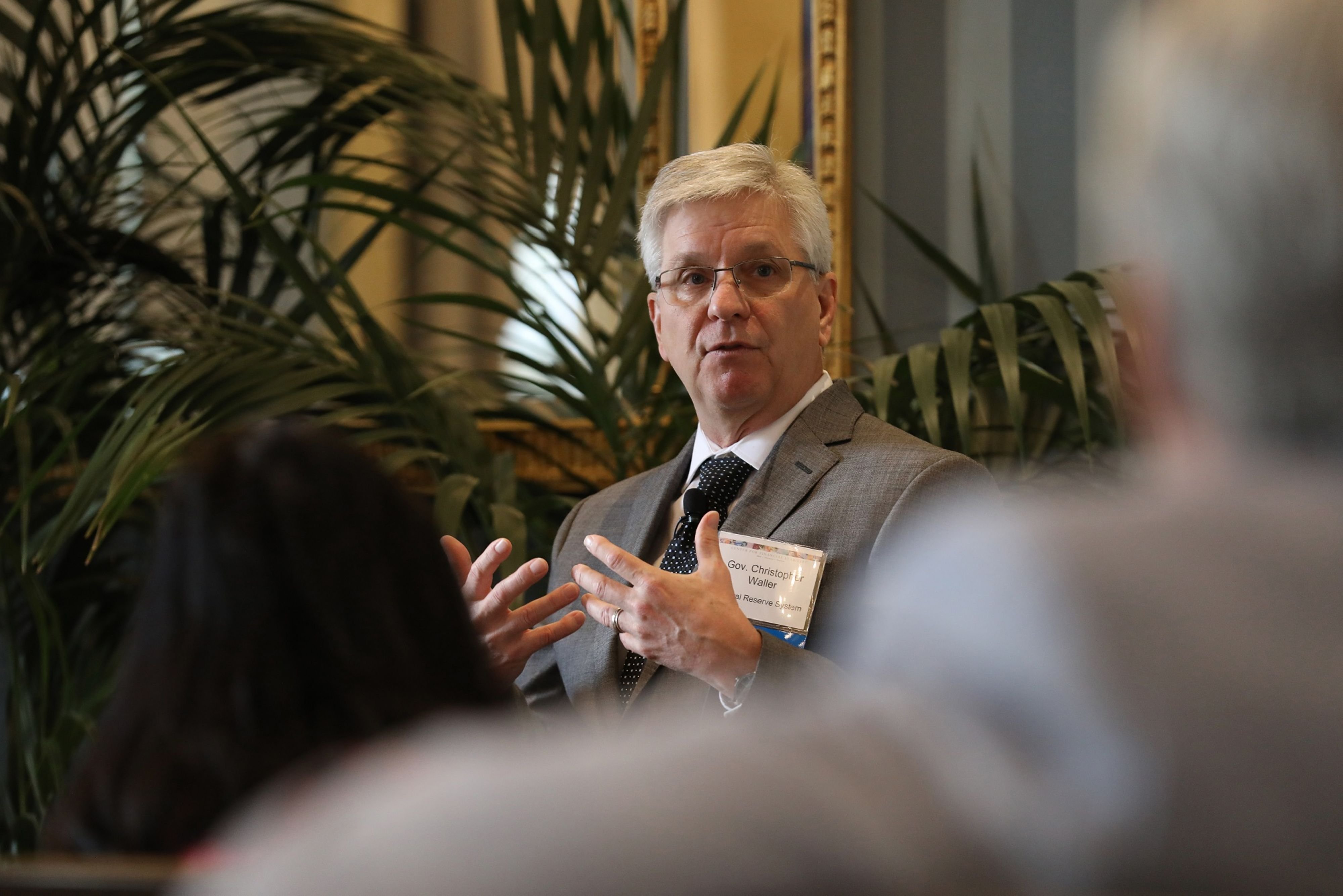
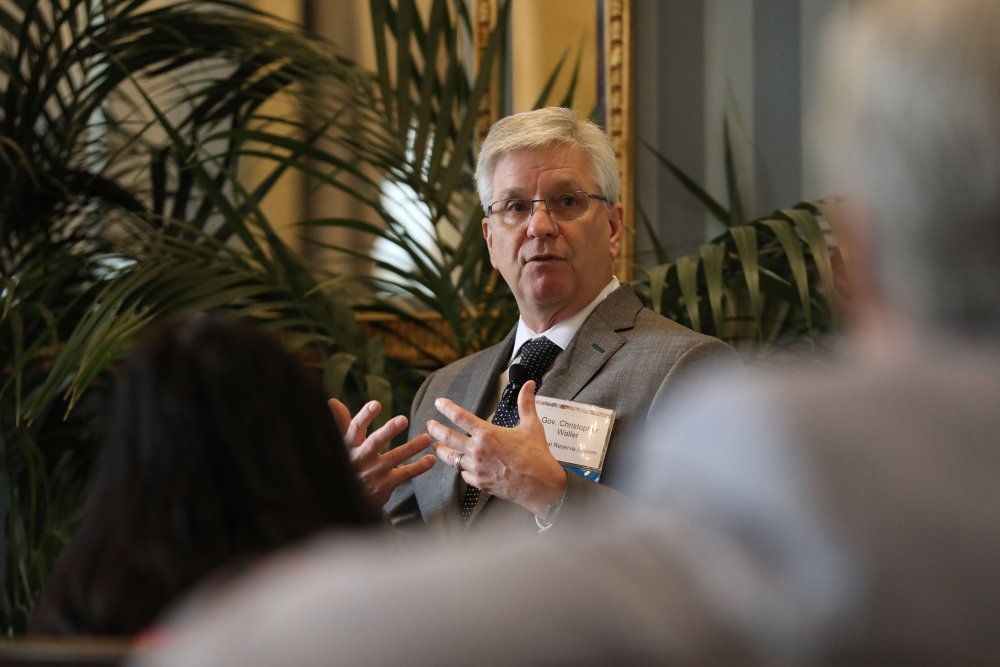
Federal Reserve Gov. Christopher Waller said there was a popular "misunderstanding" Thursday regarding who can qualify for a "skinny" master account, noting that only firms with a bank charter would qualify for approval. View the full article
-
Treasury calls Swiss trader ‘Kremlin’s puppet’ and says it would block its licence to operateView the full article
-
ChatGPT maker is not seeking a US federal financial backstop for its $1.4tn investment binge, CEO saysView the full article
-
New guidelines should provide homeownership opportunities for certain consumer segments with thin credit files and open up product options, lenders said. View the full article