Newsletter
Want to keep up to date with all our latest news and information?


ResidentialBusiness
Administrators
-
Joined
-
Last visited
Everything posted by ResidentialBusiness
-
Sprawling lender’s longtime chief will convene the first investor day in 14 yearsView the full article
-
Saudi oil giant Aramco reported Tuesday a $26.9 billion profit in the third quarter, down slightly from last year as global energy prices remain depressed over concerns of too much oil being on the market. Aramco’s results serve as a bellwether for the wider oil industry, which is still digesting the OPEC+ decision this weekend to halt planned production increases in the first quarter of next year over supply worries. Benchmark Brent crude, at just under $65 a barrel, has been fluttering near a four-year low. In filing on Riyadh’s Tadawul stock exchange, Aramco, formally known as the Saudi Arabian Oil Co., reported overall revenue of $111 billion in the third quarter, compared with $123 billion in the same period last year. Its profit in the third quarter last year was $27.5 billion. The figures slightly beat analysts’ projections. “Aramco’s ability to adapt to new market realities has once again been demonstrated by our strong third quarter performance,” Aramco President and CEO Amin H. Nasser said in a statement. “We increased production with minimal incremental cost, and reliably supplied the oil, gas and associated products our customers depend on.” Under IFRS accounting standards, Aramco reported a net profit of $27.9 billion based on an adjusted bookkeeping. On Sunday, OPEC+ met and decided to increase its production by an additional 137,000 barrels of oil beginning in December. However, it said other adjustments planned in January, February and March of next year would be paused “due to seasonality.” OPEC+ includes the core members of the cartel, as well as nations outside of the group led by Russia. Aramco provides money crucial for Saudi Crown Prince Mohammed bin Salman ‘s expansive development plans for the kingdom, including hosting the upcoming FIFA 2034 FIFA World Cup. Saudi Arabia’s vast oil resources, located close to the surface of its desert expanse, make it one of the world’s least expensive places to produce crude. For every $10 rise in the price of a barrel of oil, Saudi Arabia stands to make an additional $40 billion a year, according to the Institute of International Finance. The Saudi government owns the vast majority of the firm’s shares. Saudi Aramco publicly listed a sliver of its worth back in late 2019 and has weighed offering more shares publicly. —Jon Gambrell, Associated Press View the full article

-
When I think about the changes in the context for strategy across my career, my view contrasts starkly with the consensus view. Most obsess about rising VUCA (the combination of volatility, uncertainty, complexity, and ambiguity) as the key change. I don’t—and I explain my position in this Playing to Win/Practitioner Insights (PTW/PI) called What has Changed the Most for Strategy: Implications for Your Strategy. And as always, you can find all the previous PTW/PI here. The VUCA narrative I started advising executives on strategy in 1981. The question I pondered for this piece is how has the context for strategy changed over the past 44 years? The general answer I get from observers is that the context for strategy has gotten more VUCA, a concept borrowed from military strategy, which adopted it in the late 1980s and has gotten ever more obsessed about it since. And that obsession has rubbed off on the business world. It is a bit like SWOT. The acronym rolls off the tongue and is very evocative. The narrative holds that as a strategist, you must recognize that you live in an increasingly VUCA world, so you must do SWOT analyses (ugh) and set out OKRs (double-ugh) to deal with that scary world. I just don’t buy the notion that the world generally, or specifically the business strategy world, has gotten more VUCA and wrote about it three years ago in this series. Perhaps my feeling is informed by the particular time I entered the business work world and my subsequent tenure in it. I graduated into my first full-time job from business school in 1981, when the economy was in the middle of the third year of by far the greatest three-year inflation (39%) since WWI (1916-1918). US unemployment was well on the way to hitting 10.8% in December 1982, its highest rate by far since the Great Depression. The Federal Funds rate (the basis for all interest rates) crested over 19% as I graduated. Policy makers had to invent a new name for the combination of high unemployment with high inflation—stagflation—which my economics courses taught me was impossible. Suffice it to say, it was pretty damn VUCA. Neither governments nor businesses had a clue how to deal with it—and simply made stuff up as they went along. Then we had the Iraqi invasion of Kuwait in 1990 and Desert Storm to follow—along with another deep recession. Then we had the dot.com bubble and crash between 1999 and 2001, followed by 9-11 in 2001, followed by the global financial meltdown in 2008-2009, followed by the Russian invasion of Ukraine in 2022. I think it is impossible to argue that it has not been non-stop VUCA for the past (at least) 44 years. Honestly, I think the VUCA narrative is so popular because it makes a great excuse: “We are doing badly because it has gotten so VUCA.” While the breakdown of the Soviet Union is cited as the motivation for the US War College adopting the VUCA narrative, my own belief is that it had as much to do with being outsmarted by the Viet Cong in the catastrophic Vietnam War that ended a decade earlier in 1975. Faced by the then-dominant US doctrine of overwhelming air and technical superiority, the Viet Cong said no thanks and played an entirely different game, and won against what in the old game would have been an overwhelmingly superior force. But to rationalize the loss, the losing side saw it as a manifestation of this terrible new phenomenon—VUCA. It is not dissimilar to competing against Microsoft in personal computer operating systems. No competitor has been able to dent its near monopolistic share. However, the true competitors changed the game and worked on making an alternative device the ‘computer’ of choice—i.e. the smartphone. In that more broadly defined game, Android is the big winner with a share 50% greater than Windows—which probably felt pretty VUCA to Microsoft. Dominant winning strategies always have and always will create VUCA responses as if out of thin air. While the world simply hasn’t gotten demonstrably more VUCA, two changes have generated the biggest impact on strategy over the time of my career: fixed/variable cost mix and price/value discovery. Fixed/variable cost mix Historically, and still as of 1981, variable costs dominated the cost structure of business (as I chronicled in this Harvard Business Review (HBR) article. Historically, companies were mainly factories (whether product or service factories) with a thin veneer of office tower overhead. The biggest proportion of costs varied with production and a tiny proportion were fixed. The auto industry is a perfect historical example. When the customer wants a car, the auto company must buy thousands of parts, assemble them, and physically deliver the product—a whole lot of variable costs. But beginning in the 1960s, large companies started to get really big, growing revenues 5.3 times in real terms between 1960 and 2000—huge growth. And they doubled again in real terms since. As they grew, they built up fixed costs—in categories such as branding, R&D, and distribution—in part because they became big enough to take advantage of scale economies in these fixed cost categories. As a result, cost-of-goods-sold (COGS) as a percentage of revenues has fallen dramatically since 1981 and the share of sales, general & administration (SGA) has grown similarly. That in turn has driven scale. If you don’t spread your fixed costs over great volume, you are going to get out-invested by someone else—and then you are in trouble because your product won’t be as advanced, won’t be as branded, won’t have the distribution. In this way, scale begets more scale. Industries that have the lowest fixed costs (as a percentage of revenues) remain the most fragmented, as with the auto OEM industry that has been famously consolidating for decades yet the biggest player, Toyota, still has a mere 12% market share and the next highest is below 10%. Industries with highest fixed costs—like software where variable costs are miniscule—are consolidated or consolidating. For example, in cloud software services, three companies—Amazon, Microsoft and Google—have 63% market share. In smartphone operating systems, Android has 75%, iOS 24% and everybody else combines for 1%. Across sectors, this shift in fixed/variable cost has driven increased concentration, which I discussed in the HBR article above and is shown in various pieces of research including this University of Chicago study. Price/value discovery The second huge change impacting strategy is the dramatically increased speed and efficiency of price/value discovery. As of 1981, it was genuinely hard to compare prices and assess value of offerings, whether in B2C or B2B. Competitive prices were not easily available. You might need to go physically from store-to-store to compare—and in many B2B businesses it was even harder. And to get accurate assessments of quality/value, you would need to subscribe to Consumer Reports or Car & Driver magazine and wait for the issue that dealt with the offering for which you were interested. In B2B, pioneer Gartner Group only came into existence in 1979. In B2C, if a seller could lure you into its physical location, it had a decent chance to sell you something without you knowing what it cost elsewhere or how the offering actually performed. In B2B, a salesman visited you to sell you person-to-person and use the relationship to get you to buy—again often without knowing competitive prices or performance. Obviously, it is completely different 44 years later. In most industries, there is ease and efficiency of price comparison. There is very little you buy today without knowing the price relative to competitive offerings. And there are endless customer reviews available to provide a (relatively) unbiased assessment of value. Price and value discovery happens instantly and cheaply—a few clicks and you have what you need. Implications for strategy For me, there are three big implications for strategy of the intersection of these two fundamental changes. More deterministic Strategy has become more deterministic. With customers able to discover price and value quickly and efficiently, companies can’t hide or obfuscate. Either you have invested more fixed costs wisely in making your product more appealing, or not. And that will determine results. Of course it isn’t perfectly deterministic. Nothing in life is—except death and taxes! But it is far more deterministic today than in 1981 when obfuscation was much more effective. Quicker to logical conclusion The path to a logical competitive conclusion is shorter. In 1981, mediocre companies could survive as viable entities for decades. It was a controversial statement for Jack Welch to say in his famous 1981 speech that GE would either be #1 or #2 in its industry or exit the business. That seemed overly extreme – #3 or #4 players could be profitable for a long time, couldn’t they? They could then but they can’t now. If you can’t find a Where-to-Play (WTP) in which you can put in place a How-to-Win (HTW), the clock is ticking fast for your demise. Winners get on an upward spiral of being able economically to invest more fixed costs in greater winning while losers get on a downward spiral of investments becoming unaffordable—and these upward and downward spirals are happening quicker than ever before. Peakier Winners are winning bigger than they have ever before. As I discussed in the HBR article above, in 1978, the 100 most profitable firms earned 48% of the profits of all US publicly traded companies combined, but by 2015 the figure was 84%. Even more narrowly the so-called Magnificent Seven (Alphabet, Amazon, Apple, Meta, Microsoft, Nvidia, and Telsa) have been responsible for a huge proportion of stock market growth in recent years, as I have written about in this series earlier (though Telsa less so recently). While these winners are winning big, losers are losing big—whether Rite-Aid, Tupperware, Silicon Valley Bank, Neiman Marcus, Spirit Airlines, etc. Practitioner insights The first insight is that strategy is more important than ever in this deterministic, speedy, and peaky business context. Please ignore the voices who argue that seeking competitive advantage is fruitless in this VUCA world. They are 180 degrees wrong, and their advice is deadly to your health. Pick a WTP in which you aim to create a matching and powerful HTW. Invest in that WTP/HTW combination quickly and aggressively. If your WTP is too broad and/or your investment is slow or tentative, someone else will be able to out-invest you—and customers will figure that out fast. And when they do, it is a quick downward spiral for you. If you are investing energy and capital in activities without an intention of winning, you are fooling yourself. I hear it all the time: Roger, we can’t exit that mediocre product line/business unit because our overall sales will shrink. They foolishly assume that their position in that mediocre business is stable. It isn’t. It will be crushed—quicker than ever. And it will continue to bleed investment resources away from product lines/businesses that have a chance of an upward spiral. Figure out a place to stand—and fight to win. Out-invest your competition. If you can’t, you are fooling yourself. If you can, double down and take the fight to your competition. Encourage transparency in price/value discovery. Be like Progressive Insurance and show your competitors’ rates on your own website. If you are truly superior, the more transparency the better. It is the age of ‘killer apps’ (which I mean metaphorically—F-150 is a killer app). Few offerings will win and win big. Many offerings will lose and lose entirely. If your chances of creating a killer app while doing X things is A%, it will be >A% if you focus on doing .5X things. Simply, what has changed most in strategy is the diminished efficacy of throwing spaghetti at walls and playing-to-play. View the full article

-
The ongoing feud between Disney and Google is heating up. It all started last week, when Disney pulled its channels from YouTube TV, Google's Live TV service, over fee disputes. Now, Disney seems to be pulling content from other Google services as well. As first noted by 9to5Google, Disney movies are starting to disappear from YouTube's pay-per-view offerings too, and even other platforms like Google TV. For instance, try typing "Avengers" into your YouTube search bar right now. Aside from trailers and videos uploaded from individual users, you're more likely to see a rental option pop up for that 1998 Sean Connery and Uma Thurman spy movie than Marvel's superheroes. Meanwhile, Superman, a Warner Bros. movie, has a large "Buy or rent" button right at the top of the page. Credit: Michelle Ehrhardt The same goes for Lilo & Stitch. Currently, YouTube shows no option to buy or rent either the original Lilo & Stitch or its remake, but pay-per-view buttons for Dreamworks family movie The Bad Guys 2 show up front and center at the top of the page, just like with Superman. Even movies from Disney subsidiaries seem to be affected. While I was able to navigate to a rental page for Alien, which is now owned by Disney after its acquisition of Fox, I couldn't actually go through with purchasing the movie. Instead, I just saw a message saying, "This video contains content from Fox. It is not available." Credit: Michelle Ehrhardt I ran into the same issues trying to find these movies on other Google services, like Google TV (which also offers rentals, much like Apple TV) or the Play Store, but notably, all of the movies listed above are available on non-Google platforms, like Prime Video. Even older "Disney Vault" titles, like the original The Little Mermaid, are on Prime, but are nowhere to be seen on Google's services. Credit: Michelle Ehrhardt I've reached out to both Disney and Google for comment, and will update when I hear back. In the meantime, neither company has made an official statement about this seeming pay-per-view content blockade. My two cents? It's a negotiation tactic. YouTube's pay-per-view offerings are a separate service entirely from YouTube TV, and are thus likely unaffected by that platform's licensing deals. At the same time, in pulling more of its content from Google's other platforms, Disney can exert additional leverage on Google to pay up to stream its channels. It's not the only mind game going on right now, for what it's worth. At time of writing, it's currently the first major election day in the U.S. since last year's presidential election, and yesterday, Disney offered to temporarily return ABC to YouTube TV so viewers could keep up with the news. YouTube rejected the proposal, saying it would "cause customer confusion" and instead proposed that Disney "immediately restore" ABC and ESPN while negotiations continue, as a sign of good faith. "Those are the channels that people want," YouTube said, implying that it is being overcharged for additional channels that viewers show little interest in. The company then said that if Disney is willing to play ball, it can "get these channels live in hours." That's certainly more heated than we've seen past YouTube TV negotiations, which were largely settled before customers saw any impact, get. While it's possible Disney might actually take YouTube up on its offer, we're probably not out of the woods yet. Luckily for YouTube TV subscribers, YouTube is promising remediation if the situation drags on any further, and some have even started to see it. As someone who doesn't subscribe to YouTube TV but does rent movies through YouTube, though? I have to admit I feel a little caught in the crossfire. View the full article
-
Federal Reserve Vice Chair for Supervision Michelle Bowman said she wants banks to be competitive in the digital assets space, provided those operations are siloed from the traditional finance side of the business. View the full article

-
The list of inconsistencies goes on and on. Nobody should have designed such an absurdityView the full article
-
Artificial intelligence company Stability AI mostly prevailed against Getty Images Tuesday in a British court battle over intellectual property. Seattle-based Getty had accused Stability AI of infringing its copyright and trademark by scraping 12 million images from its website, without permission, to train its popular image generator, Stable Diffusion. The closely followed case at Britain’s High Court was among the first in a wave of lawsuits involving generative AI as movie studios, authors, and artists challenged tech companies’ use of their works to train AI chatbots. Tech companies have long argued that “fair use” or “fair dealing” legal doctrines in the United States and United Kingdom allow them to train their AI systems on large troves of writings or images. Tuesday’s ruling provides some clarity but still leaves big unanswered questions over copyright and AI, experts said. According to the judge’s written ruling, Getty narrowly won its argument that Stability had infringed its trademark, but lost the rest of its case. Both sides claimed victory. “This is a significant win for intellectual property owners,” Getty Images said in a statement. Shares of Getty dipped 3% before the opening bell in the U.S. Stability, based in London, said it was pleased with the ruling. “This final ruling ultimately resolves the copyright concerns that were the core issue,” Stability’s General Counsel Christian Dowell said. Getty had accused Stability of both primary and secondary copyright infringement. Legal experts said the first one involves the act of reproducing something without permission — similar to a dodgy factory churning out counterfeit Chanel handbags or pirated CDs — while the second involves importing those copies from another country. In this case, Getty said Stability’s use of its image library to train and develop Stable Diffusion’s AI model amounted to breach of primary copyright. Stability responded that the case doesn’t belong in the United Kingdom because the AI model’s training technically happened elsewhere, on computers run by U.S. tech giant Amazon. During the three-week trial in June, Getty dropped its primary copyright allegations, in a sign that it didn’t think they would succeed. But it still pursued the secondary infringement claims. Even if Stability’s AI training happened outside the U.K., Getty said offering the Stable Diffusion service to British users amounted to importing unlawful copies of its images into the country. Justice Joanna Smith rejected Getty’s claims, ruling that Stable Diffusion’s AI didn’t infringe copyright because it doesn’t “store or reproduce any Copyright Works (and has never done so).” Getty also sued for trademark infringement because its watermark appeared on some of the images generated by Stability’s chatbot. The judge sided with Getty but added that the case only partially succeeded, and that her findings are “both historic and extremely limited in scope.” “While I have found instances of trademark infringement, I have been unable to determine that these were widespread,” she said. Experts said Getty’s move to drop part of its copyright case means AI training is still in legal limbo. “The decision leaves the U.K. without a meaningful verdict on the lawfulness of an AI model’s process of learning from copyright materials,” said Iain Connor, an intellectual property partner at law firm Michelmores. Smith said there was “very real societal importance” in deciding how to strike a balance between the creative and tech industries. But she added that the court can only rule on the “diminished” case that remained and couldn’t consider “issues that have been abandoned.” A Getty spokeswoman declined to say whether there would be an appeal. Getty is also pursuing a copyright infringement lawsuit in the United States against Stability. It originally sued in 2023 but refiled the case in a San Francisco federal court in August. The Getty lawsuits are among a slew of cases that highlight how the generative AI boom is fueling a clash between tech companies and creative industries. AI companies are now fighting more than 50 copyright lawsuits — so many that a tech industry lobby group has called on President Donald The President for help stop the court fights, saying they threaten AI innovation. Among the cases, Anthropic agreed to pay $1.5 billion to settle a class-action lawsuit by authors while a federal judge dismissed a similar lawsuit from 13 authors against Meta Platforms. Warner Bros. has sued Midjourney for copyright infringement, as have Disney and Universal in seperate lawsuits, alleging that its image generator creates copyrighted characters. —Kelvin Chan, AP business writer AP Technology Writer Matt O’Brien contributed to this report. View the full article

-
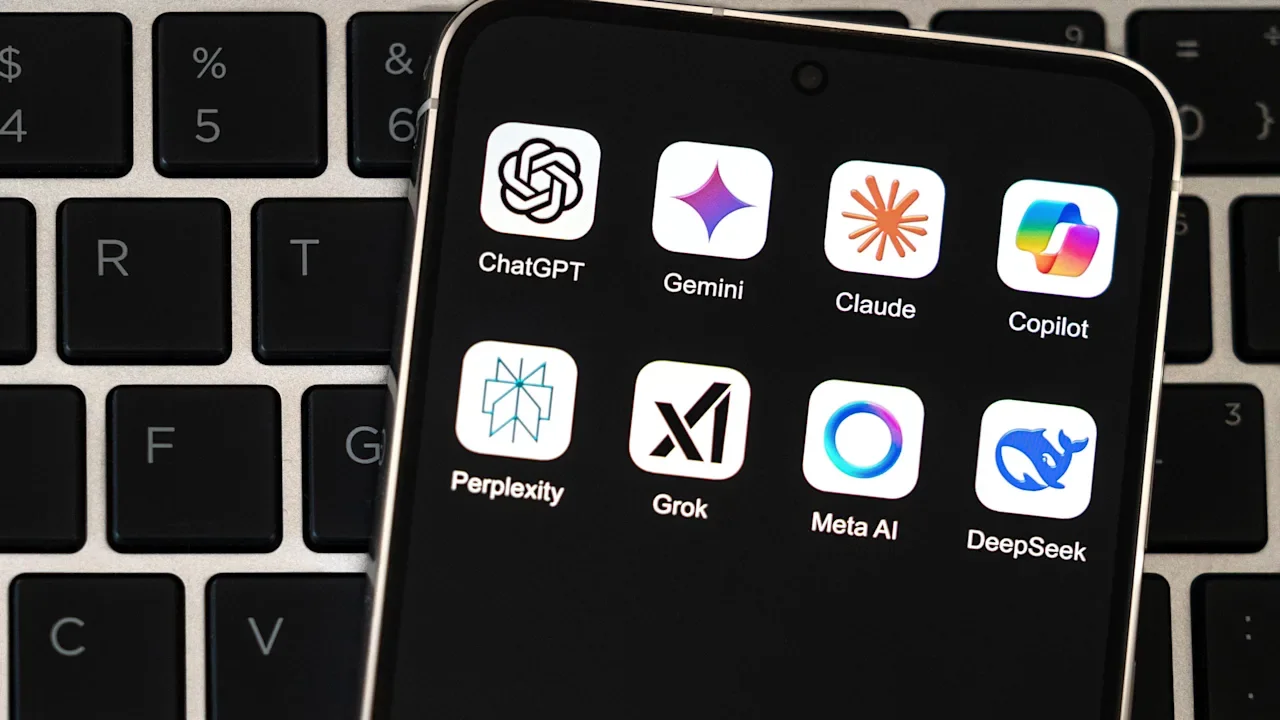
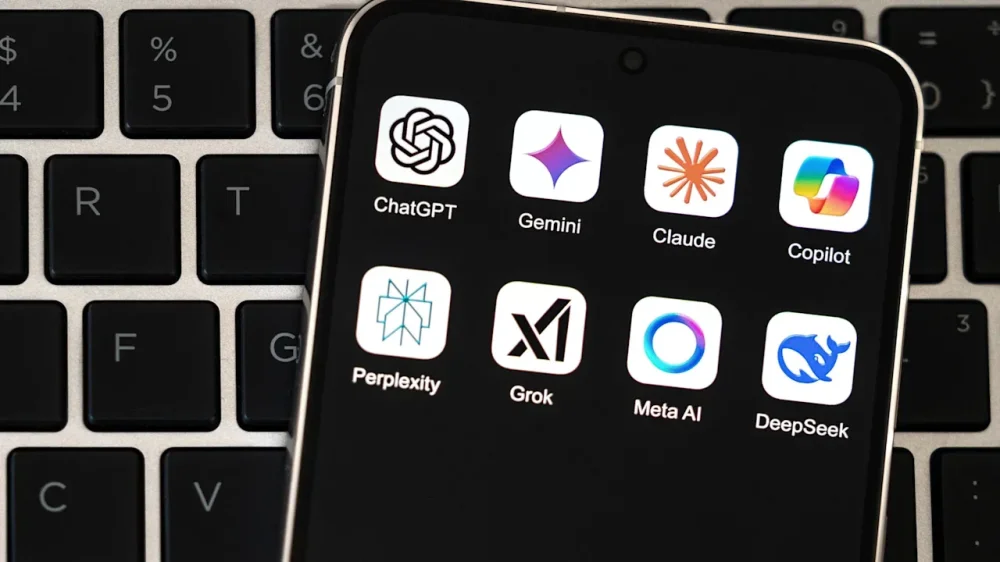
Here’s a guide to the most notable features of the top AI chat apps. ChatGPT: Your Conversationalist 🗣️ iOS & Android Advanced Voice Mode is the ChatGPT app’s most distinctive feature. Ask it to play a tough interviewer or a skeptical client as you prepare for a difficult conversation. Or have it ask questions to help you make a decision. Most of what you can do on your laptop you can do in the ChatGPT mobile app. Create an image. Ask for an infographic, a cartoon, or a photo illustration. See examples of seven ways I use these images. Ask for deep research. Get a detailed analysis with dozens of sources. See examples of nine ways I use this research. Study & learn. This new mode helps you strengthen your skills & knowledge. Analyze files or images. Turn a handwritten note into digital text, or make sense of any document, diagram, or manual. When I can’t figure out how to assemble or operate something, this offers faster help than a Google search. Use integrated apps. You can now access Canva, Figma, Spotify, Expedia, and other tools inside ChatGPT. Try prompting for a graphic within ChatGPT while waiting in line with your phone, then edit it later in Canva.👇 Pulse is ChatGPT’s best new pro mobile feature. It creates customized notes for me every morning. The AI assistant synthesizes info from my chat history, my Google Calendar, and what I’ve expressed an interest in learning. This morning’s Pulse note, for example, included tactics for using new Substack features, Penguin stories for sharing with my daughter, and breakfast ideas I had asked about for my rice cooker and bread machine. These aren’t news updates—they’re personalized resources prepared by an AI assistant. I don’t use or recommend relying on AI assistants for news searches, especially given AI’s struggles with news accuracy. Caveat: Pulse isn’t yet available for free accounts. Gemini: Your Creative Partner 🧑🎨 iOS & Android The Gemini app has five special features, in addition to its core chat capability. “Nano Banana” image generation model. Edit photos, blend multiple images, or design a poster. Worth trying: ask it to turn any image from your phone into a record album, book cover, or billboard poster. Deep Research. Generate exhaustive reports with citations whenever you need thorough background on an issue. Try this prompt: “Create a step‑by‑step plan to adopt [tool/technology] in a team of [size]. Include costs, training time, change‑management risks, and how to measure success. Cite case studies.” See a few of my tips for strengthening deep research queries. Veo 3 video generation. Paid accounts only. Create 8-second clips with Veo 3.1, Google’s new video model. Experiment: create a slick moving background for a slide. Canvas. Make an infographic, a quiz, or a simple game. Quick test: make a self-grading quiz to challenge yourself on something you’re learning. Guided Learning. Put Gemini in teacher mode to help you gradually strengthen your understanding of anything. Try this: ask it to walk you through the history of any concept or tech you’re curious about. When I choose Gemini: I use it as an alternative to ChatGPT and Claude when I want particular kinds of image edits and creative image designs. I also use it to experiment with generating short video clips, for guided learning, and for research reports. Claude: Your Mobile Studio 👷 iOS & Android Claude’s app has a new voice mode I like. It waits for me to tap the screen to signal I’m done, so it rarely cuts me off when I pause to think—unlike ChatGPT, which often assumes I’ve finished talking. You can choose from five voices. Create on the Go Create Artifacts—interactive little applications—from your phone. You can make games, learning resources, document templates, or other useful mini programs. You can also now use Claude Code from your phone. What I most value about Claude is its excellent Projects feature, which lets me organize relevant documents and instructions for each distinct area of work. I use other tools (like ChatGPT, Gemini) for images and video, which Claude doesn’t do, but I rely on Claude for assistance with alt-text, SEO text, project planning, and other tasks where understanding my context is crucial. Copilot: A Flexible Assistant 🧑💼 iOS & Android Microsoft’s Copilot app is a good free option that’s similar to ChatGPT and based on the same OpenAI models. One distinction is a new “real talk” mode that will sometimes challenge you. This helps address the sycophancy problem of AI chatbots blindly affirming your statements. Other useful features: Copilot can generate a podcast episode on any subject (like this one about Wonder Tools). It can also generate an image, run a deep research report, quiz you on a subject of your choice, and conduct a voice chat. Like ChatGPT, it can even help you understand something in your environment. Turn on your camera or load something onto your screen, then ask Copilot questions about something you’re looking at. Ask it about fine print in a document, a confusing gadget, a troubled plant🌾, or anything else. Perplexity: The Quick Researcher 🧑🔬 iOS & Android I rely on Perplexity for help understanding complex concepts. The mobile app’s voice mode is especially useful for quick searching and getting a summarized response instead of a list of links. For niche searches, adjust Perplexity’s settings to focus only on finance info, academic sources, or social sites for Reddit results. You can also use Perplexity to search your Outlook email or your Gmail and Google Calendar📆 for messages on a particular subject. Tip: Turn on incognito mode in settings anytime you’re searching on a sensitive or private subject. And as with all AI tools, avoid giving a thumbs up or down to a query because rating it signals that you’re okay with it being read and analyzed. Read more about why I find Perplexity so useful 🎯 Free & Low-Cost AI App Alternatives Locally AI 📍 iOS | Free Benefits: Free. No log-in required. Fully private. No data tracking. Easy to use. Getting started. Pick a compact open-source large language model suited for your phone’s processing power. I considered options from Qwen, Meta, and Google. Qwen 3 supports 100 languages and Meta’s Llama excels at summarization. I picked Gemma 3 QAT from Google. If you’re a tech novice or don’t care about those details, just pick Gemma as your model and you’ll be fine. Brief wait to get started. I had to keep the app open for about two minutes to download the language model to my phone. You only have to do that once. How I used it: I recently asked for a custom workout, given my constraints (no equipment, limited time) and personal fitness priorities. The result was helpful and similar to what I got from ChatGPT. Nice features Customize or personalize your responses by inputting a prompt that will guide the app across all the individual chats. You can explain your personal or professional circumstances, for instance, or your preferences for concise or detailed answers, or any other needs you have for how the AI responds to you. Set up Siri shortcut. You can activate Siri and say “Hey Locally AI . . .” to run a local AI search privately with your voice. Well-reviewed. People seem to like it: 4.8/5 average rating with 208 reviews. Vision tools. You can use this private AI app for text recognition, object recognition, or image comprehension. That’s useful if you want to use your phone privately to understand secure documents or convert personal handwritten notes into text. To get that benefit, within the app download the Qwen 2 VL model recommended for iPhone 15 or newer phones. Caveats Not the top models. ChatGPT, Claude, and Gemini perform better for image analysis than the small mobile models this app enables. Slow start. Expect to wait several minutes each time you download a new model, including the first time you use the app. No plug-ins. I couldn’t connect this app to other services. Private LLM | iOS and Mac | $5 Nice features One purchase for iPhone, iPad and Mac. Family sharing means you can share the app with five family members for free. Choose from 60+ models. Lots of models available in this app aren’t options in Locally AI. That may not matter, unless you’re eager to use a very specific model. Change AI models’ creativity level. Unlike Locally AI, this app allows you to adjust the “temperature” setting of your AI models to control how predictable or creative responses are. A model set to a low temperature sticks to more consistent, predictable answers, while one set to a higher temperature will generate more varied, imaginative replies. Caveats Single chat stream. You can’t create multiple distinct chats in this app. Most other AI tools, including the Locally AI app, let you separate conversations into distinct threads for different subjects. No help picking models. Figuring out which one to try is tricky with this app. You can click a tiny information button that links to a separate Hugging Face web page about the model, but there’s no easy-to-understand summary for novices. Locally AI has helpful concise summaries showing each model’s strengths. PocketPal AI | iOS and Android | Free Nice features Fully Private. No conversations, prompts, or data leave your device. Create custom “pals.” Set up multiple AI assistants or “personalities,” with different settings and system prompts. Access models from Hugging Face. Choose from many small AI models. Caveats May not work well on all Android phones. Depending on your phone’s age, the app might feel slow. A lot of Play Store reviewers reported this problem. Mediocre ratings. 4.1 out of 5 with 1,200 reviews is OK, but not stellar. The user interface lacks polish. The design isn’t as elegant as what you’ll find on Claude, ChatGPT, Gemini, or other top-tier apps. But it’s free, and if the AI responses are useful, you may tolerate a lower-quality interface. View the full article
-
Since the days of Netscape Navigator and Internet Explorer, you've always have a choice when it comes to the program you use to access the internet—but we now have a whole new breed of software to consider: The AI browser. These browsers place AI models front and center, even more so than integrations like Gemini in Chrome or Copilot in Edge. These browsers give you AI-powered search, AI-powered answers to just about any question you can come up with, and even agentic AI control—so the browser can actually do some browsing and complete simple tasks for you. A future where we never have to manually fill out another web form or compare prices on sixteen different flights is nearer than you think. Or is it? To gauge the current state of the AI browsers available today, I gave four of them a test: Perplexity Comet, Opera Neon, ChatGPT Atlas, and Dai (from the makers of the Arc browser). It's early days for all of these programs, but here's what you can currently do with them, and how they compare to one another. The pros and cons of AI browsingBefore we get to the details of specific browsers, it's worth mentioning some of the pros and cons involved. The main pro, at least in theory, is more useful AI assistance: Some types of web searches can be ably handled by an AI bot (if you watch out for inaccuracies), and there are plenty of tedious, time-consuming browsing tasks that could be offloaded to an AI agent. For example, you could pick something you want to make for dinner and have your AI browser order all the groceries for you—a lot of clicks saved. Or perhaps you could get your AI browser to bring up all the job listings you were looking at last week, sorted by their relevance, or have it compare the best gaming keyboards available on Amazon. Comet is one of the AI browsers now available. Credit: Lifehacker In theory at least, you can offload quite a bit of work to your AI browser—but of course, giving your browser more control comes with security and privacy concerns. We've already seen demonstrations of how hackers can embed malicious code into websites to take control of the AI agent and potentially get at your data and your accounts. What's more, these browsers typically remember everything you've done, so you can come back to a task later, if need be. That's not too different to how standard browsers work, and it is possible to disable this tracking, but it's a potential issue with AI browsers—you're putting your trust in another company and another piece of software to respect the privacy of your browsing data and take good care of it. Those are the general considerations to bear in mind when looking at AI browsers. With that all said, here's what I found when I dug a bit deeper into the options currently available to try out. Perplexity CometPerplexity Comet is available for Windows and macOS Clean and polished look AI agent capable of the basics Something you can say for sure about Comet is that it's cheaper than it used to be: Previously, you had to be subscribed to Perplexity Max for $200 per month to even try it. Now, anyone can—you don't even need a Perplexity account—but AI usage limits apply if you're not a subscriber. A couple of interesting features stand out immediately—the article summary feature and the voice mode feature, both available on the toolbar. They work well, for those times when reading full articles and typing on a keyboard seems like too much effort, while features like AI search and writing assistance are only a click away. Comet summarizes content with a couple of clicks. Credit: Lifehacker The Perplexity Assistant chatbot is always available from the sidebar or the new tab page, ready to help. I successfully got it to aid me in replying to a thread in Gmail—it even clicked the reply button for me. I also used the AI agent to create a Google Keep note with three motivational quotes inside. I am capable of achieving great things, apparently. When it comes to the agentic AI, Comet tells you the steps it's taking in the Assistant window as it works on your task. It can occasionally get tripped up by even the simplest of web interfaces, but seems to do well at understanding how to fix issues it encounters and assessing what's actually on screen. Opera NeonOpera Neon is available for Windows and macOS Wide range of AI capabilities No free tier for the AI features Unlike the other browsers on this list, Opera Neon isn't yet open to the public—though you can sign up for early access. When you do get in, you'll need to pay $20 a month for the advanced AI features, with models supplied by OpenAI and Google (Opera says it switches between them as and when needed). Opera obviously knows what it's doing when making browsers, and the usual Opera innovations are here, such as sidebar integrations for your chat apps. When it comes to the AI aspects, there's all sorts of functionality to experiment with, from article summarizing and image generation, to deep research and coding generation. Neon successfully picked out cheap flights. Credit: Lifehacker While the subscription fee might put you off, you get plenty for your money. There's agentic AI to take actions in the browser, though with mixed results: Opera Neon managed to create my inspirational Google Keep note when asked, but didn't properly save it. When I complained, it tried its best to make amends, but again couldn't work out what to do to actually save a note. The browser was better at assessing what was on particular pages, and was able to give me a summary of the cheapest flights between two destinations across the next month—all by itself. I'd say the AI here still needs some work (perhaps why this remains a limited preview), but it scores highly on versatility and on actually being a functional browser. ChatGPT AtlasChatGPT Atlas is available for macOS Sticks to the browsing basics Advanced agentic AI interface OpenAI has now joined the AI browser party, such as it is, and ChatGPT Atlas takes a minimal approach to browser design: It's basically just the essentials in terms of on-screen furniture, with a few quick links to settings and an Ask ChatGPT button up in the corner that you can click on whenever you need a hand from AI. ChatGPT in Atlas can do just about everything it can do everywhere else, though I did like the way it picked out the Lifehacker stories "aligned to my interests" from the homepage—one benefit of giving the bot access to all your chatting history, amidst all the privacy drawbacks. As with the main ChatGPT app, you can use the browser for free, with higher usage limits if you decide to subscribe to a plan. Atlas does well at figuring out where to click and when. Credit: Lifehacker Where Atlas starts to diverge from the main ChatGPT is in the agentic AI capabilities: ChatGPT can actually jump in and take actions on your behalf. And on that score, it's the most advanced of the browsers I tried—it reliably picks out the right elements within sites, accurately follows your instructions, and animates its actions so you can see what's being done. You can also jump in and interrupt at any time. It still makes mistakes though—while it successfully created my motivational quotes note in Google Keep, it needed several goes at the formatting, and I suspect it would've been quicker for me to do it myself. DaiDia is available for macOS Polished AI chat interface Deep analysis works well Dia is a little bit different to the other browsers I've tried out here, in that it's very much built with AI at the forefront. In its original form, it didn't have many traditional browser features at all—though it has recently started adding in some elements from its Arc predecessor, including pinned tabs and favorites. The premise is you can use AI to "chat with your tabs"—summarize text, compare items, ask questions about what's on screen, generate fresh text where needed, and lots more besides. What you won't encounter (yet) is agentic AI, which means Dia isn't going to be able to jump into websites and take actions for you. Dia's AI chat integrates tightly with what you're looking at on the web. Credit: Lifehacker That said, it's particularly good for learning: You can quickly turn videos and essays into bullet points or flashcards, for example. I also like the way Dia can summarize threads and pull information from Gmail: Even if it's not able to actually click around for you, it can dig deep into websites and web apps and pull out what you need. You also get Dia Skills, prepackaged shortcuts for fact checking, picking out the right clothing to match your style, creating transcripts of YouTube videos, and finding something to watch on streaming services. It's a good early prototype of how AI can actually help make sense of the web at large. The AI browsing futureIn my testing, these browsers all performed well in different ways: Comet at integrating AI into the interface, Neon in its broad feature set, Atlas in the strength of its agent mode, and Dia in its deep understanding of sites and their data. This is undoubtedly the direction all browsers are headed in the future, to a greater or lesser extent. How will this change how you interact with the internet? Personally, I would never let AI write anything for me—not even notes or emails—and I'm reluctant to hand over jobs like booking hotel rooms or creating and formatting documents to AI either. I'm wary of AI making the wrong choices and making serious mistakes, which is why I didn't put these tools through anything too demanding here (and that's before we get into the sticky privacy issues). AI can be useful (though not infallible) in terms of searching and summarizing, and that's where I think these browsers show the most promise—by taking the tasks AI is already good at, and integrating them more tightly with web-based workflows. Fully automated AI browsing may arrive one day, but based on what these browsers can do right now, it's still a long way off. View the full article
-
Shares in two closely watched AI-adjacent companies, Nvidia Corporation and Palantir Technologies, are falling this morning. Currently, Nvidia shares are down more than 2.2% and Palantir shares are down more than 6%. The share price drops of two of the most prominent AI companies come as investors seem increasingly worried that the AI boom is starting to look more like an AI bubble, reminiscent of the dotcom bubble of the late ’90s and early 2000s. In part due to these concerns, an increasing number of investors have recently begun betting against the stocks of companies benefitting from the artificial intelligence boom—including Michael Burry, the investor who became famous for betting against the housing market before the 2008 financial crash. Here’s what you need to know. “Big Short” investor bets against Nvidia and Palantir In the years leading up to the 2008 housing market crash, investor Michael Burry made a killing by shorting housing-related stocks after seeing signs of the then-upcoming housing market crash that few others noticed. In 2015, Burry was immortalized in The Big Short, the Oscar-winning film about the 2008 financial crash, in which he was played by Christian Bale. Burry has since gained a substantial following among some investors, and so his investment moves often gain widespread attention. Recently, his move has been to bet against the stock prices of Nvidia (Nasdaq: NVDA) and Palantir (Nasdaq: PLTR). As noted by Bloomberg, Bury’s Scion Asset Management recently revealed in a 13F regulatory filing that it bought put options on NVDA and PLTR. The news of Scion’s puts followed a Halloween post from Burry on X in which the hedge fund manager issued a cryptic post reading “Sometimes, we see bubbles. Sometimes, there is something to do about it. Sometimes, the only winning move is not to play,” along with an image of his Big Short character played by Bale. Burry’s puts seem to have struck a nerve with Palantir CEO Alex Karp, who on Tuesday told CNBC’s Squawk Box that the companies Burry is betting against “are the ones making all the money, which is super weird.” Karp added that “The idea that chips and ontology is what you want to short is batshit crazy.” Then again, plenty of people thought Burry was crazy for shorting housing stocks in the years ahead of the 2008 crash. Palantir’s Tuesday share slide comes after the company reported Q3 earnings yesterday, in which it saw revenue climb 63%. The software company has been among the highest-growth stocks of 2025. Fears of an AI bubble loom large Regardless of whether Burry’s puts against Nvidia and Palantir end up being the right move, his move seems to have spurred at least some investors to offload NVDA and PLTR shares, as of the time of this writing. It should also be noted that Burry is far from the only one who sees signs of an AI bubble. Many investors and industry experts have begun to question whether the industry is in a bubble—and what would happen if that bubble pops. For instance, an October Bank of America Global Research survey found that 54% of investors believe AI stocks are in a bubble, as Reuters recently reported. Even so, today’s share price drops in NVDA and PLTR are minuscule compared to their surging stock prices in recent years. Year-to-date, Nvidia has seen its stock price surge more than 50% and PLTR is up more than 150%. Over the past 12 months, NVDA has risen more than 48% and PLTR has risen more than 350%. View the full article
-
Bullish comments come amid increasing uncertainty over EV models’ impact on luxury-car maker’s remarkable profit growthView the full article
-
A new look is coming to the National Mortgage News homepage, writes Editor-in-Chief Heidi Patalano View the full article
-
A second food recall has been initiated after a California-based fruit supplier discovered that some of its yellow and white peaches might be contaminated with Listeria monocytogenes, which can cause potentially deadly infections. Here’s the latest and what to know: What’s happened? On October 29, Moonlight Companies voluntarily recalled “California-grown conventional” yellow and white peaches due to a risk of contamination with Listeria monocytogenes. Some items were sold under the Kroger name, the company said in its announcement. Listeria was found in the packing facility. To date, no illnesses have been reported. However, the impacted fruit was sold at retail stores across the country. A day later, the Food and Drug Administration (FDA) published the recall notice on its website. A second peach-related recall was later announced due to potential Listeria contamination. On October 30, Supreme Produce—whose supplier is Moonlight Companies—said it recalled one peach salsa product. To date, no illnesses have been reported. The FDA published this second recall notice on Monday. Which products are included in the recalls? Recalled peaches were sold at retail stores nationwide between September 16 and October 29, 2025. They were sold individually with PLU stickers or in multi-packs. Peaches with packaging or PLU stickers with the words “Organic” or “Washington” aren’t included in the recall. Recalled Moonlight Companies peaches include the following: Moonlight Yellow Peaches Moonlight White Peaches Moonlight White Peaches (“Peppermint Peach”) Kroger Yellow Peaches You can see a full list of lot codes, PLU sticker numbers, and packaging images on the FDA’s website. The following Supreme Produce peach salsa product has been recalled: Product: Peach Salsa Barcode UPC: 85006540364 Best by dates: 10/12/2025 to 10/29/2025 These products were packaged in 14-ounce clear, plastic grab-n-go containers and were sold in Kroger retail stores under the Supreme Produce brand. They were distributed in the following states: Arkansas Colorado Georgia Illinois Indiana Michigan Mississippi Oregon Tennessee Washington Discard remaining products Customers should not consume any of the above recalled products. While they’re no longer for sale, if you have any of the above products, discard them. If you have any questions about the recall, call Moonlight Companies at (855) 215 -5017. What is Listeria? Listeria infection is an illness caused by bacteria that can spread through contaminated food. According to the Mayo Clinic, healthy people rarely become seriously ill from Listeria infection. However, the disease can be fatal for unborn babies, newborns, and those with weakened immune systems. Pregnant women, adults 65 and older, and people with weakened immune systems are most at risk for infection. View the full article

-
If you've joined a private Facebook group—counting on your membership and posts to be visible only to those approved to join—and receive a notification that said group is about to go public, you don't need to panic. While Meta is now allowing admins of previously private Facebook groups to change the status to public, it is also assuring users that past activity will remain private. Private Facebook groups can be made publicAccording to Meta's post announcing the update, the option to transition from private to public allows small groups to grow into larger communities that are more easily found, with content visible to anyone (even people who aren't on Facebook). Any admin can set their group privacy settings to public, which will trigger a three-day review period in which all admins have the opportunity to decline the conversion. If no one cancels the request, the group will go public. Groups can revert back to private at any time, at which point new members will again require admin approval. (These members will be able to see all content from before the conversion.) Your private posts are still protectedWhen a private group goes public, all existing posts, comments, and reactions will remain visible only to members, admins, and moderators who were already in the group but be hidden to new members and the general public. Member lists will also be hidden to everyone except admins and moderators. Any content added after the conversion will be visible to anyone. If a group you're in is converted from private to public, you'll get a notification about the change. You'll also see a notification the first time you post or comment in the newly public group reminding you that your activity is now visible. When you go to post, look for the globe icon, which indicates that your content is public. View the full article
-
We may earn a commission from links on this page. Deal pricing and availability subject to change after time of publication. The Google TV Streamer 4K is Google's latest iteration of the smart TV stick. No longer is it hiding behind your TV, but now it takes center stage with a hub on your TV stand. Right now, you can get the Google TV Streamer 4K for $74.99 (originally $99.99), the lowest price it has been since its last summer, according to price tracking tools. Google TV Streamer 4K 32GB With Voice Search Remote (Porcelain) $74.99 at Amazon $99.99 Save $25.00 Get Deal Get Deal $74.99 at Amazon $99.99 Save $25.00 Google first released the Chromecast, an HDMI device that let you cast your phone to your TV. Then it released the Chromecast with Google TV in 2022, which incorporated the Google OS into the Chromecast. Now, Google seems to want to go a new route after discontinuing the Chromecast altogether—this new device is powered by Gemini (Google's AI), has more storage, and better performance for twice the price. The Google TV Streamer 4K comes with 32GB of storage space, 4GB of memory, and the ability to run HDR streams at up to 4K@60 FPS. It also has support for Dolby Vision and Atmos, and it has ports for things like Ethernet. The Google OS is identical to older models, but performance is much better, according to CNET's review. While you already get more storage than previous models, you can also expand it with the USB-C port. This is my personal favorite streaming stick and has the best OS of all the ones I've tried. I have it on my TV at home and recommend it to anyone looking for the best TV experience, especially at its lowest price. Our Best Editor-Vetted Tech Deals Right Now Apple AirPods Pro 2 Noise Cancelling Wireless Earbuds — $169.99 (List Price $249.00) Apple iPad 11" 128GB A16 WiFi Tablet (Blue, 2025) — $299.00 (List Price $349.00) Amazon Fire TV Stick 4K Plus — $29.99 (List Price $49.99) Ring Pan-Tilt Indoor Cam, White with Ring Indoor Cam (2nd Gen), White — $59.99 (List Price $99.99) Blink Video Doorbell Wireless (Newest Model) + Sync Module Core — $69.99 (List Price $69.99) Blink Mini 2 1080p Indoor Security Camera (2-Pack, White) — $27.99 (List Price $69.99) Ring Video Doorbell Pro 2 with Ring Chime Pro — $149.99 (List Price $259.99) Introducing Amazon Fire TV 55" Omni Mini-LED Series, QLED 4K UHD smart TV, Dolby Vision IQ, 144hz gaming mode, Ambient Experience, hands-free with Alexa, 2024 release — $699.99 (List Price $819.99) Blink Outdoor 4 1080p 2-Camera Kit With Sync Module Core — $129.99 (List Price $129.99) Deals are selected by our commerce team View the full article
-
Japanese video-game maker Nintendo’s net profit jumped 85% in April-September from the year before, as its sales more than doubled following the launch of its hit Switch 2 console in June, the company said Tuesday. Nintendo, based in Japan’s ancient capital of Kyoto, said its profit for the half-year totaled 198.9 billion yen, or $1.3 billion, up from 108.6 billion yen the year before. Sales for the first half of this fiscal year rose to nearly 1.1 trillion yen ($7.1 billion) from 523 billion yen in the same period of 2024. Nintendo, which makes Super Mario and Pokemon games, did not provide a break down of quarterly data. Nintendo’s video game sales were solid, although with no new movies revenue from its content business slowed. Nintendo raised its profit forecast for the full fiscal year through March 2026 to 350 billion yen ($2.3 billion). Previously, it had expected a 300 billion yen ($1.9 billion) profit. It also raised its forecast for Switch 2 machine sales to 19 million units from the earlier 15 million. Nintendo says it had sold more than 10 million Switch 2s by the end of September. Popular Switch 2 game software include “Mario Kart World” and “Donkey Kong Bananza.” Sales of the older Nintendo Switch have fallen, but Switch game sales are still going strong because they can be played on Switch 2 machines. Analysts expect Nintendo’s earnings to stay strong with the upcoming holiday season, when it tends to do well. They also expect key new games in the Pokemon and Kirby franchises. Nintendo stocks, which have been rising relatively steadily over the past year, fell 0.8% on Tuesday. Yuri Kageyama is on Threads: https://www.threads.com/@yurikageyama —Yuri Kageyama, AP Business Writer View the full article
-
As the marketing landscape undergoes a seismic shift, small business owners face new challenges—and opportunities—largely driven by advancements in artificial intelligence. HubSpot, a leader in marketing software, has announced its agreement to acquire XFunnel, a platform designed to help businesses optimize their visibility in the era of Answer Engine Optimization (AEO). The timing couldn’t be more critical. As consumers increasingly rely on AI tools like ChatGPT and Claude for information, businesses must adapt their marketing strategies to ensure they appear where their customers are searching. HubSpot reports that leads generated from AI-driven strategies convert three times better than those from traditional search methods, highlighting the necessity for small businesses to reconsider their digital strategies. One of the core advancements in HubSpot’s recent updates is the introduction of Loop Marketing, a modern framework designed to attract, engage, and convert customers in a manner that aligns with today’s digital behavior. Angela DeFranco, GM and VP of Product for HubSpot’s Marketing Hub, underscores the intent behind the acquisition: “As AI changes how people find and engage with businesses, we want to make that shift easier to navigate for our customers.” With XFunnel’s integration into HubSpot’s marketing suite, small business owners can expect insights and strategies aimed at enhancing their online presence across various AI platforms. XFunnel helps marketing teams monitor their business’s digital performance across AI-generated answers, providing data-driven recommendations for improving visibility. This level of understanding can empower small businesses to target and connect with their audiences more effectively. The capabilities offered by XFunnel can be particularly beneficial for small business owners who often juggle various responsibilities and may lack the resources of larger enterprises. The platform’s design focuses on experimentation and rapid testing, enabling users to identify effective strategies efficiently. “We’ve admired HubSpot for their leadership in marketing and for their consistent innovation with AI across the platform,” said Neri Bluman, Co-Founder of XFunnel. The collaborative spirit between the two companies signals a shared vision for helping businesses adapt to ongoing changes in the marketing landscape. For small business owners keen on leveraging these new AI-enhanced tools, there are practical applications worth considering. Businesses can use insights from XFunnel to optimize their content, improve website visibility, and tailor their marketing messages to meet customer queries head-on. In an age where first impressions can be influenced by how businesses appear in search results, developing a data-informed strategy has never been more critical. However, potential challenges are tied to the integration of this new technology. For smaller businesses that may not have extensive marketing teams or budgets, the learning curve associated with implementing AI-driven tools could feel daunting. Additionally, the rapidly evolving nature of AI and AEO means that staying current with best practices may require an ongoing investment in training and development. Nevertheless, the benefits of adopting these tools are clear. By positioning themselves in the AI ecosystem through AEO strategies, small businesses stand to gain a competitive edge. More than just improving visibility, these tools offer the chance to refine customer relationships and enhance overall marketing effectiveness. With the acquisition of XFunnel, HubSpot aims to equip small business owners with the necessary tools and insights to thrive in this evolving landscape. In time, as the capabilities become fully integrated, small businesses will receive a vital resource to navigate changes in how customers discover products and services. As this trend develops, staying informed and adaptable will be crucial for small business owners looking to harness the power of AI in their marketing efforts. You can read more about this exciting acquisition and HubSpot’s ongoing innovations in marketing at the original post here. This article, "HubSpot Boosts Marketing with XFunnel Acquisition to Enhance AI Visibility" was first published on Small Business Trends View the full article
-
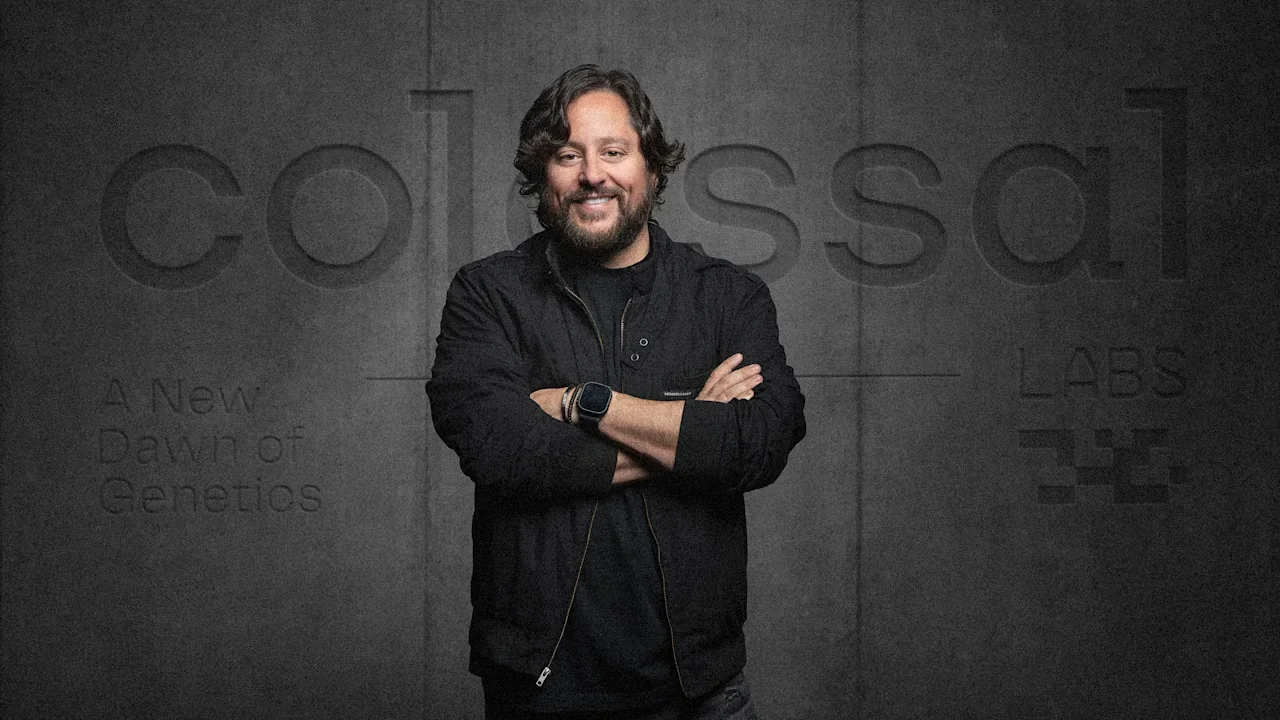
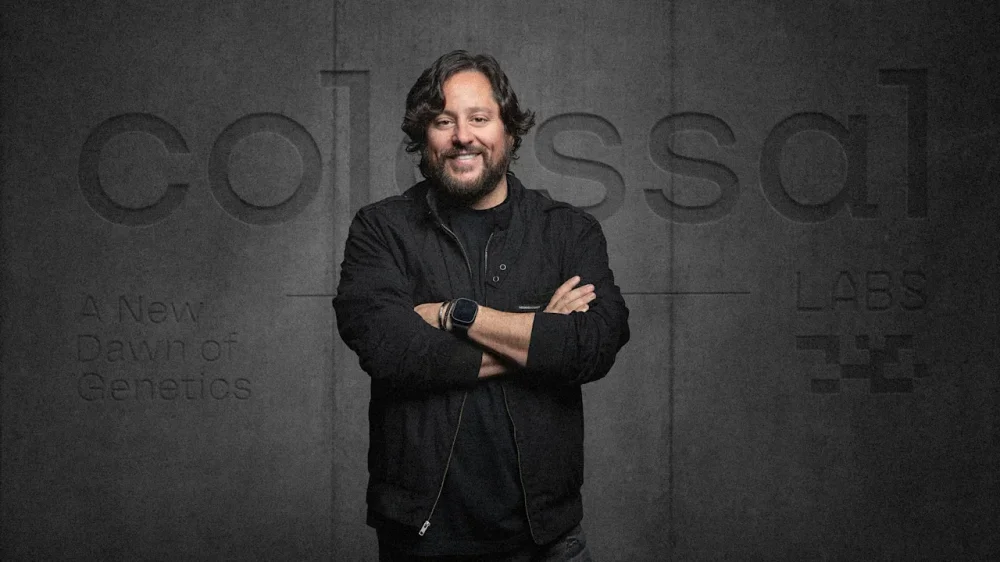
The cloning industry is contracting—ironically, perhaps. On Tuesday, Colossal Biosciences announced that it has acquired ViaGen Pets and Equine, an animal cloning firm, marking Colossal’s first acquisition since it launched in 2021. Texas-based Colossal Biosciences is best known for its controversial “de-extinction” endeavors, which involve efforts to recover species that have died out. Earlier this year, the company claimed to have “brought back” dire wolves, an assertion that was disputed by some experts, as the animals were created by modifying the DNA of existing gray wolves. The company has also sparked debates about the ethics of bringing species back from extinction, or if what it’s doing is in fact “de-extinction” at all. Either way, Colossal has attracted significant interest from high-powered investors, recently raising $120 million to try and resurrect the dodo. Its acquisition of ViaGen adds even more genetic firepower to its arsenal. “Colossal is thrilled to welcome ViaGen, the world’s leading cloning company, into our portfolio,” said Ben Lamm, founder and CEO of Colossal, in a statement provided to Fast Company. “No other company comes close to what ViaGen has achieved. Their unmatched expertise and cloning technology stack have become the world’s standard and their application of these critical and proprietary technologies to endangered species conservation makes them an invaluable partner in advancing our global de-extinction and species preservation mission.” Terms of the acquisition were not disclosed. Access to breakthrough technologies ViaGen, a Texas-based company founded in 2002, will continue to operate under its existing leadership and expand its endangered species cloning activity. Perhaps the most interesting element at play is ViaGen’s exclusive licensing and access to the breakthrough technologies developed by the Roslin Institute of Edinburgh—such as those that cloned Dolly the sheep, the first cloned mammal. “Partnering with Colossal Biosciences presents an extraordinary opportunity to apply our advanced cryopreservation and cloning techniques to the ambitious goals of de-extinction and species restoration,” said Dr. Shawn Walker, Ph.D., ViaGen’s chief science officer and known cloning expert, in a statement. Colossal has also attracted a stable of celebrity investors. Retired NFL star Tom Brady, for instance, worked with the company to clone his family’s dog, and said in a statement that he is “excited how Colossal and ViaGen’s tech together can help both families losing their beloved pets while helping to save endangered species.” The potential to save endangered species is something that has others excited, too. Colossal shared a statement from filmmaker Peter Jackson, who said, “These two companies together give humanity a real shot at saving the planet’s biodiversity.” View the full article
-
Whether you're hosting a party or just cleaning the house, sometimes it's nice to have audio in multiple rooms. You could do that by running wires through your house, or by purchasing a multi-room audio system, but if you have a Mac you don't have to do any of that. There's a feature that makes it possible to send your Mac's audio to multiple speakers, including Bluetooth ones. The feature is a little obscure, though—you won't find it in System Settings, or anywhere obvious. No, to send audio to multiple devices on your Mac you need to open an application called Audio MIDI Setup, which you can find using Spotlight or by browsing to Applications > Utilities in Finder. Credit: Justin Pot Open the application and click the + button in the bottom-left corner, then click Create Multi-Output Device. You will see a list of all audio devices, including the built-in speakers, any wired audio outputs that are connected, any Airplay-compatible devices on your network, and any Bluetooth devices that support audio. Credit: Justin Pot Check as many of these as you like. You can give a name to your combined audio device, if you like, by clicking and holding the current name in the left-hand sidebar. Then you can switch to your new combined audio device by clicking the audio icon in your menu bar and selecting it. I recommend putting on some music and testing things out, adding or removing devices. I had the best results by checking one device connected to my Mac using a wired and another that is connected by Bluetooth. Multiple Bluetooth devices tended to get out of sync quickly, though you can alleviate the syncing issues by checking the Drift Correction box for your wireless devices. This isn't a perfect replacement for a proper multi-room audio system, but it works surprisingly well without the need to buy anything, run wires in your walls, or even purchase any software. Try it out the next time you feel like walking around your house listening to music. View the full article
-
Denny’s said Monday that it’s being acquired by a group of investors in a deal that will take the breakfast chain private. Denny’s board unanimously approved the deal, which values Denny’s at $620 million including debt. Denny’s will be purchased by private equity investment company TriArtisan Capital Advisors, investment firm Treville Capital and Yadav Enterprises, which is one of Denny’s largest franchisees. Under the agreement, Denny’s shareholders will receive $6.25 per share in cash for each share of Denny’s common stock they own, or a total of $322 million. That represents a 52% premium to Denny’s closing stock price Monday. Denny’s shares jumped 47% in after-hours trading Monday. Denny’s was founded in 1953 in Lakewood, California, as Danny’s Donuts. The name was changed to Denny’s Coffee Shops in 1959 to avoid confusion with another chain. Denny’s began trading on the New York Stock Exchange in 1969. Like many casual chains, Denny’s saw its sales plummet during the COVID pandemic. Once the pandemic eased, it found itself dealing with changing customer dining patterns, including a heavier reliance on delivery. Denny’s has also struggled as newer chains like First Watch promoted healthier breakfast options. Last fall, Denny’s said it planned to close 150 of its lowest-performing locations. At the end of the second quarter, Denny’s had 1,558 restaurants worldwide, including 1,422 Denny’s restaurants and 74 Keke’s restaurants. Denny’s acquired the Keke’s brand in 2022. Denny’s CEO Kelli Valade said the company reached out to more than 40 potential buyers and received multiple offers. Valade said Denny’s board believed the deal announced Monday was in the best interest of shareholders and the best path forward for the company. TriArtisan Co-Founder and Managing Director Rhohit Manocha called Denny’s “an iconic piece of the American dream” with a strong franchise base and loyal customers. “We look forward to working with Kelli and the rest of the Denny’s team and franchisees to provide resources and support the Company’s long-term strategic growth plans,” Manocha said in a statement. If it’s accepted by Denny’s shareholders, the deal is expected to close in the first quarter of 2026. —Dee-Ann Durbin, AP Business Writer View the full article

-
Improved pitches from both large pharma groups expected to be revealed later on TuesdayView the full article
-
We may earn a commission from links on this page. Deal pricing and availability subject to change after time of publication. The Bose Ultra Open Earbuds take a sharp turn from the brand’s usual noise-canceling dominance. Instead of sealing you off from the world, they sit outside your ears, letting in ambient sound while still delivering rich, detailed audio. Priced at $199 (down from its original $299), this is their lowest price yet (according to price trackers), and they cater to people who prefer awareness over isolation. Think cyclists, runners, or anyone who doesn’t want to miss the honk of a car while listening to music. Bose Ultra Open Earbuds $199.00 at Amazon $299.00 Save $100.00 Get Deal Get Deal $199.00 at Amazon $299.00 Save $100.00 The fit takes a minute to figure out. The silicone band adds just enough tension to keep them in place, but how you clip them changes the sound more than you’d expect. Too high and it gets tinny; too low and you lose stereo balance. Once you find the alignment, though, they stay put through walks or light workouts and handle sweat or drizzle without a fuss, thanks to their IPX4 rating. Sound-wise, Bose mostly nails what’s hard to get right in open audio: clarity. The Ultra Opens avoid the hollow sound that plagues similar models, keeping vocals crisp and highs bright. The low mids have a pleasing warmth, though the deep bass doesn’t hit with much punch. You’ll notice that most in EDM or hip-hop, where the kick feels restrained. Still, for casual listening, podcasts, and calls, the balanced tuning works. Also, they use Bluetooth 5.3 and support AAC, AptX Adaptive, and SBC codecs, which means Android users get slightly better audio quality than iPhone users. Volume holds steady even outdoors, and there’s minimal distortion at full blast—per this PCMag review, the earbuds sound their best around 70 percent volume, delivering a full, detailed mix while still keeping you aware of what’s happening around you. If you prefer a more low-end presence, the adjustable EQ in the Bose app lets you tweak the sound. Battery life holds up nicely, too, around 7.5 hours on a charge and about 27 hours with the case. That said, wireless charging isn’t built in, though there’s a separate case for that if you prefer it over the USB-C setup. Our Best Editor-Vetted Tech Deals Right Now Apple AirPods Pro 2 Noise Cancelling Wireless Earbuds — $169.99 (List Price $249.00) Apple iPad 11" 128GB A16 WiFi Tablet (Blue, 2025) — $299.00 (List Price $349.00) Amazon Fire TV Stick 4K Plus — $29.99 (List Price $49.99) Ring Pan-Tilt Indoor Cam, White with Ring Indoor Cam (2nd Gen), White — $59.99 (List Price $99.99) Blink Video Doorbell Wireless (Newest Model) + Sync Module Core — $69.99 (List Price $69.99) Blink Mini 2 1080p Indoor Security Camera (2-Pack, White) — $27.99 (List Price $69.99) Ring Video Doorbell Pro 2 with Ring Chime Pro — $149.99 (List Price $259.99) Introducing Amazon Fire TV 55" Omni Mini-LED Series, QLED 4K UHD smart TV, Dolby Vision IQ, 144hz gaming mode, Ambient Experience, hands-free with Alexa, 2024 release — $699.99 (List Price $819.99) Blink Outdoor 4 1080p 2-Camera Kit With Sync Module Core — $129.99 (List Price $129.99) Deals are selected by our commerce team View the full article
-
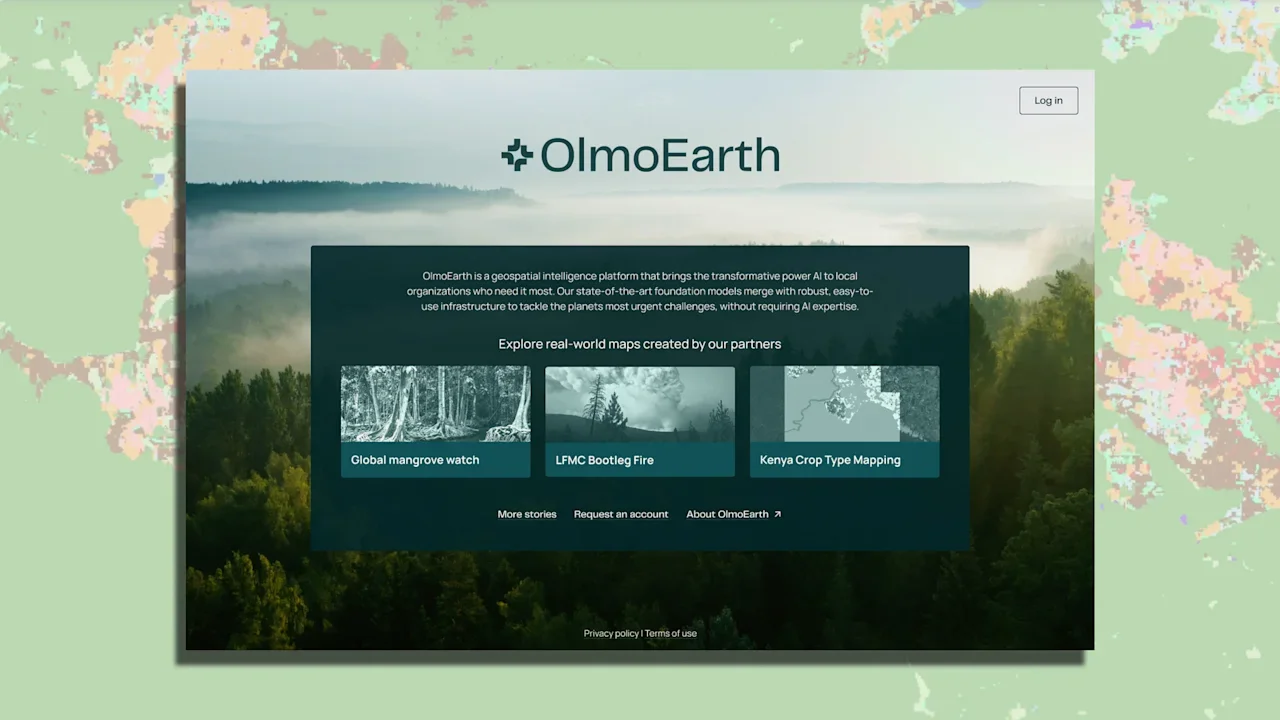
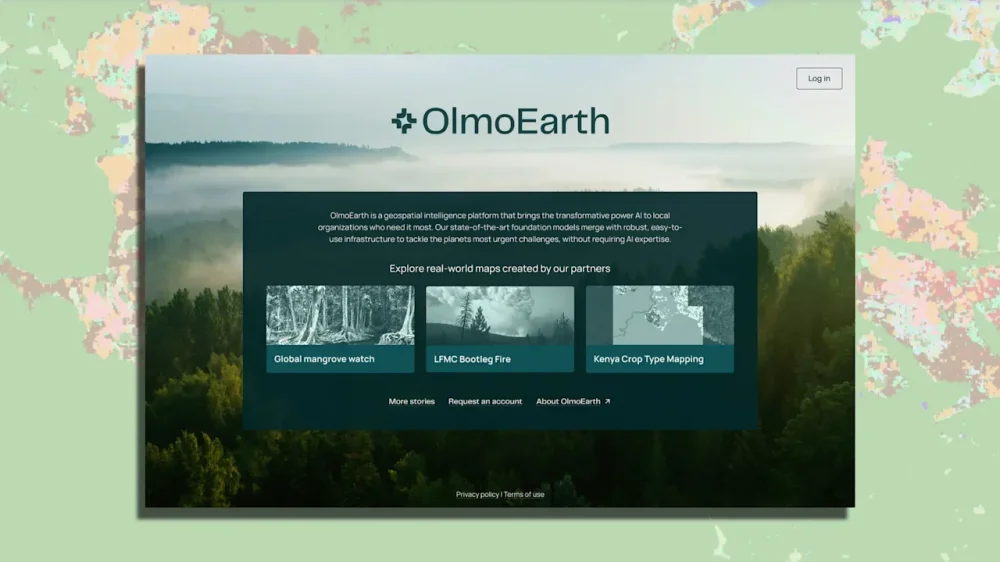
A new open AI platform from the nonprofit created by the late Microsoft cofounder Paul Allen aims to make satellite imagery and other data about the earth more available and useful. The Allen Institute for Artificial Intelligence (Ai2) on Tuesday unveiled the OlmoEarth Platform, backed by a family of AI foundation models trained on roughly 10 terabytes of data derived from millions of observations of the planet, including satellite images, radar readings, and existing maps of features like forest cover. The OlmoEarth models can then be fine-tuned for specific purposes, like detecting changes in vegetation, with the help of a companion software tool called OlmoEarth Studio. Details on model performance are included in a new scientific paper. Ai2 has already been working with a variety of organizations harnessing the AI, including groups looking to better assess and respond to wildfire risk. The International Food Policy Research Institute is using the technology to more frequently update maps of crops grown in one region of Kenya. Amazon Conservation is using the AI system to quickly spot deforestation. And a project called Global Mangrove Watch is harnessing the technology to more comprehensively track mangrove populations and quickly detect threats to those critical coastline trees. Patrick Beukema, lead researcher on Ai2’s OlmoEarth team, says the project grew out of a realization that while AI can help put earth imagery and data to use by quickly analyzing both new and historic images, actually deploying the technology could be a challenge for many organizations, including government agencies and nonprofits doing important work. “I think there’s a recognition that this kind of technology can be very valuable, but it’s so difficult to use, so we haven’t seen widespread adoption of these kinds of models, as we’ve seen, for example, within natural language processing or with [large-language models],” he says. “And we haven’t really seen the transformative power of artificial intelligence within this domain.” State-of-the-artTo fill that gap, Ai2 created not only what Beukema calls state-of-the-art models, built using vision transformer technology similar to the large-language models that power tools like ChatGPT and Claude, but a set of companion tools making them practical to use. Those include OlmoEarth Studio, which simplifies the process of training the models for specific tasks by uploading human-labelled sample data showing relevant features like lands growing specific crops, areas of mangroves, or bits of forest vulnerable to wildfire. Once OlmoEarth models are fine-tuned, they can be used to analyze areas of the earth at a particular moment in time, selected as easily as finding a neighborhood on Google Maps and scheduling an event on a calendar app. “They can just tell the system, ‘I want mangroves, I want them in Indonesia over the last six months,’ or ‘I want a global inference over the last four years,’” Beukema says. “The idea is to build in that flexibility so that users can choose whatever they need.” Then, users can publish or privately share maps illustrating their findings, which can be viewed in an OlmoEarth Viewer app that can support interactive maps with options to select places and time ranges. The Studio and Viewer tools can be used without the need to write any code, though Ai2 also released a suite of automation tools and APIs for easy programming of its technology. Providing the toolsThe organization also released documentation and examples on its GitHub page for the project, along with existing fine-tuned models that can immediately be put to use or even run offline on an organization’s own computers. And OlmoEarth follows other recent software releases from Ai2, including a package of science-focused AI tools called Asta released in August, and a set of language models known as OLMo, for open language models. Overall, Beukema says, the goal with OlmoEarth is to give organizations free technology that compares favorably to existing commercial and academic AI projects, letting them efficiently analyze and visualize planetary data they often already deeply understand, even when they don’t have the resources to build their own AI models from scratch. “These people are often experts, so they know exactly what they’re looking for,” he says. “They just don’t necessarily have, or want to build, these complicated foundation models that are expensive to train, expensive to inference, expensive to really work with.” Global Mangrove Watch—which tracks those coastal trees that are environmentally important as fish habitats, carbon stores, and as barriers to erosion, storm surge, and even tsunamis—is already working to improve its mapping and analysis processes with OlmoEarth. An existing machine learning and mapping system could already track mangroves with relatively high accuracy, but organizing training data and verifying the output still requires a lot of manual labor, says Lammert Hilarides, senior technical officer at Wetlands International, one of the organizations behind Global Mangrove Watch. A plan to scale upHilarides says OlmoEarth should allow the organizations to spend more time on other tasks, including working with governments and organizations around the world that are working to preserve mangroves and protect them from often-illegal deforestation. Critically, it will allow the project to update mangrove loss maps more quickly and let them cover a greater extent of the planet, catching disturbances to mangroves faster and more comprehensively. “We really hope that as of next year, we can scale up our work from covering not just half the world’s mangroves but all of the world’s mangroves,” he says. Ai2 plans to make OlmoEarth accessible to a wide range of organizations, with most features free for anyone to use, though a few features like fine-tuning elements will generally require groups to coordinate with Ai2 to make sure the product isn’t used for harmful purposes. Beukema says the nonprofit institute encourages organizations that think the technology could be useful to be in contact. “If you think this tech is going to help you accelerate your mission, please reach out,” he says. “We really want to help you.” View the full article
-
The U.S. IPO market in 2025 has been relatively busy, with plenty of household names going public, including Klarna, eToro, and Chime. But as you can tell from that brief list, many of the most closely watched IPOs this year have been companies operating in the fintech space. In a change of pace, one company operating in the aerospace sector is expected to make its market debut today. Here’s what you need to know about Beta Technologies and its initial public offering: What is Beta Technologies? Beta Technologies is an aerospace company that specializes in electric aircraft, electric charging systems, and electric propulsion systems. The company was founded in 2017 by pilot and engineer Kyle Clark, who is Beta’s current CEO. It is based in South Burlington, Vermont. As far as aircraft go, the company has developed two electric vehicles. The first is a conventional fixed-wing take-off and landing (CTOL) electric aircraft. This aircraft uses a conventional runway to take off and land. The second is a vertical take-off and landing (VTOL) electric vehicle. This one uses rotating propellers to take off vertically. Both the CTOL and VTOL versions of the electric aircraft are known as the Alia. Beta says its Alia aircraft have now flown more than 83,000 nautical miles on trips across the United States. Last year, Beta Technologies was named as one of Fast Company’s most innovative companies operating in the transportation space. At the time, Fast Company highlighted Beta’s flight milestones as well as its deliveries of its aircraft to the U.S. Department of Defense, with which the company has contracts. In its Form S-1 filing with the U.S. Securities and Exchange Commission (SEC), Beta Technologies highlighted the energy efficiency of its Alia CTOL vehicle. A flight into John F. Kennedy International Airport required just $7 in fuel costs. That represented an approximate 95% savings over combustion aircraft, the company says. As of the end of June, the company reported having 828 full-time employees. For the fiscal year that ended on December 31, 2024, Beta said it generated just over $15 million in revenue. For the six-month period ending on June 30, 2025, the company generated $15.5 million in revenue. When is Beta’s IPO? Beta Technologies announced the pricing of its shares on Monday. It plans to list its shares today (Tuesday, November 4) on the New York Stock Exchange (NYSE). What is Beta’s stock ticker? Shares will trade under the stock ticker “BETA.” What is the IPO share price of Beta? The initial public offering price for Beta shares is $34 per share. That was above its marketed target range of $27 and $33 apiece. How many Beta shares are available in its IPO? Upon its IPO listing, Beta Technologies made roughly 30 million shares of its Class A common stock available, according to the company’s press release. How much will Beta Technologies raise in its IPO? Beta Technologies raised just over $1 billion in its IPO. How much is Beta Technologies worth? After its IPO, Beta Technologies has a potential valuation of $7.44 billion, according to Reuters. Beta is the latest aerospace startup to go public While the electric aerospace market is a relatively small one compared to other industries like technology or finance, a number of aerospace startups have gone public in the past few years, in some cases merging with special purpose acquisition companies, or SPACs. Electric aircraft companies that have gone public in recent years include Joby Aviation and Vertical Aerospace in 2021, Surf Air Mobility in 2023, and Firefly Aerospace in 2025. View the full article