Newsletter
Want to keep up to date with all our latest news and information?


ResidentialBusiness
Administrators
-
Joined
-
Last visited
Everything posted by ResidentialBusiness
-
Flight delays continued at U.S. airports Sunday amid air traffic controller shortages as the government shutdown entered its second month, with Newark airport in New Jersey experiencing delays of two to three hours. New York City’s Emergency Management office said on X that Newark delays often ripple out to the region’s other airports. Travelers flying to, from or through New York “should expect schedule changes, gate holds, and missed connections. Anyone flying today should check flight status before heading to the airport and expect longer waits,” the social media post added. George Bush Intercontinental Airport in Houston, Dallas Fort Worth International Airport and Chicago O’Hare were also seeing dozens of delays and one or two cancellations, along with major airports in San Francisco, Los Angeles, Denver and Miami, according to FlightAware. As of Sunday evening, FlightAware said there were 4,295 delays and 557 cancelations of flights within, into or out of the U.S., not all related to controller shortages. In July, before the shutdown, about 69% of flights were on time and 2.5% were canceled. U.S. Transportation Secretary Sean Duffy has been warning that travelers will start to see more flight disruptions the longer controllers go without a paycheck. “We work overtime to make sure the system is safe. And we will slow traffic down, you’ll see delays, we’ll have flights canceled to make sure the system is safe,” Duffy said Sunday on CBS’S “Face the Nation with Margaret Brennan.” He also said he does not plan to fire air traffic controllers who don’t show up for work. “Again when they’re making decisions to feed their families, I’m not going to fire air traffic controllers,” Duffy said. “They need support, they need money, they need a paycheck. They don’t need to be fired.” Earlier in October, Duffy had warned air traffic controllers who had called in sick instead of working without a paycheck during the shutdown risked being fired. Even a small number of controllers not showing up for work is causing problems because the FAA has a critical shortage of them. The Federal Aviation Administration said Friday on X that nearly 13,000 air traffic controllers have been working without pay for weeks. Staffing shortages can occur both in regional control centers that manage multiple airports and in individual airport towers, but they don’t always lead to flight disruptions. According to aviation analytics firm Cirium, flight data showed strong on-time performance at most major U.S. airports for the month of October despite isolated staffing problems throughout the month. Before the shutdown, the FAA was already dealing with a long-standing shortage of about 3,000 air traffic controllers. —Barbara Ortutay, Associated Press View the full article

-
A predicted flight caused by democratic socialist mayoral candidate’s likely victory on Tuesday has yet to materialiseView the full article
-
Much to the chagrin of mundane numbers like 35 and 192, 6-7 has taken over American culture. I assume that young people love 6-7 so much because 67 is the 19th prime number and the atomic weight of holmium, which is essential to samarium-cobalt magnets, but I can't say for sure. I can say 6-7 is everywhere—on TikTok, in memes, and now in the dictionary. And that's only one of the many confusing trends I'm explaining this week. I'll also tell you about Soulja Boy selling smart glasses, the sunglasses on your waist trend, and "Beez in the Trap" (Be-Beez in the trap...) Dictionary.com names "6-7" word of the yearThe Gen-Alpha brainrot slang word 6-7 has been named 2025's Word of the Year by Dictionary.com. "We're all still trying to figure out exactly what it means," Dictionary.com says on its website, adding, "perhaps the most defining feature of 6-7 is that it’s impossible to define. It’s meaningless, ubiquitous, and nonsensical." The dictionary site points out that 6-7 is generally annoying to adults while it bestows in-group status among children who use it; hitting a "six-seveeen" at exactly the right time marks you as a specific kind of person to other members of Generation A. The real question about 6-7 is how long can it keep going: Now that everyone, including the dictionary and HBO, is using your secret word, can it continue to be cool? Dictionary.com's runners-up for word of the year include "aura farming" a word that refers to a person who does something performatively cool; "clanker," a slur aimed at robots and AI agents pretending to be human; and "tradwife," a woman who believes in and practices traditional gender roles within marriage. (If you want to know the definitions of a whole slew of current slang that haven't made it to dictionary.com yet, check out Lifehacker's glossary of Gen Z and Gen Alpha Slang You Might Need Help Decoding.) Sam Altman just renames ChatGPT 6 to ChatGPT 6-7In a post on X on Friday, OpenAI Chief Executive Officer Sam Altman said that GPT-6 will be renamed GPT-6-7. See? This Tweet is currently unavailable. It might be loading or has been removed. Altman offered no other details, and it's probably just a joke in response to dictionary.com's word of the year choice. But it really makes me think 6-7 is over. How can so many extremely uncool people can keep using your buzzword before you have to get a new buzzword? Soulja Boy is selling AI smart glassesRapper Soulja Boy is 35 years-old, so he's more like Soulja Middle-Aged-Man, but the spirit of Soulja Boy is eternally youthful, especially when he does things like sell his own brand of "AI smart glasses." On a recent post on his Instagram account, Souljah invited everyone to "step into the future" and to "See the world in style" with smart glasses that promise "innovation meets drip." While other people are paying $800 for the latest Meta glasses, Soulja Boy's smart glasses can be yours for only $64.50. You won't get a display or a wrist-control for that kind of money. Instead, Soulja Boy glasses offer "hands-free music control, live performance enhancements, and seamless social media connectivity." I don't know what any of that means. Other awesome Soulja Boy merch you can buy: a $42 handheld game console and $20 Soulja Boy earbuds. Character.ai shuts down teen chatsIn a move that feels a lot like a response to recent lawsuits, leading AI chatbot platform Character.ai announced it will no longer allow anyone under 18 to have open-ended conversations with its chatbots. The platform boasts over 20 million users; officially, about 53% of them are between 18 and 24, and only 10% are under 18. But that's all self-reported ages with no verification, so it's impossible to know how many users are secretly children. My guess it's that it's a lot more than 10%—the platform's thing is letting people interact with user-created "characters" that are powered by AI models, and a quick look at the site suggests cartoon characters, memes, and rappers you've never heard of are very popular "characters" on the site. Plus, it's hard to see how something like this would hold the interest of anyone over a certain age. Either way, if you want to check out the kinds of troubling conversations children are having with chatbots, this report released in September from online safety advocates Parents Together Action highlights interactions like Rey from Star Wars giving a 13-year-old advice on how to hide not taking her prescribed anti-depressants from her parents, and a Patrick Mahomes bot offering a 15-year-old a cannabis edible. Troubling TikTok trend of the week: Sunglasses on waistTikTok seems like it's playing a perpetual game of whack-a-mole with unhealthy dieting content. Seemingly innocent hashtags like "what I eat in a day" are populated by videos of people who clearly don't eat enough, and TikTok fully banned the #skinnytok hashtag a few months ago. The latest trend is the "sunglasses on waist challenge," and it involves seeing if your sunglasses can fit around your waist. (Mine don't, but only because my head isn't gigantic.) There's nothing specifically harmful about it, I guess, but there's an implied congratulations if you can mange it, because it means you're extremely skinny. It's the kind of ban-evasion technique that highlights the difficulty of trying to ban ideas, even harmful ideas. They have a way of slipping out anyway. (Though for what it's worth, a number of "Sunglasses on waist" TikToks that show up on Google appear to have been removed, though it's unclear if the social media app banned them or the account owners took them down.) Viral video trend of the week: Beez in the TrapNicki Minaj's 2012 bop "Beez in the Trap" and 4 Non-Blonde's 1993 hit "What's Going on?" are both certified bangers in their own ways, but who could have guessed that they'd fit together well enough to inspire tens of thousands of meme videos on TikTok? But let me start with an explainer of "Beez in the trap." In this context, "beez" means "I am always," and "trap" used to mean a place where drugs are sold, but now means anywhere where money is made, like an office, so "I beez in the trap" means something like, "I'm always hustling to make money." Onto the meme videos: they works like this: Two people stand back to back. Person one passioantely lip-syncs the chorus of 4 Non Blonde's song, the camera rotates to person two, who chimes in with Minaj's less existentially angsty contribution to the mash up. It's one of those things that just works in a way that defies explanation. Look: Anyway, the trend caught on and famous people started doing it too, like The Kardashians: And Jimmy Fallon: I guess it isn't surprising that professionals at being like "look at me!" would glom onto an attention-getting trend, but I much prefer videos of normal people. View the full article
-
President Donald The President’s administration faces deadlines on Monday to tell two federal judges whether it will comply with court orders that it continue to fund SNAP, the nation’s biggest food aid program, using contingency funds during the government shutdown. The U.S. Department of Agriculture planned to freeze payments to the Supplemental Nutrition Assistance Program starting Nov. 1 because it said it could no longer keep funding it due to the shutdown. The program serves about 1 in 8 Americans and is a major piece of the nation’s social safety net — and it costs about $8 billion per month nationally. The situation leaves millions with uncertainty about how they will feed themselves. Benefits will be delayed in November regardless of the outcome of the court cases because many beneficiaries have their cards recharged early in the month and the process of loading cards can take a week or more in many states. Democratic state attorneys general or governors from 25 states, as well as the District of Columbia, challenged the plan to pause the program, contending that the administration has a legal obligation to keep it running in their jurisdictions. Cities and nonprofits also filed a lawsuit. On Friday, judges in Rhode Island and Massachusetts ruled separately that the administration must continue to pay for SNAP. They both gave the administration leeway on whether to fund the program partially or in full for November. The USDA has a $5 billion contingency fund for the program, but the The President administration reversed an earlier agency plan to use that money to keep SNAP running. Democratic officials argue that the administration could also use a separate fund of about $23 billion. U.S. District Judge John J. McConnell in Providence, Rhode Island, said SNAP must be funded using at least contingency funds, and he asked for an update on progress by Monday. He said all previous work requirement waivers must continue to be honored. During the shutdown, the USDA has terminated existing waivers that exempted work requirements for older adults, veterans and others. In Boston, U.S. District Judge Indira Talwani ruled the suspension was unlawful and said USDA has to pay for SNAP. Talwani ordered the federal government to advise by Monday whether they will use emergency reserve funds to provide reduced SNAP benefits for November or fully fund the program using both contingency funds and additional available funds. Advocates and beneficiaries say halting the food aid would force people to choose between buying groceries and paying other bills. The majority of states have announced more or expedited funding for food banks or novel ways to load at least some benefits onto the SNAP debit cards. To qualify for SNAP in 2025, a family of four’s net income after certain expenses can’t exceed the federal poverty line, which is about $32,000 per year. Last year, SNAP assisted nearly 42 million people, about two-thirds of whom were families with children. —Associated Press View the full article
-
Wall Street dealers expect Bessent to signal as soon as Wednesday, when his department releases a quarterly statement on debt sales, that issuance in the $30 trillion Treasury market will keep shifting in that direction. View the full article

-
Lossmaking start-up commits to spending close to $1.5tn as it gobbles up processing powerView the full article
-
We may earn a commission from links on this page. Deal pricing and availability subject to change after time of publication. If you’re trying to set up a simple home security system without drilling holes or wiring a maze of cables, this Blink bundle is about as plug-and-play as it gets. Right now, the Blink Outdoor 4 (2-Cam System) + Blink Video Doorbell (2nd Gen) + Sync Module Core is down to $61.99 on Amazon—its lowest recorded price, according to online price-trackers. Normally $189.98, this three-piece setup is basically everything you’d need to secure a small home: two wireless cameras to cover your spaces, a smart video doorbell for the front, and a sync module that keeps it all connected and running through the Blink app. All-new Blink Video Doorbell + Outdoor 4 – Wireless smart security cameras, head-to-toe HD view, two-year battery life. Sync Module Core included – 2 camera system + Video Doorbell $61.99 at Amazon $189.98 Save $127.99 Get Deal Get Deal $61.99 at Amazon $189.98 Save $127.99 Both the outdoor cameras and doorbell share the same strengths, including wire-free installation, long battery life, and solid video quality. Each runs on a pair of AA lithium batteries that can last up to two years, so once they’re up, you can largely forget about maintenance. The Outdoor 4 cameras record in 1080p, while the doorbell captures in 1,440 x 1,440, giving you clear visuals day or night thanks to infrared night vision. Both include motion detection and two-way audio, which means you can see and speak to whoever’s at your door or gate in real time. The devices are also weather-resistant, with the doorbell rated IP65 against dust and rain, and their wide viewing angles—143 degrees on the cameras, 150 on the doorbell—help cut down blind spots. At the center, the Sync Module Core keeps the entire setup running smoothly, linking all devices over wifi and supporting up to ten Blink gadgets for easy expansion later. That said, the Sync Module Core lacks a USB port for local storage, so you’ll need Blink’s cloud plan to save footage long-term. You can still view live feeds for up to five minutes at a time without a subscription, but features like clip storage, person detection, and extended video history start at $40 per year for one device or $120 for unlimited. Also, while the system integrates neatly with Alexa and Echo Show displays, letting you pull up a live feed with a voice command, it skips Google Home and Apple HomeKit support. Our Best Editor-Vetted Tech Deals Right Now Apple AirPods Pro 2 Noise Cancelling Wireless Earbuds — $169.99 (List Price $249.00) Apple iPad 11" 128GB A16 WiFi Tablet (Blue, 2025) — $299.00 (List Price $349.00) Amazon Fire TV Stick 4K Plus — $29.99 (List Price $49.99) Ring Pan-Tilt Indoor Cam, White with Ring Indoor Cam (2nd Gen), White — $59.99 (List Price $99.99) Blink Video Doorbell Wireless (Newest Model) + Sync Module Core — $29.99 (List Price $69.99) Blink Mini 2 1080p Indoor Security Camera (2-Pack, White) — $27.99 (List Price $69.99) Ring Video Doorbell Pro 2 with Ring Chime Pro — $149.99 (List Price $259.99) Introducing Amazon Fire TV 55" Omni Mini-LED Series, QLED 4K UHD smart TV, Dolby Vision IQ, 144hz gaming mode, Ambient Experience, hands-free with Alexa, 2024 release — $699.99 (List Price $819.99) Blink Outdoor 4 1080p 2-Camera Kit With Sync Module Core — $51.99 (List Price $129.99) Deals are selected by our commerce team View the full article
-
SM Energy and Civitas Resources announce all-stock ‘strategic combination’View the full article
-
The government shutdown is poised to become the longest ever this week as the impasse between Democrats and Republicans has dragged into a new month. Millions of people could lose food aid benefits, health care subsidies are set to expire and there are few real talks between the parties over how to end it. President Donald The President said in an interview aired on Sunday that he “won’t be extorted” by Democrats who are demanding negotiations to extend the Affordable Care Act subsidies that expire at the end of the year for millions of Americans. Echoing congressional Republicans, the president said on CBS’ “60 Minutes” he’ll negotiate only when the government is reopened. The President’s comments signal the shutdown could drag on for some time as federal workers, including air traffic controllers, are set to miss additional paychecks and there’s uncertainty over whether 42 million Americans who receive federal food aid will be able to access the assistance. Senate Democrats have voted 13 times against reopening the government, insisting they need The President and Republicans to negotiate with them first. The president said Democrats “have lost their way” and predicted they’ll capitulate to Republicans. “I think they have to,” The President said. “And if they don’t vote, it’s their problem.” He also reiterated his pleas to Republican leaders to change Senate rules and scrap the filibuster. Senate Republicans have repeatedly rejected that idea since The President’s first term, arguing the rule requiring 60 votes to overcome any objections in the Senate is vital to the institution and has allowed them to stop Democratic policies when they’re in the minority. “Republicans have to get tougher,” The President told CBS. “If we end the filibuster, we can do exactly what we want.” With the two parties at a standstill, the shutdown, now in its 33rd day and approaching its sixth week, appears likely to become the longest in history. The previous record was set in 2019, when The President demanded Congress give him money for a U.S.-Mexico border wall. A potentially decisive week The President’s push on the filibuster could prove a distraction for Senate Majority Leader John Thune, R-S.D., and Republican senators who’ve opted instead to stay the course as the consequences of the shutdown become more acute. Republicans are hoping at least some Democrats will eventually give them the votes they need as moderates have been in weekslong talks with rank-and-file Republicans about potential compromises that could guarantee votes on health care in exchange for reopening the government. Republicans need five additional Democrats to pass their bill. “We need five with a backbone to say we care more about the lives of the American people than about gaining some political leverage,” Thune said on the Senate floor as the Senate left Washington for the weekend on Thursday. Virginia Sen. Tim Kaine, a Democrat, said on ABC’s “This Week” on Sunday there’s a group of people talking about “a path to fix the health care debacle” and a commitment from Republicans not to fire more federal workers. But it’s unclear if those talks could produce a meaningful compromise. Far apart on Obamacare subsidies The President said in the “60 Minutes” interview the Affordable Care Act — often known as Obamacare because it was signed and championed by then-President Barack Obama — is “terrible” and if the Democrats vote to reopen the government, “we will work on fixing the bad health care that we have right now.” Democrats feel differently, arguing the marketplaces set up by the ACA are working as record numbers of Americans have signed up for the coverage. But they want to extend subsidies first enacted during the COVID-19 pandemic so premiums won’t go up for millions of people on Jan. 1. “We want to sit down with Thune, with (House Speaker Mike) Johnson, with The President, and negotiate a way to address this horrible health care crisis,” Senate Democratic leader Chuck Schumer said last week. No appetite for bipartisanship As Democrats have pushed The President and Republicans to negotiate, The President has showed little interest in doing so. He called for an end to the Senate filibuster after a trip to Asia while the government was shut down. White House spokeswoman Karoline Leavitt said on “Sunday Morning Futures” on Fox News Channel the president has spoken directly to Thune and Johnson about the filibuster. But a spokesman for Thune said Friday that his position hasn’t changed, and Johnson said on Sunday that Republicans traditionally have resisted calling for an end to the filibuster because it protects them from “the worst impulses of the far-left Democrat Party.” The President said on “60 Minutes” he likes Thune but “I disagree with him on this point.” The president has spent much of the shutdown mocking Democrats, posting videos of House Democratic leader Hakeem Jeffries in a Mexican sombrero. The White House website has a satirical “My Space” page for Democrats, a parody based on the social media site that was popular in the early 2000s. “We just love playing politics with people’s livelihoods,” the page reads. Democrats have repeatedly said that they need The President to get serious and weigh in. Virginia Sen. Mark Warner said that he hopes the shutdown could end “this week” because The President is back in Washington. Republicans “can’t move on anything without a The President sign off,” Warner said on “Face the Nation” on CBS. Record-breaking shutdown The 35-day shutdown that lasted from December 2018 to January 2019 ended when The President retreated from his demands over a border wall. That came amid intensifying delays at the nation’s airports and multiple missed paydays for hundreds of thousands of federal workers. Transportation Secretary Sean Duffy said on ABC’s “This Week” that there have already been delays at several airports “and it’s only going to get worse.” Many of the workers are “confronted with a decision,” he said. “Do I put food on my kids’ table, do I put gas in the car, do I pay my rent or do I go to work and not get paid?” As flight delays around the country increased, New York City’s emergency management department posted on Sunday that Newark Airport was under a ground delay because of “staffing shortages in the control tower” and that they were limiting arrivals to the airport. “The average delay is about 2 hours, and some flights are more than 3 hours late,” the account posted. “FAA planning notes show a possibility of a full ground stop later if staffing shortages or demand increases.” SNAP crisis Also in the crossfire are the 42 million Americans who receive SNAP benefits. The Department of Agriculture planned to withhold $8 billion needed for payments to the food program starting on Saturday until two federal judges ordered the administration to fund it. House Democratic leader Jeffries, D-N.Y., accused The President and Republicans of attempting to “weaponize hunger.” He said that the administration has managed to find ways for funding other priorities during the shutdown, but is slow-walking pushing out SNAP benefits despite the court orders. “But somehow they can’t find money to make sure that Americans don’t go hungry,” Jeffries said in an appearance on CNN’s “State of the Union.” Treasury Secretary Scott Bessent, in his own CNN appearance Sunday, said the administration continues to await direction from the courts. “The best way for SNAP benefits to get paid is for Democrats — for five Democrats to cross the aisle and reopen the government,” Bessent said. Associated Press writer Aamer Madhani contributed to this report. —Mary Clare Jalonick, Associated Press View the full article

-
Most people don’t realize how overstimulated they are until they finally step away from the noise. As an executive at a hospitality brand that helps guests reconnect with nature, I see it all the time: Guests arrive tense and distracted, constantly checking their phones. But after just a day or two offline in nature, something shifts. You can see it in their posture, their breath, their pace. They didn’t realize how much they needed to disconnect until they did. It’s not just about screens, though screen time is a big part of it. It’s the entire rhythm of modern life—always on, always reacting. That’s why more people are rethinking what luxury really means. Luxury used to be defined by what you had: the highest thread count, the most high-end amenities, the most exclusive experience. Today, it’s increasingly becoming defined by what you don’t have: no packed schedules, no overflowing inbox, no constant stream of pings and notifications. A RETURN TO NATURE What people are seeking now is balance. Stillness. Simplicity. Families are carving out screen-free time together, in part because they’re worried about what nonstop digital input is doing to their kids. Professionals are looking for ways to reset and get grounded. Even a couple of nights in nature can help regulate your sleep, lower stress, and remind you how good it feels to actually be present. Spending time outdoors plays a unique role in that reset. It’s not just about quiet—it’s a different kind of sensory input: fewer alerts, more birdsong. Less stimulation, more space to think. Whether guests are staying steps from a national park or unwinding after a guided hike with a local naturalist, I’ve seen how nature-centered experiences can create the kind of mental clarity that more traditional hotel settings rarely offer. And there’s science to support it: Studies consistently show that exposure to green space reduces stress and anxiety. Surrounded by trees, sleeping under the stars, people’s nervous systems respond in ways that simply can’t be replicated by a hotel gym or meditation app. THE POWER OF A TECH-FREE WEEKEND A tech-free weekend in the woods used to be considered a rare indulgence or even an impossibility for professionals who couldn’t imagine fully disconnecting. Now, it’s something more and more people are actively prioritizing. Restoration has shifted from a fringe benefit of leisure time to the primary goal. And that’s reshaping not only how we design experiences, but also what we consider valuable in the first place. I’ve had conversations with guests who arrive tightly wound from work, skeptical about unplugging—but after even one night under the stars, they describe a kind of clarity they say they haven’t felt in years. They tell me it’s the first time in months they’ve felt rested or truly present. And this change isn’t just something I’ve noticed anecdotally—it’s backed by data. A recent trend report from Expedia found that travelers are increasingly seeking out destinations that allow them to relax and disconnect.. The Global Wellness Institute projects that wellness tourism will more than double by 2027, becoming a $1.4 trillion industry. Booking.com even named “disconnection travel” one of the defining trends for 2025. It’s not hard to see why. Americans now spend more than seven hours a day in front of screens, and parents are more concerned than ever about their kids’ tech use. Even short breaks can make a difference: Stanford researchers have found that just 90 minutes in nature can significantly reduce stress-related brain activity. This isn’t a fringe movement—it’s a fundamental change in how people want to spend their time, their money, and their attention. Whether it’s a weekend outdoors, a wellness-focused retreat, or just space to be fully present, people are investing in experiences that offer real restoration instead of just another weekend escape. As this continues, it will redefine how businesses think about design, hospitality, and what it really means to serve people well. FINAL THOUGHTS For those of us in hospitality, this shift is already showing up in how we design experiences. It’s not about piling on more amenities—it’s about removing friction. People don’t want to spend hours planning or shopping for outdoor gear just to get a moment of peace. They want simplicity, accessibility, and spaces that make it easy to disconnect. That’s why hospitality brands that make nature more accessible are gaining traction. This shift in mindset is evident in other industries, too. Workplaces are rethinking their environments to give people more mental space. Wellness brands are emphasizing recovery, not hustle. Even tech companies are experimenting with features that encourage people to log off. The throughline is clear: We’ve reached a collective breaking point with burnout. The hospitality brands that will thrive in the coming years are the ones that create space—for balance, for clarity, for quiet reflection in nature. In a world that encourages us to be always “on,” choosing to unplug may be the biggest luxury of all. Bryan Terzi is the chief commercial officer of AutoCamp Hospitality Group. View the full article

-
Sale marks first time Izzy Englander has parted with equity in firm’s 36-year historyView the full article
-
We may earn a commission from links on this page. If you have a lot to do every day, it might be hard to figure out how to prioritize it all. You can try to decide what’s urgent and what isn’t, build a detailed schedule, and use tech to stay focused, but sometimes it’s hard to even know where to start. If you haven’t heard of it yet, you should consider getting familiar with Forster’s Commitment Inventory to sort it all out—especially if you’re a person who likes visual aids to conceptualize your day. What is the commitment inventory?The commitment inventory was thought up by British productivity expert Mark Forster, author of Get Everything Done: And Still Have Time to Play. Essentially, this method acknowledges that your time is finite, so you need to allocate your minutes and energy carefully, determining in advance how much time you can devote to any given task. In that way, it's similar to time blocking and time boxing, which call on you to determine in advance how you'll spend every minute of your day, then input it all into your calendar. It’s helpful for when you don’t feel like your daily responsibilities contribute enough to your bigger priorities, when you struggle to turn down new projects or asks, or when you feel like you’re stretched too thin to do meaningful work on any of your tasks. Keeping sight of your larger goals, and how smaller daily tasks play into them, is a crucial part of any productivity plan because it helps you stay motivated. How to make a commitment inventoryFirst, think of how much time you have in your day to actually do your work. It might be a standard eight or 10 hours, for instance, depending on what you’re doing, but you need to have a solid number in mind. Next, make an exhaustive list of everything you need to do for the day, from minor tasks like answering emails to bigger ones like working on a group-based project. Do this in an Excel spreadsheet for best results, because you’re also going to need to figure out how much time each is going to take. If emails are going to take you half an hour, write 30 minutes in the column next to that task, for example. When you’re done, add up how many minutes all of those duties will take if you spend the amount of time on them that you indicated you have to. If they take longer than the time you have for the day to devote, you need to retool. Don't give yourself too much time, though—remember Parkinson's Law: Your work will expand to fill all the time you give yourself, making you waste time. So hack a few minutes off each of your totals. You can’t spend more than 100% of your time—it’s obviously not possible—so next, prune tasks you don’t absolutely need to do and lessen the time you have to spend on ones that are less important. Once you’ve moved around the time you can give to each task, use the spreadsheet data to make a pie chart. That visual aid is going to show you what to prioritize for the day and what order to do it all in—i.e. biggest slice to smallest—so you can be sure you’re giving enough of your time and energy to the most important tasks. From there, you can break the tasks down into smaller ones, but you should work in the order that your pie chart lays out. View the full article
-
Amid the shifting tides of global manufacturing, small businesses may find themselves at a crossroads. The disruptions caused by the COVID-19 pandemic, coupled with geopolitical tensions and rising inflation, have transformed traditional supply chains into landscapes of uncertainty. However, this upheaval presents an opportunity for small business owners to rethink their production strategies and embrace a more local, agile model of manufacturing. Recent insights from HP highlight this seismic shift in the industry. “How do we move from a global model to something more responsive, resilient, and local?” This critical question looms over manufacturers across various sectors, from footwear to industrial machinery. The answer? A blend of local production and advanced technologies like additive manufacturing. Gone is the era dominated by offshoring manufacturing to cut costs. As labor costs rise globally and consumer expectations heighten, manufacturers must adapt quickly to market changes. While additive manufacturing—commonly referred to as 3D printing—has often been pigeonholed as unsuitable for mid- and high-volume production, it has emerged as a game-changer for low-volume, high-complexity parts. HP likens this technology to a powerful enabler that can enhance agility and expedite development cycles. Notably, HP’s Multi Jet Fusion technology stands out for its speed, quality, and consistency. It integrates seamlessly with various design tools and offers a support ecosystem that extends beyond mere equipment sales. HP aims to help businesses navigate the complexities of modern production, from material science to digital workflows. One of the most significant hurdles small businesses face is the misconception that additive manufacturing is prohibitively expensive. HP’s strategy encourages businesses to shift their focus from individual part costs to the broader value of supply chain dynamics. For example, what is the financial impact of launching a product eight to twelve weeks sooner? What costs arise from excess inventory? How beneficial is the ability to meet custom demands in days, rather than months? According to HP, the real return on investment lies in these considerations. Real-world applications exemplify this shift toward agility. Ocado, a company in the logistics sector, reimagined their 600 Series warehouse robots using HP’s technology, resulting in a fivefold weight reduction for the robots, faster movement, and a staggering 40% reduction in installation times. Meanwhile, Blue-White Industries transitioned from relying on outsourced injection molding to harnessing in-house 3D printing. This approach has enabled rapid product development and significant savings in tooling costs, allowing them to operate a compact 3D print lab that requires only one operator to manage three machines. AGCO, a manufacturer facing supply chain volatility, also embraced HP’s Multi Jet Fusion technology. What began with creating prototypes for $120,000 culminated in the ability to produce those same items for only $3,200, showcasing the considerable cost savings and flexibility additive manufacturing can provide. These success stories demonstrate that the mindset around additive manufacturing must evolve. The industry needs to prioritize agility and responsiveness over simple cost analysis. Too often, decision-making lingers on part pricing instead of embracing broader questions like time-to-market and inventory risk. “Agility isn’t a trend, it’s a competitive mandate,” emphasizes HP. With the industry buzzing about AI and automation, many leaders remain uncertain about how these technologies translate into tangible benefits. Meanwhile, additive manufacturing is already delivering measurable outcomes—accelerating development cycles, smartening inventory, and producing in a more sustainable fashion. For small businesses looking to future-proof their operations, the path lies in prioritizing adaptability and strategic local production. By marrying traditional practices with innovative technologies, business owners have the opportunity to build resilient supply chains that better withstand disruptions. The call to action from HP is clear: it’s time for small businesses to transition from a reactive stance to a proactive approach that emphasizes resilience. The future of manufacturing lies not only in advanced technologies but also in a shift toward agility, materialization of ideas, and robust local strategies. For additional insights and details on how to leverage these advancements, HP offers further information on its additive manufacturing solutions at HP Industrial 3D Printers and Solutions. This transition may not be easy, but small business owners have the chance to redefine their operational strategies—building what’s next, strategically and collaboratively. Image via Envanto This article, "Manufacturers Embrace Local Production to Overcome Supply Chain Strains" was first published on Small Business Trends View the full article
-
SMART goals are typically associated with work done by a team, but you can implement this productivity-boosting strategy for yourself in all kinds of ways on an individual level, too. Some people use them to study, for instance, and you can use them for personal projects at work, around the house, or whatever else. At their core, SMART goals are designed to help you stay on task and focused on your outcome. What are SMART goals?At their core, SMART goals are designed to help you stay on task and focused on your outcome. If you’re not familiar with SMART goals, let’s break down the acronym: Specific Measurable Achievable Relevant Time-bound It was conceptualized by George T. Doran in 1981, who took to the Management Review to criticize what he saw as many companies’ poor goal-setting. He suggested goals should be specific to those five characteristics—though in his original version, the “A” stood for “assignable,” not “attainable,” so it does make sense we associate this with corporate teams (so workers could have more direction). He was all about having clearly defined objectives so every person in a workplace was on the same page, but SMART goals can be helpful for you, too, even if you’re working alone, because they help you identify exactly what your goals need in order to be met. How do you implement SMART goals in your life?SMART goals work best when you lay them out clearly. You should be writing SMART goal statements, making sure your statement contains all five of the criteria. For example, if you’re a freelance photographer working on a big wedding, you could write, “My goal is to have all the wedding photos edited and sent to the clients by next Friday. I will do this by setting aside time at 10 a.m. every day of the week to edit them in batches." You can also add something like, "Accomplishing this goal will keep me ahead of schedule, ensure I am paid on time, and earn me a positive customer review.” I often find that tying some stakes to the goal and making sure I keep them in mind helps me stay focused. This example goal is specific because it’s related to one well-defined outcome; it's measurable because you’re committing to setting aside time to take it on; it's achievable because you gave yourself enough time to get it done; it's relevant because it’s related to a photoshoot you just completed; and it's time-bound because the schedule and deadlines are clearly laid out. You can also use other productivity techniques to complement those five elements. For instance, with the SMART goal above, you should use time boxing and time blocking to clearly set aside that 10 a.m. work time in your calendar. Productivity guru Brian Tracy says you should think of your SMART goals like a personal mission statement, using them to outline precisely what you need to do, how you’ll do it, and when you’ll have it done. The beauty of using these parameters to set goals is that anything that falls outside of the five guidelines can be disregarded so you can focus on the most important elements. Write them in your planner or on your phone, so you can always see them, and refer to them in all their straightforward simplicity when you need a reminder of what your priorities should be. View the full article
-
Commerce department approval paves way for huge new investment in AI and cloud infrastructure in Middle EastView the full article
-
Surveillance footage showed alleged abuse of Palestinian inmate at notorious Israeli prisonView the full article
-
The continent’s political future could be defined by a never-ending struggle between the centre and the radical rightView the full article
-
Takeover will combine ownership of brands including Kleenex and Band-AidView the full article
-
When Elon Musk launched Grokipedia, his AI-generated encyclopedia intended to rival Wikipedia, it was not just another experiment in artificial intelligence. It was a case study in everything that can go wrong when technological power, ideological bias, and unaccountable automation converge in the same hands. Grokipedia copies vast sections of Wikipedia almost verbatim, while rewriting and “reinterpreting” others to reflect Musk’s personal worldview. It could genuinely be conceived as the antithesis of everything that makes Wikipedia good, useful, and human. Grokipedia’s edits aggressively editorialize topics ranging from climate change, to immigration, to (of course) the billionaire’s own companies and bio. The result is less an encyclopedia than an algorithmic mirror of one man’s ideology. A digital monument to self-confidence so unbounded that it might make a Bond villain blush. From collaboration to colonization Wikipedia remains one of humanity’s most extraordinary collective achievements: a global, volunteer-driven repository of knowledge, constantly refined through debate and consensus. Its imperfections are human, visible, and correctable. You can see who edited what, when, and why. Grokipedia is its antithesis. It replaces deliberation with automation, transparency with opacity, and pluralism with personality. Its “editors” are algorithms trained under Musk’s direction, generating rewritten entries that emphasize his favorite narratives and downplay those he disputes. It is a masterclass in how not to make an encyclopedia, a warning against confusing speed with wisdom. In Grokipedia, Musk has done what AI enables too easily: colonize collective knowledge. He has taken a shared human effort, open, transparent, and collaborative, and automated it into something centralized, curated, and unaccountable. And he has done so doing the absolute minimum that the Wikipedia copyleft license requires, in extremely small print, in a place where nobody can see it. The black box meets the bullhorn This is not Musk’s first experiment with truth engineering. His social network, X, routinely modifies visibility and prioritization algorithms to favor narratives that align with his worldview. Now Grokipedia extends that project into the realm of structured knowledge. It uses the language of authority, such as entries, citations, summaries, to give bias the texture of objectivity. This is precisely the danger I warned about in an earlier Fast Company article: the black-box problem. When AI systems are opaque and centralized, we can no longer tell whether an output reflects evidence or intention. With Grokipedia, Musk has fused the two: a black box with a bullhorn. It is not that the platform is wrong on every fact. It is that we cannot know which facts have been filtered, reweighted, or rewritten, or according to what criteria. Or worse, we can have the intuition that the whole thing starts with a set of commands that completely editorialize everything. The line between knowledge and narrative dissolves. The ideological automation problem The Grokipedia project exposes a deeper issue with the current trajectory of AI: the industrialization of ideology. Most people worry about AI misinformation as an emergent property: something that happens accidentally when models hallucinate or remix unreliable data. Grokipedia reminds us that misinformation can also be intentional. It can be programmed, curated, and systematized by design. Grokipedia is positioned as “a factual, bias-free alternative to Wikipedia.” That framing is itself a rhetorical sleight of hand: to present personal bias as neutrality, and neutrality as bias. It is the oldest trick in propaganda, only now automated at planetary scale. This is the dark side of generative AI’s efficiency. The same tools that can summarize scientific papers or translate ancient texts can also rewrite history, adjust emphasis, and polish ideology into something that sounds balanced. The danger is not that Grokipedia lies, but that it lies fluently. Musk, the Bond villain of knowledge There’s a reason Musk’s projects evoke comparisons to fiction: the persona he has cultivated, the disruptor, the visionary, the self-styled truth-teller, has now evolved into something closer to Bond villain megalomania. In the films, the villain always seeks to control the world’s energy, communication, or information. Musk now dabbles in all three. He builds rockets, satellites, social networks, and AI models. Each new venture expands his control over a layer of global infrastructure. Grokipedia is just the latest addition: the narrative layer. If you control the story, you control how people interpret reality. What AI should never be Grokipedia is a perfect negative example of what AI should never become: a machine for amplifying one person’s convictions under the pretense of collective truth. It is tempting to dismiss the project as eccentric or unserious. But that would be a mistake. Grokipedia crystallizes a pattern already spreading across the AI landscape: many emerging AI systems, whether from OpenAI, Meta, or Anthropic, are proprietary, opaque, and centrally managed. The difference is that Musk has made his biases explicit, while others keep theirs hidden behind corporate PR. By appropriating a public commons like Wikipedia, Grokipedia shows what happens when AI governance and ethics are absent: intellectual resources built for everyone can be re-colonized by anyone powerful enough to scrape, repackage, and automate them. The Wikipedia contrast Wikipedia’s success comes from something AI still lacks: accountability through transparency. Anyone can view the edit history of a page, argue about it, and restore balance through consensus. It is messy, but it is democratic. AI systems, by contrast, are autocratic. They encode choices made by their creators, yet present their answers as universal truth. Grokipedia takes this opacity to its logical conclusion: a single, unchallengeable version of knowledge generated by an unaccountable machine. It’s a sobering reminder that the problem with AI is not that it’s too creative or too powerful, but that it’s too easy to use power without oversight. Lessons for the AI era Grokipedia should force a reckoning within the AI community and beyond. The lesson is not that AI must be banned from knowledge production, but that it must be governed like knowledge, not like software. That means: Transparency about data sources and editorial processes. Pluralism — allowing multiple voices and perspectives rather than central control. Accountability, where outputs can be audited, disputed, and corrected. And above all, humility: the recognition that no single person, however brilliant, has the right to define what counts as truth. AI has the potential to amplify human understanding. But when it becomes a tool of ideological projection, it erodes the very idea of knowledge. The moral of the story In the end, Grokipedia will not replace Wikipedia: it will stand as a cautionary artifact of the early AI age, the moment when one individual mistook computational capacity for moral authority. Elon Musk has built many remarkable things. But with Grokipedia, he has crossed into the realm of dystopian parody: the digital embodiment of the Bond villain who, having conquered space and social media, now seeks to rewrite the encyclopedia itself. The true danger of AI is not the black box. It’s the person who owns the box and decides what the rest of us are allowed to read inside it. View the full article

-
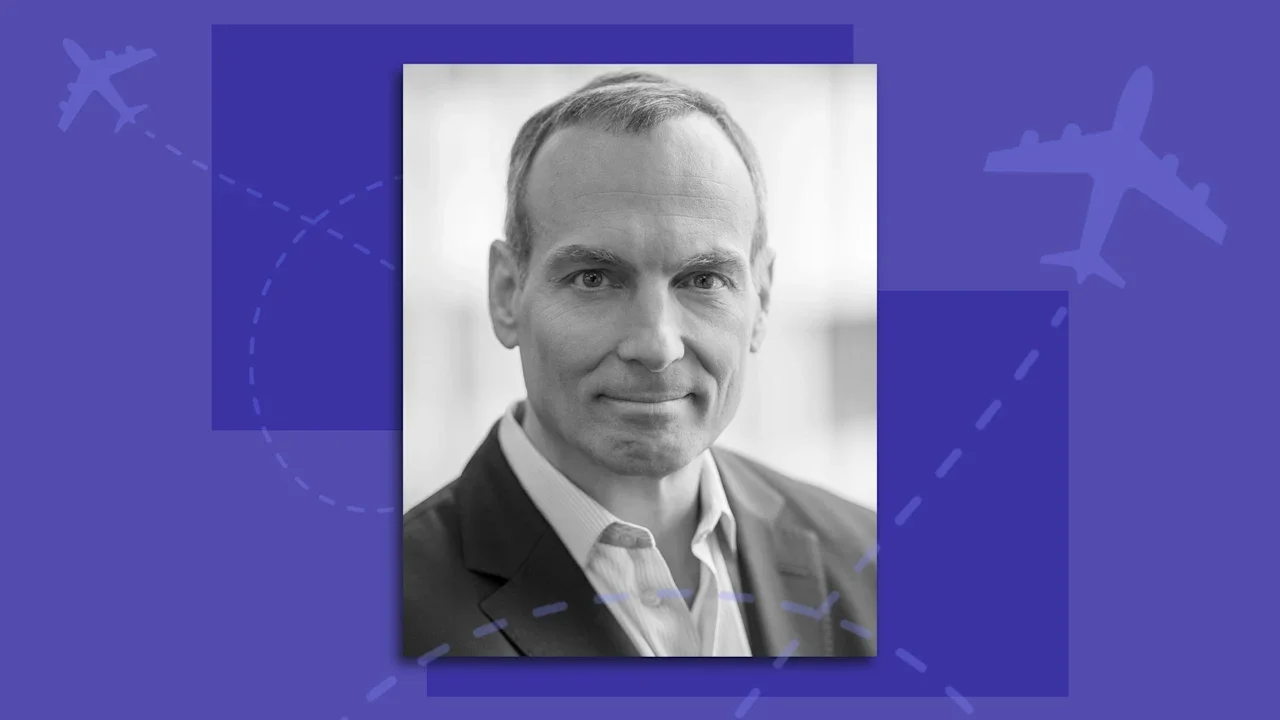
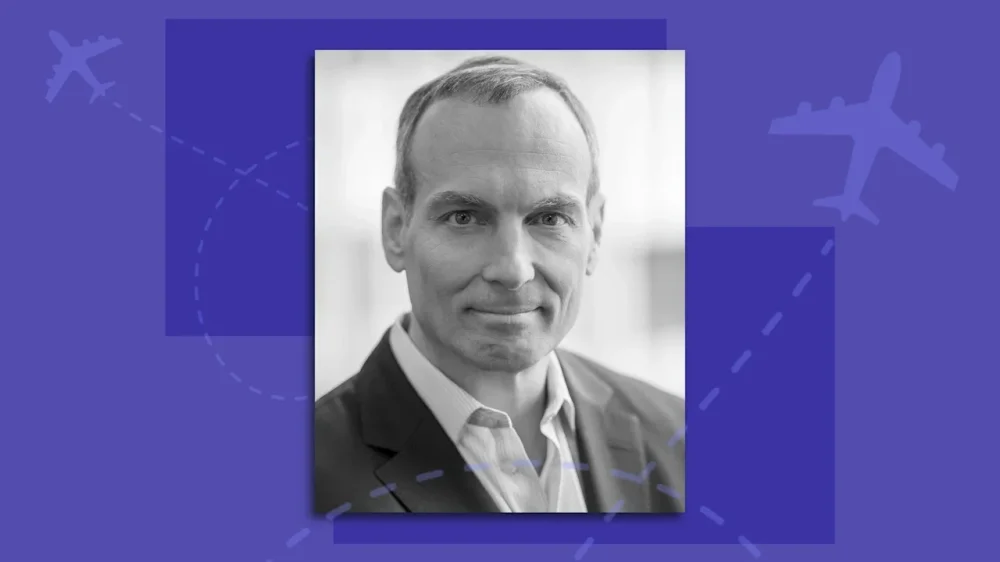
Hello and welcome to Modern CEO! I’m Stephanie Mehta, CEO and chief content officer of Mansueto Ventures. Each week this newsletter explores inclusive approaches to leadership drawn from conversations with executives and entrepreneurs, and from the pages of Inc. and Fast Company. If you received this newsletter from a friend, you can sign up to get it yourself every Monday morning. Glenn Fogel joined dot-com darling Priceline in early 2000, a year after the “name your price” travel site’s blockbuster initial public offering (IPO). “I joined one week before the Nasdaq peaked,” Fogel recalls. Within a year of his arrival, the stock had cratered to $6 a share. By March 2002, the Nasdaq, a proxy for the burgeoning e-commerce and tech infrastructure companies that went public, plunged 77% from its March 2020 highs. Quips Fogel: “At the time, my mother was wondering whether I still had a job.” Today, Fogel is CEO and president of Booking Holdings—parent of Priceline, KAYAK, Booking.com, OpenTable, and other brands. His experience navigating the dotcom bubble (more on that in a moment) affords a compelling perch from which to observe the current generative artificial intelligence (gen AI) boom. He sees parallels in the gold-rush mentality of both booms: “There’s lots of investments, lots of new companies,” he says. “Many of them will not make it. Many investors will lose money.” Corporate investment in AI reached $252.3 billion, and private investment in gen AI reached $33.9 billion in 2024, according to data compiled by the Stanford Institute for Human-Centered artificial intelligence. The key difference between the dotcom bubble and now? “I would say in terms of the possibility for human society, I think the possible transformations from gen AI are so much greater than what was possible from the [startups of] the nineties,” he says. Fogel points to breakthroughs like Google’s AlphaFold model, which decoded protein folding and could accelerate drug discovery. “Every area really of our society can be greatly improved by using gen AI,” he says. “That’s the thing that’s so exciting.” Happy travelers In travel, the stakes may not be as high, but the impact on daily life could be profound. “Maybe we’re not going to save a lot of lives the way that the healthcare industry is going to be able to do, but maybe we’ll make the experience much happier,” he says. Indeed, the company is already deploying AI to reduce customer-service wait times, using gen AI chatbots that can solve problems instantly. When a human agent does handle a call, the bots generate conversation summaries and next steps—work that previously consumed significant amounts of agent time. Embracing emerging technology has been key to Booking Holdings’s longevity. When predecessor company Priceline Group bought Booking.com in 2005, it acquired Booking’s prowess in leveraging Google’s paid search and platforms that enabled the business to rapidly test messaging to optimize conversion rates. The company subsequently bought travel search engine KAYAK in 2013 and restaurant reservation platform OpenTable in 2014. Priceline Group changed its name to Booking Holdings in 2018. The long view Travel itself is currently experiencing a boom. Despite economic uncertainty, U.S. consumers, especially those at the high-end of the market, are prioritizing travel, with airlines and hotels indicating strong demand for premium products. Indeed, at the end of October, Booking Holdings reported better-than-expected third-quarter earnings and said it continues to see “steady travel demand trends” in the current quarter. Having led Booking Holdings through the dotcom boom and bust—as well as the COVID-19 pandemic, which led to a near complete shutdown of travel—Fogel acknowledges that nothing goes up forever. “I don’t know when those bad times are going to come, but they’re going to come sometimes,” he says. Still, he takes the long view: “I do know, in the long run, travel is always going to increase. It is human nature . . . people wanting to travel.” This time it’s different? Do you agree that the societal benefits of gen AI companies and technologies dwarf the contributions of the dotcoms? If so, what breakthroughs excite you most? Send your examples to me at stephaniemehta@mansueto.com. I’d love to share your scenarios in a future newsletter. Read more: bubble theories Why the AI-fueled stock market isn’t a bubble waiting to pop There isn’t an AI bubble. There are three Are we in an AI bubble? View the full article
-
Why are some jobs better than others? Well, it largely depends on people’s preferences. In other words, one person’s dream job may be another person’s nightmare. And yet, there are also clearly some universal or at least generalizable parameters that make most people accept the idea that some jobs are objectively better than others — or at least seen by most as generally preferable. Pay and purpose For example, jobs that pay well, offer stability, and provide opportunities for growth are almost universally considered better. A tenured professorship, a senior engineering role at a reputable company, or a stable medical position all combine financial security with long-term prospects and prestige. In contrast, poorly paid, insecure, or dead-end roles (like gig work with no benefits or exploitative manual labor with long brutal shifts and an alienating experience) are widely viewed as worse, even if a few individuals might value their flexibility or simplicity. Then there’s autonomy. Jobs that grant people a degree of control over how and when they work (e.g., creative professionals, entrepreneurs, and researchers) tend to score higher on satisfaction than those defined by micromanagement or rigid supervision. Autonomy is a proxy for trust and respect, and it correlates strongly with both engagement and mental health. Few people dream of jobs where every move is monitored, and most aspire to roles where they can think, decide, and act freely. Unsurprisingly, purpose matters, too. Occupations that contribute to something meaningful (whether saving lives, advancing knowledge, or building something lasting) are viewed as more fulfilling than those that feel transactional or pointless. A teacher inspiring students, a scientist developing a vaccine, or an architect designing a community space are all examples of work that confers a sense of legacy. By contrast, even lucrative jobs can feel hollow when they lack purpose or moral value. This may explain the low correlation between pay and job satisfaction, which highlights the fact that we tend to overestimate the importance of compensation when making career choices. In that sense, the “best” jobs aren’t just about rewards, but about how they make people feel about themselves and their place in the world. What the science says A good way to acknowledge these nuances, and yet still predict whether a person is likely to access better jobs, is to examine why some individuals have more choices than others. That is, in any job or labor market, available job or career opportunities may have different degrees of appeal or attractiveness; but from a job-seekers perspective, the more employable you are, the more likely to are to find and maintain a desirable job – whether we look at subjective or objective dimensions of desirability. With this in mind, here are some critical learnings about the science of employability that explain why certain people are better able to access in-demand jobs: (1) Their personality Research has consistently shown that employability is largely a function of personality. Traits such as conscientiousness, emotional stability, curiosity, and sociability predict not only who gets hired, but also who thrives once employed. Personality shapes reputation (the way others see us) and reputation determines whether we are trusted, promoted, and retained. For instance, people who are reliable, calm under pressure, and open to learning tend to be more employable than those who are erratic, avoid feedback, or difficult to work with. Moreover, personality also predicts job satisfaction: even in objectively good jobs, neurotic or disagreeable people are less likely to feel content, whereas optimistic and adaptable individuals find meaning in a wider range of roles, and are resilient if not satisfied even with jobs that make most people miserable. In short, who you are determines both the jobs you can get and how you feel about them once you do. (2) Their social class While most advanced economies like to think of themselves as meritocracies, the data on social mobility suggest otherwise. In the United States, only about half of children born to parents in the bottom income quintile will ever move up the ladder, and just 7% will reach the top quintile. In the UK, the “class pay gap” between working-class and professional backgrounds persists even among graduates. Privilege still buys access to education, networks, internships, and employers willing to take a chance. Sociologists call this social capital; in plain terms, it means your parents’ contacts and credentials still matter more than your own potential. The world may be trending toward meritocracy, but it hasn’t quite arrived there yet. (3) Where you are born Location remains one of the most powerful predictors of career outcomes. The “Where-to-Be-Born Index” ranks countries by the opportunities they afford their citizens, and being born in Switzerland, Denmark, or Singapore gives you exponentially better odds of landing a good job than being born in Haiti, South Sudan, or Bhutan. Access to education, infrastructure, technology, and basic security all shape employability. The same talent, if born in a country with weak institutions or unstable governance, is far less likely to achieve its potential. In that sense, geography is more likely than talent to mean destiny, at least until global mobility or remote work meaningfully narrow the gap. (4) Their values, interests, and preferences Even within similar contexts, people differ in what they want from work. Psychologists like Shalom Schwartz and Robert Hogan have shown that our motivational values (e.g., achievement, power, altruism, security, stimulation, and so forth) determine what “fit” looks like for us. Someone who values adventure and creativity will flourish in start-ups or design roles, while a person who craves structure and predictability may prefer government or finance. Misalignment between values and job environment (say, a highly independent person in a bureaucratic culture) leads to burnout or disengagement. The better your job matches your values, the more likely you are to perceive it as a good one. Adapt, evolve, and improve In the end, “better jobs” are not just better paid or better designed; they’re better matched to the people who hold them. Some of this is luck: being born in the right family, in the right country, with the right temperament, will simply afford you a higher range and choice of matches, so you are bound to find more options. But much of it also depends on deliberate self-awareness, namely understanding what kind of environments bring out the best in you, and aligning your career moves accordingly. From a societal perspective, the goal should be to expand access to good jobs by improving education, reducing inequality, and helping people develop the skills and traits that make them employable. That means focusing less on pedigree and more on potential, less on connections and more on competence. Ultimately, the world of work will never be perfectly fair, but it can be fairer. And while none of us can control where we start, we can control how we grow. The most employable people are not just those who fit the system, but those who learn to adapt, evolve, and turn whatever job they have into something better. View the full article

-
Below, Gene Ludwig shares five key insights from his new book, The Mismeasurement of America: How Outdated Government Statistics Mask the Economic Struggle of Everyday Americans. Gene is the former Comptroller of the Currency and founder of the Ludwig Institute for Shared Economic Prosperity (LISEP), a nonprofit dedicated to uncovering the truths that official statistics too often obscure. His writing has appeared in The New York Times, The Wall Street Journal, The Atlantic, Politico, The Financial Times, and TIME. What’s the big idea? Americans keep hearing that the economy is strong. Unemployment is low. Wages are rising. Growth is steady. But for millions of families, those headlines feel like a cruel joke. The cost of rent, groceries, and healthcare keep climbing while steady, well-paid work remains out of reach. The disconnect isn’t just perception—it’s baked into the way we measure economic success. Listen to the audio version of this Book Bite—read by Gene himself—below, or in the Next Big Idea App. 1. We are at an economic tipping point Throughout history, when governments fail to fully appreciate the realities faced by their people, it leads to crisis. The United States may be on the brink of such economic and societal unrest. The unrest that led to the French Revolution and the economic imbalances preceding the Great Depression are both cases in point. In the late eighteenth century, the oppressive economic situation facing the French people went unacknowledged by the royal family for decades. The French ruling class considered the truth about the nation’s fiscal crisis to be nefarious—a threat to their power. Marie Antoinette, when told the peasants had no bread, replied, “Let them eat cake!” Whether or not the remark is literal or legend, it captures the ruling class’s indifference. Soon after, the Revolution erupted, bringing turmoil and suffering to French citizens of every rank and station. The same narrative arc applied a century and a half later when the Great Depression loomed. In both instances, economic data that could have set off alarm bells was available—more accurate figures that would have revealed the risks emerging—and this perspective might have prompted action that could have softened the blow, if not avoided the crises altogether. But the data was either confusing, confounded with other contrary data, or affirmatively hidden. The effects were catastrophic. 2. A quarter of Americans are functionally unemployed The unemployment statistics our government releases monthly are misleading. If someone is looking for full-time employment but finds nothing except a single hour of work in a week, they are considered “employed” in the eyes of the government. For purposes of official government statistics, this one-hour employee is in the same category as someone secure in a full-time job. This logic extends to wages. Someone who works full- or part-time for a salary that falls below the poverty line (around $25,000 a year for a three-person household) is classified the same way as someone earning $1 million every month. “The United States may be on the brink of such economic and societal unrest.” LISEP’s research team and I consider anyone in the previous two situations to be functionally unemployed. The government’s most recent unemployment rate is 4.3 percent, but our research finds that 24.7 percent of American workers are functionally unemployed. 3. Pay statistics ignore part-time and unemployed job seekers The government reports on “median wages” every quarter. The idea behind their metric is simple and straightforward: If you line up all full-time employees in order of their weekly earnings, the person directly in the middle earns the median wage. But this statistic only considers the wages of people who are currently employed full-time, overlooking millions of part-time workers and unemployed job seekers. So, the moment a low-wage factory worker receives a pink slip, her salary is deleted from the sample altogether. The moment a farm worker’s seasonal employment ends, his salary is similarly deleted. What this means is the official earnings measure shows an overstated wage that doesn’t reflect the reality for many low- and middle-income Americans. It can even appear to improve during economic downturns because low-wage workers are disproportionately affected by layoffs. When the economy went into near freefall during the early months of the COVID-19 pandemic, government-reported median earnings rose seven percent. During that same period, the percentage of functionally unemployed Americans rose from 25.7 percent to 32.8 percent. 4. Yes, your groceries are more expensive When people talk about inflation, they’re usually referring to changes in the Consumer Price Index, or CPI. The CPI tracks the prices of some 80,000 goods and services, from apples to apartments, baby formula to boats, and much more. The idea is that it gives us a single figure to measure the changing cost of a basket of all consumer products. “CPI obscures the true cost of living for working-class Americans.” This basket is so wide-ranging that it doesn’t reflect how “ordinary” consumers experience cost-of-living changes, as most Americans are not buying 80,000 things. If the costs of second homes tripled while everything else in the basket stayed flat, the average American household wouldn’t feel a thing—the price hike would get averaged in, but it wouldn’t impact their life. But the opposite is true. Over the past two decades, the price of jewelry has risen by about 39 percent, while essential goods like bread are up by 112 percent and ground beef by 155 percent. When these items are measured alongside each other in the CPI, the relative stability of luxury items masks the inflation faced by Americans of more modest means. From 2001 to 2023, the CPI points to a 72 percent rise in living costs, yet our analysis of essential expenses—housing, food, transportation, healthcare, and other basics—shows those costs climbed 97 percent. CPI obscures the true cost of living for working-class Americans. 5. We need better statistics The headline statistics we currently employ to understand America’s economy are profoundly misleading and, unfortunately, drive policy. The CPI is pivotal in determining Social Security Benefits, as well as who qualifies for the Supplemental Nutrition Assistance Program, Head Start, and Pell Grants. At least twelve states and Washington, D.C., used the CPI to determine minimum wage. Our failure to produce statistics that accurately reflect the nation’s economic reality makes it much harder to shape highly effective policy responses—and harder to identify the tipping point of economic and social unrest. Simply put, when you aim at the wrong target, you miss. “Human nature favors expeditious, rosy analysis rather than the rigor required to glean accuracy.” Flaws in widely accepted economic statistics impede important decision-making. In many cases, those who accept economic misrepresentations do so for benign reasons: The data is too difficult to collect with sufficient regularity or precision, or the samples aren’t sufficiently comprehensive. Human nature favors expeditious, rosy analysis rather than the rigor required to glean accuracy, particularly when accurate numbers may be gloomy. At LISEP, we’ve developed alternatives to these imperfect statistics. Our True Rate of Unemployment metric includes the functionally unemployed, and our True Weekly Earnings measure includes the entire workforce. Our True Living Cost index narrows the basket of indexed consumer goods to those truly essential to the average American, while our Minimal Quality of Life index measures what it costs to not just get by but to actually have an opportunity to climb the economic ladder. Finally, our Shared Economic Prosperity measure tracks how the country’s economic growth translates into opportunity for all. For decades, policymakers and leaders have judged success or failure by distorted standards, and ordinary Americans have paid the price. Unless we change the headline statistics to reflect the reality Americans actually feel, we will keep steering down the wrong paths. Enjoy our full library of Book Bites—read by the authors!—in the Next Big Idea App. This article originally appeared in Next Big Idea Club magazine and is reprinted with permission. View the full article
-
With more than 100,000 artifacts dating back thousands of years, nearly 900,000 square feet of floor space, a site that spans more than 120 acres, and a total price tag estimated to be more than $1 billion, it’s not hyperbole to call the Grand Egyptian Museum outside Cairo, Egypt, the most significant museum project in recent decades. It’s the kind of blockbuster building that would have even the starriest of starchitects salivating at the chance to lay claim to what’s likely become one of Egypt’s most visited tourist attractions. So, in hindsight, it’s a bit unexpected that the architecture firm that won the museum’s international design competition way back in 2002 was a little-known office from Ireland with no completed projects to its name and only three people on staff. Dublin-based Heneghan Peng Architects was virtually unknown when its concept was chosen, unanimously, out of more than 1,500 submissions as the winning design. “We hadn’t built any buildings,” says Róisín Heneghan, the firm’s cofounder. “We had one project just starting on site when we won the competition.” A lot has changed since then. The museum had an initial target opening date set for 2007, but several delays caused by the global financial crisis, the Arab Spring, and the COVID pandemic kept stretching the timeline. Heneghan Peng Architects’ design is now fully built and, as of November 1, open to the public. Thousands of years of history The Grand Egyptian Museum’s design is a sprawling spread of airplane hangar-sized concourses, sculpted landscapes, conservation workshops, and a network of underground storage facilities. The museum building itself is a cavernous space with 12 main galleries and direct views of the pyramids of Giza. A vast entrance hall sits under a tall sawtooth roof that doubles as an open-air pavilion, shading a ticketing area accented by a 30-foot-tall statue of Ramses II that’s more than 3,000 years old. On the facade, throughout the landscape, and even within the building’s structure, pyramid shapes abound. Central to the design, according to Heneghan, is not so much the main building but the placement of the museum itself. “People were saying to us, ugh, you Westerners, you all are so fascinated by the desert, but Egypt is about the Nile,” she says. That led the architects to think first about how the museum should fit into that dichotomy. With a site selected near the famous pyramids in Giza, just on the fringe of Cairo’s urban footprint, it was clear that the museum would sit in the middle space between the desert and the Nile valley, a space that has been carved away by millennia of river flow. “There’s a 50-meter difference in level between one side of the site and the other, because that’s where the desert and the Nile met,” Heneghan says. “When you’re coming out of the city, you see the pyramids on the plateau. So what we decided was that the museum should never go above the plateau level, but that it should exist between the plateau and the Nile Valley.” Despite grand ceilings capable of holding towering statues, the building sits low to the ground, with a fair amount of its bulk sunk into the landscape. The design of the Grand Egyptian Museum utilizes large walkways and views within the museum to give visitors a zoomed-out experience of the sprawling history represented in the galleries. The first part of the museum visitors see after they enter is a long staircase bordered by thousands of artifacts, sarcophagi, and statuary that tracks the entire 4,000 year span of Egypt’s pharaonic history. It’s a walking crash course for the mostly international visitors to the museum before reaching the top where more discrete sections of Egypt’s ancient history are explored in more depth. Its main galleries cover themes like kings and queens, religious belief systems, and ancient Egyptian society, and the museum features an extensive collection of artifacts from the tomb of King Tutankhamun. The museum’s layout allows each of these galleries to stand on its own, but with visual connections to the others in order to tie them into a broader arc of history. “The galleries are themed, but at the same time from different points you can see across, so you can make connections across the whole timescale,” Heneghan says. “That helped organize it. If we had tried to make it human-scaled, I think we would have found it more difficult.” A engineering feat The architects also had to grapple with the realities of designing such a massive structure in the desert heat of Egypt. Partly out of consideration for the operational costs of running such a space, they designed the galleries to pull in daylight from lateral angles that’s dappled through metal shading structures and overhangs. This approach also works with the collections on display. “It’s quite a lot of stone,” Heneghan says. “And stone works well with natural daylight.” To handle the sheer weight of the statues on display, the building has incredibly thick concrete floors, which also serve to regulate the building’s climate, absorbing the cool night temperatures and slowly releasing it during the heat of the day. “What we were trying to do is make a really heavy structure, like a church,” Heneghan says. Though Heneghan Peng Architects are the design architects of the Grand Egyptian Museum, they had plenty of help bringing the concept to fruition. Even at the competition stage, once they were named one of several finalists, they called in extra assistance from the engineering firms Arup and Buro Happold. Cairo-based Raafat Miller Consulting is credited alongside Heneghan Peng Architects as the project’s architect. Given the many delays that have hampered the project, Heneghan says her firm has essentially had very little to do with the design since it was largely finalized around 2009. “Once it went into construction, we weren’t really involved,” she says. The project has evolved since then, with new structural, technological, and material changes that have necessarily altered the overall design. Heneghan says the facade of the building is a departure from a more reserved approach in the initial design, but she accepts that some tweaks were inevitable. “You know, 16 years is a really long time,” she says. But there are also parts of the final museum that were among the architect’s initial thinking about what this museum could be, way back in 2002. Heneghan seems gratified that certain major elements like the grand staircase leading up to the main galleries and the direct views of the pyramids made it through after all these years. “Some things are very much what was envisaged,” she says. View the full article

-
Across the streaming world, companies have been focused on adding features that make their top-tier subscriptions more valuable to the users who consume their content. Anime streamer Crunchyroll recently added access to a library of digital manga for top-paying customers. Spotify—somewhat belatedly—has begun offering high-quality audio for its Premium subscribers. SoundCloud is taking a different approach. It operates a standard streaming platform, with 100 million licensed tracks. But SoundCloud also has an enviable base of creators—musicians, DJs, podcasters, and more—who have uploaded 300 million tracks on the service to reach fans and make money from their streams. Now, it’s rolling out a revamped subscription that overdelivers for these artists, giving them more opportunities to get their music in front of fans who might eventually buy an album or piece of artist merchandise as streaming remains a foot in the door to real earnings. SoundCloud’s new offering enables subscribers to both of its tiers—Artist and Artist Pro—to distribute the music they have on SoundCloud to other streaming services, with SoundCloud passing 100% of those earnings on to artists. With this update, SoundCloud will no longer take a 20% cut of royalties it pays for streams, passing 100% to artists. SoundCloud also now allows artists to receive direct support from fans. With the new features, the price of its Artist and Artist Pro subscriptions—$39 and $99 a year, respectively—are unchanged. It’s a move that acknowledges that even if streaming isn’t where artists earn the lion’s share of their money, they still need to reach as many people as possible—and SoundCloud doing that helps save them money. “If you’re an artist who’s got to get your music distributed and you’re on the social platforms trying to build up a following and you’re paying for a whole host of things in the value chain, those subscriptions start to really add up,” says Eliah Seton, CEO of SoundCloud. “What we’re trying to do is be this all-in-one bundle that gets you a lot of value and you can start to put away some of those other subscriptions.” Seton knows the music industry—before joining SoundCloud in 2021, he spent more than a decade at Warner Music Group, including a stint leading its distribution and label services arm ADA. He understands the importance of getting artists in front of as many fans as possible. That’s why he’s betting that making distribution widely accessible for the first time will strengthen SoundCloud’s ability to not just attract new artists, but keep them on the platform as their stars rise by connecting them with the platform’s highly engaged listeners. “Historically we’ve been able to distribute for artists, but that was oriented more toward a bespoke, white-glove, traditional artist services relationship,” Seton says. “This is a much more scalable solution for at-scale artists, and making it a feature of our paid subscription is a key element of the value proposition.” SoundCloud’s two-sided Marketplace In the streaming world, Soundcloud—founded in 2007—has long been an anomaly. “It’s one of the only—if not the only—streaming platforms that truly has a two-sided marketplace,” says Tatiana Cirisiano, VP of music strategy at entertainment data and insights firm MIDia. Seton sees making distribution a standard part of SoundCloud’s artist subscriptions as a way to add value for those users. The service’s $39 a year Artist tier now includes the ability to distribute and monetize two tracks a month, while its $99 a year Artist Pro subscription allows artists to distribute unlimited tracks to other streaming services. The move reflects a larger industry shift: Record labels are losing their monopoly on distribution as artist-focused platforms offer alternative ways to reach listeners. Cirisano points to TikTok’s SoundOn distribution service, which puts artists’ songs on streaming platforms and helps promote them in the video app. SoundCloud’s effort, she says, is “the latest indication that distribution for the music industry has become this table stakes feature” for platforms serving artists. Seton sees SoundCloud’s new distribution tools as critical for keeping artists on his platform. SoundCloud doesn’t have any problem attracting up-and-coming artists—Seton says 40,000 users upload their first track to SoundCloud every week. But when they reach a certain level and want to reach more listeners, they often opt to spend their money with pure-play distribution companies. Now they can use SoundCloud to monetize their music as they grow. New ways to connect with fans SoundCloud also added the ability for fans to directly support an artist—paying them up to $1,000—via their the artist’s SoundCloud profile. The platform takes zero commission on these payments. Cirsiano sees it as a small but potentially meaningful option, similar to what Patreon has long offered creators and artists. “I wouldn’t call it a game-changer in how artists are monetizing because I think there’s a lot of cultural hurdles to adoption,” Cirisano says. “It differs strongly by fanbase and artist. It’s all about how people perceive it and what it means to them to send money directly to an artist.” The fan support feature comes on the heels of other SoundCloud tools for fan engagement. Since 2023, SoundCloud’s AI-powered First Fans helps deliver new music to users likely to enjoy. This year, it has added services for its artist users, including a partnership with vinyl presser ElasticStage to offer on-demand record pressing. It also introduced a merch store that allows artists to keep 100% of their sales. The on-demand vinyl feature, launched in July, currently has a waiting list of artists who want to use the service. Cirisano says these efforts could change the perception that SoundCloud is largely for early-stage artists who will move to other services once they break through. (Billie Eilish famously uploaded her early recordings and connected with fans via SoundCloud.) “These opportunities allow artists to grow with the platform,” she says. As the broader music industry focuses on monetizing superfans—highly engaged listeners who are happy to shell out for vinyl and merch—Seton says SoundCloud has those in droves. He notes that 50% of SoundCloud listeners are listening to new music, looking for their next favorite artist, as opposed to 15% on other music streaming platforms. “The future is going to be defined by the monetization of the relationship between artists and fans,” he says. “Rather than going outside the ecosystem to pay a different subscription where you don’t ultimately control access to your audience, we can scratch that itch for you as part of our own subscription.” View the full article