Newsletter
Want to keep up to date with all our latest news and information?


ResidentialBusiness
Administrators
-
Joined
-
Last visited
Everything posted by ResidentialBusiness
-
Tech giant reports record annual profits as smartphone sales and services income pick upView the full article
-
I’ve been using Fitbit’s revamped app, currently in “public preview” mode for adult Android users in the United States. While I like the simplified aesthetic, its functionality seems to center around the questionable AI that gave me so many wrong and confusing answers. Let me take you on a tour of where the new app has improved, where it’s falling short, and what’s still missing. Better: cardio load and key metrics are easy to readThe top few metrics on the home screen have always been configurable, but I find the new version is even more readable than the old one. You get three “focus metrics” on the right hand side, and a big donut shape giving your progress toward your cardio load. Fitbit's current app is on the left; the updated preview version is on the right. Credit: Beth Skwarecki/Fitbit Measuring cardio load as progress toward a weekly goal is a welcome change; previously, cardio load was a daily measure that often didn’t correspond to reality. There’s a downside to the new view, though: in the old version of the app, you could turn off the recommendations or hide them. In this version, there’s no way I could find to remove that metric from the top of your screen. Better: separate tabs for fitness, sleep, and health What you see on the Fitness, Sleep, and Health tabs. Credit: Beth Skwarecki/Fitbit Finding any specific data in the old Fitbit app always meant scrolling through a CVS receipt-length list of things you weren’t looking for. Items tended to be grouped, which helped a little, but ultimately some things need more space than the little card they were stuffed into. You couldn’t find your recent workouts without guessing on which tile to tap—turns out it’s Exercise Days (but not Cardio Load or Active Zone Minutes). But now, you just tap on the Fitness icon at the bottom, and there everything is! My exercise days and weekly cardio are there, then a listing of upcoming workouts, and then my recent activities. I can log a manual activity right from this screen. Perfect. (The button doesn’t seem to be working right now, but hey, it’s a beta. I can appreciate the idea.) Same goes for the Sleep tab. Right up top there’s a trend insight (“Your steps linked [sic] to better sleep quality”) and then I get my graph of sleep stages, and a list of “key metrics” like when I went to bed and how much time in bed was spent awake. The Health tab gives my vitals, like my resting heart rate and HRV. If I scroll down, I can set up alerts, update my profile, and the “coach notes” that the AI has written down about me. For example, I see “wants low reps and heavy weights” and “hates lunges.” Worse: glitches galoreI know it’s a beta, but things seem really rough. My workout from two days ago is listed as “upcoming,” and the app crashes when I try to mark it as completed. The old Fitbit app says that my high and low heart rate notifications are “on & checking” but the new app says I still need to set them up. Some of the AI conversations fail to load at all. When they do, often the bot tells me it doesn’t have access to the information I’m asking about, or it says that “internally” it sees something different than what I’m seeing in the main screens of the app. The team has a lot to fix before these features are ready for widespread use. Worse: structured data views are replaced with AI conversationsHumans invented graphs, charts, and other means of data presentation because these are easy to scan and interpret at a glance. The new Fitbit app can generate some charts (great!) but tends to present these as little cards to illustrate insights from the AI bot. To see more data, you’d think you could tap on a button or card about a recent run to get your lap times, running dynamics, and other information. But that doesn’t seem to be an option. Instead, I get a “continue conversation” button that seems to want to feed a screenshot of the AI output back into the AI bot. I’ve already written about some of the problems I’ve had conversing with the AI bot, so I won’t rehash those issues here. (It hallucinates in ways that are sometimes hilarious and often frustrating.) But even if the AI was as intelligent as it’s supposed to be, this would still be a major issue. The AI responses are slow, and I can’t always get the bot to give a straight answer to my questions. In short, it seems like the app’s designers said “we’ll have the AI handle it” anytime they weren’t sure how to build a feature. So the app feels like a mere wrapper around the bot, and the bot is just not the right tool for all those jobs. Missing: nutrition, menstrual health, and moreGoogle says that it hasn’t ported all the Fitbit app’s features to the new preview. When I asked about these limitations by email, the response I got was that “As a preview, the service is not yet feature-complete and lacks several functionalities to focus testing on the core AI coaching experience.” A full list of missing features is available from this Fitbit forum post. They include: Nutrition tracking Hydration tracking Menstrual health Community features Badges Social media sharing Heart rate zone analysis for workouts Running analytics for Pixel Watch 3 and 4 users (other devices don’t provide this data) Syncing data from Aria Air smart scales The post also notes that the AI coach treats certain subjects as off-limits for the moment, including those related to weight, body fat, running distance, and heart health measurements like ECG and irregular rhythm notifications. View the full article
-
The tech giant provided context around Flagstar and Pennymac's moves, as it reported more Encompass and MSP clients and greater mortgage income. View the full article

-
We may earn a commission from links on this page. Deal pricing and availability subject to change after time of publication. The Tinymoose Pencil Pro Ultra is both an affordable accessory and a serious productivity tool, and it's currently on sale for $39.95 on StackSocial. It costs less than a third of what Apple charges for its stylus, and it works with an Android device thanks to its Smart Switch button on the top. A single press lets you jump from sketching on an iPad Pro to jotting notes on a Galaxy Tab without digging through settings. That makes it more flexible than most one-platform pens, especially for students or professionals who don’t want to carry two separate styluses. It also works on phones in dual mode, which could be handy if you like editing photos on your Android but use your iPad for work. In use, the Pencil Pro Ultra does a lot right. Tilt sensitivity and palm rejection give you smooth shading and writing, at least on supported tablets, while zero-lag precision keeps lines from wobbling behind your strokes. Bluetooth gestures add a layer of convenience: one press takes you home, two pulls up multitasking, and a long press powers it on or off. As for the battery life, it holds its own with 10 hours of productivity, and supports fast charging via USB-C. There are trade-offs, though. Palm rejection and tilt features only work in tablet mode, which means the experience is more basic when you’re on a phone. The magnetic attachment also doesn’t work outside of Apple’s tablets, so Android users will need to keep the included leather case handy. And while it’s backed by a six-month warranty, that’s shorter than what you get from bigger brands. Still, with three extra nibs, a carrying case, and cross-platform support baked in, it’s a compelling option for anyone who doesn’t want to lock into one ecosystem. If you’re a casual creator, note-taker, or multitasker who wants a stylus without splurging, this deal is worth considering. View the full article
-
Two prominent Republicans on Capitol Hill want the Supreme Court to allow a lawsuit to proceed against tech giant Cisco over allegations that the company’s technology was used to persecute members of the Falun Gong religious sect in China. In a Wednesday letter to the The President administration’s top Supreme Court litigator, D. John Sauer, Reps. Chris Smith of New Jersey and John Moolenaar of Michigan urged the administration to side with the Falun Gong plaintiffs and press the court to allow the lawsuit to go to trial. Smith co-chairs the Congressional-Executive Commission on China, while Moolenaar is the chairman of a special China committee set up in the House of Representatives — and both are prominent critics of Beijing’s human rights record. The letter cited an AP investigation last month that showed American tech companies to a large degree designed and built China’s surveillance state, saying it “underscore(s) the need to deter American firms from supplying technology to facilitate the CCP’s human rights abuses.” The decision ultimately rests with the Supreme Court whether to hear the challenge brought by Cisco arguing that U.S. law does not permit such a suit. But as part of considering the case the court sought the views of the solicitor general, who represents the U.S. government’s position in oral arguments and proceedings. The The President administration’s view on the case will also be of interest to the court because Cisco has argued that the case involves U.S. foreign relations and should be dismissed on those grounds. The solicitor general is expected to file a brief later this year or early next year. “The allegation that an American tech company custom-designed a tool to facilitate the violent persecution of a religious minority by the Chinese Communist Party (CCP) is a serious one,” the two lawmakers wrote in a letter to Sauer. “We believe the Plaintiffs deserve the chance to prove their claims.” “We have a longstanding commitment to uphold and respect human rights for all people and if the 2023 ruling of the Ninth Circuit Court stands, it opens the floodgates for suits against U.S. corporations merely for legal exports of off-the-shelf goods and services,” said a spokesperson for Cisco. The case has a long and winding history dating back more than a decade. In 2008, documents leaked to the press showed Cisco saw the “Golden Shield” as a sales opportunity, quoting a Chinese official calling the Falun Gong an “evil cult.” A Cisco presentation reviewed by AP from the same year said its products could identify over 90% of Falun Gong material on the web. Other presentations reviewed by AP show that Cisco represented Falun Gong material as a “threat” and built out a national information system to track Falun Gong believers. In 2011, Falun Gong members sued Cisco, alleging the company tailored technology for Beijing that they knew would be used to track, detain and torture believers. The issue before the Supreme Court is whether an American company can be held liable under two separate laws for aiding and abetting human rights violations. Cisco argues it isn’t liable under those laws, the Alien Tort Statute (ATS) or the Torture Victim Protection Act (TVPA), but a federal appeals court rejected the company’s arguments in 2023, allowing the case to continue. Now Cisco is asking the Supreme Court to throw out that ruling and stop the lawsuit. In recent years, the Supreme Court and presidential administrations of both parties have been skeptical of lawsuits seeking to use U.S. courts as a venue to seek justice over the acts of foreign governments, especially those that took place abroad. In the case of Cisco, the Falun Gong members have argued that a substantial portion of Cisco’s activities involving China took place in the United States. An AP investigation this week found that the U.S. government across five Republican and Democratic administrations repeatedly allowed and even actively helped American firms to sell technology to Chinese police and surveillance companies, even as activists warned such tools were being used to quash dissent, persecute religious sects and target minorities. Going into the long-heralded meeting Thursday between leaders Donald The President and Xi Jinping, the sale of U.S. technology to China has been among the thorniest issues the U.S. faces, with billions of dollars and the future of tech dominance at stake. The President said after the meeting that China will speak with Silicon Valley chipmaker Nvidia about purchasing their computer chips. Debate over the sale of technology to China has grown heated, with some arguing for a harder stance. American companies have pushed back against restrictions, arguing it will push China to develop its own domestic supply and strengthen its position in the global race for leadership in artificial intelligence. But many national security experts say selling such technology could assist China’s military and intelligence services. The plaintiffs’ lawyers make a similar case, citing Cisco marketing materials in China that promoted routers for use in tanks. If the Cisco suit is successful, it would signal that American companies can be held liable in some circumstances for abuse of their technologies overseas. —Dake Kang and Byron Tau, Associated Press AP writer Mark Sherman contributed to this report from Washington. View the full article

-
Stablecoins might not send your digital wallet to the moon, but the less speculative side of cryptocurrency is definitely enjoying its moment in the sun. According to a new report from Fortune, credit card stalwart Mastercard wants to make a massive bet on infrastructure that links digital currencies to the normal financial world. Mastercard is in advanced talks to buy the stablecoin startup Zerohash for between $1.5 and $2 billion, Fortune reports. Zerohash, founded in 2017, provides banking companies a toolkit for providing their own cryptocurrency and stablecoin products. If the deal goes through, it would represent a major investment in cryptocurrency infrastructure from a traditional banking company. When reached by Fast Company, Mastercard and Zerohash declined to comment. The report comes weeks after Mastercard was reportedly competing to buy BVNK, a startup that helps businesses integrate transactions using stablecoins, which are digital currencies pegged to the value of traditional currencies. According to the same report by Fortune, Coinbase made it further in those acquisition talks, hence Mastercard turning to Zerohash for a parallel deal. BVNK didn’t immediately respond to Fast Company’s request for comment. Crypto’s unsexy side Stablecoins serve as a bridge between the volatile world of cryptocurrencies, where massive price swings are the norm, and stable national currencies like the U.S. dollar. Because they aren’t really used for speculation or investment, stablecoins provide many of the perks promised by the crypto revolution like instant transactions and a digital ledger without the downside of assets that tend to spike and plunge. The less flashy side of crypto has come into the spotlight lately. Circle’s flashy IPO in June saw the stablecoin company’s share price almost triple overnight. Earlier this year, fintech giant Stripe bought the crypto payments platform Bridge, paying $1.1 billion to build out its own stablecoin infrastructure. Chase also recently announced its own stablecoin play, connecting its credit card rewards program with the stablecoin USDC through Coinbase. Mastercard has signaled its interest in crypto, and specifically stablecoins, previously. Over the summer, it joined the Global Dollar Network, a consortium of companies boosting stablecoin adoption, alongside Robinhood and other companies from the crypto side of things. In 2021, Mastercard acquired the crypto analytics company CipherTrace, though it later shuttered most of the products it obtained through the deal. Traditional financial giants aren’t the only ones getting in on the stablecoin frenzy. Walmart and Amazon are both exploring the possibility of issuing or otherwise leaning on stablecoins, according to a report from The Wall Street Journal. Enabling payments through stable cryptocurrencies could allow retail giants to duck the billions they pay in transaction fees – an existential threat to banks and credit card companies that make a sliver of every sale. Era of deregulation The explosion of stablecoin deals and soaring crypto values aren’t happening in a vacuum. The President’s second term has ushered in an era of dramatic deregulation in the U.S., and buzzy crypto startups and normie finance giants alike are racing to cash in. The president himself is pouring gasoline on the crypto wildfire, as his media company bets big on Bitcoin and his policies boost the The President family’s latest crypto venture – strokes of self dealing that would have been a historic scandal in any other presidency. If 2025’s spate of deals connecting the traditional finance world and stablecoin startups pans out, the least sexy side of cryptocurrency might have the most staying power – and an actual everyday use case beyond sending your bank account to the moon. View the full article

-
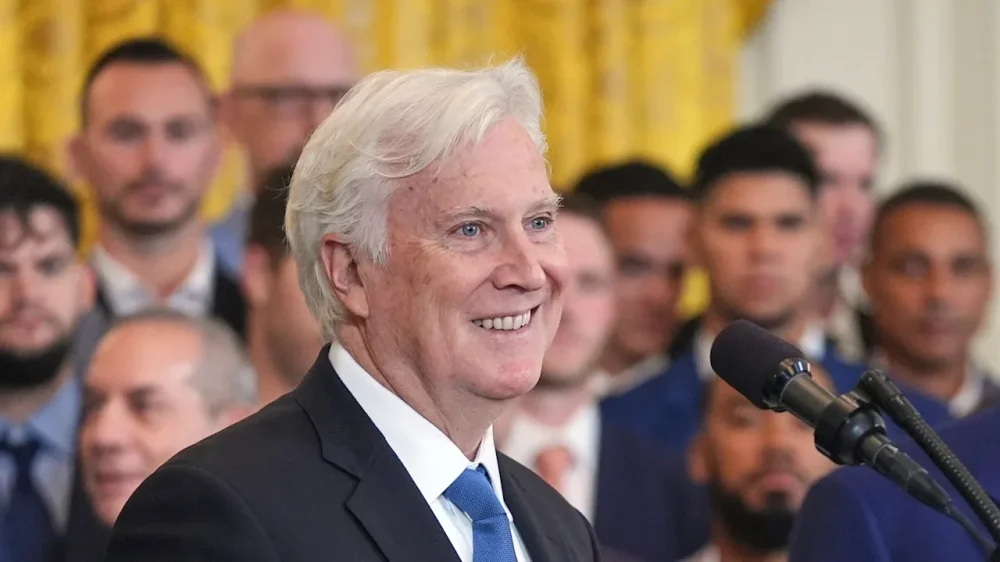
Mark Walter is the majority owner of the Los Angeles Lakers after the NBA Board of Governors approved his purchase of a controlling stake from the Buss family. The Lakers and the league confirmed the next step Thursday in a transaction that is expected to close shortly. The sale of the NBA’s most valuable franchise was initially announced in June. Jeanie Buss will remain the Lakers’ governor under the deal for at least the next five years, and she will oversee day-to-day operations “for the foreseeable future,” the team said. Her father, Jerry Buss, bought the Lakers in 1979. But the Lakers are now primarily owned by Walter, the billionaire whose TWG Global investment group owns the Los Angeles Dodgers and the WNBA’s Los Angeles Sparks. The group is also the majority owner of the new Cadillac Formula 1 team, which begins competition next year. The Lakers sale was completed with a franchise valuation of $10 billion, the highest ever set for a pro sports team. “The Los Angeles Lakers are one of the most iconic franchises in all of sports, defined by a history of excellence and the relentless pursuit of greatness,” Walter said in a statement. “Few teams carry the legacy and global influence of the Lakers, and it’s a privilege to work alongside Jeanie Buss as we maintain that excellence and set the standard for success in this new era, both on and off the court.” The Lakers have won 17 NBA championships and built a worldwide fan base through decades of consistent winning with many of the most famous players in basketball history, from George Mikan to LeBron James. Jerry Buss bought the Lakers, the NHL’s Los Angeles Kings and the Forum arena from Jack Kent Cooke for $67.5 million. “Over the past decade, I have come to know Mark well — first as a businessman, then as a friend, and now as a colleague,” Jeanie Buss said. “He has demonstrated time and time again his commitment to bringing championships to Los Angeles, and on behalf of Lakers fans everywhere, I am beyond excited about what our future has in store.” —Greg Beacham, AP sports writer View the full article
-
Here's a question you've probably never considered before: Would you buy a new iPhone if it didn't have any physical buttons? Sure, the part of the phone you interact with most is the touchscreen, so maybe it doesn't seem like such a big deal. But think about it: The side button, volume buttons, Action button, and Camera Control button would no longer click. Could you live without the clutter? While Apple sells no such iPhone, and likely won't release one next year, it very well might roll out a buttonless iPhone in 2027—at least, physically buttonless. That year will mark the 20th anniversary of the iPhone, and it'll come as no surprise that rumors suggest Apple is planning something special for the "iPhone 20." And that something might include ditching all the mechanical buttons and replacing them with haptics. A truly buttonless iPhoneIf you owned an iPhone 7 or iPhone 8, you'll understand the idea here. Those iPhones replaced the mechanical Home button with a solid state haptic button. Essentially, Apple used clever haptic vibrations to create the illusion of a button press, but, in fact, the "button" doesn't move at all. You'll realize this if the phone is completely off: The once pressable Home button doesn't actually do anything. It's the same case with any MacBook released over the past decade: Your trackpad isn't actually a button, so when the computer is off, the glass doesn't move. The suggestion that the iPhone 20 will replace all of its buttons with this type of tech comes from leaker Instant Digital, who has previously claimed Apple intend to build a button-free iPhone. In the past, Instant Digital only confirmed vague plans by Apple to create such a phone sometime in the future, but this week, the leaker was more definitive: In a post on Weibo, Instant Digital asserted that Apple has "completed functional verification" for these haptic buttons, and is planning for "mass production and application" with the iPhone 20. All of the buttons, from the Side button to the Camera Control buttons, would adopt this technology. Interestingly, Instant Digital claims Apple will bridge the gap by simplifying the structure of the Camera Control button in next year's iPhone 18. Apple might remove the capacitive sensing layer of the button and keep just the pressure sensitivity. We'll have to see whether other rumors confirm this. Would you buy a buttonless iPhone 20?The iPhone 20 unveil is nearly two years away, and all rumors should be taken with a grain of salt. Apple might have big plans in store for this iPhone, but haptic buttons might not have anything to do with them. But let's assume for the sake of argument that Apple does exactly what Instant Digital suggests. Would you buy it? This would be a fundamentally different experience from any other iPhone, or really, any other smartphone. Even if you once had an iPhone with a haptic Home button, you've always had physical buttons to control the volume, to call up Siri, or to shut down your device. Those experiences would feel different, and could be more difficult to use just by feel alone, unless Apple makes each "button" physically obvious. It also calls into question how one would perform any hardware tasks that currently require physical buttons. Once Apple removed the physical Home button, you couldn't use it to reset the iPhone, so Apple gave the volume button that job instead. But if all buttons aren't really buttons anymore, how would you reset the iPhone if the screen becomes unresponsive? Plug it into a computer? Take it to an Apple Store? Say a prayer? My guess is Apple will have a solution, but at the moment, it's not clear what it would be. Personally, I don't think the change would influence my buying decision one way or the other. I'm hopelessly stuck in Apple's ecosystem, so I'll likely upgrade whenever my current iPhone bites the dust. If my options at that point include an iPhone without buttons, so be it, but I wonder if other iPhone users feel the same. (Plenty of you are still mourning the loss of the headphone jack.) View the full article
-
U.S. lawmakers have tried four times since September last year to close what they called a glaring loophole: China is getting around export bans on the sale of powerful American AI chips by renting them through U.S. cloud services instead. But the proposals prompted a flurry of activity from more than 100 lobbyists from tech companies and their trade associations trying to weigh in, according to disclosure reports. The result: All four times, the proposal failed, including just last month. Following a long-heralded meeting between leaders Donald The President and Xi Jinping, the sale of U.S. technology to China remains among the thorniest issues the U.S. faces, with billions of dollars and the future of tech dominance at stake. But the tough talk about China obscures a deeper story: Even while warning about national security and human rights abuse, the U.S. government across five Republican and Democratic administrations has repeatedly allowed and even actively helped American firms to sell technology to Chinese police, government agencies, and surveillance companies, an Associated Press investigation has found. And time after time, despite bipartisan attempts, Congress has turned a blind eye to loopholes that allow China to work around its own rules, such as cloud services, third-party resellers, and holes in sanctions passed after the Tiananmen massacre. For example, despite U.S. export rules around advanced chips, China bought $20.7 billion worth of chipmaking equipment from U.S. companies in 2024 to bolster its homegrown industry, a report from a congressional committee this month warned. This reluctance to act reflects the tremendous wealth and power of the tech industry, which is more visible than ever under the The President administration. And in recent months, the president himself has struck grand deals with Silicon Valley firms that even more closely tie the U.S. economy to tech exports to China, giving taxpayers a direct stake in the profits for the first time. In August, The President announced a deal with chipmakers Nvidia and AMD to lift export controls on sales of advanced chips to China in exchange for a 15% cut of the revenue, despite concerns from national security experts that such chips will end up in the hands of Chinese military and intelligence services. The President said after Thursday’s meeting with Xi that China would follow up with Nvidia on the sales of chips but did not announce any resolution. The President also has announced that the U.S. government has taken a 10 percent stake in Intel worth around $11 billion. Longtime Chinese activist Zhou Fengsuo said the U.S. government is letting American companies set the agenda and ignoring how they help Beijing surveil and censor its own people. In 1989, Zhou was a student leader during the Tiananmen protests, where hundreds and possibly thousands were shot and killed by the Chinese government. Zhou was arrested and imprisoned. Now a U.S. citizen, Zhou testified before Congress in 2024, calling on Washington to investigate the involvement of American tech companies in Chinese surveillance. An AP investigation in September found that American companies to a large degree designed and built China’s surveillance state, playing a far greater role in enabling human rights abuses than previously known. “It’s driven by profit, and that’s why these strategic discussions have been silenced or delayed,” Zhou said. “I’m extremely disappointed. … this is a strategic failure by the United States.” Hundreds of millions in lobbying The sale of technology to China is contentious among both Republicans and Democrats, with some arguing for a harder stance. They are fighting a powerful opponent. An AP analysis of lobbying filings showed U.S. tech and telecom companies, as well as their trade associations, spent hundreds of millions of dollars over the past two decades on lobbyists who listed key bills impacting China-related trade on their quarterly disclosure reports, among other issues. Tech companies argue that further export restrictions will push China to develop its own domestic supply and strengthen its position in the global race for leadership in artificial intelligence. “Continuing to ban U.S. computing from commercial markets only benefits foreign competition and undercuts President The President’s efforts to create jobs, reduce the trade deficit, and grow the economy,” Nvidia said in a statement. Nvidia has also said that it does not make surveillance systems or software, does not work with police in China, and has not designed its H20 AI chip for police surveillance. Intel, which partnered with a Chinese fingerprinting company as recently as last year, has said the company follows export control policies, and did not address details of its deal with the U.S. government. “The U.S. government’s investment is a passive ownership, with no board representation, governance or information rights,” Intel said in a statement. AMD did not respond. The White House and the Commerce and State departments also did not respond to multiple requests for comment. The AP investigation was based on dozens of open record requests, hundreds of pages of congressional testimony, lobbying disclosures, and dozens of interviews with current and former Chinese and American executives, politicians, and former federal officials. Under the cloud services loophole, Chinese companies barred from accessing cutting-edge chips can use Microsoft Azure or Amazon Web Services overseas instead to train their AI models. Microsoft and AWS also both advertise the capacity to store video surveillance footage on their cloud services for Chinese customers. For example, SDIC Contech, a state-owned tech company that works with AI, sought access to AWS and Microsoft Azure big data analytics services, procurement bids show. And Shanghai Qi Zhi Institute, a government-backed research institute working on sensitive technologies such as encryption, sought access to $280,000 worth of Azure OpenAI cloud services from Microsoft. Even sanctioned Chinese companies can use AWS and Microsoft Azure to offer surveillance abilities to customers overseas. For example, despite U.S. sanctions over human rights abuses in Xinjiang in 2019, Dahua and Hikvision, China’s two largest surveillance companies, use AWS to offer networked surveillance abroad, according to marketing material on the company websites. Hikvision markets a video surveillance platform called “HikCentral” to private companies overseas, which can be also deployed on Azure, according to a post on Hikvision’s website this year. Microsoft denied providing services to Hikvision or partnering with them to provide services to others. OpenAI, which provides its advanced AI models through Microsoft’s Azure cloud platform, said it was subject to Microsoft’s policies and doesn’t support China’s access to its services. AWS did not respond on the record to questions about the cloud services loophole. Another enduring loophole is in the restrictions passed after the Tiananmen massacre that didn’t include newer policing technologies, such as security cameras, surveillance drives, or facial recognition systems. In 2006, 2007, 2009, 2011 and 2013, lawmakers introduced bills to try and close the loophole. All failed. The U.S. government under both Republican and Democratic presidents has made other attempts to regulate tech surveillance exports to China. In 2008, the Department of Commerce asked for comment on whether to include “biometric devices” and “integrated security systems” under controlled exports, but ran out of time before the next administration came in. In 2014 and 2015, it tried to tighten controls on surveillance products, but most fell through. In 2024, it sought to restrict exports of face-recognition systems and bar many more military, police, and intelligence end users from receiving U.S. goods, with no success. Some politicians on both sides of the aisle blame the failures in part on the money and political influence of tech companies. “I think we’ve been naive or complicit in the extreme,” said New Jersey GOP Rep. Chris Smith. The U.S., he said, has been “selling and conveying to a malevolent power the ability to destroy us and destroy like-minded Western democracies.” “What do all those companies all have in common? A big wallet,” said Ron Wyden, a Democratic senator from Oregon. “That is as much as anything is what’s behind the fact we haven’t made as much progress.” A history of failures to close loopholes The first round of U.S. prohibitions on Chinese police came after the Tiananmen massacre and applied to “crime control and detection” equipment. They largely stopped U.S. companies from exporting goods to Chinese entities such as restraints, helmets, shields and batons. But the controls were narrowly confined to largely low-tech goods, leaving out advanced technologies that could be used by police and leading at times to puzzling priorities. U.S. regulators warned sex shops against shipping novelty gold handcuffs to China. At the same time, they broadly permitted Silicon Valley companies to sell routers, servers, software, and, more recently, AI-powered surveillance systems to Chinese police. For example, despite explicit restrictions on fingerprint recognition systems, U.S. companies still were able to sell gear to process, store and compare fingerprints. In 2006, with bipartisan support, Smith introduced the Global Online Freedom Act to curtail the involvement of American tech companies in Chinese surveillance. Smith drew parallels with IBM’s sale of computing gear to Nazi Germany, which has been well documented by historians. IBM told AP in a follow-up statement that the claim that IBM knowingly collaborated with Nazi Germany was “false and has been rejected by credible historians.” Associations representing the tech and telecommunications industries and dozens of companies stepped up their lobbying against Smith’s proposal, disclosures show. The companies argued the computers, servers and routers they sold in China were no different from what they sold to other countries. Industry groups and individual companies also submitted hundreds of comments to regulators, hoping to influence China-related export regulations. Smith’s bill went nowhere. “Money talks … When they flood certain members on strategic committees with the money, PAC money and the like, how much easier it is to listen to their narrative that somehow they’re part of the reform?” said Smith. Tech sales to China continued, sometimes with direct government support. Numerous archived webpages show that the U.S. Commercial Service, the export-promoting arm of the Commerce Department, played a crucial role for more than a decade in connecting U.S. vendors to Chinese security agencies and key government officials, including through its marquee Gold Key Matching service. In 2004, the Commercial Service invited American companies selling security technologies and equipment to show off their products at a Chinese security exposition. Two years later, it advertised opportunities for American firms in the “safety and security” market, followed by another publication later describing market opportunities for foreign security products such as inspection control and guard communication systems. Archived webpages also show that under both the George W. Bush and Obama administrations, the Commercial Service steadily promoted U.S. participation in policing trade shows, even those that showcased “biological identification technologies” or were initiated by the Chinese Communist Party. Under Bush, the Commerce Department in 2007 hosted a webinar about how to sell to the Chinese security market and promote surveillance tools to China’s public sector. For just $35, the federal agency could offer attendees “market entry-strategies and long-term market penetration plans,” an archived webpage shows. Jeanette Chu, who then worked at the U.S. Embassy in Beijing and helped give the 2007 webinar, recalled sometimes having concerns. “I used to ask myself all the time, ‘what is the scary potential of each item?’” said Chu, now a national security and trade expert advising industry. Despite promises to nail shut Washington’s revolving door, President Barack Obama — like presidents before and after him — gave former industry lobbyists and allies top jobs, including Eric Hirschhorn in the Commerce Department, who represented a trade group that lobbied for tech companies exporting abroad. Hirschhorn wrote that Beijing’s surveillance abilities were nothing compared to the half-million surveillance cameras blanketing London. He was put in charge of the office that administers U.S. export controls. In an interview, Hirschhorn said export controls alone were an inefficient way to defend human rights. “You can use a computer to type an order or type a love note,” he told AP. “Are you not going to sell computers to China because one out of every 10,000 of them will be used to store data about a dissident?” In 2010, the U.S. State Department’s human rights report warned of “police surveillance, harassment and detentions of activists.” Yet U.S. Ambassador Jon Huntsman led a mission to promote American business interests in the far-west region of Xinjiang, where authorities had arrested thousands of ethnic Uyghurs and cut internet access after deadly unrest the year before. Huntsman did not respond to requests for comment. That same year, the Commercial Service spotlighted opportunities for U.S. companies to sell equipment directly to China’s central government “to install a city-wide infrastructure of security, surveillance, and alarm systems” on its website. A 2015 State Department draft plan for “smart city” cooperation obtained by AP proposed that China and the U.S. collaborate on joint research, such as on crime and “urban security,” and include private sector players such IBM. Additional documents AP obtained via a Freedom of Information Act request show the U.S. government also sought active counter-terrorism cooperation with China, which gave tech companies a chance for closer contact with Chinese authorities even as Beijing broadly labelled protest or dissent among Uyghurs as terrorism. Kevin Wolf, then an assistant secretary in charge of export controls at Commerce, said as news about human rights abuses inside China kept surfacing, he worried about U.S. innovations falling into the wrong hands. Wolf said he began drafting a rule to regulate certain surveillance gear sales in early 2016. “The problem I was struggling with was, mass surveillance can involve everyday ordinary common items: it’s cameras, it’s software, it’s facial recognition stuff and 99 percent of all of those applications are perfectly benign,” said Wolf, now a compliance attorney for industry. “So if you were to say, ban cameras that can read someone’s face, you blow up international trade.” Wolf’s colleagues told him the draft rule was too complicated, Wolf said, and it foundered. In 2018, Congress passed the Export Control Reform Act, giving Commerce authority to make export control rules about advanced technologies. In 2019 and 2020, the The President administration sanctioned some Chinese officials and surveillance firms over atrocities in Xinjiang. But sales of surveillance equipment continued, albeit at a slower pace — though references to working with the Chinese police would disappear from annual Commerce Department reports for U.S. industry. In 2021, Joe Biden put out an executive order describing Chinese surveillance tech companies as “unusual and extraordinary threats” that enabled serious human rights abuses. In his final months in office, Biden’s administration drew up sprawling rules for exporting advanced computer chips used to develop AI systems. Commerce also floated an updated version of Wolf’s draft rule to keep facial recognition and other mass surveillance tools from reaching military and intelligence agencies and companies, including in China. But once again, Washington lobbyists, lawyers and politicians pushed back. “The result would slow business considerably and likely result in the loss of customers that do not present any national security or human rights concerns,” said a Chamber of Commerce filing from late last year. The proposed rule, in the end, stalled out. Gulbahar Haitiwaji, an ethnic Uyghur living in France, says little has changed since she testified to Congress in 2023 urging the U.S. government to “stop American companies from continuing to be complicit in surveilling our people”. Haitiwaji was arrested and detained in internment camps in Xinjiang for more than two years, after policing systems based on U.S. technology led Chinese officers to identify her as a “terrorist.” She was under constant, excruciating surveillance, with cameras watching her even in the toilet. After she was released in 2019, she still found herself living in what she calls “an open-air prison,” with every move monitored, until she finally left Xinjiang later that year. She said U.S. tech companies show little accountability. “It’s truly disappointing that the United States, one of the most powerful countries in the world, would sell such technology to China despite knowing the potential for serious consequences,” Haitiwaji said. —By Garance Burke, Dake Kang, and Byron Tau, Associated Press Former AP journalist Trenton Daniel contributed to this report. View the full article

-
We may earn a commission from links on this page. Deal pricing and availability subject to change after time of publication. Target has joined Walmart and Best Buy in unveiling its Black Friday sale plans. Target will be holding multiple sale events leading up to Black Friday across departments, including clothes, toys, electronics, and more. Here's everything you need to know about the upcoming sales. What sales will Target have for Black Friday?Target says it will have week-long deals every Sunday starting Nov. 2 through Dec. 24. It'll also have "Deal of the Day" sales with items going up to 50% off. Then, there will be an official Early Black Friday Sale followed by an actual Black Friday sale. If you happen to buy something from Nov. 1 through Dec. 24 that drops in price later, Target will match the price for you and refund you the difference. When will Target's Black Friday sales be?Here are all the sales Target will have: Deal of the Day: From Nov. 1 through Dec. 24. Week-long deals: Every Sunday from Nov. 2 through Dec. 24. Early Black Friday Sale: A three-day event from Nov. 6 to 8. Black Friday Sale: Black Friday starts online Thursday, Nov. 27, and in stores Friday, Nov. 28. Holiday Price Match Guarantee: From Nov. 1 through Dec. 24. What deals will Target have for Black Friday?Target will have deals on gifts, holiday decor, toys, clothing, kitchen essentials, and more. Here are some deals Target has already publicized: 40% off pajamas for all. 40% off women and kids’ sweaters, sweatshirts, and sweatpants. 40% off select holiday decor and lights. 40% off select LEGO. 40% off Cat & Jack toddler tees, shorts, and dresses. 40% off Champion. 40% off holiday sheets. Up to 50% off small appliances and floorcare, including Ninja. Up to 50% off select toys, including Barbie, FAO Schwarz, and Hot Wheels. 30% off women’s and men’s Levi’s clothing. Do you need to be a member to shop Target's Black Friday sale?You will need to be a Circle member to take part in the sale, but unlike a Prime membership, Target Circle is free. You can sign up for an account on the Target app or Target.com. You can also pay for a Target Circle 360 membership, which grants you early access to the sale as well as other perks, like same-day delivery. If you're a government assistance recipient or a student, you can save 50% on the one-year Circle 360 subscription; otherwise, it starts at $10.99 per month. But again, a paid membership isn't necessary to get all the best deals. What are other retailers doing for Black Friday?Best Buy's sales run from Oct. 31 until Dec. 24. It’s an especially good option if you’re a My Best Buy “Plus” or “Total” member. Walmart is having deals from November 14 to December 1. Amazon hasn't announced its sales plans yet, but it should do so soon. View the full article
-
Hurricane Melissa, which made landfall in Jamaica on Tuesday, October 28, was one of strongest hurricanes to make landfall in the Atlantic ocean ever recorded. And it was supercharged by the effects of climate change. As it approached the Caribbean, Melissa—a Category 5 storm with winds of 185 mph—moved over exceptionally warm waters. The ocean was 2.2°F (or 1.2°C) warmer than average for this time of year—conditions that were “made up to 900 times more likely by human-caused climate change,” according to the scientists at the research nonprofit Climate Central. Carbon emissions from human actions trap heat in the atmosphere, but our oceans absorb most of that heat—about 93% since 1970. As the storm moved over those warm waters, it rapidly intensified. In just 24 hours, from October 25 to 26, its wind speeds doubled from 70 miles per hour to 140—turning it from a tropical storm into a Category 4 Hurricane. This level of intensification is “at the extremes of what has ever been observed,” according to scientists at Imperial College London. Then, the hurricane intensified again, reaching Category 5 strength and becoming one of the most powerful hurricanes ever recorded in the Caribbean. It’s an example of the way global and ocean warming, caused by human activity like the burning of fossil fuels, is increasing both the likelihood and intensity of storms. Climate change made Melissa more likely—and more damaging In a cooler world that wasn’t experiencing climate change, a hurricane like Melissa would have made landfall in Jamaica once every 8,000 years. But in today’s world, climate change made Hurricane Melissa four times more likely to occur, according to a rapid analysis by scientists at Imperial College London. Climate change also made Melissa’s wind speeds about 10 miles per hour stronger, according to a rapid attribution study by Climate Central. And it made the storm more damaging overall. A world without climate change would have seen a hurricane that was about 12% less damaging, per Imperial College London’s analysis. That difference is relatively small because, as the researchers note, “an event of this severity already causes near maximal damage.” But it still signifies how climate change is making extreme weather events even more destructive. Preliminary reports put the direct damage from Melissa on Jamaica’s physical assets at $7.7 billion. That’s more than a third of the country’s GDP. AccuWeather estimates an even more destructive picture: $22 billion for the storm’s total damage and economic loss, including not only destroyed homes and businesses, but tourism impacts, financial losses from power outages, travel delays, impacts on shipping, and so on. Extreme storms are becoming more common As climate change worsens—fueled by our continual use of fossil fuels and increasing global carbon emissions—extreme storm behavior like we saw with Hurricane Melissa will become more common, and could get even more intense. “These storms will become even more devastating in the future if we continue overheating the planet by burning fossil fuels,” Professor Ralf Toumi, director of the Grantham Institute—Climate Change and the Environment at Imperial College London, said in a statement. “Jamaica had plenty of time and experience to prepare for this storm, but there are limits to how countries can prepare and adapt,” he added. “Adaptation to climate change is vital but it is not a sufficient response to global warming. The emission of greenhouse gases also has to stop.” The effects of climate change don’t necessarily mean, however, that we’ll see more storms every season, or that every single storm will be this strong. “Maybe the most important thing to understand about hurricanes in the warming world is that not all of them will be able to take advantage of the raised ceiling from ocean warming, but some of them will, and this one did,” Daniel Swain, a climate researcher at UCLA, told CNN. “And when we have situations like this, where it happens near or over a populated area that is susceptible to major effects, that the subsequent devastation will have been made worse, significantly worse, by climate change.” View the full article

-
FFIN 2025-3's average loan balance, $16,366 was lower compared with the 2025-2 deal, when it was $19,993, and the WA interest rate on the current deal is 12.15%, down from 12.56%. View the full article

-
To increase social media engagement, you need to employ effective strategies that resonate with your audience. Consider connecting your content to current events or holidays, as this can improve relevance. Sharing customer testimonials provides social proof, whereas promoting live events creates anticipation. Engaging your followers with polls and questions nurtures interaction. These strategies not only diversify your content but likewise build a sense of community. What other innovative ideas can you implement to make your posts stand out? Key Takeaways Share timely posts related to current events or seasonal holidays to resonate with your audience and increase visibility. Highlight customer testimonials and user-generated content to build trust and authenticity, enhancing engagement significantly. Promote upcoming live events with teasers and behind-the-scenes content to create excitement and boost participation rates. Use interactive online polls and encourage questions from followers to foster engagement and gather valuable audience insights. Create captivating headlines and utilize live video for real-time interaction, enhancing community connection and engagement levels. Connect Content to Current Events How can you effectively connect your content to current events? Start by sharing timely posts that relate to seasonal holidays or industry conferences. These creative Instagram post ideas can greatly boost engagement, as 68% of users feel social media helps them connect with Instagram through relevant discussions. Engaging with trending topics allows you to join conversations that resonate with your audience, increasing visibility and interaction rates. Furthermore, utilizing hashtags related to current events can improve discoverability; studies show that posts with relevant hashtags can increase engagement by up to 12.6%. Share Customer Testimonials Sharing customer testimonials serves as a strong tool for enhancing your brand’s credibility and cultivating trust with potential buyers. When you share customer testimonials, you’re not just showcasing feedback; you’re influencing purchasing decisions. Here are a few reasons why you should share customer testimonials: Boosts engagement: Highlighting positive experiences can lead to a 29% increase in social media engagement. Builds trust: 88% of consumers trust online reviews as much as personal recommendations, which nurtures community trust. Incorporates visuals: Adding photos or videos alongside testimonials can increase post engagement by up to 48%. Promote Upcoming Live Events Promoting upcoming live events on social media is vital for maximizing engagement and guaranteeing a successful turnout. To effectively promote upcoming live events, use teasers and countdowns to build anticipation. For example, an Instagram post example could include a countdown graphic, letting followers know when to join. Incorporate behind-the-scenes content to create a sense of exclusivity, making your audience feel more connected to the event. Utilize interactive features like polls to gather insights on topics your followers want covered. Encourage them to submit questions ahead of time, which boosts participation and guarantees the event’s content aligns with their interests. Host Engaging Online Polls Why not leverage the influence of online polls to boost your social media engagement? Hosting engaging online polls can greatly improve interaction, making your audience feel valued. Here are some effective strategies to implement: Use platform-specific features like Instagram Stories or Twitter polls for higher visibility. Ask for opinions, as 65% of users prefer brands that engage them in this way. Gain valuable insights into your audience’s preferences to tailor your content effectively. Including polls in your strategy can lead to increased shares and discussions, with 71% of consumers more likely to buy based on social media referrals that involve direct engagement. Encourage Questions From Followers Encouraging questions from your followers can greatly improve engagement on your social media platforms. By nurturing open dialogue, you not merely gather valuable insights into customer preferences but likewise build trust through meaningful interactions. When you invite your audience to share their thoughts, you’re likely to see increased visibility and relevance in your content, thanks to social media algorithms prioritizing high-engagement posts. Fostering Open Dialogue Nurturing open dialogue with your followers not just builds a sense of community but also encourages meaningful interactions that can greatly impact your brand. By inviting questions, you can create posts for IG that resonate with your audience. Here’s how to cultivate that dialogue: Ask open-ended questions to spark conversation and insights. Encourage followers to share their thoughts and experiences related to your products. Use polls and quizzes to actively involve your audience in decision-making. With 71% of consumers more likely to engage with brands promoting interaction, cultivating dialogue can reveal valuable insights into follower interests. This can help tailor your content to better meet their needs and potentially influence their buying decisions. Building Trust Through Engagement When you encourage questions from your followers, you not just improve engagement but also nurture a deeper sense of trust within your community. Engaging in this way makes your audience feel valued, which can influence their buying decisions. By inviting inquiries, you gain insights into their preferences, allowing for more customized creative Instagram posts. This approach leads to higher interaction rates, driving customer spending considerably. Benefits of Encouraging Questions Engagement Impact Trust Building Cultivates community 20-40% increase Transparency Informs content creation Higher rates Long-term loyalty Improves brand advocacy Influences decisions Builds rapport Share Your Newsletter Updates Sharing your newsletter updates on social media can effectively promote exclusive content and subscription benefits, drawing in new followers. By highlighting key topics and using eye-catching visuals, you can entice your audience to engage with your brand and consider subscribing. Don’t forget to incorporate clear calls to action, inviting them to stay informed with regular updates customized to their interests. Highlight Exclusive Content Highlighting exclusive content from your newsletter on social media can greatly improve your audience engagement and subscriber numbers. Sharing valuable insights will attract followers and encourage them to subscribe. Here are some effective things to post on Instagram: Industry trends: Share key statistics or insights that showcase your expertise. Tips and tricks: Provide actionable advice that your audience can implement right away. Success stories: Highlight testimonials from current subscribers that showcase the impact of your content. Using intriguing visuals and snippets from your newsletter can increase visibility and encourage shares. Don’t forget to include a call-to-action, inviting your followers to subscribe for more exclusive content. By doing this, you promote a sense of community and loyalty among your audience. Promote Subscription Benefits Promoting your newsletter updates on social media is vital if you want to maximize engagement and attract new subscribers. You should regularly share highlights or exclusive insights from your newsletter, as 96% of small companies use social media for marketing and audience growth. Incorporating calls to action in your posts that link directly to newsletter sign-ups can greatly boost conversion rates, since 71% of consumers are more likely to buy based on social media referrals. Highlighting testimonials or success stories from your newsletter builds trust and credibility, showcasing the real-world impact of your content. Furthermore, utilizing engaging visuals and intriguing headlines when sharing these updates can increase click-through rates, ensuring your post ideas effectively promote subscription benefits. Post Informative Blog Articles When you post informative blog articles on social media, you can greatly boost audience engagement and establish your authority in your field. Sharing valuable content can drive user interest, with 78% ready to buy after a positive experience. Here are key strategies for your posts to post on Instagram: Offer actionable insights that address your audience’s needs. Use eye-catching visuals and summaries to improve click-through rates. Promote your blog content regularly to maintain steady website traffic. Use Captivating Headlines How can you capture your audience’s attention effectively? Using engaging headlines is vital. Start by promising benefits or incorporating numbers; headlines between 10 and 20 words perform best for engagement. Research shows that headlines with questions can increase click-through rates by up to 14%. To improve effectiveness, A/B test different headlines to find the phrasing that resonates most with your audience. Emotional triggers, like “surprising” or “essential,” can additionally draw attention and spark curiosity. Furthermore, including relevant keywords not just boosts SEO but aligns your content with what your audience is searching for. Create Interactive Live Videos Creating interactive live videos can greatly improve your audience engagement. By incorporating real-time questions and showcasing behind-the-scenes moments, you not only promote a sense of connection but additionally keep viewers invested in your content. Engaging with your audience in this way encourages participation and allows you to gather valuable insights into their preferences. Engage With Real-Time Questions Why should you consider using interactive live videos to engage your audience? Live videos can greatly improve viewer engagement, as people tend to watch them three times longer than recorded content. By hosting interactive live sessions, you can facilitate real-time Q&A, allowing your audience to ask questions and receive immediate feedback. This nurtures a sense of community and connection. Here are three effective strategies to implement during your live sessions: Incorporate polls to gauge viewer opinions. Use quizzes to test knowledge and spark interest. Challenge your audience with fun tasks to encourage participation. Showcase Behind-the-Scenes Moments Showcasing behind-the-scenes moments can greatly improve your brand’s authenticity and connection with your audience. Interactive live videos, such as Q&A sessions or virtual tours, are among the best posts to share on Instagram. They allow real-time participation, making your audience feel involved and connected. Research shows that 80% of users prefer live content over traditional posts, enhancing viewer engagement remarkably. Utilizing platforms like Instagram Live or Facebook Live can further increase your visibility, as algorithms prioritize this content. Engage actively during these sessions by responding to comments, which nurtures a sense of community. Finally, don’t forget to promote your upcoming live events in advance, as 67% of marketers find it essential for maximizing audience turnout. Leverage User-Generated Content How can brands effectively connect with their audience in a meaningful way? One of the best strategies is to leverage user-generated content (UGC). It not only improves authenticity but also builds trust among consumers. By incorporating UGC into your marketing, you can greatly boost engagement and conversions. Here’s how: Encourage customers to share their experiences: This makes your brand relatable. Feature UGC on social media: It nurtures a sense of community and drives more traffic. Highlight customer stories: These can influence purchasing decisions and improve brand loyalty. Brands that actively promote UGC can see a 20% increase in website traffic and a 4.5% higher conversion rate, showcasing its effectiveness in driving sales and engagement. Frequently Asked Questions What Is the 5 5 5 Rule on Social Media? The 5-5-5 Rule on social media suggests that you should balance your posts by sharing five informative or entertaining pieces for every five promotional posts. This strategy helps keep your audience engaged, as they receive valuable content instead of constant promotions. How to Boost Engagement on Social Media? To boost engagement on social media, incorporate interactive content like polls and questions, as they encourage user participation. Share user-generated content and testimonials, which build trust and authenticity. Leverage seasonal themes and current events to attract attention and encourage sharing. Regularly analyze engagement metrics, such as likes and comments, to refine your strategies. What Is the 70/20/10 Rule in Social Media? The 70/20/10 rule in social media marketing suggests you allocate your content as follows: 70% should be valuable and relevant to your audience. 20% should consist of curated content from other sources, and only 10% can be promotional. This strategy helps you engage your followers more effectively, nurtures community trust, and keeps promotional messages from overwhelming your audience. Finally, it improves engagement rates and enhances brand visibility and loyalty. What Type of Social Media Posts Get the Most Engagement? To maximize engagement on social media, focus on several effective post types. Open-ended questions encourage followers to share their thoughts, whereas visual content, like images and videos, can greatly increase views. Interactive elements, such as polls or quizzes, boost participation. Furthermore, sharing user-generated content nurtures community and influences purchasing decisions. Finally, incorporating trending topics or popular hashtags improves visibility and engagement, making your posts more appealing to your audience. Conclusion https://elements.envato.com/photos/social+media+post+ideas By implementing these ten creative post ideas, you can effectively boost your social media engagement. Connecting your content to current events, showcasing customer testimonials, and promoting live events are just a few strategies to reflect upon. Furthermore, utilizing polls, encouraging follower questions, and sharing user-generated content improve interaction and authenticity. By diversifying your content and cultivating community involvement, you’ll not just increase your brand’s visibility but likewise strengthen connections with your audience, leading to sustained engagement over time. Image via Envanto This article, "10 Creative Post Ideas to Boost Social Media Engagement" was first published on Small Business Trends View the full article
-
To increase social media engagement, you need to employ effective strategies that resonate with your audience. Consider connecting your content to current events or holidays, as this can improve relevance. Sharing customer testimonials provides social proof, whereas promoting live events creates anticipation. Engaging your followers with polls and questions nurtures interaction. These strategies not only diversify your content but likewise build a sense of community. What other innovative ideas can you implement to make your posts stand out? Key Takeaways Share timely posts related to current events or seasonal holidays to resonate with your audience and increase visibility. Highlight customer testimonials and user-generated content to build trust and authenticity, enhancing engagement significantly. Promote upcoming live events with teasers and behind-the-scenes content to create excitement and boost participation rates. Use interactive online polls and encourage questions from followers to foster engagement and gather valuable audience insights. Create captivating headlines and utilize live video for real-time interaction, enhancing community connection and engagement levels. Connect Content to Current Events How can you effectively connect your content to current events? Start by sharing timely posts that relate to seasonal holidays or industry conferences. These creative Instagram post ideas can greatly boost engagement, as 68% of users feel social media helps them connect with Instagram through relevant discussions. Engaging with trending topics allows you to join conversations that resonate with your audience, increasing visibility and interaction rates. Furthermore, utilizing hashtags related to current events can improve discoverability; studies show that posts with relevant hashtags can increase engagement by up to 12.6%. Share Customer Testimonials Sharing customer testimonials serves as a strong tool for enhancing your brand’s credibility and cultivating trust with potential buyers. When you share customer testimonials, you’re not just showcasing feedback; you’re influencing purchasing decisions. Here are a few reasons why you should share customer testimonials: Boosts engagement: Highlighting positive experiences can lead to a 29% increase in social media engagement. Builds trust: 88% of consumers trust online reviews as much as personal recommendations, which nurtures community trust. Incorporates visuals: Adding photos or videos alongside testimonials can increase post engagement by up to 48%. Promote Upcoming Live Events Promoting upcoming live events on social media is vital for maximizing engagement and guaranteeing a successful turnout. To effectively promote upcoming live events, use teasers and countdowns to build anticipation. For example, an Instagram post example could include a countdown graphic, letting followers know when to join. Incorporate behind-the-scenes content to create a sense of exclusivity, making your audience feel more connected to the event. Utilize interactive features like polls to gather insights on topics your followers want covered. Encourage them to submit questions ahead of time, which boosts participation and guarantees the event’s content aligns with their interests. Host Engaging Online Polls Why not leverage the influence of online polls to boost your social media engagement? Hosting engaging online polls can greatly improve interaction, making your audience feel valued. Here are some effective strategies to implement: Use platform-specific features like Instagram Stories or Twitter polls for higher visibility. Ask for opinions, as 65% of users prefer brands that engage them in this way. Gain valuable insights into your audience’s preferences to tailor your content effectively. Including polls in your strategy can lead to increased shares and discussions, with 71% of consumers more likely to buy based on social media referrals that involve direct engagement. Encourage Questions From Followers Encouraging questions from your followers can greatly improve engagement on your social media platforms. By nurturing open dialogue, you not merely gather valuable insights into customer preferences but likewise build trust through meaningful interactions. When you invite your audience to share their thoughts, you’re likely to see increased visibility and relevance in your content, thanks to social media algorithms prioritizing high-engagement posts. Fostering Open Dialogue Nurturing open dialogue with your followers not just builds a sense of community but also encourages meaningful interactions that can greatly impact your brand. By inviting questions, you can create posts for IG that resonate with your audience. Here’s how to cultivate that dialogue: Ask open-ended questions to spark conversation and insights. Encourage followers to share their thoughts and experiences related to your products. Use polls and quizzes to actively involve your audience in decision-making. With 71% of consumers more likely to engage with brands promoting interaction, cultivating dialogue can reveal valuable insights into follower interests. This can help tailor your content to better meet their needs and potentially influence their buying decisions. Building Trust Through Engagement When you encourage questions from your followers, you not just improve engagement but also nurture a deeper sense of trust within your community. Engaging in this way makes your audience feel valued, which can influence their buying decisions. By inviting inquiries, you gain insights into their preferences, allowing for more customized creative Instagram posts. This approach leads to higher interaction rates, driving customer spending considerably. Benefits of Encouraging Questions Engagement Impact Trust Building Cultivates community 20-40% increase Transparency Informs content creation Higher rates Long-term loyalty Improves brand advocacy Influences decisions Builds rapport Share Your Newsletter Updates Sharing your newsletter updates on social media can effectively promote exclusive content and subscription benefits, drawing in new followers. By highlighting key topics and using eye-catching visuals, you can entice your audience to engage with your brand and consider subscribing. Don’t forget to incorporate clear calls to action, inviting them to stay informed with regular updates customized to their interests. Highlight Exclusive Content Highlighting exclusive content from your newsletter on social media can greatly improve your audience engagement and subscriber numbers. Sharing valuable insights will attract followers and encourage them to subscribe. Here are some effective things to post on Instagram: Industry trends: Share key statistics or insights that showcase your expertise. Tips and tricks: Provide actionable advice that your audience can implement right away. Success stories: Highlight testimonials from current subscribers that showcase the impact of your content. Using intriguing visuals and snippets from your newsletter can increase visibility and encourage shares. Don’t forget to include a call-to-action, inviting your followers to subscribe for more exclusive content. By doing this, you promote a sense of community and loyalty among your audience. Promote Subscription Benefits Promoting your newsletter updates on social media is vital if you want to maximize engagement and attract new subscribers. You should regularly share highlights or exclusive insights from your newsletter, as 96% of small companies use social media for marketing and audience growth. Incorporating calls to action in your posts that link directly to newsletter sign-ups can greatly boost conversion rates, since 71% of consumers are more likely to buy based on social media referrals. Highlighting testimonials or success stories from your newsletter builds trust and credibility, showcasing the real-world impact of your content. Furthermore, utilizing engaging visuals and intriguing headlines when sharing these updates can increase click-through rates, ensuring your post ideas effectively promote subscription benefits. Post Informative Blog Articles When you post informative blog articles on social media, you can greatly boost audience engagement and establish your authority in your field. Sharing valuable content can drive user interest, with 78% ready to buy after a positive experience. Here are key strategies for your posts to post on Instagram: Offer actionable insights that address your audience’s needs. Use eye-catching visuals and summaries to improve click-through rates. Promote your blog content regularly to maintain steady website traffic. Use Captivating Headlines How can you capture your audience’s attention effectively? Using engaging headlines is vital. Start by promising benefits or incorporating numbers; headlines between 10 and 20 words perform best for engagement. Research shows that headlines with questions can increase click-through rates by up to 14%. To improve effectiveness, A/B test different headlines to find the phrasing that resonates most with your audience. Emotional triggers, like “surprising” or “essential,” can additionally draw attention and spark curiosity. Furthermore, including relevant keywords not just boosts SEO but aligns your content with what your audience is searching for. Create Interactive Live Videos Creating interactive live videos can greatly improve your audience engagement. By incorporating real-time questions and showcasing behind-the-scenes moments, you not only promote a sense of connection but additionally keep viewers invested in your content. Engaging with your audience in this way encourages participation and allows you to gather valuable insights into their preferences. Engage With Real-Time Questions Why should you consider using interactive live videos to engage your audience? Live videos can greatly improve viewer engagement, as people tend to watch them three times longer than recorded content. By hosting interactive live sessions, you can facilitate real-time Q&A, allowing your audience to ask questions and receive immediate feedback. This nurtures a sense of community and connection. Here are three effective strategies to implement during your live sessions: Incorporate polls to gauge viewer opinions. Use quizzes to test knowledge and spark interest. Challenge your audience with fun tasks to encourage participation. Showcase Behind-the-Scenes Moments Showcasing behind-the-scenes moments can greatly improve your brand’s authenticity and connection with your audience. Interactive live videos, such as Q&A sessions or virtual tours, are among the best posts to share on Instagram. They allow real-time participation, making your audience feel involved and connected. Research shows that 80% of users prefer live content over traditional posts, enhancing viewer engagement remarkably. Utilizing platforms like Instagram Live or Facebook Live can further increase your visibility, as algorithms prioritize this content. Engage actively during these sessions by responding to comments, which nurtures a sense of community. Finally, don’t forget to promote your upcoming live events in advance, as 67% of marketers find it essential for maximizing audience turnout. Leverage User-Generated Content How can brands effectively connect with their audience in a meaningful way? One of the best strategies is to leverage user-generated content (UGC). It not only improves authenticity but also builds trust among consumers. By incorporating UGC into your marketing, you can greatly boost engagement and conversions. Here’s how: Encourage customers to share their experiences: This makes your brand relatable. Feature UGC on social media: It nurtures a sense of community and drives more traffic. Highlight customer stories: These can influence purchasing decisions and improve brand loyalty. Brands that actively promote UGC can see a 20% increase in website traffic and a 4.5% higher conversion rate, showcasing its effectiveness in driving sales and engagement. Frequently Asked Questions What Is the 5 5 5 Rule on Social Media? The 5-5-5 Rule on social media suggests that you should balance your posts by sharing five informative or entertaining pieces for every five promotional posts. This strategy helps keep your audience engaged, as they receive valuable content instead of constant promotions. How to Boost Engagement on Social Media? To boost engagement on social media, incorporate interactive content like polls and questions, as they encourage user participation. Share user-generated content and testimonials, which build trust and authenticity. Leverage seasonal themes and current events to attract attention and encourage sharing. Regularly analyze engagement metrics, such as likes and comments, to refine your strategies. What Is the 70/20/10 Rule in Social Media? The 70/20/10 rule in social media marketing suggests you allocate your content as follows: 70% should be valuable and relevant to your audience. 20% should consist of curated content from other sources, and only 10% can be promotional. This strategy helps you engage your followers more effectively, nurtures community trust, and keeps promotional messages from overwhelming your audience. Finally, it improves engagement rates and enhances brand visibility and loyalty. What Type of Social Media Posts Get the Most Engagement? To maximize engagement on social media, focus on several effective post types. Open-ended questions encourage followers to share their thoughts, whereas visual content, like images and videos, can greatly increase views. Interactive elements, such as polls or quizzes, boost participation. Furthermore, sharing user-generated content nurtures community and influences purchasing decisions. Finally, incorporating trending topics or popular hashtags improves visibility and engagement, making your posts more appealing to your audience. Conclusion https://elements.envato.com/photos/social+media+post+ideas By implementing these ten creative post ideas, you can effectively boost your social media engagement. Connecting your content to current events, showcasing customer testimonials, and promoting live events are just a few strategies to reflect upon. Furthermore, utilizing polls, encouraging follower questions, and sharing user-generated content improve interaction and authenticity. By diversifying your content and cultivating community involvement, you’ll not just increase your brand’s visibility but likewise strengthen connections with your audience, leading to sustained engagement over time. Image via Envanto This article, "10 Creative Post Ideas to Boost Social Media Engagement" was first published on Small Business Trends View the full article
-
We may earn a commission from links on this page. Deal pricing and availability subject to change after time of publication. If you don’t need luxury earbuds and are simply looking for wireless sound with solid performance, the JLab Go Air Pop Bluetooth Earbuds are a great option. Right now, they are on sale for $17.49 (originally $29.38), making them a great option for everyday buds that you can toss in a bag with your other daily essentials. At this price point, you might even want to grab a backup pair in case you misplace them. JLab Go Air Pop Bluetooth Earbuds $17.49 at Walmart $29.38 Save $11.89 Get Deal Get Deal $17.49 at Walmart $29.38 Save $11.89 While these earbuds don’t have active noise cancellation (ANC), they have moderate noise isolation and minimal sound leakage for the price, blocking out a fair amount of background noise. And while there isn't a dedicated companion app, these earbuds do have several EQ presets that allow you to customize the sound output. Battery life lasts around nine hours, but the charging case can provide an additional three charges. Design-wise, this PCMag review notes that they’re small but secure, and an IP44 rating means that they can withstand a sweaty workout and a quick wipedown with a damp washcloth. The outer panels of the earbuds have touch-sensitive controls, but according to the review, they may take multiple taps to register input. Ultimately, if you need comfortable and budget-friendly wireless earbuds that perform well for workouts and everyday use (and if you don’t mind touch controls that can sometimes be a little finicky), the JLab Go Air Pop Bluetooth Earbuds offer strong value, especially at over 40% off. Our Best Editor-Vetted Tech Deals Right Now Apple AirPods Pro 2 Noise Cancelling Wireless Earbuds — $169.99 (List Price $249.00) Apple iPad 11" 128GB A16 WiFi Tablet (Blue, 2025) — $299.00 (List Price $349.00) Amazon Fire TV Stick 4K Plus — $29.99 (List Price $49.99) Shark AV2501AE AI XL Hepa- Safe Self-Emptying Base Robot Vacuum — $459.95 (List Price $649.99) Ring Pan-Tilt Indoor Cam, White with Ring Indoor Cam (2nd Gen), White — $59.99 (List Price $99.99) Blink Video Doorbell Wireless (Newest Model) + Sync Module Core — $29.99 (List Price $69.99) Blink Mini 2 1080p Indoor Security Camera (2-Pack, White) — $27.99 (List Price $69.99) Ring Video Doorbell Pro 2 with Ring Chime Pro — $149.99 (List Price $259.99) Introducing Amazon Fire TV 55" Omni Mini-LED Series, QLED 4K UHD smart TV, Dolby Vision IQ, 144hz gaming mode, Ambient Experience, hands-free with Alexa, 2024 release — $699.99 (List Price $819.99) Blink Outdoor 4 1080p 2-Camera Kit With Sync Module Core — $51.99 (List Price $129.99) Deals are selected by our commerce team View the full article
-
Instances of miscommunication between servicers and borrowers have declined, but some warn that CFPB stepping back from enforcement could create oversight gaps. View the full article

-
Prime minister declines to rule out higher income taxes as Treasury lays foundations for bigger fiscal bufferView the full article
-
Escalation is averted for now, but underlying source of friction remainsView the full article
-
We may earn a commission from links on this page. If you're looking for your next pair of running shoes, why not look for guidance from the runners logging more miles than the rest of us? After all, finding the perfect running shoes is about much more than style or brand preference—the right shoes are essential for performance, comfort, and injury prevention. But with countless options available for both men and women, choosing the perfect pair can feel overwhelming. That's where data from Strava comes in: Thanks to thousands of runners logging their gear into the app, we know what some of the most popular shoes that real runners trust to carry them all 26.2 miles. Nike Women's Flyknit $99.99 at Amazon $107.78 Save $7.79 Shop Now Shop Now $99.99 at Amazon $107.78 Save $7.79 Nike Men's Flyknit $118.80 at Amazon Shop Now Shop Now $118.80 at Amazon Women's Nike Vaporfly 3 $209.00 at Amazon Shop Now Shop Now $209.00 at Amazon Men's Nike Vaporfly 3 $154.99 at Amazon $167.42 Save $12.43 Shop Now Shop Now $154.99 at Amazon $167.42 Save $12.43 Saucony Women's Endorphin Pro 4 $239.95 at Amazon Shop Now Shop Now $239.95 at Amazon Saucony Men's Endorphin Pro 4 $239.95 at Amazon Shop Now Shop Now $239.95 at Amazon SEE 3 MORE The most popular running shoes, according to StravaStrava has this data from runners who log the shoes they use for each. (Quick aside: If you aren't a Strava user, I recommend a spreadsheet like this to keep track of all your juicy data). Not everyone uses Strava's gear-tracking feature, but for those who do, it's a great way to keep tabs on mileage per shoe. Most experts suggest swapping shoes every 300 to 500 miles, so it can be a handy reminder of when it’s time for a new pair...unless you're my colleague Beth Skwarecki, who recently put over 1,000 miles on a pair of cheap running shoes (things turned out just fine). According to Strava's tracking data from last year's race, the three most popular shoes worn by NYC Marathon runners were: Nike Free Run Flyknit. Sock-like, light and flexible, comfortable for long distances. (Women's here, men's here.) Nike Vaporfly. Carbon-plated and lightweight, a surprising choice for longer distances like the marathon. (Women's here, men's here.) Saucony Endorphin Pro. A well-cushioned racing option with a softer feel than the Nike options. (Women's here, men's here.) If you ask me, the top choice is particularly intriguing. While the running world has been dominated by carbon-plated super shoes promising faster times and better energy return, the most popular shoe at NYC was the Nike Flyknit—a traditional trainer without the high-tech features that define modern racing shoes. The Vaporfly and Endorphin Pro, on the other hand, uphold the carbon-plated trend that's been all the rage in the running scene. These shoes promise improved speed and reduced fatigue, though they come with steep price tags ($200 to $270) and shorter lifespans of just 150-250 miles. My personal choice: Saucony Endorphin Speed 5While many runners opted for full-on racing shoes or traditional trainers, I'll be wearing the Saucony Endorphin Speed 5 for the marathon this Sunday. For me, the Speed 5 occupies a sweet spot between everyday trainer and race-day weapon. It features Saucony's responsive cushioning and a nylon plate (rather than carbon), making it versatile enough for training runs but still peppy enough for race day. Unlike the racing shoes that dominated the Strava data, I prefer a shoe that offers: Better durability: lasting 300+ miles compared to 150-250 for most super shoes. More versatility: comfortable enough for daily training, responsive enough for racing. Lower price point: typically $160-170 vs. $225-270 for top-tier racers. Reduced injury risk: the less aggressive plate and moderate cushioning are easier on the legs. For runners like me, who want performance without the commitment (and cost) of dedicated racing shoes, the Endorphin Speed line has become a go-to option. It's proof that you don't need the most expensive super shoe to have a great race. If none of this data is helpful to you, here's my guide to finding the perfect pair of running shoes, no matter what kind of runner you are. The beauty of running is that there's no single right answer. Whether you're in traditional trainers, cutting-edge carbon racers, or something in between, the best shoe is the one that works for your feet and your goals. See you at the finish line. View the full article
-
For U.S. soldiers who find themselves at the front lines of a future conflict, it’s fast becoming gospel, due to the way warfare is rapidly evolving on the battlefields of Ukraine, that drones will be crucial to winning (or losing) the fight But the roughly 500 U.S. dronemakers can only build about 100,000 a year combined, according to Ryan Carver, communications manager for the Association for Uncrewed Vehicle Systems International. For comparison: One Chinese firm, DJI, can pump out millions of unmanned aerial vehicles (UAVs) a year — 70% of the global supply. To ameliorate this challenge/problem, a number of startups believe 3D printing, specifically of drones, can help deploy new tech more quickly in the field. And the military is interested. Firestorm Labs, a San Diego-based startup building industrial 3D-printing solutions for the military, envisions those soldiers not just flying drones, but manufacturing them near the battlefield. The firm’s xCell expeditionary manufacturing system fits drone production within a 20-foot-long shipping container. Inside, customized HP industrial 3D printers can spin a six-foot-long drone body out of nine cubic inches of Nylon 12 powder in about 14 hours. “Industrial 3D printing allows us to leapfrog a lot of the problems we have today,” Firestorm CEO Dan Magy says. “You can solve part of the drone manufacturing gap with new ways to build drones that don’t require them to be exquisite.” A number of startups like Firestorm hold up 3D printing, specifically of drones, as a means to not necessarily fully catch up to a rival, but to more quickly deploy new tech in the field. And the military is interested. In June, the Air Force awarded Firestorm a $100 million contract to make additively manufactured UAVs. Numerous groups within the military have already been experimenting and training with 3D printing and drones. The tech has become more established in the defense world as a means for replacing parts, especially at remote bases or at sea — Snowbird Technologies out of Jacksonville, Florida, makes 3D-printing systems for naval ships so they can replace parts without having to return to port. Now it’s being piloted as a means to churn out UAVs. It fits within the goals of the new administration, which includes an aggressive push toward drone warfare. In a memo this past July, Secretary of Defense Pete Hegseth ordered the military to “bolster the nascent U.S. drone manufacturing base” in part by focusing on low-cost drones. The army is launching a drone marketplace so different units can quickly try and test models. The U.S. military also just started SkyFoundry, a pilot program to ramp up production of small drones via innovative manufacturing methods, aiming for at least 10,000 a month. At Fort Campbell in Kentucky, soldiers in the 101st Airborne have been experimenting and training with EagleMav 3D-printed drones and the ABE 1.01, which is made via computer-controlled milling machines, says Major Jonathon Bless, the unit’s deputy director of public affairs. As part of an effort called “transformation in contact,” where soldiers are building their own drones on base using commercial parts, the 101st has put hundreds of drones through their paces. “This is a bit of a cultural shift in the Army,” Bless says. “Previously, drones have been looked at as expensive reconnaissance equipment with fancy cameras. You don’t want to lose one. These have been purposely designed at a low dollar value so we can start looking at them as lethal, kamikaze drones.” Advocates for additive manufacturing have championed the tech as a nimble way to build outside of the highly regulated, risk-averse supply chains of traditional defense contracting, and as a mobile means of custom production. The Ukrainian army offers a real-time case study. Tali Rosman, an analyst with RHH Advisory, says a significant number of the nation’s drones are 3D printed. On the front lines, if certain munitions or parts run out, additive manufacturing can spin up relatively instantaneous solutions to adapt and deploy deadly drones. Since they’re likely only flying a handful of times before they’re destroyed, cost and speed are paramount. “[3D printing] technology is getting faster, better, and taken seriously for the first time,” says Ben Wynne, CEO of Intrepid Automation and an additive manufacturing expert. “We’ve reached this kind of perfect point where if people want to make simple quadcopter frames and iterate the design, they can scale up to hundreds or thousands rather quickly.” Magy, who believes Firestorm can get its printing time down to under 4 hours, believes it’s a production race the nation needs to win. “Everyone’s starting to build their own drone army,” he says. “We’re going to solve that for the U.S.” View the full article

-
Whitehall officials hope resolution can be found to row between Beijing and London over key buildingsView the full article
-
There are big differences in the level of risk and likely returns of Big Tech’s spendingView the full article
-
Deal activity in the small business marketplace is heating up, even as broader economic uncertainties put pressure on margins and long-term confidence. According to new data from BizBuySell’s Q3 2025 Insight Report, the number of completed small business sales surged to 2,599 — an 8% increase from the same period last year and an 11% jump from the previous quarter. The total value of those transactions reached $2.13 billion. At first glance, this upward trend in acquisitions might suggest growing optimism. But a closer look reveals a more nuanced reality for small business owners: many are selling not out of confidence, but out of concern. Owner confidence has dropped below neutral on BizBuySell’s Buyer-Seller Confidence Index, sliding from 50 to 48. That dip is largely attributed to the financial toll of ongoing inflation and tariff-driven cost increases. In fact, more than half (53%) of surveyed small business owners report higher operating costs due to tariffs, while 62% say inflationary pressures have yet to ease. “Things are expensive, especially insurance and maintenance costs. We’re a small company, so it’s tough,” said Donny Ravas, owner of Dell Transport in West Virginia. “We’ve been around for 27 years in January 2026 and have seen just about everything. Fuel has come down, though.” With inflation eating into profitability and many owners eyeing retirement, a growing number believe now is the right time to sell. In the report, 55% of business owners said they think they can achieve their desired price today, and 60% worry that waiting until next year could result in the same or even lower offers. Still, buyers aren’t waiting either. Deal cycles are moving faster than they have in years — businesses spent a median of just 149 days on the market in Q3, down from 176 days in Q2 and the fastest pace recorded since 2017. This speed signals urgency among buyers who want to secure deals while prices are favorable. Despite that urgency, sale prices are slipping. The median sale price in Q3 fell to $320,044, down 2% year-over-year and 9% quarter-over-quarter. This trend reflects weakening financial performance among sellers, with median cash flow and revenue each down 2% YoY and 6% QoQ. It’s not necessarily that buyers are negotiating better deals — it’s that higher costs are eroding seller profitability. As a result, valuations are taking a hit even as buyer interest remains strong. That interest is reflected in relatively stable buyer sentiment. While the Buyer-Seller Confidence Index dropped slightly from 54 to 52, a majority of buyers still feel positive about their prospects. A full 77% believe they can purchase a business at a fair price today, and 78% expect to find comparable or better value in the year ahead. “There are many more buyers than there are sellers,” said Joe Braier of Lake Country Advisors. “Sellers who have a good cash flow business in a desirable industry are typically choosing from multiple LOI’s.” That imbalance has made business ownership particularly attractive for displaced professionals. According to the report, 40% of today’s buyers are “corporate refugees,” many of whom are mid-career professionals in the 40–59 age bracket who see acquisition as a pathway to autonomy and income. Notably, the service and retail sectors are seeing the most momentum. Service business transactions rose 11% year-over-year, while retail saw a 14% increase. Buyers appear to be gravitating toward essential service categories like HVAC, plumbing, roofing, and landscaping — industries considered recession-resilient. “The market is still hot for HVAC, P&H, Electrical, Roofing, Landscaping, etc.,” said Adam Pratt of Atlantic Business Brokers in Maine. “I have 300+ active buyers in my database. There are not enough listings for all the buyers.” However, those deals are trending toward more modest valuations. The median sale price of service businesses fell 8% YoY to $300,000, with a 15% drop in cash flow. Retail business sales followed a similar pattern, with sale prices down 5% and cash flow down 4%. Restaurants also held relatively steady in Q3, with a 2% year-over-year uptick in completed deals and a 27% jump quarter-over-quarter. The sector posted a 4% YoY increase in cash flow and an 8% boost in revenue — suggesting some resilience despite persistent headwinds. Operators have adapted by narrowing menus, streamlining operations, and focusing on profitable staples. Meanwhile, manufacturing took a step back. Transactions in the sector declined 11% from last year, with the median sale price tumbling 37% to $550,000. Revenue and cash flow also dropped sharply — down 27% and 28%, respectively. Tariffs and supply chain issues have created an environment of hesitation, with many buyers holding back or delaying deals until the outlook becomes clearer. The macroeconomic picture continues to weigh heavily on small business decisions. Tariff uncertainty, inflation, and the possibility of further government shutdowns all cloud the horizon. Yet despite those challenges, the entrepreneurial engine remains active — and increasingly driven by strategic exits and value-focused acquisitions. That’s particularly evident in the adoption of AI among small businesses. The report found that 55% of owners are using AI tools, primarily for marketing (69%), analytics (56%), and customer service (39%). And they’re seeing results: 76% say AI has improved their performance. While AI adoption has led to some role reductions (13% of businesses reported a smaller workforce since implementing AI), it’s also created new roles for 5% of respondents. As AI continues to mature, its impact on staffing, costs, and productivity is expected to grow, offering small businesses another lever to pull as they navigate a complex environment. Looking ahead, retirement continues to drive seller motivation, with 42% citing it as the primary reason for listing their business. That trend is likely to persist, especially as Baby Boomers exit the workforce in greater numbers. For owners in this position, the message from brokers is clear: focus on your readiness, not the market’s. “Sell when you, your family, and your company are ready. Don’t let the economic factors stand in your way,” advised Bill White of Murphy Business & Financial Corp. of Ohio. “In the end, it won’t make that much of a difference.” With the Federal Reserve projecting additional interest rate cuts this year and into 2026, borrowing may soon become more affordable, potentially fueling even more deal activity. But even without that tailwind, the small business acquisition market shows signs of resilience and adaptability. For buyers, the landscape offers a chance to secure essential service businesses at competitive prices. For sellers, especially those nearing retirement or facing cost pressures, the current market presents a real — if slightly imperfect — opportunity to exit on reasonable terms. And for all involved, staying focused on long-term fundamentals and operational efficiency may be the best way to navigate the uncertain road ahead. Images via BizBuySell This article, "Small Business Sales Surge as Owners Exit Amid Inflation Pressures" was first published on Small Business Trends View the full article
-
Deal activity in the small business marketplace is heating up, even as broader economic uncertainties put pressure on margins and long-term confidence. According to new data from BizBuySell’s Q3 2025 Insight Report, the number of completed small business sales surged to 2,599 — an 8% increase from the same period last year and an 11% jump from the previous quarter. The total value of those transactions reached $2.13 billion. At first glance, this upward trend in acquisitions might suggest growing optimism. But a closer look reveals a more nuanced reality for small business owners: many are selling not out of confidence, but out of concern. Owner confidence has dropped below neutral on BizBuySell’s Buyer-Seller Confidence Index, sliding from 50 to 48. That dip is largely attributed to the financial toll of ongoing inflation and tariff-driven cost increases. In fact, more than half (53%) of surveyed small business owners report higher operating costs due to tariffs, while 62% say inflationary pressures have yet to ease. “Things are expensive, especially insurance and maintenance costs. We’re a small company, so it’s tough,” said Donny Ravas, owner of Dell Transport in West Virginia. “We’ve been around for 27 years in January 2026 and have seen just about everything. Fuel has come down, though.” With inflation eating into profitability and many owners eyeing retirement, a growing number believe now is the right time to sell. In the report, 55% of business owners said they think they can achieve their desired price today, and 60% worry that waiting until next year could result in the same or even lower offers. Still, buyers aren’t waiting either. Deal cycles are moving faster than they have in years — businesses spent a median of just 149 days on the market in Q3, down from 176 days in Q2 and the fastest pace recorded since 2017. This speed signals urgency among buyers who want to secure deals while prices are favorable. Despite that urgency, sale prices are slipping. The median sale price in Q3 fell to $320,044, down 2% year-over-year and 9% quarter-over-quarter. This trend reflects weakening financial performance among sellers, with median cash flow and revenue each down 2% YoY and 6% QoQ. It’s not necessarily that buyers are negotiating better deals — it’s that higher costs are eroding seller profitability. As a result, valuations are taking a hit even as buyer interest remains strong. That interest is reflected in relatively stable buyer sentiment. While the Buyer-Seller Confidence Index dropped slightly from 54 to 52, a majority of buyers still feel positive about their prospects. A full 77% believe they can purchase a business at a fair price today, and 78% expect to find comparable or better value in the year ahead. “There are many more buyers than there are sellers,” said Joe Braier of Lake Country Advisors. “Sellers who have a good cash flow business in a desirable industry are typically choosing from multiple LOI’s.” That imbalance has made business ownership particularly attractive for displaced professionals. According to the report, 40% of today’s buyers are “corporate refugees,” many of whom are mid-career professionals in the 40–59 age bracket who see acquisition as a pathway to autonomy and income. Notably, the service and retail sectors are seeing the most momentum. Service business transactions rose 11% year-over-year, while retail saw a 14% increase. Buyers appear to be gravitating toward essential service categories like HVAC, plumbing, roofing, and landscaping — industries considered recession-resilient. “The market is still hot for HVAC, P&H, Electrical, Roofing, Landscaping, etc.,” said Adam Pratt of Atlantic Business Brokers in Maine. “I have 300+ active buyers in my database. There are not enough listings for all the buyers.” However, those deals are trending toward more modest valuations. The median sale price of service businesses fell 8% YoY to $300,000, with a 15% drop in cash flow. Retail business sales followed a similar pattern, with sale prices down 5% and cash flow down 4%. Restaurants also held relatively steady in Q3, with a 2% year-over-year uptick in completed deals and a 27% jump quarter-over-quarter. The sector posted a 4% YoY increase in cash flow and an 8% boost in revenue — suggesting some resilience despite persistent headwinds. Operators have adapted by narrowing menus, streamlining operations, and focusing on profitable staples. Meanwhile, manufacturing took a step back. Transactions in the sector declined 11% from last year, with the median sale price tumbling 37% to $550,000. Revenue and cash flow also dropped sharply — down 27% and 28%, respectively. Tariffs and supply chain issues have created an environment of hesitation, with many buyers holding back or delaying deals until the outlook becomes clearer. The macroeconomic picture continues to weigh heavily on small business decisions. Tariff uncertainty, inflation, and the possibility of further government shutdowns all cloud the horizon. Yet despite those challenges, the entrepreneurial engine remains active — and increasingly driven by strategic exits and value-focused acquisitions. That’s particularly evident in the adoption of AI among small businesses. The report found that 55% of owners are using AI tools, primarily for marketing (69%), analytics (56%), and customer service (39%). And they’re seeing results: 76% say AI has improved their performance. While AI adoption has led to some role reductions (13% of businesses reported a smaller workforce since implementing AI), it’s also created new roles for 5% of respondents. As AI continues to mature, its impact on staffing, costs, and productivity is expected to grow, offering small businesses another lever to pull as they navigate a complex environment. Looking ahead, retirement continues to drive seller motivation, with 42% citing it as the primary reason for listing their business. That trend is likely to persist, especially as Baby Boomers exit the workforce in greater numbers. For owners in this position, the message from brokers is clear: focus on your readiness, not the market’s. “Sell when you, your family, and your company are ready. Don’t let the economic factors stand in your way,” advised Bill White of Murphy Business & Financial Corp. of Ohio. “In the end, it won’t make that much of a difference.” With the Federal Reserve projecting additional interest rate cuts this year and into 2026, borrowing may soon become more affordable, potentially fueling even more deal activity. But even without that tailwind, the small business acquisition market shows signs of resilience and adaptability. For buyers, the landscape offers a chance to secure essential service businesses at competitive prices. For sellers, especially those nearing retirement or facing cost pressures, the current market presents a real — if slightly imperfect — opportunity to exit on reasonable terms. And for all involved, staying focused on long-term fundamentals and operational efficiency may be the best way to navigate the uncertain road ahead. Images via BizBuySell This article, "Small Business Sales Surge as Owners Exit Amid Inflation Pressures" was first published on Small Business Trends View the full article
-
I run marathons. I post about running marathons. But you won't see my sweaty face mid-stride, my pace per mile, or the unglamorous truth of what 26.2 miles does to a body. No shots of my form breaking down at mile 20, no documentation of the new insecurities that crop up when you realize your running gait is asymmetrical or your breathing sounds like a dying dog. I share the accomplishment—the medal, the bib number, maybe a scenic shot from the course—but I carefully curate out the messy reality. Is this humility? Self-protection? Or am I just bragging with plausible deniability, performing health while refusing to actually perform it? After all, isn't social media fundamentally a bragging platform, a highlight reel we all tacitly agree to maintain? But then why does hitting "post" feel like walking a tightrope between inspiration and judgment, between pride and shame? And why am I so acutely aware that in 2025, as thinness resurges as the aesthetic ideal and fatphobia floods our feeds with renewed vigor, any post about fitness exists in a minefield of interpretation? Social media may not be "the real world," but when it comes to our mental health and how we perceive our bodies, it's very much a real world—one with real consequences. I put out a call on Instagram asking people about their relationship with posting workout data and fitness content. The response was overwhelming: well over a hundred replies, from fitness influencers building their brands, to private account holders who rarely post, and everyone in between. People were bursting to talk about this, which suggests we're all grappling with the same question: When does sharing our health journey become performing it—and what do we lose in translation? The performance of health on social media"Social media didn't create this—it just amplified what was already there in fitness culture," says Echo Wang, founder at Yoga Kawa. "It's become a place to gain clout and sell an image, so it's no surprise that wellness and gym culture thrive there. People have always wanted to look a certain way, which social media has just made public and constant." What's shifted isn't necessarily the desire for fitness or even the vanity that sometimes drives it—it's the volume and velocity. Wang says that what’s really worrying "is how body image expectations keep getting more extreme. The duality of social media is that you have access to an infinite amount of knowledge and community, but at the same time, you are swimming in comparison and misinformation. The flood of conflicting advice keeps the industry spinning because everyone's searching for that quick fix or magic formula." This sense of being pulled in contradictory directions was a major theme in my inbox. "I feel like I'm non-consensually being pulled in a million different directions regarding what I should be doing to benefit the most from working out," says Polina Jewel. "I'm thinking about reps, calorie deficits, and creatine, when the only way for me to feel better about exercising (read: being in my body) is turning inward and listening to what feels good, and using that information to better myself." Even when you’re performing for no one but yourself, you internally negotiate the relationship between what you see in the mirror and what you feel in your body. Social media isn’t designed to cater to such a delicate, fraught balancing act. These platforms designed to share information have created such an overwhelming cacophony that the only escape is to tune it all out and listen to your own body. The true cost of "public accountability"Ryan Nilsen sums up what many seemed to feel, saying that “public accountability helped me start a routine right off the bat for going to the gym, but never helped performance. I feel like I need to trick myself sometimes when developing a new routine." Dr. Simon Faynboym, a psychiatrist at Neuro Wellness Spa, outlines both sides of the public accountability equation: "Posting your workouts can feel like you have your own cheer team; likes, leaderboards, and streaks make effort visible and give you quick hits of social reward. That public accountability can help people show up more consistently, especially if you thrive on competition, enjoy friendly challenges, or find it motivating to see progress over time." But he quickly identifies the pitfall: "On the flip side, it's easy to chase vanity metrics like pace or the amount of steps at the expense of recovery and/or sleep. Constant benchmarking can create fitness performance anxiety, where the fear of looking slow, running less, cycling lower distance, or lifting less pushes people to overtrain or to curate only 'good' workouts." One Instagram response about step tracking perfectly captured this sort of performance anxiety: "I've had a 10,000 step streak going since last year. I've been updating my friends online regularly, so I feel determined to push the streak to at least 365 days, but at some point within the past few months it became less about keeping myself fit and more about hitting the number even when I should probably rest." I’d be remiss not to mention that there’s nothing special about taking 10,000 steps each day in the first place. But the reasoning behind these goals gets lost in the pursuit of posting about achieving them. And when metrics inevitably don't align with expectations, people feel like failures.What started as a tool for accountability morphed into an obligation, potentially at the expense of the very health it was meant to promote. Sara Lebow also voiced this contradiction behind the “public accountability” defense. She says, “most of what people are doing online is pseudoscience wellness, or a form of optimization that can only be described as an obsession with control, one that's bleeding into every part of our lives from work to dating. I want to work out and not track everything in this world. And yet, I weigh myself and then feel insecure, because that is what we do." The illusion of effortlessnessIf you’ve ever been served a “candid” photo of a fitness influencer, it probably hasn’t made you feel great about your own body. But isn’t it oh-so inspiring? #Bodygoals, right? Matthew Singer, a yoga teacher, says most “fitspo” (fitness inspiration) “is as helpful for fitness as previous winning lottery numbers are for winning millions. Fitspo cannot take into account genetics, job and family circumstances, health history, or any of the other countless factors that influence health outcomes." This gets at a fundamental problem: fitness inspiration content presents results without context, and bodies without the invisible scaffolding that created them. Similarly, actor Sean O'Connor says, “you have to remember that everything through the lens of a camera from a phone or otherwise is relatively propped up and fabricated, in the same way food commercials never use actual food.” The same mechanics apply to fitness influencers, O'Connor argues: "Even the selfie cam with no additional filters/digital trickery is a lens that doesn't exist in reality. Simply turning on a ring light illuminates your face in a way that would never happen organically out in the world." But it's not just about angles and lighting. O'Connor describes the invisible infrastructure that makes aspirational bodies possible: "All these public figures have teams of people helping look effortless. They have nutritionists, private chefs, personal trainers, state of the art equipment at their homes and some even have a team of PR people helping them manage an eating disorder, scheduling out how to give them the bare minimum of nutrition to keep them relatively functional, not unlike a warden at a prison labor camp." The class dimension is impossible to ignore: "These people don't have to work, commute, rush through lunch breaks, have to cook their own food or pack lunches so they won't be subject to the ever-declining quality of fast casual restaurant food. There is absolutely no reason to make yourself feel bad for comparing yourselves to wealthy public facing rich people with every resource imaginable at their disposal." O'Connor reframes what fitness actually is: "Fitness is less about looking perfect and is more about taking small steps to achieve and maintain longevity to live a long and healthy life. Anyone trying to sell you a quick fix is lying. Fitness is a marathon. And it takes a ton of frustratingly small steps to see what you want to see in the mirror. Don't let the smoke and mirrors of social media dent the resolve of a slow and steady approach. Your body will thank you. (And so will your bank account because we live in a deeply stupid propaganda-riddled society where the healthcare system is run like a casino)." Mason Boudrye, who describes himself as "someone known to post gratuitous thirst traps," offers perhaps the most layered perspective on the pressure to perform fitness online. "I think the first thing to consider is how many of the men literally flexing their physique online are enhanced using steroids/tren/testosterone etc.," he says. "Removing those from the equation, the next thing to consider is that for many creating this content is their job, so they're dedicating hours a day to achieving their aesthetic, which isn't remotely practical or realistic for most people." Boudrye also describes the dark side to achieving the perfect thirst trap: "Body dysmorphia, disordered eating, and exercise bulimia,” that last one describing when “bulking” is actually binging and “cutting” is unhealthy restriction. “This is certainly true for me, and I know it's common, even if people don't admit that the obsessive tracking and strict adherence to diet qualifies as disordered eating." But even with that self-awareness, Boudrye acknowledges the mental toll: "I have bad days where I am terrible to myself for failing to exercise, which sometimes transforms into resentment and indignation at the belief that people feel entitled to my body. This all might feel disingenuous considering my literal naked body is being liked and shared thousands of times as we speak. There's so many levels and elements to it." When you feel pressured to always perform a version of perfection—something unsustainable even to you—there’s naturally going to be shame on the days where you just can’t sustain it. It’s so much more than metricsTake it from me: Fitness is boring, incremental, unsexy work that happens outside the frame of social media entirely. The performance of fitness—the ring-lit selfie, the carefully pumped muscle, the optimized angle—bears almost no relationship to the actual practice of maintaining a healthy body over time. But that doesn't get likes. Instead, another recurring theme was the observation that social media fitness culture has become almost entirely divorced from actual health. Especially when it comes to viral fitness content, the need for perfect aesthetics gets absurd. "The need to go viral causes these influencers to be absolutely out-of-pocket," says Andrew Barlow. "On the male side, I see extreme workouts including once a guy doing decline sit-ups while lifting a literal bench. From women influencers, it's hyper-sexualized, where their target demographic doesn't even seem to be women looking to be fit. Both of these are obviously issues in our culture in general, but exacerbated by the algorithm and chase of likes." Echo Wang frames this disconnect in terms of what gets lost: "From a wellness point of view, that incessant chatter is what causes anxiety and burnout. The pressure to show that you are 'healthy' enough, 'fit' enough, or 'disciplined' enough is very tiring. When everything is about data, validation, and aesthetics, you lose the connection with your body." This goes for aesthetic-based apps like Instagram, but also ostensibly fitness-based ones too, like Strava with its leaderboards. Because when I post my runs on Strava, I keep all my data private—I'm too self-conscious to reveal what an utterly average runner I am, and I know plenty of runners who share my shame-based privacy. So, if you're anything less than perfect, why post at all? Who is this performance really for?Perhaps the most revealing question is: Who is the intended audience for fitness posts? The responses suggest even the posters themselves aren't always sure. Claire Lower, former Lifehacker writer and powerlifting enthusiast, offers a perspective rooted in genuine love for her sport: "I like lifting, I look forward to it. I go to the gym whether I post or not. It has nothing to do with accountability—that's why I pay my trainer. Posting is a good way for me to document for myself and track my progress. But if you look at any video of a woman powerlifting, a man has something to say about her form; I don't want to reach a wider audience." Here, posting serves a documentary function—a digital training log—but Lower deliberately limits her audience to avoid unsolicited feedback and mansplaining that plague women in fitness spaces online. Good on her. Chika takes a different approach, posting strategically with a specific political intent: "I post heavy lifts intentionally because it's really important to me that people see women lifting over 200 pounds, especially as there's this move to thinness. Granted, health/fitness is very low on the list of my online presence, and some of that is probably because I don't have the body of a traditional 'fitness girl', and so I fear if I posted regularly about working out, people would assume I'm on a 'fitness journey,' instead of just doing what I always do." Plus, I know firsthand that Chika is correct in saying that fitness content "is guaranteed to get a good response, so I often do it intentionally when I want to promote something else on my story." For others, the audience becomes an unwelcome source of anxiety. Shenuque Tissera says, "I feel like there's some really great representations of fitness for the sake of health, but a lot of the content and performance of fitness online has made me feel bad. I definitely now feel a bit compelled to work out because of online health performance even though I started working out for my own needs and health concerns. And while I used to not judge myself over the regular fluctuations of my own body, I find myself doing way more negative talk about my body that gets heightened with social media." Maya Almogy describes the comparison trap succinctly: "When I see other people post, all that functions as a reminder that I personally didn't run today. Even if I did run that day, and I saw a post that someone ran more? Now I get an overwhelming sense of inadequacy." The fatphobia factorThe resurgence of thinness as the beauty ideal emerged as a particularly concerning theme. Jo Wild articulates the cognitive dissonance many feel: "I've recently seen a rebirth of fatphobia being seen as 'cool' that really disgusts me, and honestly makes me embarrassed to intentionally change my body in any way. I worry that the reason I want to be strong is that secretly I want to be skinny, and I don't want people to know that secretly I want to be skinny. At the same time, I don't fit into my favorite pants anymore, so maybe I only exercise in the hope that one day the button will close again. But I keep most of my gym time and dance classes off of socials, because I don't like to think I'm contributing to a 'health craze' that's really just fatphobia in a poor disguise." This represents a new layer of anxiety, not just about whether you're fit enough, but about whether your pursuit of fitness makes you complicit in a larger cultural problem. It's performance anxiety about the performance of fitness itself. Alex Phipps, a fitness instructor, gave me an interesting counterpoint about online fitness classes: "People who normally didn't work out or like working out really got into it way more than they did in person, and a lot of them told me that they felt that they couldn't work out any other way, because they were terrified of being perceived by other 'conventional' fitness people. But online, they felt free to try and actually push themselves. The idea of strength as opposed to thinness being the goal is what has always motivated me, and it's what I'd try to cultivate in my students." This suggests that for some, the digital space actually provides more freedom from judgment than physical gyms—though this creates its own irony given how much anxiety others experience from posting workouts online. Finding balanceFaynboym offers practical advice for navigating this landscape: "The best fix is to occasionally hide or de-emphasize numbers that trigger you, share selectively, set goals you control, think of long-term progress, and post about rest days and form wins as often as you feel. Ultimately, use the crowd for support and let the metrics follow your body's needs, not the other way around." But one of my favorite assessments comes from Dorian Debose, who posts fitness progress as part of adult content: "I think the vast majority of people are happy to see you make an effort. They understand it's a process and they're accepting of your faults. I project my own insecurities out onto them. I think for me, that's like shadow boxing." In other words, much of the performance anxiety around posting fitness content isn't about what the audience actually thinks. It's about what we fear they think, which is often just a projection of our own harshest self-judgments. The overwhelming message from these responses is that fitness culture on social media exists in a state of productive tension: It can inspire and support, but it can just as easily trigger comparison, anxiety, and a disconnection. The question isn't whether to post or not to post—it's whether we can find a way to engage with these platforms that keeps the focus on our actual bodies and health, rather than the performance of health for an audience that may be more imagined than real. And maybe that starts with posting the sweaty face after all. Or not posting at all. Or posting only on days when it feels like record-keeping, rather than performance. The answer, frustrating or freeing as it may seem, is there is no answer to how you should post. Like with posting pictures of your kids, or your political opinions, or that perfectly curated gym selfie you snuck in the locker room: It’s your choice. There’s private physical experience, and there’s how we package that up for a wider audience. It’s an ongoing negotiation, and you need to be honest with yourself if you’re getting a raw deal. View the full article