Newsletter
Want to keep up to date with all our latest news and information?


ResidentialBusiness
Administrators
-
Joined
-
Last visited
Everything posted by ResidentialBusiness
-
Some seven million Americans are now on GLP-1 weight loss drugs, a figure expected to rise to 24 million by 2035. These medications curb users’ appetites for fatty, ultra-processed foods, and grocery stores are noticing: total sold units of doughnuts, cakes, and cookies are down by 10%, 19%, and 13%, respectively, compared to five years ago. With this drop in revenue from junk food, grocery stores need to think about how to make more money from other categories. For Whole Foods, there’s one aisle that brims with potential: supplements. Today, Whole Foods is introducing a new line of Japanese-inspired supplements called Apothékary onto its aisles. The brand is known for its distinct form factor factor: While many supplements are sold as gummies, capsules, or powders, Apothékary sells tinctures, which can be dropped under the tongue, or incorporated into drinks. Apothékary is part of the booming supplements industry, currently valued at $192 billion, and projected to grow to $415 by 2033. The brand has been growing rapidly thanks to its recent expansion into all 350 of Ulta Beauty stores and 400 Sprouts grocery stores. But the move into Whole Foods is its biggest one yet, and offers insight into how consumers are spending their grocery dollars as their food spending goes down. Modernizing tradition Shizu Okusa launched Apothékary in 2020. She had previously founded a cold-pressed juice brand called Jrink, which had 14 retail locations and was sold at Whole Foods. In 2019, Okusa sold Jrink to Puree Juice Bar, and began plotting out her next business. This time, she wanted to launch a company that was more deeply connected to her own roots. Okusa’s father grew up in Japan. After dropping out of high school, he decided to take a boat to Canada, where he got a job as a laborer on a dairy farm. Eventually, he decided to start his own farm, one where he could use traditional Japanese techniques, such as space-saving vertical farming. As Okusa grew up in this farming community, she learned about the Japanese approach to health and medicine, which is intimately connected with the land, herbs, and plants. “In Japanese culture, we often talk about nature as medicine,” she says. “I didn’t grow up with a lot of pills. Instead, my family relied on plant-based remedies.” In Japan, there is a herbal medicine tradition called Kampo. It goes back to the Sixth century, when the Empress of Japan sent a group of doctors to China to learn about the medical practices that had evolved there. These doctors brought back the tenets of traditional Chinese medicine to their homeland, then localized them to the ingredients that are abundant in Japan, like seaweed. Today, Kampo continues to be practiced in Japan. Doctors and researchers are now modernizing Kampo practices and performing clinical studies on formulations. There are also hospitals in Japan, such as Tohoku University Hospital and Okayama University Hospital, which integrate both traditional and Western medicine into their treatments. (This is similar to what is happening in China, with traditional Chinese medicine.) Okusa believed that there was an opportunity to bring traditional Kampo formulations to the Western market, particularly as many Americans are embracing other Japanese wellness practices. And she relies on ingredients that are backed by peer-reviewed studies. “There is growing awareness about meditation and even the matcha tea ceremony, which are both Japanese,” she points out. The Evolving Supplement Landscape Okusa launched Apothékary with a collection of herbal formulas designed to improve sleep, digestion, and energy. Apothékary’s original formulas came in powders, but Okusa realized that to stand out in the market, she needed to innovate. She had the idea of changing their form factor to tinctures, so she began to make liquid supplements that could be taken under the tongue or in beverages. “The tincture form has been around for a long time, particularly in Eastern medicine traditions, but it wasn’t very common in the U.S.,” she says. “It added novelty and also convenience, because you can just put it directly into your mouth.” This new format was key to driving the brand’s growth. During the pandemic, many people realized they were drinking too much and wanted to curb their alcohol consumption. Apothékary launched a collection of alcohol alternatives, like Wine Down, Take The Edge Off, and Rose-Tinted Glasses, which were tinctures that could be consumed in a mocktail. As little jars of liquid, they looked much more like spirits and they were designed to provide many of the benefits people are looking for in an alcoholic cocktail, like relaxation and better sleep. Apothékary’s unusual approach to delivering the supplement was partly what made Whole Foods bring the brand into its stores. “Whether you take [the tincture] directly or mixed into mocktails, it provides an engaging format,” says Abbey Appel, a Whole Foods merchant who specializes in functional foods and supplements. As the pandemic was waning, the next big trend was the rise in GLP-1 drugs, which the FDA approved for weight loss. As adoption of these drugs spiked, people began consuming less junk food and alcohol. Okusa saw a spike in Apothékary’s sales, as people seemed to turn to these tinctures, which are tasty despite being calorie- and sugar-free. “We could not have predicted how GLP-1s would change people’s consumption patterns, but our brand has benefited from this new reality,” she says. “We’re creating an alternative for people who have stopped buying as many chips and cookies, and are more focused on their health.” As GLP-1s increase in popularity and Americans continue to seek out products that promote wellness, grocery stores are introducing new brands into their mix. Whole Foods has been actively seeking out interesting new supplements to bring into their aisles. Appel says that the brand’s non-Western approach to wellness was intriguing. “The founder’s genuine connection to Japanese heritage resonates with our customers,” says Appel. While demand for wellness products continues to grow, the market is also getting more crowded, as new brands pop up. Okusa believes that the key to the brand’s success so far has been it’s ability to be agile and innovative. “Consumer behavior is constantly evolving,” she says. “It’s important to keep evolving too.” View the full article

-
As Halloween nears, we’re seeing the signs of “spooky season”—ghosts, tombstones, vampires, and such—not only in the usual yard decorations and party trimmings, but in less-expected places, like logos. Branding and symbols featuring skulls have been in the news lately, with antigovernment Gen Z protesters in Nepal, Indonesia, and elsewhere adopting the “One Piece” Straw Hat Pirates skull-and-crossbones emblem. Then there’s the fight between Liquid Death and Death Wish Coffee, who are embroiled in a legal battle over their similar skull-centric trademarks. These skulls, though, are only the latest in a decades-long trend that, according to United States Patent and Trademark Office records, saw the rate of skulls and skeletons in American logos increase by a factor of almost seven from the 1980s to the 2010s. Throughout the last decade, skulls and skeletons appeared in nearly one of every 200 new U.S. logos, a number that has dipped only slightly in the 2020s. Logo design guru Bill Gardner is no stranger to skull logos, having cataloged over 2,000 of them in his Logolounge database over the years. And while it’s easy to assume that most of these symbols are just variations of the familiar skull and crossbones of the “Jolly Roger” pirate flag, Gardner points out that the ubiquity of that flag in the popular imagination is something of a historical accident. “Every pirate had their own symbol on their flag, such as an hourglass, indicating that you were into the final moments of your life, or a skeleton, or a sword, or some combination of these elements,” Gardner explains. “And one of those flags just happened to be a skull with crossed bones. In 1911, the illustrator N.C. Wyeth was hired to design a cover for a new edition of Treasure Island, and he incorporated that flag because it was easy to understand symbolically. From that point on, the public assumed that all pirate flags featured a skull and crossbones.” Wiki Commons The associations with pirates and death meant that, for most of the twentieth century, the use of skulls in logos was limited to outlaws and rebels like motorcycle clubs and rock bands, with the Hells Angels’ winged skull and the Misfits’ “Crimson Ghost” mark among the most prominent. The Grateful Dead’s “Steal Your Face” skull emblem still has enough cultural currency that the University of Oregon Ducks, in partnership with Nike, sported an homage to it on their football uniforms last weekend. It’s worth noting that the sharp uptick in the use of skulls coincided with the aftermath of the terrorist attacks of September 11, 2001. As the country assumed a war footing and the number of combat deaths in Afghanistan and Iraq mounted, so did the number of American skull logos. World Intellectual Property Organization data shows that the use of skull logos around the world also increased at this time, but not to the same extent as in the U.S. One could speculate that the specter of death raised by these wars seeped into American culture, eventually being reflected in the popularity of skull logos such as those of dirtbike lifestyle brand Metal Mulisha and Marvel Comics’ vigilante antihero The Punisher. Yet the meanings of the skull logos we see today seem to be expanding beyond the traditional associations of the symbol. Clearly, it no longer indicates “poison” when Liquid Death and Death Wish are fighting for the right to put a skull on their coffee. And, as Gardner notes, “The majority of skull logos I see are not foreboding, they’re humorous.” Wiki Commons The Straw Hats Pirates emblem, perhaps inspired by predecessors such as Paul Frank’s “Skurvy” monkey skull, leans into cuteness and fun, playfully subverting the Jolly Roger. The skull emoji means laughter, not death, and, contrary to its pirate ethos, Death Wish Coffee is Fair Trade certified. The Tennessee specialty license plate with an eyepatched skull and crossbones benefits blindness prevention. In a world where, ironically, being a nonconformist is in style, the pirate identity and its associated skull imagery provide an easy way for brands to try to signal that they are cool, edgy, rebellious, and different. But, as Liquid Death and Death Wish are discovering, it can be a problem when everyone wants to be different in the same way. James I. Bowie is a sociologist at Northern Arizona University who studies trends in logo design and branding. He reports on his research at his website, Emblemetric.com. View the full article

-
Step outside your front door on any given day, and say goodbye to money without even trying. Just commuting into the office now sets workers back a whopping $55 a day, data suggests. Thanks to the workforce-wide return-to-office push, many workers are back in the office at least a couple of times a week. With it come the coffee runs, desk salads, and after-work drinks that can quickly add up. Videoconferencing company Owl Labs has done the math and broken down the real cost of physically going into work. When in the office, in-person and hybrid workers spend an average of $55 a day, according to the 2025 State of Hybrid Work report: $15 on commuting, $18 on lunch, $13 on breakfast and coffee and $9 on parking. For those with pets, factor in an additional $10 a day for dog walkers or pet sitters. The total cost dropped from $61 in 2024, but is still up from $51 in 2023. For remote workers, who tend to make meals at home and only need to commute from their bed to their desk, their daily costs are considerably lower, averaging just $18 a day at home. This is also down slightly from $19 in 2024, but up from $15 in 2023. These numbers are depressing. They’re frustrating. But they’re not surprising. Daily commutes to the office can be both costly and time-consuming, given the elevated price of gas and fare hikes. These days, a large coffee costs the best part of $10 in major cities after accounting for tax and tip, while a limp salad can easily set you back $20. Yes, of course you can bring lunch in with you — but who wants to eat last night’s leftovers three days in a row? Hybrid workers, on the other hand, save an average of $37 when working from home. Given the price gap, it’s unsurprising workers are willing to quit their jobs for more flexible work, with 17% quitting in the past year because of changes to their working arrangements. Owl Labs’ findings on the costs of in-person work come as companies including Amazon, Dell, Apple, Google, IBM, Meta, Salesforce, are doubling down on RTO at least three (if not all five) days a week for their workforce. At the same time, workers have been hit where it hurts — in the wallet) by years of inflation, rising cost of living, and stagnating wages. “As companies plan 2026 budgets and RTO policies, balancing in-office expectations with cost support will be key to keeping employees engaged and loyal,” Frank Weishaupt, CEO of Owl Labs, told Fast Company. “In fact, 92% of workers said the right incentives could convince them to return to the office; one-third want commuting or parking covered, and another third want free food and drinks.” They say there’s no such thing as a free lunch. But it’d go a long way for workers who have to spend money to simply show up to work. View the full article

-
Take a moment to think about what the world must have looked like to J.P. Morgan a century ago, before his death in 1913. A shrewd investor in emerging technologies like railroads, automobiles, and electricity, he was also an early adopter, installing one of the first electric generators in his house. Today, we might call him a Techno-Optimist. He could scarcely imagine the dark days ahead: two world wars, the Great Depression, genocides, the rise of fascism and communism, and a decades-long Cold War. Had he lived to see it, he might have asked how, despite so many scientific and technological breakthroughs, things went so wrong. Today, we are at a similar juncture, and there are worrying parallels to the 1920s, including paradigm-shifting technologies, a revolt against immigration, globalism, income inequality, and even a global pandemic. Now, like then, the choices we make will shape our future for decades to come. We need those who create the future to be rooted in the world we live in. They’re not. Building for a rational universe In the 1920s, a group of intellectuals in Berlin and Vienna, much like many of the Silicon Valley digerati today, became enamored with the engineering mindset. By this time, the technologies like the ones that Morgan invested in had begun to reshape the world. Much like Descartes, three centuries before, they thought that logic and rationality should rule human affairs. Their patron saint was Ludwig Wittgenstein, and their bible was his Tractatus, which described a world made up of “atomic facts” that could be combined to create “states of affairs.” He concluded, famously, that “Whereof one cannot speak, thereof one must remain silent,” meaning that whatever could not be expressed in a logical form must be disregarded. The intellectuals branded their movement logical positivism and based it on the verification principle. Only verifiable propositions would be taken as meaningful. All other statements would be treated as silly talk and gobbledygook. Essentially, if it didn’t fit in an algorithm, for all practical purposes, it didn’t exist. Unfortunately, and again much like Silicon Valley denizens of today, the exuberant confidence of the logical positivists belied serious trouble beneath the surface. In fact, while the intellectuals in Berlin and Vienna were trying to put the social sciences on a more logical footing, logic itself was undergoing a foundational crisis that threatened the entire positivist project. At the root of the crisis was something called Russell’s Paradox, which created strange, self-contradictory statements, such as “The barber shaves every man in town who does not shave himself.” Assume such a barber exists and you’re tied in a knot. It seemed like a small technical wrinkle, but it was a crack in the foundation that demanded repair. Broken logic David Hilbert, one of the most prominent mathematicians of the day, proposed a program to solve the foundational crisis. It rested on three pillars. First, mathematics needed to be shown to be complete in that every statement could be shown to be true or false. Second, mathematics needed to be shown to be consistent, no contradictions or paradoxes allowed. Finally, all statements need to be computable, meaning they yielded a clear answer. Hilbert and his colleagues received an answer sooner than most had expected. In 1931, just 11 years after Hilbert laid out his program, 25-year-old Kurt Gödel published his incompleteness theorems. The result shocked the mathematical world. Gödel showed that any sufficiently powerful logical system could be either complete or consistent, but not both. Put more simply, Gödel proved that every formal system will eventually break down. It will contain true statements that cannot be proved within the system itself. Logic would remain permanently limited, and the positivists’ hopes were dashed. You can’t engineer a society based on a logical system that is itself inherently incomplete. For better or worse, the world would remain a messy place. Yet the implications of the downfall of logic turned out to be far different, and far more strange, than anyone had expected. In 1936, building on Gödel’s proof, Alan Turing published his own paper on Hilbert’s computability problem. Much like the Austrian, he found that all problems are not computable, but with a silver lining. As part of his proof, he included a description of a simple machine that could compute every computable number. Ironically, Turing’s machine would usher in a new era of digital computing. These machines, constructed on the basis that they would all eventually crash, have proven to be incredibly useful, as long as we accept them for what they are—flawed machines. As it turns out, to solve big, important problems, we often need to discard our illusions first. Building dwelling thinking Underlying the positivist project was the rationalist assumption that we could overcome the flaws of human nature with pristine, faultless logic. Yet just the opposite happened. The 1930s and 1940s saw the rise of ideologies that claimed to be more “scientific,” only to see the world descend into an abyss of war and genocide. In the aftermath, amidst the rubble and horror, the world needed to be rebuilt. That, in turn, demanded some thought about how and in what image. It was in this period that the German philosopher Martin Heidegger wrote his essay, Building Dwelling Thinking, in which he argued that to build for the world you need to know what it means to live in it: “Building and thinking are, each in its own way, inescapable for dwelling. The two, however, are also insufficient for dwelling so long as each busies itself with its own affairs in separation instead of listening to one another. They are able to listen if both building and thinking belong to dwelling, if they remain within their limits and realize that the one as much as the other comes from the workshop of long experience and incessant practice.” There is a fundamental difference between something designed for the way people actually live and dwell, and something designed to serve an abstract ideal. You feel it when trying to navigate an AI-powered customer service experience, or a self-service menu at an airport bar. When I lived in Moscow in 2003 and 2004, I was struck by the constant reminders that the city wasn’t designed for living, but for something else. There’s just something dehumanizing about a world built solely for thinking and detached from dwelling. That’s probably why companies like Apple, Pixar, and Patagonia, that are able to harmonize building, dwelling, and thinking so deeply and consistently, win such devotion, because something that feels built for us validates us in a profound human way. Careless people In Careless People, former Meta executive Sarah Wynn-Williams describes the Silicon Valley executives she worked with as so wealthy and powerful that they had grown out of touch with many of the world’s realities. At one point, during discussion about how much to charge for internet service for refugees, she describes a senior leader’s surprise with the realization that the inhabitants of refugee camps don’t have jobs. Today, we increasingly live in the world of the visceral abstract, where the technologies that shape our lives are deeply rooted in concepts, such as quantum mechanics and natural selection, that can’t be experienced directly. This is especially true for the next generation of technologies, such as artificial intelligence, synthetic biology and quantum computing. When you design for the physical world by, say, building a bridge, there is natural feedback if the building and thinking are out of harmony with dwelling. People can get to where they want to go or they can’t. The path is smooth or bumpy. The view is beautiful, or it is ugly. We notice flaws, if not immediately, then eventually. But they come to light and can be corrected. But in the world of the visceral abstract, things aren’t so concrete. Nation states can manipulate us on social media, our chatbots can shift our psychology and our genomes can be engineered to interact with our environment in new and different ways, without us being aware of it. As technologies grow more powerful, the potential for good and evil multiply. This requires us to be not only careful, but connected—to not only think and build, but to dwell. We need to be suspicious of those who sell us visions of flawless logic; those visions are not only incomplete, they are inhuman. At some point, something has got to break. View the full article

-
Earlier this year, things looked dire for Google. AI search was rapidly eroding the company’s market share, as people turned to ChatGPT and dedicated generative apps like Perplexity to search for information. In January, reports showed that the company’s search market share had dropped below 90% for the first time in almost a decade. And as the year continued, it seemed like it would keep plummeting. Now new data from search analytics company BrightEdge shows that the bleeding appears to be over. Google’s market share has stabilized, and has even begun to tick up. Why? Google is fighting back against the onslaught of AI search. And it’s winning. Stemming the tide BrightEdge is a massive SEO firm that works with giant clients—including a majority of the Fortune 500—to rank their websites in search. That gives the company a unique perspective on what’s working in SEO at any given moment. And for most of this year, it saw Google floundering. In data that BrightEdge shared with me in advance of publishing the new findings, Google had lost 1.5% of the search market share in 2025. That might not seem like much, but given that people perform around 5 trillion Google searches per year, a loss of 1.5% amounts to billions of queries. As of this month, though, BrightEdge told me that Google’s market share increased from 90.54% to 90.71%. I spoke with BrightEdge’s CEO, Jim Yu, to put that in perspective. Yu acknowledged that while an increase of 0.17% might seem small, given the scale involved, it’s actually a big deal. “We conservatively estimate each percent of search market share equates to between $1.5 billion and $2 billion” in ad revenue, Yu told me. That means Google’s little uptick is worth a cool $340 million. Winners and losers Google is probably celebrating its market share gain and hundred-million-dollar windfall. But executives will be even happier to know where that market share came from. Yu told me that as Google gained share, newcomers like Perplexity, ChatGPT, and Grok lost share for the first time since BrightEdge started tracking such things. “Google’s market share has been slowly and consistently eroding since December 2024, a pattern that we never saw previously over several years of analysis. In parallel we saw the AI search (ChatGPT/Perplexity/Claude) consistently gaining market share over the same period. That pattern was broken recently with Google’s market share increasing and at the exact same time decreasing for multiple AI search engines,” Yu told me in our interview. “The fact that these two happened at the same time points to some people switching back to Google for queries handled by AI,” he said. Part of this might be AI fatigue. People may have tried ChatGPT or Perplexity when the tools were cool and new, but ultimately switched back to Google, the old stalwart. And OpenAI’s rollout of GPT-5 was a disaster. That flop might have driven people back to Google. But BrightEdge has a different theory. In a statement, the company said, “Data suggests the release of Google’s AI Mode contributed to this recovery, with specific increases in long-tail querying in Google indicating widespread use of the search engine’s new AI feature helping boost Google’s gains.” Yu confirmed this to me in our interview. When I asked him if Google’s AI Mode helped drive the rebound, he told me: “This is a hypothesis strongly supported by the data.” Google, in other words, did not take the world’s pivot to AI search lying down but rather aggressively rolled out features like AI Overviews and AI Mode. And based on the data, those AI-powered features are slowly clawing back the users it lost to its AI-powered rivals. What to do So, based on the churn in the AI search space, what are marketers and business owners to do? “Don’t get distracted,” Yu told me. “As much as everybody is talking about AI search, it is still a very small fraction of the searches at less than 0.3% by our estimate. Google is still the main channel for driving purchases, leads, viewers, or conversions important to a business.” As Google rolls in even more AI features, the distinction between AI-powered and traditional search will likely continue to fade. The contest will gradually become one of Google versus the Groks and Perplexities of the world—not one of AI search versus “traditional” methods. That’s a contest Google is likely to win. It’s no wonder that in emails with Elon Musk in OpenAI’s early days, the company indicated that it feared only one thing—not regulation, the need to raise trillions of dollars in funding, or the specter of runaway AGI—but Google. Yu also told me that marketers should remember the basics. “Google has publicly stated that the way to get into AI results is with good SEO,” he said. “In addition, each major AI engine relies on a traditional search index [ChatGPT uses Bing, Claude uses Brave, Google uses its own index]. For these reasons, CMOs don’t want separate teams optimizing for SEO and AI search as this will yield mediocre outcomes for both.” Instead, companies should optimize their content for traditional search and AI-driven search at the same time, Yu said. That’s an approach that I advocate in my GEO work as well. The way to rank well in chatbots is to have a strong brand, good technical basics, and amazing content. Those are the same things you need to rank well in traditional search (and to convince actual people to buy your products, by the way!). Overall, BrightEdge’s data is a reminder not to put too much stock in shiny new things. Yes, it’s hard to turn a ship as big as Google’s. But once that ship has turned, if it happens to encounter a minnow, don’t be surprised who gets smushed. View the full article
-
When Greg Giczi retired in February, his company threw him a party. Giczi had spent 12 years as president and general manager of WNIT-TV, a public television station based in South Bend, Indiana. Public broadcasting isn’t known for lavish budgets, so the party took place at the studio—a “big, open space with dramatic lighting,” Giczi describes. There were appetizers, wine, and beer, as well as heartfelt speeches. A huge snowstorm hit that night. But that didn’t stop a roomful family, coworkers, and others from coming out to celebrate Giczi; one person traveled over two-and-a-half hours. The board knew Giczi had been eyeing some electronics, so they gave him a “nice” gift card to Best Buy. “I was very humbled,” says Giczi, heartened by colleagues’ attendance and kind words, “especially on such a miserable weather night.” “That was significant and especially meaningful to me,” he says. But these days, such a send-off capping a career lifetime feels increasingly . . . uncommon. A couple decades ago, a successful career went like this: Join company. Work there. For decades. Announce retirement from the same company. Company throws you a big party. Live happily ever after. A gold watch may even be involved in a tradition that reportedly dates back to the ‘40s. But when you think about how many similar events have dotted your calendar in recent memory, that story feels more like a fairy tale. (Especially that gold watch part.) Today, the workplace experience is instead marked by job-hopping, mass layoffs, dragging staff back into offices kicking and screaming, and the employee-employer contract feels more fraught than ever. Not to mention more folks aren’t even retiring in the first place. Shifting expectations While there’s no entity that tracks workplace parties and their attendance, other data indicate that the changes in workplace recognition (like retirement parties) are real and complex. With remote and hybrid work more common, the days of employees toiling together under one roof are largely gone, even with return-to-office mandates. Plus, data from a 2023 HubSpot survey found that a whopping two-thirds of the 5,000 workers surveyed said they feel disconnected from their coworkers. In the hybrid work world, it’s more likely that people may not even know who some of their coworkers even are—let alone who’s retiring, and when. A 2025 study published in the Journal of Vocational Behavior found that people who worked on-site rather than hybrid felt more of a sense of belonging with the people at work. In addition, attitudes about company gatherings seem to have changed, too. A 2023 survey by HR software platform Visier found that nearly two-thirds (64%) of respondents have either cut back on company events or stopped going altogether. Additionally, a tolerance for forced fun, especially among Gen Z workers, feels at an all-time low, too: Nearly seven in 10 (69%) would prefer a larger annual bonus to attending a holiday party at all. On top of that, more seniors are choosing to continue work via side gigs, and are retiring later—if at all. In many ways, the fading grandeur of the retirement party is a strange encapsulation of several threads in the workplace, each one having profoundly changed people’s professional lives in recent years. Taking an individualized approach As a result, some companies are more intentional about tailoring that recognition to the employee and the team, rather than some ideal of a company night out at a posh restaurant or country club, a practice which had already been on the decline for decades. For example, Atlanta-based accounting and advisory firm Smith + Howard is planning to honor a longtime employee with an in-office retirement celebration this quarter. But CEO Sean Taylor says that, while this particular employee loves that kind of gathering, not everyone might. For more introverted folks, getting a cavity filled might sound more fun. “Not to paint with a general broad brush stroke, but many accountants tend to be a little more reserved,” he says. So over the years, Taylor says other retirees have opted for less grandiose celebrations in favor of lunch with a few close coworkers, a donation made in their name to a favorite charity, or even just an email recognition that went out to the team. “We want to honor what they want to, because it’s as much about them and their individual careers,” Taylor says. Knowing your employees and what they prefer is an important part of being a good leader, he adds. That’s good advice, especially considering how a few years ago, NBC News reported that a Kentucky man with an anxiety disorder won a $450,000 award after fallout from an unwanted birthday celebration his former employer threw for him. Party on (but watch the cost) But despite the transformations at work, event planner Lisa Ivler says that retirement parties are very much still “a thing.” She helps companies plan them regularly. Recently, Ivler planned a send-off for the founder of an architecture firm who spent nearly five decades in his business. The event was held at a luxe, New York City venue, and had a catered dinner, with live entertainment to boot. Images of his life’s work were projected on the walls. “The entire company, former employees, and family members were invited; it was a wonderful evening that truly captured his legacy,” she says. She says that retirement celebrations still happen—but some organizations’ budgets might not allow for fancy restaurants and expensive gifts, or be as splashy as the NYC event. Research backs up that notion: A May 2025 PwC survey found that economic volatility has 62% of companies cutting costs, adjusting financial forecasts, and shifting suppliers. Still, she thinks that the intent is the point. “We really can’t lose these traditions. People spend so much of their lives working,” she says. “Retirement parties are just one way to really honor that individual and the impact that they’ve made.” Some are still celebrating Currently, the job market is tight: the present trend is “job hugging,” in which nearly half of U.S. workers are hanging onto their roles for dear life. But generally speaking, job-hopping has become significantly more common in recent years across many industries (though Gallup data from 2024 shows that job tenure hasn’t actually changed that much over the decades). Either way, there are some sectors that will always love honoring its retirees—like academia, says business etiquette expert Carla Bevins, who teaches business management communication at Carnegie Mellon University’s Tepper School of Business. “Faculty often spend decades at the same institution,” she says. “Retirement celebrations mark that sustained contribution and create a bridge between the past and future of the institution.” Wake Forest University uses its annual celebration of each year’s retirees as a sort of “induction” into the university’s retiree group, says Mary Lucal, the school’s vice president and chief human resources officer. She says the university gets access to “the institutional knowledge [the retirees] carry.” Many even return to the university to work part-time. That’s a common refrain among retirees these days, regardless of industry. A 2022 AARP survey found that 57% of older adults who haven’t yet retired plan to delay retirement for financial reasons. Twenty-nine percent of retirees 50 and older already are employed or plan to continue working. More recent data from this year found that 6% of retired people returned to work in the last six months alone. So, more people are working longer, and some might plan to continue working even after they announce their retirement. And that’s not as easy as it sounds. Outplacement firm Challenger, Gray & Christmas says job cuts this year are at their highest level since the pandemic, and up 55% over last year. A small survey from Resume.org estimates that six in 10 companies may lay off employees next year. Throwing a fancy party when you’re also cutting staff—even in the name of honoring someone’s years of service—may not be a good look. Companies aren’t the only ones seeing the impact of cost-cutting pressures. In the 2025 Meetings Today Trends survey, meeting and event planners reported their top three challenges as: increasing cost (90%), lower budgets (45%), and declining attendance (31%). Some folks on social media don’t even want to go to their own retirement parties, let alone one for someone else. It’s all about the message So, retirement parties aren’t really dead. But they look different than the fancy “roast and toast” soirees that often come to mind at their mention. Giczi says these events have never been one-size-fits-all. Organizations have always done things according to their own cultures. How they treat retirement is just one facet of that culture. The point is that doing something to recognize people when they’re leaving sends a message to the entire organization. “It says, ‘We value you, and we want to acknowledge what you contribute to your organization,’ rather than, ‘Well, thanks. Here’s your final check,’” he says. And that sends a message to the folks who are still at the company—and how the organization values them. View the full article

-
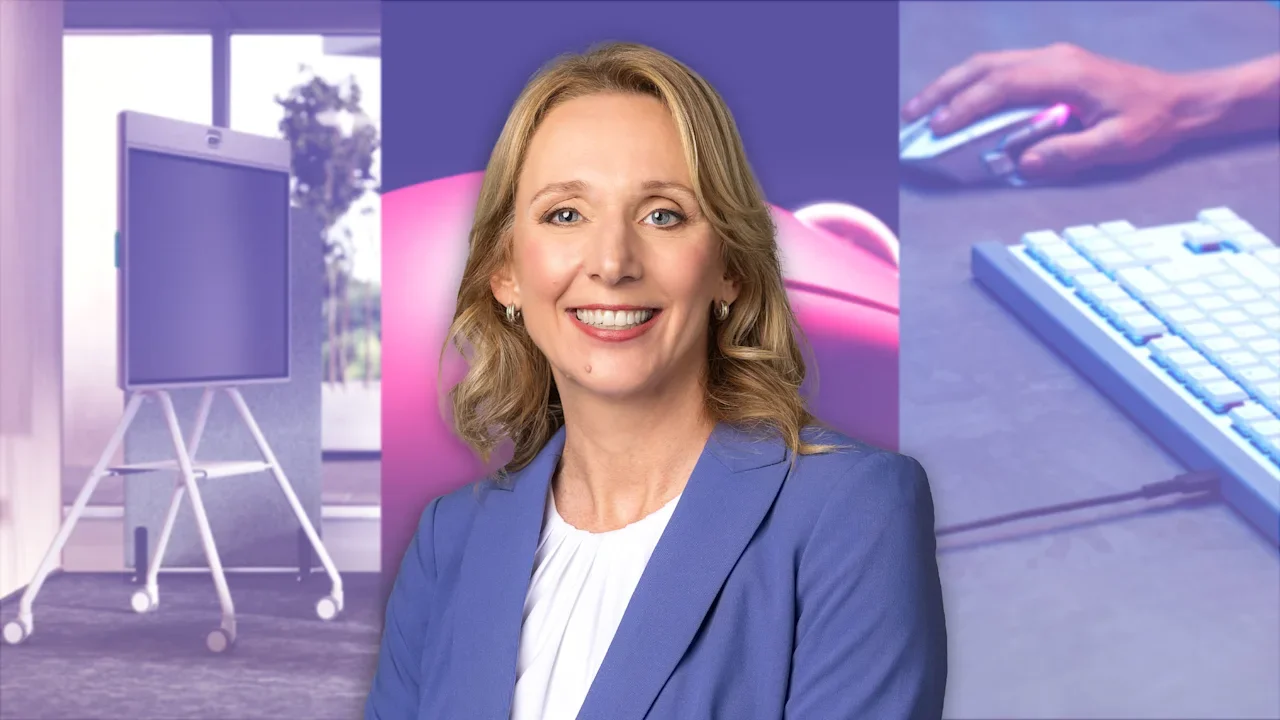
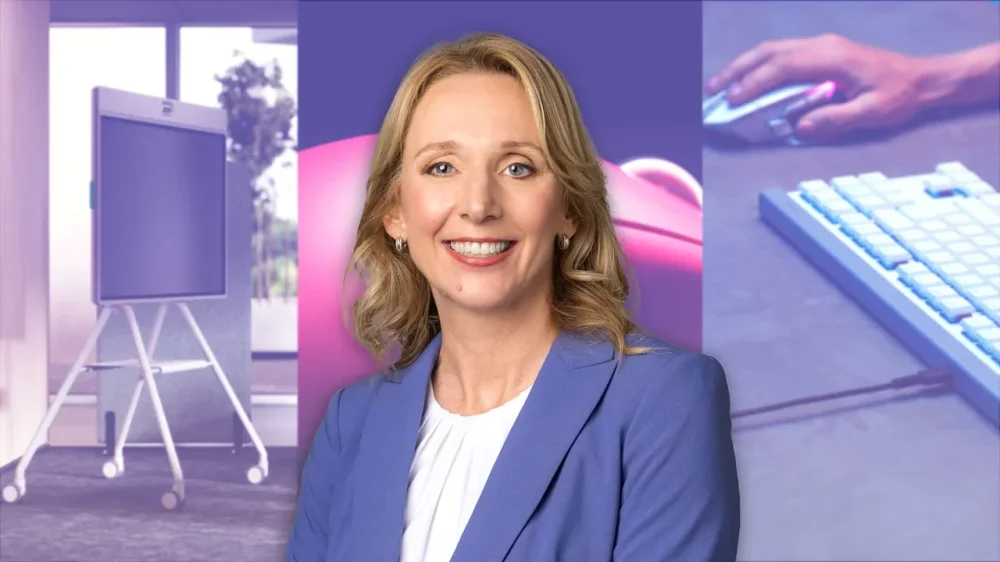
There are bigger, better-known tech brands than Logitech, but few have ever rivaled its quiet but pervasive impact on how people engage with the digital world. Headquartered in Lausanne, Switzerland, but with equally deep roots in Silicon Valley, the 44-year-old company helped to popularize once-unfamiliar devices such as computer mice and webcams. Those are still two of its marquee product lines. But Logitech also makes a dizzying array of other accoutrements for personal and business computing, including keyboards, headphones, speakers, microphones, videoconferencing equipment, tablet accessories, gaming controllers, and more. Despite playing in a variety of categories that are prone to commoditization, it has a genuinely impressive record of standing out by prioritizing design. Hanneke Faber joined Logitech as CEO in December 2023 after a long career at global giants such as Unilever and Procter & Gamble, where she oversaw familiar consumer brands in categories from soup (Knorr) to shampoo (Pantene). As she nears her second anniversary in charge, she’s been busy sharpening Logitech’s focus while giving it room to explore new territory. On October 28, the company reported its quarterly results and said that AI-infused products had helped it beat expectations. As the CEO of a company ultimately in the business of making physical goods around the world—Logitech manufactures a product every five seconds—Faber has also been managing the impact of the The President administration’s tariffs at international scale. I spoke with Faber at Logitech’s U.S. headquarters in San Jose, California. Our conversation has been edited for length and clarity. Logitech has a pretty broad set of products and has been around for a long time. What is it these days, and is that evolving? It’s a combination of who we have been and where we’re going. One of the reasons I loved joining Logitech is that you get into a taxi anywhere, and [the driver] is like, “Who do you work for?” With Logitech, in a taxi in Shanghai, a taxi in Berlin, or a taxi in New York, they’re like, “Oh yeah, I’m a gamer.” Or “That’s my mouse.” It’s a product that’s in everyone’s hand, and it’s a brand most people know, which is great. Going forward, our mission is to extend human potential in work and play. And those words are very carefully chosen. Yes, we’re a tech company, but it’s about making people better and extending their potential. Extend is a riff on the mouse, because it’s an extension of your arm, and the mouse built this house. But we hope that we can make people a little more productive, help them connect more easily, and do all of that in ways that are healthier for people and the planet. That’s extending human potential, and we’ve decided that we’ll do that in work and in play. Today we have close to a $5 billion business, but if you look at the addressable market for work and play products, it’s about $25 billion. So there’s still a ton of room to grow by extending human potential in work and play. We do that with superior products, and we describe the products we’re in as design-led software-enabled hardware. “Design-led” is so important to us. I was quite shocked when I got here that we have almost 300 in-house designers, which is more than a company like P&G or Unilever has in-house. Of course we make stuff, but increasingly it’s deeply software- and AI-enabled, and that’s how we make our products superior. And we employ more software engineers and hardware engineers these days. So that’s who we are. There aren’t all that many brands that are both work and play. How do you deal with that, given that in some cases, what’s good for work is radically different from what’s good for a gamer? The brand has really broad shoulders, so we can attract the 17-year-old gamer but also the CIO of a company who’s buying a lot of work products from us. And you wouldn’t think that the same brand can do that, but that CIO is often a gamer, too. And obviously, from a product point of view, there are a lot of synergies. Gamers need mice and keyboards, and people who work need mice and keyboards, but audio and video also goes across work and play. So while we have teams that are really dedicated to gaming and dedicated to work, there’s also a large, scalable engineering and design organization across both. Some people do care about design and will gravitate toward you. Others are focused on price or technology. Are you trying to increase the pool of people who care about design? I like to spend a lot of time with users and, well, some have more money than others. But I would say most people actually care about design. They might not talk about it as design, but they’ll talk about it as, “When I walk into this room, I should be able to press a button or, ideally, not even press a button, and the videoconferencing should just work.” In an age where technology is changing so fast with AI, we risk making things that are too complicated for most people to use on a daily basis. Designing them in a way that’s intuitive, that’s really easy to use, is really important. And that, to me, is a real foundation of design. It’s not just colors and aesthetics. Talk a little bit about the process of developing software, especially now that AI is a thing. The way we look at AI, internally, is that of course it’s absolutely extending human potential, if I may use those words. Across the company, it’s making our people faster, more accurate, and just able to get more work done in less time. Certainly in coding, but also in places where I would’ve expected it less, like marketing and design, where you can just get more ideas more quickly. This is not about cutting people, but we’ve got to do more with the people we’ve got. And this is helping us do that. And then, maybe more excitingly, there’s AI in products. The Logitech Sight [tabletop videoconferencing camera] is like an AI producer in the middle of the room. It’s like Steven Spielberg is on the table, but he’s AI, and he makes sure everything is framed correctly and you’re having a really, really engaging meeting. I’m the person who’s always on my headset in an airport, and you’ll hate speaking to me, because you hear every announcement that’s out there. But with two-way noise cancellation, it actually knows when it’s me speaking, and it blocks out everything else. Again, without machine learning on our audio data, that’s not possible. And there’s a lot more to come. There were stories a little while ago about Logitech talking about a mouse that gets better over time. And at least some of the instinctive response I saw was like, “I don’t want my mouse to get better over time, and I definitely don’t want to subscribe to a mouse.” I never used the word subscription. And it’s not an actual plan. But again, I like my designers to think big, and that can be in all kinds of spaces. In the age of AI, we’re thinking bigger than ever before, but I should probably keep my mouth shut when talking about these ideas. In theory, at least, might people look forward to software upgrades that make this product they already own more capable? Certainly, that’s very true on the B2B side. On the videoconferencing side, we’re constantly updating the software to be smarter, to be able to do more, and to make it easier for the people operating it. There’s nothing I love more than visiting one of our B2B customers and to hear from their CIO or IT managers—that tends to be a he, so I’ll use the word—that he can manage 10,000 meeting rooms around the world with a click of a button. A lot of Logitech’s products, like mice and webcams, are just part of the air people breathe. Headsets have been around forever. Does Logitech also need to enter completely new categories on a regular basis? Absolutely. Only the paranoid survive. So while we have a great core and we’ll continue to innovate on our core, we also need to do what I call “more.” There’s the core, and there’s more. The majority of our resources do go to the core, because we always want better mice and better keyboards and better cameras and better headsets. And there’s cool innovation there. The Combo Touch keyboard for the new iPads is a beautiful new product. A50 X, a new headset that lets you switch between different platforms—gorgeous product. Pro X Superlight gaming mouse—amazing mouse. You pick it up and you don’t even know that it’s there, it’s so light. But that’s core. Those are things we know, and we just make them better to stay ahead of the competition. And then we spend a smaller part of our resources on more. Last year, we [introduced] the MX Ink, which is a pencil for the Meta headset. And we launched [the Logitech Muse for Apple Vision Pro] at Apple’s developer conference. Logitech often gets a lot of attention at Apple events. You don’t see Apple playing up other people’s products all that much. That was exciting for us as well. And we’re grateful for having a chance to work with both Meta and Apple on AR and VR. Is there a chance that someday that might be a big business, which I assume it isn’t yet? It’s not big yet, but it could be big in the future. And to do that together with big partners makes it more likely. And then there are other things that we’re doing in terms of more. We launched the Spot sensor, which is more for B2B. It’s a sensor to put in meeting rooms, and it measures temperature, but also CO2 in the air. We haven’t done sensors before. The world will be full of sensors pretty soon. This is a space where we need to learn, because in an age of AI, our hardware is already in many places. We launch about 40 new products a year, and about between 30 and 35 are in the core. And then there’s another 5 or 10 that are more, because we do have to really learn on new categories as well. How much of success is about the unglamorous world of designing the products quickly and knowing which price points to hit and knowing how to manufacture them and having good distribution, knowing which products to continue with and which ones to kill? It’s the foundation of it all. So if I look at strategy, how we win is with superior products and innovation with an iconic brand, and by doubling down on B2B. Those are the sexy things. What’s less sexy—but I actually find them quite sexy—are the go-to-market and the operations, and that’s where Logitech shines. We are an operational powerhouse. We make a product every five seconds. We manufacture in six countries. Last year we had record cost savings on how we manufacture. We do it with great quality, great service, and great costs, both at the top end and the lower end of our portfolio. That is critical in hardware. It’s very different from software-only companies, which most here in the Valley are. And then go-to-market, we’re selling in 150 countries. We don’t just sell to Best Buy and Walmart. We sell to [Europe’s] MediaMarkt and thousands and thousands of other customers around the world as well. Doing that requires a really strong organization on the ground in all of those countries. There was this period during the pandemic when all of a sudden people started to pay attention to a lot of the tech that Logitech plays in—their camera setup and their audio and so forth. How do you convince people who in a lot of cases probably already own something that there might be a newer one that’s worth investing in? Well, there are many layers to that question. First of all, we’re about a 50% bigger company than before the pandemic because of that dynamic, and we’re growing again. We are convincing people to trade in, to trade up, to trade across. Those are all great dynamics for Logitech. The other thing going on there is that it may feel like we sell a need, but in many cases it is a want as well, especially in gaming. Do you need the new Pro X Superlight mouse? No, you will survive without it. But it is such an incredibly appealing product that it will make you just that little bit faster and cooler as you play the game. I should ask about tariffs, and whether you have any clarity about their long-term impact. No, I don’t think anyone has any clarity. But what I do know is that we have a very advantageous starting point, because only 30% of our business is in the U.S. Also, we manufacture in six countries, not just one. So we’ve actively been moving things around to take advantage of the lowest tariffs. And when you have a strong brand, that’s loyalty, but it’s also pricing power. With that, plus a strong balance sheet, we have a much better starting point than most people. Are you able to pull the levers you’ll need to in order to deal with as best you can? Have you raised prices? I’ve been quite open about that. I don’t like raising prices, but in this context it was a responsible thing to do here in the United States. So we have done that back in April. What’s it like working for this company that has this heritage in two countries over this long period, which is fairly unusual? I think it’s super special, and it’s another advantage of this company. The Valley obviously has the innovation and dynamism. And for us, a company that launches 40 new products every year, this is a great place to be. But Switzerland is a country of watches. It’s a country that’s been around since 1300. It has the long-term view, it has the accuracy, the precision, the quality, which is also very important for a company like ours. I feel very fortunate to lead a company with a foot in both places. View the full article
-
In 2015, I had a stillborn baby girl. I found out during a prenatal appointment that my daughter had no heartbeat. Because I was in my second trimester, I was admitted to the hospital’s labor and delivery ward. The same ward where women deliver live babies. Except I did not get to bring my baby home. October is Pregnancy and Infant Loss Awareness Month. I’ve talked openly about pregnancy loss for many years. I’ve advocated for more openness in the workplace. It’s a way to honor my daughter, to use my voice to make things better for other grieving parents. Bereavement policies should cover pregnancy loss My employer at the time had a very flexible leave policy. I ended up taking nearly three weeks off from work after my daughter’s stillbirth. My entire world felt like it didn’t make sense anymore. My body needed to heal. Unfortunately, pregnancy loss often falls into a gap in companies’ bereavement policies. They don’t allow any time off for a miscarriage or stillbirth. I met a woman through a support group who delivered her stillborn baby via C-section and had to go back to work mere days later. When there’s no living baby, maternity leave does not apply. And the standard three-day bereavement leave that many companies have is wholly inadequate. Only a few states in the U.S. provide any guaranteed bereavement leave, and even fewer specifically include pregnancy loss as a qualifying event. It’s mostly up to individual employers to craft their own policies. Many years later, I was working for a young company that was working to solidify its leave policies for the first time. I asked the HR person to include pregnancy-loss leave specifically. I said, “You don’t want to wait until a situation comes up and then be scrambling to define the leave.” I fear that happens too often. Companies don’t include pregnancy loss in their bereavement leave until an employee asks about it. At that point, the employee is in the throes of grief, which is the worst time to wait for HR to figure out a leave policy. In 2022, theSkimm launched a Show Us Your Leave campaign. Pregnancy-loss leave was included in the data collected. If you can influence HR policies and are unsure what type of bereavement support to offer, theSkimm’s database is a place to start. How to support a coworker who has experienced pregnancy loss Pregnancy loss is incredibly common: 20% of pregnancies end in miscarriage, according to WebMD. Some researchers believe that the number is much higher. Yet pregnancy loss is still a taboo topic, especially in the workplace. As a result, parents feel isolated in their grief. Recently a friend came to me because one of her employees had a miscarriage. She asked me, “What can I do to support her?” I believe that caring, compassionate coworkers often don’t know what to do, especially if they’ve never experienced pregnancy loss themselves. Here are my suggestions: Review this list from Miscarriage Association of what to say (and what not to say). Listen to this podcast episode: “How to Support Someone Experiencing Pregnancy and Infant Loss.” Set a reminder on your calendar to check in on a regular basis—even weeks or months later. Offer to listen if the person wants to talk. If you’ve experienced pregnancy loss yourself, I’m so sorry. I know how devastating and isolating it is. I highly recommend resources from Share Pregnancy and Infant Loss Support. I want to see the narrative around pregnancy loss change, especially in the workplace. I didn’t simply “lose a pregnancy.” My much-loved child died, as did all the dreams I had for her. There’s a hole in every family photo, because she isn’t there. Workplaces can—and should—do better. Pregnancy loss isn’t rare. The workplace shouldn’t be a source of awkwardness or additional pain. Companies and coworkers need to figure out how to support someone, because it will inevitably come up. View the full article

-
German carmaker maintains full-year guidance despite further hit from weak Chinese demandView the full article
-
Below, Eric Becker shares five key insights from his new book, The Long Game: A Playbook of the World’s Most Enduring Companies. Eric is the founder and chairman at Cresset, an award-winning multi-family office with billions in assets under management. He also co-founded Sterling Partners, a value-added, growth private equity firm. With his long history of starting, backing, and nurturing companies, Eric advises founders, entrepreneurs, private equity partners, and ultra-high worth families. What’s the big idea? Companies that last not one generation, not two, but for a hundred years and beyond share certain things in common. It is no accident when a company ends up lasting, rather than being sold. What it takes is setting your business up intentionally for the long game. Listen to the audio version of this Book Bite—read by Eric himself—below, or in the Next Big Idea App. 1. Recognize a moment of truth Businesses don’t fail for a lack of vision. They usually fail because of a lack of great execution. It’s knowing what to do and when to do it that makes all the difference. That’s a moment of truth. I’m fascinated with moments of truth. In a lifetime, how many moments of truth might there be? It’s probably less than 20, or maybe less than a dozen. There’s just not that many of them. Learning to identify a moment of truth is an incredibly important skill—whether it’s deciding where to live, who to marry, choosing a career, or what kind of company to start. Every leader faces critical moments of truth, but recognizing when you are faced with that decision is essential. The ability to not only see and accept that you must act but also recognize when you shouldn’t. A moment of truth is what follows. A Centurion has this special talent of recognizing moments of truth and making the necessary pivots. They learn who they can trust in these moments and make critical, tough decisions. If you make the right decision in a moment of truth, it can change everything. 2. Adopt a myth-busting mindset Centuries-old businesses are often seen as dusty, bureaucratic, or slow and resistant to change. But I’ve found it’s the complete opposite. Centurions are some of the most agile, adaptive, and forward-thinking organizations in the world. They’ve mastered the art of adaptation because their very existence depends on it. Companies today that will likely outlive the next century share the same qualities. This is the idea of embracing resiliency, adaptability, and vision. Legacy organizations have a great sense of urgency. They don’t tolerate poor performance, and they don’t sit on their laurels. They have a sense of priority, importance, and timing. “Centurions are some of the most agile, adaptive, and forward-thinking organizations in the world.” Take a business like Ferragamo, or families like the Vanderbilts who have operated the historic 130-year-old Biltmore Estate since 1895, and even the famous Smuckers Family. On the surface, they might seem like echoes of the past, rooted in history and resistant to change. But dig a little deeper and you’ll see they’ve survived through war, the Great Depression, the Great Recession, the Pandemic, natural disasters, competition, technology—you name it, they’ve seen it all. A myth-busting mindset helped them survive. Think about what stereotype you are working against. How can you break the myth? How can you hone that survival instinct to do whatever it takes to change perception and move your company forward? 3. Be a super steward Embracing stewardship supersedes any other mission-critical priority. Very few leaders or families truly understand what this means when we say it. Stewardship is recognizing that the enterprise is greater than any one individual in the organization, including you. Every decision you make is made with the understanding that this move will protect and preserve the company for generations to come. That’s not how most entrepreneurs and even many family businesses operate. As a result, there is a crisis happening in America right now involving succession. But when you consistently demonstrate that stewardship supersedes everything else within your organization, that ethos ripples into every facet of your organization and becomes ingrained within your business or family and onto the next generation. It’s a big mindset shift, but stewardship has the power to become the protective shield for everything you love most. That’s how you start to build your legacy. I’ve seen it time and again: when employees understand and are included in their company’s mission and principles, and believe in it themselves, they’re proven to be more committed. You’re essentially building a dedicated army of stewards, passionately carrying out the founders’ vision. 4. Have a succession plan The best CEOs and leaders realize it’s not about them. It’s about everyone else. They look at the organization or the family and realize that they are responsible for bringing this business into the future. “Only one-third of family-owned businesses make it to the second generation, and just 12 percent survive to the third.” I had grown up in a family business. My father started a company that lasted for 53 years, which was amazing. But he didn’t have a succession plan. Ultimately, the company had to be sold. What had been missing? What had my dad needed to pass his business on? Ethical succession is seen in these 100-year-plus businesses. Having a viable, thoughtful, and ethical long-term succession plan is a critical part of being a steward. Only one-third of family-owned businesses make it to the second generation, and just 12 percent survive to the third. There is nothing that matters more to me than my own family and business knowing and trusting that the value I’ve placed on the plan ahead will carry them forward for generations. The family office has to evolve in order to survive. 5. Build centurion culture from day one To break through and to get ahead, culture is critical. Centurions were the commanders that led 100 soldiers in the Roman army, and they didn’t lead from behind. They led from up front. They were the strong leaders who set the culture for that group and took them forward into victory. When Avy Stein and I started Cresset, we put culture first and told people to act like owners. Now, 65 percent of Cresset is actually employee-owned. Our 100-year horizon shapes every decision, from technology to talent. From day one, we focused on questions like: What kind of company will we become? How will we treat each other? How will we treat customers and clients? We also told the first 10 team members that we were on a 100-year journey together, which is what The Long Game is all about. When you build a company with that kind of long-term focus, you don’t need an exit. Ironically, that’s what makes it even more attractive, because it’s built to last, not to sell. We developed what we now call the culture card. We took all the principles and practices around great culture and put them all together on one card. Having a culture card is something that almost no business seems to do. And yet, it is the most important tool that we’ve used in building an organization in less than eight years to over $70 billion in assets under management. Enjoy our full library of Book Bites—read by the authors!—in the Next Big Idea App. This article originally appeared in Next Big Idea Club magazine and is reprinted with permission. View the full article

-
On October 27, Treasury Secretary Scott Bessent said that President Donald The President has narrowed down his search to replace Federal Reserve chair Jerome Powell, whose term does not end until May 2026. Powell, who has butted heads with The President over lowering interest rates amid the risk of increasing inflation, has said he will serve out the remainder of his term. After his term ends as chairman, his board term still extends until 2028. The President is expected to announce a Federal Reserve chair replacement as early as December, according to reports. “We’re down to five,” Bessent told reporters as he was traveling with The President on Air Force One, according to Yahoo Finance. “We’re going to do a second round and we hope to present a good slate to the president right after Thanksgiving. . . . It will ultimately be his choice.” Bessent said those five picks are: Michelle Bowman and Christopher Waller, both members of the Federal Reserve’s board of governers; Kevin Hassett, director of the National Economic Council; Kevin Warsh, a former Fed governor; and Rick Rieder, chief investment officer of global fixed income at BlackRock, according to several media outlets per CNBC. The President’s choice must be confirmed by the Republican-controlled Senate. Like Powell, the new Fed chair will be charged with navigating inflation, the country’s weakening labor market, and stagnating growth. Fed members remain divided on whether the The President administration’s economic policies, including high tariffs and a push for even lower interest rates, are helping or hurting the U.S. economy, CNN noted. Powell first became Fed chair in February 2018 and was reappointed for a second four-year term in May 2022. His term as a member of the Fed’s board of governors ends on January 31, 2028. Last month, he explained the Fed’s dilemma when it comes to cutting or raising interest rates: whether to use it to fight inflation or instead to help offset a struggling job market (while controlling prices and unemployment). “We only have one tool, which is monetary policy—really, interest rates—and [the situation] is calling for different answers,” Powell said. “It’s a very difficult policy environment when your two goals are telling you two different things, you’ve got to make a compromise.” View the full article

-
Market hit by disruption to production and Donald The President’s tariffs View the full article
-
When AI systems started spitting out working code, many teams welcomed them as productivity boosters. Developers turned to AI to speed up routine tasks. Leaders celebrated productivity gains. But weeks later, companies faced security breaches traced back to that code. The question is: Who should be held responsible? This isn’t hypothetical. In a survey of 450 security leaders, engineers, and developers across the U.S. and Europe, 1 in 5 organizations said they had already suffered a serious cybersecurity incident tied to AI-generated code, and more than two-thirds (69%) had uncovered flaws created by AI. Mistakes made by a machine, rather than by a human, are directly linked to breaches that are already causing real financial, reputational, or operational damage. Yet artificial intelligence isn’t going away. Most organizations feel pressure to adopt it quickly, both to stay competitive and because the promise is so powerful. And yet, the responsibility centers on humans. A blame game with no rules When asked who should be held responsible for an AI-related breach, there’s no clear answer. Just over half (53%) said the security team should take the blame for missing the issues or not implementing specific guidelines to follow. Meanwhile, nearly as many (45%) pointed the finger at the individual who prompted the AI to generate the faulty code. This divide highlights a growing accountability void. AI blurs the once-clear boundaries of responsibility. Developers can argue they were just using a tool to improve their output, while security teams can argue they can’t be expected to catch every flaw AI introduces. Without clear rules, trust between teams can erode, and the culture of shared responsibility can begin to crack. Some respondents went further, even blaming the colleagues who approved the code, or the external tools meant to check it. No one knows whom to hold accountable. The human cost In our survey, 92% of organizations said they worry about vulnerabilities from AI-generated code. That anxiety fits into a wider workplace trend: AI is meant to lighten the load, yet it often does the opposite. Fast Company has already explored the rise of “workslop”—low-value output that creates more oversight and cleanup work. Our research shows how this translates into security: Instead of removing pressure, AI can add to it, leaving employees stressed and uncertain about accountability. In cybersecurity, specifically, burnout is already widespread, with nearly two-thirds of professionals reporting it and heavy workloads cited as a major factor. Together, these pressures create a culture of hesitation. Teams spend more time worrying about blame than experimenting, building, or improving. For organizations, the very technology brought in to accelerate progress may actually be slowing it down. Why it’s so hard to assign responsibility AI adds a layer of confusion to the workplace. Traditional coding errors could be traced back to a person, a decision, or a team. With AI, that chain of responsibility breaks. Was it the developer’s fault for relying on insecure code, or the AI’s fault for creating it in the first place? Even if the AI is at fault, its creators won’t be the ones carrying the consequences. That uncertainty isn’t just playing out inside companies. Regulators around the world are wrestling with the same question: If AI causes harm, who should carry the responsibility? The lack of clear answers at both levels leaves employees and leaders navigating the same accountability void. Workplace policies and training are still behind the pace of AI adoption. There is little regulation or precedent to guide how responsibility should be divided. Some companies monitor how AI is used in their systems, but many do not, leaving leaders to piece together what happened after the fact, like a puzzle missing key parts. What leaders can do to close the accountability gap Leaders cannot afford to ignore the accountability question. But setting expectations doesn’t have to slow things down. With the right steps, teams can move fast, innovate, and stay competitive, without losing trust or creating unnecessary risk. Track AI use Make it standard to track AI usage and make this visible across teams. Share accountability Avoid pitting teams against each other. Set up dual sign-off, the way HR and finance might both approve a new hire, so accountability doesn’t fall on a single person. Set expectations clearly Reduce stress by making sure employees know who reviews AI output, who approves it, and who owns the outcome. Build in a short AI checklist before work is signed off. Use systems that provide visibility Leaders should look for practical ways to make AI use transparent and trackable, so teams spend less time arguing over blame and more time solving problems. Use AI as an early safeguard AI isn’t only a source of risk; it can also act as an extra set of eyes, flagging issues early and giving teams more confidence to move quickly. Communication is key Too often, organizations only change their approach after a serious security incident. That can be costly: The average breach is estimated at $4.4 million, not to mention the reputational damage. By communicating expectations clearly and putting the right processes in place, leaders can reduce stress, strengthen trust, and make sure accountability doesn’t vanish when AI is involved. AI can be a powerful enabler. Without clarity and visibility, it risks eroding confidence. But with the right guardrails, it can deliver both speed and safety. The companies that will thrive are those that create the conditions to use AI fearlessly: recognizing its vulnerabilities, building in accountability, and fostering the culture to review and improve at AI speed. View the full article

-
I once attended a slide presentation given by an executive in a telcom company. The presentation was highly technical, but that was not the main problem. It was boring because the speaker was using back-to-back visuals and had zero connection to his audience. When the one-hour session came to an end, the entire audience filed out of the room but the executive kept talking. He was so focused on his visuals that he didn’t even realize the audience had left the room. This story illustrates the dangers of using slides. The speaker can easily lose touch with the audience, and the result is that the power you bring as a speaker gets lost. To retain your power when using visuals, follow these five fundamentals. 1. AVOID SLIDES WHENEVER POSSIBLE. First, consider not using slides at all. Strong leaders have no interest in competing with busy PowerPoints. The purpose of a talk should be to persuade and inspire, not simply to convey information. Often you can do that best without any visual props. So avoid slides unless there is a strong argument for using them. Still, there are times when you will need to use slides. It might be part of the corporate culture. Some visuals illustrate a new product or a new building. At times a chart drives home a point. If you are planning to use a deck, the next four guidelines suggest how to do so most effectively. 2. REALIZE THAT YOU’RE THE BEST VISUAL. Think of yourself as the best visual. You have energy, enthusiasm, vocal reach, and body language that tell your audience you believe what you’re saying and they should too. You can bring forward your points with more impact than inanimate slides can. This should encourage you to keep the presentation focused on you and your convictions. Instead of fading into the visuals and reacting to them, lead with powerful statements using your strong presence to bring the presentation to life. Keep your visuals simple and uncluttered. The less time your audience spends reading the visuals the more time they’ll spend looking at you and following you. Beware especially of cluttered word slides. They’re distracting and often hard to understand. They’ll compete with you. Audience members will be reading all that text and tune you out. 3. MAKE SURE YOU HAVE ONE CLEAR, COMPELLING MESSAGE. Your leadership presence depends on a clear, credible, and well-supported message. The danger of using slides or visuals is that the whole presentation can easily become an information dump. And that’s how it’s usually delivered. Fact after fact after fact. To save your presentation from the information junk heap, introduce a central message early on. For example, you might say: “The message of this presentation is . . .” and keep that message front and center throughout. Show that everything in your presentation supports this message. The argument on each slide should relate back to the message. At the end, come back to your message and show how it can be implemented. “Apple reinvents the phone” was the message Steve Jobs wanted his audience to take away when he introduced the iPhone. That’s the reason “Apple reinvents the phone” was the only message on the slide. And he repeated it several times during the presentation to reinforce it. 4. PRESENT WITH GREAT CONVICTION. Having slides doesn’t lessen the need to show your commitment; rather, it doubles that need. Own each visual. Provide a narrative that shows you’re in charge and that the deck is just a supporting character. As you walk through the presentation, state the message of each visual before showing it. Say, “As you’ll see, this next slide argues that convincingly.” To inspire your audience, strengthen your voice and body language. Your voice should be forceful and varied, in keeping with the substance you’re conveying. Emphasize your points by looking at the audience and using pauses, as if to say, “Did you get that?” Your body language is important. Excellent posture conveys conviction, as do appropriate gestures that reinforce your points. 5. END WITH A CALL TO ACTION. Finally, end with a call to action. The call to action should echo the overall message that you began the presentation with. Explain to the audience what you want from them. Approval of the proposal? Buy-in? Or a full understanding of your argument and its implications for moving ahead. Your call to action might begin “I trust you can now see how redoubling our focus on using AI will be the basis for strong growth next year.” Whatever your message, show how it can be implemented. If you do this successfully, you will have led. View the full article

-
US president is in South Korea for talks on trade and security ahead of Xi Jinping summitView the full article
-
Indian refinery received at least four crude shipments this year worth almost $280mn on sanctions-listed vesselsView the full article
-
Contracts worth up to €900mn put Helsing and Stark on track to help buttress Nato’s eastern flank against RussiaView the full article
-
Bank stood by Andy Sieg, a potential successor to CEO Jane Fraser, after investigation by law firm Paul WeissView the full article
-
With progress in AI, the showhorses may yet eclipse the more technically skilled workhorsesView the full article
-
Testimonies from former detainees spotlight worsening conditions since October 7 2023 attackView the full article
-
The The President administration’s looser rules could breed more ‘cockroaches’ in the lending marketView the full article
-
Treasury secretary Scott Bessent has a shortlist of five candidates vying to replace Jay Powell View the full article
-
Up to 75% of the class A2 notes pay a coupon based on the Secured Overnight Financing Rate (SOFR). Also, since the assets pay a fixed rate, interest rate spikes could eat away at excess spread. View the full article

-
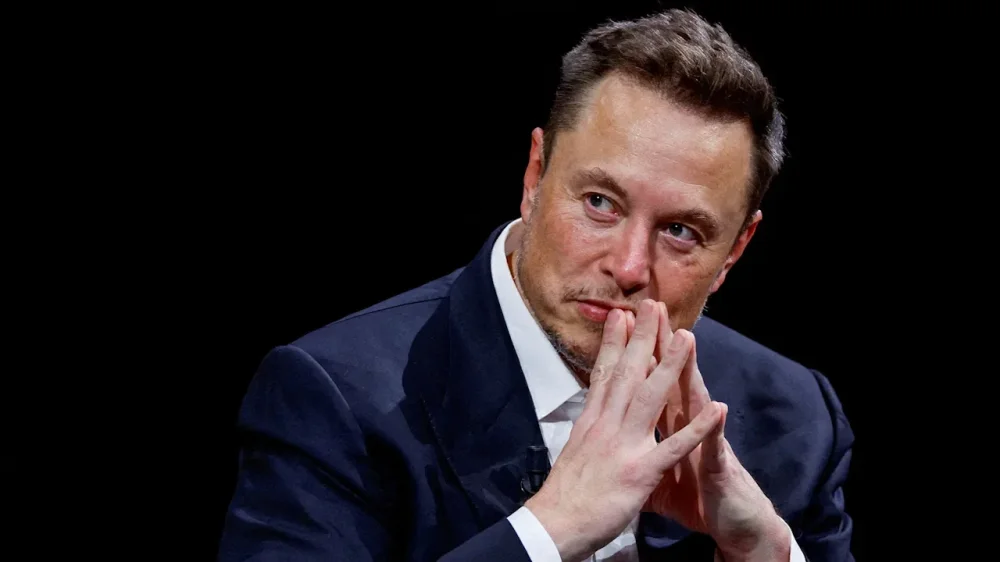
The State Department has enlisted Starlink, the satellite internet service run by the Elon Musk company SpaceX, to support its staff in Jamaica in the event that Hurricane Melissa, a category 5 storm that made landfall Tuesday, disrupts communications on the island nation, the agency says. “We have pre-provisioned Starlink in Jamaica and will use it for communications if necessary,” a spokesperson for the agency said Tuesday night. If the damage is as bad as expected, the agency is likely to use the service for live service in Jamaica, another State Department official told Fast Company. On-location agency staff are likely to use Starshield — a version of the Starlink service tailored for national-security applications — at the embassy, the second official says. The consumer service Starlink might be used by smaller teams who may need to travel within the country, the person added. The move shows how critical satellite-based internet has become in natural disasters, particularly when ground-based communications services go offline. And it also demonstrates just how much the U.S. government has come to rely on technology made by Elon Musk’s SpaceX’s technology, which now includes everything from rocket launch services to consumer satellite internet. The State Department is one of a growing number of US government agencies, including the National Science Foundation and the Department of Homeland Security, now using Starlink for a variety of purposes as varied as videocalling, real-time data support, and research in Antarctica. As SpaceX has ramped up sales of Starlink to the government, it has also built Starshield, a national-security-related service used within the Defense Department. The State Department has bought both services, deploying the SpaceX technology at several embassies. (The relationship between the two services has been murky. A Starlink outage earlier this summer also took Starshield offline.) Relatedly, SpaceX often offers free Starlink services during emergencies. When asked what the company was doing to prepare for Hurricane Melissa, the company’s media team directed Fast Company to an announcement explaining that people in Jamaica and the Bahamas could receive free service until the end of November. Customers who had already set up accounts, even those that were paused or suspended, will automatically receive a free credit, while those hoping to sign up for the first time can create a support ticket, the company says. While Starlink service can be a life-saving tool during an emergency, critics have raised concerns about the U.S. government’s growing dependence on the technology — as well as on Musk’s influence on SpaceX. Earlier this year, for instance, Musk ordered that some Starlink terminals used by Ukrainian forces be taken offline amid their attempt to retake territory from Russia, Reuters reported. View the full article
-
The Consumer Financial Protection Bureau is rescinding two rules issued under former CFPB Director Rohit Chopra that required nonbanks to register court orders, plus terms and conditions of contracts. View the full article