Newsletter
Want to keep up to date with all our latest news and information?


ResidentialBusiness
Administrators
-
Joined
-
Last visited
Everything posted by ResidentialBusiness
-
We may earn a commission from links on this page. Contacts with cat pupils or neon colors can be fun, but are you sure you want to put a piece of plastic from a costume store into your eye? Experts, like those at the American Academy of Ophthalmology, warn against it. These non-prescription contacts are technically illegal in the U.S. (even though plenty of companies sell them anyway). The CDC warns that the risks include "eye sores and vision loss." Why costume contacts often aren't safeCheap Halloween contacts tend to be one-size-fits-all, but the AAO points out that contacts should never be one-size-fits-all. A contact that is too large or too small for your eye can cause corneal abrasions, corneal ulcers, and can result in infections like keratitis. Infections can, in severe cases, lead to blindness. A 2017 report from the FDA found bacterial contamination in 27% of costume contacts. If you do wear contacts (Halloween or otherwise), the AAO recommends keeping an eye out for symptoms like redness, swelling, pain, or excessive discharge. Seek care as soon as you suspect an infection. Your eyes are more sensitive to infections than other parts of the body, so be cautious. How to find safe costume contactsLegally, contacts require a prescription, so if those colored contacts you're eyeing can be bought without showing a doctor’s prescription, they’re not legit. The real thing can be expensive, though: I found prices ranging from $40 to $110 per pair from lens.com, Discount Contacts, and Wicked Eyez. These websites all let you order online, but you’ll have to provide your prescription information before you can check out. Fortunately, the Federal Trade Commission has ruled that providers must give you your contact prescription after a fitting so that you can take the prescription elsewhere. And they cannot charge you extra for this. Once you’ve got the lenses, you have to know how to take care of them. If you wear contacts every day, you already know the drill. But if you’re just picking up a pair to use with a costume, here are the basics: Wash your hands before handling the lenses. Store them in contact lens solution, and keep the lenses and their case clean. Don’t sleep or swim with them in. And for Pete’s sake, don’t share them with your friends! After all, the bloodshot look stops being cool after you take your zombie costume off. View the full article
-
We may earn a commission from links on this page. Deal pricing and availability subject to change after time of publication. The 2025 JBL Charge 6 is currently on sale for $139.99 on StackSocial, about $30 cheaper than Amazon’s $169.95 listing and at its lowest price ever, according to price trackers. It’s for an open-box model, which means the packaging may carry a few extra stickers or scuffs from store handling, but the unit itself is verified as new and comes with a one-year warranty. Free shipping is included, though only within the contiguous U.S. The Charge 6 is a rugged, carry-friendly speaker designed to go anywhere—pool, beach, or backyard. JBL added a looped handle that makes it easier to haul around, and the build itself feels sturdy enough to take some knocks. It’s dust-tight and can be submerged in about five feet of water for up to half an hour thanks to its IP68 rating, so you don’t need to worry if it gets splashed or dropped poolside. Inside, a larger woofer and tweeter produce a combined 45 watts of power, with passive radiators on each end adding more thump. The result is a sound that feels loud and punchy for the size, even if the lowest bass notes don’t come through. This PCMag review notes that its clarity and volume stand out in the compact speaker category. JBL also packed in some useful upgrades. The speaker now supports Auracast, letting you tap into compatible broadcasts, and it delivers lossless audio through the USB-C port if you’re willing to plug in. Bluetooth 5.4 maintains reliability, although codec support is limited to AAC and SBC, which is a disappointment for higher-quality wireless streaming. The JBL companion app also offers a seven-band EQ, several sound presets, and a Playtime Boost option that extends battery life by reducing bass levels. At this price, it’s worth considering if you're looking for a speaker that’s portable, loud, and durable enough to withstand some rough treatment outdoors. Our Best Editor-Vetted Tech Deals Right Now Apple AirPods Pro 2 Noise Cancelling Wireless Earbuds — $169.99 (List Price $249.00) Apple iPad 11" 128GB A16 WiFi Tablet (Blue, 2025) — $299.00 (List Price $349.00) Amazon Fire TV Stick 4K Plus — $29.99 (List Price $49.99) Shark AV2501AE AI XL Hepa- Safe Self-Emptying Base Robot Vacuum — $299.99 (List Price $649.99) Ring Pan-Tilt Indoor Cam, White with Ring Indoor Cam (2nd Gen), White — $59.99 (List Price $99.99) Blink Video Doorbell Wireless (Newest Model) + Sync Module Core — $29.99 (List Price $69.99) Blink Mini 2 1080p Indoor Security Camera (2-Pack, White) — $27.99 (List Price $69.99) Ring Video Doorbell Pro 2 with Ring Chime Pro — $149.99 (List Price $259.99) Introducing Amazon Fire TV 55" Omni Mini-LED Series, QLED 4K UHD smart TV, Dolby Vision IQ, 144hz gaming mode, Ambient Experience, hands-free with Alexa, 2024 release — $699.99 (List Price $819.99) Blink Outdoor 4 1080p 2-Camera Kit With Sync Module Core — $51.99 (List Price $129.99) Deals are selected by our commerce team View the full article
-
Twilio, a leader in customer engagement technology, recently unveiled a new suite of features designed to enhance data handling for small businesses seeking to improve their customer experiences. As the landscape of customer engagement continues to evolve, maintaining high standards for data integrity is essential for staying competitive. At the heart of these updates is the need for small businesses to harness real-time, trustworthy data to drive customer interactions. According to Inbal Shani, Chief Product Officer at Twilio, “High-impact customer engagement starts with data that is real-time, contextual, and trusted.” This acknowledgment underscores an ongoing challenge faced by businesses: the necessity of operational agility backed by reliable information. The newly introduced tools consist of Granular Observability, a centralized Alerting Hub, expanded APIs, and Auto-Instrumentation. These enhancements are built to assist data teams in identifying and resolving issues proactively, thus ensuring seamless interactions with customers. Data integrity is pivotal for small businesses that rely on accurate and timely information for their marketing campaigns. The Granular Observability feature allows businesses to trace and diagnose problems directly within their data flow. For instance, Failed Delivery Logs provide detailed access to each event, enabling swift issue resolution, which is crucial for minimizing potential downtime and maintaining customer trust. The Alerting Hub, another significant addition, centralizes alert notifications. This means businesses can set up customized alerts for specific metrics, such as audience synchronization or data drop failures, all from a single interface. This centralized system is particularly advantageous for small businesses, which often operate with limited resources. Streamlining alert management can free up valuable time and reduce operational stress. Moreover, the expanded APIs offer considerable flexibility, allowing small business owners to customize and automate data-related tasks without extensive technical knowledge. The introduction of Auto-Instrumentation means that non-technical users can quickly set up event tracking. This feature significantly reduces the dependency on software developers, enabling teams to implement data collection strategies much faster, turning weeks’ worth of work into mere minutes. The implication of these tools extends beyond mere data management; they promise to enhance customer relations by ensuring that every interaction is informed and responsive. As Keith Kirkpatrick, Research Director at Futurum, notes, “Twilio’s focus on data quality, depth of observability, and API extensibility sets a new standard for trusted customer engagement at scale.” For small businesses, this could translate into stronger customer loyalty and improved engagement rates, as the quality of interactions significantly impacts customer satisfaction. However, while the benefits are clear, small business owners should also consider the potential challenges. Deploying new technology can require a period of adjustment and training. Teams may need to familiarize themselves with the new tools, which can take time, particularly for smaller businesses with limited staff. Additionally, while the centralization of alerts and data management sounds advantageous, it could also create initial complexity. Small business owners must ensure that their teams are equipped to manage the new systems effectively to avoid complacency that might arise from overlooking alerts. Despite these challenges, the advantages of implementing Twilio’s new features seem to far outweigh potential drawbacks, especially in an age where customer experience is paramount. Small businesses that successfully leverage these tools may find themselves not only keeping pace with competitors but also setting new standards in customer engagement. For more detailed information on these updates and to understand how they can benefit your business, you can explore the original press release from Twilio here. This article, "Twilio Unveils Advanced Tools for Enhanced Customer Data Management" was first published on Small Business Trends View the full article
-
Twilio, a leader in customer engagement technology, recently unveiled a new suite of features designed to enhance data handling for small businesses seeking to improve their customer experiences. As the landscape of customer engagement continues to evolve, maintaining high standards for data integrity is essential for staying competitive. At the heart of these updates is the need for small businesses to harness real-time, trustworthy data to drive customer interactions. According to Inbal Shani, Chief Product Officer at Twilio, “High-impact customer engagement starts with data that is real-time, contextual, and trusted.” This acknowledgment underscores an ongoing challenge faced by businesses: the necessity of operational agility backed by reliable information. The newly introduced tools consist of Granular Observability, a centralized Alerting Hub, expanded APIs, and Auto-Instrumentation. These enhancements are built to assist data teams in identifying and resolving issues proactively, thus ensuring seamless interactions with customers. Data integrity is pivotal for small businesses that rely on accurate and timely information for their marketing campaigns. The Granular Observability feature allows businesses to trace and diagnose problems directly within their data flow. For instance, Failed Delivery Logs provide detailed access to each event, enabling swift issue resolution, which is crucial for minimizing potential downtime and maintaining customer trust. The Alerting Hub, another significant addition, centralizes alert notifications. This means businesses can set up customized alerts for specific metrics, such as audience synchronization or data drop failures, all from a single interface. This centralized system is particularly advantageous for small businesses, which often operate with limited resources. Streamlining alert management can free up valuable time and reduce operational stress. Moreover, the expanded APIs offer considerable flexibility, allowing small business owners to customize and automate data-related tasks without extensive technical knowledge. The introduction of Auto-Instrumentation means that non-technical users can quickly set up event tracking. This feature significantly reduces the dependency on software developers, enabling teams to implement data collection strategies much faster, turning weeks’ worth of work into mere minutes. The implication of these tools extends beyond mere data management; they promise to enhance customer relations by ensuring that every interaction is informed and responsive. As Keith Kirkpatrick, Research Director at Futurum, notes, “Twilio’s focus on data quality, depth of observability, and API extensibility sets a new standard for trusted customer engagement at scale.” For small businesses, this could translate into stronger customer loyalty and improved engagement rates, as the quality of interactions significantly impacts customer satisfaction. However, while the benefits are clear, small business owners should also consider the potential challenges. Deploying new technology can require a period of adjustment and training. Teams may need to familiarize themselves with the new tools, which can take time, particularly for smaller businesses with limited staff. Additionally, while the centralization of alerts and data management sounds advantageous, it could also create initial complexity. Small business owners must ensure that their teams are equipped to manage the new systems effectively to avoid complacency that might arise from overlooking alerts. Despite these challenges, the advantages of implementing Twilio’s new features seem to far outweigh potential drawbacks, especially in an age where customer experience is paramount. Small businesses that successfully leverage these tools may find themselves not only keeping pace with competitors but also setting new standards in customer engagement. For more detailed information on these updates and to understand how they can benefit your business, you can explore the original press release from Twilio here. This article, "Twilio Unveils Advanced Tools for Enhanced Customer Data Management" was first published on Small Business Trends View the full article
-
Ukrainian stronghold of Pokrovsk comes under heavy fire as Russian troops enter cityView the full article
-
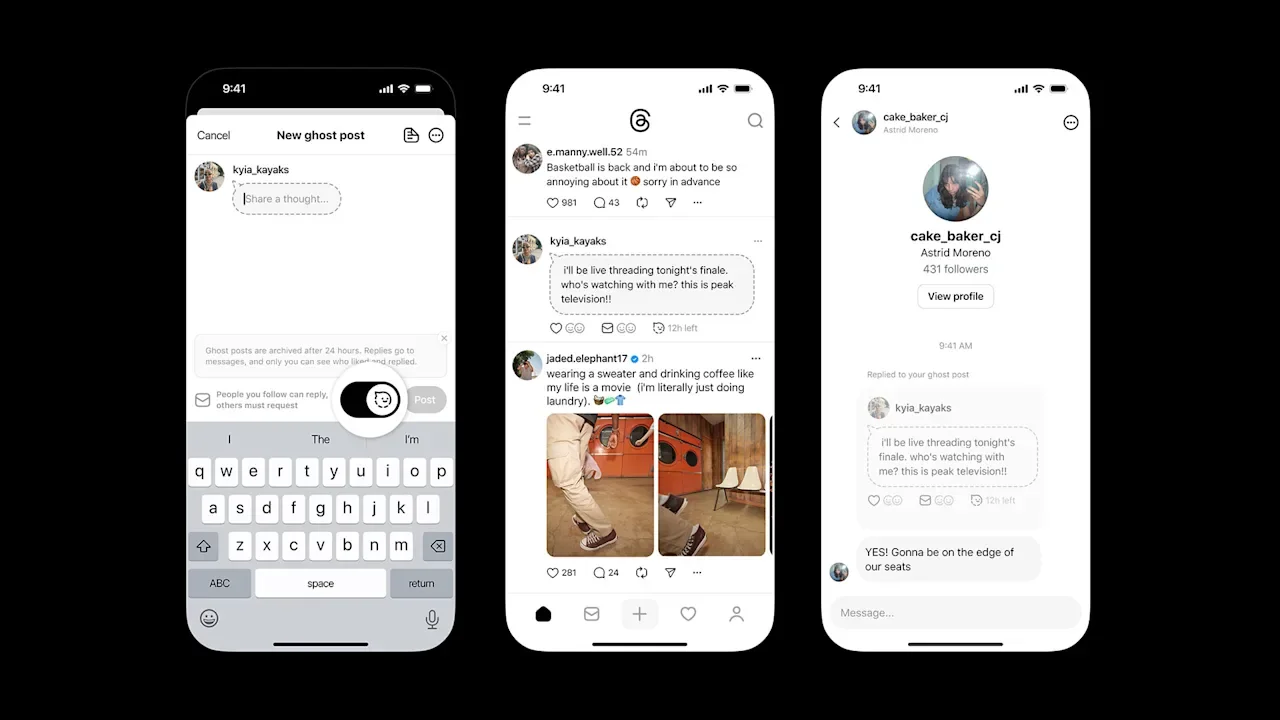
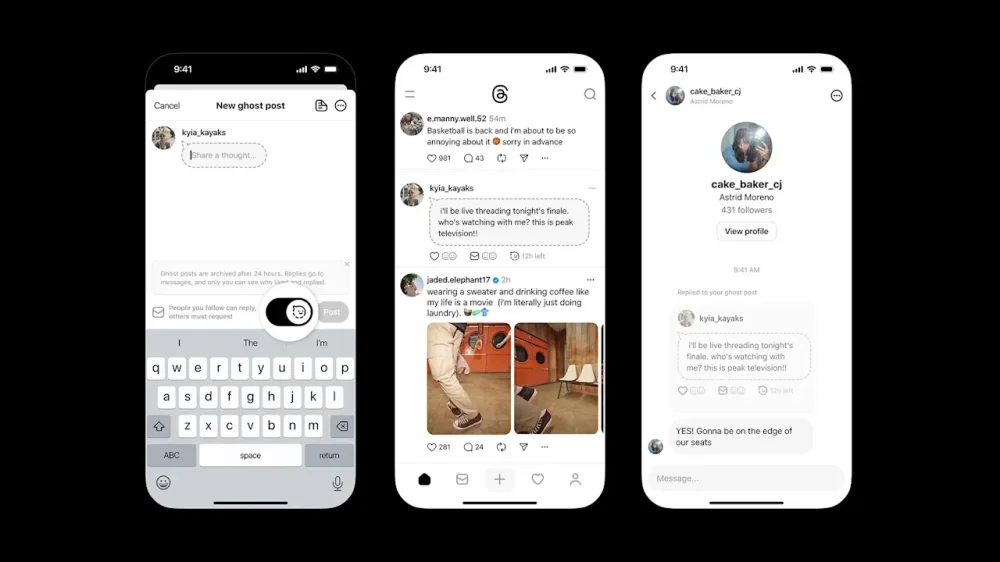
Meta’s Threads app is leaning into impermanence. Starting Monday, the platform is rolling out “ghost posts,” a new post format for sharing fleeting thoughts that automatically disappear after 24 hours. Think Snapchat or Instagram Stories—except, for text. Unlike regular Threads posts, replies to ghost posts go straight to the user’s messaging inbox rather than inline, and only the author will be able to see who liked or responded to them. It’s a subtle but significant shift toward private engagement within a public feed, providing a middle ground of sorts between Twitter’s public discourse model and Instagram’s close-friends Stories. Meta says the feature is aimed at reducing the “pressure of permanence” and sparking more spontaneous conversation. Disappearing posts, reappearing trend If this sounds familiar, it’s because social media has been flirting with ephemerality for years. Snapchat built an empire on vanishing messages, and Instagram Stories borrowed the format and made it mainstream. Even X (formerly Twitter) experimented with “Fleets,” its own 24-hour post format, before quietly shelving the feature in 2021 after low engagement. Threads’ take, however, differs in intent. Rather than mimic Story-style content, ghost posts appear directly in the main feed where conversations actually happen and fade quietly after a day. It’s a move that positions Threads as both reflective of older, text-driven social media, and responsive to users’ increasing desire for less performative spaces. Building a more flexible feed Ghost posts join a growing list of new Threads features designed to broaden the platform’s creative range. Over the past few months, Meta has added support for 10,000-character text attachments, and a Spoilers toggle that hides media or text until tapped. Together, the updates seem to position Threads as a kind of “social sandbox,” one where both the long-form essay and the fleeting thought can coexist. View the full article
-
TikTok and the U.S.' "will they, won't they" saga may finally be coming to an end. After nine months of kicking the can down the road, the U.S. has reportedly reached a deal with China to allow TikTok to continue operating in the States, which should come as good news for the estimated one-third of Americans who use the app. U.S. Treasury Secretary Scott Bessent confirmed the development in a Face the Nation appearance on Sunday. Bessent told Margaret Brennan that the U.S. "reached a final deal on TikTok. We reached one in Madrid, and I believe that as of today, all the details are ironed out, and that will be for the two leaders to consummate that transaction on Thursday in Korea." The secretary did not share any additional details of the deal, but we do know what the U.S. had in mind heading into the talks. Last month, President The President signed an executive order outlining what TikTok's future would look like in the U.S., assuming a deal with its parent company ByteDance and the Chinese government went through. Per the law signed by President Biden last year, TikTok has to sell to an American company or face a ban in the U.S. According to The President's executive order, that represents a joint venture of different investors and American companies, namely Oracle, which will now have a majority stake in the company. ByteDance will continue to have a minority stake, controlling less than 20% of the company. We also know from past reporting that it's highly likely that users will need to download a new version of TikTok. This U.S. iteration of the app would look and feel the same, but would eventually ship with a new algorithm "retrained and monitored" by "trusted security partners" of the U.S. Your data would also no longer be collected and stored by companies based in China; rather, your TikTok info will be collected and stored in a cloud environment controlled by an American company. We won't know the specifics until the deal is public, but if the secretary is to be believed, the deal is at least official. Soon enough, TikTok will be allowed to operate in the U.S. with zero risk of being banned—though the privacy risks it poses may have just moved from one country to another. View the full article
-
Trust is the essence of collaboration: as Yuval Harari eloquently noted, we as a species would not exist if it weren’t for our superior ability to collaborate so effectively—and it’s largely down to trust. In the days of our hunter-gatherer ancestors, decisions on trust were relatively straightforward, even when it came to appointing leaders. Indeed, our ancestors lived in small groups of closely related individuals and spent all of their time together. Furthermore, the key attributes they were interested in evaluating or judging were easy to observe: courage, practical knowledge, hunting and fishing dexterity, and physical strength. There was no need then for psychometric assessments, AI, or scientific tools to assess either leadership potential or integrity, and mistakes were extremely costly because if they picked the wrong leader the whole group would just vanish at the expense of better led rival groups. But, fast-forward to our modern times, things are uncomfortably complex and hard for everyone. At work we must infer whether we can trust our colleagues, coworkers, and bosses, even when we never met them in person—they are, in physical terms, purely pixels on the screen of our Zoom calls. In politics voters are asked to pick between shrewd politicians who have mastered the art of deceit and manipulation and specialize in telling people what they want to hear, irrespective of their actual leadership capabilities. Unsurprisingly, the world is led by heads of states who enjoy dismal levels of popular approval, even when they rose to power with legitimate voter support. As I illustrate in my latest book, politicians are the ultimate example of the disconnect between our perceptions of leaders’ authenticity, and their actual honesty or genuineness. And yet, there is still reason to be hopeful and no reason to give up. Fortunately, science provides serious lessons for improving our ability to trust the right person and minimize the risk that we end up trusting the wrong person. In fact, the science of trust includes hundreds of robust studies decoding the predictors or determinants of individual differences in trust, as well as practical learnings on how to infer them in the most objective, reliable, and risk-free way. Here are five key lessons to consider: 1) Despite the complexity of trust inferences, people make trust evaluations and decisions in a fraction of a second: As Amos Trervsky and Daniel Kahneman put it, humans may be capable of thinking “slow” or rationally, yet most of the time we think “fast”, which is a euphemism for not thinking at all. Indeed, not only do we make rapid, careless, and furiously fast inferences of other people’s character traits, we are also overconfident about the accuracy of our inferences, and stubbornly wedded to them to the point that no amount of evidence will change our mind. This may be the best explanation for why no amount of facts or evidence may change voters’ preferences even after its blatantly obvious that they chose poorly (not least because they themselves are disadvantaged by their own choices). The solution? Well, we must learn to distrust our instincts and refrain from following our gut feeling. It is only through gathering reliable and predictive data, and following the facts, that we can hope to focus on substance rather than style. This is particularly important when we are assessing potential candidates for leadership roles, whether it’s the president of a country or a senior leader in a firm. 2) Leaders who are “just being themselves” ought not to be trusted: As I illustrate in my latest book, there is a paradoxical relationship between how authentic we feel and how authentic other people think we are. In particular, behaving without any pressures to conform and displaying your uninhibited and uncensored thoughts and feelings to others will feel authentic to you while polarizing, alienating, and annoying others (it is, alas, what powerful and entitled leaders do when they stop caring about how others see them). In contrast, the leaders who are seen as not just trustworthy, but also competent by others, know how to manage their reputation, engage in strategic impression management, and go to great lengths to show only the best version of themselves—that is, the elements of their character and identity that align with the situational demands. In other words, they know where the right to be themselves ends and their obligation to others begins. This is why empathy, self-control, conscientiousness, agreeableness, and EQ are far better predictors of leadership integrity and performance than self-perceived authenticity is. 3) Charisma is a dangerous signal. Although charisma is a clear enabler of effective leadership, not least because it helps people to emerge as leaders, it can also help leaders to mask their incompetence or unethical motives. In that sense, you can think of charisma as an amplifier: when leaders are honest and competent, it will help them in their quest to turn a group of people into a high-performing team; but when they are dishonest or incompetent (or even worse, both), their charisma will turn them into pretty harmful, destructive, and toxic creatures. Since charisma is often conflated with trustworthiness—we like and admire people who seem charismatic and therefore gravitate towards them, including when it comes to trusting them—it would be useful to resist the allure of charisma when we infer integrity or competence in leaders. Quiet, low key, serious, and intelligent people make excellent leaders even if they don’t seem entertaining. Charismatic, charming, entertaining, and attention-seeking leaders may use their social skills to manipulate, influence, and seduce, especially when they have psychopathic, narcissistic, or Machiavellian tendencies. 4) Our ability to trust is significantly reduced under stress, anxiety, or pressure. This is obviously a huge problem, since in these instances it is usually imperative to trust the right person. In other words, the more we need to trust people, the more vulnerable we are to trusting the wrong person. The lesson here is obvious: don’t make trust-related decisions when your emotions are clouding your judgment; first relax, breathe, look for the right moment and the right mental zone, then try to think rationally. 5) Some people are naturally more trusting than others: this depends not just on their personality, but also the culture in which they grew up. Paradoxically, prosocial and healthy cultures are more likely to engender trust, since free riders and imposters are less likely to emerge—but this also makes those cultures more vulnerable and susceptible to such toxic agents. In contrast, corrupt, antisocial, and failed cultures will have low levels of trust, since everybody is rightly paranoid of being cheated or deceived by others. However, this will make it impossible to cooperate and collaborate in such cultures, which further contributes to their downfall. At the individual level, it is helpful to understand whether your bias is too much trust or too much skepticism, so you can always recalibrate or adjust your impressions towards a more objective center point. In the end, trust remains the ultimate leadership currency: hard to earn, easy to lose, and impossible to fake for long. Titles, charisma, or confidence may help leaders gain followers, but only integrity, a reputational accolade that must be gained through long-term actions rather than short-term impressions, keeps them there (unless they decide to keep themselves there through excessive force, power, or unlawful means). In an age where image routinely outpaces substance, the most trustworthy leaders will be those who act as if someone were always watching; not because they fear being caught, but because they don’t need to hide. View the full article

-
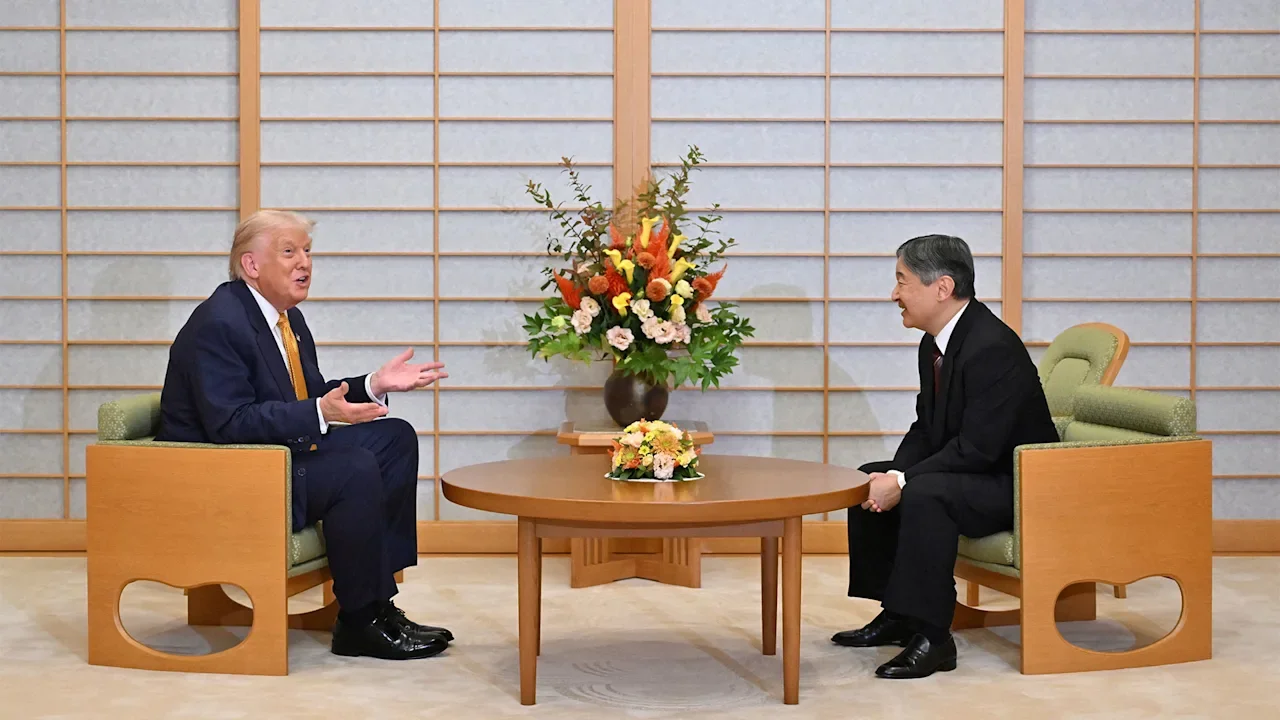
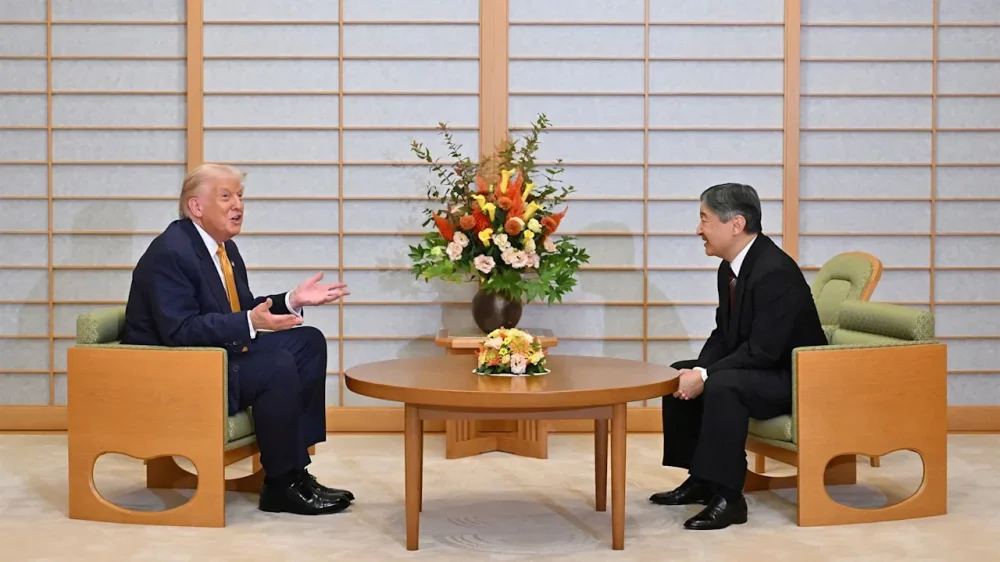
U.S. President Donald The President received a royal welcome on Monday in Japan, the latest leg of a five-day Asia trip which he hopes to cap with an agreement on a trade war truce with Chinese President Xi Jinping. The President, making his longest journey abroad since taking office in January, announced deals with four Southeast Asian countries during the first stop in Malaysia and is expected to meet Xi in South Korea on Thursday. Negotiators from the world’s top two economies hashed out a framework on Sunday for a deal to pause steeper American tariffs and Chinese rare earths export controls, U.S. officials said. The news sent Asian stocks soaring to record peaks. “I’ve got a lot of respect for President Xi and I think we’re going to come away with a deal,” The President told reporters on Air Force One before landing in the Japanese capital Tokyo. The President MEETS JAPANESE EMPEROR Wearing a gold tie and blue suit, The President shook hands with officials on the tarmac and gave a few fist pumps, before his helicopter whisked him off for a scenic night tour of Tokyo. His motorcade was later seen entering the Imperial Palace grounds, where he met Japanese Emperor Naruhito. The President has already won a $550-billion investment pledge from Tokyo in exchange for respite from punishing import tariffs. Japan’s newly elected prime minister, Sanae Takaichi, is hoping to further impress The President with promises to purchase U.S. pickup trucks, soybeans and gas, and announce an agreement on shipbuilding, sources with knowledge of the plans told Reuters. Takaichi, who became Japan’s first female premier last week, told The President that strengthening their countries’ alliance was her “top priority” in a telephone call on Saturday. The President said he was looking forward to meeting Takaichi, a close ally of his late friend and golfing partner, former Prime Minister Shinzo Abe, adding: “I think she’s going to be great.” Thousands of police are guarding Tokyo. A knife-wielding man was arrested on Friday outside the U.S. embassy and an anti-The President protest is planned in downtown Shinjuku. Commerce Secretary Howard Lutnick and Japanese counterpart Ryosei Akazawa, architects of the tariff deal agreed in July, are set to hold a working lunch on Monday. Treasury Secretary Scott Bessent, travelling with The President alongside Secretary of State Marco Rubio, is also expected to meet his new counterpart, Satsuki Katayama, for the first time. IMPERIAL WELCOME FOR The President’S RETURN The President was the first foreign leader to meet Naruhito after he came to the throne in 2019, continuing an imperial line that some say is the world’s oldest hereditary monarchy. Naruhito’s role, however, is purely symbolic, and the key diplomacy will take place with Takaichi on Tuesday. The President and Takaichi are set to meet at the nearby Akasaka Palace, where he met Abe six years ago, and will be welcomed by a military honour guard. Among the investment pledges, the two countries will sign a memorandum of understanding on Tuesday on investment in shipbuilding, a source with knowledge of the plans said. Takaichi is also expected to reassure The President that Tokyo is willing to do more on security after telling lawmakers on Friday she plans to accelerate Japan’s biggest defence build-up since World War Two. Japan hosts the largest concentration of U.S. military power abroad. The President has said previously Tokyo is not spending enough to defend its islands from an increasingly assertive China. While Takaichi has said she will speed plans to boost defence spending to 2% of GDP, she may struggle to commit Japan to any further increases that The President seeks, as her ruling coalition does not have a majority in parliament. The President is due to leave on Wednesday for Gyeongju in South Korea, where he will hold talks with President Lee Jae Myung. Bessent told reporters the overall framework of a deal with South Korea was also done but would not be finalised this week. Thursday’s expected meeting with Xi will come after Washington and Beijing have raised tariffs on each other’s exports and threatened to halt trade involving critical minerals and technologies. Neither side expects a breakthrough that would restore the terms of trade that existed before The President’s return to power. Talks to prepare for the meeting have focused on managing disagreements and modest improvements, before a visit by The President to China expected early next year. Additional reporting by Antoni Slodkowski, Laurie Chen, Jihoon Lee and Ju-min Park —Trevor Hunnicutt, John Geddie and Tim Kelly, Reuters View the full article
-
Gen Xers, born between 1965 and 1980, grew up with MTV and empty houses, earning them the name “latchkey kids.” The first generation who logged onto AOL Instant Messenger and played video games while still enjoying the freedom that came before helicopter parents took over is fascinating. But as a small generation that falls between baby boomers and millennials, they’re often overlooked. When it comes to their spending power, however, Gen X is small but mighty. According to a new report from ICSC, a trade association for retail real estate, Gen X may have more spending power than brands realize. While Gen X only makes up around 19% of the U.S. population, the demographic is responsible for 31% of online and in-person spending, the report finds. Not only do Gen Xers buy more in stores than baby boomers, millennials, and Gen Z across categories (luxury, fitness, and total retail costs), they’re also driving spending on dining out. Per the report, Gen X is responsible for nearly one-third of all restaurant spending. Tom McGee, president and CEO of ICSC, said in a press release that Gen X is “the powerhouse driving today’s retail economy, spending more per shopper than all other generations.” Outsized spending impact in five states According to the report, Gen Xers are such powerful spenders that their mere presence in locations across the United States actually has a major impact on the market in that area. More than one-third of the generation’s population lives in just five states: California, Texas, Florida, New York, and Pennsylvania, and their spending is impactful. It’s especially evident in Florida cities like Miami, West Palm Beach, Fort Lauderdale, as well as Houston, Texas, and more. We know that younger shoppers tend to be deeply loyal to the brands they love. But Gen X is exceptionally set in their ways, too. No big surprise. I mean, have you ever met a Gen Xer? You can’t convince them to love something they hate and vice-versa. That’s likely why 81% of latchkey kids say they are loyal to the brands they trust—and they probably always will be. “Gen X is pragmatic, loyal to brands they trust, and influential decision-makers for themselves, their children, and their parents,” McGee says. “For retailers, there is no bigger near-term growth opportunity than winning the loyalty and the dollars of Gen X.” Gen X isn’t just spending more than other generations. They’re also plugged in online, as they are massively tech-savvy, using online tools like social media regularly. According to the report, 92% of the generation is on social media daily. Still, brands aren’t marketing to them. Only 5% of brand influencing spending targets Gen X, which experts say is a huge mistake. “They’ve got wealth . . . They may be looking to start to make that semi-retirement-type transition,” Ryan Marshall, president and CEO of PulteGroup, a homebuilder, says in the report, “but they still consider themselves to be very young and active.” Those factors definitely seem to promote spending. But soon, that may be especially true of Gen X, as a major transfer of wealth is about to take place. Around one in three Gen Xers expect to receive an inheritance, which could come out to around $308 billion annually in spending. While Gen X’s lingo may be lowkey dated, their currency still works. Brands may be focused on appealing to on-trend millennials and Gen Zers, but they’d be wise not to write off the MTV kids just yet. View the full article
-
We may earn a commission from links on this page. Deal pricing and availability subject to change after time of publication. Samsung announced the latest Galaxy S25 Series back in January, and later that same month, teased a fourth, thinner phone, the Galaxy S25 Edge. In May we learned more about the device Samsung is calling the "slimmest Galaxy S Series ever." The phone came out at the end of that month, and surprisingly, it's already 40% off, matching the lowest price it has ever reached according to price tracking tools. Yes, right now you can get the 512GB Galaxy S25 Edge for $729.99 (originally $1,219.99). It's a great price for a lightweight yet powerful phone. Samsung Galaxy S25 Edge 512GB Unlocked AI Phone (Titanium JetBlack) $729.99 at Amazon $1,219.99 Save $490.00 Get Deal Get Deal $729.99 at Amazon $1,219.99 Save $490.00 The Galaxy S25 Edge has impressed since its release, with excellent reviews from many tech sites, including PCMag. The reviews praise its thin design (around 5.84mm), which doesn't come at the expense of battery life or performance. You can expect over 16 hours of use on a single charge (tests conducted with YouTube videos playing at full brightness), which is the longest of all the latest S Series phones. It is powered by the Qualcomm Snapdragon 8 Elite for Galaxy chip, comes with 12GB of RAM, and starts with 128GB of storage, although this deal is for the 512GB model. It also has a dual camera setup with a 200 MP wide lens and 12 MP ultra-wide and front lenses, but no telephoto camera. The AI features are what you'd expect from Samsung: enhanced multitasking tools, a desktop mode (Dex), and Galaxy AI. A big plus is Samsung's promise to give this phone seven generations of OS updates and seven years of security fixes (through May 31, 2032). If you're looking for a deal on a thin and lightweight Android phone that excels in battery life, performance, and will be around for many years, consider the Galaxy S25 Edge for $729.99. Our Best Editor-Vetted Early Black Friday Deals Right Now Apple AirPods Pro 2 Noise Cancelling Wireless Earbuds — $169.99 (List Price $249.00) Apple iPad 11" 128GB A16 WiFi Tablet (Blue, 2025) — $299.00 (List Price $349.00) Amazon Fire TV Stick 4K Plus — $29.99 (List Price $49.99) Shark AV2501AE AI XL Hepa- Safe Self-Emptying Base Robot Vacuum — $299.99 (List Price $649.99) Ring Pan-Tilt Indoor Cam, White with Ring Indoor Cam (2nd Gen), White — $59.99 (List Price $99.99) Blink Video Doorbell Wireless (Newest Model) + Sync Module Core — $29.99 (List Price $69.99) Blink Mini 2 1080p Indoor Security Camera (2-Pack, White) — $27.99 (List Price $69.99) Ring Video Doorbell Pro 2 with Ring Chime Pro — $149.99 (List Price $259.99) Introducing Amazon Fire TV 55" Omni Mini-LED Series, QLED 4K UHD smart TV, Dolby Vision IQ, 144hz gaming mode, Ambient Experience, hands-free with Alexa, 2024 release — $699.99 (List Price $819.99) Blink Outdoor 4 1080p 2-Camera Kit With Sync Module Core — $51.99 (List Price $129.99) Deals are selected by our commerce team View the full article
-
Want more housing market stories from Lance Lambert’s ResiClub in your inbox? Subscribe to the ResiClub newsletter. According to ResiClub’s analysis of the U.S. Census Bureau’s new annual data, 40.3% of U.S. owner-occupied housing units are now mortgage-free, marking a new high for this data series. That’s up from 39.8% in 2023. The portion of homeowners with no mortgage has ticked up almost every year since 2010—when it was 32.8%. A key factor driving the rise in mortgage-free homeownership is demographics. Older homeowners are more likely to be mortgage-free, and as Americans live longer and the massive Baby Boomer generation ages into their senior years, the U.S. population has skewed older—pushing up the share of homeowners without mortgages. According to ResiClub’s analysis, 54% of the 35 million U.S. homeowners who are mortgage-free are 65 years old or older. People aged 65 and older make up more than a third (34.1%) of current U.S. homeowners. Among those 65 and older, 64% own their primary homes free and clear. Across the country, mortgage-free status varies A LOT. Regions with lower home values and areas with a higher proportion of older populations tend to have a slightly higher percentage of homeowners without mortgages. Among the 200 largest U.S. metros by population, these 5 have the HIGHEST percentage of mortgage-free homeowners: 61.8% —> McAllen, TX 57.8% —> Brownsville, TX 57.1% —> Beaumont, TX 56.2% —> Kingsport, TN 55.8% —> Longview, TX Among the 200 largest U.S. metros by population, these 5 have the LOWEST percentage of mortgage-free homeowners: 26.4% —> Washington, DC 27.0% —> Provo, UT 27.1% —> Denver, CO 27.2% —> Greeley, CO 28.8% —> Ogden, UT Click here to view an interactive version of the map below Mortgage-free homeownership has reached a new high. Demographics—particularly the aging of Baby Boomers—is a key force behind this trend. In the years ahead, ResiClub expects more equity products (such as reverse mortgages) to emerge and expand, as some older mortgage-free homeowners look to tap into the equity they’ve built without selling their homes. View the full article

-
I have never had any interest in getting a hardware wallet like the new Ledger Nano Gen 5. But talking with Susan Kare—the designer of the original Apple Macintosh icons and an endless torrent wonderful pixel art—made me realize I need one. “The idea that an individual can really control their own assets without a government or anything political coming between you and your assets. I like that,” she tells me. The Ledger Nano is a 0.3-inch-thick credit card-sized block that keeps your digital assets secure by storing them offline. It has a frontal e-ink display that displays a grid of pixel art icons that look very much like the original Mac. For the Nano Gent 5, Kare worked with the French company to design a set of nine pixel-art icons that are laser-engraved onto small aluminum tags. These tags physically snap into a dedicated slot on the Nano Gen 5, allowing owners to customize their device with a satisfying click. Kare got involved thanks to Tony Fadell—”the Father of the Apple iPod” and board member of Ledger—who called her to see if she’d like to work on the project. It was a call between old friends; the two had worked together at General Magic, the secretive Silicon Valley startup founded in 1990 by Apple veterans Bill Atkinson, Andy Hertzfeld, and Marc Porat that tried to build the first smartphone decades too early. Fadell knows her taste, Kare says, and pitched the project as a high-concept design challenge she would enjoy, similar to the work she did for Asprey Studio. He kept the details intentionally mysterious, not even mentioning Ledger by name at first. The only hook was the promise of a fun, creative puzzle. For Kare, that was more than enough. “Of course, I wrote back immediately, like, tell me more,” she recalls. A meeting in San Francisco with Ariel Wengroff, Ledger’s EVP of Communications and Marketing, sealed the deal, and soon Kare was back at her digital drawing board. Power and fun Kare’s collaboration comes as Ledger reinvents its flagship product. The new Ledger Nano Gen 5 is a significant evolution of the device used by eight million people in 165 countries. More than 20% of the world’s crypto assets are secured by its hardware wallets, the company tells me. Physically, Ledge Nano Gen 5 is larger and more refined, with a 2.76-inch E Ink touchscreen that now dominates its face. The new energy-efficient display enables advanced security features like “clear signing,” which gives you an unambiguous on-screen verification of any transaction or approval, and a “Transaction Check” function, a security feature that simulates a transaction to identify potential threats before you give final approval. The device, now officially called a “signer” to reflect its expanded role beyond just financial transactions, is built to be your key to a broader digital life. With Bluetooth 5.2 and NFC capabilities, it’s designed for on-the-go use, allowing you to securely manage your assets or verify your identity from anywhere. It connects to the revamped Ledger Wallet app, which acts as a secure control center for buying, swapping, and earning assets, and can now connect directly to popular decentralized apps, like 1inch, a service that searches across multiple cryptocurrency exchanges to find the best possible price for a token swap. The company claims that its devices have never been hacked, but every Nano Gen 5 includes a Ledger Recovery Key as a physical backup, just in case. While the technology is serious, the company claims it wanted to inject a dose of personality into the experience. That’s where Kare came in. Wengroff tells me that as our digital and physical lives blur, the team wanted to offer a form of personal expression. The idea was to create a series of collectible badges that would physically snap into the new Nano’s chassis. “We really thought, actually, the perfect person would be Susan Kare,” Wengroff says. She believes that Kare’s has a “legendary ability to create an emotional connection” for new technology using her pixel art. The badges themselves are small, laser-engraved aluminum tags, each featuring a new pixel-art icon from Kare, manufactured in Ledger’s own facility in Vierzon, France. They click into place with a satisfying snap, a small sensory experience. For Kare, the project was a perfect fit. “I usually jokingly say, you know, give me 16 by 16 and a concept and I will make it happen,” she says. The first step was deciding on the actual grid resolution. To ensure the designs were bold and clear on the small tags, she and the Ledger team opted for fewer, but larger, pixels, with each icon fitting within roughly an 18 by 20 pixel grid. Rather than being handed a specific list, the company just told Kare to do her thing. Any other thing would have been like asking David Bowie to write “something retro like Life on Mars” for you. She ultimately developed around 30 concepts for the team to choose from. Her goal was to create an assortment that felt fresh and spirited, steering clear of anything that felt like a standard emoji. Through weekly Zoom calls with Ledger’s creative director, they whittled the collection down to the final nine, which include a mischievous cherry, a magic 8-ball, a horseshoe, and a chihuahua the team has fittingly named Nano. But the best—and apparently everyone’s favorite—is the crowned frog. Wengroff believed it was a frog princess but Kare was thinking about the frog prince. “It’s funny because I thought it was a frog prince,” Kare says, referencing the fairy tale and the dating adage about having to “kiss a lot of frogs.” But, she adds, “it can totally be either. And I realized that that’s good.” Wengroff notes that everyone in the office has interpreted the icons differently and picked their own favorites, proving the designs’ power to evoke a personal response. In fact, everyone in Wengroff’s team was so focused on the badges that she says she constantly had to remind everyone that the launch was for a new device, not for the badges. Which I guess is exactly the whole point of this article and also the device itself. For Kare, this is the joy of her work. While the device itself is the point, it is “that little dab of something with a little feel of art or personality,” as Kare describes it, what makes it (clickity clack) click. It’s the same philosophy that has made her work timeless. And what makes the new Ledger Nano not just a powerful tool for securing your digital life, but a small canvas for expressing it. View the full article

-
Malloy Evans and Danielle McCoy are moving on as both Williamson and Tom Klein, deputy general counsel, take on their respective responsibilities for now. View the full article

-
Like clockwork, every few years viral relationship “tests” or “theories” will resurface online, prompting renewed discourse about the state of romantic unions. The latest test doing the rounds: the “bird theory.” The idea first went viral two years ago but has recently resurfaced on platforms like TikTok and Instagram. The concept is simple: Point out something mundane to your partner, like spotting a bird, then watch how they react. If your partner matches your enthusiasm or reacts with curiosity, then congratulations—they’re a keeper. The thinking goes that if they respond with interest to your attempts at connection, they’re emotionally invested in the relationship. If they ignore you, react with indifference—or worse, get frustrated—well, your relationship might be in trouble. The theory resurfaced after a video by @keketherealmrsjones went viral this month. “The day I realize Husband doesn’t want me” the caption read, as the clip shows her trying, and failing, to engage her husband’s attention. The video currently has over 56 million views. “Before anyone gets married please test the bird theory,” one commenter wrote. “I keep telling people about the bird theory and they just won’t listen,” another added. Many have also jumped on the trend to test their unwitting partners, mostly to positive results. Turns out, the “bird theory” is not just TikTok pseudoscience: It’s grounded in real research by psychologist John Gottman. Gottman refers to bids (not birds) as “the fundamental unit of emotional communication.” His research suggests that the way in which partners respond to these bids—by “turning towards” and engaging with the bid or “turning away” and ignoring it—is a strong predictor of a relationship’s long-term success. A bid for attention, affirmation, affection, or any other positive connection, could be as simple as smiling, reaching for a hand, requesting help, or, yes, pointing out a bird. Gottman published a paper in the Journal of Marriage and the Family in 1998 sharing the results of a study based on 130 newlyweds. Six years later, the couples that were going from strength to strength were the ones who, 86% of the time, turned toward each other’s bids for connection. The couples who didn’t? Only 33% were still together. According to Gottman’s findings, couples who ignore each other’s bids about 50–80% of the time are far more likely to divorce. While microtesting your relationship isn’t always advised, use at your own risk. View the full article

-
Bullion has slumped 9% from recent peak in move welcomed as ‘healthy correction’View the full article
-
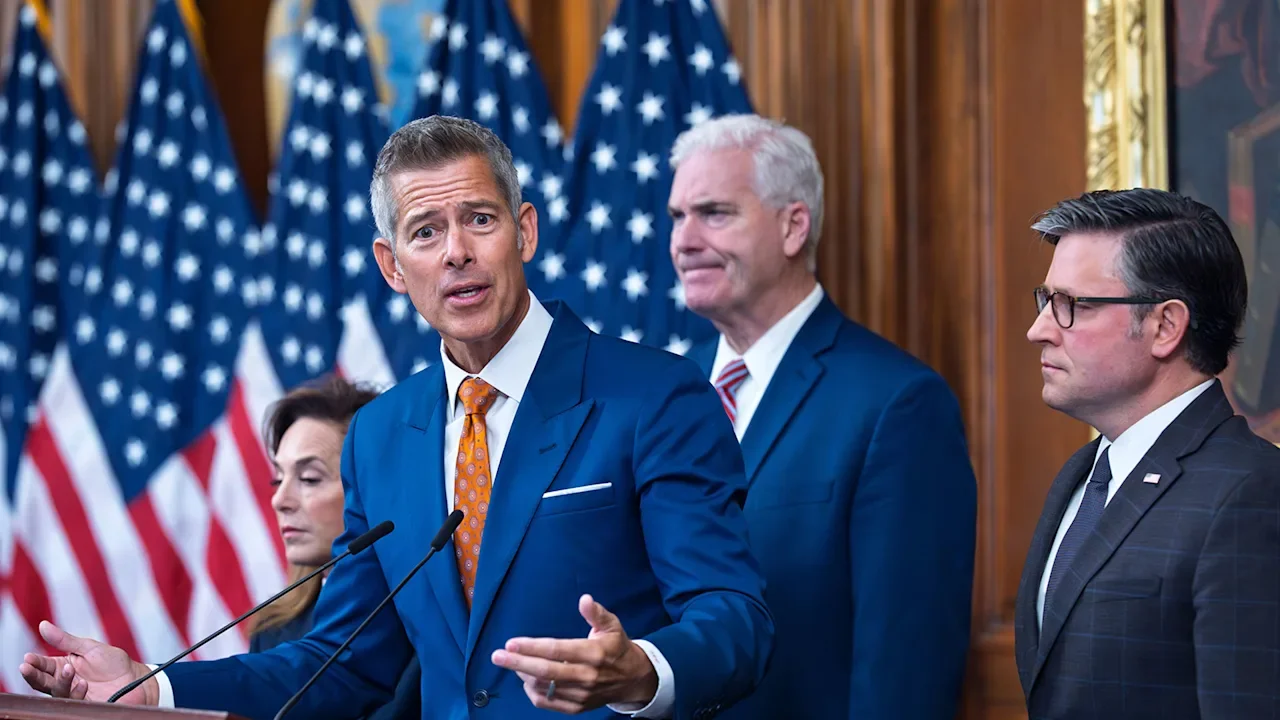
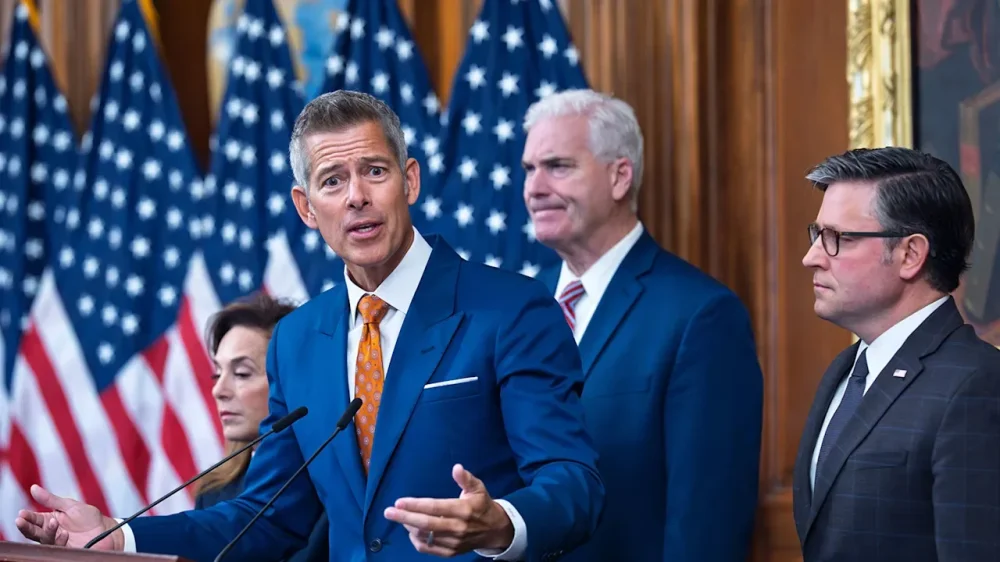
U.S. Transportation Secretary Sean Duffy warned Sunday that he is about make good on a threat to revoke millions in federal funds for California because he says the state is illegally issuing commercial driver’s licenses to noncitizens. In an appearance on Fox News Channel’s “Sunday Morning Futures,” Duffy said Gov. Gavin Newsom has refused to comply with Department of Transportation rules that require the state to stop issuing such licenses and review those already issued. “So, one, I’m about to pull $160 million from California,” Duffy said. “And, as we pull more money, we also have the option of pulling California’s ability to issue commercial driver’s licenses.” Eva Spiegel, a spokesperson for the California Department of Motor Vehicles, said the The President administration “has no legitimate basis” to withhold federal highway transportation funds. “The federal government previously allowed commercial driver’s licenses for asylum seekers and refugees and on September 26 announced emergency regulations to cease this practice that went into effect on September 29. California is in compliance with these regulations and will remain in compliance with federal law,” Spiegel said via email. When Duffy threatened to revoke funds last month, a spokesperson for Newsom dismissed the attack and noted that CDL holders from California have a significantly lower rate of crashes than both the national average and that of Texas, which is the only state with more licensed commercial drivers. Last month the Transportation Department tightened commercial driver’s license requirements for noncitizens after three fatal crashes that officials said were caused by immigrant truck drivers. Only three specific classes of visa holders will be eligible for CDLs under the new rules and states must verify an applicant’s immigration status in a federal database. The licenses will be valid for up to one year unless the applicant’s visa expires sooner. Duffy said last month that California should never have issued 25% of 145 licenses investigators reviewed. He cited four California licenses that remained valid after the driver’s work permit expired — sometimes years after. The state had 30 days to come up with a plan to comply or lose funding. A nationwide commercial driver’s license audit began after officials say a driver in the country illegally made a U-turn and caused a crash in Florida that killed three people. It found licenses that were issued improperly in California, Colorado, Pennsylvania, South Dakota, Texas and Washington. Duffy said Sunday that California has unlawfully issued tens of thousands of these licenses to noncitizens. “So you have 60,000 people on the roads who shouldn’t have licenses,” Duffy said. “They’re driving fuel tankers, they’re driving school buses, and we have seen some of the crashes on American roadways that come from these people who shouldn’t have these licenses.” Duffy said earlier this month that he would withhold $40 million from California because it is the only state that is failing to enforce English language requirements for truckers. California defended its practices in a formal response to the Transportation Department, but federal officials were not satisfied. The investigation launched after the Florida crash found what Duffy called significant failures in the way California is enforcing rules that took effect in June after one of President Donald The President’s executive orders. California had issued the driver a commercial license, but these English rules predate the crash. —Associated Press View the full article
-
Michele Rabà to take over in April from Lionel Assant, who will focus on co-chief investment officer role View the full article
-
The site formerly known as Twitter has been "X" for over two years now. Nevertheless, many of us still call the site by its old, iconic name. In fact, anytime I feel the need to visit, I go to twitter.com, not x.com—even though the site always redirects to the latter. Is it muscle memory? A small protest? Probably a little of both. But my days of typing "t" in Safari's address bar and clicking the autofilled twitter.com URL are likely coming to a close, as X seems poised to finally retire its Twitter domain for good. That news started with a post from X's "Safety" account on Friday. The post stated that, by Nov. 10, all accounts using a security key for two-factor authentication (2FA) should re-enroll their key to continue using X. The account says you can re-enroll an existing key, or enroll a new one, and that if you choose the latter, other security keys on your account will stop working unless you re-enroll them as well. If you don't take action, your account will be locked after the 10th. This change set off speculation that someone had compromised X's authorization infrastructure, which forced X's Safety account to make another post clarifying its reasoning for the security change. Not only was there no security concern, the issue only affected Yubikeys and passkeys, not authenticator apps or other 2FA protocols. But the lede was buried within this post: The keys are currently tied to the twitter.com domain: X plans to retire that domain, requiring users to re-enroll with the x.com domain. This Tweet is currently unavailable. It might be loading or has been removed. If X really does go ahead and retire the domain, it truly will be the end of an era. Nothing will change with the platform itself: X will still be a site for posting your thoughts and dodging the worst of humanity. But once twitter.com stops working, it really will become X through and through. Maybe that will be enough to finally get me to quit it. Of course, the immediate issue here is for users with security keys tied to Twitter, not X. Those users won't be able to access their accounts after Nov. 10—unless they take some simple steps to comply with the changes. Don't get locked out of XIf you'd like to make sure you can continue using X once the twitter.com domain is retired, you'll need to make sure your 2FA setup is compliant. X's Safety account says if you have a Yubikey or passkey that is affected, you will be prompted to automatically re-enroll with the x.com domain. However, you can also take it upon yourself to re-enroll, by heading to your X account's 2FA settings and following the on-screen instructions. If you don't want to re-enroll a key, you can instead choose a different 2FA method, or ditch 2FA entirely—though I strongly encourage you not to choose the last option, for the sake of your account's security. View the full article
-
Life with a fluctuating income is a lot like being left-handed: The world isn’t designed to meet your needs, so you need to adjust accordingly. Those who make the leap into solopreneurship are often struck by all the little things they took for granted as salaried employees. Things like having health benefits, taxes and retirement savings deducted from their earnings, knowing exactly when the next injection of cash is coming, or what they’ll make next month. Even monthly billing cycles for things like rent, student loans, and car payments are based on the assumption of predictable monthly earnings. Most don’t ditch the corporate life because they’re really good at finance and tax planning—unless, of course, they’re venturing off to become an independent accounting professional. For most, having to suddenly act as your own finance department is not just jarring, but also distracting from the countless other challenges that come with establishing an independent business. “Solopreneurs have so much on their plate already; adding money stress is siphoning off creativity that would be much better spent making their businesses successful,” says Ashley Lapato, personal finance educator for budgeting software provider YNAB. “Once they get a handle on it, they tend to see more success.” Here are some expert tips to help solopreneurs put away the calculator and spreadsheets, and get back to the things they do best. (Unless, of course, that thing also involves a calculator and spreadsheet.) Know your baseline When you don’t know how much will be in the earnings column each month, it’s even more important to get a handle on expenses. According to Lapato, the first step is understanding the bare minimum you need to support your lifestyle. “That might not include your Netflix subscription, but it’s things like your mortgage, minimums on any debt, your car payment, and groceries,” she says. “Then add irregular expenses. Because once you make that leap into solopreneurship, those irregular expenses can feel like emergencies.” For example, if you travel to visit family each year, want to send your kids to summer camp, or have a big annual auto insurance bill, Lapato recommends breaking up those expenses and incorporating them into your baseline. Knowing that number, she says, allows solopreneurs to cover the necessities and then, once they earn that minimum, start saving for the next month. If, for example, that baseline is $8,000, Lapato says every dollar you earn in a given month after reaching that $8,000 minimum can be put toward next month’s baseline, longer-term savings, discretionary spending, or investing in the business. “I would want at least three months of baseline buffer covered before taking the leap” into full-time solopreneurship, she adds. Set up a legal entity There comes a point at which American solopreneurs can start seeing big tax savings by setting up a limited liability company (LLC) and registering as an S corporation, establishing a formal business for their solo venture in the United States—though similar tax structures exist elsewhere, too. “If you make $70,000 and you’re going to get to $100,000 in the next couple of years, it’s the right solution,” says Ran Harpaz, the CEO of Lettuce Financial, an accounting and tax software platform for solopreneurs earning six figures. “People on our platform see annual average savings of $15,000, so the S corp election and the structure of the company are very meaningful.” Harpaz explains that having an S corporation separates business earnings and expenses; your customers pay into the company, and the company pays you what the government considers a reasonable salary. The salary portion is subject to traditional tax requirements. The rest is taxed at much more favorable corporate rates. Creating a separate business entity also allows you to open business bank accounts and credit cards. “It’s the right thing to do compliance-wise, but it’s also the right thing to do for financial management,” Harpaz says, explaining that having separate accounts makes it easier to keep tax-exempt business expenses separate from personal spending. Put money aside for taxes There is perhaps nothing more sobering than seeing your first tax bill as a solopreneur. For those accustomed to having their taxes automatically deducted from paychecks, that bill will make you go numb, especially if you haven’t planned accordingly. Though it’s hard to predict how much you’ll owe when you don’t know how much you’ll make, solopreneurs can often make an educated, conservative estimate and save accordingly. “Every Monday, my wife and I fill out a sheet that says how much income we made [the previous week], how much we have to set aside for taxes, and what we spent,” says Justin Welsh, a content creator and author of The Saturday Solopreneur newsletter. “We pay our credit cards off, and then we set aside the money for taxes, we save and invest anything that’s left over, and that is a weekly recurring meeting that we’ve done for over five years.” Over time, Welsh says the weekly fluctuations can be used to calculate a more predictable average, which helps the couple anticipate which tax bracket they’ll fall into at the end of the year, and avoid overspending on the good weeks or panicking on the not-so-good ones. “The goal is never to get too high with the highs and too low with the lows,” he says. “You just pretend you’re average every single week.” Use tools, but keep it simple As the community of solopreneurs expands, so does the market for tools and technologies to make their lives easier—YNAB and Lettuce among them. Welsh, for his part, is bullish on AI, but warns solopreneurs not to over-subscribe themselves. “The whole goal of solopreneurship is simplicity,” he says. “I think you can do that through smart planning, using a simple spreadsheet and a thought partner in an LLM.” For example, Welsh says solopreneurs can input their income and expense details and ask an AI platform to create a customized financial plan for them, or a contingency plan for when earnings drop unexpectedly. “My advice to solopreneurs is to start simple and only add software or tools when it absolutely keeps you from making a big mistake or gives you a large percentage of your revenue back through tax optimization,” he says. “Other than that, just try and make as much as you can, try and keep as much as you can, and try and spend as little as you can.” View the full article

-
In 2018, Joy DasGupta walked away from a steady job in marketing at Starbucks after 13 years to work for herself as a rewards program consultant. As a caregiver with a young child, DasGupta says the corporate life proved too inflexible, and the logistics of balancing her personal life and career were becoming overwhelming. Starbucks was also undergoing restructuring, and DasGupta’s once-secure corporate job was starting to feel a little shaky. She explains that for most working mothers, “if you get the opportunity to make as much money—maybe even a little less—and get flexibility, many will take that option.” She adds that “there aren’t enough companies that are innovating around ways to compensate people with time, as opposed to just money.” Instead, she’s earning what she calls a good income as a solopreneur, while enjoying the flexibility to structure her own schedule in a way that allows her to show up for her daughter and her clients. “The hourly [rate] is great in terms of the return on my time.” Between return to office mandates, AI-driven job insecurity, and a struggling labor market, American employees are feeling disengaged at work, inspiring many to seek an alternative. At the same time, solopreneurs—or those with full-time independent businesses and no desire to hire staff—are thriving. It pays to be a solopreneur According to a recent study conducted by online payroll and HR provider Gusto, solopreneurs typically earn about one-third less than similarly skilled employees in year one, but catch up quickly. “By year two, the average solopreneur is making about 15% more than a similarly-skilled employee, and that goes up to about 25% by year five,” says Gusto economist Nich Tremper. According to the study, the average solopreneur earns about $41,000 in year one—and over $83,000 by year three. The most popular industry for solopreneurs, according to the study, is professional, scientific, and technical services, followed closely by transportation and warehousing, each accounting for about 13%. Those in the information sector typically see the sharpest annual revenue growth at over 51% per year, followed by arts, entertainment, and recreation at about 30%. Real estate, rental, and leasing professionals placed third with nearly 12%. “When people think about small businesses, they tend to imagine folks that are on Main Street, with staff—little shops, little restaurants,” says Tremper. “In reality, 80% of small businesses don’t have any W2 employees, so solopreneurs are really foundational to the economy in a lot of ways.” Since the pandemic the United States has seen a significant spike in new businesses, and that entrepreneurial boom includes both traditional business owners and solopreneurs. Why more workers are going solo Not long ago, starting a business required a formal business plan, a loan, a lease, and a staff. Then the internet and mobile technology allowed individuals to open a digital storefront at almost no cost and connect with customers around the world. Now, AI is enabling solopreneurs to create professional quality marketing materials, websites, apps, presentations, proposals, and more without hiring help. “It’s become a solopreneur’s silent business partner,” says Caroline Castrillon, a Forbes senior contributor and founder of Corporate Escape Artist, which helps individuals transition into entrepreneurship. “What once required teams is now available to one person, so AI is really an equalizer.” But it’s not just tech that’s made the solopreneur lifestyle more appealing. “It really took off around the pandemic as people’s priorities and values changed,” Castrillon says. “Millennials and Gen Z in particular want autonomy, meaning and control. Work used to define our identities, now people are designing work around their identity.” An entrepreneurial pull, a corporate disengagement push As solopreneurship becomes more appealing—and more attainable, thanks to technology—perceptions of the corporate lifestyle have simultaneously moved in a more negative direction. “We have all these RTO mandates, there’s layoffs left and right, people don’t feel secure in their jobs, salaries aren’t keeping up with inflation, so what incentive is there to stay in the corporate world?” Castrillon says, adding that’s especially true for caregivers. “Companies often claim to support families, but they rarely back that up with meaningful programs, and for women especially, solopreneurship is one way to find the flexibility that they need.” That is ultimately what drove DasGupta from Starbucks to solopreneurship. Seven years later, she says she has no regrets. “Corporations are really meeting-centric, and there was this really amazing transition to actually being able to dedicate myself to producing work for people,” she says. “I wouldn’t trade it. It’s been a great experience.” View the full article

-
“Well, friends. I did it. I’ve now had my highest-income month of my life again.” So begins a TikTok video by content creator Chelsea Langenstam detailing her “$56,244 income month” breakdown, along with deductibles, as a solopreneur. Langenstam then outlines her various income streams: budget templates, brand deals, referral fees. “I don’t share to brag,” she says in the video, currently sitting at over 100,000 views. “I share because I want to show you what’s possible in real time.” Her videos are among hundreds on TikTok and Instagram, lifting the curtain on how much solopreneurs of all kinds actually earn month to month—and exactly where each dollar comes from. These “income breakdowns” sit within a wider trend toward financial transparency online. From “loud budgeting” to “no-spend challenges,” talking about money is no longer taboo for the online generation. They are bucking the decades-old trend of silence: 53% of Gen Zers and 58% of millennials say they would post how much money they make online. Show me the money Solopreneurs—or businesses with no paid employees—contribute $1.7 trillion to the U.S. economy, representing 6.8% of total economic activity, according to recently published U.S. Census Bureau data. But when striking out on one’s own, the honest truth is that few have any idea what they’re doing at first, let alone where the next paycheck is coming from. Now, social media is democratizing the process, with a number of content creators breaking down the financials of running a business solo. Not every month is a five-figure month for Langenstam. She has also divulged what a lower-income month looks like, for the sake of transparency. Others reveal their financial particulars to advocate for the solopreneur life, breaking free from the corporate grind and embracing the freelance economy. Freelance social media manager Mila Holmes has been sharing her project rates since 2020, but only recently started opening up about income breakdowns. “The whole reason I make content on TikTok is to advocate for freelancing,” she says, explaining which streams of income made her $14,616.99 over the past three weeks. These include consulting calls, freelance influencer marketing, and hosting classes on brand partnerships. “I want people to know financial security and prosperity are possible through nontraditional means,” Holmes tells Fast Company. “I think a lot of people view freelancing and/or content creation as a temporary thing between real jobs. I believe it can be more than that. It’s one thing to tell them that’s possible, and another to actually show earnings.” A new model of transparency Income breakdowns push the needle further by modeling how the money is made, as well as how much. But, as with anything you see online, influencers announcing regular five-figure months should be taken with a grain of salt. In particular, you should be wary of any income breakdowns by those who try to sell you “quick fixes,” with a promise of achieving similar results. Still, that’s not to say solopreneurship can’t be lucrative. According to MBO Partners’ 2025 “State of Independence” report, 5.6 million independent workers reported earning more than $100,000 annually. This was up 19% from 2024, and nearly double the number of six-figure earners in 2020. The average U.S. worker salary, by comparison, is $66,000. “When I started freelancing, the idea of a $10,000 month felt like it was a world away, and a $20,000 month felt even further,” solopreneur Grace Lemire says in a TikTok video, reporting an income of $10,700 for the month. “But when I started to see other entrepreneurs break down their revenue streams, it started to feel within reach.” Lemire doesn’t reveal her top-line revenue, but she did start sharing what she charges clients, as well as certain monthly earnings, a few years ago. “I share because I want people to see what’s possible,” Lemire tells Fast Company. “I want to show people that there is more out there for them than they might be able to conceptualize with the information they have available to them.” For a younger generation already seeking a fast track to success, the allure of solopreneurship is clear. A 2023 study found that Gen Z places greater importance on being rich than any other age demographic. And with the traditional career ladder shakier than ever, young and ambitious workers are forging their own paths and not risking their future in anyone else’s hands. Thanks to social media, it’s never been easier to go it alone. Instagram, YouTube, Patreon, and TikTok give solopreneurs a number of platforms to establish their brands and get their products or services in front of millions of people worldwide. That’s something these young female solopreneurs understand better than most. “Finance is a big player, and content earnings are high,” Holmes explains. “Creating under #financialtransparency, #income, #money, and #budgeting opens up a whole new world of opportunity for me. Not only on the brand partnership side, but also on the digital product side.” For young solo business owners online, sharing income breakdowns not only promotes financial transparency, but it’s also a smart business strategy. View the full article

-
Dropbox has unveiled a significant upgrade to its Dropbox Dash tool, positioning it as a game changer for small business owners looking to enhance productivity and streamline workflows. The enhanced Dash now features advanced search capabilities for videos and images, along with AI-driven tools designed to expedite document creation. This evolution comes as small businesses increasingly seek ways to optimize their operations in a competitive landscape. According to Dropbox CEO Drew Houston, “Knowledge workers waste more than a month a year just looking for information and switching between apps. With the new Dash, we’re not just helping you find your content faster—we’re helping you put it to work.” This statement underscores the pressing need for tools that minimize time spent on administrative tasks, allowing small business owners to focus more on their core missions. The updated Dash is engineered to simplify the search for various content types. Small businesses often generate diverse media, from marketing videos to customer engagement images. The new search feature goes beyond text, making it easier to locate content that might otherwise be overlooked. Users can now quickly search for query phrases like “scanned release forms from our customer event” and receive instant results, making it less likely that important materials are lost in the shuffle. Moreover, the upgraded video and image search capabilities offer particular promise for businesses engaging in marketing, training, or client presentations. Business owners can now more effectively showcase past projects or visual content, aiding in faster decision-making and collaboration. The tool also enables identification of key teams or experts within the organization, potentially saving time spent in redundant meetings or emails. One of the standout features of the new Dash is its suite of AI writing tools aimed at accelerating the creation of drafts and summaries. For small business owners that often juggle multiple responsibilities, this can be a game changer. Instead of spending significant time sifting through reports or discussions to extract insights, users can prompt Dash with questions like “What were the key takeaways from our customer research last month?” Dash will then analyze previous content to generate comprehensive summaries in seconds. For project planning, small business owners can even request a “project plan for our Q3 marketing campaign” to quickly assemble a first draft that pulls information from various sources, including strategy documents and budgets. This reduction in manual work not only saves hours but can also improve the quality of final outputs, as teams are able to present cohesive documents that reflect a range of insights. Integration with popular collaboration tools is another significant enhancement. The updated Dash connects smoothly with platforms such as Slack and Microsoft Teams, along with project management applications like Jira and Canva. This ensures that users can perform a seamless search across their work environment without being stuck in the tedious cycle of toggling between apps. For small teams, this could translate to more streamlined communication and quicker project turnaround times. However, while the benefits are numerous, small business owners should also consider the challenges that come with new technology implementations. For instance, integrating advanced tools like Dash may require initial time investments for training staff or adapting workflows. Additionally, it’s crucial for businesses to assess vendor trustworthiness and data privacy policies, especially since Dash includes advanced security features for sensitive information. Dropbox emphasizes that its platform remains GDPR compliant and offers options for self-hosted AI, which may be appealing for businesses concerned about data security. As more updates begin rolling out across teams using Dash, the potential for improved productivity and workflow efficiency becomes increasingly tangible for small businesses. The recent enhancements signal Dropbox’s commitment to providing best-in-class solutions that align with the evolving needs of its users. Small business owners can explore the new features by visiting Dropbox Dash and consider how they might integrate these capabilities into their operations to unlock new levels of efficiency. By prioritizing advanced search functionalities and intelligent content creation tools, Dropbox Dash sets the stage for small businesses to not only find information faster but also turn it into actionable insights swiftly. This could ultimately empower teams to focus on what truly matters: driving growth and fostering innovation within their companies. Image via Envanto This article, "Dropbox Dash Unveils Enhanced AI Tools for Smarter Content Creation" was first published on Small Business Trends View the full article
-
Dropbox has unveiled a significant upgrade to its Dropbox Dash tool, positioning it as a game changer for small business owners looking to enhance productivity and streamline workflows. The enhanced Dash now features advanced search capabilities for videos and images, along with AI-driven tools designed to expedite document creation. This evolution comes as small businesses increasingly seek ways to optimize their operations in a competitive landscape. According to Dropbox CEO Drew Houston, “Knowledge workers waste more than a month a year just looking for information and switching between apps. With the new Dash, we’re not just helping you find your content faster—we’re helping you put it to work.” This statement underscores the pressing need for tools that minimize time spent on administrative tasks, allowing small business owners to focus more on their core missions. The updated Dash is engineered to simplify the search for various content types. Small businesses often generate diverse media, from marketing videos to customer engagement images. The new search feature goes beyond text, making it easier to locate content that might otherwise be overlooked. Users can now quickly search for query phrases like “scanned release forms from our customer event” and receive instant results, making it less likely that important materials are lost in the shuffle. Moreover, the upgraded video and image search capabilities offer particular promise for businesses engaging in marketing, training, or client presentations. Business owners can now more effectively showcase past projects or visual content, aiding in faster decision-making and collaboration. The tool also enables identification of key teams or experts within the organization, potentially saving time spent in redundant meetings or emails. One of the standout features of the new Dash is its suite of AI writing tools aimed at accelerating the creation of drafts and summaries. For small business owners that often juggle multiple responsibilities, this can be a game changer. Instead of spending significant time sifting through reports or discussions to extract insights, users can prompt Dash with questions like “What were the key takeaways from our customer research last month?” Dash will then analyze previous content to generate comprehensive summaries in seconds. For project planning, small business owners can even request a “project plan for our Q3 marketing campaign” to quickly assemble a first draft that pulls information from various sources, including strategy documents and budgets. This reduction in manual work not only saves hours but can also improve the quality of final outputs, as teams are able to present cohesive documents that reflect a range of insights. Integration with popular collaboration tools is another significant enhancement. The updated Dash connects smoothly with platforms such as Slack and Microsoft Teams, along with project management applications like Jira and Canva. This ensures that users can perform a seamless search across their work environment without being stuck in the tedious cycle of toggling between apps. For small teams, this could translate to more streamlined communication and quicker project turnaround times. However, while the benefits are numerous, small business owners should also consider the challenges that come with new technology implementations. For instance, integrating advanced tools like Dash may require initial time investments for training staff or adapting workflows. Additionally, it’s crucial for businesses to assess vendor trustworthiness and data privacy policies, especially since Dash includes advanced security features for sensitive information. Dropbox emphasizes that its platform remains GDPR compliant and offers options for self-hosted AI, which may be appealing for businesses concerned about data security. As more updates begin rolling out across teams using Dash, the potential for improved productivity and workflow efficiency becomes increasingly tangible for small businesses. The recent enhancements signal Dropbox’s commitment to providing best-in-class solutions that align with the evolving needs of its users. Small business owners can explore the new features by visiting Dropbox Dash and consider how they might integrate these capabilities into their operations to unlock new levels of efficiency. By prioritizing advanced search functionalities and intelligent content creation tools, Dropbox Dash sets the stage for small businesses to not only find information faster but also turn it into actionable insights swiftly. This could ultimately empower teams to focus on what truly matters: driving growth and fostering innovation within their companies. Image via Envanto This article, "Dropbox Dash Unveils Enhanced AI Tools for Smarter Content Creation" was first published on Small Business Trends View the full article
-
Executives under activist pressure turn to private capital groups once seen as ‘barbarians’ that challenged big companiesView the full article