Newsletter
Want to keep up to date with all our latest news and information?


ResidentialBusiness
Administrators
-
Joined
-
Last visited
Everything posted by ResidentialBusiness
-
If you have a stressful job, meditation can help—but it’s not easy to meditate at work. A new workplace pod is designed to help by giving you a private place to take a break, run through a guided meditation or breath work, and begin to experience benefits like improved focus and reduced burnout. OpenSeed, the startup behind the Iris Pod, launched in 2018 after founder Jonathan Marcoschamer attended a 10-day silent meditation course. He wanted to keep meditating during the day, but was working in an open plan office. “I couldn’t find anywhere to meditate,” he says. He also wanted to help make meditation more accessible for other people. So he started work on a prototype of a pod that could sit in a larger space. The first version was installed at companies like Deloitte and Morgan Stanley, where Marcoschamer says that it’s used as often as 16 times a day. The new version, in production now for delivery in early 2026, was developed over the last few years with Yves Behar’s Fuseproject, along with the Mexico City-based design studio Tuux. When you step inside the womb-like pod and close the door, a light outside shows that it’s occupied. Made from wood and wool felt panels and softly lit, it feels welcoming. “At the onset, we asked one question: how do we make an environment that as soon as you stepped in, it made you feel calmer?” says Marcoschamer. The panels, with wood sandwiched between two layers of felt fabric, help isolate sound so you don’t hear coworkers when you’re inside. On a tablet, you choose a program—a meditation to help boost energy, for example, or to calm you down after a stressful meeting. Music helps guide your breath, synchronized with the lighting. The floor and seat gently vibrate. Lavender and other essential oils offer aromatherapy. The sessions are designed to last around 10 minutes. Fuseproject designed the large pods to ship flat and then be easily assembled on site—drawing on the team’s previous experience with prefab homes—rather than delivering the product in a giant crate. “Shipping is always such a high cost, both in terms of the final price point of the product and environmental cost,” says Behar. The pod can be assembled within a few hours. (Initially, the team also planned to use recycled, 3D-printed wood for the structure, but the new technology wasn’t quite ready for this type of application.) The pods can be used in places beyond offices; one of the newest customers is a cancer treatment center, where OpenSeed plans to study how using the pods reduces stress. Other hospitals already used the first version of the product for doctors and nurses on breaks, but now it will also be used by patients. A correctional facility will provide the pod for police officers. The product is pricey, at $22,500 plus shipping and installation fees, but Marcoschamer argues that in a large office where it’s frequently used, the cost per use is low. “We’re seeing so many high-end wellness centers with all these very expensive treatments,” he says. “We want this to be something that’s accessible.” View the full article

-
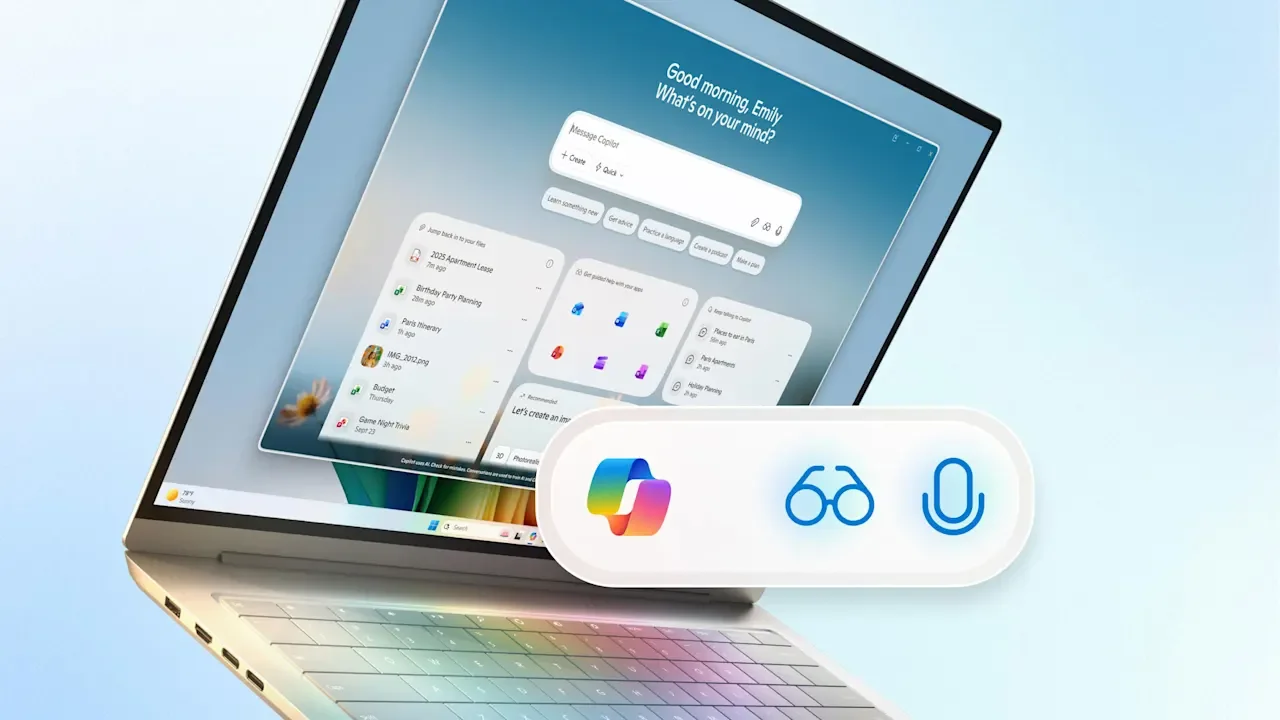
People remember many things about Windows 95, which turned 30 a couple of months ago. There were its signature new features, such as the Start Button, taskbar, and long file names. The launch event—hosted by Jay Leno—at Microsoft’s campus. The TV commercials with the Rolling Stones’ “Start Me Up.” The crowds of PC users so eager to get their hands on the upgrade that they descended on computer stores at midnight. Here’s a fact about Windows 95 that isn’t exactly iconic: It was the first voice-enabled version of Microsoft’s operating system. A collection of technologies known as the Microsoft Speech API (SAPI) provided support for speech recognition and synthesis, letting developers create apps that could speak and be spoken to. But SAPI didn’t go on to revolutionize how people used Microsoft products. Neither did any of the numerous other voice-centric technologies it has developed over the decades, such as its 1990s Auto PC car platform and the ill-fated Siri counterpart Cortana. “It’s kind of amazing to think about it, really,” muses Microsoft executive VP and consumer CMO Yusuf Mehdi. “It’s probably been 30, 40 years since there was a new input mechanism for your PC. We had the keyboard, and then we introduced the mouse. There has not been another input mechanism.” Like many of the people presently charting a future for Windows, Mehdi has seen much of that history firsthand as a Microsoft employee—34 years of it, in his case, and though he’s glossing over touchscreens and styluses—both of which are part of Microsoft’s own Surface line and have their devotees—his overarching point stands. For all the ways Windows has evolved, the basic means of interacting with it have remained enduringly resistant to change. Yusuf Mehdi Once again, Microsoft is trying to overcome that. The company is announcing a Windows 11 update that lets you seek help from its Copilot AI by talking to it, with the response also coming in spoken form. Known as Copilot Voice, the feature leverages Copilot Vision, a technology—first previewed a year ago—that can scan the contents of your screen to suss out what you’re working on, whether you’re perusing a social media feed in your browser, crafting a business proposal in Word, or studying for an exam. If voice input and output provide the interface for this new Windows experience, Copilot Vision is the glue that holds it together. “It doesn’t require Copilot to have programmatic understanding of every app in the world,” says Pavan Davuluri, Microsoft’s president of Windows + Devices, who will soon mark his 25th anniversary at the company. “It just sees what you allow it to see and infers the world. It helps you with the task that you’re probably engaged in at that point in time.” Generative AI—including technologies Microsoft gets from its partner OpenAI—makes that possible. As corporate VP of Windows experiences (and 24-year Microsoft veteran—see a pattern here?) Navjot Virk puts it, “The point is not just that you can talk to your PC, the point is that the PC now understands you.” But making AI make sense in Windows is only partially about the technology performing as promised. In a world full of AI features that can feel like needy, uninvited distractions, Microsoft wanted this one to be welcome. Users must explicitly opt into Copilot Voice and Copilot Vision and use the wake word “Hey Copilot” to summon them. And even then, they’re designed to be unobtrusive complements to the familiar keyboard-and-mouse experience. “People know what they want to do,” says Virk. “We should make sure we get out of their way, but give them the tools that they will use.” That’s a sharply different vision from the one Microsoft rolled out at a May 2024 event with the lofty tagline “A new AI era begins.” The era in question involved a new class of laptop, called Copilot+ PCs, that packed powerful Qualcomm Snapdragon chips. Yet they were short on AI-related features compelling enough to justify buying a new computer. This time, Microsoft is concentrating on making AI available and appealing to all Windows 11 users, regardless of the machine they’ve got. The question the company asked itself, Mehdi says, is “What does a real AI PC look like in this next phase?” In some ways, its answers are utterly straightforward. Even so, putting the real in “real AI PC” will keep it busy for years. The ultimate AI proving ground For all its mundane workaday ubiquity, Windows is a demanding proving ground for AI. According to Microsoft, the operating system is currently running on 1.6 billion devices, a figure that includes both Windows 11 and the theoretically moribund Windows 10. Sure, some of its users are early adopters eager to be wowed by the latest technology, even in imperfect form. But many more just want Windows to be a reliable, surprise-free tool to accomplish daily tasks. Their bar for finding AI palatable isn’t lower than that of the enthusiasts—it’s higher. Those 1.6 billion devices also reflect an endless array of manufacturers, models, and configurations—a formidable challenge when it comes to deploying a voice interface that consistently works well. Not that long ago, PC-based voice-controlled assistants tended to interrupt themselves and otherwise fail to engage with the world in ways that were fluid and natural, notes Microsoft technical fellow Stevie Bathiche (26 years at the company). “That’s because [they] didn’t have a high-quality audio pipeline,” he says. “Now that’s solved.” Pavan Davuluri Microsoft’s solution borrows from work it originally did for Cortana and Teams and involves technologies such as beam forming, which help a PC block out irrelevant ambient noise. That helps even with basic Copilot Voice features that don’t sound like huge deals in themselves: the “Hey Copilot” wake word and ability to say “Goodbye” to conclude an AI session. But the most challenging part was what came in between: getting the AI to correctly handle everyday tasks as users might phrase them, regardless of their degree of AI savvy. With consumer AI in its typical current form, “If you know how to craft that perfect prompt and go into super detail, you can get a lot of bang out of it,” says Virk. “But how do we make this superpower accessible to every single user of Windows?” In several demos, the company showed me Copilot responding to briefly expressed spoken requests. In one, it explained how to disentangle multiple Spotify listeners’ data so the service’s year-end Wrapped summary wouldn’t be a meaningless mishmash. It also made style suggestions based on a Pinterest feed, defined physics concepts mentioned in class notes, and did the math to adjust the ingredients in a handwritten recipe to produce a larger batch. The closest it got to showing off was when it aided a songwriting example by humming a funk riff in G minor. All of this emphasizes the simple, practical, and broadly applicable. One reason why: The stinging reaction to Windows Recall, a feature Microsoft announced at its May 2024 event. By capturing an ongoing stream of screenshots, Recall gave the operating system a memory. The idea was that users would find value in AI being able to scour their past activity in intimate detail. But the technology was invasive, turned on by default, and unencrypted. After critics called it a privacy nightmare, Microsoft took Recall back to the drawing board and didn’t release it for almost a year. Naturally, the company now says it regards the whole kerfuffle as a teachable moment. “We have taken those learnings and really applied them and internalized them to everything new that we have,” says Virk. “First and foremost, the discussion that happens on the team is, ‘How will somebody understand the value of this? Will they be comfortable? Will they feel like they have control? Do they always know what is happening?’ Transparency is an important core tenet for our experiences.” Only some of those experiences are rolling out to all Windows 11 users immediately. Additional ones will be available in test form to users who subscribe to the Windows Insider early-access program. Those include features called Connectors that hook Copilot into apps such as Outlook and OneDrive, giving it far more access to your data than Copilot Vision can divine by analyzing the screen. (Yes, Microsoft says Connectors will be available to third-party developers, too.) Connectors are crucial to Copilot starting to get more agentic—able to perform complex tasks on the user’s behalf with some measure of autonomy. Other purveyors of AI are developing similar technologies. For example, OpenAI already has a ChatGPT agent (known as Agent) and integrations (also called Connectors). By building this sort of AI directly into Windows, which already serves as a hub for so many people’s work, Microsoft has the opportunity to make it particularly powerful. But as AI works more independently and gains access to additional data, the potential for security and privacy issues rises. Chastened by its Recall misfire, Microsoft emphasizes that its agent-related features are opt-in and engineered to receive only the access they need. Even before these features reach general availability, Windows is using multiple AI models in an agentic manner below the surface. As the operating system responds to a user’s request, “The big model creates the plan and the reasoning behind it,” explains Bathiche. “It says, ‘You do this, do this, do this.’ The small model is tuned to essentially say, ‘Yeah, let me take that instruction and translate it to what that actually means on the screen.’” That division of labor hints at a future when Windows, and computing in general, get atomized into bits of software negotiating with each other—a scenario that’s been predicted for decades and is only now going beyond the theoretical. Windows Insider members will also be the first to gain access to Ask Copilot, a new feature that puts Copilot directly on the taskbar, allowing them to initiate a typed AI session without firing up the existing Copilot app. Like “Hey, Copilot,” that may not sound like a huge whoop. But it’s key to Microsoft’s long-term goal of letting Windows call on AI in whatever way they prefer at any given moment. “You can get going with Copilot straight out of the gate,” says Davuluri. “And it can be chat, it can be voice, it can be vision. It can be any combination of them.” The road to Jarvis Ultimately, it’s impossible to ponder Windows’ future except in the context of its first 40 years. The graphical computing environment—not yet a full-blown operating system—shipped in 1985 and struggled at first. Only with 1990’s Windows 3.0 did it become a hit. Then new trends, such as multimedia and the web, only strengthened its position. In recent years, Windows—for all the enormity of its user base—has maintained a low profile. Indeed, Microsoft CEO Satya Nadella is justly admired for reimagining the company for an age that doesn’t revolve around Windows or any other desktop operating system. Had it clung to its past rather than broadened its horizons, it likely wouldn’t be the world’s second most valuable company today. Could voice and AI put Windows back in the spotlight? Mehdi doesn’t mention Apple’s recent travails in AI, but he’s clear that he sees an opportunity for Microsoft to bound forward more quickly than its eternal competitor. ”We’re going to have an open window,” he says. “And Apple is not going to be in this window for quite some time.” Thinking ahead over the next decade, Mehdi told me, Microsoft would love to turn Copilot into the real-world equivalent of Tony Stark’s ultracapable AI butler Jarvis. Still, he and the Microsoft executives I talked to mostly kept the hype in check. None of them suggested that voice might totally supersede today’s graphical interface in the way Windows once replaced MS-DOS’s text-based command line. Microsoft Jarvis, should it come to exist, will likely still support keyboard and mouse input—just like Windows 1.0. “We think this is the next interface because it’s additive,” stresses corporate VP of design and research for Windows + Devices Marcus Ash, who has been at Microsoft since 1999 (not counting a brief detour at Stripe) and was part of the team that created Cortana. “It gives you more things that you can do. But you can also go back to the way that you use things if that’s comfortable for you.” Which is not to say Microsoft won’t make every effort to make the case for Windows’ latest attempt to bake in voice technology. That undertaking will include a TV campaign showing the new features in action. “We’ve not advertised Windows in that kind of fashion in a while,” says Mehdi. “So we do have confidence in what we’ve got here.“ Once upon a time, Microsoft signaled that a Windows update mattered by rebranding it: Windows 95, Windows 98, Windows Me, Windows 2000, Windows XP, Windows Vista, Windows 7. Not this time. Four-year-old Windows 11 is still Windows 11—additional evidence the company is trying to err on the side of underselling what it’s created. “Historically, we’ve changed names,” says Mehdi. ”Pavan and I were like, ‘Shoot, should we have [called it] Windows 12 or Windows 20 or something?’ We didn’t even think about it. We were spending our whole time working on the product. But it has that magnitude. And it’s obviously all with the backdrop of what’s happening in the world of AI.” If this new voice-enabled operating system wins hearts, it will be because its benefits speak for themselves. View the full article
-
Protein powders are notoriously hit-or-miss when it comes to taste. But according to a new study from Consumer Reports (CR), gym bros and casual proteinmaxxers should be less concerned with how their protein powders taste, and more concerned about whether they might contain lead. The study, published on October 14, tested 23 of the most popular protein powders and ready-to-drink shakes for heavy metal contamination. CR purchased multiple samples of each product, including two to four distinct lots, over a three-month period beginning in November of 2024. The samples were then tested for protein, arsenic, cadmium, lead, and other elements. The results were striking: More than two-thirds of the products analyzed contained more lead in a single serving than the amount that CR’s food safety experts say is safe to consume in a day. CR’s report noted that there’s “no reason to panic” if readers have been consuming these products, as they’re unlikely to cause immediate harm. However, protein companies are pushing back against the results, arguing that the report is “alarmist.” Here’s what to know: What did Consumer Reports find? CR’s report is structured around a daily threshold of allowable lead consumption, which its researchers set at 0.5 micrograms. This figure is based on the California Prop 65 maximum, which, the publication notes, has a “wide safety margin built in.” In comparison, while the Food and Drug Administration (FDA) does not have any official guidelines on dietary lead limits, it has set an estimated benchmark for safe daily consumption, which is 2.2 micrograms for children and 8.8 micrograms for women of childbearing age. (An FDA spokesperson told CR that the 8.8 figure can likely be applied to all adults). To be clear, no amount of lead is technically okay to consume, with even low levels potentially causing serious health problems. According to CR’s report, the most concerning products were all plant-based protein powders, which, on average, contained lead levels that were nine times the amount found in those made with dairy proteins and twice as great as beef-based ones. Topping out CR’s list was Naked Nutrition’s Vegan Mass Gainer. For a serving size of 315 grams, CR found that the powder continued 1,572% of its daily lead consumption threshold, or about 7.7 micrograms per serving. Following that product was Huel’s Black Edition powder, which contained 6.3 micrograms of lead in a 90 gram serving, and Garden of Life’s Sport Organic Plant-Based Protein, which contained 2.76 micrograms in a 45 gram serving. How have protein powder companies responded? In a statement to Fast Company, Naked Nutrition said it was important to note that Naked Vegan Mass Gainer was the only vegan weight gainer in the study, meaning it had a much larger serving size compared to the other powders tested. When viewed on a per-gram basis, the company added, results are consistent with other plant-based proteins. “Elements such as lead are naturally occurring in soil,” a spokesperson said. “Because plants naturally absorb minerals and elements from soil, trace levels of heavy metals can be found in virtually all plant-derived foods and proteins, even in certified organic products, regardless of brand or country of origin. While Consumer Reports did not share its complete lab data, we reviewed the available information and verified results through independent third-party testing, which confirmed that no heavy metals exceeded FDA reference intake levels for adults, including for sensitive groups such as women of childbearing age.” A spokesperson for Huel, which published its own article in response to CR’s study, told Fast Company that it is “extremely frustrated” by the report and views it as “alarmist.” The brand added that California’s 0.5 microgram threshold is “ultra conservative” because it divides the observable effect limit by 1,000 to allow a margin for error. For comparison, the EU benchmark is 270 micrograms per serving. “It is important to understand that the Consumer Reports approach reflects a uniquely cautious regulation rather than an internationally accepted measure of consumer safety,” the spokesperson said. “Trace minerals such as lead occur naturally in crops because plants absorb them from the soil.” For context, Huel added, a meal of sausages, potatoes, cabbage, and carrots can contain around 5 micrograms of lead, and most adults consume between 20 and 80 micrograms per day from normal foods. “Huel is no different from everyday meals in this respect.” Huel’s spokesperson added that it has conducted 17 independent tests on Huel Black Edition, with results consistently showing lead levels between 1.5 and 2.2 micrograms per 90 gram serving. Garden of Life did not immediately respond to Fast Company’s request for comment, but a spokesperson for the company told CR that its products are safe for daily use despite CR’s recommended limits. View the full article

-
Senate Democrats are poised for the 10th time Thursday to reject a stopgap spending bill that would reopen the government, insisting they won’t back away from demands that Congress take up health care benefits. The repetition of votes on the funding bill has become a daily drumbeat in Congress, underscoring how intractable the situation has become as it has been at times the only item on the agenda for the Senate floor. House Republicans have left Washington altogether. The standoff has lasted over two weeks, leaving hundreds of thousands of federal workers furloughed, even more without a guaranteed payday and Congress essentially paralyzed. “Every day that goes by, there are more and more Americans who are getting smaller and smaller paychecks,” said Senate Majority Leader John Thune, adding that there have been thousands of flight delays across the country as well. Thune, a South Dakota Republican, again and again has tried to pressure Democrats to break from their strategy of voting against the stopgap funding bill. It hasn’t worked. And while some bipartisan talks have been ongoing about potential compromises on health care, they haven’t produced any meaningful progress toward reopening the government. Democrats say they won’t budge until they get a guarantee on extending subsidies for health plans offered under Affordable Care Act marketplaces. They warned that millions of Americans who buy their own health insurance — such as small business owners, farmers and contractors — will see large increases when premium prices go out in the coming weeks. Looking ahead to a Nov. 1 deadline in most states, they think voters will demand that Republicans enter into serious negotiations. “We have to do something, and right now, Republicans are letting these tax credits expire,” said Senate Democratic leader Chuck Schumer. Still, Thune was also trying a different tack Thursday with a vote to proceed to appropriations bills — a move that could grease the Senate’s wheels into some action or just deepen the divide between the two parties. A deadline for subsidies on health plans Democrats have rallied around their priorities on health care as they hold out against voting for a Republican bill that would reopen the government. Yet they also warn that the time to strike a deal to prevent large increases for many health plans is drawing short. When they controlled Congress during the pandemic, Democrats boosted subsidies for Affordable Care Act health plans. It pushed enrollment under President Barack Obama’s signature health care law to new levels and drove the rate of uninsured people to a historic low. Nearly 24 million people currently get their health insurance from subsidized marketplaces, according to health care research nonprofit KFF. Democrats — and some Republicans — are worried that many of those people will forgo insurance if the price rises dramatically. While the tax credits don’t expire until next year, health insurers will soon send out notices of the price increases. In most states, they go out Nov. 1. Sen. Patty Murray, the top Democrat on the Senate Appropriations Committee, said she has heard from “families who are absolutely panicking about their premiums that are doubling.” “They are small business owners who are having to think about abandoning the job they love to get employer-sponsored health care elsewhere or just forgoing coverage altogether,” she added. Murray also said that if many people decide to leave their health plan, it could have an effect across medical insurance because the pool of people under health plans will shrink. That could result in higher prices across the board, she said. Some Republicans have acknowledged that the expiration of the tax credits could be a problem and floated potential compromises to address it, but there is hardly a consensus among the GOP. House Speaker Mike Johnson, R-La., this week called the COVID-era subsidies a “boondoggle,” adding that “when you subsidize the health care system and you pay insurance companies more, the prices increase.” President Donald The President has said he would “like to see a deal done for great health care,” but has not meaningfully weighed into the debate. And Thune has insisted that Democrats first vote to reopen the government before entering any negotiations on health care. If Congress were to engage in negotiations on significant changes to health care, it would likely take weeks, if not longer, to work out a compromise. Votes on appropriations bills Meanwhile, Senate Republicans are setting up a vote Thursday to proceed to a bill to fund the Defense Department and several other areas of government. This would turn the Senate to Thune’s priority of working through spending bills and potentially pave the way to paying salaries for troops, though the House would eventually need to come back to Washington to vote for a final bill negotiated between the two chambers. Thune said it would be a step toward getting “the government funded in the traditional way, which is through the annual appropriations process.” It wasn’t clear whether Democrats would give the support needed to advance the bills. They discussed the idea at their luncheon Wednesday and emerged saying they wanted to review the Republican proposal and make sure it included appropriations that are priorities for them. While the votes will not bring the Senate any closer to an immediate fix for the government shutdown, it could at least turn their attention to issues where there is some bipartisan agreement. —Stephen Groves and Mary Clare Jalonick, Associated Press View the full article

-
Despite the decrease, average profit margins approached 50%, as the lock-in effect continues to stymie inventory growth and keep home values elevated. View the full article

-
Did you know you can customize Google to filter out garbage? Take these steps for better search results, including adding Lifehacker as a preferred source for tech news. The way you study something will likely vary depending on how familiar you are with the subject matter. If you’re fairly acquainted with the core concepts, you can force active recall by using flashcards to review, or enhance your grasp of a topic by teaching it to someone else, for instance. But what about when you’re first encountering a new piece of information and you have no real context for it? A lot of reading techniques ask you to come up with questions or hypotheses before you even start reading, but that’s not easy when you don’t have much familiarity with your subject at all. In these cases, the REAP method can help. It’s a technique that directs you to read first, and save the deeper work for later. Here’s how it works. What is the REAP method?REAP is an acronym that stands for “read, encode, annotate, and ponder.” Like methods such as SQ3R or KWL, it asks you to approach each new passage with a strategic plan. But unlike those techniques, you don’t have to know anything about your subject going into a reading session. Instead of skimming the chapter, coming up with ideas about what you think it will be about and what you want to get out of it, and relying on what you already know before you start, you acknowledge that you don’t know much about the subject at all, and set out to learn more about it, and then think more about it to figure out what parts are most essential before committing it to memory. Essentially, it's a way of reading something while giving yourself the grace to not "get it" right away, as well as the space to learn it. Just by acknowledging you're feeling adrift, you can start to work on ways to understand as much as you can. How does REAP work?Here are the basic elements of the REAP method: Read the material Encode the information in your own words Annotate by jotting down main ideas Ponder what you've gone over Using the REAP method, you first read the passage, chapter, or section of text on your own. Don’t think too hard here; the goal of a reading-first approach is not to read overly critically, but to absorb the information as a whole. Then you encode the information by putting it in your own words. You can do this by writing a quick, paragraph-long summary in your notes or describing it out loud to someone else. You can try blurting, or writing down everything you can remember without referencing your materials, but don't worry if you forget things; you're still in the middle of the REAP process. Next, annotate the text by writing down only the main ideas—whether in the form of keywords, pieces of data, quotes, or standout elements of the introduction or conclusion. If you've already "blurted," you can use this part to refine and revise that, contrasting what you wrote down with the source material, then condensing it to include only the key parts. When it’s time to ponder, review the text, your summary, and your high-level notes as you develop additional research questions sparked by what you’ve read. This is when you can begin to make connections between the information and real-world applications. It’s only at this point that you lean on critical reading and reflection: Compare your encoding and annotation with the original text and consider whether you accurately identified the most critical themes and overall messages in your rewriting. In a sense, this is the reverse of methods like the aforementioned SQ3R or KWL. With those methods, you write down your questions before you start, then go hunting through the material for the answers. With REAP, since you don't have the context or knowledge to formulate questions, you have to go gather that before you can start pondering. Which of these reading techniques you use ultimately depends on how much you know going in. The REAP approach is a good one to start with before moving on to something more granular, like that SQ3R method. It lets you familiarize yourself with the full body of text instead of immediately focusing on the nitty-gritty of subheadings and tables. This helps you grasp the overarching meaning before you dive into the weeds. For maximum retention, next try going back through the text and employing a critical reading technique like THIEVES to extract every relevant detail. View the full article
-
Nestle will cut 16,000 jobs, new CEO Philipp Navratil said on Thursday, as the world’s largest packaged food company seeks to cut costs and win back investor confidence. The jobs being cut represent 5.8% of Nestle’s around 277,000 employees. Navratil said Nestle had raised its cost savings target to 3 billion Swiss francs ($3.77 billion) from 2.5 billion francs by the end of 2027. U.S. import tariffs are a headwind for Nestle, despite the bulk of the company’s U.S. sales being manufactured locally, while food producers across the board are grappling with fragile consumer confidence and changing habits as people seek to eat more healthily. “The world is changing, and Nestle needs to change faster,” Navratil said. UNPRECEDENTED MANAGEMENT TURMOIL Nestle, whose shares leapt by around 8% in early trading, has experienced an unprecedented period of managerial turmoil, with Navratil replacing Laurent Freixe, who was fired in September as chief executive over an undisclosed relationship with a direct report. Chairman Paul Bulcke then stepped down early to make way for former Inditex chief Pablo Isla two weeks later. Navratil said the 12,000 white-collar job cuts over the next two years, in addition to a further 4,000 headcount reduction as part of ongoing initiatives in manufacturing and the supply chain, were part of an efficiency push. ‘FUEL TO THE TURNAROUND FIRE’ The Swiss maker of KitKat chocolate bars, Nespresso coffee and Maggi seasoning has been fighting to reverse stalling sales growth and arrest a share price slide as it battles U.S. import tariffs, while costs have risen and debt levels have climbed, increasing pressure from investors. Nestle’s quarterly results “add fuel to the turnaround fire,” Bernstein analysts wrote in a note, naming the headcount reduction as a “significant surprise”. A 1.5% rise in real internal growth – a measure of sales volumes – in the third quarter, well above analysts’ expectations of a 0.3% rise, may offer Navratil breathing space as he looks to make his mark following his sudden promotion. Navratil said driving RIG-led growth was Nestle’s highest priority. “We are fostering a culture that embraces a performance mindset, that does not accept losing market share, and where winning is rewarded,” Navratil said. Strategic reviews of Nestle’s waters and premium beverages business and low-growth, low-margin vitamins and supplements brands are ongoing, the company said. NESTLE LEAVES 2025 GUIDANCE UNCHANGED The Swiss company maintained its 2025 outlook. It said organic sales growth should improve compared to 2024 and predicted the underlying trading operating profit margin, which excludes certain non-recurrent expenses, at, or above, 16%. For the medium-term, the forecast is at least 17%. The margin forecasts include the higher U.S. import tariffs on Swiss goods of 39%, that came into effect in August, Nestle said. The bulk of the 3 billion Swiss francs in cost savings is due to come in 2026-27, Nestle said, with 700 million Swiss francs in savings expected in 2025 as a whole. Organic sales, which exclude the impact of currency movement and acquisitions, rose 4.3% in the quarter, Nestle said, above analysts’ estimates for 3.7% growth. Quarterly sales growth was driven by pricing-led upticks in coffee and confectionery, but Greater China was a drag. CFO Anna Manz said Nestle had been too focused on driving distribution across China and not enough on building consumer demand. “So what you see in China is us correcting that and actually to consolidate our distribution and make it more efficient, while we build this consumer demand.” ($1 = 0.7955 Swiss francs) —Alexander Marrow, Reuters View the full article

-
In an era where economic uncertainty and global supply chain disruptions are commonplace, small business owners are continually seeking innovative solutions to enhance efficiency and adaptability. IBM’s recent alliance with S&P Global aims to provide exactly that with a powerful new tool: the integration of IBM’s watsonx Orchestrate agentic framework into S&P Global’s offerings. This collaboration aims to leverage artificial intelligence (AI) to tackle some of the pressing challenges faced by businesses today, particularly in managing supply chains, procurement, finance, and risk management. The partnership promises to deliver AI-driven insights that can help small businesses streamline operations and improve decision-making processes. The newly launched solutions will focus on enhancing visibility and insight into supply chain and vendor selection. By utilizing IBM’s advanced AI capabilities alongside S&P Global’s extensive data and analytics, small business owners can expect better outcomes in procurement strategies and risk management. Saugata Saha, President of S&P Global Market Intelligence, remarks, “By integrating IBM’s innovative AI capabilities with S&P Global’s distinctive data and analytics offerings, we are creating an exciting combination that is set to advance actionable insights and streamline workflows.” One significant advantage of this collaboration is the ability to utilize AI agents to connect various data sources to actionable insights, streamlining business processes. Rob Thomas, Chief Commercial Officer at IBM, emphasizes the need for this advancement, stating, “Supply chains have become increasingly global and complex, and AI agents can help businesses restore control.” For small businesses, effectively managing their supply chain is critical; even minor inefficiencies can lead to significant financial losses. The launch of new AI agents built specifically for S&P Global’s ecosystem is another notable aspect of this collaboration. These agents will focus on supply chain management first, but the plan includes expanding their functionality to finance and insurance. Business owners can look forward to utilizing these tools to expedite decision-making, ultimately driving greater efficiency. Moreover, the incorporating of S&P Global’s proprietary data, research, and analytics enhances the already robust features of IBM’s watsonx Orchestrate. With over 500 pre-built agents and tools available in its Agent Catalog, business owners can easily access and implement AI solutions tailored to their needs. However, as with any new technology, small businesses should consider potential challenges. The integration of AI into existing workflows may require careful planning and adjustments. Small business owners will need to weigh the costs of implementing these advanced solutions against the potential benefits. Additionally, depending on the size of the business and its specific needs, transitioning to an AI-driven approach may necessitate staff training or even a change in operations. Despite these challenges, the potential for improved efficiency and decision-making may outweigh the initial hurdles. Both IBM and S&P Global emphasize a commitment to providing AI-ready data designed for machine learning applications, which can enable faster model development and deployment. In a time when businesses must pivot and adapt to changing market dynamics, those that leverage cutting-edge technologies like AI will likely find themselves with a competitive advantage. Small business owners considering the integration of AI should first evaluate their specific needs and readiness for technology adoption. Ultimately, this collaboration between IBM and S&P Global sets a promising stage for small businesses to enhance their operations. By dispersing complex data into usable insights, small businesses can more effectively manage risk and seize new opportunities, leading to better strategic choices. For more detailed information on this collaboration, interested readers can visit the original announcement at IBM’s newsroom here. This article, "IBM and S&P Global Unite AI and Data to Revolutionize Supply Chains" was first published on Small Business Trends View the full article
-
In an era where economic uncertainty and global supply chain disruptions are commonplace, small business owners are continually seeking innovative solutions to enhance efficiency and adaptability. IBM’s recent alliance with S&P Global aims to provide exactly that with a powerful new tool: the integration of IBM’s watsonx Orchestrate agentic framework into S&P Global’s offerings. This collaboration aims to leverage artificial intelligence (AI) to tackle some of the pressing challenges faced by businesses today, particularly in managing supply chains, procurement, finance, and risk management. The partnership promises to deliver AI-driven insights that can help small businesses streamline operations and improve decision-making processes. The newly launched solutions will focus on enhancing visibility and insight into supply chain and vendor selection. By utilizing IBM’s advanced AI capabilities alongside S&P Global’s extensive data and analytics, small business owners can expect better outcomes in procurement strategies and risk management. Saugata Saha, President of S&P Global Market Intelligence, remarks, “By integrating IBM’s innovative AI capabilities with S&P Global’s distinctive data and analytics offerings, we are creating an exciting combination that is set to advance actionable insights and streamline workflows.” One significant advantage of this collaboration is the ability to utilize AI agents to connect various data sources to actionable insights, streamlining business processes. Rob Thomas, Chief Commercial Officer at IBM, emphasizes the need for this advancement, stating, “Supply chains have become increasingly global and complex, and AI agents can help businesses restore control.” For small businesses, effectively managing their supply chain is critical; even minor inefficiencies can lead to significant financial losses. The launch of new AI agents built specifically for S&P Global’s ecosystem is another notable aspect of this collaboration. These agents will focus on supply chain management first, but the plan includes expanding their functionality to finance and insurance. Business owners can look forward to utilizing these tools to expedite decision-making, ultimately driving greater efficiency. Moreover, the incorporating of S&P Global’s proprietary data, research, and analytics enhances the already robust features of IBM’s watsonx Orchestrate. With over 500 pre-built agents and tools available in its Agent Catalog, business owners can easily access and implement AI solutions tailored to their needs. However, as with any new technology, small businesses should consider potential challenges. The integration of AI into existing workflows may require careful planning and adjustments. Small business owners will need to weigh the costs of implementing these advanced solutions against the potential benefits. Additionally, depending on the size of the business and its specific needs, transitioning to an AI-driven approach may necessitate staff training or even a change in operations. Despite these challenges, the potential for improved efficiency and decision-making may outweigh the initial hurdles. Both IBM and S&P Global emphasize a commitment to providing AI-ready data designed for machine learning applications, which can enable faster model development and deployment. In a time when businesses must pivot and adapt to changing market dynamics, those that leverage cutting-edge technologies like AI will likely find themselves with a competitive advantage. Small business owners considering the integration of AI should first evaluate their specific needs and readiness for technology adoption. Ultimately, this collaboration between IBM and S&P Global sets a promising stage for small businesses to enhance their operations. By dispersing complex data into usable insights, small businesses can more effectively manage risk and seize new opportunities, leading to better strategic choices. For more detailed information on this collaboration, interested readers can visit the original announcement at IBM’s newsroom here. This article, "IBM and S&P Global Unite AI and Data to Revolutionize Supply Chains" was first published on Small Business Trends View the full article
-
Who doesn’t love a little cinnamon sprinkled on their toast or oatmeal? Unfortunately, lovers of the spice now have more things to worry about. The Food and Drug Administration (FDA) has expanded its list of ground cinnamon products to avoid over fears that they could contain elevated levels of lead. Here’s what you need to know about the latest cinnamon products the FDA is warning consumers to avoid. What’s happened? On October 10, the FDA updated its ongoing list of ground cinnamon products that consumers should avoid due to fears that the products may contain elevated levels of lead, which could be harmful. The most recent updates to the list of products are just the latest additions to a list that the agency originally published in July 2024. Since then, the FDA has added additional products to the list five times—two of those times being very recently, on October 8 and October 10. Upon publishing its original notice in 2024, the agency said that it had “determined that the ground cinnamon products listed in the table below contain elevated levels of lead and that exposure to these products may be unsafe.” These determinations were made after product testing by state programs that the FDA itself later confirmed. As a result of the findings, the FDA recommended that the firms involved should voluntarily recall the products—the list of which has consistently grown. What cinnamon products should I avoid? As of the time of this writing, the FDA lists 16 different cinnamon products consumers should avoid due to fears of elevated levels of lead. Those products include: DistributorRetailer(s)Lot Code(s)Brand Name(s)Lead Concentration (ppm)Singh Trading Inc. DBA Roshni Foods None listedUPC code: 6251136 034139 Best by date: BESTBY 020925Roshni2.268Haitai Inc. USA None listedUPC code: 6251136 034139 Best by date: BESTBY 020925HAETAE4.60EUREKA INC. U.S.A. Recall AnnouncementDistributed to grocery stores in California and Michigan from 08/24/2024 to 10/6/2025Batch No.: 06 B:02 UPC code: 6251136 034139 Best by date: May 2026Durra2.44SLR Food Distribution, Inc Recall AnnouncementDistributed to retailers located (New Jersey, New York, Florida, Maryland, Minnesota, Oklahoma, Ohio) between 02/15/2024 and 06/28/2025UPC code: 0 688474 302853Wise Wife2.49Spicy World of USATAJ SUPERMARKETAF-CINP/822 Best by date: Best Before: July 2025Jiva Organics2.29IHA Beverage, Commerce, CA IHA Beverage Issues a Voluntary Recall of Super Cinnamon Powder 4oz Because of Lead ContaminationAsian Supermarket, Little Rock, ARNone listed Super Brand7.68 6.60Sands Impex Inc. Dba Asli Fine Foods Woodbridge, IL Asli Fine Foods . Recalls Asli Cinnamon Powder 7 oz Because of Possible Health RiskA&Y Global Market Columbia, MODDDLUS (Missouri)Asli2.32El Chilar Apopka, FL El Chilar HF, LLC. Expands Recall of El Chilar Ground Cinnamon Due to Elevated Levels of LeadEl Torito MarketD181EX0624 (Maryland) E054EX0225 (Maryland)El Chilar3.75 7.01Moran Foods, LLC Saint Ann, MO Colonna Brothers, Inc. Issues an Updated Voluntary Recall for Marcum & Supreme Tradition Ground Cinnamon Because of Possible Health RiskSave-A-Lot Food Stores, Ltd.BEST BY: 12/05/25 12 D8 (Missouri) BEST BY: 12/05/25 12 D11 (Virginia)Marcum2.22 2.14Raja Foods LLC Skokie, ILPatel BrothersBatch No.: KX28223, Best Before October 2026 (Connecticut)SWAD2.89Greenbrier International, Inc. Chesapeake, VA Colonna Brothers, Inc. Issues an Updated Voluntary Recall for Marcum & Supreme Tradition Ground Cinnamon Because of Possible Health RiskDollar Tree10A11, BEST BY: 10/06/25 (California)Supreme Tradition2.37MAMTAKIM, Inc., Elizabeth, NJ (importer)EurogroceryExp and Lot: 08 2024 L1803231 (Connecticut)Compania Indillor Orientale2.23ALB-USA Enterprises Inc., Bronx, NY ALB-USA Enterprises Recalls ALB Flavor Ground Cinnamon Because of Possible Health RiskEurogroceryBest Before:30/08/2025 – LA02 (Connecticut)ALB Flavor3.93Advance Food International, Inc Advance Food International Inc. Recalls Shahzada Brand Cinnamon Powder 7oz Because of Possible Health RiskPremium SupermarketNone (New York)Shahzada2.03American Spices LLC, NY American Spices LLC. Recalls Spice Class Ground Cinnamon Because of Possible Health RiskFish WorldBest by: 12/2026 (New York)Spice Class2.04La Frontera ImportsFrutas Y Abarrotes Mexico, Inc.None (New York)La Frontera2.66 Images of the products can be found on the FDA’s notice here. Has anyone been harmed by consuming the designated products? As of the time of this writing, no one is yet known to have been harmed by consuming the listed products, the FDA says. However, it can take months or years to see the negative health effects of elevated levels of lead in the body. “Long-term exposure (months to years) to elevated levels of lead in the diet could contribute to adverse health effects, particularly for the portion of the population that may already have elevated blood lead levels from other exposures to lead,” the agency warns in its notice. The FDA goes on to explain that the adverse health effects of consuming lead-contaminated food vary depending on a number of factors, including the age of the person, the volume and frequency of lead exposure, and more. “The very young are particularly vulnerable to the potential harmful effects from lead exposure because of their smaller body sizes and rapid metabolism and growth,” the agency warns. “High levels of exposure to lead in utero, infancy, and early childhood can lead to neurological effects such as learning disabilities, behavior difficulties, and lowered IQ.” What are the consequences of lead exposure? According to the Centers for Disease Control and Prevention (CDC), exposure to lead in children can result in adverse effects, including: Damage to the brain and nervous system Slowed growth and development Learning and behavior problems Hearing and speech problems The CDC says this can lead to lower IQ, a decreased attention span ability, and underperformance in educational environments. “Lead exposure in children is often difficult to see,” the agency notes. “Most children have no obvious immediate symptoms. If parents believe their children have been exposed to lead, they should talk to their child’s healthcare provider.” What should I do if I have the listed cinnamon products? Ground cinnamon products last for years, which means consumers may have the products in their kitchen pantries and on their shelves, and may even have forgotten about them—and so people may not use the products until far in the future when they suddenly need the spice for cooking or baking. But the FDA is warning consumers to check their homes now and discard any of the products on the list, warning that “consumers should not eat, sell, or serve ground cinnamon products” the agency has identified as potentially having elevated levels of lead. View the full article

-
Ken McCallum says Chinese ‘state actors’ regularly present threats to UK national security View the full article
-
Did you know you can customize Google to filter out garbage? Take these steps for better search results, including adding Lifehacker as a preferred source for tech news. For a while there, the “blurting” method of note revision was all over TikTok, making it somewhat of a studying trend. Whether or not it's still popular on social media is irrelevant; it's still a solid retention technique that can help you entrench information in your long-term memory. There are actually two ways to blurt when you’re studying, and both are helpful for retrieval practice and overall retention—but only if you’re doing them instead of scrolling, so read this, put your phone down, and get at it. How to blurt some study notesOne way to blurt when you study is by reading through your notes and materials, then putting them away and grabbing a blank sheet of paper. From there, you write down everything you can remember about the subject, which enhances your use of active recall to retrieve the information from your memory. Don’t worry about how long it takes you the first time. Instead, focus on getting every detail you can remember onto the page. When you’re done, go through your notes and materials again to identify anything you forgot to include, then write that information on the blurting page, using a different colored pen. (The colors you use when note-taking are more important than you might realize.) Don’t be discouraged by anything you forgot to include; this is helpful for identifying the concepts you grasp and the ones you need some extra practice with. You can repeat this process every time you review your notes or add to them, strengthening your memory’s grip on the new information and training yourself to retrieve it when you need it. This will make test-taking a breeze when the time comes. How to blurt out loudThe second way to go about blurting actually involves, well, blurting. Instead of writing down everything you can remember, try saying it out loud. Make a voice note instead of written ones, tapping into the production effect to entrench the information in your brain. When you’ve exhausted everything you can say on the topic, go back and give it another listen while you go through your notes, paying attention for anything you might have missed. Re-record yourself sharing all the information you could remember and whatever you forgot to say. Eventually, you’ll create a complete “personal podcast” that will be helpful for your studies. You can listen to the full voice note wherever you are, reaping the memory benefits of not only speaking out loud, but hearing the information over and over again. When to mix in some blurtingThis is a solid approach on its own, as it allows you to check, in real time, how much you're retaining. But you can mix it in with other study methods, packing more of a punch. Blurting is a helpful component of dual-coding, or combining verbal and visual cues while you study. Try blurting with visuals instead of written explanations, creating a timeline or diagram from memory before checking your recall against your notes or text. Just make sure you leave spaces in your visuals so you can easily fill in anything you forgot during the blurt. During a SQ3R studying session—where you write down ideas and questions to look for as you read, then review them—you can use blurting as part of the recitation section (the "R" in SQ3R). If you're committing to an overlearning model, which is when you review something until it's absolutely second nature, try adding blurting into your weekly review. The best part of this is it can be combined with other approaches or just whipped out on its own for a quick brain refresh. TikTok trends come and go, but a quality study method is forever. View the full article
-
Team to join multinational task force despite long-running tensions between two countriesView the full article
-
The CPS accused of taking the ‘nuclear option’ after three witness statements that it says left a hole in its caseView the full article
-
The UK’s rules for secondary listings on the London Stock Exchange could drive British business abroadView the full article
-
Every day another industry leader proclaims that everything will change with AI. While there is no question AI is the most transformative tech shift since the industrial revolution, all the hype means leaders lack real answers about how those changes will roll out or improve critical decisions that will impact the future of their business. As the CEO of a technology company that has invested over $2 billion in evolving our cloud and managed services platform over the past 14 years, I have seen firsthand how foundational innovation sets the stage for transformational leaps. Two years ago, we recognized that AI had matured from future potential to strategic imperative—prompting a $100M investment while continuing to evolve our existing platform. Soon we will launch the next generation of our platform with AI fully integrated, putting our customers in a winning position while giving our internal teams the early-adopter advantage to evaluate vendor solutions and empower employees to harness AI’s full potential. Our team sees AI following the 80/20 rule: 80% of jobs will change 20%, and 20% of jobs will change 80%. Here are four questions we continue to ask as we progress on our AI journey, for our customers and internally: 1. How are we encouraging AI literacy across the entire organization? AI is moving too fast to guarantee ROI; but it is too transformative to gatekeep it from employees. You will never find out how AI can help your teams unless you enable innovation that comes from all levels in the organization. The best way to encourage that is by giving tools to everyone. In our case we added Microsoft CoPilot to our existing contract as soon as it was released to encourage team members to use AI in their daily work while running AI literacy and education programs across the company. 2. What is the AI innovation process? As a leader, you want to operationalize curiosity and let every employee explore, test, and learn what is possible with AI. The promise of AI is that a non-coder can build an app, and it is true. Your most innovative team members will build their apps for their business problem and go fast—and if you offer a little help, these innovators will go faster. In the last six months we have seen 725 exploratory agents created by employees experimenting with CoPilot. Of those, 40 agents have been selected to scale and are being used routinely across teams. Meanwhile, IT continues to offer technical and moral support to the self-starters. The most important part of this process is understanding these employee-led innovations and applying them to the broader organization. In our case, promising ideas are funneled through a formal review process to assess their potential for enterprise-wide scalability—for instance, a services-built app was expanded with enterprise support to also support sales. When a use case requires IT or development resources, the innovator helps define the use case and provide an ROI, after which the AI steering committee prioritizes initiatives based on their potential impact. This ensures the most valuable ideas move forward efficiently while the entire organization learns. 3. What is the A2A and MCP story? As a CEO you need to learn the key terms A2A and MCP and push for these standards to avoid your teams building silos of technology that become obsolete as they cannot work with other systems—the bane of every enterprise back office. A2A is agent to agent; think of it as APIs for agentic. One vendor’s agent speaks to another vendor’s agent, which allows the passing of context so that an enterprise workflow can succeed. Vendors will resist this as they try to monopolize your spend. MCP is model context protocol. MCP is a server that sits in front of a data repository and summarizes the context for agents. This reduces the need for agents to access your data—which in many cases they do not need; they only need the context of a situation to decide what action to take. This will keep your teams from getting caught in a quagmire of creating data silos while reducing your need for data warehouses. 4. When will we see the ROI? In the rigid world of IT timelines and budgets, we would all like to see ROI immediately. But remember the greatest innovations and paybacks often come from learning and failure. After all, when asked about all the missteps on his way to create the electric light, Edison famously answered: “I have not failed. I’ve just found 10,000 ways that won’t work.” Artificial intelligence is going to change the world and everything that we do. Failure to invest in AI will put your entire business at risk, and a short-term focus on ROI is myopic. Our culture is about “better, better, never best,” where we celebrate success and learn from failure. This approach has enabled our product teams to evolve our platform at the right time for artificial intelligence, and for our IT organization to draft on those learnings while creating an environment where employees can innovate and keep Calix and our customers as leaders of the AI opportunity. View the full article

-
There’s no shortage of challenges facing employers and the U.S. workforce. From economic concerns to the impact of AI, both workers and organizational leaders are navigating big changes. One trend deserves particular attention: working mothers are reevaluating their place in the workforce. As reported by the Washington Post, the share of mothers aged 25 to 44 with young children who are in the workforce is on the decline, reaching its lowest level in more than three years. This shift has direct implications for recruiting, retention, and overall market competitiveness. But it also opens the door for leaders to make a meaningful difference for their employees. Understanding the pressures working mothers face Research by Harris Poll and KinderCare confirms this same reality: Working parents are balancing tremendous responsibilities at home and at work. As a working mother myself, I know firsthand how real these pressures feel. At the heart of the challenge is support—or too often, the lack of it. Our 2025 Parent Confidence Index, a survey of 2,000 U.S. parents with children under age 12 conducted with the Harris Poll, found that working parents are especially impacted by back-to-office mandates. Nearly three-quarters of parents are now working in-office full-time or in hybrid roles, and 60% say this has impacted their child care needs. Many would still prefer remote arrangements: 40% said “all remote” is their ideal, and nearly half felt pressured to return to the office. As employers continue to evolve their workplace policies, what working parents want from employers is clear. More than three-quarters believe employers should offset the cost of child care. Parents told us that they specifically want subsidized, on-demand, and on-site child care options, depending on their working scenario. Yet there’s often a perception gap. While nearly half of all employees say they want child care benefits, only a third of chief HR officers (CHROs) believe their workforce needs them. And a striking 60% of employees say they’d rather have child care subsidies than a raise. Child care isn’t just a “nice-to-have” when nearly three-quarters of parents say it would be impossible to do their job without reliable, high-quality care. Among those who already have benefits, 90% report that quality child care gives them peace of mind to perform well at work. Employers can be a part of the solution While many parents still say finding child care feels challenging, employers are uniquely positioned to be part of the solution. Child care benefits don’t just support families—they strengthen business outcomes: Employee performance: Nearly 60% of parents say unreliable child care has hurt workplace performance. Retention: More than half would stay at a job because of child care benefits, and one-third or more would switch to get them. Reputation: More than 80% of employees believe how a company supports parents reflects how it cares for employees overall. Employers who lead here will be seen as family-oriented, caring, empathetic, and forward-thinking. A practical path forward The good news is that solutions are accessible and effective. Child care programs are not difficult or cost-prohibitive to implement, and their return on investment is significant when compared with the high cost of turnover (currently estimated at 50% to 200% of the employee’s annual salary). For example, Thomas Jefferson University and Jefferson Health partnered with KinderCare to assess how family care challenges affected their workforce. The survey revealed a clear ROI opportunity: Access to reliable child care would significantly reduce absenteeism, a critical issue in healthcare. The straightforward solution was to open an on-site child care center. KinderCare helped bring that vision to life, which continues to thrive, providing essential support to their working parents. Talent isn’t disposable. It is the organization’s margin of difference. Ultimately, the message for C-suite and talent leaders is simple: listen. More than 80% of employees who are parents believe that how a company supports its working parents reflects how it cares for its employees overall. Employees are telling us what matters most—supporting the integration of home and work. By developing programs that speak directly to workforce realities, organizations strengthen retention, productivity, and competitive position. View the full article

-
Result marks opportunity to pass budget for 2026 in deeply fractured parliamentView the full article
-
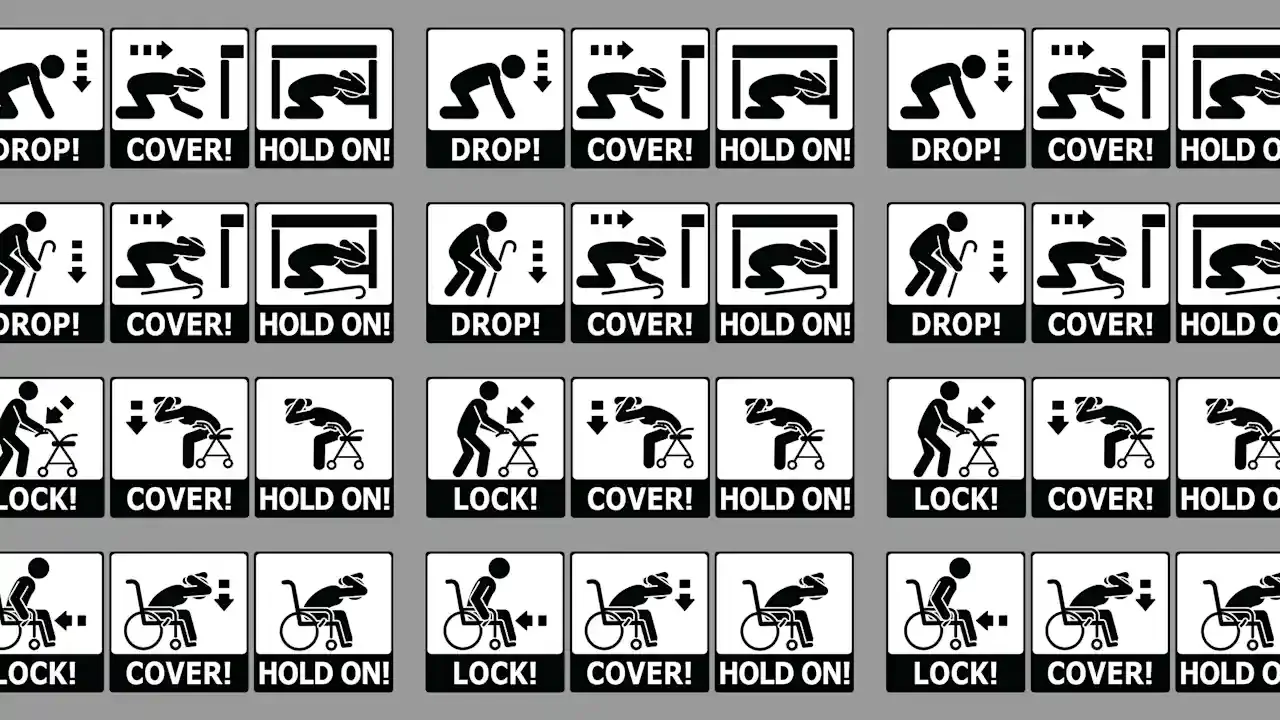
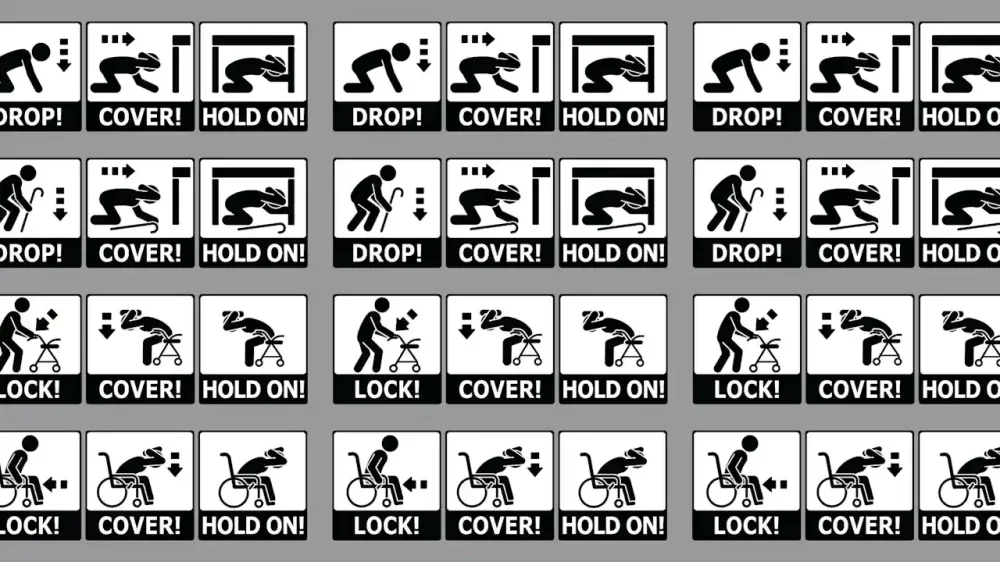
If you hear your organization talking about the Great ShakeOut, it has nothing to do with Taylor Swift or Florence and the Machine. Instead, this international event promotes earthquake preparedness. Having a plan greatly improves outcomes and saves lives. On October 16 at 10:16 a.m. local time, millions will be practicing how to properly drop, cover, and hold on. Let’s take a look at the science behind earthquakes, the regions they impact, and how to participate in the Great ShakeOut. What actually causes an earthquake? The Earth’s outer layer is made up of seven major tectonic plates. Think of these as patches of a quilt that isn’t stitched together perfectly. The places where the plates meet are called plate boundaries. Some of these contain fault lines. The patches or plates move since they are not properly connected, which causes stress to build up at the borders. When this reaches a boiling point, the pressure is released, causing the earth to shake. Which regions have the greatest earthquake risk? According to the United States Geological Survey, 81% of earthquakes take place along the Circum-Pacific seismic belt, which is located on the rim of the Pacific Ocean. This shaky area is also known as the Ring of Fire because of its plethora of volcanoes. Because of Japan’s advanced ability to detect earthquakes, it holds the dubious honor of having the most recorded quakes, though the USGS says it’s more likely that Indonesia experiences the most quakes annually by virtue of its larger size. The most catastrophic earthquakes have tended to occur in China, Iran, and Turkey. How can I participate? Organizations and individuals are welcome to participate in the Great ShakeOut. You can even make it a family affair. Register at shakeout.org to make sure your efforts are counted. There, you’ll find resources such as a drill narration and discussion questions for a post-event debrief. There are also steps to take to be ready for “the big one.” These include making sure furniture and decorative items are secure, having a disaster plan, and keeping emergency supply kits stocked and up to date with all the necessary items. View the full article
-
America’s use of import duties has been constrained by financial markets and economic realityView the full article
-
The Interborough Express line—the long-awaited light-rail link between Brooklyn and Queens in New York City—hasn’t broken ground yet. But on my computer screen, one part of the route is already operational. A new simulation game called Subway Builder lets you design, build, and operate subway systems in 26 U.S. cities, from New York to Boston to San Francisco. The game uses real-life U.S. Census Bureau and employment data to map where residents and workers live, allowing you to simulate realistic passenger flows. Players must also contend with real-world constraints like tunnels, viaducts, existing foundations, and road layouts. The goal is to design a subway network that gets the most people to their destinations as quickly as possible. But there’s a deeper ambition: to spark more transit-minded thinking in a country that historically has underinvested in it. “I would secretly hope that maybe someone in power sees this and says ‘Maybe we can build something like this,’” says Colin Miller, a software engineer and creator of the game. Building a hyperrealistic transit game Subway Builder launched on October 9 to much fanfare in the transit community. “I’ve been playing Subway Builder for *checks notes* all night,” one user posted. “I legitimately think this game is going to start a transit revolution in America,” wrote another. Over the years, many developers have tried to gamify transit design with offerings like MetroConnect, Brand New Subway, and Mini Metro. But few have attempted to make their simulations realistic enough to replicate real transit-planning challenges at the scale of cities like New York or Seattle. To create Subway Builder, Miller drew on datasets from the U.S. Department of Education, the Federal Aviation Administration, and OpenStreetMap, among others. You can analyze demand statistics on a map of your chosen city; then, once you build a route, explore ridership station by station. One of the most satisfying features for me remains the constellation of red dots that represent riders commuting toward newly built stations and journeying across a network I just built. The cost of building public transit in the U.S. Subway Builder bills itself as hyperrealistic, but there are two key exceptions: politics and budgeting. Miller says he did not take into account the political will in any given U.S. city, nor did he calibrate the game’s budget to U.S. infrastructure costs. Instead, he used Spanish construction costs, which are among the lowest in the world. (Madrid, for example, tripled its metro network in just 12 years.) “If I had it set to realistic American construction prices, it would have made the game unplayable because you’d run out of money,” he concedes. Players can choose to play in “sandbox mode,” which comes with no budgetary constraints. It’s the game’s “normal mode” that reveals a painful fact long criticized by experts—namely that building transit in the U.S. is mind-bogglingly expensive. On average, domestic rail transit projects cost roughly twice as much per mile in the U.S. as they do in Europe or Canada, and as much as five times more in New York City. The relatively recent Second Avenue Subway expansion, for example, cost about $2.5 billion per mile. For reference, the Los Angeles Purple Line extension cost $800 million per mile, while Madrid’s extension was $320 million per mile. When I played the game, I quickly learned that even $3 billion would get me only three lines and about 20 stations in Brooklyn. I also learned that building a subway route is just the beginning of a long road plagued by never-ending signal failures, broken-down trains, and overall operational costs. And considering that every dollar collected from fares helps fund new routes and buy new trains, I gained a bit more sympathy for the MTA’s recent war on fare evasion. A tool for publication imagination Much ink has already been spilled on the state of mass transit in the United States. Transit advocates such as Yonah Freemark have frequently lamented declining ridership and funding shortfalls in American cities. Others, like Brent Toderian, have emphasized the role of transit in shaping equitable, walkable urban environments. While public transit has recently blossomed in many U.S. cities, the system remains plagued by some of the world’s highest construction costs, red tape, political fragmentation, and a misguided adulation for the freedom that cars provide for the benefit of the few at the expense of the many. Hayden Clarkin, a transport engineer and planner who recently published a “Hitchhiker’s Guide to Building a Lot of Subways,” argues the U.S. has the ability to build a world-class transit system but lacks the will. “Imagine what we could achieve if we built up our institutional capacity and if leaders spent as much political capital on transit as they do on expanding highways,” he told me via email. “The systems other G7 nations have enjoyed for decades are not beyond our reach—they are a choice we can and must make.” For Clarkin, games like Subway Builder aren’t just entertainment. He believes they could actually have real-world impact. “This is a tool for public imagination,” he says. “I’m genuinely excited for the day someone takes their in-game map to a city council meeting and says, ‘Look at what we can achieve!’” View the full article

-
The whole idea of advertising—using pictures and words to get people to buy stuff, or to do something—is old indeed, with the first known example dating back almost 5,000 years to the heady days of Ancient Egypt. The ads business changed a lot since we were writing notices on papyrus, but one thing that—until recently—remained the same was that it was a deeply intentional business. The advertiser had to think about the language they used, the imagery they employed, the types of people they sought to reach, and how they would go about doing that. Whether the advertiser was touting a weaving shop on the banks of the Nile during the days of the Pharaohs, or selling detergent or cigarettes through new mass media innovations like the television or the radio, that same thoughtfulness was a constant. Advertisers had to think—and, by virtue of the fact they were forced to make decisions, they were in control of everything. My biggest complaint with the digital ads ecosystem is it, by design, strips the ability of the advertiser to make some of those decisions—not merely placement, but targeting, and with the emergence of dynamic creative and generative AI, messaging too. In the process, we’ve turned advertising from a very deliberately engineered system—where the architect knows what each part of the process should do—into one that’s, essentially, a black box. And within this black box, there’s little room for creativity. The Process Is Creative When we think about advertising—and, in particular, good advertising—we always think about the messaging. It’s true that some of the best campaigns in history have always used clever wordplay, or coy psychological tactics, to drive a point home. The Pepsi Challenge, for example, started off as a series of in-person taste tests and culminated in a campaign that could confidently say (though some have identified flaws in the test itself) that Pepsi was America’s preferred cola. Not only did this directly undercut Pepsi’s main adversary—Coca-Cola, which easily had the most powerful brand perception—but it also allowed people to differentiate between products that people might otherwise think of as identical. Messaging is important, but it’s far from the only creative part of the marketing process. Take Subaru, for example. In the 1990s, it was a struggling car brand—eclipsed not only by its Japanese rivals like Nissan and Toyota, but also by fierce domestic competition in the U.S. market. Subaru hired a new advertising firm to turn its fortunes around, which ran a series of focus groups that asked why existing Subaru owners chose its vehicles, as opposed to those from one of its healthier rivals. That firm noticed that women dominated those focus groups, and many of those women identified as lesbian. The company then launched a campaign that targeted both women and lesbians—itself a brave choice, considering the climate of the 1990s, which saw the passage of both the Defense of Marriage Act and Don’t Ask, Don’t Tell. To help it reach lesbian audiences, it hired Mulryan/Nash to create content specifically for the gay press, and to handle ad buying. This campaign wasn’t just pioneering—it also, arguably, helped revive Subaru’s fortunes, and the brand remains vibrant and relevant, especially in the U.S., where it sold over 667,000 cars in the 2024 calendar year. The Subaru example is a potent one, not simply because it was so successful, but because it illustrates how each step of the process—from identifying the customer, to determining where to reach them, to crafting the messaging—required human thought and human creativity. If we’re looking for a more contemporary example, Spotify’s controversial “Thanks 2016, it’s been weird” springs to mind. Capitalizing on a year defined by seismic political shifts, celebrity deaths, and countless surreal moments to mention in the confines of this piece, Spotify tapped into its data, identifying equally surreal trends and turning them into highly relatable billboards positioned in prime urban locations. These billboards featured pithy one-liners (for example, “Dear person who played ‘Sorry’ 42 times on Valentine’s Day, what did you do?”), with the text localized for target markets (“Dear 3,749 people who streamed ‘It’s the end of the world as we know it’ the day of the Brexit vote, hang in there”). It served as a reminder of how music isn’t simply a form of entertainment, but a way in which we process events in our personal lives, as well as those happening within politics and culture. Again, this process required creative thinking at every level—from identifying the patterns within the data that would lead to the funniest trends, to choosing the most valuable locations to place the billboards. I write all of this not because I believe that all digital advertising—where these decisions are outsourced, particularly to third-parties—is bad, but because I believe that the most effective and memorable campaigns are thoughtful ones. The reason why I believe digital advertising is the enemy to advertising is because, by design, it strips us of the ability to use that creativity across all stages of the advertising process, from conceptualization to creating the final product. Battling the Black Boxes Last year was the 30th birthday of digital advertising. It’s interesting to see how, as the internet grew and an adtech ecosystem emerged, the very nature of how this segment actually works changed. Whereas at one point advertising deals were inked between companies, with money changing hands in exchange for prime placement for a set number of days, those manual transactions are now a thing of the past. Today’s digital advertising mechanics are based on systems which the advertiser doesn’t control or even understand—and in the case of those which heavily rely on AI, even the developers don’t have full insight into the factors behind each targeting and placement decision. This opacity also allows the adtech provider or advertising network to act in ways that are contrary to the interests of the advertiser—either by obfuscating data that could allow them to make more effective decisions, or by failing to protect said advertiser from, for example, click fraud. Although digital ads allow a company to target and market at scale—and, arguably, with the economies of scale that wouldn’t be otherwise possible—the downside is, arguably, a degradation of the online experience for end users, profound concerns about user privacy, and an absence of transparency for those actually purchasing the ads. Arguably, the biggest downside—from someone who cares profoundly about the intellectual and creative brilliance of the ads industry—is that digital ads haven’t really produced something that’s memorable, or has had any meaningful cultural impact. Coca-Cola gave us Santa Claus’s red outfit and the iconic flashing delivery trucks. Decades after they commercials first aired, we still remember the Budweiser frogs croaking “bud-wise-er”, or its later ads that turned “wazzup” into a legitimate pop culture phenomenon (albeit a really irritating one). And that’s because creativity is like a muscle, and if you don’t exercise it—or don’t have to exercise it—it’ll wither away. View the full article
-
To announce its entrance into 5G home internet service, Mint Mobile found the real-life version of a new AI-generated actress, even if only in (nick)name. Tilly Norwood is the name of a so-called AI actress launched by AI talent studio Xicoia. It also happens to be the name of a woman who stars alongside Ryan Reynolds in Mint Mobile’s new ad for its home internet service, which it’s branding “Minternet.” “It’s hard to believe that Mint is launching 5G home internet. It’s also hard to believe that a real version of an AI actress is out there,” a Maximum Effort representative tells Fast Company. “And thanks to the incredible and somewhat disturbing stalking detective abilities of our team, we found her. Just outside of Dallas, Texas, just one day before filming the commercial. Luckily she responded to our random DMs and was happy to assure the world that both she and the internet are very real.” The fake Norwood has inspired backlash and a Wikipedia page, and the labor union SAG-AFTRA refused to say in a statement that the AI character is an actual actor, instead stating it’s “a character generated by a computer program that was trained on the work of countless professional performers—without permission or compensation.” As it happens, the real Norwood—Natalie “Tilly” Norwood—is a real Mint Mobile customer. In the commercial, Reynolds, a former Mint Mobile co-owner who still makes ads for the wireless service provider through Maximum Effort, a production company he cofounded, asks if Norwood is real and “not an AI-generated combination of actors.” “I’m a combination of my parents,” the real Norwood says. Mint Mobile’s parent company was acquired by T-Mobile in 2023 in a deal worth up to $1.35 billion, and its 5G home internet service shows the brand is broadening its ambitions beyond mobile. The brand says its home internet service will use T-Mobile’s 5G network, and Mint Mobile is offering it for as low as $30 a month for customers with a Mint Mobile phone plan who prepay for three months. In an advertising landscape that could increasingly see more AI-generated ads, sticking to real people is a smart strategy. A 2024 YouGov poll of respondents from 17 markets around the world found 51% were uncomfortable with a brand creating a virtual ambassador (34% were comfortable with it; 15% didn’t know how they felt about it). In other words, using a fake Tilly Norwood in your ad could turn away half your audience. Meanwhile, the real living, breathing Tilly Norwood appears to be anything but polarizing. View the full article

-
Newly released witness statements leave Crown Prosecution Service facing questions about why it didn’t press ahead View the full article
-
Endorsement comes after Berlin signals readiness to allow more centralised markets supervision View the full article