Newsletter
Want to keep up to date with all our latest news and information?


ResidentialBusiness
Administrators
-
Joined
-
Last visited
Everything posted by ResidentialBusiness
-
Government is seeking to save £5bn a year by reforming disability benefits known as ‘personal independence payments’View the full article
-
A woman paid a witch on Etsy for a love spell. Instead of following through, the witch found the man online and sent him screenshots of the conversation. Now, people are calling it a WIPPA violation. “Guys the Etsy witch told on me,” @andtheg4gis cried in a TikTok posted on Monday. “I said the guy’s name, his birthday and stuff, and she literally DM’d him on Instagram and exposed me.” The video has since been viewed 2.4 million times and spread across other social media platforms. “Imagine getting a “hey girly” text from a witch,” one person commented. Many in the comments are calling for the TikTok user to drop the name of the Etsy seller, just so they know who to avoid. Some are calling for her to report the witch for violating her trust. As a former Etsy witch, either she was a hater or you wanted something HENIOUS,” one wrote. Other’s are less sympathetic. “Honestly good on the Etsy witch,” one person commented. The ethical considerations of love spells, if you believe they exist, are complex. “I mean that sucks but that’s also what you get for trying to use a love spell on someone,” wrote another. Fast Company has reached out to @andtheg4gis for comment. The $2.3 Billion Business of Belief Love spells are a thriving cottage industry on TikTok and Etsy. A quick search found over 1000 results of love spells for sale, starting from as little as $0.78, up to $5000+. Fast Company can not verify the legitimacy of these spells; use at your own risk. A “commitment spell” to help you “get that ring” is currently on sale for $45. The seller has 2,750 reviews. Another seller, with over 150 reviews, offers a “Dark Bind” spell currently on sale for $49.70. Send over the name, age, gender, your relationship to the subject and a brief explanation. Adding a photo is optional, but does claim to strengthen the spell—which is available in two intensities. Psychic services, including spells, are big business. About 3 in 10 Americans make use of astrology, tarot cards or fortune tellers at least once a year, according to a nationwide survey by the Pew Research Center. The industry, which includes various specialties such as astrology, palm-reading, psychic readings and fortune telling, generated an estimated $2.3 billion in revenue in 2024 and employed 105,000 people, according to market research firm IBIS World. While 20% use these services “just for fun,” according to Pew, about 1% rely on what they learn from these practices for major life decisions. If you can’t trust witches, who can you trust? View the full article

-
GameStop is taking its promised bitcoin investment seriously—$500-million-worth-of-bitcoin serious, in fact. The video game retailer (which has also become a meme stock) announced the purchase of 4,710 bitcoin, the oldest and largest cryptocurrency, on Wednesday. The company first announced that it had set its sights on cryptocurrency in early March, Fast Company reported, following the GameStop board’s unanimous decision to add bitcoin as a treasury reserve asset, allowing the company to invest its corporate cash, future debt, and equity issuances on digital tokens. Valued at $108,493 per bitcoin at the time of writing, today’s announced investment amounts to around $511 million. As of February of this year, the company held around $4.8 billion in cash, and said in a regulatory filing that it has not set a ceiling for accumulated bitcoin. While the news had an initial positive response in premarket trading, the stock sank as much as 4% (at the time of writing), trading at $30.9 in comparison to the prior day’s closing at $35. Fast Company reached out to GameStop but did not receive a comment at the time of publishing. The bitcoin purchase marks the next step for CEO Ryan Cohen’s plan to improve the company’s profitability. Cost-cutting efforts included closing 590 brick-and-mortar locations last fiscal year. While this year’s fourth-quarter net sales fell to $1.2 billion compared to the prior year’s $1.7 billion, the retailer saw an increase in net income, rising to $131.3 million compared to $63.1 million the year before. The company’s direction has been relatively effective, with stock up around 8% this year, and a current market valuation of $14.2 billion. Following an uptick in stock price in March—due in part to the initial investment policy announcement—GameStop has seen a steady rise despite a decline in early May. The expansion of the company’s portfolio investment toward cryptocurrency follows in the footsteps of software company Strategy (formerlyMicroStrategy), which is the largest corporate holder of bitcoin following years of investments. The decision to turn to digital tokens also follows President The President’s focus on cryptocurrency, with his administration establishing the Strategic Bitcoin Reserve, and the president launching his eponymous token and hosting a private dinner with holders. View the full article

-
Fast-fashion group has been hit by US tariffs while flotation has also faced regulatory challenges over risk factorsView the full article
-
Bill Pulte and the government-sponsored enterprise's chief executive will be working with a firm that analyzes big data and utilizes artificial intelligence. View the full article
-
The The President administration has decimated climate science across the country, from the mass layoffs at the National Oceanic and Atmospheric Administration (NOAA) to the shuttering of NASA’s Goddard Institute for Space Studies. Now, scientists are defending their work, and its value to the country, by speaking directly to Americans through a 100-hour livestream full of presentations on everything from air quality to extreme heat to weather stations. Beginning Wednesday, May 28 at 1 p.m. ET, the Weather and Climate Livestream will span five days, ending on Sunday, June 1 at 5:30 p.m. ET. It will feature climate scientists and meteorologists who will talk about their work and the impact of research cuts, and take audience questions. The event kicks off with Kate Marvel, a climate scientist who was formerly an associate researcher at GISS, who will be live streaming the last hours of the GISS lab. That 43,000-square-foot space near Columbia University has been crucial to climate science, but is closing because the The President administration terminated its lease. The livestream will also include a panel discussion with terminated NOAA employees—in March, the The President administration laid off more than 1,000 people—and another with the former directors of the National Weather Service, as well as “primetime” talks from experts on topics like floods, drought, and hurricanes. Prominent climate scientist Daniel Swain—who often hosts his own virtual “office hours” on climate news, heat waves, and wildfires—will be participating with an “Ask Me Anything” session, open to audience questions, on Saturday, May 31 at 9:30 p.m. ET. The 100-hour Weather and Climate Livestream is available on YouTube at https://www.youtube.com/@wclivestream/live. It’s billed as a non-partisan event, organized in part by members of the Union of Concerned Scientists. To the participants, it’s also an opportunity to try to save America’s weather forecasts; the event website includes a link for Americans to contact their representatives and urge them to restore weather and climate funding. The President’s funding cuts Scientists, and everyday Americans are already feeling the cuts from the The President administration and the Department of Government Efficiency (DOGE): The National Weather Service, for example, is already flying fewer weather balloons, which hampered forecasters’ ability to get accurate and timely data to the public about recent hail storms and tornadoes. NWS field offices are short staffed and scrambling to have regular coverage. Hurricane season is also approaching, and is expected to be above-average, with 13 to 19 named storms. The President’s cuts would eliminate climate models that provide accurate forecasting, as well as FEMA services that would help Americans recover from climate disasters. The administration’s cuts would also close multiple research institutions and labs, all six of NOAA’s regional climate centers, and end $70 million in grants to research universities. That means thousands of scientists will lose their funding, which translates to less storm forecasting, no more climate monitoring for farmers, and coastal communities without information on things like tides and flood risk. “For generations, the U.S. government has invested in the science that helps us do so, building one of the greatest meteorology and climate science communities in the world,” the Weather and Climate Livestream website reads. “In recent months, this community has been thwarted in our mission of serving the public due to substantial cuts and firings.” But it’s not too late to stop those cuts, the livestream organizers note. Already, the The President administration has walked back some cuts in the face of public pressure—like by reopening shuttered weather data centers. The 100-hour livestream is a way to “help keep this pressure building,” the site reads. The Weather and Climate Livestream website includes more information on topics, speakers, and the schedule for the 100-hour event. View the full article

-
EU negotiators privately admit Washington’s ‘reciprocal’ tariffs are unlikely to be overturned in fullView the full article
-
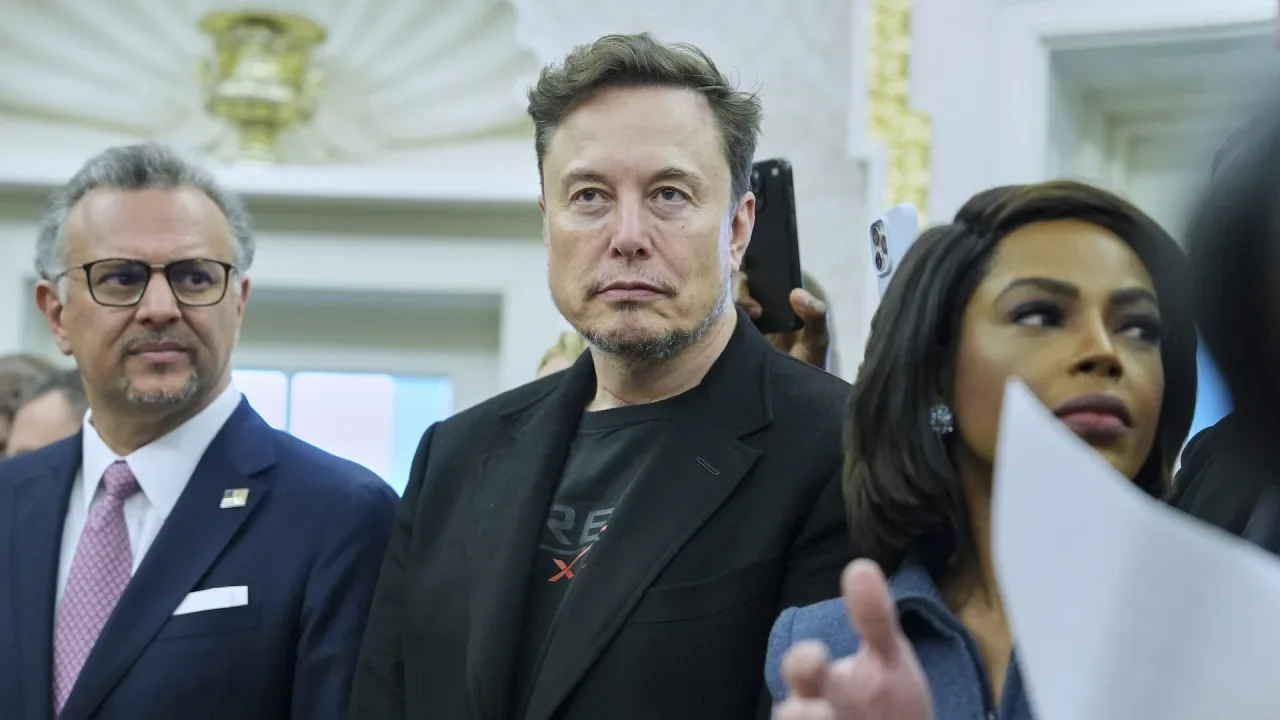
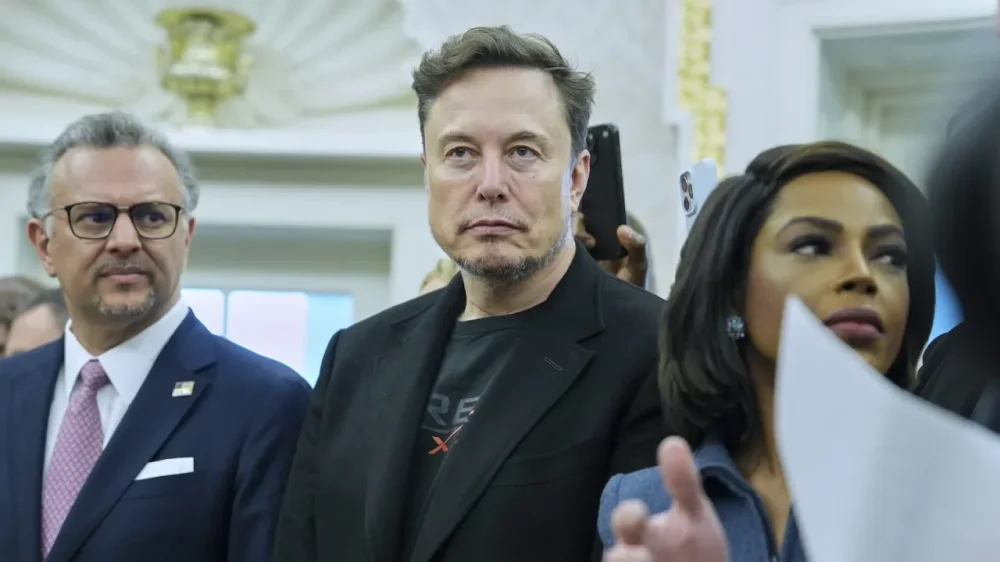
Elon Musk is criticizing the centerpiece of President Donald The President’s legislative agenda, a significant fracture in a partnership that was forged during last year’s campaign and was poised to reshape American politics and the federal government. The billionaire entrepreneur, who supported The President’s candidacy with at least $250 million and has worked for his administration as a senior adviser, said he was “disappointed” by what the president calls his “big beautiful bill.” The legislation includes a mix of tax cuts and enhanced immigration enforcement. While speaking to CBS, Musk described it as a “massive spending bill” that increases the federal deficit and “undermines the work” of his Department of Government Efficiency, known as DOGE. “I think a bill can be big or it could be beautiful,” Musk said. “But I don’t know if it could be both.” His CBS interview came out Tuesday night. White House officials did not immediately respond to questions. Republicans recently pushed the legislation through the House and are debating it in the Senate. Musk’s comments come as he steps back from his government work, rededicating himself to companies like the electric automaker Tesla and rocket manufacturer SpaceX. He’s also said he’ll reduce his political spending, because “I think I’ve done enough.” At times, he’s seemed chastened by his experience working in government. Although he hoped that DOGE would generate $1 trillion in spending cuts, he’s fallen far short of that target. “The federal bureaucracy situation is much worse than I realized,” he told The Washington Post. “I thought there were problems, but it sure is an uphill battle trying to improve things in D.C., to say the least.” Musk had previously been effusive about the opportunity to reshape Washington. He wore campaign hats in the White House, held his own campaign rallies and talked about excessive spending as an existential crisis. He was also effusive in his praise of The President. “The more I’ve gotten to know President The President, the more I like the guy,” Musk said at one point. “Frankly, I love him.” The President repaid the favor, describing Musk as “a truly great American.” When Tesla faced declining sales, he turned the White House driveway into a makeshift showroom to illustrate his support. It’s unclear what, if any, impact that Musk’s comments about the bill would have on the legislative debate. During the transition period, he helped whip up opposition to a spending measure as the country stood on the brink of a federal government shutdown. But The President remains the dominant figure within the Republican Party, and many lawmakers have been unwilling to cross the president when he applies pressure for his agenda. The Congressional Budget Office, in a preliminary estimate, said the tax provisions would increase federal deficits by $3.8 trillion over the decade, while the changes to Medicaid, food stamps and other services would reduce spending by slightly more than $1 trillion over the same period. House Republican leaders say increased economic growth would allow the bill to be deficit neutral or reducing, but outside watchdogs are skeptical. The Committee for a Responsible Federal Budget estimates the bill would add $3 trillion to the debt, including interest, over the next decade. —Chris Megerian, Associated Press Associated Press writer Kevin Freking contributed. View the full article
-
The issuer of USDC, a popular stablecoin that’s pegged to the U.S. dollar, is officially launching an initial public offering. Circle Internet Group filed paperwork with the U.S. Securities and Exchange Commission on Tuesday to raise up to $624 million by offering 24 million shares to investors. With its IPO plans, New York-based Circle is hoping to put a lot of circles—well, zeros—behind its valuation, targeting up to $6.71 billion. Tuesday’s filing has been long-awaited, as the company confidentially filed for an IPO in January 2024 after scrapping 2022 plans to go public via a merger with a special purpose acquisition company (SPAC). While more players in the crypto space have been diving into public markets in recent years, Circle’s filing comes at pivotal timing amid a lot of interest in stablecoins. The company’s biggest coin, USDC, is the seventh-largest cryptocurrency by market cap, according to CoinMarketCap, and second-largest stablecoin behind Tether. You may have been hearing more talk of stablecoins among investors and even the U.S. government. But what even is a stablecoin, anyway? If you’re confused, read on for a complete breakdown of what you need to know. What is a stablecoin? Stablecoins serve a much different role in the crypto space than the likes of Bitcoin or Ethereum, which can experience wild spikes in their prices. As the name suggests, stablecoins are intentionally stable in price because their value is pegged to an asset like the U.S. dollar. Both the Tether and USDC coins are pegged 1:1 to the U.S. dollar, meaning that for every unit of these cryptocurrencies in circulation, they’re backed by $1 of cash or U.S. Treasury bonds. Their prices typically fluctuate only tiny fractions of a cent higher or lower than $1. Even amid Tuesday’s IPO news, the price of USDC was essentially flat. Circle is also the issuer of EURC, which is pegged to the value of the euro. Given their price stability, stablecoins offer a valuable ballast to investors amid the volatility of crypto markets for investors. Once popular as a bridge between traditional and decentralized finance markets, there’s been more interest in stablecoins as various countries around the world embrace cryptocurrencies. What’s the government’s stance on stablecoins and regulation? If you feel like you’re hearing more about stablecoins lately, it’s because they’ve been the topic of recent debate in the U.S. Senate. In February, Senator Bill Hagerty, a Republican from Tennessee, introduced the GENIUS Act, which would have classified stablecoins as securities under the jurisdiction of the SEC to establish regulatory guardrails for these coins. That Act would have brought a new layer of legitimacy to the crypto industry by bringing stablecoins into the regulated financial system. But the U.S. Senate voted earlier this month to block further advancement of the GENIUS Act, which was widely viewed as a significant setback for the industry. Once a skeptic, President Donald The President has become a vocal proponent of cryptocurrencies, though some investors worry his support isn’t helping. The $The President meme coin launched just days before he returned to the office for his second term. In March, he voiced his support for legislation that provides regulatory certainty for stablecoins and has said he wants the U.S. to be the “crypto capital” of the world. When is Circle’s IPO? Even though stablecoins have been the topic of much debate in Washington, D.C. that’s not likely to affect Circle’s IPO. There’s been a relative dearth of initial public offerings since an all-time record in 2021 and investors may be eager to hop aboard a new offering, particularly amid a broader market recovery. Circle has applied to list its stock on the New York Stock Exchange under the ticker symbol “CRCL” and indicated that shares could be priced between $24 and $26. But there’s no definitive timeline yet for when the stock could begin trading. View the full article

-
While updating, upgrading, and reimagining your home can transform it into your dream home, the logistics involved can be daunting, even if you have a general contractor managing the project for you. One of the biggest challenges is setting your budget—unless you have an unlimited budget (lucky you!), determining what a home renovation will involve based on what you can afford is a key aspect of your plan. It’s also one of the most confusing. When budgeting reality bumps up against your dream home fantasy, figuring out what to remove from the project can be difficult because of the emotional aspects involved—everything can seem equally necessary when you’re imagining your future life in the home. In order to pare things down in a coherent and rational way, take a page from business school experts and use the time-tested MoSCoW Method. What is the MoSCoW method?The MoSCoW method was innovated by software developer Dai Clegg in the 1990s as a way to prioritize components of a project in order to stay on schedule and within budget. Although it was initially envisioned as a software development tool (and more widely as a tool for managing business projects in general), it’s malleable enough that it can be ideal for varied circumstances—including getting control of a home renovation project. The method involves breaking all the aspects of your project into four buckets, represented by the letters M, S, C, and W (the Os are just there to make the name more readable). The categories are: Must-haves. These are aspects of the project that are non-negotiable and mandatory. Should-haves. These are parts of the project that aren’t absolutely necessary, but are relatively important. Could-haves. These are smaller details that can easily be removed from the project or added in later if budget allows. Won’t haves. These are aspects of the project that aren’t under consideration at all. The simplicity of the MoSCoW method is its main strength—it’s easy to whip your home reno budget into shape in a short time by plopping everything into the relevant bucket. Using MoSCoW to plan a home renovation projectWhen you’re planning out your home renovation, start dropping each aspect into a bucket as you go: Things that absolutely have to be done are Must Haves. For example, if part of your renovation is replacing a leaking roof, that’s a Must Have—you have no choice, so that cost is baked into your budget from the get-go. Major components of the project that aren’t absolutely necessary fall into the Should Have bucket. If your old hardwood floors are worn but serviceable, replacing them is a big part of what you want to get out of the renovation—but you could leave them in place, or try to refinish them instead of replacing them. These would be the last parts of your project that you remove or downgrade. Grace notes and luxuries go into the Could Have bucket and held there pending how the budget plays out. For example, maybe you’d like your new flooring to have radiant heating. That’s nice, but not an absolute necessity. If money opens up later in the planning, you can toss it in. Finally, there’s the Won’t Have bucket. This might seem like an unnecessary step, since anything not already sorted into a bucket could be considered a Won’t Have. But the exercise of specifically labeling it as a Won’t Have is useful because it brings clarity to your priorities. If you find more budget later, you’ve already prioritized the Could Haves as more deserving of rescue. Won’t Haves aren’t necessarily things you’ll never do—they’re just things you’re not doing now. For example, maybe your HVAC system is a little old and you’re thinking it will need to be replaced in the next few years—but not at this moment, because you’re spending your money on all these other projects. So you put that into the Won’t Have bucket because you know you’ll be returning to it in the future. Once you’ve done an initial categorization of your home renovation, you can start crunching numbers to see if changes are necessary or desired. Maybe you decide, on reflection, that a Should Have is really a Must Have, or vice versa. And if your budget can’t deliver on every priority, you can shift some things into the Could Have bucket and hold them in reserve for the future. Any successful home renovation is as much about planning and prioritization as it is about budget and schedule management, and the MoSCoW Method can help ensure your project is on track before anyone touches a power tool. View the full article
-
We may earn a commission from links on this page. Deal pricing and availability subject to change after time of publication. Samsung announced the new Galaxy S25 Series back in January, a three-phone lineup with a fourth variation that was teased a month later, which you can preorder right now with a $50 Amazon gift card before its May 30 release. Out of those four, the Galaxy S25 is the most basic model with the lowest price, and currently, it's hitting a new record low price of $624.99 (originally $799.99), according to price-tracking tools. SAMSUNG Galaxy S25 128GB AI Smartphone, Unlocked Android, AI Camera, Fast Processor, ProScaler Display, Long Battery Li $734.99 at Amazon /images/amazon-prime.svg $799.99 Save $65.00 Get Deal Get Deal $734.99 at Amazon /images/amazon-prime.svg $799.99 Save $65.00 The S25 has some upgrades from the S24 lineup: The best features in the OS are shared by all four phones, so you can still enjoy the best features from One UI 7, including exclusive media and notifications features from the cheapest option. Two of the best are Now Bar and Now Brief, which show you brief alerts or notifications personalized to your feed and activities. The Galaxy S25 runs on the Snapdragon 8 Elite for Galaxy, has three rear lenses, including a 50MP wide-angle lens, and a 6.2-inch and 120Hz OLED display. The RAM is a generous 12GB, with the storage options starting at 128 GB. Currently, the mint color is the cheapest available. PCMag gave the Galaxy S25 an "excellent" review for its useful AI features, a bright screen, good battery life, and excellent build quality. You can expect about 14 hours of juice from this phone. Keep in mind it does not support the S Pen stylus. Given its small size of 5.78 by 2.78 by 0.28 inches, it's a great option for those who prefer smaller phones. View the full article
-
Big U.S. banks are holding internal discussions about expanding into cryptocurrencies as they get stronger endorsements from regulators, but initial steps will be tentative, centering on pilot programs, partnerships or limited crypto trading, according to four industry executives. Wall Street giants that had been largely blocked from many crypto activities by strict regulations are poised to grow quickly. Yet the biggest lenders are still hesitant to be the first among rivals to expand too heavily into crypto in case they fall afoul of changing rules, said the four executives, who declined to be identified since they were discussing internal business plans. If a major firm expands without issues, others will be fast followers to run small-scale pilot projects and weigh other business prospects, the executives said. Jamie Dimon, CEO of the largest U.S. bank, JPMorgan Chase, ruled out getting into custody—storing crypto assets for clients—or expanding significantly even if regulations ease. “When I look at the bitcoin universe, the leverage in the system, the misuse in the system, the money laundering issues, trafficking, I’m not a fan of it,” Dimon, a longtime crypto skeptic, told investors last week. “We’re going to allow you to buy it, we’re not going to custody it. . . . I don’t think you should smoke, but I defend your right to smoke. I defend your right to buy bitcoin,” he added. U.S. President Donald The President vowed to become the first “crypto president” before he took office. He has since wooed the industry’s elite at the White House, promised to boost the adoption of digital assets and said he aims to create a strategic bitcoin reserve. While there are welcoming signs, banks are seeking even clearer guidelines from the government clarifying what they can do in crypto, more than half a dozen industry executives said. “The shift in the stance is encouraging for traditional lenders, but they are still approaching it with caution and viewing the changes in regulation as an opportunity to engage and not a free pass,” said Dario de Martino, A&O Shearman M&A partner who works on crypto-related issues. Custody businesses to store and manage crypto assets are promising, bankers and executives said, but they have thin margins and potentially pose high risks. Most banks are likely to enter custody businesses through partnerships with existing crypto firms, sources said. Charles Schwab CEO Rick Wurster told Reuters earlier this month that the traffic lights from financial regulators were flashing “pretty green” for large firms to grow in crypto. The signals have reinforced Schwab’s plans to offer spot crypto trading within a year, he said. New regulators under The President have also signaled more bank-friendly crypto policies. The U.S. Office of the Comptroller of the Currency paved the way for lenders to engage in some crypto activities, such as custody, some stablecoin activities and participation in distributed ledger networks. The Securities and Exchange Commission also scrapped earlier accounting guidance that made it expensive for banks to deal in crypto. Bank of America could launch stablecoins, its CEO Brian Moynihan said earlier this year, and the U.S. banking industry will embrace cryptocurrencies for payments if regulations permit them. Meanwhile, Morgan Stanley wants to work with regulators to see how it can be a middleman for crypto-related transactions, CEO Ted Pick said earlier this year. The lender is also exploring adding crypto to its e-trade platform, a source said. Some of the large banks are also exploring issuing a joint stablecoin, with the conversations in initial stages, another banking source said. Big banks seek more clarity around anti-money laundering rules and supervision before diving deeper into crypto. They are also asking for consistent guidelines across banking and market regulators before launching new businesses in digital assets, whose values are volatile. For now, banks are weighing their crypto prospects and running small-scale pilot programs. “While a much-improved environment, banks will continue to have concerns around anti-money laundering and regulatory compliance,” said Matthew Biben, co-head of the global financial services group at law firm King & Spalding. Shifting landscape Banks want to understand if they can engage in crypto lending, or if they are allowed to become market makers for digital assets, one of the banking sources said. The rules for traditional banking businesses are very well defined and there is complete clarity over what a bank is allowed to do and what is outside their ambit, similar well-defined guidelines are needed for digital assets too. The working group on crypto under David Sacks, the The President-appointed crypto czar, has no representation from banking regulators, which needs to be amended if the big banks are allowed to play any meaningful role in the business, two banking sources said. —Nupur Anand, Reuters Additional reporting by Saeed Azhar. View the full article

-
Shareholders say EV maker is in ‘crisis’ and call for succession planningView the full article
-
The President administration unwinds Biden-era policy that required retirement plans to take ‘extreme care’ on digital assetsView the full article
-
If it seems like every tech company is trying shove AI into all of their products and services, that's because they are. And as someone who rarely (if ever) uses AI, it's a lot: I don't need AI to write my emails, nor do I want it to generate realistic videos that might trick viewers into thinking they're human-made. I certainly don't need it to serve up incorrect information when I try to search the internet. But Firefox's latest AI feature seems genuinely useful, likely because it isn't "making" anything for me. Instead its new AI-powered link previews simply show a small summary of the content on a webpage hidden behind a URL, so you'll have a better idea whether or not it's worth clicking on. Mozilla first announced these AI-generated link previews last month, before rolling them out as part of Firefox 139. The feature is currently in the "experimental" phase, and Mozilla is open to user feedback on how to adjust it. Here's how it works in its current iteration: When you hover your cursor over a URL and hit the corresponding keyboard shortcut, Firefox retrieves and analyzes the webpage's HTML without actually loading the page. It then looks for metadata that can help inform the page's title, description, and cover image. Once it has the data it needs, it displays whatever it has pulled up in a pop-out window. Like what you see? Go ahead and click through to see the full page. Not what you're looking for? Move on to the next link. Assuming the summaries are accurate, I can actually see this being something I rely on to give me an idea of whether or not a particular link is relevant to my current query—especially once Mozilla irons out some of the bugs. How to test out Firefox's AI-generated link previewsIn order to try AI link previews for yourself, you need to be running Firefox 139 (or newer). (If you're not sure which version you're on, open Firefox, head to Settings > General, then scroll to Firefox Updates. If there's a new update, install it, then relaunch the browser.) That accomplished, head back to Settings, then select Firefox Labs. Under "Customize your browsing," click the checkmark next to "Link previews." Credit: Lifehacker Now, open any website, hover over any link on your screen, and hit Shift + Alt (Windows) or Shift + Option (Mac). A small pop-up window should open immediately, along with the webpage's title and a brief description. Soon, you should also see the cover image for the page, then, after a few moments, Firefox will generate the page's "Key points." Credit: Lifehacker Are Firefox's AI link previews worth using?So far, the feature has been a bit hit-or-miss for me. Sometimes the key points it offers up are three well-summarized takeaways from the article. Other times, they are quotes lifted straight out of the article. Plagiarism aside, it's tough to get a sense of the scope of an article if the "key points" are just listing the first few ideas in the text. I suspect part of the problem is that what the AI sees as most important will vary based on how each site is configured: I found the previews frequently copied the text on Lifehacker articles verbatim, for example, while summarizing articles found on other sites. Again, this feature is in development, so Mozilla may need to figure out how to accommodate the variations in in websites design to make it uniformly useful. But as AI features go, I don't hate it, and in 2025, that's saying something. View the full article
-
The quarterly data showed bank profits were driven by gains at large firms while credit quality remained mixed, with commercial real estate loan stress at relatively high levels. View the full article

-
The law, set to go into effect later this year, was introduced to prevent potential money laundering in all-cash purchases made by companies or trusts. View the full article

-
Get ready for several years of even more record-breaking heat that pushes Earth to more deadly, fiery and uncomfortable extremes, two of the world’s top weather agencies forecast. There’s an 80% chance the world will break another annual temperature record in the next five years, and it’s even more probable that the world will again exceed the international temperature threshold set 10 years ago, according to a five-year forecast released Wednesday by the World Meteorological Organization and the U.K. Meteorological Office. “Higher global mean temperatures may sound abstract, but it translates in real life to a higher chance of extreme weather: stronger hurricanes, stronger precipitation, droughts,” said Cornell University climate scientist Natalie Mahowald, who wasn’t part of the calculations but said they made sense. “So higher global mean temperatures translates to more lives lost.” With every tenth of a degree the world warms from human-caused climate change “we will experience higher frequency and more extreme events (particularly heat waves but also droughts, floods, fires and human-reinforced hurricanes/typhoons),” emailed Johan Rockstrom, director of the Potsdam Institute for Climate Impact Research in Germany. He was not part of the research. And for the first time there’s a chance — albeit slight — that before the end of the decade, the world’s annual temperature will shoot past the Paris climate accord goal of limiting warming to 1.5 degrees Celsius (2.7 degrees Fahrenheit) and hit a more alarming 2 degrees Celsius (3.6 degrees Fahrenheit) of heating since the mid-1800s, the two agencies said. There’s an 86% chance that one of the next five years will pass 1.5 degrees and a 70% chance that the five years as a whole will average more than that global milestone, they figured. The projections come from more than 200 forecasts using computer simulations run by 10 global centers of scientists. Ten years ago, the same teams figured there was a similar remote chance — about 1% — that one of the upcoming years would exceed that critical 1.5 degree threshold and then it happened last year. This year, a 2-degree Celsius above pre-industrial year enters the equation in a similar manner, something UK Met Office longer term predictions chief Adam Scaife and science scientist Leon Hermanson called “shocking.” “It’s not something anyone wants to see, but that’s what the science is telling us,” Hermanson said. Two degrees of warming is the secondary threshold, the one considered less likely to break, set by the 2015 Paris agreement. Technically, even though 2024 was 1.5 degrees Celsius warmer than pre-industrial times, the Paris climate agreement’s threshold is for a 20-year time period, so it has not been exceeded. Factoring in the past 10 years and forecasting the next 10 years, the world is now probably about 1.4 degrees Celsius (2.5 degrees Fahrenheit) hotter since the mid 1800s, World Meteorological Organization climate services director Chris Hewitt estimated. “With the next five years forecast to be more than 1.5C warmer than preindustrial levels on average, this will put more people than ever at risk of severe heat waves, bringing more deaths and severe health impacts unless people can be better protected from the effects of heat. Also we can expect more severe wildfires as the hotter atmosphere dries out the landscape,” said Richard Betts, head of climate impacts research at the UK Met Office and a professor at the University of Exeter. Ice in the Arctic — which will continue to warm 3.5 times faster than the rest of the world — will melt and seas will rise faster, Hewitt said. What tends to happen is that global temperatures rise like riding on an escalator, with temporary and natural El Nino weather cycles acting like jumps up or down on that escalator, scientists said. But lately, after each jump from an El Nino, which adds warming to the globe, the planet doesn’t go back down much, if at all. “Record temperatures immediately become the new normal,” said Stanford University climate scientist Rob Jackson. Follow Seth Borenstein on X at @borenbears The Associated Press’ climate and environmental coverage receives financial support from multiple private foundations. AP is solely responsible for all content. Find AP’s standards for working with philanthropies, a list of supporters and funded coverage areas at AP.org. Read more of AP’s climate coverage at http://www.apnews.com/climate-and-environment —Seth Borenstein, AP Science Writer View the full article

-
Unlike the other big streamers, Tubi only has a handful of original shows, most of them imports (their original movie selection is much larger). That's not to say it's a wasteland for TV addicts: The streamer might actually have too many shows, a vast and sometimes wild catalog that spans decades. As the likes of Netflix and HBO Max have slimmed down their catalogues, Tubi is growing, offering a mix of established hits, underrated gems, and more obscure offerings. For the sheer breadth of material on offer, it has become the first place I look for anything outside the current zeitgeist—like the following 18 shows, an entirely non-comprehensive sampling of what Tubi has to offer, crossing genres and decades. Gossip Girl (2007 – 2012) Occasionally referred to as the greatest teen drama of all time (certainly this side of 90210), Gossip Girl was a buzzy ratings champ for the CW back in the day, with its juicy, often scandalous storylines that veered so often into intentional satire that it was hard to ever get mad at the ridiculousness of any of it. Set among a group of well-heeled students on Manhattan's Upper East Side, its characters find their private lives being chronicled by the title’s mysterious master of gossip—so think of it as a proto-Bridgerton. You can stream Gossip Girl here. Babylon 5 (1993 – 1998, five seasons) J. Michael Straczynski’s wildly ambitious sci-fi epic was way ahead of its time, with a planned (more or less) five season story arc set on the titular space station. Babylon 5 is a remote outpost that becomes the last best hope for peace in the face of conflicting human and alien agendas—even more so after an ancient threat is awakened. With increasingly complex storylines that expanded over its run, this was a stab at prestige TV before that was a thing, and it still holds up (dated CGI effects notwithstanding. You can stream Babylon 5 here. Empire (2015 – 2020) Hip hop mogul and Empire Entertainment CEO Lucious Lyon (Terrence Howard) is dying, having been diagnosed with ALS at a young age. He wasn't planning to have to hand off his company so early, but nevertheless finds himself preparing his three very different sons (Trai Byers, Jussie Smollett, and Bryshere Y. Gray) to take the keys to the kingdom—by pitting them against one other. Into this already Shakespearean setup steps Lucious' ex-wife Cookie (Taraji P. Henson), just released from prison and harboring her own plans for Lucious's empire. You can stream Empire here. Mr. Robot (2015 – 2019) Social anxiety disorder, clinical depression, and dissociative identity disorder make up the potent blend of neurodivergences challenging Elliot Alderson (Rami Malek), a genius senior cybersecurity engineer at Allsafe Cybersecurity. In season one, he's recruited by an anarchist who goes by the moniker Mr. Robot (Christian Slater) to encrypt all the financial data of a global mega-conglomerate, thereby erasing massive amounts of debt (hey, real-life hackers, maybe take some notes?). The show starts strong and gets better across its increasingly labyrinthian four seasons—utterly preposterous while also feeling realistic in its technical detail. You can stream Mr. Robot here. Boarders (2024 - , two seasons) This British import feels a bit like a latter-day Skins, with a talented cast of young stars-in-waiting (including leads Josh Tedeku and Jodie Campbell) and a scholastic setting. At the (fictional) prestigious boarding school St. Gilbert’s, five Black teens are newly attending, having earned scholarships, but their integration into the existing cliques is less than smooth. The blend of coming-of-age drama with a willingness to take the piss when it comes to the whole rich private school thing makes this Tubi original a good time. You can stream Boarders here. Big Mood (2024 – , renewed for a second season) Another UK import and Tubi original (at least stateside), Big Mood stars Nicola Coughlan (Bridgerton) and Lydia West (It's a Sin) as a couple of besties in East London, living their best millennial thirtysomething lives. Well, kind of: Maggie's dealing with bipolar disorder, and unclear on whether she wants to continue with her medication as she sets out to write a play, while Lydia is doing her very best running a tanking dive bar inherited from her father. It's both a cute dramedy and an impressively frank exploration of the challenges of living with mental illness. You can stream Big Mood here. Vicious (2013 – 2016, two seasons) The old-school sitcom formula has never been executed quite this bitchily, with the inspired pairing of Ian McKellen and Derek Jacobi as Freddie Thornhill and Stuart Bixby, a couple of nearly 50 years who’ve developed a love-hate relationship. This cast, which includes Frances de la Tour and Game of Thrones’ Ian Rheon, is unbeatable, and the one-liners are hilariously nasty. You can stream Vicious here. The Haves and the Have Nots (2013 – 2021, eight seasons) Tyler Perry's old-school primetime soap was the show that practically built OWN; it was the then-new network's first scripted show, and an immediate breakout. It follows three families: The wealthy Harringtons and the Cryers are wealthy movers in Atlanta, Georgia, while the Young family is overseen by single mom Hanna, who's both a maid for the Cryers and confidante to the family matriarch. There's juicy tension galore between the three families, in no small part because of class differences, but also because they're all equally screwed. You can stream The Haves and the Have Nots here. Spartacus (2010 – 2013) Doing Ridley Scott’s Gladiator one better in terms of both narrative complexity and in hot shirtless gay arena action, Spartacus starts off as pure spectacle and grows into a juicy, high-gloss soap opera by series' end. Buoyed by performances from leads Andy Whitfield (who tragically passed away during the series' original run), Manu Bennett, John Hannah, and Lucy Lawless, it’s sword-and-sandals done right. A follow-up series is in development over at Starz, so it's a good time to catch up. You can stream Spartacus here. Broadchurch (2013 – 2017) Creator Chris Chibnall's dark crime drama didn't invent its particular sub-genre (whatever you call the one where two troubled homicide detectives butt heads in a gloomy town), but it did popularize it to the point that we've been inundated with countless imitators of wide-ranging quality. With the great pairing of Olivia Colman and David Tennant (joined by yet another Doctor Who Doctor, Jodie Whittaker), Broadchurch still stands alongside the best of its kind. You can stream Broadchurch here. Doctor Who (1963 – 1989, 26 seasons) Speaking of Doctor Who, even if you're current with the modern incarnation (if I can use "modern" for a show that started airing in 2005), you've got a lot of timey-wimey adventures to enjoy. Tubi has the entirity of the surviving 26-season original run, going all the way back to 1963 and the story of a mysterious old man living in a junkyard with his granddaughter. Seven doctors is enough to keep anyone busy for a while. Tubi has the show broken out by Doctor, but, if you want to start from the beginning you can stream The First Doctor here. Haven (2010 – 2015) Tubi is a haven for small gems like this, a five-season Stephen King adaptation originally produced by SyFy. Emily Rose stars as Audrey Parker, and FBI Special Agent sent to the small town of Haven, Maine on a routine case who gets drawn into “The Troubles," a series of harmful supernatural events that have recurred throughout the town’s history. A supernatural-case-of-the-week format gives way to a bigger mystery when Audrey comes to learn that this isn’t her first time in Haven, nor the first time she’s encountered the Troubles. You can stream Haven here. Scandal (2012 – 2018, seven seasons) Shonda Rhimes was already a powerhouse producer and screenwriter with several successful seasons of Grey's Anatomy under her belt when Scandal debuted, but its blend of political thrills and sexy, soapy drama is what solidified her brand, and her spot atop of the modern TV landscape. Kerry Washington stars as Olivia Pope, head of the DC-based crisis management firm Olivia Pope & Associates (OPA), who is the person to call when you've got a PR disaster to fix. If you want to get a sense of the stakes involved, consider that Tony Goldwyn costars as Fitzgerald Grant III, president of the United States, and also Olivia's lover. You can stream Scandal here. Buffy the Vampire Slayer (1997 – 2003) With word that Sarah Michelle Gellar (and company?) are returning to the wreckage of Sunnydale for a Hulu reboot, it’s probably not a bad time to visit (or revisit, or re-revisit) this seven-season teen vampire hunter saga. While the pacing might feel a little slow, and the effects a little janky, its blend of high school (and then college) angst, kick-ass monster fights, and genuinely laugh-out-loud comedy holds up. You can stream Buffy here. Heartland (2007 – , 18 seasons) If there’s a stereotype that middle-American viewers won’t watch foreign fare, this show puts the lie to it—at least when it comes to imports from Alberta (tariff-free!). Based on a popular book series from Linda Chapman and Beth Chambers (writing under the name Lauren Brooke), the show follows the lives of a family of horse ranchers in western Canada, led by sisters Amy and Lou (Amber Marshall and Michelle Morgan). Tubi currently has only the first 15 seasons of the drama, which has recently been renewed for a 19th. That’s Law & Order-level longevity, people. You can stream Heartland here. Highlander (1992 – 1998, six seasons) An classic of '90s-era syndicated action/adventure, Highlander stars Adrian Paul as the title hero, taking over from Christopher Lambert in the film series. Duncan MacLeod is an immortal warrior living in the modern(-ish) day, hunted by others of his own kind, whose goal is singular: to chop off Duncan's head in order to steal his power. Episodes typically involve some sort of flashback to an earlier era in Duncan's life where we first encounter the threat he'll face in the modern day. There's at least one good sword fight in every episode, and I can't imagine what more you'd want out of a series. Bonus: It carries over the films' kick-ass Queen theme song. You can stream Highlander here. Z Nation (2014 - 2019) The Walking Dead made prestige television out of the zombie apocalypse, but this SyFy channel original is all about zombies as a campy, gory good time. Things kick off with a soldier who’s been tasked with transporting a package across country. The package in question is actually a human being, the survivor of a zombie bite who might be able to help create a vaccine (take note, The Last of Us fans). This one comes from the schlock-masters at The Asylum, purveyors of infamous B-movies like Sharknado, which should tell you all you need to know about the tone. You can stream Z Nation here. Columbo (1968 – 2003, 16 seasons) Peter Falk's sublimely rumpled detective practically invented the style that Peacock's Poker Face has recently revived: a crime (usually a murder) is committed, the viewers know whodunnit, and Columbo has to solve it. Early on in any given episode, we get to watch the crime being committed, though we don't always know the motive. The challenge isn't to figure out the culprit, but to discover exactly how TV's greatest detective is going to solve the case. You can stream Columbo here. View the full article
-
Kristina Smithe was running the California International Marathon in 2019, grabbing cups of water to stay hydrated, when she started to think about how much waste such events produce. On the flight home, she did the math: 9,000 runners, 17 aid stations, and something like 150,000 cups used once and thrown away. “I was just shocked that, even in California, it’s not sustainable,” Smithe said. That sparked her idea for something more durable—a lightweight, pliable silicone cup that could be used again and again. After working out a design, Smithe ordered her first shipment and tested them at a race in 2021. Now her business, Hiccup Earth, has 70,000 cups that Smithe rents out to interested races to replace the typical white paper cups that can pile up like snowdrifts at busy water stops. Billions of disposable cups are used around the world each year. These cups are often made of plastic, but even if they are made of paper, they typically have a plastic lining that makes it difficult for them to biodegrade. And making these cups, and disposing or burning them, generates planet-warming greenhouse gas emissions. “That’s just a small subset of the amount of plastic waste that we produce, but it’s a pretty visible one,” said Sarah Gleeson, solutions research manager and plastics waste expert at climate nonprofit Project Drawdown. “It’s something that generates a lot of waste, and waste—depending on what exactly it’s made of—can really last in landfills for hundreds of years.” As she was getting her business off the ground, Smithe emailed race directors to ask if their event used disposable cups. “The answer was always yes,” she said. Her response: “If you’re looking for a sustainable solution, I have one.” Now, she rents out the cups by the thousand, driving them to events in massive totes and leaving bins with the company logo for collection after use. Smithe picks up the used cups and washes them in a proprietary dishwasher. At the PNC Women Run the Cities race in Minneapolis and St. Paul, Minnesota, in early May, Smithe helped quench the thirst of thousands of runners, dropping off 17-gallon tote bags full of her flexible blue cups. After that race, Smithe, 35, estimated she’s taken her cups to 137 races and spared 902,000 disposable ones from the landfill. She also says her washing process needs only 30 gallons (114 liters) of water per 1,500 cups. An average efficient household dishwasher uses three to five gallons (11 to 19 liters) for far fewer dishes. “It’s just a solution to a problem that’s long overdue,” Smithe said. One trade-off is that the cup rentals cost race directors more than other options. Disposable cups might run just a few cents each, while 10,000 Hiccup cups would rent for about 15 cents each. That price drops if more cups are needed. Gleeson, of Project Drawdown, sees the reusable cups as just one of many ways that innovators are looking to cut down on waste. Such solutions often have to be rooted in convenience and grounded in local or small applications to get more people to adopt them. Some cities, for instance, are experimenting with reusable food takeout containers that customers return to nearby drop-off spots later on. While no one solution can fully tackle the problem, “The scalability is there,” Gleeson said. “I think in general, high adoption of these kinds of solutions is what is able to bring costs down and really maximize environmental benefits that you could get.” Alexa St. John is an Associated Press climate reporter. Follow her on X: @alexa_stjohn. Reach her at ast.john@ap.org. Read more of AP’s climate coverage at http://www.apnews.com/climate-and-environment The Associated Press’ climate and environmental coverage receives financial support from multiple private foundations. AP is solely responsible for all content. Find AP’s standards for working with philanthropies, a list of supporters and funded coverage areas at AP.org. —Alexa St. John, Associated Press View the full article

-
Accenture announced on Wednesday that David Droga, CEO of its technology-focused creative group Accenture Song, will step down from his role in September. Droga will transition from his day-to-day leadership role into a broader strategic role as vice chair of Accenture. As part of the transition, Ndidi Oteh, who currently serves as the Americas lead for Accenture Song, will become the CEO of Accenture Song, the company said. He will also join Accenture’s Global Management Committee. Meanwhile, Nick Law, current creative chairperson for Accenture Song, is set to become the creative strategy and experience lead. ‘Once-in-a-generation creative leader’ An award-winning creative executive, Droga founded his New York-based namesake advertising agency, Droga5, in 2006. Under his leadership, the creative agency won numerous awards for its innovative advertising campaigns. In 2019, Droga sold Droga5 to Accenture Song (formerly Accenture Interactive). The agency has offices in New York City, London, Dublin, Tokyo, and São Paulo. He became CEO of Accenture Song in 2021 after Accenture chair and CEO Julie Sweet asked him to step into the leadership role, as Sweet told Modern CEO in January. She saw the benefit of bringing his creative perspective to the leadership team. Droga’s ideas helped to transform Accenture Song and accelerated the company’s growth. As CEO, he introduced an operating model that merged creativity, design, technology, AI, data, and strategy into one connected platform. Droga spoke about how AI was transforming the advertising industry on Fast Company‘s Brand New World podcast in February. In a news release, Sweet described Droga as a “once-in-a-generation creative leader and business builder” who has “lived our core value of stewardship and has developed the next generation of leaders who will build an even better Song.” ‘I am ready to catch my breath’ In today’s company news release, Droga expressed appreciation and conveyed his optimism for the future of Accenture Song. “With such extraordinary leadership in place, it felt like the right time,” he said. He also discussed his next chapter. “After 30 plus years of leaping, I am ready to catch my breath. And being vice chair will allow me to do that, but also to contribute in new ways.” Shares of Accenture Plc (NYSE: ACN) were flat in early trading on Wednesday. View the full article

-
We may earn a commission from links on this page. Deal pricing and availability subject to change after time of publication. If you're looking to bring the party with you, this refurbished JBL PartyBox On-The-Go Essential is going for $209.99 on StackSocial with free shipping within the contiguous US right now—that's almost $140 cheaper than buying it new. It’s a Grade “A” refurbished unit, which means it should arrive looking nearly new, with little to no visible wear. You’re still getting the same eye-catching RGB light panel on the front, the same booming sound signature, and even the wireless mic included, just without the brand-new price tag. Sound-wise, it’s big on bass. If you mostly play EDM, hip-hop, or pop, the Bass Boost mode adds a good amount of thump. The mids are decent, so vocals don’t get lost, but the highs can feel a bit flat, and there’s no built-in EQ to fine-tune the sound either. Battery life is officially rated for up to six hours, though in real-world use with lights and volume cranked up, expect closer to four and some change. Still, it’s IPX4-rated, so you don’t have to worry too much about poolside accidents or beach mist. You also get USB playback, Bluetooth support, and physical inputs for mic and guitar. The wireless mic that comes with it has a 10-meter range and does the job well for casual singing or announcements. That said, this isn’t the most portable option at 13.4 pounds, and the sound profile won’t satisfy every listener, especially those who like more balance or richer treble. But if your goal is loud, fun, and karaoke-ready, this refurbished deal is a solid pick. View the full article
-
Between reports of travelers being arrested or hassled at border crossings and boycotts due to President The President’s divisive rhetoric, it’s no surprise that the number of international visitors to the United States has taken a sharp downturn. Now new research from Tourism Economics predicts an 8.5% decline in international tourism to the United States this year. As a result, the country could see an $8.5 billion downtick in international visitor spending, according to Tourism Economics, an Oxford Economics company. Meanwhile, the World Travel & Tourism Council has an even bleaker prediction, estimating a loss of $12.5 billion for 2025. The former’s predictions are an improvement from a report two months ago, which put the decrease in arrivals at 9.4% and spending down to 5%, compared to 4.7%. However, they’re shocking when you consider that the researchers had initially predicted a 9% increase in international travelers and a 16% boost in their spending for 2025. ‘Negative sentiment effects’ The largest decline for a single country is predicted to reach 20.2% from Canada—the independent nation that President The President has posited should go from neighbor to 51st state. Western Europe follows at an expected 5.8% decrease in visitors to the U.S. Canada and Europe already have a significant drop in flights booked for May to July, down 33% and 10.4%, respectively. “Overall, the strained relationship between the U.S. and its key trading allies and tourism source markets will continue to weigh heavily on travel demand,” stated Aran Ryan, the report’s author and the director of industry studies. “These negative sentiment effects referenced in our prior research, explain our view that The President administration rhetoric and policies have contributed to a mix of traveler backlash and concerns about traveling to the U.S.” View the full article

-
The companies have been under government conservatorship since the 2008 financial crisis. Fannie and Freddie have both returned to steady profitability. View the full article

-
Stellantis, the world’s fourth-largest carmaker, named Italian auto executive Antonio Filosa as its new chief executive officer Wednesday, replacing Carlos Tavares, who resigned under pressure last year. Filosa, who is currently Stellantis’ chief operating officer for the Americas and chief quality officer, takes the post effective June 23, when he is expected to announce his leadership team. The move returns the running of Stellantis, created from the 2021 merger of France’s PSA Peugeot with Italian-US carmaker Fiat Chrysler Automobiles, to Italian hands after three years under Tavares, who previously served as Peugeot’s top executive. John Elkann, heir to the Fiat-founding Agnelli family, remains chairman. Elkann praised Filosa’s “deep understanding of our company, including its people, who he views as our core strength, and of our industry.” Robert Peugeot said the board’s choice was unanimous, calling Filosa a “natural choice” due to his leadership track record and knowledge of the business and “the complex dynamics facing our industry.” Filosa joined Fiat in 1999, spending much of his career in Latin America where held positions from plant manager to head of purchasing and later chief operating officer. He was credited with making the Fiat brand the regional market leader and boosting the market share of the Peugeot, Citroen, Ram and Jeep brands. He was promoted to chief operating officer of the Americas in 2024 in an executive shakeup as sales slumped in North America, its main source of profits. Stellantis has been lagging globally in the transition to electric powertrains and facing stiff Chinese competition. Analysts also have said Stellantis, with 14 brands, is yoked by too many under-performers, including Maserati and Chrysler. —Colleen Barry, Associated Press View the full article