Newsletter
Want to keep up to date with all our latest news and information?


ResidentialBusiness
Administrators
-
Joined
-
Last visited
Everything posted by ResidentialBusiness
-
There’s nothing spooky about ghostworking, apart from how popular it may be right now. The newly coined term describes a set of behaviors meant to create a façade of productivity at the office, like walking around carrying a notebook as a prop or typing random words just to generate the sound of a clacking keyboard. (Some might call this Costanza-ing, after Jason Alexander’s example on a memorable episode of Seinfeld.) Pretending to be busy at the office is not something workers recently invented, of course, but it appears to be reaching critical mass. According to a new survey, more than half of all U.S. employees now admit to regularly ghostworking. That statistic doesn’t necessarily mean, however, that the American workforce is mired in permanent purgatory. Conducted by top resume-building service Resume Now, the report is based on a survey of 1,127 U.S. workers this past February. The results show that 58% of employees admit to regularly pretending to work, while another 34% claim they merely do so from time to time. What might be most striking about the report’s findings, though, are some of the elaborate methods workers use to perform productivity. Apparently, 15% of U.S. employees have faked a phone call for a supervisor’s benefit, while 12% have scheduled fake meetings to pad out their calendars, and 22% have used their computer keyboards as pianos to make the music of office ambiance. As for what these employees are actually doing while pretending to crush deliverables, in many cases it’s hunting for other jobs. The survey shows that 92% of employees have job-searched in some way while on the clock, with 55% admitting they do so regularly. In fact, some of those fake calls employees have made while walking around the office may have been on the way to making real calls to recruiters, since 20% of those surveyed have taken such calls at work. While ghostworking may overlap in some ways with the quiet quitting trend that emerged in 2023, there’s a clear distinction between them. It hinges on the definition of the word “perform.” “Someone who is quiet quitting has essentially checked out of their job mentally and is performing the bare minimum of work necessary,” says Keith Spencer, a career expert at Resume Now. “They are flying under the radar and operating in a way that avoids any attention. Ghostworking, on the other hand, is a performance. It involves actively projecting an appearance of busyness without actually engaging in meaningful work.” If quiet quitting was a response to pandemic-era burnout and an abrupt surge in return to office mandates, ghostworking appears to be a response to, well, everything that has happened since. Even before the newly created DOGE began decimating some government and contractor offices around the country in late-January, the waves of layoffs starting in 2023 have continued to gain momentum in the tech world and beyond. Unemployment is still fairly low at 4.2%, not counting those workers who are “functionally unemployed,” but workers everywhere are worried about a recession. Meanwhile, the drive to incorporate AI into workflow at most companies has created a palpable sense of uncertainty around exactly how to perform jobs in the present, and whether those jobs will even exist in the future. It’s no wonder a recent LinkedIn Workforce Confidence Survey found that U.S. workers’ faith in their job security and ability to find new work has plummeted to its lowest level since April 2020, during the onset of the pandemic. Adding to this decline in morale and engagement is a recent decrease in clarity of expectations. According to a Gallup poll from January, just 46% of employees clearly know what’s expected of them at work these days, down 10 points from a high of 56% in March 2020. Many workers now live with the tacit understanding that they will have to work harder than ever to avoid getting caught in an impending cull, but without quite being aligned with management on what that work entails. It’s in this kind of office environment that ghostworking seems to thrive. “The workforce is currently under immense pressure to appear productive, even when it’s counterintuitive to actual productivity,” Spencer says. “These behaviors point to a deeper disconnect between how productivity is perceived and how it’s actually delivered. In many cases, the appearance of working has become just as important as the work itself.” The Resume Now survey indicates that 69% of employees believe they’d be more productive if their manager monitored their screen time. However, this invasive approach to task visibility seems destined to backfire. A 2023 report from analytics firm Visier found that employees faced with surveillance tools were “more than twice (and in some cases three times) as likely to commit the most egregious performative behaviors, like keeping a laptop screen awake while not working, asking someone to do a task for them, and exaggerating when giving a status update.” Even if surveillance did prove effective against ghostworking, it would be an attack on its symptoms, rather than the root causes. The ongoing return to office resurgence has left many employees feeling like they’re working inside of a fishbowl, right as other external factors have made their jobs more challenging and less stable. Some data shows that workers are just as productive while working from home as at the office, while other studies find workers are even more productive at home. Still, for some leaders, a full office humming with deskside chats that could possibly be brainstorming sessions is the only productivity metric that matters. Employees sensing a greater need to broadcast that they’re getting work done than to actually do the work at hand suggests managers may be rewarding performative work. Whatever the solution to the ghostworking trend might be for any individual company, it will likely have to come from those managers shifting their thinking. As Spencer notes, “When managers offer more trust, flexibility, and space to do meaningful work—instead of focusing on constant visibility—teams are more likely to stay engaged and actually deliver.” View the full article

-
“Another day, another internship,” says Paige Lorbiecki, a junior at the University of Florida, straight to camera. This year, Lorbiecki documented the process of applying to summer marketing internships on TikTok. In this video from May 4, she completed another six applications, but Loribiecki says she applied to more than 100 internships in total. It took her until late May, nearly a month after her classes ended, to finally secure a content creation and social media opportunity at an interior design business. This rigamarole of applying to internships and post-grad fellowships has never been fun, but this year, many are finding the cycle exceptionally tough. College students and recent graduates all over the country are feeling the effects of an oversaturated job market and a lack of entry-level jobs. The student job platform Handshake found that internship postings on their site declined by more than 15% from 2023 to 2025. Between the The President administration’s cuts to university funding, and economic uncertainty over tariffs, many companies are tightening their hiring budgets, limiting the number of summer internships they offer, and raising the amount of experience they require. Fast Company spoke to four different college students, including Loribiecki, about their plans this summer and their insights about the agonizing application season. Their accounts have been edited for space and clarity. Kelly Rappaport, senior at Northwestern University: ‘I’ve not gotten a single interview.’ I fully committed to searching in November or December, and started applying here and there for media and communications industries. Depending on how busy I am each week, I’m putting out anywhere from five to 25 applications each week. I think at this point, we are all aware that the ‘Easy Apply’ button is as good as throwing your résumé in the garbage. But believe it or not, I’ve not gotten a single interview. Ballpark range, I’ve probably applied to 300 to 500 different jobs. That’s actual, sincere job applications. I’m very exhausted, jaded, and kind of disappointed. I’m a first-generation college student, and I can’t even get a first round interview or a call back or anything on all these jobs. I have a ton of things on my résumé. I’ve had recruiters tell me I’m over-qualified and then still not get put to the next round interview. And it’s so exhausting when sometimes I see peers that, because they have connections, they are getting jobs. My dad’s like a blue-collar trades worker, and my mom’s worked in public schools. I certainly don’t have connections outside of the Chicago area where I’m from, and so it feels like I’m kind of limited by who I know. For my Sophomore year [summer internship], I don’t think I got an offer until May, and so I was kind of expecting another summer of no internships. I was very stressed, because you look at your peers and you think you need to be in one place or another. Especially as a first-generation college student, my peers are kind of my benchmark. I’m not sure where I’m supposed to be, because I don’t have that model of where my parents were at. I really think unpaid internships are rather sinister. There is no other context in this country in which unpaid labor is an acceptable thing. I think there’s definitely inherent privilege [at a university like Northwestern]. There’s the financial security to take on an unpaid internship or an internship in an expensive location; there is the privilege of connection; the privilege of having parents who know where [the benchmark is]; who know how colleges work and how networking is. There’s definitely a major disconnect there. Skyley Mitchell, senior at Stanford University: ‘Slowly but surely, I started losing passion.’ I study international relations, and truthfully, I didn’t really have a clear, guided career path. I really wanted to focus on social impact, something along those lines, where I can help the community that I find important. So that’s one of the biggest things, and that is terrible not only for the job market, but also for payment, as well. I’m also a low-income student. It puts a lot of pressure on me to provide for [my family]. So that was one of the biggest determinants for what job I want to do, and if I should follow passion or follow money. But the biggest thing about this job market is that it feels like you can do neither. People often say your first job out of college may not matter as much to your future career. But it really felt like it did, so it was really hard. And I hate writing cover letters. They’re one of the worst aspects [of] applications ever, because I basically have to be fun, quirky, and relatable. It’s like a dating app, but for job applications. You want to be fun and interesting. I don’t know how to be fun and interesting to a job that doesn’t care about me yet. I read this article before that was talking about how Gen Z is the most rejected generation ever, basically talking about how we’re getting rejected on dating apps; we’re getting rejected on job apps; we’re getting rejected on school applications. We’re just getting rejected in various aspects in life, which makes us a little jaded. And I think I really felt that for my job applications. Slowly but surely, I started losing passion about what I wanted to do. I just started doing Quick Apply on Indeed in order to get my applications out there. Coming back with rejections, it just really slowly but surely started hurting less—but not in a good way. Fortunately I have a job now, which I’m very grateful for. But the main reason why I think I was able to get it is because of my school. Stanford is very prestigious [and] has a lot of great opportunities for its students. If you get connected, there’s a lot of opportunities. Paige Lorbiecki, junior at University of Florida: ‘It’s like a pit in your gut.’ At [the University of Florida], I jumped at every opportunity. I feel like my résumé is stacked [and] my portfolio is very diverse, but all these internships are looking for something specific that I just don’t have. I started applying way back in October. Some internships are super early, so I definitely started applying back then, and over winter break, I did a lot, and I still wasn’t hearing anything back. It’s hard because a lot of my finance friends had an internship set a year ago. So I just felt really behind. But marketing specifically is a little bit of a pushed back timeline; it’s a little bit later in the year. I ended up doing close to 80 applications. Didn’t really hear anything back. I had three rounds of interviews for different companies. Made it to the final interview of all of those, and ended up not getting it. I would even email them back and say ‘Oh, I would love feedback so I can improve myself,’ and they would just ghost me. I don’t know how to improve or what I’m missing that these companies are looking for. Starting in February is when the rejections started to roll in. I have applied to a little over 100 now, and I’ve heard back from about 30% of them, so I’m still waiting to hear back from 70%. Half of those, I don’t think I’m ever going to hear back from. It just is what it is. A lot of things are automated nowadays. If my résumé doesn’t match your job description, it just automatically rejects me. I’m a little bit confused why I’m not getting those emails, and now I’m waiting around to know if these opportunities are still open for me, or is it just, like a lost cause? Should I move on? So, it’s weird. I’m just assuming the worst, that it’s not going to happen. Why can I not describe my feelings right now? It’s like a pit in your gut. It’s almost like annoyance and a little bit of anger. I feel like I hold myself to a really high standard. So when I don’t achieve those goals, I’m like, ‘Okay, what can I do to fix that? I’ve got to figure my shit out.’ And it’s just really frustrating that it’s come to this point. I’m not going to lie, even just a nice email back would be nice enough for me. I don’t care if you don’t want me, but just let me know. Lauren Levinson, junior at Northwestern University: ‘I’ve been trying to compensate.’ I definitely started my internship search way later than you’re supposed to. Most people start in the fall, but I was abroad, so I didn’t want to do that. My first application I submitted was in January. And I mean, honestly, I just didn’t submit enough applications. Most of the jobs I applied to were research jobs at Northwestern and I actually don’t think the [federal] funding cuts impacted it. I don’t really know what the issue was, but I didn’t get any of them. One just wasn’t taking more assistance. I got feedback on one of my applications, which was really nice. They said I was really qualified, but they wanted more details. They were “You were super qualified. We thought you would have made a really great candidate. But we wanted you to say in your cover letter more about how it would have impacted your career in the future.’ So [I] didn’t get that one, kind of a bummer, but I’m not surprised, because it included a paid trip to Columbia. I also applied to the summer internship grant program at Northwestern to get funding for unpaid internships. Didn’t get that. That one I definitely think got funding cuts, and does kind of throw a wrench into my plans. But now I’m currently doing an internship at … a nonprofit health center for Spanish-speaking immigrants. I got that internship through Northwestern, but I really love them, and I’ve loved my time there. I’m probably going to stay on with [them] and do a summer there, but probably similar hours to what I’m doing now, part-time, so I can keep working my restaurant job and babysitting and actually making money. Right now, they give me a stipend, so I’m hoping to continue with that system, but I’m also nervous because they don’t normally pay their summer interns. I’ve been trying to compensate. I’m applying to fellowships for next year for 2026-2027. I have to study for the LSAT. Even if I didn’t get an internship, I would still have plenty to do. View the full article

-
Norman Foster has always treated technology as a form of expression. As one of the pioneers of high-tech architecture (along with his friend and colleague Richard Rogers), his buildings celebrate exposed structure, advanced engineering, and machine-age style. Think of the flashy steel trusses and tension rods of the Hong Kong and Shanghai Bank headquarters, the transparent spirals of the Reichstag dome in Berlin, or the diagonal frame of the elliptical Gherkin in London. His latest project, dubbed the Gateway to Venice’s Waterway, recently unveiled at the 2025 Venice Architecture Biennale, extends that tradition into electric mobility. Developed with Porsche and the Norman Foster Foundation, Gateway is a sinuous, 120-foot-long structure hovering over a wooden walkway perched along the water. Part bridge, part biomorphic sculpture, part charging station, its shimmering, tessellated skin—drawn from Porsche’s Kubus pattern—shifts in the sun, casting strange shadows. Composed of aluminum tubing and sheet metal (inspired by automotive surfaces) the permeable surface diffuses light, promotes natural cooling, and allows for modular construction and reuse. The lightweight installation, which Foster describes as both “an animal with a head, body, and tail” and as “a platform to explore new forms of clean mobility,” temporarily made Venice’s canals a test site of sorts for Schiller water bikes and the Frauscher x Porsche 850 Fantom Air, a sleek electric boat powered by the Porsche Macan e-drive. Foster says the system, which is largely recyclable, could also be installed in other cities, although new sites have not yet materialized. But whether or not Foster’s Gateway provocation takes off, the project has a more important value: It draws attention to the rise of multimodal, electrified urban networks, which are on the verge of transforming transportation. Infrastructure is, slowly (although more quickly in Europe and Asia) becoming less about roads and rails and more but charging nodes, mobility hubs, and adaptable energy systems. “People need to imagine what’s possible,” says Kyle Shelton, director of the University of Minnesota’s Center for Transportation Studies. He points to what were slowly evolving efforts to familiarize users with new technologies like trains and cars, which were massive leaps when first introduced. “People were like, ‘What do you mean this is going to travel at 45 miles per hour? What do you mean I can get to another place in less than a day?’ There’s an advantage to putting these things out into the world and saying this is a thing. This is a possibility.” Travel’s hybrid future That future, say most experts, will be multipronged. “Mobility is moving toward a hybridized future,” says Chris Cherry, a professor of civil engineering at the University of Tennessee, Knoxville. “We’ll need stations that can serve everything from scooters to cars to vertical takeoff aircraft.” In some places, this is already happening. Amsterdam, which has long provided charging for multiple types of vehicles at major train stations, is rolling out a series of “eHUBS,” offering charging for e-bikes, e-scooters, and electric cars. Paris has implemented mobility stations across the city that support shared electric cars, bikes, and scooters. The Dutch province of Utrecht has launched a series of mobility hubs near train stations and residential developments that offer car and bike EV charging, shared cars and bikes, and powered infrastructure. And in Sacramento, California, a new mobility hub will help power zero-emissions vehicles (a broader category that includes fuel cell vehicles), electric shuttles, and e-bikes. This kind of unified hub is not the only solution, notes Cherry, who points to the emergence of more informal networks of chargers. “You might ask: Do we need one flashy multimodal ‘superhub,’ or dozens of low-tech, scattered points people can actually use?” Along those lines, Oslo has built out dense networks of curbside EV chargers, often repurposing streetlights as chargers and converting gas stations into EV hubs. London has installed thousands of EV chargers, including “electric avenues” with clusters of residential curbside charging points. Shopping centers across the U.S. are starting to provide charging capabilities, although mainly for electric cars. In many places, Cherry says, charging for lower-voltage vehicles like e-bikes comes down to simply making more power outlets available. But the key to transitioning to this new kind of infrastructure, says Shelton, is taking a more holistic view, far beyond charging. “We need a systems-based approach that integrates transit, energy, digital platforms, and regulation. We’re not just talking about plugging in a scooter. We’re talking about building an interlaced system of batteries, software, roads, chargers, hubs, and policies that all work together.” A potentially larger issue, Shelton adds, is power. “We have a power production and distribution crisis,” he says. “We’re already seeing massive strain from data centers and household electrification, and we don’t have the infrastructure to move electricity where it’s needed most.” Indeed, in the U.S., investments in clean energy generation have not kept pace with the demand from EVs, transit systems, and digital infrastructure. And transmission and storage systems—the physical grids and substations needed to carry and manage that power—are severely underbuilt. Another elephant in the room is equity. “Right now, access to charging infrastructure is deeply uneven,” notes Omar Asensio, associate professor at the Carter School of Public Policy at Georgia Tech. “Gig workers who drive EVs often don’t have home chargers, and rely on a fragile public network. Electric scooters don’t even exist in some neighborhoods.” And for now the biggest complaint among users, says Asensio, is not the availability of chargers, but their reliability. “The screens are broken. The plugs don’t work. If you want the public to adopt this, the system has to work every single time. The transition only works if it’s embedded in a broader, dependable system.” View the full article

-
The fastest-growing car brand in the U.K. is BYD, the Chinese automaker behind electric cars like the new £16,000 ($21,600) Surf. Last month, the brand outsold Tesla in Europe for the first time. BYD is also the fastest-growing car brand in Brazil, where EV sales jumped up 85% last year. In the capital city of Brasilia, BYD now outsells all other cars, whether they’re gas or electric. In Nepal, where seven out of every 10 cars imported last year was an EV, BYD’s electric models vie with those from Tata, an Indian brand. In Thailand, another Chinese company called Changan is quickly gaining market share with its electric cars. The world is going electric: The International Energy Agency recently projected that one in four cars sold this year will be an EV. But the U.S. is lagging behind, and the The President administration’s assault on EVs will slow down the industry more. That doesn’t bode well for the future of American automakers. “Probably the most dire scenario is that the U.S. becomes somewhat isolated in an idiosyncratic market, with lots of big pickups and SUVs that don’t sell in any other market, and that are still predominantly fossil fuel,” says John Paul MacDuffie, a management professor at the Wharton School of the University of Pennsylvania. “And we’re not exposed to competition from some of the new manufacturers or some of the new technologies—not only electric but autonomous and connected.” China already had a long head start Even before The President—who has said that Biden’s support for EVs was a “Marxist hoax”—American car companies were behind their Chinese counterparts on the path to electrification. One factor was China’s continuous support, which started more than 15 years ago. “There were changes to the policy and subsidies, but generally it [was clear] that the government thinks this is good technology,” says Ilaria Mazzocco, deputy director at the Center for Strategic and International Studies, a bipartisan think tank. “So if you’re going to buy an electric vehicle, it’s not like in two years things are going to change dramatically.” Before China started pouring billions into the sector and made EV competitiveness a national priority, BYD was already innovative and lobbying for government support. The company, which had been founded in 1995 as a battery manufacturer, was “entrepreneurial and ready to take up the challenge,” Mazzocco says. Electric cars also got early support in the U.S.—Tesla got a $465 million low-interest loan from the Department of Energy in 2009, benefitted from EV tax credits for consumers, and got a major boost from California’s zero-emission vehicle credits. But China’s support went farther and faster. Around 60% of new car models sold in China are now electric, five times more than what’s available in the U.S., according to the IEA. From the beginning, Chinese automakers were laser-focused on the cost of EVs. By 2023, around 60% of electric cars in China were cheaper than their gas equivalents without subsidies, the IEA says. In many cases, the technology is more advanced than EV tech from some Western automakers, as Chinese companies race to improve batteries and software. Chinese companies are 30% faster than legacy automakers at developing new EV models, according to one analysis. Ford CEO Jim Farley admitted last year that he’d been driving an electric car from Xiaomi—a Chinese smartphone manufacturer that started making EVs—and said he “doesn’t want to give it up.” “There’s no doubt” the future is electric Still, American automakers know that their future is electric. “There’s no doubt about it,” says Ellen Hughes-Cromwick, the former chief economist at Ford. Companies have already spent billions on the transition. But right now, the legacy automakers face cost challenges. Engineering new batteries and new vehicles obviously has a steep capital cost, versus the depreciated capital costs for continuing to make internal combustion engine cars. And although EV sales grew faster last year than gas car sales, they aren’t growing as quickly as automakers hoped. “I’ve done the math,” Hughes-Cromwick says. “It’s not great right now for our domestic manufacturers, because they’ve got low volume but high fixed costs on the new technology, and low capital costs and high volume on the old tech.” As more EVs sell, companies can get to cost and pricing parity. Policies could help make the transition easier, she says, such as keeping tax credits in place for EVs. Instead, the federal government is pushing hard in the other direction. The President froze billions in spending on EV charging infrastructure, and blocked subsidies for factories making batteries, despite the fact that those factories were creating American jobs. Congress is trying to get rid of the consumer tax credit and add a new annual fee for EV owners (though the fee is meant to replace the gas tax, the total cost would be higher than drivers with gas cars currently spend on it). Congress is also trying to block California’s plans to transition to zero-emissions vehicles. Tariffs have added to the economic pressure. Despite all of this, the long-term strategy for U.S. automakers isn’t likely to change. “The time horizon for product cycles, facility planning, and supply chain planning is very long,” says MacDuffie. “They’re global companies, so they’re not just planning for the U.S. market. I have been predicting that U.S. companies will continues to pursue a long-term strategy which is premised on electrification hitting most markets and most products. I think it would take years of a hostile economic and policy environment for them to back away from that in a big way.” It’s too early to count out American automakers, Hughes-Cromwick says, noting that they could pull forward on software, for example. But as The President pushes for anti-EV policy, companies are slowing some electric investments, and are likely to keep falling behind as Chinese companies race forward. A year ago, the IEA predicted that EVs would hit 50% of car sales in the U.S. by 2030; the agency has now revised that to 20%. With steep tariffs keeping cheap Chinese EVs out of the U.S., there’s less incentive for American automakers to innovate as quickly on electric vehicles. The current tax bill also reduces support for EV battery makers and slashes funding for research and development of new battery tech through the Department of Energy. Meanwhile, Chinese EVs are spreading around the rest of the world. Last year, BYD surpassed Tesla in global vehicle sales. BYD’s stock price has climbed around 59% on the Hong Kong Stock Exchange since the beginning of 2025, while Tesla’s has declined around 11% on the Nasdaq, despite some recovery in recent weeks. In Brazil, BYD is now rebuilding a former Ford factory, on a street that a local politician wants to rename from Henry Ford Avenue to BYD Avenue. “Once consumers have access to these vehicles, they’re really interested,” says Mazzocco. For a growing middle class in emerging countries, “their first car might be a Chinese electric vehicle.” View the full article

-
Immigration and Customs Enforcement officers arrested 11 people after their court hearings at the San Diego Immigration Court last Thursday as part of a new nationwide operation to try to fast track deportations. Beginning on Tuesday, May 20, in courts including those in Santa Ana and Las Vegas, attorneys representing the U.S. government—who are also employed by ICE—requested that immigration judges close cases of some people who had been in the U.S. for less than two years and who had shown up without attorneys. Normally a closed immigration court case would mean that the government is no longer trying to deport someone. But instead, ICE officers waited outside courtrooms to arrest those people and put them into expedited proceedings that do not require a judge. “Going to immigration court is your chance to be heard,” said Michelle Celleri, an attorney and legal rights director of Alliance San Diego. “It is your right. It is part of due process.” Celleri said that arresting people who show up for their hearings would discourage others from coming to immigration courts. ICE and the Executive Office for Immigration Review, which runs the immigration court, did not respond to requests for comment from Beyond the Border. ICE has told other news outlets that it is detaining people who are subject to a fast-track deportation authority. That fast-track deportation process is called expedited removal. In expedited removal, an immigration officer, rather than a judge, gives the deportation order. In an executive order issued in January, President Donald The President called for officers to use the process on anyone who has been in the U.S. for less than two years. “With expedited removal, they can deport them tonight,” said Ginger Jacobs, a private immigration attorney in San Diego. “They’re short-cutting the due process these folks came here to receive in immigration court.” But not everyone detained in San Diego last Thursday had closed cases. ICE arrested several people who had received future hearings dates from the immigration judges they appeared before, according to their attorneys and friends. Ruth, a volunteer with the grassroots group Detention Resistance who asked not to be fully identified because of concerns about potential retaliation, said she had accompanied her friend, a man from Colombia who has been in the U.S. for just under a year, to court Thursday morning. She said that when her friend left the courtroom to go to the bathroom, officers tried to detain him even though his hearing hadn’t happened yet. During his hearing, Ruth’s friend told the judge that he was afraid of being arrested when he went back outside the courtroom. The judge told her friend that he wasn’t affiliated with ICE and couldn’t control what they did, Ruth said. Her friend turned in his asylum application, and the judge gave him another hearing date. When her friend left his hearing, ICE officers took him into custody. “He came in good faith keeping with his asylum process,” Ruth said. “Now we don’t even know what’s going to happen to him.” Ruth said her friend has been active in the San Diego community and getting involved as a volunteer to help others in need. Tracy Crowley, an immigration attorney with Immigrant Defenders Law Center, took on Ruth’s friend’s case as he was being detained. She said she was still trying to figure out the legal reason for taking him into custody. “It’s wild,” Crowley said. “The warrants are very bareboned and don’t include the legal basis for detaining them.” Crowley was among a group of lawyers who jumped in to try to represent people in their court proceedings throughout the day in an effort to avoid additional arrests. Jacobs, the private immigration attorney, said her office took on four cases on May 22, including that of a young woman from Turkey who seemed terrified by the officers’ presence. In the afternoon, Jacobs helped a mother and her teenage son, quickly getting to know them in the courtroom in the moments before the hearing began. Outside in the hallway, more than 10 officers waited. ICE also called in two private security guards and two Federal Protective Services officers because of the presence of journalists, attorneys, and community members documenting their actions in the hallway. After the family left the courtroom, ICE appeared to follow them to try to detain them. Jacobs followed after the officers, and she said that ICE decided to let the family go. Jacobs said ICE let the family go because the son had accompanied his mother. ICE officers in San Diego mistakenly attempted to arrest two additional people that same day. The officers later acknowledged the error. In one case, an attorney from the American Bar Association Immigration Justice Project accompanied his client out of the courtroom. When ICE moved to arrest the client, the attorney objected, asking to see a warrant. Officers shoved themselves between the attorney and his client. Two officers took hold of the man and he ended up on the ground. Beyond the Border witnessed him begin to gasp for air and hyperventilate. The attorney asked to be allowed to help his client, but ICE officers kept him away. “May I please see a warrant because the warrant you provided is not that person,” the attorney said after ICE showed him their documentation. “You are making an unlawful arrest.” ICE continued to keep him away from his client, saying that the man was having a medical emergency. “He’s having a medical emergency thanks to you,” the attorney replied. Another attorney in the hallway called for an ambulance, and eventually ICE backed away from the man. The attorney helped his client down the hallway to the elevator, holding the man’s arm over his shoulders to support his weight so that he could move away from the officers. “I will help my client at this point,” the attorney said as they left. “You guys have done enough.” Several people who had accompanied family members to their hearings were left in the hallway in tears as they watched loved ones being taken away. Celleri worried about family members who weren’t there and would have no way of knowing what had happened. “For those who are unrepresented, to their family they have just disappeared, and they are not going to know where they are for 48 hours—and that’s if they know how to find them,” Celleri said. Officers told attorneys in the hallway that those arrested on Thursday would be taken to Otay Mesa Detention Center in San Diego. Lindsay Toczylowski, an attorney and CEO of Immigrant Defenders Law Center who was among the first to publicly call attention to the ICE operation, called the arrests a bait and switch. “By detaining people in courtrooms, we are discouraging people from doing what we have always asked them to do,” Toczylowski said. “We have always stressed how important it is for people to show up to court, to avail themselves of the system to follow the rules that are set out.” She said courts in Santa Ana, Chicago, Phoenix, and Miami also saw arrests this week. Celleri said people with upcoming hearings should know that if they don’t come to court, they will likely be ordered deported in their absence. She said that if ICE attempts to arrest someone, that person should make sure the officers have the correct name and that if that person has already paid bond to get out of immigration custody, the person should not be detained again. —By Kate Morrissey, Capital & Main This piece was originally published by Capital & Main, which reports from California on economic, political, and social issues. View the full article
-
One of the world’s most distinctive new buildings is now poking out of the center of a small village in the Swiss Alps. The structure, a cylinder of bone-white columns topped by a dome, wasn’t built in the traditional sense. It was 3D-printed. It’s now the tallest 3D-printed tower in the world, and it could offer a technique for other 3D-printed buildings to rise even higher. Standing on the base of an existing building, the tower rises to a height of 98 feet, with four floors connected by a central staircase. The tower itself is all structure, with 32 tree-inspired concrete columns forming a cage-like shell that’s open to the air. Gradually widening as it rises, the tower’s top floor is a double-height space with a wide circular platform that can hold dozens of people. The tower is envisioned as a performance space for Mulegns, a village of just 11 people in southeastern Switzerland. The roof of an adjacent building has also been used as the base for tiered grandstand seating that faces the tower. Known as Tor Alva, or White Tower in the local Romansh language, the project is a collaboration between the Swiss cultural foundation Nova Fundaziun Origen and the university ETH Zürich. It was designed by architect Michael Hansmeyer together with Benjamin Dillenburger, a professor of digital building technologies at the university. Possibly more consequential than its height, the tower’s columns are also load-bearing, which enables the structure to rise so high. A special concrete mixture had to be developed to make the project possible, and represents a novel solution to the problem of reinforcing 3D-printed concrete, which can be difficult to do without sacrificing the speed and cost-efficiency of additive manufacturing. Most other 3D-printed concrete buildings are single-story structures as a result. This new technique involves a combination of two robots: One robot acts as the 3D printer, applying concrete in layers, while the other places a ring-shaped reinforcement in the new structure every 20 centimeters. Additional rebar is added after printing. In total, it took five months to print the 32 main columns of the tower, each of which has a unique spiraling ornamentation. In total, the tower is made of 124 3D-printed pieces and has a vague resemblance to a layered cake. This cake-like appearance is a reference to the region’s history of confectioners, who developed new cake and candy-making approaches and brought them to other parts of Europe. The village Mulegns was once a center of confectionary arts, but is now depopulating. Tor Alva is seen as a new tourist attraction. Tor Alva is planned to sit in the village for around five years, after which it can be dismantled and reconstructed elsewhere. So, not only is it the tallest 3D-printed building, it could also be the first 3D-printed tower to pick up and move. View the full article

-
The recent exposé Careless People, by former Facebook (now Meta) executive Sarah Wynn-Williams, has received significant attention for its jaw-dropping revelations about the social media company and its CEO, Mark Zuckerberg. According to the author, company decisions enabled the Chinese Communist Party to suppress dissent, undermined the mental health of teenage girls, and led to genocide in Myanmar and election interference in the U.S. While there has been much attention to details showing the moral bankruptcy of Zuckerberg and former COO Sheryl Sandberg, there has been less discussion of how financial pressures shaped executives’ decisions. Are Meta’s leaders just “bad apples,” or are the many troubling revelations in Careless People representative of pervasive problems across corporate America? While Careless People focuses on Facebook, it also prompts a broader reflection on the tech industry as a whole. Companies like Amazon, X, Google, YouTube, TikTok, and many others similarly operate extractive growth models that prioritize engagement, surveillance, and monetization over social responsibility. What Wynn-Williams has laid bare is a shared playbook of scale over ethics. Facebook’s meteoric rise—and the ethical corners cut by its leaders to meet its goals—reveals fatal flaws at the heart of growth-obsessed capitalism. The company had a vast infrastructure overseen by a chief growth officer operating “. . . fast and loose, and always looking for opportunities in the gray area created by the lack of regulation.” When Facebook reached 1 billion users, COO Javier Olivan (who succeeded Sandberg) expressed fear and uncertainty, not pride and accomplishment, because it meant the company had to figure out things “like how to reach children, how to get into places like China that are hostile to any social media site.” The company engineered algorithms to maximize time spent on the platform—regardless of whether that meant radicalizing users, fostering election misinformation, or taking advantage of people’s vulnerability. Even when Facebook became a trillion-dollar company, internal discussions continued to emphasize seizing vulnerable markets (like teenagers experiencing mental health crises) because these were deemed “high-value” audiences. In internal documents, Facebook acknowledged that its platforms made eating disorders worse and increased suicidal ideation among teen girls. Against this backdrop of relentless innovation to maximize engagement and ad spending, Zuckerberg’s frequent claims that monitoring hate speech or misinformation at scale was “too difficult” or “technically impossible” ring hollow. How could it be impossible to monitor hate speech while simultaneously keeping tabs on when teen girls are feeling insecure? The truth is, when it came to growing revenue and profits, Facebook demonstrated immense ingenuity and problem-solving power; when it came to safeguarding democracy or human dignity, the company suddenly discovered its limits. The damage inflicted by Facebook is so sweeping, so deeply intertwined with human rights abuses and national security threats, it should force us to reconsider—or at least raise significant questions about—whether growth itself is a valid goal. Mark Zuckerberg didn’t just build a tech giant; he built a cautionary tale. The title of Wynn-Williams’s book is from The Great Gatsby and F. Scott Fitzgerald’s indictment of characters Tom and Daisy, who “smashed up things and creatures and then retreated back into their money or their vast carelessness.” The parallel with Zuckerberg and Sandberg is clear. But Careless People should also spark deeper consideration of how our growth-obsessed capitalist system leads to perverse incentives, catastrophic externalities, and systems that cannibalize the very societies they rely upon. Similarly, The Great Gatsby isn’t just a discussion of the poor morals and behaviors of the upper classes in the Roaring Twenties—it’s also a critical perspective on the social and economic transformation in America at that time. Skepticism of the “growth-at-all-costs” logic that underpins today’s capitalism is often dismissed as fringe thinking. As ecological economist Tim Jackson observes, “Questioning growth is deemed the act of lunatics, idealists, and revolutionaries.” Yet what alternative is left when companies like Meta repeatedly erode public trust, mental health, and democratic institutions in pursuit of investor returns? Degrowth, a growing movement in response to runaway capitalism, has been gaining attention as an urgently needed alternative—one that rejects expansion as an end in itself and instead redefines progress around well-being rather than accumulation: shorter working hours, universal basic services, caps on resource extraction, and new models of enterprise that are accountable to people and the planet. Companies like Patagonia and Fairphone are already showing what some of these principles look like in practice. Patagonia’s transfer of ownership to an environmental trust ensures all profits support climate action, while Fairphone’s modular, repairable phones challenge the logic of planned obsolescence and resource waste. Critics often dismiss degrowth as unrealistic or anti-innovation. But what’s truly delusional is believing that the endless growth obsession that fuels companies like Meta can coexist with human dignity and democratic stability. The real question isn’t whether we can afford to abandon growth. It’s whether we can afford not to. Meta’s history confirms the urgency of making this shift. Without systemic limits, the pursuit of scale inevitably erodes the conditions necessary for a free and flourishing society. Had Meta been judged by measures like user safety, informational integrity, or ethical design—instead of engagement and ad revenue—the world would be a safer and saner place today. It’s time for policymakers to recognize this and start asking harder questions: Growth for whom? At what cost? To what end? View the full article

-
Air traffic controllers have been in the news a lot lately. A spate of airplane crashes and near misses have highlighted the ongoing shortage of air traffic workers, leading more Americans to question the safety of air travel. The shortage, as well as aging computer systems, have also led to massive flight disruptions at airports across the country, particularly at Newark Liberty International Airport. The staffing shortage is also likely at the center of an investigation of a deadly crash between a commercial plane and an Army helicopter over Washington, D.C., in January 2025. One reason for the air traffic controller shortage relates to the demands of the job: The training to become a controller is extremely intense, and the Federal Aviation Administration wants only highly qualified personnel to fill those seats, which has made it difficult for what has been the sole training center in the U.S., located in Oklahoma City, to churn out enough qualified graduates each year. As scholars who study and teach tomorrow’s aviation professionals, we are working to be part of the solution. Our program at Ohio State University is applying to join over two dozen other schools in an effort to train air traffic controllers and help alleviate the shortage. Air traffic controller school Air traffic control training today—overseen by the FAA—remains as intense as it’s ever been. In fact, about 30% of students fail to make it from their first day of training at the FAA Academy in Oklahoma City to the status of a certified professional air traffic controller. The academy currently trains the majority of the air traffic controllers in the U.S. Before someone is accepted into the training program, they must meet several qualifications. That includes being a U.S. citizen under the age of 31 and speaking English clearly enough to be understood over the radio. The low recruitment age is because controllers currently have a mandatory retirement age of 56 (with some exceptions) and the FAA wants them to work for at least 25 years in the job. They must also pass a medical exam and security investigation. And they must pass the air traffic controller specialists skills assessment battery, which measures an applicant’s spatial awareness and decision-making abilities. Candidates, additionally, must have three years of general work experience, or a combination of postsecondary education and work experience totaling at least three years. This alone is no easy feat. Fewer than 10% of applicants meet those initial requirements and are accepted into training. Intense training Once applicants meet the initial qualifications, they begin a strenuous training process. This begins with several weeks of classroom instruction and several months of simulator training. There are several types of simulators, and a student is assigned to a simulator based on the type of facility for which they will be hired, which depends on a trainee’s preference and where controllers are needed. There are two main types of air traffic facilities: control towers and radar. Anyone who has flown on a plane has likely seen a control tower near the runways, with 360 degrees of tall glass windows to monitor the skies nearby. Controllers there mainly look outside to direct aircraft but also use radar to monitor the airspace and assist aircraft in taking off and landing safely. Radar facilities, on the other hand, monitor aircraft solely through the use of information depicted on a screen. This includes aircraft flying just outside the vicinity of a major airport or when they’re at higher altitudes and crisscrossing the skies above the U.S. The controllers ensure they don’t fly too close to one another as they follow their flight paths between airports. If the candidates make it through the first stage, which takes about six months and extensive testing to meet standards, they will be sent to their respective facilities. Once there, they again go to the classroom, learning the details of the airspace they will be working in. There are more assessments and chances to “wash out” and have to leave the program. Finally, the candidates are paired with an experienced controller who conducts on-the-job training to control real aircraft. This process may take an additional year or more. It depends on the complexity of the airspace and the amount of aircraft traffic at the site. Increasing the employment pipeline But no matter how good the training is, if there aren’t enough graduates, that’s a problem for managing the increasingly crowded skies. The FAA is currently facing a deficit of about 3,000 controllers, and unveiled a plan in May 2025 to increase hiring and boost retention. In addition, Congress is mulling spending billions of dollars to update the FAA’s aging systems and hire more air traffic controllers. Other plans include paying retention bonuses and allowing more controllers to work beyond the age of 56. That retirement age was put in place in the 1970s on the assumption that cognition for most people begins to decline around then, although research shows that age alone is not necessarily a predictor of cognitive abilities. But we believe that aviation programs and universities can play an important role fixing the shortage by providing FAA Academy-level training. Currently, 32 universities including the Florida Institute of Technology and Arizona State University partner with the FAA in its collegiate training initiative to provide basic air traffic control training, which gives graduates automatic entry into the FAA Academy and allows them to skip five weeks of coursework. The institution where we work, Ohio State University, is currently working on becoming the 33rd this summer and plans to offer an undergraduate major in aviation with specialization in air traffic control. This helps, but an enhanced version of this program, announced in October 2024, allows graduates of a select few of those universities to skip the FAA Academy altogether and go straight to a control tower or radar facility once they’ve passed all the extensive tests. These schools must match or exceed the level of rigor in their training with the FAA Academy itself. At the end of the program, students are required to pass an evaluation by an FAA-approved evaluator to ensure that the student graduating from the program meets the same standards as all FAA Academy graduates and is prepared to go to their assigned facility for further training. So far, five schools, including the University of North Dakota, have joined this program and are currently training air traffic controllers. We intend to join this group in the near future. Allowing colleges and universities to start the training process while students are still in school should accelerate the pace at which new controllers enter the workforce, alleviate the shortage, and make the skies over the U.S. as safe as they can be. Melanie Dickman is a lecturer in aviation studies at the Ohio State University. Brian Strzempkowski is an assistant director at the Center for Aviation Studies at the Ohio State University. This article is republished from The Conversation under a Creative Commons license. Read the original article. View the full article

-
Ousted Davos founder says central bank chief has been in talks to leave before her term ends in 2027View the full article
-
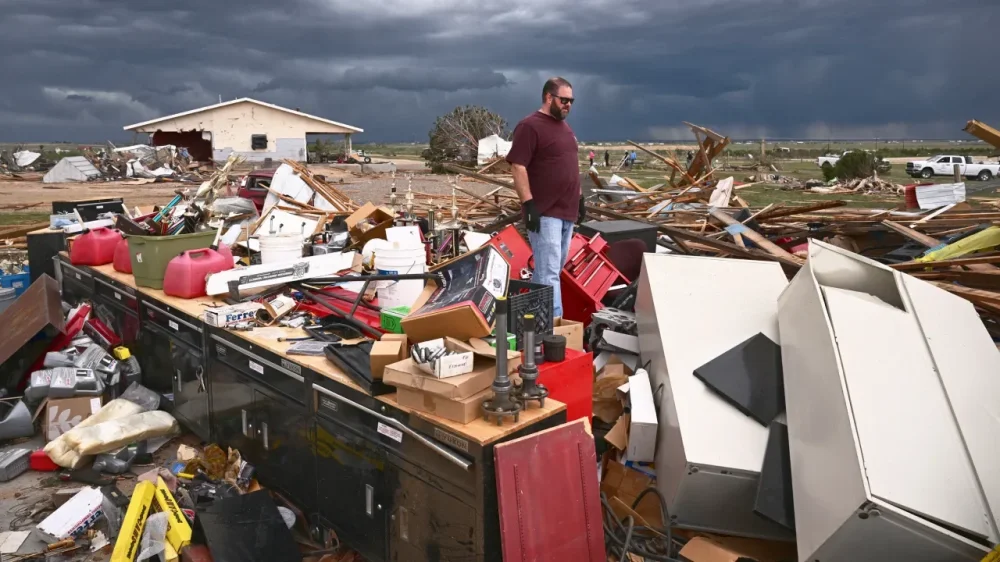
Violent tornado outbreaks, like the storms that tore through parts of St. Louis and London, Kentucky, on May 16, have made 2025 seem like an especially active, deadly and destructive year for tornadoes. The U.S. has had more reported tornadoes than normal—more than 960 as of May 22, according to the National Weather Service’s preliminary count. That’s well above the national average of around 660 tornadoes reported by that point over the past 15 years, and it’s similar to 2024—the second-most-active year over that same period. NOAA National Storm Prediction CenterI’m an atmospheric scientist who studies natural hazards. What stands out about 2025 so far isn’t just the number of tornadoes, but how Tornado Alley has encompassed just about everything east of the Rockies, and how tornado season is becoming all year. Why has 2025 been so active?The high tornado count in 2025 has a lot to do with the weather in March, which broke records with 299 reported tornadoes—far exceeding the average of 80 for that month over the past three decades. March’s numbers were driven by two large tornado outbreaks: About 115 tornadoes swept across more than a dozen states March 14 to 16, stretching from Arkansas to Pennsylvania; and 145 tornadoes hit March 31 to April 1, primarily in a swath from Arkansas to Iowa and eastward. The 2025 numbers are preliminary pending final analyses. While meteorologists don’t know for sure why March was so active, there were a couple of ingredients that favor tornadoes: First, in March the climate was in a weak La Niña pattern, which is associated with a wavier and stormier jet stream and, often, with more U.S. tornadoes. Second, the waters of the Gulf were much warmer than normal, which feeds moister air inland to fuel severe thunderstorms. By April and May, however, those ingredients had faded. The weak La Niña ended and the Gulf waters were closer to normal. April and May also produced tornado outbreaks, but the preliminary count over most of this period, since the March 31 to April 1 outbreak, has actually been close to the average, though things could still change. What has stood out in April and May is persistence: The jet stream has remained wavy, bringing with it the normal ebb and flow of stormy low-pressure weather systems mixed with sunny high-pressure systems. In May alone, tornadoes were reported in Colorado, Minnesota, Delaware, Florida, and just about every state in between. Years with fewer tornadoes often have calm periods of a couple of weeks or longer when a sunny high-pressure system is parked over the central U.S. However, the U.S. didn’t really get one of those calm periods in spring 2025. Tornado Alley shifts eastwardThe locations of these storms have also been notable: The 2025 tornadoes through May have been widespread but clustered near the lower and central Mississippi Valley, stretching from Illinois to Mississippi. That’s well to the east of traditional Tornado Alley, typically seen as stretching from Texas through Nebraska, and farther east than normal. April through May is still peak season for the Mississippi Valley, though it is usually on the eastern edge of activity rather than at the epicenter. The normal seasonal cycle of tornadoes moves inland from near the Gulf Coast in winter to the upper Midwest and Great Plains by summer. NOAA Storm Prediction CenterOver the past few decades, the U.S. has seen a broad shift in tornadoes in three ways: to the east, earlier in the year, and clustered into larger outbreaks. Winter tornadoes have become more frequent over the eastern U.S., from the southeast, dubbed Dixie Alley for its tornado activity in recent years, to the Midwest, particularly Kentucky, Illinois, and Indiana. Meanwhile, there has been a steady and stark decline in tornadoes in the “traditional” tornado season and region: spring and summer in general, especially across the Great Plains. It may come as a surprise that the U.S. has actually seen a decrease in overall U.S. tornado activity over the past several decades, especially for intense tornadoes categorized as EF2 and above. There have been fewer days with a tornado. However, those tornado days have been producing more tornadoes. These trends may have stabilized over the past decade. Deadlier tornadoesThis eastward shift is likely making tornadoes deadlier. Tornadoes in the Southeastern U.S. are more likely to strike overnight, when people are asleep and cannot quickly protect themselves, which makes these events dramatically more dangerous. The tornado that hit London, Kentucky, struck after 11 p.m. Many of the victims were older than 65. The shift toward more winter tornadoes has also left people more vulnerable. Since they may not expect tornadoes at that time of year, they are likely to be less prepared. Tornado detection and forecasting is rapidly improving and has saved thousands of lives over the past 50-plus years, but forecasts can save lives only if people are able to receive them. This shift in tornadoes to the east and earlier in the year is very similar to how scientists expect severe thunderstorms to change as the world warms. However, researchers don’t know whether the overall downward trend in tornadoes is driven by warming or will continue into the future. Field campaigns studying how tornadoes form may help us better answer this question. Remember that it only takes oneFor safety, it’s time to stop focusing on spring as tornado season and the Great Plains as Tornado Alley. Tornado Alley is really all of the U.S. east of the Rockies and west of the Appalachians for most of the year. The farther south you live, the longer your tornado season lasts. Forecasters say it every year for hurricanes, and we badly need to start saying it for tornadoes too: It only takes one to make it a bad season for you or your community. Just ask the residents of London, Kentucky; St. Louis; Plevna and Grinnell, Kansas; and McNairy County, Tennessee. Listen to your local meteorologists so you will know when your region is facing a tornado risk. And if you hear sirens or are under a tornado warning, immediately go to your safe space. A tornado may already be on the ground, and you may have only seconds to protect yourself. Daniel Chavas is an associate professor of atmospheric science at Purdue University. This article is republished from The Conversation under a Creative Commons license. Read the original article. View the full article
-
Streetwear used to be about rebellion, community, and self-expression but now it’s walking down luxury runways with $2,000 price tags. Fast Company hit the streets of New York at the iconic Jeff Staple store launch to ask real streetwear fans: Is streetwear still streetwear? Is the culture still alive? Or has luxury killed the vibe? View the full article

-
Ordinarily, we think of procrastination as something to avoid or correct, but in reality, it can have some legitimate benefits. From giving us time to reflect and collect new information to creating urgency for the work, procrastination comes with some surprising advantages. We’re wise to consider how we can perform our best. With so much to do and so little time, reconsidering our efficiency is smart. Our most ingrained habits may not actually be the best strategies for our success. Rethinking procrastination may be one of the most unexpected ways to reset our work habits, and one of the most effective. Rethinking why we procrastinate If you procrastinate, you’re in good company. Almost everyone procrastinates sometimes, and about. According to research reported by the American Psychological Association, 20% of people are chronic procrastinators. Procrastination can occur for many reasons. We may not have the skills necessary to tackle a responsibility, or we may avoid a task that we expect to be unpleasant. We may feel uncertain or anxious about how to complete a task, or we may feel frustrated that it’s something we have to deal with. Essentially, we sometimes use procrastination to regulate moods or emotions. In addition, procrastination is partly genetic. This discovery was based on twin studies published in Psychological Science. But like many genetic traits, there is also an environmental component. You may be predisposed to procrastinate because of your genes, but you also have significant choice and control over your behavior. One of the most important elements of procrastination is whether you hit your deadlines. If you procrastinate but ultimately complete your tasks on time, you can experience some positive effects of procrastination. But if you procrastinate and ultimately miss important due dates (like, say, not filing your taxes by April 15), then you’re likely undermining your own success. Constructive procrastination doesn’t have to be an oxymoron. Here’s how to find the sweet spot for reaping its rewards. Constructive procrastination If you’re still able to get things done but you just work through them at your own speed, you’re in a position to gain some terrific benefits from procrastination. Here are the best advantages: 1. Procrastination gives you time to reflect If you dive into a project immediately, you may not have taken the time to ponder the problem, explore the solution, or determine how you want to present your work. It’s beneficial to take the time you need to examine something from all angles, consider your own perspectives, and reflect deeply on an issue so you can deal with it appropriately. So, hone your ideas and sharpen your thinking, and then dig in. 2. It gives you time to clear your decks Another benefit of procrastination is clearing your mind for the big thing that you need to get done. If you’re procrastinating by doomscrolling or bingeing your favorite show, you won’t get the benefits. But if you’re getting small but otherwise legitimate tasks done, you can gain advantage from this approach. Get little things out of the way, including sending that quick email or starting that load of laundry. Doing so can give you more energy and allow you to dedicate greater focus to the bigger thing that will take more effort. 3. It creates a sense of urgency One of the most common beliefs about procrastination is that by putting off a project, we create a healthy sense of urgency, which in turn helps us perform better. And this may be true. The Eisenhower Matrix was developed based on President Dwight D. Eisenhower’s approach to prioritization. Essentially, it identifies tasks that are important, urgent, both, or neither. According to research published in the American Journal of Pharmaceutical Education, we’re best at taking action and giving our full attention to tasks that are both urgent and important. Embrace procrastination to transition tasks from being simply important to both important and urgent, and thereby establish a sense of positive pressure to make decisions, execute, and get things done. 4. Procrastination lets you obtain input Another benefit of procrastination is the opportunity to obtain additional information and input. By creating more time, you can ask for ideas and expertise from others. You can also do more of your own research to help ensure you have all the necessary information before you tackle your project. For example, perhaps you have to recommend tactics for your team to get things done more successfully. By taking more time, you can read a few articles on time management or learn more about the best practices for project management. You can also meet with a leader whose team is known for regularly accomplishing ambitious goals and ask them what they do to ensure their success. All of these can help you deliver a better set of suggestions for your team. Take time to seek, learn, and expand your thinking in order to contribute to the quality of your final outcome. 5. It gives you space to get inspired If you must accomplish a project and you just can’t get excited about it, sometimes it helps to turn away from it and look for inspiration in other places. Putting something on the back burner and going for a walk or spending time in nature, for example, can do wonders for your energy and inspire new ideas. Research published in the Journal of Experimental Psychology found that going for a walk outside helped people to create not only a greater number of ideas but also more unexpected ideas. Take the time to get inspired in whatever way works best for you. Get outside, listen to music, spend time with a child, or spend time on something else you enjoy in order to get inspired for the big thing you must accomplish. Procrastinating well There are positive benefits to procrastinating, but also some caveats to be aware of. First, you still have to get the task done. Procrastinating beyond the deadline or failing to deliver results doesn’t have positive benefits. So procrastinate a bit, but don’t let it get out of hand. You will benefit most when you accept your own processes and style. If you’re too judgmental with yourself, you can detract from your effectiveness, because the negativity and pressure you impose may cause you to put off the work even more. But if you can appreciate your strengths at the same time you’re always seeking to improve, you’ll reap the greatest rewards. Think in concrete terms. Research published in Psychological Science found that when people think in abstract or general terms about what they have to do, they’re less likely to get things done expeditiously. But when they can think about their tasks in concrete terms and be specific about what they have to get done, they’re much more successful in accomplishing results. It’s important to be as optimistic as you can. Fascinatingly, when people are more optimistic about the future they are less likely to procrastinate and more likely to get things done, according to research published in Scientific Reports. You don’t need to be Pollyanna or demonstrate toxic positivity, but when you anticipate a better future, it will help you invest in the present. View the full article

-
Billionaire’s comments are strongest rebuke of US president’s agenda yetView the full article
-
Salary growth for new hires is slowing, according to a FT analysis, yet not enough to shift views on the warView the full article
-
Private military company agrees deal with little-known firm to provide Palestinians to staff controversial centresView the full article
-
Many digital asset firms are trying to emulate software group Strategy’s successView the full article
-
Some worry that PE funds could become a dumping groundView the full article
-
PIF-backed Humain plans to use kingdom’s financial might to become global AI hubView the full article
-
Beijing’s aggressive investments in domestic production have strained trade relations with western partners. But can the world learn from it?View the full article
-
Fiverr International Ltd. has reported a dramatic surge in demand for freelancers specializing in AI agent development, with searches rising 18,347% over the last six months. According to the company’s Spring 2025 Business Trends Index, which analyzes tens of millions of searches since September 2024, businesses are increasingly outsourcing work to freelance specialists who can implement AI systems capable of independently performing tasks like reading emails, scheduling meetings, and handling customer questions. This surge in interest comes as businesses race to integrate so-called “digital colleagues” into their workflows. Fiverr says the adoption of AI agents is outpacing many companies’ in-house technical capabilities, pushing them to seek external expertise. “Nearly 30% of my Fiverr orders are for AI agent development, with demand shifting dramatically from simple chatbots to multi-agent systems working across web, WhatsApp, and voice channels,” said Mark Kashef, an AI consultant on Fiverr and the founder and CEO of Prompt Advisors. “Businesses have pivoted from asking ‘What can AI do?’ to ‘How quickly can we integrate AI into our workflows?’ – with automation, voice, and integration requests now comprising 49% of my project pipeline.” The report highlights a growing paradox in the AI adoption trend. While companies move to embrace automation, many are also seeking help to make AI-generated content sound more human. Fiverr reported a 641% increase in searches for freelancers who can “humanize AI content” — including rewriting chatbot scripts, marketing emails, and website copy. “Despite the buzz around AI agents, most businesses don’t fully understand what they are or how to use them, and that knowledge gap is driving a surge in freelance demand,” said Yoav Hornung, Head of Verticals at Fiverr. “With generative AI now widely accessible, many businesses are turning to freelancers to help their content stand out, bringing fresh perspectives, creativity, and expertise that elevate their work beyond what automation alone can achieve.” Fiverr’s index also showed increased demand for freelancers who specialize in automation tools and digital marketing platforms. Searches for Go High Level rose 1,489%, Make.com 1,083%, Substack 2,028%, and Beehiiv 1,211% as businesses look to expand their online presence through specialized services. This article, "Fiverr Reports Massive Spike in AI Agent-Related Freelancer Demand" was first published on Small Business Trends View the full article
-
Small business optimism dropped across all major industry sectors in April, with retail businesses showing the steepest decline, according to the latest industry-specific Small Business Economic Trends survey released by the National Federation of Independent Business (NFIB) Research Center on Tuesday. The quarterly report focuses on four major sectors: construction, manufacturing, retail, and services. All four sectors reported a decrease in optimism compared to the previous quarter, although three out of the four — construction, manufacturing, and services — maintained optimism levels above the long-term average Optimism Index of 98, recorded over the last 51 years. “Small business optimism declined in all four industry sectors, but most notably among small retailers and manufacturers largely due to more pessimistic views about future business conditions, supply chain disruptions, and ongoing labor quality concerns,” said Holly Wade, Executive Director of NFIB’s Research Center. “Despite the declines in Optimism as owners navigate the evolving business climate, at least 60 percent of small firms across all industries consider their business in excellent or good health.” The overall Small Business Optimism Index for April was 95.8. Construction Leads in Optimism and Hiring Intentions With an index reading of 100.9 in April, construction firms were the most optimistic, despite a 3.9-point decline from January. That figure was 5.1 points higher than the index for all firms. The sector also reported the highest percentage of unfilled job openings, at 55% (seasonally adjusted), which is 21 points higher than the overall average. Fifty-six percent of construction firms cited few or no qualified applicants for job openings, a five-point increase from January, and nearly one-third named labor quality as their most significant issue. A seasonally adjusted net 20% of businesses in the sector plan to hire in the next three months, down 12 points from January, but still seven points higher than the reading for all firms. Manufacturing Optimism Slips Sharply but Sales Outlook Still Positive The manufacturing sector posted the sharpest decline in optimism, falling 6.8 points to an index reading of 98.6. Nonetheless, this score remains above the overall business average and the 51-year benchmark. Notably, earnings trends improved by 21 points, reaching a seasonally adjusted net negative 10%, the best earnings reading across all sectors. However, expectations for economic improvement among manufacturers dropped dramatically. A seasonally adjusted net 15% said they expect the economy to improve, a 42-point decline from January and the steepest drop reported. Additionally, 9% of manufacturing firms expect real sales to increase — a figure ten points higher than the reading for all firms. Retail Sector Lags in Optimism and Hiring The retail industry posted the lowest level of optimism, with its index falling 6.4 points from January to 93.7. It was the only industry where optimism was lower than the overall business community. Retailers also reported the lowest hiring intentions, with a net 10% (seasonally adjusted) planning to hire, three points below the overall average. Inventory challenges persisted in the sector. A net negative 14% of retailers said inventory levels were too low, the lowest figure among the four sectors. Plans to increase inventory dropped seven points to a net negative 4%. Retailers also showed weakening sales expectations, with a net 7% (seasonally adjusted) expecting strong future sales — down 11 points from January. Services Sector Shows Mixed Trends The services industry recorded an Optimism Index of 98.6 in April, down 4.5 points from January. The decline stemmed primarily from weaker views on general business conditions. However, 23% of service-sector small business owners said they expect the economy to improve — the highest among the four industries, despite being 25 points lower than January. Hiring intentions in the services industry rose by two points to a net 17% (seasonally adjusted), exceeding the overall reading for all firms. Still, capital expenditure plans were the lowest in this group, with only a net 15% (seasonally adjusted) planning future investments, compared to 18% across all businesses. The NFIB’s industry-specific quarterly survey offers a closer look at how small businesses in different sectors are responding to current economic challenges, including labor shortages, supply chain disruptions, and economic uncertainty. This article, "NFIB Report Shows Decline in Small Business Optimism Across Key Industries" was first published on Small Business Trends View the full article
-
Key Takeaways A strong online presence is vital for small businesses, as a well-designed website acts as a digital storefront and a platform for customer engagement.Key elements for a successful website include user-friendly design, mobile responsiveness, and quality content, which collectively enhance customer experience and engagement.Essential features to incorporate are easily accessible contact information, social media integration, and e-commerce capabilities to improve communication and sales.Implementing SEO best practices, such as keyword research and on-page optimization, significantly boosts your website’s visibility in search engine results, attracting more potential customers.Regularly updating your website content keeps it relevant and enhances your authority in your industry, fostering customer loyalty and repeat business. In today’s digital age, having a strong online presence is crucial for your small business. A well-crafted website isn’t just a virtual storefront; it’s your opportunity to connect with customers, showcase your products or services, and build your brand. With millions of websites out there, how do you ensure yours stands out? Creating a successful small business website involves more than just design. It’s about understanding your audience, optimizing for search engines, and providing a seamless user experience. Whether you’re starting from scratch or revamping an existing site, knowing the key elements can make all the difference in attracting and retaining customers. Let’s dive into the essential steps to create a website that not only looks great but also drives results. Importance Of Having A Small Business Website A small business website acts as your digital storefront, offering essential visibility in today’s online marketplace. It enables potential customers to find you easily and engage with your brand. An effective website attracts traffic and enhances customer acquisition by showcasing your products or services clearly. A website serves as a crucial element of your marketing strategy. It integrates seamlessly with digital marketing efforts, including SEO and social media campaigns. Search engine optimization boosts your website’s ranking on search engines, helping your target audience discover your business. A professional website conveys credibility and builds trust. It allows you to highlight your brand, share customer testimonials, and provide vital information about your offerings. Companies that maintain an updated online presence often experience greater customer loyalty and repeat business. E-commerce functionalities can expand your market reach. If you’re considering selling products online, a well-structured website enables seamless transactions and a user-friendly shopping experience. Integrating a secure payment system and clear navigation enhances customer satisfaction and drives sales. Your website also plays a vital role in data collection. You gain insights into customer behavior, preferences, and demographics through analytics tools. This data informs your marketing efforts, allowing for a more refined approach to product development and innovation. A small business website is indispensable for successful branding, effective marketing, and enhanced customer service. Investing in a quality website represents a strategic move toward growth and sustainability. Key Elements Of A Successful Website A successful small business website integrates essential elements that enhance usability and drive customer engagement. Focus on these key components to create a standout online presence. User-Friendly Design Prioritize user-friendly design to improve customer experience. Effective navigation allows visitors to quickly find what they need, leading to higher engagement rates. Use clear categories and subcategories in your navigation menu to streamline the browsing process. Ensure your design is visually appealing and aligns with your branding, making it easy for users to absorb information. Mobile Responsiveness Ensure your website is mobile responsive. A significant portion of web traffic comes from mobile devices, so your site must adapt smoothly to different screen sizes. This enhances accessibility and usability, catering to users who browse on smartphones or tablets. Google favors mobile-friendly sites in its SEO rankings, which can improve your visibility in search engines. Quality Content Deliver quality content that attracts and retains visitors. Content should be informative, relevant, and engaging, addressing the interests and needs of your target audience. Utilize SEO strategies to optimize content for search engines, incorporating keywords naturally to boost your rankings. Regularly update your content to reflect the latest trends and information in your industry, reinforcing your authority as a small business. Essential Features To Include A successful small business website requires specific features that enhance user experience, foster communication, and drive sales. Focus on the following key areas. Contact Information Contact information must be highly visible on every page of your website. Include phone numbers, email addresses, and physical locations if applicable. You make it easy for customers to reach you, improving your customer service and business credibility. Incorporate a contact form to streamline communication. A well-structured form collects vital information, such as the customer’s name, email, and phone number. Clearly communicate your response time to set expectations and encourage interactions. Social Media Integration Social media integration is essential for connecting with your target audience and driving traffic to your website. Include visible icons that link to your social media profiles. This provides customers with more ways to engage with your brand and share your content. Use social sharing buttons on product pages and blog posts to encourage user-generated content and referrals. Engaging with your audience on platforms like Facebook, Instagram, and Twitter helps build your brand and enhances customer loyalty. E-Commerce Capabilities E-commerce functionalities expand your market reach and enhance customer satisfaction. Offer a secure shopping experience with straightforward payment options. Clearly display product information, high-quality images, and customer reviews. Implement a shopping cart system that allows users to easily manage their purchases. These features improve the sales funnel, making it easier for customers to buy from you. Optimize your e-commerce site for mobile devices to tap into the growing trend of mobile shopping, enhancing your business’s scalability. SEO Best Practices Focusing on SEO best practices enhances your small business website’s visibility and effectiveness. Implementing these strategies can significantly impact your online presence. Keyword Research Conducting thorough keyword research is essential in identifying terms and phrases your target audience uses. Use tools like Google Keyword Planner to generate keyword ideas that align with your business model. Prioritize keywords with high search volume and low competition for better chances of ranking. By identifying these keywords, you can tailor your content to meet user intent and boost your website’s relevance. On-Page Optimization On-page optimization involves enhancing elements directly within your website to improve search engine rankings. Key areas to focus on include: Title Tags: Craft unique, descriptive title tags containing primary keywords relevant to each page. Meta Descriptions: Create persuasive meta descriptions that summarize page content and include keywords to encourage clicks from search engine results. Headers: Use header tags (H1, H2, H3) effectively to structure content. Include primary keywords in your H1 tags and secondary keywords in H2 and H3 tags. Content Quality: Produce high-quality, informative content that addresses user needs. Ensure it aligns with the keywords you’ve identified. Images: Optimize images with descriptive file names and alt tags that contain keywords. This improves both page load speed and image search ranking. By focusing on these on-page SEO elements, you create a solid foundation for your website, making it easier for search engines and users to navigate and engage with your content effectively. Conclusion Building a successful small business website is more than just a digital necessity; it’s a strategic asset. By focusing on user experience and optimizing for search engines, you can create a site that not only attracts visitors but also converts them into loyal customers. Remember to keep your content fresh and engaging while ensuring your website is mobile-friendly and visually appealing. Incorporating essential features like clear contact information and e-commerce capabilities can significantly enhance customer interactions. With the right approach and ongoing commitment to improvement, your website can serve as a powerful tool for growth and sustainability in today’s competitive online landscape. Frequently Asked Questions Why is a strong online presence important for small businesses? A strong online presence helps small businesses connect with customers, build their brand, and enhance visibility in the digital marketplace. It enables effective marketing strategies and fosters customer engagement. How does a website serve as a digital storefront? A website acts as a digital storefront by showcasing products or services, allowing customers to browse and make purchases online. It enhances visibility and credibility while streamlining the customer experience. What factors contribute to a successful website design? Successful website design involves understanding the target audience, ensuring mobile responsiveness, providing easy navigation, and delivering visually appealing layouts. Quality content and SEO optimization are also critical. https://www.youtube.com/watch?v=Pvi_metetxk What role does SEO play for small business websites? SEO improves visibility in search engine results, driving organic traffic to a website. It involves keyword research, on-page optimization, and creating high-quality content that engages users while enhancing brand authority. Why is mobile responsiveness necessary for a website? Mobile responsiveness ensures that a website functions well on various devices, providing a smooth user experience. With increasing mobile traffic, it also positively impacts SEO rankings and customer satisfaction. How can businesses collect data for marketing strategies? Businesses can use analytics tools to collect data on website traffic, user behaviors, and conversion rates. This information helps to inform marketing strategies and product development for improved customer targeting. What features are essential for a small business website? Essential features include clear contact information, social media integration, e-commerce capabilities, and user-friendly navigation. These elements enhance customer service, improve engagement, and streamline the purchasing process, fostering loyalty. How often should website content be updated? Regularly updating website content is crucial for maintaining relevance and authority in your industry. Fresh content keeps users engaged and boosts SEO performance, helping to attract and retain visitors. Image Via Envato This article, "Creating a Successful Small Business Website: Essential Tips for Online Success" was first published on Small Business Trends View the full article