Newsletter
Want to keep up to date with all our latest news and information?


ResidentialBusiness
Administrators
-
Joined
-
Last visited
Everything posted by ResidentialBusiness
-
Elon Musk says leaks caused loss of pressure as rocket’s upper stage shatters over Indian OceanView the full article
-
We may earn a commission from links on this page. Deal pricing and availability subject to change after time of publication. If you’ve been eyeing a lightweight, all-purpose Chromebook for casual work, school, or everyday browsing, this open-box ASUS Chromebook CM30 might be worth a closer look. Currently priced at $179.99 (down from $329.99), it’s one of those mid-range 2-in-1s that doesn’t try to be everything, but nails the basics with enough flair to feel premium. The 10.5-inch WUXGA touchscreen is responsive and sharp, and thanks to the Kompanio 520 processor and 8GB of RAM, general multitasking is smooth, whether you’re juggling docs, Google Meet, or your Spotify tab. ChromeOS keeps things lean and fast, and you also get stylus support for quick notes or digital doodles. It helps that the whole device is wrapped in a sturdy aluminum shell (made with 30% recycled materials), giving it that slightly rugged, school-bag-ready feel without adding bulk. The detachable magnetic keyboard is full-sized and easy to type on, and the included stand cover lets you switch between laptop and tablet mode without a fuss. The battery claims up to 12 hours of life, and while real-world usage may land a bit under that, you’ll still comfortably get through a school or work day without hunting for an outlet (which is really all you can ask from a sub-two-pound machine). Wi-Fi 6 and Bluetooth 5.3 keep connectivity solid, and the Titan C security chip adds a layer of peace of mind. The Chromebook is an “Open Box” model, meaning that the units aren’t brand new—they’re returns or unsold inventory that may show minor signs of handling. You may find stickers or shelf wear on the packaging, but the product itself should be clean and fully functional, with a one-year warranty included. If you’re looking for a 2-in-1 Chromebook that’s not underpowered like budget models but still doesn’t stretch your wallet, this deal should hit that balance. That said, the 128GB eMMC storage isn’t expandable, and there’s only one USB-C port, so those who need lots of peripherals or file space might want to look elsewhere. For everyone else, especially students or remote workers, it’s a solid, sustainable pick. View the full article
-
Growing up in rural Northern California and later serving in the military, stationed in Mississippi, I experienced firsthand the stark disparities in access to quality goods. Even finding fresh, local produce often meant bypassing the grocery store for a farm stand because the desired options simply weren’t stocked. In many communities I lived in and visited, the available choices were severely limited, creating a significant market gap that persists today. This isn’t just a social issue I observed; it’s a massive missed revenue opportunity for retailers who are overly focused on saturated urban markets while overlooking the immense potential waiting in rural and Middle America. This gap is critical as consumer packaged goods (CPG) undergoes a seismic shift. NYU Stern reports that about 33% of CPG growth now stems sustainability products, despite these representing only 18.5% of market share. This reflects a nationwide desire for products aligning with personal health, environmental consciousness, and ethical sourcing. A 2022 NielsenIQ study found that 78% of U.S. consumers say a sustainable lifestyle is important to them. The demand isn’t coastal; it’s cultural, and a significant portion of it, particularly in America’s Heartland, remains largely untapped. The ethical consumption gap The challenge for businesses aiming to capture this values-based shopper demographic is twofold. First is a physical distribution gap. Potential customers in underserved areas often can’t find healthier, more ethical product options locally, despite attempts to seek them out. My own experiences shopping at military exchanges highlighted this. The quality difference compared to civilian stores in metro areas could be drastic, driven by the need to offer lower prices. Second is a digital discovery challenge. Even when better options are available, shoppers struggle to verify claims about manufacturing processes, ingredients, and supply chains, making them hesitant to purchase. This all contributes to the ethical consumption gap: A growing divide between what people want to buy and what they can actually access because of legacy systems in both supply and search. High-end players and e-commerce giants have made strides with programs like Amazon’s Climate Pledge Friendly, where products with certifications for health and sustainability are highlighted to shoppers with a green leaf. But what about the millions of Americans relying on dollar stores, regional chains, or even local military exchanges? The real opportunity sits with these retailers serving the everyday consumer. The landscape has changed Historically, understanding complex supply chains and verifying product attributes was a costly and manual process. Today, technology allows for automated data collection and verification, enabling retailers to efficiently identify, vet, stock, and promote products that meet specific standards. This democratization of data has transformed a logistical headache into a powerful competitive advantage. Yet retailers remain tethered to old approaches and often overlook rural markets. This isn’t because of lack of interest but rather outdated merchandising models that haven’t adapted to the decentralized discovery journey. Consumers today don’t wait for a store reset to find what they want. They search, scroll, and share. If your products aren’t showing up in that journey, you’re invisible. Retailers must recognize the changed consumer landscape and use data to understand their entire customer base, not just rely on assumptions about location or price sensitivity. The belief that Heartland consumers only care about price is often misguided. The reality is that many want healthier options but lack access to them. With these insights, retailers can invest in merchandising programs that highlight trustworthy products, educate their customers, and build trust. Think a dedicated section like Clean Beauty at Target or data-backed labeling like Raley’s Shelf Guide. The digital shelf in particular offers a low-risk entry point as retailers can significantly expand their online assortments with verified, values-driven products without immediately overhauling physical store layouts. Analyzing online sales from specific regions can then provide the confidence needed to introduce these products into the physical stores where demand is proven. This approach directly addresses the distribution challenge while meeting consumers online, where they increasingly begin their discovery journey. Design for unmet values-based demand Fintech revolutionized access to banking for rural and underbanked populations with mobile tools and data-driven personalization. Retail has the same opportunity if it stops building its future assortment based only on past point of sale data and starts designing for unmet values-based demand. Concerns about cannibalizing sales or tight margins miss out on attracting new customer segments, especially younger, growth-driving demographics who may currently bypass these stores. It’s about growing the pie and maintaining relevance as preferences evolve. Offering these products isn’t just about ethics; it’s smart business, tapping into a proven growth category. Retailers, especially those serving rural communities, need to embrace their role in democratizing access to better products. By leveraging data, they can bridge the information and distribution gaps, empowering people in all communities to make choices that align with their values. This isn’t just about catering to an elite niche; it’s about recognizing the universal desire for healthier, more responsible consumption and making it accessible at all price points and locations. By transforming product deserts into engines of growth, retailers can unlock new revenue streams and build lasting customer loyalty. More importantly, they can contribute to a more equitable and inclusive marketplace where everyone, regardless of ZIP code and income level, has the power to choose healthier products. The future of retail isn’t just urban, upscale, or algorithmic. It’s rural, values-driven, and ready. Whoever closes the ethical consumption gap first won’t just gain loyalty—they’ll redefine retail relevance for the next decade. Kimberly Shenk is cofounder and CEO of Novi Connect. View the full article

-
We may earn a commission from links on this page. Deal pricing and availability subject to change after time of publication. If you’ve been thinking about picking up a family tablet for streaming, casual browsing, or giving the kids something budget-friendly to play on, the 2023 onn. 11" Tablet Pro is worth a look—especially at this price. It’s currently going for $74.99 as an open-box deal on StackSocial. For context, the same model is listed at $128.99 on Amazon. Open Box means it’s likely been handled or returned in-store, so while the packaging might not look brand new, the tablet itself has been verified to be in good working condition. The device runs Android 13 and feels very much like using a large phone. It’s got a familiar interface (if you’ve used an Android phone before), which makes it easy to jump into without a learning curve. The 11-inch LCD screen, with a 1200x2000 resolution, is crisp enough for Netflix or YouTube, and the 2.2GHz Octa-Core processor paired with 4GB RAM gives it just enough power to juggle casual multitasking—think video calls, browsing, and maybe a bit of app-based gaming. You’re also looking at 128GB of internal storage, which is generous for this price range, plus a microSD slot if you need extra room for downloads. The dual-camera setup (5MP on the front and 8MP on the back) isn’t winning any awards, but it’ll get the job done for video chats and quick snaps. It also has a headphone jack (which isn’t a given anymore), a USB-C port for fast charging, and built-in Bluetooth and Wi-Fi connectivity. Also, the 16-hour battery claim gives it real potential as a travel companion (it’s enough to last through long travel days or keep a kid entertained without constant charging). Plus, bonus points for Google Kids Space and Entertainment Space already baked in, which makes this a decent shared family device. Just keep in mind that while it checks a lot of boxes, it’s not a powerhouse—if you're looking to run intensive apps or use it for work, this might fall short. But for basic day-to-day use, it’s a pretty compelling option under $80. View the full article
-
In an era where artificial intelligence is rapidly redefining creative industries, branding stands at a pivotal crossroads. Tools like Midjourney and DALL-E are often portrayed as threats to traditional visual branding, but their true value may lie elsewhere—not in replacing human creativity, but in expanding the sensory dimensions of brand expression. At the bread and butter, a global brand consultancy, we believe branding should never be superficial. It should touch. Move. Resonate. That’s why we built our practice around “Betterment Branding”—a philosophy that connects long-term brand growth to emotional, sensory, and social resonance. Today, the intersection of AI and human sensation is where we see branding’s next great leap. The limits of sensory branding—and why AI matters Tactile and sonic brand assets—like the velvet-soft finish of a skincare package or the fizz of a signature sonic logo—are among the most emotionally powerful tools a brand can use. Yet they have traditionally been difficult to describe, prototype, or communicate, especially in early development stages. High-cost testing and abstract metaphors were often the only ways to translate these invisible experiences. Now, AI offers a powerful alternative. Through carefully trained prompts, generative models can simulate not just visuals but feelings: a feathery softness, a glassy chill, or the echo of footsteps in an ancient hall. We are moving from imagination to interactive sketch—enabling faster, richer, and more immersive brand ideation without sacrificing emotional depth. Visualize the senses: A new aesthetic language At the bread and butter, we recently explored this frontier by creating a conceptual series of digital artworks visualizing the five human senses—touch, hearing, taste, smell, and sight. Each piece was crafted using AI assistance (via DALL-E) while carefully preserving emotional nuance and contemporary aesthetics. Designed by: The Bread and Butter Against pristine white backgrounds, minimalist organic forms bring the intangible into focus: Touch: A dense, fur-like sphere evokes warmth and intimacy. Hearing: A cloudlike bloom suggests sound diffusion. Taste: A flowing droplet reflects flavor complexity. Smell: Fine radiating lines capture scent dispersion. Sight: A glowing orb of rainbow gradient embodies visual diversity. This project demonstrates how AI can serve as an aesthetic translator—turning previously hard-to-articulate sensations into vivid, communicable design assets. Why humans still lead Despite these technological advances, AI cannot feel. It lacks context, culture, and emotional intuition. While AI can generate visual shortcuts, human consultants must embed them with meaning, strategy, and symbolism. At the bread and butter, we use AI not to automate identity, but to amplify insight—making design both faster and more human-centric. Design the invisible future Imagine sketching a brand’s signature scent in a mood board or transmitting tactile sensations through AI-informed 3D renderings. These are not distant dreams—they are rapidly approaching realities. As branding becomes more sensory-driven, new roles will emerge: sensory strategists, emotion engineers, multisensory modelers—experts who blend computational tools with human empathy. AI is making the invisible visible, and it’s democratizing the ability to design with emotion for everyone from startups to heritage brands. From efficiency to empathy For consultancies like the bread and butter, this evolution isn’t just about saving time—it’s about elevating meaning. By translating the nuances of touch, sound, and even intuition into design-ready assets, we make brand experience more accessible, more agile, and more authentic. Importantly, we believe that the use of AI in branding must remain ethical and human-centered. Technology should not strip away emotional richness; it should help brands deepen it. By using AI thoughtfully—as a collaborator, not a creator—we ensure that human intuition, empathy, and context continue to lead brand development. This is not the end of branding as we know it. It’s the beginning of something more dimensional. More human. More felt. Authentic, human-centric branding is essential. Understanding and reflecting genuine emotions and experiences is fundamental to building deeper connections with consumers. View the full article

-
When most people think about innovation, they imagine sprints, whiteboards, late nights, and the relentless pace of deadlines. What’s often missing from this image are genuine acts of kindness and empathy—but perhaps they should be at the center. As the leader of FIRST (For Inspiration and Recognition of Science and Technology), a global youth STEM education community, I’ve seen firsthand the power of Gracious Professionalism. This ethos is about more than producing quality work: It’s about valuing others—teammates, competitors, and the broader community—and showing respect at every turn. Gracious Professionalism empowers everyone, regardless of role or tenure, to lift others up and help create a culture rooted in acceptance and shared success. While the term may sound gentle for the high-stakes world of science and technology, its influence is anything but passive. Gracious Professionalism demonstrates that even in a competitive corporate landscape, it is possible—and powerful—to lead with trust, respect, and a spirit of cooperation. Companies that embrace this mindset can gain a real edge in innovation, talent recruitment, and long-term success. The origin of Gracious Professionalism Gracious Professionalism was the vision of the late and much beloved Pappalardo Professor Emeritus of Mechanical Engineering at MIT, Woodie Flowers, PhD. He was also a distinguished advisor to FIRST and longtime collaborator and friend of Dean Kamen, FIRST’s founder and a lifelong inventor. Woodie believed deeply in the power of blending competition with kindness. His philosophy emphasizes striving for excellence while valuing others and treating everyone—teammates, competitors, and community members—with respect. Today, Woodie’s legacy lives on through millions of FIRST participants and alumni. The mindset appears in small but powerful moments within our competitive youth robotics events, like when a team lends an opponent a spare part for a malfunctioning robot, or when a student pauses to encourage a teammate who is experiencing self-doubt. These everyday acts of support and empathy keep Woodie’s profound vision very much alive. From robotics to the real world As demand grows for “durable skills” like collaboration, resilience, and ethical leadership, Gracious Professionalism is more relevant than ever in the workplace. Ruhi Lankalapalli first encountered Gracious Professionalism as a FIRST participant. Today, as a manufacturing engineer at Medtronic, she credits this ethos with shaping her approach to work and leadership. “Gracious Professionalism has shaped how I work and lead—it has helped me build trust quickly, collaborate effectively, and stay focused on long-term success. I’ve taken on many projects, spanning several teams at Medtronic, and maintaining the values of Gracious Professionalism has been crucial to building strong partnerships and finding common ground,” she said. “When I stepped into my current role in Medtronic, I was invited to join a major project within just two months. Though I was new to the position, I stood out because of how I collaborated with the team and embraced new challenges, which set me apart through the ways I support others and contribute to a stronger team culture.” It shapes corporate culture The impact of Gracious Professionalism extends beyond individual growth. It builds organizational cultures rooted in trust, teamwork, continuous learning, and ethical decision making. The result? Greater innovation, stronger employee engagement, and long-term business success. Qualcomm, the global wireless technology company, is a longtime supporter of FIRST and has hired many program alumni who practice Gracious Professionalism in their everyday roles. “Our employees who grew up participating in FIRST are known within Qualcomm for their ability to handle challenges with a positive attitude and a collaborative approach,” said Angela Baker, vice president, corporate responsibility, and chief sustainability officer at Qualcomm. “Their ability to balance competition with respect and kindness is consistent with our value of “winning together.” Their dedication to continuous improvement accelerates their own career growth while also contributing to our company’s long-term innovation pipeline and their work ethic helps us deliver results.” The impact of Gracious Professionalism Gracious Professionalism is not just about being kind: It is a strategic advantage. Employees who practice this ethos develop essential skills like collaboration, empathy, and creative problem-solving, making them invaluable contributors and culture-builders. In a world where agility and integrity are essential for businesses’ success, Gracious Professionalism proves that the most powerful path forward is one built on respect, excellence, and a collective drive to grow—together. Chris Moore is CEO of FIRST. View the full article

-
In 2006, as the modern sustainability movement gained momentum, I launched The Lazy Environmentalist on Sirius Satellite Radio. The show’s premise was simple: Millions of people wanted to reduce their environmental impact, but not if it meant sacrifice or inconvenience. So we sought stories and solutions that elevated sustainability’s appeal. That’s how I found Plasma Boy. Plasma Boy Two decades ago, Portland, Oregon, had a thriving drag racing scene. A city known for its progressive, artsy vibe was also home to legions of racing fans obsessed with speed. John Wayland, aka Plasma Boy, was one of them. His racing vehicle was a souped-up yet diminutive 1972 Datsun named The White Zombie, stuffed with forklift batteries inspired by his day job in a local warehouse. Plasma Boy had one of the fastest street-legal race cars in the country. I wanted to hear about it. “Josh, you wouldn’t believe it,” he said, kicking off our interview. “The other night I was at the track, and I blew the doors off a Corvette.” “Amazing! How did you do it?” I asked. “Eight hundred pounds of torque. Zero to 60 in under three seconds. But the best part? After the race, I walked up to the guy and asked how he liked getting beat by a car running on American-made energy.” That’s when the phone lines lit up. Calls from across the country flooded in, but they weren’t from an environmentalist crowd. These were commercial truck drivers, traveling the nation’s highways, all asking the same thing: How could they convert their personal pickups and muscle cars to electric? They weren’t motivated to save the planet. They were drawn to speed, power, patriotism, and a healthy dose of self-reliance. In that moment, a simple truth crystallized for me: The key to solving climate change isn’t hearts and minds; it’s outcomes and results. When solutions are desirable on their most obvious merits—stronger, faster, cheaper, you name it—people want them, regardless of their views on the climate crisis. That’s the bar for success. It’s how we get solar panels and batteries installed, bike lanes built, and EV school buses deployed—all at speed and scale. It brings the low-carbon future closer, not as a moral imperative but as an enticing upgrade. Today, that lesson from Plasma Boy shows up with a greater frequency. Solar plus batteries Just ask Mary Powell, CEO of Sunrun. When we spoke on the Supercool podcast, she said it plainly: “Most people aren’t waking up thinking, “How do I save the planet today?” They’re thinking, “How do I lower my bills? How do I keep the lights on? How do I get more control?”” That insight has been key to Sunrun’s transition from America’s largest rooftop solar company to its largest home battery installer. In Q1 of this year, Sunrun’s solar customers added 61% more battery storage, more than double the 2024 industry-wide average. Sunrun is leaning into the results and outcomes homeowners seek: control over costs and peace of mind when storms strike. The carbon reduction benefits are there, but secondary. City bike lanes The same dynamic applies in cities. Kyle Wagenschutz, partner at City Thread, has spent his career helping U.S. cities build protected bike lanes at a startling pace. He doesn’t position bike lanes as an emissions reduction solution. He focuses on how they enhance people’s daily lives. As Kyle told me: “We’re not trying to convince people to love bikes. We’re showing how bike infrastructure makes their lives better in ways they already care about. Wouldn’t it be great if your commute were less stressful because bikes were in their own lane? Wouldn’t it be great if your kid could walk to school safely just like you did growing up?” For drivers, it’s about less stress and fewer distractions. For parents, it means more freedom and safety for their children. The result of elevating lifestyle benefits over climate urgency? Cities like Austin, Denver, New Orleans, Pittsburgh, and Providence have rapidly expanded their bike networks, building hundreds of miles of bike lanes in months, instead of decades. EV school buses When it comes to school transportation, Ritu Narayan is running the same playbook. As CEO of Zum, Ritu is electrifying school buses across America, but she didn’t start with climate as the hook. “I have two children. That’s why the company was founded,” said Ritu. “Every single morning and afternoon, you feel the pain. If that system doesn’t work, nothing else works.” The pain point was a broken, outdated system. School districts were overspending on bloated diesel fleets and managing their operations with walkie-talkies, chalked curbs, and paper schedules. Zum fixes that by applying an AI-powered software layer to optimize routes and right-size fleets, thus eliminating waste and improving service. In Oakland, those efforts reduced the school bus fleet from 136 to 74 buses, operational gains that made electrification possible and now increasingly profitable. Last year, Oakland became the first major school district in the U.S. to adopt a 100% fully electric fleet, saving money while modernizing operations. For parents, that means safer, more reliable rides, real-time visibility, and cleaner air in their neighborhoods. As Ritu said, “We started by making lives easier and saving districts money. Electrification follows from there.” That translates into a better experience for everyone, climate benefits included. Josh Dorfman is CEO and host of Supercool. View the full article

-
The Switch 2 is nearly here. On June 5, those of us who were lucky enough to snag preorders will start receiving their consoles, and will be able to play new games like Mario Kart World and Donkey Kong Bananza. Of course, Nintendo's new console isn't only compatible with Switch 2 games. It will play your original Switch games too. The thing is, it isn't as simple as with other backwards compatible consoles: The Switch 2 uses emulation to run original Switch titles, so it isn't playing those games natively. That works for the most part—Nintendo says virtually all first-party Switch games can run on Switch 2 without issue, and the same is true for most "partner" games. However, some games run into problems with the emulation on Switch 2. Certain titles have issues when starting up (e.g. Wolfenstein II: The New Colossus, Rocket League, and FINAL FANTASY), while others are "playable," but suffer in-game compatibility issues (e.g. ALIEN: ISOLATION, Fall Guys, and Overcooked! All You Can Eat). Nintendo is investigating the issue for these titles, so hopefully they'll all eventually be able to run on Switch 2 as well as they do on the original Switch. These Switch games are getting updates for Switch 2 In fact, there's already a list of titles with fixes on the way. Nintendo says 49 games with current problems running on Switch 2 will receive updates by system launch or shortly after to fix those issues. (The exception is Fortnite, which is apparently getting a true Switch 2 version rather than an update.) You can see the full list of games to be updated for Switch 2 below: 112 Operator ACA NEOGEO ART OF FIGHTING 2 ACA NEOGEO SAMURAI SHODOWN II ACA NEOGEO THE KING OF FIGHTERS '95 ACA NEOGEO THE KING OF FIGHTERS '96 ACTIVE LIFE Outdoor Challenge Airhead Alchemy Garden Baron: Fur Is Gonna Fly Batman: The Enemy Within Beyond the Ice Palace 2 Boot Hill Bounties Bus Simulator 2023: City Driver Death Coming DOOM Eternal Eggy Party ENDER MAGNOLIA: Bloom in the Mist Everspace - Stellar Edition Fables Mosaic: Snow White and the Seven Dwarfs Fitness Boxing Floor Kids Fortnite (a Switch 2 version is in the works) FRAMED Collection Gal Guardians: Demon Purge Gas Guzzlers Extreme Guns, Gore and Cannoli Island Flight Simulator Korean Drone Flying Tour Jeju Island-1 Mexican Train Dominoes Gold Monster Energy Supercross - The Official Videogame MUSYNX NBA 2K25 Nova-111 OMG Police - Car Chase TV Simulator Parents Vs Kids Perseverance: Complete Edition Pizza Tower Process of Elimination Slayin 2 STAR WARS: Dark Forces Remaster Super Mega Baseball 3 The Jackbox Party Pack The Jackbox Party Pack 2 Travis Strikes Again: No More Heroes Victor Vran Overkill Edition Who Wants to Be a Millionaire? WolfFang 空牙2001 SkullFang 空牙外伝 Saturn Tribute Boosted World of Tanks Blitz Xtreme Sports Unfortunately, there's no true timeline for when these games will receive their updates. Nintendo's "by launch or shortly after" pledge is quite vague: Will some games be patched? Will most? Which ones? How long after launch is "shortly after?" The silver lining is that the fixes are on their way. If you have any of these Switch games, or you happen to buy them with your Switch 2, keep an eye out for these updates. View the full article
-
The transaction is the fourth of its type the company has done this year through the partnership it has had with Crosscountry Mortgage since late 2022. View the full article

-
The company, which already offers services in 41 states, through the Summit Mortgage Training buy gets a foothold in New Jersey and Pennsylvania. View the full article

-
Donatos Pizza is launching its first fully autonomous pizza restaurant in June, introducing a robot-operated kitchen at John Glenn Columbus International Airport in partnership with Appetronix and HMSHost. The new location, situated before security in front of Concourse B, will be open 24/7 and operated by HMSHost. It will feature robotics and data science technology to deliver made-to-order pizzas quickly and efficiently for airport travelers. Customers will be able to watch their pizzas being prepared in real-time, offering both speed and an engaging experience. “We’re not just adding tech to a restaurant; we’re jumping in with a fully autonomous restaurant. But, most importantly, we’re going to continue to serve great tasting abundantly topped pizzas and provide a top-notch customer experience that Donatos has always been known for,” said Kevin King, President and CEO of Donatos Pizza. “In a busy airport environment, where customers are most focused on catching their flights, we think the vending machine style location will be a huge success.” The autonomous kitchen is the product of a collaboration between Donatos, its sister company Agápe Automation, and food robotics company Appetronix. “Bringing this first-of-its-kind autonomous kitchen to life in collaboration with Donatos has been an extraordinary journey and marks a defining moment for the future of the restaurant industry,” said Nipun Sharma, Co-Founder & CEO of Appetronix. “With our state-of-the-art, AI-powered robotic technology, we’re delivering hot, fresh pizza with unprecedented precision and efficiency. This is more than innovation– it’s a transformative leap for the QSR space, setting a new standard for consistency, speed, and customer satisfaction.” Airport officials welcomed the innovation as a boost to passenger convenience. “Donatos’ new fully autonomous restaurant is an exciting addition to John Glenn International, showcasing their commitment to innovation and our shared focus on enhancing the passenger experience,” said Joseph R. Nardone, President & CEO of the Columbus Regional Airport Authority. “This cutting-edge technology will provide travelers with a quick and convenient taste of a beloved local favorite.” The new restaurant aligns with Donatos’ broader strategy to innovate and disrupt the pizza industry. Executive Chairwoman Jane Grote Abell emphasized the legacy behind the effort. “I’m incredibly proud of the innovation my dad, Jim Grote, has championed over the past 62 years,” she said. “It’s in his DNA to constantly seek better ways to deliver the same consistent, high-quality pizza we’ve always served. At Donatos, we believe people are at the heart of innovation—and this fully automated location allows our guests to enjoy Donatos on the run, without sacrificing the experience. More innovation, more passion, and more opportunities to eat great pizza—that’s what this is all about.” HMSHost, the restaurant’s operator, says the new format is a win for busy travelers. “We work every day to make travelers happier, and we think we’ve delivered on that promise by expanding the pre-security food & beverage amenities and introducing a dining option that will offer travelers and visitors to the airport a high-quality, fast and filling meal 24/7,” said Tosin Kasali, Vice President of Business Development at HMSHost. “It’s a wonderful way to enhance our existing restaurant operations.” According to Donatos, the robotic restaurant model will serve as a scalable solution for future locations in high-traffic environments like airports, hospitals, college campuses, and industrial sites. Image: Donato’s This article, "Donatos to Open Fully Autonomous Pizza Restaurant at Columbus Airport" was first published on Small Business Trends View the full article
-
The President administration moves to slow applications amid deepening stand-off with universitiesView the full article
-
Regulators say the Mississippi-based depository satisfied the terms of the $5 million settlement it reached with Biden administration officials in 2021. View the full article

-
Key Takeaways E-Commerce Leader: Tmall is a prominent e-commerce platform in China, allowing brands to sell directly to consumers while fostering a professional shopping experience.Diverse Product Selection: The platform features a wide range of products across categories such as fashion, electronics, and home goods, appealing to a large customer base.Opportunities for Small Businesses: Tmall offers significant opportunities for small businesses to expand their reach and enhance brand visibility through professional storefronts and marketing tools.Unique Market Position: Unlike Taobao, Tmall operates on a B2C model, emphasizing brand integrity and high-quality products, targeting consumers willing to invest in authenticity.Integration with Alibaba Ecosystem: Tmall benefits from its integration with Alibaba, providing small businesses access to extensive marketing tools and analytics to optimize their retail strategies.Adaptability and Growth: Tmall has continuously evolved since its launch, adapting to market trends and consumer demands, including rapid shifts during the COVID-19 pandemic, and expanding internationally with Tmall Global. If you’ve ever shopped online in China, you’ve likely heard of Tmall. This e-commerce giant is a key player in the digital retail landscape, offering a platform for brands to connect directly with consumers. With its vast selection of products and seamless shopping experience, Tmall has become a go-to destination for anyone looking to explore the latest trends and high-quality goods. Understanding what Tmall is and how it operates can unlock a world of shopping possibilities. Whether you’re a business looking to expand your reach or a consumer eager for unique finds, Tmall provides the tools and resources to meet your needs. Dive in and discover why Tmall is more than just an online store—it’s a thriving marketplace that shapes the future of retail in China. What Is Tmall Tmall is a leading e-commerce platform in China, designed for brands to sell directly to consumers. It serves as a robust storefront for various products, connecting businesses with a vast customer base. This platform features an extensive selection of quality goods across categories such as fashion, electronics, and home goods. For small businesses, Tmall presents significant opportunities. It offers access to millions of active users, allowing you to expand your retail reach. You can create a professional and engaging storefront that showcases your products effectively. Tmall also provides tools for marketing and customer engagement, enabling you to enhance brand visibility and interact with shoppers. To succeed on Tmall, focus on understanding its unique operations and consumer behaviors. Emphasizing quality, competitive pricing, and excellent customer service enhances your potential for growth in the retail landscape. History Of Tmall Tmall has transformed the e-commerce landscape in China since its inception. Understanding its history helps you grasp how it became a vital platform for small businesses seeking to thrive in the retail environment. Launch And Development Tmall launched in April 2008 as a spin-off from Alibaba’s Taobao platform. Initially designed to cater to larger businesses, Tmall established a dedicated storefront for brands to sell directly to consumers. Over time, Tmall expanded its features, enabling small businesses to create professional storefronts that showcase their products effectively. The platform’s evolution aligned with growing consumer demand for quality goods and brand authenticity. Significant Milestones Key milestones influenced Tmall’s growth and development: 2011 – Brand Attraction: Major global brands began joining Tmall, enhancing its credibility and offering a diverse array of products. 2013 – Mobile Integration: Tmall introduced mobile shopping capabilities, accommodating the rise of mobile commerce and improving accessibility for small business owners. 2014 – Annual Sales Growth: Tmall’s annual sales exceeded 1 trillion yuan, showcasing the platform’s impact on the retail sector and its importance for small businesses. 2018 – International Expansion: Tmall launched Tmall Global, allowing foreign brands to reach Chinese consumers, further broadening the opportunities for small businesses on a global scale. 2020 – Pandemic Response: Tmall adapted rapidly during the COVID-19 pandemic, implementing new technologies that enabled small businesses to connect with customers directly and efficiently. These milestones illustrate Tmall’s evolution and its increasing relevance for small businesses, underscoring the importance of adapting to market trends and consumer preferences. By leveraging Tmall’s capabilities, small businesses can enhance their retail presence and reach a wider audience. Features Of Tmall Tmall provides numerous features that enhance the retail experience for small businesses and consumers alike. Product Offerings Tmall hosts a diverse range of product offerings across various categories, including fashion, electronics, home goods, and beauty products. You can find both local and international brands, making it an essential platform for small businesses to showcase their products. Businesses can set up a professional storefront, allowing you to present your products effectively to millions of active users. This extensive product selection attracts consumers looking for quality goods and the latest trends, increasing the visibility for small businesses. User Experience Tmall focuses on creating a seamless user experience that caters to the needs of consumers. The platform’s intuitive interface allows users to navigate through different categories easily, enhancing shopping convenience. You can leverage various marketing tools Tmall offers, such as live streaming and personalized recommendations, to engage your audience better. Additionally, Tmall supports mobile commerce, enabling users to shop on the go, further boosting the potential for small businesses to connect with their customers. Tmall vs. Other E-Commerce Platforms Tmall stands out in China’s e-commerce landscape, especially for small businesses aiming to enhance their retail presence. Comparatively, it offers unique advantages over other platforms. Comparison With Taobao Taobao operates as a consumer-to-consumer (C2C) marketplace, emphasizing user-generated content and budget-friendly options. In contrast, Tmall serves a business-to-consumer (B2C) model, focusing on brand integrity and quality. Tmall allows small businesses to create professional storefronts, promoting brand visibility and trust with consumers seeking authentic products. While Taobao appeals to cost-conscious shoppers, Tmall targets those willing to pay more for quality, making it essential for your small business to evaluate where your offerings fit best. Global Competitors Tmall competes with international e-commerce giants like Amazon and eBay. Unlike these platforms, Tmall emphasizes a curated shopping experience with a strong focus on branding. Tmall’s localized approach caters to Chinese consumers’ preferences, enhancing customer engagement through marketing tools and promotions tailored for the region. For small businesses looking to enter the global market, leveraging Tmall’s vast user base presents a valuable opportunity to reach millions of potential customers with a specialized storefront designed for retail success. The Role Of Tmall In Alibaba’s Ecosystem Tmall plays a crucial role in Alibaba’s ecosystem by serving as a dedicated platform for small businesses to establish their retail presence online. As a business-to-consumer (B2C) marketplace, Tmall allows brands to create professional storefronts, enhancing their visibility and credibility among consumers. This platform caters specifically to businesses seeking to reach a wider audience while maintaining a focus on quality and brand integrity. Tmall’s integration with Alibaba’s vast ecosystem supports small businesses by providing robust marketing tools and analytics. These features enable you to track customer engagement, optimize product listings, and tailor promotional campaigns. By leveraging Tmall’s resources, small businesses can enhance their ability to compete in the crowded retail landscape. In addition, Tmall fosters brand growth through its partnerships with local and international brands. With an extensive variety of products across multiple categories, your offerings can attract consumers who prioritize quality and authenticity. Engaging with Tmall’s marketing tools like live streaming and personalized recommendations bolsters your storefront’s appeal, ensuring a seamless shopping experience for customers. Furthermore, Tmall supports mobile commerce, allowing consumers to purchase products conveniently from their devices. This capability is vital for small businesses aiming to connect with on-the-go shoppers, facilitating higher conversion rates. Overall, Tmall’s robust framework empowers small businesses to thrive in the competitive retail market while expanding their reach and customer base. Conclusion Tmall stands out as a vital platform for both consumers and small businesses in China’s dynamic e-commerce landscape. Its commitment to quality and brand authenticity makes it an attractive choice for shoppers seeking the latest trends. For businesses, Tmall offers unique opportunities to engage with millions of active users and build a trusted online presence. By leveraging Tmall’s extensive tools and features, you can enhance your retail strategy and connect with your target audience effectively. As the platform continues to evolve, staying informed about its developments will be essential for anyone looking to thrive in the competitive world of online retail. Frequently Asked Questions What is Tmall? Tmall is a leading e-commerce platform in China that connects brands directly with consumers. It offers a vast selection of quality products, making it a popular shopping destination for those seeking the latest trends. How did Tmall start? Launched in April 2008 as a spin-off from Alibaba’s Taobao platform, Tmall initially focused on larger businesses. Over time, it adapted to support small businesses, meeting consumer demand for brand authenticity. What advantages does Tmall offer to small businesses? Tmall provides small businesses with a professional storefront, marketing tools, and customer engagement opportunities. This helps brands enhance their visibility and connect with millions of consumers on a reliable platform. How does Tmall differ from Taobao? Unlike Taobao, which operates on a consumer-to-consumer (C2C) model emphasizing budget options, Tmall follows a business-to-consumer (B2C) model that prioritizes brand integrity and quality, suitable for small businesses. What features enhance shopping on Tmall? Tmall offers various features, such as an intuitive interface, live streaming, and personalized recommendations. These tools create a seamless and engaging shopping experience for consumers and support mobile commerce. How can businesses succeed on Tmall? To thrive on Tmall, businesses should focus on delivering high-quality products, offering competitive prices, and providing excellent customer service while understanding consumer behaviors and leveraging marketing tools effectively. What is Tmall Global? Tmall Global is a platform launched in 2018 that allows international brands to sell directly to Chinese consumers. It provides a valuable opportunity for global businesses to tap into China’s expanding e-commerce market. How has Tmall adapted during the COVID-19 pandemic? During the pandemic, Tmall enhanced its mobile commerce capabilities and user experience, allowing businesses to connect with customers effectively and continue operations despite challenges in traditional retail environments. Image Via Envato This article, "Understanding Tmall: The Leading E-Commerce Platform for Brands and Consumers" was first published on Small Business Trends View the full article
-
If you wanted to get a COVID vaccine during pregnancy, to protect yourself and your future baby from the virus, that may soon be difficult to impossible. According to a short video posted on X, U.S. Department of Health and Human Services secretary Robert F. Kennedy, Jr, who is also a noted anti-vaccine activist, said that the COVID-19 vaccine “has been removed” from the list of vaccines recommended in pregnancy, as well as the list of vaccines recommended for healthy children. This announcement sidesteps the usual regulatory process, and it’s not clear exactly what will happen next—but here’s what we know. The announcement may not be entirely validRFK, Jr made the announcement in a video where he stood alongside the NIH director Jay Bhattacharya and FDA commissioner Marty Makary. Notably, nobody from the CDC was present. The FDA approves vaccines, but it’s the CDC that is in charge of recommendations. (It is not clear who the CDC’s acting director actually is, or whether there is one.) Normally, the CDC has an advisory panel called ACIP (the Advisory Committee for Immunization Practices) that reviews scientific evidence to make recommendations for vaccines. They’ll vote on whether a given vaccine should be recommended for everybody in a group of people. Their decisions are then passed to CDC leadership, who make the final call as to whether the vaccine gets officially recommended for that group. Vaccines are not usually added or removed to the recommended list by the CDC without consulting with ACIP, and they definitely aren’t usually added or removed by tweeting a video. Dorit Reiss, a law professor who specializes in vaccine policy, posted on LinkedIn that the announcement may not be legally valid if it’s not immediately followed by supporting documentation. She says: “Under administrative law, to avoid being found arbitrary and capricious, an agency's decision has to meet certain criteria, including explaining the agency's fact finding, a connection between the facts and the decisions, etc. A one minute video on Twitter doesn't quite get you there.” So far, the CDC’s web page on vaccines recommended in pregnancy still says that “A pregnant woman should get vaccinated against whooping cough, flu, COVID-19, and respiratory syncytial virus (RSV).” The adult and child vaccine schedules still include COVID vaccines. Strangely, this move on behalf of the CDC contradicts the one we reported about recently from the FDA. The FDA plans to require extra steps (possibly unethical and/or impractical ones) to approve new COVID vaccines for healthy children and adults. But these steps don’t apply to people who are at high risk for complications of COVID. The FDA’s policy announcement included a list of those high risk health conditions—which includes pregnancy. Why it matters which vaccines are “recommended”Recommending a vaccine doesn’t just mean expressing an opinion; the Affordable Care Act requires that vaccines recommended by ACIP must be covered by most private insurance and Medicaid expansion plans without any cost sharing. That means no deductible and no copay—so these vaccines must be free to you out of pocket if you fall into a group of people for whom they are recommended. The recommended vaccines include all the standard childhood vaccines, plus your seasonal flu shot, and other vaccines that are recommended for adults, for people who are pregnant, and so on. The full schedules are here. If you’ve gotten a COVID shot, a flu shot, a tetanus shot, a shingles shot—the shot’s inclusion on this list is why you were able to (probably) get it for free. So taking a vaccine off the recommended list means that it could be prohibitively expensive. GoodRX, which keeps tabs on pharmacy prices, reports that COVID shots may cost $200 or more out of pocket, plus any applicable administration fee that the provider might charge. Taking a vaccine off the recommended list may also mean it won’t be covered by the Vaccines for Children program, which provides free vaccines to children who don’t have coverage for them through health insurance. Whether or not the vaccine actually gets taken off the list, the recent HHS announcement has another impact: The American College of Obstetricians and Gynecologists said in a statement that “Following this announcement, we are worried about our patients in the future, who may be less likely to choose vaccination during pregnancy despite the clear and definitive evidence demonstrating its benefit.” The ACOG statement also pointed out a few ways in which removing the vaccines from the recommended list is not “common sense and good science,” as the HHS announcement claimed. ACOG writes: “As ob-gyns who treat patients every day, we have seen firsthand how dangerous COVID infection can be during pregnancy and for newborns who depend on maternal antibodies from the vaccine for protection. We also understand that despite the change in recommendations from HHS, the science has not changed. It is very clear that COVID infection during pregnancy can be catastrophic and lead to major disability, and it can cause devastating consequences for families.” View the full article
-
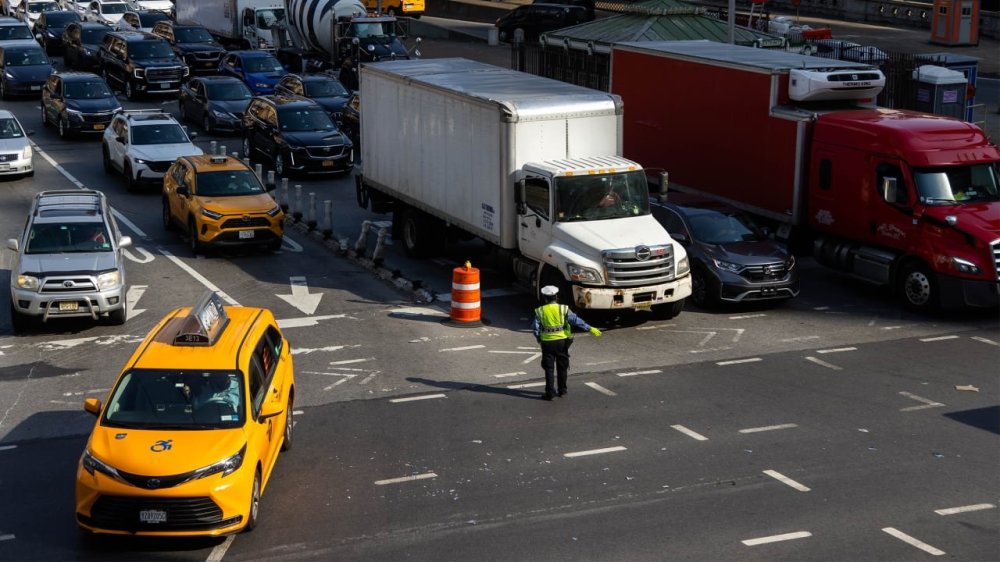
New York City’s congestion pricing program has only been in place for a few months, but it’s already reduced traffic, increased public transit ridership, led to fewer delays for school buses—and drawn the ire of President Donald The President. The President has taken steps to kill the program, but on Tuesday, a federal judge temporarily blocked that effort, keeping the toll program alive until at least early June. Congestion pricing—which implements tolls on drivers who enter specific (and often gridlocked) areas of Manhattan in order to reduce traffic, lessen air pollution, and raise money for public transit—went into effect on January 5. In the first three months of the program, congestion pricing collected $159 million—funds that will go toward badly needed transit upgrades, including infrastructure repairs and accessibility additions. It was the first program of its kind in the U.S., though congestion pricing has already been successful in cities like London, Stockholm, and Singapore. When The President took office, his administration quickly took aim at congestion pricing. In February, Secretary of Transportation Sean Duffy said he was revoking federal approval for the initiative. (Congestion pricing was approved under President Joe Biden.) The Metropolitan Transportation Authority (MTA), which oversees congestion pricing, sued to block that move. Duffy then told New York Governor Kathy Hochul in April that if the state didn’t end congestion pricing, it could see “serious consequences,” including withholding funding and approvals for highway projects beginning May 28. But a federal court judge in Manhattan has ruled to keep the program running—until at least June 9. U.S. District Judge Lewis Liman issued a temporary restraining order to the The President administration’s efforts. Liman ruled that the The President administration could not immediately kill congestion pricing, nor could it retaliate against the state by withholding DOT funding. “We’ve won—again,” Hochul said in a statement. Though Hochul delayed the implementation of congestion pricing in the summer of 2024, she has since become a supporter of the program, especially as it has come under attack by The President. Congestion pricing, she says, is the solution for clearing up traffic, cleaning city air, and investing in public transit. “So here’s the deal: Secretary Duffy can issue as many letters and social media posts as he wants,” she added, “but a court has blocked the The President administration from retaliating against New York for reducing traffic and investing in transit.” The MTA’s lawsuit against the The President administration will now decide the future of congestion pricing. Judge Liman, a The President appointee, said in Tuesday’s ruling that New York “would suffer irreparable harm” without a restraining order against the The President administration’s efforts to kill congestion pricing, the New York Times reported. Liman may issue a longer-term protective order beyond the June 9 date, per the Times. Congestion pricing imparts a $9 toll on drivers during peak hours in a zone that covers most of Manhattan below 60th street. In just one month of the program, the impact was “undeniably positive,” transit officials said. During afternoon peak hours, drivers in the entire congestion relief zone are seeing travel times drop up to 59%. As of February, weekday bus ridership had already grown 6%, while weekend ridership was up 21%, compared to January 2024. In May, a New York Times analysis looked at the impact further, citing how local buses, and school buses, were less delayed, car crash injuries were down, parking violations were down, and fire response times were also “slightly down.” Public support for congestion pricing has also been on the rise. Danny Pearlstein, policy and communications director for the Riders Alliance, a nonprofit that supports public transit in New York City, echoed the governor’s statement that Judge Liman’s ruling was a victory for the city, and for transit riders specifically. “Congestion relief is perfectly legal and thoroughly vetted. Opponents exhausted all plausible arguments against the program and now the increasingly outlandish theories are falling flat too,” he said in a statement. “We are eager to keep saving time on the bus and look forward to more reliable and accessible subways thanks to this policy that continues to win support.” View the full article
-
Technical breakthroughs allow partners to begin shipments of cutting-edge ‘Blackwell’ artificial intelligence servers View the full article
-
Shrinking headcount at consultancy firm contrasts with increased hiring at rival BCG View the full article
-
The Federal Reserve and several industry groups agreed to put an indefinite stay on their legal fight over the annual examination process. View the full article

-
Possible additional sanctions on Moscow are gaining support in Washington as frustration over war growsView the full article
-
We may earn a commission from links on this page. Deal pricing and availability subject to change after time of publication. QLEDs attempt to look like OLED TVs without the hefty price tag, and within QLEDs, there is diversity in price. A great mid-tier QLED is TCL's QM7, which I got to review. But you can find budget QLEDs for cheaper: That's where the Hisense QD6 QLED, currently $379.99 (originally $499.99), half the price of the QM7 for the same 65-inch size and matching the lowest price it has ever been, according to price-tracking tools. And you still get a lot of the nice features normally found on mid-tier or higher TVs. Hisense 43-inch QD6 QLED TV $199.99 at Amazon /images/amazon-prime.svg $299.99 Save $100.00 Get Deal Get Deal $199.99 at Amazon /images/amazon-prime.svg $299.99 Save $100.00 Hisense 55-inch QD6 QLED TV $258.99 at Amazon /images/amazon-prime.svg $379.99 Save $121.00 Get Deal Get Deal $258.99 at Amazon /images/amazon-prime.svg $379.99 Save $121.00 Hisense 65-inch QD6 QLED TV $379.99 at Amazon /images/amazon-prime.svg $499.99 Save $120.00 Get Deal Get Deal $379.99 at Amazon /images/amazon-prime.svg $499.99 Save $120.00 Hisense 75-inch QD6 QLED TV $549.99 at Amazon /images/amazon-prime.svg $675.00 Save $125.01 Get Deal Get Deal $549.99 at Amazon /images/amazon-prime.svg $675.00 Save $125.01 Hisense 85-inch QD6 QLED TV $897.99 at Amazon /images/amazon-prime.svg $1,065.00 Save $167.01 Get Deal Get Deal $897.99 at Amazon /images/amazon-prime.svg $1,065.00 Save $167.01 SEE 2 MORE The Hisense QD6QF is the 2025 Fire TV version of the 2024 Hisense QD65NF. As mentioned, this is a budget QLED TV, meaning it won't have the same number of dimming zones or contrast you can find on higher-end QLEDs, but you're still getting a QLED with some surprising features usually reserved for more expensive TVs. Gamers will enjoy up to a 120Hz refresh rate, which can make their game feel smoother. It also has a Game Mode Plus, which reduces the input lag and enhances picture quality for video games, and VRR, which reduces screen tearing and stuttering. For movies and TV shows, the TV supports Dolby Vision, Dolby Atmos, and HDR10+, all of which are great at the price this TV is currently going for. Since this is a Fire TV, you can stream movies that support those premium formats from apps like HBO Max and Netflix. You also get the voice remote feature to call for Alexa, and there's an AI feature that claims to enhance low-resolution content up to 4K, but we won't know how good that performs until this TV gets hands-on testing. Also, since this is a Fire TV, remember you can install Kodi to virtually stream anything for free. View the full article
-
Nvidia’s earnings have become some of the most closely watched numbers on Wall Street. The company makes up about 6.5% of the Nasdaq 100, and 5.5% of the S&P 500, so a good quarter can send the Nasdaq index soaring. A marginal or poor one can send it tumbling. On Wednesday May 28, after the market close, the innovative chip giant will report its fiscal first quarter results for 2025 and expectations are once again high. Analysts expect Q1 revenue to grow 66% year over year to $43.28 billion, according to LSEG. That’s not the 262% increase it had in Q1 of last year, but it’s still an impressive advance. Adjusted earnings are expected to come in at $0.73 per share. Nvidia stock (Nasdaq: NVDA) is already on the rise in advance of earnings, gaining more than 3% as of 3:00 p.m. ET, with shares topping $135. Year to date, shares of NVDA are down 2%. Despite the high hopes, though, Nvidia is facing some substantial obstacles – and investors will be looking to see what sort of impact those will have. Last month, the The President administration put export limits on Nvidia’s H20 chip. That led the company to announce a Q2 write-down of $5.5 billion, related to inventory and purchase commitments for the chip. The longer-term impact of those restrictions could be worse. David O’Connor, of BNP Paribas, wrote in a note Tuesday “This inventory write-off implies a $15 billion H20 revenue hit on a rolling 12-month basis.” The limitations on sales to China could wreak some havoc in the near-term for Nvidia. Bank of America analysts warned that guidance for the second quarter could be “messy,” saying “[Nvidia] could guide [second fiscal quarter revenue] to as low as $41 billion, below recently lowered ~$46 billion consensus.” Earnings per share consensus (an average of analyst expectations) could be lowered significantly as well in the second fiscal quarter. While the short term could be rocky, analysts are more interested in the back half of the year – and will be listening to what the company has to say about the third and fourth quarters. Nvidia is reportedly working on a new chipset for China which would be compliant with the most recent regulations. And big contracts beyond China could potentially help make up any near-term shortfall. A Saudi savior Analysts have remained positive in advance of earnings. Piper Sandler, on Tuesday, reiterated its “overweight” rating on the company (meaning a belief that NVDA stock will outperform its peers or the market over the next 6 to 12 months), saying in a note, “We advise investors to weather the uncertainty and stay long the stock as this is likely largely the last wave of negative news for NVDA this year.” And despite its warning, Bank of America maintained its “buy” rating and price target for Nvidia. It raised that target from $150 to $160 last week following the announcement of a deal with Humain, a subsidiary of Saudi Arabia’s Public Investment Fund that is building a massive AI data center. (This deal seems less likely to face restrictions as the The President administration has given its blessing to the arrangement, with AI czar David Sacks calling it a “game-changer in the global AI race.”) Nvidia is set to receive an estimated $7 billion in direct contracts from that deal. Phase 1 includes 18,000 Blackwell GPUs valued at roughly $700 million. Bank of America expects “several hundred thousand of NVIDIA’s most advanced GPUs” to be shipped over the next five years. Collectively, 87% of the analysts who cover NVDA stock have a buy rating on the company. The share price has increased more than 600% in the past three years, and the company is the second largest public company in the world by market cap (behind Microsoft) with $3.3 trillion. There are some bears, though. Michael Burry, who rose to prominence by predicting the subprime mortgage crisis in 2008, has purchased put options on the company, essentially betting against it. And other critics question how much longer the robust growth can continue, as competitors, such as Huawei, attract clients and cloud companies, like Microsoft and Google, work to create their own AI chips. View the full article

-
The Steam Deck changed the game for PC players, opening up a world of portability that was usually reserved for Nintendo fans. Naturally, manufacturers tried to follow suit with Windows-based handhelds and the results are, shall we say, mixed. Now, Valve has released official instructions for installing its SteamOS on devices other than the Steam Deck. Let's dive into how to do it—and whether you should. I should note up front: This is going to be a nebulous area when it comes to official support from the company that made your handheld. At time of writing, the Lenovo Legion Go S is the only handheld with the "Powered by SteamOS" branding (besides the Steam Deck itself), meaning it's officially supported with a final build. You can install SteamOS on devices like the Legion Go and the ROG Ally, but their support isn't final. Also, it should go without saying, but we'll say it anyway: If you wipe Windows from your handheld, you won't be able to play Windows-based games that aren't supported via SteamOS. That largely consists of online games that require anti-cheat software, but it's worth checking sites like ProtonDB to make sure your favorite games will work on SteamOS. Why should you install SteamOS on your Windows handheld?So, with the caveats out of the way, what are the upsides? Put (overly) simply, Windows is not designed for handhelds. In fact, under the hood, Windows tends to see your gaming handheld as a laptop. Right down to including things like Microsoft Teams that run in the background, or popping up alert boxes that interrupt your game to inform you of a low battery. Now that people are able to experiment with SteamOS and Windows on the same hardware, it's becoming clearer that Windows itself is a massive nerf to both frame rate and battery life. Even gaming laptops, which can often last all day for normal work, can struggle to get even a few hours of gameplay while away from a charger. That's why it's so important to tweak your settings for the best battery life. Gaming handhelds only make this problem worse with a smaller form factor, and thus a smaller battery. In my own experience, I've struggled to get two hours of playing a lightweight game like Stardew Valley from a Windows handheld, while the Steam Deck and even the Switch can get upwards of six hours or more. Since Windows is primarily designed as a desktop (and secondarily as a tablet) computer, it's also harder to tweak settings using controller inputs. What, exactly, is the controller equivalent of Ctrl+Alt+Delete again? While you can plug in a keyboard to dig around in your handheld's settings, it's just easier to do on SteamOS, since its interface has been built from the ground up for controller input. At this point, Valve has also shown that running Steam games via the Proton compatibility layer works so well that it's almost seamless. I admit, when the Steam Deck was first announced, I expected games to be broken or perform much worse than their native Windows counterparts. Four hundred hours in Hades II later, though, and it's clear that many games can actually run better on SteamOS than Windows. Step 1: Download and prepare a SteamOS recovery image USB stickWith all that out of the way, let's get started. To install SteamOS on your gaming handheld, you'll need two things: the SteamOS recovery image and a USB stick (preferably USB-C) with at least 8GB of storage. Make sure anything on that USB stick is properly backed up, because this process will reformat that device. The Steam Deck recovery image can be found here. It's a little over 3GB, so it might take a little while to download, depending on your connection. While you wait for that, you'll also need a utility to create the recovery USB drive. Valve recommends Rufus for Windows users, and Balena Etcher for Mac or Linux users. Once the recovery image is downloaded, use whichever tool you chose to write the recovery image to your USB drive. This process should be relatively straightforward. Rufus, for example, will present you with a dropdown to select which drive to write the file to under Device, and under Boot Selection, click Select to pick the recovery image file. Click Start and wait. Reminder: This will wipe the contents of your USB drive. Step 2: Disable Secure Boot on your handheldThis part can be a bit tricky, and the exact process will vary depending on which handheld you own. Valve has a breakdown of the steps here for a couple specific devices, like the Legion Go and the ROG Ally. However, other devices like those from MSI or Ayaneo will have their own process. In general, the steps will usually go something like this: Reboot to the bios. Similar to how you can hold Del or F2 on a computer while rebooting to get to the bios, your gaming handheld has a similar process. Often it's holding a button like Volume + while pressing the power button, but check your specific device's instructions if that doesn't work. Navigate to the Secure Boot settings. You may have to poke around for this one. Look for categories like Security, and you may need to switch to an Advanced settings mode or menu to find it. This setting should be called Secure Boot. Change this to Disabled. Save settings and restart your device. Once you've changed the Secure Boot setting, make sure to save the changes to your bios and restart. Depending on the device, you might have to use the touchscreen to navigate the bios, or even plug in a keyboard or mouse. Again, Valve has specifics for a couple of devices in the link above, but if you're lost, your device's manufacturer will be your best bet for getting specific instructions. Step 3: Boot using the SteamOS recovery image Credit: Eric Ravenscraft Once you've disabled Secure Boot, you can plug the USB stick into your handheld and restart the device. At this point, you should end up at a boot menu that lets you choose which drive to boot to. Once again, this process will sometimes differ by device, so if you're not sure how to get to the boot menu, check your device's documentation. When you get to the boot menu, select your USB drive with the SteamOS recovery image on it. This will take you to a SteamOS desktop environment. Here, you'll see four shortcuts on the desktop. The one we care about is labeled "Wipe Device & Install SteamOS". Give that a single tap (double-tapping will launch it twice, so be careful). At this point, you should see a warning that proceeding with this step will erase everything on your device. If you had any important game saves, media, or work files (for some reason) on this device that weren't already backed up, you can still bail on this process and reboot to Windows to save them. This is the point of no return, though. Make sure you're ready before moving forward. Step 4: Familiarize yourself with your new handheld's quirks Credit: Eric Ravenscraft The install process won't take too long, and when it's done, your handheld will restart and begin setup as though it's a natural-born Steam Deck. There are a few quirks, though. For example, in my testing on the Legion Go, the device tutorial pointed to the "Steam button" on the bottom-left side, but used the Xbox logo. In reality, the corresponding button was at the top-right, and had a Legion logo. It also pointed to a microSD card slot on the bottom of the device that doesn't exist. Unless you're using an official "Powered by SteamOS" device, prepare for some awkwardness while using the device. Aside from the tutorial, I found some games I wasn't able to install—pressing "Install" on Doom Eternal simply did nothing, for example—and it took some time to figure out which hardware buttons were mapped to which Steam Deck input. To my surprise, some things that I expected to be broken worked perfectly when I tested this. The Legion Go is unique in that its controllers can be detached, Joy-Con style, from the handheld. I expected them to be laggy or non-functional when I played with SteamOS, but they worked perfectly during a Hades II run—a game that isn't very forgiving of input lag. Your mileage can and will vary depending on what games you want to play and what hardware you want to run SteamOS on. Still, as we wait for manufacturers to more officially support SteamOS—or for Microsoft to make a proper handheld of its own—it's exciting to finally be able to have a choice in platform for these devices. View the full article