Newsletter
Want to keep up to date with all our latest news and information?


ResidentialBusiness
Administrators
-
Joined
-
Last visited
Everything posted by ResidentialBusiness
-
San Francisco Bay Area residents woke up to some bad news for their Friday commute. Bay Area Rapid Transit, or BART, the region’s main commuter rail system, which connects San Francisco’s peninsula with the East and South Bay, systematically shut down due to a “computer networking problem” affecting train control. The agency announced it was closing all 50 stations at 4:24 a.m. on Friday morning, the East Bay Times reported. As of this writing on Friday morning, BART said that train service had resumed, although passengers should expect “major delays.” “Technicians are on site trying to get to the bottom of the situation, but right now, that is the information that we have,” BART communication officer Cheryl Stalter told KQED shortly after 6 a.m local time. “We have a computer networking problem that is systemwide . . . it is affecting all operations, so we cannot put trains into service.” Chris Filippi, a spokesman for BART, said in a statement to the New York Times, that the last time this happened, it took several hours to resolve. The incident left tens of thousands of commuters looking for new ways to get to work, with many reportedly clogging the Bay Area’s freeways, while the San Francisco Municipal Transportation Agency, which operates Muni bus and rail services, assisted remaining passengers at some BART stations, per the Times. The San Francisco Bay Ferry also ran larger ferries from the North and East Bay, per the East Bay Times. Some 170,000 area residents use BART on weekdays, with ridership just half of what it was before the COVID-19 pandemic, according to the American Public Transportation Association, as reported by the New York Times. View the full article

-
The only thing that’s certain about the current tariff situation is that a lot of things are about to get more expensive for U.S. consumers. The impact of the new tariffs is estimated to be more than $5,000 per year for the average household, which means all the work you’ve put into figuring out your home budget and personal finances is going to go out the window. All the metrics are about to change—and mostly not in your favor. If you’re smart, you already have an emergency fund to protect yourself against life’s little surprises, from a job loss to an unexpected medical bill. Right now, it's also a good idea to start building a fund to protect yourself against sudden and persistent tariff-fueled hikes in the cost of living. Here’s how to approach setting up a tariff emergency fund. How to estimate what tariffs will cost youTariff rates are public information, but tariff schedules can be a difficult read if you’re not an economist. But you can use a few key pieces of information to figure out how much extra money to set aside to protect yourself from tariff-related cost increases: Blanket tariffs. There’s pretty much a base tariff of 10% on just about every country in the world at the moment (the big exception is China, which currently faces tariffs as high as 145%). You can see a list of countries and tariff rates here, so if you know that something you buy is being imported from a specific place, you can see the extra cost imposed on the importer for that country of origin. This is a good upper metric to go by. Average cost increase. Most companies will pass tariff costs on to the consumer in some way—that’s why tariffs are considered a form of tax on the consumer. That doesn’t necessarily mean that everything will be 10% more expensive due to the blanket tariffs, because a product may only use a few ingredients or components that are subject to the tariffs, and different ingredients might come in under different tariff rates. The Budget Lab at Yale University has calculated that consumer prices are going to go up by about 3% as a result of the tariffs, so that’s a good lower metric to use. How to create your tariff emergency fundYou could spend time researching tariff rates and where your food, clothing, and other items come from in order to craft an extremely specific tariff fund, and then look for domestic products you can substitute to eliminate the tariff costs from your budget. But the way the tariffs are shifting on a near-daily basis means you might do better to skip that meticulous product-by-product analysis and just assume that your costs are going to go up by anywhere from 3% to 10% on just about everything. Assume a blanket increaseTargeting something in the middle of that range—say, 5% of your current household grocery and shopping costs—should give you the extra padding you’re going to need as long as these tariffs remain in place. For example, if your average grocery bill is about $500 per month, a tariff emergency grocery fund of about $180 (3% of $500 is $15, multiplied by 12 months) would cover a year’s worth of extra tariff-related costs (or you could try to find a supermarket that’s not raising prices at all, if you can). If you want a little more protection against unexpected costs, you could go the full 10% and make that $300. You can apply a similar formula to everything else you purchase on a regular basis that could be impacted by tariffs. Budget for the big ticket itemsAnother option is to consider major purchases you're planning for—say, a new refrigerator or a home remodeling project—and setting aside extra money to cover possible increased costs. Consumer Reports estimates appliance prices could increase by as much as 30% to 40% over the next 9 months, so you'll want to be ready: If you were planning on buying a refrigerator with a price tag of around $2,000,.stick another $600 to $800 into your tariff emergency fund. Just set aside $5,000Another approach would be to assume the tariffs will cost you about $5,000 per year, and start putting that amount aside to cover the increased costs, if you can manage it. It’s important that this be a separate amount from your emergency fund, which you still need to maintain to hedge against, well, emergencies—and if tariffs are lowered or you don't spend as much as you expect, you can roll it into next year's fund, or add it to your regular emergency fund. Preparing for tariff chaos isn’t going to be easy, but putting aside some extra money now will give you the necessary runway to handle what’s coming. View the full article
-
Global equity funds attracted the smallest weekly inflows in four weeks in the week through May 7, amid concerns about the impact of tariffs on the global economy and as investors awaited anticipated U.S.-China trade talks for more clues. According to LSEG Lipper data, investors bought just $856 million worth of global equity funds during the week, when compared with their $6.13 billion worth of net purchases in the previous week. European equity funds witnessed robust demand for a fourth successive week with investors ploughing in a net $12.81 billion into these equity funds. Asian funds also saw a net $3.32 billion worth of inflows while in the U.S., there were outflows for a fourth consecutive week, to the tune of $16.22 billion, on a net basis. Sectoral funds, meanwhile, saw net selling for a ninth successive week, grossing approximately $2.6 billion for the week. The financial sector with $1.19 billion and the metals and mining sector with $478 million in net sales, led sectoral outflows. Global bond funds, however, gained popularity during the week as these funds saw weekly inflows totalling a net $11.4 billion, the highest in nine weeks. Dollar-denominated bond funds witnessed a revival in demand with investors allocating a net $4.33 billion to these funds, the biggest amount in eight weeks. Global short-term and high yield funds also witnessed a significant $1.91 billion and $1.29 billion worth of net purchases, respectively. Global money market funds saw a hefty $66.3 billion worth of weekly inflows, the biggest since February 5. At the same time, gold and precious metal commodity funds experienced their second weekly outflow in 13 weeks, to the tune of $655 million. Data covering 29,582 emerging market funds showed, equity funds received approximately $1.48 billion while bond funds gained a net $1.56 billion, a second successive weekly inflow in each segment. —Gaurav Dogra and Patturaja Murugaboopathy, Reuters View the full article

-
With three or even four significant wars raging, who can doubt the dangers of this period? View the full article
-
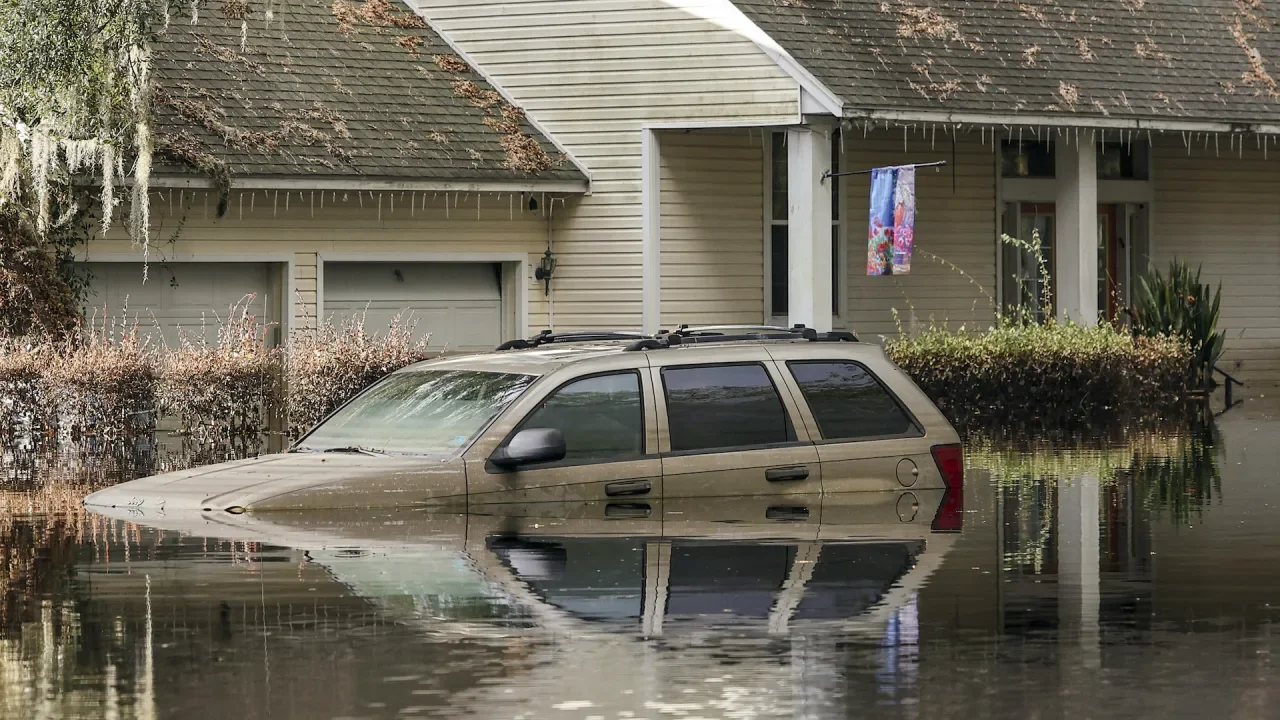
The National Oceanic and Atmospheric Administration will no longer track the cost of climate change-fueled weather disasters, including floods, heat waves, wildfires and more. It is the latest example of changes to the agency and the The President administration limiting federal government resources on climate change. NOAA falls under the U.S. Department of Commerce and is tasked with daily weather forecasts, severe storm warnings and climate monitoring. It is also parent to the National Weather Service. The agency said its National Centers for Environmental Information would no longer update its Billion-Dollar Weather and Climate Disasters database beyond 2024, and that its information — going as far back as 1980 — would be archived. For decades, it has tracked hundreds of major events across the country, including destructive hurricanes, hail storms, droughts and freezes that have totaled trillions of dollars in damage. The database uniquely pulls information from the Federal Emergency Management Agency’s assistance data, insurance organizations, state agencies and more to estimate overall losses from individual disasters. NOAA Communications Director Kim Doster said in a statement that the change was “in alignment with evolving priorities, statutory mandates, and staffing changes.” Scientists say these weather events are becoming increasingly more frequent, costly and severe with climate change. Experts have attributed the growing intensity of recent debilitating heat, Hurricane Milton, the Southern California wildfires and blasts of cold to climate change. Assessing the impact of weather events fueled by the planet’s warming is key as insurance premiums hike, particularly in communities more prone to flooding, storms and fires. Climate change has wrought havoc on the insurance industry, and homeowners are at risk of skyrocketing rates. One limitation is that the dataset estimated only the nation’s most costly weather events. The information is generally seen as standardized and unduplicable, given the agency’s access to nonpublic data, and other private databases would be more limited in scope and likely not shared as widespread for proprietary reasons. Other datasets, however, also track death estimates from these disasters. Jeff Masters, a meteorologist for Yale Climate Connections, pointed to substitutes from insurance brokers and the international disaster database as alternative sources of information. Still, “The NOAA database is the gold standard we use to evaluate the costs of extreme weather,” Masters said, “and it’s a major loss, since it comes at a time when we need to better understand how much climate change is increasing disaster losses.” These moves also don’t “change the fact that these disasters are escalating year over year,” Kristina Dahl, vice president of science at nonprofit climate organization Climate Central. “Extreme weather events that cause a lot of damage are one of the primary ways that the public sees that climate change is happening and is affecting people.” “It’s critical that we highlight those events when they’re happening,” she added. “All of these changes will make Americans less safe in the face of climate change.” The move, reported Thursday by CNN, is yet another of President Donald The President’s efforts to remove references to climate change and the impact of greenhouse gas emissions on the weather from the federal government’s lexicon and documents. The President has instead prioritized allies in the polluting coal, oil and gas industries, which studies say are linked or traced to climate damage. The change also marks the administration’s latest hit overall to the weather, ocean and fisheries agency. The The President administration fired hundreds of weather forecasters and other federal NOAA employees on probationary status in February, part of Elon Musk’s Department of Government Efficiency efforts to downsize the federal government workforce. It began a second round of more than 1,000 cuts at the agency in March, more than 10% of its workforce at the time. At the time, insiders said massive firings and changes to the agency would risk lives and negatively impact the U.S. economy. Experts also noted fewer vital weather balloon launches under NOAA would worsen U.S. weather forecasts. More changes to the agency are expected, which could include some of those proposed in the president’s preliminary budget. The agency’s weather service also paused providing language translations of its products last month — though it resumed those translations just weeks later. ___ The Associated Press’ climate and environmental coverage receives financial support from multiple private foundations. AP is solely responsible for all content. Find AP’s standards for working with philanthropies, a list of supporters and funded coverage areas at AP.org. —Alexa St. John, Associated Press Data journalist Mary Katherine Wildeman contributed to this report. View the full article

-
When you're planning a trip with friends, there's a good chance your group chat will be full of links to and screenshots of places you want to visit or cafés you want to hit. To help you keep track of all that, Google is now rolling out a new feature to add multiple locations to a Google Maps list for you using screenshots. This feature scans your phone and uses Gemini AI to work out the places mentioned in your screenshots. It's starting out first first on iPhones (which is odd for Google), and it's limited to the US for now. However, Android and global releases are planned for the future. How to automatically add places to Google Maps using screenshots Credit: Khamosh Pathak Here's how the new feature works. After updating the Google Maps app to the latest version, head over to the You tab. Here, you'll see a new list up top called Screenshots. Tap on it, and Google Maps will ask for access to your photo library. Here, you can allow it full access to enable the auto-scan feature, or you can simply choose the photos you want it to scan manually. The feature works slightly differently based on what you choose. I'll start with the auto-scan instructions. If you're on automatic, simply go about your life, taking screenshots of locations you're interested in as you normally would. These can include the name of a location, an address, or even a photo of a place. Once you're ready to add them to your Google Maps list, open the Google Maps app again. If the Maps app automatically recognizes a location, it will show a message saying that there are new places that are ready for you to review. Tap the Review button and choose if you want to save the image and the places Google found to your Screenshots list or not. Once that's done, you can also add the places to a different list. Here's a detailed video on how the feature works: How to manually add places to a Google Maps list using screenshotsAlternatively, you can also manually add places to your Google Maps app using the Screenshots list, for more privacy. Go to the You tab and choose the Screenshots list. Here, upload the screenshots that you want the list to pull from. Now, Google Maps will analyze the images and will come back to you with the Review screen. Simply go through the locations that Google Maps found, and add the ones you want to the Screenshots list. Should you let AI go through your screenshots?As useful as this feature can be, the question remains, should you let Gemini access all the photos in your iPhone library just to save a couple of seconds searching for a place on Google Maps? If that makes you uncomfortable, be sure to deny Google Maps full access to your photo library, even if you're not regularly using the Screenshots list feature. It's also good practice to periodically check on your photo permissions, which you can read more about here. View the full article
-
Virginia Olsen has pulled lobsters from Maine’s chilly Atlantic waters for decades while watching threats to the state’s lifeblood industry mount. Trade imbalances with Canada, tight regulations on fisheries and offshore wind farms towering like skyscrapers on open water pose three of those threats, said Olsen, part of the fifth generation in her family to make a living in the lobster trade. That’s why she was encouraged last month when President Donald The President signed an executive order that promises to restore American fisheries to their former glory. The order promises to shred fishing regulations, and Olsen said that will allow fishermen to do what they do best — fish. That will make a huge difference in communities like her home of Stonington, the busiest lobster fishing port in the country, Olsen said. It’s a tiny island town of winding streets, swooping gulls and mansard roof houses with an economy almost entirely dependent on commercial fishing, some three hours up the coast from Portland, Maine’s biggest city. Olsen knows firsthand how much has changed over the years. Hundreds of fish and shellfish populations globally have dwindled to dangerously low levels, alarming scientists and prompting the restrictions and catch limits that The President’s order could wash away with the stroke of a pen. But she’s heartened that the livelihoods of people who work the traps and cast the nets have become a priority in faraway places where they often felt their voices weren’t heard. “I do think it’s time to have the conversation on what regulations that the industry does need. We’re fishing different than we did 100 years ago,” she said. “If everything is being looked at, we should be looking at the regulations within the fishing industry.” A question of sustainability and competitiveness But if fishing and lobstering interests finally have a seat at the table, the questions become how much seafood can be served there — and for how long. The President’s April 17 order, called “Restoring American Seafood Competitiveness,” promises an overhaul of the way America fishes, and cites a national seafood trade deficit of more than $20 billion as the reason to do it. The order calls on the federal government to reduce the regulatory burden on fishermen by later this month. It arrives at a time when conservation groups and many marine scientists say the ocean needs more regulation, not less. One oft-cited 2020 study led by a scientist at the University of British Columbia looked at more than 1,300 fish and invertebrate populations and found that 82% were below levels that can produce maximum sustainable yields. The university said the study “discovered global declines, some severe, of many popularly consumed species.” The President’s order prioritizes commerce over conservation. It also calls for the development of a comprehensive seafood trade strategy and a review of existing marine monuments, which are underwater protected zones, to see if any should be opened for fishing. At least one, the Pacific Islands Heritage Marine National Monument, has already been reopened. Many commercial fishermen and fishing trade groups lauded the order. Members of the industry, one of the oldest in the country, have long made the case that heavy regulations — many intended to protect the health of fish populations — leave the U.S. at a competitive disadvantage to the fleets of countries that don’t bear the same kind of burden. That disadvantage is a big piece of why America imports more than two-thirds of its seafood, they argue. “The president’s executive order recognizes the challenges our fishing families and communities face, and we appreciate the commitment to reduce burdensome regulations and strengthen the competitiveness of American seafood,” said Patrice McCarron, executive director of the Maine Lobstermen’s Association. Some fishermen, including Maine lobsterman Don McHenan, said they’re looking forward to members of the industry being able to fish in areas of the ocean that have been closed off to them for years. McHenan said he’s also hopeful the pace of new regulations will slow. “As long as they don’t put any more onto us,” McHenan said. “We’ll see — time will tell.” Not all fishermen are on board But the support for deregulation is not unanimous among fishermen. Some say strong conservation laws are critical to protecting species that fishermen rely on to make a living. In Alaska, for example, Matt Wiebe said the executive order “terrifies” him. A commercial fisherman with more than 50 years of experience fishing for salmon, he said the order could potentially harm the Bristol Bay sockeye salmon fishery, which has received praise from sustainability organizations for careful management of the fish supply. Absent that management, he said the world’s largest sockeye salmon fishery could go the way of the New England cod fishing business, which collapsed due in large part to overfishing and has never recovered. “Since New England fishers lost their cod fishery due to overfishing, many other fisheries came to respect and depend on conservation efforts,” Wiebe said. “We fish because it’s what we do, and conservation efforts mean we and our kids can fish into the future.” The executive order arrived at a time when America’s commercial fishermen are coping with environmental challenges and the decline of some once-marketable species. Maine’s historic shrimp fishery shuttered more than a decade ago, California’s salmon industry is struggling through closures and the number of fish stocks on the federal overfished list has grown in recent years. There is also the looming question of what The President’s trade war with major seafood producers such as Canada and China will mean for the U.S. industry — not to mention American consumers. To many in Maine’s lobster and fishing business, the answer is clear: Cut regulations and let them do their thing. “We definitely feel the industry is over-regulated as a whole,” said Dustin Delano, a fourth-generation Maine lobsterman who is also chief operating officer of the New England Fishermen’s Stewardship Association. “We hope that this will help for sure. It does seek to initiate that America-first strategy in the fishery.” —Patrick Whittle and Robert F. Bukaty, Associated Press View the full article

-
The declines on Thursday pushed two- to 10-year yields higher by at least 10 basis points on the day after President Donald The President urged people to buy stocks based on the latest trade developments. View the full article

-
First Sea Lord Admiral Sir Ben Key was replaced earlier this weekView the full article
-
Not that long ago, sending a message was final. It didn't matter if you had an embarrassing typo, or you sent a message to the wrong person: Once you tapped that "send" button, you were locked in, and whoever that message was sent to would have it as long as they wanted. These days, however, we have the technology to save ourselves from such embarrassment. Many chat apps now have options to retrieve a message after it was sent, whether by editing the message to fix a mistake, or the ability to delete a message from everyone in the chat. It doesn't guarantee that the people who received the message didn't see it, but it does remove that message from view. If they didn't catch it, they never will. Plenty of chat apps have this delete option today, from WhatsApp to iMessage. But one notable exception has been Google Messages. If you send a message you didn't mean to send, you can edit it for up to 15 minutes, but you can't undo it. Luckily, that's beginning to change. 9to5Google originally spotted the ability to delete messages from everyone back in February. Now, it appears to be rolling out, slowly but surely. To get specific, RCS, the messaging protocol that Google Messages now defaults to, has had this option since last July's "Universal Profile 2.7" update, which allowed users to "Edit, Recall and Delete [messages] that they sent earlier for themselves and the message recipient." How "Delete for everyone" works in Google MessagesWhen the feature hits your Google Messages app, you'll now have two options when you delete a message. You'll have the "Delete for me" option, which behaves the same as deleting a message always has: it'll delete on your end, but not for anyone else. However, there's also now "Delete for everyone," which will delete the message for all users running a compatible version of Google Messages. That's the key here. While the message will be removed from users who have an updated, compatible version of Google Messages, it won't be deleted from older app versions. It's the Achilles' heel of the feature, and it applies to most chat apps that offer it: You'll never really know whether the message was deleted, unless you're certain all parties involved are running an up-to-date version of Google Messages. According to 9to5Google, the feature is also rolling out rather slowly at this time. They highlight one user running the Google Messages beta who has the feature for a group chat of 12 participants, but not for single chats. 9to5Google doesn't have the option on their end. For the best shot at trying out the feature as soon as possible, you might want to enroll in the Google Messages beta. If you're OK risking a more unstable version of the messaging app, head to the Google Messages Play Store page, choose BECOME A TESTER, then follow the on-screen instructions to enroll. View the full article
-
The Soviet Union launched over a dozen probes to Venus—most successfully. But one never made it past Earth’s orbit and has, in fact, stayed there since 1972. Now, over 50 years later, the one-meter-large Kosmos 482 is coming home, albeit a bit haphazardly. The 1,091-pound craft, also known as Kosmos 482 and Venera 8, is predicted to reach reentry within nine hours of 1:54 a.m. ET on May 10, according to the Center for Orbital and Reentry Debris Studies (CORDS). In other words, this could be late afternoon today or sometime tomorrow morning. If you think the when is varied, wait until you hear about the where. Aerospace, the American nonprofit research and development center that runs CORDS, currently predicts that the craft could land anywhere between 52 degrees north and 52 degrees south latitude. Ironically, that covers almost every country except the USSR’s successor, Russia. What will happen to the probe upon reentry? The craft could stay intact the entire way to Earth, as it was designed to survive the more severe atmosphere of Venus. However, the risk of it causing injury or death upon impact is about 0.4 in 10,000, according to Aerospace. “While the risk is nonzero, any one individual on Earth is far likelier to be struck by lightning than to be injured by Kosmos 482,” the organization states. “We definitely do not expect Kosmos 482 to land in your yard specifically. Given the nature of its orbit, most of the Earth is still in play for its reentry, and consequently it is far more likely to land in the ocean or an unpopulated area.” In the rare chance that Kosmos 482 does land near you, Aerospace cautions you to contact the authorities and not touch it as it could be hazardous. Plus, an early space-age United Nations treaty means it could technically belong to Russia. How can I track Kosmos 482 and follow updates? You can stay up-to-date on Kosmos 482’s predicted reentry time on Aerospace’s tracking page. Secondly, the EU Space Surveillance and Tracking Operation Centers (EU SST) is also tracking the craft’s reentry and posting updates on its website and X account. View the full article

-
We may earn a commission from links on this page. Though relatively new on the Hollywood scene (its first original film was released in 2019), Apple TV+'s slate of original films has included not just charming indies, but award-winning prestige pictures. CODA was Oscar's best picture just a couple of years ago (the first film from a streaming service to claim the honor), and the streamer's movies earned it 13 nominations for 2023, even if it got nothing for 2024. (We all have off years.) Given the complexities of film financing today, you might be excused for believing that many of these movies were typical theatrical releases—but, strictly speaking, these are all Apple TV+ originals. Sometimes they're only available through the app, but other times they have small (or significant) theatrical releases built in to their distribution model, if only to ensure they're eligible for major awards like the Oscars. The Gorge (2025) Miles Teller, Anya Taylor-Joy, and Sigourney Weaver star in this sci-fi/action/romance that became Apple TV's most-streamed movie launch ever upon its February release. Teller and Taylor-Joy play snipers tasked by a mysterious woman (Weaver) with guarding two sides of the title's gorge: He's a former U.S. Marine with symptoms of PTSD, she's a a Lithuanian covert operative with a dying father. The two are to stand watch for a full year in complete isolation to ensure that nothing comes out of the gorge, but things get complicated when the bored snipers start sending each other messages, increasing their communication until they start to question just what it is that they're meant to be guarding. You can stream The Gorge here. Fly Me to the Moon (2024) The sort of goofy rom-com that they don't make anymore (or so it's said), Fly Me to the Moon rides on the strong chemistry between leads Scarlett Johansson and Channing Tatum, as well as a premise so outrageous that it just about works. Tatum is Cole Davis, a (fictional) NASA launch director during the Apollo 11 era. He finds himself saddled with Johansson's Kelly Jones, a slightly unscrupulous marketer publicly charged with helping to sell the public on the importance of a Moon landing. But she has a secret mission, as well: She's charged with preparing a fake landing video to air if the real one fails. These two lock horns as the actual launch approaches, with Kelly coming to question her methods in the face of true-believer Cole. Director Greg Berlanti, best known for about a million DC Comics TV shows, follows up 2018's Love, Simon. You can stream Fly Me to the Moon here. Killers of the Flower Moon (2023) Though it didn't take home Oscar gold (let's put Lily Gladstone in more movies, please), Martin Scorsese's latest has more than proven the octogenarian filmmaker hasn't lost a step. A story of creeping dread and existential terror in the American west, it chronicles the injustices that follow the discovery of oil on Osage tribal land in the 1920s. A good thing quickly goes bad when white political leaders plot a string of murders to keep the wealth from staying where it belongs. The film might have gone deeper in presenting the true story from its natural Indigenous perspective, but the finished product still represents an important and harrowing story well told. You can stream Killers of the Flower Moon here. The Tragedy of Macbeth (2021) Joel Coen's sole (thus far) solo directing project represents a bold choice: a beautiful, strikingly minimalist adaptation of the Scottish play—lean and mean in its production and its impact. Only a director of Coen's confidence would mount a production like this without feeling the need to reinvent the wheel, letting Shakespeare dialogue and the performances of Denzel Washington and Frances McDormand do the heavy lifting. During the 2021/22 awards season, it received far more nominations than wins, but still stands as one of the best cinematic takes on Macbeth since Kurosawa's Throne of Blood. You can stream The Tragedy of Macbeth here. Blitz (2024) British director Steve McQueen (Hunger, 12 Years a Slave, Widows) takes on the Blitz in this historical drama that's rousingly old-fashioned while also being revisionist in its willingness to upend our notions of the fighting spirit of British civilians during World War II. Saoirse Ronan plays Rita, single mom to a biracial son—her Grenadian partner was hounded by racists until he was forced to leave the country. She's a factory worker and a singer, struggling to survive in London's East End, where the poor are offered less protection than those in better-off parts of the city, and a single mother with a biracial child is treated a bit less well than that. It's not an entirely downbeat movie, and it's full of uplifting moments, but it's also not afraid to suggest that the Blitz of 1940 wasn't all "Keep Calm and Carry On." You can stream Blitz here. Come From Away (2021) A full cinematic adaptation of this musical about the events that unfolded at a rural airport on 9/11 was in the works before the pandemic put a stop to them. Thus, a special stage production was mounted using members of the original cast, filmed before an audience of 9/11 survivors and frontline workers. While it's impossible to know what that other version might have been like, this one is probably better. The musical, which opened on Broadway in 2017, takes place in the Newfoundland town of Gander following the 2001 attacks. Gander had once been a major refueling hub, but that changed over time, leaving the town with an enormous airport and relatively little traffic—until airplanes were diverted there in the wake of the terrorist attacks. The stranded plane passengers briefly more than doubled the town's population, and Gander leaders and residents pulled out all the stops to care for the unexpected guests. Based on a true story, the show has a smart sense of humor and, while it's not cynical, it never succumb to schmaltz either. You can stream Come from Away here. Wolfs (2024) Jon Watts steps away from Marvel's Spider-Man movies to direct this action comedy led by George Clooney and Brad Pitt; it's still a little hard to process that we're in a world where two A-list stars would get paired with a director whose grosses are in the multiple billions, and yet we're direct-to-streaming (technically, this did get a one-week pro forma theatrical release). Regardless, the finished product is quite fun: Amy Ryan plays Margaret, a Manhattan District Attorney who meets a young man in a bar who ends up dead(-ish) in her hotel room. She contacts a fixer (Clooney) to help clean up the mess and keep her out of trouble. Meanwhile, the hotel's owner (voiced by Frances McDormand) witnesses much of what went on, and has brought in a person of her own (Pitt) to protect her hotel from blowback. The two very solitary fixers are forced to work together, and, naturally, things get increasingly complicated: The dead young man isn't entirely dead, as it happens, but was involved in shenanigans that include drugs and the Albanian mafia. You can stream Wolfs here. Louis Armstrong's Black & Blues (2022) Sacha Jenkins does an awful lot right in this biographical documentary about the American jazz legend, starting by offering new and archival interviews with musicians who've been influenced by Satchmo and his art: Wynton Marsalis, Miles Davis, Amiri Baraka, Ossie Davis, etc. But what he really gets right is in allowing Armstrong to tell his own story—the legend kept shelves worth of diaries on reel-to-reel tape, and it's quickly clear that there's no one better suited to tell his story, his instantly recognizable voice offering frank insights that no one else could. It's a love letter to the jazz giant, one that, smartly, doesn't try to smooth out the rough edges. You can stream Black & Blues here. Cha Cha Real Smooth (2022) You might have missed Cooper Raiff's 2020 indie Shithouse, a movie that earned great reviews on a $15,000 budget but couldn't overcome its unfortunate title. His follow-up, Cha Cha Real Smooth, got a bit more attention. Andrew is a bar/bat mitzvah party planner who falls for Domino, a mom 10 years his senior (Dakota Johnson). It's occasionally cloying, but Raiff's complex script and range of characters make for a charming movie from a filmmaker to keep an eye on. You can stream Cha Cha Real Smooth here. Still: A Michael J. Fox Movie (2023) The easy route would have been a tearjerking portrait of an inspirational American figure—One-time Hollywood golden boy bravely faces life with a debilitating illness. There's a bit of that in this documentary, but whenever that mood does overtake the film, it feels earned. Director Davis Guggenheim documents Fox's life with a thematic narrative through-line (an actor who could never be still in body or mind now struggles to do just that), even as it refuses to shy away from the knocks and bruises that attend any life with Parkinson's, nor from Fox's own complicated personality. The film works best when dealing with the overlaps, and disconnects, between Fox as a person and Fox as a public face of Parkinson's. You can stream Still here. CODA (2021) I'm not sure it was the most worthy Best Picture Oscar winner, that doesn't detract from CODA as a charming and altogether likable film about Ruby (Emilia Jones), a young musician who is the only hearing member of her family. She struggles with the demands of the family's fishing business even as she discovers a passion for singing and a new boyfriend. The premise involves a worn and silly trope about deaf people not understanding music, but it also depicts its characters as capable, complicated community leaders with actual sex lives. Emilia Jones is great in the lead, as are Marlee Matlin and Oscar-winner Troy Katsur as her parents. You can stream CODA here. Finch (2021) In a post-apocalyptic wasteland, a dying engineer named Finch (Tom Hanks) works to build a robotic companion—not to serve as his companion, but to take care of his dog when he dies. Which is 1000% relatable, and more or less the extent of the plot. As end-time movies go, this one is surprisingly charming and family-friendly—Tom Hanks is a genial companion at the end of the world, and you won't be surprised that a story of a man having adventures just to make sure that his dog has a friend is definitely going to make you cry. You can stream Finch here. Napoleon (2023) Sandwiched between 2021's superior The Last Duel and Gladiator 2, Ridley Scott's 2023 somewhat-accurate biopic about the one-time emperor of France proves his is the only name in town when it comes to historical epics. The shorter, theatrical version of this one is a slightly muddled affair, turning on a sly, subtly comedic lead performance from Joaquin Phoenix while also building to a number of massive, more traditional set pieces (Scott smartly doesn't ask us to be overly enamored of the man himself). When it works, it offers up the old-fashioned thrills of a gorgeously designed period drama, with the types of grand battle sequences that we don't get in a world where every movie fight involves superheroes and spaceships. The director's cut (my preferred version), also on Apple TV+, is, surprisingly, sharper and funnier—but it adds nearly an hour to an already-long movie, so manage your time accordingly. You can stream the theatrical cut here, and the longer director's cut here. The Pigeon Tunnel (2023) The great Errol Morris (Gates of Heaven, The Thin Blue Line, The Fog of War) turns his camera on writer David Cornwell, better known as John le Carré, one-time spy and preeminent writer of espionage novels. The title comes from a memory from the author's youth: visiting his father who was part of a pigeon-shooting concession—the pigeons were bred in captivity and then forced through a tunnel so that they'd be right in line for rich men to shoot them, just at what seemed like their moment of freedom. The metaphor of an escape that's actually a trap became a potent one in the author's life and work, and Morris drives into that lifelong theme with his typical depth and style. You can stream The Pigeon Tunnel here. Wolfwalkers (2020) Robyn Goodfellowe is apprenticed to her father as a hunter, the two of them traveling to Ireland to wipe out the last of the land’s wolves. Going off on her own, she encounters a free-spirited girl who needs Robyn’s help to find her mother; the girl’s tribe is rumored to have the ability to change into wolves, and Robyn’s alliance with her new friends threatens her relationship with her father. This stunningly hand-drawn animated film received a well-deserved Oscar nomination, and follows a thematic trilogy that began with the same filmmakers' The Secret of Kells (2009) and Song of the Sea (2014). They're all independent of one another story-wise, but if you love this one, you'll undoubtedly enjoy all three. You can stream Wolfwalkers here. Hala (2019) Most audiences seemed to overlook Apple's first original narrative movie when it was released back in 2019, and that's too bad. Written and directed by Minhal Baig, a native of Chicago's Rogers Park neighborhood, the movie has a distinctive sense of place, particularly for anyone who grew up in the Chicago area. But its primary strength is as a smart, sensitive coming-of-age story. Geraldine Viswanathan plays the title's Hala Masood, a teenager from a strict Muslim family who falls for a non-Muslim boy at school, setting up a conflict that also brings a few family secrets out into the open. You can stream Hala here. The Elephant Queen (2018) Chiwetel Ejiofor narrates this nature documentary from directors Victoria Stone and Mark Deeble, following 50-year-old mother elephant Athena as she leads her family from their bucolic home into more treacherous terrain after a drought threatens their survival. The team kept track of the family in the African savannah over the course of four years, charting the intelligence and familial bonds of the animals, as well as the harsh choices imposed on them by the natural environment. You can stream The Elephant Queen here. Swan Song (2021) Writer/director Benjamin Cleary presents a poignant existential dilemma in this low-key science fiction drama starring Mahershala Ali as Cameron Turner, a husband and father suffering from a terminal illness. To spare his wife (Naomie Harris) and children from the trauma and pain of his impending death, he's considering a new procedure offered by Dr. Scott (Glenn Close): He'll continue to hide his illness from his family, and be replaced by a clone with all of his memories. He'll spend his last months alone, but knowing his family won't have to confront his loss. In the best sci-fi tradition, the film explores the questions of identity, meaning, and loss that such hypothetical technology raises—without feeling like an overlong episode of Black Mirror. You can stream Swan Song here. The Velveteen Rabbit (2023) It's only around 40 minutes, so this blend of live-action and animation is more of a short than a feature, but its length and refusal to belabor its own point are strengths, not weaknesses.Seven-year-old William (Phoenix Laroche) moves with his family to a new home, where he struggles to settle in and make friends. A Christmas gift of the titular rabbit sets William's imagination free, and the boy's love gives the rabbit a life of its own alongside the other toys in the playroom. When William gets sick, the Velveteen Rabbit has a tough choice to make and, if you know the story, this is approximately when the tears start welling up in your eyes. The animated segments use a variety of gorgeous animation styles, which really sells the complexity and variety of William's imagination. You can stream The Velveteen Rabbit here. Sidney (2022) Reginald Hudlin (House Party, Marshall) directs this straightforward, nevertheless essential portrait of actor, director, and diplomat Sidney Poitier. The film not only captures the scope of one of the most significant and consequential figures in film and American culture in the 20th century—it also has the poignant virtue of being Poitier's last onscreen appearance before his death at the age 94. You can stream Sidney here. View the full article
-
Skirmish is first test of Beijing’s military hardware against advanced western technology View the full article
-
Governments outline plan to encourage train companies to launch services that could cut journey time to five hours View the full article
-
China’s exports to the United States tumbled in April while its trade with other economies surged, suggesting that President Donald The President’s tariffs offensive is hastening a shakeup in global supply chains. Total exports from China rose 8.1% last month from a year earlier, much faster than the 2% pace most economists had been expecting. That was much slower than the 12.4% year-on-year increase in March. Imports fell 0.2% in April from the year before. Shipments to the U.S. sank 21% in dollar terms as The President’s tariffs on most Chinese exports rose to as high as 145%. With Chinese tariffs on U.S. goods at 125%, business between the two biggest economies has grown increasingly uncertain. China’s imports from the U.S. dropped more than 13% from a year earlier, while its politically sensitive trade surplus with the United States was nearly $20.5 billion in April, down from about $27.2 billion a year earlier. In the first four months of the year, China’s exports to the United States fell 2.5% from a year earlier, while imports from the U.S. fell 4.7%. A potential break in the tariffs stalemate could come as soon as this weekend. Treasury Secretary Scott Bessent and other senior trade officials are due to meet with Chinese officials in Geneva on Saturday. But Beijing and Washington are at odds over a raft of issues, including colliding strategic interests that will may impede progress in the talks. Some of the punitive tariffs, including Beijing’s retaliatory 125% tariffs on U.S. exports, could be rolled back, but a full reversal is unlikely, Zichun Huang of Capital Economics said in a report. “This means China’s exports to the U.S. are set for further declines over the coming months, not all of which will be offset by increased trade with other countries. We still expect export growth to turn negative later this year,” Huang said. Whatever the outcome of those discussions, the rapid increase in Chinese exports to other countries reflects a restructuring that began years ago but has gained momentum as The President has raised barriers to exporting to the U.S. Global manufacturers have been looking for alternatives to a near total reliance on manufacturing in China after disruptions from the COVID-19 pandemic highlighted the need for more diverse options. The need for more versatile supply chains grew more apparent as The President hiked tariffs on Chinese exports during his first term in office. Most of those remained during former President Joe Biden’s term. Exports to the United States accounted for about a tenth of China’s total exports in April and the U.S. is still China’s largest single-country market. But the European Union and Southeast Asia are larger regional export markets. Trade with a broader grouping, the 15-nation Regional Comprehensive Economic Partnership (RCEP), which does not include the United States, is still bigger. And exports to countries participating in China’s “Belt and Road Initiative,” a vast network of Beijing-supported infrastructure projects, are bigger still. In the first four months of the year, exports to the 10-nation Association of Southeast Asian Nations rose 11.5% from a year earlier, and those to Latin America also climbed 11.5%. Shipments to India jumped nearly 16% by value, and exports to Africa surged 15%. Some of the fastest growth was in Asia, reflecting moves by Chinese and other manufacturers to diversify their supply chains outside of the Chinese mainland. Most notable were exports to Vietnam, which jumped 18% year-on-year. Exports to Thailand were up 20%. Back in China, preliminary data have shown a sharp decline in shipping and other trade activity. Earlier this week, Beijing announced a barrage of measures meant to counter the impact of the trade war on its economy, which was already struggling to regain momentum after the pandemic and a lengthy downturn in its housing sector. Associated Press researcher Yu Bing in Beijing contributed. —Elaine Kurtenbach, AP Business Writer View the full article

-
As a woman in the United States, turning 21 means beginning a lifelong journey of getting a pap spear every three years. It’s not a pleasant experience. You’ll lie down with your legs in stirrups, while your doctor inserts a speculum inside your vagina. Then, she or he will take a sample from your cervix with a hard plastic device to figure out if you have any trace of HPV (the human papillomavirus), a sexually transmitted infection that can cause cervical cancer, or cancerous and precancerous cells. Starting today, however, there’s an easier solution. Teal Health, a woman’s health company founded in 2020, has developed a new product that allows you to take a sample at home and send it to a lab for testing. Today, the device received FDA approval, so it is now possible to order one online. It will be covered by insurance. The company is still working on out-of-pocket pricing, but aims to make the product as affordable and accessible for women as possible. Teal was founded by Kara Egan, a health tech investor, and Avnesh Thako, an interventional radiologist and Stanford School of Medicine professor. Egan realized that many women were skipping their pap smears. (In 2019, 23% of women were overdue for their cervical cancer screening.) But cervical cancer is the fourth deadliest cancer among women. “It’s just so easy to accidentally skip your appointment,” says Egan. “That’s especially true if you don’t have insurance or don’t have a doctor you see regularly.” Some proportion of women also skip their pap smear because the process itself is so uncomfortable. “It can feel like a very violating experience, but it is also so important,” Egan says. How Teal works Working with the design studio Ideo, Egan and Thako have developed a device that looks a like a tampon and is designed be comfortable to insert with a plastic applicator. Ideo designed the wand so women could use it with one hand while standing up while in the bathroom. A woman will insert the wand into her vagina and use a thumb-operated wheel to deploy a sponge at the tip. Spinning the sponge collects cell samples from the cervix. From there, she can use the wheel to retract the sponge back into the wand to prevent contamination. The sponge pops off the applicator, and is then sent to a lab where it will be tested. Teal is a telemedicine platform. When you buy the wand, you will see a doctor online who will walk you through the process of using the device. If the results come back abnormal, the doctor will walk through the results with you and also talk about the next steps, which likely will involve seeing a doctor and following some sort of treatment plan. Part of what motivated Egan to pursue this device is that cervical cancer can be easily treated with early testing. HPV is a common virus that is commonly spread through sex or skin-to-skin contact. These is now a vaccine that pediatricians give to both girls and boys that reduces the risk of contracting HPV. Most HVP infections don’t lead to cancer. But if even a woman does get infected with HVP, it is relatively easy to clear the infection if it is detected early enough. By taking a sample of cervical cells, we are now able to identify the 14 different kinds of pre-cancerous cells associated with cervical cancer. “If you screen for cervical cancer and catch it early, it is nearly 100% curable,” says Egan. After developing the wand, Teal health has done clinical trials to identify its effectiveness. Then, the company sent the results to the FDA to get approval to start selling the device. That approval came through today. Teal’s wand will be available through the brand’s website. The product will be covered by insurance. But the company also wants to make it available to women who aren’t covered by insurance. It hasn’t established the out-of-pocket cost yet, but Egan promises that the final pricing will be as affordable to as many women as possible. It will also have a donation program, so that some women can get the test for free. “We will find ways for people who don’t have the means to make sure they’re still accessing screening,” she says. “No one needs to get cervical cancer.” View the full article

-
Spanish bank has since raised €7bn from sale of Polish stake as it pivots from Europe to AmericasView the full article
-
Now more than ever, it's time to curb your online shopping habit. The The President administration's tariffs will hit American families hard, with estimates ranging from nearly $4,000 to almost $8,000 per household. With a general attitude of "recession indicators" all around us, one thing is clear: Times are tight. And as time goes on, your restrictive behavior can swing too far in the other direction, leading to something called “revenge spending.” If you’ve found yourself responding to tight times with overcompensatory spending, here’s what you can do to get your budget back on track. What is "revenge spending"?As the name suggests, revenge spending occurs when you throw your money around as a way to “get back” after experiencing a period of financial hardship—whether a job layoff or, say, a trade war. This sort of spending behavior can be thought of as a backlash to the scarcity mindset. You’re suddenly spending more money to make up for lost time. It doesn’t sound rational, because it isn’t. I've argued before that sticking to a budget is like sticking to a diet. And if you've ever tried restricting your calories, you know that a binge is inevitable. Revenge spending is like that binge. And like with yo-yo dieting, you could soon you find yourself trapped in a cycle of behavioral extremes. Create a values-based budgetFor any trouble with spending and saving, making a budget is necessary—something like the 50/15/5 rule is a great place to start. Of course, following it easier said than done, especially when there’s an emotional issue at the root of your spending. Rather than focusing on restriction, the values-based budget aligns spending with your personal values and priorities. To start, make a list of the things that matter most to you financially. This may include saving for retirement, taking dream vacations, buying a home, or building an emergency fund. Define specific goals within each value category and determine how much money you'll need to fulfill them. Then, as you're mapping out your budget, allocate more resources to high-value categories. On the flip side, reduce spending in areas that don't align with your core values. Try cash stuffingIf you need a mental nudge to stick to your budget, the physicality of being faced with an empty envelope is much more powerful than checking your online bank account. Here’s where cash stuffing comes in. Label different physical envelopes and fill them with cash earmarked for different expenses. Stuff each envelope with a budgeted amount of cash for that month (or pay period). The key is, you can only spend money in a certain category from the cash in its designated envelope—once the envelope is empty, that’s that for the month. Cash stuffing works because it forces you to be more intentional (deciding how much money gets allocated into your envelopes) and more disciplined (you can’t put more money into the envelope once it runs out). Stick to a “to-buy” listAnother place to start with your specific spending goals is to physically write down the things you want to buy before you buy them. Use those bank statements to inform what items make your official “to-buy list.” When you read over items on this list, you’ll be able to make a more thoughtful decision as to what you really need. Recognize your spending triggersLike I mention above, revenge spending doesn't feel "rational." You may not be proud of your revenge spending habit, but you can tackle it in a rational way. Take time to reflect on your recent revenge-buys. What emotional state were you in? Were you stressed about something else in your life? Write down any patterns you can see, so you can regain control over those moments where your desire to spend is strongest. Remember: moderation is keyRemember, too much restriction is what led to your revenge spending problem in the first place. Forming a healthy relationship money means indulging thoughtfully. Ask yourself, “How do I expect this purchase will make me feel? What do I want it to make me feel? What feelings am I trying to avoid by buying it?” Only you can determine what is truly valuable in your life, whether that’s the occasional latte from your local coffee shop or saving up for a luxurious vacation every year. Allow yourself to indulge, especially if these indulgences improve your overall relationship with money. For more, check out how you can curb your unconscious spending here. View the full article
-
The median property tax payment amounted to $2,969 a year, or $247 a month, an analysis by LendingTree found. View the full article

-
New research found limitations in current appraisal tools and methods contributing to inconsistencies that may result in incorrect property valuations. View the full article

-
The The President administration on Thursday proposed a multibillion-dollar overhaul of a U.S. air traffic control system that it said still relies on floppy disks and replacement parts found on eBay and has come under renewed scrutiny in the wake of recent deadly plane crashes and technical failures. The plan calls for six new air traffic control centers, along with an array of technology and communications upgrades at all of the nation’s air traffic facilities over the next three or four years, said Transportation Secretary Sean Duffy. “We use radar from the 1970s,” said Duffy, who compared the proposal with upgrading from a flip phone to a smartphone. “This technology is 50 years old that our controllers use to scan the skies and keep airplanes separated from one another.” How much it will all cost wasn’t immediately revealed. Duffy said he’ll work with Congress on the details. “It’s going to be billions, lots of billions,” he said. The plan has an aggressive timeline, calling on everything to be finished by 2028 — although Duffy said it may take another year. Demands to fix the aging system that handles more than 45,000 daily flights have increased since the midair collision in January between an Army helicopter and a commercial airliner that killed 67 people over Washington, D.C. That crash—and a string of other crashes and mishaps—showed the immediate need for these upgrades, Duffy said in front of airline officials, union leaders and family members of those who died in the crash near Reagan National Airport. The proposal sets out to add fiber, wireless or satellite technology at more than 4,600 locations, replace 618 radars and more than quadruple the number of airports with systems designed to reduce near misses on runways. Six new air traffic control centers also would be built under the plan, and new hardware and software would be standardized across all air traffic facilities. The House Transportation and Infrastructure Committee last week budgeted $12.5 billion to overhaul the system, but that estimate came out before the Transportation Department revealed its plan. Duffy said the final price tag will be higher. U.S. Rep. Sam Graves of Missouri, who heads the House transportation committee, called the amount only a “down payment.” To build the system quickly, as planned, Duffy said Congress must give the Federal Aviation Administration all the money up front and streamline the permitting process. “The system we have here? It’s not worth saving. I don’t need to preserve any of this. It’s too old,” Duffy said. The President said Thursday that the plan will revolutionize flying. “The new equipment is unbelievable what it does,” he said from the Oval Office. He began to say it may even alleviate the need for pilots before adding, “In my opinion, you always need pilots. But you wouldn’t even have to have pilots.” The newly revealed proposal appears to have wide support across the aviation industry — from airline CEOs to the unions representing controllers and pilots — but this is just the beginning and many details haven’t been revealed. Duffy quickly said the plan will not involve privatizing the air traffic control system, as The President had supported in his first term. Following the midair crash near Washington, The President promised to fix what he called “an old, broken system” and to tackle the nationwide shortage of air traffic controllers while blaming the previous Biden administration for both problems. But the weaknesses within the air traffic control system have been highlighted for years in hearings before Congress and government reports. The struggles to keep up with increasing air traffic has been recognized since the 1990s — long before either The President or Biden took office. The The President administration’s overhaul plan will need enough funding to be more effective than previous reform efforts during the last three decades. Already more than $14 billion has been invested in upgrades since 2003 but none have dramatically changed how the system works. The FAA has been working since the mid-2000s to make upgrades through its NextGen program. One of the biggest challenges with a massive upgrade is that the FAA must keep the current system operating while developing a new system and then find a way to seamlessly switch over. That’s partly why the agency has pursued more gradual improvements in the past. The shortage of controllers and technical breakdowns came to the forefront in the last two weeks when a radar system briefly failed at the Newark, New Jersey, airport, leading to a wave of flight cancellations and delays. Without the planned upgrades, those breakdowns will be repeated around the nation, Duffy said. “Newark has been a prime example of what happens when this old equipment goes down,” he said. Associated Press reporter Will Weissert in Washington contributed. —Josh Funk and John Seewer, Associated Press View the full article

-
Key Takeaways Importance of Documentation: Meeting minutes serve as a crucial record for solopreneurs, enhancing organization and clarity by capturing key discussions and decisions. Enhanced Accountability: Documenting discussions fosters accountability, making it easier to track agreed tasks and ensure follow-through on commitments. Progress Tracking: Well-kept meeting minutes facilitate efficient tracking of accomplishments and setbacks, allowing for timely adjustments in business strategies. Types of Meeting Minutes: Understand the distinction between informal and formal meeting minutes, and choose the appropriate style based on the meeting’s context and significance. Best Practices for Structure: Implement a consistent template for your minutes, including sections for date, attendees, agenda items, discussion summaries, decisions, and action items. Useful Tools: Leverage digital tools such as Google Docs and Beenote to streamline minute management, enhancing productivity and organization in your solopreneur journey. As a solopreneur, you wear many hats, and staying organized is crucial for your success. Meeting minutes might not be at the top of your to-do list, but they can be a game-changer for your productivity. Capturing key discussions and decisions helps you track progress and ensures you never miss a crucial detail. Importance Of Meeting Minutes For Solopreneurs Documentation plays a vital role in enhancing your effectiveness as a solopreneur. Meeting minutes act as a definitive record of key discussions and decisions, promoting organization and clarity. Enhancing Accountability Accountability becomes clearer when you document discussions. Meeting minutes provide a reference for what was agreed upon, ensuring you follow through on action items. When you define tasks and deadlines, you enhance the likelihood of meeting your business goals. If you later realize you haven’t completed an item, review the minutes to remind yourself of your commitments. Tracking Progress Tracking progress is streamlined with well-kept meeting minutes. You can refer back to previous notes, enabling easy identification of accomplishments and setbacks. This method facilitates adjustments in your business strategy as you navigate challenges. By continuously monitoring your milestones, you better position your small business for future growth, ensuring alignment with your overall business plan and objectives. Types Of Meeting Minutes Meeting minutes for solopreneurs can be categorized into two main types: informal and formal. Understanding these types helps you choose the best format for your needs. Informal Meeting Minutes Purpose and Use: Informal meeting minutes serve as a quick reference for casual or internal meetings. They highlight key discussions, thoughts, and ideas exchanged without the pressure of strict formatting. These minutes are helpful for brainstorming sessions or team check-ins where flexibility and speed take precedence. Content Features: Informal minutes typically include bullet points describing the topics discussed, decisions made, and action items. This format allows you to maintain a clear overview without getting bogged down by excessive detail. You can use tools like apps or collaborative documents to enhance accessibility and ease of use. Formal Meeting Minutes Purpose and Use: Formal meeting minutes are detailed and serve an official capacity, often required in situations involving significant actions or decisions. They typically apply to board meetings, financial reviews, or meetings where legal compliance and transparency are vital. Content Features: Formal minutes usually include the meeting title, date, time, and attendees, along with comprehensive notes on agenda items, discussions, decisions, and unresolved issues. This structure makes it easy to reference past meetings and ensure accountability on tasks agreed upon. By utilizing appropriate meeting minutes styles, you can enhance your organization and productivity as a solopreneur, allowing you to stay focused on your business goals, growth strategies, and customer acquisition efforts. Best Practices For Writing Meeting Minutes Effective meeting minutes enhance your organization and productivity as a solopreneur. Structured notes facilitate tracking decisions and action items, ensuring clarity in your business processes. Structuring Your Minutes Structure your minutes using a consistent template. This template should include critical sections: Meeting Date and Time: Clearly state when the meeting occurred. Attendees: List all participants for accountability. Agenda Items: Outline topics discussed to provide context. Discussion Summaries: Summarize key points and insights for future reference. Decisions Made: Record notable decisions impacting your business strategy. Action Items: Highlight assigned tasks, including deadlines for completion. Using this framework simplifies navigation through your meeting minutes and reinforces your focus on business goals. Key Elements To Include Include essential elements in your meeting minutes to maximize their effectiveness: Clarity: Ensure language is straightforward. Avoid jargon unless necessary for context. Decisions: Document decisions immediately to maintain your momentum. This transparency fosters accountability among your audience. Action Items: Specify who is responsible for each task. This clarity supports efficient execution and follow-through. Deadlines: Assign clear deadlines for action items to help prioritize efforts and stay on track. Next Meeting Details: If applicable, note the time and agenda for the next meeting. This forward-thinking element enhances continuous progress. By incorporating these practices, you maintain organized records. These records not only support tracking progress but also enhance decision-making in your small business endeavors. Tools And Resources For Managing Meeting Minutes Managing meeting minutes effectively can enhance your small business’s productivity and organization. Utilizing the right tools and resources streamlines documentation, making it easier to reference discussions and decisions. Digital Tools Several digital tools facilitate efficient management of meeting minutes for solopreneurs: Google Docs: A free introductory plan and a business plan priced at $16 per user per month exist. Google Docs provides seamless access and real-time collaboration for all team members, essential for maintaining clear communication. Beenote: This tool offers features like branded meeting minutes, privacy options, and a resolution register, making it suitable for maintaining a clear record of discussions and decisions. Templates and Examples Utilizing templates for meeting minutes ensures consistency and clarity in documentation. Here’s a basic structure for your meeting minutes: Meeting Details Date and time Location Attendees List of participants Agenda Items Key topics discussed Discussion Summaries Brief notes on each topic Decisions Made Clear documentation of agreed outcomes Action Items Responsibilities assigned with specific deadlines While drafting meeting minutes, maintain clarity in language and ensure immediate documentation of actions. Consistent templates enhance your organization and support your business goals, allowing you to track progress effectively. Conclusion Embracing the practice of maintaining meeting minutes can be a game-changer for you as a solopreneur. It’s not just about recording discussions; it’s about creating a reliable roadmap for your business journey. By documenting key decisions and action items, you’re setting the stage for accountability and progress. Utilizing both informal and formal meeting minutes allows you to adapt to different situations while keeping your goals in sight. With the right tools and templates, you can streamline your documentation process and enhance your overall productivity. Incorporating these practices into your routine empowers you to make informed decisions and stay aligned with your business objectives. Take the time to implement effective meeting minutes, and watch how it transforms your approach to managing your business. Frequently Asked Questions Why are meeting minutes important for solopreneurs? Meeting minutes help solopreneurs stay organized by documenting discussions and decisions. They enhance productivity, track progress, improve accountability for tasks and deadlines, and ensure that important details are not overlooked. What are the two types of meeting minutes discussed in the article? The article categorizes meeting minutes into informal and formal types. Informal minutes are for casual meetings and focus on key ideas, while formal minutes are detailed records required for significant actions or decisions, like board meetings. What are some best practices for writing meeting minutes? Best practices include using a structured template with sections for date, attendees, agenda items, discussion summaries, decisions, and action items. Clarity in language and timely documentation of decisions are crucial for maintaining effective records. What tools can help manage meeting minutes effectively? Digital tools like Google Docs for collaboration and Beenote for privacy and branding are recommended for managing meeting minutes. Templates are also essential for maintaining clarity and consistency in documentation. How can meeting minutes impact business strategy for solopreneurs? Well-kept meeting minutes allow solopreneurs to easily identify accomplishments and setbacks. By tracking this progress, they can adjust their business strategies and align efforts with overall business goals more effectively. Image Via Envato This article, "Boost Your Productivity with Effective Meeting Minutes for Solopreneurs" was first published on Small Business Trends View the full article
-
Key Takeaways Importance of Documentation: Meeting minutes serve as a crucial record for solopreneurs, enhancing organization and clarity by capturing key discussions and decisions. Enhanced Accountability: Documenting discussions fosters accountability, making it easier to track agreed tasks and ensure follow-through on commitments. Progress Tracking: Well-kept meeting minutes facilitate efficient tracking of accomplishments and setbacks, allowing for timely adjustments in business strategies. Types of Meeting Minutes: Understand the distinction between informal and formal meeting minutes, and choose the appropriate style based on the meeting’s context and significance. Best Practices for Structure: Implement a consistent template for your minutes, including sections for date, attendees, agenda items, discussion summaries, decisions, and action items. Useful Tools: Leverage digital tools such as Google Docs and Beenote to streamline minute management, enhancing productivity and organization in your solopreneur journey. As a solopreneur, you wear many hats, and staying organized is crucial for your success. Meeting minutes might not be at the top of your to-do list, but they can be a game-changer for your productivity. Capturing key discussions and decisions helps you track progress and ensures you never miss a crucial detail. Importance Of Meeting Minutes For Solopreneurs Documentation plays a vital role in enhancing your effectiveness as a solopreneur. Meeting minutes act as a definitive record of key discussions and decisions, promoting organization and clarity. Enhancing Accountability Accountability becomes clearer when you document discussions. Meeting minutes provide a reference for what was agreed upon, ensuring you follow through on action items. When you define tasks and deadlines, you enhance the likelihood of meeting your business goals. If you later realize you haven’t completed an item, review the minutes to remind yourself of your commitments. Tracking Progress Tracking progress is streamlined with well-kept meeting minutes. You can refer back to previous notes, enabling easy identification of accomplishments and setbacks. This method facilitates adjustments in your business strategy as you navigate challenges. By continuously monitoring your milestones, you better position your small business for future growth, ensuring alignment with your overall business plan and objectives. Types Of Meeting Minutes Meeting minutes for solopreneurs can be categorized into two main types: informal and formal. Understanding these types helps you choose the best format for your needs. Informal Meeting Minutes Purpose and Use: Informal meeting minutes serve as a quick reference for casual or internal meetings. They highlight key discussions, thoughts, and ideas exchanged without the pressure of strict formatting. These minutes are helpful for brainstorming sessions or team check-ins where flexibility and speed take precedence. Content Features: Informal minutes typically include bullet points describing the topics discussed, decisions made, and action items. This format allows you to maintain a clear overview without getting bogged down by excessive detail. You can use tools like apps or collaborative documents to enhance accessibility and ease of use. Formal Meeting Minutes Purpose and Use: Formal meeting minutes are detailed and serve an official capacity, often required in situations involving significant actions or decisions. They typically apply to board meetings, financial reviews, or meetings where legal compliance and transparency are vital. Content Features: Formal minutes usually include the meeting title, date, time, and attendees, along with comprehensive notes on agenda items, discussions, decisions, and unresolved issues. This structure makes it easy to reference past meetings and ensure accountability on tasks agreed upon. By utilizing appropriate meeting minutes styles, you can enhance your organization and productivity as a solopreneur, allowing you to stay focused on your business goals, growth strategies, and customer acquisition efforts. Best Practices For Writing Meeting Minutes Effective meeting minutes enhance your organization and productivity as a solopreneur. Structured notes facilitate tracking decisions and action items, ensuring clarity in your business processes. Structuring Your Minutes Structure your minutes using a consistent template. This template should include critical sections: Meeting Date and Time: Clearly state when the meeting occurred. Attendees: List all participants for accountability. Agenda Items: Outline topics discussed to provide context. Discussion Summaries: Summarize key points and insights for future reference. Decisions Made: Record notable decisions impacting your business strategy. Action Items: Highlight assigned tasks, including deadlines for completion. Using this framework simplifies navigation through your meeting minutes and reinforces your focus on business goals. Key Elements To Include Include essential elements in your meeting minutes to maximize their effectiveness: Clarity: Ensure language is straightforward. Avoid jargon unless necessary for context. Decisions: Document decisions immediately to maintain your momentum. This transparency fosters accountability among your audience. Action Items: Specify who is responsible for each task. This clarity supports efficient execution and follow-through. Deadlines: Assign clear deadlines for action items to help prioritize efforts and stay on track. Next Meeting Details: If applicable, note the time and agenda for the next meeting. This forward-thinking element enhances continuous progress. By incorporating these practices, you maintain organized records. These records not only support tracking progress but also enhance decision-making in your small business endeavors. Tools And Resources For Managing Meeting Minutes Managing meeting minutes effectively can enhance your small business’s productivity and organization. Utilizing the right tools and resources streamlines documentation, making it easier to reference discussions and decisions. Digital Tools Several digital tools facilitate efficient management of meeting minutes for solopreneurs: Google Docs: A free introductory plan and a business plan priced at $16 per user per month exist. Google Docs provides seamless access and real-time collaboration for all team members, essential for maintaining clear communication. Beenote: This tool offers features like branded meeting minutes, privacy options, and a resolution register, making it suitable for maintaining a clear record of discussions and decisions. Templates and Examples Utilizing templates for meeting minutes ensures consistency and clarity in documentation. Here’s a basic structure for your meeting minutes: Meeting Details Date and time Location Attendees List of participants Agenda Items Key topics discussed Discussion Summaries Brief notes on each topic Decisions Made Clear documentation of agreed outcomes Action Items Responsibilities assigned with specific deadlines While drafting meeting minutes, maintain clarity in language and ensure immediate documentation of actions. Consistent templates enhance your organization and support your business goals, allowing you to track progress effectively. Conclusion Embracing the practice of maintaining meeting minutes can be a game-changer for you as a solopreneur. It’s not just about recording discussions; it’s about creating a reliable roadmap for your business journey. By documenting key decisions and action items, you’re setting the stage for accountability and progress. Utilizing both informal and formal meeting minutes allows you to adapt to different situations while keeping your goals in sight. With the right tools and templates, you can streamline your documentation process and enhance your overall productivity. Incorporating these practices into your routine empowers you to make informed decisions and stay aligned with your business objectives. Take the time to implement effective meeting minutes, and watch how it transforms your approach to managing your business. Frequently Asked Questions Why are meeting minutes important for solopreneurs? Meeting minutes help solopreneurs stay organized by documenting discussions and decisions. They enhance productivity, track progress, improve accountability for tasks and deadlines, and ensure that important details are not overlooked. What are the two types of meeting minutes discussed in the article? The article categorizes meeting minutes into informal and formal types. Informal minutes are for casual meetings and focus on key ideas, while formal minutes are detailed records required for significant actions or decisions, like board meetings. What are some best practices for writing meeting minutes? Best practices include using a structured template with sections for date, attendees, agenda items, discussion summaries, decisions, and action items. Clarity in language and timely documentation of decisions are crucial for maintaining effective records. What tools can help manage meeting minutes effectively? Digital tools like Google Docs for collaboration and Beenote for privacy and branding are recommended for managing meeting minutes. Templates are also essential for maintaining clarity and consistency in documentation. How can meeting minutes impact business strategy for solopreneurs? Well-kept meeting minutes allow solopreneurs to easily identify accomplishments and setbacks. By tracking this progress, they can adjust their business strategies and align efforts with overall business goals more effectively. Image Via Envato This article, "Boost Your Productivity with Effective Meeting Minutes for Solopreneurs" was first published on Small Business Trends View the full article
-
I don't really use AI. At least part of this, I think, is the user interface most large language models (LLMs) are presented in: the chatbot. I never think to open a dedicated window and ask a fictional person for help—I find it a clumsy way to interact with a computer. Why can't the AI help me in the places I'm already working? That's the idea behind Cotypist, a (currently) free Mac application by developer Daniel Gräfe that adds mobile-style autocomplete to every application on your Mac. The tool, which uses an offline LLM running on your device, requires an Apple Silicon processor (16 GB of RAM is recommended). While you're typing, predictive text (in gray) appears to the right of your cursor, no matter what application you're using. You can hit "Tab" to accept everything suggested or "`" (the key right above Tab) to accept the next word. The idea is that the AI makes writing faster by suggesting words you were going to type anyway—accept the words you wanted and ignore the ones you didn't. Gräfe calls this kind of writing "dancing with the AI," which is a romantic notion. Setting things up is fairly straightforward. After installing the application and launching it, you'll get a short tutorial. You'll need to enable the permissions needed by the application. You'll also need to wait for the application to download a large language model (the application automatically picks the most powerful model likely to run well on your device). After that's set up, you'll start seeing suggestions. The menu bar icon allows you to disable suggestions in particular apps. Credit: Justin Pot You can configure a few things using the menu bar icon; e.g., you can disable suggestions in a particular application for a set amount of time or indefinitely. This is helpful if you're tripping over the suggestions in some apps but find them useful in others. You can also click the settings option to change the keyboard shortcuts for accepting suggestions. Setting a custom set of instructions for the AI in Cotypist. Credit: Justin Pot You can also set system-wide instructions for the bot. This is basically a block of text that the AI will use to guide the suggestions it makes—the documentation suggests you include information like your name, your profession, and any guidance you want the AI to follow while writing. I've been using Cotypist, off and on, for about a week now. Every once and a while it accurately predicts where I'm going and suggests the right words, saving me a few keystrokes. Most of the time, though, I find myself distracted by the suggestions. This might have something to do with my writing style—I'm a pretty fast typist, and I usually know the next word I'm going to type before I actually type it. The thing about writing, though, is that it's intensely personal—everyone does it a little bit differently. I can imagine this being a useful tool for someone whose brain works a little differently than mine, or someone who struggles with typing. If you're curious whether this tool will fit your workflow, I highly recommend giving it a spin. View the full article
-
The Federal Emergency Management Agency faced fresh upheaval Thursday just weeks before the start of hurricane season when the acting administrator was pushed out and replaced by another official from the Department of Homeland Security. The abrupt change came the day after Cameron Hamilton, a former Navy SEAL who held the job for the last few months, testified on Capitol Hill that he did not agree with proposals to dismantle an organization that helps plan for natural disasters and distributes financial assistance. “I do not believe it is in the best interest of the American people to eliminate the Federal Emergency Management Agency,” he said Wednesday. President Donald The President has suggested that individual states, not the federal government, should take the lead on hurricanes, tornadoes and other crises. He has been sharply critical of FEMA’s performance, particularly in North Carolina after Hurricane Helene. David Richardson, a former Marine Corps officer who served in Afghanistan, Iraq and Africa, will run FEMA for the time being. He does not appear to have any experience in managing natural disasters. He currently serves as the Department of Homeland Security’s assistant secretary for countering weapons of mass destruction. The administration made no statement about any potential permanent nominee. Nor did the White House answer questions about Richardson’s background, the impact of Hamilton’s testimony or whether the president personally ordered his dismissal. An administration official, who requested anonymity to discuss a personnel matter, said Hamilton was offered another government job that would be a better fit for him, but did not say what that job would be. FEMA staff were notified of the change in leadership through a brief email. Through a January executive order, The President established a review council tasked with “reforming and streamlining the nation’s emergency management and disaster response system,” according to Homeland Security. The 13-member council is chaired by Noem and Defense Secretary Pete Hegseth. During Hamilton’s appearance before a House Appropriations subcommittee Wednesday, he shared concerns about how FEMA assistance is administered. He also said the agency had “evolved into an overextended federal bureaucracy, attempting to manage every type of emergency no matter how minor.” But when Rep. Rosa DeLauro, a Connecticut Democrat, asked Hamilton how he felt about plans to eliminate FEMA, Hamilton said he did not believe the agency should be eliminated. “Having said that,” Hamilton continued, “I’m not in a position to make decisions and impact outcomes on whether or not a determination such as consequential as that should be made. That is a conversation that should be had between the president of the United States and this governing body.” In a statement Thursday afternoon, DeLauro expressed support for Hamilton and accused the Republican president of firing “anyone who is not blindly loyal to him.” “The The President administration must explain why he has been removed from this position,” said DeLauro. “Integrity and morality should not cost you your job.” —Chris Megerian and Gabriela Aoun Angueira, Associated Press View the full article