Newsletter
Want to keep up to date with all our latest news and information?


ResidentialBusiness
Administrators
-
Joined
-
Last visited
Everything posted by ResidentialBusiness
-
Key Takeaways Income Variation: Business owner earnings fluctuate widely, influenced by factors like industry, location, and business size, making it crucial to set realistic financial goals. Average Earnings: Sole proprietorships earn between $20,000 and $100,000, LLCs range from $50,000 to $200,000, while corporations typically exceed $100,000 annually. Key Influencers: Market research, funding options, business models, and location play significant roles in determining income potential for business owners. Profit Margins: Understanding average profit margins across industries—like retail (25%) and consulting (40%)—helps in evaluating potential profitability and financial success. Regional Differences: Earnings can vary significantly based on location, with urban business owners generally earning more due to larger markets, while rural areas may present lower income opportunities but could have reduced operational costs. Comparison with Salaried Roles: On average, small business owners earn more than salaried employees, highlighting the growth potential that entrepreneurship can offer despite its inherent income variability. Curious about how much business owners really make? You’re not alone. Many aspiring entrepreneurs wonder what kind of income they can expect when they take the leap into ownership. The truth is, earnings can vary widely based on factors like industry, location, and the size of the business. Understanding these nuances can help you set realistic financial goals and make informed decisions. Whether you’re dreaming of starting a small local shop or a tech startup, knowing the potential earnings can shape your strategy and motivate you on your journey. Let’s dive into the numbers and uncover what business owners typically earn. Overview of Business Owner Earnings Business owner earnings vary widely based on several key factors, such as industry, location, and business size. For small business owners, understanding these variances is crucial for setting realistic financial goals. Average Income Ranges Sole Proprietorships typically report earnings between $20,000 and $100,000 annually, heavily dependent on the owner’s efforts and market conditions. LLCs may see average earnings ranging from $50,000 to $200,000, as these business structures often include limited liability and tax benefits that can influence net income. Corporations often yield higher earnings, typically exceeding $100,000, due to their ability to attract investment and scale operations. Influencing Factors Industry: Service providers, like consultants or contractors, often earn lower initial incomes compared to retail or technology-focused businesses. Market Research: Conducting thorough market research illuminates potential customer bases and aids in estimating expected sales, crucial for financial planning. Funding: Options like venture capital or angel investors can boost a business’s growth potential, directly impacting potential earnings. Business Model: An effective business model aligned with customer needs can enhance profitability, whereas poorly defined models might not sustain financial success. Location: Operating in areas with higher consumer spending, such as urban centers, often leads to better earning opportunities than rural locations. Profit Margin Considerations Understanding your profit margin is vital. Typical margins range as follows: Industry Average Profit Margin Retail 25% Food Service 15% Consulting Services 40% E-commerce 20% Growth Strategy Impact A clear growth strategy can dramatically affect your earnings. Implementing effective marketing techniques, such as SEO and social media outreach, helps boost sales and customer acquisition. Additionally, focusing on product development and innovation can lead to new revenue streams and increased profitability over time. Recognizing these elements ensures you can navigate your financial goals as a small business owner effectively. Factors Influencing Business Owner Income Income for business owners often varies based on multiple factors. Understanding these elements helps you set realistic financial expectations and create effective strategies. Industry Variability Industry significantly impacts earnings for small business owners. For example, technology entrepreneurs can expect higher income averages, with owners in computer and mathematical occupations earning around $113,140 per year. In contrast, business owners in floral design might only make about $35,500 annually. Variability in demand and profit margins across industries plays a critical role in shaping your earning potential. Industry Average Income Computer and Mathematical $113,140 Retail Median 25% profit margin Food Service Median 15% profit margin Consulting Services Median 40% profit margin E-Commerce Median 20% profit margin Your choice of market influences customer acquisition, sales processes, and overall business model. Business Size and Structure The size and legal structure of your business also affect income. Small businesses structured as an LLC often generate larger profits compared to sole proprietorships or partnerships, with earnings ranging from $50,000 to $200,000. Corporations typically see even higher figures, often exceeding $100,000. Sole Proprietorship: Typically earns between $20,000 and $100,000 annually. LLC: Income can range significantly, influenced by market conditions and operational efficiency. Corporation: Often achieves higher average incomes due to more extensive funding options and growth potential. The legal structure you choose determines your tax obligations, funding options, and limitations in liability. Formulating a solid business plan that considers these elements will aid in optimizing earnings and ensuring sustainable growth. Average Income Figures for Business Owners Business owners face diverse income levels based on various factors, including structure, size, and industry. Understanding these figures can help you set realistic financial expectations as you embark on your entrepreneurial journey. Small Business Owners The average annual salary for small business owners in the United States is approximately $71,813, according to Payscale data. Most small business owners, about 86.3%, earn less than $100,000 per year. Income varies significantly among self-employed business owners; incorporated business owners reported a median income of $50,347 in 2016, while unincorporated owners reported $23,060. Average annual revenue for small businesses typically ranges around $46,978. Revenue can fluctuate substantially based on employee count; businesses with 1-4 employees averaged $387,000, while those with 10-19 employees averaged $2,164,000. Establishing a solid business plan, understanding your market, and identifying effective funding options can enhance your income potential in a small business context. Franchise Owners Franchise owners often experience different income dynamics compared to independent small business owners. The average income for franchise owners varies widely due to the specific franchise, industry, and location. Initial investments can range from $10,000 to over $500,000, depending on the franchise model and associated fees. On average, franchise owners earn about $50,000 to $125,000 annually, but some top-performing franchises report earnings exceeding $250,000. Factors like brand recognition, established business model, and customer acquisition strategies contribute to success in franchising. Emphasizing innovation and effective marketing can further bolster your franchise’s profitability. Understanding franchise agreements and seeking legal advice during the setup can help avoid pitfalls and enhance revenue generation. Comparison with Salaried Employees Business earnings often differ from salaried employees’ income due to varying structures and profit potentials. Understanding these distinctions helps you gauge your financial prospects in entrepreneurship. Average Income Comparison The average small business owner salary ranges from $70,781 to $99,979, while typical U.S. salaried employees earn between $50,000 and $70,000 annually. These figures highlight that small business ownership can lead to higher income potential as profitability grows. Income Type Average Salary Small Business Owner $70,781 – $99,979 Salaried Employee $50,000 – $70,000 Factors Impacting Earnings Business owners face unique financial elements that employees might not consider. Profitability relies heavily on various factors such as: Industry: Certain sectors yield higher earnings. Technology or finance business owners typically earn more than those in retail or services. Ownership Structure: Your chosen legal structure, whether LLC, sole proprietorship, or corporation, affects taxes and profit distributions. Business Model: A well-structured business model directly influences revenue streams and scalability. Scalability can lead to significant growth in income. Revenue Variability Income inconsistency is common for small business owners. Your earnings might fluctuate due to market shifts or operational challenges. Utilizing strategic marketing, understanding your target audience, and enhancing customer acquisition efforts can stabilize this income. Embracing innovation in your product development and focusing on branding also substantially impacts revenue and overall profitability. Neglecting these elements could lead to stagnant income, unlike traditional salaried positions with consistent paychecks. Financial Implications Consider the implications of taxes, accounting, and cash flow management as a small business owner. Salaried employees typically have taxes withheld automatically, while business owners must actively manage and plan for tax liabilities. Fostering a solid budgeting strategy and maintaining expenses closely will help maintain financial health. By grasping these differences between small business ownership and salaried employment, you can create actionable plans tailored to achieve your business goals effectively. Regional Differences in Earnings Earnings for business owners can vary significantly across regions in the United States. Location impacts income due to differences in cost of living, market demand, and economic opportunities. Urban Areas: Business owners in metropolitan regions often report higher earnings due to a larger customer base. For example, cities like New York and San Francisco provide access to diverse markets and higher-paid clientele. Rural Areas: Owners in rural areas typically face lower income potential. Limited market size and fewer customers can restrict earnings. However, lower operational costs may balance this out. State Impacts: The economic environment of each state influences income levels. For instance, business owners in states with lower taxes, such as Wyoming or Texas, may retain more earnings compared to those in higher-tax areas like California or New York. Industry Variation: Earnings also differ based on local industry presence. Regions with a strong tech scene, such as Silicon Valley, attract entrepreneurs who often earn higher incomes. Conversely, areas supporting traditional industries may offer less lucrative positions. Market Research Necessity: Conducting thorough market research can help you understand the earning potential in your specific area. Analyze competitors and consumer behavior to gauge how local factors might affect your income as a small business owner. By recognizing these regional differences, you can strategize effectively, setting realistic income expectations based on your location and industry. Conclusion Understanding the income potential as a business owner is crucial for your entrepreneurial journey. By recognizing the factors that influence earnings, you can better navigate the complexities of ownership. Whether you’re considering a sole proprietorship or a corporation, it’s clear that your industry and location will play significant roles in your financial success. As you plan your business strategy, keep in mind that setting realistic financial goals is essential. With the right approach to market research and an effective growth strategy, you can enhance your profitability. Your path to entrepreneurship might be challenging but with informed decisions, you can achieve the income you desire. Frequently Asked Questions What is the average income for small business owners? The average annual income for small business owners is approximately $71,813, with 86.3% earning less than $100,000. Earnings can vary widely based on business type, location, and market conditions. How much do franchise owners typically earn? Franchise owners usually earn between $50,000 and $125,000 annually, with top performers exceeding $250,000. Earnings depend on brand recognition and effective marketing strategies. What factors influence business income? Business income can vary significantly due to factors such as industry type, location, business size, and ownership structure. Understanding these variables can help set realistic financial goals. How do income levels differ between business structures? Sole Proprietorships typically earn between $20,000 and $100,000, LLCs range from $50,000 to $200,000, and Corporations often earn over $100,000 annually. What are the average earnings in different industries? Average earnings vary by industry: technology entrepreneurs earn around $113,140, while floral designers earn about $35,500. Profit margins also differ, such as retail at 25% and consulting at 40%. How do earnings compare between small business owners and salaried employees? Small business owners earn between $70,781 and $99,979 annually, while typical U.S. salaried employees earn between $50,000 and $70,000, highlighting the potential for higher income in entrepreneurship. Why is location important for business earnings? Location significantly impacts income due to variations in cost of living, market demand, and economic opportunities. Urban areas typically provide higher earning potential compared to rural areas. What is the impact of market research on earnings potential? Conducting thorough market research helps entrepreneurs understand their specific earning potential based on regional factors and industry trends, enabling them to make informed business decisions. How can small business owners improve their profitability? To enhance profitability, small business owners should focus on developing a clear growth strategy, effective marketing, and continuous innovation within their business operations. Image Via Envato This article, "Understanding How Much Do Business Owners Make and What Influences Their Earnings" was first published on Small Business Trends View the full article
-
We may earn a commission from links on this page. Deal pricing and availability subject to change after time of publication. At $179.99 (down from its original $299.99), the 27-inch Samsung Odyssey G55C curved gaming monitor is one of those deals that feels tempting on specs alone. SAMSUNG 27-Inch Odyssey G55C Series QHD 1000R Curved Gaming Monitor $179.99 at Amazon /images/amazon-prime.svg $299.99 Save $120.00 Get Deal Get Deal $179.99 at Amazon /images/amazon-prime.svg $299.99 Save $120.00 It’s got a 1440p resolution, a 1000R curve that pulls you into the action, a 165Hz refresh rate with FreeSync and G-SYNC compatibility to keep screen tearing to a minimum, and features like Samsung’s Virtual Aim Point and Contrast Enhancer adding a little extra gaming flair without overcomplicating the experience. On paper, that’s more than enough for casual and mid-tier gamers. That said, it’s not without its issues. If you’re sensitive to input lag or picky about motion clarity, the G55C might leave you wanting more. Fast-paced games show noticeable blur and smearing, especially with dark transitions, and the input lag at 165Hz and 60Hz can reportedly feel sluggish (oddly enough, gameplay feels snappier at 120Hz). Additionally, the backlight strobing feature, meant to reduce motion blur, introduces ghosting and can’t be used with VRR on. HDR is supported, but you’ll want to keep expectations in check—it gets bright enough to fight off some glare, but not enough to deliver meaningful HDR performance. It works decently with consoles like the PS5 and Xbox Series X|S, but you’ll have to tweak settings to avoid compatibility hiccups with 4K and HDR signals. You also won’t find any USB-C ports or a USB hub here, and there are no built-in speakers either. Plus, its narrow viewing angles mean once you move off to the side or stand up, the picture quality takes a hit—so it’s not ideal for couch co-op or multitasking with someone else. But for solo gaming on a budget, especially if you're playing slower-paced or story-driven games, it delivers a big screen with immersive visuals and decent contrast. If you're considering alternatives, the Dell G2724D Gaming Monitor makes a good case for itself with similar specs, but it comes at a higher price point of $314. View the full article
-
Government insists on retaining policy despite senior Labour figures blaming it for local election lossesView the full article
-
Negotiations accelerated after The President’s imposition of global US tariffsView the full article
-
The The President administration’s layoffs across the federal workforce have already left tens of thousands of employees without jobs or on indefinite leave. But many federal agencies have since been instructed to make even deeper cuts to their workforce. In total, at least 12% of the 2.4 million workers employed by the federal government could be impacted, according to the New York Times. For many workers, the sweeping cuts have upended the stability that federal jobs long promised. They also significantly impact women and people of color, effectively making them another attack on diversity, equity, and inclusion efforts—something that has been a priority for the The President administration. The diversity of federal agencies An analysis by the National Women’s Law Center takes a closer look at how these job cuts are chipping away at the diversity of the federal workforce, which has historically mirrored the demographics of the overall U.S. workforce. As of September 2024, nearly half of federal workers (46%) were women and about 41% were people of color. (Since the administration took down current demographic data on the federal workforce in March, the NWLC analysis draws on data from September 2024.) Among the agencies that have been ordered to further reduce headcount, women accounted for an even higher percentage of their employees relative to the overall federal workforce, according to the NWLC. The administration wants to cut 80,000 employees from the Department of Veterans Affairs, for example, where women comprise 64% of the workforce. The Department of Education’s workforce, of which 63% are women, has already been slashed in half—and President The President is striving to shutter the agency altogether. Proposed layoffs at a number of other cabinet departments and agencies where women and people make up the majority of the workforce could impact tens of thousands of employees. Black workers, for example, account for 36% of the Department of Housing and Urban Development, as compared to 18% of the overall federal workforce. Latinos and Indigenous workers, too, are employed at higher rates by certain federal agencies that have been marked for layoffs, relative to the overall workforce. How probationary workers are affected The The President administration has targeted probationary workers, in particular, who are not entitled to the same rights as federal workers with tenure. Probationary workers are typically in their first year of service or have recently been promoted to a new role. They also lack the protections that other federal workers have against being fired without cause. Nearly 25,000 of these workers have reportedly been fired; some were temporarily reinstated in response to court orders, but a new ruling in April granted The President the ability to fire them yet again. Probationary workers are often younger and earlier in their career, but they’re also more likely to be women: The NWLC reports that half of probationary employees across the federal workforce are women, but in certain departments, well over 60% of them can be women. The same is true among people of color, who make up 46% of probationary workers overall and a far larger percentage of those workers at specific agencies like the Treasury Department and the Social Security Administration. The benefits of a federal job Beyond offering a measure of job stability, federal roles are often a source of solid benefits that are harder to come by in the private sector, like 12 weeks of paid parental leave. Federal jobs also offer greater salary transparency and narrower wage gaps, mitigating the pay inequities that are more likely to impact women and people of color in the workplace: As of September 2024, women in the federal workforce were paid 95 cents for every dollar that men earned, a stark contrast from the 83 cents per dollar earned by women across the U.S. workforce. (The NWLC found that some departments had even narrower gender wage gaps prior to the recent layoffs.) View the full article

-
We may earn a commission from links on this page. Hot on the heels of Oura’s AI Advisor, another app feature from the smart ring company is leaving beta and becoming available to all users: meal logging. But this isn’t just another calorie tracking app—Oura’s Meals feature provides feedback on what you’re eating and when, without judging you for how much. Oura Ring 4 $349.00 at Amazon /images/amazon-prime.svg Get Deal Get Deal $349.00 at Amazon /images/amazon-prime.svg Glucose tracking is also coming to the app, and Oura has announced a partnership with Dexcom to sell the Stelo continuous glucose monitor, which can be purchased without a prescription. If you use the Stelo monitor, you can view some glucose statistics in the Oura app, including how your blood glucose responds to the meals you track. How Oura’s meal tracking worksOnce you have the Meals feature enabled (it’s rolling out to everyone today, the company says), just tap the plus sign in the lower right corner and select “Log a meal.” The simplest way to log a meal is to take a photo of your food, but don’t worry if you forget until your plate is clean. You can tap “Text input” at the bottom to type in a description of what you ate, or select one of your recent meals if you’re repeating something you ate within the past few days. The app takes a few seconds to think, and then it tells you what it believes you ate. (You can correct it if it’s wrong—more about that below.) Then it gives you some text feedback about your meal and a little section of statistics judging whether the meal was high or low in protein, fiber, and other factors—mostly macronutrients, but also how “processed” the meal was. The feedback encourages you to eat more protein and vegetables, without getting negative about your choices, and I appreciate that. Oura says in its press release: “Oura’s guidance avoids penalizing food choices, instead presenting non-judgmental insights that help members make informed choices based on their health objectives, whether that’s improving energy levels, maintaining metabolic health, or enhancing dietary balance.” The advice is gentle and the results are usually correct Credit: Beth Skwarecki Oura’s conclusions about what’s in a food photo have usually been correct for me, but sometimes it misses an ingredient—for example, it might log a “rice and beans bowl” but not notice that there was also chicken in the mix. The description might suggest that I could include protein next time. As I said earlier, this is no big deal, because you can correct this at the bottom of the screen. Scroll down and you’ll see a list of the ingredients or components of your meal. You can remove components that weren’t actually there and add anything that the AI missed. I found this process quick and easy. In a few taps, the app would then tell me that I did a great job getting both protein and fiber in my meal, and the stats would look correct. The text feedback on the meals is sometimes helpful, but at other times is too vague and generic to be of any real use. The few shreds of cabbage in my rice bowl contain anthocyanins? I don’t actually care. Garlic was valued in ancient civilizations for its medicinal properties? Great, that’s super important to know when I’m logging some garlic bread as a snack. I do sometimes enjoy that it suggests a way I could improve the meal next time—usually by adding some veggies or protein—but when I do log a meal with veggies and protein, it then just suggests that I might want to have the meal with “extra veggies” next time. I loved seeing a graphic of my meal timing Credit: Beth Skwarecki I’ve been disorganized with my eating lately, sometimes snarfing down snacks throughout the day and not sitting down to a real dinner until late in the evening. I know that late meals can affect my sleep, and that mealtimes are important for setting your body’s clock. So I was delighted to see that Oura tracks the time of meals as well as their content. Each meal I log is shown on a circle that represents my day. My sleep times and wind-down (bedtime) hours are shown in blue and green, respectively. There’s a yellow dot for each meal I logged today, and a yellowish area showing the times I normally eat. Right now, the app judges my mealtimes as “irregular.” Harsh, but true. I can see on the circular graphic just how late I’ve been eating. Where Oura’s Meals feature falls shortThe functions of the Meals feature seem to work quite well, but so many functions are missing. For example, I can only see that nice graph of meal timing after I log a meal! There’s no way to access it just to take a peek. I tried asking the AI Advisor about my meal patterns, and it describes them to me in text, but says it can’t generate graphs or images to share with me. I also wish I could see a summary of how I’m doing on protein, fiber, level of processing, and the other factors Oura tracks. But again, these only show up when you log a meal, and aren’t available otherwise. The Advisor will describe them to me in broad terms (“Your meals show balance, but your fiber and added sugar trends stand out”) but I hoped for better. Another feature it’s missing—which I’m actually OK with—is that it doesn’t seem to care how much food you’re eating. It doesn’t know how many grams of protein I’ve eaten, and certainly has no clue about the number of calories. On the one hand: excellent. I don’t need another app assuming that I want to lose weight or making me measure everything as I log it. “Yes, that’s rice” is so much easier to tell the app than “I ate exactly 205 grams of rice.” But on the other hand, the recommendations would make more sense if the app had a sense of balance. Did I eat a lot of chicken breast and a small amount of candy today, or the other way around? Those would be drastically different eating patterns, worth giving drastically different advice. View the full article
-
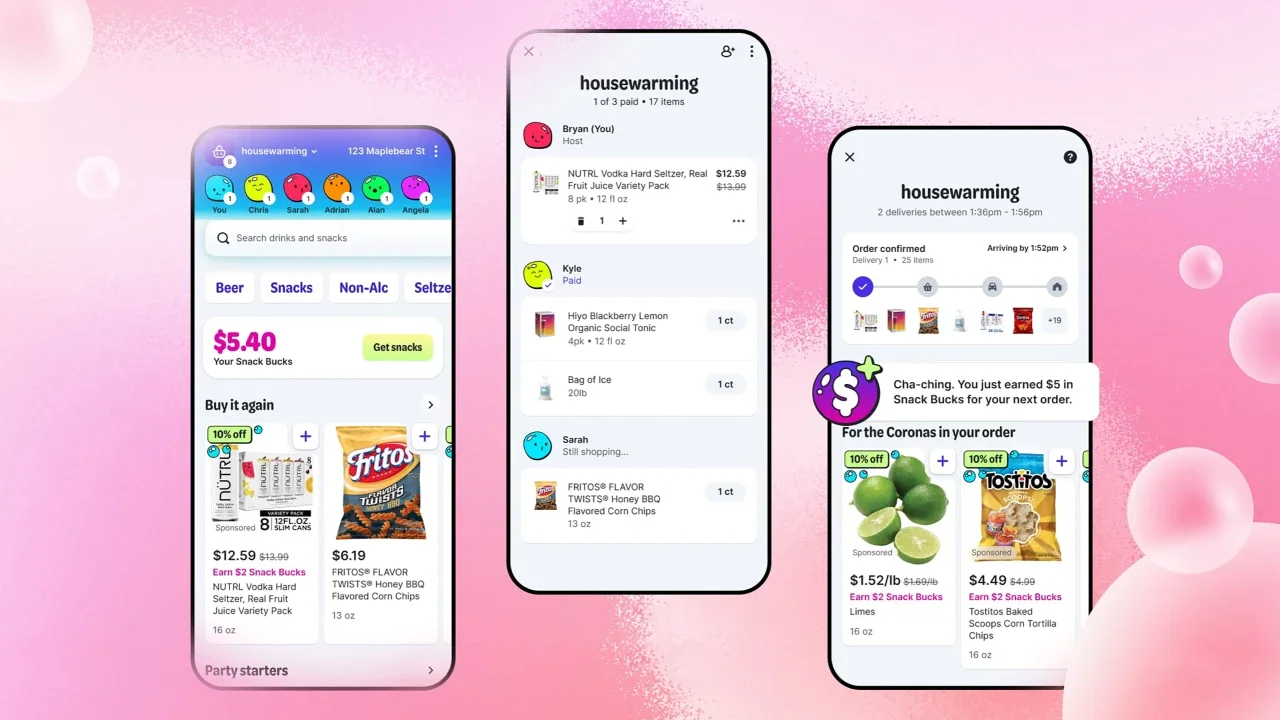
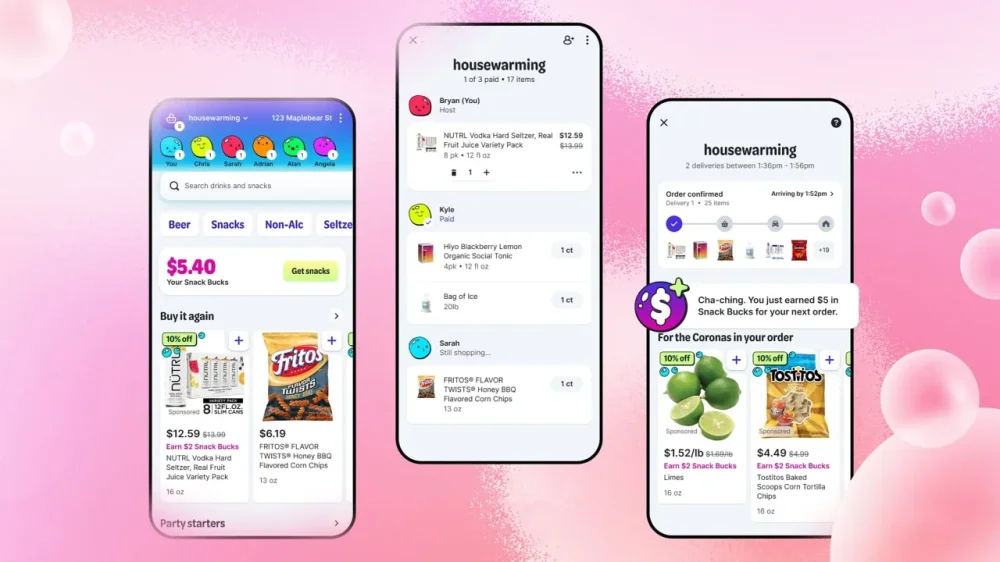
Instacart is launching a new stand-alone app called Fizz, designed for groups to order snacks and drinks ahead of parties for a flat $5 delivery fee. The platform, developed in collaboration with the hugely popular event invite app Partiful, enables partygoers in the 30 U.S. states where alcohol delivery is legal to add items to a shared cart from nearby participating grocery stores. Instead of splitting the bill, each user is prompted to pay only for what they’ve added, with an option to include a tip for the shopper. Back in February, Instacart’s chief product officer, Daniel Danker, approached Partiful CEO Shreya Murthy about partnering on the app. The teams began development in earnest in March, with Danker crediting artificial intelligence and mutual enthusiasm for the app’s rapid progress. “There aren’t a lot of consumer apps being built these days, and there aren’t a lot of people solving some of these really core needs for customers in a simple and delightful way,” Danker tells Fast Company. Murthy says she was intrigued by the opportunity to address the common challenge of figuring out what to bring to a party—and finding time to pick it up. “Think about the last time you went to a house party. There was probably this implicit social expectation for you to bring a bottle of wine or a pack of beer,” Murthy says. “As for me, as a guest who would go to parties, that was actually kind of annoying because I’d forget. . . . And I can’t show up to this party empty-handed. “We basically productized BYOB,” she adds, referring to “bring your own bottle.” Instacart is one of the biggest players in the gig economy. It went public in September 2023, and its shares have risen nearly 57% since then. Partiful, launched in 2020, has also seen rapid growth—it reported a 600% increase in user activity in 2024 and was named one of Fast Company’s Most Innovative Companies of 2025. Fizz incorporates Partiful’s web-friendly design, meaning users don’t need to download the Fizz app to place orders. Party hosts can either start a cart and share the link in a group chat or create a typical Partiful invite and toggle the “group order” option to generate a shared cart on the event page. Guests can then add their items and see what others have selected. Each person pays for their share, while the host schedules the delivery and pays the $5 fee. Fizz orders will be fulfilled by Instacart shoppers. Danker notes that the more items in a cart, the more shoppers will earn. He also anticipates higher tips due to the low delivery fee. “If people didn’t feel like they spent a bunch on fees,” he says, “then they feel really generous when it comes to the tips.” View the full article
-
Lucas Kraft’s friends knew him as the guy who always had an antacid. His recovery from bulimia left him with gastrointestinal damage, which made him reliant on over-the-counter digestive medicines. But they were also filled with chemicals that didn’t mesh with his health-conscious SoCal lifestyle. Luckily, his brother Noah had an eye for predicting where consumer interests are headed. He founded Doppler Labs, the buzzy 2010s startup hoping to create an in-ear computer, three years before Apple launched their AirPods. Doppler Labs was too early, but Wonderbelly—the brothers’ digestive health brand—has been right on time with its focus on clean ingredients and opposition to existing giants of OTC medicines. In the late 2010s, clean beauty was already surging. Whole Foods and Erewhon were on the rise, but they were siloed within wealthy communities. But a new and growing swatch of health obsessives—both within and without Robert F. Kennedy Jr.’s “Make America Healthy Again” movement—has put Wonderbelly in an unusually dominant position. The superstores came knocking: First Target, then CVS, and now Walmart. Wonderbelly products now feature prominently at 2,500 Walmart stores nationwide via a fleet of endcaps. These offerings include reworked packaging as well as a debut multisymptom product designed to compete with Pepto-Bismol. Noah contrasts Wonderbelly—which is sold as an OTC product with health claims that are regulated by the Food and Drug Administration—with the $53 billion supplements market. “Supplements are the Wild West. They are unregulated, so when you take a supplement, it’s hard to determine whether it works or is a placebo,” he says. “As an FDA-regulated OTC medicine . . . credibility is key. Growing the the old-fashioned way Medicine moves slower than Noah’s native tech world. The brothers incorporated Wonderbelly in 2021, before spending two years deep in product development. (Noah got antsy in this period, so he made an app to track digestive health.) When the company’s clean Tums alternative was ready in April 2023, Target was immediately on board. The retailer asked to place Wonderbelly in 2,000 stores, but the Kraft brothers needed more time, eventually agreeing to 650. Even that pared-back retail presence was important to Wonderbelly’s vision to build its brand credibility the old-fashioned way—in brick and mortar. “People buy medicine as a bottom-of-funnel product,” Noah says. “You go into your supermarket, you’re picking up bananas, and you grab some Tums. It is not the sort of thing where you go to someone’s website like you do with Casper.” With more stores, Wonderbelly brought more products. For the company’s CVS launch, it debuted a clean Gas-X alternative. Now, with Wonderbelly’s new placement in Walmart, it’s rolling out a clean Pepto-Bismol challenger. Wonderbelly intentionally positions itself against these name brands; it’s not interested in customers shopping for generics. Even the store placement matters—the company isn’t interested in selling in Whole Foods or Sprouts, because they don’t carry Tums. “We don’t want to sit next to apple cider vinegar,” Noah says. Wonderbelly’s bet is that, when given the choice between a chemical-filled name brand and a cleaned up alternative, the premium customer will choose it instead. The strategy has been lucrative. While he declined to disclose specific financials, Noah notes that the company hit profitability in April. As of April 2024, Wonderbelly was valued at about $53 million, according to market insight tool PitchBook—a number that Noah confirmed is still roughly accurate. Jeff Behm, Wonderbelly’s VP of sales, points out that the company will double its sales year over year, having reached 100,000 points of distribution. (It helps that the company is incredibly slim: Wonderbelly has 12 employees, and Noah has no desire to hire more.) The Walmart launch is poised to skyrocket sales by introducing 2,500 colorful endcaps nationwide. Walmart has a different customer, than the deep-pocketed shoppers that frequent the likes of Erewhon and similarly priced boutique grocers that dominate the “clean” space. So Wonderbelly created a new, cheaper $9.99 version of its antacid—with fewer tablets—to meet Walmart’s “everyday low prices” mandate. It seems to have paid off: Looking at the first-week data from the brand’s soft launch, Noah says sales are where he expected them be after three months of a concerted marketing push. “Customers are familiar with these legacy brands, and they’re going to stay connected to these legacy brands,” says Kristin Piper, Walmart’s vice president of wellness merchandising. “Some customers are looking for innovation, like [what] Wonderbelly is bringing to the space.” Navigating a MAHA minefield The Krafts grew up in Los Angeles, where their mother enforced a clean regime. Lucas describes a house full of “alternative brands that always tasted so much worse.” That includes drinking imitation milk at age 5. Noah points out that they weren’t allowed to drink Diet Coke. The brothers have mostly carried this clean ethos to their adult life, leading Lucas to count the ingredients on the back of his medicine bottles. Though Wonderbelly’s antacid has six ingredients to the average of 20 in Tums, that model of ingredient numbering can be reductive, especially in medicine, where some foreign chemicals are crucial to the product’s transportation around the body. So Wonderbelly makes its definition even clearer: non-GMO, vegan, free of artificial dyes, sweeteners, talc, titanium dioxide, parabens, and gluten. The siblings’ timing with Wonderbelly couldn’t have been better. The consumer wellness market skyrocketed coming out of the pandemic. “Clean beauty,” once a miniscule portion of the makeup market, is now valued at more than $8 billion. Consumers are buying Oura Rings and drinking kombucha. It’s also not lost on the Krafts that their product appeals to a broad enough consumer base to include those buying into the “Make America Healthy Again” movement. “We strongly believe in science, but we also align heavily with a lot of the things that the MAHA movement is pushing for,” Lucas says, adding that he and his brand are still positioned for people eating food that can upset their stomachs. “Antacids usually don’t come after you’ve had a big meal of kale salad.” MAHA’s reach is also broad, and has spurred actions that range from Sweetgreen eliminating seed oils in its food to the state of Utah banning fluoride in drinking water against prevailing medical consensus of the element’s public health benefits. As a result, the Krafts have had to be somewhat judicious about who they associate the brand with. “There have been several instances where we’re talking to someone and then we go to their socials, and we’re like, ‘Thanks for the support. Please don’t mention our company name,’” Noah says. View the full article

-
A bipartisan group of President Donald The President’s critics is launching a new organization, dubbed the Cost Coalition, to highlight The President’s struggle to control rising costs in the early months of his new presidency. The group expects to be especially active ahead of upcoming elections in Virginia, New Jersey and Pennsylvania, according to preliminary plans shared with The Associated Press this week ahead of a formal announcement. The Cost Coalition will push its message through a combination of paid advertising, social media, press interviews and on-the-ground events with small business leaders, veterans and the faith community. Terry Holt, a former spokesperson to former President George W. Bush and former House Speaker John Boehner, both Republicans, is serving as a senior communications adviser along with Andrew Bates, a former spokesperson for former President Joe Biden, a Democrat. “In 100 days, Donald The President put the best-performing economy in the world on a crash course toward recession. The President’s tariffs—the biggest middle class tax hike in modern history—are making everyday prices skyrocket and wreaking havoc for businesses large and small,” Holt and Bates said in a joint statement. “Next up are grossly inflationary tax cuts for the wealthy that will only saddle future generations with staggering debt. Whether you’re a Republican, Democrat, or anything else, Donald The President’s agenda is an economic crisis threatening your livelihood and standard of living.” The new group enters a political landscape already packed with powerful voices fighting to shape the national conversation little more than 100 days after The President began his second term. The Republican president vowed to “end inflation” on Day 1, but he has focused more on immigration, culture wars and exacting revenge against his political adversaries while launching a global trade war that has pushed some costs higher and threatens to send the U.S. economy into recession. The President late last week said on his social media platform that there is “NO INFLATION” and claimed that grocery and egg prices have fallen, and that gasoline has dropped to $1.98 a gallon. That’s not entirely true: Grocery prices have jumped 0.5% in two of the past three months and are up 2.4% from a year ago. Gasoline and oil prices have declined—gas costs are down 10% from a year ago—continuing a longer-running trend that has continued in part because of fears the economy will weaken. Inflation did drop noticeably in March, an encouraging sign, though in the first three months of the year it was 3.6%, according to the Federal Reserve’s preferred gauge, well above its 2% target. The Cost Coalition will be led by a team of veteran operatives who played key roles for Kamala Harris’ unsuccessful presidential campaign: Republican strategist Austin Weatherford, the leader of “Republicans for Harris”; Rev. Jennifer Butler, Harris’ national faith and engagement director; Libby Jamison, the Harris campaign’s national director of veteran and military family engagement; political strategist Leslie Gross, a veteran of the Obama-Biden administration; and George Holman, who served in the Biden administration. A spokesperson declined to say how the new group will be funded, except to say it has “seed contributions” from some large donors in both parties and will also rely on grassroots donations. As a project of the American Values Alliance, the organization will be set up as a nonprofit with a hybrid political action committee. As such, it won’t have to publicly disclose all of its funding sources. —Steve Peoples, AP National Politics Writer View the full article
-
Key Takeaways Protect Personal Privacy: Avoid posting sensitive personal information such as home addresses, phone numbers, and location tags to safeguard your privacy and mitigate risks of identity theft. Steer Clear of Controversial Topics: Refrain from sharing strong political or religious opinions, as these can alienate audience members and damage your brand’s reputation. Mind Your Photo Content: Share only professional and appropriate images; unflattering or party-related photos can harm perceptions of your brand. Maintain Respectful Communication: Avoid negative comments about others, as they can lead to reputational damage and loss of business opportunities; focus on promoting a positive environment. Verify Your Information: Always fact-check before sharing information to ensure credibility, as spreading misleading content can damage trust with your audience. Engage with Feedback: Actively monitor and address customer feedback on social media to demonstrate commitment to satisfaction and improve engagement. In today’s digital age, social media is a powerful tool that connects you with friends, family, and the world. But with great power comes great responsibility. What you share online can have lasting effects on your personal and professional life. Understanding what to avoid posting is crucial for maintaining your reputation and privacy. Imagine sharing a moment that seems harmless, only to realize later it could jeopardize your career or relationships. From oversharing personal details to posting controversial opinions, some content can come back to haunt you. This guide will help you navigate the murky waters of social media and ensure your online presence reflects the best version of yourself. Overview of Social Media Risks Social media platforms provide powerful tools for small businesses to engage audiences and market products. However, sharing certain types of content can introduce significant risks to your brand and online presence. Understanding these risks is crucial for effective social media marketing. Oversharing personal information can lead to privacy breaches. Your customers will trust your brand more when they feel secure with their data. Avoid posting sensitive details, such as your home address or personal phone numbers, which can expose both you and your customers to unwanted attention. Controversial opinions or polarizing posts can negatively impact brand reputation. While authenticity matters, maintaining a professional tone across platforms like Facebook, Instagram, and Twitter strengthens brand consistency. Steer clear of divisive topics that may alienate potential customers. Inappropriate or offensive content detracts from positive community interactions. As you create social media posts, ensure that your brand voice remains respectful and inclusive. Posting content that offends or discriminates can lead to backlash and harm audience engagement. Misleading information damages credibility. Verify facts before sharing data or promotions in social media campaigns. Trustworthiness encourages customer loyalty and builds your brand’s reputation as a reliable source. Ignoring customer feedback can hinder growth opportunities. Monitor engagement rates and social media analytics closely. When followers voice concerns or critiques, address them promptly to show commitment to customer satisfaction. By avoiding these risks, you can create a stronger social media strategy, enhance engagement, and boost brand awareness. Prioritize thoughtful content creation that aligns with your brand values, ensuring that your social media presence thrives. Personal Information to Avoid Posting When managing your online presence, avoiding the sharing of personal information is crucial. Oversharing can lead to privacy breaches and diminish your brand’s trustworthiness. Home Address and Location Tags Posting your home address or location tags creates vulnerability. Burglars often exploit travel plans shared on social media platforms like Facebook and Instagram. Indicating that you’re away can make your property an easy target. Instead, share vacation highlights once safely back home. Additionally, disable location services on your social media accounts to protect your privacy. Phone Numbers and Email Addresses Publicly sharing your phone numbers and email addresses invites unwanted attention and spam. Scammers often harvest this information from social media posts across platforms like LinkedIn and Twitter. Maintain a layer of privacy by keeping personal contact details private. Use direct messaging to communicate with customers or followers instead of public posts, ensuring you manage customer interaction safely and effectively. Sensitive and Controversial Content Avoiding sensitive and controversial content on social media is crucial for maintaining your brand’s reputation. Posts that are seen as insensitive, discriminatory, or provocative can lead to public backlash, significantly damaging your image and causing a decline in engagement rates. For small businesses, safeguarding your online presence directly impacts customer trust and brand loyalty. Political Opinions and Rants Sharing strong political opinions or engaging in rants can alienate portions of your audience. Political discussions often spark intense emotions, which might turn potential customers away. Keeping your content neutral allows you to focus on your social media marketing goals, such as boosting brand awareness and driving engagement. Instead of divisive topics, concentrate on value-driven content that aligns with your brand voice and supports community management. Religious Beliefs and Discussions Discussing religious beliefs can similarly lead to unintended backlash. While personal beliefs are important, they might not resonate with all your audience members. Opting for inclusive language and focusing on universal themes can enhance your social media strategy. Target your messages to appeal to a broad audience, ensuring that your social media posts foster a welcoming environment for all. Emphasizing storytelling and user-generated content can create a more engaging narrative that avoids polarizing subjects. Unflattering or Inappropriate Photos Managing your online presence involves careful consideration of what you post, especially photos. Unflattering or inappropriate photos can severely impact your brand and personal image across various social media platforms. Partying and Substance Use Sharing content that depicts partying or substance use can harm your professional reputation. Such posts can deter potential clients and partners, especially on platforms like LinkedIn. Just one post showcasing excessive partying can lead others to question your professionalism, which can become a barrier to business growth. Focus on content that reflects your brand values and engages your audience in a positive manner. Unprofessional Headshots Using unprofessional headshots presents an incomplete picture of you and your business. Ideally, each social media strategy should include a clear, high-quality profile photo that aligns with your brand voice. Platforms like Facebook and Instagram favor authentic images, but presenting an unprofessional image can hurt audience trust and engagement. Invest in a good headshot that showcases your commitment to professionalism, as this aids in building brand consistency and trust with your social media followers. Negative Comments About Others Negative comments about individuals or groups can severely impact your online presence and brand reputation. The consequences often include damage to your credibility, potential legal action, and loss of business opportunities. Treating everyone with respect and kindness on social media platforms is essential. Criticizing Employers and Colleagues Criticizing employers and colleagues on social media can trigger serious repercussions. Posting negative remarks about your workplace can lead to disciplinary action or job loss, impacting your professional reputation. Instead of sharing grievances publicly, address work-related issues in private discussions. Maintaining professionalism enhances your brand image and builds positive relationships with peers, vendors, and customers, ultimately improving social media engagement. Personal Conflicts and Arguments Discussing personal conflicts or arguments on your social media profile is generally inadvisable. Conflicts shared publicly can reflect poorly on you and your business, reducing community trust. Focus on promoting positive interactions instead. Sharing user-generated content showcasing happy customers or positive experiences fosters brand awareness and strengthens community relationships without airing personal grievances. Conclusion Being mindful of what you post on social media is crucial for protecting your personal and professional reputation. By avoiding oversharing personal details and steering clear of controversial topics, you can maintain a positive online presence. Remember to prioritize privacy by keeping sensitive information private and using direct messaging for personal interactions. Focus on sharing content that reflects your values and engages your audience positively. Ultimately, a thoughtful approach to social media can enhance your credibility and foster stronger connections. Stay aware of the impact your posts can have and choose wisely to build a trustworthy online image. Frequently Asked Questions What is the main focus of the article on social media? The article emphasizes the significance of being mindful about sharing personal information online. It discusses the potential risks of oversharing and posting controversial content, which can harm both personal and professional relationships. What are the risks of oversharing personal information on social media? Oversharing personal details like home addresses or travel plans can lead to privacy breaches and make individuals vulnerable to security threats. It’s crucial to manage what is shared to protect personal safety and reputation. How can businesses improve their social media strategy? To enhance their social media presence, businesses should avoid sharing sensitive information, engage positively with customers, and focus on neutral content that aligns with brand values. Regularly responding to feedback also fosters growth and trust. Why should controversial content be avoided by individuals and brands? Posting controversial or polarizing opinions can alienate audiences and damage reputations. Instead, it’s better to share inclusive, neutral content that avoids provoking backlash while still engaging followers effectively. What type of images should be shared on professional social media profiles? It’s essential to use professional headshots and images that reflect a positive, credible brand image. Unflattering or inappropriate photos may deter potential clients and damage overall reputation. How should personal grievances be handled on social media? Personal conflicts and work-related grievances should be handled privately to maintain professionalism. Public criticism of employers or colleagues can lead to negative consequences, including job loss. What is the importance of verifying information before sharing? Verifying information before sharing is crucial for maintaining credibility. Misleading or false posts can lead to misinformation and damage both personal and brand reputations, affecting audience trust. How can businesses use social media to foster community relationships? Businesses should encourage positive interactions by sharing user-generated content that highlights customer experiences. This builds community engagement and strengthens brand awareness without promoting divisive topics. Image Via Envato This article, "Essential Things to Never Post on Social Media for a Safe Online Presence" was first published on Small Business Trends View the full article
-
Key Takeaways Protect Personal Privacy: Avoid posting sensitive personal information such as home addresses, phone numbers, and location tags to safeguard your privacy and mitigate risks of identity theft. Steer Clear of Controversial Topics: Refrain from sharing strong political or religious opinions, as these can alienate audience members and damage your brand’s reputation. Mind Your Photo Content: Share only professional and appropriate images; unflattering or party-related photos can harm perceptions of your brand. Maintain Respectful Communication: Avoid negative comments about others, as they can lead to reputational damage and loss of business opportunities; focus on promoting a positive environment. Verify Your Information: Always fact-check before sharing information to ensure credibility, as spreading misleading content can damage trust with your audience. Engage with Feedback: Actively monitor and address customer feedback on social media to demonstrate commitment to satisfaction and improve engagement. In today’s digital age, social media is a powerful tool that connects you with friends, family, and the world. But with great power comes great responsibility. What you share online can have lasting effects on your personal and professional life. Understanding what to avoid posting is crucial for maintaining your reputation and privacy. Imagine sharing a moment that seems harmless, only to realize later it could jeopardize your career or relationships. From oversharing personal details to posting controversial opinions, some content can come back to haunt you. This guide will help you navigate the murky waters of social media and ensure your online presence reflects the best version of yourself. Overview of Social Media Risks Social media platforms provide powerful tools for small businesses to engage audiences and market products. However, sharing certain types of content can introduce significant risks to your brand and online presence. Understanding these risks is crucial for effective social media marketing. Oversharing personal information can lead to privacy breaches. Your customers will trust your brand more when they feel secure with their data. Avoid posting sensitive details, such as your home address or personal phone numbers, which can expose both you and your customers to unwanted attention. Controversial opinions or polarizing posts can negatively impact brand reputation. While authenticity matters, maintaining a professional tone across platforms like Facebook, Instagram, and Twitter strengthens brand consistency. Steer clear of divisive topics that may alienate potential customers. Inappropriate or offensive content detracts from positive community interactions. As you create social media posts, ensure that your brand voice remains respectful and inclusive. Posting content that offends or discriminates can lead to backlash and harm audience engagement. Misleading information damages credibility. Verify facts before sharing data or promotions in social media campaigns. Trustworthiness encourages customer loyalty and builds your brand’s reputation as a reliable source. Ignoring customer feedback can hinder growth opportunities. Monitor engagement rates and social media analytics closely. When followers voice concerns or critiques, address them promptly to show commitment to customer satisfaction. By avoiding these risks, you can create a stronger social media strategy, enhance engagement, and boost brand awareness. Prioritize thoughtful content creation that aligns with your brand values, ensuring that your social media presence thrives. Personal Information to Avoid Posting When managing your online presence, avoiding the sharing of personal information is crucial. Oversharing can lead to privacy breaches and diminish your brand’s trustworthiness. Home Address and Location Tags Posting your home address or location tags creates vulnerability. Burglars often exploit travel plans shared on social media platforms like Facebook and Instagram. Indicating that you’re away can make your property an easy target. Instead, share vacation highlights once safely back home. Additionally, disable location services on your social media accounts to protect your privacy. Phone Numbers and Email Addresses Publicly sharing your phone numbers and email addresses invites unwanted attention and spam. Scammers often harvest this information from social media posts across platforms like LinkedIn and Twitter. Maintain a layer of privacy by keeping personal contact details private. Use direct messaging to communicate with customers or followers instead of public posts, ensuring you manage customer interaction safely and effectively. Sensitive and Controversial Content Avoiding sensitive and controversial content on social media is crucial for maintaining your brand’s reputation. Posts that are seen as insensitive, discriminatory, or provocative can lead to public backlash, significantly damaging your image and causing a decline in engagement rates. For small businesses, safeguarding your online presence directly impacts customer trust and brand loyalty. Political Opinions and Rants Sharing strong political opinions or engaging in rants can alienate portions of your audience. Political discussions often spark intense emotions, which might turn potential customers away. Keeping your content neutral allows you to focus on your social media marketing goals, such as boosting brand awareness and driving engagement. Instead of divisive topics, concentrate on value-driven content that aligns with your brand voice and supports community management. Religious Beliefs and Discussions Discussing religious beliefs can similarly lead to unintended backlash. While personal beliefs are important, they might not resonate with all your audience members. Opting for inclusive language and focusing on universal themes can enhance your social media strategy. Target your messages to appeal to a broad audience, ensuring that your social media posts foster a welcoming environment for all. Emphasizing storytelling and user-generated content can create a more engaging narrative that avoids polarizing subjects. Unflattering or Inappropriate Photos Managing your online presence involves careful consideration of what you post, especially photos. Unflattering or inappropriate photos can severely impact your brand and personal image across various social media platforms. Partying and Substance Use Sharing content that depicts partying or substance use can harm your professional reputation. Such posts can deter potential clients and partners, especially on platforms like LinkedIn. Just one post showcasing excessive partying can lead others to question your professionalism, which can become a barrier to business growth. Focus on content that reflects your brand values and engages your audience in a positive manner. Unprofessional Headshots Using unprofessional headshots presents an incomplete picture of you and your business. Ideally, each social media strategy should include a clear, high-quality profile photo that aligns with your brand voice. Platforms like Facebook and Instagram favor authentic images, but presenting an unprofessional image can hurt audience trust and engagement. Invest in a good headshot that showcases your commitment to professionalism, as this aids in building brand consistency and trust with your social media followers. Negative Comments About Others Negative comments about individuals or groups can severely impact your online presence and brand reputation. The consequences often include damage to your credibility, potential legal action, and loss of business opportunities. Treating everyone with respect and kindness on social media platforms is essential. Criticizing Employers and Colleagues Criticizing employers and colleagues on social media can trigger serious repercussions. Posting negative remarks about your workplace can lead to disciplinary action or job loss, impacting your professional reputation. Instead of sharing grievances publicly, address work-related issues in private discussions. Maintaining professionalism enhances your brand image and builds positive relationships with peers, vendors, and customers, ultimately improving social media engagement. Personal Conflicts and Arguments Discussing personal conflicts or arguments on your social media profile is generally inadvisable. Conflicts shared publicly can reflect poorly on you and your business, reducing community trust. Focus on promoting positive interactions instead. Sharing user-generated content showcasing happy customers or positive experiences fosters brand awareness and strengthens community relationships without airing personal grievances. Conclusion Being mindful of what you post on social media is crucial for protecting your personal and professional reputation. By avoiding oversharing personal details and steering clear of controversial topics, you can maintain a positive online presence. Remember to prioritize privacy by keeping sensitive information private and using direct messaging for personal interactions. Focus on sharing content that reflects your values and engages your audience positively. Ultimately, a thoughtful approach to social media can enhance your credibility and foster stronger connections. Stay aware of the impact your posts can have and choose wisely to build a trustworthy online image. Frequently Asked Questions What is the main focus of the article on social media? The article emphasizes the significance of being mindful about sharing personal information online. It discusses the potential risks of oversharing and posting controversial content, which can harm both personal and professional relationships. What are the risks of oversharing personal information on social media? Oversharing personal details like home addresses or travel plans can lead to privacy breaches and make individuals vulnerable to security threats. It’s crucial to manage what is shared to protect personal safety and reputation. How can businesses improve their social media strategy? To enhance their social media presence, businesses should avoid sharing sensitive information, engage positively with customers, and focus on neutral content that aligns with brand values. Regularly responding to feedback also fosters growth and trust. Why should controversial content be avoided by individuals and brands? Posting controversial or polarizing opinions can alienate audiences and damage reputations. Instead, it’s better to share inclusive, neutral content that avoids provoking backlash while still engaging followers effectively. What type of images should be shared on professional social media profiles? It’s essential to use professional headshots and images that reflect a positive, credible brand image. Unflattering or inappropriate photos may deter potential clients and damage overall reputation. How should personal grievances be handled on social media? Personal conflicts and work-related grievances should be handled privately to maintain professionalism. Public criticism of employers or colleagues can lead to negative consequences, including job loss. What is the importance of verifying information before sharing? Verifying information before sharing is crucial for maintaining credibility. Misleading or false posts can lead to misinformation and damage both personal and brand reputations, affecting audience trust. How can businesses use social media to foster community relationships? Businesses should encourage positive interactions by sharing user-generated content that highlights customer experiences. This builds community engagement and strengthens brand awareness without promoting divisive topics. Image Via Envato This article, "Essential Things to Never Post on Social Media for a Safe Online Presence" was first published on Small Business Trends View the full article
-
If you receive an email about your Social Security statement, proceed with caution: According to a new report from Malwarebytes Labs, hackers are impersonating the Social Security Administration (SSA) to trick people into installing a remote access tool and handing over full control of their devices. The SSA is no stranger to phishing scams—the Office of the Inspector General put out an alert last month warning the public of fraudulent emails purporting to include Social Security statements that in reality led to fake websites. How the Social Security phishing scam worksThe current attack is the work of a phishing group known as Molatori. It begins with an email that appears to come from the SSA with the message, "Your Social Security Statement is now available" and a prompt to download an attached document. The supposed statement is actually a ScreenConnect client, which grants remote control of the affected device. ScreenConnect is a legitimate remote support platform for IT pros to help users configure systems and resolve technical issues by allowing the same access as if they had your device in hand. Once hackers have control of your computer via ScreenConnect, they can use it for anything from installing malware to transferring files to accessing sensitive data, like bank and financial account information, all without your knowledge. Financial fraud is believed to be the main objective for this campaign, but as always, stolen data can be used for identity theft or sold to other malicious groups. As Malwarebytes Labs describes, this scheme is hard to identify in part because the phishing emails originate from compromised WordPress sites with legitimate domains. The email body may also be sent as an image rather than text, making it harder for filters to detect it as malicious. How to protect yourselfAll of the common cautions for avoiding phishing scams apply here. Do not click on links or download or open files or attachments sent via email, especially if the message is unsolicited. Go directly to the company's or organization's website to locate important documents and verify communication. Attacks that come from compromised (but legitimate) domains can be trickier to catch, so be especially wary of anything you're instructed to download, click, or fill out from an email. If you are unsure whether an email or message is real and safe, Malwarebytes also suggests copying some of the text into a search engine to determine if it is part of a known phishing campaign. View the full article
-
Beleaguered pharmacy chain Rite Aid has officially filed for Chapter 11 bankruptcy protection after weeks of media reports suggesting that it was on the cusp of doing so. The bankruptcy is Rite Aid’s second in two years, and it leaves a lot of questions for both customers and employees, including whether stores will be closing, if there will be layoffs, and what happens to customers’ prescriptions. Here’s what you need to know about Rite Aid’s second bankruptcy. Why did Rite Aid file bankruptcy the first time? Rite Aid originally filed for bankruptcy in 2023. It emerged from the process less than a year ago, in 2024, with the hopes of being in a better financial position and on more resilient footing. But with its second bankruptcy filing yesterday, those hopes seem to have been dashed. To understand why Rite Aid is once again filing for bankruptcy, it helps to understand why the company originally filed for bankruptcy in 2023—something Rite Aid has laid out in detail in documents it filed with the United States Bankruptcy Court in the District of New Jersey today. Rite Aid cited multiple factors that necessitated its 2023 bankruptcy filing, including: “suboptimal lease portfolio” of underperforming stores elevated labor costs increased costs from “shrink” (theft) lower credit limits more restrictive payment terms from vendors reduced demand for its non-medication “front end” products “The lack of such inventory,” Rite Aid said, “gave rise to a vicious cycle: high-margin front-end sales declined due to insufficient inventory, and lagging sales depleted liquidity and caused vendors to tighten trade terms even further.” The company’s 2023 bankruptcy was meant to help the struggling pharmacy chain address the financial issues caused by these problems. But that’s not the way things have played out since, which has led to the company filing its second bankruptcy this week. Why is Rite Aid filing for bankruptcy again? In a court document, Rite Aid said that its “post-emergence business plan was based on data-driven projections (and extensive discussions with vendors) that Rite Aid’s front-end vendors would return to their less restrictive prepetition payment terms” as well as assurances from select capital providers that the company would be provided with the needed letter of credit facilities—all of which the company said “was crucial to Rite Aid’s recovery.” But the filing goes on to say that “Those assurances were broken.” Rite Aid said that the letters of credit it did obtain were “materially less than expected” and that many vendors didn’t end up relaxing the more restrictive payment terms to the anticipated levels. Pile on macroeconomic pressures to this and Rite Aid said that “The combined effect of lower-than-expected liquidity from the letter of credit facilities, inventory challenges, strained vendor relations, lower consumer spending, and competitive pressures has ultimately left the Company with insufficient liquidity to operate its business and service its debt obligations in the ordinary course.” Thus, it’s second bankruptcy filing this month. What’s happening with Rite Aid prescriptions? Of course, many customers will be concerned about what will happen to their prescriptions during the bankruptcy process. In a letter to customers dated May 5, Rite Aid said that one of its paramount priorities during the bankruptcy process is to ensure that customers’ pharmacy needs are not interrupted. Rite Aid says that a majority of its stores will remain open “for the next few months” and that during that time pharmacy services “including prescriptions and immunizations” will remain available. In other words, for a few months at least, most customers should be able to still get their prescriptions filled at their local Rite Aid store. However, the company also stated that it’s “working to facilitate a smooth transfer of customer prescriptions to other pharmacies.” This is most likely in preparation for inevitable Rite Aid store closures or sales. Are Rite Aid stores closing? Some already have, and more closures in the months ahead are almost a certainty. According to documents Rite Aid that filed with the court, these 11 locations have already closed or will close soon: Poughkeepsie, NY Redmond, WA Sunnyside, WA Craigsville, VA Costa Mesa, CA Harrisburg, PA Keene, NH Ridgewood, NY Kutztown, PA Neptune, NJ Halifax, PA Rite Aid also says that customers can keep an eye on which stores are open using its online store locator tool. The locator currently states that Rite Aid has 1,240 locations in the United States across 15 states. What’s happening to Rite Aid employees? It is thought that Rite Aid’s bankruptcy will see some store locations closed, while other stores will be sold to other entities that may seek to keep the stores running in some fashion. Indeed, in a press release confirming its bankruptcy plans, Rite Aid CEO Matt Schroeder said that he was “encouraged by meaningful interest from a number of potential national and regional strategic acquirors.” But inevitably, layoffs are to be expected, as Schroeder said that one of the company’s priorities was “preserving jobs for as many associates as possible.” Yesterday, Bloomberg reported that an internal letter was sent by Schroeder to employees that the company will begin cutting jobs at its corporate offices in Pennsylvania. What will shopping at Rite Aid be like while this is happening? Although the company says most stores will remain open for the next few months, expect to notice changes before then. In a letter to vendors, the pharmacy chain said, “At this time, Rite Aid has generally stopped purchasing goods and services, except for those that it believes are essential to supporting this process.” Customers should also be aware that Rite Aid has posted a banner on its website stating that as of June 5, the company will no longer honor Rite Aid gift cards and will no longer accept returns or exchanges. View the full article

-
If you’re sensing the world right now is becoming more and more unhinged, you’re not alone. Fortunately there’s a podcast poking holes in your subject of choice, whether that be diet culture, science journals, airport books, or Bill Maher specifically. With research and often a sense of humor, these shows break down some of the messages we are getting online, in the news, and across all sorts of media, explaining why you’re not crazy, it isn’t you, and why some of the systems we have right now (looking at you, capitalism) are broken. Normal Curves Credit: Normal Curves Normal Curves is kind of like a science book club—on every episode, stat-savvy friends (and professors) Regina Nuzzo and Kristin Sainani help make sense of academic journals that have made their way to mainstream and pop culture. Examples include The Sweaty T-Shirt Study, which said you could find a perfect mate by smelling their sweat, and the The Red Dress Effect, which said that women in red were sexier. They’re the ones you can count on to dissect the data, challenge the claims, and arm you with tools to assess scientific studies on your own. Diabolical Lies Credit: Diabolical Lies Is tradwife TikTok confusing the heck out of you? Wondering why capitalism feels like a scam wrapped in a vibe? Allow me to introduce you to Diabolical Lies, your new favorite rabbit hole. Hosted by Katie Gatti Tassin and Caro Claire Burke, this long-form (episodes are upwards of three hours long) podcast is part cultural critique, part political roast, and fully addictive. Katie and Caro named their show Diabolical Lies to poke fun at something Kansas City Chiefs kicker Harrison Butker in a speech, that “it’s the women who have had the most diabolical lies told to you,” suggesting that feminism is the source of our unhappiness. Katie and Caro point their fingers at capitalism, patriarchy, and white supremacy, instead. They hold everything, from the yassification of Christian nationalism to the myth of the girl boss, all to the fire while making you laugh, think, and maybe (probably) get a little mad. Corporate Gossip Credit: Corporate Gossip If you think the best true-crime is white collar crime, you might want to tune into Corporate Gossip, which is all about the shady stuff that happens in board rooms and business deals. Hosts (and siblings) Becca and Adam Platsky use tons of research and storytelling to tell the truth behind eBay, the WWE and Vince McMahon, Sam Bankman-Fried and FTX, Enron, and more. The topics are serious, but the vibe is casual and often hilarious. Oddly Specific Credit: Oddly Specific Meredith Lynch (who you may recognize from TikTok) has one foot in pop culture and the other in politics—and her show represents that. Oddly Specific features a bit of everything, from the problem with dollar stores to the prison industrial complex. Experts come on to cover things they’re passionate about, and Meredith has a good way of explaining the basics of the subject at hand, exposing its problems, and helping you understand why it matters to you, your wallet, and your everyday life. Bad Therapist Credit: Bad Therapist If you’ve ever side-eyed an Instagram carousel telling you to “cut off anyone who drains your energy,” there’s a chance you’ve been served some therapy speak. Fortunately, the podcast Bad Therapist is here to help. Psychotherapist Ash Compton and journalist Rachel Monroe are pro-therapy, but they are also pro-skewering the bad actors who use pop psych cliches and weaponize wellness to make a living from it, usually taking advantage of people who actually need real help. Whether they’re dissecting therapeutic communes, conversion therapy, or life coaches, all roads lead to grifting. Along the way, you’re always in for some history, cultural analysis, and humor. If Books Could Kill Credit: If Books Could Kill You know those best-selling books—the ones that often promote miracle diets, pop psychology, pseudo-science, and reskinned versions of The Secret—sold at the airport that seem to take the country by storm, one book at a time? Michael Hobbes (original co-host of You’re Wrong About and co-host of Maintenance Phase) and Peter Shamshiri host If Books Could Kill, a podcast about those books and how they shape our culture and ruin our minds. (There is actually an entire episode dedicated to The Secret.) Together they point out the lack of citations, vague references, and fear-based marketing you find in every page. Episodes swing from hefty (the episode on Liberal Facism) to lighter and silly (there’s a great one on Who Moved My Cheese?). The Dream Credit: The Dream Seasons one and two of The Dream are about multilevel marketing schemes and fraud in the wellness industry, but the show has since been turned into a weekly interview show. Its episodes now focus on a myriad of subjects, but they're all generally about critiquing the people, industries, and concepts that make "the American Dream" unmanageable. Hosted by This American Life alum Jane Marie, episodes cover the MAHA movement, abortion bans, cults, divorce, and more. Jane Marie is a top-notch storyteller and interviewer—even episodes that feel heavy have a lightness to them. 5-4 Credit: 5-4 Hosted by Peter Routhier (If Books Could Kill), Rhiannon Brown, and Michael F. Vecchione, 5-4 provides a funny, liberal perspective on the rulings of the U.S. Supreme Court, often illustrating how much SCOTUS totally sucks. Always from a progressive point of view, each episode analyzes and discusses a single Supreme Court decision, providing an accessible and engaging way for listeners to learn about the high court’s biases surrounding hot-button issues like affirmative action, gun rights, and campaign finance. It clears the fog from our court system and clarifies how often the Supreme Court perpetuates unjust outcomes for marginalized groups. Knowledge Fight Credit: Knowledge Fight Dan Friesen and Jordan Holmes keep close tabs on Alex Jones so you don’t have to. Each week on Knowledge Fight they review recent clips from Jones’ Infowars programming and try to make sense of it all. They go deep (and some of the content is dark) but Dan and Jordan are funny enough to make it both a wild ride and an enjoyable listen. There’s no better way to learn about conspiracy theories than to study the people steeped in them, and this show is like Cliff’s Notes for the source of many of the wildest theories taking hold of America. Maintenance Phase Credit: Maintenance Phase When Michael Hobbes left You’re Wrong About, he put his energy into Maintenance Phase, a show he co-hosts with Aubrey Gordon that explores and critiques popular health and wellness trends and products. With tons of notes and a lot of rage-laughter, Michael and Aubrey run through the the worst diets, exercise trends, supplements and beauty products, and “nutrition” books, and evaluate whether they are actually effective or if they are based on misleading or harmful information. (It’s almost always the latter.) If you hate the BMI, were led astray by the food pyramid in the ‘90s, or roll your eyes every time your friend goes on and on about their latest cleanse, you’ll appreciate their myth-busting efforts. I Hate Bill Maher Credit: I Hate Bill Maher Comedian Will Weldon hates Bill Maher so much that he created an entire podcast about it. Every episode of his show, I Hate Bill Maher, is a takedown of Bill Maher in general, but specifically his TV show Real Time and his podcast Club Random, episode by episode. Will is dead set on pointing out some of the superficial, misogynistic, and transphobic things Bill has said, as well as how lazy some of his comedy can be. He’ll even dip back into old episodes of Real Time to prove how much Bill’s opinions have changed over the years. (Not much.) Some call it petty, some call it a public service. Listen to the Emma Arnold episode—Will interviews her about the time she got to tag along on Bill’s annual New Year trip to Hawaii. View the full article
-
Pinterest fans are nothing if not loyal. Many have spent years—sometimes decades—carefully curating boards filled with wedding inspiration, home decor ideas, fashion, and more. Now users are logging in only to find themselves locked out of their accounts without warning, with all their pins gone. Frustrated users have taken to platforms like X and r/Pinterest to vent. The comment sections on Pinterest’s official Instagram and TikTok pages are flooded with pleas from angry users demanding answers. “I had a beautiful Pinterest board with over 26,000 of the most beautiful images and my account was just permanently banned,” one user posted on X. “Pinterest you will be dealt with.” Another, who reportedly lost an account they had maintained for seven years, wrote, “I feel like my library of Alexandria has been burned down.” For creatives, Pinterest isn’t just for fun—it’s also a professional tool. “It’s the industry standard to present a moodboard before any project goes into action, and the sheer amount of valuable references I’ve lost out on since being banned is hard to describe,” wrote one Reddit user. “I’ve had to postpone shoots and scramble to reassemble projects. Years and years of curating down the drain and multiple projects stuck in limbo.” Those who’ve lost accounts claim they’ve done nothing wrong. “I made a new account, didn’t even add anything yet. Get an email saying I’m banned/suspended,” one user posted on X. “I try to dispute it and your typical bot responds saying there’s nothing it can do.” Others are now afraid to even open their accounts for fear of what they might find. Many are pointing the finger at AI. Pinterest’s Help Center states that it uses AI in “improving content moderation,” a system it has relied on for years to enforce its Community Guidelines. Like many platforms, Pinterest uses a mix of AI and human review. A Pinterest spokesperson tells Fast Company: “Pinterest has long-established public Community Guidelines that clearly outline what is and isn’t allowed on the platform. We’re committed to building a safer and more positive platform, and enforce these policies rigorously and continuously. Users who believe their account may have been deactivated mistakenly may submit an appeal.” For some, that response doesn’t cut it. Instead, they’re exploring legal action, seeking “recovery for the damages users have suffered, which may include financial compensation.” These damages include direct financial losses from Pinterest ad campaigns or traffic, as well as “emotional distress.” View the full article

-
The Tesla founder’s much-heralded war on government waste has had uncertain resultsView the full article
-
Asymmetry in trade relationship suggests The President has the upper hand in negotiationsView the full article
-
There we were: two experienced professionals, each standing on the iconic red dot of our own TEDx stages, ready to deliver what we hoped would be the most impactful talks of our careers. For Jamie, her meticulously rehearsed opening line—the one she practiced 327 times in the shower, in the mirror, and in front of a very patient partner—evaporated the moment the spotlight hit. Hundreds of expectant eyes waited as the silence stretched . . . and stretched. “Oh @*#%,” she whispered—into the mic. What was meant to be a private moment of panic turned into a public announcement. But instead of recoiling, the audience leaned in. Scott was one minute and fifty seconds into his carefully choreographed talk when he realized the slide clicker—his lifeline—wasn’t in his hand. It was backstage. As his partner began to talk, he edged off the red dot, sliding sideways like what he now calls “a nervous crab doing the walk of shame under a spotlight.” What could have been a disaster became an unexpected moment of relatability. What should have been our most cringeworthy professional moments instead became our most powerful points of connection. Who gets to make mistakes After Jamie’s talk, someone approached her saying, “That moment when you paused made your message so human. I was rooting for you!” “When you had to edge off the stage,” an executive told Scott afterward, “I immediately felt I could relate to you. It was like watching a high-stakes version of that dream where you show up to work without pants.” The revelation hit us both like a thunderbolt: Our supposed failures weren’t failures at all. They were our strongest connection points. All those hours spent practicing perfect delivery? Not wasted time at all, because we were able to recover. But the unplanned human moments? Pure gold. It’s worth acknowledging, however, that our positive experiences with vulnerability came from positions of established credibility. As seasoned professionals with certain privileges, we could afford these momentary lapses without severe consequences. But we also know that vulnerability’s impact varies dramatically depending on who you are and the context in which you’re operating. The Paradox of Leadership We’re often taught that leadership means projecting flawless competence, credibility, and charisma. However, what social psychologists call the “pratfall effect”—a phenomenon documented by Elliot Aronson in 1966—shows that competent people become more likable when they make small mistakes. In other words, the occasional face-plant makes you more relatable. But there’s a critical caveat that Aronson himself emphasized: This effect primarily works for those already perceived as highly competent. For those still establishing credibility—particularly women, people of color, and others from underrepresented groups—the same “charming” mistake can reinforce negative stereotypes and undermine authority. As TED speakers, we had the freedom to make mistakes, which actually increased our likability and connection with the audience without compromising our credibility. In our work with executives, we’ve seen this paradox play out repeatedly. We’ve seen repeatedly that established leaders who initially resist showing any vulnerability find their influence dramatically increases after sharing natural imperfections. Yet for emerging leaders or those from marginalized backgrounds, the calculus is far more complex. It’s essential to acknowledge that the luxury of vulnerability isn’t equally distributed. For women in male-dominated fields, research shows that displays of emotion or uncertainty can trigger harsher judgment than for their male counterparts. For people of color, vulnerability can collide with pernicious stereotypes, reinforcing biases rather than building connection. And for those earlier in their careers or from less privileged backgrounds, the margin for error is often vanishingly small. Alison Fragale’s recent research in her book Likable Badass reveals that leaders face a fundamental paradox: They need to be both respected for competence and liked for warmth. The most effective leaders—whom she calls “likable badasses”—strategically reveal vulnerabilities while maintaining clear boundaries, creating what she terms “approachable authority.” Yet Fragale also acknowledges that women and people of color often face a much narrower band of acceptable behavior, where too much warmth can undermine perceptions of competence, and too much assertiveness can trigger backlash. The path to becoming a “likable badass” is riddled with structural inequities that demand recognition. Which is why we believe vulnerability—tailored to context—has the potential to be a leadership superpower. The Vulnerability Sweet Spot: A Framework for the Perfectly Imperfect Leader Through trial, error, and sometimes painfully awkward experience, we’ve developed a framework for authentic, courageous leadership that we now share with executives who are tired of the exhausting perfectionism treadmill. But we emphasize that this framework must be applied with careful attention to context, power dynamics, and the unique challenges faced by those with marginalized identities: 1. Create intentional “vulnerability loops” Ed Catmull, Jamie’s former boss and cofounder and former president of Pixar Animation, would often say in meetings “I’m wrong more than half the time.” That simple phrase created what Harvard professor Jeff Polzer calls a “vulnerability loop”—inviting reciprocal openness that builds trust faster than a box of free donuts in the break room. By modeling approachable authority, he cultivated psychological safety that fueled Pixar’s creative engine. But we’ve observed that this same approach can backfire for leaders without Catmull’s established positional power and reputation. For a woman leading a male-dominated team or a person of color in a predominantly white organization, admitting uncertainty might inadvertently reinforce harmful stereotypes about competence. The lesson? Sometimes the most powerful thing a well-established leader can say is “I have no idea what I’m doing right now.” But for others, strategic vulnerability requires careful calibration. 2. Transform mistakes into growth narratives Scott had prepared meticulously for his courage workshop with a large government leadership team—but within minutes, he realized he’d misread the room. His agenda assumed participants would willingly engage, but the energy was brittle. The stress was high, morale was low, and the silence hung heavy. Then something unexpected—and unscripted—happened. The chief elected official chose to speak first. But instead of safe, ceremonial words, he paused, and shared a specific fear he was facing in that moment as a leader. The room shifted. Silence held for a beat. Then, one by one, others began to speak—naming real fears, deeper commitments, and the tensions they’d been carrying alone. That moment of unrehearsed vulnerability didn’t fix everything. But it disrupted the silence, reset the tone of leadership, and sparked the psychological safety needed for meaningful change to begin. 3. Create structural support for imperfection Pixar holds rigorous postproduction reviews that deliberately focus on uncovering mistakes—despite the very human tendency to celebrate victories and immediately start stressing about the next project. The process norms prevent individual blame, instead promoting shared responsibility for both successes and improvements. At its heart, the process embraces the principle that imperfection, continuous learning, and growth form the foundation of great filmmaking. By creating formal structures to examine what didn’t work, the studio transforms potential failures into catalysts for innovation. When failure analysis becomes collective rather than personal, it creates safer spaces for those who might otherwise face disproportionate consequences for acknowledging mistakes. 4. Create equitable spaces for vulnerability At Pixar, Jamie codesigned a Mutual Mentorship Program specifically designed to address power imbalances. Over six months, senior mentors and junior mentees built relationships by exchanging responses to questions like, “Share a pivotal time that created anxiety but informs who you are today.” This structured approach produced two remarkable outcomes. First, mentors gained genuine insight into the dramatically different experiences of those with less organizational power. Many left the program as vocal advocates for their mentees, having seen firsthand the additional barriers they navigated. Second, mentees formed a powerful coalition where they could practice speaking up authentically. Through monthly discussions about power dynamics and calculated risk-taking, they developed both individual confidence and collective strength—transforming vulnerability from a personal liability into a shared asset. 5. Know your audience Before revealing vulnerability, assess the terrain carefully. Do your colleagues and superiors already view you as competent? Do they genuinely care about your success? While it’s ultimately leaders’ responsibility to make workplaces safe for authenticity, we must acknowledge that not all environments offer this security. For those still establishing credibility—especially individuals from underrepresented backgrounds—the most courageous act might be a carefully timed truth or a question that invites others in. Even micro-moments, like asking a powerful question for honest feedback in a team setting or naming a challenge with curiosity rather than certainty, can plant the seeds of strategic vulnerability. These moments may not be headline-worthy, but over time, they build trust, credibility, and voice. If you determine that sharing vulnerably carries too much risk in your current position, remember that choosing to strategically present yourself isn’t “fake”—it’s a legitimate form of self-protection. The calculation is intensely personal: What are the costs of being real versus the costs of maintaining a more guarded professional persona? There’s no universal right answer, only the one that serves your well-being and advancement in your specific context. The Real Leadership Superpower Our TED experiences taught us that leadership impact doesn’t come from flawless performance, but from authentic human connection. The moments that feel most vulnerable—when your mind goes blank during a presentation or when you have to admit you have no idea how to solve a problem—are precisely where your most meaningful leadership happens. The next time you feel that urge to appear perfect, remember: Your most authentic moment might be waiting on the other side of what feels like failure. In a world increasingly dominated by curated personas and polished images, authentic vulnerability can be a powerful differentiator, but also a risk that varies dramatically depending on who you are. After all, nobody roots for the superhero who never breaks a sweat. We root for the one who gets knocked down, mutters something slightly inappropriate, and then gets back up again with a knowing smile. But we must also work toward a world where all leaders, regardless of their identity, have the freedom to be imperfectly human without disproportionate penalties. View the full article

-
Mortgage delinquencies were up in March, according to data from Intercontinental Exchange. View the full article

-
On farms off the coast of Alaska and in Mexico, a company called Blue Evolution grows seaweed used in food and skincare products. But five years ago, while studying the potential for seaweed to be used in bioenergy, the company discovered something else: The algae also contains critical minerals. The research, conducted with Pacific Northwest National Labs, identified the presence of scandium, an expensive rare earth element that’s produced in tiny volumes globally. The seaweed also contains other rare earth elements and platinum group metals that can be used to make products ranging from EV batteries to motors for wind turbines. “That generated a lot of excitement,” says Beau Perry, CEO of Blue Evolution. “Everyone was like, ‘Can you mine with seaweed?’” The company undertook more research into the area, and today it launched a new initiative, Orca Minerals, that’s focused on the new form of mining. Instead of blasting rocks or the seabed, the process makes use of the fact that seaweed naturally absorbs minerals from seawater as it grows. At its lab in San Jose, the company is analyzing samples of seaweed that it grows in seawater tanks on the Mexican coast and in the ocean in Alaska. With the right location, and the right strain of seaweed, Perry says, it’s possible to harvest meaningful amounts of certain minerals. The team identifies and selectively breeds seaweed strains, and is currently analyzing one of those proprietary strains. “We’re starting to select the characteristics that should yield more, with faster growth, but also more solid content and more mineral content,” Perry says. The content of critical minerals like cobalt or palladium is small, but that’s also true in traditional mining. “When you’re mining rare earths, it’s just mostly wasted material. You need a huge amount of rock,” he says. “Rare earth elements are not that much more concentrated in those deposits than in some of the seaweed samples we’ve seen.” Some other startups are working on processes to extract minerals from land using plants, like a company called Metalplant that’s mining nickel with crops grown in Albania. Seaweed has some advantages: It grows much more quickly and can concentrate minerals at a higher proportion, so the yield can be greater. And while there’s a fixed stock of minerals in soil, currents in the ocean continually replenish supply. The rest of the seaweed also has value—as nutrients, pigments, or carbon that can be used to make seaweed-based textiles, plastic, and other materials; critical minerals are a side benefit. As the biomaterials market grows, that would simultaneously mean more potential to displace traditional mining on land. If the company grows seven-figure tons of dry seaweed in Alaska to meet demand for biomaterials, for example, Perry says it could also produce enough scandium to be a major player in the global market. (For some other minerals and elements that are produced at bigger scales, it would contribute a much smaller percentage.) Mining from seaweed, rather than rocks, could help avoid some of the environmental impact of getting components that are necessary in things like electronics and EV batteries. Traditional mining destroys wildlife habitats; pollutes water, soil, and the air; uses large amounts of energy; and creates piles of waste. The The President administration also wants to fast-track deep-sea mining—extracting minerals from the ocean floor—something scientists say could cause irreparable harm to marine ecosystems. Growing and harvesting seaweed doesn’t cause those problems. Refining minerals from seaweed also takes less energy and is a cleaner process than traditional refining, Perry says. The company is working on its own green-chemistry-based extraction techniques that could potentially bypass the need to use a secondary refinery. The work is still in progress, and the company wants to ensure it can predictably harvest a certain volume of critical minerals from its seaweed. But it expects to have an operational prototype by 2027. Commercial production could begin in 2028. View the full article

-
At a recent academic conference, I noticed a familiar unease ripple through conversations about “soft skills.” Many participants winced at the term. They recognized the inadequacy of the term, yet struggled to agree on a better alternative. People floated around suggestions like “human skills,” “essential skills,” or “power skills,” but none seemed to stick. This persistent terminology problem reflects a deeper tension in our educational system. There’s a long-standing bias that elevates “hard” technical competencies over the nuanced, deeply human capabilities that actually define long-term professional success. Historically, hard skills emerged from the natural sciences—quantitative, measurable, and increasingly automatable. Soft skills, on the other hand, draw from the liberal arts, humanities, and social sciences. These disciplines help us understand human behavior, expression, and interaction. These qualities are notoriously difficult to quantify and even harder to teach. In business analytics, the field I teach, technical fluency is the price of entry. But what propels careers isn’t just knowing which model to run. It’s being able to explain it to a client, manage a team under pressure, adapt when the data shifts, and negotiate conflicting priorities. The multiplier is the human element. If we want students—and professionals—to thrive in the age of artificial intelligence, we need to stop treating soft skills like fluff. They’re complex, teachable, and foundational to success. And they need a better framework. Reframing the spectrum of soft skills The term “soft skills” has served as a catchall for too long. It flattens a vast range of human capabilities into a vague, undervalued category. Let’s unpack what it typically refers to: Character traits: These are innate or deeply ingrained qualities—curiosity, empathy, resilience, integrity. They are difficult to measure and even harder to teach, but they can be reinforced through self-awareness and mentorship. Behavioral habits: This includes punctuality, follow-through, and active listening. These are habits that form the scaffolding of daily effectiveness. Unlike traits, habits are trainable through repetition, reflection, and reinforcement. Teachable skills: Think negotiation, critical thinking, presentation, and conflict resolution. These are skills that we can structure, improve, and break down. Contextual competencies Some soft skills shift with the situation, like cross-cultural communication, executive presence, or stakeholder management. Mastering these skills requires knowledge, as well as adaptability and emotional intelligence. This structure isn’t just an academic exercise. It provides a road map for how higher education can teach, assess, and elevate these skills with the rigor they deserve. Why the liberal arts are more relevant than ever This entire framework—traits, habits, teachable skills, and contextual competencies—rests on a liberal arts foundation. Yet many continue to undervalue liberal arts education in the race to produce technically skilled graduates. That’s a mistake. The liberal arts cultivate intellectual agility, ethical reasoning, and cultural literacy. Rhetoric and composition shape communication. Philosophy and history sharpen critical thinking. Literature and anthropology nurture empathy and emotional intelligence. Ethics and moral philosophy develop character. These are not “extras”—they are essential human capabilities, which humans have forged across centuries of thought and reflection. Even in the case of STEM education depends on these “soft” capacities for its practitioners to thrive in real-world scenarios. The traditional liberal arts saw this clearly. To build capable and thoughtful citizens, you need people who understand science and the humanities. The two disciplines complement one another. The technology paradox Enter artificial intelligence. As AI grows capable of executing routine cognitive tasks and even mimicking creative ones, the gap between human and machine narrows in some areas—but not in others. AI can analyze data, but it can’t coach a team through a moral crisis. It can summarize a policy, but it can’t build consensus across ideologically opposed stakeholders. It can write a headline, but it can’t lead a classroom, negotiate a truce, or inspire trust. The more technical our world becomes, the more vital our human capabilities become. The paradox of progress is that it puts a premium on precisely those soft skills many continue to dismiss. Reclaiming the term Perhaps the answer isn’t to replace the term “soft skills,” but reclaim it. Let’s reframe “soft” not as “easy” or “secondary,” but as “sophisticated,” “subtle,” and “distinctively human.” These are the skills that make teams functional, leaders inspiring, and organizations resilient. They’re not antithetical to technical skill, they’re actually the multiplier. We do our students a disservice when we teach them how to code but not how to communicate, or how to calculate but not how to collaborate. We handicap their potential when we separate technical and human education into silos. And we shortchange society when we undervalue the disciplines that teach us how to be human together. The future doesn’t belong to those who can merely execute technical tasks. It belongs to those who bring the full spectrum of human capability to our most complex challenges. So yes, “soft” skills may be the hardest to master. But they’re also the ones that matter most. View the full article

-
Across the United States, there is a long history of communities of color being underserved—if not outright oppressed—by the dominant modes of urban planning and development. But for the past 10 years, a collective of architects, designers, artists, and urban planners called BlackSpace has been rethinking how communities of color get designed and built. Now, the group is trying to build up the ranks of practitioners working alongside communities of color in the built environment to make sure their needs are no longer overlooked or ignored. To spread this work through young and emerging firms, BlackSpace has launched Studio KIN (Kinfolx Imagining Neighborhoods), a business accelerator focused on bringing resources, funding, and community to Black-founded ventures that produce services and products focused on the built environment. The incubator’s first cohort has just been announced. “When we think about spatial justice, we think a lot about how it’s realized through having the folks that are planning, designing, and building neighborhoods that reflect the places that they’re serving,” says Kenyatta McLean, co-managing director of BlackSpace. “We developed Studio KIN to be a home for those urbanists that are working to meet communities where they’re at.” Members of BlackSpace’s Studio KIN cohort include an urban planning studio in Indianapolis, a community design firm in Oklahoma City, and a bookstore and community space in Brooklyn. The focus of the accelerator is “interdisciplinary urbanist solutions that strengthen majority Black and majority multiracial neighborhoods,” says Emma Osore, co-managing director of BlackSpace. The hole to fill is wide. There are roughly 1,000 zip codes across the U.S. that have majority Black populations, but fewer than 2% of them are considered prosperous. Osore says the goal of the accelerator is to help support the growth of locally based organizations that use place-based practices to increase prosperity for Black communities, particularly within Oklahoma City, Chicago, Indianapolis, and New York City. “There’s rapid change in Black places in all of these cities, and there are very few people locally who understand urbanism from this people-centered, culturally rooted, and ethical point of view,” Osore says. Having locally based design firms, for example, can help ensure projects are developed in ways that serve their communities over the long term. McLean notes that it’s not uncommon for a big national firm to come in to work on a well-meaning project in a Black neighborhood, only to leave once the contract is over. “What does that mean for the sustainability of that project? What does it mean for the communities that surround that neighborhood?” she says. “That’s another reason why we’re so interested and continue to be interested in folks that are locally rooted, because they will stay through the storms and also be there for the moments of sunshine that are happening.” BlackSpace’s Studio KIN will operate like a typical business incubator, offering support and resources to organizations as they grow and mature. The first cohort is made up of small firms that are between three and five years old, and the accelerator will help them do things like build capacity for new work or help raise capital, as well as more mundane things like assisting with bookkeeping. Members of Studio KIN’s cohort reflect the need for this kind of hyper-specific business incubator. For example, Open Design Collective is the first and only Black woman-led nonprofit design firm in Oklahoma, with a focus on architecture, planning, and cultural preservation. In Indianapolis, Rokh Research & Design Studio focuses on cultural equity by partnering with researchers, practitioners, and community members to understand lived experiences and introduce new policies and strategies for urban design. The accelerator will run for 12 months, and BlackSpace’s program director Gabriella Malavé says the collective plans to have at least three cohorts over the next few years. The shape of the accelerator may shift as the organization gets to understand what members of its first cohort really need to grow and thrive. But the overall goal of the program is to help Black communities by establishing a wider network of urbanist practitioners focused specifically on their unique needs. “Our mission has always been to have opportunities for urbanists to co-create spatial change in partnership with Black communities and to strengthen Black communities,” Osore says. “So this is really a sort of a renaissance for BlackSpace.” View the full article
-
Getting older can be a time when declining vision, hearing, and cognitive abilities may mean it’s no longer safe to drive. It may even lead to giving up your driver’s license. In theory, those who age out of driving should be perfect new customers for ride-sharing apps. And yet, Lyft says only 5.6% of its U.S. riders are older than 65. The company sensed a disconnect. The app wasn’t meeting older riders’ needs, and it needed a redesign. Lyft Silver, now available nationwide, is designed specifically for older users, with a font that’s 1.4 times bigger than the standard app, and a simple interface. “Developing Lyft Silver was truly a labor of care and intention,” Audrey Liu, Lyft’s EVP of rider experience, tells Fast Company via email. “We started by listening—really listening—to the experiences and needs of older adults. We spoke with riders, caregivers, and organizations that serve this community to understand the specific challenges they face with transportation. Things like navigating complex apps, feeling unsure about who their driver will be, or needing a little extra time and assistance.” The new design represents a collaboration among experts on aging, as well as partners like AltaMed, Urban League, Self Help for the Elderly, and others. The specialized app leans on Lyft’s findings about how its older customers actually use the service, like matching riders with more accessible vehicles that are easier to get in and out of since Lyft data showed older adults were twice as likely to cancel rides when they got matched with a pickup truck. And because Lyft found older adults are 57% more likely to not show up for their rides, the app has a “Get Help” button that connects riders to a live agent during work hours. Lyft Silver profiles also have trusted contacts, so ride details can be shared with family and caregivers. “Personally, thinking about my own mom and aunt, and the desire I have for them to move through their day with ease and independence, was a huge motivator,” Liu says. “We focused on building features that directly address those paint points: things like a simpler app interface with larger buttons and clearer instructions, the option for drivers who have indicated a preference for assisting older riders, and a longer wait time to enter and exit the vehicle without feeling rushed. It was about creating a service that feels less transactional and more supportive, fostering a sense of comfort and trust.” It’s simple by design, and by basing the app on the needs and experiences of its actual users, Lyft Silver shows how tech companies can better adapt their services to an aging population. View the full article
-
European Commission will propose rules next month requiring that contract details be shared with energy and security authoritiesView the full article
-
Chances are, if you’re not an Italian grandma or a skilled home chef from Rome, you’ve probably messed up while trying to make cacio e pepe. At least, that’s the thesis underpinning the scientific study “Phase behavior of Cacio e Pepe sauce,” published on April 29 in the journal Physics of Fluids. The study—conducted by a group of scientists from the University of Barcelona, the Max Planck Institute for the Physics of Complex Systems in Germany, the University of Padova in Italy, and the Institute of Science and Technology Austria—is pretty much what its title suggests: a full-on scientific investigation into the most “optimized recipe” for the creamy, peppery pasta dish. “We’re Italians living abroad, and we often get together for dinner to enjoy traditional recipes from home,” says Ivan Di Terlizzi, the study’s lead author and a postdoctoral researcher at the Max Planck Institute. “Among the dishes we’ve cooked, cacio e pepe came up several times, and every time, we were struck by how hard it is to get the sauce right. That’s when we realized it might actually be an interesting physical system to study. And of course, there was also the very practical motivation of avoiding the heartbreak of wasting good pecorino!” A very brief history of pasta-based physics experiments This isn’t the first time that pasta has been used as inspiration for physicists. Probably the most famous example of “pasta as experiment,” Di Terlizzi says, is the observation that spaghetti almost never breaks cleanly in half, tending to snap into three or more fragments instead. This fact originally puzzled renowned physicist Richard Feynman (who died in 1988) and wasn’t fully explained until 2005, when a team of French physicists showed that it’s caused by cascading cracks traveling along the pasta. Another example, Di Terlizzi adds, is the physics of ring-shaped polymers, which are “notoriously hard to understand.” A study in 2014 used a type of circular pasta, which the researchers called “anelloni,” to explain why these looped polymers behave so strangely in experiments. With cacio e pepe, the physics question of interest has to do with the sauce’s unusual behavior under heat. “The main goal of our work wasn’t just culinary; it was to explore the physics of this system,” Di Terlizzi says. “The sauce’s behavior under heat shares features with many physical and biological phenomena, like phase transitions or the formation of membrane-less organelles inside cells. The recipe is, in a sense, the practical byproduct of everything we learned.” The most optimal cacio e pepe recipe, according to scientists Cacio e pepe traditionally only includes three ingredients: pasta, pecorino Romano cheese, and black pepper. While it seems like a simple enough concoction, the sauce’s creamy smoothness (the backbone of the dish) can be quite finicky to achieve. When the temperature gets too high or the mixing of cheese and pasta water isn’t done carefully, the cheese proteins will denature—essentially “unfolding” and losing their normal 3D structure. In the unfolded state, the proteins then stick together and the emulsion breaks. “Instead of a creamy consistency, you get a gooey mess, which we call salsa impazzita . . . that is, crazy sauce,” Di Terlizzi says. The physics-based solution to “crazy sauce”? It’s all about starch. It turns out that, by perfecting the ratio of starch in the pasta water to cheese mass, the cacio e pepe sauce becomes far more resistant to heat, which stabilizes the emulsion and prevents clumping. AIP Publishing “Without starch, the so-called “mozzarella phase” kicks in at around 65°C, where the proteins start forming large aggregates,” Di Terlizzi says. “But if the starch concentration is above 1% relative to the cheese mass, the clumps stay small, and temperature becomes much less critical, making it much easier to get a good result.” This is similar to using polymers to stabilize emulsions in soft matter physics, he adds. “Phase behavior of cacio e pepe sauce” contains ultra-detailed steps to a foolproof cacio e pepe, but here are the instructions in condensed terms: Step 1: For a pasta dish for “two hungry people,” start with 300 grams of the preferred tonnarelli pasta—or opt for spaghetti or rigatoni, if you must. From there, you’ll need 200 grams of cheese. “Traditionalists would insist on using only pecorino Romano DOP [protected designation of origin], but some argue that up to 30% parmigiano Reggiano DOP is acceptable; though this remains a point of debate,” the recipe notes. Proceed based on your own personally held cheese preferences. Step 2: To prepare the sauce, dissolve 5 grams of starch—like potato or corn starch—in 50 grams of water. Heat this mixture gently until it thickens and turns from cloudy to nearly clear. This is your starch gel. Step 3: Add 100 grams of water to the starch gel. Instead of manually grating the cheese into the resulting liquid, blend the two together to achieve a homogeneous sauce. Finish the sauce by adding black pepper to taste (for best results, toast the pepper in a pan before adding). Step 4: To prepare the pasta, cook in slightly salted water until it is al dente. Save some of the pasta cooking water before draining. Once the pasta has been drained, let it cool down for up to a minute to prevent the excessive heat from destabilizing the sauce. Finally, mix the pasta with the sauce, ensuring even coating, and adjust the consistency by gradually adding reserved pasta water as needed. Step 5: Garnish with grated cheese and pepper, and serve. View the full article